Spotlight on the Academic Power of Piedmont

Piedmont University Assistant Biology
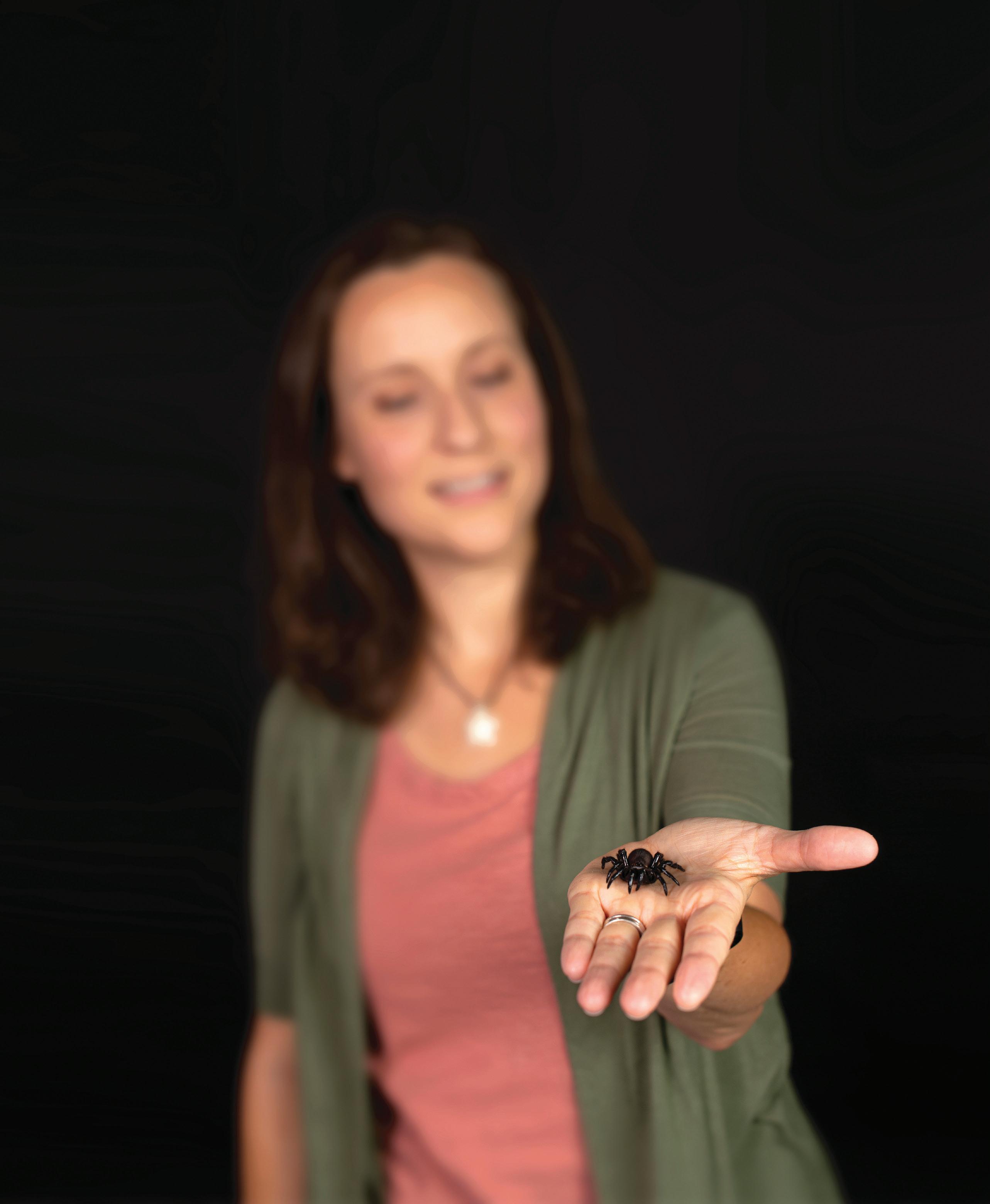
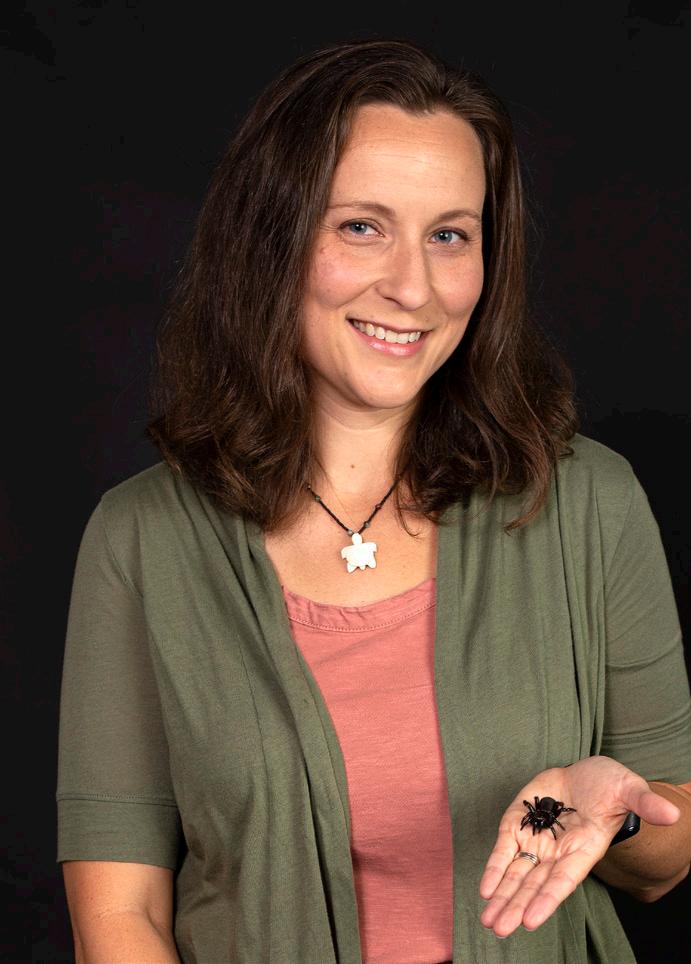
Professor Dr. Rebecca Godwin has identified more than 30 previously unnamed spider species, discoveries that garnered national attention.Pg.14

“Of all the paths you take in life, make sure a few of them are dirt.”
—John Muir
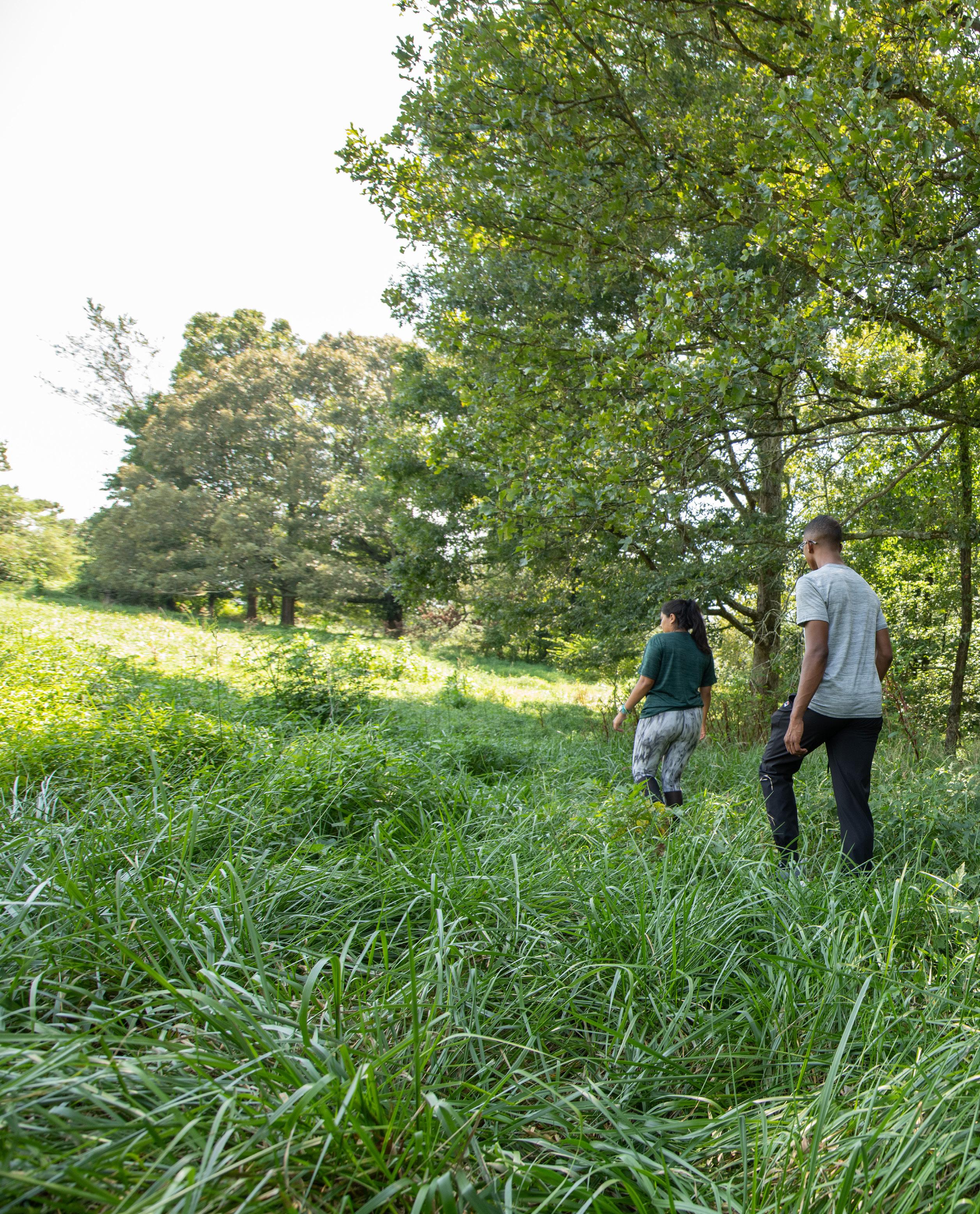
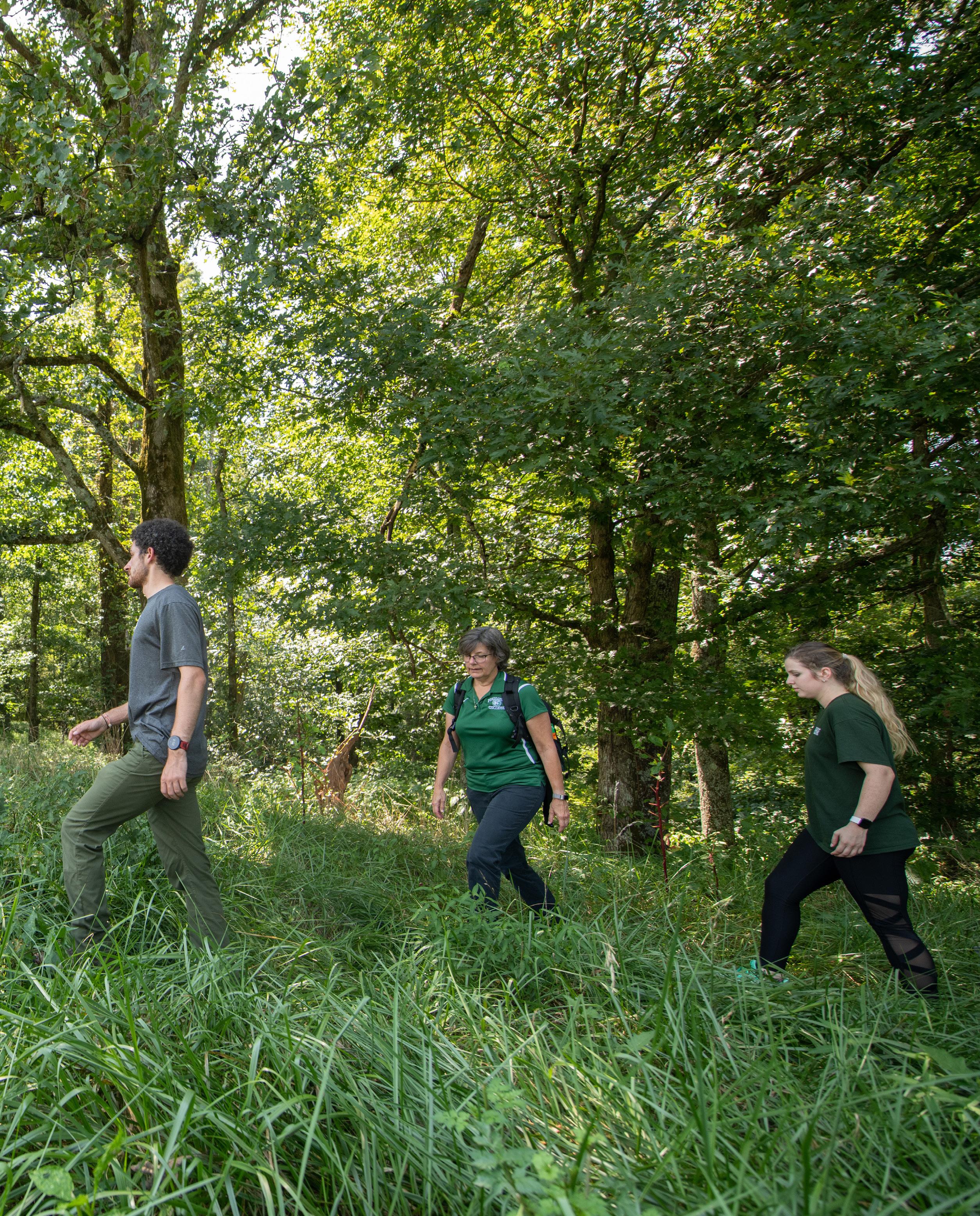
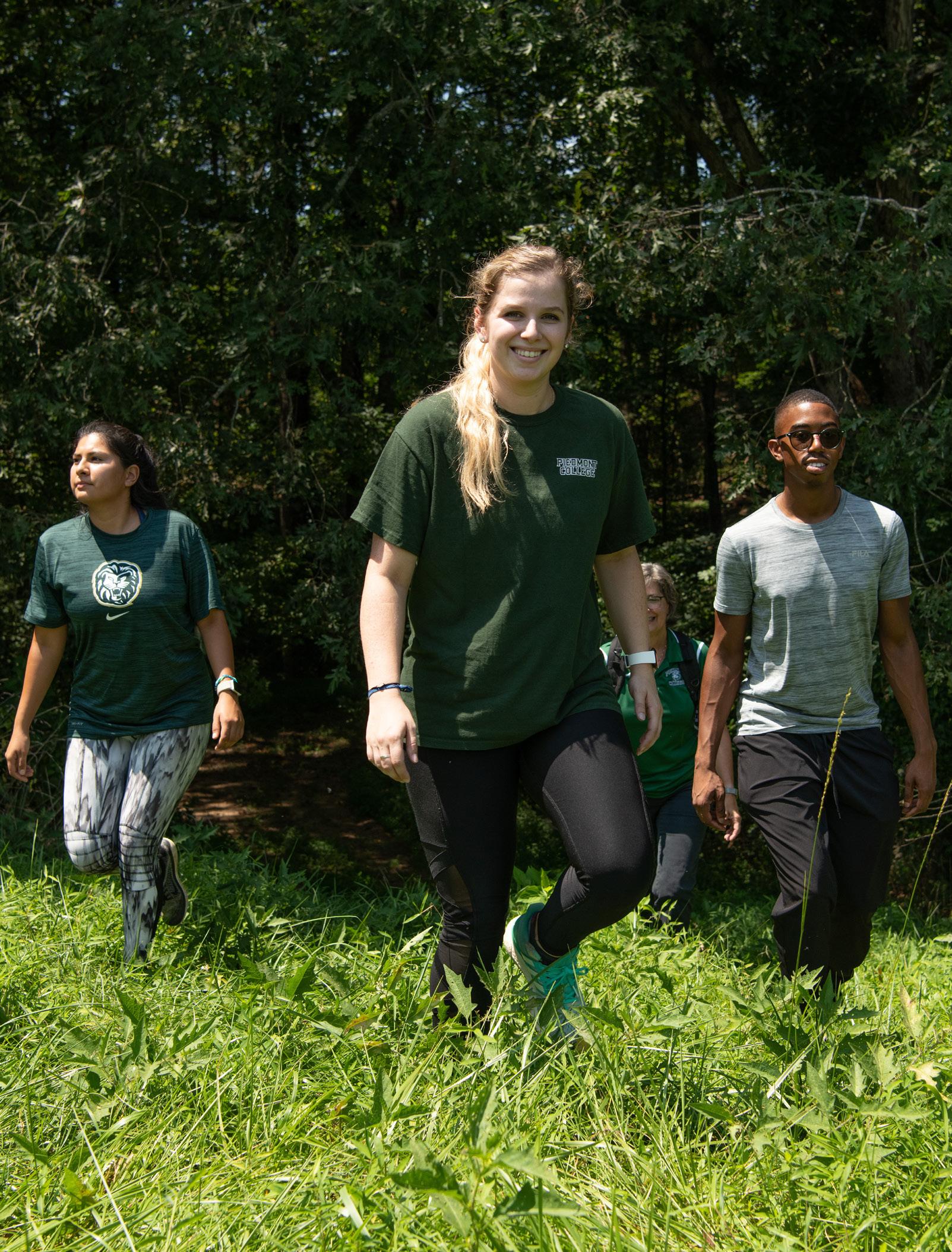
An offhand remark during a project management presentation about capital improvements on Piedmont’s Demorest campus last spring led to the creation of a nature trail. Pictured on the trail are, from left, Heidi Lopez, Michael Mack, Connor Moranos, business professor Sandra Maughon, and Leah Higginbotham. All of the students are seniors and Higginbotham is the lead on the project.

What a year it has been — a year of pandemic challenges, community resilience, and the launch of a new era as our esteemed institution renamed itself Piedmont University. Through it all, Piedmont’s faculty and students persevered, creatively adapting to the demands of social distancing by embracing a mixed face-to-face and Zoom videoconference format for larger classes. The Piedmont community’s response to COVID was disciplined and effective, resulting in very low infection rates at both the Demorest and Athens campuses, and we were thus encouraged to hold our first May commencement ceremony to which guests were invited since the outbreak of the pandemic. At the same time, while the Piedmont community rallied by returning to face-to-face teaching and learning at the undergraduate level, the pandemic accelerated other efforts that had already been underway to move the majority of our graduate programs to an online format in order to better accommodate the needs of working adults.
This issue of FOCUS features highlights of our accomplishments over this past year. Our cover story is devoted to the exciting discovery of new spider species by our own biology professor, Rebecca Godwin. Other recent news includes the addition of several academic programs. At the undergraduate level we have launched a degree in special education as well as a degree in communication sciences and disorders. We
intend for the communication science program to be the first step toward establishing a master’s-level speech-language pathology program at the university in the near future.
We have also sought to expand the availability of a Piedmont education by creating new online undergraduate degree completion programs for adult learners in areas such as management, criminal justice, and digital marketing. Our graduate-level online offerings continue to grow as well, beyond the conversion to online graduate courses in the College of Education last year, to include the Walker College of Business’s new fully online MBA program launching this fall.
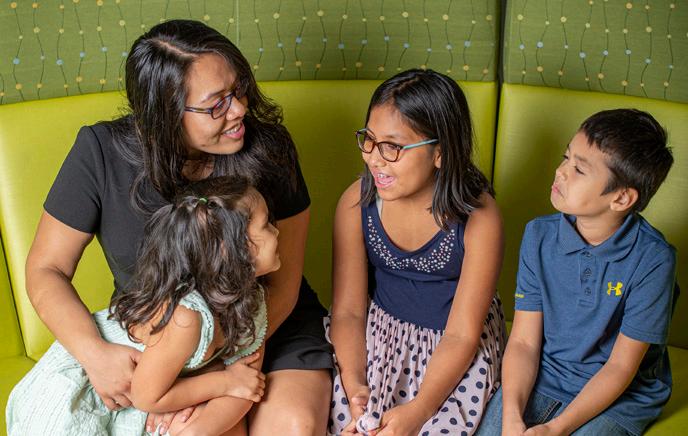
Beyond the ongoing work in program creation, we are proud to share the achievements of our students and recent graduates. We are inspired by those who have succeeded despite facing significant hardships and challenges, such as Jasmine Sanchez, a single mother of three, who prevailed over many obstacles to graduate with her BSN degree this year. Also featured are graduates who have taken less conventional paths toward their career goals, including Bryce Stout, an aspiring physician. We also recognize the staff of The Roar student newspaper, which is a finalist for the prestigious College Media Association’s Pinnacle Award. It is the first national-level recognition for the publication.
I hope you will enjoy reading about the work of our students and faculty as you peruse this latest issue of FOCUS. As their accomplishments in different fields bear out, Piedmont has truly evolved into an academic community most fittingly termed a university
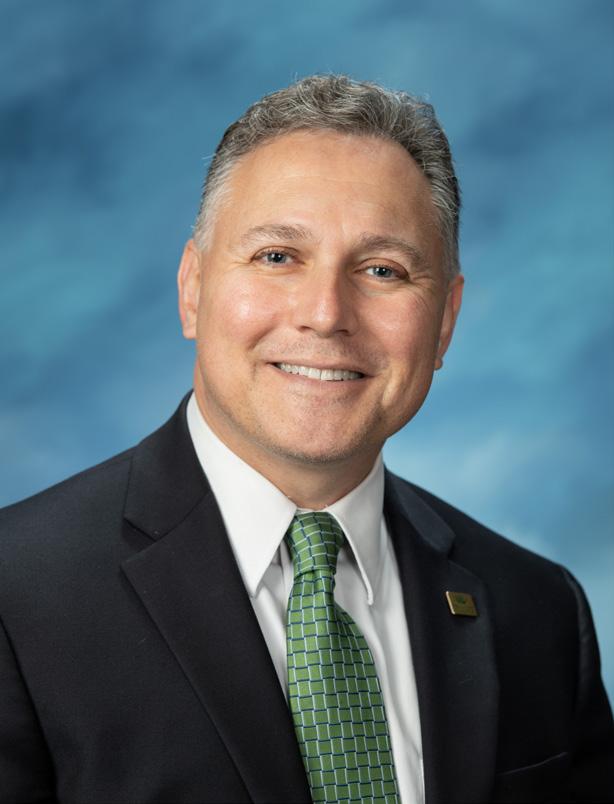
Senior Vice President for Academic Affairs & Provost
By Rachel Pleasant
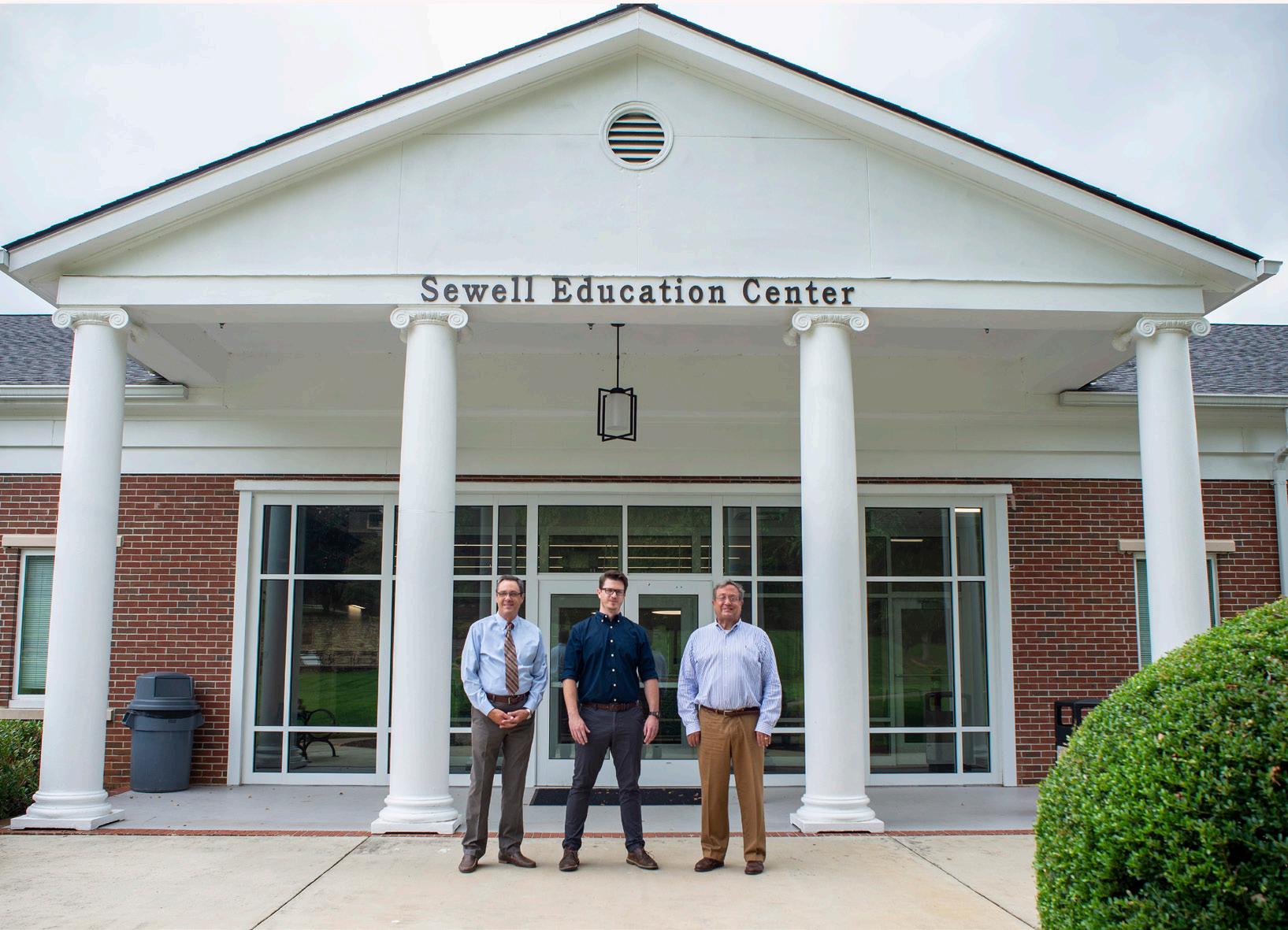
It’s the start of a new era for Piedmont University’s College of Education, with recent reaccreditation from the Georgia Professional Standards Commission (GaPSC) and a new bachelor’s degree in special education.
“Piedmont University has a long history of producing highly trained, highly effective educators — and we continue to build on that legacy every day,” said College of Education Dean Dr. Mark Tavernier.
In August 2021, the GaPSC reaffirmed the quality of education Piedmont delivers to aspiring teachers by renewing its accreditation for another seven years. In Georgia, educator preparation programs undergo reaccreditation
through the GaPSC every seven years. The reaccreditation process ensures programs meet GaPSC standards in every aspect of their operation, from curricula to student outcomes on state licensing exams.
“This is a very gratifying outcome for all involved,” said Special Projects Manager Daniel Smith, who led the reaccreditation effort.
“Current and future students of the College of Education can be assured that when they choose to study education at Piedmont, they will graduate prepared to succeed as educators.”
The reaccreditation coincided with the College of Education’s launch of a new Bachelor of Arts in Special Education program.
“Nationwide, we are experiencing a critical shortage of teachers, but this is especially true
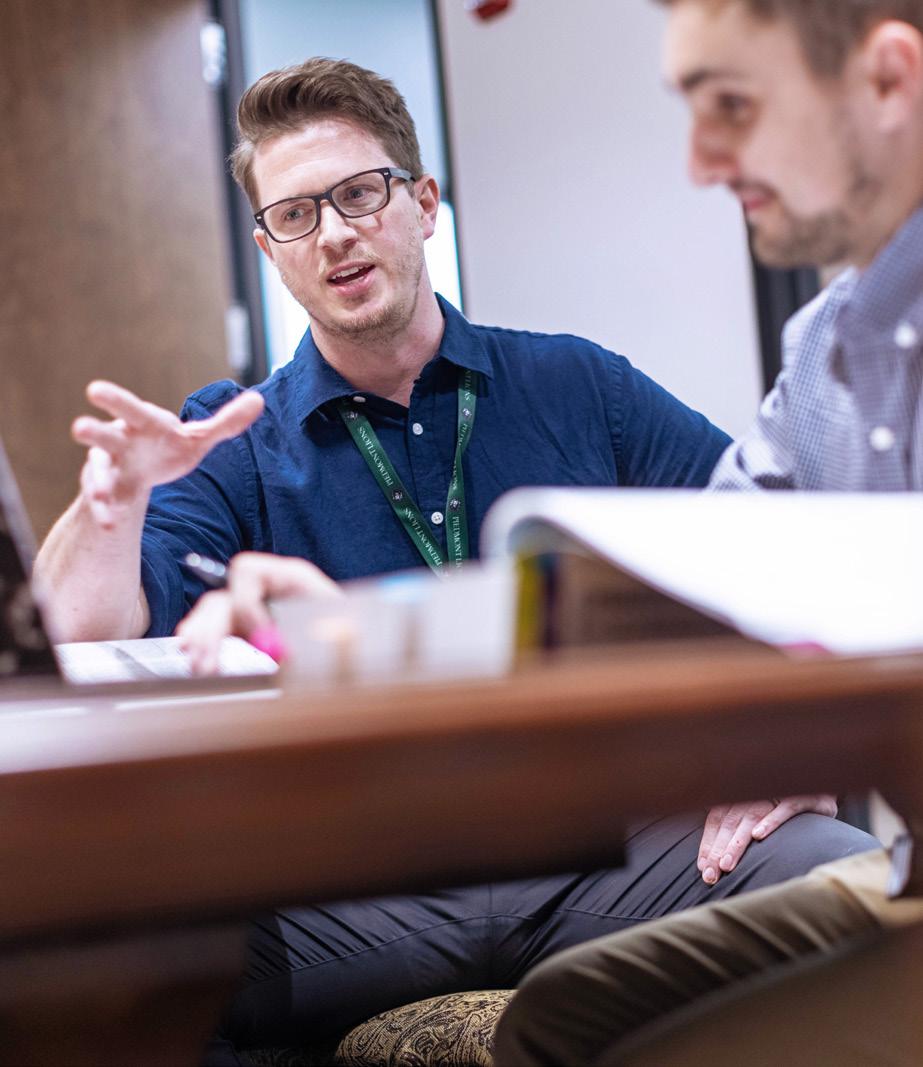
in the field of special education,” said Associate Professor of Education Dr. Elias Clinton, who led the creation of the program.
“Piedmont has long offered master’s degrees in special education, but by adding the bachelor’s degree, we saw an opportunity to help with the teacher shortage and to give those who are passionate about special education — like I am — a path for pursuing their career as early as their freshman year of college.”
According to the Centers for Disease Control & Prevention, about one in six children have at least one developmental disability or delay. At the same time, the National Coalition on Personnel Shortages in Special Education and Related Services reports that 98 percent of the nation’s school districts face a shortage of special education teachers.
“The shortage has been exacerbated by the pandemic. We were already understaffed, but the pandemic led to more retirements and fewer people entering the field,” Clinton said.
Local school districts are hailing the creation of the special education bachelor’s degree program.
“As school districts continue to meet the diverse needs of our students, it is more important than ever to have teachers well prepared to meet those needs. We often find teachers adding on special education certification at the master’s level or beyond. The challenge with not having an option at the undergraduate level is twofold: One, it prevents teachers from building content knowledge and experience through multiple degrees. Two, it also impacts the time at which students are graduating from universities with the credentials essential to serve students with disabilities,” said Heidi Hill, executive director of special education and behavior supports for the Clarke County School District.
“Local universities that offer a bachelor’s degree program in special education will better equip school districts with individuals who are ready to meet the needs of these learners.”
The baccalaureate-level program will prepare undergraduates for teaching certification in the state of Georgia, with courses in pedagogy, human growth and development, special education policies and laws, teaching students with disabilities, and specialized behavior intervention techniques.
Through the duration of the program, students will have the benefit of learning from educators with extensive experience in Georgia.
“All of our professors have been public school special education teachers in Georgia,” Clinton said. “We will
(Continued on page 23)
GOVERNOR’S OFFICE ON STUDENT ACHIEVEMENTS
Piedmont University places teachers at a higher rate than any other education preparation program in Georgia, according to a report from the Governor’s Office on Student Achievement.
“Providing high-quality teacher preparation has been at the heart of Piedmont University since our founding nearly 125 years ago,” said President James F. Mellichamp.
“Principals know that when they hire a Piedmont graduate, they are hiring someone who can effectively lead, teach, and inspire their students from day one.”
The 2020 Georgia K-12 Teacher Retention report examines placement and retention of teachers.
Piedmont has the highest teacher placement rate in the state, with 91.2 percent of its graduates being hired, well above the state’s overall placement rate of 80.7 percent.
College of Education Dean Dr. Mark Tavernier attributed Piedmont’s ranking to a number of factors.
“Piedmont has long-standing and close relationships with most of the school systems in North Georgia. We invest the time, energy, and resources to mold students into teacher-leaders. Also, all of our undergraduate faculty, and many of our graduate faculty, come from a K-12 background,” Tavernier said.
White County Schools Superintendent Laurie Burkett described Piedmont as a “go-to for high-quality teachers”:
“Piedmont graduates come to us ready to teach. They are grounded in curriculum, grounded in sound instructional practices, have real-world experience, and are able to move from theory to practice with ease.”
By Rachel Pleasant
Piedmont University promises students a personalized educational experience, marked by small class sizes and close relationships with their instructors. Jasmine Sanchez ’21 is proof of just how powerful that combination can be.
“My life changed here at Piedmont. I learned to never give up, and I learned it’s OK to ask for help,” said Sanchez, who graduated with her Bachelor of Science in Nursing degree and was recently hired as an ICU nurse at Northeast Georgia Medical Center.
“I am thankful for the people I met here who helped me get where I am today.”
Sanchez’s path to Piedmont was winding and difficult. As a high school student, she became pregnant with her first child, a daughter who is now 10.
“I really thought I was done. I thought my life was over, and that I’d work at Captain D’s forever,” Sanchez said.
Her mom, Georgina, had other plans.
Through her pregnancies and the exhaustion that comes with raising young children, Sanchez continued to pursue her education and her goal of one day working in healthcare. She also clung to her childhood dream of attending Piedmont.
“Growing up, every time we drove by the Demorest campus, I would tell my mom, ‘I’m going to go there one day. That’s my school,’” Sanchez said.
Growing up, every time we drove by the Demorest campus, I would tell my mom, ‘I’m going to go there one day. That’s my school.’
—Jasmine Sanchez ’21
“She told me I wouldn’t drop out, that I would get an education,” said Sanchez. “I said, ‘But what about all the people who will judge me?’ She told me that didn’t matter, that I had to keep going for my family.”
Sanchez enrolled at Mountain Education Charter High School, where she earned her high school diploma. In the years that followed, she became a mother twice more.
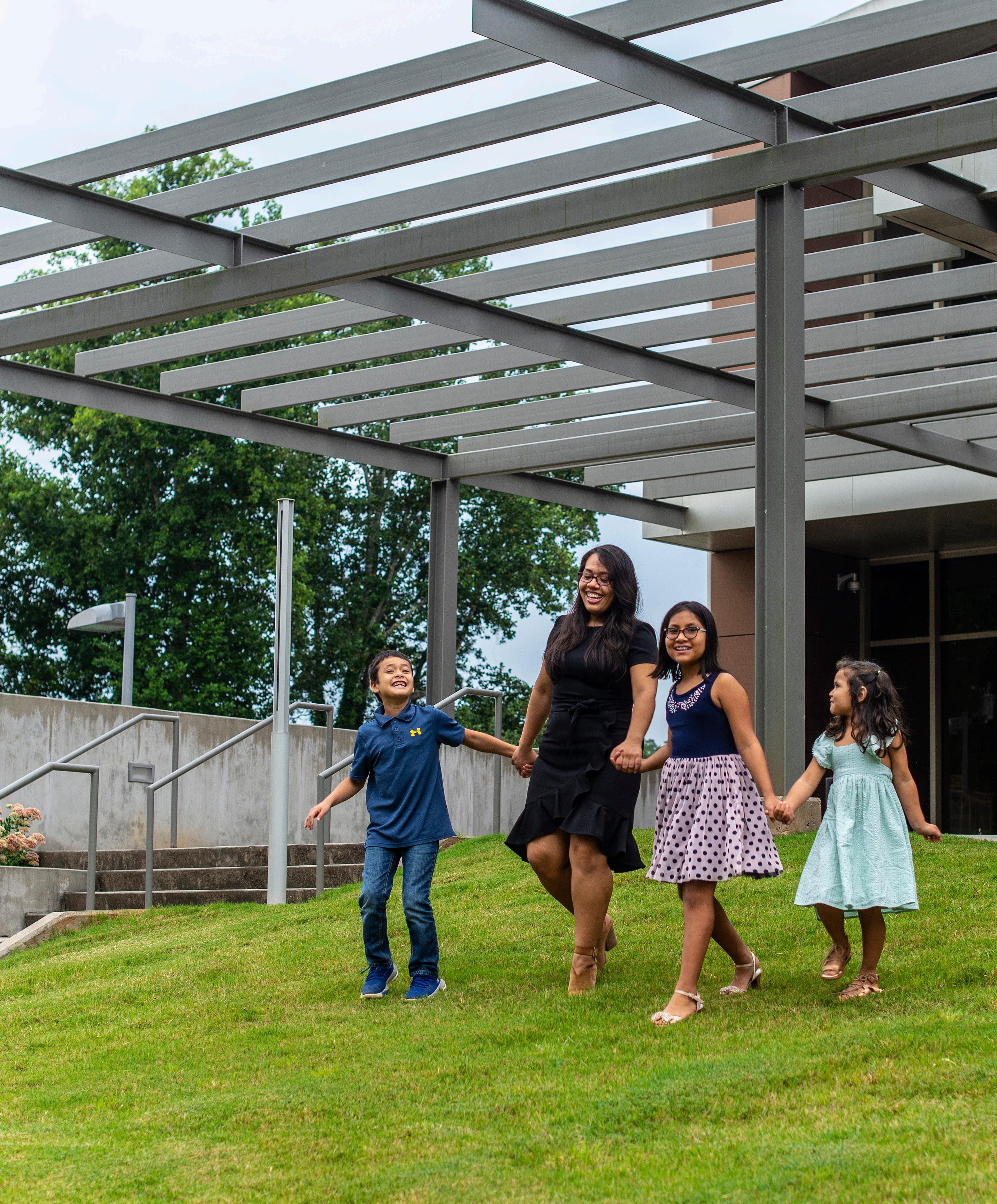
Jasmine Sanchez had three children before graduating with her Bachelor of Science in Nursing from Piedmont University in 2021. Despite the challenges that came with juggling her studies and motherhood, she persisted. Now, she is eager to provide a better life for her kids.
Several years ago, Sanchez decided to go into nursing. She applied to two programs and got accepted to both, but her choice was easy.
“Of course I was coming to Piedmont,” Sanchez said.
Sanchez was no stranger to adversity, but she soon realized that the nursing program, combined with her personal responsibilities, would pose challenges unlike any she’d previously faced.
To pay for her education, Sanchez worked in Piedmont’s Graduate
Admissions Office and helped her mother, a certified nursing assistant, care for her patients. In addition to working two jobs, she also played a huge role in raising her brothers and sisters, and of course, she’s a mother to three children of her own.
In her second semester at Piedmont, the pressure almost proved too much for Sanchez.
“I was having a lot of breakdowns,” Sanchez said. “I was trying to have a tough shell and hold everything inside, but I reached a breaking point.”
Thankfully, three key individuals noticed Sanchez was struggling. One was Graduate Studies Coordinator Ashley Clouatre,
(continued on page 23)
By Rachel Pleasant
Sticking true to the “practical” portion of its promise to students, Piedmont University continues to expand its online programs.
“We recognize that we have students who are working toward degrees while also balancing their careers and families. We continue to look for ways to serve our nontraditional population and remove as many barriers to educational attainment as we can,” said Senior Vice President for Academic Affairs and Provost Dr. Dan Silber.
Piedmont’s online options include baccalaureatelevel programs geared toward those seeking to complete their degrees. Students in these programs must have at least 30 hours of college credit.
“Students sometimes have to put their degrees on hold. The reasons could vary from medical issues, transportation problems, or any number of other unforeseen difficulties. Our online undergraduate programs are designed to help students finish what they started,” Silber said.
In addition to online undergraduate programs, Piedmont offers a growing selection of fully online graduate programs tailored to fit the needs of working professionals.
“Piedmont has been, and always will be, deeply committed to understanding our students, meeting their needs, and doing everything we can to help them reach their academic goals. You’re seeing that commitment demonstrated by our growing selection of online programs,” Silber said.
Piedmont University is defined by delivering highly personalized educational experiences, and now it has a new way of doing exactly that — online, and in partnership with nearly 100 other institutions that are part of an organization called the Lower Cost Models Consortium.
“We often hear the term ‘win-win,’ and I would put LCMC in that category. Students are receiving enhanced academic opportunities with leading subject matter experts, while still receiving that unique Piedmont experience,” said President James F. Mellichamp.
LCMC helps private colleges and universities share resources and information, and develop joint initiatives, all aimed at lowering their operating costs, thus helping to keep tuition costs lower for students. Encompassing more than 100 member
institutions, one of LCMC’s initiatives is the development of collaborative majors.
“The way these majors work is this: Students take the majority of their classes through their college or university, but they also take a small number of classes online in a specialized field, with faculty members from other LCMC institutions,” said Dr. Steve Nimmo, dean of Piedmont’s College of Arts and Sciences.
“The collaborative majors initiative allows Piedmont to offer emerging majors that we couldn’t afford to offer otherwise.”
Piedmont is using the LCMC to offer courses in actuarial science, computer science, digital marketing, engineering, and neuroscience. It is looking to expand offerings using LCMC in the future.
LCMC provides instructional designers that help to ensure all courses are utilizing best practices, thereby creating an optimal experience for students, Nimmo said. Piedmont, meanwhile, assigns faculty members to be advisors for students taking LCMC courses.
• Bachelor of Science in Business Administration
• Bachelor of Arts in Criminal Justice
• Bachelor of Arts in Psychology — launching fall 2022
• Bachelor of Arts in Sociology — launching fall 2022
• Education Specialist-Curriculum and Instruction (EdS)
• Master of Arts in Business Administration
• Master of Arts in Gifted Education
• Master of Arts in Professional Counseling — planned for spring 2022
“We’re combining the expertise LCMC offers with Piedmont’s distinct personal touch,” Nimmo said. “It makes for the best of both worlds for our students.”
• Master of Arts in Elementary, Middle Grades, and Secondary Education
• Master of Arts in Teaching Elementary, Middle Grades, and Secondary Education — planned for fall 2022
• Master of Arts/Master of Arts in Teaching Special Education
• Autism Education Endorsement (undergraduate, graduate)
• In-field Endorsement in Gifted Education (undergraduate, graduate)
By Terrie Ellerbee ’95
Four Piedmont University seniors are learning about project management by building a nature trail. The idea sprang from an offhand remark made by Fred Bucher, the now-retired assistant vice president for facilities management and safety.
Last spring, he spoke to Sandra Maughon’s project management students about capital improvements on the Demorest campus, including a new athletic complex planned for 80 acres Piedmont purchased in 2019. It will encompass 12 tennis courts, state-of-the-art track and field facilities, a softball field, men’s and women’s locker rooms, and ample spectator seating and parking.
Bucher mentioned it would be nice to incorporate a nature trail.
Leah Higginbotham, a business major whose concentration is accounting and finance, and Heidi Lopez, whose concentration is marketing, are using the trail idea to learn how to run a project. Higginbotham stepped up to take on the role of project manager.
Joining them are another business major, Connor Moranos, whose concentration is in management, and Michael Mack, a political science major and president of the Student Government Association.
Heidi Lopez, Leah Higginbotham, and Michael Mack walk onto one of two meadows along the trail. Higginbotham took the lead as project manager.
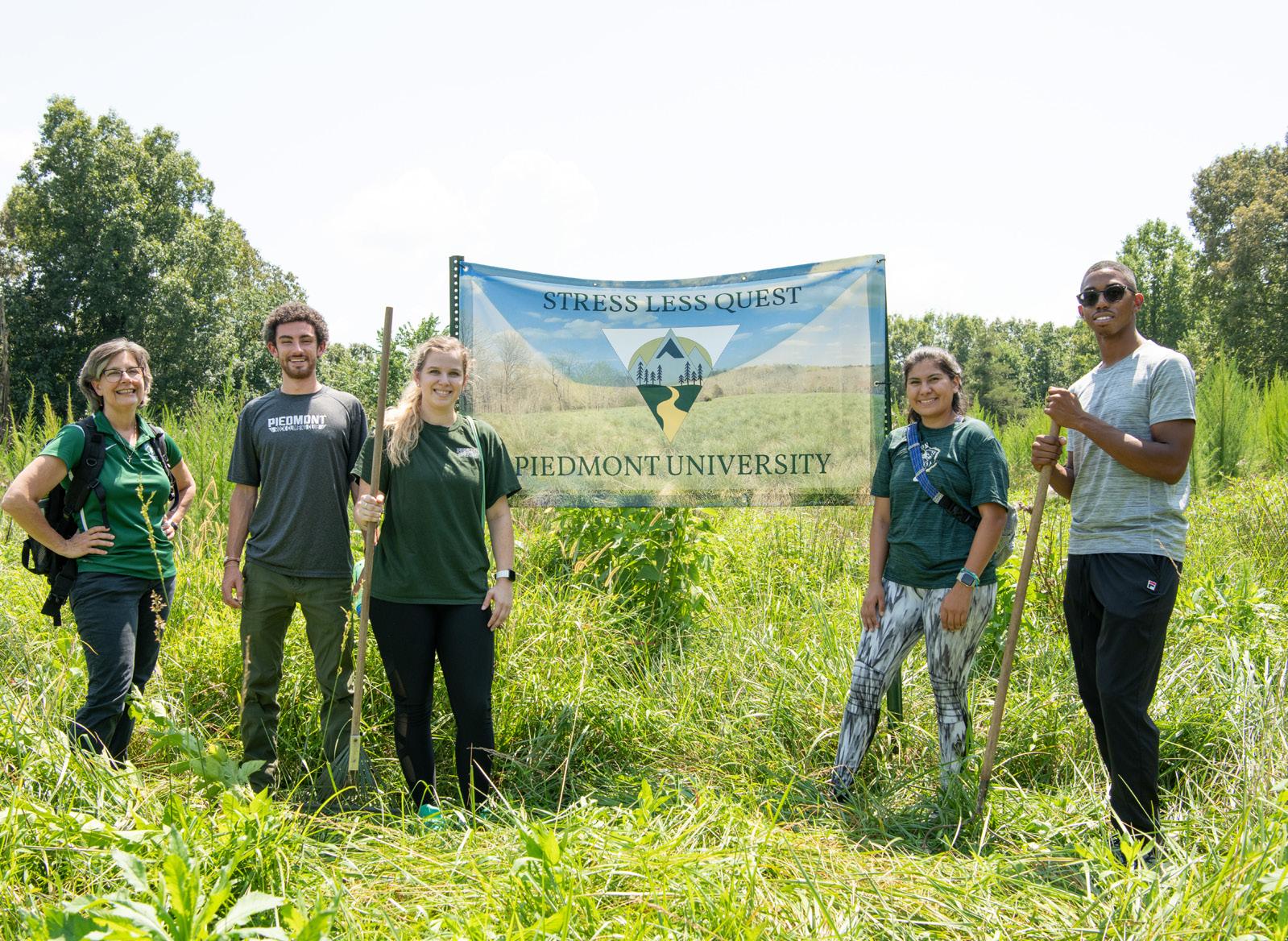
From left, Professor Sandra Maughon, Connor Moranos, Leah Higginbotham, Heidi Lopez, and Michael Mack stand with a banner created by Hannah Oliver ’21 for the inaugural Stress Less Quest.
After a planning session, the group was ready to get started.
For two months, the quintet raked and clipped to clear the trail. Bucher suggested using foot power to move the project along, so an organized walk was planned. The inaugural “Stress Less Quest” was held during finals week in May.
Approximately three dozen people took part. Among them were Piedmont University President Dr. James F. Mellichamp, and Kerry Waller, dean of the Walker College of Business.
“It was a really nice walk,” said Higginbotham, who spent time over the summer getting estimates on improvements for the trail. “We are so grateful to have all the support.”
The trail is the first phase of an ambitious plan. The project will ultimately be a multi-use, multi-distance labyrinth of trails that will fully integrate with the completed sports complex. It may also include picnic areas, study gazebos, and at least one dog park.
Strips of yellow and orange barrier tape mark the trail, which starts near the New Bedford residence hall. The meandering loop is approximately 1.5 miles long. It crosses what looks to be a creek but is actually a lakebed.
Biology professor Dr. Carlos Camp said it was once Lake Demorest, originally formed in the late 1800s by the impoundment of Camp Creek. The lake was drained in 2008, leaving behind what Camp called a mosaic of marsh, beaver ponds, and bottomland forest.
The trail will maximize Piedmont’s expansion and allow everyone to see the progress as we move forward with the new facilities.
Jame Carney, Cycling Coach
“Students have talked about having a dog park for service animals,” Lopez said. “We have plenty of space for it.”
Mack is on the cycling team and approached Head Cycling Coach Jame Carney about the trail project.
“The trail will maximize Piedmont’s expansion and allow everyone to see the progress as we move forward with the new facilities,” Carney said. “It’s a great piece of property with tons of potential.”
Moranos, a cross-country runner and avid hiker, took the lead as Maughon and the students mapped out the trail. He said they “followed where the land took us.”
Future signage will include an explanation of the ecological feature along with directional markers and security information for the trail.
Moranos and Higginbotham are reaching out to fellow art students to leverage their creative talents for that aspect.
Hank Knight, who succeeded Bucher as assistant vice president for facilities management and safety, said that once the route is finalized, the trail will be forestry mulched.
The reach across departments and disciplines teaches the value of networking and collaboration.
Another important lesson in project management is succession planning. As the four seniors graduate, new students will be needed to continue the work.
All those involved in the project hope the trail will be enjoyed not only by Piedmont students, faculty, and staff but also by residents in the communities around the Demorest campus.
By Terrie Ellerbee ’95
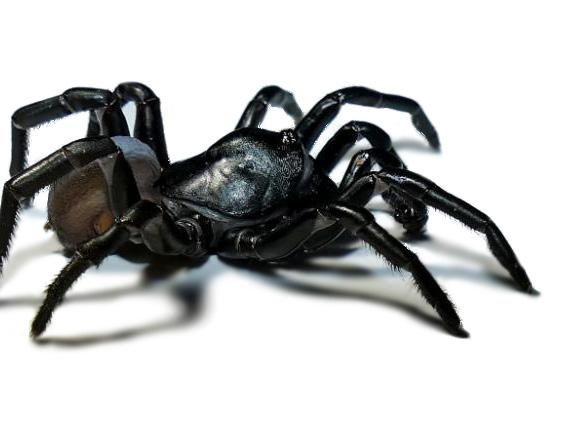
Dr. Rebecca Godwin’s revision of the New World members of the trapdoor spider genus Ummidia was about 10 years in the making, including the time it took her to earn a Ph.D. No one had taken a close look at the genus in at least 50 years.
In her 200-page revision, the taxonomist, arachnologist, and Piedmont University assistant biology professor identified 33 previously unnamed trapdoor spider species. A story about one of them hit the web in April and went viral.
“The internet did what it does, and I had people calling from the U.K. and CNN,” she said. “It was insane.”
That now-famous spider was found in Florida by a Zoo Miami staff member. It didn’t match records for known species in the region. An image of the spider eventually reached Godwin, who confirmed that the arachnid was indeed previously unidentified. Zoo Miami published a news release about its involvement in the discovery. The story was picked up and amplified by Florida media outlets.
Godwin was interviewed by the Asheville Museum of Science and for the podcast New Species, but versions of the story also ran in the Orlando Sentinel, New York Post, People, Wired, and Newsweek, as well as the United Kingdom’s Daily Mail, among others, some with click-baiting headlines about a “terrifying” “venomous spider” that “can live for over 20 YEARS.”
It was significant hoopla for a project whose genesis was considered tedious, at best, even by other scientists.
Godwin’s research on the Ummidia genus began with her undergraduate research at Auburn University. A biological sciences professor, Dr. Debbie R. Folkerts, had a side interest in arachnology.
The internet did what it does, and I had people calling from the U.K. and CNN. It was insane.
Dr. Rebecca Godwin, Assistant Professor of Biology
“She had me sort her spider collection, which I was not really excited about, but the more I learned about them, I realized that they were more than just super leggy things that hung around doorways and on trees,” Godwin said.
The trapdoor spiders she later became enamored with are collected by crawling around moist hillsides. The hunt took Godwin to Costa Rica, California, and the Mediterranean, among other locations. Specimens were also sent to her by other collectors, but most
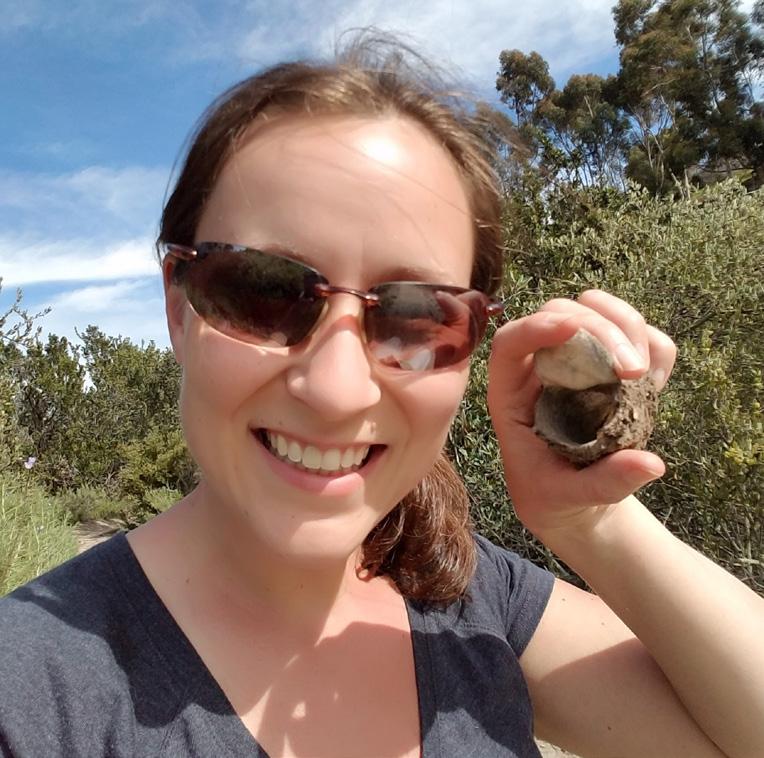
Dr. Rebecca Godwin holds a freshly excavated trapdoor spider’s burrow in San Diego, California. The spider that built it is the genus Bothriocyrtum, but in the same family, Halonoproctidae, as Ummidia.
were in museums, with many at the Museum of Natural History in New York.
Trapdoor spiders can be elusive partly because they are not colorful. Most are brown or black and less hairy than a tarantula, a close relative. Ummidia’s living conditions make them nearly impossible to find. Unlike tarantulas, trapdoor spiders burrow into the ground to build their home and close it with a “very precise” door, according to Godwin.
“These spiders basically spend their entire lives underground in an 8- to 10-inch space,” she said. “Depending on where they live, the door can even be beveled, so it fits exactly in a hole, and the top of it is covered with soil. It can become very cryptic.”
Because they live underground, they can’t see well, so they slide their tarsus (toes) out the door to sense and catch passing prey.
A burrowing trapdoor spider matures in five to 10 years and only then leaves the mother’s burrow. The mature spider walks a little distance and immediately makes its own burrow. Adult males then leave their burrows and set about finding a mate. Females mate and lay eggs every year. Godwin said it is unclear how long males live after mating, but the lifespan of the female can be 20, 30, or even 40 years.
While many an arachnophobe might shudder at the thought of spiders that live for decades, Godwin considers them “beautiful,” and frets for their future.
She viewed media interviews as valuable opportunities to spread the word about the spiders.
“Taxonomy doesn’t get a whole lot of press most of the time,” she said. “I thought it was exciting that anybody might, at least for a minute, think about these trapdoor spiders, especially those in the Pine Rocklands habitat in the Everglades, because it really is an endangered habitat.”
Godwin and revision co-author Jason Bond, professor in the Department of Entomology and Nematology at the University of California, Davis, named the 33 new species. The process acknowledged others who assisted them, but they had a little fun with some of the names.
Newly named trapdoor species include:
Ummidia brandicarlileae
Named for singer-songwriter Brandi Carlile because it was found in Yucatán, Mexico, where the annual Girls Just Wanna Weekend is held.
Ummidia frankellerae
Named by Bond for Fran Kellera, currently a professor at Folsom Lake College, who led a bioblitz—finding and identifying as many species as possible in a specific area over a short period of time—in Belize that recovered one of the previously unidentified species.
Ummidia neilgaimani
Named for British fantasy and horror author Neil Gaiman, who wrote American Gods, which Godwin said she “listened to on repeat throughout my Ph.D.”
Ummidia bessiecolemanae
Named for Bessie Coleman, the first African American woman and Native American to obtain a pilot’s license.
Ummidia rongodwini
Named for Godwin’s husband, Ron. They married while she was in graduate school. (It is considered bad form to name a species after oneself, so there is no rebeccagodwini.)
Godwin ran into an ironic problem around names when she tried to collect specimens in the Everglades. Because the trapdoor spiders had not yet been named, officials declined her request for a permit to collect. She could only offer the genus, not the name of the species.
That is why the Zoo Miami specimen was such an important find. The zoo waited more than five years to publish the press release that started Godwin’s path to overnight sensation. That species ultimately became Ummidia richmond, named for Naval Air Station Richmond, a former military installation near Miami.
By Rachel Pleasant


In August 2021, Piedmont University added a Bachelor of Science in Communication Sciences and Disorders. A master’s degree program in the field is planned for 2023.
“Nationwide, there is a shortage of speech-language pathologists. Piedmont saw an opportunity to design and develop a unique program that will address workforce needs,” said Dr. Julia Behr, dean of the College of Nursing and Health Sciences.
Speech language pathology involves assessing, diagnosing, treating, and helping to prevent communication and swallowing disorders. According to the U.S. Bureau of Labor Statistics, the number of jobs available in speech-language pathology is expected to increase by 25 percent through 2029, which the BLS describes as much faster than average.
The bachelor’s degree will prepare students to continue straight into Piedmont’s master’s degree program, which is expected to
be in place by the time the first class of baccalaureate students is ready to begin graduate studies. A master’s degree is required to become a certified, licensed speech-language pathologist.
Piedmont is also creating a clinic on the Demorest campus that will provide treatment to area residents and real-life learning opportunities to students.
Leading the program is Monica Bellon-Harn, director of Communication Sciences and Disorders. Bellon-Harn holds a doctorate in Communication Sciences and Disorders from Louisiana State University. She previously worked as chairperson of Lamar University’s Department of Speech and Hearing Sciences, which serves more than 200 students in undergraduate and graduate programs and the regional community through a speech and hearing clinic.

Piedmont University will launch a fully online master’s degree in Professional Counseling in Spring 2022, a program that responds to both student demand and the rise of technology within the field.
“During the pandemic, counseling services have been in high demand, and because of the health risks of face-to-face contact, there’s been an increase in demand for virtual counseling services. We’ve designed our program to prepare students to work in both an in-person and online setting,” said College of Arts and Sciences Dean Dr. Steve Nimmo.
The Bureau of Labor Statistics predicts jobs in counseling will grow by 25 percent through 2029, which it describes as “much faster than average.”
Designed to be completed in 2.5 years, Piedmont’s Master of Arts in Professional Counseling-Clinical Mental Health Concentration program will include required coursework in telemental counseling. Other programs often offer such courses as electives.
An American Psychiatric Association survey found that COVID-19 has forced a dramatic shift toward virtual counseling. Prior to the pandemic, more than 63 percent of survey respondents were not offering any type of virtual counseling. Two months into the pandemic, 85 percent of respondents were seeing at least a portion of their patients virtually.
“Including this course in our curriculum is intentional and strategic. Students must learn how to do virtual counseling safely, ethically, effectively, and legally,” said Dr. Kathy Robinson, program coordinator for the new master’s degree.
Robinson, who holds a doctorate in Counselor Education and Supervision from Auburn University and is a Licensed Professional Counselor in the State of Georgia,
Our classes will be very small. This will allow the faculty to engage with their students and invest in them 110 percent.
—
Dr. Kathy Robinson, Associate Professor and Program Coordinator of the Professional Counseling master’s degree
added that the online format of the program will provide another layer of preparation for students.
“It gets them comfortable with the online setting and with communicating effectively through the use of technology,” Robinson said.
However, students will still receive personal attention and opportunities for interaction.
“Our classes will be very small. This will allow the faculty to engage with their students and invest in them 110 percent,” Robinson said. “We want this to be one of the best degree programs in the country.”
The program will also provide students with in-depth study of frequently used counseling techniques and modalities, such as cognitive behavior therapy and dialectical behavior therapy.
“In some counseling programs, students receive an overview of commonly used therapies,” Robinson said. “We’re going to go deeper, so that our students can go into their future practices with confidence using these modalities.”
Piedmont’s program will prepare students for licensure in the State of Georgia.
By Rachel Pleasant
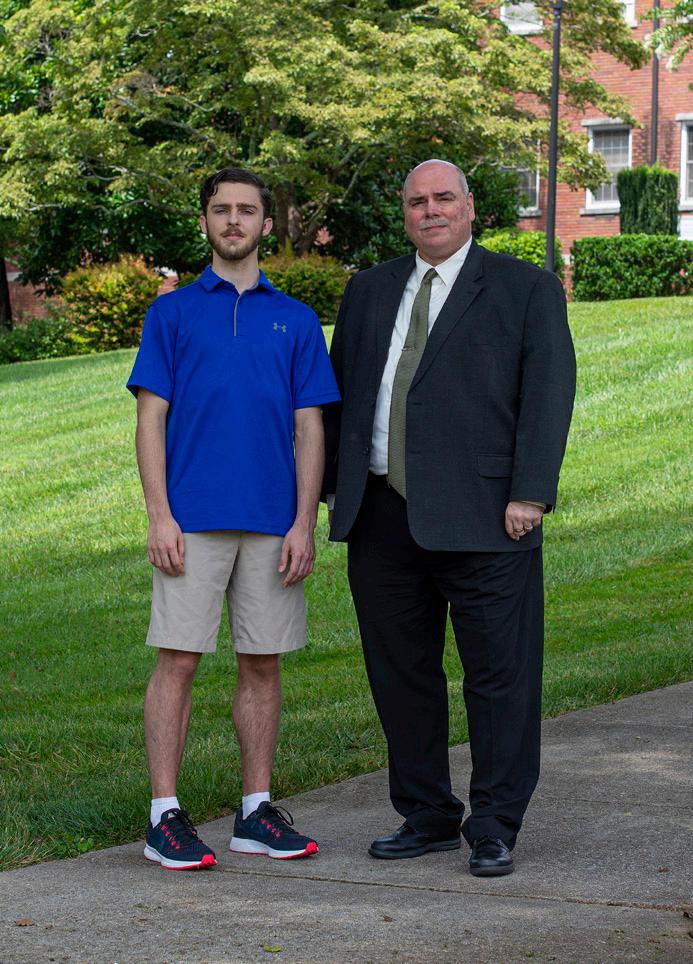
His whole life, Bryce Stout ’21 never fit into any of the usual “boxes.”
By kindergarten, he was reading the newspaper. By middle school, he’d already earned dozens of college credits. By 15, he’d decided on a career in medicine, but a major in political science.
At Piedmont University, he found a place to finally be himself — and to grow.
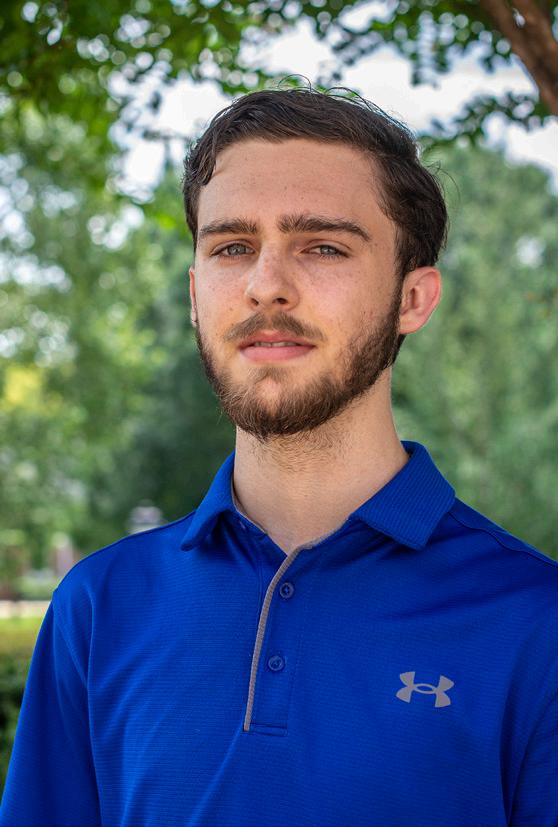
“When I visited Piedmont and met my professors, I knew right away that I would learn so much here, and that I would become a better person, and I have,” said Stout, 18, who graduated in July 2021 with his Bachelor of Arts in Political Science.
A native of Orlando who moved with his family to Clarkesville when he was 11, Stout always excelled academically. At age 13, he’d already skipped two grade levels and began taking dual-enrollment courses at North Georgia Technical College. After earning more than 40 credits, Stout applied and was accepted to Piedmont.
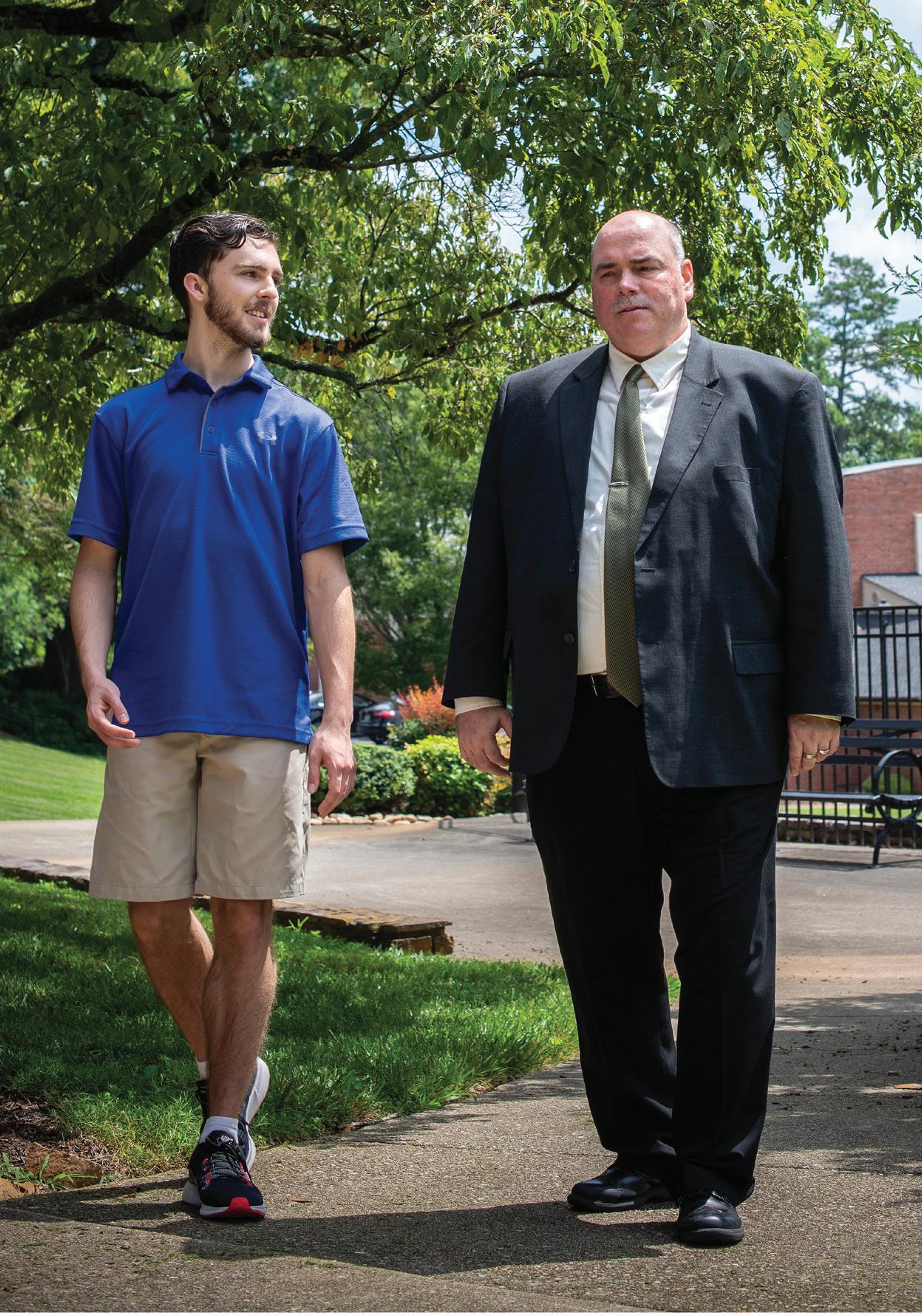
“As a dual-enrollment student, I could only earn so many credits. My parents, Brian and Jennifer, worked so hard to find a school for me to go to after dual enrollment ended,” Stout said.
“One day, my dad picked me up from school and told me I could go to Piedmont. I was ecstatic, almost to the point of tears. Piedmont has a great reputation, but I didn’t know if it would ever be possible for me to go here.”
During the summer before he started classes at Piedmont, Stout volunteered at the Evan Oglesby Foundation’s summer camp, where he discovered his life’s passion: working with children.
Having been homeschooled, Stout said he didn’t have many opportunities as a child to make friends. He often felt awkward, like he was lacking certain social skills. At the summer camp, he was in a position to support and encourage children who didn’t quite fit in either.
I’ve been taught to look for those interconnections and how they affect human beings. That will make me a better physician, and that was only possible because I came to Piedmont.
— Bryce Stout ’21
“I remember this one kid who was being bullied while playing dodgeball,” Stout said. “He was really down on himself. I pulled him aside and told him about myself. Just over the course of that one week, I saw a lot of growth in him.”
With that experience, Stout’s mind was made up: He would become a physician, specializing in either family medicine or pediatrics, and dedicate his life to helping future generations of children grow and develop healthily.
“I thought about majoring in biology or psychology. I kept going back and forth between those two majors because those are the ‘usual’ majors for someone who wants to go to medical school,” Stout said. “But I wanted to broaden my horizons and pursue something I enjoy at Piedmont, and for me, that was political science.”
Stout has no doubt he would have been dissuaded at larger universities.
“At Piedmont, my advisor and professors helped me see that it was possible to major in political science and still become a doctor,” he said. “They helped me navigate the right path for me.”
Political Science Professor Dr. Tony Frye was particularly supportive, Stout said.
“The very first time I met him, he told me he was working to accommodate a student who needed one class to graduate.
He was making it possible for her to take that class over the summer. He ended up doing the same for me in 2021,” Stout said.
Frye recalled sharing with Stout that he had a contact who’d majored in political science and gone on to medical school.
“I encourage students to pursue their academic interests because in doing so, you gain an understanding of your field, discipline, and possible career paths,” Frye said.
“You might change your mind, or you might develop new interests along the way, or like Bryce, you might intend all along to pursue a career in a different field. That is not a bad thing. It’s all part of the growing experience and realizing what you want to do with your life.”
Throughout his time at Piedmont, Stout encountered numerous other individuals “fervently dedicated to meeting the needs of every student.” As a result of their support and encouragement, as well as small class sizes, Stout experienced great personal growth during his time as a Lion.
“I am not as shy, nervous, and soft-spoken,” said Stout, who also credited youth basketball with his personal growth.
“At Piedmont, I never had more than 20 people in my classes. In that environment, you get to know people. I’m a lot better at making friends than I used to be.”
As he celebrates his graduation, Stout is also grateful for a college experience that will serve as a solid foundation for further studies and his future career. He is currently in the process of researching medical school options.
For his senior capstone project, Stout studied the levels of trust voters in various countries have in their political systems and candidates, and how their levels of trust are affected by economics, culture, personal experiences, and other factors.
“I’ve been taught to look for those interconnections and how they affect human beings,” Stout said. “That will make me a better physician, and that was only possible because I came to Piedmont.”
By Terrie Ellerbee ’95
Teaching was always her first love, but Dr. Janice Moss was interested in journalism as a teenager. She interned at several radio stations in North Carolina and later worked in the news departments for stations there and in Louisiana.
At Piedmont University’s Welcome Back Assembly in early August, Moss was the story.
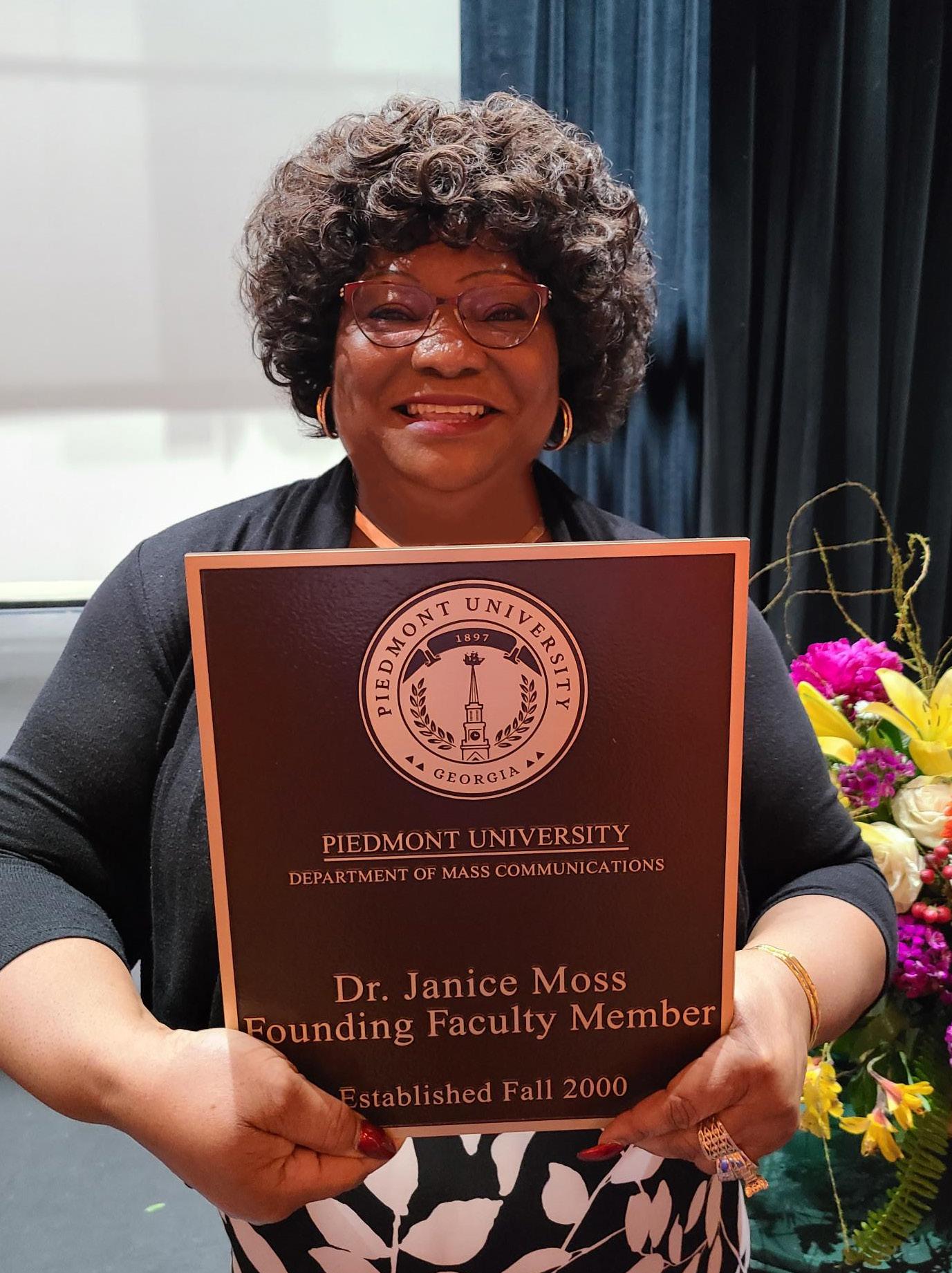
President Dr. James F. Mellichamp unveiled a bronze commemorative plaque to mark her role as Founding Faculty Member of the Department of Mass Communications. She received a standing ovation.
“I was completely surprised,” Moss said. “It is wonderful that the program has been such a success over the years. It has made me so happy to see that the vision I had so many years ago came to fruition. It is just a great feeling.”
Her arrival was the seed that would grow into programs that now include print, radio and television journalism, website management, social media, public relations, advertising, and more.
There was no mass communications department when Moss came to Piedmont in 1994. The only related course was public speaking, which she taught in the basement of Daniel Hall.
“Dr. Moss came to Piedmont at a time when, frankly, there was not really very much here to be excited about. But we are very grateful that she took a chance on Piedmont developing a mass communications program,” Mellichamp said.
The department was established in 2000 and moved into the Swanson Center for the Performing Arts and Communications when that facility opened in 2007. The department now encompasses a newsroom, editing suites, a TV studio, and two radio stations alongside performing arts facilities, classrooms, and offices.
Moss has continued to teach public speaking. After the mass communications degree program rolled out, Piedmont added a debate practicum, which Moss also teaches.
In 2003, she created the Piedmont University Debate and Forensic Team and has since then served as its coach and advisor.
In 2015, Piedmont hosted the Georgia Parliamentary Debate Association state tournament, which brought powerhouse teams from Emory, Morehouse, and Georgia Tech to the campus.
Her bronze plaque will hang in the Swanson Center not far from Moss’ office and just across from two cases filled with awards the team has won.
“For 27 years, she has helped students find their own ‘voice’ in public speaking classes. And she has built one of the most impressive debate teams in the entire region,” Mellichamp said.
Dale Van Cantfort, mass communications professor, said Moss has been a positive influence on hundreds of Piedmont alumni and is to be credited for nurturing the once-fledgling mass communications program as it grew.
“The guidance and persistence she has shown over the past 27 years has allowed our department to develop and flourish,” said Van Cantfort. “Dr. Moss is a true professional educator. I look forward to her continued success at Piedmont University. It is an honor well earned.”
In the 1990s, a “grand convergence of the media” was underway. Traditional print and broadcast outlets increasingly merged their operations with online technologies. Dr. Janice Moss used that phenomenon as the organizing principle when she proposed both the mass communications minor and major. Piedmont faculty approved them both unanimously.
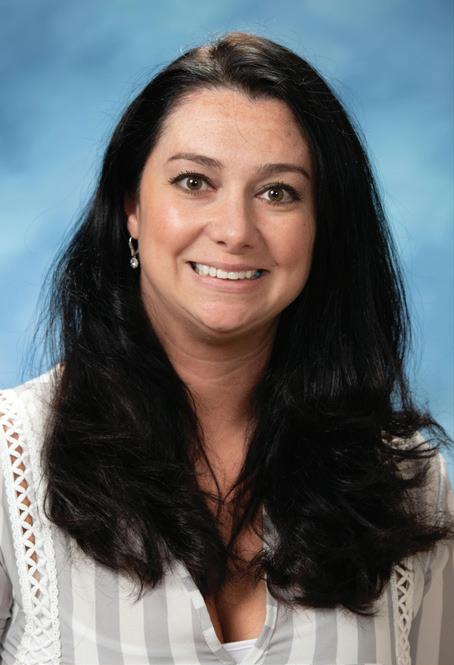
Dr. Melissa Tingle has been named as the third Associate Dean of the College of Arts & Sciences. The assistant professor continues to teach while also serving as co-chair of the Department of Mass Communications.
As part of her new responsibilities, she will liaise between the Office of Academic Technology and the College of Arts & Sciences faculty, as well as assist with the support of online programs
and Canvas. She brings extensive experience in online and hybrid programs to the role, having taught in multiple formats before her move to Piedmont University four years ago.
She was also involved in assessment for Piedmont’s fiveyear Quality Enhancement Plan (QEP) for the Southern Association of Colleges and Schools Commission on Colleges.
“Dr. Tingle has become involved in many different projects since arriving at Piedmont in 2018, not only as a faculty member and advisor in Mass Communications, but also in her roles as a QEP fellow and most recently an instructional designer in our Office of Academic Technology,” said Dr. Dan Silber, Senior Vice President for Academic Affairs and Provost. “Her strong academic background, professional experience, and unusually
broad set of technical skills made her a great choice to serve as an associate dean in our College of Arts & Sciences.”
The promotion is in part a result of Piedmont’s transition from college to university. Among other changes, the College of Arts & Sciences was split into two schools: the School of Fine Arts and the School of Humanities & Sciences. Dr. Steve Nimmo continues to be dean of the College. Dr. Steve Jacobs remains Associate Dean with responsibilities supporting the Social Sciences, and Humanities programs, while Tingle mainly supports Mass Communications, Natural
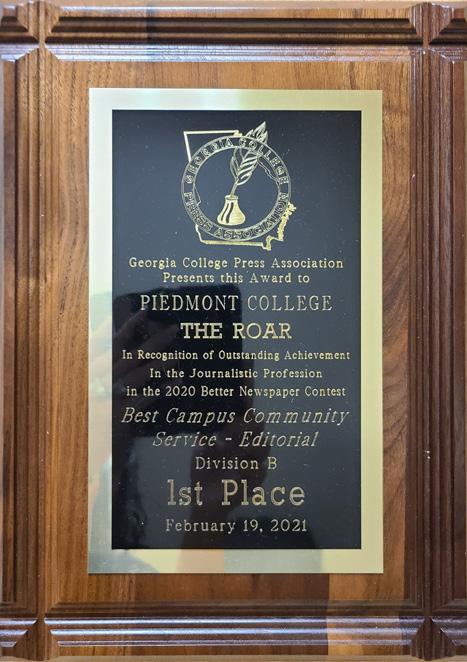
Piedmont University’s student newspaper, The Roar, is a finalist for the College Media Association’s Pinnacle Award, the most prestigious national award for individual work in collegiate journalism.
The Roar is one of five finalists for the CMA’s Best Editorial Award, vying against entries from Appalachian State, Baylor University, UCLA, and Vanderbilt.
The Roar was nominated for an editorial, “Graduation: An Empty Ceremony is No Ceremony at All,” that published in April 2021. In the editorial, student staff writers implored Piedmont’s administration to allow guests to attend the May 2021 graduation ceremony.
As vaccinations became more widespread and threat levels diminished, Piedmont adjusted its graduation protocols, allowing two guests per graduate.
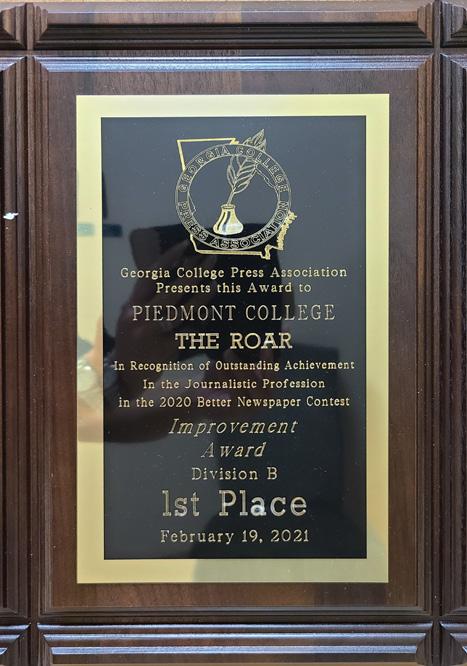
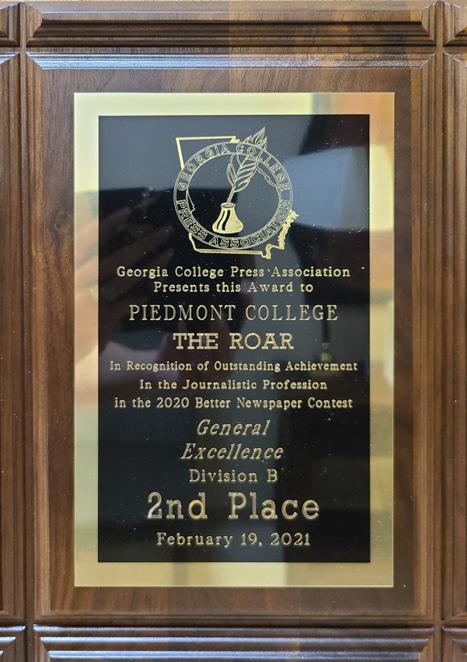
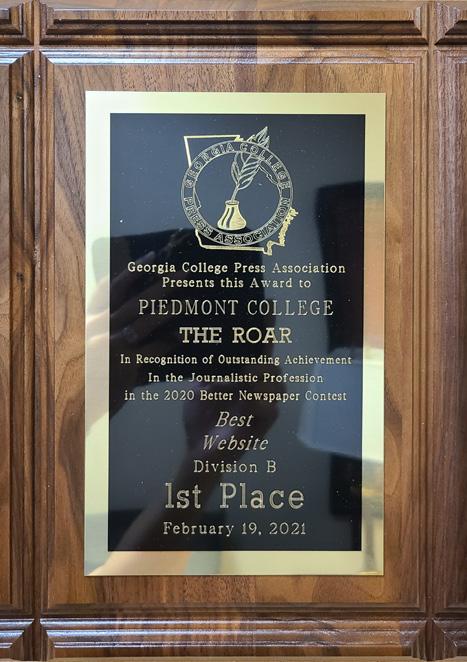
The Roar is consistently competitive at the state level — most recently receiving a 2nd Place General Excellence Award from the Georgia Press Association in 2020 — but has never before earned national recognition.
Award winners will be announced in October 2021 at the National College Media Convention.
Sciences, and Mathematical Sciences. The School of Fine Arts remains under the purview of Dr. Wallace Hinson.
“Structurally we are making these changes so that the administration of the schools becomes more efficient as the university grows and adds more programs within the College of Arts & Sciences,” Tingle said. “It also helps create an even greater familial feel amongst faculty, who are banded together with like interests in their subject areas.”
The Mercer University alumna said she was “completely surprised” by the promotion and thrilled to take on her new roles.
(continued from page 7)
use their experience to help us tailor our instruction to ensure our graduates are highly prepared.”
For Clinton, who holds a doctorate in special education from the University of Georgia and worked as a special education teacher in the Clarke County School District, adding the bachelor’s degree program was a passionate endeavor.
“Every child with special needs has the ability to learn and succeed. To see a student with dyslexia learn to read, or a student with autism who shies away from social interaction begin to start initiating conversations, it’s incredible,” Clinton said.
“These students need educators who are determined, patient, and skilled problem-solvers. Those are the kind of educators we produce at Piedmont. The bachelor’s
degree program creates a new pipeline for getting our graduates into Georgia’s special education classrooms.”
The Bachelor of Arts in Special Education will be offered at both the Demorest and Athens campuses. In Athens, online and evening courses are available to assist those who are working or raising families in addition to pursuing their education.
That flexibility is why Samantha Foster enrolled as one of the first students in the program. Foster is currently working as a special education paraprofessional in Madison County.
“The job and the children are my entire heart, and I can’t fathom doing anything else except for finally having my own classroom,” she said. “Piedmont is close to me, and the classes are geared toward working adults. This program will allow me to do what I love at a higher level.”
(continued from page 9)
who supervised Sanchez’s work; one was Associate Nursing Professor Jennifer Kelley; and the other was Associate Nursing Professor Karen Greilich.
Greilich provided much comfort and support, Clouatre encouraged Sanchez to see a Piedmont counselor, and Kelley made the actual referral.
“Here at Piedmont, our class sizes are small — the student-tofaculty ratio is 11 to one. Faculty members are able to really get to know our students and their struggles, and we are able to intervene when our students need help,” Kelley said.
“I got into nursing to help people, and then I discovered I could help people through teaching, too. To know I was able to help Jasmine and play a small part in her success, it makes me feel really great.”
With counseling, Sanchez learned how to better manage her many responsibilities.
“I also learned that it’s OK to ask for help. It doesn’t make you weak or different,” she said.
With so many struggles behind her, Sanchez is now fully focused on her very bright future. She plans to buy a house, and she will be able to afford for her children to participate in football and cheerleading. She also plans to continue her education and eventually become a nurse anesthetist.
Wherever life takes her, Sanchez’s Piedmont family will be cheering her on every step of the way.
“I hope when others meet Jasmine and hear her story, they know that they can come to Piedmont and get an education,” said Clouatre. “Whether they’re a first-generation college student, or they have children, or whatever their circumstance, they can come to Piedmont and be supported 100 percent. That’s what we’re here to do — for Jasmine and all our students.”
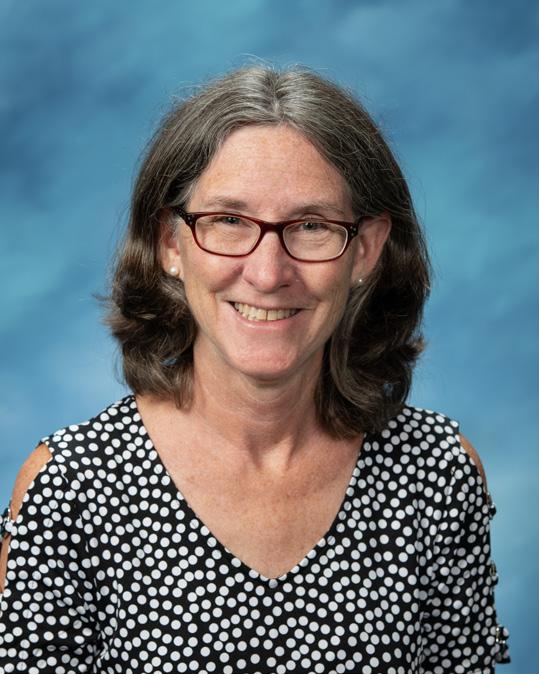
Dr. Jan Witherington Associate Professor, Education
The Vulcan Teaching Excellence Award was awarded to Dr. Jan Witherington during Piedmont University’s May 2021 Commencement. It is presented annually to an outstanding undergraduate faculty member who demonstrates strong academic skills in the classroom and provides leadership and support in other areas of campus life.
Honorees are nominated by fellow faculty members.
“It was a complete shock, and I am honored to work at Piedmont doing what I love most — teaching,” Witherington said about receiving the honor.
Witherington brought 35 years of teaching experience to the university in 2017 when she took on a parttime position as a Piedmont cohort instructor. In 2018, she moved into a full-time elementary education professorship at Piedmont’s Athens campus.
The award is sponsored by the Vulcan Materials Company through the Georgia Foundation for Independent Colleges.
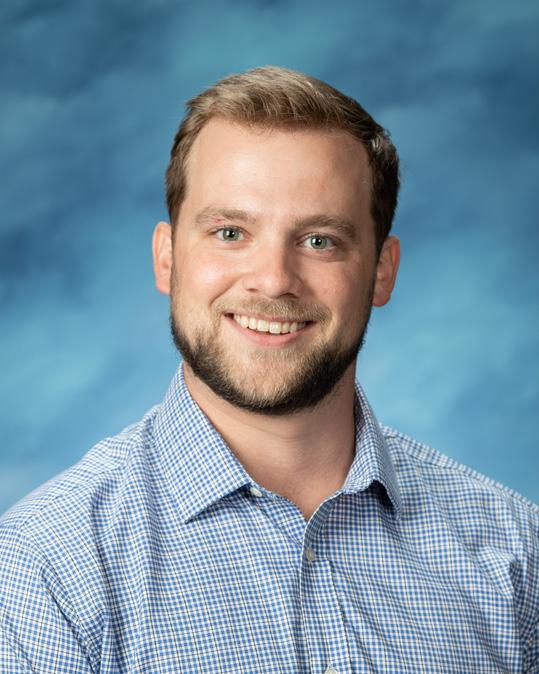
Jeff Bowers Assistant Professor, Spanish
Spanish professor Jeff Bowers received the Piedmont University Outstanding Advisor award during Commencement in May. The award is presented annually to an undergraduate academic advisor who has demonstrated in an exceptional manner the qualities essential for sound advising.
Bowers advises “explorers,” those students who are undecided on a major.
“I like that term because that’s what they’re doing. They are trying to find and seek out what will give them a fulfilling life,” Bowers said.
Bowers does not rush students to choose a major. His goal is to guide them to the intersection of their talent and passion. He said he helps students believe in themselves, gives them room to dream, and most importantly, listens to them.
“We believe in them and care about them. I am genuinely interested in their success, and not just here at Piedmont,” he said. “I’m invested in their success because they are part of my story as well.”
Dr. Ben Andrews
Assistant Professor, Education
Published “College Costs and Credit Cards: How Student Credit Card Use Influences College Degree Attainment” in Research in Higher Education in January.
Dr. Carlos Camp
Professor, Biology
and Eli Stancel ’00
Manager, Engineering Training, Norfolk Southern Railway
Co-authored Walls of Iron, which was published by Argus Books in April.
Dr. Windy Charles
Professor, English
and Dr. Jessica Eagle
Professor, Biology
Served as judges for the 2020 Council for Advancement and Support of Education (CASE) District III Writing: Series or Collection contest.
Dr. Hugh Davis
Professor, English; Chair, Humanities
Was featured on the podcast Tenn in 20 on “The Making of James Agee” (Summer 2020) in June 2020.
Published “Roman Virtus and Machiavellian Virtú in Francis Ford Coppola’s The Godfather” in Studies in Popular Culture (Spring 2020), in May 2020.
Published “‘Monkey Meat’ and Metaphor in Shohei Ooka’s Fires on the Plain” in Exchanges: Special Issue on Literal and Metaphorical Cannibalism across Disciplines (Winter 2020) in February 2020.
Dr. Jaydn DeWald
Assistant Professor, English; Director, Creative Writing
Published the cross-genre book The Rosebud Variations, Broken Sleep Books, in September.
Had his short story “Overture” featured on the Father’s Day episode of the Micro podcast.
Had poems from his upcoming book, GRID, published in the Yalobusha Review (University of Mississippi), Denver Quarterly, Witness, and Annulet: A Journal of Poetics.
Published an essay, “Don’t Erase, Don’t Discard,” that appeared on the Kenyon Review’s blog in February.
Dr. Kate Guthrie
Assistant Professor; Qualitative Research Methodologist
Presented the paper, “Rethinking data analysis through artistic inquiry in the research classroom: Collective perspectives from the educator, student, and scholar,” at the 2021 International Congress of Qualitative Inquiry (virtual) in May.
Published “Qualitative inquiry with adolescents: Strategies for fostering rich meaning making in group interviews” in the American Journal of Qualitative Research, in December.
and Sarah Sumners
Assistant Professor, Education
Presented “Promoting creativity in the classroom: Connecting theory to practice with the Torrance Tests” at the 2020 National Association for Gifted Children’s Annual Conference (virtual) in November.
Tyler D. Mann
Former Assistant Professor, Art
and Regina McCormick ’08
Director of Marketing & Communications, Admissions
Studio Arts Major
Led Piedmont University’s rebranding, which has received the Award of Excellence in the University & College Designers Association’s (UCDA) 2021 design competition.
Susan H. Phillips
Professor, Education
Published a fourth children’s book, Dallas Goes to School, in a series featuring her dog, Dallas, in April.
Distinguished University Professor, Education, College of Education
Presented at the International Conference on Learning at Jagiellonian University in Krakow, Poland, in July.
Published Enrollment Management, Rowman & Littlefield Publishing, in July.
Published The Quantum University, Rowman & Littlefield, in January.
Was a keynote speaker at the Critical & Creative Thinking Conference, presenting “Critical Leadership in Critical Times” at the University of South Florida, St. Petersburg, in September 2020.
Published Making Shared Governance Meaningful, Rowman & Littlefield, in August 2020.
Associate Professor, Biology, and Director QEP
Assistant Professor, Mass Communications; Associate Dean, College of Arts & Sciences; Co-Chair, Mass Communications
Co-authored a chapter on High-Impact Practices in Enrollment Management: Practitioners Describe Successful Approaches with Dwindling Numbers, published in July by Rowman & Littlefield Publishers.
Dr. Greg Ryan
Associate Professor, Health Sciences
Was the lead author on two poster presentations and co-author for three other presentations at the 2021 National Strength and Conditioning Association National Convention in July at the Walt Disney World Swan and Dolphin resort in Orlando.
Associate Professor, Business
Completed training to be a Registered Neutral with the Georgia Office of Dispute Resolution in July.
Presented at the International Atlantic Economic European Conference (virtual) in May.
Associate Professor, Biology, and Director QEP
Presented on “Microbiota in Your Gut: Good or Bad?” for the Asheville Museum of Science Ask a Scientist Program (virtual) in June.
Presented “Using Fun Activities to Learn About the Functions of Organelles” at the Human Anatomy & Physiology Society Meeting (virtual) in May.
Presented “Strumming through the QEP: Assessing High-Impact Practices” at the Southern Association of Colleges and Schools Commission on Colleges Annual Meeting (virtual), in December.
Assistant Professor, Mass Communications; Associate Dean, College of Arts & Sciences; Co-Chair, Mass Communications
and Dr. Julia Schmitz
and Dr. Perry Rettig
Published “QEP is HIP: A Case Study Implementing an Institution-Wide Undergraduate Research Community of Inquiry for a Small Private College Setting” in the Journal
of the Scholarship of Teaching and Learning in May.
Associate Professor, Mathematics
Presented “The Chow-Waring problem” at the University of Idaho Mathematics Colloquium in April (virtual presentation).
Published “All secant varieties of the Chow variety are nondefective for cubics and quaternary forms” with Nick Vannieuwenhoven from Katholieke Universiteit Leuven (Belgium), in Transactions of the American Mathematical Society, Volume 374, in April.
Presented “Enumeration of Planar Tangles” at the Mathematical Association of America Southeastern Section Meeting in March (virtual presentation).
Published “Enumeration of Planar Tangles” in Proceedings - Mathematical Sciences, Volume 130, in August 2020.
Presented “All secant varieties of the Chow variety are nondefective for cubics and quaternary forms” at the American Mathematical Society Southeastern Section Fall Meeting in October 2020 (virtual presentation).
Dr. Dale Van Cantfort
Professor, Mass Communications
Received the David. D. Stovall Rotarian of the Year award from the Habersham County Rotary Club for “outstanding leadership and dedication to the ideals of Rotary.” Van Cantfort has represented Piedmont University with the civic organization for nearly two decades. He and his wife, Tara, have hosted many international students as part of the Georgia Rotary Student Program, which allows international students to study at a college in Georgia for an academic year. Students hosted by the Van Cantforts attend Piedmont.
Anna Melton ’21
English Major
and Cole Cline ’22
English and Psychology Major
and Hadley Cottingham ’21
English Major
Served as assistant editors for COMP: An Interdisciplinary Journal, an annual publication of Piedmont University’s undergraduate Creative Writing Program.
Cameron Verona ’21
Mass Communications Major
Won a Bronze Telly Award for his short film, “Left Alone,” which was shot entirely on an iPhone.
Chris Barker ’22
Mass Communications Major and Conner Creedon ’23
Sports Communication Major and Tyler Goins ’22
Mass Communications Major
and Caleb Rogers ’22
Mass Communications Major and Aaron Palmer ’22
Sports Communication Major and Johnny Goodwyn ’23
Theatre Arts Major
Won a Silver Telly Award for “Overtime,” a trailer produced collectively as part of a class project. Founded in 1979, the Telly Awards is the world’s largest honor for video and television content across all screens.
Cameron Earls ’21
Marketing Major
and Madison Hatfield ’21
History & Sociology/Anthropology Major
Were named CoSIDA (College Sports Information Directors of America) All-Americans for their combined performances in athletic competition and in the classroom.

Focus is an annual publication spotlighting Piedmont University’s academic achievements. Many of those achievements would not be possible without donors who support Piedmont’s endowed scholarship funds.
Recently, Piedmont University asked students to write thank-you notes to our donors. The impact of their generosity is best understood by reading their words.
Financial contributions to academic and need-based scholarships enable Piedmont to deliver on our promise of providing a personal educational experience that is both passionate in application and practical in impact to the greatest number of students each year.
For more information on how to support Piedmont’s scholarship funds, contact Craig Rogers at 804.840.9109 or crogers@piedmont.edu today.
$12.5 million+ IN SCHOLARSHIPS & GRANTS awarded by Piedmont each year. 96% Students receive financial aid 100% First-time, full-time students receiving financial aid #1 PRIVATE COLLEGE IN GEORGIA