Public Health Network Cymru E-bulletin
February 2023




Contact us Email us publichealth.network@wales.nhs.uk Write to us Public Health Network Cymru, Public Health Wales, Floor 5, Number 2 Capital Quarter, Tyndall Street, Cardiff, CF10 4BZ Tweet us @PHNetworkCymru Welcome to our February 2023 e-bulletin, which this month includes projects and initiatives which focus on the cost of living crisis in Wales. Do you have any projects, research or case studies to share with the wider public health community in Wales? Send your articles to Publichealth.network@wales.nhs.uk or @PHNetworkCymru Headlines 3 Videos 13 The Grapevine 11 News 14 List of PHNC Topics 15 In this issue... Research Article Key Policy Practice Commentary
Headlines
Mitigating the impact of the cost of living crisis in the Hywel Dda University Health Board area
 Annie Ashman, Specialty Registrar in Public Health, Dr Jo McCarthy, Deputy Director of Public Health, Rob Blake, Head of Culture and Workforce Experience
It’s difficult to escape mention of the cost of living crisis – we’re surrounded by news about inflation, rising food costs, yet another energy bill hike, and predictions of a UK recession. But this is far more than an economic crisis – it is a public health emergency, with far-reaching impacts on the health and wellbeing of individuals and communities across Wales.
In Hywel Dda University Health Board, the evidence already showed us that our population would be hit hard. Our 2020/21 Director of Public Health annual report warned that 25% of local children aged up to four years were living in poverty even before the cost of living crisis.
As costs started to rise, health board colleagues working with families started raising concerns with the public health directorate. The stories were heartbreaking – children coming to school hungry, families isolated from community groups as fuel costs rose, and even children failing to attend hospital appointments because missing their free school meal meant missing the only guaranteed meal of the day. Meanwhile our workforce directorate was hearing worrying tales of the impact on our own staff, struggling to make ends meet despite having employment, and not qualifying for government support targeted primarily at those in receipt of benefits. The two directorates came together to form a Financial Wellbeing Group focused on mitigating the impacts of rising living costs for our staff and community.
In a joint paper to our Board, we asked them to support us in delivering some immediate actions to help our community and our staff. We received agreement to provide a free hospital canteen meal to any child who would normally have received a free school meal. The “Hapi” app already available to support staff health, wellbeing and progression at work was adapted to include advice on financial wellbeing and sources of help, from NHS discounts offered by retailers through to how to access emergency grants. We have successfully secured funding to
run community cookery sessions across the area, showing families how to prepare meals that are easy, nutritious, but also inexpensive.
Perhaps our most important learning has been about the need to work together across our communities. In December 2021, we held a multi-agency workshop which was well-attended by public and third sector organisations across the health board area. Here we mapped the support services already available to our local population, and discovered many effective and important community initiatives already running.
A key message from attendees was that local people – especially those who have never experienced financial hardship before – have no idea what support is available, and may feel shame at needing to ask for help. A key next step for the Financial Wellbeing Group will be collating and publicising information on available sources of support through public-facing services across the area.
It was very clear from the workshop that our partners recognise the impacts of rising living costs on the communities they work with, are keen to act, and welcomed discussions about how we can tackle this crisis together. We would strongly encourage other areas of Wales to hold such discussions with your own local stakeholders – this is a crisis that very definitely requires us to work together as a public health system. For further information please contact Annie. ashman@wales.nhs.uk
Taking action on the cost of living crisis in Wales webinar

The current cost of living crisis is not just a temporary economic squeeze, it is a long-term public health issue affecting the whole population. The cost of living crisis is having, and will continue to have, wide-ranging and long-term impacts on health inequalities in Wales.
In January 2023 Public Health Network Cymru held a webinar which discussed:
· The latest cost of living data in Wales.
· The health impacts of the cost of living crisis in Wales.
· Key areas for action for the public sector, private sector, and third sector in Wales.
· What approaches work best to improve health in the short, medium and longer term.
· What support is available across Welsh and UK Government.
· How local authorities can use a behavioural science based approach.
Cost of living crisis: a public health emergency
Article taken from Cost of living crisis: a public health emergency - Public Health Wales (nhs.wales)
Easier and faster access to mental health and well-being support, and help on energy, housing and food costs is urgently needed to protect health and save lives, according to Public Health Wales. The report about the cost of living crisis details how not being able to afford the essentials, such as food, rent or mortgage payments, heating and hot water, or transport, has significant and wide-ranging negative impacts on mental and physical health.
Over the last year, there has been a 69 per cent rise in the number of people experiencing food insecurity in Wales, and a 50 per cent rise in the number of people falling behind paying a bill.
One of the report’s recommendations is around income maximisation schemes. For example, a recent pilot in Cwm Taf Morgannwg area saw over 1,200 young people receive advice to maximise their income and feel more confident about dealing with money.
57 per cent reported they were less stressed or worried about their financial problems, and 70 per cent felt more confident in dealing with money worries. More than a quarter reported they learnt to better manage their day-to-day finances.

Sumina Azam, Consultant in Public Health at Public Health Wales, said: “The cost of living crisis is more than a temporary economic squeeze. It is an urgent public health issue that will have negative impacts on the health and well-being of the Welsh population both now and into the future. A system-wide public health response is urgently needed, both to mitigate the immediate effects of the cost of living crisis and to tackle the underlying causes of health inequalities caused by poverty to create a healthier and more equal Wales in the long-term. All public bodies, the third sector and other organisations need to work closely together to support and protect the health of the Welsh public. This report provides a framework for this response.”
Poverty is already a longstanding issue in Wales. For the last decade, almost a quarter of the population has been living in poverty. In 2020 it was 23 per cent, with nearly one in three children living in poverty (31 per cent). As Wales already has higher levels of poverty compared to the rest of the UK, its population is likely to be worse affected by the cost of living crisis.
In July 2022, 30 per cent people in Wales were reporting that their current financial position was having a negative impact on their physical health and more than 43 per cent reported a negative effect on their mental health. As the crisis deepens it will impact all living and working conditions and affect everyone in Wales.
Over the last year, Wales has already seen impacts of the cost of living crisis, including:
· 47 per cent rise in people who have borrowed money
· 36 per cent rise in people that can now only buy essentials
· 25 per cent rise in people in temporary accommodation
· 38 per cent rise in people sleeping rough
These health and well-being impacts can and will extend throughout people’s lives and transfer across generations. This creates a long-term challenge for the systems and services in Wales that are needed to support them.
Manon Roberts, Senior policy officer at Public Health Wales, said: “A focus on health inequalities in policymaking has the potential to reap vital benefits in the longer-term as well as in the current crisis. Making progress involves thinking and planning for the long-term and translating the evidence on tackling health inequalities into practice. Achieving this means rethinking the approach to decision-making in policy areas that shape the building blocks for a healthy life, such as employment, education, income, housing, environment and community factors. The report also makes clear that the overriding priority needs to be giving every child the best start in life, ensuring their needs and rights are met, recognising that disadvantage can start before birth and accumulate over the life-course.”
‘Cost of living crisis in Wales; A public health lens’ identifies actions for policy makers and decision-makers to protect and promote the health and well-being of people in Wales in their response to the cost of living crisis.
Cost of living crisis in Wales – A public health lens (Full report)
Cost of living crisis in Wales – A public health lens (Executive summary)
Cost of living crisis in Wales – A public health lens (Infographic)
Eat Smart Save Better
Eat Smart Save Better sessions focus on supporting communities through cascading key nutrition messages and tips on how to achieve these within a tight budget. The Public Health Dietetics team within Betsi Cadwaladr University Health Board have throughout 2022, successfully introduced these across Gwynedd and Anglesey. Their timely introduction has proved to be extremely popular with our local partners and community members given the current cost of living crisis. Session content focuses on the Eat Well Guide and an accompanying cost comparison activity highlighting potential savings when food shopping, as well as exploring recipe ideas from store cupboard items.
Eat Smart Save Better sessions are facilitated in partnership with a wide range of groups e.g. Flying Start families, individuals with physical/learning disabilities, and are offered across various community settings including primary and secondary schools, community hubs and pantries.
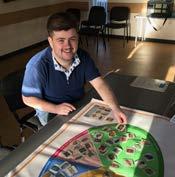
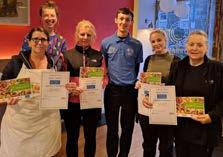
The sessions provide an introductory engagement opportunity that can successfully lead onto other Nutrition Skills for Life courses. Participants and local partners have all rated the sessions as either ‘excellent’ or ‘good’ with 10 individuals going on to develop their food and nutrition skills by enrolling on our 6 week Come and Cook course.
Working with partners including foodbanks and community pantries has enabled us to provide participants with a bag of 19 food items accompanied by our Eat Smart Save Better recipe book. These resources demonstrate that it is possible to cook a range of nutritionally balanced, family-friendly meals for £10. Recipes are cost effective, quick and easy to follow, and many participants have found pleasure in cooking them with their children.
“The recipes are really simple and visual. I put the book open on the counter top and the little one helps me make them – she really enjoys it”. [Participant Comment]
Harri Miller, Dietetic Assistant Practitioner, BCUHB Public Health Dietetic team – West
The team plan to develop these valuable partnerships and increase the number of sessions delivered throughout 2023 and we are excited to continue developing and expanding the offer within the wider community in the months ahead. Community workers such as Flying Start tutors, community nursery nurses, and family support workers have completed our accredited Level 2 Community Food and Nutrition Skills training, to equip them in independently delivering the sessions thus increasing reach to those in most need of support.
Research published by The Trussell Trust (March 2022) highlights the severity of the deepening cost of living crisis with 1 in 3 people receiving universal credit unable to afford adequate food leading to eating just one meal per day, or going without food for one day in any given month. Unsurprisingly, the demand from local partnerships to access our sessions and the need continue collaborating with local food banks and pantries remains more vital than ever.
For more information visit Eat smart save better – Nutrition Skills for Life® Or contact Harri Miller, Dietetic Assistant Practitioner - BCU.NutritionSkillsForLifeWest@wales.nhs.uk Reference The Trussel Trust (March, 2022). The True Cost of Living. The action needed to stem the rising tide of destitution. Online (trusselltrust.org)
Cost of Living Crisis Resource
The Public Health Network Cymru in partnership with the Building a Healthier Wales Coordination group have launched their new cost of living crisis resource. This brings together resources and case studies on how public bodies, the third sector, and their partnerships can respond to the cost of living crisis in order to protect health.
The UK is facing its biggest cost of living crisis in decades (Citizens Advice 2022). People’s wages and welfare payments are not keeping pace with rising living costs, in particular, the costs of energy, fuel, housing, and food. Businesses and public services are also seeing their budgets not go as far in the face of rising costs.
As prices rise, people are faced with difficult choices about what to cut back on such as whether to ‘heat or eat’. This is likely to have serious health, well-being and equity implications for the population of Wales. People living in the poorest parts of Wales already die more than six years earlier than those in the least deprived areas and spend more years in poorer health. The cost of living crisis will accelerate what were already increasing differences in health between those with more and less money in Wales (Public Health Wales, 2022).
 Public Health Network Cymru
A recent report about the cost of living crisis details how not being able to afford the essentials, such as food, rent or mortgage payments, heating and hot water, or transport, has significant and wide-ranging negative impacts on mental and physical health.
Much of the health harms and widening of inequalities Welsh citizens are facing as a result of the cost of living crisis are exacerbations of existing problems, such as poverty, lower wages, and an older, less energy efficient housing stock.
The cost of living crisis requires an urgent public health response in order to mitigate the negative effects of the immediate crisis across a number of policy areas as well as tackle the underlying causes of health inequalities to create a healthier and more equal Wales in the longterm.
The Building a Healthier Wales Co-ordination* group are collaborating with Public Health Network Cymru to develop these pages for agencies an partnerships in Wales, to inform their actions and responses. They will be reviewed and added to as evidence base develops. The webpage will include up to date resources and information to assist all sectors with their responses. *The Building a Healthier Wales Coordination Group is a strategic, multi-agency group of senior leaders from across the public, third and private sectors, working to go beyond what could be achieved by health and care alone in order to drive the shift to prevention and achieve a healthy and sustainable Wales. www.publichealthnetwork.cymru If you would like to contribute to this page please email the team at Publichealth.network@wales.nhs.uk
Healthy Working Wales guidance to help employers support staff through the cost of living crisis
Article taken from Business Wales
Healthy Working Wales has launched new guidance for employers on 'The Cost of Living Crisis'. The new website section provides employers with advice on how they can support their staff’s health and wellbeing through the current economic crisis. It also contains links to useful financial wellbeing services and resources, including Healthy Working Wales’ expert podcast with the Money and Pensions Service. For further information please select the following link The Cost of Living Crisis - Public Health Wales (nhs.wales)
Making a difference during the Cost of Living Crisis

The Public Health Dietetic Team at Betsi Cadwaladr University Health Board are a team of Registered Dietitians, Registered Nutritionists, and Dietetic Support Workers. We use our knowledge and skills to communicate key food and nutrition messages and deliver accredited courses and training to community workers and professionals. We also support community settings like nurseries, playgroups, schools and workplaces to provide healthy food and drink, and give practical messages that help people to make healthy food and lifestyle choices.
Clare Murphy, a Community Development Coordinator for Cartrefi Conwy, was inspired to make a difference in her community. After attending an Eat Smart Save Better session delivered by our Conwy & Denbighshire team, Clare completed an Agored Cymru accredited Level 2 Community Food & Nutrition Skills Course and trained with us to become a Come and Cook facilitator.
In January, Clare will be running her first Come and Cook course in Ty Llewelyn, Llandudno with social housing tenants of Cartrefi Conwy. Come and Cook aims to increase knowledge, confidence and skills to enable participants to safely prepare healthy and economical meals for themselves and their families.
Public Health Dietitian Sian Roberts believes that “sessions will enable tenants with limited knowledge of preparing nutritionally balanced meals to understand the benefits of a healthy balanced diet and become more confident in meal planning and food preparation”.
The recipes are affordable which is very important given the current cost of living crisis and some ingredients will be available free of charge each week from Ty Llewelyn’s Fresh Food Bank to support sustainability and limit food waste. Each Come and Cook session includes one hour of learning about different topics relating to nutrition such as food hygiene, the Eatwell Guide, nutrients in the diet, understanding food labels when shopping, meal planning and shopping on a budget and a healthy diet, followed by a practical element to prepare and cook a healthy and balanced meal or snack.
Claire Dutton, Public Health Dietetic Assistant - Conwy & Denbighshire and Clare Murphy, Community Development Coordinator - Cartrefi Conwy
Clare said, “The project will make a huge difference to the local community, benefitting the health of participants and their families, improving nutrition and cooking skills and supporting the local community food banks and foodshares”. Clare is confident that the course will be a success and has already booked further cookery and nutrition courses in the local community to reach even more people. For more information about training and courses delivered by Public Health Dietitians from Betsi Cadwaladr University Health Board please visit https://bcuhb. nhs.wales/health-advice/health-in-the-community/public-health-dietetics-team
The Grapevine
Improving access to good affordable food – changing the system around us, serving the nation
Sophia Bird, Principal Health Promotion Specialist, Obesity and Nutrition, Public Health Wales
Public Health Wales’ Health Improvement Division and Public Health Directors and their Local Public Health Teams (LPHT), are working closely together to deliver an exciting ‘systemsworking’ approach to support the nation to access healthy and affordable food and healthier ways of living. This is thanks to funding from the Welsh Government as part of its Healthy Weight: Healthy Wales 2019 Strategy.
Currently in Wales more than half of the adult population experience overweight or obesity; being overweight is now normal. There are already signs that unless we can change this, the situation will get much worse as over 25% of children already experience overweight or obesity by the time they start school. In the 1970s this would have been more like 1 – 2%. We know that even in childhood, obesity is hard to reverse and that our likelihood of experiencing overweight or obesity increases as we get older.
Overweight and Obesity is rapidly becoming the leading cause of years lived in poor health, with disability or early death. Developing overweight and obesity increases our risk of a number of diseases including diabetes, heart disease, cancer and stroke and it can worsen the impact of other conditions such as arthritis. As the COVID-19 pandemic highlighted, those who live with multiple disadvantage are more likely to experience poor health as a result of their weight.
There are many contributing factors to accessing healthy and affordable food, being physically active, and maintaining a healthy weight. For example, the jobs we do, the places we live, and the advertising and media we view can all have an impact on the choices we make and the way we behave. The choices and actions of many organizations, collectively known as ‘the system’, influence and shape these factors.
The Whole System Approach to a Healthy Weight in Wales takes a long term view. It recognises complexity and explicitly aims to reveal the structures and goals within a given system rather than being focused on the changes that individuals can make.
This approach focuses on helping identify opportunities for effective changes at the organisational and system level. For example, looking at planning requests within the local context so that fast food outlets are not built up in one area or near school buildings, or building in bus routes, footpaths, and cycle paths when new roads are being planned.
The funding from Welsh Government has resulted in investment in our LPHTs to deliver our 9 step approach to healthy weight (see figure 1 below). Local colleagues have been engaging with strategic stakeholders within their areas to:
- secure active engagement in understanding the local strategic system, particularly around the healthy weight agenda;
- understand how this agenda impacts and overlaps with other local plans;
- recognise the unintended consequences of actions across the wider system;
- identify key priorities within their local systems and levers for change to improve the health and well being of their local populations.
There is growing recognition from the national and international research that this way of working can show benefits. Therefore, we will be evaluating this systems programme so that we can learn what works to improve access to good, affordable food across the nation.
For further information, contact sophia.bird@wales.nhs.uk
Watch our latest videos
Planning for a healthy future: working together to create healthier communities
The Wales Health Impact Assessment Support Unit (WHIASU), Public Health Wales (PHW) hosted an event to bring together professionals working in, or with an interest in, spatial planning and health to develop an increased understanding of the potential that collaborative working can bring.
Community Resilience in Wales
At this webinar we heard from Nick Selwyn and Euros Lake from Audit Wales. Against a likely backdrop of further reductions in public spending, local authorities are being challenged to help people who are struggling with increased costs. They shared how community resilience and self-reliance can be encouraged to equip people to be less reliant on local authorities and reduce the demand on often over stretched services.
Videos See all videos
Watch
Watch
Tell Healthy Working Wales Your Workplace Concerns by Taking Their 2023 Employer Survey (Deadline: 5 March 2023)






Latest News
Just Transition to Net Zero Wales
Procurement doesn’t have to cost the earth People in Wales help others to protect and improve their own mental well-being Ramblers Cymru launch partnership with Transport for Wales See all news 02-02-2023 22-02-2023 07-02-2023 22-02-2023 16-02-2023 23-02-2023
Scheme aims to help more than 10,500 people into work
Topics
Accidents and injury prevention
Adverse Childhood Experiences
Air Quality
Alcohol and substance use and misuse
Approaches and methods in public health practice
Arts and health
Behaviour change
Biodiversity and greenspace
Built environment
Cancers
Cardivascular conditions
Carers
Children and young people
Climate change
Communicable diseases
Community
Community assets
COVID-19
Debt and benefits
Diabetes
Diet and nutrition
Early Years
Education and training
Employment
Environment
Ethnicity
Evaluation
Foodborne communicable diseases
Fuel Poverty
Further, higher and tertiary education
Good, fair work
Health in all policies
Health inequalities
Health related behaviours
Homelessness
Housing
Housing quality
Human rights and social justice
Income and resources
Influenza
See all topics
Learning difficulties
LGBTQ+
Maternal and new born health
Men
Mental health conditions
Mental ill-health
Mental wellbeing
Natural environment
Non-communicable diseases
Offenders
Older adults
Oral health
People
Physical activity
Planning
Poverty
Precarious work
Preschool (including WNHPSS)
Prevention in healthcare
Respiratory conditions
School (Including WNHPSS)
Sexual health
Sexually Transmitted Infections
Smoking and vaping
Social capital
Spirituality
Stress, coping and resilience
Suicide and suicide prevention
Sustainable development
Systems thinking in public health
Transport
Unemployment
Water and sanitation
Wellbeing of Future Generations
Wider determinents of health
Women
Working age adults
A B D F G H I L M N O P R S T U W
Next Issue
Cohesive Communities in Wales

Have you been involved with any projects, initiatives, programmes or policy interventions focusing on cohesive communities? This could be by focusing on reducing loneliness, improving digital connectivity and literacy, improving access to services, place-making approaches and designing in-community health and well-being. We welcome articles that would share learning, key developments, research, successes and challenges in relation to cohesive communities in Wales.
Our article submission form will provide you with further information on word count, layout of your article and guidance for images.
Please send articles to publichealth.network@wales.nhs.uk by 17 March 2023.