




Up First
Instructor in mathematics, statistics, and computer science Paul Murphy ’84, P’16, ’19, ’22, captured this
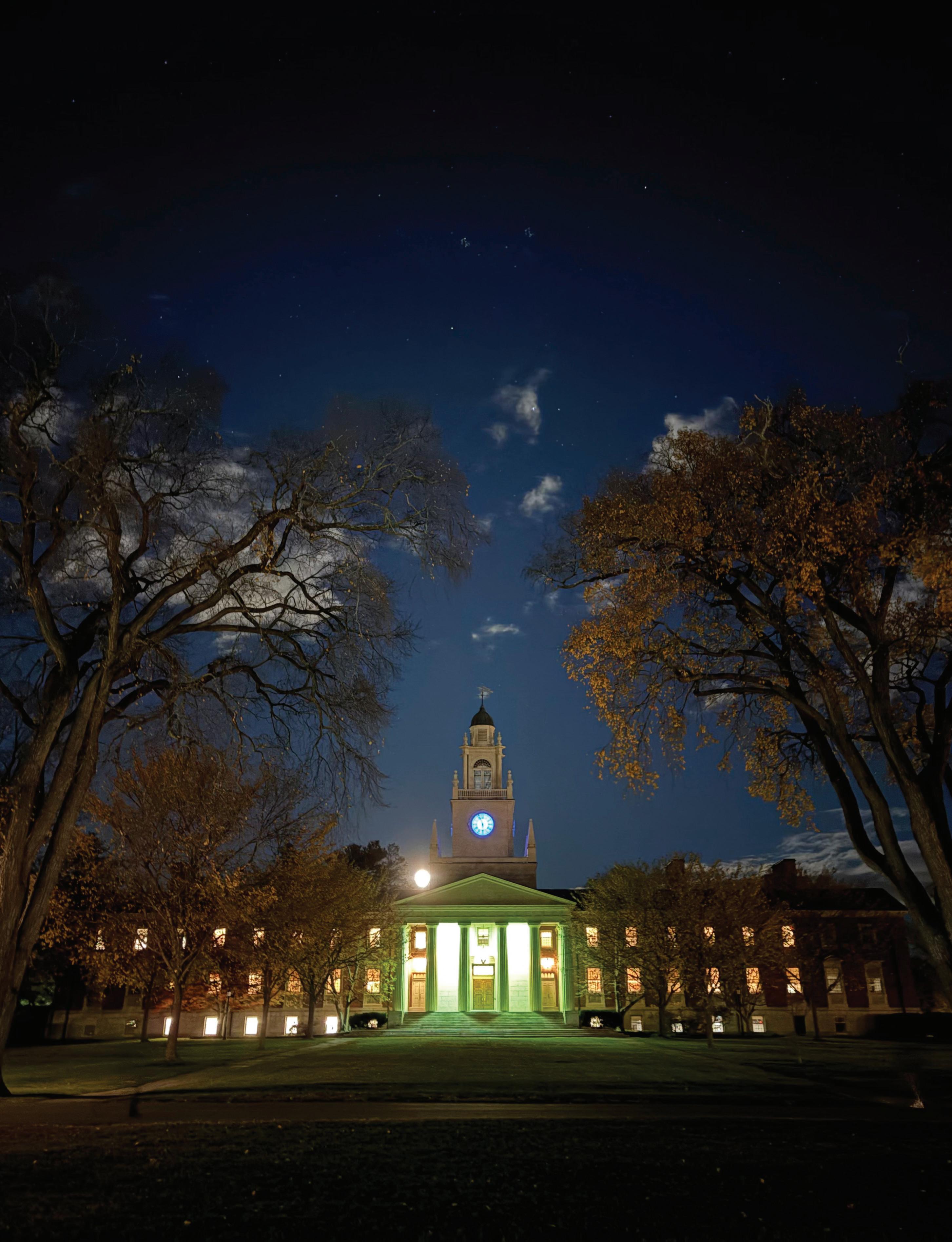
dramatic photo of Sam Phil during the first week of November.
Instructor in mathematics, statistics, and computer science Paul Murphy ’84, P’16, ’19, ’22, captured this
Andover changed the trajectory of my life, it transformed me. This pride-filled refrain cuts across generations of alumni. It binds them like family. And it means something profoundly personal to each one.
At a recent gathering of alumni on campus, Dean of Studies Caroline Odden P’26, ’28, asked the group to describe something or someone from their time at Andover that stays with them today. Hands went up immediately. They described teachers and mentors whose “tough love” shaped their resilience. Another said the red-penned comments on their essays hit hard at first but eventually grew their confidence as a writer. Others spoke about classes that, upon reflection, helped them understand why the liberal arts form an essential intellectual foundation. An alumna on the MIT faculty credited her “be curious about everything” teaching style to those she admired at Andover.
Later that evening, Dean of Faculty Ben Temple P’28 honored colleagues with foundations and instructorships—philanthropic awards that highlight faculty excellence. “In conversations, both inside and outside the community, I have found myself using the word magic to describe what is special and in many ways intangible about Andover,” he said. “In the case of these colleagues, they create learning in its purest form—authentic, meaningful, and transformative.”
Many would agree that what happens at Andover is truly magical. But how do you test that theory? How do you define transformative education and ensure that students today and tomorrow continue to enjoy its benefits?
For the first time in nearly a decade, we aim to do just that. We are partnering with experts in education research to track the Andover experience and its impact after graduation. We are asking young alumni (five to 15 years post-Andover) to gauge their satisfaction with aspects of the school’s mission and values, curriculum and programs. We want to hear about their academic achievements, career paths, and their sense of well-being. We are especially curious about the extent to which alumni feel prepared for life beyond Andover.
This is not an exercise in self-congratulations. It is an opportunity to evolve, to shore up our gaps, and to double down on our strengths. I can’t wait to see what emerges as we continue to preserve the magic—and this transformative education—for generations to come.
Raynard S. Kington, MD, PhD, P’24, ’27 Head of School
Andover magazine reinforces the special connection alumni have with Phillips Academy and Abbot Academy. Through thought-provoking stories, contemporary design, and inspiring profiles of alumni, students, and faculty, we aim to highlight the school’s enduring values, recognize our unique history, and celebrate the rich diversity of our community.
CHIEF COMMUNICATIONS
OFFICER
Tracy M. Sweet
EDITOR
Allyson Irish
MANAGING EDITOR
Rita Savard
EDITORIAL DESIGN
Stephanie Testa
CLASS NOTES DESIGN
Ken Puleo
CLASS NOTES EDITOR
Katie Fiermonti
CONTRIBUTORS
Jill Clerkin
David Fricke
Stephanie Han '82
Nancy Hitchcock
Joseph P. Kahn ’67
Christine Yu '94
Henry Marte
Johnny Nunez P’29
Andover, the magazine of the Phillips Academy and Abbot Academy community, is published four times per year. It is produced by the Office of Communication at Phillips Academy, 180 Main Street, Andover, MA 01810.
Main PA phone: 978-749-4000
Changes of address and death notices: alumni-records@andover.edu
Phillips Academy website: www.andover.edu Andover magazine phone: 978-749-4677 Email: magazine@andover.edu
Postmasters: Send address changes to Phillips Academy 180 Main Street Andover MA 01810 ISSN-0735-5718
The Walpole Water and Sewer Commission. Not the sexiest of meetings to cover as a young reporter, but there I was at age 22, struggling to understand the nuances of water meter readings—all the while watching the clock and calculating the minutes until deadline. What should I write about? How would I translate the hours of discussion into a 450-word story?
I spent the first several years of my career working for community newspapers in Massachusetts and laser focused on making it to the big time: The Boston Globe . Alas, that dream never came true, but my experiences at those local papers opened my eyes to the vital importance of homegrown news.
Most major media outlets cover presidential candidates, worldwide conflicts, economic shifts, and the like. But what about local elections, reports on neighborhood crime, or those complex changes to water meters?
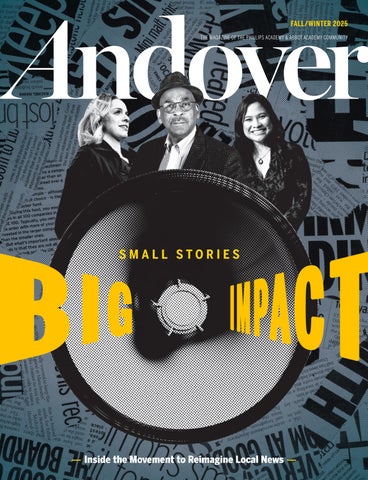
Our cover story, “Small Stories, Big Impact,” explains the importance of—and the necessity for—local news done well, featuring Andover alumni who are at the forefront of this community journalism resurgence. Other stories in this issue focus on alumni connection—“A Writing Assignment” (page 28); community—“Marching for Change” (page 14); and caring—“Keeping Maine Wild” page 32).
I hope our readers will recognize the intersecting themes of connection, community, and caring throughout this issue and carry these Andover values with them into the new year.
Allyson Irish Editor
magazine@andover.edu @andovermagazine
“The entire premise of the Brides’ March is to give voice to survivors and use that momentum to drive justice.”
JONATHAN FIGUEROA ’06
PAGE 14
“My divorce was the first time I ever reached out to the Andover network for help. In the process of writing, I was able to claim myself.”
STEPHANIE HAN ’82
PAGE 28


Dancers perform Sylvia Reclaimed, an original ballet conceived and choreographed by instructor in theatre and dance Kareem J. Lewis. The production reimagines the classic mythic ballet blending classical form with contemporary storytelling. Lewis’s two-act work transforms an 1876 score by Léo Delibes into a vivid world of huntresses, forest spirits, and constellations embodying power and renewal.
Photo by Jessie Wallner

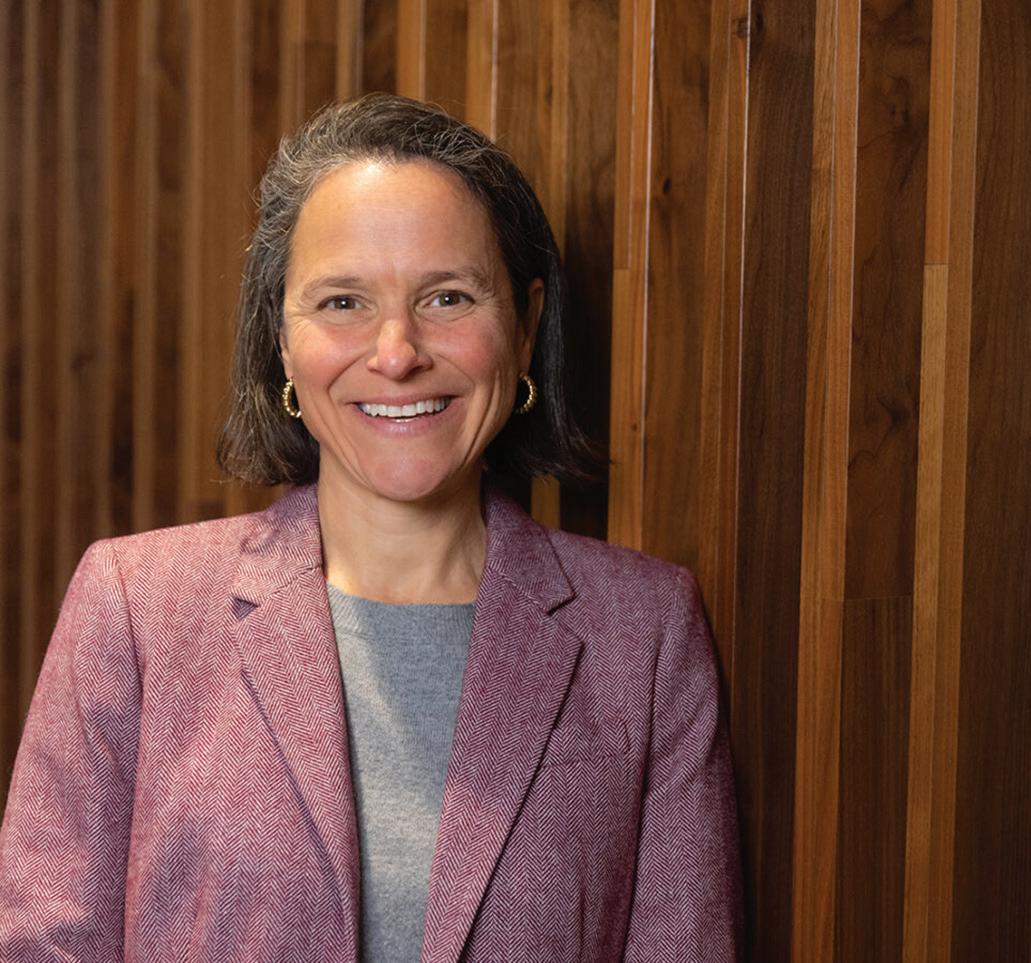
Former Andover Dean of Students Jennifer Karlen Elliott ’94, P’22, ’24, ’26, was recently chosen to become the 17th principal at Phillips Exeter Academy. Elliott will succeed Bill Rawson, who is retiring in the spring. Elliott officially begins her new position July 1, 2026.
Elliott is currently head of student and academic life at Choate Rosemary Hall in Connecticut, a position she has held for the past three years. Prior to that, she served for 12 years at Andover—as a history teacher, girls’ varsity squash coach,
Don’t be surprised if you see a few Big Blue names on the ballot in 2026. A self-described “disruptor” and the CEO of athenahealth, Jonathan Bush ’87 is running for governor of Maine, and Massachusetts State Representative Seth Moulton ’97 is vying for the U.S. Senate seat long held by Ed Markey. Moulton’s seat could be replaced by none other than Dan Koh ’03, who previously served as chief of staff to Boston mayor Marty Walsh and then in the Biden administration.
cluster dean, assistant head of school for residential life and dean of students, and a PA parent.
In the Exeter announcement on November 10, PEA Trustee President Kristyn Van Ostern called Elliott a “teacher at heart” who “understands the demands of leadership in residential education, finds joy and purpose in working with adolescents, and has indicated a strong commitment to upholding the Academy’s mission while leading us into the future.”
This sentiment was echoed by several who worked with Elliott at PA, including former head of school John Palfrey P’21, who said there is no better candidate for the job. “I am so excited for her, her whole family, and for the Exeter community,” said Palfrey, who is an Exeter alumnus.
“Schools are living communities dedicated to the changing needs of our students.”
Kate Dolan P’11, ’15, has known Elliott as both a student and a colleague. In a 2022 Andover magazine story about Elliott’s departure from PA, Dolan—currently an instructor in athletics and head field hockey coach— shared the following: “Jenny is fierce—the positive kind of fierce—with her commitment to everyone in the Dean of Students Office, to her classes, to her team, to Andover. She cares deeply and unwaveringly.”
Assistant Head of School for Admission and Financial Aid
Jim Ventre ’79 was honored this fall by admissions peers with the Everett E. Gourley Award. The annual honor recognizes an admissions professional whose work inspires colleagues and advances the industry.

—JENNIFER KARLEN ELLIOTT ’94, P’22, ’24, ’26, NEW PEA PRINCIPAL
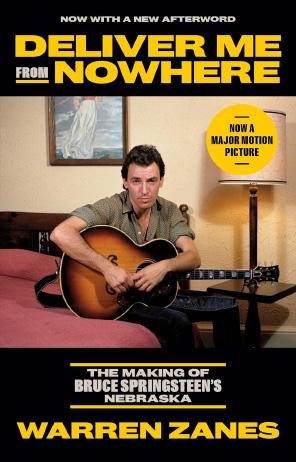
The Boss, played by actor Jeremy Allen White, hit the big screen this fall with the movie Deliver Me from Nowhere. The Bruce Springsteen biopic is an adaptation of Warren Zanes ’83’s book of the same name.
When members of Abbot Academy’s Class of 1973 gathered to celebrate their 50th Reunion, they marked more than a milestone—they honored a legacy. The special event coincided with the 50th anniversary of Abbot’s merger with Phillips Academy, inspiring the creation of the Abbot Educators Fund, a new scholarship honoring the teachers, administrators, and staff who shaped generations of Abbot students.
The fund pays tribute to every educator listed in the 1972–1973 Abbot faculty roster and reflects the enduring gratitude of the school’s final graduating class.
For aspiring big leaguers, the road to “The Show” is a grueling odyssey, often taking several years to wind through the myriad ballparks and sleepy towns that make up the vast minor league system. But the future looks bright for three Andover alumni MLB prospects: Jack Penney ’21, Jonathan Santucci ’21, and Thomas White ’23.
Penney won the Midwest League Championship (High-A) with the West Michigan Whitecaps, Santucci triumphed in the Eastern League Championship (Double-A) with the Binghamton Rumble Ponies, and White captured a title in the Triple-A World Series (International League) with the Jacksonville Jumbo Shrimp.
For three prospects from the same high school to accomplish this in the same season is virtually unheard of, explains Andover head baseball coach and associate dean of admission Kevin Graber P'16.
“Pro sports are a challenging road, but I truly believe Thomas, Jonathan, and Jack are future Major Leaguers, given their
“Our teachers influenced, inspired, and cared for us,” said Lori Seegers ’73. “We wanted to ensure their legacy continues through future generations of students.”
The scholarship, launched with over $500,000 in gifts and bequests from 57 donors, will support needblind admission by providing assistance to female students. The class aims to grow the fund to $1 million, creating a fully endowed scholarship that will carry the Abbot spirit of mentorship and academic excellence forward for years to come.
During Reunion Weekend and Abbot@Andover Day, several former
Abbot faculty members returned to campus for a celebratory dinner and an oral history session reflecting on their experiences during the 1973 merger. Participants included Susan Clark (classics), Christine Kalke (languages), Jim Lynch (math and administration), Frances Ladd Nolde (English), Mike McCann (science), David Tower (math), and Steve Graham (history).
Their stories, along with those of colleagues unable to attend, underscored what many already knew: Abbot’s educators left a lasting imprint—one that continues to shape Andover and its students today..

ability, work ethic, and passion for baseball,” Graber says.
“And the experts agree. All three are projected to emerge as impactful at the Major League level very soon.
“It’s a particular source of pride that they were not only teammates but also fouryear students,” Graber adds. “Outstanding on the baseball diamond, all three were also exceptional students, which shouldn’t be overlooked.”

Students, faculty, and staff took a closer look at Andover’s story through their natural surroundings at the Addison Gallery’s Learning Center in November. An Elm Walk Through History: Exploring PA’s Roots by Looking at its Landscape turned participants into detectives as they sifted through archival photographs of the iconic Elm Arch—a sweeping arch planted in the early 1800s along the eastern edge of the Great Lawn, once known as Seminary
Common. The trees have since framed the heart of campus life even as a changing climate continues to impact the canopy and how it is maintained.
“Landscapes often outlast the people who shape them,” says Allison Guerette, manager of sustainability, climate, and energy programs. “An elm that has stood for centuries has lived through so much that its depiction in written word and images can help mark turning points in a community’s story.”
With archival images in hand, students and faculty walked along the Elm Arch to find the exact vantage points depicted in photographs, tracing the steps of generations past. After solving their puzzles, groups took a picture from the same perspective to include on a collage overlaid on a campus landscape plan—revealing how Andover’s elms, like the institution itself, continue to grow and endure.
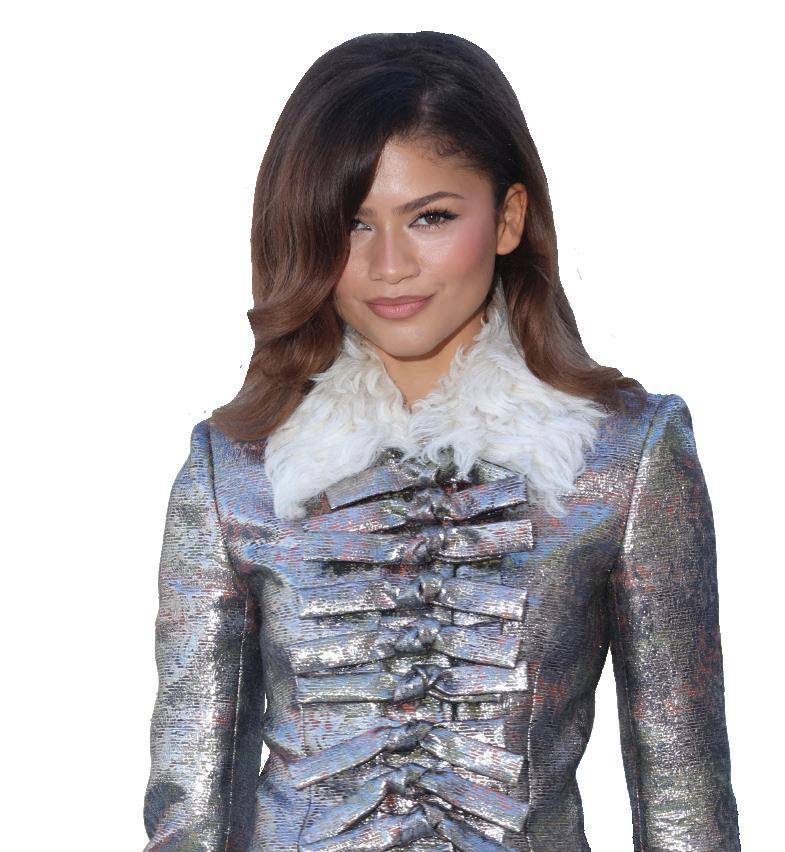
Who doesn’t remember the excitement on campus last year when Hollywood darlings Zendaya and Robert Pattinson were seen entering the Addison? The resulting romantic comedy The Drama is set to be released in spring 2026.
Following two years working at the NBA, Bailey Colón ’18 has taken her talents to Sports Illustrated Swimsuit as a digital writer. Now, she’s able to combine her passion for athletics, fashion, and social media.

Sarah Moulton Faux ’99 released her new album, Yuliya: Forgotten Songs of Julia Weissberg Rimsky-Korsakov, in August. This is the first modern recording of Weissberg’s music.

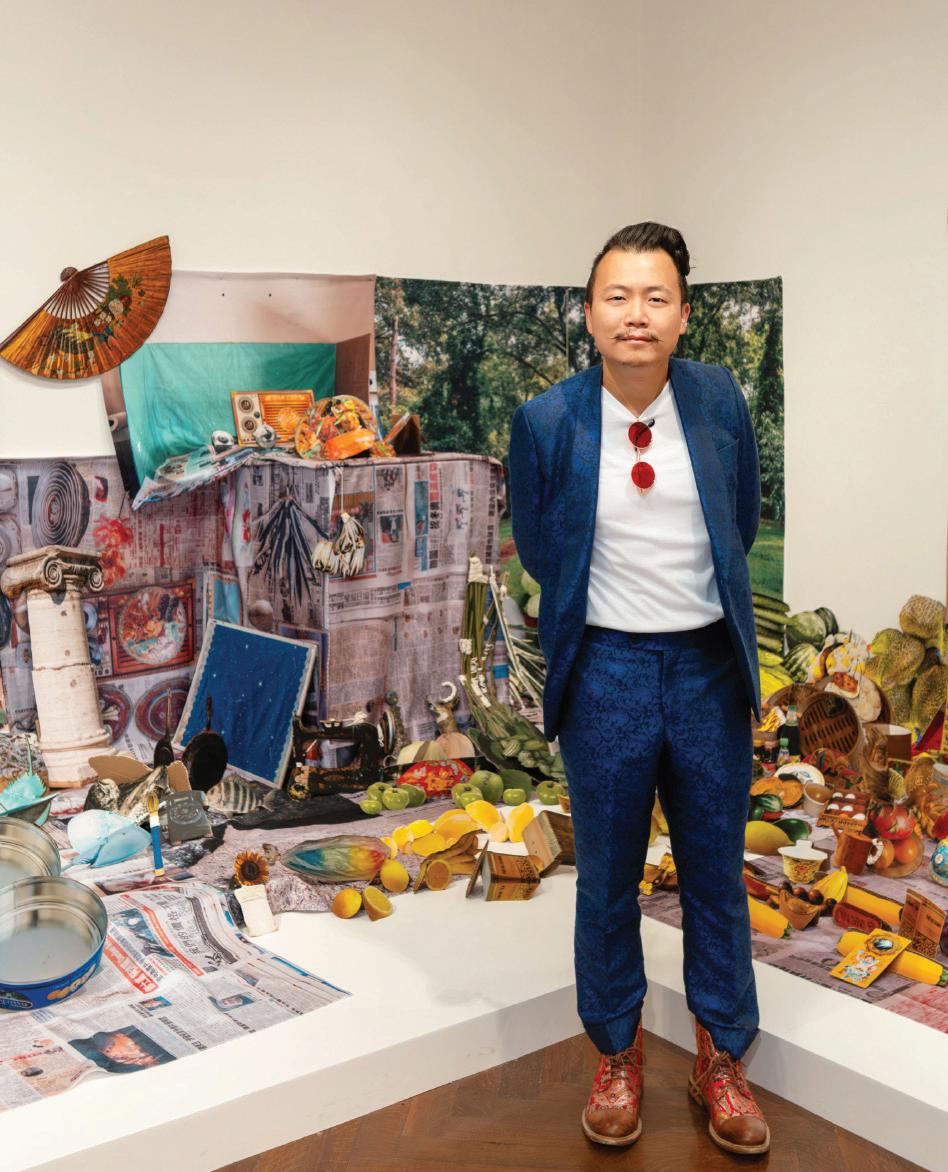
Tommy Kha
Contemporary Photographer
Artist-in-residence at the Addison Gallery this fall, Tommy Kha is a ChineseVietnamese American photographer who explores themes of belonging, likeness, representation, and immigrant identities. In his exhibition, Hayes Prize 2025: Tommy Kha, Other Things Uttered, Kha displays self-portraits of fragmented identities by featuring cutouts of his head, hands, and torso in unexpected settings.

Ali Michael
Author and Speaker
Aiming to build a healthy multiracial society, Ali Michael provides strategies to help white people engage in their own anti-racist journeys. Several of her books, including Our Problem, Our Path: Collective Antiracism for White People and White Fragility: Why Understanding Racism Can Be So Hard for White People, provide structures for discussions of race and whiteness.
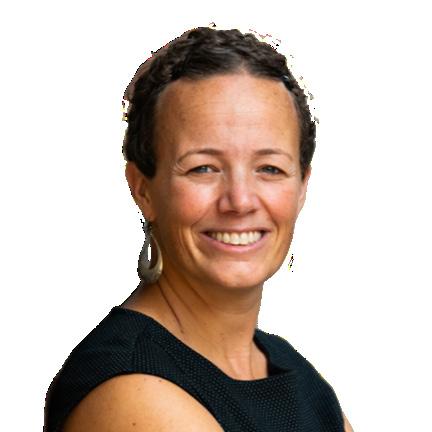
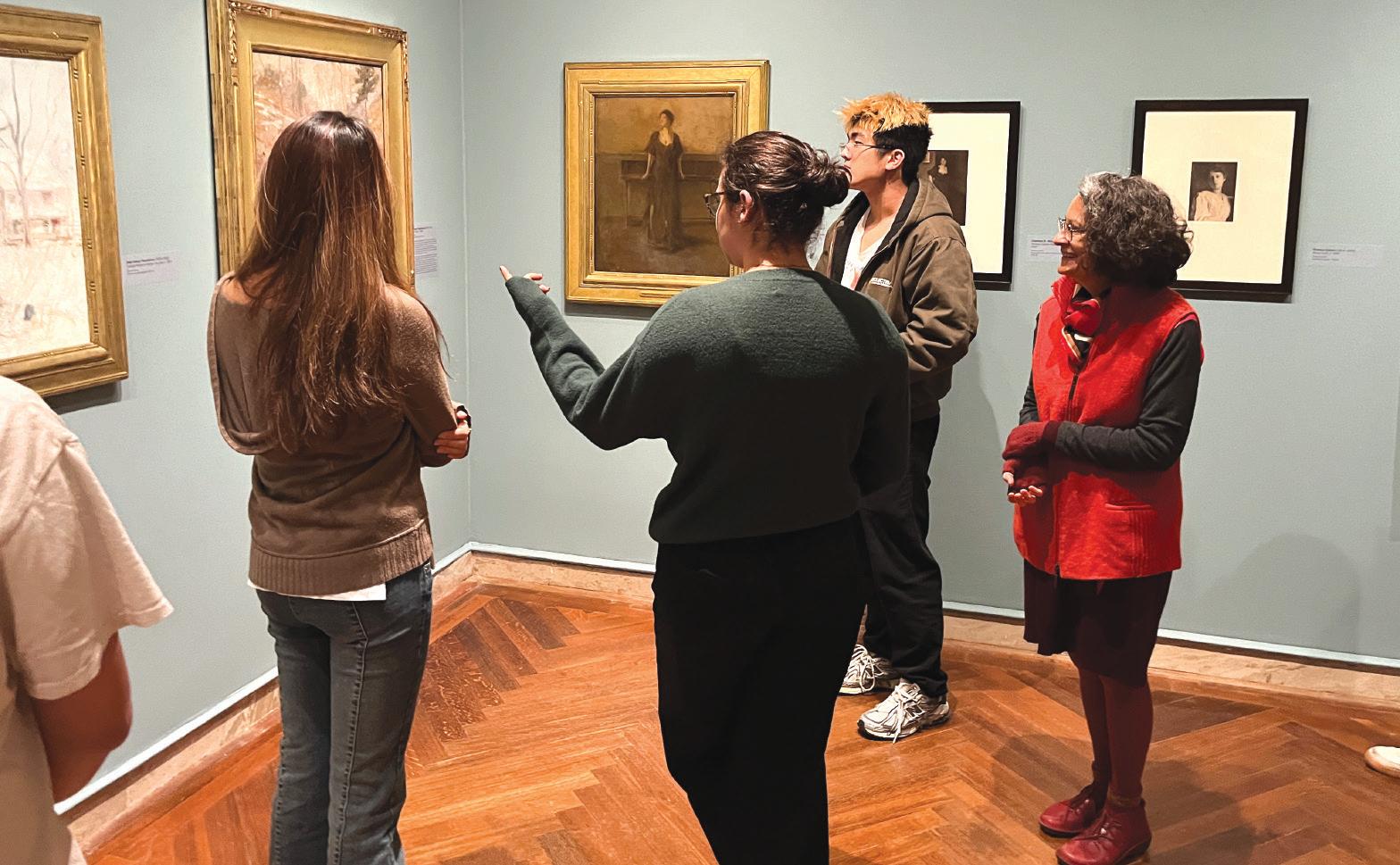
Rachel Stella ’80
Art Historian
Rachel Stella (far right) is an independent scholar based in Paris who writes and speaks about the art world, helping students to connect with the past, develop analytical skills, and understand diverse perspectives. She is also the daughter of Frank Stella ’54, a prolific American artist who passed away in 2024.
Ned Blackhawk | Professor, Author
As part of the Academy’s celebration of Indigenous Peoples Day, Ned Blackhawk, the Lamar Professor of History at Yale University and an
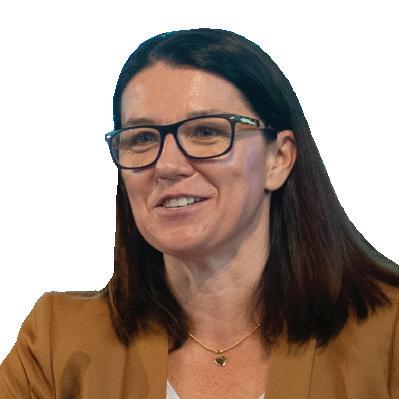
Jill Walsh
Sociologist and Tech Advocate
Jill Walsh is the founder of Digital Aged, a consultancy that educates families and organizations about how to use social media and technology in healthy, measured ways. She has published her research in numerous academic journals and in her book, Adolescents and Their Social Media Narratives: A Digital Coming of Age.
enrolled member of the Te-Moak tribe of the Western Shoshone, spoke at All-School Meeting. Blackhawk is the author of The Rediscovery of America: Native People and the Unmaking of U.S. History, winner of the National Book Award for Nonfiction in 2023.

Deniable DAVID EDGERLY ’60, P’87
Troubador Publishing
A medieval fortress in the Middle East conceals a devastating biochemical weapon. To eliminate this threat, the U.S. turns to a “deniable” team of mercenaries led by a former CIA and Delta Force operative. High-stakes action, shadowy politics, and the threat of regional war drive this thriller, in which failure isn’t just deadly—it’s catastrophic.
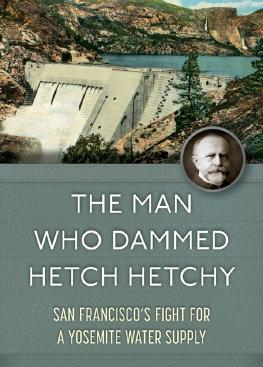
The Man Who Dammed Hetch
Hetchy: San Francisco’s Fight for a Yosemite Water Supply
DONALD C. JACKSON ’71
University of Oklahoma Press
Jackson, a history professor, offers a nuanced account of engineer John R. Freeman’s pivotal role in San Francisco’s controversial dam project in Yosemite National Park. Blending biography and environmental history, Jackson illuminates Progressive Era politics, engineering ambition, and enduring debates over nature, utility, and public good.

eating pizza backwards, and other adventures: a mom, a daughter, a life unexpected
EILEEN FLOOD O’CONNOR ’88
Palmetto Publishing
In this heartfelt collection of essays, O’Connor reflects on raising a daughter with an autism spectrum disorder and three younger sons. With candor and warmth, she finds joy in the everyday, embraces silver linings, and shows how living in the moment can transform life’s challenges into unexpected gifts.
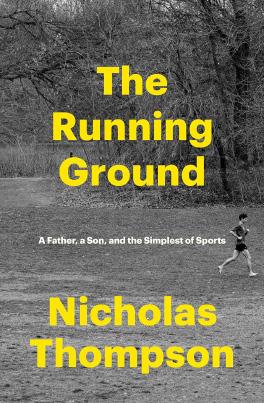
The Running Ground: A Father, a Son, and the Simplest of Sports
NICHOLAS THOMPSON ’93
Penguin Random House
In this moving memoir, Thompson, CEO of The Atlantic, explores the transformative effects running has had on his life and family. He reflects on illness, ambition, his complicated father, and how running—from cross-country at Andover to competitive marathons to record-setting races—has fostered resilience, connection, and the ability to transcend life’s struggles.

R. DAVID COOLIDGE ’97
Routledge
Hindu Bhakti Through Muslim Eyes offers a fresh look at Krishna devotion through Islamic perspectives. For centuries, Muslims have reflected on Hindu traditions with curiosity and depth. This book highlights dialogue across faiths, inviting readers to see pluralism, theology, and spirituality through a more connected, compassionate lens.
To be considered for “Bookshelf,” please send a brief summary of your recently published book to magazine@andover.edu
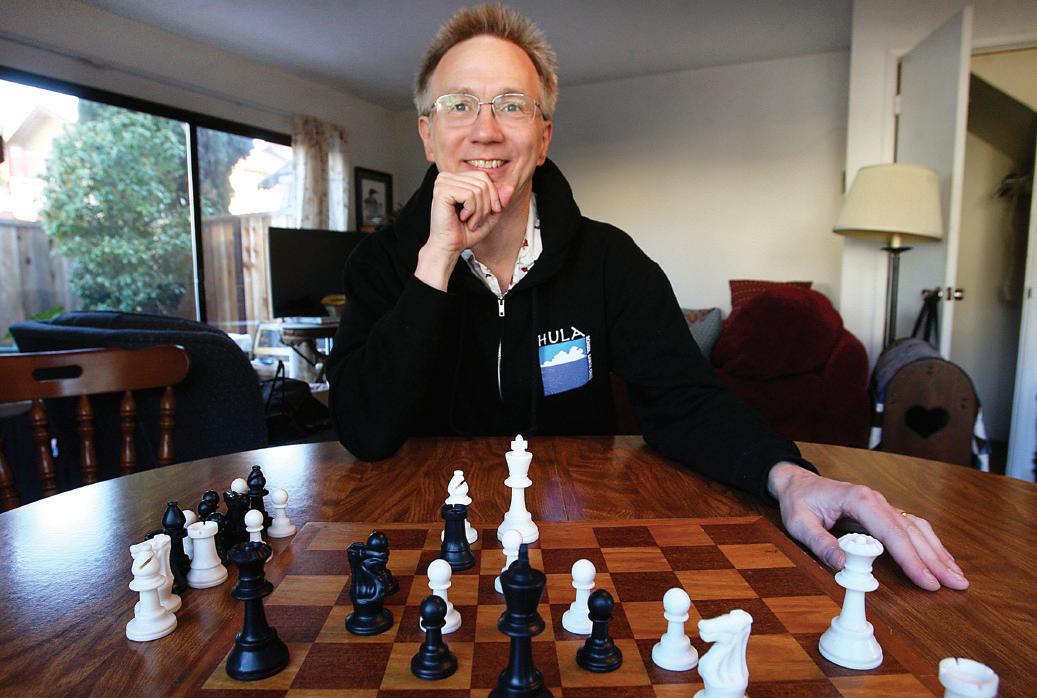
“Chess is a game that combines competition, psychology, and art. It teaches you to be responsible for your decisions.”
Dana Mackenzie ’75 is a National Master of Chess, mathematician, and author. His new book is called Did You Come Here to Play Chess or to Have Fun?
“Philomaths approach debates not simply to get their point across, but as environments of discourse and understanding.”
—ELISE ZHANG
’26, PHILOMATHEAN CO-PRESIDENT
1 2
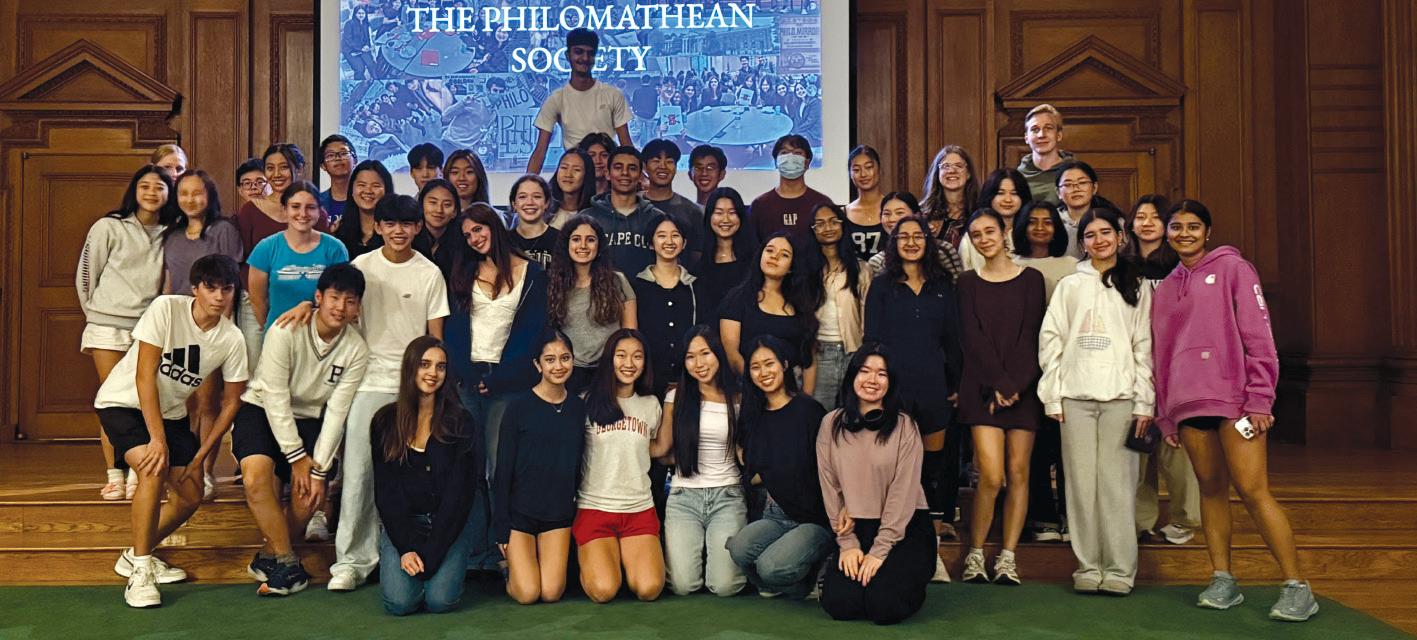
This year marks the 200th anniversary of the Philomathean Society, the second-oldest high school debate union in the United States. How does a student debate club work? And what does that long Greek word mean? Below is a quick snapshot of this historic society.
“Philomathean” comes from the Greek word philomathēs, which means “a lover of learning.”
The Mirror, Philo’s literary magazine, was PA’s first student publication. Established in 1855, it was later edited by Richard T. Greener, Class of 1865, who became a powerful voice for the rights of Black Americans in the Reconstruction period.

Three-time Grammy Award winner Kevin "K.O." Olusola ’06 was honored in October by the nonprofit A Better Chance (ABC) as a 2025 Rising Star. ABC helps develop leaders from historically underserved communities. K.O. is best known for his cello playing and beatboxing with a capella group Pentatonix.
Members of this year's Philomathean Society.
3
4
5 5
Today, Philo members meet weekly in Sam Phil. New members follow a novice curriculum to learn the basic components of debate, while advanced debaters participate in practice rounds or drills.
Philo typically takes part in two DANEIS (Debating Association of New England Independent Schools) tournaments each term, countering the arguments of adversaries such as Exeter, Choate, and Deerfield.
Recent debate resolutions have included: This house would employ restorative justice over punitive justice when dealing with criminal offenders; This house regrets the commercialization of activism; and This house believes that patriotism does more harm than good.
Love debate? Paige Roberts, director of Archives and Special Collections, is seeking alumni volunteers to help transcribe early Philomathean Society documents. To learn more, please email proberts@andover.edu
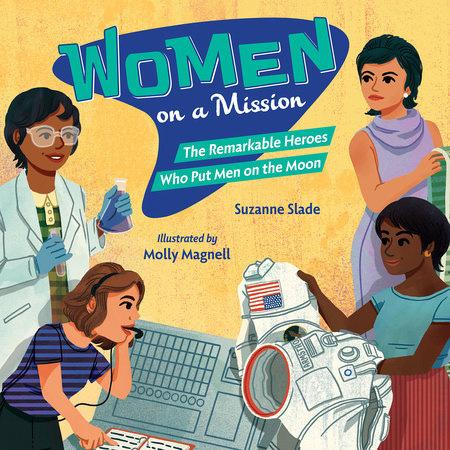
Graphic artist Molly Magnell ’14 is the illustrator of a new book, Women on a Mission Written by Suzanne Slade, the children’s book shares the stories of 12 women who were instrumental to NASA’s historic Team Apollo, which successfully landed on the moon.
How has non sibi influenced your life?
“When I left Andover, the idea of non sibi—not for self—was what I most focused on. I wanted to try to do things that made a difference in the world. At Search for Common Ground, we tried to make the world a better place by trying to improve relations between the United States and Iran and working to prevent genocide in places like Burundi, for example.”
Trust yourself. Zig when others zag. Make a difference in the world.
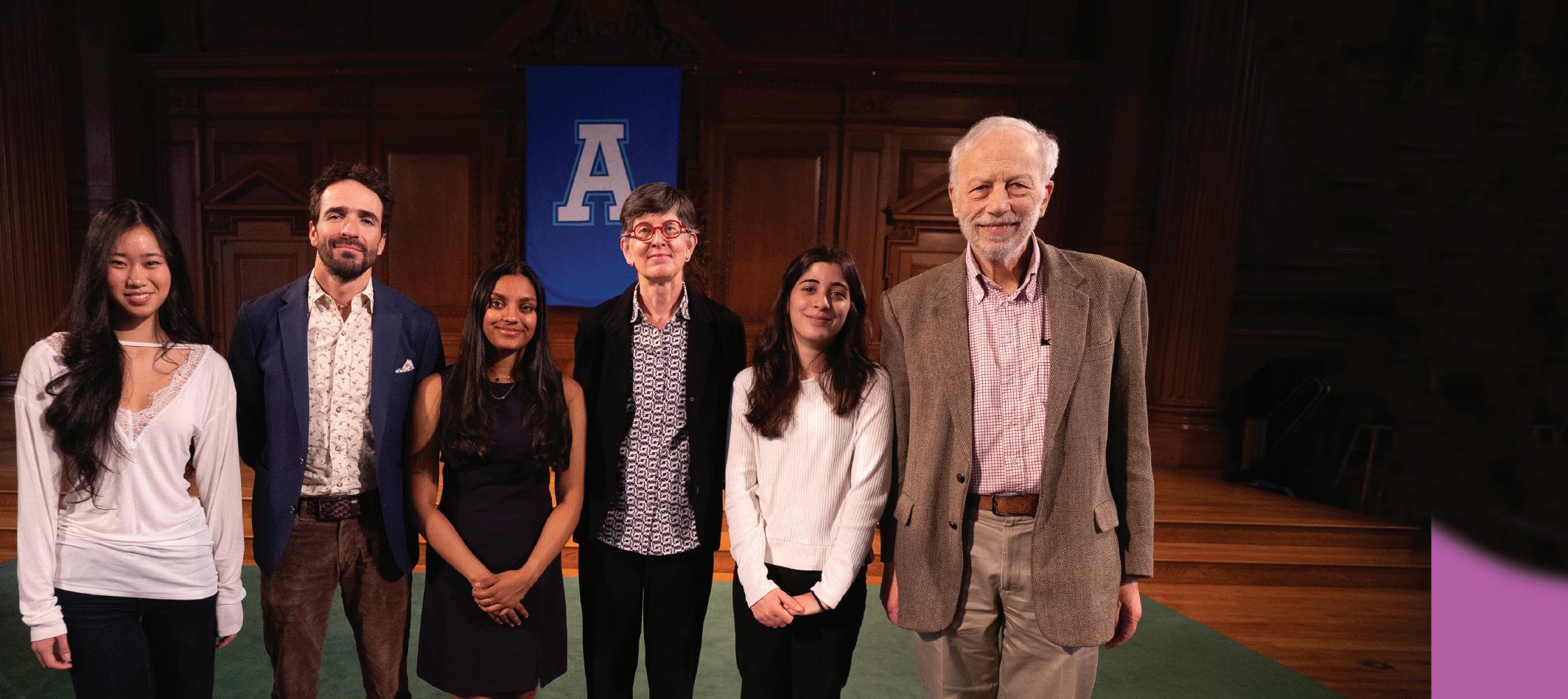
Pablo Durana ’02, Ruth E. Harlow ’79, and John Marks ’61 returned to campus in October to receive the 2025 Andover Alumni Award of Distinction. Although from different eras and industries, all three honorees reinforced their life-changing experiences at Andover and encouraged students to take advantage of all the opportunities available at PA today.
“Listen to that voice inside your head. Don’t live your life with ‘what if’ thoughts. If you have a passion, try to pursue it. And if you can live life with passion and intention, you will undoubtedly make a difference in this world.”
—Pablo Durana ’02 Emmy Award–winning cinematographer
Read more about these remarkable individuals at andover.edu/news.
Marks
’61
Founder of Search for Common Ground
“You’re coming into adulthood when almost too much information is accessible; it’s too easy to compute, to compare, to rate. But it seems much harder to talk, to be vulnerable, to empathize, and to move forward together. I encourage you to develop human and emotional intelligence as your superpower. In the age of artificial intelligence, I would zig when so many others are zagging.”
—Ruth E. Harlow ’79 Pioneering gay rights attorney
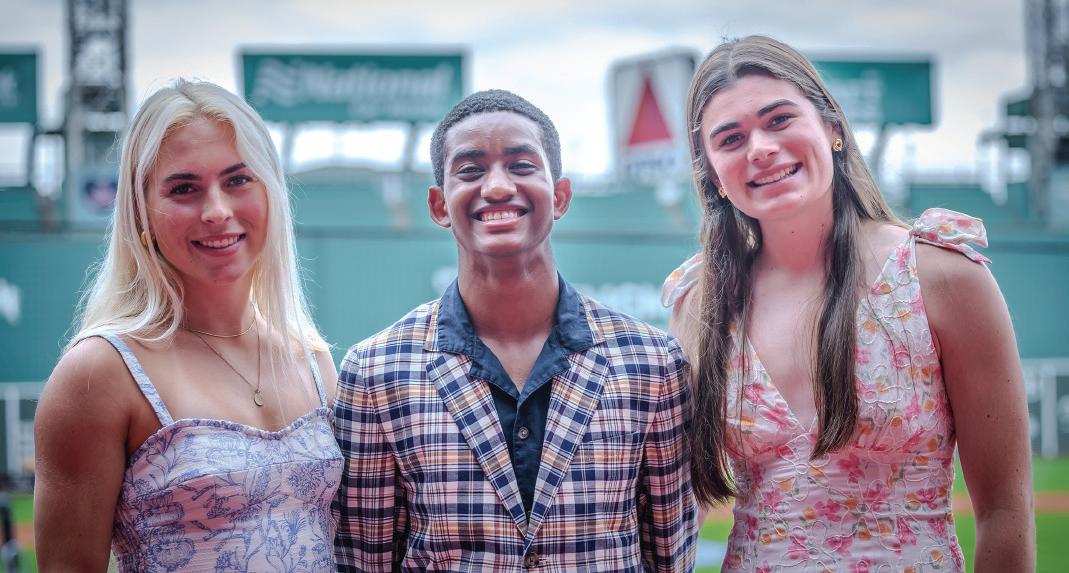
In June, Class of 2025 graduates Emily Mara (soccer), Tam Gavenas (cross country), and Molly Boyle (field hockey) were among 21 students named as 2025 Boston Globe Foundation/Richard J. Phelps ScholarAthletes. Phelps ’46 is a major supporter of PA athletics. Additionally, lacrosse star Lauren Herlihy ’25 received the Jackie Pitts Award, which recognizes high school seniors who go above and beyond in service to their team, school, and community.
Jack Quinlan ’97 has been promoted to lieutenant in the San Diego County Sheriff’s Search and Rescue Detail, where he is a mounted unit leader for the alpine mountaineering team. Quinlan was deployed to the Eaton and Palisades fires in Los Angeles this past year.
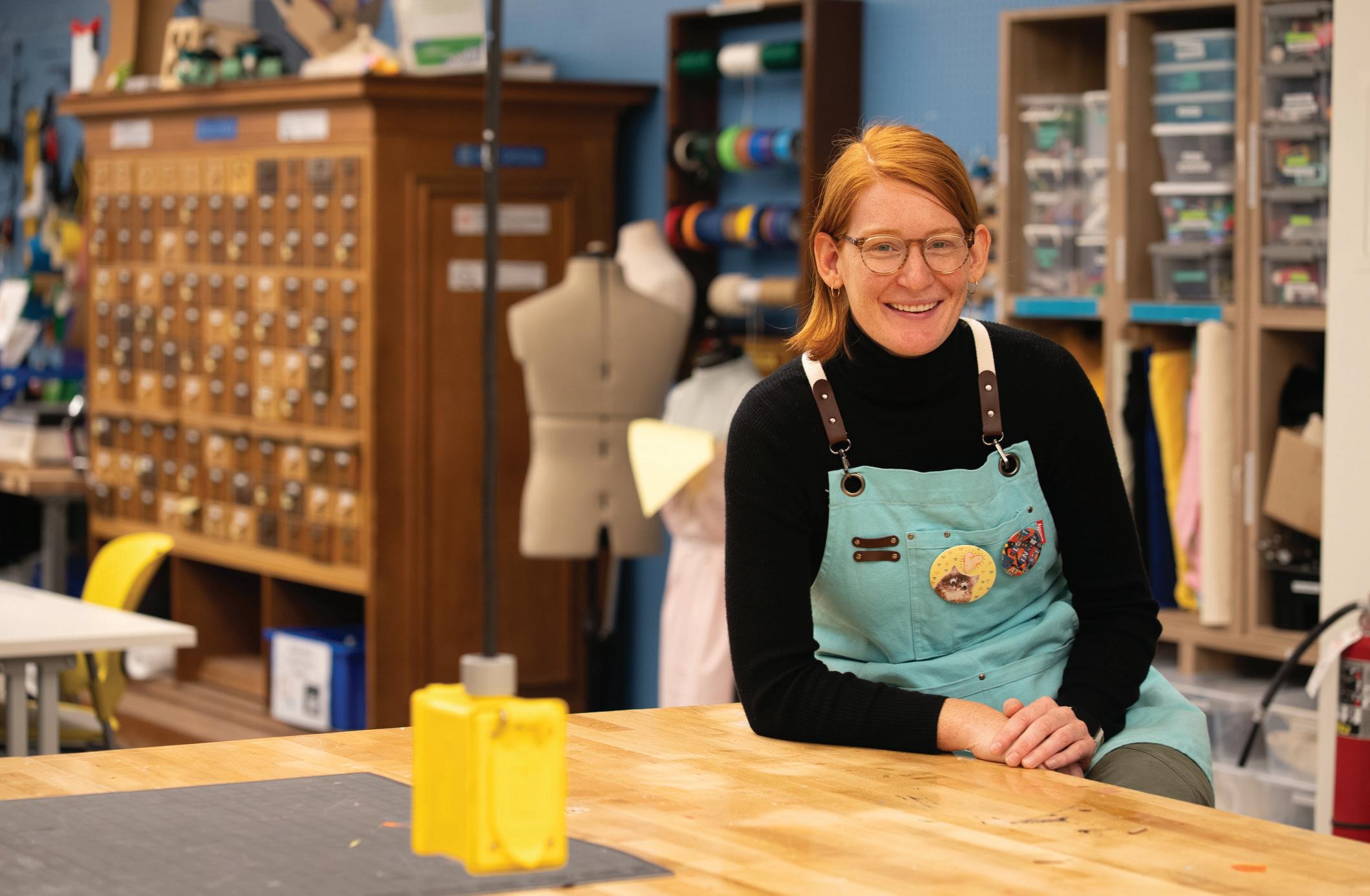
PA welcomed Anna Van Voorhis to campus this fall as the Doran Innovation Center’s new director of educational initiatives. Van Voorhis earned an MFA in sculpture and ceramics from the University of Minnesota and previously was the woodworking and 3D design instructor at Buckingham Browne & Nichols School. Below, she talks about the value of the popular makerspace and what she and her colleagues—Sahara Villarreal Beltran and Bryanne McArdle— are planning for the future.
One of my favorite things is getting to work with students on a variety of projects. I see students come in every day with novel ideas. At BB&N I had a student who made a computerized Jacquard Loom—a type of tapestry loom. I also helped a student make an 18-foot rowboat that she rowed on the
Charles River on graduation morning. I’m excited to see what the kids here at Andover will come up with.
There’s so much interdisciplinary collaboration in the makerspace. We have kids from art classes, computer science, and robotics classes. They’re all working on academic projects alongside one another and having dialogue. It’s a rich environment, and a unique place on campus.
This is a fun, safe, low-risk environment for students to grapple with failure
and projects that don’t work out. If that happens, we just try another way. Resilience is an important life skill for our students to learn.
We are going to revive the Student Guides program, which is a peer-topeer learning model. The idea is that we train students to be familiar with different pieces of equipment so they can then teach other students, faculty, and staff. This will also allow for more student ownership of this space. Hopefully in the spring the guides will help us plan some fun events like a design challenge.


BY RITA SAVARD | PHOTOS BY JOHNNY NUNEZ P’29
LIRIANO ’00 HITS THE STREETS TO END DOMESTIC VIOLENCE the morning of September 26, 1999, 39-year-old
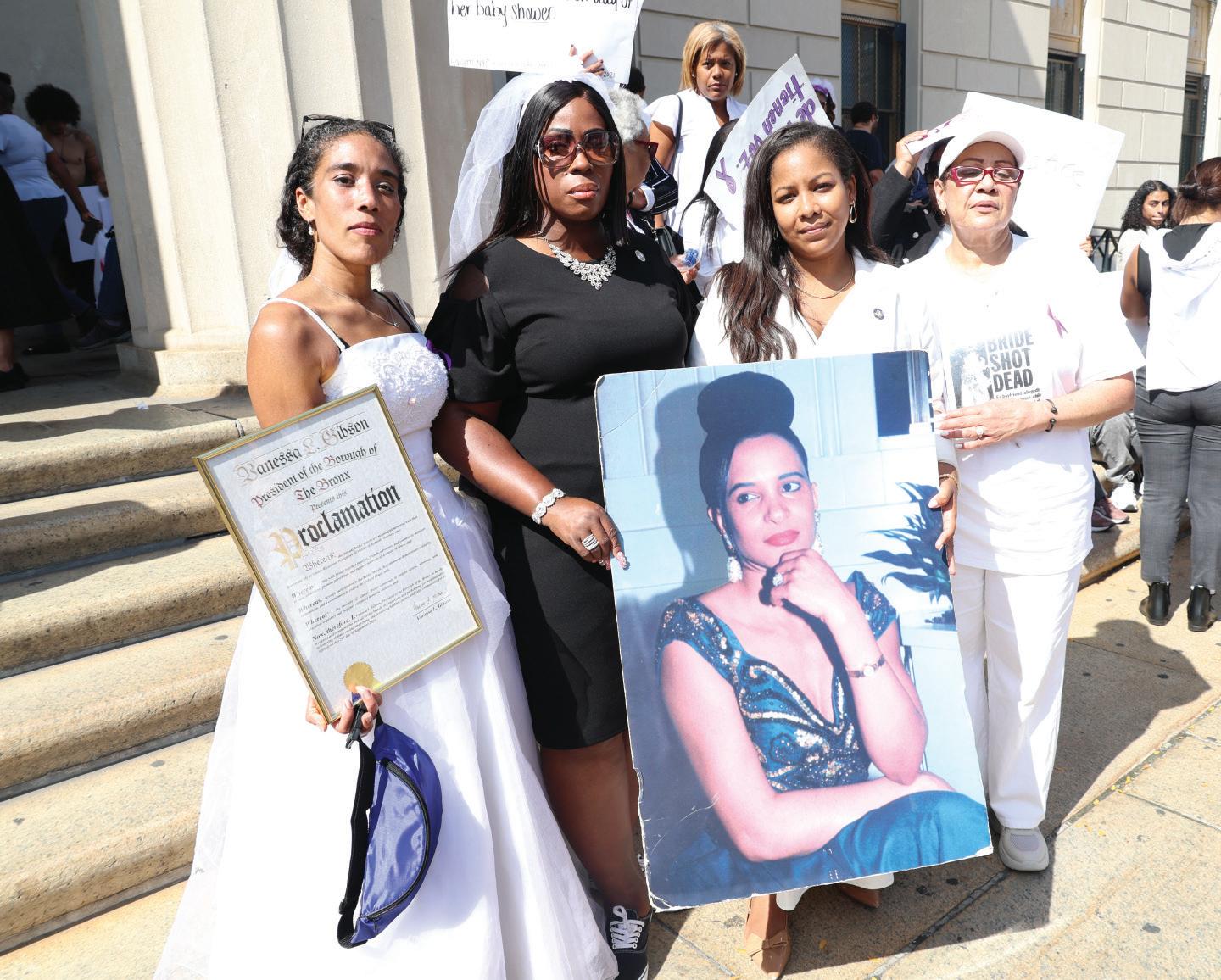
Gladys Ricart put on a lace-trimmed wedding gown and sparkling tiara, ready to begin a long-awaited new chapter of her life. Family members filled her home in Ridgefield, New Jersey, laughing, taking photos, and sharing the joy as Ricart prepared to walk down the aisle. Among them was her teenage niece, Lethy Liriano, then a senior at Phillips Academy.
The celebratory day ended in tragedy when Ricart’s ex-boyfriend entered the house and fatally shot her in front of her family and friends. Captured on videotape, the shocking violence drew national attention, not only for its brutality but also for the cruel symbolism: a woman murdered on her wedding day by a man she had left behind.
On the anniversary of Ricart’s death in September, the sun shined down on hundreds gathered in the Washington Heights neighborhood of New York City. They came in wedding dresses. They came wearing funeral black. They came carrying photos of loved ones no longer with them because of domestic violence. At the front of the crowd was Liriano, who, after years of advocacy work, became executive director of the Brides’ March a year ago.
Joined by PA alumni, survivors of violent crimes, their families and allies, including 100MenRising—a men’s group committed to ending domestic violence—Liriano, with a megaphone in hand and standing alongside her Aunt Gladys’s picture, marched amid the sea of flowing gowns through Upper Manhattan, Harlem, and the Bronx to uplift the names of those
lost, affirm the voices of survivors, and demand a future free from domestic violence.
“It’s taken me 25 years to reach a place where I felt ready to lead,” Liriano says. “This march has been part of my healing— walking alongside other families, hearing their stories, and realizing that my aunt’s legacy could fuel change.”
To the world, Ricart became a symbol of intimate partner violence. But to her family, she embodied strength, joy, and the kind of role model who showed them that anything was possible through hard work, sacrifice, and unconditional love. Born in the Dominican Republic in 1960, she was raised by her mother, Ana Rosario, alongside her three siblings. From an early age, Ricart stood out for her gentle nature
and determination. She became a young mother shortly after high school and worked tirelessly to build a better life for her son.
In 1983, Ricart was 22 when she immigrated to New York City, taking on cleaning jobs and enrolling in college to study accounting. Four years later, she was able to reunite with her son, moving into an apartment with her sister Norma and her nieces. By her mid-30s, Ricart had achieved what once seemed impossible: she was a homeowner, a college graduate, and a professional accountant.
“Gladys was the heart of our family,” Liriano remembers. “She worked so hard to create stability, not just for herself and her son, but for all of us.”
Ricart’s story challenges the stereotypes that too often surround victims of domestic violence. She was
independent, accomplished, and ready to move on with her life. But a jealous ex, unable to accept her decision to leave, ended her life in a calculated act of control and violence.
The public outcry after Ricart’s murder gave rise to the first event in 2000, when Josie Ashton, a criminal justice student at Florida International University, ran a 5K in her wedding gown in memory of Gladys. The following year, Ashton donned her wedding gown again and used the high-profile murder to raise awareness of domestic violence by walking 1,300 miles from Ridgefield, New Jersey, to Miami.
Following in Ashton’s footsteps, Ricart’s family along with other survivors have been marching a seven-mile route through New York City each year since
For 25 years, the Brides' March has stood as an unbroken tradition of love, grief, and courage.
Lethy Liriano ’00 (far left) gathers with others to put an end to domestic violence.
Since its founding in 1778, Phillips Academy has embraced the Latin motto non sibi—“not for self.” When forging the original school seal, Paul Revere purposefully inscribed the words across a rising sun—reflecting the school’s responsibility and commitment to the greater good. What began as a guiding principle is now a global movement including not only Andover alumni, but often family and friends. By developing, supporting, and participating in a variety of Non Sibi projects—hands-on service efforts that make a tangible difference in communities near and far—alumni continue to live out the meaning of this core Academy value.
Just this year, the Alumni Council’s Non Sibi Committee, in collaboration with regional volunteers, has coordinated 19 projects engaging more than 230 volunteers worldwide. These efforts supported a wide range of organizations, like Gaining Ground in Concord, New Hampshire, where volunteers harvest produce all year round to feed those in need—led by Jeffrey Hunt ’82 and Brett Johnson ’82. And Special Surfers, an event in Kennebunk, Maine, organized by Elizabeth Crowley ’94 and Eric Stockman ’91, where alumni and friends assisted more than 100 surfers with disabilities. Other projects helped fill community needs in the areas of environmental preservation and restoration, food insecurity, housing, family welfare, children and youth, education, and the military. Whether lasting an afternoon or developing into ongoing commitments, each project reflects the Academy’s enduring ethos of coupling knowledge with goodness.
“Non sibi isn’t just what we do—it’s who we are,” said Af-Lat-Am Committee Co-Chair Joelna James-Szanton ’86, who supports the annual Brides’ March. “It’s the heartbeat of Andover’s mission.”
New projects continue to grow year-round. Scan the QR code to learn more.

with others so committed to ending the violence in our world.”
2001 to support survivor-led truth telling and resilience.
At first, the marchers were met with resistance. “People spit at us and threw eggs at us,” Liriano recalls. “But we kept going. Because silence is what allows this violence to continue.”
Since then, the Brides' March has grown into an international movement. In addition to the annual event in New York, related events have sprung up in Massachusetts, Louisiana, Texas, and Florida as well as in other countries, including the Dominican Republic, China, Turkey, and Kyrgyzstan. Along the New York route, marchers paused at memorial sites to honor other victims, including New York City police officer Arianna Reyes Gomez, who was stabbed to death by her estranged husband in her home in 2022, and Shirley
Rodriguez, who was stabbed to death by her ex-boyfriend outside her apartment building in 2024.
This 25th anniversary of the Brides’ March carries special meaning within the PA community. Liriano’s classmates and fellow alumni remember her courage in the wake of tragedy and draw inspiration from the way she transformed grief into a force for change.
The Af-Lat-Am Committee adopted this year’s march as its Non Sibi project, with several alumni joining in New York to walk alongside Liriano.
“Supporting Lethy and the amazing work she’s doing to drive awareness around domestic violence felt important,” says Af-LatAm Committee Co-Chair Jonathan "Figgy" Figueroa ’06. “The entire premise of the Brides' March is to give
voice to survivors and use that momentum to drive justice.”
Figueroa has lived in New York all his life but didn’t know the Brides’ March was an annual event until meeting Liriano and learning about her remarkable story. This year, he walked beside her and other survivors—an experience that left a lasting mark.
“I see the Andover community continually coming back to support this cause in a variety of ways,” Figueroa says. “This movement is about creating spaces for mourning, truth telling, and collective healing—and then asking, how do we mobilize from these stories? Lethy’s work on this front highlights the power of people coming together. I heard one survivor say that the Brides’ March ‘gives her wings,’ because it’s freeing to have conversations
Despite actions toward progress, the statistics on domestic violence, Liriano stresses, remain grim. According to the National Intimate Partner and Sexual Violence Survey (NISVS) by the Centers for Disease Control and Prevention, about 41 percent of women and 26 percent of men in the U.S. have experienced contact sexual violence, physical violence, or stalking by an intimate partner in their lifetimes. Additionally, millions have experienced psychological aggression, and approximately 1 in 3 women and nearly 1 in 6 men have experienced sexual violence by an intimate partner. Advocates point to systemic failures that allow abuse to persist—cultural stigmas, legal gaps, and a justice system that often minimizes domestic violence as a “private” matter rather than a public crisis.
For Liriano, these injustices that continue to endanger lives make the march not only necessary but also urgent. Twenty-six years after Gladys Ricart’s life was stolen, her story continues to move hearts and mobilize communities. Through the Brides’ March, her legacy is one of resilience, love, and action.
“She was more than what happened to her,” Liriano says. “She was an immigrant who built a life through hard work, a mother who sacrificed for her son, a professional who made her family proud. She deserved joy that day. And we march to make sure her story—and the stories of so many others—is never forgotten.”
first championship in March 2026.
BY CHRISTINE YU ’94
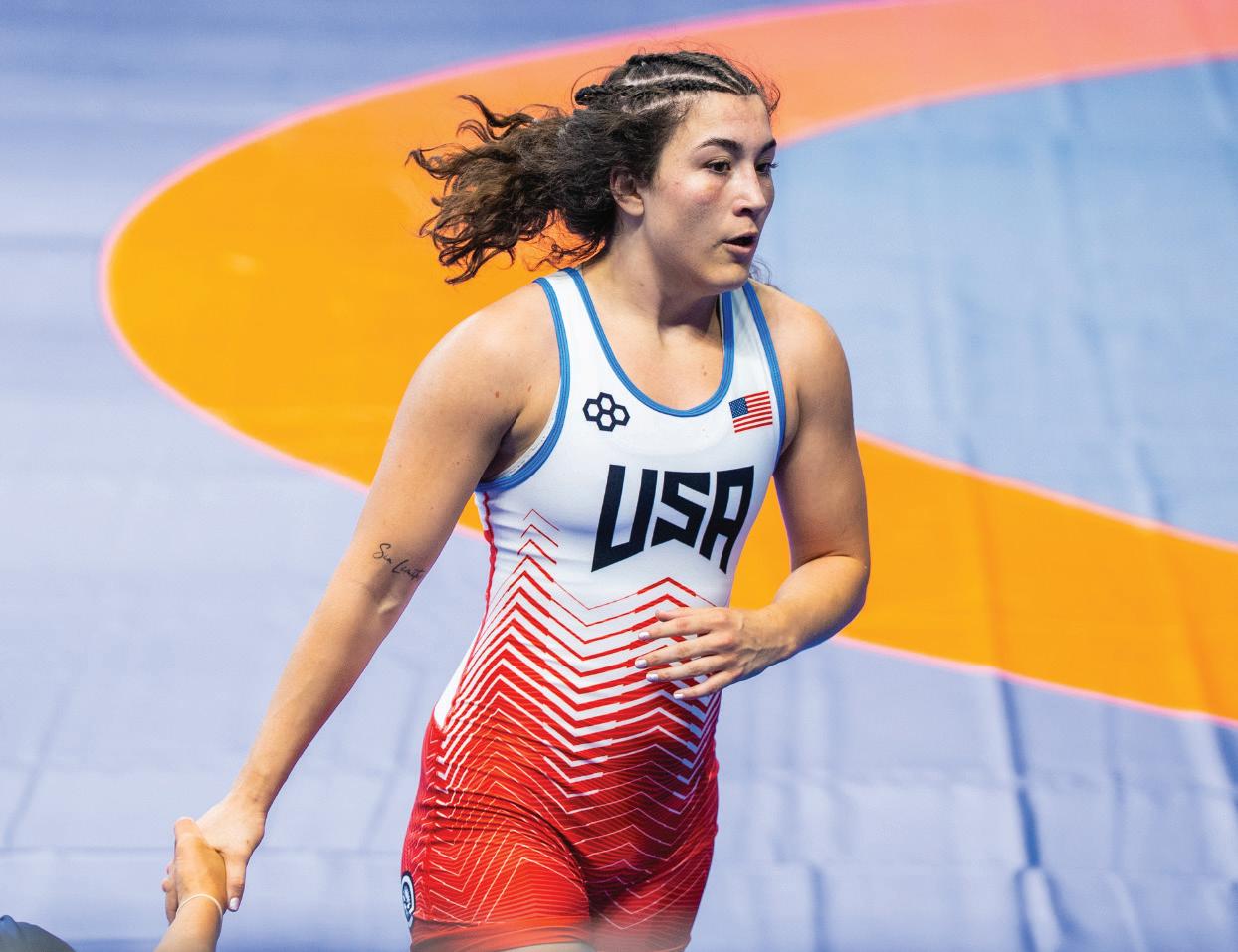
DANI NUGENT WAS PREPARING to compete at the 2025 U20 World Championships in Bulgaria, but she wasn’t sure how to get to the mat. There was a warm-up room in the basement, a waiting room, and yet another waiting room. Then, a tunnel where she and her coach waited. And finally, the mats.
“That’s where I locked in,” Nugent says. During the 15-second walk out to the floor, her coach reviewed the game plan— You’re moving your feet. You’re on offense the whole time. Own the center
They slapped hands and she started wrestling.
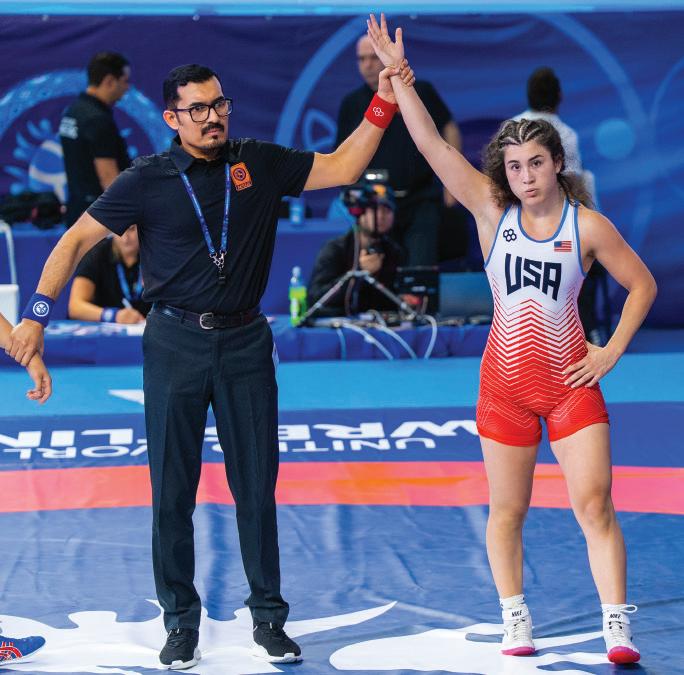
“He talked and then I went out and executed,” Nugent says. And she did. In her first appearance representing Team USA in August, Nugent finished fifth in the world in her weight class.
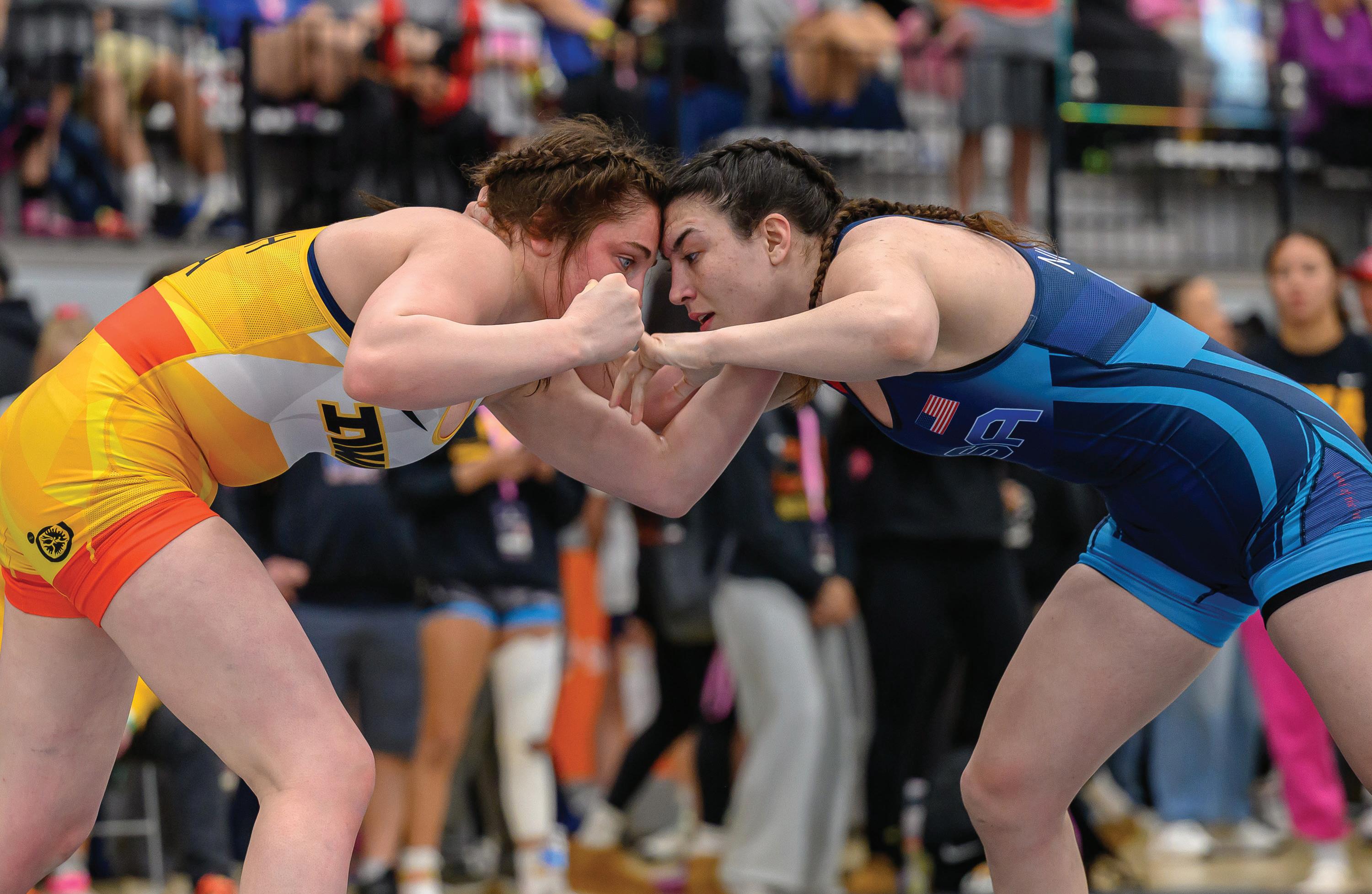
One of the top women wrestlers in the country, she is a four-time New England Prep and three-time National Prep champion. Her senior year at PA, she was ranked number two in the country in her weight class. Despite Nugent’s stellar resume, she wasn’t locked in to make the World Championship team. At the April 2025 U20 National Championships, which served as the trials for the World team, Nugent stunned the competition by pinning all five of her opponents, earning the national crown and securing her place as a World Team member. The previous two years, she hadn’t placed at Nationals.
“No one expected Dani to place at the tournament. Not only did she podium, but she won,” recalls Kassie (Archambault) Bateman ’06, head wrestling coach and Russian department chair, who coached Nugent during her four years at Andover. “Knowing that the odds are stacked against you and then to prove everyone wrong—it’s huge.”
Ever since the World Championships, Nugent has been hungry. Hungry to medal and to keep pushing to be the best
she can be in a sport that hasn’t always welcomed young women. But she isn’t interested in just winning. She’s also determined to help expand opportunities for the next generation of women wrestlers, especially at the collegiate level.
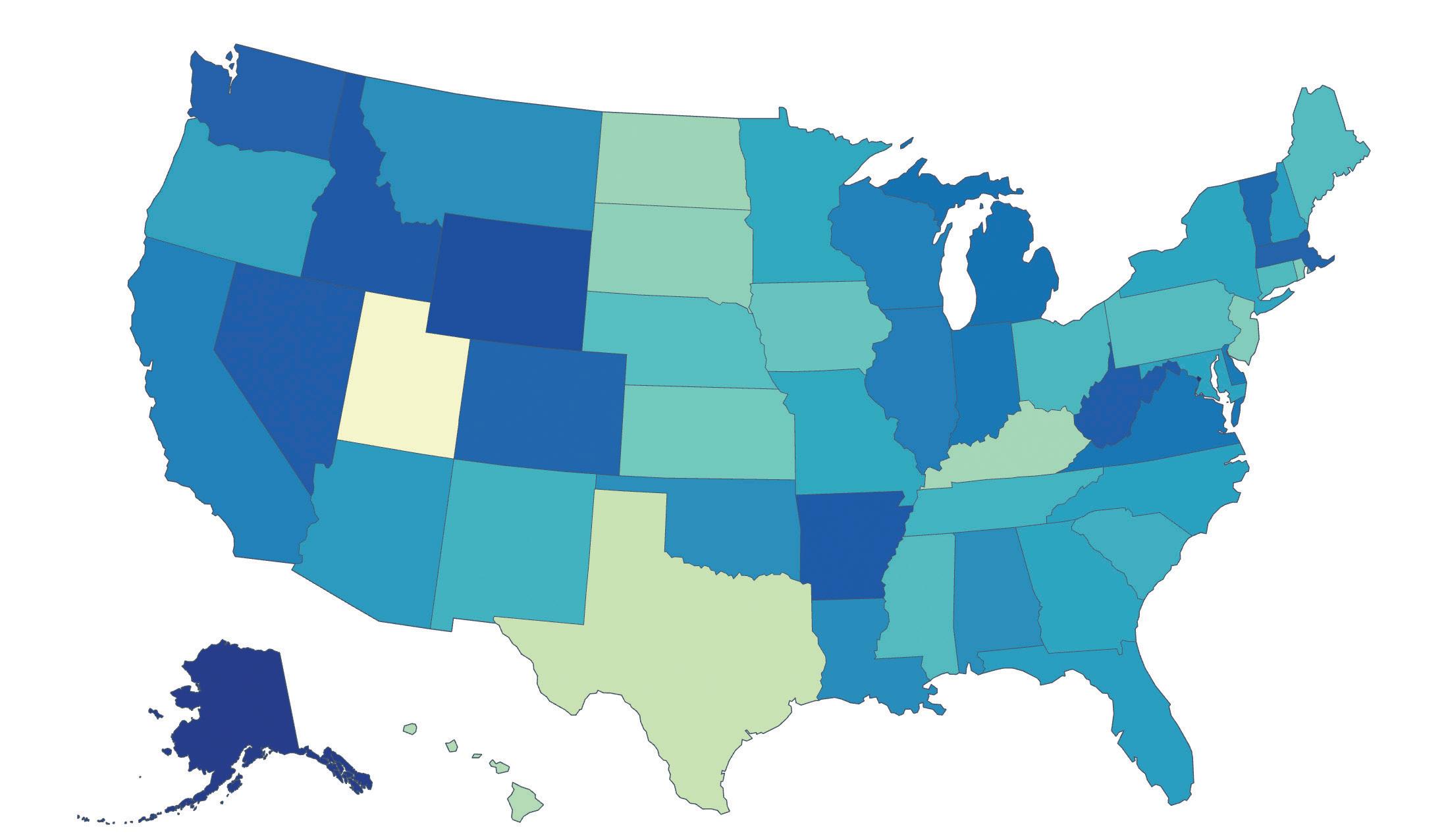
Girls’ wrestling is the fastest-growing high school sport in the country, and at the collegiate level, women's wrestling is gaining ground rapidly. According to the National Federation of State High School Associations, participation in girls’ wrestling jumped 15 percent from 2023–24 to 2024–25, topping 74,000 participants for the first time. The sport is sanctioned in 46 states, and nearly 1,000 schools added a girls’ wrestling program last year. This year, the National Collegiate Athletic Association officially recognized women’s wrestling as the 91st championship sport—and will hold the
“There are so many girls wrestling in high school, but there aren’t as many options at the college-level—program-wise or scholarship-wise—even if you’re top ranked in the country,” Nugent says. “It made senior year really hard, honestly, because everyone else was committing [as athletes to colleges] and asking me why I hadn’t committed yet.”
While women’s wrestling isn’t a varsity sport at Oklahoma State University (OSU), Nugent chose the school for its storied wrestling tradition, coaches, facilities, and thriving club program. Club sports are one way to build momentum by demonstrating that women at Division I (D1) schools are interested and qualified. The Cowgirls Wrestling Club has a full roster and is aiming to achieve D1 status in the near future.
“Women deserve to have the same opportunities as men—they deserve to be in D1 schools with the kind of curriculum and opportunities that D1 schools provide,” says Kyra Barry ’83 who served as team leader for the 2016 USA Wrestling women’s team. “Dani is going to break barriers in new ways. There will be a huge wake trailing her as she moves forward.”
OSU’s Cowgirls Wrestling Club is also Nugent’s first allgirls teams.
Nugent is the youngest of five, having trailed her older siblings into the sport. Initially, just her brothers
wrestled because her father, who grappled at Boston College, didn’t know that girls could wrestle. He’d never seen a girl on the mat before. But when her older sister saw a girl competing at a tournament, she told her father—and within a week Nugent and her two sisters were signed up to wrestle too.
Competing as a kid, Nugent and her sisters were often the only girls at youth tournaments, but they weren’t fazed by it. Things began to change in middle school when Nugent competed on the boys’ team.
For high school, Nugent followed her sister Marisol ’20 and brother Colin ’23 to PA where she found a wrestling team and culture that helped her flourish. Girls have been welcomed on the Academy’s wrestling team since the early 1990s, when it became an all-gender sport. “Andover is probably the healthiest place for wrestling,” Nugent says. “Everyone
is super respectful and supportive of one another.”
Bateman agrees. “The camaraderie forges a bond like no other. It’s one of those sports where you start in high school and grow.”
But Nugent’s high school wrestling career was marked by injuries that kept her off the mat and unable to place at national tournaments. Her lower year, she tore her meniscus and was out for eight months. She tore it again her upper year.
“Those injuries held back her confidence a little bit. Now, we’re just starting to see her grow into her confidence. She’s got untapped potential,” Bateman adds.
As a senior, Nugent had a Cinderella year. She was team captain, won the Beast of the East tournament, became the first female wrestler to win New England preps four times, became a three-time National Prep Champion, and won her first national title.
“Dani has always been tough, and she grew so much in her mental toughness. That’s a huge reason why she saw the big successes of her senior year,” Bateman says.
The wrestling room at Oklahoma State is neon orange—a stark change from PA blue—and Nugent confides that when she walks in, sometimes she has to blink a few times so her eyes can adjust. But it’s becoming a second home.
Throughout the winter, she’ll train and compete in tournaments and meets
in the run-up to women’s collegiate club wrestling nationals in early 2026. But she is laser–focused on USA Wrestling National Championships and World Team trials in the spring, so she can represent Team USA again.
“Making the World team this year showed me that I’m capable, that I’m up there with the best in the world,” she says. “I want to make it back to Worlds next year— and hopefully win. That will be something I’ll chase for the rest of my career.”






BY RITA SAVARD
It was in the pages of a local newspaper that 12-year-old Gary Lee discovered a life-changing opportunity—a scholarship that sent talented students to premier college preparatory schools. That single story planted a seed, leading Lee to become A Better Chance scholar at Phillips Academy and eventually to a decades-long journalism career that took him around the globe from Russia to Peru, mastering five languages along the way and covering some of the world’s most pivotal stories.
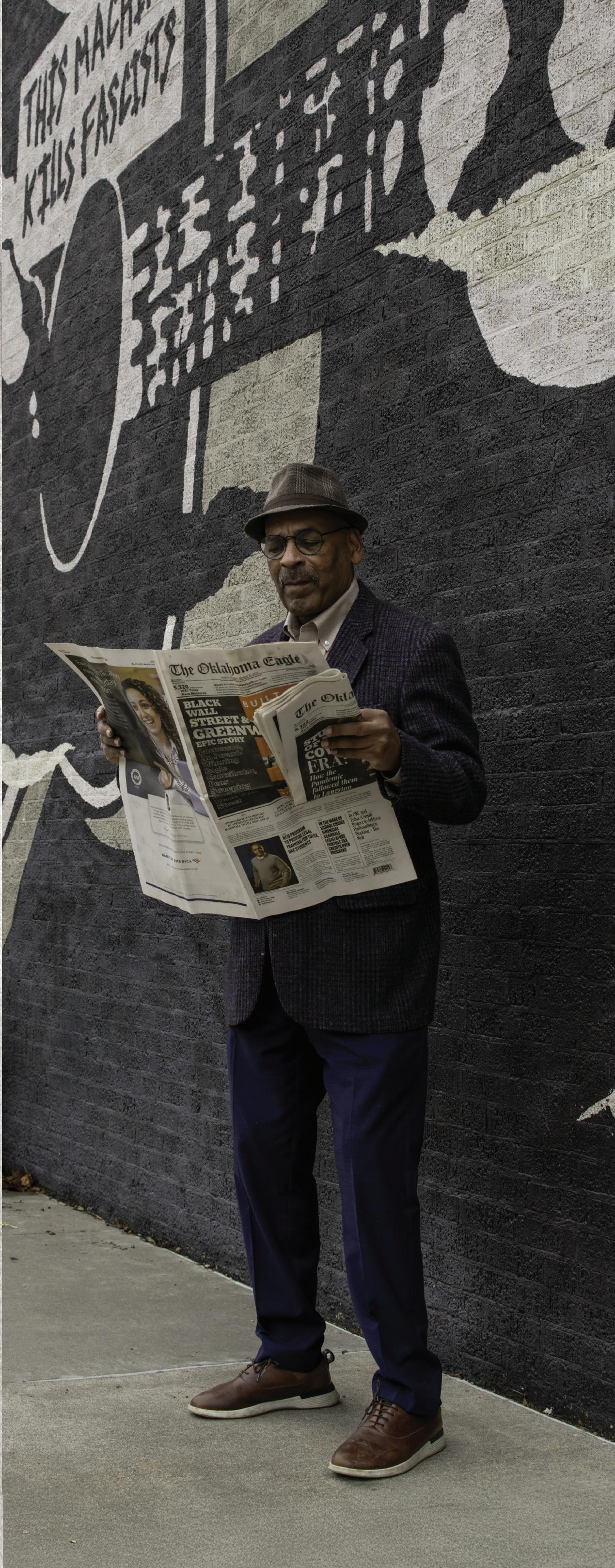
Today, Lee ’74 is back where it all began, at The Oklahoma Eagle—the same paper that first cracked open his world. Now editor of one of the nation’s oldest Black-owned newspapers, he’s part of a movement reimagining community journalism. From coast to coast, a quiet revolution is taking place—including PA alumni spanning media platforms and generations—reminding us all that local news remains a vital force for connection wherever journalists are invested in telling the stories of people who live, work, and hope together.
“Journalism has always been about connection,” says Lee, who recalls a time before the internet, when communities relied on their local newspaper as a trusted source to stay informed. “It’s
about listening to the heartbeat of a community—its triumphs, its struggles—and helping neighbors see one another more clearly.”
In Lee’s lifetime, journalism has undergone seismic change, disrupted by the digital revolution with social media and artificial intelligence challenging traditional business models. Local news—or at least the version once rolling off a printing press—is in crisis. Since 2005, more than 3,300 print newspapers have vanished. And this year, for the first time since the early 1900s, there are fewer than 1,000 dailies remaining in the U.S., leaving 50 million Americans with limited access to local coverage, according to the State of Local News Report released in October by Northwestern’s Medill Journalism School.

“Make no mistake—when you see the number of news deserts across the nation reach an all-time high—it is alarming,” Lee says.
“But there is also a growing network of journalists, editors, and nonprofit leaders who believe that local storytelling still has the power to knit communities together and strengthen democracy.”
Researchers for the Medill study also point to a hopeful trend: a rise in successful news startups. Over the past five years, more than 300 new outlets have launched. Former head of school John Palfrey P’21, now president of the John D. and Catherine T. MacArthur Foundation, is helping lead that charge.
In 2023, the MacArthur Foundation rolled out Press Forward, committing more than
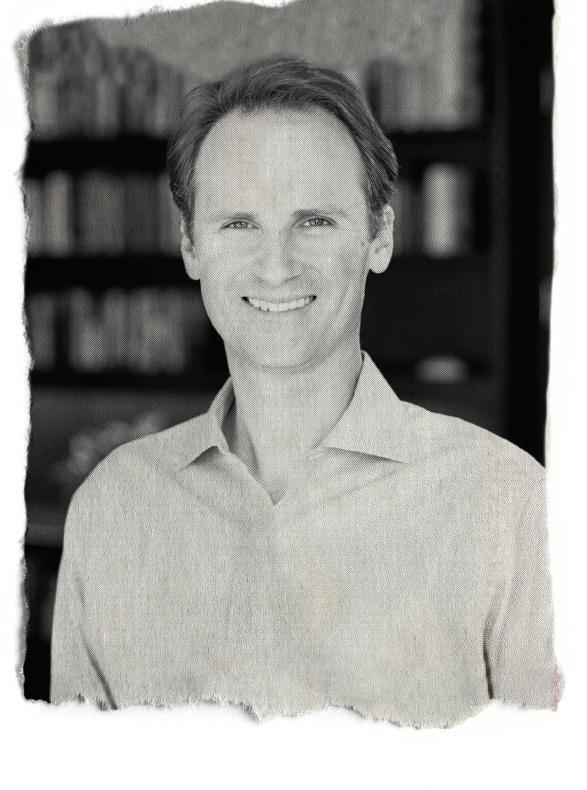
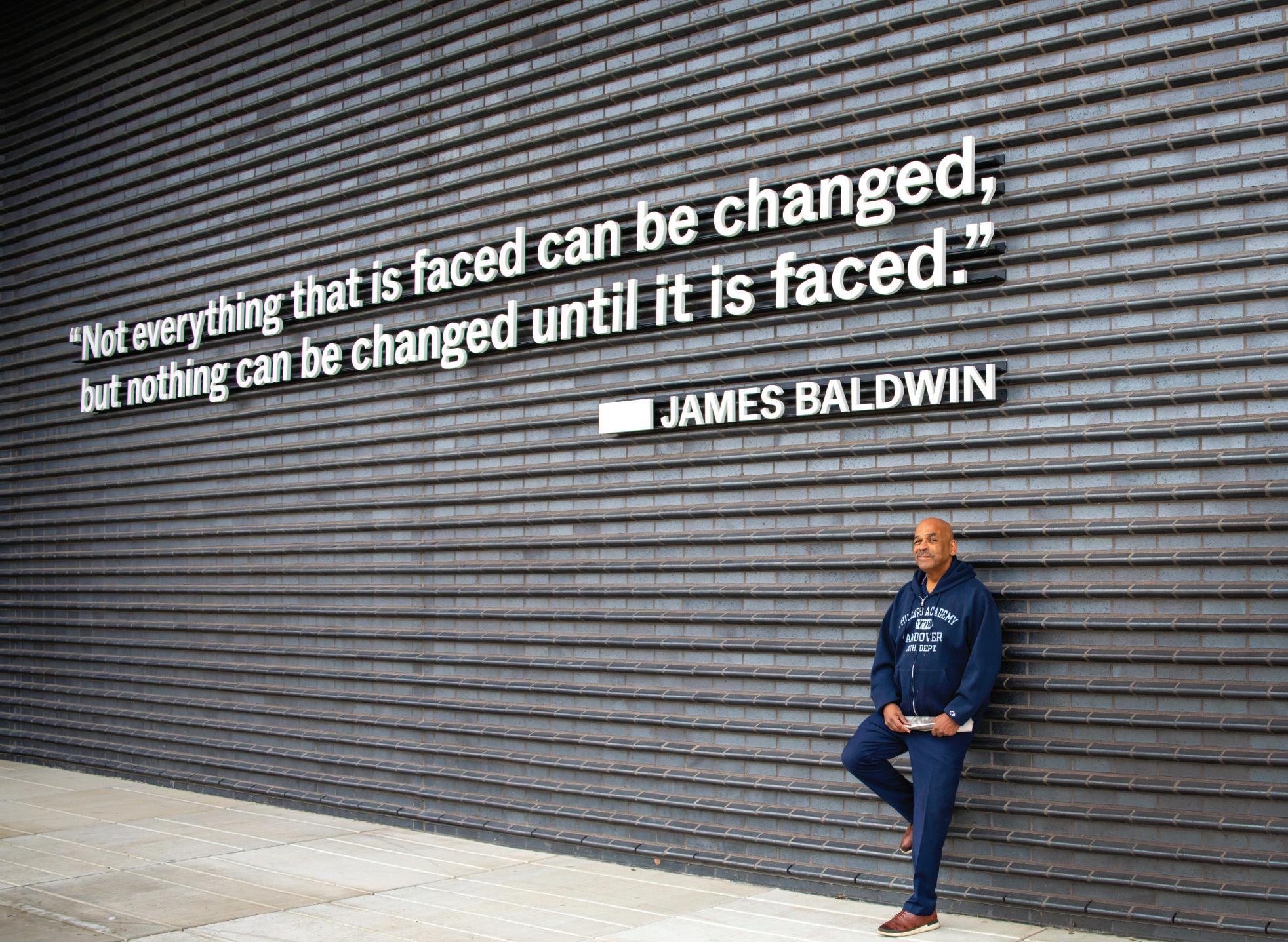

$500 million over five years to rebuild the nation’s local news infrastructure. As of October, the initiative has already distributed $400 million to newsrooms— supporting training, education, and new ways to sustain and share essential reporting that keeps communities informed and connected.
“What are the things that actually join people instead of divide them?" Palfrey asks. “Whether the football team did well or not, the kid who’s going to the quiz bowl or spelling bee, or how to solve a problem like congestion or housing or homelessness—things we all share in our communities from one day to the next—these are what bring us together across divides. Local news is often the bridge.”
The story of American journalism begins with rebellion. The first newspaper in the colonies—Publick Occurrences, Both Foreign and Domestick—hit the streets of Boston in 1690 and was shut down after just one issue. But the idea it birthed—that people have a right to know what’s happening in their communities—grew into a revolutionary force. By the time America secured its independence, freedom of the press had become so central to democracy that it earned a place in the very first amendment to the Constitution.
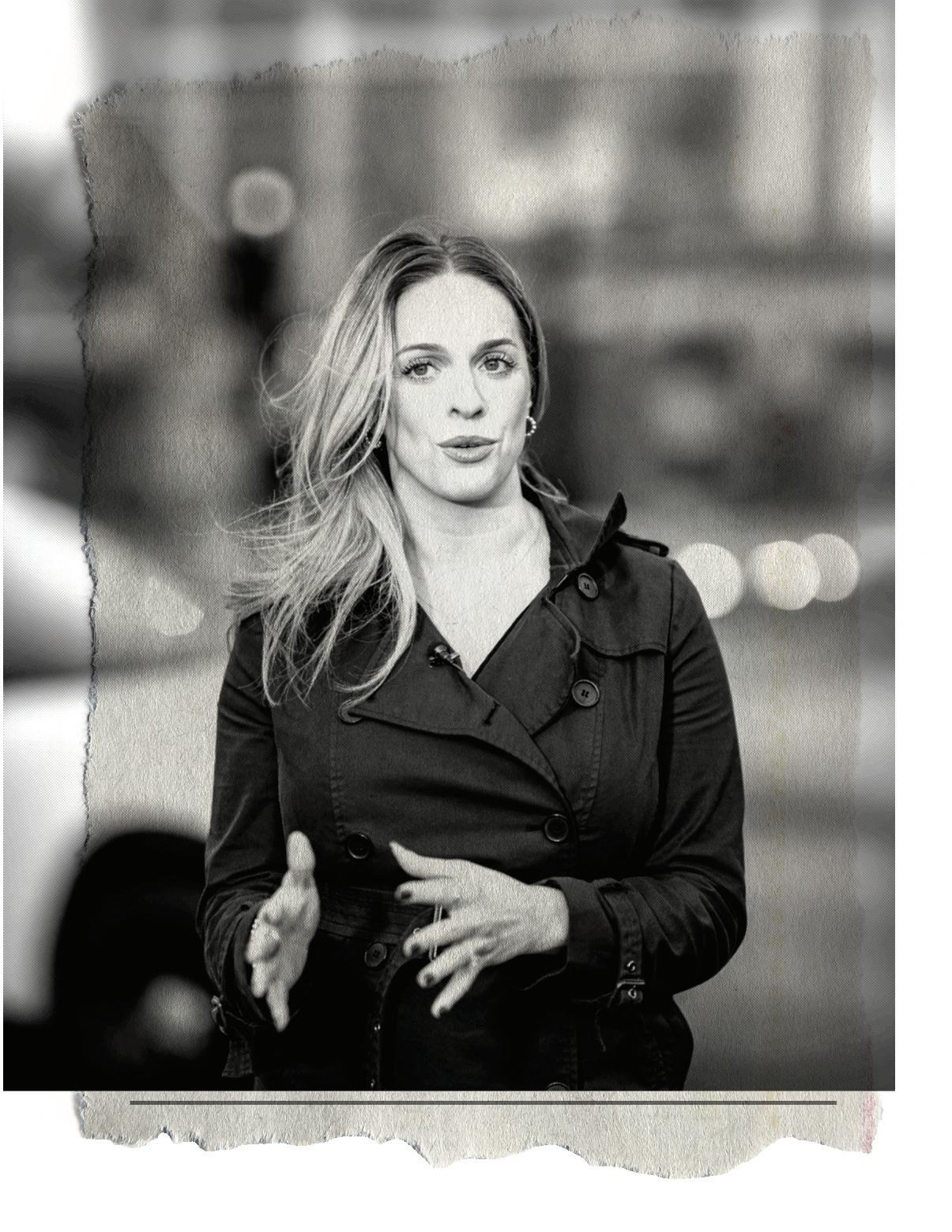
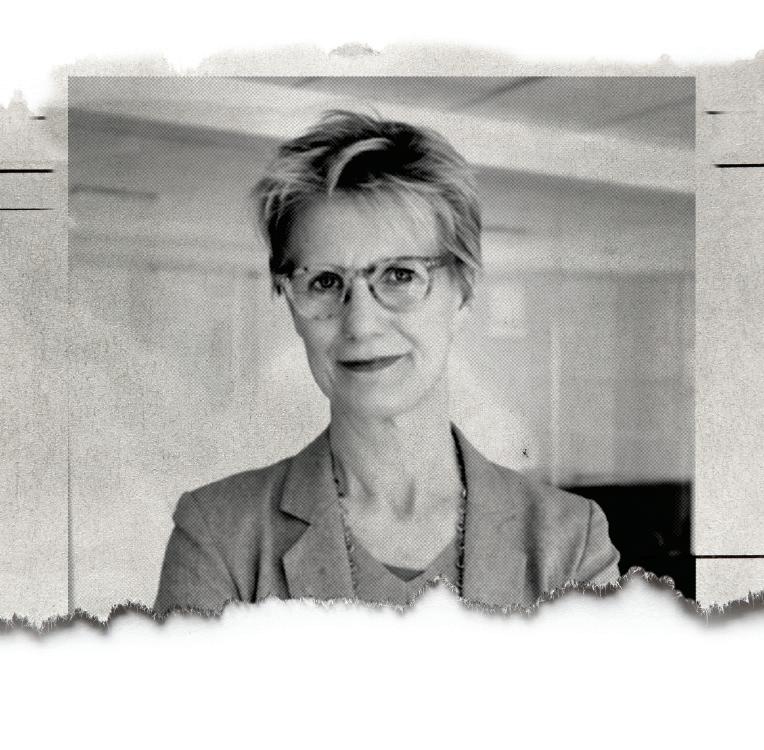
“That’s no accident,” says Carroll Bogert ’79, CEO of The City, a nonprofit newsroom serving New York City’s five boroughs. “Information—real, fact-checked
The new CEO of The City, is bringing her knowledge of sustainable business models to the local independent newsroom covering New York City's five boroughs.
facts—are the lifeblood of democracy. Our republic cannot survive without an independent press.”
Bogert’s career has spanned continents and causes—from foreign correspondent in Beijing and Moscow, to communications leader at Human Rights Watch, to nine years as president of The Marshall Project —a Pultizer Prize-winning nonprofit news organization reporting on the U.S. criminal justice system. At The City, she’s working to restore trust and accountability in urban news coverage—and rally the subscribers to sustain it.
Bogert believes local newsrooms should be treated like other civic institutions—schools, hospitals, museums—that require public investment to survive. “There’s despair at the national level where the conversation is so rancorous and partisan,” she says. “We need to rebuild trust from the ground up, and that starts with local news.”
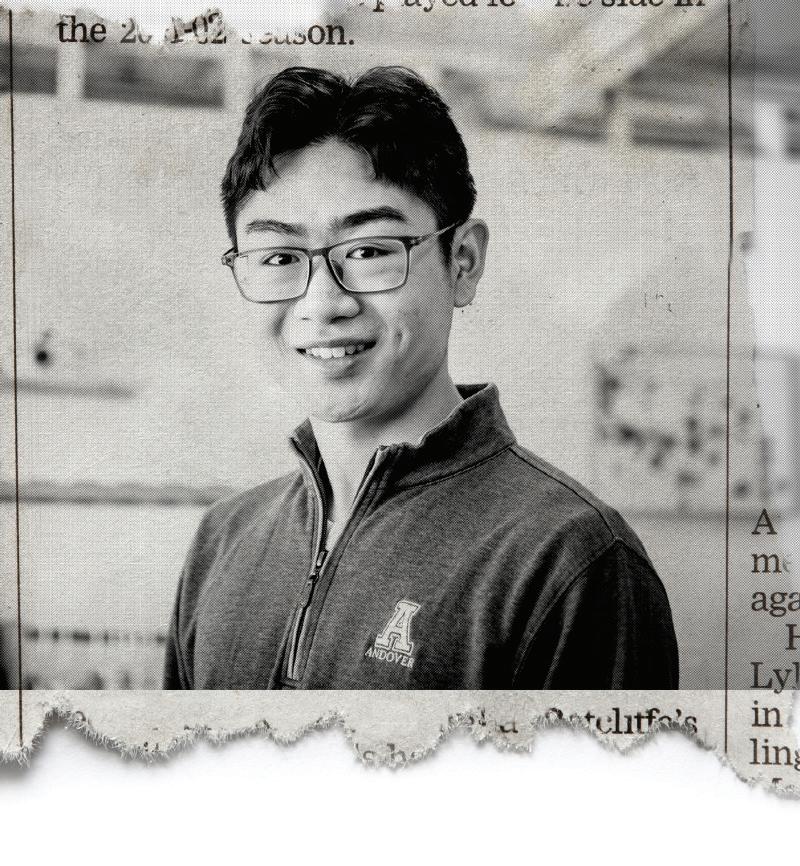
That same conviction drives the next generation of journalists—including Frank Zhou ’22,
who reported from inside Harvard Yard in late April 2024 when students took over the area, establishing an encampment to protest the university’s investments in Israel and its suspension of the Palestine Solidarity Committee. As the founding host and producer for The Crimson’s flagship news podcast, Newstalk, Zhou and his team worked through the night to tell the stories of classmates and faculty with nuance and care.
“We were living alongside the people we were covering,” he says. “Because of that closeness, we had to tell their stories with more tact and more heart than anyone outside could.”
When thinking about the history of social movements in the U.S.—suffrage, civil rights, LGBTQIA+, and #MeToo, to name a few—Zhou says journalists can pay a high price for safeguarding speech that people disagree with. At the time of writing this story, dozens of reporters had turned in access badges and exited the Pentagon rather than agree to government-imposed restrictions on their work, pushing journalists who cover the American military further from the seat of its power.
The nation’s leadership called the new rules “common sense” to help regulate a “very disruptive” press.
“There has never been a time when the work of journalists has been more threatened—but amid those threats, the work also feels more timely, urgent, and necessary than ever,” Zhou says. “I think for some, the idea of local news brings a caricature to mind of a septuagenarian reading a print paper. To that I say let Andover’s young alumni be a testament to the shining fact that good journalism and local news spans generations.”
On any given day, Kristina Rex ’11 might be wading through floodwaters, standing in front of a courthouse, or interviewing neighbors on a suburban street.
A reporter for Boston’s WBZ-TV, Rex has built a career telling stories that matter to the communities she covers, including Maine’s opioid epidemic, the aftermath of Hurricane Harvey in Texas, and the daily realities of life during the COVID-19 pandemic.
She has also seen the frenzy of national news outlets pouring into a community to broadcast scenes of destruction or chaos before quickly moving on to chase the next headline. Local reporters, she says, remain in the long game, walking the length of a storm and connecting with people to tell their stories through all phases. “In local journalism, I make my own calls,

55.8 FROM 2000 TO 2018, WEEKDAY NEWSPAPER CIRCULATION FELL FROM 55.8 MILLION HOUSEHOLD TO AN ESTIMATED 28.6 MILLION.
28.6 MILLION

3,300
NEWSPAPERS HAVE CLOSED SINCE 2005
73% OF NEWSPAPER JOBS THAT EXISTED IN 2005 HAVE BEEN LOST
write my own scripts, and stand on the ground where the story unfolds,” Rex explains. “We’re doing great work with far fewer resources but the impact is immediate and real. Our work can literally change what happens in a town.”
Her investigative reporting in Maine exposed fraud that led to the arrest of an Australian developer who had promised to revive a shuttered ski mountain. During the pandemic, her coverage connected neighbors to food programs and vaccine clinics. And this year, her social-media updates on the widely watched Karen Read murder trial—gaining her more than 50,000 social media followers overnight—helped uncover corruption in a small-town police department and sparked a statewide conversation about transparency.
Rex has watched the industry shift dramatically. Two newspapers continue to disappear each week in the U.S., eroding trust and leaving communities without reliable coverage. As local papers vanish, audiences migrate to social media—where misinformation spreads easily. “People across the political spectrum distrust news, and algorithms feed us only what we already believe,” she says. “That’s why media literacy matters more than ever.”
Research from institutions like the American Journalism Project (AJP), a venture philanthropy organization investing in and building digital nonprofit newsrooms, show that when local news outlets close, corporate and political misconduct increases—proof that healthy communities need vigilant and reliable watchdogs.
Knowing who owns your local news is part of holding news organizations accountable to the communities they serve. As major corporations and private equity firms—focused solely on shortterm profits—bought up and stripmined hundreds of local news outlets, these acquisitions have accelerated the decline of local journalism, leading to news deserts across the U.S.
“Given the role local news publications have in driving citizen political engagement, in disseminating information during crisis events, and in sustaining and developing local identity, understanding the acquisition on local news output is crucial in identifying and drawing attention to unhealthy media environments,” the AJP warns.
For Rex, the motivation remains personal. “We—local reporters—are you,” she says. “I’m

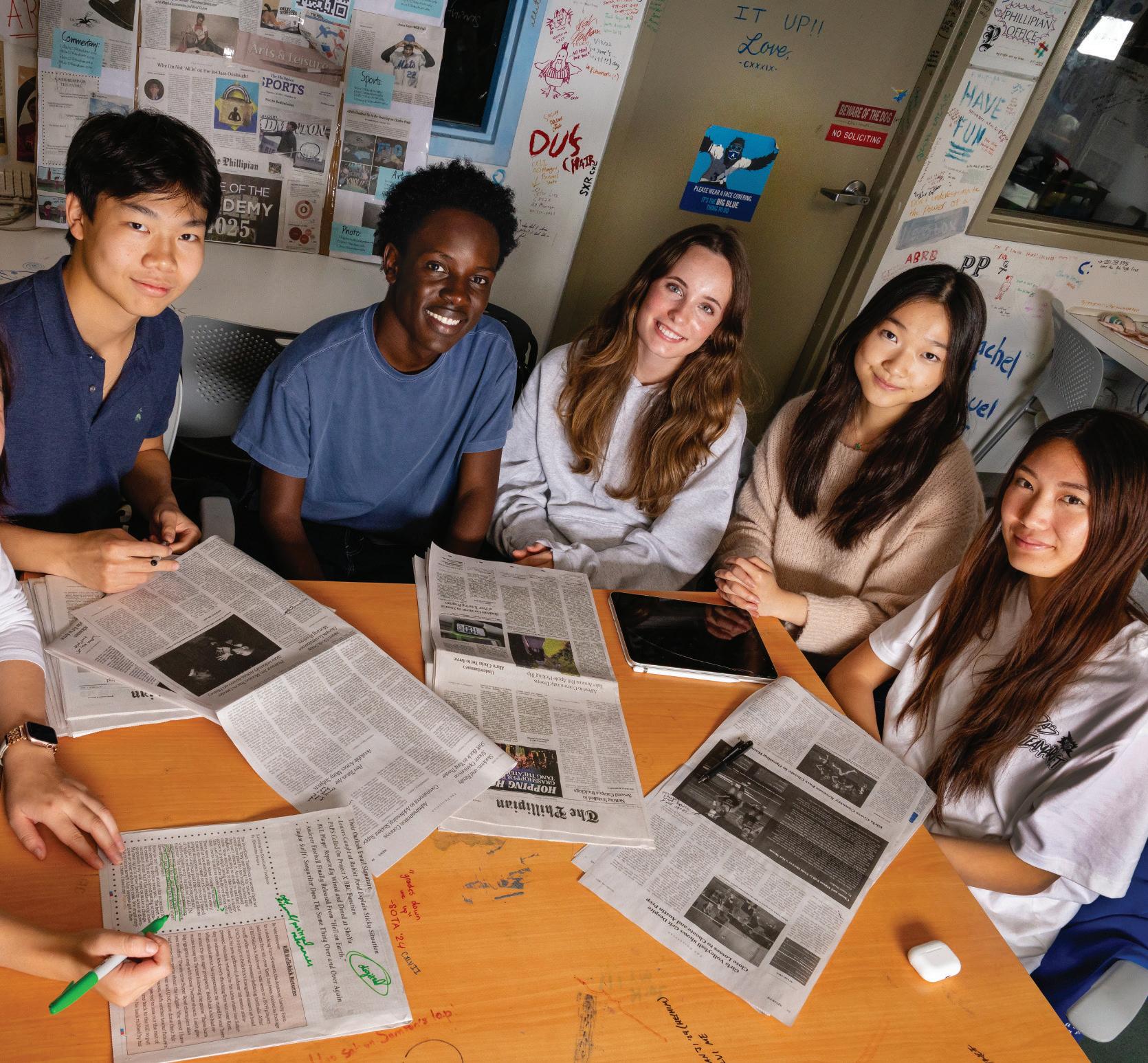
On Monday nights, the lower level of Morse Hall hums with energy. Editors crowd around glowing screens, debating headlines and story angles as they shape the next issue of The Phillipian. Notes scrawl across pages, laptops clack in sync, and the conversation flows between deadlines, ethics, and how best to tell Andover’s stories.
“It’s important that this space exists,” says Editor in Chief Micheal Kawooya ’26, glancing around the busy newsroom tattooed from floor to ceiling with decades of students’ signatures. “Your local reporters are equally invested in the communities they cover because it’s their home too. We put a lot of thought into how we report on PA and meeting people where they are because we’re all on the same team—we walk the same halls, sit next to you at ASM, or in the dining hall. That closeness gives the work meaning.”
Founded in 1857, The Phillipian is the nation’s oldest continuously published high school newspaper—a fully student-run, uncensored publication that chronicles both the everyday and extraordinary rhythms of life at Phillips Academy.
“Local news is the first line of truth,” says Faculty Emerita Nina Scott P’05, ’06, ’11, a former longtime advisor and English instructor whose Journalism 101 book still serves as a guide for high school students across the country. “It’s a hard job and it gives the people doing it
a mission that’s extraordinary. They are digging for the truth and bringing it to light, often when no one else is looking for it.”
That mission has deep roots at Andover. Founder Samuel Phillips Jr. helped shape the Massachusetts Constitution of 1780, whose Article XVI proclaimed: “The liberty of the press is essential to the security of freedom in a state.” That principle would later inspire the First Amendment—a legacy still alive in the hands of today’s young reporters.
When John Palfey arrived as head of school in 2012, The Phillipian’s editor came to him with a problem: a looming budget shortfall. “I told him, ‘If you want to be an independent newspaper, you can’t rely on the person you’re covering to close your gap,’” Palfrey recalls. Palfrey reached out to alumni who quickly rallied to endow the paper, ensuring its financial independence for years to come.
For each new crop of editors, that independence continues to connect and inform Andover’s global community as student journalists cover news from all areas of student life to campus governance and policy changes.
“Even though our paper prints weekly on campus, we post online and hear from alumni who still—even years later—very much feel part of Andover,” says Executive Digital Editor Abby Zhu ’26. “The fact that they’re still reading, still weighing in from afar, is special and creates new ways to serve our community.”

a new mom in suburban Massachusetts. I vote in local elections, go to school board meetings, get frustrated by the same potholes on my street. There’s no puppet master pulling the strings. We care enough about our communities to tell the stories that matter.”
Other journalists, like Ethan Brown ’17, are creating communities for people with shared concerns rather than shared ZIP codes. His award-winning climate podcast, The Sweaty Penguin, localized a global issue by anchoring stories in everyday stakes—energy bills, jobs, and public health—mixing humor with rigorous, solutions-driven reporting. Launched while Brown was still in college, the show grew to more than 200 episodes, was licensed by PBS’s climate initiative in 2021, and even replaced a textbook in a University of Kansas course.
“Podcasts are in listeners’ ears—you feel like you know the host,” Brown says. “That sense of trust can foster consistent engagement, particularly around issues that can otherwise feel abstract or overwhelming.”
Now at the University of Rhode Island’s Metcalf Institute, Brown helps New England newsrooms strengthen their climate coverage by training journalists to connect science and community. “Local isn’t only geography,” he says. “It’s the issues we live with every day—that’s where a podcast can create the same civic space a neighborhood paper once did.
For nearly 60 years, congressionally allocated funding has been a cornerstone of public media, supporting NPR, PBS, and their member stations— often the only remaining news source in rural areas. But in July, Congress rescinded $1.1 billion from the Corporation for Public Broadcasting, eliminating all federal support and dealing the hardest blow to small, resource-strapped outlets that serve those communities. Alumni say this crossroads moment demands new thinking—and bold models—to sustain local news for future generations.
Gary Lee grew up in Tulsa’s historic Greenwood District—a proud, predominantly Black community once known as Black Wall Street. A century ago, Greenwood was one of the most prosperous Black neighborhoods in America, until white mobs burned 40 blocks of businesses and homes in the 1921 Tulsa Race Massacre.
From those ashes rose The Oklahoma Eagle —a paper built to preserve truth and rebuild hope. Lee returned home to Tulsa in 2021, where he's working to ensure his hometown news will last another 100 years.
“I was raised by the North Tulsa community—the Black community of Tulsa,” Lee says. “They say it takes a village to raise a child, and that village came together to raise me. When it came to giving back and honoring where I came from, I realized I had that opportunity—and I should jump at it.”

Lee is leading The Eagle and a new venture, The Tulsa Local News Initiative. The nonprofit newsroom, launched with support from the AJP and the MacArthur Foundation, is guided by community voices. More than 300
Tulsans helped shape its mission: more local reporting, stronger representation, and journalism that helps residents meet their basic needs. Out of those community listening sessions, the newsroom created a new beat called, Your Money, which includes financial advice, news on the cost of living, food and health resources, and more.
“We’re trying to make news participatory,” Lee says. “The people who read us should also help shape what we report.”
Under Lee’s leadership, The Eagle is partnering with local outlets like Tulsa World, KOSU, and Focus: Black Oklahoma to share stories, reduce duplicative work, and expand access to reliable news. His newsroom is also launching Tulsa Documenters, a program that trains and pays residents to cover public meetings.
“Our mission isn’t just to put out a regular publication,” he adds. “It’s to create spaces for conversation— sometimes in cafés, sometimes in libraries, sometimes at the state fair.”
Lee’s vision embodies Press Forward’s belief that the future of journalism depends on local collaboration, not competition.
“People have lost faith in national
Since it's inception in 1922, The Oklahoma Eagle has been a model of evolving local news and reporting that keeps the community informed—and connected to what it cares about.
1 2 3 4
SEARCHING FOR CONTENT: AI can collect leads from social media, identify trends, and collate new data sources, providing journalists with valuable information quickly.
DOCUMENT ANALYSIS: AI can assist in analyzing extensive public documents, helping journalists structure information and produce summaries for quick scanning.
TRANSLATION INTO DIFFERENT LANGUAGES: AI can facilitate the translation of articles into multiple languages, broadening the audience reach.
news,” he says. “But they still trust local news. That’s our opportunity—to rebuild that trust from the ground up.”
If the first generation of alumni journalists helped define freedom of the press, those on the frontlines of news today are finding new ways to protect it. Tom Rubin ’79 is quick to say he “bleeds the First Amendment.” Once editor of The Phillipian, he went on to write for the The New York Times, and then studied media law at Stanford. He now serves on the board of the Reporters Committee for Freedom of the Press, which supports local newsrooms through legal hubs in five states.
“The ability of reporters to do their jobs with the rights granted under the U.S. Constitution is vital to our democracy,” Rubin says.
A chief of intellectual property and content at OpenAI, Rubin is also exploring how technology can strengthen—not supplant—journalism. AI, he believes, can transform local news by freeing reporters from tedious work and giving readers new tools for understanding.
“AI won’t replace reporters—it will help them work smarter,” he says. “We’ll spend less time locating information and more time analyzing it. That’s how journalism becomes stronger.”
From digesting 500-page government reports in seconds to translating stories across languages or personalizing local newsletters, Rubin sees AI as “a recipe for revitalization—if we embrace it.”
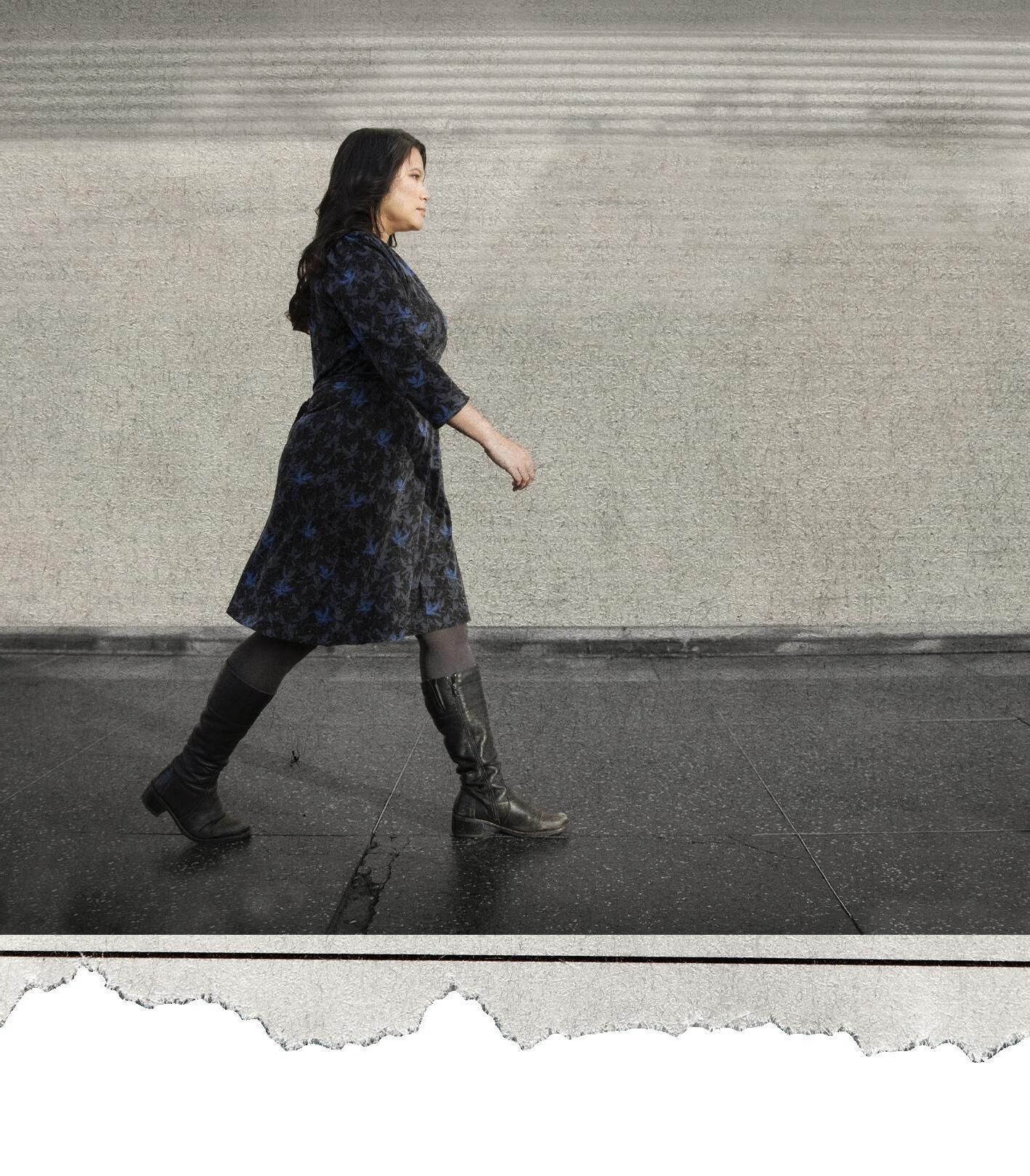
At Type Investigations, Noy Thrupkaew ’96 is supporting the next generation of reporters and publications. As the director of partnerships, she
CREATING SOCIAL MEDIA CONTENT: AI can turn a single news story into engaging posts for various social media platforms, optimizing posting times and flagging comments that require human intervention.
5
6 7
NEWSLETTERS: AI can compile draft newsletters and personalize them for specific audience profiles, enhancing engagement and relevance.
COMMENT MODERATION: AI can moderate reader comments, improving the quality of discussions and easing the workload on editors.
CONTENT CONVERSION: AI can convert content into various formats (audio, video, summary, infographic) based on reader preferences, enhancing accessibility and engagement.
mentors journalists from underrepresented groups who are pursuing high-impact investigative work. “Investigative reporting isn’t a luxury,” Thrupkaew says. “It’s a fundamental part of journalism’s mission. When local reporters are equipped to dig deeper, they don’t just inform their communities— they transform them.”
Her programs have helped expose systemic inequities in housing, policing, and health care—issues that affect millions yet often begin as stories of one neighborhood, one family, one voice finally being heard. “Many local journalists already have the trust of their communities,” she adds. “They just need the support to turn that trust into change.”
Palfrey, whose Press Forward initiative has helped support award-winning investigative reporting at Type Investigations, says the mission remains democracy’s cornerstone.
i“Holding power to account is necessary if democracy in a small town is going to work,” he says. “The First Amendment is under stress like never before, but I believe there are certain things we won’t stand for as an American public—and eviscerating the First Amendment is one of them.”
As newsrooms continue to evolve for a new era, the core calling remains the same: to witness, to question, to connect. In the hands of journalists who listen and write with care, local news endures as both a record and a reflection—democracy’s conscience in every form it takes.
“Thomas Jefferson said he’d rather live in a world without government but with newspapers than in a world with government and no newspapers,” says Bogert. “It’s the First Amendment for a reason—if you care about democracy, you have to care about the survival of good journalism.”
To learn more about how you can support local news, visit pressforward.news

Alumni connection helps author move forward by examining the past
BY STEPHANIE HAN ’82
Life is a continuum, but like many people who divorce, I divide my life into two segments: before and after. The structure I had built my adult life around collapsed, and so for the first time ever I reached out to the Andover network for help.
I had moved with my child in 2015 from Hong Kong to Hawai’i—home of my maternal clan since 1904. I had wanted to come home, but it was about more than a physical location: I wanted to be myself.
A few phone calls and the coconut wireless led me to the downtown Honolulu office of Francis T. O’Brien ’61. Frank, son of a Harvard-trained medical doctor, studied literature at Yale and was drafted for the Vietnam War while finishing Boston College Law School. Basic training was not only his entry “into the real world” but also a wake-up call to what awaited on the ground. He moved out of the artillery unit, became a Judge Advocate General (JAG) Corps attorney, served in Korea, and returned to teach at West Point before settling in Hawai’i to work at Tripler Army Medical Center.
“Didn’t care that much about authority,” Frank shared. “A senior judge once said, ‘Always remember, you are lawyers first, officers second.’ Later I got a note that read, ‘Captain O’Brien allows his being a lawyer to interfere with his duty.’ I left the service and told my wife I wanted to make a mark on the law. A dent. I did—in appeals in abuse and neglect cases. And I’m reasonably proud of that.”
Frank and I shared geography and history aside from Andover: my medical doctor dad got drafted right after getting his green card, so we lived on the Korean base a year after Frank’s tour. Neither Frank nor I stayed back East. He and his wife of 54 years, Chris, tried returning to Boston early in their marriage but lasted only nine months.
“There’s a great deal of pressure in the Northeast,” Frank said. “No sun. No smiling. There are edges on things. You live here (in Hawai’i) a few years, and you always run into people you know, no matter where you are.”
I was far away from red brick buildings, the clatter of Commons, despair about unfinished homework, and awkward responses to racial slights. Yet Andover was buried in my bones. Adolescence in an extraordinarily competitive boarding school meant that Andover broke me and made me. Andover helped me become a writer, but it wasn’t only through the Bulfinch Hall English classes. I learned to perform, I learned to bury myself, I learned to survive. Writing became a place of refuge, the only place I felt seen. And yet marriage had shut me down; I had lost confidence in expressing who I was.
Frank felt the same way. During our first meeting he told me that he cried when he first went away to Andover; he had missed his mother. I had too much pride to cry when I said goodbye to my family. Even
“I was far away from red brick buildings, the clatter of Commons, despair about unfinished homework, and awkward responses to racial slights. Yet Andover was buried in my bones.”
now I can picture my 6-year-old sister bursting into tears at the door of my room at Paul Revere and feel nostalgia for what was lost. I was 13. Until that very moment, I didn’t understand that I was leaving home forever.
I made up for not crying decades prior within minutes of meeting Frank. Acquaintances told me that Frank is the go-to family attorney, someone who understands high-conflict divorces. I’m not the only one who has emptied his box of tissues.
Not long after meeting, Frank gave me an assignment: write my divorce story. I procrastinated by
Stephanie Han '82 is the author of Swimming in Hong Kong, writes the woman. warrior.writer Substack, and is writing a memoir on divorce. Frank T. O'Brien '61 practices law in Honolulu.

drinking countless cups of coffee and systematically eating my way through the first, then second, display case shelf of pastries at a local café. I listened to podcasts, watched self-help videos, doomscrolled, and did a boot camp fitness class. My kid told me I was the second-worst person in class. I was miserable.
Two days before Frank’s deadline, I wrote 50 pages. Something had shifted. Writing my story allowed me to reclaim my voice. “I asked you to write your story because I knew that if you wrote what had happened and how it became your life, it would help,” Frank explained. His strategy worked.
D-day fast approached. After reading my divorce story, the mediator ordered that my ex and I sit in separate rooms. This arrangement allowed me to negotiate more effectively. Even with Frank present, I began the day nervous and shaky, but by the time we exited the meeting I had more confidence and clarity.
When the proceedings ended, I walked out of the building overwhelmed and exhausted, squinting at the sun. Frank asked how I felt. “Awful,” I replied.
We sat in the downtown McDonald’s. “Stephanie,” he said, “you are not a servant. You can do what you want to do. You can teach at a school. You can write a best-seller. You can live where you want to live. It’s your life. You are free.”
Months passed before I fully grasped how Frank’s assignment had helped me to recover and move on to a new self. I had written myself into freedom. A before and after. Andover brought me full circle.
BY JOSEPH P. KAHN ’67
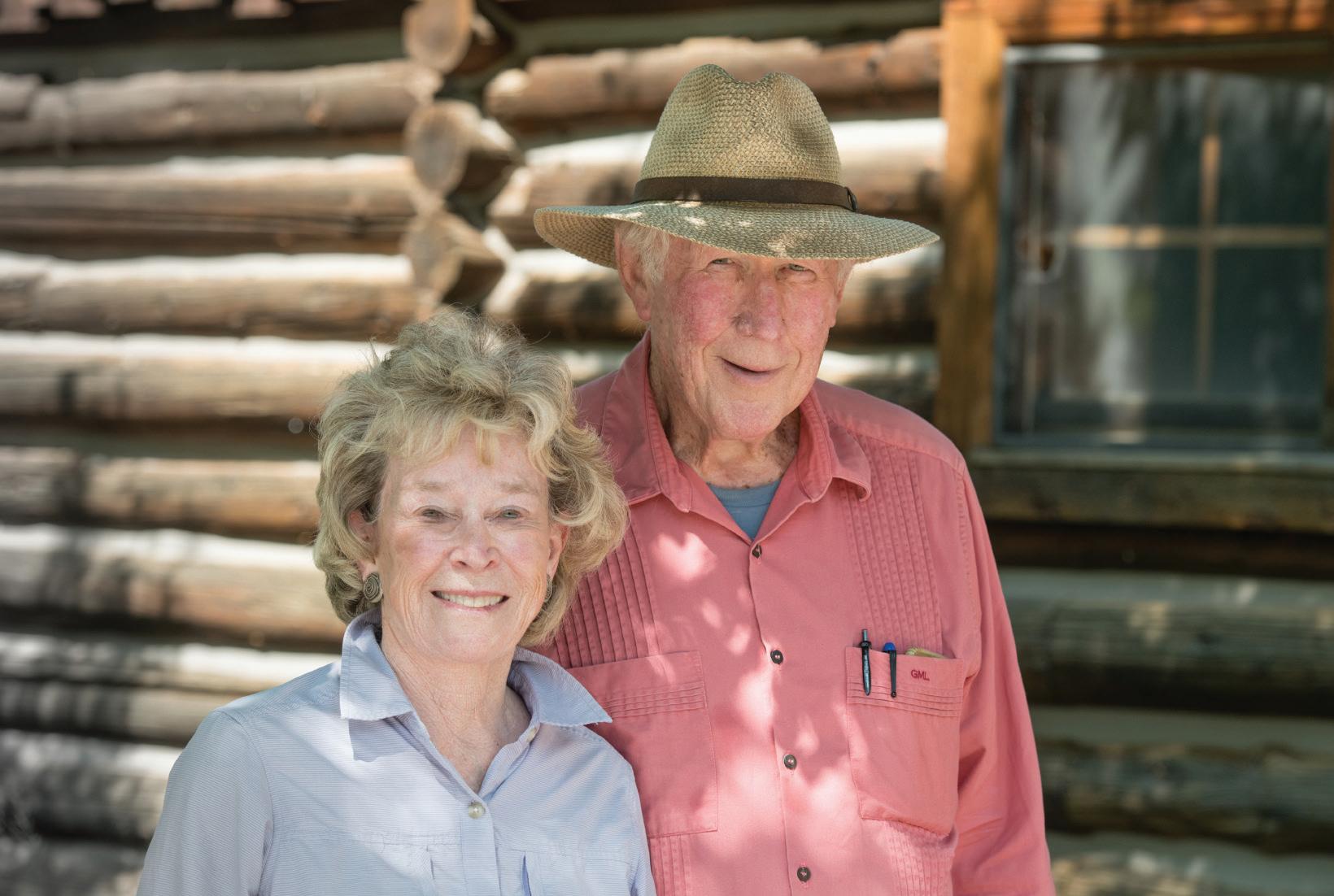
Mollie Lasater and her husband Garland, both Class of 1956, had long been supporters of two innovative, STEM-centric programs— Andover’s (MS)2 and its close relative, the Colorado Rocky Mountain School’s (HS)2—when they wondered how they might sell other boarding schools on the model that has helped send hundreds of low-income, first-generation public high school students to elite colleges and universities.
Andover’s version has proven to be both durable and highly successful. Students commit to three summers of cost-free study, room and board, and travel. In return, they take a heavy math and science course load, receive intensive college counseling, and get to work alongside first-rate teachers and like-minded peers from diverse back-
grounds. Close relationships are formed and often carried forward into college and beyond.
For all their virtues, though, including a nearly 90 percent college graduation rate, these programs require extensive funding—the cost per student per session is $10,000—as well as a longterm commitment from host schools. Andover’s success notwithstanding, others have been slow to follow, at least so far. Thanks to the Lasaters, however, that picture is changing.
“Gar and I started thinking, there are all these great campuses that are vacant all summer, or just have soccer camps or whatever,” Mollie recalled in an interview from her home in Fort Worth, Texas. “Also, when you look at the dynamics of these programs, they sell themselves.”
She continued, “To be completely devoted to this is a wonderful thing. You
and Garland Lasater have expanded the reach of Andover's (MS)2 program—giving new generations of students access to life-changing educational opportunities.
know, late in life it gets you up in the morning.”
Three years ago, both well into their 80s, Mollie and Gar put their formidable energies and ample resources behind the Squared Network, a Boston-based nonprofit. Under its oversight, two offshoots of the Colorado school’s (HS)2 program have taken root and blossomed.
The first, Kent Squared, recently completed its second summer at the Kent School in Connecticut. Next year, the Middlesex School will welcome its first Squared cohort to Massachusetts. Each program can accommodate up to 100 students.
Nick Favaloro, Squared Network’s CEO, is a former middle school teacher and management consultant who spent five summers at (HS)2. Favaloro credits the Lasaters with fully embracing the “where talent meets opportunity” ethos that makes these programs training grounds for future leaders in science, technology, and other key industries.
“When I first met Mollie and Gar, I wondered, who are these folks?” said Favaloro, who hopes to expand Squared Network to five campuses by 2030. “Mentors? Grandparents? Funders? In reality, they’re many things to us. Plus,
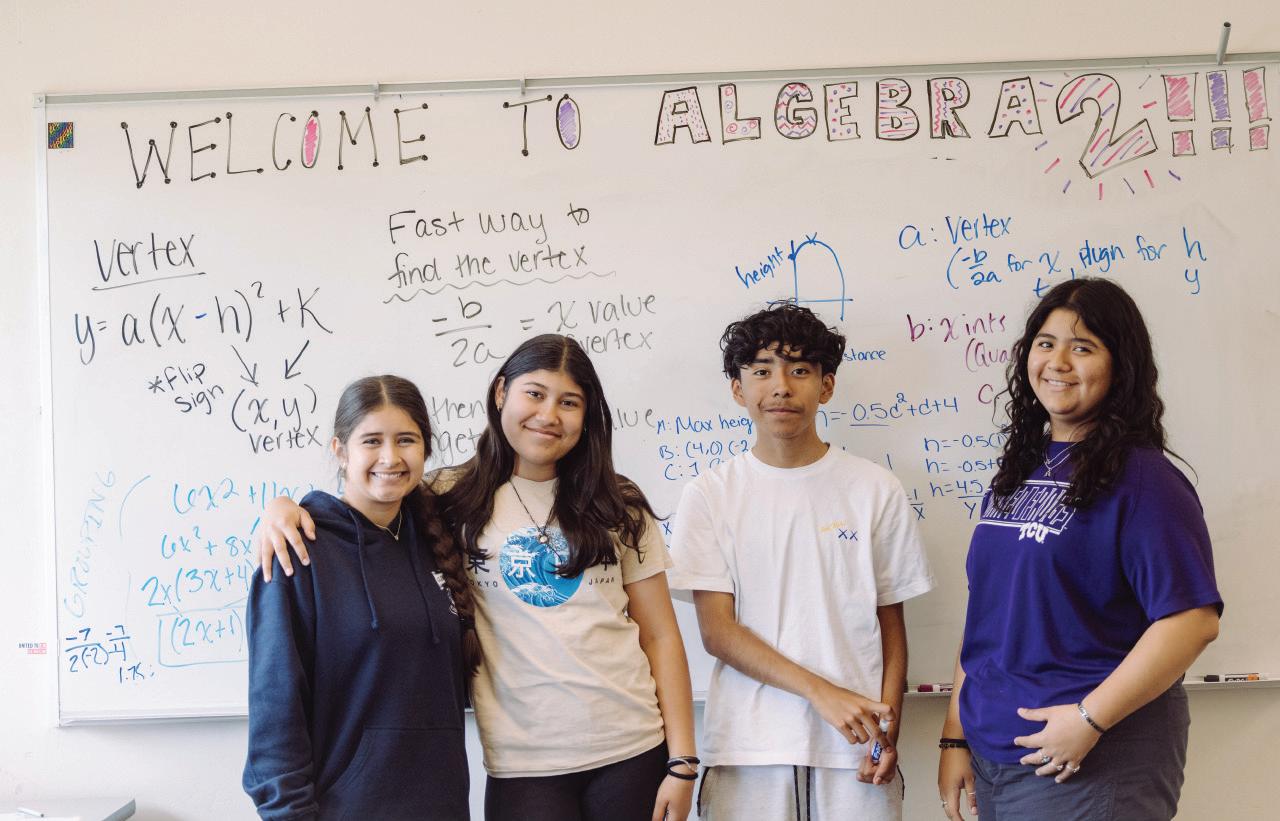
they have this funny dynamic. Gar is very pie in the sky, theory oriented. Mollie is more about forming deep relationships. It’s very personal to her, not theoretical.”
By any yardstick, Mollie’s belief in educational and cultural enrichment is inspiring. In Fort Worth, she’s served on or led several nonprofit boards, including the I Have a Dream Foundation, Fort Worth Independent School Board, and Fort Worth Symphony.
“Over the past 50 years, (MS)2 has established a model for rigorous math and science coursework, college access, and personal enrichment”
—ELIOT SYKES ’97, (MS)2 PROGRAM DIRECTOR
PA has benefited greatly from her leadership and generosity too. As a trustee, Alumni Council member, reunion organizer, committee chair, Class Agent, Addison Gallery board member, and all-purpose institutional dynamo, she has served the Andover-Abbot community with passion and distinction for decades.
For the Lasater clan, Andover has also been, above all else, a family affair.
Students in Colorado's (HS)2 program spent the summer learning, connecting, and preparing to beome the first generation in their families to enroll in college.
So far, two dozen relatives and in-laws have gone through PA, with Piper Lasater ’26, the youngest granddaughter, on track to graduate this spring.
The Lasaters were first introduced to (MS)2 in the ’70s through PA Headmaster Ted Sizer, who, in Mollie’s words, “blew me away.” In her role as a local school board member, she began recruiting Fort Worth students to apply. In 2005, she and a group of Aspen area friends took the next step, organizing efforts to bring (MS) 2 to Colorado. Originally a collaboration between CRMS and the Aspen Science Center, (HS) 2 will celebrate its 20th anniversary next summer.
What’s most gratifying, according to Favaloro and others, is seeing so many program alumni stay in touch with one another—and with the Lasaters themselves—while paying it forward through mentoring younger students seeking to expand their own horizons.
One (HS)2 alum with whom Mollie remains close is Amanda Toledo Barrios, who’s finishing her PhD in space engineering at CalTech and working with the Mars Rover team.
“That speaks to the success of (HS)2,” said Mollie proudly. “That they come back to graduations, work in the program, and become residential assistants. They really love each other.” She added, “They want to thank me, but I want to thank them.”
Since 1977, (MS)2 has been rewriting what’s possible.
Andover’s longest-running outreach program offers a tuition-free residential experience that brings high-achieving public high school students from communities underrepresented in math and science to campus for three summers of rigorous study and mentorship.
Scholars dive into advanced math, science, and English coursework, leadership development, and college counseling—all designed to propel them toward success in higher education and beyond.
More than 1,200 students have completed the program, with alumni attending top universities and pursuing careers in STEM, education, and social impact.
"Over the past 50 years, (MS) 2 has established a model for rigorous math and science coursework, college access, and personal enrichment," says Eliot Sykes ’97, program director. "The alums of (MS)2 serve as beacons of light for current students and continue to shape their legacy by giving back to the program in ways that are immeasurable."
When Emma Lowry looks at an image of a heart, lungs, or other parts of the human anatomy, she sees more than tissue and bones.
“I think it’s quite beautiful the way our bodies are constantly readjusting, fighting, and rewiring based on our experiences and environment," she explains. "My art comes from imagining what that connection from outside to inside looks like.”
A student at McGill University in Montreal, Lowry is studying medicine and working as a medical assistant in pediatrics at the University of Vermont Medical Center.
Although Lowry makes her art more as a creative outlet, she’s also sold commissioned pieces including the fall 2024 cover design of The McGill Journal of Human Behavior.
She plans to get her EMT certification, attend medical school, and pursue both of her passions in the future.
“My goal is to be a physician and an artist—and for both of these to build on each other.”
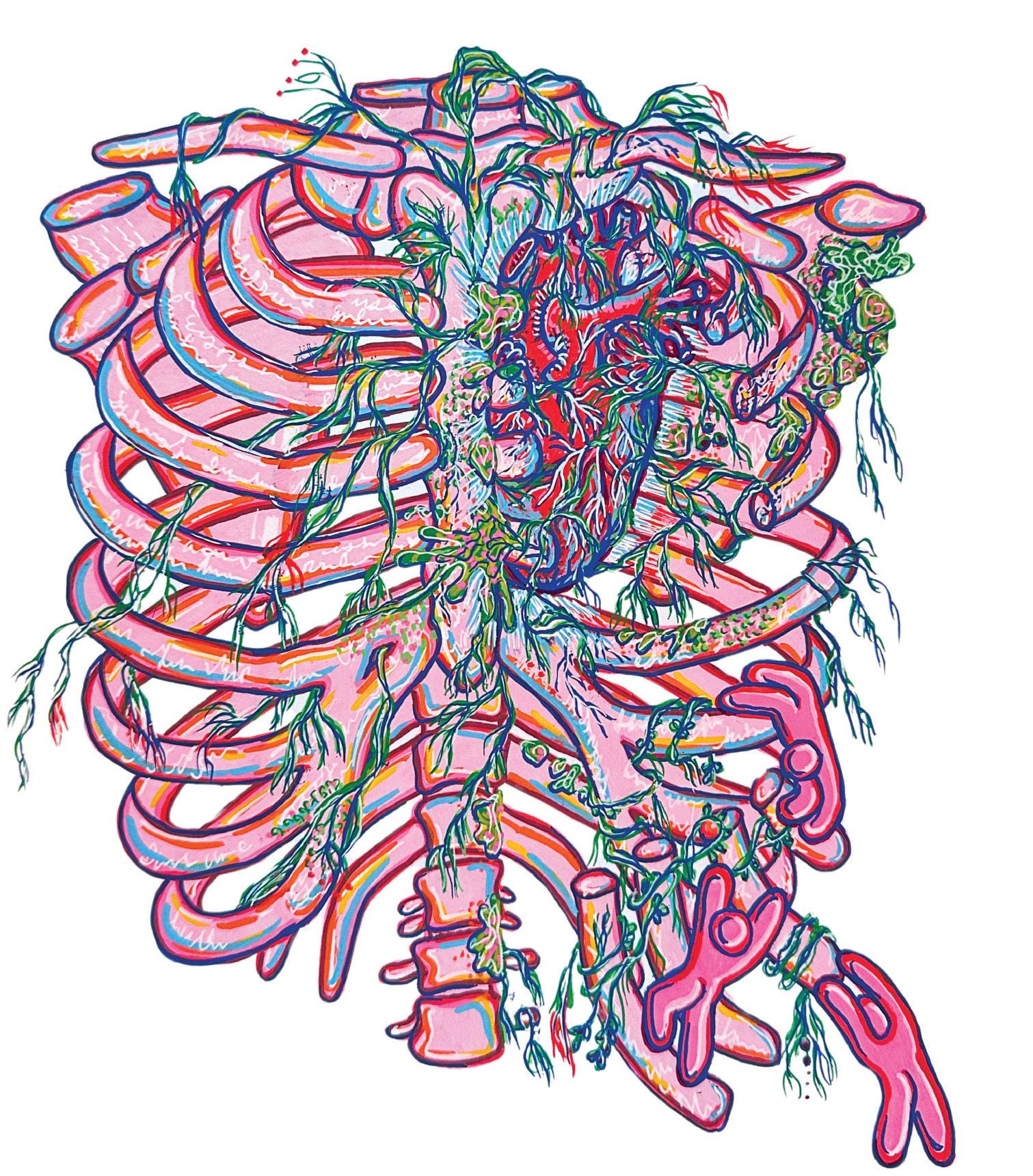
See more of Lowry’s art at andover.edu/ magazine
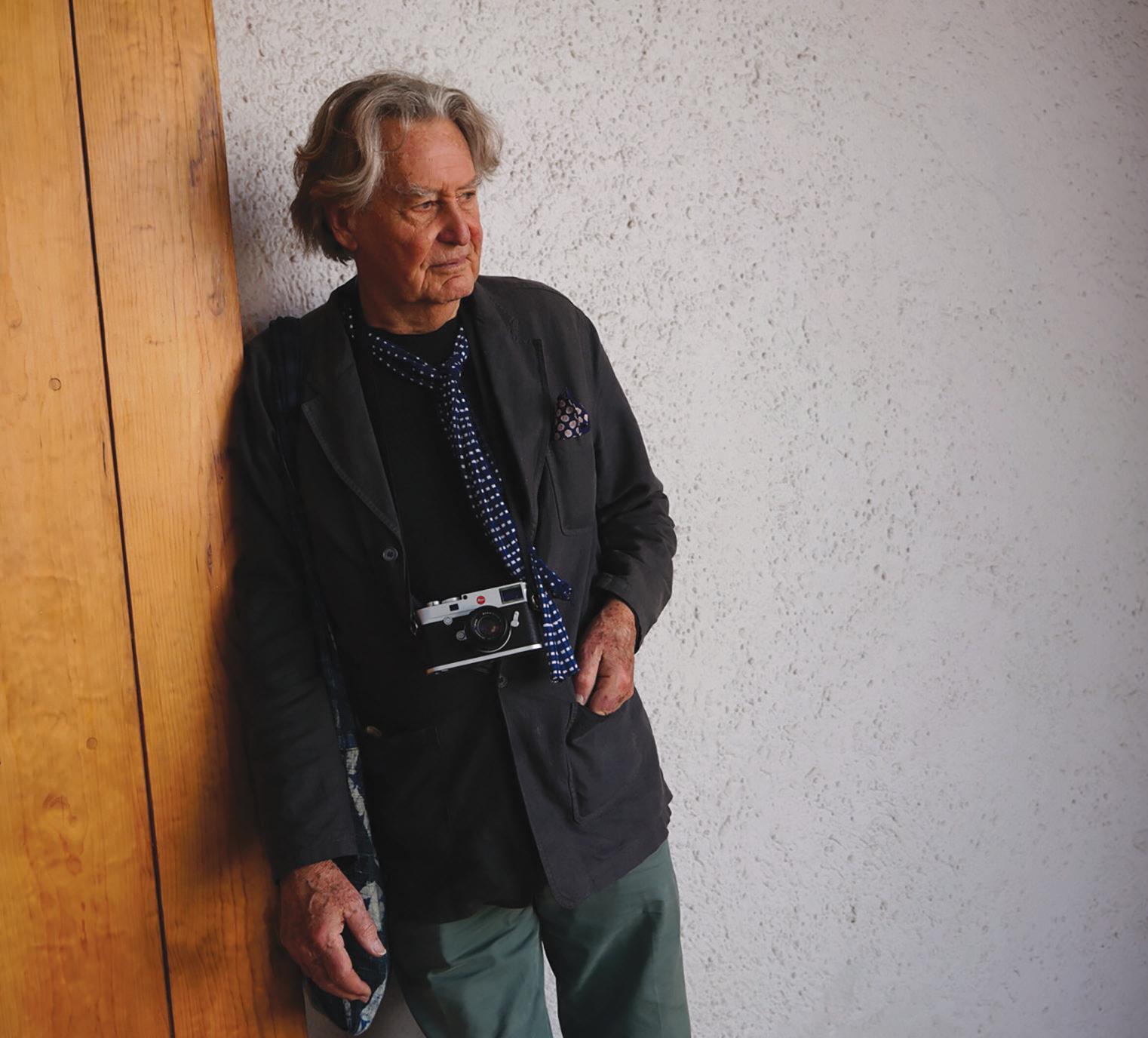
“Looking around the Addison, something will catch your eye—maybe before you even understand why. But the more you look, the more it opens up to you, like a person, and becomes a conversation. And when that happens, it begins to speak a language that enlarges your life.”
—BILL DRAKE ’50, architect and art collector whose recent gift of works by prominent Black artists will enrich the story at the Addison Gallery
BY NANCY HITCHCOCK
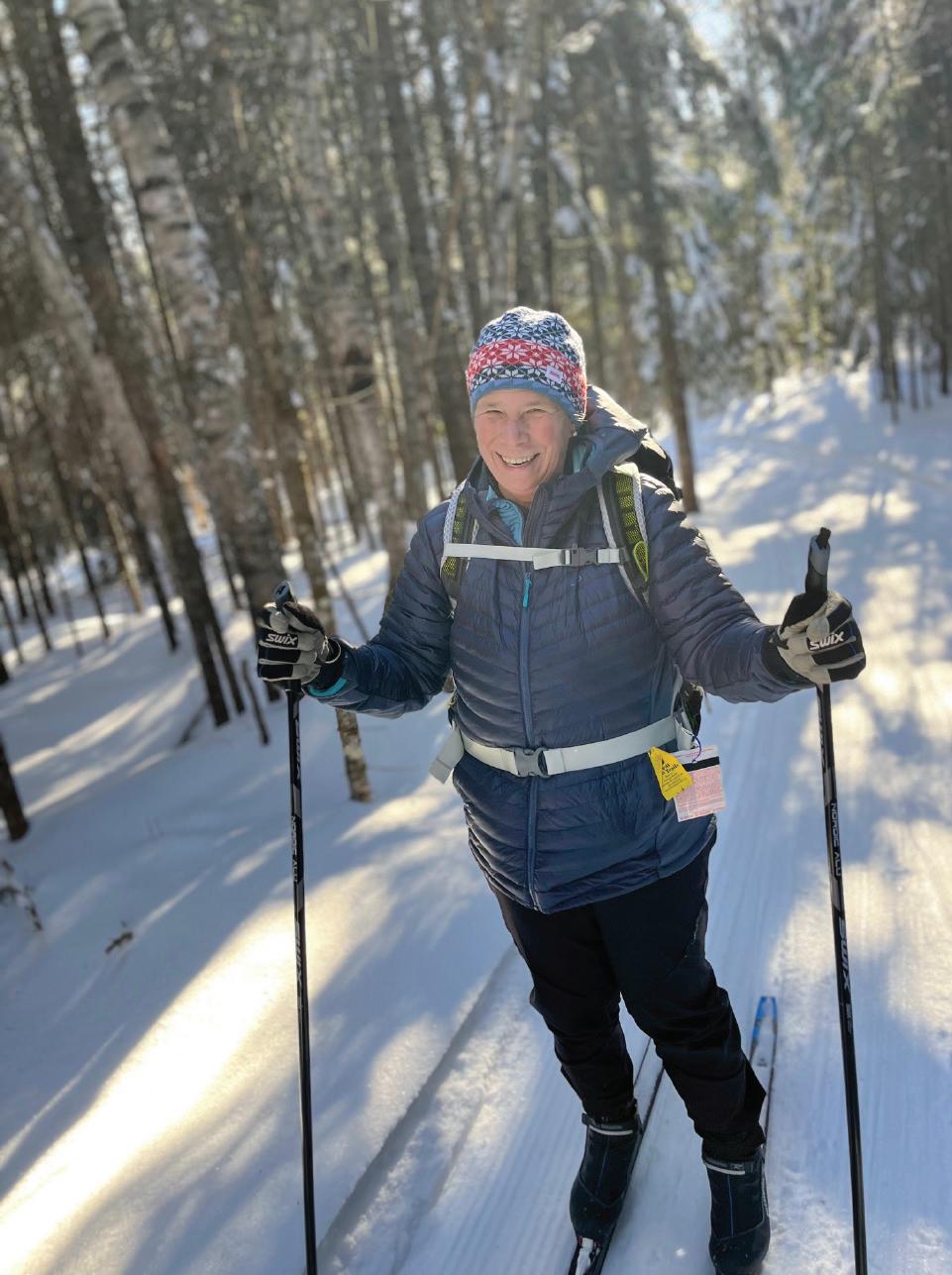
Karen Brace’s childhood summers were spent in Maine’s Baxter State Park—camping at the base of Mount Katahdin, sleeping under the stars by Roaring Brook, gathering around campfires, and hiking miles of wilderness trails. Those early experiences built a connection to the landscape that would stay with her long after the tents were packed away.
Today, she serves as a regional director and board member of the Appalachian Mountain Club (AMC), the nation’s oldest outdoor recreation and conservation organization. Through her volunteer contributions, she’s helping steward the AMC’s Maine Woods Initiative (MWI)—the largest multi-use conservation and recreation project in the eastern United States.
This fall marked a milestone: AMC secured nearly 29,000 acres known as
the Barnard Forest, bringing the total conserved area to nearly 130,000 contiguous acres. The acquisition protects significant habitat, restores river corridors for endangered Atlantic salmon, helps heal the forest, and creates new opportunities for the public to explore northern Maine’s wilderness.
“The Maine Woods Initiative is important because AMC has made the land publicly accessible again,” says Brace, explaining that MWI is helping to protect the 100-mile wilderness in the heart of Maine’s North Woods. “Protecting this land from development opens up an incredible resource to everyone in Maine and beyond. The North Woods is really an amazing place.”
The MWI represents AMC’s boldest conservation project in its 150-year history. In addition, AMC is returning 1,700 acres of wetlands and forest to the Penobscot Nation, strengthening a
partnership built over years of trust and collaboration.
Brace first became involved with AMC after hearing a presentation about the Initiative in 2019. “Then I went up there to cross-country ski, climbed to the top of a hill, and looked out at the ‘unbroken forest.’ As far as you could see—no houses, no roads—just forest. It made a lasting impression on me.”
About 75,000 acres of AMC’s land in the Maine Woods is designated as an International Dark Sky Park—the first and only International Dark Sky Park in New England—making it one of the best destinations for stargazing.
For Brace, a rewarding part of her work has been chairing the volunteer MWI Committee. “I’m honored to work alongside some of the volunteers who have supported MWI since its launch in 2003. AMC volunteers connect people to the outdoors. When participants spend time in the wilderness, they begin to appreciate what it takes to protect and maintain it.”
Brace has spent her career in development, community building, and public relations at schools and nonprofits, including the Ski Maine Association. She says her “excellent education” and structured writing classes at Andover helped prepare her for her career in communications and development. “I loved everything about PA. I especially enjoyed the diversity in nationalities and interests. Coming from a small town in coastal Maine, it was a very eye-opening experience for me.”
After graduating from Andover and Dartmouth, Brace returned home to Maine. “The outdoors has always been part of my life. Through AMC, I’ve come to see how land conservation connects people—how it inspires them to protect the very places they enjoy.”
Looking ahead, AMC’s 150th anniversary celebration in 2026 will feature a relay where volunteers will hike, paddle, and cycle through AMC’s territory from Virginia to Maine. Brace is looking forward to being part of the journey.
BY KATIE FIERMONTI

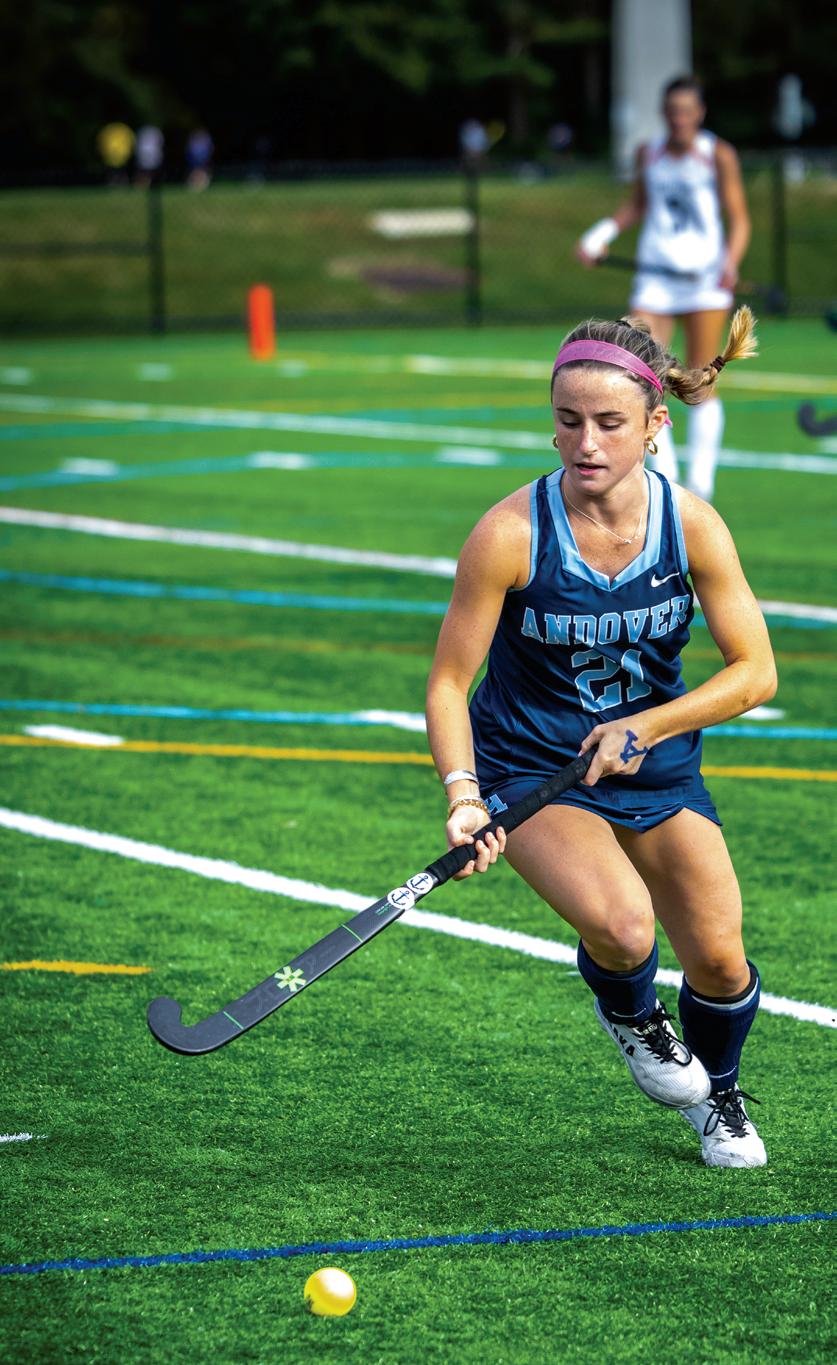
The roar of the crowd and the game-winning goals. The triumphs and tribulations. All are hallmarks of Andover’s storied athletic program. Just as essential to its success? PA’s global community of donors, whose philanthropic spirit runs true blue.
These alumni, families, and friends—hundreds each year—are ushering in a bold era for Andover athletics, strengthening everything from facilities to training equipment, team travel to professional development for coaches, and more. Their generosity has recently elevated the crew program. It will also drive the next exciting Academy endeavor—a cutting-edge outdoor sports complex at the southern end of campus.
Gerry Cardinale P’25 loved watching his daughter, Gigi ’25, slice through the Merrimack River as a member of Andover crew. A lifelong rower himself, he and his family wanted to pay tribute to Gigi’s time at the Academy, making a multiyear leadership gift to the program and donating a boat trailer and two Hudson Ultimate SHARK Predator boats.
“Andover presented the greatest four years of growth for Gigi, and rowing took it up a notch,” says Cardinale. “I wanted to recognize her captaincy, help Andover win, and say thank you. My gift is about doing whatever I can to make sure other families can enjoy the same profound experience.”
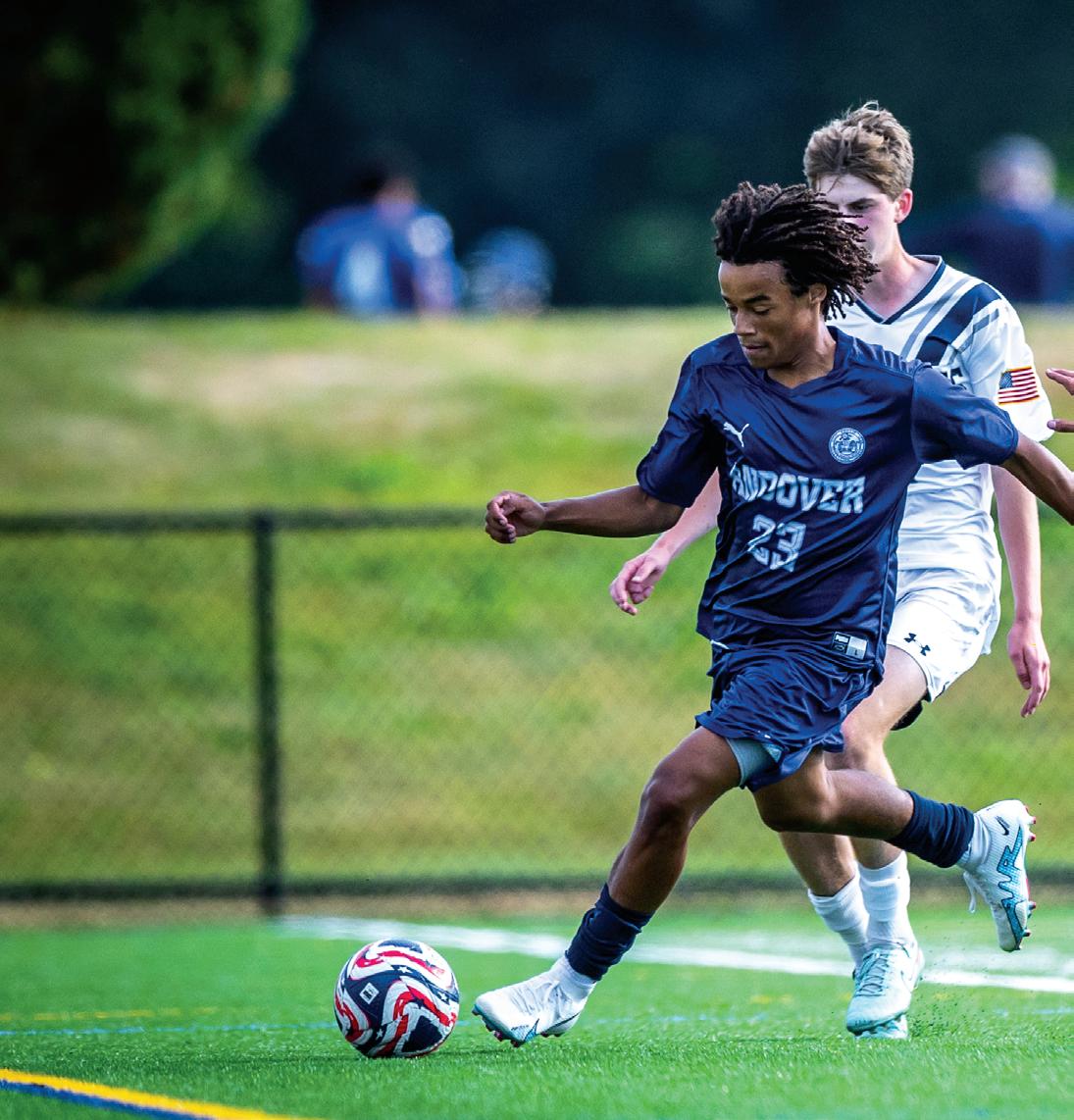

A third boat was donated by Martin Klein P’95 in memory of his son, Allen Jamie Klein ’95. “Jamie loved his time as the school’s coxswain and always said if he ever had the money for it, he hoped to give a shell to Andover’s rowing program,” says Klein. “That stuck with me. I’m honored to do this.”
Additionally, a group of donors united to fund renovations to the William H. Brown 1934 Boathouse, including a security system and eco-friendly composite docks. Philanthropy for this priority continues, with $275,000 of the $350,000 goal tallied to date. Key contributors to the project will be acknowledged on a plaque in the boathouse.
Fundraising is also underway for a new outdoor athletics complex, to be located adjacent to Phelps Stadium. This premier development will feature two synthetic turf playing surfaces—one short
“Gifts to this priority make athletes feel valued, provide resources for them to grow, and continue to push the standard for what it means to be a PA student-athlete.”
—SHEA FREDA ’24, FIELD HOCKEY CO-CAPTAIN, 2022–2023
pile to benefit field hockey and another lined for soccer—plus bleachers, lights, storage, restrooms, and a dedicated entryway. The project will address myriad important needs and raise the play of varsity and junior varsity competitors across the school’s program, says Athletic Director Lisa Joel.
“While we have been so appreciative in the last seven years for the attention to our indoor facilities—Snyder Center, Pan Athletic Center—the focus on our outdoor facilities is well past due. We are behind and now playing catch-up to our peer schools when it comes to quality outdoor surfaces,” she says.
Currently, varsity field hockey and varsity football share practice slots on the same field. “At times, we have 80plus athletes practicing simultaneously in Phelps Stadium. It’s a significant challenge—one that shortens practice windows, complicates scheduling, and negatively affects student well-being, coaches’ practice plans, and team spirit,” says Joel. “Our field hockey team is truly one of our most successful programs, with many players moving on to the collegiate level. A new field, purpose-built for field hockey, will best prepare them for that. We should absolutely give our
players this opportunity here at PA.”
Girls’ and boys’ lacrosse will also play on this surface, while the second field will provide critical space for Andover’s soccer program, with dimensions to match Smoyer Field. Both turfs will be built for multisport purposes, such as accommodating all-gender Ultimate Frisbee, according to Joel, who adds that the entire venue will afford flexibility in inclement weather and enable the Academy to host tournament play.
Joel notes that the complex offers investors a chance to make a crucial difference to PA’s athletic facilities while also burnishing the school’s tradition of excellence.
“To be able to place our athletes in a position where they have the greatest opportunities to thrive, with access to the best possible boats or playing surface or whatever is needed, is really the Andover way,” says Joel. “I’m deeply grateful for donations that let our players and coaches dream and lean into the future.”
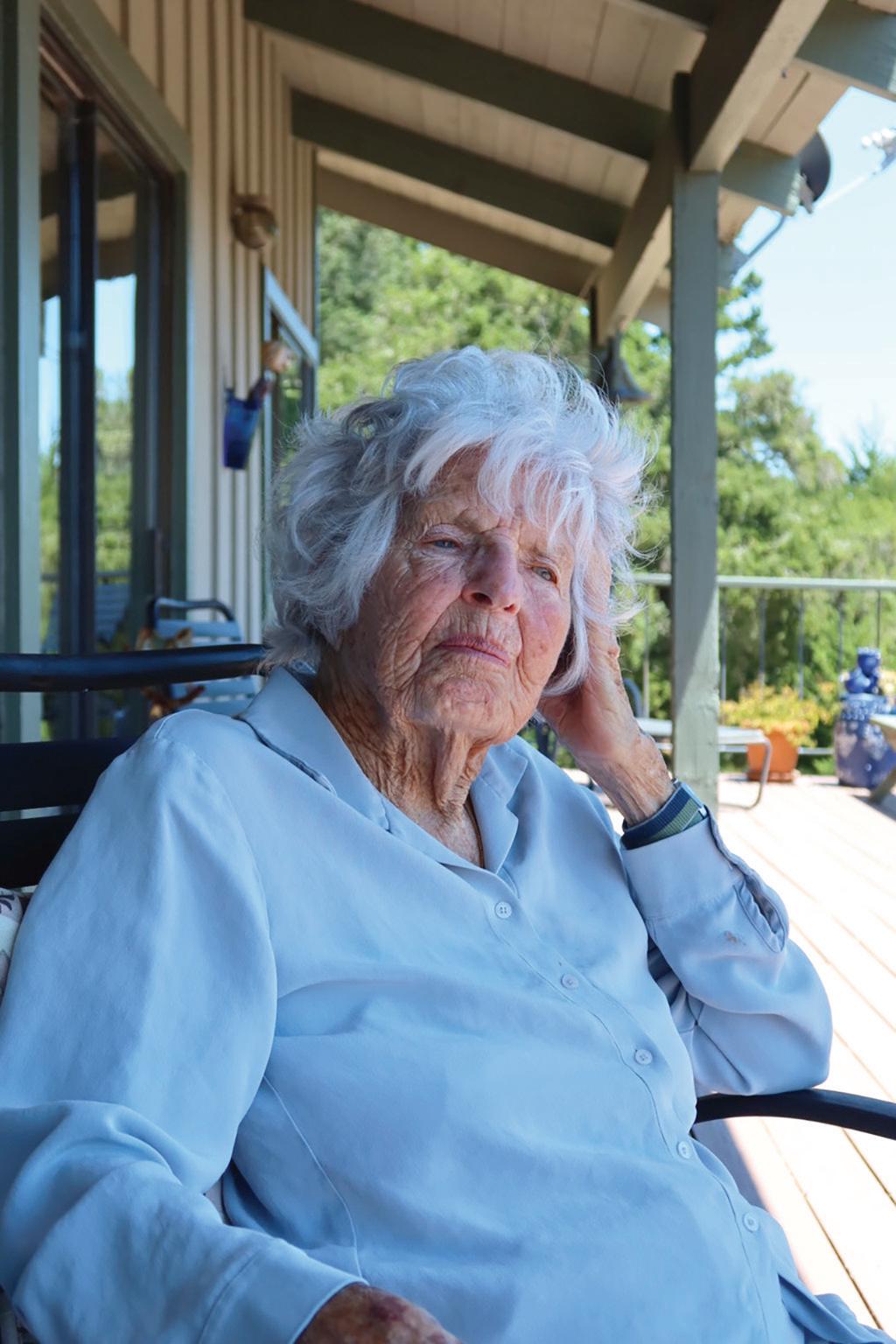
Horses and pears … ranch in California … pictures and more pictures … typical ‘girl from the Golden West.’
“I was introduced to many wonderful young women,” Julie shares. “And even though my father sent me East to ‘get horses out of my system,’ I knew that my love for the West and for horses was my life’s pursuit.”
After graduation, Julie headed back to California where she enrolled at Stanford and helped her family with their fruit orchard. During one of her rides through the fields she came across a downed Navy balloon and helped the young airman, Bob Suhr. The two were married soon after.
Fast forward a few years and the young couple settled in Saratoga, California where they raised three children including Barbara Suhr White ’65. During this period, Julie’s passion for horses and riding began to blossom. After getting her children off to school, she would drive 20 miles each way just to train for long-distance races. The hard work paid off.
BY ALLYSON IRISH
It came as quite a surprise to those in the Office of Alumni Engagement. Shortly after the summer 2025 Abbot newsletter was sent out, Julie Weston Suhr ’42 sent a response. Still living on her 300acre Marinera Ranch in Scott Valley, California, Suhr inquired if others from her class would send information to Class Notes.
Turns out, Suhr—age 101—is Abbot Academy’s oldest living alumna and a champion equestrian specializing in long-distance endurance horse riding.
“It was clear to me that Abbot played a major role in Julie’s life,” said Edith Wilson ’73, who interviewed Suhr at her ranch in July. “Julie shared that Abbot
was a place where ambitious girls could fuel their passion for learning.”
And Juliette Weston was an ambitious girl. Her young years were spent in the Santa Clara Valley on her parents’ pear farm. There she developed a love of nature and—especially—horses. After her junior year of high school, Julie’s parents decided a final year at a boarding school would be good for their daughter. So, she embarked on a fourand-a-half-day train trip East.
Although Julie only spent one year at Abbot, it was a memorable one. She made many friends in her graduating class of 57 girls including roommate Libby Lovett with whom she would spend vacations and breaks.
The Western States 100 Miles One Day Ride, otherwise known as the Tevis Cup, is considered the toughest single race in the world of endurance riding. During her riding days—which continued well into her 70s—Julie completed more than 20 Tevis Cup races.
Her remarkable equestrian career was chronicled in a 1987 Sports Illustrated article that focused on her 17th Tevis Cup ride along with daughter Barbara and husband Bob as support crew.
The article describes Julie as a “whipcord-thin woman with a relentlessly sunny disposition and a will of steel.” Julie remains much the same today. Still healthy, taking care of her horses, and grateful for all that life has given her.
“I always wake up happy,” she says.

Many thanks to Edith Wilson ’73, who provided her interview notes with Julie Suhr for this story. Read more at andover.edu/magazine

Jackson Pollock’s Phosphorescence is part of the Addison Gallery of American Art's permanent collection. It is currently on view at the Thyssen-Bornemisza National Museum in Madrid, Spain through January 25, 2026. The Addison has one of the most robust collections of American art and media from the 17th century to the present. Works from the collection are frequently shared with renowned art institutions around the globe.
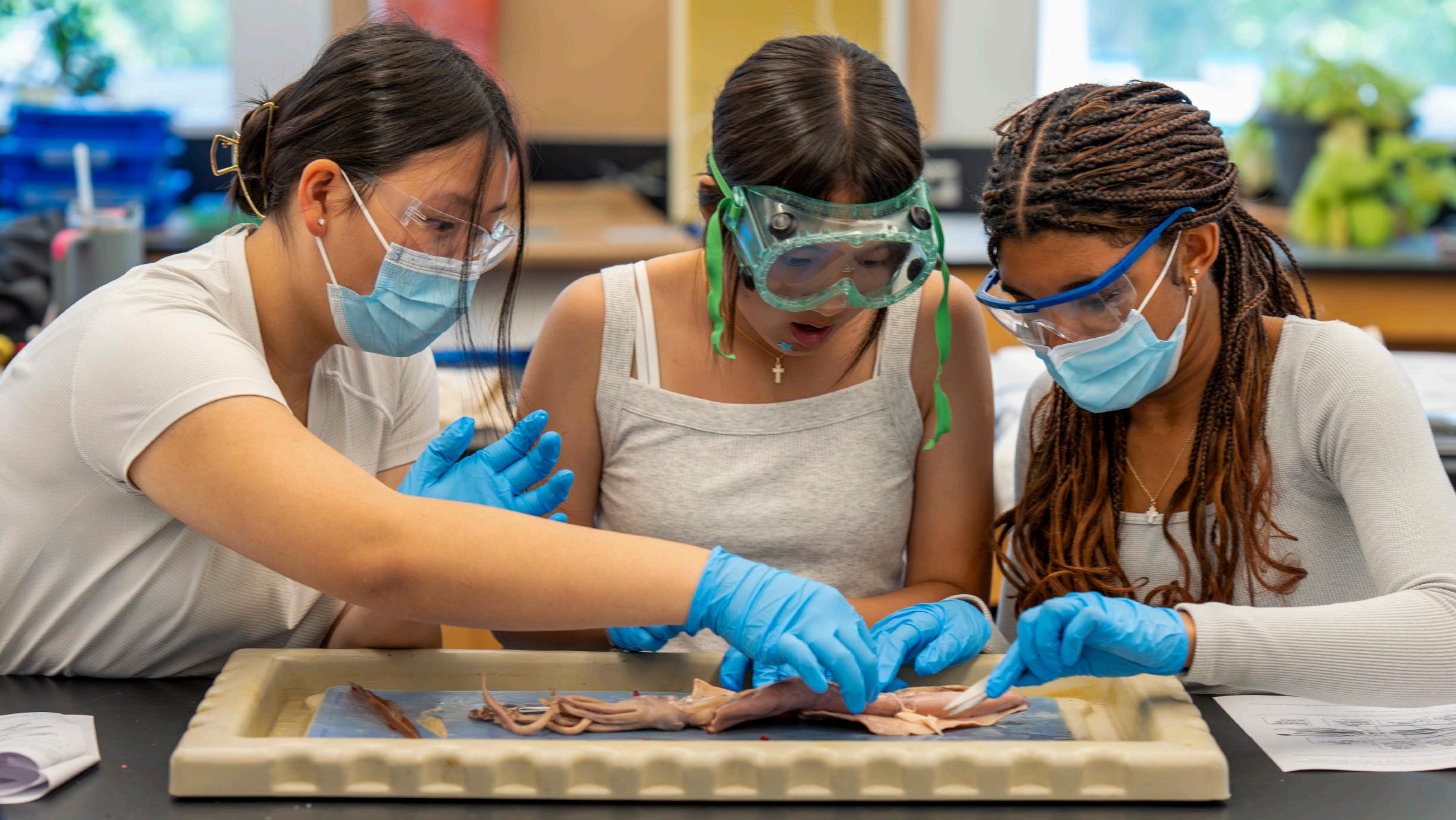
Give your child the gift of a summer at Andover!
Summer Session, our flagship five-week academic enrichment program, brings students together from across the country and around the world to enjoy more than 50 Lower School and Upper School institute course offerings—all led by outstanding faculty. Lively discussions, small class sizes, and hands-on learning will engage the most curious and dedicated student! Plus, regular social events and weekly offcampus trips will round out your child’s (or grandchild’s) transformational “Andover experience.”
SUMMER SESSION: June 30–August 2, 2026 • Boarding & Day Students • Grades 7–12
Visit andover.edu/summer for more information and to apply.