Prince GeorGe
Thursday May 21, 2020
Your community newspaper since 1916

Thursday May 21, 2020
Your community newspaper since 1916
Ted Clarke Citizen staff
Sometimes it takes a team effort to stand up to a ruthless bully and that has certainly been the case within the walls of University Hospital of Northern B.C.
Doctors, nurses, respiratory therapists, pharmacists, cleaning and housekeeping staff, hospital administrators, information technology specialists and communications staff have ganged up against the novel coronavirus and are winning that battle.
They stepped into the ring against coViD19, not knowing what kind of punches or kicks the insidious virus had in store for them or their families, and have so far prevented any localized outbreaks.
“it’s really been a massive team effort,” said Dr. Marietjie (MJ) Slabbert, head of UHnBc’s critical care department and the regional medical lead for northern Health critical care program. “never before since i’ve been in B.c. (four years) has there been so much collaboration between different departments and collaboration between administration and clinicians on a daily basis. People put small differences aside and really worked together trying to problem-solve.”
Staff at UHnBc, the referring hospital for northern B.c., have prepared for the worst after seeing hospitals in italy, Spain and the United Kingdom inundated with critically-ill coViD-19 patients. That hasn’t happened in canadian hospitals and B.c. has been one of the first provinces to flatten the curve. northern B.c. has had just 59 confirmed cases and none of those patients have died from the virus.
“our initial modeling and predictions were terrible; we were going to be completely overwhelmed and we have preparations in place for that, but we’ve been lucky so far,” said Slabbert.
“The initial concern was we were going to have the same type of surges they had in Hubei (province in china) and i think that made everybody quite on the edge, but also motivated to prepare for that. We feel we have processes in place and we’ve not been overwhelmed but we see how bad it is in the rest of the world. Some of my friends in the U.K., it’s hard for them to be positive

an anesthesiologist and anesthetic assistant, part of the coVid-19 intubation
at uHnBc, prepare to intubate a patient.
when there’s 700 patients dying every day, it’s totally unheard of.”
As a specialist in anesthesiology and critical care, Slabbert met twice a week via teleconference with clinical and administrative icU leaders from the five provincial health authorities to develop a coViD-19 strategy. regional protocols were developed based on provincial, national and international advice.
UHnBc established a coViD-19 airway management team - seven anesthesiologists and the department heads of anesthesiology and icU who serve as team coordinators - which stays in close communication with similar teams in other health regions. Ventilators were requested and moved to several northern Health hospitals and respiratory therapists traveled to some of the smaller hospitals in the region to train nurses. Very few physicians before the outbreak had ever been fit tested for n95 masks and nursing educators stepped up in a collective effort to train hospital staff how to manage all personal protection equipment (PPe).
As northern Health’s triage intensivist, Slabbert coordinates the referrals and transfers of patients from other hospitals in the region and her airway management team is on-call and available at any time to intubate the sickest patients. Since the pandemic began in mid-March, the team has been activated on average about three times per week and has intubated most of the patients who warranted the activation. UHnBc’s normal critical-care capacity is 10 patients and a second unit was prepared for coViD treatment which has an additional 15 beds. At no time during the pandemic has the coViD patient count

The risk of wildfires across much of northern B.c. is high to very high, according to data from natural resources canada.
richard carr, a wildland fire research analyst with the national northern Forestry centre in edmonton, said similar conditions are being seen all across Western canada.
“over the last couple weeks, northern British columbia has been a bit dry,” carr said. “if it continues into June or July, you’re set up for potential trouble. in 2017-2018 we had similar conditions...”
reached double figures.
“if someone comes in to the hospital and is a suspected or confirmed case of coViD, the airway team actually gets activated to intubate the patient,” Slabbert said. “We’re trying to protect the rest of the health-care teams from the virus exposure and it’s working well.
“not all patients come back positive (for coViD-19) but you can’t really wait initially to activate the team” she said. “There are some patients who actually do better if you don’t intubate them, but it’s tough to know who those people are.”
Depending on how sick the patient is, the alternatives to intubation include highflow nasal oxygen therapy or continuous positive airway pressure machines which present a higher risk of spreading airborne particles that can infect health-care workers.
“You weigh that up against early intubation of a patient (which keeps them unconscious under general anesthesia) and then have them in a closed circuit where they stay in minimal risk of exposure to the staff,” said Slabbert. “it’s not just the risk at the hospital, it’s the feeling that you might take it home to your family. i think that’s what’s making individuals very anxious.”
The uncertainty of not knowing if a patient has coViD-19 forces medical staff to suit up with full airborne PPe (n95 mask, gown, face shield, gloves).
But a repurposed testing device brought to hospitals in Prince George and Terrace in mid-April is producing much quicker pointof-care coViD-19 test results which can relieve northern Health medical staff from that PPe discomfort.
The centre compiles the data from two different computer models, and then compares it to last 30 years of records, he said.
The centre also looks at data coming from the U.S., to get bigger picture view of what’s happening in north America.
“i think we’re looking at fairly dry conditions through the northern parts of the province,” carr said. “(But) it’s a tough thing to forecast. one (computer model) is predicting fairly dry conditions.”
While dry conditions allow wildfires to spread faster and burn hotter, it doesn’t mean there will necessarily be a bad fire season, he said.
“We don’t panic when we see these weather conditions. The ignitions are the important features,” carr said. “(And) chances are it’s not going to be completely widespread through that area. it looks to be more of a muddled pattern.”
People and lightning are the two main causes of wildfires. With the coViD-19 pandemic, there may be fewer people out in the landscape casing fires, carr said.
“This year, every year really, we are urging people to stay alert to changing fire conditions,” he said. currently there is a province-wide ban on open burning, however camp fires and forest use remain unrestricted.
For the most current information, go online to: http://bcfireinfo.for.gov. bc.ca/hprScripts/WildfireNews/Bans. asp.

Christine hinZMAnn Citizen staff
As there are no large gatherings allowed during the coronavirus pandemic, there will be no new concerts scheduled at the CN Centre for 2020.
On the current schedule are two postponed events from earlier in the year and a few events that organizers are hoping to hold, despite the cautious movement by health officials and political leaders to reopen the province.
The two that are rescheduled for later in the year are Northern FanCon, set for Sept. 25 to 27 and Alice Cooper, set for Nov. 25.
The entertainment industry is fluid right now, said Glen Mikkelsen, manager of CN Centre.
“Venues around the world are trying to figure out different options but information
keeps changing quite dynamically,” Mikkelsen said. “So we here in Prince George are waiting to see what other major venues do - so the first ones we might see are overseas in China - what they do with their events and the American ones are looking at different options, as they’re being a little more assertive trying to get their buildings up and operating again.”
There are also a couple of European stadiums that are looking to host soccer games with no fans in the stands and only broadcast on television, he added.
“That’s not something that’s not necessarily as important for our venue but we can see how that evolves once they get those games rolling and then there might be an opportunity to have some people in the stands and then we can have a look how that modeling works.”
Mikkelsen is part of weekly international discussion groups where information is shared from across North America.
“So far everybody is in hibernation mode waiting to see how things play out in the next few weeks,” Mikkelsen said.
When people are checking out the schedule of events listed at the CN Centre website they will notice the Saints and Sinners tour set for July 1 is still there, hoping for a miracle and that’s because they are reluctant to postpone because of what it took for those bands to coordinate their schedules for the tour.
It won’t be easy to set another date because of so many conflicting schedules so the event is pending.
As everyone is doing their part to keep people healthy now, he knows there will soon come a time where people gather to
be entertained once again.
“You know it’s how humans are made up,” Mikkelsen said.
“We want to get together in groups, we want to celebrate things, we want to cheer for our teams.”
It’s too early to say what it will look back for crowds gathering in the future but Mikkelsen said the provincial directives will guide BC residents.
He knows that bands relying on revenue from tours will be eager to get back on the road.
“This will provide terrific opportunities for fans to see all kinds of entertainment,” Mikkelsen.
“So we’re in a bit of a hibernation - or doldrums - right now but once this is over I think there’s going to be lots for people to look forward to.”
MArK nieLsen
Local Journalism Initiative Reporter
A woman was sentenced to two years less a day in jail for her role in a drugrelated kidnapping and extortion attempt that left a man with a collapsed lung among other injuries.
Upon completing the term in jail, Angel Lee Candice Willard, 30, must also serve three years probation for the December 2017 incident.
Roughly a year-and-a-half earlier, Willard suffered serious injuries, including head trauma and a badly-burned leg, when she ended up pinned beneath a car following a rollover.
Following the crash, Willard’s personality changed due to the head trauma and, to deal with her pain, she developed an addiction to opioids that in turn, prompted her to sell drugs to pay for her habit, the court heard Tuesday.
In the process, she accepted a cheque for $1,800 as payment for some methamphetamine.
When it bounced, she got hold of the
‘We’re
- from page 1
customer and then hold of some people described as “heavy hitters.”
Things soon turned for the worse for the customer when a large man got into Willard’s car and punched him several times then took his wallet. He was then taken to a series of homes in the Bowl area where he received further beatings.
Bleach was poured on his head, he was stabbed with a knife and hit with a hammer.
The culprits also came up with a plan to extort the cash from the victim’s mother. She received a call from her son’s cellphone number but heard the voices of two strangers who threatened to kill her son if they were not paid.
Police were contacted and all of the members of the RCMP’s serious crimes units were deployed. Among other measures, they arranged through the mother to exchange the money for the victim the next day.
Along with the badly-beaten victim, Willard and co-accused Blair Tyler Alec showed up at a local convenience store
where the exchange was to take place and they were arrested soon after.
The victim, in turn, was found with bruises to his torso, stab wounds to a leg, two fractured fingers. He was also bleeding badly from his head and needed a tube inserted into his chest to revive the collapsed lung.
According to his victim impact statement, the event left him with scars on his face, legs and hand and numbness to his toes when he stands for a long time. He must also take medication to deal with the trauma, is quick to anger and has moved away from Prince George.
In sentencing Willard, provincial court judge Cassandra Malfair accepted a joint submission from Crown and defence counsels, proposed in part because the victim was unwilling to testify, putting the Crown’s case in doubt.
Had the case gone to trial and had Crown been able to prove its case beyond reasonable doubt, Willard would likely have been sentenced to four years in prison, the court heard.
Although it appeared Willard did not participate in the beatings, Malfair said she initiated the series of events and likely knew the people she enlisted for her help were capable of inflicting cruel levels of harm.
But to Willard’s credit, Malfair noted that she pleaded guilty to a series of charges even though there was no trial, took responsibility for her actions and showed remorse. Willard also lived up to the strict conditions she had been under during the nearly two-and-a-half years she has been on bail, has severed ties with the drug world and has gone into residential treatment. Her three co-accused, Julien Nassem Lazarre, Walter Charles Wilson, and Alec have also received similar sentences, it was also noted.
Willard received 16 days credit for time served in custody prior to sentencing, leaving her with 715 more days to serve on the jail term. She will also be subject to house arrest during the first year of probation and to a curfew during her second year.
The GeneXpert molecular diagnostic machine, which first gained acceptance in 2001 during a series of anthrax attacks in the U.S., can detect COVID-19 within hours of administering nasal swabs to patients. During the first five weeks of the pandemic, test swabs had to be sent from Prince George to Vancouver and it took four or five days for results. Now the tests are done at the hospital and the results are returned in two or three hours. The reagent needed for the tests is in high demand so testing at UHNBC is done in three daily batches to ration the supply. “It’s made a massive difference,” said
Slabbert. “Now we maybe wear full PPE for half a day or three or four hours and you save on all that PPE.”
In response to the pandemic, Northern Health has made major strides using telehealth technology to provide virtual care for patients and connect doctors and nurses to enable sharing of information throughout the region.
Slabbert is part of a group of six B.C. intensive-care specialists called ROSe (Rural Outreach Support e-health), which for nearly three years has been helping rural clinicians deal with critically injured or ill patients and it has now turned its attention to providing COVID-19 advice. A
video app or phone call connects a rural doctor, nurse practitioner or any other health-care provider to an intensivist who volunteers on days-off to take the calls. Through a cell phone camera they can see the patient and view diagnostic images to offer their expert opinion and suggest instructions for treatment.
The fact there has not been a COVID-19 outbreak at UHNBC has decreased anxiety and improved the overall mood of hospital staff, according to Slabbert. Front-line workers have sufficient PPE supplies and are feeling less threatened while doing their jobs. But the risk remains until the pandemic is officially knocked out.
“As long as we all behave, hopefully we’ll just get through this,” said Slabbert. “We’re all grateful we weren’t overwhelmed but we also know that we are in it for the long run. We sort of feel, we’ve probably got this, and we feel much better prepared.
“We’re not seeing a second COVID wave yet, because the restrictions have only been lifted on Tuesday, but what we are seeing after six weeks is a non-COVID surge of other people who have stayed home for six weeks and are now coming in quite unwell. We don’t want people who have chronic illnesses or very poor baseline health to not seek medical help in time.”

Citizen
staff
June 1 is the opening date for the historic site of Huble Homestead where fresh air and wide open spaces allows for safe and affordable pioneer fun.
Usually open on Victoria Day to kick start the season of special events, the nonprofit Huble Homestead/Giscome Portage Heritage Society has decided to delay the opening to June 1 and cancel the public programming filled with special events. “We’ve worked hard to ensure our plans conform to public health guidelines and visitors will see some definite changes on their visit this year,” Krystal Leason, exec-
utive director, said. “But we’re optimistic that we can still entertain and educate our community, even if it looks a little different than we’re used to.”
Visitors will still be able to enjoy the region’s history as demonstrations will be adapted to allow for safety measures like physical distancing.
Guests to the site will also be able to take part in self-led activities, from treasure hunts to I Spy games and themed history passport adventures.
Personal guided tours will also be available.
The general store will be open and
feature locally made items, old-fashioned candies, pie, ice cream treats and a barbecue lunch from the concession.
The park’s open green spaces are suitable for picnics and lawn games, and of course a visit to the homestead is not complete without checking out the animals.
Visitors are asked to follow these guidelines:
- Requirements for physical distancing
- Increased access to hand wash stations and hand sanitizer
- Increased cleaning frequency of common touch points and other public spaces
- Restrictions on the number of people
permitted in buildings at one time
- Provision of daily self-led activities in place of special event days
- Limitations on guided tour sizes
- Touch-free self-led tour information
- Equipment for lawn games available upon request
- Modified food service operations
Huble Homestead Historic Site is located 40 km north of Prince George, just off Highway 97 on Mitchell Road, and will be open daily from 10 a.m to 5 p.m. to provide ample opportunity for visiting this summer. Admission is by donation and dogs are welcome.
Christine hinZMAnn Citizen staff
At first, the caretaker wasn’t sure what happened when the Little Free Library on Rainbow Drive went missing. The bright orange cone atop the now empty pole was an indication of its official fate. The label on the cone reads City of Prince George.
Soon Tina Cousins, the longtime volunteer curator of the Little Free Library in her neighbourhood, found a posting on Facebook about where two mini libraries ended up. One has been relocated to Gorse Street, monitored by REAPS and the other went to a private resident on Cranbrook Hill. The city recently removed the Little Free Library on Rainbow and another at Carrie Jane Gray Park as the Enhance PG program ended in 2017.
A Little Free Library is a cabinet placed
in a neighbourhood where people could give and get books to encourage literacy.
This idea is a global phenomenon that the City of Prince George has embraced for years. Little Free Library is a nonprofit organization that inspires a love of reading, builds community and sparks creativity by fostering neighbourhood book exchanges around the world, according to its website.
Cousins said she was so disappointed when the Little Free Library disappeared from its Rainbow Drive location.
The decision was made in December to take down the cabinet libraries, Cousins said. The Prince George Public Library had taken over the program when the Enhance PG initiative was dissolved in 2017.
“Nobody knew I was the caretaker so there wasn’t any communication. So I was driving down the street and noticed it was gone, which is a huge disappointment
because of its location. I can get another free library built - that is not the issue. The issue is the location of the Little Free Library. The concern from the city from my understanding is it’s on city property.”
Cousins said she is in talks with the city about the situation because she knows what a valuable service the Little Free Library provides to the people in the neighbourhood.
“I am trying to get them to give us back the location,” Cousins said. “Little Free Libraries connect the community. It wasn’t harming anybody. It was a place where a lot of people stopped and it’s right across from a school and the seniors’ facility. That park is a really busy place and it’s in a really good spot where people driving by could stop and not block traffic.”
Cousins has already asked a family member to build her another Little Free Library.
Christine hinZMAnn Citizen staff
Just like any curbside pick up service that’s been developed in response to the coronavirus pandemic, the library is offering the service to patrons at both branches in Prince George starting May 25.
The Prince George Public Library (PGPL) users can put items on hold through the online catalogue or by calling and then pick them up during their assigned time slot to avoid people showing up all at once. Existing staff who have been working from home or had to take time off because of the facility’s closure will be called back to work and this will be part of their new duties.
People attending the main branch to pick up materials will come to the civic centre rotunda entrance and park their vehicles. Staff will place items outside for patrons to have a no-contact experience, as seen in many curbside pickup formats. There will be a similar set up at the Nechako branch as well.
PGPL is now accepting returns from Tuesday at 10 a.m. until Wednesday at midnight at the Bob Harkins Branch only in the drop box located in the parking lot. For the protection of staff, items are then isolated for four days to allow for any traces of the virus that may be on the item to die off.
There are still about 21,000 items on loan in the community.

The plan to resume library services includes the following phases:
Phase 1: Permit patrons to return borrowed materials to the library. Returns are currently being accepted at Bob Harkins Branch on Tuesdays and Wednesdays.
Phase 2 (May 25th): Resume lending of physical library materials via curbside holds pickup at both branches.
Phase 3 (unknown): Limited access to Bob Harkins Branch for holds pickup service and computer/internet sessions.
Phase 4 (unknown): Reopen collection for patron browsing. Sitting areas will be unavailable.
Phase 5 (unknown): Resume in-person programs.
Phase 6 (unknown): Resume full access
“But I don’t want to put it back up and then the city take it down,” Cousins said. The city responded by saying they are communicating with Cousins but the location is on city property and requires maintenance, which comes at a cost.
“Unfortunately, the city was unaware that there was a volunteer caretaker looking after the Rainbow Park site, and the library was removed and delivered to REAPS without providing notice to the neighbourhood,” the statement from the city said. “The city regrets the error and apologizes to anyone who was unpleasantly surprised by this. Once staff were made aware of the error, staff reached out to Ms. Cousins by phone and email. The City is continuing to talk with Ms. Cousins about options for a continued presence of a Little Free Library in the Spruceland neighbourhood.”
to library facilities, with physical distancing and other safety measures in effect. Although the physical branches closed to the public on March 16, the library continued offering customer and reference services via phone and email, lending items from digital collections and hosting virtual programs. Those services will continue.
“I’ve been really impressed with how creative and talented the staff have been in shifting to offering virtual program and moving things online and trying to continue to find ways to support the community during a difficult time,” Burry said. “So even though our branches have been closed we continue to offer great service and still connect with people and provide support for them.”

MARK NIELSEN
Local Journalism Initiative Reporter
Henry “Allan” Hope is being remembered as a founding member of one of Prince George’s longest-lasting law firms and as a highly-regarded member of the legal profession, both in the city and further abroad.
He died March 24 at his home in Comox. He was 88.
“He left a huge impact and mark on everybody he was acquainted with,” said longtime friend and retired B.C. Supreme Court Justice Glen Parrett.
Born in Winnipeg, Hope was the sixth of seven siblings. By the time he was 21 years old, he had worked in the logging camps of northern Ontario, the gold mines of the Northwest Territories and was in the Royal Canadian Air Force and the Merchant Marine.
“Allan was a man of two hearts and inclinations: he loved the freedom and physical challenge of the outdoor life and work but
his keen intellect and voracious curiosity ultimately led him on a path toward higher education and intellectual pursuits. He would abandon neither,” his family said in an obituary provided to the Citizen.
Upon being called to the bar in 1962, he chose Prince George to begin his practice because it was a place where he could live on a farm and be a short drive away from his office, the family said.
In 1966, he became a founding member of the law firm Cashman, Hope and Heinrich, later known as Hope, Heinrich and Hansen and then Hope Heinrich before it closed down in 2010.
During its heyday, it was one of three major firms in the city - the others being Wilson King and Heather and Co. Each had a roster of 15-20 lawyers, with Wilson King providing almost entirely solicitor or outof-court services, Heather and Co. primarily a litigator and Hope’s firm providing a blend of the two.
Parrett was among the many young
lawyers Hope mentored. He said Hope was instrumental in his progress up the legal ladder and credited him for a series of appointments that paved his way to becoming a judge.
“He was ticking off boxes for me and I didn’t even know there were boxes,” Parrett said in an interview. “So was he an influence? Absolutely, he was an influence.”
Conversely, Hope met Gloria (nee Mossey), who would become his wife of 46 years, at a party Parrett was hosting.
“Gloria ran his life,” Parrett said with a chuckle. “Allan was far better at what he did professionally than he was at running and organizing and arranging things.”
Hope had also developed a career-long interest in labour relations thanks to a two-year stint as the executive director of a board of trustees appointed to oversee maritime unions in Montreal. It was created in answer to the Norris inquiry into the criminal activities of the Seafarers
MARK NIELSEN
Local
Journalism Initiative Reporter
A man caught with enough drugs to warrant a trafficking-related conviction was sentenced last Thursday to two-and-a-half years in jail.
Garth Andrew Jordan Lee, 29, was also sentenced to an additional five months for carrying a set of brass knuckles while out on bail for the trafficking charges.
Less credit for time served prior to sentencing, Lee has one-and-a-half years
left to serve.
Defence counsel had argued for oneand-a-half years before credit but Prince George provincial court judge Shannon Keyes noted Lee had previously served a sentence of the same duration on similar charges.
Moreover, in addition to 10 grams of methamphetamine and 3.5 grams of cocaine, Prince George RCMP found 0.5 grams of heroin laced with fentanyl when he was apprehended in March 2017.

“Clearly, the 18-month sentence imposed on Mr. Lee in 2016 did not deter him from committing a more serious offence in 2017,” Keyes said.
With 51 convictions to his name, Lee’s criminal record in general worked against him.
Lee was arrested after a police were notified that he was driving while drunk and to carry out a drug deal in the VLA.
Armed with a description of his car and familiar with Lee’s pattern of behaviour,
International Union of Canada. By 1968, he was doing more arbitrations and mediations and in 1982, he finally left the firm to practice solely in the field of labour arbitration. He was highly regarded and rubbed shoulders with such notables as Vince Ready and Bruce Cohen.
In January 2010, he was named vice chair of the Canadian Industrial Relations Board and issues for Western Canada.
The firm, meanwhile, became a who’s who of notables as the partners drew in some “key pillars” many of whom became judges - Eric Chamberlist, Mike Brecknell and Edna Ritchie among them.
“Hope Heinrich had a lot of hitting weight, if I can put it that way, for a firm in the north,” Parrett said.
Hope is survived by Gloria and his children Karey (Howard), Cate, Bill (Jean), Meghan (Al), as well as nine grandchildren and six great- grandchildren.
A celebration of his life will held at a later date.
RCMP headed to a neighbourhood he was known to frequent.
On the way, they also learned through a computer check that he was wanted on outstanding warrants.
Within a few minutes, they saw a car matching the description turn sharply into the parking lot of a housing complex. When police converged, Lee attempted to speed away but the car’s tires spun in the fresh snow.
- See MORE DRUGS on page 6

Arthur WilliAms Citizen staff
Northern Health is calling patients to schedule elective surgeries that were cancelled because of the COVID-19 pandemic.
On March 16, the provincial government ordered all elective surgeries to be cancelled to free up capacity in the healthcare system to respond to the pandemic. Northern Health spokesperson Eryn Collins said approximately 685 elective surgeries – including hip and knee replacements,
dental surgeries and other non-urgent surgeries – had been cancelled.
“We will be back to full surgical capacity as soon as we can,” Collins said.
There are 10 surgical sites in the region, and how long it will take to clear the backlog of surgeries will depend on a number of factors including the availability of personal protective equipment, the number of surgeons and patients choosing to proceed, and whether there is a second wave of COVID-19 cases in the fall, Collins said.
Since March 16, approximately 1,200 urgent surgeries have been performed in the Northern Health region.
Starting last Tuesday, Northern Health officials began calling patients to book procedures and confirm if they are willing and able to move forward with the surgery. Patients will be rescheduled based on a priority determined by their surgeon.
“We recognize that some individuals may wish to continue to postpone their surgery at this time,” a statement issued by Northern Health said. “Patients who require
urgent, emergent and oncology-related surgeries will continue to be prioritized.”
A telephone pre-admission screening process will be used to reduce the need for patients to come to hospitals for in-person visits prior to their procedures taking place. Patients will be assessed 24 to 72 hours prior to their surgery, and screened for possible COVID-19 symptoms.
Surgeries will be scheduled to allow additional time for cleaning and infection control measures.
- from page 5
As he continued to spin the tires, RCMP drew their guns. In turn, Lee got out of the car and attempted to run but was arrested following a struggle with several officers. Along the path of Lee’s flight, RCMP found a camera case Lee had thrown into the snow in his attempt to evade arrest. Inside it, they found a battery pack, a digital scale and an assortment of drugs placed in small bags and in turn into larger bags with dollar values written on them.
During subsequent searches, more drugs in similar forms, $347 in cash, more baggies and two pipes suited to smoking drugs, were found on Lee’s person and in

the car, including the heroin-fentanyl in the console cupholder.
Although the quantities were relatively small, Keyes found that given the variety of drugs, the form in which they were found combined with the scale, cash, and additional baggies, Lee had meant to sell them.
She also found Lee was a user as well as a dealer.
In October 2017, Lee was released on bail. He showed up for the first day of trial in January 2018 but failed to appear for two more dates in March 2018 and Keyes found he had absconded. In June 2019, he was arrested in Terrace and has remained in custody since then.

It had rained all day and as I walked that evening, I noticed the worms on the road clambering to escape the torrents of water that were flooding their living spaces. Finding a discarded drink cup, I started collecting them for our garden.
Counting them as I went, I was taken back over 40 years to when I was a young teenager who noticed an ad in the local paper. Worms wanted, $15 per 1000. Will pick up. Phone Mike for more details.
My brothers and I called Mike and, getting more information, decided that we would pick worms as we had the perfect worm beds in our barnyard. I remember thinking about the money we were going to make and how we were going to use it to go to the fair that summer.
The worm digging went well. Rob, Paul and I collected and counted worms by the handful. The harvest was plentiful and as the goats and sheep looked on in curiosity, our bucket filled with worms, one thousand, two thousand, three thousand, four thousand, five thousand worms. We were

DAVE FULLER
starting to feel rich and, in the summer of 1978, seventy-five dollars split three ways was more than enough money to have a great time at the fair.
It had taken us three hours to pick the worms and we called Mike the worm buyer, he who said he was coming the next day to pick up the worms and give us our money. All we could think about that day was the fun we would have at the fair. To make sure that the worms didn’t dry out in the bucket, we poured some water in and closed the lid so they wouldn’t escape.
Mike did come the next afternoon, took the bucket of worms and paid us our money as he said he would. It was only a couple of hours later that the phone rang.
“David, Mike is on the phone” my mother called out. Why would Mike be calling

me, I wondered? “Dave, this is Mike, you sold me some worms and I am sorry to tell you that when I opened the bucked that the worms were dead, they had drowned and then overheated. Did you put water in that bucket? Anyways, I am bringing the dead worms back and I would like you to give me another 5,000. No, I don’t want the money back, I would like the worms.”
I broke the bad news to my brothers and we headed out with our shovels to find more worms, knowing full well that there were no worms where we had collected the first five thousand worms. The next two days of looking for worms were dreadful. While it had taken only hours to get the first batch, the second five thousand worms was slim picking and took days, which in turn seemed like years. Even now, decades later, as I remember back, the task was painful.
It would have been so much easier for us as kids, if Mike had told us to give the money back instead of the worms. Yes, we would have learned that you don’t put water in a bucket of worms and then leave
the bucket in the sun! However, we might not have learned the value of doing things right or making up for our mistakes. There are times in life when we have to do jobs that are painful, monotonous, difficult, strenuous, taxing, and mentally demanding. Times when we know we are not going to get paid for making things right. These times can be challenging, emotionally, physically, spiritually, and mentally and we have all experienced such times in our personal and professional lives. For many people, the current economic climate is very difficult. There are serious challenges ahead in digging ourselves out of the current barnyard. For some people, it will be easier and make more sense to pay the money back and walk away. Others will stay the course because they want or need the money for the future or because people like Mike are demanding results. There are some difficult decisions to be made and we need to recognize that leaders are going to need support to make these decisions in the days, weeks and months ahead.


The federal government and the United Way of Canada have teamed up to help the most vulnerable seniors get through the pandemic.
The United Way of Northern BC has disbursed $171,000 to 37 non-profit agencies and charities in the region as part of the $9 million the federal government has provided the New Horizons For Seniors program to help seniors affected directly or indirectly by the COVID-19 crisis.
“At this time when we are being encouraged to stay home and physically distance, it has become increasingly evident that our seniors need support in this new situation,” said Trista Spencer, executive director of the United Way of Northern BC. “We are grateful to be able to assist through this partnership with the Government of Canada and truly hope that the funding will bring much needed relief at a precarious time.”
The program pays for food supplies, meal preparation and deliveries as well as personal transportation, outreach and
resources to assist with seniors dealing with isolation that comes with being quarantined to limit the spread of the virus.
In Prince George, the non-profit agencies that received funding include the Carney Hill Neighbourhood Centre Society, Guru Nanak Langar & Garden Society, Hart Pioneer Centre Association, Le Cercle des Canadiens Français de Prince George, Prince George District Seniors Activity Centre Society, Prince George Native Friendship Centre, Salvation Army and YMCA of Northern BC.
Twelve groups in the city received food donations and personal protection equipment, including the Carefree Society, Carney Hill Neighbourhood Centre Society, Guru Nanak Langar & Garden Society, Learning Differences Centre, Northern John Howard Society, Phoenix Transition Society, Positive Living North, Prince George Brain Injured Group, Prince George Council of Seniors, Prince George Sexual Assault Centre, St. Patrick’s House Society and Prince George Native Friendship Centre.
Local Journalism Initiative Reporter
Prince George Regional Correctional Centre saw a 30-inmate decrease during April, according to numbers provided by B.C. Corrections.
As of May 2, the jail’s population stood at 114.
The intake of 58 new inmates during the preceding month was offset by 77 either being granted bail or completing their sentences, four gaining early releases from straight-time sentences and five granted temporary absences from sentences served on weekends.
Both the courts and the jails have been taking steps to reduce the number of inmates as the novel corona virus pandemic runs its course.
For inmates found guilty of lesser crimes, sentences of time served plus probation have become common while there
Rooftop Rock is a drive-in concert in the parking lot of the local Canadian Tire store set for Saturday, May 23 at 7:30 p.m. featuring local hard rock band 720.
It’s a free event but organizers are asking those attending or tuning in virtually to make a donation to the Wheelin’ Warriors of the North for the BC Cancer Foundation.
Wheelin’ Warriors are a Prince George cycling team that participates in the Ride to Conquer Cancer.
All funds raised by the team stay in Prince George to support the BC Cancer
has been little sign of special treatment for those found guilty of more serious offences.
Candidates for early release must have community supports in place upon their release, according to a B.C. Corrections fact sheet.
Criminal history, sentence length, offence type and risk to public safety have also been part of the assessments.
New inmates are screened for symptoms of the virus and those who show them are isolated for 14 days, B.C. Corrections also said.
So far, just one inmate in a provincial jail, at Okanagan Correctional Centre near Oliver, has contracted the virus and he has since been listed as recovered.
In contrast, federally-run prisons have had a much worse go with 19 active cases and one death at at the medium security facility in Mission.
Centre of the North.
The Wheelin’ Warriors recently crossed a major milestone, raising more than $1 million.
Those attending at Canadian Tire can tune into the show at 103.1 FM through their vehicle’s radio.
The organizers posted a statement on Facebook saying that although these times where the coronavirus is a threat and social distancing and public safety is of the most importance gathering in a unique way to enjoy some live music while helping a worthy community organization is the goal.
Ted Clarke Citizen staff
Prince George teachers who have been utilizing online tools to create virtual classrooms during the pandemic will still be connecting electronically to some students when schools resume face-to-face for parttime instruction.
Starting June 1, students will have the option to return to their schools but there will be no online webcasts of those classroom activities for students who choose not to go back to school.
“We’ve been very clear, we will not be doing both at one time, it’s just impossible,” said Joanne Hapke, president of the Prince George District Teachers Association.
“(Education Minister Rob Fleming) has been very clear, that the remote learning is going to look much different from what parents have come to expect since March 30. It will be less, because as teachers are in classrooms more we can’t be both. It’s irresponsible to expect us to be supporting students on-site and at the same time be online with students. That’s not safe and that is not good educational practice either.”
With staggered class times and classes split into two groups, Hapke said it will be difficult for elementary teachers in the
lower grades (kindergarten-Grade 5) to keep those classes together for the recommended two or three days per week of classroom instruction. Grades 6-12 classrooms will be even more dispersed with just one day per week of in-class time for each student who returns in June.
Teachers concerned about contracting the virus and bringing it back to their families will have the right to apply for an exemption which would allow them to continue online teaching only or take a leave of absence for the rest of the school year.
“Today (Education Minster Rob Fleming) clearly stated that teachers who meet the conditions will receive accommodations so we will be working with the school district to make sure that teachers get the accommodations that are required,” said Hapke.
“But for the most part, the majority of our work force will be returning. They’ve been flexibly returning this week and will be on site over the next two weeks preparing for students returning on June 1st.”
After six weeks of having the choice to either work from home or from their respective schools, teachers were asked by the province to return to their school workplaces on Monday. Hapke admits there are some teachers who won’t be coming back
staff
Work has started on further improvements to Ron Brent Park.
Several new features should be in place by the end of August, according to the city: accessible paved trails with lighting; horseshoe pits; seniors fitness equipment; a storage building; paved parking at the
in June over concerns for their own safety and that of their families.
“Even though the ministry is saying the district must adhere to safety protocols, will they actually be fulfilled and do we have enough custodians to make sure the cleaning protocols that were agreed to will be upheld - there is a lot anxiety” she said. “Teachers are concerned about what we are going to take home to our families because we do have parents living with us and young children living in our home. If you live with someone who is immunecompromised or receiving cancer treatment should you be receiving an accommodation to work from home because they are a vulnerable member of our society and that needs to be recognized.”
Hapke admits B.C. has been one of the first provinces to flatten the curve of new COVID cases but the risk remains. As of Friday, there have been just 58 cases and no deaths from the virus reported in the Northern Health region.
“There have been deaths in our province and the concern will always be with us because of the unknown of what is out there and providing safe environments for our family members,” she said. “Teachers are excited to see students but our safety
Connaught Youth Centre; landscaping with irrigated lawn, trees, and site furnishings and a large garden featuring plants native to the region.
The city has budgeted $1.675 million for the work.
The city has backed away from putting in pickleball courts and a toboggan launch at the park.
for our families kind of outweighs that. It’s difficult right now because we want to be with our students and we want to spend the time with them but it’s just so unknown right now. I’m sure our confidence will increase the more we are in classrooms or things are going to explode and we’ll stand back and say that shouldn’t have happened, that’s an experiment that went wrong.”
Schools will have the next two weeks to develop schedules to bring students back but won’t finalize those plans until the numbers of returning students are known.
“Over the next week the school district will be touch with families to talk about what that’s going to look like for their children in terms of their school and we’ll start to see what families will be sending their children back for June 1st,” said School District 57 board chair Tim Bennett. “We do have a collective agreement with our teachers and we’ll need to ensure we are adhering to what was agreed upon in the collective agreement. We’ve heard from the minister that the continuation of learning will be available either in our buildings or online, so we’ll need to work with our teachers to ensure there’s a sustainable way for that continuity of learning to happen for all students.”
They were part of the proposal that went through the alternate approval process a year ago, due to a concern it would lead to cost overruns, city spokesman Mike Kellett said.
However, four pickleball courts at Fairburn Park, near the intersection of Foothills Boulevard and North Nechako Road, have been in place since September 2018.

Ted Clarke Citizen staff
Assuming UNBC’s four varsity sports teams begin the new season this fall, the U Sports Canada West Conference landscape will be radically different.
Canada West athletic directors have drawn up tentative schedules that will mean shortened seasons, later start dates and reduced travel to cut costs for teams in all of the conference’s sports.
For UNBC soccer, the men’s and women’s teams will play a 10-game season, all within the borders of B.C. The basketball season has been shortened from 20 to 16 games.
“Canada West put a lot of thought into this whole process,”’ said UNBC athletics and recreation director Loralyn Murdoch.
“The student athlete came first, the institutions’ financial situations were taken into account, and we moved forward with making regional schedules in hopes that we can have schedules, which are very much up in the air right now.”
COVID-19 restrictions now in effect until Sept. 1 limit coaches to working with no more than seven athletes on the field at one time. The tentative start of the season has been pushed back a few weeks to the Sept. 18-20 weekend, with training camps not to begin before Sept. 1. The start dates are subject to change and the conference has yet to finalize its playoff format, which will be announced in June.
“It’s all very much dependent on what goes on with the provincial health organization and how the province starts to open up,” said Murdoch. “All we can really hope for is the province opens up in a safe manner and we can get going.”

UNBC Paige Payne, centre, celebrates her goal with Jenna Wild, left, and Sofia Jones in their game against TRU at Masich Place Stadium last September.
All B.C. postsecondary schools have announced they will be offering mixedblend instruction with some in-class teaching and the majority of lectures remotely delivered online. Murdoch said if social distancing measures remain effect for the start of classes, the T-wolves teams have to be cognizant of respecting provincial guidelines in their team activities and housing arrangements.
“If we are not allowed to be within two metres of someone, we can’t play soccer or basketball,” Murdoch said. “But we can still train. There’s many modifications the coaches are working on to get the kids back training where they don’t have to be
within two metres of each other and still have high-performance training.”
In soccer, the UNBC men will play in a seven-team Pacific Division while the other six Canada West teams in Alberta, Saskatchewan and Manitoba will make up the Prairie Division.
The four games the T-wolves usually play against non-divisional opponents have been scrapped. Last season, the T-wolves men played 15 games (4-8-3, seventh place, missed playoffs), while the women played 14 games (3-7-4, sixth place, made playoffs).
The T-wolves women’s soccer team will also be part of a seven-team B.C. Division, and will compete for the conference title with a five-team Alberta Division and fourteam Saskatchewan/Manitoba Division. UNBC had four divisional crossover games last year and played the Calgary Dinos twice when they were part of the former Pacific Division. Calgary has since been moved to the Alberta Division.
The UNBC women have a veteranstacked roster with two fifth-year players (Paige Payne, Mara McCleary) and nine fourth-year veterans, including top-10 Canada West scorer Sofia Jones. After making the playoffs for the second time in three seasons last year, the T-wolves are optimistic they can field the strongest team since UNBC became a Canada West member school in 2012.
Head coach Neil Sedgwick says his players continue to train on their own and they post their instructional workout drills daily on Twitter.
While there is no certainty there will be a 2020 season, the T-wolves are preparing to put their game-faces on by mid-September.
“Things are changing and they continue to change pretty fast,” said Sedgwick. “What we know now may be completely different from what we’ll know two weeks from now or a month from now, and we’ll just wait and see. As soon as we hit Sept. 1 we can continue as a team again but training in August would be groups of seven. We’re planning how we do positional training so once we hit Sept. 1 all the small pieces will fit nicely together, and that’s the challenge for our coaching team, to try to piece that together. We still have a few months before we were even meant to report, if all conditions were normal.”
While there are border restrictions in place which require 14-day quarantines upon entering Canada, Jones is the only international student on the UNBC women’s soccer team and Sedgwick said she plans to spend the summer in Prince George.
The team had one of its spring tournaments canceled by COVID but the T-wolves played four games in Vancouver in early March, which gave Sedgwick a chance to see his first-year players in action.
“It’s a strong squad and we’ll have good numbers, I think we’ll be at 32 players this year with four goalkeepers,” he said. Canada West basketball has switched from a single-division format into three divisions (B.C., Alberta, and Saskatchewan/ Manitoba). The UNBC women’s and men’s basketball teams will play all their games within a seven-team BC Division.
In 2019-20, the UNBC women went 11-9 to finish ninth and advanced to the second round of playoffs. The T-wolves men missed the playoffs after posting a 6-14 record to place 14th.


Painting one or more rooms can be an arduous task for many people. However, a bit of preparation can make all the difference.
1. First of all, remove all the drapes, artwork, ornaments, and other decorative objects as well as light switch and outlet plates. Group all the furniture in the middle of the room and cover the floor and the furniture with drop sheets.
2. If the wall has been painted before, wash the surface, sand it lightly to improve the paint’s adherence, and then remove any dust. If necessary, use spackling to fill any holes or cracks and even out the underlayment to correct any irregularities in the wall. Sand and remove any dust, then apply a sealant over the repairs.
3. If the existing paint is oil based, use a special primer before applying water
based paint. To know whether a paint is oil based or not, rub the surface of the wall with a cloth soaked in nail polish remover. An oil paint will not lose its shine.
4. For the paint, start with the ceiling. When you’re ready to paint the edges of the walls, tape the edge of the ceiling with a good quality masking tape that can be removed without causing any damage. Use a good quality bevelled paint brush for an impeccable finish.
5. Lastly, the choice of paint plays a key role in the success of the project. Be sure to choose a good quality product that contains 30 to 45 percent solids by volume of paint. This type of paint adheres to the surface better than other paints and produces a more resistant finish.


The proposed $5.6 billion petrochemical plant for Prince George is on the move north, taking millions of dollars of annual local tax revenue and local economic activity with it.
Sure, Prince George will still gain plenty as the regional centre for people and supplies but it will be crumbs from the feast that will be enjoyed by the Regional District of Fraser-Fort George and the McLeod Lake Indian Band.
For some, that works out great. Whatever pollution created will be well away from Prince George and the city still benefits economically. For others, this is just another sign of a noisy minority kicking up a loud enough fuss to hound the proponents of the largest proposed economic development project this city has seen in half a century right out of town.
There is an old adage, “follow the money,” used to analyze why industries make major decisions. The proposed West Coast Olefins petrochemical/plastics plant is moving north, so let’s follow the money. Who has asked the B.C. Environmental Assessment office if, in their discussions with West Coast Olefins, they indicated to WCO that stringent emission controls might be needed, adding significant costs to their budget?
Who has asked why an intelligent and forward looking chief and council of the Lheidli T’enneh Nation, after several months of discussions, lost trust in West Coast Olefins?
Who has asked if Chief Clayton Pountney and Council did their due diligence into researching WCO itself, as well as the adverse consequences to building such a plant, on their unceded traditional territorial lands? Such consequences, like the significant increase in deadly cancers amongst plant workers, and the increase in neurodevelopmental conditions in children born to women workers.
Who has asked if the Lheidli T’enneh Nation found out how many more citizens would die from the toxic air pollution of petroleum by products and particulates emitted by the plant and the trains, trucks and cars used? Did the Lheidli T’enneh also realize that vast amounts of fugitive plastic pellets will contaminate their lands and waters within a 35 kilometre radius for centuries to come?
Who has asked fishers/ hunters about concerns they may have to feed their families wildlife which has consumed those escaped plastic pellets? Such ingested plastics are human endocrine disruptors which cause serious illnesses. As these fugitives plastic pellets are not biodegradable, they pose trans-generational risks to
“We aren’t going to build the project where people don’t want it. We’re moving it up, just north of Prince George, into McLeod Lake (Indian Band) territory,” West Coast Olefins CEO Ken James told The Citizen last week after breaking the news to a virtual event hosted by the B.C. Resources Coalition. “We’re looking at a couple locations right now. We’re working with Chief (Harley) Chingee and his people on that. When we decide, we’ll announce that to the public.”
There are really only a handful of locations that meet three essential criteria for the proposed plant: near Highway 97, near a rail line and near Enbridge’s natural gas pipeline.
Bear Lake, just north of the Crooked River Provincial Park, seems to have all the necessary ingredients, along with plenty of flat land, a small existing community and an industrial operation already present in
the well being of humans and wildlife.
Who has asked if West Coast Olefins was concerned about the competition from Enbridge, who are proposing a much cheaper $2.5 billion BC Frontier gas plant and resource extraction project near Chetwynd? If approved, it will most certainly kill the ethylene project of WCO anywhere south of Chetwynd.
Who has asked the “noisy” environmental groups like PACHA (Peoples Action Committee for Healthy Air) and Too Close 2 Home who are they and what do they want? Well, we consist of hundreds of everyday working and retired Prince George citizens, professors from the university, engineers, architects, specialist biologists, medical doctors, environmentalists and literally dozens of senior year UNBC under and postgraduate students. Scientists of the highest calibre have been donating their expertise for free, because they care deeply about the health and welfare of us all.
Who has asked how many hundreds of hours of research from the world’s scientific literature was completed by the noise makers? About 500 and more hours. There were also dozens of hours spent organizing public workshops, educating the public as to the dangers of placing such a petrochemical plant right in the Bowl of PG.
Who has really looked closely at the people leading West Coast Olefins? The individuals heading up this company are not Dow, Bayer, Celanese or Nova Chemicals. They are simply a small group of chemical engineers and an accountant, who used to be employees of some of these big named companies. They actually have rather limited experience in the development of a project of this magnitude.
By asking such probing questions, we may get a better understanding of the multilayered and complex decision made by WCO to move north. We do indeed need to “follow the money.”
Dr. Marie Hay, Prince George
Canfor’s Polar sawmill.
While that’s about 70 kilometres past Prince George’s northern city borders, that’s still a manageable daily commute for Hart residents. It suddenly makes rural properties in Salmon Valley and Summit Lake look quite appealing for the people who would be part of the construction and operation of the ethylene plant. Living in the country, paying less taxes and a much shorter commute to work? What’s not to like about that? Maybe James and his investors came to a similar realization.
Why pay city taxes for 120 hectares in the BCR Industrial Site when they could pay regional district taxes?
Why negotiate with the Lheidli T’enneh First Nation (who seemed – at best –lukewarm to the proposed facility) when West Coast Olefins already has a working relationship agreement in place with the McLeod Lake band?
It is sad that Mr. Godbout resorts to name calling and intimidation of anyone who does not accept the official position of the establishment (read The State), rather than supporting his point of view with sound arguments and facts. It is noteworthy that Mr. Godbout can sit in his proverbial “glass house and throw stones” since he still has a job and a paycheck.
Here are some facts: millions of people have lost their income (livelihood) in Canada and every other country that has enforced these lockdown measures. Dozens of people in Canada have been arrested, detained, and/or fined for exercising their right to freedom of movement, freedom of assembly and peaceful protest. In Canada, there have been few, if any deaths of young people under the age of 20. Approximately 80 per cent of the deaths have been elderly people in extended care homes. Most of the people in between have recovered. Our governments are spending billions of dollars while tax revenue has tanked. This is fiscal suicide! In a few short months, we have lost many of the freedoms that people suffered and died to preserve. Wake up, Canada. Fight for freedom.
Henry Thiessen,Vanderhoof
There is one human race of people, but everyone born in Canada is an indigenous, native Canadian citizen. The official language of Canada is English and, to a lesser degree, French. It is already gratuitous, and redundant, to put “École” in front of an English school name. It would be wholly improper to affix signage in a non-official language that is only spoken by a small minority, whether it’s Carrier or something else. Reconciliation be damned, we are all already Canadians. Sure there are different ideas about how the land should be governed. The fact is that Canada remains the
MAILING ADDRESS
So moving the plant north makes a lot of sense to a lot of people but local residents and municipal government are allowed to dream of what could have been. If the plant had met or exceeded all of the environmental requirements and included significant educational and employment opportunities for Lheidli T’enneh members, those thousands of direct and indirect jobs could have led to amazing, permanent benefits, both for the First Nation and the city.
The tax revenue alone would have allowed the City of Prince George to pay for many capital projects without borrowing the money and/or passing the costs onto homeowners and other businesses. Seen through that light, if the West Coast Olefins project comes to pass, Prince George will be missing out far more than it will gain.
- Editor-in-chief Neil Godbout
sole sovereign nation over all its territory. I am a proud Canadian. Now is time for all Canadians to stop apologizing and to put the nation of Canada first, not by alienating the majority of other Canadians, but by working towards those goals which are in the interests of all Canadians.
Phil Osborne, Prince George
Thanks to Gerry Chidiac for writing his opinion piece, and to the Citizen for printing it. I agree with him and I’m Jewish. I support the rights of Palestinians. I criticize Israel - and it deserves criticism. Am I anti-Semitic? Am I anti-Canadian? Some years ago I was in the audience of a Palestinian professor who was visiting Canada. He told us that when he landed at Toronto’s Pearson Airport, he was pulled aside, interrogated, and asked if, while he was in Canada, he was going to say anything derogatory about Israel. Not about Canada. About Israel. (He did. He told us how Israeli soldiers shot his mother when she was sitting in her doorway working on her embroidery.) Is Trudeau a member of the Israeli Knesset? Are our immigration officials trained, or paid, by the Israelis? Makes you wonder.
Elizabeth Block, Toronto
Living in Prince George for 27 years, I am not surprised at the controversy around Indigenous people reclaiming their identity and European people thinking it doesn’t matter. The Fraser River was not always known as Fraser River. The Haida people stood strong to change the European name of “Queen Charlotte” to their name Haida Gwaii. Perhaps we should ask the Indigenous people how they feel about having their names of places changed to European names. We already know how Canadians feel about having their European names changed to Indigenous names.
Robert Wilson, Winnipeg





MAILING ADDRESS
MAILING ADDRESS
MAILING ADDRESS 505 Fourth Ave. Prince George, B.C. V2L 3H2
OFFICE HOURS
505 Fourth Ave. Prince George, B.C. V2L 3H2
OFFICE
9 a.m. to 5 p.m., Monday to Friday
CLASSIFIED ADVERTISING 250-562-6666 cls@pgcitizen.ca
CLASSIFIED ADVERTISING 250-562-6666 cls@pgcitizen.ca
CLASSIFIED ADVERTISING 250-562-6666 cls@pgcitizen.ca
CLASSIFIED ADVERTISING 250-562-6666 cls@pgcitizen.ca
OFFICE HOURS 8:30 a.m - 3:00 p m , Monday to Friday
OFFICE HOURS 9 a.m. to 5 p.m., Monday to Friday
9 a.m. to 5 p.m., Monday to Friday GENERAL SWITCHBOARD 250-562-2441
GENERAL SWITCHBOARD 250-562-2441 info@pgcitizen.ca
GENERAL SWITCHBOARD 250-562-2441 info@pgcitizen.ca GENERAL NEWS news@pgcitizen.ca
GENERAL SWITCHBOARD 250-562-2441 info@pgcitizen.ca GENERAL NEWS news@pgcitizen.ca
GENERAL NEWS news@pgcitizen.ca
SPORTS INQUIRIES 250-960-2764 sports@pgcitizen.ca
SPORTS INQUIRIES 250-960-2764 sports@pgcitizen.ca
SPORTS INQUIRIES 250-960-2764 sports@pgcitizen.ca
SHAWN CORNELL, DIRECTOR OF ADVERTISING 250-960-2757 scornell@pgcitizen.ca
SHAWN CORNELL, DIRECTOR OF ADVERTISING 250-960-2757
SHAWN CORNELL, DIRECTOR OF ADVERTISING 250-960-2757
SHAWN CORNELL, DIRECTOR OF ADVERTISING 250-960-2757 scornell@pgcitizen.ca
scornell@pgcitizen.ca
scornell@pgcitizen.ca
READER SALES AND SERVICES 250-562-3301 rss@pgcitizen.ca
READER SALES AND SERVICES 250-562-3301 rss@pgcitizen.ca
READER SALES AND SERVICES 250-562-3301 rss@pgcitizen.ca
READER SALES AND SERVICES 250-562-3301 rss@pgcitizen.ca
LETTERS TO THE EDITOR letters@pgcitizen.ca
LETTERS TO THE EDITOR letters@pgcitizen.ca
LETTERS TO THE EDITOR letters@pgcitizen.ca
LETTERS TO THE EDITOR letters@pgcitizen.ca
WEBSITE FEEDBACK digital@glaciermedia.ca
WEBSITE FEEDBACK digital@glaciermedia.ca
WEBSITE FEEDBACK digital@glaciermedia.ca
WEBSITE FEEDBACK digital@glaciermedia.ca
It’s gotta be tough to be a senior, or more honourably, an elder, these days.
I am not of the “even if it saves one life” crowd, nor “every effort must be made to save every life.” We all die at some point. If we get to live past 75, we should count ourselves lucky. Life can be miserable even when we are healthy and young, but when our bodies fail, very few of us want to be hanging around longer than either our Maker decrees (or our modern MAID provides.)
Around 90 per cent of COVID-19 deaths are those over 60 years old and most of those occurring in long-term care (LTC.) We should be grateful for the heroic efforts made by LTC staff to make the lives of their residents brighter but I don’t think we should be proud of the system we have developed.
With roughly one per cent of our population in LTC, improving the quality of their care presents a major challenge. The “good” statistic is the 2016 census found
that 6.8% of Canadians aged 65 years and older were living in a nursing home or residence for senior citizens. This proportion jumps to 30 per cent among Canadians aged 85 years and older. So, most elders do still manage to stay at home in their final years. For those that need 24/7 care, we need to rethink our solution to the problem of providing good care. I will toss out just a few ideas and hopefully it starts a needed conversation.
Too many times I have heard families decide to send their loved one into care because “what will the neighbours think if we leave mom on her own during the day?” Perhaps we need to decide that even if mom burns down the house and herself,
that is better than putting her into the local elder warehouse? Or, maybe we just need to install a really good sprinkler/alarm/ video camera system? If our healthcare dollars could cover that cost for families, it would certainly be an option for some.
Maybe we need to treat frail elders in a way that honours their long life by not giving them drugs simply to keep them alive when they would much rather leave? In my experience, I have seen both excessive treatment, negligent treatment, and “just right.” The excessive example was dealt with by a quick rip to remove the heart medication patch from an Alzheimer’s patient. The negligent was a frail elder with a broken hip dying after three or four days in the emergency room. His family should have been told there was no forthcoming surgery and he should have been allowed to be brought home to die there.
The “just right” was still not easy but it didn’t extend life, it simply made life a bit easier and death was painless. The last year of care was in an LTC facility, but the
staff was kind, the atmosphere homelike, and there was no dinner bell. It took the main caregiver two years to recover from the burden of the previous years of care but the only regret is not doing enough.
Perhaps neighbourhood-based eldercare/daycare/night-care would meet the needs of some families? Or move some facility-based care to home care. More mixed student and elder housing? Increase tax credits for those caring for a frail elder, provide more government-funded care equipment, planning mixed generation neighbourhoods, and tax credits for building wheelchair-accessible homes?
The disruption caused by COVID-19 is a good time to reconsider the way we care for our frail elders, especially those in our LTC system. The improvements need to be diverse and flexible to meet the needs of families, while within our reasonable ability to pay for them. They need to honour the life and contribution of our elders and those that care for them and those that love them.
Ihave always been a dog lover. I am crazy for dogs! Six months prior to being injured, I put a deposit down on a puppy in Calgary. The first few months after injury my life was unmanageable because of so many symptoms - headaches, dizziness, nausea, fatigue, poor short term memory just to name a few. I contacted the breeder and told her I would forfeit my deposit because I felt I couldn’t properly care for a puppy.
Two months after my injury, one of my best friends, Lori, passed away from cancer. She had two Chihuahuas, Ebony and Ivory, who were her darling babies. I knew both dogs for their entire lives and loved them very much.
When I was asked to take them, I was very concerned about not being able to look after them as well as Lori did. What if I forgot to feed them? What if I left them outside, forgot about them and left the house? My neighbourhood has many natural predators like foxes and eagles. During this time period, I was doing things

BOGGLED
DIANE NAKAMURA
like leaving my wallet in the microwave and my lost keys were eventually found in the freezer. How could I possibly look after two traumatized, grieving little dogs when my head was so messed up?
My husband and I agreed to take them in. Rehoming two elderly dogs with medical issues would be impossible. I desperately wanted them to live with me but I was petrified that I would be a neglectful caregiver. The first couple of months were trying because the dogs were confused and missing their human mama. I had notes all over the house to remind me to feed them, change their water, give them treats etc. I was so fatigued and dizzy that I spent hours on the couch cuddling and napping with them. I was lucky they are
smart dogs and creatures of habit. If I forgot to feed them or let them outside, they would remind me by barking and jumping on me while I was sleeping. Thank goodness they are bossy little things and don’t miss a beat.
As time went on, there were many trips to the vet. It strained my brain to remember which medication I had to give each dog, some had to be taken with food, some had to be given once a day or twice a day. Ivory had to have one of her medications administered by a syringe. That was not fun having to chase her around, pin her down, and perfectly aim the syringe so the medicine would make it down her throat. My aim was not good so there were many times I sprayed her face and the floor with this sticky thick red solution. She looked like a bloodied, abused dog. And after each attempt I would have to lie down because I was so dizzy. Thankfully Ivory forgave me each and every time and would snuggle with me.
After the months went by, I realized these dogs were providing me with a rou-
There is a certain excitement about the lifting of restrictions or what the government calls Phase 2. A bit of a misnomer, yes? Phase 1 seems to have been a prevention plan and not part of this recovery plan. Phase 1, Phase 2, The Giant Purple Pegasus, call it what you like. It is still a lifting of the restrictions that have kept us all apart for far too long. I don’t know about you but a social distancing, not more than six people (close family is best) BBQ celebration is in order! Yes, there is light at the end of this pandemic-induced tunnel for small gatherings, restaurants, pubs, schools (albeit voluntary attendance), retail stores (including local art supply stores!), theatres and galleries. According to one report, movie theatres are in Phase 3 while it appears live theatres seem to be included in Phase 2. For some, such as Theatre NorthWest, the season is over, and I assume they will be continuing the search for an artistic director. Here is to the hope we can see Bill, Judy
ARTS NORTH
MICHAEL KAST
and the family Russell get back to doing what they do best. Things in the theatre may not move as fast as one might assume. Rehearsal halls and rehearsals themselves make it difficult for social distancing, the players become a close-knit family of sorts, there is a bond formed during a production, a closeness that would be difficult to maintain during restrictions. It would certainly be evident during performances.
The production staff need to share tools, they touch the same lights and set pieces, working together in close proximity. The wardrobe fittings, the shared props, and what may be the most consequential, playing to an audience required to distance themselves in the seats. The cast and crew
feed off the audience energy. It can be felt by the backstage crew as well. The audience is, after all, why they do what they do. Galleries are opening again. As I said on my radio shows The Blues Road and The Jazz Café, it was nice seeing new and different art, virtually but there is nothing like being a few feet, even inches away from great art. Large or small, art deserves an audience.
I was speaking with Lisa Redpath about the timeframe for opening Studio 2880. Lisa is hoping for a June 1 re-opening. I received a statement from Carolyn Holmes at Two Rivers Gallery that says they are taking a phased approach to the eventual opening of the gallery while relying on the provincial government and BC Museum Association for guidance.
These are still hard times for artists and especially arts groups. Sean Farrell of the Community Arts Council of Prince George and Region has said that there are tough decisions to be made and some consultation with the tenants and users of the
tine and a sense of purpose. Every morning, Ebony runs into my room and barks until I get out of bed. It wasn’t a big deal if I forgot something because they would let me know. Because of them, my self-confidence was restored and I felt strongly that “I can do this!”
Being intuitive dogs, Ebony and Ivory were sources of comfort for me during my darkest moments. They would sense I was struggling and would bark, jump into my lap and lick my face. They are two of my best friends and I can’t imagine my life without them.
Now that my balance issues have decreased, I’ve been taking Ebony and Ivory for walks and enjoying the fresh air and sunshine. My grieving for the loss of my dear friend Lori, their human mama has become tolerable because her spirit lives through these precious little creatures. I was upset when I couldn’t have the puppy I picked out in Calgary. Now I know and I’m grateful that I was meant to have Ebony and Ivory. The healing qualities of pets is truly incredible.
facility will need to take place before and decisions can be made around opening the facility for those tenants and user groups. Safety is uppermost in both Sean and Lisa’s minds.
Artrepeneur Kim Hayhurst, who is renovating a space to open The Makerie, is still shooting for a July 1 grand opening. There is no Canada Day in the park this year so, why not head down to the Makerie, in a social distancing sort of way, and help Kim celebrate? What is the Makerie? Check out the Arts North podcast or visit her on Facebook.
Christina Watts, owner of Watts Art Academy, is offering a more personalized shopping experience and feels the pieces are still shifting. The art supply chain is a bit tenuous and the safety of staff and patrons are too important for a full opening today. The situation is fluid. It will be different for everyone. The only thing one can depend as a certainty is the return of three-hour parking limit for downtown.
“Be brave enough to be bad at something new” is a phrase that has become popular in the last several months.
As a teacher, it would be easy for me to impose this philosophy on my students. We are always telling our young people to try new things, be it a sport, school subject or art form. By trying new things, they find what they are most passionate about and are able to develop their gifts.
We may all fear looking foolish to some degree, but it is by being willing to do so that one discovers some of the greatest joys of life.
It is an interesting paradox that in order to take such a risk, one needs to be confident. In other words, being humble does not mean that we think badly of ourselves, it means being so self-assured that we are willing to acknowledge the need to learn from others. People who lack this confidence are much less willing to admit what

they do not know.
Teaching has certainly taught me what I am good at and where I need to rely on the skills of others. Interacting with former students has been a celebration of my teaching skills, specifically my ability to build confidence in others and draw out their gifts. It has also demonstrated what I am not so good at. I only need to go to the dentist, to the optometrist or try to pour concrete to see how much more talented and accomplished my former students are in these areas.
I would even say that celebrating the successes of others has made me a more
effective teacher. I can now confidently assure my Grade 8 students that though they may not know exactly what the future holds, they need not fear it.
Despite all my years of teaching, I cannot think of a student who does not gift the world with their presence. I love to point out to the students in my current high school that their basketball coach played for me in elementary school, grew to be an amazing player and now far outshines me in his ability to coach. My current students will also outshine me and in many ways they already do.
The other point of this quote is that in order to keep growing, we need to be open to learning. While we each have our talents, no one is good at everything. Learning new skills is not easy, but I can’t imagine teaching the same way I did them in 1985 and still being an effective educator. More recently, the challenge of teaching remotely due measures to pre-
vent the spread of COVID-19 has not been easy either, but the skills I am developing will be of great benefit when we return to normalcy.
In his book Outliers, author Malcolm Gladwell explains the 10,000-hour rule. In order get really good at something, we need to practice the skill for at least 10,000 hours. Michael Jordan became arguably the greatest basketball player of all time because he spent countless hours honing his skills. The Beatles became a great band by playing show after show, often for many hours, night after night, for years before they became a cultural phenomenon.
Maybe we can even say that it’s good to be bad at things. If we have an awareness of our inherent greatness, we really don’t mind looking foolish. From there, all it takes is time and hard work, combined with some talent and passion.
We may be bad for a while, but it won’t last for long.
Many people in Prince George continue to move forward with their lives and adapt to new realities, both personally and professionally, as the world struggles with the far-reaching effects of the COVID-19 pandemic. For the foreseeable, Latitude will focus on the inspiring stories of the everyday citizens of our great city.
Jane Wakelyn has lived and worked in Prince George for more than 13 years and embodies a salt of the earth, hardworking spirit. If you know Jane, odds are you’ve
benefited from her energy and generosity. When I asked how her life has changed since COVID-19, Jane’s answer showcased her can-do resourceful approach to life.
“I am grateful that I reside on a farm with a large garden. Seeing the need for food for both ourselves and others has inspired
me to increase the volume and variety of what I grow even more, which is fun and fulfilling.”
A glass half full type of person, Jane shows up without fail whenever help is needed, no matter how challenging, and even when times are tough personally.
“The importance of people helping one another is big for me. These days you can see people supporting each other all over our community in all sorts of ways. There is good in people,” she said. “COVID-19 has taught us that change is needed in our medical system. The protection and well-
being of our seniors living in care facilities and the employees that work there needs to become a much bigger priority. I believe there will be some good, some light in this dark time.”
As many adapt to the new world of physical distancing, it is an important responsibility as well as a sacrifice.
“The distance from my kids and grandkids has been very hard, wanting to be closer when we must socially distance ourselves. We use FaceTime to spend time together, but it is just not the same.”
- See ‘I APPRECIATE’ on page 15

One of the strange aspects of being isolated is I am watching television programs I wouldn’t normally have time to watch. One was a nature documentary on a sea mount off the coast of Ecuador featuring the narrator discussing fish schools.
When being attacked by sharks, dolphins, sea birds, and other predators, the fish will school into a swirling tornado. The narrator pointed out the several advantages of such a strategy: it confuses predators by making the fish look like a single bigger organism, it makes it difficult for a predator to pick out a single target and it provides a form of herd immunity. Essentially, by bunching up, most of the fish will survive and only a few will be sacrificed to the jaws of, say, a hungry seal.
Herd immunity is a term which has crept into our lexicon over the past few years. With the recent outbreaks of measles, public health officers have worried about the loss of herd immunity among the public due to the refusal of many parents to get their children vaccinated. Unfortunately, some very bad information has been passed off as “the truth” about vaccines resulting in children suffering and dying.

With respect to infectious diseases, the idea behind herd immunity is that if enough members of a population have antibodies to the pathogen, then there will not be enough people infected to sustain the disease. The R-zero value will be low enough the disease will not spread. This generally means a R-zero value of less than one – that is, each individual with the disease is infecting less than one person. It is not too hard to follow the math with respect to R-zero. It is above one – say two – then the first individual infects two others and they, in turn, infect four who will infect eight and pretty soon you have an pandemic.
If you consider 2 raised to the 30th power – 30 generations of contact – leads to over 1 billion people infected, it is easy to see how quickly a disease can get out of control. But with an R-zero of less than 1, a disease dies out. For example, if 100 people have the disease and the R-zero
value is 0.5, then they will infect only 50 people who will in turn only infect 25 who will infect 12 or 13 (actually, 12.5 but it is impossible to infect half a person!) and so on until there are virtually no cases of the disease. Herd immunity is a way of keeping the R-zero value low. A contagion needs a receptive host but if the majority of the population is immune to the disease then R-zero will be very low. Few people will catch the disease and it will essentially die out.
There are many diseases that used to affect us in the past – the mumps, measles, rubella, small pox, and such – which have all been effectively eradicated by the use of vaccines to generate herd immunity. In the case of COVID-19, governments are betting on a vaccine offering immunity to a large enough portion of the population that the disease will go the way of the dodo. It is the hope we all have for a return to a normal life, whatever that might be.
But there are many caveats – questions for which we do not yet have answers. Indeed, some of the answers we thought we had are turning out to wrong. For example, the disease has a very long tail. It appears the time between contact and developing symptoms can be a lot longer
‘I appreciate our community so much’
- from page 14
For many of us, our work life looks much different. A mortgage broker with Dominion Lending Centres, Jane has made some significant adjustments.
“My business has been impacted with a total shift to remote services. While I miss my clients and face-to-face meetings, mortgage documents can be sent through FINMO for approval, a mortgage program exclusive to brokers. This has kick started a new and efficient way of doing local business that was once reserved for a handful of out of town clients.”
The last several months of the pandemic
has been a chance to do the many workrelated tasks time has not permitted. It seems that everyday there is a barrage of invitations to webinars and information sessions. Jane has embraced the opportunity to sharpen her axe.
“I have spent many hours on webinars with my lender partners, mortgage associations, appraisers and others in the industry that keep us updated on all the changes and the new ways of doing business. I’m not travelling for work related events anymore, which has brought down expenses considerably. Zoom it is!”
There are other benefits from working


than originally thought. And no one really has a good handle on morbidity rates yet, nor on just how many people are actually infected and how many are asymptomatic. There is much that isn’t known and in the middle of a pandemic, it is hard to tell people it is going to take months to fully understand the virus. We need answers. Further, developing a vaccine in a matter of months – before the end of the year –will require a heroic effort. Testing it will take time and if we are going to vaccinate enough people to achieve herd immunity, it has to be tested before it is put into general circulation. To achieve herd immunity for a COVID-19, with an R-zero of between 2 and 3, at least 70 per cent of the population will need to be vaccinated. That is a lot of people to try out an experimental vaccine on.
Waiting for us to naturally develop herd immunity, as some have suggested, condemns millions to death. It would require 70 per cent of the world’s population to catch the disease and recover. That is 5.5 billion people and with a fatality rate of one per cent, it condemns 55 million to death.
So for now, stay home, stay safe and practice social distancing.
from home.
“I cook much better meals with the home office located right next to the kitchen and must save over $400 a month in gas. If I’m honest though, I still prefer working from my downtown Prince George office.
I appreciate our community so much and feel lucky to be a Canadian living in North Central BC because it is one of the safest places in the world.”
Thank you, Jane, for all you bring to our community.






KELLY BONE, our beloved nephew has suddenly passed away at the age of 44 years. He will be remembered by his sister Carmelle (Chris) and niece Nevaeh as well numerous aunts, uncles, cousins and friends. A Celebration in his honor will be announced at a later date. Assman’s Funeral Chapel in care of arrangements.
Maria Glowacki
Feb 16, 1924May 07, 2020
Maria Glowacki passed away peacefully on May 7, 2020 at the age of 96. Left behind with many wonderful memories are her children. Daughter Irene (Gordon) Snow, son Brian (Jeannine) Glowacki, granddaughter Debbie Harley, grandson Cole Glowacki and numerous extended family. Mom was born is Lipina, Poland Immigrated to Canada in 1950. Her and Dad worked on sugar beets in Diamond City, Alberta and progressed to B.C. Mom worked for UHNBC for 18 years until she retired at the age of 65, and spent time with Dad that predeceased her in 1998. Mom had a full life and loved her home and garden. Many thanks to her wonderful friends that were always in contact with her. Rest in peace mom, we love you and will miss you forever. No service by request.
In loving memory of Lori Krista Homme
September 25,1966April 29, 2020
In loving memory of our Lori Krista Homme. Taken from us suddenly, April 29th, she was at home, at rest. Will be greatly missed by her husband Doug, daughter Daphne, son Adam, sister Rhonda, father Walter, mother Marge, nieces Chelsea, Candice and Cassie, Uncle Rick, Auntie Lollie, Uncle Tim, nieces Hailey, Kristen, Uncle Larry, Aunt Lori, nieces Sarah, nephews Joe, Guy, Ben and her work family at Lobar log transport and the people she touched at Staples where she worked for many years. A huge shout out to all of her doctors and amazing staff, workers, volunteers at our Cancer Clinic here in Prince George. We can’t say enough. Predeceased by daughter Paige and sister Pam. Celebration of life to be announced at a later date.




February 2, 1948 - May 12, 2020
It is with deep sorrow and much love that we announce the passing of our mother, Elizabeth Epton of Campbell River, on the morning of Tuesday, May 12, 2020, at the age of 72.
Elizabeth passed peacefully, surrounded by loved ones, after a 17 year battle with kidney failure that she fought with unrelenting determination and courage. She was born in Ardore Reggio, Calabria, Italy on February 2, 1948 and immigrated to Canada in 1960. Elizabeth touched the lives of many with her generosity and spirited zest for life. She immensely enjoyed social gatherings and cherished being surrounded by friends and family where her infectious laugh always brightened up a room. Elizabeth had boundless energy enjoying activities she loved such as running, skiing, golfing, curling and tennis. As a hair dresser, she touched many lives with the special way she made her clients feel more like family. Among Elizabeth’s many endearing qualities was her iron-will, strength, determination, kindness and compassion and her love of family and friends. Elizabeth was predeceased by her parents, Rocco and Concetta Capogreco, her husband, Robert Wayne Epton, and two children, Konrad and Bobby. Thinking of her being with them now brings us peace and happiness. Elizabeth will be forever remembered and loved by her husband John De Cook; her children Donny and his wife Helen, Becky, and Donna and her husband Mike; her step daughter Rosemary; her siblings Teresa and Joseph; her grandchildren Kelsey, Ryan, Tanore, Jolien, Jack and Desirae; as well as great grandchildren Gracey and Ava. A Funeral Service will be held at 1:00 p.m. on Friday, May 22 at Fraserview Crematorium Chapel, 3355 Memorial Park Lane, Prince George. Due to the COVID-19 restrictions, a celebration of life will be held in Campbell River at a later date with details provided to all that loved her. Mom, may those you have lost along the way be there to embrace you with the same love you gave during your time here with us.


It is with heavy hearts that we announce the passing of Dan Idorn of Summerland, BC on May 8, 2020. Born in Denmark, in 1932, Dan immigrated to Prince George, BC in 1956 with his beautiful new wife Rita, where they resided for 34 years before retiring to Summerland, BC in 1992. Dan looked forward to seeing what each new day would bring and how much he could accomplish. Every problem or new project was simply an opportunity to look forward to. He was always so excited to see what was new and improved. He enthusiastically embraced technology right to the end (a visit with his grandsons often resulted in a new computer or cell phone). Dan found underlying humor and wonder in problems and everyday events and his enthusiasm for life was an inspiration to us all.
Dan was passionate about his work (Canfor for 30 years) and actively enjoyed snowmobiling, camping, golfing, and building and flying remote controlled airplanes for many years. He unhesitatingly jumped in to help others and enjoyed many, many, life-long friends.
We lost a great person, a devoted and loving husband, father, and grandfather. He will be greatly missed. But his example of how to live life, enjoy and get the most of each day will always be with us. He is survived by his wife of 64 years, Rita; son Willy; daughter Lynette (Al); grandchildren Derek, Mark (Allie), and Erica (Brent).
No formal services will be held at Dan’s request. So live life to the fullest with family and friends and get the most out of every day. Condolences may be directed to the family through providencefuneralhomes.com 250-494-7752.





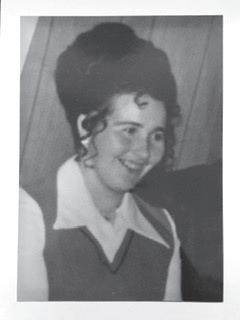
HAPPY70THBIRTHDAY, MARIALEVAR!
Mariawasbornin1949in Croatia.ShecametoAlward StreetinPrinceGeorge, Canada,in1970.Weall family.WishingyouaHappy MothersDay!


BUSINESS OPPORTUNITY
Established Franchise Photography Business
Serving Northern B.C for over 35 years
Gross Revenues of $150.000 plus annually from seasonal work Lots of opportunity to expand the business.
Transition support available to the right buyer
Serious Enquiries Only
Office 250-596-9199
Cell 250-981-1472
Established Franchise Tax Preparation Business Mackenzieservicing and McLeod Lake area for over 30 years.
Gross Revenues of $85,000 to $90,000 Annually and Potential to expand revenues in a growing economy.
Transition support available for the right buyer.
Serious Inquires Only
Office (250)997-9003
Home (250)997-5538
Cell (250)990-0152
PG BCTS FSP Amendment # 21
REVIEW AND COMMENT PERIOD FOR THE AMENDMENT #21 TO THE PRINCE GEORGE FOREST STEWARDSHIP PLAN OF BC TIMBER SALES, PRINCE GEORGE BUSINESS AREA
Notice is hereby given that amendment #21 is available for review and written comment.
The proposed amendment is available for review and written comment at the Prince George Natural Resource Office, from 8:30 a.m. to 4:00 p.m., Monday to Friday from March 26 to May 28, 2020.
Information can be found on our website: https://www.for.gov.bc.ca/ftp/TPG/external/!publish/Forest_ Stewardship_Plans/BCTS%20Prince%20George%20BA%20
FSP%20Amendment%2021/ Amendment #21 consists of the following:
1. The addition of a Fisheries Sensitive Watersheds Objectives Result and Strategy Section 5.1.3.4
To schedule an appointment, or for more information, please contact:
Scott Williams, RPF Prince George Timber Sales Office 2000 S. Ospika Blvd Prince George, BC V2N 4W5 (236) 401-2022
SALMON Seine, built half, brand new, 575 strips, lead line is off but have 100 fathoms of lead, fall bunt in net,





R0011817208
4.00x172.0-BW
PG16 / 615595
Witset First Nation is located 32 kms west of Smithers, BC. The population is 700 on reserve and 1500 off reserve. Witset is very progressive and has achieved 10 year grant funding as well as Certification with FN Financial Management Board, proving that they have sound financials in place. The Witsuwit’en Culture is an important element of our community and is thriving.
About the Opportunity: We currently have an opportunity for an administrative Executive Director to join our team in Witset, BC on a full-time, permanent basis who can lead the organization towards a more mature execution of its long-term vision.
Responsibilities will include, but are not limited to:
• This position supports 12 members of Chief and Council and oversees and manages an executive team of seven (7) managers and an overall staff of 30-40, depending on the season. Multi-million-dollar budget oversight, similar to a non-profit organization.
• Responsible for the management, administration and delivery of all Band programs and services. Ensuring that legislation, core funding guidelines, and financial policies and procedures are adhered to; and that the needs of Band Membership are met in a reasonable, effective and efficient manner. The ED will ensure that WFN's fiscal operations, administrative operations, revenue generation, marketing, human resources, technology, industry relations and other program strategies are effectively implemented across all segments of the organization to the betterment of WFN.
• Departments reporting to the Executive Director include: Band Administration /Finance/ Health / Housing / Human Resources / Lands and Capital / Public Works / Social Development
• Core duties include: Comprehensive Community Planning and Strategic Planning; Advisory role with regards to Legal and Economic Development Matters; Financial Planning and Strategy; Funding and Budgeting Processes, Capital Projects; Security and Emergency Services; Personnel Management; Oversight of IT; Membership and Elder Services.
• Update First Nations Financial Management policies regularly to ensure Certification remains intact for the future of Witset.
• Design, implement, and complete a strategic organizational planning process. Ensure consistency and transparency in programming that aligns WFN’s comprehensive community plan and strategic direction by bettering or enhancing community programs and services for Band Membership. Ensure the execution and/or implementation of defined CCP and Strategic Plans.
• Oversee any fundraising planning and implementation, including identifying resource requirements, researching funding sources, establishing strategies to approach funders, submitting proposals and administrating fundraising records and documentation. This will be done in conjunction with the Finance Director and other senior managers.
• Review and amend with executive team, program policies, procedures, annual work-plans, and budgets to ensure they are aligned with Indigenous Services Canada/Stakeholder/ Funder policies and guidelines. Provide mentor-ship to executive team on program review, evaluation, and future planning needs.
• Manage the 10 year grant funding and ensure funds are invested to increase revenue for training.
About the Ideal Candidate: In order to qualify for this role, you will have a Bachelors or Master’s Degree in a related discipline (Business Administration/Management, Commerce, First Nations Governance, etc.) plus a minimum of 5 years previous senior-level management experience with project and program management, including the development of annual strategic plans, work plans, budgets, and managing financial and personnel functions. You will also have previous experience working in a First Nations and/or crosscultural environment and have exceptional analytical, sound decision making, time management and prioritization skills. As a skilled communicator, you will interact with a range of internal and external partners, and have excellent leadership and listening skills. Strong organizational skills and the ability to self-manage and manage others is required. Experience with Human Resources and knowledge of the Canadian Federal Labour Code is an asset.
Collaborative. Committed. Both a Leader and a Listener. These are qualities we are seeking in our Full Time permanent Executive Director position. If you believe you can help lead our organization in achieving our long-term visions, you are a person we want to meet.
About the Rewards: This is a great opportunity to contribute at an exciting time of change and growth within the community. In exchange for your hard work and dedication, you will be rewarded with a competitive salary, including:
• Group Benefits Insurance and Pension Package
• Ability to gain valuable First Nations Experience
• Ability to strategize and develop Creative Solutions for Growth and Sustainability
• Ability to create Effective Change that will make Significant and Positive Community Impacts
Witset First Nation thanks all applicants for their interest, but only those selected for an interview will be contacted.
Salary: Range of $75,000 to $95,000 per annum
A complete job description for the Executive Director is available upon request.
Please provide your resume & 3 letters of reference to: Lucy Gagnon, Executive Director lucy.gagnon@witset.ca • 250-847-2133 Local 230 for more information


























“DUNSTER PROPERTY FOR SALE” 115 acres with 1/2 mile Fraser River frontage. 10 acres Island. 15 acres cleared. Mixed forest. 100% reliable water source. Log cabin attached to mobile home. Water line and hydro. Easy access. Mountainscape views. Private. 250-479-5545
45.5 ACRES Corner of Upper Fraser Rd & Beaver Forest Rd. with good driveway & building pad. $155,000. 250-614-6667
Lots & Acreages for Sale
1.148 AC. LOTS 35 & 36, Birchill Cres. 16 W., city limits. No GST. (250)563-7414
12 ACRES of commercial zoned land, 1400 ft of Hart Hwy frontage $150,000 per acre. 563-6985 or 981-1950. Will consider partial trades.
2.186 ACRE, 9341 Birchill Cres, close Hwy access, no gst. (250)563-7414
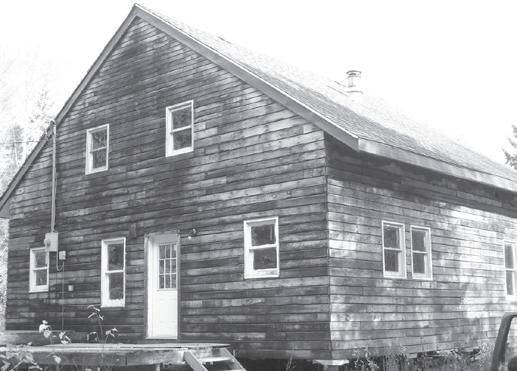
Commercial
2649, 2669 & 2679 Queensway, 3 Hoists, compressor, over 5000 sqft, 14’ bay doors, lots of bays, C5 zone, showroom, parts department. Reduced $1,700,000. 250-9813583
2649 & 2669 Queensway, 3 Hoists, compressor, over 5000 sqft, 14’ bay doors, lots of bays, C5 zone, showroom, parts department. Reduced $1,700,000. 250-981-3583
CORNER of Queensway & Quadrant, C6 commercial lot, 50X111, all services in, $120,000. 250-981-3583


BUILDING Lot 8091 Flamingo Rd. 80’X135’ with city sewer & water. Allows mobiles as well. $85,000. 563-6985, 981-1950 HART Area, 400’ frontage X 100’ deep, serviced $300,000. 250565-4888
LARGE Res. lot, serviced, green belt on back, Oak Ridge Cres, Hart hwy. $89,900 obo 250-5623886 LOT for Duplex, 4-plex or apartment/condo. Fully zoned. Ready for permit. Near Multiplex & Walmart. 250-961-6786
1000sq m building lot, #L72NCorintoPearleco-development Honduras. Contact Recap Investments, Toronto 1-888-212-8584 for more info and owner 250-5634999 $35,000 Canadian Cluculz; Meier Rd, 11.26 acres sub-lakeshore with lake access, and top location $299,000. 604908-0313

Dunkley Lumber Ltd., has prepared a draft Management Plan (MP #5) for Tree Farm Licence # 53. The TFL is located in the HixonStrathnaver area on the east side of Highway 97 out to roughly Stony Lake and Ahbau Lake.
The primary purpose of the Management Plan is to document the timber supply analysis that looks at the timber supply implications of current management practices within TFL 53. The Chief Forester of the Province of BC will use the information in the Management Plan to help determine a new Allowable Annual Cut for the TFL. Dunkley Lumber Ltd. invites you to review and submit comments on the draft MP #5. The review period is from May 11, 2020 to July 11, 2020. If you wish to review a copy of the draft MP #5 please contact Dunkley to arrange to receive a copy.
If you have questions, we would be pleased to discuss these with you over the phone or by email correspondence. Written comments on the plan should be received by July 11, 2020 to ensure consideration. Please send your written comments to:
Dunkley Lumber Ltd., PO Box 173, Prince George, BC, V2L 4S1
For more information please contact Doug Perdue, Chief Forester at 250-998-4205 or at dperdue@dunkleylumber.com
2x60.0
R0011816914
Take notice that I, Richard Wakelyn, of 38295 Chief Lake Rd., Prince George, BC, have applied to the British Columbia Ministry of Forests, Lands and Natural Resource Operations and Rural Development(FLNRORD), Omenica Region, for a License of Occupation for the use of an existing cabin for hunt camp purposes situated on Provincial Crown land located on Unusurveyed Crown Land on the south side of Bugle lake
FLNRORD invites comments on this application, the Lands File is 7402906 Written comments concerning this application should be directed to Tricia Klein Land Officer, Omineca Region, FLNRORD, at 5th Floor 499George Street, Prince George, BC V2L 1R5 or Tricia.Klein@gov.bc.ca Comments will be received by FLNRORD up to June 19, 2020. FLNRORD may not be able to consider comments received after this date.
Be advised that any response to this advertisement will be considered part of the public record. For information, contact the Freedom of Information Advisor at FLNRORDs’ office in Omineca Region of British Columbia.
R0011816914
NLFD AUTO LTD
Notice of Sale of Vehicle
OPA PRINCE GEORGE MOTORS
1x56.0
R0011816432
Pursuant to the Repairer’s Lien Act
Whereas BRYAN KIRBY is indebted to PRINCE GEORGE FORD in the sum of $11,269.33 for repairs completed and payable upon a 2013 FORD F150 BEARING VIN 1FTFW1ET3DKE25708, this vehicle will be offered for sale on MAY 29, 2020 at 1331 CENTRAL STREET, PRINCE GEORGE, BC.
Please contact Mike at 250-563-8111 in order to place bids or to arrange to view.







Digging down is a great way to add space and value to your home. However, when undertaking this type of renovation project, it’s always best to trust a foundation professional. They’ll build an addition or extend your existing crawl space to add an entirely new and functional basement to your home.
Once the soil, foundation and weight of your home have been assessed, a structural engineer can determine the best technique to use to construct the basement. Most singlefamily houses can be lifted using a hydraulic system and steel piles without causing damage or cracks to the structure. This method will increase the amount of natural lighting in your basement while reducing the risk of water
infiltration. Underpinning or lowering a basement might be preferable for older homes with solid masonry construction. This approach involves digging under the existing foundation while shoring up the structure using adjustable support columns to lower the floor. While in itself an impressive sight, it’s important to know that underpinning is usually more expensive than simply lifting your home.
It’s important to be thorough when choosing the right licenced and experienced professional for your renovation. The foundation is the most important part of your home and any damage to it could affect its overall structural integrity. So don’t hesitate to ask for a written estimate, references and guarantees when shopping around for the best contractor.






Willow branches are an ideal material for DIY garden projects because they’re slender, flexible, long and durable. As a result, they can easily be interwoven and formed into all types of garden structures. Here are some of the things you can make with them.
FENCES AND HURDLES
If you’re ambitious, you can build a unique fence for your property with woven willow branches. A little too largescale? You can also make woven hurdles and use them to make a wall around a garden bed or to conceal less attractive elements in your yard such as a compost or water heater for a pool.
Willow structures can be expected to last
between 10 and 15 years. They age gracefully, retaining their strength and appearance, even through rain, snow and high winds.
TRELLISES, GAZEBOS AND MORE
Willow branches are also perfect for making trellises and other support structures for climbing plants, including simple stick teepees and elegant latticework. And if you really develop a knack for working with willow branches, you can even make gazebos and sculptures.
Willow branches are a great addition to a DIY gardener’s toolkit. Moreover, they’re a highly sustainable resource, as snippedoff branches from weeping willow trees grow back quickly.

Weeds get a bad rap. People have a tendency to lump these plants together and look upon the entire lot as undesirable. It’s true that there are a number of positively destructive weeds, invasive species that can overtake your yard within a growing season. But there are also many plants typically identified as weeds that are highly beneficial to lawns and gardens. Here are three common ones that you should welcome.
1. Dandelion. This ubiquitous weed with a yellow flower has deep roots that draw up minerals and water from the soil, thereby helping to nourish neighbouring plants. Additionally, dandelions
attract beneficial insects such as ladybugs, lacewings and other pollinators. This plant also has edible roots, leaves and flowers that contain essential nutrients.
2. White clover. White clover collects nitrogen from the air and transfers it to the soil. Nitrogen is essential to plant growth and one of the three main ingredients in fertilizer. Plus, this weed has a large root system that breaks up hardpan (a hard, underground layer of soil impervious to water). Like the dandelion, white clover attracts ladybugs, lacewings and other beneficial insects.

3. Plantain. Not to be confused with the banana variety, the plantain, or broadleafed plantain, often pops up in spots where soil is compacted. It collects a ton of great nutrients for the soil, including calcium, sulphur, magnesium and iron. If left to die, this weed will enrich the soil and attract beneficial organisms.
So think twice before digging up all the weeds on your property. These three, and a number of others, can improve your soil and enrich the small ecosystem that is your yard and garden.

Ready to buy some annuals for your yard?
Here are four factors to consider when choosing plants that will complement your landscaping.
1. WHAT THE PLANT NEEDS
Check the soil and evaluate the environmental conditions in your yard. The drainage, pH and amount of sunlight available should all be factors when you choose plants for your garden.
2. THE SIZE OF THE PLANT
Give your annuals enough room to grow. Find out how big they’ll become and plant accordingly. Place taller annuals behind shorter ones, and make sure each plant has room for its roots.
3. WHEN THE PLANT BLOOMS
Enjoy blossoming annuals from May to October. Choose plants that flower at different times to have an everblooming yard.
4. THE COLOUR AND SHAPE OF THE PLANT
Choose annuals that look good together, and aim to get plants in a variety of shapes, colours and textures. Opt for a well balanced colour scheme by selecting either cool or warm tones for the entire yard.
If you have perennials in your garden, don’t forget to take them into consideration when choosing your annuals.


Whether you use it seasonally or all year long, a solarium is a great addition to any home. Using natural light to create a comforting and relaxing ambiance, a sunroom increases the square footage and value of your home. It also allows you to enjoy the health benefits of the sun and the beauty of the outdoors without being exposed to the elements.
Depending on your tastes and budget, you can opt for either a threeseason solarium or one that can be used throughout the year. A threeseason solarium is perfect for those looking to enjoy the first sun-filled days of spring to the last warm evenings of fall. This type of room is fairly easy to install since it doesn’t require any foundation work. Instead, the structure is simply placed against an existing wall and equipped with singlepane windows.
A fourseason solarium, on the other hand, must be placed on a solid and secure foundation. It’s an aluminum, composite or wood extension of your home that must be able to support energy-efficient windows (double and tripledglazed)
that are made from tempered safety glass. Ideally, your sunroom will be outfitted with a bay window to help trap heat or to keep the room cool when it’s flooded by natural light. If you decide to go with a yearround solarium, buy Energy Star certified windows for superior energy efficiency.
Before beginning any work, always check with your municipality about the necessary bylaws to follow and permits to acquire. Moreover, since installing a solarium can involve some rather extensive work, it’s always best to trust the services of a certified contractor when adding one to your home.

Building up is great way to add value to your home without sacrificing your outdoor space. More importantly, though, this type of extension is the perfect solution if you want to increase the amount of available space in your home. You’ll be able to add bedrooms, an office, another bathroom or even an apartment, which you could rent without having to move.
Most homes are able to accommodate a se cond storey. Of course, before beginning any work whatsoever, make sure the zoning laws in your municipality permit this type of renovation. Once you’re given the green light, you’ll need to choose the right contractor for your project. Ideally, you’ll want to hire a professional to take care of the entire renovation from start to finish. This means having someone on board for the consultation, evaluation, planning and construction of every little detail, such as the room layout, interior finishing and exterior siding. Having the right specialist by your side
will allow you to continue living in your home without having to lift a finger during the project.
A second storey addition to your bungalow is nothing short of spectacular. It will add value to your home while making it far more spacious and visually stunning. If you want, you could even take this opportunity to redesign the ground floor to include a more functional kitchen or cathedral ceilings to maximize lighting. It’ll be like moving into a brand new home without having to leave your neighbourhood.

Adding a second storey to your home will have a stunning and lasting effect.




The sunny season is finally back! With its high temperatures and long, clear days, summer is the perfect time of year to tackle those outstanding tasks that you’ve been “meaning” to get around to. Take advantage of the pleasant days ahead to accomplish these six home renovation projects.
1. REPAVE THE DRIVEWAY
If your driveway is in (very) bad condition and showing signs of wear like cracks or crevasses, it’s high time to take action. Did you know that summer is the best season to repave? Indeed, high outdoor temperatures are necessary to achieve optimal results that will stand the test of time. So, give your driveway some much-needed attention this summer!
2. REPAIR THE ROOF

It’s a fact: bad weather (rain, wind, snow, ice, etc.) can cause serious damage to your roof. This summer, enlist the help of a professional to determine if your roof is in need of repairs (or a complete overhaul). Have your roofer check for damaged or missing shingles, mould, clogged gutters, etc. Regular inspections are essential to prevent water leaks and other inconveniences that can result from poor roof maintenance.
3. REPLACE THE WINDOWS AND DOORS
Are you all too familiar with infiltration (water or air) or insulation problems? If your windows and doors have served their time, or if you simply wish to modify the look of your home with newer units, keep in mind that summer is the ideal time to replace
them. In addition to not having to worry about heat loss, you won’t have to sacrifice home comfort during the installation phase since outside temperatures are (almost) always agreeable at this time of year. If your windows and doors don’t need replacing, take advantage of the warmer days to make them sparkle.
4. REFRESH YOUR HOME’S FACADE
Is your home’s facade looking a little lacklustre these days? This summer, take the opportunity to give it a well overdue facelift! If you don’t have the budget for major renovation work, a simple high-pressure cleaning and a fresh coat of paint can significantly rejuvenate the look of your humble abode.
5. RESTORE YOUR DECK
Is your deck a little on the tattered side? Make it look as good as new with a fresh coat of stain or varnish. For longer lasting results, always opt for a special weather-resistant product. Is your deck damaged beyond repair? Why not take advantage of the beautiful weather to build a brand new one?
6. REVAMP THE LANDSCAPING
When it comes to working on your yard, pleasant summer weather is your greatest ally. Does your home’s landscaping leave a lot to be desired? Embellish your outdoor space by planting colourful flowers, trimming your hedges, building a stone walkway, etc. In short, take advantage of the summer months to transform your yard into that beautiful oasis you’ve been dreaming of!
KITCHEN RENOVATIONS
If your kitchen is in need of an overhaul, summer’s the ideal time to get started! After all, you can always cook on the barbecue and dine on the patio while the work is under way.