The magazine for the owners and management of international casinos
Volume 21: Issue 183

The magazine for the owners and management of international casinos
Volume 21: Issue 183
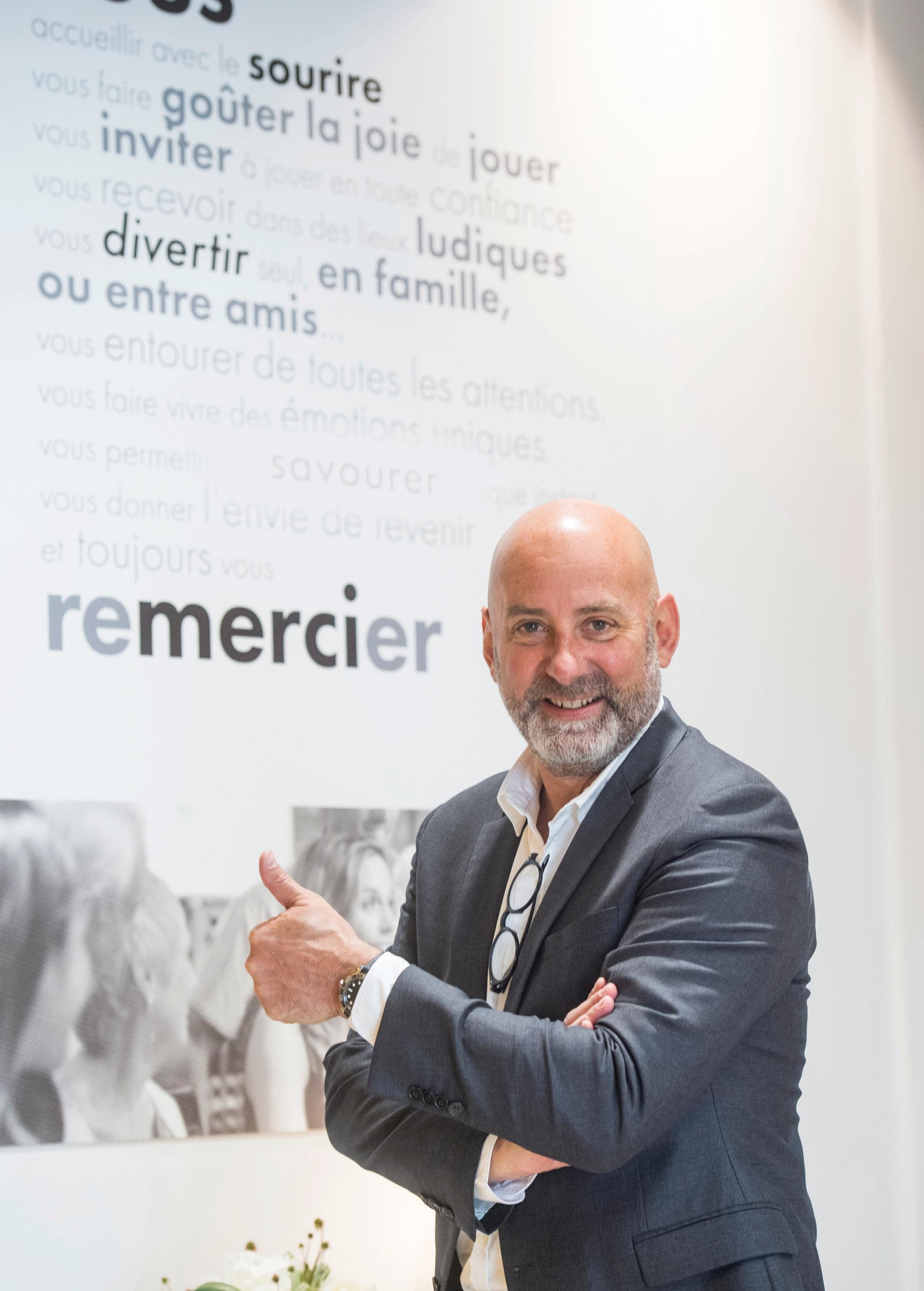
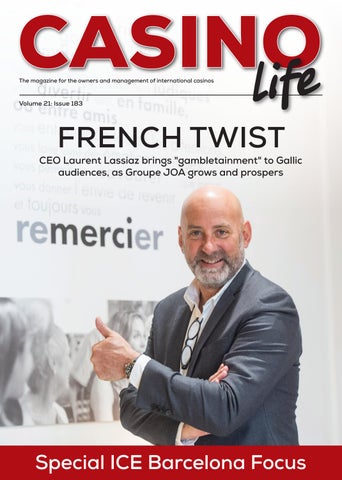
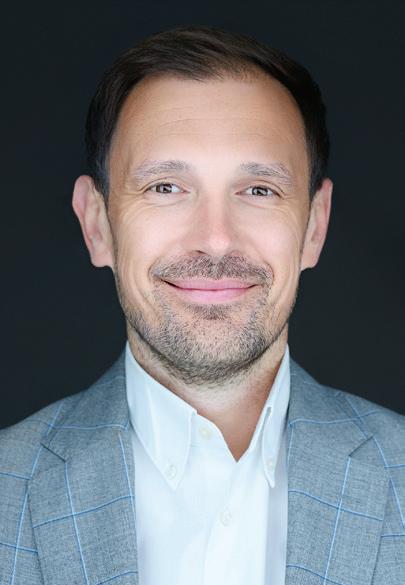
CEO Laurent Lassiaz brings "gambletainment" to Gallic audiences, as Groupe JOA grows and prospers


Publisher: Peter White
Tel: +44 (0) 1892 740869
Mob: +44 (0) 7973 273714 peter@outsourcedigitalmedia.com
Editorial:
Editor in Chief : David McKee dmckee@huntingtonpress.com
Editor EMEA: Damien Connelly damien@outsourcedigitalmedia.com
Associate Editor Asia: Bill Healey healeywe@gmail.com
Online iGaming Editor: Mark McGuinness markmcguinness847@gmail.com
Columnist: Raymond Chan ymrchan@hotmail.com
Associate Editor EMEA: Andrew Behan a.behan@librasgroup.com
Las Vegas Correspondent: Ryan Slattery RyanSlats@gmail.com
International Correspondent: Lyudmyla Kyrychenko lyudmyla.kyrychenko@outsource digitalmedia.com
Production:
Designer: Stewart Hyde stewart@de5ign.co.uk www.de5ign.co.uk
Accounts: Helen Holmes accounts@outsourcedigitalmedia.com
IT Director: Pasha Kuzminskiy pasha@outsourcedigitalmedia.com
Two topics were dominant in Miami at the Deutsche Bank Gaming & Lodging Conference, held in early November. One was prediction markets. You’ll read about them in our Sports Betting Operator magazine – and maybe here, too eventually, if they make good on their threat to get into iGaming.
The other leading topic of conversation was Las Vegas. Industry bosses have, by and large, claimed they’ve gotten religion on the nickel-and-diming of the Sin City tourist. Indeed, Deutsche Bank’s Steven Pizzella said he’d found anecdotal evidence that this was the case. Let’s hope he’s right.

The consensus was that “high-end Las Vegas [is] continuing to be relatively solid, while … lower-end Las Vegas continues to be relatively weak, though we sense some optimism moving forward,” as Pizzella wrote to investors. Strip operators have finally put away that “blip on the radar” talk and admitted that summer was worse than normal (continuing into autumn, we see). They said the Vegas Strip market is now stabilizing, a welcome development.
Mind you the luxury business never went away and it has seen the Vegas industry through some otherwise lean months. Wynn Resorts executives even went so as to tell the local newspaper that the economic vicissitudes of the Strip didn’t affect their high-flying resort. Bread-andbutter business? They didn’t need it.
At present, the captains of industry are pinning the bulk of their hopes on the convention calendar for 2026. Caesars Entertainment says theirs is the best in company history.
By the time you read this, the third annual Las Vegas Grand Prix will have been run. If 2024 was a disappointment, 2025 is supposed to be a return to form. Caesars is reporting an F1 rebound and MGM Resorts International says its Formula One-related business gets better every year.
Of course there is always the National Finals Rodeo as a sure bulwark for the year’s end. Bookings are reported to be “solid.” (There’s suddenly a lot of understatement going around.) That should make up for a New Year’s Eve that falls, problematically, in midweek.
Tourism from Canada, as you know, is in the toilet, thanks to the xenophobic rhetoric and policies coming out of Washington, D.C. Still, Sin City seems cautiously hopeful that the advent of another hockey season will thaw business from the Great White North. (No word on restoration of trashed Mexican business … so far.)
Overall, there is evidence of a chastened, ‘new normal,’ one that will have to get by with fewer Joe Sixpack customers. “While a lot can change, we think the longer-term setup bodes well and the market will adjust to the leisure softness,” Pizzella put it.
He added, “Operators remain cautiously optimistic, as the summer is in the rearview mirror.” We hope so.

he UK government’s 40 percent rise in online-gaming duty feels less like policy and more like punishment. Operators who have already absorbed years of regulatory tightening now face a new financial blow that risks draining investment from an industry already stretched by compliance burdens, higher technology costs and intensifying safer-gambling expectations. Add the ever-present danger of customers drifting to unlicensed offshore platforms and the increase looks not only heavy-handed but counterproductive.
Credit where it’s due: The decision to leave the Machine Gaming Duty unchanged is sensible and overdue. Land-based venues have endured some of the toughest trading conditions in memory. Raising MGD would have been a direct hit to jobs, visitor economies and community-based entertainment.
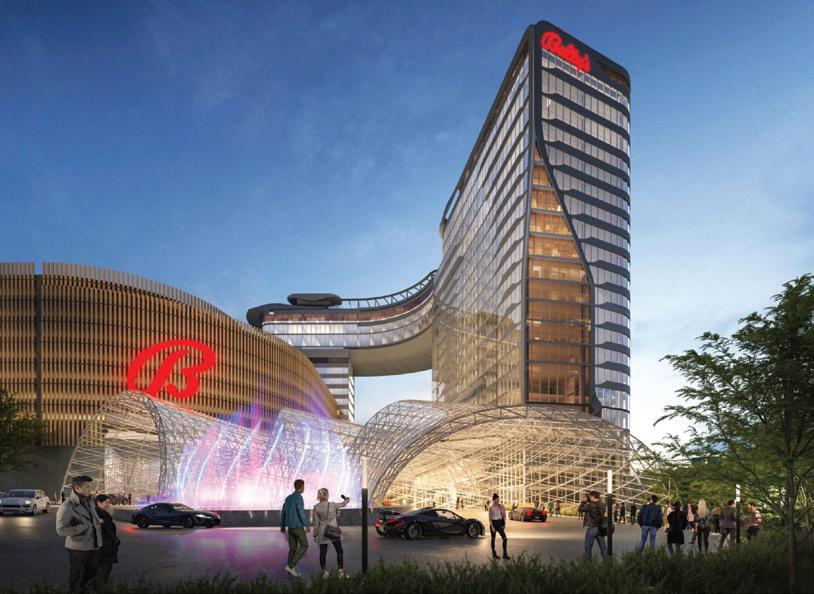
But while the UK tightens its tax regime, the picture abroad is very different, and perhaps a warning of what we risk losing. In New York, regulators are on the verge of awarding three downstate-casino licenses, now contested by three finalists: Resorts World’s expansion in Queens, Bally’s proposal for the Bronx and the Hard Rock/Steve Cohen “Metropolitan Park” megaproject.
These bids are bold, high-investment, communityanchored developments, exactly the sort of largescale vision the UK once embraced. While the British sector contends with rising duties and constrained growth, the United States is creating opportunities, attracting capital and betting on the long-term power of destination entertainment.
The contrast is stark. New York is building; the UK is taxing. One market is encouraging ambition; the other is dampening it.
The risk for Britain is simple: if policymakers continue to see online operators merely as revenue sources and land-based venues only as regulatory issues rather than economic drivers, the country may find itself outpaced. By whom? By jurisdictions willing to back their gaming industries with confidence, clarity and investment-friendly policy.

Comment: Erwin van Lambaart
How Europe’s land-based casinos are evolving to meet the expectations of tomorrow’s customers. By Erwin van Lambaart, chairman, European Casino Association and CEO, Casinos Austria & Austrian Lotteries
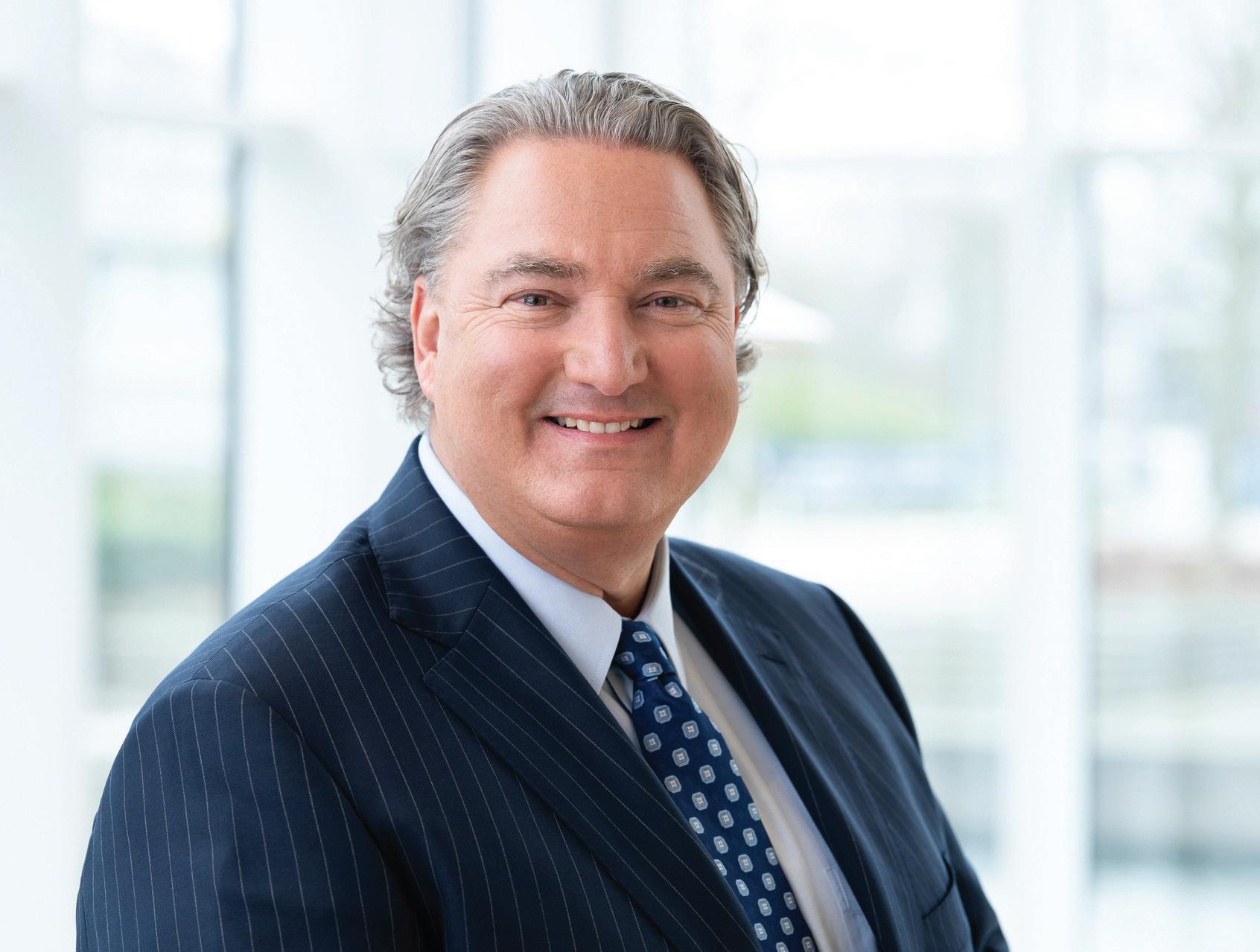
As I prepare to join industry colleagues at ICE Barcelona 2026 this January, I find myself reflecting on a question that should keep every casino operator busy: How do we remain relevant to our customers in an age where entertainment options are limitless and expectations are constantly evolving?
The European casino industry stands at a fascinating crossroads. At the European Casino Association (ECA) we represent more than 700
casinos across the continent, employ over 70,000 people and serve millions of guests annually. Yet our success tomorrow depends not on what we achieved yesterday, but on our ability to transform what it means to visit a casino in the first place.
The truth is that customers no longer come to us simply to gamble. They come for an experience – for connection, entertainment, dining, a concert and yes,
gaming too. This shift requires us to think differently about our role. We are no longer just casino operators; we are creators of entertainment destinations that happen to include gaming as one element of a broader leisure offering.
This transformation is already underway across Europe. Forward-thinking operators are integrating restaurants, live entertainment, retail, art and cultural programming into their venues. They are leveraging technology not to replace the human touch, but to enhance it – using AI and data analytics to personalize experiences, streamline services and anticipate guest preferences. The goal is simple: create an atmosphere so compelling that guests choose to spend their evening with us rather than anywhere else.
But staying relevant means more than just physical transformation. It requires us to earn and maintain trust. Responsible gaming remains the cornerstone of our industry’s legitimacy. Every ECA member understands that player protection is not a regulatory burden – it is our social license to operate. As we innovate, we must do so responsibly, ensuring that the entertainment we provide never comes at the expense of vulnerable individuals.
We also face significant headwinds. Illegal and unlicensed operators – mainly online – continue to undermine our regulated market. They are offering none of the protections we provide, while diverting revenue that should support jobs, communities and public services.
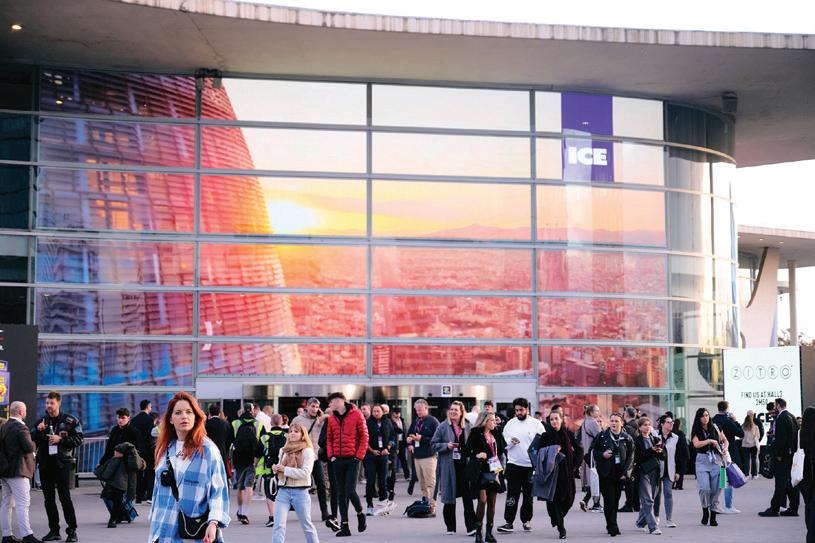
This makes events like ICE Barcelona more important than ever. When 65,000 industry professionals from 186 countries gather under one roof, we showcase the strength, innovation and responsibility of the regulated-gaming sector.
ICE 2026 will be a platform for Europe’s casino industry to demonstrate that we are not relics of the past, but architects of the future. We will explore cutting-edge technologies, share best practices and forge partnerships that strengthen our collective ability to deliver exceptional customer experiences.
The customers of tomorrow expect more from us and rightly so. They want seamless digital integration alongside warm, human service. They want excitement balanced with responsibility. They want venues that feel like destinations, not just gambling halls. Meeting these expectations is not optional – it is the price of relevance in a competitive entertainment landscape.
As chairman of the ECA, I am confident that our industry possesses the creativity, resources and determination to rise to this challenge. The question is not whether land-based casinos have a future, but rather what kind of future we will create. I look forward to exploring that future with colleagues from around the world in Barcelona this January.







By Peter White & Damien Connelly
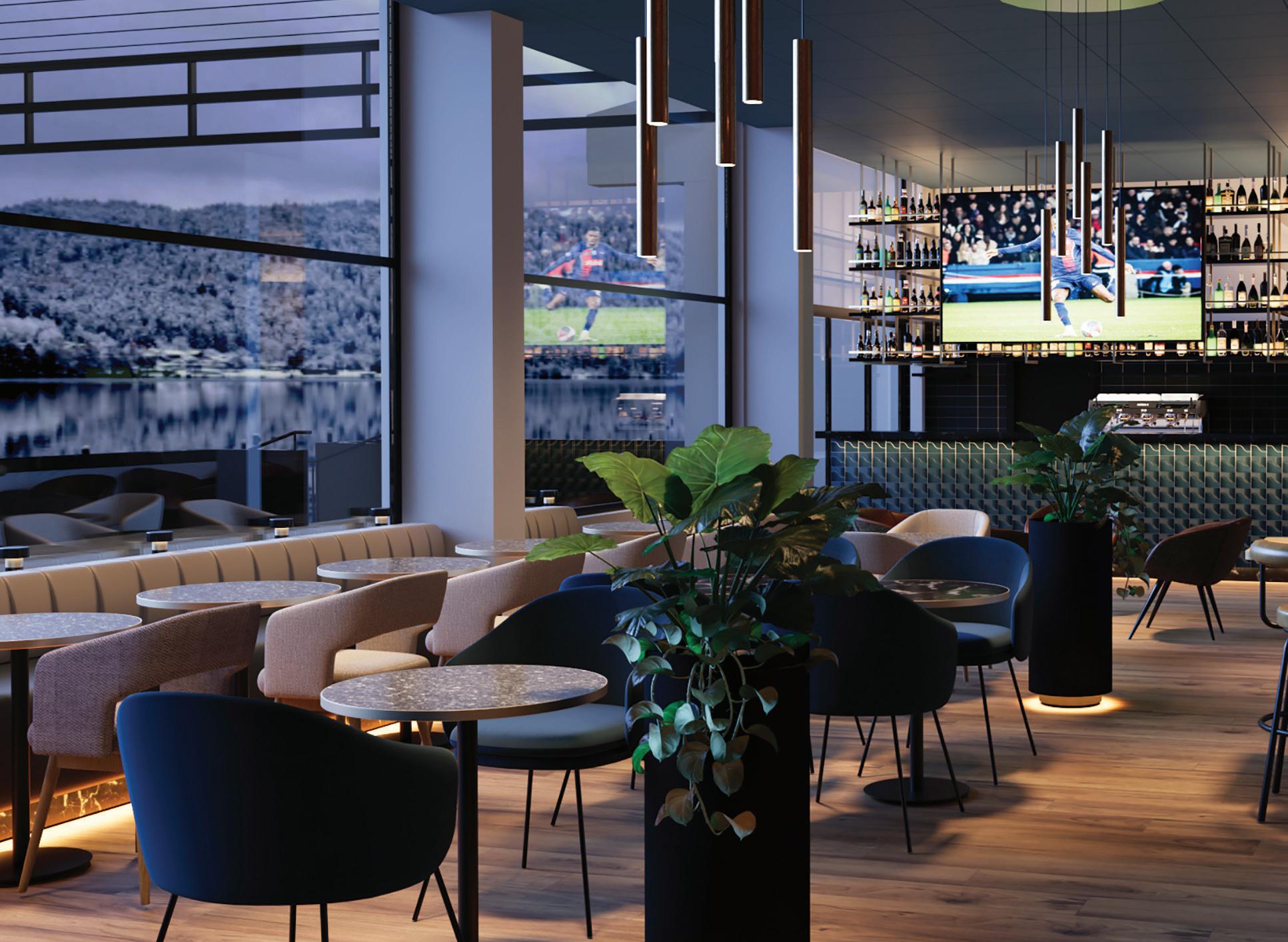
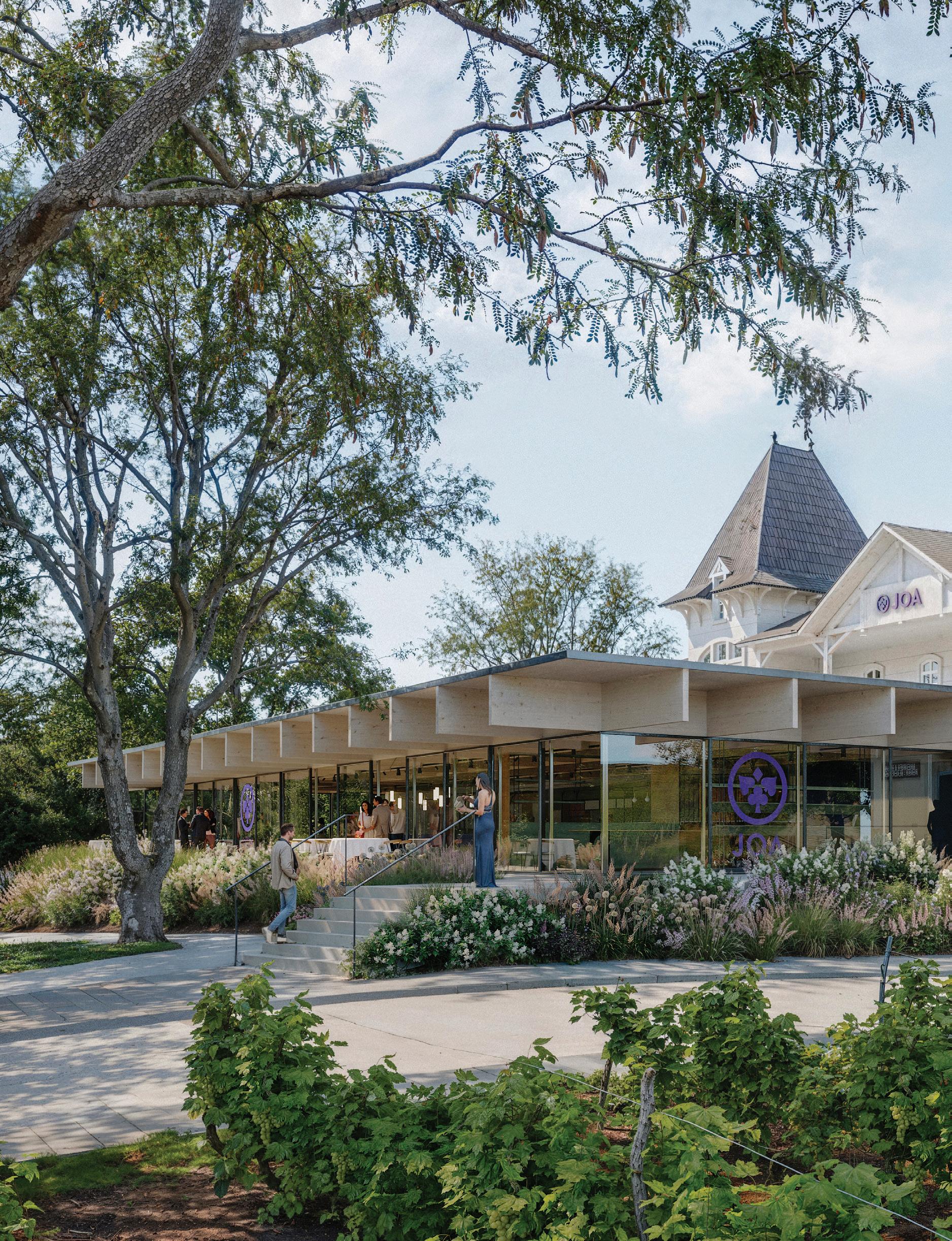
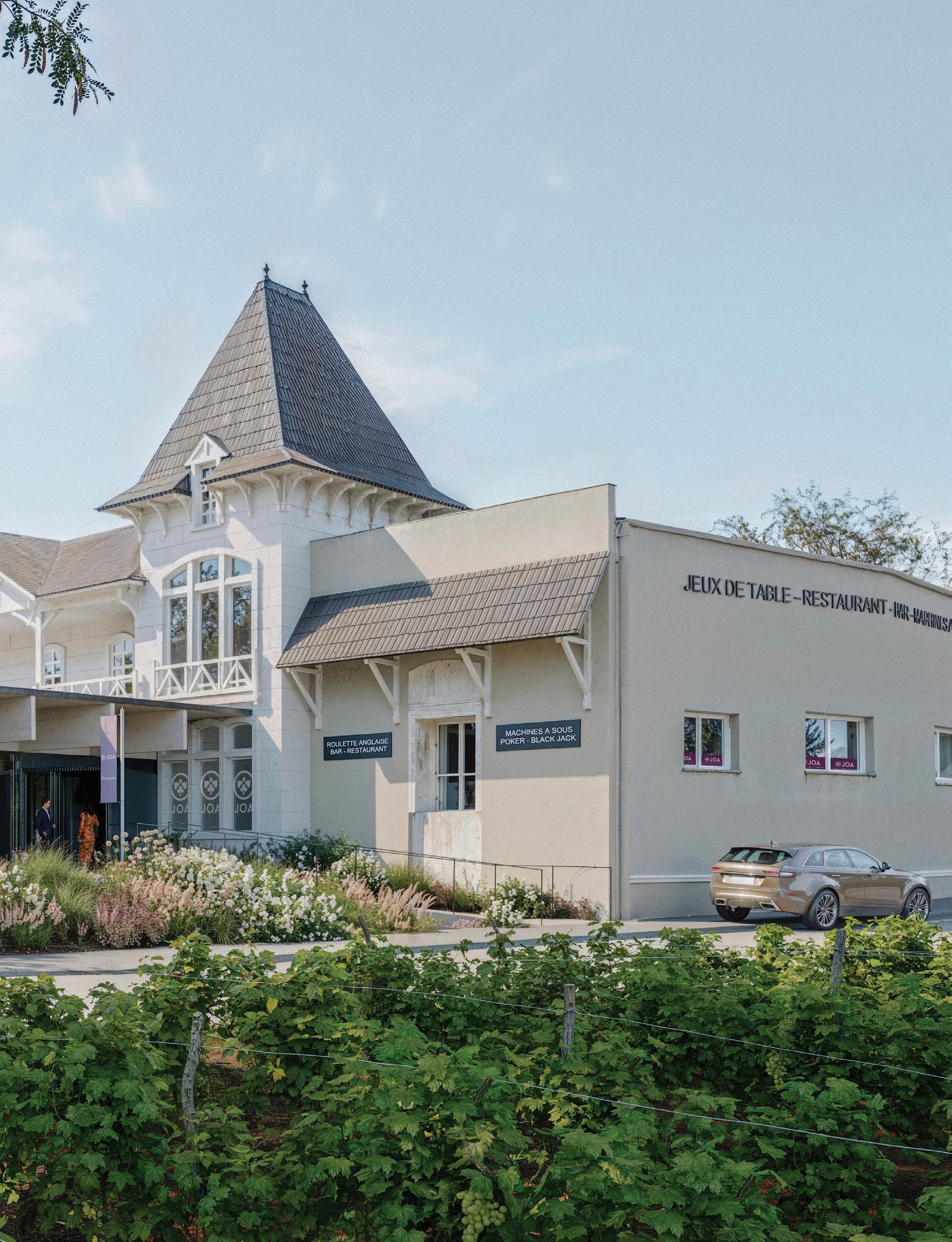
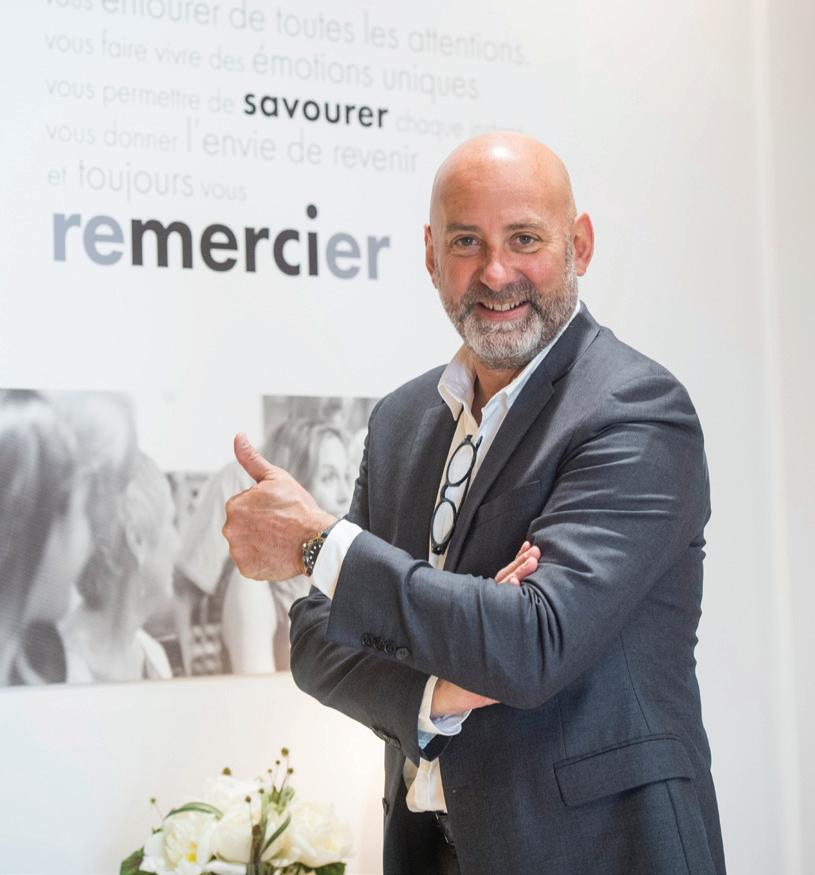
Over the past decade, Groupe JOA has transformed itself from a respected French casino operator into a dynamic leader, redefining what the modern gaming experience can be. Under the vision and leadership of CEO Laurent Lassiaz, JOA has doubled in size and established itself as France’s secondlargest casino group, distinguished by its bold “gambletainment” philosophy, which seamlessly blends gaming, dining, and leisure into a single, inclusive experience.
The Group looks ahead to international expansion, a stronger online presence and a new generation of destination venues, such as the forthcoming Casino JOA in Saumur. All the while Lassiaz continues to champion innovation grounded in responsibility and community engagement. In this exclusive interview, he shares his insights on the evolution of the JOA brand, the future of France’s casino industry and how “open generation” thinking is reshaping the very concept of entertainment.
JOA Group continues to expand and evolve. How would you describe the Group’s overall vision for the next five to 10 years?
Over the past 10 years, JOA Group has doubled in size, continuing its development in its core business and exclusively within the French market. JOA is now number two on the French market and, over the next five to 10 years, the Group will take its first steps internationally, develop a competitive online offering and likely to expand its leisure activities – all with the goal of continuing to build a unique “gambletainment” platform in Europe.
JOA casinos are often positioned as leisure destinations rather than solely gaming venues. Why is this diversification so important to your brand strategy?
In France, only 15 percent of the adult population has ever visited a casino. In other words, 85 percent of French people have never stepped inside such a venue and often have little idea of what a casino
truly offers. This observation led us to rethink our strategic positioning well beyond gaming. Our goal is twofold: first, to reassure those who may feel uneasy or reluctant about gaming due to a lack of familiarity; and second, to meet a widespread demand for leisure activities across the population.
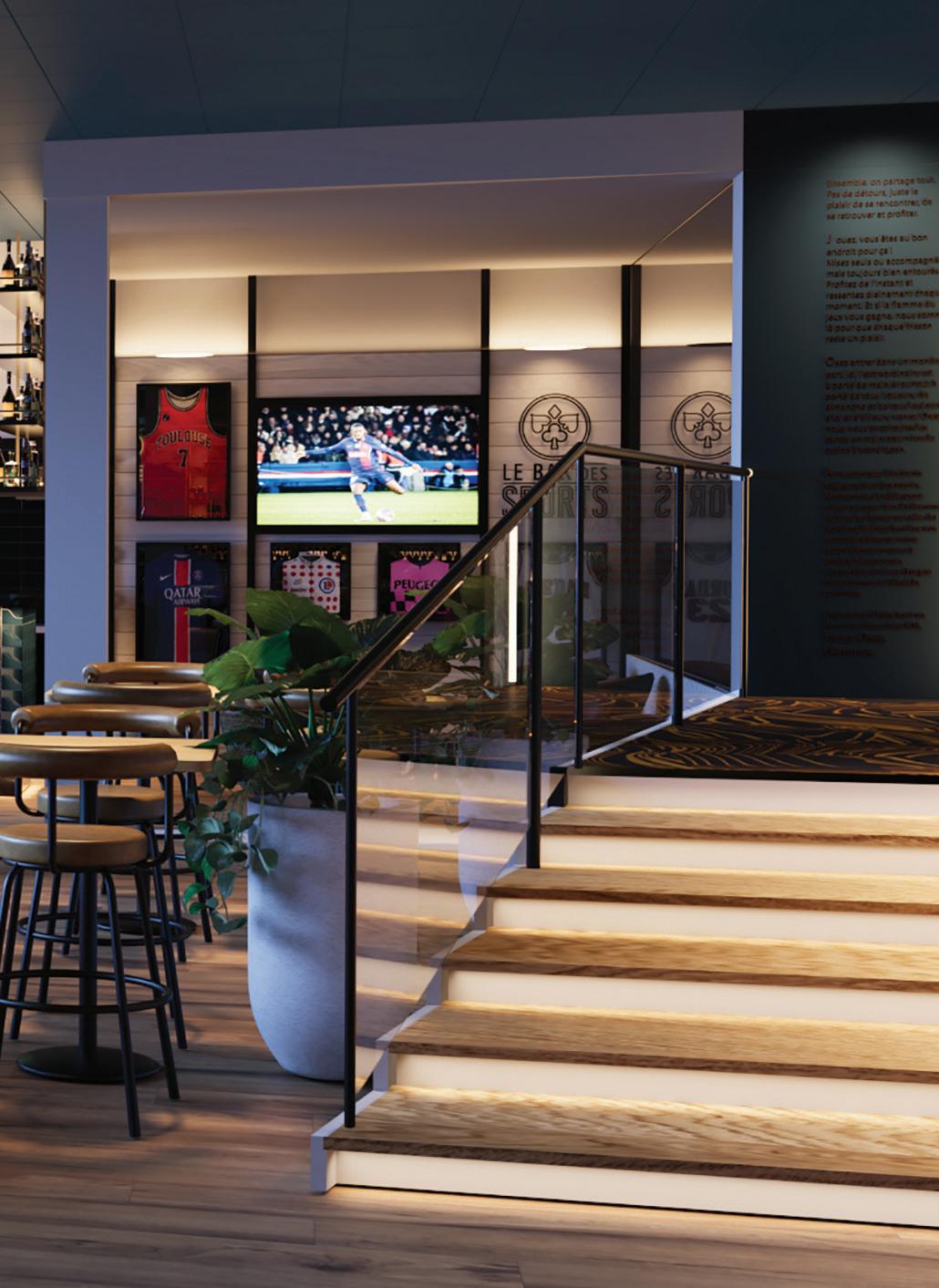
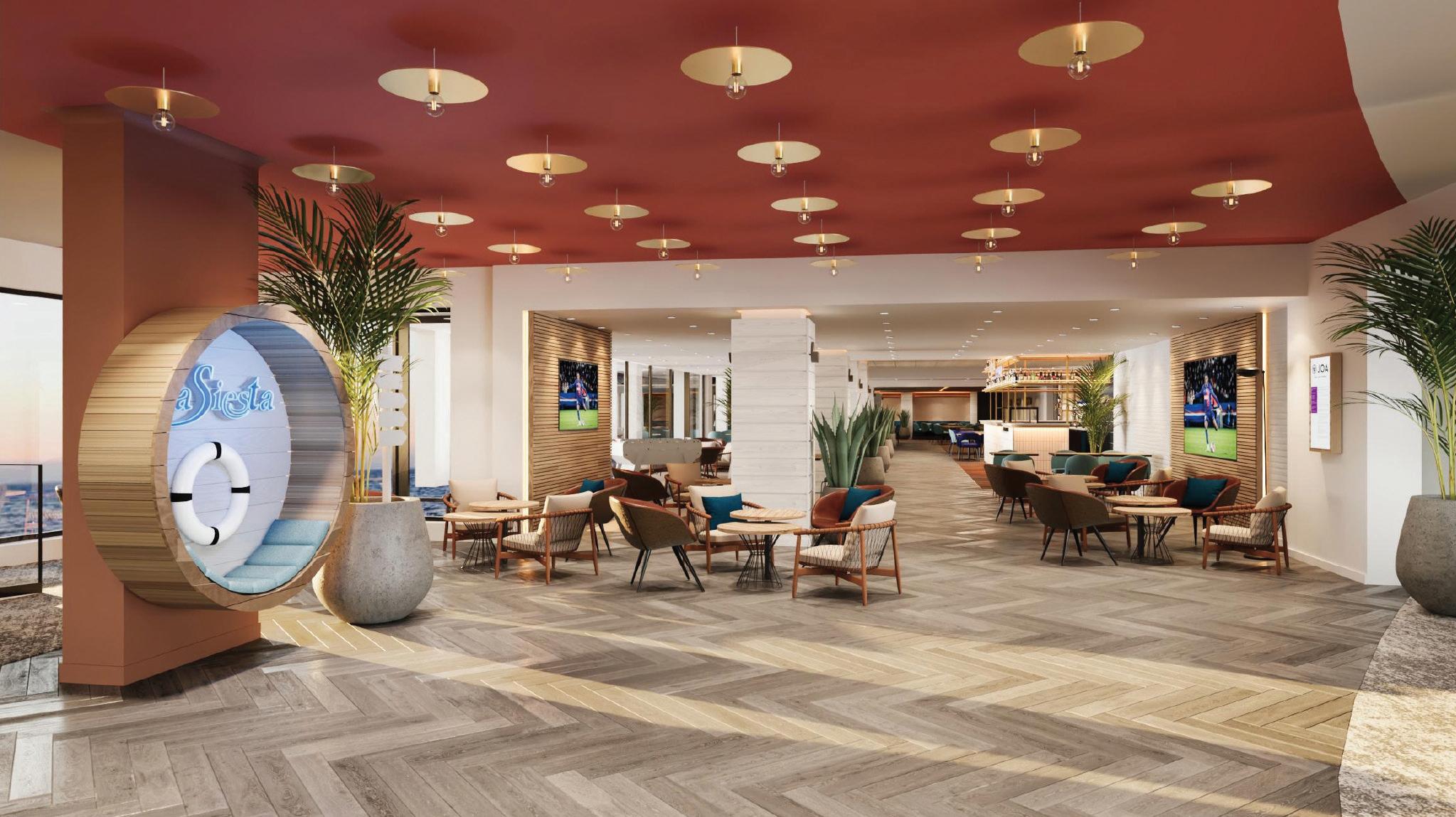
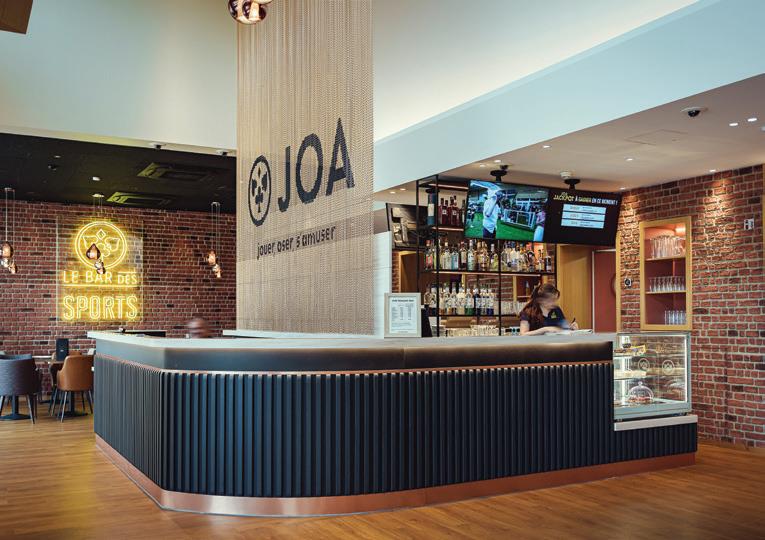
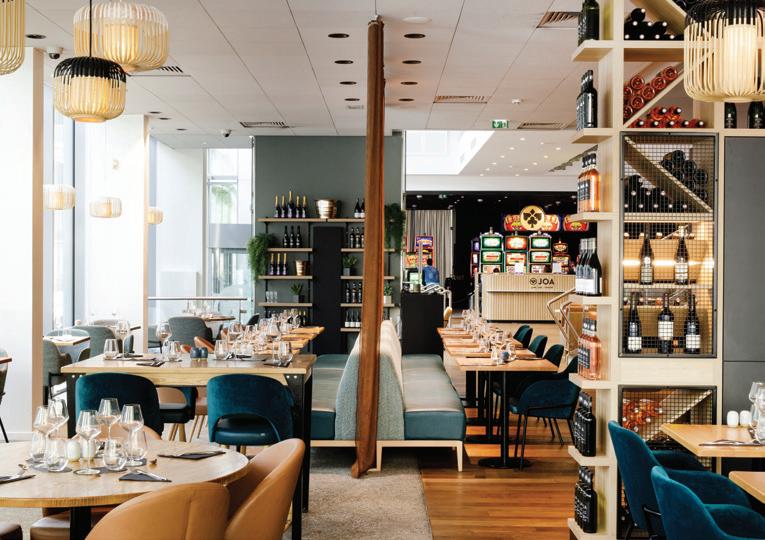
For nearly 15 years, Groupe JOA has been developing casinos where space is evenly split: 50 percent dedicated to gaming and 50 percent to leisure. Our leisure offering is particularly diverse, including dining concepts such as our signature restaurant Le Comptoir, the Bar des Sports, lounge bars, bowling alleys, cinemas, arcade zones, seminar facilities and even hotels.
A concrete example? A family spending a weekend at the JOA Casino in Montrond-les-Bains. While the parents enjoyed lunch at the restaurant, their teenagers had fun at the bowling alley and arcade. In the evening, the whole family gathered at the Bar des Sports to watch a football match, while the parents later joined the disco. Curious and relaxed,
they eventually explored the gaming space together in a welcoming and secure atmosphere. This kind of experience perfectly illustrates our ambition to make the casino a true lifestyle destination: accessible, friendly and open to all.
This vision of the casino as a comprehensive leisure space is fully embodied in our “open generation” positioning. Through this approach, our ambition is clear: to offer a rich and inclusive leisure experience that appeals to the widest possible audience and, above all, helps reshape the public perception of the casino world.
Could you share your perspective on the future Casino JOA in Saumur, and its significance both for JOA Group and for the region?
The story of the future Saumur casino is remarkable in many ways. First, because the city had long aspired to host a casino but was unable to do so due to regulatory restrictions. This ambition finally became possible following a change in legislation at the end of 2023. This allowed Saumur to launch a call for tenders for the construction and operation of a casino.
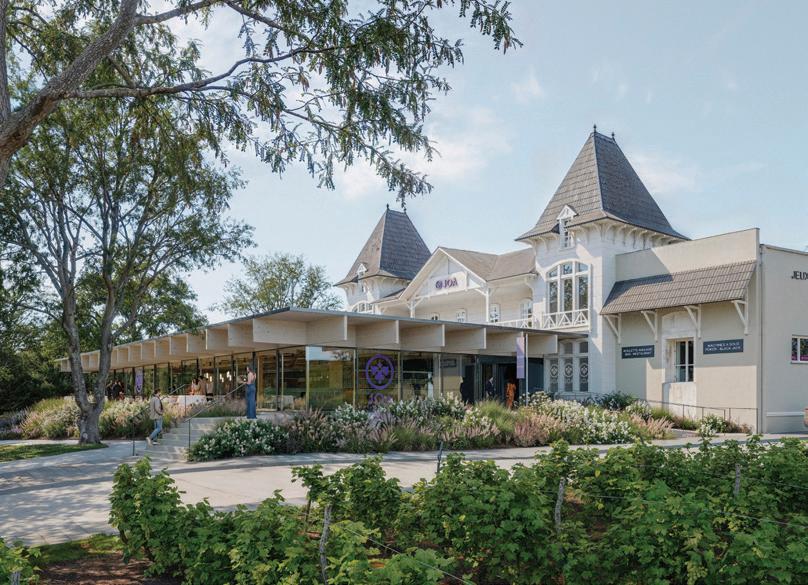
The choice of location is also highly symbolic for the people of Saumur. The building selected has a rich history, spanning nearly a century. It has served various purposes over time – from market hall to garage, then cinema and soon a casino. It’s a landmark that every local knows and feels connected to, which adds a strong emotional dimension to the project.
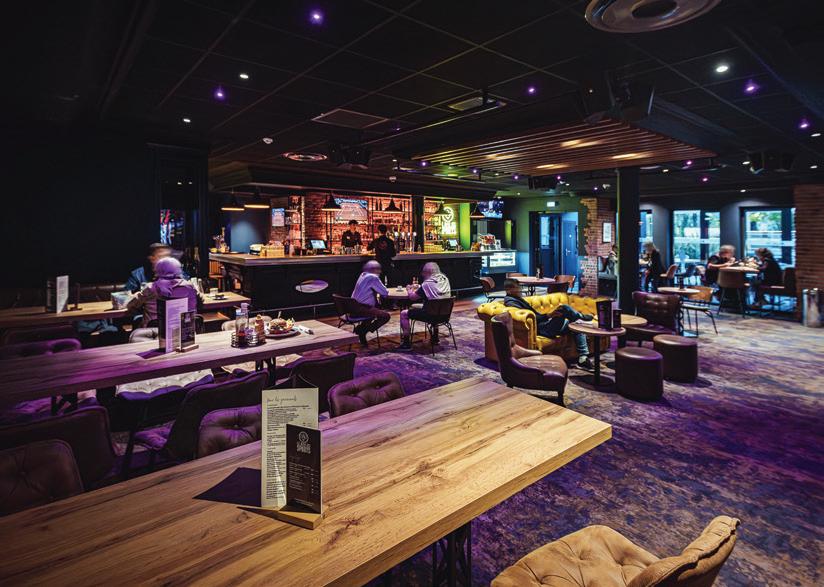
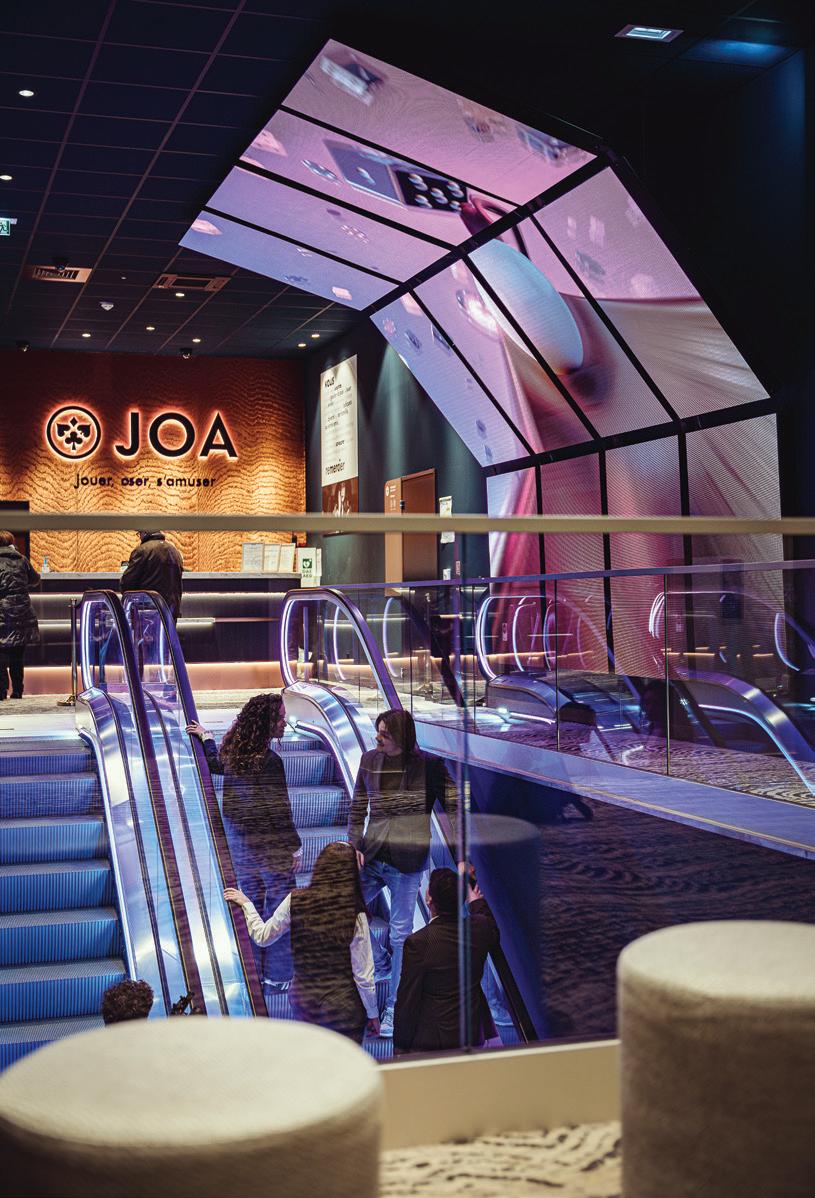
For JOA, this is a truly exciting challenge to fully renovate a historic building and transform it into a modern, welcoming casino covering over 2,200 square meters. The venue will offer a comprehensive experience, including a restaurant, a lounge bar, a performance space, a Bar des Sports, and a wide range of gaming options (slot machines, electronic table games and traditional table games).
Another key factor is that the Saumur region currently has no casino within a 90-minute radius. This has generated strong enthusiasm and high expectations among the local population.
The opening is scheduled for March 2026 – less than two years after the tender was launched, which is a remarkable achievement. This will mark the 34th casino in the JOA Group, once again demonstrating our ability to grow through ambitious construction projects, as we’ve done in Lac du Der, La Seyne-surMer and Saint-Laurent-en-Grandvaux.
The 20-year public-service delegation (DSP) signed with Saumur Town Hall and Mayor Jackie Goulet is a long-term commitment. What are your ambitions for this partnership?
We are committed to a 20-year concession and Groupe JOA will invest nearly €15 million in this project – a truly significant amount. Our ambition is to offer the Saumur region the very best of our expertise, both in gaming and leisure, within a welcoming and secure environment.
There is no doubt about the commercial potential, which is why we will open with a comprehensive and modern offering: 125 slot machines, 27 electronictable-game stations (including English roulette and blackjack), and four traditional table games (two blackjack tables, English roulette and Ultimate Texas Hold ‘em). All the ingredients are in place for this casino to quickly become one of the largest and most dynamic establishments within the JOA Group. Finally, this new casino also represents a major opportunity in terms of local employment. We plan to recruit nearly 70 full-time staff to operate the new venue.
The recently opened JOA Casino in Fécamp has already been inaugurated just two months after launch. What early successes and feedback have you observed so far?
The Normandy region is a territory we know well, as we operate several establishments there. In addition to the Fécamp casino, we also run those in Le Tréport and Étretat. It’s a particularly dense area in terms of casino presence, making it highly competitive.
The new Fécamp casino project is part of the renewal of our concession for a 20-year period. As part of this process, the City Council expressed a desire to relocate the casino closer to the town center to help boost local commercial activity. We seized this opportunity to implement the key drivers of JOA’s successful strategy: a balanced layout with 50 percent of the space dedicated to gaming and 50 percent to leisure.
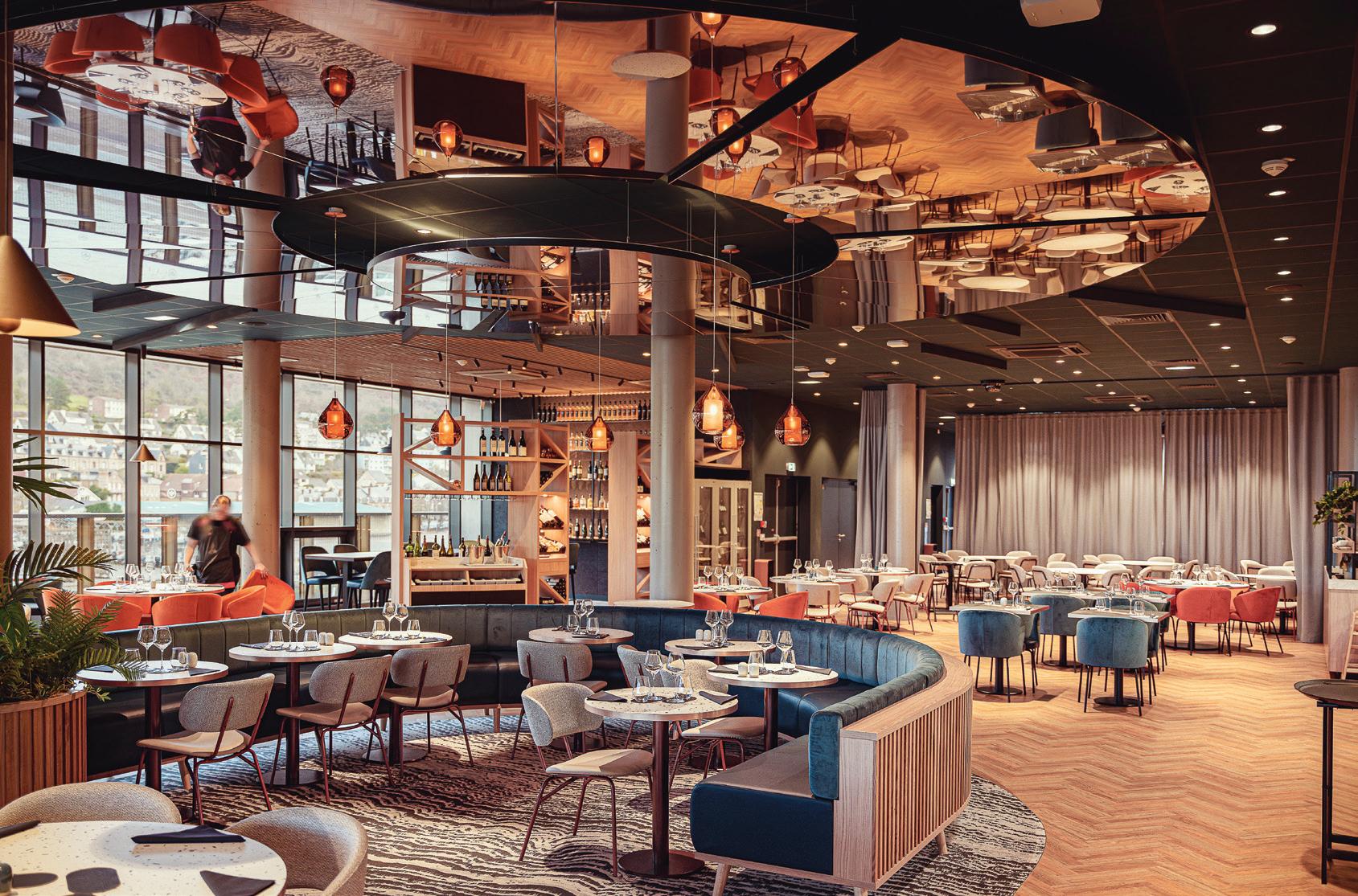
Our F&B offering is built around a dual bar concept (the Sports Bar in the gaming area and a lounge bar upstairs), along with a bistronomic restaurant introducing a brand-new concept to Fécamp. Located on the second floor, the restaurant features 90 seats and offers a stunning 180-degree panoramic view of the port and the town.
The results speak for themselves. After nearly one year of operation, foot traffic has increased by over 30 percent and the site’s overall revenue is up by nearly 25 percent. These are remarkable figures for an already mature market, clearly demonstrating the growth potential of our combined gaming and F&B strategy.
What role do local partnerships, such as with restaurants, cultural events and municipalities, play in the success of JOA casinos?
At JOA, we design our establishments as vibrant social spaces, open to everyone. Our casinos are not merely venues for gambling. They are, above all, places of leisure, created to offer a rich and welcoming experience. That’s why we place great emphasis on the quality of the entertainment we offer. It must appeal to a wide audience and meet the diverse expectations of our guests. Locally, each JOA casino
is committed to showcasing artistic talent, regional products, and local gastronomy. We ensure that our casinos play an active role in their communities, contributing to cultural development and enhancing the attractiveness of the regions in which they operate.
How does JOA position itself as a promoter of responsible gaming while also being a hub of leisure and entertainment?
At JOA, responsible gaming has always been a core commitment. As a key player in the gaming and leisure industry, we believe it is our duty to contribute to the long-term sustainability of our activity. Back in 2009, we created the JOA Foundation to support research into issues related to excessive gambling. Since then, responsible gaming has become a central pillar of our CSR strategy.
Through our dedicated program, “Mission Responsible,” we have developed training modules, both online and in-person, communication kits for digital and on-site use, as well as alert and prevention tools based on data analysis from our marketing and digital systems. This unique tool allows you to precisely identify changes in player behavior (frequency of visits, amounts played, etc.). One hundred percent of our casino teams are trained.
We are also developing partnerships with associations such as Association Addiction France. It facilitates the organization of prevention events in casinos, to raise awareness about support structures for players in difficulty. These initiatives are essential to our prevention policy.
Each casino has a Mission Responsible manager, who is functionally supported by our Group Player Prevention Manager, based at our headquarters. Lastly, JOA is committed to upholding the highest standards in responsible gaming. This dedication was recognized with the Responsible Gaming certification from the ECA in both 2022 and 2025 – a first in France.
Could you tell us more about the Food Talents Show 2025? How do initiatives like this reflect JOA’s approach to innovation and customer engagement?
In January 2026, we will host the fifth edition of our Food Talent Show. It is one of JOA’s flagship events that brings together our bar and restaurant managers, along with our chefs. More than just a professional seminar, this gathering is a unique opportunity to foster dialogue, spark inspiration and strengthen team cohesion. Over the course of three days, our teams come together to review strategy, explore emerging industry trends, celebrate successes and share best practices.
We also take time to look ahead, working collectively on future challenges and innovation topics. A great example of this was in 2024, when all participants attended the SIRHA in Lyon (International Food, Hospitality & Catering Trade Show), a rich source of ideas and insights. This key moment helps nurture the JOA spirit, reinforcing individual commitment, and our shared passion for hospitality and conviviality.
As CEO, what do you see as the biggest challenges currently facing the French casino industry? In terms of casinos and GGR (gross gaming revenue), France is by far the largest country in Europe, with over 200 casinos spread across the entire territory. These casinos play a key role in the economic life of the regions through local gaming taxes, and in the cultural and sporting life. Through is achieved through shows and sponsorship of numerous associations, making them a unique exception in Europe. The biggest challenge for this industry is undoubtedly to maintain its strong local involvement while continuing the long and arduous journey of changing public perception of our sector.
What personal leadership philosophy guides you when overseeing such a diverse group of properties and projects?
Always put yourself in the customer’s shoes and never
forget that, in a casino, we welcome men, women, retirees, working professionals, young people, older people and groups! Everyone should be able to find their product, be it their preferred slot machine, their favorite dish, their favorite cocktail or an activity that meets their expectations.
Looking ahead, what would you most like JOA Group to be known for, both in France and potentially internationally?
To be the Group that has contributed the most to changing public perception of the casino industry in Europe.
The rise of illegal online casino operators poses challenges for both regulators and land-based operators. From your perspective, how significant is this issue in France today?
The online casino market in France is estimated to be worth nearly €2 billion, according to various studies. Every day, millions of players log onto platforms based abroad, which continue to grow with little to no oversight. These sites offer no player protection –neither in terms of responsible gaming nor in antimoney-laundering controls. For a long time, efforts to curb the spread of this illegal market had little impact. The recent arrest of two individuals behind the platform Cresus.fr is a positive signal, but we remain highly vigilant, as many other platforms continue to thrive. This illegal competition places a heavy burden on our entire industry. It also represents a significant loss for public finances, estimated at several hundred million euros.
How is JOA Group working with regulators and industry partners to address the risks posed by unlicensed online platforms?
We are working along three main-line priorities. We raise awareness about the size of the illegal market and the risks it poses to consumers. We are very strict with our suppliers (they are prohibited from working with illegal operators). We take legal action against platforms offering illegal gambling and misusing our brand image (a lawsuit is currently underway against Meta).
Do you see opportunities for legal, regulated online or hybrid offerings as part of JOA’s future strategy, to meet changing player expectations while ensuring safety?
France is one of the few countries in Europe where
online casino is not regulated and where the tools to combat illegal gambling remain too limited versus the size of the phenomenon. The immediate consequence has been an explosion of illegal gambling since the Covid years. The JOA Group is ready to accelerate in the online-casino market but, given the unique nature of the French market (with its large network of land-based casinos and their strong local involvement), we are in favor of a controlled and tightly regulated opening.
Looking ahead, what are your hopes and expectations for the future of land-based casino entertainment and leisure in France and beyond?
I hope the casino market in France will continue its transformation while maintaining its lead over its European peers, especially our ability to offer much more than just a gaming experience. Here at JOA we’re working hard to design a unique “gambletainment” experience and I’m sure that my colleagues will follow up in this direction to maintain our specificities versus other European markets. We’re here to change people’s mind on casinos and this is the cause I stand for.
How Gaming & Leisure Properties parlayed a handful of casinos into an empire. What does its future hold? By David McKee
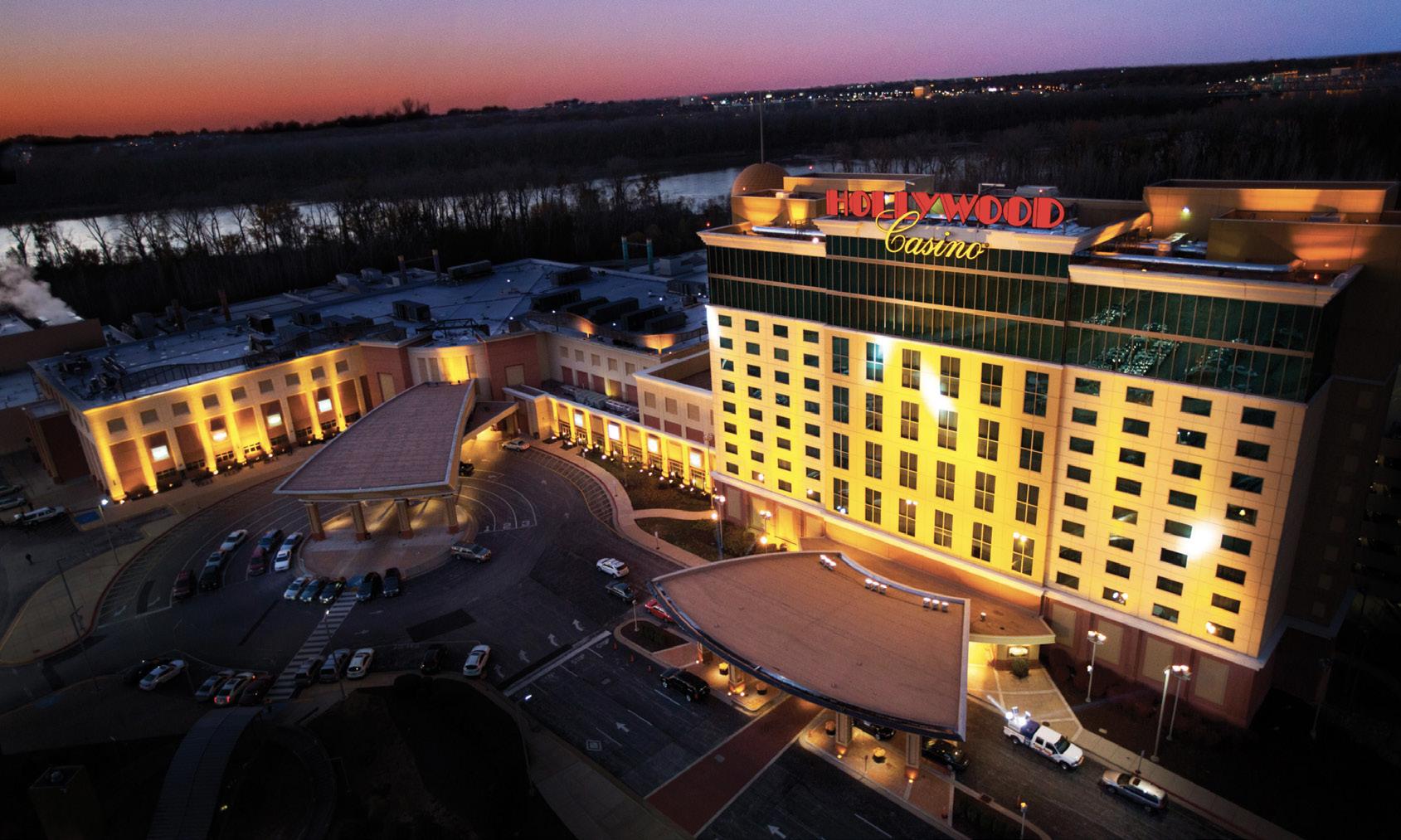
ucked into quiet, rural Wyomissing, Pennsylvania is a powerhouse of the casino industry. They’re not the players one commonly thinks of in the gambling world but Gaming & Leisure Properties Inc. (GLPI) has amassed enormous clout without raising its voice. Starting as a spinoff of Penn Entertainment in 2013, the real estate investment trust, or REIT, began with Penn’s real estate holdings but has become much more than an investment single-purpose real estate holding company of its progenitor.
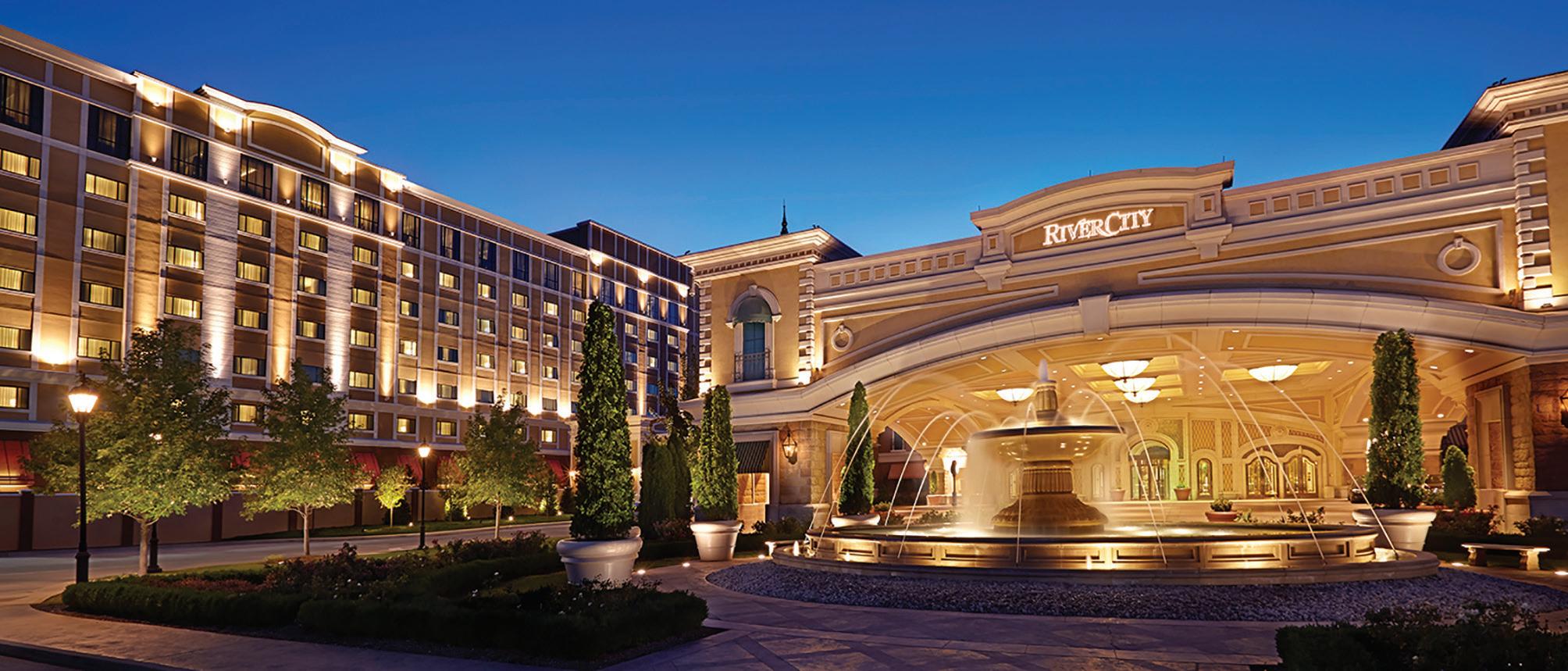
TIn early 2014, GLPI snapped up Casino Queen in East St. Louis and has steadily marched up the casino food chain, reaching the foot of the Las Vegas Strip. GLPI recently added its 69th property, purchasing New Mexico racino Sunland Park, adding to one of the gaming industry’s farthest-flung portfolios, ranging
from the Tropicana Atlantic City to M Resort outside Las Vegas.
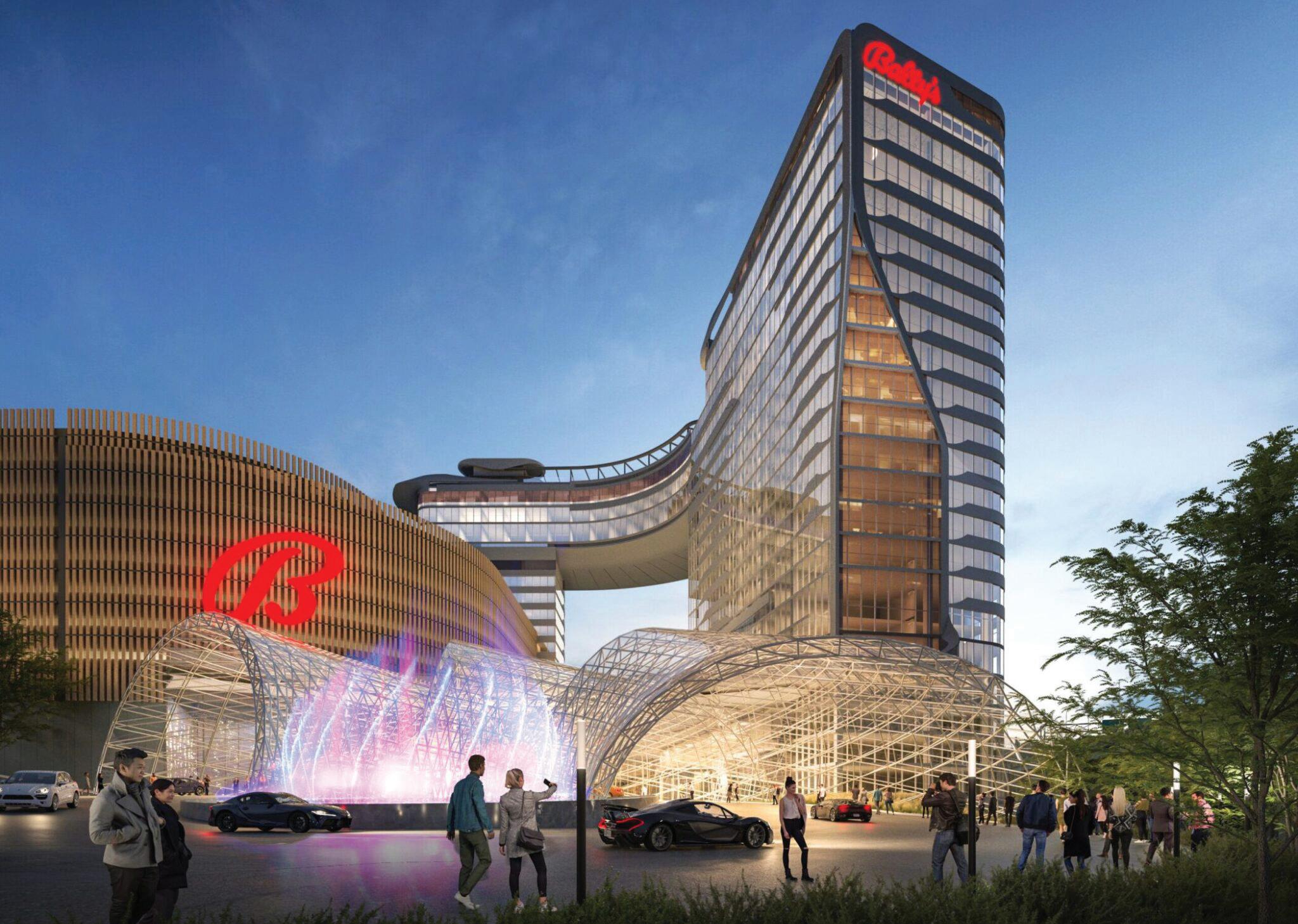
It would be impossible to discuss GLPI and not mention the elephant in the room, Bally’s Corp. When the latter couldn’t fully finance $1.7 billion megaresort Bally’s Chicago, GLPI stepped in with two-thirds of the funding, construction oversight and a property redesign. The REIT also owns the Tropicana Las Vegas site, upon which Bally’s hopes to erect a $2 billion megaresort, as well as right of first refusal on $4 billion Bally’s New York, should that proposal be tapped by the Empire State’s government.
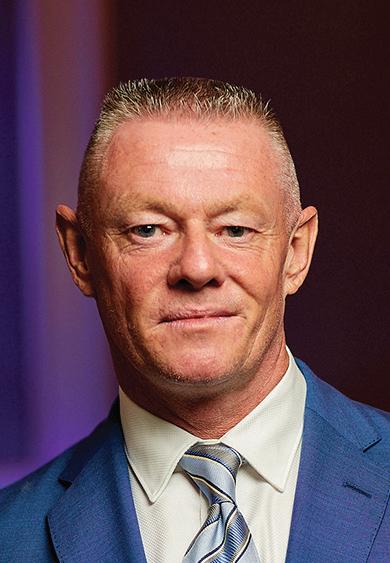
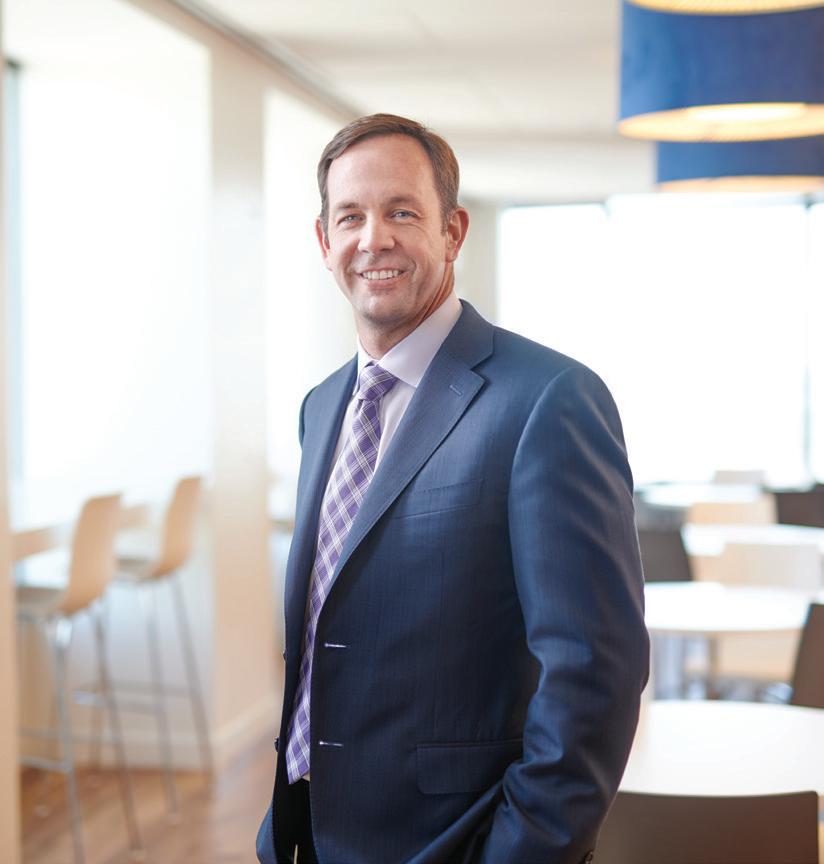
We spoke with GLPI President Brandon Moore last month. Our conversation spanned everything from the latest business developments to why GLPI has not diversified outside the casino/racino industry. The discussion has been edited for length.
Congratulations on the Sunland Park acquisition. How did it come together?
Sunland Park has been in the market for the better part of six years. We first looked at it and offered on it in 2019. Due to a number of complications, a lot of failed processes, it came back to market more recently. We were already familiar with the asset. We had a tenant that had a relationship with the seller and the deal finally came together. It was something that we knew was a good, stable, cash-flowing property. The EBITDA has been pretty consistent in the many years that we’ve looked at it. It was a nice property to add to the portfolio.
What is the likelihood of serious competition?
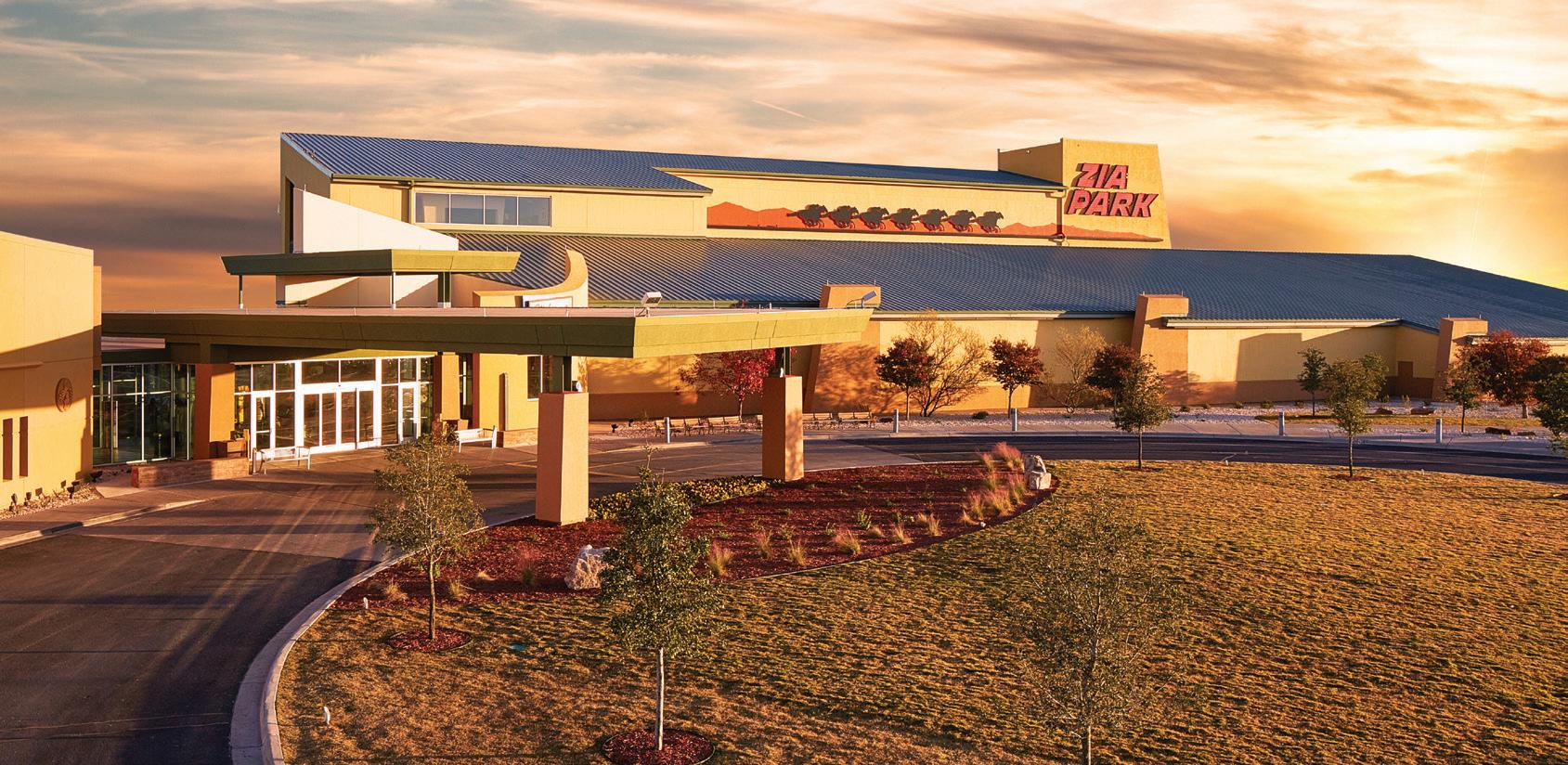
It would be foolish to say there’s no chance of competition in the El Paso market. The western part of Texas is less likely to have a large facility, if there’s gaming expansion in Texas, which I think there eventually will be. There are some threats in New Mexico. There’s a dormant racing license there and some efforts now to move a license to Clovis. Clovis will impact Hobbs – Zia Park, which we also own – more than it will Sunland.
We recently profiled new Hollywood Joliet. What was GLPI’s role in making it happen?
We owned the prior Joliet location, so when Penn came to us and wanted to relocate that facility, under our lease it necessarily came through us. Because they needed to have some sort of permission to move that facility without doubling up the rent. We agreed to extract the old Joliet facility upon the opening of the new one and we also agreed to fund the hard costs on the new site. So we own the land and the building of the new Joliet.
Could you describe your partnership with Penn Entertainment? It seems to be more than landlord/ tenant, something more creative.
As you’re aware, Penn is our predecessor. We spun out of Penn, so we have a long relationship. They still are in excess of 60 percent of our overall rent. Penn is our largest tenant, by far. There was a point in time when we diversified with Pinnacle Entertainment. Then Penn bought Pinnacle and put those portfolios back together. Penn has done transactions away from us. They’ve done two properties with our competitor at Vici Properties. So it’s not as if we have a unique pipeline into Penn that others don’t have.
But we’ve been supportive over the years, so they continue to be an important partner for us – probably more complex than your typical landlord/tenant, just because they are over 60 percent of our rent. We own a majority of their properties and it’s a substantial majority.
We are by far their largest creditor and you saw that in Covid. Penn came to us when all their properties were shut down and there was a real likelihood that they would not be able to pay the rent. Being their largest creditor, by a wide margin, we were in the best position to bring a solution to bridge the gap for them. That’s when we took the Tropicana in Las Vegas as rent credit.
How many other capex projects do GLPI and Penn have in progress and how are they doing?
The only two left in that development agreement are Aurora, which was a relocation project in Illinois, and Columbus Hotel, which was an addition of a hotel at the Columbus property in Ohio. Both of those are well underway. Penn has announced the second quarter of 2026 for delivery. We are funding the hard costs at Aurora up to $225 million. We have offered up to $70 million for the hotel in Columbus but they have not decided whether or not they want our money for that.
Does heavy concentration in one market, St. Louis for instance, ever become problematic?
It hasn’t to date. The only time that becomes problematic is if more supply comes in and you have
an Atlantic City-type situation where the market will only support a limited number of facilities. If you own them all and something’s gotta go under, has to be cannibalized, by definition it’s going to be yours, right? The risk you run of having so many facilities in one market (quite frankly, all six of them) is if there’s a deterioration in that market. Your tenants are going to feel that, one way or the other.
The good news for us is it’s differentiated between tenants in that market. We have six facilities in the market but we have several different tenants. We have Boyd Gaming, Penn, Casino Queen, all in that market and that definitely helps to defray that risk.
What criteria go into GLPI’s selection of an investment?
That’s becoming more and more complicated. One of the most important factors for us is the market. We’ll do demographic studies and figure out how stable is it, what are the chances of new competition coming in, who are the players in that market. Right after that, as we start to price things, we’ll look at the EBITDA and make sure the leases have an adequate amount of coverage. The biggest risk to the OpCo/ PropCo model is if you put too much rent on the tenant and the rent outpaces the revenue. Eventually that model becomes strained and there’s a risk your rent needs to be decreased to keep the tenant relevant.
Because of that, we seek to write things at twotimes-covered or higher. That gives the tenant a lot of room. The other piece of that is escalation. We
took a lot of criticism, coming out of Covid, for not using Consumer Price Index-based escalators. The reality is gaming revenues have not kept up with CPI. Therefore, if you put CPI escalation on an alreadystressed lease, you just put it under further pressure. We’re very, very careful to underwrite with a high degree of coverage and an economic structure that we believe the tenant can sustain.
Unlike Vegas, where you can charge $50 for a steak, then $70, then $100 because that’s driving your revenue, in regional gaming it’s mostly the slot machines. You can tweak your hold but you can’t really raise the price. You can’t force people to put more money in and get less money out. Regional gaming has to be focused on the customer and your ability to maintain market share.
What’s the status of Bally’s Chicago and when do you expect it to be completed?
Bally’s Chicago is going along quite well. They had some hiccups in the beginning, for reasons that aren’t all that surprising when you’re undertaking a largescale project. Right now, it’s coming out of the ground. There are three or four cranes on-site, erecting steel. That is now going along according to schedule and we’re optimistic about the completion. Bally’s has publicly said [it will be ready in the] fourth quarter of 2026. All I can tell you is we expect to be funding into 2027. It’s not meant to be cryptic: Bally’s could open the casino floor in advance of the hotel or they could open it all together. But we believe there will be hardcost funding from us, going into 2027.


When GLPI commissioned a redesign of Bally’s Chicago, what changes were made?
There were quite a few changes made. Bally’s had gone down to 100 hotel rooms. We thought it was important to have the full 500 rooms on the site, because of the nature of the facility and the overnightstay business, the convention-type business that may be demanded there. We encouraged them to reorient the property. I say “encouraged them” because we didn’t mandate these things. But parking was across the street. Now parking is layered into the facility so customers can drive onto the property and into the parking garage, go straight into the casino. Never have to step foot outside. Same for employees.
We felt all that was important for the operation of the facility and the customer experience. We encouraged
them to move the porte-cochere and the hotel lobby closer to the parking so the customers didn’t have as far to walk. We encouraged them to open up the river. The river was really blocked off. The current design brings in the river. They’ll have the ability for boats to come in and tie up. There will be some F&B offerings that embrace the river into the facility. It was really just maximizing the utility of the site and improving the customer experience.
Given the GLPI is shouldering two-thirds of the cost and overseeing construction, what role does Bally’s play?
Bally’s is the developer, so we are riding shotgun on construction. Obviously, when they come to us and are seeking payment for incurred hard costs, we’re at the payouts, the scope, the progress, making sure things are on budget – and still on the milestone-andconstruction schedule we’ve been provided. We are not running the project. Bally’s is running the project. We have folks that are monitoring, both internal and external resources, just to ensure that we know what’s going on at all times, that we are comfortable with where we are in the budget.
How seriously do you take Bally’s recently announced timeline for redevelopment of the Tropicana site, starting in April, and will it be finished before their lease expires?
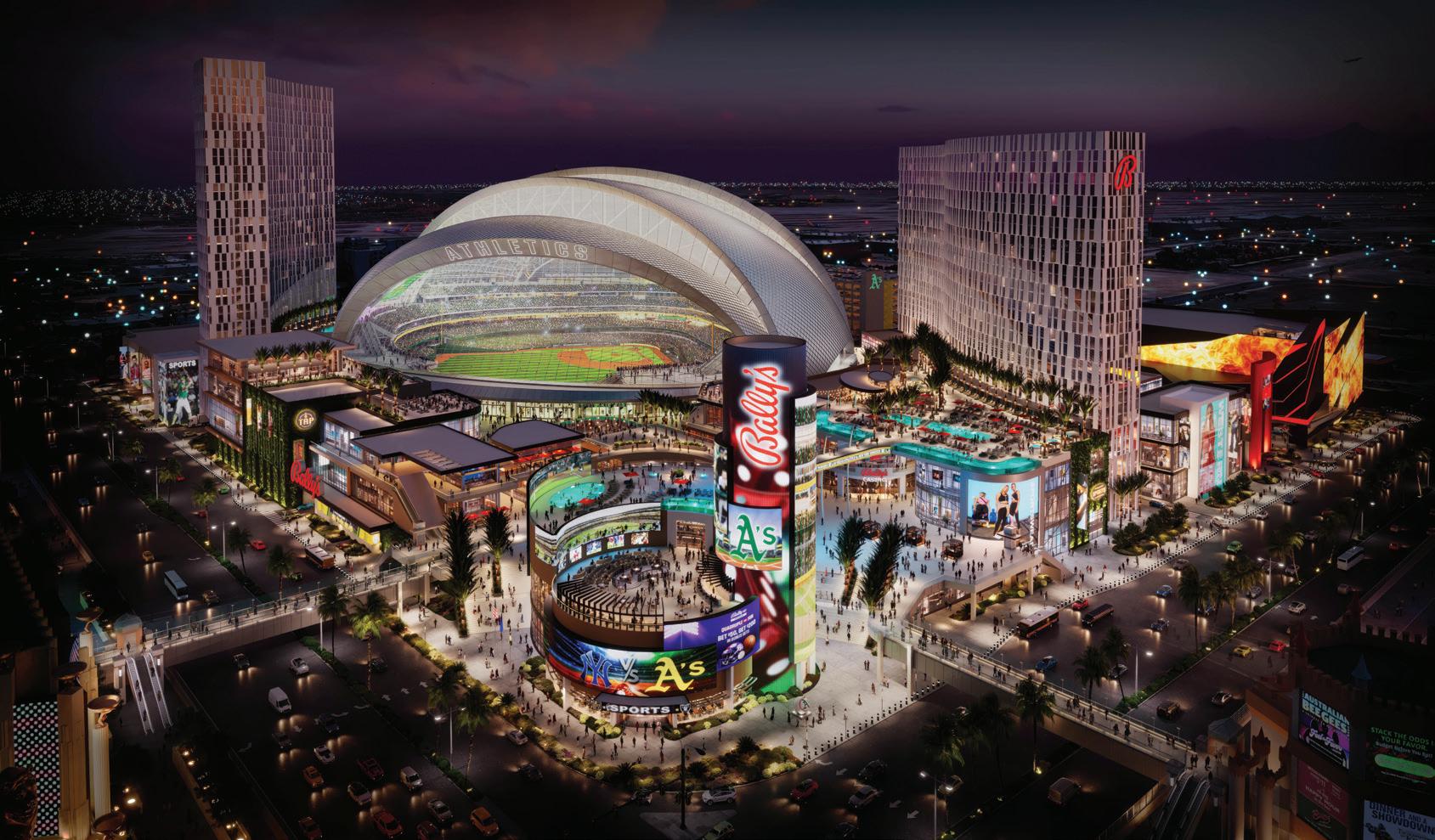
We believe Bally’s will begin that construction in the timeline they’ve provided. The key question is: How much of that project is done by opening day? The Athletics are planning to have Opening Day in 2028. How much of that project Bally’s has up and
constructed by 2028 is somewhat of an unknown. We’re still working with them.
Certain portions will have to be done concurrent with the stadium, because to get in and build in that tight of an envelope, with Las Vegas Boulevard and Tropicana Boulevard situated there – some portion of that project will have to be done concurrently with the construction of the stadium, which is going up now. That’s why I say I believe their timeline for April 2026 is real. There will be improvements in the infrastructure going into that. What will be open at first pitch is still unknown.
CEO Peter Carlino has said GLPI might well participate in Bally’s Las Vegas and Bally’s New York, if the latter is approved. What form might that participation take?
I’ll do the easy one first. In Las Vegas we own the land and we have indicated to Bally’s that we would do $175 million of funding. Peter has been pretty clear that we might do more. As Bally’s pulls together their master plan, with F&B and retail, hotel size, casino, sports book and entertainment, GLPI will consider expanding that capital. Bally’s has a lot of capital needs there. There is an opportunity for GLPI to invest more in that project.
What we really need to see is the income-producing things Bally’s is bringing to that site that can support our rent. Because the one thing we don’t want to do is
commit a lot of dollars to the project that will increase rent to the point where it’s not an economically viable project for Bally’s to run on the site. It’s a little bit of a needle to thread. The more revenue-generating opportunities Bally’s brings to the site, the more investment dollars GLPI could conceivably put in, at a cap rate and coverage level that we’re all comfortable with.
The less things that they open, the less GLPI will be willing to put in, just because we are looking for stability over the long term. We don’t want to be renegotiating rent in Year Five or Year 10. It’s going to have to be a project that works for Bally’s and for GLPI. We’re a little early to know how much rent that project can support.
… and New York?
New York is different. If you’ll look at the opportunity set, you look at the demographics, the population density, the number of machines that will be there to service that market. Even with three facilities, it’s likely still an underserved market. As long as you don’t overbuild, the opportunity to make money is going to be very, very strong. You’re really going to have to overbuild to lose money in that market, because the opportunity is that good.
GLPI will focus primarily on the land ownership and potentially some or all of the hard costs. You’re talking
about multi-billion dollars of project. I don’t think you’ll see GLPI commit to 100 percent of the hard costs. In other words, I don’t think we’re $3 billion into a $4 billion project. Could we do the land and a portion of the hard costs? Sure. That’s completely possible. It depends on Bally’s needs. There will be no trouble finding financing for New York. There are people coming out of the woodwork that want to be a part of funding those facilities.
I don’t think Bally’s will have any trouble finding the capital they need. We’ll figure out how GLPI fits into their long-term capital needs in that project. We do have a right of first refusal with Bally’s and I’m not saying that they can’t find financing that’s competitive with what we’d be comfortable with – it’s completely plausible. But we are very prepared to take a long and hard look at New York, if that opportunity arises with Bally’s … or potentially others. If Resorts World or somebody else wants to monetize a piece of their property to pay their $500 million license fee or something, we’ll be having those conversations as well.
What market or property has been GLPI’s most pleasant surprise?
That’s a very interesting question. It’s so funny you say that. We focus so much on the risks and potential downside that we don’t think as much about the sustainability of the upside. If you look at Charles Town, West Virginia, that’s been very strong. Through the course of time when we were all at Penn, it’s a very, very profitable, good project. Hollywood Toledo has been a great project, if you just look at cash-on-cash return and the sustainability.
There are a few and they’re kind of sneaky. They’re things that are in more stable markets, that haven’t had a ton of competition, that generated a higher ramp and greater cash flow than people expected. Resiliency is the hallmark of a really strong property these days.
Is Chicago a marquee property?
We think yes. We think Chicago will be a fantastic asset. It will be a crown jewel. It will be a mustsee destination. But it has a ton of competition and it probably has more risk associated with it than some of these smaller projects that are in markets that are just not going to see competition. They’re not all equal and having them in master leases with guarantees is obviously important to us, because then some of the properties that are more sustainable, stronger and durable can support the deterioration of properties that see increased competition. When you have single-asset leases, the thing stands on its own. We do continue to focus on cross collateralization and packaging properties to know you get the benefit of diversification across those portfolios. That is something we value pretty highly.
What manner of non-gaming investment has GLPI contemplated or is looking into now?
Contemplated a lot of different things. We’ve contemplated leisure-adjacent things, like golf courses, ski resorts and bowling alleys. Those have all traded at cap rates that would be dilutive to us or neutral and haven’t been interesting for those reasons. We haven’t reached a point where we don’t have opportunities in gaming and had to go out and
diversify ourselves in a way that could be dilutive. And none of those presented a platform for growth that we thought was worth doing a risky or neutral deal. It hasn’t been in our DNA.
What makes a gaming REIT a good investment?
It’s the durability of the cash flows that are these triplenet leases. You’re looking at underlying assets that are critical to state infrastructure budgets. They are generating tax dollars that are critical to state operating budgets and therefore the long-term viability of those properties is very important to the states. Letting a state be a key partner in keeping your tenant healthy and afloat is a very powerful thing.
If you look at the durability of our cash flows in the triple-net space – and I mean Vici and GLPI – and if you look at our multiples, I would suggest that these investments are undervalued. You look at where we’re trading now and the durability of these leases, where we were before Covid, where we were after Covid, and where our tenants sit, it is a much safer investment than people realize.
If you want to invest in gaming but gaming makes you nervous, we are gaming but we’re at the top of the capital stack. We’re getting paid before everybody else because we own the building and the land. If you want a safer investment and exposure to gaming, you start with the REITs. You don’t end with them.
new, Shangri La-branded casino debuts in Myanmar. By Bill Healey
In my frequent travels through Southeast Asia, I have taken a particular interest in “border casinos.”
These are most frequently on various boundaries: Myanmar/Thailand, Cambodia/ Thailand, Cambodia/Vietnam, Laos/Thailand and Laos/Vietnam. The border casinos are generally positioned to draw players in from neighboring countries.
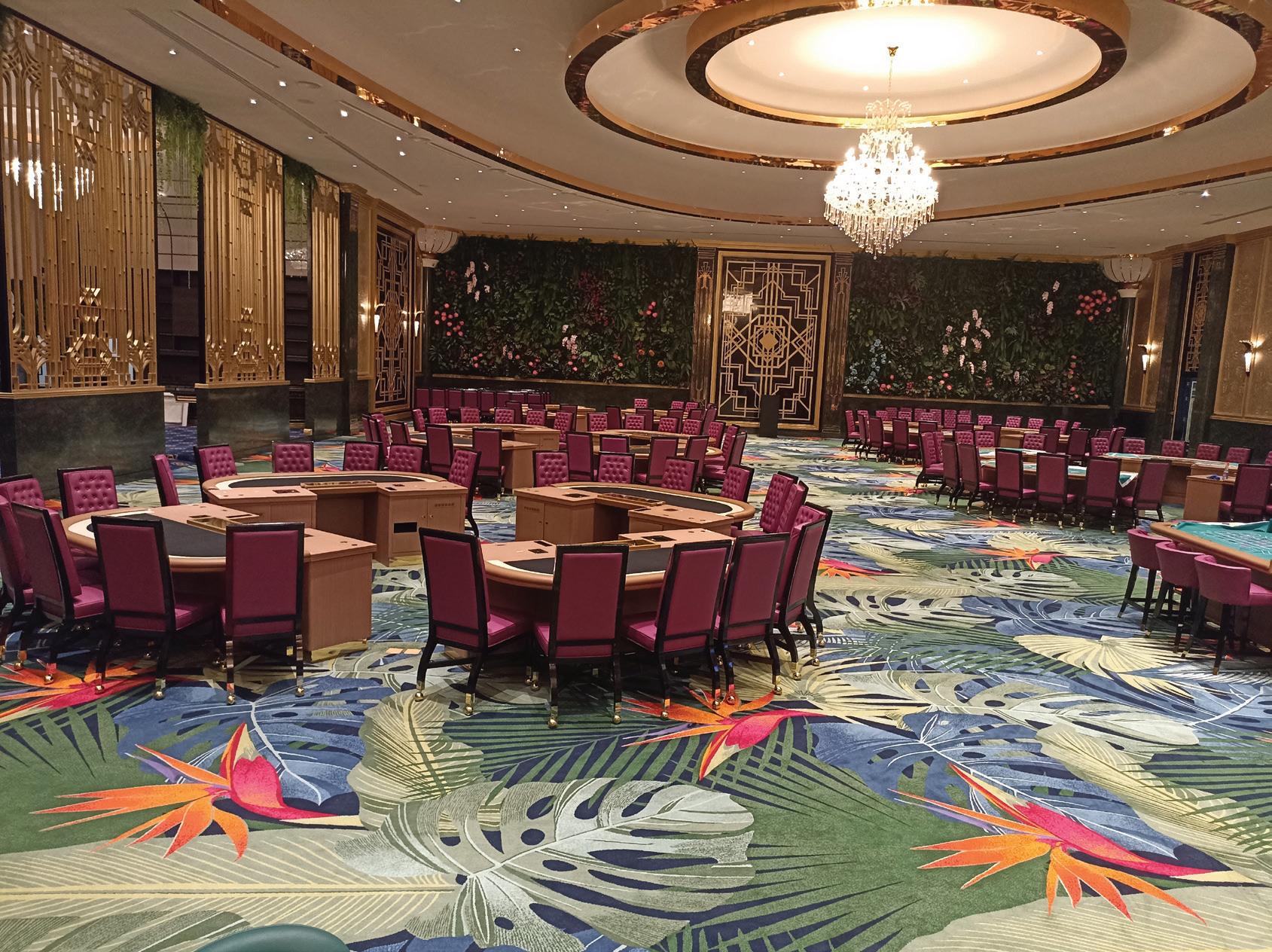
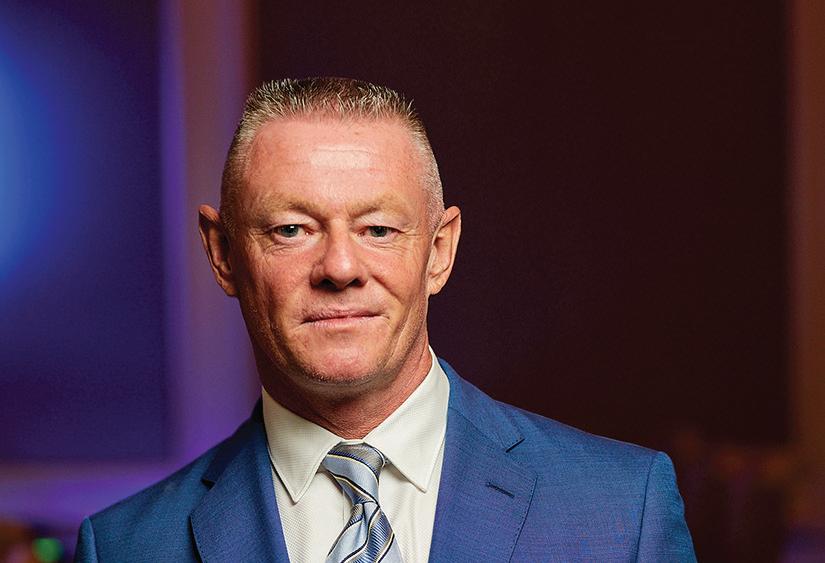
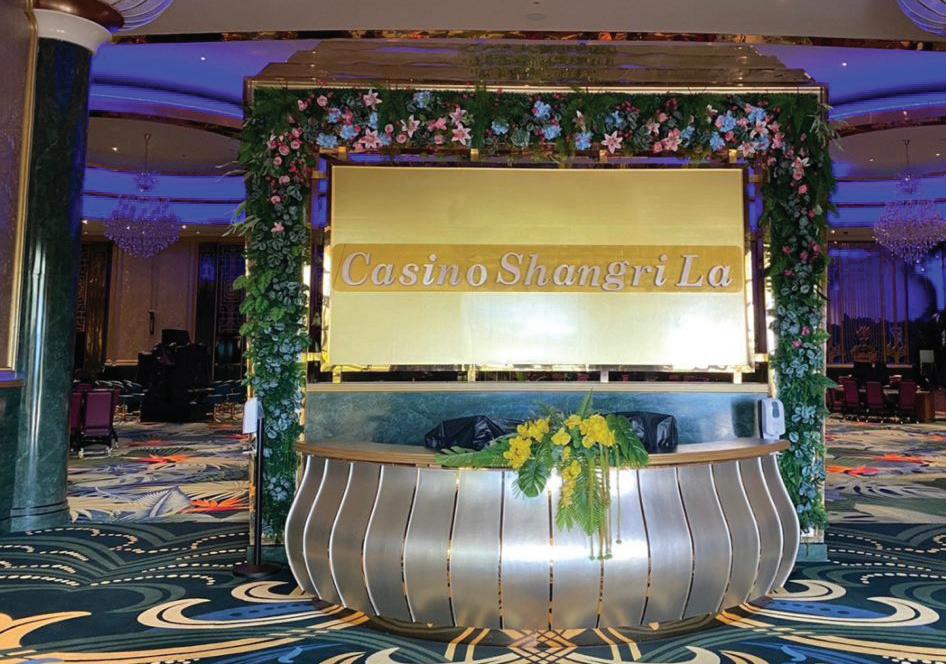
For several years, I have been anticipating the completion of the Shangri La Casino, built and managed on the Myanmar/Thailand border by Storm International. After several years of waiting, we on the verge of their soft opening in December 2025. I was fortunate to catch up with Darren Keane, CEO of Storm International, to discuss Shangri La Casino.
Tell us a bit about Storm International, how the company got its start and its place in the market. Storm International was started in Moscow in 1992 by Michael Boettcher. It expanded very rapidly and opened multiple casinos in Russia, as well as abroad in both Ukraine and Venezuela until 2007.
Storm International was the dominant gaming force in Russia up until 2009, when a new law was passed and all casinos were moved to specific zones. In its history, Storm International has operated casinos in Russia, Belarus, Ukraine, Venezuela, Mexico, Kyrgyzstan, Tajikistan, Armenia, Georgia, Latvia, Costa Rica, Romania, Egypt and Germany. All locations, apart from Germany, are under the Shangri La brand, with Germany being under the Storm Casinos brand. Storm currently owns the highest gaming market share in Yerevan, Tbilisi, Minsk and Kiev.
There will be slots, American roulette, Dragon Tiger, Fan Tan Dice, Pok Deng, blackjack, Niu Niu Poker, three-card poker and, of course, baccarat, which will be the most popular game of all. “
Storm has been actively developing a border casino in Myanmar. What is the name of the casino and which international border is it near?
The name of the casino is Shangri La, the same name as all our live-gaming casinos. The casino is located on the Myanmar Htee Khee/Thailand Phu Nam Rom border, which is exactly 2.5 hours from Bangkok.
What are the expected demographics of the casino guests? I would expect most of the casino’s guests will come from across the border in Thailand. You are correct. We expect over 90 percent of the players will be Thai, with another 10 percent possibly being foreign tourists or residents of Kanchanaburi, which is the closest big town to the border.
What are the likely favored games at the casino? Will it be mostly slots or table games?
There will be slots, American roulette, Dragon Tiger, Fan Tan Dice, Pok Deng, blackjack, Niu Niu Poker, three-card poker and, of course, baccarat, which will be the most popular game of all.
What are the currencies used throughout the casino for gaming and other activities?
We shall be accepting Thai Baht, Euros and U.S. dollars.
With the ongoing political conflict that has existed since early 2021, what type of difficulties have there been in getting the venue built and the delays in preparing for a grand opening?
The casino was built and ready to operate in May of 2022 but, due to issues with the conflicts at the border, the casino has remained closed for three years.We have kept a small group of staff there in
readiness for when the border opens and for ongoing maintenance of the casino. The border has finally been reopened in September and we expect it to be fully functional by mid-October. If that is the case, we can expect a soft opening at the beginning of December.
As there are no casinos in Thailand and few in Myanmar, staffing and training must be a challenge. Where are most of the staff from?
Storm has recruited some expat expertise at management level and all gaming staff will be recruited locally, as it was previously a very busy border-casino hub. The ratio of line-level staff will be approximately 50/50 Thai and Myanmarese.
Aside from gaming, what other activities are available at this casino?
The casino will have an a la carte restaurant as well as a nightly buffet. There will be hotel accommodation on-site for guests who want to stay overnight. We are also busy building a stunning, VIP-oriented, high-end gaming room.
Thank you, Darren.

Analysts call for more active reforms of the Australian gambling sector. By Eugene Gerden
he gambling sector of Australia is an acute need of reforms, due to the lack of protection of certain high-risk groups and inconsistent state standards in this field, experts say.
TAccording to a recent study, conducted by Macau Polytechnic University and analysts of the Social Policy Research Center at the University of New South Wales, a number of “high-risk groups in the country among which are some ethnic communities, low-income individuals, and young people remain inadequately protected from gambling and associated with its negative effects.” This is despite serious efforts undertaken by the Australian central government and the authorities of some major states
of the country in recent years to better regulate gambling activities within their territories.
Since the late 1990s, state and federal governments have introduced a range of measures, from selfexclusion programs and pre-commitment systems to advertising restrictions and credit-card bans. However, according to analysts, these measures are still insufficient and there is a need for newer, more strict regulations.
At present, Australia has a well-developed, large-scale gambling sector. This is also reflected by statistics. According to the report of Macau Polytechnic and the University of NSW, Australia has one of the highest

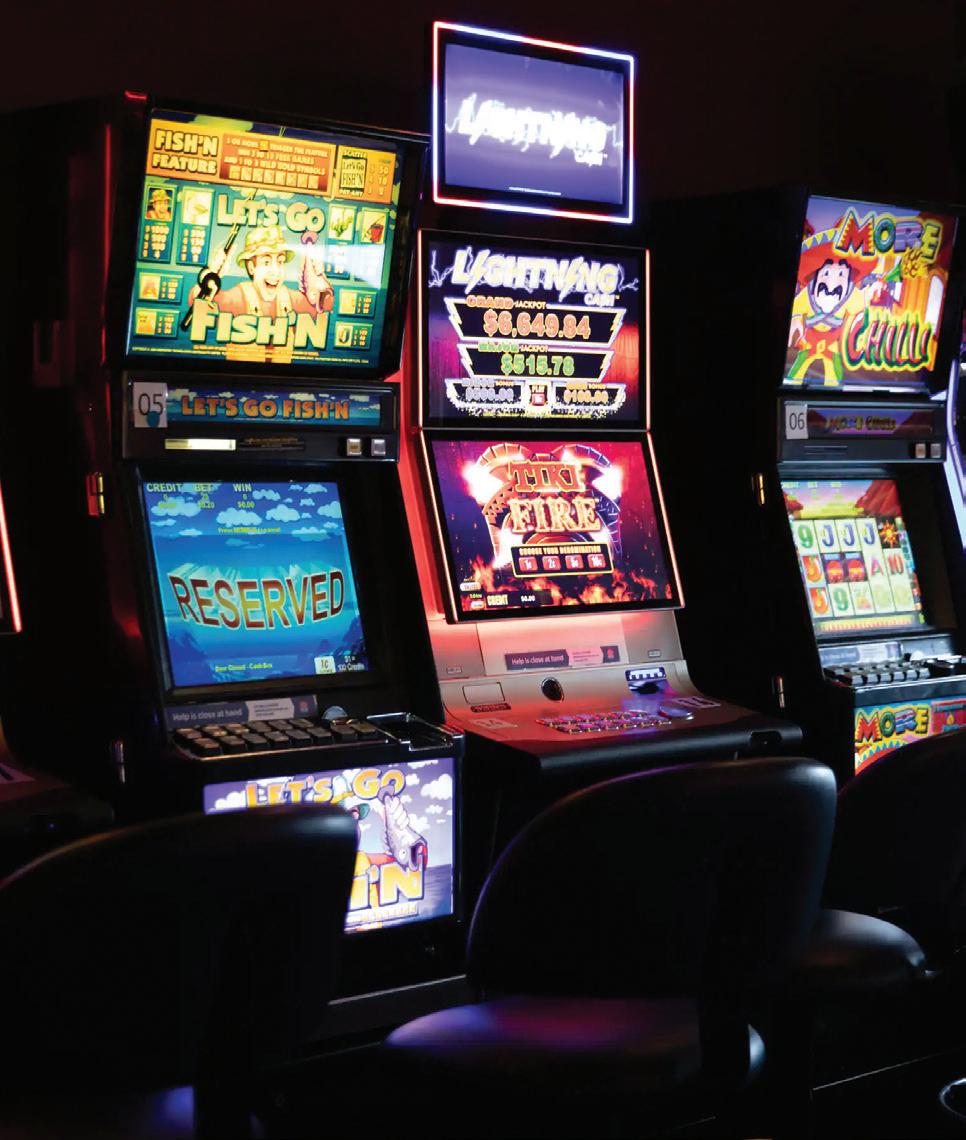
gambling expenditures per capita in the world, with an average annual spend of over AU$1,200 ($800). Australians spend about AU$25 billion ($16.7 billion) on gambling, including A$12 billion ($8 billion) on electronic gaming machines alone.

instead of taking measures to solve existing problems. However, implementation of reforms may face serious difficulties, due to the strong connections of local gambling operators to Australian state bodies and major political parties.
The biggest negative impacts of gambling in Australia are currently observed among communities of Chinese, Vietnamese and Cambodian descent. For example, in some Chinese-speaking groups, the rate of problem gambling is estimated at over 15 percent, compared with 0.5 percent to one percent in the general population. As a rule, local operators have actively targeted these communities with special marketing strategies, including language services and ethnic cuisine.
The introduction of tighter regulation in the industry is considered as one of the priorities by the Australian government currently. According to state experts and independent analysts, fragmented and inconsistent standards currently remain among the most pressing problems of the industry. Each state and territory in Australia regulates land-based gambling independently. The federal government oversees online gambling by the Interactive Gambling Act 2001, which outlines the general regulation of online gambling in Australia.
Still, the existing inconsistency, according to analysts, creates some problems for the industry. It is also considered that the current level of fines and penalties in the industry remains too low. This means that most of local operators prefer to pay fines
Another problem is the high concentration of gambling venues in Australia in poorer communities, rather than in wealthier ones. According to official statistics, the lowest-income people in Australia spent over 10 percent of their income on gambling, while the highest-income less than one percent.
To protect vulnerable individuals, the Australian government launched BetStop, the National SelfExclusion Register, on August 21, 2023. However, the problem still remains pressing. On June 11, 2024, the federal government officially banned using credit cards for online gambling. This act brings online wagering in line with land-based gambling regulations, where credit-card use is already banned.
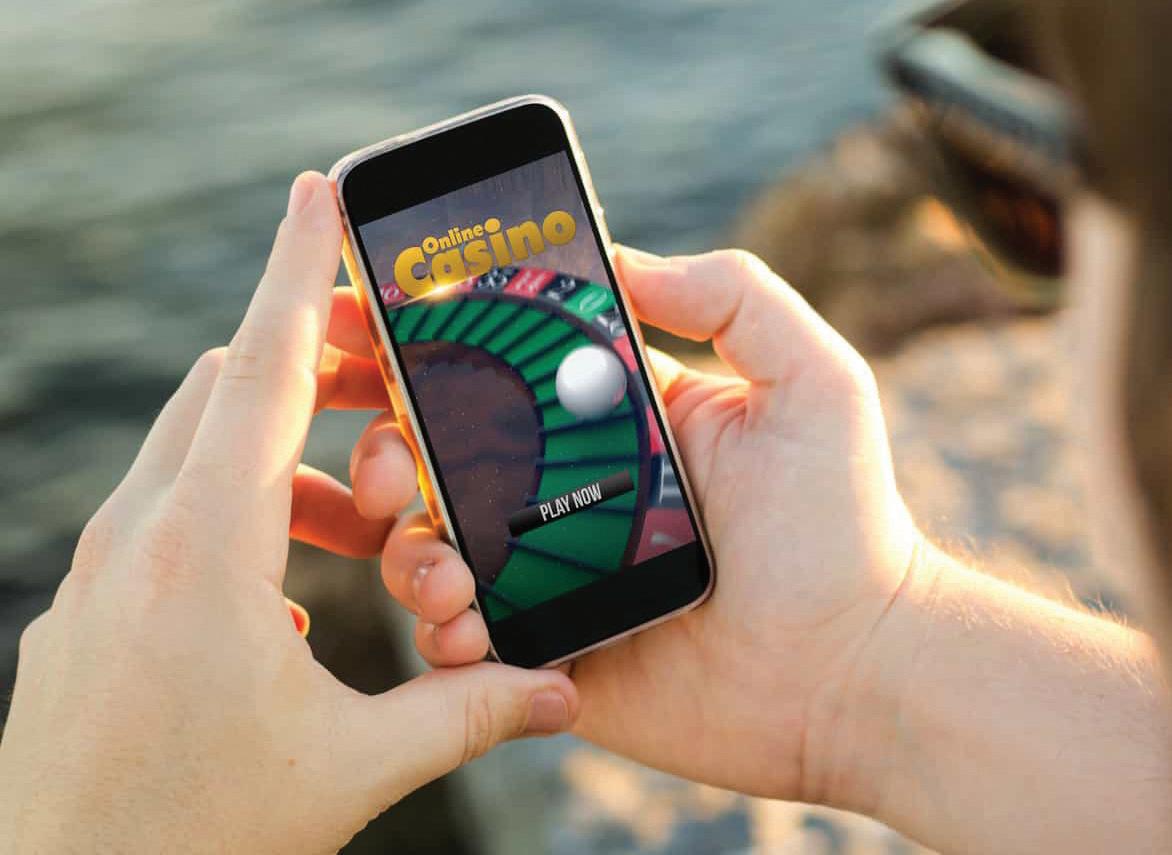
The government has also plans to start closer regulation of digital gambling including online sports betting, esports betting, and gamified gambling apps,
in order to reduce their negative impacts on local youth. According to official statistics, between 2019 and 2022 the share of 18- to 24-year-olds who had gambled online rose sharply.
One of the possible options for implementing greater regulation in the sector would be to establish a national gambling operator, which is currently being considered by the Australian federal government. That would help to introduce national regulation, standardizing tax rates and maintaining reasonable, uniform standards of regulation and enforcement. Experts predict that sports betting and casino-style gaming will dominate Australia’s gambling landscape in the coming years, prompting further discussions on regulation and harm prevention. In recent years, the number of online-gambling operators in Australia has significantly increased, with major operators like Gigabet and Titanbet entering the market. More people are participating in various forms of online betting, including sports betting, casino games, poker and more.








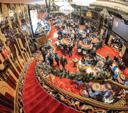

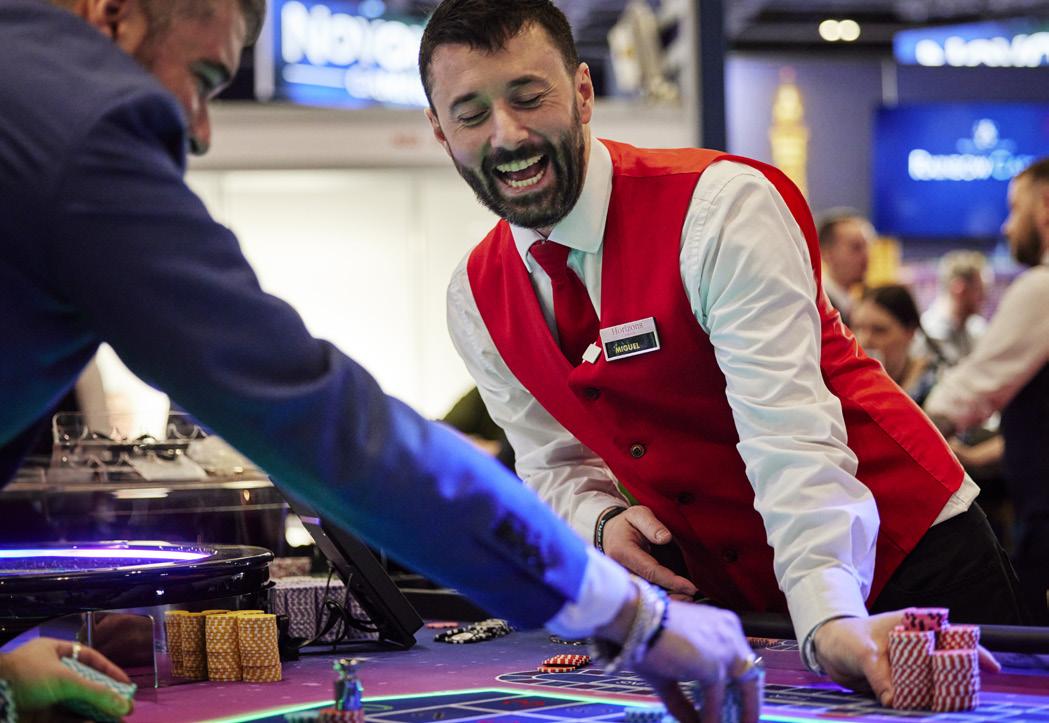


s a dealer I do not know whether to laugh or cry sometimes at players. I like to be a student of human nature, but I am constantly baffled as to what some players say at the table. It is impolite to laugh at others, so I put on my best poker face when some ridiculous comments are verbalized — but you do not have to. So for your reading enjoyment, I have listed some bizarre comments that have been made at the table. Feel free to laugh, cry or shake your head right along with me. These comments are in no particular order.
Some players believe a 10-value card comes out of the shoe right after an ace. Really? Let’s assume we have a balanced shoe where every card has an equal chance of coming out. Basic probability states there is a four-in-13 chance a 10 will come out. That means most of the time, a face does not follow an ace. Don’t let the facts get in the way of a good story.
Let us assume that everyone has a 12 or 13 and the dealer is showing a six. Basic strategy dictates that everyone sticks. The dealer turns up a 10 for a 16, then pulls a four for a total of 20, winning every bet. Some players believe someone must take a card to save the table. What nonsense! The percentage play is that everyone sticks. Does it work every time? Of course not. That is why it is called a percentage play. This is gambling, after all, and nothing is a sure thing at the table.
Many casinos are moving away from the traditional shoe and are opting for a continuous shuffler. Cards are shuffled constantly and cards that have been played are put back into the machine after every hand or every other hand.
This is a way for the casinos to combat card counters but it is also to generate more hands per hour, taking away from downtime during the traditional
shuffling process. I am not a fan of the continuous shuffler for other reasons but I can tell you it is not rigged. A casino does not have to rig a game. The odds are in its favor.
How does the shuffler know how many players are at the table? How does the shuffler know if a player is going to hit, stick, split or double down? This has a ripple effect on everyone else’s hands. The bottom line is this: it does not know and the cards are random.
People are always looking for someone or something to blame when they lose. Before blaming others, look at yourself in the mirror. Could it be you were not playing perfect strategy? This leads us to our next quote.
“I do not believe in basic strategy –it was written by the casino”
This is one of my favorites. Do a basic Google search on the history of blackjack basic strategy. It was devised in the 1950s by four guys in the U.S. Army who went on to get math-oriented degrees. Basic strategy has been refined after undergoing millions of hands of computer simulation. It was not written by the casino.
Even with basic strategy, the casino still has oneto-two-percent advantage over the player. The casino still wins in the long run. If you are a novice player, playing basic strategy will keep you at the table longer and you may enjoy yourself more, encouraging you to return. The casino wants to take all your money … slowly. It wants you to have some hope and entertainment along the way.
“I’m due”
This is another one of my favorites. This applies to every game in the casino. For some reason, if someone has lost five hands in a row they feel they are due to win. Again, this is utter nonsense.
Let’s take a coin toss for a moment. If you are betting on heads but it comes up tails five times in a row, what is the chance it will come up heads on the next toss? Please tell me you said 50-50. Inanimate objects like coins and cards have no memory. Investment advisors in the financial industry will tell you that with mutual funds, past performance does not guarantee future performance. The same is true for cards in general and blackjack specifically. You are due nothing.
This follows the “I’m due” logic. Let’s get something straight. I do not owe you a damn thing. As a dealer, the only thing I owe you are two cards and then additional cards at your request. I then “owe” you your winning bet if your hand beats mine. That is all that I owe you, end of story.
This is a classic. While I really appreciate your manners, I hate to break this to you, but whether you are polite or rude to the dealer has no bearing if you are going to get that 10 on your double-down bet. I have no magical power of what the next card will be. If I did, I would quit dealing tomorrow and play professionally all day. But continue saying “please”: It makes up for the jerks.
This is one of my favorites. When a player has a 12 and then they get a 10, some might say “I knew it!” Really? You know nothing. You do not have some clairvoyant power as to what the next card is. You know what card will hurt you. If it comes, it is called confirmation bias. If you honestly “knew” the next card would bust you, you would not take it. Please do not tell me you know something when in reality you do not.
All these quotes have been said at my table. When I tell people that I am a dealer, I tell them I turn cards, I move chips and I count to 21. That is not work. The work comes from standing, and from the toll dealing takes on your body, dealing with boredom and dealing with players. Sometimes, these players act and speak irrationally. Welcome to my world and do not forget to tip the dealer.

What made 1xPartners attractive in 2025
his year has been an important one for 1xPartners in India, with over 5,000 new participants joining the 1xBet affiliate program. An increasing number of entrepreneurs are choosing 1xPartners, thanks to its straightforward terms and the real potential for stable, long-term earnings.
TOne of the main trends this year has been the Revenue Share model. In this format, members can receive passive income as a commission from a player’s spending throughout their entire lifetime on the platform. In other words, a 1xPartners participant’s earnings are not limited – the more active the players they bring to 1xBet, the higher their income. Each partner has access to an analytics dashboard in their personal account where all key metrics can be easily tracked.
Thanks to modern marketing tools and an effective cooperation model, affiliates from India have shown impressive results. Some of them have earned
annual incomes ranging from $500,000 to $1 million. 1xPartners participants successfully test different strategies that bring solid earnings even outside major events, such as the IPL. For example, in June, one member received a weekly income of $36,996.76 under the Revenue Share model.
A key factor in 1xPartners’ growth in 2025 is the ease of starting and ongoing support. Each newcomer is assigned a personal manager, who advises them at every stage of cooperation. The 1xPartners team provides training materials and market insights, helping members to get their business started from the ground up with ease.
People with different backgrounds become 1xPartners. Some come after trying content on YouTube and Telegram, while others focus on learning SEO. Yet all of them find the 1xBet affiliate program to offer suitable conditions for running an online business. It is also worth noting that the 1xPartners team recently launched an updated version of the
official website to make members’ work even more convenient.
1xPartners regularly runs generous promos and encourages its participants to grow. One of the most popular campaigns this year was the India Affiliate Raffle, with a $20,000 prize pool, held during the IPL. More than 100 members took part, staying active week after week and competing for the cash prize. In 2025, 1xBet strengthened its leading position in key regions. The brand’s team attended major international exhibitions, including SiGMA Asia, SBC Summit, ICE Barcelona, IGB Live and Affiliate World Dubai. The most successful members of 1xPartners were invited to the brand’s VIP parties held during conferences in London, Lisbon and Barcelona. They had the chance to meet in a relaxed setting, and enjoy performances by global stars such as Black Eyed Peas and Hurts.
The professional community highly appreciated the contribution of 1xBet and 1xPartners to the iGaming industry. The betting brand received eight awards, including Best Casino Operator 2025 (SiGMA Euro-Med Awards), Best Sports Book Operator 2025 (SiGMA Americas) and Best User Experience 2025 (SiGMA Central Europe 2025). The Marketing

Campaign of the Year (SBC Awards Europe) title for the collaboration with FIBA is particularly noteworthy, as it confirmed the company’s elite status in the world of sport and reached more than 42 million fans worldwide. 1xPartners was also nominated twice for the Best Affiliate Program award.
1xPartners from the international bookmaker 1xBet continue to expand its global presence and create the best conditions for its participants. Become part of a large, successful team and earn alongside market leaders.
1xBet is a globally recognized bookmaker with 18 years in the betting industry. The brand’s customers can place bets on thousands of sporting events, with the company’s website and app available in 70 languages. The official partner list of 1xBet includes FC Barcelona, LOSC Lille, La Liga, Serie A, European Cricket Network, Durban’s Super Giants, and other renowned sports brands and organizations. The company’s ambassador in India is the famous cricketer Heinrich Klaasen. 1xBet has repeatedly been a nominee and recipient of prestigious professional honours such as IGA, SBC, G2E Asia, and EGR Nordics Awards.
7,435
4,330



The future of casino affiliates lies in education, responsibility and trust. By Mark McGuinness
asino affiliates have long been fundamental partners that drive digitalcasino acquisition. But as regulation tightens and player expectations rise, their role is evolving. No longer just traffic drivers, affiliates are becoming educators, advocates, and essential partners in shaping a more responsible and sustainable gaming industry.
CWith over two decades in iGaming, I’ve seen firsthand how dramatically the landscape has shifted. As we approach 2026, casino executives are rethinking how affiliate marketing can align with a more transparent, socially responsible business model.
The numbers tell the story: According to H2 Gambling Capital, the globally regulated iGaming market will exceed $136 billion by 2028. But consumer trust remains the single biggest determinant of growth.
Meanwhile, research by the UK Gambling Commission shows that 73 percent of players prefer brands that promote responsible-gambling messages clearly. This convergence of regulation, reputation and responsible play will define the next era for affiliates –and for the casino operators who partner with them.
A decade ago, affiliate marketing in the casino sector was a straightforward equation: rank, click, convert. Whoever dominated the search rankings owned the players.
That era is behind us. Search algorithms, player behavior and regulatory scrutiny have rewritten the rules. The affiliate’s new role is not just to attract but to add value. That value today is measured in credibility, transparency and responsible engagement.
Whether land-based or online, casino operators are learning a simple truth: Growth without trust is fragile. Affiliates, once seen as external partners, are now becoming the architects of that trust.
Casino affiliates were once seen purely as performance marketers. But today their most powerful asset isn’t traffic, it’s influence.
Players listen to them. Regulators monitor them. Operators rely on them. That gives affiliates a unique opportunity (and one of responsibility) to educate players about safer play and informed decisions.
The best affiliates now produce content that explains, not just sells. From how randomnumber generators work, to how self-exclusion tools protect players, to why deposit limits matter, they are creating educational ecosystems that drive responsible growth.
There’s proof this works: A 2024 study by the European Gaming & Betting Association (EGBA) found that operators with visible responsiblegambling partnerships had 23 percent higher player retention over a one-year period than those who relied on bonuses alone.
In regulated markets that education directly supports operator compliance. In emerging ones, it sets the tone for player trust.
Casino leaders face an evolving challenge: New generations of players are more socially aware and less tolerant of opaque marketing. At the same time, regulatory oversight is intensifying, with advertising and player protection under sharper focus than ever before.
Affiliates can help operators navigate this new reality by translating compliance into culture. They can communicate complex, often legalistic rules in language players understand, thus building bridges between corporate responsibility and community engagement. For the C-suite, this means recognizing affiliates not as an expense line on the balance sheet but as an extension of the brand’s reputation.
Historically, affiliate relationships were driven by spreadsheets, CPA rates, revenue-share deals and lead counts. But the industry is maturing. Compliance, reputation and social purpose now sit alongside acquisition metrics. Affiliates who cocreate with operators in writing educational guides, hosting webinars or contributing to responsiblegambling-week campaigns strengthen the industry from within.
This is where the most forward-looking casino executives are investing: in affiliates who reflect their brand values, not just deliver traffic. When both sides share a long-term view, compliance becomes part of the creative process – and trust becomes the new currency.
Reach used to be the goal; now it’s the baseline. What matters is resonance. Players don’t want to be sold to; they want to be understood. Affiliates who foster that sense of connection (be that through content, community and conversation) shall and will thrive.
Data from SEMrush indicates that affiliate content featuring educational value (such as “how-to” or explainer formats) now drives 64 percent more organic engagement than bonus or promotional content. This reinforces a clear message: Players are hungry for authenticity, not just offers.
Affiliates are no longer conduits for acquisition. They are curators of understanding, shaping how players learn, engage and self-regulate.





If I were advising a new casino-affiliate business today, the framework would be built on five interlinked foundations similar to the marketing P’s. But it would be as follows: purpose, partnership, proof, protection and people.
At its core, the business must begin with purpose: understanding what the brand stands for beyond acquisition, and how it can add value to both players and the industry. Partnership must follow, rooted in collaboration rather than procurement. Affiliates and operators co-creating campaigns that merge education, compliance and entertainment, for instance. Proof then becomes the measure of success: not just the number of clicks or conversions but the quality of player understanding and retention achieved through trust.
Protection should be embedded into every stage of content development, ensuring that responsible gaming is integrated by design, not appended as fine print. Finally, people are what turn good frameworks into great ones – training teams who understand not only SEO or paid media but also psychology, behavior and communication. In combining these principles, affiliates can build sustainable, compliant and culturally intelligent operations that resonate far beyond the traditional metrics of acquisition.
Too often, affiliates are treated as downstream-marketing partners, looped in after strategy has been set. That’s a missed opportunity in my opinion. Affiliates see player sentiment in real time. They understand the questions, doubts and motivations operators often miss. Including them early in the planning process transforms campaigns from top-down broadcasting to bottom-up engagement.
In an industry where trust is earned, not assumed, affiliates are both early warning systems and cultural translators. Their input can prevent PR crises before they happen and amplify brand credibility when it matters most.
Affiliate marketing is undergoing its most significant reinvention in two decades. The affiliates that will thrive aren’t those who chase bonuses or black-hat traffic; they’re the ones who build connections and dialogue between players, operators, and regulators.
For the C-suite, the challenge is mindset. Affiliates aren’t a cost of acquisition; They’re a cost of credibility. Treat them as educators and collaborators, and they’ll reward you with sustainable growth. The future of gaming, online or on the casino floor, depends not just on technology or entertainment but on education, empathy and integrity.

asino Life recently spoke with Clarion Gaming Managing Director Stuart Hunter. He provided a taste of the feast of opportunities that will be available to gaming professionals attending ICE Barcelona ’26. Hunter also previewed the new features that will be on offer, and how major brands Microsoft and McLaren will be represented at the world’s biggest, most international, gaming-technology event.
CICE’s relocation from London to Barcelona was one of the biggest transitions in the show’s history. Now that we’re looking ahead to 2026, how would you describe the success of this move?
2025 was the first time ICE, in all of its previous iterations, had moved out of the UK and only the second time it had been held outside London. Relocating to Barcelona was, as you say, the biggest transition in the show’s history.
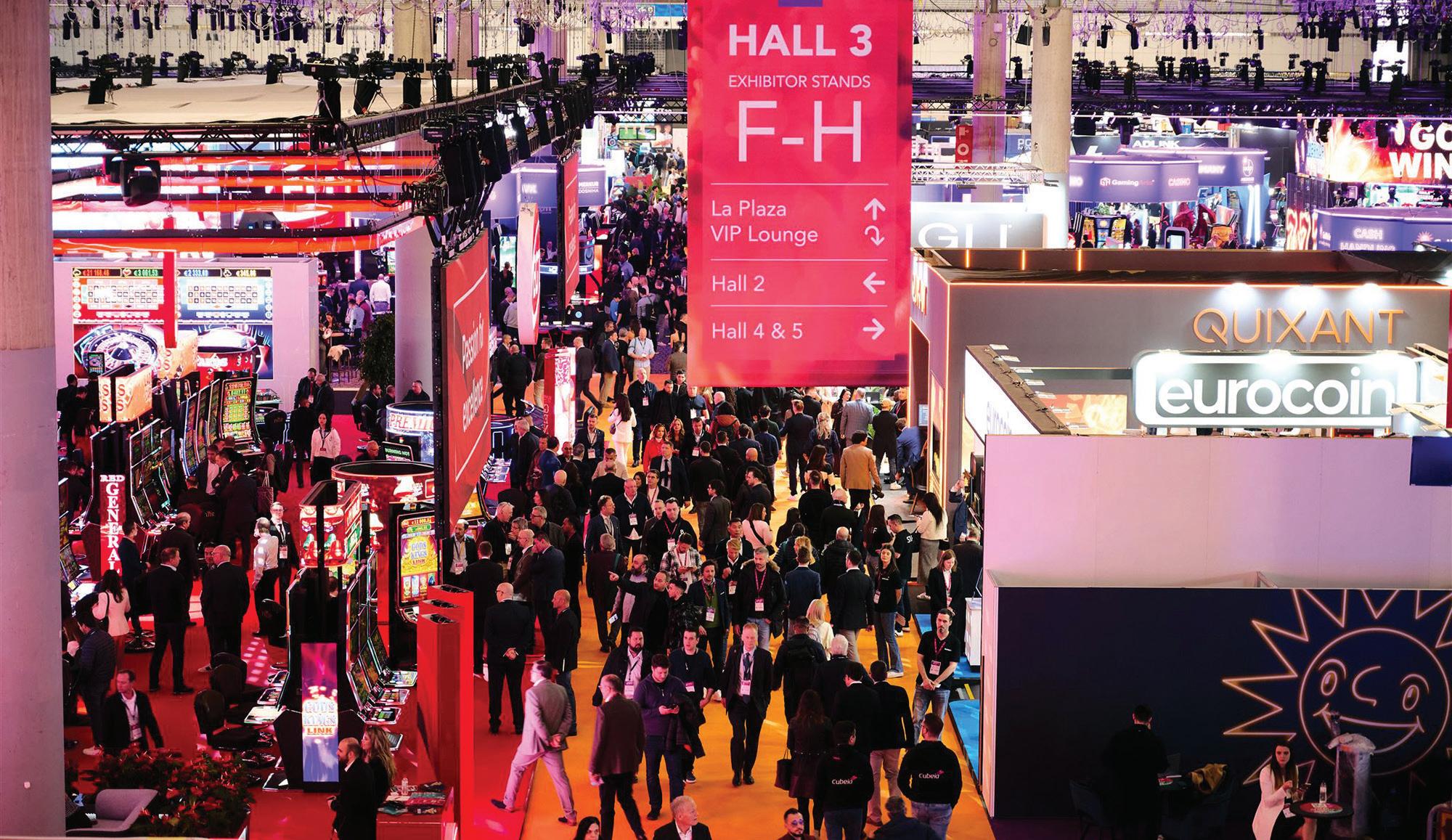
The Barcelona editions of ICE and iGB Affiliate succeeded in ripping up the record books, attracting a total of 59,101 unique attendees. This surpassed the previous high of 52,345, which was set in 2024 –the last edition to be held in London. The ICE unique attendance of 50,019 represented an 11 percent year-on-year uplift, with iGB Affiliate recording a total of 9,082 unique visitors. That was an increase of 24 percent on the previous highest, which was set a year ago.
ICE and iGB Affiliate registered a total visitation figure, which measures the number of person days spent at the Fira Gran Via Barcelona. It was 107,664 –another gambling-industry world record. Nine nations recorded four-figure attendances, with Spain topping the table (8,954), followed by the UK (6,518), Malta (3,074), Cyprus (2,328), Ukraine (1,938), the United States (1,730), Italy (1,496), Bulgaria (1,252) and Germany (1,157).
Seeing so many industry professionals make the journey to Barcelona – and I should add on Day One we welcomed a record number of 32,788 – was a vindication of the decision to move to Barcelona, which was taken in partnership with our stakeholders. The figures tell the story but, added to that, we also registered satisfaction ratings which are measured as Net Promoter Scores (NPS) that were simply off the scale. Our job is to take the figures, take the sentiment and build on that at ICE Barcelona ’26.
Has the new location changed the character or energy of the event, in terms of networking, hospitality or international participation?
Relocating to Barcelona has unquestionably broadened the event’s appeal, engaging with a larger global audience. In 2025, 83 percent of attendees travelled from outside Spain, a major jump from the 62 percent seen when the event was hosted in the UK. LatAm continues to be a strong growth region for 2026, alongside Central and Eastern Europe, Africa, and Asia.
As Europe’s biggest gambling market, Italy recorded a 55 percent rise in attendance at ICE 2025. Its close proximity to Spain and market dynamics make it an important jurisdiction. Unsurprisingly, Spanish attendance surged by 603 percent in 2025, and we are collaborating with the relevant associations and strategic bodies to drive this even further.
ICE remains the defining event for both land-based and online gaming. How do you ensure the show continues to serve traditional casino operators alongside digital innovators?
ICE reflects every jurisdiction and every gaming vertical. As well as having the leading suppliers to the land-based sector represented on the show floor, we also enjoy a long-standing and hugely positive relationship with organizations including the European Casino Association (ECA), which represents the interests of 700 casinos in 29 countries.
We recently announced that the ECA will be using the high-profile platform provided by ICE Barcelona to stage the 2026 ECA Slot Floor Excellence Awards. The awards have been created to recognize the hospitality, professionalism and team spirit of the casino industry, celebrating both rising and established talent. The awards ceremony will take place on Day Two of ICE (January 20, 2026) on the Enterprise Stage at Fira
Barcelona Gran Via. Entries for Outstanding Slot Team of the Year, Slot Floor Employee of the Year, and Slot Floor Rising Star of the Year will be judged by an independent panel comprised ECA representatives and leading global slot manufacturers, under the supervision of ECA Honorary President Ron Goudsmit
The casino and gaming technology landscape is advancing rapidly. Which areas of innovation are you most excited to see showcased at ICE 2026?
ICE is the number-one gaming-technology show anywhere in the world. The industry is one of the fastest adopters of new technology and a focal point at ICE Barcelona 2026 is the Enterprise Stage, located in Hall Five. Speakers appearing on the stage will include Dan Stillwell, data & AI director at Microsoft. Also speaking will be senior representatives from AWS and Huawei.
On the 20th January ICE visitors will get the opportunity to witness the final of the ICE Innovator Challenge, which is being run in partnership with Microsoft. Aimed at accelerating innovation in responsible play, the challenge invites operators and their partners to embrace AI to help build a safer future for gaming. This is the first time a global tech leader of this scale has partnered directly with gaming – so it’s a major development.
We will also use the Enterprise Stage to launch the ICE Accelerator, a program designed to support startups and scale-ups within the industry. The ICE

Accelerator is a series of workshops and roundtables led by investors, mentors, and successful founders. It complements our existing Pitch ICE initiative by focusing on the next stage of the start-up journey, offering a more in-depth, growth-focused experience for businesses that are ready to scale.
Beyond the show floor, how important is the World Gaming Forum in shaping dialogue around the casino industry’s future?
The ICE World Gaming Forum is the industry’s largest and most-influential gathering of leaders drawn from across the global gaming ecosystem. In 2025 it succeeded in bringing together 1,200 delegates from 79 countries. This underlined its reputation for offering the highest-level thought leadership in gaming. It is the event where the big issues of the day are debated in the process helping to grow the power of play. This unique event is attended by CEOs, politicians, regulators, and industry associations, all gathering to share knowledge, stimulate debate, and engage with high-level experts on policy, strategy and new technology.
The content for the 2026 edition of ICE World Gaming Forum has been curated following close collaboration with the industry to identify the threats,
opportunities, and hot topics across all verticals and all jurisdictions. One of the six core themes is entitled “Looking to the Edge on Land-Based Growth in Europe.” It focuses on how land-based casinos are facing growing competition from resorts and digital play. It will explore how success demands rethinking limited space and integrating food, entertainment, and gaming.
Other topics include omni-channel expansion and diversification, with the emphasis on experience, efficiency, and sustained engagement. Situated in the heart of Fira Gran Via Barcelona and featuring an exclusive club-style, VIP lounge for delegates and speakers, a dedicated networking garden, and a range of concierge services, the ICE World Gaming Forum will run January 19 through 21. The full agenda can be viewed at https://www.icegaming. com/wgf/choose-pass
Barcelona offers proximity to southern Europe and Latin America. Has this strengthened relationships with Spanish- and Portuguesespeaking markets?
Absolutely. ICE Barcelona 2026 will witness the launch of Academia America Latina, a free-to-attend seminar dedicated to the key LatAm market. An entry-level seminar for LatAm and Brazil-based ICE attendees, Academia America Latina will be conducted in Spanish and Portuguese, featuring local lawyers, government representatives, exhibitors, and association partners.
The program, which has been curated based on consultations with the National Police and multiple regulatory authorities from jurisdictions including Peru, Colombia, Argentina, Puerto Rico, Panama, and Ecuador, among others will deliver deepdive actionable insights. Trending topics include combating the black market, sports integrity, the challenges that are still facing Brazil, and guidance on how to build competitive, compliant platforms that will resonate with Latin American users.
Each presentation and discussion will offer participants deeper insights and an interactive dialogue with expert panelists. ICE Barcelona has also strengthened its long-standing strategic alliance with CIBELAE. The Ibero-American regional association of the World Lottery Association (WLA), CIBELAE represents government-regulated lotteries throughout Latin America, Spain and Portugal.
The industry continues to evolve under increasing regulatory scrutiny. How does ICE foster constructive dialogue between operators, suppliers and regulators?
Regulation remains a central issue for the entire sector. To reflect this, we created a Regulatory Advisory Board that offers guidance on how we can more effectively serve the industry. This led to our expanded Regulatory Program, which features discounted access for regulators, private sessions, working lunches and several additional initiatives. We’re fully committed to strengthening the regulatedgaming landscape and, in 2026, we’re sharpening that focus. ICE 2025 welcomed more than 300 regulators, making it one of the most significant global gatherings of regulatory professionals. For 2026, our goal is to surpass 400. By uniting regulators, policymakers, operators, suppliers, banks, and even social-media experts under one roof, ICE occupies a unique position to help the industry collaborate, innovate and drive meaningful progress.
Sustainability is an integral theme for every major global event. What initiatives is Clarion undertaking to make ICE more sustainable?
New for 2026 are the Better Stands Initiative and the most Sustainable Stand Award, which are part of Clarion Gaming’s sustainability journey. These are open to all of the circa 750-plus exhibitors who will be
present. For the 65,000-plus attendees expected to visit the shows, we will be offering eco-friendly badge wallets.
The Better Stands Initiative is part of a global program designed to reduce waste in the exhibition industry by encouraging the use of reusable exhibition stands. It provides a framework for assessing and certifying stand sustainability with bronze, silver, and gold levels based on meeting key criteria.
As part of the StandOut Awards, exhibitors will also have the opportunity to win the accolade for the Most Sustainable Stand. To apply, exhibitors must be on track to achieve a Gold Better Stands certificate. Exhibitors will also be required to submit a sustainability statement describing how their presence demonstrates sustainable practices, such as the use of a sustainable stand design, their selected method of travel to the show, and the commitments to waste reduction such as the use of digital materials over print.
Clarion Gaming’s sustainability team will review participating stands and a shortlist of the leading three entries for both ICE and iGB Affiliate, with the winning stands announced on January 23. Alongside the Sustainable Stand Awards, we run a range of initiatives that aim to minimize the environmental impact of our events, such as offering eco-friendly badge wallets for the first time at ICE. Through these initiatives, we aim not only to promote social and environmental responsibility in the gaming community but also to be part of the change.


How is responsible gambling reflected across the show floor and conference sessions at ICE Barcelona?
ICE became the first gaming exhibition to formally integrate responsible gambling when it launched the Consumer Protection Zone in 2018. Now known as the Sustainable Gambling Zone – reflecting the current direction of industry thinking – it continues to be one of the show’s most vital features.
For 2026 we’ve expanded its visibility by moving it to the main corridor between Halls Four and Five, redesigning it with a more open, inviting layout. Visitors will be able to explore new technology trends, including applications of AI, speak with charities and individuals with lived experience, and engage in essential debate on the future of safer-gaming regulation. Our dedication to supporting sustainable and responsible gambling remains unwavering.
Can you tell us about any new, experiential features taking place at ICE 2026?
We place significant emphasis on enhancing the customer experience and one of the standout additions for the 2026 edition is the McLaren x ICE Lifestyle Lounge. This feature elevates the show with a McLaren configuration space, allowing guests to
customize their ideal car alongside an immersive simulator that recreates the excitement of driving a McLaren. Visitors will also have opportunities to testdrive the latest models.
Another highlight is our limited-edition ICE x Uplatform beer, developed with the Barcelona Beer Festival and proudly supported by Uplatform. It will be offering a curated lineup of international and local craft beers.
We’ve also strengthened our Day Zero agenda so networking can start even earlier. World Gaming Week will officially begin on the Sunday before the show, with ICE taking over Time Out Market – Barcelona’s iconic food and drink hub – to set the scene for a week filled with high-value networking and meaningful business conversations.
What does the next chapter of ICE look like? How do you keep the proposition fresh and how do you see the show evolving towards 2030?
Hopefully it’s very bright and optimistic! When you reflect on the history of ICE, the brand has always worked hand-in-hand with its international stakeholders. I’ve described the Clarion Gaming team as being active listeners. Every suggestion and idea that we receive from the market is fed back into the development team. We keep our finger on the pulse of the industry across every sector and in every jurisdiction. We collaborate and partner with trade associations and strategic bodies in their jurisdictions. What visitors will experience in Barcelona is the product of tens of thousands of conversations. That’s how we keep the exhibition fresh and that’s how we will continue to evolve.
Finally, what message would you share with casino industry professionals around the world who are planning their trip to ICE Barcelona 2026?
ICE Barcelona has been described as the place where the world goes to do business and where the future is shaped. We can’t wait to welcome you to one of the finest cities in the world, hosting the biggest and most international gaming-technology expo found anywhere in the world.
To register for ICE Barcelona, Fira Barcelona Gran Via, January 19-21, 2026 and be part of the world’s biggest celebration of gaming visit: https://www.icegaming.com
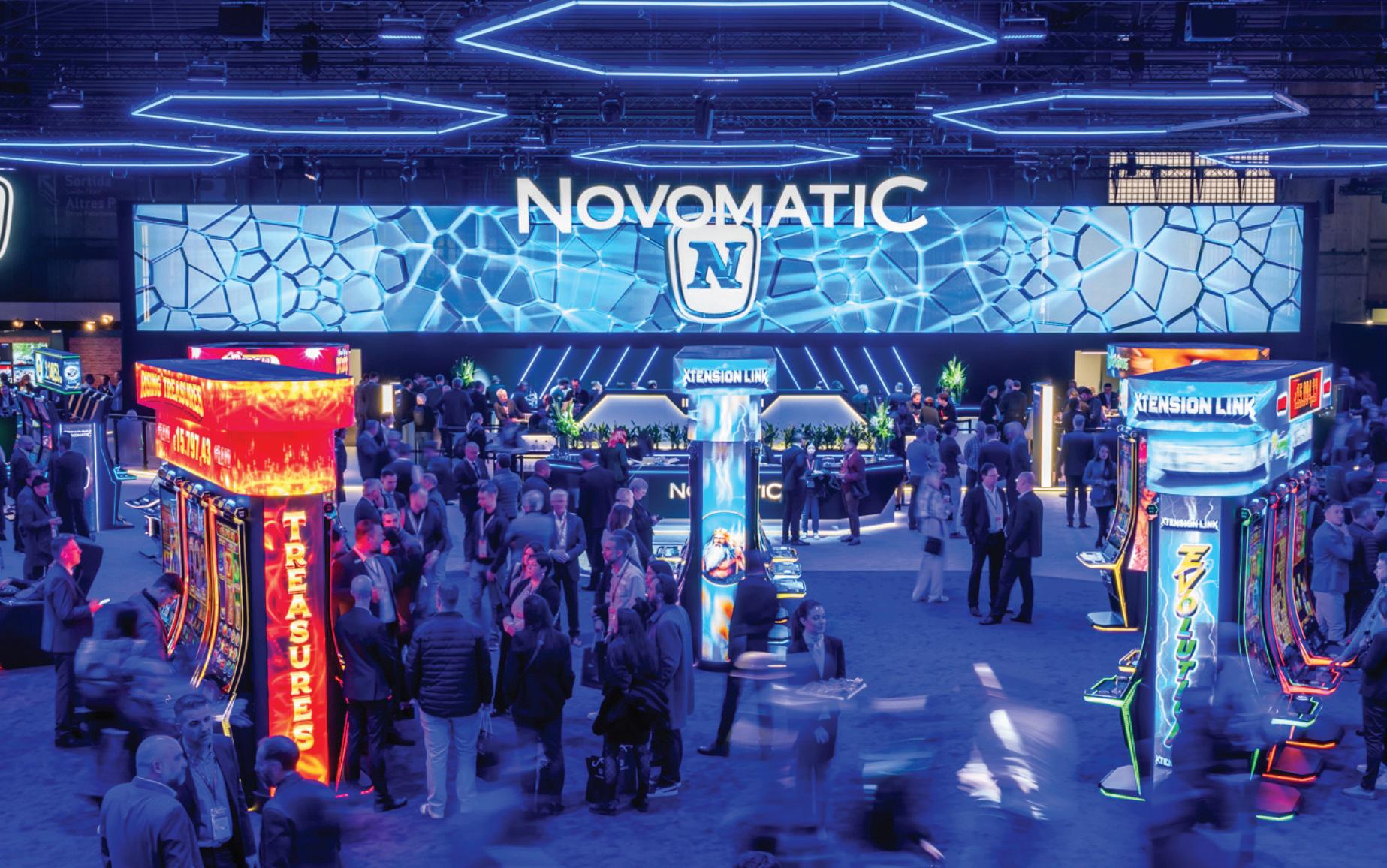
Novomatic displays its wares at ICE Barcelona
t ICE 2026, Novomatic will once again take to the global stage in Barcelona, with a showcase that sets a clear direction for the year ahead. As the largest exhibitor at the Fira Barcelona Gran Via, the group – together with its subsidiaries and technology partners Novomatic Italia, Novomatic Spain, Novomatic Gaming UK, Loewen Entertainment, Apex, and Ainsworth Gaming Technology – will present a portfolio shaped by performance, player engagement, and future-oriented innovation. And the centerpiece of this presentation is Xtension Link, accompanied by a range of powerful new multifeature progressives, as well as a brand-new premium cabinet that is designed to unlock fresh dimensions of immersive play.
Building on the proven success of the global hit series, Xtension Link will headline Novomatic’s appearance at the show, introducing entirely new game worlds and evolved feature mechanics that broaden the entertainment spectrum across international markets. The Xtension Link brand has become a standout performer in casinos around the world, consistently demonstrating strong and sustainable floor results in a wide range of jurisdictions.
On top of this, Novomatic will unveil a lineup of brand-new, multi-feature progressives, each designed to offer distinctive engagement dynamics, compelling bonus features and lasting floor performance. The development of these game concepts reflects a clear focus: more choice for operators, deeper engagement for players and sustained results over time.
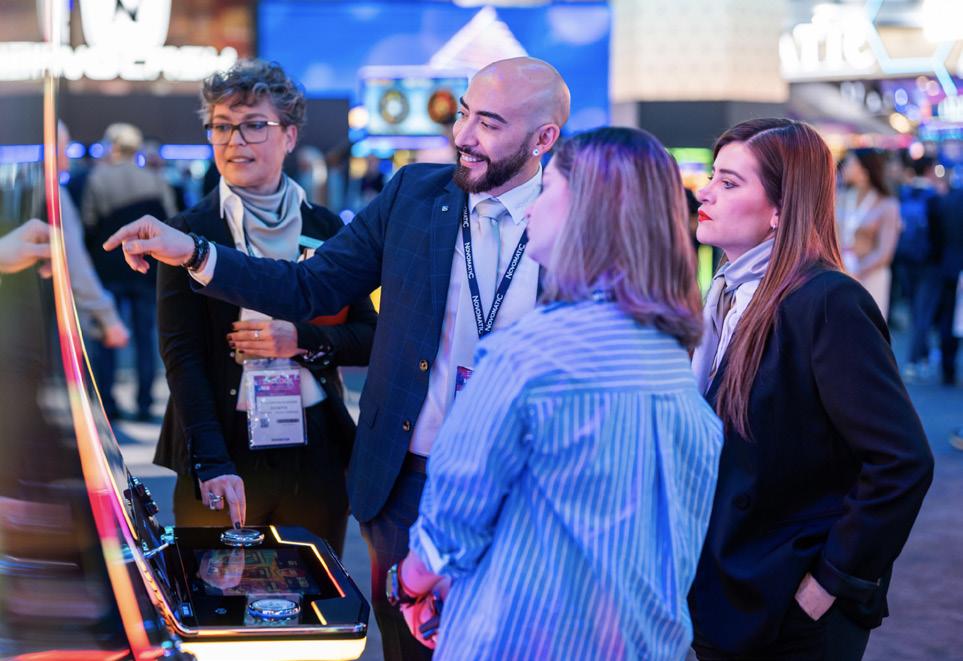
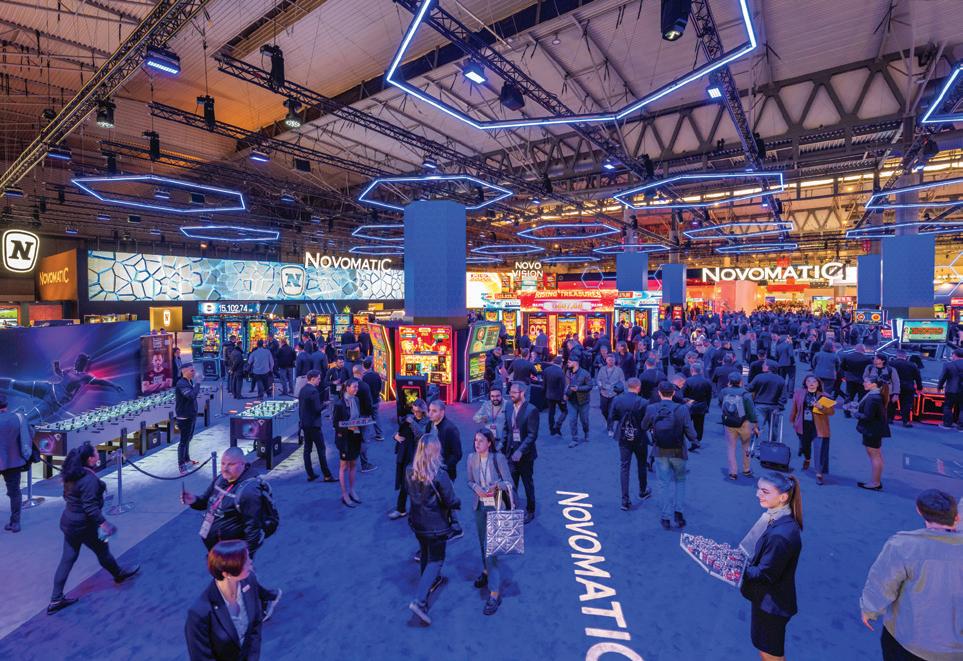

To accompany this expanded, multi-feature offering, Novomatic will present a new, premium cabinet that is engineered to elevate the player experience and broaden the entertainment landscape. With an expanded visual stage, refined ergonomics and powerful sound performance, this cabinet sets a new
benchmark for immersive gameplay presentation on the casino floor. Its design supports the full depth and energy of the Xtension Link universe, enabling operators to create standout entertainment zones with strong visual impact and player appeal.
Beyond cabinets and game content, Novomatic will also highlight its latest advances in electronic table games. The presentation of the Novo Unity Pro platform, with its expanded functionality and flexible configuration options, will demonstrate how operators can combine live, automated, and virtual game formats within a single, seamless environment. With new interface experiences and scalable multigame capabilities, Novo Unity Pro continues to offer a powerful solution for venues that are aiming to diversify their table game offering while maximizing floor efficiency.
For the systems sector, Novomatic presents the Novovision casino management system, a modular suite of applications built to handle the complexities of modern gaming operations. From biometrically supported cashless gaming and real-time analytics, to sophisticated player tracking and loyalty dynamics, Novovision equips operators with tools to run smarter floors and cultivate deeper player engagement. With its own spectacular Booth #2M70 in the iGaming area, Greentube – the digital gaming and entertainment division of Novomatic – will showcase its latest iGaming offerings, perfectly complementing our landbased portfolio. Dive into an ever-expanding range of online content that includes classic Novomatic hits and exclusive proprietary brands and developments. This is where innovation meets tradition in a truly thrilling way.
As one of the industry’s most anticipated annual gatherings, ICE 2026 will once again provide the ideal setting for international operators, partners and industry stakeholders to experience Novomatic’s latest developments firsthand. With Xtension Link as the leading theme, alongside an expanded multifeature game portfolio, the debut of a next-generation premium cabinet, and a strengthened systems and ETG offering, Novomatic will present a comprehensive vision for the future of gaming entertainment. Adding to the on-site experience, Max Hopp – one
of Germany’s most acclaimed professional darts players – will join the program at the Novomatic booth as a special highlight for attendees. Visitors can look forward to an exciting challenge, as well as the opportunity to collect exclusive prizes.
“This year’s showcase reflects our continued commitment to meaningful innovation,” said Thomas Schmalzer, vice president of global sales and product management for Novomatic AG. “From multi-feature progressives to immersive cabinet design, and intelligent system architecture, we are focusing on solutions that deliver sustained value for operators and compelling experiences for players worldwide.”
“ICE Barcelona is a key platform to demonstrate the strength of our localized development and customerfocused approach,” added Bernhard Teuchmann, managing director of product and technology for Novomatic Spain. “We look forward to welcoming our partners, and to presenting innovations that are aligned with the needs and dynamics of these markets.” Visitors are invited to explore this showcase at the Novomatic Booth #3P70, to see how these developments can shape stronger performance and more-engaging gaming experiences.
The Novomatic AG Group is, as a producer and operator, one of the largest gaming technology groups in the world and employs about 20,000 people. The group was founded by the industrialist Prof. Johann F. Graf in 1980 and has locations in about 45 countries. Novomatic exports innovative gaming equipment, system solutions, lottery system solutions and services to more than 130 countries. It also operates gaming terminals and video lottery terminals (VLTs) on its own in more than 1,400 electronic and regular casinos, as well as via rental models.
The Novomatic AG Group is active as a full-service provider in all segments of the gaming industry, through its numerous international subsidiaries, offering a comprehensive, omni-channel, product portfolio for partners and customers worldwide. This ranges from terrestrial gaming products and services, through management systems, cash-management solutions, and online-, mobile- and social-gaming solutions, to lottery and sports betting solutions, as well as a whole host of other first-rate products and services. For more information, please visit www.novomatic.com
Zitro’s unconventional methods are on view at ICE Barcelona
f you know Zitro, you know the company doesn’t do things the conventional way. This year at ICE Barcelona, that philosophy is on full display with the European premiere of the Fantasy cabinet, and an expanded portfolio that spans both the land-based and digital markets.
I“Just different” isn’t just a tagline; it’s how Zitro operates, how it builds products. This year Zitro is approaching its entire presence at the show. Visitors can expect an equally distinctive experience.
At the heart of the showcase is Fantasy, a cabinet built to attract players from the moment they see it.
Representing Zitro’s next leap in hardware innovation, Fantasy arrives with an entirely new library of games designed specifically for the platform. They feature spectacular animations, graphics and multimedia elements that wrap around the gameplay to create a complete entertainment experience.
Alongside Fantasy, Zitro will showcase an expanded game library for its popular Concept cabinet, giving operators even more reliable content to drive floor
performance. The enhanced portfolio demonstrates Zitro’s commitment to supporting operator success with diverse game options, backed by robust platforms that continue delivering results.
Zitro’s digital division continues building momentum with four new game releases debuting at the show: Golden Oink Trio, Pan Du, Thunder Coins and FL Irish. These titles join Zitro Digital’s growing portfolio of content designed for online and mobile platforms, extending the company’s innovative reach beyond the casino floor, into the rapidly expanding digital realm.
“At Zitro, we've built our reputation on approaching the market differently and ICE Barcelona will showcase that philosophy across every aspect of our business,” said Johnny Ortiz, founder of Zitro. “The European launch of Fantasy is a significant milestone for the company. We’re confident that operators will recognize the innovation and quality that have always defined our products. We look forward to welcoming the industry to experience what makes Zitro just different.”

s we stand on the brink of a new era fueled by artificial intelligence (AI), the concept of Data-as-a-Service (DaaS) is emerging as a transformative force across industries, including gaming. The potential to leverage high-quality data not only enhances development processes, it also revolutionizes our understanding of game design and player engagement. To navigate this landscape, we must explore how the DaaS industry can be built step by step, harnessing the power of data and AI to create a robust ecosystem.
The DaaS industry in the AI era promises to deliver high-quality, actionable data to developers, enabling them to create immersive and personalized gaming experiences. A strong foundation for this industry includes the following pillars:
1. Data Quality Standards: Establishing rigorous standards for data quality is paramount. Highquality data will serve as the bedrock for AI model
training, ensuring that insights derived are accurate and reliable. The industry must agree on criteria for what constitutes quality data, which may include completeness, relevance, timeliness, and accuracy.
2. Collaborative Data Ecosystems: Collaboration among various stakeholders – including game developers, data providers and technology companies – will be crucial in building a sustainable DaaS industry. Establishing partnerships can facilitate data sharing, foster innovation, and help companies learn from each other’s successes and challenges.
3. Ethical Data Usage: As data becomes a core component of game development, ethical considerations take center stage. Developing frameworks to govern data collection, consent and usage will ensure that player privacy is respected. Transparency in how data is used will build trust within the gaming community and among data providers.
Step One: Identify and aggregate data sources
To create a thriving DaaS industry, the first step is identifying potential data sources. These can include player interactions, in-game analytics, market research, and user-generated content. Aggregating this data is essential for creating comprehensive datasets that can inform game development.
Step Two: Implement data-collection technologies
To streamline data collection, organizations should invest in advanced data-tracking and analytics technologies. This includes implementing tools that can capture player behavior in real time, as well as technologies that ensure data quality and capture nuances in player interactions.
Step Three: Protect intellectual property rights
As high-quality data is collected, the need to protect intellectual-property rights becomes critical. Technologies such as watermarking can be employed to trace data usage, while establishing firewalls can allow data owners to manage their information actively. This step ensures that data owners maintain control, which is vital for ethical practices in data usage.
Step Four: Develop AI models and training frameworks
With high-quality data in hand, the next step is to develop AI models capable of generating insights from the data. These models should be trained to understand various aspects of game design, including logic, player engagement and adaptive mechanics. Training frameworks must be established to allow continuous learning, enabling models to adapt as new data becomes available.
Step Five: Foster continuous-feedback loops
Creating feedback loops between developers and players will enhance the DaaS ecosystem. Regularly collecting player feedback on game-play experience can enrich datasets and inform AI model updates. This iterative process not only improves game quality but also strengthens the relationship between developers and players.
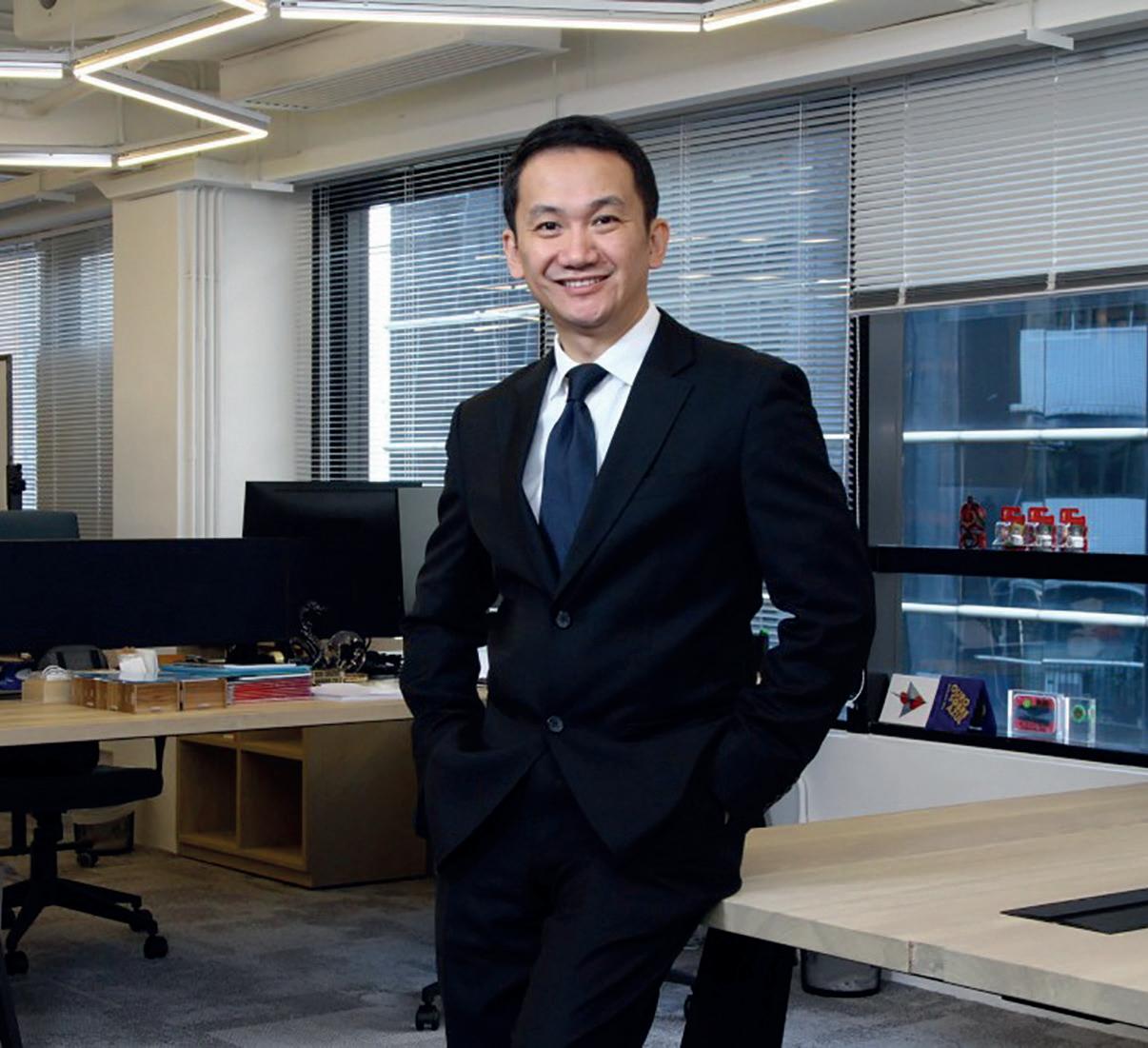
Raymond is a software engineer by profession with a track record in corporate innovation and entrepreneurship. He co-founded two prosperous startups, TGG Interactive and Global Gaming Group in USA and Asia respectively, where he served as director and CEO to lead the electronic gaming businesses from 2007 to 2018. Earlier in his career, Raymond was a founding member of the business intelligence team at ETRADE from Morgan Stanley and played a pivotal role in designing the TiVo customer intelligence system in Silicon Valley.
Step Six: Create marketplaces for data sharing
Finally, establishing marketplaces where data can be shared and exchanged will facilitate collaboration. These platforms should provide a secure environment for transactions, allowing developers to access diverse datasets and for data owners to monetize their contributions while protecting their rights.
The rise of Data-as-a-Service in the AI era heralds a new chapter in gaming and beyond. By focusing on data quality, ethical usage and collaboration, stakeholders can build a sustainable industry that leverages the power of data to drive innovation. As we navigate the complexities of data collection and AI training, the steps outlined will help shape a robust DaaS ecosystem, ultimately transforming how games are designed and experienced. The future of gaming lies in harnessing these advancements, paving the way for more engaging, personalized and ethical gaming experiences.