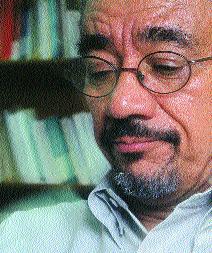
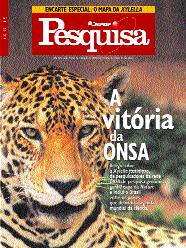
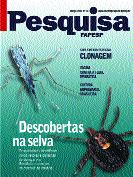
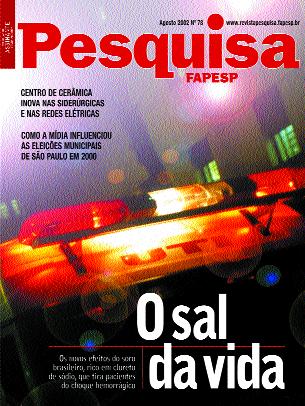
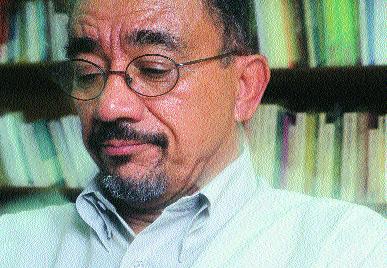
The communications expert Muniz Sodré speaks about his media theory
8 VENTURE CAPITAL
Brazilian Venture Fund invests in biotechnology companies
22 ECOLOGY
14 GENETICS
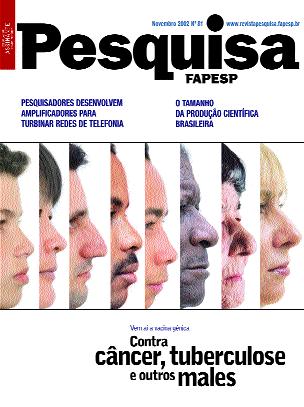
DNA vaccine created to fight tuberculosis will be tested against cancer in humans
36 MEDICINE
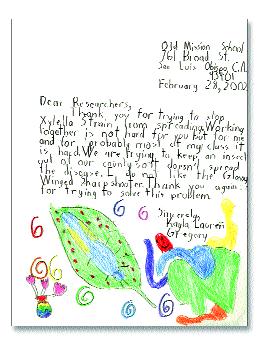
CALIFORNIA CHILDREN WRITE TO BRAZILIAN SCIENTISTS
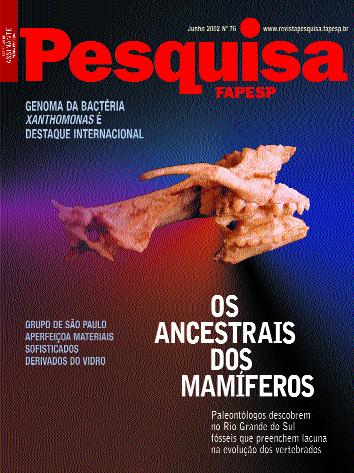
BRAZILIAN UNIVERSITY TEAM DISCOVERS FOSSILS OF TWO SPECIES OF ANCESTORS OF MAMMALS IN SOUTHERN BRAZIL
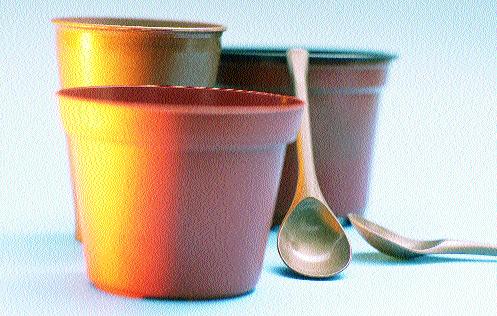
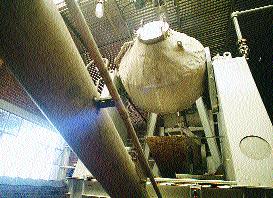
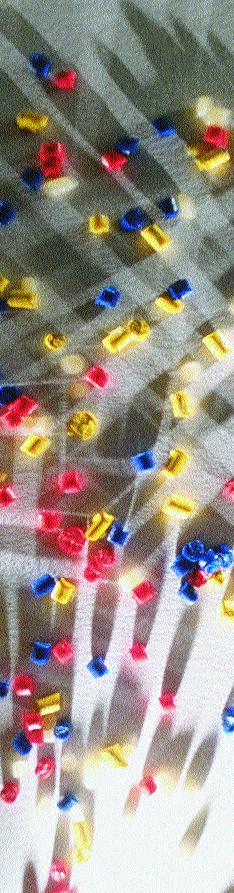
RESEARCH ON SUGAR MADE BIODEGRADABLE PLASTIC SPAWNS A COMPANY AND NEW PROCESSES TO EXTRACT POLYMERS FROM SUGARCANE BAGASSE
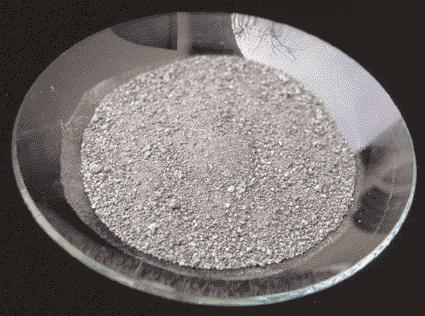
RESEACHER FINDS IN ALUMINIUM SLAG A NEW INGREDIENT FOR MORTAR PRODUCTION
THE BILATERAL RELATIONSHIP BETWEEN JEWS AND CHRISTIANS DURING THE 2ND CENTURY
.12
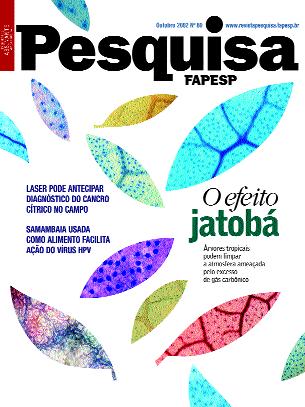
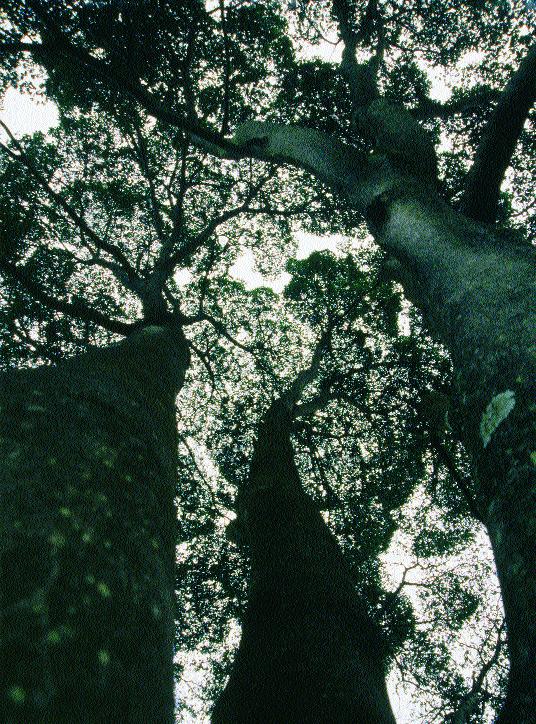
Jatoba may be an alternative to clean the atmosphere as it absorbs more carbon dioxide than it had been thought
.28
Cover and art:Hélio de Almeida
.46
.52
.62
56 FUEL
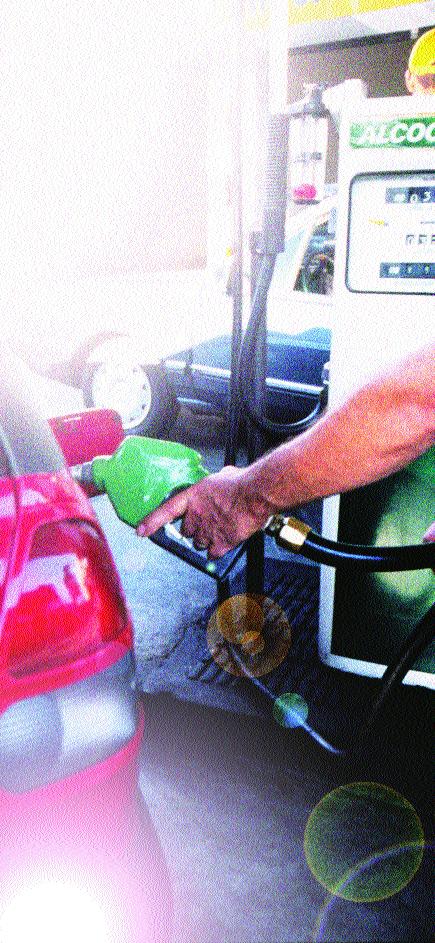
New technique will allow increases of up to 30% in alcohol production and could serve as an incentive for the return of the Pro-Alcohol program
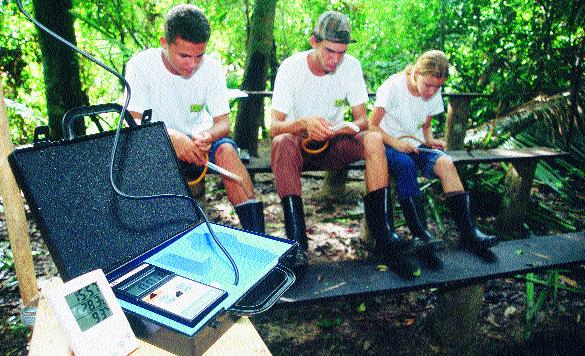
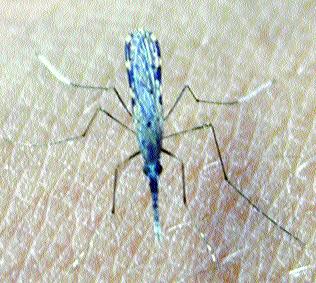
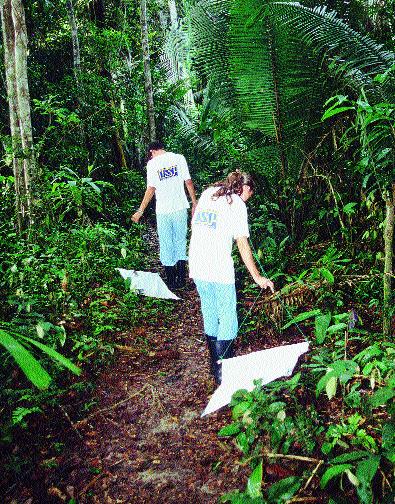
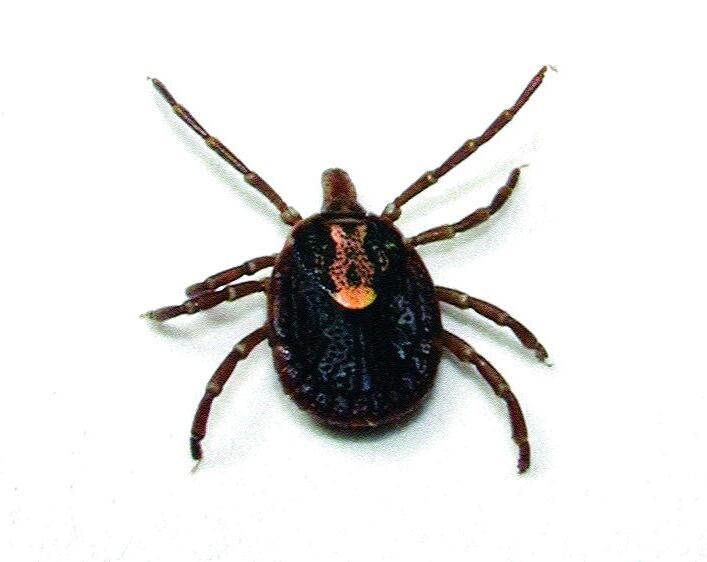
In the Amazon, researchers make headway in the study of malaria and the mechanisms for the transmission of emerging diseases
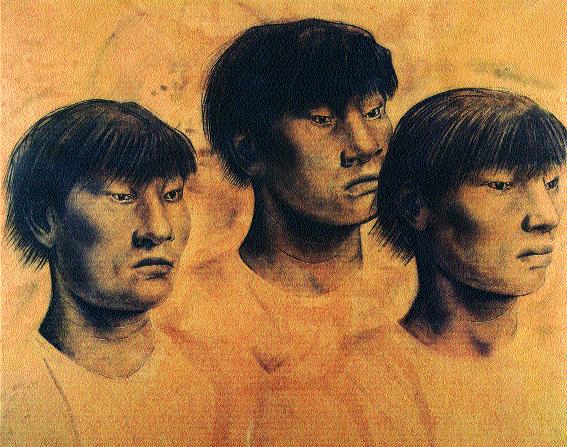
66 EDUCATION Four books are launched with articles from specialists that discuss indigenous education
FAPESP
CARLOS VOGT PRESIDENT PAULO EDUARDO DE ABREU MACHADO
VICE-PRESIDENT
BOARD OF TRUSTEES
ADILSON AVANSI DE ABREU
ALAIN FLORENT STEMPFER
CARLOS HENRIQUE DE BRITO CRUZ CARLOS VOGT
FERNANDO VASCO LEÇA DO NASCIMENTO HERMANN WEVER
JOSÉ JOBSON DE ANDRADE ARRUDA MARCOS MACARI
NILSON DIAS VIEIRA JUNIOR
PAULO EDUARDO DE ABREU MACHADO
RICARDO RENZO BRENTANI VAHAN AGOPYAN
EXECUTIVE BOARD
FRANCISCO ROMEU LANDI PRESIDENT DIRECTOR
JOAQUIM J.DE CAMARGO ENGLER
ADMINISTRATIVE DIRECTOR
JOSÉ FERNANDO PEREZ SCIENTIFIC DIRECTOR
PESQUISA FAPESP
EDITORIAL COUNCIL
ANTONIO CECHELLI DE MATOS PAIVA,EDGAR DUTRA
ZANOTTO,FRANCISCO ANTONIO BEZERRA COUTINHO, FRANCISCO ROMEU LANDI,JOAQUIM J.DE CAMARGO ENGLER,JOSÉ FERNANDO PEREZ,LUÍS NUNES DE OLIVEIRA,LUIZ HENRIQUE LOPES DOS SANTOS, PAULA MONTERO,ROGÉRIO MENEGHINI
EDITOR IN CHIEF MARILUCE MOURA
MANAGING EDITOR
NELDSON MARCOLIN
SENIOR EDITOR
MARIA DA GRAÇA MASCARENHAS ART DIRECTOR HÉLIO DE ALMEIDA
EDITORS
CARLOS FIORAVANTI (SCIENCE) CLAUDIA IZIQUE (S&T POLICY) MARCOS DE OLIVEIRA (TECHNOLOGY) CARLOS HAAG (HUMANITIES)
HEITOR SHIMIZU (ON-LINE VERSION) SPECIAL EDITOR MARCOS PIVETTA ASSISTANT EDITORS
RICARDO ZORZETTO,DINORAH ERENO ART CHIEF TÂNIA MARIA DOS SANTOS ART JOSÉ ROBERTO MEDDA,LUCIANA FACCHINI PHOTOGRAPHERS
EDUARDO CESAR,MIGUEL BOYAYAN COLABORATORS
ROBINSON BORGES COSTA YURI VASCONCELOS ENGLISH VERSION TRANSLATION
ROGER SKIPP,MARTIN FOLEY REVISION ALEX PADALKO SUBSCRIPTIONS TELETARGET
TEL.(5511) 3038-1434 – FAX:(5511) 3038-1418 e-mail:fapesp@teletarget.com.br PUBLICITY TEL/FAX:(5511) 3838-4008 e-mail:redacao@fapesp.br PRE-PRINTING GRAPHBOX-CARAN PRINTING PROL EDITORA GRÁFICA THIS EDITION PRINT RUN:1,000 COPIES DISTRIBUTION FERNANDO CHINAGLIA FAPESP RUA PIO XI,Nº 1.500,CEP 05468-901 ALTO DA LAPA – SÃO PAULO – SP TEL.(5511) 3838-4000 – FAX:(5511) 3838-4181 http://www.revistapesquisa.fapesp.br cartas@fapesp.br
The signed articles do not necessarily reflect FAPESP’s opinion THE TOTAL OR PARTIAL REPRODUCTION OF TEXTS OR PHOTOGRAPHS WITHOUT PREVIOUS PERMISSION,IS STRICTLY PROHIBITED
ECONÔMICO
A mirror of Brazilian research
Pesquisa FAPESP is a very young magazine.It is just three years old in its present format.Or,ifwe include in its history the house organ Notícias FAPESP – from which this magazine stemmed – seven years old.But,albeit young,it is already one ofthe most important scientific publications in Brazil.The reason for this is that Pesquisa FAPESP offers to its readership,every month,a novel and consistent view of what is the best research carried out in this country,besides an outlook ofthe political decisions that have been sustaining its scientific and technological development.Its ultimate goal is to mirror the creative capacity,competence and endurance to overcome challenges of the Brazilian scientific community.And precisely for these characteristics Pesquisa FAPESP has become – in very little time – a reference for those who wish to discover more about the scientific production in Brazil,and for those who need to show the results ofthis production to the society and the media.
July,2000
This first special issue in English Pesquisa FAPESP,with 72 pages and a small print run ofa thousand copies (whereas the monthly issuesin Portuguese,with 96 pages,reach 42 thousand copies),targets the scientific institutions,the media and governmental organs linked to science and technology around the world.This issue brings an assortment ofsome ofthe many stories produced by our team between March and November of 2002 and we expect that through this sampling the reader will have a balanced view ofthe knowledge produced in Brazil.There is an on-line version ofthe monthly magazine (www.revistapesquisa.fapesp.br) in English and in Spanish. That version provides deeper insight into the research effort in our country.
To wrap it up,a few words about FAPESP – the institution that has created and is responsible
for the magazine Pesquisa FAPESP.This acronym stands for São Paulo State Research Foundation, one ofthe main agencies ofscience support in Brazil,which has completed forty years ofexistence in 2002.Intrinsically linked to the history and expansion ofscientific research in a state that accounts for nearly 50% ofthe Brazilian scientific production,this foundation – linked to the state government – oversees resources that correspond to 1% ofthe state tax revenues.The Foundation directs this money to research,in all fields ofknowledge and technology,the merit of purposals being assessed by peers ofthe national scientific community itself.In special circunstances,reference is made to international advisors;an example is provided by thegenetic sequencing ofthe bacterium Xylella fastidiosa, concluded in 2000.The diffusional scientifc knowledge is part ofFAPESP’s institutional mission and Pesquisa FAPESP is the means it has chosen to achieve its goal.
JOSÉ FERNANDO PEREZ Scientific Director
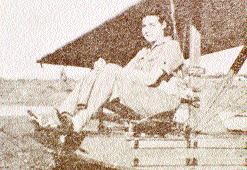
Pilot experimenting the EAY-101:a passion for gliders
Motorless flights
Some 70 years ago,Brazil discovered the pleasure of piloting gliders and planted the seeds at the base of the Brazilian aeronautics industry
N ELDSON M ARCOLIN
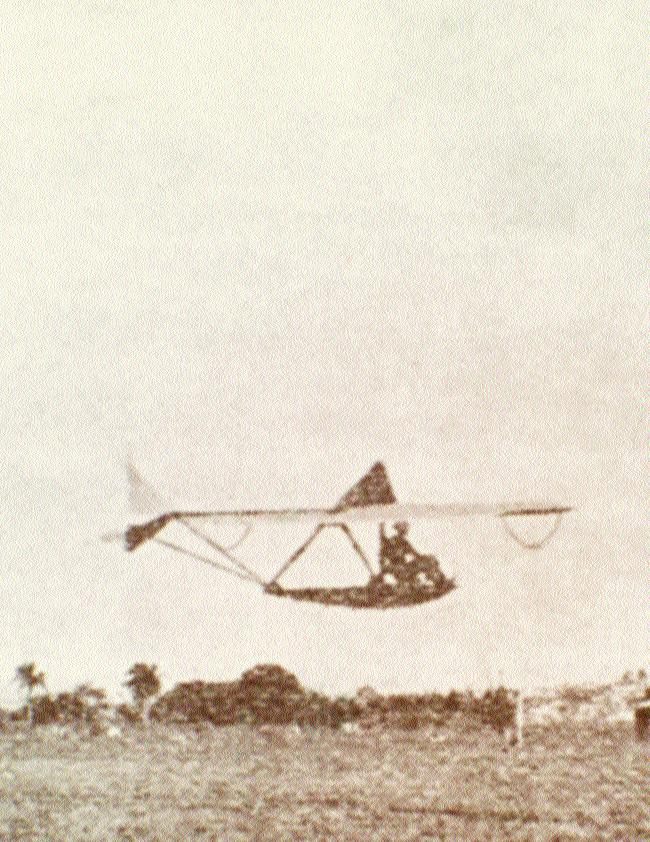
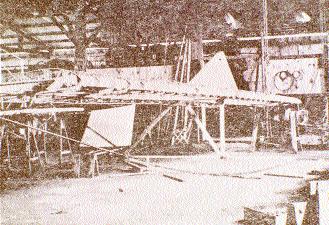
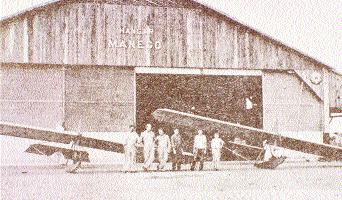
Pilot ready to fly (above on the left),workshop of the first glider (above, on the right) and the models EAY-101 and 102
Early in the 30s of the last century, the technology offlight was in full development, and new findings continually improved aircraft construction. In Brazil,however,notwithstanding the heritage established by Alberto Santos-Dumont,who had invented the airplane in 1906, no university course deal with aeronauties.The course ended up breaking up and not a single group graduated.There was a lack of rules to give it a backbone,which wound up making the course out of the norms ofthe time.Behind this attempt to attend to the needs ofaviation in the country was a group ofengineers and students, founders ofthe Mackenzie Gliding Club of1931.Presided over by the Frenchman George Corbisier,a graduate from the São Paulo academia, and with Henrique Santos-Dumont,
the brother ofAlberto,on the Board ofDirectors,this group offriends built one ofthe first Brazilian gliders, according to the registry ofthe Revista de Engenharia Mackenzie (Mackenzie Engineering Magazine, June of1934).Although it was completed,there is no photographic record offlight.Only its construction in a large shed is recorded.In 1932, along with attempt to set up the aeronautics course,the group arranged the first “gliders celebration” in São Paulo,at the airfield Campo de Marte – the airplane was the EAY-101.This short fever for sailplanes,as motorless flight is called,led the Technology Research Institute (IPT) to receive,during
1934,orders from the Polytechnic Gliders Club, created by final year students ofcivil engineering at the Polytechnic school.The Wood Departament was commissioned to reform and manufacture the wooden parts ofthe German gliders in use in Brazil.In time,the students went on to build their gliders at the IPT. The Wood Departament evolved into research ofnew materials that could substitute the original wood and shortly afterwards created the Aeronautical Section, which began to work on the prototype ofthe first motorized airplane.In 1938,the IPT-0, also called the Bichinho (Little Pet), flew for the first time,equipped with an American motor.
It was the first ofa series ofairplanes projected and constructed at the Institute.The initiatives ofMackenzie and ofthe IPT were important driving forces for one ofthe greatest technological conquests that has been achieved in Brazil:the creation and posterior consolidation ofthe national aeronautics industry.
Prospecting
Votorantim Ventures invests in biotechnology companies
for good business
The Votorantim group,the largest Brazilian industrial conglomerate,with annual sales ofUS$ 4 billion,is investing US$ 300 million in high technologybusinesses.Two years ago,the group created a venture capital fund,Votorantim Ventures,through which it now participates in companies in the areas oftelecommunications and ebusiness,such as Optiglobe,.comDominio,Telefutura,Quadrem and Estrutura.net.Its attentions have now turned to emerging projects in the biotechnology sector,which in their great majority are being incubated in university laboratories.In the next few days,the group will be publishing a list ofproposals – selected from a group of50 – and in the future ofwhich it wishes to invest amounts ranging from US$ 50,000 to US$ 50 million.
Without a shadow ofdoubt,this is a risky bet.In the United States,for example,the statistics show
that nine out ofevery ten emerging companies in which venture capital has been invested do not take off.The identification and selection ofgood projects are a fundamental step, though they do not inthemselves guarantee the success ofthe investment.The key word is therefore to carefully prospect the projects developed in the academic world in order to discover which have market potential. Thisis the task for which Votorantim has hired Fernando Reinach.A lecturer and researcher at the Institute ofChemistry ofthe University ofSão Paulo, (USP),Reinach was an advisor to FAPESP,a coordinator ofthe projects for the genetic sequencing ofthe Xylella fastidiosa and Xanthomonas citri bacteria,and he himselfhas had the experience ofan entrepreneur,when in 2000,with funds from private investors,he created .comDominio,nowadays the third largest data center in the country,after Diveo and Optiglobe,and larger than Embratel.
is a pool for good ideas
what venture capital is, and then to prospect for business. “My mandate is to keep my eye on the universities,which is a simple task,because we speakthe same language”,he sums up.He has no doubt that a pool ofgood ideas can be found there. “For 25 years,agencies like FAPESP and the National Council for Scientific and Technological Development (CNPq) have been investing successfully in the development ofresearch. But you can count on your fingers the number ofcompanies generated in the universities”.And why is it that good projects do not translate themselves into business? He gives the answer: “It is because venture capital is lacking in Brazil”.
Since December,Reinach has been visiting universities and research institutes,firstly,to explain
Entrepreneurship - But,besides resources,researcher lack information on what this modality ofinvestment actually is.Venture capital is a sort oflong term finance – sustained by a participating stake ofthe investor in the company –,recovered after the development ofthe company,through a public stock offer,or the total or partial sale ofthe enter-
A market with a future
Venture capital investments are growing slowly in Brazil.In 2000, they amounted to US$ 747 million, and,last year,to something around US$ 800 million,according to the figures released by the Brazilian Venture Capital Association (ABCR),on the basis ofa survey by the Getúlio Vargas Foundation (FGV),sponsored by the Financier ofStudies and Projects (Finep).The good news is that,in spite ofthe fall in the NASDAQ electronic stock exchange,the volume ofinvestments has not fallen, observes Robert Binder,the ABCR’s executive director.In the United States,the burst ofthe Internet bubble had a high cost;the venture capital market plunged from US$ 100
billion in 2000 to US$ 40 billion in 2001.
According to the survey,up to last year,the sectors oftelecommunications and the new media attracted over halfthe venture funds.Start-ups got only 15% ofthe investments,and mature companies at the stage of expansion,78%.With the exception ofExtracta,from Rio de Janeiro,no biotechnology company has been targeted for venture investment,he says. “The great problem is the time it takes these companies to come to maturity”,Binder notes.
“The government’s action,through Finep’s Inovar ( Innovate) program,was decisive”.Privatization ofsectors like telecommunicati-
ons,for example,is already generating new business.Investments in biotechnology may grow,since,besides biodiversity,Brazil has competitive advantages to bet on the development ofthis market.Incidentally,in the United States seven biotechnology companies are now part ofthe NASDAQ 100 index, which ranks the largest non-financial companies according to their market value.
The ABCR has 64 associates,including investment funds,consultancies,stock exchanges,companies and incubators.The entity estimates that the potential for investment in venture capital in Brazil has added up to US$ 3.8 billion since 2000.
Reinach:university
EDUARDO CESAR
prise.In the United States,it has been working since the Forties.It was,for example,venture capital that allowed the creation ofcompanies like Microsoft, Intel and HP,just to mention more recent cases. “Venture capital works very close to the university.It works a as a fulcrum for the creation ofsmall companies,with no more than ten persons,where the researcher goes in with the idea,and venture capital with the money”,he explains.
In Brazil,venture capital is a relatively recent investment.These were the funds that boosted the development ofInternet companies,from 1999 onwards. “When the Internet bubble burst,the idea of entrepreneurship and venture capital funds stayed on,this time trying to pick out long term investments”, explains Reinach.There are strong signs that these funds,which had betted on dotcoms,are now turning towards helping emerging companies in the biotechnology sector.This change ofdirection,by the way,closes what Reinach calls the “virtuous circle oftechnology”:the government invests in research with no intent ofmaking a profit – as in the case ofFAPESP’s Project for Small Business Innovation Research (PIPE in the Portuguese acronym), for example –,boosts an invention,and venture capital finance the setting up ofa company that,when successful,will pay taxes to the government.
It is in the capacity ofa venture capital fund that Votorantim Ventures will be injecting moneyinto good ideas,by buying into the company. “We may participate with 5% or up to 90% ofthe capital ofthe future company”, the researcher reveals.He believes that the fund may carry out an average often investments a year.According to Paulo Henrique de Oliveira Santos,VotorantimVentures’ chiefexecutive officer (CEO),the strategy is to bet on a larger number ofsmaller projects.
But there are some prerequisites for this association to be carried out.The first is for the good idea to correspond to a good market.An electronic corkscrew,produced at a unit cost ofUS$ 5,000,may be a “superdiscovery”,but the size ofthe market would certainly not justify any investment,in Reinach’s example. “We rely on a group ofanalysts that will assess the project,and,in conjunction with the researcher,draw up a business plan”,he says.The second prerequisite is to reach an agreement as to the percentage ofthe investor’s participation in the composition ofthe future company.On this point,as Reinach says,negotiations are “completely subjective”.A researcher who supposes that he has discovered a solution for the treatment ofa disease calculates that the company will be worth US$ 150 million in the future. He believes he needs US$ 15 million to set the business up,and proposes the sale ofpart ofthe
estimated value ofthe future company,in this case 10%,to venture partners.The investors,from their side,calculate the risk offailure,market potential and price,and forecast a lower value for the company, which expands their participating interest in the make-up ofits capital. “As it is they who run the risk,they expect the highest remuneration possible”,he explains. He underwent this experience when he created .comDomínio. “We had the idea ofmaking a data center,a service that still did not exist in Brazil.We put together a competent team,recruited from the university,I took leave from full time work at USP, we put up a business plan,and we went offto the United States,after venture capital to bank a US$ 50 million investment”,he recalls.The major part of the funds came from the American bank,JP Morgan,from the start the company’s largest stockholder.Votorantim Venture also had a stake in the enterprise. “We have always had less than halfofthe capital”,he says. “Ifit did not work out,they would lose money and we would have put our career in risk to no avail”.The business prospered and .comDominio is a professionally run company. “We continue to be stockholders.We are owners,but no longer members ofstaff ” .
The quality ofbeing an entrepreneur does not require the researcher to distance himselffrom the university. “It is in the company’s interest for the link to continue”,he explains.Reinach points out,however,that everything depends on the structure and the legislation ofeach university.He himselfhas plans for going back to his classes at the Institute ofChemistry in the next semester. “I do not want to leave the university”. •
TEACHING
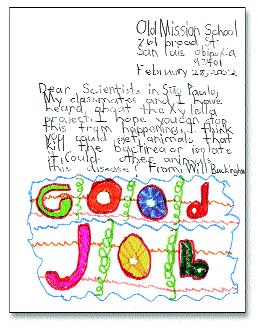
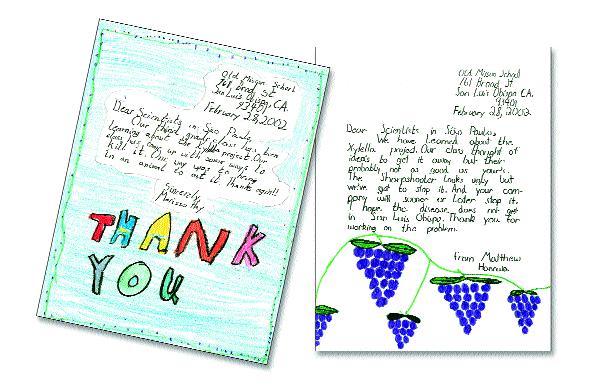
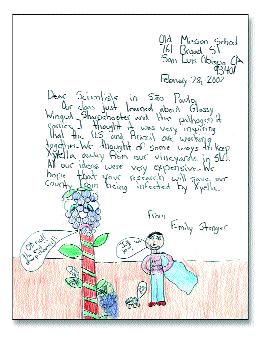
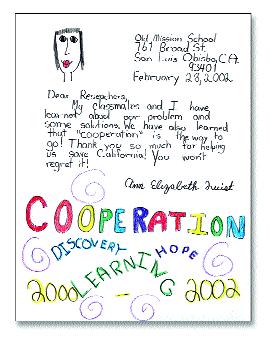
Californian children write letters to Brazilian scientists
Lori Connelly is a classroom teacher ofa 4th Grade class in a primary school in San Luis Obispo,a town in the interior of California,United States.Surrounded by vineyards,the region is great producer ofquality wines and lives under the threat ofbeing hit by Pierce’s disease,a pest that attacks the grapevines,caused by a variety ofthe bacterium Xylella fastidiosa,which is also responsible for loses in orange trees.In August of2000,the United States Agricultural Department proposed a partnership to FAPESP for the sequencing ofthe grapevine Xylella,making use ofthe Brazilian experience in this area.Led by researchers Marie-Anne Van Sluys and Mariana Cabral de Oliveira,both from São Paulo University,and João Paulo Kitajima from the São Paulo
State University ofCampinas, the Brazilians met with the North Americans and carried out the work.Teacher Lori, with a New York Times story, showed the students,all of them between eight and nine years ofage,how it is possible to successfully work in cooperation with people from any place on earth.Twenty nine students then wrote letters thanking the Brazilian scientists.“Lori taught the children that researchers throughout the world are the same and are beyond the differences between rich and poor countries”,comments Andrew Simpson ofthe Ludwig Cancer Research Institute,the coordinator ofFAPESP’s first genome project,that of Xylella.All ofthe letters have the same tone as that written by Warren Stevens Crendall: “ Thank you for the hard work that you have done”. •
The targetishuman health
Tests are beginning on human beings of the first genetic vaccine developed in Brazil that in the laboratory has shown itself to be effective against cancer and tuberculosis
C ARLOS F IORAVANTI
In three months at the most,a decisive chapter in the history ofthe first genetic vaccine developed here in Brazil will begin:tests will be carried out on human beings.The formula created and perfected over a ten-year period by the biochemist Célio Lopes Silva,from the Medical School ofthe University ofSão Paulo (USP) in the town ofRibeirão Preto,originally for the prevention and treatment oftuberculosis,will be given to a restricted group ofeighteen people,all with an advanced phase ofhead and neck cancer that is no longer responding to any other treatment.In this phase,the completion ofwhich was approved in August by the National Council of Research Ethics (Conep in the Portuguese acronym),the intention is to evaluate ifthe compound shows toxic effects,as yet not verified in laboratory animals,what is the best dosage,and ifit really can contain the advance ofthe tumors.“The results,ifpositive,will serve as guidelines for other clinical studies (on humans) ofthis genetic vaccine”,Silva comments.
Planned in detail throughout this year,the next research phase may represent the most concrete evidence that this DNA vaccine, as it is also called,works like a medicine,acting when an illness has already installed itselfwithin the organism,and not just like a traditional vaccine,ofa preventative character.In fact,the most recent studies in this area have widened the meaning ofthe word vaccine,which today no longer represents something that avoids an illness,but also something that can cure an illness.The results,as they come forward,probably after some six months from the start
ofthe tests,could help to make possible a new pathway in the treatment ofcancer,with fewer undesirable side effects than the traditional radio and chemotherapy treatments.In other countries,there are clinical tests underway with genetic vaccines against Aids,hepatitis and malaria,as well as various types ofcancer.According to Kald Ali Abdallah,a researcher at the Medical School ofUSP in São Paulo and one ofthe two tests coordinators,there are no reports that serious side effects have been noted beyond a moderate fever and swelling at the location ofthe vaccine application,typical ofany vaccine.
The future tests are also creating an expectation for another reason:ifthey are successful,they may prove that the formula over which Silva has been working intensely for the last ten years,has a range ofaction greater than that initially sought after: to protect against Mycobacterium tuberculosis,the bacterium that causes human tuberculosis,transmitted through the air,which every single second infects a human being.Installed in one third ofthe world’s population,above all in the poorest countries,the disease annually kills two million people –just in Brazil there are 130,000 new cases per year. Preliminary results obtained with laboratory animals indicate that the vaccine,by way ofsmall variations in the composition and the dosage,could
be effective not only against tuberculosis,but also against other types ofcancer such as that ofurinary bladder and skin,as well as leishmaniasis and in animals,against bovine tuberculosis.
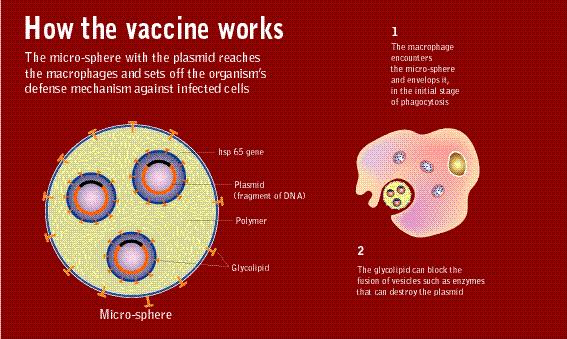
Besides the liberation for the tests on human beings,the researchers at the geneticvaccine laboratory,coordinated by Silva,have managed to produce a new form ofthe vaccine,which makes possible the application in a single dose – thus simplifying the work ofmedical doctors and veterinarians – and no longer in three applications as in the previous version.With the new formula ofthe vaccine,one dose ten times less potent than that previously adopted shows the same protective effect against the bacteria that cause tuberculosis,according to the results published this month in Gene Therapy,one ofthe most important international magazines in thisarea. Both in the old formula,with the pure DNA,and in the most recent version,in which the DNA can be found involved with other molecules, the vaccine prepares the organism so that it itselfsolves the problems or,in a more precise manner,works as a regulator ofthe immunological system – an immunemodulator.That is the reason why,in principle,it can be applied to more than one illness,to prevent or to cure.One ofthe most important abilities ofthe vaccine being studied by theRibeirão Pretogroup is to act directly on the macrophages,cells thatare essential to the defense system,whichcoordinate the
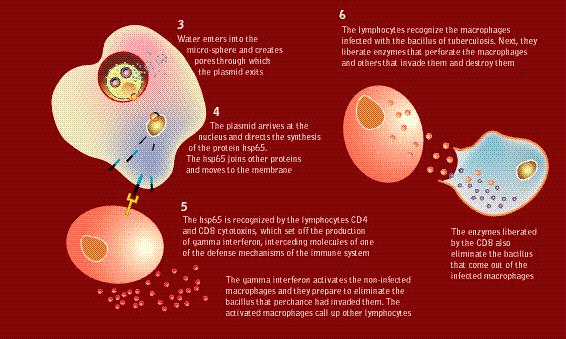
actions ofother cells – it is exactly in the macrophages that the Mycobacterium tuberculosis install themselves and remains dormant until it later enter into action at a moment ofthe organism’s fragility.By acting upon the macrophages,the DNA vaccine induces the production ofmolecules called gamma interferon,which regulate one of the types ofresponses ofthe immunological systemagainst reagents foreign to the organism or against tumor cells,besides stimulating the lymphocytes that eliminate the infected cells (see illustration).
Although the new formula seems promising,the next set oftests are going to evaluate the efficiency ofthe simpler formula,with pure DNA – much more deeply studied – that will be applied directly on the tumor to be treated – the so-called epidermoid carcinoma,responsible for almost the total of nearly eleven thousand cases ofcancer ofthe head and neck that arise per year in Brazil.Four teams from the Medical School ofUSP are going to be working during this next phase:two ofthem,coordinated by Abdallah and Jorge Elias Kalil,looking after the clinical evaluation ofthe selected individuals and following up any possible side effects due to the vaccine;and the other two led by Alberto Ferraz and Pedro Michaluart,will look after the analyses of the action ofthe compound directly on the tumor. “50 milligrams ofthe vaccine are sufficient for us to begin the tests”,says Abdallah.But it is not so easy to
obtain what may seem so little at the current stage of the research.
Silva knows that,in order to shortly begin the tests on human beings and to precisely define the true effects ofthe applications in other illnesses other than tuberculosis,he needs to find new sources for producing more vaccine.At least one thousand times more,jumping from the current milligrams to some grams per week,and with a degree ofpurity internationally recommended for human use,in such a way as to meet the conditions known as GMP (good manufacturing practices),that demand an extremely clean environment,with fewer particles in the air than that ofa surgery room. “It’s not easy”,says the researcher from USP. “We now have to dominate the technology processes. ” The proportion among the reagents,the reaction time and the rate ofproduction tend to change when the production leaves the laboratory bench and moves on to a larger scale.
At the beginning ofOctober,shortly before flying offto India,on a federal government exchange mission in the research and production ofmedicines,Silva sent to the Ministry ofHealth the plan in which he outlines the necessary level oftechnological development.It is a project budgeted at R$ 20 million that includes the production and the testing of the DNA vaccine as well as other medicines against
Mycobacterium tuberculosis cultivated in the laboratory:transmitted through the air,the bacterium kills two million people per year
tuberculosis,researched through the TB network,an association ofspecialists created last year to combat this disease.As a result ofthe integration brought about by this research network,the USP laboratory evaluated six hundred plant extracts for action against tuberculosis and verified that at least ten are also promising as potential alternatives against the bacillus known as Koch,referring to its discoverer, the German bacteriologist Robert Koch (18431910,Nobel Prize winner in 1905).
For the time being,Silva is waiting for some space to be freed up at the Medical School in order to set up the fermenters,centrifuges,extractors and purifiers for the DNA and to begin production on a pilot scale,with a productivity rate ofup to one thousand times greater than that currently being undertaken.When the equipment start to operate,probably at the start ofnext year,the research born in the university will begin to turn into a product.At that stage there will be the participation ofa technology based company,RDBiotec,established inMay exactly for the purpose ofincreasing the scale ofproduction,under the best possible conditions oftime and cost,by way ofa project financed through FAPESP.One ofthe RDBiotec directors is the researcher from the state ofMinas Gerais José Maciel Rodrigues Junior,who at the end oflast year left his post as professor ofpharmaceutical technology at the Federal University ofMinas Gerais (UFMG) so that he could dedicate himselffull-time to the challenge ofmaking viable Célio Lopes’ vaccine,with whom,in truth,he had already worked for some years.It was professor Rodrigues who proposed, during 1997,the pathway that would lead to the current formula ofthe vaccine.It is from the new laboratory that the vaccine to be applied during the tests on human beings will come,beginning with cancer since there are already teams and adequate installations.Evidently,Silva is also contemplating on tests against tuberculosis,but he knows that they will be more complex:they demandan infrastructure and safety conditions that are more refined,so as to avoid the transmission ofthe bacillus resistant to any known medicine,which cause multi-resistant tuberculosis,against which the vaccine would initially be applied.Ifit works on the most serious strain ofthe illness,which in Brazil hits close to 1% ofthose who are infected,it will be almost certain that the DNA vaccine from the Ribeirão Preto group will be effective against the lesser forms oftuberculosis and will set itselfupas an alternative vaccine to that most commonly in use against the illness,BCG (Bacillus Calmette-Guerin),
which has been losing its effectiveness since in began to come into use way back in 1921.
Versatility - The in-depth studies into the bovine vaccine,already planned with researchers from the School ofVeterinary Medicine ofUFMG,will also depend on the supply ofmore vaccine. “ The first tests suggest that the vaccine can stall the action of any Mycobacterium”,Silva reports.Thus,the sacrifice ofanimals could be avoided,a policy currently recommended by the Ministry ofAgriculture when bovine tuberculosis is detected,caused by Mycobacterium bovis.As yet without a cure,this illness affects almost 14 million animals ofthe total national herd ofaround 170 million head ofcattle.According to Rodrigues,there are also promising results in the fight against leishmaniasis:in a test carried out with a research group from the Federal University ofRio de Janeiro (UFRJ),with mice that received the vaccine – by way oftheir nose – it managed to prevent them contracting this illness caused by the protozoa ofthe gender leishmania
In the patenting process here in Brazil and abroad,the new formula ofthe vaccine contains three basic components.The first is the gene that contains the recipe for the production ofthe protein named hsp65 (hsp means heat shock protein and 65 indicates its molecular mass of65 kilodaltons;the dalton
is the unit ofatomic mass).Produced by the bacterium under stressful conditions – for example,on the invasion ofan organism –,this protein functions as an antigen,a molecule that brings into action the replies ofthe immune system,in this case,against the bacillus.It was with this gene,integrated into a plasmid (fragment ofDNA in the form ofa ring) that Silva obtained the preliminary results ofthe firstgenetic vaccine against tuberculosis in the world,announced in 1994 at a congress ofthe World Health Organization (WHO) in Geneva.
In the current version ofthe vaccine,the gene finds itselfsurrounded,firstly by molecules ofa glycolipid – a sugar associated with fat (lipid) – trehalose dimycolate,incorporated as an assistant ofthe vaccine as it is found on the external wall ofthe micro-bacteria and it sets offthe defense mechanisms ofthe immune system.Both the gene and the glycolipid occupy the cavity within a polymer (molecule with the same structure repeated a large number oftimes) know as poly (L-glutamic acid) or PLGA for short.The polymer forms micro-spheres ofaround three micrometers (a micrometer is one millionth part ofa meter) – it was this material that Rodrigues suggested Silva incorporate into the vaccine some five years ago.Already produced at Ribeirão Preto,the micro-spheres
lead the gene directly to the target – in the case oftuberculosis the infected macrophages – and,apparently,they also protect the DNA from attack by enzymes that normally would degrade it as soon as it would enter into the cells.
The new formula also had some factors found by chance.In 1998,still in search ofthe pathway that would lead to the most recent conquests,Silva discovered in the magazine Vaccine an article by Japanese researchers who had made use ofglycolipids in association with the recombinant virus of hepatitis B.He hardly had to study anything in order to adopt this molecule,the properties ofwhich he had detailed out some twenty years previously when he carried out his master’s thesis at the Chemical Institute ofUSP,in São Paulo.Those were difficult times.Silva had been working as a chemical technician during the day,and make use ofhis free time to develop his master’s thesis,and in the evenings he attended lectures.But these were not the greatest challenges ofthe student born in the rural district ofLeme in the state ofSão Paulo.While still a child,the future author ofthe only proposal ofa genetic vaccine against tuberculosis chosen by the WHO,cut sugarcane,picked corn and cotton, while helping his parents with the harvest.Later,as an adolescent,he worked as an assistant bricklayer and cloth salesman,but always without losing his
Silva:clinical tests and new research with animals depend on a production rate one thousand times greater for the genetic vaccine
interest for study,which guaranteed him a place at USP,when eighteen.It was in 1990,already in a scientific career,that during his post doctorate carried out at the National Institute ofMedical Research in London,he got to know about the gene of the hsp65 protein.He had no choice:it was the only one available in the laboratory and one ofthe few antigens ofbacteria already cloned.
The gene that made Silva enterin the research into tuberculosis was in fact from another bacterium, named Mycobacterium leprae,whichcauses leprosy, and,as was later discovered,shows 90% similarity to that of M.tuberculosis.The research advanced,although the doubt persisted ifit would not be better to make use of the equivalent ofthe bacillus oftuberculosis itself.Only recently was it discovered that the initial pathway was the one that was correct.In an article published in April in the magazine Biochemistry,Silva and Antonio Camargo,ofthe Butantan Institute,demonstrated that the gene that functions better is that ofthe protein of M.leprae. Adjusted by Silva,Rodrigues and Karla de Melo Li-
ma,one ofthe master’s students supervised by professor Rodrigues at the UFMG and through Silva’s doctorate at USP,this formula reduces by ten times the quantity ofDNA ofthe plasmid:a single dose with 30 micrograms ofDNA has presented the same effect as three doses of100 micrograms ofthe DNA ofthe previous version,done only with the plasmid.The researchers believe that the tripod ofgene,glycolipid and micro-sphere, could also work against other illnesses by exchanging the antigen,or by extending the immunological stimulus,using different combinations ofmi-
THE PROJECT
Pre-Clinical Tests of Vaccines, Generic Therapy and New Drugs against Tuberculosis
THE PROJECT
Production of Purified Plasmid DNA and Recombinant Proteins, on a Large Scale, for use in Vaccines and Diagnostic Applications
COORDINATOR
MACIEL RODRIGUES JUNIOR –Life Sciences Ltda.
Macrophages envelop the micro-spheres (details at the side): advance against the Mycobacterium (amplified one thousand times)
cro-spheres that release the DNA from time to time,in spaced out doses.According to Silva,the tests on mice demonstrate the action ofthe vaccine up to nine months after its application “Apparently”,says Karla, “we can develop other strategies for the micro-spheres to degrade at different times,combining a faster action with one that is much slower.”
Auto-immunity - Silva does not fear the risk ofthe gene impregnated into the vaccine that he has developed integrating itselfinto the genome ofthe treated individuals,as could occur in the classical occurrences ofgenetic therapy:at the end ofSeptember,it was noted that a medicine based on a retro-virus developed in France to treat a serious immunological problem,the so called blister illness,caused leukemia in a group ofpatients. “Even when used as a medicine,this vaccine does not present the same risks as the other genetic therapies”, the researcher form USP says. “We have already proven that the gene does not incorporate itselfinto the genome ofthe people treated.” His greatest worry is something else:the risk ofthe vaccine leading to an attack on the body itself,the so called autoimmunity effect.
In principle,the hsp65 gene of Mycobacterium, since it is similar (50% ofsimilarity) to the one ofthe proteins ofinvertebrate animals in general,could generate a mechanism through which the immuno-
logical system could view its own body as something foreign – this is what happens in autoimmune diseases,such as arthritis,one ofthe types ofdiabetes and multiple sclerosis.The biochemist Alexandrina Sartori from the state ofRio Grande do Sul a researcher at the São Paulo State University (Unesp) of Botucatu,who did his post doctorate in Ribeirão Preto,has examined this possibility initially in arthritis,in a study conducted in conjunction with Rubens Santos Jr.and Marcelo Franco’s team at the Butantan Institute.
The results could not be better:as well as avoiding the appearance ofarthritis,the vaccine combated the illness previously active.In the first experiment,only one ofthe twenty five mice developed arthritis,induced by way ofa mineral oil called pristane,which makes the infirmity appear on the joints on halfofthe animals to which it is applied.In a second test,the researchers verified that the vaccine made the arthritis disappear in all ofthe thirteen mice in which it had previously been installed.Alexandrina detected the research line that has now opened up: “Ifthis vaccine also works on other autoimmune illnesses,it could be used in therapy,more than in immunization”.Together with Ricardo Zolner’steam from the State University ofCampinas (Unicamp),the team from Ribeirão Preto is preparing to begin tests on another auto-immune illness,thatofdiabetes.The results should be published in the middle ofnext year. •
MIGUEL BOYAYAN
against pollution Jatoba
Tropical
trees may be an option for cleaning the atmosphere,should the greenhouse effects increase
M ARCOS P IVETTA
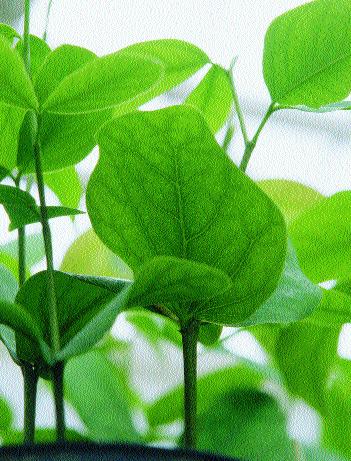
Transforming tropical rain forests into carbon dioxide (CO2) cleaners and thereby freeing the atmosphere from large quantities ofthe main gas responsible for increasing the greenhouse effect on Earth is,for the time being,an idea as controversial as it is unattainable.Ifone day this feat becomes possible,a group ofspecialists in plant physiology from the São Paulo Institute ofBotany believes that the jatoba,a tree that is extremely well adapted to Brazilian ecosystems and present in practically all the latitudes ofthe Brazilian territory,may be a good candidate for carrying out the role ofcleaner ofthe air – or,at the least,to show how this task may be carried out by other plants.This dream,a still far-fetched reverie,is based on the results ofa series ofexperiments carried out with seedlings ofa species ofcourbaril, Hymenaea courbaril (Jatoba),whose growth seems to speed up in environments rich in carbon dioxide,the popular name for CO2.
Generally speaking,the studies indicate that when they are cultivated for three months in a place with 720 ppm (parts per million) ofCO2 in the air,twice the current concentration in the atmosphere,the Jatoba seedlings double their absorption of carbon dioxide and the production ofsugars (carbohydrates), and increase their biomass by as much as 50%,above all in the area ofthe leaves and in the roots,in the light ofthe fact that, at this age,the plants are not yet producing trunk(wood). “The work suggests that the courbaril may continue to trap carbon while growing in an environment with high levels ofcarbon dioxide”,says Marcos Silveira Buckeridge,from the Institute of Botany,the coordinator ofa project carried out in the ambit of Biota-FAPESP,a program for mapping biodiversity in São Pau-
Jatoba:in an environment saturated with carbon dioxide, more photosynthesis
lo. “Our proposal is not to set out planting jatoba forests in the hope of reducing the greenhouse effect.It is, rather,to understand this plant’s physiological mechanism,and research into this is at a more advanced stage,to try one day to optimize the assimilation ofcarbon by the courbaril and other tropical trees that ought to have a similar metabolism”.
Ifthe behavior ofthe adult courbaril in the forest is similar to that ofits sapling cultivated in a controlled environment,this tree may be able to get considerably stouter,should the Earth’s atmosphere reach those 720 ppm ofCO2 in 2075,as some estimates suggest.In this hypothetical futuristic scenario,to say that the jatoba tree is going to increase its biomass – to have more and/or larger leaves and roots,and, above all,to produce more wood – is equivalent to claiming that this plant is going to trap more carbon from the air.After all,the cellulose in wood is one ofthe best ways ofstoring carbon present today in the CO2 in the atmosphere. “We still do not know,however,how the jatoba tree,in its entirety,responds to the increase ofCO2”,commentsMarcos Aidar,another biologist from the Institute ofBotany involved in the project. “We cannot specify,for example, how much ofthis extra carbon dioxide that goes into the plant ends up leaving it through its respiration.”
Along with water and light,carbon dioxide is a compound necessary for plants to carry out photosynthesis (energy production ).The CO2 absorbed by a plant can only have two destinations: a part remains held back in the inside of the plant,and the other is sent back to the atmosphere through respiration.The portion that stays in the plant is used in chemical reactions that generate cellulose and other sugars.Altering the mixture ofthe quantity ofCO2 eliminated by plants,and above all ofthe fraction used in the production ofcarbohydrates and wood,is a goal pursued by the paper industry,sectors ofagriculture,and scientists like Buckeridge and Aidar.
In the last few decades,the rise in the levels ofcarbon dioxide in the atmosphere was basically due to changes in the use ofthe land (slashing and burning offorests) and to the increase
in industrial activity,above all because ofthe accelerated combustion offossil fuels (coal,oil and gas).Measures at a global level to fight a series ofenvironmental problems,including the stepping up ofthe greenhouse effect,were discussed at the World Summit on Sustainable Development,the Rio + 10 conference held by the United Nations (UN) in South Africa at the end ofAugust and beginning ofSeptember.Theoretically,lowering CO2 emissions is the simplest and most effective measure to lessen the impact ofthe greenhouse effect,which is expected to warm up the Earth’s climate by a few degrees and change the rainfall pattern at some spots ofthe globe.However,this objective is one that is difficult to achieve, since the United States,which on its own emits one quarter ofthe carbon dioxide in the atmosphere,is not willing to take on a commitment like this, as it once again was made clear at the UN meeting (see the box on page 26).
Among the proposals that are alternative or complementary to the reduction in the CO2 emission,one that is frequently pointed out is the maintenance ofthe tropical forests (and the possible reforestation ofnew areas), above all due to the potential shown
by trees for trapping carbon.Potential, by the way,that is still far from being known,and one that may vary a lot as a result ofseveral factors,such as the age and type oftree being analyzed.As a rule,it is usually said that tropical forests have a great capacity for taking CO2 from the air.But recent calculations made in the ambit ofthe Large-Scale Biosphere-Atmosphere Experiment in the Amazon (LBA),an international megaproject led by Brazil,point to the potential for sequestering carbon of this ecosystem possibly being more modest than it used to be thought. This is the context into which the studies ofthe researchers from the Institute ofBotany fit,on the metabolism ofcourbaril in carbon dioxide rich environments.
The main field experiment with Jatoba was carried out last year in collaboration with Carlos Martinez,then at the Federal University ofViçosa (UFV), in Minas Gerais,and today at the University ofSão Paulo (USP) in Ribeirão Preto.In Viçosa,the cuttings ofthe plant were cultivated in two kinds of special chambers:one in which the mixture ofgases was the same as in today’s atmosphere (360 ppm ofCO2), and another with the air kept artifici-
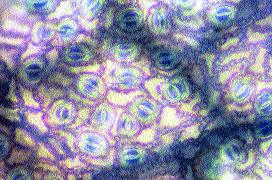
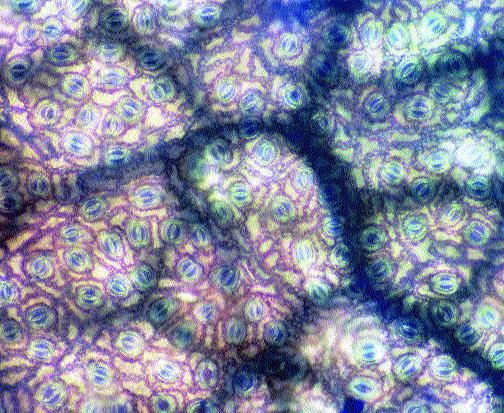
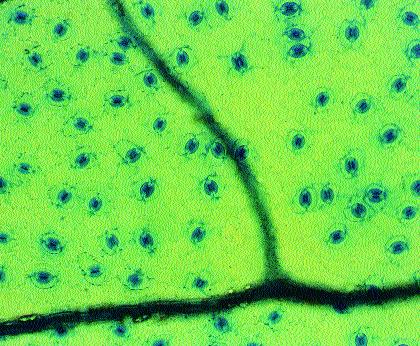
Surface of a leaf from a 1919 jatoba: 40% more stomata (highlighted)...
...than today,when the concentration of carbon dioxide is 20% higher (magnified 25 times)
ally with a constant concentration of 720 ppm ofCO2.These devices do not reproduce to perfection the hypothetical environment of2075 – for example, there is no control over the temperature and humidity,parameters that are likely to change with an increase ofthe greenhouse effect.Even so,theuse of the chambers is universally accepted for this kind ofcomparative test. “There are more sophisticated and expensive methods,but the majority ofwork makes use ofthese chambers”,Buckeridge ponders.In the course oftheexperiment,measurements were taken of several parameters ofthe plants brought up under different environmental conditions and afterwards collated.
Another methodology used by the researchers was to pump different concentrations ofcarbon dioxide into only the leaves ofthe jatoba – and not the whole cutting.With this more targeted approach,concentrated on the part of the plant that absorbs and emits gases, Buckeridge’s team discovered that the leaves ofthe jatoba only reach saturation point in the absorption ofCO2 when the concentration ofgas exceeds 1,000 ppm.This is an extremely high saturation point,compared with other tropical plants.The bromeliad Alcanta-
rea imperialis,for example,cannot successfully increase the speed with which it assimilates carbon dioxide,ifplaced inan environment with 600 ppm.With Brazilwood (Caesalpinia echinata),the same happens when the level ofCO2 hits 700 ppm. “Ifour hypothesis is right, the jatoba will still be responding to the change in the concentration ofthis gas many decades after other plants have reached their utmost point ofassimilating carbon”,Aidar comments.
Besides showing that the jatobacuttings behave differently when cultivated in different concentrations of CO2,the work found alterations in the cellular structure ofthe leaves ofthe plants.The team from the Institute ofBotany,also made up of Paula Costa,Solange Viveiros and Sonia Dietrich,found that the number ofstomata in the courbarils cultivated at 720 ppm ofCO2 was about 15% less than those measured in the saplings kept at 360 ppm.Present fundamentally on the surface ofthe leaves,where they control the gas coming into and going out of the plants,in particular the absorption ofCO2 and the emission ofwater vapor,the stomata are sets ofcells that
perform the role ofpores in plants. What does the variation in the number ofstomata have to do with the lesser or greater volume ofCO2 in the atmosphere? In environments that are extremely rich in carbon dioxide,plants adapt themselves to the conditions of the atmosphere and reduce the number ofstomata in order not to capturean excessive amount ofCO2,which would not be productive or could be even harmful to their organisms. “Changes in the density ofstomata are part ofthe mechanism for regulating plant metabolism”,says Buckeridge. “This has now been seen in plants from a temperate climate and in Arabidopsis thaliana (a plant model for biology) exposed to high concentrations ofCO2.”
Alterations in the level ofstomata in plants are not just a phenomenon foreseen for the future,ifand when theincrease ofthe greenhouse effect becomes even more intense.Actually, thereare strong signs that these changes in the leafcellular structure have been goingon for at least two centuries.Work donein centers abroad have shown that,with the Industrial Revolution and the gradual rise in the emission oftoxic gases such as CO2,today’s plants show less stomata than those of the past.Buckeridge’s team also corroborated this phenomenon with the courbaril.In the herbarium ofthe Institute ofBotany,they took leaves from a tree dating from 1919,a time when the concentration ofCO2 was around 300 ppm,20% less than now,and saw that this example ofthe species had a density ofstomata that was 40% greater than in today’s Jatoba “Ifcompared with the Jatoba cuttings that we cultivated in Viçosa at 720 ppm,the specimen from the beginning oflast century had practically double the number ofstomata”,says Aidar.
The reader may not have noticed a paradox that pops up from the experiments carried out with the jatoba cuttings in the supposed environment of2075,rich in CO2.Under these conditions,the plant shows an increase of 50% in its sugar and doubles the assimilation ofcarbon dioxide.These last two details lead one to believe that,compared with the current situation,the photosynthesis ofthe plant also should double,ifthe levels ofCO2 increase
100% over the next 75 years.So far,it all makes sense.But the reduction in the number ofstomata messes up this picture a bit.After all,this alteration is an attempt to adjust downwards –and not upwards,as the earlier data suggests – the current levels ofthe plant’s photosynthesis. “It may be that,in spite ofhaving lowered the number ofstomata, there has been an improvement in the cellular structure that were left and are responsible for capturing CO2”,says Buckeridge.This contradiction is an indication that the courbaril’s metabolism is waging a kind ofinner battle to try to adjust the level ofphotosynthesis in an environment richer in carbon dioxide.
Many botanists believe that plants have an internal mechanism that allows them to sense the quantity ofcarbohydrates (sugars), and so to adjust itslevels ofphotosynthesis,to avoid absorbing too much carbon dioxide.According to this theory,when the production ofsugars reaches a very high level,above the capacity ofthe plant for using them,a sensor sends an order to stop photosynthesis and,as a consequence,to lower the assimilation ofCO2 and the synthe-
sis ofcellulose.In the opinion ofBuckeridge and Aidar,determining the genes that codify proteins that are important for the workings ofthis natural sugar sensor,such as the enzyme known as rubisco (ribulose-1,5 –bisphosphate Carboxylase) – may be useful for trying to control the entry of carbon dioxide and the production of cellulose in trees.
Cuttings:with twice the carbon dioxide in the air,they double the production of sugars
Enthusiastic over the results achieved with the courbaril cuttings at 720 ppm ofCO2,the researchers from the Institute ofBotany decided to publicly advocate the idea ofresearching the use ofgene therapy in plants to pursue this intention.In an article published in April in the Biota Neotropica electronic magazine, maintained by the Biota-FAPESP program,the two researchers proposed a few biochemical routes which could be altered in plants with the intent ofcontrolling their photosynthesis,the metabolism ofcarbohydrates (sugars),and the synthesis ofcellulose as well. “We know that this idea is controversial,but we defend approaches that are safe fromthe environmental point of view”,Aidar explains.To be ecologically correct,these interventions into plant genomes must not be handed down to theirdescendants.In this way, nature is not affected by transgenic species,which couldcompete and become dominant,with regard to the one unaltered in their DNA.
Russia makes international agreement feasible
Ifthe measure ofthe success of Rio + 10,the world summit ofthe UN for sustainable development that ended last month in Johannesburg, is the adhesion ofthe United States tothe commitments laid down in the Kyoto Protocol,the meeting may be considered a failure,at first sight. In South Africa,the George W.Bush administration gave no guarantees to reduce the emission ofcarbon dioxide,the main culprit for the greenhouse effect.But what seemed to be a victory for the intransigence ofthe Americans,responsible for one quarter ofthe global emissions ofCO2, may be a sign ofthe growing isolation ofthe country’s position. Although the summit did not produce any bombastic facts,the end of
this mega-event,which gathered representatives from 190 countries,may have paved the way for Kyoto to start being put into effect.By 2012,the protocol provides for bringing down the levels ofCO2 emitted by the industrial countries to the levels prior to 1990.
To come into force,the agreement needs to be ratified by at least 55 countries (which has now been achieved), which account for a minimum of55% ofthe global emissions ofCO2 – a requirement that is difficult to meet without the United States and ofits allies in the environmental field.But the scenario changed at the end ofthe meeting,as Russia,the second largest emitter ofCO2 on the planet,and Canada,a follower ofthe Washington recipe book,said that they will ratify
the protocol shortly.Australia too is studying compliance with the Kyoto rules.As the 15 countries ofthe European Union and Japan ratified the agreement at the beginning ofthe year, with the entry ofRussia,and even without the United States,the protocol can take off.Poor and developing countries like Brazil are exempt from complying with the targets.
Brazil,indeed,made news at Rio + 10,by presenting a proposal that called attention:it advocated the idea that by 2010 10% ofthe energy used globally should come from renewable sources,such as hydroelectricity.The suggestion was however rejected by the United States and the oil producing countries,with the exception ofVenezuela.
EDUARDO CESAR
For the researchers from the Institute ofBotany,two kinds ofintervention,both ofthem theoretically safe from the environmental point ofview, could be tried out in plants,with the purpose ofincreasing their efficiency in ridding the atmosphere ofcarbon dioxide.One ofthe possibilities would be to promote alterations in the plants’ chloroplasts,in the light ofthe fact that this part ofthe genome is not,in the immense majority ofplant species,passedon hereditarily to the descendants. Another alternative would be to develop gene vaccines or medicines that could be administered to plants temporarily, just for the time deemed necessary,with the objective ofacting on their metabolism,thus leading them to a greater production ofphotosynthesis and assimilation ofcarbon.
Not everyone has approved the ideas ofBuckeridge and Aidar.In the following issue the Biota Neotropica magazine,two researchers from the Federal University ofRio de Janeiro (UFRJ),FábioRubio Scarano and Eduardo Arcoverde de Mattos,published an article criticizing the proposals oftheir colleagues from São Paulo. “[The proposals] err for not taking into some important ecological and sociopolitical aspects,such as not being ecologically predictable,the fact there is great potential for carbon being sequestered by non-manipulated
Political deadlock:reduction of the emission of carbonic acid gas depends on international collaboration
native plants,and the importance of scientific and political sovereignty as far as the theme ofglobal changes is concerned”,wrote Scarano and Arcoverde. Obviously,the knowledge ofplant physiology and biotechnology is still not at a level that makes it possible for scientists to go ahead,in the short term, with either one ofthe two approaches suggested by the two researchers from the Institute ofBotany. “But time is running,and ifthe forecasts are correct,we have only 50 years to decide whether or not we are going to use these methods for manipulating plants”, comments Buckeridge.
THE PROJECT
Conservation and Sustainable Usage of the Plant Biodiversity of the Cerrado and the Atlantic Rain Forest: Reserve Carbohydrates and their Role in Establishing and Maintaining Plants in their Natural Habitat
MODALITY
Thematic Project
COORDINATOR MARCOS SILVEIRA BUCKERIDGE –Institute of Botany of the State Secretariat for the Environment
Even ifthe studies ofjatoba do not open the way for the development of techniques capable ofincreasing the capacity oftropical forests for sequestering carbon (dioxide) from the atmosphere,the research with Jatoba will have served another purpose,just as important or more from the botanical point ofview:helping to understand the physiology ofplant spe cies and serving as a parameter for the possible rearrangements ofthe flora that may happen as a result ofchanges of climate.Many international works,almost always with plants from a temperate climate or farm crops,show that deep alterations may be occurring in the biodiversity ofthe Earth,due to the increase in the levels ofCO2 and ofthe greenhouse effect.A study from the University ofFlorida recently published in the Global Change Biology magazine,showed,for example,that the yield in a crop ofbeans is one quarter larger when cultivated at 720 ppm. The same thing also seems to happen with soya planted in CO2 rich environments.
In the case oftrees from a temperate climate,there are indications that in an environment with high concentrations ofCO2,the shade species are going to increase their biomass more than the varieties accustomed to sunlight.The data on the growth ofjatobaat 720 ppm ofcarbon dioxide gives weight,for the time being,to this hypothesis.Incidentally:the variety ofjatobastudiedat the Institute ofBotany is a tropical species that grows in the shade when young,protected from the rays ofsun by the crowns oflarger trees.Buckeridge and Aidar are now planning experiments with other tropical species,like the species ofipe (Tabebuia spp),glorybushes (Tibouchina spp),pau de jacaré (alligator wood –Piptadenia gonoacantha) and Brazilwood,to see their behavior in environments with high levels of CO2.Another goal is to carry out more complex tests with jatoba,in which,besides the levels ofcarbon dioxide,temperature and humidity are controlled in the special chambers in which the plants are cultivated.
•
The origin ofmammals
Fossils of small species discovered in Rio Grande do Sul could be the closest ancestors to the larger animals of today
M ARCOS P IVETTA
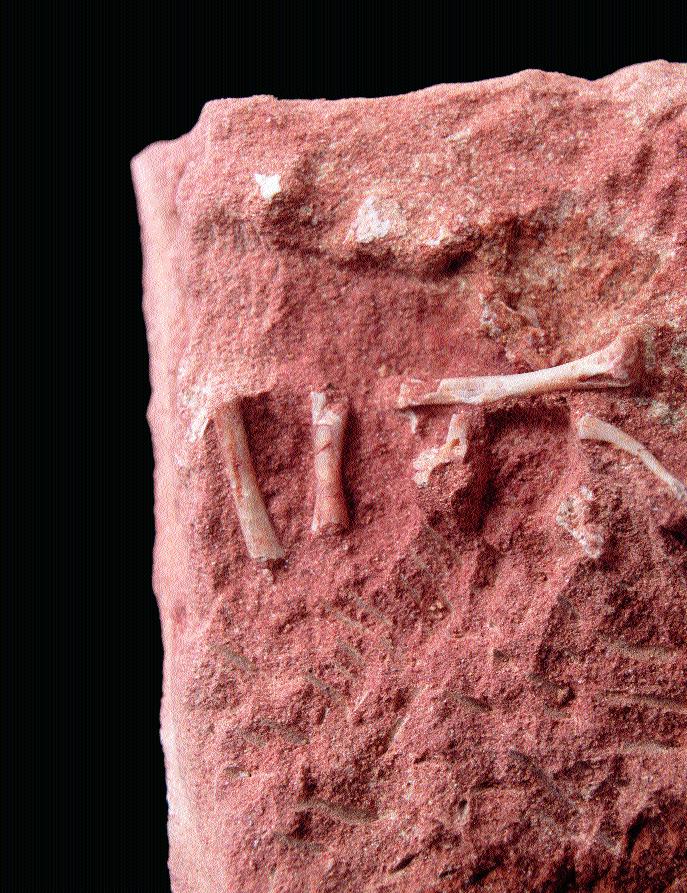
Rocks from the Triassic period,with fossils of animals that lived around 210 million years ago: relatives of the mammals
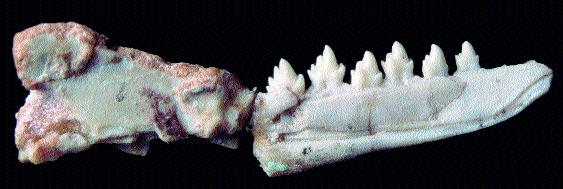
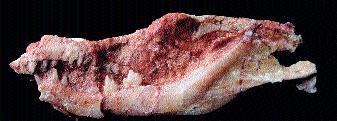
Brasilodonte:above, left mandible and, at the side,left jaw bone with teeth
Any paleontologist will tell you that the mammals descended from some form of cynodont,a vast groupof animals – extinct,just like the dinosaurs – characterized by having craniums and teeth similar to those ofour current dogs.The cynodonts belong to the group ofsynapsids, which served as the transition between the reptiles and the mammals.What has been missing is to know what lineage ofthe cynodont generated,around 210 million years ago (more or less during the time that the dinosaurs came into being),the first beings with the bone characteristics that define a mammal today:four types ofteeth functionally and anatomically differentiated, middle ear with three sound conducting ossicles and a larger more protruding cranium.As pioneers ofbringing together these bone traits and probably being warm blooded,as well as having a hairy body and glands for the production ofmilk for their offspring,these animals were the primordial examples ofthe future mammals,among themman.Perhaps it will never be precisely determined which species ofcynodont took the final step in the direc-
tion ofmammals,but paleontologists from the Federal University ofRio Grande do Sul (UFRGS) and the Argentinean Museum ofNatural Sciences believe that they have found important pieces to this phylogenetic puzzle.
Starting from the analysis ofvarious fossil fragments ofsmall reptiles –ofthe size ofa pen and similar to rats
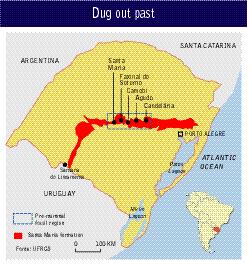
or wild squirrels – recovered over the last two years in the region ofSanta Maria,at around 200 kilometers from the city ofPorto Alegre,the capital of state ofRio Grande do Sul,the researchers have identified two new cynodonts – which they have provisionally named Brasiliterio and Brasilodonte –with anatomical characteristics that
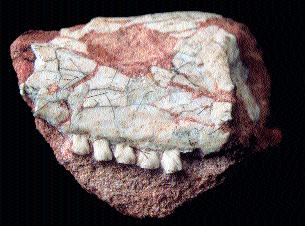
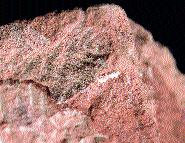
Rock with the teeth of the Brasiliterio:white marks to the right
would place them as the ancestors closest to the primordial mammals. “These pre-mammalian reptiles from Brazil could be a sister group to the mammals”, says the renowned Argentinean paleontologist José Bonaparte,73 years ofage, who discovered the petrified bones of the two species together with researchers from the Institute ofGeosciences ofUFRGS,at which the researcher is a visitor with a scholarship from the National Council for Scientific and Technological Development (CNPq). “These animals,removed from the rocks of the Upper Triassic period – with a geological age estimated at between 230 and 205 million ofyears ago –,were not mammals,but their evolution was clearly in that direction.” For this reason they received names that place them in this animal group.Brasiliterio means “mammal from Brazil”,whilst the Brasilodonte has the teeth (odon) ofa mammal and its post-canines,used for crushing,form four right angles.
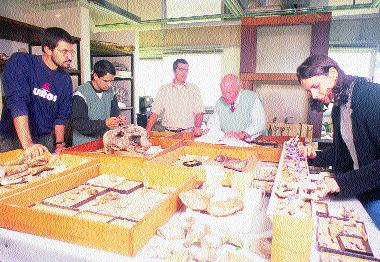
The majority ofthe fossils found are complete or partial craniums,with preserved mandibles and teeth.Other bones have been rescued,but not an entire skeleton.Just this month,researchers from UFRGS and technicians
Hadrocodium and its cranium: the oldest representative of today’s mammals
Cranium and mandible of Brasiliterio:the second species to have been discovered
from the Argentinean museum returned to the region ofSanta Maria in search ofmore fossils.
The comparison ofthe forms ofthe cranium,mandible and teeth ofthese animals with those ofthe Morganucodon – one ofthe oldest known mammals (close to 200 million years) with fossil material of good quality and that had fifteen centimeters in length and looked like a wild rat – has turned the southern Brazilian findings into strong candidates of being the best representatives ofthe cynodonts lineage that ended up in mammals. “ The cynodonts ofRio Grande do Sul show a type ofcarnivore-insectivore dentition,above all in the mandible,comparable to the first mammals”,says Bonaparte.He believes that the Brasiliterio produced descendants which,generation later,could have ledboth to the primordial mam-
mal Morganucodon and to the Brasilodonte,an animal with a greater number ofcharacteristics ofa mammal.In other words,the lineage ofthe Brasiliterio could have been the ancestor bothof synapsids very close to the mammals, and to the first mammals themselves.
Brother group - For now,the fossils of the Brasiliterio do not appear to be sensitive to the analyses as profound as those carried out on the Brasilodonte,and the researchers have not gone as far as labeling the mini cynodonts from Rio de Grande do Sul as the father ofall the mammals.Instead ofemphasizing the notion ofa paternal and filial lineage, they prefer a concept more precise from the scientific point ofview:that ofa brother group.Iftheir theories prove to be correct,the Brasilodonte and the Brasiliterioshould take the place oftwo families ofsmall cynodonts,the tritylodontids and the tritheledontids (also called ictidosaurs),found in various parts of
The tecodino of Santa Maria
The region ofSanta Maria,in the center ofthe State ofRio Grande do Sul,does not only provide interesting fossils ofmini cynodonts that can help to explain the origin ofthe mammals.From there,there has also come vestiges ofthe bones ofextinct animals ofthe Triassic period that inhabited the earth between 250 and 205 million years ago.A famous fossil removed from the rocks ofthe region, for example,is named Staurikosaurus pricei,one ofthe oldest dinosaurs recovered in the world,whose skeleton, discovered in 1937,is on exhibition at the Museum ofComparable Zoology ofHarvard in the United States.
More recently,paleontologists from a state institution – the Mu-
the world and that have battled for some time the elite position ofbeing the brother group closest to animals with hair and warm blood. “Our findings could assist in better understanding the origin ofthe mammals and to show which lineages ofthe cynodonts participated in the process of transition ofthe synapsids in the direction towards this type of animal”,comments the paleontologist Cesar Schultz,ofUFRGS, co-author ofBonaparte’s studies on the Gaucho pre-mammal mini synapsids.
seum ofNatural Sciences ofthe Zoobotany Foundation ofRio Grande do Sul –,which in 1998 had already participated in the discovery ofthe first pre-mammal mini cynodonts in the hinterland ofSanta Maria,made another startling discovery:they found rich fossil material ofa mysterious animal,informally called for now the tecodino.
What could this creature have been?The paleontologist Jorge Ferigolo,from the Foundation,still does not know precisely ifthe petrified bones found in the municipality ofDona Francisca – a complete skeleton,two entire craniums,two partially preserved craniums and four backbones almost intact,as well as parts ofa skele-
ton that seems to be a young example ofan enigmatic animal – belonging to the thecodonts,ancestors ofthe dinosaurs or to the dinosaurs themselves. Or perhaps ofan animal that was a transition between two types ofreptiles,a hypothesis that inspired the provisional name of tecodino. “We still have to prepare the majority ofthe fossils – to clean and to separate out the petrified bones encrusted in the rock – and to study them with care”, advised Ferigolo.
Though little material has so far been prepared,the fossil fragments of the tecodino that have already been cleaned,reinforce the hypothesis that they are dealing with a hybrid species, with some characteristics ofthe thecodont and others ofthe dinosaur.The mysterious animal – that lived some 235 million years ago and should be a
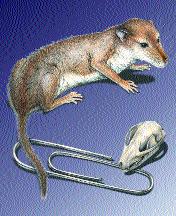
With an appearance and dimensions similar to those ofthe Morganucodon,the new cynodonts measured between 9 and 15 centimeters from head tothe end oftheir tail and the length ofits cranium varied between 18 and 22 millimeters.Their weight would not have been more than a few hundred grams.The Brasilodonte was about 40% larger than the Brasiliterio. “ These animals probably ate insects
and other smaller animals,lived in burrows and had night habits”,says Schultz.They must already have had its body covered with hair,andits paws were strong enough for it to open up burrows in the ground where it sheltered from predators such as the first dinosaurs and other reptiles.The remains ofthis as yet poorly known mini-fauna
were removed from rocks in paleontologist sites in the Gaucho municipalities ofFaxinal do Soturno and Candelária,belonging to the Santa Maria Formation,one ofthe areas in the State with Triassic sedimentary rocks – an agitated geological period oflittle more than 40 million years,that occurred between 250 and 205 million years ago.
Schultz (left) and Bonaparte (with tie) with UFRGS paleontologists;fertile land
biped ofaround 2.5 meters in total length –reveals lots ofcharacteristics ofhaving had a backbone that is more or less typical ofthe dinosaurs.However,they have not as yet been able to determine ifits articulation with the femur,in the pelvis,is perforated,a trait characteristic ofthe dinosaurs.
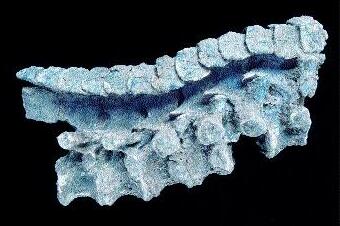
The thecodont side ofthe animal shows itselfin the bone plates that seem to have existed below its skin,more or less as it occurs today in the crocodiles, called osteoderms.Although it had been hoped that they would show these bone plates,so as to place in on
Besides making a comparison ofthe anatomy ofthe Rio de Grande do Sul cynodonts with the primordial mammal Morganucodon,the group confronted their findings with the morphology ofthe Chinese mammal Hadrocodium wui,which lived some 195 million years ago and was also similar to a small rat.Result:the upper teeth ofthe Brasilodonte and ofthe Brasiliterio resemble those ofthe Chinese fossil,whose lowermost teeth measure a total length oftwo centimeters.The feeling from the comparison comes from the fact that,though animals ofthe type of Morganucodon are considered to be the first mammals,one does not know with certainty ifits descendants generated the current existing lineages.This origin,it would appear,is more probably related to a mammal ofthe type such as Hadrocodium.
The object ofa cover article ofthe North American magazine Science in May oflast year,this Asian little animal is considered the potential common ancestor ofthe three current groups of mammals (a fourth group,that ofthe multituberculates,has been extinct for 40 million years):the monotremes, which lay eggs and are represented by the duckbill platypus and by two speci-
the evolutionary scale close to the thecodonts,the oldest types ofdinosaurs,ofthe age ofthe tecodino,apparently don’t have them.The osteoderms became more common in later dinosaurs.
es ofechidna,similar to a hedgehog; the marsupials,such as the possum,the kangaroo and the koala bear,which house and feed their young in a skin pouch;and the placental,more numerous,which include the rodents and elephants,passing through the primates,amongst which there is man.To compare the new Rio Grande do Sul fossils with the Hadrocodium,the most distant descendant ofall ofthe living mammals up until now localized,is a manner ofasserting ifthe Brasiliterio and the Brasilodonte also do not guard some relationship,however remote, with the current animals ofhair and warm blood.
The discoveries have not as yet been formally published,which should occur during this year.In April of2001,at an informal meeting with researchers from North America at the Museum ofComparative Zoology ofHarvard,Bonaparte demonstrated some ofthe fossils and discussed their peculiarities andthe importance ofthese new species.He stated that the receptivity ofhis fellow colleagues was good.The proposal that the mini cynodonts from Rio Grande
Bone plates of the backbone of the tecodino: a transition species
The region ofSanta Maria is so rich in fossil remains that the government ofRio Grande do Sul,by way ofthe Pro-Guaíba Program, which is carrying out a survey ofthe potential ofthis hydrographic basin,has already proposed the creation ofa Paleontology Park in the surroundings ofthe town ofCandelária. “The chosen area is already in the phase of being bought over”,explains the paleontologist Ana Maria Ribeiro from the Foundation.
do Sul are the closest parents known to the mammals might appear daring,but Bonaparte – who for the last seventeen years has had the financial support of the North American National Geographic Society for his field work – has the credentials to defend the hypothesis.
With more than four decades ofresearch,Bonaparte is one ofthe best specialists on dinosaurs in the world. Thanks to his work,above all in the Argentinean Patagonia,more than twenty species ofdinosaurs typical ofthe southern hemisphere have been discovered,among them the Amargasaurus, the Argentinosaurus (perhaps the largest in the world with up to twelve meters in height),the Saltasaurus and the Carnotaurus.This last one,a carnivore of3.5 meters in height,7.5 meters in length and with two horns,transformed itselfinto an animated movie personality – in the children’s film Dinosaur,launched in 2000 by Disney.
More recently,and without abandoning the dinosaurs,Bonaparte began to study the ancestors ofthe mammals,which appeared on Earth at the time as these large reptiles and that lived discretely under their shadow for 160 million years.In the Argentine,he found fossils ofsmall synapsids with
MIGUEL
BOYAYAN
mammiferous traces,that could be labeled as distant cousins of Morganucodon. “However,these fossils were ofthe Lower toMiddle Triassic era,between 250 and 230 million years ago”,he ponders.His hope offinding advanced cynodonts,which would make the link between reptiles and mammals,consequently made him move to the South ofBrazil, more specifically to the Rio Grande do Sul rocks ofthe Upper Triassic period.
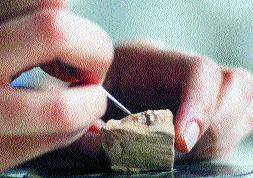
Cleaning a Fossil: care and patience
In the middle of1997, Bonaparte came towork at the Museum ofNatural Sciences of the Zoo-botany Foundation ofRio Grande do Sul,in Porto Alegre,famous by its research in the area ofpaleontology.One year later,at the side oftwo researchers from the foundation,Jorge Ferigolo and Ana Maria Ribeiro,he gathered together numerous fossil fragments ofa new advanced cynodont,named Riograndia guaibensis,in rocky outcrops ofCandelária,and described the animal in a scientific paper published in 2001 on the British magazine Palaeontology
A possible ancestor ofBrasiliterio andBrasilodonte,the Riograndia could not have mammals as its descendants. “Its teeth are different”,explains the paleontologist Marina Bento Soares from UFRGS.Nevertheless,the localization oflots ofpetrified remains ofthis species confirmed the clues that it was worth while exploring the soil ofCandelária and ofits surroundings. “The fossil potential ofthe region is extremely high”,comments Ana Maria Ribeiro, who continues to study the pre-mammals ofthe Rio Grande do Sul Triassic period parallel to the work ofBonaparte, today based at UFRGS.Encrusted andsometimes found in the middle ofthe reddened rocky sediments ofthe Santa Maria Formation,the bony remains ofthese diminutive pre-mammal reptiles are difficult to locate by the untrained eye.
Privileged location - The clue to a petrified bone generally does not go beyond a white point – as it contains calcium which is ofthis color – ofthe size ofa match head on the surface ofthe
rock. “We were used to looking for fossils oflarger reptiles such as dinosaurs and even cynodonts oflarger size”,tells Cesar Schultz. “We had to learn to look at the rock in a different way in the search for these small pre-mammals.” As it is the only place in the country with sedimentary rocks containing fossils of terrestrial vertebrates from the Triassic period,when both the dinosaurs and the mammals came into being,Rio Grande do Sul is a privileged land for prospecting.
One ofthe largest difficulties for studying animals ofthe transition era is exactly how to classify each fossil into a categorized date – cynodont or mammal,dinosaur or bird.It is common to find nothing more than teeth or fragments ofcranium,ofdifficult identification. In the case ofthe pre-mammalian reptiles from Rio Grande do Sul,until the fossils found are reasonable abundant and rich in detail.Even though there are well accepted conventions for dealing with the dividing line between species, it is difficult to have unanimity. “The classifications reflect more or less the preferences ofeach author and are,in some measures,arbitrary”,Schultz says.
During the Triassic era,the solid earth was unified in the super continent named Pangaea,whose center was an immense desert.The ice ofthe polar caps had been melted.In this arid environment,around about 230 to 220 million years ago,the dinosaurs came about,descendants ofreptiles ofthe
group ofthe thecodonts. Until the end ofthe Triassic era,in a movement ofthe renovation ofthe fauna almost simultaneous to the appearance the dinosaurs, the firstmammals,crocodiles and turtles appeared as well as the pterosaurs,flying reptiles also extinct.At this point in time,the fauna and flora were very similar in all places,since there was only one continent. “Animals similar to the mini-cynodonts ofRio Grande do Sul must have existed in other parts ofthe planet”,comments Bonaparte.
It is within this lost world ofthe Triassic period,more than 200 million years ago,which the researchers are making their efforts to find the most adequate place for the Brasiliterio and the Brasilodonte in the evolutionary tree.How close to the first mammals to these reptiles that remind one ofrats? There are two anatomical parameters in the bones that help to demonstrate the distance ofone animal in relation to the mammals:the construction of the teeth and ofthe mandible and the bone composition ofthe middle ear. Mammals change their teeth only once during their life and have four types of well defined teeth:incisors to bite or to gnaw,canine to tear and molars and pre-molars to chew and to crush.In the reptiles,the substitution ofteeth is continuous and lasts the life time and it is impossible to differentiate between preBrasilodonteand the Brasiliterio,the distinction between molars and premolars is as yet not clear and the changing ofteeth seems to obey the standard ofthe reptiles”,comments Bonaparte.In spite ofthis,the sharp points ofthe canines resemble those of the primordial mammals,which reinforces the thesis that theyhave the potential to generate,in lineages yet to come,some form ofmammal.
The hearing system shows that they were on the correct path,but there were not yet mammals.This is because in the mammals the middle ear,an internal cavity full ofair,is composed of three small interconnecting bones:the hammer,the anvil and the stirrup.The middle ear ofthe cynodonts,among
MIGUEL BOYAYAN
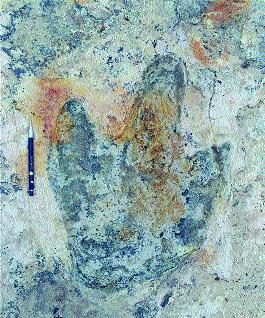
A new archeological site is gaining fame in the state ofRio Grande do Sul:the municipality ofSantana do Livramento,in the west,on the frontier with Uruguay.Here,some 500 kilometers from the city ofPorto Alegre,researchers from the Federal University ofRio Grande do Sul (UFRGS) and from the University of the Vale do Rio dos Sinos (Unisinos) found during 2001 and in January of this year various types ofdinosaurs at the side ofa road where the earth was being moved and leveled.By their format,they belong to two forms that must have lived between 144 and 137 millions ofyears ago,at the end ofthe Jurassic era the beginning ofthe Cretaceous era, when thedinosaurs dominated the scenario.
A type offootprint, which went as far as leaving trails,resembling elephant tracks,each one of40 centimeters on average. “These tracks must have come from a sau-
them the Brasiliterio and the Brasilodonte,do not have these bones.Through evolution,the hammer,anvil and stirrup ofthe middle ear of the mammals were constructed beginning with the bones originally situated in the mandible and in the region ofthe articulation ofthe cranium ofancestral reptiles.The mammals always have only a large bone in the mandible and three in the middle ear.It so happens that the reptiles have an articulated mandible on top ofvarious bones and the middle ear is without a hammer,anvil and stirrup. The cynodonts show exactly a transitional standard between these two extremes. “The smaller the number ofbones in the mandible ofan animal,the closer this animal is to the condition ofa ma-
Frontier dinosaurs
ropod,a large herbivore with a long neck that may well have been more than 13 meters in length”,says Cesar Schultz from UFRGS,who is studying the recently discovered vestiges near the frontier.Another type offootprint was made by paws with three toes,which could have belonged to the carnivorous dinosaurs or to a herbivorous group ofthe hadrosaurus:in either ofthe cases,by the size ofthe footprints,they must have been biped dinosaurs ofaround three meters in height.
mmal”,compares Schultz.The fossils from Rio de Grande do Sul still have more than one bone in the mandible, denoting their pre-mammal character. The discovery ofthe new brothers ofthe warm blooded animals also puts in check a common idea about the animals which made up the bridge between the cynodonts and the mammals: that there had been a miniaturization ofthis group ofreptiles before the first mammals were derived.Based on the evidence ofthe fossils from Rio de
In Uruguay,fossils offish and dinosaurs have been found in the same rocky layer in which now flourish the remains ofreptiles on the Brazilian side ofthe division.For this reason the researchers are going to make exploratory expeditions into the region,in the hope ofrescuing the bones ofthe authors ofthe footprints.The rocky layer that preserves the tracks is below the type ofrock that forms the Botucatu sandstone,whose top layer is datedat 134 million years ago,back in the Cretaceous period,nonetheless, whose base could still be placed at the end ofthe Jurassic era.It is possible that we are dealing with a sedimentary block of the last stage of the Jurassic period or thefirst stage ofthe Cretaceous era,a period thatdid not have known layers in Rio Grande do Sul.
Footprint with marks of three toes:probably a teropod (carnivore) or a hadrosaurus (herbivore)
Grande do Sul,Bonaparte disagrees:the fauna ofthe cynodonts,even before the origin ofthe Morganucodon and other primordial mammals,were already ofvarious sizes,some with more than 1.5 meters in length and others with only a fewcentimeters as in the case ofthe Brasilodonte and the Brasiliterio.Therefore,there was no need to diminish in size in order to become mammals.For him,something distinctive occurred:there were large and small cynodonts,but only one ofthese small ones evolved into the mammals. “With these Gaucho fossils,we can better understand this process oftransition”,emphasizes Bonaparte. “And,in many cases,better understand and substitute theories.”
•
Malaria and some new diseases
São Paulo scientists make Rondonia a forward post for research with a high social impact
M ARCOS P IVETTA
PHOTOS EDUARDO CESAR
Danger at nightfall: children from the Triunfo,district,in Rondônia,bathing at the time of day that the Anopheles mosquito,which transmits malaria, usually attacks
Research into tropical diseases is experiencing an unique moment in Rondônia.Yes,the old federal territory,strongly colonized by immigrants from the south ofthe country in the Sixties and Seventies,raised to the status ofa state only 21 years ago,has been producing some cutting edge studies,when the subject is malaria,leishmaniasis and other disorders,old or emergent, transmitted to man by a host ofinsects,mosquitoes and ticks infected by bacteria,viruses and parasites ofall sorts.It was,for example,on the banks ofthe Madeira river,at Portochuelo,a district ofPorto Velho,one hour away by boat from the urban area ofthe capital ofRondônia,that researchers from the Institute ofBiomedical Sciences ofthe University ofSão Paulo (ICB/USP),which for five years has been maintaining a forward post for studies in the hinterland ofthe state,and from the Center for Research into Tropical Medicine (Cepem),ofPorto Velho,obtained,in 1999,the confirmation ofan old suspicion about one ofthe characteristics ofmalaria in Brazil that makes it difficult to control this endemic disease.
The scientists showed,unequivocally,that there are in the Amazon basin asymptomatic carriers of Plasmodiumvivax,a protozoon that causes around 80% ofthe cases ofthe disease in Brazil – the other 20% are caused, in their majority,by the Plasmodium falciparum,the most aggressive species ofthe malaria parasite,which kills between 1 and 2 million persons every year,above all children,in Africa,and,in an almost insignificant percentage,by the Plasmodium malariae.The definitive confirmation that there have been and there are victims of P.vivax without any malaria symptom
The red cloth in frontofthehouse: an indication that there is a case of malaria suspected: a sign for the motor bike rider from the town hall to stop and collect blood to be examined
was obtained with the use ofa more accurate molecular method than the everyday laboratory test used to diagnose the disease:the PCR (polymerase chain reaction) technique,which amplifies the DNA ofthe parasites and makes it possible to identify the species which the live protozoons in the sick person’s blood belong to,even in the smallest ofquantities.The work had an international repercussion and yielded an article in the English magazine, The Lancet,one ofthe most famous medical publications in the world.
Locating asymptomatic malaria cases in Rondônia is perhaps the greatest scientific achievement ofthe two research centers set up in that state,which carry out studies both jointly and separately. But it is not the only one.The Amazonian nucleus ofthe ICB has found strong evidence ofan as yet unknown species ofa protozoon ofthe Leishmania genus,which could be a new causal agent of American tegumentary leishmaniasis,(ATL) and infectious disease that every year attacks the mucous tissues of28,000 Brazilians,from the north to the south ofthe country.In Monte Negro,a municipality 250 kilometers to the south ofPorto Velho where the base ofthe ICB operates,researchers
also found an extremely high level – one ofthe highest in the world – ofa little diagnosed skin disease,chromoblastomicosis.They also identified a new kind oftick ofthe Amblyomma genus,which is found in terrestrial animals,above all the Brazilian tapirs (Tapir terrestris),which may transmit somedisease to man. “In Rondônia,almost everything is new,and there is much to be researched”, says Erney Plessmann de Camargo,aged 66,the former professor ofthe ICB,recently appointed as a director ofthe Butantan Institute and the coordinator ofa project that has the objective ofsurveying the fauna ofticks in Rondônia and to confirm the prevalence in these arthropods ofthree geni of potentially pathogenic bacteria, Rickettsia,Borrelia and Erlichia. Plessmann is the co-author ofthe article on the discovery ofasymptomatic the malaria plasmodium in Rondônia,along with Fabiana Alves (ICB) and Luiz Hildebrando Pereira da Silva,Cepem’s scientific director and a world authority on tropical diseases.A former director oftwo departments ofthe Pasteur Institute in France,Luiz Hildebrando bears,possibly,the main responsibility for Rondônia having been put onto the map ofBrazilian research. “We believe that these symptom-free persons may show immunity to malaria and act as di-
sease hosts”,says the veteran parasitologist,who has dedicated over four decades to science.In the view ofthe ICB and Cepem specialists’ views,identifying and treating the asymptomatic carriers of P. vixax is just as important for holding back malaria advance as putting into practice the traditional control measures for this endemic disease:combating the transmitting agent,the so-called vector (in Brazil,female Anopheles darlingi mosquitoes infected with the plasmodium) and to medicate as quickly as possible the symptomatic cases.Studying the asymptomatic ones is also a way ofunderstanding the mechanisms involved in the apparent natural immunity acquired by these people, which may be useful for the development ofa vaccine against malaria from P.vivax,a dream that is at least one decade away,in Luiz Hildebrando’s opinion. “The majority ofresearch projects for a vaccine against malaria works with cases ofinfection caused by P.falciparum’’,he says.Incidentally, the genome ofthe falciparum was recently sequenced by an international consortium oflaboratories (see article on page 40).
In a pilot venture in terms ofthe Amazon region,researchers from Cepem swill start before the end ofthis month the identification and treatment ofasymptomatic malaria cases in Vila Candelária,
a district ofPorto Velho,also on the banks ofthe Madeira river,though much closer to the city than the Portochuelo district.The riverside community ofCandelária,where the tracks ofthe legendary Madeira-Mamoré Railroad pass,lies ten minutes by automobile from the paved part ofthe capital of Rondonia – a city with 330,000 inhabitants,spread over a flat area ofmore than 34,000 square kilometers,20 times larger than the city ofSão Paulo –and Candelária is visited at weekends by a floating population ofholiday makers coming from the more urban part ofPorto Velho.
Doctors make the difference - In the village,where 260 fixed inhabitants live,studies by Cepem show that 30% ofthe residents carry P.vivax in their blood,but they do not have the malaria symptoms (a temperature ofup to 40° C and continuous sweating ,from two to four hours),not to mention that 40% have both things,the plasmodium and the clinical manifestations. “Treating the asymptomatic may change the fate ofmalaria”, says Mauro Shugiro Tada,from São Paulo,and Cepem’s head doctor.Tada moved to Rondonia 17 years ago,with the intention ofresearching tropical diseases in a center,which was the embryo ofhis current place ofwork,in Costa Marques,
Human bait: trainees from USP capture mosquitoes (featured, Anopheles) with time of day,temperature and humidity monitored
on the frontier with Bolivia,where,he says, “there is malaria even up the papaya trees”.
Talking about malaria in Brazil is actually talking about malaria in the Amazon region,a region that concentrates over 99% ofthe Brazilian cases ofthe illness.In 2001,according to partial data from the National Health Foundation (Funasa),there were 340,000 cases ofmalaria in the country and 85 deaths.In Rondônia,the number ofcases lay in the region of50,000.In 2000,the number ofpatients in the whole country reached 610,000,with 240 deaths.However bad our health system is – and in the Amazon basin,it is even worse than in other parts ofthe country –,Brazil’s reality is still clearly better than Africa’s is,and that mitigates the burden ofthe endemic diseases over here.
“Our severe malaria is different from the African one”,says Luiz Hildebrando,who has already caught the disease in Senegal and is a carrier of Trypanosoma cruzi,though without suffering from Chagas disease. “The medical service there is much worse,and the favorite victims of falciparum are children,and this frequently causes complications in the brain and death.Here,it is the adults who catch malaria,usually farmers or gold-diggers or people who live on river banks,and problems with the brain are rare”.There are few doctors in the rural areas ofAmazon basin,but by walking a few
kilometers it is possible to find some minimally competent medical attention,says the scientist.In Africa,the walk usually leads nowhere.
In spite ofhis commitments in São Paulo,Erney Plessman goes to the Amazon forest. “In Rondônia,we have the spirit ofa sentinel,to monitor old diseases,the emerging ones and those that are re-emerging”,he sums up. “You never know when something different may appear,like a case ofEbola”.Until now,there are no confirmed reports of victims ofthis mysterious virus,which causes a hemorrhagic fever capable ofkilling the patient in days.The researchers from USP and Cepem are not working in Rondônia with the specific intention of looking for cases ofEbola.But as the natural habitat ofthe virus is the African and Asian rain forests, it makes sense to think that its existence may extend to Brazil and our tropical forests.Like boy scouts,therefore,they always have to be alert.
Exposed to mosquitoes - Even when he cannot travel,Plessmann knows that the tick project is in good hands,in those ofhis 40 year old son,Luís Marcelo Aranha Camargo,the coordinator ofthe ICB’s Advanced Research Nucleus.With two kinds ofmalaria in his curriculum – Monte Negro has a high incidence both ofmalaria and ofAmerican tegumentary leishmaniasis –,Camargo stays the greater part ofthe year in Rondônia.He comes to São Paulo to give lessons and guidance to his students,on average,every 45 days.In the town of 12,000 inhabitants,where electricity cuts and dead
telephones are hardly a novelty,one ofhis tasks is to coordinate a systematic job ofcapturing the diseases vectors,mosquitoes and ticks.Often,in the search for a mosquito,the so-called human bait is used:a fleshy uncovered leg is offered to the insect by a member ofstaffor trainee.The method involves the risk ofan insect bite,but it works.The ICB has already captured over 80,000 mosquitoes,and, with other techniques,10,000 ticks.
It was collecting vectors in the forest that Camargo’s team caught samples ofthe candidate to a new species oftick,extremely similar to Amblyomma incisum .The ICB researchers are looking for evidence that ticks,besides mosquitoes,are transmitters still little studied ofa number ofdiseases,old or emerging,to animals and to human beings.In many cases,this relationship is still obscure.In others, it is now known.This is the case ofspotted fever,caused by the Rickettsia rickettsii bacterium, transmitted to man by the star tick (Amblyomma cajennense),common in horses and other wild
In Monte Negro, On the banks of the Jamari river, collecting goes on: ticks like the probable new species of Amblyomma (above) stick to the flannel
animals.It is a mistake to think that the disease is present only in the Amazon basin.Spotted fever is an endemic disease even in areas ofSão Paulo, such as the Campinas area,where it has already caused some deaths.
Besides the candidate for a new tick,Camargo’s permanent team in Monte Negro and Jeffrey Shaw, a researcher based in the ICB’s offices in São Paulo, also identified in patients with American tegumentary leishmaniasis what seems to a species not yet described in the scientific literature ofthe parasite that causes the disease.Until now,it is known that six species ofprotozoons ofthe Leishmania genus, transmitted to man by mosquitoes ofthe Lutzomyia genus,unleash in Brazil the skin infection in people: Leishmania braziliensis, L.amazonensis, L. guyanensis (the three most important), L.lainsoni, L.naiffi and L.shawi. “We have strong evidence that we have discovered a seventh species ofthe parasite that also causes tegumentary leishmaniasis”,says Camargo.In his studies on the disease,the head of the ICB’s Amazonian nucleus also enjoys the help ofa doctor,Sérgio Basano,to whom he gave guidance for his master’s degree at USP,and one of the members ofthe institute’s team in Rondônia, which can use two laboratories and a small rural area for field research.
José Máximo,a fisherman from Vila Candelária: treatment for asymptomatic carriers of the Plasmodium may change the course of malaria
The scientist who traded the Seine for the Madeira
When he left behind a brilliant 32year career on French soil and his last job at the Pasteur Institute in Paris,as head ofthe Experimental Parasitology unit,Luiz Hildebrando Pereira da Silva – or Professor Hildebrando, as he is usually called – started his muchdreamt ofreturning to his native land,with the intention ofgiving priority to the study ofthe molecular,clini cal and epidemiological aspects ofcomplications arising from severe cases ofmalaria,the ones caused by P.falciparum
In 1997,then nearing the age of 70,he speeded up his retirement from the Pasteur and sat for an examination to be appointed professor ofthe ICB/USP.He passed,and instead of working on one ofthe campuses located in the state ofSão Paulo,set himselfup in Porto Velho.After all,at the beginning ofthe Nineties,Rondônia, with its 1.2 million inhabitants (less than 1% ofthe population ofBrazil) had an attractive profile for working with malaria – it concentrated halfthe cases in the country,between 250,000 and 300,000 cases a year.One quarter ofthe cases in the three Americas.
Today,five years after having traded the banks ofthe Seine for those of the Madeira,and now retired from USP,though active with Cepem and with his studies ofmalaria partly financed by FAPESP,Luiz Hildebrando has not entirely succeeded in achieving his goal.This is because the cases of malaria from P.falciparum in Rondônia,around 20% ofthe total ofcases in the state,have become scarce in Cepem’s area ofactivity.Or rather,the complications arising from the severe cases have become rare.
In a universe of1,500 cases ofthe illness,caused by the action of P.falciparum,that passed through the hands ofCepem’s researchers over a period oftwo years,only two patients ended up showing severe complications as a result ofthe disease.The moral ofthe story:the simple presence ofthe teams from Cepem,eager to understand the peculiarities ofBrazilian malaria – and well trained in diagnosing and treating the disorder,and intervening rapidly in the more severe cases that can lead to death or to cause permanent damages – has made the object ofthe parasitologist’s study dwindle.
A confessed communist and a committed scientist,Luiz Hildebrando,born in Santos,São Paulo,but almost as French as he is Brazilian,is far from being a common scientist.To start with his age,73.At this stage of life,people think more ofretirement than ofwork,but Professor Hildebrando,who looks ten years younger, almost always does his stint at Cepem at the weekends.
In reality,he is now officially retired. Three times,indeed.Once in France, from the Pasteur Institute,in 1997,after three decades ofservices rendered. And twice in Brazil,both times from USP:the first in 1980,through an administrative act that was a sort ofreparation for having been twice turned away from the university during the military dictatorship,and the second in 1998,one year after having returned to USP,via the examination for incumbent professor,when he reached 70, the maximum age for a public servant.
Before anyone thinks that this great parasitologist is a maharajah (ironic definition used in Brazil for public servant who make a lot ofmoney) ofthe civil service,it has to be said that the
Also in Monte Negro,the researchers found an extremely high occurence of an almost unknown skin disease caused by fungi found in animal remains and forest detritus;it is called chromoblastomycosis,and is rarely diagnosed,since it is often mistaken for American tegumentary leishmaniasis,which causes skin lesions.Amongst the inhabitants ofthe town,ten occurrences ofthe diseases,which also causes skin lesions,were identifiedbetween 1997 and 2001. “This gives an annual rate ofincidence of1.6 cases ofthe disease per 10,000 inhabitants,the highest in the world,and it suggests that chromoblastomycosis ought to be highly prevalent in the neighboring municipalities as well”,says Camargo.The country that shows the highest level ofchromoblastomycosis is Madagascar,with 1.2 cases per 10,000 inhabitants.
To study tropical diseases,scientists obviously have to have direct access to cases ofthese maladies.In Porto Velho,many sickpeople,when they feel a higher temperature,which may be a symptom of malaria,spontaneously seek the services ofCepem in Porto Velho.Last year,18,000 patients were exa-
mined there,to see ifthey had this illness.And seven thousand ofthem did have malaria.The diagnosis for the other eleven thousand was inconclusive – laboratory tests were unable to establish the cause ofthe problem,an indication that there is a fertile field for anyone wanting to study new diseases in Rondônia.
In little Monte Negro,the population has also got used now to the permanent presence ofresearchers from the ICB/USP and from other universities,who regularly provide medical assistance, helping the local authority in the task oftaking care ofits inhabitants.But it not always that the patients manage or are able to go to meet the researchers.The scholars from Cepem and the ICB then have to go regularly into the field,visiting areas where the access is more difficult.Even though on many trips,instead offinding some rare disease,the researchers do no more than practice good general medicine on the needy population – something rare in the poorer regions ofAmazon region.Rondônia,for example,does not run any higher education course in medicine,and has one doctor for roughly every 2,200 inhabitants.
scientific
last pension,the one for old age,earns him around R$ 30 a month. “But there is enough to lead a good life and to go to France once a year”,says Luiz Hildebrando,who,for his work with Cepem,is rewarded with a grant for a visiting researcher from the National Council for Scientific and Technological Development (CNPq).Why go to France,ifyou have spent so much time next to the Eiffel Tower? Well,his wife and the majority ofhis children (and
grandchildren) live there,and the scientist sees them for only three months ofthe year – the other nine months he spends in Porto Velho,studying malaria and other tropical diseases. “In future,I will gradually increase the months I spend in France,and reduce the time I stay in Brazil”,says the researcher,who recently launched his second book ofmemories, Crônicas de Nossa Época – Chronicles ofOur Time (Editora Paz e Terra).
Ifhe does so,his colleagues at Cepem will miss him.They all admire him.Professor Hildebrando is the kind ofresearcher,with his undeniable technical competence and charisma for forming and leading groups,that is difficult to replace.Even though at times his scientific rigor may seem excessively European to Brazilians,a people that loves ways round things and ruses,and to Latinos in general. “Ifit is to be done the way Professor Hildebrando wants,following the scientific method,it is better not to do it at all” is the comment by Juan Abel Rodrigues,26 years old,a Bolivian from Cochabamba,who is studying for his master’s degree at Cepem,with a grant from Capes. “But this is what I most like about him.” Oh,the professor also has a sense ofhumor,in his own way.At the end ofJanuary,on the day that followed the Brazilian football team’s 6 – 0 win over Bolivia,in a game played in Goiânia,told Juan that Bolivia was the world champion in football.Football played at an altitude of3,000 meters,ofcourse.A reference to the fact that Juan’s team only handles the ball well when the game is played in Bolivian towns at a high altitude,which leaves the visiting teams indisposed.
Luiz Hildebrando:admirable
rigor,social vision and fine sense of humor
Plessmann on the banks of the Madeira river: "You never know when something different may appear,like a case of Ebola"
The World Health Organization (WHO) recommends at least one doctor for every thousand persons.São Paulo has one doctor for each 500 inhabitants. “The situation ofmalaria and ofhealth in general would be much better in Rondônia just with an increase in the number ofdoctors in the state to something like one professional for every 1,000 or 1,500 inhabitants”,says Luiz Hildebrando.That is why giving assistance to the rural communities,besides being a good source ofinput for scientific studies,is looked on as a moral duty by the researchers.
A day in the field may be more or less like this.
Around 8:30,Rui Durlacher,a 34 year old doctor from São Paulo,and Jussara Brito,a nurse from
Rio Grande do Sul,ofthe same age,board the pick-up truck run by Cepem,which occupies a wing that used to belong to the Center for Tropical Medicine in Rondônia (Cemetron),one ofthe state-owned hospitals,on the outskirts ofPorto Velho.At this time ofday,there is already a movement ofpeople with fever looking for a service that works only there,day and night,every day ofthe year:pricking a finger and taking a drop ofblood, which indicates whether there is one more case of malaria,or dengue,or whatever else.But these are not the patients that lead the pair to settle into the automobile when the driver starts the engine.On Tuesdays and Thursdays,Durlacher and Jussara go to the municipality ofCandeias,specifically to the
Genome that causes severe malaria deciphered
Six years ofwork and US$ 20 million were needed to decipher the genome ofone ofthe four plasmodia that cause malaria.In February, English researchers from the Sanger Center and Americans from the Institute for Genomic Research (Tigr) concluded the sequencing ofthe genome ofthe Plasmodium falciparum,which causes the majority and the most severe cases ofmalaria in the world,90% ofwhich are concentrated in Africa (1 to 2 million
deaths a year,above all ofchildren).
For a protozoon,ofjust one cell, P. facilparum shows a complex genetic code,more like the genome ofan animal than ofa bacterium.The 25 million base pairs ofits DNA contain 5,600 genes,one sixth ofthe quantity found in man.The study ofthe functions ofthese bacteria and ofthe proteins produced by them may be vital for research into new drugs against the disease.In Brazil,there are three causal agents
ofthe disease: P.vivax (80% ofthe cases), P.malariae (less than 1%) and P.falciparum itself(around 20%).
In Africa, P.falciparum is transmitted to man mainly by the Anopheles gambiae mosquito,eradicated from Brazil,the genome ofwhich is being sequenced by an international consortium oflaboratories, amongst which the Onsa network (Organization for the Sequencing and Analysis ofNucleotides),set up by FAPESP.
rural district ofTriunfo,with 2,700 residents,the majority with countless attacks ofmalaria,not to mention other health problems.
The journey lasts about an hour and a half, with quick stops at the modest health post in Candeias – there is no hospital in the center ofthe municipality,which has 13,000 inhabitants,including those from Triunfo – and at an office ofFunasa by the roadside ofthe federal highway BR 364.The trip to the final destination covers 110 kilometers, 80 on the federal highway,which is even well kept in this stretch,and 30 on a dirt road,called a line, in the jargon ofthe region.
In the words of42-year old Antonio Eusébio da Silva,four times a victim ofmalaria,who comes from Minas Gerais and now administers the urban area ofTriunfo: “The name for health in Triunfo is Cepem and Doctor Rui.Ifthey leave here,we are in trouble”. Durlacher explains that the district – in spite of being home to less than one quarter ofthe population ofCandeias, – accounted for almost halfthe cases ofmalaria ofthe municipality a few years ago.Today,there are inhabitants who have not caught the disease for over two years.
Doctor Rui Durlacher, from São Paulo, examines 62 year old Perpétua Severiano,who has high blood pressure:assistance is the researchers’ moral duty
after any health problem that arises:high blood pressure in the aged,undernourishment and diarrhea in children,the evolution of a pregnancy,a baby that has been too long in the sun and got burnt.
“We do not chose the patient”, comments Jussara,in the best general practice.
At dusk,now time to go back to base,it is not uncommon for the researchers to come across a scene similar to the photograph that begins this article:children and adults refreshing themselves innocently in a creek or lagoon.Precisely at the time,the end ofthe day,and in the place,on the riverside,that the mosquito that transmits malaria in Amazon region, Anophelesdarlingi, likes to bite its victims.It is probable that red cloths will shortly be hung outside the houses of the formerly happy bathers,as a sign used by the inhabitants to advise the motor bike riders from the town hall,who pass by there periodically,that there are folks with a high temperature and under suspicion ofmalaria in that house,in need ofa blood test urgently. •
At the nucleus,Durlacher and Jussara pass by the local health post.They talk to the staff,take care ofpatients,and get back on board the pick-up en route for the lesser lines ofTriunfo,the narrowest and most pot-holed local road that lead to the most far-flung communities.On a productive day, they visit at least six houses,to follow up the progress ofthe various clinical conditions.They look
THE PROJECTS
Survey of the tick fauna of Rondônia and Determining the Prevalence of Rickettsia, Erlichia and Borrelia in these arthropods
MODALITY
Thematic project
COORDINATOR
ERNEY FELÍCIO PLESSMANN CAMARGO – ICB/USP
Variant antigens of Plasmodium
Falciparum: Participation of the Phenomenon of Cytoadherence and Repercussions in the Pathogeny of severe Malaria
MODALITY
Regular research benefit line
COORDINATOR
LUIZ HILDEBRANDO PEREIRA DA SILVA – ICB/USP
INVESTMENT
R$ 410,079.07
INVESTMENT
R$ 392,269.81
TECHNOLOGY
NEW MATERIALS
Sugar plastic
A Brazilian product is improved and goes after on the international market
Y URI VASCONCELOS
Pellets:small bioplastic pellets that serve as raw material for the transforming industry to mold them into various types of products
Sugar and alcohol are no longer the only products ofcommercial importance extracted from sugarcane.Now,also joining this pair is the production ofa biodegradable plastic from sugar.Since December of2000,the company PHB Industrial,belonging to the Irmãos Biagi group,in the town ofSerrana (SP),and to the Balbo group fromSertãozinho (SP),have had the capacityto monthly produce through a pilot plant between four and five tons ofbiopolymer from the sucrose present in sugar.All ofthe production obtainedat the company’s industrial plant,built at the side ofthe Usina da Pedra millin Serrana,is being exported to countries such as the United States,Germanyand Japan.
“We intend to start our commercial operation between 2004 and 2005 with the construction ofa plant with the capacity ofproducing 10,000 tons per year ofbioplastic”,says the physicist Sylvio Ortega Filho,responsible for the development ofbiodegradable plastic at PHB,a company that received fundingthrough FAPESP’s Small Business Innovation Research (PIPE) program.
“We do not know ofanother industrial complex in the world that has commercial production ofthis type ofbioplastic resin”,says Ortega Filho.
The development ofthe technology for this polymer,that undergoes rapid decomposition by microorganisms when it is discarded on landfills,rubbish dumps or exposed to an environment with active bacteria,is the result ofa very successful partnership between the Technology Research Institute (IPT),the Cooperative ofSugarcane, Sugar and Alcohol Producers in the State ofSão Paulo (Copersucar) and the Biomedical Sciences Institute (ICB) of the University ofSão Paulo (USP).The first studies on the theme were carried out at the beginning ofthe 90s,and ten years later,the country is being recognized as having one ofthe most advancedcenters in research and development into bioplastics in the world.
The technology led the area to further advance.This was the development ofa process that facilitates obtaining this polymer from hydrolyzed sugarcane bagasse,the waste product ofthe alcohol and sugar industry.The project,also financed through FAPESP,was coordi-
Ralstonia eutropha transform sugars into intracellular granules (the polymer) used by them as energy reserve
nated by the researcher Luiziana Ferreira da Silva,a biochemist with the Biotechnology Group within the IPT,which made up part ofthe team that created the bioplastic.The hydrolysis process (the structural breaking up ofthe product) releases the sugars present in the bagasse that can be consumed by bacteria used in the process ofthe transformation ofsugar in this type ofnatural polyester.
However,the hydrolysis also induced the formation oftoxic compounds for the bacteria.The IPT developed a procedure for detoxifying the hydrolyzed material and making possible its use by the microorganisms.“With this process it is possible to manufacture the same biopolymer already being exported,which received the name ofpolyhydroxybutyrate or simply PHB,from the sugar extracted from the bagasse”, explains Luiziana.
The difference between the technique created by Luiziana and the previous one,developed jointly with IPT, Copersucar and USP,that is being used by the PHB company,is in the raw material used.While Luiziana makes use ofxylose (a sugary substance contained in the sugarcane bagasse),the previous process,the research ofwhich was coordinated by professor José Geraldo Pradella ofIPT,makes use ofthe saccharose present in the sugar.
The researcher also identified two new bacteria (Burkholderia sacchari and
Burkholderia cepacia),the first until that moment unknown,highly efficient in the process ofthe synthesis and production ofbioplastic through the hydrolysis ofthe bagasse.The sacchari bacterium can also be used to produce PHB from molasses or saccharose.
The physical and mechanical characteristics ofbiodegradable plastic are similar to some synthetic polymers, which use petroleum derivatives as their raw material,but offers the benefit of being decomposed much more rapidly after it has been thrown away than conventional plastics. “This is the great advantage ofthe product” says Luiziana. While the packaging made from Polyethylene Terephthalate – called PET and mainly used for soft drinks – takes more than two hundred years to degrade,and the traditional plastics,more than one hundred years,the biodegradable plastic resins decompose in approximately twelve months,depending on the environment in which they find themselves.In septic tanks the loss in mass ofaround 90% occurs in six months,while in landfills the degradation reaches 50% in two hundred and eighty days.When they decompose they turn themselves into carbon dioxide and water,without releasing any toxic residues.
Energy reserve - The start ofthe production process ofPHB,used in the pilot plant,begins with the cultivation of
bacteria ofthe species Ralstonia eutropha inside bioreactors impregnated with sugars (sucrose,glycose,etc.) as the raw material.The microorganisms feed on these sugars and transform them into intercellular granules (very small solid lumps) that are in truth polyesters. “For the bacteria,these polyesters (the biodegradable plastics) are an energy reserve,similar in nature to the fat reserve in mammals”,says Luiziana.The next stage in the production process is the extraction and purification ofPHB accumulated in the bacteria.Using an organic solvent (which does not provoke damage to the environment when discarded),the breakdown ofthe cellular walls ofthe microorganisms is brought about along with the natural liberation ofthe biopolymer granules.Calculations carried out in the laboratory point towards obtaining one kilogram ofplastic for every three kilograms ofsugar.
The PHB can be used as a raw material in a wide field ofapplications,mainly in those sectors in which characteristics such as purity and biodegradability are necessary. It may be used in the manufacturing ofpackaging material for cleaning,hygiene,cosmetic and pharmaceutical products.Also it can be used to produce bags and containers for fertilizers and insecticides,vases for seedlings and injection mold products such as toys and school material.Furthermore,since it is biocompatible and easily absorbed by the human body,it can be useful in the area ofmedical pharmaceutical products,as thread for stitches,bone prostrates and capsules that gradually liberate medicine into the blood stream. “Thanks to its property ofacting as a barrier to gases,the bioplastic can also be used in food packaging ofpaper cartons such as those used in “long life” milk,for storing natural juices,pasteurized milk and isotonic drinks”,says Ortega Filho.The FDA (Food and Drug Administration),the organ that oversees the food and drug sectors in the United States,has already approved the use ofPHB biodegradable plastic in food packaging.
For the production ofmore flexible artifacts,such as shampoo bottles, or those that need the process ofextrusion via a blower,such as plastic
bags,the researchers have already developed another product ofthe same family,a type ofpolymer named PHBHV (polyhydroxybutyrate –hydroxyvalerate),produced from sugar and propionic acid.
The main difficulty in the development ofPHB is centered around the right choice ofbacteria. “In order to find the ideal bacterium,which gives a better transformation ofthe sugar into plastic,we tested more than fifty species until we arrived at the two most adequate strains,in this case the species Burkholderia sacchari and Burkholderia cepacia”,Luiziana reports,who completed her study during the first semester ofthis year.The two microorganisms attained the best performances as a function ofvelocity and growth rate,efficiency in converting the xylose into PHB and the capacity ofaccumulating the polymer.In order to increase the production ofthe bioplastic,the bacteria were and continue to be submitted to techniques ofgenetic improvement.
“ The advantage ofthis new technology is in the transformation ofa waste product ofthe sugarcane/alcohol industry,in this case bagasse,into top quality material,bioplastics”,Luiziana says.Currently between 60% and 90% ofthe bagasse (ofan annual total of81 million tons) produced by the mills,is used in the generation ofelectrical energy.The surplus ofthis waste product, which during 1999 reached some eight million tons,causes serious problems of stocking and environmental pollution. “ The use ofbagasse to produce PHB will minimize these problems”,says the researcher.
The technique ofobtaining PHB through bacteria is not new.It has been know since the start ofthe 20th century. However,the commercial use ofthis polymer has not been implemented due to the high costs involved in its production. The merit ofthe Brazilian researchers has been in managing to considerably reduce this cost when compared with the biodegradable products synthesized in the United States and Europe.There,they are manufactured only in pilot plants and in laboratories starting from other sources ofraw material such as beet root and corn sugar.This reduction occurred mainly as a function ofthe low cost ofgrowing the sugarcane,which inclu-
Utensils made with biodegradable plastic:varied market and similar to commun plastic
des the cheap electrical energy produced through the sugarcane bagasse. “For this reason,to have a competitive price, the ideal situation is to have a biodegradable plastic production unit working alongside a sugar/alcohol mill”,Ortega Filho ofPHB explains.
Even with a reduction in costs,biodegradable plastic is still more expensive than conventional plastic. “A kilo ofsynthetic polymer costs around US$ 1,while the PHB one is in the region ofUS$ 4 or US$ 5,depending on its application”,explains Ortega Filho.In spite ofthis difference in price,it is considered to be competitive,mainly in the external market.For example,in the United States,Japan and some European countries,recycling is mandatory,with as well the need by the polymer manufacturing industry to prove that recycling has been carried out effectively.The costs ofthese stages are not included in the cost of the plastic.In Brazil,the calculation of this cost considers the purchase ofthe resin and its transformation.Neither the worry nor the effective cost ofrecycling exist.
For example,over the next sixty years,Germany intends to substitute at
least 60% ofthe synthetic plastic internally consumed with biodegradable polymers.Among other things,this measure is looking to solve the problem oflandfills in the country.The long stay ofsynthetic plastics at these locations brings with it serious environmental problems,because they form an impermeable layer that blocks the passage ofliquids and gases originating from the deterioration ofthe waste material,stalling the stabilization ofthe organic material.The problem is worrying when one knows that they represent around 20% ofall of the urban rubbish in Brazil.
According to Luiziana,another advantage ofbiodegradable plastic resins is that they are produced from renewable resources,while the conventional ones use petroleum derivatives as their raw material,a non-renewable source.
Production of pellets - The world’s plastics market is something in the order of200 million tons per year.According to estimates by various specialists, the share ofthis market that may be occupied by bioplastics is around 1% to 2% over the next ten years.And the PHB company wants to participate in this slice. “However,in order for this to be possible,we firstly need to conclude
the development oftechnology for the production ofpellets that will be sold for transformation”,he explains.
Pellets are small cylindrical solids of some millimeters in length made starting a mixture ofgranulated resin of PHB with other polymers or natural fibers.They are the raw material being used by the industry,that transform them into useful articles. “The industry does not buy pure PHB.It wants what it is ready to be transformed into the final product”,says Ortega Filho.
In order to engineer the pellets,the company PHB Industrial has made a cooperation and research agreement with the Materials Engineering Department (DeMa),ofthe Federal University ofSão Carlos (UFSCar),and obtained funding ofR$ 338,000 from FAPESP through the PIPE program.Kicked off in 2001,the project is expected to extend until next year.
The resources have been in the purchase ofbasic equipment in polymer technology,with an eye on manufacturing pellets. “We purchased a fluid index measurer and equipment for universal testing for analyzing traction,flexibility and compression”,Ortega Filho says. “By the end ofthe year,we’ll have received an extrusion machine,with which we can carry out studies to develop the
MIGUEL
The PHB Industrial company:by 2005, the company should be producing 10,000 tons of bioplastic per year
product with the characteristics that the market demands.” All ofthis apparatus will be installed at UFSCar,in a laboratory as yet to be built. “FAPESP’s resources are essential for the commercial viability ofBiocycle,the commercial name given by us to PHB”,says the materials engineer Jefter Fernandes do Nascimento,the coordinator ofthe PIPE project.
In the meantime the 60 tons ofBiocycle produced at PHB Industrial are being sent mainly to companies and research centers abroad,which are also
working on the development ofpellets. “We’re exporting to centers in the United States and in Europe,such as the Fraunhofer Institute in Germany,and the North American company Metabolix,whose owners are researchers at the Massachusetts Institute ofTechnology (MIT)”,says Ortega Filho. “They’re doing exactly the same as us:attempting to find the ideal pellet for each application. ” The good point is that the PHB company is ahead,and,ifall goes well, the company will shortly be exporting biodegradable plastic pellets. •
THE PROJECTS
Obtaining and Classification of Environmentally Degradable Polymers (PAD) Starting from Renewable Sources: Sugarcane
MODALITY
Small Business Innovation Research (PIPE) program
COORDINATOR
Obtaining Bacteria Lineages and the development of Technology for the Production of Biodegradable Plastic Starting from the Hydrolysis of Sugarcane Bagasse
JEFTER FERNANDESDO NASCIMENTO –PHB Industrial
INVESTMENT
R$ 338,840.00
MODALITY
Regular Line of Research Assistance
COORDINATOR
LUIZIANA FERREIRADA SILVA – IPT
INVESTMENT
R$52,133.47 and US$ 19,645.00
CIVIL ENGINEERING
Expandedconcrete
Researcher finds in aluminum slag a new ingredient for producing mortar
By bringing together concrete and aluminum slag, metallurgical engineer Edval Gonçalves de Araújo has obtained a new product that is going to lower the cost ofmaterials used in the construction industry. It is a special kind ofmortar called cellular concrete,which gives a useful purpose – and in an unprecedented way –to aluminum slag,a pollutant left over from the processing ofthis metal.In Brazil,this material amounts to over 11,000 tons a year.After it is processed,the aluminum slag acts as an expanding agent,which incorporates air into the mixture and can be used in the manufacturing ofbuilding blocks (bricks),pre-molded panels,subfloors and other kinds ofsurfaces.The two products used nowadays as expanding agents – aluminum powder and chemical substances called foaming agents –are very expensive and limit the use of cellular concrete.Production ofthe new material will start in six months,at a pilot plant in the town ofAraçariguama, in the region ofSorocaba in the state ofSão Paulo.
The main advantage ofthe materials made ofthis new kind ofcellular concrete over the conventional ones is the reduction in the quantity ofraw material (sand,cement and lime) of up to 30%,which knocks down the
cost ofbuilding materials.This happens because the use ofcellular concrete makes it possible to reduce the structural components ofa building, such as the beams,columns and pillars,which also helps bring down the final price ofthe construction.
“The expanding agent works like yeast,in the preparation ofthe mortar”,explains Araújo,who is responsible for the development ofthe new product.He first discovered the possibility ofusing aluminum slag as an expanding agent while he was preparing his thesis for a doctorate in materials engineering,which he concluded in 1992 at the Nuclear and Energy Research Institute (Ipen).“In the course of the doctorate,I managed to make an aluminum powder from thin sheets of aluminum.I went after the possible applications for the product and saw that one ofthem was autoclaved cellular concrete”,says Araújo.“But the thin sheet market is a very closed one,as the suppliers ofcoils ofthin sheets buy the residue as well (for recycling) from those who used them,I decided to look for another raw material,cheaper and available in greater quantities,but having a good potential for producing gases in the mixture,an essential condition for an expanding agent.After many studies and tests,I arrived at aluminum slag”.
In the course ofhis post-doctoral studies,now on the recycling ofaluminum,at the Polytechnic School ofthe University ofSão Paulo (USP),the researcher got in touch with Siporex,a company located in Ribeirão Pires,in the São Paulo metropolitan region.It is one ofthe two Brazilian industrial concerns that specialize in making autoclaved cellular concrete.Araújo’s intention was to test aluminum powder recycled from thin sheets,and,at a second moment, slag used as an expanding agent.“That was how,in the light ofthe good results, we decided to put a project forward to FAPESP”,the researcher explains.
Starting in 2001,the project was funded under the Small Business Innovation Research Program (PIPE),and it should go on to 2004.This is the deadline for the first factory specialized in Brazil in the production ofexpanding agents based on aluminum slag to start commercial production.The pilot plant will be working at Recicla, a company from Araçariguama in the São Paulo state A good deal ofthe R$ 400,000 ofthe financed funds is being used in building the plant,which in its initial stage will have the capacity to produce 90 tons a month ofthe slagbased expanding agent.
Siporex went into partnership with Recicla,which,in compensation,is going in with the land for the pilot plant,the slag and the labor.It is a company that recycles the slag made by several producers ofaluminum,such as Alcoa and Companhia Brasileira de Alumínio (CBA),the two largest in Brazil, and Metalur – ofwhich it is a subsidiary.The estimate is that around 11,300 tons a year ofprimary slag are generated.This amount is equivalent to 1% ofthe production ofaluminum,was came to 1.13 million tons in 2001,according to figures from the Brazilian Aluminum Association (Abal).
When the expanding agent is added to the mortar,it has the function of making it porous,reducing the density ofthe products manufactured.This expanding effect happens because,as it reacts to the alkaline medium ofcommon mortar (cement, lime and sand), hydrogen (H2)and methane (CH4) gases are released,forming bubbles that are incorporated into the material.In spite ofbeing 30% less dense than conventional mortar,cellular concrete can
Slag:11,000 tons put to good use
EDUARDO CESAR
meet all the requirements for resistance to compression,according to the application for which it is intended. Building blocks made ofcellular concrete with slag have the same required resistance to compression as the common blocks.
As a result ofits high price,the use ofcellular concrete in Brazil is still minimal.While the square meter ofthis material costs R$ 14.00,ordinary bricks is sold at R$ 6.00,and hollow concrete blocks R$ 8.00.The high price is due to the costs ofthe currently used expanding agents.Aluminum powder and the foaming agent cost,respectively,US$ 5 and US$ 4.50 the kilo – and for this reason are little used in Brazil. “The slagbased expanding agent will replace these two products and be ten times cheaper than they are”,Araújo guarantees.The estimated price for one kilo ofthe slagbased expanding agent is R$ 1.50.
Environmental benefits - Besides its low cost,the expanding agent made of aluminum slag can show other benefits,when compared with its rivals,aluminum powder and the foaming agent. The first ofthese is environmental. “Our intention is to put to use in the production oflight concrete a highly pollutant waste”,Edval Araújo explains.Aluminum slag is usually disposed ofin an inappropriate way,mainly by secondary recyclers (recycling the primary slag of aluminum scrap),as,for example,those who remove the aluminum from foundry slag.They throw the slag into lakes,rivers and onto fields,causing serious damage to the environment.
THE PROJECT
Development of an Aluminum Slag Based Expanding Agent for the Production of Autoclaved or Molded in loco Cellular Concrete
MODALITIES
Small Business Innovation Research Program (PIPE) Support for Intellectual Property Program (PAPI)
COORDINATOR
EDVAL GONÇALVESDE ARAÚJO – Siporex
INVESTMENTS
R$ 396,490.80 (PIPE) and R$ 6,000.00 (PAPI)
Both the aluminum slag classified as primary,coming from the production ofaluminum,or the secondary variety,can be used in making the expanding agent,although the former is more advantageous,for having lower levels ofsalts,which are not desirable in the process.Another important attraction ofthe expanding agent made using aluminum slag is that there is no need for specific equipment,such as an autoclave or a foam generator,to produce the special mortar.
According to Araújo,the pilot plant will cover some 40 square meters,and will be made up ofa grinding center,a centrifugal fan,a cyclone type classifier (a sort ofsieve) and a storage silo. “Ifthe expanding agent proves to be reasonable for use in,for example,rich mortar – used to fill the gap between brick walls and beams or cement slabs –,the demand from the market will be much greater than the productive capacity ofthe pilot plant (90 tons a month)”,Araújo explains. “Ifall works out well,we already have plans to expand production to 500 tons a month”, the engineer says.In this case,additional investments in the order ofUS$ 2 million will be needed.
Patent under way - There is only one patent in the world relating to the transformation ofaluminum slag into an expanding agent for autoclaved cellular cement,but there is no commercial production.The patent was granted in 1976 to a Russian researcher,resident in the United States. “Until today,nobody has developed the product to be applied in cellular cement or to be used as an additive to mortar”
Because ofits unprecedented nature,the new product is at the stage ofbeing patented. “In January 2002,we started the process,by means ofFAPESP’s Patents and Technology Licensing Nucleus (Nuplitec).The patent is for the process ofmanufacture,which is different from the one done by the Russian researcher,and for the various products created with the expanding agent”,says he.The patent requesters are FAPESP, the researcher and Siporex.A good partnership,which not only creates new products for the building industry,but also brings recognition for Araújo’s work and introduces the company to the field oftechnological innovation. •
Not even the bagasse is left over
New process could increase alcohol production by 30% and contribute to bringing back the Pro-Alcohol program
Asmall revolution might occur in the sugarcane and alcohol mills ofthe country.If they incorporate a new technique developed at the Technology Center (CTC) ofthe Sugarcane,Sugar and Alcohol Cooperative ofthe State ofSão Paulo (Copersucar),in the town ofPiracicaba,they will be able to increase the production ofalcohol by around 30% without the necessity ofplanting a single stalk of sugarcane more.What seems to be magic is in truth the result ofthe total use ofthe biomass ofthe sugarcane,more precisely the bagasse.It is estimated that 300 million tons ofsugarcane per year in the country are milled,resulting in 81 million tons ofbagasse.Ofthis total, close to 70 million tons are burned in furnaces for the production ofelectrical energy to feed the mills themselves. With the use of50% ofthe sugarcane straw,currently burned or left in the field,35 million tons ofbagasse could be reused for the production ofalcohol. Added on to the 11 million that are al-
ready in excess,it will be possible to produce 5.4 billion liters ofalcohol per year,which accounts for about 30% of the current production.The production ofelectrical energy would not be damaged assuming that the major part of the furnaces in existence are substituted by others,more modern and efficient, which make better use ofburning the bagasse and the straw.
The new technology is a result of two decades ofstudies,in a piece ofresearch that brought together researchers from Copersucar and the Dedini Group, one ofthe major equipment manufacturers for the sugar-alcohol industry. They managed to prove that it is possible to make carburant ethyl alcohol (ethanol) from the bagasse ofsugarcane,through a process baptized as Dedini Rapid Hydrolysis (DHR in the Portuguese acronym).This process has already proved to efficient in laboratory tests and in a prototype on a pilot scale at the CTC and is ready to be tested on the industrial scale.Ifeverything goes well,the new technology will be availa-
ble for the Brazilian mills beginning in the second halfof2003.
“We’re confident that this new technology,up until this point unprecedented in industrial terms,will be very positive for the country”,says the chemical engineer Carlos Eduardo Vaz Rossell,the coordinator ofCopersucar’s project. “All ofthe developed countries are after this technology,in order to transform vegetal biomass into fuel.” For him,the DHR process could supply alcohol at a competitive price;making use ofalready existing raw materials and freeing up more sugar stalk for the production of sugar. “The technology will make possible the utilization ofbagasse to the maximum synergy with current conditions:the same production location, the same product and the same businessmen investing”,says Vaz Rossell.
The innovation came about at a moment when the Federal government, mills and car manufacturers are again trying,after many attempts throughout the last decade,to agree among themselves how to put together the re-birth
EDUARDO CESAR
Y URI VASCONCELOS
ofthe National Alcohol Program (ProAlcohol).Created in 1975,to substitute, at low prices,gasoline which was stronglyhit by the oil crisis during 1973,the Pro-Alcohol program reached its peak ofsuccess between 1984 e 1986,when the percentage ofcars coming from the vehicle manufacturers with an alcohol motor reached 96%.
The program began to fail at the end ofthe 80s when the international price ofa barrel ofcrude oil began to fall and the advantageous relationship ofthe pricebetween alcohol and gasoline,ofup to 40%,went down by half.At the same time,the mills reduced their production ofalcohol and increased sugar production,whose international price had become more attractive.The result everyone knows:Long lines to fill up the tank,the loss ofconfidence by the fuel’s consumer and the consequent deceleration ofthe Pro-Alcohol program.Today only 1% ofnew cars come offthe factory production line to use this fuel.
Another factor that harmed the Pro-Alcohol program was the excessive subsidies given to the mills.The government purchased alcohol at a price much higher than that sold at the gas stations,thus keeping a differentiated price in relation to gasoline.At the beginning ofthe 90s,the government incentives for the sugar/alcohol sector had consumed close to US$ 11 billion, according to numbers put out in reports by the magazines Carta Capital and Isto É Dinheiro,in editions ofthe month ofMay ofthis year.
“The maintaining ofthe price policy, anchored in subsidies,lasted a long time and was one ofthe limiting factors ofthe program”,asserts the economist Luiz Gonzaga de Mello Belluzzo,a professor at the Economy Institute ofthe State University ofCampinas (Unicamp),former secretary for economic issues at the Finance Ministry and a former State Secretary for Science and Technology in the80s. “Pro-Alcohol was good,but the subsidies given at the beginning should have been reduced with time to allow the program to become competitive. They were very onerous for the government”,explains Belluzzo,who has a favorable view ofthe revitalization ofthe program. “The Pro-Alcohol program brings security to the country in the eventuality ofthe occurrence ofproblems in the overseas oil market.”
EDUARDO CESAR
Greater production and supply for alcohol could bring back consumer confidence
The Federal government has already given the green light for a new era ofalcohol as a fuel,assuming that the fiscal incentives,common during the start ofthe program, are forgotten about.The Minister of Development,Industry and Foreign Commerce,Sérgio Amaral,in a note to the press after a meeting with mill owners in May,stated that the Pro-Alcohol program will depend on the market and on the guarantee,from the mills to the consumers,that there will be no shortage ofalcohol. “What is needed is that the government,mills and the car manufacturers get together to establish goals and conditions that give sustainability to the project,mainly on the supply side.Those who do not comply with their part should be punished”, suggests the economist Luciano Coutinho,a professor at the Economics Ins-
titute ofUnicamp and the first general secretary ofthe Ministry ofScience and Technology when the program was created in 1985. “Things can’t be as they were in the past,an irresponsible policy”,which was accompanied by a crazy expansion ofthe fleet without any planning ofdemand and supply”,completes Coutinho.For him,ifthe errors in the past are corrected,there will be no problem in revitalizing the program. The economist suggests,in order to stimulate the use ofthe fuel,that partof the fleet be already equipped with flexible alcohol-gasoline motors (see boxbelow) and that service vehicles and vans for public transportation make useof alcohol or natural gas.
For the mill owners,a higher supply in the number ofalcohol cars is an essential factor in revitalizing the program. “Excess ofproduction ofethanol,we currently have.We need to return to
the production ofalcohol cars in order to make use ofthe fuel for the internal market”,explains Eduardo Carvalho, president ofthe Union ofthe Sugarcane Industry ofSão Paulo. “The moment is ideal to revitalize the program.”
The Federal government also has ambitious plans for exporting the product to the rest ofthe world.According to studies carried out by Copersucar,the demand for alcohol on the world market is high and tends to grow even more, spurred by the problems related to the oil supply and pollution in large metropolises – as it is known,alcohol is a fuel with enormous environmental advantages when compared with gasoline.
In Europe,it is estimated that the consumption could get as high as 4.5 billion liters by the year 2005.In the United States,the demand will reach 11.9 billion liters in the next two years – today,the American production ofetha-
Gasoline or alcohol? Both
Vehicles with flexible motors or flex-fuel could be an important ally for the reactivation ofthe Pro-Alcohol program.With it,it is possible to fill up the car with alcohol and gasoline simultaneously,mixing in any proportion or even using the pure fuel.Contrary to the outdated systems that operate with sensors installed in the motor’s fuel line,before combustion,it uses a post-combustion sensor,which evaluates the level ofoxygen resulting from the burning and re-aligns the module ofthe electronic injection with information about the fuel available in the tank. The biggest advantage for the consumer is that it could use the lower price ofalcohol with the guarantee that one could also fill up the tank with gasoline,in the case ofthe shortage ofthe former.
With an eye on this promising niche in the market,Ford has come out in front,in May last,with a prototype ofa Fiesta car with a flexible motor gasoline-alcohol,developed by Visteon,a Ford company with its headquarters in the United States.Four prototypes are currently being tested
on the roads.However,the management ofthe factory have already warned:they will only produce the car on an industrial scale ifthe new ProAlcohol program takes off.GM is also developing a flexible model of the Vectra.
In spite ofoccupying space in the newspaper headlines now,the technology offlexible motors is not something new.In 1992,engineers at Bosch’s car parts company,with its headquarters in Campinas,began studies into the manufacture ofa flexible motor,and two years later showed the prototype ofa GM Omega car.The Magnetti Marelli,a company within the Fiat group that makes fuel injection systems,has also mastered the technology. “Bosch has already invested close to R$ 2 million in the development ofthis new motor”,says Besaliel Botelho,the company’s injection systems director.In the forecasts done by the company, the flexible motor will not come into the market from one moment to the next,but only one or two years after the approval ofthe technology by the government.It will be necessary,ex-
plain the engineers ofthe German company,to have a series ofmodifications in the industrial process, such as the protection ofcomponents ofthe motor against corrosion caused by the alcohol.According to Bosch,as well as the flexibility at the moment ofre-fueling,this new line ofmotors has another benefit:the reduced emissions ofpollutants.
“Alcohol is an extremely beneficial fuel from the point ofview of the environment”,says the ex-director ofCetesb,Laura Tetti,currently the coordinator at the Chamber of Climatic Changes ofthe Brazilian Entrepreneurial Center for Sustainable Development. “We’re dealing with renewable energy and a lot less pollution than with gasoline.The pollution generated by alcohol,in the emissions that come out ofthe exhaust pipe ofcars,is smaller and less reactive”,she assures.The alcohol cars emit 50% less carbon monoxide (CO).In this manner,alcohol does not contribute to a worsening ofthe greenhouseeffect,the gradual warming ofthe Earth brought on by the burning of fossil fuels.
nol,extracted from corn,is around 5 billion liters.There,the growing consumption is due to the use ofalcohol as a gasoline additive and for its use in cars with alcohol-gasoline flexible motors.
The strategy ofthe government to export alcohol is also backed by the two economists,though they believe that it will not be easy. “I don’t believe that today the United States will buy our alcohol”,says Coutinho. “It’s practically impossible to sell to the Americans,since the country has strong tariffbarriers to protect their own alcohol,which is produced from cereals”,complementsBelluzzo. “The alternative would be to export the fuel to Europe,China and India”,says the economist.
Support from FAPESP - The growth ofthe world market is seen with enthusiasm by the government and the industry managers.Besides being the largest sugar producer in the world,with 33% ofthe market,Brazil masters like nobody else the technology for the production ofsugarcane alcohol.Ofthe 15.4 billion liters ofalcohol produced in the country per year,9.7 billion are hydrated alcohol and 5.7 billion are anhydrous alcohol,which gets mixed withgasoline,today to a level of24%. São Paulo state,with 57% ofthe manufactured volume,is the largest production center and Copersucar,with its 35 affiliated mills corresponds to 22% of national production.
With a favorable scenario for the return in Brazil to the use ofalcohol as a fuel,the new technology created by Dedini and Copersucar has all the right ingredients for success.At the beginning ofthis year,they obtained the financial support ofFAPESP to implant a developing processing unit (DPU),which will function at an annex ofthe São Luiz Mill, in the town ofPirassununga,which belongs to the Dedini company.It is there that the new technology named DHR is being tested on an industrial scale.The total value ofthe project,which makes up part ofthe program Partnership for Technological Innovation (PITE),has reached R$ 3.58 million,ofwhich FAPESP has come up with R$ 1.76 million;the Dedini company with R$ 1.32 million; and Copersucar with some R$ 500,000.
The development ofthe process demanded a huge effort on the part of the researchers.The Dedini company
Technology Center:prototype proves the efficiency of the new technique for the manufacture of alcohol
EDUARDO CESAR
began to study the hydrolysis (chemical reaction involving water) ofthe sugarcane bagasse in the early 80s and developed the DHR process in 1993.But only in 1997,when an agreement of technical cooperation with Copersucar was signed,who had already been following several studies related to new uses ofthe bagasse,did the company reach promising results.From that moment on,a pilot unit at Dedini,with the capacity for processing 20 kilograms ofbagasse per hour,was transferred to the CTC,in Piracicaba. “ The results verified through this experimentalplant were very important”,tellsthe researcher Vaz Rossell,who is also the coordinator ofthe PITE project. “Now with the mounting ofthe semi-industrial unit,financed through resources from FAPESP,we can carry outa technical and economic evaluation ofthe process. ”
Organic solvents - The new UDP will increase the production to 5,000 liters ofalcohol per day,produced in a continuous process,which is equivalent to around 50 tons ofbagasse.This is still small when compared with a final industrial unit that will manufacture 100,000 liters per day,but it will be essential to evaluate the behavior ofthe materials and ofthe equipment during processing under real operational conditions “The UDP is fundamental for demonstrating the reliability ofthe process and its economic viability”,says Vaz Rossell.
The demonstration unit is relatively simple.Formed by a reactor, which operates under pressure ofbetween 25 to 27 kg/cm2 and a temperature ofaround 190° C,it is continuously fed with bagasse and with an organic hydro-solvent (ethanol,preferentially, though other solvents such as acetone, acetic acid or methanol can be employed) mixed with sulfuric acid.It is this mixture that is going to make the transformation ofthe cellulose present in the bagasse into glucose.In the next stage,the syrup containing the glucose is purified,to remove undesirable substances,mainly sulfuric acid, and it then receives the addition ofnutrients,resulting in a must able to be fermented that will be mixed with the juice and molasses normally used for the manufacture ofalcohol.The re-
mainder ofthe process – fermentation and distillation – is carried out in the installations already in existence in the mill itself.
“The big advantage ofthe DHR process is its speed”,says the chemical engineer Antônio Hilst,a consultant with Dedini,who invented the technique .“The transformation happens in only ten minutes,while the classical processes ofhydrolysis,making use ofdilute or concentrated acid,take at least five hours.” In order to understand how the magic ofthe transformation occurs, one needs to know beforehand that the bagasse ofthe sugarcane is a vegetal biomass basically made up ofthree substances:cellulose,hemicellulose andlignin, present in a proportion ofapproximately 50%,30% and 20% respectively. The fracturing ofthe cellulose for the production ofsugar is very difficult because ofthe presence oflignin,which functions like a protective coating,compacting and uniting the other vegetal polymers.Thanks to it,the fiber ofthe sugarcane is very resistant in its mechanical and chemical aspects.
In the DHR process,the bagasse remains in the reactor the time necessary for the dissolving ofthe lignin and the hydrolysis ofthe cellulose to occur. “At the end ofthe process,we intend to reach an efficiency ofaround 60% ofthe sugar contained in the bagasse”,explains engineer Hilst.This is the same as saying that 60% ofthe cellulose present in the bagasse should become glucose. “With this level ofsugar,we have the conditions to guarantee fermentation and distillation that are completely viable from the econo-
THE PROJECT
DHR Process (Dedini Rapid Hydrolysis) – Projection, Implementation, and Operation of a Unit for the Development of the Process
MODALITY
Technological Innovation Partnership (PITE)
mic point ofview”,explains the Dedini researcher.
The glucose is only one ofthe products resulting from the benefit.Besides it,other by-products are extracted from the bagasse such as methanol,acetic acid, lignin and furfural,whose commercial use could increase even more the income from the process. “For example,lignin could be used as a pre-polymer in resins and in the manufacture ofwood agglomerates (with adhesives) or used as a fuel,thanks to its high calorific value”,suggests Vaz Rossell.Furfural,which is available on a large scale (15 kilograms per ton ofbagasse) could be used in the manufacture ofnylon.Everything will depend on market interest.
Intellectual property - The researchers evaluate that,in order to make this new technology viable,the mills will have to invest in new industrial DHR modules at approximately R$ 0.90 per liter per year ofinstalled capacity.A unit with production estimated at 100,000 liters per year will cost around R$ 9 million. By the calculations ofCopersucar and Dedini,the investment ofthe utilization ofall ofthe bagasse that will be available when the technology is introduced onto the market will be around R$ 4.9 billion.The estimate is that least 5,000 direct jobs with the new technology will be created.
COORDINATOR
CARLOS EDUARDO VAZ ROSSELL –Copersucar INVESTMENT
1,822,100.00 (Codistil-Dedini) and R$ 1,751,487.00
The Dedini company has already registered various requests for patents referring to the DHR process in Brazil, two ofthem already having been granted and others currently under analysis. Abroad,patents were requested in some European countries and in Japan, the fact being that the main patent has already been conceded to in the United States. “The industrial property belongs to the three partners and the division ofany profits will be shared in the proportion ofthe participation of each one in the process”,explains Vaz Rossell. “The Dedini company will receive close to 60% ofthe gross income from the sale oflicenses for the process, whilst Copersucar will remain with 30% and FAPESP with 10%”,he concludes.Consequently,yet another successful technology developed partnership has been completed.Now it is hoped that the DHR can be a new and important ingredient for the return of the Pro-Alcohol program.
inEnglish
The site of Pesquisa FAPESP has English and Spanish versions with the same content published in the Portuguese version. Just visit www.revistapesquisa.fapesp.br and click the button English or Spanish.The reports are samples of the diversity and dynamism of the Brazilian science.The Brazilian researchers produced in 2001 the equivalent of 40% of the papers published by Latin Americans in the same period. Last year 10,555 papers were published which accounts for 1.44% of the world production.It is one the best rates in the developing countries.
brazilian science as you have never seen
of Christians and Jews The communion
R OBINSON B ORGES C OSTA
Research shows that,even after the separation of the Synagogue from the Church,the two religions maintained bilateral relations
n spite ofbeing Christian,the proverb “tell me with whom you walk,and I’ll tell you who you are”cannot be applied to the first years ofChristianity.Research developed by the Methodist University ofSão Paulo (Umesp) shows that,contrary to what many historians indicate,the steps ofthe Jews and Christians continued to follow common paths even after the separation ofthe Churchfrom the Synagogue.The project,financed by FAPESP,reveals that the two religions promoted an interchange ofsymbols,narratives and religious traditions,at least until the second century.Or that is to say:theycontinued to walk together,but coming from distinct convictions.“Our question is to know ifthe continuous elements between Judaism and early Christianity were a determinant factor only during the first outbursts and Christian movements or ifthere was an interchange even after Christianity conquered its autonomy and its own identity, motivated by standards ofexperience and a common religious language”,says Paulo Augusto de Souza Nogueira,the coordinator ofthe thematicproject Convergent Religious Structures in Judaism and Christianity ofthe First Century
Made up by seven researchers who worked around three different axes,the study is going to be published in a book to be edited next year.
The starting point was the understanding that the birth ofChristianity was not the fruit ofa radical breakaway from Judaism,a version spread throughout the ages.Based on literary documents,especially the apocalyptic traditions,the researchers identified intense bilateral relationships between Christianity and Judaism.In the opinion ofNogueira,the religion ofJesus,his followers and the following generations ofChristians has to be understood starting from the practices and beliefs ofreligious Judaism.
“A good part ofthe analyses ofhistory presupposes that the use of the Jewish traditions would have occurred during the stages ofthe formation ofearly Christian religious tradition in a single manner.Or that is,the possibility that the Christians and the Jews were mutually influencing each other for a longer period oftime is discarded”,he attested. The research moved in the opposite direction to this hegemonic vision that there were no more mutual influences after their separation.
“We asked ourselves ifthe institutional differentiation would have implied a break in the exchanges ofreligious traditions”,he adds. “Coul-
The Epic of American Civilization,an illustration by José Clemente Orozco:for the researcher Paulo Nogueira,one needs to understand the texts of the past in order to understand the present
dn’tthese have co-existed even after the separation ofthe Christians from the Synagogue?” To answer the question,the researchers carried out a comparative study ofthe apocalyptic texts in the Dead Sea Scrolls,ofJewish pseudepigraphy literature (produced until 70 A.D.),and in the literature ofearly Christianity (both in the New Testament and in the apocryphal).The period studied goes from the second century BC until the second century AD.The choice ofthese texts happened because there were indications that the early Christians were apocalyptic Jews. “We went to work with a differentiated apocalyptic understanding,more so than the idea that the end ofthe world would arrive accompanied by cosmic cataclysms and ofthe redemption ofthe just”,he observes.
The researchers consider that the essential element ofthe apocalypse is the visionary religious experience,probably ofecstatic origin,which has as its principal content visions about the heavens, structures ofpower,the angels and the mystic cult therein developed.Access to these revelations is possible through celestial voyages. “Instead ofsaying that Jesus was apocalyptic only because he had believed in the end ofthe world,we present the religious tendency ofJesus and his followers as a reflex ofa complex religious visionary tendency,in which
Jesus himselfstarts to be understood as someone who reveals the secrets and the mysteries ofGod.”
For Paulo Nogueira,this perception allows one to reconstruct the cultural and religious portrait that makes it possible to understand the religious parameters ofthe early Christians and their relations with Judaism, as well as the syncretism with the religions ofthe Mediterranean.It was through visionary experiences that the Jews and theChristians had access to cosmic structures,to angelic powers and to the labyrinth like world in which God was imagined. “The apocalypse is here interpretesas a form of Jewish mysticism,much more that its traditional understanding as an expectation ofthe end of the world and ofa critique ofhistory andpower”,emphasized the professor. “The highlight given to the ecstatic-visionary aspect permits an understanding ofthe apocalypse in relation to popular and illiteratetraditions ofJudaism,representing the apocalyptic texts only as the final product ofa much wider current.”
The interpretation ofthe apocalypse as the literature ofvisionary revelation can be found,for example,in the elaborate descriptions ofthe hierarchies of
the celestial powers,both in Jewish texts such as the Book ofthe Awakening,the Apocalypse ofthe Enoch (Ethiopic Enoch),in the Canticles ofthe Sabbatical Sacrifice ofQumran,as well as in the Letter to the Ephesians,in the disputes with angels and their cult in Hebrew, and in the search to ascend to the celestial dwelling places and in the preoccupation with the contemplation ofthe glory ofGod in John’s Gospel,without taking into account its reception in John’s Apocalypse and in the Ascension ofIsaac. Nogueira emphasizes that it is less important to know ifthese experiences occurred in fact with Jesus or with Paul ofTarsus than to understand how these groups would have lived through this model ofvisionary religion in their ecstatic cults.
“It is very possible that some ofthe narratives attributed to Jesus might have been posterior experiences that his followers attributed to him or even that had been narrated in the early Christiancommunities in a paradigmatic form,to be imitated on other occasions”,says the research coordinator. “This does notdiminish the importance ofthe theme;on the contrary,it demonstrates a certain linkage between the religious presuppositions ofJesus with his posterior followers,as they proceed from a common environment:the Jewish apocalypse”.
Edward
Christ in the Desert,by Ivan Kramskoy:study allows for the reconstruction of the cultural and religious depiction
The researcher Luigi Schiavo,who developed his doctorate thesis in the thematic project,has dedicated himself to the study ofthe Temptation ofJesus written by Luke,considered to be one of the most important texts ofthe Q document,also called the Source ofSayings, since it presents a narrative in which Jesus fights against Satan for cosmic domination. “The themes ofjudgment,of dualistic opposition,ofmessianic hope, ofthe Kingdom ofGod and ofthe presentation ofhis ethics,lead us to think ofa document ofstrong eschatological character,with apocalyptical elements of vision and revelation”,says the researcher. “In this context,the testimony of the temptations ofJesus is here interpreted as a relating ofa celestial journey, a literary form well known in apocalyptic and pseudepigraphical literature starting from the second century B.C., whose objective was to describe the ecstatic experience ofthe visionary.”
This interpretation is based on various aspects,such as the technical term of vision “taken in spirit”,the transportation outside ofthe body and the journeyinto the sky,the angel that accompaniesthe visionary,the deserted place which,with fasting,represents the condition sothat such an experience can occur,etc.The research adopts as a model for the understanding ofJesus in his collision with
Satan in this account,the myth ofcombat between the archangel Michael and Satan both as it is pictured,for example, in Rules ofWar ofQumran andreflected in the New Testament in Apocalypse 12 Schiavo’s research is being inserted into a part ofthe project that analyzes messianic figures ofJewish apocaly pse that could have influenced the first dealings with Christ’s godliness,or that is to say, the first affirmations about the divinity ofJesus and his celestial origin.
Another angle to the research intends to relate these early Christian apocalyptic texts with the celestial cult as it was idealized within mystical Jewish circles ofthat period.The hypothesis,in this case,is that this mystic
THE PROJECT
world inserted itselfinto the cult ofthe cases ofthe early Christians,permitting the formation ofreligious identity and social organization surrounding the religious experience.
Besides this discussion on the relationship ofChristianity to Judaism,the project looked at a further direction of research that also analyzed the reception ofthe apocalyptic themes in the popular religion ofthe Mediterranean,more specifically towards the magic papyri, the fetishes and ancient talismans.In the end,the Jews and the Christians were inserted into a Greek-Roman religious world.
For the coordinator,the texts selected for the research also established connections with modern times,since one refers to a new millennium,to the desire for libertarian change,for the realization ofutopias and dreams. “Biblical studies are ofrelevance in Brazil,since we’re dealing with a country with an outpouring ofits popular culture and ofa large number ofreligious groups that feed offbiblical symbols”,he explains. “In a pluralistic,cultural society,religiously involved such as ours,waterproofanalyses that don’t also take into consideration the complexity ofthe founding texts,run the risk ofnot understanding the past,and much less the present”,he concludes. •
Golgota,by
Munch (left),and
GALERIA TRETIAKOV,MOSCOU
The time to learn
The Indian program
The series Anthropology,History and Education,in four volumes, is the result of a thematic project that discusses indigenous education
C ARLOS H AAG
In the beginning it was the spoken word,but it wasn’t easy to understand it.“I remained with my ear close to the savage’s mouth but without being able to distinguish syllables or perceive vowels or consonants”,wrote father Vieira on his difficulty in trying to understand the Indians.The original sin ofindigenous education had been born:teaching them how to speak Portuguese,moving them away from their own culture and negating any dialogue between the differences.At the epicenter there was the school. “The educational institution was fundamental in the redesigning ofthe Brazilian Native people,right from the catechism to positivism,since everything was always linked to the State”,explains Lux Vidal.
The anthropologist is one ofthe more than twenty researchers ofMari – USP’s Indigenous Educational Group –,set up in 1995 to contemplate forms ofeducation that
would promote an inter ethnic dialogue between Indians and non-Indians.However,for them the speaking word was not enough. “There was always a lapse between the anthropological practice and theory,in order to think out this question,to advance in the area and to givesome return to the Indians on the results ofour studies”,Lux says. The result ofthis practical desire is contained in the recently published four volumes ofthe Antropologia e Educação – (Anthropology and Education) series.
Antropologia,História e Educação –(Anthropology,History and Education edited by Aracy Lopes da Silva and Mariana Kawall Leal Ferreira), Práticas Pedagógicas na Escola Indígenas,(Pedagogic Practices in Indigenous Schools – (the same editors), Crianças Indígenas: Ensaios Antropológicos (Indigenous Children: Anthropological Essays –edited by Aracy Lopes,Ana Vera Lopes Macedo and Ângela Nunes) and Idéias Mate-
The Indians according to a sketch by Cândido Portinari: “The village is no longer isolated in a globalized world, and the Indians are looking for information”, says Lux Vidal
máticas de Povos Culturalmente Distintos, (Mathematical Ideas ofCulturally Distinct Peoples – edited by Mariana Ferreira) have just recently been published by Editora Global,with the support ofFAPESP.Bringing together various articles from members ofthe Mari group,the books are the product ofan ambitious thematic project launched in 1995 and financed through FAPESP, Anthropology,History and Education: The Indigenous Question and Schooling
In the middle ofthe process there was a terrible loss:the researcher Aracy Lopes died in the year 2000. “The completion ofthe thematic project and these books are due largely to the dedication ofAracy,who knew how to bring everything involving the project together”,praises Lux Vidal. “The theme ofindigenous education is not something new,but thanks to these recent efforts it has a new spirit and direction” the anthropologist believes.
The current directional tendency arrived at the right time for contemplating a new challenge,globalization.Ifbefore it was necessary to integrate the Indians into their and our culture,today’s education needs to bring them onto the world. “The village is no longer isolated in the globalized world. The Indians are being instructed in this idea and want to participate in this coming together without putting aside what they themselves are”,Lux analyzes.Once again, the epicenter ofall is the school,the privileged place for this discussion,this time within a positive context.
Domination - “One ofthe most constant demands by the indigenous movement organized in Brazil over the last two decades, besides the question ofland rights and of health care,is regarding education”,observes Mariana Kawall Ferreira.After five hundred years ofseeing the school used as an
instrument ofdomination and offorced integration,indigenous peoples want to relate themselves with Brazilian society starting from a new base.However,they had to wait for the change in the 1988 Constitution that recognized them as Brazilians with full rights, among them being the right to their own language and culture.It was a long struggle.
Mariana Ferreira recalls how the catechism was used in a movement towards the cultural annihilation ofthe Indians in Colonial Brazil.The obligatory teaching ofPortuguese was a means ofbringing the indigenous population into Christian civilization, “concentrating efforts to destroy native institutions, such as the medicine men,the family relations system,installing relations of submission and domination,and perpetuating social inequalities”.The native Indians were only trained for certain types ofwork such as cheap labor for their colonial masters.
Mariana further observes that it was only in 1910 that the Brazilian State, under the influence ofthe positivists, began to show the minimal concern for the indigenous culture and language, through the implantation ofthe Indian Protection Service (SPI in the Portuguese acronym).Schools began to teach less religion,but still wanted the Indians prepared just to integrate them into the work force.In 1967,with the establishment ofThe National Indian Foundation – Funai in the Portuguese acronym,which substituted the SPI,bilingual teaching came onto the government’s agenda as part ofits indigenous policy.In 1991,during the Fernando Collor de Melo’s administration,educational control was removed from the foundation and handed over to the Ministry ofEducation.
A new legal decree guaranteed “that the educational actions directed towards indigenous populations have to be founded on the recognition oftheir social organizations, customs,language, beliefs and traditions, and in the processes themselves ofthe transmission of knowledge”.The road towards a differentiated schooling had been opened as well as for indigenous teachers. “This new form ofeducation brought together a worry about maintaining the identity ofthe Indian and at the same time ofgiving to him those so desired
new understandings ofnon-Indian society”,Lux Vidal evaluates.
The native population shortly realized that,as well as gaining knowledge towards establishing equal rights relationships with the non-Indians,they could also use the “white man’s” institution ofschooling with new meaning, closer to their reality and necessity.The old trick ofdestructive catechism hit back:teaching could help the Indians in the preservation oftheir traditions, customs and language. “Today the Indian teachers have the help ofanthropologists in order to think ofways of creating their education,without leaving aside the necessary instrument of ‘succeeding in the white man’s world’”, analyzes Lux.
Thus,besides learning Portuguese and becoming bilingual,the new generation also learn to dominatemathematical operations (within,to be clear,the Indian spirit ofan understanding ofmathematics,linked to a delicate native cosmogony).
“Curiously,for many ofthem it was a surprise to discover themselves true Indians as I could see on a visit to Oiapoque.Through the work ofrescuing their language and history,many could rediscover within themselves the ‘lost’ identity ofthe indigenous native”,the anthropologist says.That is the reason for the statistical increase in the number ofIndians in Brazil,which jumped in a few years from 350,000 to 850,000. “In reality,what happened was a recognition, through the new indigenous educational system,ofmany who were Indians”, explains Lux Vidal.In the end,it is now the indigenous population themselves who are producing their schooling material,their reading books,maps andatlas, reporting their version in their own words,ofthe country’s history.
But not everything in the garden is rosy,the anthropologist warns.Especially in the concept ofdifferentiated schooling. “Many Indians think that they are getting a narrower and inferior schooling.Furthermore,there is a lot of formal apparatus that holds them back from real necessary growth.It would be pointless preparing them for university entrance exams,since they would not pass.Nor would this be good for them”, she advises. “Few reach university,and
the vast majority prefers to remain in their villages and thus one needs to think about a schooling specific towards this end.There is lots ofpotential for social/environmental research among the Indians,the analysis and cataloguing ofthe fauna and flora,etc., that they,most certainly,could carry out and carry out well”,adds Lux.
Fragility - Above all ofthis,the anthropologist fears for a lack offuture political desire to continue the enterprises related within the four volumes ofthe Anthropology and Education series. “There is,as the researchers narrate in the books,immense fragility in this system.And the indigenous population is increasing and wants top class schooling.” she says.In the opinion ofthe researcher,the election year has already brought with it a number ofdamaging situations in various phases ofthe project,which were left aside and relegated to a second plan.
Lux Vidal alsosays that it is complicated to keep the teachers for a long time in an area and various indigenous teacher organizations ask for,and do not receive,government assistance so that this state ofaffairs can be changed. Ifthis is not the case,the conquests could very easily be lost.The formation ofnon-Indian teachers is also required so as to think through the question and to help the process to continue.
Above everything else,the researcher recalls,the situation ofthe indigenous child has to be particularly be studied, the theme ofone ofthe books resulting from the thematic project.In the end, education has always brought with it friction between generations. “The elderly feel themselves humbled by the teaching acquired by the young”,she relates. “However,ifwe think deeply,the same thing is happening within our reality,as the Internet divides the generations”,she adds.
Speaking about “our world”,the project Anthropology,History and Education pays equal attention to the other side ofthe coin:the stereotyped vision ofthe non-Indians towards indigenous populations.White society learns in school to look upon the natives as “ under privileged,goodly people,who have no desire to leave the “stone age” and must be preserved as primitives”,Lux points out. “This is just as bad as preju-
Aracy:project and books owe a lot to the researcher
dice,especially in these times in which there is lots ofIndian visibility in the media.To deal with such ideas is to deny recognition ofthe indigenous population in its dynamism,” evaluates theresearcher. “One also needs to realize that one cannot talk about indigenous education without taking into account that within these populations there are large differences and needs.All ofthis is present as discussion material in the thematic project” she reminds us.
To top it all,Lux Vidal points out that indigenous education has brought unexpected fruits,such as the political inclusion ofthe indigenous populations. “The Indian vote is expressive in certain places and for this reason politicians go after them,which to a certain extent is good,since it forces the legis-
lature to also think about the indigenous question”,the professor says.However,the destiny ofthe indigenous populations should fundamentally rest in the hands ofthe natives themselves.
Community - As it was observed in a statement at the 1st National Meeting ofProject Coordinators in the Area of Indigenous Education in 1997: “The family and the community are the people responsible for the education oftheir children.It is in the family that they learn to look after their health,the geography ofthe forest,ofthe rivers and hills;they learn the mathematics and
THE PROJECT
Anthropology,
COORDINATOR
the geometry to make canoes.There is no selection or repetition ofa school term.A piece ofspecific knowledgeis at the service and the reach ofall.All are teachers and students at the same time.” the document observes. “School is not the only place where learning occurs. School is not the constructed building or the students’ notebooks.Schooling is knowledge,wisdom.As well the community keeps hold ofits wisdom in order for it to be communicated,transmitted and distributed”,the text wraps up.
The issue is indeed complex. “It is necessary to train and to value professionals directed towards the community itself,aiming our autonomy and so that the schools serve as instruments for the permanence ofthe young people in our villages and not as open doorways”,echoed the final document ofthe 9th Meeting ofIndigenous Teachers from the Amazon,Roraima and Acre,States. Today in Brazil there are still 218 indigenous peoples,speaking 180 different languages and native dialects.furthermore,Oswald de Andrade was correct: “We Brazilians never absorbed the catechism” It’s just as well. •
The idealized vision of the “good savage”:today the Indians suffer from stereotyping of being the victim,equally damaging to them
MUNIZ SODRÉ INTERVIEW
Thewayoflifeofthemedia
An original theory suggests that human bonding is the object of communication,and creates the concept of a bios of the media as a key to understanding present-day society
M ARILUCE M OURA
Communication has never enjoyed such a high status among the disciplines of the human sciences.Outlined as an issue to be thought about at the end ofthe 19th century,in the wake ofthe concerns of the liberal State and the social thinkers with the great human concentrations in the cities,communication was always held to be,ifthat much,a lesser field ofknowledge,without any defined theoretic object.It resembled someone living on his petty tricks,borrowing methods from sociology,the theory ofinformation,anthropology, to rely,later,on taking shelter in French semiology,American semiotics,and from the welcome ofEnglish cultural studies.Even when thinkers ofthe stature ofTheodor Adorno and Max Horkheimer created,in the 40s,the concept ofa cultural industry – crucial for the field ofcommunication –and elevated it to the category ofa fundamental question for understanding the 20th century,communication continued in its rather outcast condition,bowing to the great disciplines of social thought.In Brazil,the situation was never very different,even with the creation ofthe schools ofcommunication at the end ofthe 60s.
Very well:an important contribution to the efforts by specialists from several parts ofthe world to locate the field ofcommunication is magnificently
set out in a new book by a Brazilian: Antropológica do Espelho (The Mirror Anthropology ),published by Vozes, launched at the end oflast April.In this work,supported by the National Council for Scientific and Technological Development (CNPq),Muniz Sodré,full professor and former coordinator ofthepostgraduate program on Communication and Culture,and recognized asone ofthe main Latin American thinkers in communication, presents a new proposal about the object ofthis field ofknowledge:for him, this object is human,community bonding,which occurs today in the ambit ofa general relationship – the one established by the media – which pretends to be a bond,a link that is always affected by the emotional side.Furthermore:Muniz suggests that we live today a new form oflife – the media driven or virtual bios,rooted in business –,made ofinformation,mirroring and new customs.
Built like a strict,dense essay,Antropológica do Espelho,the 25th book by this far from orthodox thinker, dedicated for 30 years to reflections on communication,examines the ethos of this media driven world;it analyzes the transformation ofthe symbolic points ofreference with which,educationally and politically,the contemporary conscience is formed;it speculates on the current processes ofbuilding reality,memory and identification ofthe subjects;
it sets out the transformation ofthe norms and values ofsociability,that is to say,ofEthics – the great theoretical backing to the essay – and,finally,it discusses the field ofcommunication inepistemological terms.It does all this making clear the linkage between the media and the market within the socalled globalization,and keeps in the background the idea that communication and the media constitute,theoretically,pretexts for new social discoveries in the social sphere.A few extracts from the interview he granted to Pesquisa FAPESP about his new work follow:
■ Why qualify some respected theoreticians,important for communication,as “thinkers ofdeath”?
I was referring to a generation of French thinkers who grouped themselves around something they called “la théorie”,and who theorized the world halfway between philosophy,sociology and anthropology.They included Levy Strauss,Michel Foucault,Jacques Lacan,Julia Kristeva,the Tel Quel group, Roland Barthes,later Jean Baudrillard. The theory has somewhat disappeared. It was very much in vogue in France from the mid-60s to the 80 and a bit, and in the 90s it was already starting to wane,losing much ofthe aura it used to have.Its theory was a line ofthought of what was disappearing from the contemporary social forms.Some gave this the name ofpost-modernism,which I
Sodré:the science of communication becomes imperative for breaking with the metaphysics of observable facts
see as a label to stick to certain mutations.What characterized it was the decline ofcertain social forms that GianniVatimo preferred to call,in Italy,pensiero deboli,non-violent thought,outside metaphysics,no longer that transcendent god,but a partial and relative one, subject to many interpretations,and respecting fiction about the world,in the tracks ofNietzsche.But they were also thinkers ofdeath because they represented the death oftheir own continuity.
■ In what sense?
In the sense that,academically and methodologically,they could not be taken very literally.Traditional thinkers had behind them a cause and the possibility ofa methodological continuity, take Marx,and even Sartre.The ones we are talking about had neither one thing nor the other,they were more related to the text than to life concretely stirring, and they were people with a brilliance that illuminated a lot and then went out.Anyone who later tried to write like Barthes came out badly.
■ What is your relationship with them?
I studied with some ofthem in France,like Barthes,and I have a personal relationship with one ofthem, which is Baudrillard.But the question that is important here is that,like them, I do not in fact believe in universalism and in the scientific precision ofthe social sciences.Hence,the great epistemo-
logical interest ofcommunication is to bring to the panorama ofsocial thinking a relativization ofdisciplinary knowledge.I do not believe that communication is strictly speaking a discipline.To repeat a play on words that has already been done,it is rather an indiscipline with regard to strict,narrow, disciplinary limits.
■ Without these limits,can the object ofa field ofknowledge become clear?
Yes,and,with this,first,you see that the object ofcommunication is not the media,it is human bonding.That is to say,how it is that we,socially,and why socially,are together.What tie makes it possible for us,being in a community, to hate ourselves and kill ourselves,but to remain together.Beyond work,beyond the economy,there is some thing called a bond.
■ But what specific nature does this bond have,this object ofcommunication?
It is the bond in the light ofanother general kind ofbond that has been established:the bond ofthe media.This means:it is the bond in the light ofrelationship,that is,the media are relational,communication is bonding.And what is the difference between bonding and relationship? It is that bonding goes through the body,affection,passes through feelings,and hate,while the relationship between people can be completely impersonal,that is,they are atomized,
separated individuals,who relate legallyand politely, by law and by etiquette. Thebond may even be transfixed by law,butit is emotional,libidinal,and affective.
■ Does a bond in the atmosphere ofthe media have these same properties? It may have,the problem is to what extent this happens,in coexistence with the force ofa relational bond which is entirely societal – which I distinguish from social.The first I understand as theforce ofthe institutions ofsociety,oftheState,that keeps us together.Well,the media keep with their public a societal bond pretending to be a social one,because they work with the emotions.Themedia create a relationship, and to do so they have to set up another kind ofsociability,another bonding rule.
■ In what manner?
Look at the trick oftelevision,for example.That familiarity with which it goes into your home,that likeable look ofthe presenter,which is not that ofthe speaker in public,it is a bonding pretext.In the relationship,the identities seem to be ready,finished and tied together by threads,legal,socio-psychological,etc.,while the bonds,even though it is traversed by this,is emotional.Communication is the science that works on this – and I say that it is a science strictly speaking,not in the positive sense,but in the sense we used to have in the 18th century,and which is in Kant, in the sensualist philosophers,in a fine language,and capable ofbeing recognized as such by the community.
■ But isn’t it an exaggeration to classify communication as a science?
No,science doesn’t have to be necessarily exact and universal knowledge. There is this sense ofscience as a well structured language,and,seen like that, communication gives us the pretext for talking about an emergent kind ofsociability,which is not anchored on a territory,which are processes,staged relationships where their reality is virtual,
and which today are together with other historical forms ofsociability.
■ Research into communication would thus make it possible to spot in an acute form this process ofthe new forms living together with the traditional forms ofsociability.
Precisely.That has already been announced by several people in different manners.I tried to announce it more clearly,because I based myselfon Aristotle,when he,in a simple way,in the Nicomachean Ethics,distinguishes,just as Plato had already done in Philebus, three genera ofexistence in the Polis, three modes ofsociability:the mode of knowledge,which is bios theoretikos, the mode ofpleasures,which is bios apolaustikos,and political sociability, which is bios politikos.Well,thinking about each ofthese spheres,where the individual lodges himselfin the social, I realized that all that there is with regard to the media – perceiving that they are not just an apparatus for transmitting information and data,but have an influence ofthe bond and relate to the bond –,is that they are another bios, which appears from something that Aristotle excluded from his system, which is the bios ofbusiness – what I call then the bios ofthe media or virtual bios.Without any territory,just made ofinformation.
■ And this is the fulcrum ofyour theoretical proposition.
It is,because starting from this,from the bios ofthe media as another kind ofsocial form,the whole methodology andperspective for communication changes,because I can no longer avail myself,strictly speaking,ofsociology, anthropology and philosophy,which are disciplines and learning that arose from the connections with the historical forms ofbios,around the State,religion and the economy.So here,then,I have a disjointing from the traditional objects, which makes me to think up a new object,placed on another plane,on which I can no longer talk ofsubstances to which I am going to predicate qualities. This is what happens with the Aristotelian knowledge to speak ofthe social sphere,the predication ofqualities,while here I am going to talk about a logic that some authors call process logic,and I am going to call properly communica-
“
The idea of a fourth bios has now been inscribed in contemporary imagination.See the Truman Show film
■ And what is your methodological proposition for addressing this field?
Methodology is one thing,and methods,another.Edgar Morin made this distinction.Methodology is the methods already tested,which many academic institutions apply mechanically.I would say that communication has method and not much methodology.Method is the route in the direction ofan objective,it is a way.This means thateach and every scientific work admits creation, discovery,whatever it is.Communication has that invention that C.S.Peirce called abduction,the instant ofdiscovery,ofan insight into the social sciences.When you take the great explainers ofBrazil,like Gilberto Freyre and Sérgio Buarque de Holanda,you can see there is enormous personal research behind the texts,but in no instant do you find in them the fetishism ofresearch.And yet,with their ideas,abductions,insights,they have been veritable seeds.On this same track,for me,communication is,academically and theoretically,a pretext for discoveries in the social sphere.
■ When asking about method,I was also thinking,in defense ofit,ofthe need for a certain practical experience to think out the question ofcommunication. Unlike other social disciplines,I think that communication is a kind of study that does not dispense with the researcher’s own experience.To write about journalism,some experience of journalism is fundamental,at least as someone who is submerged in a editorial office,in the environment ofa television station,etc.And from this theoretical reflection to come from the inside,the media have to be accepted.
The attitude cannot be simply a refusal born ofcultural and intellectual moralism,in the fashion ofthe Frankfurt School – which,let it be said,I think is a great school,but,at that moment, emerging technology frightened the great philosophers like Adorno and Horkeimer a lot.It has to be accepted, because it is a form oflife that you share,like it or not.The whole time we are immersed in this object that is the bios ofthe media,and,as I wrote in the book, we go in and out ofit all the time,because this bios is a parasite on the historical kinds ofbios.I want to say with this that the bios ofthe media is going to extract the substance from the simulations it makes,their content and the appearance it wants to show the world, from the previous world.That is why it is very conservative as far as its forms are concerned.At bottom,television,for example,wants each viewer to recognize himselfin it,to facilitate the relationship,it doesn’t want to tear himselfinto strips,nor to break up his image,it wants the viewer to see himselfjust as he sees himselfin the mirror.
■ Given your condition as a teacher,how do you manage to transmit clear clues on the method for thinking out communication?
First,I take care ofa methodological stimulation for this analogue logic.Given a phenomenon,my proposition is: let us examine it on the economic,political and ideological level.I do this in the manner ofan essay,reflectively,reading articles,paper,talking,which doesnot prevent the students from being ableto do each one ofthese levels sociologically, and with field research.My personal method is the interconnection ofthe three instances,and so it is isomorphic, because I try to see how different forms have one isos,one point in common.
■ Can we talk about the notion ofthe bios ofthe media as something that has the shallow surface ofa mirror? Can it be summed up here?
The mirror reflects and at the same time encloses the image on its shallow surface.It lacks the depth oflife,and this being enclosed in a shallow surface is the condition ofman who lives in the bios ofthe media.It is like Alice in the land ofthe looking glasses.That is,ifI am in the mirror and under blue ligh-
ting,I am the blue citizen in the mirror. And this blue,red or purple that the media illuminates is actually the bios of the media.The bios is a qualification,a particular illumination.A side ofpure appearance that allows infinite contagion and refraction:one image leads to another,which leads to another,infinitely,and until I receive them,I am then so accustomed to them that I myselfam an image.Anyway,the media reduce the discourse ofthe historical real to what is possible inside the surface ofa mirror.And it is in this reduction of substance to its image that the world is transformed.That is why Heidegger says about technique:modernity is the world that has been transformed into an image.Merchandise is an image,not any image,but one like the most perfect and finished form ofthe merchandise, because what is seductive about it is not its value in use,but the value for social exchange it has acquired and which is a signal;that is to say,merchandise today is just as more seductive as it has received enhancement in the eyes ofothers, starting with the market.
■ The image is the result.But what is the origin ofthis process?
The origin is the market,and consumption,then,is change in the universe ofproduction.The traditional mode ofproduction implied the ideology ofthe worker directly producing something,and the model for this work comes from the factory,even ifwe are dealing with an intellectual worker:I give so many hours and my work can be measured in hours or in production. With the depreciation offactory work and its replacement by specialists in machines or in administration or management ofknowledge,we operate more and more with signs,with images of things,and,often,work in a large company is image,it is that guy who doesn’t know how to do anything,but he circulates,he manages,administers relationships.Relationship in itselfhas turned itselfinto a value.The image has gone on to manage,to invade and to colonize the social sphere.You may say: hasn’t it always been like this? Yes,it has,but psychically,inwardly,on an individual scale.The problem is that this has left the individual and goes on in the media.So the images become substance,without one being able to touch
“
” I see communication as a philosophical public activity,with the obligation of explaining the media to the public at large
them,they ask only for the potency of the look.
■ In all the modernity ofthe west,the look has become an instrument ofpower. What has changed in contemporary terms?
The power ofseeing has been transferred,is going democratic,it is no longer a question ofseeing oneselfmagnified in the looking glasses ofthe great bourgeois houses,in the portraits,in the avenues with which cities are rationalized.These classic ocular strategies have been transferred to viewing machines, the look ofdominant or dominated subjectivities has been transferred to technical objects,like those in medicine or in entertainment.So we have another landscape,where the interobjective is stronger than the intersubjective.The individual is a human element in a chain oftechnical objects in the system.The gatekeeper who controls the garage is an element in a technical chain.And that transforms relations in society profoundly.With regard to the media,the viewing machines broaden the public space.The hustings that used to be for a few thousand,go to millions.But the expansion oftechnology reduces,on the other hand,the promise ofacting free socially.Representation is becoming autonomous.Power lies not where we think it does,it has been transferred to the technical sphere.The media bring death to classic politics andrepresentative democracy,we have moved on to a plebiscitary democracy.
■ This leads to the following question: with the death ofthe classic forms ofrepresentation,with the weakening ofcivil society,what is happening on the social and political plane?
I think that what authors call the civil post-society is just a label,I think
that civil society continues,and what I see is the emergence ofwhat the Hegelian idea ofcivil society left aside:the plebs,the rest,which did not link up institutionally to be an integral part of the world ofwork.It’s the mass.They are the people who have been excluded and increased out ofall proportion with the financial globalization ofthe world.
■ But does not this increase point to barbarity,violence and crime?
Without a doubt,and that is what we are seeing.I am not saying that the plebs is harmonious,when it doesn’t even have a civil language,just counterlanguage – violence is a counter-language.At any rate,let us not forget that no social group is founded without violence.Urban criminality is unbearable because the classic civil society is not prepared to deal with violence,except in terms ofwarfare.With criminality, as in the wars that are ethnic in appearance only,what is implied is a rearrangement ofterritory through instants of sovereignty,which are chaotic moments. The masses are going through theie moment ofsovereignty in its most unbearable form,which is this violence that is not only for getting things,but for cruelty.
■ I find the somber nature ofyour diagnosis odd,in the light ofthe subtle sensation that your book gives that there are some ways out.
I agree with the point ofview of Milton Santos,which was the same as Michel Serres’s,that the ongoing production ofscarcity,ofprecariousness in the real conditions ofthe world,generates a kind ofknowledge.This knowledge is what I call experience – the component and source ofall action. And the State,either it learns with the pleb or it disappears.
■ There is a concern ofyours with practical action,coming from a theoretician in communication,isn’t there?
I understand communication as a public philosophy,that is,one focused not only on the academic world,but with the obligation ofan undertaking to focus as well on the public at large,to explain the media to them.Reflection on communication is accordingly an activity committed to the historical reality,and not an entirely timeless abstraction. •
CARTOON CARTOON
S ANTIAGO
The patient with the problem in his ear wants to know ifhe can pay you with this.