
I know how stressful it can be when your child needs help, but every paediatrician you call is fully booked for months or even years.
That’s why I’ve created this list of Perth paediatricians and psychiatrists
My goal is simple: to save you hours of phone calls, reduce the overwhelm, and help your child get the support they need sooner.
Because when your child is struggling, you shouldn’t have to wait years for answers or for help.
Looking forthe latest updates? Books can open and close in what seems like an instant. Check the latest updates here:


After contacting every paediatrician in Western Australia I wanted to know what the official advice was for families. I emailed our Minister for Health and Mental Health and asked for something to tell families. Here it is.
Dear Pia
Thank you for your email, which was forwarded to the office of the Minister for Health and Mental Health. I am [name removed by me], Health Liaison Officer, and the Minister has asked me to respond to you on her behalf
Thank you for your advocacy and support for Perth families who are seeking developmental support for their children Our office escalated your concerns to the Department of Health, and have been provided with the following information
Child Development Service
There is an increasing demand for developmental services, including developmental paediatrician services, across both the public and private sectors and this has led to increasing waiting times for services.
As you would be aware, within the public system, the government provides a free (government funded) Child Development Service (CDS) that includes developmental paediatrician services. Families can find information about referral to this service at CAHS | Child and Adolescent Health Service – Referral information or by contacting CDS directly on 1300 551 827.
Given the significant and sustained increase in demand for services, CDS does currently have extended waiting times for developmental paediatrician services. However, CDS will schedule a service planning phone call with a family within 8-12 weeks of referral and this provides an opportunity for parents to discuss other community supports and information that may be available while they are waiting for an assessment appointment
Online Resources.
Families seeking information about ADHD may find online resources such as the following useful: ADHD: children & teens | Raising Children Network, Resources – ADHD WA Educators – ADHD WA, Kids Health Information : ADHD – ways to help children at school and home (rch org au),
Your GP
It may also be helpful for a family to make an appointment with their GP to discuss their concerns for their child, including any sleep, diet or mental health concerns and whether a Mental Health Treatment Plan or Chronic Diseases Management Plan would be of benefit in helping provide access to relevant allied health services, such as occupational therapy or psychology supports
For school-age children, early implementation of supports in the classroom environment is valuable If not already in place, it may be helpful for a family to liaise with their child’s teacher to develop an Individual Education Plan for their child and discuss whether involvement of the school psychologist would be appropriate
Thank you again for writing to the Minister’s office about this matter. Please let me know if I can assist any further.
Kind regards Health Liaison
Officer
Office of the Minister for Health & Mental Health
There are a small number of developmental paediatricians in Perth and a huge demand for appointments Most are at capacity and have closed their books It’s dire If you are in that situation, I am so sorry I understand how stressful this process is – you just want your child to be healthy and happy. A diagnosis offers answers and a pathway to treatment and support. To understand yourself and how your brain works.
I can’t sugar coat it – families are going to be waiting anywhere from 6 months to 3 years to see a paediatrician and get a formal diagnosis Please, do not wait until you get a diagnosis to act. There is so much that you can do to help your child and your family in the meantime Here are a few ideas
The Early Childhood Approach (ECA) helps children younger than 6 with developmental delay or children younger than 9 with disability and their families to access the right support when they need it
Children younger than 6 do not need a diagnosis to get support through the early childhood approach where there are concerns about their development.
Wanslea is the provider of the early childhood approach in Western Australia and it is a phenomenal program with incredible staff.
The ECA practitioners at Wanslea are all professionals who have trained in early childhood development. That means you are likely talking to someone with a background as a speechie, OT or other So they get how important early access to support is and can provide information and guidance to connect you with the services that are available
Many of the practitioners are working in this area due to their lived experiences with their own children or siblings They are OUR people
So as overwhelming and scary as the NDIS may sound - you are dealing with amazingly dedicated and passionate Western Australians who want to help you ensure your child reaches their potential
If you have any questions about your eligibility, please contact Wanslea on 1300 969 645 or email ndis@wanslea.org.au
Screening tools are not a substitute for a diagnosis or for speaking with a medical professional However, they can be useful to help collate your thoughts and concerns and provide additional information when you do visit your GP or specialist.
They also help you understand what conditions might be indicated for investigation, which can be helpful in planning next steps - as conditions such as Specific Learning Disorders do not require diagnosis by a paediatrician. Useful screening tools include:
PsychProfiler: screens for 20 of the most common psychiatric and neurodevelopmental conditions in children and adults including ADHD, Specific Learning Disorders, anxiety and autism.
The cost is $5 per use and you can purchase multiple copies if you would like to ask your child's teacher to complete a survey too Go here: https://www.psychprofiler.com/
AUSPELD has an online screening tool to provide an informal indication of the likelihood of the child demonstrating literacy or numeracy-related learning difficulties. It is best suited to school-aged children. Go here: https://auspeld.org.au/screening-tool/
ASDetect is a FREE app based on research by the Olga Tennison Autism Research Centre at La Trobe University It provides an early autism detection method that they say is 83% accurate and can be used with children aged 11 to 30 months.
"Bring some distractions for when you want to discuss more difficult aspects of their development or mental health and you can't leave them outside the room.
An iPad and headphones or colouring in."
DR ANDREW LEECH

Find a GP who listens.
Your GP is the key person who can help you navigate the medical system and access support
If you haven’t found someone you and your child click with, then this is the single most important thing you can do
The Garden Family Medical Centre General Practitioner Dr Andrew Leech suggests asking the receptionist which GP has a special interest in ADHD or who tends to see children
Get a quality referral.
Paediatricians require a GP referral to be sent through before they can add you to their waitlist. They use the information on the referral to triage (prioritise) the referral based on urgency of need.
It is always better to get a referral from a GP who knows your child and who sees you regularly as they can provide relevant information in the referral letter.
Book a long appointment with your GP to request the referral This will allow more time to discuss your concerns and for your GP to prepare a more comprehensive referral
"It might take us a while to get to know you and your family but we can help One consultation is never enough Find a GP who listens to you and allows your child time to talk This helps your child feel validated,” Dr Leech says
“Help the GP understand how it affects you or your child by giving some examples of day-to-day life at home and school GPs can also do a physical health check, order blood tests or refer for hearing, vision or sleep studies ”
They may be able to offer you simultaneous referrals for allied health, paediatrician, hearing and vision testing and Early Childhood Approach (if under 6 years for developmental delay or 9 for permanent, lifelong disability).
I’ve been sent a lot of referrals that say “Mum is concerned child has ADHD/ASD” – and that’s it
GPs are under huge time pressure
Families, you can help out by collating a summary of concerns to go along with your referral that provides input into the clinic’s triage process
Dr Leech recommends bringing to the GP appointment a letter from the teacher with an update, a recent school report, NAPLAN results if applicable and your own letter summarising what it is like at home with examples.
The following information can also be helpful to accompany your referral:
Family structure
Previous developmental milestones
Past medical history
Previous interventions and response e.g. occupational therapy
Any supplements or medications
Any school supports in place
Copy of latest school report or summary of any concerns that may have been raised by the school
If the GP is willing to be a co-prescriber of medications (especially ADHD stimulant medications)
Copy of Family Court orders (if relevant)
I have started taking a typed dot point summary of relevant information and handing that to our GP. It gives them a chance to read everything I think is relevant and then ask questions. It also stops me from forgetting what I need to say or ask.
A written summary is also super helpful if your child is in the room and there are things you would like to update the GP on that you would rather little ears didn’t hear An iPad and headphones are also handy
Check with your GP about your concerns and who is the most appropriate specialty to diagnose and support your child
Not all conditions require diagnosis by a paediatrician So make sure before you get on a waitlist that you DO need to see one
If mental health is the primary concern, then referral to a psychologist and psychiatrist may be recommended
While both psychiatrists and paediatricians can prescribe medication for children, psychiatrists have additional mental health training.
If you intend to apply for additional funding and support at school for a severe mental health disorder such as an anxiety disorder - then diagnosis by a child and adolescent psychiatrist may be required.
The Western Australian Department of Education previously published eligibility requirements that required:
a letter of diagnosis from a child and adolescent psychiatrist a statement from the child and adolescent mental health practitioner who is providing active ongoing treatment
A temporary resource could be provided for students awaiting assessment by a child and adolescent psychiatrist pending an assessment by the Lead School Psychologist and evidence confirming a psychiatric appointment had been made
Unfortunately, the eligibility requirements have been removed from the Department's website with the direction to ask your school for guidance on applying for disability funding
You need a GP referral to see a paediatrician, psychiatrist or neurologist
Please do not phone clinics to enquire if they are accepting referrals - they cannot assess if they are the appropriate clinic for you by a phone enquiry
If you do call, please be patient and polite.
Your GP will be your key partner in future management regardless of the paediatrican or psychiatrist you will ultimately see
Book with a GP who knows your family well and can provide ongoing support
Request a long appointment
You may need a second appointment
Visit the website for the WA government-provided (free) Metro Child Development Service (or if you ' re in the country, the WA Country Health Service) to check out their referral requirements. You can choose to self refer to CDS or ask a Child Health Nurse, teacher or GP to refer you.
Visit the websites of private paediatricians (which are listed later in this guide) and check if they use specific referral form/s or have any specific requirements for referrals so you can advise your GP
See page 6 for ideas on what to bring to your appointment
Discuss your concerns (see page 7 for some tips)
Discuss any potential co-existing conditions such as anxiety, poor sleep, or Specific Learning Disorders and if they need to be addressed
Check if a paediatrician referral is actually required (see page 7 for more)
Rule out any other health, vision or hearing concerns (some conditions can present similarly to make ADHD symptoms worse such as anaemia, thyroid disease, hearing or vision impairment)
Discuss referral to allied health for your child e g psychology, OT, speech
Discuss parenting and/or sibling support programs
Discuss mental health, relationship and family support
Ask what interim support is available for you, your child and family (you could be waiting up to 3 years)
Book regular follow up appointments with your GP - school holidays can be a good opportunity to check in
If a referral is provided, email your referral or submit via website depending on practice requirements (usually listed on website)
Ask your GP about funding and supports that are available as goodness me, it all adds up. Not only financially, but the additional stress can be really tough for you as a parent and on your family or relationship
“I like to see parents or caregivers one-to-one to discuss more difficult issues going on for them Parents need their own support,” said Dr Leech
Ask about whether a Better Access to Mental Health plan may be suitable for your child or for you to help support your own mental health In a calendar year, you could receive psychological therapy services up to the combined limit of 10 individual services and 10 group services such as a group therapy program run by a psychologist, social worker or an occupational therapist
Other supports and sources of funding include the Chronic Disease GP Management Plans for chronic medical conditions that have been or are likely to be present for at least six months This includes asthma, musculoskeletal conditions and diabetes.
To be eligible the patient must be managed by the GP along with at least two other collaborating health or care providers.
There is also an eating disorder treatment and management plan that provides up to 40 psychological treatment services and 20 dietetics consultations.
In March 2023 the age of eligibility to receive Medicare rebates for a Complex Neurodevelopmental Disorder or Eligible Disability was lifted from under 13 to under 25 Individuals with a Complex Neurodevelopmental Disorder can get Medicare benefits for assessment, diagnosis and a treatment or management plan
Kiind (formerly Kalparrin) offers a fantastic Next Steps session to help you navigate the supports and services that are out there, including access to government funding.
The informal sessions are one-on-ones led by Peer Navigators with lived experience of raising a child with disability or developmental delay Membership is free and open to all families in WA – including families of children with ADHD and autism
You can request a letter stating that you are on a waitlist to see a paediatrician / psychiatrist and provide this to your school to support interim accommodations or an application for an Individual Disability Allocation (IDA).
In my experience, schools are often just as bewildered as parents about what can and can't be funded. It can pay to seek clarification or a second opinion.
Ask your school if your child requires an individual education plan (IEP)
Most children who require a lot of changes to their education program or their environment will need one and it also ensures the school receives a budget allocation for your child under the student-centred funding model
Ask what accommodations can be provided for NAPLAN and other assessments
Ask your school if your child will be included in the Nationally Consistent Collection of Data on School Students With Disability (NCCD) census The NCCD is an annual collection of information about Australian school students with disability
The NCCD enables schools, education authorities and governments to better understand the needs of students with disability and how they can be best supported at school.
TSH run a small school at their Wembley campus. They host playgroup sessions and Kindy and Pre-Primary programs that are attended 1-2 days per week, while the student attends their local school on the remaining days
The class sizes are tiny with a maximum of 13 students and they have such great support with a highly trained teacher leading the group and support by education assistants and speech pathologists, occupational therapists to run small group sessions
The Chatterbox and Talkabout programs are best suited for children with a speech and language delay or disorder from 18 months to 6 years You do not need a referral to attend
Students graduate from the part time program with the aim of being full time at their local school by year one If you have funding through the Early Childhood Approach you may be able to use this towards the costs
The Department of Education's Language Development Schools and Centres provide specialist early intervention programs for children in the early years of schooling who have a speech and language impairment.
Language Development Centres (LDCs) provide specialised language support for students with a primary diagnosis of Developmental Language Disorder. LDCs support students from Kindergarten to Year 2, offering small class sizes and a multi-disciplinary system.
Also look into Autism Early Intervention Centres and Education Support Centres and Schools
Find a support organisation and/or group for your concerns and learn as much as you can
Often there are people who are a few steps ahead of you who can give real-time recommendations on what has helped for their child/children Many run support groups, workshops and training for members and parents
Organisations to check out include: Carers WA, ADHD WA, Kalparrin, Developmental Disability WA and DSF
Hang in there.
There are a lot of great people advocating for change in WA to help families get access to child development services
Families – hang in there It is HARD
Ask for help, work with your GP, find support from a community of people who understand what it’s like And if you have any advice or tips for families on this journey, please let me know!
Further Resources
Carer Gateway
Disability Standards for Education 2005 - Department of Education, Australian Government
Developmental Disability WA - DDWA
Kiind - formerly Kalparrin
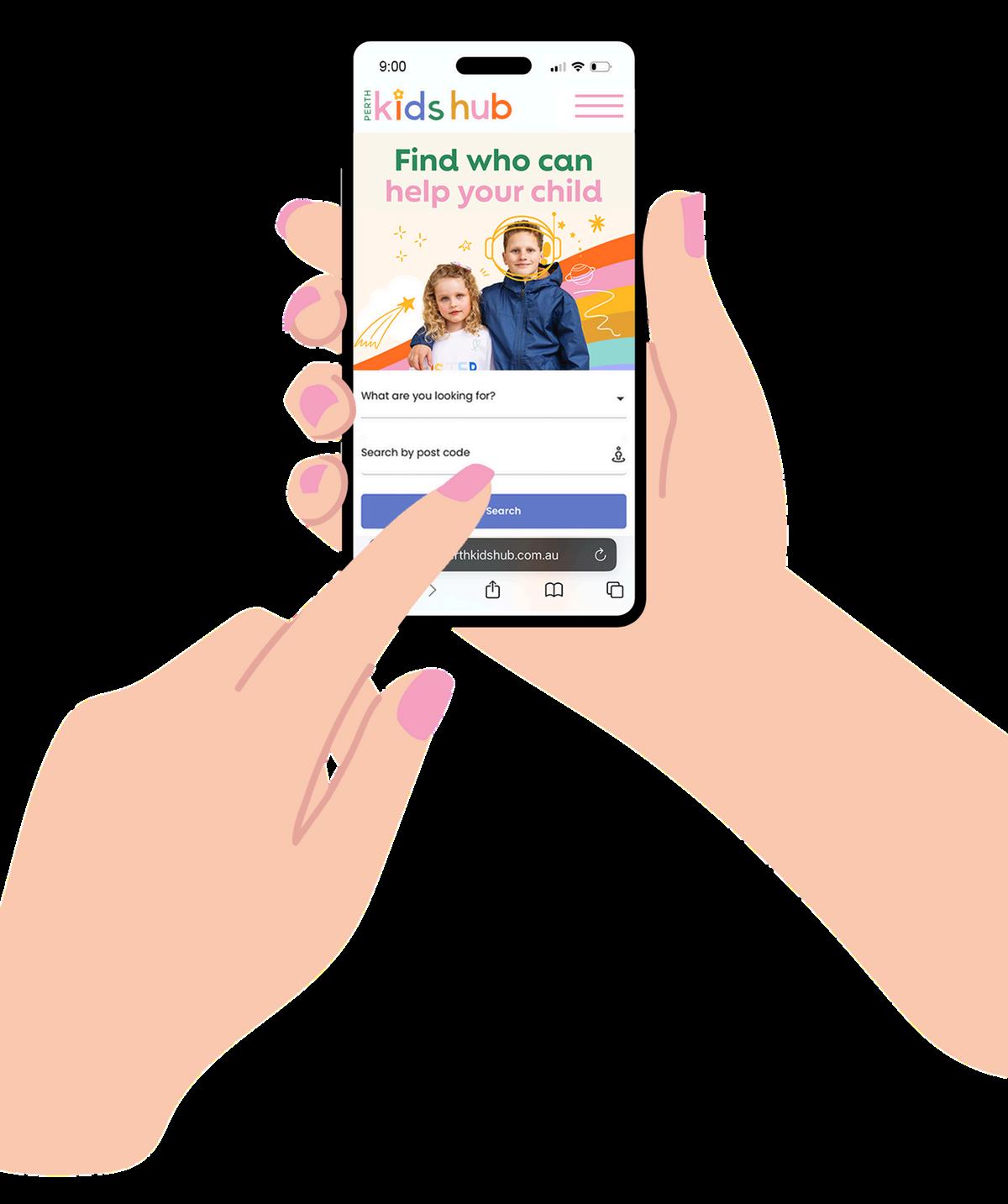
We are incredibly lucky to have talented and passionate practitioners in Perth who love supporting kids with their development, learning and wellbeing. The Perth Kids Hub website can help you find paediatric professionals who can support your child - from assessment through to therapies. You can search by concern, condition, location and even find options for therapists who will visit your child at home, school or their day care
Here are just a few of the practitioners you can find on Perth Kids Hub You do not need a referral to see an allied health practitioner such as a psychologist, play therapist, speech pathologist or occupational therapist

Paediatric dietitians support children with fussy eating, growth concerns, food allergies, intolerances, feeding difficulties, and special dietary needs.

Paediatric occupational therapists (OTs) assist children with motor skills, sensory processing, daily tasks, and emotional regulation to promote independence and development

Paediatric exercise physiologists support children’s fitness, strength, motor skills, and chronic condition management through tailored, fun, and developmentally appropriate exercise programs
ADHD coaches help children build focus, organisation, time management, and emotional regulation skills to boost confidence and succeed in daily life


Paediatric speech pathologists support children with support children with speech, language, communication, social skills, and feeding difficulties to enhance learning and development


Psychologists support children with emotions, behaviour, anxiety, trauma, and learning challenges to improve wellbeing, resilience, and mental health
Paediatric physiotherapists help children with movement, strength, coordination, and physical development to improve mobility, function, and participation in daily activities.

Play therapists help children express emotions, process trauma, build coping skills, and improve behaviour through therapeutic play in a safe environment
Joondalup, Karrinyup & North of the River pg. 13

& Western Suburbs Joondalup, Karrinyup & North of the River
Looking forthe latest updates? Books can open and close in what seems like an instant. Check the latest updates here:
Copyright