PDBY PDBY






Welcome back! This welcome is for the returning students, so first-years, go do Fun and Games. I don’t know about you, but this “welcome” doesn’t feel all that welcoming. By definition, the word “welcome” is a friendly greeting, something polite. And so far, nothing about 2026 has felt very friendly or polite. I won’t sugar coat things – this year has been a shocker so far.
Let’s start with every time you open Instagram. Regardless of your algorithm, I think everyone is feeling a little overwhelmed by what is popping up on their feeds right now. We started the year with Trump’s military strike on Venezuela and then straight into Renee Good being murdered in Minneapolis, both leading to widespread protest in the US. Locally, there is a new “In Memory Of” post by Women For Change SA almost daily. Then the news of 13 school children killed in an accident on their way to their first day of school. The Epstein Files were released, which have been a difficult pill to swallow. And then, well not as serious as the rest, but still devastating, the passing of the great Catherine O’Hara. So, when you should be watching Schitt’s Creek for some comic relief, you’re really sitting there clutching your pillow and crying. I know so much more has happened. I mean, even though people aren’t posting as radically about Gaza anymore and purple profile pictures have been changed, you know very well that even though it’s not flooding your social media platforms, it is all still very real. Big sigh.
So coming back to carry on studying this year has been a little heavy for me, and I think a lot of you will be able to relate to this. I mean, nothing prepares one for seeing so much death so close to home. And even though what’s happening in America doesn’t directly affect us, it still carries
weight. It all carries weight. We are human, and I don’t think there is anything healthy about lying down after a long day and flicking through all this devastating content on a small screen as if it’s being streamed from another planet when it’s right here.
No, it has not been a very warm welcome into this year. Quite frankly, I’m already exhausted. But I’m sitting here having just watched the Opalite music video and it’s filled me with a little bit of hope for what we still have to come. I mean, it is only February, right? So there is still time to rest and maybe get 2026 going in a direction that is a little more fruitful.
I think we all need to take things a little easier this year. Easier said than done, I know. I’m doing Honours and have started tutoring, plus running your PDBY, and so far, I am not taking things easy. I know that this year will challenge you in more ways than just academically. I mean we’re already being boiled alive by this heat. And no matter what your political stances are, with current world politics, you are bound to spend many dinners arguing about lefts and rights and everything gory in between. Just looking at the latest ridiculous ChatGPT trend of people turned into a caricature, I know the frustrations of AI aren’t going away anytime soon. So be prepared for the possibilities of stricter AI protocols.
I envision walks on campus feeling a little less free and lecture halls growing gloomier. So please practise grace – with both yourself and others. It may be month two, but we have not had an easy year. So remember that it’s okay to take a moment to catch up with yourself. My first recommendation would be to get off social media, even if it’s just for a few hours a day. The amount of “bad news” flooding our brains on these little screens is not helping anything.

NEWS
www.pdby.co.za
Twitter: @PDBYMedia
Instagram: @PDBYMedia
Facebook: PDBYMedia
Tel: (012) 420 6597
Stay present. Go for more walks, listen to some cringy pop girl music. Read something other than your English setworks. Watch an hour-long episode of a thirteen-season series. Something that will fill you up instead of making you feel the need to consume more. One good trend this year – going back to 2016. Maybe there is some method in that madness. DVDs and fragile little MP3 players. Grey’s Anatomy and the cringe of taking selfies on Snapchat with silly filters. Just take a step back from how demanding everything has become. I wouldn’t be me if I didn’t have faith that this year will start looking up for us. So with that, welcome back. Start spreading some real friendliness by taking a silly selfie with your besties and laughing on Aula grass about it. We have to start somewhere. I mean come on, it’s as easy as folding in the cheese – you just fold it in.

Please find our online articles on pdby.co.za
• A STAR is Made - Jason Visser
• Prompt, Scroll, Forget: AI and the decline of adult literacy and cognitive skills by Londeka Mbokan
FEATURES
• The Loneliness Men Were Never Taught to Name by Buhle Jantjies
• The 2016 Renaissance: Who is Building the Time Machine by Rona Disetlhe
ENTERTAINMENT
If Doechii Isn’t An Industry Plant…Then Who Is? By Zizo Msthemla
PDBYMedia, formerly Perdeby,
Editorial
To advertise in PDBY contact Tel: 012 420 6597 Cell: 083 318 9738 carel.willemse@up.ac.za
Editor-in-chief carel.willemse@up.ac.za
Carel Willemse @Ed_in_Chief
Editor editor@pdby.co.za
Domonique Bennetts @pdbymedia
Deputy Editor digitalmanager@pdby.co.za
Jason Visser
News news@pdby.co.za
Relebogile Manana
Features features@pdby.co.za
Gabriella Hobson
Entertainment entertainment@pdby.co.za
Cara Heymans
Sport sport@pdby.co.za
Neo Paledi

Copy copy@pdby.co.za
Hannah Roberts Layout layout@pdby.co.za Alyx Bell Visual Media multimedia@pdby.co.za
Danielle Oosthuizen Dynamic Media
Jason Visser
Web webeditor@pdby.co.za
Sivenathi Makhanda
Ngulube


PDBY appreciates that freedom of speech is an inalienable right enshrined in the Constitution of the Republic South Africa. We encourage our readers to engage in discussion and debate on issues that affect them through letters to the Editor, comments on our website, tweets, or posts on Facebook. We ask our readers to keep the following in mind:
1. PDBY will not edit letters, comments, tweets, or Facebook posts in any way.
2. PDBY will label letters, comments, tweets, or Facebook posts as opinion. These do not represent the views of PDBY in any way.
3. The PDBY editorial must approve letters, comments, tweets, or Facebook posts before they are published.
4. PDBY will not publish letters, comments, tweets, or Facebook posts that are defamatory, or libelous, or that contain offensive content.
5. PDBY reserves the right to practice discretion when publishing letters, comments, tweets, or Facebook posts.
6. PDBY reserves the right to publish any content we receive unless the sender specifically requests otherwise.
7. PDBY reserves the right to retract a letter, comment, tweet, or Facebook post after it has been published.
8. PDBY will not accept responsibility for any consequences the author of a letter, comments, tweets, or Facebook posts may experience as a result of the letter being published.
9. PDBY will only publish letters between 150 and 200 words.
10. PDBY will not publish letters unless the writer confirms their full name, student number and contact number. PDBY will not publish this information, we need it for our records.
Lutricia Phiri
n 31 January, the University of Pretoria (UP) hosted its annual Welcome Day at Hillcrest Campus, offering first-year students and their families a warm introduction to university life ahead of Orientation Week. The event was designed to welcome new students and create a space where they could engage with key university stakeholders and essential support structures.
First-year students, accompanied by their parents or guardians, gathered at Hillcrest Campus to receive a warm welcome from the Department of Student Affairs (DSA), the Student Representative Council (SRC), the Vice-Chancellor, and various student support structures. These included Academic Success Coaches (ASCs) and FLY@UP who play a vital role in guiding students through their academic transition.
From energetic cheerleading performances to Faculty Houses dancing to “Footloose”, Welcome Day 2026 proved to be a vibrant and memorable experience. The atmosphere reflected UP’s commitment to fostering a strong sense of belonging and community among its new students.
Alongside the Welcome Day proceedings, Khutso Manyaka, SRC President, delivered his first official address to first-year students. In his address, Manyaka emphasised the importance of student voices, leadership, and unity, encouraging first-year students to fully immerse themselves in campus life and to make use of the many support systems available to them. His message reinforced the SRC’s role as a bridge between students and university management, reassuring students that their concerns, aspirations, and experiences matter.
PDBY spoke to Dr Kgadi Mathabathe, Director of Student Affairs, who explained that her role focuses on the holistic support and development of students through co- and extra-curricular learning opportunities both inside and outside of the classroom. Reporting to the Deputy Vice-Chancellor of Student Life, she provides strategic oversight in key areas including student counselling, Student Health Services, student governance and leadership, student development and disability as well as the FLY@UP programme. This initiative incorporates firstyear orientation, institutional campaigns, and faculty-based academic success coaching.
Dr Mathabathe described Welcome Day as a significant occasion
that officially welcomed first-year students into the university while creating a crucial platform for parents and guardians to engage with the institution. She pointed out that Welcome Day is the only opportunity for the university to interact directly with caregivers and to introduce them to the academic and support services available to students. Her standout moment of the day was hearing the Vice-Chancellor emphasise the importance of students engaging with the DSA, alongside the SRC President’s address, which reinforced UP’s inclusive and nondiscriminatory culture and the importance of belonging.
Dr Mathabathe noted that UP distinguishes itself through its comprehensive, wrap-around support services, demonstrated on the day through support exhibitions, student-led structures, and immediate access to orientation resources. She encouraged students to use their independence responsibly, attend classes consistently, and seek assistance early. She emphasised that UP has invested in mentorship, academic success programmes, and counselling services to support both academic and social transition, concluding that at UP, the Finish Line is Yours (FLY@UP).
Over 14 stalls were set up across Hillcrest Campus, showcasing a wide range of student structures and services. These included Day Houses, Faculty Houses, student development units such as STARS and VITA, student committees, the DSA, FLY@UP, Student Health Services, the Student Counselling Unit, Career Services, Tuks FM, and many others. These stalls provided students and parents with direct access to information and support, stressing the university’s holistic approach to student development.
International student Gena from France shared her positive first impressions of the university. “So far, I find it welcoming to be here. I came all the way from France to experience South Africa firsthand, improve my English, and I would say that I am in safe hands here,” she said.
to explore their academic interests and personal aspirations. One firstyear student, who preferred to remain anonymous, shared her experience of deciding on the direction of her degree. While her mother encouraged her to pursue an Actuarial Science degree, she chose to challenge herself by enrolling in Applied Mathematics, demonstrating the confidence and independence fostered by the institution.
PDBY also spoke to Arkim Mayida, Vice Chairperson for the STARS Mentorship Programme, who commented on his experience at Welcome Day. He shared that his initial expectation was simply to connect with students, but he ended up connecting with both students and their parents who openly gave career advice. Mayida also highlighted how fascinating it was to witness how open and collaborative different student structures and committees were with one another. He specifically noted that the event allowed him to gain a clearer understanding of what the Student Disciplinary Advisory Panel (SDAP) does, particularly in how the university handles matters such as student academic exclusions. “I got to learn [about] how they handle situations like student academic exclusions within [UP],” he said.
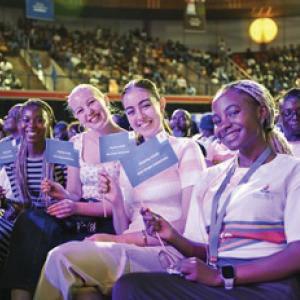
First-year students actively participated in the festivities alongside their supportive families. Welcome Day also provided a platform for students
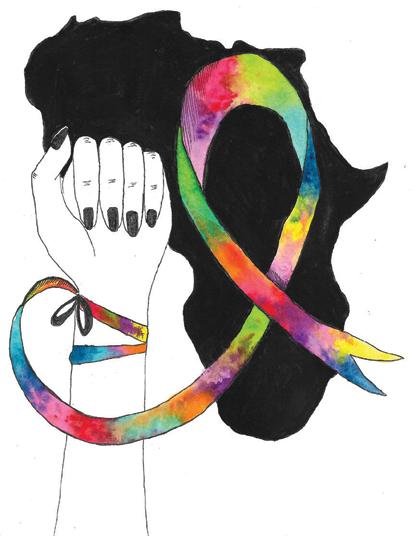
In November 2025, Women for Change, an organisation dedicated to supporting victims of gender-based-violence (GBV), initiated a nationwide campaign in an attempt to have the South African government declare GBV a national disaster. The campaign culminated in a “Women’s Shutdown” that took place on 21 November, in which all women and members of the LGBTQIA+ community across the country were encouraged to refrain from all paid and unpaid labour for the day Supporters also participated by wearing all black, not spending money and withdrawing from the economy on the day of the shutdown. During the shutdown, several silent “lie-downs” were held throughout the country at 12:00. Demonstrators would lie down for 15 minutes to honour the 15 women murdered every day in South Africa. Throughout November, the shutdown inspired numerous anti-GBV protests across the country and encouraged many victims to speak out. By the end of the campaign, GBV had been declared a National Crisis by the government. Before 21 November, anticipation for the shutdown had grown online as supporters had changed their profile pictures to the colour purple across all social media platforms in order to spread awareness about the campaign. Enthusiasm for the shutdown sparked protests throughout university campuses. An instance would be at the University of the Witwatersrand (Wits) in which student protests, beginning on 10 November, took place in response to reports of alleged sexual assault committed by WITS-SRC and WITS-EFF Youth Command (WITS EFFYC) member Musawenkosi Mavuso.
due to internal processes.
Following a mass meeting with the Dean, the EFFYC concluded in a final statement that the Dean was only concerned with maintaining the reputation of the university and was purposely delaying action on the matter. They concluded by encouraging victims to report incidents directly to the police and not rely on the university’s institutional processes. At the same time, the WITS-SRC had also released multiple statements largely aligning with the sentiments of the EFFYC. Mavuso was ultimately suspended from the WITS-SRC, and it is currently unknown whether any legal action has been taken against him.

PDBY spoke with Ntokozo Nemaorani, a third-year BCom student studying at Wits, who attended the first protest. Nemaorani detailed how swiftly students had mobilised, providing that the march was organised about three hours after the victim had reported the incident. The protests were sparked by WITS-EFFYC who released an official statement on their Instagram account hours before the protest took place, detailing that the organisation had received reports of an alleged rape incident. The statement provided that although allegations implicating Mavuso were circulating, he was not directly named by the victim, but additional claims of sexual harassment involving him had surfaced. The statement concluded with a call for students to wear purple in solidarity as they met at the Matrix, the WITS student hub, later that night.
Then, the WITS-EFFYC released multiple follow-up statements on their official Instagram account, detailing that the WITS-SRC had moved to remove Mavuso from the SRC and that he had been expelled from the EFFYC, additionally calling for Mavuso to be expelled from the university altogether. The organisation had also inquired with the university regarding the recovery of CCTV footage of the alleged incident, requesting that if found, the footage must be given to SAPS for a criminal investigation. However, the university had provided that this process was being delayed
Nemaorani ultimately expressed disappointment in the handling of the Mavuso case, saying, “It wasn’t the first time that [a] specific SRC member had been reported… I do feel like more should’ve been done way before that incident had happened.” The events at Wits showcase how the shutdown encouraged students to stand up against injustice and make efforts to hold perpetrators accountable.
During the shutdown, the UP-SRC held a lie-down on the Aula grass at the UP Hatfield campus. The demonstration saw a large volume of UP students in attendance, including Mazviita Pasi, a third-year LLB student. Pasi highlighted the emotional aspect of the event, recalling the strong emotions invoked by the subject matter of the shutdown and the large number of students that appeared on campus to show their support. They further said, “It sends a positive message to anyone that might have been there who was a victim that they have this community that’s fighting behind them.” When asked about the importance of youth participation in political demonstrations, Pasi underlined the youth’s responsibility to stand up against injustice, especially with the youth’s ability to question the status quo and challenge traditional gender roles where the older generations do not.
When speaking on the role of student structures such as the UP-SRC, Pasi said that it is essential for these institutions to stand against injustices such as GBV alongside students. They explained that it is their duty to speak for students, including those who have been victims of GBV. Pasi adds that public support from the SRC shows that victims are not alone. In regard to GBV’s classification as a National Crisis, Pasi laments the lack of practical and effective measures implemented by the government in order to combat the issue. They concluded by speaking on the lasting impact that the shutdown had left behind, highlighting the discussions it had sparked about online activism and the success of the online campaign itself, saying, “Being able to see that online activism happening sends a message to people that they can do something even from their own home.”
Ultimately, the Women’s Shutdown made waves throughout the country – not just on 21 November, but throughout the entire month. The campaign had sparked mass movements across the nation, encouraged victims to speak out, pushed for perpetrators to face consequences, and kept GBV in the public consciousness. Although GBV has been classified as a National Crisis, the lack of statutory actions by the government left much to be desired.
PDBY will release an interview with Women for Change that takes a retrospective look at their campaign as an online exclusive.
Welcome Day was not just a space to welcome students – it was also an opportunity to form new relationships and strengthen existing ones. More than collecting promotional items from stalls, the day emphasised connection, community, and belonging. By engaging with university leadership, the SRC, and various support structures ahead of Orientation Week, students began their university journey equipped with confidence, clarity, and a strong sense of inclusion. To every UP student at the University of Pretoria and those still to join: welcome!
Johannesburg’s rat population continues to expand as the city’s waste infrastructure struggles to keep up with rapid urban growth. Traditionally, pest-control measures have relied on trapping and extermination, but new research from the University of Pretoria (UP) suggests that social dynamics within rat colonies may be undermining these efforts.
A recent Daily Maverick report highlighted the work of UP PhD Zoology researcher Gordon Ringani who identified a phenomenon known as the “daddy factor”. Dominant male rats play a stabilising role in colonies, helping to defend access to food and maintain group structure. This behaviour complicates extermination because trapping individual rats does not necessarily disrupt the colony as a whole, allowing it to continue feeding, reproducing, and occupying waste sites.

This further linked the city’s rat problem to consistent access to human-generated food waste, particularly in areas where refuse accumulates due to collection delays or illegal dumping. These conditions provide rodents with reliable nutrition sources, supporting sustained reproduction and larger colony sizes. This aligns with international research showing that urban rodent populations thrive in areas with poorly managed food waste systems.
The findings place Johannesburg’s infestation within a broader public health and environmental context. Rat populations in dense urban settings are associated with risks such as disease transmission, food contamination, and infrastructure damage. As cities grow, waste systems face increased pressure, creating openings for rodent activity in both formal and informal spaces.
The work also contributes to ongoing discussions about how African cities adapt as their populations expand. Waste governance, public health policy, and urban planning have become interconnected areas of concern, and research such as Ringani’s points to the complexity of developing effective, long-term control strategies. While trapping and poisoning remain common, scientific assessments suggest that solutions may require a combination of improved waste management, environmental monitoring, and ecological understanding of rodent behaviour.
Ringani’s research continues through UP and forms part of a wider effort to examine urban pest dynamics in rapidly developing metropolitan environments. Ringani’s work is a reminder that university research contributes to national problem-solving, even in areas that are not always visible. While rats may seem like a distant problem to those living in Pretoria, the systems that enable them – food waste, sanitation gaps, and public health vulnerabilities – are increasingly shaping the future of South African cities. As the research continues, it has the potential to inform more effective pestmanagement strategies and help drive policy shifts that benefit millions living in urban environments.
Hannah Hambly
As a university student, money is usually slim, and one may be unaware of the resources available or hesitant to seek medical advice in a location unknown to them. University also comes with its own challenges. From academic stress to new social environments, it is important to take care of your health. The University of Pretoria (UP) provides a range of services to support students’ physical and mental wellbeing. This article aims to provide you with an overview of the resources available to you with the hopes that you will use them to stay healthy at university.
Student Health Services (SHS) provides students with “accessible and comprehensive primary healthcare services”. By using these services, you will have access to medical doctors, professional nurses, optometrists, dieticians, and HIV counsellors. The services include medical examinations, diagnoses, and treatment (including prescriptions when necessary). SHS also offers support regarding sexual health and family planning, and they can help you understand and manage various chronic illnesses. In addition, they also offer free eye
testing, dietary consultations, and confidential, free HIV testing and counselling.
SHS can attend to student emergencies and can refer you to specialists, relevant clinics, or hospitals if necessary. The team can provide you with information and/or advice on medical and lifestyle matters. To use these services, you need to book an appointment either via email (info.shs@up.ac.za) or by calling 012 420 2500 (but keep in mind that they do take walk-in emergencies). All consultations are currently free (although on their website they say this may change in the future), but you will need to bring your student card to access such services. Any written prescriptions you are given can be filled at any pharmacy at your own cost, and payment is required for specialised medical exams.
UP provides for your mental wellbeing by having provided a 24-hour, toll-free UP Careline, so in the event of any emotional situation where you are in need of support, you

Ompha Mudau
The University of Pretoria’s Faculty of Health Sciences, in collaboration with Steve Biko Academic Hospital, has conducted South Africa’s first cryoablation procedure in the public health sector. The milestone introduces an advanced cancer-treatment method to a setting where access to specialised medical interventions has historically been limited.
Cryoablation uses extreme cold to destroy abnormal tissue, including certain cancers, through minimally invasive techniques. According to media reporting by Magic 828 (January 2026), the procedure can reduce post-operative pain, shorten hospital stays, and enable faster patient recovery compared to more invasive surgical approaches. The report noted that the intervention was carried out by a multidisciplinary team consisting of UP radiologists and urologists.
The procedure also incorporated international virtual collaboration. A specialist interventional radiologist based in Austria provided real-time proctoring through smart-glass technology during the operation. This allowed remote observation and technical guidance, demonstrating how digital tools can be integrated into clinical training and the implementation of new techniques.
While cryoablation has been available in parts of South Africa’s private health sector, its entry into a public hospital marks a shift in how advanced treatments may be deployed across different parts of the healthcare system. Public hospitals manage the largest share of the country’s patient load, especially for oncology and chronic disease, and typically face constraints related to equipment, staffing, and operating theatre capacity.
A student in the Health Sciences, who asked to remain anonymous, told PDBY that the milestone was both inspiring and reassuring. The student said witnessing the procedure reinforced confidence in UP as an institution actively contributing to medical innovation and real-
world patient care. They added that the development offered renewed optimism about the potential of South Africa’s public healthcare system, noting that advanced and world-class treatment is not limited to the private sector. According to the student, the breakthrough strengthened their commitment to pursuing a career in medicine and highlighted the role healthcare professionals can play in advancing treatment beyond routine care. The student also said that the procedure could improve trust in public hospitals by expanding access to advanced, potentially lifesaving treatments for patients who rely on the public system. The introduction of cryoablation in this context aligns with ongoing national discussions about the expansion of specialised care, technology transfer, and the role of academic medical institutions in strengthening public health delivery. South Africa’s cancer burden continues to rise, placing additional pressure on diagnostic and treatment pathways. Developments within teaching hospitals contribute data and procedural experience that may inform future
The collaboration between UP and Steve Biko Academic Hospital forms part of an established teaching and training environment between the two institutions. The procedure adds to the clinical research and academic medicine being conducted there as work continues assessing the viability and broader applicability of cryoablation within the public sector.
Mpho Mahlangu
As the semester inches closer to test week, note that campus quietly shifts into survival mode. Libraries stay fuller for longer, coffee cups multiply, Red Bull gives more wings, and conversations are suddenly dominated by marks, modules, and mental countdowns. For many students, test week feels less like an academic milestone and more like an emotional storm – one that brings anxiety, burnout, discipline, and determination all at once. But beyond the memes and shared panic, test week is also a period of growth. Speaking to students across different years and faculties reveals a common truth that while test week is undeniably tough, it is not unbeatable.
For first-year students, test week often comes with a sharp reality check: “I thought I was prepared, but the pressure hit differently,” a former first-year student confessed. Burnout is a recurring theme. Long nights, packed schedules, and the pressure to perform can take a toll on both mental and physical health. Yet, within this pressure, many students find resilience they did not know they had.
Despite the fear surrounding test week, many students emphasise the importance of strategy over panic. “I have learned that stressing does not improve marks, planning does,” says Mbalenhle Mtimbane, a third-year Social Work student. “Breaking work into small sections and starting early changed everything for me.” Students who have survived multiple test weeks agree that
discipline often outweighs motivation. “Test week showed me what I am capable of under pressure,” Lucia Skosana, a third-year BCom student, added. “It is uncomfortable, but it pushes you to grow. Group study sessions and simple check-ins with friends can make the process feel less isolating.”
Here are some student-tested tips for surviving test week:
• Start early, even imperfectly. You do not need a perfect study plan, but remember that starting is more important than overplanning.
• Break content into manageable sections. Studying in small chunks prevents overwhelm and improves retention.
• Use active study methods. Practice questions, summaries, and teaching concepts to friends work better than rereading your notes.
• Prioritise rest and sleep. A tired brain struggles to perform, no matter how much you have studied.
• Fuel your body. Eating healthy regularly and staying hydrated directly impacts concentration.
• Ask for help. Whether it is from classmates, tutors, or lecturers, support exists. You just need to use it.
• Limit comparison. Everyone studies differently, so focusing on others’ progress often increases unnecessary stress.
can dial 0800 747 747. There is also the Student Counselling Unit (SCU), which could assist you with the following: depression and mood disorders, thoughts of self harm, anxiety problems, adjusting to university life, sexual or other trauma, substance misuse or abuse, bereavement and loss, and family and relationship problems. They offer both face-to-face and online services, including booking consultations with registered counsellors, formal therapy with a psychologist, or more individualised mental health interventions such as podcasts (their BounceUP Podcast Series) and mental health workshops and events. To book a consultation, they have a Google form on their website (https:// www.up.ac.za/student-counselling), and you can also send an enquiry to studentcounselling@up.ac.za
These health services exist to support all students, providing you with professional care, confidentiality, and guidance. By taking advantage of these resources, students can prioritise their well-being, stay informed, and feel confident that help is always within reach.
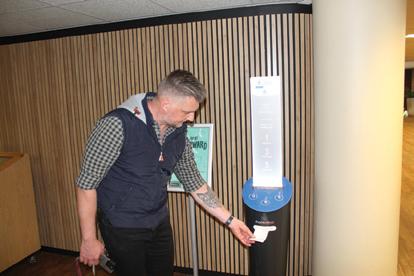
In a quiet but deliberate pushback against doomscrolling culture, the University of Pretoria (UP) Library has introduced reading robots designed to get students, staff, and even the broader community reading again, one short story at a time.“The reason behind the project is to get people to read again,” says Isak van der Walt, Acting Deputy Director: Scholarly Communications, Digital Services, and Systems at the UP Library. “People do not really read anymore, not just academically, but fiction, short stories, and poems, because they are so used to consuming content on their phones in 10- or 30-second snippets, and they do not really interact with what they are reading.”
The reading robots, officially known as “Short Edition Dispensers”, were imported from France, making UP “the first in South Africa” and “the second in Africa” to host the technology. With the press of a button, students or staff can print a one-, three-, or five-minute story with no phone, no Wi-Fi, and no login required.“The idea is also to get you away from your phone,” Van der Walt explains. “When you print out that one-, three- or five-minute read, it takes you away from your phone for that moment. Your attention span is focused on that specifically.” He adds that the physical nature of the experience matters. “By pressing a button and committing to taking a piece of paper, you are actively choosing to read. It is something tangible.”
“Since the 15th of August, we have dispensed 3 170 stories,” says Van der Walt. “At first, there was just one machine, and the majority of that count came from that single dispenser.” The machines are intentionally mobile. One dispenser is currently housed in the library while another rotates through high-traffic areas such as the coffee shop in the Information Technology building. “While you wait for your coffee or food, instead of scrolling, grab a story,” Van der Walt says. “We also want to place them in locations such as client service centres where students are waiting for consultations.”
Accessibility and outreach are central to the project. Smaller portable “story cubes” are used for campus activations and community engagement. “We engage with schools, old-age homes, and outreach events,” he explains. “Even in rural areas with no connectivity, the stories are already downloaded onto the machines.”
Content is carefully curated and highly customisable. “We have complete control over genres, languages, and themes,” says Van der Walt. “We prioritise feel-good, light reading, and we filter out mature or inappropriate content.” The machines can also be themed for events such as Pride Month, exam periods, or Valentine’s Day. Perhaps the project’s most exciting aspect is its creative potential. “Students and staff can submit their own stories,” Van der Walt says. “We want to build a UP-specific collection, our own voices and our own stories, and move away from content that is very Euro- and Western-centric.” Selected work may even be published internationally, with prizes and royalties attached.At its core, the initiative is about reclaiming focus and having fun. “It is a fun project with a lot of potential,” Van der Walt concludes. “Sometimes, you just need a short break, a story, and a moment to think for yourself again.”
Thiya Kalan
What would you do if you won the lottery? Cars, watches, houses, maybe even fame? Maybe you would help others. Maybe you would aim for world peace. But here is a question I bet you have never been asked: have you ever actually bought a lottery ticket?
“To win the lotto, you have to buy a ticket.” It sounds obvious, almost embarrassingly so. And that is exactly why it is overlooked. The most important part of any outcome – success or failure – is the decision to start. Nothing happens unless you take the first step, and once you do, whatever follows exists because you jumped.
Now, scratching lotto cards is not the point, but applying this principle to university life is.
University hands you something rare: a reset button. You arrive largely unburdened by past labels, expectations, or versions of yourself you have outgrown. You could be quieter, louder, braver, or more curious. You could try things you never imagined yourself doing. But none of that happens by accident. Reinvention requires action – and often, discomfort.
Taking the jump does not mean making dramatic, life-altering decisions every day. Sometimes it is small – joining a quiz night even though you do not know anyone, sitting next to someone new, speaking up when your instinct is to stay quiet, or even saying yes before you feel ready. These moments seem insignificant, but they add up. They are the “tickets” you buy –and eventually, one of them pays off.
Sometimes, these risks pay off in ways you could never have predicted. A casual conversation turns into a familiar face. A familiar face turns into a friend. Many of the friendships that people cherish in university did not come from careful planning but from moments that almost did not happen at all – an invitation that could have been declined or a seat that could have stayed empty. It might feel like a gamble, but ultimately, you miss 100% of the shots you do not take.
Of course, it is scary. Doing something unfamiliar always is. There is the fear of embarrassment, rejection, failure, or simply not being good enough. But here is the paradox: university is arguably the safest place to take risks and be adventurous. Everyone is figuring things out. Everyone is pretending to be more confident than they feel. The stakes are lower than they seem, even when your nerves insist otherwise. And more often than not, you do not fall. You adapt. You learn. You land on your feet.
If taking the leap still feels too daunting, here is another reason to try. Contrary to popular belief, successful people are not always the most skilled or the most magnetic; they are simply the ones who engage with the world more. Increased engagement increases your likelihood of success – your ratio of experience and luck improves. If stepping out of your comfort zone does not appeal to you socially, maybe it does pragmatically.
So jump. Talk to the stranger. Join the thing. Take the chance. You do not need to know exactly how it will turn out, you just need to be willing to show up.


Promise Erero

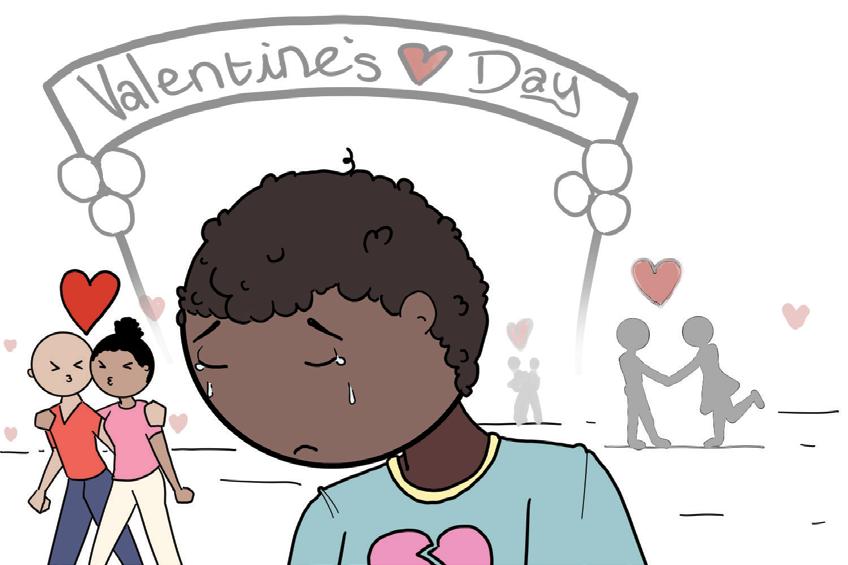
alentine’s Day markets itself as romantic, but campus voted otherwise. In a recent poll on the PDBY Instagram page, most students agreed that the day is overrated, and the stories explain why. Calling Valentine’s Day overrated does not mean that people do not want love. It means they are tired. Tired of overpriced dinners and public displays being mistaken for depth. What makes Valentine’s Day overrated is not singledom; it is the pressure. The pressure to plan something special, to feel something specific, and to care more than you naturally do. These were the responses from students about their awkward moments

“He gave me a bear and thought my tears were tears of joy, but my grandmother had just died.”
“Got asked and said ‘yes’, but I told him ‘no’an hour later.”
Pletter“IgotaValentine’s girlfriendfrommyex6months afterValentine’s,new gffoundit.Thanks, postoffice!”

If Valentine’s Day has taught us anything, it is this: when love season gets awkward, overpriced, and slightly humiliating, the

OV: you check your bank account and get the shock of your life when you realise you cannot afford those chips from 10z. This is an experience almost all university students have in common, and trust me, it gets tedious. This is the year to end that broke streak, and PDBY is bringing you a few ways to help you earn extra cash as a student.
Promoting for an Agency
Promoting brands or products for an agency is a flexible way to earn money on the weekends. Agencies such as Tradeway, JR Agencies, and VelvetLuxe are easy to apply to through their websites and Instagram accounts, and they offer flexible, studentfriendly hours.
Tutoring
Whether it is privately or at the university, tutoring is a great way to stay in an academic space and make a profit from it. There are multiple tutoring agencies you can find through Google, LinkedIn, or by approaching lecturers of modules you have completed before and inquiring about openings.
Waiting Tables
Local restaurants around Hatfield and Hazelwood are always looking for help, especially during the recess seasons. With new places like Padstal Hazelwood and Elvis Brew opening up, there are bound to be open positions available.
Skill-Based Jobs
If you know how to do hair or nails, Hatfield is your playground. Round up your friends and the people in your building and let them know a new business is opening up! If it means investing in equipment and material, trust that the return will be worth it.
Career Service on Your Portal
UP is constantly posting new vacancies on the Career Service tab on your portal. The best way to be prepared for what may be available is to complete the Ready for Work course, which can be found on clickUp. The work offered on the portal is based on and off campus, so it also caters to convenience.
According to Save the Student’s student-based surveys, 30% of students work side jobs while completing their studies. It is more than possible to have a balanced work-study life when you prioritise correctly and find jobs that cater to what you are willing to do. In this economy, everyone could benefit from extra income, and that opportunity does not have to be reserved for after you get your degree. Get your CV in order and start applying because the best time to secure a job is at the beginning of the year.













Buhle Jantjies
Most of us enter university with an incomplete understanding of sex, whether it be from bits and pieces of school lessons that skipped over the awkward parts or even those half-answered questions that we were too embarrassed to ask but privately consulted the internet about. Somewhere along the road, “the birds and the bees” and the advice from friends who are still figuring things out were supposed to prepare us for adulthood. But to be honest, it rarely worked. With university life comes freedom, curiosity, connections, and, at times, confusion. It is a time for both curiosity and vulnerability. This is the point at which sexual health transitions from a theoretical to a practical concern. Instead of fear or guilt, students need honest information, compassion, and useful guidance delivered openly and without judgement.
Think of this as a check-in from someone who wants to keep you safe, informed, and confident about your body.
First and foremost, sexual health is synonymous with overall health. Getting tested, asking questions, and protecting yourself are not indicators of recklessness: they indicate that you value your body and your future.
In university, relationships and experiences change rapidly. Many students’ adventures include meeting new people, navigating long-distance relationships, and experimenting. That is precisely why making informed decisions is more important now than ever.
Myth Two: “Testing is embarrassing.”
No, it is not. Health-care providers do this every day. If you go to SHS, they treat students with professionalism and care while upholding confidentiality. There is no judgement, only support.
Myth Three: “Protection ruins the moment.”
Protection is and can be a part of the moment. Condoms and other forms of protection provide you with safety while promoting mutual respect, care, and trust. It is important that you practise safe sex. A partner who makes you question the use of protection is not someone who values your safety or your health.
According to Community Access Network, these are some of the practical strategies you can implement into your lives: Get tested regularly.

Now, let us debunk a few myths that still float around among students.
Myth One: “I will know if something is wrong.”
This is mostly false. Many sexually transmitted infections (STIs) have no symptoms at all. You can feel fine and still have an infection. Regular testing is the only way for you to be certain about your health status. Student Health Services (SHS) on Hatfield campus provides screening that is accessible to all students.
Especially when starting a new relationship, this is extremely important for you and your partner. Make it a normal part of adulthood, just like getting a standard checkup. Carry protection always.
This is not a statement about your intentions: it is rather an act of preparation. Condoms are widely available and easily accessible.
3. Have the conversation. It may be uncomfortable at first, but discussing testing, usage of protection, and boundaries fosters trust.
4. Know your options.
Aside from condoms, there are other preventative measures and contraceptive options. SHS can help you determine what is best for your body and your health through a consultation. Alternatively, you can visit your healthcare practitioner.
The shame and the stigma thrive in silence. Struggling with your sexual health does not mean you have failed. It simply means you are human. Whether it is a scare, a diagnosis, or simply uncertainty, you are not alone. You do not have to carry this quietly. Being informed about your sexual health does not imply fear. It is about freedom – freedom to make informed choices, but more importantly, freedom to experience relationships in a safe and responsible manner.
So, if no one has said it clearly yet, let this be your reminder: take care of yourself, ask for help when you need it, and do not be afraid to use the resources available to you. Your body is worth looking after. Always.
Thiya Kalan
“For reasons I have never understood, people like to hear that the world is going to hell,” Historian Deirdre McCloskey. The first time I read this, I disagreed. People like good news, right? We want to think positively… but the more I looked around, the more I realised McCloskey was onto something.
Morgan Housel, author of The Psychology of Money, puts it simply, “Optimism sounds like a sales pitch. Pessimism sounds like someone trying to help you.” At some point, you have most definitely heard the phrase, “Be positive”. Now, depending on the day, you have either shrugged it off, felt even more irritated, or smiled and nodded politely. But what does being positive mean? What does it look like? In this “Age of Cynicism”, where does “being positive” fit in – and should it?
People often think that positivity and optimism are synonymous, but the distinction matters. Positivity is the momentary practice of maintaining a good attitude, choosing encouraging thoughts in the present. Optimism is subtler and more enduring. It is grounded in reality: the belief that things may go wrong, but that improvement and meaning are still possible. Both require effort, but surprisingly, both tend to work for you.
We live in a world of eccentric presidents, war, climate change, and widening inequality – a volatile, uncertain, and politically charged society. It feels almost intelligent to succumb to the idea that optimism is futile. The belief that selfinterest drives people, that institutions are failing, and that trust is eroding has had an unexpected effect: it has made pessimism seductive. Gloom seeps into our feeds and quietly settles in our subconscious. Pessimism masquerades as realism, and when someone says “The world is going to be okay”, we scoff; when someone says “The world is going to end”, we feel understood. Part of the problem is that optimism has terrible marketing.
It is often packaged as forced cheerfulness – smiles without substance, slogans without depth. It feels naïve and ineffective. But optimism, when grounded in reality, is none of those things. In fact, optimism has tangible effects.
First, it boosts self-confidence. Optimistic people tend to view obstacles not as dead ends, but as challenges to navigate. They take failure less personally and are more willing to engage with difficult tasks. This mindset increases selfefficacy – the belief that you can influence outcomes in your life. Interestingly, people with higher self-confidence often physically take up more space: their posture is open, their movements assured. Next time you see someone stride through campus, they may not be the most charismatic or the cleverest. Perhaps, they are simply the most optimistic.
Second, optimism affects the body. Studies show that optimism lowers cortisol (the stress hormone) and reduces reactivity to acute stress. Optimism is associated with a lower risk of heart disease, better blood sugar regulation, and healthier cholesterol levels. It even strengthens immune responses, leading to less severe illness. Impressively, research suggests that optimists live, on average, 11-15% longer than pessimists. Want to make it to ninety? Crack a smile now and then. Finally – and perhaps most remarkably – optimism rewires the brain. Thanks to neuroplasticity, repeatedly visualising positive outcomes changes the way your brain processes information. Optimistic thinking increases dopamine, serotonin, and oxytocin, improving mood and reducing anxiety. When you train your brain to expect good outcomes, it begins to notice them more readily. Optimism, it turns out, is an underrated cognitive tool.
“For reasons I have never understood, people like to hear that the world is going to hell.” After reconsidering optimism, I hope you will not have to agree.
Promise Erero
You are scrolling on TikTok, and you see a video titled, “Get ready with me as a 20-year-old millionaire with three Ferraris and two mansions”. You take a look at yourself and wonder how someone your age can be so much more successful than you. Fortunately, you are comforted by the fact that this is just social media and everyone tries to make their lives seem more glamorous than what they actually are. So, you take a break from social media and talk to your friends to alleviate this sudden pressure you feel. In these beautiful chats that were meant to make you feel better about yourself, you discover that your friends are up for adult job interviews, planning to buy their first cars, and are almost fully financially independent. The pressure has officially gotten real.
We live in a time where unrealistic life standards are set for people in their early twenties. Think Blue Tree, a mental health service blog, speaks about the dangers of milestone anxiety, which is defined as the agonising worry of not attaining traditional milestones within an appropriate timeline. Graduating in record time, getting a job straight out of university, and getting married by 25 are typical, traditional milestones that are seen to be a global standard of life progression.
Besides the obvious social pressure and unrealistic expectations that follow the same norms as previous generations, let us take a look at this matter economically. EKN students, listen up. When looking at inflation, which is the general price increase, there has been a whopping 188.6% increase between our price levels in 2006 and 2026. This means that the R1 000 we have today had the value of R2 885 when our parents were young adults and living their best lives. After considering this information, you cannot help but wonder why we are expected to be financially independent or anywhere near that when circumstances are so different.
Comparison truly is the thief of joy, and, according to Dr Carolina Casillas from the Clinical Mental Health Counselling Faculty at the University of Phoenix, comparison helps individuals assess their social standing. But what happens when context and nuance are removed from the picture? Comparing yourself to someone who may have had a completely different upbringing in a different region of the world with a different economic standing is how we destroy ourselves from within.
Having goals and being ambitious is beneficial and should be encouraged. The most important thing to do, though, is be realistic and understand that you are running your own marathon. Do not make someone else’s deadline your own, and always remember that small progress is still progress.

ere was s ome inv i s ible
ty ing y ou to me
Hello UP student – this is a safe space to shoot your shot at all those cute people you see on campus. Tell those people how you feel about them, hit on your crush, or compliment a person on that outfit they were wearing the other day Anything positive really Try to be as descriptive and creative as possible with your description so it makes it easy for the person to identify themselves. If both people agree, PDBY will arrange a meetup. Do you think this is you?
Email: shootyourshot@pdby.co.za
to the tall , handsome, chocolate firstyear engineering man withglasses hey, my future husband , father ofmy future children. Iwant to mine my way intoyour life becauseyou are my diamond in this roughlife
To the guy in the JTC with the curly hair and sexy glasses, whenever I see you walk in late my heart drops Seeing you in the lab, with your ostrich pin and bag charm makes me so hot. So if you give me a chance I’ll be your helicase and unzip those genes. Sincerely your hen
To the girl who thinks she "owns" MY chocolate man The ball IS in in my court as a matter of fact I guess he didn't mention how you aren't the only basketball he's playing with I'm waiting for you to airball so that I can grab that rebound You're just his half time performance Sincerely, his All Star MVP.
To the guywhobeat upmy boyfriend you've clearlygot more testin your right arm thanhehasinhis wholebody. Come sweepme off myfeet hunk.
To the boy doing a bsc physics degree and who gave me his pen when we were writing the chemistry baseline .. why did you leave early, I wanted to shoot my shot with you Will cherish your pen forever baby!

To that tall blonde chem engineer, heybabygirl. I could be the 4% to that 96% you love bragging about. The ginger you’re with doesn’t have to know :)
To the archi girl w the curls: You build our house, I’ll build our life together
To that fine brunette in my VBB 220 class You owe me a debt, want to settle it over a dinner? Call me x
To Miss KP who is studying business management I think you’re so hot and would so love to share my scissors with you
The emo girl I see in Monastery: I would letyou cut my life into pieces if it meant I could kiss you



“Maybe we can Find a place to feel good And we can treat people with kindness Find a place to feel good”







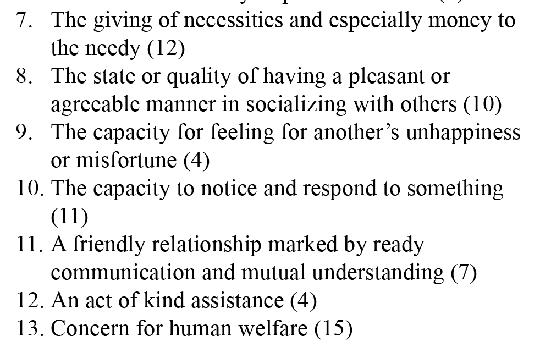






1. Feelings and behavior that show a desire to help other people and a lack of selfishness (8)
2. Sympathetic concern for the well-being of others (11)
3. A gift of money or its equivalent to a charity (12)
4. The quality of being benign (10)
5. Kind, gentle, or compassionate treatment especially towards someone who is undeserving of it (8)
6. Disposition to be merciful and especially to moderate the severity of punishment due (8)
Fall in love with PDBY’s instagram



Tshepiso Makhetha
Everyone seems to be chasing love, and yet relationships keep falling apart. Not because people do not care, but because many underestimate what love actually demands once the honeymoon phase checks out.
Modern culture sells love as a feeling; excitement, chemistry, butterflies that refuse to sit still. Psychology proves that love is not just an emotion, but a set of behaviours sustained over time.
Love vs The Fantasy of Love
Psychologists distinguish between romantic attraction and long-term attachment. Attraction is powered by dopamine, the brain’s reward chemical. It thrives on novelty, intensity, and latenight texting. Attachment relies on oxytocin, the chemical associated with bonding, trust, and emotional safety. The issue? Many people sign up for the dopamine package but ghost when it is time for oxytocin. When novelty fades, as science promises it will, love starts asking for skills: communication, emotional regulation, compromise, and the ability to repair after conflict. This is often when relationships end, not because love disappeared, but because
the job description was never read.
Emotional Labour: The Part Nobody Posts

One of the least glamorous but most essential parts of love is emotional labour. This includes listening without interrupting, listening to understand, expressing feelings clearly, holding space during difficult conversations, and managing one’s own emotional reactions. Psychological research consistently shows that couples who practice active listening and healthy conflict resolution are more likely to last. And yet, many people interpret these efforts as exhausting or “too much work”. In reality, effort is not a red flag, avoidance is. Love that requires no effort usually requires no
Conflict is Not the Villain
There is a popular belief that healthy relationships are calm, easy, and conflict-free. Psychology says otherwise. Decades of research, including work by relationship expert John Gottman, show that conflict is inevitable. What determines success is not whether couples argue, but how they argue. Defensiveness, contempt, stonewalling, and constant blame are strong predictors
of relationship breakdown. Repair attempts, sincere apologies, accountability, humour, and reassurance are predictors of relationship survival. Love is not about never hurting each other. It is about knowing how to come back from it.
Why Love Feels Harder than Advertised
Attachment theory explains why love can feel confusing, intense, or overwhelming. Early childhood experiences shape how adults approach intimacy, whether they avoid closeness, fear abandonment, or struggle with trust. Without self-awareness, people often expect relationships to heal wounds they did not create. This turns love into emotional overtime and partners into unpaid therapists. Love can support healing, but it cannot replace personal responsibility.
Choosing Love Daily
Long-term love is less about constant spark and more about daily decisions. Choosing patience over pride. Choosing honesty over comfort. Choosing growth over running away when things get uncomfortable. You wake up every day and choose to love this person; it is a choice. This does not mean that love should feel like a punishment or endless struggle. It means that meaningful connection, like any worthwhile pursuit, requires effort, skill, and intention. Everyone wants love, but very few want the job. And maybe that is the real lesson: love is not just something you fall into, it is something you show up for, long after the butterflies have left the room.
Lydia la Grange
Everyone knows the struggle of matriculants in South Africa: the late nights, the deadlines, studying for an exam that, at the time, feels like it will determine the rest of your life. It is no wonder the country is so proud of our 88% matric pass rate last year. This is up from 75.8% in 2014 when the current CAPS curriculum was first introduced, and it was the first year since 2008 that all 75 districts across the nine provinces registered pass rates above 80%, which at first glance seems like a genuine victory, and it is… to an extent.
Our pass rate is an amazing way to measure the general success of students writing the National Senior Certificate (NSC) in meeting the exam’s requirements. Unfortunately, it is not a good measure of our schools’ overall success, nor the students’ eventual preparedness for life.
While it is true that 88% of matriculants who wrote the NSC exams passed it, this statistic does not account for the number of students who did not make it to the exam at all. According to the opposition party Build One South Africa (BOSA), if the pass rate is calculated to include the students who dropped out before matric, it would only be about 54.7%. Similarly, ActionSA reports
that it would be 57.7%. From these statistics, it is clear that the high pass rate does not account for the students left behind before having the chance to write the NSC exams, and as a result, cannot truly measure our school system’s ability to support students.
Another criticism regarding the high pass rate’s accuracy is how low South Africa’s pass requirements have become.
To pass the NSC, a student needs only 30-40% in most subjects, while a Bachelor’s pass (the pass required for university eligibility) requires at least 50% in four subjects excluding Life Orientation. The result is that in 2025, only 46% of matrics achieved a Bachelor’s pass (university eligibility). This is an improvement from past years, but it still calls into
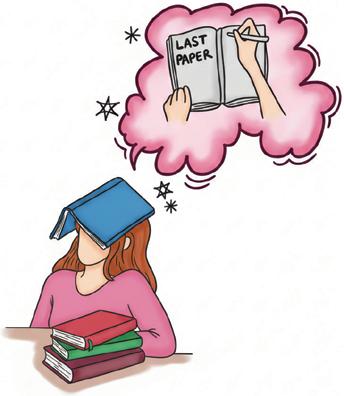
question whether or not passing the NSC is a good marker for the success of our education system, seeing as the requirements to do so are so low. It is a big issue for our country’s future, since, due to universities’ high standards, a Bachelor’s pass usually will not get a student into most universities, and even less can be said for what someone can do with a standard NSC pass.
The pass rate of 2025 is inarguably a milestone for our education system, and it shows our schools have adapted to the curriculum. However, we still have alarmingly high dropout rates, a very low pass requirement, and a society where a simple matric certificate will not necessarily get you very far. Our matriculants and teachers can be very proud of their achievements, and they should be, but we as South Africans must not let ourselves forget how far we still have to go in order to truly create an environment that prepares our youth to someday take over this country.
Awar before breakfast, a natural disaster by lunch, and a corruption scandal right before bed. Our phones have turned us into global witnesses while sitting in the quiet comfort of our rooms. But with the amount of news we consume, we see everything while feeling less than ever.
It is important to know what is happening in the world, but it can also get to be too much – too much heartache and tragedy to be exposed to on a daily basis.
While increased access to information was intended to better society, this overexposure has ironically desensitised us, creating a heavy burden of bearing witness to global trauma from the comfort of our screens.
Today, tragedies are found everywhere, from TikTok lives to X think pieces, sandwiched between dance trends and 10-minute recipes. According to the 2025 Digital News Report, 33% of South Africans now use TikTok as a primary news source, with 13% more attention given to content creators or personalities rather than traditional news media or journalists. This shift means worldwide sufferings are no longer filtered through traditional journalism and thoughtful teleprompted scripts. Instead, it forces viewers
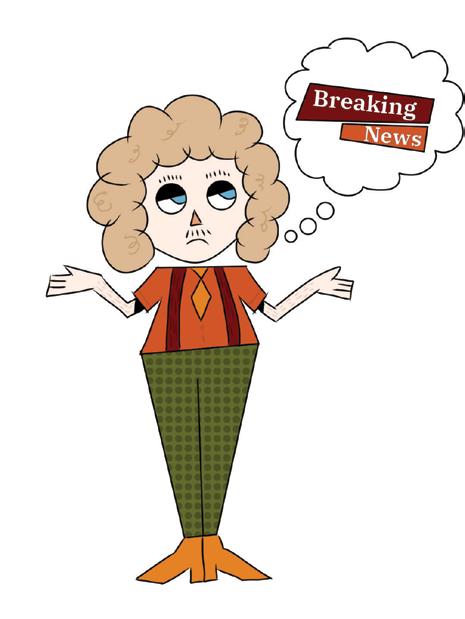
to confront the raw reality in 15-second clips.
Moreover, the emotional burden is compounded by the concern of misinformation.
56% of South African users express their concern over the accuracy of online news. Not only is there emotional exhaustion, there is also confusion, adding to the existing mental toll.
The world is facing endless disasters, mass genocides, wars, epidemics, and more. The repeated exposure has led to stressinduced burnouts. Constant exposure to stress leads to a decreased emotional response. People have grown callous as a defence mechanism. When there seems to be bad news coming in every direction, people
harden themselves to survive the pressure. Thus, apathy replaces empathy. Someone’s life becomes just another body found, and a tragedy becomes just another statistic.
But in a society where we lose more and more of our community, it is important to care and fight to maintain our humanity. We can remain global citizens without disrupting our well-being by trying a few intentional strategies:
Try replacing social media as the main news source with full-length articles to get rid of the shock. Long-form journalism provides context, history, and humanity. It replaces the clickbait and shock value with a deeper understanding. While TikTok videos may leave us feeling paralysed, a well-researched, long-form article might highlight the specific facts and local organisations where change is actually happening.
Seek out reputable news sources, cross-check, and try not to take things at face value.
Doing something about it also helps. Apathy thrives on helplessness. Sure, you will not solve world hunger in a week, but you can combat that apathy with small doses of empathy. Small acts such as donating, volunteering, or advocating for specific causes.
Change usually begins with local impact. By choosing depth over uncontextualised clips, we can start to soften and truly care again.
Melissa Aitchison
For a sport that prides itself on speed and power, ice hockey is remarkably good at standing stagnant. It reassures itself with myths that the locker room has evolved, that inclusivity campaigns have done their work, that everyone is welcome if they “just play the game”. And yet, despite this progressive narrative, the NHL (National Hockey League) has never had an openly gay active player, showing the gap between how fast the sport moves and how little it changes. By putting queer players and complicated relationships front and centre, Heated Rivalry imagines a world that ice hockey has yet to catch up with.
In case you have been off the grid for the past three months (or perhaps living under a rock on Mars), Heated Rivalry is a Canadian TV series based on the book of the same title from the Game Changers series by Rachel Reid.
The show stars Hudson Williams as Shane Hollander, a Japanese-Canadian hockey player for the Montréal Metros, and Connor Storrie as Ilya Rozanov, a Russian hockey player for the Boston Raiders. The story follows the secret, decade-long romantic relationship between these two rival NHL captains as they navigate an intense public animosity to conceal a passionate, secret romance. While Heated Rivalry certainly has its steamy moments, the heart of the show is the intimacy the characters must keep hidden and the human side of hockey that the game rarely allows anyone to see.
Their romance remains a closely-guarded secret, lived under the constant pressure of being discovered. Even on their phones, they disguise each other’s identities, saved as Lily and Jane to avoid suspicion. Part of the reason is the discrimination and attention they would face if exposed, but their situation is also heightened by who they are and what’s on the line. In the show, two other characters come out publicly after a Stanley Cup win, but both Scott Hunter and Kip Grady are white Americans, and only one is a hockey player. Shane Hollander, by contrast, is JapaneseCanadian and captain of his team, a rare feat in a league where non-white players face steep barriers. Historically, there have been just four non-white captains, and only 7% of NHL players identify as Black, Asian, Latino, or Indigenous, showing that ice hockey’s walls are not just about culture or sexuality, but also race. On paper, Ilya Rozanov is every hockey cliché: white, masculine, and attractive. In reality, being a Russian citizen means that even the thought of coming out carries real legal risks. Their intersectional identities are central to their characters and influence how they navigate a traditionally hyper-masculine industry.
The struggles of Shane and Ilya on screen mirror real-life ice hockey dynamics, where race, nationality, and entrenched culture still dictate who can fully participate in the league. Jesse Kortuem, a real-life hockey player who recently came out in mid-January, said he walked away from the sport out of fear that he could not reconcile his athletic career and sexuality. In his coming out post, he states “For a long time, however, the rink did not feel like a place where I could be all of me. I felt I had to hide parts of myself for far too long.” Kortuem credits Heated Rivalry for giving him the courage to come out, saying, “Never in my life did I think something so positive and loving could come from such a masculine sport.”

On the other end of the spectrum, the first former ice hockey player to come out, Brock McGillis, says he does not see the show impacting hockey culture intensely enough to open the space permanently. It is important to note that while 17 ice hockey players have come out, none have ever played in the NHL. They are all from other professional, minor, or college levels.
This makes the NHL the only major North American men's professional league with no openly gay current or former players.
Over the past decade, the NHL has made attempts to appear more open and inclusive, but these efforts have often fallen short. The league held its first Pride Night on 30 March 2011, and by the 2017 season, all 31 teams had hosted one. By 2023, Pride Nights included full rainbowthemed jerseys and tape for players’ sticks. And yet, the initiative faced pushback: players on several teams voiced opposition, often citing religious reasons. In response, the NHL introduced rules in mid-2023 banning teams from wearing rainbow jerseys or using rainbow-coloured tape altogether. Inclusivity clearly has its limits on the ice.
Despite this, the success of Heated Rivalry has been welcomed for bringing new fans to the game. Yet if real representation and activism are barred on the ice, why should the NHL benefit from a show that exposes the very culture it refuses to change? Heated Rivalry may be fictional, but its impact is real. By centering queer, intersectional players and their hidden lives, the show exposes the rigid culture and barriers that continue to define hockey on and off the ice. It reminds us that progress cannot come from surfacelevel campaigns or spectacle alone. Meaningful change requires confronting deeply rooted cultural and structural issues. Until the league actively supports all players regardless of race or sexuality, the lessons from Heated Rivalry remain aspirational rather than lived reality. The show offers a vision of what hockey could be, but now it is up to the real sport to catch up.
Zizo Mtshemla
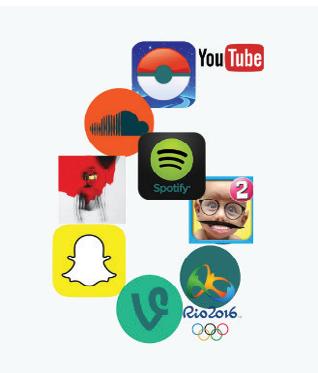
s 2026 really the new 2016? In the lead-up to 2026, social media users have traded in “new year, new me” for nostalgia, reminiscing on the authenticity and rawness that seemed to guide popular culture and social media with the aid of Instagram’s “Rio de Janeiro” filter, the infamous dog and flower crown filters, and the plethora of Musical.ly sounds. This was what the internet was like before the “clean girl” aesthetic and the pristine, aesthetically pleasing photo dumps came to save the day. This nostalgic reminiscing is especially intriguing because, not too long ago, 2016 was dubbed the worst year of the 2010s due to the array of sociopolitical tensions that were rising. One can only imagine that this longing for the past is a result of those tensions coming to a head in the 2020s. However, it seems that the general public is not the only one ushering the past into the present. A number of the most anticipated film and television releases of the 2020s have been reboots or remakes of classic media from the past. The many live adaptations of Disney films, the upcoming Wuthering Heights, Scary Movie 6, The Devil Wears Prada 2 films, and the prequel of Legally Blonde are a drop in the ocean of the many nostalgic grabs currently steering the entertainment industry. But why does nostalgia sell?
Kopanyi Ramokgopa
Research shows that more than 80% of you are secondscreen viewers, but do you even know what that means?
Second-screen viewing is the phenomenon in which you, the viewer, consume shows on a primary screen (TV and/ or laptop) while using a secondary screen, your phone. While this action seems relatively harmless, it has led to the normalisation of divided attention. So what began as a mere distraction has evolved into a defining feature of not only how you engage with entertainment but also how large corporations create your entertainment.
Streaming platforms, notably Netflix, have acknowledged the second-screen phenomenon and are incorporating the knowledge that viewers watch shows while on their phones into their production strategies. As a result, shows are written in a way that enables you to keep up with what is happening on your primary screen without glancing away from your phone. This is usually done through expository dialogue where audiences not only need to be shown what is happening but also explicitly told.
For instance, in the movie Irish Wish, the character Maddie reiterates what we assume viewers already know through watching the movie so far, stating to her main love interest, “We spent a day together. I admit it was a beautiful day filled with dramatic vistas, but tomorrow I am marrying Tom Kennedy.” Furthermore, in the last season of Stranger Things, Nancy asks Jonathan if they are “having this conversation in Hawkins Lab in the Upside Down” in reference to their tumultuous romantic relationship. Usually visual storytelling, such as the dark atmosphere, the blue hues, the vines, and the spores make it obvious whether a scene is happening in Hawkins or the Upside Down. But showrunners do not trust that you are paying enough attention to know that the setting has changed, so they tell you that it has.
This seemingly lacklustre form of writing is not the result of untalented screenwriters but rather large corporations prioritising profit over artistry. Screenwriters are encouraged to write formulaic, “second-screen-friendly” scripts that cater to distracted audiences at the expense of shows with meaningful dialogue, visual symbolism, and complex characters. The most important reason large streaming platforms such as Netflix continue to fund and produce second-screen shows is their extreme profitability. Netflix’s algorithms reward shows that keep people streaming, albeit passively. This is why good shows are seemingly being cancelled after a single season while bad shows, such as Riverdale, can last seven seasons. Streaming executives want you on their platform for as long as possible. That is how they make more money, and if they make a show that is too emotionally or intellectually demanding, they risk you logging out.
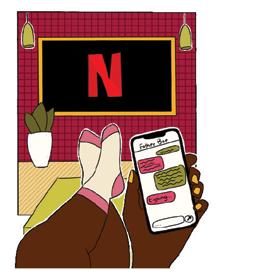
The second-screen phenomenon affects two types of viewers in different ways. The distracted viewer can watch and fully understand a show without immersing themselves in the storytelling. Conversely, the attentive viewer finds the show repetitive and tedious and feels their viewing experience has been cheapened. The question is not whether these streaming platforms will continue to produce second-screen shows; they will. Rather, is the production of second-screen shows a response to audience viewing habits or are they shaping your viewing habits for profit?
Nostalgia is, by definition, the longing and yearning for the past. According to Psychology Today, it hinges on the belief that the past had more positive experiences than the present. It relies on selective memory, favouring the good of the past rather than objectively acknowledging that life is a mixed bag of positive and negative occurrences. This is what makes nostalgia so poignant: it effectively rallies people towards something that reminds them of these “good times”, particularly in entertainment. There is a reason why you turn to rewatching your favourite TV show when you are down – there is comfort in knowing exactly what will happen. Media consumption is a universal activity that plays a major role in one’s self-identity. Music, film, television, and literature, among others, have the power to act as time capsules of the emotions and different eras of a person’s life. Most lovers of the Scary Movie franchise, which released its last film in 2013, will be eager to return to a world that reminds them of their younger selves – a version of themselves that never experienced the COVID-19 pandemic. The same goes for fans of the iconic The Devil Wears Prada – a film that is being followed up by a sequel that will be released on 1 May. Evidently, 2026 is not just the new 2016 – it will be an amalgamation of all of the “best” years through the return of beloved media.
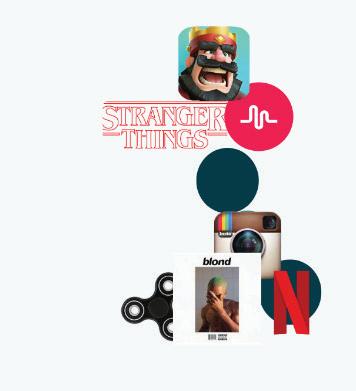
The 2020s have been riddled with anxiety and tension. Why wouldn’t somebody want to go back to a time that they are convinced was less stressful and simpler? The entertainment industry understands this. Nostalgia recognises that the present moment is distressing and creates a false image of safety in the past. Through the replication of iconic media, people are compelled to buy into it as they are seeking a return to these happier times. As a result, nostalgia will continue to be a profitable avenue. It sells because it draws in an older audience that experienced the past while inviting a new audience in a palatable, modern fashion. This is a double win for the entertainment industry because less work is done to conceptualise ideas that reflect the present, and yet the audience is doubled.
So, while we draft the photo dumps of our embarrassing 2016 Snapchat images and rewatch Legally Blonde in preparation for the prequel, the question still remains: is 2026 the new 2016? Like 2016 (and every other year), 2026 will definitely be an experience of both the best and worst of times. It is important to not allow our own, and the media’s, obsession with a past that cannot be changed to distract us from the negatives that can still be changed in the present.
“Thanks, I made it myself!”
Atanda Ntlantsana
2026 is the anti-brainrot year. It is the year for us to get off of our phones and cut back on the doomscrolling. At least, that’s what our phones keep telling us. But if we are not doomscrolling, what is there to do? Maybe it’s time to pick up a hobby. Arts and crafts are back, and this time, instead of putting them on the fridge, we’re wearing our projects.
Fibre arts refer to art forms and crafts that use natural or synthetic materials. This includes crochet, embroidery, macramé, sewing, and more. Fibre arts are most notoriously used to make, upcycle, and decorate clothing. Imagine making art and being able to wear it afterwards.
There are various ways fibre artists learn their crafts. Some learn by enrolling in classes or partaking in workshops while others learn by utilising the thousands of YouTube tutorials that are at our disposal. But what seems to be most common in fibre artists is learning from friends and family. In this way, you can bond with your loved ones while also learning a useful skill which you can in turn share with others.
When asked what personal benefits they have gained through practicing fibre arts, various students said they found that their anxiety decreased and focus increased. Others found that their craft was an outlet through which they can exercise their creative freedom and enhance their personal style. Nothing compares to being able to be seen crafting something one day and wearing it the next.
Handmade items can also be used as a source of income or as gifts. This way, you get to share your creations with your friends, family, and larger community (and make a bit of extra money).
Remember the heirloom that has been passed down in your family after it was made by your grandma? You can be that grandma!
In an era of overconsumption and fast fashion, pursuing the fibre arts, particularly to make clothing, is a political statement – a conscious standing against environmental damage and the unsustainable modes and rates of creation. By taking the time to knit your own sweater rather than buying it, you are exercising your agency and rebelling against the consumerist urge to buy without second thought.
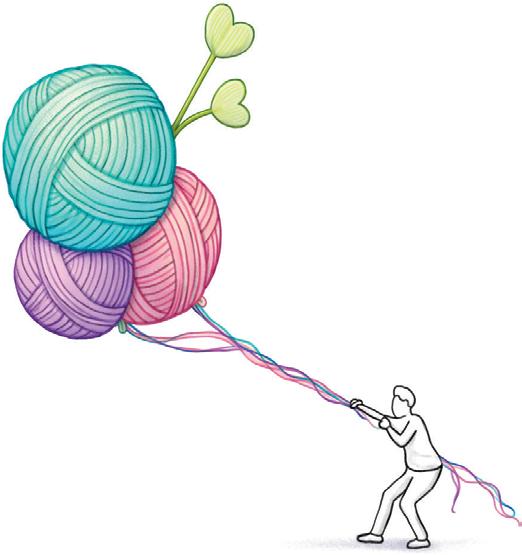
Fibre arts are a slow process that require patience and consistency. Creating your own clothes thus teaches you to be intentional about what you make rather than falling into the trap of trend cycles and microtrends.
Fibre arts can also be a medium of political expression. TikTok user Alexandria Masse has spent every period she has had for the past year crocheting her birth control information sheet. This project is an effort to start conversation around contraceptives and reproductive rights. Through crochet, she has learned more about the medication she takes and encourages others to do the same while simultaneously starting a conversation about the necessity of access to contraceptives. Fibre arts can be difficult to learn at first. They require a level of patience and dedication that some of us are not sure we have. But it is important to prioritise the value of craft over the instant gratification of doomscrolling. It is normal to take a while to get the hang of things, and it is okay for your projects to not come out perfect. It can be hard work, but it is also rewarding work. Besides, it all becomes worth it when someone compliments your outfit and you get to say “Thanks, I made it myself!”
In the summer of 1978, critic Brian Henderson declared the “rom-com” dead. Detectives rushed in with magnifying glasses, poking, and prodding at the body to find the killer. Could it be the executives who panicked after seeing low box office sales, or perhaps modern sensibilities regarding problematic tropes?
Theory One: Lack of Commercial Success Killed the RomCom (Detective Nicholson, Yahr, and Siegel)
In the period of 2012-2013, the rom-com was nowhere to be found in the top 100 box office films. Tragically, this trend continued in 2015 where the market share for rom-coms dropped significantly. Some speculate that execs in studios saw this decline and decided it was time to cut ties with the genre. Like a cheating lover, they dropped the rom-com for other flashier, more popular genres.
Theory Two: The Woke Virus Killed the Rom-Com
The infamous woke virus has infected the masses, leading to a free-thinking generation that is critical of the rom-com.
According to author Megan Feeney, tropes that were previously adored are now receiving backlash in the “postromantic” era. Side effects of the woke virus include body chills at the idea of a creepy stalker-like love interest whose grand gesture is likely to land them behind bars, and growing tired of two-dimensional female characters who exist to merely develop the male lead’s character. Unable to sustain attacks on its outdated tropes, the rom-com succumbed to the virus of political correctness.
Theory Three: The Rom-Com Is Actually Still Alive (for better or worse)
When the dust had settled and all believed the rom-com was gone for good, the media started to receive reports of sightings from concerned critics. Author Oria Beatriz, for example, believes that the rom-com is still alive, it simply looks different. The old rom-com was pale and thin. It believed that the cure to being a spunky, career-focused woman or a cynical, liberated feminist was to eventually settle down with a “good man.”
Now, the new rom-com is a sexually-liberated, nonmonogamist in Trainwreck or a young, rich, Asian heir in Pretty Rich Asians. The new rom-com believes anyone can end up with anyone. This time, Harry meets Sally in Fire Island
Some, like Feeney, argue that if you look closely, you will realise the rom-com never changed at all. The non-monogamist in the new rom-com inevitably changes her wanton ways and settles down with one man. The new rom-com may allow for an older female lead, but one can hardly see her under the make-up and digital beauty work done to her. When the new rom-com introduces a lesbian relationship in the Happiest Season, the main characters must still gain the acceptance of the patriarchal family to secure their happy ending.
In spite of allegations of death by box office flunk or failure to adapt to modern standards, the rom-com remains a contentious point of discussion long after it was declared dead. Perhaps this is the answer. The fact that critics still attempt to solve the mystery of the genre today is a testament to its immortality.

Beneath Josh Safdie and Ronald Bronstein’s Marty Supreme pulses the legend of Marty Reisman. It’s 1942. Midtown Manhattan, New York. The streets are punctuated with burnt coffee, hot pretzels, and ambition that has been reheated too many times. Look around. What do you see? Neon signs buzzing above pizza parlours, newspaper vendors shouting out headlines, taxis screaming past, swallowing the hustle and bustle of pedestrians. Everyone is going somewhere. Everyone wants something. Do you see it? This is the City of Dreams. Somewhere below street level, in a basement with peeling paint and flickering fluorescent lights, where the floor sticks to your shoes and cigar smoke curls around every corner, there is a ping pong table.
Enter Marty Reisman – a street-smart, scrappy hustler raised on the Lower East Side of Manhattan by a waitress and a taxi driver with a serious gambling addiction. He grew up in a home plagued by financial instability and surrounded by risk. “It was feast or famine at our house, usually famine.” It was a childhood that tightened his chest, anxiety shadowing his youth… until he took up a pastime that not only anchored his restless mind but gave him something to believe in – table tennis.
And so, a thin, panicky nine-year-old ping pong prodigy was born. Risk. The adrenaline of a good wager. The same rush that kept a stronghold on his father followed Reisman throughout his life and into the streets. “No one,” he remarked, “has ever been less suited for regular employment than I was.” In a lifestyle where money came and went, he relied on raw talent to make a quick buck. While table tennis was establishing itself as a competitive sport across Europe and Asia, in the United States, it was little more than a casual hobby. Reisman spent his evenings in a dimly lit “Lawrence’s Broadway Table Tennis Club”, the windows filmed over with years of city grit, the noise of Broadway Manhattan dulled by the sharp pang of plastic balls on wooden bats. It was here that Reisman honed his craft, swindling unsuspecting amateurs by downplaying his abilities, always betting on himself. With gambling baked into his paternal genes, Reisman intentionally lost the first game or two, raising the bets. Despite the credulous confidence booming on the other side of the table, Reisman always walked away with a thick wad of cash. His skill was his surety. And his escape. “If it hadn’t been for a ping pong table, I never would have discovered my magic carpet.” His talent offered him an exclusive path to upper class New York society and a way to see the world. Reisman electrified the game for spectators.
His was a performance of eccentric tricks and unbelievable precision, skyrocketing him into table tennis stardom.
The audience came to watch him, paying for a spectacle of dazzling tricks like slicing a cigarette in half with a powerful slam, or playing songs by bouncing the ball off frying pans. The crowd, entranced, suspended in disbelief.
Reisman became known for his charisma and glamour, dressed elegantly in tailored trousers pressed sharply on his slim stature, earning him the nickname “The Needle”. Beyond his showmanship, Reisman was a ruthless competitor. He described himself as possessing the strongest attacking game in the world, marked by his unmatched forehand drive. Blink, and you’ll miss it. His combination of talent and charm carried him to the international stage, representing the United States and winning over 20 major titles throughout his career. He became a legendary figure in the sport – equal parts athlete, entertainer, and socialite.
Marty Mauser, played by Timothée Chalamet, is a charismatic misfit dreaming beyond the confines of his circumstances and gambling on himself. When questioned about the film’s unconventional marketing campaign, Chalamet responded, ”This is in the spirit of Marty. It’s a movie about the pursuit of a dream.”
(2020, 2008, 1996, 1984, 1072, 1960, 1948)
• Personality: quick-witted, resourceful, versatile, kind.
• Lucky Numbers: 2, 3
• In 2026, you'll face challenges, leading to potential conflicts at work. Patience is key In love, if you're single, you may meet someone special, so take the initiative.
(2021, 2009, 1997, 1985, 1973, 1961, 1949)
• Personality: diligent, dependable, strong, determined.
• Lucky Numbers: 1, 4
• In 2026, you may face difficulties and stagnation at work. It's important to stay optimistic and adjust your mindset. Pay attention to mental health, rest well, and exercise to relieve stress.
(2022, 2010, 1998, 1986, 1974, 1962, 1950)
• Personality: brave, confident, competitive, unpredictable.
• Lucky Numbers: 1, 3, 4
• In 2026, your career will thrive, with opportunities for promotion and salary increases due to your decision-making skills. Health-wise, you'll be energetic; maintain a regular routine and exercise to boost your well-being and support your ambitions.
(2023, 2011, 1999, 1987, 1975, 1963, 1951)
• Personality: quiet, elegant, kind, responsible.
• Lucky Numbers: 3, 4, 6
• In 2026, as a Rabbit, your career will be stable, but you should stay cautious, especially in autumn. Seek mentors for guidance. Financially, invest in winter or spring for the best returns, and avoid unnecessary spending.
(2024, 2012, 2000, 1988, 1976, 1964, 1952)
• Personality: confident, intelligent, enthusiastic.
• Lucky Numbers: 1, 6, 7
• In 2026, as a Dragon, you are eager for career success and constantly seek opportunities. With the help of lucky stars, opportunities may arise, but your judgment will be tested. Choosing the wrong industry or investment can lead to disappointment.
(2025, 2013, 2001, 1989, 1977, 1965, 1953)
• Personality: confident, intelligent, enthusiastic.
• Lucky Numbers: 2, 8, 9
• In 2026, your career will be stable and steadily improving, with help from benefactors and lucky stars, allowing success in any industry, especially in finance and investment. Your wealth will grow significantly, but you should have a long-term perspective on investments.

(2026, 2014, 2002, 1990, 1978, 1966, 1954)
• Personality: confident, intelligent, enthusiastic.
• Lucky Numbers: 2, 3, 7
• In 2026, your career will see an upswing. You're sociable and quickly form good relationships with colleagues, excelling in teamwork and potentially meeting a benefactor.
(2027, 2015, 2003, 1991, 1979, 1967, 1955)
• Personality: calm, gentle, sympathetic.
• Lucky Numbers: 2, 7
• In 2026, your career will rise steadily, whether you're employed or running a business, with potential for promotions.In love, singles might meet their ideal partner while traveling, leading to a sweet relationship.
(2028, 2016, 2004, 1992, 1980, 1968, 1956)
• Personality: sharp, smart, curious.
• Lucky Numbers: 4, 9
• In 2026, you'll face both opportunities and challenges in your career. Your courage and quick thinking will help you seize opportunities, but beware of jealousy and potential false accusations.
(2029, 2017, 2005, 1993, 1981, 1957)
• Personality: observant, hardworking, courageous.
• Lucky Numbers: 5, 7, 8
• In 2026, you’ll have a laid-back attitude but may face competitive challenges, which will push you to try new things. Your career and finances will thrive, providing strength and energy. However, remember to maintain good health habits for continued well-being.
(2030, 2018, 2006, 1994, 1982, 1958)
• Personality: lovely, honest, prudent.
• Lucky Numbers: 3, 4, 9
• In 2026, your career will be stable with good opportunities and smooth collaborations. By seizing these chances, you may get promoted. Communication with family will be positive.
(2031, 2019, 2007, 1995, 1983, 1959)
• Personality: compassionate, generous, diligent.
• Lucky Numbers: 2, 5, 8.
• In 2026, you will experience steady career growth with the help of a benefactor. This support will help you find clarity and achieve success. In relationships, be wary of fleeting romances and choose partners carefully to avoid being misled.
Think you know astrology? Think again. You might know your Western zodiac, but the Chinese zodiac takes a different tack. The Shēngxiào is the Chinese zodiac system based on the Chinese lunar calendar, yīnyáng lì. While Lunar New Year is a broad term used for New Year celebrations that follow lunar calendars across several Asian cultures, Chinese New Year refers specifically to the celebration tied to the Chinese calendar. In the Shēngxiào, each year is assigned an animal in a repeating 12-year cycle, along with an element determined by the final digit of your birth year. Unlike the Western zodiac, which assigns signs based on constellations and months, the Chinese zodiac changes its animal sign each year. When it comes to predicting personality traits or life outcomes, the focus is on the year of birth rather than the month. Therefore, if you were born in March 2004, your zodiac would be the Wood Monkey instead of simply a Pisces. So saddle up, because 2026 is the year of the Fire Horse. The Shēngxiào is based around the story of the Great Race.
According to legend, the Jade Emperor wanted to create a calendar and ordered animals to race across a fast-flowing river, naming the twelve zodiac years after the first twelve animals to cross the river based on their finishing order. The order is thus: Rat, Ox, Tiger, Rabbit, Dragon, Snake, Horse, Goat, Monkey, Rooster, Dog, and Pig. In other legends, either the Buddha or the Jade Emperor invites all the animals to a banquet rather than a race, and those that attend are featured in the zodiac. The characteristics of each animal are said to correspond to traits of those born in each sign’s year, influencing such things as personalities, relationships, and careers. Certain signs are said to be more compatible with others and are based around how the animals interacted with each other during the race. Alongside the cycle of animals, the Chinese zodiac incorporates a system of elements.

In ancient Chinese cosmology, the concept of wuxing describes the five fundamental elements: earth, wood, metal, fire, and water. These elements form the underlying structure of the universe and their cycles help explain cosmic change. Combine an element with an animal and you get unique pairings like Wood Snake or Metal Monkey, adding extra detail to the zodiac and giving each year its own distinctive energy. The element is determined by the last digit of the birth year: 0/1 (Metal), 2/3 (Water), 4/5 (Wood), 6/7 (Fire), or 8/9 (Earth).
The Chinese zodiac can also give a heads-up about more difficult or tricky years.
Every twelve years, your own zodiac sign comes around again, called ben ming nian, and it is considered an unlucky year, so people tend to be extra careful rather than celebrating. On top of that, each year in the 60-year cycle is watched over by a celestial deity called Tai Sui. During your own zodiac year, you’re in fan Tai Sui, which means you might clash with the deity and run into more challenges than usual. So, watch out for your 24th birthday!
The Year of the Fire Horse begins on 17 February with the Chinese New Year, but what does that mean for the rest of the year? The Year of the Horse represents a drive for forward motion, urging one to move quickly and seize opportunities when they come. However, the horse is also known for endurance, symbolising the ability to overcome challenges through strength. Combining the horse and fire element often creates a faster pace of life and a stronger drive to achieve, making it especially important to stay attuned to your body’s limits.
So this year, put yourself out there and make the most of every opportunity, but remember to not get left in the dust after the chaos.
As the university campus buzzes with the roar of rugby matches and football cheers, a quieter group of students laces up their skates in a dimly-lit rink on the outskirts of town. These are the ice hockey players: passionate athletes who chase the thrill of the game at a steep personal cost. While university stars like rugby and football players often enjoy scholarships, top-tier facilities, and institutional backing, niche sports like ice hockey leave students footing the bill for everything from equipment to travel. This disparity raises a critical question: in a world where passion fuels dreams, should students have to pay such a high price to play?
Ice hockey serves as a stark case study in the financial realities of non-mainstream sports at universities. Unlike mainstream sports that receive substantial funding and visibility, niche disciplines often operate on the fringes, relying on athletes’ own pockets to keep the game alive. Sports can play a pivotal role in bridging the financial literacy gap among youth, but for many student-athletes, the reality is far from empowering. Instead, they grapple with expenses that can drain savings and strain academic commitments.
Take equipment alone. A decent pair of ice skates can cost upwards of R3 000 while protective gear (helmets, shoulder pads, elbow guards, shorts, and shin guards) adds another R10 000 to R15 000. Sticks, pucks, and maintenance tools push the total even higher. Facility access is another hidden expense. Mainstream sport teams often train on campus grounds with free or subsidised access, but ice hockey players must rent rinks off-site. A single practice at a rink can run at R200 per hour, and with practices plus games, costs escalate quickly. Travel to away matches compounds and includes costs such as fuel, tolls, and sometimes overnight stays for tournaments in other provinces. League fees and coaching add to the already dense layers of financial strain. Joining the South African Ice Hockey Association (SAIHA) requires annual membership fees, and international competitions demand even more. For students without scholarships, these expenses mean balancing a full course load with part-time work or loans. And for most students, passion is great, but it does not pay the bills.
This imbalance is not unique to ice hockey. Financial and competitive barriers in youth sports create uneven playing fields.
Perennial semi-finalists, 2024 T20 World Cup runners up, and the current World Test Champions, but can South Africa finally lift that elusive World Cup trophy? The 2026 ICC Men’s T20 World Cup in India and Sri Lanka gives the Proteas the opportunity to build on their momentum from 2025 and learn from the numerous heartbreaks of yesteryear.
On 2 January, the initial 15-man squad was announced. Unfortunately, due to injuries, batters Tony De Zorzi and Donovan Ferreira left the squad, which saw Ryan Rickelton and Tristan Stubbs added to the lineup just 20 days later. Middle-order stalwart David Miller suffered an abductor injury while playing for the Paarl Royals in last month’s Betway SA20 tournament, which led to him missing out on the T20 series against the West Indies.
Speaking of SA20, the tournament should serve as perfect preparation for the Proteas as they begin their World Cup campaign. Bowler of the Tournament Ottniel Baartman will be wondering what else he had to do to earn a spot on the team after collecting twenty wickets in just nine matches, while eyebrows were raised at the inclusion of the relatively unknown Jason Smith.

The return of Quinton de Kock is a massive boost for the men in green and gold, especially after the retirement of Heinrich Klaasen last year. De Kock is a world-class player and has been for the majority of his career. That firepower at the top of the innings along with in-form Rickelton and the quality and leadership of captain Aiden Markram will stand them in good stead.
IWhile rugby and football players benefit from university budgets that cover everything from kit to travel, niche athletes like those in ice hockey are often self-funded. Such disparities can widen inequalities, particularly in diverse settings like South African universities where socio-economic backgrounds vary widely. For many, the passion persists despite the costs, but it raises questions about equity. Should universities provide equal support for all sports, or is varsity-level funding reserved for those with mass appeal and revenue potential?
Critics argue that while all sports develop teamwork, discipline, and resilience, niche sports may offer different developmental experiences that benefit students academically and personally. Yet, without institutional backing, these athletes often burn out or drop out. Universities could bridge this gap by offering partial scholarships, shared facilities, or partnerships with local clubs.
In the end, the price of passion for niche sports is not just monetary – it is the opportunity, cost of time, energy, and dreams deferred. As universities celebrate their athletic stars, it is worth pausing to consider the unsung heroes skating in the shadows. Perhaps it is time to level the ice.
The middle order has an abundance of potential, but they need Miller to recover in time for that added experience and know-how in the pressure cooker that is a World Cup. Debutants Dewald Brevis and Tristan Stubbs will look to make their mark in Group D and beyond as the Proteas begin their campaign against Canada in Ahmedabad on 9 February.
In terms of the bowling attack, the return of speedster Arnich Nortje will definitely rejuvenate the team. He will partner with spearhead Kagiso Rabada, the skillful Lungi Ngidi, as well as fellow debutants Kwena Maphaka and Corbin Bosch. Keshav Marahaji and George Linde will also have massive roles to play in the spin-friendly sub-continent conditions.
All-rounders Marco Jansen and Linde will be pivotal to the campaign. Their ability to contribute with batting, bowling, and fielding make them invaluable. Jansen, in particular, can be a deadly bowler, destructive batsman, and serious fielder for South Africa.
The hosts, India, are good enough to have two sides competing in the knockout rounds of this tournament. They will no doubt be the favourites. The other nations who will surely stand in their way include the ever-present and competitive Australia, England, New Zealand, and Pakistan.
The Proteas will need to hold their nerve when the going gets tough and the lights shine brightest. However, this squad has the ingredients to make a World Cup winning side.
On 26 February, the EFC Knox Legacy Series will make its debut at the GrandWest Grand Arena in Cape Town, kicking off the Mixed Martial Arts (MMA) scene in South African style. The event, co-founded by UFC champion Dricus du Plessis and supported by Knox Hydrate, aims to provide local competitors a legitimate chance on a major platform.
The main goal of the series is to give South African fighters the chance to be seen. This emphasises that big goals can start at home, and through establishing a clear pathway, a fighter can go from fighting locally to competing on an international level.
The EFC Knox Legacy Series will also show how the involvement in sports may lead to employment, skill development, and international opportunities. Students who are interested in journalism, fitness, and marketing events will be able to observe how MMA develops skills and generates jobs through the upcoming event.
This event is more than just a fight – it gives athletes an opportunity to be seen from local competitions to the global stage. The game will also show that with sport, you can find opportunities that can grow your career.
MMA is an example of a growing industry with space for diverse careers. It shows that with passion and hard work, sport can open doors both inside the cage and beyond.

n South Africa, women’s sport is creating its own place at the table. The rise of women’s netball, football, cricket, and boxing indicates that sport is not just an achievement. It is also a positive change in self-confidence, opportunities, and leadership. From packed stadiums and more media coverage, women’s sport is getting the awareness it deserves.
Banyana Banyana’s success has shown that women’s football deserves equal respect and funding. Teams like the Spar Proteas also continue to inspire young girls, and with each tournament, the Proteas Women’s team have proven that they belong on the global cricket scene.
The impact of success in women’s sport extends beyond the field. Sports administrators, coaches, broadcasters, and journalists are examples of women who are influencing how sports are managed and perceived. It is crucial that students realise that you do not have to be an athlete to have an impact on sports. Studying coaching, media, or management might lead to opportunities on the field.
Young women in 2026 are demonstrating that sport is a place for opportunity, development, and long-lasting change through their competitiveness, leadership, and resilience.
Women’s sports are more than just victories and defeats in 2026.
They stand for bravery, aspiration, and selfreliance. Sport is now a profession, a voice, and a future for young women in particular rather than a side gig or recreational activity. Finally, South Africa is paying attention.

Anastacia Couloubis
The sacking of narratives often begins at full-time, but the story of this Africa Cup of Nations (AFCON) final started long before the first whistle. Senegal’s victory over Morocco will be recorded in history as a second continental title, yet the match itself unfolded as something far more unsettling: a final where football struggled to survive beneath controversy, disruption, and an erosion of trust.
In the days leading up to the final, Senegal’s preparations were already compromised. Concerns were raised over team security, and more troublingly, over competitive fairness. Senegal’s training pitch was positioned directly next to Morocco’s, thus removing any semblance of tactical privacy. At a continental final where margins are razor-thin and preparation is sacred, this lack of secrecy was not a minor inconvenience but a structural failure. It reinforced the perception that Senegal was being asked not only to compete against an opponent, but against circumstances tilted against them. That context matters, because it shaped everything that followed.
Once the match began, tensions quickly translated onto the pitch. Senegal saw a goal disallowed under contentious circumstances while a series of Moroccan fouls went unpunished. Each decision compounded the sense of imbalance until the moment that broke the contest open – a penalty awarded against Senegal following a VAR review late in the game. The decision was decisive not only in footballing terms, but emotionally too. It pushed the Senegalese players beyond frustration and into protest.
Their decision to walk off the pitch was extraordinary and divisive. It forced officials, fans, and viewers into an uncomfortable confrontation with a long-simmering question: what happens when players no longer trust the system meant to govern the game? While such an act cannot be easily justified within the rules, it did not emerge in a vacuum.
It was the product of accumulated grievances – of feeling unheard, disadvantaged, and ultimately disposable. Crucially, the match did not collapse entirely. Sadio Mané’s leadership proved decisive, not through goals or flair, but through restraint. He urged his teammates back onto the pitch, choosing completion over collapse.
Hlomla Henna
SSenegal regrouped, survived the penalty, and, in extra time, found the winning goal through composure rather than chaos. In a final that threatened to dissolve into farce, Senegal won by staying present when everything around them encouraged disengagement. The aftermath, however, revealed how little unity the result inspired. FIFA president Gianni Infantino was swift to condemn Senegal’s conduct, focusing narrowly on the walk-off while largely sidestepping the conditions that provoked it. Moroccan reactions ranged from frustration to outright hostility, including claims questioning the legitimacy of Senegal’s triumph and suggestions of legal action. Most troubling was the resurfacing of a social media post attributed to Moroccan player Yassir Zebiri, implying that “Africa doesn’t deserve Morocco”, a statement that struck at the very foundation of continental solidarity. What followed was not simply outrage: it was introspection. The AFCON final exposed uncomfortable power dynamics within African football: between hosts and visitors, officials and players, authority and accountability. It raised questions about who is protected by the system, who bears its consequences, and whose grievances are deemed acceptable.
On sporting merit, Senegal deserved to win. They scored the decisive goal, held their nerve, and finished the match.
However, the way that the final unfolded should trouble everyone invested in African football’s future. A tournament’s showpiece should not end in protests, condemnation, and fractured identity.
This was more than a chaotic final. It was a warning. Until governance, officiating standards, and competitive equity are treated with the seriousness they demand, African football will continue to risk moments where the drama overwhelms the game itself.
And no trophy, however deserved, should come at that cost.
Photo: Sourced

unday, 18 January marked the biggest night in African football in recent memory. This African Cup of Nations (AFCON) final was like no other, and it was quite easily the most controversial.
Hosts Morocco were aiming to win their first title in half a century while Senegal were attempting to repeat their 2021 heroics. The continent’s best had swept all who lay before them on their respective roads to the final and this was the ultimate showdown.
The chaos that dominated the evening began off the pitch and in the lead up to the game. Senegal were asked to train at the Moroccan training facility and declined the offer. Their players were also not afforded the usual security reserved for teams, especially in such a hostile environment against the home nation.
The match itself was a tight affair with not much separating the two sides. On the balance of play, Senegal edged it with Moroccan keeper Yassine Bounou imperious in front of the goal. His fine form was seen in both the final and the semi-final against Nigeria.
Soon after the 90th minute, Senegal scored a goal from the corner which they and everyone else thought was the winning goal. Until moments later when the referee blew his whistle early and disallowed the goal, eliminating the use of VAR. A terrible bit
of officiating with all eyes on this particular moment.
Moments later in the 97th minute, Morocco were awarded a penalty for an apparent foul on Brahim Diaz from a corner of their own. This was the moment that broke the camel’s back. Senegal were infuriated, not only by the decision, but also after being denied a legitimate goal in their eyes moments before. And on top of this, they were undoubtedly thinking about all of the unfair treatment they received in the buildup to the game.
As if that was not enough, Morocco continued a trend of stealing the opposition’s towels in wet conditions. Ball boys were seen harassing the Senegalese back-up keeper over possession of a towel, wrestling him to the ground in a manner which should not be anywhere near the pitch.
This trend of towel stealing had also occurred in their semi-final against Nigeria.
Senegalese head coach Pape Thiaw called his players off the pitch in protest. Most of the players returned to the dressing room as they were prepared to forfeit the match after walking out. Chaos ensued, but 15 minutes later, captain Sadio Mane played a pivotal role in calling his team back from the changing room and allowing the match to conclude.
Brahim Diaz stepped up after the near 17-minute delay to take the all important spot-kick. Astonishingly, he attempted a panenka (an audacious chip of the ball down the middle of the goal). Needless to say, keeper Édouard Mendy saw it coming from a mile away and Morocco's chance of sealing the deal in normal time vanished.

Papa Gueye’s left-footed thunderbolt in extra-time proved to be the deciding moment of the game. The midfielder scored three goals in the tournament and impressed throughout, making him arguably Senegal's best player. He saved his best for last as his shot from outside of the box finally broke the deadlock.
Sadio Mané became the third ever player to win
multiple AFCON trophies and African Player of the Year awards, firmly positioning himself at the table of the best this continent has ever produced. He sits alongside the likes of George Weah, Samuel Eto’o and Didier Drogba to name a few.
French and Arsenal legend Thierry Henry condemned the level of officiating in the tournament, saying that the referees were not at the same level of the quality of football on show. He blamed the relevant parties for not training and equipping them to perform at the elite level.
Quite frankly, the standard of referees was simply not good enough with numerous games being under the spotlight for dubious decisions. Allegations of corruption once again resurfaced, and along with Senegal’s walkout, further engrained the negative image African football holds on the global stage.
On 28 January, the Confederation of African Football (CAF) decided to sanction both nations for their conduct on that night. Pape Thiaw was suspended for five CAF matches and fined $100 000. Senegalese players Illiman Ndiaye and Ismaila Sarr were suspended for two matches each for unsportsmanlike behaviour towards the referee. The Senegalese Football Federation was fined $300 000 for its players and staff violating CAF’s disciplinary code of principles, and a further $300 000 for its supporters' improper conduct, bringing the game into disrepute. The last fine was for $15 000 for the misconduct of the national team due to five of their players being cautioned.
In terms of the Moroccan Football Federation, captain Achraf Hakimi received a two-match suspension for unsportsmanlike behaviour, while Ismaël Saibari was handed a three-match suspension for the same reason (man-marking the back-up goalkeeper of Senegal who tried to keep their towels safe). Saibari also received a $100 000 fine for his troubles. The inappropriate behaviour of the Moroccan ball boys earned them a $200 000 fine while their National Team and staff earned a $100 000 fine for invading the VAR review area and obstructing the referee’s work. Another $15 000 fine was given for the team’s supporters using lasers to distract Senegal during the final. CAF has also rejected the appeal made by Morocco protesting the legitimacy of Senegal’s triumph.
All in all, this was an outstanding tournament with the quality of football on display. It was a true celebration of African culture and heritage, from the fans to the player’s vibrant entrances before games and everything in-between. However, it should not be remembered for the craziest of scenes which concluded the showpiece event.

Cayden Coetzer
In a country where rugby fields are sacred and cricket pitches echo with cheers, ice hockey skates quietly across frozen rinks, defying expectations. South Africa is not known for its niche sports, yet a dedicated community is keeping the game alive and growing. From humble beginnings in inline hockey to international tournaments, ice hockey here is a testament to passion over prestige. At the University of Pretoria, students like KayCee Blackburn are at the forefront, balancing textbooks with blades. This is the story of a sport that is cold on the surface but fueled by warm, unwavering dedication.
KayCee Blackburn, a UP student and ice hockey player, stumbled into the sport by accident. “We were at the ice rink one day on a Tuesday, but we were there during an early session. And I saw an ice hockey practice and I just thought I would love to try that,” she recalls. Starting with ice skating rather than inline hockey, Blackburn got her ice skates before fully committing. “I had the experience on ice, just not with a stick and puck. I actually got my ice hockey skates before deciding to do ice hockey.” What keeps her going? “It’s so unique and different. The atmosphere is as electric as watching a rugby match in South Africa.”
Despite the challenges, ice hockey in South Africa is quietly resilient. The sport has evolved from small clubs to receiving international recognition. South Africa now participates in the International Ice Hockey Federation (IIHF)
World Championship divisions, including women’s and youth tournaments, as seen on the IIHF’s official site. Local rinks and clubs play a crucial role in nurturing talent. While not everyone can travel to the international ice rink in Cape Town to start, Blackburn suggests that you “start at home so that you can eventually grow and move from there”. This grassroots foundation has led to growth, especially among women. Blackburn’s club went from one team to two full teams quickly. Opportunities abound, from an international team to women refereeing at games.
Yet, the path is not easy. Infrastructure is limited, with high costs and scarce facilities.
“On [the] ice, there is limited training with professional coaches, as we don’t get the training we need like other provinces and countries,” Blackburn explains. Access issues force early mornings and late nights, sacrificing sleep and studies. Compared to rugby or football, support is minimal. Universities like UP could do more, but Blackburn feels overlooked as universities hardly ever promote the sport and there is absolutely no acknowledgement about it.
For students, balancing academics with sport is a daily grind. Blackburn practices once a week and plays once a week, but travel is a hurdle – her club is in Johannesburg while she studies in Pretoria. Sacrifices include missed lectures and strained time management. “We sacrifice our early mornings and late nights,” she adds. Despite this, the close-knit community
is a strength. “It’s great, it’s just so limited. It’s like a whole new sports family from a real family,” Blackburn describes. The small size fosters family-like bonds but limits growth as it is basically like you compete against your family every time you skate into the rink. International exposure is a game-changer. Competing in IIHF tournaments boosts recognition for the players. Blackburn describes the improvement in coaching as there is now access to provincial coaches and not just club coaches. This has also shifted perspectives as tournaments change views on the sport’s potential.
Visibility is key for the future of ice hockey in South Africa. “Firstly, so we can grow as a community in numbers, and the fact that we get more [recognition], which leads to more funding. Meaning more practices, more games, and it’s easier to travel,” Blackburn emphasises. She sees South African ice hockey growing bigger in five to ten years, becoming recognised beyond its niche. “I’m sure we’ll be more recognised than just by the community we are now. And when we play internationally, we’ll be seen as competition.” To sustain the steady growth and recognition of ice hockey, marketing and word-of-mouth are essential.
For curious students, Blackburn advises patience. Amid low media attention, passion keeps her motivated. People are often surprised that there is ice hockey in South Africa. And misconceptions? When people look at ice hockey players, they think aggression and anger, but that is not the case. The athletes are all really there for the sport.
In one sentence, South African ice hockey is an underdog sport driven by passion rather than resources, growing quietly in a country where ice was never meant to exist. It is a story fuelled by people who play for the love of the
Anastacia Couloubis
The sacking of Rúben Amorim was announced with all the drama that such a decision usually carries. And yet, it landed with a familiar dullness. At Manchester United, managerial dismissals are no longer shocking; they register as routine. Amorim’s dismissal felt less like a turning point and more like the latest repetition of a wellworn ritual, one that has come to define the post-Sir Alex Ferguson era.
In isolation, Amorim’s 14-month tenure can be dissected like those before it. Results were
inconsistent, performances uneven, and public frustration increasingly visible. But to frame his dismissal as a standalone failure would be to miss the bigger picture. Amorim did not fail alone – he failed within a system that has repeatedly shown itself as incapable of sustaining long-term success.
Since Ferguson’s retirement in 2013, Manchester United has cycled through roughly thirteen managers and interim appointments. Each one that arrived was framed as the solution: the visionary, the disciplinarian, the cultural reset, the tactical moderniser. Each left before any genuine stability could take root. The pattern is now unmistakable. When problems arise, the manager is the easiest lever to pull… visible, expendable, and politically convenient.

This cycle has come at a staggering financial cost. Compensation packages and severance payments have amounted into tens of millions of pounds. This is a symbol not only of wasted resources but of a deeper indecisiveness at the heart of the club. Firing managers has
become a habit, not a strategy.
The deeper issue is structural. Boardroom instability has created an environment where authority is fragmented and accountability is blurred. Decision-making has often appeared reactive rather than coherent, with sporting logic frequently overridden by short-term pressure or commercial concerns. Recruitment, meanwhile, has lacked a consistent philosophy. Players have been signed to suit one manager, only to be inherited by the next, resulting in bloated squads with mismatched profiles and no clear identity.
The absence of a clearly defined leadership hierarchy has been equally damaging. Managers have spoken openly (and at times defensively) about unclear lines of control between owners, executives, football directors, and coaching staff. In such conditions, even the most promising coach is forced to operate on unstable ground.
This dysfunction has fed into what many supporters now see as Manchester United’s most troubling issue: an identity crisis. Once synonymous with intensity, youth development, and clarity of purpose, the club now struggles to articulate what it stands for on the pitch. Tactical styles change with every appointment while cultural values are referenced more often than they are meaningfully
enforced. No manager, however gifted, can manufacture identity in isolation.
Unsurprisingly, fan patience has fractured. Protests aimed not just at results but at ownership and leadership reflect a growing belief that the problem sits far above the technical area. For many supporters, Amorim’s sacking was not progress, it was confirmation that lessons still have not been learned.
The decision to place Michael Carrick in interim charge carries its own symbolism. Carrick represents continuity with a more stable, respected past, but his appointment also underscores the absence of a long-term plan. It is a holding pattern, not a resolution. A familiar face to steady familiar chaos.
Until Manchester United confronts their broader structural failures – governance, recruitment strategy, leadership clarity, and footballing identity – changing managers will remain the club’s most frequent response and its least effective solution. Amorim’s sacking was not an ending. It was simply the next chapter in a story that has been repeating itself for over a decade.
And unless the foundations change, the next announcement may already be inevitable.