
March 7, 2026 | Miami, Oklahoma
Peoria Showplace at Buffalo Run
Casino & Resort
MARCH 1, 2025

March 7, 2026 | Miami, Oklahoma
Peoria Showplace at Buffalo Run
Casino & Resort
MARCH 1, 2025
aya eeweemilakakoki,
Hello my relatives,
Greetings to all Peewaalia citizens from the Nation’s Headquarters at the Peewaalia Reservation. Spring is fast approaching as is the Annual General Council meeting. I am excited to see all of you. As the Peoria Tribe enters this new year, we are grounded in the teachings of our ancestors and strengthened by the unity of our people. We have existed since time immemorial, guided by service, stewardship, and responsibility to one another. As a sovereign nation, our purpose reaches far beyond profit or short-term gain. We lead because our community depends on us, and because our history has taught us resilience, adaptability, and the importance of building for future generations.
Our Nation’s economic development continues to grow in both strength and diversity. Buffalo Run Casino & Hotel remains a cornerstone of our enterprise, employing nearly 200 people, including 40 Peoria citizens. Yet it represents only one part of a broader, intentionally diversified portfolio designed to secure long term stability for our people.
Recent expansions reflect this vision:
Our RV Park and the soon to be completed Clubhouse broaden our capacity to welcome visitors, strengthen local tourism, and create new community spaces.
The expansion of Highway 69A improves roadway conditions for the entire region, demonstrating how tribal investment benefits all who share this land.
Henley Custom continues to provide high quality woodworking and fabrication services, showcasing Peoria skill and creativity.
Our greenhouse, aquatic facility, cattle ranch, and Peoria Fresh initiatives directly address food insecurity and move us toward true food sovereignty for our citizens.
These ventures are not simply businesses, they are expressions of cultural responsibility, designed to strengthen our people and our region. We are currently positioned for new economic growth through various opportunities ahead of us.
Childcare has become one of the most essential pillars of our service. Woodland and Rockdale Academy now employ 65 dedicated staff members, providing safe, reliable, culturally grounded early education for families across the community. The expansion of Rockdale Academy opened February 23, 2026, and will allow us to serve even more families and support working parents with the care they deserve.
Our land is one of our greatest assets, and we continue to steward it with intention. Lease holdings, including the upcoming addition of QuikTrip, demonstrate how sovereign land can attract third-party businesses, generate revenue, and strengthen the economic landscape of the City of Miami. Our real estate investments now total approximately $15 million, all reinvested directly into our community.
Looking ahead, we plan to expand ground leases and business development near the turnpike, and within the Miami Industrial Park. These opportunities will continue to diversify revenue and support citizen programs such as elder care, cultural preservation, and community partnerships.
While still listed on the real-estate market, the Peoria Ridge Golf Course is still open and busy with several tournaments scheduled.
This past year reaffirmed the deep roots that connect us to our ancestors and to one another. In November, delegates from our Nation traveled to Paris to honor the 300 year celebration of Chief Chicago’s friendship with our French allies and the King. Through museum visits, conference participation, and the opening of our exhibition at Versailles, we reclaimed stories long held overseas and strengthened international relationships grounded in shared history.
This work continues at home. On March 6, 2026, we will host Reclaiming Stories: There and Back Again – Illinois Painted Hides in Paris, followed by a Peoria Language Workshop that evening. These gatherings reflect our commitment to cultural revitalization and the preservation of our identity for future generations.
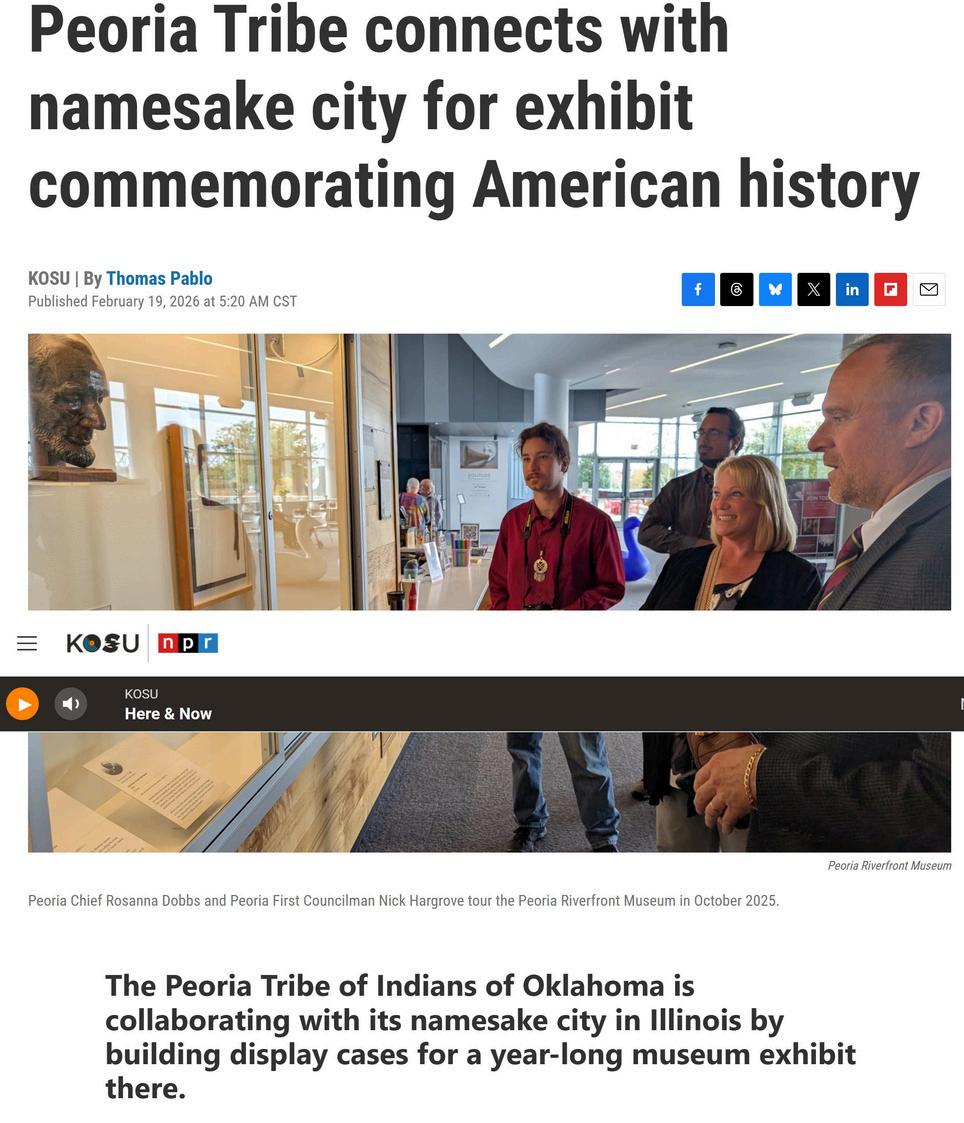
Many of us made trips to our homelands in Illinois. We visited the Cahokia Mounds. The Research and Collection Center, Illinois State Museum, Dickson Mounds, the Nature Conservancy of Emiquon, Starved Rock State Park and the Grand village of the Kaskaskia. Each place and time has been with great reception, respect and genuine desire to be inclusive, learn and develop partnerships with the Tribe. We also took a Peoria Riverfront museum tour to see the beautiful exhibit cabinets that our Henley Custom made for them. We signed a contract of intent and Henley Custom has since created more exhibit cabinets for them for which we were recognized as Exhibit Partners.
We began 2026 with the first Town Hall in recent memory It focused on the Peoria Tribe reservation. This open dialogue, held both in person and online, marks the beginning of a new era of transparency, education, and shared decision-making. We look forward to many more opportunities for citizens to engage directly with leadership.
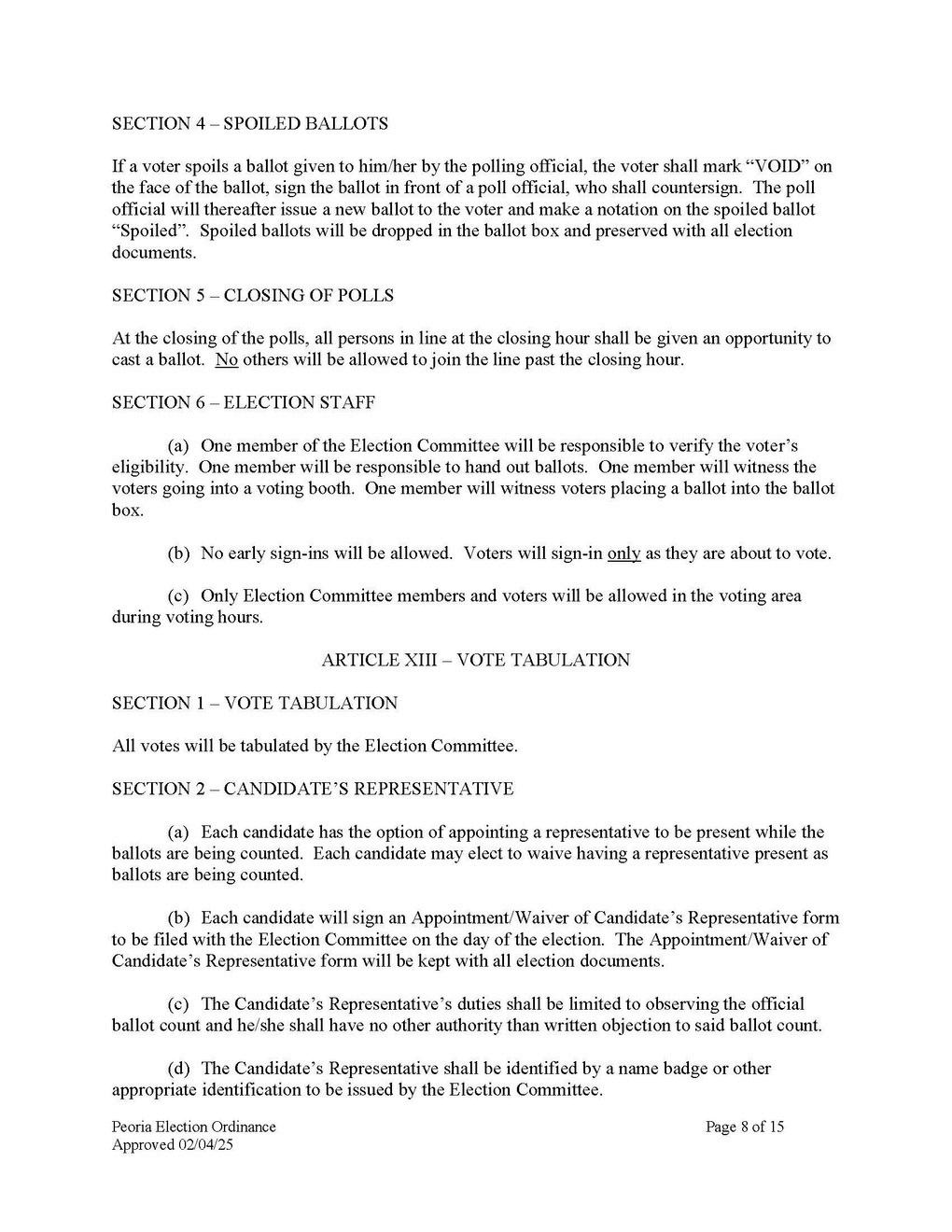
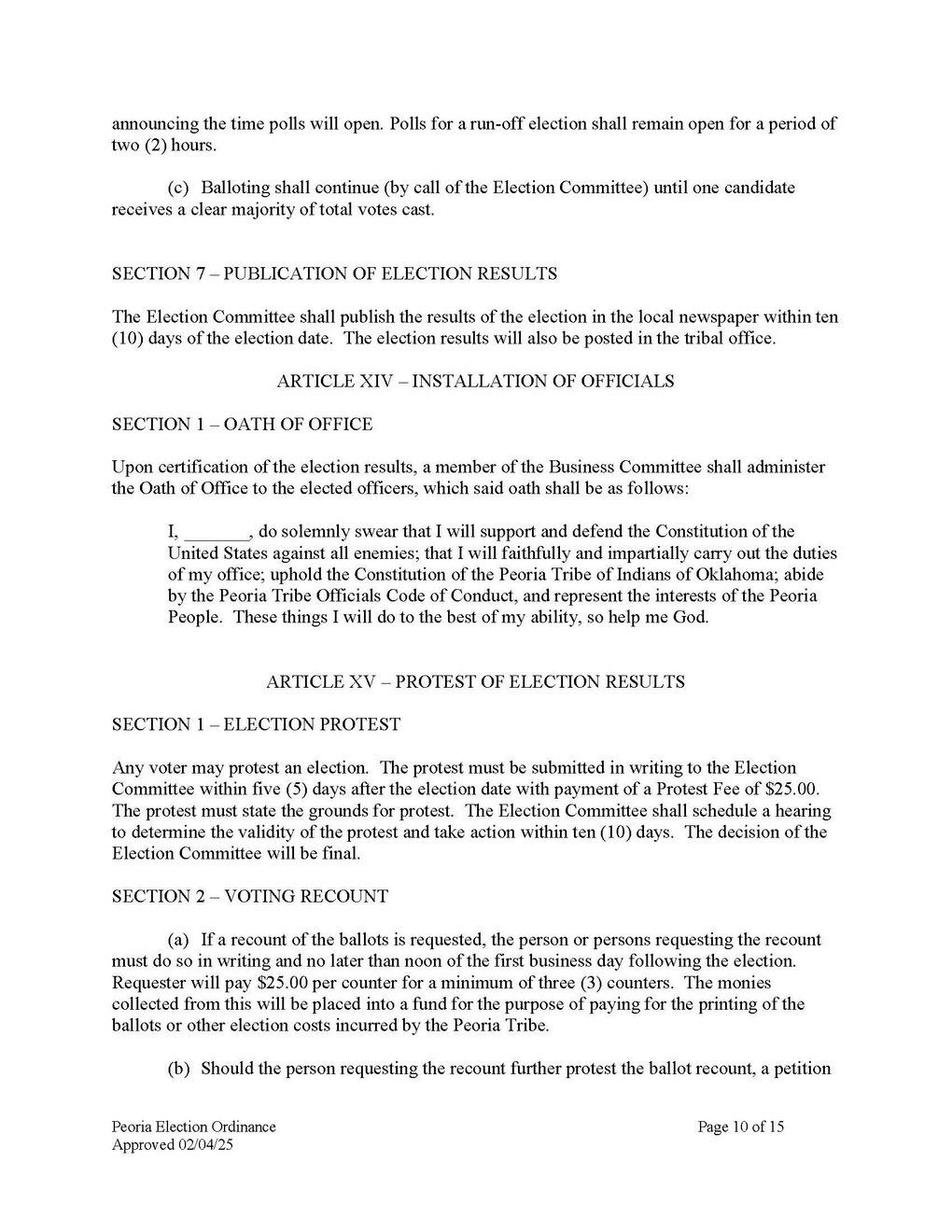
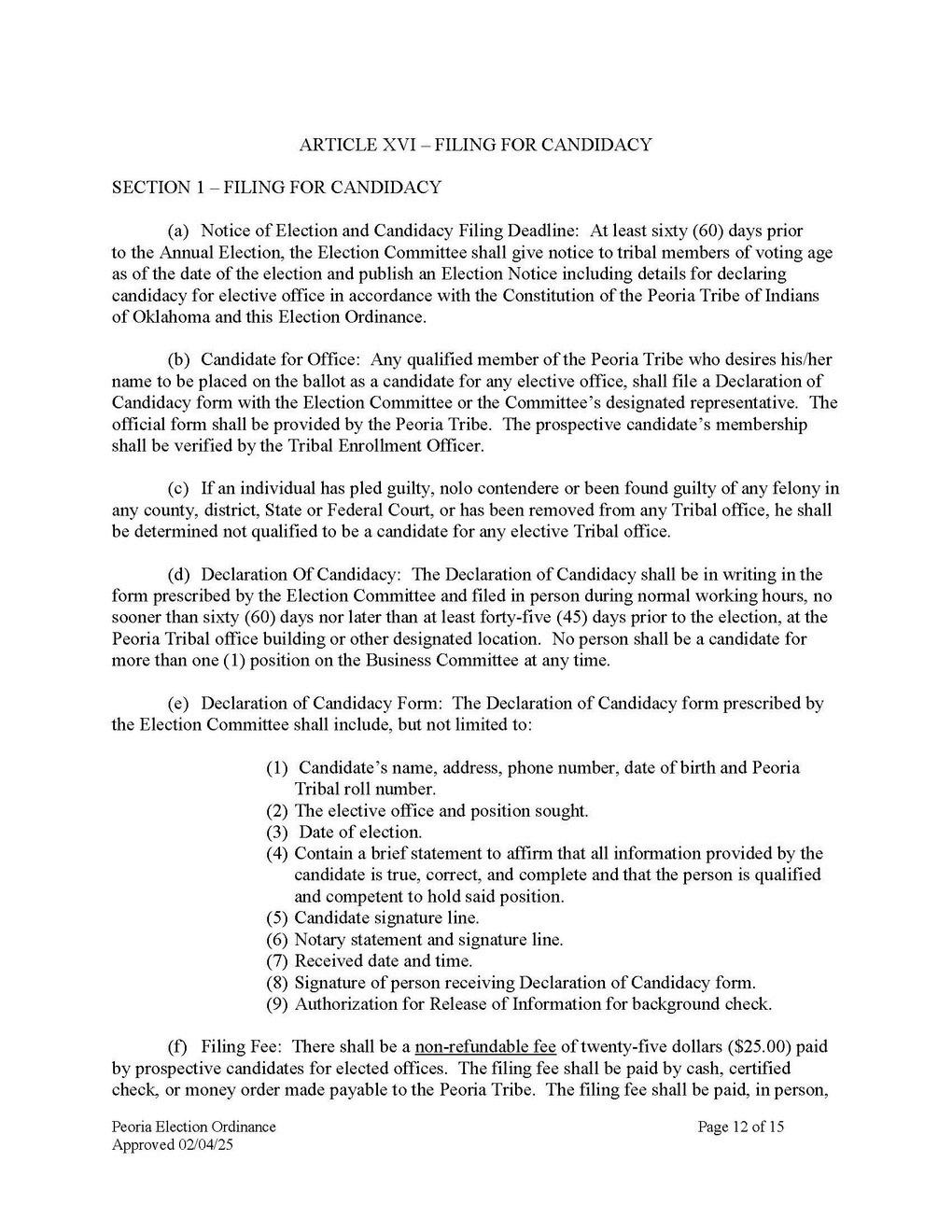
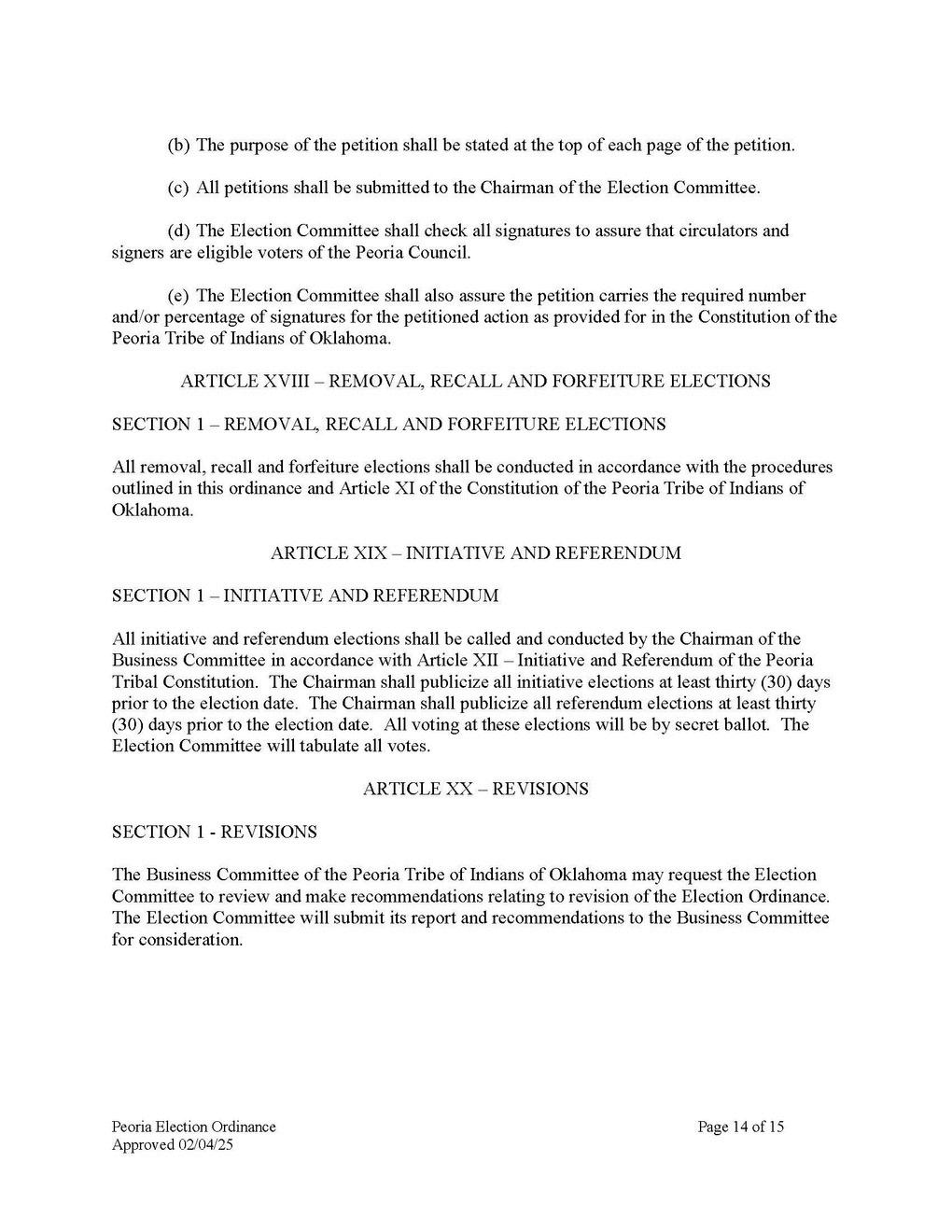
As we prepare for the General Annual Meeting on March 7, 2026, we encourage all citizens to attend, participate, and vote. Your voice shapes the future of our Nation.
We face challenges, including leadership transitions and workforce turnover. Yet we remain the same resilient people who have endured for hundreds of years. Our citizens are our stakeholders, and their strength continues to guide our path forward. Tribes are not obstacles to development, we are partners, innovators, and long-standing leaders committed to building a stronger future for everyone.
As we walk through this new year, it is time to reflect on what we have overcome, what we have learned, and how we continue to walk in balance with one another in unity. Our identity is preserved not only through our history, but through the everyday acts of caring for one another. I believe this is a special time for our tribe to heal. May this year bring good health, renewed spirit, peace and blessings to all our tribal families. May we continue to move forward with sovereignty, culture, and community at the heart of all we do.
kweehsitoolaani, I respect you, akima Dobbs Chief Dobbs










My name is Chris Rogers, and I am the Construction Project Manager for the Peoria Tribe. I have been with the Tribe since May of 2025 and have been honored to work for the Peoria Tribe family. It has been a privilege to work alongside the Peoria Tribe team with individuals that are skilled and experienced in their trades
Over the last eight months of 2025 the Construction Department has made great progress on several key projects that benefit the Peoria tribe and the community as well
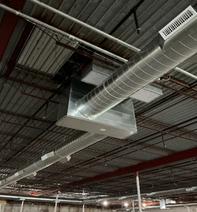
This renovation has taken another big step in its progression; there has been 75 feet of walk-in coolers and refrigerators installed and currently operating and housing beef and buffalo meat for the Tribal Citizens Another major step in this building was having the new storefront glass and doors installed. The HVAC system is installed and working to keep climate control in the building. Things to come this year are to replace the sewer lines from inside the building to the city sewer main and to build bathrooms inside.
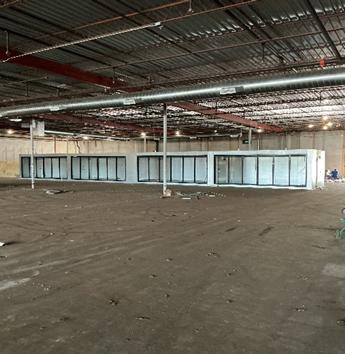
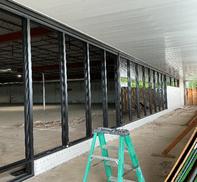
Another significant renovation project that the tribe is doing is the Rockdale school, which is being transformed for the Tribe’s early Childhood Development Program
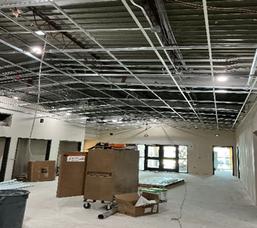
This project has been one of the most extensive renovation projects that the Tribe has undertook. The interior of the building has been completely remodeled with all new sheetrock, lighting, flooring, new bathrooms, all new classrooms, full commercial kitchen and a fenced playground area for the kids
The Rockdale learning Academy opened February 23, 2026, and has a capacity of approximately 103 kids. They are currently finishing up the FEMA rated storm shelter for the Academy And are scheduled to lay the asphalt in the parking lot on February the 27, 2006.
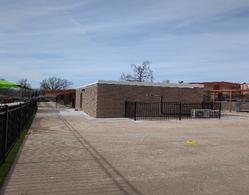
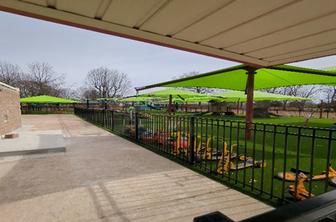

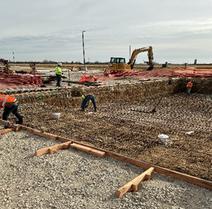
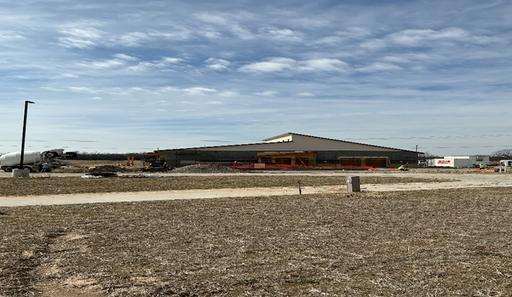
Currently phase two of the Buffalo Run Casino RV Park project is underway, the clubhouse is being built at this time that will include a general store, washer and dryer room, workout room, a locker room that will have 3 walk in showers for male and female and independent saunas for each side as well as a conference room that has a full kitchen included.
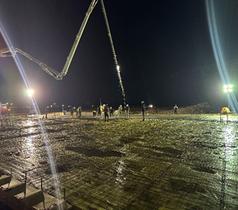
The swimming pool has been dug, and the first round of concrete has been poured, and the second round of concrete will be applied early this spring.
Completion date for phase two of the park is scheduled for May 2026.
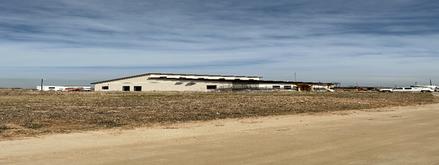
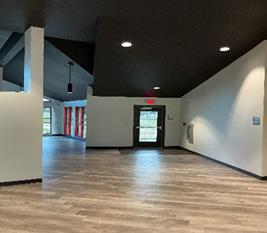
The cultural department renovations finished up in mid-January of 2026, this completion added a much-needed place to show Peoria Tribe artifacts. This space will provide a place for artifacts to be displayed there.
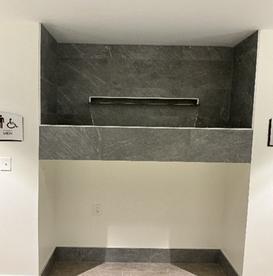
This renovation added a new front door as well as a new entry into the museum room and added doors to the existing bathrooms and a waterfall. There are plans to update the lighting in the museum area to better showcase the artifacts and have another room

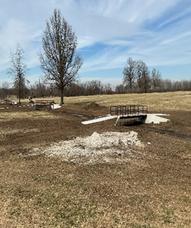
Woodland Academy had some work done in their outdoor space where there were six new walking bridges installed that helped connect The Walking Trails on the campus. This project was completed the end of February 2026.
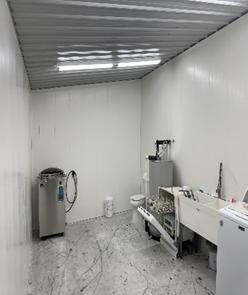
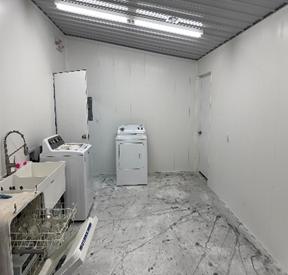
The muscle farm got an addition to their building for the use of sanitizing and cleaning. The addition made room for a new water heater, dishwasher, wash sink and bathroom.

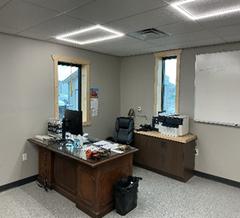
The ranch got a much-needed office space to work out of last year that included a new bathroom and a kitchenette area.
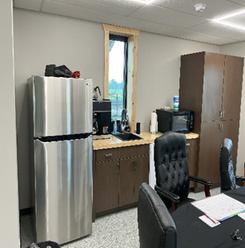

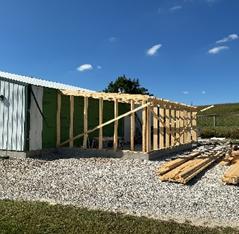
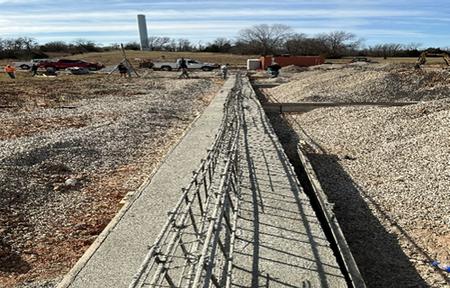
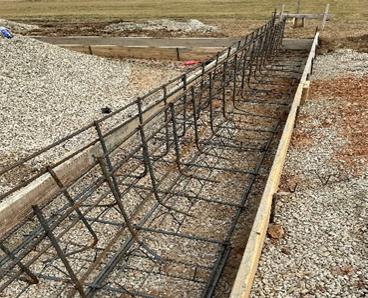
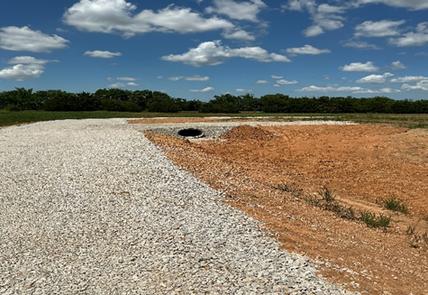
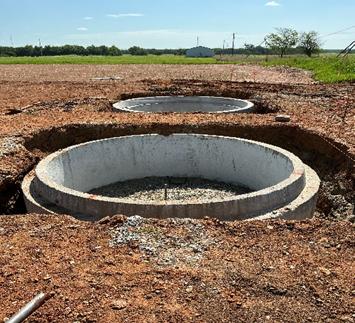
The greenhouse project is back underway with the weather temperatures rising back up Concrete crews are pouring the concrete footings and working on the drainage system for the floors inside the greenhouse. Concrete culverts have been installed to make the driveways into the greenhouse as well as concrete cylinders that will hold two recirculating tanks in the floor of the greenhouses. Completion date of the floors will be mid-summer of 2026 providing the weather holds out.
None of these projects would have been possible without the great Peoria staff working with and the members of the construction team of the Peoria Tribe. I am grateful to be a part of the Peoria Tribe and be a part of all these projects and look forward to many more
I am excited to share with you some of the things that your cultural preservation department has been working on this past year. I’ll share some of the wins and some of the projects that are on-going that will greatly enhance our ability to achieve our goals. The Cultural Department is organized into several divisions and program areas
Language
Tribal Historic Preservation Office (THPO)
Native American Graves Protection and Repatriation Act (NAGPRA)
Archival
Each one of these programs plays a vital role in the preservation and proliferation of Peoria culture and history.
Language
The language department led by language specialist Tosan Wesley Farless has been working on several projects that require indepth research in language, culture, and history. We’ve been combing through documents as we’ve been granted access to new and old documents on the Illinois language and its dialects The goal is to present the most accurate version possible to the citizens so they can be confident that they are learning the language of their ancestors.
Tosan has sent out his Peoria Moon Phase calendar, which you should have received by now We have been working with the Early Childhood Education Program and have produced a new alphabet book and a companion activity book that goes with the Nawi Mihkawi (Go and Find Him) Card Game. Tosan has also put in many hours of work on the new peewaalia com website along with our partner, Capulin Creative, that will be the online Peoria cultural hub for citizens with language resources, podcasts, videos, and
other content that celebrates and promotes Peoria culture and community
Tribal Historic Preservation Office (THPO)
Tribal Historic Preservation Officer (THPO) is a designated official within federally recognized tribes responsible for preserving and protecting tribal historic properties and cultural traditions The THPO for the Peoria Tribe is Burgundy Fletcher. One function of a THPO is to provide Section 106 reviews to assess the impact of federal projects on historic properties. Within our reservation we have 2 sites that the tribe maintains and protects, the old Peoria Schoolhouse and the Peoria Tribal Cemetery. Both have been awarded grants for ongoing projects. Once the schoolhouse fulfills the grant obligations, we will be able to host events in this unique and special space
Native American Graves Protection and Repatriation Act (NAGPRA)
We are currently without a NAGPRA specialist, but Burgundy has been filling in this role in the absence of a specialist NAGPRA requires federal agencies and institutions like museums, universities, and agencies that receive federal funding to return Native American cultural items in their possession or control to lineal descendants and culturally affiliated American Indian tribes Since I began this role in November, Burgundy has represented the tribe in NAGPRA reviews and transfers at museums and universities. This continues to solidify the tribe’s role in these spaces and ensures that we are included in these processes going forward
At this time the archival department is without
an archivist, which I am gladly filling in for that role until we can hire someone full-time for this position At the Cultural Resource Center (CRC), the archivist is responsible for the gallery and getting the space prepared to meet museum standards. Some of the things that I’ve been working on since I’ve come on board are planning and laying out my vision for the space This includes procuring an archival system, implementing climate recording systems, and continuing to improve the gallery structure and systems that will enable us to provide a one-of-a-kind museum experience for Peoria citizens. Eventually, through the relationships that we’ve built with museums and universities, I hope they will offer to return or at least loan Peoria historic and cultural items. With a safe and secure place to store these items, I am confident that we will be able to obtain and share these special items with the descendants of the creators of these Peoria cultural items
The Painted Hides project is still ongoing though it seems that it may be in its final stages Mihsi neewe to Bob Morrissey and Peoria citizen Liz Ellis for their leadership in this special project. Peoria tribal leaders and members of the cultural department, along with other tribal leaders were able to travel to Paris using funds from Bob’s grant project. The trip commemorated the gifts, minohsayaki (the painted hide robes) given to King Louis XV. There is hope that at some point the robes and other items may come to America for a special exhibition. Time and funding will tell.
Your Cultural Preservation Department is responsible for the General Council Supper and Stomp Dance, Memorial Day celebrations, Powwow, and the Veteran’s Day Gourd Dance. These will continue, and I look forward to
adding more community events and workshops in collaboration with other departments within the tribe I am sure that I’m missing some things since I ‘ve only been here since November but stay tuned and connected for more events coming from the CRC. It is an honor to serve the Peoria tribe and to lead the way in cultural revitalization. Please feel free to reach out anytime with questions or comments at: culturalpreservation@peoriatribe.com.
The Peoria Tribe Early Childhood Department remains committed to supporting tribal children and families through high-quality early education, childcare services, and family support programs Throughout 2025, the department operated Woodland Learning Academy and KahNe Early Learning Center while preparing for the opening of Rockdale Learning Academy, a major expansion that will increase access to care for tribal families
Across our childcare facilities and Child Care and Development Fund (CCDF) subsidy program, approximately 145 children were served. The CCDF program alone provided subsidy assistance to approximately 50 tribal children across Oklahoma, Missouri, Arkansas, and Kansas, ensuring families could access safe, reliable childcare while maintaining employment or pursuing education.
Demand for childcare services remains extremely high, with waitlists reaching as many as 193 children throughout the year. This reflects both the strength and reputation of the Peoria Tribe’s early childhood programs and the continued need for expanded services.
Family engagement remained a core priority through events such as family nights, cultural activities, seasonal celebrations, educational workshops, and community events. These efforts strengthened family partnerships and created meaningful connections that support child development and family well-being
Program Growth, Quality, and Family Impact Throughout 2025, the department made
significant progress in strengthening program quality, expanding services, and investing in staff development.
Both Woodland Learning Academy and KahNe Early Learning Academy pursued national accreditation and maintained high standards of care and education. Both also maintained their five-star rating with the state, demonstrating excellence in classroom quality, safety, and instructional practices.
Staff development remained a major priority Eleven teachers worked toward earning their Child Development Associate credential, strengthening classroom leadership and preparing for program expansion. Staff also participated in CPR, curriculum training, and safety preparedness trainings to ensure safe and effective learning environments.
The department strengthened classroom quality by hiring an Education Coordinator to support curriculum implementation, coach teachers, and ensure consistent classroom practices.
Facility improvements enhanced safety and quality, including playground upgrades and technology improvements that increased efficiency and reduced operational costs
Family engagement remained strong through seasonal celebrations, family nights, classroom activities, and cultural programming that supported both child development and community connection Expansion, Financial Stewardship, and Future Goals
The most significant milestone of 2025 was
the continued development of Rockdale Learning Academy. This new facility represents a major investment in the future of tribal children and families and will significantly expand access to high-quality childcare services.
Construction progressed steadily throughout the year, including installation of essential infrastructure, safety systems, and playground equipment. The facility is expected to serve approximately 50 children upon opening, with more to come. There is an expected capacity of 130.
The department demonstrated strong financial stewardship and compliance throughout the year by successfully completing federal reporting requirements and maintaining compliance with CCDF and licensing standards
Looking ahead, the department’s priorities include opening Rockdale Learning Academy, continuing to expand services to meet community demand, supporting staff development, and maintaining the highest standards of early childhood education
The Peoria Tribe Early Childhood Department remains committed to serving tribal children and families by providing safe, high-quality, culturally grounded early childhood services that support the future strength and wellbeing of the Peoria Tribe.
Raylynn
Nair, Program Specialist
The Peoria Tribal Education Program gives tribal members financial assistance in meeting their higher education goals Eligibility requirements include a 2.5 GPA, full-time or part-time enrollment in an accredited college or vocational training institution, and enrollment in the Peoria Tribe. There are no financial guidelines, and the scholarship is paid directly to the student if all criteria are met. Applications may be obtained from the Peoria Tribal Office or our web page, www.peoriatribe.com.
Applications are accepted until July 31 for the Fall term and until January 7 for the Spring term. The five-member Education Committee evaluates applications and makes the final decisions regarding eligibility. st th
140 Undergraduate renewal students (Fulltime & Part-time); 2 new Undergrad students.
21 Graduate program renewal students (Full & Part Time); 1 New Graduate student
164 total students funded Fall 2025 Semester
96 Undergraduate renewal students (Fulltime & Part-time); 47 new students.
7 graduate program students; 11 New graduate students
161 total students funded
Total funded for 2025-2026 Semester = $1,516,664.00
Students often send thank you cards, letters, and e-mails thanking the tribe for the help and how much they appreciate it
The Peoria Tribe of Indians of Oklahoma has established a program for reimbursement of school supplies or clothes for enrolled citizens of the Peoria Tribe of Indians of Oklahoma nation-wide. This will be an annual program subject to budget approval each year by the Peoria Tribal Business Committee. Reimbursements will be made in accordance with the following program overview and made payable to the legal parent/legal guardian submitting the application. Reimbursement checks will be mailed to the address listed on the application.
Eligibility:
1 Students must be an enrolled Peoria Tribe of Indians of Oklahoma citizen, age 4-18
2. Students must be enrolled in a State Accredited Public School System, grades Pre-K-12 grade (see attached required th form(s) for the school to fill out) or homeschooled (see attached required form(s) to be filled out by parent/guardian
3. The Parent/Guardian applying on the student’s behalf must be the legal custodial parent, legal guardian, foster parent, or caseworker at the time the application is processed
1.ThePeoriaTribeofIndiansofOklahoma ReimbursementforSchoolSupplies/School Clothesreimbursesenrolledfamilieswith upto$500tocovertheexpensestoattend Pre-K-12grade
2Eachstudentiseligibletoapplyfor reimbursementupto3timesafiscalyear uptothe$500maxperstudent.
3.Applicationsmustbesubmittedbymailor turnedinattheTribalHeadquarters.No emailsorfaxeswillbeaccepted.
4Submittedreceiptsmustbetheoriginal itemizedreceipt,datedMay1-May31 ofeachfiscalyear,withthestorename. Anyreceiptssubmittedthatdonotfall betweenthesedateswillbereturned. Onlinereceiptswillbeacceptedwithorder date,clothingitemspurchasedandtotal. Onlysendfullreceipt/fullemailNoscreen shotsorpartialreceiptsNoorder summaryorshipmentsummary.Receipts mustbegroupedandlabeledbystudent.
5.ReceiptswillNOTbeacceptedforthe followingreasons:
aIfcombinedwithotherpurchases(ex toiletries,food,non-clothing/school supplyitems).
b.Ifhighlightersareusedonthereceipts. Donothighlight.
c.Receiptsarestapledortaped.Thedate isnotonthereceipts.
dNOEXCEPTIONS!!
6Itisthesubmitter’sresponsibilitytomake copiesofreceiptsfortheirrecords.
NOTE:Theapplicationwillbeconsidered INCOMPLETEandreturnedtosubmitterfor completion,ifnotsigned;filledoutcompletely orifallrequesteddocumentsarenotturned in
Examples of costs allowable for reimbursement under this program include school supplies (paper, pencils, pens, notebooks, backpacks, etc , and shoes, clothes, school uniforms, lab fees, activity fees, summer school fees, or other fees charged by the school system.) All applications for reimbursements must be submitted to the Tribal Programs Department at the Peoria Tribal Office
JULY 1 THROUGH JULY 31
AUGUST 1 THROUGH AUGUST 30
SEPTEMBER 1 THROUGH SEPTEMBER 30
OCTOBER 1 THROUGH OCTOBER 31
NOVEMBER 1 THROUGH NOVEMBER 30
DECEMBER 1 THROUGH DECEMBER 31
JANUARY 1 THROUGH JANUARY 31
FEBRUARY 1 THROUGH FEBRUARY 29
MARCH 1 THROUGH MARCH 31
APRIL 1 THROUGH APRIL 30
MAY 1 THROUGH MAY 31
JUNE 1 THROUGH JUNE 30
Applications must be received, in the office, by the deadline date to be processed for that period Any incomplete applications or postage due applications will not be accepted and will be returned for your completion.
Complete application, signed and submitted by the student’s legal parent/legal guardian
Copy of student’s Peoria Tribe of Indians of Oklahoma Citizenship card
Proof of school enrollment (see attached form to be filled out by students’ school or if home schooling see attached form)
Proof of custody or guardianship: if the applicant is not the student’s legal custodial parent, submit the most current court documents or DHS approved letters of verification showing proof of custody or guardianship
June 30, 2025, closed out the school year 2024-25. A total of 423 applications were received and processed.
The total paid out for the 2024-2025 School Year was $154,605 87 Applications for the School Supply Reimbursement Program can be found on our website at www.peoriatribe.com. or you can contact Raylynn Nair at the Tribal Office at 918-544-6709 or by email at rnair@peoriatribe com
The Peoria Tribe of Indians of Oklahoma Johnson O’Malley program (JOM) provides educational support to American Indian students to help them achieve academic success Supplementary financial assistance is offered to assist students enrolled in public schools within our service area that have needs that would not otherwise be provided by the public school system.
The JOM program operates within the confines of the Peoria Tribe of Indians of Oklahoma service area, which are schools in the United States. Therefore, to qualify for JOM services, students must attend a public school within the Peoria Tribe of Indians of Oklahoma service area boundaries
Indian students from three (3) years of age through twelfth grade, are eligible for benefits provided by a Johnson O’Malley contract if they are enrolled in a federally recognized tribe or are ¼ or more degree Indian blood and a descendant of a member of a federally recognized tribe pursuant to CFR 273.112.
The student’s parents/guardian are responsible for submitting the required application and supporting documentation. Incomplete applications will be disposed of after thirty (30) calendar days This documentation includes but is not limited to the following:
1.Complete Student information form application.
2. Copy of Student’s tribal membership card/letter or Certificate of Degree of Indian Blood (CDIB)
3. Proof of school enrollment.
If the Student’s name does not match their CDIB or tribal membership card, they must also submit legal documents proving a name change or legal adoption for verification of eligibility.
Once approved, the student will receive services until the student graduates, as long as they are enrolled citizens of the Peoria Tribe Senior/ Graduation Assistance: $150 one-time submission in their lifetime. Includes portraits, letterman jackets, grad invites, cap, gown, tassel
Chrome Book Fees/ Insurance: $30 Max 1 time a year
College Concurrent Classes: Max $300 per year per student
Private Tutoring/ Speech Therapy: Max $150 per year per student (WITH EXCEPTIONS)
Academic Incentive:
1 -3 $25 w/ all Satisfactory or st rd above or 2 5-4 0 GPA 4 -8 $50 with 2.5-3.5 GPA th th 4 -8 $100 with 3.6-4.0 GPA th th 9 -11 $50 with 2.5-3.5 GPA th th 9 -11 $100 with 3.6-4.0 GPA th th
$100 with 2 5-3 5 GPA th 12 $150 with 3 6-4 0 GPA th
The JOM program has paid citizens $1,949.00 since the program began in July 2025.
School Year Fees $100 MAX each year Includes ACT, SAT testing Vo-tech fees, band equipment rentals, school supply fees, college app fees etc
JOM applications can be found on the website www.peoriatribe.com under the Services Tab, Tribal Programs, Johnson O’Malley (JOM)
All questions should be directed to Raylynn Nair at rnair@peoriatribe.com or 918-544-6709.
PTIO JOM is a grant-funded program. The program will continue as long as funds remain available
REPORT:
As of Feb 1, 2026, there are 21 citizens in the JOM program.
“The Peoria Express”
The parents of enrolled Peoria tribal children 12 years of age and under and teens 13-17 years of age are eligible to complete an application for the party. Every child aged 0-12 who returns an application and attends the party receives a gift The teens 13-17 receive a gift card who attend the party Peoria Elders were also able to register and receive a gift when they attend the party.
The 2024 Peoria Children’s Christmas Party was held on Saturday, December 13, 2026 The party had two different times for families to choose from: 10 am-12 pm or 1 pm-3 pm. The Peoria Showplace was transformed into the “Peoria Express” with trains for centerpieces and lots of activities A photo booth and “Pictures with Santa” provided opportunities
for attendees to receive printed photos whileat the party. Fun and interactive activities included builda-bear, cookie decorating, and face painting. The Corner Stone coffee trailer, a local Native-owned business, served hot cocoa, and freshly roasted iced/hot coffee sourced from the Peoria Coffee blend they created for our tribe. The Peoria Tribe coffee blend is available in our gift shop for retail purchase. Lunch and dessert were provided by Buffalo Run Casino & Resort’s Coal Creek Restaurant. The children were given a gift of their choice or gift card that stayed withing the $75 limit. Wes Farless the Peoria Language Specialist Gifted Elders with tobacco that he grew and cedar.
207 Children registered for the 37 Elders registered
640 total attendees in both sessions (counting all family members of tribal citizens enrolled or not)
Mandie VonMoss, Program Specialist
The The Peoria Tribe of Indians of Oklahoma established a program to aid eligible elderly and/or disable citizens that would benefit from an additional funding source to supplement their households, and/or disability needs, without restricting or interfering with other government programs. The program is set up to reimburse eligible citizens once the citizen pays their eligible expenses.
The Elder Care and Disability Reimbursement Program (ECDRP) will make available up to $3500 per fiscal year (April 1st-March 31st) for an eligible tribal citizen. Each eligible tribal citizen may only choose from either the elder care portion of the program or the disability portion of the program Eligible citizen is limited to 3 requests for services per fiscal year (April 1 – March 31 ), not to exceed maximum total of $3500. All denied benefits or disputes will be reviewed by a 3-person Review Committee comprised of Tribal Administration and two administrative staff members Individuals will not be permitted to receive benefits as both “elderly” and “disabled.” Applicants may only utilize the elder care portion or the disability portion of the program.
Individual must be a current enrolled living citizen of the Peoria Tribe of Indians of Oklahoma to receive benefits, evidenced by Tribal Enrollment Department.
Eligible tribal citizen elders must be 65 years or older, evidenced by a government issued Photo I D to receive benefits
Eligible disabled adult or minor tribal citizen must provide an award letter or benefit statement from the Social Security
Administration (dated within last 90 days),to receive disability benefits with each submission. No other proof of disability will be accepted
You may request a new benefit letter online by using your Social Security account, which will allow you to immediately view, print, and save a copy of the letter. You can call to request one at 1800-772-1213 (TTY 1-800-325-0778), Monday through Friday from 8:00 a.m. to 7:00 p.m.
Minors or other disabled individuals already receiving Disability Social Security or SSI benefits payable to a representative payee, will be eligible for the tribal reimbursement program All payments will be made to the representative payee as designated on SSI records
What is needed for Reimbursement:
An approved application signed by the citizen or legal representative must be on file A new application, with a government issued photo ID, must be submitted witheach request during the fiscal year (April 1 -March 31 ). Each bill/invoice submitted for reimbursement MUST list services of goods provided st st The submission date of the application will be the date the application is received at the Tribal office.
(not copies) with proof of payment must be sent to the tribal office and be dated within the fiscal year of application date
For example: All receipts and supporting documentation for FY’27 year, must be dated between April 1 2026 through March 31 , 2027. All proof of payment st st
must have a bill/invoice to accompany it.
All bill/invoices must have proof of payment accompanying bill/invoice
Receipts must be legible
All receipts (proof of payment) must show date and amount of transaction to coincide with the bill or invoice submitted.
If your bill is stamped as paid by the vendor, then it may be used as the bill and receipt However, personally writing the check number and date on the bill is not a receipt.
All receipts (proof of payment) must come from the vendor or service provider, contain the vendor’s contact information, and a detailed summary of product(s) and services.
If the bill is automatically withdrawn from your checking account, you may submit a copy of your checking account with that payment highlighted You may black out any other personal information on the bank statement.
If your bills are automatically withdrawn from your checking account, you must still submit the bill or invoice that corresponds with the information withdrawn
Please only submit the bills and proof of payment for reimbursement. There is no need to send in years’ worth of all your bills.
Reimbursement will be based on the amount paid as shown on proof of purchase/receipt on eligible expenses
Eligibility for each program cease upon tribal citizen’s death.
Eligible Expenses are divided up in three categories. You may submit from all three categories to reach the $3500.00 maximum reimbursement:
Insurance and Taxes: ALL insurance/proof of ownership of property must be in the name of ownership of property must be in the name of
the eligible tribal citizen to qualify for reimbursement. If it is not in the eligible tribal citizen’s name, the address must match (Example: Automotive insurance is in your spouses’ name, but the address is the same on your valid Government Issued Photo ID)
Life Insurance
Homeowner’s Insurance
Property Tax
Automotive Insurance
Healthcare Insurance
Personal Content Insurance for renters
Utilities: All utilities must be in the name of the eligible tribal citizen to qualify for payment If the utilities are not in the eligible tribal citizen’s name, the address must match (Example: Electric bill is in your spouses’ name, but the address is the same on your valid Government Issued Photo ID)
Electric
Propane
Trash Services
Rent or Mortgage Payments
Natural Gas Water and Sewer
Telephone and Internet services
Wood/pellets for heating purpose
Health Care Expense: ALL prescriptions and deductibles must be in the name of the eligible tribal citizen to qualify for reimbursement.
Hearing Aids
Dentures and Eyeglasses
Health Care deductibles
Medical Alert Services
Physician prescribed ambulatory product (wheelchair, cane, walker)
Miscellaneous items prescribed by a physician for health purposes…. Must provide a note from the physician. Home Health must be from a State or Tribal agency.
Prescription medication must be filled and dispensed by a licensed pharmacist/pharmacy. Due to the Tribe having federal funding, no form of cannabis will be eligible for reimbursement.
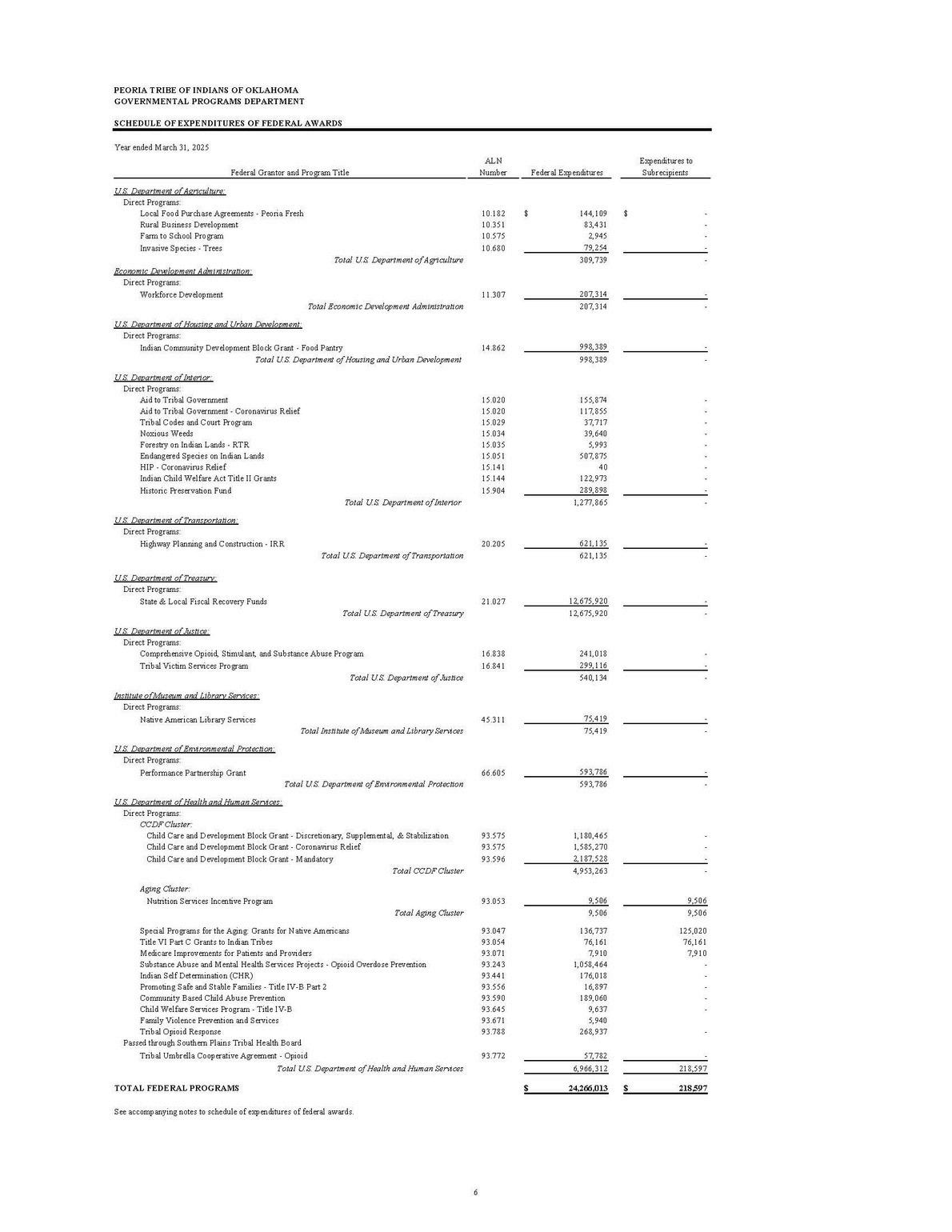
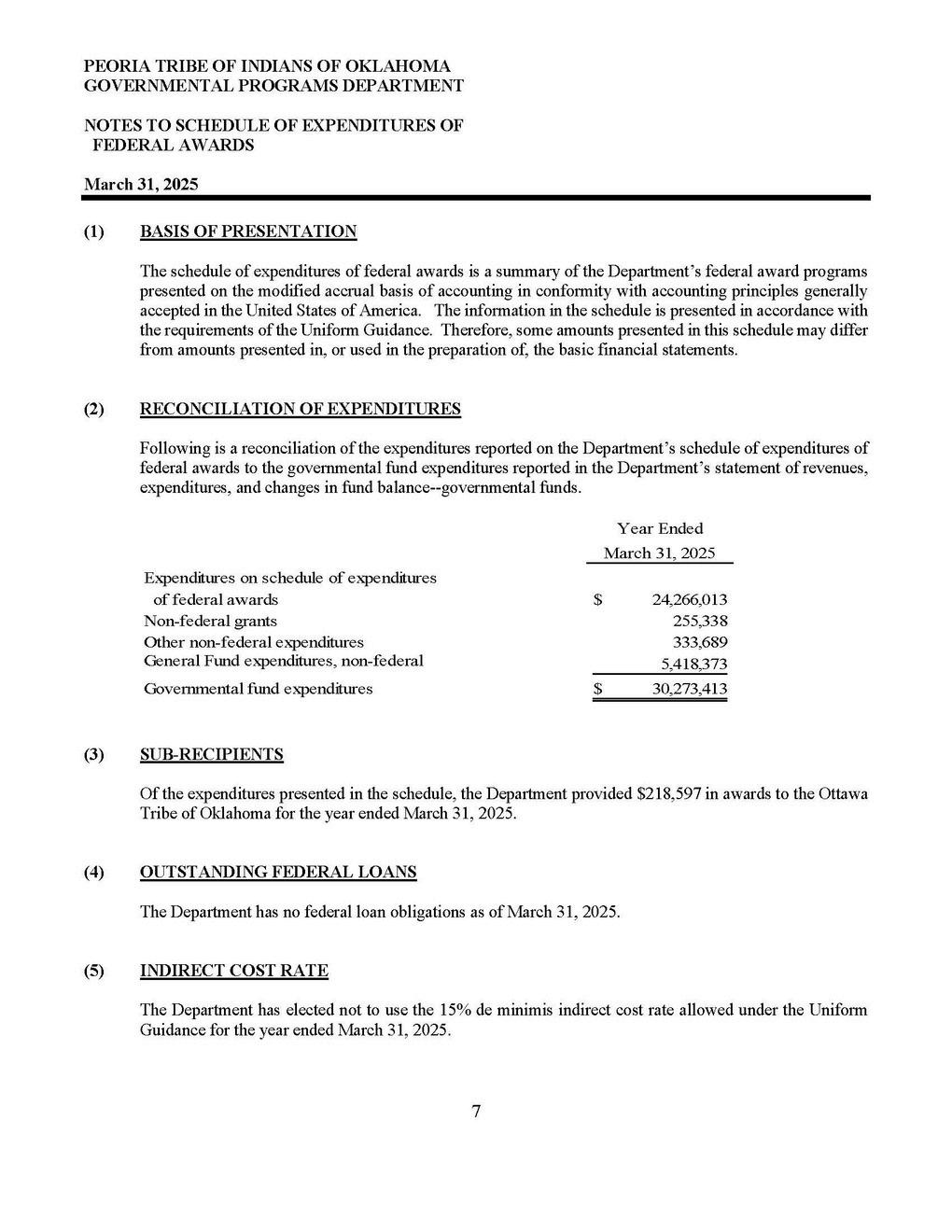
Grants play a significant role in the operation of the various Peoria Tribe programs. They provide essential, non-repayable funding that allows the Tribe to grow services without incurring debt or giving up equity They offer credibility, enhance prestige, and facilitate access to further funding while supporting services, cultural growth, infrastructure development, and economic development.
Collectively the Peoria Tribe has 109 grants spread across all divisions from several federal and state agencies that assist with programs. The following is how our grants from the agencies line-up:
Natural Resources:
Environmental Protection Agency
Department of Agriculture – Rural Development
Department of Agriculture – Forest Health Protection
Bureau of Indian Affairs
InterTribal Buffalo Council
National Science Foundation – Oklahoma
State University
Sovereign Equity Fund
Cultural Preservation:
National Park Services – Historic Preservation
Early Childhood:
Department of Agriculture - Farm to School
Department of Children and Families
(Office of Child Care)
Health and Human Services
Department of Agriculture – Rural Development
Department of Children and Families
Department of Justice
Administration for Community Living
Substance Abuse and Mental Health
Services Administration
Southern Plains Tribal Health Board
Oklahoma Health Care Authority
Tribal Programs
Bureau of Indian Affairs
While competitive and sometimes requiring extensive reporting, grants provide crucial financial support for initiatives that might otherwise lack funding They can range from one to five years of funding The 109 grants the Peoria Tribe equates to a cumulative total of $79million.
The grant department is part of the finance division and manages the full cycle of a grant, from start to finish While every grant is different, the steps for each are basically the same and understanding, as well as following them are critical to successful grant applications and ultimately management once awarded For PTIO it starts with understanding the needs defined by leadership and department directors to help identify opportunities, submitting applications and reviewing organization capacity.
Once notification of a grant award is received and accepted the lifecycle enters into the performance period of the project (new or continuing), post-award compliance, financial reporting, and project closeout at the end of the performance time-period. Vital to success of the grant is communication between the project director and funding program manager, however at times the grant department may act as a liaison between funding agencies and internal teams, ensuring all regulatory requirements are met.
Over the past year, Henley Custom has experienced a period of meaningful growth, operational refinement, and expanded impact, continuing to strengthen its role as a reliable, high-quality production partner within and beyond the tribal community As part of the Peoria Tribe of Indians of Oklahoma, our work is rooted not only in craftsmanship and technical capability, but also in a broader commitment to community advancement, cultural support, and long-term sustainability. Throughout the year, we focused on balancing mission-driven projects with revenuegenerating initiatives, ensuring that our efforts consistently support both tribal priorities and business development goals.
One of the most meaningful achievements of the year was the completion and delivery of classroom bookshelves and cabinetry for the new Rockdale School. This project represented more than a standard furniture build; it reflected our ability to directly contribute to educational infrastructure that benefits tribal youth and future generations The shelves were fabricated with durability, safety, and functionality in mind, designed to withstand daily classroom use while providing an organized and accessible learning environment Participating in a project that supports early education is especially significant, as it demonstrates how our fabrication work can create tangible, lasting value in community spaces.
In a similar spirit of community-focused production, we completed fabrication for three elevated early-childhood platforms for the Seneca-Cayuga Tribe. These platforms were designed specifically to enhance learning
engagement, improve classroom functionality, and create safe, interactive spaces for youngstudents. Each structure required careful planning, precision construction, and adherence to safety considerations appropriate for early childhood environments Successfully delivering these units reinforced our ability to execute specialized builds tailored to unique client needs while maintaining strict quality standards.
Alongside these institutional projects, our team continued to demonstrate its craftsmanship through a series of custom furniture builds. Over the course of the year, we produced multiple conference tables, including a twelve-foot hickory table and three six-foot pecan tables These pieces required a high level of detail, from wood selection and joinery to finishing and final assembly. Large custom tables present particular fabrication challenges due to scale, material movement, and structural requirements, yet each piece was completed to exact specifications and delivered ready for professional use Projects such as these highlight our capacity to merge aesthetic excellence with structural reliability, a combination that consistently sets our work apart.
We also strengthened our presence within the museum and exhibition sector through the construction of seven large document display cabinets designed for a major exhibition installation. Each cabinet measured approximately nine feet by five feet and was engineered to meet archival-quality standards This meant careful attention to materials, sealing methods, structural integrity, and visual presentation, ensuring that the displays
both protect and enhance the historical items they house. Work of this nature requires a precise blend of woodworking, fabrication, and design awareness, and its successful completion further established our reputation as a trusted builder of museum-grade displays and specialized exhibit structures.
As these major builds were completed, our team simultaneously began work connected to broader development efforts, including projects associated with the Buffalo Run RV Park. These initiatives demonstrate our ability to transition seamlessly between completed contracts and new opportunities while maintaining consistent productivity The ability to sustain workflow continuity is a key indicator of operational maturity, and this year showed clear progress in that regard.
In addition to project-based fabrication, we expanded our subcontract manufacturing services, particularly in the area of waterjet cutting for outside companies. This expansion marked an important strategic step, allowing us to diversify revenue sources and broaden our client base across multiple industries By offering precision cutting services to external partners, we increased equipment utilization, strengthened industry relationships, and positioned ourselves as a valuable resource for specialized fabrication support. This diversification also enhances long-term stability by reducing reliance on any single project category.
Operationally, the year was defined by improvements in workflow coordination, production planning, and team collaboration Refinements to scheduling and fabrication processes enabled us to handle multiple large projects simultaneously while maintaining the high standards our clients expect. Our
workforce played a central role in this success. The team’s technical skill, adaptability, and attention to detail allowed us to meet demanding timelines without compromising craftsmanship. Their ability to shift between custom woodwork, structural fabrication, and specialty builds demonstrates the depth of talent within our operation.
Another defining characteristic of the past year has been our continued emphasis on quality assurance. Every project, regardless of size or scope, was approached with the same commitment to precision and durability. Maintaining consistent standards across diverse builds—from classroom furniture to museum displays requires disciplined processes, experienced personnel, and strong internal communication. This consistency has contributed significantly to our growing reputation for reliability and professionalism
The strategic impact of this year’s work extends beyond individual projects. Collectively, our efforts supported education initiatives, infrastructure development, cultural preservation, and economic growth By successfully delivering projects that serve real community needs while also expanding our commercial reach, we demonstrated that it is possible to align business performance with mission-driven outcomes This alignment is a defining strength of our division and a guiding principle for future planning.
Overall, the past year can best be described as one of progress, productivity, and purposeful expansion We strengthened our operational foundation, completed a wide range of complex builds, and broadened our service offerings, all while maintaining a clear focus on craftsmanship and community value. The
momentum generated during this period has positioned us well for continued advancement.
Looking ahead, we anticipate further growth in custom fabrication, museum display production, and subcontract manufacturing services. With improved processes, an experienced team, and a steadily expanding
network of partners and clients, we are well prepared to pursue new opportunities and scale our capabilities Building on the foundation established this year, we expect to continue increasing efficiency, expanding our reach, and delivering projects that reflect both technical excellence and meaningful impact.
It is an honor to speak with you today about the work of our Natural Resources Department and the responsibility we carry as stewards of our tribal lands. As the Director of Natural Resources, I have the privilege of leading a department that is deeply committed to protecting, restoring, and sustaining the resources that define who we are as a people
Our department currently manages 34 funded grants and projects, a testament to both the scale of our work and the trust placed in us. These efforts are primarily supported through funding from the Environmental Protection Agency, the Bureau of Indian Affairs, the United States Department of Agriculture, and Superfund programs. Through these resources, we can address both long-standing environmental challenges and emerging opportunities for innovation and sustainability.
Within our department, we oversee key operations that are vital to our community’s present and future This includes environmental programs that oversee tribal lands, waters, and the air. It also includes the ranch, which supports land stewardship and agricultural sustainability; the aquatic facility, which plays a critical role in water management, habitat health, and education; and our upcoming greenhouses, which represent growth, resilience, and a commitment to food sovereignty and environmental responsibility.
At the heart of all this work is our unwavering dedication to advocating for tribal lands We do not simply manage resources; we protect our homelands, restore what has been damaged, and plan intentionally for future generations. Every project, every grant, and
every partnership reflects our belief that our lands are not only assets, but living connections to our culture, our history, and our future.
We work with passion, purpose, and accountability, knowing that the decisions we make today will shape the landscape our children inherit tomorrow. Thank you for the opportunity to share the work we are proud to do.
During calendar year 2025, the Natural Resources Department continued to advance the Tribe's environmental protection, conservation, and resource management priorities. I oversaw a staff of 12 employees, with anticipated growth in the coming year to meet increasing programmatic and regulatory demands. Department responsibilities span from environmental protection, water and air quality, land stewardship, wildlife and fisheries management, invasive species control, youth engagement, and economic and scientific development
The department administered and operated 34 active grant funds and Tribal projects, coordinating compliance, reporting, and implementation across multiple federal agencies, inter-tribal organizations, and settlement-based funding sources. These funds collectively support regulatory programs, restoration activities, infrastructure maintenance, workforce development, youth engagement, and long-term sustainability of Tribal natural resources Our department hosted or attended 21 outreach events and activities, which I am extremely proud of. One of my goals is to maximize youth, community, and citizen outreach and engagement. We
must foster in our youth a love and appreciation for our natural resources and Mother Earth so they can carry on and, if you will, take up the sword and shield to protect them when we are gone.
The following section provides a general overview of the department's major funding sources, including the funding entity, program purpose, activities conducted in 2025, and anticipated work for the upcoming year. I know the Tribe has many grants, and keeping track of who operates what and how can be cumbersome, so I wanted to break down the grants we operate under and what they support Please note that some of these grants are multi-year, and others are awarded annually and span more than one fiscal year. Also, please note that I created short versions of each program or project to reduce the length of this report Each team member is also writing a more in-depth description of their role below my report. If anyone would like more information about any of these programs, I would be happy to explain further.
Environmental Protection Agency (EPA)
Funding
1. EPA – Performance Partnership Grant (PPG)
Funder: U.S. Environmental Protection Agency
Purpose:
The EPA Performance Partnership Grant (PPG) allows the Tribe to combine multiple EPA program funds into a single grant, providing flexibility to address Tribal environmental priorities while maintaining core regulatory programs. Gaining the EPA PPG was a big success for the Peoria Natural Resources Department The PPG houses our GAP, 106, 319, and 105 grants. All of these are EPA funds, which I will break down individually below. Previously, each of these funds was granted, monitored, and used by our
department individually. The PPG consolidates all those grants into a single, larger budget, making it easier to manage and maintain It also allows us to do more with the funds and have a greater overall impact.
PPG funds supported overarching environmental management activities, including program administration, compliance reporting, staff training, community outreach, and coordination across air, water, and waste programs.
Continued support for integrated environmental program management, capacity building, and enhanced coordination among EPA-funded programs while increasing education and outreach to citizens and the community
2. EPA – General Assistance Program (GAP)
Funder: U.S. Environmental Protection Agency
Purpose:
The EPA GAP program builds Tribal capacity to manage environmental programs and develop foundational environmental protection infrastructure. This GAP program is what built our environmental department. It is the funding mechanism that this tribe, like all other tribes, uses to develop, build, and grow an environmental department These EPA funds enable us to build tribal capacity and operate an environmental program and natural resources department to protect and preserve the environment in Indian Country. This grant funds the Director's salary and supports my responsibilities, including managing resources to meet work plan commitments and program goals. Utilize program regulations, guidance, and cost principles to guide program activities. Negotiate work plans and budget changes as needed. Address budget surpluses promptly to
put available resources to the best use in building the tribe's capacity for environmental program development Maintain fiscal accountability I am held accountable not only to the Peoria Tribe and its Citizens, but also to high standards set by the EPA, BIA, USDA, USFWS, ODWC, NRCS, and other agencies. I strive daily to maintain the highest standards and integrity To do my job effectively and efficiently, I need a continually expanding understanding of federal and state regulations, policies, and guidelines. I also must have a working knowledge of accounting systems and auditing requirements. These are constantly evolving with political and economic changes I make it a point to stay as up to date as possible, and this grant provides the funds to do so, enabling me to serve the Peoria Tribe, its land, and its citizens in the fullest capacity. It is also my duty to apply for and prepare the grants that keep this department running annually This grant also supports capacitybuilding and training for my team and the department. As the Director of Natural Resources, I oversee 34 active grant funds and Tribal projects. Three of which are either large or small versions of a tribal enterprise, the Ranch, the Aquatic Facility, and the Greenhouse. I oversee multiple staff at multiple locations. I am truly blessed with an amazing team! We put our hearts into our work for the Peoria Tribe! I am also one of the Tribes' NRDAR (Natural Resources Damage Assessment and Restoration) representatives I also conduct extensive outreach, and my goal for 2026 is to expand it further. I truly believe in the power and impact of our outreach!
Activities included environmental planning, policy development, data management, staff training, and community education initiatives. This year also included a larger recycling program, as we added two cardboard trailers
to our program. One is housed at headquarters, and the other at HHS, to recycle all of the food programs' cardboard This year, I am proud to say we hauled 2,209 lbs of cardboard to the Modoc recycling center in fiscal year 25!
Anticipated 2026 Activities:
Further development of environmental program capacity, increased community engagement, and advancement toward program maturity and regulatory readiness.
Funder: U S Environmental Protection Agency
Purpose:
Section 105 funding supports air quality management programs, including monitoring, planning, and public education. This program is complex and growing. This grant pays for the Clean Air Technician's salary The Clean Air Act funding requires, and rightly so, numerous trainings and certifications before a program can review and comment on permits and collect indoor or outdoor air quality. The amount of knowledge and education that this position requires can be rigorous at times; it requires a lot of travel for these trainings, which are never local, which means weeks away from families. LaShell Thomas is our Clean Air Specialist. She takes her job and the training very seriously. We are very fortunate and blessed to have her on our team! LaShell spends hours poring over air permits and conducting research to assess the potential impacts of each permit and its contaminants, and the effects they may have on our lands and communities. Please see her annual report within the department report for more in-depth information
2025 Activities:
The Department administered the air quality program, reviewed air permits, conducted
outreach, and coordinated with regional and federal partners. 2025 presented our team with new and harder challenges than ever before; one of those areas was the mass amounts of local permits that started pouring in. Thanks to new federal and state policies and loosened regulations, we are seeing a massive increase in local permits. Every year, the clean air person reviews permits, but seldom, if ever, since we have started this process, have we received a local or majorly troubling permit. However, in 2025, we reviewed and commented on 10 local permits and attended five town halls advocating for the Tribe With the local permits, our whole team sits down, and we review them for air, water, and overall environmental impacts on behalf of the Tribe. LaShell, MJ, and I have spent countless hours this year researching, reviewing, and advocating for Peoria lands and communities
Anticipated 2026 Activities:
Expanded monitoring efforts, continued public education, and refinement of air quality management strategies.
4. EPA – Clean Water Act Section 106
Funder: U.S. Environmental Protection Agency
Purpose:
Section 106 funding supports water quality monitoring, assessment, and protection of surface waters This grant pays for the Water Quality Specialist's salary The Clean Water program also requires significant training, research, and time to develop policies and regulations. MJ Shields is our Water Quality Specialist. While we have had the 106 and 319 programs for around a decade, and they are good, solid programs, MJ has grown the 106 program since his arrival. He has added bacterial sampling to our program! We are fortunate to have MJ on our team. He is a wonderful addition to the team,
knowledgeable about water quality, and passionate about natural resources. We have been using the 106 program to sample waters within the Peoria jurisdiction and now, the reservation for over a decade. These samples have ranged from surface water data to bacteria to heavy metals in the water to heavy metals in aquatic life. We monitor water quality to detect spikes in any parameter that could indicate an issue, and we also monitor for human health reasons. We maintain records, so if there is a spill, we can refer to historical data on the expected quality. One of the largest proponents of our sampling and data collection is the heavy metal testing we do yearly These records have not only helped us track heavy metals in our waters but, when they spike, have also helped us understand why and, legally, have helped the tribes fight Superfund litigation for remediation and restoration These on going test are very important Please see his annual report within the department report for more in-depth information.
2025 Activities:
Activities included water sampling, data analysis, quality assurance, and reporting to support Tribal water quality standards and protection goals. Closely monitoring the waters within the Peoria Reservation, education and outreach are major components of this grant
Anticipated 2026 Activities:
Continued monitoring, increased assessment coverage, and development of water quality improvement strategies. This year, the EPA and Water Quality programs took a cut; we had a portion of our funding cut, as did all the other tribes. We anticipate continuing to do as much as possible. This year, we will not have funding for our pore water sampling. We hope there is more funding next year.
(Nonpoint Source Program)
Funder: U S Environmental Protection Agency
Purpose:
Section 319 funding addresses nonpoint source pollution through planning, education, and on-the-ground restoration projects. Where the 106 provides more boots on the ground and funds salaries and testing, the 319 covers only work to “fix” smaller erosion or nonpoint source pollution issues. It’s a mustsmaller, fixed-sum fund that can be used to improve wetlands and fix erosion to improve water quality.
2025 Activities:
The Department implemented nonpoint source management activities, including watershed planning, best management practices, and public outreach. We also planned a project that will start in 2026 on the campus property This project is a multi-phase project. In 2024, we worked to fix some of the erosion issues on Beaver Creek at the campus.
Anticipated 2026 Activities:
Continuation of watershed restoration efforts and expansion of education and implementation projects.
Funder: U S Environmental Protection Agency
Purpose:
This grant supports Tribal involvement in Superfund site assessment, cleanup coordination, and community engagement. These funds help offset salary costs for myself (Erin), MJ, and Mara as we work, research, and participate in multiple calls and meetings weekly for the TCTC, TCTCIT, and the subgroups of each. These groups and funds are for remediation planning.
2025 Activities:
The Department participated in site coordination, technical review, and communication regarding Superfund activities affecting Tribal lands or interests.
Anticipated 2026 Activities:
Ongoing coordination with EPA and partners, including continued review and monitoring of cleanup activities
Funder: Bureau of Indian Affairs
Purpose:
Supports youth engagement, education, and workforce development in natural resources and environmental stewardship. The Peoria Tribe’s goals for this project are to provide meaningful hands-on work for Native American youth, focusing on science, conservation, ecology, and resource management. The program will be designed to foster an interest and develop skills in natural resources and their management in hopes that these interns will pursue educational opportunities in the fields of science, conservation, ecology, and natural resource management. The Peoria Tribe has had great success with this grant and its impact on Peoria youth and other Native American youth! Over the last several years, we have had students whose lives this program has impacted, and they have changed their majors to fields related to natural resources, ecology, and management. With this funding cycle, the Tribe wants to continue to broaden the exposure and experiences our interns get regarding Natural Resources The Tribe wishes to continue the expansion of the rest of the Tribe’s Natural Resources Department opportunities. This includes, but is not limited to: The Peoria Tribe’s Aquatic Facility, the Fresh Water Mussel Program, the Tribes'
Ranch, and Land Management Programs, as well as the developing Wildlife programs. The Tribe is building greenhouses; once the project is complete, it will become one of the student experiences! With the expansion of programs, the Interns will gain exposure and engagement in Natural Resources career paths, which will increase the likelihood of inspiring more Native American Youth to pursue Natural Resources careers The Tribe has worked with the NEO A&M College’s Native American Students Association for several years to help bridge the gap between Natural Resources classes and the opportunity to gain real experience
2025 Activities:
The Department provided training, mentorship, and hands-on learning opportunities for Tribal youth.
Anticipated 2026 Activities:
Expanded youth programming and increased integration of youth into departmental projects.
Funder: Bureau of Indian Affairs
Purpose:
Supports control and management of noxious weeds on Tribal lands. On Peoria tribal property, we have identified these noxious invasive weeds: Foxtail, Johnson Grass, Blackberry briars, Dock, Musk Thistle, and Sericea Lespedeza. The scope of this is to control invasive plant species by eliminating them from agriculturally productive parcels and preventing their spread in pastures and fence rows through herbicide use This program does not pay salaries; it does pay for supplies, which helps significantly offset the tribal budget for controlling these species.
2025 Activities:
Invasive plant management activities, including treatment, monitoring, and landowner coordination
Anticipated 2026 Activities:
Continued treatment efforts and expansion of preventative management strategies.
Funder: Bureau of Indian Affairs
Purpose:
We have had such great success with previous and yearly funding that when there was a special pot of money open, even though it was a small amount, the National BIA administration called me to see if we would be interested. The name of this fund is very misleading; it is actually used similarly to the youth program and helps to augment our budget to hire tribal youth to gain work experience in Natural Resources
2025 Activities:
The Peoria Tribe’s goals for this project are to provide meaningful hands-on work for Native American youth, focusing on wildlife, science, conservation, ecology, and resource management. The program will foster interest and develop skills in natural resources and their management in hopes that these interns will pursue educational opportunities in the fields of wildlife biology, science, conservation, ecology, plant ecology and growth and management, and natural resource management. These Wildlife and Parks funds will help supplement our outstanding Tribal Youth program so that the youth can work longer at the facility, as well as increase our outreach efforts and impacts on local Tribal youth. .
Anticipated 2026 Activities: Ongoing.
Funder: Bureau of Indian Affairs
Purpose:
Addresses the management and control of feral swine populations and associated environmental impacts. The encroachment of feral swine into Ottawa County has raised concerns about the adverse effects that their potential spread, both numerically and geographically, could pose for Peoria tribal resources as well as Ottawa County’s unique natural and cultural resources. This threat, left unaddressed, would likely cause substantial damage to the significant Tribal, public, and private investments made to conserve native species and lands within the Peoria Tribal reservation and neighboring Tribal reservations. In response to this threat, the Peoria Environmental Department is developing an approach to address the expanding feral swine population in Ottawa County To protect the natural and cultural resources conserved in Ottawa County from this threat, the Tribe continues to partner with Federal, State, Tribal, and local government agencies, as well as private landowners. Our Invasive Species Program has trapped more than 200 feral hogs over the past few years Landowners have seen a significant decline in these animal populations.
2025 Activities:
Population monitoring, control efforts, and coordination with partners
Anticipated 2026 Activities:
One of the goals of this project is to minimize the number of feral swine and the potential for the spread of those animals into the Tribe’s reservation boundaries and, if necessary, to eliminate or significantly reduce invasive numbers on Tribal properties. While successfully stopping them from populating the area or eradicating them, once detected, is
preferable, it may not be possible. Thus, controlling and reducing invasive swine populations within Tribal reservation, on adjacent properties, and surrounding areas, with permission, would also meet our objectives.
Funder: Bureau of Indian Affairs
Purpose:
Supports the maintenance and operation of Tribal fish hatchery facilities. These funds do not pay for salaries, but they pay for equipment and contractual work needed to grow, improve, and or fix things at the Tribal fish hatchery The Peoria Tribes' goal is to upgrade our facility, making it safer and more efficient, increase the ability to grow quality fish, and perform maintenance and repair work on leaking brood and grow-out ponds. The continued growth of the Peoria Tribe’s Hatchery is working toward not only a positive economic impact on the Tribe and its Citizens. Please see Kyle Foster's annual report on the Peoria Aquatic Facility for more details.
2025 Activities:
Facility maintenance, equipment upkeep, and operational support.
Anticipated 2026 Activities:
Ongoing maintenance and infrastructure improvements
Funder: Bureau of Indian Affairs
Purpose:
Supports conservation and recovery of endangered freshwater mussel species Freshwater mussels are important to the Peoria Tribe for historical and ecological reasons. The Peoria Tribe has deep and significant ties to rivers, streams, and the
wildlife inside them. They have historically used mussel shells for ornaments, necklaces, weapons, tweezers, and utensils, as well as for shell-shaker ceremonies and personal consumption. The meat of freshwater mussels was once considered an important food supplement in the Peoria Tribe’s diet, all the way from the Early Archaic Period to the Historic Period The Tribe once consumed these mussels so extensively that their camps and villages were filled with shell mounds, which have since been recovered from archaeological sites. Additionally, freshwater mussels are important for aquatic ecosystems. They are filter feeders that ingest and remove harmful bacteria, heavy metals, blue-green algae, and silt. They reduce sedimentation and cloudiness, and their excretions are often rich in Carbon, Nitrogen, and Phosphorus, which can improve aquatic plant growth. These funds pay for partial salaries and supplies The Peoria Tribes' goal with these funds is to increase freshwater mussel populations by cultivating non-threatened species for tribal use and federally endangered species for local restoration and reintroduction projects. To expand community outreach and education programs through facility tours and through
2025 Activities:
Monitoring, habitat assessment, and conservation planning. Lab work and propagation of freshwater mussels
Anticipated 2026 Activities:
Continued species recovery efforts.
Funder: Bureau of Indian Affairs
Purpose:
Supports the protection and management of lands associated with reserved treaty rights. The purpose of this Phase II – Peoria Tribe Reserved Treaty Rights Lands Project is to
continue mitigating potentially significant disruptions to economic values, as well as catastrophic damage or losses to property resulting from wildfires The project’s focus will be on modifying fuels across all ecosystems within the project areas, allowing these ecosystems to return to a more natural state and increasing the landscape’s resilience and fire adaptability Fuel characteristics are being reduced through mechanical techniques combined with reintroducing wildland fire to the landscape. Prescribed fire techniques will continue to be utilized under the direction and oversight of highly qualified BIA prescribed fire specialists The entire proposed project area is located within the boundaries of the Peoria Tribe tribal reservation lands. The majority of the project areas were historically a cross-timber mix of predominantly tall grass prairie and oak-hickory type forests, with a few areas of blackjack forests mixed in Fires would have occurred in these areas historically. Over decades, aggressive wildfire suppression strategies and a lack of prescribed fire implementation have allowed fuel conditions to deviate greatly from historic conditions, as well as the encroachment of several invasive species The timbered areas are very dense and overgrown with underbrush. The current state has altered the natural appearance and use of the landscape and has generally suppressed overall ecosystem health and resiliency Due to the lack of prescribed fire or historic wildfires, current conditions have deviated greatly based on increased suppression practices. Fuel loading has been allowed to significantly increase, along with increased encroachment of undesirable brush and invasive species This is most concerning since they shade out native grasslands, reduce available habitat, and pose a major health concern during spring pollen production. The buildup of this vegetative condition has the potential to produce very
high-intensity and high-severity wildfires that require complex and costly suppression efforts This project will target the reduction of overgrown acres utilizing mechanical treatments and prescribed fire treatment on key Peoria Tribal land. The process will benefit the return of native grasslands and improved acreage for wildlife and cattle production.
2025 Activities:
Land management, planning, and coordination to protect treaty-reserved resources. Phase I is just ending, which included archeological studies and BIA staff conducting mechanical reduction and multiple prescribed burns on the Brent Craig property, aka the Natural Resources headquarters property. In 2025, I spent many hours working on what phase II would look like and working with BIA forestry staff to create a realistic and beneficial workplan and budget
Anticipated 2026 Activities:
Continued land stewardship and enhancement of protection strategies. We should get funded for phase II in 2026; political issues have delayed the process When we get funded, the grant will be a 5-year grant to help the tribe be the best stewards of its land as possible and fund the equipment and hopefully some personnel to help return the landscape to its natural ecosystem.
U.S. Department of Agriculture (USDA) Funding
14. USDA – Forest Service – Invasive Species (Trees)
Funder: USDA Forest Service
Purpose:
Addresses invasive tree species impacting forest health. This grant funds a salary and supplies and is a multi-year funding. The entire proposed project area is located within the Peoria Tribe's reservation lands. The
majority of the project areas are historically a cross-timber mix of oak-hickory and blackjack trees Over decades, aggressive wildfire suppression strategies and a lack of prescribed fire implementation have allowed fuel conditions to deviate greatly from historic conditions, as well as the encroachment of several invasive species. The current state has altered the natural appearance and use of the landscape and has generally suppressed overall ecosystem health and resiliency. The goal of the Tribe is to hire an Invasive Species Coordinator (ISC) through this project lead forest health initiatives and restoration efforts The ISC will be able to study the Tribal forests through maps and manage the invasive species outbreak, address other biological concerns that may arise, and work on the best locations for planting new trees.
2025 Activities:
Assessment and treatment of invasive tree species. The Tribe hired Kale Thomasson for this position. Please see Kale’s annual report for more information.
Anticipated 2026 Activities:
Expanded Forest health and restoration activities. This project is exciting because we can reclaim land that has been mismanaged and is not suitable for wildlife or cattle. This fund will help restore many acres for the Peoria Tribe, returning them to more historically accurate landscapes that will greatly improve their ecosystems and wildlife habitats.
15. USDA – Rural Business Development Grant
Funder: USDA
Purpose:
Supports economic development initiatives connected to natural resources. This grant was primarily written by another department
for workforce development to purchase equipment for the Henley project, and a portion of it was for workforce development for Greenhouse I did not write or oversee this grant; just a portion of it has contributed to the Greenhouse project. It helped cover some of Sam’s salary and purchased equipment for the greenhouse project.
2025 Activities:
Planning and implementation of resourcebased business development activities.
Anticipated 2026 Activities:
This grant closes in the spring of 2026
Funder: USDA Natural Resources Conservation Service
Purpose:
Provides technical and financial assistance for conservation practices
2025 Activities:
Coordination with NRCS and implementation of conservation practices. With this program we have put in tire waters on the ranch and at the buffalo property NRCS refunds the money for the project. It has been a phenomenal tool to get more and new waterers on the ranch to help disperse grazing patterns, help ensure the cattle and bison have access to clean drinking water, and to upgrade some of the automatic waterers to the tire tanks that don’t freeze up in the winter.
Anticipated 2026 Activities:
This year, we are not doing tire tanks. Sam is applying to get some hoop houses for the Greenhouse and native plant project!
17. Superfund Settlement Funds
Funder: Settlement-Based
Purpose:
Supports restoration and remediation related to historic contamination The Tar Creek Superfund site is a portion of Tar Creek that was designated a Superfund site in 1983 because historic lead and zinc mining left behind large piles of waste (“chat”), contaminated water and soil, toxic heavy metals (such as lead and cadmium), and dangerous open mine shafts Children in the area had very high lead levels. Under the federal Superfund law (CERCLA), when private companies cause pollution that injures the environment and public resources, the government can require them to pay for cleanup and restoration The people tasked with managing the public’s natural resources (federal, tribal, and state “trustees”) can also seek Natural Resource Damages (NRD). “Trustees” are officials from federal agencies, state departments, and tribal governments who represent the public’s interest in natural resources. The trustees form the Tar Creek Trustee Council the group responsible for deciding how to spend the settlement dollars to make the environment and community “whole” again We have regular calls and meetings Then there is the TCTCIT (Tar Creek Trustee Council Indian Tribes) subgroup that is just made up of the tribes involved in the settlement, our legal counsel, and a contractor that helps with projects. We meet regularly on calls and in-person meetings The point of the TCTCIT is to make sure the tribes and their lands are properly represented in these cases, projects, and restoration work, not just the state and federal trustees. A large portion of my job, MJ, and some ofMara’s job is to represent the Peoria Tribe on these councils and the sub-councils of each group As a whole, we are working very hard with all entities to clean up our land and waters to make them safe again.
2025 Activities:
Planning, restoration coordination, and oversight activities
Anticipated 2026 Activities:
Continued restoration and long-term monitoring, planning, and negotiation.
18. Inter-Tribal Buffalo Council – Herd Development Grant
Funder: Inter-Tribal Buffalo Council
Purpose:
Supports the development and management of Tribal buffalo herds. In the past, these funds have helped us build buffalo fences and pens and secure Yellowstone bison for the Tribe Currently, we use these funds to offset the ranch's budget for bison maintenance. Since the infrastructure is in place to house the bison, we can use these funds to offset a portion of the ranch staff's salaries, feed expenses, supplies, and veterinary costs This is a blessing that helps take good care of the bison and also offsets the ranch and tribal costs involved in doing so!
2025 Activities:
Herd management, infrastructure support, and planning.
Anticipated 2026 Activities: Continued herd management.
19. Oklahoma EPSCoR
Funder: Oklahoma Established Program to Stimulate Competitive Research (EPSCoR)
Purpose:
Supports research, education, and scientific capacity building EPSCoR funding typically provides small amounts for STEM activities In a previous grant I wrote, they funded and built our water outreach trailer. For these funds, they received special funding for workforce development projects and reached out to us
for the greenhouse project. A portion of these funds will purchase supplies, and another portion will fund apprenticeship training this spring as part of workforce development
2025 Activities: Participation in workforce development strategies and planning for the greenhouse.
Anticipated 2026 Activities:
This fund closes in the spring of 2026.
I am truly blessed to work alongside an incredible team. Our commitment extends beyond words we are united in our dedication to advancing the vision of a healthy, thriving environment. Every member of the Natural Resources Department shares this responsibility and takes it to heart. Together, we are devoted to educating Tribal citizens and community members, fostering greater awareness, and encouraging stewardship of the lands and natural resources entrusted to us. We are equally committed to doing the hard work conducting sound research, applying thoughtful management, and driving meaningful progress in every area under our care.
Bob King, Ranch Manager
If you have any questions, concerns, or would like to visit, please feel free to contact me!
Erin Barnes Director of Natural Resources ebarnes@peoriatribe
com
The Peoria Tribe Ranch had another great and successful year in 2025. In February, we were able to sell the Quapaw Tribe 50 head of steers averaging 786lbs each for $2 90/lb This first sale of the year brought in over $110,000.00 for the ranch. In May, we sold a set of older cows that were aging out of our
program and sold them as cow/calf pairs. The 31 pairs brought $3375 per pair and brought in just over $100,000 00 In June, we sold 76 head of steers with an average weight of 598lbs each and 25 head of heifers with an average weight of 1033lbs each. The steers brought $3.85/lb. and the heifers brought $2.52/lb. bringing in a total of $237,956.00. Then, throughout the remainder of the year, we sold some smaller groups of cattle that did not fit our needs, which brought the following: 17 head brought $35,000, 12 head brought $19,000, 20 head brought $47,000, and 25 head brought $62,000. Grand total revenue generated from cattle sales in 2025 was just over $680,000 00 Several upgrades were made around the ranch throughout the year, including a new fully adjustable alley-way for working cattle, several new fences, and two new livestock water tanks. Our hayfields produced just over 1700 round bales of hay throughout the summer, with some fields only being cut once. We also carried over 600 bales of hay from the previous year, giving us an abundance for the upcoming winter. The crop ground produced above-average crops for the year, with the corn crop being well above average We were able to chop 1,300 tons of corn silage for feed for the ranch, harvested nearly 12,000 bushels of corn (sold half and kept half for feed), harvested just over 5,000 bushels of soybeans, as well as 3,500 bushels of wheat The bison have adapted well to our Oklahoma climate, producing 5 new baby bison in 2025 bringing our total head of bison to 24. They are unique animals to watch and take care of, and I encourage anyone if they have the chance to stop by and view the amazing creatures that are adjacent to the Peoria Tribe Pow-Wow grounds
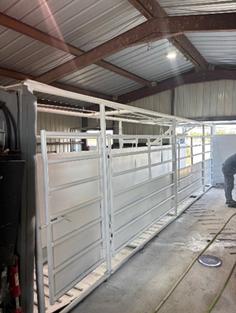
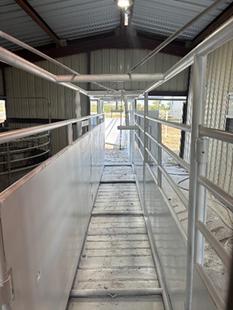
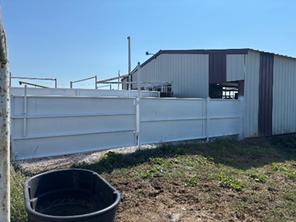
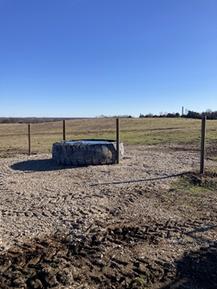
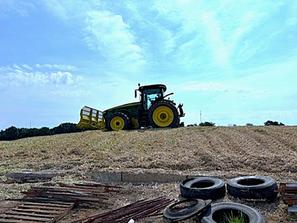
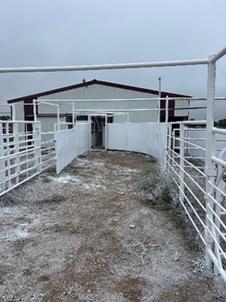
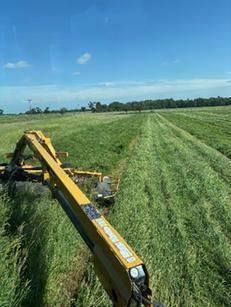
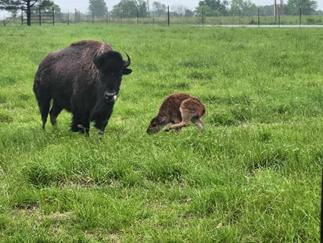
The Peoria Tribe of Indians of Oklahoma Aquatic Facility has had a great year in operation! We have been very fortunate again to receive funding from the Bureau of Indian Affairs Fish Hatchery Maintenance program. These funds allow us to operate and maintain a beautiful, state-of-the-art aquatic facility for raising freshwater fish and mussels and providing education for the surrounding citizens of our area. Our team continues to perform various educational and outreach events every year at the aquatic facility, which helps engage youth in outdoor activities that most will never get the opportunity to do Having youth fishing days and being able to provide younger kids with a lifetime experience and memory, and the joy that they show, is by far one of the most rewarding things we get to do!
We utilize the provided funds in other ways also, like purchasing new equipment to help us better and safer perform the daily job duties around the facility, providing us with the best resources and fisheries equipment to stay up to date with the ever-changing world of technology that surrounds us, and also allowing us to make the necessary repairs and maintenance to our ponds and infrastructure.
We are constantly facing new challenges as seasons and climates change and learning new ways to combat the issues that these diversities create. One of the things we have been doing is adding supplemental aeration to our ponds. We can utilize surface aerators to help move water throughout the column in the pond and minimize vegetation to help reduce heat on the water surface. When we have thick vegetation mats develop on our ponds, it acts as a thermal blanket and warms up the water substantially, decreasing oxygen levels
and causing fish health issues The ability to keep water moving utilizing pumps and aerators helps prevent these types of issues and adds supplemental O2 in the water during the summer months.
One of the larger issues we continue to face at our aquatic facility is the pond maintenance issue. Due to the poor soil conditions that existed where our facility was built, some of our ponds have developed water leakage issues. This is likely to be a recurring issue as we cycle through pond filling and draining to harvest fish To help us combat this problem, we have been purchasing and stockpiling sodium bentonite, then when we have enough material on hand, we can perform the pond maintenance and incorporate this into the soil, add water, and it will create a layer in the soil that is impermeable by water, hopefully fixing or slowing down any leaks in the pond.
As we continue to grow our facility, we are constantly looking for ways to be more effective and efficient with our processes and standards Our focus is the spawning of fish, primarily smallmouth bass. When it comes to spawning fish naturally, ensuring the correct numbers of broodfish is imperative in a closed system like a pond. In the past, we have always manually sexed the fish to determine male/female, this is not a 100% guarantee, and many variables can affect the results. When manually doing this, you place the fish upside down in a cradle to apply pressure to their underside and look for excretions of roe (eggs) or milt (semen) Then based on what we see, lets us know whether a fish is male or female. Some years we see spring arrive early, and some years it is much later. The weather is the largest factor affecting the development of these fish, and if winter decides to hang on, by
the time we reach our deadline of sexing fish (March 15) we may not have very developed fish and are unable to accurately determine male/female, which ultimately causes decreased spawning numbers in our ponds. This method has worked out great for us for some years, and not so great for others. To combat this issue, we talked with our contractor, Dr Quinton Phelps, and he suggested the use of an ultrasound machine We researched and reached out to our friends and partners at the U.S. Fish & Wildlife Service, and they were so grateful to lend us their ultrasound machine to try sexing our broodfish with this new method This machine and technology allowed us to see reproductive organs so we can be far more accurate and set ourselves up for optimal spawning success.
This past year we have put extra focus on developing and maintaining relationships that will provide endless opportunities for the Peoria Tribe and its aquatic facility. We recently got the opportunity to go to Drexel, MO, and work with Bass Pro Shops, American Sport Fish, and Bob Lusk from Pond Boss Magazine on a project involving a private land owner and his 67-acre lake This was a unique opportunity that we received to take some of our team members and our truck and trailer, and spend a day Electrofishing the lake to remove any and all largemouth bass that were 4lbs and less The goal of this lake is to produce the Missouri state record largemouth bass, and removing competition is necessary for this goal to be achieved. We came into play on Bass Pro's behalf, by utilizing our equipment to haul back these fish and stock them into our ponds for grow out We got these fish for free, and we will be able to sell them to Bass Pro when they need fish, and others will be sold as we stock ponds and have a need. This was a great chance to put the Peoria Tribe in a category with some of the
very best fisheries managers and management companies in the country.
Being able to continue hosting education and outreach events truly means the world to us. When we see youth engage in outdoor activities or learn something new about natural resources, it really hits home for us because, at one time, we were also that same youth, interested and excited to learn more about the outdoors and animals around us! We are always so grateful and appreciative of the funding we receive, as it continues to make a positive difference to our facility and the community around us!
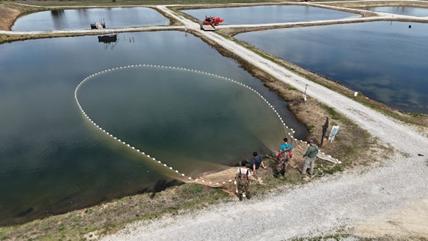
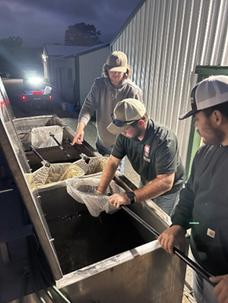
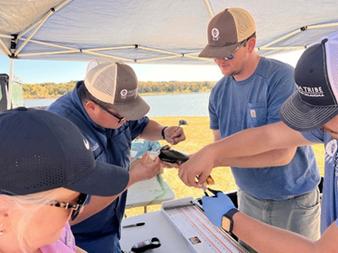
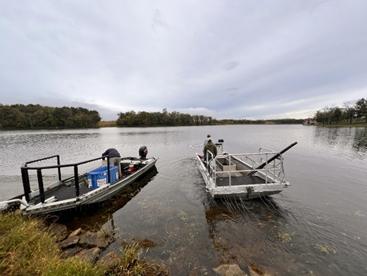
This year our mussel program has greatly expanded its mussel rearing capacity, solidified connections with various federal, state, and tribal partners, sold many orders of juvenile mussels to toxicology labs across the US and Canada, engaged in numerous outreach events with local residents, and completed the first stage of our Natural Resource Damage Assessment (NRDA) mussel restoration project. As one of only two tribal mussel programs in the entire country, we are proud of our success this past year.
Our mussel laboratory inoculated over 40 fish to give us over 66,000 baby mussels to tend to. These were mostly all fat mucket mussels and about 10,000 of them were plain pocketbook for the restoration project, both common species We greatly expanded the mussel rearing capabilities this year by updating the main mussel propagation system, the pulse flow system, to house 50,000 babies at once. We also updated our floating upweller systems to house 100,000 2mm mussels and less than that as they get bigger We still need to install the updated dog dish system in our dock building, which will be able to house up to 50,000 2mm mussels. We have all the parts to do so this year.
Throughout 2024 and 2025, Mara and our water quality specialist, MJ, coordinated with US Fish and Wildlife Service (USFWS) to complete the stream surveys for the NRDA mussel restoration project. This project is funded by the Tar Creek Trustee Council (TCTC) The TCTC is a council consisting of representatives from the State of Oklahoma, Department of the Interior (USFWS and BIA), and the seven tribes impacted by the historical lead and zinc mining: the Peoria Tribe, Miami Tribe, Wyandotte Nation, Ottawa Tribe,
Seneca-Cayuga Nation, Eastern Shawnee Tribe, and Cherokee Nation This council distributes the funding necessary to implement restoration projects to help restore the injured natural resources from the historical mining in the area that left heavy metal contamination throughout the land and water
Currently, this NRDA mussel restoration project is one of the mussel program’s main sources of funding for salary and supplies for building mussel silos and mussel surveying equipment The goal of this project is to assess unimpacted streams of our watershed to reintroduce mussels. Since there may still be remedial work done by the Environmental Protection Agency (EPA) in the mainstem reaches of the Spring and Neosho Rivers, we need to look at streams that are clean and unimpacted The idea is to reintroduce mussels back into these clean streams so there can be healthy, reproducing populations established as the rivers are cleaned up. Mussels require fish to complete their life cycle, so fish can spread the mussels throughout the watershed as the mussel population gets established.
This project has three main phases: 1) Complete stream surveys for mussel habitat in 12 tributaries throughout the Spring and Neosho River water that are not contaminated, 2) Once suitable streams are identified, place mussel silos in them to determine their actual fitness for mussels, and 3) As long as mussels survive and grow, then reintroducing common species can begin
Mussel silos are concrete domes that have a central chamber housing juvenile mussels that sit at the bottom of a river or stream. They allow for constant water flow to go
underneath and up through the central chamber. These are research tools that allow us to monitor a stream’s actual suitability for live mussels Juvenile mussels are used because they are much more sensitive to water quality changes than adults. If juvenile mussels can survive, then we know the adults can thrive and reproduce. Something that is seen across the country in contaminated or dammed waterways is the absence of juvenile mussels. Only finding adults means these mussels are functionally extinct, as they cannot reproduce in that area.

This past year, we successfully completed phase 1 of this project by surveying five total streams within the watershed. The other seven streams were completely dry in the 2024 drought, so we decided they were unsuitable for mussels We surveyed Fivemile Creek, Sycamore Creek, Russell Creek, Cow Creek, and Warren Branch. Of those surveyed, only Fivemile and Sycamore Creeks have been selected for mussel silo studies. These studies will be carried out this year in 4-5 sites along each stream The results will inform us where we can begin reintroducing adult mussels
Once common species are reintroduced successfully, then we can work towards endangered species.
Our other main funding source is the Bureau of Indian Affairs (BIA) Endangered Species
grant. Freshwater mussels are the most endangered animals in North America. They are many orders of magnitude more endangered than the next most endangered animals, crawfish Over 10% are extinct, and 60-70% are threatened, endangered, or imperiled. These animals are often overlooked, but they are critical for our ecosystems as we all rely on clean freshwater. One mussel can filter up to 15 gallons of water a day, and they usually live in dense mussel beds with hundreds to thousands of them in one spot on the riverbed. You can imagine how quickly the gallons filtered add up. They also help stabilize the riverbed, cycle nutrients, remove sediment and bacteria, and are an important food source for many animals. All these factors give our mussel program great odds each year to receive the BIA Endangered Species grant.
This grant’s goals that we have been working on this past year are to expand our mussel rearing capacity, purchase/repair mussel and fish surveying equipment, and build the mussel bathroom addition. The BIA Endangered Species grant paid for all our mussel propagation system expansions, some salary, travel, mussel and fish food, and any other supplies and equipment needed for operations. This grant paid for the pulse flow system redesign, floating upwellers, and dog dish system to fulfill the mussel rearing expansion goal We also used these funds to repair our jet boat motor that is used on mussel and fish surveys, and to purchase more surveying equipment to carry out current and future projects successfully.
The mussel bathroom addition has been in the works for years to improve the safety and convenience for our staff. This addition will be housing a sterile work environment for algae culture and currently has a bathroom,
dishwasher, laundry equipment, and rural water. Our lab has been running off well and pond water, and recently our well has had high amounts of sulfur, making it unsafe for use with aquatic animals. The addition of rural water to the building is a huge relief to be able to have safe water to run our equipment. The bathroom addition is currently being outfitted with leftover BIA grant funds to allow us to grow our own algae for feeding the baby mussels. This is a better food source for the juveniles and will allow us to culture harder to grow mussels, such as endangered species.
We are still using previous BIA grant funds, so in the coming year we plan to purchase SCUBA and dive equipment and an underwater drone to expand our ability to gather endangered species from the rivers. We also plan to install an industrial dehumidifier in the lab space to protect the building and equipment from water or mold damage
Later in the year, we plan to begin culturing algae and diatoms to feed the mussels. These are the natural food sources for mussels in the wild as these microorganisms live on the bottoms of lakes, rivers, and streams where mussels also live. Currently we feed our juvenile mussels a commercial mussel diet, but fresh algae and microorganisms are a much better food source that will increase their growth rate and survival Due to endangered species generally not being studied due to their low populations, their preferred diets aren’t well known. Having freshly grown food will increase their chance of survival as we begin to grow more endangered mussels.
At the beginning of 2025, our mussel technician, Mara, was growing her first sets of mussels through the winter on an experimental set up of the pulse flow
propagation system. The pulse flow system was designed by leaders in mussel propagation about 10 years ago and refined by the scientists at the United States Geological Survey (USGS) Columbia Environmental Research Center (CERC). This system can give a juvenile mussel survival rate of over 90%, which has been a huge advancement in the field as previous methods would see about 10% survival Growing mussels in the winter isn’t easy considering they like warmer water temperatures to grow quickly, but we still had about 30% survival last winter with the initial pulse flow setup. In September of 2025, in coordination with engineers at USGS, we fully redesigned the pulse flow to be a permanent system in our lab that would require less daily maintenance. We installed a pond water filter that filters the water down to 20 microns, which eliminates many of the predators and competitors that our staff must pick out of the juvenile mussel cultures each week
The juvenile mussels stay in the pulse flow for anywhere from 1-4 months depending on water temperature. In the middle of the summer, they only take about a month to get to 2mm Once they reach 2mm, they are put into the floating upwellers in our big pond or dog dish system. Both types of containers are less maintenance than the pulse flow, and the mussels are much happier to eat the allnatural food from the pond, such as algae and bacteria
In January of 2025, Mara tuned into the first call for the Rabbitsfoot mussel propagation and restoration plan. This group has mussel experts from Missouri, Arkansas, Kansas, and Oklahoma that coordinate to help restore this federally endangered species back into our watershed. Rabbitsfoot get their name from their distinct shape as seen here.

In February of 2025, Mara joined the TCTC watershed-based planning subgroup to assist in developing a holistic framework to address watershed-scale restoration needs. The group consists of environmental consultants, tribal environmental staff, USFWS staff, State of Oklahoma representatives, and the Oklahoma Conservation Commission (OCC) OCC are the main people carrying out the Geographic Information System (GIS) analysis of the watershed to identify the areas of land that could use the most restoration work to reduce sediment loading and erosion within the watershed Those restoration goals include things such as wetland development to reduce flooding and catch sediment, planting trees and shrubs along the bank to help reduce erosion, or creating off-channel ponds to reduce flooding, just to name a few actions that may be implemented
Sycamore Creek, a tributary of the Neosho River, was chosen as the pilot tributary to assess the areas of the watershed that could make the biggest impact on the health of the stream Sycamore Creek is also one of the two tributaries we are focusing on in the NRDA mussel restoration project. This framework will be completed in March 2026, and then we will begin engaging with the landowners to see if these restoration goals can coexist with their goals for their property Many of the landowners have cattle and the stream runs through the pasture. We are focused on ensuring the landowners get what they want out of their land, but also how we could meet some of the watershed restoration goals by helping them pay for fencing cattle out of the stream, installing water stations for the cattle, and increasing native grasses.
In March, Mara, MJ, and USFWS sampled Fivemile Creek for mussel habitat for the NRDA mussel restoration project They also
took water and sediment samples to test heavy metals. No live mussels were found, but the stream is healthy and clear. This is a stream that will be studied further in 2026 using the mussel silos
Also within March, we were busy planning and gearing up for the Tar Creek Apprenticeship Program (TCAP) in May and June. This group meets twice a month throughout the year to plan, coordinate, and recruit eligible young adults. This is a project coordinated by the seven tribes in the TCTC. This program gives young adults knowledge and training in cultural lifeways and ecological restoration. The students learn about all sorts of important skills, such as flint knapping, archery, medicinal and native plants, streambank stabilization, and moccasin making, just to name a few. They visited our aquatic facility this year for a tour of our fish and mussel facilities Mara had the students group up and create eight mussel silos for the NRDA restoration project as well, pictured here.
At the beginning of April, Mara and MJ set up a booth at the 2 annual EPA Open House event in Miami, OK The event aims to raise awareness of the remediation and restoration work that is occurring in the area to clean up the heavy metal contamination. Many state, federal, and tribal partners had booths to talk to the public about the work we are doing and provide any relevant resources nd
To kick off May, we had STEM Day at the hatchery for Miami Public School 3 grade students. Each of our environmental staff had an activity for the kids to learn about what we do There was an air quality station, water erosion station, hydroponic plant cart, and then fish and mussel activities for the kids. We then had the Wyandotte Environmental Fair that was an all-day event talking to K-12 rd
students about erosion and mussels. During which, Mara set up two water tanks with mussels in each one to show how quickly the mussels filter pond sediment out of the water.
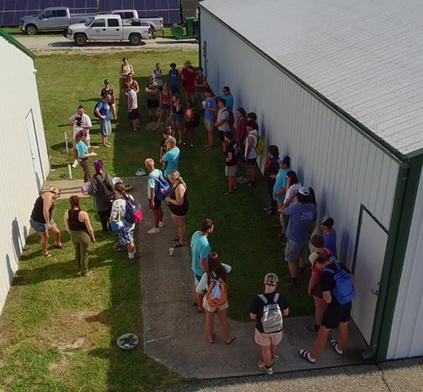
students about erosion and mussels During which, Mara set up two water tanks with mussels in each one to show how quickly the mussels filter pond sediment out of the water.
In the middle of May, Mara went to the Freshwater Mollusk Conservation Society annual symposium in Ann Arbor, Michigan to network and attend information sessions related to the conservation of freshwater mollusks. This was a week-long symposium with members from all over the world presenting various topics related to freshwater mussels and snails A few to note were about mussel food experiments, mussel microbiomes, river sampling studies, eDNA methods, mussels as bio-remediators of heavy metals, and much more. Mara made many connections with other professionals from universities and museums across the country and other state and federal partners. The Confederated Tribes of the Umatilla Indian Reservation are the only other tribal mussel program in the country, and they are based in Oregon It was the highlight of the trip to learn about the work they are doing up there
in the Pacific Northwest, as their problems are much different than ours here Mara also attended the river sampling day in the River Raisin to gain hands-on experience with sampling, measuring, and diving for mussels. Around 10 different species were found so it was also a great exercise in mussel identification There were many committee meetings as well, with Mara joining the outreach committee to assist in educating the public and accumulating educational outreach materials for the new website design.
Towards the end of May, Mara presented at the Freshwater Mollusks in the Illinois Homelands conference with the University of Illinois – Urbana Champaign Prairie Research Institute (PRI). There were tribal representatives from the Shawnee Tribe, Peoria Tribe, and Ho-Chunk Nation In later virtual calls, many other tribes were able to join as up to 35 tribes were invited to attend. Mara presented over the NRDA mussel restoration project, our facility’s capabilities, and the issues that we face in our watershed. The other presentations at this conference were from various scholars and industry professionals in mussel biology, archaeology, and fish biology. Many worked for the Illinois Natural History Survey and Illinois State Archaeological Survey and presented their work on the large rivers and culturally significant sites throughout the state The purpose of this conference was to bring together tribes that once called Illinois home and decide how to use a grant that PRI received for the benefit of all the tribes.
The tribes decided to use the money for various training workshops to occur in Spring of 2026 for up to five tribal representatives or employees from each tribe in many areas of study including mussel surveying, archaeological surveying, and geomorphology
training. This training will take place at the Grand Village site, also known as The Rock along the Illinois River Initial archaeological surveys at this site have found large deposits of mussel shells being eroded from the bank. They haven’t found evidence of altering the shells to make tools yet, but a full survey still needs to be done It’s amazing how abundant these animals used to be that there are giant mounds of their shells at these sites across Illinois, and now how much work needs to be done to restore them to their former abundance.
At the end of May, two inoculations of fat muckets were done to begin selling juvenile mussels for toxicology testing after receiving approval from the Business Committee to help cover the costs of our Aquatic Facility. Mussels are indicator species, meaning they give us information on water quality due to their sedentary nature filtering the water. USGS pioneered the standard toxicology test with fat mucket mussels that companies and factories must use to test their effluent and discharge for safety USGS CERC has been kind enough to send all the inquiries they receive from toxicology labs on where to source juvenile fat muckets to us.
Since receiving approval, we have shipped over 7,000 juvenile mussels to five toxicology labs across the US and Canada All the labs have been repeating customers, so we look forward to supplying all the orders that come our way in 2026. Inoculations are done throughout the year as every single lab that requested mussels got their request fulfilled Since many labs need various sizes of mussels, we are constantly growing fat muckets to ensure we have different sizes in stock. This is one of the many reasons it was vital to update our propagation systems this year, so we had the space to grow mussels year-round to be
able to fulfill these orders. This research informs science worldwide of the harmful effects of chemicals in our freshwater
At the beginning of June, TCAP kicked off and our three Peoria students inoculated some of our pond mussel species onto six bluegill, pictured here They extracted the baby mussels from the gravid female, tested their viability, picked out their fish, and then attached the babies to the fish for the mussels to complete their life cycle. We got around 12,000 baby mussels from their inoculations, and those mussels will take about two years to grow to the desired size for stocking These pond species will be used with clients who request mussels in their ponds to go along with our hatchery’s fish stocking services. Shortly after, TCAP hosted a mock trustee council to replicate how the TCTC makes decisions on what kinds of restoration projects to prioritize.
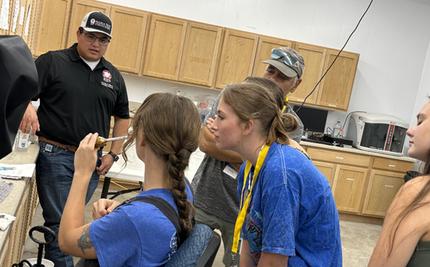
One of the Woodland Fishing Days was within June where we helped some of the children at the daycare center learn how to fish. Many bluegill were caught and one large grass carp! Also around that time, there was a meeting held by the Quapaw to coordinate with the Army Core of Engineers and the Grand River Dam Authority (GRDA), and they all came to tour our Aquatic Facility and see how we could collaborate in the future.
In June, our mussel lab went from being staffed by just Mara, to having one of our very own Peoria citizens as an environmental intern. Elysa Fletcher joined the environmental department and was thrown into one of the busiest months of the year. They were enthusiastic to learn about the mussels and caught on quickly to all the detail-oriented work There is a ton of cleaning involved with raising mussels indoors, and they have taken on the dirty work with a positive attitude. Within their first couple of weeks, they were able to assist with their first inoculation and baby mussel collection as well as go macroinvertebrate sampling in the Spring River with Erin, MJ, and Mara.
In mid-July, TCAP finished up with a career day where Mara spoke to the students about her journey from college to becoming our mussel technician She received her Bachelor of Science in biochemistry and biotechnology from the University of Missouri – Saint Louis in 2021 and worked in a research lab for three years investigating the genetic pathways for nitrogen fixation in algae The next day was TCAP closing day where the students compiled everything they had learned from the program to present their restoration plan for a stretch of Lost Creek. Two of the groups included mussels in their restoration plans!
Mara assisted the USFWS and Arkansas Game and Fish Commission with collecting federally endangered Neosho Mucket broodstock from the Illinois River. Seven gravid females were collected from the river and taken back to the USFWS Neosho National Fish Hatchery to be grown out
By the end of July, Mara led a small group of staff and citizens on a float trip on the Spring River to scope out mussel beds for broodstock collection in the fall She had only read about
where the mussel beds are in the Spring River, so it was a great reconnaissance trip to see in person where the mussels live so broodstock collection could go smoothly later in the year once the mussels are gravid. Since our NRDA restoration project is within the Spring and Neosho River watershed, the baby mussels that we grow for the project must be grown from female mussels from those rivers This is to preserve the genetic diversity of the species within the watershed. On that float trip, we found seven different species of mussels, including plain pocketbook, which will be the species grown for the NRDA restoration project
In August, Mara attended a freshwater mussel ID course at the Department of the Interior’s National Conservation Training Center in Shepherdstown, WV This course went over 100 different mussel species and how to distinguish between them. She also learned about the taxonomy, or naming system, that is used to group organisms together based on certain features. This training will be applicable for all future work in our rivers as we have over 80 different species of mussels in Oklahoma. While there, she also got to do mussel sampling in the Potomac River and found 5 different species there. It’s always helpful to do more sampling to see the differences in habitat and where different species live and burrow This training was great for networking with other professionals throughout the Midwest and Eastern Slope. Once back, Mara helped the USFWS Neosho National Fish Hatchery tag thousands of federally endangered scaleshell mussels, pictured here, for release in the Osage River in Missouri This is an ongoing project between

the dam authority, USGS, USFWS, and the Missouri Department of Conservation to release thousands of these endangered mussels in that watershed over the course of a few years.
Later in August, the Sac & Fox Nation from Nebraska and Kansas called to discuss our mussel program and the potential of other tribal mussel programs. They are dealing with an experimental plastic factory trying to set up right on the border of their reservation, and the discharge from that factory would drain into their watershed We discussed potential options to safeguard their water Mara helped them identify the mussel shells that they had found to see if any were endangered, which may help their argument against the factory. Mara was able to share information about our endangered species program to give their environmental department more information on available funding and project ideas.
In the beginning of September, Erin, MJ, and Mara attended the Eastern Shawnee’s Lost Creek Water Festival that brought in hundreds of students from all the surrounding public schools to discuss all sorts of environmental topics. The mussels were set up in their tanks to show their filtering capacity and shells were on display for the students to handle and look at
Mara then visited USGS CERC for two days to build ten more floating upwellers with the help of their staff. These ten upwellers will house up to 100,000 2mm mussels, and they hold less as the mussels grow These upwellers are extremely efficient and require minimal maintenance. They simply float in the pond and have water continuously flowing over the baby mussels to give them a consistent supply of oxygen and food. They grow the quickest in this system compared to any others
A week after she visited CERC, one of the USGS engineers came down to assist in redesigning the pulse flow system to use one of the industrial pond water filters that the lab has had for a couple years. These filters are self-cleaning, reducing the maintenance time our staff must spend cleaning them. They also filter the water so well that many of the competitors or predators don’t make it through the filter.
Our final full stream for the NRDA restoration project was surveyed in September, Warren Branch Warren Branch is a clear stream but has some issues like homemade reservoirs and much of it runs through a pasture. This leaves the stream vulnerable to erosion. Although we fully sampled it, this stream won’t be selected at this time for further study.
Later in September was the Tri-State Mining District (TSMD) Annual Meeting. This meeting gathered all three states’ trustee councils affected by the lead and zinc mining, Missouri, Kansas, and Oklahoma. Mara gave a presentation on the stream survey updates and the findings so far After the presentation, our staff gave a full hatchery tour to the three trustee councils. We hope to collaborate with the other states’ councils in the future since we all have the same goals!
Early in October, Mara engraved the 83 federally endangered Neosho Mucket mussels that our lab had been growing since 2022. Pictured here are half of the ones released. The mussels were laser engraved with specific numerical tags to ensure that if they are found in the future they can be identified as captive bred. This helps to preserve the genetic integrity of wild populations. Later in the month, she went to the headwaters of the Neosho River near Emporia, Kansas to release the mussels with Kansas Department of
Wildlife and Parks. This year she will be working with them to release a few hundred of the bleufer mussels we have been growing in the Verdigris River in Kansas and Oklahoma.

Mara presented a similar presentation to the one in September at the 27 Annual Tar Creek Conference There were many of the same people from the last TSMD meeting, but also many new professors and students who were very interested in our work with the NRDA restoration project. Shortly after, she collected the plain pocketbook broodstock from the Spring River to begin growing out the juvenile mussels that will be used this year in the restoration project. The rest of the month was busy with inoculating the fish with these mussels and collecting the baby mussels as they dropped off the fish
At the end of October, Erin, MJ, and Mara met with the Quapaw Wildlife Department to discuss a mussel restoration project in Beaver Creek, which runs right through the Quapaw Pow Wow Grounds and empties into the Spring River right above our Aquatic Facility We are working towards completing this project in 2027, but for now we are still in the planning stages. The Quapaw want to work with common species first, mostly plain pocketbook and yellow sandshell, and then as long as the mussels grow well, then we can work together towards restoring more difficult and endangered species.
In November, we continued to inoculate and collect plain pocketbook mussels as they
dropped off the fish. One of the gravid female plain pocketbooks is pictured here We got about 13,000 mussels that dropped off and went into the pulse flow propagation system. Each baby mussel must be counted by hand under a microscope, as they are only the size of a grain of sand at this point. They are counted into groups of 400, then put into beakers to begin growing in the pulse flow system. This system regularly feeds the babies filtered pond water mixed with a commercial mussel food so they always have fresh water and food to grow well. They are currently growing slowly, but there will be plenty for the silo study

In November, we continued to inoculate and collect plain pocketbook mussels as they dropped off the fish. One of the gravid female plain pocketbooks is pictured here We got about 13,000 mussels that dropped off and went into the pulse flow propagation system. Each baby mussel must be counted by hand under a microscope, as they are only the size of a grain of sand at this point They are counted into groups of 400, then put into beakers to begin growing in the pulse flow system. This system regularly feeds the babies filtered pond water mixed with a commercial mussel food so they always have fresh water and food to grow well. They are currently growing slowly, but there will be plenty for the silo study
In the middle of December, some of our environmental staff participated in an educational outreach training with other local tribe’s environmental staff called Project WILD and Project Learning Tree It was very informative about different types of activities and curriculum we can incorporate into our environmental outreach events based on age
and group size. It helped us get creative about how to adapt these activities and curriculum to our specific areas of expertise, and we are excited to implement some of the ideas into our outreach next year!
At the end of 2025, Mara drafted the scope of work and budget for a mussel survey and silo study in Lost Creek for 2027 that would be in coordination with the BIA and USGS. Lost Creek is within Operable Unit 5 (OU5) of the Superfund Site, which is the instream habitat affected by the heavy metal contamination. Lost Creek has below background levels of contamination and many tribally owned properties along the stream. The landowners have told us about finding mussels in the creek, so we are excited to survey it to see what we can restore there. This creek is a large tributary of the Neosho River, and restoring mussels there will have positive impacts on their populations throughout the entire watershed.
At the start of 2026, Mara is assisting a student from NEO, the community college in Miami, with a science fair project using six of our plain pocketbook mussels in a project using the mussels as a water quality biosensor. Many of the adult mussels that we house can no longer be reintroduced to the wild because they’ve been in captivity for so long, but they can be used for research purposes These mussel biosensors use magnets to sense the opening and closing of the mussels, which corresponds to their feeding behavior. The student is using water from our big pond as the control group, water from Tar Creek, and water from a tributary of Big Cabin Creek that historically had coal mining done around it. She will be analyzing their feeding behavior to see if heavy metals or any sort of contamination in the water affects their ability to eat These biosensors have been used in
Europe and certain cities in the United States to sense water quality changes in water treatment facilities They generally use six mussels, and if four or more of them close at once, then there is something in the water that needs to be assessed. So, these mussel biosensors prompt further testing and potentially inform shutting off the water supply until the problem is fixed These biosensors require a lot of computer coding that the student undertook, and we provided the space and helped with the setup to ensure the mussels survive.
This year has been full of successes for the Peoria Tribe’s mussel program, and we look forward to even more in 2026. The toxicology labs that we sell juvenile mussels to have been returning clients, and we are excited to see how much more clientele we can serve this year The NRDA mussel restoration project is moving along this year, and the BIA endangered species grants are keeping our facility running smoothly. We look forward to attending different conferences this year to continue networking and sharing the important work that we do Through networking with our federal, state, and tribal partners, we have been drafting new projects within our watershed to not only restore these endangered animals but also strengthen the connections between the community of people working to clean up this region The multiple outreach events that the environmental department does throughout the year involve the children and community in our work to make sure there will be clean water and air for future generations We look forward to continuing to expand this program!
Throughout the past year in my role as the Water Quality and Natural Resource Damage Assessment Specialist for the Peoria Tribe, significant progress was accomplished under the grants I work under including the EPA Clean Water Act (CWA) Section 106 and Section 319 programs The CWA Section 106 grant serves as my primary funding source and fully supports my position. And with this grant my main priority of the Peoria Tribe is to continue an effective monitoring program to ensure that the water on tribal property is able to meet or exceed the standards set for its use. This will be accomplished by continued baseline measurements on seven (7) sites once a month. Three sample sites are located on Spring River. One site is at Baxter Springs, KS which is the closest location to the Kansas –Oklahoma state line The other two Spring River sites are at the Devil’s Promenade State Park, and at the Highway 10 Bridge, Two sites are located on Tar Creek, one at Steve Owens Bridge and one at the 22 street bridge. The other two sample sites are on the Neosho River One site will is in Chetopa, KS which is the closest location to the Kansas-Oklahoma state line. The other site will be at Riverview Park in Miam, Oklahoma. nd
We maintain high-quality water sampling and laboratory equipment, and I take great pride in ensuring it is properly cared for. I follow best practices to ensure all laboratory equipment operates as intended and do not take shortcuts when routine maintenance and cleaning are required In the beginning of the year, I went back through our water quality data collected from this past year to reassure everything has been entered in correctly and all data recorded is processed in the NEOK node system. Prior to maintenance, I took our
water quality testing equipment and did thorough cleaning with each individual probe by taking a soft pipe brush and warm soapy water then gently scrub the probes while making sure I do not scratch the sensor inside the probe, they are very sensitive and can easily be broken Lastly, I make sure I rinse off all the unnecessary debris so the Eureka Manta can continue operating to its greatest potential. I repeat this process with every piece of water quality monitoring equipment we have.
When I am not out in the field or in the lab working on water quality and data entries, I also have two cardboard recycling trailers, One at Human and Health Services and at the Peoria Tribes main office. Our long-term goal is to increase ability to reduce local and tribal energy consumption, decrease pollution, slow the rate of resource depletion removed from the waste stream for recycling, decrease landfill waste, and salvage valuable materials. Mid-February our recycling trailers have been filling up quick with cardboard, I have been making sure both cardboard trailers are taken to Red Cedar and emptied regularly for continued proper use. Erin and I are working with our creative team to place signs on the new trailer sitting at headquarters. This will help make it more noticeable for any tribal citizen wanting to dispose of their cardboard The signs will also provide a much more professional look to the trailer’s appearance.
During the month of March, I coordinated with local tribes and other resources to acquire new laboratory equipment through our EPA CWA 106 grant, as allocated in my budget for this fiscal year. Many of our existing instruments had become outdated, and we required updated equipment to improve the
accuracy and efficiency of water quality analyses After several weeks of research, I am pleased and excited to announce that our lab now has the capability to test for Escherichia coli (E. coli), total coliforms, and Enterococci! These analyses can now be performed inhouse where contractual is no longer needed. This enhancement will allow us to more effectively monitor potential health concerns across our agricultural and aquatic facilities, including ponds, tributaries, and raceways, which may pose respiratory or other health risks. This is a task I have been looking forward to for a long time, and I am happy to be able to provide this additional assurance for the tribal citizens. With that being said, the middle of March is the time of year when bacteria and algae begin to show signs of blooming. I went out in the field in early spring as a second-quarter grant deliverable and conducted a bacteria sampling site survey for Escherichia Coli (E. Coli), Total Coliforms, and Enterococci on Spring River, Neosho River, Tar Creek, and Elm Creek. Collecting bacteria samples will provide a better understanding of health levels within the stream’s ecosystem for agriculture and Peoria tribal citizens' use After samples were collected, I processed the samples through the lab where an analysis was completed. Results from this research will be shown in the pictures below.
The image below are all my samples collected from the streams and how they look after being in the incubator for 24 hours and observed under a U.V. light. When the single cells in the quati-trays glow, that indicates that E. coli is present as to where yellow cells are signs of total coliforms being present. In conclusion, when bacteria is present within our streams, I will continue to closely monitor the levels and submit my results back to the Environmental Protection Agency (EPA) and notify our Tribal Citizens. I will also continue to monitor the water quality at my seven testing locations and make sure our water quality equipment is cleaned and calibrated for future use.
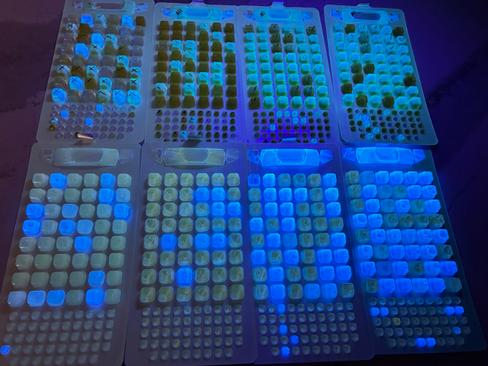
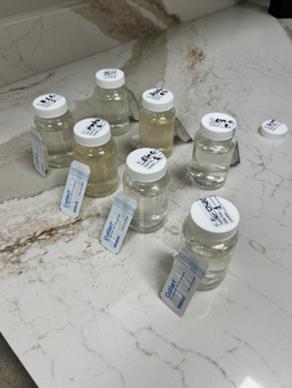
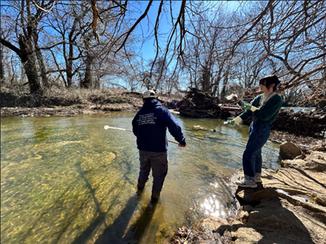
In April, I conducted a high-flow site sampling operation at the confluence of Tar Creek and the Neosho River. This effort was carried out in collaboration with our in-house mussel specialist and an undergraduate environmental scientist from the University of Tulsa. The sampling event was strategically timed to coincide with elevated streamflow conditions following a heavy rain event, allowing us to capture data under dynamic hydrological circumstances
The primary objective of this analysis is to compare the water and sediment samples obtained during high-flow conditions to those routinely collected under baseflow conditions
By doing so, we aim to test our working hypothesis that heavy metal concentrations, particularly those associated with pitcher mining contamination, increase substantially during and immediately following major rainfall events due to an abnormal amount of surface runoff and sediment movement. This comparative approach will provide critical insights into contaminant transport dynamics within the watershed.
Within the same month of April, I had the valuable opportunity to attend the annual Oklahoma Clean Lakes and Watershed Conference, held in Stillwater, OK, at Oklahoma State University. The conference was highly informative to me and focused on a wide range of topics related to water quality. Going to this training/conference representing the Peoria Tribe is certainly a great honor for me, knowing that a tribe can perform or be respected in the same room as Several prominent organizations, including the Grand River Dam Authority (GRDA), the Oklahoma Conservation Commission, and the U.S. Fish and Wildlife Service Among the breakout sessions, highlights included an overview of GRDA’s water-centered conservation programs and research initiatives; a presentation on the C.A.S.E. (Conservation and Stewardship for Ecosystems) framework for ecosystem management; a study on downscaled projected climate change impacts on rainfall erosivity across Oklahoma; and research assessing the bioavailability of metals in water bodies affected by mining waste near the Tar Creek Superfund Site.
One of my favorite activities within the Natural Resources Department is hosting and attending outreach events and seeing all the tribal children and youth enjoy learning from us whether it is teaching them how to fish for the first time or allowing them to observe
the aquatic species housed in our hatchery, such as mussels, bass, perch, and bluegill We hosted our annual STEM Day at the hatchery for students from Miami Public Schools. A few days after our event we attended the Wyandotte Nation Environmental festival held at the park in Wyandotte. Both events were a great success; the students were highly engaged and appeared to thoroughly enjoy each interactive station they visited.
During my station, I provided an educational session on the long-term impacts of flooding and streambank erosion I also conducted a hands-on demonstration comparing two streambank management scenarios: one where the vegetation is mowed to the water’s edge, and another that includes a healthy, well-established riparian buffer zone. To keep the students actively involved, I encouraged them to observe and describe the changes in the streambank model as water was introduced, allowing them to witness firsthand how different land management practices can dramatically alter erosion rates and landscape stability
In June the Tar Creek Apprenticeship Program (TCAP) officially commenced. Erin and I had the opportunity to accompany our Peoria tribal apprentices on an interdepartmental tour, where each department provided a brief overview of their roles and responsibilities The apprentices also had the privilege of meeting and engaging with Chief Dobbs and several members of the Tribal Business Committee. The primary objective of this orientation was to familiarize the students with the cultural resources available through their tribe, as well as to highlight the educational benefits and scholarship opportunities that can support their continued academic development.
When the TCAP Peoria students visited the Natural Resources Department, I, as the Water Quality Specialist, had the opportunity to introduce them to some of the field equipment I use and demonstrate its proper application during my monthly routine monitoring. The day before I went to several of our cattle pasture ponds, where I collected grab samples and the next day walked the apprentice through the process of analyzing those samples for total coliforms, E. coli, and Enterococcus. I explained how this testing method serves as an indicator of overall water quality, providing insight not only into the health of the aquatic environment and sediment but also into potential impacts on the internal health of the livestock that rely on these water sources. The three Peoria apprentices we had were super engaged and intrigued with how important it is to understand the potential health concerns bacteria can cause within the livestock’s overall life span. As a tribal environmentalist, I believe it is essential to educate the younger generation about our water, land, and air. Our ancestors relied heavily on these resources, and we continue to depend on them today Protecting them to the greatest extent possible is both our responsibility and our duty for future generations to come.
As part of my Clean Water Act (CWA) Section 106 grant deliverables, in the month of June I am responsible for conducting quarterly benthic macroinvertebrate sampling on both the Neosho and Spring River. This month, with assistance from several members of the Natural Resources team, we successfully completed sampling on Spring River The presence of a diverse range of benthic macroinvertebrate species indicates a healthy and functioning aquatic ecosystem, as these organisms serve as reliable bioindicators of water quality and overall stream health
However, due to inclement and unpredictable weather conditions, we were unable to conduct sampling on the Neosho River Elevated water levels posed potential safety hazards, and out of an abundance of caution, we chose to postpone the sampling effort to avoid any unnecessary risk to our Natural Resource department members
Toward Mid-July, Kyle and I visited the Peoria Ridge Golf Course to assist in addressing algae growth observed in several of their ponds. The initial treatment significantly reduced the presence of planktonic algae, breaking up much of the surface accumulation By the time I applied the second treatment, noticeable improvements in water clarity and overall pond condition were already showing. My goal was to reassure that anything we had looked the best and healthiest it could be with no excuse
After a successful six weeks, the Tar Creek Apprenticeship Program concluded in July with two really cool closing days. The first one being a career day event, during which I had the privilege of serving as a guest speaker for the group of young apprentices. My presentation focused on sharing my personal journey, how my experiences and passion for protecting our planet shaped me into the environmentalist I am today I spoke about the challenges I encountered, the mentors who guided me, and the opportunities that strengthened my commitment to environmental stewardship. My hope was to inspire those students who may not yet have a clear vision for their future, encouraging them to consider careers in natural resources and environmental science. By sharing my story, I aimed to open their minds to the possibilities within this field, highlighting how their skills and curiosity can make a meaningful difference for both their communities and
the environment. On the last closing day, each apprentice was tasked with developing and presenting a capstone restoration proposal, applying the skills and knowledge they had gained throughout the program. Many of the presentations were highly impressive, particularly those that incorporated other solutions such as utilizing native mussels to naturally filter harmful bacteria from streams undergoing restoration. It was especially rewarding to watch the Peoria students thrive; all three demonstrated a high level of engagement, confidence, and leadership as they presented and explained their restoration projects Seeing them take initiative and showcase their abilities in front of our attending leadership (In the group image above) was truly inspiring and worth the amount of effort put into educating the young adults about their tribe’s historical uses of mussels and how important the mussels are to the Peoria people.
The last week of July, Erin and I had the privilege of attending the Non-Point Source Wetland Climate Change Training, held at the First Americans Museum (FAM) in Oklahoma City, hosted by the Wyandotte Nation and the Eastern Shawnee Environmental Department, as well as the South Central Adaptation Science Center. The training featured a diverse range of highly valuable sessions led by University of Oklahoma professors, PhD students, and seasoned professionals with extensive experience in the field. Topics included The Nexus of Stormwater and Floodplain Management, Beyond Compliance: Stormwater Management Through Performance-Based Practices, Tribal Nonpoint Source Projects, Framing an Indigenous Methodology in Science and Engineering to Assess Drought Projections with Traditional Ecological Knowledge, Water Resources Stewardship: Mitigation of Non-Point Source
Pollution, and Navigating the Waters: Policy, Politics, and Tribal Partnerships in Water Quality The knowledge and strategies we gained from this training will be applied to strengthen our efforts in protecting the land, air, and water resources within our jurisdiction to the fullest extent possible. On the second day of the training, the focus shifted to field trips Our first stop was the green roof at Allied Arts, which demonstrated the significant environmental benefits of incorporating native plants on rooftops. These plants not only enhanced biodiversity but also provided a protective layer that helped the building remain cooler during the hot summer months Our second visit was to Scissortail Park, where a horticulturist guided us through an informative tour of the park’s native medicinal plants. We learned about the ecological and cultural importance of each species and their specific roles within the ecosystem Educational plaques throughout the park offered additional insights, which I found particularly impressive and enriching.
August was a busy month for my colleagues and me, I have been working hard with LaShell and Erin with reviewing all permits we have received notifications for, ensuring they comply with Environmental Quality standards. We are also making every effort to attend the open house meetings held at the library or civic center in Miami, where we voice our questions and concerns. Our participation helps ensure that everyone remains on the same page and that the companies planning to build in the area understand our strong commitment to protecting the land and environment!
The team had the opportunity to meet with the Environmental Departments from other Tribes to discuss permit-related concerns and share our perspectives As a result, they
informed their leadership, who were encouraged to participate in the permit review process, particularly because some permits fall within their jurisdiction. This collaboration is highly beneficial, as we are stronger when we work together with a unified voice! Moving forward, we now meet with the other Tribes on a monthly basis to review permit updates, exchange ideas, and coordinate our approaches. During these meetings, we also strategize on how to present our questions and determine who will take the lead in raising them at the appropriate time. We plan to continue this collaboration in hopes it will bring realization to the big industrial companies.
Within the same month, I traveled on two different occasions. The first trip was to the annual Inter-Tribal Environmental Conference (ITEC), held at the Hard Rock Casino in Tulsa, OK, which I attended alongside Erin and LaShell. The three-day conference was filled with valuable and informative breakout sessions covering a wide range of environmental restoration topics Erin and I also had the privilege of presenting on the cultural and ecological importance of mussels to the Peoria people, as well as highlighting the restoration project we are undertaking to support mussel habitat filtration within some of the impaired tributaries and creeks that flow through our lands Images provided show Erin and I speaking.
The following week, I attended the Tribal Lands and Environment Forum (TLEF) in Minneapolis, Minnesota, a conference attended by representatives from tribes across the United States. The forum covered a wide range of environmental topics, from strengthening tribal voice and vision with artificial intelligence to UST site design and management On the first day, I participated in
a field trip to Wakan Tipi Awanyankapi Outside the Twin Cities, Prior to European contact, this area was a vibrant floodplain along the Mississippi River, providing an ideal location for the Dakota people to establish their homes. However, industrial development over the past century caused significant environmental degradation Wetlands were filled in, chemicals and toxins polluted the soil and water, and the sacred caves at Wakan Tipi were destroyed. The land was eventually abandoned and became an informal dumping ground. During our visit, we spent the day working alongside staff to remove invasive plant species Now Wakan Tipi has a beautiful restored floodplain full of medicinal plants and a walking trail that takes you on a walk through beautiful Mother Nature.
Throughout the week, I had the opportunity to network and connect with numerous hydrologists, botanists, ecological engineers, and great environmental experts. I attended several insightful sessions, including Restoration and the Future of Mining in a Superfund Site, Nature-Based Solutions 10, and Incorporating Habitat Restoration into Superfund Site Remediation, among others. This year’s conference provided me with a wealth of new resources and introduced me to experts who shared innovative techniques that I can use in my daily work Images below provide a look at an audio podium that was placed in the park where I helped remove invasive species. There is an option to hear it in the Dakota language or in English, I thought that was really cool and eventually something I plan to implement here to one of our restoration sites and that will help educate the youth on a variety of medicinal and important plants.
This conference and training provided a wealth of knowledge and practical insights I plan to
implement the new methods and techniques I learned into my everyday work to enhance efficiency and effectiveness on Peoria Tribal lands. Attending such trainings and conferences allows me to improve data management, streamline workloads, refine standard operating procedures, and optimize equipment utilization Additionally, these opportunities help me to expand my professional knowledge, network with other water quality specialists, and engage in meaningful discussions about common challenges and strategies for overcoming them
Getting into September, I assisted Mara, our mussel technician, in completing the site surveys for her mussel restoration project. At Russell Creek, my role as a water quality specialist was to provide Mara and the U S Fish and Wildlife Service with water quality data for specific parameters. I also collected grab samples for laboratory analysis of heavy metals, sediment, and water. Additionally, I identified areas along the creek with clay-like sediment Additionally, samples from these locations will be further analyzed for heavy metals to test if mussels can thrive in this creek.
We conducted fieldwork on the Spring River to complete my Clean Water Act 106 pore water deliverable During sampling, we visited five different gravel bars between number ten bridge and Devil’s Promenade. At each site, we used a stainless-steel probe to collect sediment pore water from beneath the gravel surface, ensuring sufficient samples for analysis The collected samples will then be analyzed for cadmium, zinc, lead, arsenic, and hardness. This study is designed to provide a better understanding of metal contamination in this portion of the Spring River flowing from the KS-OK state line to Twin Bridges State
Park.
At the end of September, the Quapaw Tribe Environmental and Greenhouse Department hosted a weeklong NPS Wetlands Training, which we attended to further enhance our understanding of native wetland plant species and their successful development in specific environments The training featured sessions led by highly knowledgeable biologists and professors from the University of Oklahoma, including Dr. Steve Patterson, a restoration ecologist and ecosystem designer.
This training was extremely valuable, as it provided in-depth discussions on the cultural and ecological importance of wetlands, as well as wetland identification, classification, restoration, and monitoring techniques. On the final day, we applied what we learned by designing and constructing a wetland habitat step by step, which we then presented to Dr. Patterson and the instructors. This hands-on experience offered a comprehensive understanding of the process and materials required to successfully establish and maintain a functional wetland ecosystem
As October came around, I have been in contact with the Regional Sales Manager from Solinst Eureka to discuss adding an SEI ammonia probe to our Eureka Manta We have considered this addition to expand the range of parameters we test, particularly due to the significant amount of work we conduct with aquatic species. Adding an ammonia probe will provide significant insight into the health of fish and mussels during transport between water bodies Elevated ammonia levels can indicate pollution from sources such as agricultural runoff, sewage, or industrial waste, and can also signal the decomposition of organic matter within the water. While ammonia plays an important role in the
nitrogen cycle at low concentrations, it becomes toxic at higher levels Given that our hatchery houses a diverse range of aquatic species, monitoring ammonia is crucial to maintaining safe levels, thereby improving survival rates and overall health. Solinst Euerka had our Manta +20 for a few days making changes, so they had room to add the SEI ammonia probe While they had it, our equipment was also updated and checked for any damages. We received it back on October 29 and prepped it go out in the field the next day to check our monthly monitoring sites. So far the Ammonia Probe has worked great for us th
In November, I had the opportunity to utilize my knowledge and skills and assist Kyle and Ethan from our aquatic facility on the 5th and 6th during a work trip to Hico, Texas, where we worked alongside Bob Lusk, CEO of Pond Boss, as well as professionals from Bass Pro Shops, Texas A&M, MossBack Fish Habitat, and MT7 Ranch Wildlife Fisheries. The primary objective was to harvest as many channel catfish, carp, and gar as possible and transport a selection of them back to our hatchery My main role was to provide accurate water quality data and help assess the overall health of the private lake’s ecosystem. In addition, I assisted with collecting genetic samples, fin clips, PIT tags, and scale samples to determine age, length, and weight from 150 largemouth bass! I am extremely grateful to have been part of this project and to have had meaningful conversations with experts in the field. I gained valuable experience and learned several new methods and techniques for handling fish and the overall understanding between water quality and the fish species’ heath and how fast those can change. The images below offer a look at some of the collection work we conducted.
Within the next week, when I returned, I went with Erin and LaShell and traveled to Okmulgee, OK, to attend the Tribal Environmental Coalition in Oklahoma meeting, where we met with other tribal environmental departments across the state to discuss current natural resource matters. The meeting included two presentations: the first focused on the Oklahoma Geological Survey and its engagement with Oklahoma’s tribal nations, and the second highlighted a clean energy initiative and the call for regional collaboration. It is always important to connect with other tribes to learn about their ongoing projects and explore opportunities to share ideas and support one another. After the meeting Erin and I got to take a tour of Muskogee (Creek) nations water lab. It was super beneficial to me to see because I now have an idea of what tools or lab equipment I will need in the future to make analyzing water samples easier for us.
Before it got cold toward the end of November, all data collected during our trip to Hico, Texas at the beginning of this month was transferred from the Eureka app and converted into Excel for analysis. Parameters such as pH, Conductivity uS/cm, Turbidity NTU, Dissolved Oxygen, Temperature, Ammonia NH4 mg/L-N, and depth visibility were thoroughly recorded and reviewed This process allows us to better understand the water quality conditions in which the aquatic species can thrive and ensures that the water quality at our hatchery ponds closely matches the lake the fish have come out of. Maintaining these similarities helps minimize potential health concerns for the species being relocated
Erin and I visited one of our properties associated with a future restoration project to document existing site conditions and evaluate current vegetation We collected multiple
photographs, including aerial imagery, and identified a few of the grasses, tree species, and invasive plants present at the site This assessment will support the development of a future restoration project aimed at improving habitat for migratory birds impacted by heavymetal contamination originating from the TriState Mining District (TSMD) In addition to enhancing wildlife habitat, the restored area is intended to support tribal community use, including cultural plant gathering, educational activities, and livestock grazing.
December is also a busy month With Christmas approaching, Us Peoria Tribal employees work together to provide tribal citizens with an enjoyable and memorable Christmas party. I assisted Raylynn and other Peoria staff members with setting up decorations for the upcoming holiday celebration It’s always a great feeling to see the tribal member enter the facility with excitement.
To close out our training attendance for the year, Erin, Mara, Lashell, and I participated in an outreach training hosted by the Eastern Shawnee Tribe and the Fort Sill Apache Tribe at the Shawnee Skies Event Center. The training provided an in-depth overview of the Project WILD and Explore Your Environment curriculum book guides These resources include hundreds of teaching methods and activities designed for a wide range of age groups and cover numerous environmental topics, including wildlife populations, habitat, ecosystems, ecological niches, cultural perspectives, biodiversity, human impacts, and current environmental issues and trends This training was highly beneficial for our team, and we look forward to implementing these methods into the 2026 outreach and educational events!
Within the Natural Resources Department, I have the privilege of working alongside a team of highly skilled and knowledgeable professionals, and I am grateful for the collaborative environment we share. Together, we support one another to ensure our work is carried out efficiently and effectively. In my role, I assist the Air Quality Specialist as needed, including reviewing air quality permits submitted by the states of Oklahoma, Missouri, Arkansas, and Kansas. Beyond office and technical responsibilities, I strive to be the extra helping hand wherever it is needed whether that means sorting and seining fish with the aquatic facility staff or assisting with the care and management of Peoria cattle alongside the Ranch team. Every task I undertake contributes to the health of our environment and the well-being of our Peoria tribal community, reinforcing the importance and necessity of the work we do
As part of my duties with our EPA Clean Water Act 319 Grant, I will be implementing a streambank stabilization project to address erosion issues on Peoria Tribal Lands This stream has erosion and sedimentation issues caused from years of flooding. More recently beavers have chewed down multiple trees that were previously keeping the stream banks stabilized as well as constructed dams North of Quail Creek are agricultural lands such as crop and cattle fields. Repairing the riparian zone along the creek will aid in filtering from the agricultural fields. The property southeast of the creek is residential and currently a construction zone adding to the pollution The work The Peoria Tribe plans to do will fix the undercut areas, remove rotten tree stumps, stabilize, and secure the bank by utilizing rip rap and or other stabilization techniques along with the planting of native tree species and grasses A portion of the stream bank
stabilization will be used to create an access area to the creek for education and outreach purposes to teach children at our learning center and the community about clean water, pollution, erosion, streambank stabilization, and the impact that tree and plant roots make. Quail Creek runs through Tribal property which houses the Woodlands learning center and makes the spot ideal for a stabilization project with an education outreach component. Tree planting will occur along the stream bank to fortify the bank for generations to come. To ensure the success of the project, the Tribe is contributing time and labor
The Non-Point Source Task Force Team consists of all members of the Tribe’s Environmental Department and contracted service providers. Tasks are delegated and discussed at our regular quarterly meetings
To start the year off Sam, Kale, and I from the Natural Resource Department started attending a ten-week training course in horticulture and native botany plant identification In completion of this program, we will be able to better understand theories of horticulture and gain practical experience in techniques for stewardship of garden and native ecosystems that fall into invasive species and non-point source restoration For an Example, with air layering, simply you are rooting a new plant while still actively growing on (and attached to the mother plant). In February, Our horticulture and botany training course we covered multiple important topics over native plant propagation In the first week, our lectures were over a sexual propagation procedure. With that we covered the necessary materials needed for totipotency and rooting hormones. We also discussed Division; The term “Division” pertaining to horticulture means typically,
digging up a plant, pulling or cutting into separate pieces Then replant all pieces into the soil or into pots This is also the simplest of the propagation methods. Dig and divide! In our second week, we discussed the science behind soils and gardens. I also reviewed facts about organic matter and soil structure. All this great information will be applied to our tribal lands in the future for a restoration project. With horticulture and botany, we will be able to plant the necessary species for that soil and environment while it can get the nutrients it required for the plant full growth needs and potential A lot of this training course is hands on, the first half of the day is a classroom setting and in the afternoon is all outdoors developing soil health and a live demonstration over dividing.
Toward the end of march, all the amazing and great information I have developed I have successfully completed my 10-week horticulture class training. With this extended knowledge and understanding of the anatomy of native plant species I would like to implement that into my non-point source pollution and N R D A projects For example, I can aim part of my focus toward stream bank erosion where certain plants such as the genius Panicum virgatum (Proteaceae Family) and the genius Equisetum fluviatile (Equisetaceae family) main purpose is to stabilize a streambank from any high-water flow or agriculture traffic due to its complex sturdy root structure. Through this course I gained phenomenal resources for future horticulture restoration projects within our Peoria lands
The Non-Point Source Task Force met to discuss ongoing restoration projects. As part of one of our CWA 319 initiatives, I visited a project site to capture progress photos highlighting the work completed so far The
images below show how we’re utilizing root ball structures from trees cut within the riparian zone to reinforce the banks of an unnamed tributary. These natural materials not only help prevent future erosion but also act as a filtration system, reducing pollutants from stormwater runoff. Lastly, I completed the monthly data collection for all seven of our locations Following this, I will calibrate our water quality equipment to ensure it remains accurate and ready for use at any time.
In September with cooler weather approaching, our NPS task force team met this month to discuss further details regarding the restoration project being implemented on our campus. During the meeting, we reviewed potential tree species for planting and identified suitable locations along Quail Creek We also discussed various plant species such as rivercane that grows in dense, interlocking clumps with strong root and rhizome system. These roots help hold soil in place, reducing erosion along streambanks, floodplains, and wetland edges We plan add riprap in targeted areas along Quail Creek to mitigate future erosion issues. We plan to eventually in the future create a wetlands habitat to support the surrounding wildlife. A wetlands will also help improve water quality, Reduce flooding and erosion, Recharge groundwater, By doing so some wetlands allow water to infiltrate slowly into the ground replenishing aquifers and maintaining groundwater levels.
In November and December, Erin and I met with Chris, the Tribe’s Construction Project Manager, to discuss our CWA 319 Non-Point Source Project located east of the Woodlands Daycare on campus. We surveyed the unnamed tributary by driving the side-by-side along the stream, reviewing proposed methods to address ongoing erosion issues
and outlining the plant species we plan to introduce to strengthen the riparian buffer Our goal is to begin the dirt work phase of the project Starting early in January.
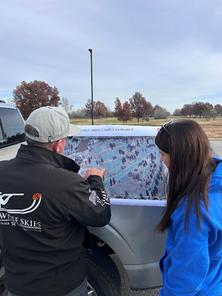
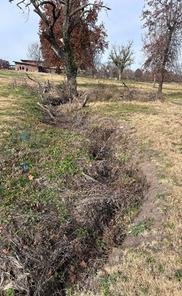
The Nonpoint Source (NPS) Team dedicated significant time to ensuring that our restoration project provides Peoria properties with resilient, long-term solutions to withstand extreme weather events At the same time, the project enhances the natural beauty of the landscape through the implementation of diverse native tree species, grasses, and plants. This restoration effort also creates valuable educational opportunities for the Woodland children, helping them develop a deeper understanding and appreciation of the plant life that surrounds them in their everyday lives.
Throughout the duration of this CWA 319 grant project, I will continue to provide timely updates and reports to the EPA as well as the Peoria Tribal citizens. I am truly excited to see how this project continues to develop and to witness the long-term benefits it will bring. Being part of a project with such unlimited potential on this beautiful property is deeply rewarding, and it reinforces my passion for the work I do and my commitment to protecting and enhancing our natural resources.
This year, much of the environmental air work performed on behalf of the Tribe happened quietly. Environmental protection does not always appear as equipment in the field or visible cleanup efforts. More often, it takes place in offices, through technical document review, data analysis, communication with agencies, and ongoing monitoring of decisions made by governments outside of the Tribe but capable of affecting Tribal lands and citizens. Hundreds of pages of permits, modeling files, emissions tables, and regulatory conditions were reviewed to understand what activities could occur near our communities and what they may mean for our air quality and long term health.
A significant portion of my time was dedicated to reviewing industrial air permits These permits are the documents that determine how facilities are constructed, how they operate, what they may release into the air, and what monitoring they must conduct. Once approved, they often remain in effect for many years Most citizens never see these documents, and even if they do, they are written in technical language that is difficult to interpret. My responsibility is to translate those documents into real world meaning. I look for what pollutants may be released, what risks may exist, whether monitoring is sufficient, and whether there are conditions that could allow impacts to go unnoticed. The goal is to ensure that Tribal concerns are recorded and considered before decisions are finalized.
This work is not always simple State regulatory systems were not originally designed with Tribal environmental programs in mind. While Tribal governments are sovereign, Tribal environmental comments do
not always carry the same influence within state processes designed for the state's benefit. Because of this, the program requires persistence. Formal comments must be submitted, questions must be asked repeatedly, and technical concerns must be explained clearly and defensibly Often this occurs without public attention, but it remains necessary. Preventing a problem before it occurs is always preferable to addressing it after harm has taken place.
Environmental protection also includes education Throughout the year, I worked with students and community groups to explain air quality, pollution sources, and protective actions families can take. Outreach activities were designed to make environmental science understandable and practical. Students learned how filtration works, how pollution travels, and why air quality matters to health These interactions matter because long‑term environmental protection depends on knowledge being shared between generations and citizens understanding both risks and prevention
One moment during the year that really touched my heart was during a public hearing related to a proposed industrial quarry; several community members chose to give up their speaking time so that I could present technical concerns on their behalf They trusted that the information and questions I asked would be accurate and that their concerns would be communicated respectfully and clearly. That trust is a gift that I’m honored to receive That trust reinforced the purpose of this program
My environmental work is often invisible. The long hours I’ve spent reviewing permits and preparing documentation ensure that when
important decisions are made, someone is present to question and make sure the community’s voice is heard My success frequently appears as nothing happening no unexpected contamination, fewer emissions, improved monitoring conditions, or a project modified before construction. The absence of harm rarely draws attention, but it is still a result of consistent review and oversight My goal moving forward is to continue strengthening the program, expanding outreach, and improving communication so citizens understand both what risks exist and what protections are in place It is an honor to serve the Tribe in this capacity, and I take the responsibility seriously.
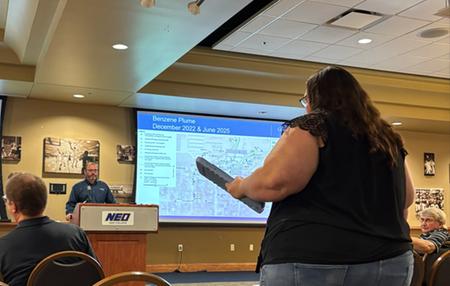
The Peoria Tribal Air Program operates within the Natural Resources Department and is funded through a federal Clean Air Act Section 105 Tribal Air Grant. This grant supports Tribal environmental programs so they may independently review air quality concerns affecting Tribal lands and citizens Although the Tribe does not issue industrial permits, facilities located within the surrounding region can still influence the air quality experienced by Tribal communities. The program, therefore, serves as a technical review tool, educational tool, and gives the tribe an
advisory scientist to ensure environmental information and impacts are evaluated carefully, especially regarding industrial permitting.
The program reviews industrial permits within a broad surrounding area (Oklahoma, Kansas, Missouri, and Arkansas) because of our Treatment as a State (TAS) designation by the EPA, and regional weather patterns can transport pollution across jurisdictional boundaries. TAS lets the Tribe operate environmental programs with the same authority states have That means we can monitor pollution, review permits, and protect our land ourselves. It’s one of the main ways environmental sovereignty actually works in practice. By reviewing permits early, the Tribe can submit comments, request clarifications, and identify potential monitoring gaps before a project becomes operational This early review process helps leadership and citizens understand environmental risks in advance rather than after impacts occur.
Another major component of the program is the development of an independent air monitoring program. The Tribe is working toward collecting its own air quality data through particulate matter monitoring. Establishing monitoring capacity allows the Tribe to understand local conditions directly and evaluate long term trends Reliable data supports informed decision‑making and strengthens communication with regulatory agencies.
Community education is also a core responsibility Outreach programs explain pollution sources, health effects, and protective actions. The Air Quality Flag Program provides a visual indicator of daily air quality so schools and organizations can protect sensitive individuals Educational
events and materials are designed to make environmental information understandable and accessible to all citizens I have and continue to work with schools and local individuals to provide colored flags, educational materials, parent and community notices, and guided information on how to keep a flag program operational
The 105 program also maintains planning documents, quality assurance procedures, and required reporting to federal agencies. These administrative responsibilities ensure the grant is managed properly and that environmental data collected by the Tribe meets federal standards. Training and professional development remain essential, so the Tribe maintains the expertise necessary to interpret technical environmental information accurately and responsibly
Throughout the year, multiple industrial developments and operating facilities were reviewed I worked on the following permits: Argo facility (BC Report Mar 2025), BF Goodrich (June BC Report 2025), J&M / JM Farms operations (July BC Report 2025), MidStates Minerals Limestone Quarry, (BC Report Aug 2025), Metal Fab (BC Report Sept 2025), Amcor Packaging (Joplin) (BC Report Sept 2025), LSB Chemical (BC Report Oct 2025), Stardust Power lithium refinery (BC Report Oct 2025), and Core Scientific data center (BC Report Oct 2025). Many other facilities do not receive a formal letter, but are additional industrial projects that I continue to research or track, like the Pryor data-center permit history, the proposed Pryor ammunition plant, and the Inola Aluminum Plant. These facilities are manufacturing operations, mining proposals, agricultural activities, and large infrastructure projects
Each project required reading extensive documentation, reviewing emissions estimates, examining monitoring plans, and determining whether community impacts were adequately addressed. Then meetings are often attended with leadership, the EPA, Oklahoma Department of Environmental Quality (ODEQ), Oklahoma Department of Mines (ODM), the City of Miami, and other Tribal Nations. These meetings facilitated mutual aid and cooperation and flushed out the questions that were presented directly to facilities when town halls occurred. Public meetings and hearings are an important part of this work These meetings allowed technical concerns to be placed into the official record. Hours of research and written comments were prepared, presented, and submitted, with follow up discussions often occurring with regulatory agencies The purpose of this participation was not opposition for its own sake but ensuring that environmental and community risks were understood, documented, and addressed whenever possible.
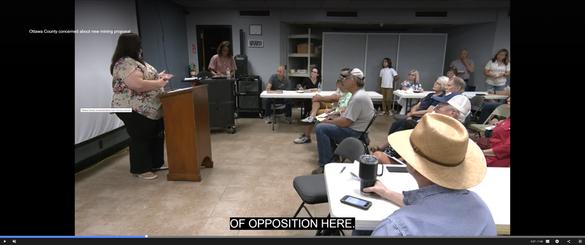
Town hall on the quarry Communicating community concern, educating the public on little-known information, and representing tribal interests
I spent significant time developing the Tribe’s air monitoring capability The tribe currently has a BAM1020 monitor that needs to be assessed, assembled, and deployed. Quality assurance procedures are in the process of being written and coordinated with federal staff. As I mentioned above, equipment assessment, preparation, and planning were
conducted so that monitoring data collected by the Tribe would meet national standards Building this capacity allows the Tribe to better understand long‑term air quality trends and strengthen future environmental decisions. Independent monitoring strengthens the Tribe’s ability to evaluate environmental impacts and advocate effectively for its citizens This year, I attended a training in Las Vegas hosted by the Institute for Environmental Professionals that gave me the hands-on experience working with a BAM1020 monitoring and providing information to meet national reporting data criteria for the EPA I am excited to begin the next step of our air monitoring program.
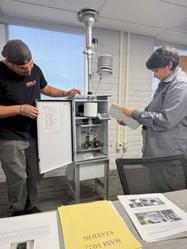
Preparing and developing Tribal air monitoring so the Tribe can better understand local air quality conditions
In addition to regulatory work, outreach and education were conducted regularly
Educational activities included school visits, community events, and training discussions. Students participated in hands on activities demonstrating filtration and air pollution concepts. Community members can receive information about daily air conditions and protective actions during high pollution days These efforts aim to empower individuals with practical knowledge rather than technical terminology alone.
Teaching students how air quality affects health and how simple actions can help protect their families and community
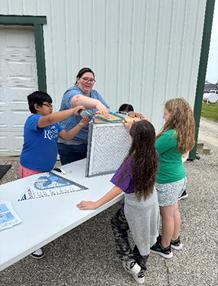
This year, regional coordination also occurred with other Tribal environmental departments to create an Air Permit Workgroup Technical information was shared, and discussions were held regarding permit interpretation, monitoring requirements, and environmental concerns. We discussed specific permits and concerns Sharing knowledge helps improve consistency in understanding complex regulatory documents and strengthens communication across the region. This collaboration helps ensure smaller programs without extensive staffing still have access to technical guidance and resources We do our best to look after each other
One of the ongoing challenges is that Tribal environmental programs operate within regulatory systems primarily structured around state authority While Tribal governments are sovereign, consultation processes do not always provide equal influence in permitting decisions. This means the program must often rely on detailed documentation, persistent communication, and technical clarity to ensure concerns are considered. Although progress has been made in improving working relationships, continued effort will be necessary. It is my goal to work on identifying facilities that repeatedly show up requesting new permitting due to changing regulations, failures to comply, or updating facilities that require extra attention. There are many new facilities looking to move into the Peoria airshed that will require additional research and tracking as well.
Another challenge involves public awareness Environmental protection frequently occurs before a visible problem exists. Because of this, the work can appear minimal when in reality, significant effort is spent reviewing information educating individuals and
preventing potential impacts. Communicating the importance of preventative environmental work remains an important responsibility moving forward. I hope that in the next year, I will continue to improve documentation, reports, and photographs so that the quiet work is given more visibility.
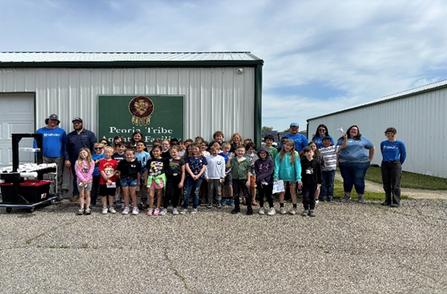
Community education and outreach helps citizens understand environmental issues before they become environmental problems
The year also demonstrated the importance of reliable environmental data. Many decisions depend on monitoring results and technical modeling. Building local monitoring capacity will help the Tribe better evaluate environmental conditions and provide independent verification when needed The lessons learned this year will guide future improvements in both communication and program development. I plan to continue my own education and professional development in how to read permits, state policies, and how regulations are determined
Additional training and collaboration with other Tribal environmental programs will continue so the Tribe maintains strong technical expertise Updating planning documents and quality assurance procedures will remain a priority to ensure data reliability and program accountability. The overall goal is to strengthen the Tribe’s ability to understand, communicate, and respond to environmental issues that affect citizens and lands
With Gratitude for the Tribe, I Leave You with This:
Environmental protection is not a single project or a one-time effort. It is ongoing work that often happens before problems are visible. Each permit reviewed, each question asked, and each conversation with a citizen or student helps ensure the community stays informed and Peoria lands are considered in decisions that shape the future. The goal of this program is simple: that the Peoria people know someone is paying attention, using both science and care, so the next generation inherits healthy land, clean air, and the knowledge to protect it
The Peoria Tribe Invasive Species team has been hard at work trapping and eradicating invasive feral hogs. This year, we have successfully and proudly eradicated over 125 feral hogs from within our jurisdiction! Our record for a single year is around 200 feral hogs trapped and eradicated, which is remarkable for our area, from what we have seen and heard of others doing.
We always prioritize our jurisdiction, but when a trap area goes “dry”, or activity decreases, we will broaden our range and expand coverage to help trap animals We know that hogs and other animals in general do not know jurisdiction boundary lines, so they are free and able to roam and inhabit new areas and territories.
As a lifelong outdoorsman and hunter, having guided multiple species of animals in different states, I understand what human interference and pressure can do to animals and how success can be altered. When we remain active in one specific area for too long, we start to imprint the site with human activity, and then wildlife, feral hogs specifically, will start to avoid the area entirely and go deeper into the brush or thickets to hide. The ultimate goal of wildlife is to reproduce, to keep their species alive and going These feral hogs can have multiple litters a year, with each litter containing anywhere from three to four hogs to as many as twelve to fifteen hogs. With these unique abilities, the population of these invasive animals can rapidly multiply, thus showing the real significance of our efforts to trap and eradicate as many of these animals as possible.
One of the tools that we utilize on a daily basis that helps us fully perform the job duties is
Polaris Ranger UTVs These machines act like small trucks, making access possible in locations that are completely inaccessible by regular vehicles. The trap and its components are very heavy and too much for guys to pack in and out, so the use of UTV’s has a very large part of our success by being able to haul equipment in and out of wet, muddy, and thick overgrown areas. These locations described are some of the best and most productive sites to trap these animals. We are able to attach trailers to these machines, to help haul in large amounts of equipment or if we are simply going to check or change batteries, rebait a feed site or deploy cellular cameras, we could not be as effective at our job without these UTV machines.
One other tool that we use daily is cellular trail cameras As mentioned earlier, the presence of human activity and interference can cause these animals to switch and move from location to location, essentially leading you on a “wild goose chase,” and we always stay behind the animals, not generally ahead With a camera that doesn’t require you to manually pull an SD card and view data, we can deploy a cellular camera, a lithium-ion battery, and a solar panel and stay off-site for up to a month at a time! This is incredible technology that enables minimal interference and optimizes data collection on wildlife
The newest and most recent upgrade to our invasive species program is the addition of BoarBuster and HogEye color HD camera system This system allows us to eliminate the need for camera-receiver service, as this system is hardwired for connectivity regardless of cellular connection. We have had many instances in the past where we could not get the server to respond and receive a signal,
causing the inability to drop a trap and catch hogs One time, we had 31 hogs under the trap and couldn’t get it to drop This was beyond frustrating as it would have been an enormous group to capture. The new camera technology will eliminate this from being an issue again, at least with this particular setup.
These feral swine can and have done devastating destruction to our row-crop and
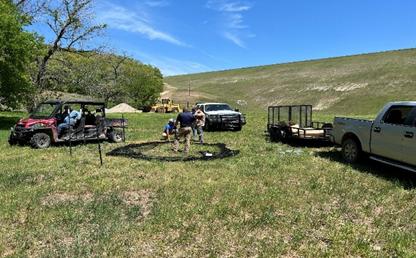
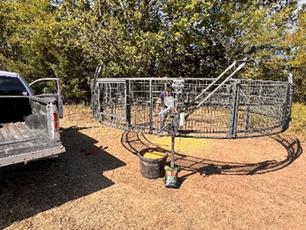
hay fields. This damage can impact ag production, which in turn helps feed our citizens It is imperative that we continue our efforts to eradicate as many of these invasive animals as possible. We are very thankful for the Bureau of Indian Affairs allowing us to continue to receive this vital funding to maintain our efforts in reducing feral swine numbers
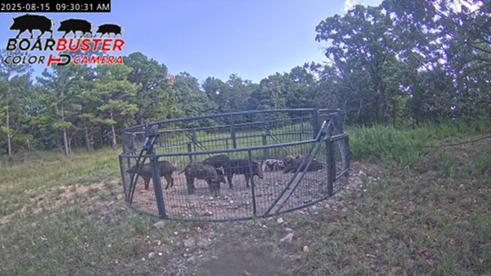
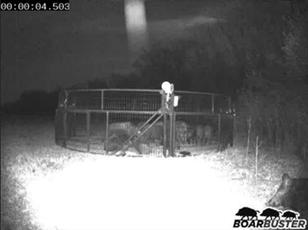
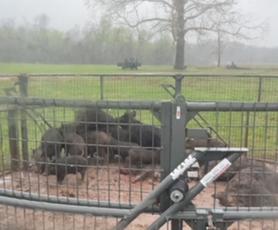

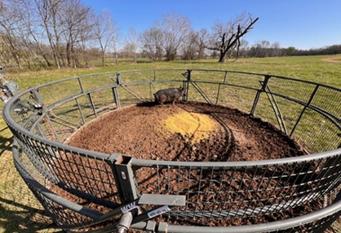
My name is Kale Thomasson, and I serve as the Invasive Species Coordinator for the Peoria Tribe Natural Resource Department. I am originally from Quapaw, Oklahoma, where I was born and raised.
I hold an associate’s degree from Northeastern Oklahoma A&M College and a bachelor’s degree in Wildlife Conservation from Unity Environmental University. My professional background includes hands-on conservation experience with the Oklahoma Department of Wildlife Conservation, where I worked as an intern at the Hulah Wildlife Management Area and the Paddlefish Research Center, contributing to regional fisheries management efforts.
This position is grant-funded through the U S Forest Service Invasive Species Grant My primary responsibilities include leading invasive species removal, monitoring biological concerns, supporting forest health initiatives, and assisting with restoration efforts on tribal properties to return them to a healthy and sustainable condition
Throughout the year, most of my work focused on invasive tree removal, property cleanup, and interdepartmental support across Natural Resources, the ranch, and the fish hatchery Significant progress was made on multiple tribal properties, particularly the Beaver Family Property, formally known as the Rathjen Property, where extensive tree and brush cleanup was completed. Work included removing hazardous and invasive trees, grinding stumps, treating cut stumps to prevent regrowth, and organizing removed material into burn piles. These efforts improved safety, accessibility, and long-term land health across the properties.
Invasive species identification and mapping were key components of this work Using GPS tracking and field marking methods, invasive tree locations were documented to support strategic removal and long-term monitoring. In areas where dense vegetation prevented safe ground access, aerial counts were conducted to estimate invasive tree populations as well as prescribed fire to thin areas of dense vegetation and growth. Bradford pear and Honey Locust trees were a primary focus, with over 150 locations identified and recorded on GPS maps
As part of ongoing professional development, I participated in a Native Plant Identification Course through the Tulsa Garden Center and attended the Blooms and Bison Conference. These opportunities expanded my knowledge of native plant communities and pollinator habitat restoration, directly supporting future restoration planning efforts.
In addition to invasive species management, I assisted with a wide range of Natural Resource Department operations This included supporting ranch activities such as hay production, equipment maintenance, fence line spraying, cattle movement, vaccinations, and general livestock handling. These efforts ensured continued productivity during peak operational periods I also provided regular support to the fish hatchery, assisting with pond seining, fish stocking, transporting fish for various projects, dispersing forage species, and installing aerators to address low dissolved oxygen levels during warmer conditions These activities helped maintain healthy aquatic systems and meet stocking demands.
Youth and community engagement were also
part of the year’s efforts. I assisted with a youth fishing event at the hatchery, helping provide a positive and educational outdoor experience for participants.
Seasonal conditions influenced work priorities, with wet weather occasionally limiting field operations During these periods, time was used effectively by shifting focus to equipment maintenance, interdepartmental assistance, planning, and continued cleanup efforts where conditions allowed. Brush piles created earlier in the year were burned during appropriate conditions, allowing for visible progress and reclaimed land
Over the course of the year, substantial progress was made in managing invasive species, improving forest health, and restoring tribal lands. Through consistent fieldwork, careful planning, and collaboration with multiple departments, these efforts contributed to safer, healthier, and more resilient properties I look forward to continuing and expanding restoration initiatives, strengthening invasive species management strategies, and supporting the Peoria Tribe’s natural resource goals in the coming year.
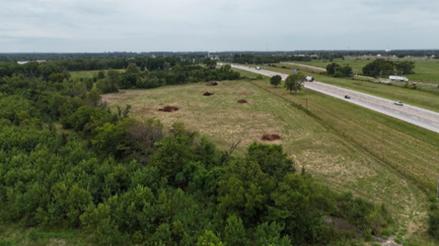
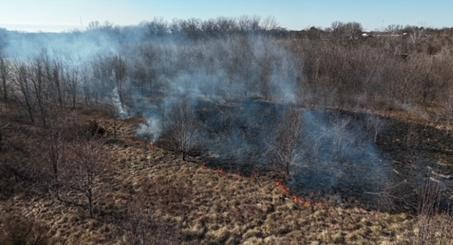
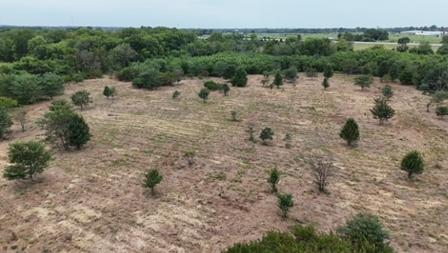
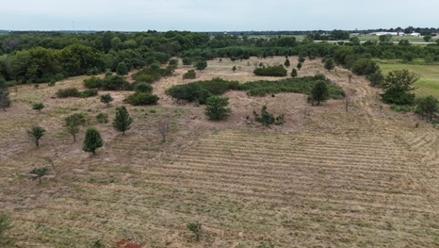
The year began with a focus on completing the greenhouse infrastructure, and we chose to remove a job posting for a greenhouse grower because it had been decided not to hire for that position and instead posted the packhouse manager position. We felt that this position was more important to have in place during the setting up of the washing and packing facilities and will be part of building relationships to distribute our vegetables as soon as we are in production. The concrete work was put out to bid, and we had a contractor in place, and we expected that as soon as weather was appropriate, we would begin the concrete and foundation work. At that time, plans were ready for the greenhouse and once the concrete was complete the rest of the greenhouse will begin construction, and I will be able to start putting together growing systems I also put together a budget for the greenhouse and forecasted some of our future expenses in a wish list that I was asked to put together.
During February, we hired a packhouse Manager that was instrumental in designing the packhouse and helped develop protocols and point out blind spots in our compliance with food safety laws. I had the opportunity to judge the Jr. High and Highschool science fair at NEO in the botany category This was a fantastic experience that I deeply enjoyed Final greenhouse concrete plans were completed and stamped during this month, and I also assisted Jeremy in conducting a tour of our farms and food distribution locations for some farmers he has been working with to purchase local food for his program The Quapaw Tribe invited some of our Natural Resources team to come to a class at the Tulsa Garden Center. This course focused on native plants and their production and identification,
and it was during this course that we realized just how significant the need and market is for native plants that are grown in this geographic region. Oklahoma native plants grown outside of the state are less likely to survive planting, and there is significant loss when using plants not grown locally
I had the opportunity to continue attending the Native Plant Courses with members of the Natural Resources Department and members of the Quapaw Tribe in Tulsa during March, and the new packhouse manager and I worked together closely to plan the specific details of the headhouse, the packhouse areas, the washing areas, and the offices including writing SOPs for some of our processes, and then refining those together as we got more details about the facility layout We put together bid packages for the walk-in coolers, a refrigerated delivery van, packing and sealing equipment, and the rest of the hydroponic systems. Concrete work was then waiting for the appropriate weather conditions, but we had a tentative date set towards the end of March to begin construction. We also wrote extensively at this time about several of the options for the completion and operation of the greenhouse to ensure its success in the face of changing economic conditions and administrative priorities
In April, we created a set of to-scale drawings for the headhouse portion of the greenhouse. These drawings included locations for drains and the layout of the entire packing and washing areas, shipping and receiving areas, and the office, the breakroom, bathroom, and mechanical areas. These were requested so that contractors know where the plumbing for these locations would need to be, as the
concrete project gets underway. We worked with the contractor for the concrete project as he prepared to build the forms and some rebar sections before bringing them onsite. The site had the septic installed and the electrical pad poured, and the electricians pulled some wiring. The final hydroponic systems were put out to bid That process closed and we selected a provider We also met with Noah to go over some of the business plan information that we have been working on. His feedback was valuable and validated the work we have been doing preparing to present to the Business Committee We traveled with Jeremy to a market in Ochelata to help with a pickup order for his program, and to meet with the owners of the market to discuss the potential for distribution of produce grown in the greenhouse They were very eager and particularly interested due to the year-round availability of our produce. Finally, we signed up for community outreach events for the summer and started the process of constructing a small hydroponic system that will grow lettuce on a rolling cart to take to these events to educate people about greenhouse food production.
We met with the construction team multiple times to go over greenhouse construction details as concrete work on site is beginning during May Offsite work was underway and included creation of forms, rebar work, and evaluating the plans and meetings with our teams to answer any questions. This is still a large and complex concrete project and the meticulous nature of our contractor, Scott, is welcome I had the opportunity to finish building the hydroponic education cart and I brought it to the hatchery for a STEM fair. It was well received and the students enjoyed learning about plant growth, photosynthesis, and hydroponic systems The cart can be used
to grow 12 heads of lettuce (or 12 of any leafy green) at a time, indoors, in any room that is warm enough for plants to grow I continued work on selecting equipment for the greenhouse, and worked with Treva, Erin, and others to find further grants to help move the project forward. As the project timeline began to extend, funding became less available, and some tribal goals shifted, I took the opportunity to work part time in order spend less on my salary and take care of a family member that needed care.
In June I met with Treva, Shayla, and Erin to discuss potential grant writing opportunities for the greenhouse project. We reviewed several options I had prepared for the future, and we decided to apply for a $40,000 grant that could be used on equipment or towards some construction-related costs I wrote answers to the questions pulled from the grant website, Shayla and Treva then put those together into narrative form and we were able get the grant submitted on time. I also communicated regularly with Growspan regarding construction delays and adjusted time frames Work began on the greenhouse pad, and two crossings from the road to the pad were completed that will serve as roadways for refilling propane and as access to the second head house bay door. Overall wet weather created unfavorable ground moisture that led to slower than planned progress at the greenhouse site.
I had the opportunity to work on an updated equipment list for the greenhouse at the beginning of August, and as we approached the next phases of construction an updated equipment list was needed. I put together a middle-of-the-road list that should cover whatever direction the Business Committee decided on for the greenhouse project. This included equipment like forklifts and scissor
lifts, as well as equipment for packing, washing, and delivering produce grown in the greenhouse I also updated the budget for the greenhouse to include recent pricing and offered multiple options for moving forward with the project related to budget. I had the opportunity to go with Mara and others to search for mussels in the Spring River and was successful finding mussels and participating in the event. The concrete made some progress and was expected to continue for the next 2-3 months until completed. I also spent time creating answers for some questions being answered for the business committee, as well as time in person meetings with Bryce, Erin, Chris, and others to discuss the project and its future.
The greenhouse project was paused in September due to an ongoing issue with the site preparation from a previous contractor The company that put together the road and pad for the greenhouse did not include 10 inches of compressed ½ to 1 1/2-inch aggregate rock in the pad, as was described by the geotechnical report that was done on site Heavy equipment sinks into the ground at a rate of 2 to 6 inches when it should make half an inch or less of an imprint. I began working on a plan for a small farming project on the front of the site that would allow for food production early next year Some details include a crop plan and expense list for one or two hoop houses, as well as field production of vegetables, and some supplies that could be stored in the existing building on site during construction. These could become the basis for a small farm project on site or utilized as part of the overall greenhouse project when completed.
During October, I had the opportunity to attend multiple meetings with the BC and tribal administration First, I got to listen while
the BC set goals and worked on their vision and mission for the Tribe This was very interesting, and I spoke up during that meeting about ideas I had for the direction of the greenhouse project. Erin and I met with Nick a few days later to go over my ideas and then was able to present them to the BC in an economic development meeting the following week I also met with Treva to discuss changes to the grant, and we await the government opening to confirm our ideas with the USDA. I created new budgets and equipment lists for the BC meeting I would later be presenting at. I wrote a proposal explaining the plan, which involves starting a vegetable farm while the concrete is finished and then building our own smaller greenhouse and hoop houses to grow native plants for use in local restoration projects. This plan will allow the tribe to keep the momentum on the project going and still meet the grants we have been operating under while also producing thousands of pounds of food and providing a needed service with the native plant production. Details were presented at the next BC meeting.
I presented the project to the Business Committee and was given the green light to proceed with the refocusing of the project to include a small vegetable farm and a native plant nursery on the existing greenhouse site in early November I have since had several meetings to plan as we move forward, and we worked with Growspan to get funds returned and to take delivery of any equipment that they could not refund. This equipment will be used in the new native plant nursery project and on the farm I went to the farm site and took soil samples that have now been submitted through the local extension office. I received the results in the next few weeks and used that information to complete the fertilization plans. Work began designing the small building on the front of the site that will
be used as a farm office, storage, and packing and washing for vegetable until the concrete is finished and we put together a headhouse and small greenhouse of our own design. I have been working on field plans and researching specific varieties for the native plant nursery. I plan for this spring to begin our first farming on the property The concrete is moving forward, and the required rock base has been added to the pad. The concrete will likely be done by next summer when we can begin further construction and the native nursery can get built out and begin production.
In December, I returned to full time work and have been busy getting ready to start building out the new farm and native plant nursery. I worked on an updated budget that Treva has entered the system for the entire project. And Treva put together a presentation to show the USDA to ensure we can use that grant for this project. This conversation has since been had and we received the go ahead to continue using the grant. We worked with Growspan and got the promised funds returned to us and received a shipment of the irrigation system that was custom built for the previous greenhouse design. This system will be used in the new project and will allow us to grow into the full system over time. We also have received environmental control system and the fans for the project and have received everything from Growspan that was promised These fans and controls will be used in the new greenhouses. I have designed a new layout for the head house for the native plant nursery and for the small packhouse we are building on the shed onsite for the farm We are also working with NRCS to provide a grant for another hoop house that will grow tomatoes in. There has been a tremendous amount of progress, and I have created a plan to ensure we can make all the purchases for the USDA grant in time as soon as we get their
final approval on our new equipment list. We anticipate work beginning on the farm portion of the greenhouse during the middle of February. Finally, I also had the wonderful opportunity to help set up for the Christmas Party for a few shifts last week. I love working on that project every year.
This year there were challenges and delays to the project, but the year ended with the Business Committee deciding to focus our project on producing food with a small farm on the front of the property and to refocus some of our resources to fill a community need by growing native plants to be used in restoration projects and landscapes in the surrounding area by the Tribe, the community, governmental agencies, and other Tribes working on restoration and rehabilitation projects The Greenhouse is in an excellent position for success, and we anticipate growing food this year to be used in our programs and for our citizens, and we also expect to spend the next winter preparing for the following year that includes full growing season for the farm, and our first opportunities to grow native plants
Hello, my name is Lawrence Mason, and I am the Special Projects Coordinator for the Peoria Tribe. I have been tasked with creating and implementing the Tribe’s Tribal Court system. First and foremost, I would like to say that I am truly grateful and excited to be given the opportunity to see this important project to fruition It is an honor to be able to assist in the creation of the Peoria Tribes Tribal Court System.
I began working at the Tribe in December of 2025. When I began, all documents and reports pertaining to this project had been deleted and wiped from the previous individual's computer. Thus, I had no idea where we were in the process. I contacted the BIA and began working alongside them, as well as Yonne and Stacy with Tiger Law, to determine where the Tribe was in the process and how to move forward with this project. During the last year, I have planned and helped create the Tribal Court Workshop, attended jurisdictional bounds meetings, attended BIA funding meetings, worked alongside the grants department to secure additional funding for the project, completed and turned in all BIA funding budgets and reports, and scheduled and completed the first of many Tribal Court Workshops with the Business Committee.
In 2024, the Tribe received $196,000.00 in funding from the Office of Justice ServicesTribal Justice Services - to assist the Tribe in initiating the process of implementing and operating a Tribal Court. Coming into 2025, we knew we would need more funding to see this
project to completion. Through our hard work and determination, the Tribe was able to receive an additional $190,285.00 in funding from the BIA to continue to assist us in the tribal Court process. This brings the total amount of funding received by the Tribe from the BIA to $386,285.00. We will receive more funding through the BIA once our court is operating, since the CFR Court will no longer have to hear our cases. We will also continue to receive the annual funding from the BIA as long as we remain in good standing with the grant. We anticipate receiving the same amount we were awarded in 2025, if not more, during 2026.
My goals for 2026 are very optimistic. I would like to conduct and finish our Tribal Court Workshops. I would like to determine what court systems would best suit the Tribe and our Tribal Citizens. Whether that is criminal, civil, juvenile, or all of them. I am also hopeful we can fully complete writing the first draft of the appropriate statutes, laws, and ordinances that best benefit our Tribal Citizens. I feel that if we are able to accomplish these goals in 2026, then by the end of 2027, we will be on pace to have the court system fully operating and ensuring better protection for our Tribal Citizens.
My name is Jamie Williams, and I have had the honor of serving as your Tribal Tag Agent for the past three years. During this time, I’ve worked hard to ensure that every citizen receives efficient, accurate, and respectful service when handling their vehicle-related needs
As your Tribal Tag Agent, my responsibilities include issuing new Peoria titles and registrations, placing and removing liens, processing duplicate titles, and managing repossessions I assist citizens through every step of the process so that transitions, especially with new vehicle purchases, are as smooth and stress free as possible.
Beyond direct customer service, I manage all day to day operations of the Tag Office This includes completing monthly reports, overseeing fleet inventory for each program, coordinating insurance, verifying driver’s license eligibility, and handling accident documentation. I also manage maintenance, repairs, recalls, towing, and serve as the liaison to the insurance claims adjustor Purchase office supplies and participate in quarterly meetings with Tribal Tag Agents across the state to stay informed on tribal tag updates and best practices.
Additionally, I record all financials for accounting and support departments by providing quotes for new vehicle purchases. Every task I take on is done with the goal of keeping our processes organized, transparent, and beneficial to the citizens we serve
Each month, the Tribal Tag Office provides a detailed overview of services delivered to
Peoria citizens The report covers the following categories:
Service Activity:
Citizens Served – Total number of individuals assisted during the month
Renewals – Vehicle registration renewals processed
New Registrations – First time titles and registrations issued
Duplicate Titles – Replacement titles issued
Lost Decals – Replacement decals processed
Lost Registrations – Replacement registration issued
Lost Tags – Replacement license plates issued
Personal Tags – Personalized or specialty plates processed
Repossessions – Repossession documentation handled
Liens – Liens placed or removed
Penalties – Penalty fees assessed and recorded
These metrics help track office workload, identify trends, and ensure accountability in all tag‑related operations.
Each quarter, a special highlight is included to showcase:
Notable achievements or improvements within the Tag Office
Updates from statewide Tribal Tag Agent meetings
With my background and experience in real estate development and investment, I have been asked to assist with the planning and advancement of several tribal properties.
Most recently, I secured a long term agreement with QuikTrip on the Ken’s Farm and Home property This partnership serves as a strong anchor tenant and will be instrumental in attracting additional retailers to the area.
I meet monthly with MAEDS (Miami Area Economic Development Service) and the City of Miami to discuss retail and industrial opportunities that support future growth. These meetings help ensure that our development strategy aligns with regional trends and positions our properties for maximum impact
In February, I will be attending a retail and industrial development conference to network with industry professionals and explore new opportunities. My focus is on identifying projects that allow us to utilize ground leases, which help minimize financial risk while maximizing long‑term gains for the tribe and our citizens. Each step in this process is aimed at strengthening our economic foundation and creating sustainable revenue for future generations
Every Monday, I drive the refrigerated box truck to pick up the week’s produce for the Peoria Fresh Program, helping make sure fresh food reaches the people who need it
As part of the Strategic Planning Team, our focus was on strengthening the long term direction and identity of the tribe. Together, we examined and refined the core elements that guide our work, including our mission, vision, values, and the fundamental purpose of the tribe. This process allowed us to clearly define what we stand for and how we want to serve future generations.
A key component of our discussions centered on how to ensure that our mission remains adaptable and achievable, even as our Business Committee changes over time We worked to identify key priorities that align with our long term vision and support sustainable growth, cultural preservation, and responsible governance.
Another major focus was determining how to measure success both as a Business Committee and as a tribe. This included developing meaningful benchmarks, identifying indicators of progress, and establishing ways to evaluate whether our decisions are creating positive outcomes for our citizens.
The Strategic Planning Team’s goal was to provide a strong foundation for continuity, accountability, and forward thinking leadership, ensuring that our tribe remains resilient and prepared for the future.

Rosanna Dobbs Chief 2025-2026
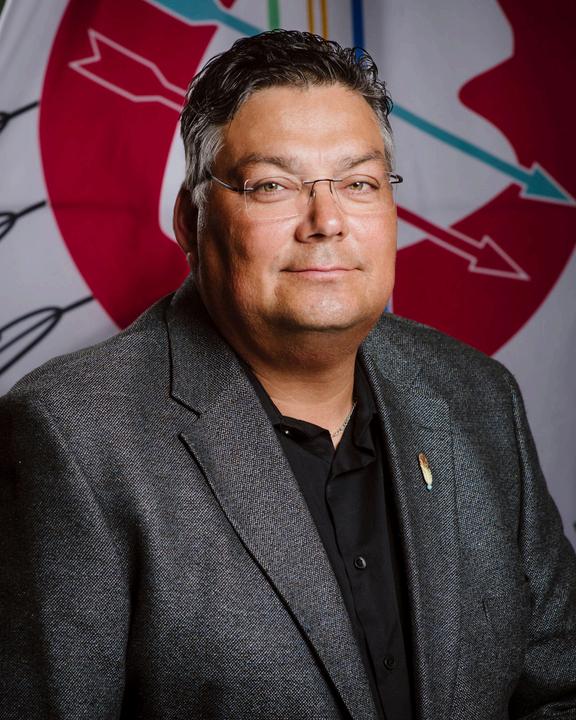
Jason Dollarhide Treasurer 2024-2028
Nick Hargrove First Councilman 2024-2028
Paul J. Attocknie Jr. Second Chief 2025- 2029
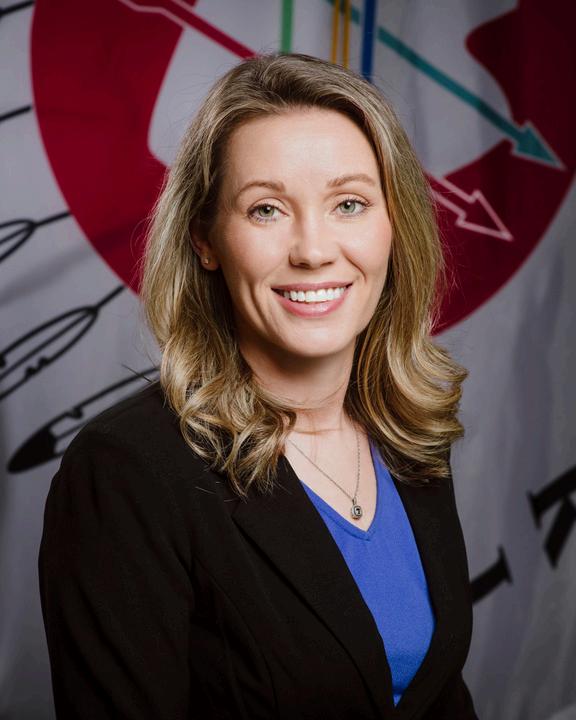
Isabella Clifford Secretary 2025-2027
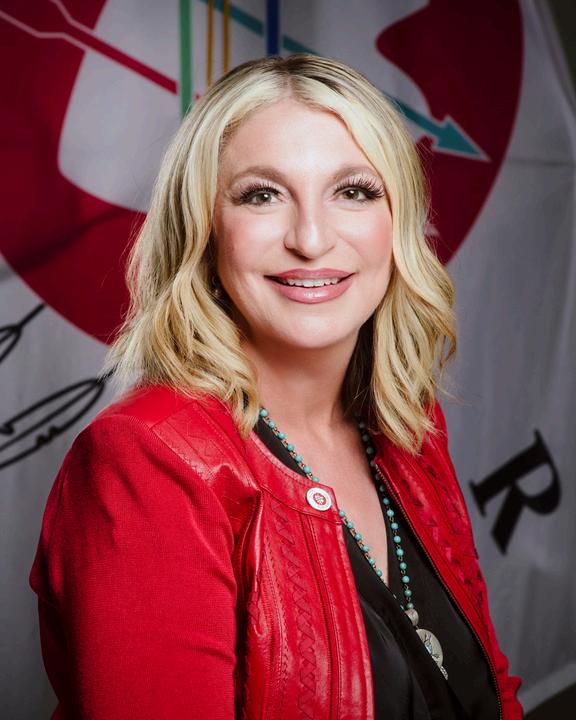
Kara D. North Second Councilman 2025-2029
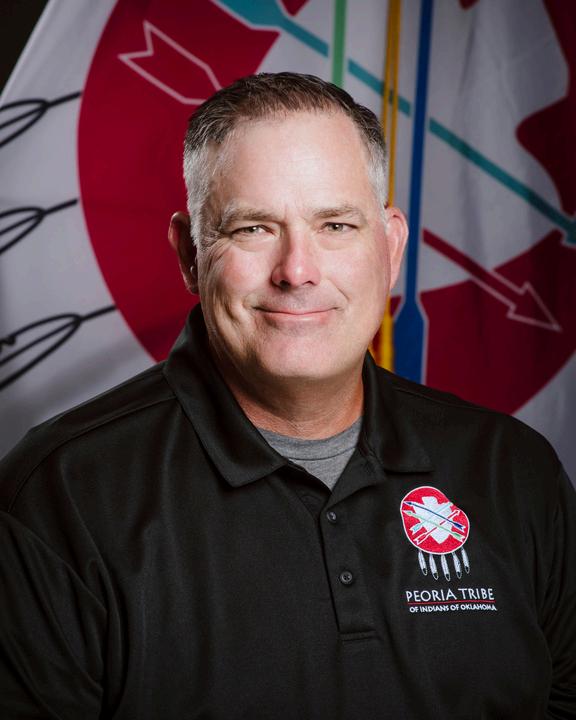
Scott Myers Third Councilman 2023-2027
LeAnne Reeves 2022-2026
Mary Lembcke Davey 2022-2026
Stacy M. Lindsly 2024-2028
Mark Davey 2025-2029 Korie Payton 2025-2029