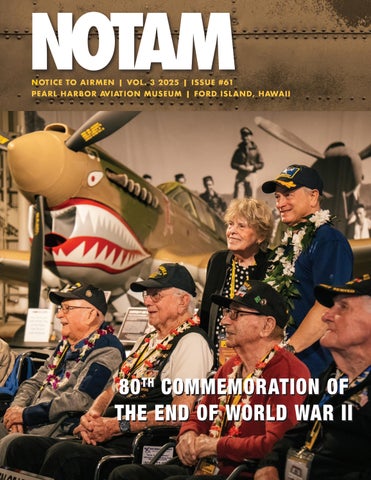
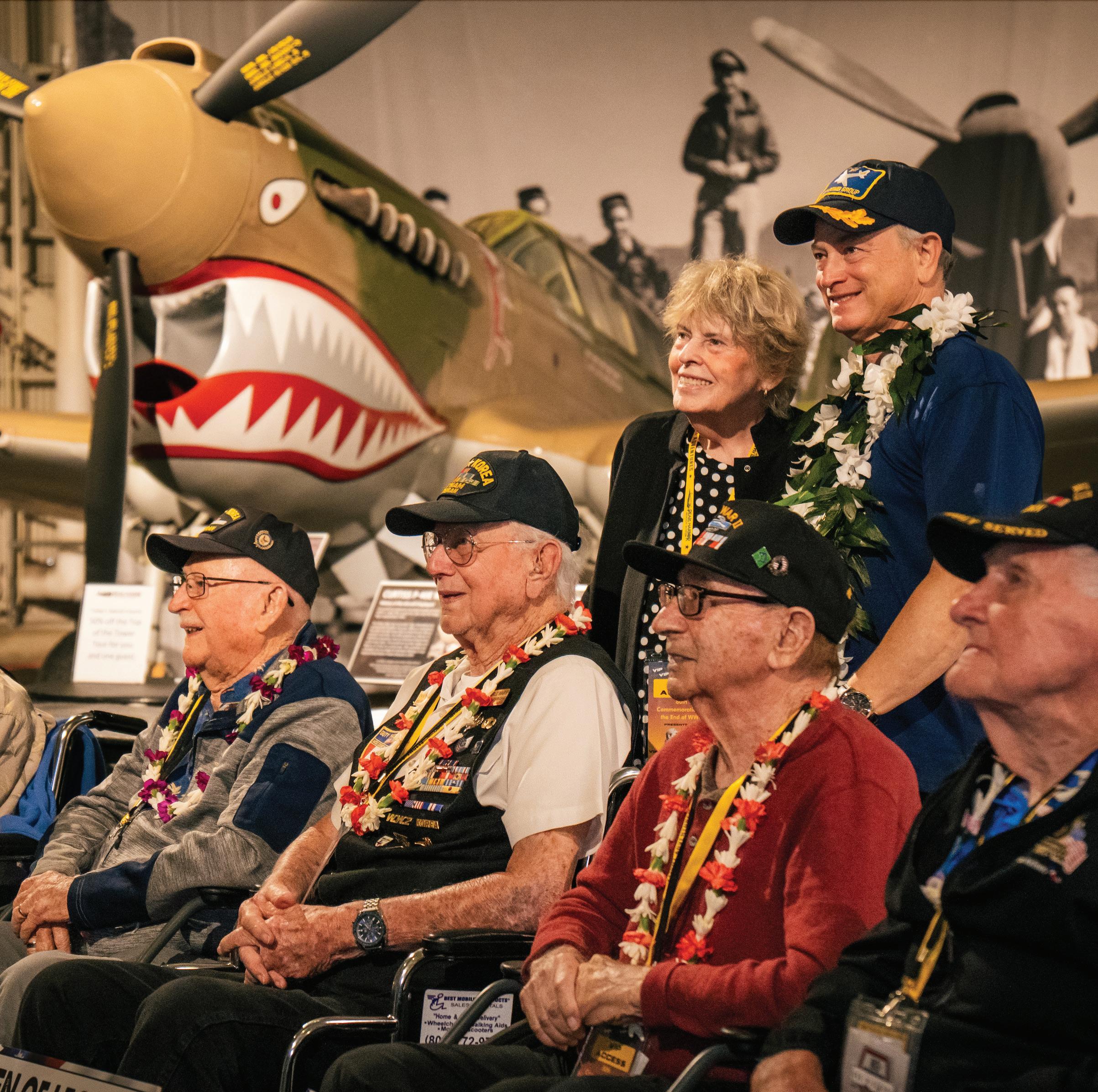
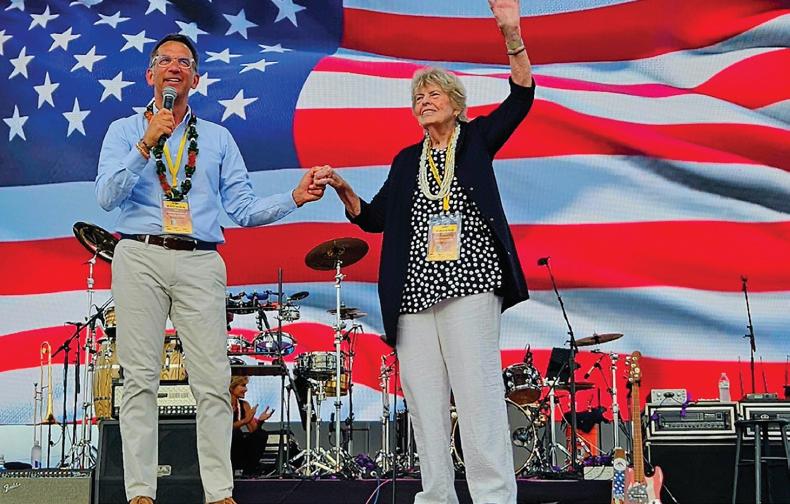
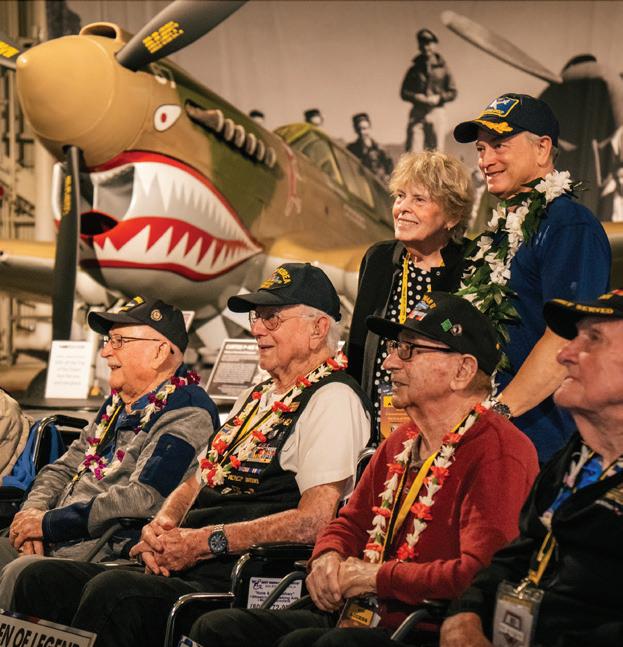
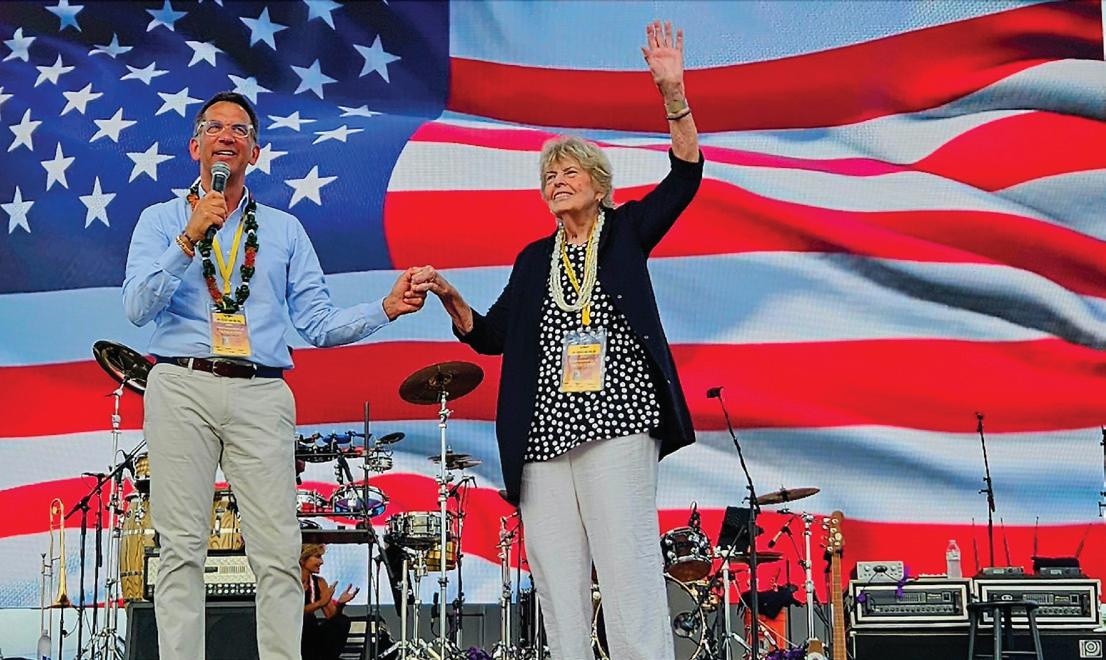
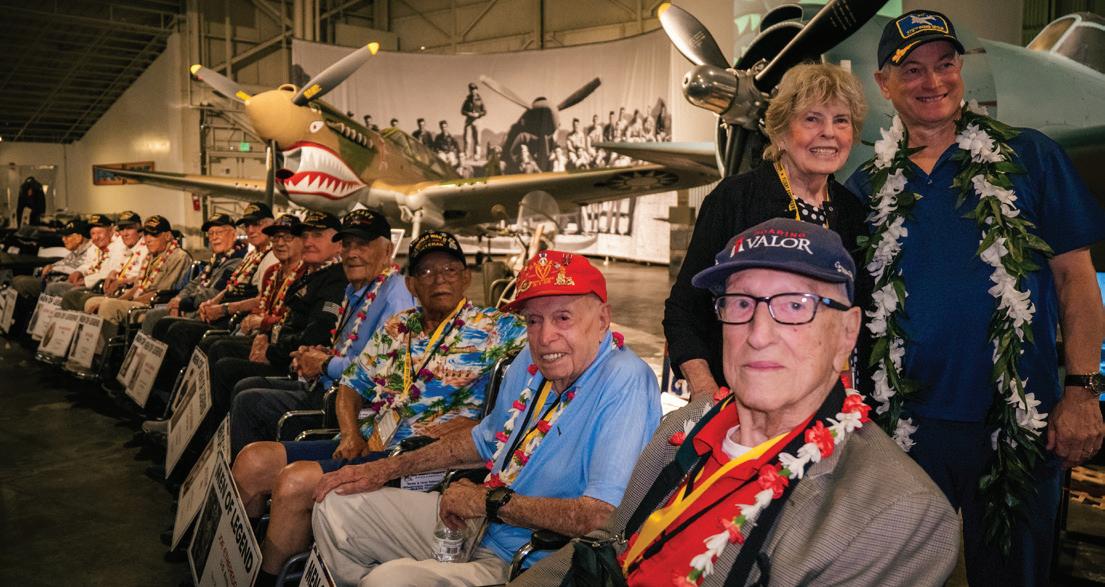
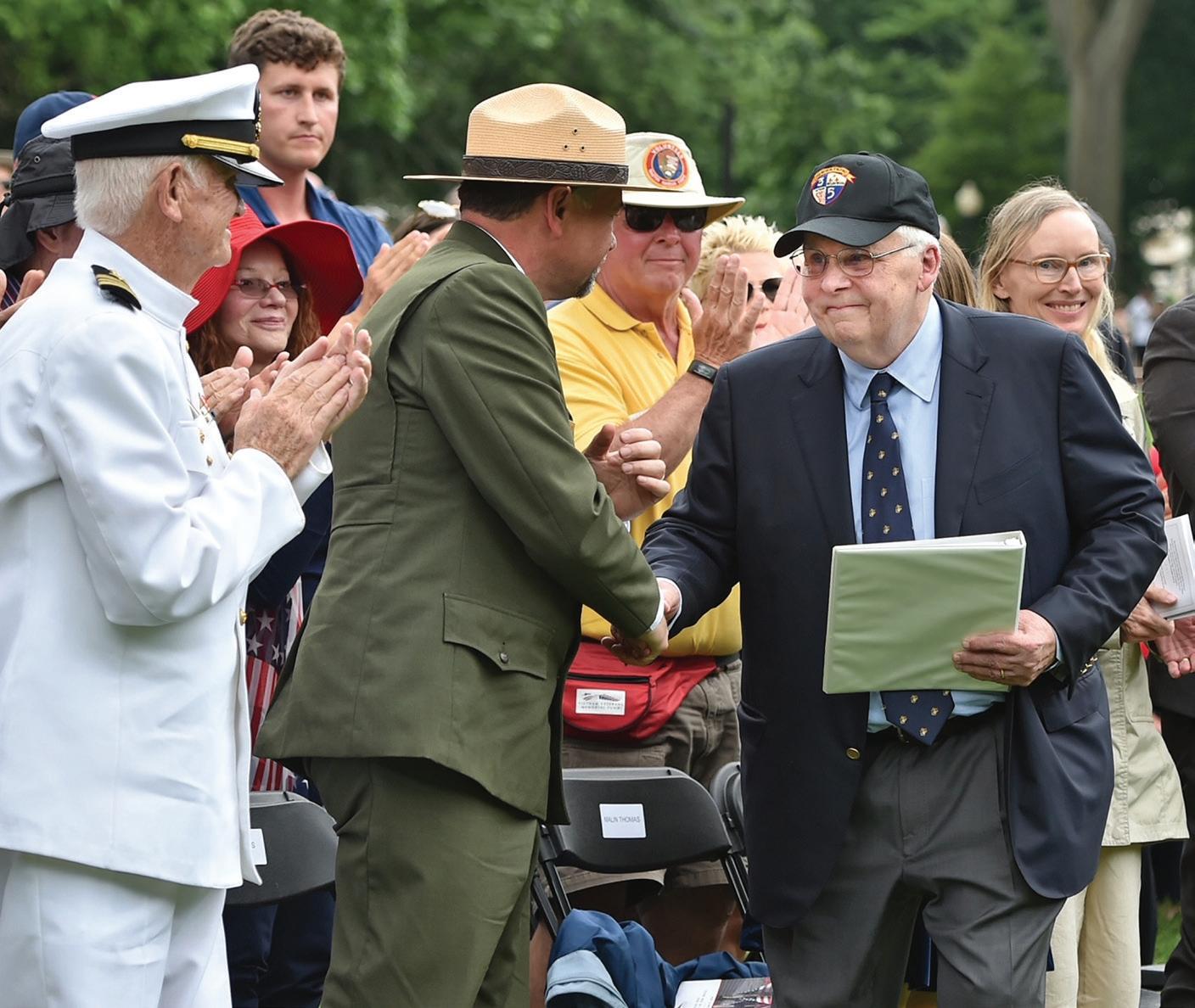
Linda Hope and Gary Sinise (top) pose with WWII Veterans at Pearl Harbor Aviation Museum during the 80th Commemoration of the End of WWII. The Commemoration was presented by the Bob & Dolores Hope Foundation with significant support from the Gary Sinise Foundation. In the background is the Museum's P-40E Warhawk.
13 Philanthropy with Purpose
14 The History behind the Museum’s PBY Catalina
GLAD TO BE HERE
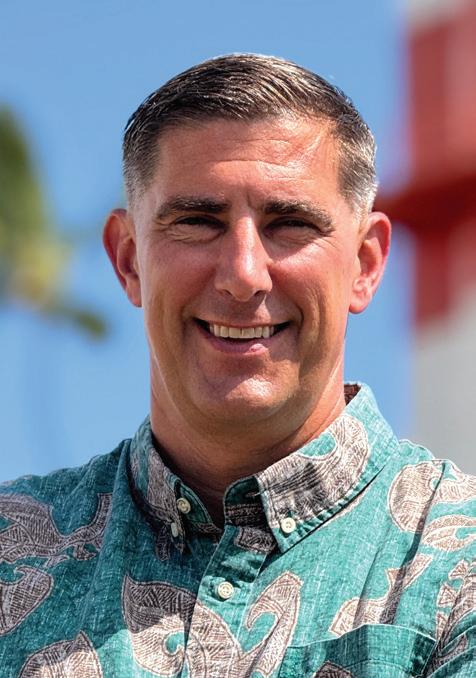
By John P. Hiltz, Chief Executive Officer
DEEPLY INSPIRED
Each morning, as I drive onto Ford Island, I’m reminded of the moment this place was thrust into history. It was at this very hour, 7:55 a.m. on December 7, 1941, that the attack on Pearl Harbor began. To arrive each day at that time is my own humbling reminder of the sacrifices made here and of the responsibility we all share in preserving this legacy.
Since stepping into this role, I have been deeply inspired by the people who carry that mission forward every day. Our staff, board, and volunteers pour their energy and expertise into ensuring that Pearl Harbor Aviation Museum (PHAM) is not only a place of remembrance but also of discovery and inspiration. Their dedication has been one of the most striking and moving aspects of my early days here.
BRINGING FRESH MOMENTUM
The growth vector of the Museum is exciting and was one of the reasons I was drawn to this role. Just this summer, we welcomed nearly 12,000 people to commemorate the 80th anniversary of the end of World War II, a powerful reminder of how deeply this history continues to resonate.
At the same time, we’ve begun new work on our PBY-5A restoration project in partnership with the Air Zoo in Michigan, bringing fresh momentum to our collection and to the stories we tell.
CONNECTING PAST, PRESENT, AND FUTURE
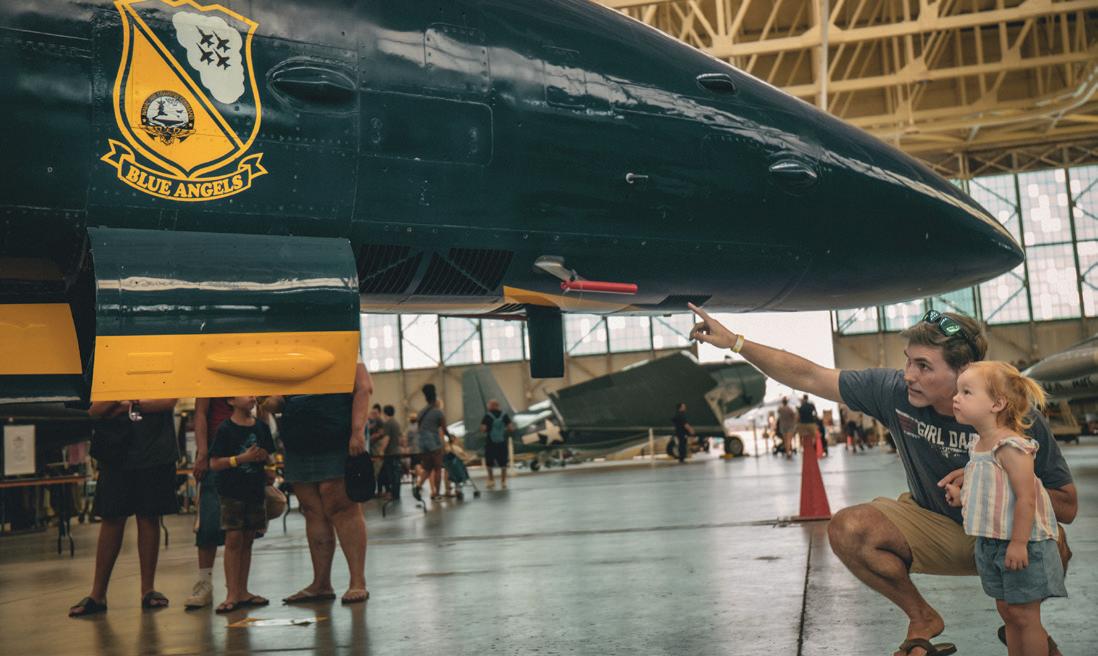
We also traveled to EAA AirVenture in Oshkosh, where I was struck by the strength of the aviation and warbird communities. Seeing half a million enthusiasts gathered to celebrate flight affirmed the importance of our own mission in connecting past, present, and future. And, closer to home, it was an especially poignant moment for me to host the Blue Angels here at PHAM during their visit for the Kaneohe Bay Air Show. The squadron honored me by placing my name and number on the Blue Angels jet I once flew, a gesture that reminded me how aviation ties us together across generations.
Perhaps most inspiring of all has been seeing our Aviation Pathways programs come to life. Our A&P High School Program, developed with West-MEC, the Si Robin Foundation, Hawaiian and Alaska Airlines and many other sponsors, is one of the first of its kind in the nation. To watch young people embark on a path toward becoming FAA-certified mechanics and private pilots is to witness the future of aviation being built right here at Pearl Harbor.
BUILDING PATHWAYS
This Museum sits at the intersection of history and hope. We honor the courage of the past while building pathways for the leaders, innovators, and aviators of tomorrow. I am grateful to join you on this journey, and I look forward to the work ahead.
Glad to be here.
John Hiltz Chief Executive Officer Pearl Harbor Aviation
Museum
A FRESH FLIGHT PLAN
By Bill Miller, Director of Visitor Services and Programs
FIRST STEP
We reproduce to survive and perpetuate our species, passing down what we learn to those who follow. This basic human tenet extends to our community survival and we recognize the need to continually grow and guide our successors. At Pearl Harbor Aviation Museum (PHAM) we specialize in motivating those with an interest in aviation and history. And PHAM, as an institution, attracts mentors and mentees alike.
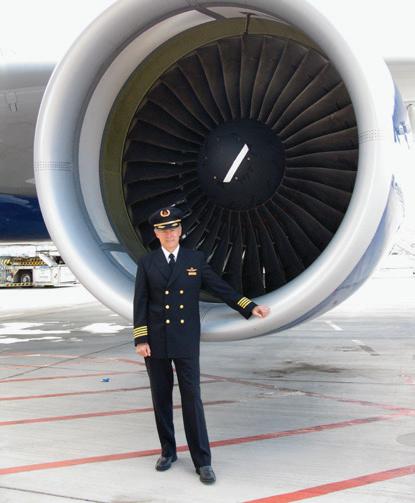
On his first day, our new CEO John Hiltz gathered Museum leaders and shared a single slide Power Point presentation. The slide projected no words, it was simply a picture of John as an elated teenager in an F-16 cockpit, realizing he had just taken his first step as a mentee. Now as a grown man in a conference room, he continues his trajectory as a mentor; understanding his aviation spark will ignite following mentees.
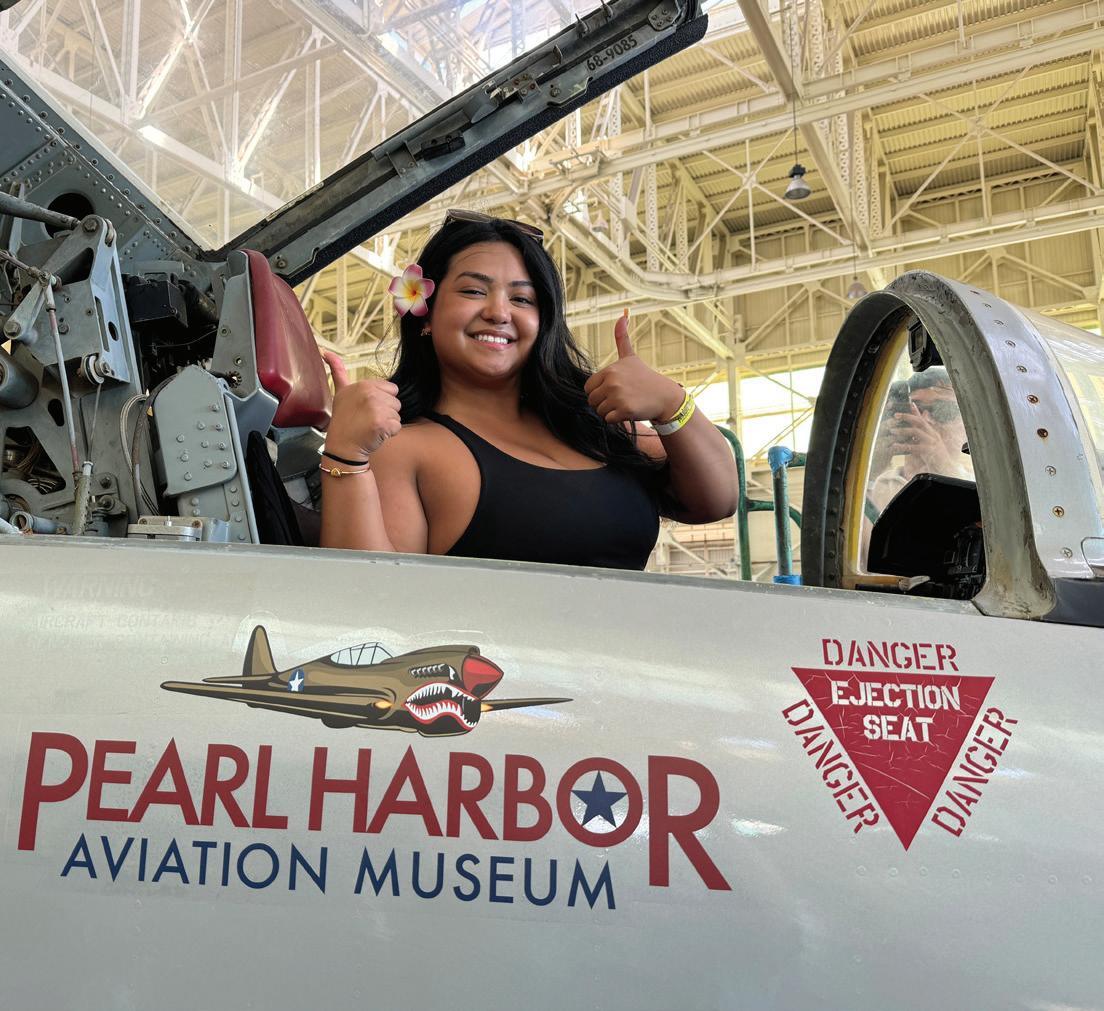
ESTABLISHING A DAILY OPEN COCKPIT
First directive: reproduce the experience a nd establish a Daily Open Cockpit program (DOC) to create mentees. We all understood. Skipping school to ride the Metro to the Smithsonian Air and Space Museum was my path to a spark; returning as a mentor is a natural instinct.
That crystal clear goal definitively cuts through the usual conference room concerns of damaging aircraft and over-
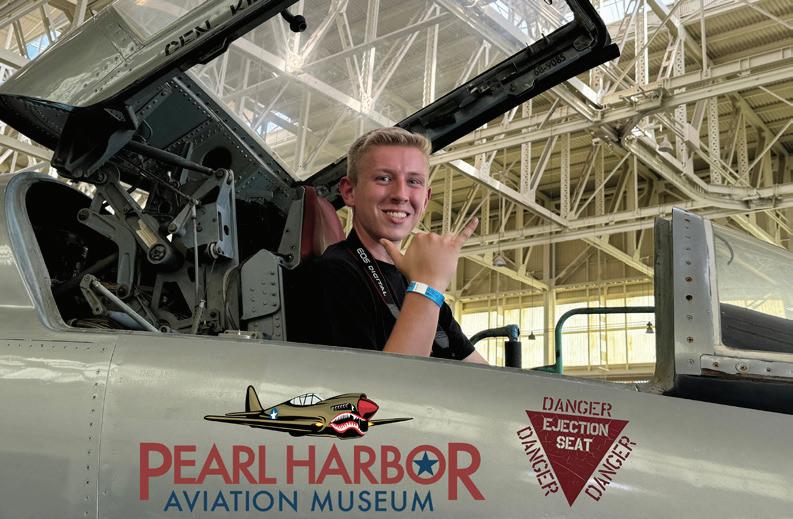
extending staff. A good idea is a good idea. Leadership, staff and volunteers are working together again to make it happen. Leading off the DOC program is the Northrop Grumman F-5 single seat interceptor in a Republic of Korea (ROK) livery. Most guests, young and old alike, are climbing into that cockpit with a grin and climbing out with a memorable experience, and many mentees are sparking to life.
FUN NEW ACTIVITIES TO ENRICH EXPERIENCES
Intoxicated by the excitement, our staff and volunteers have added DOC enhancement activities to enrich the experience. Flight suits are available for guests to don and photos encouraged. A dream board for kids to write messages on sticky notes to post and share their thoughts is full. A paper airplane station, complete with mock table top aircraft carriers where guests try to catch the third wire, has been surprisingly interactive and popular.
FRESH EYES
The DOC is just the beginning. Directors, managers, volunteers and staff are rallying to improve our Museum through several new initiatives and priorities. The arrival experience for the shuttle bus is in our sights. Our first impression currently captures 10% of our total visitation, the shuttle is an untapped audience waiting to be “wow’ed” off the bus.
We’re improving all wayfinding signage focusing on the Rooftop Terrace: on the website, at partner locations and on our campus. In fact, all of our signage is getting a facelift; faded and outdated no more. The movement of the Swamp Ghost inspired a left side tour - which is capturing attention.
SELF GUIDED “POP TOTT” TOWER TOUR
After five years, August marked the restart of our scheduled Japanese guided tour program. To encourage families and couples, the Top of the Tower (TOTT) offerings have been updated for a Two Pack and Family Four Pack ticket. For tour agencies short on time, a new “pop up” 15 minute self-guided tower tour is now available. Internally we call it the POP TOTT.
A new Photo mission campaign is underway where guests can take and post pictures on social media, answer trivia, crack a code and receive a discounted Tower Tour! Our local Ford Island families aren’t forgotten, free early bird coffee is available daily while supplies last. There’s more, but you have to come out to the Museum to see for yourself.
Every day is now open cockpit day at Pearl Harbor Aviation Museum to inspire young and old visitors alike.
VOLUNTEER SPOTLIGHT: RICHARD WILLOUGHBY
By Arisa Helbick, Concierges, Public Programs, & Volunteer Services Manager
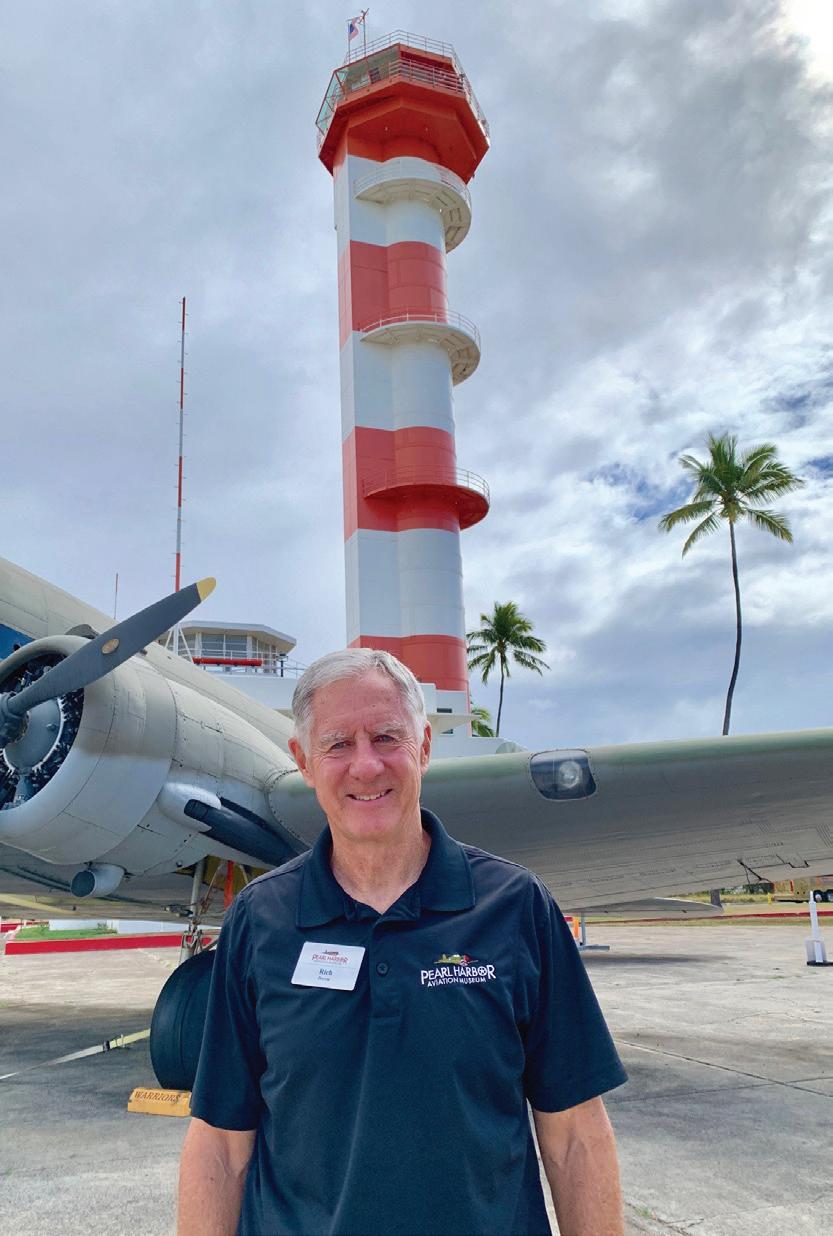
If you’ve visited the Museum on a Tuesday, there’s a good chance you’ve encountered Richard Willoughby leading an engaging tour through Hangars 37 and 79. With a warm presence and a deep well of aviation knowledge, Richard is not only a dedicated docent but also a passionate advocate for aviation history and education.
A PLACE TO SHARE HIS LOVE FOR AVIATION
Richard’s journey with the Museum began thanks to a neighborly conversation. Colonel Dick May, a member of the board of directors at the Museum and Richard’s next-door neighbor, introduced him to the organization.
With more than a decade of prior volunteer experience at the Yankee Air Force Museum (currently known as the Michigan Flight Museum), Richard envisioned this as a perfect opportunity to continue sharing his love for aviation.
THE IDEAL PLACE
“After visiting Pearl Harbor Aviation Museum with my grandson, it was quickly evident that it is a first-class institution,” Richard recalls. “It was the ideal place to put my years of experience to work for the good of the community.”
FOUR DECADES IN THE FIELD
When asked what he enjoys most about volunteering, Richard doesn’t hesitate: “It’s the people.” From fellow volunteers to international visitors, he finds joy in every conversation— especially those that include swapping stories and sharing history.
SHARING THE MUSEUM IS ALWAYS A JOY
“Whether they know nothing about aviation or are veterans with deep knowledge, sharing the museum with them is always a joy.”
Aviation has been central to Richard’s life since the mid1960s. Over a 40-plus-year career in the field, he served as an aircraft commander, instructor, and even sat on the board of a museum dedicated to flying and preserving WWII aircraft such as the C-47 and B-25D.
Today, he channels that same passion into his work at Pearl Harbor Aviation Museum, giving weekly tours and serving on the Gala Committee to help plan the Museum’s annual For Love of Country fundraising event each December.
THE NEXT GENERATION
A standout moment for Richard came when he mentored a young docentin-training, a high school student with aspirations to pursue an aviation career.
“She’s sharp, driven, and already committed to aviation,” he says proudly. “It’s inspiring to see the next generation so engaged, and I commend all the young people who are volunteering here.”
Richard also views volunteering as a lifelong learning opportunity.
LEARNING EACH DAY
“If you don’t learn something new every day, you aren’t listening,” he shares. “Many of our docents and even visitors teach me new things all the time. When I stop learning, that’s when I’ll know it’s time to retire.”
To those considering volunteering, Richard’s advice is simple: “Jump in and do it. There’s a role for everyone—education, restoration, archives, guiding tours, and more. The people you meet and the stories you hear make it unforgettable.”
If you are interested in volunteering, please contact Nick Kann, Assistant Manager of Docents and Public Programs at Nick.Kann@pearlharboraviationmuseum.com.
80TH COMMEMORATION OF THE END OF WWII IS A HUGE SUCCESS
By Greg Waskul, National Development Director
The 80th Commemoration of the end of World War II was a four-day tribute held at Pearl Harbor Aviation Museum and the Battleship Missouri Memorial to honor the service and sacrifice of veterans and their families, and to reflect on the enduring legacy of freedom, tolerance, and peace.
PRESENTED BY BOB & DOLORES HOPE FOUNDATION
Thousands of participants, spanning multiple generations, and including 25 WWII veterans, gathered to pay tribute through ceremonies, programs, and experiences that brought history to life. The Commemoration was presented by the Bob & Dolores Hope Foundation, with significantsupport from the Gary Sinise Foundation.
“We are honored to remember the heroes of World War II as we commemorate the 80th anniversary of the end of WWII,” said Linda Hope, Chair and CEO of the Bob & Dolores Hope Foundation. “We were proud to support this tribute to the valor and sacrifice of those who served in our military during World War II, as well as to the everyday Americans on the home front who also sacrificed to help make victory possible.”
"We were thrilled by the public response and participation in the sold-out programs and events that were part of the Commemoration, by the emotional impact and tribute extended to our WWII veterans and their families, and by the local and national news coverage that reached a billion people," said Pearl Harbor Aviation Museum CEO John Hiltz.
MAJOR COMMEMORATION EVENTS INCLUDED:
•Flight Adventures and RC "Biggest Little Airshow"
•Documentary film screenings with celebrity panelists
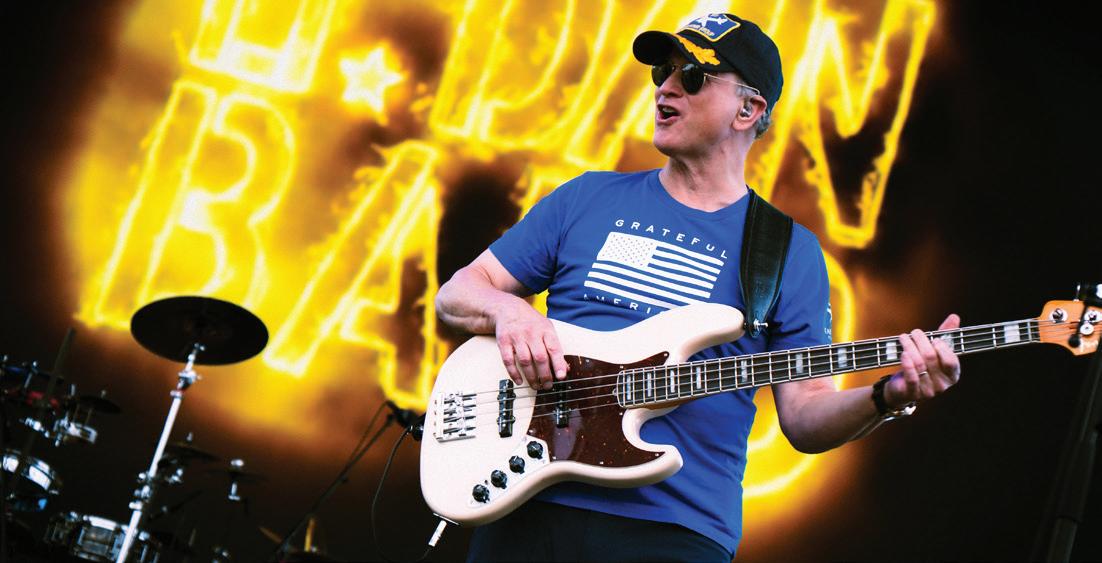
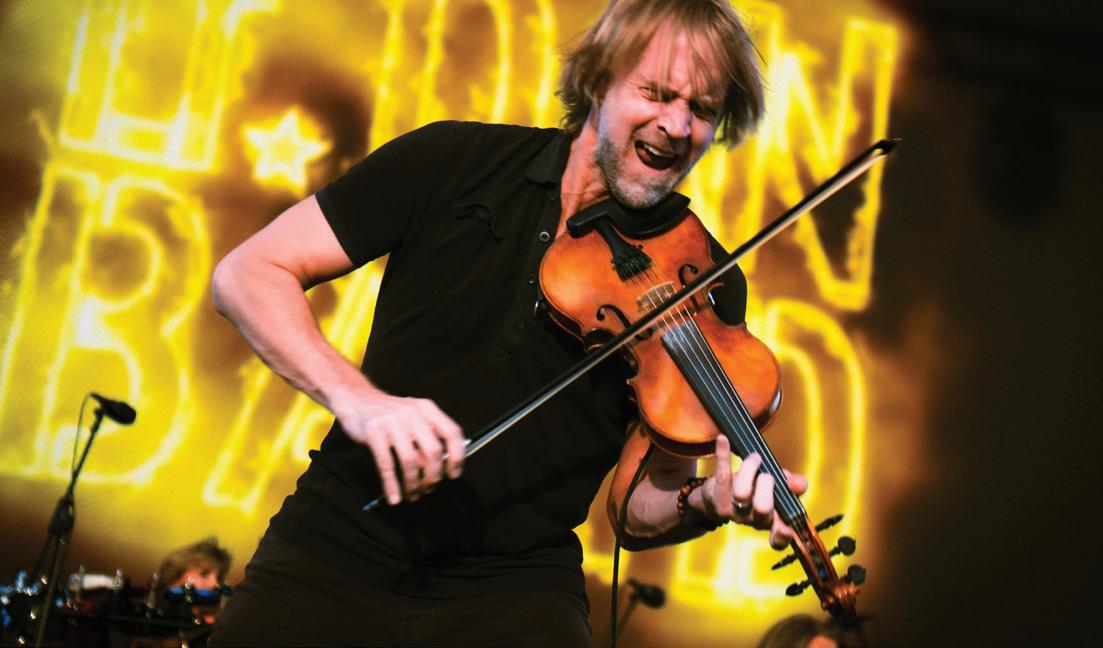
•A Free Public concert featuring Gary Sinise and the Lt. Dan Band, with Makaha Sons as the opening act
•Dedication of the interactive, onboard "Pathway to Peace" exhibit at the Battleship Missouri Memorial
•80th Commemoration Gala
•BB-63 Steel Beach Picnic for former USS Missouri sailors
•Official Commemoration of the 80th Anniversary of the End of WWII, which included eight sailors who were aboard the USS Missouri when WWII ended on Sept. 2, 1945
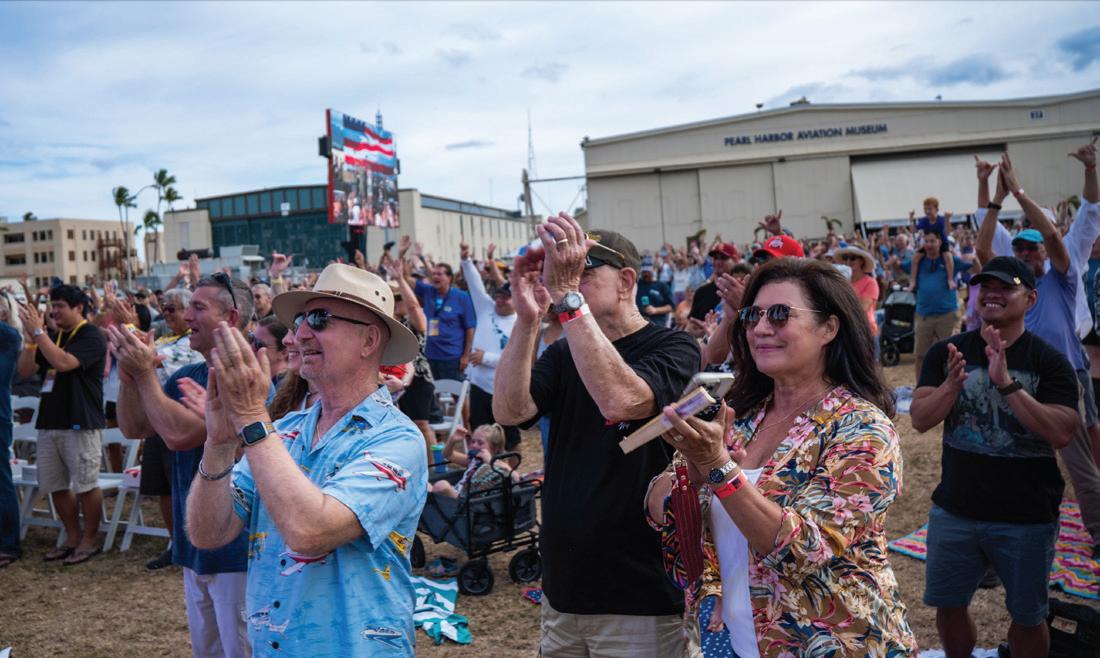
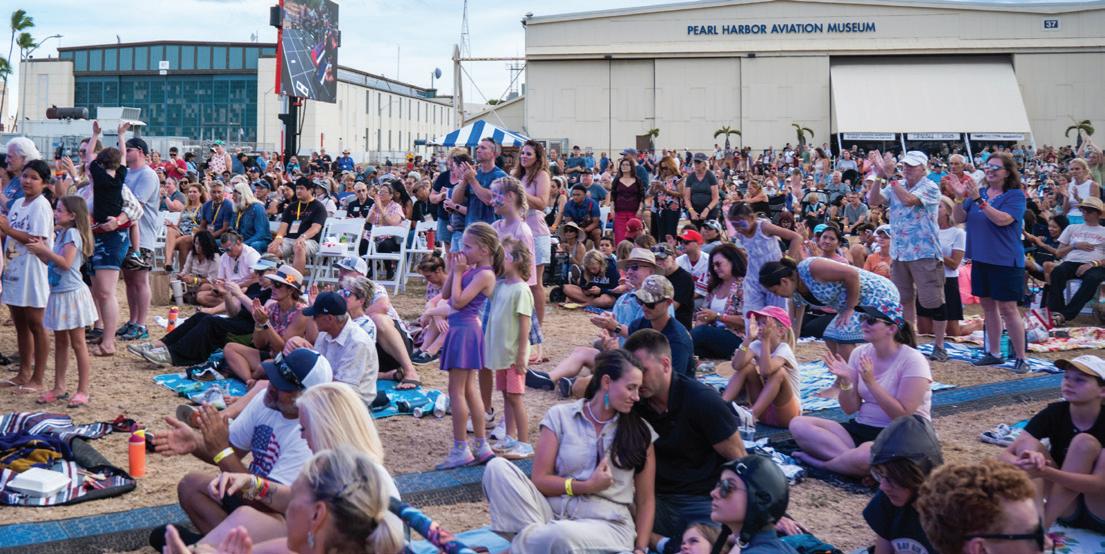
The visibility achieved not only honored veterans and their families but also positioned Pearl Harbor as a place of living history, ensuring that the values of sacrifice, service, and peace continue to resonate with future generations. The huge crowd applauds the
Commemoration concert at PHAM.
Dan Myers plays his blazing hot fiddle for Commemoration audience.
Gary Sinise plays his guitar during the Lt. Dan Band concert.
Linda Hope salutes the Commemoration crowd with MC Dave Price.
HONORING THE SACRIFICE OF OUR GREATEST GENERATION
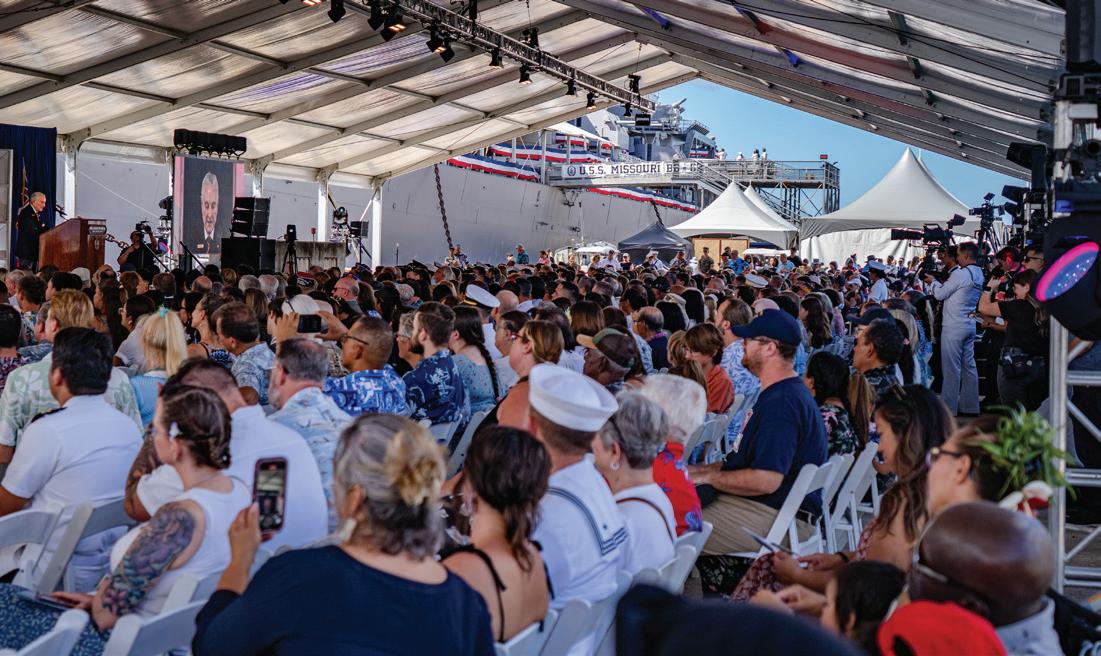
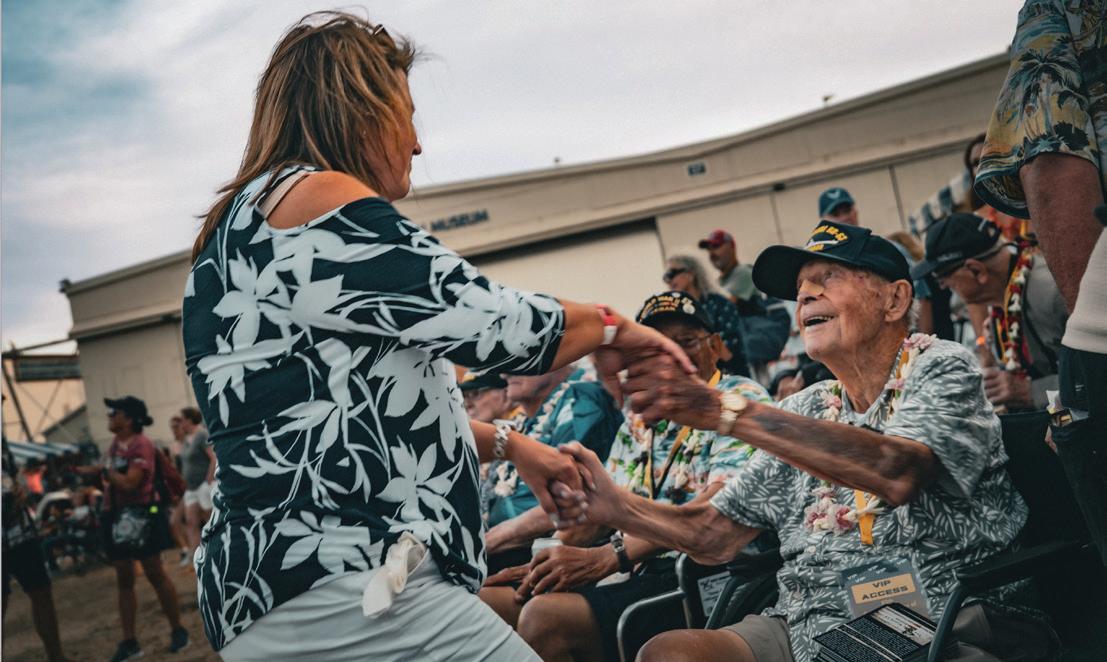
The Commemoration ceremony near the USS Missouri was packed. 25 World War II veterans enjoyed the Commemoration events.
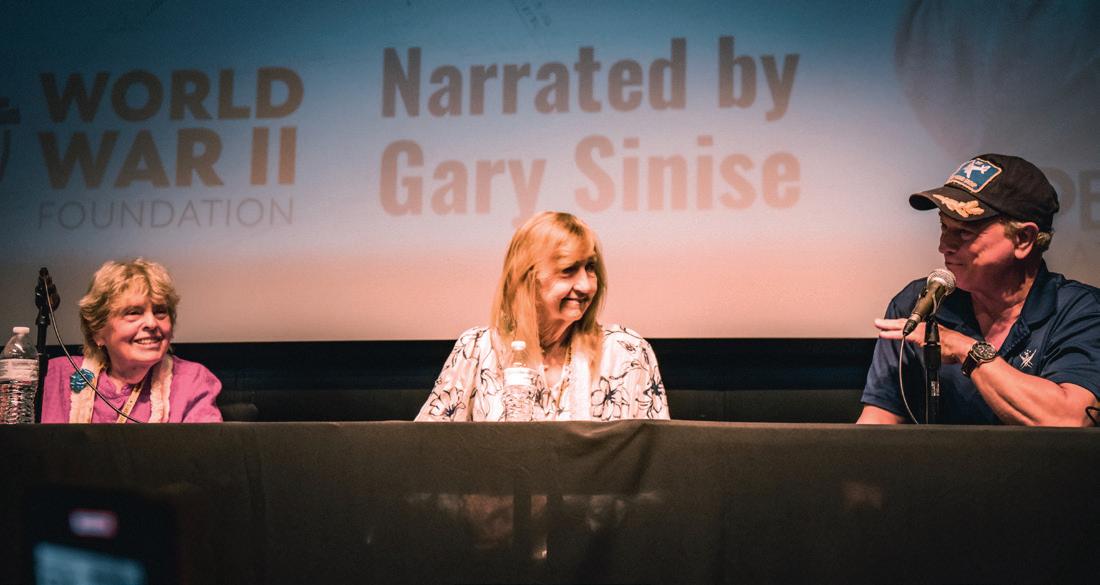
Linda Hope, Martha Bolton & Gary Sinise discuss Bob Hope's impact.
Linda Hope and Gary Sinise meet with WWII veterans at the Museum.
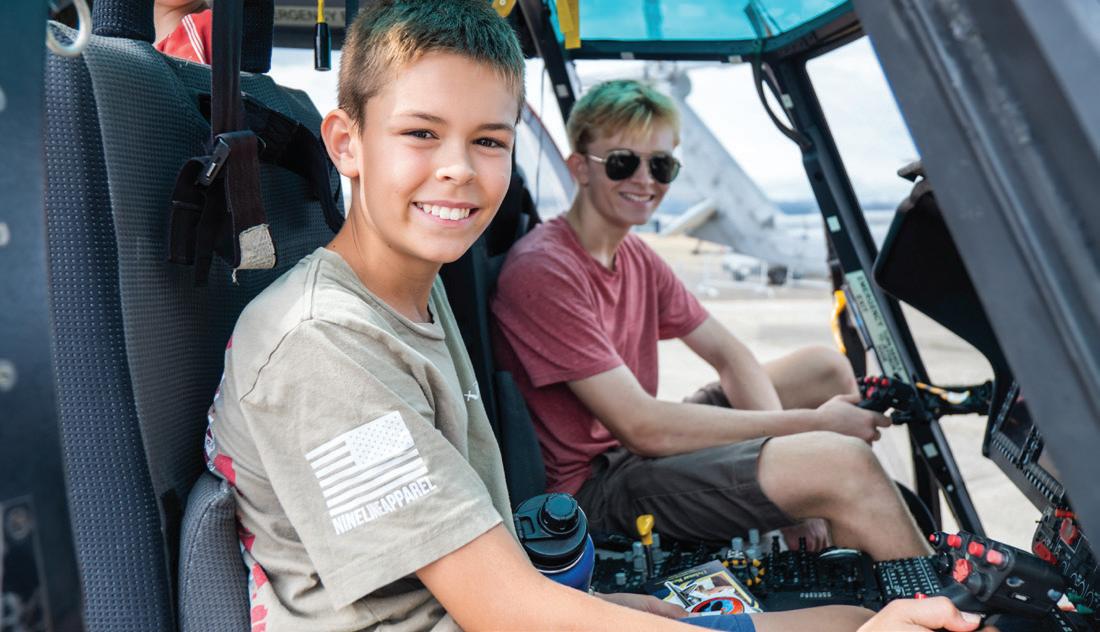
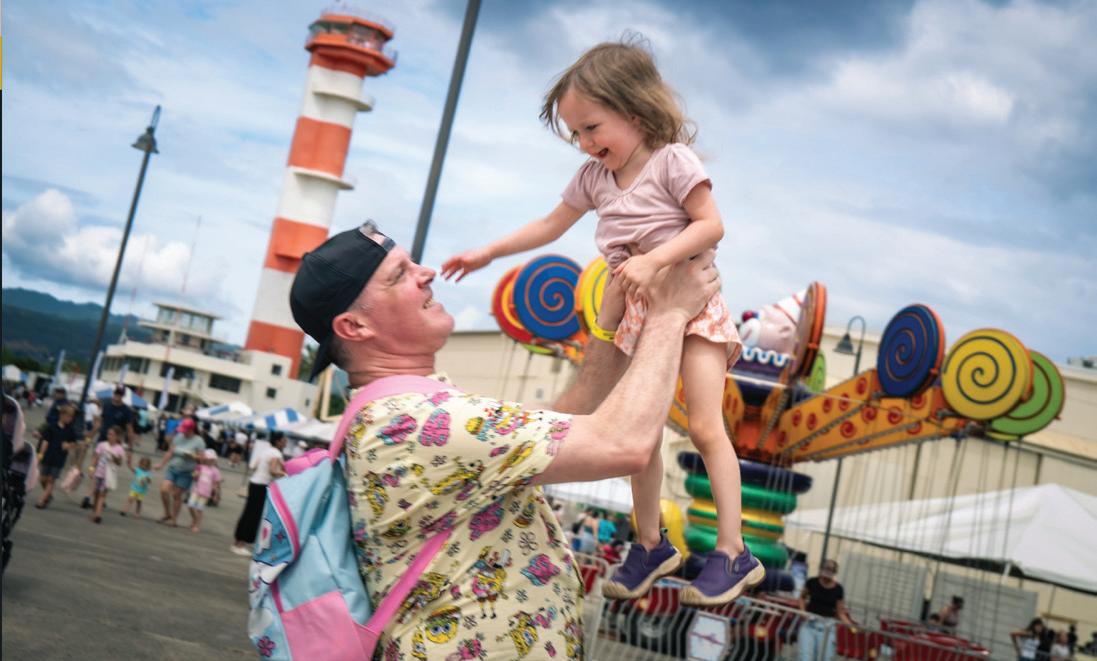
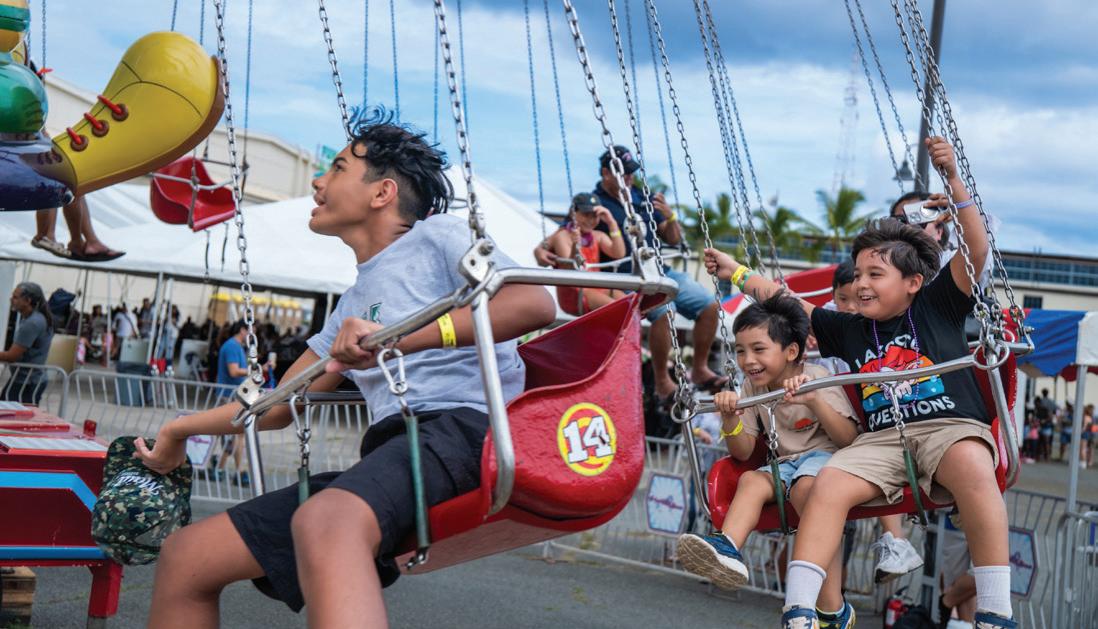
Future pilots enjoy open cockpits at Commemoration events. Kids of all ages enjoy the rides at the family-friendly Commemoration.
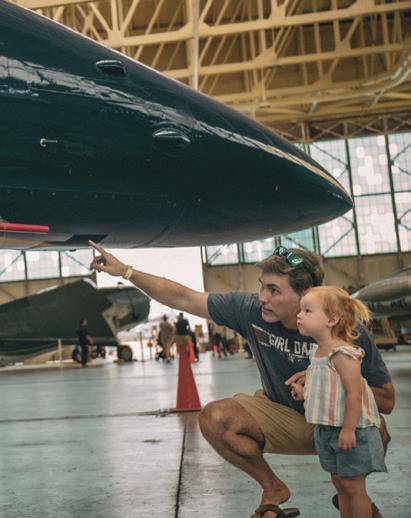
A dad and daughter share a magical moment.
RC USAF Thunderbirds F-16 Fighting Falcon soars over Ford Island.
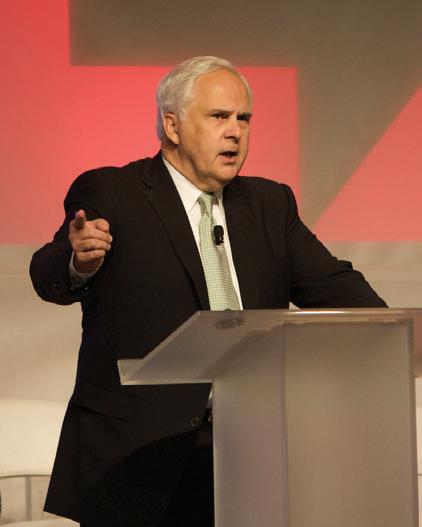
A TRIBUTE TO FRED SMITH: PROUD MARINE, FEDEX FOUNDER & MUSEUM SUPPORTER
By Elissa Lines, National Campaign
“I
Owe a Debt of Gratitude to the Marine Corps.”
Speaking with Joel Searls of the Marine Corps Association magazine, Leatherneck (June 2022), FedEx founder Frederick W. Smith attributed his core business beliefs to his military service. “Our philosophy, People Service Profit - (PSP) - goes right back to that core tenet that the Marine Corps teaches its young officers and NCOs and that’s to take care of the troops... and they’ll take care of (in our case, the customers) the mission.”
CORPORATE AND PHILANTHROPIC LEADERSHIP
FedEx, recognized globally for industry innovation and achievement, cultivated a deep corporate culture that earned it distinction as one of the most admired corporations worldwide.
Fred Smith balanced his corporate leadership with an extensive commitment to philanthropy, serving alongside Sen. Bob Dole on the WWII Memorial Project, co-chairing the National Museum of the Marine Corps campaign, and serving on the boards of St. Jude Children’s Research Hospital and the Mayo Clinic, among others. And, of course, supporting Pearl Harbor Aviation Museum.
Awarded the Silver Star, the Bronze Star, and two Purple Hearts as a Marine, Mr. Smith received numerous awards and honorary degrees for his professional, military, piloting, and civic leadership. From the Wright Brothers Memorial Trophy to the Circle of Honor Award from the Congressional Medal of Honor Foundation, to inclusion on Forbes’ “100 Greatest Living Business Minds,” Fred Smith was a recognized leader.
SENSE OF HUMANITY AND PASSION FOR HISTORY
But it was his sense of humanity and passion for history that added richness and depth to the legacy of Fred Smith as noted below. Fred Smith and FedEx preserved the story of the American Volunteer Group (AVG) known as the Flying Tigers, who supported the air forces of the Republic of China during the summer of 1941. With the entry of the U.S. to WWII, the AVG disbanded in July 1942, sending most members back to their original service units or to a newly formed 23rd fighter group, part of the 14th Air Force, keeping their famed tiger insignia. The Museum’s P-40, painted to replicate an AVG aircraft, was acquired by FedEx through its purchase of Flying Tiger Line and is on loan to the Pearl Harbor Aviation Museum, where it helps tell the story of the Flying Tigers.
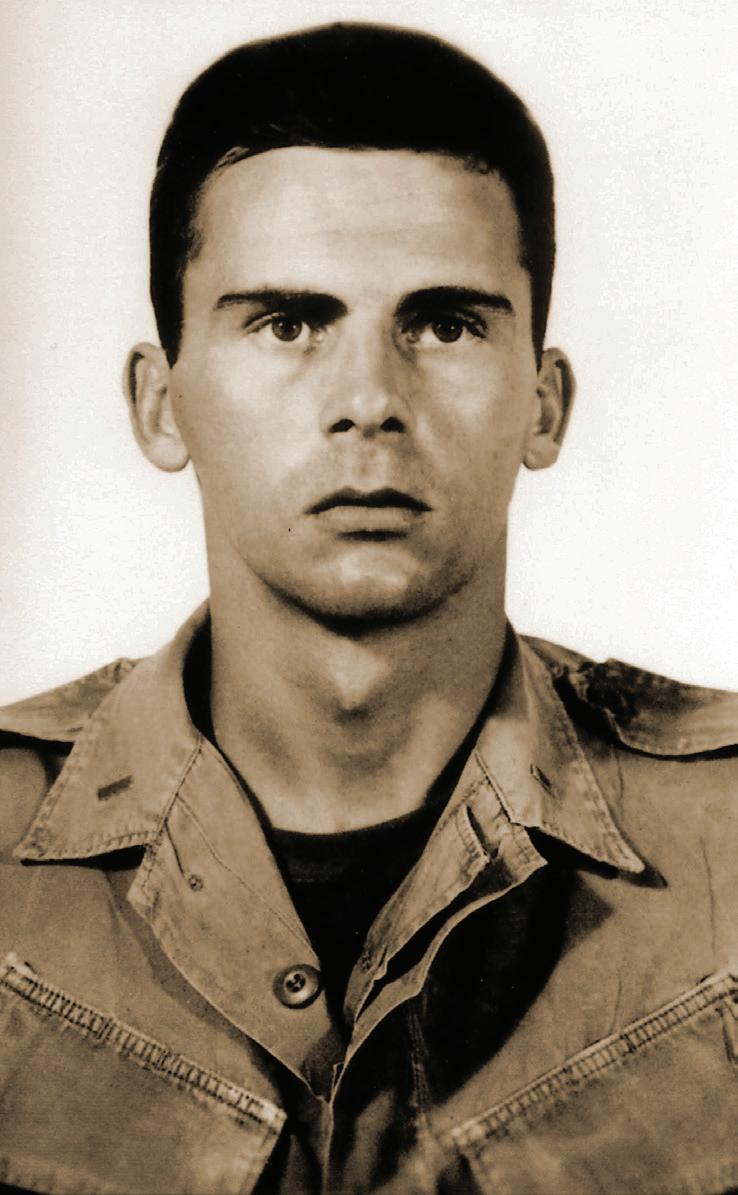
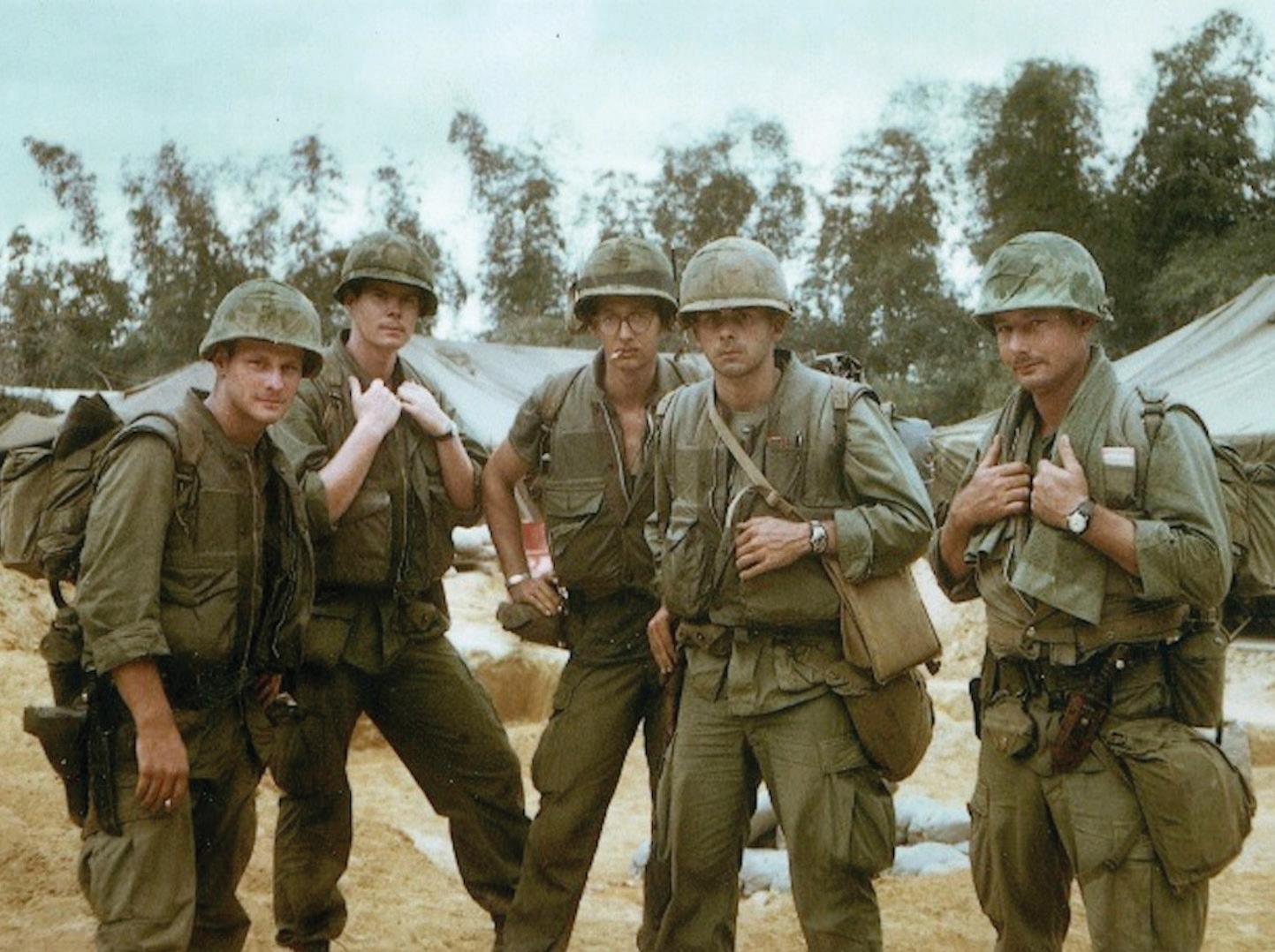
Fred Smith as a young Marine, and (second from right) with his unit in Vietnam during the late 1960s.
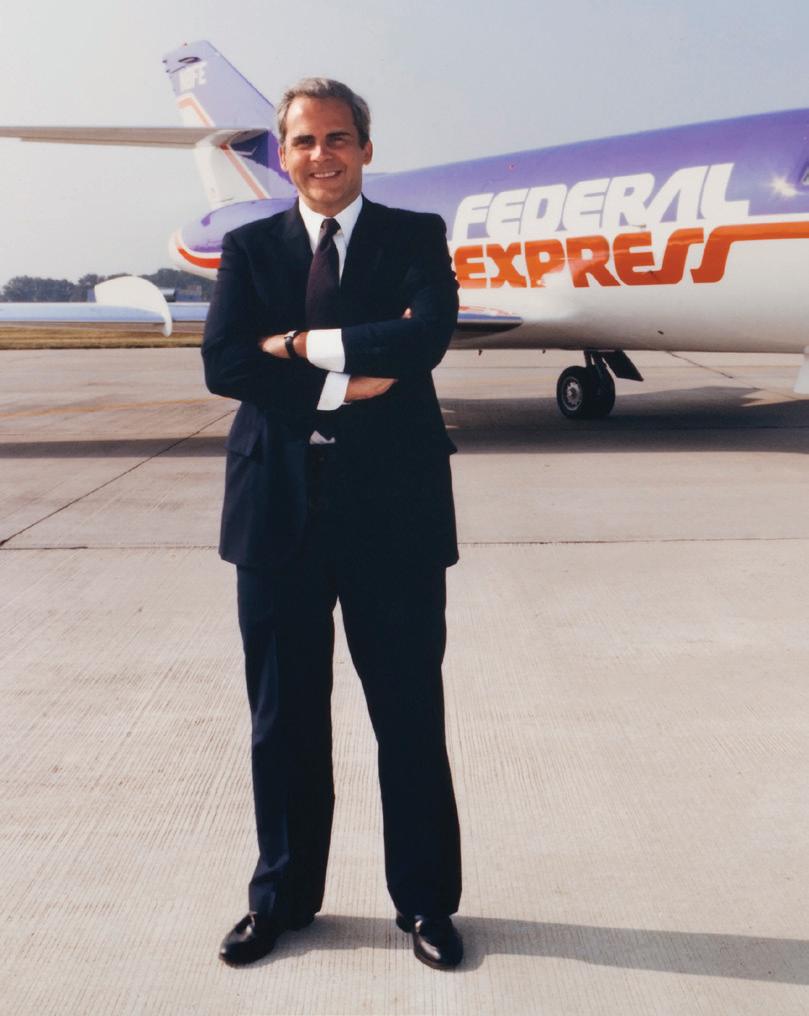
Fred Smith in front of FedEx Falcon 20 jet, and at a Memorial Day Observance at the Vietnam Veterans Memorial in 2024.
SHARING THE STORIES OF HEROES
Sharing history through the stories of “heroes,” everyday people who do extraordinary things in service to their communities and their country, remained a theme. Fred Smith supported the research for the Millionaire’s Unit (written by Marc Wortman) – the story of the Yale Flying Club pilots who launched Naval Aviation during WWI – and the production of the Lafayette Escadrille programs. And, of course, his visionary work with daughters Molly and Rachel Smith, Executives at Black Label Media, led to the film Devotion, sharing the heroic story of Korean War pilots, Capt. Thomas Hudner, and his wingman, Ensign Jesse Brown, the first Black aviator in Navy history.
A STORY THAT DESERVED TO BE TOLD
In his interview with Leatherneck Magazine's Joel Sears, Fred Smith said, “I funded Devotion because the story of these two men deserves to be told…Hudner thought he was going to be court martialed when he deliberately crash-landed his plane (to save Brown), but he wasn’t; he received the Medal of Honor.” Smith continued, “They (Hudner and Brown) couldn’t be from anymore disparate backgrounds, one a sharecropper’s son from Mississippi and one from a well-to-do family in Boston who broke ranks from going to Harvard and went to the Naval Academy, and they come together.
They become devoted to one another, hence the name of the movie. It’s a great example of what Dr. Martin Luther King said about judging somebody by the content of their character
rather than by the color of their skin. The majority of the film’s proceeds go to the Brown-Hudner Scholarship Fund managed by the Marine Corps Scholarship Foundation so there is a double benefit of seeing the film because it’s going to educate a lot of legacy Navy and Marine Corps children.” More than 1,000 military veterans, active duty service members and their families attended an emotional preview of Devotion inside our Museum’s historic WWII Hangar 79.
LARGER THAN LIFE
It is rare to meet people who by their own actions become “larger than life” for those around them. For me, Fred Smith was such a man. Humble, passionate, and committed to sharing the stories of our past so that we might inspire and challenge our future. On a rare visit to our Museum, Fred casually delivered a guided tour to his Executive Team, sharing the depth of his knowledge of the history, aircraft specifications, and the military use of nearly every aircraft on display. He “felt” and “shared” the significance of our site and, upon leaving, voiced disappointment that the historic Ford Island runway, home to the Pearl Harbor Naval Air Station during WWII, was overgrown with weeds. He challenged us to clear the runway and applauded our effort to restore the control tower and hangars housing our Museum. This site, America’s WWII aviation battlefield, matters!
Our heartfelt condolences to his family and our genuine appreciation for a life well lived.
A&P PROGRAM BLESSING LAUNCHES NEW ERA FOR HAWAI‘I
By Rojo Herrera, Director of Aviation Pathways
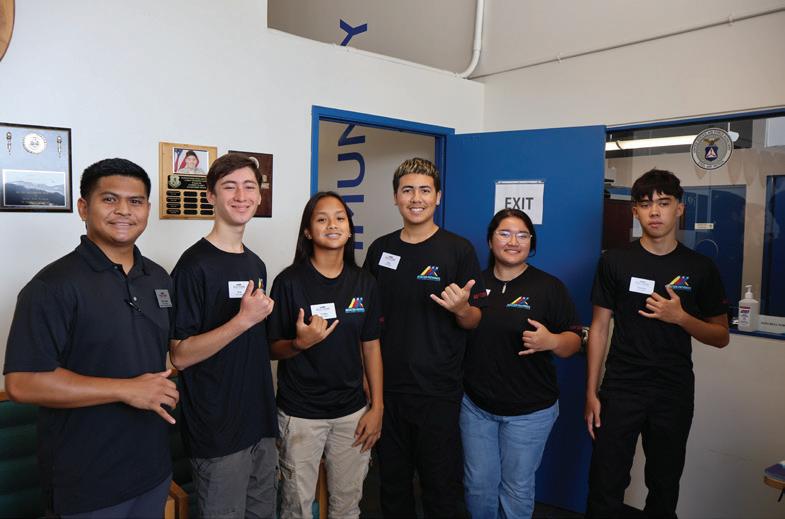
On September 12, 2025, Pearl Harbor Aviation Museum (PHAM), in partnership with Hawaiian Airlines, Alaska Airlines, Western Maricopa Education Center (West-MEC), and Civil Air Patrol, hosted a blessing and open house to celebrate a groundbreaking moment: the launch of Hawai‘i’s first-ever high-school FAA Airframe & Powerplant (A&P) certification pathway. This inaugural class is operating out of Civil Air Patrol Headquarters, whose facilities provide the critical space for hands-on learning while the program continues to grow toward its long-term vision.
The landmark event brought together educators, donors, community leaders, and industry partners to mark the beginning of a pioneering program that gives local high school juniors the chance to pursue aviation careers—without ever having to leave the islands.
The celebration began with remarks from several key speakers: Pearl Harbor Aviation Museum CEO John Hiltz, Museum Director of Education Greg Ferris, West-MEC Central Campus Administrator Troy Gabaldon, and Jim Landers, Senior Vice President of Technical Operations at Hawaiian Airlines. After the speeches, a traditional Hawaiian blessing by Kahu Kordell Kekoa was held. Guests were then given a guided tour of the newly outfitted classroom and hangar facilities, which are now fully equipped to deliver immersive, hands-on aviation training.
“Pearl Harbor Aviation Museum is more than a museum. More than a tourist destination,” said Pearl Harbor Aviation Museum CEO, John Hiltz. “We are a community resource—an asset to building a prosperous Hawaiian future that is grounded in our aviation history and powered by programs like this.”
A BOLD STEP FORWARD
Developed through a unique partnership with West-MEC, Hawaiian Airlines and Alaska Airlines, and made possible by generous support from the Si Robin Foundation, and many other donors, this new A&P program offers a two-year, off-campus training experience for high school juniors and seniors. With its first cohort of 10 students already enrolled, the program prepares participants to sit for the FAA’s A&P certification exam—qualifying them for high-demand careers as Airframe, Powerplant, or Air Transportation Technicians.
West-MEC has been a trailblazer in this field for more than 15 years, operating one of the nation’s most respected high
school A&P training programs in Arizona. Their expertise—and the leadership of campus Administrator Troy Gabaldon, who worked together with the Museum team—were instrumental in bringing this program to Hawai‘i. We are also grateful to our partners at Hawaiian Airlines and Alaska Airlines, along with newly hired Museum staff from the aviation industry, whose guidance and mentorship ensure the program reflects real-world workforce needs. Together, this team has laid the foundation for a pathway that will open doors for Hawaii youth.
As the aviation industry faces a period of rapid change— driven by an aging workforce and increasing global demand— this initiative helps fill a critical need for skilled aviation professionals. It also breaks down traditional barriers, such as the high cost of training and the lack of local certification programs in Hawai‘i.
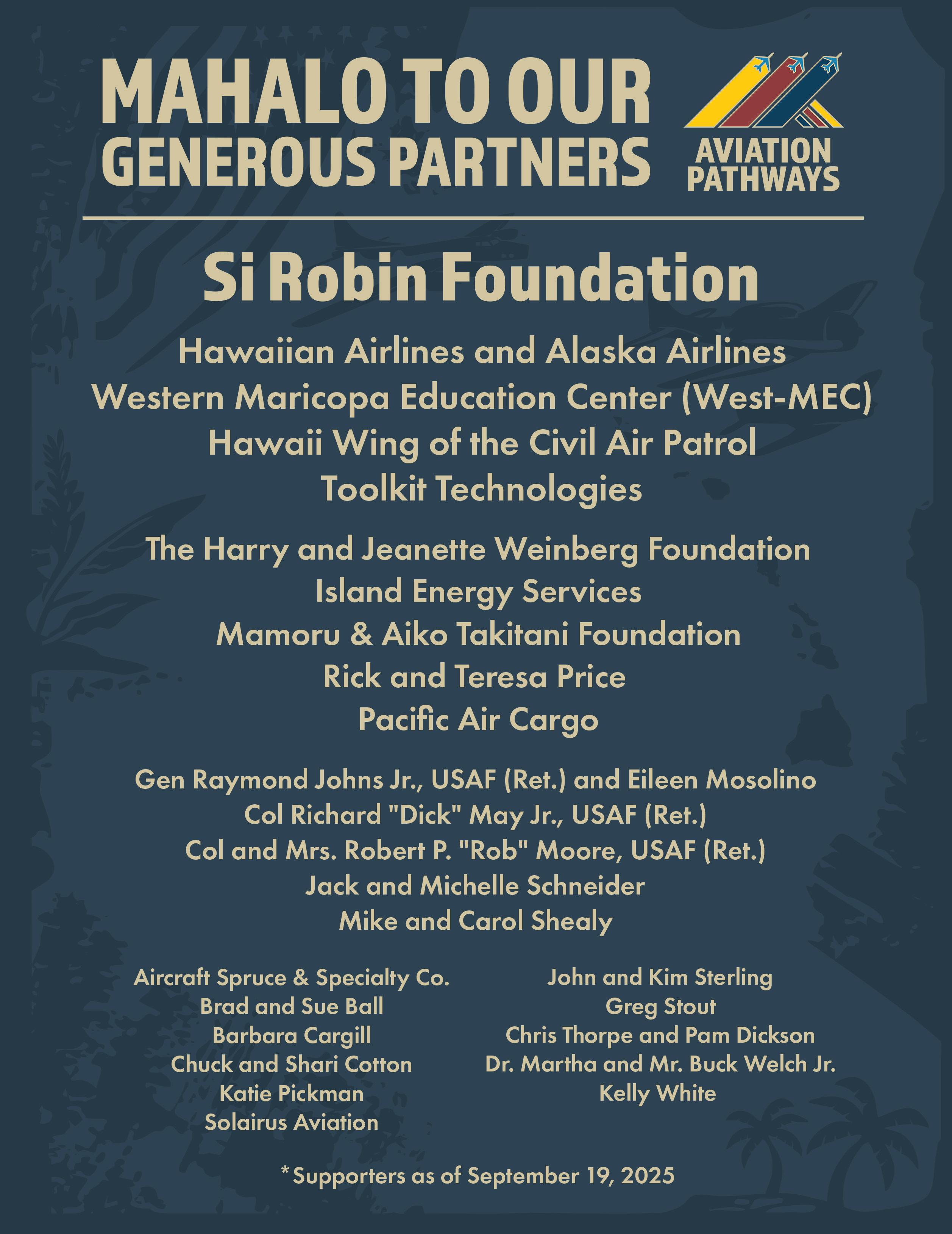
MAHALO TO OUR SUPPORTERS
To all our donors, partners, and community members: mahalo for helping us take flight. This is just the beginning—together, we’re building a stronger, brighter future for Hawai‘i through aviation. If you would like to make a gift to support our growing A&P program, please scan the QR code or visit bit. ly/AviationPathwaysAP.
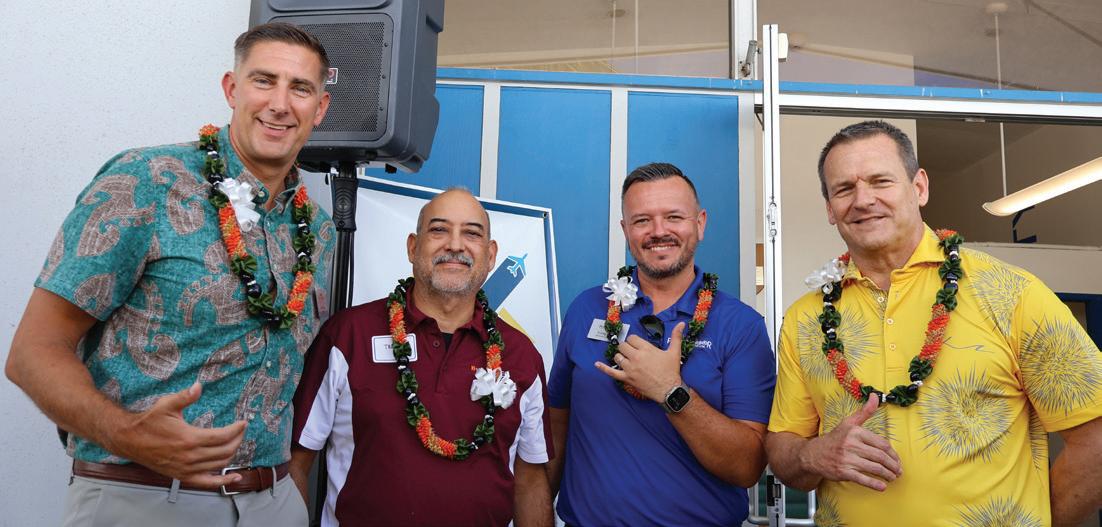
Pearl Harbor Aviation Museum CEO John Hiltz with WestMEC's Troy Gabaldon, PHAM's Director of Education Greg Ferris and Hawaiian Airlines Senior VP Technical Operations Jim Landers attended the A&P event.
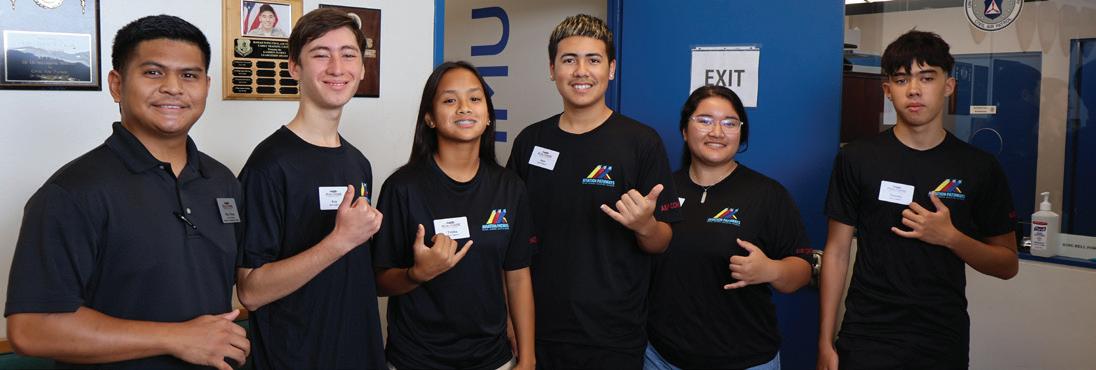
The A&P Program opens doors to future aviation careers.
SEATS OF HONOR: PAYING TRIBUTE TO OUR HEROES
By Dr. Janice A. Nielsen, Charter Member and Supporter
At Pearl Harbor Aviation Museum, every seat tells a story. Through the Seats of Honor campaign, supporters can dedicate a plaque on a theater seat in Hangar 37 to honor a loved one, service member, or organization. These lasting tributes preserve legacies, with endowed funds that support our Museum and educational initiatives for generations to come.
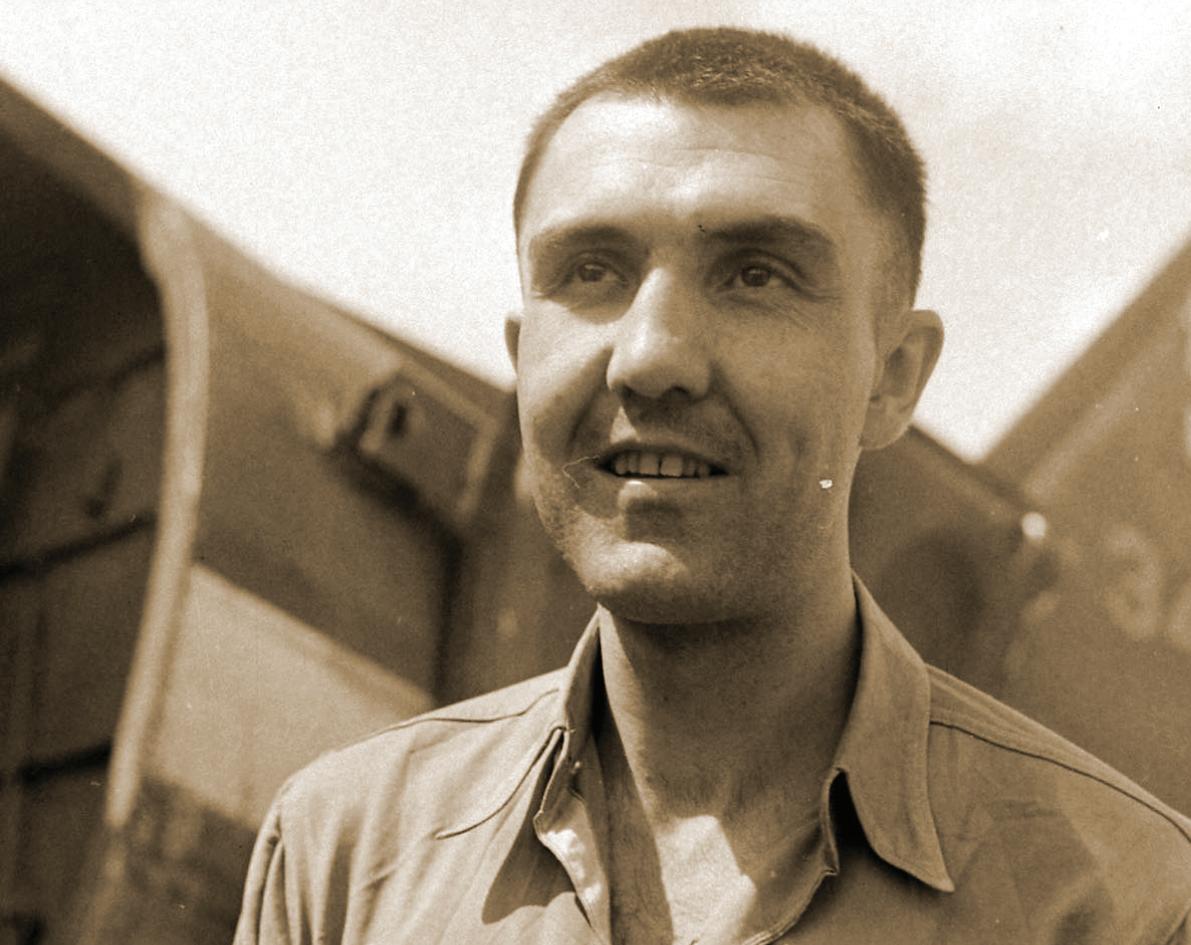
Since the launch of the campaign, I’ve dedicated several Seats of Honor to those I consider true heroes. Today, I’m proud to share the story of one of them—Chase Jay Nielsen—whose legacy now lives on at the Museum, on the grounds of America’s WWII aviation battlefield.
THE LIFE OF LT CHASE JAY NIELSEN, US ARMY AIR CORPS
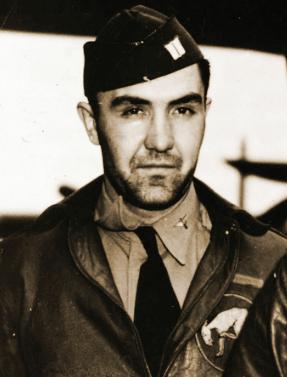
In August of 1939, Chase Nielsen enlisted in the U.S. Army Air Corps as a flying cadet. He graduated from Navigator School in June 1941 and was assigned to 17th Bomb Group at McChord Field in Washington, flying the B-25 Mitchell bomber. He flew anti-submarine patrols off the west coast after the attack on Pearl Harbor on December 7, 1941 until February 1942. He later volunteered for a “secret mission” that eventually became known as the Doolittle Raid.
THE DOOLITTLE RAID
Chase Nielsen served as the navigator on Plane No. 6, nicknamed The Green Horne t, during the Doolittle Raid. After taking off from the USS Hornet on April 18, 1942, he guided the crew through severe weather to the Japanese coast, ultimately reaching Tokyo and bombing a steel mill in the northern part of the city.
Like all the raiders, their plane ran low on fuel due to an early launch. They ditched off the coast of Wenzhou, China. Two crew members drowned, while Nielsen, the pilot, and co-pilot swam four hours through the choppy waves to shore—only to be captured by the Japanese.
THE SOLE SURVIVOR FROM HIS CREW
Held with five others from Plane No. 16, they were tortured, starved, and kept in solitary confinement. Denied POW status, they were tried as war criminals. Three were executed; the others received life sentences. Nielsen was the sole survivor from his crew—his pilot was executed, and the co-pilot died from malnutrition and disease.
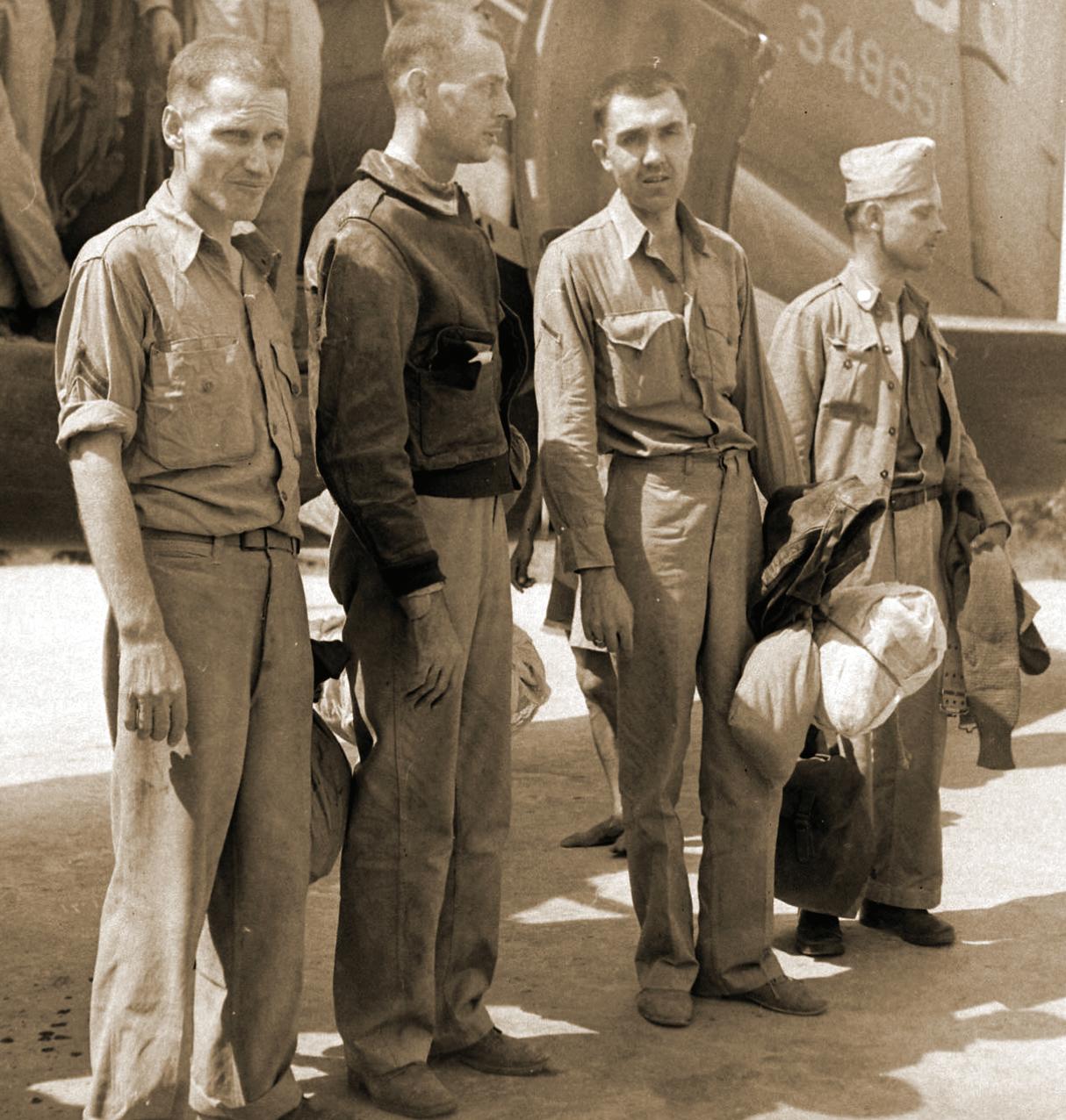
After enduring further abuse in Japan and China, they were rescued in August 1945 by an OSS para-rescue team. At 6'1", Nielsen weighed just 109 pounds at the time. He returned in January 1946 to testify at the war crimes trials against his captors.
LIFE BEYOND THE WAR
Nielsen stayed in the Air Force until 1961, achieving more than 10,000 hours flying in B-29s, B-50s, B-36s, and B-52s. His longest flight was 26 hours non-stop without refueling from Okinawa, Japan to Walker AFB, New Mexico. After retiring from the Air Force, he was an industrial engineer with the Ogden Air Logistics Center at Hill Air Force Base, Utah, retiring in 1981.
Chase Nielsen was married and had three children. He remarried after his first wife passed away and had several grand and great-grandchildren. He died at home in Brigham City, Utah, in March 2007, at the age of 90. He was buried at the Hyrum City Cemetery in Hyrum, Utah.
HONOR YOUR HERO
Each Seat of Honor donation allows us to celebrate the power of personal stories. If you are interested in leaving a legacy at the Museum with a Seat of Honor, please scan the QR code, visit bit.ly/SeatsOfHonor, or contact us at: Development@PearlHarborAviationMuseum. org.
Chase J. Nielsen, a true American hero.
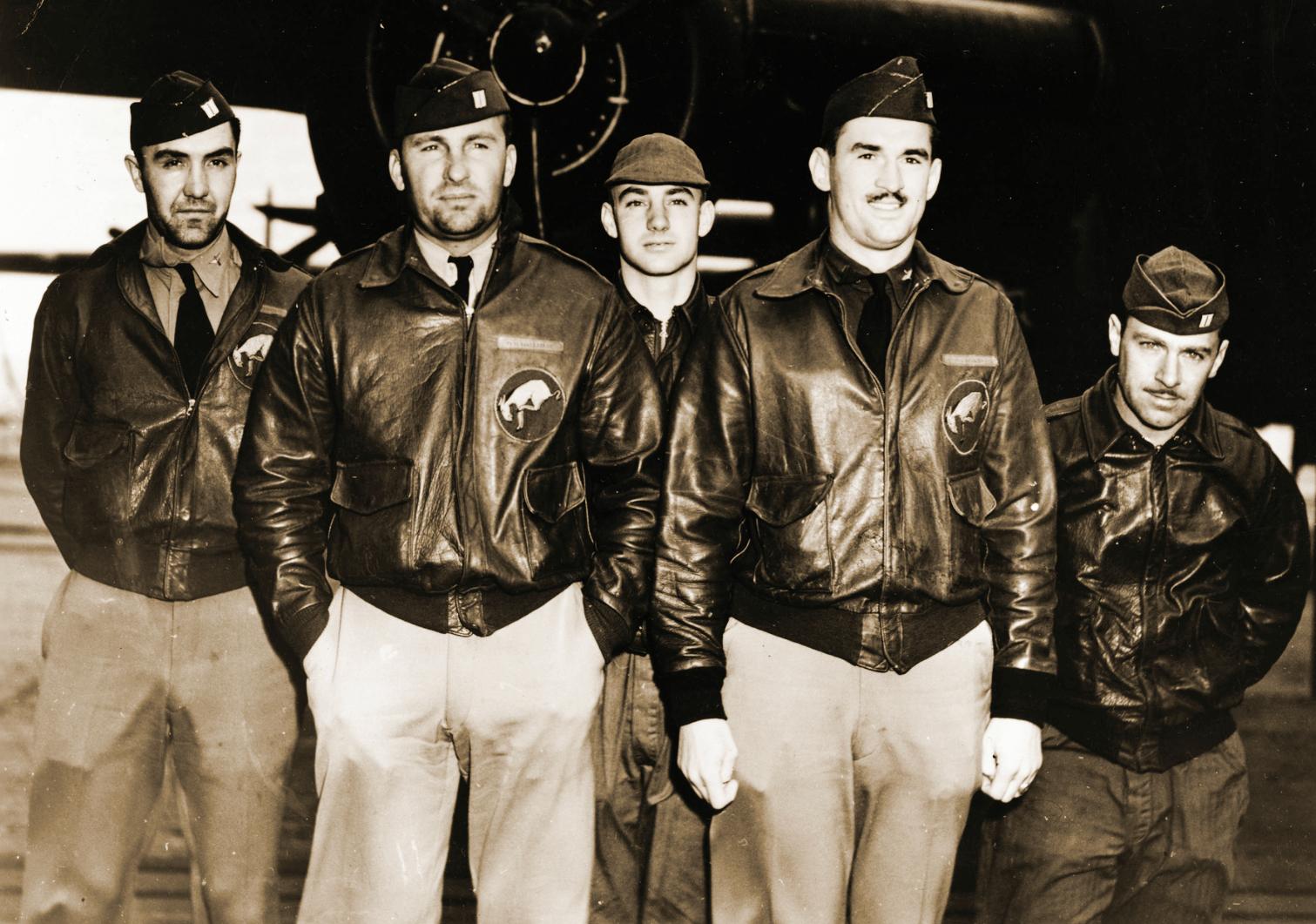
Chase J. Nielsen (left) and his fellow crewmates before their B-25 took off on the famous Doolittle Raid mission on April 18, 1942.
Robert L. Hite, George Barr, Chase Nielsen and Jacob DeShazer (from left) after rescue in 1945.
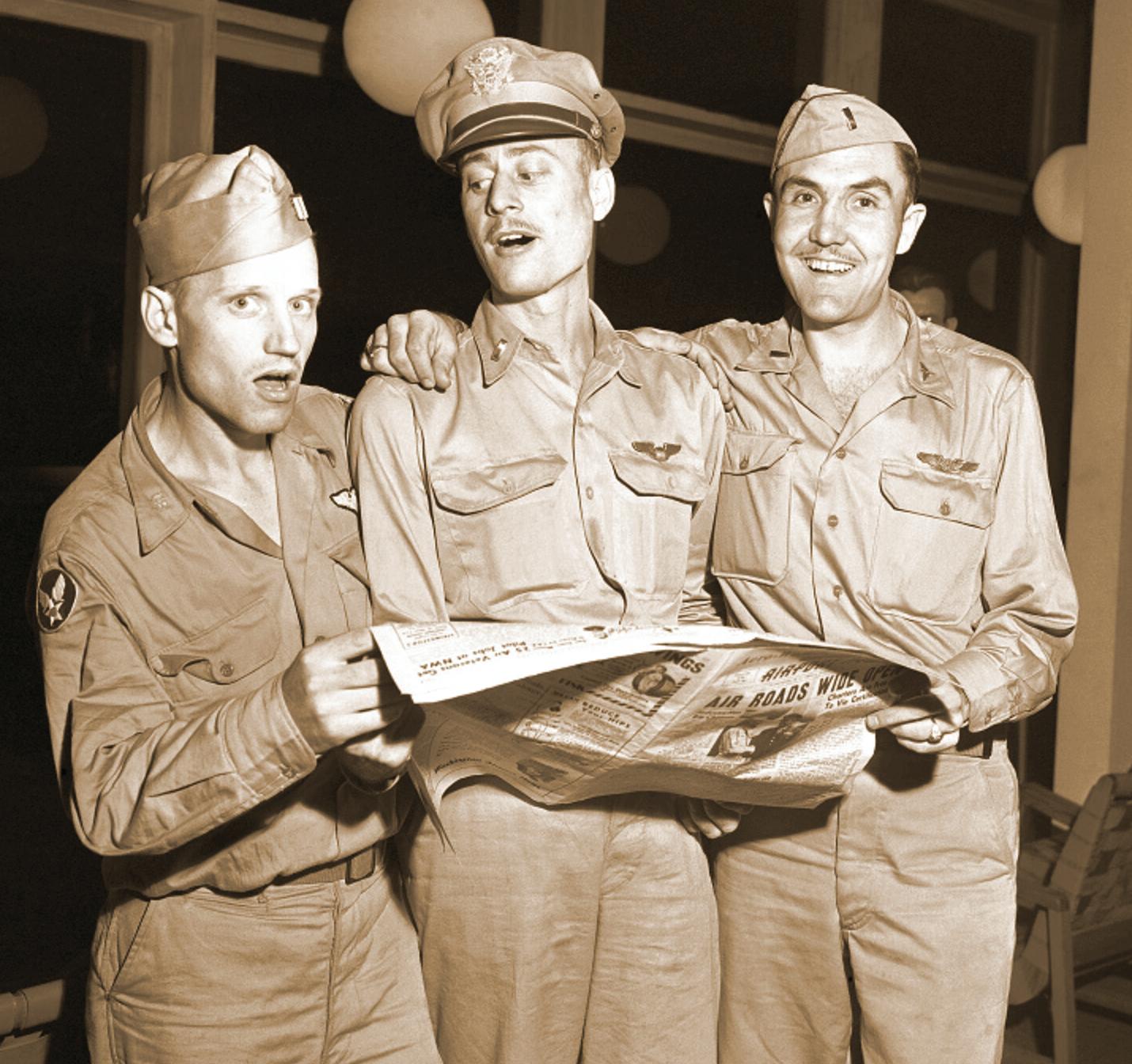
Jacob DeShazer, Robert L. Hite, and Chase Nielsen (from left) were in a celebratory mood after their rescue.
PHILANTHROPY WITH PURPOSE
By Bank of Hawaii
As a proud supporter of the Pearl Harbor Aviation Museum, your generosity helps preserve history, honor veterans, and inspire future generations. One meaningful way to continue this mission is by integrating charitable giving into your financial and estate planning. With the right approach, you can make a lasting impact while also benefiting from smart tax strategies.
STRATEGIC WEALTH MANAGEMENT FOR GIVING
Every successful journey begins with a clear course. In philanthropy, that course often includes tools designed to maximize both impact and efficiency. Donor Advised Funds, for example, can allow you to make a contribution, receive an immediate tax deduction, and then recommend grants over time. These funds operate like a well-fueled aircraft, enabling your charitable capital to grow tax free until it reaches its destination.
Another effective maneuver is the donation of appreciated assets such as stocks or real estate. By transferring these assets directly, you may avoid capital gains taxes and still receive an income tax deduction for their fair market value. This approach allows you to preserve liquidity while increasing the capacity of your giving. For those over seventy and a half, Qualified Charitable Distributions from an IRA can provide another efficient route. These distributions may satisfy required minimum distributions while excluding the amount from taxable income.
Even life insurance can serve as a philanthropic instrument. Naming a charity as the beneficiary of a policy or gifting an existing policy can create a significant future gift while reducing the size of your taxable estate.
TAX SMART GIVING STRATEGIES
Charitable giving, when executed with precision, can reduce income, capital gains, and estate taxes. One effective approach is bunching contributions, which involves consolidating several years of donations into a single tax year to maximize itemized deductions. For those seeking more advanced strategies, charitable trusts such as Charitable Remainder Trusts or Charitable Lead Trusts can provide income for you or your heirs while delivering substantial tax benefits and supporting the causes you value.
Estate tax reduction is another key advantage of philanthropy. Gifts to qualified charities may qualify to be fully deductible
from your taxable estate, which can be particularly valuable for high-net-worth individuals. Strategic asset allocation also plays a critical role. Gifting tax heavy assets like IRAs to qualified charities, which pay no income tax, while passing tax favored assets such as appreciated stock to heirs can ensure that your legacy is distributed with dynamic efficiency.
CREATING A LASTING LEGACY
Philanthropy through estate planning can help to ensure that your contribution to others continues after your lifetime. One of the most straightforward ways to achieve this is through charitable bequests in your will or trust.
These can be structured as a specific amount, a percentage of your estate, or a residual gift after other obligations are met. This approach is flexible and can be adjusted as your circumstances evolve.
For those who wish to extend charitable giving for generations, establishing a foundation or a donor advised fund in your name can provide perpetual support for the causes you cherish. Alternatively, contingent bequests, which designate charities as secondary beneficiaries, ensure that your wealth serves a meaningful purpose even if your primary heirs are no longer on board.
MAKING A PROFOUND DIFFERENCE
By thoughtfully integrating charitable giving into your financial and estate plans, you may reduce taxes and make a profound difference in the world. To learn more about how Bank of Hawai‘i The Private Bank can help you navigate your philanthropic journey, visit boh.com/theprivatebank.
This material has been prepared for informational purposes only, and is not intended to provide, and should not be relied on for, tax or investment advice. You should consult your own tax or accounting advisors before engaging in any transaction.
To see how you can make a lasting impact on Pearl Harbor Aviation Museum's mission to preserve history and inspire future generations, visit pearlharboraviationmuseumlegacy.org.
By Rod Bengston, Director of Exhibits, Restoration, and Curatorial Services
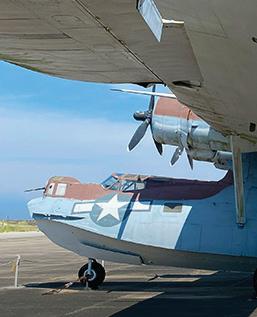
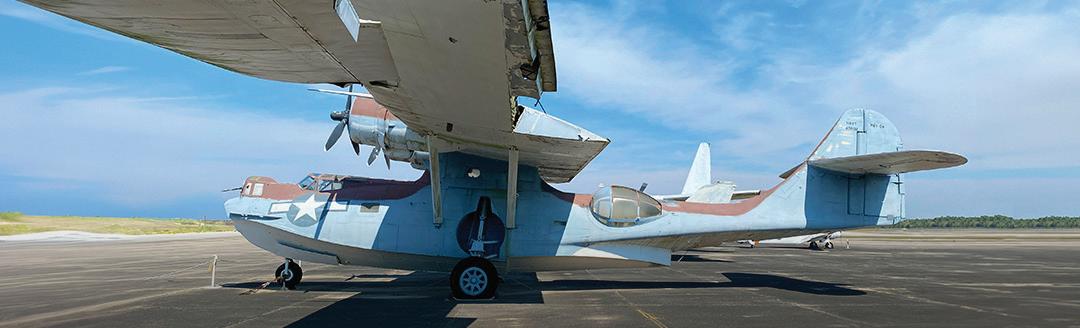
As shared in previous announcements, Pearl Harbor Aviation Museum’s PBY-5A Catalina, Bureau Number 46602, is now undergoing restoration at the Air Zoo in Kalamazoo, Michigan. On loan from the Naval History and Heritage Command (NHHC), this historic aircraft is being carefully restored before it is transported to its home at Pearl Harbor Aviation Museum for public display.
WHY IS THE PBY SO IMPORTANT?
The Consolidated PBY Catalina was one of the most versatile and impactful aircraft of the Pacific Theater. On December 7, 1941, the Imperial Japanese Navy specifically targeted these aircraft at Ford Island and Kaneohe Bay to hinder American forces from discovering the location of the First Air Fleet.
Prior to the attack, seven Catalinas had gotten airborne for routine morning patrols and to conduct exercises off the coast of Maui. Among them was Ensign William P. Tanner and his crew. While flying over the Defensive Sea Area by the Pearl Harbor entrance channel, they spotted and attacked a Japanese midget submarine in conjunction with the destroyer USS Ward. This event marked the first engagement of Japanese forces by a U.S. aircraft in World War II.
As the war progressed Catalinas and their crews would serve across the globe conducting reconnaissance, anti-submarine warfare, search and rescue, and night time missions. With a range of roughly 2,500 miles, Catalinas were both a potent threat to Axis naval forces and a saving grace for downed airmen.
THE HISTORY OF PBY-5A, BUREAU NUMBER 46602
The PBY-5A Catalina (BuNo 46602), in our collection was accepted by the U.S. Navy on October 14, 1944, and delivered
two days later to Coast Guard Air Station Elizabeth City in North Carolina. It would serve with Headquarters Squadron 2 (HEDRON 2) and later with Patrol Bombing Squadron 45 (VPB45) during which it was deployed to Naval Air Facility Ipitanga in Brazil where it conducted anti-submarine patrols to protec t Allied merchant vessels against U-boats operating in the South Atlantic.
By the end of the war, the aircraft was attached to Headquarters Squadron 1 (HEDRON-1). In 1946, it joined the Fleet Aviation Electronics Training Unit (FAETU) Pacific before being assigned to Amphibious Patrol Squadron 5 (VP-AM-5) at Naval Air Station Whidbey Island in Washington. While attached to this squadron it was deployed to Adak, Alaska. After VP-AM-5 was disbanded in 1947, the aircraft served with various aircraft pools until 1956 when it was removed from the Navy’s inventory.
HELP US PRESERVE THIS LEGACY
The restoration of 46602 marks a crucial step in preserving the legacy of this iconic aircraft and the heroes who flew and maintained them. Like the Catalinas that were operated and maintained by squadrons stationed on Ford Island, the return of this Catalina to Pearl Harbor remains part of an ongoing effort to share the story of December 7, 1941. Joining our historic Nakajima B5N2 “Kate” carrier attack bomber, Aichi D3A “Val” dive-bomber and Mitsubishi A6M2 “Zero” fighter, this aircraft will act as an educational tool, honoring all those who experienced the attack on that infamous day.
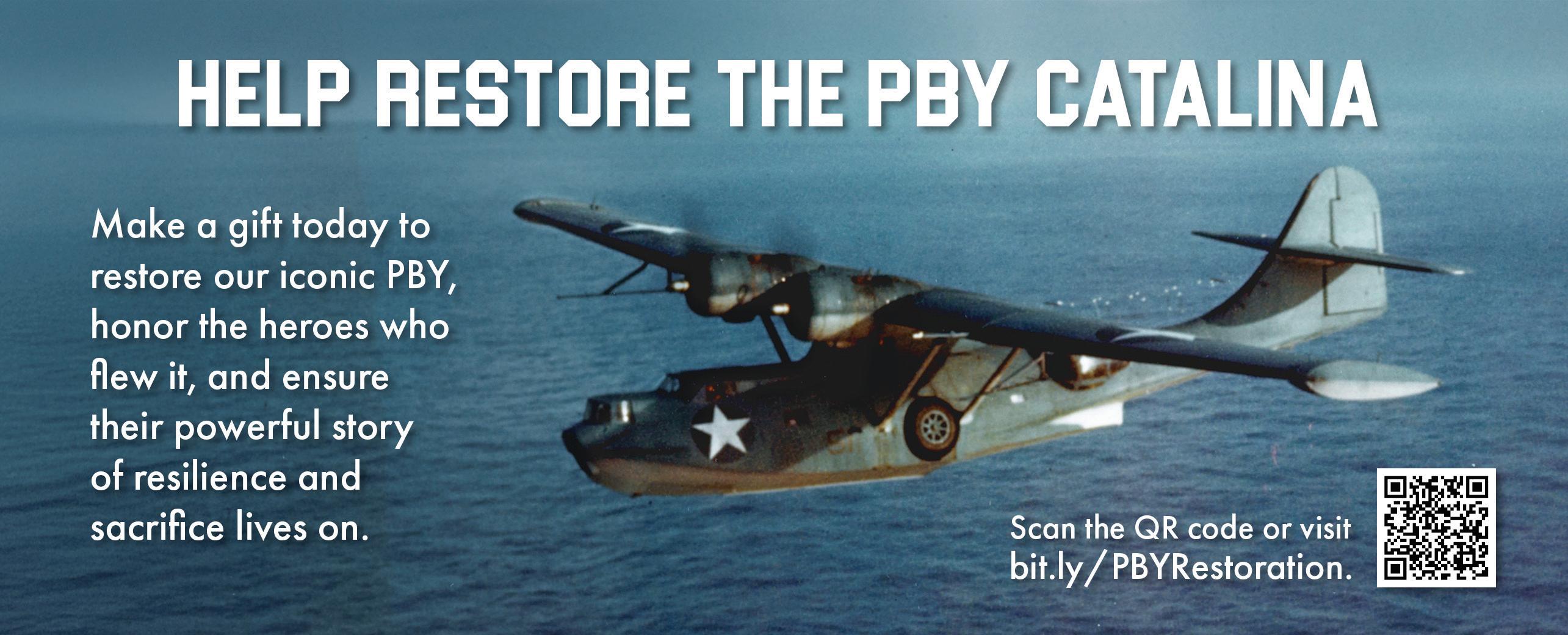
If you would like to support the restoration of our Catalina, please scan the QR code or visit bit.ly/PBYRestoration to make a gift today.