Taking Care of You and Baby
Inside:
• Prenatal Care and Pregnancy

• Labor and Delivery
• Healing After Delivery
• Substances and Pregnancy
• Child Development and Positive Parenting
• Prenatal Care and Pregnancy
• Labor and Delivery
• Healing After Delivery
• Substances and Pregnancy
• Child Development and Positive Parenting
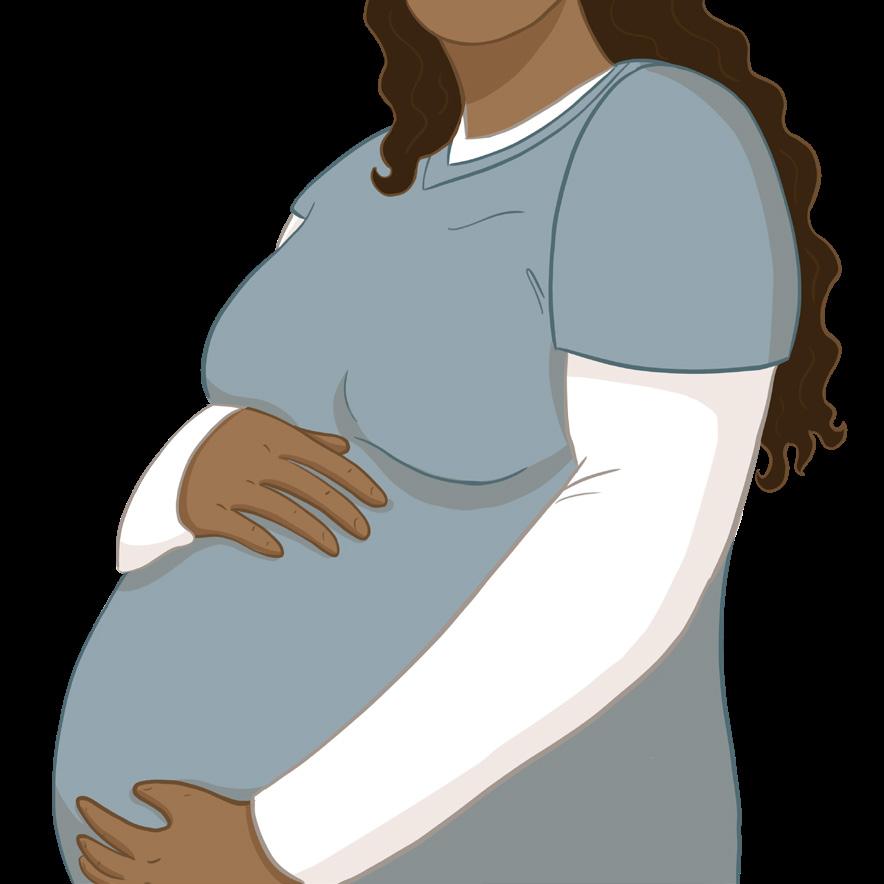
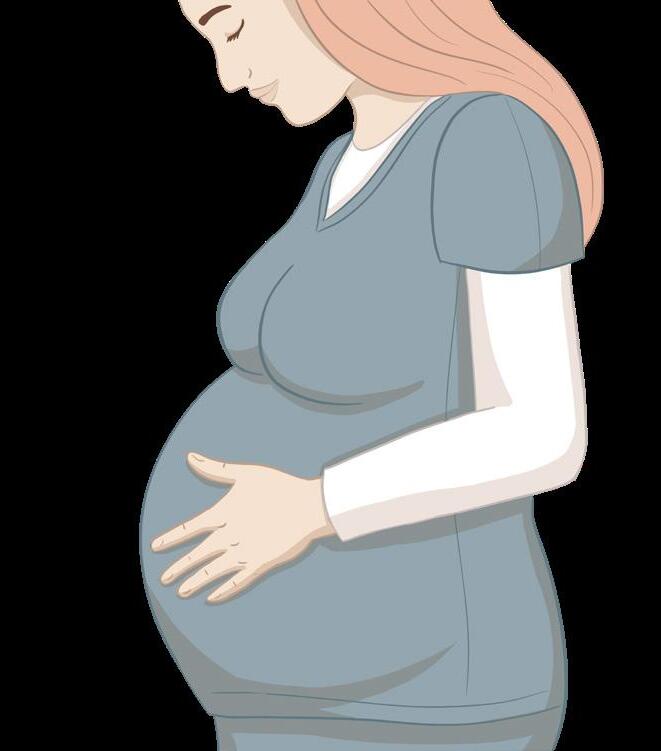
It is best to start prenatal care as soon as you know you are pregnant. Even if you are if you are further along in your pregnancy it is important to see a health care provider. Any prenatal care can help make sure you and your baby are as healthy as possible. As of 2021, prenatal, labor, and delivery care is provided to incarcerated people at no cost to the individual.
Weeks 4 to 28
Weeks 29 to 36
Weeks 37 to birth
1 checkup/month
2 checkups/month
1 checkup/week
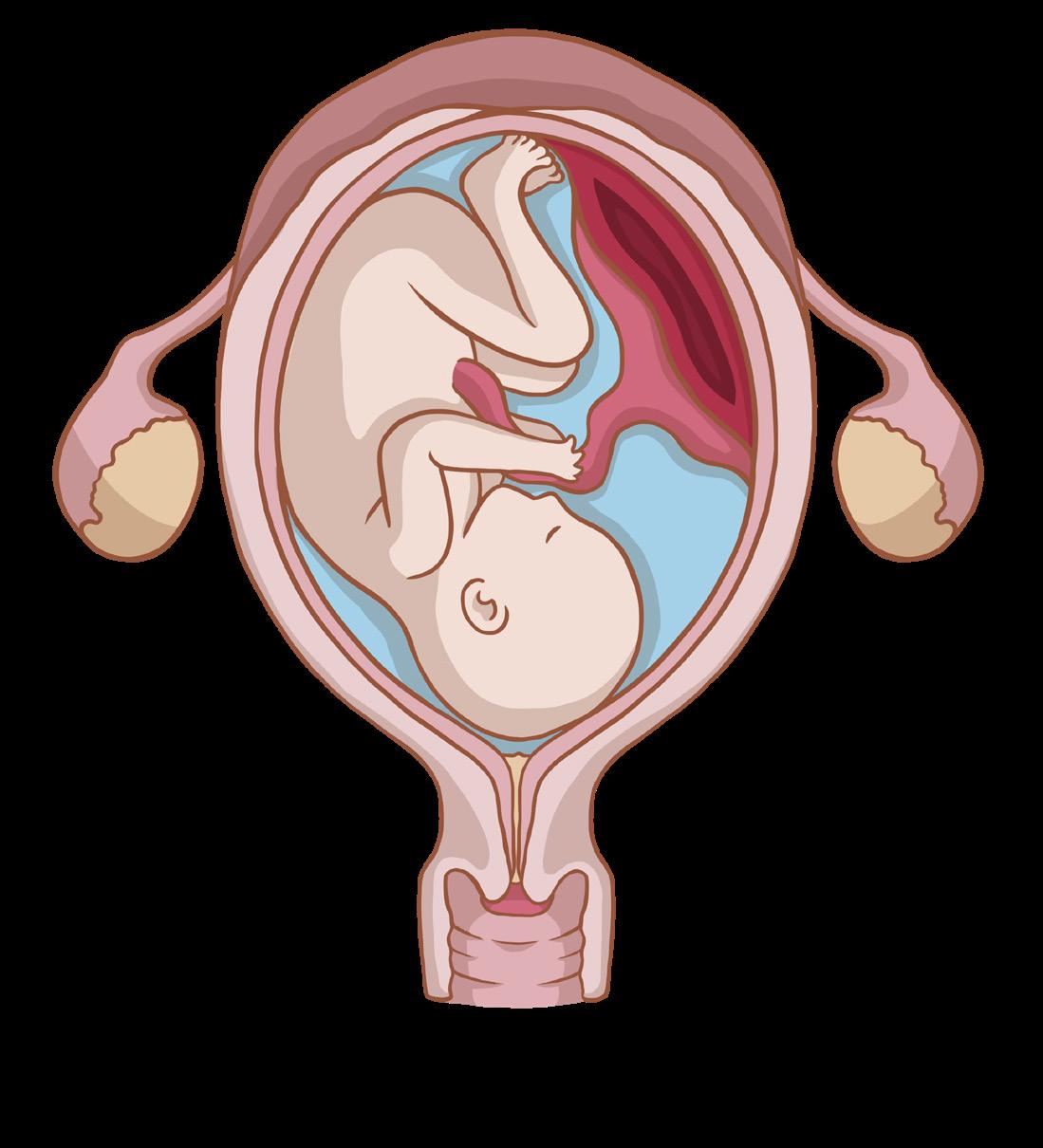
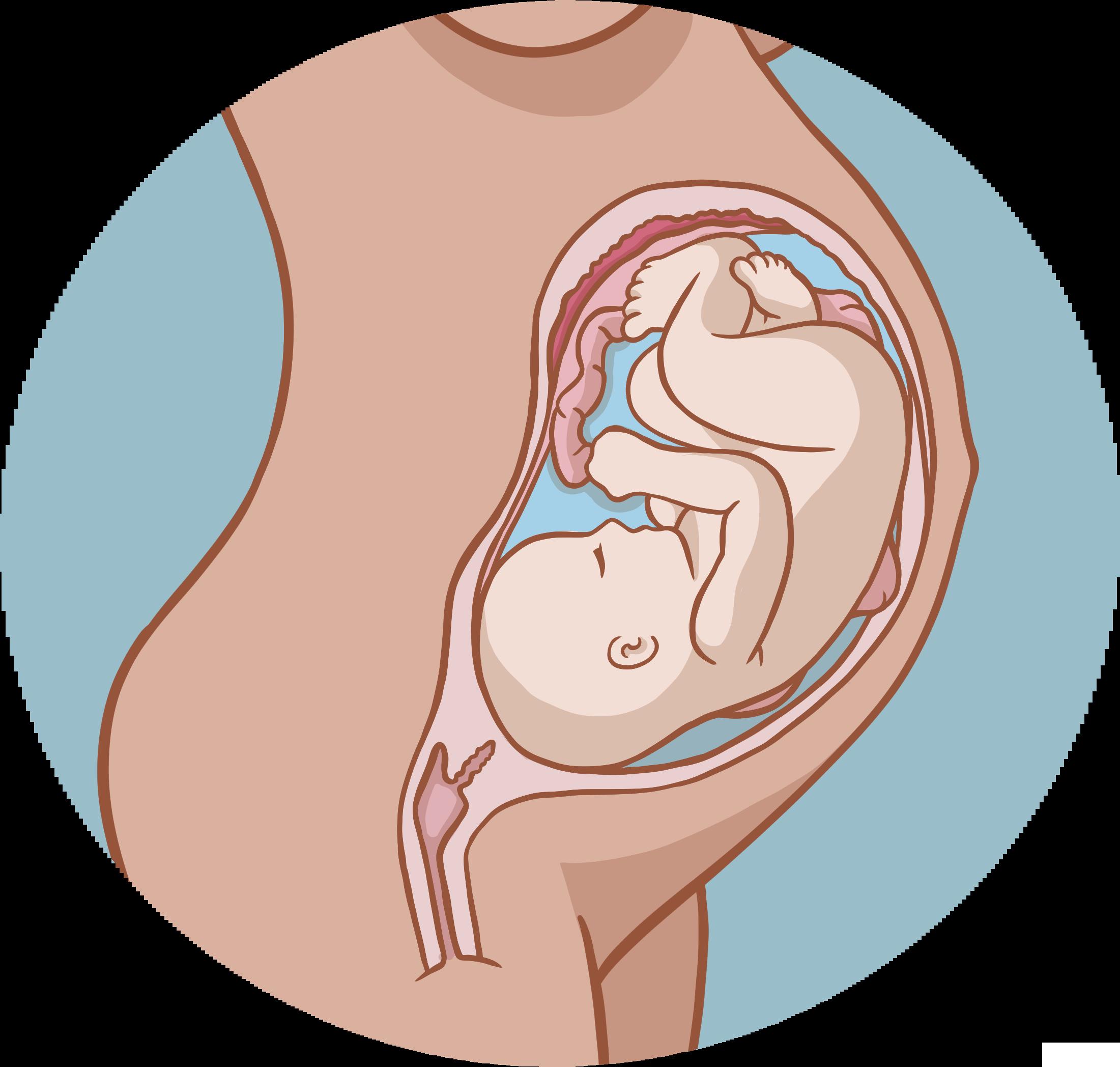
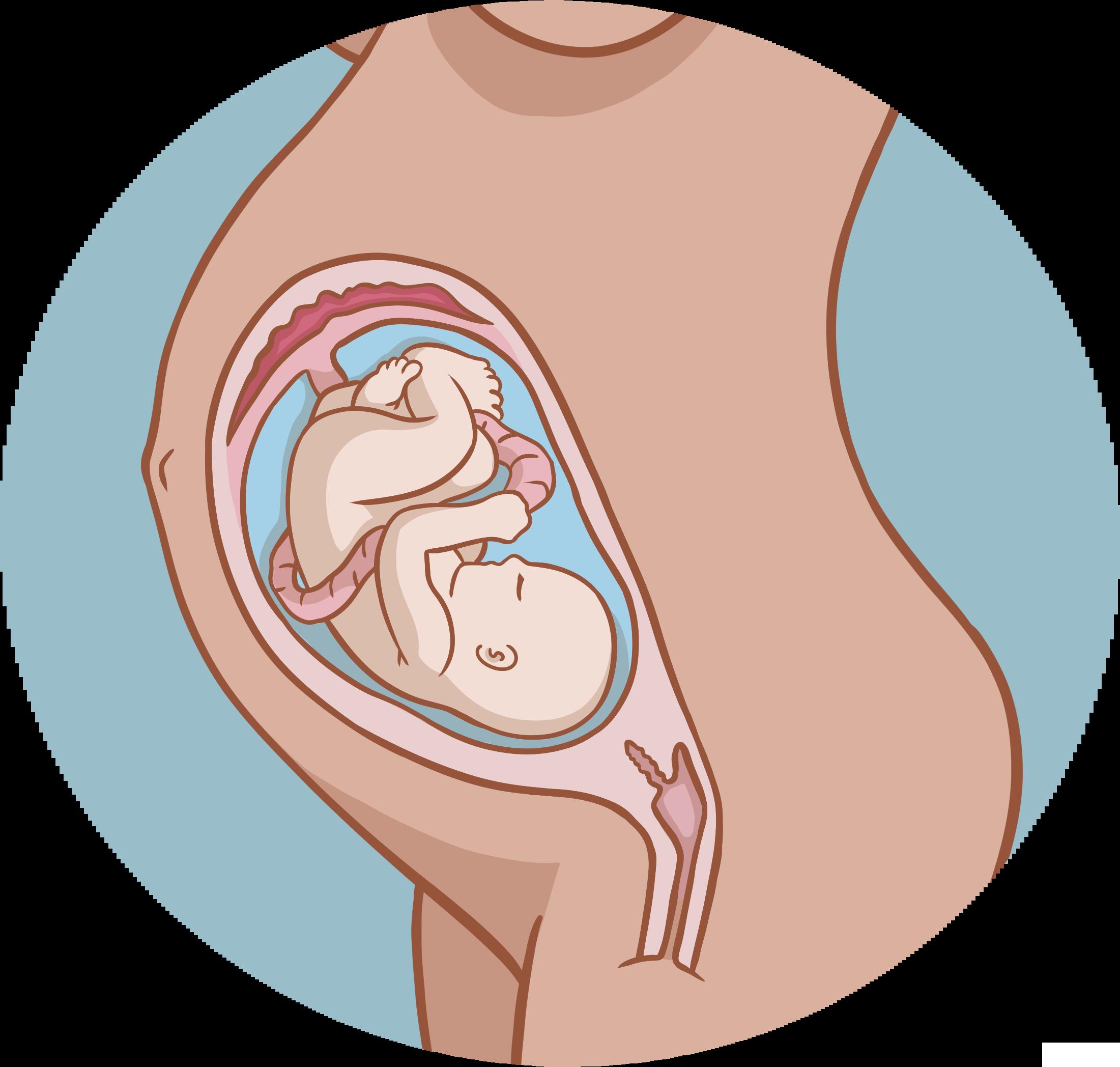
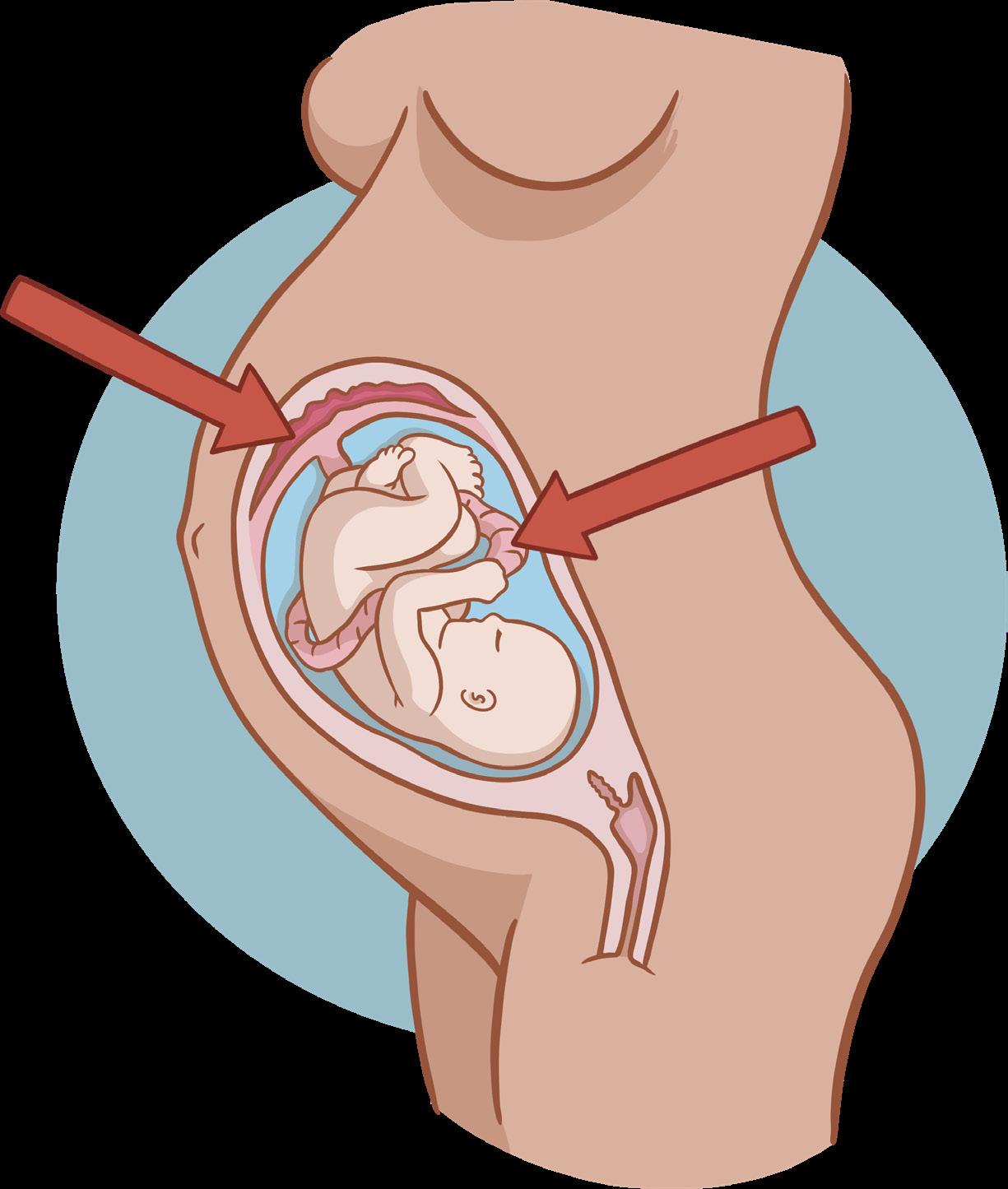
Fallopian Tube
Umbilical Cord
Fetus
Ovary
• You may feel sick to your stomach (nausea) and you may vomit.
• You may need to urinate (pee) more often.
• Heartbeat can be heard at 8-12 weeks with a special machine (Doppler).
Placenta
• Breasts become larger and may be tender; clear, yellowish, sticky first milk (colostrum) may leak from nipples.
• Nipples enlarge, darken and may have raised bumps.
• Face, arms, legs, fingers, toes, brain, digestive and nervous systems are formed.
• Placenta (an organ that develops in your uterus when pregnant) sends blood and nutrients to the fetus through the umbilical cord.
Cervix
Amniotic Sac
Mucus Plug
Vagina
• The womb (uterus) where the baby develops before birth may be felt above the pubic bone by the 12th week.
• You may feel very tired and need extra sleep.
• A thin-walled bag (amniotic sac) becomes the baby’s home. It is filled with fluid to protect the growing baby (fetus).
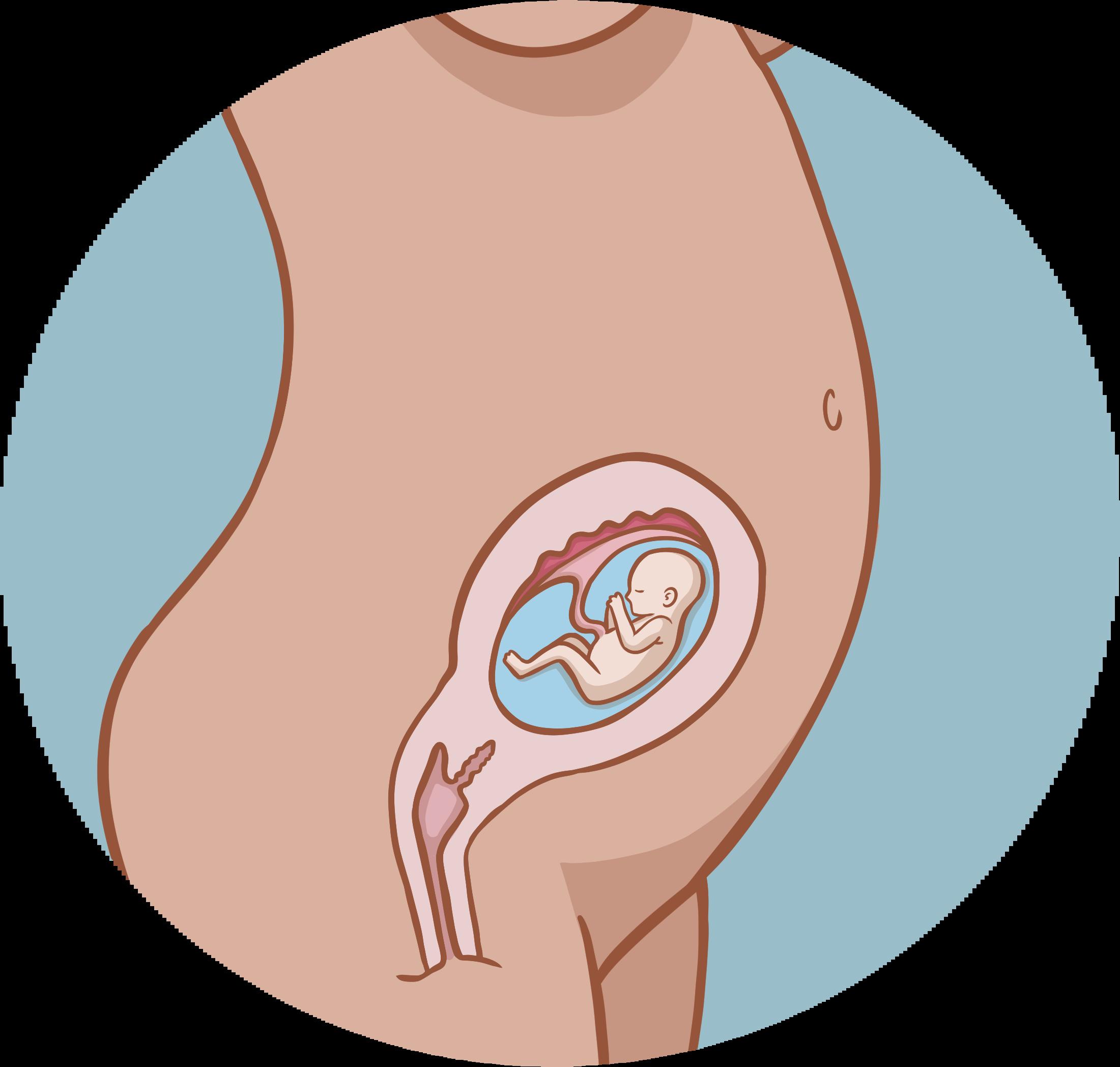
• You can feel baby’s movement at about 16 to 20 weeks.
• Streaking of the skin due to quick expansion (stretch marks) may occur on the breasts or abdomen.
• A dark line may appear from the navel down the middle of the abdomen. This is called linea nigra.
• Brown spots or blotches on the face (pregnancy mask) may appear.
• Top of uterus is near the ribs by 28th week.
• You may start to get your energy back. You still need lots of sleep.
• Growth is rapid.
• Sex organs develop.
• Eyebrows and fingernails form.
• Skin is wrinkled and can be red.
• Hair covers head.
• Body is covered with a fine, soft hair and cheesy covering (lanugo).
• Hands open and close.
• Baby sucks and swallows.
• Fingers and toes can be seen during an ultrasound.
• You feel baby’s movements more strongly.
• You may feel short of breath until the baby “drops,” then you may feel an increased need to urinate.
• Cervix may begin to thin out (efface), or open (dilate) in last weeks of pregnancy.
• Your back may hurt or hurt more if it already was sore.
• You may feel contractions (belly feels hard and tight). This is normal. File a sick note and let an officer or health care provider know if you have more than six in an hour.
• Your ankles and feet may swell slightly.
• Baby moves, kicks, and stretches often.
• Body begins to fill out.
• Fine body hair disappears.
• Baby responds to sound and light.
• First babies usually “drop” into the pelvis before labor begins. Second or later babies may not settle deep into pelvis until labor begins.
Be aware of urgent maternal warning signs and symptoms during pregnancy and in the year after delivery.
Seek medical care right away if you have any signs or symptoms that are listed below. These symptoms could be life-threatening.
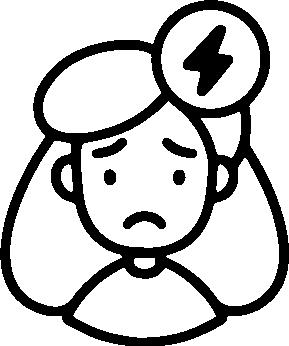
Headache that won’t go away or gets worse over time

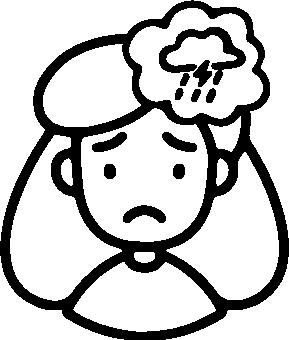
Dizziness or fainting
Changes in vision Fever of 100.4⁰ F or higher


Severe nausea and throwing up
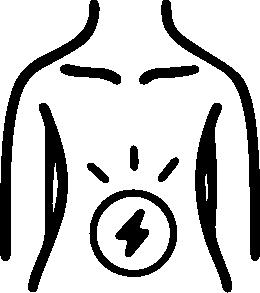
Severe belly pain that doesn’t go away


Baby’s movement stopping or slowing during pregnancy
Severe swelling, redness or pain in leg or arm
Extreme swelling of your hands or face

Thoughts of harming yourself or your baby
Trouble breathing Chest pain or fast beating heart

Vaginal bleeding or fluid

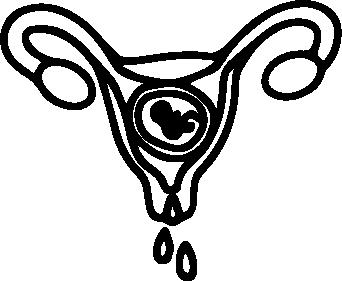

leaking during pregnancy
Heavy vaginal bleeding or discharge after pregnancy
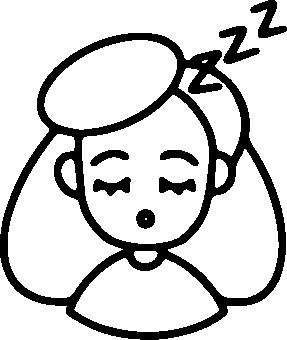
Overwhelming tiredness
There are many things you can do to take care of yourself and your growing baby while you are pregnant. Here are some ideas for movement, rest, and eating that may be possible with limited choices and space.
Taking Care of You and Baby
(Prenatal Care and Pregnancy Hygiene)
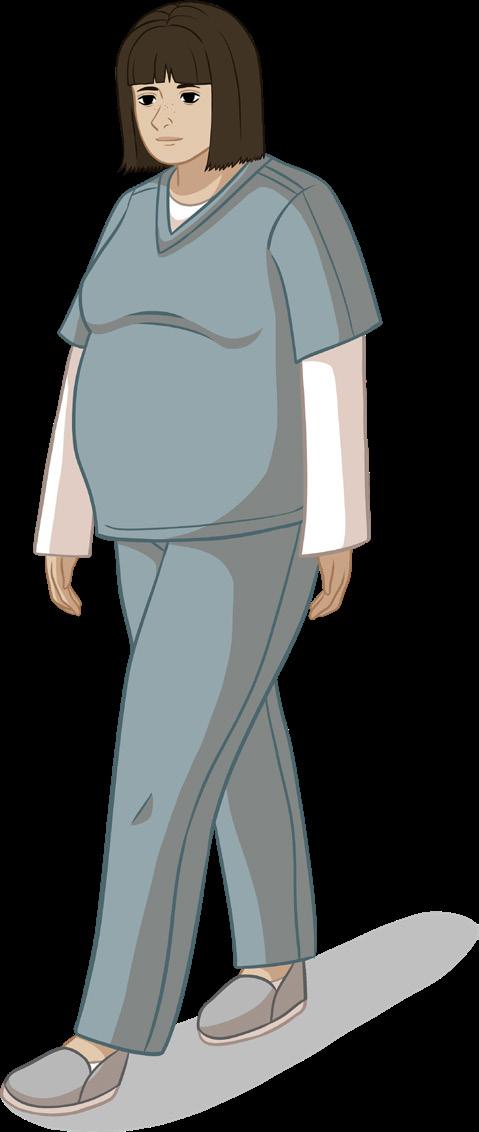
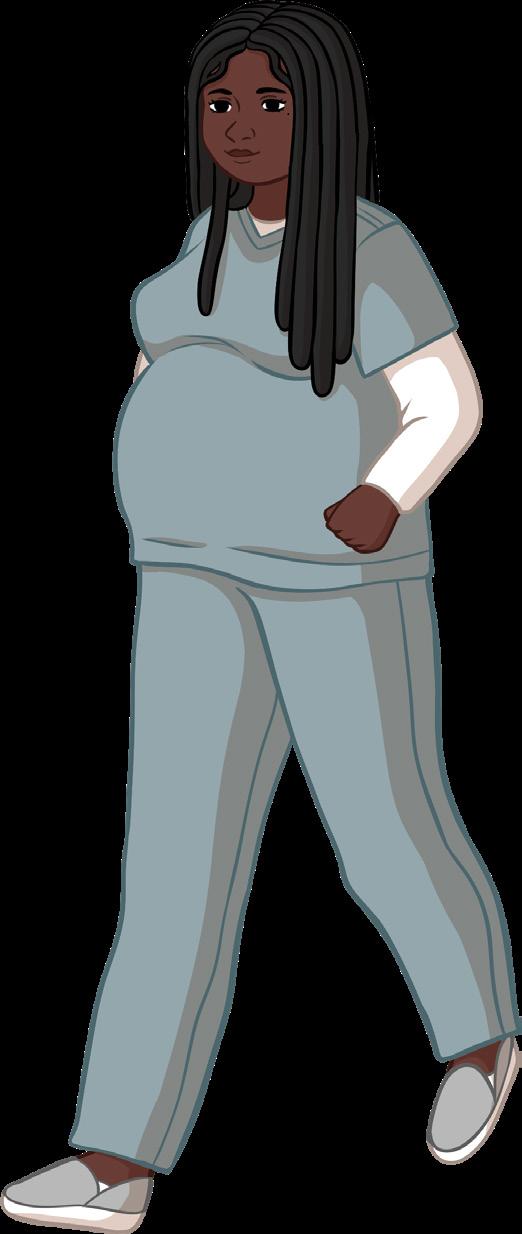
Walking can help keep your weight gain in a healthy range, keep muscles strong to reduce back pain, and help prevent constipation.
Drink lots of water. Water is a better choice than sugary juices or soda. Your body needs added fluid to support the pregnancy.
When given a choice of foods to eat, choose a healthier option. For example, eat fruit, vegetables, whole grains, and lean meats and low-fat dairy when you have a choice.

Moving your body whenever possible can help you better manage the work of carrying your pregnancy and prepare you for labor. Use your limited time outside to walk and move your body.
Avoid standing still or lying flat on your back as much as possible. Standing motionless can cause blood to pool in your legs and feet. When you lie on your back, your uterus presses on a large vein that returns blood to the heart. Lying on your side is generally safer.
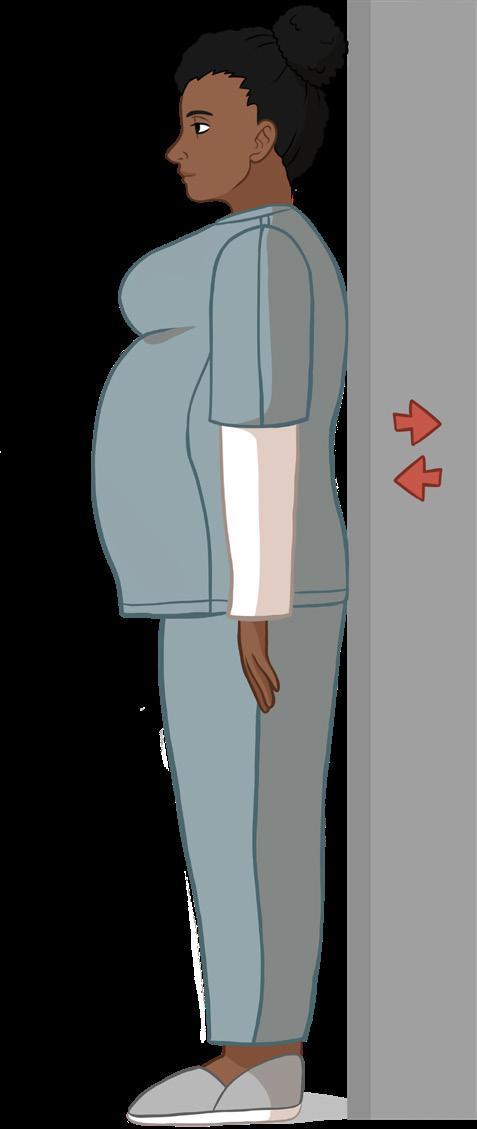
Stand with your back to the wall. Your feet should be slightly apart, with your heels about 6 inches from the wall. Push the small of your back flat against the wall. As you do this, your pelvis will rock forward. Your lower back should remain touching the wall. Hold for a count of 5, and then release. Repeat this 10 times at least twice daily.
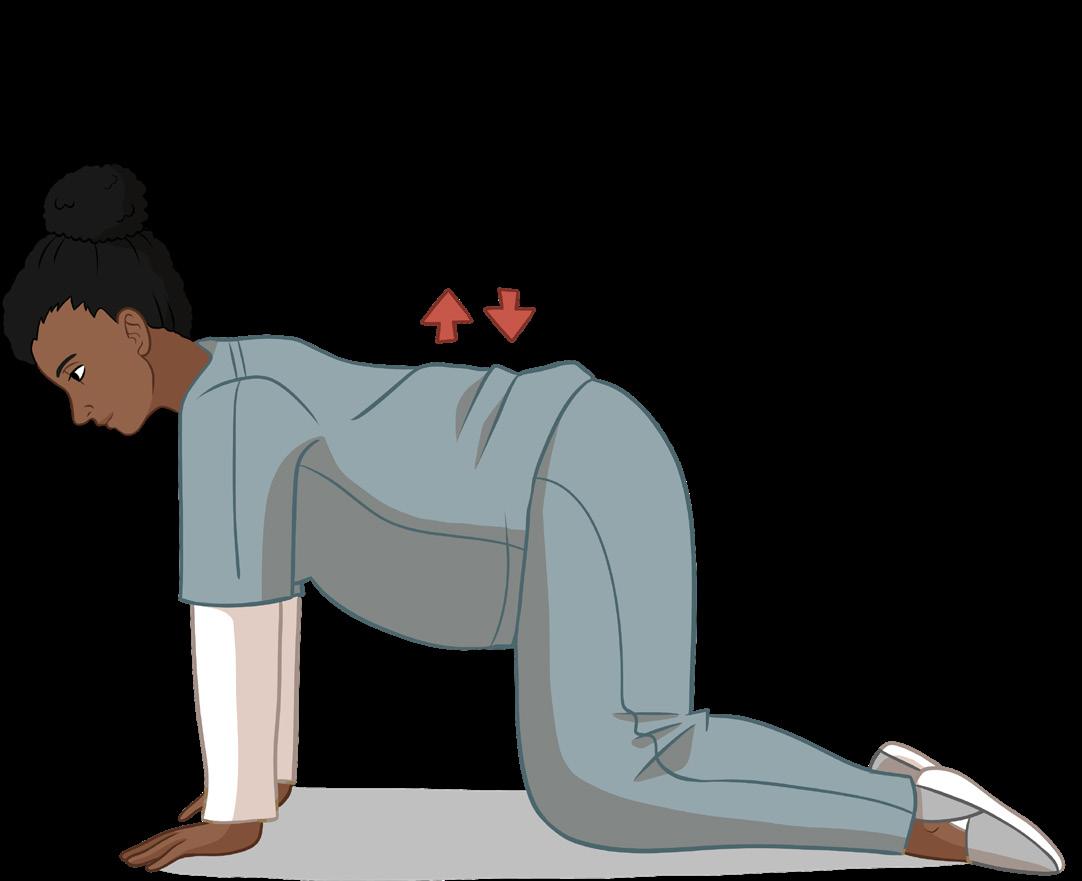
Strengthens and tones the stomach muscles. Kneel on all fours, with your shoulders directly over your hands and your hips directly over your knees. Inhale deeply, then exhale. As you exhale, pull your abdominal muscles in. Do not hold your breath. Keep your back straight.
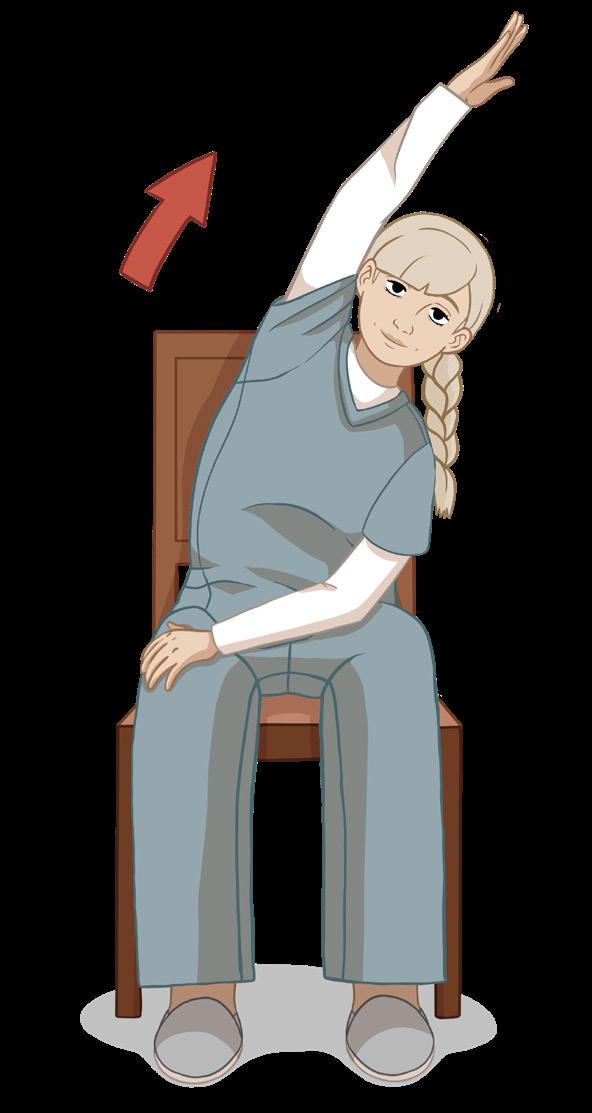
Sit up tall on a chair, keeping your back straight and your stomach muscles pulled in. Feet flat on the floor, hip width apart. Put your left hand on your right knee. Raise your right arm and bend it toward your left side until you feel a gentle stretch. Breathe normally. Hold for a few seconds. Repeat with the opposite side.
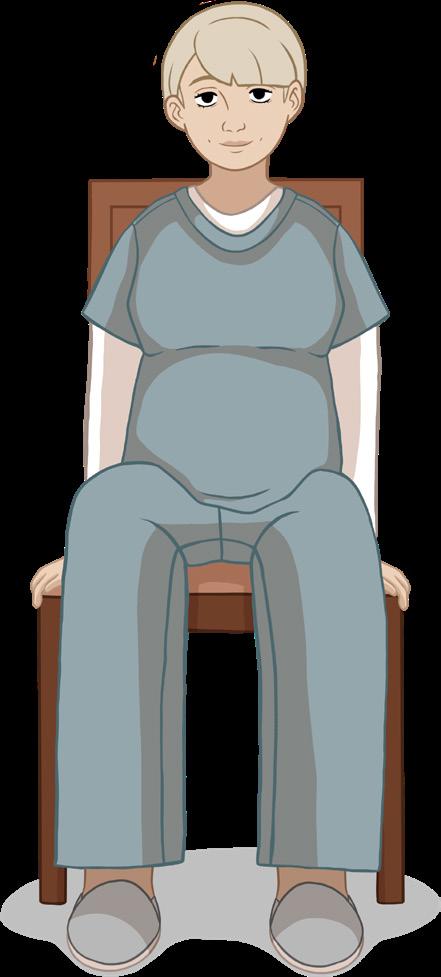
Helps improve muscle tone around the opening to the bladder, birth canal and bowel. Squeeze the muscles you use to hold or stop urinating (pee). You can do it while standing, walking, sitting or lying down. Do 10 to 15 exercises at least 3 or 4 times a day.
Getting vaccinated during your pregnancy helps prevent severe illness for you, AND your baby is protected for many months after birth. Even if you do not receive them while pregnant you can catch up on vaccines while you are in the hopsital.
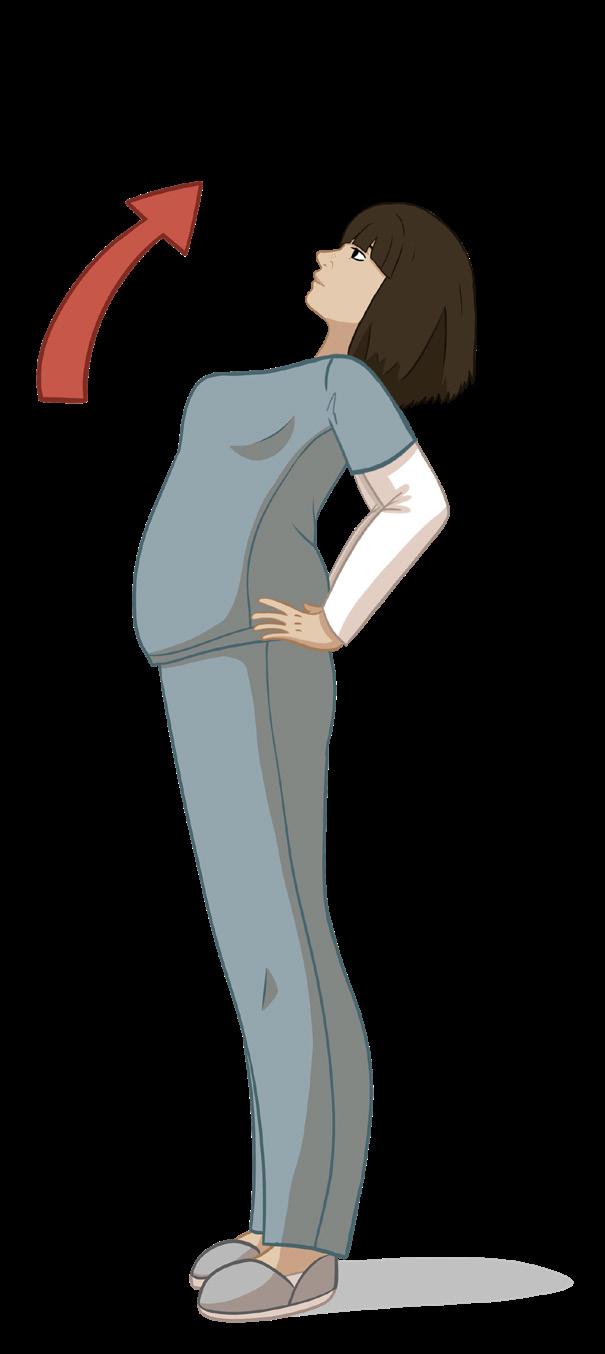
Helps balance the forward bending that happens as your uterus grows. Stand with your palms on the back of each hip. Slowly bend back about 15 to 20 degrees. Hold for 20 seconds.
COVID-19: Pregnant people are at risk for severe illness from COVID-19. Being up-to-date on the latest vaccine and boosters can protect you and your baby from getting very sick. COVID-19 vaccines are safe during pregnancy, including MRNA vaccines like those from Pfizer and Moderna.
TDaP: The TDaP booster is important to get during pregnancy to help protect your baby from pertussis (whooping cough).
Flu: The flu is more severe in pregnant people and in infants, possibly leading to pneumonia or hospitalization. Getting the flu vaccine during pregnancy can protect both you and your baby.
COVID-19 can cause severe illness and/or death, and pregnant people are at increased risk. Wearing a mask and washing your hands are good ways to protect yourself from getting sick from COVID-19. If you think you may have COVID-19, make sure you let your health care provider know you are pregnant.

A vaginal delivery is when a person gives birth through their vagina. This is the most common method of childbirth. During a vaginal birth, the uterus contracts to thin and open the cervix and push the baby out through the vagina (or birth canal).
Cesarean delivery (C-section) is used to deliver a baby through surgical incisions made in the abdomen and uterus. It carries more risk than a vaginal delivery, with a slightly longer recovery period. It may be the best choice when a vaginal delivery is found to be unsafe for baby or mother.
You can learn and practice ways of breathing to help with pain during childbirth.
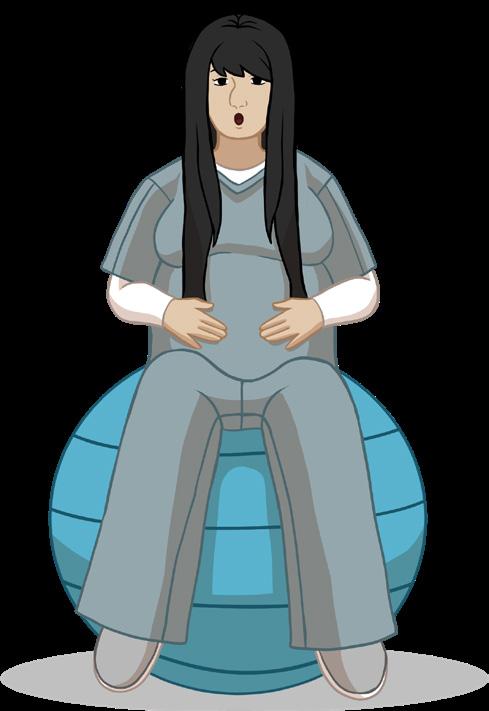
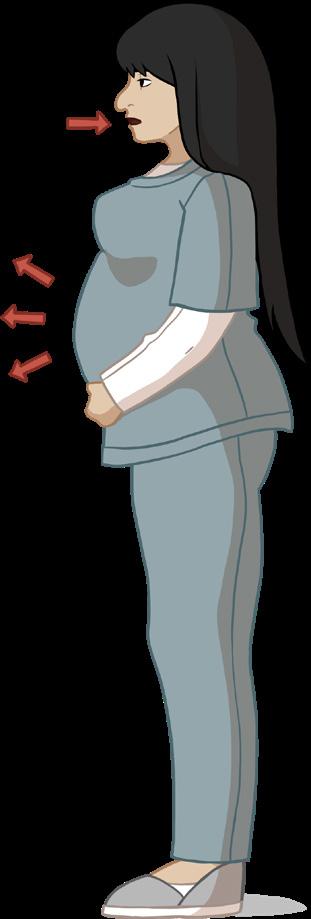
Belly breathing can be helpful in early labor. As you breathe in, expand your belly outward; as you exhale, relax your belly downward.
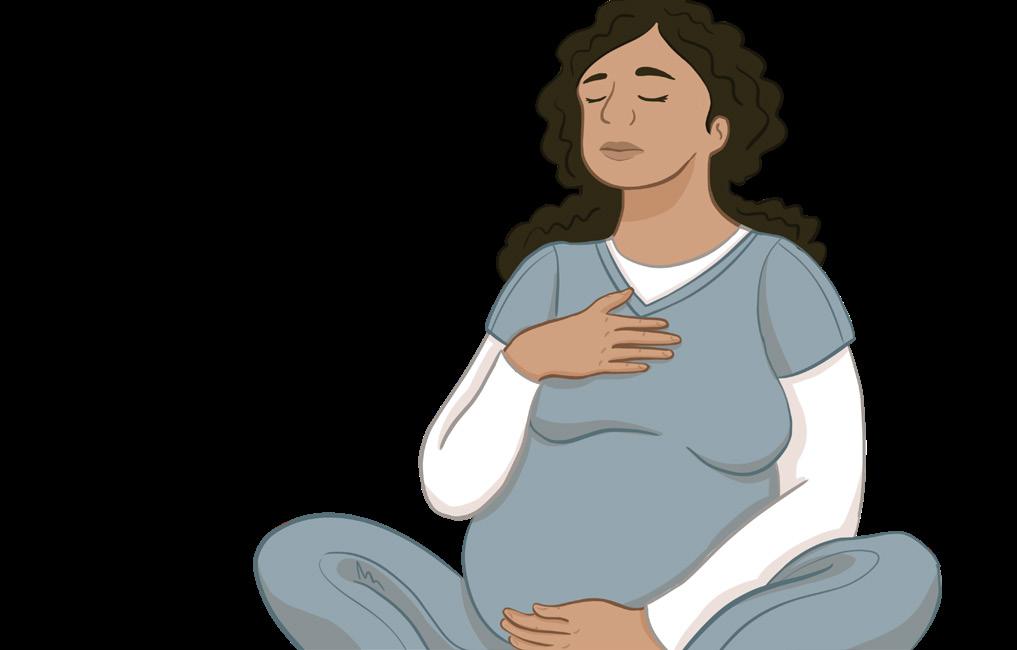
1. Put one hand on your belly and the other hand on your chest.
2. Take a deep breath in through your nose, and let your belly push your hand out. Your chest should not move.
3. Breathe out through lips as if you were whistling. Feel the hand on your belly go in and use it to push all the air out.
4. Do this breathing in between or during contractions. Take your time with each breath.
As your contractions become stronger, breathe out in a “pant-pantblow” pattern, about 6 cycles per minute.
1. As your contraction starts, take a deep breath in through your nose.
2. Exhale in 2 short pants followed by one longer blow. Sounds like “hee-hee-hooooo.”
3. This breathing in and panting out should take about 10 seconds.
4. Repeat this type of breathing until the contraction stops.
• Contractions usually get stronger, longer, and come closer together.
• Walking usually makes contractions stronger.
• Contractions are felt in the back and lower abdomen, not just in the uterus.
• Pink liquid (spotting) leads from vagina (water breaks)
• You may have diarrhea and/or feel like you are going to throw up.
• The cervix opens to 4-5 centimeters (1 ½ to 2 inches).
• As the cervix opens wide, some light bleeding (bloody show) or thick mucous often streaked with blood (mucous plug) may come out.
As you get close to your due date, you may have mild tightening or balling up of the uterus. These are Braxton-Hicks contractions, which may be called “false” or “practice” labor. They are normal. After resting an hour and drinking some water, these contractions usually stop.
It can be hard to deliver without your partner or family there.
If you want extra support, ask if the hospital has a doula program. A doula is a specially trained labor support person who provides comfort and support to a woman during labor and birth. If a doula is not an option, labor and delivery nurses are very experienced and will be there to help and encourage you during labor. You can also ask to speak with the hospital social worker for support at any time during your hospitalization.
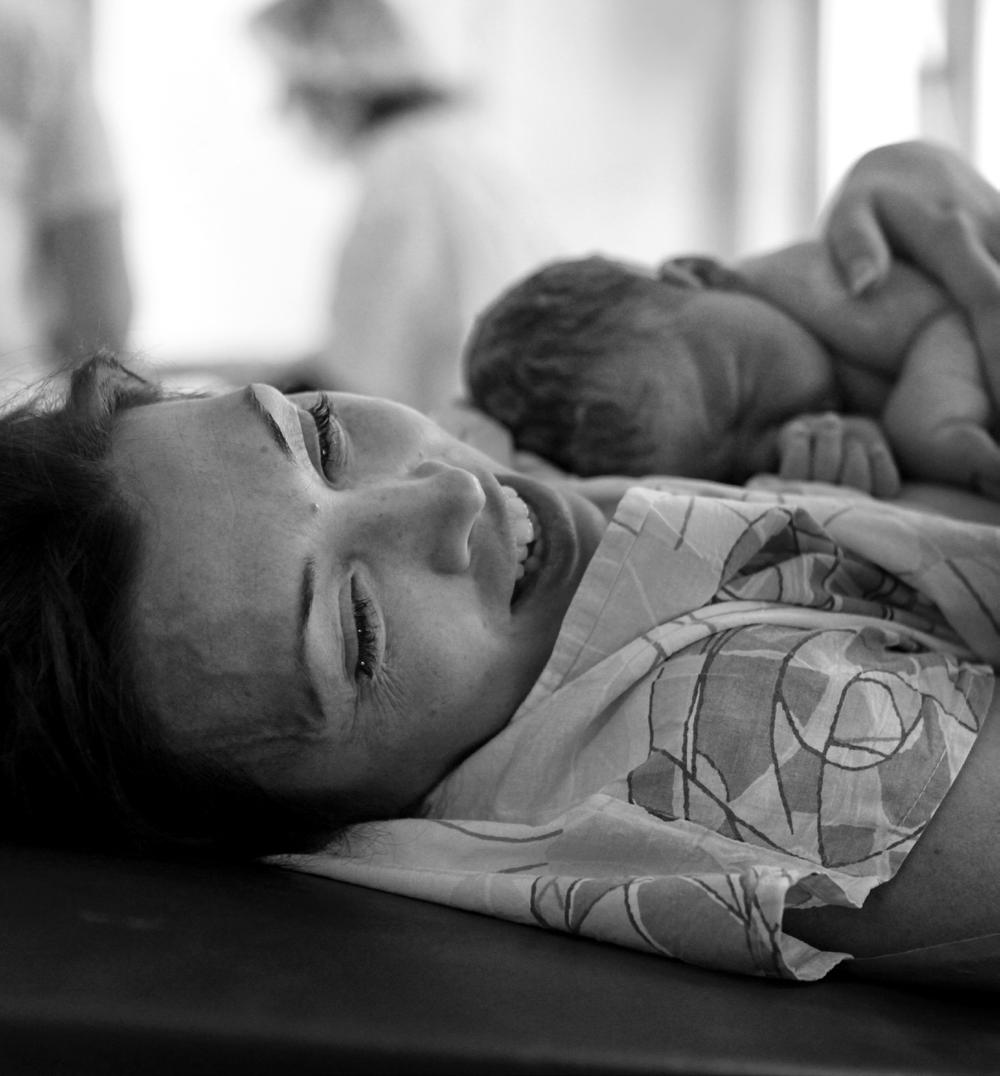
Some people choose to have medication during their delivery to relieve discomfort. If you feel you may need medicine during labor, ask your doctor or certified nurse midwife to discuss your options.
This can be a shot or pill to give some pain relief. It may delay labor or make you sleepy and even make your baby sleepy after birth. There are no longterm effects to these drugs. If you are currently on medications for opioid use disorder (MOUD) share this information with your healthcare provider in order to receive the right amount of pain medicine.
This medicine is injected in and around the nerves in your spine. It numbs your lower abdomen and legs but does not make you sleepy. You may not feel your contractions or have the urge to push. Normal feeling returns after the baby is born. This type of medication can be used for cesarean deliveries also.
A spinal block injection is made into your lower back and numbs your lower body for an hour or two. A pudendal block injection numbs your vagina or birth canal and may be used during delivery of the head. You will still feel contractions and the urge to push.
You may be given a shot to numb a small part of the vaginal area before stitches are put in to repair a tear or episiotomy.
In some cesarean deliveries or in an emergency, the pregnant person must be put to sleep. They breathe a special gas through an oxygen mask and are given medication into their veins through an IV.


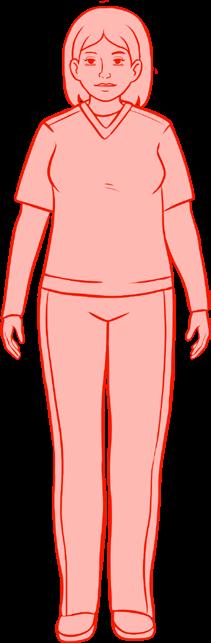
It takes months to grow a baby and it takes months to physically recover and heal. Pregnancy, labor, and delivery recovery is a lot of work for a body!
Epidurals and spinal blocks numb this area.
Bleeding and Discharge: Right after delivery you will have a heavy discharge of lochia (blood, mucus, and tissue) left over from delivery. Bright red bleeding generally lasts for 3 or 4 days, though it may last up to 2 weeks. Let your healthcare provider know about any heavy bleeding that causes you to change your pad every hour or if you pass a clot bigger than an egg or you pass tissue. The bright red bleeding slowly changes to dark red, to yellow and then to white. You may have a whitish discharge for 2 to 6 weeks. Wear a sanitary pad rather than a tampon, and do not douche. If you have any discharge that has a bad odor or causes itching or burning, let your healthcare provider know.
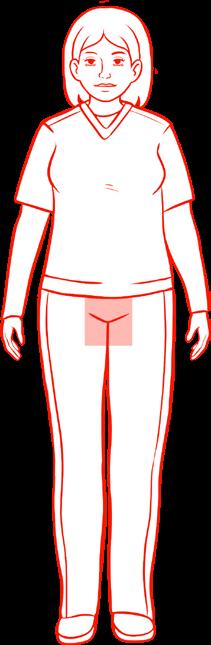
Afterpains: You may feel some cramping for several days after the baby is born. These pains help your uterus return to normal and help control bleeding.
Pudendal blocks and local anesthesia numb this area.
Stitches and Tearing: If you had a vaginal birth and tore or had stitches, it can be especially painful for the first week or two. Fortunately, vaginal tissue has a great blood supply and will generally heal quickly. Some women are nervous about peeing right after they have a baby, especially if they had stitches. That is understandable and normal. Using a squirt bottle with warm water before and while you pee can help.
General anesthesia affects the entire body.
• During the first 24 hours most women find it helpful to apply ice packs to their bottoms, which not only helps with pain but can reduce swelling in the area.
• After 24 hours you may find comfort in warm water compresses or using a sitz bath, a special basin that can be placed on the toilet to wash warm water over your bottom.
• To relieve the stinging that can occur as urine comes in contact with stitches or small tears, you can keep a squirt bottle with warm water in the bathroom and use it to spray on your bottom when you pee.
• To relieve some of the pressure on your bottom, you might want to sit on a pillow. Sitting in a slightly reclined chair can also take the pressure off.
• It is important to avoid constipation, as straining during bowel movements may be painful. Drink plenty of water, move around as much as you can, and eat foods with fiber like fruits and vegetables. A stool softener can help with constipation.
• Unless advised otherwise by your doctor, you can take some Ibuprofen (like Motrin(TM) and Advil(TM)) to help with the pain. In the days immediately following birth, you could rotate between Ibuprofen and Acetaminophen (like Tylenol(TM)) every four hours to help.
• Some women find that an abdominal binder helps reduce pain after a c-section. You can ask for one while you are at the hospital.
• Your abdominal muscle tone will take some time to recover. During the first few days postpartum you can press a folded towel or pillow over your abdomen when sitting up, or you can roll to one side before sitting up. Take your time and breathe.
• Do what you can to avoid constipation. Drink plenty of water, move around as much as you can, and eat foods with fiber like fruits and vegetables. A stool softener can help with constipation.
• Wash your hands before touching your incision.
• When you shower, it’s fine to let water and soap suds run over your incision. Rinse the area well and pat dry.
Sudden mood changes are common after delivery. Many of these mood swings are caused by changes in hormones. If you are separated from your baby, this may make the postpartum period even more difficult. Talk about your feelings with someone you trust. Try calling a friend or family member if you have access to a phone. Talk with another mom who has had similar experiences. As your hormones return to normal levels your moods are likely to change less.
If you do not start feeling better after a few weeks or if you continue to feel worse, you may need some help. Some women slip into postpartum depression, psychosis, or severe anxiety. Medication and therapy can help you deal with these symptoms, so let your healthcare provider know. You do not need to suffer alone.

• Keep your incision clean and dry. It may help to put a clean gauze pad over your incision, especially if the skin on your belly folds over the incision. Some moms find that it’s more comfortable to wear the mesh panties from the hospital to hold the gauze in place.
• If you had a c-section, you have undergone major abdominal surgery and it will take more time for you to heal. Be gentle with yourself and avoid lifting, twisting, or putting pressure on your incision. Gentle movement and walking can help you heal. Many nerves were cut during the surgery and can take six months or more to heal completely. Some women continue to experience numbness, tingling and odd shooting pains around their scar for months after delivery.
Check your incision every day to make sure there are no signs of infection. Ask to see a healthcare provider if:
• You notice red streaks around your incision
• It is red, swollen, tender or painful, warm to the touch;
• It is separated or draining fluid;
• If you have a fever above 100.4 °F or 38 °C
The best way to tell your body to stop making milk is to remove (or “express”) the smallest amount possible. Express just enough milk to feel comfortable. This can also help prevent plugged ducts and infections. Wear a comfortable, supportive bra that is not so tight that it reduces blood flow. You can try standing in a hot shower or using warm water from the sink to help release small amounts of milk. Applying ice packs for 5-15 minutes at a time or taking a pain reliever can help with swelling and pain.
Try to get as much rest as you can. Your body has been through a lot and resting will help your body to heal. Getting enough rest also helps improve your mood.
Stay in touch with friends and family if possible. Talk with other moms who have been separated from their baby, too.
If you feel like hurting yourself or someone else, tell your healthcare provider.
If you have access to a phone, call the Postpartum Support International helpline for support: 1-800-944-4773 or call/text the National Maternal Mental Health Hotline 1-833-943-5746 (1-833-9-HELP4MOMS).
1. Position your breast above a bowl or sink to catch any milk.
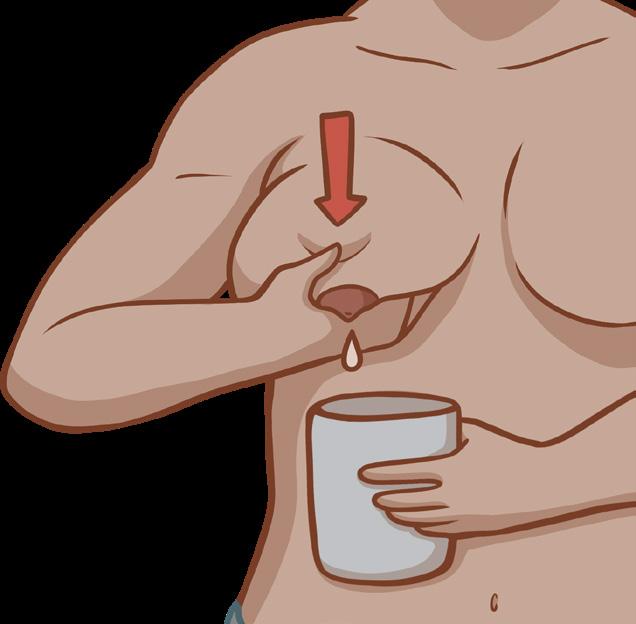
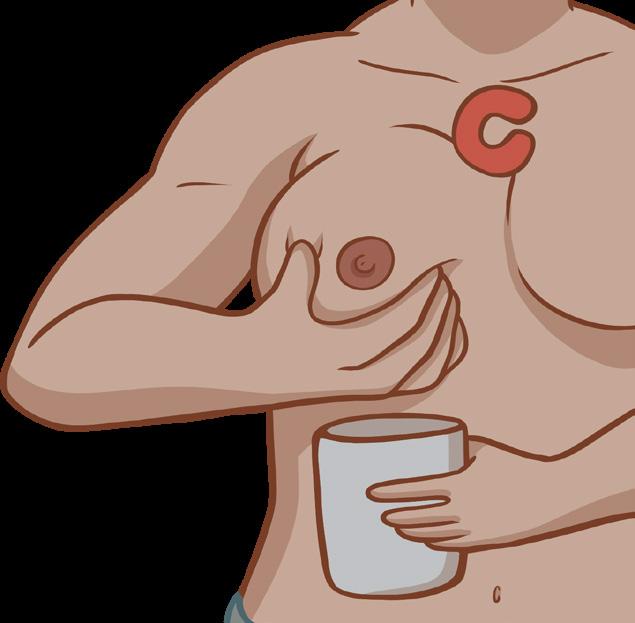
2. Hold your breast in your hand with your fingers making a C shape a few inches away from your areola - the darker part of your breast surrounding your nipple.
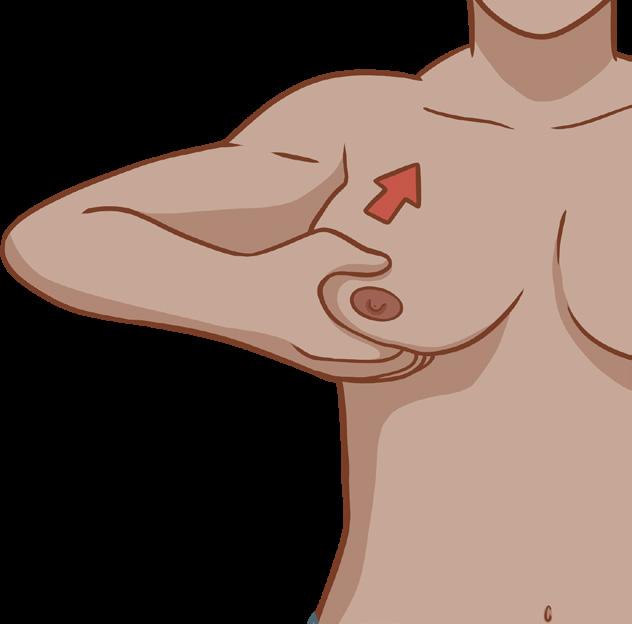
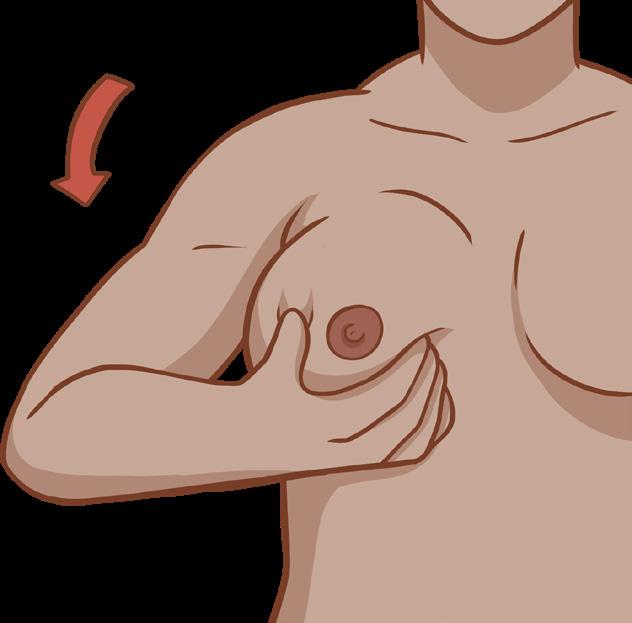
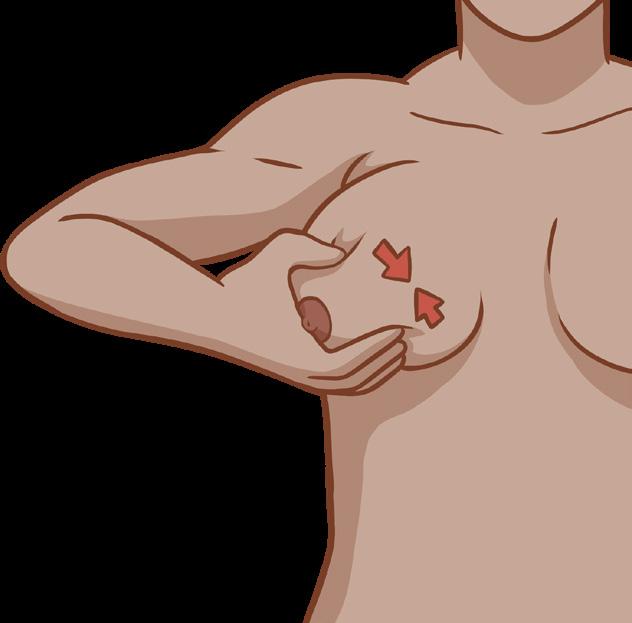
3. Push your fingers back toward your heart, then gently squeeze your thumb and fingers together. Try not to slide your fingers over your skin.
4. Continue to press back then squeeze together until milk comes out. (If you want to stop making milk, release just a little milk; if you want to keep making milk, release until no more milk comes out).



For the first few days after your baby is delivered, your breasts make a thick, yellowish substance called colostrum. Your milk starts to “come in” 2-5 days after your baby is born. You’ll notice that your breasts become fuller and heavier. Whether you want to stop making milk or keep a milk supply going, ask to talk with the lactation consultant when you are in the hospital.
You may have an infection if: your breast is painful or has red blotches, you feel feverish or unwell, and/ or you have the chills. If you experience any of these symptoms, ask to be seen by a medical provider as soon as possible.
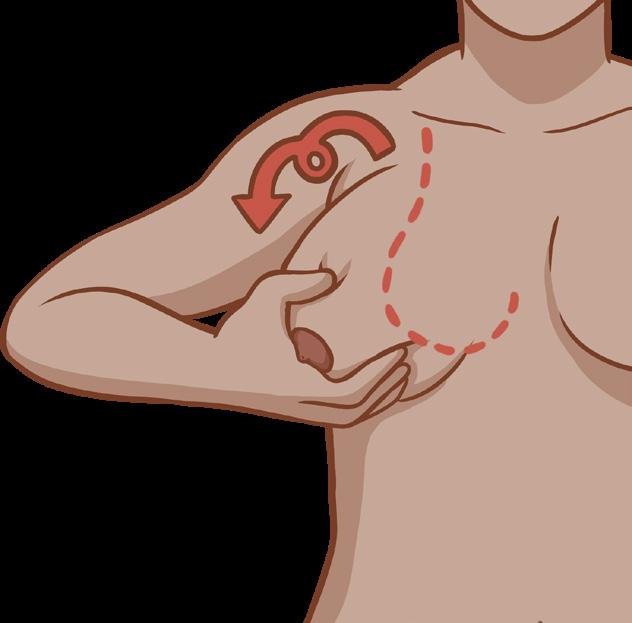
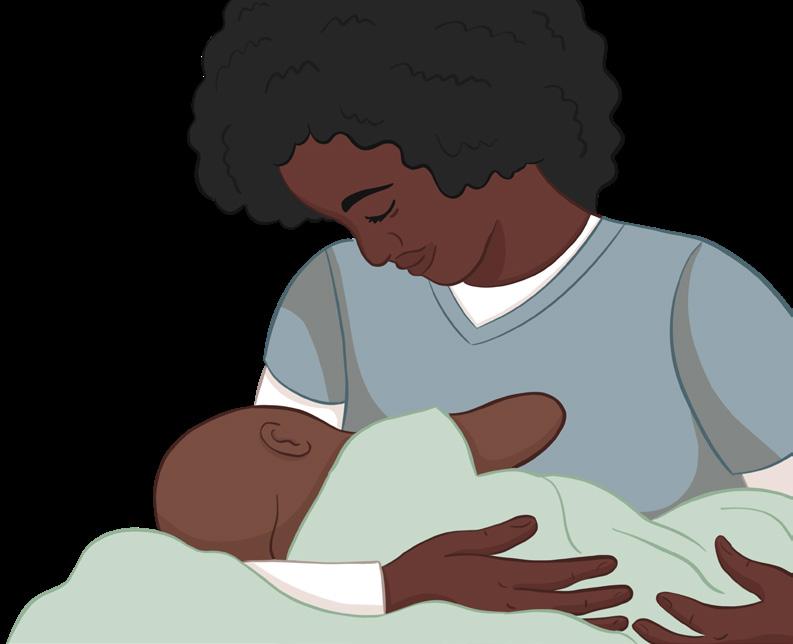
You may want your body to keep making milk so you can breastfeed when you are with your baby again. The best way to keep your milk is to fully empty your breasts regularly. When you get all the milk out of your breast, your body knows that the milk was needed and that more milk needs to be made. Babies usually empty the breasts by breastfeeding, but while you are away from your baby, you will need to empty your breasts the best you can yourself. You can use hand expression to remove the milk from your breasts.
It is never too soon to think about birth control! Some healthcare facilities may be able to insert long-acting birth control while you are in the hospital delivering your baby, so ask your provider about your options.
An IUD (Intrauterine Device) is a small plastic device inserted in your uterus that can prevent sperm from fertilizing an egg. IUDs are available with or without hormones and can prevent pregnancy for 3-12 years, depending on the type.
“Substances” is another word for drugs. Some substances are legal (like alcohol, tobacco, prescribed pain pills, and medication assisted therapy) and other substances are not legal (like cocaine, ecstasy, heroin, LSD, meth, marijuana, and pain pills gotten from another person).










An implant is a match-sized plastic piece that is inserted into your upper arm by a healthcare provider. It releases a hormone that prevents pregnancy for up to four years. Both the IUD and the implant are over 99% effective in preventing pregnancy.
During pregnancy, an organ called the placenta grows inside the womb along with the baby. The placenta lets oxygen and nutrition pass from the pregnant person’s blood through the umbilical cord to the baby.
When a person uses substances in pregnancy, those can also pass through the placenta and go through the umbilical cord to the baby.
The birth control shot, patch, ring, and pill are hormonal methods of birth control that release hormones in your body that prevent pregnancy. They are highly effective with proper use.
Barrier methods such as condoms, internal condoms, diaphragms, and birth control sponges prevent sperm from reaching and fertilizing an egg. Condoms are effective at preventing pregnancy with proper use, and condoms also help prevent sexually transmitted infections (STIs).
If you do not want to be pregnant, it is important to choose an effective birth control method before you have sex again after delivery. More information on birth control options can be found on Bedsider.org
How can consuming alcohol or substances in pregnancy affect the baby?
Not every baby will be affected, but using substances in pregnancy can increase the chances of:
• Miscarriage or stillbirth
• Birth defects/changes in how the body looks or works
• Harm to the baby’s brain that can affect their development, learning, or behavior
• Baby not growing enough
• Baby being born too soon
• Baby having withdrawal symptoms after birth
Where can I get help?
Even if you have already used substances during a pregnancy, it’s never too late to get help with stopping or using less. A healthier YOU means a healthier baby!
If you need help to stop using a substance:
• Talk to your healthcare provider about all substances you are taking.
• Contact the UNC Horizons Substance Use Disorder Program for help for incarcerated women, including pregnant and parenting women upon arrest and at any point during incarceration, including post-release. 919-903-0591.
• Contact the Alcohol and Drug Council of NC to access available services statewide for pregnant and postpartum women, including those with dependent children, along with the general population who have a substance-related disorder. Visit alcoholdrughelp.org or call 1-800-688-4232.

• If you need help quitting tobacco, including vaping, contact QuitlineNC at 1-800-QUIT-NOW.
If you are pregnant and have opioid use disorder (OUD), it is recommended that you start or continue treatment with Medication for Opioid Use Disorder (MOUD) - for example, methadone or buprenorphine. Sudden withdrawal from opioids during pregnancy can be harmful to both you and your baby.
If you are worried about how substances might affect your baby, talk to your healthcare provider or call MotherToBaby North Carolina at 800-532-6302 (free and confidential).

Source: MotherToBaby North Carolina
The parent-child relationship is central to a child’s life. The loss of a parent to incarceration can have traumatic effects on a child, but maintaining a relationship while away is possible. Staying in touch with your child and their caregiver during your separation can help you stay connected, and help ease reunification after you are released.

It is important for children to see and have contact with their parents at every age. There are many barriers to staying connected to your child if you are incarcerated. Caregivers and caseworkers play a key role in maintaining these connections, which can help the parent-child relationship to stay strong.
Adapted from CDC and Child Welfare Gateway (HRSA)
• Focusing their vision, reach out, explore, and learn about what is around them.
• Learning processes of memory, language, thinking, and reasoning.
• Developing bonds of love and trust with their people as part of social and emotional development.
• Support from your infant’s caregiver is needed to stay connected with your baby.
• If possible, make a video/audio recording of your voice singing, talking, or reading to your baby.
• Provide breastmilk if you are able and the facility allows pumping.
• Visits with your baby will help your bond. When you can be together, try to touch, hold, play with, and feed the child. Check with the facility to see what is allowed.
• If you are not allowed contact visits, try to have your baby still see and hear you during the visit and interact with them as much as you can.
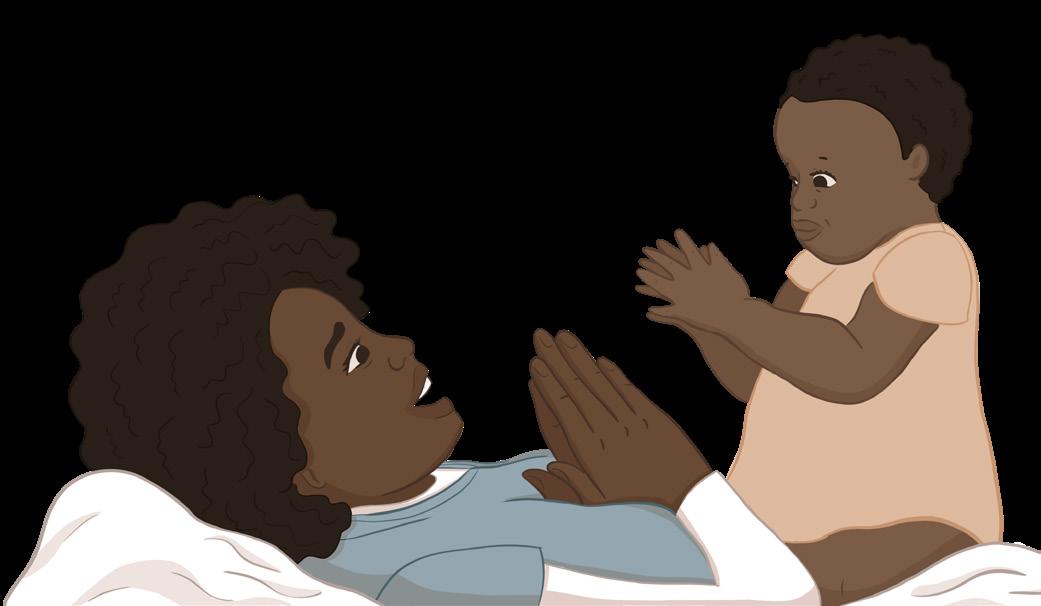
• Moving around more and are aware of themselves and their surroundings.
• Show greater independence; begin to show defiant behavior; recognize themselves in pictures or a mirror; and imitate the behavior of others.
• Recognize the names of familiar people and objects, form simple phrases and sentences, and follow simple instructions and directions.
STAYING CONNECTED TO YOUR CHILD WHILE SEPARATED
• Regular visits are important and maintaining a connection with your child’s caregiver is key.
• Ask the caregiver to share pictures and videos of you with your child and ask them to talk about you.
• Ask the caregiver to tell you about your child’s favorite toy, book, friends, and activities.
• During visits or calls, try to talk about the things your child likes.
• When possible, play with a favorite toy or read a favorite book.
• Toddlers may have short attention spans during calls or visits, so try to show understanding if the child loses interest quickly.
• Physical, social, and mental skills develop quickly.
• Critical time to develop confidence in all areas of life
• School brings them into regular contact with the larger world, and they may show more independence from parents and family.
• Pay more attention to friendships and teamwork and want to be liked and accepted by friends.
• Older elementary children may start to experience body changes, puberty, and peer pressure.

• Children become aware of the stigma of parental incarceration and may be teased by peers or try to distance themselves.
STAYING CONNECTED TO YOUR CHILD WHILE SEPARATED
• Establish regular, independent communication with your child, in the form of letters, phone calls, or visits.
• Ask your child’s caregiver to share schoolwork, projects, report cards, awards, and other information so you can stay informed about your child’s activities and struggles.

• Use technology; some facilities have tablet programs with communication tools for families.
HOW YOUR CHILD IS GROWING AND CHANGING
• More independent and begin to focus more on adults and children outside of the family.
• They will want to explore and ask about the things around them even more.
• Their interactions with family and those around them will help to shape them.
• During this stage, children should be able to ride a tricycle, use safety scissors, notice a difference between girls and boys, help to dress and undress themselves, play with other children, recall part of a story, and sing a song.
STAYING CONNECTED TO YOUR CHILD WHILE SEPARATED
• They are beginning to be able to communicate through pictures and written words.
• This is a great time to build communication with them by drawing pictures together or apart and writing simple letters.
• Continue visits as much as possible.
HOW YOUR CHILD IS GROWING AND CHANGING

• More focused on themselves and their peer group.
• More concerned about how they look, including their body image and clothes.
• Younger teens may experience moodiness as their hormones shift.
• They may also go back and forth between high expectations and lack of confidence in themselves.
• They may express less affection toward parents and seem rude or short-tempered at times.
• They are figuring out who they are and what they want to be.
STAYING CONNECTED TO YOUR CHILD WHILE SEPARATED
• Be flexible.
• Your child may show a range of emotions or ask difficult questions about your incarceration as they try to understand.
• Try to be a consistent presence even if your child wants to connect with you at some times and push you away at others as they sort through feelings.
• If they want to visit you alone, try to be supportive if your facility allows this.
• Some teens have difficulty communicating without technology, so try to connect with them electronically if possible.

Local health department services include birth control services, STI screening and treatment, mother and child home visiting programs, WIC, child well-visits, parenting support programs, and immunizations. Find your local health dept:
https://www.ncdhhs.gov/divisions/social-services/local-dss-directory

Medicaid: Apply online through the NC Medicaid Beneficiary Service Portal (ncgov. servicenowservices.com) or visit your local health department for help with enrollment.
UNC Horizons Substance Use Disorder Program and Legal Services provides substance use treatment services for incarcerated women, including pregnant and parenting women upon arrest and at any point during incarceration, including post-release. For more information call 919-903-0591.

Alcohol and Drug Council of NC provides services statewide for pregnant and postpartum women, including those with dependent children, along with the general population who have a substance-related disorder. For more information about services visit alcoholdrughelp.org or call 1-800-688-4232.





National Maternal Mental Health Hotline provides 24/7, free, confidential support before, during, and after pregnancy for new moms feeling overwhelmed, sad, anxious, or exhausted. Call or text 1-833-943-5746 (1-833-9-HELP4MOMS).
NewMomHealth.org is a website with information on the physical, emotional, and social parts of the postpartum period.

Office of Indigent Defense Services provides legal representation for people who cannot afford an attorney. 919-354-7200 ncids.org
Our Children’s Place of Coastal Horizons Center provides services for children of incarcerated parents. OurChildrensPlace.com