Everyday Things
Advisors: Michele Kahane and Jennifer Rittner
Co-Creators and Facilitators: Paola Machuca
Monisha Raju
Key Words: Speculative design, Sustainability
Everyday, we touch, use, and interact with countless objects as part of our daily routines, rituals, tasks, and work. When we trace the material origins of these objects, we find that many of them contain one common component—synthetic polymers, more commonly known as plastic . The versatility and affordability of plastic have made it possible to produce objects with less effort, time, and resources, enabling a consumer society to thrive. Designers in the fields of packaging, product design, textiles, and architecture, have confronted the ubiquity of plastic in consumer and commercial goods, however it is constrained by the realities of supply and production to replace it and plastic is everywhere!
At an individual level, the ephemerality of these objects and the fact that they are made with a material that lasts centuries, has influenced the ways we use and keep them. Plastic in a way has encouraged disposability, overconsumption, neglect of repair, and emotional detachment from our belongings. At the same time, this has made daily life more convenient by reducing the need to care for or maintain what we own as they are easily replaceable. However, plastic’s non-biodegradable nature has caused significant planetary disruption, contributing to global warming and ecological harm. The material lingers on the planet’s surface, damaging ecosystems, and infiltrating nearly everything in the form of microplastics. The impact of plastic is increasingly more and more visible.
With this broader concern, the workshop enquired the ways to address the issue from the perspective of an individual using everyday plastic objects, while considering collective goals of the community?
This workshop used speculative design as both a method and mindset to shift the perceptions of plastic by opening space for creative problem-solving, to help participants identify meaningful possibilities of potential futures. At the same time, it facilitated conversations about shared responsibility among users, producers, and designers about using plastic.
It was a means to move from awareness to action and from critique to imagination - to reimagine our relationship with everyday objects through reflection, making, and storytelling. Participants explored alternative futures where materials, values, and care practices that align with sustainable values and empathy towards the planet.
This compilation takes you through the exhibition and the workshop, along with its outcomes.
The Exhibition
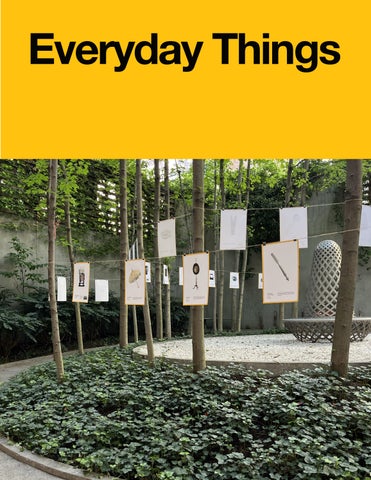
The exhibition was designed within the Vera List Courtyard at The New School, a landscaped, multi-level outdoor space. The installation was situated on an elevated landform centered around a winding ramp, surrounded by red maple trees and dense bamboo. It was thoughtfully integrated into the site, using the trees to display large-format printed artifacts. The design responded sensitively to the site, incorporating the trees and pathways to create an experience that felt both contextual and reflective of its environment.


The exhibition itself was a showcase of a diverse collection of objects from around the world from a pre plastic period. This was an introduction for viewers to imagine alternative ways of living in a world unlike our own today. These pieces were intended to remind us of a time when things were mended, cherished, and passed down through generations, when materials were never neutral, but instead shaped our habits, our values, and our understanding of what it means to live well.
The visitors were prompted to think of, what would our days feel like if disposability had never become the norm? What gestures of care and creativity might have guided our lives instead?
Although many of these objects served purposes similar to the ones we use now, they differ greatly in material, form, and construction, for us to reconsider how everyday objects have evolved, and what possibilities we might design for the future. These selections were intentionally varied: some highlight different functional needs, others embody ritual or protective roles, some demonstrate sustainable material practices, and a few show how certain designs have remained virtually unchanged for centuries. Together, they encourage a broader reflection on why we design the way we do and how we might do so differently.
1. Reading Chair
Designed with an integrated reading stand, this piece highlights multifunctionality in everyday furniture. In a time when our lifestyles increasingly demand adaptability — from remote work to compact living — this historic design offers inspiration for contemporary needs.
2. Pillow:
A porcelain pillow from a culture where pillows were traditionally hard challenges our assumptions about comfort. Made with white glaze and black sgraffiato decoration, it was used both in daily life and burial practices. By showcasing this object, we ask: Are the ways we design for rest driven by biological needs, or by consumer expectations?
3. Parturition Chair
A wooden childbirth chair featuring shaped seating, armrests, and foot supports, passed down across generations. It reflects how communities once designed sensitive, supportive tools around women’s bodies and birthing rituals. Its inclusion invites reflection on how current medical environments prioritize, or ignore, bodily comfort and dignity.
4. Raincoat:
Woven from rice straw, this cape-and-skirt garment protected farmers and fishermen from rain and snow in feudal Japan. Acting like a wearable thatched roof, it provided insulation and shed water effectively. It demonstrates biomaterial ingenuity long before the prevalence of plastic-based waterproofing.
5. Umbrella
An object whose function has remained remarkably consistent for centuries. Early versions, such as lace-trimmed sunshades, symbolized elegance and social status even as they offered practical protection from the sun. Its enduring form raises questions about which everyday tools we preserve and which we radically reinvent.
The Workshop
The exhibition served as a prelude to the workshop, a collaborative, worksheet-based activity designed to reflect on the present and speculate on the futures of plastic-based objects. Participants were invited to redesign and rethink everyday items and social norms for an imagined future, emphasizing care, durability, and repairability. The reimagined objects were then shared and discussed collectively.
A list of ten plastic objects, along with their current attributes, such as material composition, production context, function, lifespan, and emotional associations, was provided. Each participant selected one object and was guided through the redesign process using the worksheet.
Material
Plastic, Wood, or Biodegradable materials
Production setting
Factory, mass-produced
Purpose/ function
Eating food in disposable settings
Human behavior
Used once, discarded
Lifespan
Consumer: Minutes
Object: Centuries (plastic) to weeks/months (biodegradable)
Experience/ feeling
Convenience, disposability
1 3
3–5
High temperatures reshape daily routines / Life on Mars begins / No biodiversity remains / A lot of biodiversity flourishes / Population doubles / Population declines drastically / Ocean levels rise / Extreme droughts spread / Superstorms become frequent / Air pollution worsens / Clean air is abundant / Lab-grown food replaces farming / Food scarcity intensifies / New professions emerge / Existing professions disappear / Reproduction shifts outside the human body / Fertility crisis deepens / Extreme wealth inequality grows / Universal basic income exists / Global cooperation strengthens
Attributes of your future object
What is your object made of? / Why did you choose this material? / What is the source of your material?
Design principles As you reimagine your object, keep these guiding values in mind:
Care over convenience Durable over cheap Repairable over disposable
Where and how is your object made (factory, workshop, handmade, automated, etc.)? / Who is involved in making it? / What does this process indicate about larger systems like mass production, local craft, labor, sustainability, or technology?
What is your object mainly used for? / Does it serve other roles beyond its obvious function (social status, comfort, sentiment, ritual etc.)? / How might or could its function change in the future?
How do people interact with this object in daily life? / What routines, habits, or rituals has it created? / Can you imagine new ways people might use it?
How long does this object last before being replaced or thrown away? / What happens to it at the end of its life? / How could its lifespan look different in the future?
What emotions or feelings are connected to this object? / What sensory experiences does it create (touch, sound, smell, look)? / Is it seen as essential, disposable, luxurious, outdated? / How might culture, society or the environment affect the meaning we give to this object?
Participant Reflections
The workshop encouraged people to think more consciously about the choices they make as designers. While we may not yet have the agency or resources to reverse the effects of plastic or immediately replace it with alternatives, we can begin by engaging in conversation with the very community that will soon design and produce the things we use.
The worksheet prompts served as a takeaway tool for continued reflection, encouraging participants to imagine and situate the objects in alternative futures.Through these exercises, participants developed a renewed sense of agency, recognizing that the future of materials and consumption is shaped by the decisions we make today.
References
[1] BBC Future. 2022. What Would Happen if We Stopped Using Plastic? Retrieved from https://www.bbc.com/future/article/20220526-what-would-happen-if-westopped-using-plastic
[2] Design Bootcamp. 2020. Speculative Design Workshop. Medium. Retrieved from https://medium.com/design-bootcamp/speculative-design-workshop-a69 7a5166894
[3] Anthony Dunne and Fiona Raby. 2013. Speculative Everything: Design, Fiction, and Social Dreaming. MIT Press, Cambridge, MA. Retrieved from https://mitpress.mit.edu/9780262019842/speculative-everything/
[4] Futurescouting. 2022. Alternative Futures. Retrieved from https://futurescouting.com.au/alt-futrs/
[5] Matters of Activity. 2023. Co-Creating Futures: A Practical Guide to Speculation Workshops Connecting Research, Design, and Society. Retrieved from https://www.matters-of-activity.de/en/activities/16605/co-creating-futures -a-practical-guide-to-speculation-workshops-connecting-research-design -and-society
[6] J. Paul Neeley. 2021. Speculative Design Practice. Retrieved from https://www.jpaulneeley.com
[7] One Thing Design. 2022. Speculative Design. Retrieved from https://www.onething.design/post/speculative-design
[8] Plastic Reimagined. 2021. The History of Plastic: The Invention and Its Future. Retrieved from https://www.plasticreimagined.org/articles/the-history-of-plastic-the-inven tion-and-its-future
[9] Plastiquarian. 2021. The History of Plastic. Retrieved from https://plastiquarian.com/?page_id=14296
[10] Resilience.org. 2020. Solving the Plastic Problem: From Cradle to Grave to Reincarnation. Retrieved from https://www.resilience.org/stories/2020-10-02/solving-the-plastic-problem -from-cradle-to-grave-to-reincarnation/
[11] SpeculativeEdu. 2020. Interview: Phil Balagtas. Retrieved from https://speculativeedu.eu/interview-phil-balagtas/
[12] Treading My Own Path. 2020. Plastic-Free Swaps. Retrieved from https://treadingmyownpath.com/2020/07/02/plastic-free-swaps/
[13] The Metropolitan Museum of Art. 2025. Collection Search –Department of American Art. The Metropolitan Museum of Art. https://www.metmuseum.org/art/collection/search?showOnly=withImage &department=1.