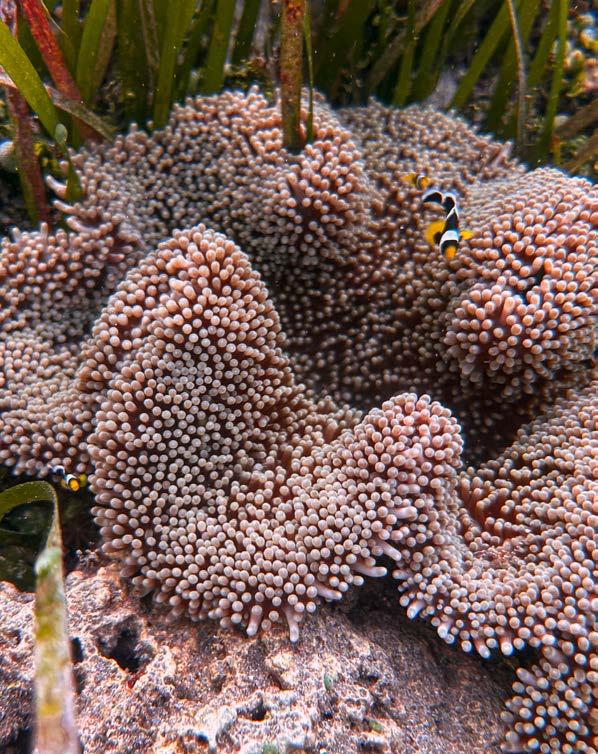
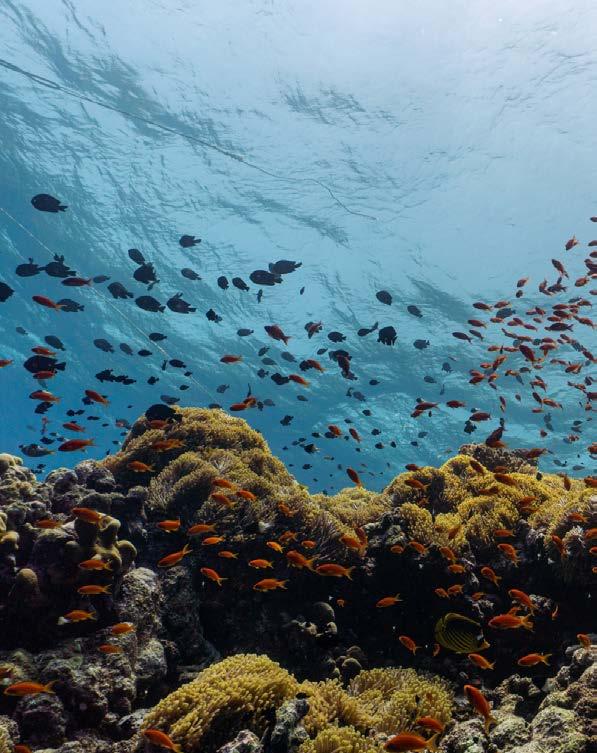
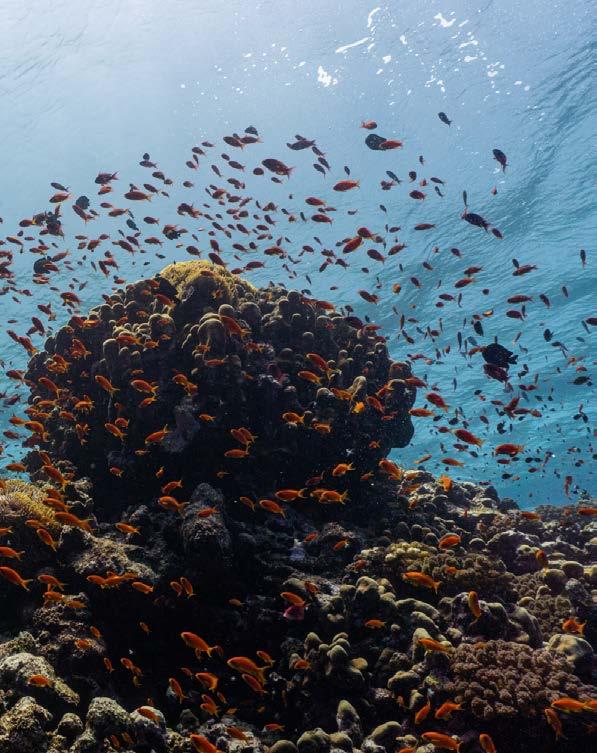
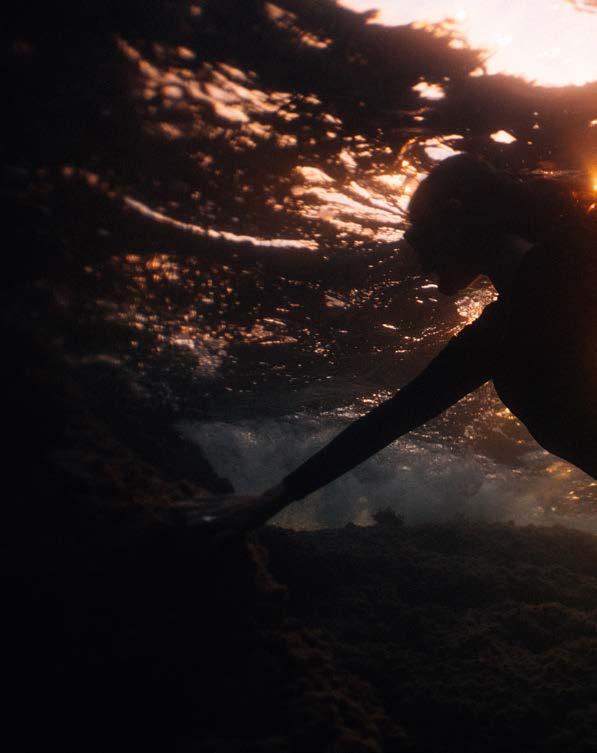
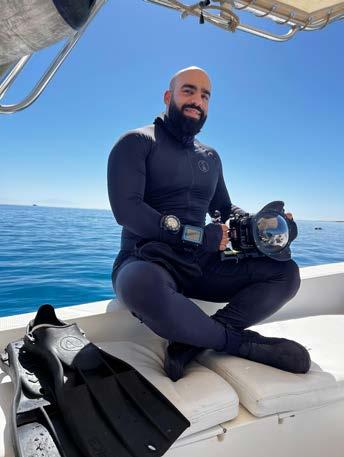
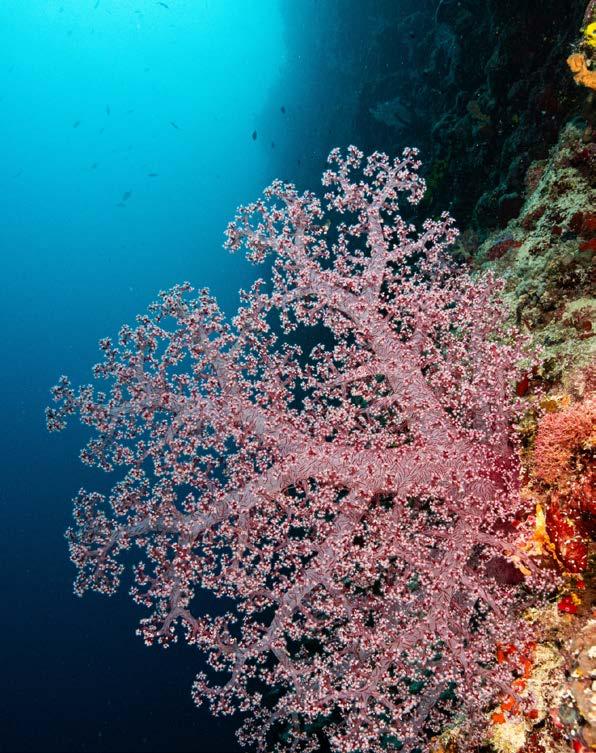
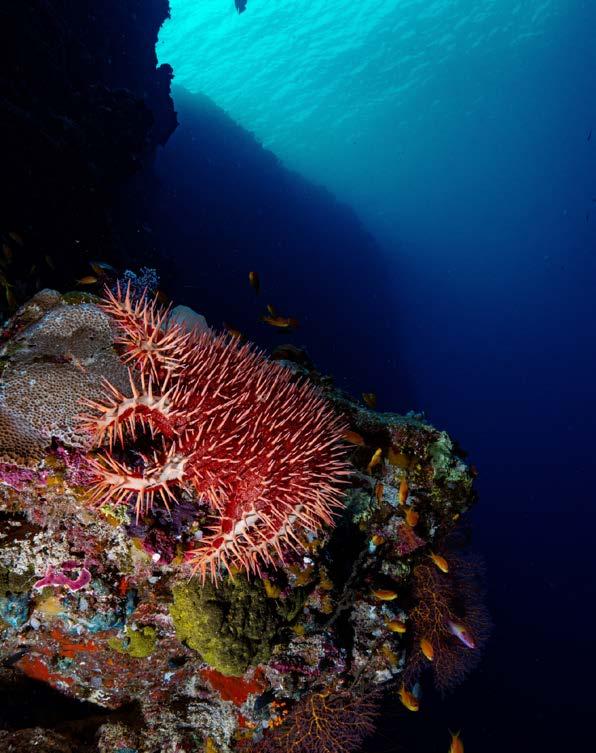
© Ali Alabyadh
Published by: Santi Permana Rahayu © 2026 | All rights reserved
Contact: s.rahayu@wolfrudel.com Website: www.parivesa.com
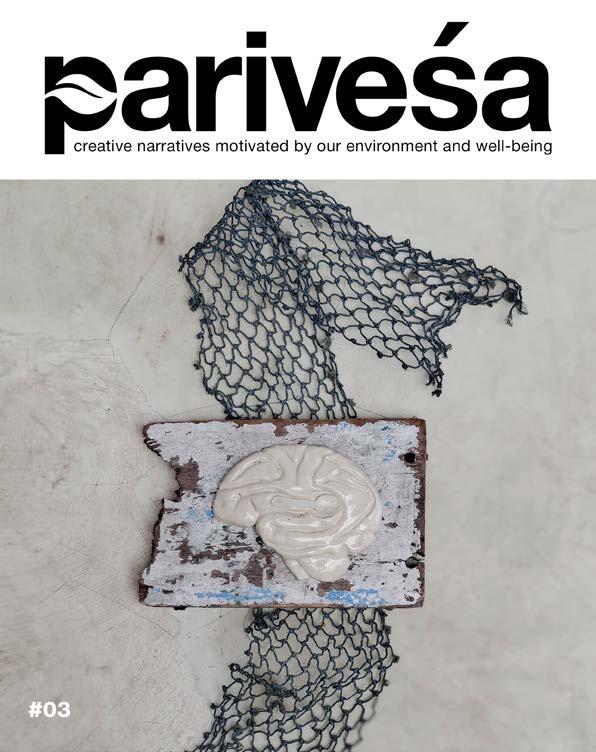
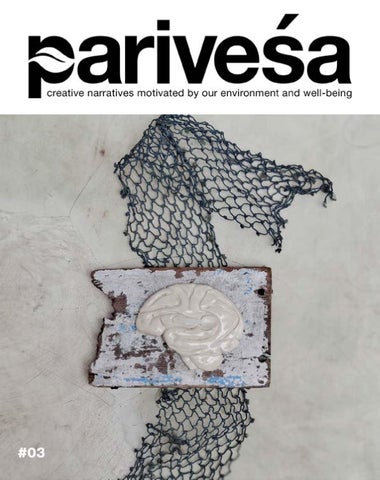
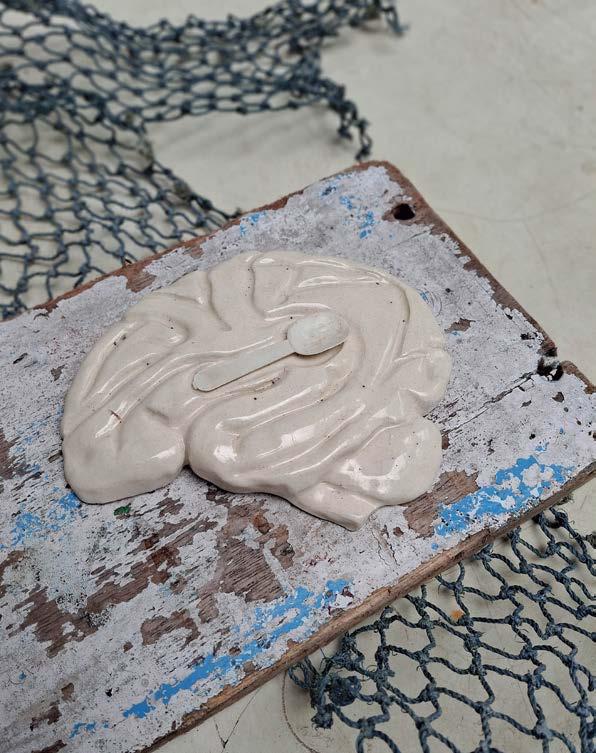
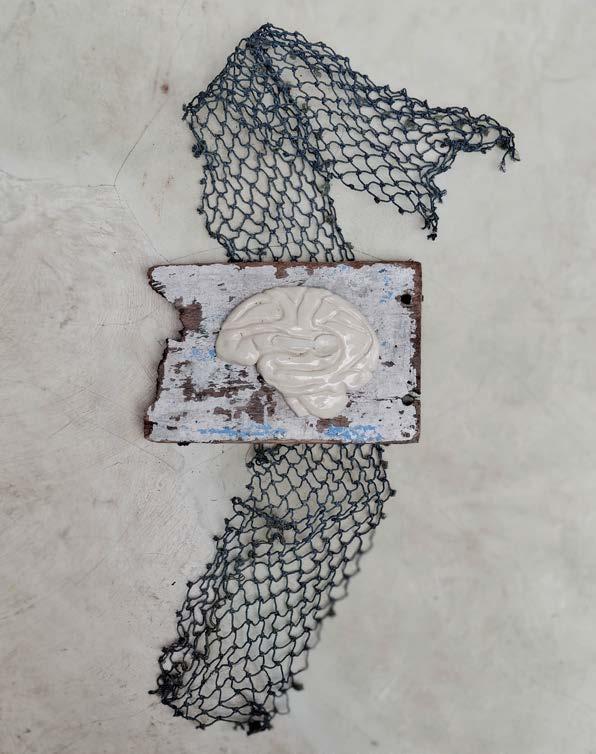
Cover image: Artwork by Sofiya Shukhova (Brain Spoon, 2025)
Wolf Rudel Media parivesamagazine www.parivesa.com
Just as a year closes and another begins.
The ocean’s rhythm mirrors movement, its flows, its high and low tides, reminding us that nothing remains stagnant. Water symbolizes rebirth, purification, and renewal.
Entering 2026 feels like stepping into the sea: washing away the old and emerging renewed.
The ocean reflects 2026 by reminding us that real change happens beneath the surface. Yet it also calls us to take responsibility in addressing climate realities, rising sea levels, ocean warming, biodiversity loss, and the increasing frequency of natural disasters around the world.
Through the third issue of Pariveśa, I invite you to move beyond awareness into action to protect the environments that protect us, to support coastal communities, and to look inward as deeply as we look outward.
The horizon is vast. What we choose now will shape the tide ahead.
All the best, Santi Rahayu Founder, Creative Director, Editor-in-Chief
Thank you for the great collaboration and support
Inés Mas de la Peña, Ali Alabyadh, The Ubud Writers and Readers Festival (UWRF) Team and Janet DeNeefe, Anastasiia Lutcenko, Marlistya Citraningrum, Sofiya Shukhova, Ni Ketut Ekayanti, CoastalKin Team (Mizna and Petricia), Marie-Céline Piednoir, Angelo Legrand, Pascal Philippe, Nathalie Saunderson.
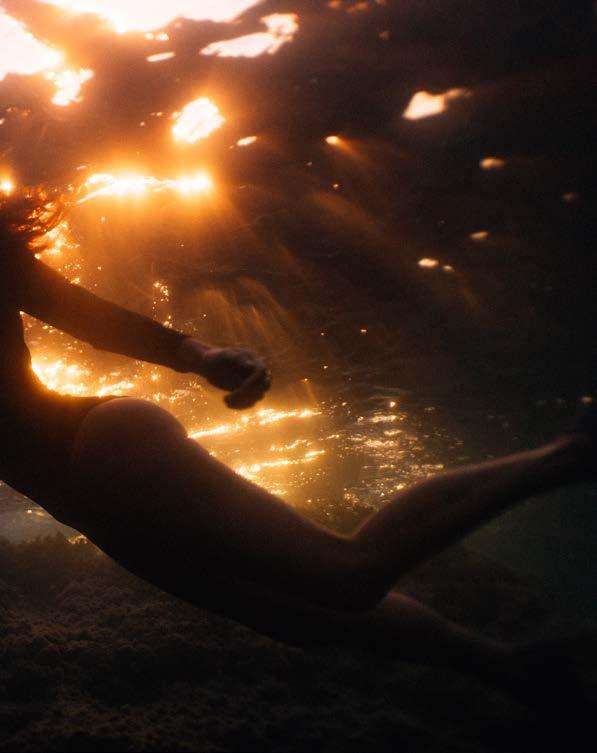
Climate Innovation Manager | Leading acceleration programmes for climate and ocean resilience, while documenting community-led coastal adaptation stories
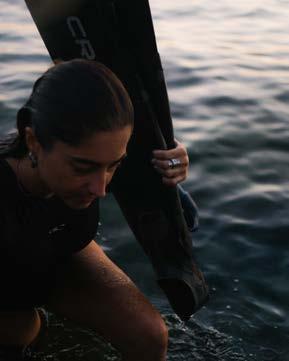
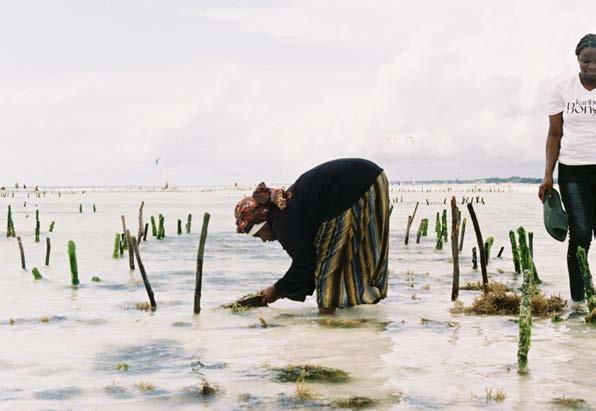
“ Women of the Tide
Where farming replaces fishing and the ocean floor becomes a workspace.
This work documents the women of Zanzibar who cultivate seaweed in the intertidal zone, capturing their relationship with the ocean while reflecting on resilience, vulnerability, and the severe climate change impacts on this island.
The co-founder of Coastal Biotech picks us up in a van. We hurry toward it, hoping for air conditioning. It is already warm for early morning. As we drive, he explains that in many coastal villages it is the women who farm seaweed while the men go out fishing.
There is a strong connection to the ocean here, yet many women do not swim. It is a relationship shaped by tradition, stories, and inherited roles.
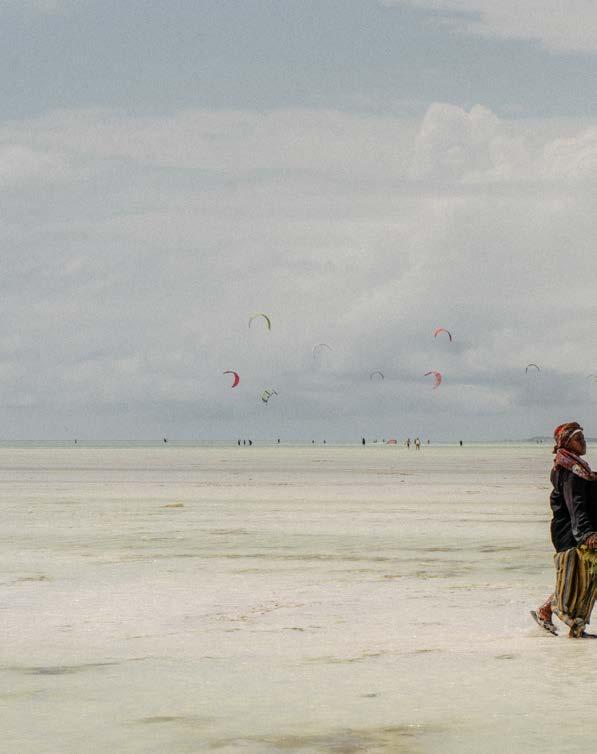
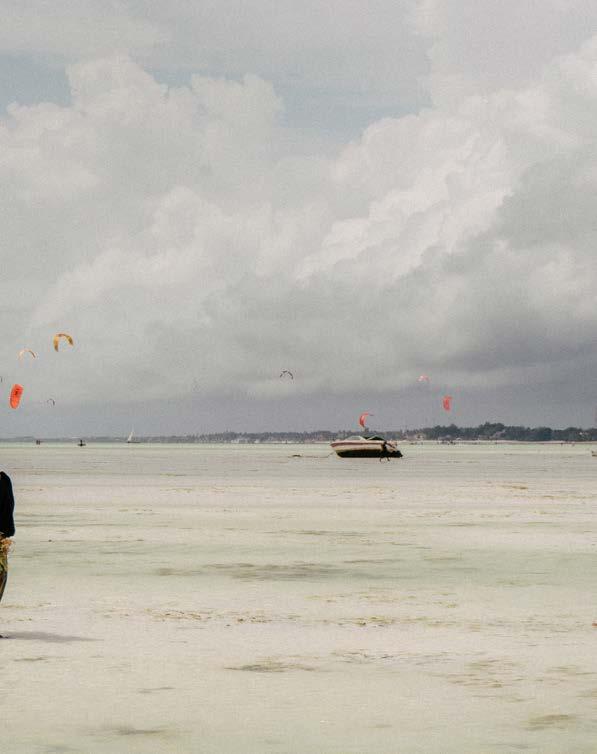
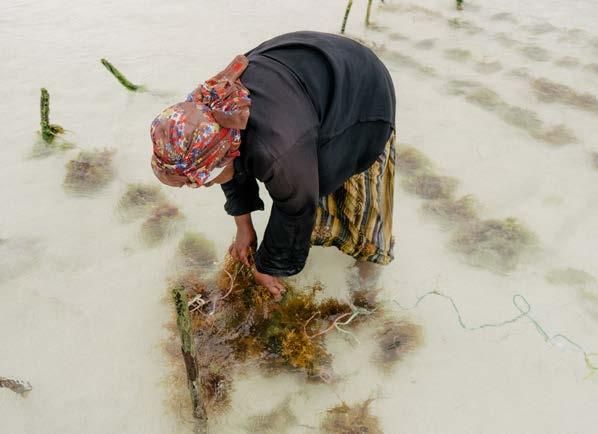
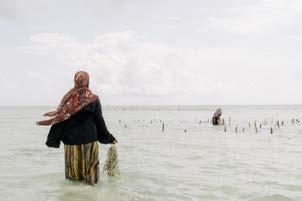
We arrive at their small facility in Paje. Communication is limited since we do not speak Swahili, but the women welcome us and show us happily around. As we approach the shore, I begin to notice thin sticks rising from the shallow water. That is where the seaweed grows.
The scene feels almost surreal. Tourists are learning to kite surf in the distance, bright kites across the sky, while rows of seaweed farms stretch across the sea beside them.
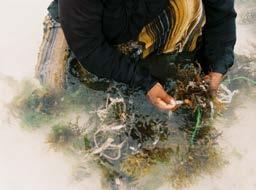
We walk out toward the farms, the tide shallow enough to walk for long with water at our kneews. Around us, women kneel or sit on the seafloor, water sometimes reaching their chests as they gather seaweed from the lines.
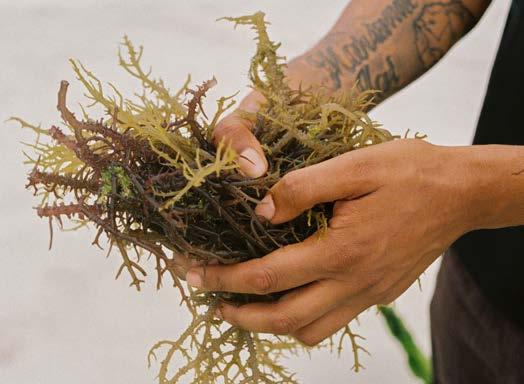
I am naturally drawn to the textures and colors of the algae, to the way it tangles between fingers. I grew up by the Mediterranean, where the sea has no
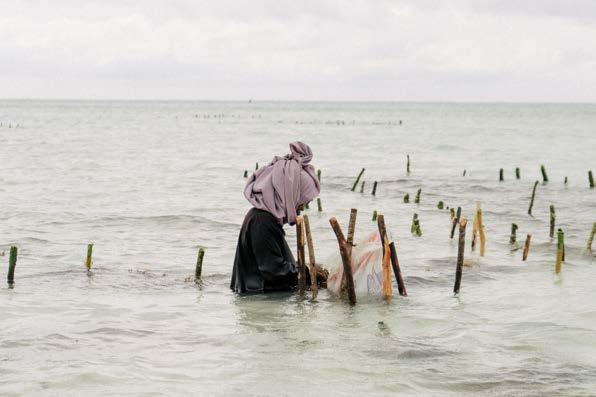
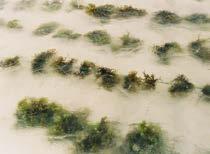
tides. In Zanzibar, the rhythm is different. The tide withdraws dramatically, revealing a completely different world where farming replaces fishing and the ocean floor becomes a workspace.
For generations, seaweed farming has provided income and a degree of independence for women here. But the water is warming. Sea surface
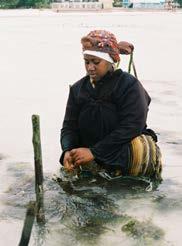
temperatures now frequently reach around 29°C, stressing traditional seaweed varieties and making them more vulnerable to disease. Harvests have become less predictable.
In some areas, farmers have tried moving their lines into deeper, cooler waters. But in many Tanzanian communities, women were never taught to swim. The sea that sustains them can also be unforgiving. Going deeper is not simply an adjustment. It is a risk.
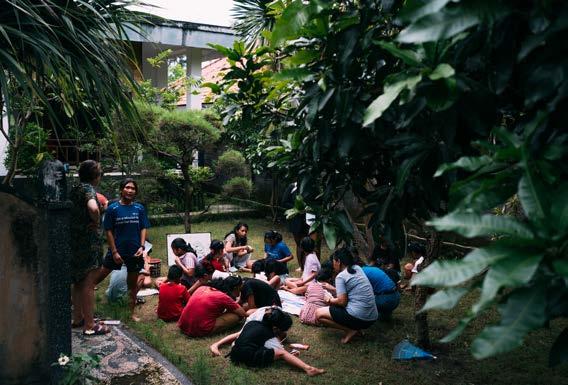
Two weeks ago, Coastal Kin partnered with Eka from Sekolah Biru and Patricia to teach the kids in Amed about their ocean.
My friends and I ended up helping. Mostly awkwardly, since we don’t speak Indonesian yet but the kids’ English was far better than our Bahasa.
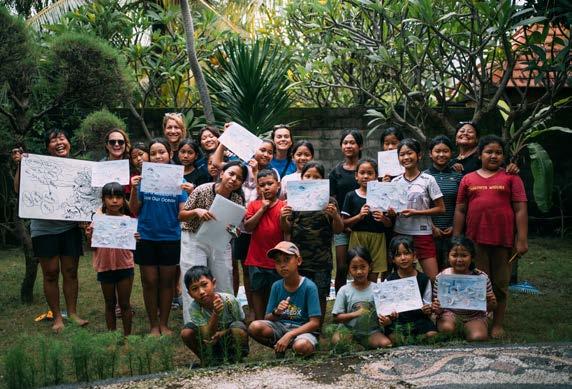
When children understand their ecosystems, they grow up more likely to protect them and advocate for them.
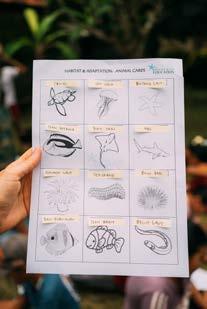
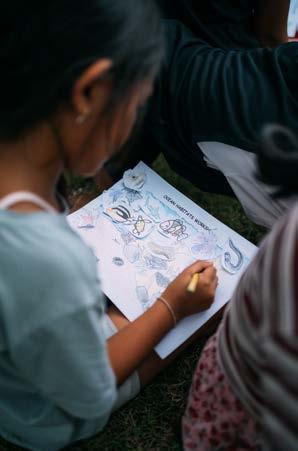
Ocean Days Conference. We had landed in that conference by chance. We were going to be in Indonesia for three months while I worked on this photographic storytelling project and somehow we found ourselves in a room full of ocean people.
Santi told us about her community (Coastal Kin) built around how our relationship with the ocean matters. They teach young generations about marine conservation, organise donations to support coastal communities, and rescue sea turtles. But more than anything, they nurture connection.
Knowledge becomes stewardship. Stewardship becomes protection. And protection becomes resilience.

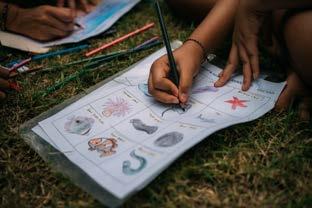
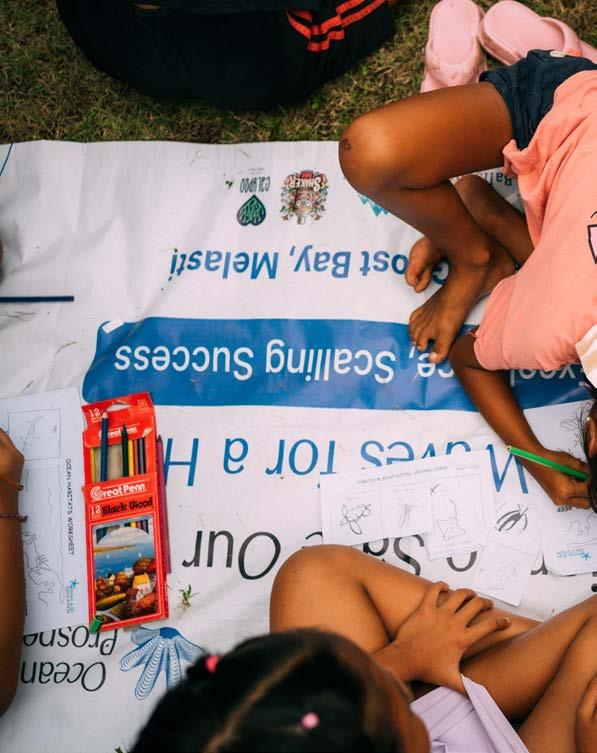
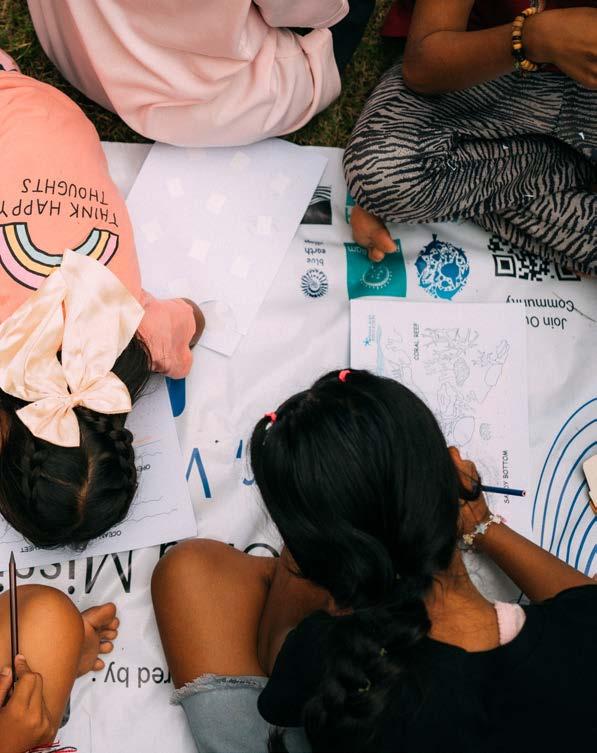
She invited us to participate on of their sessions in Amed. The kids had to match different marine animals to their habitats. They were debating, asking and correcting each other. Trying to remember where each species belongs.
This is where adaptation begins. Adapting to climate change won’t only happen through infrastructure or policy. It happens through involving the community and raising awareness.
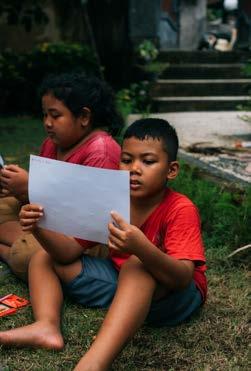
When children understand their ecosystems, they grow up more likely to protect them and advocate for them. Maybe it’s a 8 year old in Amed who learns that coral isn’t a rock, but a living animal. Next time she sees someone stepping on it, she says something.
Knowledge becomes stewardship. Stewardship becomes protection. And protection becomes resilience.
ReGeneration International
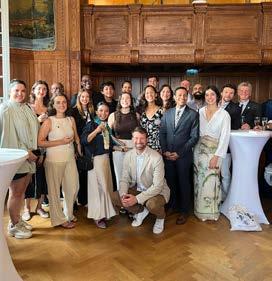
The ocean has a way of bringing unlikely conversations to the surface. I met Ali Alabyadh at the Palais des Rois Sardes during the United Nations Ocean Conference, at a gathering hosted by the Prince Albert II of Monaco Foundation alongside members of ReGeneration International, where stories of restoration, responsibility, and hope for marine ecosystems quietly unfolded among delegates, scientists, and storytellers.
Moments like these remind us that climate dialogue does not only happen in formal negotiations, but also through shared encounters between people devoted to protecting life on Earth. It was within this atmosphere of exchange and reflection that our conversation naturally moved toward the ocean itself — its fragility, resilience, and the individuals working beneath its surface.
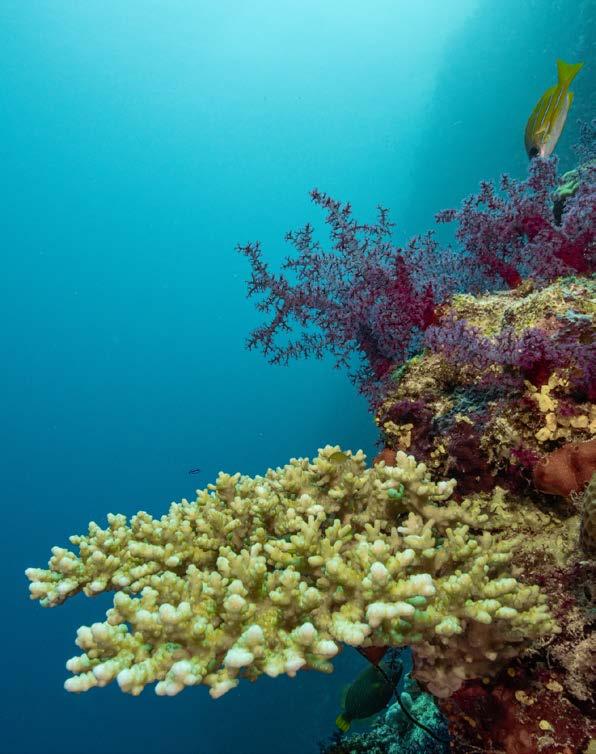
Known for his outstanding underwater imagery and commitment to ocean advocacy, Ali’s work offers a window into coral ecosystems beyond the Indian Ocean. Below, Ali shares his climate journey, reflections on coral restoration, and the role of storytelling in protecting the world beneath the waves.
Could you share your name, profession, and place of origin? Is there a nickname you feel connected to?
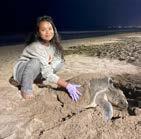
My name is Ali Alabyadh. I am a marine scientist, geologist, underwater photographer, and filmmaker. I am from Tarout Island in the Arabian Gulf, on the eastern coast of Saudi Arabia.
Please take us through your climate journey as a marine scientist. Where have your dives taken you?
My climate journey began before my career as a marine scientist. I started as a petroleum geologist working in the oil and gas sector for two years. However, my passion for nature drove me away from working in an extractive industry and toward a career that is more conscious and positively impactful for the environment.
In 2021, I completed a master’s degree in geology and left my position in the oil and gas industry to pursue another master’s degree, this time in marine science.
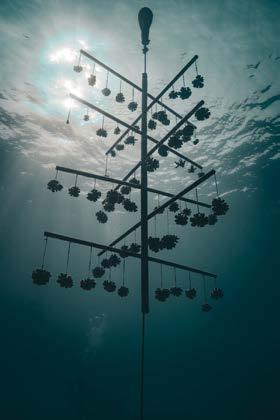
Since joining the program, I have had the privilege of diving and exploring many reefs around KAUST and along the Saudi Red Sea coast.
Our coral restoration work has led to collaborations with stakeholders within the Kingdom and beyond. I have also had the opportunity to present my research around the world at scientific conferences and international meetings such as COP16, the Blue Earth Summit, and the UN Ocean Conference.
How often do you dive, and how long has diving been part of your life?
I began my open water diving certification in August 2020 to support my transition from petroleum geology to marine biology. Since joining the marine science program at KAUST, scuba diving has become a constant in my life, both professionally and recreationally.
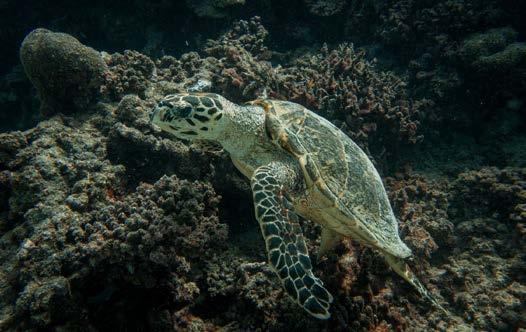
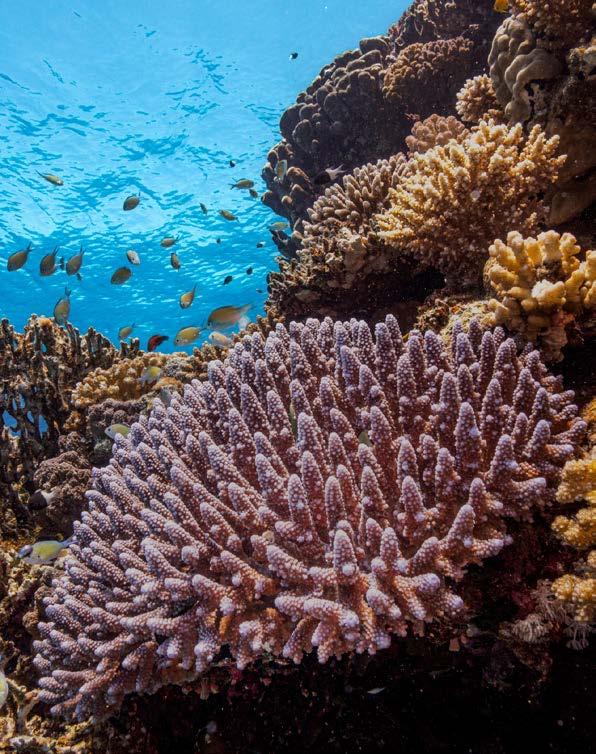
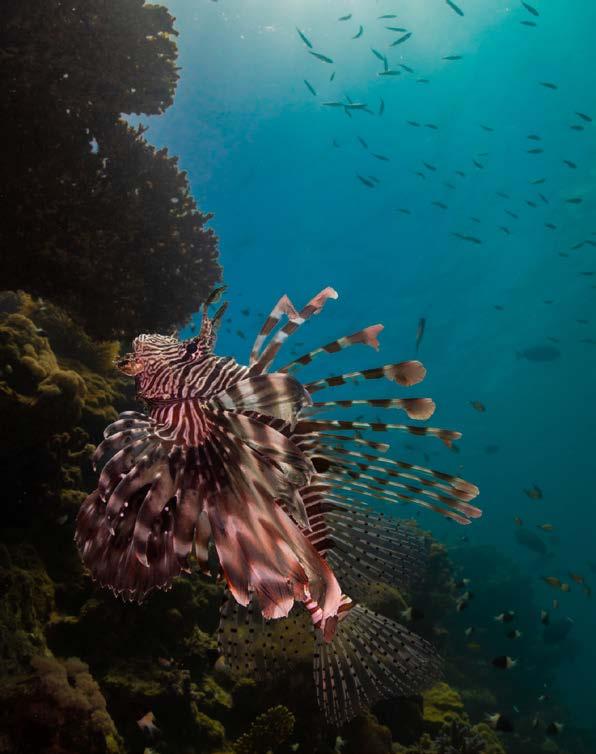
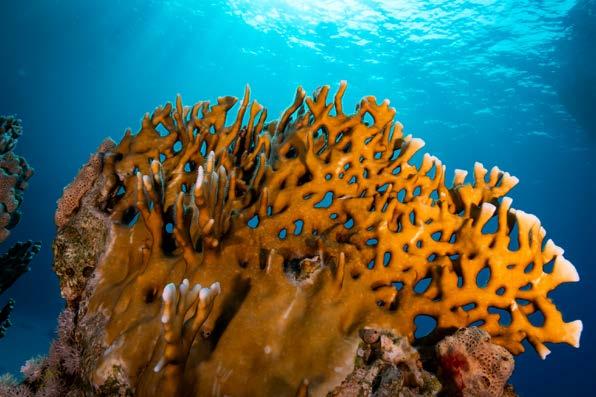
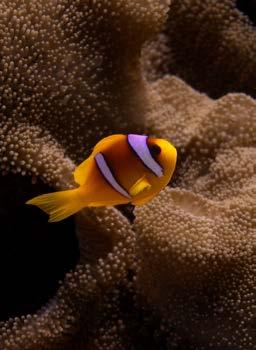
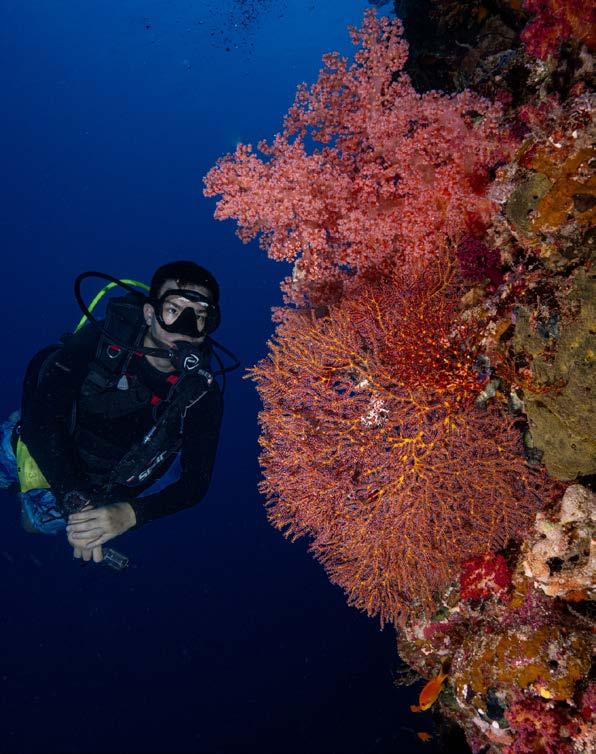
“Witnessing this rapid degradation was deeply frustrating for those of us connected to these ecosystems.
That frustration transformed into determination. We focused our efforts on restoring parts of the reef while conducting scientific experiments to improve restoration techniques and innovate within this field.
— Ali Alabyadh
I have continued improving my skills and am now a rescue diver, completing the AAUS Scientific Diver training in 2023. Over the past three years, I have served as a lead diver, writing dive plans, supervising daily operations, and contributing to the advancement of coral restoration practices.
From your perspective, how would you describe the current state of the marine ecosystem in Saudi Arabia?
Living on the Red Sea coast for the past six years has given me a unique perspective on its marine ecosystems. During my first three years, I experienced pristine and thriving coral reefs. The Red Sea has often been considered by scientists as a potential thermal refuge from climate change for corals.
However, the summers of 2023 and 2024 brought unprecedented and devastating heatwaves that caused widespread coral mortality in several areas, including reefs adjacent to my university. Witnessing this rapid degradation was deeply frustrating for those of us connected to these ecosystems.
That frustration transformed into determination. We focused our efforts on restoring parts of the reef while conducting scientific experiments to improve restoration techniques and innovate within this field.
How are coastal communities responding to ocean pollution?
Local divers regularly organize clean-up campaigns to remove ghost nets and abandoned fishing gear from dive sites. We have also collaborated with corporate partners to organize Red Sea awareness campaigns aimed at increasing public engagement in protecting marine environments, particularly from beach pollution and impacts from tourism boats.
If you weren’t a marine scientist and filmmaker, what path might you have taken?
I would still be a geologist. Do you have a favourite marine species?
I am fascinated by killer whales, or orcas. These apex predators display remarkable intelligence and cooperation across the world’s oceans.
During a scientific mission aboard the OceanXplorer in Cabo Verde, I participated in aerial marine megafauna surveys by helicopter. Seeing four orcas swimming and breaching below us was a defining moment — the first time I felt a profound connection to wildlife photography and filmmaking.
Finally, what are three words that ground and uplift you when motivation feels distant?
Solidarity. Struggle. Hope.
Conversations like this remind us that climate action is not only driven by policy or science alone, but by personal transformation — by individuals who choose to realign their careers, passions, and purpose with the living world.
Through science, storytelling, and quiet persistence beneath the surface, Ali Alabyadh represents a generation of ocean guardians working at the intersection of knowledge and empathy. His journey reflects a wider truth: restoration begins not only with reefs, but with people willing to change course in service of the planet.

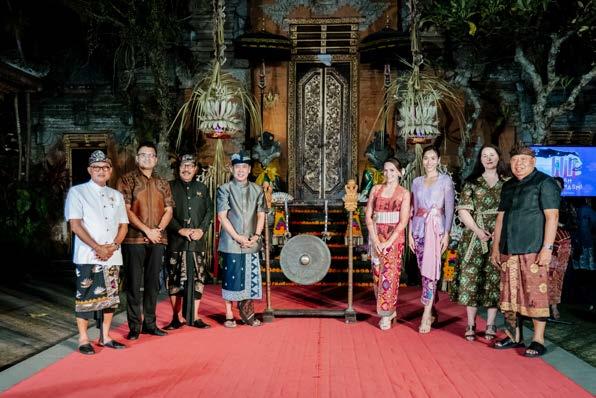
By: Santi Rahayu | Pariveśa Magazine
“Aham Brahmasmi invites us to consider the deep connection between the self and the universe. It poses the question: can wisdom and innovation coexist for the greater good, or might they lead us toward an age of imbalance, where technological capabilities outpace our moral and spiritual growth?
— Janet DeNeefe, Festival Founder and Director
The Ubud Writers & Readers Festival (UWRF) is one of Asia’s most prestigious annual literary and cultural gatherings, bringing together thinkers, writers, artists, journalists, and activists from around the world in Bali to connect, inspire, and share ideas.
The 2025 edition embraced the theme “Aham Brahmasmi — I Am the Universe,” a Sanskrit concept rooted in ancient Hindu philosophy that expresses the unity between the human self and the cosmos. The theme reflects the understanding that each individual carries the same creative essence as the universe itself, inviting reflection on humanity’s interconnected relationship with nature, culture, and the world we inhabit.
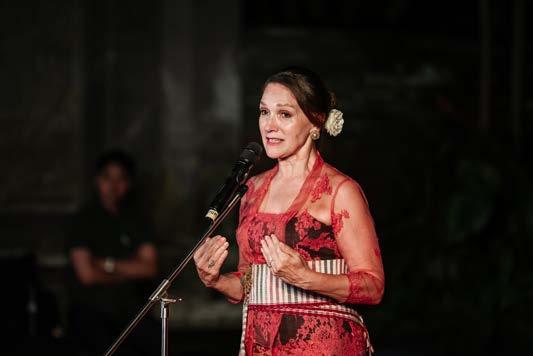
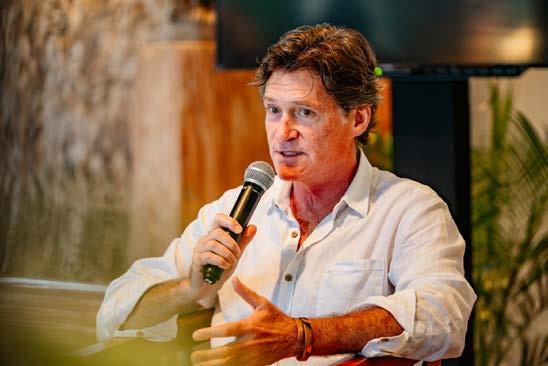
Inspired by this philosophy, the festival expanded its programme to include dedicated climate sessions, welcoming leading voices in environmental advocacy and storytelling. Among the speakers were award-winning journalist, filmmaker, and environmental advocate Craig Leeson, as well as Melati Wijsen, co-founder of Bye Bye Plastic Bags and founder of Youthtopia, alongside other climate professionals contributing to the dialogue between culture, creativity, and environmental action.
“Aham Brahmasmi invites us to consider the deep connection between the self and the universe. It poses the question: can wisdom and innovation coexist for the greater good, or might they lead us toward an age of imbalance, where technological capabilities outpace our moral and spiritual growth?”
— Janet DeNeefe, Festival Founder and Director
To delve deeper into how climate narratives became woven into the festival’s programme, we spoke with Janet DeNeefe about the vision behind integrating environmental conversations into UWRF’s cultural space.
Is this the first time the UWRF team has incorporated climate issues into the festival’s programme?
No. Environmental and land-care conversations have surfaced across many previous editions of the Ubud Writers & Readers Festival. What has changed is the urgency. Climate is no longer a peripheral topic; it now runs through discussions of identity, culture, migration, food systems, and the future of storytelling. That rising urgency led us to dedicate a special day in the programme to these vital conversations.
Could you tell us about the ideation process for adding climate sessions to UWRF 2025? Who initiated this direction?
This evolution has been collective. Writers, publishers, activists, and members of our local community are increasingly bringing forward stories shaped by ecological stress and environmental change. Our programming listens to what artists and thinkers are already grappling with. The festival’s role is to gather those voices, amplify them, and create the conditions for meaningful exchange.
Could you elaborate on the theme Aham Brahmāsmi: I Am the Universe and how it integrates with the current environmental conditions in Bali?
Aham Brahmāsmi expresses interconnection — the understanding that the self is inseparable from the wider universe. In Bali, this philosophy lives in ritual, agriculture, water systems, and community structures that link mountain, river, sea, and people. At a time of environmental strain, the theme becomes a call to awareness. If we are part of the universe, then the care of land and water is inseparable from the care of culture, memory, and future generations.
How does the UWRF team integrate climate mitigation efforts into festival activities, especially when the events are primarily focused on writers, books, and cultural heritage?
Our approach is practical as well as narrative. We work to reduce single-use materials, support local producers, promote refill initiatives, and prioritise venues that reduce transport impact. At the same time, we invite authors, journalists, and knowledge keepers whose work documents environmental realities. Literature expands imagination, and imagination is where change begins.
How would you describe the audience’s response to the climate-focused sessions?
The response has been extraordinary. In Bali, climate pressure is visible in everyday life — in water systems, farming cycles, coastal development, and waste. Because of this immediacy, readers, writers, students, and community groups actively seek spaces for discussion.
There is a deep desire to gather, listen, and exchange ideas. The festival becomes a meeting place where local experience meets global insight, and where shared concern grows into collective momentum.
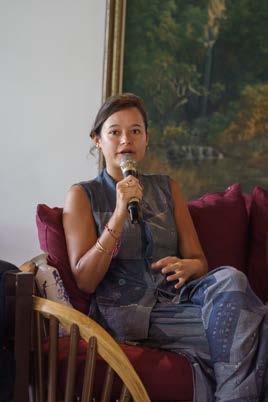

Which specific Sustainable Development Goals (SDGs) does UWRF focus on?
Our work naturally intersects with:
SDG 11 — Sustainable Cities & Communities
SDG 12 — Responsible Consumption & Production
SDG 13 — Climate Action
SDG 17 — Partnerships for the Goals
These goals reflect our position as a cultural convenor connecting storytellers, citizens, and institutions.
What has been the response from collaborators, particularly within the hospitality industry?
The response has been very positive. Many in the hospitality sector recognise that their long-term future depends on environmental responsibility. Participating in climate conversations allows them to contribute to solutions while demonstrating leadership to increasingly aware audiences.
Do you have plans to scale up the climate sessions for future festivals?
Yes — with care and intention. We aim to deepen conversations, broaden regional participation, and involve younger voices while ensuring the programme remains grounded in literature and lived realities.
What are the primary obstacles your team faces when implementing sustainability principles during the festival?
The biggest challenge is resources. Meaningful environmental action requires serious investment in waste infrastructure, cleaner energy, responsible materials, and long-term systems. Cultural festivals rarely have access to funding levels that allow transformation as quickly as the climate crisis demands.
At the same time, we cannot ignore the footprint created by travel and large public gatherings. The tension between urgency and capacity is real. What we can do is move forward each year, demand better solutions, strengthen partnerships, and use storytelling to mobilise public imagination. Without that shift in awareness, structural change will always move too slowly.
As Bali stands at the intersection of ancestral wisdom and rapid transformation, spaces like the Ubud Writers & Readers Festival reveal how storytelling, culture, and environmental awareness are no longer separate conversations but intertwined acts of care. In embracing Aham Brahmasmi, the festival reminds us that safeguarding Bali’s future begins with recognising our inseparable relationship with the living world—where art, ideas, and collective imagination become essential forces in shaping a more balanced and regenerative future.
“Safeguarding Bali’s future begins with recognising our inseparable relationship with the living world— where art, ideas, and collective imagination become essential forces in shaping a more balanced and regenerative future.
— Janet DeNeefe, Festival Founder and Director

Journalist (International Press Card) | ESG & Communications Strategist
Co-Founder of Lutce Ad Astra Media
This article explores the idea of Awareness as a potential 18th Sustainable Development Goal (SDG). Drawing on personal experiences, field observations, and a small survey among philanthropists, it argues that awareness is not a passive state but a driving force that connects knowledge to action. While data and measurable results are crucial, authentic communication and human stories are equally vital in inspiring long-term commitment to sustainability. Awareness is presented as the bridge that links strategy with empathy, making the other 17 SDGs possible.
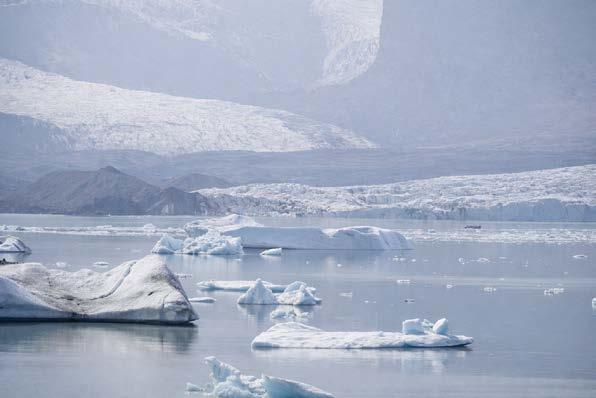
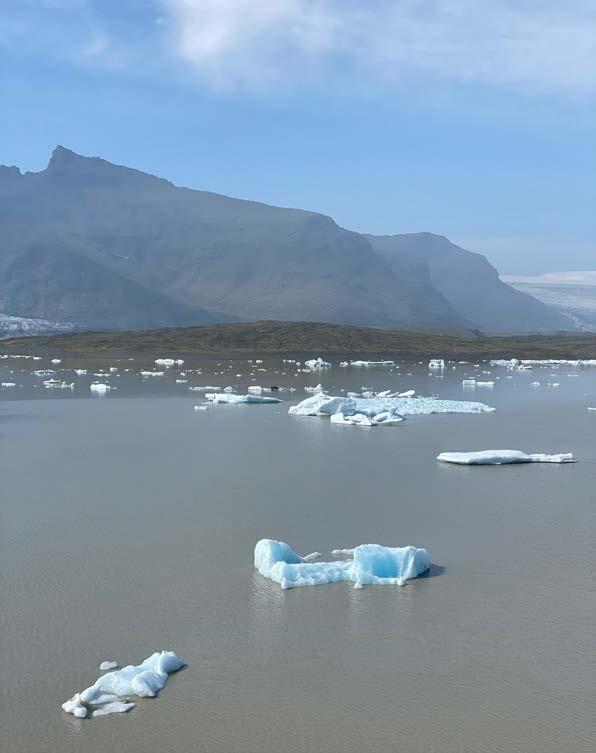
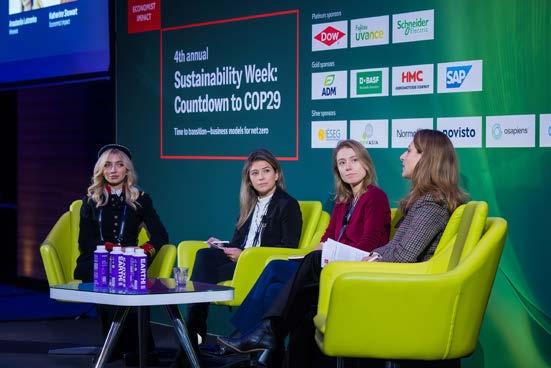
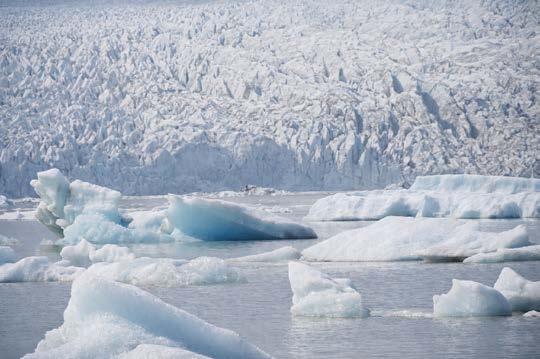
The first time I truly felt the urgency of climate change, I was standing on the edge of a glacier in Iceland. The air was sharp with salt and ice, and beneath my boots I could hear the faint groaning of the ice as it cracked, splintering into streams of pale blue water. I had come there as a researcher, still more comfortable with texts and data than with landscapes, teaching Russian at the University of Côte d’Azur and working on computational linguistics. Yet in that moment, surrounded by silence broken only by the sound of melting ice, I understood something no dataset had ever taught me.
Change was no longer an abstraction. It was alive, it was fragile, and it was vanishing right in front of me. That glacier changed my life. It pushed me toward a vegetarian lifestyle, showed me the
necessity of teamwork in the harshest conditions, and taught me that ethics in nature conservation are not a theory but a survival skill. When I returned, I enrolled in the Green Management School and began advocating for pollinator rights, immersing myself in the ways ecosystems depend on small, almost invisible actors.
Later, sailing around the Scottish Isles, I listened to fishermen who told me how the sea had shifted in their lifetimes — the fish moving north, the currents changing, the shorelines crumbling. These voices, along with the sound of the wind against the sails and the sting of salt spray on my face, became part of my education. Eventually, through my work with an association in Monaco, I tried to weave these lessons into projects that combine education, sustainability, and communication. What I dis-
covered along the way is that data may measure progress, but it does not inspire it. Reports and frameworks are crucial, but they rarely reach the human heart. Donors read numbers, policymakers scan dashboards, communities hear abstract goals.
What is missing is the bridge. That bridge is communication. Not communication as in glossy brochures or polished campaigns, but as in the trembling voice of a teacher explaining why clean water matters to her students, or the laughter of a child studying under solar-powered lights for the first time. These are the stories that travel farther than any spreadsheet: across borders, into boardrooms, and, most importantly, into homes.
Stories have always carried our understanding of the world. Long before development plans, there were tales told around fires, teaching communities how to survive, what to value, and what to remember. Today, sustainability needs stories just as urgently. A single child planting a mangrove tree can say more about resilience than a hundred-page report on reforestation. A farmer who shifts to regenera-
tive practices embodies adaptation better than any policy paper. Numbers can prove impact, but stories make us believe it.
Yet in a world saturated with information, the challenge is no longer to tell a story, but to tell it with authenticity. People have grown weary of staged campaigns and empty promises. They want to hear unfiltered voices: the fisherman who admits he no longer recognizes the tides, the community leader who confesses the struggle to balance survival and conservation. These accounts may be imperfect, but they carry the raw truth that builds trust. Authenticity has become the new currency of communication.
A small grassroots initiative, if honest, can stand alongside global organizations and sometimes surpass them in resonance. Authenticity keeps donors engaged, not only because of the results achieved, but because of the honesty about struggles along the way. By showing things as they are, with vulnerability and imperfection, projects invite belief, empathy, and action. To explore this further, I conducted a short anonymous survey among several philanthropists I personally know.
They want to hear unfiltered voices: the fisherman who admits he no longer recognizes the tides, the community leader who confesses the struggle to balance survival and conservation. These accounts may be imperfect, but they carry the raw truth that builds trust.
Although the sample was small, the answers revealed meaningful patterns. When asked what primarily motivates them to support ecological or social projects, two out of three highlighted long-term strategy and scale, while others mentioned measurable results or recommendations from trusted people. Interestingly, none of them chose “personal stories and emotions” as a first driver, yet when faced with the choice between numbers and human stories, the majority admitted that they value both equally.
One respondent recalled being inspired by a WWF initiative in India that introduced turtle-extrusion devices on fishing vessels, noting the large-scale impact as decisive. When asked about communication, all participants emphasized the need for regular updates and transparency about challenges, with one stressing the importance of sharing personal stories to measure “real impact.” Authenticity, too, was rated extremely high: every respondent gave it a score of 4 or 5 out of 5, underlining that honesty and absence of greenwashing are crucial in building trust. Equally telling, 100% of respondents agreed that if there were to be an 18th Sustainable
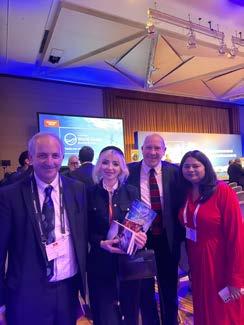
Awareness transforms knowledge into responsibility, shifting climate change from something distant into something personal. And once it becomes personal, it cannot be ignored.
Ad Astra: Embark on a journey of bold ideas and insights, lightning the path to the sustainable future. https://www.linkedin.com/newsletters/ad-astra-7259060904833548288/
Development Goal, Awareness would be necessary. Finally, when asked what could make them stop supporting a project, their answers converged: lack of transparency, lack of clarity about funding, and lack of impact. In other words, what inspires giving is not just a vision of change, but the confidence that this change is real, visible, and authentically communicated.
Awareness is often mistaken for a passive state, as if to be aware were simply to know. But in truth, awareness is a force. When a child understands why the ocean matters, they bend down to pick up plastic on the beach. When a community realizes the promise of renewable energy, they begin to form cooperatives. When a donor connects with a story, they do more than give — they become an advocate. Awareness transforms knowledge into responsibility, shifting climate change from something distant into something personal. And once it becomes personal, it cannot be ignored.
That is why I believe awareness should stand alongside the other 17 Sustainable Development Goals. It is the thread that binds them together, the condition that makes all the others possible.
Without awareness, education, clean water, climate action, and partnerships remain technical objectives. With awareness, they become human commitments. I began this journey at a glacier that has since receded further, its edges thinner and weaker than when I first stood there.
That image reminds me why awareness matters: it is the moment when you notice something you can never unsee. The crack of the ice, the laughter of a child, the words of a fisherman — each one a story, each one a call to act. And in the end, only when we are aware — truly aware — can we act, connect, and build a future worth sustaining.
Awareness should be recognized as the 18th Sustainable Development Goal. It is not simply knowledge but the transformative force that turns information into responsibility, numbers into stories, and technical objectives into lived human commitments. Awareness grows stronger when embodied by leaders who live its values.
In Monaco, for instance, H.S.H. Prince Albert II has long shown that caring for the planet is not only a policy but a personal commitment. Such examples remind us that awareness begins with responsibility — and responsibility begins with each of us.
TED X Speaker | Director of Communication and Outreach at IESR
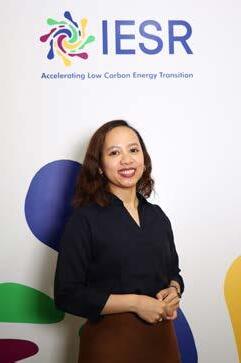
Dr. Marlistya Citraningrum (Citra) is the Director of Communication and Outreach at IESR, focuses on humanizing the climate and energy transition issues through research-driven storytelling, transforming complex climate data into narratives that foster meaningful engagement across all levels of society. In her strategic role, Citra strengthens IESR’s public leadership by aligning high-level policy ambitions, from ambitious net-zero roadmaps to solar energy deployment and subnational transition planning, with strategic messaging tailored to local contexts.
The Institute for Essential Services Reform (IESR) is a prominent Indonesian think tank dedicated to accelerating the nation’s transition toward a low-carbon energy system through rigorous evidence-based advocacy. By bridging the gap between technical research and actionable policy, the institute provides critical modeling and roadmaps, such as the Bali Net Zero 2045 pathway, to guide government agencies, private sectors, and civil society toward sustainable energy solutions. Beyond technical analysis, IESR plays a vital role in public education and multi-stakeholder collaboration, ensuring that the shift to renewables is not only technologically sound but also socially equitable and economically resilient for the Indonesian people. IESR is headquartered in Jakarta, with local offices in Semarang (Central Java) and Denpasar (Bali).
For decades, Bali has served as Indonesia’s primary stage for the world, a landscape of emerald rice terraces and intricate rituals that is often more recognizable than the nation itself. To the millions of tourists who flock to its shores, it is a sanctuary of tri angga, the Balinese cultural philosophy that seeks harmony through a sacred three-tiered hierarchy of space and being. Yet, for those of us tracking the island’s energy pulse at the Institute for Essential
Services Reform (IESR), Bali represents a profound paradox: a global icon of environmental wisdom that remains tethered to a fragile, fossil-fueled reality.
Historically, the island has been the backdrop for some of the world’s most significant climate dialogues, from the 2007 UN Climate Conference to the 2022 G20 Summit. On this stage, Bali allows
“IESR’s modeling shows that Bali sits on 22 GW of renewable potential from solar, wind, and hydro. Our July 2025 power system roadmap demonstrates that 100 percent green electricity by 2045 is a technical reality. Already, pioneers are showing the way.”
tradiction. Bali’s economy is locked in a cycle of overtourism that is systematically straining the island’s land, water, and energy infrastructure. In 2024, tourism contributed roughly IDR 107 trillion (~US$ 6.7 billion) to the regional GDP, a staggering 44 percent. This economic engine has come at a high environmental cost, with electricity consumption surging by 16.3 percent annually since the pandemic, nearly triple the national average.
Indonesia to project an identity far removed from its status as a major coal producer; it appears as a leader in cultural wisdom and sustainability. In 2022, the provincial government raised the stakes by declaring a target for net-zero emissions by 2045, fifteen years ahead of the national goal.
But beneath this performance lies a troubling con-
This appetite is not being fed by the sun or the wind, but by aging, carbon-intensive infrastructure. The fragility of this system was laid bare in May 2025 when a fault in the Java-Bali interconnection caused a widespread blackout, highlighting the island’s dependence on imported power. This was followed by catastrophic floods and landslides in September that claimed 16 lives. These were not simply “natural” disasters; they were the result of accumulated vulnerabilities—farmland paved over for luxury villas, clogged drainage systems, and a blatant
disregard for zoning rules. Cyclones intensified by climate crisis is the catalyst, but unchecked development is the fuel.
The most striking contradiction sits in Celukan Bawang. While tourists sip cocktails in “eco-conscious” beach clubs in Canggu, three coal-fired units just a few hours away pump 380 MW of power into the grid. Together with gas plants in the south, they release approximately 4 million tons of CO2 emissions annually. With a reserve margin of just 23 percent—well below the safe national standard, Bali is teetering on the edge of an energy deficit. If
Bali is to survive as a destination and a home, its electricity system requires an overhaul that is both “big and green.”
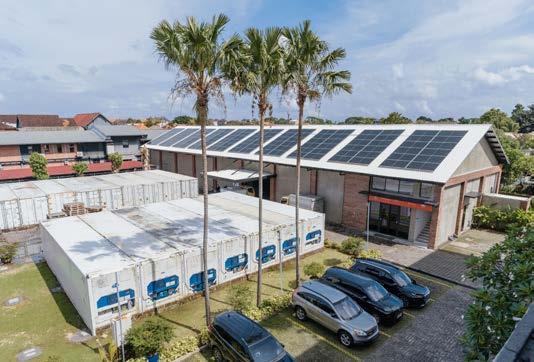
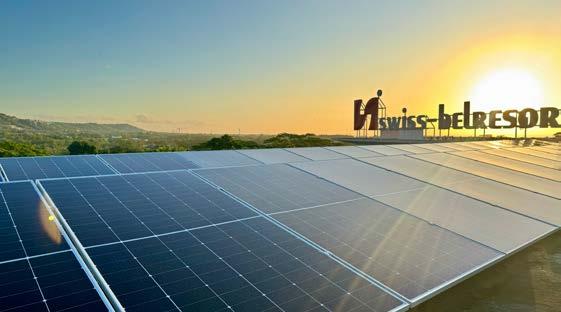
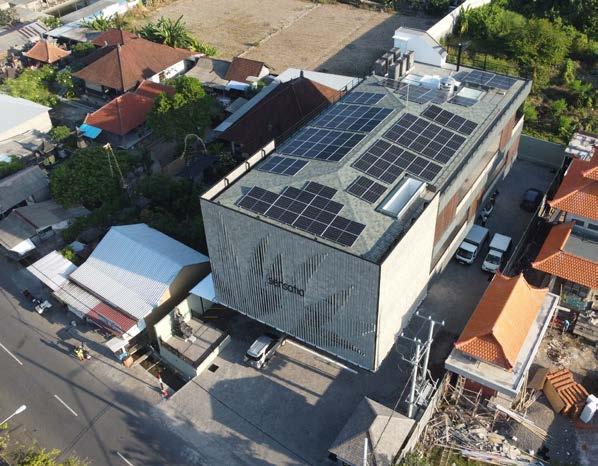
IESR’s modeling shows that Bali sits on 22 GW of renewable potential from solar, wind, and hydro. Our July 2025 power system roadmap demonstrates that 100 percent green electricity by 2045 is a technical reality. Already, pioneers are showing the way. Across the coastlines of Sanur to Jimbaran and the highlands of Ubud, visionary hospitality leaders are transitioning to massive rooftop solar arrays, with some boutique stays now operating almost entirely on sun-drenched
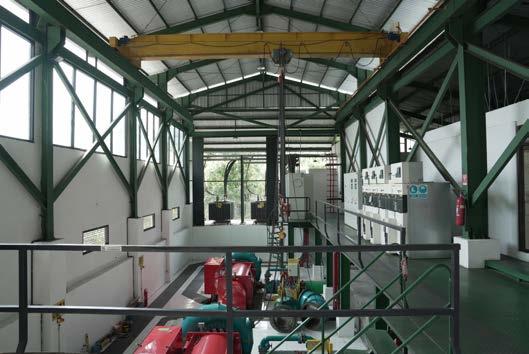
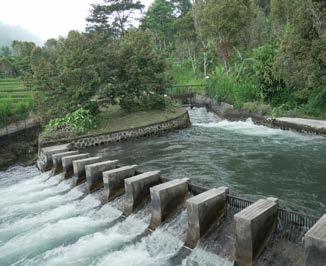
battery systems. Even on Nusa Penida, a 3.5 MW solar farm in Suana now powers roughly 15% of the island’s rising demand, built by our national utility company. There are also microhydro power plants mainly in north of Bali, Buleleng, powering thousands of homes.
This transition is moving beyond niche eco-resorts and into the mainstream commercial fabric. Local brands, malls, and globally recognized restaurants have begun installing solar panels on their Balinese outlets, signaling a shift in how the island’s most recognizable businesses view their energy responsibility. While the residential sector remains segmented—rightfully concerned with upfront costs and grid integration—these commercial pioneers are proving that a low-carbon
“
By choosing to stay and dine at establishments that prioritize clean energy, you are not just a visitor; you are an active participant in Bali’s green rebirth. Your demand today shapes the infrastructure of tomorrow.
footprint is the new standard for doing business in the paradise island.
As we progress toward 2045, the strategy should encompass diversification into system resilience and alternative fuels, such as energy storage solutions and green hydrogen. This approach aims to establish Bali as a center for local technical expertise. While the US$ 42 billion financial cost over two decades is substantial, the return is a resilient economy less vulnerable to the boomand-bust cycles of global tourism, creating 1.6 million high-quality jobs in the process.
For the foreign tourists and expats who call this island home, sustainability in Bali must move beyond the cosmetic. It is about demanding a tran-
its spiritual philosophy. When we frame solar rooftops and electric mobility as instruments of environmental conservation as extension of tri angga, they gain cultural legitimacy that techno cratic plans lack.
Bali has the chance to turn its contradictions into strengths, transforming from an island drowning in overtourism into a global laboratory for renew able resilience. By choosing to stay and dine at establishments that prioritize clean energy, you are not just a visitor; you are an active partici pant in Bali’s green rebirth. Your demand today shapes the infrastructure of tomorrow. Let us en sure our presence on this island leaves a legacy of light, not a footprint of carbon.
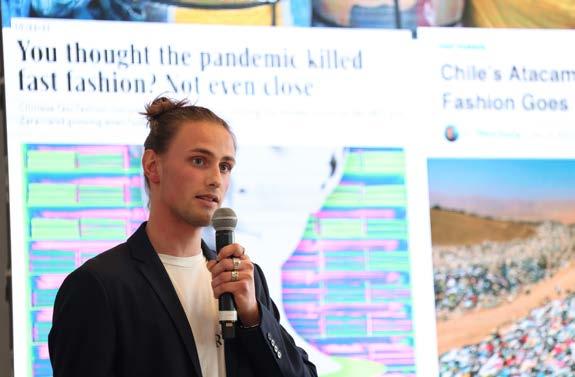
Co-Founder R4 Clothing | Advisory Board Member
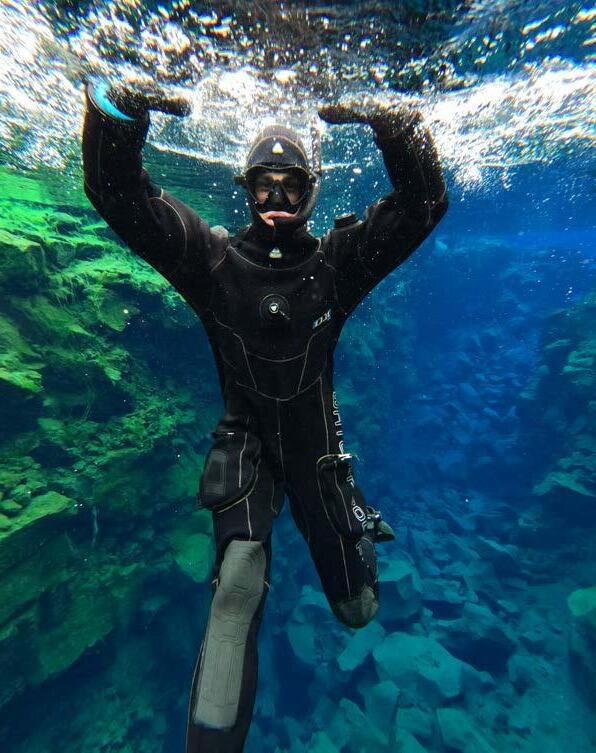
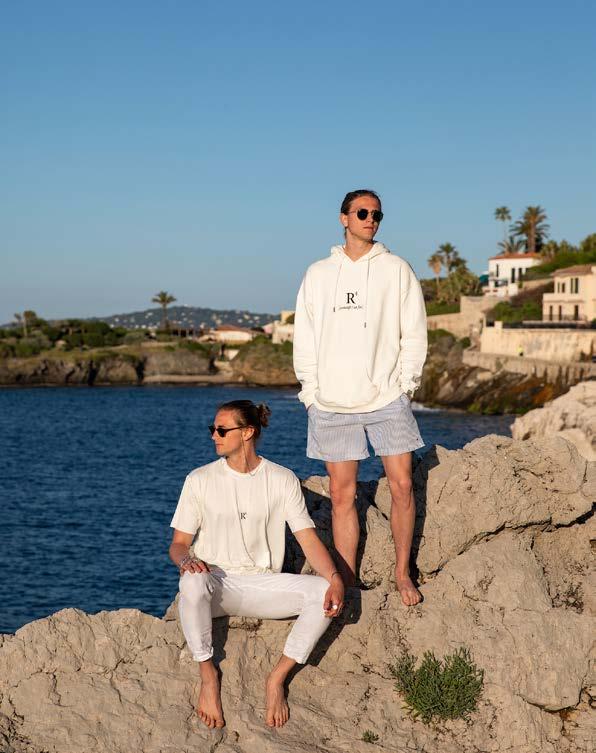
Clothing carries stories of place, material, and the relationship between humans and nature. As conversations around sustainability deepen, fashion is gradually shifting from a culture of consumption toward one of responsibility, awareness, and regeneration.
In this evolving landscape, Angelo Legrand, co-founder of R4 Clothing, explores how design, education, and environmental consciousness can coexist. Rooted in multidisciplinary sustainability knowledge and shaped by global experiences, his work reflects an ongoing search for balance between creativity, business, and care for the living world.
Let’s step into Angelo’s journey through the conversation below.
Could you share a bit about yourself and the work you are currently focusing on? (Your fashion brand, office work, or anything else you’d like to highlight?)
My name is Angelo Legrand. I’m a young entrepreneur working at the intersection of people and nature. I have an international background – half Danish, half Belgian, born in Luxembourg, and raised in France. I’ve lived in the Netherlands, the UK, and now Denmark, and I’m fortunate to have travelled to almost every continent on this dear Earth.
“Ultimately, shifting mindsets requires a combination of top-down regulation, bottom-up education, and responsible market leadership. When these forces align, behavioural change becomes far more achievable.
Academically, I come from a multidisciplinary background in sustainability, holding a BSc in Earth, Energy and Sustainability and an MSc in Sustainable Resources. Professionally, I’ve worked across several industries I deeply enjoy – hospitality, travel, fashion, and humanitarian work – each of which has shaped my understanding of how systems, communities, and environments connect.
Currently, I dedicate most of my time to R4, a sustainable brand I co-founded with my brother, Tino. I also serve as an Advisory Board Member for several NGOs and social businesses, including TAF – The Animal Fund and Girls Be Change. Alongside this, I’m developing a few additional projects – to be revealed soon.
Across everything I do, the common thread is education and guidance: helping people better understand the importance of nature as the foundation for life.
I’m passionate about life as an adventure, nature as our grounding force, and people who ultimately make it all meaningful. Image credit: Dylan Sosso
Could you tell us about your efforts to mitigate waste management issues, specifically by transforming fashion waste into eco-friendly products, while advocating for a sustainable industry?
At R4, we approach sustainability from A–Z across the entire supply chain from raw material extraction to the moment a product ends up in someone’s wardrobe. Throughout that lifecycle, we’ve identified key stages where we can meaningfully reduce waste.
It begins with the fabrics we choose. We work
During the design phase, we’ve made strategic decisions to reduce unnecessary components. We’ve most often removed traditional neck labels, created sleeve labels using the same garment fabric, and in some cases, use heat-pressed labels. These may seem like small details, but collectively they reduce material waste and simplify recycling at the end of the garment’s life.
Packaging is another critical area. We collaborate with INVISIBLE CO in Hong Kong, who provide water-soluble garment bags, an innovative solution that helps address plastic waste within distribution.
“
When sustainability is integrated into the foundation of the business model, rather than positioned as an add-on, the balance becomes more achievable.
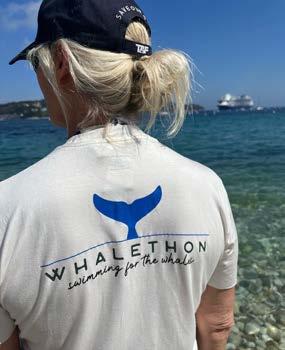
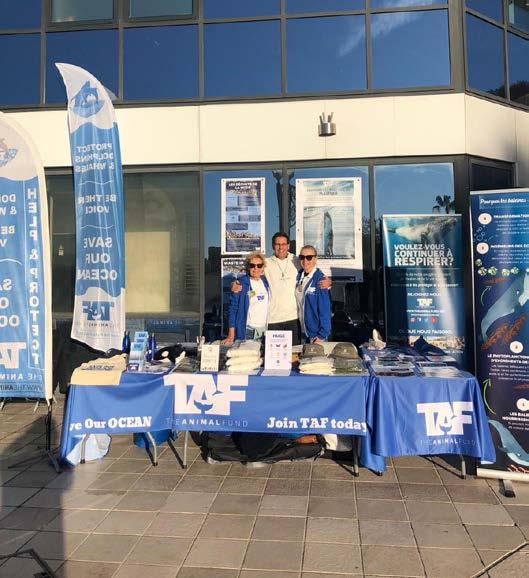
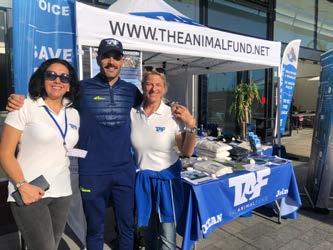
Beyond our own production efforts, we also support organisations such as TAF – The Animal Fund, which educates on the importance of healthy oceans. One of their initiatives focuses on combating plastic pollution, meaning that through our support, we also contribute indirectly to tackling waste beyond the fashion industry.
There is still much more to be done when it comes to waste management in fashion, from exploring alternative materials to expanding hands-on upcycling initiatives and partnerships. As a growing start-up, we prioritise the actions where we can create the most tangible impact with the resources available, while continuously working toward doing more.
What obstacles have been encountered while advocating for sustainability while simultaneously balancing business profitability?
I could probably write a very long essay – or even a book – about this, as it’s one of the most debated topics within sustainability.
As a sustainability advocate, I firmly believe that we can and must find ways to build profitable businesses while not only minimising environmental harm, but actively creating positive impact. Doing business at the expense of nature is simply no longer an option if we want to meet international climate goals and pass on a livable planet to future generations.
That said, within the political, economic, and social systems that have shaped our societies over recent decades, finding that balance is not straightforward.
The first obstacle is availability: who do you collaborate with that truly shares your values? Building a responsible supply chain requires
partners who are equally committed, and that can limit options.
The second challenge is cost. In many cases, doing the right thing is still more expensive. At R4, for example, synthetic or non-organic fibres remain significantly cheaper than organic and natural alternatives. Choosing better materials directly impacts margins, particularly for a start-up.
The third and perhaps most complex challenge is consumer demand. Many people express a desire for more sustainable products, but there is often a gap between intention and action. Limited awareness, price sensitivity, and convenience frequently influence purchasing decisions more than long-term environmental considerations.
Finally, greenwashing has made the landscape more difficult to navigate. As sustainability becomes a marketing buzzword, it creates confusion and mistrust, especially among consumers with limited knowledge of the topic. This makes it harder for genuinely responsible businesses to differentiate themselves.
Ultimately, one way to balance profitability and sustainability is to focus on offering something people truly need, not just want, and embedding
When transparency becomes mandatory rather than optional, awareness naturally increases, not only for businesses, but for consumers as well.
sustainability into that product or service as a standard, rather than a selling point. When sustainability is integrated into the foundation of the business model, rather than positioned as an add-on, the balance becomes more achievable.
I see two or three main pathways to changing people’s mindsets around fashion and waste.
The first is legislation. Structural change at the policy level has the power to shift entire industries. We are already seeing encouraging developments across fashion and waste regulation. The introduction of initiatives such as the Digital Product Passport, for example, will require significantly greater transparency throughout the value chain. When transparency becomes mandatory rather than optional, awareness naturally increases, not only for businesses, but for consumers as well.
The second pathway is education. This doesn’t have to come exclusively from non-profits or social enterprises; it can and should also happen directly through businesses, products, and services. When brands take the time to explain why certain materials, processes, or systems matter,
they give consumers a new lens through which to make decisions. Informed choices are more conscious choices: if you don’t know, you probably don’t care. If you do know, you’re more likely to care!
The third pathway, one I feel slightly more cautious about due to the prevalence of greenwashing, is leadership from major industry players. If large, influential brands take genuine and measurable action, it can accelerate change across the market. Their scale has the power to normalise new standards quickly. However, this must be rooted in authenticity and accountability, otherwise it risks further eroding trust.
Ultimately, shifting mindsets requires a combination of top-down regulation, bottom-up education, and responsible market leadership. When these forces align, behavioural change becomes far more achievable.
How is the impact of R4 Clothing projected in terms of benefiting nature while still meeting consumer needs?
Great question – and one we are continuously working to improve.
At R4, we aim to approach sustainability from A–Z. This includes selecting lower-impact fabrics, reducing environmental impact during production, choosing alternative packaging solutions, offering end-of-life return schemes, and supporting nature-based initiatives through partners such as TAF – The Animal Fund (oceans) and Forest Nation (reforestation). Transparency is central to this process; we communicate openly about both our efforts and our limitations.
The honest reality is that we are still a business that produces garments in order to remain profitable. And producing garments will always carry an environmental footprint. That is a fundamental truth of the fashion industry, and one we believe must be acknowledged rather than ignored. However, within that reality, there is significant room to improve and evolve. We can prioritise recycled and upcycled materials, invest in inset and offset initiatives to reduce our footprint, refine our production volumes, and continue optimising our -
ment; it is a continuous process of reassessment
“
Sustainability cannot be optional or performative. It must become the foundation of how we design our economies, businesses, and lifestyles moving forward. The urgency is real, but so is the opportunity to reshape the future in a more balanced and regenerative way.
At our current scale and stage of growth, we are carefully evaluating the most effective long-term strategy to maximise positive impact while still meeting consumer needs. Our goal is to ensure that sustainability is embedded into our business model, not as an afterthought, but as a guiding
Could you share more about the role of advisor for The Animal Fund (TAF) and the details of their current projects or programs?
TAF – The Animal Fund is a non-profit organisation dedicated to educating people about the importance of oceans and marine life for humankind, with a particular focus on whales and dolphins. Since its inception in 2015, TAF has col-
laborated with hundreds of schools, universities, and partner organisations to educate and inspire younger generations.
Beyond education, TAF is highly active in the field. The organisation participates in conferences, public events, clean-up initiatives, and awareness campaigns to create tangible impact at both local and international levels. Their work addresses critical issues such as plastic pollution, marine captivity, overfishing, and beyond, campaigns that have contributed to measurable awareness and behavioural change.
TAF operates across several European countries and the UK, while also engaging internationally including educational whale-watching initiatives that promote responsible interaction with marine ecosystems.
As an Advisory Board Member at TAF, my role is primarily strategic. I provide guidance on organisational structure, operational development, project prioritisation, and long-term planning. The aim is to help strengthen the foundation of the organisation so it can scale its impact sustainably and effectively.
What is the perspective on current environmental conditions from a youth standpoint, and what solutions would be proposed?
From a youth standpoint, the current environmental conditions are both alarming and defining. My generation has grown up with climate change not as a distant warning, but as a lived reality, from biodiversity loss and plastic pollution to extreme weather events and resource scarcity. There is a strong awareness that the systems we inherited are not fully sustainable, and that we will be the ones living with the long-term consequences.
At the same time, there is also optimism and agency. Young people today are more globally connected, informed, and value-driven than ever before. Sustainability is no longer a niche interest; it is becoming an expectation.
In terms of solutions, the perspective from youth is often systemic rather than superficial. It’s not just about recycling more or buying a reusable bottle; it’s about rethinking production models, redefining growth, embedding circularity, strengthening policy frameworks, and holding corporations accountable. Education plays a critical role, but so does regulation and responsible innovation.
There is also a strong push toward collaboration rather than competition across industries, sectors, and borders. The environmental challenges we face are interconnected, and the solutions must be as well.
Ultimately, from a youth perspective, the message is clear: sustainability cannot be optional or performative. It must become the foundation of how we design our economies, businesses, and lifestyles moving forward. The urgency is real, but so is the opportunity to reshape the future in a more balanced and regenerative way.
In times of crisis, choose to see opportunity.
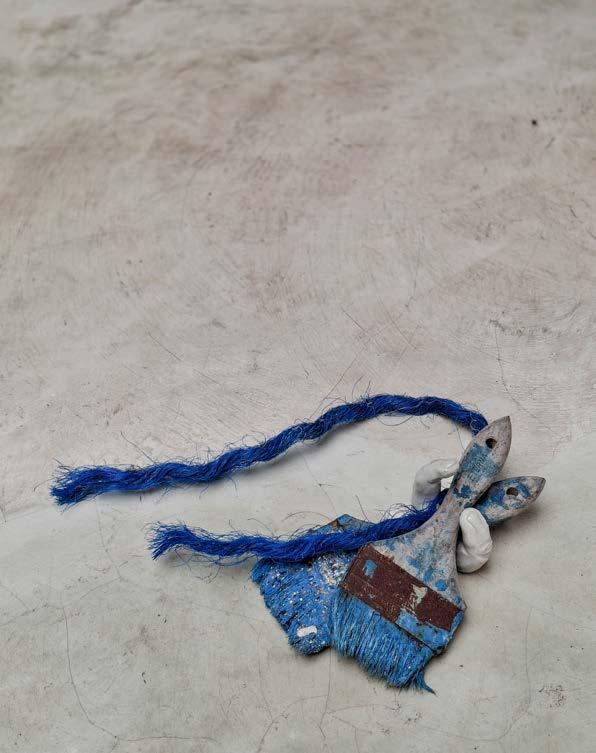
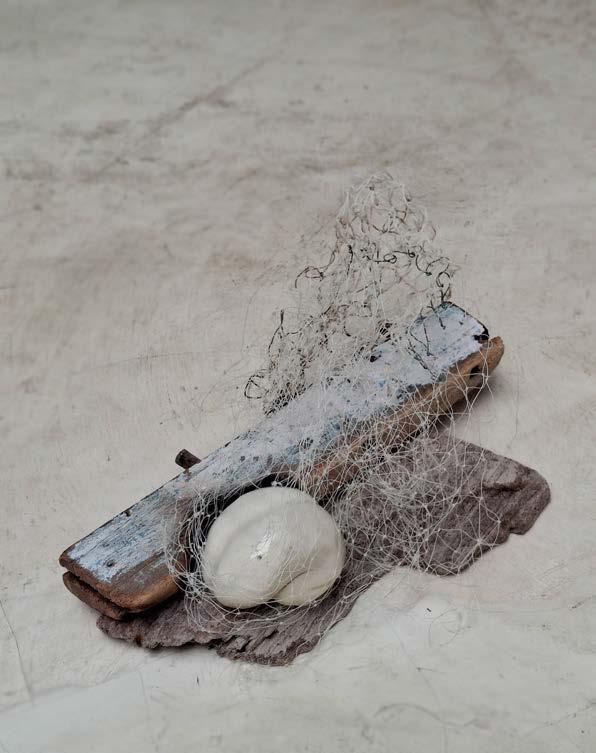
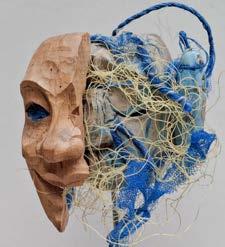
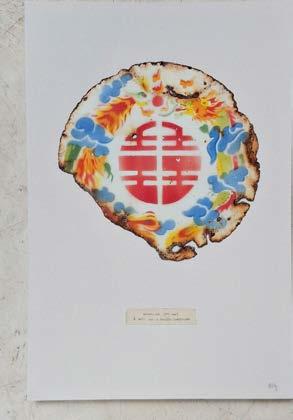
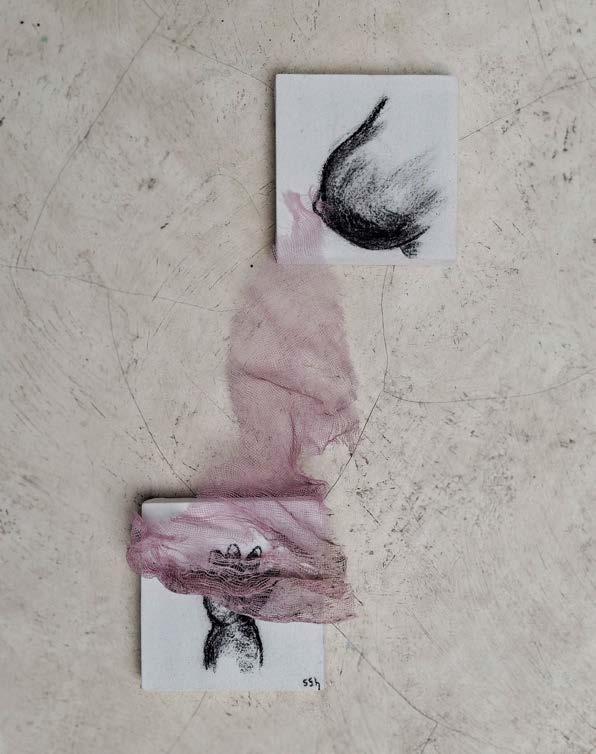
Artwork title: Embodiment
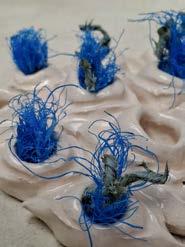
Artwork title: Hypocrisy | Coral DNA
All photographs of the artworks in this article and the cover belong the artist and may not be reproduced or reused without consent.
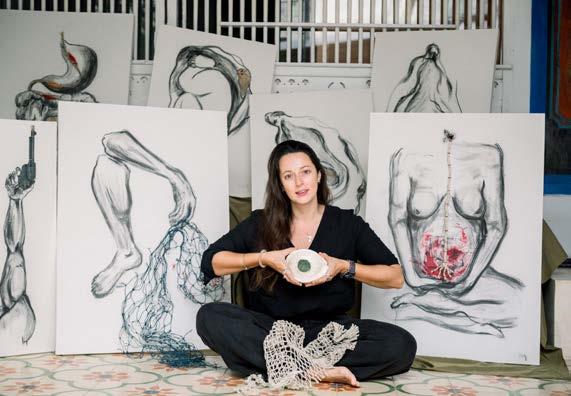
Tailoring environmental issues through the arts, this feature explores the stories behind Sofiya’s artworks Echoes of the Tide, exhibited at TAT Art Space in Denpasar from August to September 2025.
Echoes of the Tide does more than stimulate the mind; it invites us to pause, reflect, and reconsider the life cycle of an object, where it begins and where it ultimately ends.
Her poetic yet profound artistic language engages audiences emotionally, translating complex climate issues into tangible reflections and calls for action.
Each artwork carries its own narrative, revealing the origins of its materials and meanings. Together, the collection becomes a map of how human behaviour shapes the health of nature, and how, in return, environmental degradation ultimately affects ourselves over the long term.

“
I collect these objects and incorporate them into my artworks, allowing the materials themselves to become storytellers, quiet witnesses to environmental realities we often choose not to see.


We’d love to know more about you. What name do you go by, and where are you currently based?
My name is Sofiya Shukhova, with this slightly unusual spelling of Sofiya. I have been based in Bali, Indonesia, for the past three years. Before that, I lived in Singapore for many years, so Southeast Asia feels very much like home to me.
Could you share your background and your sense of interconnectedness with nature?
I was born and raised in Russia, and from an early age I loved spending time in nature. I am very lucky to have amazing parents who took me out of the city almost every weekend when I was a child for picnics, long walks, foraging mushrooms and berries, and simply observing plants and
animals. That connection has stayed with me, even though I have spent most of my life living in large cities.
In terms of education, I did not study biology at the undergraduate level. At the time, it did not particularly interest me at school, so I chose architecture instead, which gave me a strong foundation in spatial thinking and visual language. Later, I realised that my two main passions were art and wildlife conservation, and I began deepening my knowledge in both fields. I completed a Master’s degree in Conservation and International Wildlife Trade while continuing to develop my fine art practice.
What led you to use art as a medium to express your concern about nature’s destruction? How do you translate those feelings into a persuasive form that ignites emotion in others?
It is interesting because my journey unfolded in the opposite direction. It was not conservation that led me to art, it was art that led me to conservation. After graduating from architecture school, I struggled to find a job and began painting, often focusing on nature and animals. Very quickly, wildlife became the central subject of my work.
That curiosity pushed me to learn more about species and biodiversity loss. Through art, I began to understand how deeply we mistreat the environment we inhabit. Since then, art has become the medium through which I engage with environmental issues.
I value art as a conservation tool because it allows freedom of expression. In conservation NGOs, messaging must be strategic and carefully crafted rightly so, as the goal is lasting impact without unintended harm. As an artist, however, I can be more intuitive and bold. I am not telling people what they should or should not do; instead, I share how I see the world and invite reflection, questioning, and perhaps a reconsideration of our relationship with nature.
We’d love to hear more about your latest exhibition, Echoes of the Tide. What inspired it, and what moved you to present this solo exhibition?
Echoes of the Tide is my first solo exhibition in Indonesia. It draws inspiration from marine pollution and litter collected along Bali’s beaches. I often walk the shoreline searching for discarded objects, and unfortunately Bali, like many islands across Indonesia and beyond, faces a serious marine pollution challenge.
Large amounts of waste are regularly washed ashore, harming marine and terrestrial ecosys -

tems, affecting ocean-dependent livelihoods, and ultimately impacting human health. I collect these objects and incorporate them into my artworks, allowing the materials themselves to become storytellers, quiet witnesses to environmental realities we often choose not to see.
How long did it take to prepare the artworks? Did you encounter moments of creative difficulty?
It is difficult to define an exact timeline. Some works were created shortly after I moved to Bali, while others developed gradually over several years. More than half of the exhibited works were produced specifically for this exhibition, with the most intensive period taking place during the final three months.
Interestingly, after past solo exhibitions I often felt exhausted or disconnected from the work once
it was installed. This time was different, I genuinely enjoyed the entire process, from creation to installation, and especially watching audiences engage with the pieces.
How did audiences respond to the exhibition?
We had a strong turnout at the opening, which meant a lot to me. The audience included both local and international visitors, and what I appreciated most was seeing people slow down observing carefully, reading the texts, asking questions, and engaging in conversations about marine pollution, health, and art.
For me, this is the real measure of success. I do not want to create work that is only visually interesting; I want it to encourage reflection and dialogue.
We also hosted several workshops during the exhibition, including session focused on marine pollution and its effects on human health, wildlife,

and ecosystems. Participants created artworks using collected marine litter, and these shared moments of learning and making deepened the exhibition’s impact.
Beyond your artistic practice, you are also engaged in conservation work. Could you tell us more about this role?
Alongside my art practice, I support two specialist groups within the IUCN Species Survival Commission, assisting with communications and coordination. One group focuses on the Asian songbird trade, while the other works on hornbill conservation.
How do you balance these two professions?
It depends on the individual. For some people, combining different fields can feel overwhelming, but I enjoy moving between artistic creation, teaching workshops, and contributing to
conservation projects. Since I have been involved came a major source of inspiration for my art. I am constantly influenced by researchers, conservationists, and the stories emerging from the field.
What is your favourite species, and why?
Honestly, I do not really like this question. I care about many species, and choosing just one feels limiting. I wish we could respect all living beings and find ways to coexist with them. When asked, I sometimes intentionally name snakes, insects, or other less-appreciated species to challenge perceptions and encourage compassion toward overlooked forms of life.
What is your vision for 2026?
In 2026, I hope to continue developing my artistic practice and building upon the work I began last year. After spending several years in Indonesia, I feel I better understand the local art ecosystem. I
have also been fortunate to collaborate with my creative partner, Alvita Chen from Aatelier, and I look forward to continuing that collaboration.
A message you would like to share with the world?
There are many ways to respond to the environmental crisis. I chose art, but others may work through education, research, advocacy, funding, or responsible business practices. Whatever path you take, what matters most is choosing to act.
Please do.

Whatever path you take, what matters most is choosing to act. “
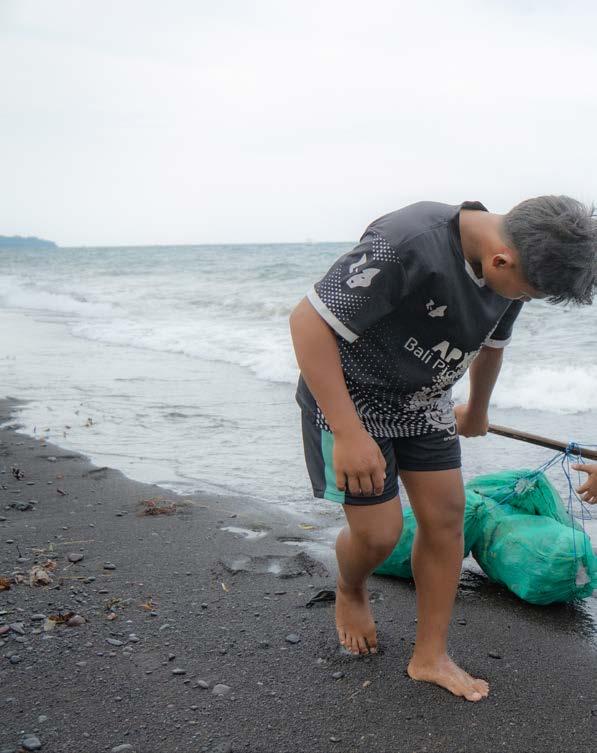
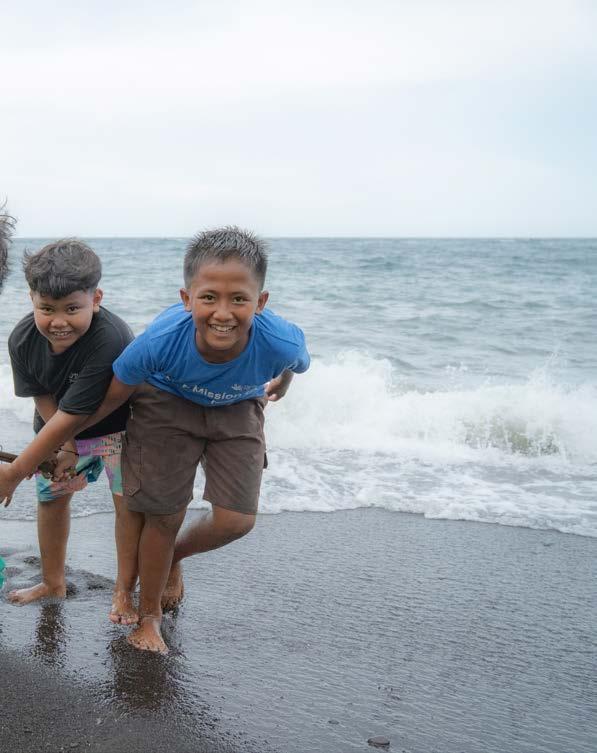
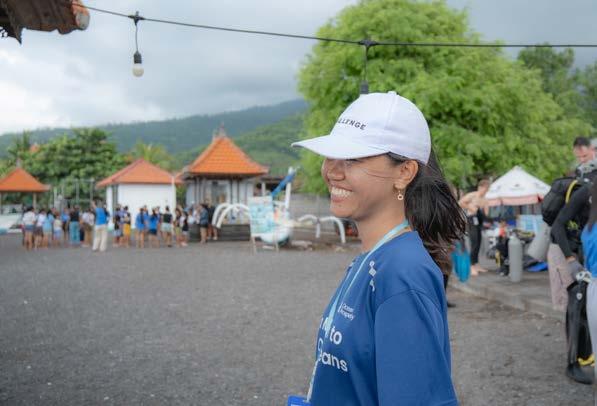
In Amed, there is a fishermen’s community whose leader has shown genuine concern about climate change and ocean protection. He is open to discussion and willing to support environmental initiatives, which is a very positive sign.
It shows that awareness at the leadership level is beginning to grow.
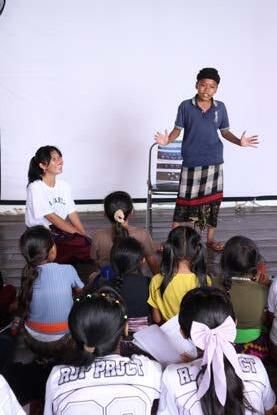
There are many inspiring young people, yet rarely do we meet someone whose dedication to her local community feels as embodied and wholehearted as Eka’s.
Rooted in Amed, Bali, a coastal village where mountains lean into the sea, Eka carries both the spirit of the ocean and the resilience of her homeland. Through her foundation, Sekolah Biru (Blue School), she dedicates her weekends to teaching local children English, environmental awareness, and practical waste management skills, including compost-making. Her work is not simply educational, it is regenerative.
Through my coastal community initiative, CoastalKin, where we provide ocean conservation education alongside my project partner Petricia,
I have had the privilege of collaborating with Eka. What continues to move me is not only her action, but her humility, her quiet, steady commitment to addressing climate challenges through everyday practice. Let us step into her story through the conversation below.
Could you please tell us more about Sekolah Biru?
Sekolah Biru Bali is a learning space dedicated to supporting children’s growth through self-development, environmental and ocean awareness, and global communication.
We aim to create a space where children can express themselves freely, develop awareness of the environment and the ocean, and build the confi-
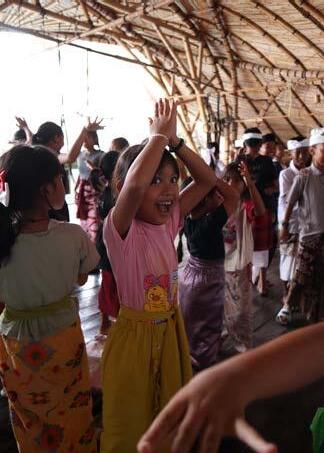
needed to face future challenges.
Our main programs focus on self-growth, environmental and ocean awareness, and English education.
Sekolah Biru Bali was founded in 2020, at a time when children faced limited access to education due to the pandemic. We opened a space where they could continue learning and growing. The first and second batches were successfully imple mented, while the third and fourth phases focused on observation, refining methods and approach es to ensure the materials truly met the children’s needs.
Along the journey, we faced many challenges. Our activities were paused for several months due to limited support in terms of team members,
space, finances, and facilities. Yet we kept moving forward, motivated by the children’s enthusiasm and eagerness to learn. Their spirit continues to inspire us to overcome obstacles and keep this learning space alive.
As a frontline advocate protecting the coastal area and empowering the local community through education and conservation efforts, what is your perspective on the current condition of the ocean in Amed?
As someone who deeply loves and cares for the ocean, I see Amed as a place of both extraordinary beauty and real challenges.
Amed is a rare meeting point of mountains, hills, and ocean, all held within a peaceful landscape. Living here feels special. The kindness of the people and the strong sense of community make it even more meaningful. I truly love staying in Amed, and sometimes I wish I could remain here forever.
Yet behind this beauty, we are facing serious challenges. Waste management remains a major issue. We are surrounded by stunning natural landscapes, but not far from that beauty, we still see trash, sometimes even floating in the ocean itself. Some people continue to litter, and environmental awareness still needs to grow stronger.
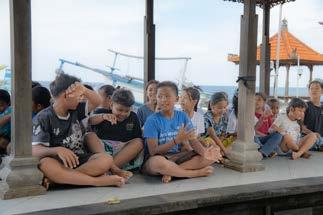
Sekolah Biru Bali strives to be a home for children with limited access to education, helping them gain the skills and resilience needed to face future challenges. “
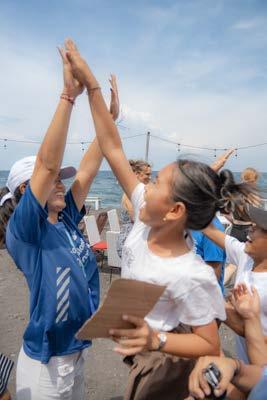
How about the livelihoods of fishermen and farmers? Are they aware of climate issues, and how are they responding?
In Amed, there is a fishermen’s community whose leader has shown genuine concern about climate change and ocean protection. He is open to discussion and willing to support environmental initiatives, which is a very positive sign. It shows that awareness at the leadership level is beginning to grow.
However, I am not sure whether this awareness has fully reached every member of the community. For example, I still see some guides practising fish feeding for tourists. While this activity may seem harmless, it can disrupt marine ecosystems and alter natural fish behaviour. This suggests that environmental education and climate aware -
ness have not yet been consistently understood or applied by everyone.
As a young female coastal advocate, how do you envision the future of Amed? What steps can we take to turn that vision into reality?
I envision Amed as a model of balance, where nature, community, and economy grow together in harmony. To move toward that vision, we can begin with simple yet meaningful steps:
1. Strengthen environmental education. 2. Build strong community collaboration. 3. Improve waste management from the source.
Small, consistent actions can create long-term transformation.
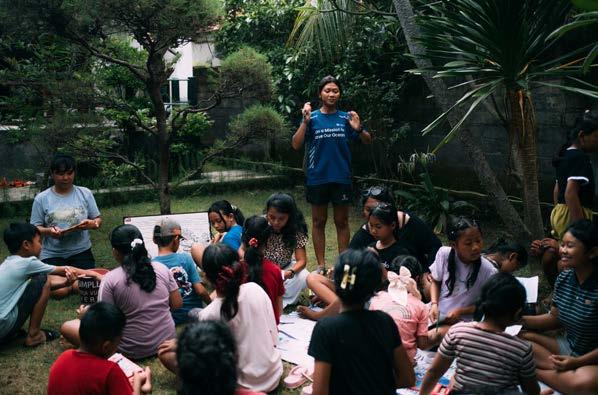
Who has influenced you the most in your climate journey?
The person who has influenced me most in my climate journey is my boss, Valentina.
She opened the door for me to work at the dive centre, an opportunity that changed my life. Through working with her, I learned not only about diving and the ocean but also about responsibility.
Not long after I joined her team, we created a small school for children. Education is deeply personal to me because I grew up struggling to access it. School was expensive, and I had to work on my own just to continue studying. Because of that experience, I understand how transformative education can be.
While working at the dive centre, I also began to truly understand how vital the ocean is to our lives.
What do you hope for the children you teach in relation to climate action?
I hope they will not have to face even greater climate challenges because of our generation’s inaction.
I want them to grow up with awareness, understanding how their daily choices affect the ocean, the land, and their community.
Most importantly, I hope they see the environment not as something separate from themselves, but as part of who they are. If they grow up loving and respecting the ocean and their surroundings, protection will come naturally.
“
Education is deeply personal to me because I grew up struggling to access it. School was expensive, and I had to work on my own just to continue studying. Because of that experience, I understand how transformtive education can be.
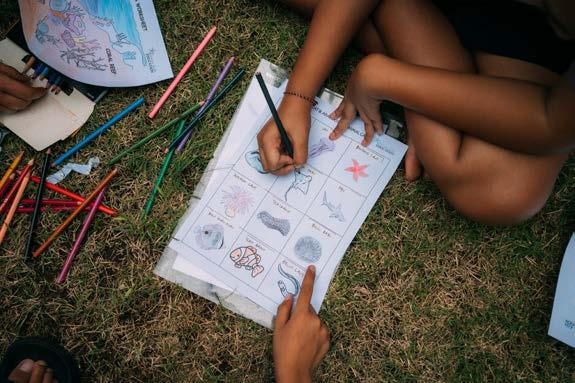
These purpose-driven efforts reflect a growing grassroots momentum, one that positions Bali not only as a tourism destination, but as an active contributor to regional ocean resilience.
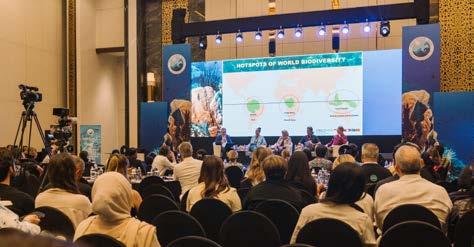
Addressing the climate crisis requires coordinated action across sectors, scales, and communities. From policy frameworks to grassroots initiatives, meaningful mitigation depends on collective responsibility and cross-disciplinary collaboration.
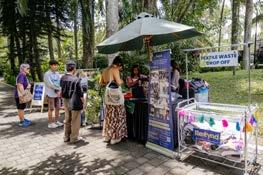
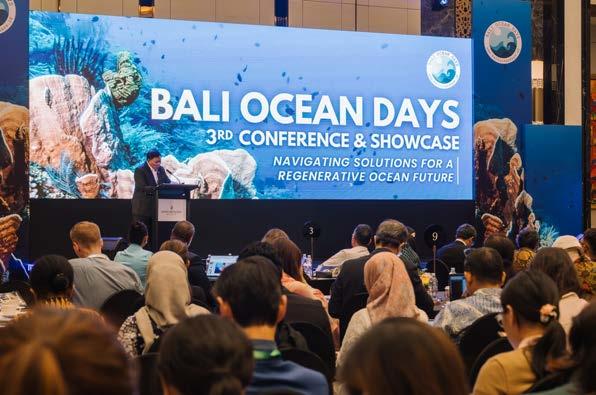
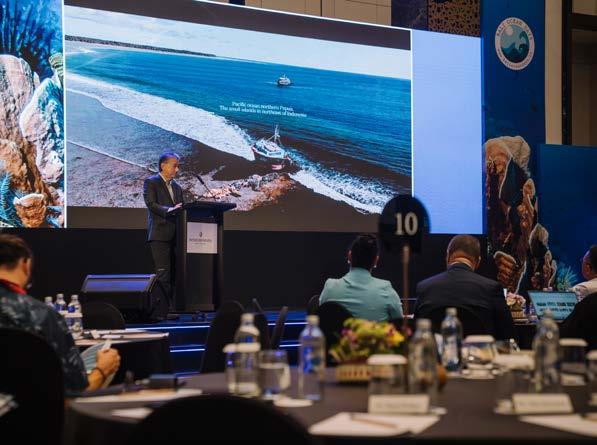
As one of the associate media partners, Pariveśa participated in Bali Ocean Days – Conference and Showcase, a two-day forum convening key stakeholders in ocean and climate action. The event brought together government representatives, including Dr Didit Herdiawan, Vice Minister of Marine Affairs and Fisheries, and Ni Luh Puspa
Ermawati, Vice Minister of Tourism. Environmental leaders such as Paul Tan of Sky Blue SeaFoundation joined marine organizations, scientists, climate professionals, innovators, community leaders, and young climate advocates, including Melati Wijsen, Janis Argeswara, and Bodhi Patil to examine the current state of ocean protection, share insights on Marine Protected Areas (MPAs), marine conservation and restoration efforts, and explore pathways to strengthen and scale these initiatives.
“A climate-focused forum such as this serves as a vital bridge, integrating socio-cultural values, climate mitigation strategies, and community empowerment. In Bali, this alignment resonates deeply with Tri Hita Karana, the island’s guiding philosophy that calls for harmony between the Divine, humanity, and nature.
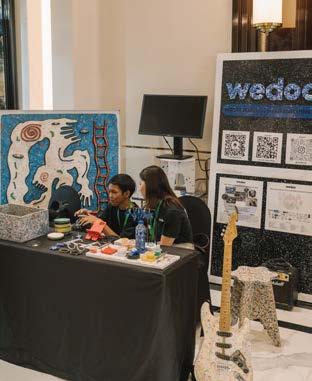
Discussions spanned marine biodiversity conser vation, eco-tourism, coastal resilience, sustainable fisheries, waste management systems, oceanbased climate mitigation strategies, sustainability workshops, and emerging marine technologies. Beyond panel dialogues, the showcase highlighted locally driven initiatives, demonstrating that effective ocean stewardship requires alignment between policy, science, business, and community engagement.
For Pariveśa, participation in Bali Ocean Days reinforced a critical perspective: ocean protection cannot operate in silos. It demands integrated approaches that connect environmental governance, responsible tourism, technological innovation, and public awareness, particularly within island contexts such as Bali, where ecological health and economic sustainability are deeply intertwined.
Several organizations presented coral restoration projects, shark conservation programs, and research on the impacts of ocean pollution and
Hearing these grassroots stories was both sobering and motivating, a reminder of the urgency of the crisis and the resilience of those working on the front lines of environmental protection.
A climate-focused forum such as this serves as a vital bridge, integrating socio-cultural values, climate mitigation strategies, and community empowerment. In Bali, this alignment resonates deeply with Tri Hita Karana, the island’s guiding philosophy that calls for harmony between the Divine, humanity, and nature.
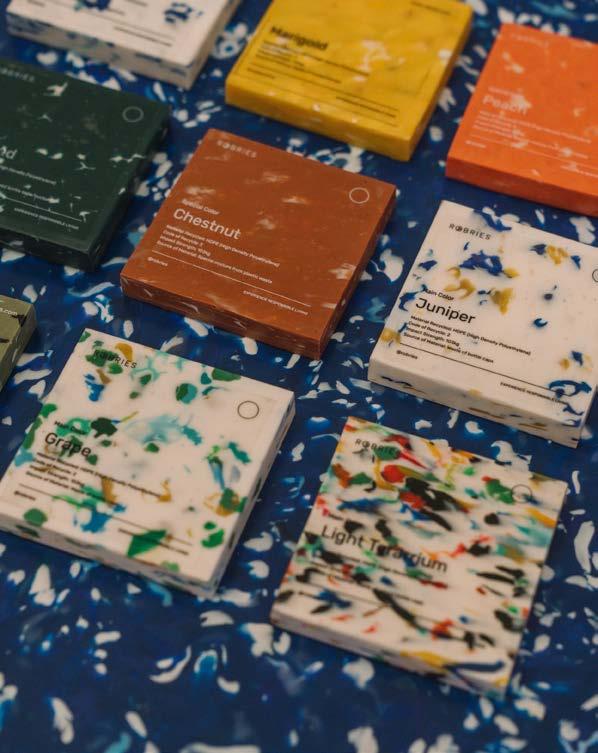
Numerous Bali-based organizations showcased their initiatives, ranging from plastic recycling innovations and improved waste management systems to environmental communication campaigns, marine conservation programs, and community empowerment projects. These purpose-driven efforts reflect a growing grassroots momentum, one that positions Bali not only as a tourism destination, but as an active contributor to regional ocean resilience.
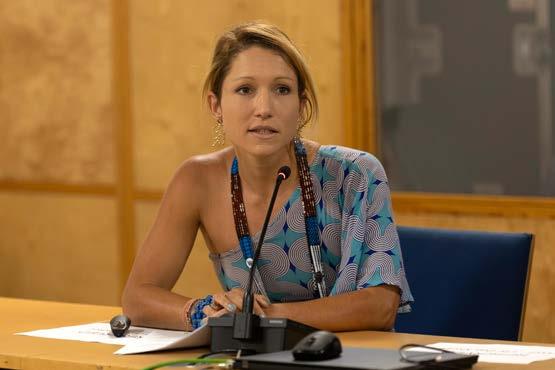
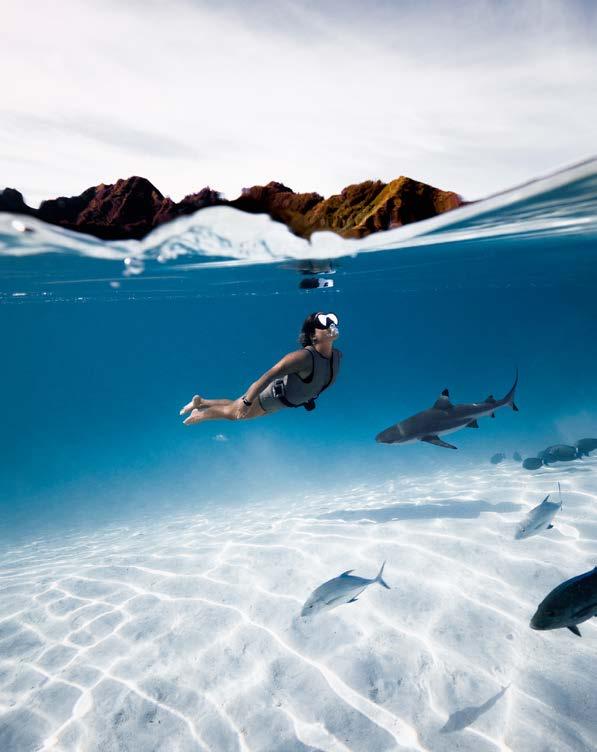
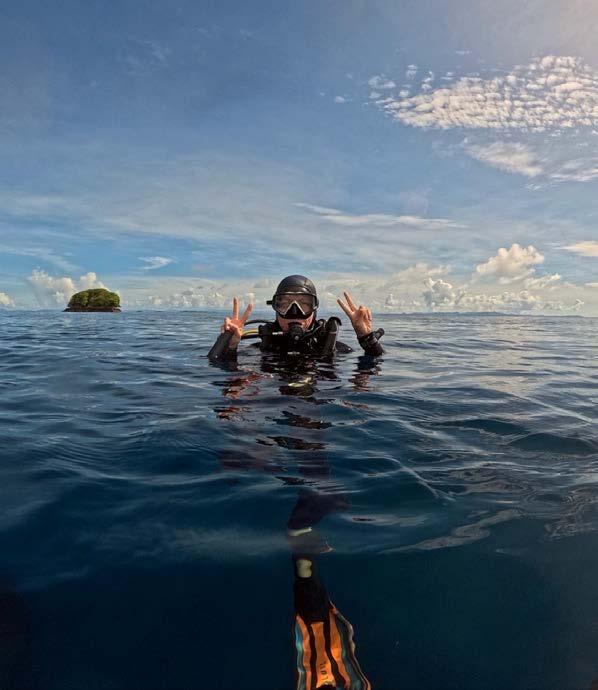
“The ocean community is a truly inspiring one. You meet people from so many different backgrounds, who are genuinely passionate and committed to doing good for the ocean. What inspires me most is seeing so many people dedicating their time and energy to this cause.
Trained in marketing and communications within the luxury and sports industries, Marie-Céline built a promising career before realizing that creativity without environmental responsibility no longer aligned with her values.
Marie-Céline contributes to advancing climate-resilient coral reef protection while helping shape a more conscious future for our ocean and communities.
In this conversation, she reflects on her personal transformation, sources of inspiration, and the everyday actions that can reconnect us with the living world.
Could you tell us about yourself and how your climate journey first began? Was there a particular moment that awakened this path for you?
My name is Marie-Céline Piednoir. I am French. I studied Marketing and Communications, and specialized in the luxury and fashion industry. My first internships were at TBWA’s Luxury Arts division in Paris and at LVMH. I quickly realized it was not for me. I loved the creative aspect of it, and the art that fashion and luxury can represent, but I was starting to realize it was not aligned with my values. I then did an exchange in Thailand and discovered how vast and diverse the world is!
I still needed to go find a job, and since I loved sports and I was part of the Adidas Runners team during my time in Paris, I applied to the global headquarters of Adidas in Germany. They took me, and I spent three and a half years there, first in the Adidas Women Business Unit in Communications, and then I joined the first Newsroom for Adidas Women, as social media was emerging as a key tool for communications. They later created a global team to manage the Adidas Runners team, which was my dream job, and I got it. All in all, amazing years at Adidas. I loved my job and the people, but I once again started to feel increasingly misaligned with the values of a large company producing goods in ways that were harmful to the planet. So I resigned.
I had already been to India twice and loved the country. I often say I had my “Eat Pray Love” moment: I went to India for three months, travelled the country, and became a yoga teacher.
In the meantime, a friend of mine, Clara Barthélemy, who was actually featured in the first edition of Pariveśa Magazine, do check it out! was working for Coral Gardeners in French Polynesia.
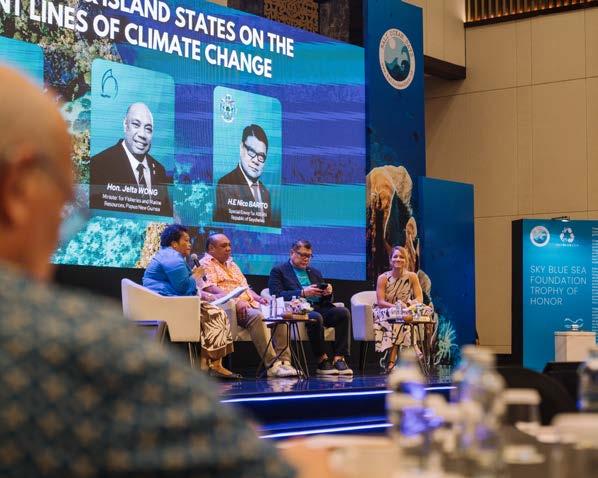
in ocean conservation; they need so many areas of expertise, and I could put mine to work for a good cause for the planet.
You transitioned from working in communications for a global brand like Adidas to dedicating yourself to environmental protection. What was happening inside you during that shift?
I was curious and full of hope. And yes, also a little scared, because a whole new horizon was opening up in front of me, a true adventure. I had some savings from my years at Adidas, and I gave myself a year to define what I wanted to do next. I just knew that I wanted to do something good for the planet and for people. Discovering
In France, at least in my generation, if you excel academically in maths, for example, you are not guided toward purpose-driven careers at all. You are funnelled toward big consulting firms, large consumer brands, or the finance industry. That is something I hope to see change.
Who or what has deeply inspired you along the way in the environmental movement?
The ocean community is a truly inspiring one. You meet people from so many different backgrounds, who are genuinely passionate and committed to doing good for the ocean. What inspires me most is seeing so many people dedicating their time and energy to this cause.
I am especially inspired by the strong women who are breaking down silos and paving the way for the next generations to reclaim their rightful place in decision-making processes.
I also have immense respect for indigenous peo ples who have been fighting for years, for cen turies, for their voices to be heard. Step by step, they are breaking the silence and challenging the status quo of a Western-dominated approach to conservation. Their knowledge, leadership, and sovereignty must be at the centre of how we do this work.
When you look at the current state of our planet, what feelings arise in you? And in your view, what small yet meaningful actions can we practice in our daily lives to care for the Earth?
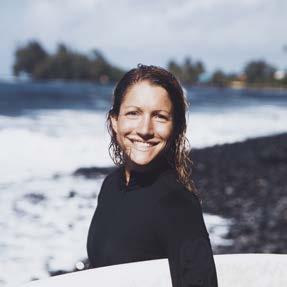
In full transparency, it is depressing at times. I do not watch the news much, for example, because my work already brings me into daily contact with scientific reports on the state of the ocean. If I were to add all of the other crises happening to people and to nature, I am not sure I would find the energy to stay hopeful and keep fighting. So I protect my energy, and I think that is actually important for anyone doing this work.
For those who want to take action in their daily lives, there is so much they can do. The first thing I would say is: look at how you consume. Reducing or eliminating animal products from your diet, even just for a few days a week, has a massive positive impact on the planet. Animals are living beings. They should not suffer for our consumption, and the carbon footprint and biodiversity loss associated with industrial meat production and industrial fishing are staggering. I am not talking about local communities that depend on their livestock or small-scale artisanal fishing to survive; that is a completely different reality, and one that deserves support and respect. I am talking about large-scale, disconnected consumption: buying animal products without knowing where they come from or how they were raised or
caught. Beyond diet, I would encourage people to learn about nature to discover the beauty of biodiversity and to share that knowledge. Literacy is key to shifting how we consume and how we relate to the living world.
For those who still feel distant from climate issues, how do you gently invite them into awareness and action?
It really depends on what you enjoy! You can watch documentaries, read books, listen to podcasts, attend events, speak with experts, take an online class, or volunteer in your local community or school around a topic that matters to you. I would say: do not jump straight into the full weight of the climate crisis, it can be overwhelming, frightening, and demoralizing. And we need you to preserve your energy for the long haul. So start with a topic you feel connected to, and choose a format that genuinely interests you.
No one is perfect. The most important thing is to start. Whatever you change or begin/stop doing after reading this magazine is already a step forward, and that matters.
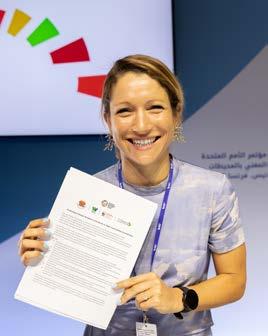
On a more personal note, do you feel more at home in the mountains or by the ocean? Why?
I know I am supposed to choose, but I will say both. My husband and I spend most of our time by the ocean, because of our work and our passions, diving and surfing, but I love being in the mountains deeply, and whenever we have the opportunity, we go hiking. If I had to settle on an answer, I would say I feel most at home on an island. I love that feeling. And if that island has diving, surfing, and beautiful trails, even better.
Could you share with us your work related to the Climate-Resilient Coral Reefs Commitment? What does this mission mean to you personally?
“
I am especially inspired by the strong women who are breaking down silos and paving the way for the next generations to reclaim their rightful place in decision-making processes.
I now work as a Consultant for WCS (Wildlife Conservation Society), and last year, ahead of the United Nations Ocean Conference in Nice in June, we worked with our partners to create the first global pledge to protect climate-resilient coral reefs, vital strongholds for biodiversity, food security, and coastal protection. As of February 2026, 15 countries have signed the commitment, and more than 25 global organizations and NGOs are supporting it.
By joining, governments commit to:
• Protect reefs using the best available science.
• Integrate climate-resilient reefs into national biodiversity and climate plans (NDCs, NBSAPs, 30x30).
• Reduce local threats such as overfishing, pollution, and unsustainable development.
• Mobilize new global finance for coral reef conservation.
• Track and report progress through robust reef monitoring.
• Ensure solutions are equitable, inclusive, and grounded in local stewardship.
You can learn more at wcs.org/coralcommitment
Personally, I love working at the intersection of science and policy, and making sure we collaborate with all actors in the field to support implementation. I feel useful, and I know that the time I spend in front of a screen should, and I believe does have a positive impact on the ocean, and therefore for the planet and its people.
When you imagine 2026, what do you hope to see not only for your work, but for our planet and communities?
For my work, I hope to feel useful and to know that what I do is creating real, positive change for the ocean, for the animals, and for the people who depend on it.
More broadly, I hope we will see a shift in consciousness. It seems almost incomprehensible that we continue to destroy the very ecosystems that sustain our lives. There is so much deflection, “I am not the problem, the others are,” or so much comfort in the status quo that people feel no urgency to act (or they do not know how).
I hope we will begin to dismantle the extractive, growth-at-allcosts model that has brought us here. We do not need more material things. We need equity. We need to share resources and power with the people who want to do good for their communities and for the planet. “
And that dynamic is, predominantly, a privilege of those in wealthier, Western contexts.
For the communities who are already living the most severe consequences of the climate crisis, coastal populations, island nations, and indigenous peoples. I hope we will finally, truly listen to them and give them the agency and resources to decide for their own territories and futures. Their knowledge is not supplementary to conservation; it is essential to it.
And more widely, I hope we will begin to dismantle the extractive, growth-at-all-costs model that has brought us here. We do not need more material things. We need equity. We need to share resources and power with the people who want to do good for their communities and for the planet. No small number of individuals should have the power to destroy what billions of humans and countless other living beings depend on. Everyone has a role to play, and I hope you will join the movement of people trying to protect this beautiful Earth.

Astrologer | Brand Strategist
Before textbooks, the Farmer’s Almanac, or climate data, the earth has always existed within the structures and cycles that govern nature.
Another planet that plays a hand in climate shifts is Uranus. The role of Uranus as the “Great Awakener” is to create enough friction or disrupt our daily life so that we literally “wake up”. “
consciousfemalebrands
https://shorturl.at/FVuTE
As we expand our understanding of these cycles and rhythms, we can no longer ignore the surrounding energetics and planets that influence life on a daily level. To understand climate change, we must factor in more than one lens. In the every-changing landscape of our planet, we can learn a lot from the governing body of astrology. The ancient language of mapping the skies points to a deeper understanding of life on Earth through studying the effect each planet has on Earth.
Just like the smallest shift of a population or species affects the whole ecosystem, so too does the subtle movement of planets. Each planet represents a different action or role. Depending on the zodiac sign it resides in, this dictates the particular expression of that role changing how it creates a ripple effect. When we widen our understanding of how this relates to us on earth, we can use this ancient tool to predict and anticipate certain
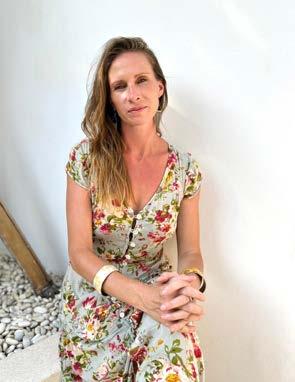
times of volatility, change, or eruption. As Earth’s surface morphs and adapts to support all life, we must also consider that the general population is affected by these massive planetary shifts. This adds yet another layer of Earth’s delicate and constantly changing rhythms.
On the most basic level, we are aware that there is an intimate relationship between our planet and the Moon. The various cycles of the moon (from waxing to waning) create a ripple effect not only on the tide levels, currents, and weather, but for all life on earth. While a full Moon is notorious for heightened or erratic energy, the zodiac sign the full Moon is passing through also plays a role in its expression. For example, a full Moon in a fire sign (Aries, Leo & Sagittarius) brings a focus on action or drastic change, and can contribute to planetary line-ups leading to eruptions, forest fires, or heat waves, depending on other dynamics that support heat and friction.
Solar eclipse periods are also known to create a very potent portal for massive or rapid change. As the moon passes over the sun’s surface, blocking out light and heat, this induces sudden changes in temperature and animal behaviour known as “micro-climate” shifts. Though it can’t be linked directly to long-term climate changes, solar and lunar eclipses create a syzygy: a very specific energy that occurs when the sun, moon, and earth are aligned. This particular alignment often leads to swift or rapid changes in human behaviour, but can also disrupt predictable weather patterns. Eclipses have been documented throughout history to be turning points of mass change or chaos as the balance of light and dark is recalibrated on Earth.
Another planet that often plays a consistent role in volatility is Mars. As one of the 5 personal planets, Mars is close enough to Earth that its fiery orbit and energy promote action and can perpetuate aggression or destruction. Mars is the planet that symbolizes conflict or war, so paired with a hard aspect to Saturn, or Full Moon, the attributes of these planets come to life to create change and sometimes devastating consequences. Mars and Saturn are considered malefic planets, both with different functions (Mars: action, change, energy, and perseverance, and Saturn: challenges, restrictions, hardships, and structure), though both create a degree of pressure and or strain if transiting other planets that increase these qualities.
On the other hand, we have zodiac signs that can also represent elements. Pisces, for example, governs the movement of tides, water, and emotions, and can either offer a welcome reprieve from drought or spill over into a flooded or shifting coastline. The planet Neptune, especially when in a water sign, can increase rapid water movement such as floods, disorientating fog, mudslides, or avalanches. Neptune represents dissolving or receding, often through the chaotic magnitude of nature. Neptune receives very little warmth from the sun due to distance, but is surprisingly active with -220 + C degrees and supersonic winds.
“
When we accept just how permeable our planet is to the sun and the moon, it’s not a huge reach to factor in how these massive orbiting planets also play a role in our cycles, weather patterns, and seasons.
Neptune recently left Pisces (2011- Feb 2026) and entered Aries, a 14-year period that was characterized by an increase in wet weather, hurricanes, and flooding.
Another planet that plays a hand in climate shifts is Uranus. The role of Uranus as the “Great Awakener” is to create enough friction or disrupt our daily life so that we literally “wake up”. When aspecting Mars or Saturn in a square or conjunction, rapid or uninvited change is likely. A conjunction acts to magnify the effects of a planet when side by side, while a 90° square causes contrast and friction. Uranus is often referred to as the cosmic disruptor, which creates swift challenges to course correct or disrupt the current balance, to create a new one. It rules electricity and technology and can be the catalyst that disrupts regular weather patterns to create new ones. Think lightning bolts out of nowhere!
If we look to the stars, we truly have so much still to learn about patterns and roles that govern life here on Earth. One example of this was the 2025 8.8 magnitude megathrust earthquake off the Kamchatka Peninsula in Russia on July 30, 2025.
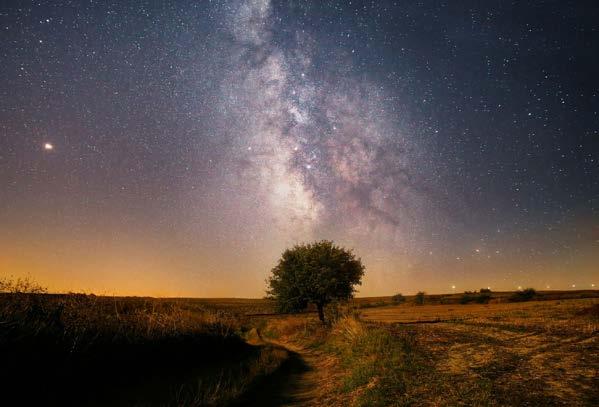
The earthquake occurred shortly after a “triangle of revolution” which had Mars-Ketu (the South Node) in very close proximity earlier that month. Ketu governs past lives and karma, and whenever it is sparked to clear a path forward, it quite often shows up to disrupt or explode. On the actual day, July 30th saw Neptune and Saturn in Aries one degree apart which created a cascade of heightened energy.
This particular earthquake and the resulting Pacific-wide tsunami was on point with a prophecy made by Ryo Tatsuki in 1999 that pointed to a catastrophic event in July 2025. We can study past climate shifts by location, time, and particular astrology to understand how certain astral combinations create volatility or mass change in Earth geodynamics.
As we continue to learn through the eyes of astrology, we must zoom out and remember that all life is sacred, while remaining a part of the cycle of life. One specific planet or zodiac sign can not dictate an outcome, but it can give us an awareness of how planets interact or relate. When we accept just how permeable our planet is to the sun and the moon, it’s not a huge reach to factor in how these massive orbiting planets also play a role in our cycles, weather patterns, and seasons.
Next time you tilt your head to behold a sky full of stars, don’t just make a wish. You are just as much a part of the fabric of Earth’s ecosystem as those big orbiting planets guiding us through time and space.