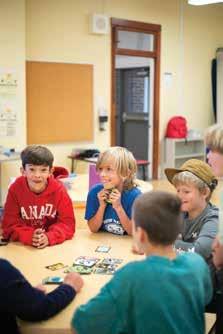
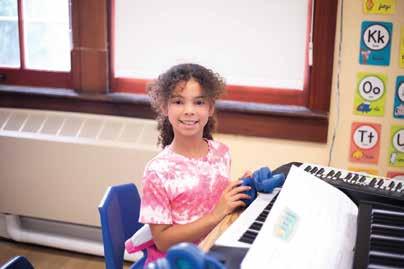
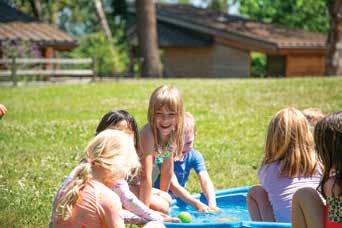
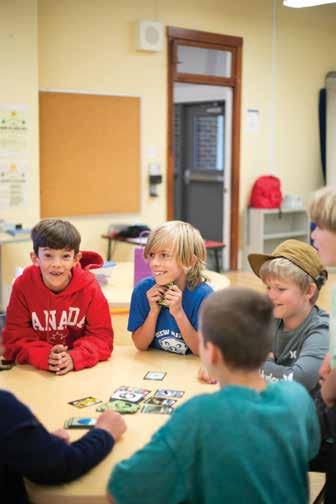
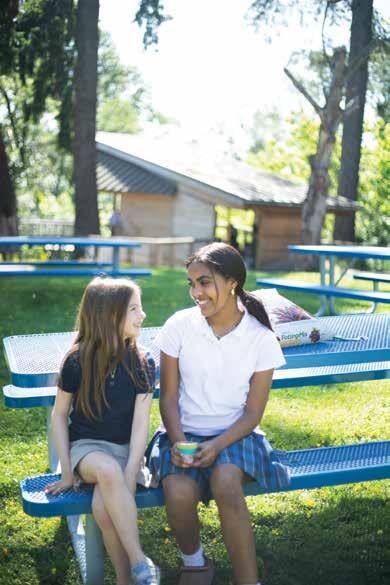
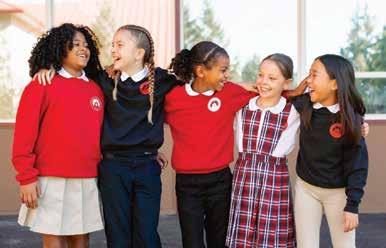
Tips to prepare your kids to soar during their first sleepaway camp experience
RAISING GREAT KIDS
A New Era of Brain Drain 15
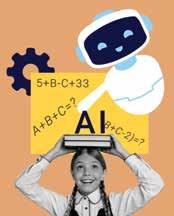
Outsourcing even simple tasks to AI could have a dramatic impact on kids’ ability to learn
Stretch your grocery dollars with zero-waste recipes and cooking tips from Chef Nala Thomas
Family
Fun OUT + ABOUT Fantastic Free Museums 26
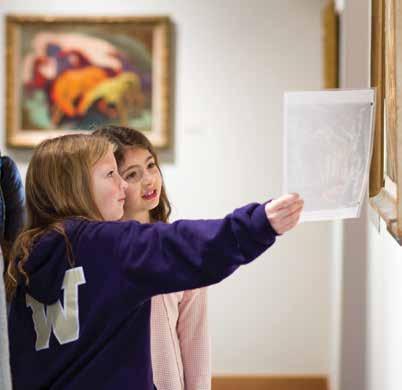
Cultivate curiosity in your kids without spending a lot to do it
Play List 30 Turns out the shortest month of the year is long on family fun
Chef Nala Thomas
Photo courtesy Urban League of Metropolitan Seattle
Photo by Laura Prudhomme
What’s a cherished recipe that’s been passed down in your family?
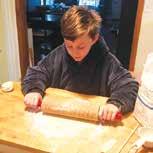
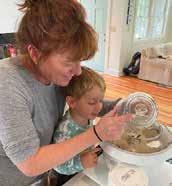
Lefse! My grandma made it, then my mom did and now I make it — and try to get my boys to help.
It’s what my family calls “meat things” — ground beef with onions and spices, wrapped in phyllo dough, cut into triangles and baked with sesame seeds on top. My grandma used to make them and they have been passed down through generations.
My grandma’s gnocchi and ravioli with her sauce and meatballs are legendary. She never used recipes; I have so many memories from childhood watching her cook while furiously taking notes so I would be able to recreate her food (never could).
EDITORIAL
HEAD OF CONTENT + STRATEGY
Kristen Russell
MANAGING EDITOR
Allison Sutcliffe
CONTENT EDITOR
Kari Hanson
FAMILY FUN EDITOR
Meredith Charaba
CALENDAR EDITOR
Julie Dodobara
PRODUCTION COORDINATOR
CONTENT
Onkarpreet Chatha
COPY EDITOR
Kari Hanson
CONTRIBUTORS
Laura Kastner, Ph.D., Kate Missine, Imani Razat, Sandi Schwartz
DIGITAL MARKETING
MARKETING DIRECTOR
Lindsey Carter
MARKETING DESIGN SPECIALIST
Angela Goodwin
MARKETING COMMUNICATIONS
SPECIALIST
Devon Hammer
SOCIAL MEDIA SPECIALIST
Brooke Collins
ADVERTISING SALES + PARTNERSHIPS
DIRECTOR OF COMMUNITY
PARTNERSHIPS +
ADVERTISING SALES
Jessica Collet
SENIOR ADVERTISING AND PARTNERSHIPS MANAGER
Ida Wicklund
EVENTS + COMMUNITY
PARTNERSHIPS SPECIALIST
Brenna McCown
ADVERTISING CLIENT
SERVICES SPECIALIST
Mallory Dehbod
CLIENT SERVICES
ADMINISTRATIVE ASSISTANT
Bronwyn Jones
DIGITAL ADVERTISING + MARKETING SPECIALIST
Taryn Weiner
PRODUCTION COORDINATOR
Tamryn Nell
ART + PRODUCTION
SENIOR DESIGNER
Amy Chinn
ADMINISTRATION
BUSINESS MANAGER
Carolyn Brendel
OPERATIONS ASSISTANT
Erika Widjaja
Challah. We make two loaves of challah each week to commemorate the fact that the Jews in the desert received a double portion of manna every Friday in honor of Shabbat.
Lemon sour cream sugar cookies! It’s my greatgrandmother’s recipe, but she never wrote down the exact measurements. We’ve been trying to recreate them for years without success, so we’re convinced the secret ingredient was her making them.
CONTACT INFORMATION
Advertising information
206-709-9026 or advertising@parentmap.com Fax 206-709-9031
My dad’s chili. It has only a handful of ingredients but requires at least three days of cooking. I’m the only one in the family who didn’t give up on trying to replicate it. Happy to say, I think I cracked the code and Poppy’s chili lives on.
My great grandmother’s Norwegian Kringla (not to be confused with a Kringle). They are a holiday favorite; my elementary school friends used to beg my mom to make them. Now I make them with my daughter.
I watched a local grandma on the news, her face stricken with grief as she described what it felt like to have to find the food to feed five teenage boys during the disruption of the Supplemental Nutrition Assistance Program (food stamps) during 2025’s federal government shutdown. I shook my head in dismay. The burden of so many mouths to feed made me think of my own grandmother, Lucille, who grew up one
of 15 siblings in the Bronx, New York during the Great Depression. As it goes, her family, like many others during that time, survived by making the most of what they had.
Even as life got better (Grandma couldn’t get over it when KFC once gave away free cake with family meals), she wouldn’t waste a single crumb. Instead she’d bring bags of leftovers
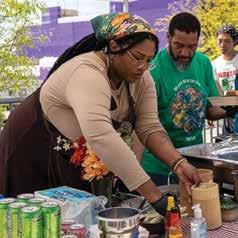
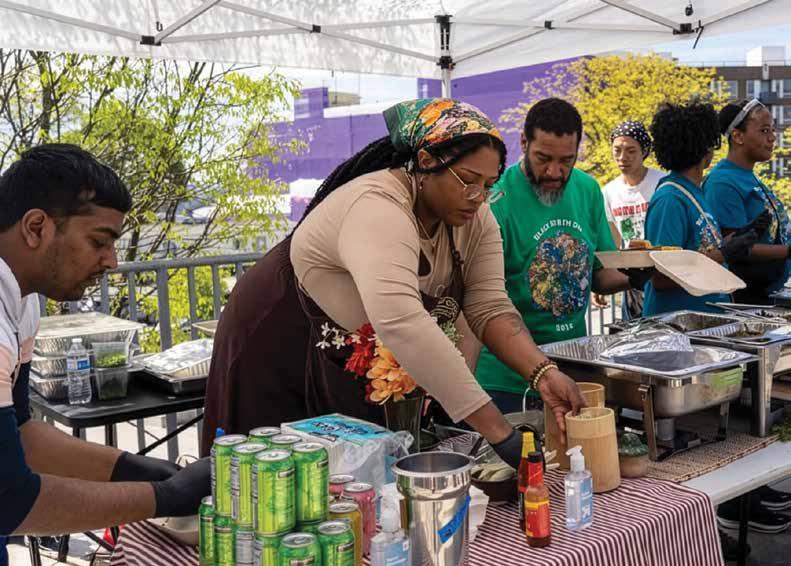
Chef Nala at a community cooking event for Black Earth Day. Photo courtesy Urban League of Metropolitan Seattle
Facing food insecurity? Find resources here.
home in a plastic baggie from church potlucks and shape them into little cakes. “It all goes to the same place!” she’d remark proudly, amused by her own resourcefulness.
With prices for all food expected to increase 2.7 percent in 2026, according to the USDA’s Food Price OutlookSummary Findings, I think it’s fair to say that we are all feeling the pinch.
It feels like a good time to revisit my grandmother’s age-old wisdom.
I reached out to Nala Thomas, a southern Louisiana-born chef, educator and graduate of Seattle Culinary Academy, as her work is grounded in community, resourcefulness, ancestral legacy and love. She blends seasonal, local ingredients to create meals that are nourishing, tell stories, honor roots and bring people together.
“I really want to change the way that people think about food, scarcity and abundance,” says Thomas. “When you have community, collective resources and you honor the Earth, then you have abundance. There are different ways of being rich.”
Thomas is passionate about community cooking. She was recently faced with food insecurity and her commu-
nity showed up! They gathered to cook together, creating soups from pooled ingredients that fed not only her, but multiple households for a week.
“We provide based on what we have. In some seasons, some have more than others. It’s about making do with what we have, showing up consistently and trusting that abundance comes from shared effort rather than everything being equal. Some seasons I have more, some seasons I don’t, and we rely on each other to fill in the gaps,” she shares.
For Thomas, communal cooking practice looks like people, such as farmers, chefs, family and friends, bringing what they have, adding it to the pot, sharing sides and building a meal together. It’s similar to a potluck, but more collective and hands-on. The community cooks together, eats together and often leaves
How to start your own community pot
1/ Communicate with your community and send out a text thread or an email, pitch your local church or cultural center. Don’t be afraid to express need! You will be surprised how many people experience food insecurity, how many need help, especially with the prices of groceries rising. We need to depend on each other now more than ever, so know that you are not alone and don’t be shy.
2/ Decide on what to cook based on ingredients that people already have. One person might bring produce, another pantry staples, someone else protein or spices. By cooking together you’re able to make a full and nourishing spread that would be more expensive to do alone.
3/ Schedule a time and a place to cook together. This can be someone’s home, or a community or cultural center. This may work best on a weekend when people have time to gather.
continued from page 7
FEATURE with enough to share beyond the table.
“Recently, friends and I organized a group meal prep using whatever ingredients were around. We made a Thai curry with shared veggies leftover in our fridge, proteins cooked separately like fried fish and teriyaki chicken, sides like papaya salad (Thai- and Lao-style), and even dessert; some leftover miso chocolate chip cookie dough I had left in the fridge.”
What started as a few ingredients turned into an abundant spread, with leftovers to share with each other and community members.
“That’s how I understand resilience, not as doing everything alone, but as showing up, contributing what you can and feeding each other through it,” she shares.
Passing down traditional cooking Thomas learned how to cook through watching the women in her family and other matriarchs she met along her culinary journey. “I grew up in southern Louisiana eating Creole and Cajun foods that were meant to stretch and feed many; foods like red beans and rice, gumbo, cabbage, green beans and using all parts of the animal. These meals were affordable, filling and made with love,” she says.
A big pot of red beans or chicken stew would feed them for days, and always tasted better as time went on. Meals were stretched even more with sides such as cornbread, potato salad and whatever veggies were on hand.
“That kind of cooking came from survival,” she says. “Enslaved people were forced to make meals from scraps and limited resources, and they turned that into something sustaining and delicious. For example, they used ham hock to add flavor, which is sustainable because it uses all parts of the animal.” That history lives in the food she grew up eating. Now Thomas is interested in how food can hold both resilience and healing. In her kitchen, that looks like adapting traditional foods rather than abandoning them. “I still cook red beans and rice,” she says, “but I might make it plant-based using mushrooms instead of sausage, more layered by using spice blends like berbere.”
Thomas explains that beyond cost, communal cooking builds resilience because it strengthens relationships. “People learn to rely on each other across different seasons of life, knowing that support doesn’t always look equal. It looks like showing up with what you have. That trust and consistency is what allows communities to weather financial strain, food insecurity and change,” she says.
Zero-waste cooking hacks that save money
• Transform food waste into nourishing meals. “Soup is great because you can put a multitude of things in it. You want to use every single part of everything. Carrot stems and chicken bones can be used to make soup stock. I always buy chicken thighs because they’re cheaper, and bone-in. Then you can debone them and use the bones for broth,” says Thomas.
• Regrow your vegetables using roots and discarded seeds. “Green onion roots can be replanted, avocado seeds can be placed in a glass of water and resprouted but these take about seven years to regrow! We’ve done it, but we also laugh at the time it takes,” says Thomas.
• Freeze leftover ingredients for later use. “If I don’t have the energy or time to do it right then and there, I’ll just throw [ingredients] in the freezer,” says Thomas.
• Repurpose ingredients. “Did you know that you can even use onion skins to dye clothes? I started doing that recently. It’s really beautiful,” says Thomas.
Chef Nala Thomas’ favorite local food pantries, community gardens and organizations
Delridge Farmers Market in West Seattle. Open from May–October. It often has free produce and with every child you’ll get $5 market bucks, and it offers free supplies.
Rainier Beach Action Coalition. During the farmers market season they have a community supported agriculture program where you pay for a season’s worth of fresh produce and other farm goods. “My experience has been with
weekly and monthly subscriptions on a sliding scale, and cheaper options for families who need access to more affordable produce, with local seasonal options,” says Thomas.
Tilth Alliance. Offers youth programs, camps, after-school programs and field trips. “They have a Good Food Bag system where you can get local and seasonal goods,” says Thomas.
Beacon Food Forest. ”You can volunteer here and harvest your own fresh herbs such as thyme or rosemary. It’s community U-pick that is free to harvest,” explains Thomas.
Black Farmers Collective. A great place to network and get involved with various farmers. It has volunteer days and offers educational workshops for kids in grades K–12, and preschool programs to address food access. ■
Blue Cornbread (gluten-free, dairy-free)
Dry ingredients
2 cups blue corn flour; finely ground (you can do it in a food processor or blender) or you can use yellow cornmeal if you can’t find any.
1 cup gluten-free flour
2 teaspoons baking powder
1 teaspoon Celtic salt
1/2 teaspoon ground cardamom
1/2 cup sugar
1/2 cup coconut sugar
Pinch of MSG (optional, for depth)
Instructions
Wet ingredients
3 eggs
1/2 cup olive oil or neutral oil
2 cups coconut milk (boxed preferred)
1 tablespoon honey
1/ Preheat oven to 350 degrees, grease a 9-inch round pan, set aside.
2/ Combine all dry ingredients in a bowl.
3/ In a separate bowl, combine all wet ingredients.
4/ Add wet ingredients to dry and mix until just incorporated. Do not overmix.
Pour into the prepared pan and bake at 350°F for 20–25 minutes, until golden brown. Insert a toothpick or knife into the center; if it comes out clean, it’s ready.
A few of Chef Nala Thomas’ favorite recipes
Red Beans and Rice
INGREDIENTS
Beans
2 pounds dried red beans (Camellia preferred)
1 (13 ounces) andouille sausage, sliced
optional: plant-based sausage or portobello mushrooms
1 large sweet onion, diced
3–4 stalks celery, diced
2 green bell peppers, diced
4 green onions, sliced (white and green separated)
7 cloves garlic, minced
2 bay leaves
1/2 tablespoon fresh thyme (or 1 teaspoon dried)
1 teaspoon Cajun seasoning
1 teaspoon berbere (optional)
Chicken or vegetable broth (enough to cover beans by 1 inch)
2/ Heat 1 tablespoon oil in a heavy-bottomed pot over low–medium heat. Brown sausage until golden; remove and set aside.
3/ In the same pot, sauté onion, celery, bell pepper and green onion whites until soft and lightly caramelized, about 8–10 minutes.
4/ Add garlic and cook until fragrant, about 30 seconds. Stir in thyme, Cajun seasoning, berbere (if using), bay leaves, black pepper and optional vegetarian smoky seasonings if using.
5/ Add beans and enough broth to cover by about 1 inch. Add ham hock or turkey wing if using.
6/ Bring to a gentle boil, then reduce to a low simmer. Cover slightly and cook 2–3 hours, stirring occasionally.
7/ Mash a small portion of beans against the side of the pot to thicken.
8/ Add sausage back during the last 30–40 minutes.
9/ Season with salt near the end. Beans should be creamy and saucy, not soupy.
10/ Remove from heat and let rest 15–20 minutes before serving.
Instructions for rice
1/ Rinse rice until water runs mostly clear.
2/ Bring water and salt to a boil. Add rice, stir once, cover and reduce to low.
3/ Cook for 15–18 minutes. Turn off heat and rest 5 minutes. Fluff before serving.
To serve: Spoon beans over rice. Finish with fresh parsley and green onion tops. Add hot sauce if desired. Serves 5
1 medium carrot, cut into matchsticks
1/2 red bell pepper, thinly sliced (optional)
2 dried shiitake mushrooms, soaked and thinly sliced
1 cup fresh mushrooms (oyster, king trumpet or cremini), sliced
Protein
1 block extra-firm tofu, sliced and pan-fried until golden
Sauce and seasoning
3 tablespoon soy sauce
1 1/2 tablespoon toasted sesame oil
1 teaspoon sugar or maple syrup
2 garlic cloves, minced
1/2 teaspoon ground black pepper
Other
Kosher salt
1 tablespoon toasted sesame seeds
Neutral oil, for cooking
Sesame oil for garnish
continued on next page
continued
Vegan Japchae
Instructions
1/ Bring a large pot of water to a boil. Add spinach and blanch for 30 seconds to 1 minute. Remove with a strainer, keeping the water boiling. Rinse spinach under cold water, squeeze dry, chop lightly and place in a large bowl. Season with a small splash of soy sauce and sesame oil. Set aside.
2/ Add noodles to the boiling water and cook until soft and chewy, about 8 minutes. Drain and cut once or twice with kitchen scissors. Add to the bowl with spinach and toss with a small drizzle of sesame oil, a splash of soy sauce and a pinch of sugar to prevent sticking.
3/ In a small bowl, whisk together soy sauce, sesame oil, sugar, garlic and black pepper. Set aside.
4/ Heat a skillet over medium-high heat. Add oil, onion and green onion with a pinch of salt. Sauté until translucent. Transfer to the noodle bowl. In the same pan, add oil and cook mushrooms until juicy and lightly browned. Transfer. Add oil and quickly sauté carrot and bell pepper just until tender. Transfer.
5/ Add oil to the skillet. Add shiitake mushrooms and cook until glossy. Add tofu and toss gently to coat and warm through. Transfer to the noodle bowl.
6/ Pour the sauce over the noodles and vegetables. Add sesame seeds. Mix gently but thoroughly until evenly coated. Taste and adjust seasoning if needed.
To serve: Transfer to a serving plate and serve warm or at room temperature. Serves 3–4.
Imani Razat is a writer, designer, creative consultant and mom to two boys and a tiny Russell Terrier named Cannoli. Her work is inspired by the lifestyle of global city culture — the people, places, community, food, style and design objects that celebrate life.
Discover the latest parenting tips, tricks, adventures, activities and more! @parentmap
How to Prepare Your Child Emotionally for Their First Summer at Sleepaway Camp
By Sandi Schwartz
One of the best things we can do for our children is to let them experience the world a bit without us by their side. Sleepaway camp is the perfect summer activity for children to help them become more independent, build confidence and meet new people.
However, that first time heading off to sleepaway camp can be intimidating and nerve-racking for some children. Here are some tips to help you prepare your kids to make the transition from home to camp as smooth as possible.
Family Fun Calendar
Involve them when choosing a camp. Get your kids involved early on when shopping for a camp. Look at camp websites and brochures together; bring them with you to tour different camps; and let them be part of conversations with staff.
Encourage independence at home. Start building their independence by getting them more involved at home, such as picking out their own clothes, making their bed, organizing their room, cleaning up after a meal and learning basic hygiene.
Ask your kids to share their concerns. If your kids are nervous, that’s okay. Just make sure the lines of communication are open so they express how they are feeling. By discussing their fears with you early on, you can talk through it and provide reassurance.
Teach coping skills. In addition to talking about their worries, it’s helpful to provide them with a few tools to help them cope when they are struggling. “Pack postcards in their suitcase so they can write you letters whenever they are missing you or a weighted blanket to sit and hang out with,” says Grogan.
Pack together. The more your campers are involved, the more prepared and in control they will feel. Bring them along to shop for camp supplies and let them pick out their favorite items to take with them for the summer. Don’t pack their bag for them; instead, encourage them to help go through the packing checklist with you.
Talk to them about what camp will be like. At bedtime, set the scene for how fun it will be to have a sleepover with several friends that lasts weeks. Review the list of camp activities. Look at the camp’s social media posts to show your kids what to expect.
Attend orientation. Even if your child has already seen the camp in person during a tour, it’s critical that you attend the orientation as a family, recommends Jenny Grogan, one of the camp directors at Farm Camp in Cazadero, California, a traditional overnight summer camp for campers ages 7–17 on a real working ranch.
Walk through what will happen at drop-off. Don’t hesitate to ask the camp to explain the details about drop-off and the first day so you can describe everything to your kids ahead of time. When that day finally arrives, try to keep your goodbyes brief and avoid becoming too emotional (wear sunglasses to hide your tears if you have to).
By following these helpful tips, both you and your children are sure to have a less stressful experience as they embark on their first sleepaway camp experience. ■
Sandi Schwartz is a freelance writer and mother of two. Find her work at happysciencemom.com and sandischwartz.com.
Robotics, Coding,& Crafting!
Parkour, Wilderness Survival, & Soccer!
Summer Camps at Villa Academy
Raising Great Kids What’s Lost When Your Child’s Learning Is Outsourced to AI?
A psychologist warns that kids’ reliance on AI chatbots for
homework
help can have lasting effects on their cognitive development
By Laura Kastner, Ph.D.
“Do your parents know how much you do it?” I ask the teen sitting across from me.
“No,” they say with a smirk. “They’re pretty clueless.”
I try again. “What about adults at school, like your teachers or counselors? Do they know?”
Usually the answer is a shrug. “Not really. But it’s no big deal. There are ways around detection. Everyone does it.”
I push once more. “Any downside? Anything you worry you’re losing by using it so much?”
That’s when the teen smiles and says, “No. Really! It’s all good.” Are we talking about sex? Drugs? Social media?
Nope. We’re talking about AI and kids using it to do homework, schoolwork and increasingly, to manage the biggest daily stressor in most teens’ lives: school.
Welcome to the age of AI and ‘Chat’ “Chat” is the new big thing among teens; it’s also a blanket term they use for any AI interaction (homework help, role playing, venting, mental health support, etc.) no matter the platform. In the past, I’ve written
about teens using chatbots for companionship and mental health support. But in this article, I want to focus on something else: what’s happening as the powerful corporate interests behind AI and EdTech move rapidly into your child’s classroom and into your home without your consent and knowledge.
Industry analysts estimate that roughly $7 to $10 billion is currently being invested globally in AI for education, with projections exceeding $100 billion by the early 2030s. That kind of money does not flow without pressure to scale quickly.
To be fair, AI tools can offer real benefits to kids. They can personalize learning and target gaps, and meet students at their current skill level. For lowresource schools, AI tools can feel like a lifeline for teachers and administrators. And tutor bots offer privacy and reduce shame for students with learning challenges who compare themselves to peers. As one ninth grader told me, “No one knows I’m actually at a fourthgrade level in math when I use Chat.”
Here’s my biggest concern: AI tools are being rolled out widely in schools
RAISING GREAT KIDS
continued from page 15
without meaningful research on what children may lose when they take massive shortcuts in learning.
Cognitive offloading: When thinking is outsourced
The relief teens experience by using this shortcut is what psychologists call cognitive offloading. While young brains are still under construction, kids are handing over the hardest parts of thinking to an AI chatbot. When students use AI to summarize readings, generate rough drafts, organize ideas or polish language, they are not just saving time, they are skipping the important mental work that builds reading comprehension, written expression, critical thinking and analysis — super-challenging but absolutely essential processes. Removing those steps can have serious consequences.
Today’s kids have grown up Googling everything, getting “news” from TikTok and shaping their realities via YouTube.
Struggle is a feature of learning, not a bug
Challenging mental tasks physically increase brain growth. You do not get strong by watching someone else do push ups, nor do you become a musician by listening to a playlist. Likewise, you do not become a clear thinker and communicator by repeatedly handing your thinking over to AI chatbots.
School is a gym for the mind. It is not just about correct answers. For example, schoolwork is often designed to build the capacity to read something complex and track meaning, decide what matters, form an argument rather than just an opinion, write with precision and in one’s own voice, and revise, because much of learning happens in the rewrite.
These often resisted steps are where kids develop cognitive endurance and judgment.
AI offers a bypass to this learning. And paradoxically, its most seemingly innocuous uses may be the most harmful in terms of skipping steps in cognitive development.
Summarizing, outlining and synthesizing are not clerical tasks. They are thinking tasks; taking
shortcuts removes the reps.
Neuroscience backs this up. Effortful thinking strengthens neural connections. What students find difficult is precisely what builds academic abilities. When AI does the thinking instead, kids take the shortcut without fully understanding what skills may quietly weaken from disuse.
We become what we repeatedly do
My favorite expression in neuroscience captures this well: “The neurons that fire together, wire together.” What humans repeatedly think, feel and do form neural pathways in their brains. Attention, language and effort are not abstract traits. They are built through use. If a child repeatedly practices wrestling with ideas, their capacity to think deepens. If they repeatedly practice outsourcing that effort, something
else takes its place. They learn to rely on chatbots.
Earning grades without learning
We are already seeing this reliance on AI chatbots play out in college settings. In a recent New Yorker article, a college student described using multiple AI tools to write papers for his humanities classes. He completed assignments in less than an hour, work that would previously have taken him eight or nine. His GPA was a respectable 3.57. But when asked what he retained, his answer was blunt: “I didn’t retain anything. I couldn’t tell you the thesis for either paper.” The efficiency was real. So was his lack of knowledge.
This is where parents should pause. AI is not just helping kids cut corners. It is subtly changing what “doing school” means. Students risk becoming man-
agers of output rather than builders of their own minds. And because the results often look acceptable on the surface, adults often fail to notice how much the learning underneath has thinned.
AI use among teens is common
Parents are often surprised by how casually and pervasively AI is already being used by their kids for homework, and often that means cheating. This line is very blurry — for students, parents and teachers.
Using Chat for homework is not a fringe behavior among a few rule-breakers. It is mainstream. A 2024 Pew Research Center survey found that one-quarter of U.S. teens have used ChatGPT for schoolwork, double the rate from the year before. And even that may underestimate daily reliance.
Today’s kids have grown up Googling everything, getting “news” from TikTok and shaping their realities via YouTube. From their perspective, AI can feel like just another efficiency tool.
Teens openly tell each other which bots are best for which tasks, how to prompt for better results and how to avoid detection. Much of this happens without parents’ knowledge and increasingly without schools’ ability, or will, to meaningfully intervene.
Early warning signs
Schools, for their part, are responding with weary realism. AI is potentially available on any computer with internet access. Educators feel pressure to incorporate it and figure it out as they go. It makes their lives easier too. But when it comes
Questions parents should ask schools about AI
1/ When are students allowed to use AI and when are they expected to work independently? Ask for concrete examples. Vague assurances are less helpful than clear boundaries.
2/ Which core skills are students required to practice without AI support? In particular, ask about reading comprehension, writing drafts, math problem-solving and synthesizing ideas.
3/ How does the school distinguish between using AI to support learning versus replacing it? What guardrails are in place to ensure students still do the cognitive heavy lifting?
4/ What evidence guides the use of AI at different developmental stages? Ask what research the school relies on and what unknowns they are actively monitoring.
5/ How are parents informed when new AI tools are introduced, and do families have options to opt out? Transparency and choice matter, especially for younger students.
to children’s cognitive development, dealing with the downsides later is not a reassuring plan. It is how we ended up struggling to rein in smartphones and social media years after harms became visible.
We have seen this movie before. In the early 2010s, smartphones and social media reshaped kids’ social lives, attention and sleep long before adults fully understood the costs.
New technologies tend to roll out quickly. Early warnings are dismissed. Kids become the test population. Only later did research and Jonathan Haidt, author of “The Anxious Generation,” link widespread social media use to rising anxiety, sleep deprivation and attention problems among kids and teens. Parents, health advocates and educators are still scrambling to repair that
damage. With AI, we risk repeating this pattern.
Some argue the trouble started even earlier, with laptops on every desk.
Neuroscientist Jared Cooney Horvath, author of “The Digital Delusion,” documents how heavy classroom screen use correlates with lower academic performance, fragmented attention and the erosion of deep thinking. Using international Programme for International Student Assessment data, Horvath found that students who spent more than 6 hours a day on screens at school scored roughly two letter grades lower than peers who used none.
The need to incorporate informed consent I love my laptop, my smartphone and even AI on occasion. This is not about
rejecting technology wholesale. It is about how quickly powerful tools are being introduced into children’s lives without research providing an evidence base, informed consent or meaningful guardrails.
It goes without saying, but it is worth repeating here: Children’s brains are different from adults’. Giving adults AI to speed up thinking is not the same as giving it to children who still need the repeated, often challenging, practice to develop their neural pathways.
In medicine and psychology, informed consent is foundational. Parents are told what is known, what is not known, and what risks may exist before trying any new intervention that involves their child. Participation is voluntary, and families have the right to decline.
continued from page 19
With AI in schools and homes, there is no such process. No disclosure of unknowns or meaningful ways to opt out. Children are being exposed to tools designed largely by profit-driven companies, without parents being fully informed, let alone asked.
If we were serious about doing this responsibly, we would study AI the way we study other developmental interventions. We would compare groups of students with and without routine AI use over time and track outcomes that actually matter, such as reading comprehension, writing fluency, attention, persistence and independent problem-solving.
Instead, convenience, efficiency and market momentum are driving the integration.
Don’t blame the kids, or their parents I worked with a student who admitted to cheating throughout high school and into college. He told me how AI solved his terror of “the empty page.” He loved his facility with AI, because every paragraph sounded smooth and competent. But he recently left college, not with a degree, but with a panic disorder. His crash and burn, he said, came when teachers asked him to talk through his papers out loud. He was flooded with anxiety and described himself as feeling like a “100 percent imposter.”
Let’s be clear. This is not about blaming kids. Teenagers are doing exactly what teenagers do. They find shortcuts, test boundaries and reduce stress. School is one of the biggest pressure points in teen life, and AI offers relief. Of course they are using it. They did not create these tools or the incentives behind them. They are adapting to the environment adults built for them.
The real question is who is willing to slow this down at all. Based on what I frequently see in my practice, most parents are largely unaware of how deeply AI is already embedded in their child’s schoolwork, or they are reluctant to intervene because they have been told that mastering AI is essential for future jobs in an automated economy. In that vacuum of clarity and leadership, no one is drawing a firm line to protect the developmental work that only kids can do for themselves.
continued on page 22
How to talk with your child about AI and schoolwork
The goal isn’t to interrogate or scare kids. It’s to open a thoughtful, ongoing conversation that keeps learning as the central value.
Lead with curiosity, not accusation. Try: “I’m curious how AI fits into your schoolwork right now. When do you find it most helpful?” Avoid starting with surveillance or threats. Teens shut down quickly when they feel policed.
Name the difference between help and replacement. Try: “There’s a difference between getting help and letting something do the thinking for you. Let’s talk about where that line is.” This frames the issue as judgment and skill-building, not rule-breaking.
Focus on skill building, not cheating. Ask: “Which parts of an assignment do you think are meant to build your brain?” Connect the conversation to long-term abilities like writing clearly, explaining ideas out loud and sticking with hard problems.
Be explicit about your family expectations. Teens need clarity. Try: “In our family, we expect you to do the first pass of thinking and writing yourself.” You can allow AI as a tool after effort, not instead of it.
Acknowledge the pressure they’re under. Say: “I get why this is tempting. School is stressful, and AI makes things easier.” Empathy makes it far more likely they’ll be honest with you.
Keep the conversation ongoing. AI is evolving fast. Treat this like social media or phones — not a one-time talk, but a series of check-ins as expectations and tools change.
These conversations work best when kids feel respected, understood and guided.
Lectures and shaming result in shut-downs. The message is simple: Learning how to think still matters, even in an AI world.
King’s Schools provides a college preparatory Christian education for students in Preschool – 12th grade. Learn how King’s Schools can serve your family and book a tour to experience the difference.
We Deliver
continued from page 20
Because if we allow AI to routinely replace the struggle of reading, writing, organizing and thinking, rather than occasionally supporting it, we risk raising young people who look competent on paper but are less practiced at sustained effort, less confident in their own reasoning and more dependent on external tools to think for them.
And that matters — not just for school, but for adulthood. Learning how to tolerate confusion, wrestle with ideas and find one’s own words is not busywork. It is how minds are built.
Education Begins with Kid’s Country
Once those habits are wired, they are difficult to undo.
Take action
Here is where parents may have more power than they realize. Parent-led movements have already pushed schools to rethink smartphone access and the mental health costs of unregulated tech use. A 2025 Pew Research Center survey found that roughly three-quarters of U.S. adults now support banning cellphones during the school day, a sharp rise that shows how quickly collective concern can translate into real policy shifts.
This is not a call to ban AI or pretend it does not exist. It is a call for a pause: a coordinated, collective pause to ask harder questions before scaling.
If we learned anything from the social media era, it is that silence is not neutral. When no one draws a line, children pay the price. A collective pause now may be the most responsible move we can make for the thinkers, learners and citizens our children are becoming. ■
Laura Kastner, Ph.D. is co-author of a number of parenting books, including the acclaimed “Getting to Calm: Cool-Headed Strategies for Parenting Tweens and Teens” and “Wise-Minded Parenting: 7 Essentials for Raising Successful Tweens + Teens.” She is a clinical professor of psychiatry and behavioral sciences at the University of Washington. Kastner is also the facilitator for ParentMap’s ParentEd Talks, a transformative series of parent education webinars, designed to provide the guidance you need to support your child’s development.
2026 Speaker Lineup
Hosted by Dr. Laura Kastner, Ph.D.
ParentMap is honored to present Laura Kastner as series host, guiding each speaker in an engaging, audience-driven Q&A. Dr. Kastner is a clinical professor of psychiatry and behavioral sciences at the University of Washington and author of the acclaimed “Getting to Calm” book series.
From Blowups to Breakthroughs: A New Way to Navigate Anger in Kids
With psychologist and GoZen!
founder Renee Jain
Feb. 10, 2026
The EdTech Wake-Up Call: Rethinking How Kids Learn Online
With neuroscientist and educator
Jared Cooney Horvath, Ph.D.
March 10, 2026
The Boyhood Crisis: Raising Thriving Young Men in a Changing World
With social scientist and author
Richard Reeves
April 22, 2026
The Family Tech Reset: Hope and Help for Rebuilding Connection
With Better Screen Time founder
Andrea Davis
May 12, 2026
Out + About
Free-For-All!
Because paying admission is so 2025
By Kate Missine
The whirlwind of the festive season is in the rearview; and post all that holiday spending, January sure has our pocketbooks feeling the pinch. Meanwhile, winter’s Big Dark is still upon us and as the long, rainy days stretch out, we find ourselves choosing between dealing with cooped-up, stir-crazy kids or splurging on outings with pricey entrance fees.
Lucky for us, Seattle-area families have a fee-free loophole for getting wound-up kids out of the house for creative, culture-filled educational outings. I’m talking about Free First Thursdays (Free Third Thursdays if you live near Tacoma) — an initiative that lets patrons visit local Puget Sound museums with no admission fees one day each month.
Visiting during these no-admission-fee hours means kids can see cool art, examine historic artifacts, learn about other cultures or even see impressive machines. After doing lots of exploring myself, these are the museums around the Sound that top my list and allow families to have all the fun, without spending a dime.
Museums in the Seattle area to visit on Free First Thursdays
Seattle Art Museum and Seattle Asian Art Museum
Free First Thursday hours: 10 a.m.–8 p.m. (Seattle Art Museum), 10 a.m.–5 p.m. (Asian Art Museum)
The Seattle Art Museum (and its satellite location the Seattle Asian Art Museum) is home to more than 25,000 works of art from
around the globe, making it a fantastic accessible introduction to the world of art for kids of all ages. Learn all about critter brains with the new animal intelligence exhibit; be fascinated by the sculptural Geometry of Light installations by a Pakistani American artist; and delight littles with the beyondadorable smiley clouds suspended from the ceiling in the ongoing “Little Cloud Sky” exhibition, intended to bring whimsy and joy.
Burke Museum
Free First Thursday hours: 10 a.m.–8 p.m.
Young dino lovers and budding paleontologists already know and love the Burke Museum for its awesome dinosaur exhibits. The Fossils Uncovered gallery is the only place in the state to view real dinosaur fossils, including one of the best-preserved T. rex skulls ever found. Other awesome exhibits document the stories of the planet: from evolution and environments, to the lives of local Native communities and the work of archeologists; and a play area lets littles get the wiggles out if you need a break.
National Nordic Museum
Free First Thursday hours: 10 a.m.–8 p.m.
Discover the cultures and stories of North America’s Nordic settlers in this modern Ballard museum. Follow in the steps of the Vikings in “Nordic Journeys,” which spans over 12,000 years of history; and experience the wonder of the Northern Lights in the 20-foot Project Aurora light installation. And don’t miss Frankie Feetsplinter outside: one of the six beloved Northwest Trolls around Washington state, created by Danish artist Thomas Dambo.
The Museum of Flight
Free First Thursday hours: 5–9 p.m.
The wonder of charting the open skies and massive flying machines are a never-ending source of fascination for humans big and small — and The Museum of Flight is the place to satisfy their curiosity. Holding one of the largest air and space collections in the country, this Tukwila spot has it all: from giant hangars to open-air pavilions, World War fighter jets, a NASA space shuttle, flight simulators and much more. Young pilots will love hanging in gliding simulators and climbing into real cockpits in the fab Kids Flight Zone; while older family members can take in current exhibits like
+
continued from page 27
the untold stories of World War II or Apollo rocket engines.
MOHAI
Free First Thursday hours: 5–8 p.m.
Curious kids and their grown-ups can delve deep into the roots of Seattle’s urban fabric and the industries that shaped it at MOHAI in South Lake Union. Explore the city’s stories through hands-on exhibits: from the Bezos Center for Innovation, to see how the region’s big ideas came to life; to Maritime Seattle and its gallery of marine vessels and more. Budding builders ages 2–7 will adore the Kid-Struction Zone set with brain-boosting activities like Duplo tables and giant foam bricks.
Northwest African American Museum
Free First Thursday hours: 10 a.m.–5 p.m.
The colorful stories and spirit of African American people in the Pacific Northwest await discovery at the Northwest African American Museum, housed in the historic Colman School building in Seattle’s Central District. History, culture, storytelling, civil rights and more are traced through evocative exhibits such as “Freedom of Expression,” showcasing the work of local Black visual artists; and “History Lives Here,” which tributes the vision of inspiring community leaders. Have a teen interested in the arts? Ask about the Youth Curator program, which lets students experience the field of museum curation firsthand.
Where to spend Free Third Thursdays in South Sound
Washington State History Museum
Free Third Thursday hours: 3–8 p.m.
From Indigenous communities and migration to trains and hovercrafts, Tacoma’s Washington State History Museum is the spot to learn all about the state’s past and future. Discover the stories of Washington’s settlers;
explore our cultural fascination with futuristic flying cars; and don’t miss the largest permanent model railroad in the state amidst the engaging, interactive exhibits.
Tacoma Art Museum
Free Third Thursday hours: 5–8 p.m. From European impressionists to Japanese prints and Dale Chihuly’s
vibrant glass art, there’s something for everyone to discover at this artsy Tacoma destination. Get inspired by the amazing artists on display; then, head over to the TAM Studio, the museum’s free drop-in art space stocked with supplies, hands-on activities, books and more — no admission required. Third Thursday nights also host the Teen Open Studio — a space just for
teens to create art, express themselves and build connections with scheduled artmaking activities.
Museum of Glass
Free Third Thursday hours: 5–8 p.m.
This funky cone-shaped building in Tacoma is all about the contemporary art of glass; showcasing the medium through eye-catching exhibitions, live glassblowing demos and hands-on glassmaking experiences. A highlight for families is the Kids Design Glass program, which lets kids bring their imaginations to life and take part in the transformation of glass into art. Kids can submit drawings for selection by the museum to be made into blown glass creations that are then displayed in the museum.
You don’t need to wait until Third Thursday to visit the Foss Waterway Seaport, which has recently made its admission free every day! Set in the historic Balfour Dock building, this living museum dives into Tacoma’s maritime history through interpretative, interactive displays. Learn the history of Puget Sound’s boating and fishing industries and marine ecosystems; and don’t miss the working model of the Half
Tuesday, Feb. 10 | noon–1 p.m.
Moon Yard railroad at Tacoma Wharf, where miniature trains can be dispatched with the push of a button. ■
Kate Missine is a Sammamish-based mom, shopping addict and lifestyle writer with over 20 years of experience. Since 2015, she has been keeping Pacific Northwest parents up-to-date on all the coolest spots, eats and happenings around town.
Photo courtesy fosswaterwayseaport.org
February Play List
Fall in love with family time
Check out many more happenings online at parentmap.com/calendar
By Julie Dodobara
We heart you February! Short and sweet, you not only contain the promise of brighter days ahead, but also reasons for fun family outings on Valentine’s Day, Lunar New Year and throughout Black History Month. Plus, you’re brimming with exciting shows and outdoor adventures to boot. Don’t wait! Mark your calendar with these top events for a month packed with possibilities.
� Spend some magical hours with your family under the Big Top at Marymoor Park in Redmond during “Echo,” the latest show from Cirque du Soleil. Expect lavish costumes, high-flying acrobatics and colorful characters, all for a hard-to-beat-price for kids up to 16 years old. The show runs Jan. 30–March 22 with prices starting at $59 for adults and $15 for kids.
� Get up close and personal with northwest animals for a memorable weekend excursion into the wild. Make the jaunt to Northwest Trek Wildlife Park in Eatonville for the Kids ‘n’ Critters Weekends in February when up to
two kids ages 12 and younger enter the park for free with each paid adult admission. Applicable dates are Jan. 30–Feb. 1, Feb. 6–8, 13–15, 20–22 and Feb. 27–March 1. Adult admission is $25–$30.
� Step into a winter wonderland before the arrival of spring. Plan ahead to tromp through the snow on guided snowshoe walks for families at various spots in the mountains. Locations are near Stevens Pass, near Snoqualmie Pass and at Mount Rainier. Walks take place on Friday–Sunday all month, Jan. 30–Feb. 1, Feb. 6–8, 13–15 and 20–22, and Feb. 27–March 1. Some are
free, others require a fee.
� Set your sights on the sky to spot mighty bald eagles, special winter residents of the Stillaguamish River. Watch in wonder as they soar, swoop and feed on salmon. Plus, catch a wagon ride (Saturday), see chainsaw-carving artists in action and more at the Arlington-Stillaguamish Eagle Festival. Friday–Saturday, Feb. 6–7. Free.
� Suit up in boots and jackets and ramble around a local marsh with a ranger, make crafts and enjoy hands-on activities on World Wetlands
Photo by Laura Prudhomme
Highlighted Events for February
Starting Jan. 30
Cirque du Soleil ‘Echo’ Marymoor Park
Day, the global event which focuses on protecting our wetland ecosystems. This free family-friendly celebration takes place at the Mercer Slough Environmental Education Center on Saturday, Feb. 7, 11 a.m.–2 p.m.
� Gear up for spring with new-to-you bikes and accessories for the whole family. Head to the Seattle Bike Swap happening at the Seattle Center Exhibition Hall, Saturday, Feb. 7, 8 a.m.–2 p.m. In the market for an e-bike? Bring your helmet and take one for a test ride. Adult admission is $8–$10; kids ages 15 and younger are free.
� Can’t get enough of everything Oz? Check your calendar and book your tix to treat your family to a Broadway show at the Paramount Theatre when “The Wiz” is in town Feb. 10–15. Ease on down the road with Dorothy and friends in this soul-infused, contemporary version of her journey to the Land of Oz. Recommended for ages 5 and older. Tickets start at $41.
� Meltdowns. They happen to us all. While breathing exercises can be a useful tool, it also helps to understand the root of anger. Join ParentMap on Tuesday, Feb. 10 at noon with GoZen founder Renee Jain to learn strategies for stopping harmful
Feb. 10 | Tuesday
ParentEd Talk - From Blowups to Breakthroughs: A New Way to Navigate Anger in Kids Online
outbursts before they happen and ways to strengthen connection with your child. Join our webinars live or receive the recording to watch anytime. $10 per talk or $50 for the entire eight-talk series. Members of partner schools join for free.
� February is Black History Month, the perfect time to explore a special exhibition featuring works by more than 20 Black artists from the South Sound, including paintings, drawings, photography and glass art. Located at the Tacoma Community College Art Gallery, the free exhibition runs Tuesday–Friday, Feb. 11–March 13.
� Embark on a treasure hunt as you comb the lovely terrain of Stanwood and Camano Island for hidden hand-blown glass orbs. The 10-day annual Northwest Glass Quest is the perfect excuse to get out and explore with the family. Join the hunt Feb. 13–22; free.
� Celebrate the Year of the Horse with the community at a local Lunar New Year event near you — free fests abound all around town with thrilling lion dances, cultural activities and more. Gather at the Seattle Center (Saturday–Sunday, Feb. 14–15), Tacoma’s Lincoln District (Sunday, Feb. 22, 11 a.m.–3 p.m.) or the Peter Kirk Community Center in
Kirkland (Saturday, Feb. 28, 2–4 p.m.), to name just a few locations hosting events.
� Animal lovers, head to Point Defiance Zoo & Aquarium to show your love for resident critters — and bring your valentines too! Watch animals enjoy sweet treats while you and your crew find hidden hearts around the grounds during Love at the Zoo weekend, Saturday–Sunday, Feb. 14–15, 9 a.m.–3 p.m. Included with admission ($17–$30) or membership.
� Discover the story of local martial arts legend, Bruce Lee, in an action-packed production about his early life in Seattle. Brought to the stage by Seattle Children’s Theatre “Young Dragon: A Bruce Lee Story,” opens Feb. 19 and runs through March 15. Run time is 75 minutes; recommended for ages 8
Feb. 14–15 | Saturday–Sunday
Tet in Seattle: Vietnamese Lunar New Year
Seattle Center
and older. Tickets $25–$49.
� Music-loving families will dig the incredible bluegrass bands playing at Wintergrass, the four-day music festival held at the Hyatt Regency in Bellevue. Dance, jam, listen and learn as you immerse yourself in performances and workshops. Thursday–Sunday, Feb. 19–22; tickets start at $25, ages 12 and younger are free.
� Groove to DJ tunes and enjoy free food, carnival games, prizes and health screenings at the Hilltop Healthy Kids fair, part of a month-long celebration of Black History Month at the People’s Community Center in Tacoma. The free fun takes place Saturday, Feb. 21, from noon–4 p.m. ■
Julie Dodobara is ParentMap’s calendar editor.
SPONSORED EVENT
KidsQuest classes that kids love
Jan. 12-May 22 Winter and spring session enrollment is now open for play-based early learning and afterschool classes, ages 9 months-10 years. Find your class today! kidsquestmuseum.org
See how affordable it is samisfoundation.org/jewish-day-school-affordability-seattle/ Families making up to $350k are eligible. See how affordable it is samisfoundation.org/jewish-day-school-affordability-seattle/ Families making up to $350k are eligible.