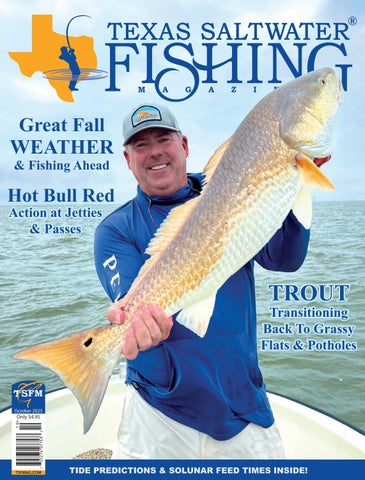
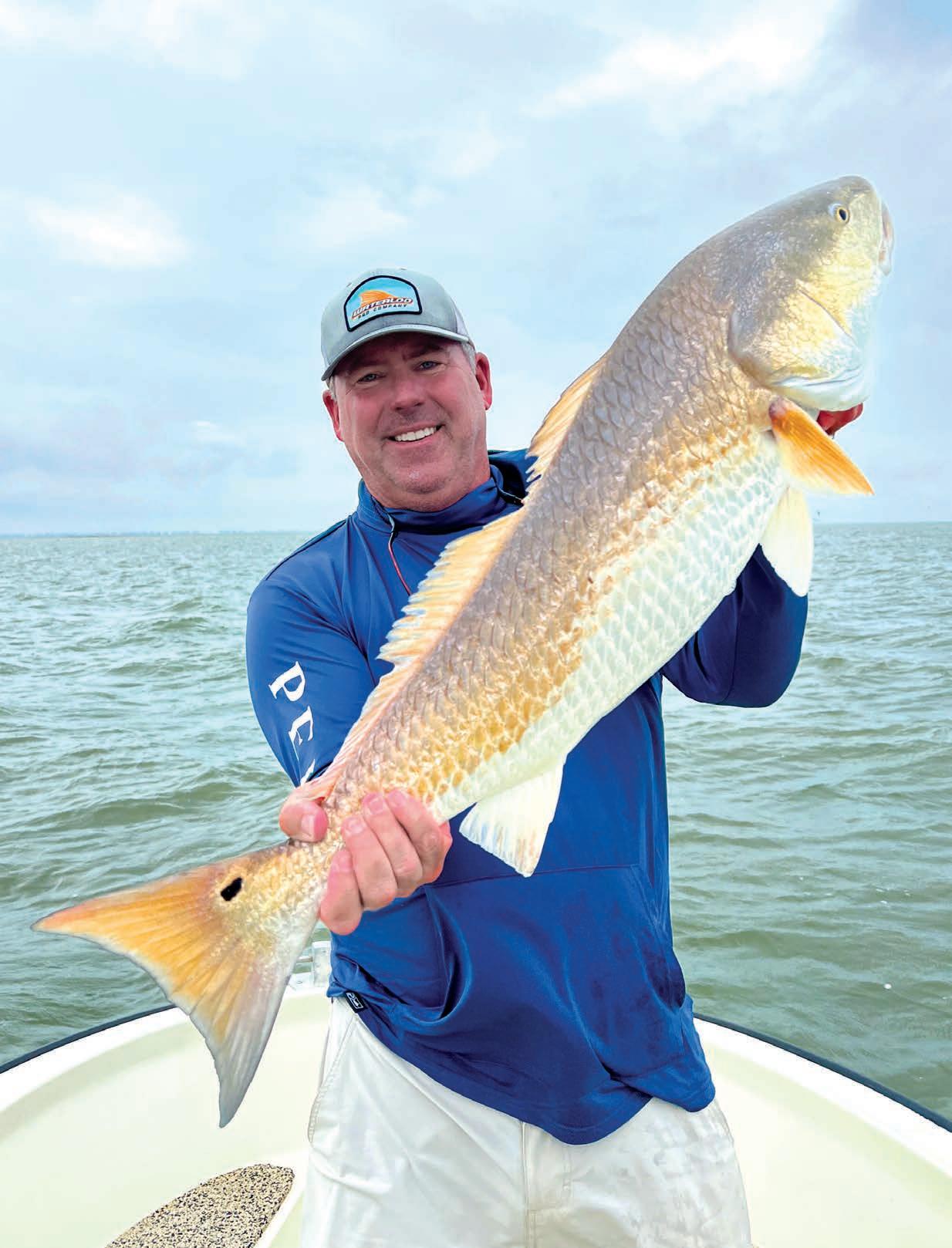
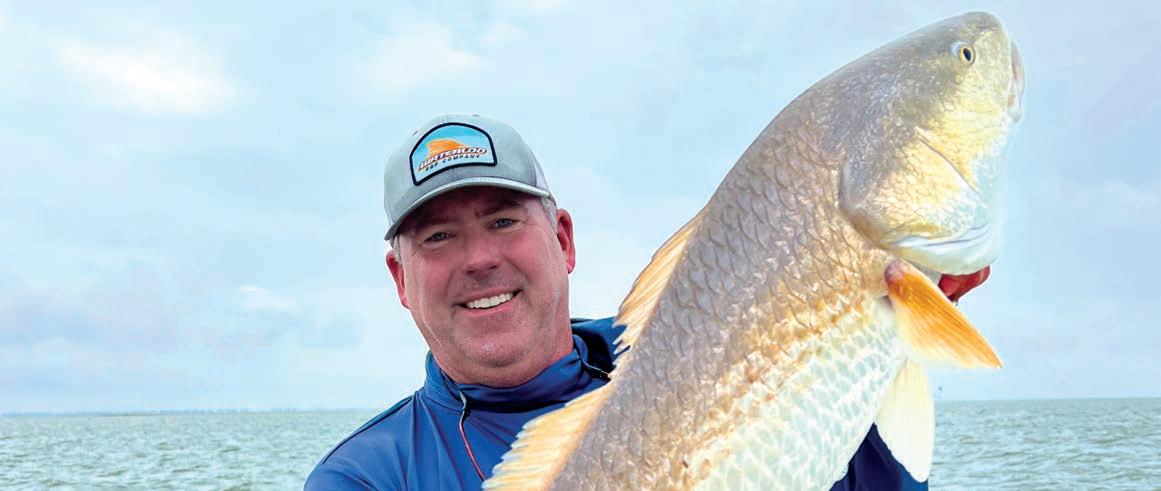
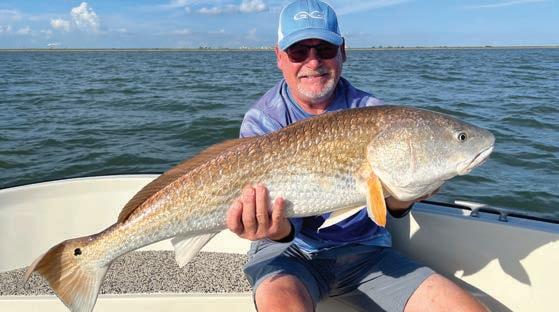
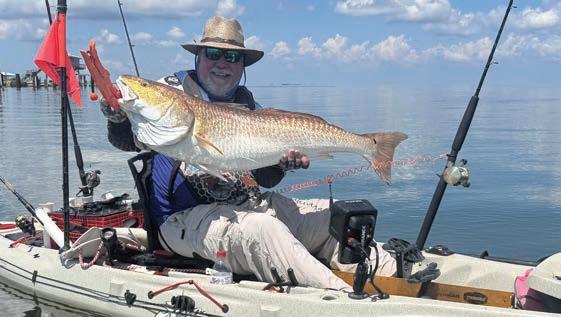
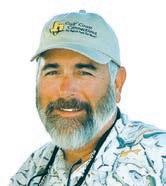
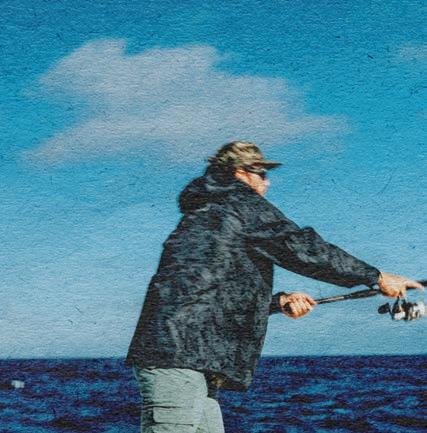
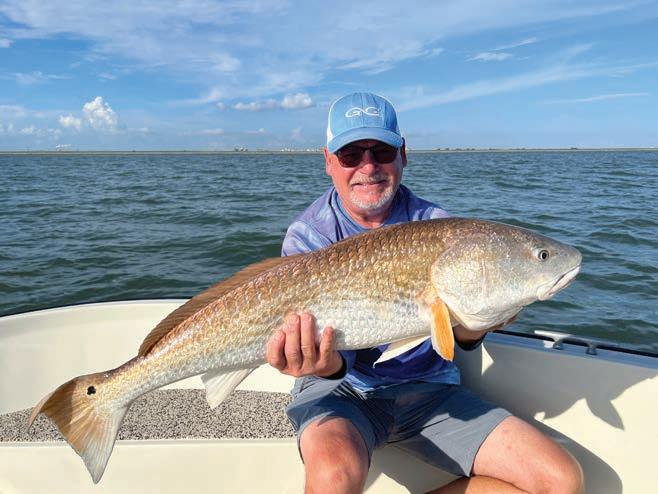
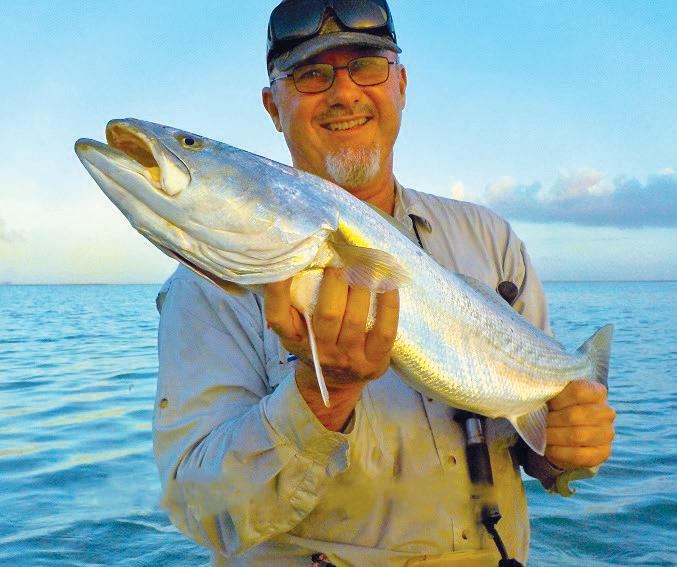
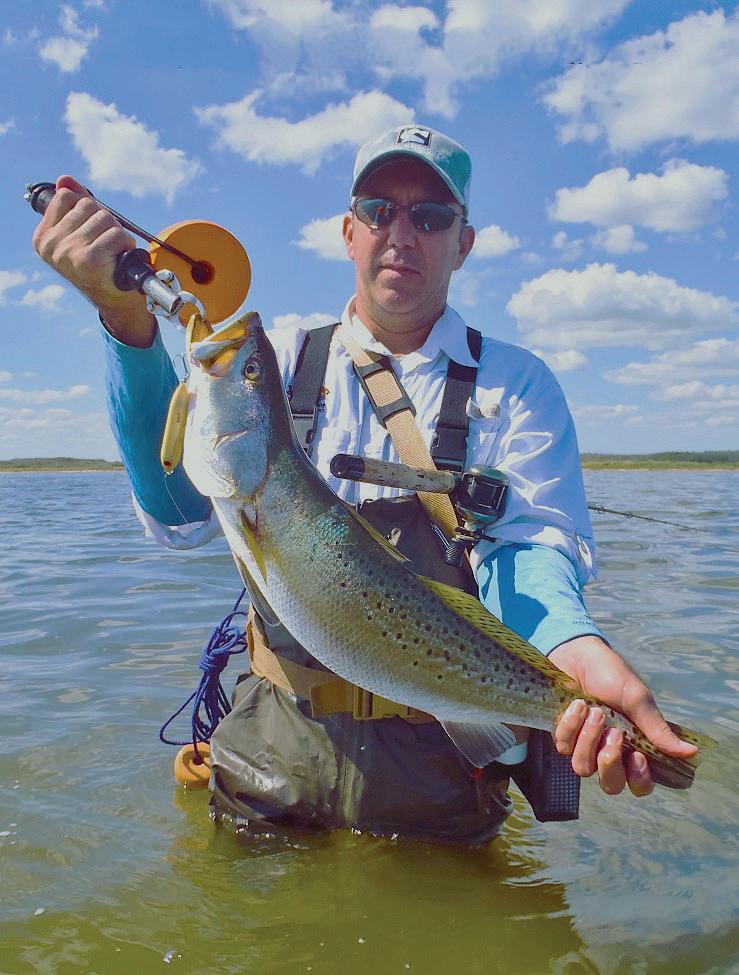
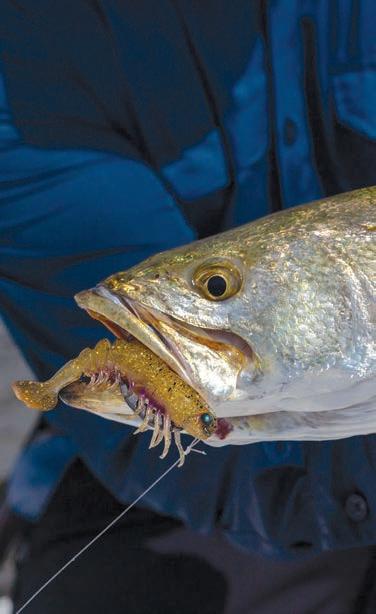
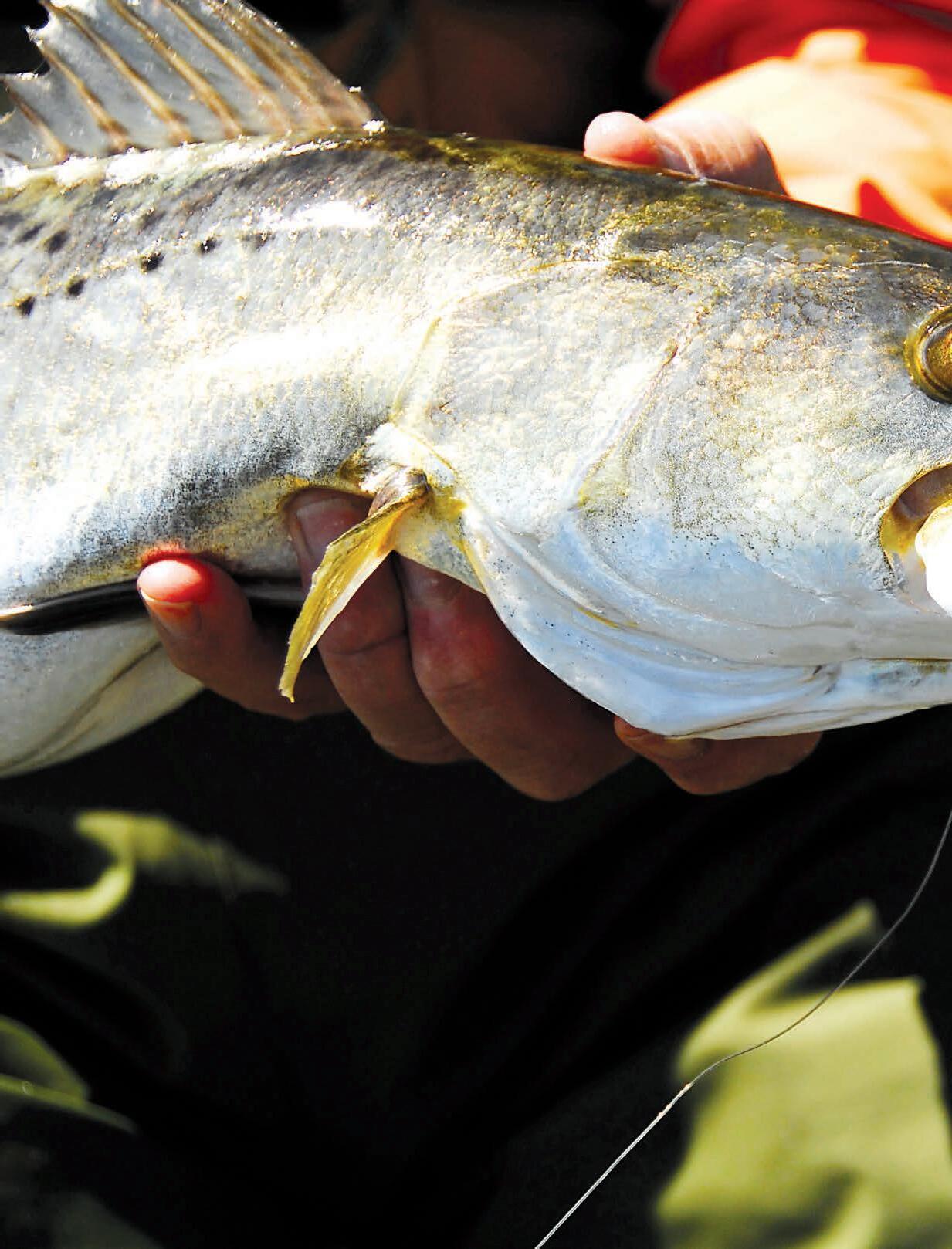
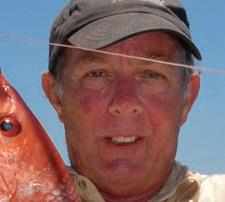
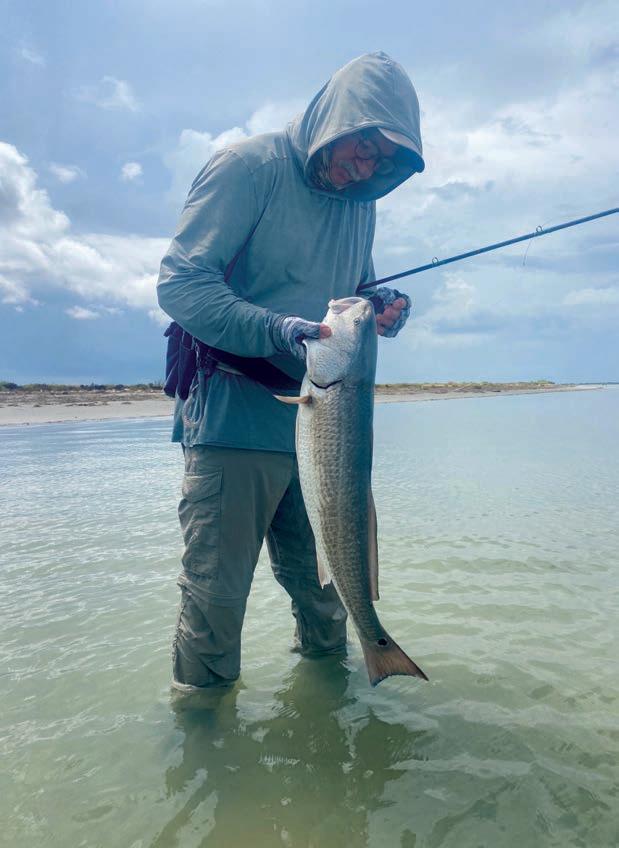
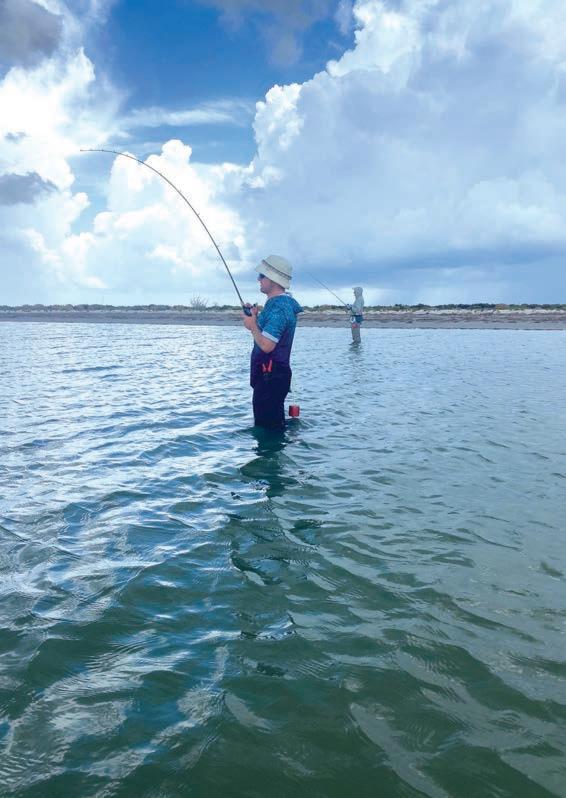
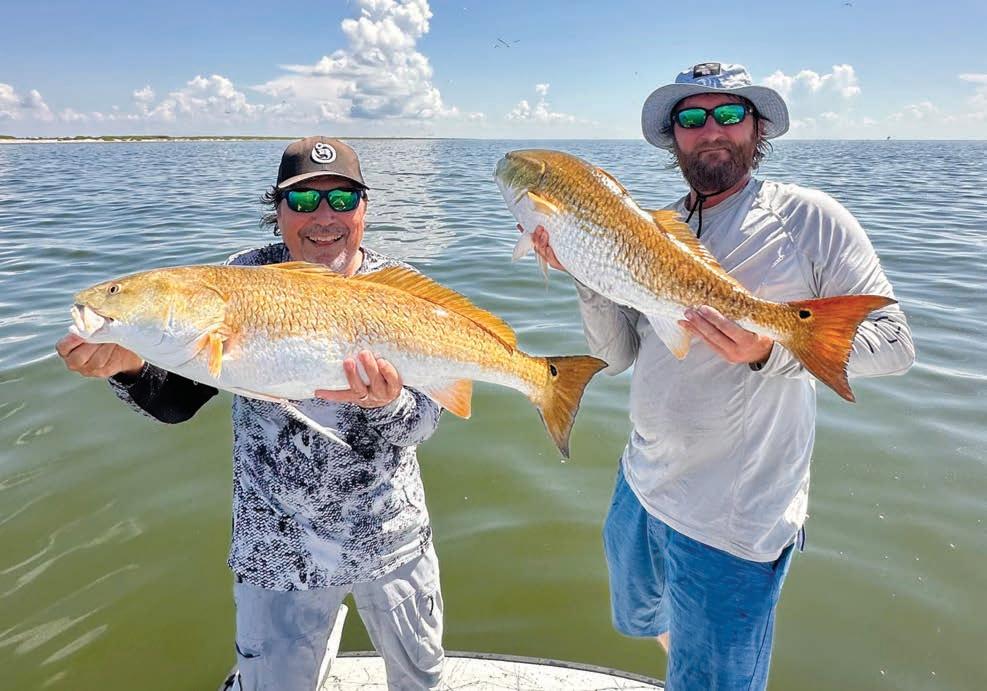
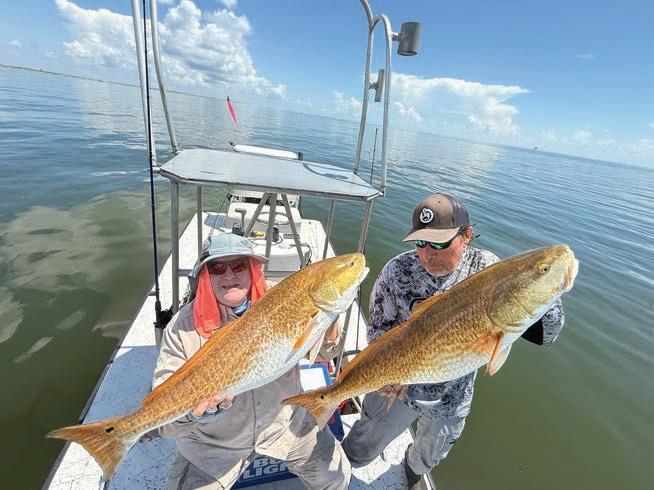
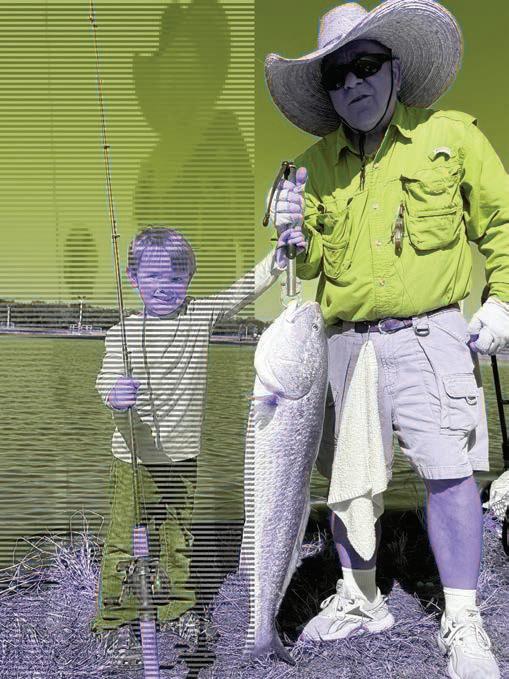
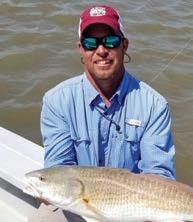
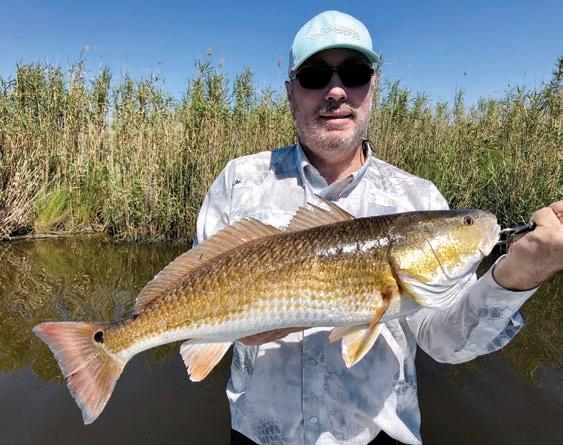
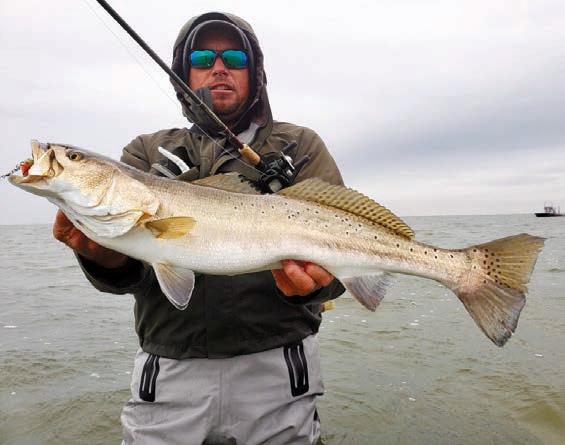
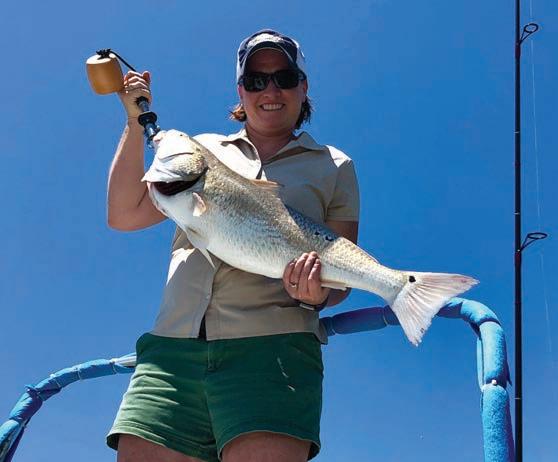
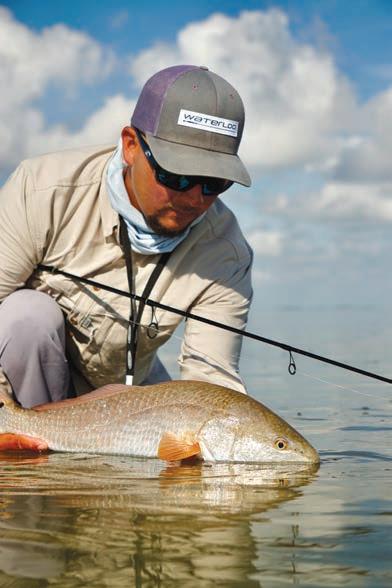
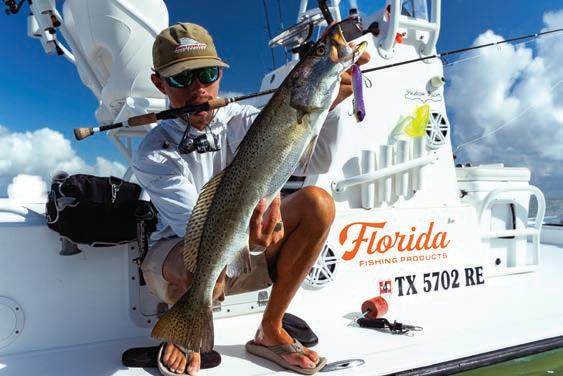
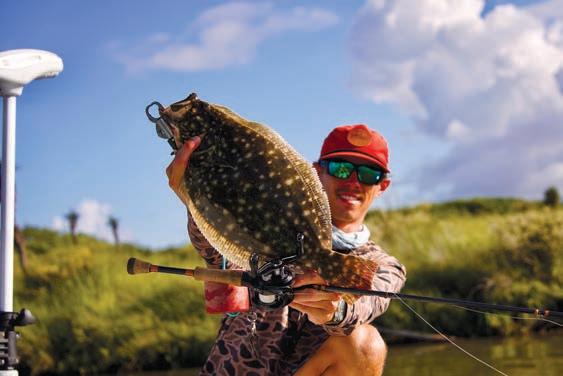
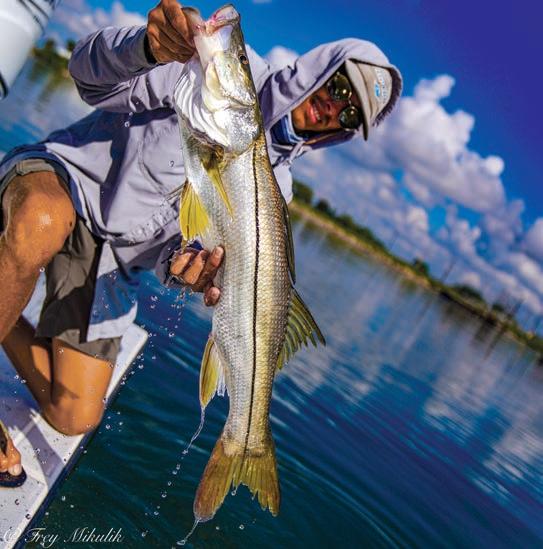
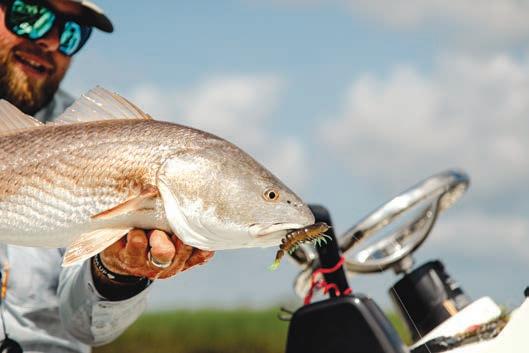
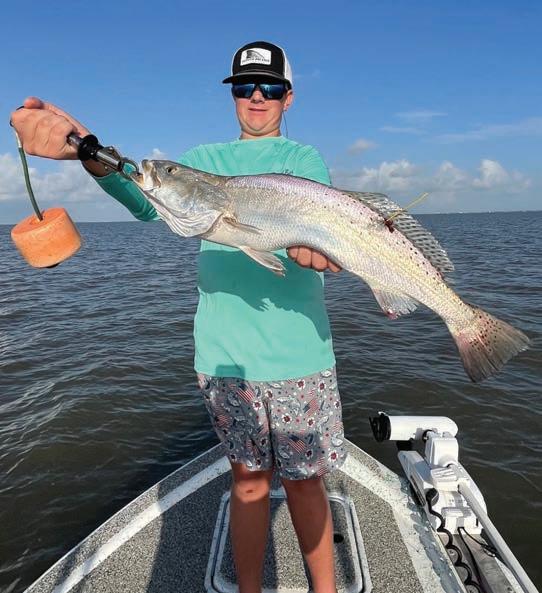
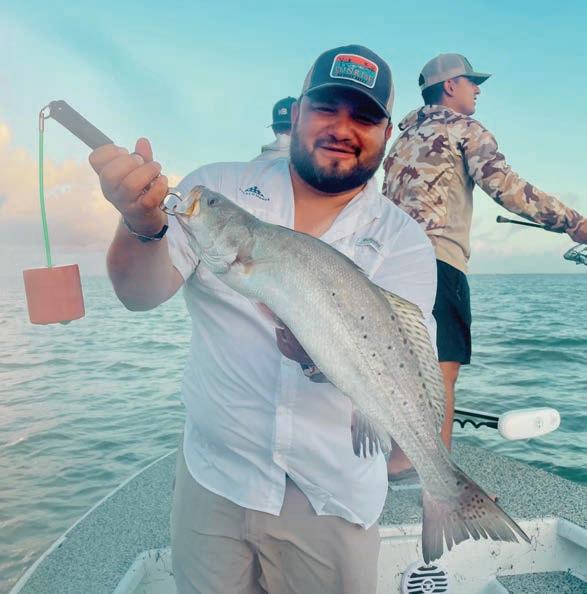
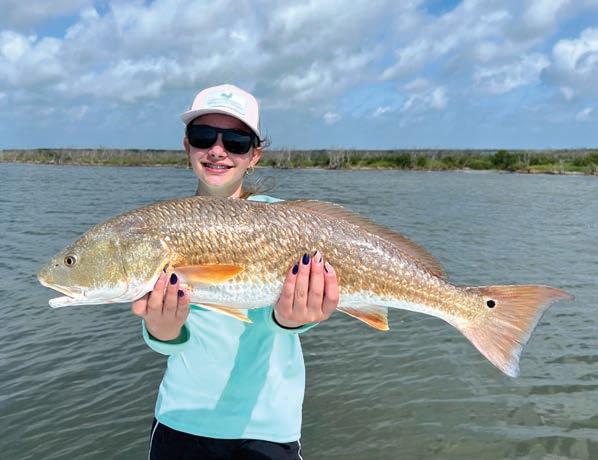
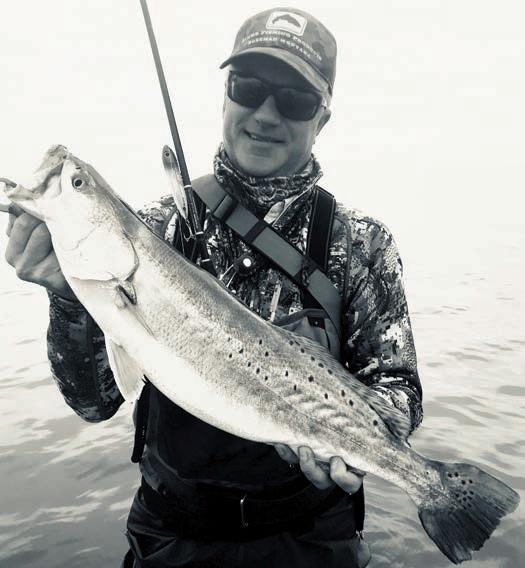
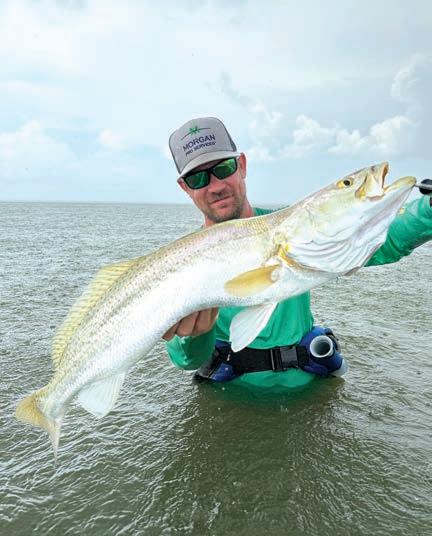
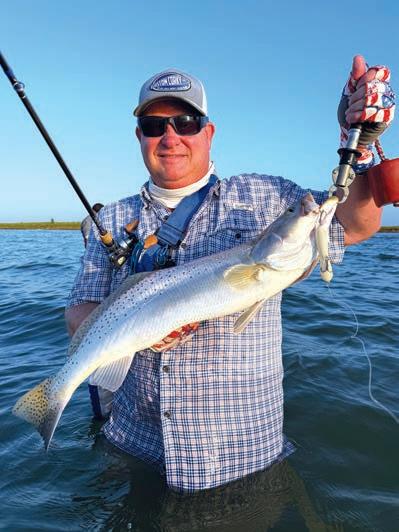
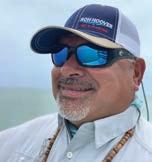
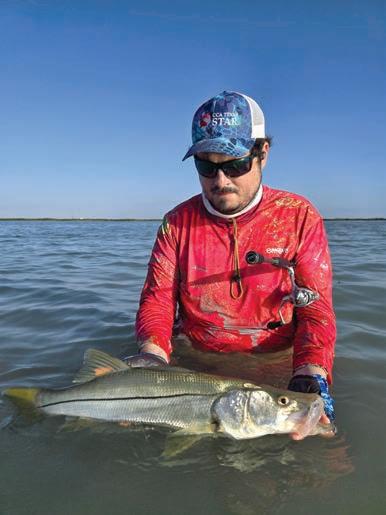
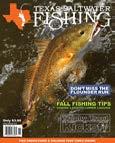
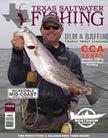
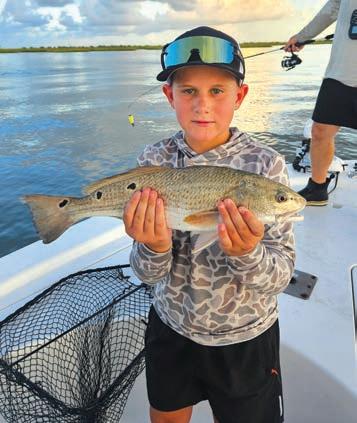
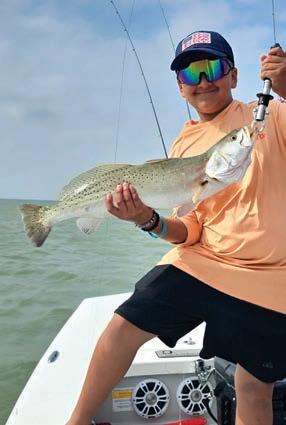
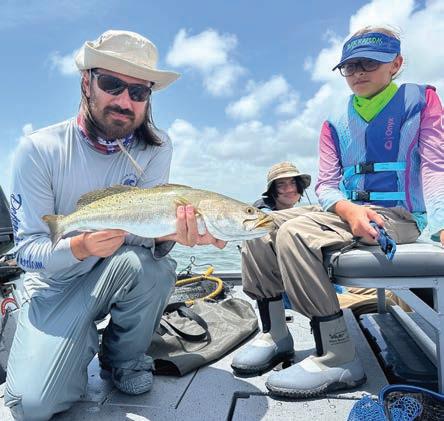
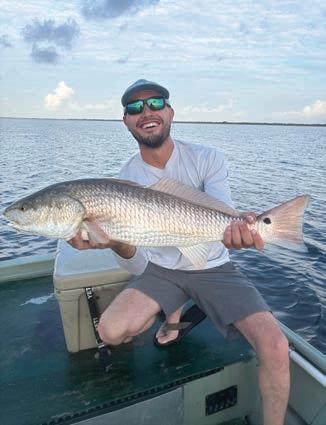
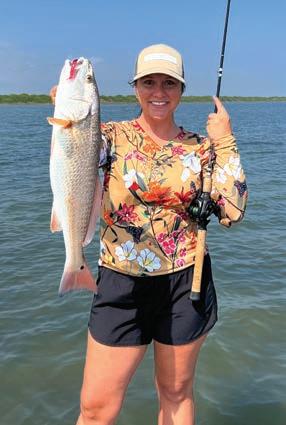
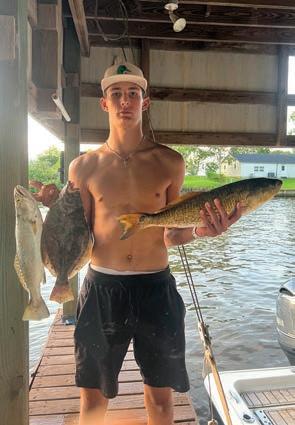
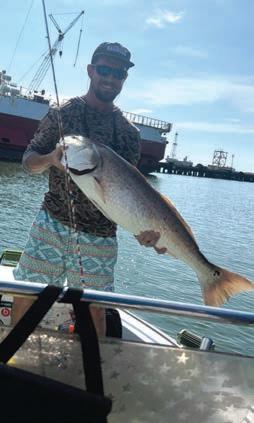
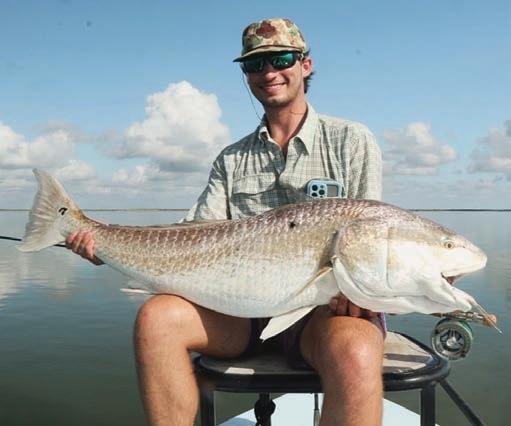
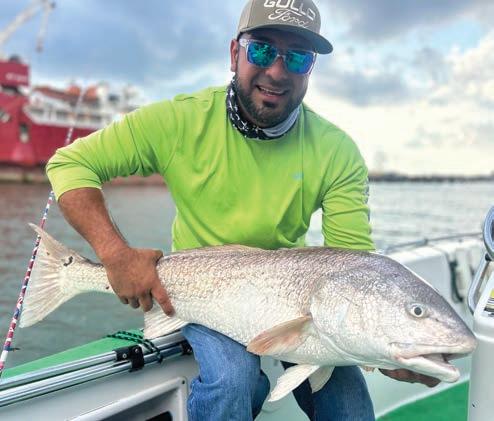
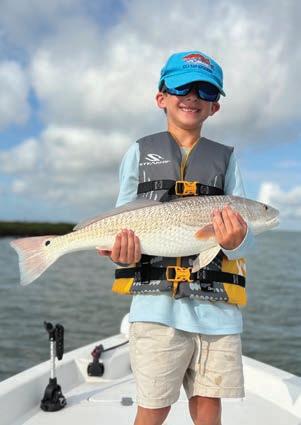
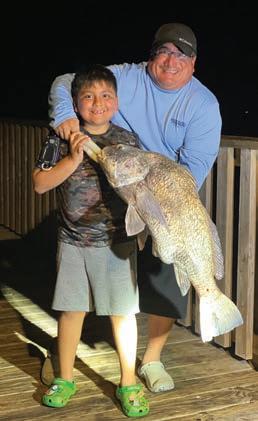
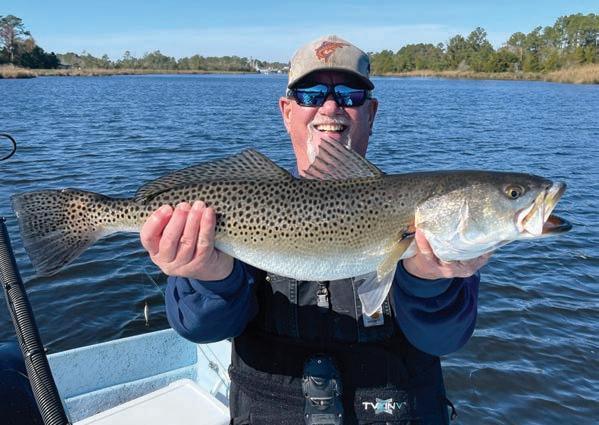
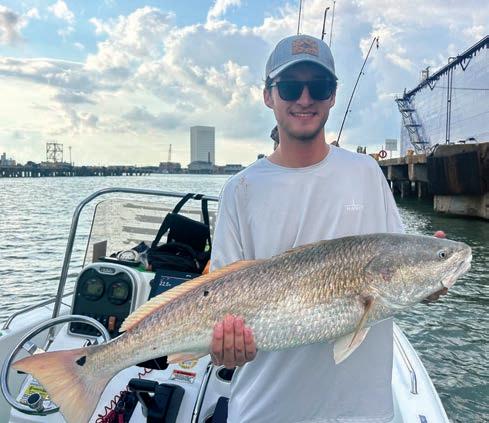
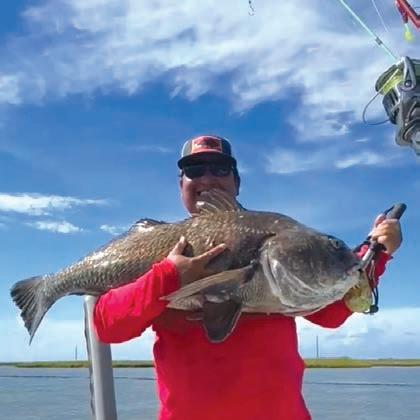
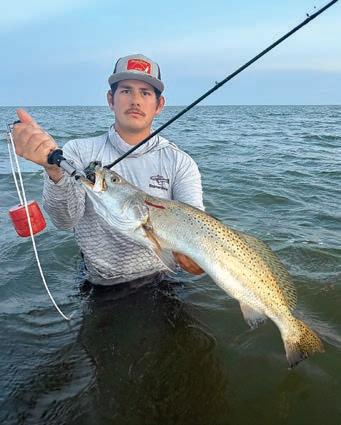
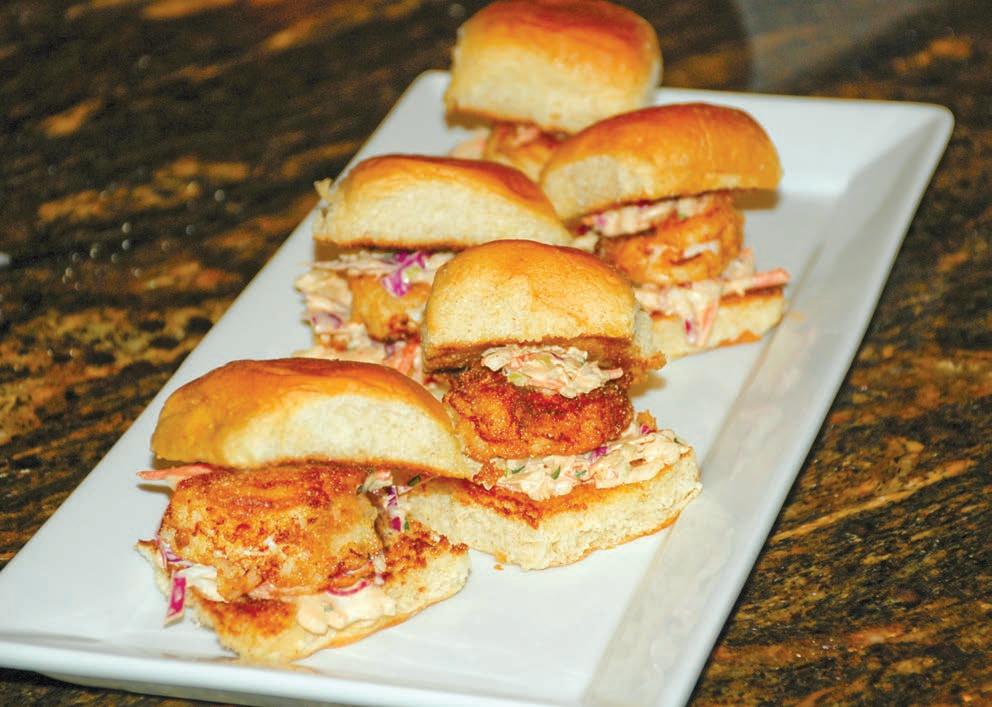
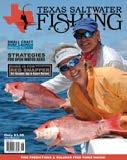
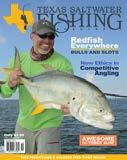
Capt. Steve Hillman is our October cover angler. Steve is hoisting a 30-plus redfish he pulled from a Galveston area back-lake. The big red was quite a surprise as Capt. Steve and his charter group were catching and releasing tons of small specks when it grabbed his Slammin’ Chicken Saltwater Assassin.
8 Giving Ourselves the Best Chance
EDITOR AND PUBLISHER
Everett Johnson | Everett@tsfmag.com Office 361-785-3420 Cell 361-550-3637
VICE PRESIDENT
PRODUCTION & ADVERTISING DIRECTOR
Pam Johnson | Pam@tsfmag.com Office: 361-785-3420 Cell: 361-550-9918
PRODUCTION / SOCIAL MEDIA DIRECTOR
Jennifer Shive | Jen@tsfmag.com
ADVERTISER REPRESENTATIVES
Bart Manganiello | bartalm@optonline.net
Pam Johnson | pam@tsfmag.com Office 361-785-3420 Cell 361-550-9918
Everett Johnson | everett@tsfmag.com Office 361-785-3420 Cell 361-550-3637
Texas Saltwater Fishing Magazine is published monthly.
Subscription Rates: One Year (Free Emag with Hard Copy)
Subscription $32.00
E-MAG (electronic version) is available for $15.00 per year. Order on-line: WWW.TSFMAG.COM
MAKE CHECKS PAYABLE TO: Texas Saltwater Fishing Magazine Attn: Subscriptions P.O. Box 429, Seadrift, Texas 77983
* Subscribers are responsible for submitting all address changes and renewals by the 10th of the prior month’s issue. Email store@tsfmag.com for all address changes or please call 361-785-3420 from 8am - 4:30pm. The U.S. Postal Service does not guarantee magazines will be forwarded.
POSTMASTER: Send address changes to Texas Saltwater Fishing Magazine, Inc., P. O. Box 429, Seadrift, TX 77983.
ALL HAIL OCTOBER!
Summertime is great, probably the most celebrated season of all. Kids love it because it signals the end of the school year. Adults love it because it’s the season of beaches and ballparks and family vacations. It is
Fall is also the season of serious decision making. Fishermen who are also bowhunters have a hard time deciding whether to sit in a tree or wade a reef. Wingshooters are torn between sitting in the shady edge of a sunflower field or sight-casting redfish on a shallow, grassy flat. Let’s don’t even bring up the problems football can cause.
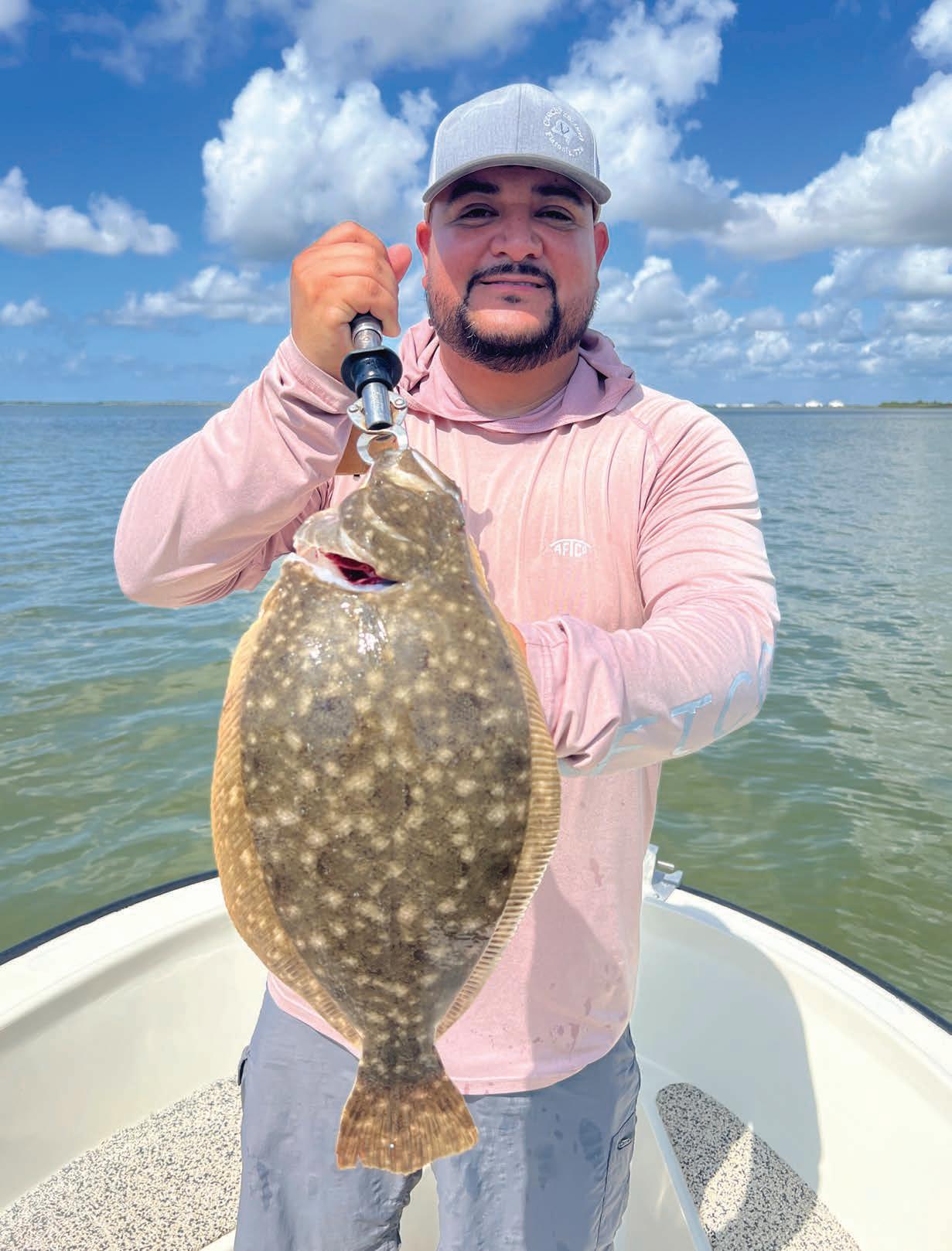
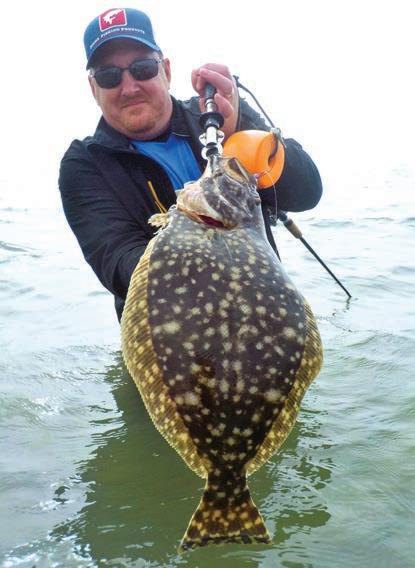
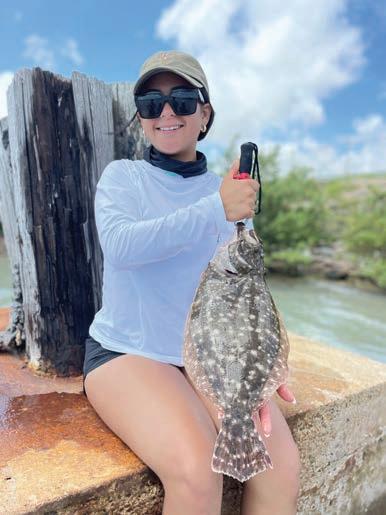
More flounder like this beauty that Michael Contreras caught will be showing up more frequently in weeks to come!
Giving Ourselves the Best Chance for Success
STORY BY STEVE HILLMAN
We are coming into one of my favorite times of the year. The weather will finally begin to cool. With the passage of each front comes massive bait migrations which help concentrate our fish and send them into frenzies. The three main saltwater species we love to chase will feed more frequently and more aggressively. All of this being said, there are certain details that require our attention in order for us to capitalize on the awesome opportunities presented by these seasonal changes.
Just like the old real estate marketing cliché states, “Location, location, location” is the first step in the process of putting together a successful day on the water. If we don’t put ourselves where the fish are then everything else we do from that point forward is irrelevant. The good news is that there are typically many locations this time of year that will hold fish. Early in the month there will still be some mid-bay trout holding tight to structure such as wells and submerged rocks. Some of the deep reefs with live oysters will also hold schools. As white shrimp begin their migration toward the Gulf, gulls and terns working over schools will become more prevalent. We will also start seeing more open-water schools of giant redfish feeding primarily on shrimp and ribbonfish (Atlantic Cutlassfish).
As water temperatures begin to cool my favorite areas to target will be in and around the mouths of bayou drains leading to the bay, as well as river mouths. Our three main forage species for this time of year (shad, shrimp and mullet) will concentrate in these areas providing a full-on buffet for trout, redfish and flounder. It can be some of the easiest fishing of the year if we play our cards right.
Now that we’re confident that we’re in an area holding fish there are some common mistakes that must be avoided in order for us to have above average success. Unfortunately, I get to witness said mistakes on pretty much a weekly basis. To me, most of the things that immediately come to mind are common sense, but you’d be surprised. It starts with proper ingress and egress. I can’t count the number of times I see boats come into a fishing area running their big motor and some of them at a fairly high rate of speed. This is a sure way to bust up the schools, not only for yourself but anyone else who may want to fish the area. It’s smart to employ a stealthy approach by killing your outboard 75 to 100 yards out, then using the trolling motor to ease into the area. I assure you; this method will yield much
better results. This especially holds true when fishing shallow water areas. The same rules apply when leaving a fishing area. Leave like you arrived, instead of burning out of there at Mach One like your hair’s on fire. Not only will you allow others to enjoy catching fish there but they will respect you for your good etiquette. The fishing community is small and word travels fast. Be smart.
So now we’re set up in the area we chose to fish and two small slicks pop up. By the way, this could be a hypothetical scenario but this actually happened on my boat the other day. However, while the story is true, the names have been changed to protect the innocent (in true Dragnet fashion). As always, when we’re drift
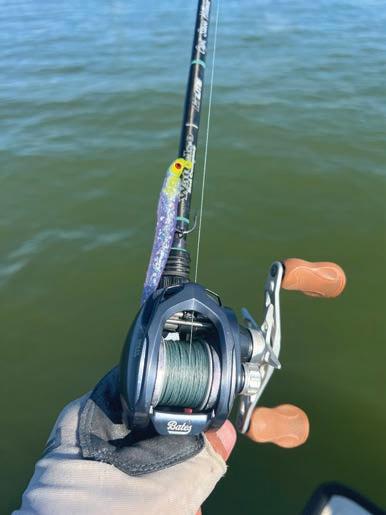
fishing I’m all the way in the back of my boat operating the trolling motor from the starboard side stern. My three clients (Larry, Curly and Moe) are lined up down the starboard side as I situate the boat where they can cast to the slicks. I’m throwing my Bates Salty Hundo mounted on my 6’ 9” Waterloo HP Lite, which will cast to the moon, especially with the Saltwater Assassin Litl P&V rigged on a 1/4 ounce Pro Elite jighead I’m chunking.
Larry had decent gear and he had no problem getting enough distance to reach the fish. The same held true for Moe. The problem for Moe, however, was that he couldn’t feel the bites. He had a decent reel but his rod was an absolute broom handle, better suited for bull reds. I
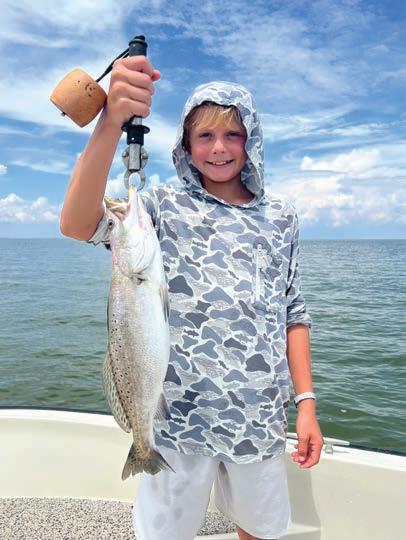
Kaden Waits with a chunky late-summer speck he tricked on a 4” Chartreuse/Silver Glitter Saltwater Assassin Sea Shad, fishing slicks over deep mid-bay structure.
Rolfe Schaumburger latched onto this beast of a red out of the blue in the middle of catching trout.
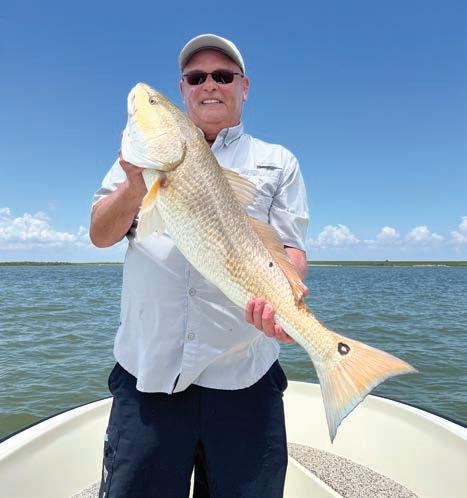
Jack Cibulski caught this monster redfish while drifting over some oyster reef restoration rocks in deep water.
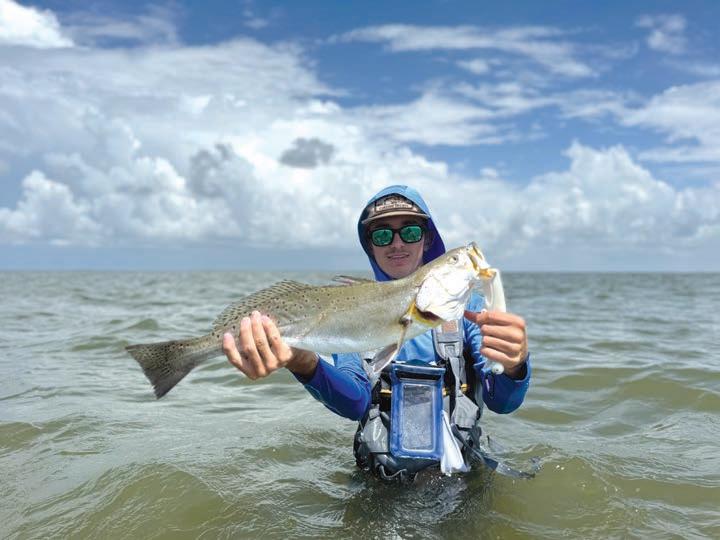
Ivan Hays had himself quite a morning catching some solid Galveston Bay trout like this 25-incher!
ended up letting him use one of my personal rods and he did just fine. He actually fell in love with my Waterloo HP Slam and ordered one the next day.
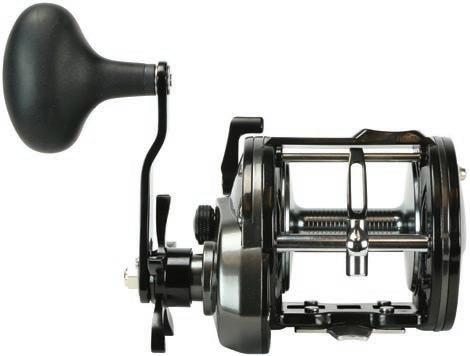
In the front, toward the starboard bow, sat Curly. Good ole Curly. I won’t name the brand but Curly’s reel is known for its durability and was a damn good reel in 1994. It’s big. It’s heavy. It’s green and it holds a lot of line. Now apparently Curly can afford a guided fishing trip but he didn’t have enough money to buy line, because his reel had only about 60 yards on it.
Clients not having enough line on their reels is one of the most common mistakes I see them make. I like to spool my reels with line until there’s anywhere from an 1/8 to 1/16 of an inch of the brass spool showing – that’s all. Getting enough distance in your cast is one of the most important aspects of catching fish. If you can’t reach them then you won’t be able to catch them. Curly was merely a spectator until I stripped all of the old memory-laden Slinky-like monofilament off of his World War II reel and restrung it. He was able to finally get in on the action and all was right with the world.
most and has superior casting abilities. The Seaguar fluorocarbon leader material (20 lb. test) is, bar none, the best on the market and gives me just the right amount of stretch and abrasive resistance when fishing structure and shell reefs, not to mention its low visibility properties. I use 30 pound test (8 lb. diameter) braided line. Twenty pound braid (6 lb. diameter) is fine, too. Make sure to put 15 to 20 yards of 10 or 12 pound monofilament backing on your reel before loading up with braid. If you prefer stringing your reel with mono, then I suggest using 10 or 12 pound test main line with a 20 pound fluorocarbon shock leader.
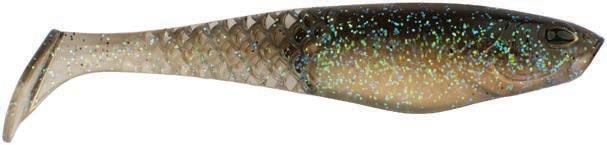
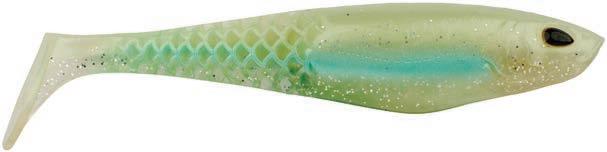
Last but not least there’s nothing you could ever put in a bait bucket that could ever compare to the effective actions and color choices I have at my disposal from Bass Assassin and MirrOlure. From Saltwater Assassin Sea Shads to MirrOlure She Dogs, the full spectrum is covered. We are very blessed to have the best.
Folks, we live in a day and age where we have access to the most premier, state-of-the-art fishing gear. We need to take advantage of it. In my world which these days only involves fishing for trout, reds and flounder, I need sensitive (but strong) lightweight rods and reels. I need premium quality line and leader material and cutting edge lure choices. Let’s face it, overall, fishing is pretty darn good but these trout aren’t as easy to trick as they were 10 and 20 years ago. Not only that but there are a lot more folks out there chasing them. Having the best gear gives us that advantage we need to be successful.
There are more than a handful of good rod, reel and lure manufacturers out there but through the years I’ve narrowed my preferences down to the ones who have been solid as a rock for me and my clients – day-in and day-out. For almost two full decades Waterloo Rods has given me and my clients the ability to capitalize on every bite with their true attention to detail and listening to feedback from the fishermen who use their rods.
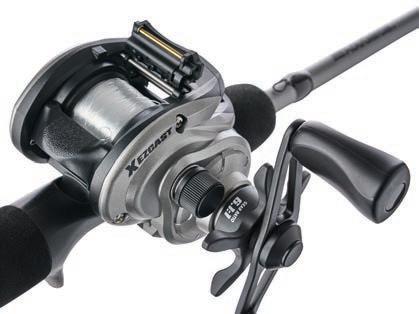
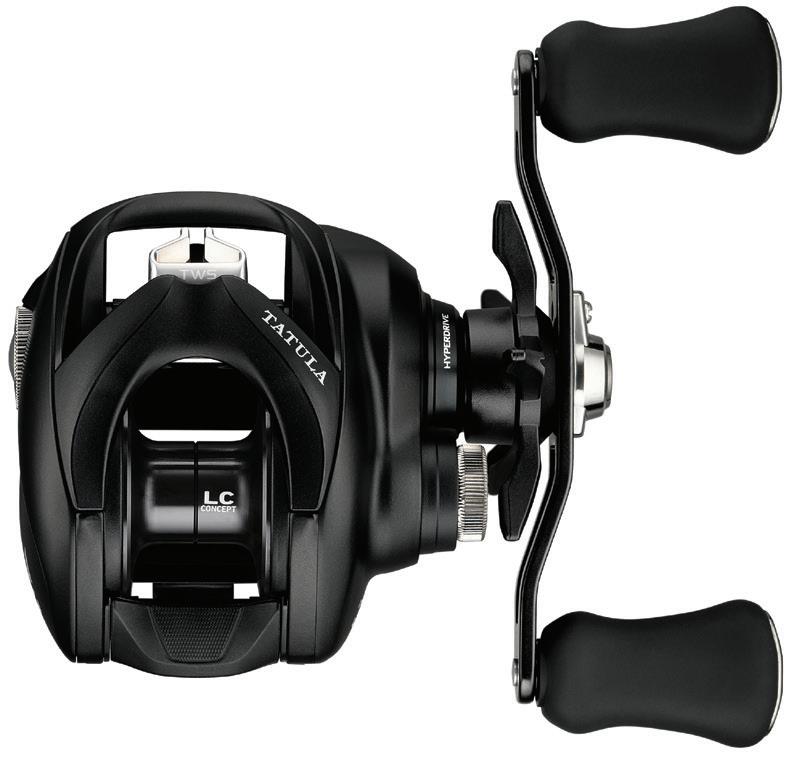
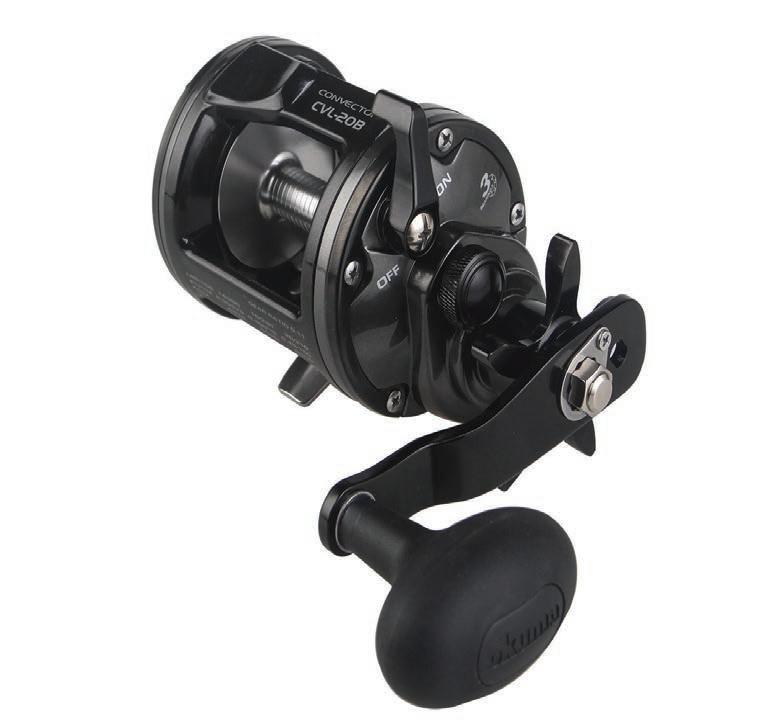
There are many reel companies from which to choose but I’ve been with Bates for almost two years now and I can honestly say I’ve never held a reel in my hand that had all of the features that make it a supreme reel. It checks all of the boxes. It’s small (Salty Hundo), lightweight, smooth, casts a country mile and has a very smooth drag system.
The Seaguar braided line that I use seems to last longer than
I only rinse my reels very lightly after every trip and then wipe them down with a thin coat of gun or reel oil. Don’t store your rods and reels in the garage. Store them in a controlled environment preferably in a rod rack. I like to pull the side plates off and pull the spool slightly out when storing to let all of the moisture that may be in them evaporate.
Don’t get caught in the favorite lure syndrome. Just because you caught your biggest trout or the most trout on a Fire Tiger whatever doesn’t mean that it’s going to work today. Lure color choices are all about water clarity, bottom habitat, and the amount of sunlight we have. It’s that simple.
There are so many things we can discuss to give us a better shot at having a great day on the water but I only have so much paper, so let’s sum it up. Narrow down the area where you believe the fish are. Be stealthy in your approach. Make sure you are using the right gear and tackle to catch the fish you’re targeting. Pay attention to the direction of the tides and wind, with the understanding that fish face into the current…then adjust your casting and lure placement accordingly. A retrieval that presents your lure “in their face” is always preferred. There are so many variables that we cannot control but if we fix the things we can control then we’ll greatly increase our chances for success. Now go put some line on that reel!
STEVE HILLMAN
Steve Hillman is a full-time fishing guide on his home waters of Galveston Bay. Steve fishes the entire Galveston Bay Complex, wading and drifting for trout, redfish, and flounder using artificial lures.
Phone 4 09-256-7937
Email captsteve@hillmanguideservice.com
Web w ww.hillmanguideservice.com
Having top notch equipment and cutting edge lures enables us to take advantage of every opportunity.
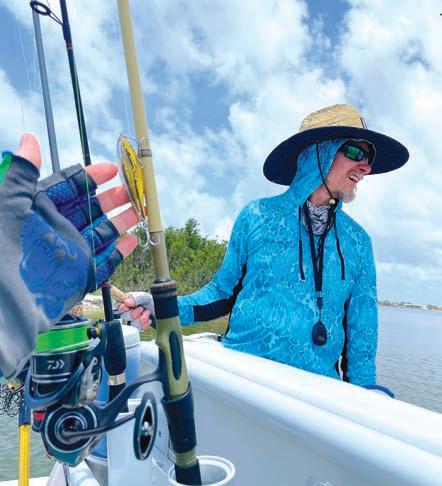
(Waterloo HP Lite rod, Bates Salty Hundo reel, Opening Night Saltwater Assassin Lit’l P&V rigged on a 1/4 ounce Assassin Pro Elite jighead, the perfect amount of Seaguar braid and Fish Monkey gloves to protect my hands from the sun).
Lessons Gleaned (Part 5)
STORY BY KEVIN COCHRAN
Participating in competitions forces anglers to compare their own results against others, potentially accelerating their learning curves. This only applies when people share information openly and honestly. Some anglers keep their mouths zipped about where they fished and what they did, complicating things for folks intent on using competition to rev up the engines on a fast train to success. Other anglers intentionally lie about these same things, hoping to confuse their competitors.
However, in my experience, some people do share information honestly, and I believe I improved faster than I otherwise could have, because I fished regularly in tournaments, enabling me to compare my successes and failures with those of my peers. After results had been tallied, I talked to some of my competitors about where and how they fished, then analyzed what I’d done, trying to identify my strengths and weaknesses, also to generate a list of sound operating principles. I use many of those principles when making decisions today.
Some aspects of angling fit more readily into this discussion than others. If most of the top finishers in an event fished in or near the same location, one can draw meaningful conclusions about the potential productivity of the place in conditions similar to the ones in play during the event. Similarly, if all the top contestants drifted to catch their fish, while wading anglers came up small, one might draw reasonable conclusions about the relative potential of those two basic strategies in specific kinds of conditions. And, drawing useful conclusions about lure-choice becomes simple when all the winners throw similar types of lures, while those throwing others find themselves on the outside looking in.
The final choice one makes when attempting to catch fish, after choosing a place, a strategy and a lure, relates to the specific method of presenting the lure to the fish. Presentation style plays a vital, sometimes existential role, in determining the potential for a specific lure to facilitate desired outcomes. Drawing conclusions about this part of the puzzle proves exceedingly difficult, partly because most post-tournament discussions don’t include mention of it. Furthermore, because of the subtleties associated with it, learning something about the value of a presentation style generally starts with witnessing it first-hand.
All this said, I definitely recall several specific events which happened during or leading into competitions which helped me appreciate not only the potential importance of presentation style generally, but also the efficacy of specific presentations. I witnessed these things personally, with my eyes wide open, either while watching a nearby competitor, or while watching partners attempt to replicate a presentation style I used while we fished together. In all these cases, the forced direct comparison of results revealed undeniable truths.
By the time I became a full-time guide, I’d already realized the value of comparing results, and I developed strategies to force its use, sometimes throwing different lures than my customers, hoping to find the optimal one for the moment, at other times, dabbling with presentations, with the same goal in mind. In no small way, the experiences related to
these choices played the primary role in driving me to an important conclusion–the movement pattern of a lure exerts profound influence on its potential for productivity.
Movement pattern certainly plays a far more important role in productivity than color. Depth of presentation plays a huge role in productivity too, of course. Presenting a lure at the proper depth is the first step in earning strikes; perfecting the movement pattern to match the needs of the moment completes the process.
Testing the efficacy of a presentation style (or a color) cannot be done negatively. Throwing a lure into a place and NOT earning a strike doesn’t necessarily prove anything. Two anglers throwing on opposite sides of a reef, at different ends of a set of potholes or along different stretches of a shoreline might well be throwing at different concentrations of fish. One might be throwing where no fish swims, and one cannot catch a fish where no fish swims.
The only way to definitively test how much influence a movement pattern (or a color) has on a lure’s potential for productivity is for two or more anglers to throw the same lure at the same fish.
I vividly remember doing this in many situations, most of which occurred after I became a guide, at times when I consciously called customers over, after earning some strikes in a place. But years earlier, these situations did occur, and I and my partners did effectively test the movement patterns of our lures to the best of our ability. One
Catching quality flounder while targeting trout with soft plastics can happen most anytime of year, as Chris Reeves proved here. October is a better than average month for this scenario.
The weather on the Texas coast can be clear, calm and pretty this time of year, but the bite on halcyon days can be as tough as the weather is lovely.
October doesn’t rank near the top of best months to catch trophy trout on lures in Texas, nor is it the worst month. The captain caught this pretty fish on the “cork and the jig” during the Halloween month.
such occasion happened while I and three others waded the south shoreline of Sabine Lake around the turn of the century.
Lots of big mullet jumped in front of us, as we stood in the shallows with the bank behind us, casting toward the open expanse of water in the middle of the lake. I began earning vicious blow ups on a Super Spook favored by all of us at the time, the Okie Shad color. I made a conscious effort to make each cast into the expanding ripples created by mullet after they leapt and landed. As did the partners fishing with me. After I caught about five fat trout, all measuring between 23 and 26 inches, while the others beside me had nary a blow up, the guys began paying attention to exactly what I was doing.
Two of them decided the difference between my catch-rate and theirs lay in the color of our Spooks; they tied on their Okie Shads. I continued to catch while they didn’t. Then, one of them made a reasonable assertion, saying I was throwing at a small, tight school of fish. So, I invited them to squeeze me, to throw exactly where I did. Three of us began tossing virtually identical Super Spooks at the very same jumping mullet.
had no way of knowing for certain whether his lack of success was precisely tied to presentation style, but I believed it was.
He has little experience with such a scenario. His skill sets almost always produce desired results. Like they did on the day he and I fished the Padre Island National Seashore surf in the wake of a strong cold front. We both figured soft plastics would give us the best chance of catching trout in the prevailing conditions. Over the course of about an hour, he caught at least half a dozen while I went without a strike, so I became acutely interested in seeing exactly how he was wiggling his worm. Eventually, he gave me the same jighead and soft plastic he used, then demonstrated the subtleties of the technique he employed. And we threw our lures into the same exact places, but he caught about a dozen fish while I smelled a skunk and earned just one weak tap, despite making an effort to mimic his presentation precisely.
This made things worse for my friends. I kept catching, executing a style of presentation I’d used effectively many times before, walking the dog forcefully for four or five strokes, pausing to allow the plug to bob up and down, then holding the rod tip steady and turning the reel handle fast for several rotations, to skim the lure quickly over the water for five or six feet, then pausing it again. Most of the aggressive strikes occurred right when the skimming lure came to rest, or just when it started moving again. Try though they certainly did, my buddies never succeeded in effectively mimicking my “skim and pause” presentation; they watched while I whacked ‘em, catching nearly nothing.
Similar events unfolded in a Rockport Troutmasters event held in March of 2001. One of my partners at the time, the best angler I’ve ever known, fished near (though not technically with) me on Saturday. We both experienced a tough time earning bites in cool, windy conditions. After I caught my second fish and could see he had none, I held up my Fat Boy so he could see it clearly. I watched him tie one on, but he caught no fish on it for the next two hours or so. Eventually, after seeing me land a few more quality trout, he left, later telling me he’d rather not see someone else catching fish when he can’t. We
These and many other related experiences helped me realize how much influence the movement pattern of a lure can have on its potential for productivity. This truth bears more significance in some situations than others. In some cases, choosing a lure which works at the proper depth will produce strikes, almost regardless of how the angler works it through the water. Topwaters of all kinds, worked in various ways, earn plenty of blow ups, when the hunger of the trout drives them into a stupid state, and they cast their gaze skyward, looking for victims.
But in many cases, even subtle variations in the way a lure travels through the water can exert profound influence on the number of strikes it earns. I believe this so deeply because I’ve personally witnessed it more times than I can count. The evidence related to the value of directly comparing results leads to a clear conclusion. Among all the ways we as anglers can learn and grow, testing things fully and fairly against others while fishing side by side with and against them ranks at or near the top.
KEVIN COCHRAN
Kevin Cochran is a long-time fishing guide at Corpus Christi (Padre Island), TX. Kevin is a speckled trout fanatic and has created several books and dvds on the subject. Kevin’s home waters stretch from Corpus Christi Bay to the Land Cut.
On relatively balmy, windy days early in autumn, trout often attack topwaters readily, as Terry Sandlin proved on this October outing.
The open water schooling program will kick into high gear as the white shrimp migration enters Sabine Lake.
What’s THE Difference?
STORY BY CHUCK UZZLE
Have you ever sat back and wondered “what if” after a day on the water? Wondered to yourself; if a different approach or method would have made a difference in your outcome for that particular day? Of course you have, we have all done that exact same thing countless times in search of answers that will help us next time we go out.
The questions can be general or perhaps very specific, either way they can lead you in all sorts of directions both good and bad. When you get too consumed with some of these questions that’s often times referred to as “paralysis by analysis” and cause you to lose confidence in what you are doing. In the fishing world, losing confidence is about the worst thing you can have happen because it starts a domino effect that can be difficult to reverse. Confidence in your ability, pattern, and technique can be the difference between success and failure on the water, so it’s crucial to maintain that mindset as much as you possibly can. Anglers who employ good common sense and techniques they are confident in will almost always out-fish those who don’t.
I’ll freely admit that from time to time I am as bad as the next guy about wondering or second guessing. “Did I fish that area far enough? Did I stop too shallow? Did I stay too deep? Did I use the right color?” These all come to mind, especially after a lackluster outing.
The best medicine for that situation is to use the bad day as a learning tool and apply what you learned going forward. If you felt like you may have been early or late to an area and did not get to fish the best part of the tide, make it a point to be there on time the next opportunity. Change up your approach or lure size in an effort to both explore different water depths and to get out of the old rut. When you reach the end of a flat, keep fishing a little farther to make sure you covered it all. Small details can mean the difference between success and failure along with keeping you from doubting your choices.
Always remember that a confident fishermen will do things such as present their lure with a little more effort or pay more attention to the variables that area presented to them. All it takes is one bite to start a great day, so make each cast count and be thorough, because it truly matters.
Over the years I have seen several examples where the difference of a few feet between an area to fish meant success or failure, or the size of the lure was the difference between never getting a bite or having a fish on every cast. Easily one of my most memorable times where I witnessed how much a few feet can be the difference was on one of my first scouting trips as a young guide with Dickie Colburn. Dickie knew the Sabine River as good as anybody ever will, so when he offered to show me some things I was more than happy to take advantage.
We stopped on a stretch of bank that had some defined drop-offs nearby, and a little bit of structure that ran out in the water perpendicular to the shore line. We sat on anchor for about 15 minutes with no bites before Dickie pulled the anchor and allowed us to drift down the bank another 30 or 40 feet, just enough to reach the other side of the submerged point. Each of us hooked up on our very first cast and it stayed like that for quite some time. That small adjustment made a world of difference and I think about
that lesson to this day. I also wonder how many fishermen, myself included, have been so close to enjoying an epic day on the water but were just a few feet short of actually realizing that goal. If that doesn’t make you think I don’t know what will.
While on the subject of “differences” I have to admit I cannot understand what’s happening to our freshwater brothers and sisters. Regardless if you are watching TV or social media the BASS world has gotten to be almost comical when compared to their saltwater counterparts. I have never seen someone set the hook with a movement that can best be described as that of a drunk gymnast doing the macarena at a wedding reception while screaming “it’s a giant.” The whole thing seems insane to me. All those theatrics for a fish that seldom, if ever, pulls any drag is beyond overkill. For the life of me I can’t understand the theatrics.
Saltwater folks catch much larger fish on much lighter tackle without all the front deck break dancing that seems to be the norm now. And don’t even get me started on the unbelievable amount of electronics those folks use; it looks like the command center at NORAD on their consoles. I would love to watch their eyes light up when they hook a slot redfish on 10 pound mono because that would be worth the price of admission.
In all seriousness, I appreciate all
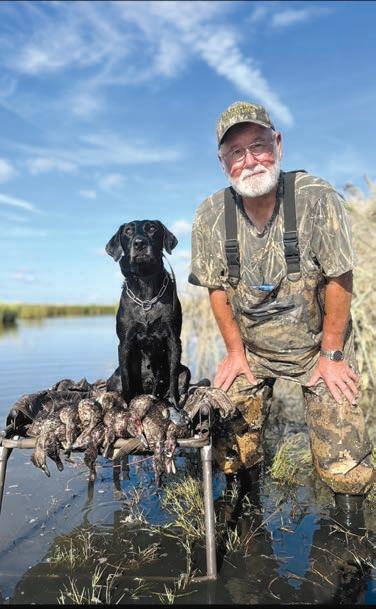
Early teal season is always a good time. Skeeter Graves and Jolie celebrate a successful hunt.
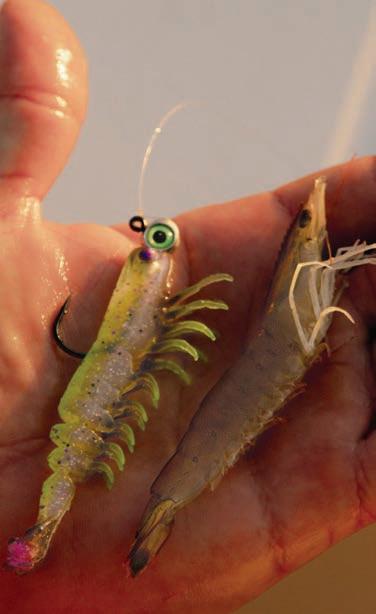
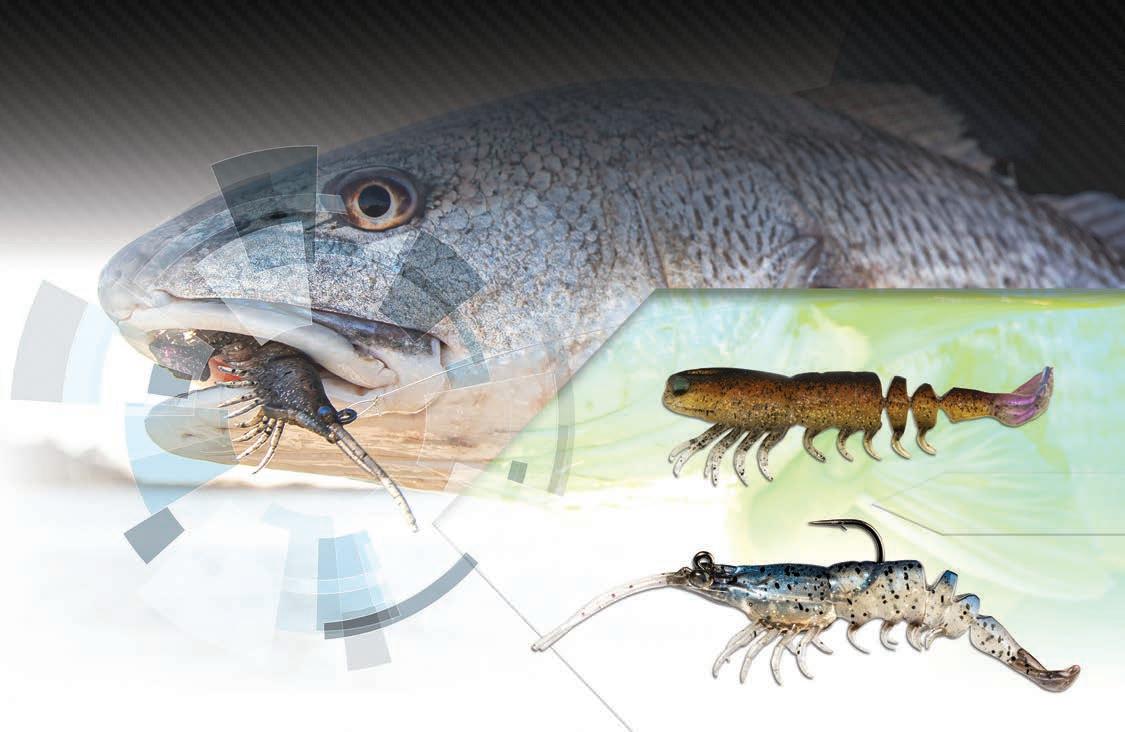
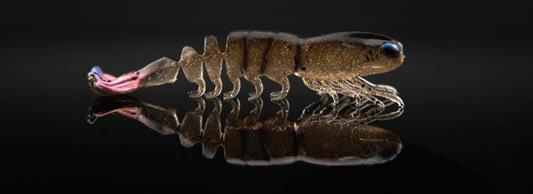
ZMan’s PrawnstarZ is a dead ringer for the real thing.
Presented under a popping cork or free-lined, the PrawnstarZ shrimp is a great producer.
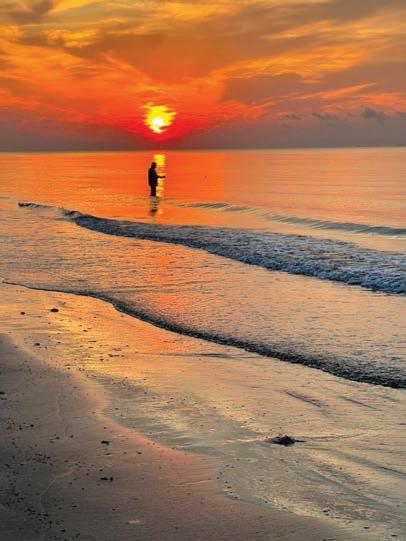
Light northerly breezes will make the surf the place to be in coming weeks.
the innovations and tackle technology that have come from the freshwater folks because many of those things have also proven useful in the salt. I feel sure all the extracurricular stuff they have going on is for TV but it certainly leaves you shaking your head after watching it.
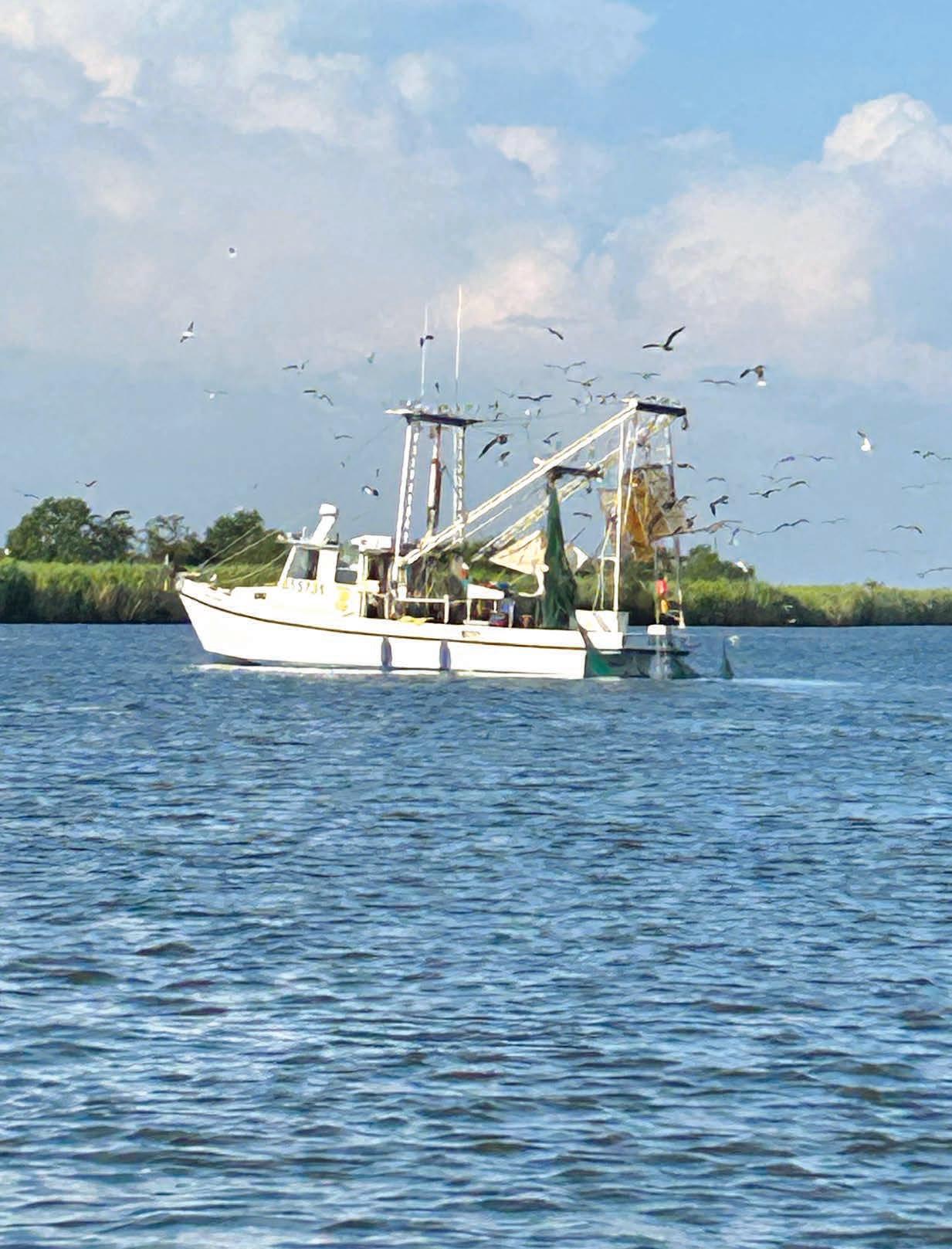
Now as you read this column there are undoubtedly two of the best things in the outdoor world happening and these are fish schooling under birds and blue-winged teal buzzing the decoys as September gives way to October. The schooling fish on Sabine during this time of year are as predictable as the sunrise and just as pretty. The white shrimp will be dumping as the successive cold fronts begin to empty the marshes. Once those shrimp hit the open lake it will be a free-for-all as the gulls, terns, and pelicans shadow those groups of feeding fish.
Obviously, shrimp imitation lures are the best bet fished either on a light jighead or under a rattling cork. This is “high numbers” type of fishing so do yourself a favor and throw lures with single hooks, this makes it much easier to release the fish or untangle the lure from the net.
My absolute favorite bait for this is the ZMan 3.5” Prawn Starz because it’s incredibly lifelike and beyond durable. I have caught
just about everything from speckled trout to snapper on the Prawn StarZ this year. When the Prawn StarZ was first introduced it came pre-rigged in a two-pack but now it’s being offered in a loose body fashion so you can rig it any way you like. The ElaZtech plastic will amaze you with its durability and will allow you to catch many more fish before needing to change it out like other baits. Believe me when I say it’s a real game changer.
Hopefully this month we are just getting started with some of the best days of the year for both fishermen and hunters alike. This part of the calendar has been circled since last year and is always met with high anticipation and hope. The conditions were favorable all summer and it’s time to reap the rewards, so get out there and enjoy it all you can. Please remember to share the outdoor opportunities with a kid whenever you get the chance. You won’t be sorry that you did.
CHUCK UZZLE
CONTACT
Chuck fishes Sabine and Calcasieu Lakes from his home in Orange, TX. His specialties are light tackle and fly fishing for trout, reds, and flounder.
Phone 409-697-6111
Email wakesndrakes@yahoo.com
Website wakesndrakes.com
are those
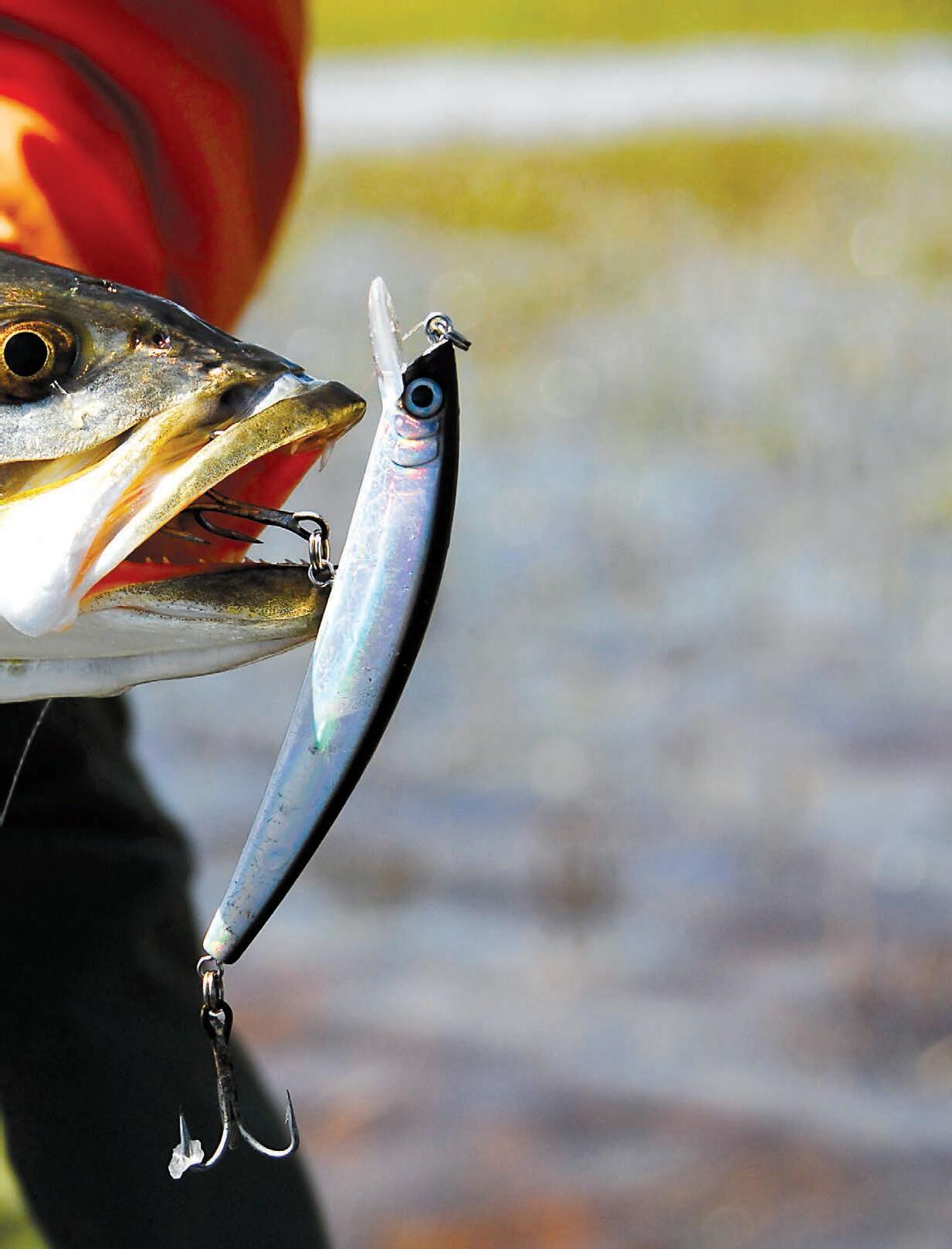
Trout with Yo-Zuri plug. Where
needle nose pliers?
Hook Drama
STORY BY JOE RICHARD
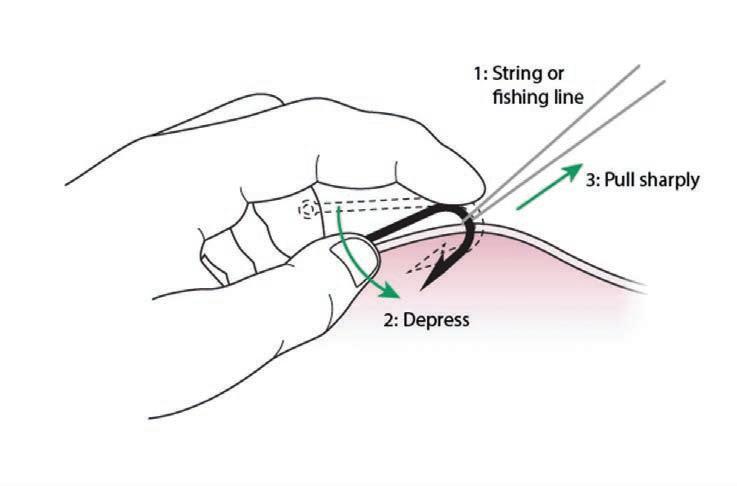
Hook barbings are a constant, low-key menace while out there fishing, and they don’t always happen in the boat. I was reminded of this last week at the dinner table when I stood up after lunch. Or tried to. There was a sharp pain in my right foot, and I couldn’t move it without tripling the pain. I work on tackle at the dinner table and the 100-year old rug we inherited. A hook had somehow slid off the table weeks before, and the eye was imbedded in the carpet. The sharp end was now deep in the side of my bare foot close to the big toe. To move an inch hurt something fearful. We couldn’t even see it without climbing under the dinner table. Fortunately, Amy was right there and found tin snips in record time, crawling under the table and snipping the hook. Finally free to move my leg, I set it on the corner of the table and found the culprit, a small hook buried to the max. Amy tugged on it a few times with pliers, provoking a few howls. And that’s when I remembered the loop-and-pull method. Limping to the tackle room, I grabbed a spool of 30-pound line, fed a loop inside the hook’s bend, and gave a mighty yank. The hook came out easily, right back into the carpet, but it first bounced off Amy’s leg and she spotted it right away. I’d forgotten to depress the far end of the hook (it was a longshank) against the skin before pulling, but the technique still worked. It had been 15 years since I’d used that technique. Such unexpected drama at the dinner table.
The hook was small enough to hurt. Major trauma from a bigger hook can temporarily numb a wound, which happened the only time I’ve had a hook removed by a doctor. The wound stayed numb on the drive to the hospital. I’d been tying on a big saltwater jig at Pleasure Island in Port Arthur. Ready to wade out, I gave the jig a careless yank to tighten the knot. The big jig slipped from my hand and the 6/0 hook went deep into my trigger finger. Not sure why I was using a jig fit for offshore amberjack while about to wade for bay redfish, but we were in the 12th grade and had much to learn. We were likely out of Tout Tails, which we used extensively. I do remember the hospital doctor used a serious bolt cutter on that hook. (Coastal doctors rightfully keep a pair handy.) In the intervening 50 years, I shudder to think of the hooks I’ve dodged without ER removals. All those thrashing offshore fish unhooked and released, often with tags. I did get stuck with big treble hooks in my hands (twice) by big trolling plugs, thanks to thrashing fish, but not past the barbs.
Trotline fishermen probably get it the worst, often baiting up and checking a hundred hooks while fishing alone, often with the wind blowing the boat. Saltwater trotlines aimed at redfish and trout are thankfully gone now, along with their hazardous stakes, but our reservoirs see plenty of trotlines. A friend of mine named Ron Chandler played football at SFA in Nacogdoches and related how he was impaled while running his lines at nearby Sam Rayburn. He didn’t own a boat, but there was a big car hood with a welded plate on the back end that was left ashore with a paddle, which he often borrowed. He was using bigger J-hooks, and one day his hand was impaled with a steady wind blowing. It was a bad situation; that car hood might have sunk like a stone, and him with no knife. He wrapped the main trotline around his leg to stop drifting, and pushed the hook through his hand to cut if off, and said they probably heard him bellowing on the far shore. This was before circle hooks became common and urgent care centers didn’t yet exist. I have mostly avoided trotlines and catfish because I had to deal with the saltwater kinds with their poison fins. My early trotlining on the lakes with store-bought 20-hook rigs either caught turtles, gar, or had their hooks straightened. I never liked skinning catfish, anyway.
Many guides prefer using single hooks on their boats, to avoid a boatload of strangers with unknown casting abilities slinging treble-hooked plugs. Or they spread everyone out by wading open water. I carry two anglers on my boat and have been lucky with no serious snags in many years. Back in the 90s at Bird Island off Port O’Connor, one guy was snagged in the forearm while throwing live croakers. No problem; I popped the hook loose with 40-pound line and he went back to casting. Another guy snagged himself with a MirrOlure when we spotted tarpon. Popped that hook free, as well. This handy loop-and-yank technique has cost the ER’s many lost customers and revenue.
Last time I used the technique, Blair Wickstrom snagged the heel of his hand with a Yo-Zuri plug while our boat drifted in calm surf. I found a spool of 40-pound line and right away snatched the front treble from his hand. But then the rear hook caught him good! Our TV cameraman, a big guy from Boston, almost fainted and lay down in the bow. Blair never even winced. That back hook was snatched out more carefully, this time. By then I was so put out with the offending plug, I tossed it overboard. Should have kept it.
Those early MirrOlures with their three sturdy treble hooks have been hard on people. What if a redfish inhaled one? Or while wading, a trout thrashed at close quarters, or ran between the legs? I remember one guy getting snagged while wading the third bar at Galveston, with a trout on one treble and another treble stuck in his chest. He had to swim to the beach with one hand while in pain. My great uncle Wib mostly fished alone and carried a rusty butcher knife for any job on the boat, including hook removal. On every trip we would sling his silver-sided, clear-back MirrOlures for trout. His boat was small, not much elbow room, but neither of us got a snagging. He was my fishing mentor and I would not want to remember him advancing towards me with that big old knife…
My only regrettable hook-snagging incident involved snagging someone else. It happened at the Matagorda jetties when tarpon
were rolling close to the rocks, a thrilling sight at 20 yards. We drifted quietly and I tied on a MirrOlure while reminding everyone to keep quiet. My eldest son, in the fifth grade, accordingly tip-toed behind me while I flailed away. Whap! That serious plug struck him in the head, and a hook was buried north of his ear in his scalp. There was no pulling it out; we didn’t even try. Instead we motored four miles back to the dock, put the boat on the trailer, drove home and collected our younger son. To cheer everyone up on the way to Port Lavaca’s hospital, we told them we’d make an evening of it and buy a large pepperoni at Pizza Hut. It was our only access to pizza and the boys were thrilled to varying degrees. Ian said the hook hurt more from the weight of the lure, so he constantly held it in the air during the 30-mile drive.
In the hospital’s emergency room there was a wait and the kids were hungry, so we called in for pizza delivery. A half-hour later, while Ian was in the back room having the hook cut out, the pizza arrived. Meanwhile an old woman in a pink bathrobe shuffled in with some sort of terrible skin condition. She’d also fallen and hit her head on the fireplace and her hair was a mess, a really grim sight. We looked at her, then the pizza, then back to her, and promptly closed the box; realizing then that the emergency room is no place for pizza. Ian came out of the back room looking relieved and the MirrOlure was gone. We then drove back to POC while chowing down. Some of the fun you can have, living on the Texas coast.
Bottom line: it’s a good idea to carry tools for removing hooks in the boat. Diagonal cutters seem like a better choice for snipping hooks than the all-purpose needlenose pliers most fishermen carry. Boat owners that commonly chase billfish wisely carry 2- or even 3-foot bolt cutters for serious hook removal. My friend, the late Howard Horton, who always fished barefoot, was in a big tournament out of POC when a 30-pound mahi was gaffed into the boat and went crazy on deck. The double-hook plastic trolling bait designed for marlin was whipped back and forth at lightning speed, catching Howard’s leg where it met the top of his foot, digging deeper every time the mahi flipped in the air. Howard must have danced right along with it. Bolt cutters soon cut that thick stainless steel hook, which was pulled free, and they went back to trolling. Next day his
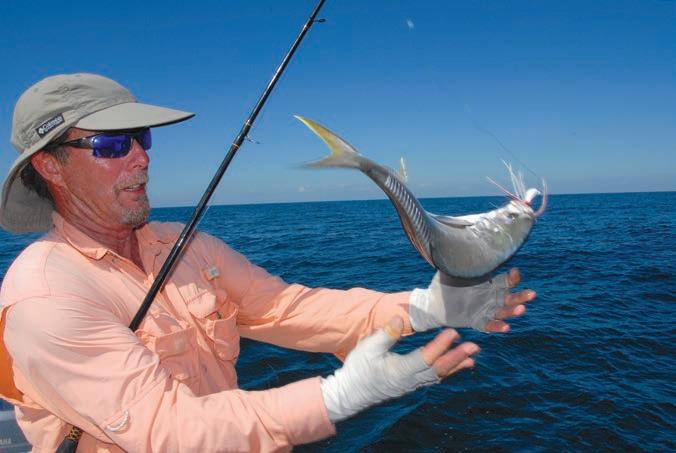
Author juggles a feisty pompano while avoiding the jig hook.
ankle was so stiff he could barely hobble up three wooden steps into Josie’s Mexican Food for his breakfast taco. I advised him to at least put some antibiotic cream into the two wounds. Howie took some bad injuries during his storied career offshore.
In our kingfish tournament days, back when those fish were plentiful, we fished two or sometimes three-day tournaments that allowed anglers to stay offshore the entire time and far from the dock. We’d spend an entire day prepping the boat, and one of my duties was to file down the hook barb on each kingfish leader. We didn’t use treble hooks and considered them dangerous around kingfish. My theory was those single, barbless 6/-0 or 7/0 hooks would penetrate jaw bone if need be and would stay in the kingfish if we kept a tight line. And it worked; we were often in the winner’s circle using barbless hooks. Without barbs it was far easier to unhook and release each thrashing fish under 30 pounds, which we frequently did (with dozens of 14-25 pounders), and never suffered a hook injury. We also tagged and released many kingfish and ling with some recaptured in faraway lands. You had to be quick around those thrashing fish; their teeth were worse than any hook. We never considered how the trip might have been altered if a hook went deep into someone. Tagging was thankless, dangerous work and we didn’t use a gaff.
Besides protecting fish, hook safety may be the reason barbless hooks are required in Canada’s huge Quetico Provincial Park, with its thousand lakes of every size, starting at the top of Minnesota. Canadians manage their park fishing well with two fish allowed per angler each day for the fry pan (at least for the cheaper fishing licenses we bought). This is canoe-only country with no outboard motors, and you don’t want to spend three days paddling out with a treble-hook in your hand or other body part. We fished and camped there for eight days, fishing 19 lakes, further and further north before turning back. Somehow I was the only one wearing fishing gloves, which was a good idea in retrospect: I caught a lot of fish, close to 200, mostly on topwater plugs. When I missed a shoreline strike the plug often came zipping back at us much quicker than I could yell, “Incoming!” One plug would have struck me in the face, except I raised a glove and
a treble stuck in the tendons of my wrist. But not entirely; the glove stopped it. Good thing, because we were six lakes away from the border and five canoe portages through thick woods with the longest trail, at 3,200 feet, locally called Big Agony. My buddy was older, and had to get an injection for his bad shoulder before the trip, so I carried that 17-foot Kevlar canoe down ancient trails through boreal forest in the land of the Chippewa.
Overall I’ve been fortunate with hooks. These days, we wear long slacks and shirts and a Buff mask; everything is covered except the fingertips. I’ve had plugs thump off my hat and clothes and impale in my shoes. On one great offshore trip with lots of kingfish and a ling, hooks ripped my pants leg a foot and also the back of my shirt. After wearing shorts and t-shirt for a decade on the jetties back in the ’70s, I’ve worn long clothes ever since, often disappointing my skin doctor today, who has still awarded me 40 stitches.
One more tip: Don’t forget those wrap-around sunglasses. I’ve heard two disquieting stories of people getting hit in the eye, one of them having just removed their shades. A trout plug then flying aboard. There are gruesome pictures of eye injuries and hooks online that will curl your hair. Heck, fish out there with nothing but a swim suit if you want to, but at least cover those eyes. Even cheap sunglasses sported by ZZ-Top will stop a flying hook.
JOE RICHARD
CONTACT
Joe Richard has fished the Gulf since 1967, starting out of Port Arthur, but his adventures have taken him up and down the entire coast. He was the editor of Tide magazine for eight years, and later Florida Sportsman’s book and assistant magazine editor. He began guiding out of Port O’Connor in 1994. His specialty is big kingfish, and his latest book is The Kingfish Bible, New Revelations. Available at Seafavorites.com
Watch out for sharp hooks in rod holders on center console boats.
The string-yank method works well on most small hooks used by bait and plug fishermen.
HOOKED ON CONSERVATION
How Texas Shark Anglers Are Helping Scientists Protect the Future of Shark Fishing
STORY BY JENSEN SMITH | GRADUATE
RESEARCH ASSISTANT AT THE CENTER FOR SPORTFISH SCIENCE & CONSERVATION AT THE HARTE RESEARCH INSTITUTE AT TEXAS A&M UNIVERSITY - CORPUS CHRISTI
If you’ve ever set a bait past the third gut and waited patiently for that heavy pull at the end of your line, you already know—shark fishing from Texas beaches isn’t just a hobby. It’s a tradition. It’s part of who we are as coastal anglers. But what you might not realize is that your passion for chasing apex predators might be one of the most valuable tools scientists have to help protect the future of these fish and the fishery.
That’s the idea behind the collaboration between scientists at the Center for Sportfish Science and Conservation (CSSC) at the Harte Research Institute at Texas A&M University-Corpus Christi and recreational shark anglers. Our partnership with recreational anglers allows for better understanding and transparency in data collection for the shore-based shark fishery along the Texas coast. If you’ve ever participated in the Texas Shark Rodeo, Sharkathon, or tagged a shark through the CSSC Sportfish Tagging Initiative, then you’ve already been part of the solution. Shark populations worldwide have exhibited serious declines over the last few decades. Between commercial fishing, habitat loss, and slow reproductive rates, many species are struggling to bounce back. In Texas alone, 33 of the 39 shark species tracked by the state are considered vulnerable or data deficient. Translation? We know we need to protect them, but we’re flying blind in some areas.
That’s where these “Rod Benders” come in. Shore-based anglers catch thousands of sharks each year, most released after a quick photo and tag. That’s not just good conservation; it’s also incredibly useful data. For example, what species are we seeing? How big are they? Are we catching more or less of certain species over time? Are sharks surviving the release? And most importantly, how can we make sure they do?
Instead of trying to collect all this information the hard way, through expensive surveys or offshore trips, our research team is tapping into a unique source: anglers like you. Through partnerships with the Texas Shark Rodeo and Sharkathon, we are gathering long-term, coastwide data submitted by hundreds of shore-based anglers. Since 2014, these programs have logged over 13,000 shark catches. That’s more than most researchers could ever dream of collecting on their own.
Using this data, our team is digging into questions like: What species and sizes are being caught most often? How often are anglers landing sharks with their gills still submerged (a key factor in post-release survival)? What motivates an angler to release a shark and under what circumstances influence the harvest of sharks? We are even rolling out surveys to get more insight into angler perspectives, from gear choice to conservation attitudes. One of the coolest parts of this work is how it’s already changing behavior. We tested a whiteboard video sharing results from a post-release mortality study (yes, keeping the gills wet really does help!). The video was shared before Sharkathon, included in the registration packet, and played at check-in. Afterward, 97% of surveyed anglers said they were more likely to adjust their handling practices based on the information that was shared. And when we reviewed photos from the tournament, we saw it wasn’t just talk; anglers actually changed how they landed sharks, improving the survivability of these magnificent animals. That’s the power of education when it’s shared the right way, with the right people.
The shore-based shark fishery in Texas is growing fast. And if we want to keep it sustainable, not just for us, but for future generations, then we’ve got to lead the way. That doesn’t mean shutting it down or turning it into red tape. It means fishing smarter, tagging more, and working with us scientists who respect the sport just as
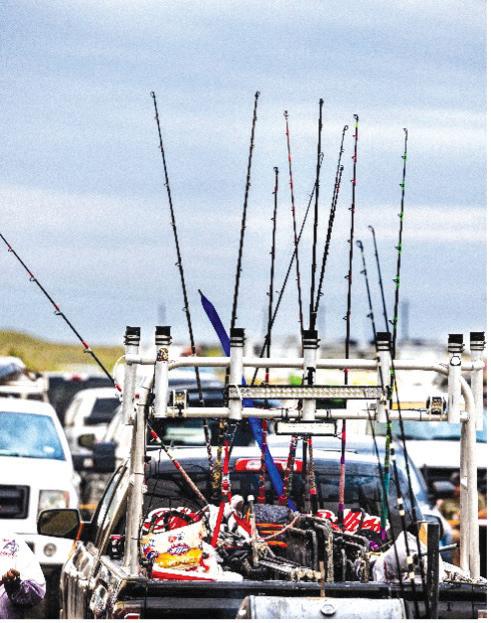
Fig 1. One of the many different Shore-Based Shark fishing set-ups.
much as the science.
Projects like this don’t just help sharks. They give anglers a voice in the management process. They validate the skills and knowledge that seasoned shark anglers have spent decades building. And they prove that conservation and recreation don’t have to be at odds.
So, the next time you’re out on the sand, paddling out bait under a setting sun, know this: every photo, every tag, every responsible release—it all adds up to something bigger. And thanks to your help, that “something bigger” might just be a healthier future for sharks and the fishery we love.
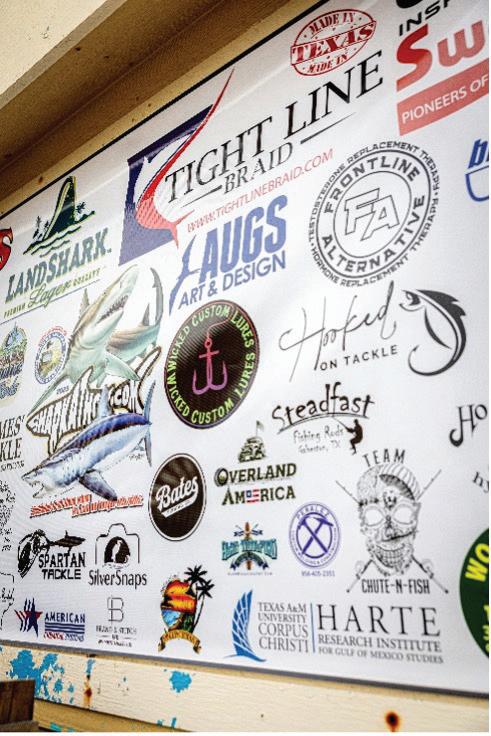
Fig 2. Some of the sponsors for Sharkathon.
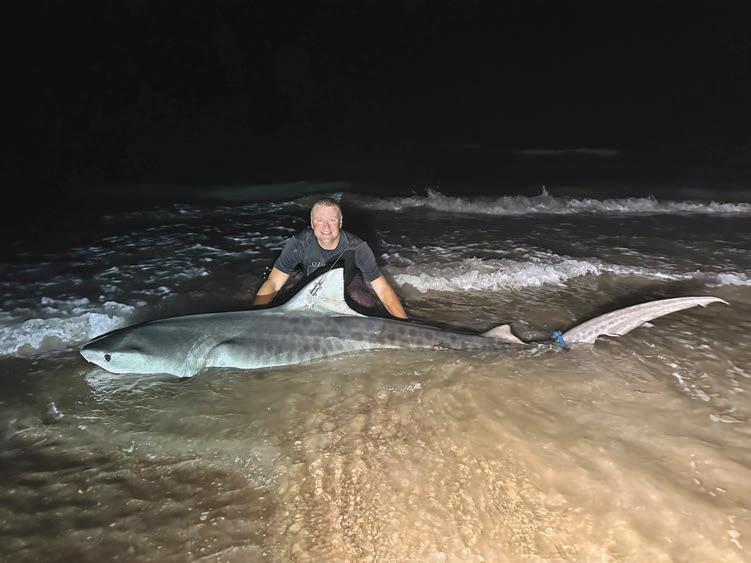
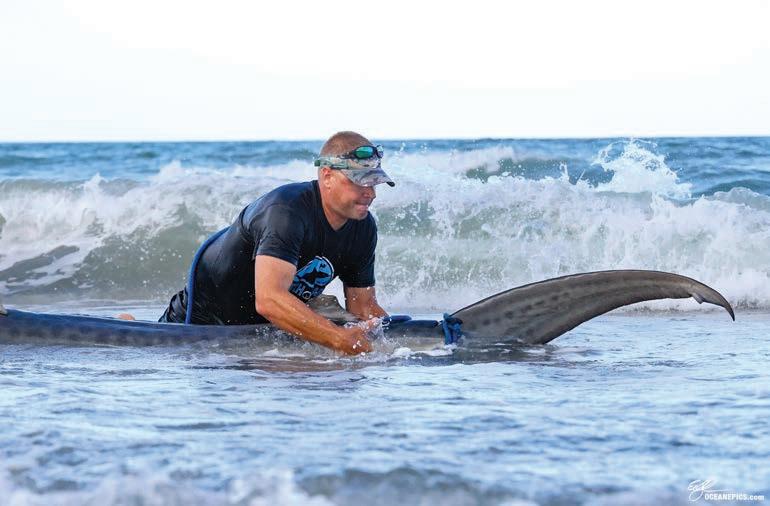
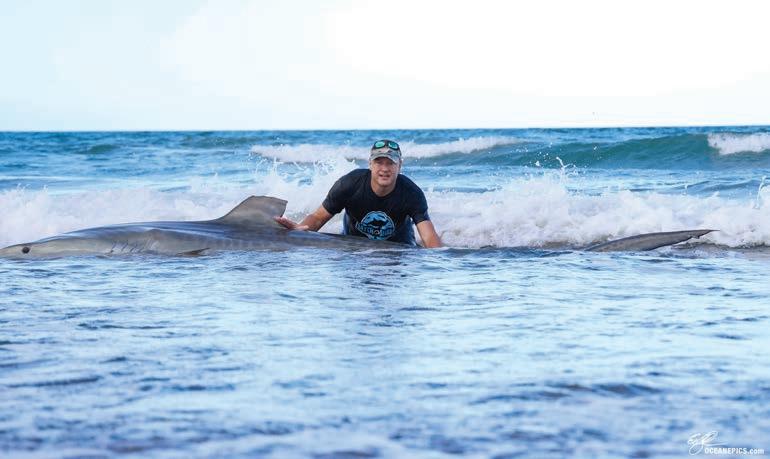
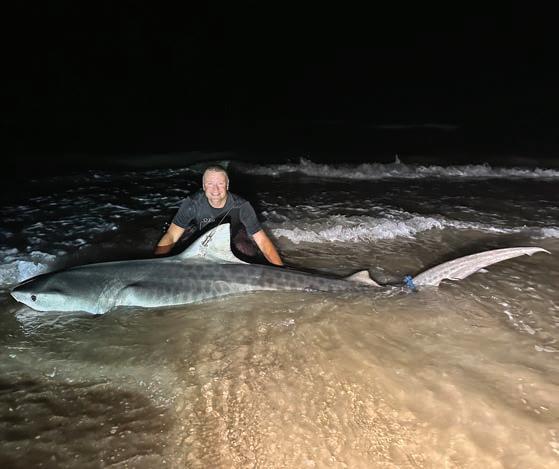
Fig 3. Shore-based angler Eric Ozolins with a satellite-tagged Tiger Shark being kept in the water, practicing safe and proper handling techniques.
ASK THE PRO
WE CAN’T AFFORD TO FISH STUPID ANYMORE!
The heat wave continues here along the Middle Texas Coast. Water temperatures are nearing 90° on the shallow grass flats by mid- to late-afternoon in the Rockport area. Winds are light most mornings, and then picking up to 15 to 20 mph out of the SE most days. This is a typical summertime pattern and requires leaving the dock early with good intel for selecting ones starting point and game plan.
I know that late summer is not the best time to catch upper-slot trout in my bay system but I continue to focus my efforts on quality trout more days than not. It is true that redfish are day savers for me at times, but over the years I have built a very loyal clientele that prefers to fish for trout more of the time. The best thing about late summer is that fall and winter fishing for big trout gets closer with each passing day.
You know what I struggle with most at this time in my career? The lack of intensity and the mindset from some clients that seems to suggest success is guaranteed because they are fishing with a guide. I understand the thought process that could lead one to believe that their odds of success are greater with someone that spends 250 plus days a year on the water. However, what so many overlook is the individual that is doing the fishing. I have always told my clients that the beauty of wading and lure fishing is that the act is all about you. You select the area, the lure and the action. You make each cast, create the action on the lure that draws an instinctive strike, feel the bite, set the hook, and place your hands on the fish. It’s all you!
In my earlier years I was totally focused on the numbers of fish caught and to a certain extent I still am, but today I place more emphasis on developing skill sets that enable each angler the opportunity to catch more fish on a more consistent basis. The more successful one becomes, the more you are going to want to fish. And the more you fish
the more you continue to support the fishery. Many professional guides often detract from the advancement of their own sport in an indirect way. This is accomplished by suggesting to the client that it is way less expensive to hire a guide that will provide boat, tackle, bait, fish cleaning and all the expenses that go with owning all the stuff that comes with fishing. While there is some truth in such statements, the overall loss of revenue to the fishing industry is tremendous. All the tax dollars on boats and motors, trailers and fishing tackle find their way into the fisheries budget, so it is important that we keep that in mind. I have always believed in encouraging my clients to become good enough fisherman that they will someday no longer need me.
Ford Clark with another oversize red.
When this happens, these clients become active advertisers for me and the fishery. This has been a win-win situation for me in my career and the winning continues in year forty-eight. There is no doubt that I have capitalized on this thought process and profited from sharing my daily fishing experiences with those willing to pay for such a service. This is the true example of the business. I hope that through sharing there has also been some learning. Not just about how to catch fish but how to be thoughtful of fellow anglers, conscious of the importance of conserving the habitat and the bay’s residents.
For many years I was not the best at teaching clients to conserve trout or redfish. It was very ego driven and not a good influence. Over time, I have changed and for at least the past twenty or more years I have promoted more of a conservation-minded message to my clients when on the boat and through the pages of this magazine. With this said, I have been impressed with the catch and release efforts that I see so many practicing these days.
Over this past month I’ve really had to get my guys to stay focused and concentrate on every cast. Water temperatures this past week surpassed 90° shortly after midday and this sends many of the trout we were trying to catch into deeper water. Deep is relative, so 3 ½ to 5 feet of water is considered deep in most of the areas that I fish here in Rockport. Understand this, though, not all the trout seek deeper water. Some of the largest trout I have seen this month have been in water so shallow and so hot that, had I not seen this with my own eyes, I would not have believed they would act in this manner.
This act is not uncommon actually. However, catching them under such conditions is nearly impossible with conventional tackle. I know the best fly fishermen can shine under these conditions and often do. Ben Pascal’s trophy trout skills are at the top of that list. Despite the clear water and the lack of wind or water movement, we are able to dredge out some nice trout in the deeper pockets and deeper grass beds if we allow the lure to get down and stay down.
Yesterday around the noon hour I eased into an area on a windward shoreline and positioned my guys offshore in about bellydeep water when we were on the sand bars and near chest-deep once we stepped off the grassy humps. My feet have taught me what the bottom contour feels like and with our clear water I have been able to differentiate slight color changes that are associated with these small yet deeper areas. These are the areas that hold the trout during the months of August through September. In such situations it is important to understand that any type of bite proves that fish are present and willing to eat. Over a period of about an hour to an hour and a half we released over a dozen trout from 18 to 24-inches. It was a nice save for an otherwise uneventful day. Downsizing from the Lil John XL to the original Lil John proved to be productive during this period. I try to instruct my groups when fishing with smaller lures in deeper water to focus on feeling the bite and then instead of instinctively trying to immediately set the hook, reel into the bite and allow the rod and line to load, and the trout to turn to the left or right. This is why many times the bite is extremely light during the heat of the day. And on top of this, water
Kevin Clark enjoying a day of fishing with Dad.
Barometric drop prior tropical systems arriving create small windows of opportunity for us.
depth can absorb some of the feel if one does not own a super sensitive rod.
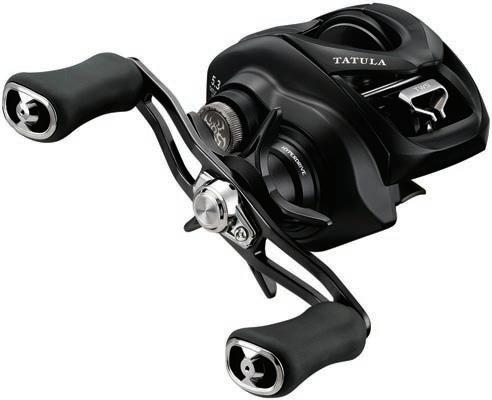
My recommendation is to spend most of your money on a highquality rod. I use Henri Custom Rods, but Waterloo, Sarge, and Laguna are top end rods as well and rods that I see on my boat. There are lots of reels that will do you well that are not terribly expensive, like the Shimano SLX 70 HD. This is a must in my opinion but that’s another article.
When we don’t feel the initial take and we pull against the unknown take, the fish charges towards the weight, creating slack. With slack in the line the fish can easily swallow the lure as it charges you. When you feel the take and react by reeling into that take and loading both rod and line before striking, the fish will typically turn against the weight allowing the hook to be set in the corner or hinge of the mouth. Once the hook is securely set, it’s hard to lose one and easy to quickly release the fish. Quick easy releases are critical to survival, especially in the heat of the summer.
One’s fishing gameplan should include shallow areas of preferred bottom structure for the bay system you are planning on fishing. The shallow area should include quick access to deeper but very
Late summer success requires reading ALL the signs.
similar bottom structure. A food source that is constant is also important. It is important to note that many times the bait is active early and easily observed, but later in the day the same bait source will move to deeper water and hug the bottom, becoming invisible to us for the remainder of the day.
Make mental notes of areas where you see mullet or menhaden jumping or flipping on a consistent basis. These are areas where game fish are present and even though the trout or reds may not be eating the bait fish, the bait fish don’t know this – so they react by jumping or flipping when they enter an area where predators are staging.
I depend on these types of sightings to keep me confident and on the proper line during downtime between feeding periods. We can never pay enough attention to everything that is going on around us. All of this has meaning, and we just must be able to decipher its meaning. We can’t afford to fish stupid anymore.
May Your Fishing Always Be Catching -Guide, Jay Watkins
CONTACT
Jay Watkins has been a full-time fishing guide at Rockport, TX, for more than 45 years. Jay specializes in wading yearround for trout and redfish with artificial lures. Jay covers the Texas coast from San Antonio Bay to Corpus Christi Bay.
Telephone 361-729-9596
Email Jay@jaywatkins.com
Website www.jaywatkins.com
DAVE ROBERTS SHALLOW WATER FISHING
RIDE THE BULL 14
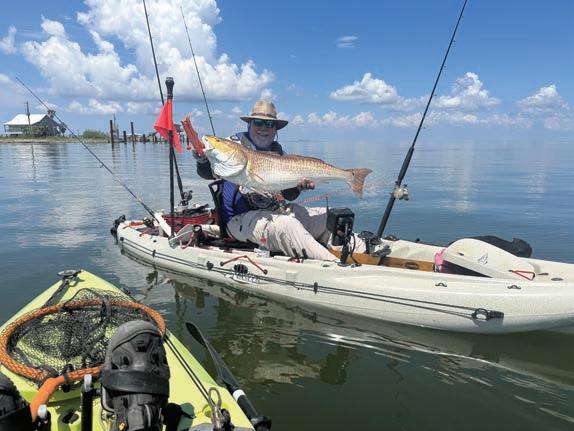
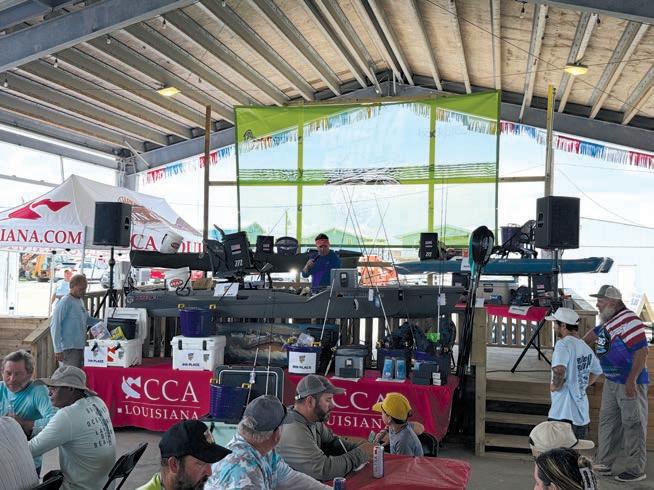
Well, one of my favorite events of the year has finally come and that is the Ride the Bull Fishing Tourney. For those that have not heard about it, Ride the Bull is an annual kayak fishing tournament organized by CCA Louisiana and hosted by Bridgeside Marina at Grand Isle, Louisiana. The fishing takes place in Caminada Pass and the 2025 event marked the 14th running. Every time I make the trek over there I have just as much fun as the year before.
So, in a nutshell, here’s how it goes down. It’s a one day tournament, everybody fishes from a kayak, and the angler that lands the biggest bull red is the overall winner. Prizes are also awarded to the anglers who land the Top 10 fish. Anglers can fish by any legal means, except trolling, which allows the anglers a lot of latitude in how they might formulate their fishing strategies. Some throw artificial lures, others use live bait of various types, and still others will just sit and soak cut mullet or cracked crab on the bottom. There is no wrong way to go about the day and this tournament is perfect for all ages
and experience levels. It is meant to be fun and everyone has a chance at catching a big bull red that can win some great prizes.
So the time came to make our trip down to Grand Isle and I could not have been more excited. I have been fortunate to get the invite through some of the guys out of the P.A.C.K. group from Houston – P.A.C.K. is short for
Paddling Anglers in Kayaks and Canoes. Regardless of how the tournament might go we always seem to have a great time together. Oh, and before I forget, we eat really well while we’re in Grand Isle.
We showed up on Wednesday and rented the same cabin we always do, which is very close to the marina. Downstairs from there is where the captains meeting, dinner, and the awards ceremony is held. I arrived right around noon and Smalley and Ryan were already there and unloaded. We quickly got the greetings and small talk out of the way and it wasn’t long before we decided to go for a boat ride and see if we could find some fish. Since we were going to be there several days ahead of the tourney, I couldn’t resist the urge to trailer my skiff down and take advantage of some marsh fishing in South Louisiana. We hit the water and headed to one of the barrier islands. Not long into our drift, Smalley caught a nice redfish and it was just the right size for the grill. We continued fishing an hour or so, only to find the higher than normal water level and blistering afternoon sun very much not to our liking. We decided to head back and meet the rest of the group.
Everyone had made it to Bridgeside, including Will who had driven from northeast Texas, and Troy all the way from his home in Arizona. We all greeted each other and were happy to be together once again down in the Sportsman’s Paradise. That night we sat around catching up and coming up with the game plan for the next day. I talked Brad and Blain into getting on the boat with me and the other guys were going to slide into the pass and see if they couldn’t find a few fish.
The next morning came and after a hearty breakfast, we launched the boat with hopes to find a few fish. The weather was perfect, almost dead-calm and the beachfront was laid down. I decided to make a nearshore run with hope of finding some tripletail and maybe get lucky and find a few redfish schools. As we took off across the Gulf we could not have asked for better conditions. We ended up running out to one of the short rigs and didn’t find much hanging around there. Afterwards we headed back to the beach and found a bunch of birds working with fish busting the surface under them. As good as it looked, though, all we could pull out was ladyfish and gafftop with a few Spanish mackerel jumping here and there.
We hung around for a while and soon spotted the type of commotion we were looking for a short distance down the beach. About 500 yards down from us the water looked as if it was boiling and I knew it just had to be bull reds. Pulling up, the school turned and came right toward us, which made for some quick and easy hookups. Brad and I quickly hooked up but Blain missed his opportunity, too awestruck and engrossed in filming to put the camera down and grab a rod.
We stayed with that school for probably another two hours, landing a dozen or so healthy redfish, exactly the kind we’d be looking to catch on tournament day. Between the blazing sun and the exertion of fighting those reds our thoughts soon turned to A/C. All the other guys were
strolling in as well and they too had found a few nice fish in the pass and had their minds pretty much set on where they’d begin their efforts on Saturday morning.
Friday dawned with storms scattered across the area and rather than getting on the water, we opted for heading to the beach to gather a few crabs for Saturday morning’s bait supply. We got lucky and caught around 30, which we agreed was probably plenty for all of us. That night we eased over to the captains meeting for a boiled shrimp dinner and discussion of all the rules and how the event would be conducted.
The next morning we all up early, bright-eyed and eager, and headed down to the launch. They blew the starting whistle and 261 kayakers were off and heading to the area they hoped would give them the winning fish. I knew about where I wanted to be from years past, where I’d caught a huge black drum, and where no fewer than six redfish had been caught in my immediate area. I tossed out a crab and began the wait.
Two and a half hours passed without a bite, neither did I see anybody around me catch a fish, so I decided to head across the pass and fish near the deeper channel. I ran into Brad and he was there as well. He began at the mouth of the pass and after not seeing much
RIDE THE BULL— What To Expect
Follow and Like us on YouTube!
caught, he moved. We had guessed it might be a tough day due to the slack tide and sure enough it was. No one in our group caught a fish that day but hey, that’s fishing.
We got off the water around 1:00 and brought all our gear back to the cabin before heading over to watch the award ceremony. There were only 20 fish caught out of 261 registered anglers, which ought to tell you it was indeed a tough day. You can plan lots of things when preparing for a tournament, unfortunately you cannot plan the tides and weather.
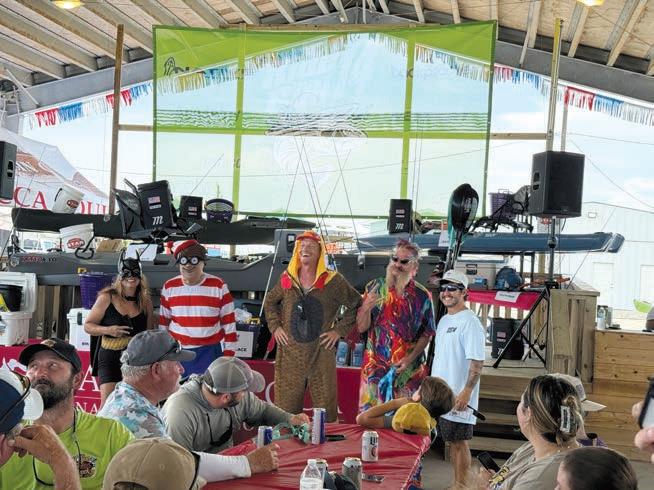
The overall first place winner landed a bull red that weighed 32 pounds, which is a really nice fish. As I mentioned earlier, this tournament is a lot of fun and they have been including a costume contest every year as part of the entertainment. Well, Brad seems to be the crafty one of our group and always shows up with something clever. He certainly did not disappoint this year. His “Waldo” took home the prize for best costume so at least someone in our crew brought something back to Texas.
We spent the evening sitting around under the cabin, feasting on crab-stuffed jalapenos, fried shrimp, speckled trout, and a few T-Bone steaks, just for good measure. Life was good and I am already looking forward to another trip down there next year to Ride the Bull.
CONTACT
Dave Roberts is an avid kayak-fishing enthusiast fishing primarily the inshore Upper Coast region with occasional adventures to surf and nearshore Gulf of Mexico.
Email: TexasKayakChronicles@yahoo.com
Website: www.TexasKayakChronicles.com
CCA TEXAS FUNDS $1.2 MILLION FOR CONSERVATION EFFORTS
The CCA Texas Executive Board approved just over $1.2 million for habitat, research and Texas Parks and Wildlife (TPWD) Game Warden support at their recent August 2025 meeting. These projects included $525,000 for Serpulid reef restoration and research efforts, $625,000 for continued support of Harte Research Institute’s (HRI) Center for Sportfish Science and Conservation (CSSC), and $66,660 for Region IV Game Wardens enforcement equipment.
HRI Serpulid Reef Restoration and Research Project
The Coastal Conservation and Restoration group, led by Dr. Jennifer Beseres Pollock at HRI, has studied the bay bottom habitats of Baffin Bay for over a decade. In 2019, CCA Texas funded $75,000 to study and evaluate the efficacy of using alternative substrates for restoration of Serpulid reef habitats in Baffin Bay. This initial funding has helped lay the groundwork for the beginning of restoration efforts for Serpulid reefs.
From Dr. Jennifer Beseres Pollack, Ph.D., Larry D. McKinney Endowed Chair for Coastal Conservation and Restoration Harte Research Institute
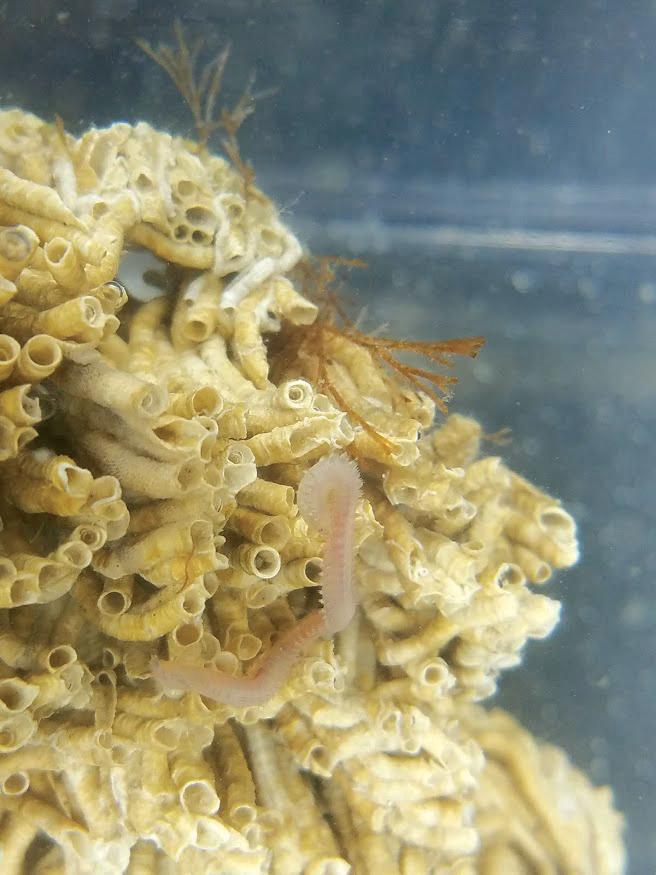
- Baffin Bay, Texas, is home to unique Serpulid reefs built by Hydroides dianthus, a species of tube worm capable of thriving in the bay’s hypersaline waters. These reefs play a critical role in supporting Baffin Bay’s ecosystem, serving as habitat for diverse benthic macrofauna and providing
forage for economically and recreationally important fish species like Spotted Seatrout (Cynoscion nebulosus) and Black Drum (Pogonias cromis). However, Serpulid reefs have experienced significant declines in size and distribution due to wave action, propeller damage, and trampling by anglers. Restoration efforts are urgently needed to preserve and rebuild this ecologically important habitat.
The research group at the Coastal Conservation and Restoration at Harte Research has been studying the bay bottom habitats of Baffin Bay for over a decade. From their most recent research, which involved evaluating both recruitment tiles and bull rock for restoration purposes, they have identified the importance of internal spaces, and particularly, downward-facing surfaces, in facilitating recruitment of Serpulid worms. In comparison, barnacle cover dominated the upward-facing surface of restoration materials. Additionally, they have found
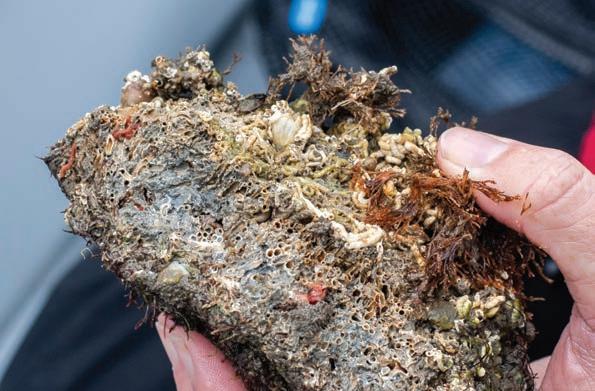
Serpulid reef sample from Baffin Bay.
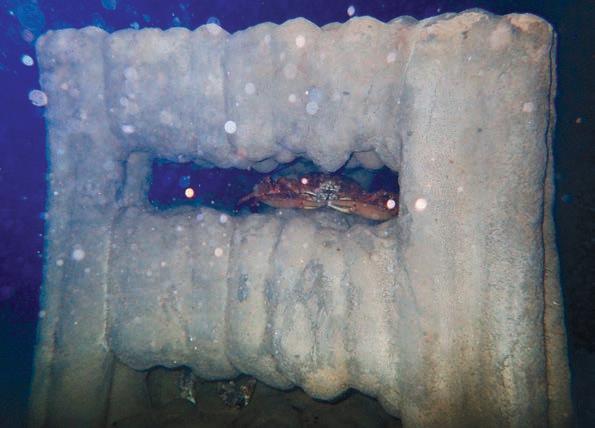
Crabitat unit deployed at an underwater test site, showing the internal spaces, and particularly, downward-facing surfaces, which are important in facilitating recruitment of Serpulid worms.
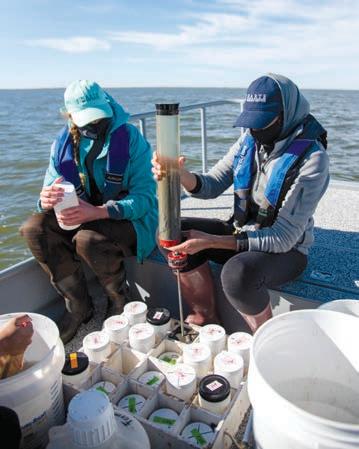
Researchers from the Coastal Conservation and Restoration Lab collect sediment samples in their ongoing research in Baffin Bay.
that although recruitment of Serpulid worms occurs year-round, the greatest recruitment occurs between September and December. Taken together, these results indicate that there is sufficient larval supply of Serpulid worms for restoration to be successful by providing additional hard substrate with appropriate microhabitat complexity.
CCA Texas Executive Board approved $525,000 for the next phase in the restoration of Serpulid reefs. This funding will cover permitting, construction and monitoring to build a large-scale research and restoration effort. This project will place 155 “Crabitats”, 3D printed concrete modules, in Baffin Bay. These structures will provide the preferred areas of growth for the Serpulid worms. CCA Texas looks forward to this next step of research and restoration that deepens the understanding of these unique and ancient structures of nature that are only found along the United States Gulf Coast in Baffin Bay.
CCA Texas Continues Support of the Center for Sportfish Science and Conservation at HRI
CCA Texas has supported the efforts of HRI since its initial $500,000 funding to establish the Center for Sportfish Science
and Conservation (CSSC) in 2012. In 2014, CCA Texas renewed its support with a $250,000 grant and furthered its commitment to CSSC with a $625,000 grant at the August 2025 Executive Board meeting. This grant will be funded at $125,000 per year for five years. CCA Texas members and leadership are proud to support these efforts that provide critical and important science that can be applied to immediate management needs for species that are being studied. Sound science is the bedrock of sound management, and CCA Texas remains committed to efforts of HRI and the CSSC.
TPWD Region IV Game Wardens
Awarded Critical Dollars to Ensure Protection of Texas’s Coastal Resources Through the vetting and approval of the CCA Texas TPWD Committee and approval of the Executive Board, CCA Texas has funded $66,660 for Region IV Wardens. This funding will be for new power and engine conversions for five enforcement vessels in Region IV. These areas include Jefferson, Orange, Harris, Chambers, Galveston, Brazoria and Matagorda counties. TPWD Wardens are the front line to the protection of Texas’ coastal resources and CCA Texas is proud to continue their support of them.
Serpulid Reef Worm Tubes.
By Juliana Moore | Program Specialist III, Sea Center Texas FIELD NOTES
REELING IN ANGLERS: HOW TEXAS IS CULTIVATING THE NEXT GENERATION OF LICENSE BUYERS
Take a minute and think back to the very first time you caught a fish. What was your experience, and what are your feelings surrounding that memory? I imagine that it’s probably a fond one. When telling the story, you likely use phrases like adrenaline-pumping and instantly hooked. Your hands spread in exaggeration to show off the size of your catch. It’s a good story, one that you cherish and probably told your kids the first time you took them fishing. Whatever your early fishing experiences were, they seem to have made you an avid angler, a lifelong license buyer, and a champion of coastal conservation. Texas needs more anglers like you.
Your wallet probably finds this statistic unsurprising, but recreational fishing is a multi-billion-dollar userpay, user-benefit industry. The money you spend on fishing licenses, boat registration, fishing equipment, and motorboat fuel is funneled back into supporting conservation, habitat enhancement, and sportfish restoration. The United States boasts around 57 million anglers, with approximately 3 million residing in Texas alone, and the number of license holders in the state has remained stable for many years. However, the Texas Parks and Wildlife Department (TPWD) considers this a looming conservation crisis. Why? While the number of anglers in Texas has held steady, the state’s population has exponentially increased. The result is a smaller percentage of Texans participating in the user-pay, userbenefit system, putting the future of Texas resources at risk. In response, the agency is actively working to recruit, retain, and reactivate anglers.
Sea Center Texas is a marine fish hatchery, public aquarium, and education center operated by the Texas Parks and Wildlife Department. Sea Center’s mission is two-fold: 1) enhance the natural stocks of red drum, spotted seatrout, and southern flounder by raising and releasing fish into Texas waters, and 2) promote
awareness, wise use, and conservation of Texas’ natural resources through education and outreach opportunities. The facility offers a variety of educational programs to meet its outreach goals, including a youth fishing program designed to recruit future anglers and provide lasting memories for children and their families.
Since opening in 1996, Sea Center Texas has hosted over 870 fishing programs, reaching more than 28,000 individuals. These efforts primarily target school-aged youth, but also reach special needs groups, senior living facilities, and veteran organizations. The hope is that every individual who catches a fish at Sea Center Texas forms an exceptional memory and leaves with an itch to fish again. The ultimate objective is to create future license buyers and stewards of coastal resources.
Beyond the ponds of Sea Center Texas, TPWD’s other divisions are diligently recruiting new anglers by providing their own fishing opportunities for the public. Well over 10,000 fishing events have been hosted across the agency. As impressive as these outreach numbers are, sparking an interest in fishing is only the first step in creating a lifelong angler. The Texas Parks and Wildlife Department wants to ensure that the youth fishing at State sites carry their newfound hobby into adulthood and become yearly license buyers. Utilizing elements of the foundational Outdoor Recreation Adoption Model, TPWD plans to improve and expand its current outreach programs. The goal is to expose potential anglers to a variety of outdoor recreation opportunities, guiding them toward a life of avid outdoorsmanship, fueling the sale of fishing licenses and increasing support for fisheries management funding.
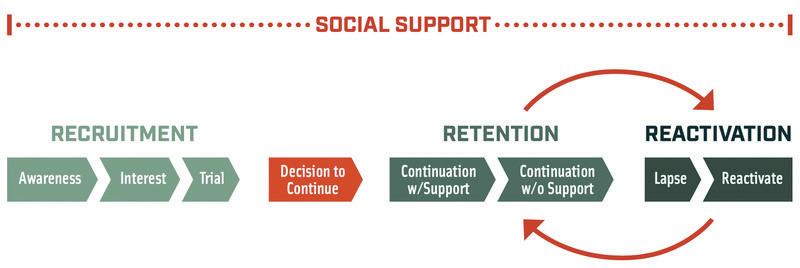
According to the Outdoor Recreation Adoption Model, individuals are more likely to make the critical decision to continue their newfound interest in fishing if they have social support throughout their angling journey.
The Outdoor Recreation Adoption Model shows that social support is an important step in retaining new anglers.
While a one-day fishing event at Sea Center Texas may be a middle schooler’s inspiration to try their hand at angling, it is likely not enough to bring them back to a license sale counter a few years down the line. It is long-term support and access to opportunities that lead to retention. Cue the anglers currently reading this article. You play a key role in the encouragement and social support needed for the successful retention of new anglers. Think back to your early angling days. What support facilitated your passion for fishing? Perhaps your granddad took you on the water every weekend. Maybe you participated in a fishing club at school. As an adult, you may have joined the Coastal Conservation Association and were introduced to a vast network of like-minded anglers. Whatever your support system was, it facilitated your integration into the world of fishing. Now it’s time to pay it forward. Ready access to opportunities, waterways, gear, and knowledge is integral to making fishing accessible to everyone. Sharing your passion with your family, inviting a non-angler friend on your next fishing trip, mentoring youth, and donating your time, talent, and dollars to formal fishing programs are ways that you can get involved. TPWD needs anglers like you to help reel in a new cohort of lifelong license buyers and champions of
coastal conservation, passing on the lore of fishing and ensuring the sustainable and well-funded future of Texas saltwater fisheries.
To find out more about volunteering with Sea Center’s fishing program, visit https://tpwd.texas.gov/fishing/sea-center-texas/.
Check the TPWD Outdoor Annual, your local TPWD Law Enforcement office, or tpwd.texas.gov for more info.
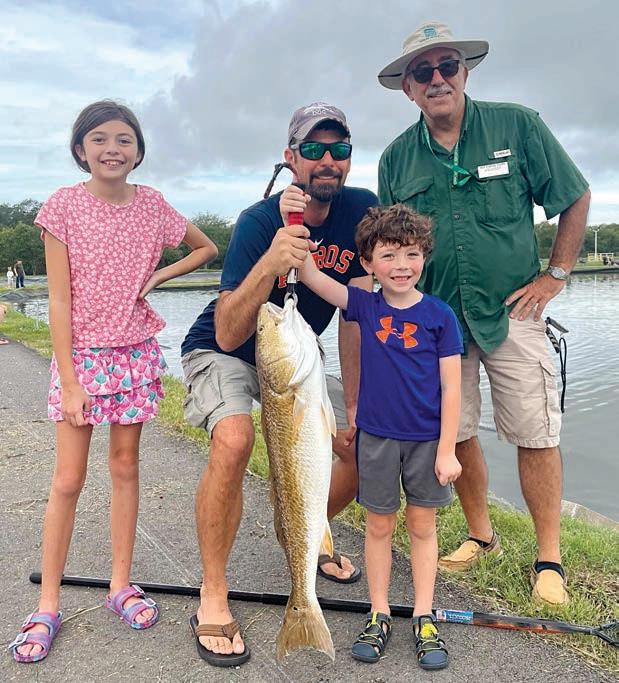
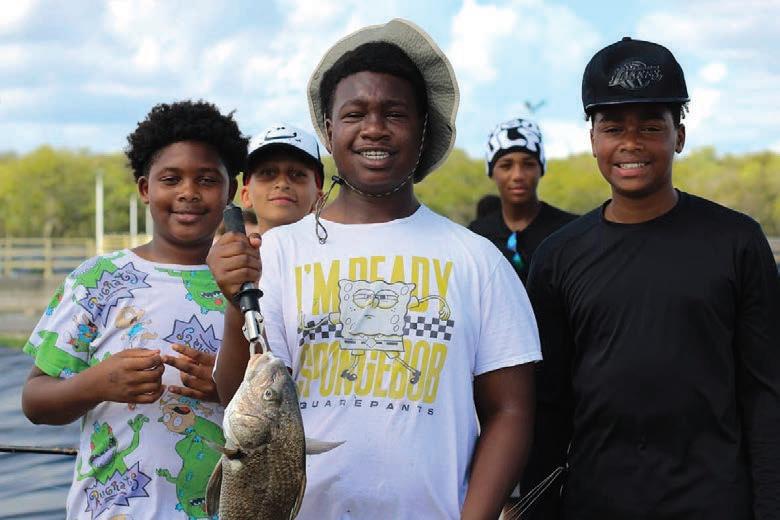
Young anglers making lifelong memories at Sea Center Texas’ Public Youth Fishing days.
ERIC OZOLINS EXTREME KAYAK FISHING
& SHARKS FROM THE
SAND
MY GRANDER MISSION
This has been an odd year for fishing the surf in Texas. The strange events started during late-spring, with the onset of strong winds. Consistently high wind speeds on a southeast heading are not unusual for Texas during the transition from spring to summer, but this year, the winds continued howling right on through June and July. When heavy rains inundated deep South Texas and northeastern Mexico, runoff filled the Rio Grande, which then dumped the cooler water into the Gulf. The persistent winds blew the dirty, relatively chilly water up the coastline, into the surf zone fronting Padre Island.
As water temperatures plummeted to ten or fifteen degrees below normal summertime averages, fishing for big sharks slowed to a crawl for folks like me, who normally catch plenty of oceanic monsters during this time-frame. Our larger apex predators, including tiger sharks, hammerheads and breeding bull sharks all tend to avoid the cold water upwellings, preferring warmer, less murky waters farther from shore. If the events linger, some of the brutes move north and show up along the beaches from Mustang to Galveston islands. This year, some of my friends and fellow anglers began catching monsters in June on those stretches of our shoreline. Meanwhile, the waters fronting the beaches of Padre Island National Seashore produced a seemingly infinite supply of gafftops and hardheads.
The dark cloud of these cold water anomalies does have a silver lining, though, which revolves around a single shark species. Here in Texas, anglers usually land a decent number of large dusky sharks during these events. Florida anglers catch dusky sharks during winter, often along with makos. But here in the Lone Star State, we don’t see them then, and in normal years, with warm, relatively clear water along our beaches, we often don’t catch any during the summer months either.
Thankfully, this year, because of the severity and duration of the upwelling event, we caught about as many or more dusky sharks than ever before. Several of my buddies fought and landed some real beauties, but in the end, we all yearned for a return to normal summertime conditions and an increase in our chances for tackling the beasts which traditionally fill our summer nights with thrills. By the end of July, we finally saw light at the end of the cold tunnel. When the water cleared and warmed up to normal temperatures, big sharks moved back in to our target zone.
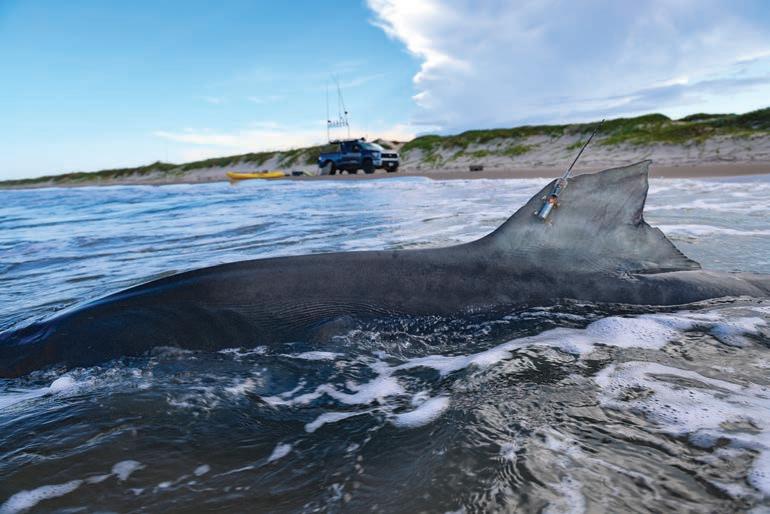
In August, just in time for our peak season for targeting monster tiger sharks, conditions returned to a normal state. At this time, the Harte Research Institute contacted me about helping to get a satellite tag placed in a tiger or hammer for the CSSC. I got a tag in hand and in between charters ran down the beach for a night with a friend,
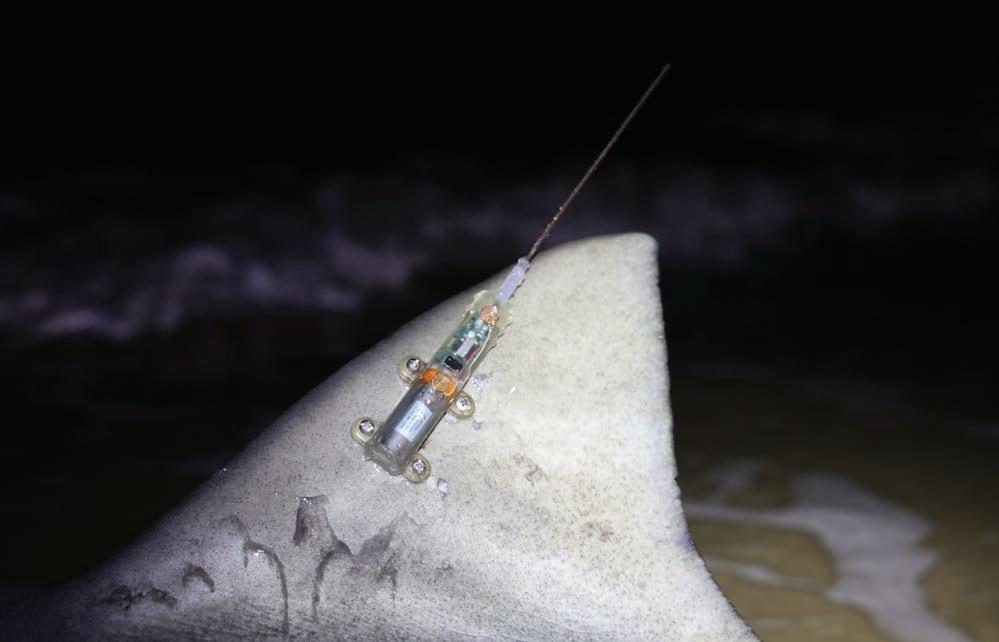
Satellite tracking tag attached to dorsal fin of tiger shark prior to release.
after obtaining some fresh-dead southern stingrays to deploy as baits. Normally, I’d have preferred cownose rays, but this year, they’ve been scarce.
At first, our spread of juicy southern rays garnered no attention from sharks of any kind. I began to wonder whether I should have fished farther to the north. Then, right around midnight, something picked up one of my baits. Because of the constant “slow roll” with which it fought, I knew I’d hooked a tiger. After a fairly short fight, I succeeded in landing the ten footer and successfully deployed the tag in her dorsal fin.
These tags are meant to activate when submerged in water. They then transmit data to satellites when the dorsal fin breaches the water’s surface. With this data ping, as it’s called, people monitoring the satellites are able to track the shark’s movement patterns. I was stoked to catch, tag, and release this tiger, my first of the season. All of this was satisfying, but a tenfoot tiger is not huge. Deep inside I craved a battle with a bigger beast.
A week later, I was asked to try and get another tiger tagged and, of course, I accepted the challenge. After obtaining a tag, I found a window of opportunity when a charter had to be rescheduled. I stocked up again with southern stingrays averaging about twenty pounds and headed back to a sweet stretch of beachfront. I cut them diagonally so each ray would provide two baits and deployed them out as the afternoon sun began its descent. Magic happened at about five o’clock. A shark picked up one of my rays about 450 yards from shore and began a slow roll, heading offshore like a long, strong train. Again, realizing the predictable nature of its fight, I knew I’d hook a big tiger. I grabbed my Ozmosis shark rod and 80W Alutecnos reel, harnessed in and jumped into what I knew might become a long battle. Repeatedly, the beast dumped a couple hundred yards of line off the reel before I could turn its head and win some back, only to recover and dump more line again. This pattern is typical for a big tiger. Sometimes, the slow, steady nature of their fight fools us, as we think all is well until we see how little line is left on the spool of our reel.
About half an hour into this fight I finally began to turn the shark and make real headway, regaining most of the line I’d lost. I knew I had to keep the shark from tangling
Oz wrestles tiger shark in shallow surf.
Up close and personal with a mega-tiger.
Mega-tiger tagged and ready for release – not the dorsal shortened by prior injury, now fully healed.
to be released.
my other lines and I had no one to help me. However, having landed many giant sharks solo over the years I felt confident I could win the battle and tag this monster. When the tide peaked, nearly an hour into the fight, I dragged my tiger onto the second bar, and the line fell slack.
My heart sank, and I thought my line was cut. Still, I continued to crank the reel handle, hoping for the best, and eventually I felt tension again. My adversary had turned and swam toward me, cruising all the way over the first bar, practically onto the sand of the beach. I jumped off the platform atop the truck and ran out into the water, carrying a tail-rope. As I approached, I could see the immense size of the shark, so I decided to leave her in the wading gut, which worked perfectly. I took my measurements and attached the tag to a specimen with a dorsal fin which had healed after being cut. This meant I had to place the tag closer to the body than normal.
To execute a successful release, I took advantage of the high tide, and moved the now alert and upright fish over the first bar without any problems. From there she simply swam away from me into the inky abyss. This monster measured 12’8” and weighed an estimated 1000 pounds, bettering my previous personal best tiger by six inches. Having landed another 12’8” tiger for a customer, I can honestly say these are the most impressively massive creatures we encounter on our beaches. To say the least, I was stoked about how smoothly every part of the process of tagging and releasing such a beautiful creature went. Catching any shark of such magnitude would provide ample satisfaction, but after dealing with the slow bite in the ugly, cool water for most of the summer, fulfilling my grander mission tastes especially sweet.
Science Sea and the TM
Dentists and Beauticians of the Sea
Dental offices and beauty salons follow strict hygiene and sanitation guidelines to prevent the spread of germs among people coming in for a teeth cleaning or eyebrow wax. But the same rules don’t apply to the “beauty salons” and mouth cleaning stations under the sea—and that may be a good thing.
Over 200 different species of fish and over 50 different shrimp species serve the vital role of cleaners to their fellow underwater residents. These cleaner fish often gather in “cleaning stations” on coral reefs where larger fish visit to have parasites and bacteria picked out of their mouths and off their scales. Scientists have known about this for many years, but only recently have they begun exploring what role these cleaning behaviors might play in moving microbes around the reef ecosystem.
To begin understanding this role better, researchers recently studied the impact of the cleaning goby. These fish are only about two inches long and often called neon gobies because their long, slender bodies have an iridescent stripe of color running from their nose to their tail. Scientists removed cleaner gobies from cleaning stations on two reefs off the coasts of Puerto Rico and St. Croix. Then they compared the water nutrients, microbe communities, and fish behavior of these reefs with nearby reefs that still had cleaning gobies. It turned out more fish visited the sites with cleaner gobies, and the variety of both microbes and nutrients differed between the sites.
Further research will help the scientists understand the significance of what they found to the broader health of marine environments, but one thing is clear: cleaner gobies do more than remove bacteria from individual fish. They play a big role in the microbe community of entire reef systems.
For the past decade Eric ‘Oz’ Ozolins has been promoting shark catch and release and assisting various shark research programs. Eric offers guided shark fishing on Padre Island National Seashore. Also renowned for extreme kayak big game fishing, Eric is the owner of Catch Sharks Tackle Company.
Cleaner gobies (smaller black fish with neon stripes) remove parasites and bacteria from larger fish. Credit: Emma Hickerson, Flower Garden Banks NMS, NOAA
Ten foot tiger, tagged up and ready
NATHAN BEABOUT MOSTLY SIGHT-FISHING
OCTOBER KICKOFF TO A WONDERFUL FALL SEASON
With the passing of a few more cool fronts, and possibly a real cold front or two in October, many changes will occur on San Antonio Bay. Trout spawning will be done for the year, which is the catalyst that triggers lots of feeding activity during spring and summer, however, the changes in barometric pressure associated with frontal passages can also incite aggressive feeding behavior. Timed right with the weather, some bigger trout can be caught during these periods of rising or falling pressures. Areas that we fished all summer will remain effective
but, changing the way we work them or even the baits we use can trick these better fish into striking. During times of falling temps, Corkys can be especially productive. Then, on the flip-side, a couple days later when the air and water temperatures have recovered, topwaters can be very effective.
During the early mornings of these cool downs, targeting drains on main bay shorelines or deep dropoffs with oyster shell will usually be key for us. I always think of areas like this as refuge areas for trout and
reds. They have the deeper water for protection, and the adjacent shallows to hunt and ambush baitfish. When we are throwing soft plastics in areas such as this, a quarter ounce jig head can come into play. I always make sure I have a couple in my box for such instances.
As the days tend to warm up to what we call normal fall temps, we start looking at the shallow grass flats next to the drains, or perhaps the tops of reefs. One thing you need to remember is that the shallow sand will heat up faster than any other water. So, as you shed your morning jacket, remember the fish are looking to do the same thing and warm up a bit.
Now, our other favorite activity in October is to play the backside of a passing front for some unbelievable sight-casting. Usually, the window is 2-4 days after a front, a period that provides sunny skies and light ENE to East winds. This makes for some good water color in area back-lakes and grass flats. Redfish typically show up in big numbers during late September and October as they are schooling in preparation for their spawning migration to the gulf.
Crisp mornings that warrant a heavier jacket for the boat ride, with little to no wind, are some of my favorite sight-casting days. Days like this, I know the fish will stay active all day long, and the minute the sun breaks the morning clouds the redfish activity can become explosive. As the sun starts to heat the shallows and daytime temps climb, sitting “Power-Poled down” for hours in the right areas can lead to endless opportunities at fish cruising shallow bars or ledges.
Captain Nathan Beabout USCG/TPWD Licensed
Full time guide since 2007
Speaking of cooler weather, we are now taking bookings for our Port Mansfield winter trophy trout trips. These trips are all catch and release, with respect for all the local anglers and guides in that area. We are strictly looking for your personal best trout, whatever size that may be. All wading with artificial lures, we offer a special fishing format for making the best of the Texas weather. If you have never fished in the Lower Laguna, don’t sit at home another winter. Give us a call to fish some of the finest waters on the Texas Coast. Each year in the Lower Laguna since the 2021 freeze has been just a bit better. From 4 to 5 pound fish the first year after the freeze we progressed to 5 to 7 pounders, and then to 8 and 8.5 pounders. Last year we were seeing good numbers of 8.5 pounders and some pushing close to or right at 10 pounds. I’m thinking we are back on track for seeing the quality of fish I have recorded in my log book from 2019 until the freeze came in 2021.
Seadrift, Port O’Connor, & Port Mansfield, TX Facebook, Instagram, LinkedIn
Phone 210.452.9680
Email www.nmsportsmansadventures.com
CAPTAIN
TREVOR “LITTLE BIRD” KUCIA BIRD’S-EYE VIEW
FALL ON THE FLATS: VARIETY ON THE TEXAS COAST
There’s something about the turn from September into October that feels like the coast is hitting its stride. The summer heat hasn’t fully let go but the sting of August has started to fade. The days shorten, the light softens, and the bay seems to breathe easier. For anglers, this stretch of the calendar is a gift, a time when the Texas coast comes alive with variety. Redfish schools can be seen tailing on the flats, trout key in on migrating bait, tarpon start coming to life, snook creep into your thoughts, and even flounder begin showing themselves in the mix.
For me as a guide, these two months are when I lean into versatility. No single target species dominates, and that’s
the beauty of it. Every day brings a new opportunity, sometimes all in the same trip. To make the most of it, I rely on simple but deliberate strategies and a few trusted tools that never leave my boat deck.
If September had a mascot, it would be a copper-hued redfish tailing or backing in shin-deep water. This is one of the peak times for schools and pods to gather on the flats, tails flashing as they pin shrimp, crab, and mullet against the grassy bottom. Down here in South Padre, we’re fortunate to see this year-round, but in early fall, it feels like it happens every day on every shoreline. The trick is patience and precision. I’ll ease my boat, or slip in with waders, and watch the movement
before making a cast. A Waterloo rod is always in my hand, the right balance of backbone and sensitivity for sight-casting fish that spook at the slightest wrong sound. Paired with a Florida Fishing Products reel, I’ve got the smooth drag and reliability to lean into these bruisers when they try to bulldog their way off the flat. A KWiggler Ball Tail Shad is my go-to lure here, the tail giving just enough vibration to get noticed without blowing out the school I’m working. I’ll rig it on a light jighead, weedless if the grass is thick, and let the fish tell me how they want it.
By late September, cooler nights start nudging speckled trout out of their deeper summertime haunts. They slide onto the flats toward potholes, guts, and areas where bait funnels naturally. This is when I love working soft plastics across broken grass lines or old prop scars, twitching and pausing to mimic an injured baitfish. Topwaters can be deadly, too. Especially at first light on glassy mornings. The bite can sometimes be finicky, but that’s where confidence in your tackle pays off. I tell clients that when you’re sight-casting these elusive specks, the ratio of seeing them to hooking one might be 1 out of 20. That’s just how tricky they can be. Missing a few bites is part of the game, and when you finally stick one, it’s usually worth the wait.
Bart’s Sand Ninja color, they seem to love that natural pattern.
As October progresses, the variety only gets better. Flounder start staging near channels and passes, lying in wait while trout and redfish roam nearby. These fish are often the “bonus bite” of a fall trip; that surprise thump at the end of a drift that turns into dinner. I’ll work edges and drop-offs methodically, keeping a rod rigged with a KWiggler ready to bounce along the bottom. Clients are often surprised by how subtle the bite feels, just a little pressure, a little extra weight. That’s when good tackle matters most. Feeling the strike, waiting that extra heartbeat, and then driving the hook home is part of the fun. September and October aren’t about chasing one species. They’re about embracing variety, letting the bay dictate the pace, and being ready for whatever shows up. Some mornings we’re sight-casting to redfish in ankle-deep water. By mid-morning, we might be drifting deeper flats for trout and reds. And by afternoon, we could be chasing tarpon rolling just offshore. What ties it all together is confidence in the tools. A rack of Waterloo rods on deck, each paired with a Florida Fishing Products reel, covers everything I need. Add in a box of KWiggler lures in a few proven colors, and I’m set for whatever the day delivers.
If redfish and trout own the flats in September, tarpon and snook own everything else. When the tide and bait align, it can feel like the other fish don’t matter. I typically chase snook around structure toward the south end of Padre, while tarpon demand a broader range. Juvenile tarpon can be found inshore, but the true heavyweights are farther off the beach. I’ll admit I’m still learning the offshore tarpon game, but each season I pick up new patterns that make these giants a little easier to predict. For both species, I bump up to heavier gear – stout Waterloo builds that can absorb the punishment. Florida Fishing Products Resolute reels shine here, with drags that hold up to blistering runs without locking up. When I’m targeting snook, I like throwing a KWiggler 4-inch Ball Tail Jr in the
Fall on the Texas coast is unpredictable in the best way possible. It’s a season where the line between species blurs, where every cast could connect with something different, and where the variety of our fishery shines brightest. As an angler and a guide, that’s what keeps me coming back day after day, knowing the next bend in the rod might be red, silver, spotted, or flat as a flounder.
James Kosub James Kosub says, “I fell in love with fishing as a child and my passion deepened when I discover the Texas coast. Shallow water redfish have become an obsession.” Email Jammmeskosub@gmail.com
PRODUCT
Abu Garcia Max ® EZ Cast
Baitcast Combo
The Max® EZ Cast Baitcast Combo is designed for anglers of all skill levels who want to confidently fish with a baitcasting reel. Built around a lightweight 6-foot carbon composite rod and pre-spooled with 10 lb line, this combo features the revolutionary Anti-Backlash™ System that helps prevent line twists and tangles. With an easy On/Off switch, anglers can gradually build skill while still enjoying smooth, reliable casts. The 3+1 bearing system, graphite frame, and EVA handles deliver durability, comfort, and performance on the water. Ideal for expanding your fishing techniques, the Max® EZ Cast Baitcast Combo takes the frustration out of learning a baitcasting reel and helps anglers focus on what matters most—catching fish.
www.
AbuGarcia
.com
Berkley PowerBait Unrigged CullShad
The Berkley PowerBait Unrigged CullShad is a versatile swimbait designed for anglers who want full control over their rigging options and presentation. Featuring Berkley’s proprietary Honey Comb Technology, it offers enhanced durability and realistic swimming action, even at slower speeds. Perfect for mimicking various types of prey, the Unrigged CullShad’s natural head wobble attracts fish in any environment. Ideal for use with screw lock swimbait hooks, swimbait jig heads, or line-through treble hooks, it’s adaptable for a wide range of fishing techniques. Customize your setup and target big fish with the PowerBait Unrigged CullShad, the ultimate addition to any angler’s tackle box. MSRP - $7.99
www.PureFishing.com
New TATULA TW 150 from Daiwa Your Everyday Workhorse
A multipurpose weapon, the perfectly-palmable TATULA TW 150 aces numbers of the most popular inshore light-tackle fishing techniques. The bedrock of TATULA TW 150’s exceptional performance is DAIWA’s Long Cast (LC) Concept. The advanced 36mm A7075 spool and its braking system were specifically developed to maximize casting distance. This type of braking system is critical for anglers throwing non-aerodynamic lures that surge during the cast due to air-resistance. What’s more, the TATULA TW 150’s HYPERDRIVE® system delivers unparalleled smoothness while retrieving crankbaits and more, thanks to its three-point gear contact within the HYPERDRIVE® DIGIGEAR™ system. An extended 100mm handle also improves angler comfort and leverage in these applications. Daiwa.us
HIGHLIGHTS
Merman Scout Over-The-Head Wade Bag at FTU
Lightweight, durable, and versatile; the Merman Scout Over the Head Wade Bag features quality 1000D nylon fabric with a Velcro closure and an adjustable two-shoulder strap for a secure, comfortable fit. Every wear point is reinforced by double stitching to endure greater longevity. Its spacious design accommodates the popular 3600-model tackle storage boxes, while the packable construction makes it easy to carry on any fishing adventure. Find them at Fishing Tackle Unlimited! www.FishingTackleUnlimited
Okuma Convector Series Trolling Reels
The Okuma Convector Series has long been the go-to reel for serious freshwater and saltwater trolling anglers. Featuring a corrosion-resistant frame, oversized brass gearing, and a powerful Carbonite drag system, the Convector B offers smooth, consistent performance under heavy loads. A machined aluminum spool and self-lubricating gear system ensure long-term reliability in the harshest conditions. Line counter models are equipped with CVT Clear View Technology for accurate, fog-free depth tracking in all weather. The wide-mouth level wind is designed for copper and heavy braided lines. With dual anti-reverse systems and ergonomic handle knobs, every retrieve feels solid and controlled. OkumaFishingUSA.com
NEW from Z-Man® PrawnstarZ Loose Body
Fresh off the menu, Z-Man’s® lively 3.5-inch PrawnstarZ™ LB features the same kicking, undulating action, durability, and perfect balance as the award winning original PrawnstarZ— in an unrigged version. This ultimate shrimp bait is designed for weedless rigging with a 3/0 Z-Man® ZWG™ hook or with a Trout Eye™ jighead. The PrawnstarZ LB sports a convenient hook guide channel in the nose section for perfect rigging, every time. For enticing underwater movement, the bait’s tail fan, antennae, and swimming legs pulse, quiver and “crawl.” The PrawnstarZ’s abdominal segmentation further propels tail undulation, yielding dead-ringer live shrimp movements. 10X Tough ElaZtech® construction assures long-lasting durability. Twelve true-to-life, hand-painted color schemes match shrimp in various saltwater environments. ZManFishing.com
Matagorda
Bink Grimes is a full-time fishing and hunting guide, freelance writer and photographer, and owner of Sunrise Lodge on Matagorda Bay.
October is probably the most opportune month to catch just about every species you might want to target. It’s hard to argue with cooler temperatures, higher tides and hungrier fish.
It’s everyone’s favorite month to fish. The sunrises and sunsets just puts us all in a better mood. A chilled ear lobe and a morning hoodie is a rite of autumn. We will be rocking and rolling from daylight to dark at the Sunrise Lodge – October is a favorite for corporate entertaining.
Higher tides this month will be a boon for redfish. There are lots of shrimp in the back lakes and marshes and many will target those fish with small topwaters and live shrimp under a Mid-Coast cork. As those fish begin to move into the bays they will be found on the grassy shorelines on both the north and south shorelines. Most will toss a shrimp right against the edge of the grass and others will troll down the shorelines tossing DOA Shrimp or small topwaters like She Pups and Super Spook Jrs.
Some of the largest redfish will be found in the middle of East Bay under birds. When things are really firing off in the fall there will be 10-20 groups working. Many times when terns are circling it is a sure sign of redfish.
The reefs in East Bay are players every month, but with shrimp migrating through the bay, waders working mid-bay reefs should see
excellent results. We like tossing Super Spook Jrs and She Pups on the edges of the reefs for big fish.
The great thing about East Bay is you don’t have to wade to find big trout. Sure, you need good weather for water clarity, but half of the big trout released by my clients come from drifting over deep shell.
Waders along the south shoreline of West Bay will work the points of shell with Down South Lures and Bass Assassins. If you want both redfish and black drum take a bucket of live shrimp and work the points with a cork. There will be plenty of both in October.
Good numbers of tarpon along the beachfront should be seen this month. Few boats will chase the poons, but if the Gulf stays calm expect to see schools of rolling silver kings. Tarpon fishing is a growing sport in Matagorda; yet, they (tarpon) have been here for years.
We will still have the cast and blast option of fish in the morning and doves in the afternoon in October. When November arrives it will be ducks in the morning and fish in the afternoon.
As stated earlier, habitat conditions are conducive to a good shrimp crop; and, when that is the case, the marsh is prime for holding wintering waterfowl as well. We look forward to a solid duck year, not to mention a three-bird per man pintail limit, something not seen in Texas since 1997.
Please continue to treat our bays like it is your back yard. Catch and release is cool. Please release more than you take.
From Brush to the Bay How Texas Brigades Inspired My Passion for Conservation
STORY BY CELESTE BOYD
One of the most fascinating things to me is just how interconnected our little world is. Thoughts like this settled in my mind as I sat in the brush, watching the world come alive. I fell in love as I watched the pink sky intertwine with the deep blues of the moon’s dance, and the doe and her fawn step out to the pond before me, taking a drink of water before wandering on to their day’s agenda.
I wasn’t casting a line that day, nor was I watching the tide roll in and feeling the ocean’s breeze coat my skin. Instead, I was awake at five a.m., settled into the brush, evaluating the landscape for animals like quail and white-tailed deer. At Texas Brigades, I had the honor of earning Top Herd and Top Covey at both the Buckskin Brigade and Bobwhite Brigade—recognition not just for knowledge, but for teamwork, collaboration, and initiative.
To give credit where it belongs, I genuinely could not have done it without my girls—my “herd” for Buckskin and “covey” for Bobwhite. We pushed each other, shared ideas, and strategized together. We supported one another when emotions ran high, leaned on each other, and grew stronger through it.
This summer, I attended the South Texas Bobwhite Brigade and the South Texas Buckskin Brigade, two of the nine youth conservation and leadership programs that make up Texas Brigades—a program dedicated to teaching middle and high school students about wildlife conservation, public speaking, teamwork, and leadership. At
first glance, the camps I attended didn’t seem to have much to do with the coast. But after just a few days in the field, it became clear: conservation is a thread that connects everything.
My journal became both a wealth of knowledge and an anchor through it all. Every day, I took notes during lectures and recorded everything I found interesting—from plant identification and Aldo Leopold’s five tools to habitat design and public speaking. But there was so much more than just facts and lessons. I wrote about the
My “herd” at Buckskin Brigade—these girls pushed me, supported me, and helped make this camp unforgettable. Photo courtesy of Texas Brigades.
Learning by doing—our group celebrates successful target placement during a deer management lesson at Buckskin. Hands-on education helped conservation come alive. Photo courtesy of Texas Brigades.
Port O'Connor Seadrift
MID-COAST BAYS With the Grays
Captain Gary Gray is a full time guide, born and raised in Seadrift. He has been guiding the Seadrift/Port O’Connor region since 1986. Gary specializes in year ‘round wade fishing for speckled trout and redfish with artificial lures.
Fishing in the POC/Seadrift areas has been slowly improving each year since the devastating freeze of February 2012. By fishing I am generally referring to the hardest hit of our game fish species – the spotted seatrout. With each passing season I have been noticing a significant increase in the number of areas that hold “good fishable” numbers of quality trout and, of course, our areas that always seem to hold plentiful numbers of juvenile trout – which is also a very good sign. I have fished all the major bays in this area regularly and that statement holds true in all of them.
My clients and I were able to make a record number of trips to the surf through August and September because of the calmer winds. The trout fishing slowed down in the latter half of September but the redfish action more than made up for the lack of trout action. The lower numbers of trout encountered during September gave my clients and I more time to focus on other species such as Spanish mackerel, bluefish and black drum along the beachfront.
During October I will not be making trips to the surf unless clients have their heart set on getting into some crazy redfish action – they will certainly be out there in full force. The only issue we will have is catching “keeper” reds that will measure less than the twenty-eightinch mark. They will primarily be bull reds at that time.
Instead of the surf in October you will see the bow of my Shallow Sport X3 headed to San Antonio Bay and the areas at the north end of that bay – Hynes, Guadalupe, and Mission bays. The reason I will be targeting these upper reaches is because the annual fall
migration of white shrimp will be taking place and, believe me, you do not want to miss out on that action.
Every fall, after the passing of a few strong cold fronts, the tide will decline sharply and the backwater regions of the estuary will be draining, bringing literally tons of white shrimp with it. This will create a feeding frenzy of trout and redfish and a few other species, like you may have never witnessed before. The fish will be pushing the shrimp to the surface where hordes of screeching gulls and terns will be wheeling and diving, fighting for their share of the scraps that escape the gorging game fish.
When searching for bird activity, never pass an area that has birds just sitting on the water. What sometimes happens is the fish have sounded deeper and are waiting on the shrimp to get bunched up again so they can continue their feeding. When you find birds working over shrimp you will want to motor upwind and then drift or troll motor into casting range of the birds, making long casts so as to not get too close and spook the fish off. This is not normally a wading thing as most of the bird activity happens in the open bay waters, too deep to wade. There are occasions when the birds push the shrimp into the edge of a reef and we are able to hop out and have a great wade catching trout one after another on literally every cast.
Another way to enjoy the fall fishing in San Antonio Bay is to wade the many oyster reefs that are located on the north side of the ICW. I usually concentrate my efforts on the side of a reef that tapers off slowly to deeper water, which is usually the western side of the reef, if the reef is running north to south. On the reefs that run east to west, the slow taper will typically be on the south side of the reef.
If wading is not your thing, then you can drift or troll motor around the reefs, throwing your lure down the reef and into the many points and fingers that jut out from the main reef structure. This sometimes works better than wading a reef as you can cover more water faster.
There are many different angling options for finding fish in October. I didn’t mention the back-lakes of Matagorda Island and that is always a solid option during cooler fall mornings.
Fish hard, fish smart!
Brylee Meyer catching her first redfish…and what a phenomenal red it was. She’s hooked for life.
people I met and how they inspired me, how I saw myself growing, and how the others were growing alongside me. That journaling process helped me reflect deeply on what conservation really means—and it helped me earn recognition as Top Journal at both camps. Alongside my trifold and poster, it showed me that storytelling and science go hand in hand.
And while all this learning happened inland, the impact reached far beyond the brush.
What I didn’t realize at the time was that these upland lessons—and the work, reflection, and connection that came with them—would shape the way I understand the coast, too.
The full Buckskin Brigade team—future leaders in conservation, built on learning, laughter, and lifting each other up. Photo courtesy of Texas Brigades.
Upper Laguna/ Baffin
David Rowsey has 30 years in Baffin and Upper Laguna Madre; trophy trout with artificial lures is his specialty. David has a great passion for conservation and encourages catch and release of trophy fish.
Alas! A touch of fall is finally in the air and I am so glad to see the worst of the heat behind us. Probably my age, definitely the diabetes meds, maybe a million summer dink trout, but damn if it doesn’t seem to get under my skin a little more every year. Remarkably, 20 gauge shotguns and arrows knocked on the Matthews seem to drop the air temperature 25° every time I get one in hand this time of year.
If you love to fish anywhere from Aransas Bay to Baffin Bay, we got some big news in early September. The city of Corpus Christi has been jockeying to build an Inner Harbor desalination plant within the port for quite some time. The whole coastal bend is in need of fresh water. Industry consumes 70% of everything that we capture and have piped in currently. Combine that with a long-term drought over our catch basin and we have been in a pickle for some time.
Desalination is a great long-term solution and has been implemented successfully all over the world. However, the Corpus Christi brain trust made some critical errors and the Inner Harbor desal project just got voted down by a majority of city councilmen.
The city’s plan was to build the plant in a very old area of town that has been taken over by industry (another tragic subject), intake the water from a dead-end port where all of the tankers load and unload (pollutants), and discharge the brine and chemicals from desal treatment right back into the bay. Keeping in mind that for every gallon of fresh water produced, you will have two gallons of salt brine and treatment chemicals to get rid of.
The only environmental impact studies that were provided (very limited and not fully disclosed) were completed by the contractor. Numerous consultations by independent scientists warned that this disposal into the bay would not work and would be very detrimental to all life forms in our bays. Regardless of those unbiased opinions, the city stood their ground with the plan that was cheaper, faster, and guaranteed to damage our whole ecosystem and tourism industry.
Three years ago the cost of this project was just under $300 million. In the short time since then it has blown up to $1.2 billion, and will likely end up pushing a full $2 billion by the time it is completed. Even crazier is that this project would, in reality, be capable of producing only 20-25 million gallons a day, which is way short of our actual needs and polluting the bays in the process. What a debacle!
On the day of the vote to take this project to 60% design completion or scrap the whole project, I and about 85 others gathered to speak publicly against this project. The crowd was unwavering in their demand for proper offshore disposal of brine into the gulf and not our bays. It
was an exciting evening, running to 1:00 am before it concluded. There was a lot of passion on display, finger-pointing, and three arrests. When it was finally all said and done, the vote was 6-3 to scrap the project. That is a huge win for anyone who loves a healthy fishery and the water in our bays in general.
Personally, I am for desal, and I do not know many who are truly against it. Saying that, using our bays as a dumping ground will always bring the highest form of opposition and something I’ll bet the city doesn’t take for granted in the future. We have won this battle, but the war for clean is not over.
Finally, moving on to fishing – October will bring cooler temps and trout will begin becoming more active. For the adventurous anglers unwilling to simply be “spot” fishermen, there will be many new opportunities as significant cold fronts begin to arrive. Areas of the King Ranch shoreline will come into play with cooler temps, along with many miles of shallow shorelines that have held excessively high water temperatures and low oxygen levels. Between that, schools back in session and the opening of hunting seasons, there will be ample opportunity for everyone to find their own piece of real estate, spread out, and not be piled upon each other.
October is, now and always has been, a transition month for our fishery. Patterns are going to be a little different than the summer months, but you can expect to begin catching some quality fish. So, get out there; be adventurous, read all the signs, and make smart decisions.
Remember the Buffalo! -Capt David Rowsey Fall shenanigans. Come be a part of it. Booking now for remainder of 2025 through May 2026. Follow and Like us on YouTube!
Port Mansfield
Captain Wayne Davis has been fishing the Lower Laguna-Port Mansfield for over 20 years. He specializes in wade fishing with lures.
Telephone 210-287-3877
Email captwayne@kwigglers.com
WAYNE’S Mansfield Report
Greetings from Port Mansfield! Overall, I’d say it’s been a fun summer but fishing during the latter weeks of the season can be challenging as we have not quite entered the transition into fall. Having said that, though, late September and early October is when we begin to experience a welcomed uptick in fishing. I sometimes think of it as being almost able to “smell” a cooler weather pattern developing.
Recapping summer, we had very successful mornings but as the days wore on and water temperatures rose into the low 90s, most fish trickled off the flats that I love to walk around on to find comfort in deeper water.
Anglers that were drifting in 3-5 feet of water were easily taking limits on slot trout and even redfish on occasion. It is hard to wade for those fish in those depths but certainly doable if that is what you wanted to do. Wading deep can be fun, but rest assured most will have to service their fishing reels following a chest-deep wade. No matter how careful you might be with keeping your reel free from saltwater, the chances are high it is going to see a few dunkings. Fall fishing is setting up nicely, now that we are beginning to see a slight decrease in daily temperatures. Schools of redfish have begun forming and showing up often in the vicinity of East Cut while smaller groups have been cruising shallow, back-bay shorelines. Walking along a shoreline and targeting these smaller groups is generally a lot easier than running your boat and possibly stumbling into a big school. The only caveat is if you happen to be wading along a flat and walk into a school of three hundred redfish…well, that can certainly be fun if you can stay with them. Running a boat around a school can cause them to break up and it can be difficult to circle back and set up the exact wade, although it can be done.
Snook hookups have been on the rise, along with my ratio of landings to hookups. Generally speaking we land about 30% of hookups but I think we are closer to 40-50% this season, which is great. No giants as of this writing but I am optimistic that we will get a shot at a 30-plus linesider real soon. So far only one snook has come on plastics (Wigalo) and the rest have come on Mansfield Knockers. As I have mentioned before, snook fishing can be boring sometimes and truth be told it can evaluate your patience, but
the reward can exceed your expectations. It is all up to the anglers to decipher what they desire.
No question the bay is coming alive, mullet are schooling up and gamefish are following and in a lot of cases big trout are actually under the schools of baitfish. It’s amazing to me how the mullet are not more nervous, or they may very well be because at any given moment any one of them could be devoured. That said, when approaching a school of mullet, I first work my topwater along the outskirts of them. I will not make just one cast, but I will work all outer angles of the school. Usually, you can draw out one of the trout or redfish from under the mullet. Always work from the outside in. This technique keeps the school of bait together longer and you may very well be able to accomplish good fishing longer.
I say it every year about this time, NOW is the time to check your Simms waders for leaks, not November or December. Best way to check them is to put them on and hop in a pool and give it 15-20 minutes. If you have a leak Simms can get them repaired before you need them. If not, you will have an expensive choice to make; that is buying another pair and sending in your leaky pair. The choice is yours. That said, Fishing Tackle Unlimited has a huge assortment of Simms gear for this upcoming season, so if you are in the market swing by FTU.
From now on into winter, fish will start to put on weight and it will be noticeable. You will not get your heaviest fish right now but you will start to see what the future holds. From now on things will get good, especially as the water cools and topwater’s become the lure of the day. Until next time, remember fresh is better than frozen.
Trey morgan with a personal-best trout.
Rob Harrison with a very nice late summer trout that fell for a Mansfield Knocker.
Arroyo Colorado to
Port Isabel
A Brownsville-area native, Capt. Ernest Cisneros fishes the Lower Laguna Madre from Port Mansfield to Port Isabel. Ernest specializes in wading and poled skiff adventures for snook, trout, and redfish.
Cell
956-266-6454
Website www.tightlinescharters.com
SOUTH PADRE Fishing Scene
I would like to begin by defining the term, higher education. Higher education is traditionally an optional stage of formal learning at a university, college, or professional school. Remember that I mentioned optional; higher learning is not for everyone, as some may choose to pursue a trade instead.
In fishing, like everything else, there is room to grow and learn every day on the water. Learning and trying to achieve greater success on the water requires higher education. Not only on the water, but also at home studying the behavior and patterns of fish, along with the weather, and how it affects fish. And then there’s tides, and how they influence feeding. Finally, there’s also the solunar influence. You see, there’s a lot more science involved in this sport we love than you might first imagine.
You can be like the majority of anglers, happy to get on the water occasionally and maybe catch a few fish. Or, you can be among the few who seek a higher education by reading on the internet, asking questions of those more knowledgeable than yourself, attending seminars, or reading magazines like this one. No one can deny that knowledge is a good thing.
I don’t claim to know everything, but I have been studying the science of fishing for a while now and have picked up on some things that have brought success for myself and my clients over the years. It wasn’t always like this, though. I was pretty ignorant and did things that weren’t very smart in my earlier years. Every time I went fishing, I had a ritual of dunking my reel in the saltwater to bring me luck. Boy, was I wrong!
I didn’t own a boat in the beginning, so I would paddle out on my surfboard as far and deep as I could go and then drop the bait way out there. Fast forward to today, I now own a boat and try to go as shallow as possible to chase fish. I’ve come a long way, and I hope this opening statement motivates you to become or continue being a lifelong student in the science of fishing.
that pattern reverses and the water remains cooler throughout the whole day. Overall, we should see more redfish on the flats this month.
As for the trout fishery, the future looks promising, given the number of big trout we are seeing while fishing the flats. The ICW is still holding plenty of trout, and limits are easily attainable. Look for trout to start venturing out of the deeper water of the ICW and moving into grass flats and scattered pothole areas.
The drop-offs along sand bars adjacent to deeper water have been parking lots for easy limits of trout, and this pattern should continue in October, not only along the drop-offs but also on the tops of the bars. Working a topwater can be an effective way to attract trout, particularly when targeting the tops of sand bars and spoil islands. I mentioned topwaters, which are always fun, but when they are not committing to surface baits, Z-Man’s Big BallerZ and PaddlerZ in Plum/Chart, Sexy Penny, and Beer Run have proven to fool many trout recently.
Slicks will continue to give the trout’s presence away. In previous articles I have talked about slicks in more detail, but this time I’m going to give you some homework and tell you to look up information about slicks and how to read them while you are out on the water.
October marks the beginning of great fall fishing, which leads into winter, my favorite season of all. October is also known for the prettiest sunsets of the year, and the weather is pleasant enough to stay out all day. There’s only one thing I dislike about October; the days will be growing rapidly shorter, and the nights come quicker than you think. Try to become a student of the sport, you will be rewarded with bigger and more consistent catches.
Redfish are becoming more numerous on the flats in the Lower Laguna. This is a seasonal thing and I expect it will continue due to the favorable weather and cooler water temperatures that fall months tend to bring. Earlier in summer the redfish were found up skinny on eastside sand flats and shallow back bays west of the ICW. These fish didn’t last long in those areas, however, as the shallow water soon became too warm. In October,
Flounder always seem to become more plentiful during fall.
The inside scoop on Zman’s Eye Strike and Texas Eye Finesse jig heads
Follow and Like us on YouTube!
Nick Villareal is becoming an absolute snook magnet.
FISHING REPORTS AND FORECASTS from Big Lake to Boca Chica
Trinity Bay - East Bay - Galveston Bay | James Plaag
Silver King Adventures - silverkingadventures.com - 409.935.7242
James begins doing more fishing in the bays by the second half of October, but he keeps his eye on the Gulf early this month, because fishing for silver kings can be outstanding. “If warm weather lingers into the first part of fall, and if we have some calm weather, tarpon fishing can be great. A bonus this time of year is that we often find our fish somewhat closer to shore than we do earlier in the season, sometimes right along the beachfront. In the bays, the deep water patterns will continue to produce best at the beginning of the month, if the weather stays warm, but the wading will pick up toward the end of the month if we get some decent fronts coming through. Lots of people look for working birds this time of year, and that’s certainly a productive option at times. Often though, the trout under the birds in the middle of the bays this time of year are small. Some better trout and more reds are caught by people working flocks in shallower water. And when birds are working out in the middle, the better trout often bite on the shorelines and in the coves.”
Jimmy West | Bolivar Guide Service - 409.996.3054
Jim says he had experienced some fast fishing for trout in the surf in the weeks prior to giving this report, but that the action out there seems to be slowing down. “The last couple days, we had some pretty water move close to the beach, but the fishing was slow compared to what it had been. It’s better out in deep water in both Trinity and East bays lately. With water temperatures still running so high, the fish just don’t seem to want to pull onto the shorelines. That will all change, come October. We’ll get some fronts pushing through, and the fish will move shallow. The best action in this part of the world will center around Smith Point. If we don’t have too much runoff, it might be best in Trinity, close to the mouth of the river, and if it’s wetter, the action in East Bay might be better. I look forward to fishing this month, since the bite on topwaters and hard baits is often really good. I expect the dove hunting to pick up, too; I always have good shoots sometime in October, and I have one reservoir I’ll be hunting, once big duck season starts.”
West Galveston - Bastrop - Christmas - Chocolate Bays
Randall Groves | Groves Guide Service
979.849.7019 - 979.864.9323
Randall ranks October high on the list of best months to fish in the bays and waterways close to San Luis Pass. “This time of year, we have so many productive options. If the weather’s relatively warm and calm, as it often is early in the month, we can have outstanding action in the surf and nearshore waters, not just targeting trout and reds, but also some of the migrating species like tarpon. In the bays, the options are also excellent. Normally, we get a push of strong tides after the fall equinox, and this influx of water moving through the pass can make for excellent fishing for flounder, reds and trout in the vicinity of the pass itself, also along some of the shorelines in bays like Christmas and Chocolate, and of course, in the back-lakes. Plenty of water covering the reefs in remote parts of the back-lakes and marshes makes for excellent action targeting reds in particular. We locate our fish during those times by keying on hovering gulls and concentrations of wading birds along shorelines. Because the shrimp migration is such a big deal this time of year, soft plastics in natural colors work well, but topwaters work great too.”
Matagorda Bays | Capt. Glenn Ging - Glenn’s Guide Service 979.479.1460 - www.glennsguideservice.com
When the cooler weather of fall arrives, fishing the birds is always a good bet in the Matagorda area. I like to throw soft plastic paddletails like Bass Assassin Sea Shads or Hogie’s Major Minnows rigged on quarter-ounce jigheads when fishing the birds. Hogie’s shrimptails or Vudu shrimp under a Coastal Cork work really well too. The best colors usually look something like shrimp, including pumpkinseed, tequila gold, root beer and similar natural ones. Other options during the fall include targeting redfish in the back-lakes, marshes, and along grassy shorelines in the main bays. Live shrimp dangled under popping corks or cut mullet fished close to the bottom are great options for those who like to use bait, while small topwaters like Halloween or bone Spook Juniors and root beer colored soft plastic paddletails work well for those who like chunking lures. Gulp! lures dangled under corks will get the attention of both the trout and reds. As the weather cools down more later this month, we usually see more birds working out in the middle of the bays. Wading drains and mid-bay reefs should be good this entire month too, and it helps us stay out of the crowds chasing birds.
With winds finally laying, the fishing around Palacios has improved. The trout have been eating lures better than bait since the water has cleaned up. We’ve been catching solid keepers on Saltwater Assassins in Chicken on a Chain and Magic Grass, rigging them on quarterounce heads and working them around deep shell pads out in West Matagorda Bay. The surf has been phenomenal at times. Topwaters have worked out there just about all day when the waves are calm and the water green. She Dogs in green/chrome and pink/silver Skitter Walks have produced best for us. Throwing them parallel to the beach early, then moving out deeper as the day warms has been the key to keeping the blowups coming. Redfish are finally behaving in fall patterns, schooling in good numbers on all the local shorelines. Cajun Magic Matrix Shads and pearl Norton Bull Minnows have been the best lures to throw at the herds of reds. Flounder are starting to be more prevalent on area shorelines around bends and cuts coming out of drains. Curlytail Gulp! lures rigged on eighth-ounce jigheads have worked best when we’re targeting the flatfish. Bird activity should increase next month as the weather cools off more.
Port O’Connor | Lynn Smith
Back Bay Guide Service - 361.935.6833
Lynn says the fishing in and around Port O’Connor can be excellent in the first full month of fall. “This time of year, we usually see true fall patterns become settled. This means we catch more fish in the shallows than we did during the peak of summer, and we don’t have to spend so much time keying on places close to deeper water. In Port O’Connor, this opens up the fishing in large expanses of shallow water, mainly in the coves and back-lakes on the south sides of all three of our main bays. When the strong tides send the water level rising, the lakes and coves fill to the brim and the bite in those places is often outstanding. We like to wade in some of these locations, the ones with firmer bottoms, targeting the trout and reds tight to the emerging grass on the shorelines, also along stretches of shoreline with patch reefs and scattered shell on
the bottom. Small topwaters and slow-sinking twitchbaits work well for us in such places. As always, one of the keys to catching this time of year is to stay in places loaded with plenty of active, fearful bait.”
Rockport | Blake Muirhead
Gator Trout Guide Service - 361.790.5203 or 361.441.3894
Blake likes fishing the Coastal Bend Bays during October, after the short teal season comes to an end. “We’ll hunt doves some during October, and the shooting in the afternoons can be fast, but we’re more focused on fishing this month, waiting for the true cast-n-blast season to arrive with the big duck season. The fishing in our area bays can be easy this month. When we have periods with calm, mild weather, the action around reefs out in the middle of all the bays can be spectacular. As long as the tides are moving, the bite is often great on topwaters and twitchbaits for waders working the edges of some of the bigger reefs in Aransas, Mesquite and San Antonio Bays. This pattern produces mostly trout. When the winds are stronger out of the southeast, the action in the south shoreline coves and back-lakes is often better. In those places, redfish are the main targets. We do well throwing bait and soft plastics at the reds. Sandy, grassy main-bay shorelines also produce well at times, more trout than reds. If we get some fairly strong fronts around Halloween, the tide will fall out, and the birds will begin working all over.”
Upper Laguna Madre - Baffin Bay
Captain James Sanchez Guide Service - 210.260.7454
October weather makes for pleasant days on the water, especially after we’ve spent all summer dealing with a heat wave. Additionally, the shorter days prompt our fall baitfish migrations, and schools of mature redfish begin to depart our bays, heading out through passes to spend their adult lives in the Gulf. With so many creatures on the move, wise anglers stay mobile too. Areas which produce well one day can become dead the next. Trout will be found in fairly deep water as warm temperatures persist at the beginning of the month, but will move shallow once water temperatures drop as we get closer to Halloween. Good numbers can be caught wading sand bars, shorelines and on flats with scattered potholes, especially those covered in thigh to waist-deep water lying close to the ICW. After the bull tide rolls in, we target redfish on submerged spoil islands, high up on the big flats, or in back-lakes flooded with new water. Working a Mansfield Knocker, Spook Junior or Texas Custom Double D around schools of baitfish can produce some good action during the morning hours. KWigglers Ball-tail Shads work better later, when the trout are less active.
Corpus Christi & Baffin Bay | Capt. Chris Elliott’s Guide Service captchriselliott@yahoo.com - 361.834.7262
With so much boat traffic on the water during the cool fall months, planning trips which include many options is a key to consistent success. Another key to catching on a day-to-day basis is to pay close attention to what’s happening throughout the drives to identified destinations. Often, working signs of activity leads to better results than relying on favorite honey holes during this season of change. On one recent trip, we left the dock with the idea of fishing a certain spot in mind, but we called an audible as we passed by a shallow flat close to a drop-off that had copious amounts of active bait jumping around the right ways. As we pulled into the area and set up for a wade, we noticed that all the mullet were packed tight, right on top of the shallowest part the flat; they didn’t seem to want to be anywhere near the ledge. A short thirty-minute wade to check things out turned into an all-day affair, with us catching good numbers of redfish and trout up to six pounds. We threw topwaters off the flat into deeper water and earned blowups when our plugs reached the edge.
P.I.N.S. Fishing Forecast | Eric Ozolins
361.877.3583 - Oceanepics.com
We are now in migration mode, with dusky anchovy activity in the surf down south and mullet beginning to run on the Upper Coast. The beaches along the entire coast are about to be consumed in chaos, with many different species possible. Those in search of red drum should rely on live mullet, understanding that skipjacks, jack crevalle and mackerel also attack them. The jackfish will really start to run the beaches in October. Large topwaters work well to trick them into biting when they’re herding schools of bait on the surface. With respect to speckled trout, finding structures and experimenting with lures is often necessary to earn strikes, since they’re present, but less numerous than several other species. Spanish mackerel will be found under working birds, mixed with skipjacks, which outnumber all other species this time of year. With so many skipjacks around, plenty of sharks will also be present. The blacktips and bulls will move back inshore, trailing all the active bait. Casting or kayaking a skipjack will almost guarantee a bite from a shark. Folks wading out to cast baits should be cautious, as both large blacktips and bulls will swim on top of the bars, following the mullet.
Port Mansfield, Texas | Ruben Garza Snookdudecharters.com - 832.385.1431
GetAway Lodge - 956.944.4000
With the recent cooling weather and shorter days, the schooling redfish are making their move to the Gulf. We’ve been finding plenty both north and south of the East Cut. During this time, targeting the reds on shallow sand flats early and following them and the herds of mullet into deeper areas with grass and potholes works best. When this action wanes, fishing for reds around the jetties can be much better. The best time to find the schooling redfish is usually in calm conditions. Traditionally the winds are light in the morning, but by noon or so the winds will pick up. Those less interested in chasing redfish can hit the west shoreline for some great trout action on topwaters, particularly on calmer mornings. If (likely when) floating grass is an issue, rigging the floating plugs on single hooks is the only way to cope. Mansfield Knockers are offered with either in-line singles or treble hooks, and purchasing some of both makes good sense. My favorite colors include Ruby Tuesday, Zombie, Sweet Heat and Bone Daddy. KWiggler Ball Tail Shads in colors like Plum/ Chartreuse and Bone Diamond rigged on eighth-ounce screw-lock jigheads also work well to catch both trout and reds in the fall.
Lower Laguna Madre - South Padre - Port Isabel Aaron Cisneros | tightlinescharters.com - 956.639.1941
Autumn is a great season for fishing the Lower Laguna Madre. Early in the mornings, the trout will be lurking in the shallows, favoring grassy flats covered by two or three feet of water, somewhat close to the ICW, most of the time. While the sun is low, topwaters work great, especially Spook Juniors in the bone color. With so much floating grass around this time of year, rigging the little plugs with single hooks is basically a must. Later in the days, the trout generally move into a bit deeper water and ZMan StreakZ in Motor Oil rigged on quarter-ounce jigheads work better to make them strike. Keeping them close to the bottom and working them slow helps attract the attention of the bigger fish and discourages some of the smaller “schoolies.” Targeting redfish is a great option this time of year, too. We find most of our reds early in the mornings in quite shallow water, sometimes only about a foot deep, normally near sandy spoils. As the days warm up and wind speeds increase, we do best targeting them in deeper potholes, throwing Big BallerZ in colors like Gold Rush rigged on eighth-ounce Eye Strike Texas-Eye jigheads and working them fast.
Carlos Garcia trout
Brayden Nectoux Sabine Pass - redfish
Bryce Long Baffin Bay - bull red
Colton Moydell Galveston - bull red
Corey Dailey Matagorda Bay - Texas Slam
Meagan Young POC - 5 lb redfish
Dylan Haddock POC - redfish
Walter with Ian & Makayla 23.5” trout
First come – first published! Photos are judged on artistic merit and sporting ethic displayed. No stringer, cleaning table, or hanging board images allowed. Digital images only. Adjust camera to high or best quality. All images become property of TSFMag. Email to: Photos@TSFMag.com Include short description of your catch with name, date, bay system, etc.
Photo
Sawyer Ritter Port Aransas - 26” personal best red!
Benjamin Vargas 35” 21 lb first black drum! CPR
Ricardo Rivera Galveston ship channel - bull red
Rich Gonzales Sabine Pass - 42” black drum
Arturo Serna Port Mansfield - 28.25”trout
Joe Slann Sabine Lake - trout
Aiden Davis Galveston ship channel - bull red
Got ideas, hints or recipes you’d like to share?
Email them to pam@tsfmag.com or send by fax: 361 792-4530
Gulf Coast
Shrimp Po-Boy Sliders with Remoulade Slaw
Remoulade Slaw
1 small package precut coleslaw
3/4 cup Yum Yum Sauce
1/8 tsp cayenne
1 Tbsp. stone ground mustard
1/4 cup minced celery
1 Tbsp. minced parsley
1 Tbsp. minced white onion
2 tsp. prepared horseradish
1/4 tsp paprika
Place all ingredients in bowl and mix well. Place in refrigerator to chill.
Fried Shrimp
Peanut or vegetable oil for frying
1 pound large shrimp peeled & deveined
1 cup buttermilk
1/2 cup flour
1/2 cup yellow cornmeal
Salt to taste
1 tsp garlic powder
1 tsp white pepper
Pinch of cayenne
Preheat oil in deep skillet to 350 degrees. Pour buttermilk into bowl. Combine flour, cornmeal, salt, garlic power, white pepper and cayenne in another bowl. Dip shrimp in buttermilk and then dredge in flour/cornmeal mixture. Add breaded shrimp to the hot oil and fry 4-5 minutes or until golden brown.
Mini rolls
Remove rolls from package and leave joined together. Use a long bread knife to slice all at one time. Place crust side down on baking sheet and butter the sliced surfaces lightly. Place under broiler until golden brown.
Assemble rolls with a tablespoon of remoulade slaw on bottom, add fried shrimp, and another tablespoon of slaw on top. Ready to serve!
Brought to you by
WHERE THE SALT GETS SHALLOW, OUR REPUTATION DEEPENS.
Inshore fish require an angler and a reel that can hold up to long, powerful runs. That’s why the PENN® Battle® IV Spinning reel with its proprietary CNC Gear™ technology, 5+1 sealed stainless steel bearings, and proven HT-100™ carbon fiber drag system, is one of the most popular reels in saltwater. PENN. LET THE BATTLE BEGIN™