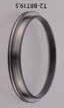
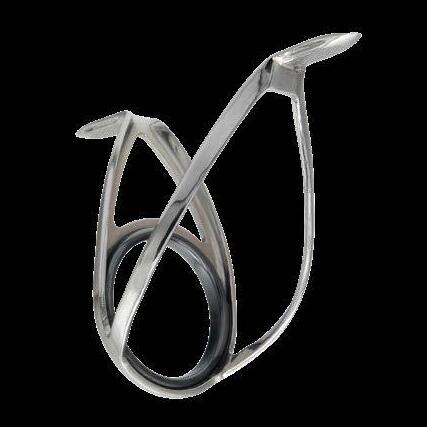
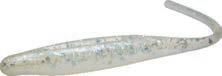
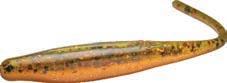
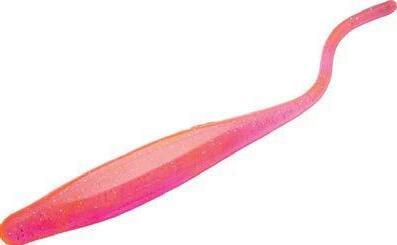
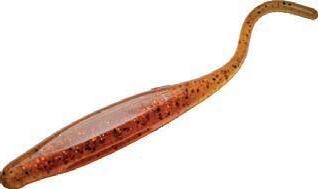
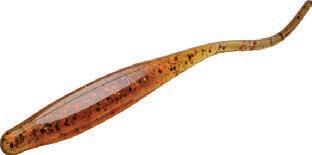
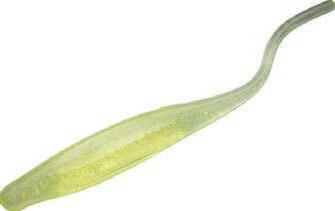
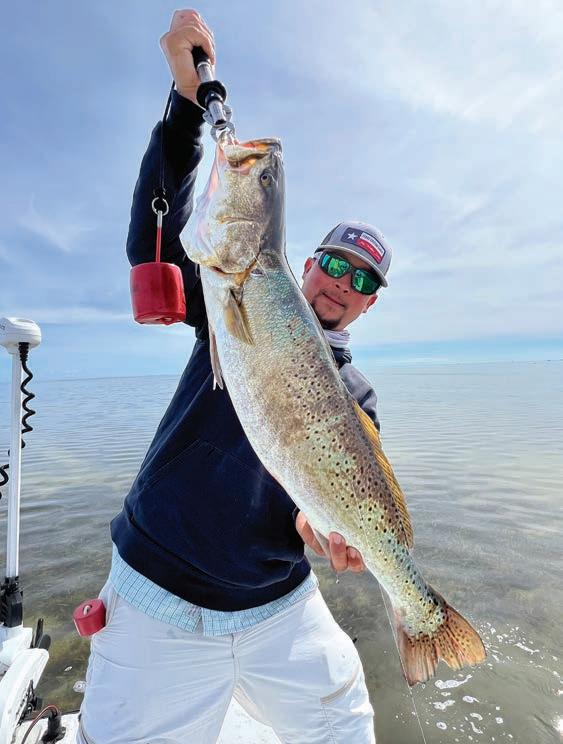
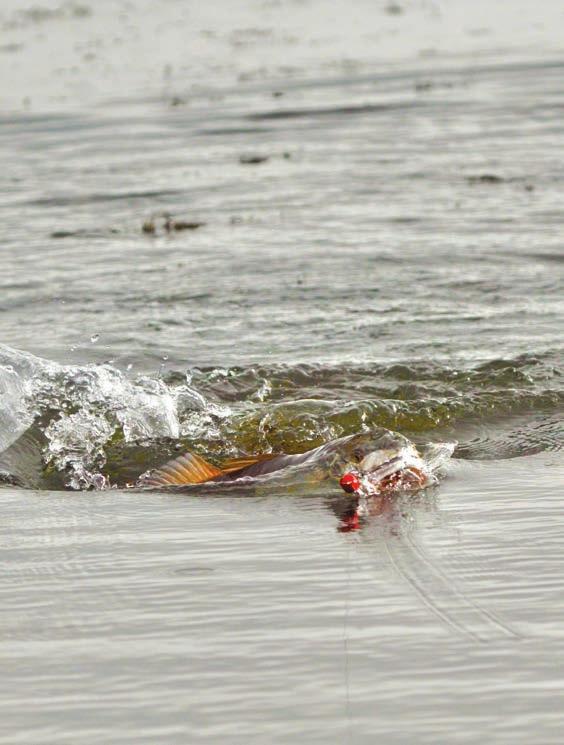
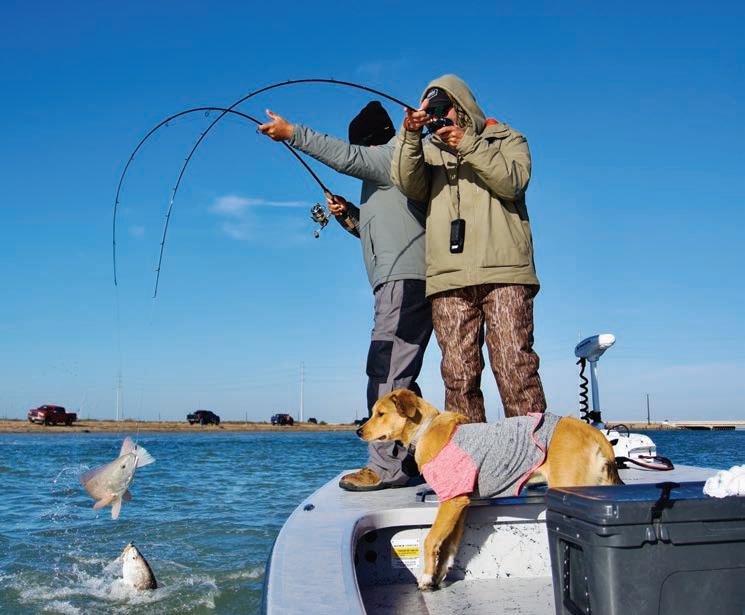
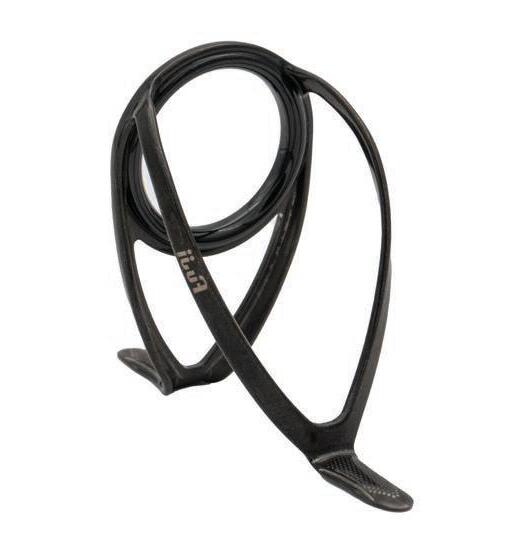
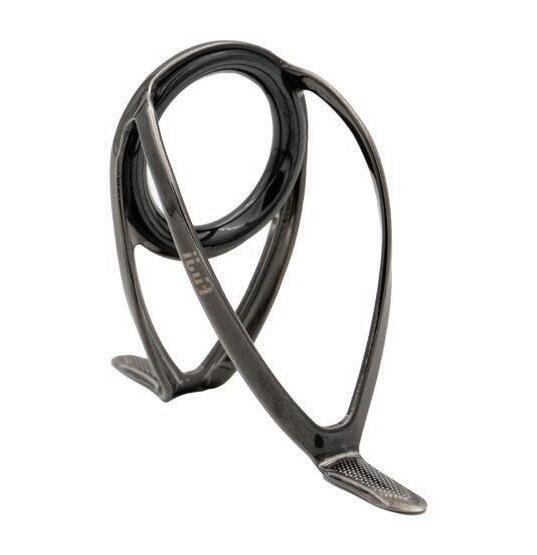
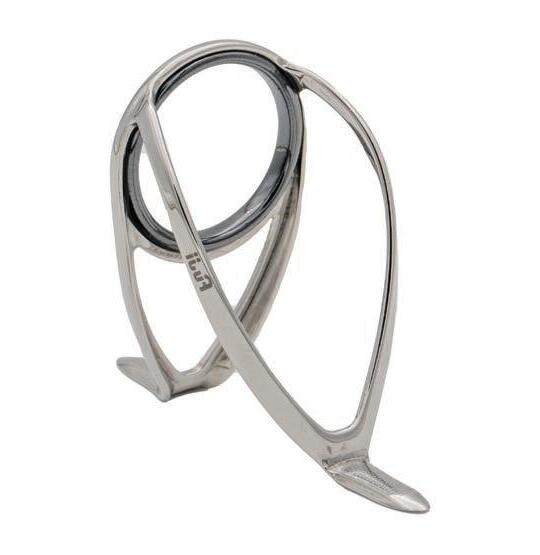
Available in sizes 8, 10, 12, 16, 20 and 25, in Polished SiC, Gunmetal SiN, and BB Alconite.
Sheds tangles faster than ANY other guide on the market • Reversable design makes it perfect for casting and spinning applications • Innovative foot shape promotes finish penetration and hold with less material
As light as a KW, as strong as an HB, more affordable than an HN
TANGLE FREE DESIGN
Pre-shaped and polished feet!
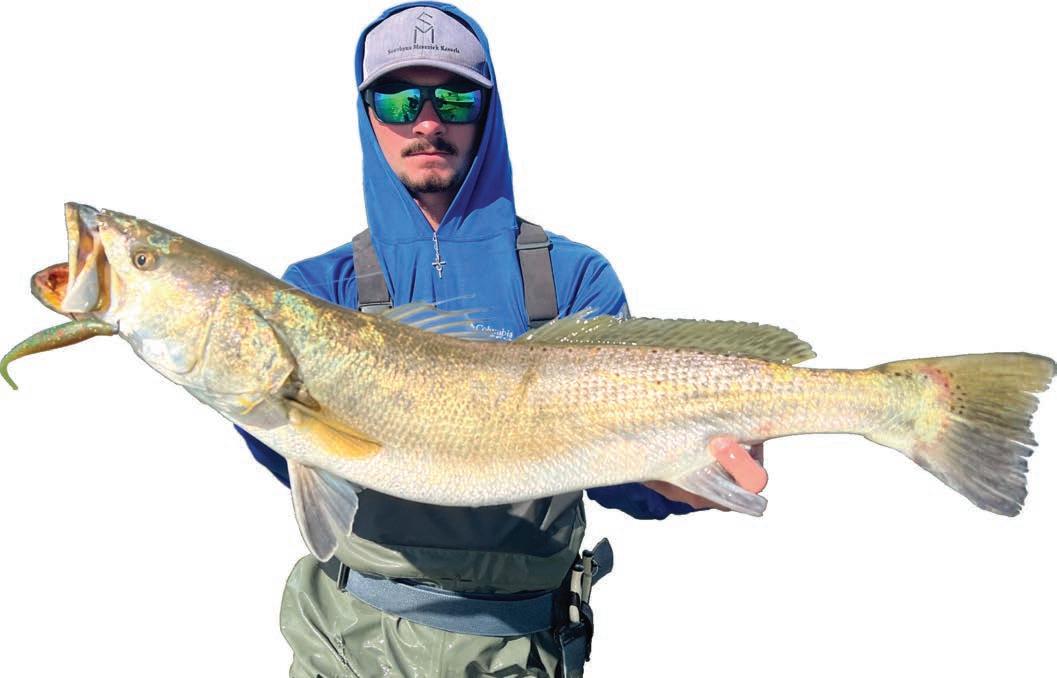
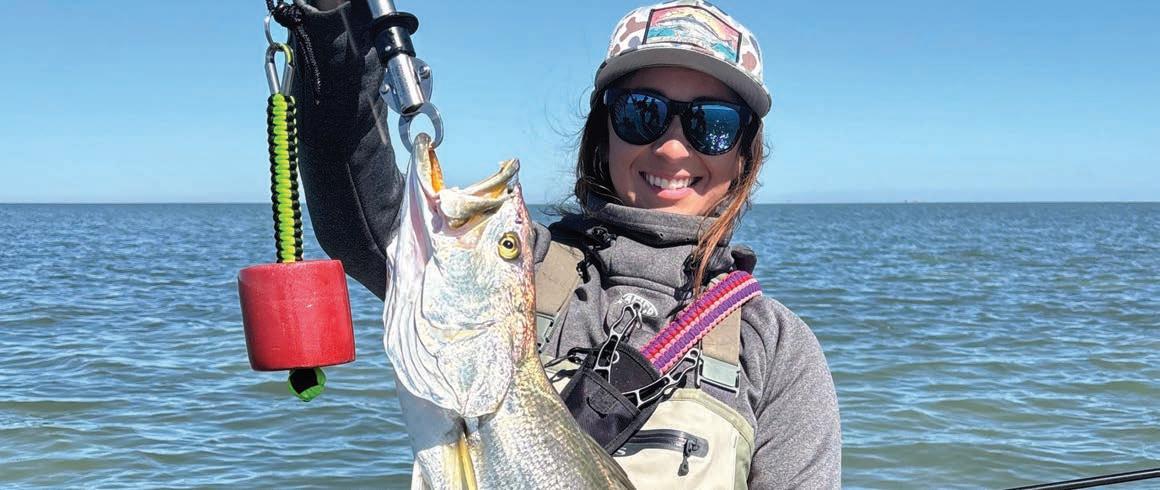
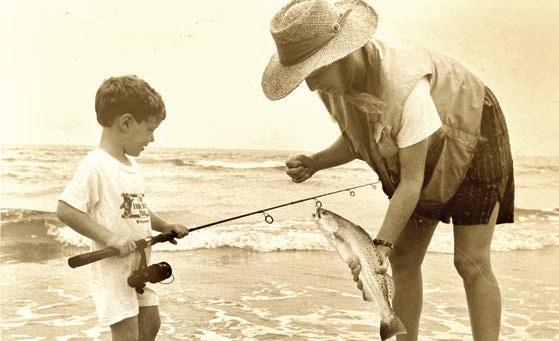
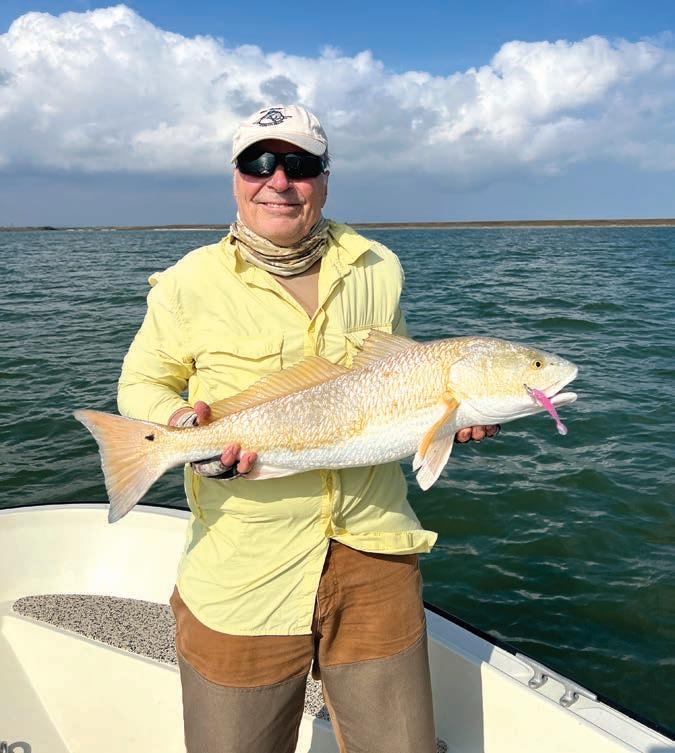
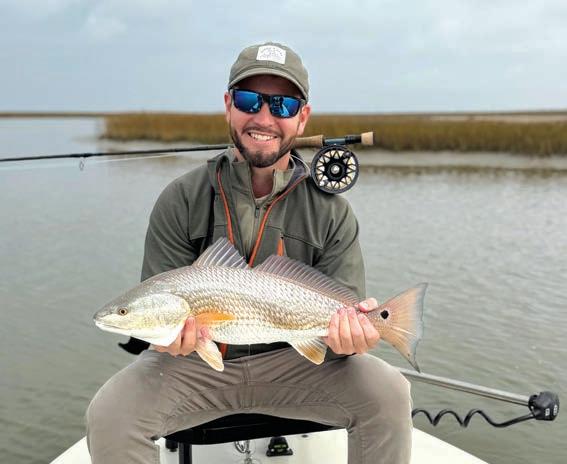
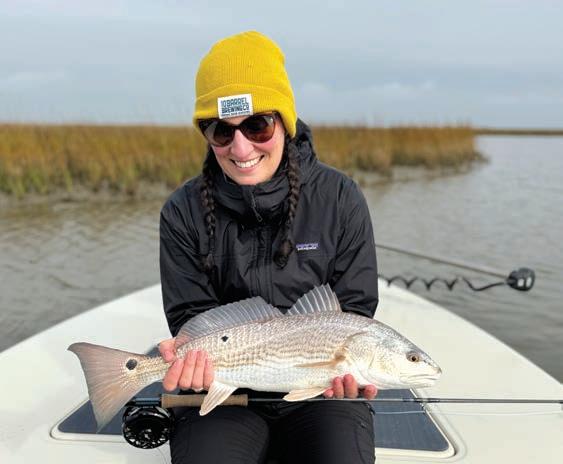
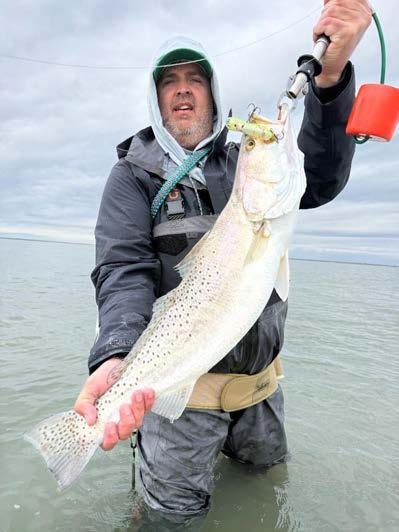
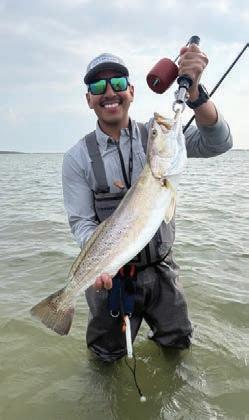
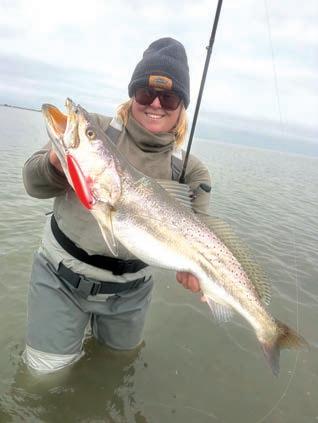
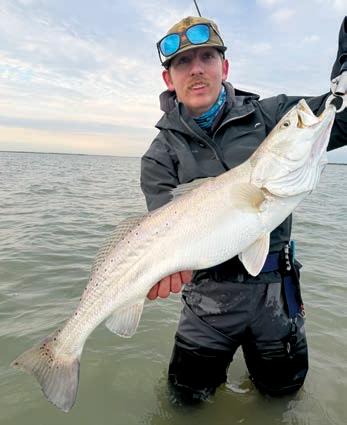
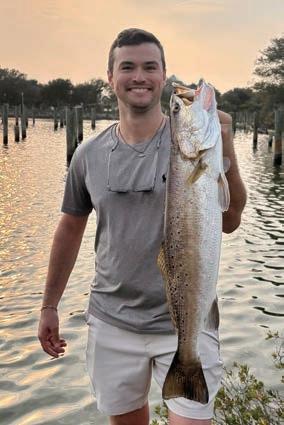
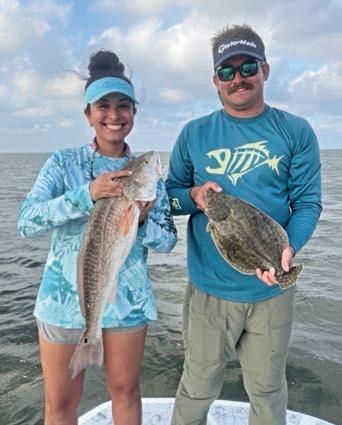
“My first trip to Port Mansfield
be
EDITOR AND PUBLISHER
Everett Johnson | Everett@tsfmag.com Office 361-785-3420 Cell 361-550-3637
VICE PRESIDENT
PRODUCTION & ADVERTISING DIRECTOR
Pam Johnson | Pam@tsfmag.com Office: 361-785-3420 Cell: 361-550-9918
PRODUCTION / SOCIAL MEDIA DIRECTOR
Jennifer Shive | Jen@tsfmag.com
ADVERTISER REPRESENTATIVES
Bart Manganiello | bartalm@optonline.net
Pam Johnson | pam@tsfmag.com Office 361-785-3420 Cell 361-550-9918
Everett Johnson | everett@tsfmag.com Office 361-785-3420 Cell 361-550-3637
Texas Saltwater Fishing Magazine is published monthly.
Subscription Rates: One Year (Free Emag with Hard Copy)
Subscription $32.00
E-MAG (electronic version) is available for $15.00 per year. Order on-line: WWW.TSFMAG.COM
MAKE CHECKS PAYABLE TO: Texas Saltwater Fishing Magazine Attn: Subscriptions P.O. Box 429, Seadrift, Texas 77983
* Subscribers are responsible for submitting all address changes and renewals by the 10th of the prior month’s issue. Email store@tsfmag.com for all address changes or please call 361-785-3420 from 8am - 4:30pm. The U.S. Postal Service does not guarantee magazines will be forwarded.
Periodical class permit (USPS# 024353) paid at Victoria, TX 77901 and additional offices.
POSTMASTER: Send address changes to Texas Saltwater Fishing Magazine, Inc., P. O. Box 429, Seadrift, TX 77983.
REMINISCING SPRINGTIME PAST
Everybody who knows me knows I was not born here. All I have to do is open my mouth and that Pennsylvania hillbilly accent gives me away. I’m one of those who got here as soon as I could, but along the way I’ve done all I could to become naturalized – if such is possible. I’ve been here forty years, and I have come to love the Texas outdoors dearly, striving my level best to learn all I could and pay back with interest all the wonderful lessons and experiences the Texas outdoors have bestowed on me.
One of those experiences just happened to be my first coastal fishing trip. It was in the early 90s, a couple of friends from work invited me along to East Matagorda Bay, more specifically to Old Gulf Cut, a sliver of a channel that once served a bustling mining community – now a ghost town.
It was a gorgeous spring day and the fish seemed to be enjoying it as much as we were. If you’ve ever fished here, the preferred method (or at least it was back then) was to anchor along the east
bank during a strong-running tide and cast lures out into the cut. It doesn’t take long to figure it out when the fish are chewing. And they certainly did that day.
No doubt, the great spring weather added greatly to our experience, and racking up dozens of fat speckled trout just made it that much better. They just couldn’t seem to refuse the Bass Assassins we were throwing. Which, by the way, had just made their debut in Texas that spring.
But back to the allure of springtime. Even though we haven’t had but a dab of winter weather this year, there is still something very special about the arrival of spring. It all begins with bulging equinox tides rushing into the bays, full of life and warmth. Trees are budding and flowers are blooming. Glass minnows show by the millions and speckled trout begin to spawn. There is rebirth in all of nature and it invigorates your soul to be out there and witness it.
I sincerely invite you to make a special effort to get outdoors this month and enjoy this wonderful thing called spring. And while you’re at it, like my late friend Dickie Colburn always used to say, “Take a kid fishing, you never know the impact you might have.”
Look what happened to me at the Old Gulf Cut!
How Did I
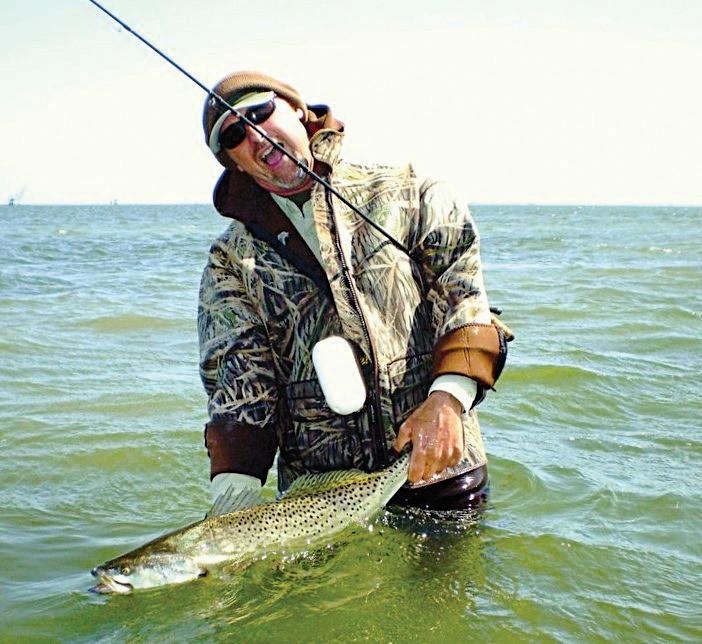
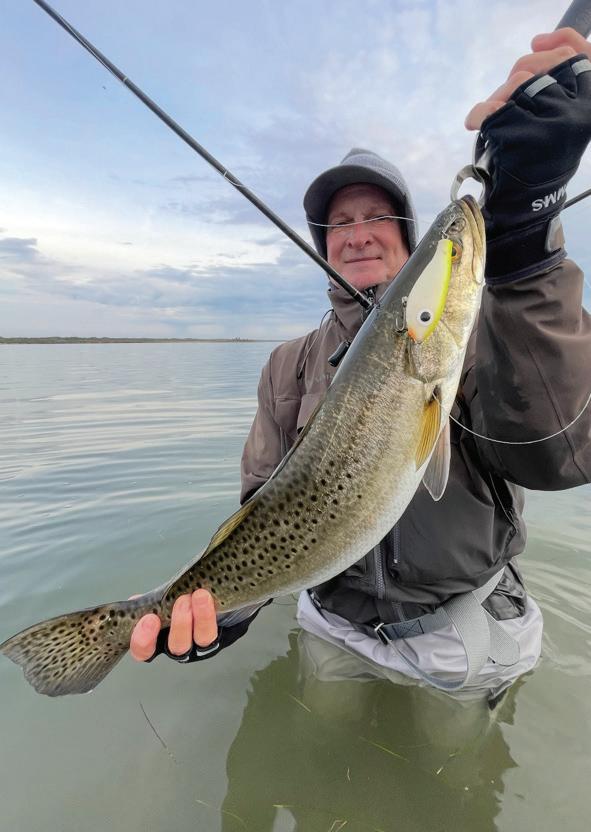
There’s nothing like a solid speck crashing my Double D on an early morning springtime wade! This bait is money for big trout!
Get Here?
STORY BY STEVE HILLMAN
I’m guessing I was 10 or 11 years old. My cousins and I would play neighborhood football after school and on weekends. We built forts and hunted with our BB guns in the cow pastures along Dickinson Bayou. We built zip lines in the tall trees covered with muscadine grapevines behind my Great Grandma Anita’s house on Hillman Drive. I’ve made mention of it in past articles, but life growing up on the bayou really was grand. It was a special world that I wish every kid could experience.
Of all the fun stuff we did, fishing was the most exciting for me. Shocker! There was an old sunken shrimp boat at the end of the pier behind Hillman’s Café and fish house where we would all fish. Most of the time our little posse was made up of me, my cousin Hugh, and my buddy Shawn. Occasionally, a couple of other friends from the neighborhood would join us. That being said, we were a pretty tight-knit group, and I must say, not just anyone could fish off that old sunken shrimp boat.
Our bait of choice was usually dead shrimp or pieces of shrimp that had fallen through the conveyor belt that carried freshly unloaded shrimp from the vat to the scale. There were usually a few squid and other tiny critters mixed in with the shrimp. We would throw those in the coffee can with the shrimp. It all qualified as bait to us, and the croaker, sheepshead, flounder, redfish, sand trout, and hardhead catfish certainly didn’t discriminate. Once in a blue moon, one of us would catch a speck, and to us that was like winning the lottery.
It wasn’t long before I acquired a little jon boat. I made paddles out of two old cedar fence pickets. I would paddle out to the railroad tracks that stretched across the bayou. It was there that I discovered a whole new world. Not only was I now mobile enough to seek out new areas, but my dad had taught me how to throw a cast net, so now I had shad, finger mullet, and shrimp to use for bait. This was next-level stuff for me and my buddies. The more I fished, the more selective I became. A croaker was no longer good enough, and hardheads were sacrilegious. It was all about reds and trout now, and the live oyster reefs around the railroad bridge happened to be loaded with them.
I eventually graduated to a fiberglass Sears Game Fisher with a tillerhandle 9.9-horsepower Johnson Seahorse outboard. I was now able to venture out into the bay to area reefs and structures that my dad and uncles had taken me to in their boats. I remember seeing huge schools of mullet rafting over live oyster reefs and gulls working over trout that were feeding on migrating shrimp. I’m not sure if I realized it at the time, but the sights, smells, and sounds of being on the saltwater were becoming part of me. There was a sense of freedom about being on the water that nothing else compared to.
As I grew older, my love for the water never waned. When I went off to college, I was hundreds of miles from the coast, but I was able to
temporarily get my fix by fishing area lakes like Fork and Palestine. I had fished for largemouth bass before, but never on this level. There’s a huge difference between fishing stocked ponds and 25,000-plusacre lakes. I learned how to fish flooded timber, underwater creek beds, ledges, hydrilla, and boathouses while using plastic worms, crankbaits, and topwaters. I threw a few spinnerbaits too, but worms and topwaters were by far my favorites. The coolest thing I used to do was chunk topwaters as I trolled along the boathouses at night when it was calm. The sound of a five-pound bass smashing my Jitterbug was nothing short of exhilarating.
I was in East Texas for about three years before I moved back to the coast and finished college while working at our family seafood business on the bayou where I’d grown up. I bought an old 21-foot Carolina Skiff and fished every chance I could between working and going to night school. I developed an even deeper love and appreciation for using lures to catch trout and reds. I didn’t realize it at the time, but I think those few years fishing for bass helped hone my skills for the saltwater game. Kelly Wiggler shrimp tails and Jumping Minnows were the main baits of choice for me back then (mid-1980s to early 1990s).
When I graduated college, I took a job in Houston doing
Marty’s life-long buddy, Rick Paige, with a giant red that he whooped in record time. Old, retired football coaches know how to get stuff done!
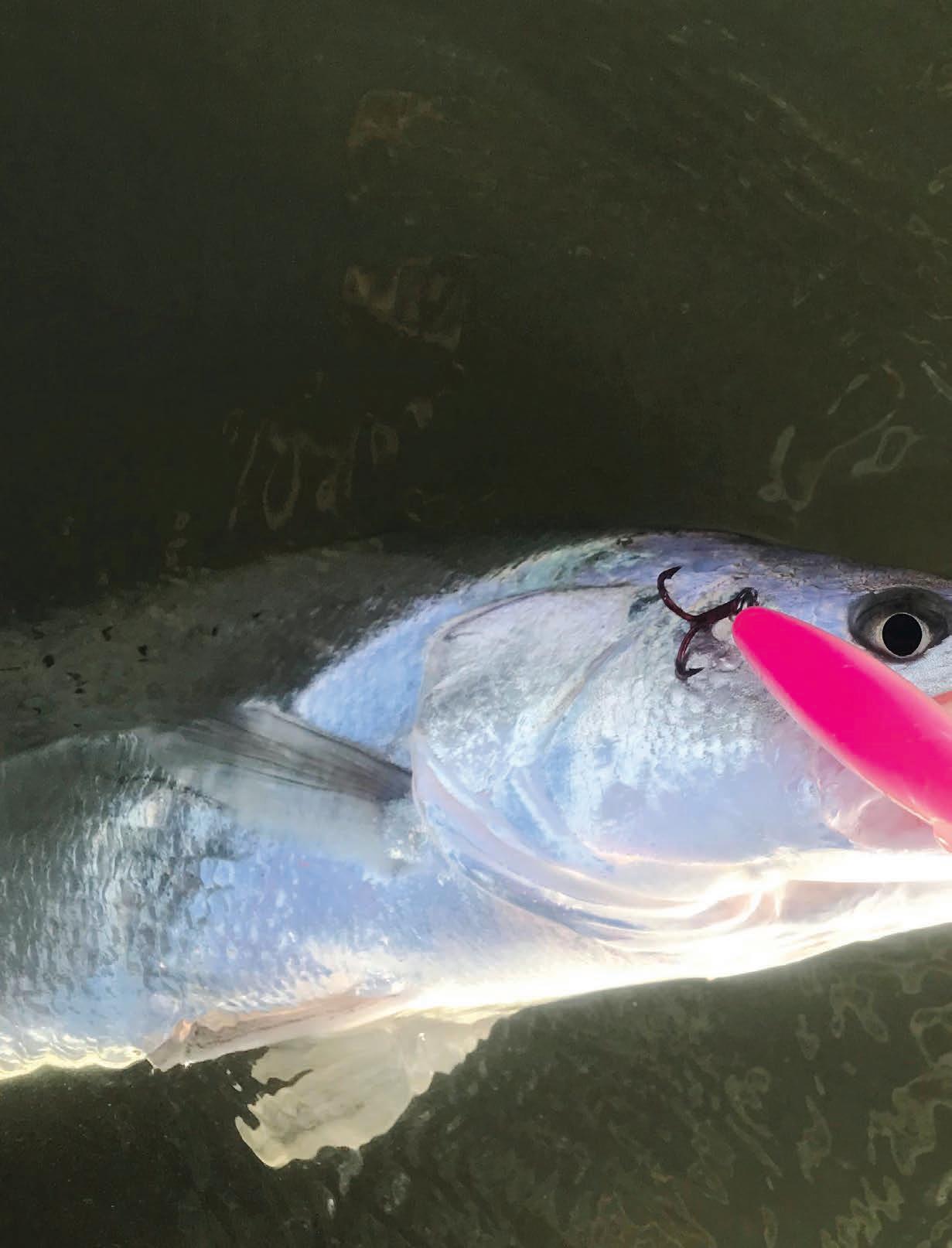
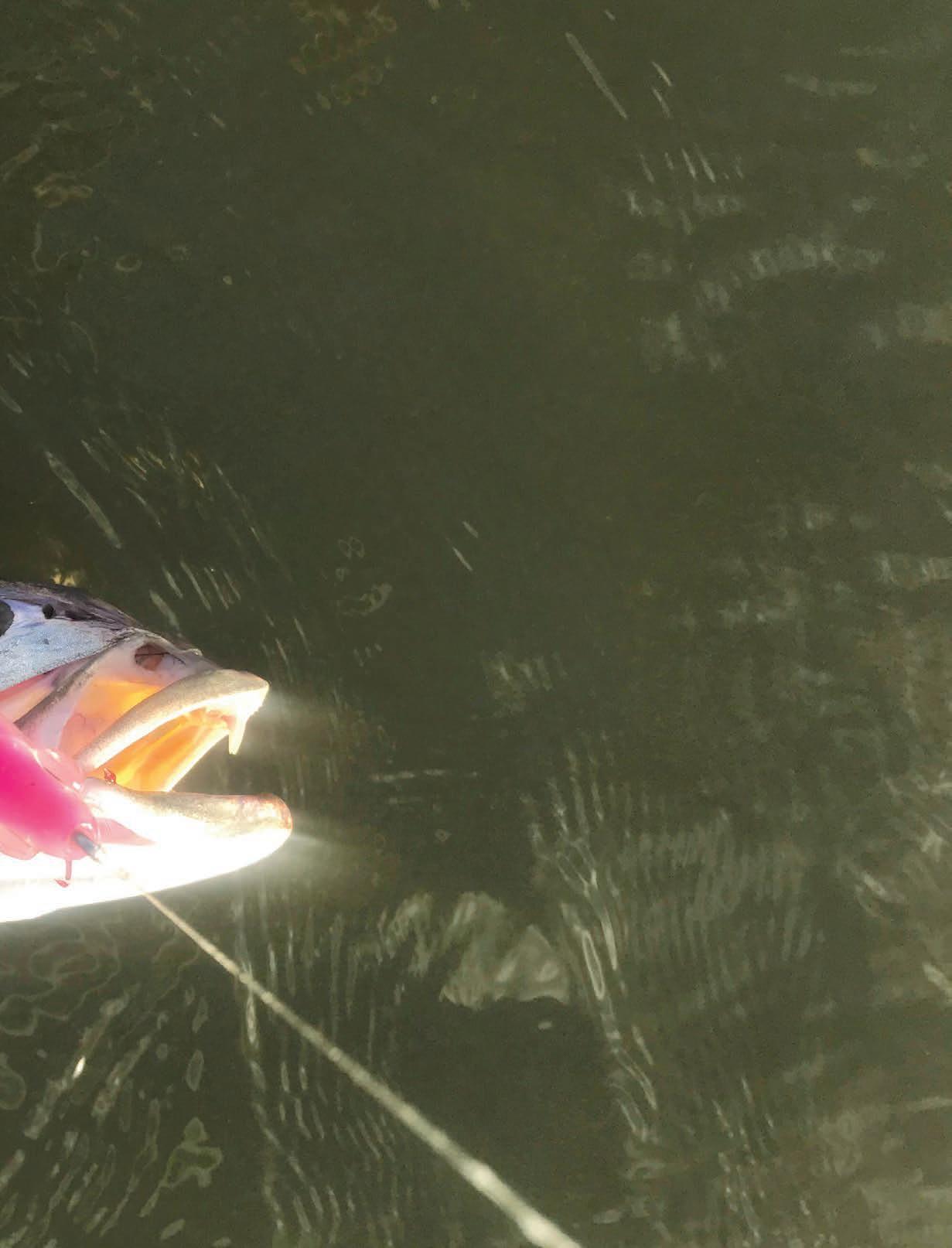
Late winter / early spring big trout love twitchbaits like the Borboleta Lele!
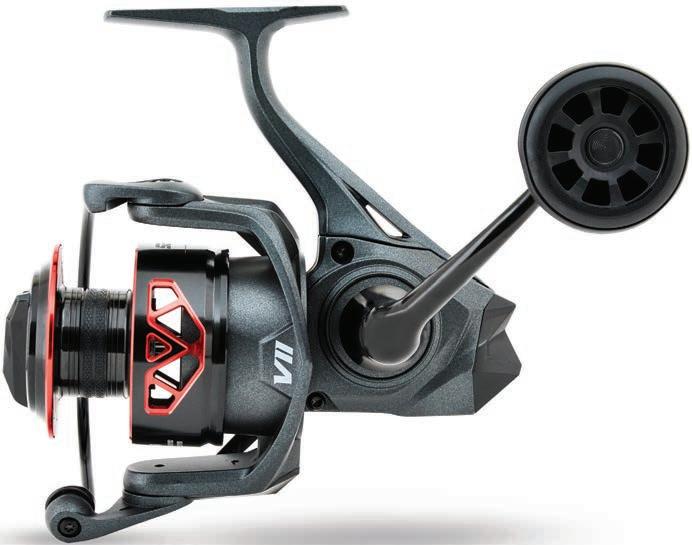
From the bays to the flats, the Inspira ISX Spinning Reel is built to meet the demands of Texas inshore anglers. Featuring Torsion Control Armor (TCA) technology, its lightweight aluminum body provides 40% more torsion and flex resistance, keeping internals aligned under pressure. With Flite Drive technology for ultra-smooth operation and a multi-disc Carbonite drag system delivering up to 24 lbs of stopping power, it’s ready for any battle. Available in 2000, 3000, 4000, and 5000 sizes.
were so many memories made here on
the environmental field. Fishing was good back then. I mean, it was really good. It kept me busy enough that I kept putting off my job search. That was 24 years ago, and I’m still putting it off. I never intended to become a full-time fishing guide, but I suppose it was meant to be.
environmental health and safety work for a chemical company. I became pretty much relegated to fishing on weekends at that point. I couldn’t wait to get off work on Fridays and hook up the boat. I worked there for about three years, then one day my dad called and informed me that his marketing guy was retiring and he wanted me to come back to work for him as marketing director. Here I was, just establishing a career, and my dad wanted me to come back to the very industry I’d spent almost six years of my life working my way through college to get out of. He asked if I would come down after work so we could discuss it. We had a great meeting. I prayed about it and thought long and hard before accepting the job. It felt good to be back in our family business. It felt right.
We grew the business to levels we’d never seen before. Unfortunately, our success wouldn’t last but a few years, as Mother Nature had other plans. Tropical storms, hurricanes, floods, droughts— eventually they took their toll on the oyster beds, and we were forced in another direction. I told my wife that I would get my captain’s license and run some fishing trips until I could find another job in
I’ve been very fortunate to make a living taking folks fishing. I have bills to pay like everyone else, but most of us in this profession are doing what we do because we truly love it. The daily challenge of trying to outsmart the fish is fun, and helping clients hone their skills so they can become better fishermen is rewarding. But at the end of the day, it’s about the people I get to meet and spend countless hours with. I get to learn all about their lives. I’ve been able to watch their kids grow. We’ve shared lots of laughs together and even a tear or two at times. Some of my best friends to this day are my dearly valued customers.
My cousin and my neighborhood buddies who fished with me on that old sunken shrimp boat all have good careers with 401(k) programs. Some are even retired already. As for me—well, I’m still fishing. A lot of those reefs I used to fish are gone or have changed drastically, but we still have plenty of areas to catch fish. A croaker still isn’t good enough. Trout are king, but I don’t mind catching a few reds either. We don’t throw Jumping Minnows much anymore, and I still know how to throw a cast net. I’m right where I belong.
Now you know how I got here.
STEVE HILLMAN
Steve Hillman is a full-time fishing guide on his home waters of Galveston Bay. Steve fishes the entire Galveston Bay Complex, wading and drifting for trout, redfish, and flounder using artificial lures.
Phone 4 09-256-7937
Email captsteve@hillmanguideservice.com
Web w ww.hillmanguideservice.com
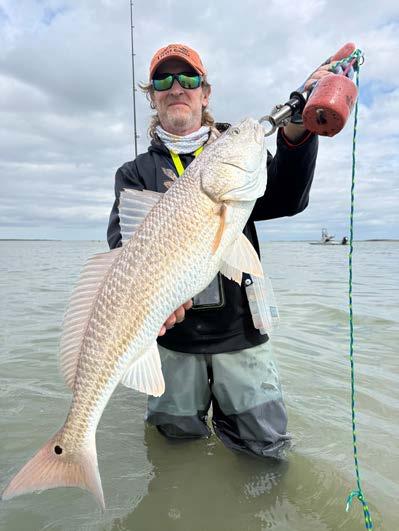
Long-time client Marty Criswell with a hefty late winter redfish! He always greets me by saying, “Hey Skipper!” I love it!
There
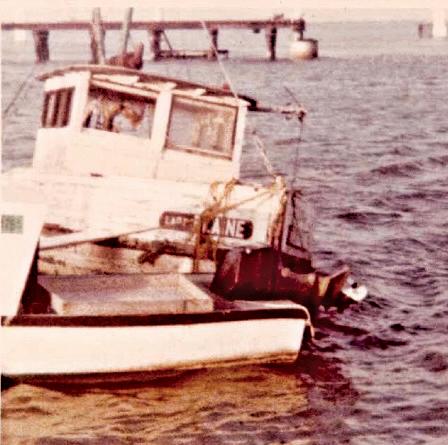
the bayou (Circa 1979).
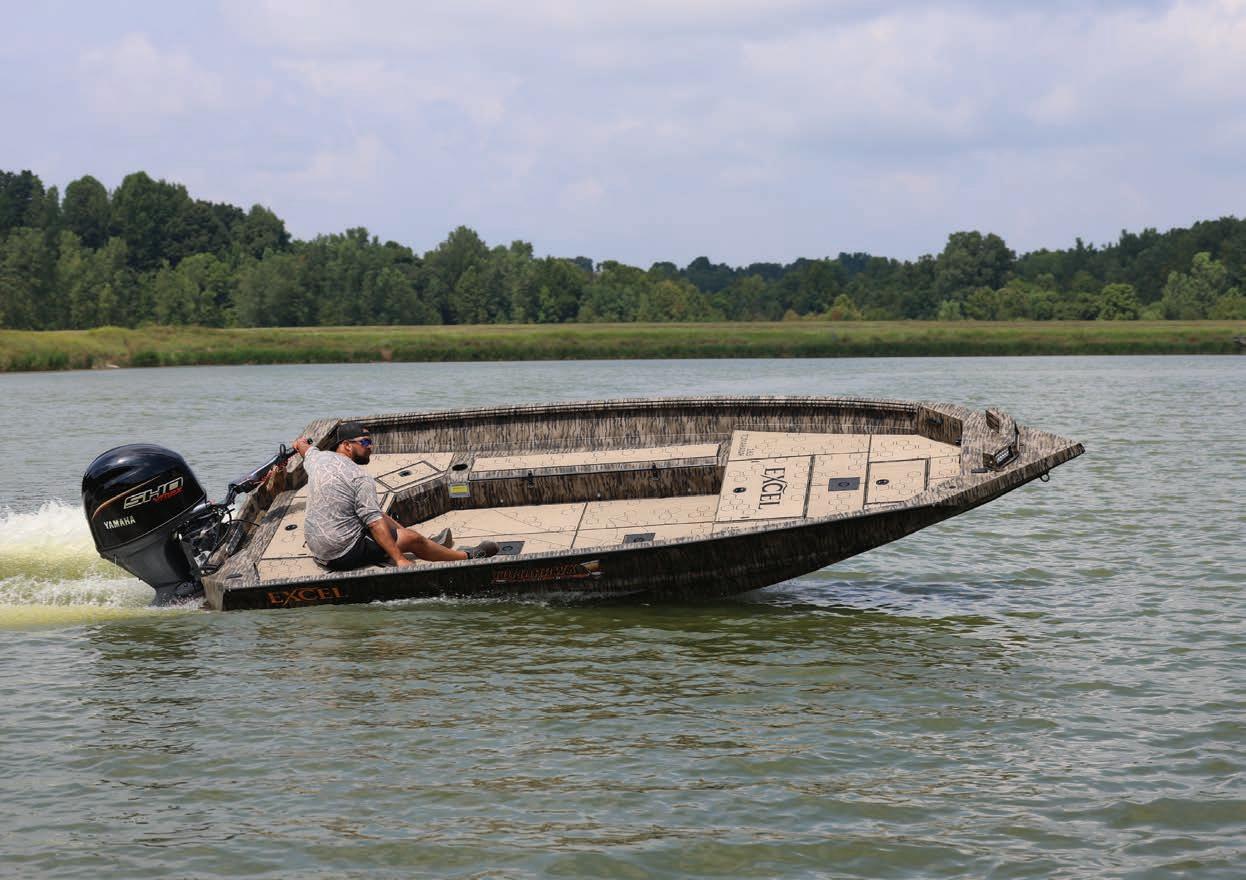
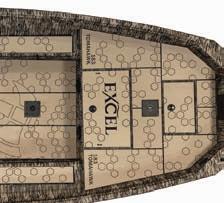
183 Tomahawk
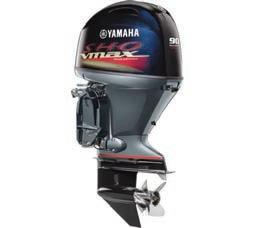
Starting at $32,950 (with/90 outboard and trailer)
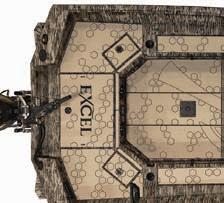
Our most popular and fastest pad hull. Build it your way.
-Hunt or Fish
-Wide 94” Beam and 68” Bottom
-14 Degree Pad Lift Hull
-19 Gallon Fuel Tank
-30 Gallon Livewell
-Rod and Gun Storage
-Seat Base Options
-Aquatraction Flooring Option
-Interior and Exterior Lighting Options
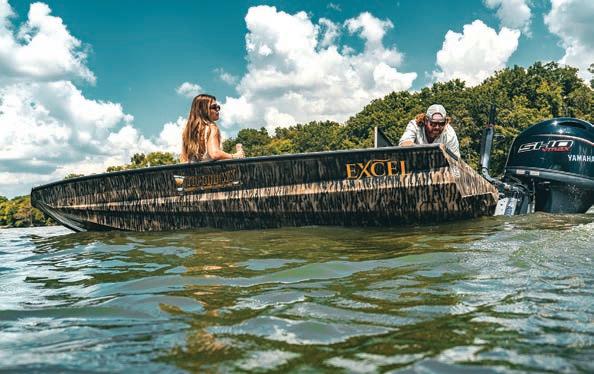
You can always trust the performance of an Excel and Yamaha.
Breaking Down the
Because the Badlands sits at the intersection of Baffin Bay and the Upper Laguna Madre, two of the most productive big-trout fisheries in Texas, the area offers real opportunities to catch the trout of a lifetime. Significantly, the water in this place has variable depths, parts of the area hold up well under strong winds of two primary directions, and four different constituents cover the bottom here. These factors enhance the potential for the Badlands to consistently produce fish for lure chunkers who can safely access the many microspots present in such a legitimately famous place.
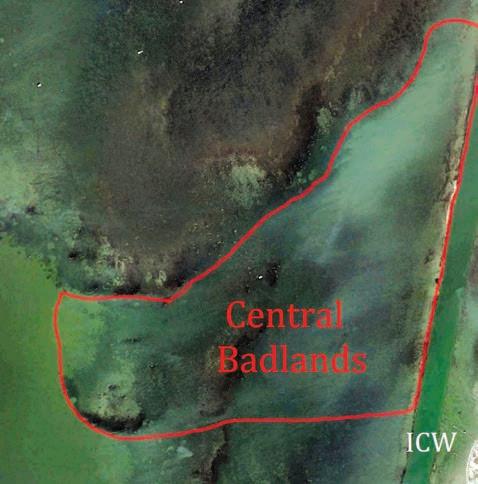
I and my friends and clients have caught plenty of memorable monsters in the Central Badlands, one of the most picturesque places a wading angler can target giant trout in the Lone Star State. Replete with targets comprised primarily of rock faces, grass seams, and silty potholes, central parts of the Badlands stir the hearts and souls of folks fascinated with the visual aspects of lure fishing. With a generally soft bottom and plenty of thick grass beds, this area isn’t particularly easy to wade, and at times, wading is impossible in some of its deeper sections.
On its eastern edge, a shallow sandbar lying adjacent to the Intracoastal Waterway makes entering the Central Badlands a challenge for most boaters, especially when
Central Badlands
STORY BY KEVIN COCHRAN
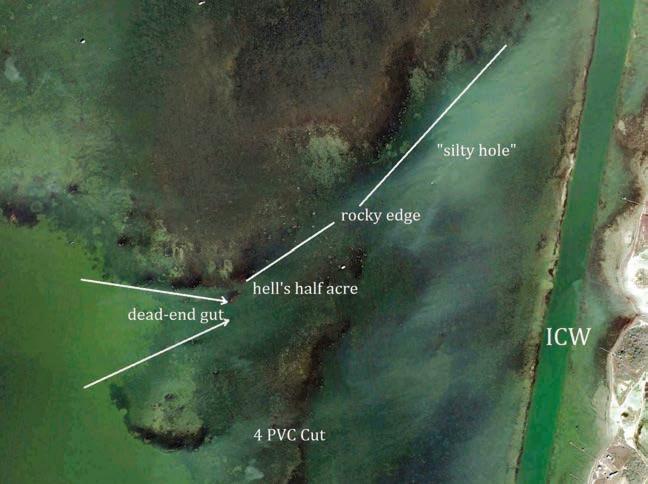
tide levels run low. To the west of this sandbar lies a silty hole where numerous serpulid rocks reach through the bottom and nearly touch the water’s surface. In its northeastern extremes, this hole narrows into a gut lying between the bar next to the Intracoastal and the shallow eastern edge of the Badlands Crown.
Rocks and grass beds in shallow water shape the meandering northern fringe of the Central Badlands, and a gut runs generally west to east into the middle portions of the area, connecting it with deeper waters in the Baffin Bay Basin lying west of the place. This gut is widest in the west, where it slopes off into the basin, and narrowest in its eastern portions, where it funnels through a maze of rocks and empties into the silty hole. South of the narrower part of this funneling gut, a shallow field of soft grass beds, mud, and serpulid rocks comprise an area some call Hell’s Half Acre.
This entire area, more than any other, strikes me as a paradise for lure chunkers who love casting at targets. In all its parts, given water of even decent clarity, an angler can cast at numerous fishy-looking microspots without moving around much at all. In many parts of the place, potholes with silty bottoms lie close to rocks; big trout lurk in them, waiting to ambush their prey. These predators also sometimes like sitting on top of the rocks, showing stubborn resistance to moving off them to strike, so anglers bent on
making them bite must pull their lures right over the rocks. Most of the big trout caught in this famous part of one of the world’s premier trophy fisheries bite lures passing close to the boulders which provide the genesis for its two-faced reputation.
Using conventional floating plugs and floating Paul Brown lures makes the task of fishing around the rocks easier and more effective. Standing in the silty hole and casting topwaters and/or slow-sinking twitchbaits toward and/or beyond the rocks lying on the southern edge of the Badlands Crown proves effective, especially when relatively light onshore winds facilitate the ease of working this pattern. Big trout can, of course, also be caught well away from rocks in the Central Badlands.
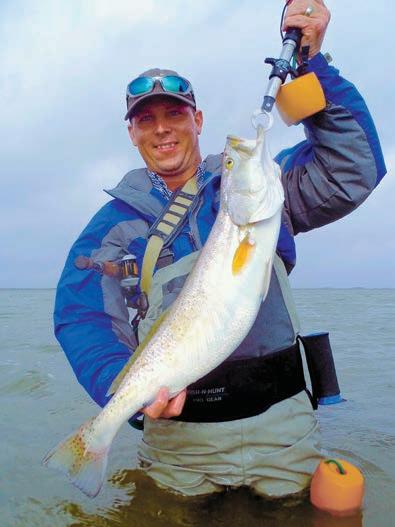
On a sinking Paul Brown Fat Boy, I caught the trout in the picture
included with this article in the stretch of water where the gut funnels down and dumps into the hole. The contours of the grass beds and potholes created a deliciously enticing scene in the place that day, a visual source of motivation for any lure chunker with serious intentions. The big fish bit as my lure walked across a dark grass bed the size of my boat, then entered a bright pothole. The subsequent battle I won helped the Central Badlands move into one of the prime spaces housing my most cherished memories.
In cold weather, with north winds blowing, standing on the southern edge of the Crown and casting into the deeper waters of the silty hole or the gut running west into the basin makes good sense. Particularly in the first half of winter, big trout retreat into the depths of the hole and/or the gut when water temperatures decline after the passage of a front. On one such occasion, nearly a quarter of a century ago during the first month of the year, I caught my first thirtyinch trout using these tactics.
Before a cold front passed, we walked from west to east along the southern fringe of the Crown, casting to the south into the deeper waters of the gut in dead-calm conditions. On topwaters, we caught small and medium-sized trout, up to about eighteen inches. They struck reluctantly, almost sheepishly. But as the front passed over the coast, spawning a light, crisp northerly breeze, bigger fish began tackling our lures as if their lives depended on eating them. For about an hour, before the light north wind increased and began to howl like an angry Old Man Winter, we caught several trout weighing between seven and about nine pounds, including the thirty-incher.
Sometimes, after such an event, the trout living in this area apparently retreat into water
Kev released this big trout which bit a sinking Paul Brown Fat Boy in the Central Badlands.
As is the case anywhere, targeting trophy trout effectively in the Central Badlands sometimes requires dangling soft plastics under small corks.
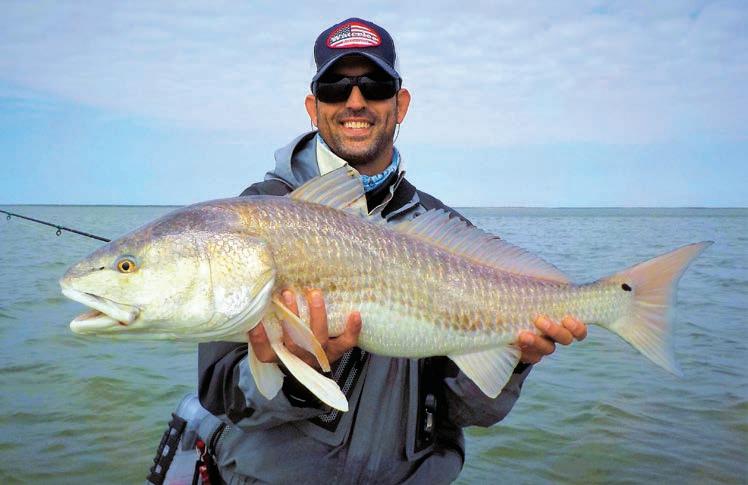
In all parts of the Badlands, anglers targeting trophy trout sometimes catch redfish instead, like the one Tony Carroll posed with in this image.
of greater depths, like the basin lying west of the Central Badlands. In situations like those, numbers of trout, including some really big ones, sometimes use the gut to move back into places where they can prowl around the rocks and grass beds near them, looking for easy meals once conditions moderate somewhat. This can happen a couple of days after a frontal passage, as the light fades at the end of a sunny winter day. Then, in the gloaming, the anticipation of big bites creates a palpable sense of enchantment in a place cherished by all of us who’ve chased monster specks here.
Just south of the widest part of the gut connecting the Baffin Bay Basin with inner portions of the Central Badlands, a semi-circular formation of large rocks frames the edge of a mooshy flat normally covered by water less than knee-deep. Certainly, a patient angler properly wielding floating or slow-sinking plugs could pull a worldclass trout off these rocks at any time of year, particularly during
relatively calm lulls in the spring and fall and during a warming trend following a frontal passage in winter. Like other parts of the Central Badlands, this rocky hump provides numerous enticing targets with potential to hold trophy trout.
Over a quarter of a century, I’ve learned much about catching fish here, and also about the hazards of navigating in the Badlands, mostly by enhancing my GPS with skulls marking many of the rocks left off the maps which come with the devices. I’ve located some of these using Google Earth, setting the software to historical images taken while the water ran really clear, and also by spotting and marking them while idling through dangerous areas in conditions which allowed me to see into the water easily. I’ve also found some with the skeg of my motor.
In one instance, I bumped into a small boulder lying just a few feet to the side of one of my tracks. That day, I couldn’t see the
Lance Abel caught this picture-worthy trout in the Central Badlands, while fishing with the Captain.
Anglers adept at working slow-sinking twitchbaits will find plenty of enticing targets in the picturesque waters of the Central Badlands.
rock, though I could have read the label on a beer can lying on the bottom. Some of the rocks in this region blend in with the bottom like chameleons blend in with the bark on a tree. These facts help preserve my appropriate and necessary fear of navigating in and around the aptly named Badlands.
Certainly, less-experienced boaters should be aware of the dangers inherent to operating within the boundaries of this notorious area. No current GPS map system shows all the rocks present here, and some of the omitted ones project from the bottom in places which can wreak havoc with captains who think they’re proceeding with ample caution. In one case, a large formation of rocks appears on the main map, accurately located. But the makers of the map failed to mark a single large rock lying near the northern edge of the formation.
A captain trying to access the deep gut funneling into the Central Badlands might decide to swing around the formation, then idle over to the edge of the gut to get out of the boat and start a wade. If said captain left a reasonable amount of space between his bow and the edge of the rocks marked by a red line on the screen, he might also run right over the unmarked boulder. This is but one of the many potentially treacherous scenes in which careless people who venture
Breaking Down the Central Badlands
into this place might find themselves.
The dangers associated with fishing in the Central Badlands don’t end once the spike sticks into the bottom and holds the boat in place. Waders also face issues while working through some parts of the area. When tides run in the medium to high range, stepping into a soupy pothole and filling the waders becomes a real possibility. Doing so in cold water can precipitate disaster, especially if the mishap occurs far from the relative safety of the boat.
People who regularly find success fishing here do so after studying all the resources available to them and after upgrading the data in their GPS maps. They put in time to learn the subtleties of the layout of this complex, expansive, and enchanting place. Then, they’re able to develop strategies to safely and effectively target the monster trout which reign as the metaphorical royal family in this rightly revered region.
KEVIN COCHRAN
CONTACT
Kevin Cochran is a long-time fishing guide at Corpus Christi (Padre Island), TX. Kevin is a speckled trout fanatic and has created several books and dvds on the subject.
Kevin’s home waters stretch from Corpus Christi Bay to the Land Cut.
T ROUT TRACKER GUIDE SERVICE
Phone 361-688-3714
Email kevincochran404@yahoo.com
Web www.captainkevblogs.com
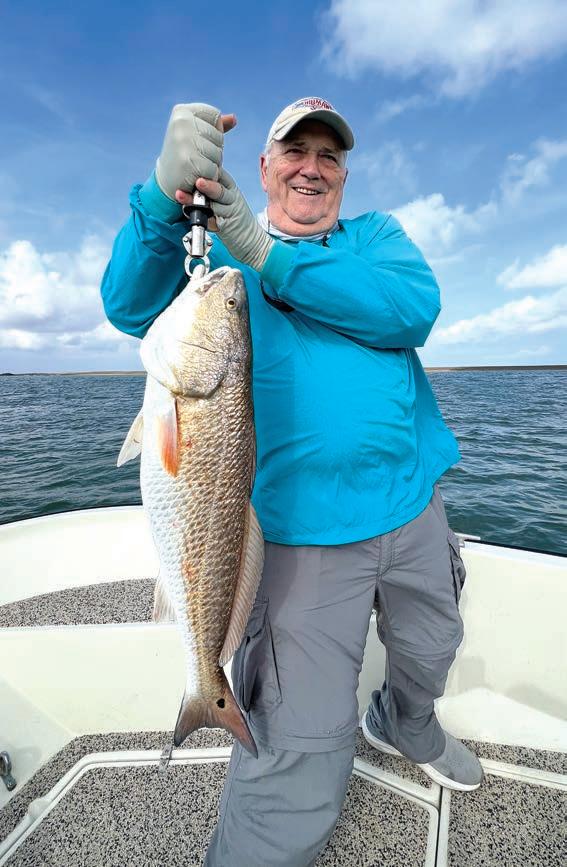
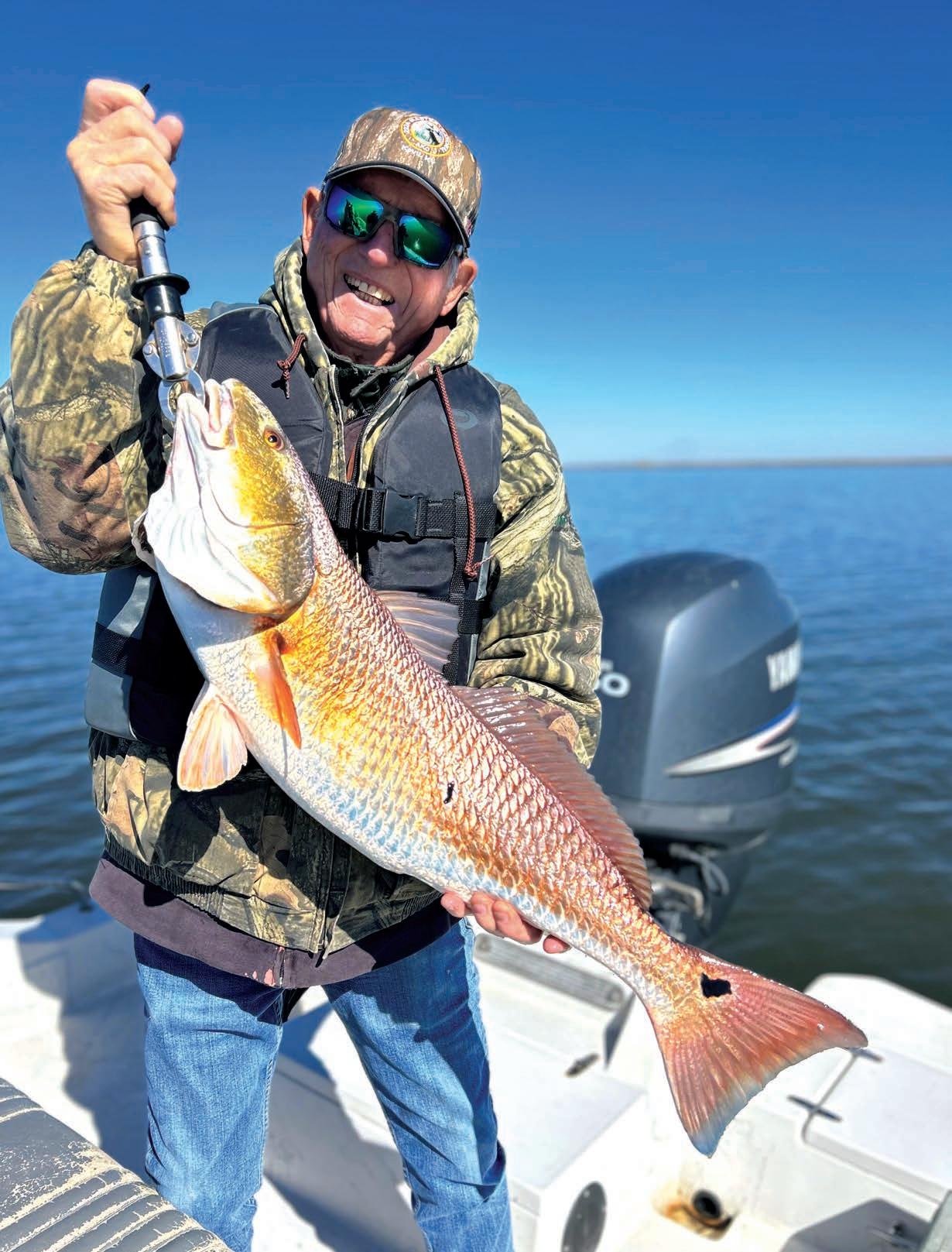
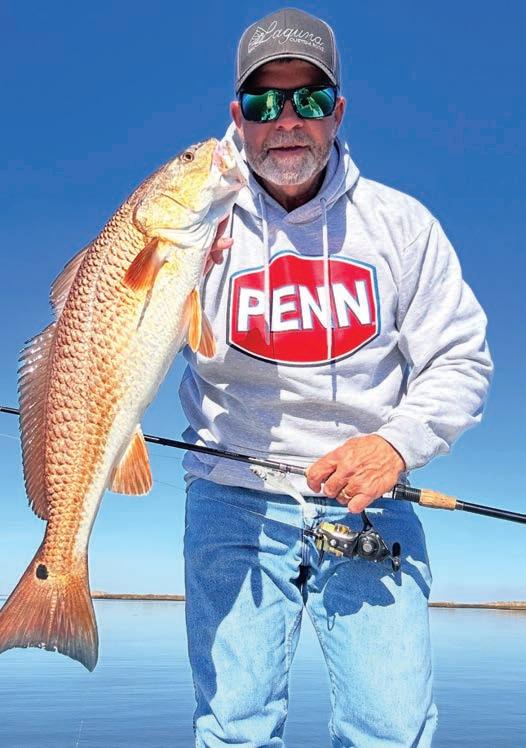
Dow Gene Anderson with another oversize Sabine Lake redfish.
Are We There Yet?
STORY BY CHUCK UZZLE
There are very few sure things in life, but I would be willing to bet you something shiny that we have all heard that patience is a virtue or that good things come to those who wait. Another one I’ve always liked that might register with you is it’s a marathon, not a sprint. In today’s world of instant gratification, the thought of having to actually wait on anything seems to be a foreign concept—unless you are a kid waiting on Christmas morning. And even that’s a longshot in most cases, because parents usually give in and say, “Okay, you can open one.”
For Sabine Lake anglers, it has seemed like an eternity plus a week since conditions and fish were able to live up to expectations—but that has changed. Over the last year, many anglers, like anxious youngsters, have begun to wonder…are we there yet?
The downward spiral of Sabine Lake’s fisheries started back around 2016, with a major flooding event in March of that year. In 2017, Hurricane Harvey dumped another 60 inches of rain on the Sabine watershed, absolutely washing everything out to the Gulf—and beyond. Yes, those numbers are correct. And as if enough damage hadn’t already been done, other major flooding events followed in 2018, 2019, 2020, and 2021, magnifying the problems Sabine Lake faced while trying to rebound.
The floods were bad, no doubt, but the timing of when they occurred made things even worse. Almost all of the aforementioned floods happened during colder months when fish were concentrated in deeper water and much more vulnerable to weather events. As if the floods weren’t bad enough, you can sprinkle in a few freezes for good measure during the same time frame. Oh, and let’s not forget—during this same period Texas Parks and Wildlife thought it would be a great idea to reduce limits on speckled trout to match those of the Lower Coast, while neglecting to consider that Sabine shares a border with Louisiana. That shared border allows anglers to harvest much more liberal limits, increasing pressure on an already very fragile fishery that somehow always seems to receive stepchild treatment from the powers that be in Austin.
However, despite having so many factors stacked against it, Sabine has somehow begun to thrive, and all signs point to stable conditions for close to a year now.
If you have ever read any of my columns, you know I often reference runoff from both the Sabine and Neches rivers, along with lake levels for Toledo Bend and Sam Rayburn reservoirs. Now, by some miracle, for the last eight months both Toledo Bend and Sam Rayburn have been at or below normal pool levels and have been discharging water at very low rates, which translates into minimal—if any—significant runoff flowing into Sabine Lake. With the reduced runoff, saltwater concentrations have been much higher than in years past, rejuvenating much of the ecosystem and stabilizing conditions. Without the threat of constant changes in salt content, clarity, and water levels, many fishermen were able to pattern fish for longer periods of time and experience greater overall success.
The fall and early winter bite was phenomenal for both speckled trout and redfish, as shrimp continued to pour from the marshes all the way into February.
The quality of keeper-sized fish was as good as we’ve seen in many years, and there are even a few trophy-class trout making an appearance. The hope is that this
trend will continue and Sabine will do nothing but improve as the year goes on.
Hopefully, as you read this column, we have made it past the coldest weather of the year and have begun warming up to a more normal forecast. During this time of year, I personally get torn between options and techniques because we have so many variables affecting those decisions. Unlike other venues along the coast, we have a few more choices to make before heading out to fish. It would be nice from time to time if we could just do the same thing day after day—grab your wading gear and go—because that’s the only game in town.
Fortunately—or unfortunately, depending on how you look at it—we have to decide on things such as deep water versus shallow, or wade versus drift, among others. I am hopeful that we can really get on a good wading program this year because we are way overdue for that to happen. With conditions being favorable, the wade program may surprise a few people this spring, and I wouldn’t be shocked to see a few really good trout caught. I fully expect the redfish to keep doing their thing, as they show no sign of slowing down.
Looking ahead, I am anxious to try some new approaches this spring that proved successful during late
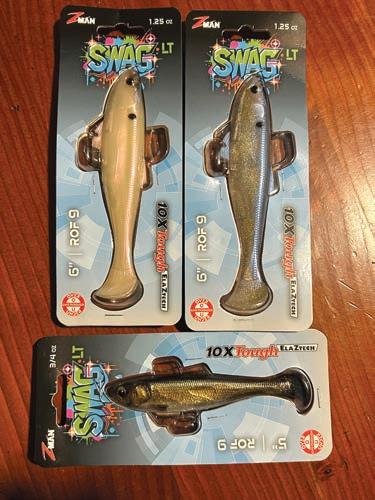
The new ZMan Swag LT did a number on the open water redfish this winter and should be just as good on specks this spring.
Being a line-through bait provides lots of rigging options.
Waders on Sabine will need to work through lots of redfish to find some better speckled trout.
The new ZMan Swag LT is already showing lots of promise on redfish.
fall and early winter. I have proclaimed my affinity for jerkbaits and crankbaits for both trout and redfish on several occasions, and that pattern will continue to be one of my go-to choices. I will also add some larger swimbaits to my arsenal this year, thanks to the great results I’ve had with the new Swag LT by Z-Man.
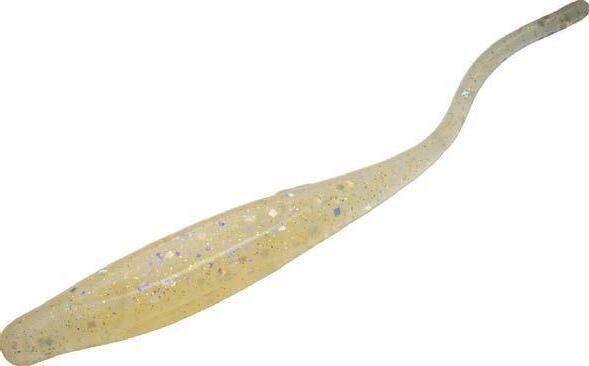
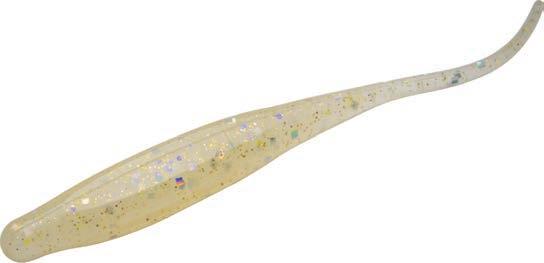
The Swag LT incorporates two different rigging methods with a unique system that allows the angler to fish either a single hook from the top of the bait or a treble hook from the belly. Once a fish is hooked with either setup, the lure is designed to separate itself from the hook and slide freely up the main line. This increases hookup ratios and makes the bait much easier to remove from the fish when landed—especially nice when oversized redfish get it down near the crushers.
The Swag LT is incredibly durable, like all Z-Man products, and has excellent action produced by its paddletail. I like the 5-inch version, which weighs 3/4 ounce, though there is also a 6-inch model weighing 1.25 ounces. I believe this bait will be a great choice for days when you want the option to cover water or slow down for reaction strikes. I’ve already had solid results with the Swag LT on open-water redfish, along with some trout, and believe it has
ZMan Swag LT review
excellent potential to earn a spot in my everyday rotation.
As we approach the warmer months, there will be plenty of optimism coming from Sabine Lake anglers—but be careful not to overlook seasonal boat prep and maintenance chores after winter storage. Take the time to go through everything and make sure your equipment is seaworthy. Nothing spoils a trip faster than getting to the ramp and finding the motor won’t start or the trolling motor malfunctions.
While the weather is still rough, take a couple of evenings to thoroughly check everything over, especially your safety gear. Late winter and early spring are famous for sudden winds and storms, so being safe and prepared should always be priority number one.
Take care and enjoy the upcoming spring fishing—and if you get a chance to bring a kid or someone new to the sport, please take that opportunity and share it with the next generation.
CHUCK UZZLE
Chuck fishes Sabine and Calcasieu Lakes from his home in Orange, TX. His specialties are light tackle and fly fishing for trout, reds, and flounder.
Phone 409-697-6111
Email wakesndrakes@yahoo.com
Website wakesndrakes.com
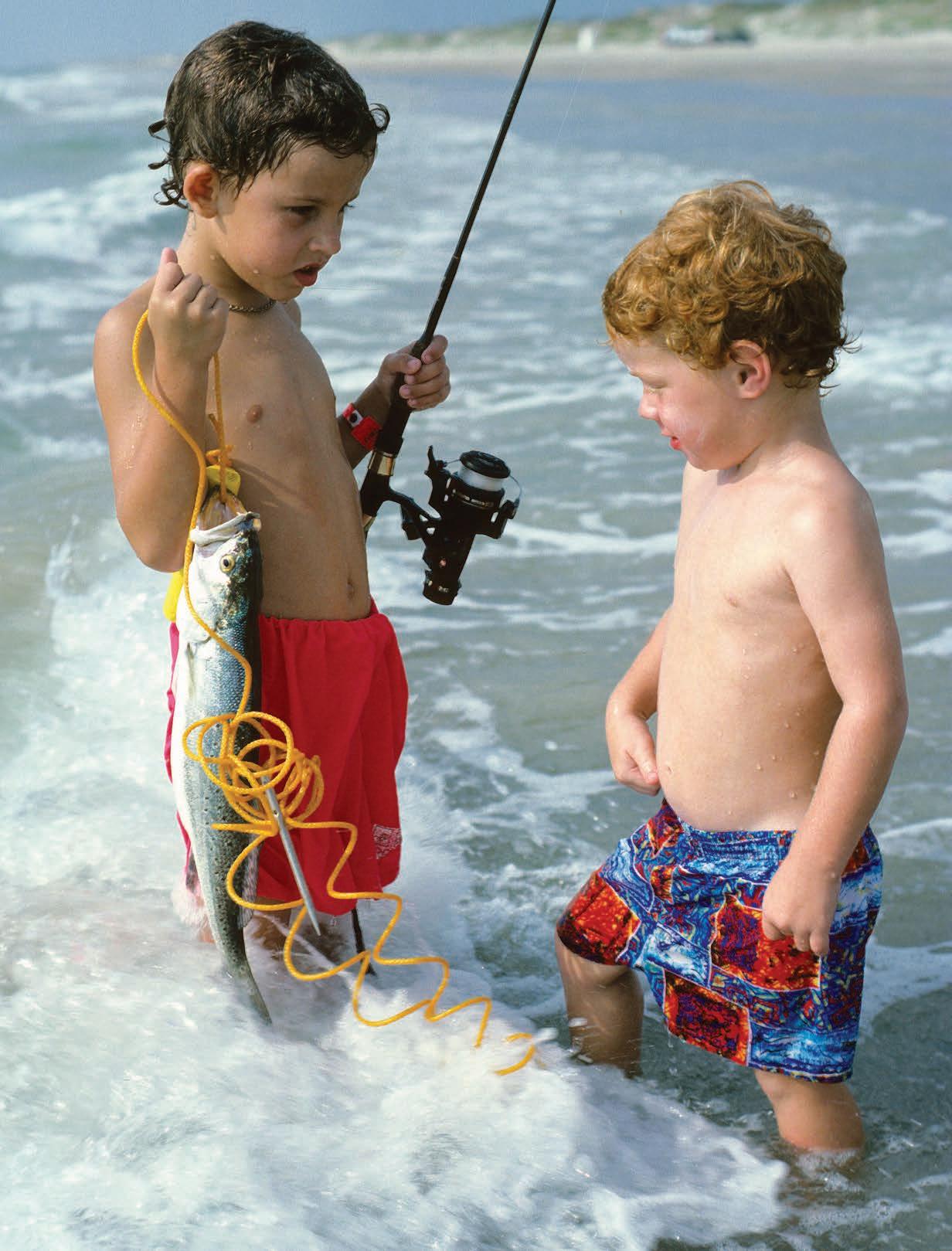
Young Joseph with Rockport friend Gabe Smith in the Padre Island surf.
Kid vs. Adult Fishing
STORY BY JOE RICHARD
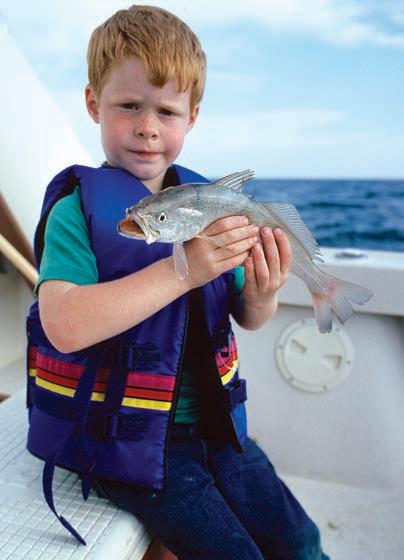
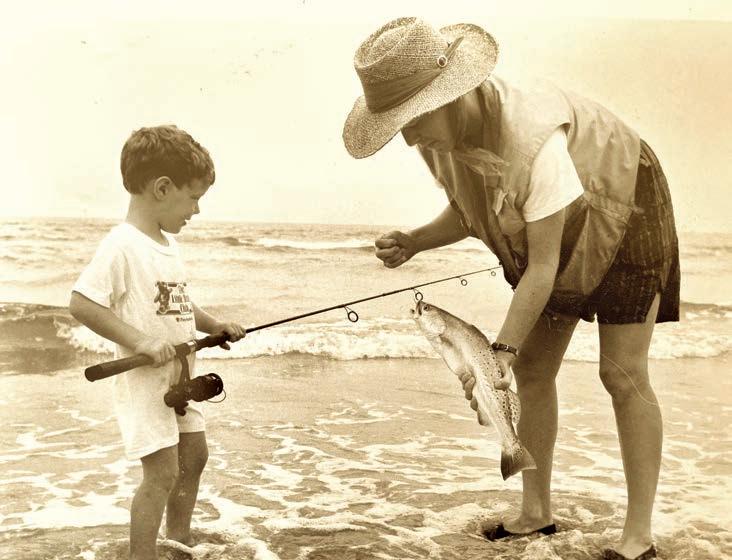
At what point should we begin taking kids saltwater fishing, exposing them to bigger fish? It can’t be pinned on a specific birthdate, but I may have pushed that boundary quite a bit. At a young age, my two boys were frequently exposed to adult fishing. They fished or rode in the boat when quite young, even climbing oil rigs offshore on two occasions (one during a glassy afternoon and the other during an approaching summer thunderstorm). They also walked the Sabine and Aransas jetties. They had to grow up fast; the Gulf wasn’t some idyllic pond with sunfish under the dock.
Living in Port O’Connor, saltwater was two blocks away and we were constantly out there. We’d pull a 20-foot minnow seine through grassy bottom off the front beach, catching small mangrove snapper, tiny sheepshead, and other critters. When we encountered floating sargassum weed out in the bay, we’d dip it out and shake it over a bucket, finding more critters, including sargassum fish. Our four-foot aquarium even held a flounder and a small rock hind grouper that lived for a year before they were released. We donated some of our catches to the newly opened restaurant called The Spot, with its big aquarium. However, the sheepshead were ill-tempered and there were complaints. So, with a tiny hook, I caught and tossed them out in the restaurant’s shell parking lot, where they quickly flew away with the seagulls. Anyway, catching small sea critters was great activity for the kids without the boat rides and whitecaps.
More often, they fished with me on regular saltwater trips in all seasons. They were fortunate to grow up before addictive smartphones hit the market, where today’s kids can now entertain themselves without ever leaving the house.
Our local big tarpon were clearly the most unsuitable fish for youngsters. We hooked a huge one, maybe 150 pounds, that tail-walked past the motor, shocking everyone. The kids dove into our handy boat cabin for shelter like someone yelled “Incoming!” in the trenches. That fish spooled us two hours later at night, because we could no longer see line on the reel. If we were battling 20-pound jacks at Pass Cavallo (back when it had 30-foot depths and swift currents) and a tarpon grabbed another line, I’d hand off the bent rod to Ian and fight the tarpon myself. Tough duty for one of POC’s fourth graders, battling big jacks without getting pulled overboard. He even caught one on Walmart tackle near the Cedars, which took more than an hour.
We did learn to leave the kids on the beach with a sitter while Amy and I fought tarpon and bull reds less than a hundred yards away in the Pass. When darkness fell, we’d park the boat in shallow water, wade ashore, and light the bonfire that the kids had built. Hotdogs and chasing ghost crabs around the fire—that was the ticket. We’d return to POC around 10:30 p.m.
Lots of memories. Like camping at the Land Cut down south one Easter weekend. Steve Qualia from Fish Trackers (who helped us tag and record so many fish) let us use his cabin on the Land Cut, and we dutifully loaded the 17-foot McKee Craft and headed south. The east wind never stopped blowing 20–25 knots, day or night. Outside the cabin was flat desert and blowing sand. A friend and I walked up and down the canal, tagging and releasing about 40 trout in
two days. Amy and Ian were left in the cabin with no electricity and showed incredible patience. Amy had to hide the Easter eggs indoors. Returning across Baffin Bay and safely back at Marker 37 Marina, the locals were fretting that a young girl had just lost her arm to a shark attack in the Port Aransas surf.
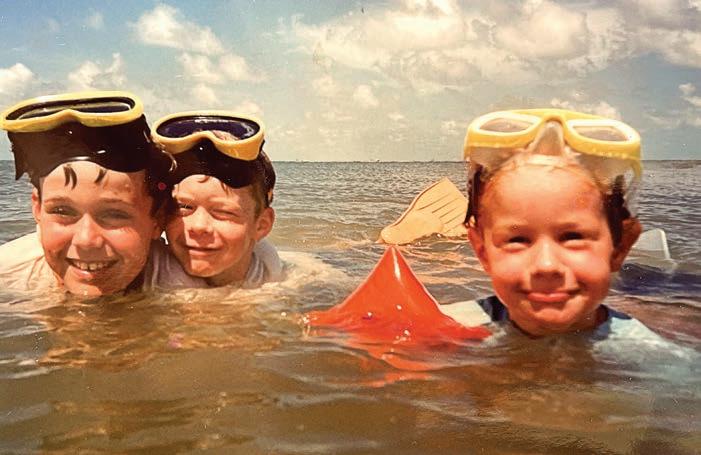
The kids learned to snorkel when quite young, notably when visiting Florida and sometimes at the oil rigs offshore of POC.
When we briefly lived in Rockport, Padre Island became our go-to place. Unfortunately, brown tide arrived a month later and the bay stayed brown for years. No flounder gigging there to speak of, so we camped at Port Mansfield jetties via jonboat on opening day of duck season. Big flounder were plentiful, and I waded along, mostly leaving four-year-old Joseph in the tent by himself when he was tired of walking the dry sand beside me. Early the next morning, a north wind came up, our anchor dragged, and the jonboat drifted out to the middle of the channel, where it sat 50 yards away. No way I was swimming out there, so we just waited an hour until another boat came along and towed it back to us.
One summer morning we launched the jonboat in Padre Island’s flat surf, a few miles south of the park entrance. We’d camped the night before and a flat, green Gulf beckoned. I launched when there were no oncoming vehicles in sight and cleverly hid the detached trailer behind the tent. I thought there might be a big kingfish out there at the platforms, two miles out. We soon tied up, but there were no kings—only a school of small amberjack that swarmed around the boat, and the kids had fun handlining them. Returning, we stopped a half mile offshore and waited until there was no traffic approaching, dashed ashore, hooked up the trailer, and retrieved the boat. It was all in a
Young Ian with a gulf trout caught offshore.
Keeper trout in the Padre Island surf.
Summer fun near Pass Cavallo. At left is cousin Jason visiting from North Carolina.
weekend’s fun. You can definitely have a lot of adventures with kids and jonboats, far beyond the fishing piers and seawalls, and even teach them the basics of boat driving, wind and wave direction, and keeping a watch on the weather.
Often we had fun fishing the Padre Island surf for trout. I had good luck catching finger mullet with a castnet and then working them like a twitchbait, or using gold spoons. We could see trout in those
CONTACT
clear waves, and if we hooked a whiting or ladyfish, they were sometimes attacked by bigger trout.
The kids were smart but also had that boating experience. When Amy and I were stranded at the POC jetties after dark, Ian convinced their rather slow, home-taught teenage babysitter that something wasn’t right. She finally called neighbor Marilyn, who quickly crossed the bay with her flounder boat and towed us back to town. No smartphones in those days—you had to think for yourself.
Our kids turned out all right. In college years, they’d take a group camping at a beach-side state park and seemed to be the only ones who knew what to pack, how to set up tents, build a campfire, and cook outdoors. Good times.
They’re now both married, live and work far away, but when they visit home, you can bet we still head out in the boat.
JOE RICHARD
Joe Richard has fished the Gulf since 1967, starting out of Port Arthur, but his adventures have taken him up and down the entire coast. He was the editor of Tide magazine for eight years, and later Florida Sportsman’s book and assistant magazine editor. He began guiding out of Port O’Connor in 1994. His specialty is big kingfish, and his latest book is The Kingfish Bible, New Revelations. Available at Seafavorites.com
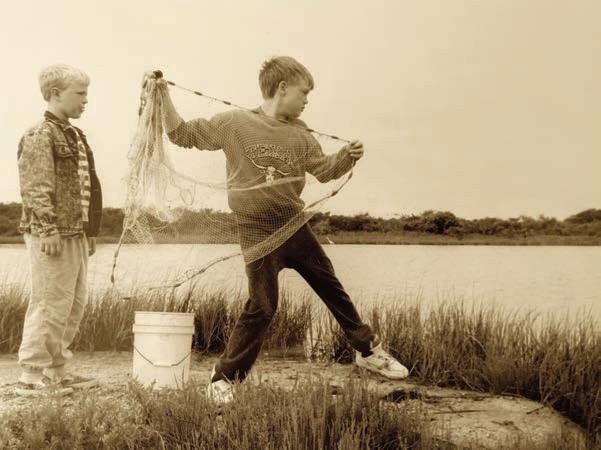
Castnetters learning to catch their own bait.
JAY
WATKINS
ASK THE PRO
DEALING WITH PRESSURED & SPOOKED FISH
As water temperatures begin to warm between the few remaining frontal systems, and tides start rising with the approach of the March equinox, I begin focusing on large expanses of grass flats in both the Aransas and Corpus Christi Bay systems. In spring, increased warmth and sunlight cause bottom grasses to grow rapidly. Depending on winter water temperatures, tidal levels, and even the number of ducks we’ve had in the area, we may see an abundance of grass growth or a noticeable decline. I enjoy every fishing season, but I always look forward to warming waters and the opportunities found
across large grass flats.
March also brings wind, which actually helps when fishing big grass flats along the Middle and Lower Texas coast. Southeast and northeast winds blowing 20-plus mph are not much of a problem when tides are high. As Rockport guides, we’re fortunate to be able to fish effectively even on windy days thanks to these expansive shallow flats. That’s likely one of the reasons Rockport remains one of the best places along the Texas coast to be a fishing guide.
Greatly increased shallow-draft boat traffic over
Shane Overstreet also got in on the fun this day.
the past decade has changed how fish feed and behave on these flats. I was fortunate to wade and drift these areas back when boat traffic was minimal. It wasn’t uncommon to have trout and redfish cruising right alongside the boat, creating incredible sight-casting opportunities. That still happens occasionally today, but with constant pressure, fish are far more aware. They respond by dropping into the grass or sliding off into deeper zones on the flat. Identifying and prioritizing these areas has become essential. Fish don’t only use these zones during low tides—pressure alone will drive them there until conditions improve.
Every day, I watch boats running across the thick grass flats where I fish. It’s common now for fish to move off long before boats ever get close enough to see them. I watch wakes and water movement carefully and make mental notes of how fish react and which direction they move. Just so you know, they’re not always moving directly away from the noise. If you’re paying attention, you’ll notice these movements and can plan for them in the future.
I arrange my anglers, our wading direction, and my boat position so that boat traffic works for us rather than against us. I don’t drift my boat behind my waders because I want to create a quiet zone around us. Boat traffic will often naturally veer away from my boat and waders, allowing a pocket of undisturbed water to form—“safety for the fish,” you might say. As unlikely as it sounds, this approach has worked for me from San Antonio Bay to South Padre.
Years ago, while fishing Port Mansfield, I noticed heavy and predictable boat traffic in one area. One morning, after seeing boats and waders working a known sweet spot, I wondered if the pressure had pushed fish east of their normal staging area. I ran roughly 600
yards east and offshore to avoid disturbing them if they had moved.
As we eased back west, I noticed the active bait line was about 200 yards east of where pressure was being applied. Boats were drifting through, then circling back repeatedly, cutting both inside and outside groups of waders. I positioned my anglers far enough behind the pressure so that when boats stopped to reset, fish had time to settle. That allowed us to wade into position and cast without intruding. Each time a boat made another run, within minutes we began hooking large trout. As long as my clients kept their distance, the boat movement pushed fish toward us.
There’s a very fine line between being far enough away and being just a little too close. After two solid hours of success, a nearby boater pushed too close and shut things down. Watching dark gray missiles shoot past me in clear water once again reinforced how fishing pressure affects fish—and how, when understood, that pressure can be used to your advantage.
So why can we still catch fish—especially trout—that appear to have been recently spooked? While I can’t cite scientific studies, my 48 years on the water provide a solid foundation for these observations. Fish today react to boat traffic from farther away than ever before. That’s no longer true “spooking” in my mind—it’s relocation to safe zones until pressure subsides and they can resume normal behavior.
Predators react instinctively to movement. “What I am seeing, I am creating” is how I explain this to clients. I learned this in my redfish tournament days. We’d spook a redfish on the flat, then cast ahead of the wake it created and immediately hook it. That fish was clearly spooked, yet instinct took over when the lure appeared in the right place.
Capt Kyle Johnson had success with Jay fishing Port Mansfield.
Chris Bush with a really nice one.
Trout are more challenging than redfish, but with patience and enough space between disturbance and presentation, they too can be fooled.
Understanding where slightly deeper water lies within a grass flat is critical. Even a few inches of depth provides security. Many anglers only target these areas during low tides, assuming fish are forced there—but boat traffic sends them there as well.
Often, the easiest way to locate these zones is by color change. Deeper water shows as darker green on the flat. High-quality polarized sunglasses are essential. I use Waterland Co. sunglasses with glass lenses in the Milliken Green Mirro color. After lens-replacement surgery last September, returning to glass lenses gave me noticeably sharper vision. Being able to detect subtle color differences is crucial—plain and simple, you can’t catch what you can’t see. If you fish anywhere along the Middle to Lower Texas coast, you will encounter pressure—especially on weekends and holidays. My hope is that the perspectives shared here help you approach pressured areas with confidence. Stick to your plan long enough for it to work. Believe in it and let the pattern develop.
SHRIMP FOR DINNER
Lure choice right now isn’t as critical as many believe. I’ve seen fish transitioning between areas eat a wide range of offerings. Feeding aggression fluctuates throughout the day, peaking during Solunar periods, but fish can still be induced to eat even when they aren’t actively feeding—if the bait is presented correctly. At this stage of my career, getting a fish to eat when it doesn’t want to feels more rewarding than anything else. That said, downsizing can be especially effective in these situations.
Smaller lures I favor include the MirrOlure Lil John, 6th Sense Party Paddle, Texas Customs Double D, and Custom Corky Soft Dines. The smaller MirrOdine is also very effective. Larger trout often choke these smaller baits, so take care during hook removal and release.
May Your Fishing Always Be Catching!
—Guide, Jay Watkins
Jay Watkins has been a full-time fishing guide at Rockport, TX, for more than 45 years. Jay specializes in wading yearround for trout and redfish with artificial lures. Jay covers the Texas coast from San Antonio Bay to Corpus Christi Bay.
Telephone 361-729-9596
Email Jay@jaywatkins.com
Website www.jaywatkins.com
Scan to learn more Flutter Tail Shrimp
PATAGONIA FLY FISHING
A few years ago, some buddies and I attended our local CCA banquet, as we typically do. As always, the night was filled with fun, great food, and plenty of prizes to be won. Of course, there were raffles, but the real prizes came from the live auction. While browsing the list of items up for bid, one stood out. It was the very last item—a trip for two to go fly fishing in Patagonia.
That caught my eye immediately, and my buddy noticed it too. We agreed we’d bid when the time came, and sure enough, we won it. Fast-forward two years and we were packed and ready to head south.
If you’ve ever been to one of these banquets, you’re probably familiar with the Argentinian dove hunts. This was the same outfitter, now branching into the fly-fishing world. Fly fishing in Patagonia is no secret, but it’s still a fishery that receives very little pressure compared to what we’re used to here in the States. Knowing this was a once-in-a-lifetime opportunity, we couldn’t pass it up.
We touched down in Buenos Aires after a long flight and stayed the night. We fueled up on homemade empanadas and cheered with the locals while watching their fútbol
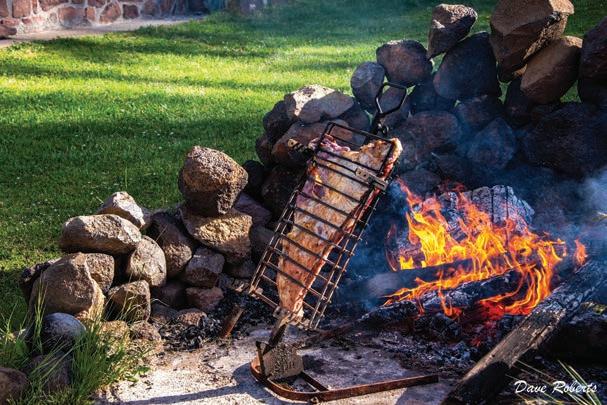
team. The next day, we arrived in Neuquén and were met by our guide, Nico. He greeted us with a smile and ushered us to the truck for the drive to the lodge. Along the way, we hit a few roadblocks—local farmers moving cattle and goats to their summertime pastures—which only added to the South American experience. When we arrived, the rest of the crew welcomed us, showed us to our house, and made us feel right at home. That night, we were served massive steaks, excellent wine, and talked through plans for the next day’s fishing. We woke early, grabbed breakfast, and headed into
DAVE ROBERTS
SHALLOW WATER FISHING
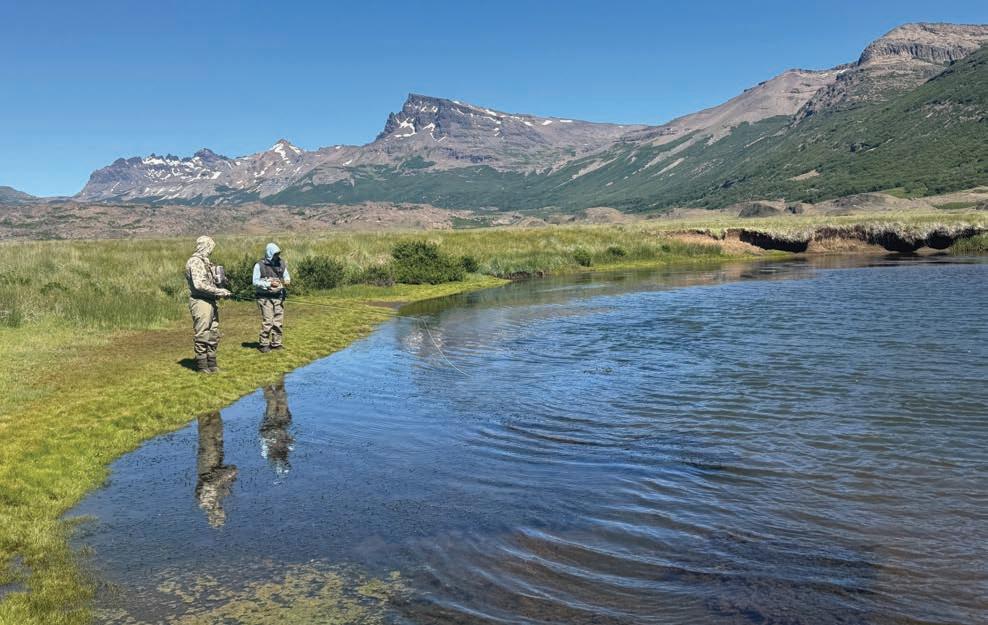
the mountains to one of the local rivers. We started drifting nymphs, though it was hard to stay focused—the scenery was unbelievable. Snow-covered peaks towered in the background, lush green agricultural fields stretched for miles, and gauchos yelped as they pushed nearly 300 head of cattle across the land. That scene is burned into my memory forever.
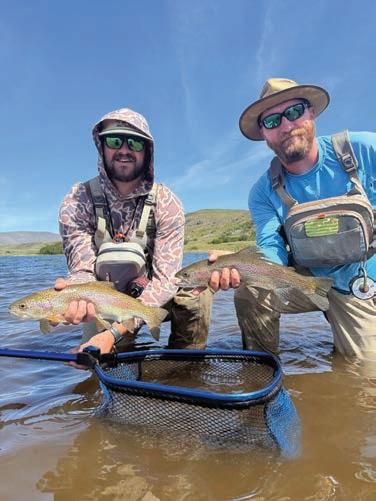
On my third cast, I hooked into a solid trout and finally brought one to hand. Not long after, my buddy Jake landed a good fish of his own. We waded upriver to a stretch of rapids where the streamer bite really turned on. We pulled nearly 15 fish out of one hole before stopping for lunch.
Lunch was served at a small shack perched near a lake. There, we met the other anglers sharing the lodge, all of whom had enjoyed good fishing as well. After another incredible steak, we fished the lake and caught several large rainbow trout.
Day one was a success, and day two played out much the same. We started the morning catching fish on dry flies, then switched to a hopper-dropper setup. To our surprise, some fish became greedy and smashed the hopper. On the ride back to the lodge, Nico mentioned that the next day would involve a hike. He explained that he rarely gets clients young enough—or willing enough—to make it, and that it led to the best stretch of river they had access to. He promised it would be worth it.
The next morning, we headed downriver looking for rising trout. Jake and I quickly found willing fish feeding on a size-16 Parachute Adams. We continued downstream to the edge of a large lake, where we caught several fish throwing streamers along a drop-off. About halfway through the hike, we stopped on a high bluff to eat lunch and take in the view. Despite full bellies, our excitement pushed us onward. The next stretch featured fast-moving water and small potholes that
could be picked apart strategically. We caught fish on nearly every fly we tied on. After another half-mile, we crossed the river and fished a deep, picture-perfect pool. We landed a few quality trout there and decided to call it a day. All told, we covered four to five miles. Nico was right—it was a stunning stretch of river and well worth the effort.
On the final day, we woke to perfect conditions: warm temperatures, bluebird skies, and light wind. We fished another slowmoving stretch with trout rising steadily. Sight-casting to trout with small dry flies was incredible. Throughout the week, anglers from Maine had caught several brook trout, but we hadn’t landed one yet—so that became the goal.
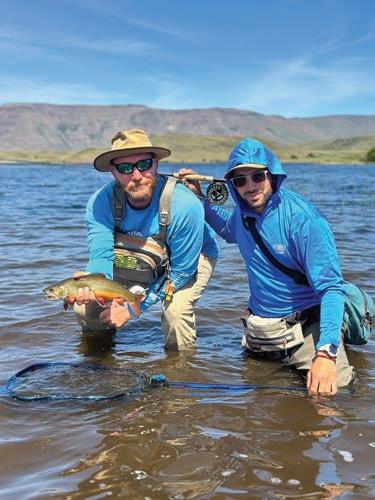
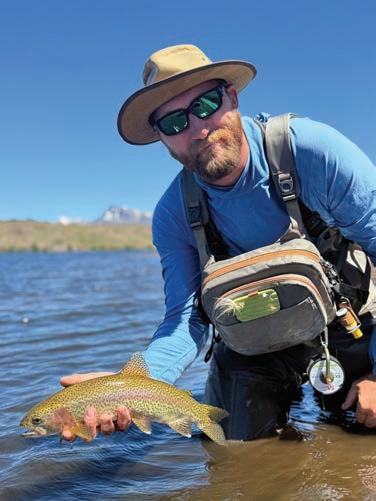
Eventually, I spotted one rising. I made a cast, mended the line, and watched as the fish calmly sipped my fly off the surface. I set the hook and immediately knew it was a brook trout. After a quick photo, I released it in great shape. That moment alone made the entire trip.
After lunch, we fished a large lake, slowly working the shoreline.
Spotting trout cruising the shallows, we cast big grasshopper patterns, and the fish showed zero hesitation. We ended the week with sight-casting and back-to-back double hookups—one pair consisting of a brook trout and a rainbow, the other two big rainbows. What a way to finish.
I spent three weeks total in Argentina, and it exceeded every expectation. The people, food, wildlife, and scenery were incredible. The crew at Pointer Outfitters made sure we had everything we needed and more. The meals were outstanding, and Nico worked tirelessly to keep us on fish and comfortable throughout the trip. It was, without question, one of the best experiences of my life.
So, if you ever attend a CCA banquet and see anything from Pointer Outfitters, do yourself a favor and bid. Sight-casting trout in the remote rivers of Patagonia is something I’ll never forget.
Dave Roberts is an avid kayak-fishing enthusiast fishing primarily the inshore Upper Coast region with occasional adventures to surf and nearshore Gulf of Mexico.
Email: TexasKayakChronicles@yahoo.com
Website: www.TexasKayakChronicles.com
TPWD SCIENCE-BASED GILL NET PROGRAM REMAINS ON HOLD
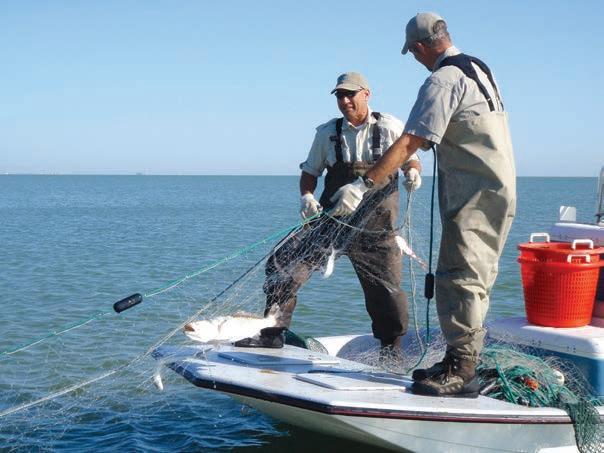
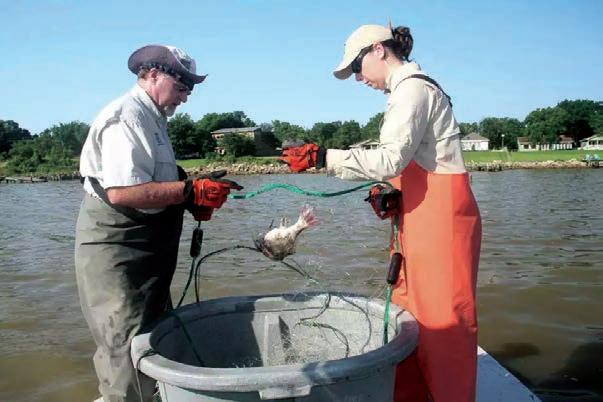
For nearly five decades, the Texas Parks and Wildlife Department’s (TPWD) gill-net sampling program has provided an unparalleled, science-based view of coastal fisheries and estuarine health. This continuous dataset—one of the largest and longest-running marine resource databases in the world—has driven major management decisions, supported academic research, and underpinned the economic value and sustainability of Texas’s coastal fisheries.
Today, however, that program remains suspended while a federal investigation into rare, incidental interactions with protected species threatens to dismantle a flagship monitoring system at the heart of Gulf Coast fisheries science.
What the program does and why it matters
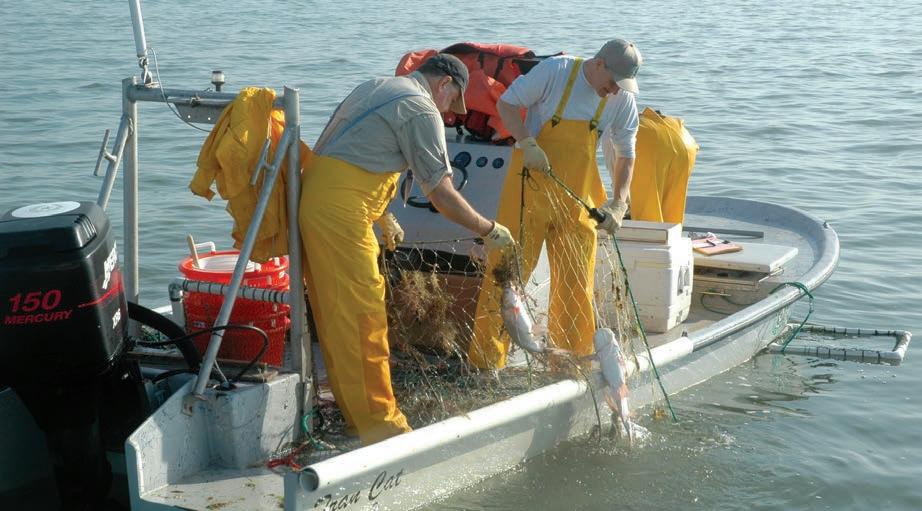
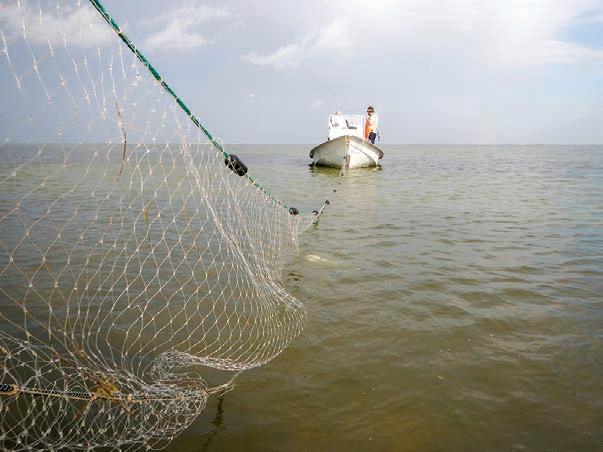
TPWD’s standardized gill-net sampling, in place since 1975, provides spatially unbiased, repeatable measurements of key species such as red drum, southern flounder, and spotted seatrout. Nets are deployed on randomized shorelines across eight major bays each spring and fall, with strict limits on how many nets can be set in a given bay or at one time.
That random-design, repeated sampling is uniquely effective at detecting trends in adult and sub-adult fish that other gear types miss. It complements angler survey data and additional sampling methods to give fisheries managers a comprehensive picture of fish population status and ecosystem conditions.
The program’s data has driven difficult—and at
times controversial—management actions, including designating red drum and spotted seatrout as gamefish, banning commercial bay gill nets, adopting formal fishery management plans, and implementing limitedentry programs and commercial license buybacks. While these policy choices were often contentious at the time, the long-term scientific record repeatedly validated the need for regulation and demonstrated positive biological outcomes.
Beyond regulation, this dataset has formed the backbone of hundreds of peer-reviewed studies, graduate theses, and agency reports documenting shifting baselines, habitat change, and responses to restoration and freshwater inflow decisions.
Economically, TPWD fisheries science has helped sustain a coastal recreational fishery that supports local businesses and communities—commonly cited estimates place annual economic impacts in the $4–5 billion range, illustrating the program’s real-world value. Incidental takes: rare, recorded, and largely nonlethal Over more than forty years of sampling, interactions with protected species have been extremely infrequent. From 1983–2023, TPWD recorded 41 bottlenose dolphin encounters across more than 30,000 gill-net sets— an average of about one encounter per year, and in roughly 41 percent of years, none occurred at all.
Sea turtle encounters have likewise been uncommon and typically nonlethal. Observed increases in some turtle interactions reflect the success of long-term
conservation measures that have helped populations rebound, not an escalation in risk associated with the sampling program itself.
Regulatory impasse and inconsistent permitting
Despite the program’s long track record and the documented rarity of protected-species interactions, NOAA Fisheries has declined to issue TPWD the incidental take authorizations the agency has requested five times since 2011 (applications submitted in 2013,
2015, 2017, 2022, and 2023).
In May 2024, NOAA Fisheries’ Offices of Law Enforcement and Protected Resources opened a formal inquiry into alleged Marine Mammal Protection Act and Endangered Species Act violations related to those rare encounters. As a result, TPWD suspended gillnet sampling while the matter proceeds.
The permitting history raises troubling questions about consistency. NOAA has granted incidental take authorizations to various private and public entities for activities with potential impacts on marine mammals and listed species. Yet TPWD’s requests—supported by decades of monitoring data, mitigation measures, and transparent reporting—remain unapproved.
That regulatory delay has immediate consequences. Without a permit, TPWD cannot resume routine sampling, and the continuous, structurally unbiased time series that managers, researchers, and stakeholders rely upon has been interrupted.
Consequences of a data gap
Suspending gill-net sampling does more than pause a government program—it fractures an irreplaceable dataset. In the last decade alone, TPWD gill-net data supported dozens of peer-reviewed publications, numerous graduate theses and dissertations, and countless management actions.
Losing consistent sampling degrades the ability to detect population shifts, evaluate regulation effectiveness (including recent speckled trout harvest changes), and identify emerging threats from desalination projects, ship channel expansion, industrial development, or altered freshwater inflows.
A fragmented monitoring approach reduces analytical confidence and increases management uncertainty. Decisions made without timely, unbiased data can lead to premature relaxations or unnecessary restrictions—each carrying real social and economic consequences for coastal communities and industries. Alternatively, managers may be forced to delay decisions entirely due to insufficient information. Either outcome handicaps fisheries management while the nets remain out of the water.
A practical path forward
Protecting endangered species and conserving marine ecosystems must remain priorities for all agencies involved. Those protections, however, can and should coexist with sound, science-based monitoring when agencies collaborate and apply regulations consistently.
TPWD has actively supported conservation-aligned research, including updated bottlenose dolphin assessments indicating population increases in some areas, and regularly provides response support during cold-stun events and strandings that directly benefit species recovery.
To prevent bureaucratic delay from eroding a 50-year scientific legacy, NOAA should act with urgency, resolve the investigation, and issue TPWD the necessary permits to continue its program.
The stakes are clear. Without science-based gill-net sampling, fisheries management loses a critical tool, public transparency erodes, and academic and agency research stalls. Reinstating a permitted, responsibly managed gill-net program is not only consistent with conservation goals—it is essential to preserving the long-term health and value of Texas’s coastal fisheries.
By Dani Emery & Clint Troxler | San Antonio Bay Fisheries Management Team
FIELD NOTES
LITTLE FISH, BIG FUTURE: TEXAS OBSERVES AN UPSURGE IN JUVENILE RED SNAPPER
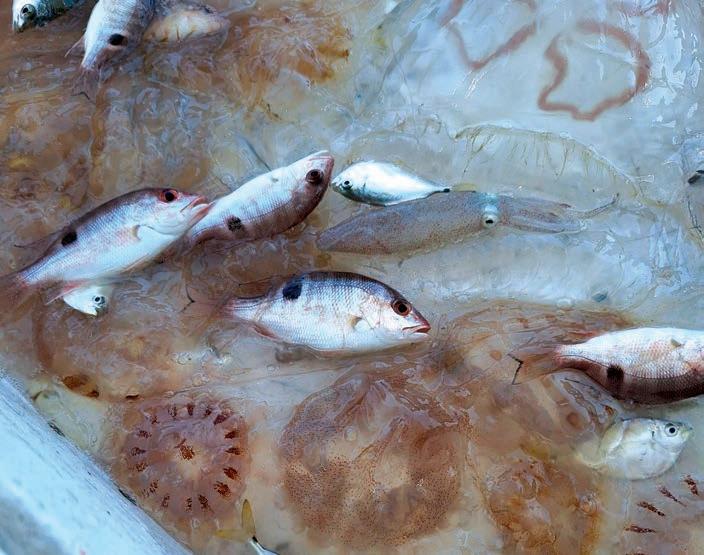
Long prized for their culinary appeal, economic value, and vital ecological role in the Gulf ecosystem, red snapper (Lutjanus campechanus) are a commercially significant and highly popular game fish found in the western Atlantic Ocean and the Gulf of America. Juvenile red snapper closely resemble adults, sharing the same rosy-red coloring that fades to white at the belly, along with red eyes and an angular snout. However, juveniles are typically paler in color and display a distinctive dark spot on their sides below the soft rays of the dorsal fin—a feature that fades with maturity. Juvenile red snapper inhabit shallow waters with sandy or muddy bottoms in low-relief habitats such as shell rubble or scattered debris, typically at depths under 30 meters. As important components of the Gulf’s food web, juvenile red snapper are active carnivores, feeding on zooplankton, small fish, and worms, while also serving as a vital food source for larger fish and marine mammals.
Texas Parks and Wildlife Department (TPWD) Coastal Fisheries staff conduct monthly surveys to monitor
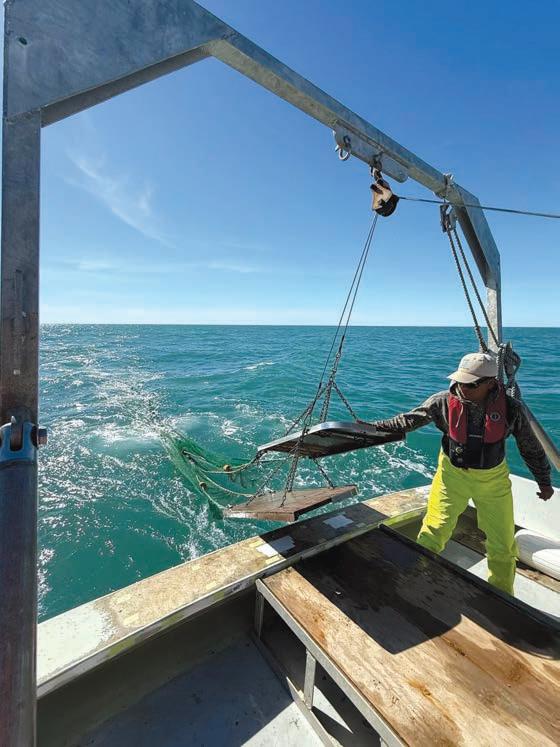
marine resources in Texas’ Gulf waters. Each month, sixteen one-square-mile grids—randomly selected from areas within 15 miles of major jetties along the Texas coast—are sampled during daylight hours. Crews use an 18.7-foot-wide trawl pulled for ten minutes along a depth gradient to collect samples. Once on deck, the catch is quickly identified, measured, counted, and released back into its habitat. These samples often contain an impressive diversity of species, ranging from juvenile finfish and shrimp to squid and even bryozoans. Routine TPWD Gulf sampling began in 1986 and has continued steadily—aside from a brief pause during the COVID-19 pandemic—providing invaluable long-term data on coastal conditions in Texas waters.
Harvest of red snapper in the Gulf dates back to at least the 1840s. By the 1970s, however, both fishermen and scientists began voicing concerns as red snapper numbers noticeably declined. In response, the National Marine Fisheries Service (now NOAA Fisheries) introduced management regulations in the mid-1980s, including minimum size and bag limits, in an effort to reduce fishing pressure and rebuild the population. When NOAA conducted its first official stock assessment in 1988, those concerns were confirmed: the red snapper fishery showed clear signs of being overfished, with ongoing overfishing occurring.
By around 1990, the red snapper population had reached a critical low point. The spawning potential ratio (SPR)—a metric comparing the reproductive output of a fished population to that of an unfished one—had fallen to just 2%. In other words, the stock was producing only 2% of the eggs expected from an unfished population. It was evident that more aggressive management actions were necessary to preserve both the species and the fishery. NOAA responded by implementing annual catch quotas to cap recreational and commercial harvests and further tightening bag limits. In the early 1990s, TPWD surveys began showing a modest increase in the number of juvenile red snapper encountered in coastal trawl samples.
A few years later, the Sustainable Fisheries Act of 1996 marked a major turning point in rebuilding the red snapper population.
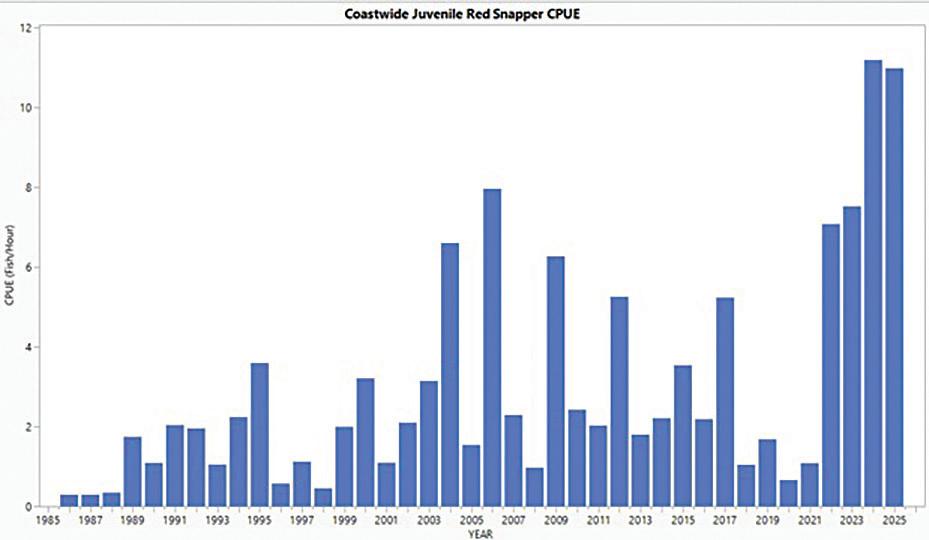
Figure 1: Coastwide juvenile red snapper CPUE (fish/hour) from 1986-2025.
*Data from 2020 incomplete due to COVID-19
*Data from 2025 still being processed
Regulatory measures—including reduced bag limits, increased size limits, license and gear restrictions, refined seasons, and annual quotas—were enacted to promote recovery. Beginning in 1997, in-season monitoring strategies such as fishery-dependent surveys and enhanced enforcement allowed agencies to better manage recreational season lengths and prevent quota overages. To address one of the largest sources of juvenile red snapper mortality— bycatch—NOAA-certified Bycatch Reduction Devices (BRDs) became mandatory for all commercial shrimp trawls in 1998.
BRDs are gear modifications designed to allow non-target species, such as red snapper, to escape while retaining the intended catch, thereby reducing bycatch and supporting sustainable fishing practices.
In 2000, the red snapper fishery transitioned to a fixed recreational season, with season dates based on pre-season projections of when quotas would be reached. That same year, bag limits were reduced again, and minimum size limits were increased. TPWD surveys continued to reflect a gradual rise in juvenile red snapper abundance through the early 2000s. Despite
these efforts, the 2005 stock assessment showed limited improvement, with spawning biomass reaching only 4.7%. This prompted development of a more rigorous rebuilding plan. Under this strategy, recreational and commercial quotas and bag limits were further reduced, an Individual Fishing Quota (IFQ) program was implemented for the commercial fishery, and additional bycatchreduction measures were enacted.
NOAA stock assessments released in 2009, 2013, and 2015 all documented a steady rebound in red snapper abundance. The 2015 assessment indicated that spawning biomass had tripled since 2005. These findings led to increases in annual quotas for both recreational and commercial fisheries between 2010 and 2019. During this same period, however, TPWD observed a slight decline in juvenile red snapper counts in their surveys. Reef Fish Amendment 50, passed in 2020, shifted some management authority for private recreational fishing in federal waters to Gulf Coast states. Under this framework, each state receives a portion of the private-angling red snapper quota and may independently set season lengths, bag limits, and minimum size limits. Since the transition to state management, Texas anglers have benefited from longer seasons, with the most recent 2025 season lasting 173 days. In addition, TPWD Coastal Fisheries staff have documented a notable increase in juvenile red snapper appearing in Gulf trawl samples in recent years—a trend that has generated both optimism and further scientific inquiry.
While these observations are encouraging, continued monitoring and effective management of the red snapper population remain critical. According to the most recent stock assessment in 2018, the current SPR is estimated at 20%, below the target SPR of 26%. Advances in fishing and boating technology, along with increased accessibility, are likely to drive higher catch rates in the future. Even with increased annual quotas, recent red snapper seasons have often closed early due to quotas being reached quickly. Maintaining a balanced age structure within the population is another essential factor, as egg production increases with fish size and age. Allowing today’s juvenile red snapper the opportunity to mature will be key to ensuring long-term sustainability. Work is currently underway on the next red snapper stock assessment, expected to be completed within the next year. Its results will help guide future management decisions and support a healthy red snapper population—for today’s anglers and those yet to come.
Check the TPWD Outdoor Annual, your local TPWD Law Enforcement office, or tpwd.texas.gov for more info.
ERIC OZOLINS
EXTREME KAYAK FISHING & SHARKS FROM THE SAND
SPRING SURF FEVER
While I type, I can smell the emerging change and associated migratory chaos in the air. The refreshingly cool sea breezes of March blow over our Texas surf like harbingers. Many of us have laid around waiting for better weather for the last three months. Those folks should realize the long standby is rapidly coming to an end.
After a briefly cold winter, we’re back on track for warmer times as spring approaches on the calendar. March and April are months of magic and mystery along the Coastal Bend. The diversity of expected species—and the number of “possible” ones—can be mind-blowing. When favorable conditions come into play, spring is my absolute favorite time of year.
Different seasons offer a different variety of fish to anglers most anywhere; this is certainly true in the surf. Cooler winter beachfront water contains a high concentration of large red drum, pompano, and fierce sandbar sharks. As the water warms up, they get their last bit of fun and feeding before their numbers dwindle. Meanwhile, other species start running back in.
The end of March is often a prime time for the arrival of jack crevalle and Spanish mackerel. In some cases, we may even get a run of pelagic little tunny (bonito). With the arrival of new species,
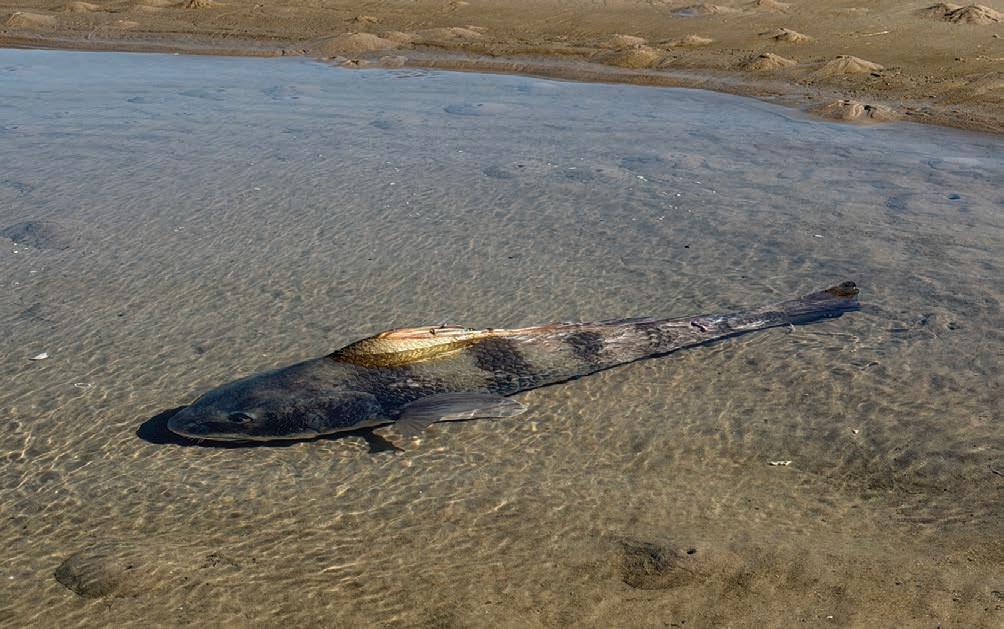
Ten-pound black drum landlocked in Padre Island tidal pool.
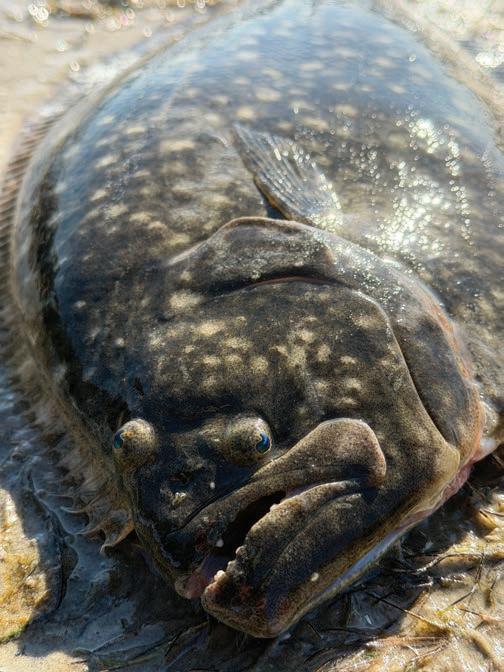
Rare large wintertime flounder; we don’t often to see specimens like this.
sharks are sure to follow.
Historically, March is a time when we see large, pregnant blacktips frenzy-feeding in the beachfront shallows. We also see our first signs of scalloped hammerheads. In fact, spring offers Texas anglers shots at ten or more species of sharks. No timeframe offers a better chance to see an unusual toothy critter.
The reason for this comes from the nature of the season. When the weather warms up, seasonal migrations begin. The timing of these events is far from an exact science. In some years, late fronts delay the action well into March, while in others, the action reaches a fever pitch much earlier. Calm lulls in the spring wind bring good water clarity, transforming the Gulf into an oasis for many species traveling inshore.
At times like these, little tunny may make an extremely rare appearance in the surf. These torpedoes, slightly larger than a football, are pound-for-pound one of the hardest-fighting fish in the ocean. It’s important to note these fish are feeding on very small prey—fish less than two inches in length. Because of this, targeting them with tiny silver spoons and flies can be the only way to catch them.
Florida pompano also show up in the surf this time of year, under the right conditions. They’re a highly sought-after species earlier in the winter. In December, we had a stellar start to the pomp season. I had one trip where I landed over seventy-five of these tasty critters. Early in the season, the fish normally run larger. But even at the end of winter, catching a bunch of eating-sized pomps is possible.
There are tons of different pompano rigs on the market (the catchsharks.com ones are my favorites). Personally, I’ve been baiting my leaders with a combination of Fish-bites and Fish-gum synthetic baits on 3/0 circle hooks. Some people use shrimp, but I find the synthetic baits work well to diminish the hardhead bite as much as possible.
Brute-sized redfish in the surf will remain abundant until April. Then, the numbers of slot fish will rise. December and March are the months when we usually encounter our largest red drum of the year. This time of year is one of the best to take a kid fishing and get them hooked on the thrill of landing a bull measuring more than forty inches.
I, and many others, have caught more bull reds than most would ever expect in a lifetime. This fish puts a giant smile on kids’ faces. Any time my charter clients have kids, I really try to get them on a bull red. While the bulls are surely big enough to create a sense of awe, a kid can still reel them in. And when the kid wins the fight, their smile says it all.
Other fish present in March have similar abilities to paint smiles on anglers’ faces. While jacks and mackerel will likely make their presence known toward the end of the month, the sharks bring their magic to the party earlier. Being a shark guy at heart, this is my domain. I absolutely love the first half of spring. The potential during this period revolves around the weather and water conditions.
Cooler weather patterns will keep much of the shark action restricted to sandbar sharks, blacktips, and smaller species. In warmer weather, we can expect the unexpected. I’ve caught Spring Break tigers before and hope to do so again. I’ve also wrestled—and won— matches with giant hammerheads before the end of the month. And in the right conditions, even a mako shark might be caught from the Texas surf sand.
If targeting the smaller sharks—those measuring seven feet or less—whiting, pompano, and sheepshead make perfect baits. For a better chance at true monsters, big baits work better. Certainly, a whole jackfish can draw the strike of a lifetime.
The month of March can bring many blessings, including a huge
variety of species. The downside is the difficulty of targeting a specific kind of fish. Anyone bound and determined to catch a shark should be willing to regularly change out their baits. Those after reds and jacks should dedicate themselves to maintaining their lines. Anglers after little tunny should commit to fishing with fly gear.
To my knowledge, my mentor—the late, great Billy Sandifer—is the only person to accomplish the task of catching a little tunny on fly from a Texas beach. I get a lot of fly-fishing gurus on my charters, and this is one of those feats we all dream of accomplishing. March is a perfect month to try. We’re willing to put up with all the whacky weather while we do.
This month, remain alert and make and maintain your beach camp accordingly, expecting dense fog at nearly any time of day or night. Beyond spring, my book is quickly filling up. Anyone interested in a charter should mention this magazine when they contact me, and I’ll offer a discounted rate on the trip.
CONTACT
For the past decade Eric ‘Oz’ Ozolins has been promoting shark catch and release and assisting various shark research programs. Eric offers guided shark fishing on Padre Island National Seashore. Also renowned for extreme kayak big game fishing, Eric is the owner of Catch Sharks Tackle Company.
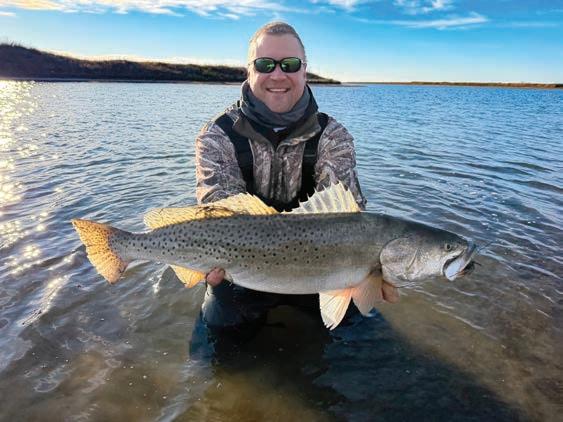
Here’s the author with a very healthy ninepound trout about to be released.
Winter red drum being released.
JAKE HADDOCK MOSTLY SIGHT-FISHING
RESPECT
We have a species of fish here in Texas that no longer seems to get the respect it deserves. It possesses a number of great attributes that you’d think would endear it beyond the level of appreciation it currently receives. It’s a particularly aggressive fish, eats a wide variety of lures, flies, and natural baits, and can be caught from the bank, beach, boat, or bayou. It even has a finicky streak for those who prefer a greater challenge—eating anything you toss its way one day and refusing everything the next.
They can school in large numbers and have created some of the most memorable days on the water for countless coastal anglers. These fish were once harvested commercially to no end until a few sport fishermen banded together, forming an alliance that ultimately stopped all commercial harvest of what is now one of our most prized game fish. Yes, I’m speaking about redfish.
What was once likely the most cared-about and respected resource on our Texas coast seems to have slipped to the back burner in the minds of modern conservationists. It appears many believe the war has been won and redfish are forever saved. And while that may be partially true—they have indeed been saved from
commercial harvesters—there is another entity taking its toll: rod-and-reel anglers. That’s right—sport fishermen. Please don’t get the wrong impression. I’m not going to sit here and tell everyone they shouldn’t keep any redfish. Heck, I enjoy taking some home myself from time to time. All I’m saying is it may be time to collect data and
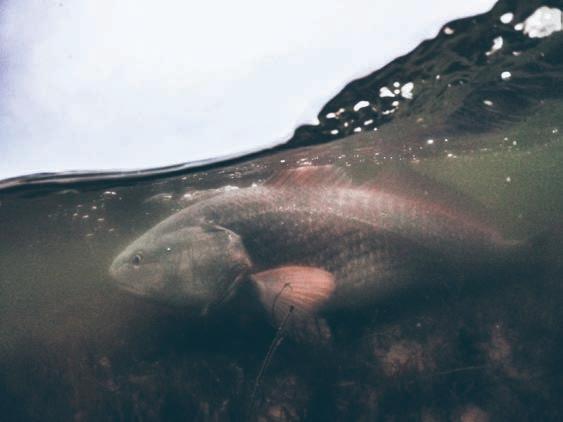
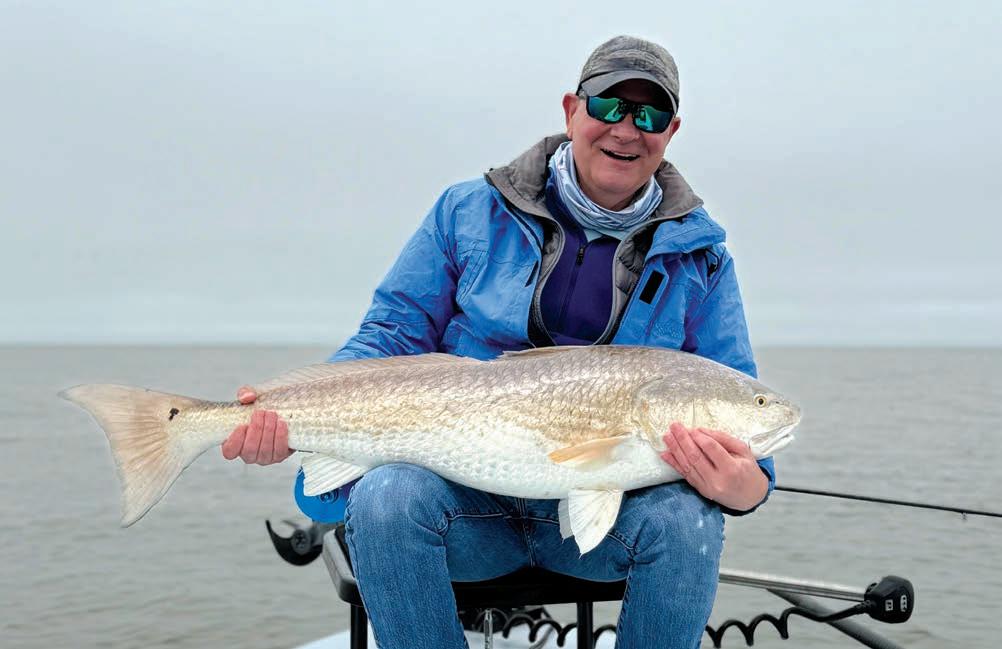
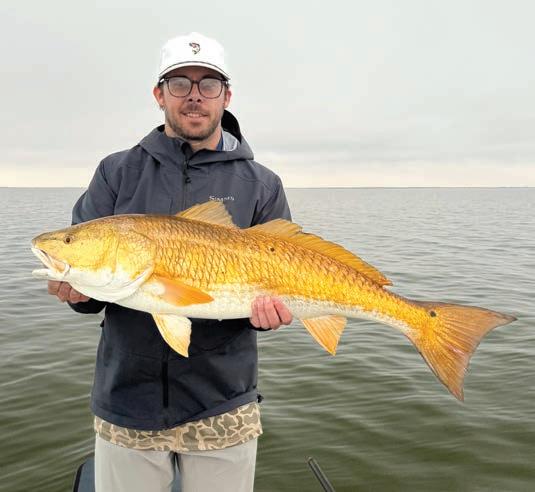
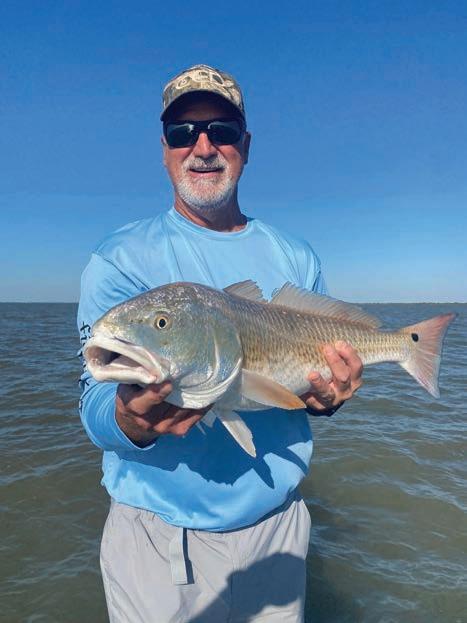
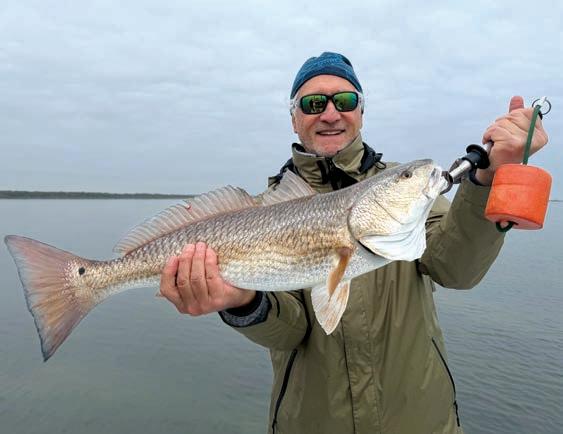
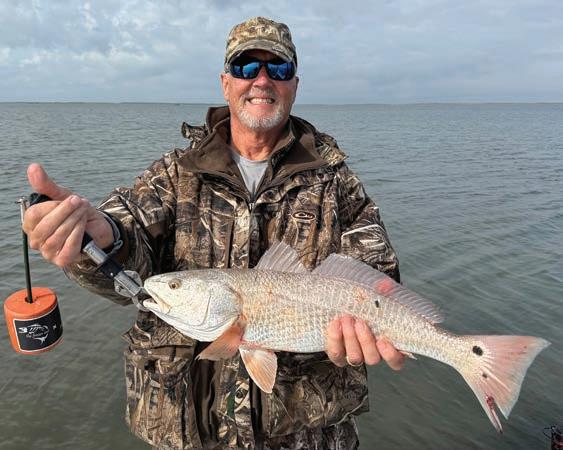
Redfish of this size provide low quality table fare.
Stuart released this brood-stock redfish to help populate the bays.
KC
look at real numbers on the population.
For as long as I can remember, redfish regulations have remained unchanged while angling pressure has increased at least tenfold. I also believe that if we shifted the slot size slightly lower, similar to some other Gulf states, we might see an increase in larger redfish within our bays.
I don’t know about you, but I’d much rather eat a 20-inch redfish than a 28-incher. Once they get bigger than about 26 inches, the fillet becomes very thick and significantly tougher. I’ve never kept a 19-inch redfish to eat, but I imagine it would be quite tasty. On the other end of the spectrum are people who take over-slot reds home for dinner. This always blows my mind, because anyone who’s tried it knows the bigger they get, the less desirable they become.
Another factor to consider is that since the 1980s, we’ve been releasing redfish fingerlings into our waters by the millions. Just last year, TPWD made a big to-do about releasing their billionth redfish fingerling—yes, billion with a “B.” There was plenty of press around it, and it was a major celebration for the agency. Don’t get me wrong, I’m very glad this program was initiated back in the day and is likely responsible for the large numbers of redfish I saw on the flats as a child.
All I’m saying is this: in a time when sustainability is one of the mostused buzzwords in conservation, what exactly is sustainable about a redfish population that relies on a government entity to supplement our bay systems indefinitely? After three decades of this effort, shouldn’t we be able to self-sustain redfish populations—at least to the point where intervention is only needed for rare events like severe freezes?
If redfish populations were truly self-sufficient, it could open funding and hatchery capacity for other species, such as snook. If you do your research, snook were once very abundant in Texas—so much so that there was even a commercial fishery for them as far north as Galveston. Yes, snook are more susceptible to extreme cold, but that is all the more reason they could benefit from hatchery support. You can’t tell me there weren’t cold spells along the Texas coast in the early 1900s when snook were abundant. How will we ever know if a species like this could thrive again if we don’t give it the same opportunity we gave redfish and are currently giving trout?
If we truly want redfish populations to become self-sustaining, we must stop harvesting brood stock. Bull reds, as they’re often called, are a fantastic sport fish but are poor table fare. That’s why it troubles me to see large numbers of them brought to the cleaning table. The only
explanation I can come up with is that they’re easy and available— something to throw in the cooler. What many don’t realize is that they’re also taking home fish with high mercury levels and parasites.
Think no one does this? Here’s some data pulled directly from tpwd. texas.gov. In 2018, there were 16,683 bonus bull red tags sold. That number increased every year, and by 2025, 36,640 bonus tags were sold. To my understanding, that means every one of those anglers had already harvested a bull red using the tag that comes with their license and then purchased an additional tag with the intention of harvesting another.
Let’s assume that only half of those anglers were successful—a fair estimate. That means nearly 55,000 bull redfish were removed from Texas waters in 2025 alone. That’s a significant harvest for so-called recreational anglers, and that number doesn’t account for illegally harvested fish. Now consider how many juvenile redfish those 55,000 brood fish could have produced. It makes you wonder whether we’re releasing enough fingerlings to offset that loss.
Another eye-opening fact: our neighboring state of Louisiana— where it is still legal to shoot redfish with a bow and arrow at night, using lights—has made it illegal to harvest bull reds. Let that sink in.
There’s much more I’d like to say on this subject, but this will have to suffice for now. This topic has been on my mind for quite some time, and it felt right to finally put pen to paper. All I’m suggesting is that it’s time to review the data and take an honest look at the numbers. While the redfish population appears healthy today, I don’t believe it will be thirty years from now if nothing changes.
If nothing else, I hope this article serves as a conversation starter— and that we can move toward positive change in the future. In the meantime, let’s give redfish the respect they deserve.
Works Cited https://tpwd.texas.gov/business/licenses/license-sales-volume/
Jake Haddock grew up in the back bays of Port O’ Connor where he developed a great passion for saltwater fishing. In his younger years he was a youth writer for this publication. In present day he enjoys guiding light tackle and fly clients in Galveston and occasionally Port O’ Connor.
Phone 713-261-4084
Email frigatebirdfishing@gmail.com
Website www.frigatebirdfishing.com
and his wife Chloe chose to release these reds instead of taking them home for dinner.
CAPTAIN TREVOR
“LITTLE
BIRD” KUCIA BIRD’S-EYE VIEW
COLD FRONT CONFIDENCE: LET THE CONDITIONS DO THE WORK
On the Texas coast, cold snaps fire everybody up. You hear it at the ramp, see it on the forecast, and feel it in the air when that north wind starts pushing. A lot of anglers treat a cold front like a problem. I treat it like a pattern reset. Cold fronts don’t make fishing harder; they make it more honest. If you follow the conditions and adjust to cold-water behavior, these fronts can actually simplify things.
Down in South Padre Island, a winter snap reshapes the fishing picture very quickly. Water temperatures fall, tides dump, and bait tightens up. Fish stop wandering and start reacting to comfort. Instead of scattering across acres, redfish and trout move with purpose. They’re either sliding shallow to find the sun’s warmth or bundling up deep to hold in the warmest depths. Look for fish where the water temperature makes sense. Once you understand that, your job becomes easier.
One thing I change immediately after a front is how I rig. On the flats, I downsize. Cold fish aren’t racing, so a lighter jighead lets your lure glide instead of crash. That slower fall keeps the bait in the strike zone longer and looks natural to fish that are thinking instead of chasing. I want my presentation to hover, not hammer the bottom—most of the time, anyway. When I move off the flats and into guts, channels, and drop-offs, I
do the opposite. That’s where heavier jigheads shine. After a really hard cold snap, fish push deeper and stack lower in the water column where temperature stays consistent. A heavier head keeps you connected, lets you feel bottom, and keeps your bait in front of what I call “bundled-up fish” instead of drifting above them. Same lure, different tool for different water.
Cold fronts also push fish in two directions at once. On sunny, calm afternoons, redfish will slide up real skinny trying to soak up any warmth they can find. Mud, dark bottom, and protected shorelines become heaters. That’s where sight-casting still plays. You’re not looking for fastmoving wakes anymore. You’re looking for slow pushes, tails barely moving, and fish parked instead of cruising. Those are the ones you can feed.
At the same time, other fish go the opposite way. They push into guts, troughs, and deeper pockets to bundle together and find a stable temperature lower in the water column. Trout especially love this. Instead of spreading out, they stack tightly together. When you find one, you usually find more. That’s why after a front I spend less time covering water and more time dissecting lanes, edges, and drop-offs.
patience. After a snap, I slow my clients down on purpose—shorter hops, longer pauses, and keeping the bait in front of the fish instead of pulling it away. A cold redfish isn’t hunting; it’s evaluating. Give it time and you’ll see more committed eats instead of half-hearted bumps.
Boat control matters more in winter too. Cold water is clear, and cold fish are cautious. Noise, shadow, and pressure travel farther. When guiding after a front, I treat every approach as though we are stalking the fish. Long pushes, wide angles, and letting fish settle before we ever cast. You can’t rush winter fish for fear of spooking them.
What I love about cold snaps is how much they reveal. These fronts strip away the randomness that pervades other fishing patterns. Fish stop roaming and start positioning based on temperature, protection, and comfort. If your lure is getting followed but not eaten, slow it down. If you’re marking fish but not feeling bites, change depth. Every reaction is feedback.
Cold fronts don’t shut fishing down; they organize it. When you match jigheads to depth, slow your mindset, and fish where temperature makes sense, winter will cease being a grind and become more predictable. And predictable fishing is the kind that puts more fish in the net. South Padre’s mix of turtle grass, sand, and mud makes winter special. We can follow warmth, not just bottom structure. One shoreline might be dead while another is alive because it picked up a few extra degrees of the sun’s warmth. Paying attention to that detail is what turns a cold, windy day into an easy one.
PRODUCT
SEVIIN GW Series Saltwater Spinning Reels
IPX5 water-resistance-rated GW Series Saltwater Spinning Reels outperform their modest retail price while delivering uncompromising SEVIIN performance & reliability. Fully sealed and gasketed corrosion-resistant rigid aluminum bodies combine with a shielded 5+1 stainless steel bearing system and silky multi-stack carbon-fiber drag to yield smooth operation & loads of stopping power. Other features include forged & hard-anodized aluminum braid-ready spools and corrosion-resistant internals. Five sizes available from 2500 to 6000. Retail $140-$170.
Coastal Nail and Tool: SmartVent
Excel Boats - Tomahawk
Excel’s proven pad hull - now in a tiller model! The performance pad hull makes the Tomahawk one of the best performing tillers on the market. Quick hole shots, top high-end speed and super stability are the characteristics of the ride of the Tomahawk. Standard .125 with the option of .160-gauge aluminum also makes the Tomahawk the toughest tiller available. Designed with features for the waterfowl hunter and fisherman. Standard features include dual gun boxes, 18-gallon fuel tank, integrated trolling motor bracket, bow storage with gas shock lids, spud pole brackets, and transom boarding steps. Available in 18’ model, rated for up to 90hp outboard”
These vents are ideal for garages or spaces where flood vents are required, but air ventilation is not desired. The vent door is latched shut until in contact with flood water. Entering flood water lifts the patented internal floats which unlatch and allow the door to rotate open. This allows the flood water to automatically enter and exit through the frame opening, relieving pressure from foundation walls. The flood door contains a 2” insulated core that has R-value of 8.34. There is also a felt weather stripping that lines the entire vent frame to help keep the enclosure as insulated as possible.
• 316L MARINE GRADE STAINLESS STEEL
• FEMA ACCEPTED
• 15-YEAR EXTENDED WARRANTY
• MADE IN THE U.S.A.
HIGHLIGHTS
Starbrite Marine Foam Deck + Pad Cleaner
After a solid day chasing redfish on the flats or battling bull reds at the jetties, your boat’s foam decking takes a beating. Starbrite Marine Foam Deck + Pad Cleaner is specifically formulated to tackle the mess Texas saltwater dishes out—fish blood, shrimp juice, crushed mullet, sunscreen, and caked-on salt. Safe for SeaDek®, DEKit®, MarineMat®, and other EVA foam surfaces, this non-acidic, biodegradable formula cleans deep without damaging your pads or harming coastal waters. The ready-touse spray makes post-trip cleanup quick and easy: spray on, light scrub, rinse off. Restores grip and keeps your deck looking sharp from Sabine to the Lower Laguna. Because your boat deserves better than a hose and a prayer.
Fuji MC Rod Guide Frame
Fuji’s all-new MC rod guide frame is a next-gen rod guide design that blends key performance traits from multiple classic Fuji frames into one optimized package. The MC frame delivers excellent strength comparable to an HB, weight similar to a KW, and a shorter overall footprint than an HN, making it ideal for both casting and spinning layouts. Its geometry is engineered to shed line tangles better than traditional frames, enhancing casting smoothness and line control. The redesigned foot and contact surfaces also promote superior epoxy bond and durability under load. Produced to suit common building practices, available in sizes 8 through 25. Ring options include Polished SiC, Gunmetal SiN, and BB Alconite to match performance and budget needs.
Turtlebox Audio
Born on the bayou in Houston, Turtlebox was the answer to a call for something that didn’t exist, a speaker that could match the intensity of our Texas spirit and the volume of our adventures. Turtlebox speakers are fully waterproof, drop-proof, and built to endure the harshest environments. Designed to project loud, powerful sound over wind, water, and engine noise; Turtlebox provides a premium audio experience without compromise. Features include impressive battery life, Bluetooth connectivity, left/right stereo pairing, and Party Mode for syncing an unlimited number of speakers. Rugged and durable, Turtlebox is built to handle any adventure and keep the music going no matter the conditions.
Matagorda
Bink Grimes is a full-time fishing and hunting guide, freelance writer and photographer, and owner of Sunrise Lodge on Matagorda Bay.
Though winter does not officially exit the calendar until later this month, green buds on branches and other flora indicate warm weather is here. That’s great news for spring breakers trying to add a little color to their skin, and even better for anglers as warm water from equinox tides pumps fresh recruits into barren back lakes and reefs that have been exposed all winter.
Warm, swelling tides give every inch of our estuaries new life and traditionally kick off our consistent charter fishing season. We love chasing speckled trout and redfish along the deep shell and mud of East Bay. January and February were stellar for drifting with Chicken on a Chain, plum, and Magic Grass Bass Assassins, along with Down South Lures. March should be even better.
Overall, it has been a warm winter despite the few frigid days we experienced in late January. Our winter fishing has been more like late fall. Heck, birds even worked in January this year.
The good news is we did not see our speckled trout recruits harmed by the sub-freezing days in January. The Freeze of 2021 is five years behind us, and our fishery continues to rebound toward providing normal and healthy Matagorda trout.
We never discount West Matagorda Bay this time of year. Trout hang on the edges of the guts and sloughs, and we gingerly wade these areas with Bass Assassins, Down South Lures, Corkys, and Soft-Dines. West Bay’s grass shorelines hold fishable water even when spring blusters blow, and depending on how mild March becomes, the first signs of glass minnows could show up right around Spring Break. March normally gets the redfish bite going—everywhere. Spots like Lake Austin, Oyster Lake, Crab Lake, and Boggy are great March hideouts. Make long drifts with Gulp! under a popping cork or
anchor on reefs.
There will still be a cold front or two in March, so move to the mouths of the lakes when the north winds howl and the tides fall. The water and bait will be pouring out of the back lakes, and the fish ride with the tide. Camp out and wait for the redfish to come through—the lower the tide, the better the fishing will be.
Redfish are not the only drum in abundance in March. Juvenile black drum, the eating kind, frequent reefs in West Matagorda Bay. Twin Islands, Shell Island, and Oyster Lake are all proven drum haunts in March. Live shrimp under a popping cork is the best bet.
Oversized black drum—those longer than 30 inches—are spawners and are catch-and-release only, but that doesn’t mean they are any less fun to catch. Big black bruisers frequent the channels, rivers, and jetties leading to the Gulf, and a cracked blue crab is the most popular offering.
Since we continue to experience drought-like conditions, the Colorado River remains green and salty. Pier anglers have seen steady action at night, and we use the river as a refuge when the cold north wind blows. The same holds true for the Diversion Channel and the ICW.
Early indications for 2026 point to a great year of fishing.
We will be here with a smile when you’re ready to enjoy Matagorda’s bays, beaches, and businesses.
Science Sea and the
Finding an Especially Elusive Whale
Beaked whales are among the hardest whale species to find because they dive deeper than any other mammal (some reaching almost 10,000 feet deep), they only surface for a couple minutes at a time, and are especially wary of boats. But knowing where they live is important so the military can avoid going there for sonar exercises, which hinder the whales’ feeding and can cause severe injury. After five years of searching, scientists finally found the species for the first time in the open sea—and an albatross nearly sabotaged the whole operation.
Ginkgo-toothed beaked whales are very elusive and were seen swimming for the first time off the coast of Baja California.
Credit: Todd Pusser, CC BY-NC-ND 4.0
Along the coast of Baja California, Mexico in June 2024, scientists spotted a small group of ginkgo-toothed beaked whales swimming. This rare species was initially described in 1958, when a pair of Japanese scientists found one stranded on a beach near Tokyo. Since then, fewer than two dozen have been identified, always stranded on beaches.
The recent search began in 2020 when scientists started tracking a group of whales making a call not associated with any other species. The biologists named the call BW43 and returned to the area where they heard the call every year for three years. But each time, they lacked the specialized equipment that would ultimately help them find the ginkgo-toothed beaked whales.
When they returned last summer, they were aboard a research vessel with a collection of underwater microphones and high-powered binoculars. When a pair of beaked whales they had been following surfaced, they shot a small arrow that nicked a tiny piece of skin from one—which an albatross nearly stole before they could pull it aboard. Shouting and a few tossed bread rolls helped the crew chase off the bird long enough to pull in the sample and test its DNA, confirming they had, in fact, found the elusive ginkgo-toothed beaked whales.
Port O'Connor Seadrift
Captain Shellie Gray was born in Port Lavaca and has been guiding in the Seadrift/ Port O’Connor area full time for the past 22 years. Shellie specializes in wading for trout and redfish year round with artificial lures.
As I get older, I have come to the realization that every passing winter has the potential to strongly impact our already declining speckled trout population, and this past winter was no different. There were a few arctic fronts that kept me wondering if this winter would be one of those occurrences.
Luckily, as of late, I can honestly say that we have not experienced an impactful die-off due to prolonged freezing conditions as we have in years past. Keeping our bag limit on speckled trout to a daily limit of three per angler is going to help our numbers longterm, but Mother Nature has a bold way of reminding us that she remains in charge and is usually the biggest deciding factor in just how healthy our populations will be.
Late winter and continuing into early spring, our greatest challenge will be learning to adapt to extremely windy conditions. Since we will technically be transitioning from one season into another, the wind direction could be all over the place. It will be very common to find an area that produces good catches one day, only to be totally different the next due to a change in wind direction.
Back lakes will remain go-to spots, and lucky for us on the MidCoast, we have numerous lakes that offer wonderful protection from gusty winds no matter the direction. I will typically elect to fish a windward shoreline in the back lakes, as the wind will stack bait and provide color to otherwise gin-clear water. The more features on these shorelines—such as points and coves—the better.
When fishing our back lakes, I am constantly on the lookout for active bait. Fleeing baitfish are always a good sign that game fish are cruising and possibly feeding in the area. If you have ever watched
Scott Singhoff braved the chilly temps recently and was rewarded with this nice redfish.
mullet jumping around, you will have noticed that they are quite good jumpers. With that being said, there is a difference in the way they jump that really gets my attention. Some days you will see mullet jumping straight up and back down into the water, almost as if they are doing belly busters, but I don’t get excited unless I see nervous mullet running for their lives by skipping two, three, maybe four or more times. This is a good indication that a bigger fish has spooked them or is actively pursuing a meal.
Since our back lakes have mostly muddy bottoms, wade fishing can be tough, so fishing from the boat will often be the best option. I like to deploy my Power-Pole, allowing the bow of my boat to point toward the windward shoreline, far enough away that I can’t reach it with a long cast. I do this to allow myself to fish the water leading up to the shoreline instead of immediately anchoring within casting distance. I will work the water thoroughly before bringing my PowerPole up and drifting a short distance closer to shore, then anchoring again. It’s always best to saturate all the water around you with plenty of casts and not just focus on what’s directly in front of you.
Eventually, I will anchor within casting distance of the shoreline, making sure to make numerous casts at any abnormalities such as points or openings along the bank. I will repeat this strategy along different sections of a shoreline if it is producing good hookups before moving on to a different body of water.
This time of year, the grass in our back lakes remains sparse and is easy to fish without getting hung up frequently. I will primarily be throwing two soft plastic lures, both made by Bass Assassin. The 4-inch Sea Shad is a very effective solid-body paddletail lure. It comes in a variety of colors, but my go-to shades are Slammin’ Chicken and Purple Chicken. If I feel like I’m getting a lot of short strikes, I will switch to the irresistible scented Lit’l P&V in Salt N Pepper Silver Phantom with a chartreuse tail.
Since the weather can still be somewhat unpredictable this time of year, it’s a good idea to watch the forecast before heading to the coast. This can help you decide which areas to target beforehand. If the forecast predicts rough weather, you might want to wait for a more favorable time to go fishing.
Randy Hogan came all the way from Georgia to get in on some redfish action.
Upper Laguna/ Baffin
David Rowsey has 30 years in Baffin and Upper Laguna Madre; trophy trout with artificial lures is his specialty. David has a great passion for conservation and encourages catch and release of trophy fish.
“The March wind roars like a lion in the sky and makes us shiver as he passes by.” I can’t seem to find who to credit for that pearl of wisdom, but whoever it was must have been a big trout fisherman from Baffin Bay. For me—I love it and I cuss it—but I know fish eat better in it.
For our local bays, wind is like the heartbeat. Just like your heart pumps blood through your body, the wind is doing the same in our bays that do not have the luxury of Gulf currents pushing through nearby passes and jetties.
Being 45 miles from the nearest Gulf pass, wind is the sole source of water movement in our local bay systems, and these currents are essential in keeping the water oxygenated. More important—to fishermen anyway— wind stacks bait on predictable structures, adds color to our otherwise gin-clear water (making fish much easier to catch), greatly assists the distribution of spawned roe, and does a whole host of other things (like helping anglers make incredibly long casts).
As a general rule, a no-wind day on Baffin will translate to a very slow bite. If I had a dollar for every charter I’ve had in slick-calm conditions at sunrise where the client proclaims it a beautiful day to be going fishing…well, I’d just smile and think, if you only knew how brutally slow a no-wind bite can be. Spend enough time down here and you will know exactly what I’m saying. Lucky for us, that’s a rare issue in March.
Another question I hear often from clients, especially first-timers, is, “What’s the best month to have the best chance at a legit giant trout?” Honestly, I would say all the cooler months, right on into May, but my journals clearly point to March as that special thirty-day period for the heaviest of heavy trout, with April being a close second.
At this time, trout have been gorging all winter long. In addition to being what we call “winter fat,” they are also heavily laden with eggs/ roe as their first spawn of the year approaches. If you have the desire and fortitude to spend days on Baffin during March, the very real opportunity of catching a mega trout is not only a possibility—there is actually a dang good chance of it.
I have so many stories of fish caught, missed explosions on topwaters that moved epic amounts of water while wading kneedeep, giants that have pulled loose at my fingertips, heartbreaks that turned into redfish when I thought it was a giant trout the whole fight, boating mishaps fighting my way back to the house in pumping wind, and so many other scenarios, both good and bad. March has been responsible for more of them than probably any other month. If you want to hear stories, get in the boat with me. I could fill this wonderful
magazine cover to cover, issue after issue.
As mentioned earlier, trout are gearing up for their first spawn, and that is going to push them into the grassy shallows this month. Outside of late cold fronts that drop water temperatures dramatically, this is where I will be in pursuit of the biggest ones before they drop their eggs.
Spawning trout can be compared to a pregnant woman—and as lovely as they are, there may be a little attitude displayed on their part. The upside is that you have numbers on your side, and an opportunity missed on one trout can be made up for very quickly with just another cast ten yards beyond. That windy, choppy March water gives you many more opportunities than all the days of pure ice-cream conditions of summer put together that everyone seems to love.
The Laguna and Baffin are chock-full of green, flowing grass this year. Honestly, not much of anything looks different from what is 100 yards down the shoreline. Even for me, that makes things a little tricky, as I love to fish the unusual versus the status quo. The most obvious and effective way to defeat the monotony of everything being the same is to find the food supply. Big, pregnant trout also have their cravings and are never far from the pickle jar. Find the mullet and you will be on your way.
Remember the Buffalo, —Capt. David Rowsey
Joe Moon with a Laguna beauty that fell for the original Fat Boy. This morning was a great example of finding concentrated bait on a grassy shoreline.
Port Mansfield
Captain Wayne Davis has been fishing the Lower Laguna-Port Mansfield for over 20 years. He specializes in wade fishing with lures.
Telephone 210-287-3877
Email captwayne@kwigglers.com
WAYNE’S Mansfield Report
Greetings from Port Mansfield! With one of the best months for catching big trout approaching, I find myself thinking back to the day my clients and I landed our all-time heaviest specimen. Over the years, we’ve had an eleven-pounder in January, two ten-pounders in March, and a ten-pounder in April…but zero double digits coming in the fabled month of February. I’m not saying it couldn’t happen; it just hasn’t happened for me—yet! Based on my limited experience with double-digit trout, it is my opinion there is likely no wrong month between January and April. I base a majority of the “recipe” on the weather. The stars must align exactly right, and there are so many little variables that can play a role. From cold snaps, bait, tides, fishing pressure, and being in the right place at the right time…and maybe a smidgeon of luck?
The best definition of luck is when opportunity meets preparation. That is pretty much how I view it. My intention in mentioning this is to encourage anglers to consider the multitude of minor factors that could improve their chances of landing “the one.”
As far as this trophy trout season goes, and as of this writing, 9.5 pounds at 31.25 inches is the best we have done. No complaints, though, because that is a real fish right there— although still a half-pound shy of the coveted 10-pound mark. To further bolster the claim that we’re having a solid year, we have also encountered a few nine-pounders and several more in the 6- to 8-pound range. Our fishery is in really great shape—albeit with the sprinkling of slow days you’ll always have to deal with.
As Port Mansfield rises as the top fishing spot along the Texas coast, I quickly discovered that news of where big fish are staging in the Lower Laguna Madre spreads rapidly to every angler that owns a rod and reel. Just recently, we have seen small areas of the LLM become jam-packed with dozens of anglers and no room for another boat. I have seen it before, but not like this. Some are even leaving the dock hours before sunup in the bitter cold just to get to the spot and then “wait it out” all day. There is something to be said about the dedication and drive of anglers like that, and I tip my hat accordingly. Those days still live within me; I just pick my best option based on the scenario. Now, not complaining, but this level of motivation has pushed me to simply find other areas within the 255 square miles of the Lower
Laguna Madre to locate fish. It is a strategic play out there, and I have come to realize that to catch big trout, the absolute best thing to accomplish is to first be on big fish. Then, refrain from blasting it all over social media and cherish your zone for as long as you can. It may last a few days, a week, or two at best, but it sure is nice while it lasts. If you are lucky, the fish will fade away and you can take notes as to when and why they were there, then repeat the process the next time those same variables align. If word gets out, your best strategy will be to be the first seeking the next best spot.
As winter marches on, I am still playing the topwater game—so much so that I continue to learn more about water temperatures during which trout will willingly attack a surface lure. I am now reporting big trout (and little ones) eating topwaters in 56-degree water. That said, it seems best when the temperature is rising, not falling. I used to claim 60–62 degrees as the cold-water limit, but not anymore. If the conditions are right and the water temperature is on the increase from 56 degrees, I will at least be trying a topwater.
As March approaches, we can expect excellent heavyweight opportunities. It is time to capitalize on warming trends and low-lying depressions in the bay floor that have reliable current. This time of year, you can bet on wind-driven current almost daily.
Our best fish of late have come on Mansfield Knockers, Ball Tail Shad, and the Wig-A-Lo. For the record, that 31.25-incher came on a Mansfield Knocker. For soft plastics, use Plum/Chartreuse in tinted water and Bone Diamond in clear or trout green.
Until next time, fresh is better than frozen.
James Rojas; 9-pounder on a cold winter day with water temps in the upper 50sMansfield Knocker.
Play It Slow and Fish Thoroughly Under High Atmospheric Pressure
Arroyo Colorado to Port Isabel
A Brownsville-area native, Capt. Ernest Cisneros fishes the Lower Laguna Madre from Port Mansfield to Port Isabel.
Ernest specializes in wading and poled skiff adventures for snook, trout, and redfish.
Cell
956-266-6454
Website www.tightlinescharters.com
SOUTH PADRE Fishing Scene
Again, I want to begin this month by saying if you haven’t read my January and February articles, I would encourage you to do so, as I shared information that could help you gain greater insight into your fishing. Winter came rather late this year, and we are by no means out of the cold season yet. Looking back, I recall some pretty good cold fronts arriving in March in the past, so we’ll just have to wait and see.
Looking at last year’s March photos, the winds were lighter than usual, so let’s hope we get a repeat of those same conditions. I know that during April we’ll get winds that’ll blow your socks off. Keep your fingers crossed.
Surprisingly, the fish stayed shallow for most of this past winter and should remain shallow as the water warms this month. Every winter, the water clears to somewhere between gin-clear and trout-green. But as spring rolls around, it will become off-color in areas with muddy bottoms and little grass—mainly on the west side of the ICW. The east side of the ICW almost always stays somewhat clearer because of the dense vegetation and primarily sandy bottom. So when the wind blows and many areas become off-color, check out the east side along South Padre Island.
Tides have been as low as I’ve ever seen them over the past month. However, we should begin to see increased water levels come the middle of March. Signs of spring will include flowers blooming, large schools of mullet milling around, and animal life becoming more active—on and off the water.
Redfish will once again inhabit backwater areas that were recently nearly dry. Back bay shorelines and flats where most boats can’t even enter, along with the vast Eastside sand flats, will become prime areas to focus your efforts. March is also a time when redfish can be seen trailing stingrays— quick to pounce on any forage species the rays spook from the bay floor.
I would say our redfish population is in a healthy state, despite additional pressure from more people releasing trout and keeping redfish for table fare. As of late, the majority of redfish seem to be located from the Arroyo Colorado northward toward Port Mansfield, on both sides of the ICW.
Troutcicle—will continue to produce.
The trout pattern for the southernmost waters of the Lower Laguna Madre seems to have changed this winter. Similar to the redfish, the bigger trout and greatest number of solid “keepers” have been holding farther north near Port Mansfield. Hopefully, as water temperatures climb and tides begin to rise, we’ll see them returning south.
Big trout this time of year will be putting on weight, and their favorite forage is mullet. Areas with visible schools of mullet will attract trophy-sized fish, but keep in mind they don’t normally feed every day. To increase your chances of catching a trophy-caliber trout during this prime period, focus on fishing two-tide days that fall on the new moon and full moon.
Topwaters become increasingly effective as March rolls along. If bottom grass hampers your soft plastic presentations, don’t forget that Z-Man’s five-inch DieZel MinnowZ can be rigged weedless on the Eye Strike Texas Eye hook and presented effectively in nearly any grassy situation. My two favorite colors in these lures are Pearl and Sexy Penny.
The winter snook bite has been incredible, and from experience, snook will, for the most part, remain in deeper water throughout March.
March is a transitional month where weather and water temperatures begin to climb, but the chance of a cold front capable of sending temperatures tumbling remains very real. Every year is different, and the weatherman is not always accurate in his predictions. That said, if it turns out anything like last year, we could be in for some great catches. You won’t know or experience it unless you get out there.
Gold spoons will once again become very effective redfish baits. Smart anglers will vary the speed of their retrieves until they dial in what the reds prefer on any given day. And, of course, the everreliable Z-Man products—like the PaddlerZ in the five-inch Sexy Penny, along with Big BallerZ in Plum/Chartreuse, Gold Fire, and
Joe Reagan was very pleased with this flattie.
Capt. Aaron Cisneros landed this whopper wintertime snook recently.
FISHING REPORTS AND FORECASTS from Big Lake to Boca Chica
Trinity Bay - East Bay - Galveston Bay | James Plaag Silver King Adventures - silverkingadventures.com - 409.935.7242
In March, James likes to wade as much of the time as possible. “Normally, during a good February, we identify some areas holding plenty of fish, ones we can target by wading. As long as we don’t get too much rain and runoff coming down the rivers, this action can get better as we head into spring. Sometimes, we’ll see a slight shift in the pattern, meaning more of the fish will prefer a hard, sandy bottom over a soft, muddy bottom. Sometimes, this means we’ll target our fish in slightly different parts of the same areas, always focusing on shallow water this time of year. The bite is usually steady on soft plastics, but we sometimes have more fun and catch bigger trout and reds by throwing hard baits like MirrOdines, Catch 5s and Catch 2000s, also slow-sinking twitchbaits like Soft Dines. The topwater bite can be great at times too, especially if we get some calm weather in the mornings. I’m partial to a little plug like a She Pup, but regular-sized cigarshaped topwaters work well too, especially for young folks with stronger wrists. If we do have late-season fronts, fishing late in the afternoons can be great, especially on incoming tides.”
Jimmy West | Bolivar Guide Service - 409.996.3054
When Jim gave his report, he had fished a couple days earlier. “We caught plenty of fish in cold weather patterns, mostly in fairly deep water in the bayous and sloughs. We had a better bite on the redfish than the trout. Most of our reds were in the lower end of the slot, so that was good. But the trout were fairly small, with a decent amount of keepers, but not many reaching the twenty-inch mark. The fishing has been better in the bayous than in the open bay most of the time lately, but we did get some heavy rains that messed up the pattern in the bayous. We’ve been having the best luck throwing tails on eighth-ounce heads. As we head into March, we should have some better wading opportunities, with plenty of keeper reds and some of the bigger trout in shallow water. The specific areas which will produce best will depend on how much rain we have and how much freshwater is coming into the upper stretches of Trinity and East bays. With drier conditions, the best action will likely be in the upper parts of each; if it’s wetter, more likely on the south and east shorelines.”
West Galveston - Bastrop - Christmas - Chocolate Bays
Randall Groves | Groves Guide Service
979.849.7019 - 979.864.9323
As we feel the warmth of spring approaching, the patterns Randall likes to fish in the area around San Luis Pass change somewhat from those which produced best during the depths of winter. “We catch some of our biggest trout of the year right at the end of winter and start of spring. Normally, we’ve been wading some during February, and we’ve identified some areas holding some of the bigger trout. This usually means we’re working some shallow water around reefs in some of the coves and back-lakes during warm spells between fronts. This becomes the dominant kind of weather as March wears on and runs into April. We will begin to focus on looking for an influx of baitfish out of the Gulf this time of year too, always anticipating the arrival of the schools of glass minnows. Slender, small topwaters sometimes work great when tossed around the clouds of minnows. At other times, Norton Sand Eels in the junior version produce more strikes. Of course, we also watch for birds working over schooling trout and reds this
time of year. Out in the big bay, the fish are often smaller under the birds than they are in the backwater areas.”
Matagorda Bays | Capt. Glenn Ging - Glenn’s Guide Service 979.479.1460 - www.glennsguideservice.com
In March, I spend a bunch of time fishing around shell reefs and on mud flats covered by shallow water, looking for redfish, drum and sheepshead. Live shrimp dangled under Coastal Corks are the standard rig, but a Gulp! shrimp or a piece of Fish-bites will work well to replace the live bait. Lots of big black drum will be caught this month out around the jetties and in Mitchell’s Cut. Half of a blue crab and a chunk of cut mullet fished on bottom are the more popular options for folks targeting the drum. Drifting and wading for trout are both excellent options this month. Wading the reefs along the ICW at Chinquapin and the bigger mid-bay reefs will produce some quality trout, mainly for anglers throwing slow-sinking mullet imitations like Paul Brown’s Original Lures and MirrOlure Catch 2000s. Plenty will also be caught on soft plastic jerkbaits and paddletails. Drifting the deeper shell in the middle of the bay will produce better numbers of trout at times, with a few big ones thrown in as a bonus. Corks and live shrimp will work well for that drill, as will soft plastic paddletails and jerkbaits, especially ones which have colors which look like mullet.
When Aaron sent this report, cold winter weather had sent fish into the deepest water in the Palacios area. “The Harbor in Palacios has some deep holes where we have been targeting trout and redfish on these extremely low tides, fishing Down South Lures in white ice and Coastal Brews in nuke juice rigged on three-eighths ounce jigheads, working them right on the bottom. The bites are very subtle, just a tiny tick. When the water comes back in, we’ve been targeting fish on flats with shell close to deep water, throwing Coastal Corks rigged with Vudu Shrimp or three-inch white Gulp! shrimp around the ledges for best results. The local rivers have also been good for us during this cold spell. We’re fishing deep holes and bends in them, slowly jigging lures along the drop offs. Best lures in the rivers have been Chicken of the Sea Down South Lures and Hoochie Coochie Coastal Brews rigged on quarterounce heads. When the weather warms again in March, the flats close to the rivers will produce some nice trout on Fat Boys. Custom ones in the Gringo color and Paul Brown’s Originals in pearl/black work well if the water’s clear.”
Port O’Connor | Lynn Smith
Back Bay Guide Service - 361.935.6833
As winter winds down and spring begins, Lynn will be adjusting his strategies with the changes in the weather. “When we have cool weather in March, we like to leave the dock later in the morning and fish through the afternoon, to let the sun heat up the water on the flats. The trout and reds generally bite best in shallow water this time of year. During the cool snaps, we focus our efforts mainly on flats with a soft bottom, usually with at least a little shell scattered around, in places fairly close to deeper water. We often experience the best bite in the afternoon, when the trout and reds pull into the shallows looking for meals. On the other hand, when we have warmer weather, which usually coincides with fairly strong onshore winds and higher tide levels, we head
out earlier and prefer fishing the back-lakes, coves and main-bay shorelines, where the water quality holds up under the blow. In all these places, we do well on slow-sinking twitchbaits this time of year. Soft plastics work better when the bite slows, and topwaters produce plenty of blow ups in the best conditions, when the bite is aggressive.”
Rockport | Blake Muirhead
Gator Trout Guide Service - 361.790.5203 or 361.441.3894
In March, Blake plans to be wading mostly main-bay shorelines in the Coastal Bend, targeting trout and redfish in shallow water over a sandy, grassy bottom. “I like to throw Norton Sand Eels a lot, mostly either light ones like pearl or dark ones like pumpkinseed, always with a chartreuse tail. As a general rule, I rig these on eighth-ounce screw-lock jigheads. This time of year, the topwater bite is also good, at least some of the time. When we see lots of bait huddled up and moving around on the surface, or jumping in ways that show us they’re being chased by predators, we like to throw small topwaters like the Baby Skitter Walk in natural colors like black and silver, also chartreuse. Much of the action at the end of winter and into the beginning of spring is tight to the shoreline grass, within no more than twenty feet or so of the bank. If winds are light and the water in the middle parts of our bays clears up nicely, the fishing can be fast and furious out around some of the oyster reefs. The bite out there is usually best on soft plastics.”
Upper Laguna Madre - Baffin Bay
Captain James Sanchez Guide Service - 210.260.7454
In March, late cold fronts can disrupt our warming spring weather, but remember that these changes are temporary. Fish usually return to their typical patterns shortly after. As temperatures rise and strong southeast winds dominate most days, trout and redfish tend to spend more time in shallower water. I’ll be focusing my efforts on windblown shorelines and spoil islands. Two indicators of plenty of fish include the presence of mullet and feeding birds, such as brown pelicans or even a lone osprey. Good numbers of trout also populate flats adjacent to drop-offs or along the intracoastal waterway. They are currently holding in seagrass beds with potholes, and the depth at which we wade depends on where the mullet are most concentrated. On cooler days, we’ve waded in waist-deep water, while on warmer days, we’ve gone thigh-deep or shallower. The topwater action will improve and retrieving a Mansfield Knocker over potholes can produce plenty of fish. For plastics, a Ball-tail Shad is effective for deeper water, but in shallower water, a Wig-A-Lo or Willow-tail tends to work better. The MirrOlure Soft-Dine XL continues to be a reliable choice, and I often use a Fat Boy, or floating Fat Boy.
Corpus Christi & Baffin Bay | Capt. Chris Elliott’s Guide Service captchriselliott@yahoo.com - 361.834.7262
For the next couple of months, we will likely be experiencing some of the lowest tide levels of the year. This is a great time to explore new areas, mark hazards, and of course catch some great fish. With these low tides and cooler water temperatures, the best bet is to focus on the areas right off the flats where bait and game fish are forced to relocate. Lure selection for me this time of year is quite simple. A straight-tail soft plastic is almost always the best idea. As far as presentation goes, working the worm near the bottom is typically option number one to start the day. Later, as the sun heats up the water some, I like to switch up to suspending style bait like a Fat Boy or Soft Dine once I see plenty of bait activity. During a prolonged warm-up, I like to spend some time in the shallow water near the shorelines later in the day. Water temperatures will we warmer, and the redfish and trout will ease up there looking for an easy meal. As spring begins, and the water warms, throwing topwaters late in the afternoon can produce some epic action from big trout and reds.
P.I.N.S. Fishing Forecast | Eric Ozolins
361.877.3583 - Oceanepics.com
As the water warms up this spring, the action on the beachfront will likely explode. There will be a great variety of species readily available in the surf and then the possibility of mysterious surprises on top of that. Red and black drum will still remain in the surf, but as the water warms, expect the chances at hooking up to a powerhouse jack crevalle to increase. Pound for pound, jacks are arguably the strongest fighting fish in the sea. When using mullet as the primary bait selection, chances at either a red or a jack will be quite high. The pompano bite should be fair this spring despite a slow winter. If the water is relatively clear and hasn’t warmed up too fast, shrimp and Fish-bites are usually effective baits for targeting these tasty fish. Also, at the start of spring, sharks will start to invade the shallows. Expect residual sandbar sharks in early-March phasing out to large blacktip and scalloped hammerheads by the end of the month. All of these should be around feeding on an array of smaller baitfish like whiting. Any large sharks (tigers/makos) present will be hunting in large schools of jack crevalle or little tunny.
Port Mansfield, Texas | Ruben Garza Snookdudecharters.com - 832.385.1431
GetAway Lodge - 956.944.4000
In March, we should start seeing more days of warmer weather and fewer days in waders. Although a late, strong cold front can’t be ruled out, strong southeast winds should be the norm. The East Cut and nearby flats will offer consistent action from redfish which spent some time during the cold weather at the jetties. Don’t be shocked by an occasional trophy trout schooled up with them. Early-spring tides will start bringing the water levels back up in the bay from the winter lows. This will allow trout and redfish to start filtering back into some of the shallow flats near the drop-offs. With water temperatures steadily rising, throwing topwaters in the morning should produce reliable action. On the days when the wind is light, the west shoreline north of Century Point will be a solid choice. Fishing hip to waist-deep water using soft plastics like the KWiggler Balltail Shads or Wig-A-Los is going to be good for those willing to wade and pound the bank. A few flounder found near the shore will be an added bonus. Boat traffic will be increasing, especially during Spring Break, so caution and courtesy should be practiced.
Lower Laguna Madre - South Padre - Port Isabel Aaron Cisneros | tightlinescharters.com - 956.639.1941
Winter fishing has been steady on the Lower Laguna Madre, and I expect the action to pick up once we exit winter and walk through the door of spring. Lately, we’ve been finding good numbers of speckled trout in three to four-feet of water adjacent to drop-offs and grass lines. Z-man four-inch Big BallerZ in the color they call Troutcicle rigged on eighth-ounce Eye-strike jigheads have been earning more strikes than any other lures. Incoming tides tend to stir up the aggressiveness of the trout during the winter months, and this remains true as spring begins. Fishing during the early morning hours while a tide gushes in is often the best way to catch a bunch of fish. Redfish numbers are healthy. We’re finding plenty while fishing the shallow grass flats with an abundance of potholes. Z-man Diezel MinnowZ in Houdini rigged on Texas-eye weedless jigheads have been driving them crazy. On the colder days, we like to fish our soft plastics slow, keeping them right close to the bottom, puffing up some mud or sand regularly. Finding bait is the main factor which determines how many fish are caught. This becomes more true as the water warms at the start of spring.
Rich Gonzales Sabine Pass - 41” bull red CPR
Cody Moye POC - 30” redfish
Mae Pickering Lavaca Bay - 32” redfish CPR
Brittany Gale Port Mansfield - 30” 9 lb trout
Jack Klebuc Galveston Bay - 42” personal best red!
Cesar Vasquez Port Mansfield - 28” 7 lb trout
Christopher Delbello Redfish Bay - 11 lb redfish
Joey Rodriguez Port Mansfield - 30” trout
First come – first published! Photos are judged on artistic merit and sporting ethic displayed. No stringer, cleaning table, or hanging board images allowed. Digital images only. Adjust camera to high or best quality. All images become property of TSFMag. Email to: Photos@TSFMag.com Include short description of your catch with name, date, bay system, etc.
Conner Jeter Port Mansfield - 29.25” 7.5 lb trout
Clark Groom Galveston - 27.5” trout
Lizette & Bryce
Lower Laguna Madre - 28” red & 18” flounder
Dakota Perez Baffin Bay - 33” personal best red!
Jake Munoz trout
Orlando Sauceda POC - 27” redfish
Filiberto Cortez Upper Laguna Madre - redfish
Austin Tarango Nueces Bay - 28” trout
Got ideas, hints or recipes you’d like to share?
Email them to pam@tsfmag.com or send by fax: 361 792-4530
Hot & Crunchy Speckled Trout with Mango Jalapeño Aioli
My friends Brandon Benton and Mary Anne Gunn shared this recipe with me. It’s got a little coastal kick and a whole lot of flavor. You can adjust the red chili flakes to your liking. I’ll admit, I was skeptical of the amount of salt at first, but once it all came together, it was just right and not overly salty at all.
MAKE-AHEAD TIP: The seasoning blend and mango jalapeno aioli can be prepared ahead of time to reduce the day of cooking time. Store the seasoning mix in an airtight container for up to two weeks and refrigerate the aioli in a sealed container for up to four days.
INGREDIENTS
6–8 trout fillets (about 4-5 ounces each)
¼ cup sliced almonds
¼ cup sesame seeds
2 cups cornflakes
¼ cup granulated sugar
1½ tablespoons red chili flakes (adjust to taste)
1 tablespoon kosher salt (can cut in half if preferred)
1/2 cup milk
1 large egg
1 cup all-purpose flour
6 tablespoons clarified butter
1. Toast the Crunch
In separate dry skillets, lightly toast the almonds and sesame seeds until fragrant and golden. Set aside to cool.
2. Make the Crunch Coating
In a food processor, combine toasted almonds, sesame seeds, cornflakes, sugar, chili flakes, and salt. Pulse until coarse, crunchy, and well blended. Spread mixture onto a platter or baking sheet.
3. Prepare the Dredging Station
o Whisk milk and eggs together to create an egg wash.
o Place flour in a shallow dish.
4. Bread the Trout
Holding each fillet by the tail:
Dredge in flour, shaking off excess.
Dip fully into egg wash.
Press into the crunchy mixture, gently packing the coating onto the fish.
Set aside on a dry baking sheet until all fillets are coated.
5. Pan-Fry to Perfection
In a large, heavy sauté pan, heat clarified butter to about 325°F, until shimmering.
Place trout fillets in pan and sauté for about 3 minutes per side, turning only once, until golden brown and crunchy.
6. Keep Warm
Transfer cooked fillets to a baking sheet and hold in a 180°F oven while remaining fillets are cooked. If using a griddle, you can cook 3–4 fillets at a time.
To Serve
Spoon Mango Jalapeño Aioli onto the plate first, then place the hot crunchy trout on top. Finish with a squeeze of fresh lemon and a sprinkle of chopped cilantro.
½ cup mango jalapeño sauce (If you can’t find this in the store, I added a recipe below for a no-cook recipe that can be made quickly)
1 cup mayonnaise
2 cloves garlic, minced
Salt and freshly cracked black pepper, to taste
PREPARATION PREPARATION
In a mixing bowl, combine lemon juice, cilantro, mango jalapeño sauce, mayonnaise, and minced garlic.
Whisk until smooth and well blended.
Season with salt and pepper to taste.
Cover and refrigerate for at least 30 minutes to allow flavors to develop.
Serve by spooning a generous layer of Mango Jalapeño Aioli onto the plate first, then place the fish on top. Finish with a drizzle of olive oil or a few fresh cilantro leaves.
Combine ingredients: Add all ingredients (mango, jalapeño, lime juice, honey, olive oil, and salt) to a blender or food processor.
Blend: Blend until the mixture is smooth and well combined. Place in a strainer and drain the liquid. Reserve the liquid to thin the Aioli sauce if it is too thick.
Taste and adjust: Taste the sauce and adjust the salt, sweetness (more honey), or acidity (more lime juice) as needed.
Store: Transfer the sauce to an airtight container or jar and refrigerate. It typically lasts for up to a few days.