
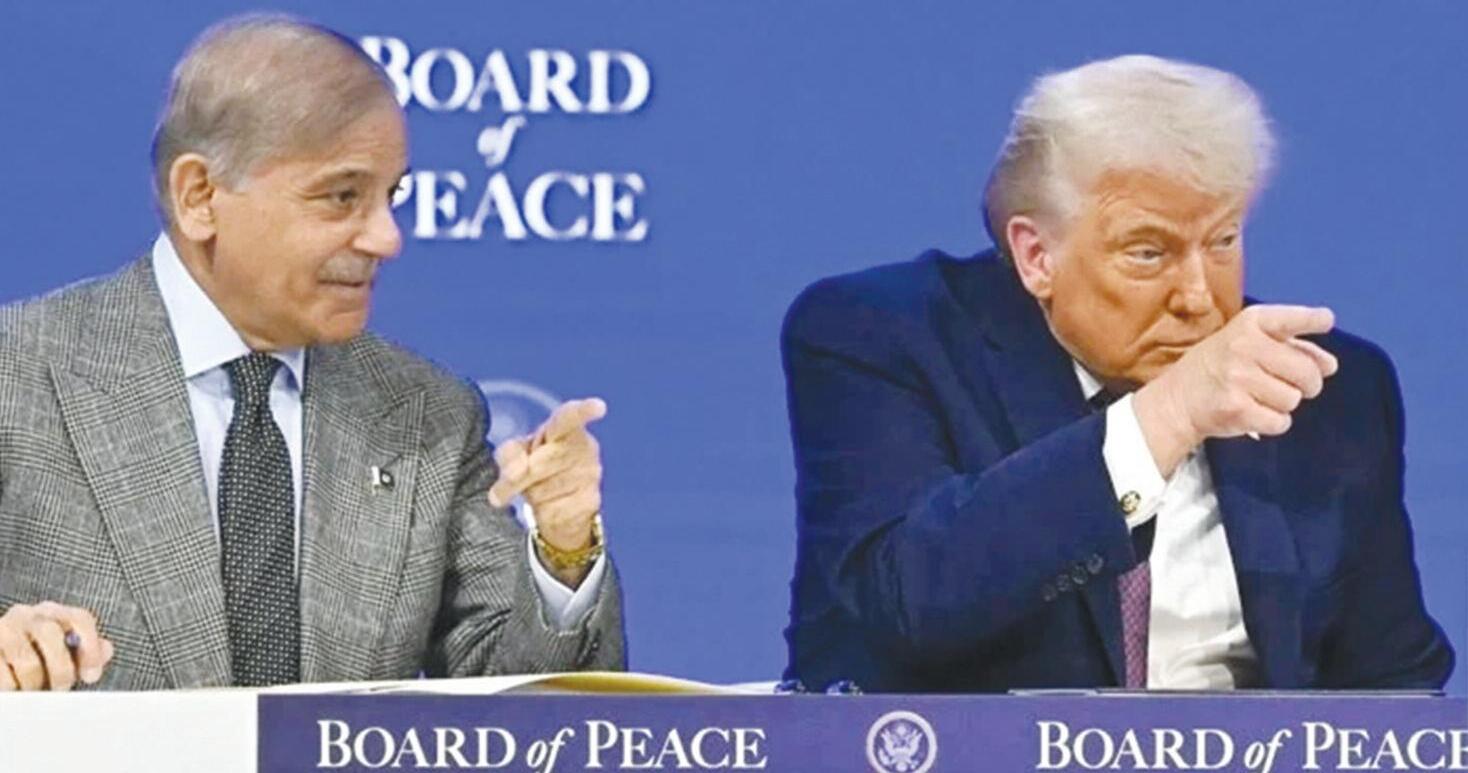
PM SHEHBA Z TO SEEK CL ARIT Y ON TROOPS FOR GA Z A IN US VISIT: SOURCES
g
g WE WILL NOT BE PART OF ANY OTHER ROLE, SUCH AS DISARMING HAMAS IT IS OUT OF QUESTION: PM'S AIDE
g DURING WASHINGTON VISIT, PM SHEHBAZ WANTS TO BETTER UNDERSTAND ISF GOAL AND WHAT AUTHORITY THEY WERE OPERATING UNDER: SOURCE



Pakistan’s IT expor ts hit $2.6b in 7MF Y26, marking
20% growth YoY
Januar y IT expor ts rise 19% YoY to $374m, while net IT expor ts show strong growth; government aims for $10b by FY29
Lawmakers, policy analysts and industry representatives have warned that NEPRA’s newly approved Prosumer Regulation 2026 could disrupt consumer expectations weaken regulatory predictability and slow the adoption of rooftop solar systems in Pakistan The concerns were raised during a briefing convened by the Parliamentary Forum on Energy and Economy to examine the economic, legal and structural implications of the revised


COMMENT
I
TH E IMF review team will land up first in Karachi on February 25, moving to Islamabad on March 2, with its visit to conclude on March 11 It is supposed to engage in the standard quarterly review for the release of the next tranches under two loan programmes, the $6 6 billion Extended Fund Facility, and the $1 billion Sustainability and Fund Facility, totalling $1 2 billion Apart from the standard expressions of disappointment that Pakistan s revenue collection is not on track, the IMF review team is expected to go after corruption in a big way, with a large number of steps agreed against corruption falling due, and the review team asking about implementation
The logic appears to be that the ability of Pakistan to achieve its revenue goals depends on the honesty of Central Board of Revenue officials That requires a clean-up of government generally, and it was towards this end that the IMF conducted a Governance and Corruption Assessment Report last year, which resulted in a number of steps which the government had promised to take They included both federal and provincial officials above a certain level having to file reports of assets owned This is one of the steps officials are doing their best to avoid Who better than taxmen would know the result of such declarations? The IMF has not used this to target the CBR alone, but all forms of government, almost as if it believes that unless corruption is controlled in all departments, it will not be possible to control it in any one This may seem a little like the PTI’s policy of ‘thorough’, but it should be remembered that it was the PTI government which developed problems with the IMF over issues of sovereignty
The government has pledged frequently enough that this present IMF programme would be the country’s last However, all that would mean is that while receiving no money the country will follow the reforms introduced The opposition held its feet to the fire over the governance and corruption diagnostic report and there is no reason to expect that it will refrain with respect to the actions However the IMF may be coming too close for comfort but the government should remember that there is no justification from failing to act against corruption except to spare the blushes of senior officials who should know better

Dedicated to the legac y of late Hameed Nizami Arif Nizami (Late)
Founding Editor
M A Niazi Editor Pakistan Today Babar Nizami Editor Profit
From policy to practice: Punjab’s governance in contrast
PU N J A B’S politics has always revolved around governance outcomes rather than ideological slogans As Pakistan s most influential province, it sets the national political tone, and its chief ministers are judged on administrative control, service delivery, and public trust The contrast between Maryam Nawaz and former Chief Minister Usman Buzdar highlights two very different approaches to leadership and underscores how the ability to turn policy into practice ultimately defines political credibility Maryam Nawaz s tenure has brought renewed energy and visibility to Punjab s administration, particularly in urban centres Initiatives on sanitation, stricter municipal oversight regulatory enforcement through PERA and strengthened crime control directly address everyday civic concerns In cities like Lahore where public expectations revolve around efficiency, order, and responsiveness, these steps have restored confidence in the state s presence Departments that once lagged now operate under closer scrutiny, and public complaints are resolved with far greater urgency This visible administrative grip defines her leadership Decision-making is centralized review meetings frequent and bureaucratic performance measured against clear benchmarks In a province where governance often stalls under procedural inertia, decisive oversight creates a tangible sense of movement and control The government projects direction rather than drift Yet Punjab s stability does not rest solely on urban management The province s economic backbone is agriculture, and rural constituencies remain decisive in elections Recognizing this, Maryam Nawaz has placed agricultural reform and farmer support at the heart of governance A central element of this rural focus is tighter oversight of wheat procurement Delayed payments and middleman exploitation have long eroded farmer trust Strengthened monitoring at procurement centers and reinforced regulatory checks aim to ensure timely payments and greater transparency, signaling a government attentive to growers who rely on predictable state mechanisms Beyond procurement emphasis on regulating agricultural inputs such as fertilizers and seeds protects farmers from market manipulation and stabilizes production costs Administrative vigilance here reflects a clear understanding that rising input costs directly affect rural livelihoods and food security Mechanization and productivity enhancement have entered policy discussions as well Promoting modern farming techniques improving extension services and facilitating access to updated research are critical to raising yields Coordination between agriculture departments and district administrations
ensures policies reach the field level, not just Lahore Farm-to-market roads and improved storage infrastructure further cut post-harvest losses and reduce transportation bottlenecks
Water management remains central to Punjab s agricultural sustainability Structural irrigation reform is a long-term task, but attention to canal maintenance and equitable water distribution improves crop reliability Climate variability adds urgency, and agricultural governance must adapt to shifting rainfall patterns and rising temperatures Proactive measures today will determine whether these initiatives become lasting reform
Maryam Nawaz s rural outreach also demonstrates political realism Punjab s electorate expects balanced governance Pairing visible urban order with agricultural responsiveness broadens the administration’s support base The focus on implementation rather than empty announcements strengthens this strategy By contrast Usman Buzdar s tenure followed a different path Welfare expansion and development packages, including initiatives for South Punjab, were announced Healthcare coverage expanded, and regional administrative arrangements were introduced Yet weak political control limited their impact Execution lagged behind intent and coordination between departments suffered from lack of assertive oversight
Urban governance under Buzdar drew criticism for municipal neglect and delayed infrastructure projects Administrative authority appeared diluted, leaving bureaucratic inertia to dominate Agricultural and rural programmes existed largely on paper Without strong follow-through their visibility and effectiveness suffered In Punjab s competitive political environment, policies that do not deliver tangible results quickly lose credibility The difference between the two leadership models is managerial rather than ideological Maryam Nawaz prioritizes command and accountability Files move
Punjab does not reward symbolism alone. It demands leadership capable of aligning institutions, protecting farmers, strengthening cities, and delivering measurable outcomes. In the contrast between assertive oversight and passive administration lies the story of PunjabÊs current political moment. Effective governance is defined not by promises, but by the ability to make the system work for every citizen, from urban neighborhoods to rural fields

O
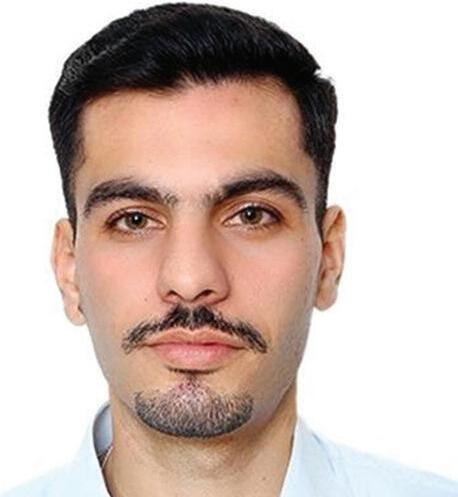
that a nuclear war cannot be won and must therefore never be fought For instance if two or more nuclear armed countries cause unacceptable damage to each other no one will take a risk of starting a nuclear conflict Pakistan and India are the main actors exercising deterrence in South Asia Both states possess nuclear weapons that provide the ultimate deterrent imposing a rational and political check that discourages any slide toward fullscale conflict However the recent conflict between Pakistan and India has sparked new debate, as both countries increasingly rely on different technological weapons to create deterrence, in result nuclear deterrence no longer serves as the primary force that shapes the modern conflicts Although it remains a symbol of power it is no longer the dominant factor in Pakistan and India warfare The four-day intense confrontation between Pakistan and India in May 2025 demonstrated that nuclear weapons remained largely in the background of the crisis It was emerging technologies integrated networks and intelligent systems that ultimately shaped the dynamics of the conflict
Historically deterrence in South Asia has been understood through multiple lenses, particularly nuclear deterrence While the possession of nuclear weapons has created a climate of fear in the region, it has also influenced the conduct of conventional warfare This approach remained effective for many years however rising regional tensions have reshaped the concept of deterrence For example states strengthen their strategic positions through advanced military systems without crossing the nuclear threshold
During the Pakistan-India conflict, both countries adopted special technological approaches to counter each other Pakistan has used a Chinese defense system called the ABC system (Locked by A launched by B and guided by C); this new approach highlights the strategic significance of advanced intelligenceled and network-centric warfare Under this framework, ground radars, fighter jets, and Airborne Warning and Control System (AWACS) platforms operate in a coordinated signal environment to detect track and respond to hostile threats Pakistani officials have claimed that this
integrated system neutralizes Indian aerial attacks including the downing of five advanced aircraft such as the Rafale On the other side, India relied on western and Israeli military technologies The Indian Air Force (IAF) has employed Rafale fighter jets equipped with European-origin missiles, including SCALP EG cruise missiles and AASM Hammer guide bombs developed by France alongside the Russian-manufactured S400 missile system Furthermore India has employed Israeli defense technologies, including kamikaze drones and Heron unmanned aerial vehicles (UAVs), for intelligence, surveillance, and strike operations According to journalist and former minister of information and broadcasting Mushaid Hussain the four-day conflict between Pakistan and India illustrates competition over the effectiveness of deterrence capabilities He further argues that the confrontation provides insights into the comparative capabilities of Western and Chinese technologies From the above assessment it is evident in contemporary time conventional warfare nuclear deterrence will be insufficient to determine outcomes Rather the central issue is whether the platform can respond intelligently, adapt swiftly, and function effectively within an integrated command and control system However, nuclear deterrence continues to serve as a critical strategic foundation Particularly in regions
with ongoing rivalries such as South Asia advanced conventional capabilities are playing a role in shaping crisis dynamics and military advantages As emerging technologies such as surveillance and strike drones hypersonic missiles artificial intelligence (AI) cyber warfare capabilities and space-based monitoring platforms continue to advance their strategic significance grows The concept of deterrence is now expanding beyond the traditional framework Instead of relying solely on nuclear deterrence, states are turning to more precise and flexible technological tools These tools enable them to demonstrate strength and exert pressure Importantly they do so without escalating a crisis into full-scale nuclear conflict
The recent confrontation between Pakistan and India highlights that while the nuclear weapon remains an important strategic tool; the dynamics of warfare in South Asia are now influenced by more advanced technologies strategic integration and political manoeuvring These advancements allow the states to manage escalation, apply pressure, and gain an advantage below the threshold Consequently, the future of regional deterrence is expected to rely less on traditional nuclear weapons and more on the effective deployment of limited conventional capabilities
The writer is M Phil IR scholar from Iqra University Islamabad and a research intern at the Institute of Strategic Studies Islamabad He can be reached at ahmadkhatt4566@gmail com
Ubauro drowns in neglect
Paperless only on paper

‘Board of Peace’ a New Global
Supporters of this design argue that it addresses a chronic weakness in international peace efforts: the lack of predictable funding and sustained political attention Large upfront contributions are intended to guarantee the continuity of a professional secretariat enable rapid deployment in emerging crises, and reduce reliance on voluntary pledges that can be delayed or withdrawn as domestic politics shift Permanent members, having invested heavily are expected to remain engaged over the long term providing oversight and strategic direction Critics however see a fundamental problem in tying influence to financial capacity From a justice-based perspective, peace is not a commodity to be purchased The most meaningful contributions they argue come in the form of political risk diplomatic labour and technical expertise not just capital Governments that mediate between hostile parties, deploy engineers and administrators to fragile environments, or absorb domestic backlash for controversial peace initiatives bear costs that are not measured in dollars To ask them to pay for the privilege of participation appears to invert the moral logic of postwar reconstruction An alternative vision has emerged in response: a global reconstruction fund that separates financial contributions from governance Under this model, governments, development banks private institutions and civil society would contribute according to their capacity while decision-making would be based on expertise neutrality and regional legitimacy rather than financial thresholds Advocates argue that this approach broadens the funding base, enhances moral authority, and reduces perceptions of exclusivity The tradeoff is predictability
Voluntary funds are vulnerable to donor fatigue and political conditions and without guaranteed capital reconstruction efforts can stall and accountability can become diffuse
Participation in the Board has been
broad but uneven Official briefings indicate that roughly 35 of the approximately 50 invited governments have committed so far The list includes Middle Eastern states such as Israel Saudi Arabia the United Arab Emirates Bahrain Jordan Qatar and Egypt; NATO members Turkey and Hungary; and countries across multiple regions, including Morocco, Pakistan, Indonesia, Kosovo, Uzbekistan Kazakhstan Paraguay Vietnam Armenia and Azerbaijan Belarus’s acceptance has drawn particular attention given its strained relations with Western governments and its political alignment with Moscow
Several close US allies have declined or hesitated Norway and Sweden have refused France has indicated it will not participate, citing constitutional and institutional concerns Canada has agreed in principle but is seeking clarification Britain Germany and Japan have not taken definitive public positions Ukraine has acknowledged the invitation while expressing unease about sharing a forum with Russia Russia and China, both permanent members of the UN Security Council have not committed reflecting caution toward initiatives that could be seen as diluting the UN s central role in global conflict resolution
For the states that have joined, participation carries implications at home and abroad In Israel, the prospect of a multilateral Board shaping Gaza’s transition and potentially influencing security arrangements has sparked intense political debate Some lawmakers and coalition partners view external oversight as a constraint on Israel s freedom of action particularly on sensitive issues such as border control and any future discussion of disarming Hamas Others see international involvement as a way to share responsibility for Gaza’s future rather than leaving Israel isolated with the burden of governance and reconstruction In Iran the Board is widely interpreted through the lens of strategic rivalry with Washington Political figures and media outlets have portrayed it as an extension of US influence rather than a neutral peace mechanism warning that participation by regional states could be read as endorsement of a US-
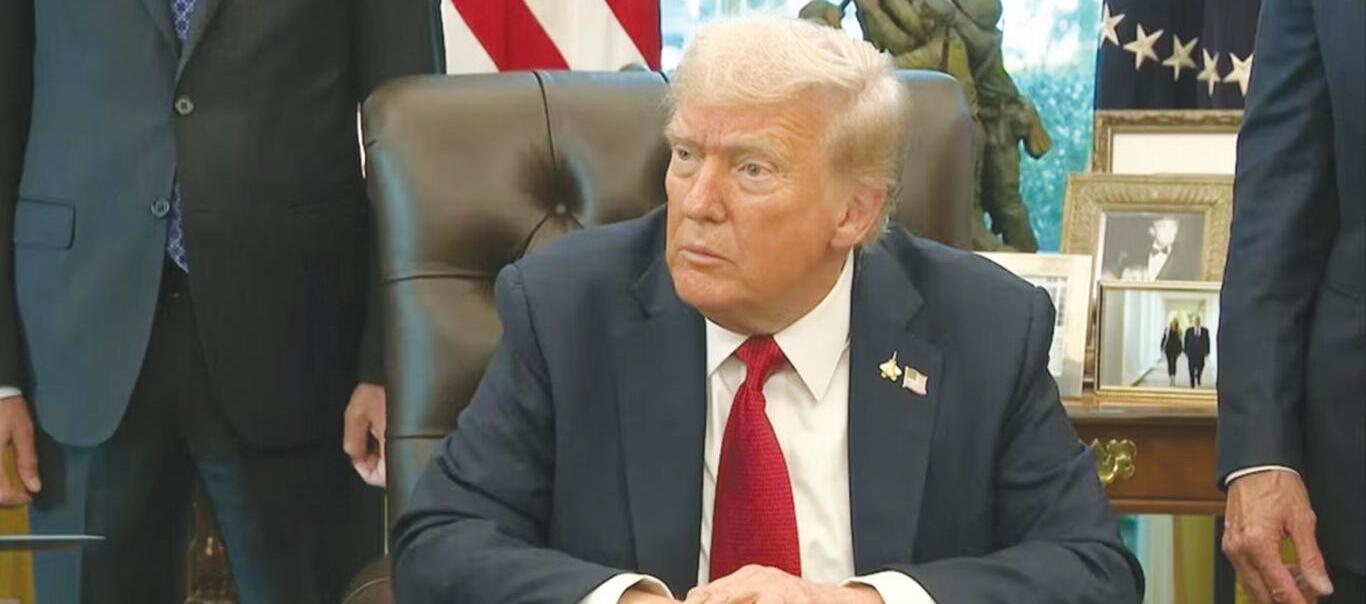
led security architecture This perception matters for governments in the Gulf and beyond that must balance relations with both Washington and Tehran One of the most sensitive issues surrounding the Board s Gaza mandate is the question of disarmament, particularly with regard to Hamas Official frameworks emphasize stabilization and the return of governance to a reformed Palestinian Authority but they are less explicit about
The
groups
that even
and intelligence capabilities of the USA and Israel have not eliminated
has fueled
that
multilateral Board, however well-funded could succeed where sustained kinetic campaigns have not For member states association with any enforcement or inspection role carries the risk of domestic backlash and regional pressure All of this unfolds against the backdrop of a multipolar international system China’s emphasis on non-interference and development-led stability the European Union’s focus on legal norms and humanitarian standards the
and decisions about whether and where the Board will operate in the future
The growing rift between Saudi Arabia
and the UAE


Q: Why has a falling out occurred over the past several months?
The trigger was in early December when the U A Ebacked forces in Yemen, especially the separatist Southern Transitional Council, moved into two provinces of eastern Yemen and upended the fragile balance of power in Yemen The Saudis saw this as highly provocative as unhelpful to the anti-Houthi coalition in Yemen and as a threat because of the Yemeni-Saudi border to Saudi security And the U A E s initial advance was also on the same day Gulf leaders were meeting in Bahrain So, in Riyadh, it was seen as a major provocation that a close ally, such as the U A E , would green-light an advance that was seen as so antithetical to Saudi interests
The U A E and Saudi Arabia were initially part of the same anti-Houthi alliance as the Houthis were seen as a proxy for Iran a regional rival for both countries The war itself has been disastrous for Yemenis, but the thinking was that, broadly speaking, the two countries were aligned on that front
Well they both went into Yemen together in March
2015 It was M B S s first major foreign-policy move after becoming minister of defense in January of that year Initially there was coördination between Riyadh and Abu Dhabi, especially between M B S and M B Z , but gradually they began to diverge as Saudi forces became bogged down fighting the Houthis, while the U A E was much more successful in pushing back the Houthis and reclaiming territory from Al Qaeda in the Arabian Peninsula So the U A E felt like it had accomplished its mission Meanwhile the U A E was coming under a lot of political pressure from the United States, and other parts of the world, about its tactics in the war So in July, 2019, the U A E announced that it was redeploying its forces and it pulled back from the anti-Houthi battle lines in central Yemen and switched to supporting militias and other groups on the ground especially in southern Yemen to insure access to a network of ports and maritime access on the Red Sea, on both sides of the Yemen-Africa coastline Then, in 2022, a truce was reached between the Houthis and the Saudi-led coalition which has more or less held for the past four or five years Since then the conflict in Yemen has been almost frozen which made the S T C s November advance so surprising Nobody saw it coming And the issue of why the U A E or the S T C would ve wanted to reignite
not have raised the issue of the Sudanese civil war with President Trump, in which the U A E has been backing a non-state militia group, the Rapid Support Forces
I want to turn to Sudan in a minute, but it does feel that, in Yemen and across the region, Saudi Arabia has acted incredibly aggressively over the past decade Now something seems to have switched and the U A E seems more aggressive What changed?
Between 2015 and about 2019, you had an alignment between the U A E and Saudi Arabia, between M B Z and M B S They were both much more interventionist and assertive even aggressive in their regional policies This was after the Arab Spring They felt that they had to be forceful in trying to push what they saw as countries that they saw supporting movements of change Turkey and Qatar were examples And the Saudis and Emiratis really wanted to limit radical change And so they went into Yemen together in March 2015 They intervened or they came together with the blockades of Qatar in 2017 orchestrating a blockade which lasted until January 2021 And the Saudis intervened in Lebanon s political affairs in November, 2017, holding the Lebanese Prime Minister hostage until he announced his resignation So the Saudis were willing to intervene to project their interests across the region and they were on the same page as the U A E in many of these cases But what changed was the missile and drone attacks on Saudi oil infrastructure in September 2019 which were assumed to be perpetrated by, but were never formally attributed to, Iran And President Trump did nothing in response He actually said, a couple of days after the attacks, “That was an attack on Saudi Arabia, and that wasn’t an attack on us ” And that sent shock waves through Riyadh and Abu Dhabi The Saudis began to pull back immediately They began to realize that they were perhaps on their own much more than they had thought And so, in the twenty-twenties, they began to de-escalate tensions with Iran, improve ties with Turkey to reduce sources of geopolitical risk, and focus on internal issues and economic growth Meanwhile the U A E was still much more willing to take risks including by identifying and backing sub-state networks in countries without functioning state institutions that could better support security and governance on the ground That s where that divergence really grew throughout the twenty-twenties
You brought up M B S ’s visit to the White House in November, where he reportedly suggested sanctions against the U A E Now we have a propaganda war on each side with real anger from people in both governments, expressed on social media and elsewhere I get that the two countries have different visions for the region, but does it seem like, given the speed with which this has spiralled out of control, there’s a deeper anger here? I think this animosity is part of each side trying to insure their narrative is the one that wins out espec
these splits have been increasing for years as the two countries approached the conflict in different ways but both sides decided to ignore the ramifications of their different approaches and now they ve become too big to ignore I n t e r m s o f e c o n o m i c s a
Saudis are having difficulties in attracting foreign investment They’ve been forced to scale back on some projects And they’re trying to move into some of the economic sectors like travel tourism and entertain-
economic competition between the countries as well w
rity-focussed, and isn’t yet a political rupture like the one during the blockade of Qatar in 2017
Do you view the U A E s increasingly aggressive actions in the Middle East and Africa as having some strong ideological component or is this more about projecting regional power and securing practical ends, like port access and other business interests? Because, when we go back to the period after the Arab Spring when this approach started, there was a sense that the U A E and Saudi Arabia were embarking on an ideological project that was in part about opposition to Iran but also to a certain strain of Islamist politics as represented by the Muslim Brotherhood in Egypt, Erdoğan in Turkey, etc I think there’s a bit of both For example, the U A E has intervened heavily in Libya in the past decade in part because the Qataris were supporting what the U A E views as Islamist groups in western Libya In response the U A E intervened in eastern Libya backing an authoritarian strongman And, starting with that decision, you now find links between Libya and Chad and Sudan that show the networks the U A E has built up in the wider regional arena
The U A E is one of the heaviest international investors in Africa A lot of it is economic There are heavy investments in renewable energy and infrastructure for example across the continent But there is also that component of trying to push back against, as they see it, Islamist influence, by backing authoritarian strongmen who try to limit the spread of Islamist movements and groups So there is a combination of both And of course in the U A E Sheikh Tahnoon bin Zayed al-Nahyan is both the national-security adviser and the head of many of the

take a broader perspective If one out of hundreds of exhibitors wasn t being upfront about their innovation, I would not give up on the entire India s youth who are very innovative,” Bhattachary said

TOKYO ag e n C i e s
The International Monetary Fund (IMF) has warned that Japan should continue tightening monetary policy and avoid lowering the consumption tax
The IMF said in a statement on Tuesday after concluding regular consultations with Japanese authorities that the Bank of Japan is "appropriately withdrawing monetary accommodation and should continue raising interest rates gradually so the policy rate could reach a neutral level, neither stimulating nor dampening the economy, in 2027
The IMF said the Japanese central bank s continued independence and credibility will help keep inflation expectations well anchored warning the government against meddling too much in monetary policy The latest warning came as Japanese Prime Minister Sanae Takaichi aims to suspend the 8 percent tax on food and beverages for two years following the general election earlier this month framing the move as necessary support for households "Support for vulnerable households and firms most affected
‘From waste to wonder': Beaconhouse Jubilee c ampus hosts grand exhibition promoting sustainable resources
Beaconhouse Jubilee Campus Middle Section recently organized a vibrant and thought-provoking exhibition titled From Waste to Wonder centered around the United Nations Sustainable Development Goals (SDGs) SDG 13 (Climate Action) and SDG 12 (Responsible Consumption and Production) The exhibition served as a powerful platform for students to showcase their creativity while emphasizing the importance of environmental stewardship and sustainable living Through innovative artistic expression students transformed discarded and recyclable materials into stunning works of art, reinforcing the message of responsible consumption and waste reduction
A wide variety of artwork was displayed, crafted from recycled resources such as paper, plastic and glass bottles, leftover cartons, boxes, used crates, and discarded wood The students demonstrated imaginative techniques of reuse and recycling highlighting their commitment to protecting the environment and promoting sustainable practices The event was honored by the presence of distinguished guest artists, including Aliya Yousuf, Assistant Professor at IVS, known for her multi-disciplinary exploration of harmony with nature; Zabad Anwer a Karachi-based visual artist blending art design and storytelling; and Aliya Faizi recognized for her unique fusion of abstraction figuration and calligraphy reflecting human existence and spirituality
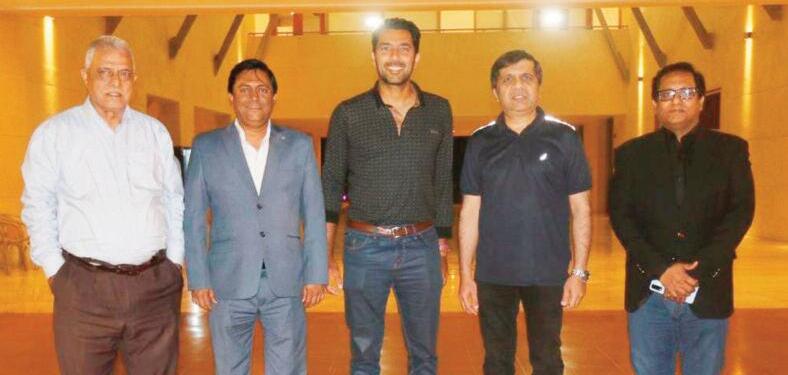

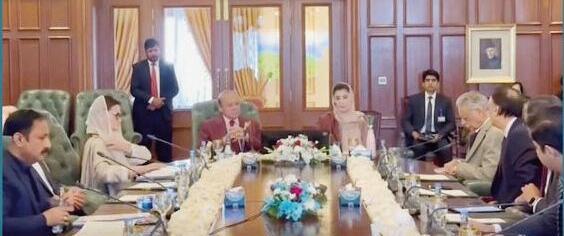
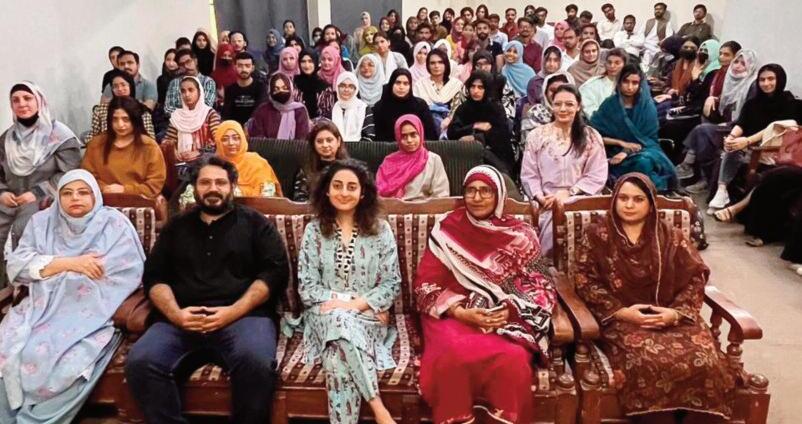
with
works
to safe and nutritious food, strengthening documented supply chains, and supporting sustainable livelihoods for dairy farmers Furthermore the prevailing tax regime eliminates the ability of organized dairy companies to invest in category development dairy development programs and long-term initiatives aimed at improving farmer livelihoods and productivity across the value chain
Randhawa chairs meeting to review sec urity arrangements for Ramazan in federal c apital
STAFF
REPORT I S L a M a B a D
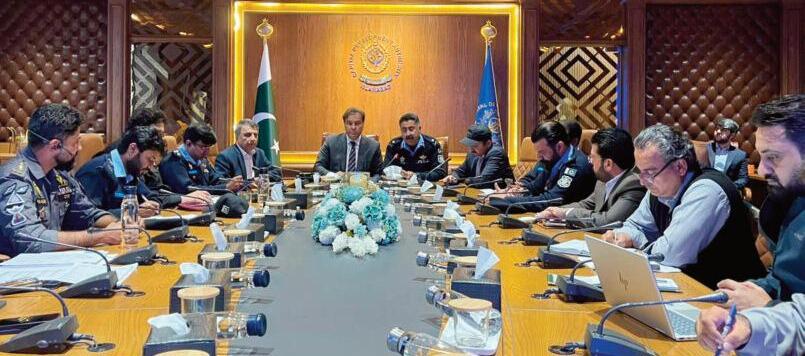
An important meeting was held on Wednesday at the CDA Headquarters regarding ensuring the improved law and order situation and security arrangements during the holy month of Ramadan in the Federal Capital Islamabad, chaired by Chairman Capital Development Authority (CDA) and Chief Commissioner Islamabad Muhammad Ali Randhawa The meeting was attended by Inspector General (IG) Islamabad Police Syed Ali Nasir Rizvi Member Engineering Syed Nafasat Raza Deputy Commissioner (DC) Islamabad Irfan Nawaz Memon along with senior officers from CDA, district administration and Islamabad Police Chairman CDA and Chief Commissioner Islamabad Muhammad Ali Randhawa said that all resources would be utilized to make the Federal Capital Islamabad the safest city in accordance with the vision of Prime Minister of Pakistan Shehbaz Sharif and Federal Minister for Interior Mohsin Naqvi During the meeting, IG Islamabad Syed Ali Nasir Rizvi apprised of the measures taken to improve the law and order situation in the city during Ramadan and for making foolproof arrangements He said that strict security measures have been taken for the citizens coming to all mosques and Imam Bargahs during the holy month of Ramadan He said
expand the fleet in fu-
Punjab’s

Abbas Supra conducted proceedings in terrorism and narcotics cases registered against Jan After hearing arguments from both the prosecution and the defence, the judge observed that the court had considered the submissions and announced that charges would be framed against the accused on the following day The court adjourned further proceedings until February 19 Jan had challenged the framing of charges in the narcotics case, arguing that no video evidence existed of the alleged drug recovery A related petition
is pending before the Islamabad High Court, which in previous hearings granted the prosecution additional time to submit forensic reports However police have yet to produce the reports before the high court
Following Wednesday s hearing, Jan posted on social media platform X, alleging that the government was pursuing a fabricated case against him and calling it an attack on journalists and press freedom He stated that he had been abducted from the premises of the Pakistan Institute of Medical Sciences on November 27 along with journalist Saqib Basheer while reporting on casualties from firing at a PTI protest He claimed that a false FIR was subsequently registered against him Judge Supra reserved his verdict after hearing detailed arguments and later dismissed Jan s application challenging the
court’s jurisdiction, confirming that the case would proceed to the formal framing of charges
The Federal Capital Police registered a case against Jan alleging involvement in terrorism and possession of narcotics following an incident at a checkpost in