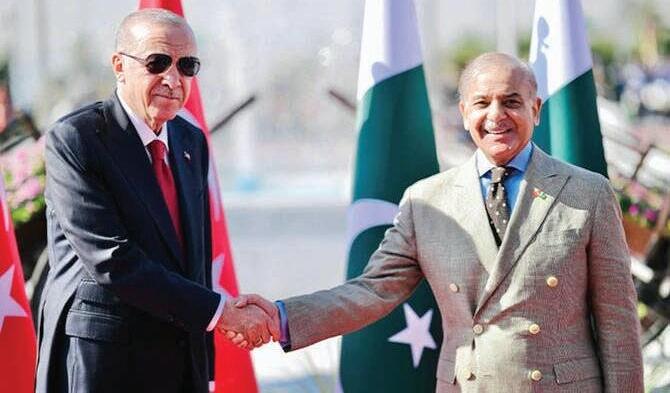
further escalation The conversation also covered recent developments in Afghanistan, where relations between Pakistan and the Afghan Taliban remain at their lowest point since the latter assumed power four years ago
tive role in promoting de-escalation and dialogue Both leaders agreed that maximum restraint by all parties was imperative to prevent
Following border clashes last October along the 2 600-kilometre frontier Türkiye and Qatar had stepped in to mediate While initial talks in Doha produced a fragile ceasefire, subsequent rounds failed to yield a durable mechanism for verification with the third round concluding without a concrete
ISLAMABAD
s ta f f r e p o r t
A delegation from the Pakistan People s Party (PPP) held a meeting with Prime Minister Shehbaz Sharif in Islamabad on Tuesday to deliberate on the prevailing political climate in the country as well as regional developments
According to a press release issued by the Prime Minister s Office the PPP delegation comprised Senator Sherry Rehman, Raja Pervez Ashraf, and Members of the National Assembly Naveed Qamar and Aijaz Jakhrani The meeting was also at-
tended by Deputy Prime Minister and Foreign Minister Senator Ishaq Dar, along with Federal Ministers Ahsan Iqbal and Azam The statement noted that the discussions focused on the current political situation within Pakistan and the ongoing regional situation in the Middle East However, no further details regarding the content or outcomes of these discussions were provided in the official communication Prime Minister Shehbaz Sharif as quoted in the statement acknowledged the PPP as an important coalition partner in the government He expressed gratitude for the PPP s support in key governmental decisions
aimed at national development and progress Sources indicated that the meeting was part of ongoing consultations between coalition partners to address both domestic and regional challenges Specifics of the discussions particularly regarding the situation in the Middle East, were not disclosed in the press release
The meeting underscores continued engagement between the PPP and the government with both sides reaffirming their commitment to collaboration on national issues Further details on any agreements or decisions reached during the meeting were not made available by officials
ISLAMABAD
s ta f f r e p o r t
Deputy Prime Minister and Foreign Minister Ishaq Dar told the Senate on Tuesday that Pakistan is actively pursuing diplomatic efforts to reduce tensions between the United States and Iran following what he described as a sudden coordinated attack by Washington and Israel on Tehran
Addressing lawmakers, Dar said Islamabad had remained in close contact with multiple countries over the past three days to encourage a return to dialogue
“Through dialogue a path of understanding can emerge he said stressing that Pakistan had immediately condemned the strike, calling Iran a neighbouring and brotherly Muslim country Dar maintained that diplomatic engagement between Washington and Tehran had been progressing positively before the escalation He referred to Prime Minister Shehbaz Sharif s recent visit to Austria during which Pakistani officials met Rafael Grossi, head of the International Atomic Energy
Agency According to Dar Grossi had expressed optimism that negotiations were heading in a constructive direction He also cited a late-night conversation with Oman s foreign minister, who informed him that the most recent round of US-Iran talks had concluded “on a positive note” The Omani envoy later travelled to Washington and conveyed to US leadership that discussions were moving forward constructively Dar added
MIDDLE EAST CONFLICT COULD REVIVE DEBT STRESS IN EMERGING ASIA , MOODY’S WARNS
NHA
uses 56% of Rs223b on PSDP funds in first half of FY26
CCP flags Rs60 billion impac t of used car impor ts on auto industr y
global assemblers including Hyundai Motor Company Nissan Motor Corporation Chevrolet and Fiat exited the market To address the issue, the commission has recommended limiting personal import schemes to genuine use strengthening enforcement introducing a structured import mechanism through authorised dealers and allowing only environmentally compliant vehicles under a stable and transparent policy framework
Operation
Diamer-Bhasha dangers
Even though its safet y is not assured, construc tion is going ahead
TH E Diamer-Bhasha Dam with the concrete pouring for the roller-concrete-compacted dam scheduled for this year, even though there is still a worrying lack of data about the seismic risks A report in this newspaper ’s Profit magazine detailed the worrying fact that the Dam is being built in the absence of sufficient Global Navigation Satellite Systems or earthquake focal mechanism data WAPDA has fixed values by measuring the level of shaking experienced by the site during the 2005 earthquake in Kashmir, which occurred hundreds of missiles away, and cannot be seen as providing a standard, The area is subject to multiple seismic events, with the US Geological Survey having recorded 526 seismic events in the area since 2017 registering 4 0 or more on the Richter scale thus averaging over 50 events a year The area is firmly in the seismically active area of the Himalayas, where there is major tectonic-plate activity, and which is unrecorded
Though WAPDA is trying to provide mitigation measures, there is no guarantee that there will not be an earthquake sooner or later Indeed unless the Dam has exhausted its life and its spillways have been opened, an earthquake could make it burst, in which case, estimated Lt Gen Safdar Butt, a former WAPDA Chairman, it would not just wipe out the Tarbela Dam, but also every barrage on the Indus down to Sukkhur General Butt was one of the Army’s few generals with a doctorate, in his case in hydrology, so his warning should be taken seriously The Dam is attractive Not only does it store 6 4 million acre feet of water, adding to an already low 13-14 MAF, but it is expected to add 4500 MW of hydel energy to the existing 10,251 MW
However, is it safe? There is a difference between courage and foolhardiness The dam, which is being built on a self-financing basis cannot be left to the fates because not only is it valuable in itself but because its destruction by earthquake would lead to massive destruction downstream, taking the country, in General Butt s words, back to the stone age Not only is it necessary to compile the necessary data, but work out how the dam design needs to be modified to accommodate that data, replacing the guess work on which it is presently based
Dedicated to the legac y of late Hameed Nizami Arif Nizami (Late) Founding Editor
M A Niazi Editor Pakistan Today Babar Nizami Editor Profit
The importance of the two sessions
An autopsy telling us what we already know
Amini-brouhaha has erupted over whether or not the Democratic National Committee has buried an “autopsy” report on its party loss in the 2024 presidential election Some fear that the report isn t being released because it suggests the defeat was the Harris campaign s failure to break with the Biden administration s disastrous policy that enabled Israel s sustained genocidal assault on Palestinians in Gaza As a result, some groups are charging the DNC with a coverup and demanding that the autopsy report be released I’ve been on the DNC for more than three decades and am no stranger to how the party handles or avoids handling issues involving Palestine/Israel In 1988 I spoke from that year s convention podium introducing Jesse Jackson s platform plank calling for “mutual recognition, territorial compromise, and selfdetermination” for both Israelis and Palestinians For my efforts I was asked to withdraw from the DNC because party leaders were concerned that Republicans would use my membership as an issue in the campaign (I was reinstated in 1993)
I served 16 years on the party s Executive Committee and 11 as co-chair of its Resolutions Committee On eight occasions, I presented testimony arguing that the party needed to acknowledge Palestinian rights And in 2016 I was appointed to serve on the Convention Platform Drafting Committee Having argued and lost this many times I am well aware of the party establishment s fear of addressing Palestinian rights Finally, this past year, I was appointed by Chair Ken Martin to serve on a Middle East Working Group, which he created to sort out how our party deals with America’s policies in the Middle East And yet I believe that for those of us who support Palestinian rights and are concerned that leading Democrats have been on the wrong side of this issue for too long, the fight over whether an autopsy report exists and, if it exists, what it might say, is not where we need to be focusing our energy
I say this because we already have all the evidence we need to write our own autopsy report that demonstrates conclusively that voters especially Democrats and Independents, are fed up with blind support for Israeli policies This is a fact And while we have hard polling data to prove it, establishment Democrats and political consultants reject this reality and continue to operate from an outdated playbook But the changes are real and can t be ignored A wide range of polls have established just how extensive they are A recent Gallup poll shows that for the first time more Americans sympathize with Palestinians (41 percent) than with Israelis (35 percent) This is especially pronounced among Democrats where sympathy for Palestinians is three times greater than it is for Israelis And a John Zogby Strategies poll from February shows that a plurality of Americans now view the US relationship with Israel as more of a liability (45 percent) than an asset (34 percent) Again, among Democrats the margin is three to one (57 percent to 19 percent)
This growing antipathy toward Israel translates in shifting attitudes toward policy In August of 2025 The Economist found:
n 43 percent of voters favor decreasing military aid to Israel, with only 13 percent wanting to see an increase in such aid Among Democrats the decrease/increase ratio is 58 percent to 4 percent Among Independents it’salmost the same
n Is Israel committing genocide? Among all voters 44 percent say yes and 28 percent say no Among Democrats, the ratio is 68 percent yes and just 8 percent no And among Independents, it’s 45 percent to 19 percent
Other polls show voters affirming that they’re more likely to support candidates who advance such positions and less likely to vote for those who defend Israeli policies and want to maintain
We should also join the growing number of Democratic National Committee members who are calling on the par ty to ban dark money in elections
Aon the Chinese consumer For years, critics have argued that China saves too much and spends too little, leading to global trade imbalances This year, the 15th Five-Year Plan reportedly includes a specific, top-tier objective to raise the household consumption rate toward a target of approximately 47 percent of GDP by 2030 To achieve this the government is expected to move beyond simple subsidies for cars and electronics The focus is shifting toward the silver economy elderly care and services for an aging population and the low-altitude economy which includes the burgeoning drone and short-range aviation sectors By strengthening the social safety net and encouraging services consumption, China is attempting to build a more resilient domestic market that is less vulnerable to the whims of global trade cycles and foreign tariffs This internal rebalancing is essential for the next decade of stability as it turns the vast population into a primary engine of economic demand rather than just a global assembly line The international implications of this pivot are profound As China transitions to a consumption-driven model, it offers a different kind of opportunity for the global economy For the Global South China is no longer just a buyer of raw commodities; it is becoming a critical partner in digital infrastructure and green energy
The Two Sessions will likely reinforce the highquality construction of the Belt and Road Initiative, focusing on the New Three exports: electric vehicles, lithium-ion batteries, and solar products This green transition is central to China s goal of hitting peak carbon emissions by 2030 a target that seems increasingly achievable given the country s dominance in renewable energy technologies Moreover, the legislative agenda this March is set to be particularly busy The expected passage of the National Development Planning Law will provide a more transparent and standardized framework for how these five-year plans are implemented and supervised This kind of institutional deepening is exactly what international investors have been
asking for It suggests a move toward more predictable rules-based governance of the economy By codifying these processes, Beijing is offering a clearer window into its long-term intentions, reducing the uncertainty that often plagues foreign direct investment Of course challenges remain The property sector continues to be a drag on household wealth and local government debt requires careful management Yet the tone leading into the Two Sessions is one of calculated optimism The Chinese leadership seems to have recognized that the old playbook of building more bridges and factories has reached its limit The new playbook is about efficiency innovation and the well-being of its citizens The 15th Five-Year Plan represents a deliberate attempt to modernize the state s internal plumbing upgrading 700,000 kilometers of pipeline infrastructure and digitizing the real economy to ensure that the gains of the last 40 years are preserved and shared In the broader sweep of history we may look back at 2026 as the year China finally b
power with a thriving domestic society If the policies discussed next week can successfully unlock the potential of the Chinese consumer while maintaining the momentum of its tech
Beijing A more stable consumption-oriented China is not just good for the Chinese people; it is a necessary anchor for a global economy that is currently searching for a new engine of growth
As the delegates gather, the world should look past the choreographed applause and focus on the structural reforms being codified China is attempting a difficult transition but the roadmap being laid out in the 15th FiveYear Plan suggests a country that is clear-eyed about its future and ready to lead in the industries of the 21st century The success of this gathering will be measured not by the volume of rhetoric but by the precision with which it executes this grand strategic pivot toward a higher quality of life
The writer is a freelance columnist
As the delegates gather, the world should look past the choreographed applause and focus on the structural reforms being codified China is attempting a difficult transition, but the roadmap being laid out in the 15th Five-Year Plan sugg ests a countr y that is clear-eyed about its future and ready to lead in the industries of the 21st centur y The success of this gathering will be measured not by the volume of rhetoric, but by the precision with which it executes this grand strategic pivot toward a higher quality of life
Sindh honour killing horror
DR IMRAN KHALID
TH E spectre of a direct war between Iran and the USA has long haunted the Middle East For decades hostility has simmered through proxy conflicts economic sanctions covert operations and diplomatic brinkmanship Yet the possibility of open confrontation once dismissed as too costly for both sides has resurfaced in moments of acute crisis Now that such a war has coincided with the death of Iran’s Supreme Leader Ali Khamenei the consequences would reverberate far beyond the region Ayatollah Khamenei has been at the helm of the Islamic Republic since 1989, shaping its ideological posture and foreign policy orientation Under his stewardship, Iran positioned itself as the standard-bearer of “resistance” against US influence in the region From Lebanon to Iraq Syria to Yemen Tehran cultivated alliances and armed networks that extended its reach while maintaining plausible deniability The USA, for its part, relied on sanctions, diplomatic isolation and regional partnerships to contain Iranian influence An outright war marks a rupture in this long-standing pattern of calibrated hostility The Middle East already fragile after years of upheaval, would be plunged into deeper instability The Strait of Hormuz, through which a significant portion of the world’s oil supply passes has become a flashpoint Even limited disruption would rattle global energy markets, sending oil prices soaring and straining economies still grappling with inflation and debt For South Asia including Pakistan the fallout would be immediate Higher oil prices would widen trade deficits and fuel domestic inflation Remittances from expatriate workers in Gulf states could decline if regional economies falter Moreover sectarian tensions often inflamed by regional rivalries could find new expression complicating internal security dynamics
Yet the military dimension tells only part of the story The death of Ayatollah Khamenei introduces a profound layer of uncertainty In Iran’s political system, the Supreme Leader wields ultimate authority over the armed forces judiciary and key institutions His passing would trigger a succession process overseen by the Assembly of Experts but the outcome would not be merely procedural It would shape the ideological and strategic trajectory of the Islamic Republic A leadership vacuum in wartime carries inherent risks Competing factions within Iran s political and security establishment could manoeuvre to assert influence The Islamic Revolutionary Guard Corps, long a powerful actor in its own right, might consolidate its role Alternatively, pragmatic elements could argue for de-escalation to preserve the state The direction chosen would determine whether conflict intensifies or diplomacy regains ground For the USA the optics and strategy are complex Washington has historically oscillated between pressure and engagement with Tehran A war culminating in the death of Iran’s Supreme Leader could be interpreted by some as the collapse of a long-standing adversarial structure Others however would warn that destabilising a nation of nearly 90 million people carries grave risks, including state fragmentation, refugee flows and the rise of extremist elements Regional actors would also recalibrate Israel Saudi Arabia and the United Arab Emirates each with distinct stakes would assess whether the weakening of Iran en-
History suggests that wars rarely unfold as planned. What begins as a limited strike can spiral into protracted conflict. In the interconnected world of today, regional wars seldom remain confined. Cyberattacks, drone warfare and proxy engagements blur traditional battle lines.
hances their security or invites new uncertainties Russia and China both of which have deepened ties with Tehran in recent years, would weigh how to protect their interests while avoiding entanglement in a broader conflagration Beyond geopolitics lies the human cost Iran s population is young urban and increasingly connected to the wider world Years of sanctions have strained livelihoods yet national pride remains strong A war could unleash suffering on a scale unseen since the Iran-Iraq conflict of the 1980s Civilian infrastructure already under pressure would be vulnerable The international community divided though it may be would confront the challenge of delivering humanitarian relief amid hostilities The global economy would not remain insulated Energy shocks would ripple across continents Shipping lanes could become insecure Financial markets sensitive to geopolitical tremors would react sharply Developing economies especially those dependent on energy imports would bear disproportionate pain Multilateral institutions might urge restraint, but their leverage would depend on the willingness of major powers to prioritise stability over confrontation
At a deeper level the death of Ayatollah Khamenei symbolizes the end of an era He embodied the continuity of Iran s post-revolutionary order, bridging the fervour of 1979 with the complexities of the 21st century His departure could open space for generational change Whether that change tilts toward reform or retrenchment would hinge on internal dynamics as much as external pressures History suggests that wars rarely unfold
Gulf states are caught in middle of the US-Israel war on Iran
as planned What begins as a limited strike can spiral into protracted conflict In the interconnected world of today, regional wars seldom remain confined Cyberattacks, drone warfare and proxy engagements blur traditional battle lines The Iran–US rivalry has already manifested in these domains; a full-scale war would expand them For Pakistan and other middle-income countries the prudent course would be diplomatic engagement and neutrality Islamabad has historically sought balanced relations with both Tehran and Washington In a scenario of war and leadership transition in Iran quiet diplomacy could serve regional stability The Organisation of Islamic Cooperation and the United Nations might also attempt mediation, though success would depend on political will Ultimately, the prospect of an Iran–US war, compounded by the death of Ayatollah
Khamenei underscores the fragility of global order It reminds policymakers that entrenched hostilities, left unresolved, carry latent dangers The international community has witnessed the costs of miscalculation before in Iraq, Syria and beyond Preventing another conflagration demands foresight restraint and a willingness to pursue dialogue even amid
They
The
T h e f i r s t H e b r e w
O r i e n t a l i s t s
a
tainable
That
rests on the realisation that interceptor stocks are finite Iran can throw cheap drones at a wide map, often through decentralised networks that - since the killing of the supreme leader, Ayatollah Ali Khamenei - operate with loose coordination from a central command already strained Gulf air forces will shift further towards forward defence with help from partners such as Britain and France
Every step up that ladder inches the Gulf states closer to the US-Israeli war effort The Gulf has to avoid being dragged into Israel s vision for the region: one of managed chaos in degraded states Regime change in Tehran is not within reach from the air
Israel’s approach of triggering Iran to go all-out against its Gulf neighbours risks producing a Gulf order in which the monarchies are treated as a junior partner expected to bankroll security and accept strategic decisions made elsewhere The alternative is a sovereign Gulf policy rooted in strategic autonomy and Gulf unity The Gulf ’s security architecture is still anchored to the US, yet the Gulf is not powerless It can choose where, when and how its military capabilities are used It can demand that the US limit escalation launched from or imposed upon its territory It can price access basing and cooperation as strategic assets that Washington should not mistake as entitlements It can use its weight as one of the most important pools of capital invested in the US, and its overall net contributions to American power, to insist that Gulf security is not a disposable side issue Netanyahu understands that Israel’s grip on Washington
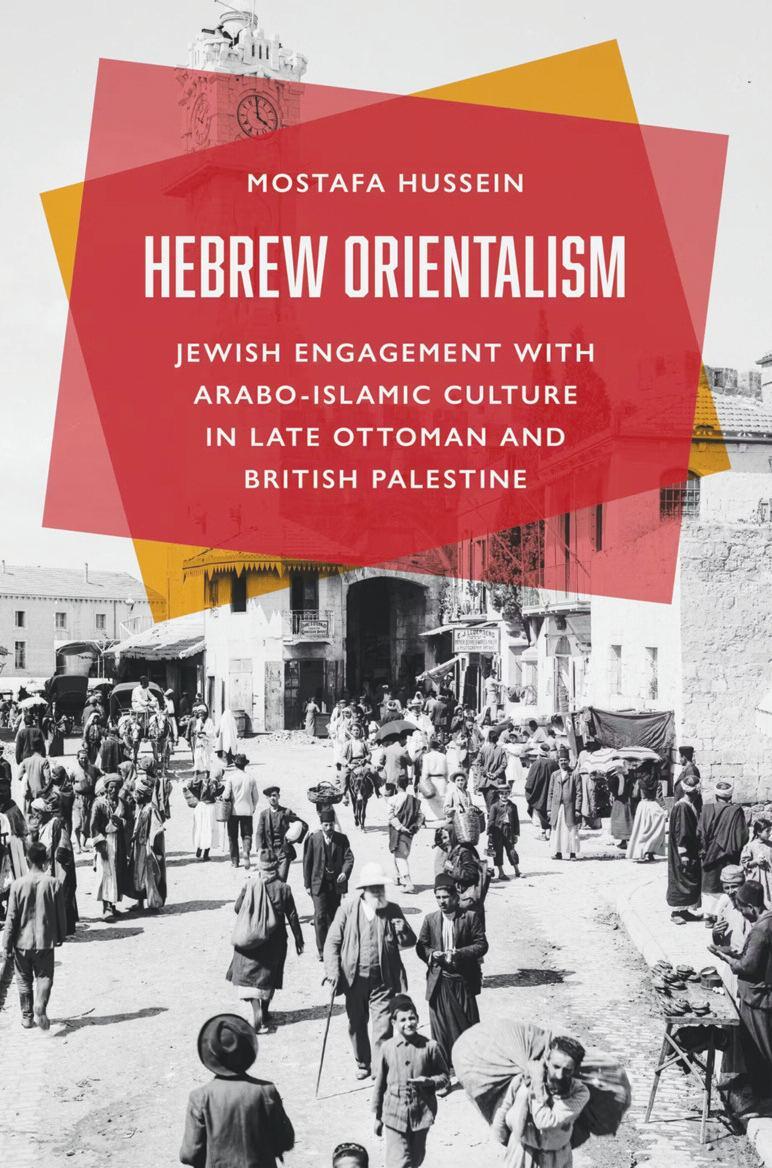
IT is often claimed that early Zionist settlers into Palestine in the late 19th and early 20th centuries were indifferent to or would ignore Arab, Muslim and Palestinian culture Mostafa Hussein challenges this view in his new book Hebrew Orientalism: Jewish Engagement with Arabo-Islamic Culture in Late Ottoman and British Palestine The book grapples with the emergence of orientalist scholarship that emerged among Jewish settlers and Palestinian Jews during this period Far from ignoring the Arab world these Zionist thinkers sought to engage with it and use it to develop a new Jewish identity Most of the writers examined by Hussein produced their works outside institutions such as universities and were thus less motivated by the incentives and views espoused by the likes of the Hebrew University of Jerusalem s Oriental Institute established in 1926 Different individuals within the Hebrew Oriental movement produced work that was in response to their own experience, circumstances, engagement and beliefs We find a variety of different views among these Jewish Zionist writers with regards to Palestine and Palestinians From 1881 following an assassination attempt on Tsar Alexander II of Russia and the outbreak of an anti-Jewish pogrom in the Russian Empire, some Jewish families started to flee to Palestine Before leaving Eastern Europe, some of them asked for the guidance from Rabbi Yehiel Michael Pines who was an ardent supporter of a Jewish national settlement in Palestine to ask him on how to treat Palestinians His advice reflected the dual nature of the 1880s early Zionist sentiment On the one hand he asserted the respectful treatment of the Palestinian neighbour, but on the other hand Jews should exert control over them and behave justly So while he was advising coexistence it was coexistence within a hierarchy Encounters between Jewish settlers and Palestinians during this period took place primarily in the countryside as many first wave Zionist settlers acquired land and became farmers who relied on Palestinian labour and agricultural know-how It is in this context we start to see the first Hebrew Orientalists ‘the unique aspect of the Orientalist approach taken by Hebrew writers in late Ottoman Palestine lies in the way they balanced their sense of nationalist allegiance with their portrayal of Palestinian Arabs These writers managed to depict the Palestinian Arabs as both competitors and individuals with innate connection to the land ’ Within the world of the Hebrew Orientalists local Jewish writers played a huge role not only mediating between European settler Jews and Arab populations but also helping the wider Jewish world to understand Arab culture and using it to create a new Hebrew culture A key figure is Jerusalemite scholar Abraham Shalom Yahuda (1877-1951), who wrote on the origins of the Arabs and traces Jewish history through Arab sources Yahuda
dr mUhammad aKram Zaheer
US AND ISRAEL MUST END MILITARY ACTION, SAYS IRAN’S FOREIGN MINISTRY SPOKESPERSON
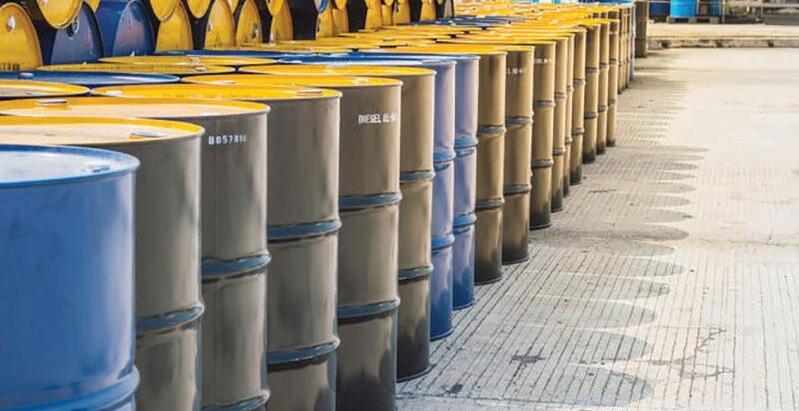
O il Prices C limb Amid Esc alating US -Israeli Conflic t with Iran
Mobilink Bank, SEDF join forces to offer inclusive MSME financing for
s leading digital microfinance bank Mobilink Bank has entered into a five-year partnership with Sindh Enterprise Development Fund (SEDF), Government of Sindh, to expand access to structured financing for micro, small, and medium enterprises (MSMEs) across priority economic sectors in the province The collaboration will unlock up to PKR 1 billion in financing by combining Mobilink Bank s lending capabilities with SEDF s markup subsidy support to reduce the cost of capital for entrepreneurs and stimulate sustainable economic activity province-wide The collaboration strengthens financing ecosystems for underserved and high-impact sectors including agri value chains livestock and dairy poultry fisheries cold storage and logistics renewable and alternative energy solutions women-led enterprises mining and mineral processing, and innovation-driven IT projects Under the partnership, Mobilink Bank will extend short, medium, and long-term MSME financing, while SEDF will provide markup subsidy support of up to one-year KIBOR or 10 percent - whichever is lower - for an initial three-year period extendable based on performance Individual projects will be eligible for financing of up to PKR 5 million with flexibility for expansion in innovative cases Commenting on the partnership, Haaris Mahmood Chaudhary, President & CEO, Mobilink Bank, said, “Small businesses are the backbone of Pakistan’s real economy They drive employment power local communities and sustain regional value chains yet many entrepreneurs continue to face structural barriers in accessing affordable finance Through our partnership with SEDF, we are aligning financial innovation with policy support to expand access where it is needed most We want to channel affordable capital directly to local entrepreneurs enable bottom-up economic growth and unlock sustainable livelihoods across the province Diplomats and Media
120x zoom, and 4K Ultra-Clear video allowing fans to capture every moment of the game with stunning clarity Advanced AI-powered tools make it easier than ever to create edit and share content while smooth performance and intelligent connectivity ensure a seamless experience
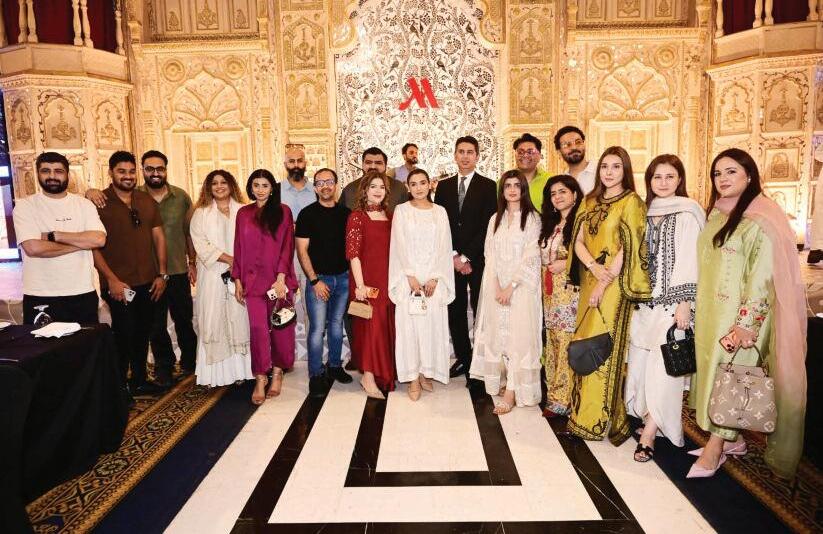
a d i t i o n a l c o l o r s l a n t e r n s a n d d e c o r a t i v e e l e m e n t s i n s p i r e d b y M o r o c c a n h e r i t a g e o ff e r i n g g u e s t s a c a p t i v a t i n g N o r t h A f r i c a n e x p e r i e n c e T h e g u e s t s w e r e w e l c o m e d w i t h a l a v i s h s p r e a d o f a u t h e n t i c M o r o c c a n c u i s i n e , i n c l u d i n g a r o m a t i c M o r o c c a n r i c e , t a g i n e , c o u s c o u s , a n d a s e l e c t i o n o f t r a d i t i o n a l d e s s e r t s T h e f l a v o r f u l d i s h e s d e l i g h t f u l a r o m a s a n d v a r i e t y o f b e v e r a g e s m a d e t h e e v e n i n g t r u l y m e m o r a b l e f o r t h e a t t e n d e e s D i p l o m a t s f r o m G e r m a n y a n d I v o r y C o a s t a p p r e c i a t e d t h e i n i t i a t i v e a n d s h a r e d t h a t s u c h g a t h e r i n g s p l a y a v i t a l r o l e i n p r o m o t i n g i n t e r c u l t u r a l h a r m o n y a n d s t r e n g t h e n i n g r e l a t i o n s a m o n g n a t i o n s P a r t i c i p a n t s a l s o h i g h l i g h t e d t h a t e v e n t s l i k e t h e M a r r i o t t R a m a d a n G r a n d M a j l i s c r e a t e m e a n i n g f u l o p p o r t u n i t i e s f o r d i a l o g u e n e t w o r k i n g a n d c u l t u r a l e x c h a n g e S p e a k i n g o n t h e o c c a s i o n , G M R a z a A b b a s s t a t e d t h a t t h e p u r p o s e o f h o s t i n g t h e R a m a d a n G r a n d M a
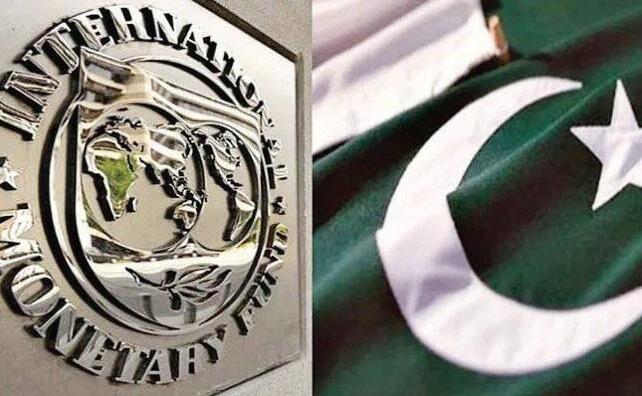
IMF ACKNOWLEDGES PAKISTAN’S MACRO GAINS, FL AGS REVENUE SHORTFALL , REFORM DEL AYS
Ejaz Chaudhry Mian Mahmoodur Rasheed, and Omar Sarfraz Cheema issued the statement through their
highlighting what they described as rapidly deteriorating security, diplomatic and economic conditions They warned that escalating terrorism linked to the Tehreek-i-Taliban Pakistan (TTP) strained relations with Afghanistan and intensifying conflict in the Middle East had destabilised the broader region Referring to the recent attack on Iran by the United States and Israel during ongoing negotiations and Tehran’s subsequent retaliation, the leaders said the developments had heightened uncertainty and security risks The PTI figures also described growing
'Zionist agenda aims to encircle Pakistan': Kh Asif warns of regional fallout of Iran War
Defence Minister Khawaja
Muhammad Asif has warned that the escalating conflict involving Iran could have far-reaching consequences for Pakistan alleging that the war is being driven by a Zionist agenda aimed at expanding Israeli influence toward Pakistan s borders In a post on X, Asif said, “Zionism is a threat to humanity
From the establishment of Israel on the land of Palestine until today every catastrophe that has befallen the Islamic world every war imposed upon it, will show the direct or indirect hand of Zionist ideology and the state ”
The minister argued that the unfolding regional situation could create a hostile alignment involving Afghanistan Iran and India effectively encircling Pakistan and placing its national security under
severe strain He cautioned that such a realignment would render Pakistan’s borders increasingly insecure and risk reducing the country to a vassal state
Asif called on Pakistanis across political and religious divides to recognise what he described as a broader conspiracy against the country Linking the current hostilities to long-standing regional tensions he framed the crisis as part of a larger struggle over Pakistan s sovereignty and strategic position
He also praised Pakistan’s nuclear deterrent and armed forces paying tribute to the country’s martyrs and veterans The defence minister commended former prime minister Nawaz Sharif for authorising the nuclear tests that declared Pakistan a nuclear power, describing the decision as a cornerstone of national security “May Palestine be free May our homeland remain strong and safe until the Day of
Judgment,” he concluded Conflict widens across region The broader confrontation continues to intensify US President Donald Trump warned that a big wave of attacks on Iran was still to come, while senior US officials indicated the campaign could extend over time and involve further casualties Washington has said its objective is to degrade Iran s missile capabilities naval assets and wider security infrastructure even as US Defence Secretary Pete Hegseth maintained that the operation would not turn into an “endless war ” Fighting has spread beyond Iran’s borders Israel said it carried out strikes in Beirut targeting Hezbollah-linked sites and senior figures after Hezbollah acknowledged launching missiles and drones toward Israel Iranian state media reported fresh missile launches aimed at Israeli targets as residents in Tehran and Beirut described explosions and scenes of panic
KARACHI
r e u t e r s
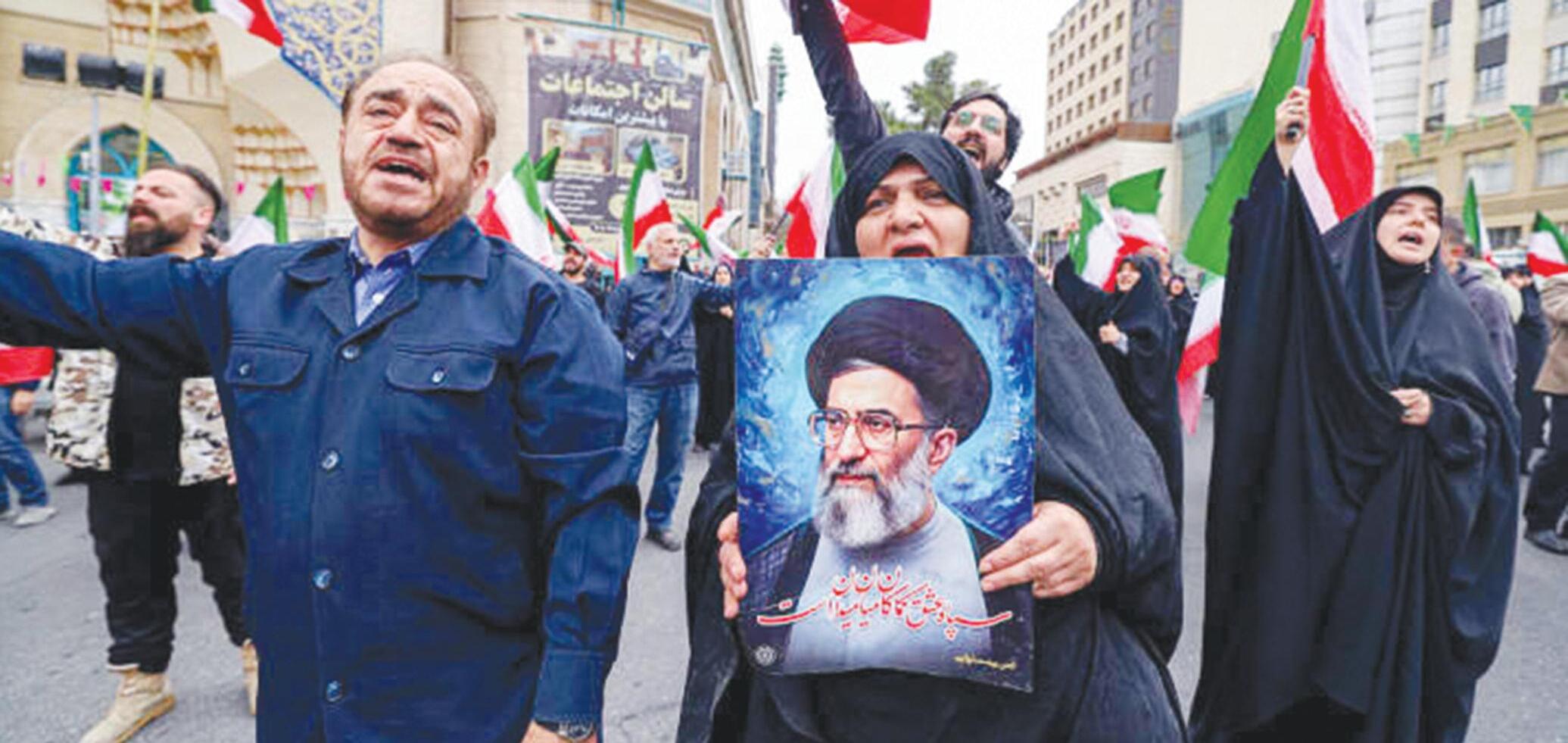
United States Marines opened fire during the storming of the US Consulate in Karachi over the weekend two American officials confirmed on Monday, marking a rare use of force at a diplomatic mission and escalating tensions amid nationwide protests over the assassination of Iran’s top leader On Sunday at least 11 people were killed when demonstrators breached the outer wall of the consulate compound following the reported killing of Iranian Supreme Leader Ali Khamenei in strikes on Iran Citing preliminary information the two US officials said it remained unclear whether rounds fired by the Marines struck or killed anyone They also could not con-
firm whether other security personnel including private contractors or local police had discharged their weapons The confirmation marks the first acknowledgment by US officials that Marines were directly involved in firing at protesters during the unrest A Sindh government spokesman, Sukhdev Assardas Hemnani, said only that security personnel had opened fire, without specifying their affiliation Security operations at US diplomatic missions are typically handled by private contractors and local law enforcement making the Marines involvement a sign of the seriousness with which the threat was perceived Reuters reporters at the scene said protesters chanted “Death to America! Death to Israel! outside the consulate Gunfire
and tear gas were heard and seen in surrounding streets as clashes intensified A video circulating on social media appeared to show at least one protester firing a weapon toward the consulate while bloodied demonstrators fled amid the chaos A Karachi police official told Reuters that shots had been fired from inside the consulate premises
The US Marines referred media queries to the US military, which in turn directed questions to the State Department The State Department did not respond to requests for comment JIT formed; report expected in 15 days Sindh Senior Minister Sharjeel Memon announced that a highpowered joint investigation team (JIT) had been constituted to probe the incident in which 10 people were officially reported dead