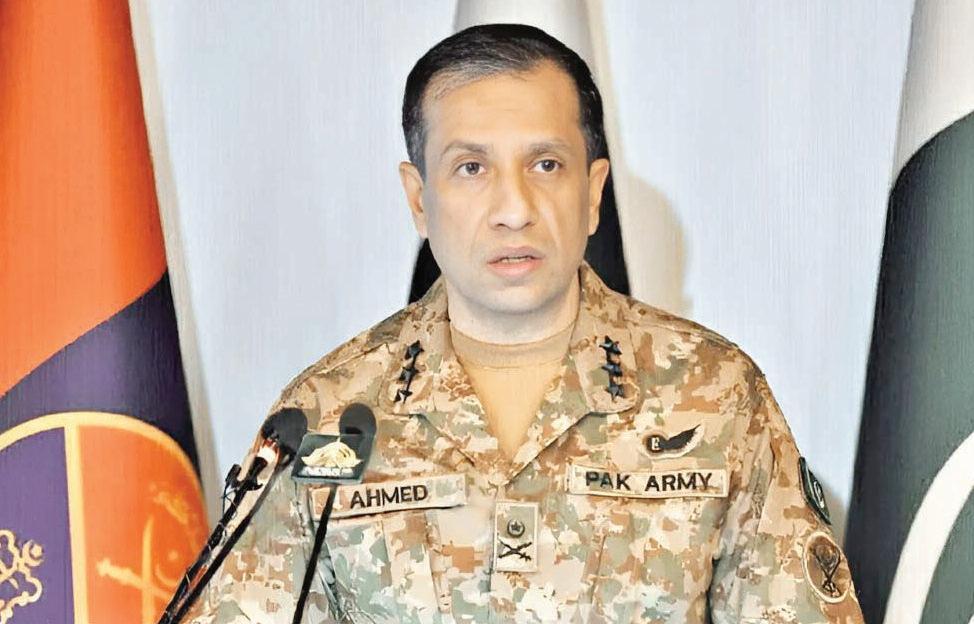
DG ISPR ASSAILS IMRAN KHAN FOR ‘ANTI-ARMY’ RHETORIC, BRANDS HIS NARRATIVE ‘CREEPING NATIONAL SECURIT Y THREAT’
g A SSERTS ARMED FORCES REFLECT ALL ETHNIC, SECTARIAN, AND SOCIO ECONOMIC CLA SSES OF PAKISTAN
g CITES ATTEMPTS TO BLOCK REMITTANCES, IMF LETTER AND CIVIL DISOBEDIENCE A S DESTABILISATION TACTICS
g LINKS RHETORIC TO ADVERSARIAL INTERESTS IN DELHI, AFGHAN KHAWARIJ FACILITATORS AND COORDINATED NODES ABROAD
g QUESTIONS PTI ’S KP GOVERNANCE, CALLS APPEA SEMENT OF MILITANTS DISA STROUS
of
the threat in question was “emanating from a delusional mindset of a delusional person who has become captive to his own ego thinking that his wishes are bigger than those of the
reference was unequivocally
at
ISPR said this individual s ego had reached a point where he thinks the world would cease to exist without him, adding that the anti-state rhetoric being generated “is no longer political it has become a national security issue ” He explained that it had become very important for the ISPR to clarify ambiguities, identify how the narrative was working, and highlight “deep collusion with external actors ” Before detailing those concerns the DG ISPR reaffirmed that the armed forces represented all of Pakistan across ethnicity language, sect, and socio-economic background and that the institution s strength stemmed from its unity under a single uniform “We strive and die daily not for some language area or political viewpoint he
2023
ISLAMABAD S ta f f r e p o r t
Foreign Office Spokesperson Tahir Hussain Andrabi on Friday suggested that the Taliban regime’s lack of cooperation may be a key factor behind the delay in the much-anticipated visit of a highlevel Turkiye delegation, which was scheduled to arrive in Islamabad last month to discuss escalating tensions between Pakistan and the Afghan Taliban regime The visit first publicly revealed earlier this month by Turkish President Recep Tayyip Erdogan during his meeting with Prime Minister Shehbaz Sharif in Baku was expected to play a crucial mediatory role amid strained bilateral ties Turkiye s Ambassador to Pakistan Dr Irfan Neziroglu who previously facilitated the Istanbul
44
said We belong to the middle, lowermiddle and poor socio-economic classes; we do not carry the flag of any political actor or elitism Lt Gen Chaudhry warned that if the armed forces were attacked for the sake of someone s ego or narcissism, then we will also come and fight bare-knuckle, there should be no doubt about that ” He repeated that the military respected all political parties and personalities but firmly reiterated its request: Please keep your politics away from the armed forces of Pakistan
The DG ISPR then spelled out how, according to him, Imran Khan’s rhetoric was harming Pakistan “First no one can be allowed to create fissures between the people and the armed forces he said You don t have a choice; this country doesn t have any other armed forces Constructive criticism was welcome, he added, but instigating people against the military crossed into dangerous territory
He pointed to multiple threats the armed forces were managing simultaneously from the Hindutva mindset across the eastern border to terrorist outfits and what he described as fitna alkhawarij” operating from Afghanistan
trilateral talks on Afghanistan, had told The News that the delegation would include the Turkish intelligence chief and key ministers However the visit has yet to materialise During his weekly briefing Andrabi said the delay may also be due to scheduling issues, but underscored that Pakistan would keep its border with Afghanistan closed until Kabul offers firm assurances that terrorists and violent elements would not be allowed to enter Pakistan He stressed that cross-border terrorism was not limited to TTP or TTA militants, noting that Afghan nationals had been involved in serious crimes inside Pakistan The border closure should be understood in this broader security context he added On Thursday s limited reopening of the Torkham and Chaman border crossings, the spokesperson
clarified that both were opened solely for humanitarian aid Pak-Afghan tensions Pakistan shut the Torkham and Chaman crossings on October 12 after the Afghan Taliban working alongside affiliated militants launched multiple attacks on Pakistan Armed Forces posts along the border The clashes, which began on the night between October 11 and 12 resulted in the killing of over 200 Taliban and affiliated militants while 23 Pakistani soldiers were martyred In response, Pakistan carried out precision strikes deep inside Afghanistan, targeting terrorists in Kandahar province and Kabul A temporary 48-hour ceasefire was later announced on October 15 at Afghanistan s request followed by an official ceasefire agreement on October 19 in Qatar, mediated by Doha and Turkiye
PM offers full
Govt to launch AI-based mobile app to curb illegal immigration, fake documentation
SERVICE
in
highlighted that nearly 44% of the National Highway Authority s (NHA) road network is located in Balochistan, underlining the importance of federal investment in the province’s infrastructure
The minister revealed that petroleum levy funds have been redirected to accelerate the construction of the Pakistan Expressway from Karachi to Chaman a project set to be completed within two years The Frontier Works Organization has been awarded the contract for the expressway In response to a question from Senator Talha Mahmood Khan provided updates on the Chitral–Shandur road project which is being developed in four packages The first package is 44% complete, the second 25%, and the third 37% The project faced delays due to land acquisition issues in Upper Chitral but the federal government has approved Rs 1 2 billion to accelerate progress The ministry aims to complete the project ahead of its December 2026 deadline Regarding the transfer of under-construction roads to the NHA Khan stated that provincial governments must formally request the NHA to take over such routes Once transferred the NHA would manage their reconstruction
and rehabilitation using federal resources Several tourism corridors in Khyber Pakhtunkhwa Azad Jammu & Kashmir and GilgitBaltistan have been identified as high-priority routes The government has offered to fund their construction, provided the provinces transfer administrative control Khan confirmed that local residents would be exempt from tolls with only tourists paying Addressing concerns raised by Senator Talha Mahmood, Khan acknowledged safety hazards on some mountainous road stretches where the lack of protective guardrails had led to fatal accidents He announced that safety rails would be installed immediately on all completed road sections
On Senator Aimal Wali Khan s concerns regarding flawed road design near Islamabad Airport Khan assured the Senate that the ministry would construct a new bridge if necessary to improve traffic flow and resolve dangerous turning points
COMMENT
NFC meets
Inaugural meeting shows that the task ahead will be rancorous
TH E first meeting of the National Finance Commission took place three and a half months after its being constituted That long hiatus was as nothing compared to the delay in its constitution, due in time to make an Award by the time a new Award was due in 2014 However, the federal proposal that the provinces shoulder the federal expenditure on the Higher Education Commission, the Benazir Income Support programme and various development programmes was rejected out of hand by the provinces They had not been melted by the federal government s presentation of its own needs, which showed that it had been forced to incur more and more debt, with the increase in debt servicing so much that it consumed all resources, to the point where debt servicing was only possible by contracting new debt
The federal proposal of a special fund to meet these expenses to be subtracted from the provincial shares did not win any takers on the Commissiion, which has to make decisions by consensus
The NFC set up a number of separate working groups, one for KP, which has come up with a number of demands, all of which mean a special share for it out of the Federal Divisible Pool There is a demand for it to receive extra to enable it to meet the expenses of the former Federally Administered Tribal Areas which were merged into KP in 2018, after the last Award In previous Awards, the expenses of the FATAs were met by the federal government out of its share of the Pool, so KP would now want that KP has got other items it wants handled, such as the extra money it has been getting for terrorism This may be problematic for the federal government has frequently questioned where the previous allocation has gone
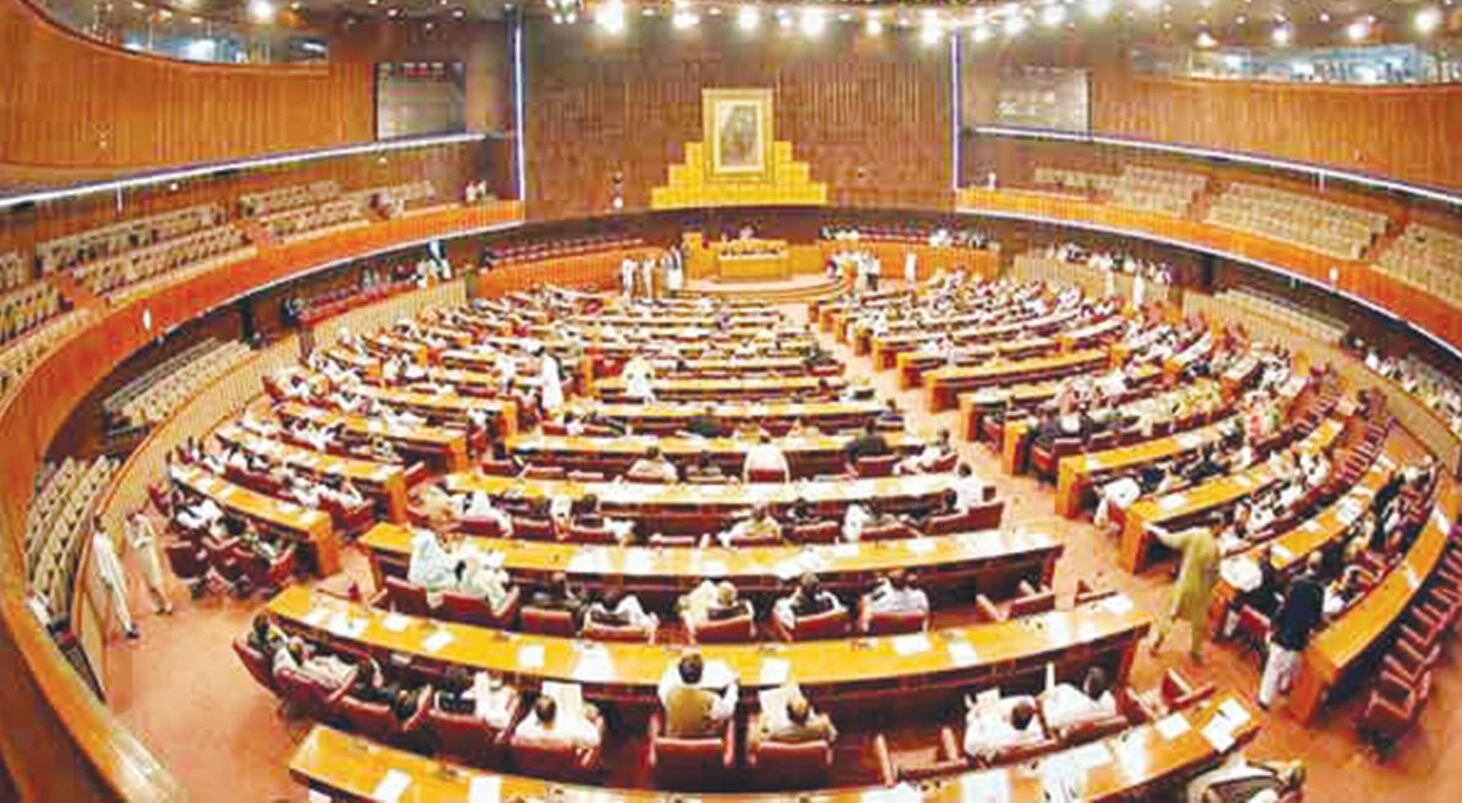
Politically, because KP is governed by the national opposition, it is likely to prove the main hurdle to the necessary consensus However, it is intriguing that none of the provinces has expressed a desire to carry forward the work of the last NFC, which for the first time added other considerations than population to the formula for horizontal distribution of the Pool of the provincial share between the provinces That the NFC has targeted mid-January for its next meeting indicates that its pace will probably enable it to complete its work by April, which will enable it to finalise an Award barely in time for the next financial year
Dedicated to the legac y of late Hameed Nizami Arif Nizami (Late)
Founding Editor
M A Niazi Editor Pakistan Today Babar Nizami Editor Profit
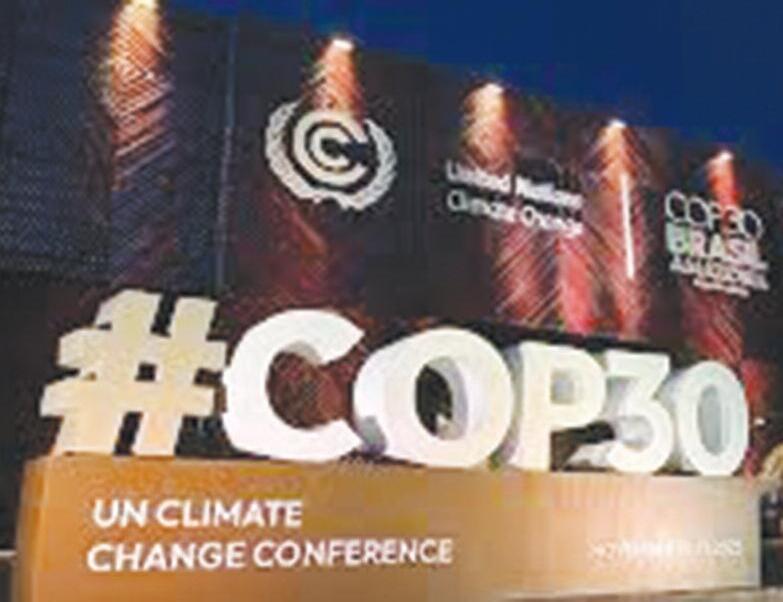
WH AT happened at COP30 in Brazil has left people not just disappointed but genuinely alarmed The world arrived in Belém carrying a sense of urgency shaped by record heat unprecedented disasters and an accelerating loss of trust in global climate cooperation Yet what we witnessed was another summit where political comfort was chosen over scientific truth, and where the biggest emitters and fossil-fuel aligned states quietly celebrated a diluted deal dressed up as
In the end, what happened at COP30 is more than a disappointment it is a warning If the world keeps choosing compromise over courage, and symbolism over substance, then the next generation will inherit not a climate system in recovery but one in collapse The meagre results of this summit are not just inadequate; they are a reminder of how easily fatal inaction can be masked as progress
Governance & institutional reforms
forms and equitable growth to reduce disparities and empower youth women, and marginalized groups, fostering social cohesion and global competitiveness Inclusive governance will address extremism through implementing the Revised National Action Plan Prevention of Violent Extremism Policy the draft National Internal Security Policy (2024-29) and the Interfaith Harmony Policy, focusing on root causes, social harmony, and peace consolidation Local Government reforms will include stakeholders consultations, institutionalizing Provincial Finance Commissions aligned with Sustainable Development Goals (SDGs) and enhancing civic engagement through digital platforms A comprehensive review of the 18th Amendment and the National Finance Commission Award will ensure fair resource distribution, while Public Account Committees and Parliamentary Standing Committees will strengthen fiscal oversight Anti-corruption and procurement reforms will be intensified by empowering institutions enhancing investigative capacity for whitecoller crimes, implementing Anti-Money Laundering regimes, and digitizing procurement through the Electronic Procurement and Disposal System (EPADS) and standardized bidding documents Rule of law improvements focus on capacity-building across law enforcement and judicial bodies, court digitization, record management, and applying Artificial Intelligence (AI) to increase judicial efficiency Public financial engagement and tax administration will be continue to be modernized via digital reforms
The National Economic Transformation Plan (2024) aims to evolve the Federal Bureau of Revenue (FBR) into a modern tax body, expanding the tax base by an additional US $81 billion by FY 28/29 The Board of Investment will promote industrialization and ease of doing business via 35 approved Special Economic Zones (SEZs) and one-step shop services The Competition Commission will establish a Centre for Excellence for enhanced policy and procurement, the Securities and Exchange Commission will drive regulatory digitization, and the Pakistan Telecommunication Authority will launch 5G renew LDI licenses and expand district-level internet services Governance and public sector reforms recommended by the Prime Minister s Committees will be implemented with a whole-of-government Approach, uniting federal and provincial stakeholders to achieve lasting peace, stability and improved governance indicators that support broader sectoral progress It is good to note that 2026 is going to be the year of Reforms and Development for Pakistan The federal government was in the process of formulating a National Reform and Modernization and it is going to be launched in due course of time to make the governance result-oriented innovation-driven and globally competitive Hopefully good things will happen in the coming months for the country on the whole and its people
The writer is Lahore-based Freelance Journalist, Columnist and retired Deputy Controller (News) Radio Pakistan Islamabad and can be reached at zahidriffat@gmail com
Raising kids differently
Ear th on edge
Much is being done quietly
MuhaMMad Zahid rifat
Majid Nabi burfat
Awhich was formerly thought of as a far-off technical fantasy has suddenly emerged as a revolutionary force in academia drastically altering how organizations conduct research educate, learn and function at a revolutionary pace never seen before Moreover, artificial intelligence is achieving remarkable breakthroughs not only in academia but also across industries by driving cutting-edge technological innovation
However this rapid transformation requires substantial effort from individuals and institutions to develop
still a significant institutional preparedness gap in the nation Many public colleges lack the financial resources staff training opportunities and computational infrastructure needed for significant AI integration In terms of digital maturity indices, Pakistan lags behind regional counterparts like India, Malaysia and the United Arab Emirates This underscores the critical need for strategic investments national AI policies and capacitybuilding programmes to guarantee cohesiveness and fairness in AI adoption throughout the nation
ing academic procedures and address a crucial issue: how can academics take use of AI s enormous promise while resolving the structural ethical and social issues it raises? The response will influence how higher education develops in the future There are different key generative AI tools, including ChatGPT, Bard, DeepSeek, Elicit Grammarly Google Gemini and Meta AI which are being used widely in academia According to recent studies on higher education in Pakistan artificial intelligence has rapidly evolved from a supplemental choice to a crucial academic tool, with students now depending on it for timely assignment completion, academic problem-solving and personalized learning A study found that in Pakistan as many as 51 percent students are using ChatGPT on the regular basis Moreover according to a recent SQ Magazine report, nearly 87 percent of educational institutions worldwide have now integrated some form of AI into their operations Likewise an estimated 92 percent of university students in the UK actively use generative AI tools such as ChatGPT underscoring how rapidly these technologies are reshaping academic practices globally
Even though students in Pakistan are quickly adopting AI technologies, there is
AI technologies are changing how students interact with knowledge in both traditional classroom settings and online learning contexts Moreover adaptive learning platforms and intelligent tutoring systems tailor training to each student s needs by modifying material, difficulty and pace Because automated grading provides effective feedback, teachers may focus their efforts on more in-depth mentoring and engagement Furthermore immersion simulations in disciplines like science engineering and medicine are made possible by AI-driven virtual and augmented reality settings, which produce experiences that would not be possible or safe otherwise AI has an equally transformative effect on research For instance in order to handle the deluge of scholarly papers scholars now use AI-assisted literature reviews which makes thorough synthesis more achievable AI s ability to identify patterns in massive datasets, facilitate predictive modelling and improve accuracy and speed in analytical tasks is particularly advantageous to data-intensive fields Consequently these developments enable academics to concentrate on
conceptual innovation and multidisciplinary investigation instead of routine duties As AI-powered solutions enhance enrollment predictions, optimize management procedures and bolster student assistance through predictive analytics, even university administration is changing Universities throughout the world are coordinating their AI integration initiatives with global frameworks like the EU AI Act and UNESCO s recommendation on the Ethics of AI These frameworks place a strong emphasis on accountability, justice, transparency and responsible data use; principles that provide helpful direction for nations like Pakistan where formal AI governance systems are still developing By implementing such guidelines organizations may make sure that innovation doesn t compromise moral principles
The potential afforded by this technological wave is tremendous AI offers greater productivity creative research avenues and highly tailored learning It creates new opportunities for exploration and democratizes access to excellent resources Nevertheless there are significant hazards associated with these advantages There is an urgent need to address ethical issues related to algorithmic bias privacy and opaque decision-making AI has the potential to exacerbate rather than lessen current disparities in the absence of transparent and accountable procedures Additionally, access to cutting-edge AI technologies necessitates strong infrastructure; high-performance computers, dependable internet connectivity and ongoing investment and resources that are unevenly distributed among institutions and geographical areas
The situation is further complicated by gaps in educators and students AI literacy Many lack the abilities necessary to objectively assess the limitations of AI technolo-
gies or to use them effectively This challenge is intensified because AI-generated work blurs the lines between authorship and evaluation, especially with growing worries about academic integrity In a time when AI support is becoming more common, universities must reconsider how learning is assessed and how integrity may be maintained
The emergence of AI-generated false material and fake citations which can mislead students and jeopardize academic standards, presents another difficulty Universities need to adapt their plagiarism rules to match the reality of generative AI, invest in sophisticated AI-detection technologies and provide students with instruction on how to spot dubious AI-generated work However maintaining academic integrity requires strengthening digital literacy across disciplines For all parties involved, these developments carry significant implications Teachers must constantly adapt incorporating AI into their teaching while demonstrating its ethical and appropriate use In addition to developing digital fluency students must cultivate the critical thinking skills needed to navigate algorithm-shaped information Simultaneously, institutions must establish a logical transparent framework for AI integration that safeguards data privacy guaran-
e s e a rch M o r e ov e r, i n s t i t u t i o n s t h a t u s e A I a s a s t r a t e g i c p a r t n e r t o a dva n c e
a n d we a ke n s d e m o c rat i c ove r s i g ht
tees
services and shape public decisions the quality and independence of training data become crucial When official datasets are incomplete obscured, or politically manipulated, the AI systems built on them risk replicating and magnifying those distortions In this moment of rapid technological adoption shrinking access to reliable public data is more than a transparency issue; it is a structural threat to the integrity of the future of our society As governments dismantle their own information systems, democracies face an uncomfortable question: how can citizens meaningfully hold power to account when the evidence itself is disappearing?
A stark example of resistance to this democratic backsliding comes from Brazil During the height of the COVID-19 pandemic the Bolsonaro administration halted the publication of key national health statistics, including infection rates, death counts, and hospital capacity data
In response a group of volunteer programmers and journalists launched Brasil IO a crowdsourcing platform that collected data and reconstructed COVID-19 figures from state health secretariats Their work became the country’s most reliable source of pandemic data, used by newsrooms, researchers, and even local governments
Mathias-Felipe de-Lima-Santos is a lecturer at the University of New South Wales Silvia Montaña-Niño is a lecturer at the University of Melbourne Angus is Professor of Digital Communication and Director of QUT s Digital Media Research Centre T J Thomson is a senior lecturer at RMIT and a co-lead of its News Technology and Society Network
For dec ades, the Israeli sec urit y elite looked different. The classic Mossad direc tor or IDF general was a sec ular A shkenazi man, of ten with roots in the Labor movement or the kibbutz. Religious Z ionists existed on the margins
teachings of Rabbi Avraham Yitzhak Hacohen Kook and his son Rabbi Zvi Yehuda Kook the founding thinkers of modern religious Zionism Gofman does not define himself as religious He is not seen putting on tefillin for the cameras or quoted by rabbis as “one of us ” Yet when he was juggling university studies and military service he chose to spend two years in the Bnei David academy in Eli in its beit midrash for army veterans Bnei David is not just another yeshiva (religious seminary) It is the flagship national-religious premilitary academy which has quietly filled entire IDF brigades with officers who wear knitted kippot and speak about sovereignty with the language of prophecy A senior figure at Eli described Gofman to me in terms that sound almost like a character reference in a rabbinic court He was like a student here while he was at the university ” the source said “He is not observant but he is very close Everywhere he goes he says he is a graduate of Bnei David He loves the place knows it well, is in touch with some of the rabbis, and feels connected to Rabbi Kook’s Torah He speaks about the academy in Eli wherever he goes He is very serious and a great blessing for the people of Israel For decades the Israeli security elite looked different The classic Mossad director or IDF general was a secular Ashkenazi man, often with roots in the Labor movement or the kibbutz Religious Zionists existed on the margins –the polite cousins who served loyally built settlements and were sometimes invited into the room but rarely put at the head of the table
Bnei David helped produce a new type of graduate Not the old National Religious Party model that saw itself as a bridge between secular Israel and the haredi (ultra-Orthodox) world but something more ambitious These were young men who believed that they and not the old socialist elite, were the rightful heirs to the leadership of the Jewish state Not a neutral “state of all its citizens ” and not a formal halachic state but a Jewish state whose deepest code should be drawn from Torah Unlike the haredi position which often keeps a careful distance from the organs of the state, the Eli model wants to be inside the cockpit Its alumni seek battalion commands senior prosecutor roles slots in the civil service seats in the Knesset and now apparently the director s chair in the Mossad The goal is not to stand outside and protest, but to reshape the ethos of the state
THE JERUSALEM POST
Zohran Mamdani credits communit y engagement for New York mayoral vic tor y
Committee (APPAC) chairman Dr Ijaz Ahmad with a story about his first political experience A day after Ali Najmi lost the race, he went to a restaurant to grab some doughnuts An uncle saw him and said he had been desperately waiting to vote for Ali,” he said Mamdani noted that his first door-knocking effort in New York City had been for Najmi whom he calls his brother and that the candidate s defeat had left a deep impression on him
Reflecting on his own campaign strategy Mamdani said he sought to reach voters of all ages and backgrounds, including those who had never voted
US excludes South Africa from G20 summit
JOHANNESBUR G ag e n c e s South Africa responded Thursday to a US bar on its participation in G20 events under Washington s presidency by saying it was a fullyfledged member of the forum and expected to be treated equally The United States took over this month the presidency of the group of leading economies after largely boycotting South Africa s tenure including the November summit, in an escalation of a months-long standoff with Pretoria In a blistering attack on Wednesday of Pretoria’s G20 run, Secretary of State Marco Rubio repeated President Donald Trump’s statement a few weeks ago that it would not be invited to G20 events in the coming year including a summit due in Miami Asked about the statement, President Cyril Ramaphosa told reporters: We are yet to receive it in writing and we will deal with that when it comes ” South Africa was “fully
or had not participated in decades A close friend of mine, Salman, told me about his 90-year-old grandfather who had lived in New York City for nearly 50 years This was the election that finally brought him to register to vote ” Mamdani recounted He added that his outreach extended beyond the American-Pakistani community, including Indians, Bangladeshis, Nepalis, Tibetans, South Asians and other residents across the city’s five boroughs Mamdani’s efforts paid off, with him securing more votes than any candidate since John Vliet Lindsay in 1965
Mamdani also shared his personal reflections on leadership and representation The only reason I stand here is because people saw themselves in me long before I could see the path ahead I ask you to give that same belief to every young person in this room Young people who want to write their own story who aim to become the leaders we have long waited for the ones who will chart a new course for our city our state and our country he said
He acknowledged the challenges he faced during the campaign, including discouragement from peers who questioned the feasibility of his candidacy “At the beginning of this campaign many said it was impossible Many asked why I would even try Some looked at me as though it was a fool s errand to dream of such a thing Mamdani said He praised APPAC for its support, crediting the organisation with helping make his journey possible Mamdani stressed that his campaign was not only about American-Pakistanis, South Asians or Muslims “What I have heard from so many in this room and from Dr Ijaz himself is the importance of making democracy reflect the city it is meant to serve That every person no matter where they come from, can see themselves in the politics of their home,” he said On fulfilling his campaign promises, Mamdani said: “I know the honour we share today is one I do not take lightly Far more rests on the success of my administration than simply delivering our ambitious agenda
CHENGDU
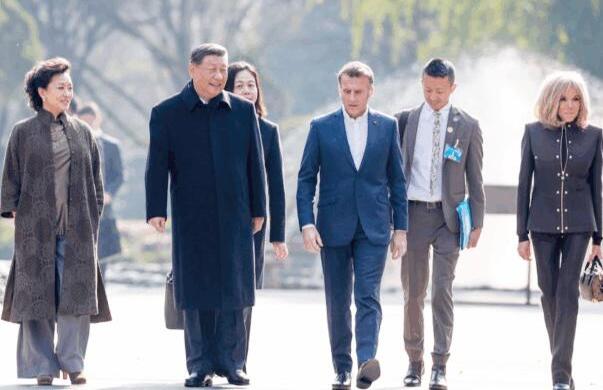
Chinese President Xi Jinping and visiting French President Emmanuel Macron had friendly exchanges on Friday in Dujiangyan in Chengdu, capital city of southwest China’s Sichuan Province
Upon their arrival Macron and his wife Brigitte Macron were warmly received by Xi and his wife, Peng Liyuan Welcoming them to Sichuan, known as the “Land of Abundance,” Xi recalled his visit last year to the Hautes-Pyrenees Department at Macron s invitation Xi said he believed that Macron s visit will help deepen his understanding of China
In Dujiangyan, the two couples strolled and conversed along Yangong Path before taking seats at Huaigu Pavilion where they enjoyed tea by the waterside and held wide-ranging discussions on global affairs
The Dujiangyan irrigation system is the world’s only ancient irrigation project still in operation today and also one of the earliest successful practices of harmonious coexistence between humanity and nature, Xi said, adding that its construction process fully reflects the Chinese nation’s spirit of constant selfimprovement fearlessness in the
face of hardship, and courage to forge ahead “Every time I come to Dujiangyan I can deeply feel the greatness of our ancestors in adapting to local conditions following the natural course achieving harmony between human and nature, and harnessing water resources for the benefit of the people ” Xi said “From this I draw wisdom for state governance
Noting that the French people also possess a spirit of perseverance, Xi said China and France should be in a better position than other countries to understand and respect each other Hailing that the irrigation system built over two millennia ago still functions effectively
today, Macron said it is an impressive testament to the industriousness and wisdom of the Chinese people Both France and China boast a long and rich history and cultural heritage and the two peoples have a shared aspiration for a better life, Macron said, adding that through cooperation, France and China can jointly pursue development and prosperity and bring benefits to the
CM MARYAM UNVEILS SWEEPING PERA REFORMS TO BOOST TRANSPARENCY, PUBLIC TRUST
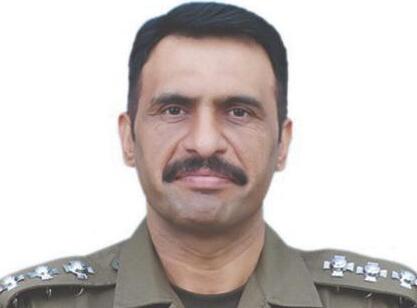
Capital City Police Officer Lahore Bilal Siddique
Kamyana on Friday emphasized that effective implementation of the amended Motor Vehicles Ordinance (MVO) is
Customs foils MDMA
Tablets smuggling wor th Rs299 791m at Karachi Int’l Mail Office KARACHI
Collectorate of Customs Airports Karachi, seized 9,455 MDMA (ecstasy) tablets valued at Rs 299 791 million during a targeted inspection The narcotics were found concealed inside speakers and LED lamps in a parcel that had arrived from Germany The shipment had been falsely declared as containing clothes, socks and music boxes ”Customs authorities have initiated further investigation to identify the recipients and facilitators of the smuggling attempt FBR reaffirms its commitment to maintaining strict vigilance and preventing smuggling through all channels, including international mail
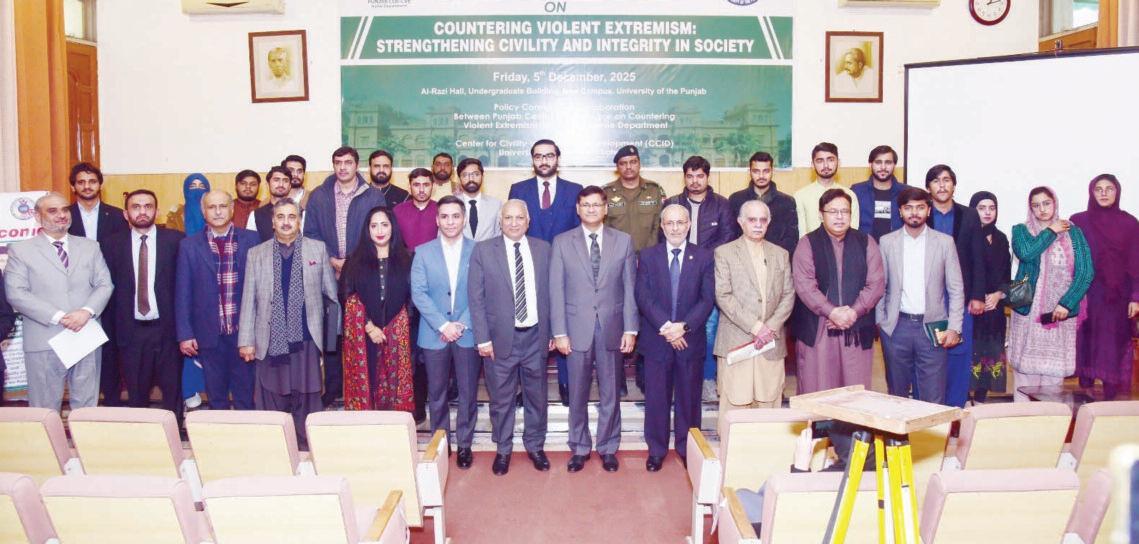
tremism landscape
Chairman, DGs and Directors of FIA, DG Passport & Immigration, and representatives from all relevant departments
Law Minister robustly defends FBR authorit y to obtain taxpayers bank data
ISLAMABAD s ta f f r e p o r t Law Minister Azam Nazeer Tarar Friday robustly defended the Federal Board of Revenue s (FBR) legal authority to obtain and communicate bank information to taxpayers, elaborating on that such inquiries were fully protected by law and consistent with global anti–money laundering regimes Responding to a calling-attention notice moved by Senator Asad Qasim regarding FBR text messages sent to filers revealing their bank balances and transaction amounts, Tarar said financial scrutiny was an integral part of tax regulation You cannot say FBR should not ask questions,” he asserted “Banks are legally bound to provide information and worldwide tax evasion is now treated as a predicate offence under AML frameworks He said modern compliance mechanisms required transparency between taxpayers and regulators If someone has five crore rupees in their account but has not declared it, and FBR sends a reminder, there should be no objection,” he maintained Earlier Minister for Parliamentary Affairs Dr Tariq Fazal Chaudhry confirmed that the FBR had issued messages to both filers and non-filers where discrepancies were detected between declared income and bank data
G ovt reaffirms dialogue offer as S anaullah urges PTI to rejoin talks
Adviser on Political and Public Affairs Senator Rana Sanaullah on Friday reaffirmed that the government s offer of political dialogue to the Pakistan Tehreek-eInsaf (PTI) remains open Responding to a point of public importance raised by opposition Senator Mishal Azam during a Senate session Sanaullah said Prime Minister Shehbaz Sharif s call for talks with the opposition still stands, stressing that political disputes can only be resolved through constructive engagement The premier has repeatedly invited the PTI whose founder former prime minister Imran Khan remains in jail to resume reconciliation talks most recently during the four-day Pakistan-India armed confrontation Formal talks between the PML-Nled government and the PTI began in late December following months of
heightened political tensions Three rounds were held on December 27 January 2, and January 16 However, the process stalled when PTI declined to participate further initially claiming that Khan had cancelled the talks and later saying they were only paused After PTI skipped the fourth round the prime minister proposed forming a parliamentary committee to take the process forward a proposal rejected by PTI During Friday’s proceedings Sanaullah urged the PTI leadership to return to the negotiating table remarking that democracy progresses through dialogue, not deadlock He lamented that PTI leaders are unwilling to speak to us,” while those they wish to engage with “are not prepared to talk to them ” Commenting on meetings with the jailed former prime minister he said any interaction with under-trial prisoners must comply with jail rules and public safety considerations Such
meetings cannot be permitted if they risk disturbing public order he added Sanaullah also stated that if the opposition wants to propose a parliamentary committee they must first secure clarity and instructions from their own leadership TALAL LIKENS IMRAN TO MQM FOUNDER
Separately, Minister of State for Interior Senator Talal Chaudhry claimed that concerns about Imran Khan’s political role “were raised two decades ago ” alleging that the PTI founder sought to discredit national institutions He argued that PTI s actions were against the country and said the party “cannot be classified as a political organisation ” Chaudhry said the government would carefully consider the points raised by the military spokesperson in his latest briefing recalling how MQM-P had distanced itself from its founder Altaf Hussain
be the final hearing in the case During the proceedings, Mazari reportedly told the judge with a smile, “Give me the sentence of seven years, I am ready Judge Majoka did not respond At the hearing, the state counsel submitted final written arguments Chattha who is representing himself filed an application seeking the submission of a statement under Section 342 of the Criminal Procedure Code a formal opportunity for the accused to respond to the evidence presented against them He also submitted a list of witnesses, suggesting they could testify online if required Chattha argued that during cross-examination the state counsel had received a questionnaire containing 33 questions I did not rely upon it, he said, adding that he and Mazari had asked for time to respond The court maintained no such request had been made Chattha further claimed the 342 response submitted by the state did not belong to them He complained that they were not given a copy of the order requested a day earlier, and said the case had been heard five times, during which three of their applications were dismissed The court issued notices to the prosecutor regarding Chattha’s application District Bar President Naeem Gujar Islamabad Bar member Raja Aleem Abbasi and former High Court Bar President Riyasat Ali Azad were present during the hearing