


Welcome to the 154th issue of the Aussie Painting Contractor Magazine.
For the last magazine of the year here is what we have achieved for our industry. Aussie Painters Network (APN) strengthened its long-standing commitment to supporting the painting and decorating industry across the country. This year marked the first time APN formally captured the scale of its work, highlighting the impact created through training, workforce development, community engagement and industry advocacy.
APN took part in more than 100 events, forums, school visits and industry programs, contributing meaningfully to conversations around training quality, supervision, recruitment and apprenticeship pathways. More than 1,000 young people and jobseekers were introduced to painting careers, 105 apprentices commenced employment or new training contracts, and 36 completed their apprenticeship. Engagement grew across 32 schools and regional communities, with a 35% increase in apprentice participation.
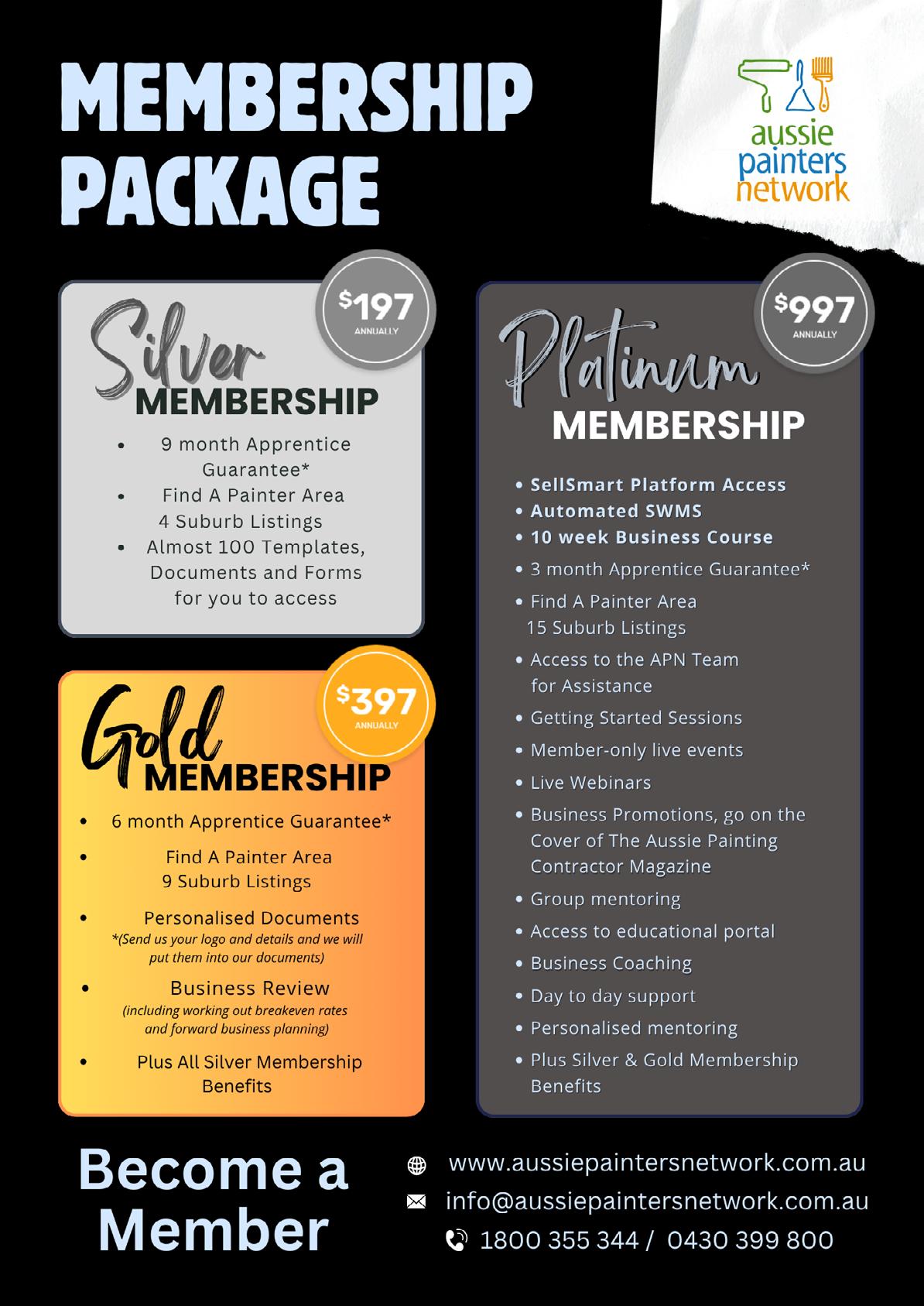
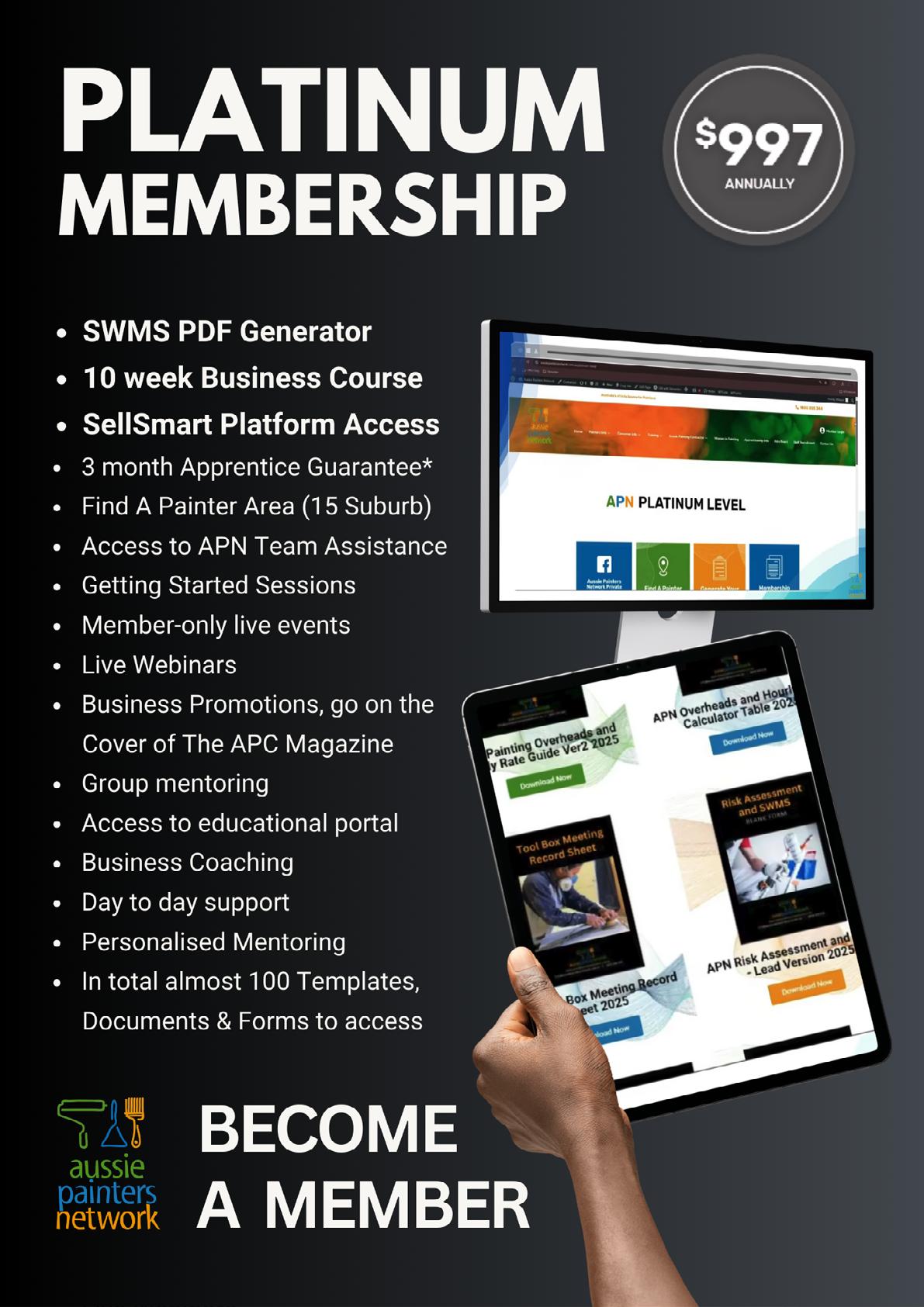
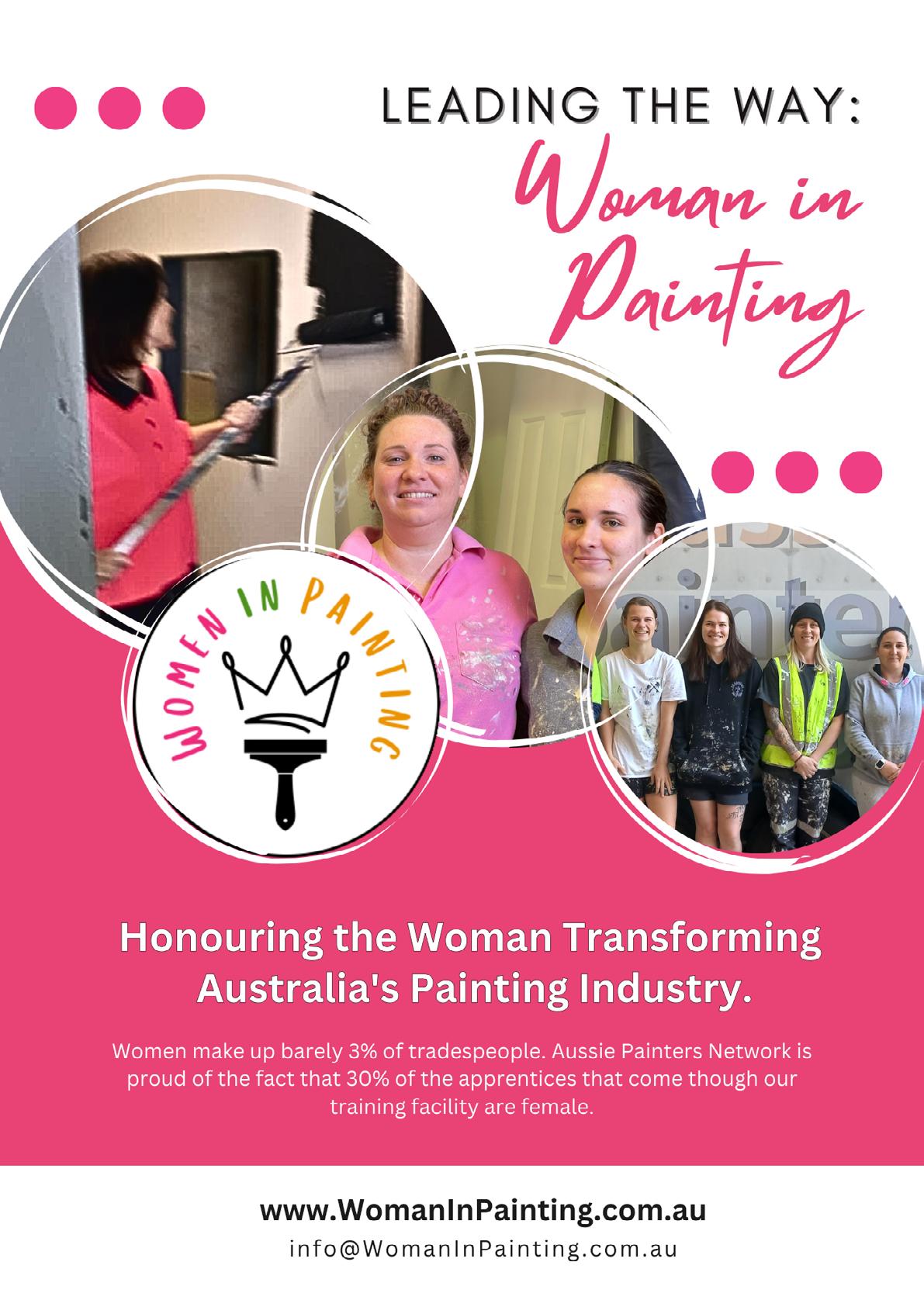
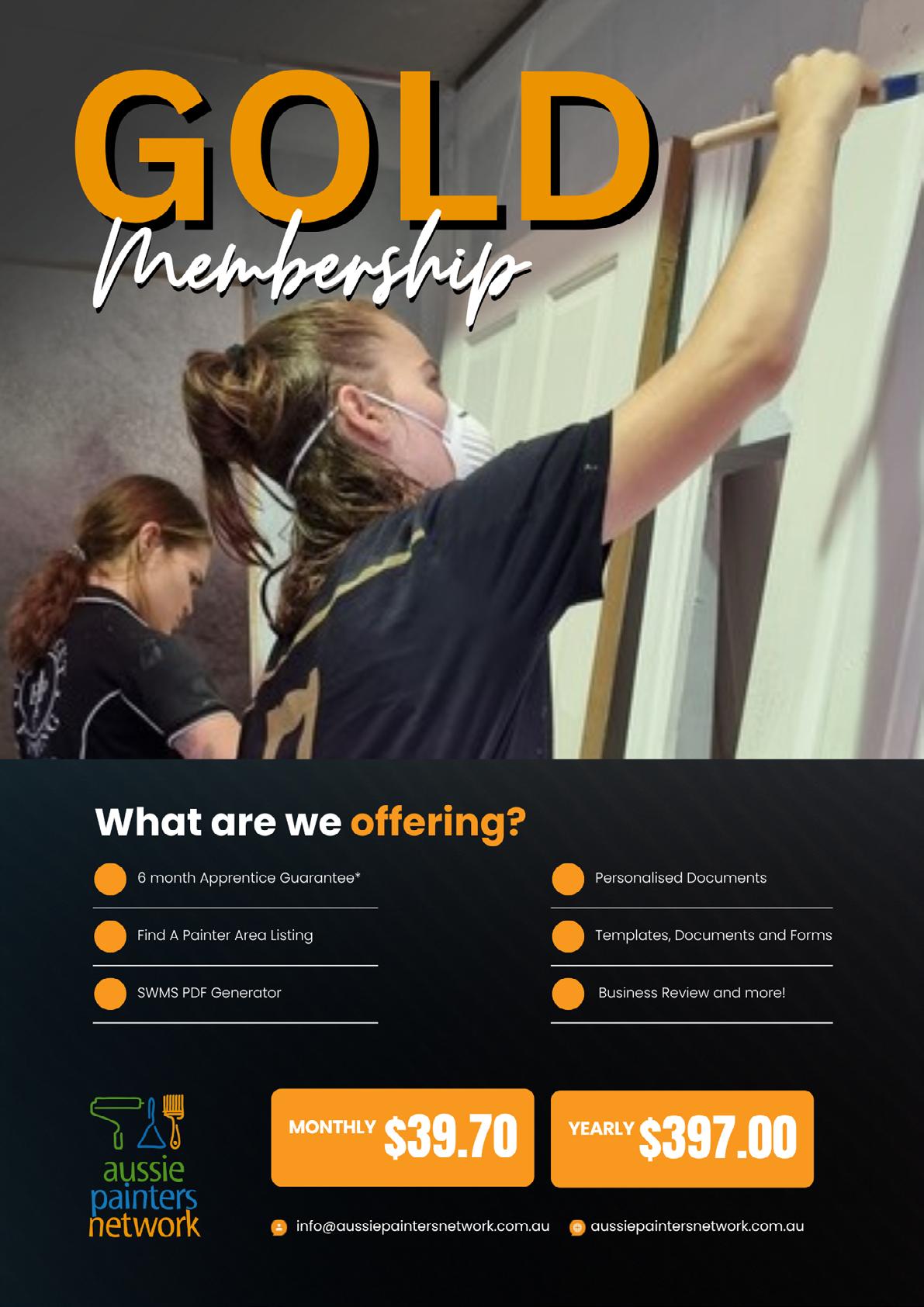
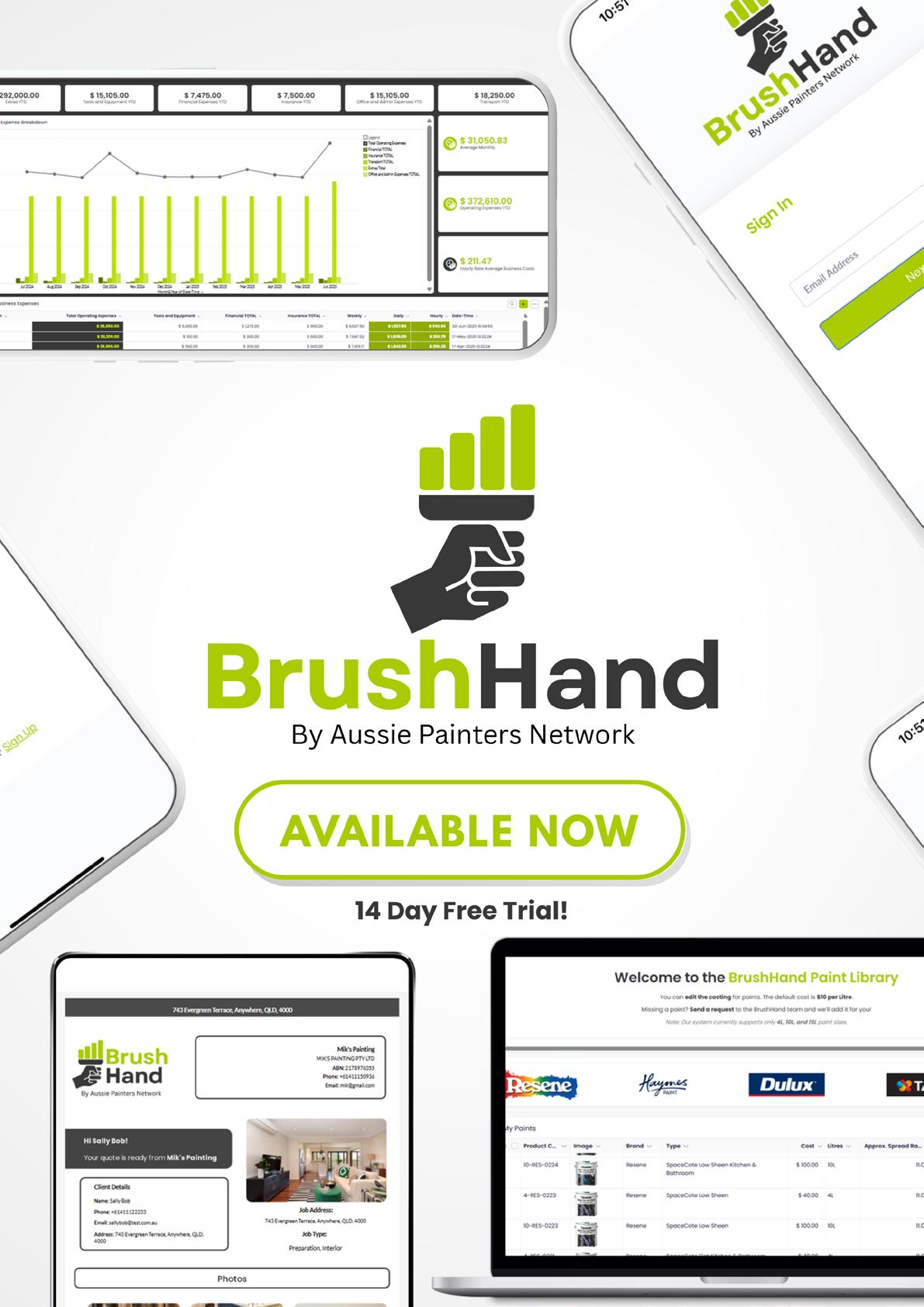
Diversity and inclusion progressed through initiatives such as Women in Painting, the Male Allies Program, and work with NAWIC, strengthening pathways for women and non-traditional entrants. Innovation played a major role, with the launch of Automated SWMS, the expansion of BrushHand and the APN Membership Portal.
Community impact continued through an 11,000+ member Facebook network and broad industry involvement.
Looking ahead to 2026, APN will launch its Industry Committee to deepen national representation and drive cultural, training and workforce improvements across the trade.
I hope everyone has a fabulous festive season and has a good break.
'Til next year, Happy Painting!!


Nigel Gorman
CONTRIBUTORS
• Anthony Igra
• Elizabeth Hill
• Leo Babauta
• Nigel Gorman
• Oliver Kay
• Rae Cooper
• Robert Bauman
• Sandra Price
• Stan Karanasios
• Suneha Seetahul
EDITOR
Nigel Gorman
GRAPHIC DESIGNER
J. Anne Delgado








Opinions and viewpoints expressed in the Aussie Painting Contractor Magazine do not necessarily represent those of the editor, staff or publisher or any Aussie Painters Network’s staff or related parties. The publisher, Aussie Painters Network and Aussie Painting Contractor Magazine personnel are not liable for any mistake, misprint or omission. Information contained in the Aussie Painting Contractor Magazine is intended to inform and illustrate and should not be taken as
legal or accounting advice. You should seek professional advice before making business related decisions. We are not liable for any losses you December incur directly or indirectly as a result of


In today’s fast-paced and highly competitive business world, your logo is more than just a design—it’s the face of your brand and one of your most valuable assets. Creating a unique and legally defensible logo isn’t just a creative decision; it’s a strategic necessity. While a textonly logo might seem sleek and straightforward, it can leave your business exposed to legal risks, particularly in crowded industries where standing out is vital.
The good news? By incorporating distinctive design elements into your logo, you can protect your brand while building a lasting connection with your audience. Let’s dive into why a thoughtfully designed logo is crucial for trademark protection, brand identity, and long-term success.
Did you know that your logo’s design can make or break your trademark application? Under Australian trademark law, a trademark must be distinctive to gain legal protection. This means your logo should include elements that set it apart, such as eye-catching symbols, bespoke graphics, or memorable colour combinations. These elements not only make your logo stand out to customers but also ensure that it ticks all the boxes for trademark examiners.
Take the example of a bakery named “The Sweet Shop.” A plain text logo with such a common name might face rejection during the trademark application process because of its descriptive nature. However, imagine adding a whimsical cupcake icon or a creative splash of pastel colours. Suddenly, the logo transforms from generic to unique, boosting its chances of registration and long-term protection.
Investing in a logo that combines both visual and textual elements not only strengthens your brand’s identity but also simplifies the trademarking process. It’s a small step that can save you from future legal headaches and pave the way for a more robust brand presence.
Relying solely on a text-based logo is like building a house without a strong foundation—it leaves your brand exposed to potential risks. Logos that consist only of text, especially if they use generic or descriptive names, often face objections or disputes from competitors who may claim they are too similar to their own branding. These legal challenges can be both costly and damaging to your reputation.
By incorporating graphic elements, unique symbols, or bespoke typography into your logo, you significantly reduce the chances of such disputes. Not only does this enhance your brand’s visual appeal, but it also creates a distinct identity that resonates with your audience. Imagine the impact of globally recognised logos like the golden arches of McDonald’s or the swoosh of Nike—these are not just designs; they’re powerful tools of differentiation and legal protection.
A well-designed logo makes your brand memorable, trustworthy, and legally secure. Don’t let your brand blend into the background or fall prey to unnecessary legal battles. Instead, invest in a design that stands out and shields your business from potential risks.

When it comes to trademark infringement or “passing off” by competitors, having a logo that combines text with distinctive visual elements can be a game changer. These extra design components—such as an emblem, icon, or custom typography—don’t just make your logo visually appealing; they also strengthen its defensibility in court or during disputes.
Why does this matter? When your logo stands out as unmistakably yours, it’s much harder for competitors to argue that their branding is coincidental. Picture this: a competitor mimics your logo’s text but fails to replicate your unique icon or colour scheme. That’s your advantage.
Additionally, distinctive design choices in your logo can simplify legal processes if you need to take action. Trademark authorities and courts look favourably upon logos that clearly differentiate themselves from others, making it quicker and easier to protect your rights. So, while a text-only logo might leave room for interpretation, a well-thought-out design makes your brand’s uniqueness undeniable.
A logo that blends creativity with strategic design isn’t just about looking good; it’s about building a solid shield for your brand’s identity and reputation.
Your logo is much more than just a design—it’s the heart of your brand’s story and the key to connecting with your audience. Beyond legal considerations, a well-designed logo with distinctive elements like vibrant colours, unique symbols, or custom typography enhances your brand’s overall identity, making it unforgettable.
Think about the brands you love and trust—chances are, their logos pop into your mind immediately. That’s the power of strong design. Customers are naturally drawn to brands that visually stand out, as it conveys professionalism, reliability, and creativity. When your logo tells a story about your values and mission, it resonates with your audience on a deeper level, building trust and loyalty over time.
A compelling logo doesn’t just protect your business legally; it positions your brand as one to remember, cherish, and recommend. In a crowded market, this connection is priceless. Let your logo do more than just look good—let it speak volumes about who you are and why you’re unique.
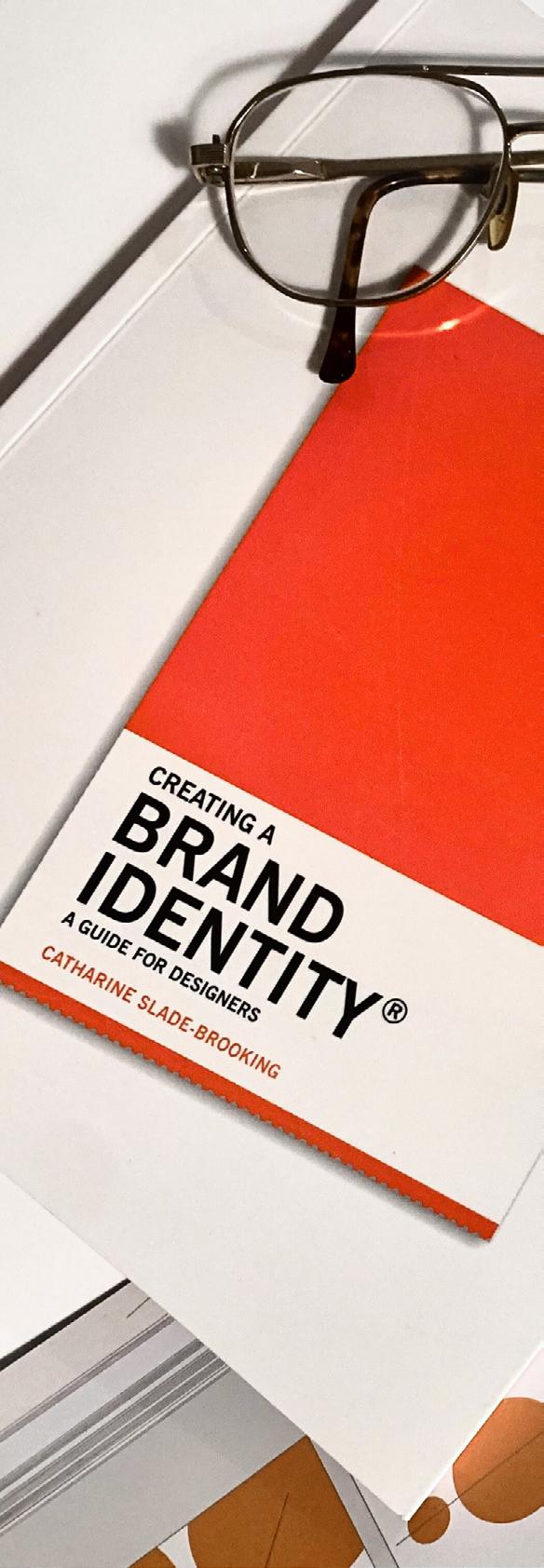


Creating a logo that truly embodies your business and offers strong legal protection can feel like a daunting task. But you don’t have to navigate this journey alone. At Rise Legal, our trademark law experts specialise in helping businesses like yours craft unique logos that not only stand out visually but also withstand the test of time in a competitive market. We’ll be with you every step of the way, from brainstorming innovative design ideas to navigating the often-complex trademark registration process. Whether you’re starting from scratch or refining an existing logo, our team is here to ensure your brand remains exclusively yours, free from the risk of imitation or legal challenges.
With our expertise, you can feel confident that your logo won’t just look great—it will also serve as a robust shield for your business identity. Let us help you build a logo that reflects your brand’s unique story while securing its future in the marketplace.
Your logo is more than just a visual representation; it’s the cornerstone of your business’s identity and a vital tool for standing out in a crowded market. A unique logo doesn’t just attract attention—it safeguards your brand against competitors and strengthens your legal protections.
Imagine the peace of mind that comes with knowing your business is shielded from imitation and legal challenges. By taking proactive steps now, you’re investing in more than just your brand’s visual appeal. You’re securing its future and building trust with your customers.
At Rise Legal, we specialise in transforming your logo into a powerful asset that combines creativity with robust legal protection. From concept to registration, our team will guide you through every step to ensure your logo not only captures your brand’s essence but also keeps it uniquely yours.
Don’t leave your brand’s future to chance. Contact us today to learn how we can help you secure your business and protect your brand.
Don’t hesitate to contact Rise Legal for personalised guidance or book in a FREE DISCOVERY CALL .
I’ve been talking with a lot of people recently about the topic of morning and evening routines, and I have one piece of advice that I’ve been giving for almost two decades now …
Form routines gradually.
We tend to get very ambitious and we want to change everything all at once, immediately. But that’s not how humans tend to work. We need to adjust to new things, and we do so more slowly than we think.
So do it gradually, one small step at a time.
Let’s talk through an example … let’s say you want to wake up earlier and meditate, journal, do some yoga, and do some writing.
Here’s an example of how you might do that (1 week per step is recommended):
Start by waking just 15 minutes earlier, and do a little meditation to start.
Wake another 15 minutes earlier on week 2, and add in some journaling.
On week 3, wake a little earlier and do a little yoga.
On week 4, wake a little earlier and add in your writing.
Each step should be just a little longer, with a minimum version of the habit you’re trying to form. After 4 weeks, you’ll be waking an hour earlier, and have 4 new habits! And each step along the way, it won’t be very strenuous. This is how you set yourself up for success.
Leo Babauta ZEN HABITS





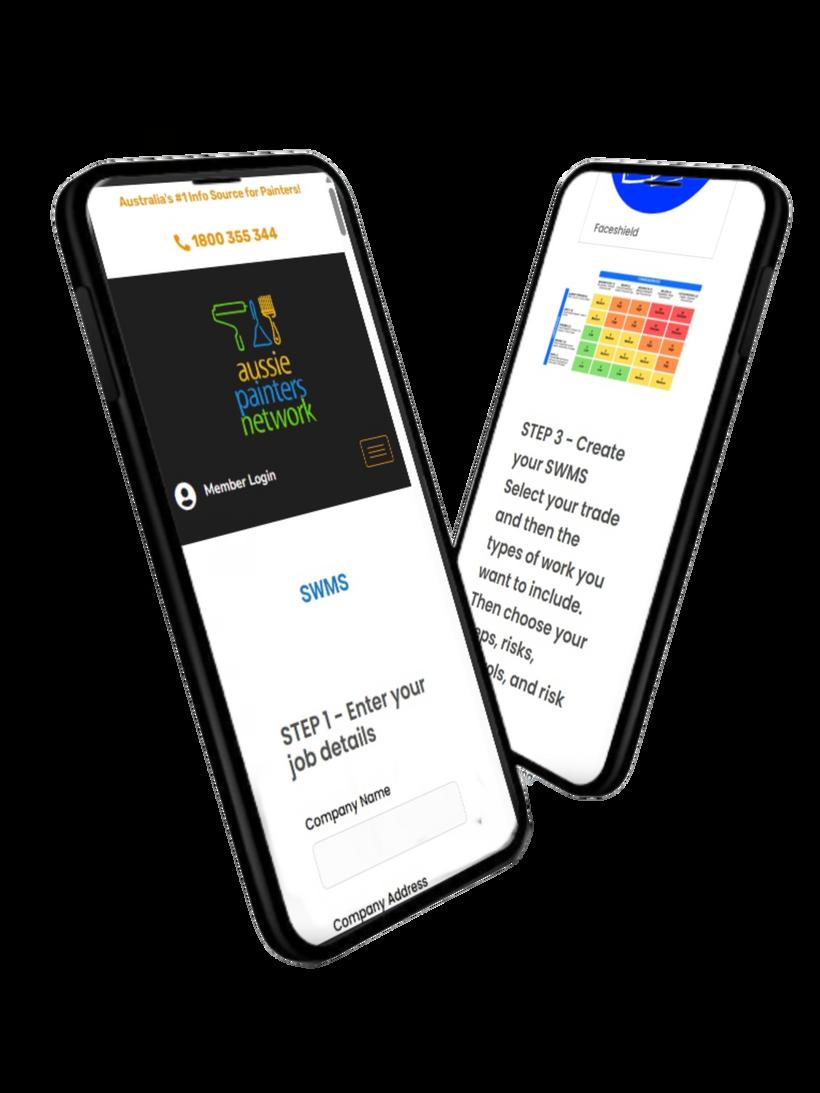
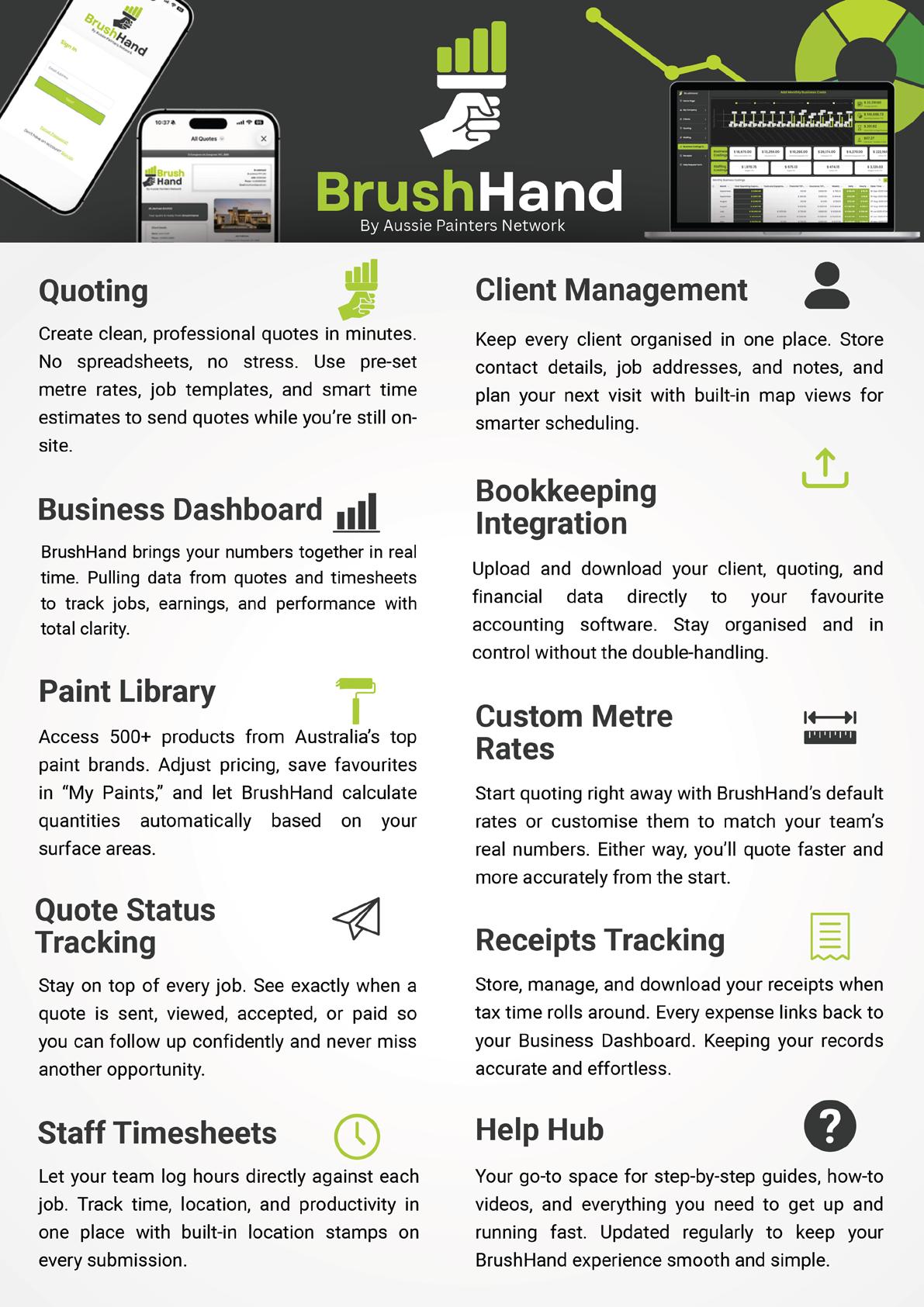
Personalised SWMS for Platinum
Members Beta version available for Gold







Gender equality at work has barely improved over the past ten years, with paid work opportunities held back by women doing the bulk of unpaid work in the home, new research shows.
Stubborn gaps in pay and career progression, alongside deep division between the types of jobs women and men do, are holding back business and the economy, despite decades of efforts by governments, employers and unions.
To help understand and address these gender gaps, the Australian Centre for Gender Equality and Inclusion at Work has developed a unique tool to measure and track equality at work.
The first Gender Equality @ Work Index provides a comprehensive, national snapshot of gender equality at work over ten years.
Our research shows many of the unequal features of the Australian labour market, such as the concentration of men and women in different industries and occupations, have barely shifted in three decades.
Improvement, but at a glacial pace
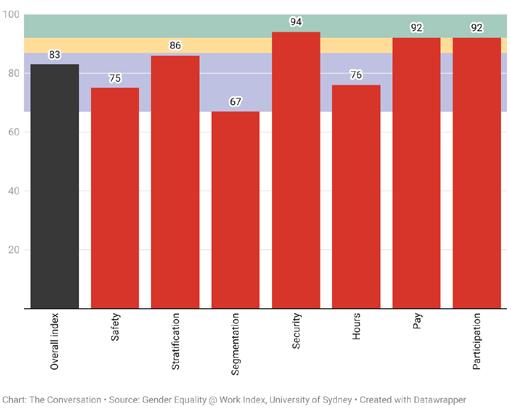
Measured against seven dimensions to produce a score out of 100, the index shows overall gender equality improved by just three points between 2014 and 2024, from 80 to 83. This is still 17 points from equality.
The seven dimensions go beyond the regular measures of participation and pay to also include:
• hours (in paid and unpaid work)
• security (job stability and income stability)
• stratification (participation in management and leadership roles)
• segmentation (job type across industries and occupations)
• safety.
How close is gender equality? Green band is close to equality. Yellow band is moderate distance from equality. Blue band is far from equality
The index shows where Australia is doing well, and where further investment and innovation will deliver the biggest boost to productivity and performance.
The drivers of gender equality at work are complex. The index provides a rigorous, evidence-based tool that clarifies, measures and tracks the drivers of unequal outcomes in work.
More women move into senior roles Australian women have higher rates of bachelor-level education than men but do not fare as well as men in paid work. Women participate at lower rates, and work fewer hours, at lower levels, in less secure jobs and industries, for lower pay and with poorer levels of safety than men.
The first index report reveals women are closest to parity with men in the dimensions of job security (94), participation (92) and pay (92).
The biggest improvement between 2014 and 2024 has been in labour market stratification, rising from an equality score of 77 to 86. This is in part due to women’s increasing employment in senior roles that reflect their education and experience.
which can put a brake on career progression and limit economic security in older age. The unequal division of unpaid care and domestic work is a major cause of gender inequality in the workplace.
Safety (75) is the only measure in which equality has gone backwards over the last ten years. Women have experienced significantly higher rates of workplace sexual harassment and psychological injury than men, while men report higher rates of physical injury.
The major sticking point is Australia’s highly gendersegmented labour market. This dimension had the lowest gender equality score of only 67 – a huge 33 points below equality.
Australia’s workforce is deeply divided along gender lines. More than half of Australian employees work in an industry dominated by a single gender.
Those employed in “men’s jobs”, such as engineering and construction receive (on average) higher pay and better conditions than those working in “women’s jobs” such as health and education. These tend to be lower paid and of lower quality.
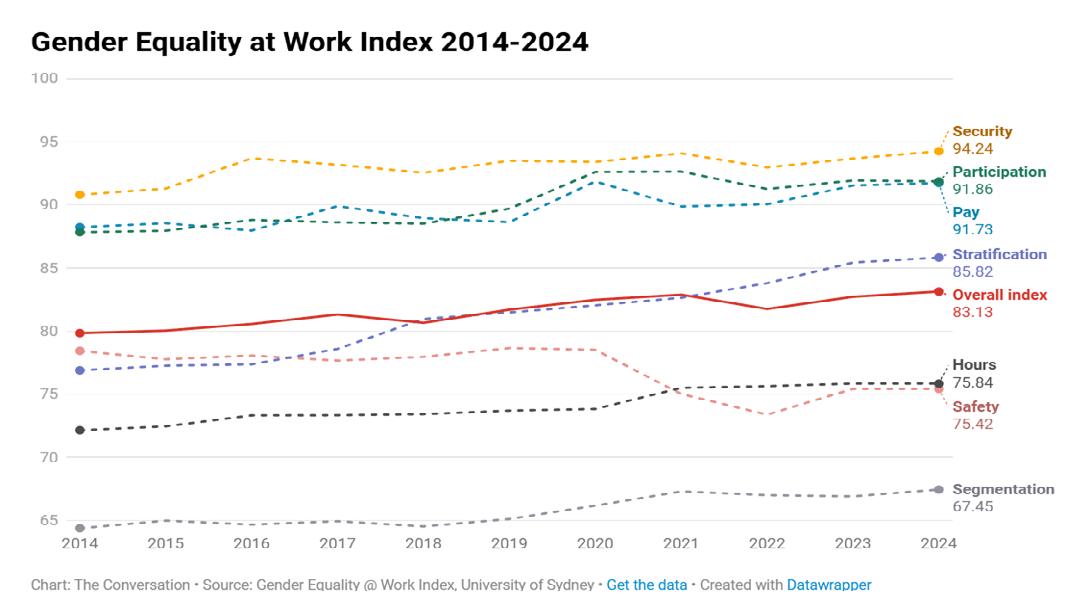
The “hours” measure has a score of only 76 because women still do most of the unpaid work at home, limiting their paid work opportunities.
Women also take more parental leave than men,
This divide restricts opportunity, reinforces inequality, weakens our overall economic performance and exposes employers to chronic skills shortages. The more an occupation is dominated by one gender, the more likely it is to face problems filling workforce gaps.

Easily
What needs to change to close the gap?
The index results highlight two priority areas for intervention: segmentation and hours.
Lifting the quality of hyper-feminised jobs (such as aged care and childcare) will improve gender equality driven by industry segmentation.
So would enhancing women’s access and experience in male-dominated sectors. Investing in high-quality, flexible work in sectors like construction, engineering and investment banking will support a more gender balanced workforce.
Hyper-masculine sectors must also deliver safe workplaces where women can thrive and succeed free from discrimination and sexual harassment.
Investment and monitoring of policies to support men’s contribution to the care of young children and the elderly are also essential to shifting the dial.
Australia’s paid parental leave system is evolving rapidly, but sticky social norms and unsupportive workplaces mean women continue to do the lion’s share of care and unpaid domestic work. This is unfair. Men need to take the leave made available to them and
enable women to be employed at a level that reflects their education and experience.
Rebalancing the labour market and supporting men to engage in unpaid care and domestic work will push the Gender Equality @ Work Index score closer to 100. It will deliver Australia the gender-equal economy that will maximise participation, productivity and workforce sustainability.
Elizabeth Hill
Professor of Political Economy; Deputy Director, Australian Centre for Gender Equality and Inclusion at Work; and, co-convenor Work
+ Family Policy Roundtable, University of Sydney
Rae Cooper
Professor of Gender, Work and Employment Relations, ARC Future Fellow, Business School, co-Director Women, Work and Leadership Research Group, University of Sydney
Suneha Seetahul
Senior Research Fellow, Applied Microeconomics, University of Sydney








Being a leader is not just about the habits you practice in front of others. It is often about the habits you practice behind closed doors that make you an easy person to follow. Accountability is a touchy subject that can make many people feel uncomfortable, but it protects you as a leader and can exponentially increase the level of influence you have over a corporation or group of followers. Here are a few ways you can develop the kind of accountability that makes you a better leader.
As a leader, you need to have a clear set of expectations of what you will do and what you will never do. This can go for your personal life as well as your professional life. If you are going to be an accountable
person, you need to know in no uncertain terms what you are accountable for.
Establishing an accountability partner is as simple as finding a person you trust, telling them the expectations you have placed on yourself and asking them to follow-up with you regularly to ensure you haven't lowered your standards. In finance, it is especially important to have someone you are accountable to. Countless companies each year get in legal trouble for laundering funds or evading taxes, when you are provided with access to company finances, make sure there is someone within your organization that goes behind you to check invoices and balances, this could save you a huge headache in the long run.


Depending on the size of your business, your board of directors could be employees that are on the payroll, or it could be friends and family members that volunteer as advisers. Your board of directors need to have at least a moderate amount of business sense and they need to be easy to reach in crisis. Should you ever find yourself in the position of having to make a big decision quickly, you will need to access your board of directors to either obtain their permission to act, or discuss alternative courses of action.
Allowing employees to question your methods, does not mean you are allowing them to question your authority. If you have an employee that is feeling uncertain about a leadership practice or division in your company you should establish an open-door policy and allow them to ask difficult questions. It is okay for certain issues to remain private, but use your best judgment to determine how to respond to their questions and be as open and honest as possible.
As a leader, you likely invest in certain security or monitoring services. It is important that you adhere to the same policies and procedures others are expected to. If your building has a strict internet security policy, set your work computer up with the exact same internet permissions as others. If you regularly monitor employee chats, make your chats public record. Anything that needs to be discussed privately should be discussed on paper or in person to avoid legal trouble and confusion.
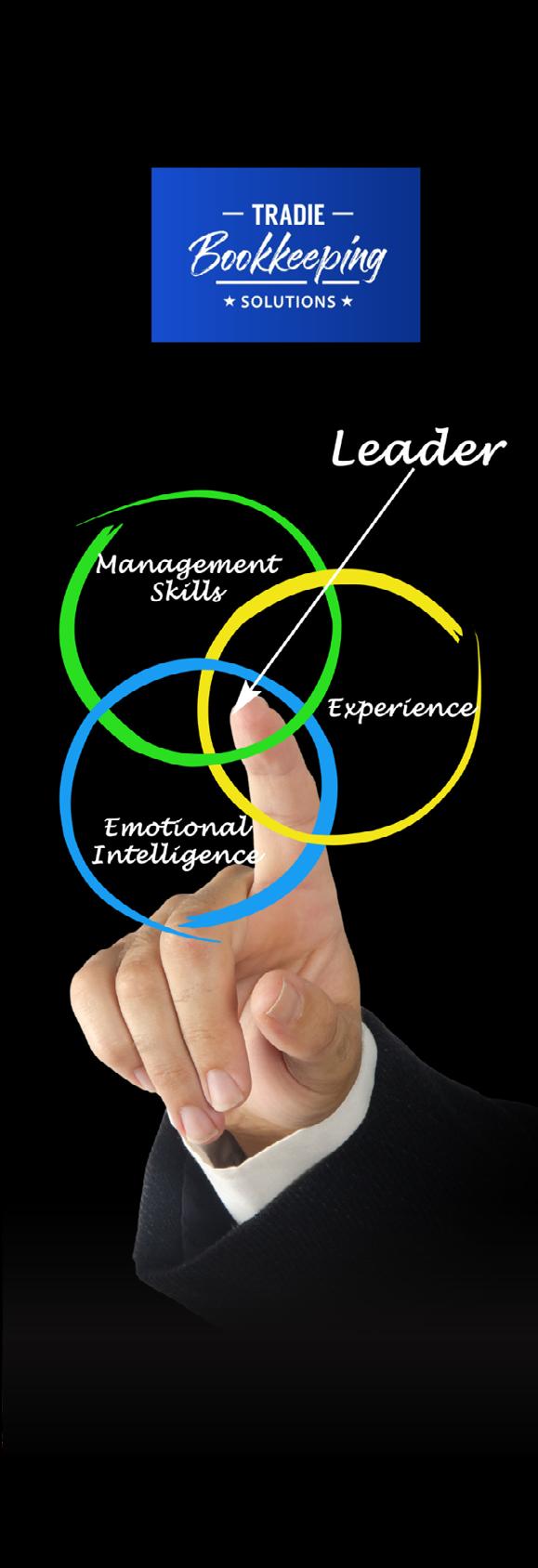
As intimidating as developing accountability looks from the outside, it is a truly valuable asset that no leader can afford to be without. Accountability can protect you from legal backlash and disgruntled employees. When you make an effort to be the same leader behind closed doors as you are in front those you are leading, they will know you are a trustworthy person who is worth following!
Sandra Price www.tradiebookkeepingsolutions.com.au

Why Specialising Is the Fast Track to Success
Let’s be honest—niching can feel scary. When you think about focusing on one market, fear creeps in.
“What if I cut off potential clients?”
“What if I choose the wrong audience?”
“What if it doesn’t work?”
But here’s the truth: trying to serve everyone is the fastest route to serving no one.
And Australia’s fastest-growing businesses prove it— success comes from bold focus, not broad effort. Look at the winners.
And today, his company sits proudly among BRW’s Fast 100—ranked 70th in the country.
That’s the power of choosing your niche.
Now compare that to the countless entrepreneurs trying to run two or three different businesses at once— none of them thriving. This comes from fear: a fear that one idea won’t work, so they scatter their energy in every direction.
But greatness demands commitment.
Napoleon Hill captured this perfectly in Think and Grow Rich, where Edwin C. Barnes declared:
“I will burn all bridges behind me and stake my ENTIRE FUTURE on my ability to get what I want.”
And that level of clarity and determination is exactly what delivered his success.
Stand Out by Refusing to Blend In
Most people, especially new soloists, copy what big companies are doing.
But here’s the secret: your strength isn’t in being like them—your strength is in being YOU.
You’re personal.
You’re real.
You’re accessible.
These are superpowers big corporations can’t replicate.
Choosing a niche isn’t about limiting yourself—it’s about giving your ideal clients a clear reason to choose you. Instead of chasing the highest-paying audience, choose the one you love serving.
Because passion is magnetic.
Energy is contagious.
And when you genuinely enjoy your clients, the quality of your work becomes undeniable.
Soon, those who value excellence—rather than bargain prices—will seek you out.
These are the dream clients.

Once you choose your niche, build your message from a place of truth and experience. Ask yourself:
• Why did I start this business?
• What frustration pushed me to create a better solution?
• What challenges did I face that my ideal clients are facing today?
Your story is your power. Your authenticity is your credibility.
Clients aren’t just looking for someone with skills— they’re looking for someone who understands them. Someone who’s been there. Someone who can guide them.
When you speak with empathy and honesty, people feel it. And when people feel understood, they trust.
Specialists Don’t Chase Clients—Clients Chase Them
This is the magic of niching: The more focused you become, the more visible you become.
As you build expertise, you build recognition. As you build recognition, you build authority. And as you build authority, opportunities start to find you.
Suddenly:
• Your marketing becomes clearer and easier.
• Your message hits the right people.
• Media outlets look to you for insights.
• Referral partners know exactly who to send your way.
• Collaboration opportunities multiply.
• And yes—you earn higher rates because specialists are always in demand.
Experts are rare. Generalists are everywhere. Be rare.
The Courage to Focus Is the Courage to Grow
Choosing a niche is not shrinking—it's sharpening. It is the moment you stop blending in with the crowd and start standing tall as the go-to expert your market has been waiting for.
So decide. Commit. Burn the bridges of doubt behind you.
Choose the niche you want to dominate… Choose the clients you want to serve… And step fully into the power of being the specialist you were meant to be. Because when your focus becomes clear, your success becomes inevitable.



Quoting is one of the most important parts of running a successful painting business. In this video, we break down the process of creating accurate, professional quotes that win jobs and keep your business profitable.
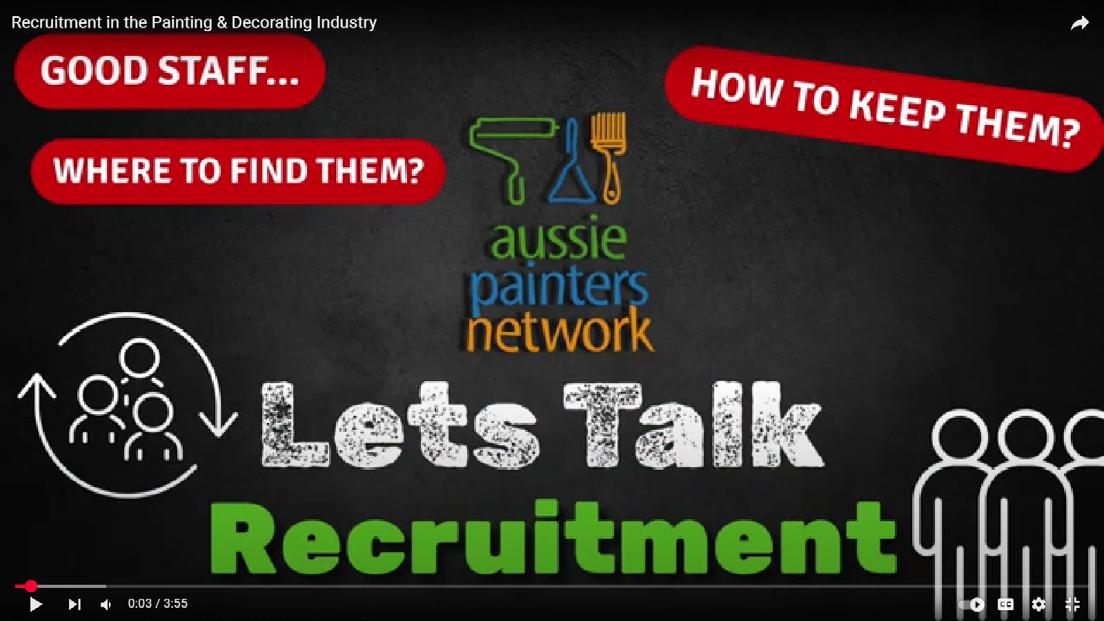
Finding and keeping the right people is one of the biggest challenges for painting and decorating businesses.
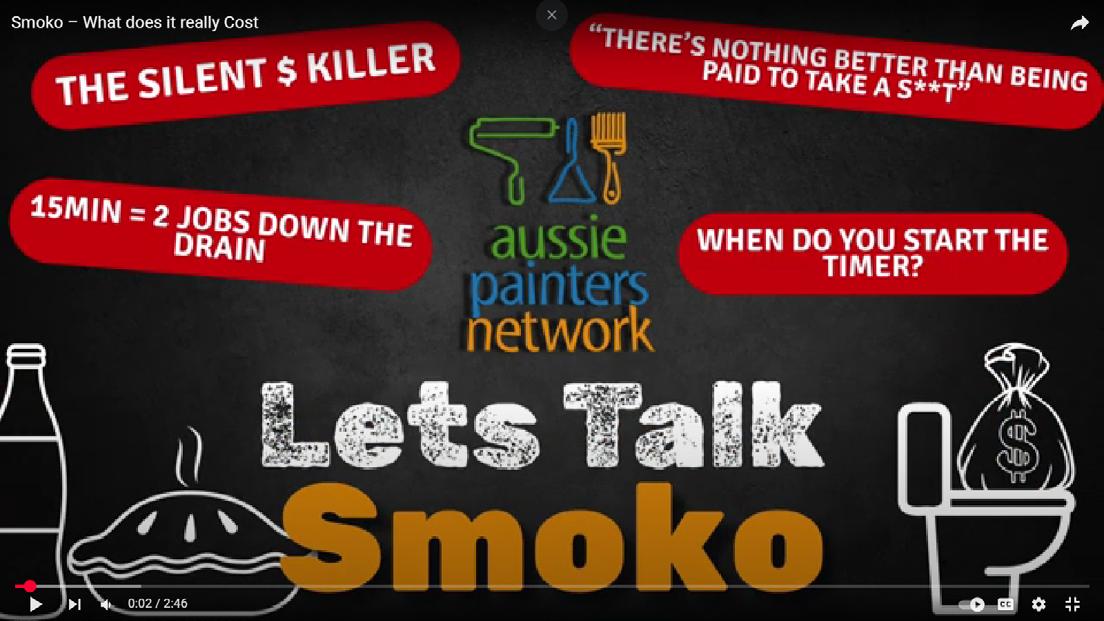
Smoko isn’t just a break – it’s a tradition in the trades. In this video, we take a look at what smoko means on site, why it’s important, and the stories that come with it.
As the year winds down and the frantic pre-Christmas rush finally settles, most tradies get their first real chance to stop, take a breath, and look back on how the year actually went. It’s easy to roll straight into the holidays without thinking about the business side of things—but spending even a small amount of time reviewing the year can make a massive difference to how smoothly (and profitably) you roll into the next one. It's a bit like tweaking the colour scheme for a painting job to satisfy the needs and desires of your clients.
Here’s a simple, no-nonsense way to review your year and set yourself up with a clear plan for the new one.
Before anything else, take a look at your financials— your profit, your cashflow, and how your pricing actually worked out during the year. You don’t need fancy reports; even a look through your accounting software or spreadsheets can tell you a lot.
Ask yourself:
• Did you make what you expected to make?
• Were there months where cash got tight?
• Did certain jobs consistently chew up more labour or materials than you allowed for?
Many tradies find out, once they stop and look properly, that some job types were earning them great money while others were dragging down their margins.
If material and labour costs have crept up (and let’s face it, they probably have), it might be time to adjust your pricing for the new year so you’re not working hard for less.
Once the financials are clear, have a look at the kind of work you actually did. Were you doing the sort of jobs you enjoy and that pay well, or were you constantly getting pulled into small, low-margin work that caused more stress than it was worth?

Most tradies can name a list of great clients—but they can just as quickly name the ones they never want to hear from again. This is the perfect time to decide who you want to work with next year, and who you’re better off letting go.
Also think about your schedule. Were you constantly running late? Were you juggling too many jobs at once? Maybe it’s time to tighten up your booking process or use better software to keep things running smoothly. At Straight Talk Accounting & Tax, we help trade business owners build plans to grow their business, reduce tax, and build long-term wealth— both inside and outside the business.
If you’ve got employees or regular subbies, take a moment to look at how the team went. Who stepped up this year? Who might need more training? Are your workflow and communication clear enough, or did mistakes and delays keep popping up?
It’s also worth checking that everyone’s licences, tickets and insurance are up to date. The end of the year is a great time to reset your compliance and put better systems in place so you’re not scrambling when work gets busy again.
Your equipment keeps your business running—so it’s worth taking stock before the new year kicks off. What needs repairing or replacing? Are you spending too much time fixing old tools? Would upgrading any equipment help you work faster or more safely? The same goes for vehicles. If you’re thinking about replacing a ute or van, planning ahead can help you line it up with cashflow or tax opportunities.
While you're at it, have a look at how you handled materials and inventory this year. If you were constantly running around trying to source items at the last minute, that’s a sign your supplier relationships or ordering systems need a tweak.
Don’t Forget About Compliance and Insurance Licences, insurance policies, safety paperwork—it’s not the fun part of running a business, but it’s essential. Check expiry dates, make sure you’re properly covered for the type and amount of work you're doing, and review any incidents or near-misses from the year.
A quick clean-up of your compliance now saves you headaches later.
Look at Your Admin and Systems
Every hour lost on admin is an hour you’re not earning. It’s worth looking at:
• How smoothly your quoting and invoicing ran this year?
• Whether you’ve chased late payments more than you should have?
• Did jobs fall through the cracks because the paperwork wasn’t up to date?
Plenty of tradies find huge improvements just by tightening up their systems—whether that’s using job management software, updating templates, or getting help with bookkeeping so things don’t build up.
Even though the tax year ends in June, the calendar year is a great time to check where you stand. Sit down with your accountant and review your estimated tax position, super contributions, and any purchases you might be considering for early next year. Catching issues now means no nasty surprises halfway through the year.

Straight Talk Accounting & Tax, through their Tradies
QuickStart Program, can help you develop a tax plan for your business that can not only increase profits but also generate personal wealth to make it all worthwhile.
Once you’ve looked back, it’s time to look forward. What do you want next year to look like? Maybe it’s earning more, doing fewer small jobs, taking on bigger projects, hiring someone new, or simply reducing stress and working smarter.
Keep your goals simple and achievable. A one-page plan is all you need—something that outlines what you want to start doing, stop doing, and improve.
You’ve worked hard all year. A proper rest is more valuable than most tradies realise. Stepping back with a clear plan means you start the new year more focused, more organised, and in a much better position to grow the business the way you want.
Please Note: Many of the comments in this article are general in nature and anyone intending to apply the information to practical circumstances should seek professional advice to independently verify their interpretation and the information’s applicability to their particular circumstances.

Copyright © 2025 Robert Bauman.

You won't build a loyal customer base if you can't earn your visitors' trust, which is why companies value social proof so highly. But proving your online business's value takes a unique skill set; one you can start learning by reading the article below.
Experts love teaching others what they know. While they do make money from their knowledge, they also offer discounts to friends. If an expert loves you enough, you might convince them to talk with you, free of charge.
Experts are people, and make friends like anyone else. Since you are looking to build social proof online, joining an expert's Internet community is the first step toward meeting them. Just remember that other people are thinking the same thing and experts have busy lives; an entitled attitude will only sabotage potential friendships.
Personal relationships work differently online. It is easy to create dozens of friendships when you are talking to people in chat rooms and message boards. Even if an expert spends a little time sending links and messages, thank them and treasure the wisdom they share.
Create Helpful Content
It is easy to feel overwhelmed when you start learning about social proof. You will find advice from different sources, and sorting through it isn't always easy. But one fact is still valid: people value great content.
Online businesses and personalities focus all their effort on increasing traffic and not building content their visitors will value. While they can boost their traffic and income, their gains won't last.
Instead, learn about your niche and give the people what they want; when you focus on their needs, they will naturally meet yours. An engaged audience will linger longer, click more ads, and buy more products.
Reviews are the most obvious form of social proof. Not only do visitors look for them to gauge a product's value, including websites, but they also value sharing their opinion. For example, an online store that only
showcases product descriptions will have weaker social proof than one that lets customers leave reviews, even if no one has yet.
Reviews come in many forms. Lists count, and so do like and dislikes on media websites. While you can ask for reviews, this will annoy some people; making it easy to find and review your site is usually a better option.
Your social proof will grow as your site gets more traffic, and reviews. Consumers know how to spot fake opinions, even if they are only consuming the latest adventure on your travel blog.
Visitors don't trust unknown authors. While adding a name to your posts can help, they want to see a face. While a real photo showcasing your facial features works best, drawings also work for some niches.
While your bio should promote you and your expertise, too much self-promotion will advertise that you are an amateur. Finding the right balance is challenging, but you will naturally help yourself if you create an honest bio. Just like a hiring manager reading a résumé, your visitors will pick up on your experience.
Your bio's placement also matters. If you are running an informational website, focus on your content and include a link to your bio along with your author credits. If your site is about you, feel free to transform your bio into a landing page. Studying your niche and the popular websites within it will help you decide where your bio fits best.
Social proof is a resource, and it is every company's job to nourish and protect it. How can your online business do it better?
Sandra Price www.tradiebookkeepingsolutions.com.au

For long-term pursuits like goals or habit change, one of the most important things we can develop to help us succeed is resilience: the ability to bounce back from setbacks and struggles.
It’s inevitable that we’ll get knocked off course. We’re going to have bad days, we’ll get discouraged from failure, we’ll miss days of doing a habit … all of this is expected, par for the course.
It’s not about whether we’ll get knocked off course or discouraged — it’s a matter of when. And when that happens, everything depends on whether we can get ourselves back in the game.
This is long-term resilience: the ability to handle difficulty, setbacks, being thrown off course, and emotional challenges.
And it’s something we can develop, with some practice.
Let’s talk about how to develop this long-term resilience — and if you’d like to work on this with me, join my Fearless Living Academy where we’ll be focusing on this theme for November!
Resilience is not about whether or not you have strength, but whether you can deal with the difficulties that come your way, cope with them, and get back to your center. Get back on track.
It’s about being able to handle some discomfort, accepting that hard things will come your way, and trusting yourself to deal with all of it.
It’s about accepting struggle, and developing a new relationship to it.

Becoming more resilient starts with mindset. If we have a more resilient mindset, we take struggles and setbacks more in stride.
Here are some mindset shifts to consider — depending on what your current mindset might be:
• Setbacks: Instead of them being evidence that something is wrong with you, or the world is against you … see setbacks as a part of the path.
• Failures: Instead of seeing “failure” as a negative word that means something bad about you … see it as a packet of information. It’s teaching you something valuable that you can grow from.
• Timeline: We often think of setbacks as bad because they’re throwing us off our timeline — maybe we hoped to achieve a goal by a certain date, and the setback delays things. Instead, we might let go of the timeline (which was made up anyway) and see that this journey doesn’t happen on a schedule, but unfolds as it needs to.
• Emotions: When we have negative emotions, instead of seeing it as evidence that something is wrong or you should quit — you might see them as a part of any meaningful journey. You’re going to feel frustrated, discouraged, inadequate, defeated, or powerless at some point along any challenging endeavor. It’s something to feel, to process, to move through, as opposed to a reason to quit.
• Starting again: Often we see starting again, after falling off track, as a burden or a discouraging sign — instead, we can look at it again as a part of anything meaningful. Any longer, challenging endeavor will include many starts and stops. Our challenge is to master the art of starting again!
Look at these mindset shifts and try to distinguish which ones often get in your way. Then practice the shifts with some practical practices below.
Mindset shifts are where we start, but the way we actually build resilience is with regular practice, just like with any skill or capacity we want to develop.
Here are some ways to practice on a regular basis:
Calm: Start by noticing when you’re thrown off. You’re discouraged, frustrated, stressed about a setback or a struggle. The first thing, after you notice this, is to calm your nervous system. You can do that by sitting still for a couple of minutes, and letting yourself breathe slowly. The slower, deeper breathing will calm you a bit. Think of one of the mindset shifts, and see if that helps calm you as well. Remind yourself that a setback is no big deal. Relax your body.

Accept: Whatever is happening to throw you off, it is a good practice to try to accept it as a part of your journey. Miss a couple of days of exercise? No big deal, it happens. Forgot to study French the last few days? No big deal, things got busy, get back on track. Feeling down and unmotivated? Sure, it’s OK to feel that way sometimes. Acceptance helps relax you around whatever is happening, reducing stress and overreaction to the setback.
Feel Emotions: It’s a resilience practice to let yourself feel your emotions when you face challenges and setbacks. Maybe you’re feeling disappointed, frustrated, discouraged. That’s OK! Running from the emotions only makes you more fragile, because you become afraid of them. Instead, you might try just letting yourself feel the emotions, as a physical experience. It’s like letting yourself feel wind on your face. Just feel the emotions, don’t get caught up in thoughts about them, and let them pass on.
Start Again: When we bounce back, it can feel like a drag to be starting again … but this is a key skill to practice for anything that takes awhile, from new habits to achieving goals. It can help to think of it as the excitement of a fresh start — it can be motivating to start from scratch.
Get Support: We are more resilient when we have community. Find others to be a part of your journey, to join you in your goals, or to talk to when you’re struggling. A coach or a therapist can be a part of this support as well. This helps us to feel less alone, and more resilient.
Find Meaning: We can’t always control the setbacks we face … but we can choose the meaning. Instead of “why is this happening to me?” or “this sucks, it always happens to me” … what about “What can this teach me?” or “How is this serving my growth?” By asking these kinds of questions, we frame the setback with something meaningful.
Resilience — the ability to bounce back gracefully from anything — is a long-term capacity and set of skills to develop. Take it one small step at a time. Pick one tiny practice and commit to practicing it daily.
You don’t have to bounce back perfectly, or even quickly. You can just learn to do it better over time, with practice and reflection.
If you’d like to build long-term resilience with me, join my Fearless Living Academy where we’ll be focusing on this theme for November!
Leo Babauta ZEN HABITS


Most trade business owners will know what public liability insurance is, but have you heard of run-off cover?
It’s a big deal, but one that doesn’t get spoken about much when it comes to tradies. It can result in a big claim being declined if you don’t get it right though…
Run-off cover is only applicable for someone cancelling or not renewing their insurance, and not replacing it with another policy.
If you’re not planning on cancelling or letting your policy expire, you can save yourself some reading as this won’t be applicable to you.
So what is it then?
To understand what run-off cover means to a trade business owner, first you need to understand how a public liability insurance policy works.
Public liability is an occurrence-based form of insurance. This means that to make a claim, you must have a current policy at the time that the incident occurs.
Many incidents will occur whilst you are working, therefore having a current policy at the time of undertaking the work is important.
However not all incidents occur at the time of doing the work. If an incident occurred a few months after you undertook the work, and by then you had cancelled your policy, you would not be covered.
Run-off cover is a form of insurance that allows you to
remain protected even after you’re no longer running your business.
What if I’ve closed or sold my business?
You might think that once you close or sell your business that you can wipe your hands of any liability, but that is not always the case.
The next section has been put together as a general guide, but we strongly recommend you obtain legal advice before making any decisions on your risk exposure.
If you operate as a Pty Ltd company and close it down completely, going through the full deregistration process, you might remove any liability, provided that the work was undertaken whilst operating as a company.
But you must fully deregister the company. If you cease trading, but still leave the company sitting there, then the company can still be sued at any time and you’ll be left exposed.
Often your accountant will recommend that you keep the company alive, even if it’s not trading, so that you can start using the same company again if you switch back to being self-employed.
This isn’t bad advice as it will save you money in setting up a new company, but it does mean you remain exposed.
This article talks more about the issues when deregistering a Pty Ltd company and how it can affect the need for run-off cover.
For those operating their business as a sole trader, which our data reveals is the majority of self-employed tradies, the risk is much greater.
Even if you deregister your ABN, you (as a person) are still the same entity and could still be sued years after you’ve ceased trading.
As a sole trader there is no way around this, so without maintaining your insurance (via run-off cover) you could remain exposed for years after ceasing trading.
You can find a very useful article about this very subject for sole trader here.
We’ll stat off with some very simple hypotheticals, before moving onto a serious real life example.
A carpenter operating as a sole trader replaces a set of stairs, and at the end of the job everyone is happy with the work and moves on.
A few months later the stairs fail as a person is using them, and suffers a serious injury.
In the meantime, the carpenter has gone back on wages and cancelled their public liability insurance.
Because the occurrence is when the stairs failed and the injury was sustained, not when the carpenter built the stairs, there is no cover.
Even though the carpenter has deregistered their ABN, they are still the same entity and are open to legal action.
An electrician undertakes some rewiring work at a home, which all seems fine at the time.
A year later there is an extensive fire at the home and one of the occupants is killed. The investigation finds that faulty wiring completed by the electrician caused the fire.
Since completing the work the electrician has taken another job on wages, but left their Pty Ltd company sitting dormant in case they go back to self-employment. They let their public liability lapse after they stopped completing work under the Pty Ltd.
Because the occurrence is the time of the fire, and not the time of the electrical work being completed, the electrician has no cover.
Real life example involving a fatality
Back in 2008 there was a well-publicised deck failure in Brisbane that resulted in multiple serious injuries, and sadly, a loss of life.
A builder who completed work on the property in 2001 was subsequently sued (along with a building inspector) for over $1 million by the family of the deceased.
Furthermore, others who suffered serious injuries in the collapse also sued for hundreds of thousands of dollars each.
The dates here are very important. The work was completed in 2001, the collapse happened in 2008 and the legal action didn’t happen until 2012.
Even if the builder had all the appropriate insurances in place in 2001 at the time of the work, the only thing that matters (when it comes to public liability) is that he had cover in 2008 when the collapse occurred.
That’s a seven year gap, which is quite significant. Legal action didn’t commence until 2012, but it wouldn’t matter if the builder had public liability at that time. The date of the occurrence is all that matters.
We don’t know if the legal action was successful, or how much (if any) the builder had to pay, but the fact that it went to court means that many thousands of dollars in legal fees (at the very least) would have been incurred.
One of the great things about public liability insurance is that it covers defence costs even if you are not found to be liable.
Planned Cover have an article which also talks about this same incident and the need for run-off cover for tradies and trade businesses.



Over the past few years, we have repeatedly been told artificial intelligence (AI) is coming for our jobs.
In May last year, the International Monetary Fund warned the technology was hitting labour markets like a “tsunami”. Many of the tech giants behind the technology have been making their own confident predictions about which jobs will be wiped out first.
Yet inside many Australian firms, the reality is much less dramatic.
Last week, the Reserve Bank of Australia released the findings from a 2025 survey of 100 medium and large-sized firms, which sought to understand how technology investments have been affecting the way businesses run. It found enterprise-wide AI transformation was the exception rather than the norm.
This presents a strange mismatch: a loud global story about an AI “jobpocalypse”, and a much quieter story inside firms about experiments, pilots and a lot of waiting around for real productivity gains to show up. The Reserve Bank’s report helps explain why.
Laying the groundwork
Australian firms haven’t been ignoring AI and technology. The report notes that over the past decade, total IT investment has grown by almost 80%, faster than other types of capital investment.
Much of that has gone into software, cybersecurity, cloud and upgrading internal systems such as customer relationship management and enterprise resource planning platforms.
While these investments are mostly about keeping the lights on and do not deliver big productivity pay offs on their own, they are essential groundwork to make firms’ systems and processes ready for AI.
‘Minimal’ use of AI AI is now starting to move up the priority list. About two-thirds of firms surveyed said they have adopted AI “in some form”.
But for the largest group – representing nearly 40% of all respondents – this use was still “minimal”.

The most common use cases were tasks such as summarising emails or drafting text using off-theshelf-products like Microsoft Copilot or ChatGPT.
Just over 20% of all firms reported “moderate” adoption, using AI to assist with tasks such as demand forecasting or inventory management.
And a small frontier group – less than 10% of all firms – said they had embedded AI into more advanced processes such as fraud detection.
Asked about jobs and the future, companies said AI and automation would likely save some labour, particularly on traditionally time-consuming tasks. But they didn’t expect it to cause catastrophic job losses.
Around half said they expected AI and machine learning would lead to a modest reduction in headcount over the next three years.
Firms planning to reduce their headcount expected to do so through natural attrition (employees resigning or retiring), lower intake of new staff, and redundancies.
Routine finance, administration and contact centre work were seen as most at risk of being automated. But firms also said AI would likely create demand for new roles related to the technology – such as in cybersecurity and redesigning processes.
are Australian firms so slow?
The Reserve Bank’s findings align with other reports showing Australia as a cautious adopter of AI when compared, for example, to the United States.
Global report cards on AI adoption and innovation more broadly consistently place Australia behind many other advanced economies.
A few key themes stand out from the Reserve Bank’s survey and other international evidence.
First, much of Australia’s recent technology investment has gone into cybersecurity, compliance, legacy system upgrades, data quality improvements and cloud migration. This is a necessary first step before AI investments.
Second, many firms have been struggling to hire the skills needed to drive AI transformation, such as data engineers and data scientists.
And third, Australia’s business culture is cautious, with low trust and high levels of concern about AI. Adding to this, individuals’ “shadow” use of AI tools (without telling their bosses) can mask the true extent of the technology’s adoption.

Do Australian firms need more support?
If Australian businesses want to move beyond “ChatGPT for emails”, evidence points to several practical steps they and governments can make.
Better engagement of company boards is crucial for moving beyond shallow pilots of digital technology, especially when workers distrust AI and directors see it as a risk. Providing evidence of more successful use cases is an important part of this shift.
Australia also needs to invest in lifting AI skills across the workforce, with a particular focus on reskilling workers and preparing for the likely decline in entrylevel jobs for young people.
The report indicates firms see the uncertain regulatory environment as a major barrier. The goal should be to have clear, risk-based rules that make safe experimentation easier.
Without these, firms are effectively told two things at once: “move fast to stay competitive” and “don’t you dare breach privacy, copyright or ethics”.
Brace for a bumpy ride
It appears we may not yet be racing toward a world without workers, but rather a messy and uneven transition.
The number of AI firms in Australia has grown substantially, and there is clear momentum and optimism.
For now, however, many businesses are still working out how to make AI useful, embed it into workflows and manage its risks. Their biggest complaints are about ambiguous regulation and skills shortages –not having too many humans.
Stan Karanasios Professor in Information Systems, The University of
Queensland

Aussie Painters Network aussiepaintersnetwork.com.au

National Institute for Painting and Decorating painters.edu.au
Australian Tax Office ato.gov.au
Award Rates fairwork.gov.au
Australian Building & Construction Commission www.abcc.gov.au
Mates In Construction www.mates.org.au

Comcare
WorkSafe ACT
Workplace Health and Safety QLD
WorkSafe Victoria
SafeWork NSW
SafeWork SA
WorkSafe WA
NT WorkSafe
WorkSafe Tasmania
comcare.gov.au worksafe.act.gov.au worksafe.qld.gov.au www.worksafe.vic.gov.au www.safework.nsw.gov.au www.safework.sa.gov.au commerce.wa.gov.au/WorkSafe/ worksafe.nt.gov.au worksafe.tas.gov.au
actcancer.org cancercouncil.com.au cancercouncilnt.com.au cancerqld.org.au
cancersa.org.au cancervic.org.au
cancerwa.asn.au