PORTFOLIO
Architecture
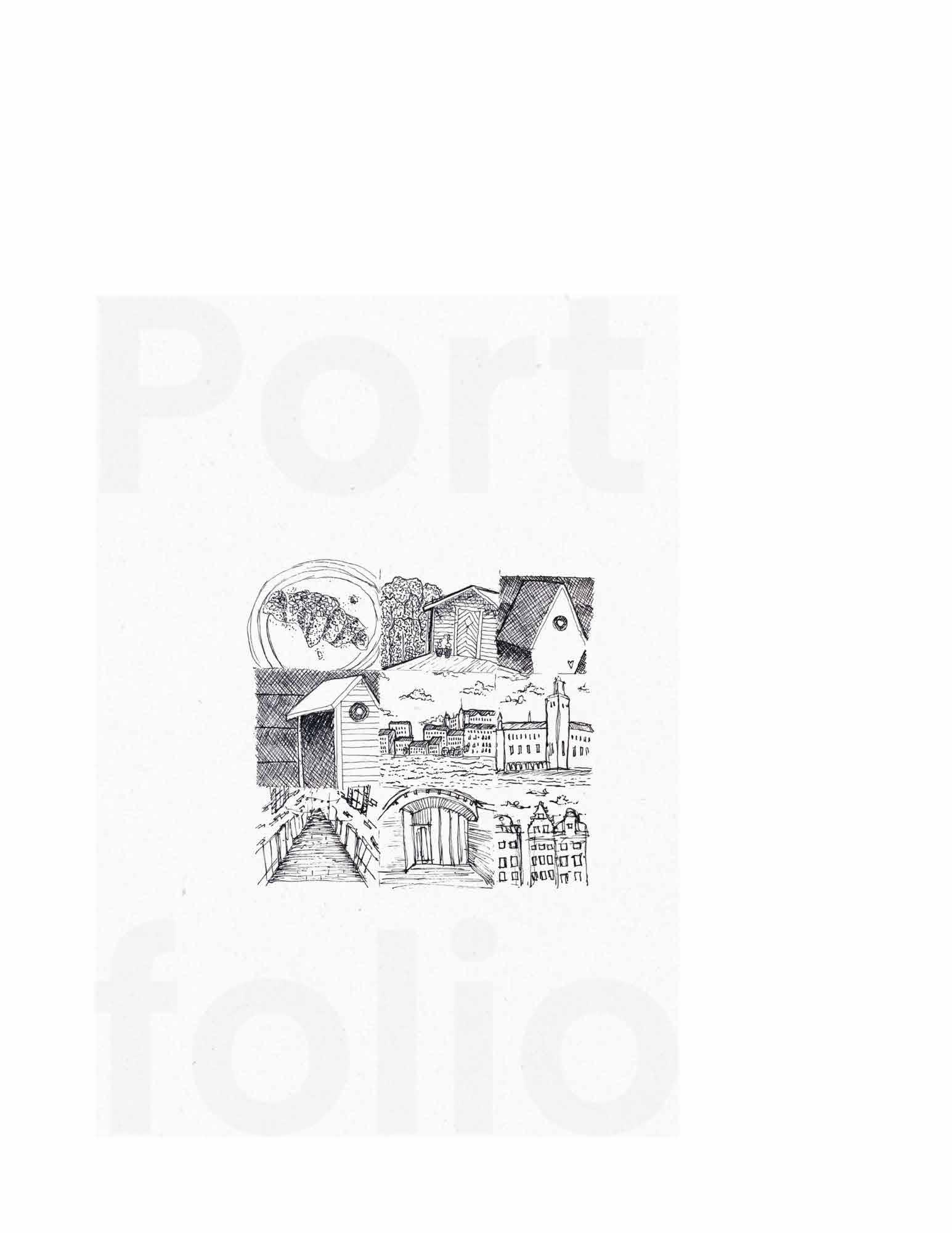
2026
Paige Butterfield
Architecture
2026
August 2020 - May 2026
May 2024 - June 2024
Fall 2020 - 2024 2021 - 2022
2022
Fall 2022 - Fall 2023
2022 2022 Fall 2023
Spring 2024/2025
2024 Spring 2024
June 2025 - Dec 2025
June 2024 - April 2024
May 2023 - Aug 2023
636.734.1153
pbutters2002@gmail.com https://www.linkedin.com/in/paigebutterfield/
University of Kansas | Lawrence, KS | Master of Architecture
Expected graduation: May 2026
GPA 3.95
Study Abroad Scandinavia | Finland, Sweden, and Denmark
Sigma Kappa Sorority
Vice President of Communications and Operations
Representative at the National Emerging Leadership Conference
Phi Kappa Phi Honor Society
Recipient of 57th Air Force Squadron Scholarship (x2)
KU Spritz Architecture Scholarship
KU Architecture Mentorship Program
KU Architecture Student Portfolio Award
Royal Banks of Missouri Scholarship
AIA Kansas Honor Award in Architectural Craft and Innovation Category - Prairie Park
Pavilion Designbuild
PGAV Destinations
Architectural Intern
Assisted with the production of domestic zoos and aquariums using Revit. Supported project delivery through coordination of drawing sets and detail development.
MMTH Sports Construction
Architectural Intern
Assisted with the design of sports facilities.
Created high quality renders and helped with master planning.
incite Design Studio
Architectural Intern
Assisted with the production of educational/commercial buildings using Revit.
Assisted with site plans and organization of construction documents.
References
Michael Patrick | Architect mpatrick1017@gmail.com | 913.244.8538
Kapila Silva |Professor of Architecture kapilads@ku.edu | 414.334.1290
Shannon Criss |Professor of Architecture scriss@ku.edu | 785.766.0069
Spring 2025 | ARCH 609
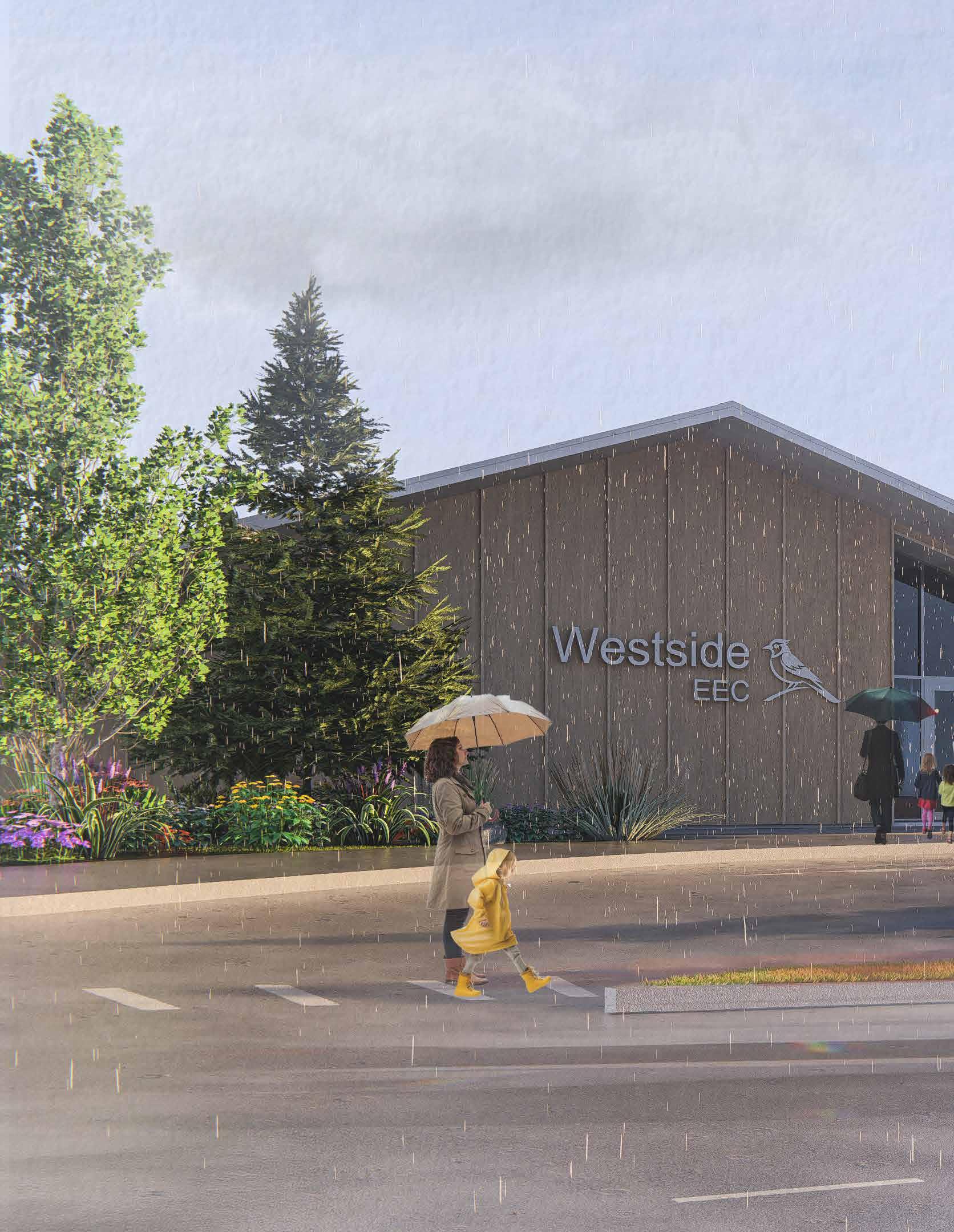
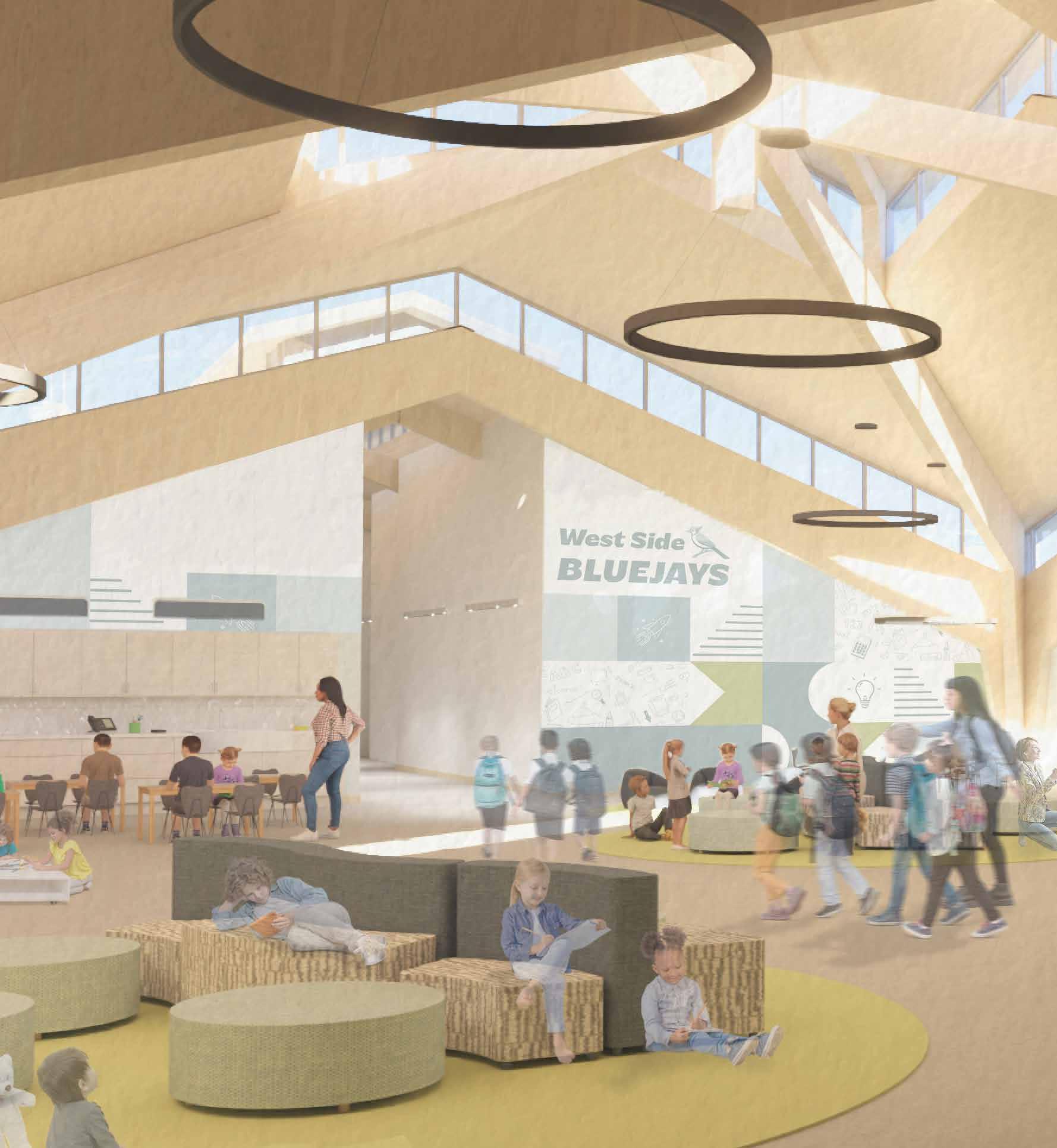
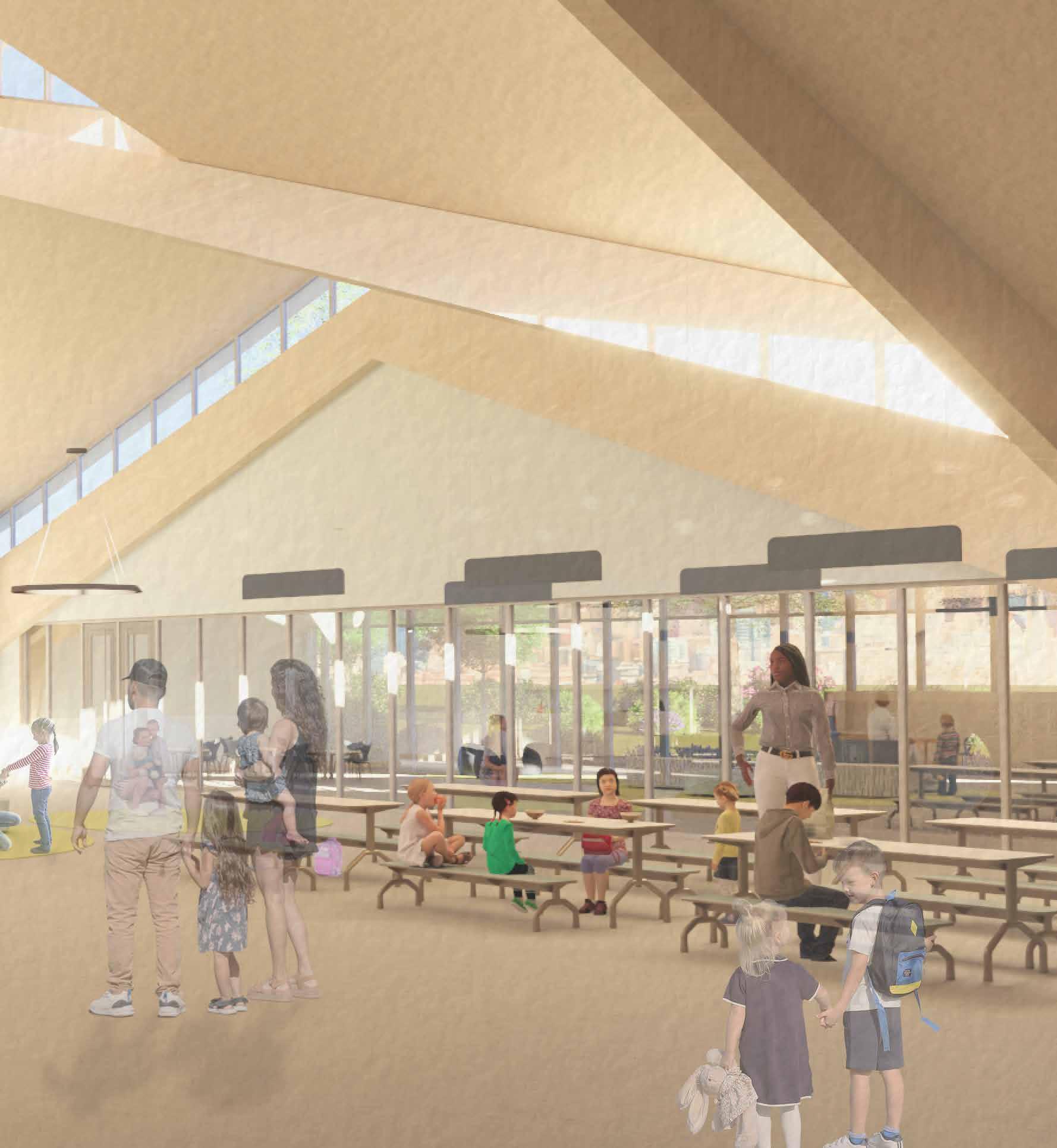
Professor Marianne Remboldt Partner Spencer Landis Early Childhood Education Center Westside, MO
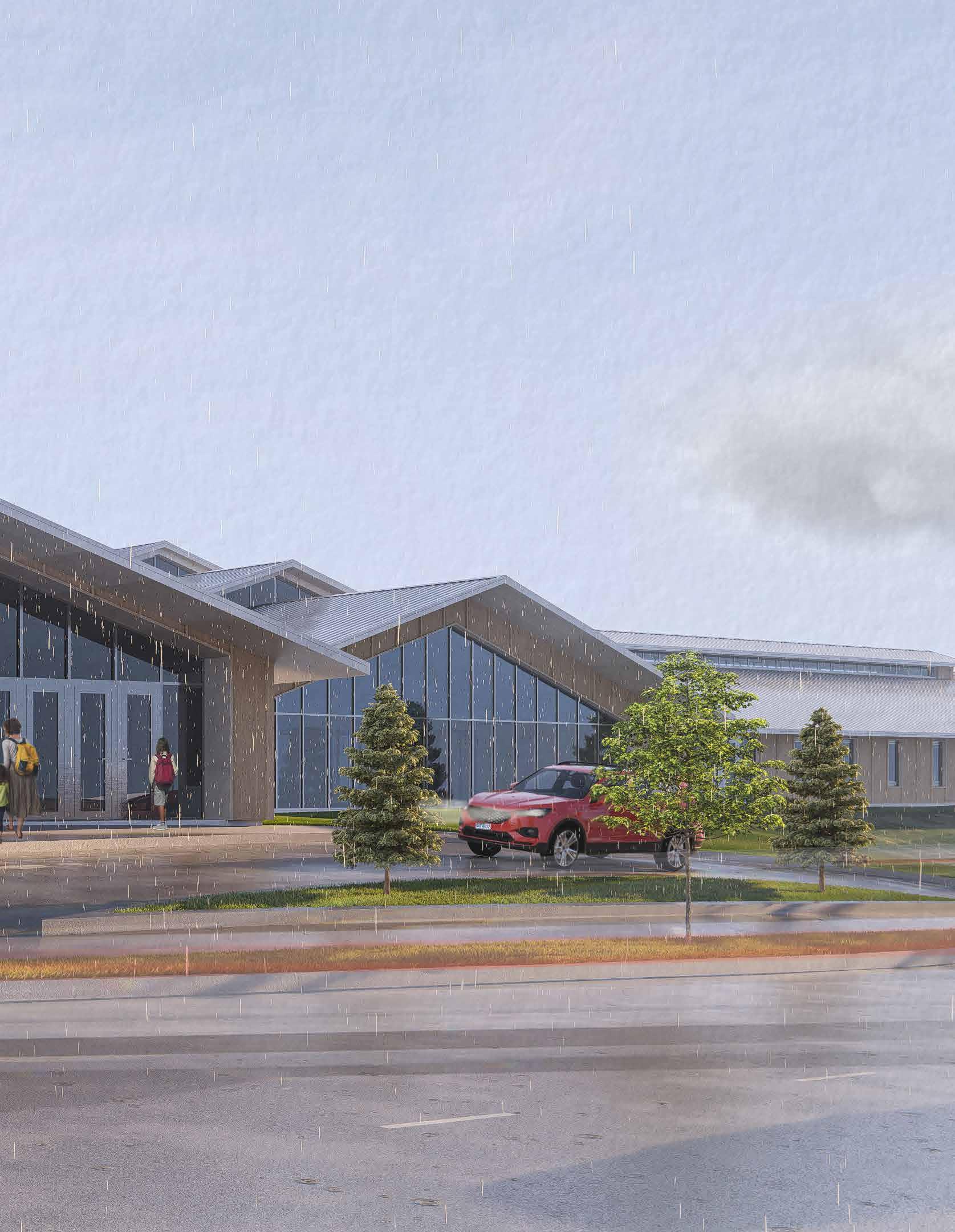
This project was an early childhood education center for the community of Westside Kansas City. An area strongly affected by the displacement of highways and gentrification, this school aimed to bring the community together and become a place for all ages. The vibrant, lively culture of the Westside became an inspiration for our project.

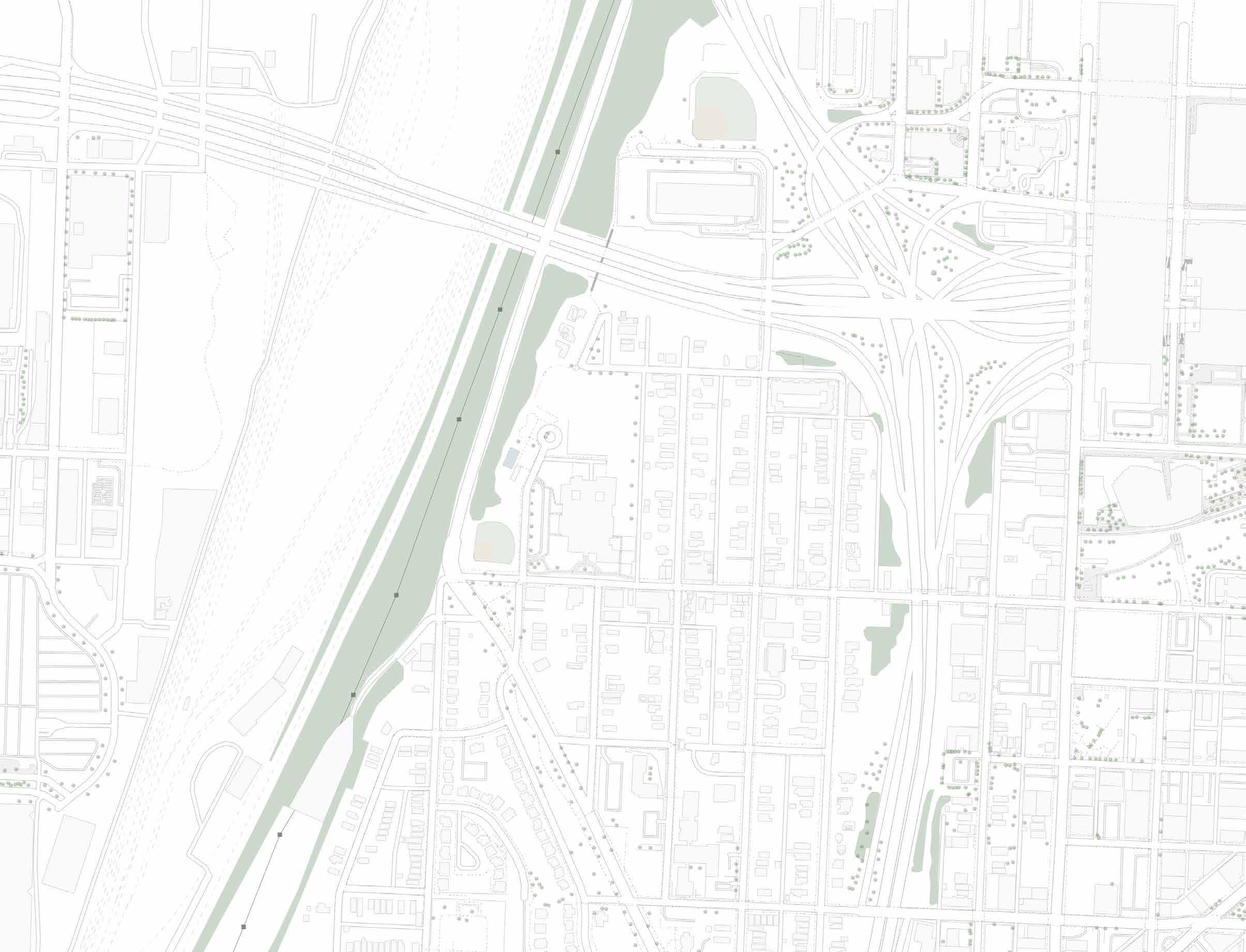
The I-35 freeway cut through five city blocks, displaced over one thousand residents, and increased sound and air pollution. The construction of I-670 freeway upset the westside’s northern population the most.
1/4 Mile Radius
Garcia Elementary School
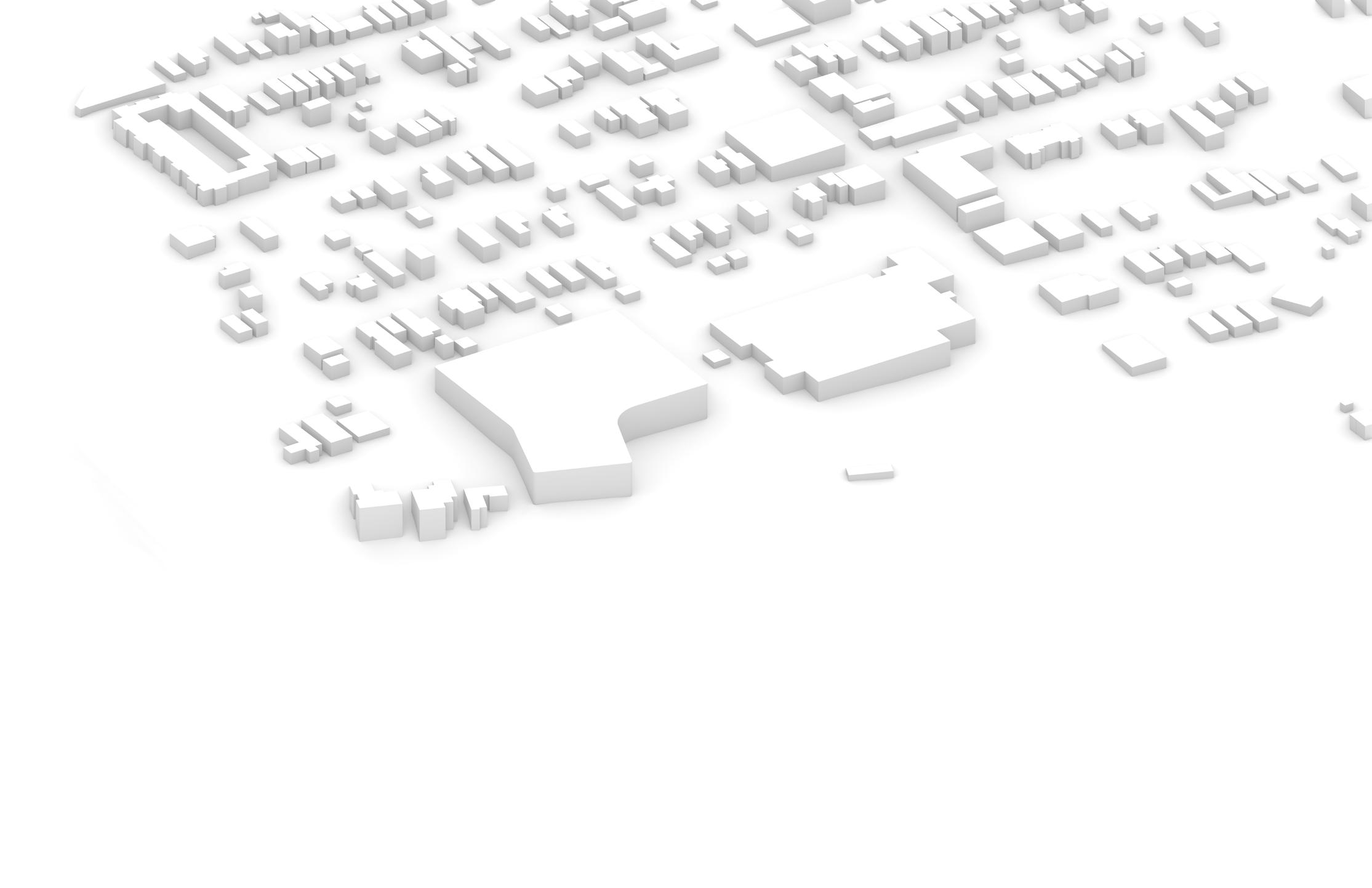
The main driving factor for our design that we took into consideration was the highway that separated the westside from the rest of downtown KC. This highway construction led to segregation of the city and through our design we wanted to attempt to connect these areas back together and strengthen the identity of
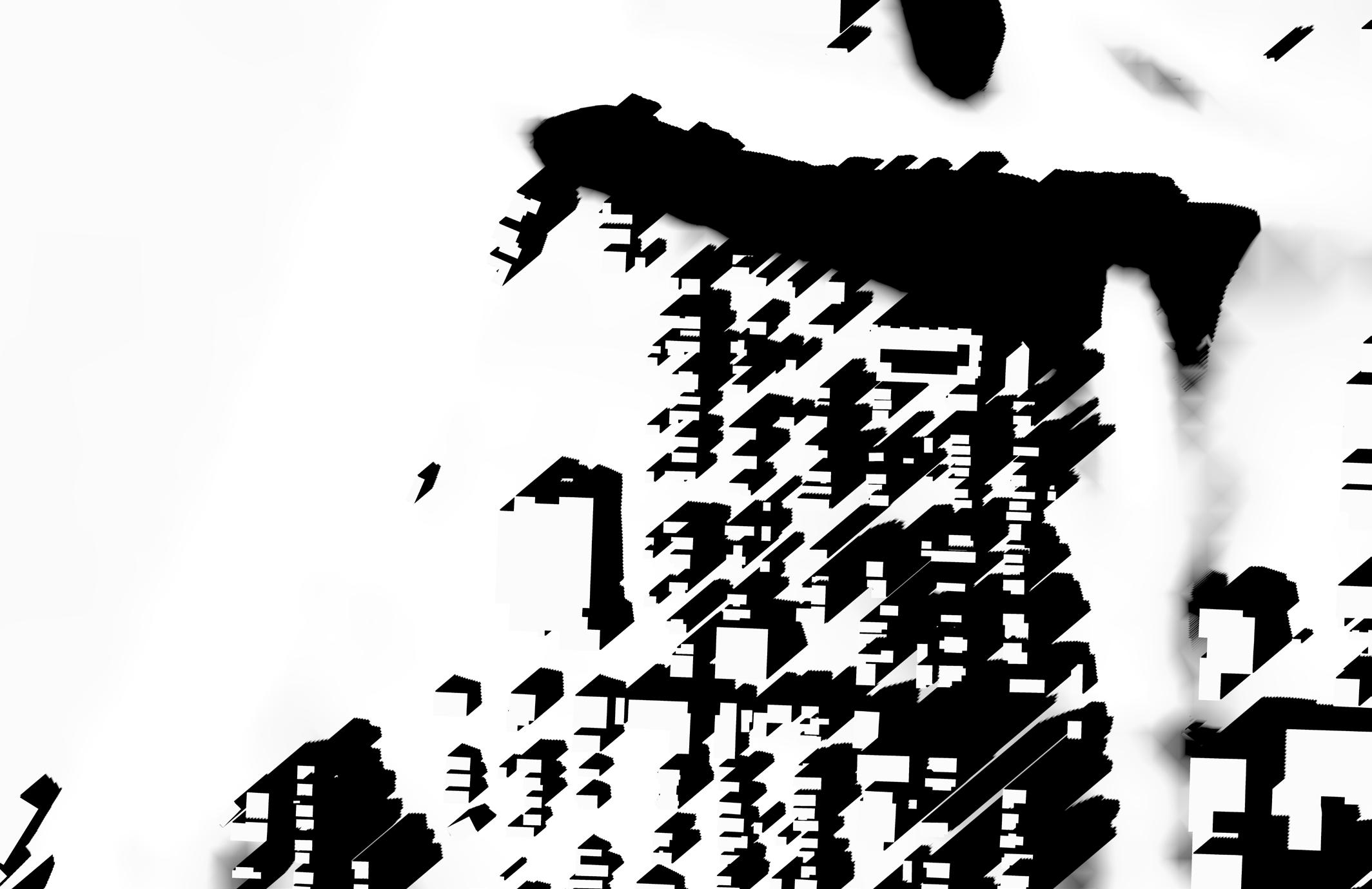
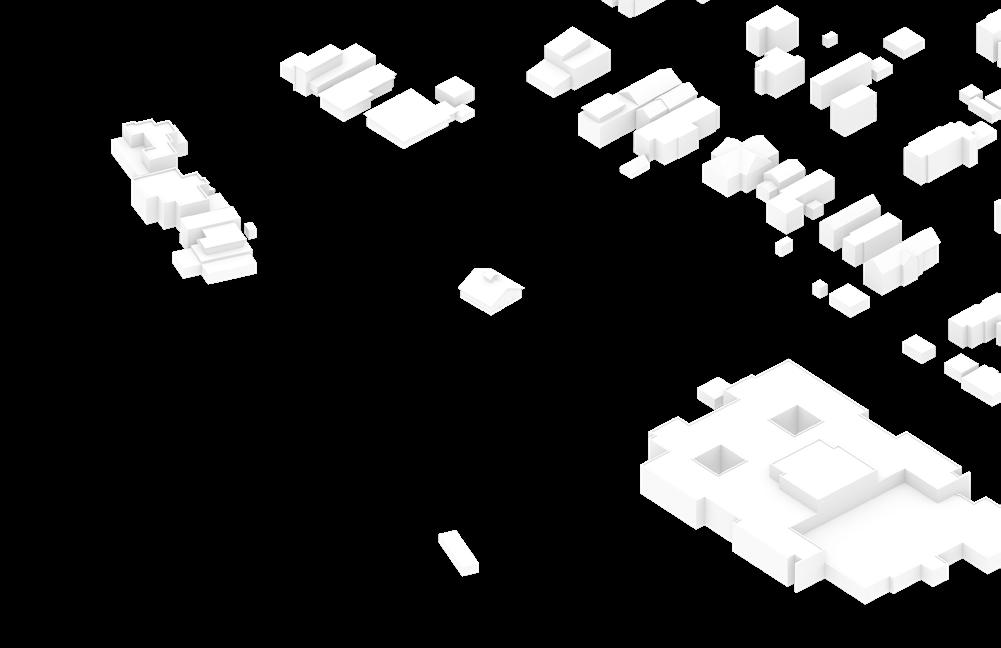
The design begins with the idea of a traditional one-room schoolhouse — a symbol of community, learning, and togetherness. This serves as the foundation for a school that acts as a central hub for both students and the surrounding neighborhood.
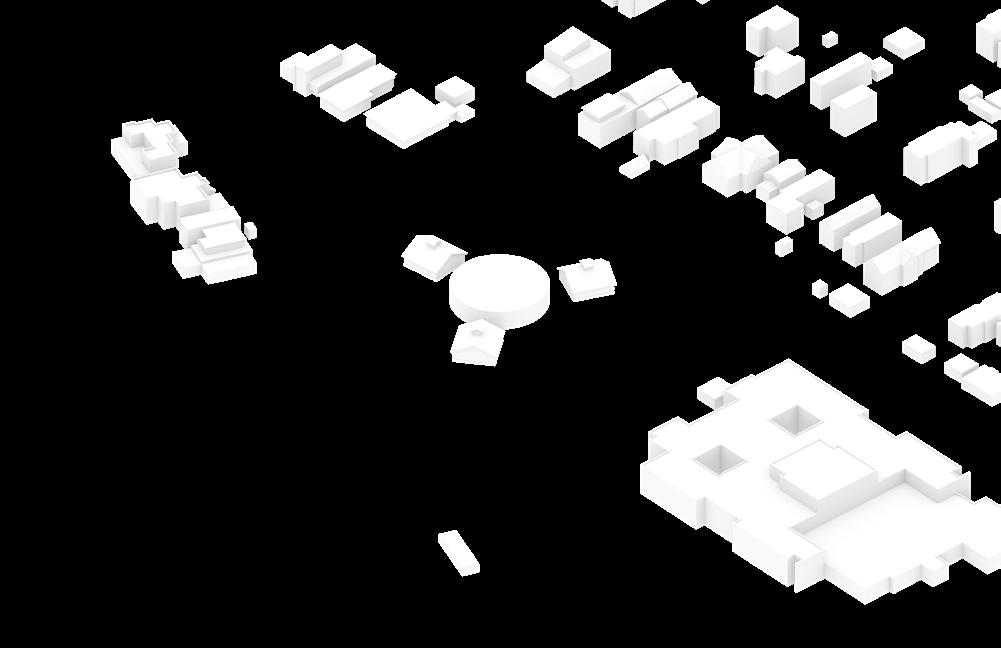
Building on the schoolhouse concept, a series of individual “schoolhouses” are introduced, each serving a distinct programmatic function. These volumes are arranged around a shared central space, reinforcing connection and unity within the campus.
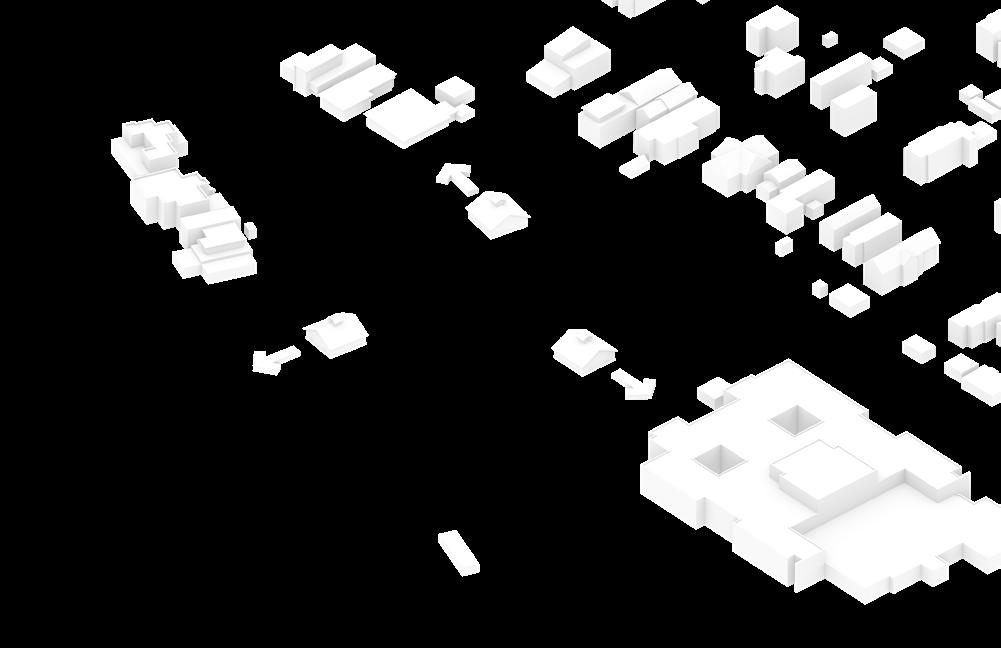
Key visual connections guide the placement and orientation of the buildings — framing views toward the West Bottoms, the existing Primitivo Garcia Elementary School, and the neighborhood to the north.
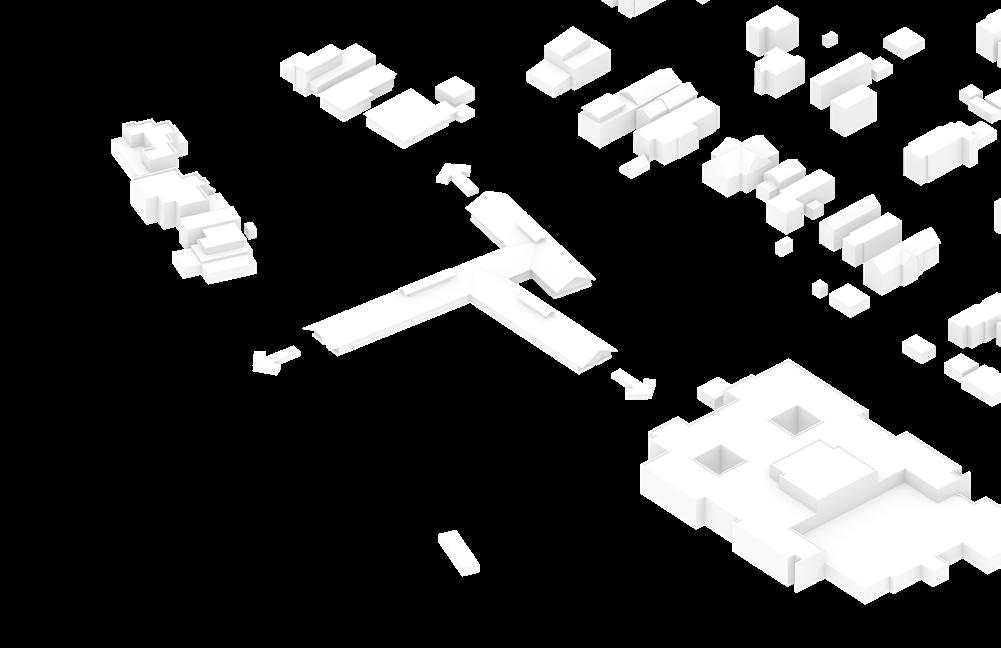
04 Extrusion
The “schoolhouse” volumes are extruded to define their forms while maintaining visual and spatial connection to the central gathering space. The result is a composition that feels both grounded and open.
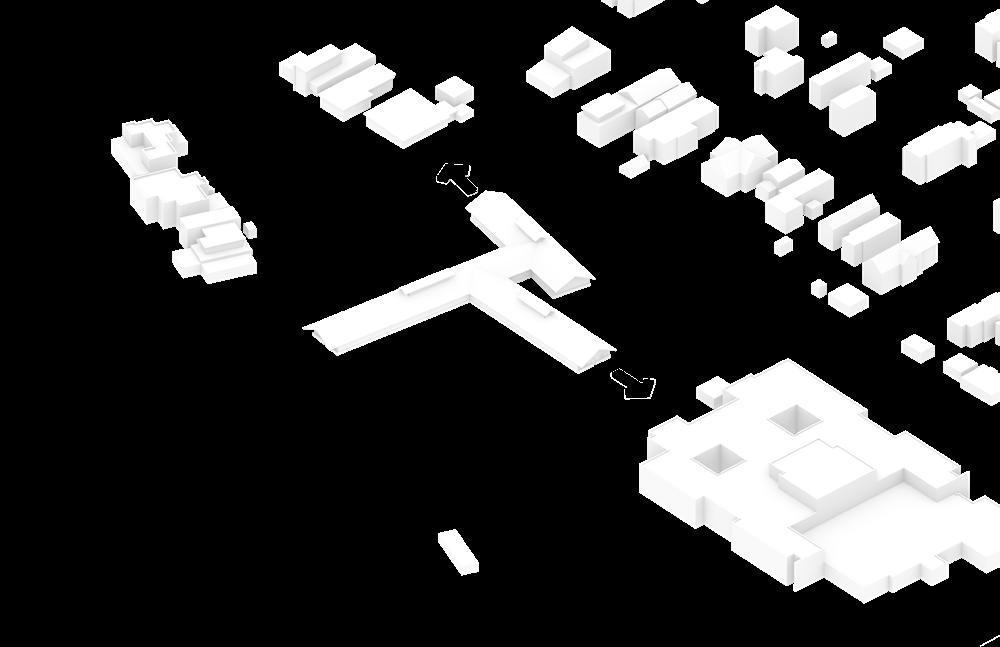
05 Intersection
At the heart of the campus, the central community space serves as a flexible, multi-purpose area — a shared zone for gatherings, events, and celebrations that fosters interaction between the school and the larger community.
With the help of Zero Tool and guided by the 2030 Challenge, achieving a 90% reduction in our building’s EUI requires reaching a target EUI of 9. To achieve this, we focused on an energy-efficient envelope with high-performance insulation and airtight construction, strategically positioned glazing to optimize natural daylight while minimizing heat transfer, and careful consideration of the building’s orientation to enhance passive heating and cooling.
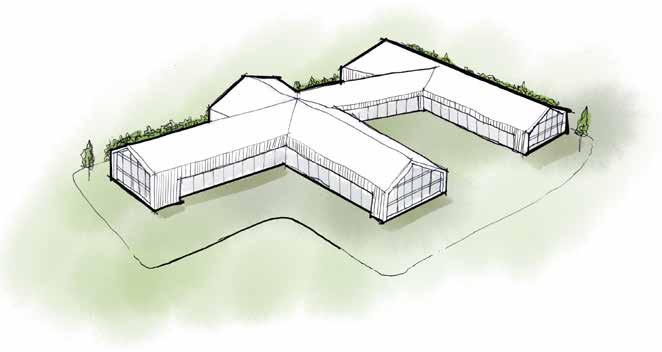
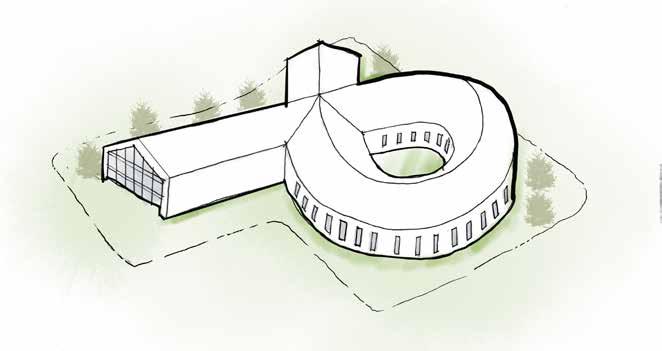
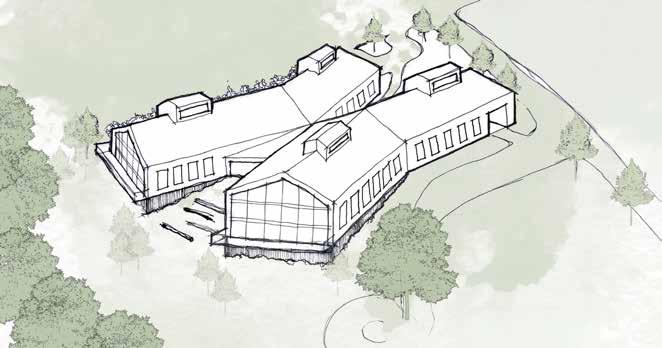
Form Sketches
Learning Commons
Community Gardens
Outdoor Play
Indoor Play/ Storm Shelter
Spread Footing
KNIFE PLATE
FLASHING
STAINLESS STEEL PLATE
3” GRAVEL
GLULAM COLUMN DRAINAGE MAT
4” POLY ISO | R-42 ALU START ISOLATION PLATE
RETARDING AIR VAPOR BARRIER
MOD BIT SHEET WATERPROOFING
3’ CONCRETE FOOTING
4” DRAINAGE HOLE REBAR
A part of my work consisted of designing a custom reflected ceiling plan for the center. I researched different lighting and ceiling materials used in educational spaces and I utilized different lighting elements to assist with the acoustics of the space. Each room was custom fit with lighting and acoustical treatment.
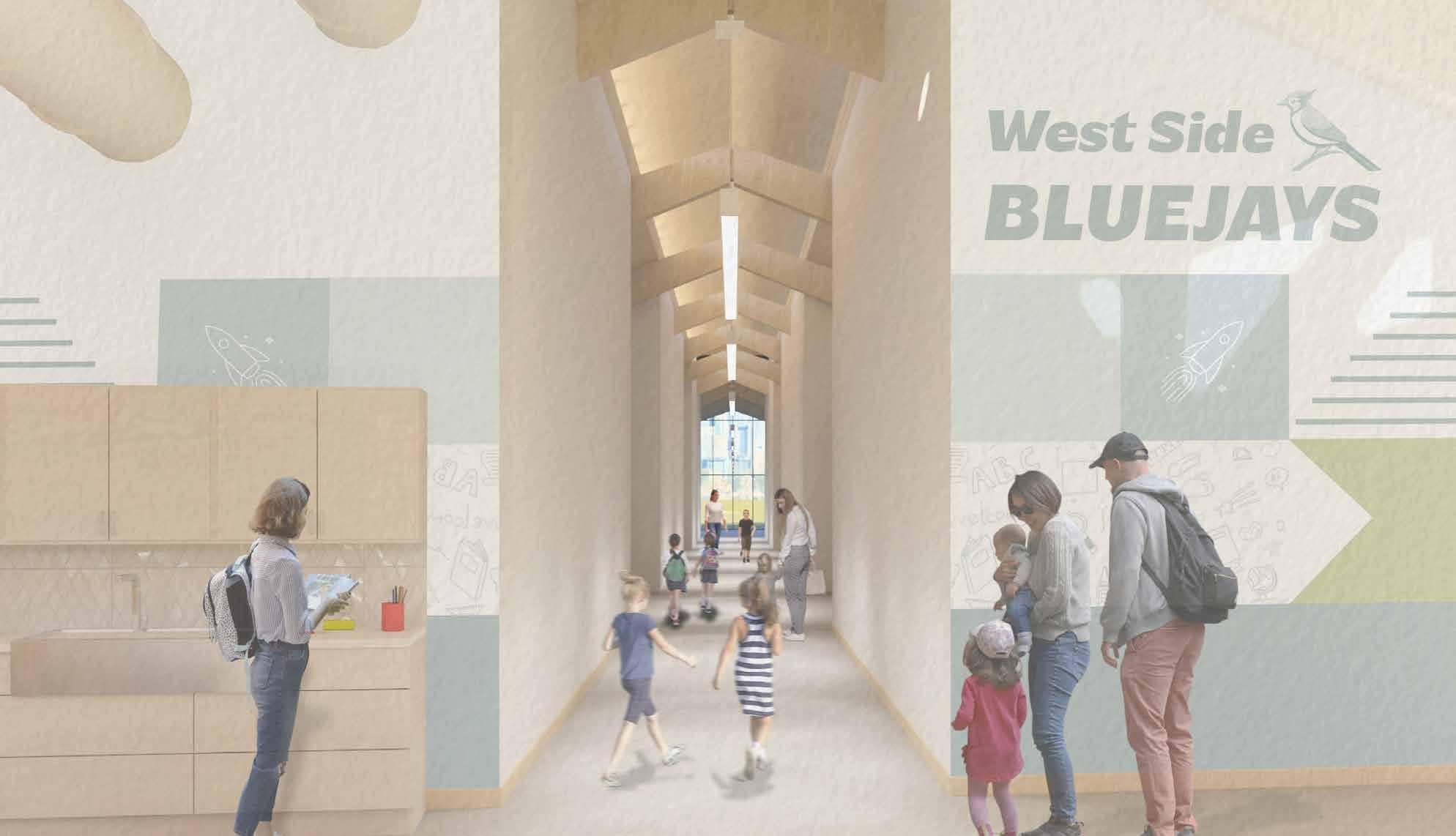
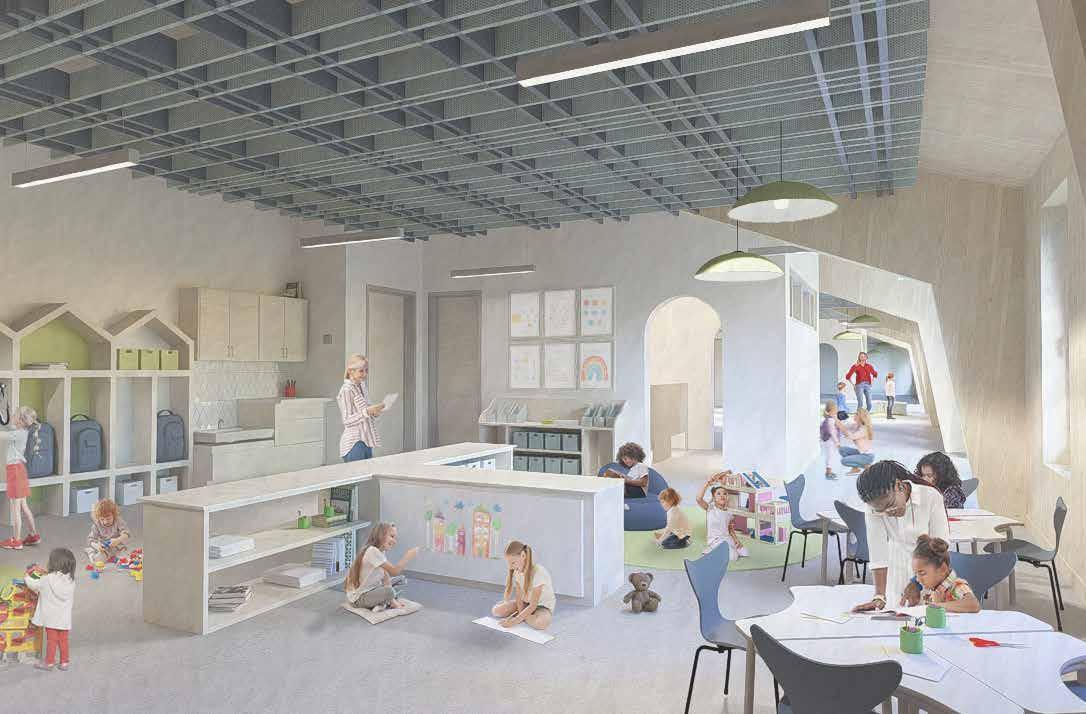
Commons Area
Air Force Museum Fall 2023
Professor Kapila Silva Revit and Enscape Cultural District in Fort Worth, Texas
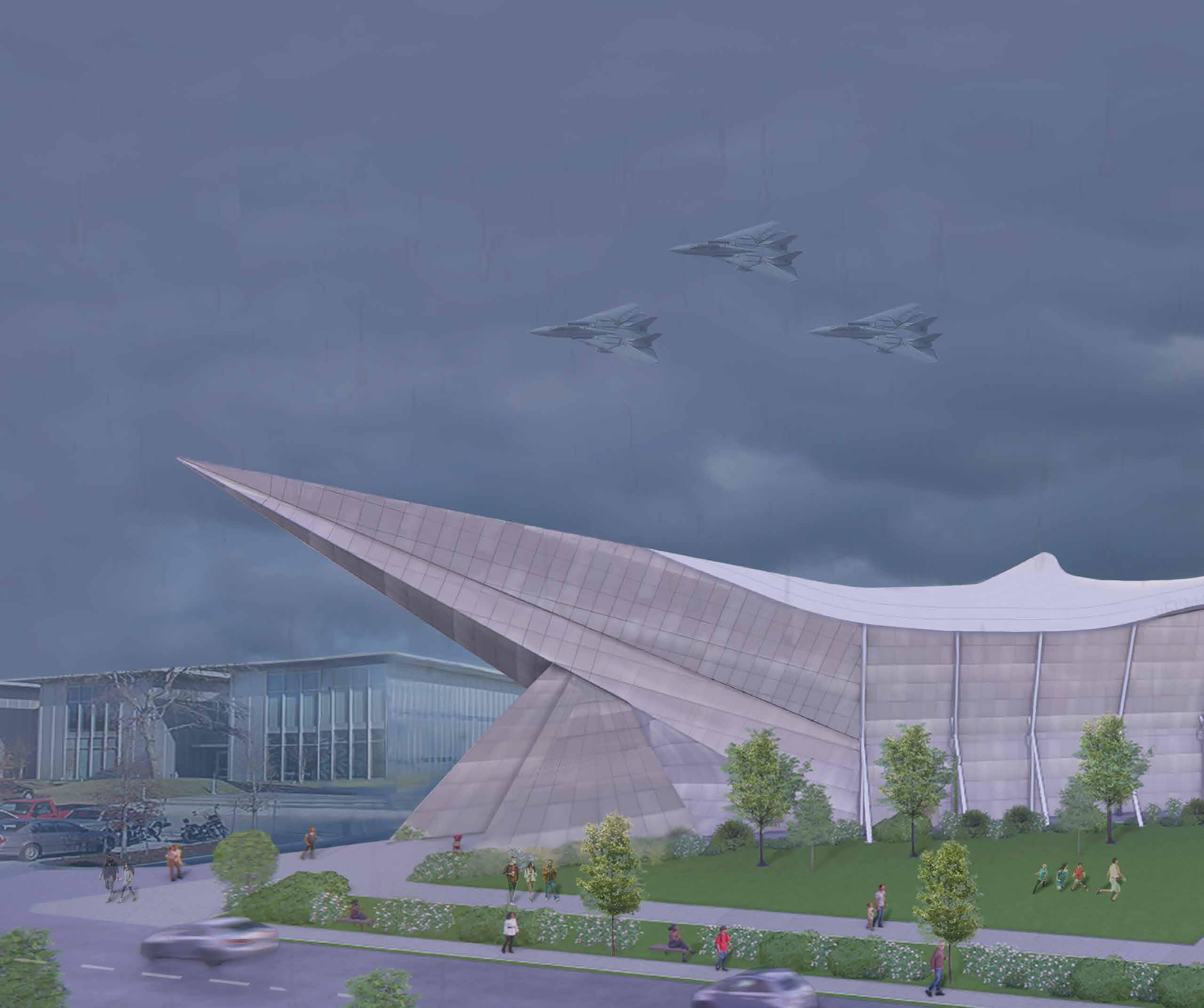
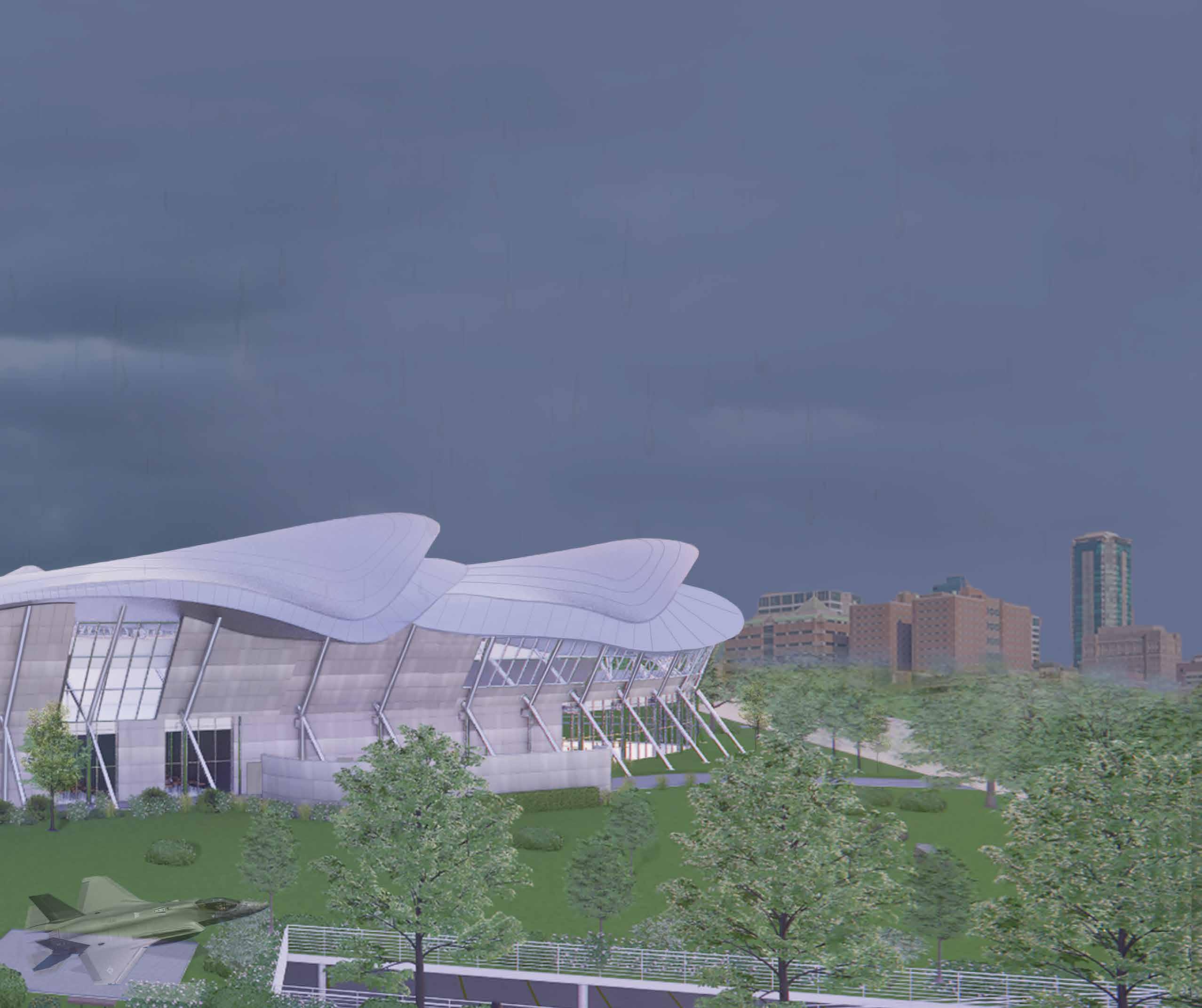
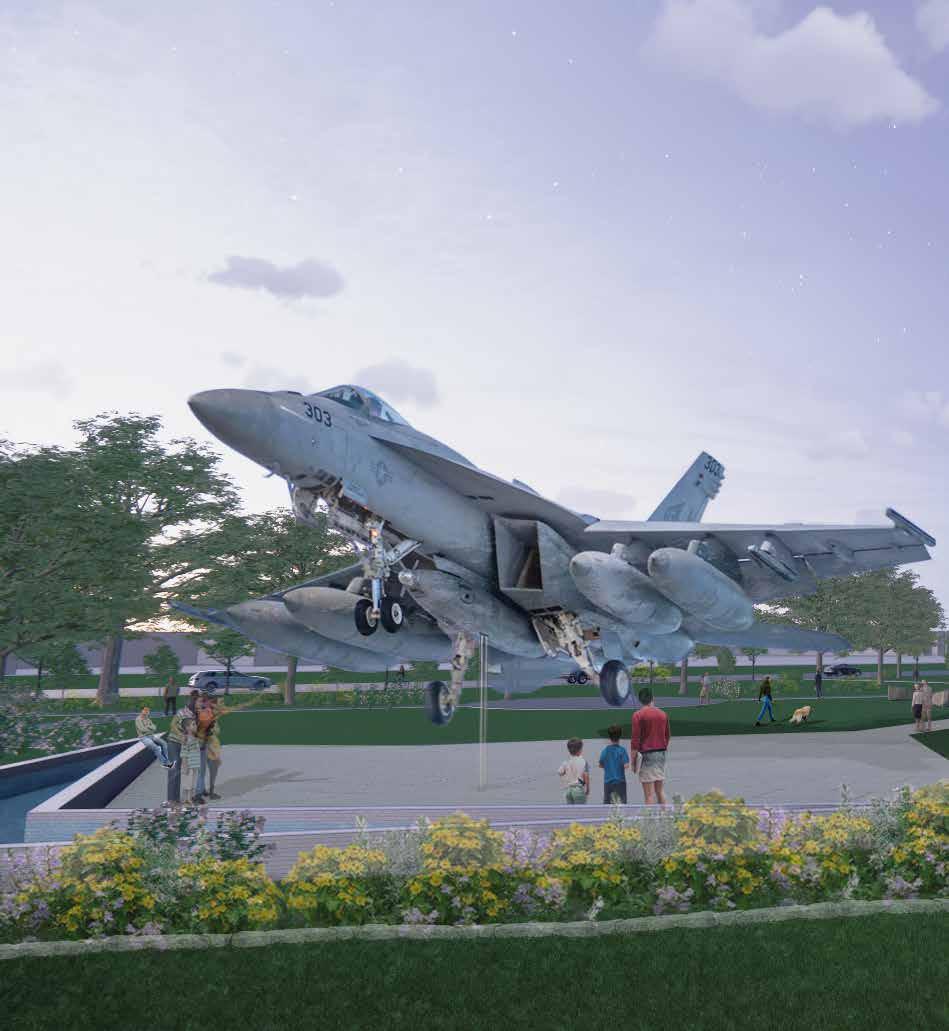
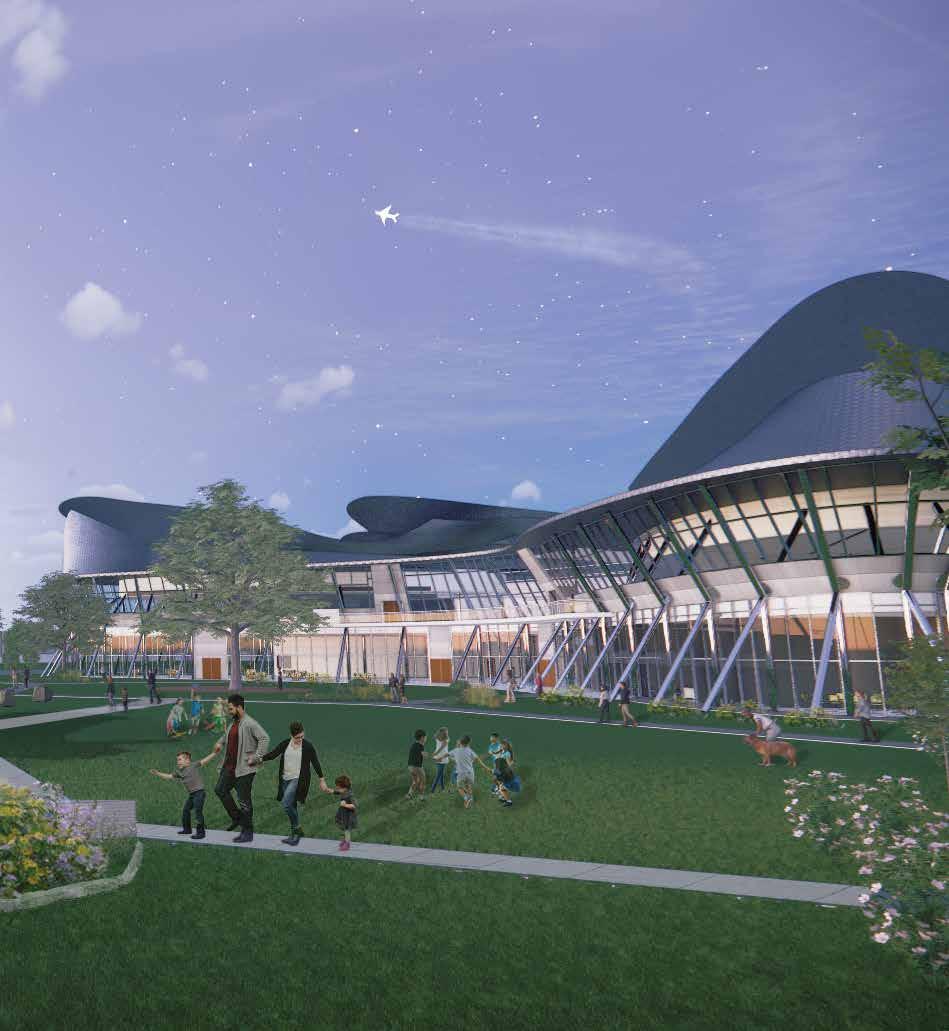
Set in the context of the Fort Worth Cultural District, the air force museum takes inspiration from the form of fighter jets and connects the ground to the sky through steep volumes. The sky comes down to become a part of the experience.
This Air Force Museum strives to continue the history and heritage of the U.S. Air Force from the first airplane built to the current planes being used in warfare today. Also, to educate the public on the motto, “Fly, Fight, Win” and continue the stories of the airmen that served before us and those currently serving.
Grid Pattern
Grid Pattern
Extend grid pattern from the Museum of Modern Art onto Site.
Extend grid pattern from Museum of Modern Art onto the site.
Rotate Grid
Rotate Grid
Rotate grid lines to make tree the central axis and entrance at the North West corner.
Rotate Grid lines to make the tree the central axis and entrance at the North West corner.
Honor the Tree Leave room around the tree and circulation around it.
Honor the Tree Leave room around the tree and circulation around it.
Introduce Form The form takes place on the site.
Introduce the Form Form takes place on the site around the tree.
Flight Formation
Flight Formation
Simplify Explode
Simplify Explode
Soften Form
Enclose Lift Pull
Enclose Lift Pull
Soften Form
Give the form a more aerodynamic feel.
Give the form a more aerodynamic feel.
Basement Floor Plan
1/4" = 1'-0"
Natural Arts Center at Kaw Point Park
SketchUp and Enscape 1403 Fairfax Trafficway, Kansas City
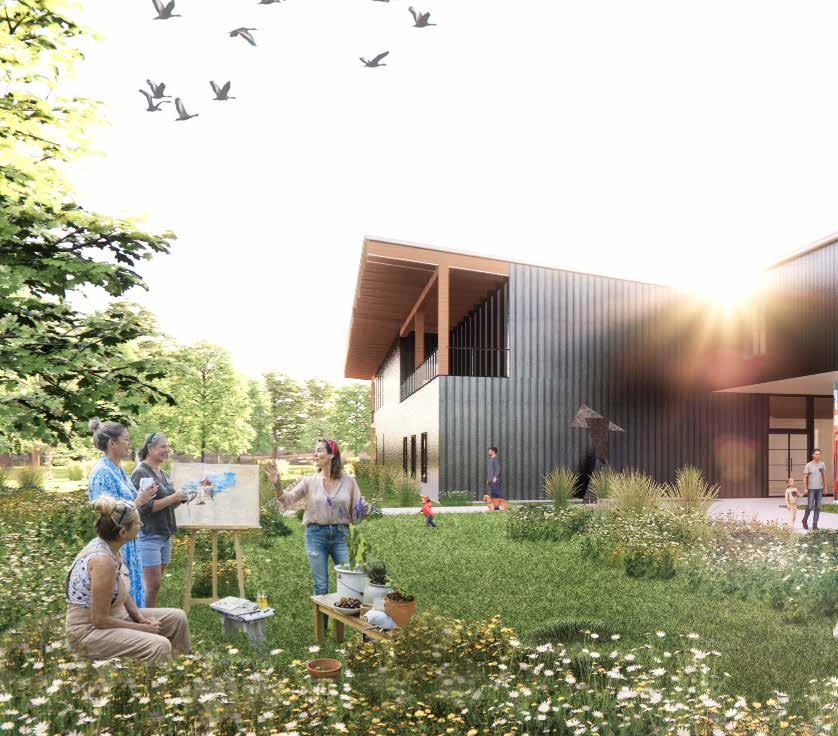
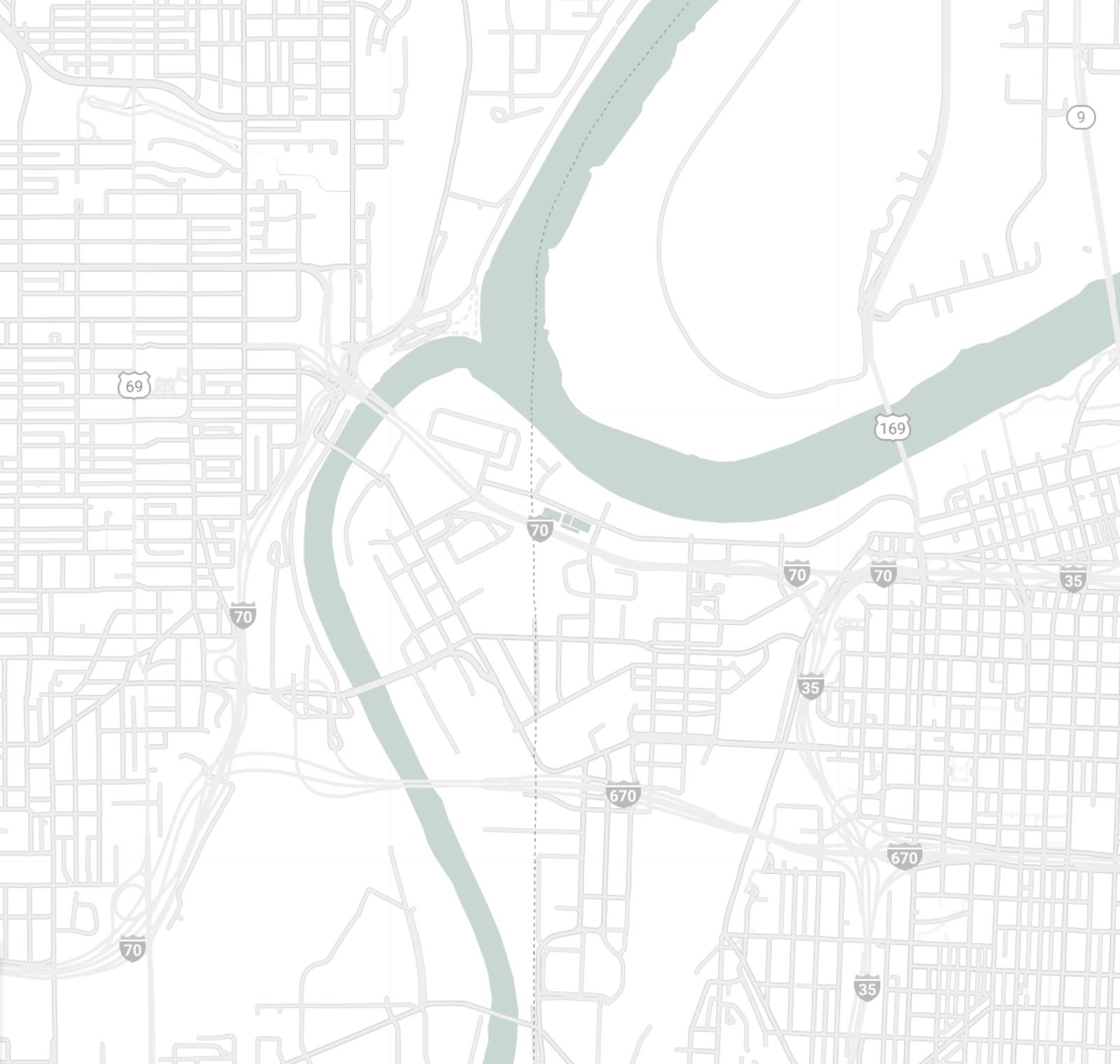
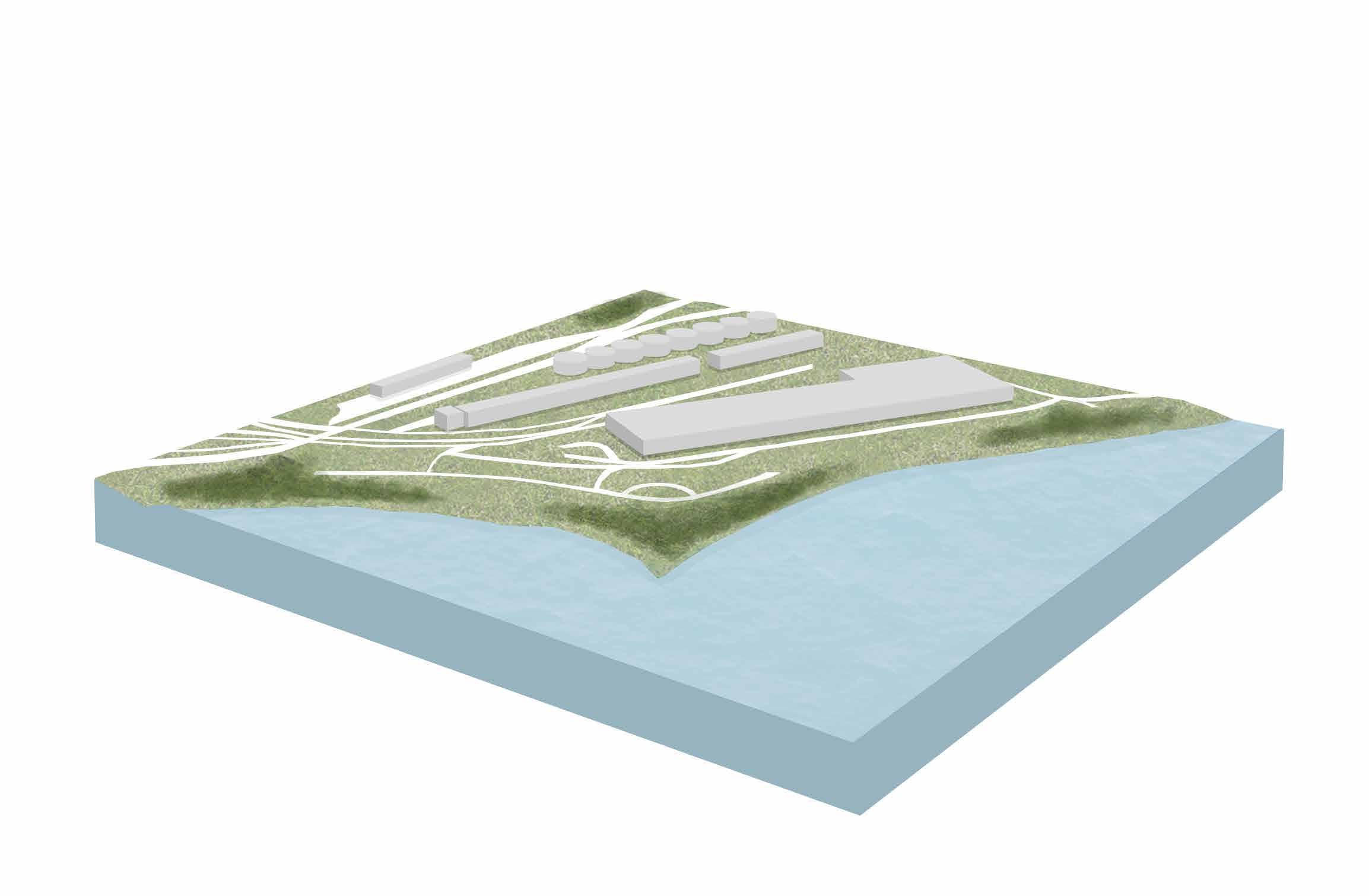
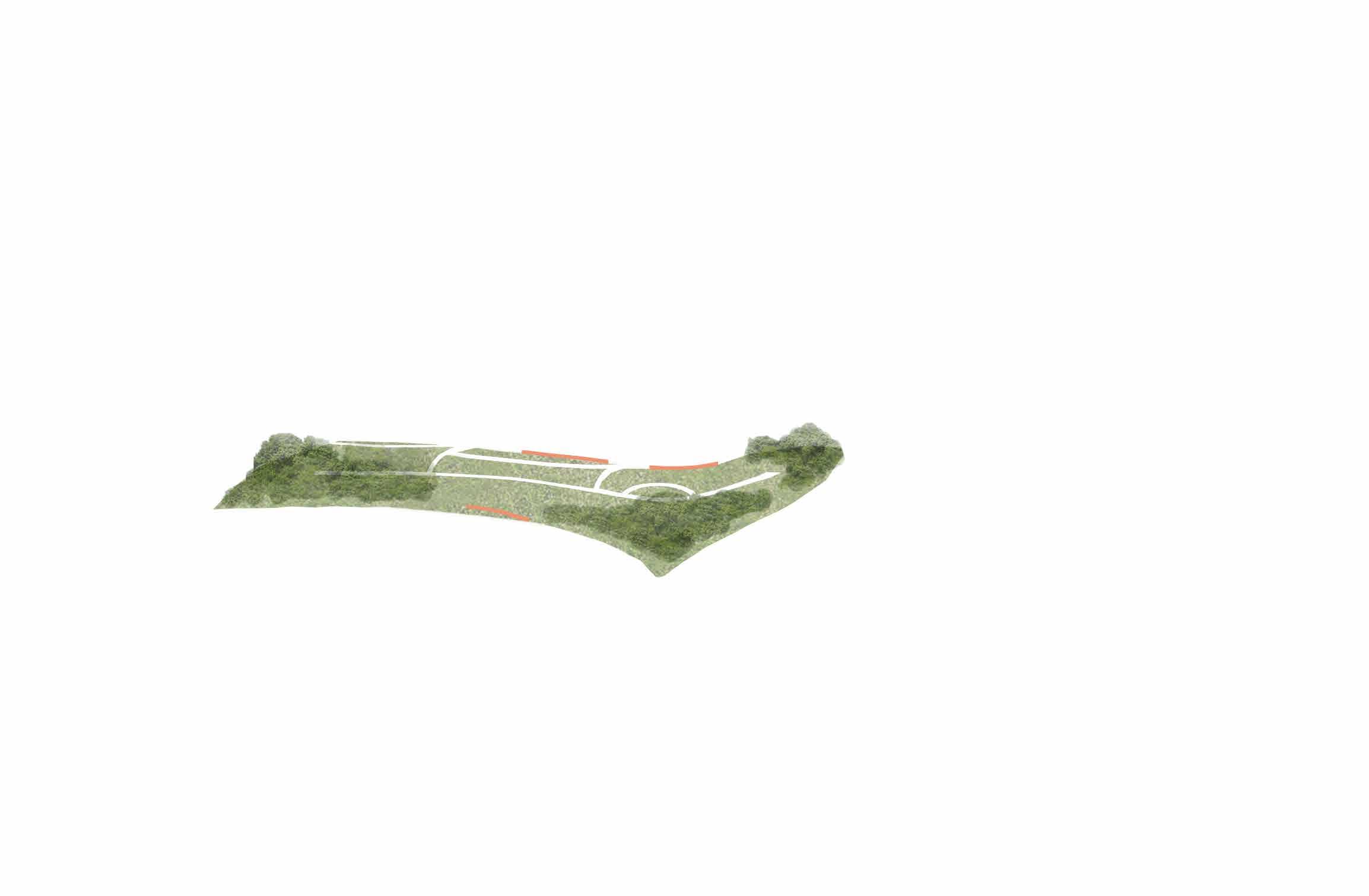
This Natural Arts Center is an environmental education center geared towards the natural arts at Kaw Point Park in Kansas City. The exisitng site is a neglected park that sits in a heavy industrial area and at the convergence of the Missouri and Kaw River. There is a major lack of art opportunities compared to across the river so this center will bring the site back to life and provide more opportunities for creativity. It also supports local artists by providing studio spaces and ways for the community to get involved through art classes, craft fairs, and an art gallery.
Art Opportunities
Site Location
The abundance of art opportunities in KCMO compared to KCK is drastic. The goal of the Kaw Point Natural Arts center is to bring more art to the area and provide the community of KCK a space to learn and experience art in new ways. As well as provide studio spaces for local artists to grow their business.
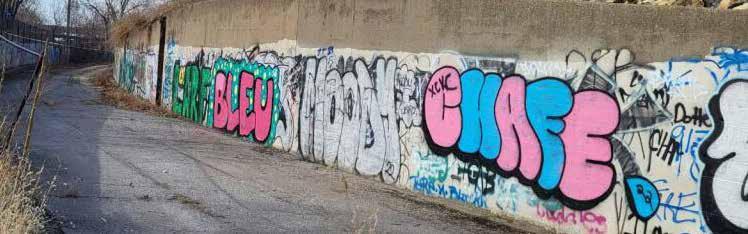
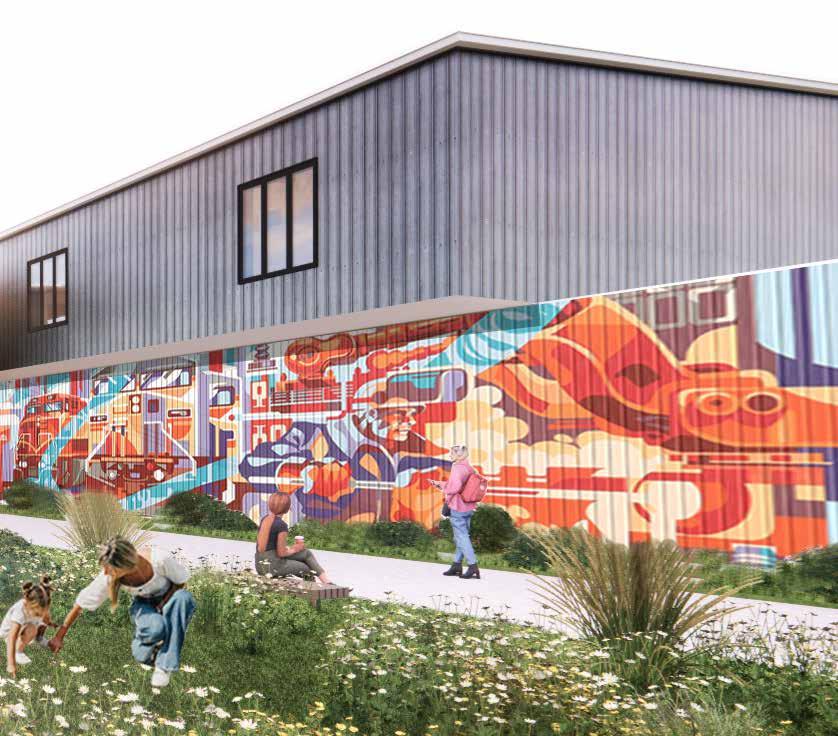
The inspiration for the natural arts center came from these art walls located throughout the site. I could see how the community wanted their voice to be heard so providing a space where they could do so was crucial to the design.
The Natural Arts Center is designed around the central Art Wall, a mural painted by numerous artists and the community. The circulation and spaces carefully wind through the Art Wall to further immerse guests into the experience of the gallery and center.
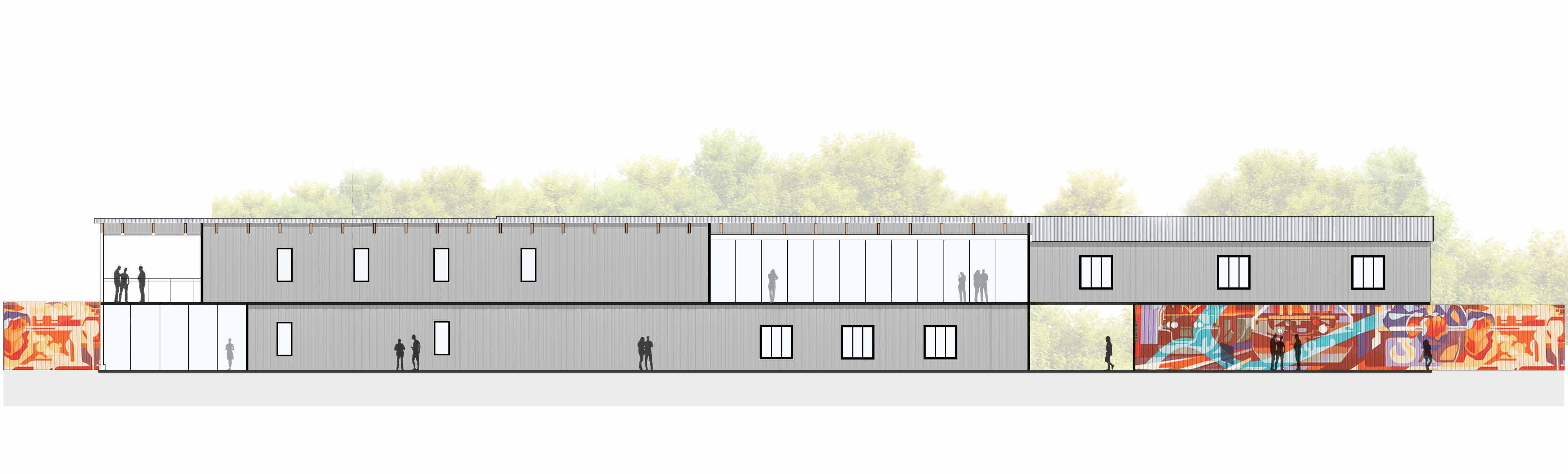
The materials I chose were influenced by the industrial nature of the buildings nearby. I chose to use an aluminum rainscreen panel that gave it that industrial look while also helping reduce thermal movement through walls which reduces energy costs. For the roof, I chose a standing seam metal roof which is durable and easy to install. As for the the structure, I wanted the wooden beams to stand out and be a feature of the building from the outside and the inside.
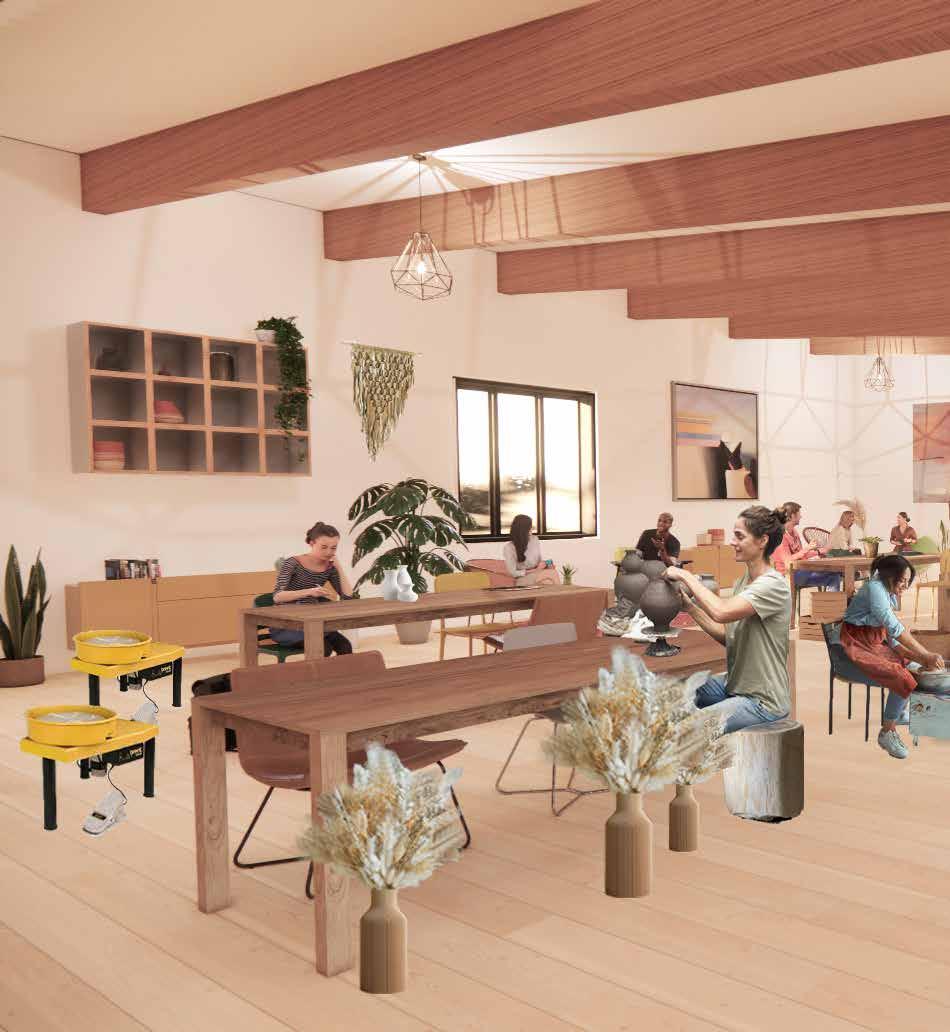
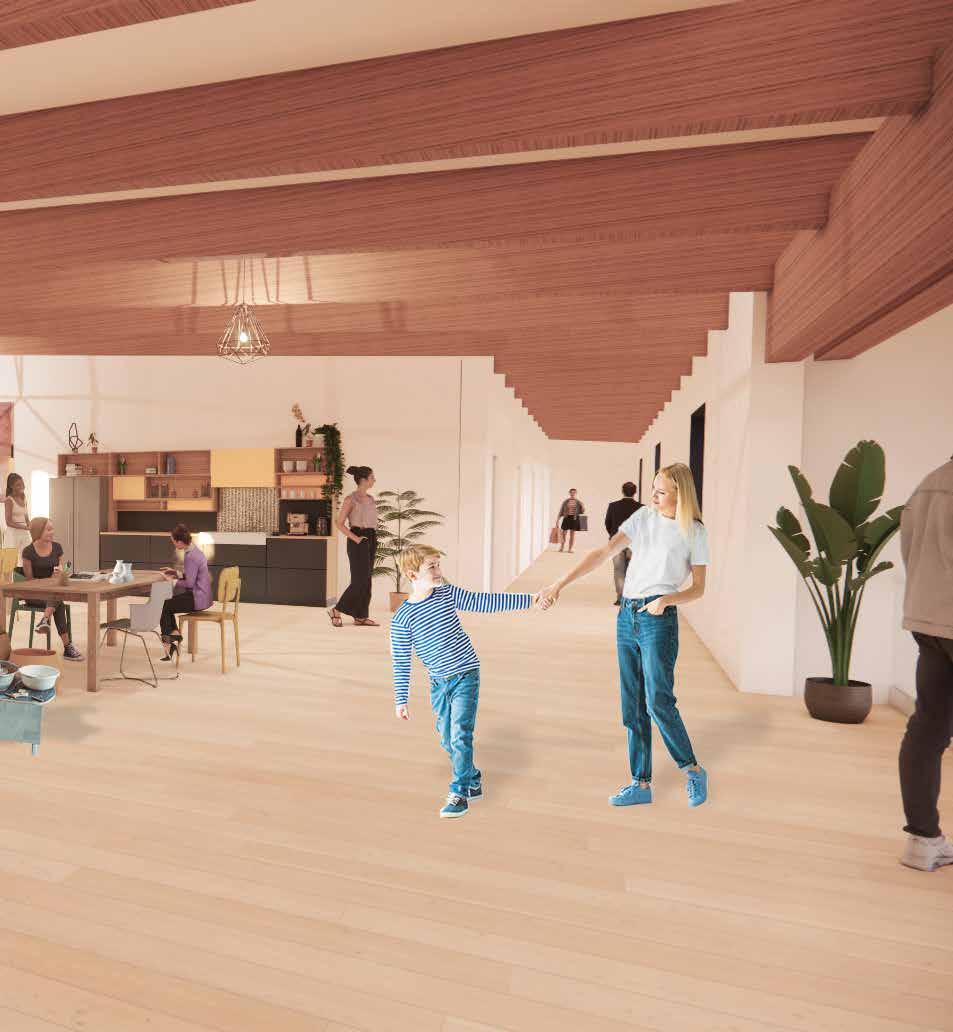
Studio Space
Prairie Park Pavilion
Spring 2024 | Design Build
Professor Keith Van de Riet
Prairie Park Nature Center Lawrence, KS
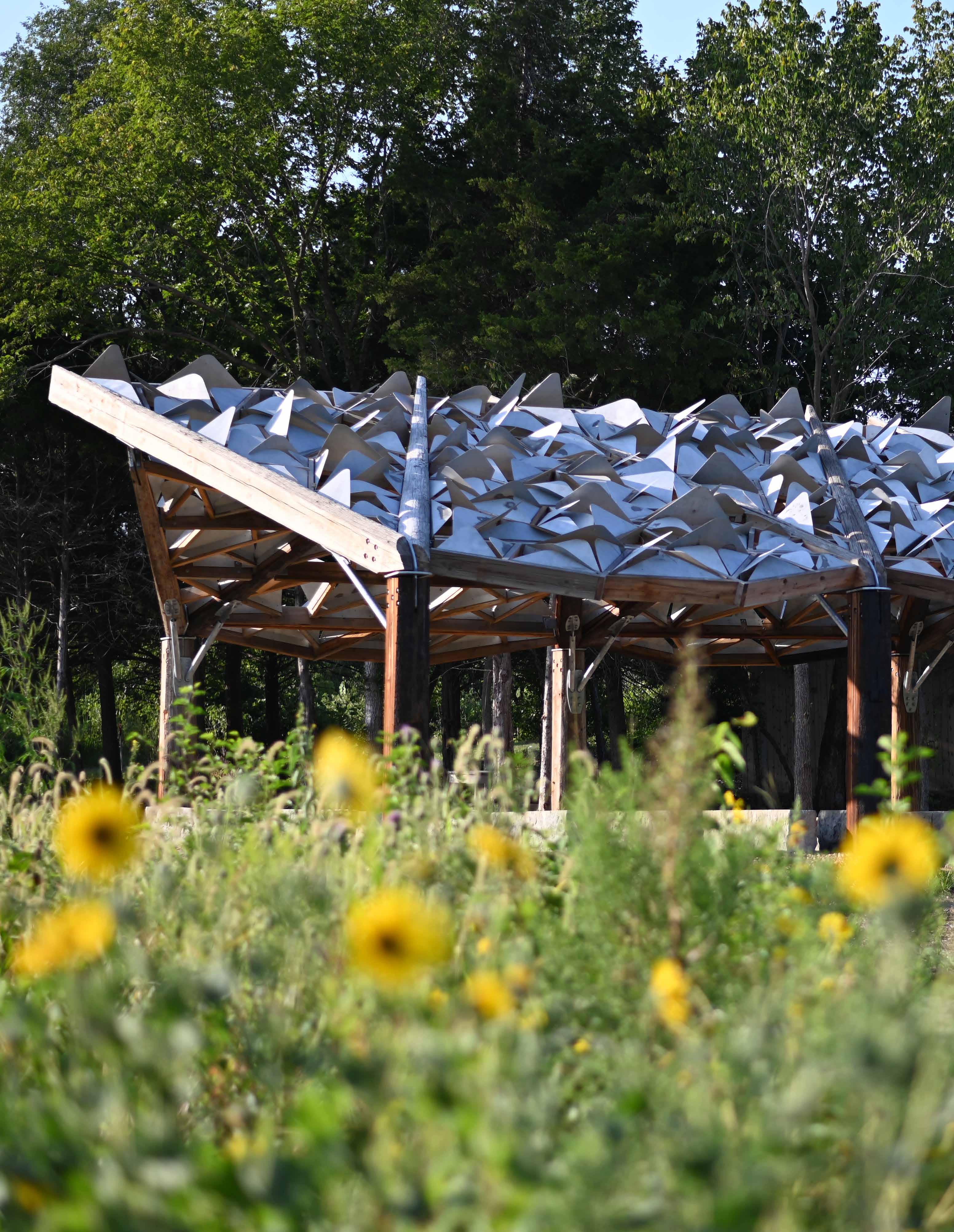
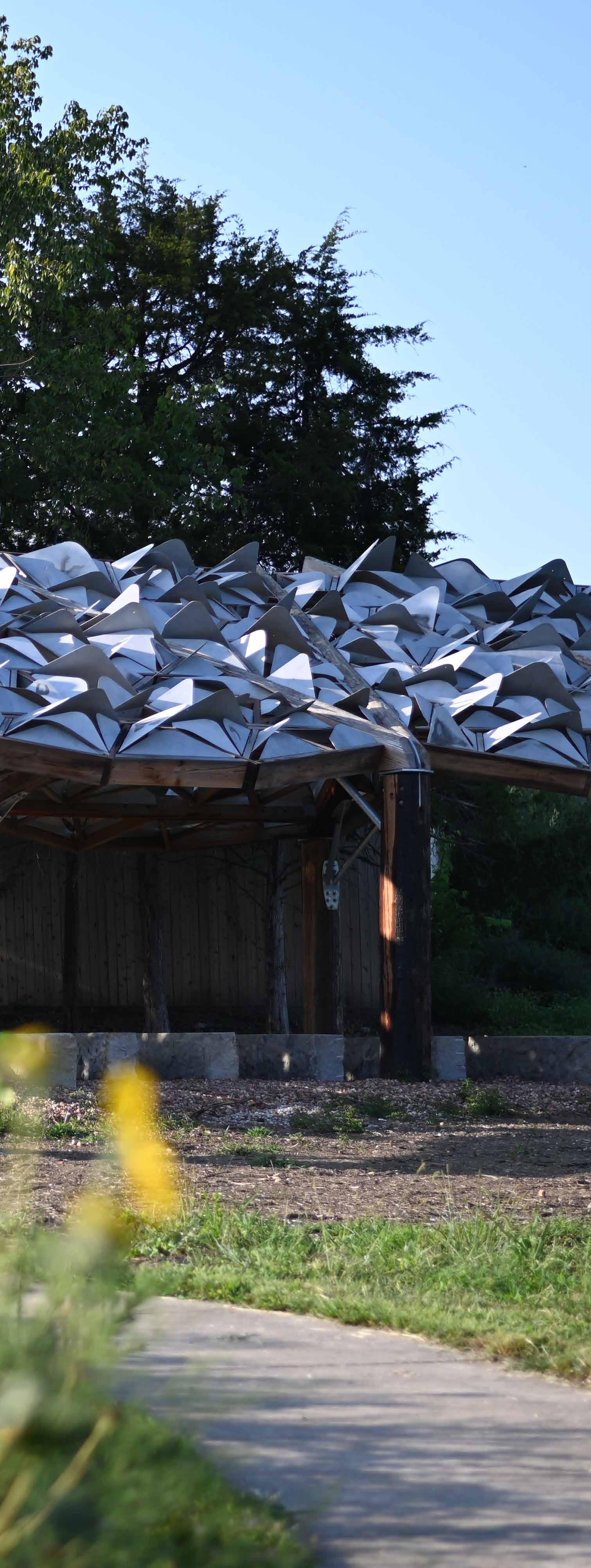
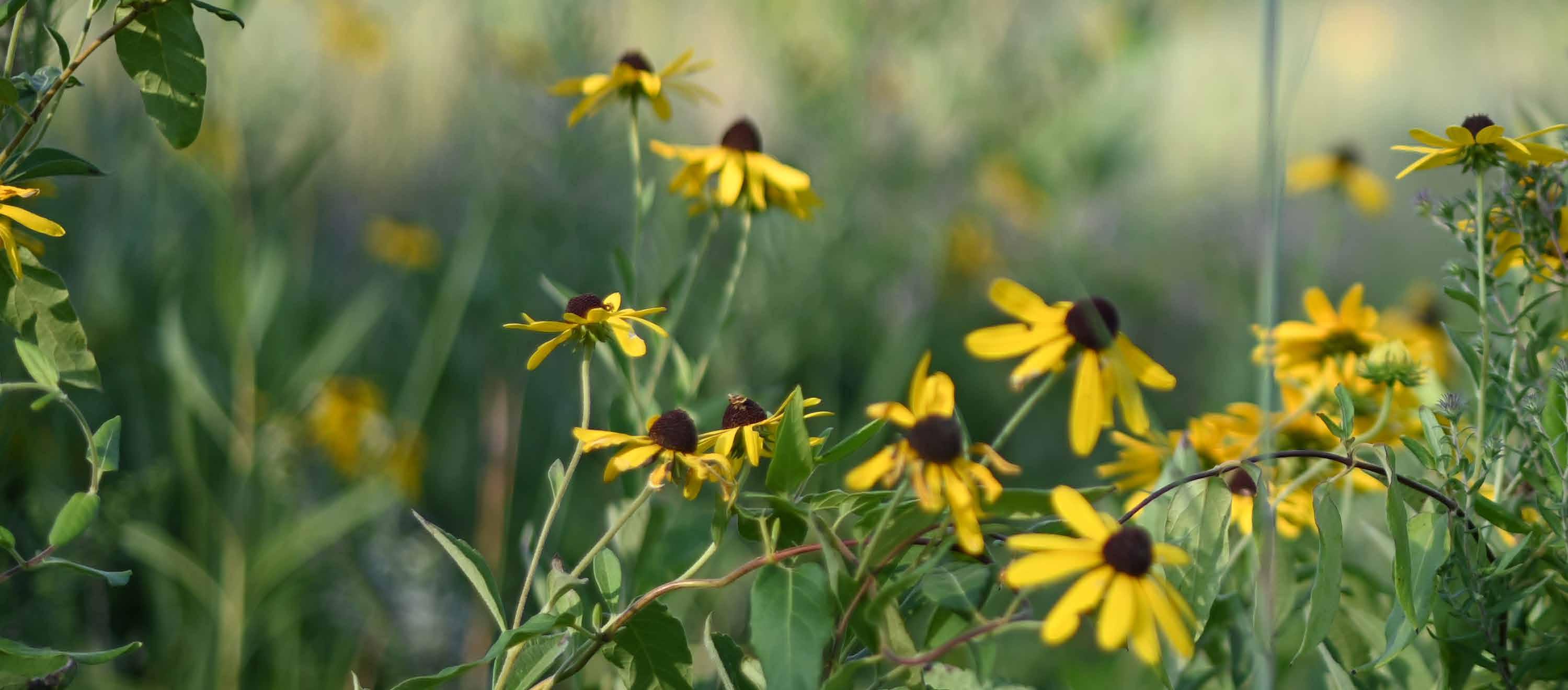
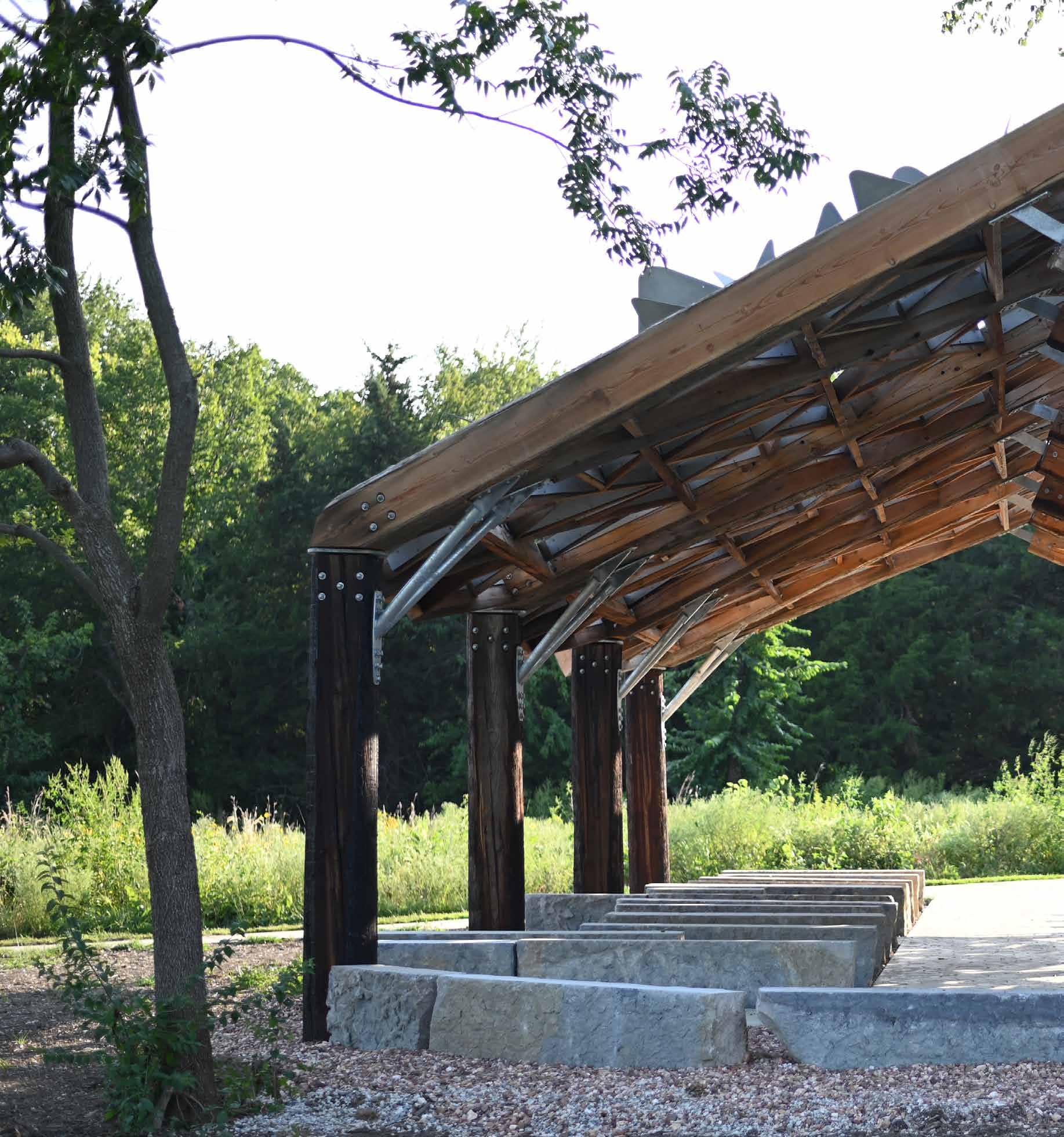
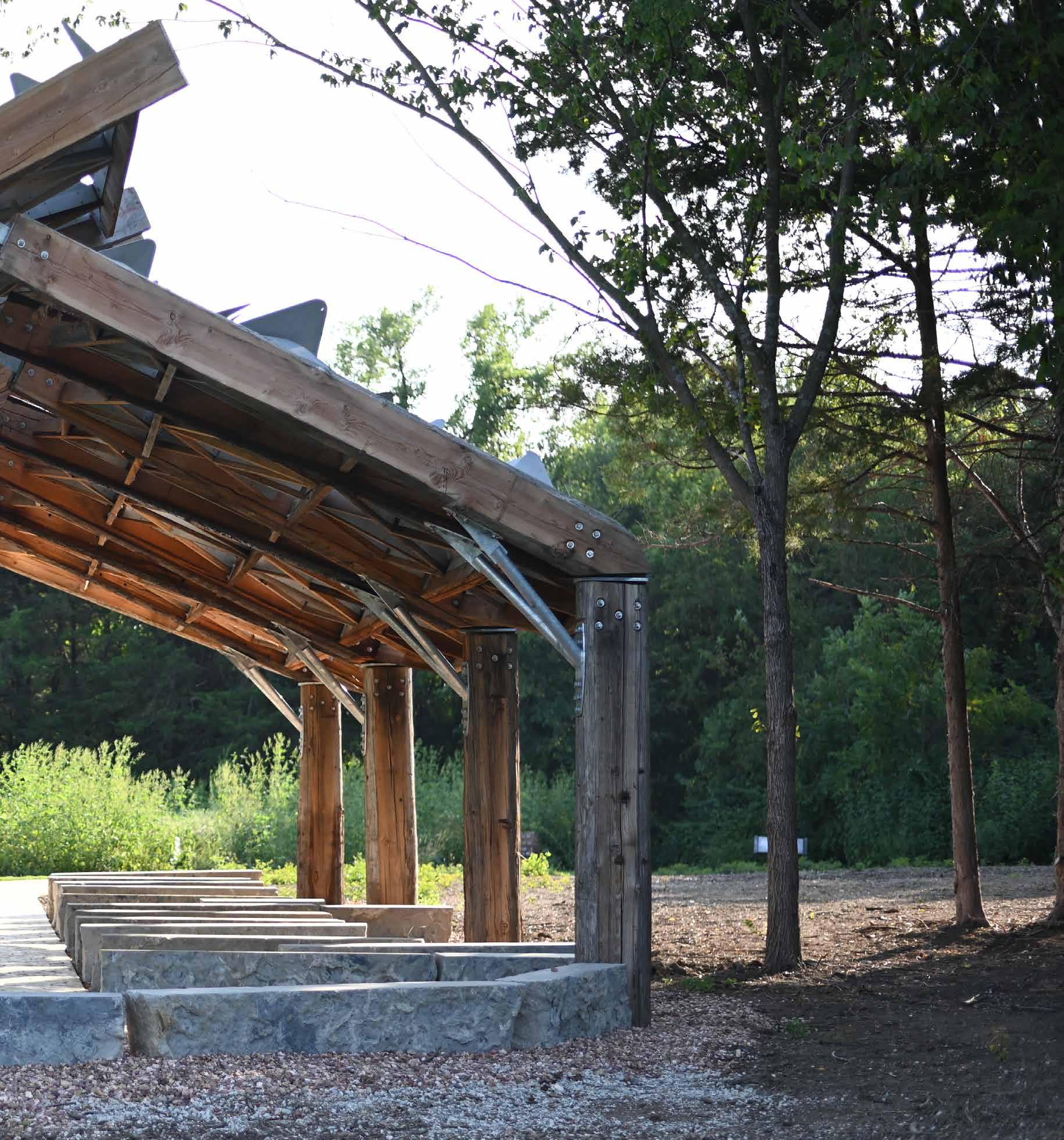
This project was a pavilion for Prairie Park Nature Center in Lawrence, Kansas to honor the remnant prairie and create a space for small gatherings, summer camps, and weddings.
Student Team: Alayna Thomas, Ashley Desker, Chris Monarres, Emily Dulle, Emma Hamer, Madison Simons, Matthew Garrett, Naalkh DeAsis, Sara Miranda Luzio, Sarah Montes, Wynn Bowden, Melia Whitney, and Suzan Hampton

AIA Kansas Honor Award in Architectural Craft and Innovation Category - Prairie Park Pavilion Designbuild
Small Group: Naalkh DeAsis & Chris Monarres
My groups initial idea was to angle the utility poles so they would open up to the prairie. Because of the tight budget, we created the roof structure out of recycled street signs which formed a weave resembling the prairie grass interlocking with each other. As a group, we presented our idea to the city and community to gain feeback on the concept.
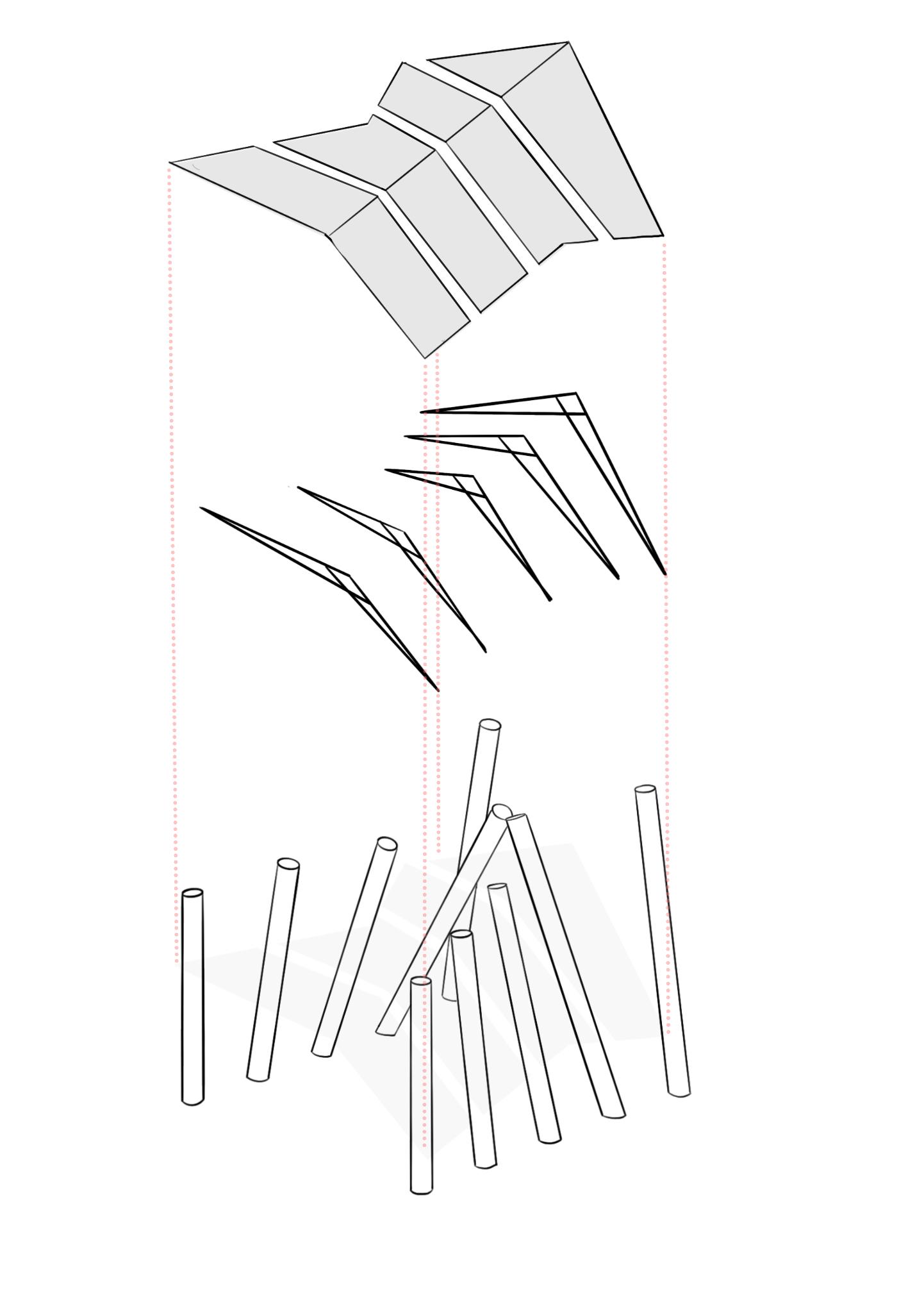

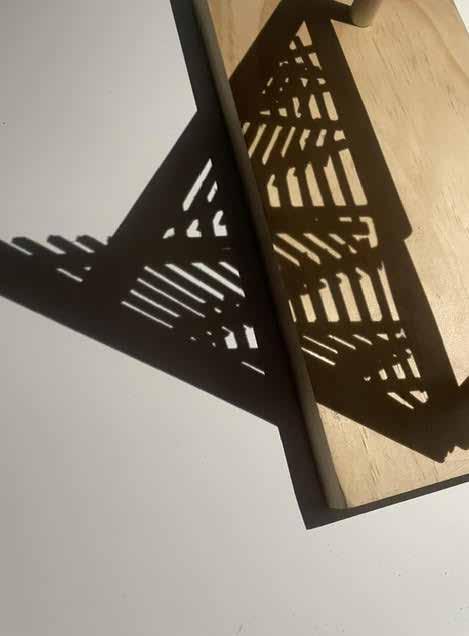
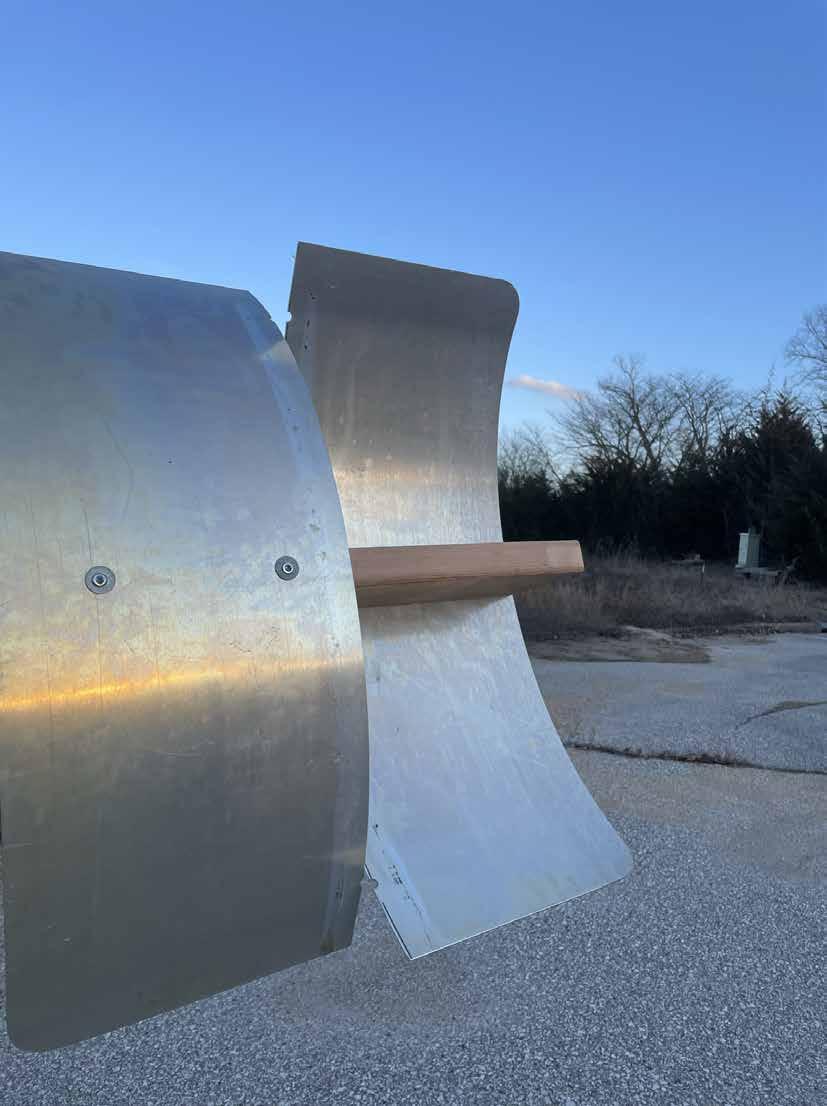
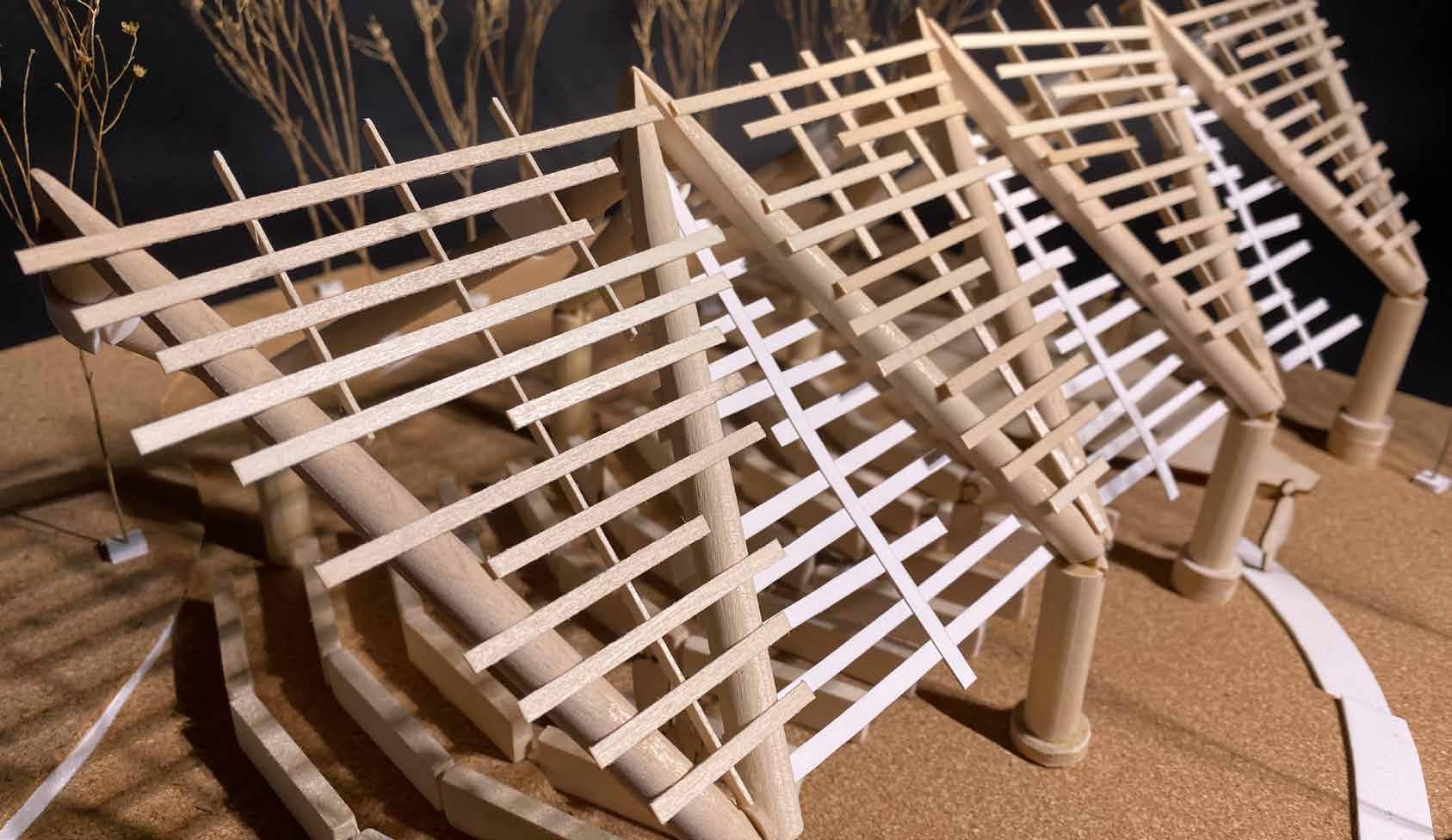
After the final presentation to the city, the design went into the direction of another group. It was more reasonable from a cost standpoint of structure and materiality. One thing that we were able to contribute to the final design was our idea of recycled street signs. From here, smaller groups started focusing on seperate tasks. These groups consisted of construction documents/permits, solar
studies, structural connections, and roof tile design. I was mainly involved in the construction documents and permit set that needed to be sent out for approval. My team worked through the structural connections with the engineers from the footing details to how the roof tiles were going to be set in place. We had to go through many iterations back and forth with the engineers to get the details
correct. While my group was working, the other groups were finalizing the sun studies and creating a grasshopper script in rhino to solidify the placement of the roof tiles to optimize shading. My class went through many models and iterations to finalize the design and come to a point where the design was constructable and within budget.
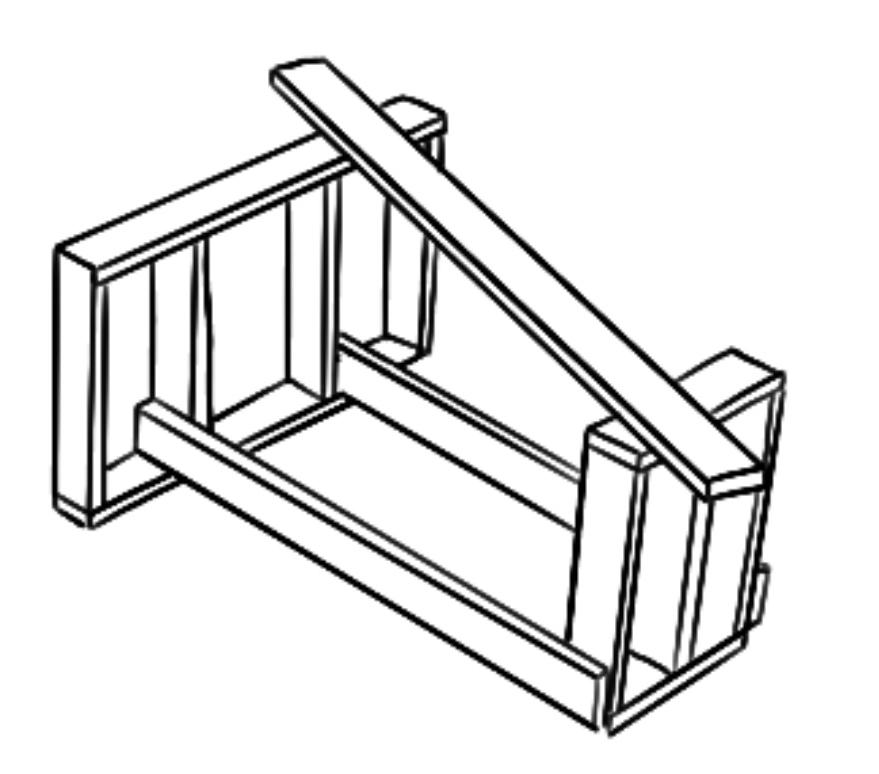
My responsibilites consisted of assisting with construction documents, laying out the site using batter boards, and cutting the utility poles. I was tasked with coming up with a jig in order to cut each pole accurately. I started sketching the angles I knew we needed from the model and figuring out each cut one by one.
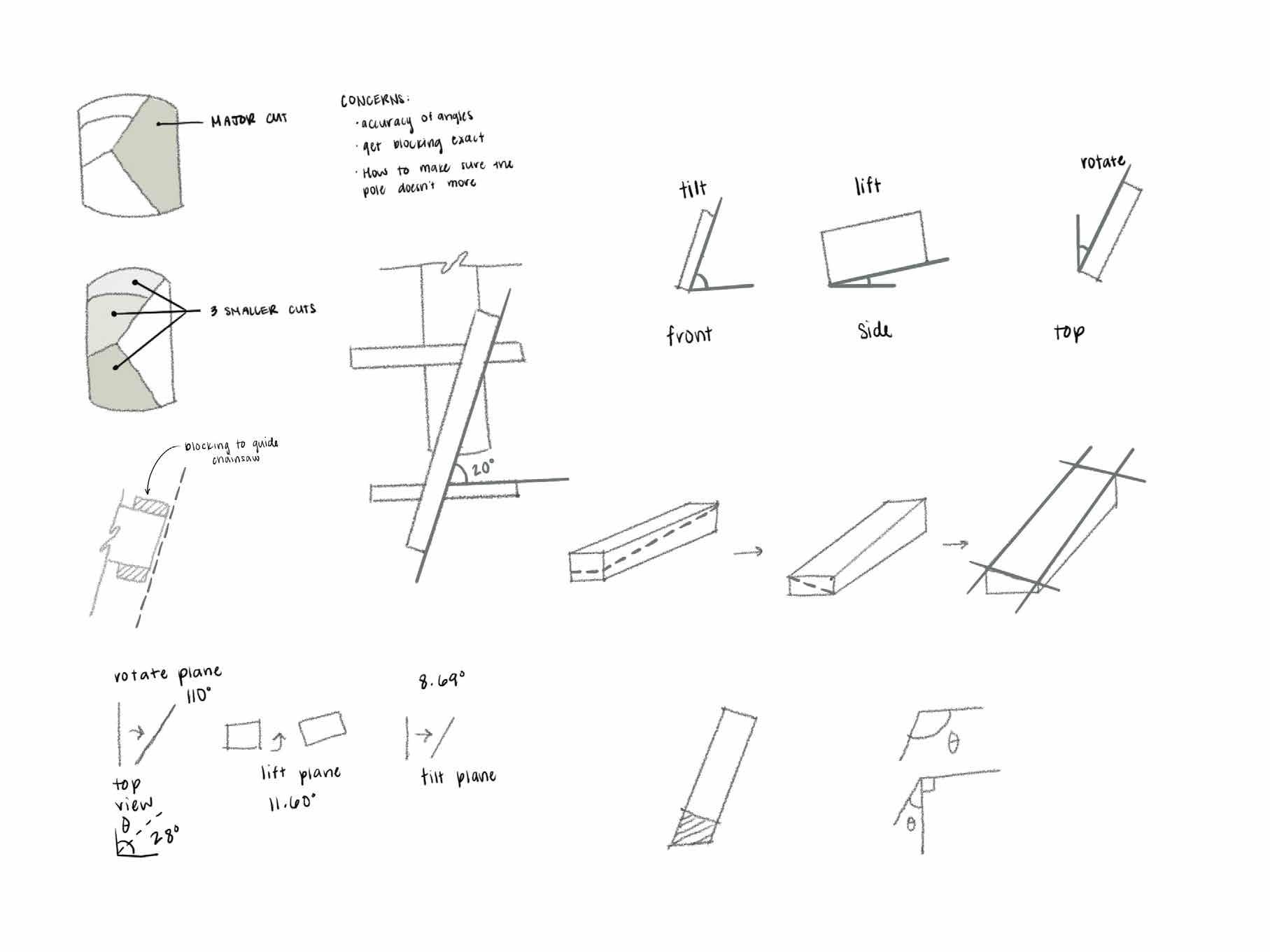
1. Tapered Utility Pole
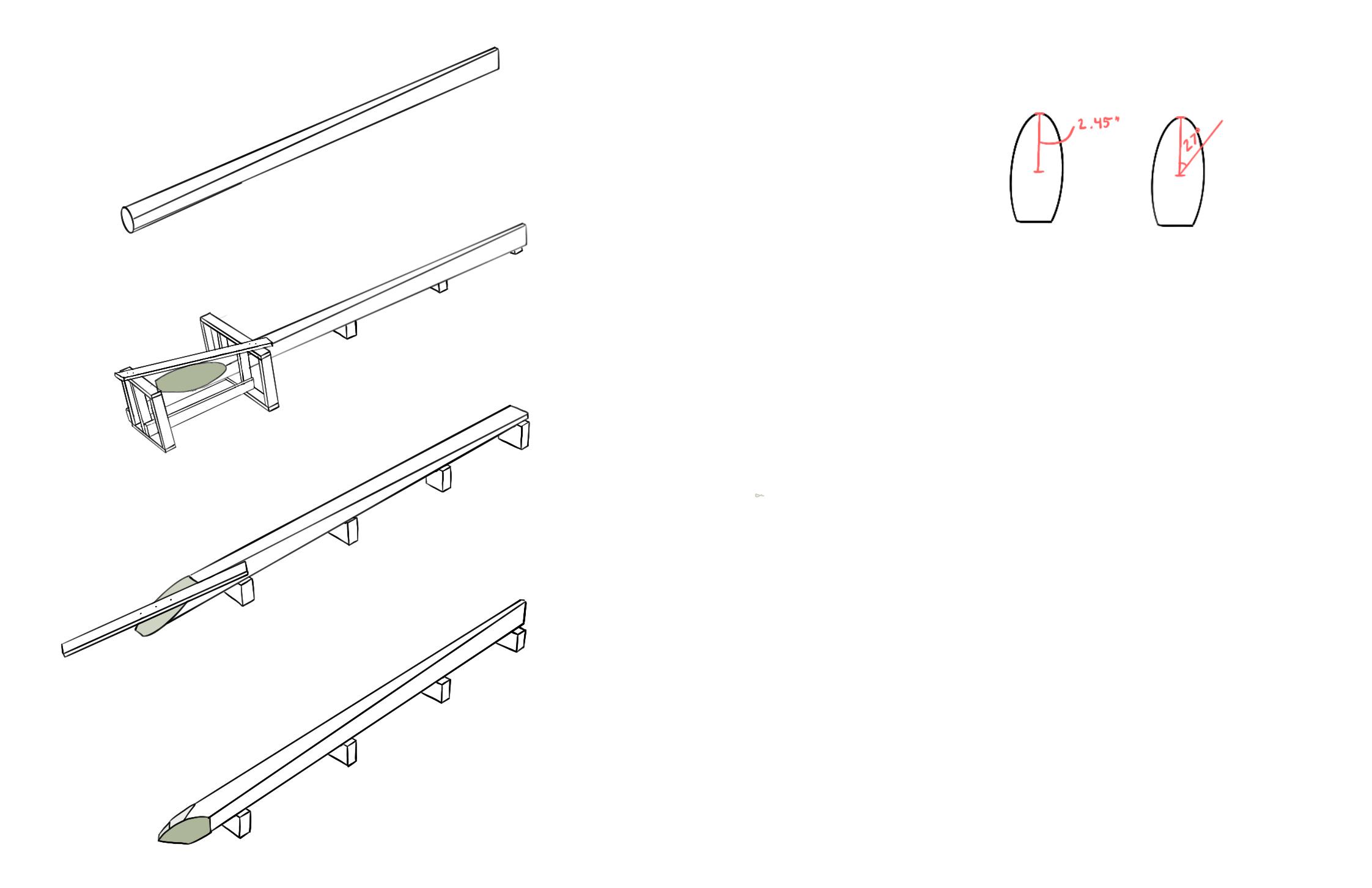
2. Place Jig over pole and set up angle for first cut
3. Flip pole 90 degrees and set up second cut from predetermined angles
4. Flip pole back 90 degrees and freehand last cut to round off the edge
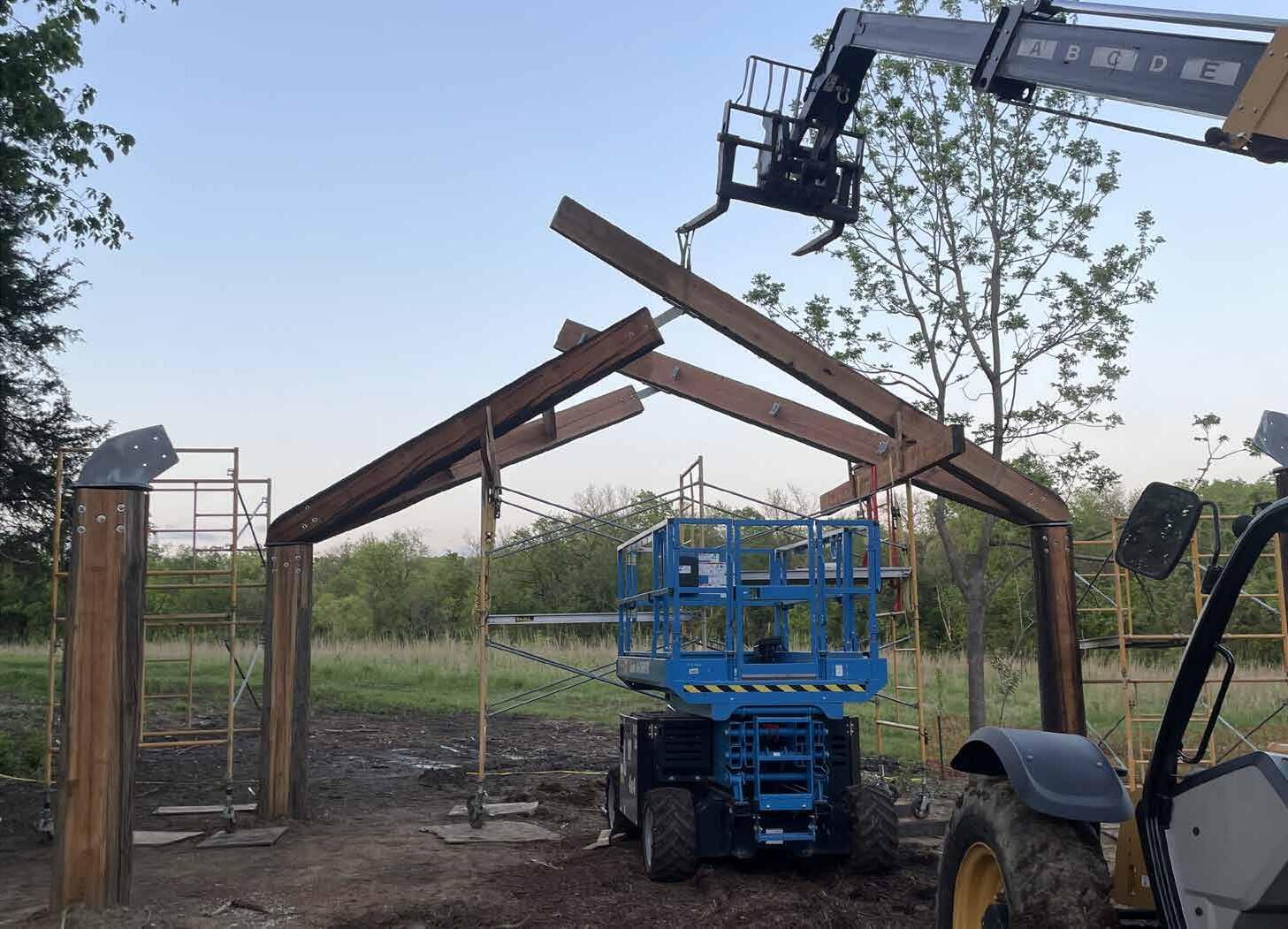
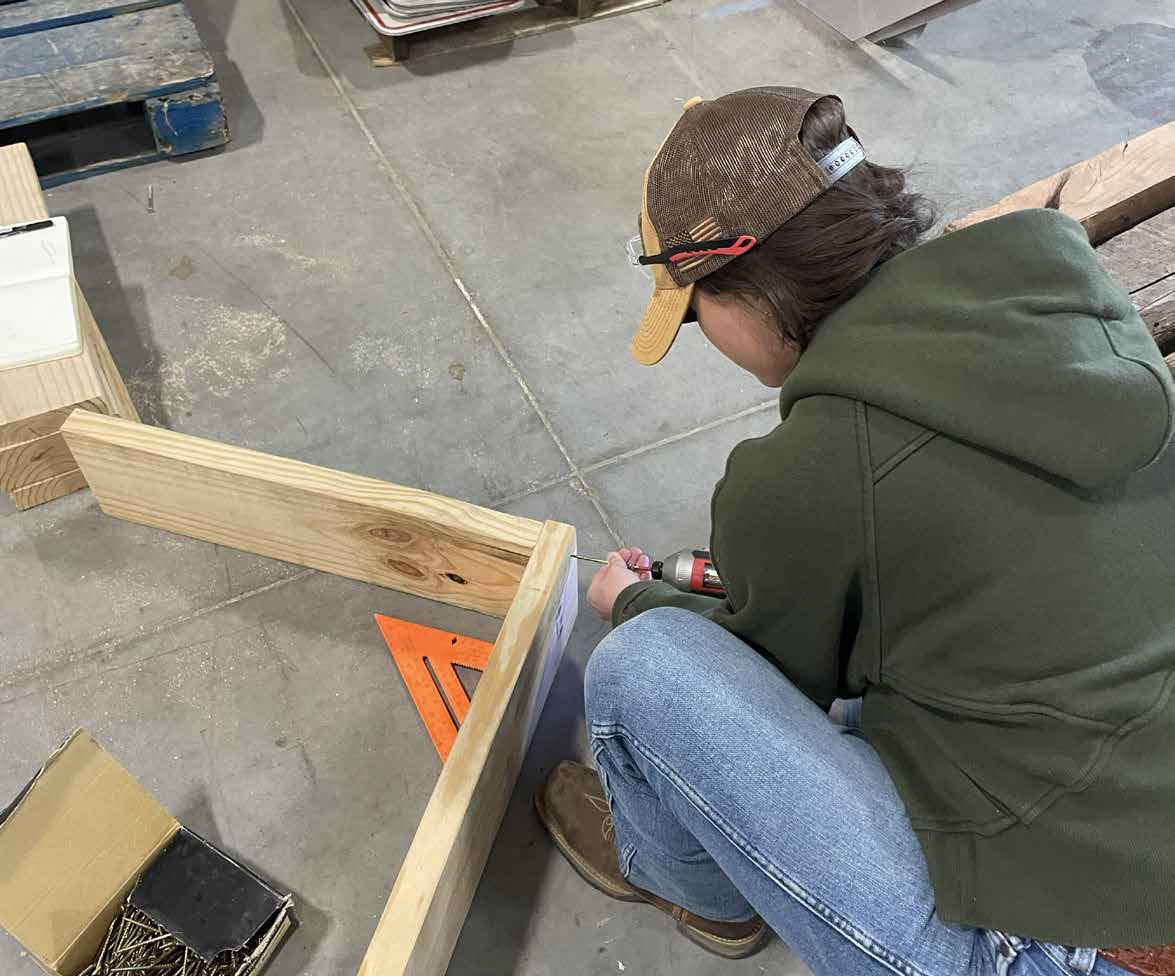
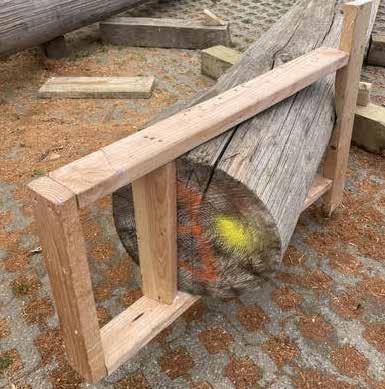
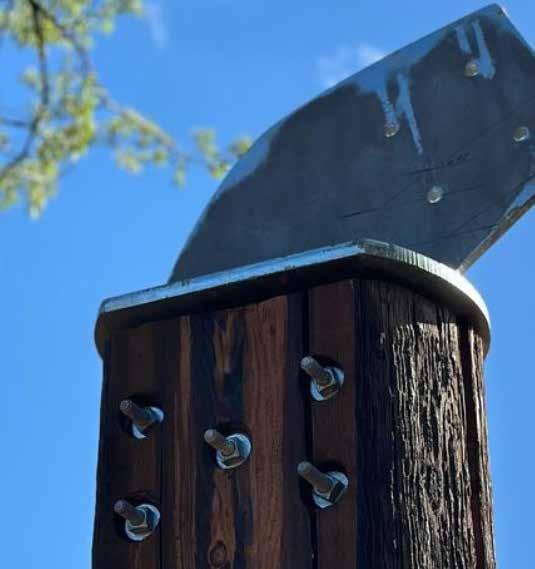
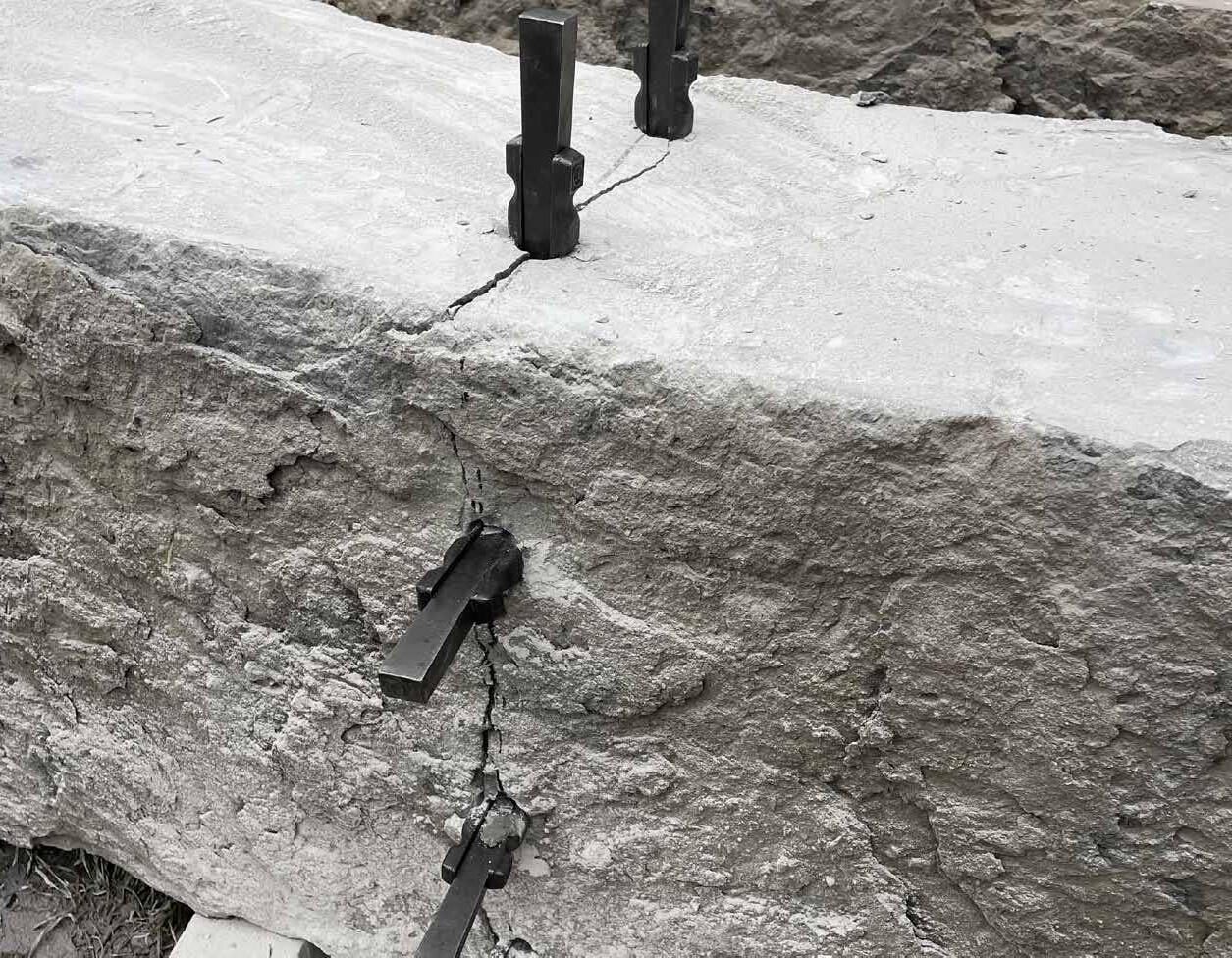
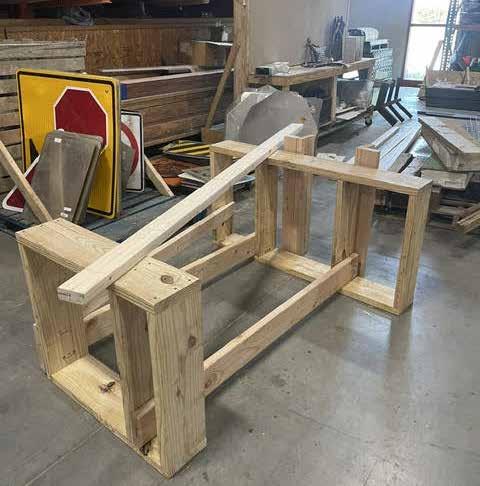


Once on site, a small group of us were working directly with local tree trimmers in order for them to efficiently cut the poles. We worked fast to have each cut prepped with a jig so the process could move efficiently. While on site, others were fabricating the roof tiles from scrap road signs and prepping the hardware.
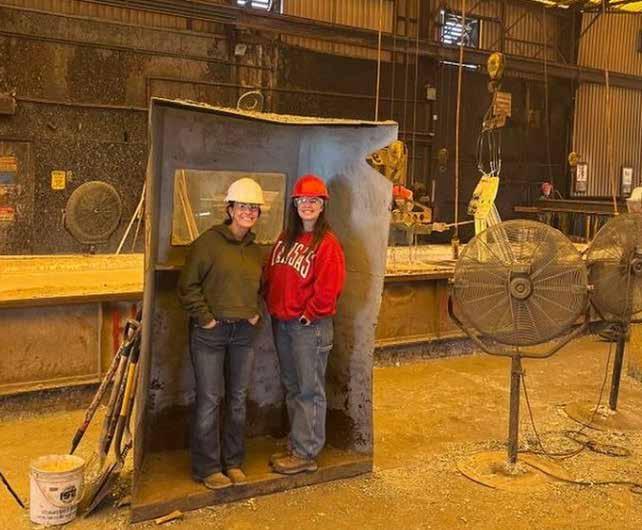
We had the opportunity to visit other industries and see how their work ties into architecture. We toured a AZZ Galvanizing, HME Metals, MCM Concrete, and Foley Rentals.

June 2024 - April 2025
MMTH Sports Construction
As an architectural intern, I worked on projects in the sports and entertainment realm. I was involved in many stages of the design process from master plans and site analysis, to creating renders to be presented at client meetings. I assisted in communicating with clients to deliver their vision and worked with other professionals in the field on projects.
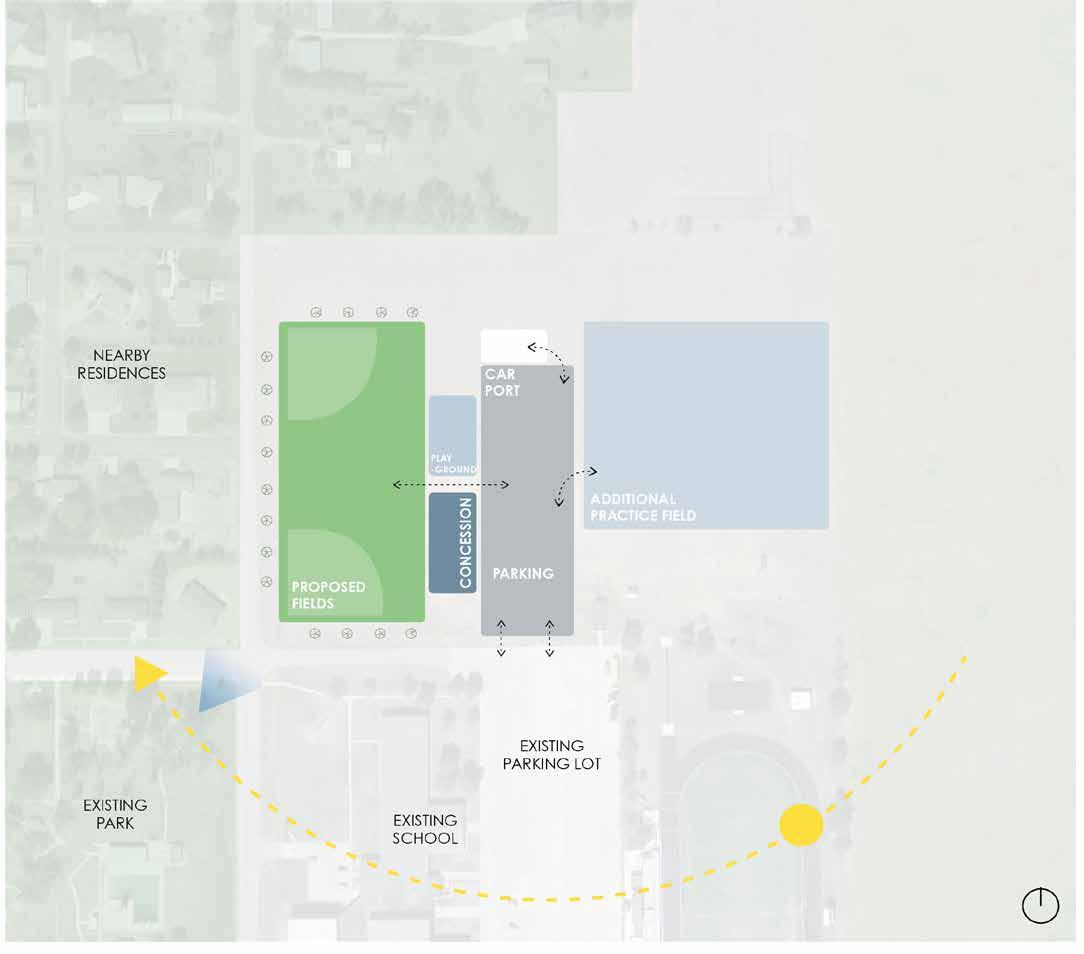
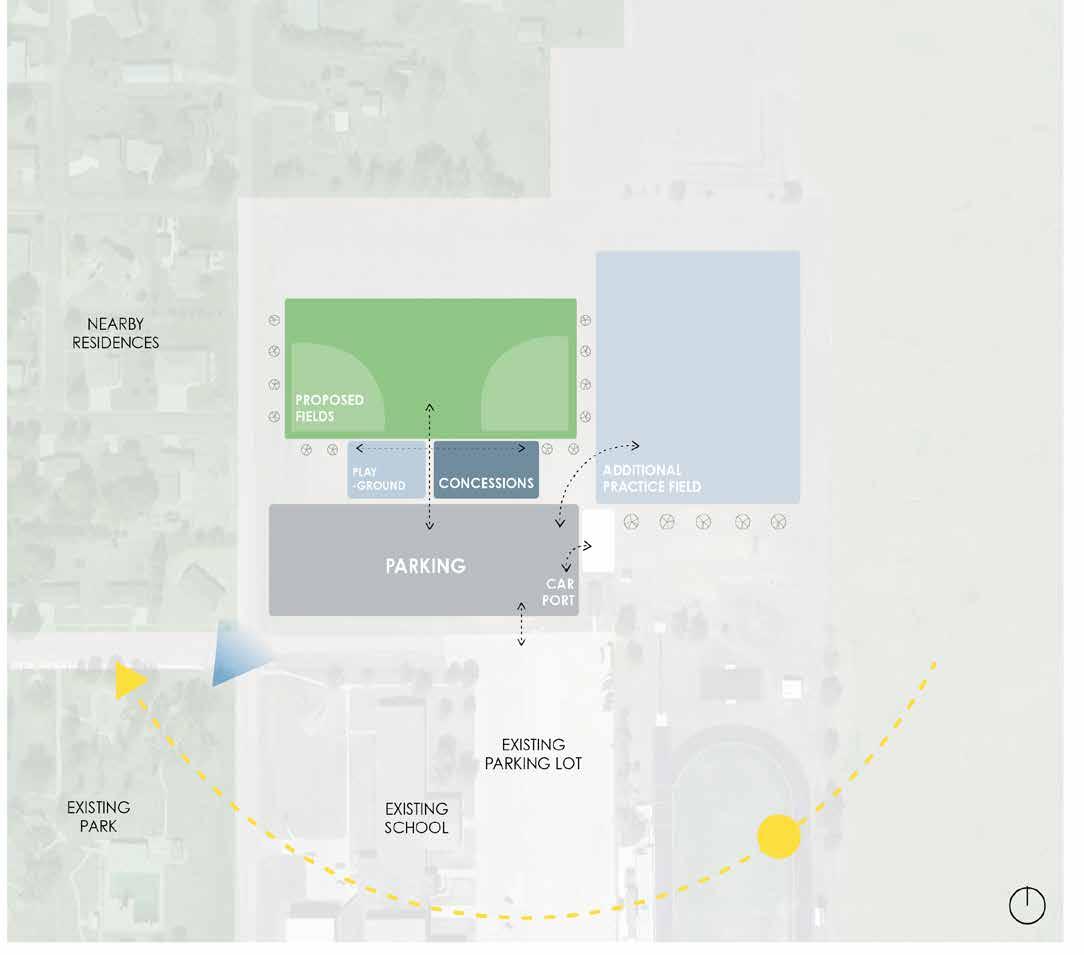
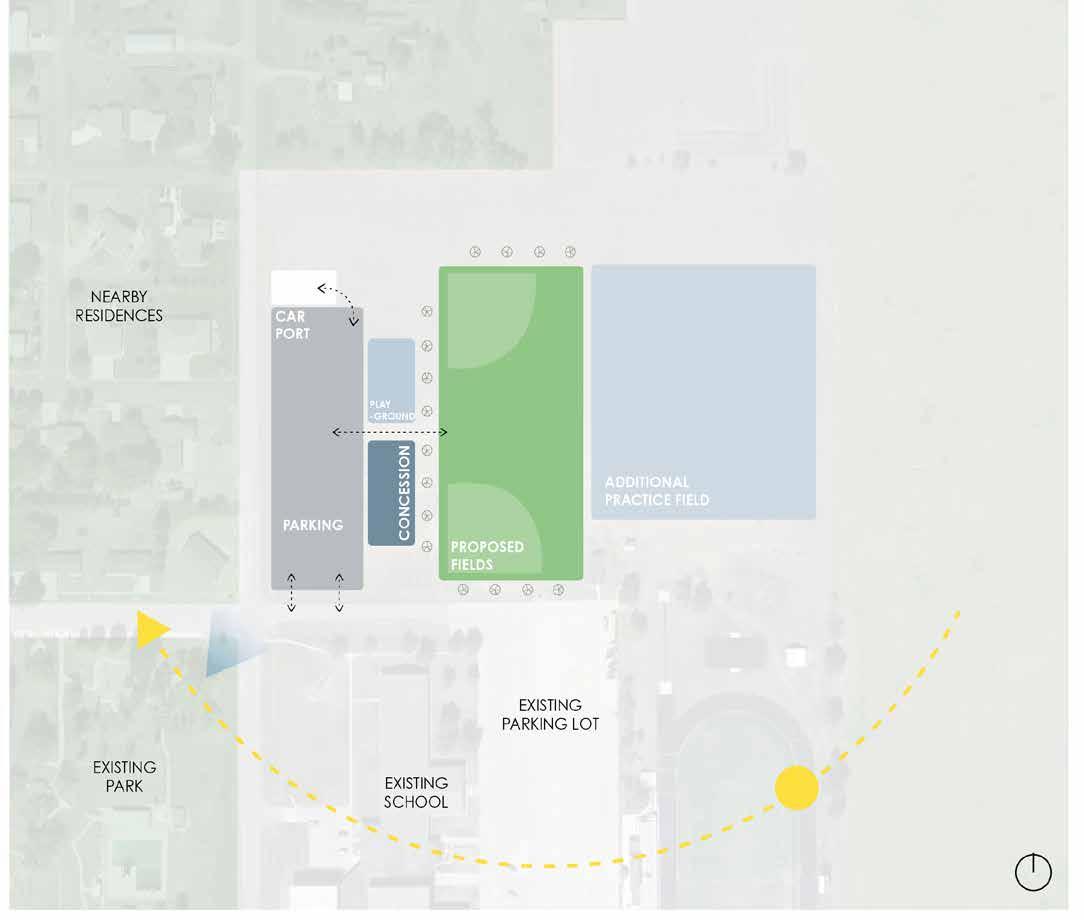
Diagrams shown to a client to display the arrangment of fields and different site options.
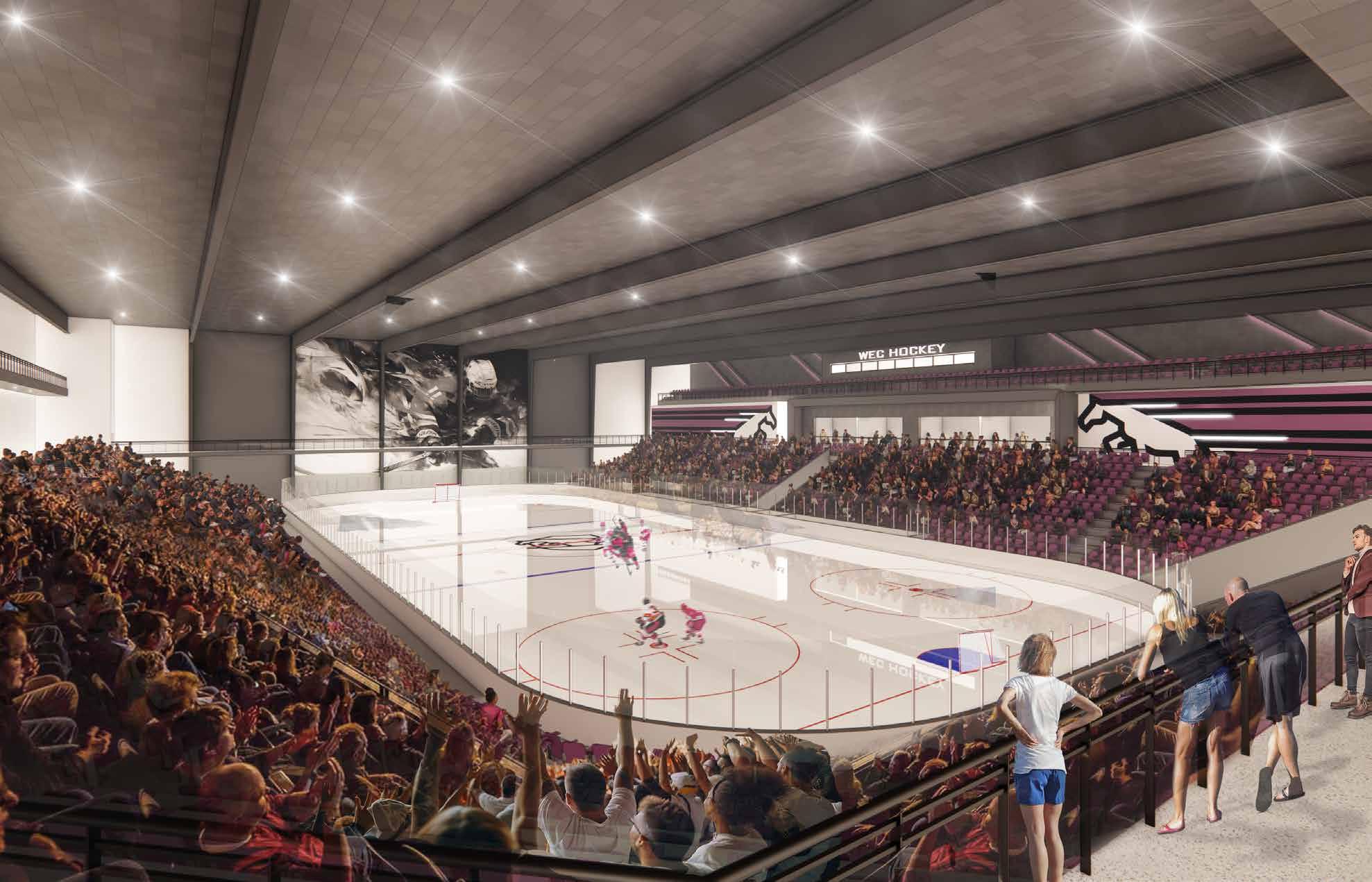
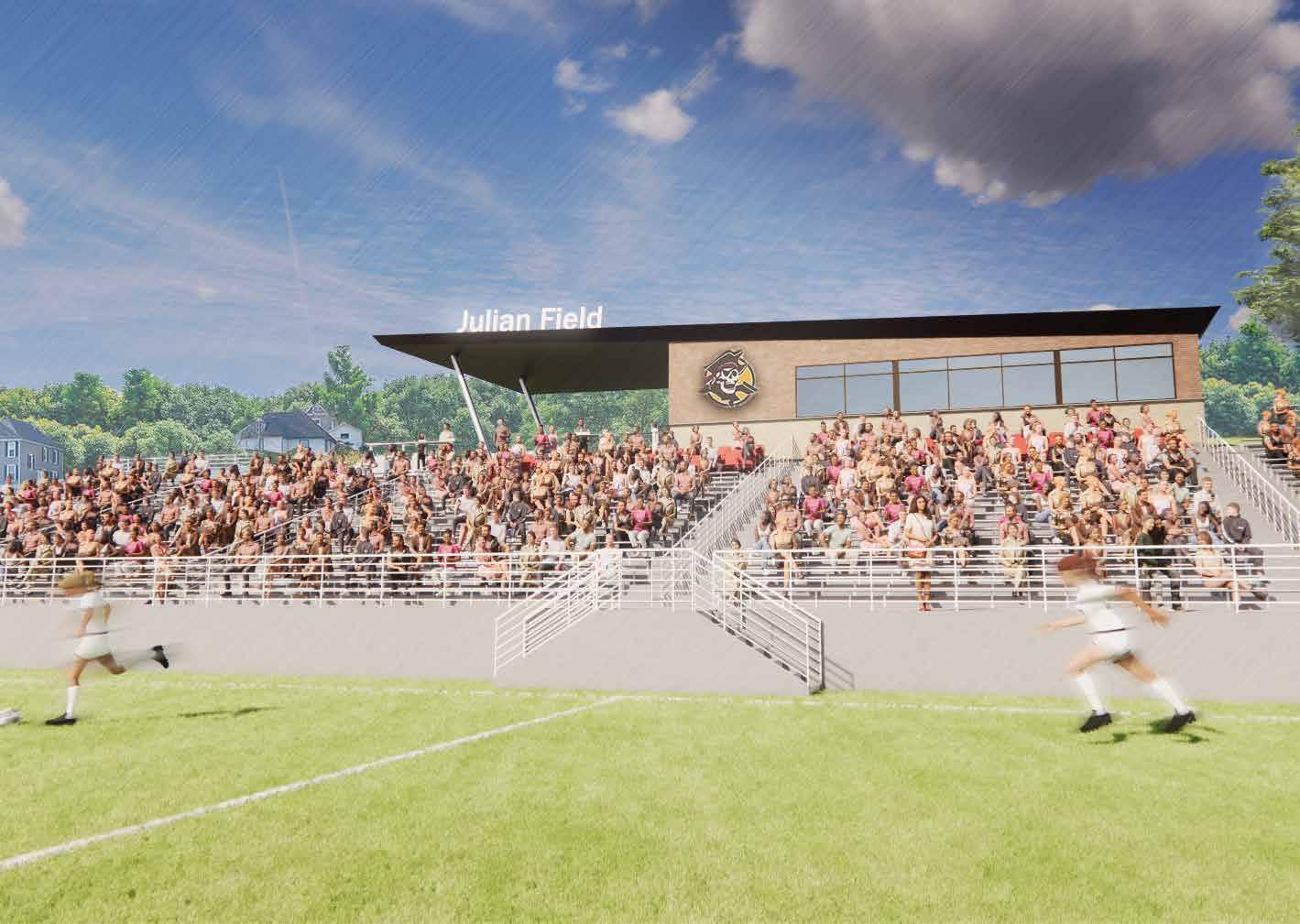
Press box render for Park University

www.paigebfilm.com pbutters2002@gmail.com https://www.linkedin.com/in/paigebutterfield/ Thank You
636.734.1153