for "perfume bottle" will always override the specific geometry of the client’s product.
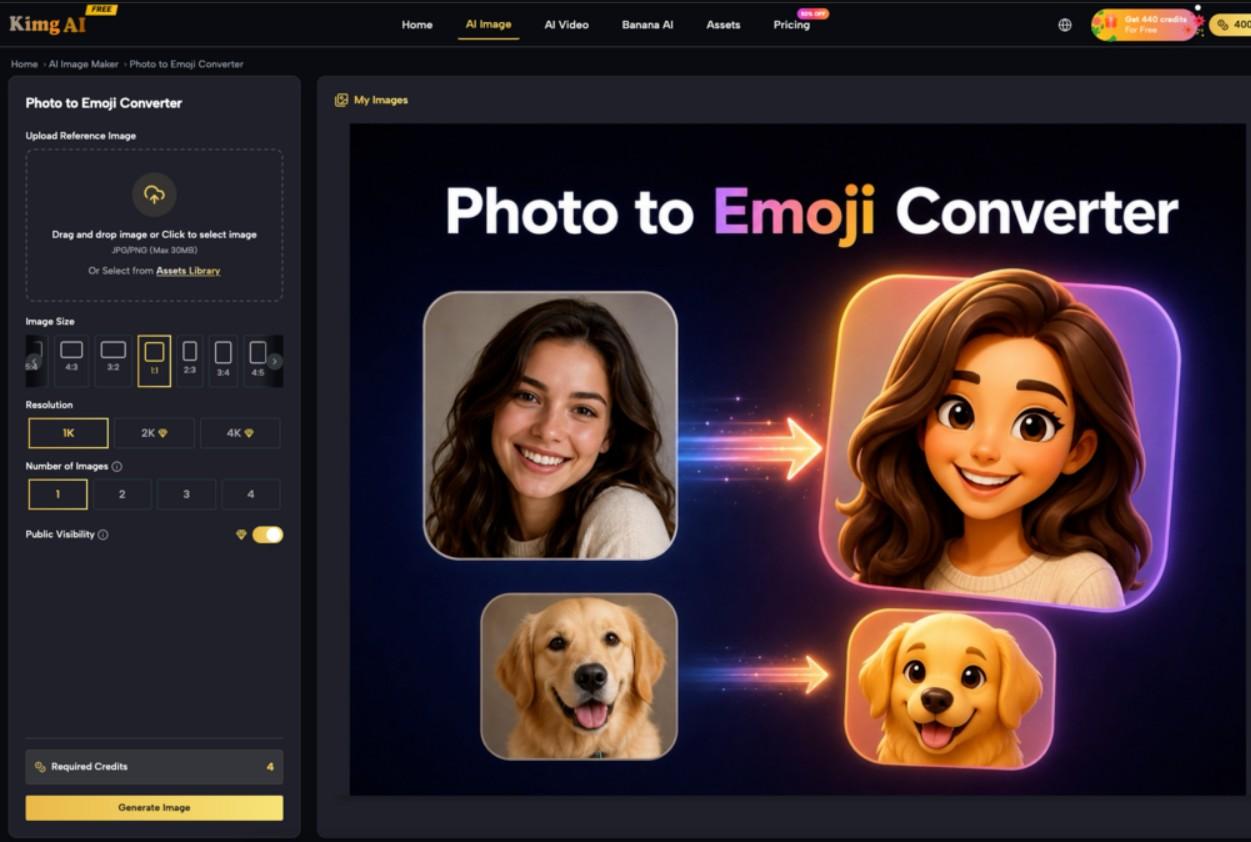
This is why production-savvy teams are pivoting toward image-to-video (I2V) workflows. By using a tool like Banana AI to first lock in a high-fidelity, structurally sound static image, the motion engine is given a definitive map to follow. You aren't asking the AI to "imagine a shoe and make it move"; you are telling it "here is a shoe, now calculate the displacement of these specific pixels."
Semantic Density: How Nano Banana Lays the Foundation for Motion
In the context of generative media, "semantic density" refers to how much clear, unambiguous information is packed into a single frame. A blurry or low-resolution image has low semantic density; the AI has to guess where an edge ends and a background begins. High semantic density, achieved through models like Nano Banana, provides the depth maps and edge detection data that motion models require to maintain stability.
When you generate a base asset using Nano Banana AI, you are essentially building the "bones" of the eventual video. If the source image has crisp
lighting, defined shadows, and clear anatomical structures, the motion engine understands the physics of the scene. For example, if a source image shows a person standing in a "three-quarters" view with clear highlights on their shoulder, the motion model can infer how those highlights should shift when the person turns.
The role of K-level resolution cannot be overstated here. While many generators output at 512p or 720p, starting with a 1024px or higher source image ensures that as the video is rendered and compressed, the fine details —the texture of fabric, the glint in an eye—don't dissolve into a muddy mess. It is easier to maintain quality across a temporal sequence if the starting point contains a surplus of pixel data.
The Mechanics of the Handover: From Banana AI to Dynamic Pixels
The transition from a static asset to a moving one is where most projects succeed or fail. Tactical preparation of the static frame is a requirement, not a suggestion. Using Banana AI for precise "Image to Image" iteration allows a creator to "stress test" a composition before any motion is applied.
One effective preprocessing step is background isolation within the static phase. If a scene is too cluttered, the motion engine may struggle to distinguish the primary subject from the environment, leading to the subject "smearing" into the background during a camera pan. By ensuring the source image has a clear depth of field—perhaps by using an "outpaint" feature to extend the background or an "inpaint" tool to simplify distracting elements— you provide the motion engine with a clean path.
When moving to the motion stage, the prompt should change focus. You are no longer describing the subject (which is already locked in by the image); you are describing the *vectors*. Instead of prompting "a woman walking in the rain," the motion prompt should focus on "slow-motion raindrops, cinematic tracking shot, hair blowing in the wind." This prevents the motion engine from trying to "re-generate" the woman and instead forces it to focus on the physics of the environment.
Constraint Mapping: Identifying High-Risk Motion Scenarios
Despite the rapid advancement of these tools, there are significant limitations that every agency lead must communicate to their stakeholders. AI video is not yet a one-to-one replacement for traditional 3D animation or live-action filming in every scenario.
The first major limitation is the "Rotation Trap." While an image-to-video workflow provides a great deal of stability, the model still doesn't truly understand 3D volumes. If you ask a motion engine to rotate a complex object 360 degrees based on a single static image, the "back side" of that object is being hallucinated in real-time. Unless the object is very simple, the AI will likely struggle with occlusions—parts of the object that were hidden in the source image but should be visible during the turn.
There is also a persistent uncertainty regarding text legibility within motion. Even if the source frame generated by a model like Nano Banana features perfectly rendered, sharp text, the moment that text is set in motion, the characters often begin to "swim" or warp. For brand-heavy assets, it is often more reliable to generate the video without text and overlay the brand elements in post-production using traditional software.
Finally, one must reset expectations regarding cross-model compatibility. A source image that looks perfect in one generator might be interpreted poorly by a specific motion engine. There is no universal standard for how a motion model "reads" the layers of a static image, meaning some trial and error remains an inherent part of the cost of production.
Integrating a Controlled Pipeline into Agency Asset Workflows
To scale AI video production without blowing through budgets, agencies need a repeatable framework. A cost-benefit analysis often shows that it is far more efficient to generate fifty static variations in a tool like Nano Banana than to attempt five failed video renders. Static images are "cheap" in terms of both credits and time; video is expensive.
A professional workflow should look like this:
1. Static Concepting: Generate a wide array of compositions. Select the one that has the highest structural stability and aligns with the brand’s visual language.