



PI Construction LLC has a safety policy and philosophy of Zero accidents. We are committed to protecting and promoting the health and safety of all our employees by providing a safe and healthy working environment. In order to achieve Zero accidents, safety must become part of our culture and the responsibility of all employees.
Our safety program has been developed to assure compliance with Federal, State and Local regulations, with particular emphasis on the Occupational Safety and HealthAct of 1970 (OSHA); working environment. It is the obligation of all our employees to be knowledgeable of our safety program and how it relates to and interacts with OSHA regulations and to enforce our policy on projects under their control.
Our policy of Zero accidents is intended to prevent any accidents or human suffering. Accidents, even minor ones, cause both physical and mental pain. Elimination of both is a worthwhile and achievable goal.
Our organization has always prided itself on Quality installations. If each employee would put as much effort into our safety program as that which they use to maintain Quality, it would bring new meaning to our safety slogan, "Safety First-QualityAlways."
Bruce Belcher
Kollin Knox CEO President

Don Campbell Vice President

It is the desire of Management to protect employees from accidental injury and damage to health while working for our organization. This matter must receive top priority attention from all levels.
Safety is the functional responsibility of each Supervisor who has the right to demand safe operations. It is the Supervisor’s obligation to teach employees to work safely. Notwithstanding the responsibilities of Supervisors, each level of our organization is accountable for safe performance.
Duties and responsibilities of all personnel that are under this firm’s safety program are as follows:
1. Safety Director
a. Provide all levels of management the services and technical adviceneeded for proper administration of the SafetyProgram.
b. Develop technical guidance and intern programs to identify andremove physical hazards from constructionsites.
c. Formulate, recommend and administer approved changes to the accident prevention program.
d. Prepare and distribute to all department heads regular reports on the status of safety.
e. Advise all levels of management on matters pertaining to safety. Establish a “chain of command” and a network to communicate safety matters within the organization.
f. Maintain an adequate accident report system. Personally investigate serious accidents and take corrective action to eliminate accidentcauses.
g. Assist project management personnel in the safety training of employees.
h. Conduct personal inspections to observe unsafe conditions or work practices.
i. Maintain outside professionalcontacts.
j. Insure there is full compliance with applicable Federal, State and Local regulations.
k. Recommend programs and activities that will develop and maintain incentives for and motivate employees insafety.
l. Recommend disciplinary procedures for repeat violators of safety rules.
m. Review all accidents with First Line Supervisors. Submit full report to the Safety department and assure that corrective action is taken immediately to alleviate the cause.
2. SafetyCoordinator
a. Assist Safety Director in the filing and organization of safety-relatedmatters.
b. Maintain all records of accidents on forms designated by OSHA; insurance company and other authorizedagencies.
c. Process all paperwork associated with accidents, on-site inspections and inhouse audits. Maintain permanent records for corporationfiles.
d. Prepare all notices required by OSHA, State and other appropriateagencies for posting at each construction location in accordance with designated time regulations. (Example: OSHA Annual Summary of Injuries and Illness.) e. Maintain training records for allemployees.
3. SafetySpecialist
a. Perform all levels of safety-relatedtrainings.
b. Work with project management personnel in their safety training of employees.
c. Maintain outside professionalcontacts.
d. Continue to pursue and update his/her own education in safety.
4. Project Manager/Superintendent
a. Is familiar with safety regulations related to his/her area of responsibility.
b. Direct and coordinate safety activities within area of responsibility.
c. Require all employees under his supervision to utilize the properindividual protective equipment and job safetydevices.
d. Assure that safety equipment is available and that storage locations are clearly designated.
e. Conduct safety inspections of work area, direct corrective action forunsafe conditions noted and inform the Safety Director of inspectionresults.
f. Assure that First Line Supervisors are aware of and comply with requirements for safe practices and conditions to be maintained on jobsites.
g. Require all subcontractors and subcontractor personnel to complywith applicable safetyregulations.
h. Provide information and recommendations(feedback) to SafetyDirector concerning safetymatters.
5. Foremen
a. Is familiar with and enforces safety regulations applicable tocorporation operations within area ofresponsibility.
b. Correct and coordinate safety activities within his area of responsibility, to include motivation of employees for safe work practices.
c. Assure that persons under his supervision use safety devices andproper individual protectiveequipment.
d. Instruct all persons within area of responsibility in job safety and health requirements and insist oncompliance.
e. Assure that injuries are treated promptly and reported properly.
f. Assure that no unsafe conditions exist in area of responsibility and report to the Project Manager/Foremen on any corrective actions needed, which are beyond his control.
a. Capable of identifying existing and predictable hazards in the surroundings, or working conditions which are unsanitary, hazardous or dangerous to employees.
b. Possess the authority to take prompt action to correct such hazards, including stopping the work to preserve employeesafety.
c. Possess specialized training as required to be authorized “Competent Person”.
Typical specialized training areas include:
i. Trenching and Excavations
ii. Scaffold erection
iii. Ladder inspection andtraining
iv. Ramps (structural andotherwise)
v. Other areas as identified in OSHAstandards
d. Depending on the project scope and the site conditions, the Competent Person can range in qualifications from a Foreman to a registered Professional Engineer.
a. Be familiar with and comply with proper safety and health practices
b. Use the required safety devices and proper personal protectivesafety equipment (PPE)
c. Notify Foremen immediately of unsafe conditions and acts.
d. Report all accidents to Foremenimmediately.
This Committee will be composed of the Vice President, Safety Director, Project Managers, a member of each trade and one member of the Office Staff. Each month, we will have a visiting Foreman attend themeeting.
The purpose of the Committee is to promote safety awareness throughout the Corporation, conduct accident analysis and make recommendations to management regarding improvements in the existing Safety Program. The Safety Committee will consist of not less than four members. The Safety Director will be a permanent member of the Committee.
This Committee will meet monthly, to review the Safety Program and prepare recommendations. The Committee will also review all accident reports, OSHA citations, safety inspections, and Worker’s Compensation claims. Committee minutes will be forwarded to all committee members.
Any subcontractor working with P1 Construction will be competent and capable to perform their assigned duties in a safe and environmentally sound manner. Prior to any work performed, all subcontractors must have the appropriate licenses, registrations and insurance to complete their work.
All subcontractor will adhere to P1 Construction, Federal, State, Local, and customers’ rules and regulations. This will also include vendors and suppliers.
Communication will be established between P1 Construction and all subcontractors prior to the start of work. P1 Construction and all subcontractors must have a clear understanding of roles and responsibilities.
P1 Construction will monitor all subcontractors to ensure that all subcontractors remain compliant.
The provisions of these safety responsibilities apply to lower-tier subcontractors and their employees working on projects for this Corporation.
Upon award of the contract, Purchase Orders and Subcontracts shall include safety and health requirements.
All proposed major equipment shall be checked by a member of the Safety Support Staff for design characteristics and the capacity to safety handle the work.
Major excavating, shoring and rigging plans and procedures involving hazards to workers, materials, equipment, or adjacent property shall be reviewed. A member of the Safety Support Staff shall assist as needed in securing insurance company or professional engineer review if required.
The Project Manager shall convene a pre-job meeting with the Project Team and a Safety Support Staff Representative to review the Accident Prevention Program. The Project Manager shall start a safety job file with a record of this meeting.
In the event that the nature of the job involves the probability of damage to adjacent property, a survey of the adjoining property shall be made prior to the start of work.
Environmental Surveys for contaminated soil, asbestos, lead or other environmental impactors will be requested from the Owner at this time, if not already obtained prior to the bid process.
The Project Manager or Foreman shall convene meetings with subcontractor(s) prior to their mobilization on site to inform them of project safety requirements.
The Project Manager or the Foreman shall, at job meetings with the Architect, other Contractors, and/or Subcontractors, note safety deficiencies and establish necessary corrective measures.
The Project Manager shall, after the above meetings, discuss safety and health hazard items that were presented. Corrective action shall betaken.
The above meetings shall include work to be done in the future in terms of hazards, contemplated controls and protective devices required.
The Project Manager shall keep a record of these discussions in his/her job safety file.
Each Foreman shall call a Weekly Safety Meeting. All Associates shall attend. Subcontractor Foremen are invited to attend.
Weekly Safety Meetings shall be held at a regular designated time each week and should last approximately 10-15 minutes.
Tool Box Talk will be completed using Gearbox website. The leader will choose a topic that is relevant to their current work conditions. Accidents and near misses during the previousweek should be reviewed and action to prevent recurrence discussed. The safe way of performing the work and the nature of the hazards should be featured and the meeting should be opento general discussion. Ideas brought up by Associates should, if practical, be put into practice; if not practical, give reasons why the idea cannot be used. An alternate, practical idea that will accomplish the same purpose should be developed through discussion. In the event that the website is unavailable, a paper copy may be submitted to the Safety Coordinator.
If the Owners have their own safety programs, Associates are expected to be familiar with and abide by the Owner’s safety guidelines.
1. First Aid & Medical
In the absence of a hospital or physician that is reasonably accessible and when required by statute or regulation, each job shall have at least one (1) Associate certified in First Aid/CPR/AED.
2. Formal Education
Training will be completed by following our monthly training matrix. All employees will have at least 9 6 hours of formal safety training each year. The training is set up by the safety coordinator.
3. Informal Education
When a new piece of equipment is purchased or there has been a major modification of an existing piece of equipment, a qualified representative from the equipment supplier shall be contacted to explain the safety aspects of the equipment.
Safety Inspections are one of the principal means of locating and identifying incident causes. These inspections assist in determining the safeguarding necessary to protect against hazards before accidents and injuries occur.
Finding unsafe conditions by means of inspection and promptly correcting them is one of the best methods for the corporation to demonstrate to employees and others its interest and sincerity in accident prevention and safety.
Inspections are not conducted to find how many things are wrong, but rather to determine if everything is satisfactory. The purpose is one of helpfulness in discovering conditions, which, if corrected, shall bring the project up to accepted and approved standards and keep loss potentials low.
The corporation performs four (4) types of inspections:
• Weekly Self-Inspections – Performed by site Superintendent/Foreman
• Monthly Self-Inspections– Performed by Project Manager
• Unannounced Inspections – Performed by Safety Staff or Insurance Company Consultant
• Government inspections – Performed by State of Federal agencies
1.
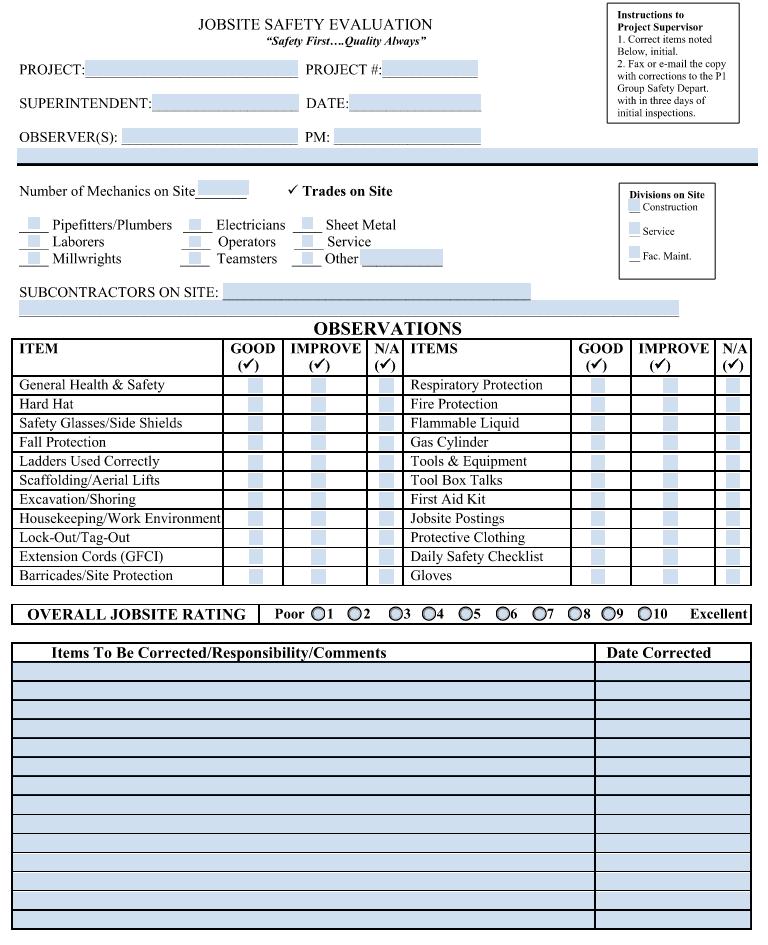
Formal self-inspections of jobsites are to be made by the site Foreman or the Project Manager at the intervals described above, or more frequently if deemed necessary. Written reports utilizing the jobsite inspection checklists are to be made listing the results of the inspection. Reports shall be submitted to the Safety Director. Corrective action shall be implemented to correct all deficiencies noted. If any deficiencies are noted that involve noncooperation personnel or equipment (those of the Owner or other contractors on site), the responsible party shall be notified of the deficiencies and that corrective action is required. These notifications shall be both verbal and written. Should the third parties refuse to correct or take issue with the noted deficiency, the Safety Director shall be notified immediately. In order to assist in the evaluation of a hazard during the self-inspection and what corrective action shall be taken, the following guidelines shall be used:
a. Imminent Danger – Defined as “Conditions or practices which would reasonably be expected to cause death or serious physical harm: Therefore, for a condition or practice to constitute an imminent danger, there must be reasonable certainty that immediately or within a short period of time such a condition or practice could result in death or serious physical harm. Normally, a health hazard would not constitute an
imminent danger, except in extreme situations such as the presence of potentially lethal concentrations or airborne toxic substances, which are an imminent threat to the lives or health of employees. Another example would be working at a job without a safety belt when one is required or working in an unsafe trench.
The steps taken to abate an imminent danger condition shall be the immediate cessation of all operations associated with or exposed by the danger until the condition is corrected. The Safety Director shall be consulted where the superintendent/foreman has questions on the appropriate abatement procedure.
b. Serious Condition – Defined as those that present a substantial probability that death or serious harm might result. Serious physical harm includes impairment of the body where a part of the body is permanently removed or rendered functionally useless, an employee experiences reduced efficiency on or off the job, or a part of an internal bodily system is inhibited in its normal performance to such a degree as to shorten life or reduce physical or mental efficiency. For example, inadequate guardrails at a substantial height would normally be considered a serious violation since it is probable that the result of such a condition would be death or serious physical harm.
Steps shall be taken to abate the serious condition as soon as it becomes know, although corrective actions may not require the cessation of operation. The Steps taken shall be determined by the seriousness of the situation.
c. Non-Serious Condition – Defined as “those that can cause injuries with severity somewhat less than death or serious physical harm.” Inadequate housekeeping practices would be considered an example of a non-serious condition since it presents a trip or fall potential or a fire hazard. Failure to use safety glasses could also be considered a non-serious condition under some circumstances. In other jobsite situations it might be considered a serious violation. The steps taken to abate non-serious hazards would normally be less severe than those taken for “Imminent Danger” and “Serious Conditions”, although there should be no undue delay in correcting them.
Where any of the three conditions identified above occur as the result of unsafe work practices, the individual conducting the self-inspection (Foreman or Project Manager) shall take the appropriate disciplinary action in accordance with the Safety Rules in addition to other necessary abatement procedures.

When a representative of an insurance carrier presents himself/herself to the project, the Foreman shall admit the representative and escort him/her through the inspection. The Foreman shall be present throughout the course of the inspection and shall make notes on all deficiencies pointed out by the insurance representative.
After the inspection, the insurance representative, while at the site, shall be requested to summarize the inspection and present any items that need improvement. The insurance representative will then prepare a formal written report for the Safety Director with any recommendations for corrective action.
Corrective action shall be taken on all items presented at the summary unless they present some special requirements. The Safety Director shall be consulted prior to taking any action regarding special or unusual requirements. If the items needing improvements are related to other entities, they shall be notified as per the guidelines listed under self-inspections.
Safe employment with this company requires a spirit of teamwork and cooperation from all Associates. Also required are uniform standards of expected behavior. Associates who refuse or fail to follow the standards set forth herein will subject themselves to disciplinary action up to, and including, termination In cases not specifically mentioned, Associates are expected to use good judgment and refer any questions to their Supervisors. This Safety Code of Practice shall be adopted for the P1 Construction but may be amended to conform to more restrictive Client or Project rules and regulations.
The following are some of the general rules applicable to our operations that must be enforced on every project contracted by our corporation. This is a partial listing only. The pertinent requirements of OSHA Regulations CFR 29, Part 1926 Safety and Health Regulations for Construction with CFR 29, Part 1910 Identified as Applicable to Construction, also apply in this firm.
1. All personal injuries; no matter how slight, must be reported immediately, by the employee to his/her supervisor. Accurate and prompt work-relatedinjury reports are needed to prevent delays or denial of workers’ compensation claims.
2. Submitting false or fraudulent information when reporting anaccident or injury is unlawful and will be cause for dismissal.
3. Report all unsafe practices, conditions or equipment to your supervisor at once. All site personnel are encouraged to approach other personnel with regard to safety infractions.
4. Employees shall respect and abide by all Safety Rules of the customer. Willful and/or repeated violation of safety rules or safe work practiceswill result in termination of employment.
5. Fighting, gambling, horseplay, practical jokes and other misconduct arenot permitted, nor shall threatening another association be permitted. Any employee practicing such acts shall be subject to immediate disciplinary action.
6. The use, sale and/or possession of alcohol, illegal or illicit drugs are prohibited on the job. Any associate reporting for work intoxicated or under the influence of intoxicating liquor or drugs will not be allowed to work and will be administered disciplinary action, which could result in immediate termination. Employees undergoing treatment with prescription medication that may impair their ability to work safely must report this treatment to their supervisor.
7. Medical-Alert identification is encouraged for any employee who has any medical condition that needs to be brought to the attention of medical staff in the event of an emergency.
8. Keep clear of all equipment. Avoid pinch points and blind areas. Be alert to avoid swinging or suspended loads.
9. Be alert for and heed all warning/traffic signs at alltimes.
10.Do not use compressed air to “dust off” clothes or hair. Cleaning of concrete or concrete forms with compressed air requires usage ofgoggles, face shield and protection of surroundingpersonnel.
11.There will be no unauthorized use of tools, equipment or materials owned by others.
12.Unless authorized, do not attempt to repair or tamper with equipment that is not functioning properly. “Red tag” equipment and report malfunctions to your supervisor.
13.Whenever anyone is required to work on or in the proximity of electrical equipment or circuitry, appropriate tagging will be placed to identify all controls deactivating the circuit, and the circuit shall be lockedout.
14.Jumping on or off equipment or vehicles, either moving or stationaryis prohibited.
15.Misuse of tools or equipment or circumventing safety devices can result in injury. Do not use “make-shift” or “jury-rigged” tools or equipment to perform your job.
16.Firearms and explosives are prohibited within the construction area.
17.Only authorized and properly trained and supervised personnel are permitted to operate equipment, vehicles, valves, electrical switches and similar machinery.
18.Ride only in vehicles designed and designated for transporting personnel.
19.Do not smoke in areas marked “No Smoking” or near flammableor combustible materials.
20.Keep all machinery guards, guardrails and other protective devicesin place.
1. Personal protective equipment must be worn as prescribed for each job by the supervisor.
2. Hard hats must be worn at all times in all construction areas. Altering the hard hat, such as painting or drilling into it, shall weaken the hard hat and shall not be permitted. Damaged or expired hard hats are to be replaced immediately. Metal hard hats areprohibited.
3. Eye protection; ANSI approved safety glasses must be worn at all times in all work areas. Safety goggles, shields and hoods shall be available and must be worn by each employee while chipping, grinding, welding, cutting or doing any operation which cause flying objects/debris. Safety glasses still required under any use of googles, face shield, and welding hoods.
4. Ear Protection; earmuffs or approved ear protection shall be wornon all highnoise level jobs.
5. Employees are encouraged to wear a good pair of hard-toed safety shoes/boots. Sturdy, heavy-duty work shoes or boots are required. Canvas or leather type athletic shoes and toeless or heelless shoes are not permitted at any jobsite. Shoes that are deemed “work shoe/boot” by the manufacturer will be permitted if they meet these requirements. Any shoe/boot that meets ANSI (z41-1999) footwear standards will be accepted. All work shoe/boots must have a continuous leather top (suede is not acceptable); no other material may be exposed. Employees wearing shoes that do not meet the corporation’s footwear requirements will be asked to leave the jobsite until they are wearing the proper protective footwear. Acceptability of footwear will determined at the discretion of the SafetyDepartment.
6. Rubber boots are required when working in concrete orwater.
7. Skin Protection; gloves, aprons, or other suitable skin protection shallbe used when handling rough materials, chemicals, hot or cold objects that could injure the employee’s skin.
8. Breathing apparatus; approved particle masks, respirators or other respiratory equipment shall be used in areas where airborne particles, toxic or hazardous fumes could be present. Employees must verify with their supervisors which equipment provides adequate protection, and follow procedures set forth in the Corporation’s Respiratory ProtectionProgram.
9. Dress; while on the jobsite, all workers shall be fully clothed, even though it may be uncomfortable. Loose clothing, rings, wristwatches or any items that may “catch” should not be worn when working around machinery, in trenches, caissons, forms or other confined or rough surface areas. Appropriate precautions should be taken when working during extreme weather conditions. Shirts and long pants are required. T-shirts with 3-inch sleeves are required as a minimum during hot weather.
10.Personal Habits; Employees are expected to utilize proper judgment in their personal habits. When they report to work each morning, they must be in fit condition to meet daily obligations.
11.Fall Protection; approved safety belts are required or shall be utilized when working on elevated work where there is no guard rail and on certain suspended scaffolds and man lifts.
1. Excavations and openings in working surfaces must be protectedwith barricades or hole covers.
2. Barricades and/or signs shall always be provided as warning of hazards such as overhead work, crane swing andexcavations.
3. When a hole or floor opening is created during the performance of awork activity, a cover or a barricade must be installedimmediately.
4. P1 Construction will subcontract out all Work Zone Site safety protection and traffic control devises in the form of signs, cones, barrels and barriers, based on jurisdictional requirements.
1. When utilizing heat-producing equipment, make sure that the area is clear of all fire hazards and that all sources of potential fires areeliminated.
2. Do not use a salamander or other open-flamed device in confined or enclosed structures. Vent heaters to the atmosphere and make sure they are located an adequate distance from walls, ceilings andfloors.
3. Have fire extinguishers available within 25 feet at all timeswhen performing hot work. Within 100ft for general constructiontask
4. All fire protection and emergency equipment is plainly marked and must be kept free of obstruction for emergency use. Tampering with or unauthorized removal of fire extinguishers from assigned locations will not be tolerated.
5. Know the location of firefighting equipment in the work area and have knowledge of its use and application. Use these devices only incases of fire.
6. Turn in all fire extinguishers for recharge after use. Inspect monthly when notin use.
7. The corporation and its employees will comply with all fire protection regulations of an Owner.
1. All excavations, trenches or cuts 5feet or more in depth shall besloped or shored as determined by the competent person using criteria set forth in OSHA Subpart P, 19 CFR 1926, 650, 651, and 652. As long asemployee exposure can be reasonably expected, the competent person shall:
a. Inspect all excavations at the start of each work shift
b. Inspect all excavations following a heavy rain orsnow
c. Assist in the location of underground utilities anddetermine methods of employee protection whileutilities are exposed
2. Excavated materials shall be placed at least 2 feet from theexcavation and the complete area will be protected with appropriate barricades. Heavy equipment
shall be kept back from edges of allexcavations.
3. Access and egress from excavations 4 feet in depth or deeper shall be ladders, stairs or ramps within 25 feet of any employee. Ramps, when used, shall be designed by the competent person having appropriate qualifications.
4. Prior to the start of excavation work, the site supervisor shall contact all local utilities regarding the location of undergroundservices.
5. Permits are required to be completed for any excavation over four feet.
1. All gas cylinders shall have their contents clearly marked on the outside of each cylinder.
2. Store, transport and use gas cylinders in a secured, uprightposition
3. Cylinder valves must be closed and protected with caps or guards when not in use.
4. All leaking or defective cylinders must be removed promptly from service, tagged as inoperable and placed in an open space removed from thework area.
5. All operators are required to inspect equipment prior toutilization.
6. Valve wrenches shall be left on the valve stern at all timeswhen cylinders are in use.
7. Oxygen and acetylene are to be stored 20 feet apart or separated bya 5-foot tall firewall.
8. Full and empty cylinders are to be stored separately and protected fromexcess heat, snow, ice or physical damage.
H. All ladders shall be inspected before their use. Ladders must have safety feet. Ladders with broken or missing rungs, broken or split side rails or otherwise damaged, shall be tagged out of service and removed immediately and shall be destroyed. Ladders steps shall be maintained free of lines, ropes, hoses, wires, cables, oil, grease, and other debris. Ladders shall be maintained and used in accordance with OSHA, ANSI standards, and the manufacturer’s specifications.
I. Portable metal ladders shall not be used on any P1 Construction project where they may contact electrical conductors.
J. Portable ladders shall be placed on a substantial base and the area around the top and bottom shall be kept clear.
K. Ladders shall extend not less than 36 inches above the landingunless grab rails are installed.
L. Ladders shall not be used in passageways or drivewaysunless protected by barricades.
M. Ladders shall be tied, blocked or otherwise secured to preventtheir being displaced.
N. Do not use ladders at a pitch of over one to four (distance from base ofladder
to the wall ¼ the length of the ladder).
8. Step ladders shall be used on a firm level base, always open to full position with spreads locked unless designed by manufacturer to use in the closed position. Work shall not be done from the topstep.
9. Temporary stairways shall have landings not less than 30 inches in the direction of travel and not less than 22 inches wide at every 12 feet ofvertical rise.
10.When doors open directly on a stairway, a platform shall be provided. The swing of the door shall not reduce the effective width of the platform to less than 20 inches.
11.Stairs rising 30 inches or more will be equipped withstandard handrails.
1. Good Housekeeping means clean and orderly conditions for the entire job.It definitely prevents accidents and fires, and it creates a businesslike work area.
2. Pile or store material in a stable manner so that it will not be subject tofalling.
3. Rubbish, scraps and debris shall be removed from the work area as soonas practical.
4. It is not permissible to leave materials and supplies in stairways, walkways, near floor openings or at the edge of the building when exterior walls arenot built.
5. Place all lunch papers, cups, cans and other litter in trashreceptacles.
6. Discard and/or store all oily rags, waste and similarcombustible materials in metal containers provided for thatpurpose.
7. Oil, grease and water spills shall be cleaned up immediately.
8. Cords, leads, hoses, etc. shall be placed to avoid tripping hazards or getting damaged.
1. Never swing loads over the heads of workers in the area.
2. Only trained flagmen and signalmen are to direct operations, using handsignals established as standard for the industry. (See Safety Handout Booklet for Illustrations)
3. Tag lines must be used to control loads and keep workersaway.
4. Do not overload any part of your rigging. Check loads just off the ground for stability before hoisting.
5. Never leave a suspended load unattended without securing it.
6. Never allow loads, booms or rigging to approach within 10 feet of energized electrical lines rated 50 KV or lower unless the lines are deenergized. For lines greater than 50 KV, follow OSHAregulations.
7. Always operate cranes on firm, level ground, or use mats.
8. Rope off or barricade a space 360° around all cranes operating on your jobsite
to the extent of the swing radius of the rear of the rotating structure.
9. Riding the load, hooks or ball is absolutely forbidden.
1. Guardrails and toe boards must be installed on all open sides and ends of platforms more than 10 feet high. If it is not possible to install handrails, employees must wear full body harnesses and be properly tiedoff.
2. The height of mobile scaffolds shall not exceed four (4) times the minimum base. Casters must have locking devices.
3. Planks used as flooring shall extend over their end supports not less than 6inches or more than 12 inches.
4. Tube and frame scaffolds shall be erected under the supervision of the competent person and in strict accordance with manufacturers’ instructions. Also, scaffolding will be tied to the structure at intervals of 30 feet horizontally and 26 feet vertically.
5. Climbing on or working from any scaffold handrail, mid-rail orbrace member is strictly prohibited.
6. Materials hoisted to a scaffold shall have a tagline.
7. Tools, materials and debris shall not be allowed to accumulate on scaffolds.
8. Only sound scaffold grade planks should be used. Planks shall be inspected prior to use. Poor or questionable planks shall be taken out of serviceimmediately.
9. Employees shall always use safety belts or harnesses and lanyardswhen working from the platform or basket of a motorized man lift.
10. All P1 employees who work on or around scaffolding will be trained inprocedures of the use of scaffolding.
11. All scaffolding shall be required to be tagged by a designated competent person for scaffolds indicating its suitability for use. The scaffold shall be tagged prior to employee use. The color coding is as follows:
Red- Unsafe DO NOT USE
Yellow- Warning-Hazards exists
Green- Ready to Use
12.Only designated, qualified and competent persons are allowed to modify any scaffolding equipment. At no time will a non-qualified employee modify any type of scaffolding.
13.P1 Construction will determine if it is feasible to erect and dismantle scaffolding. If scaffolding is required P1 Construction will hire a qualified subcontractor to perform the work.
1. The cylinder valve shall be open only when work is beingperformed.
2. Fuel gas hose and oxygen hose shall be easily distinguishable from each other. When parallel sections of oxygen and fuel hose are taped together, not more than 4 inches out of 12 inches shall be covered withtape.
3. Defective hose or hose in doubtful condition shall not beused.
4. Torches shall be inspected each day for leaking shut-off valves,hose couplings and tip connections.
5. Defective torches shall not be used.
6. All torches shall be turned to the “off” position when not in use.
7. Torches shall be lit by friction lighters only not by matches, cigarette lighters, or from hot work. Torches must not be used to light smokingmaterials.
8. Always clear area below cutting operations so that you do not dropslag on hoses or employees.
9. Employees shall always use burning goggles for eye protection.
1. Only manual electrode holders, which are specifically designed for arc welding and cutting, shall be used.
2. Any current carrying parts shall be fully insulated against themaximum voltage encountered to ground.
3. All arc welding and cutting cables shall be capable of handling themaximum current requirements of the work in progress.
4. A ground return cable shall have a safe current carrying capacity equal to or exceeding the specified maximum output capacity of the arc welding units in which it services.
5. The frames of all arc welding machines shall be ground eitherthrough a third wire in the cable containing the circuit conductor or through a separate wire, which is grounded at the source of the current.
6. All ground connections shall be inspected to ensure that they are mechanically strong and electrically adequate for requiredcurrent.
7. Shield all arc welding and cutting operations with noncombustible or flame proof screens.
8. Suitable fire extinguishers shall be readily available whenever welding,cutting or heating operations are underway.
9. Place cables, leads and connections so that there are no fire ortripping hazards.
10.Proper ventilation shall be required whenever welding, cuttingor heating is performed in a confined space.
11.Employees shall always utilize leak proof welding helmets. Proper eye protection shall also be used to guard against slag while chipping, grinding and dressing of welds.
1. The electric cords shall not suspend temporary lights unless cords and lights are designed for this type of suspension.
2. Temporary lights shall be equipped with guards to prevent accidental contact with the bulb.
3. Temporary lights shall be equipped with heavy-duty electrical cords with connections and insulation maintained in safecondition.
4. Portable electric lighting used in moist or hazardous locations (drums,tanks, vessels) shall be operated at a maximum of 12 volts.
1. Employees shall use tools only for their intended purposes andshall use all safety devices provided.
2. Employees shall not use any tools until properly instructed in theiruse.
3. Employees shall remove from service and tag “Do Not Operate”any tool that is worn or defective. Tagged tools shall be returned to the warehouse and shall remain out of service until repaired.
4. All tools leaving the warehouse shall be tagged with a green tag, which means that they have been checked for defects and are ready foruse.
5. No alterations to electrical tools or their cords shall be permitted.
6. All electrical tools and cords shall be used with a ground-fault circuit interrupter (GFCI). Power tools shall be plugged in directly to theGFCI.
7. Never remove or operate tool/equipment guards. Any type of abrasive wheel tools (fixed or portable) must be equipped with the proper guards per the manufacturer. These guards are not to be removed while operating the tools. The fixed (bench grinder) guards require a specific distance from the rotating wheel and should never exceed 1/8 inch on the top ( work rest) ¼ inch on the bottom (tongue).
8. Disconnect tools from power source before changing drills, blades orbits. Never leave a running tool unattended.
9. Special care shall be taken when using power tools on scaffoldingor other locations with limited movement area.
10. Do not use air for cleaning purposes, except when pressure is less than 30 psi and then only with effective chip guarding and proper personal protective equipment.
11.Hoses supplying pneumatic tools shall have couplings secured to prevent accidental disconnection. Safety clips or retainers shall be securely installed and maintained on pneumatic impact tools to prevent attachments from being accidentally expelled.
12.Air supply lines should be protected from damage, inspected regularly and maintained in good condition. Pneumatic hoses shall not be used as a means of hoisting or lowering power tools.
13.Air sources supplying hoses exceeding ½ inch ID shall be protected by excess flow valves to prevent “whipping” in the event of hose separation or failure.
14.The pressure of compressed air used for cleaning purposes must be reduced to 30 PSI or less (does not apply for cleaning of forms, etc.). Compressed air shall not be used to clean employees or their clothing.
15.Only employees who have furnished evidence of having been trained in its use shall be allowed to operate a powder-actuated tool. Eye protection shall
be worn by all personnel exposed to the use of this type tool.
16.Powder-actuated tools shall be tested each day before loading to see that safety devices are in proper working condition. The testing shall be done in accordance with the manufacturer's recommended procedure. Tools shall not be loaded until just prior to use. Loaded tools shall not be left unattended.
17.Tools shall not be used in an explosive or flammable atmosphere. Cartridges (power source) shall be kept separated from all other material.
18.Powder-actuated tools used on this project shall meet all applicable requirements of ANSI-A10.3-1970 as stipulated by OSHA.
1. Potable water shall be provided at all sites in approvedclosed containers with disposable cups.
2. Toilets shall be provided as required for the number of workers, withselfclosing doors, latch and toilet paper.
3. First aid kits must be provided at each jobsite, and if a medical facility is not readily accessible, then a person with a valid First Aid Certificate must be present.
4. Employees must be protected against exposure to injurioussound levels by controlling exposure or by use of the proper personal protective equipment.
5. Employees must be protected against exposure to ionizing (X-Ray, radioactive) and non-ionizing (laser beam) radiation.
6. Protection against exposure to harmful gases, fumes, dust and similar airborne hazards must be furnished through proper ventilation or personal respiratory equipment.
1. The increasing list of chemicals and other substances being identified as being toxic or hazardous requires special attention to employee protection. (Refer to the Corporation’s Hazard Communication Program.)
2. Employees shall be provided protection against respiratory exposure to toxicand hazardous gases, mists, fumes and dusts through ventilation or personal respiratory equipment.
3. Employees shall be provided protection against body contact with toxic and hazardous substances through the use of proper personal protectiveclothing.
4. In areas where toxic and hazardous substances are acknowledged to be present emergency cleansing stations shall be provided.
1. All equipment left unattended at night adjacent to highways or construction areas shall have lights, reflectors, and/or barricades to identify the location of the equipment.
2. Supervisory personnel shall inspect all machinery and equipment prior to each use, and during use to make sure it is in safe operatingcondition.
3. Rated load capacities and recommended rules of operation shall be conspicuously posted on all equipment at the operator’sstation.
4. Wire rope shall be taken out of service when one of the following conditionsexist:
a. In running ropes, six broken wires in one lay or three broken wiresin one strand or one lay.
b. Wear of one-third the original diameter or outsideindividual wires.
c. Chinking, crushing, host caging, heat damage or anyother damage resulting in distortion of the rope structure.
d. In standing ropes, more than two broken wires in one layin sections beyond end connections, or more than one broken wire at the end connection.
5. An accessible fire extinguisher of 5 BC rating or higher shallbe available at all operator stations.
6. When vehicles or mobile equipment are stopped or parked, parking brakes shall be set. Equipment on inclines shall have wheels chocked as well as having parking brakes set.
7. All vehicles or combinations of vehicles shall have at least the followingin operable condition:
a. Two (2) headlights
b. Two (2) taillights
c. Brake lights
d. Audible warning device at operator’s station
e. Seat belt properly installed
f. Seats, firmly secured, for the number of persons carried
g. Service, parking and emergency brake system
8. Operators shall not use motor equipment having an obstructed rearview unless:
a. Vehicle has an audible reverse signal alarm
b. Vehicle is backed up only when observer says it is safe to do so.
The success of the P1 Construction will be, to a large extent, dependent on Associate cooperation and strict compliance with established safety rules, regulations, policies, etc. While Management and Associates share safety responsibilities, Management must establish and enforce a policy by which habitual safety offenders are disciplined. Those individuals who refuse to cooperate with the P1 Construction‘s efforts in providing a safe place of employment for all Associates will be subject to removal from any P1 Construction jobsite.
The P1 Construction “New Hire” safety orientation shall intone the verbal message that violations of the rules and regulations contained within the Occupational Safety and Health Standards and or the P1 Construction Safety and Health Manual will result in disciplinary action.
1. All employees must comply with the Safety Rules and standards established by the Corporation.
2. Violation of the Safety Rules or failure to comply with safe work practices shall necessitate disciplinary action. Management of the Corporation shall determine whether the violation is serious or minor. As a result of such determination the employee shall be subject to one of the following disciplinary actions:
a. Warning (verbal and/or written)
b. Suspension
c. Termination
3. Corporation reserves the right to immediately dismiss an employee for serious violation of the Safety Rules.
4. A copy of any violation issued shall become part of the employee’s personnel file and shall be transmitted to the employer’s local union business office.
5. PPE – If an employee is found not wearing their Personal Protective Equipment in accordance with company policy, they will be written up the first time andterminated the second time.
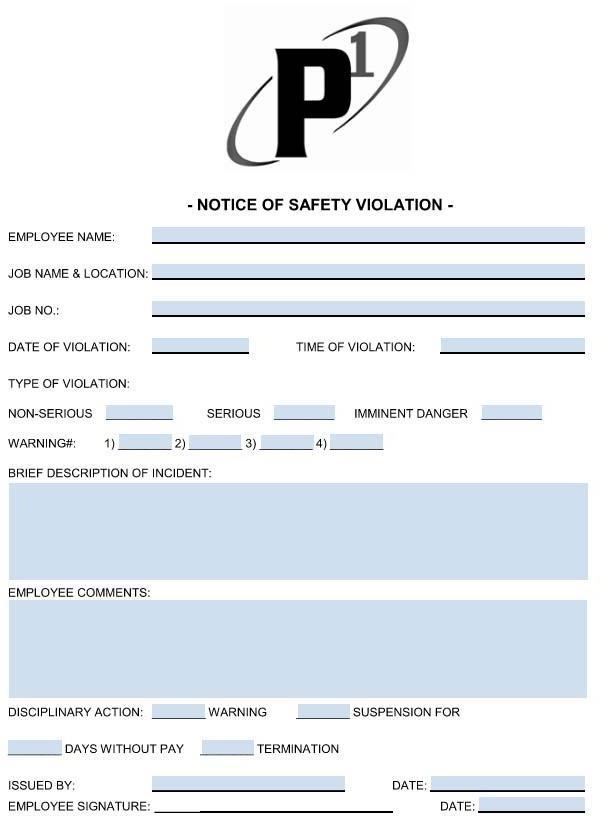
1. The Corporation shall issue a “Notice of Safety Violation” to enforce disciplinaryaction against any employee who violates corporate policies, work rules or safety rules. The actions can range from a simple verbal reprimand to a termination of employment.
If violation of corporate or project safety rules occurs, the action taken shall be based on the severity of the violation as compared to the OSHA Hazard Criteria for a non-serious condition, a serious conditions or imminent danger condition. These criteria are as
follows:
a. NON-SERIOUS CONDITION – May cause injuries with a severity somewhatless than death or serious physical harm.
b. SERIOUS CONDITION – Presents a substantial probability that death or serious harm might result. Serious physical harm includes impairment of the body wherein a part of the body is permanently removed or rendered functionally useless; an employee experiences reduced efficiency on or off the job; or a part of an internal bodily system is inhibited in its normal performance to such a degree as to shorten life of reduced physical or mentalefficiency.
c. IMMINENT DANGER CONDITION – Defined as “Conditions or practices in any place of employment which are such that a danger exists which would reasonably be expected to or within a short period of time, cause death or serious physical harm immediately”.
Normally, a health hazard would not constitute an imminent danger except in extreme situations, such as the presence of potentially lethal concentrations of airborne toxic substances, which are an immediate threat to the lives or health of employees.
2. The more serious the violation, the more severe the reprimand. Suggested criteria for the actions taken are:
a. NON-SERIOUS VIOLATIONS
1st Offense – Verbal reprimand with notation in file
2nd Offense – Written reprimand
3rd Offense – Written reprimand and suspension without pay for 3 days
4th Offense – Termination
b. SERIOUS VIOLATIONS
1st Offense – Written reprimand
2nd Offense – Written reprimand and suspension without pay for 3 days
3rd Offense – Termination
c. IMMINENT DANGER VIOLATIONS
1stOffense – Written reprimand and suspension without pay for three days or Termination.
2nd Offense – Termination
All actions taken shall be documented in the employee’s personnel files. All written reprimands shall also be copied to the local union business office/agent.
Actions taken toward a foreman or individuals in supervisory positions shall be documented either by a memorandum or letter to the individual. This letter or memorandum, from the President of the Corporation, shall detail the disciplinary action taken. The employee shall acknowledge with his/her signature, stating that s/he has received and understands the action taken. A copy of the letter or memorandum shall be placed
Establish a written procedure governing the proper reporting and investigation of work related accidents or illnesses. This incident investigation is solely used for the purpose of determining causal factors directly or indirectly responsible for the incident. Once investigation is completed, findings will help prevent future injuries.
1. The Project Manager/Foreman will be responsible for ensuring that the injured Associate receives appropriate medical treatment and that the accident isimmediately and accurately reported to the Safety Department.
2. All Associates are responsible for the immediate reporting of all incidents to Safety Department.
3. All incidents must have appropriate reporting, accurate recording and thorough investigation.
1. Accidents must be reported to the Safety Department when an accident or near miss occurs.
The immediate Supervisor and or Foreman must contact the Safety Department when the following events occur:
a. A P1 Construction associate suffers a work-related injury or causes another tobe injured (Injury accident).
b. Damage to P1 Construction property or damage to another’s property by a P1 Construction associate (Property Damage Incident).
c. A situation occurs which has the potential to cause an injury, damage or lose property (Near Miss Incident).
2. The EMPLOYEE’S FIRST REPORT OF INJURY will be completed and submitted to insurance by the Safety Department.
New employees to the P1 Construction are required to participate in the Safety Orientation. (Waived for 90 day rehires.) This orientation will introduce employees to the Corporate Safety Rules and expectations of our company, as well as, what employees should expect of the P1 Construction
Any P1 Construction employee doing the hiring will be required to have new employees view the Orientation Video. (Waived for 90 day rehires)
New Hire Orientations are required for all new employees before entering any site premises.
Items that may be needed to conduct the orientation are:
1. P1 Orientation Video (waived for 90 day rehires)
2. Hard Hats, Gloves and Safety Glasses
These items must be posted on the jobsite in a conspicuous place. If at any time you need additional copies, contact the HR Department.
• State Employment/Labor Law Posters
• Federal Employment/Labor Law Posters
• EEO Policy Statement (make sure it has current year signature)
• Emergency Action Plan
• P1 Safety Emergency Contacts and Reporting Procedure
• P1 Construction Code of Ethics
• SDS Poster

10/21/2019
All non-bargaining and office employees are subject to the provisions of the Personnel Handbook Substance Abuse Policy. Bargaining employees are subject to the provisions of the substance abuse policy of the appropriate bargaining contract. Regardless of which policy is applicable, all employees are also subject to the provisions below.
Construction work is inherently dangerous and the use of drugs, alcohol intoxicating agents, and controlled substances compounds the danger and risks of accidents. P1 is committed to providing a safe and healthy workplace for all employees that is free from illegal drugs, alcohol intoxicating agents, and controlled substances.
P1 prohibits the use, possession, sale, purchase, transfer, manufacture, and distribution, of controlled substances and alcohol intoxicating agents while at work, on any P1 premises, or under any circumstances when an individual is acting as a representative, agent, or conducting company business. Any violation of this provision is cause for immediate discipline, up to and including termination of employment.
P1 prohibits employees from being under the influence of any controlled substance, alcohol intoxicating agent, medication, drug, or other substance, while at work, upon any P1 premises, or under any circumstances when an individual is acting as a representative, agent, or conducting company business. P1 defines under the influence to be when a substance may impair work performance or pose an unacceptably significant safety risk to themselves or others. Being under the influence is prohibited at all times without exception while operating P1 vehicles or equipment, or while operating any vehicle or equipment in the scope of the employee’s work. P1 Construction would have undue hardship to our company from offsite substance use resulting in being under the influence. Any employee testing positive will be considered “under the influence” regardless of whether the use occurred on or off any P1 premises.
P1 Construction will not allow any employee to perform their duties while taking medication that adversely affects the employee’s ability to safely and effectively perform their job duties. Employees taking a prescribed medication must carry it in the container labeled by a licensed pharmacist or be prepared to produce this if asked. Employees using prescription medication, which might affect the outcome of a controlled substance or alcohol test, must report this information to the testing facility immediately prior to any testing and upon request, including the name of the authorized licensed medical practitioner who prescribed the medication, and the duration of the prescription. Any over-the-counter medication that might affect the outcome of a controlled substance or alcohol test must also be reported.
Illegal drug use includes, but is not limited to, use not subject to a valid prescription from a physician, use \dosage not in compliance with the valid prescription, use of over-the-counter medication or other substance not for the manufactured purpose and/or not use not in compliance with manufacturer’s instructions. Illegal drug use also includes use of prescription medication prescribed for another person.
ALCOHOL
Use, possession, sale, purchase, transfer, or distribution of an alcohol intoxicating agent in connection with P1 sponsored business or social functions is permitted upon specific advance approval of P1 Executives and only to the extent that it does not result in impaired performance, inappropriate or unprofessional behavior, endangerment of any person, or violation of any applicable law. Employees are
tested for alcohol impairment through the Probable Cause Testing process using the state legal limit for operation of a motor vehicle in which the employee is working or driving. When an employee is working or driving in several states, the legally-prescribed blood alcohol impairment threshold of the state having the most stringent threshold will apply.
Failure or refusal to submit to controlled substance or alcohol testing under this policy is strictly prohibited. Failure or refusal to submit to testing includes, but is not limited to, failure to report in a timely manner to the designated collection site; failure to fully complete required testing forms; obstruction or tampering with the collection or testing process; submitting an altered, adulterated, or substitute sample; failure to promptly provide specimen(s) for testing when directed to do so, without a valid medical basis for the failure; leaving the testing location without approval prior to submission to testing; leaving the scene of an accident without approval prior to submission to testing; or otherwise fully cooperate in the collection of a specimen or submission to testing. Any violation of this provision is cause for immediate termination of employment.
P1 reserves the right to inspect all portions of its P1 premises for drugs, alcohol intoxicating agents, controlled substances, or other contraband; affected employees may have union representation involved in this process when applicable. All employees may be asked to cooperate in inspections of their persons, work areas, and property that might conceal a drug, alcohol intoxicating agent, controlled substance, or other contraband. Employees who possess such contraband or refuse to cooperate in such inspections are subject to appropriate discipline, up to and including termination.
“P1 Premises” includes, but is not limited to, all buildings, offices, facilities, grounds, parking lots, lockers, storage, places and vehicles owned, leased or managed by P1 or any site on which the Company is conducting business.
“Controlled Substance” is defined as a substance whose use or possession is controlled by federal law. (Controlled substances are listed in Schedules I-V of 21 CFR Part 1308 and Schedules I-V of 21 U.S.C.S. § 812.) Under federal law, the use of marijuana or any Schedule I drug does not have a legitimate medical use in the United States.
Employees are subject to the testing provisions of the applicable substance abuse policy as well as testing for all of the following events and circumstances. Employees are paid for time spent in controlled substance and alcohol testing, except for retesting following positiveresults.
Initial testing: An offer of employment is contingent upon a negative controlled substance test result. The initial testing of employees is required to ascertain whether the employee is capable of safely performing the duties of and meeting the employment requirements.
Post Accident Testing: Employees are subject to controlled substance and alcohol testing when they cause or contribute to a workplace accident that damages a vehicle, machinery, equipment, or property and/or results in an injury to themselves or another person requiring medical attention. The employee or P1 may request medical treatment. Testing will be required in any instance involving a work-related accident or injury in which an employee who was operating a motorized vehicle (including, but not limited to, forklift, vehicle, overhead cranes, aerial/man-lifts) is determined to be responsible for causing the accident. Under no circumstances will the employee be allowed to drive to the testing facility or drive home.
Cause Testing: Probable cause is defined as those circumstances, where there is reasonable suspicion or belief, based on objective evidence about the employee’s conduct in the workplace, which
would cause a reasonable person to believe that the employee is demonstrating signs of impairment due to controlled substance or alcohol intoxicating agent use. Examples of objective evidence include, but are not limited to, showing multiple signs of impairment such as difficulty in maintaining balance, slurred speech, erratic or atypical behavior, or otherwise appears unable to perform his/her job in a safe or satisfactory manner. The conduct must be observed and documented by two or more trained company supervisors, or a trained company supervisor and a trained company Safety, or Human Resources person. Under no circumstances will the employee be allowed to drive to the testing facility or drive home.
These behaviors may result in discipline, up to and including termination of employment, whether or not the employee submits to testing, and irrespective of the result of any such testing.
Work Mandated: Employees are subject to all drug, controlled substance and alcohol policy and testing requirements of the customer, general contractor and/or owner when working or scheduled to work on their worksite. Testing will be performed in accordance to their standards or if not specifically defined in their policy, defaulted to the standards in this policy, and applied uniformly to all employees working or scheduled to work on their worksite.
Controlled substance and alcohol specimen collection/testing facilities will be determined by the company, bargaining unit program, or the worksite, as applicable. Unless specified otherwise by the bargaining unit program, DOT regulations, or worksite requirements, controlled substance testing will be 10-panel split using a urine specimen and tested by a SAMSHA certified laboratory.
Reporting: The Medical Review Officer, who must be a licensed physician, will review the test results before they are reported to the designated P1 representative.The Medica l Review Officer will report whether an employee’s test was positive or negative, and if positive, the identity of the substance(s). Before reporting a positive test result to the employee, the Medical Review Officer may advise the designated P1 representative of the positive test result without having communicated with the employee either because the test result is final, the employee expressly declines the opportunity to discuss the results of the test or the employee cannot be reached after reasonable effort by the Medical Review Officer.
Confidentiality: All information generated regarding an employee’s controlled substance or alcohol test is confidential and is kept in a separate, confidential medical records file. Only the employer’s designated representative, who will be identified in writing to the Medical Review Officer, will be given access to such information.
Negative-dilute: The consequence of a negative-dilute result of a controlled substance test is a second required controlled substance test no later than the next workday after the company receives the results. If the bargaining contract does not specify, two consecutive negative-dilute controlled substance test results are treated the same as a positive result.
Positive: The consequence of a positive result of a controlled substance or alcohol test is determined by the applicable handbook or bargaining contract substance abuse policy. If the bargaining contract does not specify the consequence of a positive test result, the consequence will be termination of employment.
Retesting: Employees may contest positive results of a controlled substance test and have a portion of the original specimen retested at any SAMSHA certified laboratory of their choice at their own expense. If the result of the retest is negative, the employee will be reimbursed for any lost wages, the cost of the retest and if applicable, will be reinstated.
Employees who are subject to Department of Transportation (DOT) controlled substance and/or alcohol regulations are provided information separately on these additional requirements
I acknowledge that I have received, read and understand P1 Construction's Substance Abuse Policy. I understand that I am expected to abide by this Policy. I agree to comply with P1 Construction's Substance Abuse Policy and consent to all testing as set forth in thisPolicy.
I agree that if there is any policy or provision that I do not understand, I will seek clarification from my supervisor or from Human Resources.
I UNDERSTAND THAT MY EMPLOYMENT IS CONTINGENT UPON SATISFACTORILY MEETING ALL TERMS OF P1 Construction's SUBSTANCE ABUSE POLICY, AND THAT MY FAILURE TO DO SO MAY RESULT IN IMMEDIATE TERMINATION OF EMPLOYMENT WITH P1 Construction.
Employee Signature Date
Print Name: 10/21/2019 Personnel Handbook
A. TRANSITIONAL WORK PROGRAM GOALS
1. To protect the health and safety of Associates.
2. To prevent lost time accidents.
3. To return injured worker to work in a timely and safe manner.
1. If an Associate is injured on the job and the injury prevents the worker from performing his/her full range of responsibilities for an undetermined, but temporary period of time.
2. Employee must accept the position that is offered by the company. Employee does have the right to refuse the position. If the position is refused, no other positions will be available for their employment until they are release back to full duty by their physician.
C. SPECIFIED LENGTH OF TIME FOR PROGRAM
The Transitional Work Program consists of a six to eight week period of time to prepare the injured worker to return to his/her former job. If additional time is needed, approval of Management will be required.
Each Associate must have a statement from his/her attending physician defining the restrictions to be followed and the estimated length of time they will be in effect.
E. LOCATIONS
The Transitional Work Program will take place initially at the participating Associate’s jobsite, if work is available. A review of the physical restrictions will be made by the Foreman to determine if a job can be modified for a limited time to allow the injured Associate to maintain employment. If this is not successful, an attempt will be made to find available work within the Associate’s restrictions at another location.
1. Associate can resume full duties as determined by attending physician.
2. Associate cannot perform modified or transitional work, or the P1 Construction cannot provide work within the specified physical restrictions.
3. Injured worker’s physical condition becomes permanent, preventing a return to his/ her former position of employment. The Company will assess thepermanent limitations and if possible, will provide a new job assignment within the stated limitations.
a. This section provides procedure and guidelines to be followed for thesafe operation and maintenance of aerial platforms.
b. All Supervisors will be responsible for ensuring that allAssociates follow these procedures.
a. All Associates who operate aerial work platforms will be trained in safe operating procedures, using the manufacturers operator book. The training will be conducted by a person competent in safe operation and hazard recognition of aerial lifts.
b. The operator will have on his/her person the P1 Construction training card, stating the training received on the specific model of equipment. The Safety Department will issue the card.
a. Full body harnesses will be worn while in all Aerial lifts, except for scissor lifts, with lanyards secured to the anchorage point provided. Never attach a safety harness/lanyard to a nearby structure orsupport.
b. The main design and operation of all movable personnel hoists will be in accordance with the manufacturer’s recommended procedures for safe operation.
c. The operator before every use will inspect the aerial lift.
d. The movable personnel hoist will be inspected for proper mechanical condition and will not be used for liftingpersonnel unless in proper working order.
e. All outriggers, if lift is equipped with them, will be extendedand firmly set before personnel are elevated.
f. Never position steps, ladders, or similar items on platforms toprovide additional reach.
g. Never stand on handrails to provide additional reach.
h. Never alter or override any safety features.
i. The safety gate or chain must always be secured.
j. No aerial lift will be used as a crane to hoist materials. In order to comply with the Manufacturer’s design for center of gravity stability, aerial lifts will be used only to lift personnel, personnel toolsand materials that will not fit within the confines of the basket. Materials that do not fit within the confines of the basket will be raised with hand lines, pickers, orother
material hoisting devices.
k. Never try to operate a malfunctioning machine. If a malfunction occurs, shut down the machine, install a red (defective tool) tag,and notify your supervisor.
l. All mechanical, hydraulic, and structural parts and systems of the liftwill be inspected before each use. Any defects will be corrected beforeuse.
m. Know equipment capacity and operate within it.
n. Modifications and additions that may affect the capacity or safe operations of an aerial/scissor lift are strictly prohibited without the manufacturers’ written approval. Capacity, operations, and maintenance instruction markings will be changed as necessary if the manufacturer approves a modification.
o. No other modifications will be allowed without the manufacturers’ written approval.
1. J.L.G Type Work Platforms – In addition to the generalrequirements, the following requirements apply to J.L.G. type lifts:
a. A 5 -pound ABC fire extinguisher will be maintained on the J.L.G. machine based on the ground. When “hot work” is performed inthe air, an extinguisher must also be in the basket.
b. The counterweight swing radius will be barricaded when vehicular or pedestrian traffic is nearby.
c. The gate on the basket will be kept closed and locked at all times when in use.
d. Gasoline, motor oil and hydraulic oil levels will be checked priorto use.
e. As per manufacturer’s recommendations, machine platforms will be kept at a safe distance from electrical power lines.
2. Scissor lift – In addition to the general requirements, the following requirements apply to Scissor lifts:
a. A -5 pound ABC fire extinguisher will be near and maintained at the machine base on the ground. When “hot work” is performed in the air, an extinguisher must also be on the platform.
b. The platform will be positively blocked up before working under it to prevent the platform from falling down during maintenance of therig.
c. The platform will be fully lowered at the end of workoperation.
d. Outriggers will be extended as per manufacturer’srecommendations.
a. This section covers procedures for the safe operation and maintenance of boom trucks. This equipment is built for safeand economical operation, but it is only as safe as the Associate who operates it.
b. All Supervisors will be responsible for ensuring that allAssociates follow these procedures.
i. Rated load capacity charts, recommended operating speeds, special hazard warnings, and other essential information will be visible to the operator while at his/her controlstation.
ii. Prior to each lift, the boom truck operator will sound the horn to warn other personnel of the overhead hazard.
iii. The ground surface shall be inspected by the Competent Person to determine whether crane mats are necessary under eachoutrigger.
iv. Routine maintenance, fueling and repairs must not be performed while the equipment is in use or the power ison.
v. No one but the designated Operator or other authorized personnel will be allowed in or on the machine while it is operating. (This means NO RIDERS.)
vi. All wire ropes will be in goodrepair.
vii. All belts, gears, shafts, pulleys, sprockets, drums, flywheels or chains will be properly guarded.
viii. Accessible areas within the swing radius of all cranes mustbe barricaded to prevent associates from being crushedby the superstructure of the crane.
ix. The swing radius will be free of outside material such as water cans, toolboxes and miscellaneous storage.
x. Guardrails and handholds will be acceptable andanti-skid surfaces placed on maintenance walkways andplatforms.
xi. There will be an accessible 5-pound BC rated fire extinguisher,or higher, at all Operator stations orcabs.
xii. The load block, headache ball and safety hook will be keptin good repair.
xiii. No Associate will ride on a cable, ball, chain, sling, or any other hoisting attachment or on the material being moved by means of a winch line, crane or truck.
i. A copy of the current annual truck and crane inspection must accompany the crane. Terms and conditions for rental equipment places the responsibility on the leaser to furnish copies of certifications of annual inspections of variouspieces of lifting equipment and cranes as required by OSHA. The Project Superintendent must ensure this document is in hand and inorder prior to placing the equipment in service.
i. Prior to start-up, make a walk-around inspection to check the condition of the machine and see that everyone is in the clear.
ii. Prior to attempting to work the machine, the operatorwill thoroughly familiarize himself/herself with allcontrols.
iii. The Operator will test all controls at the start of a new shift. If controls do not operate properly, they will be adjusted orrepaired before working the machine. Check wheel brakes before moving machine.
i. Boom angle indicators must be in working order at all times. Load movement devices or load indicating devices will be installed where required.
ii. Booms and boom members will be kept in good repair, free of cracks, dents and broken parts.
iii. Never repair a damaged boom or any section thereof. The only safe procedure is to contact the manufacturer giving crane identification information and following their instructions.
iv. Boom and crane rigging will be inspected at the start of every shift. At least once a week, lines will be checked thoroughly and lubricated. Aerosol lubricant seems to be the most generally acceptable. It must be a lubricant that will penetrate the cables.
i. Boom truck will not be operated when any part of the machine can come within 10 feet of high voltage lines. When operating in proximity to high voltage lines, rigger will not pull the load line at an angle to make a hook up. If unable to comply with minimum distances set forth in this section, every effort shall be made to de-
energize and visually ground high voltage lines. If de- energizationis impossible, insulating barriers, not a part of or an attachment to the equipment or machinery may be erected.
ii. For lines rated over 50 kV, the minimum clearance between the lines and any part of the crane or load must be 10 feet plus 0.4 inch for each one kV over 50 kV. Alternatively, use twice the length of the line insulator, but never less than 10 feet.
iii. During transit, with no load and the boom lowered, the minimum equipment clearance must be 4 feet for 50 kV or less, 10 feet for 50 kV to 345 kV, and 16 feet for voltages up to 750 kV.
iv. Any overhead line must be considered energized unless the responsible utility company or the Owner of the line indicates that it is not energized and it has been visibly grounded.
i. A designated Associate must observe clearance of theequipment and give timely warning for all operations where the Operator’s vision is obstructed.
ii. Operators must take hand signals from only one person; however, in an emergency, a STOP signal may be given byanyone.
iii. Hand signals to boom truck operators shall be those prescribed by the applicable ANSI standard for the type of boom in use. A copy of handsignals must be posted on equipment visible to Associates (See attached Boom Truck Signals).
i. A designated Competent Person must perform BoomTruck inspections.
i. The boom truck will be level with all outriggers fully extended and down on firm ground or footing prior to lifting loads or swinging the boom over the side, except as noted under the “Traveling”subsection below. Without the outriggers down and even with no load, it is possible to tip the crane over by simply swinging the boom over the side.
ii. The transporting of materials on the outriggers is prohibited.
iii. Use pads under outriggers when soil conditions are poor, especially when making heavy lifts or when working near maximumradius.
iv. When setting up near trenches or excavations, stay asafe distance back from the hole. Check regularly for cracks
i. Hoisting
and fissures caused by the excavation.
i. Know the weight of the load and where it has to go.
ii. Before hoisting inspect the slings or wire rope, if defective tag out immediately.
iii. Do not lift more than the rated capacity of hoist or crane.
iv. The Operator will test the machine each time a load approaching the rated load is handled, by raising it a few inches and holding the load.
v. Extreme care will be exercised when a load approaching the rated load capacity ishandled.Whenever possible, this load will be tested keeping it close to the ground and booming out to the maximum radius required prior to making the actual lift into place. Be sure actual operating conditions do not exceed testconditions.
vi. Use extreme caution when extending the boom with loadssuspended. As working radius increases, load capacity decreases and can cause the machine to tip over. Most hydraulic cranes differ from friction machines in that a load cannot be lowered fast enough to overcome a tipping action once the machine becomesoverbalanced.
vii. When the boom is extended, care will be exercised to avoid “two blocking” sheave block with boom.
viii. During hoisting, swing or lowering operations, there will be nosudden acceleration or deceleration of the moving load.
P1 Construction does not perform work within or around asbestos. Under no circumstances will an employee of P1 Construction engage in the disturbance or removal of any asbestos containing material. Therefore, employees will not exceed the TWA or PEL exposure limits and will not require any specialized PPE or require a written program to reduce employee exposure. P1 Construction employees who work in areas that may contain asbestos are trained to contact the safety department. P1 Construction employees are instructed to abide by all warning signs and labels and do not disturb any asbestos containing material. If working on multicontractor worksites, all P1 Construction employees will follow the instructions of contacting the safety department if asbestos exposure is possible. It is the building owner’s responsibility to be aware of and fully responsible if the building contains asbestos material. All required training is documented and retained for 10 years. Outside agencies will be brought in to remove contaminants before work will proceed.
In the event an employee encounters asbestos, or even suspects that asbestos is present while performing a job; work in that area shall be discontinued and the safety department shall be notified immediately
A. Definitions
ACM – Asbestos Containing Material
PACM – Potential Asbestos Containing Material
AFM – Asbestos Free Material
B. Examples of potential containing material may be found in the following items;
a. Insulation
b. Sound Proofing
c. Floor Tile
d. Types of Adhesives
e. Roofing Material
f. Construction Mastics
g. Fireproofing
C. Potential health effects of asbestos.
a. Asbestosis
b. Lung Cancer
c. Mesothelioma
d. Cancer of the stomach and colon.
The training of P1 Construction employees on asbestos related information will include, but is not be limited to:
•Health effects of asbestos—the hazards of asbestosfiber inhalation and ingestion
•Locations, signs of damage and deterioration ofasbestos- containing materials and presumed asbestos-containing materials.
•Activities which could release asbestos fibers.
•Types, properties and uses of asbestos.
•The engineering controls and work practices associated withthe employee's job assignment.
•The specific procedures implemented to protect employees from exposure to asbestos, such as appropriate work practices,emergency and clean-up procedures, and personal protective equipment to be used.
Written training materials will be available to employees upon request.
The following Assured Equipment Grounding Program is included in the Corporation’s Safety Manual for reference only.
The Corporation’s Standard Policy is to use GFCI’s with all power tools on temporary electrical service in lieu of an Assured Grounding Program.
The Assured Equipment Grounding Program is only to be instituted in those cases where the Owner or General Contractor has made use of this system a contractual obligation.
*Important – Should your project be required to use the Assured Grounding Equipment Program – It is the policy of Corporation to continue to use GFCI’s with all power tools.
Scope
Benzene is a chemical that is colorless or light yellow liquid at room temperature. It has a sweet odor and is highly flammable. Benzene evaporates into the air very quickly. Its vapor is heavier than air and may sink into low lying areas. It dissolves slightly in water and will float on top of water. Benzene is a natural part of crude oil and gasoline. Benzene is used to make other chemicals that are used to make plastic, resins, and nylon and synthetic fibers. Benzene is also used to make certain lubricants, rubbers, dyes, detergents, drugs and pesticides. Benzene may be encountered at refineries and laboratories, during refueling and tank gauging, and when completing oil field and pipeline maintenance operations.
Health Effects
A.People who breathe in high levels of Benzene may develop the following signs and symptoms within minutes to several hours.
a.Drowsiness
b.Dizziness
c.Rapid or irregular heart beat
d.Headaches
e.Tremors
f.Confusion
g.Unconsciousness
h.Death (at very high levels)
B. PPE
When working in areas where Benzene is present the following PPE equipment must be utilized. All PPE will be provided to employee at no cost. Protective clothing and equipment will be provided to prevent eye contact and limit dermal exposure.
a.Boots
b.Gloves
c.Sleeves
d.Aprons
e.Eye Protection
f.Face Protection
C. Personal Habits
Smoking is prohibited in areas where benzene is used or stored. No food or drink may be consumed or stored where benzene is used or stored. Always wash your hands before leaving the benzene area. Benzene liquid is highly flammable. It should be stored in tightly closed containers in a cool, well ventilated area. Benzene vapor may form explosive mixtures in air. All sources of ignition must be controlled.
Benzene liquid is highly flammable and vapors may form explosive mixtures in air. Fire extinguishers must be readily available in areas where benzene is used or stored.
E. Emergency Procedures
Prior to the start of work in any benzene area our employees will be made aware of the owner’s contingency plans and provisions. Employees must be informed where benzene is used in the host facility and aware of additional plant safety rules.
F. Engineering Controls
A site specific program will be written utilize engineering and work practice controls to reduce the employee exposure to or below the PEL.
The program will include a schedule for developing and implementing of engineering and work practice controls.
This program will be reviewed and revised to reflect the most recent exposure monitoring data.
The program will be readily available to the affected employee and designated employee representative.
G. Respiratory Protection
Approved respirators shall be selected according to airborne concentrations of benzene.
Respirators are provided by P1 Service LLC Inc. at no cost to the employees.
Any employee using a respirator must follow the respirator policy listed under personal protective equipment.
H. Medical Surveillance
The medical surveillance program is available for employees who are or may be exposed to benzene at or above the action level 30 or more days per year. Also for employees who are or may be exposed to benzene at or above the PEL’s 10 or more days per year and for employees who have been exposed to more than 10 ppm of benzene for 30 days o2r more in a year prior to the effective date of the standard when employed by their current employer.
During the course of certain types of construction projects, it may be reasonably anticipated that an employee of P1 Construction, LLC could become occupationally exposed to blood or other potentially infectious materials.
Due to the technical nature of the terminology associated with blood borne pathogens, some of the key phrases are defined below. Refer back to these definitions if you do not understand something later in this program.
Blood borne Pathogens – Microorganisms present in human blood that can cause disease in humans. These include, but are not limited to: Hepatitis B Virus (HBV), Hepatitis C Virus (HCV) and Human Immunodeficiency Virus (HIV).
Blood – Human blood, human blood components and products made from human blood.
Other Potentially Infectious Materials – Any bodily fluid that is visibly contaminated with blood and all body fluids in situations where it is difficult or impossible to differentiate between body fluids, any unfixed tissue or organ.
Exposure Incident – A specific eye, mouth, other mucous membrane, non-intact skin, or parental contact with blood or other potentially infectious material that results from the performance of an employee’s duties.
Occupational Exposure – A reasonably anticipated skin, eye, mucous membrane,or parental contact with blood or other potential infectious material that results from the performance of an employee’s duties.
Parental – A piercing of mucous membranes or the skin barrier by means of a needle stick, human bite, cut and/or abrasion.
Universal Precautions – All infection control approach whereby all human blood and certain body fluids are treated as if they were known to be infectious for HBV, HIV or other blood borne pathogens.
Contaminated – The presence or the reasonably anticipated presence of blood or other potentially infectious materials on an item or surface.
Contaminated Sharps – Any contaminated object that can penetrate the skin including, but not limited to: Needles, scalpels, broken glass, broken capillary tubes and exposed ends of dental wires.
P1 Construction, LLC has developed the following possible exposure determination list:
• Housekeeping/Clean-up
• New Installations
• Maintenance/Service/Repairs
Whenever an employee of P1 Group Inc. is performing a task, which could cause an occupational exposure, the employee must comply with the following work practice controls:
1. Use of Gloves
Employees must always use disposable gloves when involved in the work activity. The employee shall replace the gloves as soon as practical when contaminated or as soon as feasible if they are torn, punctured or when their ability to function as a barrier is compromised. Under no circumstances shall disposable gloves be washed, decontaminated or re-used.
2. Hand Washing
Employees must wash hands and any other skin with soap and water immediately or as soon as feasible following contact with blood or other potentially infectious materials. Employees must flush mucous membranes with water immediately or as soon as feasible following contact with blood or as soon as feasible following contact with blood or other potentially infectious materials. Should hand washing facilities not be readily accessible on a particular project, the employees will be provided with an appropriate antiseptic hand cleanser with clean cloth/paper towels or antiseptic towelettes. When these antiseptic cleansers or towelettes are used, the employees shall wash their hands or other skin with soap and water as soon as feasible.
3. Face Shields
In addition to the standard safety glasses used by all P1 Construction, LLC employees, full- face shields shall be worn whenever splashes, spray, splatter or droplets of blood or other potentially infectious materials may be generated and eye, nose or mouth contamination can be reasonably anticipated. Face shields must be cleaned after each use.
4. Protective Body Clothing
All employees shall use appropriate protective clothing such as, but not limited to gowns, lab coats, aprons or similar outer garments, in all occupational exposure situations. The type and characteristics will depend upon the task and degree of exposure anticipated.
5. Regulated Waste
Contaminated waste materials are categorized into two groups:
a. Contaminated Sharps – All contaminated sharps generated on P1 Construction, LLC projects shall be discarded immediately or as soon as feasible in a labeled, leak- proof sharps container. Sharps containers shall be routinely replaced and not allowed to overfill. When using sharps containers, employees shall not open, empty or manually clean the container in any manner, which would expose themselves or others to the risk of precautions injury.
b. Other Contaminated Regulated Waste – All other contaminated materials or waste shall be placed or stored in closeable, leak-proof, and properly labeled containers. Examples of other types of contaminated waste include:
• Gloves
• Gowns
• Bandages
• Antiseptic towelettes
Employees shall not close or handle the biohazard labeled containers in any manner, which may cause spillage or protrusion of contents during handling, storage or transportation.
All types of regulated waste generated on a P1 Construction, LLC project shall be turned over to a licensed regulated waste disposal corporation for proper disposal.
6. Personal Habits
All employees shall be instructed that eating, drinking, smoking, applying cosmetics or lip balm, and/or handling contact lenses is prohibited in work areas where there is any reasonable likelihood of occupational exposure.
In conjunction with the work practice controls, the following engineering controls shall be in place whenever employees are performing work activities where there is a reasonable likelihood of occupational exposure.
1. Hand Washing Facilities
Hand washing facilities which are readily accessible for all employees shall be provided.
If it is not feasible to furnish readily accessible hand washing facilities, antiseptic hand cleanser or towelettes shall be furnished as described under Work Practice Controls.
2. Sharps Containers
Sharps containers shall be furnished and located in accessible areas for all employees. Sharps containers shall be closable, puncture resistant, and leakproof, with appropriate labels and/or color-coding. Reusable sharps containers are designed to be emptied without risk to the person emptying them.
Containers for other contaminated waste shall be provided in areas accessible for all employees.
The containers shall be leak-proof, closable and labeled or color-coded to indicate biohazard.
P1 Construction, LLC shall provide all personal protective equipment for employees whose work activities could reasonably result in occupational exposure. All employees shall receive training in the use of the personal protective equipment required.
A listing of the required personal protective equipment is as follows:
• Disposable gloves (appropriate sizes; hypoallergenic or glove liners willbe made available).
• Face shields
• Goggles
• Gowns, aprons, or other appropriate body clothing
• CPR masks (for first aid activities)
• Additional personal protective equipment shall be furnished to meetthe requirements of a specific work activity
The following identifies recommended PPE for various health care tasks:
Bleeding control/spurting blood
Wound Care/no spurting blood (abrasions, lacerations, burns)
spills (blood, bodily fluid)
changes
sticks
suctioning
of urine specimens
resuscitation
irrigation
Giving an injection Y N N N
Measuring blood pressure N N N N
Measuring temperature N N N N
*Unless soiling likely
**Resuscitation facemasks or mechanical respiratory services are to be used.
Because employees could be occupationally exposed to potentially infectious materials during clean-up operations, all P1 Construction, LLC projects, which are subject to this Blood borne Pathogens Program, shall adhere to the following housekeeping procedures:
1. A site specific written schedule for cleaning and decontaminating work areas shallbe developed for each facility.
2. Employees are responsible for ensuring that equipment or surfaces are cleaned with an appropriate disinfectant and that they are decontaminated immediately after a spill or leakage and at the end of each work shift if contamination is possible since the last cleaning.
3. Employees must always use mechanical means, such as brush and dustpan or tongs, to pick up contaminated broken glass. Broken glass shall never be picked up by hand even if the employee is wearing gloves.
4. Employees shall adhere to the following steps when working with sharp containers and other regulated waste containers:
a. Sharps containers shall never be overfilled.
b. Sharps containers shall be closed prior to being moved to prevent spillage.
c. Closable, leak-proof containers with appropriate labeling or color-coding are available and shall be used by employees in the event that the original sharps container appears to be leaking.
d. Closable, leak-proof containers, with appropriate labeling or color-coding are available and shall be used by employees for all other regulated waste products.
e. Employees shall not close or handle the biohazard labeled containers in any manner, which may cause spillage or protrusion of contents during handling, storage, or transportation.
5. All hazardous items under the control of the Corporation shall be marked using red color-coding and/or labels.
6. Biohazard labels shall be used on all containers of other regulated waste.
P1 Construction, LLC shall ensure that the Hepatitis B Vaccination will be offered to all employees within ten (10) days of initial assignment to jobs where exposure to blood or other potentially infectious materials can be reasonably anticipated.
The Hepatitis B Vaccination shall be made available to employees. Please contact Cheri Totta in the Safety office. Employees must furnish proof of vaccination to P1 Construction, LLC Those employees who have previously declined the vaccination shall be asked if they choose to take it at the time they are assigned to a project where exposure to blood or other potentially infectious materials can be reasonably anticipated. Should an employee again decline the vaccination, the employee declines to receive the vaccine, they may opt totake it. In those cases, P1Group Inc. will assist the employee in scheduling the vaccination appointment through the employees’ local union association.
Should an exposure incident occur, the following procedure should be adhered to:
1. A written incident report shall be prepared as soon as possible, detailing theexposure incident. Items to be included in the report are as follows:
a. Date and time of exposure
b. Routes of exposure and how exposure occurred
c. Name of individual exposed
d. Name of source of exposure (if known)
2. If the source individual is identifiable where possible and not prohibited by state or local law, consent shall be obtained to test the source individual’s blood. If consentis not granted, it shall be so documented.
3. If the source individual is already known to be infected with HBV or HIV, testing for the individual’s known HBV or HIV status need not be repeated.
4. Results of the source individual’s testing shall be made available to the exposed employee, and the employee shall be informed of applicable laws and regulations concerning disclosure of the identity and infectious status of the source individual.
5. The exposed employee shall be offered blood collection and/or testing. The employee has the right to refuse either or both. If the exposed employee gives consent for blood collection, but not for HIV testing, the blood sample shall be preserved for 90 days. If, within the 90 days of the exposure incident, the employee elects to have the baseline sample tested, such testing shall be done as soon as feasible.
6. Appropriate post exposure prophylaxis is offered to exposed employees. These include immune globulin for Hepatitis B. The recommendations of the healthcare professional on post exposure prophylaxis treatment for HIV are to be followed in the event of HIV exposure.
7. The evaluating healthcare professional shall be provided the following information:
a. A copy of OSHA Standard 1910.1030
b. A copy of the Corporation's Blood borne Pathogens Program
c. A description of the exposed employee’s duties, as they relate to the exposure incident.
d. Documentation relating to the route(s) of exposure and circumstances under which exposure occurred.
e. Result of the source individual’s blood testing, if available.
f. All medical records relevant to appropriate treatment of the employee, including
vaccination status.
g. Within 15 days of the post exposure evaluation, the evaluating healthcare professional shall furnish P1Group Inc. with a written opinion.
h. All other finding or diagnoses shall remain confidential and not be included in the report.
P1 Construction, LLC has established and is maintaining an accurate confidential record for each employee with an occupational exposure incident.
1. This record shall include the following:
a. The name and social security number of the employee
b. A copy of the employee’s Hepatitis B Vaccination status, including the dates of all Hepatitis B Vaccinations and any medical records relative to the employee’s ability to receive vaccinations as required,
c. A copy of all results of examinations, medical testing and follow-up procedures.
d. A copy of the healthcare professional’s written evaluation.
e. A copy of all information and standards provided to the healthcare professional in the event of an exposure incident.
2. P1 Construction, LLC ensures that all medical records will be kept confidential and will not be disclosed or reported without written consent of the employee to anyone inside or outside the workplace except as follows:
a. Employee medical records shall be furnished upon request to the assistant secretary and director of OSHA. In the event, the employees shall be notified in writing.
3. All medical records are kept at the Corporation offices, located at 13605 W 96th Terrace, Lenexa, Kansas 66219.
4. All medical records will be maintained for at least 30 years after the employee leaves the employment of P1 Construction, LLC
5. In the event that P1 Construction, LLC ceases to do business and there is no successive employer to receive and maintain the records, P1 Construction, LLC will notify the Director of OSHA at least three (3) months before disposing of the records.
P1 Construction, LLC maintains records for the training of all workers at risk of occupational exposure.
1. These training records include the following:
a. Dates of training sessions
b. Material covered
c. Names and qualifications of the trainers
d. Names and titles of the trainees
2. All training records shall be available upon request to all employees or their representatives. These records shall also be made available upon request to the assistant secretary and the Director of OSHA.
3. P1 Construction, LLC will maintain the training records for three (3) years from the date of the training sessions.
4. All training records are kept at the Corporation offices located at 13605 W 96th Terrace Lenexa, Kansas 66219.
5. In the event that P1 Construction, LLC ceases to do business and there is no successive employer to receive and maintain the records, P1 Construction, LLC will notify the Director of OSHA at least three (3) months before disposing of the records.
P1 Construction is offering you the Vaccines for Hepatitis B and Hepatitis A. This is a voluntary vaccination. The Hepatitis B vaccination consists of a series of three vaccinations spanning a 6 month period. The Hepatitis A vaccination consists of a series of two vaccinations, 6 months apart. It is very important to receive the vaccinations at the appropriate time. I understand that I assume responsibility for returning to the designated company doctor at the appropriate times to complete the required series of injections. I also understand there is no guarantee that I will become immune, or that I will not experience any adverse effects from the vaccine.
I request to receive the required doses of the Hep B vaccine.
I request to receive the required doses of the Hep A vaccine.
I elect not to receive the Hep B vaccine.
I elect not to receive the Hep A vaccine.
I have been previously vaccinated for Hepatitis B.
Date:
Reason for vaccination:
I have been previously vaccinated for Hepatitis A.
Date:
Reason for vaccination:
Date Signature
The purpose of this section is to protect our employees who must enter into, work in and exit from confined spaces from the risk of exposure to serious hazards such as entrapment, engulfment and hazardous atmospheric condition. This Permit/Non- Permit Required Confined Space Program is available for inspect by employees or their designated representatives.
For the purpose of this program, “Confined Space” is divided into two categories as follows:
1. Non-permit required confined space:
This type of confined space usually does not contain or have the potential to contain, or, with respect to atmospheric hazards, any hazards which are capable of causing death or serious physical harm.
a. Space is large enough for employee to enter and perform assigned work
b. Has limited or restricted means for entry or exit
c. Is not designed for continuous employee occupancy
2. Permit required confined space:
This type of confined space has all the characteristics of a non-permit required confined space and one or more of the following characteristics:
a. Contains or has the potential of a hazardous atmosphere
b. Has the potential to engulf the entrant
c. Has an internal configuration that would cause an entrant to be trapped or asphyxiated by inwardly covering walls of a floor that slopes downward and tapers into a smaller section
d. Contains any other recognized serious safety and health hazard
1. The designated Competent Person shall evaluate the workplace to determine the existence and type of confined space in the area where employees are to perform work or if pre-existing confined spaces are present they will be reviewed with the owner.
2. Before employees are allowed to begin work in a confined space the designated Competent Person shall coordinate with the Owner or General Contractor to evaluate the jobsite and determine the type of confined spaces that exist in the work area.
3. If permit required spaces are found to exist, the designated representative will make a note of the exact location of this space and post or have posted danger signs, or identify the manner in which the space is already posted. A typical
sign statement: “DANGER – PERMIT REQUIRED CONFINED SPACE, DO NOT ENTER”
4. If the employees of our company are not required to enter the confined space, they will be required to sign a statement stating that they have been briefed on the location of the confined space, and that they are not to enter under any circumstances.
5. If employees are to enter the confined space, they are to follow procedures outlined in this program.
6. If the documented test data shows that the only hazard posed by the space is an actual or potential hazardous atmosphere that can be controlled within the specified safety criteria stated above, through continuous forced air ventilation alone, requirements for permit space entry will not have to be enforced, and the space may be entered under procedures as outlined in the Non-Permit Confined Space Entry Program.
When employees of our company are to work in facilities containing confined space(s) that are controlled by the host employer, the Safety Director of our company shall coordinate all confined space entry requirements with a properly authorized representative of the host employer. As a minimum, the following information should be exchanged/determined:
1. The host employer shall appraise all of the elements to include the hazards identified in the confined space, the experiences the host has had with the area, and if appropriate, why this is a confined space.
2. Any precautions or procedures that have been implemented when working witha particular confined space.
3. Coordinate all entry operations with the host employer, especially if there will be simultaneous work taking place.
4. Obtain any information from the host pertaining to the hazards present in the confined space.
1. Before entry into a permit space is authorized, the Safety Director shall:
a. Implement all measures necessary to preventunauthorized entry
b. Identify and evaluate all potential hazards
c. Specify acceptable entry conditions
d. Provide barriers to prevent accidental or unauthorized entry
2. The authorized representative shall ensure that necessary equipment is availableon location, that the equipment is in proper operating condition, and that personnel operating/using the equipment have been properly trained. The following items shall be provided:
a. Testing and Monitoring Equipment
b. Communication equipment
c. Ventilating equipment
d. Personal Protective equipment
e. Lighting equipment
f. Barriers and Shields
g. Entry and Exit equipment
h. Rescue and Emergency equipment
1. Pre-Entry Testing
Before any confined space (permit or non-permit) is entered into by employees, the space shall be tested with a calibrated, direct reading instrument to determine if acceptable entry conditions exist.
2. Atmospheric Hazard Assessment
a. Atmospheric Oxygen Concentration Criteria: Not below 19.5% or in excess of 23.5%
b. Flammable Vapor or Mist Criteria: Not to exceed 10% of its lower flammable limit
c. Carbon Monoxide Criteria: 35 parts per million
d. Hydrogen Sulfide Criteria: 10 parts per million
3. Isolating Energy Source (see Lockout/Tagout Program)
Before any confined space is entered, the space shall be removed from service and completely protected against the release of energy and/or material into the space.
a. Energy Sources include:
b. Electrical
c. Mechanical
d. Hydraulic
e. Thermo Radioactive Sources
f. Gravity
4. Fire Protection
To preclude the possibility of fires occurring in the confined space that could become a hazard to the employee inside, the following precautions shall be a minimum:
a. Access and egress shall be clear of obstructions
b. Flammable liquids shall be stored in proper containers
c. Fire extinguishers shall be made readily available
d. No gas cylinders in confined space
e. Oily materials stored in containers with lids
f. There shall be a person observing all hot work (i.e., welding, cutting)
Should a situation occur where a hazardous condition develops, the authorized entrant(s) should immediately notify the attendant that the space is being abandoned.
6. Closing Permit Space and Canceling of Permit
The permit space entry supervisor shall consult with the authorized entrants to determine the cause of the hazardous situation and identify any actions taken by the entrants that could have caused the situation to develop. Before further entry is attempted, a new permit shall be prepared which fixes any defects found in the previous permit.
1. An entry permit shall be prepared to authorize entry into any permit-required space. An entry supervisor shall be appointed to every entry operation. The entry supervisor and Safety Representative shall be the only person(s) who can sign the entry permit.
2. An entry permit shall include the following:
a. Description of space
b. Purpose of entry
c. Date of entry
d. Names of entrants
e. Measures to be taken
f. Statement of acceptable entry conditions
g. Results of initial tests
h. Rescue and emergency services
i. Communication procedures
j. Personal protective equipment
k. Additional permits
l. Any other pertinent information
3. Completed permit shall be made available at the time of entry to allauthorized entrants.
4. Duration of permit must not exceed required time to perform work
5. If hazardous conditions are encountered, entrants must evacuate immediately and document causes.
6. The entrant supervisor shall terminate entry permit when:
a. Entry operations have been completed
b. A condition not covered by permit arises
7. The employer shall retain the permits for one year.
Each person assigned to a confined space entry team must be certified in the duties, which must be performed. This training syllabus has been developed to ensure that
training throughout the company meets both the intent of the law and that programs remain consistent from project to project.
Facilitators performing the training must be competent either through education or experience in Permit Required Confined Space Entry. Training facilitators must have thorough knowledge of confined spaces, hazards associated with toxic atmospheres, monitoring equipment, personal protective equipment and emergency rescue planning.
a. All employees of our company who are involved in confined space entry shall attend this training program. The program is in compliance with OSHA 1910.146.
b. Training will be provided: On an annual basis
• Before an employee is assigned to duties involving Permit Required Confined Spaces.
• When there is a change in the employee’s assigned duties.
• Whenever there is a change in operations, which may present different hazards not previously discussed.
• When an employee’s job performance shows deficiencies.
c. Each employee will participate in all sections of this program. Upon successful completion of this program, a certificate will be issued. This certificate will be good for one year. Employees or their authorized representatives shall make the certificate available for inspection.
Confined Space - A space that:
• Is large enough and so configured that an employee can bodily enter andperform assigned work;
• Has limited or restricted means of entry or exit;
• Is not designed for continuous employee occupancy
Permit Required Confined Space – A confined space, which has one or more of the following characteristics:
• Contains or has the potential to contain a hazardous atmosphere
• Contains a material that has the potential for engulfing an entrant
• Has an internal configuration such that an entrant could be trapped orasphyxiated by inwardly converging walls or by a floor which slopes downward and tapers to a smaller cross-section
• Contains any other recognized serious safety or health hazards
Entrant – Any person authorized to enter a Permit Required Confined Space
Entry Supervisor – Designated person (foreman, crew chief, etc.) responsible for
determining if acceptable entry conditions are present at a permit space where entry is planned; authorizes entry, oversees entry operations and terminates entry when required.
Attendant – Any person authorized to stay outside of a confined space to maintain contact with those within
Emergency Rescue Plan – A written program that establishes procedures to follow during an emergency
1. Oxygen
Oxygen level of 20.8% is considered normal regardless of evaluation, temperature or humidity.
a. A level of 16.5% is sufficient to sustain life
b. A level of 23.5% is considered Oxygen-rich and must be considered dangerous
c. When monitoring Oxygen levels in confined spaces, this level must be maintained between 19.5% and 23.5%. The =. 5% of normal allows for fluctuations in equipment and sensors. Any reading outside of this range must be investigated to ascertain the reason for the potential hazard, i.e., leaks in valves/blinds, etc. Spaces that have oxygen below 19.5% or above 23.5% must be ventilated and rechecked before entry.
2. Combustible
Confined spaces are monitored for their % concentration of a lower explosive limit. Combustible vapor and gases have a lower and upper explosive limit. This is depicted on a Safety Data Sheet (SDS) as a percent, i.e., 4.0 to 40%. This range is the range in which a gas or vapor can ignite if there is a source such as a spark, flame, or even static electricity.
• The confined space is monitored for the percent of the lower explosive limit. Equipment normally alarms at 10% of the lower explosive limit. If the confined space exceeds 10% of the lower explosive limit, the source of the gas or vapor shall be found and blocked prior to entry. Ventilation must be accomplished with intrinsically safe fans/blowers.
3. Toxic Atmospheres
There are numerous toxic materials, gases and vapors. Some of these gases and vapors, such as carbon monoxide, hydrogen sulfide and sulfur dioxide, can be monitored on a direct reading instrument. OSHA has specific Permissible Exposure Limits (PEL) established for these and other chemicals. Entry into space in which atmospheric concentrations are in excess of the PEL is prohibited. Locate and block the source of containment and ventilate the space prior to entry.
• Safety Data Sheets (SDS’s) are provided by manufacturers and importers of
chemicals. Our company maintains copies of SDS’s for each hazardous chemical at the jobsite readily available to all employees and has 1-800 access to any other needed SDS requests. Before an employee of our company enters a confined space containing a toxic material, s/he should first review the SDS of that material to become familiar with the symptoms and the way the toxic material can enter the body. In addition to entry personnel, the attendants shall also become thoroughly familiar with the signs and symptoms of the toxic materials in the performance of their duties.
P1 Construction utilizes a four gas monitoring system.
If the confined space has unique hazards other monitoring systems may be utilized to detect gases not covered by the four gas system.
Associates must be trained in the use of equipment prior to the start of work.
Monitor must be calibrated by a competent person prior to use.
Monitors will be calibrated in the shop before being sent to the field.
Each monitor case will include a calibration form. Associates willinspect the form to assure this has been completed before work starts.
K. VENTILATION
a. Local ventilation is required when a toxic material is applied or when material is being cut, burned or welded. This ventilation normally provides suction near the point of operation and discharges the air into the atmosphere outside the space and away from air intakes and locations near other employees.
b. General ventilation can be suction supplied. General ventilation provides clean air to the space at a pre-established rate.
c. When various toxic materials are applied as a coating, cleaner, etc., the air inside a confined space can become potentially dangerous. The SDS’s for these materials shall be reviewed and the signs and symptoms noted. These materials must be noted on the Confined Space Entry Permit.
1. Supervisor
The entry Supervisor is responsible for the following:
a. Knowing the hazards that may be encountered during entry, including the mode of exposure, signs or symptoms and consequences of exposure.
b. Verifying emergency plans and checking that appropriate entries have been made on the permit that all specified tests are complete, systems are safe, and procedures and equipment are in place before allowing entry.
c. Terminating the entry and canceling the permit when entry operationsare completed or if a new hazardous condition exists.
d. Verifying that rescue services are available and the means to summon them are operational.
e. Removing authorized personnel who enter or attempt to enter the permitspace during entry operations.
f. Ensuring that procedures for entry and work operations are conductedin accordance with the entry procedure and permit requirements.
Each entrant must know the following:
a. The hazards that may be encountered, including the mode, signs, symptomsand consequences of exposure.
b. Proper use of all equipment used inside the permit space.
c. Communicate with the attendant as necessary to enable attendant to monitor entrant status and to alert entrants of the need to evacuate.
d. Alert the attendant whenever:
i. The entrant recognizes warning signs or symptoms of exposure to a hazard. ii. The entrant recognizes a prohibited condition.
e. Exit from the space quickly whenever:
i. An order to evacuate is given by the attendant or entry supervisor.
ii. The entrant recognizes signs or symptoms of exposure to a hazardous Material.
iii. The entrant recognizes a prohibited condition. iv. An evacuation alarm is activated.
Each attendant is responsible for the following:
a. Knowing the hazards faced during entry, including the mode, signs, symptoms and consequences of exposure.
b. Being aware of possible behavioral effects of hazard exposure inauthorized entrants.
c. Continuously maintaining an accurate count of authorized entrants and identifying those listed as authorized on the permit.
d. Remaining outside the permit space until relieved by another attendant.
e. Communicating with authorized entrants as necessary to monitor entrantstatus and to alert entrants of the need to evacuate.
f. Monitoring activities inside and outside the space to determine if it is safe for entrants to remain inside and to order an immediate evacuation under any of the following conditions:
i. Detection of a prohibited condition
ii. Detection of behavioral effects of hazard exposure in an authorized entrant
iii. Detection of a situation outside the space that could endanger the entrants
iv. Inability to effectively and safely perform the duties of an attendant
g. Summoning rescue and other emergency services as soon as the attendant determines that entrants need assistance in escaping from permit space hazards.
h. Taking the following actions when unauthorized persons approach or enter a permit space when entry is underway:
i. Warn persons to stay away from the permit space ii. Advise persons to exit immediately if they have entered the permit space. iii. Inform the authorized entrants and entry supervisor that unauthorized persons have entered the permit space.
i. Performing non-entry rescues as specified on the emergency action plan, such as winching entrants out with entry tripod.
j. Performing no other duties, which may interfere with the attendant’s primary duty of monitoring and protecting the authorized entrants.
NOTE: It is imperative that the toxicological effects of permit space hazards be discussed in conjunction with the attendant responsibilities section.
1. Mandatory Personal Protective Equipment in confined spaces includes the following:
a. Hardhat
b. Eye protection
c. Cut resistant gloves
2. At this point, the facilitator shall ensure that all persons being certified are competent in the use, application and maintenance of the Personal Protective Equipment listed above.
3. Based upon the known or potential hazards, additional Personal Protective Equipment, such as:
a. Protective gloves
b. Protective clothing
c. Face protection
d. Respiratory protection may be required
1. Emergency procedures must be developed specifically for each project. These procedures must be provided to all individuals involved in confined space entry and reviewed during this session of the training program.
2. Based on class size, need, and time, the facilitator should separate the class into groups and practice a mock entry to a confined space. Each mock case should have different hazards and conditions. Participants should be required to function in the
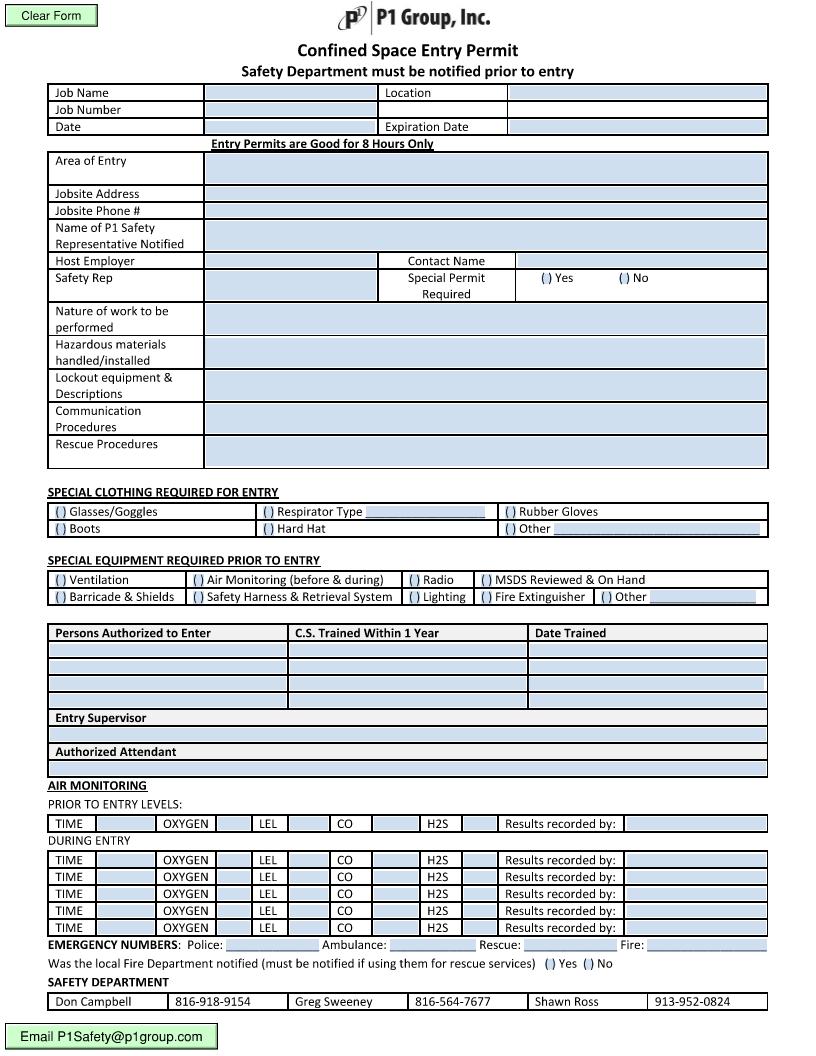
a. This section covers procedures for the safe operation and maintenance of boom trucks. This equipment is built for safe and economical operation, but it is only as safe as the Associates who operate it.
b. All Supervisors will be responsible for ensuring that all Associates follow these procedures.
a. General
i. Rated load capacity charts, recommended operating speeds, special hazard warnings, and or essential information will be visible to the operator while at his/her control station.
ii. Prior to each lift, the boom truck operator will sound the horn to warm other personnel of the overhead hazard.
iii. The ground surface shall be inspected by the Competent Person to determine whether crane mats are necessary under each outrigger.
iv. Routine maintenance, fueling and repairs must not be performed while the equipment is in use or the power is on.
v. No one but the designated Operator or other authorized personnel will be allowed in or on the machine while it is operating. (This means NO RIDERS.)
vi. All wire ropes will be in good repair.
vii. All belts, gears, shafts, pulleys, sprockets, drums, flywheels or chains will be properly guarded.
viii. Accessible areas within the swing radius of all cranes must be barricaded to prevent associations from being crushed by the superstructure of the crane.
ix. The swing radius will be free of outside material such as water cans, toolboxes and miscellaneous storage.
x. Guardrails and handholds will be acceptable and anti-skid surfaces placedon maintenance walkways and platforms.
xi. There will be an accessible 5-pound BC rated fire extinguisher, or higher, at all Operator stations or cabs.
xii. The load block, headache ball and safety hook will be kept in good repair.
xiii. No Associate will ride on a cable, ball, chain, sling, or any other hoisting attachment or on the material being moved by means of a winch line, crane or truck. When assembling or disassembling equipment (or attachments) the employer must comply with all applicable prohibitions and must comply with either:
1926.1403(a) Manufacturer procedures applicable to assembly and disassembly, or
1926.1403(b) Employer procedures for assembly and disassembly.
Employer procedures may be used only where the employer can demonstrate that the procedures used meet the requirements in 1926.1406.
b. Moving the Load
i. The load must be well secured and properly balanced in the sling or lifting device before it is lifted more than a few inches.
ii. Before starting to hoist a load the following conditions must be met:
a. Multiple part lines must not be twisted around each other.
b. The hook must be brought over the load in such a manner as to prevent swinging.
iii. During hoisting care must be taken so that:
a. There is no sudden acceleration or deceleration of the moving load.
b. The load does not contact any obstructions
iv. Do not carry loads over people.
v. Do not leave the controls when the load is suspended
vi. The brakes must be tested each time a load approaching the rated load is handled. The brakes must be tested by raising the load a few inches and applying the brakes.
vii. The load must not be lowered below the point where less than two full wraps of rope remain on the hoisting drum.
viii. When the load or hook approaches personnel, the warning signal must be sounded.
i. A copy of the current annual truck and crane inspection must accompany the crane. Terms and conditions for rental equipment places the responsibility on the leaser to furnish copies of certifications of annual inspections of various pieces of lifting equipment and cranes as required by OSHA. The Project Superintendent must ensure this document is in hand and in order prior to placing the equipment in service.
ii. The operator must be accredited by a nationally recognized accrediting agency based on that agency’s determination that industry-recognized criteria for written testing materials, practical examinations, test administration, grading, facilities/equipment, and personnel have been met.
iii. Operators are recertified prior to the expiration date on the card.
i. Prior to start-up, make a walk-around inspection to check the condition of the machine and see that everyone is in the clear.
ii. Prior to attempting to work the machine, the operator will thoroughlyfamiliarize himself/herself with all controls.
iii. The Operator will test all controls at the start of a new shift. If controls do not operate properly, will be adjusted or repaired before working the machine. Check wheel brakes before moving machine.
e. Booms/Jibs
i. Boom angle indicators must be in working order at all times. Load movement devices or load indicating devices will be installed where required.
ii. Booms and boom members will be kept in good repair, free of cracks, dents and broken parts.
iii. Never repair a damaged boom or any section thereof. The only safe procedure is to contact the manufacturer giving crane identification information and following their
instructions.
iv. Boom and crane rigging will be inspected at the start of every shift. At least once a week, lines will be checked thoroughly and lubricated. Aerosol lubricant seems to be the most generally acceptable. It must be a lubricant that will penetrate the cables.
i. Identify any power lines near or within work zone where crane work will be performed. If overhead power lines are in the area, determine if any part of the equipment, load line or load, if operated up to the equipment’s maximum working radius in the work zone, could get within 20 feet to the power line. If so, one of the following three options shall be followed:
a. Option 1: De-energize and ground. Confirm with utility owner that the power line has been de-energized and visibly grounded at the worksite.
b. Option 2: 20 foot clearance. Ensure that no part of the equipment, load line, or load, gets closer than 20 feet to the power line.
c. Option 3: Ask utility owner for voltage and use Table A (see below) which OSHA’s minimum approach distances depending on the line voltage.
d. If option 2 or 3 are used, additional encroachment prevention measures must be taken:
i. Planning meeting with operator and all workers who will be in the area of the equipment or load to review location of the power line(s), and the steps that will be implemented to prevent encroachment/electrocution.
ii. If tag lines are used, they must be non-conductive.
iii. Erect warning lines, barricades, or line of signs, in the operators view, equipped with flags or similar highvisibility markings, at 20 feet from power line (if using option 2) or at the minimum approach distance under OSHA’s Table A.
iv. And last, but not least, one of the following measures must be chosen: a proximity alarm set to give the operator a sufficient warning to prevent encroachment; dedicated spotter; warning device that automatically warns the operator when to stop movement, range limiter device, or an insulating link/device.
over 750 to 1,000
45
Over 1,000 (as established by the utility owner/operator or qualified registered professional engineer who is a qualified person with respect to electrical power transmission and distribution)
i. Any P1 Construction Associate signaling a crane must be a qualified signaler as per 29CFR1926cc (Construction Crane Standard).
ii. All signalers must be qualified in hand, voice, radio and new crane signals.
iii. A designated Associate must observe clearance of the equipment and give timely warning for all operations where the Operator’s vision is obstructed,
iv. Operators must take hand signals from only one person; however, in an emergency, a STOP signal may be given by anyone.
v. Hand signals to boom truck operators shall be those prescribed by the applicable ANSI standard for the type of boom in use. A copy of hand signals must be posted on equipment visible to Associates (See attached Boom Truck Signals).
h. Inspection
i. A designated Competent Person must perform Boom Truck inspections.
i. Outriggers
i. The boom truck will be level with all outriggers fully extended and down on firm ground or footing prior to lifting loads or swinging the boom over the side, except as noted under the “Traveling” subsection below. Without the outriggers down and even with no load, it is possible to tip the crane over by simply swinging the boom over the side.
ii. The transporting of materials on the outriggers is prohibited.
iii. Use pads under outriggers when soil conditions are poor, especially when making heavy lifts or when working near maximum radius.
iv. When setting up near trenches or excavations, stay a safe distance back from the hole. Check regularly for cracks and fissures caused by the excavation.
j. Hoisting
i. Know the weight of the load and where it has to go.
ii. Before hoisting inspect the slings or wire rope, if defective tag out immediately.
iii. Do not lift more than the rated capacity of hoist or crane.
iv. The Operator will test the machine each time a load approaching the rated load is handled, by raising it a few inches and holding the load.
v. Extreme caution when extending the boom with loads suspended. As working radius increases, load capacity decreases and can cause the machine to tip over. Most hydraulic cranes differ from friction machines in that a load cannot be lowered
fast enough to overcome a tipping action once the machine becomes overbalanced.
vi. When the boom is extended, care will be exercised to avoid “two blocking” sheave block with boom.
vii. During hoisting, swing or lowering operations, there will be no sudden acceleration of deceleration of the moving load.
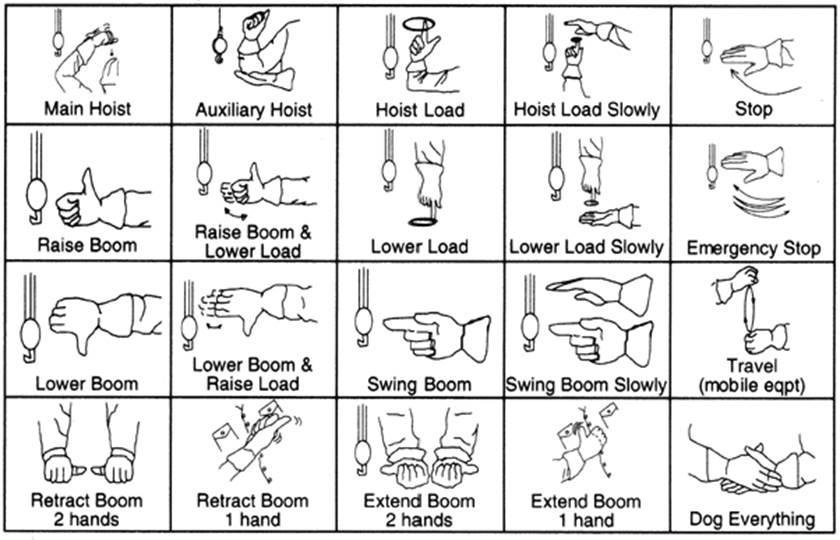
This section covers minimum requirements for the safe rigger of equipment to protect personnel and equipment.
All Supervisors will be responsible for ensuring that all Associates follow these procedures.
a. Any P1 Construction Associate rigging material that will be lifted with any person in a fall zone must be completed by a qualified rigger as per 29CFR1296cc.
b. Rigging equipment for material handling will be inspected prior to each use on each shift. Defective rigging equipment will be removed from service.
c. A sorting spreader or hoisting spreader will not be used to choke or cradle a load. When lifting with cable spreaders, be sure hooks are secure before the lift. Check all loads for loose material that might fall out if load is fouled or jarred. To avoid swinging, make sure block is centered over load before lifting.
d. When using sorting spreaders, never pick up the load more than a few feet off of working level before checking load for balance and security.
e. When making a heavy lift, use “softeners” on sharp edges, and secure them so there will be no danger of fall-out when the sling is released.
f. Check sorting hooks for defects and spread, and if defects are noted, remove them for service.
g. No one is to give signals to the Operator, except the person authorized by the Supervisor.
h. Never raise the load over people.
i. Use tag lines to control loads.
a. A written procedure must identify the gross weight of the lift and describe all rigging being used. A simple sketch with step-by-step description of the lift and pertinent information listed, along with signature, will suffice.
b. Prior to any material lifts the Crane Pre-Lift Checklist must be completed.
See Crane Pre-Lift Checklist
c. Critical Lift Plan – In the event of making a crane pick if it meets one of the following criteria, we must complete the Critical Lift Plan, Lifting Plan and the Crane Pre-Lift Checklist.
Exceeds 75% pf the rated capacity of the crane
Requires the use of more than one crane.
Potential exists for release of radioactive/hazardous materials due to collision or upset of load.
Potential to cause a significant work delay, or inflict monetary value damage of $250,000 or greater.
The load item is unique and, if damage, would be irreplaceable or not repairable and is vital to the mission.
The cost to replace or repair the load item, or the delay in operation of having the load item-damaged would have a negative impact on the facility and would affect program commitments.
a. Shackles will be used as choker eyes to secure loads on hooks.
b. Ensure shackles have a permanently affixed and legible identification markings as prescribed by the manufacturer that indicate the recommended safe working load.
c. All hooks must be inspected before each use for defects and spreads. If defects are noted, they will be immediately taken out of service.
d. All hooks must have a safety latch (shake out hooks are an exception).
e. The manufacturer recommendation shall be followed in determining the safe working loads of the various sizes and types of specific and identifiable hooks. Those hooks whose manufacturer’s recommendations are not available must be tested by the employer by lifting twice the intended load before putting into use. The employer shall maintain a record of the dates and results of the test.
a. The following safe operating practices will be observed whenever a sling is used.
i. Slings that are damaged or defective will not be used.
ii. Slings will not be shortened with knots, bolts, or other makeshift devices.
iii. Sling legs will not be kinked.
iv. Slings will not be loaded in excess of their rated capacities.
v. Slings used in a basket hitch will have the loads balanced to prevent slippage.
vi. Slings will be securely attached to their loads.
vii. Slings will be padded or protected from the sharp edges of their loads.
viii. Suspended loads will be kept clear of all obstructions.
ix. All Associates will be kept clear of loads about to be lifted and of suspended loads.
x. Hands or fingers will not be places between the sling and its load while the sling is being tightened around the load.
xi. Shock loading is prohibited.
xii. A sling will not be pulled from under a load when the load is resting on the sling.
xiii. Safe operating temperature for a synthetic web slings of polyester and nylon shall not be used at temperatures in excess of 180 degrees F. Polypropylene webbed slings shall not be used at temperatures in excess of 200 degrees F.
xiv. All slings will be used, tested, maintained and inspected according to OSHA 29 CFR 12926.251.
xv. Each day before being used, the slings and all fastenings and attachments will be inspected for damage or defects by a Competent Person designated by the Project Superintendent. Additional inspections will be performed during the use of the sling, where service conditions warrant. Damaged or defective slings will be removed immediately from service if any of the following conditions are present: acid or caustic burns, melting or charring of any part of the slings surface, snags, punctures, tears, cuts, broken or worn stitching, or if any part of the label is not legible.
a. Sling identification:
Alloy steel chain slings will have permanently affixed durable identification stating size, grade, rated capacity, and reach.
b. Attachments:
i. Hooks, rings, oblong links, pear shaped links, welded or mechanical coupling links, or other attachments will have a rated capacity at least equal to that of the alloy steel chain with which they are used, or the sling will not be used in excess of the rated capacity of the weakest component.
ii. Makeshift links or fasteners formed from bolts or rods, or other such attachments, will not be used.
c. Inspections:
i. In addition to the daily required inspection, a thorough monthly inspection of alloy steel chain slings in use will be made on a regular basis to be determined by:
Frequency of sling use
Severity of service conditions
Nature of lifts being made
Experience gained on the service life if slings used in similar circumstances. Such inspections will be performed at least monthly.
ii. The inspection report will be kept on file. See attached sample Alloy SteelChain Sling Condition Report.
iii. The thorough inspection of alloy steel chain slings will be performed by a Competent Person, and will include a thorough inspection for wear, defective welds, deformation, and increase in length. Where such defects or deterioration are present, the sling will be immediately removed from service.
d. Proof Testing:
Repaired or reconditioned alloy steel chain slings, including all welded components in the sling assembly, will be proof tested by the sling manufacturer or equivalent entity, in accordance with Paragraph 5.2 of the American society of Testing and Materials Specification A391-65 (ANSI G61. 1-1968). A certificate of the proof test will be kept on file.
e. Sling Use:
Alloy steel chain slings will not be used with loads in excess of the rated capacities prescribed in Table H-1 (29 CFR 1926.251). Slings not included in this table will be used only in accordance with the manufacturer’s recommendations.
TABLE H-1
RATED CAPACITY (WORKING LOAD LIMIT), FOR ALLOY STEEL CHAIN SLINGS 1
Rated Capacity (Working Load Limit), Pounds [Horizontal angles shown in parentheses] 3
1 Other grades of proof tested steel chain include Proof Coil, BBB Coil and Hi-Test Chain. These grades are not recommended for overhead lifting and therefore are not covered by this code.
2 Rating of multileg slings adjusted for angle of loading measured as the included angle between the inclined leg and the vertical.
3 Rating of multileg slings adjusted for angle of loading between the inclined leg and the horizontal plane of the load.
Alloy steel chain slings will be permanently removed from service if they are heated above 1000 degrees F. When exposed to service temperatures in excess of 600 degrees F, maximum working load limits permitted in Table H-1 will be reduced in accordance with the chain or sling manufacturer’s recommendation.
i. Worn or damaged alloy steel chain slings or attachments will not be used until repaired. When welding or heat testing is performed, slings will not be used unless repaired, reconditioned, and proof tested by the sling manufacturer or an equivalent entity.
ii. Mechanical coupling links or low carbon steel repair links will not be used to repair broken lengths of chain.
h. Effects of Wear:
If the chain size at any point of any link is less than that stated in Table H-2 (29 CFR 1926.251), the sling will be removed from service.
TABLE H-2
ALLOWABLE WEAR AT ANY POINT OF LINK
i. Deformed Attachments:
i. Alloy steel chain slings with cracked or deformed master links, coupling links, or other components will be removed from service.
ii. Slings will be removed from service if hooks are cracked, have been opened more than 15% of the normal throat opening measured at the narrowest point or twisted more than 10 degrees from the plane of the unbent hook.
a. Sling Use:
i. Wire rope slings will not be used with loads in excess of the rated capacities shown in Table H-3 through H-14 (29 CFR 1926.251). Slings not included in these tables will be used only in accordance with the manufacturer’s recommendations.
6x19 and 6x37 Classification Improved Plow Steel Grade Rope With Fiber Core (FC) Rope
1 These values only apply when the D/d ratio for HT slings is 10 or greater, and for MS and S Slings is 20 or greater where: D = Diameter of curvature around which the body of the sling is bent; d =Diameter of rope; HT = Hand Tucked Splice and Hidden Tuck Splice. For hidden tuck splice (IWRC) use values in HT columns; MS = Mechanical Splice; S= Swaged or Zinc Poured Socket.
TABLE H-4. - RATED CAPACITIES FOR SINGLE LEG SLINGS 6x19 and 6x37 Classification Improved Plow Steel Grade Rope With Independent Wire Rope Core (IWRC) Rope
1 These values only apply when the D/d ratio for HT slings is 10 or greater, and for MS and S slings is 20 or greater where: D = Diameter of curvature around which the body of the sling is bent; d= Diameter of rope; HT= Hand Tucked Splice. For hidden tuck splice (IWRC) use Table H-3 values in HT column; MS = Mechanical Splice; S = Swaged or Zinc Poured Socket.
Cable Laid Rope Mechanical Splice Only, 7x7x7 & 7X7X19 Constructions Galvanized Aircraft Grade Rope 7x6x19 IWRC Construction Improved Plow Steel Grade Rope Rope
Rated capacities, tons (2,000 lb.)
1 These values only apply when the D/d ratio is 10 or greater where:
D = Diameter of curvature around which the body of the sling is bent;
d = Diameter of rope.
2 IWRC
1 These values only apply when the D/d ratio is 20 or greater where: D = Diameter of curvature around
TABLE H-7. - RATED CAPACITIES FOR 2-LEG AND 3-LEG BRIDLE SLINGS
1 Vertical angles. 2 Horizontal angles. HT = Hand Tucked Splice. MS = Mechanical Splice.
TABLE H-8. - RATED CAPACITIES FOR 2-LEG AND 3-LEG BRIDLE SLINGS 6x19 and 6x37 Classification Improved Plow Steel Grade Rope With Independent Wire Rope Core (IWRC) Rope Rated
Dia (inches) Con-str.
1 Vertical angles. 2 Horizontal angles. HT = Hand Tucked Splice. MS = Mechanical Splice.
TABLE H-9. - RATED CAPACITIES FOR 2-LEG AND 3-LEG BRIDLE SLINGS
Cable Laid Rope - Mechanical Splice Only, 7x7x7 and 7x7x19 Construction Galvanized Aircraft Grade Rope, 7x6x19 IWRC Construction Improved Plow Steel Grade Rope Rope Rated
1 Vertical angles. 2 Horizontal angles.
TABLE H-10. - RATED CAPACITIES FOR 2-LE AND 3-LEG BRIDLE SLINGS 8-Part and 6-Part Braided Rope, 6x7 and 6x19 Construction Improved Plow Steel Grade Rope, 7x7 Construction Galvanized Aircraft Grade Rope Rope Rated
ches) Con-str.
1/4 6x19
H-11.
1 These values only apply when the D/d ratio is 5 or greater where:
D=Diameter of curvature around which rope is bent.
d=Diameter of rope body.
TABLE H-12
RATED CAPACITIES FOR CABLE LAIDGROMMET - HAND TUCKED 7x6x7 and 7x6x19 Constructions Improved Plow Steel Grade Rope 7x7x7 Construction Galvanized Aircraft Grade Rope
Rope Body
Rated
tons (2,000
1 These values only apply when the D/d ratio is 5 or greater where: D = Diameter of curvature around which cable body is bent, d = Diameter of cable body.
TABLE H-13 RATED CAPACITIES FOR STRAND LAID ENDLESS SLINGS -- MECHANICAL JOINT
Improved Plow Steel Grade Rope
Rope Body
1 These values only apply when the D/d ratio is 5 or greater where: D=Diameter of curvature around which rope is bent, d=Diameter of rope body.
2 IWRC.
TABLE H-14 RATED CAPACITIES FOR CABLE LAID ENDLESS SLINGS MECHANICAL JOINT
7x7x7 and 7x7x19 Constructions Galvanized Aircraft Grade Rope
7x6x19 Construction Improved Plow Steel Grade Rope Cable Body
1 These values only apply when the D/d value is 5 or greater where: D=Diameter of curvature around which cable body is bent. d=Diameter of cable body.
2 IWRC.
b. Minimum Sling Lengths
i. Cable-laid 6x19 and 6x37 slings will have a minimum clear length or wire rope 10 times the component rope diameter between splices, sleeves or end fittings.
ii. Braided slings will have minimum clear length or wire rope 40 times the component rope diameter between the loops or end fittings. iii. Cable-laid grommets, strandlaid grommets, and endless slings will have a minimum circumferential length of 96 times their body diameter.
c. Safe Operating Temperatures:
i. Fiber core wire rope slings of all grades will be permanently removed from service if they are exposed to temperatures in excess of 200 degrees F. When non-fiber core wire rope slings of any grade are used at temperatures above 400 degrees F or below minus 60 degrees F, recommendations of the sling manufacturer regarding use at that temperature will be followed.
d. End Attachments:
i. Welding of end attachments, except covers to thimbles, will be performed priorto the assembly of the sling.
ii. No welded end attachment will be used unless proof tested by the manufacturer or equivalent entity at twice the rated capacity prior to initial use. Certificate of the proof test will be kept on file.
e. Removal from Service:
i. Wire rope slings will be immediately removed from service if any of the following conditions are present:
a. Six or more broken wires in a rope lay, or three broken wires in one strand in on rope lay.
b. Wear or scraping of one-third the original diameter of outside individual wires.
c. Kinking, crushing, bird caging, or any other damage resulting in distortion of the wire rope structure.
d. Evidence of heat damage.
e. End attachments that are cracked, deformed or worn.
f. Hooks that have been opened more than 15% of the normal throat opening measured at the narrowest point or twisted more than 10 degrees from the plane of the unbent hook.
g. Corrosion of the rope or end attachments.
f. Inspection:
i. Wire rope slings will be inspected prior to each use.
a. Sling Marking:
i. Each metal mesh sling will have permanently affixed to it a durable marking that states the rated capacity for vertical basket hitch and choker hitch loadings.
b. Handles:
i. Handles will have a rated capacity at least equal to the metal fabric and will exhibit no deformation after proof testing.
c. Attachment of Handles to Fabric:
i. The fabric and handles will be joined so that he rated capacity of the sling is not reduced.
ii. The load is evenly distributed across the width of the fabric.
iii. Sharp edges will not damage the fabric.
d. Sling Coatings:
i. Coatings, which diminish the rated capacity of a sling, will not be applied.
e. Sling Testing:
i. All new repaired metal mesh slings, including handles, will not be used unless proof tested by the manufacturer or equivalent entity at a minimum of 1-1/2 times their rated capacity. Elastomer impregnated slings will be proof tested before coating.
f. Proper Use of Metal Mesh Slings:
i. Metal mesh slings will not be used to lift loads in excess of their rated capacities.
g. Safe Operating Temperatures:
i. Metal mesh slings, which are not impregnated with elastomers, maybe used in a temperature range from minus 20 degrees F to plus 550 degrees F. without decreasing the working load limit.
ii. Metal mesh slings impregnated with polyvinyl chloride or neoprenemay be used only in a temperature range from zero degrees to plus 200 degrees F.
iii. For operations outside these temperature ranges, or for metal mesh slings impregnated with other materials, the sling manufacturer’s
recommendations will be followed.
h. Repairs:
i. Metal mesh slings, which are repaired, will not be used unless repaired by metal mesh sling manufacturer or an equivalent entity.
ii. Once repaired, each sling will be permanently marked or tagged, or a written record maintained, to indicate the date and nature of the repairs and the person or organization that preformed the repairs. Records of repairs will be kept of file.
i. Removal from Service:
i. Metal mesh slings will be immediately removed from service if any of the following conditions are present:
a. A broken weld or broken brazed joint along the sling edge.
b. Reduction in wire diameter of 25% due to abrasion or 15% due to corrosion.
c. Lack of flexibility due to distortion of the fabric.
d. Distortion of the female handle so that the depth of the slot is increased more than 10%.
e. Distortion of either handles decreasing the width of the eye more than 10%.
f. A 15% reduction of the original cross-sectional area of metal at any point around the handle eye.
g. Distortion of either handles out of its plane.
j. Inspection:
i. An inspection will be performed prior to each use.
8. Natural and Synthetic Fiber Rope Slings
a. Sling Use:
i. Fiber rope slings made from conventional three-strand construction fiber rope will not be used with loads in excess of the rated capacities prescribed in Tables H-15 through H-18 (29 CFR 1926.251).
ii. Fiber rope slings will have a diameter of curvature meeting at least the minimums specified in Figures N-184-4 and N-184-5 (29 CFR1926.251).
1
1
1
2
2 1/3 125.0
2
2 1/2
2 5/8
[Angle of rope to vertical shown in parentheses]
[Angle of rope to vertical shown in parentheses] Rope Nominal
Rated capacity in pounds (safety factor=9)
2
2 1/8
2 1/4
2
2 5/8
[Angle of rope to vertical shown in parentheses] Rope dia.
2 1/4
2
2 5/8
[Angle of rope to vertical shown in parentheses] Rope dia.
in pounds (safety factor=6)
2
2 5/8
b. Safe Operating Temperatures:
i. Natural and synthetic fiber rope slings, except for wet frozen slings, may be used in a temperature range from minus 20 degrees F to plus 180 degrees F without decreasing the working load limit.
ii. For operations outside this temperature range and for wet frozen slings, the sling manufacturer’s recommendations will be followed.
c. Splicing:
i. Spliced fiber rope slings will not be used unless they have been spliced in accordance with the following minimum requirements and in accordance with any additional recommendations of themanufacturer.
ii. In manila rope, eye splices consist of at least 3 full tucks, and short splices will consist of at least 6 full tucks, 3 on each side of the splice center line.
iii. In synthetic fiber rope, eye splices consist of at least 4 full tucks, and short splices will consist of at least 8 full tucks, 4 on each side of the centerline.
iv. Strand end tails will not be trimmed flush with the surface of the rope immediately adjacent to the full tucks. This applies to all types of fiber rope: both eye and short splices.
v. For fiber rope less than 1 inch in diameter, the tail will project at least 6 rope diameters past the last full tuck.
vi. For fiber rope 1 inch in diameter or larger, the tail will project at least 6 inches past the last full tuck.
vii. Where a projecting tail interferes with the use of the sling, the tail will be tapered and spliced into the body of the rope using at least 2 additional tucks (which will require a tail length of approximately 6 rope diameters beyond the last full tuck).
viii. Fiber rope slings will have a minimum clear length of approximately 6 rope diameters beyond the last full tuck.
ix. Fiber rope slings will have a minimum clear length of rope between eye splices equal to 10 times the rope diameter.
x. Knots will not be used in lieu of splices.
xi. Clamps not designed specifically for fiber ropes will not be used for splicing.
xii. For all eye splices, the eye will be of such size to provide an included angle of not greater than 60 degrees at the splice when the eye is placed over the load or support.
d. End Attachments:
i. Fiber rope slings will not be used if end attachments in contact with the rope have sharp edges or projections.
e. Removal from Service:
i. Natural and synthetic fiber rope slings will be immediately removed from service if any of the following conditions are present:
a. Acid or caustic burns.
b. Melting or charring of any of the sling surfaces.
c. Abnormal wear.
d. Powdered fiber between strands.
e. Broken or cut fibers.
f. Variations in the size of roundness of strands.
g. Discoloration or rotting.
h. Distortion of hardware in the sling.
f. Repairs:
i. Only fiber rope slings made from new rope will be used. Use of repaired or reconditioned fiber rope slings is prohibited.
g. Inspection:
i. Fiber rope slings will be inspected prior to each use.
9. Sheaves
a. Drum and sheave diameters will be as large as possible in order to lessen fatigue due to bending stress. In any case, sheaves will not be less than 32 times the diameter of wire rope, or less than 6 times the diameter of manila rope.
a. Never put on a load heavier than the capacity of the chain fall or come-a- long. Equipment will be equipped with an automatic load brake to prevent load from dropping. Load brake will be the fail-safe type.
b. Never leave a load suspended by chain falls or come-a-longs for any length of time.
c. Never leave a load suspended by chain falls or come-a-longs without a watchperson or barricade.
d. Never wrap the load chain around the load.
e. Never hook the load on the end of the hook; always hook it in the center.
f. Never stand or have any part of the body below a load suspended on a chain fall or come-a-long.
g. Inspection:
i. Chain falls and come-a-longs will be inspected as follows:
a. Daily-before each use.
b. Annually-by a third party.
c. In the event that any defects are found, competent specialists will repair them.
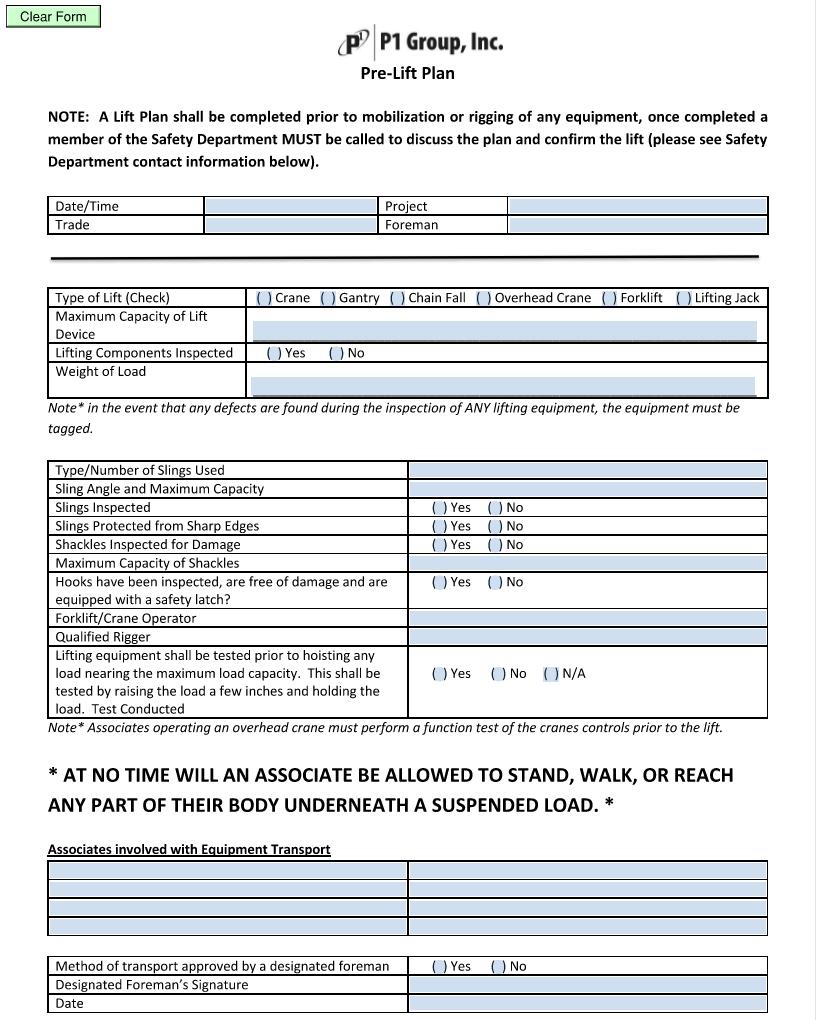

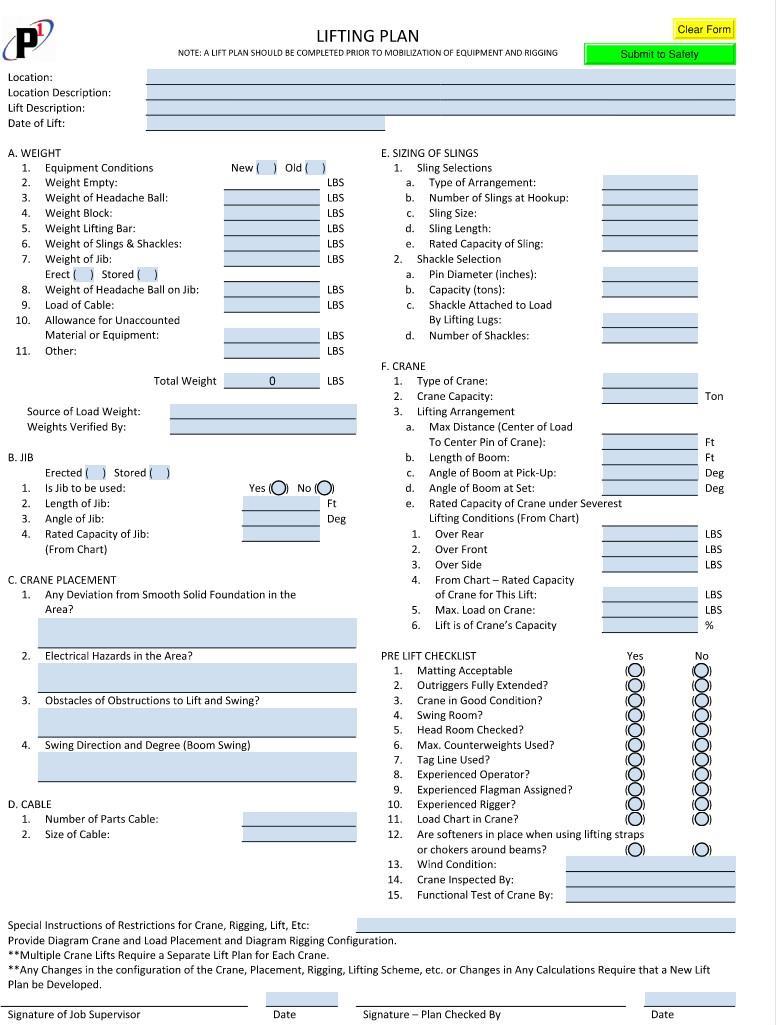















Date: 02/07/2025
Revision Date: 00/00/000
Page: 00 of 000
The objective of this procedure is to provide safety guidelines and prevent incidents related to masonry and concrete construction performed by workers of P1 CONSTRUCTION, hereafter referred to as “The Company”.
Before erecting formwork or shoring the surface area in which the formwork or shoring will be placed will be prepared to receive the load that will be imposed on its surface. The existing ground will be level and thoroughly compacted before erecting formwork and shoring to prevent settlement.
The site layout will simplify the assembly and disassembly of formwork and shoring, moving equipment (e.g., ready-mix trucks, concrete pumps, cranes), and the storage of reinforcement steel, formwork, and shoring.
Electrical hazards (e.g., overhead power lines and temporary power) in the work area will be identified and the local power company consulted to set up safe clearance distances or to move the utilities.
Whenever possible, formwork and shoring will be roped off from other work (e.g., excavation or pile driving).
Reinforcing Steel
Reinforcing steel for walls, piers, columns, and similar structures will be laterally supported to resist overturning. The lateral supports for reinforcing steel will be capable of withstanding the force that will be applied to them during construction.
Bundles of reinforced steel moved by crane will be securely tied together to prevent slipping. Steel over 20 feet long will be handled by two-part slings.
Exposed rebar onto or into which workers could fall, will be covered to remove the hazard of impalement. Reinforced plastic cap coverings will be used during construction on exposed rebar to remove the hazard of impalement.
When working more than 6 feet above any close working surfaces, placing, and tying reinforcing steel in walls, piers, columns, etc., workers must use a personal fall arrest system as set forth in Company safety procedure (Fall Prevention & Protection). Position devices for rebar work will be rigged so a worker cannot free fall more than 2 feet. The positioning device will be secured to an anchorage capable of supporting at least twice the potential impact load of the worker’s fall or 3,000 pounds, whichever is greater.
Reinforcing mats used as walkways will be provided with planking to provide safe footing.
Reinforcing steel will not be used as guy attachments at dead men or other anchorage points and will not be
Date: 02/07/2025
Revision Date: 00/00/000
Page: 00 of 000
used for scaffolding hooks, stirrups, or as a load-bearing member of any lifting device.
Wire mesh reinforcing mats will be secured at each end or the roll turned over to prevent recoiling action. Unrolled wire mesh will be secured on each side of a proposed cut before cutting the mesh.
No workers, except those essential to post-tensioning operations, will be allowed to be behind the jack during tensioning. Signs and barricades will be erected to limit workers access to post-tensioning areas during tensioning.
Before erection, shoring equipment will be inspected by the concrete contractor to verify that it conforms to the equipment named in the shoring layout. Unauthorized changes or substitution of equipment will not be made unless the designer has approved the change or substitution.
The manufacturer's specification for fabricated shoring will be available at the job site during the planning and execution.
Erecting shoring will be under the supervision of an experienced and competent person.
Shoring equipment will be inspected following the manufacturer’s procedures. Metal frame shoring equipment and accessories will not be used if excessively rusted, bent, dented, re-welded beyond the original factory weld locations, or if they have broken welds or other defects. Each part will be in good working order and in a condition similar to that of original manufacture. Damaged shoring equipment will not be used for shoring. Any part which cannot be brought into proper alignment or contact with the part, into or onto which it is intended to fit, will be “Red-Tagged”, removed and replaced.
Erected shoring equipment will be inspected by the worker immediately before, during, and immediately after the placement of concrete to decide the shoring equipment meets the needs named on the formwork drawings. Acceptable shoring will be “Green-Tagged”. Any shoring found to be damaged or weakened must be immediately reinforced or re-shored.
Re-shoring will be provided when necessary to safely support slabs and beams after stripping or whenever the concrete is required to support loads in excess of its capacity.
Temporary storage of reinforcing rods, materials, or equipment on top of formwork is banned unless these temporary structures have been designed or strengthened to support the added load. Eccentric loads on shore heads and similar members will be restricted unless these members are designed for such loads.
Date: 02/07/2025
Revision Date: 00/00/000
Page: 00 of 000
Frame shoring (tubular welding and tube and coupler) will not be loaded beyond the safe working load recommended by the manufacturer. Frame shoring will be designed with a minimum safety factor of 2.5.
Locking devices on frames and braces will be in good working order; coupling pins will align the frame or panel legs; pivoted cross braces will have their center pivot in place and parts will be in good serviceable condition. Couplers (tube and couple shoring) will be of a type of metal such as drop-forged steel, malleable iron, or structural grade aluminum; gray cast iron will not be used. Couplers that are deformed, broken, or have defective or missing threads or bolts will not be used. Frames and braces found to be defective or damaged will be “Red-Tagged” and removed from service.
Following erection, a thorough inspection will be made to verify that:
• The shoring has been erected as shown on the layout drawing
• Spacing between towers and cross brace spacing does not exceed that shown on the layout, and that all-locking devices are in the closed position
• The devices for attaching the external lateral stability bracing are securely fastened to the legs of the shoring frame
• Interlocking tubular members and coupling are properly installed and tightened
• Base plates, shore heads, extension devices, or adjustment screws are in firm contact with the footing sill and the form
• Acceptable shoring will be “Green-Tagged”
The following general safety precautions will apply to frame shoring:
• Follow the shoring layout drawing and do not omit needed parts
• Do not exceed the shore frame spacing or tower heights as shown on the shoring layout
• The shoring load must be carried on all legs
• Plumb and level shoring frames as the erection continues and check plumb and level of shoring towers just before pour.
• Do not force braces on frames to fit level the shoring towers until proper fit can be made easily
• Tie high towers of shoring frames together with sufficient braces to make a rigid, solid unit. Shoring must always be secured when the height of the shoring towers exceeds four times the minimum base width. California (and other states) requires a height-to-minimum base width ratio of three to one (3:1). Refer to the governing codes for your job location
• Exercise caution in erecting or taking apart freestanding shoring towers to prevent tipping
• Do not climb cross braces
• Use screw jacks to adjust for uneven grade conditions, to level and accurately position the falsework, and to aid stripping
• Do not exceed the manufacturer’s recommended maximum extension of screw jacks. Keep screw jack extensions to a minimum for maximum load carrying capacity
Date: 02/07/2025
Revision Date: 00/00/000
Page: 00 of 000
• Make certain that screw jacks are firmly in contact with the foundation and frame legs
• Screw jacks will not be used to raise formwork during concrete placement
Single-post shoring layout will provide for the maximum intended loading with a minimum safety factor of three. When single-post shores are to be used in more than one tier, they will be designed and inspected by a registered structural engineer.
Single-post shores will be horizontally braced in both the longitudinal and transverse directions and will also be braced diagonally. The bracing will be installed as the shores are being erected.
Single-post shoring layouts will be horizontally braced in both the longitudinal and transverse directions and will also be braced diagonally. The bracing will be installed as the shores are being erected.
Single-post shores and adjusting devices will be inspected before use. Fabricated shores and adjusting devices will not be used if heavily rusted, bent, dented, re-welded, damaged, or deficient in any manner. Timber shores and timber components of fabricated shores will not be used if split, knotted, broken, or otherwise structurally deficient.
Base plates and shore heads of single-post shores will be in firm contact with the footing sill and the form material.
Adjustment of single-post shores will not be made after the concrete is in place.
Forms will be securely attached to wire rope slings (lifting equipment should have a minimum safety factor between 8-9), when raised or moved by crane or other mechanical lifting devices. Panels and form sections will be equipped with hoisting brackets or attachments for slings.
Loose tools and materials will be removed before moving the forms. Taglines for controlling forms will be used whenever necessary to protect workers or structures.
Workers are not allowed to ride forms or form scaffolding being raised or moved.
Vertical and overhead forms will not be released until adequately braced or secured. Workers at lower levels exposed to falling materials will be removed to a safe area before release or moving forms.
Forms, shores, and bracing (except those used for slab on grade and slipforms) will not be removed until the concrete has gained enough strength as listed in the contract specifications or shown on the form drawings.
Date: 02/07/2025
Revision Date: 00/00/000
Page: 00 of 000
Concrete buckets will have positive safety latches or similar safety devices installed to prevent premature or accidental dumping. Manually operated gates will be of the self-closing type. Riding the concrete bucket is restricted. Raised concrete buckets will be routed so no worker, or the fewest number possible, are exposed to the hazard of falling concrete buckets. An appointed qualified signal person will provide direction to the crane operator using the standard hand signals or radio communications that are common to the industry. Cranes and rigging must comply with the Company policies outlined in Company safety procedure (Cranes) as well as local or federal regulations.
Handles on bull floats used where they can contact energized electrical conductors must be made of nonconductive material or insulated with a nonconductive sheath that will protect the operation from electrical shock.
Powered and rotating type concrete troweling machines that are manually guided must be equipped with a control switch that has a positive mechanical release (dead-man switch) that automatically stops trowel rotation when the operator removes their hand from the equipment handle.
Handles of concrete buggies must not extend beyond the wheels on either side of the buggy. Motorized concrete buggies will be equipped with a dead-man control switch and knuckle guards. Stop-checks will be used at all places where buggies dump.
Runways will be of sturdy construction, evenly supported and will have a smooth-running surface and curbs (2" x 2" or 4" x 4"). Where necessary, runways will have a railing high enough on the open side to protect workers. If a single runway is used, turnarounds will be provided. Buggies will be routed in a continuous loop to lessen the danger of collision.
Sections of tremies and similar concrete conveyances will be secured with wire rope or equivalent material as well as the regular coupling. Concrete trucks must not travel through the job site with the chute extended. When unloading on a slope, the wheels of the concrete truck will be blocked, and the brakes set to prevent movement.
Concrete mixers with one cubic yard or larger loading skips will be equipped with a mechanical device to clear the skip of material. Skip clearing will not be performed by a worker standing under or near a raised skip while striking it with a handheld tool. Guardrails will be provided on each side of the dangerous area under the raised skip
Grid-guards will be installed on all motor, plaster, or fireproof mixers of one-yard capacity or smaller. Any guards will be in place before the mixer is ran. The mixer will be locked out when work (i.e., clean out) is performed on the mixer.
Date: 02/07/2025
Revision Date: 00/00/000
Page: 00 of 000
Bulk cement storage structures will be equipped with conical or tapered bottoms, and mechanical or pneumatic means of starting the flow of material. No worker will be allowed to enter storage facilities unless the ejection system has been shut down, locked out and tagged to suggest the ejection system is not to be worked.
Masonry saws will be guarded with a semicircular enclosure over the blade.
No worker will be allowed to perform maintenance or repair activities on equipment (i.e., mixers, screens or pumps used for concrete and masonry construction) where the unplanned operation of the equipment could occur and cause injury, unless all known potentially hazardous energy sources have been locked out and tagged.
Concrete pump trucks and parts (pump, boom, piping) will be inspected by the manufacturer’s instructions and found to be in safe working condition. Concrete pumps will be equipped with an emergency shut off.
Trucks will be positioned so any obstacles (power lines, ditches, walls, and columns) do not interfere with safe operation. Whenever possible, at least 17 feet clearance will be kept from power lines. Never less than 10 feet of clearance will ever occur.
Visual communication between the pump operator and the placement area will be kept, or a signalperson will be used to assume safe placement of concrete.
Outriggers must be extended and locked into place and kept away from un-supportive surfaces. Pads or dunnage will be used as necessary to stabilize the crane. Raised tires will be blocked to prevent unnecessary bouncing or rolling.
The boom must never be allowed to contact deck forming or near structures.
Clamps, pipes, safety straps, and restraining devices on hoses suspended from booms will be inspected.
Concrete pumps will not be worked unless the hopper is guarded. Workers will not place hands or objects in the hopper unless it is locked out.
Pumping line clean out operation must conform to the manufacturer's and will be conducted in a named area. The use of the compressed air procedure for cleaning pumping lines is restricted.
A limited-access zone will be set up whenever a masonry wall is being built. The limited-access zone will be set up before building the wall and will be equal to the height of the wall being built, plus four feet, and will run the entire length of the wall.
Date: 02/07/2025
Revision Date: 00/00/000
Page: 00 of 000
The limited-access zone will be set up on the side of the wall opposite the scaffolding.
Employees who are building the wall may enter the limited access zone but will not allow other employees to enter. The limited-access zone will remain in place until the wall is adequately supported to prevent overturning or collapse.
Masonry walls over eight feet in height will be adequately braced and supported so they will not overturn or collapse. Limited-access zones and bracing will remain in intact until permanent supporting elements of the structure are in place.
Scaffolding for masonry construction will meet or exceed local or federal jurisdictions and Company safety procedure (Scaffolds).
Health Hazard
The cutting, grinding, drilling, and finishing of concrete and masonry poses a potential silica dust hazard. Each employer must warn employees about the hazards posed by silica dust. Where concrete tools (jackhammers, masonry saws, grinders, etc.) disturb masonry and concrete products, engineering or work practice controls must be implemented to reduce (silica) dust. When engineering or work practice controls are not possible, employees exposed to dust will use respiratory protection. Suggested engineering controls and work practice controls for preventing silica dust is as follows:
• Post Warning Signs
• Employ wet methods
• Connect the tool to a point-of-operation dust collection system
• Limit the number of workers in the work area (workers who are in the area must use respiratory protection)
• Contain the work area with barricades and similar devices
• Use a ventilation system that removes and collects dust (workers in containment must use respiratory protection). Point exhaust away from other workers
Concrete and masonry cement are irritating to the eyes and skin. Protective equipment such as gloves, rubber boots, kneepads, and protective eyewear must be used when handling concrete. Washing with soap and water is important to prevent skin irritation. Hands will not be washed in a bucket of water used for moistening and washing concrete tools.
Safety data sheets (SDS) will be available for concrete and masonry products that will be used or disturbed. SDSs are needed for form-release agents, concrete additives, or cure agents. All containers will be labeled.
Date: 02/07/2025
Revision Date: 00/00/000
Page: 00 of 000
Workers working with or near concrete and masonry operations may not work until the following training has been completed and documented.
•Concrete Operation and Safety Procedures
•Proper tool use, inspection, and maintenance
•Health Hazards associated with concrete and masonry
•Required PPE and clothing
•Sanitation and Decontamination Procedures
•Hazard Communication
•Fall Protection
•Vehicle Safety
•Access Zones and Traffic Control
This section covers electrical safety requirements necessary for the safeguarding of Associates involved in construction work and governs both temporary and permanent electrical installation on construction projects.
All Supervisors will be responsible for ensuring that all Associates follow these guidelines.
1. All electrical work, installation and wire capacities will be in accordance with the pertinent provisions of the current edition of the National Electrical Code, NFPA, OSHA 29 CFR 1926 Electrical Standards for Construction, Underwriter’s Laboratory and local codes if applicable.
2. No Associate is permitted to work in any circumstance where an electric power circuit may be contacted in the course of work unless he/she is protected against electric shock by deenergizing the circuit and grounding it or by guarding it by effective insulation, wearing the appropriate dialectical/ arc resistant protective clothing in accordance to the NFPA 70-E standard or other means.
3. Appropriate agencies shall be contacted to locate underground utilities prior to construction activities that could involve their contact. In work areas where the exact location of underground electric power lines is unknown, Associates using jackhammers, bars or other hand tools that may contact a line will be provided with insulated protective gloves.
4. Before work has begun the Project Superintendent or his/her designated representative will inquire of the Client and/or the various utility companies whether any part of an electrical power circuit is solocatedthatthe performance of the work maybring anyperson, tool, ormachine into physical contact with it. Proper warning signs will be posted where such a circuit exists, such as “Buried Cables”.
5. Conductors will be adequately protected from mechanical injury.
6. Cable assemblies, boxes, cabinets and fittings, unless otherwise provided, will be securely fastened in place. Cable assemblies will be mechanically secured to boxes, fittings, and other enclosures.
7. Covers or suitable barriers will be installed on all boxes, fittings, and enclosures to prevent accidental contact with live parts or mechanical injury to parts or insulation contained therein
8. Wiring enclosures, such as switch and circuit breaker cases, motor controllers, panel boards, junction boxes, busways, gutters, fittings, and similar equipment in locations exposed to rain, oil, excessive moisture, steam, vapors, or similar deteriorating agencies will be of a type approved for the purpose or will be installed in housings, enclosures, or guards suitably designed to protect the equipment and conductors. Boxes, fittings, and lamp holders installed in damp or wet locations will be weatherproof.
9. Sufficient space will be provided and maintained around electrical equipment to permit ready and safe operation and maintenance of such equipment. Where parts require examination, adjustment or repair, or where live parts are exposed, adequate working space will be provided and maintained to permit this work to be performed safely. (See tables K-1 and K-2)
Table K-1 Working Clearance
1Conditions (a), (b) and (c) are as follows: (a) Exposed live parts on one side and no live or grounded parts on the other side of the working space, or exposed live parts on both sides effectively guarded by insulating material. Insulated wire or insulated busbars operating at not over 300 volts are not considered live parts. (b) Exposed live parts on one side and grounded parts on the other side. (c) Exposed live parts on both sides of the workspace [not guarded as provided in condition (a)] with operator between.
2NOTE: For International System of Units (SI): one foot = 0.3048 m.
Table K-2 Minimum Depth of Clear Working Space in Front of Electrical Equipment
1Conditions (a), (b) and (c) are as follows: (a) Exposed live parts on one side and no live or grounded parts on the other side of the working space, or exposed live parts on both sides effectively guarded by insulating material. Insulated wire or insulated busbars operating at not over 300 volts are not considered live parts. (b) Exposed live parts on one side and grounded parts on the other side. (c) Exposed live parts on both sides of the workspace [not guarded as provided in condition (a)] with operator between.
2NOTE: For International System of Units (SI): one foot = 0.3048 m.
10. Switches, circuit breakers, fuses, and other control and protective devices will be so installed that the top of the fuse or the center of the grip of the operating handle of the switch, circuit breaker, or other control device, when in its highest position, will not be more than 6-1/2 feet above the ground or working platform.
11. All switches, circuit breakers, and other control devices will be so located or marked as to clearly indicate the equipment controlled by them, and switches (except magnetic switches) will indicate whether they are opened or closed.
a. All breakers and disconnects will be clearly marked, with label tape as to what circuits or equipment they control.
b. All disconnects will be marked on the outside of the can as to the voltage.
c. Any receptacle that is not 100 to 120 volt AC will be labeled as to what voltage it carries.
12. When fuses are installed or removed with one or both terminals energized, fuse pullers insulated for the voltage will be used. Only qualified electricians will perform this task.
13. A continuous grounding conductor will be run with the circuit conductors throughout the system for equipment grounding purposes.
14. All circuits must be capable of being locked out.
15. When the work requires that any part of a crane or its load or similar equipment comes within 25 feet of an electric power line, the Operator must notify the Foreman. It is the Foreman’s responsibility to designate someone to survey the problem and approve the work procedure before any work is started.
16. Where fire or explosion hazards may exist due to flammable gases or vapors, flammable liquid, combustible dust, or ignitable fibers all electrical equipment and wiring must comply with Articles 500 through 503, Hazardous (Classified) Locations of The National Electrical Code.
1. Receptacles for attachment plugs will be of an approved type and will be so designed and constructed so that the plug may be pulled out without leaving any live parts exposed to accidental contact.
2. Where different voltages, frequencies, or types of current (AC or DC) are to be supplied by portable cords, receptacles will be of such design that attachment plugs used on these circuits are not interchangeable.
3. Attachment plugs or other connectors supplying equipment at more than 300 volts will be of the skirted type or otherwise so designed that arcs will be confined.
4. Attachment plugs and bodies for use in work areas will be so constructed that there are no exposed metal parts and will endure rough use and be equipped with a suitable cord grip to prevent strain on the terminal screws.
5. Extension cord sets used with portable electric tools and appliances will be of three- wire type and will be designed for hard or extra hard usage (examples of these types of extension cords include types S, ST, SO, STD, SJ, SJO, SJT, and SJTO). Flexible cords used with temporary and portable lights will be designed for hard or extra hard usage.
6. Flexible cords shall be used only in continuous lengths without splice or tap. Hard service flexible cords No. 12 or larger may be repaired if spliced so that the splice retains the insulation, outer sheath properties, and usage characteristics of the cord being spliced.
7. Portable cords and cables will not be permitted to be placed in such a manner as to be subjected to damage or constitute a tripping hazard. They will be protected against damage, which may be caused, by traffic, sharp corners, projections, or pinch points. They shall be suspended with nonmetallic ties (such as reusable plastic or nylon wire ties) a minimum of 7 feet above the walking/working surface or shall be protected in some other manner to prevent
damage.
1. Exposed noncurrent-carrying metal parts of fixed electrical equipment, including motors, welding machines, generators, frames, and tracks of electrically operated cranes, electrically driven machinery, etc., will be grounded.
2. A single electrode consisting of a rod, pipe, or plate, which has a resistance to ground greater than 25 ohms, will be augmented by one additional electrode installed no closer than 6 feet to the first electrode.
3. Conductors used for bonding and grounding stationary and movable equipment will be of ample size to carry the anticipated current.
4. When attaching bonding and grounding clamps or clips, a secure and positive metal-to-metal contact will be made. Such attachments will be made before closures are opened and material movements are started and will not be broken until after material movements are stoppedand closures are made.
5. Precautions will be taken to make any necessary open wiring inaccessible to unauthorized personnel.
6. Ground fault circuit interrupters (GFCI) will be used whenever wiring is not part of the buildings permanent wiring system.
1. Temporary incandescent lights will be equipped with guards to prevent accidental contact with the bulb, except that guards are not required when the construction of the reflector is such that the bulb is deeply recessed.
2. Fluorescent tubes subject to breakage will be protected by means of a protective guard or will be shatterproof bulbs.
3. Temporary lights will be equipped with hard or extra hard usage electric cords with connections and insulation maintained in safe condition. Their electric cords will not suspend temporary lights unless cords and lights are designed for this means of suspension. Splices will have insulation equal to that of the cable.
4. Portable electric lighting used in wet and/or conductive locations (for example drums, tanks, and vessels) will be operated at 12 volts or less. However, 120 volt lights may be used if protected by a ground fault circuit interrupter. Temporary lighting in hazardous environments will also conform to the requirements of OSHA 29 CFR 1926.404 and 1926.407
1. A transformer and other related equipment over 150 volts to ground would be protected to prevent accidental contact with any person.
2. Substations will be fenced and kept locked at all times.
3. Adequate warning signs will be placed on all high voltage substations.
4. Entrances to rooms and other guarded locations containing exposed live parts will be marked with conspicuous warning signs forbidding unqualified persons to enter.
1. Before attempting to jump-start any vehicle, precautions MUST be taken to avoid the possibility of explosions. Batteries generate hydrogen gas, which is both flammable and explosive.
a. Wear eye protection
b. Never lean over the battery while jump starting
c. Battery fluid is a corrosive acid. Do not allow it to come in contact witheyes, skin, fabrics or painted surfaces. If contact occurs, flush affected area immediately with water.
d. Keep open flames, lighted smoking materials or anything that may cause sparks away from the battery at all times.
e. Be sure any battery that has filler caps is properly filled with fluid. On batteries that are sealed but equipped with an indicator of electrolyte level, check the indicator for state of charge; however, this may not be a true indication of charge. A sealed-top battery with low electrolyte level is no longer useable. It must be replaced.
f. Examine battery for defects, such as cracks, damaged posts (terminals) and ensure the cable connections are clean and tight.
2. Except where specified differently by the vehicle manufacturer, ensure the ignition switch and all lights and accessories are in the off position, prior to connecting the jumper cables.
3. On vehicle equipped with cellular telephones, disconnect the power cable at the power pack. Failure to disconnect the power cable may result in damaging the sensitive circuitry within the phone.
4. To avoid arching or flashover, which can damage the vehicle’s electrical components, besure the connect the jumper cables in the following manner:
a. Connect the positive (+) cable from the stalled vehicle’s battery to the positive (+) terminal of the service vehicle’s battery or booster system.
b. Connect the negative (-) cable from the service vehicle’s battery or booster system to a solid, metal point on the edge of the disable vehicle, a far as possible away from the battery.
NOTE: When using a battery booster or generator system, be sure to follow the manufacturer’s instructions for the unit being used, before engaging power to the disabled vehicle’s battery.
c. Start disabled vehicle and remove jumper cables in the reverse order of installation. When removing each clamp, take care that it does not touchany other metals while the other end is still attached.
Equipment should be de-energized and locked out prior to any work on equipment. If this is impossible, due to life safety equipment or certain situations deemed necessary by the owner, please review the Electrical Hot Work section of this manual and contact the P1 Construction Safety Department prior to start of work.
The purpose of this program is to prevent worker injuries due electrical arcing. It is the policy of P1 Construction to take every reasonable measure to protect its workers from job site electrical hazards. The Safety Director is the designated competent person assigned to oversee the live electrical work and protection issues for P1 Construction workers at job sites. P1 Construction shall make every attempt to de- energize equipment prior to the start of work. We recognize that there is equipment that cannot be de-energized. If employees must work on energized equipment they will follow all procedures herein and in accordance with NFPA 70E 2018 standard.
This program is designed to help ensure that:
1. Energized high voltage electrical work is performed safely by qualified employees, who are trained and provided with appropriate safe work procedures, protective equipment andother controls.
2. Employees are protected against electrical shock, burns and other controls.
3. Employees are protected against electrical safety hazards as well as comply with regulatory requirements.
4. That machines or equipment are isolated for all potentially hazardous energy before employees perform any servicing or maintenance activities where unexpected energizing start up or release of stored energy could cause injury or fatality.
Employer Responsibility:
1. Establish, document, and implement the safety-related work practices andprocedures required by this standard.
2. Provide employees with training on the safety-related work practices and procedures.
Supervisor Responsibilities:
1. Ensure the electrical system requirements set forth in the program are implemented and maintained.
2. Determine employees who require additional training due to risk inherent in their job duties.
3. Implement corrective action when necessary.
4. Provide the PPE required by the safety program
5. Maintain, test, and recertify PPE as needed.
Employee Responsibilities:
1. Understand and comply with the regulatory requirements related to electrical work.
2. Understand and comply with safety-related work practices and procedures provided byP1 Construction or Client.
3. Before proceeding with any type of electrical work, all employees shall assure themselves that they can perform the work without injury. If they are assigned work they are not qualified to perform, they shall call this to their supervisor’s attention immediately.
4. Use the select proper personal protective equipment (PPE), tools, and safe workpractices required by this electrical safety program.
5. Inform supervisor or management of any unsafe work conditions or practices.
6. Assure the safety of employees who may work in the vicinity of, or on electrical systems.
7. Attend electrical safety training as required.
1. De-energization is the preferred method of protecting employees from electrical hazards. Whenever possible, electrical equipment must be place in an electrically safe work condition before work is started.
2. If de-energization is not feasible or creates a greater hazard, electrical safe work practices and personal protective equipment must be used to protect employees.
3. All employees will be trained and familiar with any electrical safe work practice necessaryfor their safety.
4. Electrical hazards will be identified and controls will be implemented to reduce employee risk.
Risk Assessment Procedure. Before electrical work is started, a risk assessment of the task will be completed to identify the hazards, assess the risks, and determine control methods to be used. The risk assessment will include the following:
1. Shock risk assessment. Employees shall perform a shock risk assessment to determine the:
a. Voltage to which personnel will be exposed.
b. Boundary requirements, refer to approach boundaries Table 1 & 2.
c. PPE necessary in order to minimize the possibility of electrical shock.
2. Arc flash risk assessment. Employees shall perform an arc flash risk assessment to determine the:
a. Arc flash boundary.
b. Incident energy or arc flash PPE category.
c. The specific safety related work practices determined, before any person isexposed to electrical hazards.
3. Updated and accurate labeling information can be used to gather the information necessary to complete the shock and arc flash risk assessments.
4. The condition of electrical equipment and systems will be considered when assessing the risks to perform electrical work.
5. Employee in charge, will complete the Electrical Pre-Job Hazard Analysis (PJHA) when exposed to 50v or greater.
6. In addition to a P1 Construction PJHA, any non-routine electrical work, emergency electrical work, electrical work without written procedures, temporary wiring work, or working on exposed energized electrical parts 480v or higher will require a P1 Construction Electrical Work Permit.
a. The electrical work permit contains 2 levels:
i. ii. Level 1 – Any work or troubleshooting on or near de-energized circuits 480V to 15kV
Level 2 – Any work or troubleshooting on or near energized circuits >480V.104 9ll work in a manhole or vault that contains electrical wiring or equipment. Exemption – Level 2 does NOT include
work on 480V starters of hazard/risk category < 2.
7. Pre-Job Briefing. Before starting electrical work, the employee in charge shall conduct a job briefing, with all employees involved. Additional job briefing will be held if changes which may affect safety occur during the course of the work. The briefing shall cover:
a. Hazards associated with the job.
b. Work procedures involved.
c. Special precautions
d. Energy source controls
e. Personal Protective Equipment Requirements
f. Information on any customer’s energized electrical work permit
g. Review of P1 Construction's PJHA and Electrical Work Permit, if applicable.
h. STOP WORK criteria.
When P1 Construction personnel are engaged in electrical work at worksites/facilities, the employee in charge shall conduct a meeting between the host employer and other contractors, the following information shall be provided:
1. Known hazards that are covered by the current NFPA 70E Standard, that are related to the contract work, and that might not be recognized by the contractor or hostemployees.
2. Information about the host employer’s installation needed to make assessments relating to the electrical hazards, and any existing electrical hazards from the arc flash hazard analysis, ifone was conducted.
3. Electrical personal protective equipment/clothing requirements.
4. Emergency/evacuation procedures.
5. Report observed contractor employee violations of the written electrical safety program to the contractor.
6. Ensure that each of our P1 Construction employees is instructed in the hazards communicated bythe host employer.
7. Ensure that each of our P1 Construction employees follow the work practices required by the written electrical safety program and current NFPA 70E Standard.
8. Advise host employer of any unique hazards presented by the contracted work, hazards identified during the course of work that were not communicated by the host employer,and measures taken to correct any violations reported to host employer.
9. Ensure all of our employees are trained in appropriate electrical safe work practices as definedin the current NFPA 70 E Standard and provide documentation, if requested. OTHER PRECAUTIONS FOR PERSONNEL ACTIVITIES
• Alertness—Employees shall remain alert at all times when working within the limited approach boundary. Work will cease when alertness is recognizable impaired due to illness, fatigue, or other reason. Employees shall be alert for changes in the scope of work which could expose the person to additional hazards.
• Illumination
o Employees shall not enter spaces where electrical hazards exist unless illumination is provided that enables the employees to perform the work safely.
o Where lack of illumination or an obstruction precludes observation of the work to
be performed, employees shall not perform any task within the limited approach boundary of energized electrical conductors or circuit parts operating at 50 volts or more where an electrical hazard exists.
o Suitable temporary lighting equipment and/or headlamps will be provided, as needed.
• Blind reaching Employees shall not reach blindly into areas that might contain exposed energized electrical conductors or circuit parts.
• Conductive Materials
o Conductive Articles Being Worn Conductive articles of jewelry and clothing (such as watch bands, bracelets, rings, key chains, necklaces, metalized aprons, cloth with conductive thread, metal headgear or metal frame safety glasses) shall not be worn with-in the restricted approach boundary or where they present an electrical contact hazard with exposed energized electrical conductors or circuit parts.
o Conductive Materials, Tools and Equipment Being Handled Conductive materials in contact with any part of the employee’s body shall be handled in a manner that prevents accidental contact with energized electrical conductors or circuit parts. No conductive object shall be taken closer to exposed energized electrical conductors or circuit parts operating at 50V or more than the restricted approach boundary.
• NOTE: Potential energized materials and equipment include but are not limited to long conductive objects such as ducts, pipes and tubes, conductive hose and rope, metal-lined rules and scales, steel tapes, pulling lines, metal scaffolds, structural members, bull floats and chains.
• Confined or Enclosed Spaces When working in confined or enclosed spaces in which an electrical hazard exists, protective shields, protective barriers, or other insulating materials shall be used to prevent inadvertent contact with energized parts. Examples of confined or enclosed spaces may include: manholes, vaults, pull boxes or other enclosures. All hazards, including electrical, must be considered prior to entry into a confined or enclosed space.
• Doors and Hinged Panels shall be secured to prevent swinging into employees and causing contact with energized electrical conductors or circuit parts if movement of the door could create a hazard.
• Housekeeping appropriate safeguards (such as insulating material or barriers) will be provided for any housekeeping duties performed within the limited approach boundary. Electrically conductive cleaning material shall not be used unless a Job Hazard Analysis (JHA) establishes safe procedures.
• Clear Spaces working space will be kept clear to permit safe operation and maintenance of electrical equipment. See Table 8.
• Flammable Material Electrical equipment will not be used in the presence of flammable material unless protective measures are taken. Flammable material includes flammable gases, vapors, liquids, combustible dusts, and ignitable fibers.
• Equipment which is anticipated to fail shall be de-energized and placed in an electrically safe work condition unless de-energizing introduces additional hazards or is infeasible due to equipment design or operational limitations. Employeesshall be protected from hazards by suitable barricades and alerting techniques.
• Routine Opening and Closing of Circuits only devices specifically designed as
disconnecting means shall be used for opening or closing of circuits under load conditions. Cable connectors, fuses, terminal lugs and cable splices shall not be permitted to be used to interrupt the load except in an emergency situation.
• Reclosing Circuits After Protective Devices Operation after automatic operations of devices, circuits shall not be manually re-energized until it has been determined that the equipment can be safely re-energized. When it is determined from the design of the circuit and the overcurrent devices involved, that the automatic operation of a device was caused by an overload rather than a fault, examination shall not be required. The repetitive manual reclosing of circuit breakers or re-energizing through fuse replacement is prohibited.
1. Exposed electrical conductors or circuit parts operating at 50 volts or more shall be considered energized until place in an electrically safe work condition. Steps to establish an electrical safe work conditions include:
a. Determine all possible sources of electrical energy.
b. Properly interrupt the load.
c. When possible, visually verify that all blades of the disconnecting devices are open.
d. Apply lockout/tagout devices.
e. Use an adequate rated test instrument to test each phase and verify de- energization. Before and after each test, determine the test instrument is operating satisfactorily through verification on a known source.
f. Apply grounds, if needed, when the possibility of induced or stored voltages exist.
2. Only qualified persons shall be permitted to work on electrical conductors or circuit parts that have not been put into an electrically safe work condition.
3. A transformer shutdown procedure will be completed when de-energizing transformers.
4. P1 Construction LOTO will be utilized when not working under a similar customer process.
All energized work requires the use of appropriate electrical safety related work practices and protective equipment to protect employees from show and arc flash hazards. Appropriate safety related work practices will be planned before anyone is exposed to the electrical hazards involved.
1. Energized electrical conductors and circuit parts, to which an employee might be exposed, shall be put into an electrically safe work condition before anemployee performs work if either of the following conditions exist:
a. The employee is within the limited approach boundary.
b. The employee interacts with the equipment where electrical conductors are no exposed, but an increased likelihood of injury from an exposure to an arc flash hazard exists.
c. In facilities where an incident energy analysis is completed, and equipment is labeled. P1 Construction employees will use electrical PPE according to this program, as indicated on the label. This includes enclosed or exposed equipment (i.e. operation of circuit break with doors closed will require the use of arc flash PPE as indicated on
the label).
d. In facilities where an incident energy analysis is not completed, P1 Construction employees will use electrical PPE according to this program, as indicated on NFPA 70E Tables, 4, 5, & 6. This includes enclosed and exposed equipment.
e. When incident energies are over 40 cal/cm2 at the working distance, it willbe necessary to de-energize before interacting with the equipment.
2. Lockout/Tagout is a major component of the process to assure electrical equipment or conductors are safe to touch. Too often this may be the only, or most visible, element of the system for controlling access to hazardous exposure to electrical energy. The control of hazardous energy is fundamental to the electrical safety program. Reference P1 Construction's LOTO procedures.
3. Energized Work – Only qualified persons shall be permitted to work on energized electrical conductors and circuit parts. All energized work requires the use of appropriate electrical safety related work practices and protective equipment to protect employees from shock and arc flash hazards. Appropriate safety related work practices will be planned before anyone is exposed to the electrical hazards involved.
4. Additional or Increased Risk. Energized work shall be permitted where we can demonstrate that de-energizing introduces additional or increase hazards. Examples of increased or additional hazards include, but are not limited to, interruption of life support equipment, deactivation of emergency alarm systems and shutdown of hazardous location ventilation equipment.
5. Infeasibility. Energized work shall be permitted where we can demonstrate the task to be performed is infeasible in a de-energized state due to equipment design or operational limitations. Examples of work that might be performed with the limited approach boundary of exposed energized electrical conductors or circuit parts because of infeasibility due to equipment design or operational limitations include, performing diagnostic and testing (e.g. start-up or troubleshooting) of electrical circuits that form an integral part of continuous process that would otherwise need to be completely shut down in order to permit work on one circuit or piece of equipment.
6. Less than 50 Volts. Energized electrical conductors and circuit parts that operate at less than 50 volts to ground shall not be required to be de-energized where the capacity of the source and any over current protection between the energy source and the worker are considered and is determined that there will be no increased exposure to electrical burns or to explosion due to electrical arcs.
7. Normal Operation. Normal operation of electric equipment shall be permitted when all of the following conditions are satisfied:
a. The equipment is properly installed and maintained per applicable industry codes and standards and the manufacturer’s recommendations;
b. All equipment doors are closed and secured.;
c. All equipment covers are in place and secured; and
d. There is no evidence of impending failure. (Such as arcing, overheating, lose or bound equipment parts, visible damage, or deterioration.)
1. An energized electrical permit will be required when energized electrical work is permitted either because of an increased risk or infeasibility. The conditions which require an energized electrical work permit are as follows:
a. The work is performed within the restricted approach boundary.
b. The employee interacts with the equipment when conductors or circuit parts are not exposed, but an increased likelihood of injury from an exposure to an arc flash hazard exists.
c. Or any additional site-specific customer facility requirements.
2. Exemptions to the energized electrical work permit. Electrical work shall be permitted without an energized electrical work permit if a qualified person is provided with and uses appropriate safe work practices and PPE in accordance with NFPA 70E Chapter 1SafetyRelated Work Practices under any of the following conditions:
a. Testing, troubleshooting and voltage measuring.
b. Thermography and visual inspections if the restricted approach boundary isnot crossed.
c. Access and egress to an area with energized electrical equipment if no electrical work is performed and the restricted approach boundary is not crossed.
d. General housekeeping and miscellaneous non-electrical tasks if the restricted approach boundary is not crossed.
e. Persons performing exempted activities must be provided and use appropriatesafe work practices and PPE as required by this program.
3. See P1 Construction Electrical Work Permit in the Tables & Forms section.
4. Safety Interlocks. Only qualified persons following the requirements for working inside the restricted approach boundary are permitted to bypass an electrical safety interlock, provided the qualified person has sole control. The safety interlock system shall be returned to operable condition when the work is completed. Safety interlocks are only allowed to be bypassed temporarily and only while the qualified person is working on the equipment. P1 Construction will follow customer facility requirements for by-passing safety guards or interlocks.
1. Observing a safe approach distance from exposed energized electrical conductors or circuit parts is an effective means of maintaining electrical safety. As the distance between the person and exposed energized conductors or circuit parts decreases, the potential for an electrical incident increases.
2. The limited approach boundary is an approach limit at a distance from an exposed energized electrical conductor or circuit part within which a shock hazard exists. Referto TABLES 1 & 2.
a. Unqualified persons shall not be permitted to cross the limited approach boundary.
b. Unqualified persons working at or close to the limited approach boundary shall be advised to stay clear by the qualified person in charge of the work space.
c. Where there is a need for an unqualified person to cross the limited approach boundary, a qualified person shall escort them while inside the limitedapproach boundary and advise on possible hazards. Under no circumstances shall an unqualified person cross the restricted approach boundary.
d. Methods used to establish the limited approach boundary may include: signs, barricades, attendants, job briefings or any combination determined necessary. The limited approach boundary must take into account the established distance from TABLE 1 & 2, as well as the longest conductive object being handled.
3. The restricted approach boundary is an approach limit, at a distance from an exposed energized electrical conductor or circuit part, within which there is an increased likelihood of electric shock due to electrical arc over combined with inadvertent movement. The restricted approach boundary is set for qualified persons working in close proximity to energized electrical conductors or circuit parts. Conductive objects shall not be taken closer than the restricted approach boundary of exposed electrical conductors or circuit parts operating at 50 volts or more, unless one of the following apply:
a. The qualified person is insulated or guarded from the shock hazard. Insulating gloves and sleeves are only considered insulation for the energized parts upon which work is being performed.
b. The energized electrical conductors or circuit parts are insulated from the qualified person and from any other conductive object at a different potential.
c. The qualified person is insulated from any other conductive object.
4. The arc flash boundary is an approach limit at a distance from a prospective arc source within which a person could receive a second-degree burn if an electrical arc flash wereto occur. The arc flash boundary is determined by the Arc Flash Risk Assessment. The two methods allowed to determine the arc flash boundary are listed below:
a. Incident Energy Analysis: The arc flash boundary shall be the distance at which the incident energy equals 5J/cm2 (1.2 cal/cm2), as calculated.
b. The arc flash PPE Categories: The arc flash boundary can be tabulated by using TABLE 5, provided all the parameters of the TABLE have been met (short circuit current, clearing time).
All personnel, qualified and unqualified, entering or working in the arc flash boundary must wear the proper PPE as determined by this program. Unqualified persons must be under the close supervision of a qualified person at all times when inside the arc flash boundary.
5. Preparation for Approach – Qualified Persons, Safe Approach Distance. Refer to TABLES 1 & 2 for the Restricted Approach Boundary.
6. For a person to cross the Limited Approach Boundary and enter the limited space, the following criteria should be met:
a. Be qualified to perform the task.
b. Have a plan identifying the hazards and risks associated with the task to be
performed.
7. To cross the Restricted Approach Boundary and enter the restricted space, qualified persons shall do the following:
a. Have an energized electrical work permit that is documented and approvedby authorized management.
b. Use personal protective equipment that is appropriate for the voltage andenergy level involved.
c. Minimize the likelihood of bodily contact with exposed energized conductors and circuit parts from inadvertent movement by keeping as much of the body out of the restricted space as possible and using only protected body parts in the space as necessary to accomplish the work.
d. Use insulated tools and equipment.
8. To cross the Arc Flash Boundary, appropriate arc rated protective equipment mustbe utilized.
The following alerting techniques shall be used to warn and protect employees from hazards, which could cause injury due to shock, burns or failure of electrical equipment parts;
1. When normally enclosed energized conductors or circuit parts are exposed for maintenance or repair, they shall be guarded to protect unqualified persons from contract with the energized conductors or circuit parts.
2. Barricades shall be used in conjunction with safety signs where necessary to prevent or limit employee’s access to work areas exposing employees to un-insulated energized conductors or circuit parts. Conductive barricades may not be used where they might cause an electrical contact hazard.
3. Employees shall place barriers of “Red DANGER’ tape in conjunction with safety signs, to prevent or limit unqualified persons’ access to the electrical hazard. The barriers shall not be placed closer than the limited approach boundary outlined in TABLE 1 & 2 in this program. The barrier shall be placed at the arc flash boundary, if arc flash boundary is greater than the limited approach boundary.
4. If danger tape/placards, other signage and/or barriers do not provide sufficient warning and protection from electrical hazards, an attendant shall be stationed to warn and protect persons.
5. Protective shields, protective barriers, or insulating materials shall be used to protect each employee from shock, burns, or other electrically related injuries while an employee is working within the limited approach boundary of energized conductors or circuit parts that might be accidentally contacted or where dangerous electric heating or arcing mightoccur.
a. Voltage-Rated Plastic Guard Equipment or Rubber insulating equipment used for protection of employees shall meet the ASTM requirements set forth if TABLE9.
1. General: Personnel not wearing applicable protective clothing must stand at least 10 feet or the flash protection boundary from exposed energized conductors or circuit parts,whichever is greater. Employees working in areas where electrical hazards are present shall use protective equipment that is designed and constructed for the specific part of the body to be protected and for the work to be performed.
2. Conductive articles of jewelry and clothing (such as watchbands, bracelets, rings, key chains, necklaces, body piercing, metalized aprons, cloth with conductive thread, metal headgear, or metal frame glasses) shall not be work where they are present an electrical contact hazard with exposed live parts.
3. Full Flash Protection will be required when performing the following: Racking in or out, with drawable electrical equipment (i.e., switch-gears, breakers) from a fixed buss at voltages through 480 VAC or at voltages through 250 VDC.
4. Selection of Arc Flash PPE. Arc rated clothing and PPE shall be used based on the exposure associated with the specific tasks to which employees are exposed.
a. When an incident energy analysis has been completed TABLE 3 will be used to determine arc flash PPE requirements.
b. When an incident energy analysis has not been completed, the Arc Flash PPE Categories Method can be used to select required arc flash PPE, as referenced in TABLE 4, 5, & 6.
5. Selection of Shock PPE. The PPE requirements in this program are intended to protect a person from arc flash and shock hazards only, and not the physical trauma which could occur during some arc events. Selection of rubber insulating PPE and equipment will be based on voltage for which the equipment will be exposed. See TABLE 7 for selection. Examples of work requiring shock protection:
a. Performing work on 110-volt control or logic circuits.
b. Performing work in an MCC box that has an energized 110-volt circuit.
6. General: When an employee is working within the Restricted Approach Boundary or the Arch Flash Protection Boundary, he/she shall wear protective clothing and other personal protective equipment in accordance with TABLE 3 or TABLE 6 of this policy. All parts of the body in the arc flash boundary will be protected. PPE will be inspected for damage before each use. Damaged PPE will not be used.
7. Movement and Visibility. When arc rated clothing is worn to protect an employee, it shall cover all ignitable clothing and shall allow for movement and visibility. Clothing made from flammable synthetic materials that melt, such as nylon, polyester and spandex shall not be used.
8. Head, Face, Neck and Chin Protection. Employees shall wear nonconductive head protection wherever there is a danger of head injury from electric shock or burns due to contact with live parts or from flying objects resulting from an electrical explosion.
Employees shall wear nonconductive protective equipment for the face, neck and chin whenever there is a danger of injury from exposure to electric arcs, flashes or from flying objects resulting from electrical explosion.
a. Hard hats shall meet ANSI 789.1 Class E.
b. Face shields shall be rated for the degree of exposure, and must providewrap around protection for the face, chin, forehead, and neck area.
c. An arc rated balaclava will be used with an arc rated face shield when the back of the head is within the arc flash boundary and the anticipated exposure isbetween 1.2 and 12 cal/cm2 (TABLE 3) or Arc Flash PPE Category 2 (TABLE 6). An arc rated balaclava must protect the neck and head except for the facial area of the eyes and nose. If hair and beard nets are used, they must be arc rated.
d. An arc rated hood shall be used when the anticipated incident energy exposure exceeds 12 cal/cm2 (TABLE 3) or Arc Flash PPE Category 3 or 4 (TABLE 6).
9. Eye Protection. Employees shall wear proper eye protection whenever there is danger of injury from electric arcs, flashes, or from flying objects resulting from electrical explosion. Safety glasses shall meet ANSI Z87-2 and be non-metallic frames. Safety glasses and goggles must be worn under face shields and arc flash hoods.
10. Body Protection. Employees shall wear arc rated clothing wherever there is possible exposure to an electric arc flash hazard above the threshold incident energy level for a second degree burn or 1.2 cal/cm2. Clothing and equipment must be rated for thedegree of exposure. Clothing and equipment required shall be permitted to be worn alone or integrated with flammable, non-melting apparel.
NOTE: Protective clothing includes shirts, pants, coveralls, jackets, and parkas worn routinely by workers who, under normal working conditions, are exposed to momentary electric arc and related thermal hazards. Arc-rated rainwear worn in inclement weather is included in this category of clothing.
11. Layering. Non-melting, flammable fiber garments shall be permitted to be used as under layers in conjunction with arc-rated garments in a layered system. If non-melting, flammable garments are used as under layers, the system arc rating shall be sufficient to prevent break open of the innermost arc-rated layer at the expected arc exposure incident energy level to prevent ignition of flammable under layers. Garments that are not arc rated shall not be permitted to be used to increase the arc rating of a garment or of a clothing system.
NOTE: A typical layering system might include cotton underwear, a cotton shirt and trouser, and an arc-rated coverall. Specific tasks might call for addition arc-rated layers to achieve the required protection level.
12. Outer Layers. Garments worn as outer layers over arc-rated clothing, such as jacketsor rainwear, shall also be made from arc-rated material.
13. Under Layers. Meltable fibers such as acetate, nylon, polyester, polypropylene, and spandex shall not be permitted in fabric under layers (underwear) next to the skin. Exception: An incidental amount of elastic used on non-melting fabric underwear or socks shall be permitted.
14. Coverage. Clothing shall cover potentially exposed areas as completely as possible. Shirt and coverall sleeves shall be fastened at the wrists, shirts shall be tucked into pants, and shirts, coveralls, and jackets shall be closed at the neck.
15. Fit. Tight-fitting clothing shall be avoided. Loose-fitting clothing provides additionalthermal insulation because of air spaces. Arc-rated apparel shall fit properly such that it does not interfere with the work task.
16. Interference. The garment selected shall result in the least interference with the task but still provide the necessary protection. The work method, location, and task could influence the protective equipment selected.
17. Arc Flash Suits. Arc flash suit design shall permit easy and rapid removal by the wearer. The entire arc flash suit, including the hood’s face shield, shall have an arc rating that is suitable for the arc flash exposure. When exterior air is supplied into the hood, the air hoses and pump housing shall be either covered by arc-rated materials or constructed of nonmelting and non-flammable materials.
18. Hand and Arm Protection. Employees shall wear rubber gloves and insulating sleeves, with leather protectors, where there is a danger of hand and arm injury from electric shock due to contact with live parts. Hand and arm protection shall be worn where there is possible exposure to arc flash burn as follows:
a. Heavy duty leather gloves or arc rated gloves shall be worn where required forarc flash protection. See TABLES 3 & 6.
b. Leather protectors shall be worn over rubber gloves to provide additional arc flash protection for the hands. If rubber insulating gloves with leather protectors are used, additional leather or arc-rated gloves are not required. The combination of rubber insulating gloves with leather protectors satisfies the arc flash protection requirement.
c. All rubber insulating gloves shall be electrically voltage tested before first issued and every 6 months thereafter. See TABLE 7 for selection of rubber insulation gloves.
d. The gloves require an air-test prior to each use to verify no air leakage.
i. The air-test is done by rolling the cuff tightly toward the palm, so that air is trapped inside the glove, or you may use a mechanical inflator.
ii. Examine the glove for punctures by listening for escaping air or hold the glove against the cheek to feel for escaping air. Look for any signs of deterioration.
e. Rubber insulating sleeves shall be electrically tested before first use and every12 months thereafter.
19. Foot Protection. Dielectric overshoes shall be worn as primary shock protection against step and touch potentials where determined necessary by the hazard risk assessment (Job Briefing and Planning Checklist, i.e. performing electrical work while standing in water). In arc flash exposures greater than 4 cal/cm2, heavy duty leather footwear will be worn. Electrical Hazard (EH) Footwear shall meet ASTM F2413-05 will be considered asecondary source of protection, under dry conditions only.
20. Hearing Protection. Employees shall wear hearing protection whenever working withinthe arc flash boundary.
21. SEE TABLE 6 PROTECTIVE CLOTHING and PPE
NFPA 70E TABLE 130.7(C)(14) STANDARDS ON
Subject Number and Title
Apparel‐Arc Rate
ASTM 1506‐10a Standard Performance Specification for Flame Resistant and Arc‐Rated Textile Materials for Useby Electrical Workers Exposed to Momentary Electrical Arc and Related Thermal Hazards.
Aprons‐lnsulating ASTM 2677‐08a Standard Specifications for Electrically Insulating Aprons
Eye and Face Protection ‐General
ANSI/ASSE Z87.1‐2003 Practice forOccupational andEducational Eye and Face Protection
Face‐Arc Rated ASTM F 2178‐08 Standard Test Method for Determining the Arc Rating and Standard Specification for Face Protective Products
Fall Protection ASTM F 887‐10 Standard Specifications for Personal Climbing Equipment
Footwear ‐ Dielectric Specification
Footwear ‐ Dielectric Test Method
Footwear ‐ Standard Performance
ASTM F 1117‐03 (2008) Standard Specifications for Dielectric Footwear
ASTM F 1116‐03 (2008) Standard Test Method for Determining Dielectric Strength of Dielectric Footwear
ASTMF2413‐05StandardSpecificationforPerformanceRequirementsforFoot Protection
Footwear ‐ Standard Test Method ASTM F 2412‐05 Standard Test Methods for Foot Protection
Gloves ‐ Leather Protectors
ASTM F 696‐06 Standard Specification for Leather Protectors for Rubber Insulating Gloves or Mittens
Gloves ‐ Rubber Insulating ASTM D 120‐09 standard Specification for Rubber lnsulating Gloves
Gloves and Sleeves ‐ In‐Service Care
ASTM F 496‐08 Standard Specification for In‐Service Care of Insulating Gloves and Sleeves
Head Protection‐ HardHats ANSI/ISEA Z89.1‐2009 Personal Protection ‐ Protective Headwear for Industrial Workers
Rainwear ‐ Arc
Rubber Protective Products‐Visual Inspections
Sleeves ‐ insulating
ASTM F1891‐06 Standard Specification for Arc and Flame‐Resistant Rainwear
ASTM F 1236‐96 (2007) Standard guide for Visual Inspection of Electrical Protective Rubber Products
ASTM D 10S1‐08 Standard Specifications for Rubber Insulating Sleeves
1. Only qualified persons shall perform tasks such as testing, troubleshooting, and voltage measuring within the limited approach boundary detailed in TABLES 1 & 2 of energized electrical conductors or circuit parts operating at 50 volts or more or where an electrical hazard exists.
2. Prior to use:
a. Test instruments, equipment, and all associated test leads, cables, power cords, probes, and connectors shall be visually inspected for expected external defects and damage before each use. If there is a defect or evidence of damage the item shall be removed from service and tagged “Danger Unsafe Do Not Use”. Damaged equipment may not be used until repaired by a person qualified to perform the repairs and necessary tests to render the equipment safe.
b. If there is a defect or evidence of damage that might expose an employee to injury, the defective or damaged equipment or item shall be removed from service (tagged out-of-service).
c. No employee may use it until repairs are made and tests are completed.
3. Test instrument, equipment, and their accessories shall be rated for the circuits and equipment to which they will be connected and shall be designed for the environment in which they will be used.
4. Test instruments, equipment, and their accessories shall be designed for the environment to which will be exposed, and for the manner in which they will be utilized.
5. Calibration. Ensure all test instruments, equipment, and their accessoriesreceive calibration, as required by manufacturer’s instructions.
6. Test Equipment Verification. When test instructions are used for testing the absence of voltage on conductors or circuit parts operating at 50 volts or more, the operation of the test instrument shall be verified before and after an absence of voltage test is performed on a known voltage source.
Prior to beginning work and before coming in contact with electrical circuits, inspect the test equipment and determine that the voltage meter is operating satisfactorily. Equipment must be tested with an adequately rated voltage detector to verify that each phase conductor or circuit part is de-energized.
1. Ensure that all associated test leads, cables, power cords, probes and connectors are visually inspected for external defects and damage. Test the meter on a known energized source prior to each use to verify meter is reading properly.
2. Ensure the voltage meter and all accessories are properly rated for the circuits and equipment to which they shall be connected and are designed for the environment in which
they will be used.
3. Qualified personnel need to make sure they know what type of voltage they are testing for, either AC or DC, and what level of voltage is in the circuits they are testing. Pocket size light stick voltage detectors cannot be utilized as a primary testing device.
4. Once a qualified person has tested the circuits with the test equipment and determined the electrical state (energized or non-energized), the test equipment should be re-tested to confirm that it was working correctly.
1. Every attempt shall be made to work on electrical equipment while it is de- energized. Exposed parts where an electrical hazard exists shall be put into an electrically safe work condition before an employee works on or near them, unless:
a. De-energizing introduces additional or increased hazards.
b. De-energizing is infeasible due to equipment design or operational limitations.
c. De-energizing will not allow for testing or measurement.
Note 1: Examples of increased or additional hazards include deactivation of emergency alarm systems, shutdown of hazardous location ventilation equipment or removal of illumination for an area.
Note 2: Examples of work that may be performed on or near energized circuit parts because of infeasibility due to equipment design or operational limitations include testing of electrical circuits that form an integral part of a continuous industrial process that would otherwise need to be completely shut down in order to permit work on one circuit or piece of equipment.
2. Non-insulated conductive parts that operate at less than 50 volts to ground need not be deenergized if there will be no increased exposure to electrical burns or to explosion due to electric arcs.
3. Only qualified personnel are allowed to make electrical connections or repairs to electrical wiring and equipment; and then only after the system is in an electrically safe working condition.
4. Only qualified personnel may:
a. Work on equipment in areas containing unguarded, non-insulated energized lines or parts of equipment at 50 volts or more;
b. Work on energized parts that must be worked on in an energized state, or do not have the capability of being locked out;
c. Repair hot work, diagnostic hot work, and potentially hazardous switching.
5. Appropriate HRC rated PPE must be worn until an electrically safe work condition is achieved in accordance with the LOTO program. Full flash protection will be required when performing racking in or out, withdrawable electrical equipment (i.e., switching gear, breakers from a fixed buss at voltages through 480 VAC or at voltages through 250 VDC.
Verification of an electrically safe work condition includes the following:
a. Determine all possible sources of electrical supply to specific equipment. Check applicable up-to-date drawings, diagrams and ID tags.
b. After properly interrupting the load current, open the disconnecting device(s) for each source;
c. Where it is possible, visually verify that all blades of the disconnecting devices are fully open or that draw-out type circuit breakers are withdrawn to the fully disconnected position;
d. Apply lockout devices and verify lockout in accordance with equipment specific lockout procedures;
e. Use a properly rated voltage meter to test each phase conductor or circuit part to verify they are de-energized a pocket size light voltage detectors are not an acceptable voltage meter for this process;
f. Where the possibility of induced voltages or stored electrical energy exists, ground the phase conductors or circuit parts before touching them. Where it could be reasonably anticipated the conductors or circuit parts being de- energized could contact other exposed energized conductors or circuit parts, apply ground connecting devices rated for the available fault duty.
The training requirements contained in this energized electrical safety program shall apply to all employees exposed to an electrical hazard when the risk associated with that hazard is not reduced to a safe level as required by the National Electric Code and NFPA 70E 110.2 requirements.
Such employees shall be trained to understand the specific hazards associated with electrical energy and possible injury. As well as, trained in safety-related work practices and procedural requirements, as necessary, to provide protection from the electrical hazards associated with their respective job or task assignments.
The training for qualified and unqualified employees will involve both classroom and on-the-jobtraining. Training must be performed before the employee is assigned duties involving work around or on electrical systems.
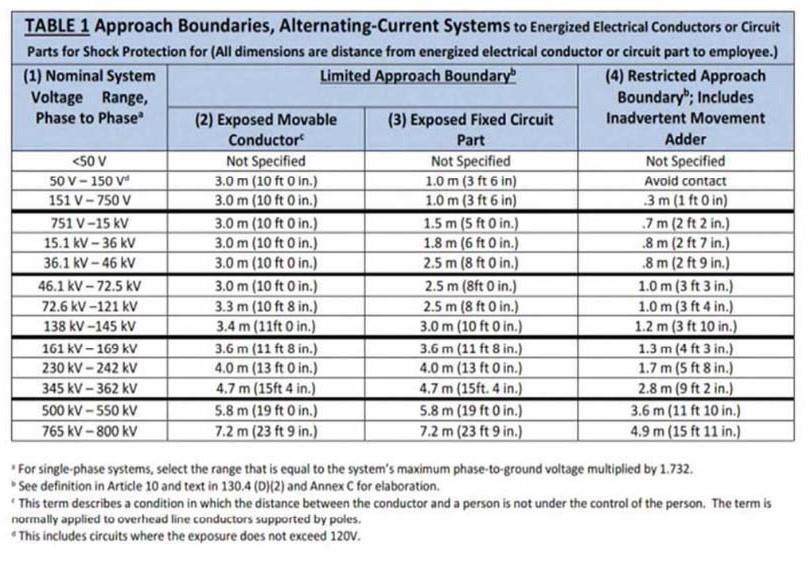
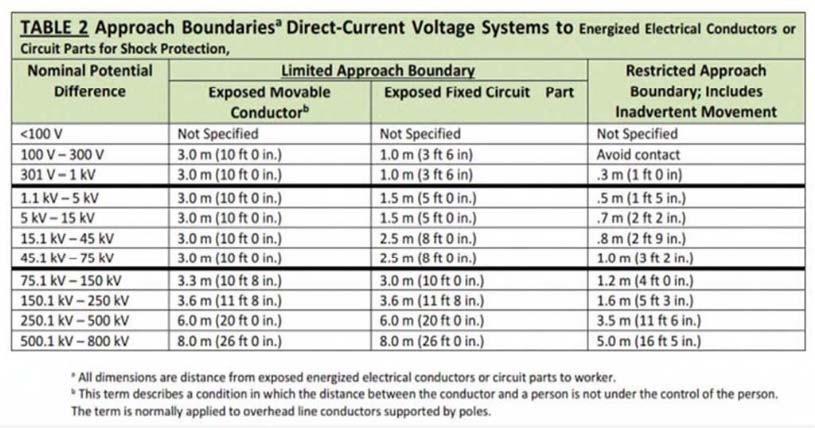
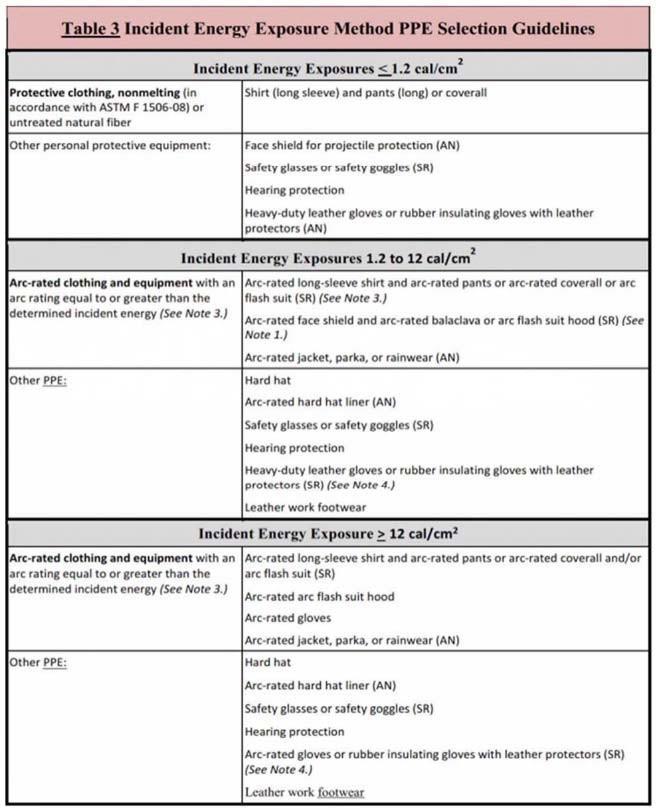
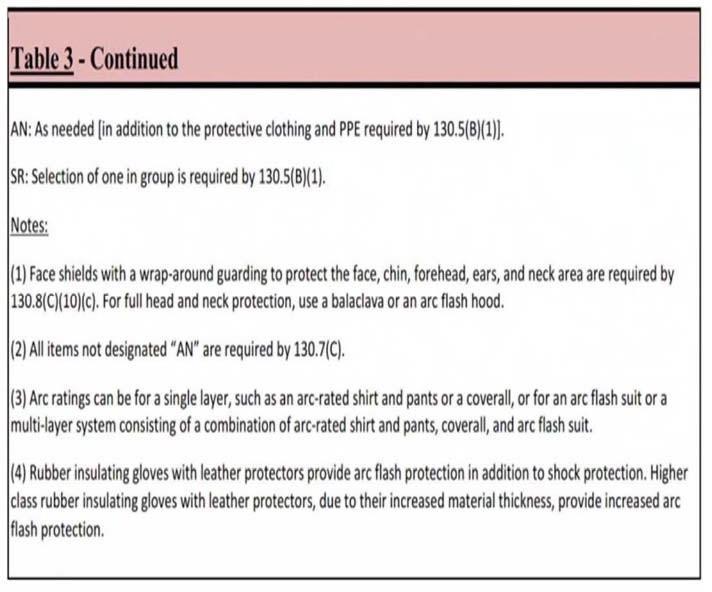
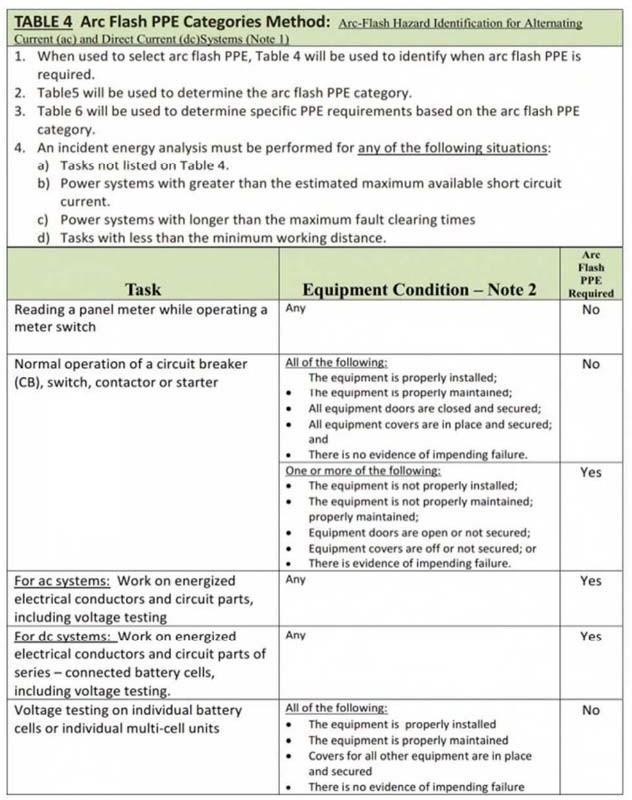
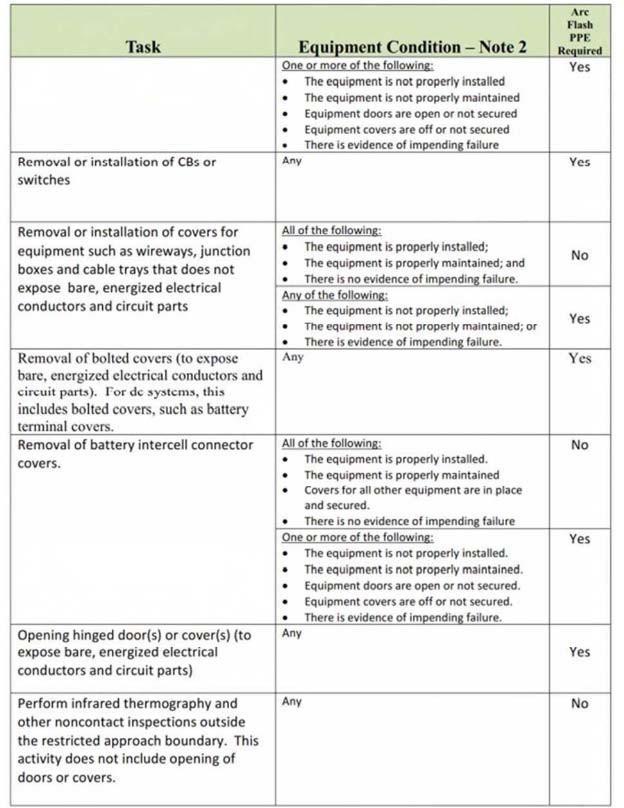
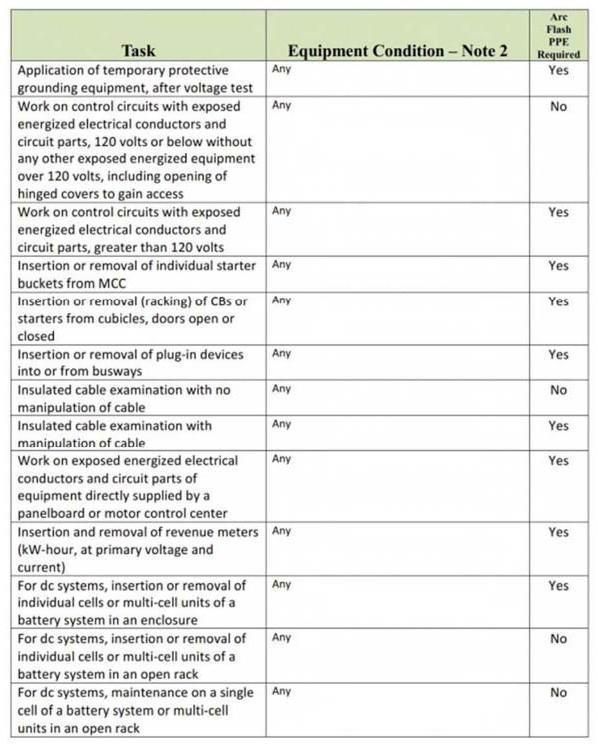
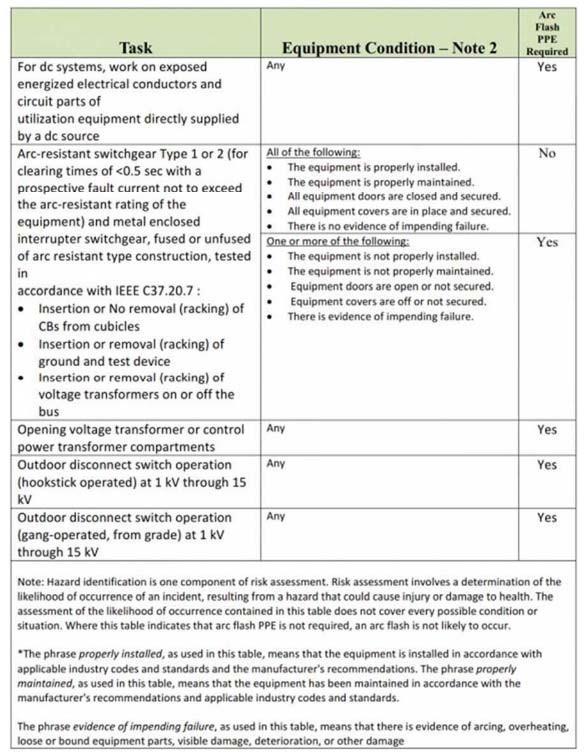
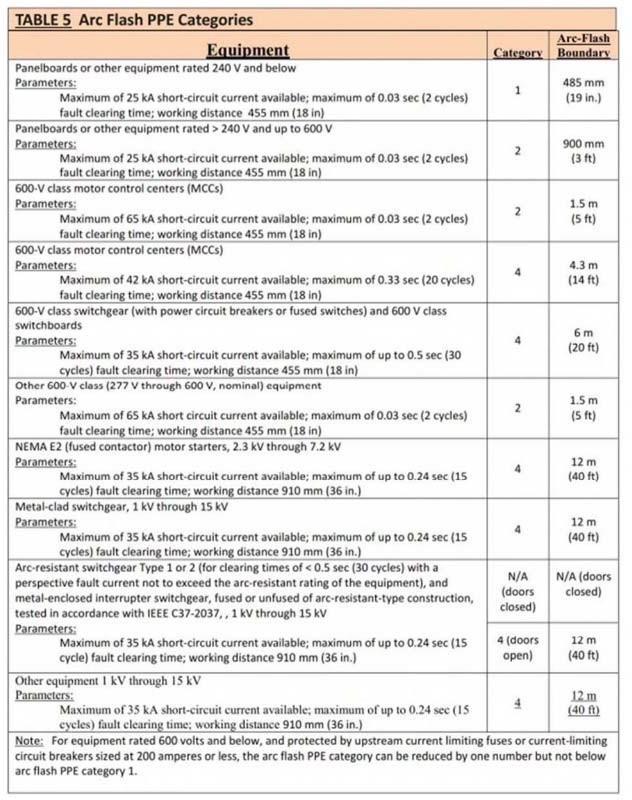
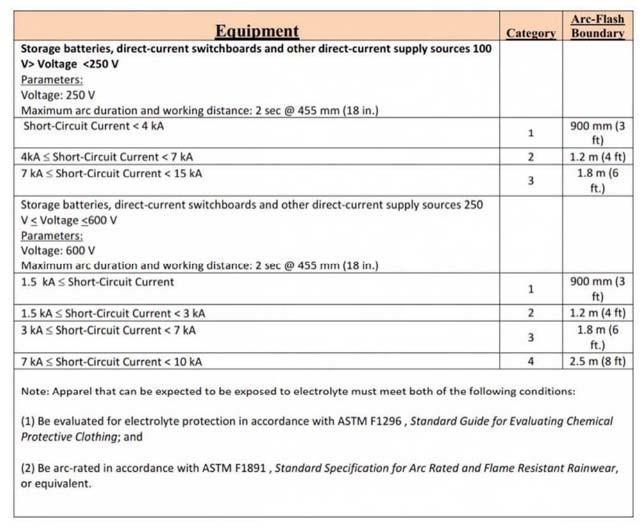
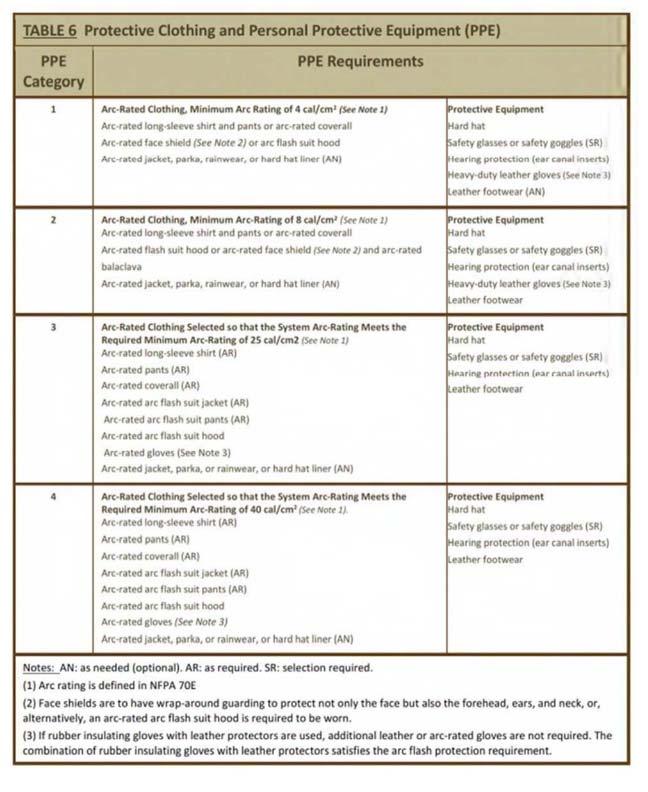
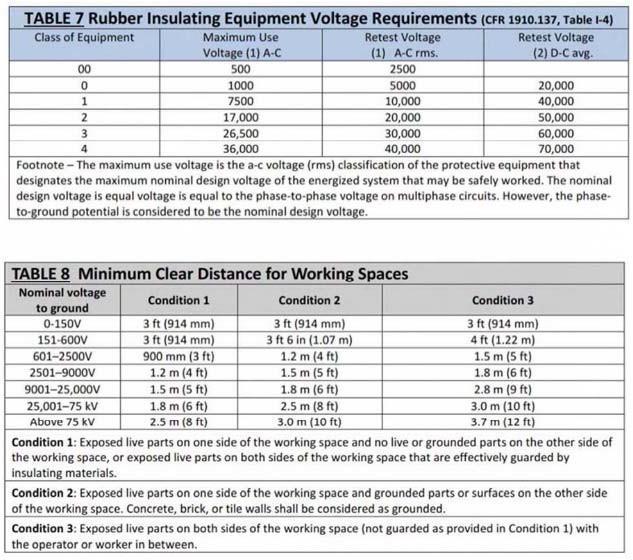
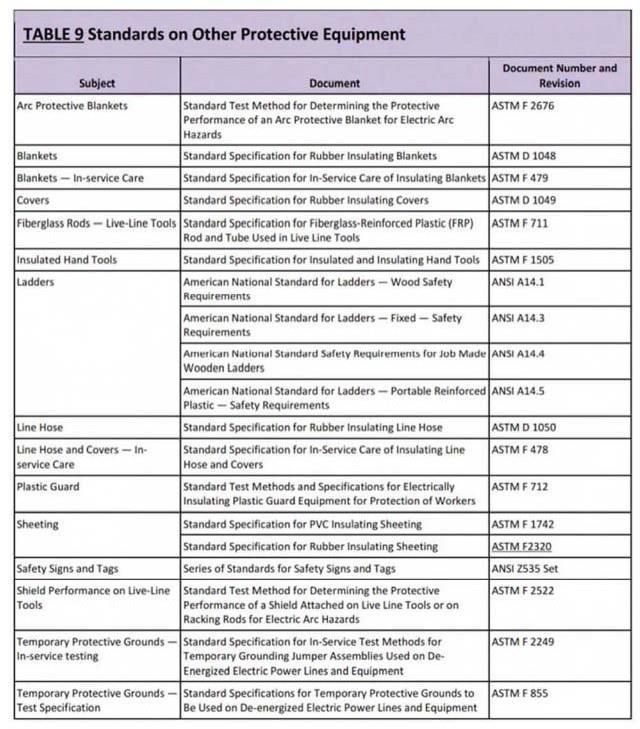
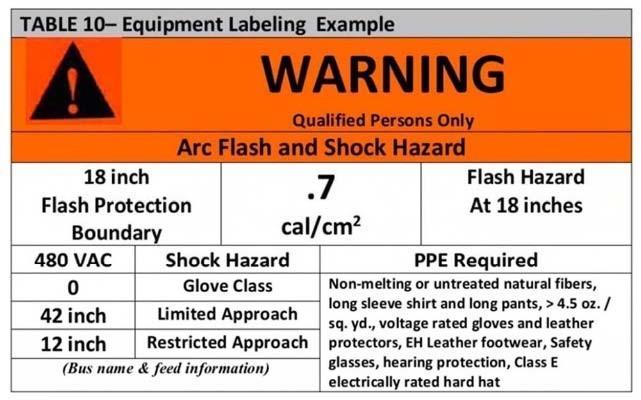
Job Briefing and Planning Checklist from NFPA 70E
Figure below illustrates considerations for a job briefing and planning checklist.
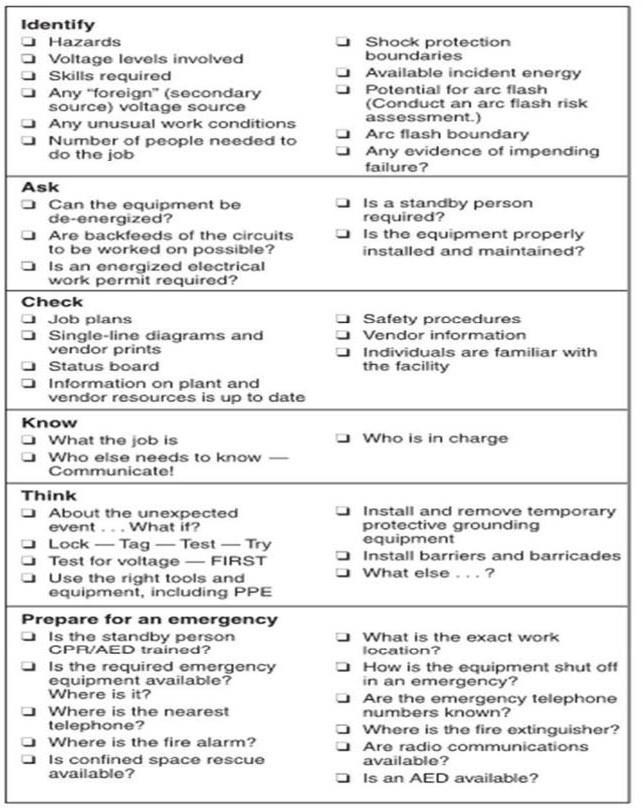
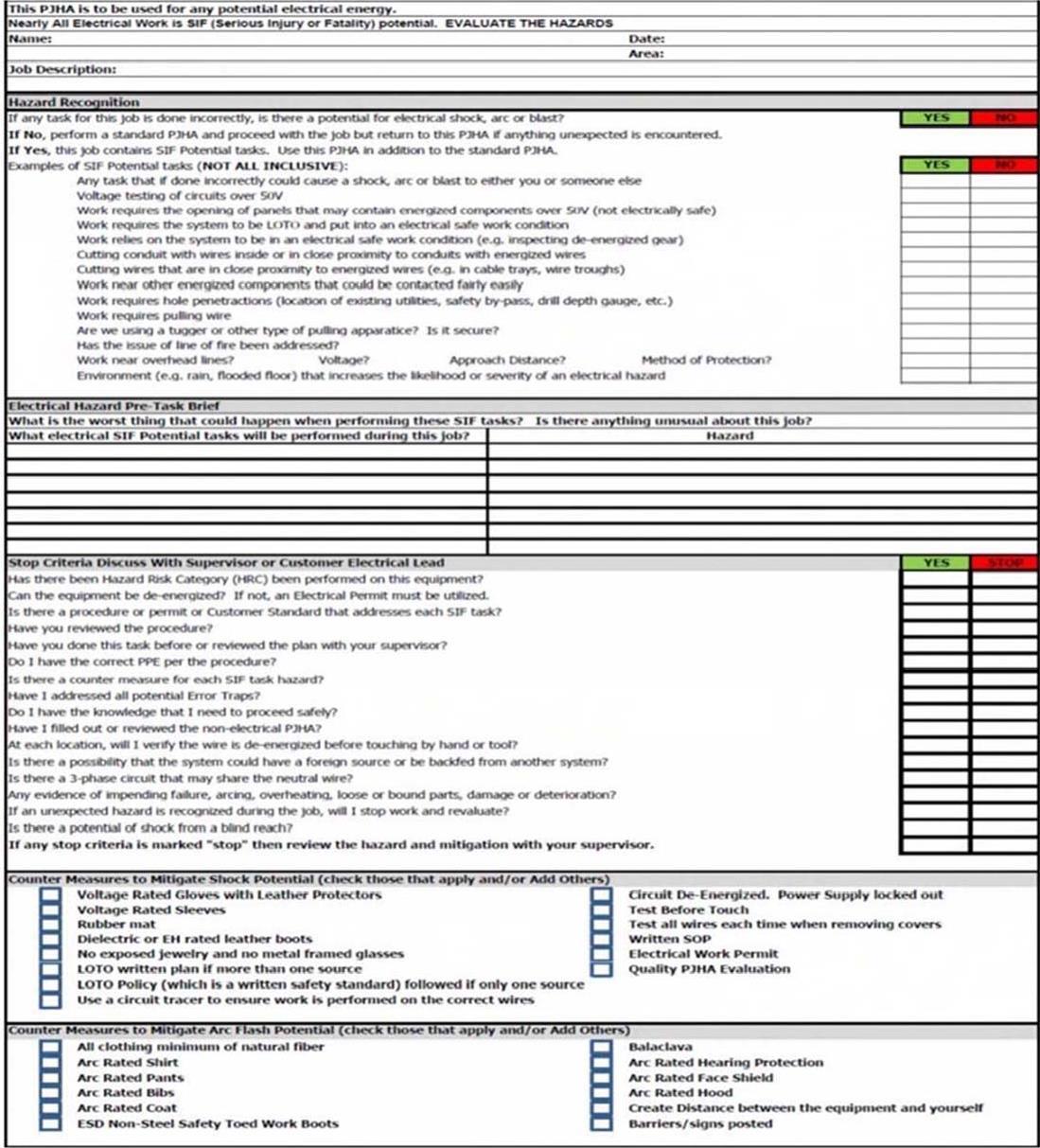
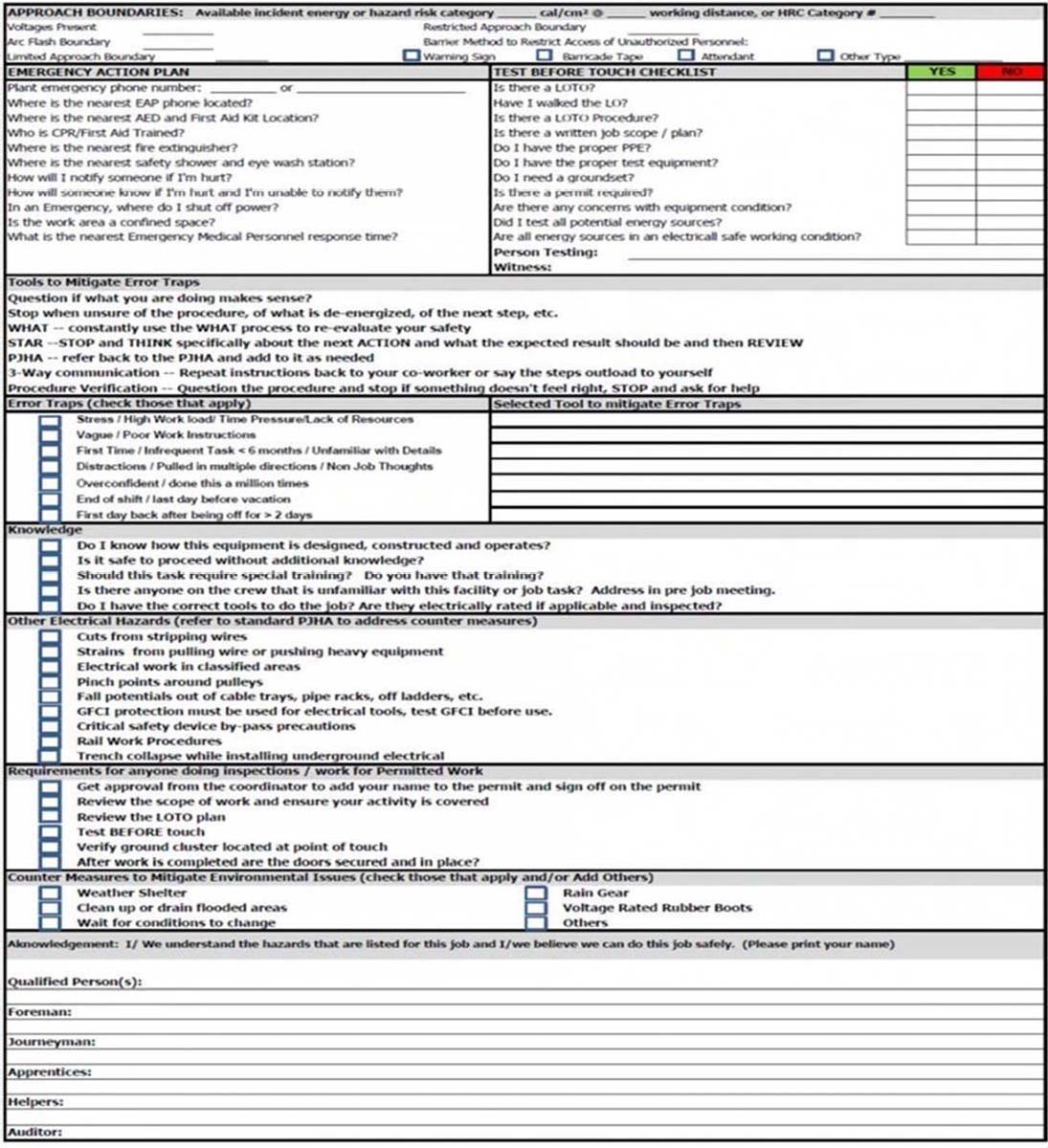
Figure Below – Illustrates items to consider when determining the need for an energized electrical work permit.
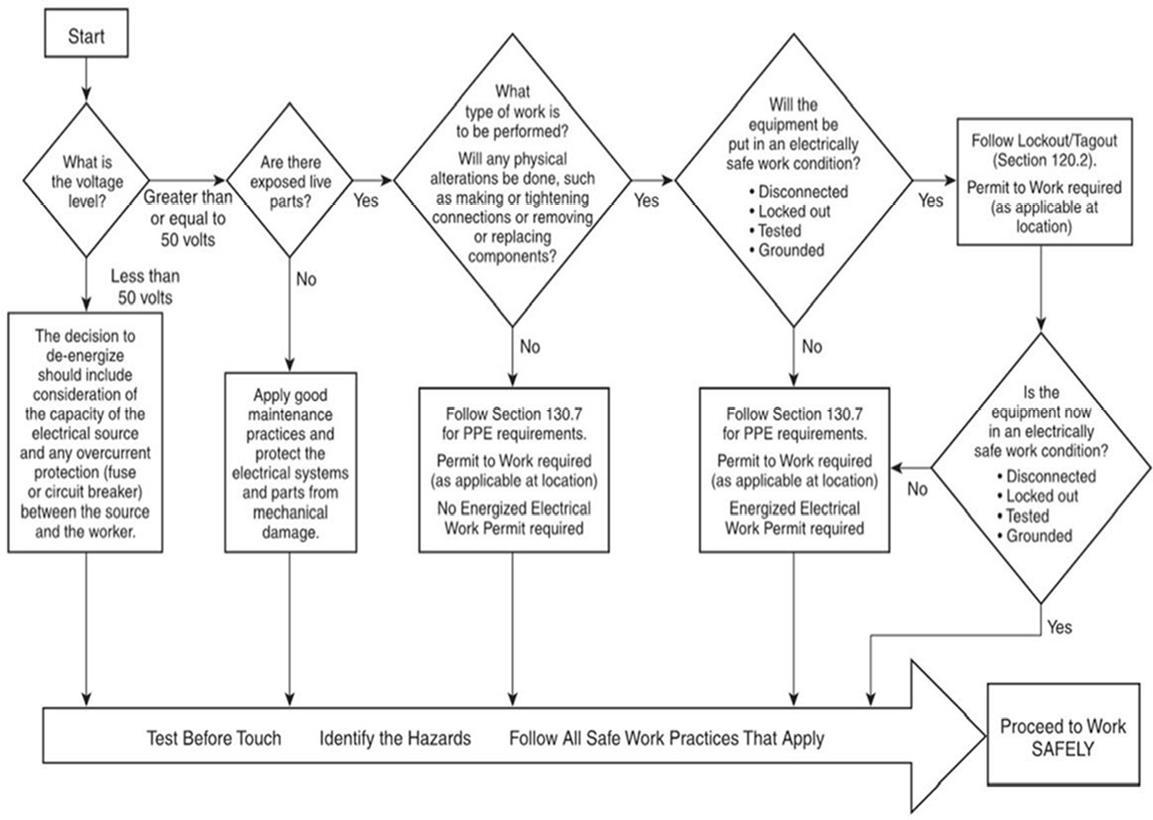
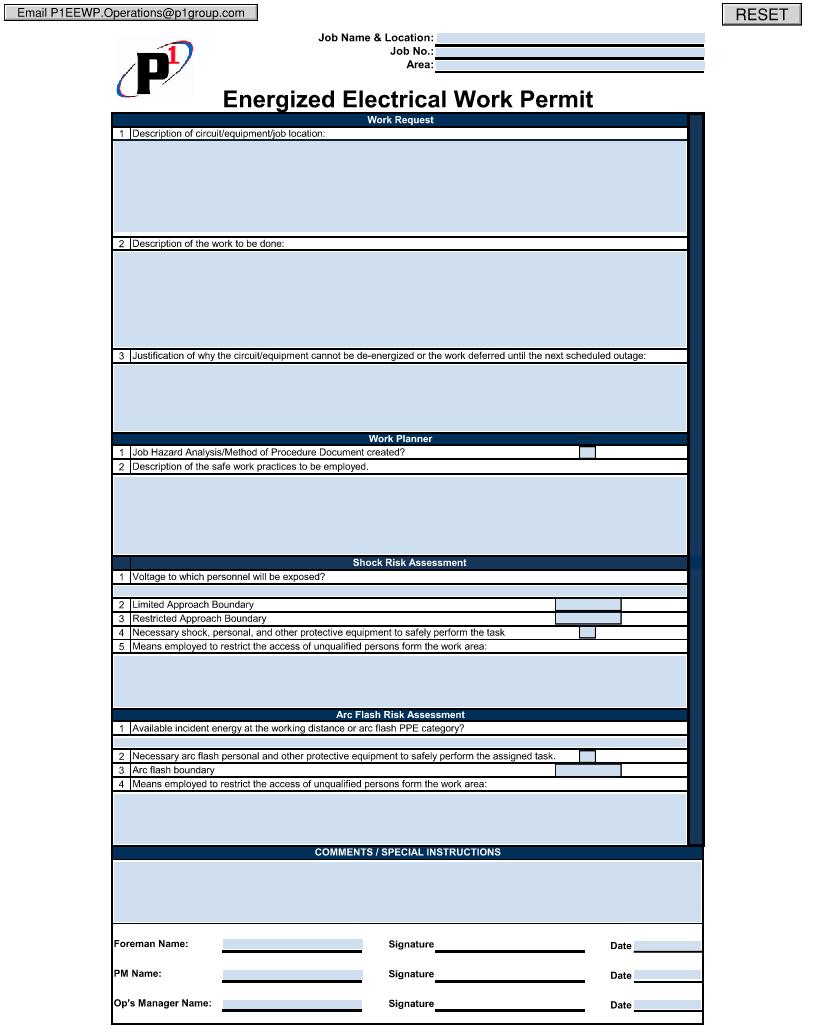
The emergency response plan designates safe assembly areas, emergency coordinators, and procedures to follow in emergency situations. Compliance with this emergency response plan is mandatory and is applicable to all employees.
This plan shall address the following information:
1. Responsibilities
2. Notification
3. Evacuation Routes
4. AssemblyPoints
5. Communications
6. Subcontractors
This plan shall be designed to anticipate the actions required by supervision and employees to minimize dangers to employee's safety and damage to physical equipment or property in the event of an emergency. EAP will be developed prior to the start of a project. All EAP procedures will be reviewed annually and any necessary changes will be documented.
Types of hazards that normally would initiate an emergency action plan:
1. Fire & Explosion
2. Release of hazardous gases, vapors, or fumes
3. Significant chemical spill
4. Severe Weather
5. Flood
6. Earthquake
7. Major power outage
8. Bomb threats, sabotage, and illegal activities
9. Radiation emergencies
10. Catastrophic or multiple employee injury RESPONSIBILITIES
On construction projects a hazard review will be performed identifying those areas with potential for initiating the emergency action plan, such as an evacuation, chemical spill, and/or exposure. Each employee should understand, know how to initiate, and follow the emergency actionplan when it is put into effect. All supervisors and employees will review the EAP. The EAP will be posted on jobsites for employees to view.
Different notification systems will be used on projects. P1 Construction, LLC will coordinate the method of notification with the owner, and when possible use the same method, i.e. horn, siren, speaker system, phone, radio, verbal, etc. The selected method shall be effective enough that every employee will be notified in the fastest possible manner of the emergency condition. The corporate safety department shall be immediately notified when an emergency evacuation has taken place.
Duringthe site hazard reviewtheprimaryand secondaryevacuation routesshall be determined. They shall represent the safest, most expedient paths from the potential hazard area.
Each evacuation route shall terminate in an assembly area. This designated area shall be used to take a head count and assure that all employees have evacuated the danger area. No employee shall leave the designated assembly area without the direct permission of the senior company representative.
The methods and equipment for communication shall be established in such a manner as to include those emergencies where power outages may occur, as well as command line breakdowns. Personnel issued portable radios shall be briefed in their use as part of the emergency action plan.
The P1 Construction, LLC representative shall closely coordinate the emergency action plan with other contractors, sub-contractors, the owner, and personnel on the project to assure all are aware of the provisions, notifications, evacuation routes, assembly points, etc.
P1 Construction Inc., designates occupational medical facility per jobsite location. A location, address, and phone number will be given to the supervisor along with the jobsite postings.
All fires and emergency situations will be reported as soon as possible to P1 site supervisor
Under no circumstances shall an employee attempt to fight a fire that has passed the incipient stage (that which can be put out with a fire extinguisher), nor shall any employee attempt to enter a burning building to conduct search and rescue. These actions shall be left to emergency services professionals who have the necessary training, equipment, and experience (such as the fire department or emergency medical professionals). Untrained individuals may endanger themselves and/or those they are trying to rescue
In the event that chemical, biological, or radiological contaminants are released into the environment in such quantity and/or proximity to P1 Group, authorities and/or P1 site supervisor(s) may determine that is safer to remain indoors rather than to evacuate employees. The supervisor shall announce Shelter in Place status by public address system or other means of immediate notification available at worksite
P1 site supervisor(s) shall immediately stop work. If there are customers, clients, or visitors on site, they shall be advised to stay on site for their safety.
Unless there is an imminent threat, employees, customers, clients, and visitors shall call their emergency contacts to let them know where they are and that they are safe.
P1 site supervisor(s) shall monitor telephone, radio, television and Internet reports for further instructions from authorities to determine when it is safe to leave the building.
P1 Construction, LLC supervisor shall announce severe weather alerts (such as tornados) by public address system or other means of immediate notification available at worksite. All employees shall immediately retreat to the Designated Area until the threat of severe weather has passed as communicated by the supervisor
This emergency action plan is specific for the following project: (Please fill out on the jobsite)
Job Site & Address:
Site Emergency Phone Numbers:
Date Prepared:
Company Site Phone Number(s):
Plan Prepared By:
P1 Construction Site Supervisor(s):
Dial 911 for emergency personnel? Yes/No If No, please list emergency responders phone numbers:
List the Site Emergency Response Coordinator:
List the Site Designated Safe Assembly Areas:
Evacuation:
Severe Weather:
List the Site Forms of Emergency Warning:
List the Company Emergency Communication Systems:
Non-emergency or non-life threatening Occupational Health Coordinator:
List any other Site Specific Procedures to Follow in an Emergency Situation (please attach client or General Contractor’s emergency response plan and post):
In the event of an emergency please contact the safety department. Contact the safety department with all injuries. (No matter how small or minor) Cheri
Covers all open excavations; defines excavations to include trenches.
According to the OSHA Construction Safety and Health Standards, a trench is referred to as a narrow excavation made below the surface of the ground in which the depth is greater than the width. An excavation is any man-made cut, cavity, trench, or depression in the earth’s surface formed by earth removal. All trenches are excavations; not all excavations are trenches.
Aluminum Hydraulic Shoring – A pre-engineered shoring system comprised of aluminum hydraulic cylinders (cross braces) used in conjunction with vertical rails (uprights) or horizontal rails (walers). Such system is designed specifically to support the sidewalls of an excavation and to prevent cave-ins.
Bank – A mass of soil rising above a digging level.
Bell-Bottom Pier Hole – A type of shaft or footing excavation, the bottom of which is made larger than the cross sections above to form a belled shape.
Benching (Benching System) – A method for protecting Associates from cave-ins by excavating the sides of an excavation to form one or a series of horizontal levels or steps, usually with vertical or near-vertical surfaces between levels.
Cave-In – The separation of a mass of soil or rock material from the side of an excavation, or the loss of soil from under a trench shield or support system, andits sudden movement into the excavation, either by falling or sliding, in sufficient quantity so that is could entrap, bury, or otherwise immobilize a person.
Competent Person – One who is capable of identifying existing and predictable hazards in the surroundings or working conditions which are unsanitary, hazardous, or dangerous to Associates, and who has the authorization to take prompt corrective measures to eliminate them.
Confined Space, Permit Required – A confined space that: (1) contains or has the potential to contain a hazardous atmosphere, (2) contains material that has the potential for engulfing an Authorized Entrant, (3) has an internal configuration such that an Authorized Entrant could be trapped or asphyxiated by inwardly converging walls or by a floor which slopes downward and tapers to a smaller cross-section, or (4) contains any other recognized serious safety or health hazard.
Cross Braces – The horizontal members of a shoring system installed perpendicular to the sides of the excavation, the ends of which bear against either uprights or wales.
Excavation – Any man-made cut, cavity trench, or depression in an earth surface, formed by earth removal.
Exploration Shaft – A shaft created and used for the purpose of obtaining subsurface data.
Faces or Sides – The vertical or inclined earth surfaces formed as a result of excavation work.
Failure – The breakage, displacement, or permanent deformation of a structural member or connection in order to reduce its structural integrity and its supportive capabilities.
Hard Compact – All earth material not classified as running soil.
Hazardous Atmosphere – An atmosphere which by reason of being explosive, flammable, poisonous, corrosive, oxidizing, irritating, oxygen deficient, toxic, or otherwise harmful, may cause death, illness or injury.
Kickout – The accidental release or failure of a cross brace.
Lagging – Boards, which are joined, side-by-side, lining an excavation.
Protective System – A method of protecting Associates from cave-ins, from material that could fall or roll from an excavation face or into an excavation, or from the collapse of adjacent structures. Protective systems include support systems, sloping and benching systems, shield systems, and other systems that provide the necessary protection.
Ramp – An inclined walking or working surface that is used to gain access to one point from another and is constructed from earth or structural material such as steel and wood.
Registered Professional Engineer – A person who is registered as a professional engineer in the state where the work is to be performed. However, a professional engineer, registered in any state, is deemed to be a “registered professional engineer” within the meaning of this standard when approving designs for “manufactured protective systems” or “tabulated data” to be used in interstate commerce.
Running Soil – Earth material where the angle of reposes approximately zero, as in the case of soil in a nearly liquid state, or dry, unpacked sand which flows freely under slight pressure. Running material also includes loose or disturbed earth that can only be contained with solid sheeting.
Shaft – An excavation under the earth’s surface in which the depth is much greater than its cross-sectional dimension, such as those formed to serve as wells, cesspools, certain foundation footings, and under streets, railroads, buildings, etc.
Sheeting – The members of a shoring system that retain the earth in position and in turn are supported by other members of the shoring system.
Shield (Shield System) – A structure that is able to withstand the forces imposed on it by a cave-in and thereby protect Associates within the structure. Shields can be permanent structures or can be designed to be portable and moved along as work progresses.
Shields used in trenches are usually referred to as “trench boxes” or “trench shields”.
Shoring (Shoring System) – A structure such as a metal hydraulic, mechanical or timber shoring system that supports the sides of an excavation and which is designed to prevent cave-ins.
Sides – See “Faces”
Sloping (Sloping System) – A method of protecting Associates from cave-ins by excavating to form sides of an excavation that is inclined away from the excavation in order to prevent cave-ins. The angle of incline required to prevent a cave-in varies with differences in such factors as the soil type, environmental conditions of exposure, and application of surcharge loads.
Structural Ramp – A ramp built of steel or wood, usually used for vehicle access. Ramps made of soil or rock are not considered structural ramps.
Submerged Soil – Soil, which is under water or is free seeping.
Support System – A structure such as underpinning, bracing or shoring, which provides support to an adjacent structure, underground installation, or the sides of an excavation.
Tabulated Data – Tables and charts approved by a registered professional engineer and used to design and construct a protective system.
Trench (Trench Excavation) – A narrow excavation (in relation to its length) made below the surface of the ground. In general, the depth is greater than the width, but the width of a trench (measured at the bottom) is not greater than 15 feet. If forms or other structures are installed or constructed in an excavation in order to reduce the dimension measured from the forms or structure to the side of the excavation to 15 feet or less, (measured at the bottom of the excavation), the excavation is also considered to be a trench.
Trench Box – See “Shield”
Trench Shield – See “Shield”
Uprights – The vertical members of a trench shoring system placed in contact with the earth and usually positioned so that individual members do not contact each other. Uprights are placed so that individual members are closely spaced, in contact with and interconnected to each other, are often called “sheeting”.
Wales – Horizontal members of a shoring system placed parallel to the excavation face whose sides bear against the vertical members of the shoring system or earth.
1. Planning for Safety
Protection of Associates will be provided in excavations/trenches against cave- ins except when the excavation is in stable rock or less than five (5) feet deep AND examination by a competent person provides no evidence that a cave-in should be expected. Protection will also be provided against falling rock, soil or material by use of an “adequate” system. The latter operation includes scaling to remove loose rock and soil, installation of protective barricades and other “equivalent” protection. Material or equipment which might fall or roll into an excavation must be kept at least two (2) feet from the edge of excavation, or have retaining devices.
2. Documented Daily Inspections (see attachment A)
A competent person will perform documented Daily Inspections of excavations, adjacent areas, and protective systems. Exposed Associates will be removed if evidence of possible cave-ins, failure of protective systems, hazardous atmospheres, or other hazardous conditions are found, until necessary precautions have been taken.
3. Estimate location of underground installations (sewer, telephone, electrical, gas and other fuel lines; storage tanks, etc.)
Prior to digging, pinpoint actual locations as estimated locations are achieved.
Kansas (48 Hour Notice)
Missouri (48 Hour Notice)
1-800-344-7233
1-800-DIG-RITE (1-800-344-7483)
4. Before preparing a bid, these specific site conditions should be taken into consideration.
• Traffic
• Nearness of structures, buildings and their condition
• Soil
• Surface and ground water
• Overhead and underground utilities
• Weather
These conditions can be determined by jobsite studies, observations and soil test borings and consultation with local officials and utility companies. P1 Construction will subcontract out all Work Zone Site safety protection and traffic control devises in the form of signs, cones, barrels and barriers, based on jurisdictional requirements. A Daily Safety Checklist (JHA) will be completed each day prior to working in the work zone.
5. All trenches greater than 4 feet deep must have a safe means of access/egress(stairway, ladder, ramp) so that no more than 25 feet of travel is required.
6. Associates exposed to public vehicular traffic must wear high visibility warningvests.
7. Hand excavation must be performed within 2 feet horizontal and 2 feet vertical of any known underground utility.
8. No person shall be allowed under the loads of digging equipment or equipment designed to lift or lower any item.
9. Excavating equipment must be kept at least 10 feet from any overhead- energizedelectrical power lines.
10. Water must either be prevented from accumulating or be controlled from accumulating bya pump or other system.
11. All crossovers, walkways, and bridges must have standard guardrails.
12. Associates and the public shall be protected from trip/fall hazards into excavationsby guardrail systems, fencing, barricades or covers until backfilled.
13. P1 Construction Foremen will notify other contractors on jobsite of the excavation/trenching hazards so they can notify their employees.
For help in classifying soil, see Attachment B, Soil Classification Chart
1. Stable Rock
Natural solid mineral matter that can be excavated with vertical sides and remain intact while exposed.
2. Type A
Cohesive soils such as clay, silty clay, clay loam, and cemented soils. No soil is Type A if soils are fissured, subject to vibration by heavy traffic or work operations, previously disturbed, or would be classified as a less stable material because of other factors.
3. Type B
Granular cohesion-less soils such as angular gravel (crushed rock), silt, or silty clay, previously disturbed soils except those, which would otherwise be classified as Type C, or dry rock that is not stable.
4. Type C
Granular soils such as gravel, sand, loamy sand, and submerged soil.
Testing and Controls for Hazardous Atmospheres, including emergency rescue equipment and daily inspections for potentially hazardous conditions, will be performed/implemented by a “Competent Person”. Controls include respiratory equipment, ventilation, use of combustible or toxic gas analyzing equipment and use of rescue equipment.
1. Any excavations meeting the definition of a Permit Required Confined Space must have air monitoring for the following items performed prior to and continuously during entry: Oxygen deficiency or enrichment, flammable gases, and/or other potential contaminants.
2. Atmospheres with air contaminant levels greater than the Threshold Limit Value (TLV) require appropriate respiratory protection.
3. Atmospheres in excavations greater than 4 feet in depth must be tested where oxygen deficient or other hazardous atmosphere exists or could be expected to develop. Atmospheres with less than 19.5% oxygen are considered oxygen deficient.
4. Associates working excavations with a combustible gas present (less than 10% of the LEL, or air contaminants greater than the TLV) must be provided with the following emergency equipment:
a. Appropriate respiratory equipment
b. Rescue/standby person
c. Safety harness and lifeline (worn by person in excavation)
d. Rescue or retrieval device to remove Associate
1. All associates in excavations greater than 5 feet must be protected by either:
a. A sloping/benching system or
b. A support system (shoring or shield)
2. Excavations less than 5 feet should be examined by a competent person to determine if there is any indication of a potential cave-in and the need for a protective system such as sloping or shoring. Also, if any excavation is made in entirely stable rock, then compliance with protective systems such as shoring/trenching shall be exempt.
3. Design of sloping and benching systems. The slopes and configurations of sloping and benching systems shall be selected and constructed by the employer or his designee and shall be accordance with these requirements:
a. Excavations shall be sloped in accordance for Type C soils (at an angle not steeper than one and one-half horizontal to one vertical (1 ½:1, or 34degrees measured from the horizontal) unless soil classification is conducted and test results indicate Type A and/or Type B soils are present. See attachment B for soil classification and attachment C for sloping/benchingrequirements.)
b. There can be a multitude of combinations of soil composition, e.g., layer soils:
• A over C
• A over B
• C over A
• C over B
• B over A
• B over C
Examples of these types and maximum allowable slope for each layer will be illustrated. See attachment C, B-1.4 of this section.
c. If the excavation cannot be sloped according to guidelines in attachmentC, then a support system is required.
1. Timber shoring must be designed in accordance with CFR Part 1926.650 Subpart PExcavations, tables C-1.1 to 2.3 for soil Type A, Type B, and Type C. Please note: These tables are for minimum timber requirements of:
a. Mixed oak or equivalent with a bending strength of 850 psi.
b. Douglas fir or equivalent with a bending strength of 1500 psi.
**Manufactured members of equivalent strength may be substituted for wood.
You will note that this information and attachment pertains to shoring as a method of protection from cave-ins in trenches that do not exceed 20 feet in depth. Other systems of support, such as hydraulic or manufactured trench boxes, must be utilized within the manufacturer’s specification, recommendations and limitations.
2. Sloping or benching for excavations greater than 20 feet deep or when there are unusual soil conditions, adjacent building foundations, etc., shall be designed by a registered professional engineer.
3. Removal of protective systems members must not proceed until other members are installed to carry the imposed load.
4. Final removal of protective systems must begin and progress from the bottom. Backfilling must progress together with the removal of the support system.
5. Associates may not work on the face of sloped or benched excavations at levels above other Associates unless protected from falling or rolling equipment or material.
6. Associates are not allowed in a trench when the shield is being installed, removed or moved.
For more information on Trench Shields see Section J.
1. The person responsible for the project site (Project Manager, Estimator) is responsible for the preliminary site evaluation and the soil sampling if they know the ground is contaminated.
2. To provide guidance for proper handling, sampling and disposal of contaminated soil, a soil is considered contaminated if a visible stain is on the soil or ground water, or if an odor is present in the soil. If the dirt does not display any of these characteristics, it can be presumed clean and used for backfill.
Listed below are items that should be checked before starting Excavation and Trenching.
1. Air monitoring must be performed prior to any entry into an excavation where potential exposure to hazardous atmospheres exists.
2. Before excavating, utility companies will be contacted to determine if there are underground utility installations in the area, and they shall be located and supported during excavating operations.
3. The walls and faces of trenches five feet or more in depth and all excavations in which Associates are exposed to danger from moving ground or cave-in shall be guarded by a
shoring system, sloping of the ground, or some other equivalent means.
4. In excavations which Associates may be required to enter, excavated or other material shall be effectively stored and retained at least two feet or more from the edge of the excavation.
5. A competent person shall make documented daily inspections of excavations. If evidence of possible cave-ins or slides is apparent, all work in the excavation shall cease until the necessary precautions have been taken to safeguard the Associates.
6. As conditions change throughout the day that may affect the stability of the excavation (i.e. changing weather conditions or vehicular traffic), additional documented inspections are required prior to worker re-entry.
7. Trenches four feet deep or more shall have an adequate means of exit, such as ladders or steps, located in order to require no more than 25 feet of lateral travel.
1. A trench shield is a movable box strong enough to protect the Associate inside, but light enough to handle easily in the trench.
2. Ideally, the width of a trench is approximately 4 inches wider than the width of the trench shield to reduce possible friction during movement. Thus, the trench shield cannot effectively prevent soil cave-ins outside the box.
3. Safety provisions:
a. Shield systems shall not be subject to loads exceeding the design capacity.
b. Shields must be a minimum of 18 inches above the excavation side walls.
c. Shields shall be installed in a manner to restrict lateral or other hazardous movement in the event of the application of sudden lateral loads.
d. Associates shall be protected from the hazard of cave-ins when entering orexiting the areas protected by the shield.
e. Associates shall not be allowed in shields when shields are beinginstalled, removed or moved.
f. Excavation of earth material to a level not greater than 2 feet below the bottom of the shield shall be permitted, but only if the shield is designed to resist the forces calculated for the full depth of the trench and if there are no indications of cave-ins from behind or below the bottom of the shield.







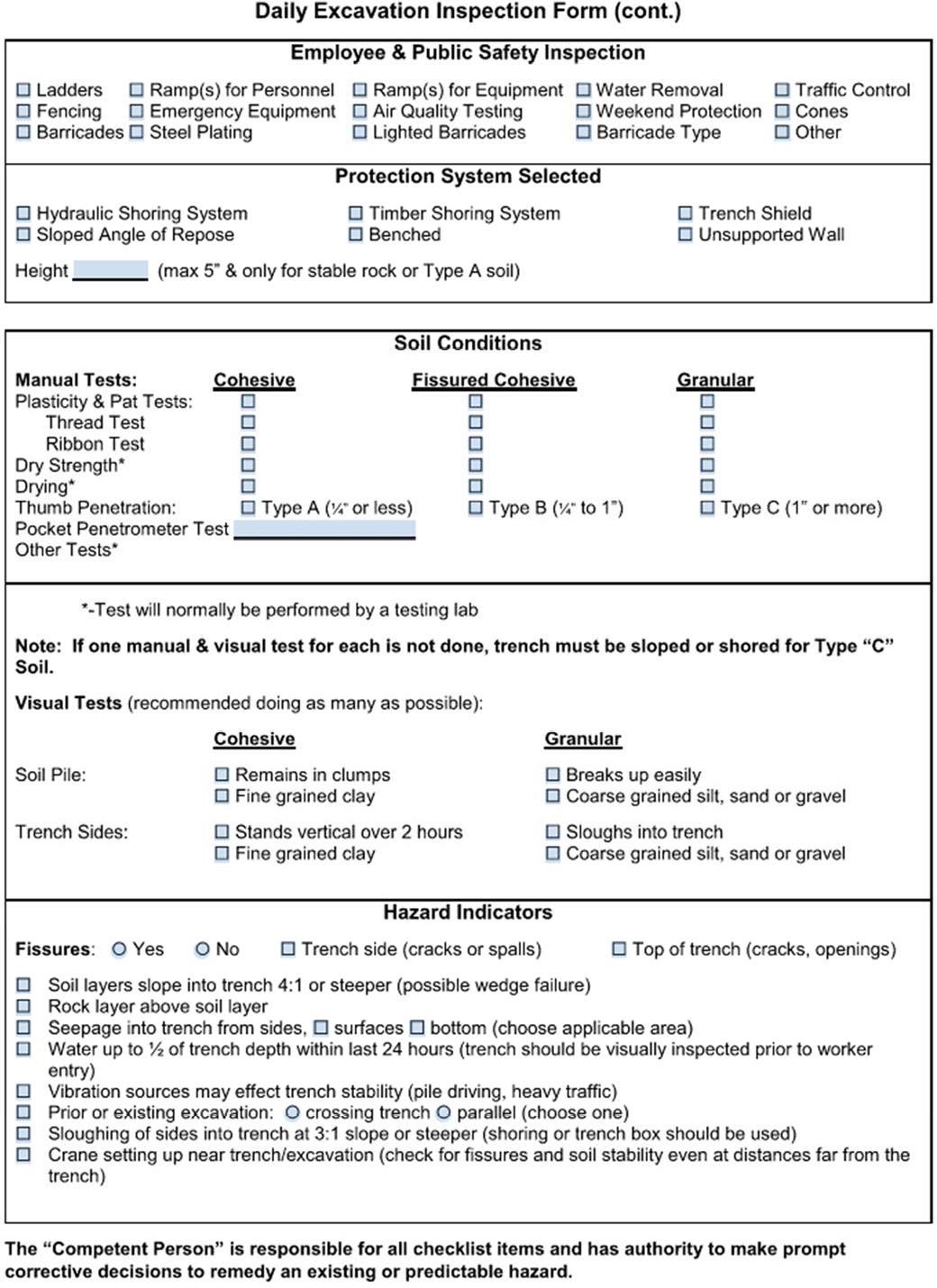
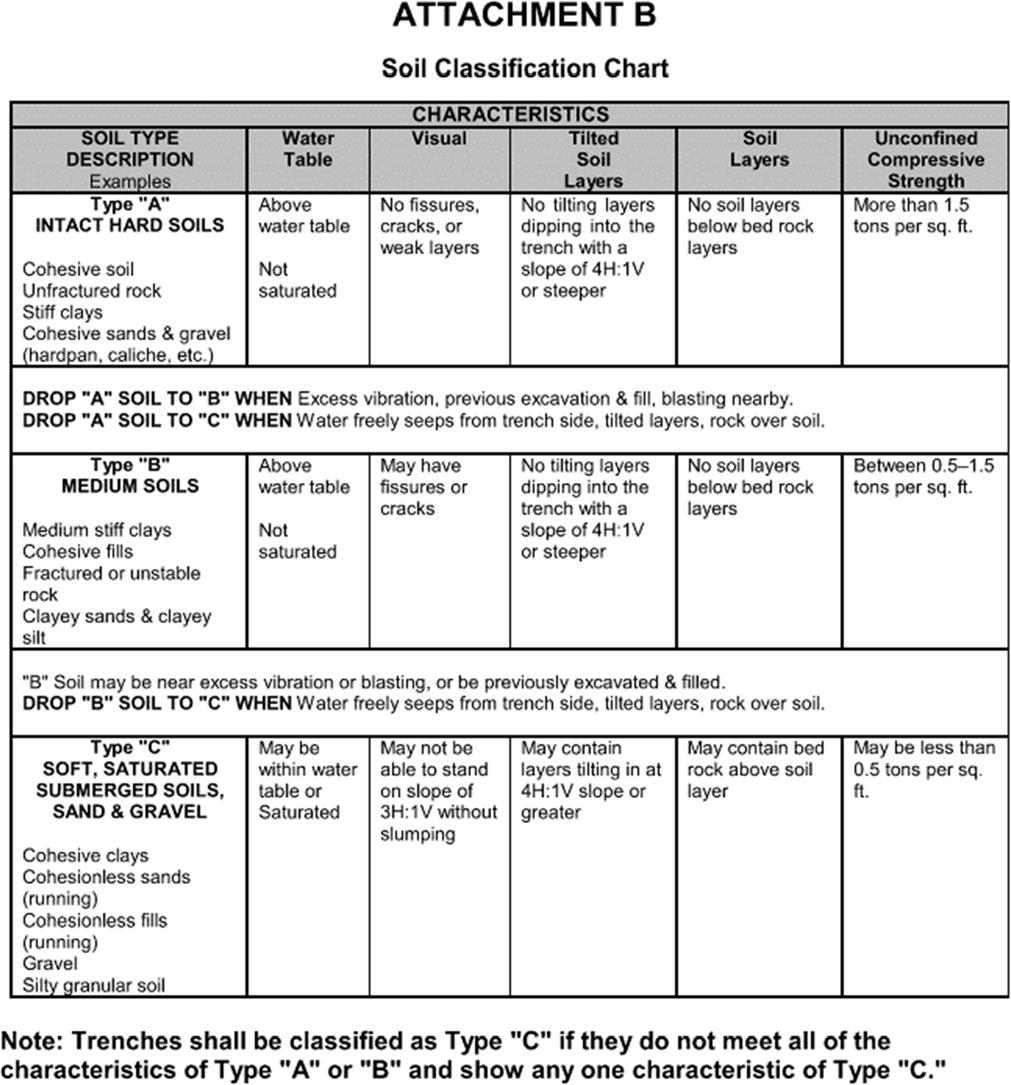
The purpose of this program is to prevent worker injuries due to falls from elevations. It isthe policy of P1 Construction to take every reasonable measure to protect its workers from job site fall hazards.The Safety Director is the designated competent person assigned to oversee fall prevention and protection issues for P1 Construction workers at jobsites.
a. The Project Manager, Project Superintendent, Craft Superintendents, and First Line Supervisors will be responsible for ensuring implementation and enforcement of this procedure.
b. The Foreman will assess all work activities for fall exposures and pre-plan and install fall protection systems. The fall protection systems will be in place before assignment of work.
c. On projects where a Project Safety Supervisor is assigned, his/her primary responsibility is to provide support and assist crafts during the program pre- planning and implementation. S/he will monitor the program for compliance and report to the project Superintendent the status of the program.
A pre-job task instruction will be given to each Associate who is assigned to work in elevated areas. Supervisors must analyze all elevated tasks as to fall protection needs and toensure that fall protection systems are provided. Instruction will cover the specifics of the fall protection measures to be used.
Anchorage – A secure point of attachment of lifelines, lanyards, or deceleration devices capable of supporting a minimum of 5000 pounds of force when applied. Body Harness – Straps which may be secured about the Associates in a manner thatwill distribute the fall arrest forces over at least the thighs, pelvis, waist, chest and shoulders with means for attaching it to other components of a personal fall arrest system.
Controlled Access Zone – An area in which certain work (e.g., precast concrete) may take place without the use of guardrail systems, personal fall arrest systems, or safety net systems and access to the zone is controlled. A controlled access zone can only be used when all other fall protection methods are determined to be infeasible, and must be used in conjunction with a Written Fall Protection Plan. The Fall Protection Plan shall document the reasonswhy the use of conventional fall protection system (guardrail systems, personal fall arrest systems, or safety net systems) are infeasible or why their use would create a greater hazard.
Deceleration Device – Any mechanism, such as a rope grab, rip-stitch lanyard, specially woven lanyard, tearing or deforming lanyards, automatic self-retracting lifelines/lanyards, etc., which serves to dissipate a substantial amount of energy during a fall arrest, or otherwise limit the energy imposed on an Associate during fall arrest.
Guardrail System – A barrier erected to prevent Associates from falling to lower levels.
Hole – A gap or void 2 inches or more in its least dimension, in a floor, roof or other walking/working surface.
Lanyard – A flexible line of rope, wire rope, or strap, which generally has a connector at each end for connecting the body, harness to a deceleration device, lifeline, or anchorage.
Leading Edge – The edge of a floor, roof, or framework for a floor or other walking/working surface (such as the deck) which changes location as additional floor, roof, decking, or formwork sections are placed, formed or constructed. A leading edge is considered to be an “unprotected side and edge” during periods when it is not actively and continuously under construction.
Lifeline – A component consisting of a flexible line for connecting an anchorage at one end to hang vertically (vertical lifeline), or for connection to anchorages at both ends to stretch horizontally (horizontal lifeline), and which serves as a means for connecting other components of a personal fall arrest system to the anchorage.
Opening – A gap or void 30 inches or more high and 18 inches or more wide, in a wall or partition, through which Associates can fall to a lower level.
Personal Fall Arrest System – A system used to arrest an Associate in a fall from working level. Consists of an anchorage, connectors and body harness, and may include a lanyard, deceleration device, lifeline, or suitable combination of these.
Positioning Device System – A body harness system rigged to allow an Associate to be supported on an elevated vertical surface, such as a wall, and work with both hands free while leaning.
Self-retracting Lifeline/Lanyard – A deceleration device containing a drum-wound line, which can be slowly extracted from or retracted onto the drum under slight tension during normal associate movement, and which, after onset of a fall, automatically locks the drum and arrests the fall.
1. Crafts/departments shall make maximum use of primary fall protection systems such as scaffolds, aerial lifts, personnel hoists, etc. These systems shall be equipped with complete working/walking surfaces free of floor openings, standard guardrail systems and a safe means of access.
2. Personnel traveling or working in elevated areas where a fall exposure exists shall make use of secondary fall protection in securing their safety lanyard at all times to a structure, lifeline/hoisting devices shallalso properlysecuretheir safety lanyards.
3. Subcontractors shall comply with the requirements set forth in this program as a minimum for
fall protection.
1. Standard Guard Rail Systems
Consist of a top rail of 2 x 4 lumber or equivalent materials approximately forty- two inches (42”) above the walking/working surface, a midrail at approximately twentyone inches (21”) above said surface and a three and one half inches (31/2”) tall toe board mounted at the walking/working surface. 3/8” wire rope may be used in lieu of lumber. Upright support post spacing must not exceed eight feet (8’) and the entire system must be capable of supporting 200 pounds of force in any direction with minimum deflection. These systems are used to guard open sides of floors, platforms and walkways in elevated areas.
2. Floor Opening/Hole Covers
Used to close openings and holes in floors, platforms and walkways. These covers must be capable of supporting 2 times the maximum potential load they may be subjected to. The cover must completely cover the opening/hole and be secured to prevent accidental displacement. These covers must be marked “HOLE COVER – DO NOT REMOVE”.
3. Warning Line Systems
A temporary rope, wire, or chain and supporting stanchion erected not less than six (15) feet from the edge of a roof and flagged at no more than six (6) foot intervals with highly visible material. The lowest point of the line, including sag, must not be less than 34 inches (34”)or more than 39 inches (39”) from the roof surface. If mechanical equipment is being used, the warning line must be ten feet from the edge. The warning line stanchion supports must be able to withstand at least 16 pounds of force applied 30 inches above the roof surface without tipping. Minimum tensile strength of the rope, wire or chain must be 500 pounds. The rope, wire or chain will be installed in such a manner that when pulled on in one section, slack is not taken up in adjacent sections. Work activities taking place outside the Warning Line System will require the use of secondary fall protection. All personnel performing work in proximity to a Warning Line System must be trained.
4. Body Harness/Lanyard System
a. General Requirements
i. Associates will only use approved full body harnesses and lanyardsthat are supplied by P1 Construction. Individually owned safety harness/ lanyard systems may not be used.
ii. The system will consist of a full body harness with two (2) shock absorbing lanyards.
iii. The shock-absorbing lanyard will be attached to the D-Ring of the harness, located in the middle of the back.
iv. The free end of the lanyard will be supplied with a double locking type snap hook.
v. The harness and lanyard will be attached so that an Associate can neither free fall more than six (6) feet or contact a lower level.
vi. Working positioning lanyards/devices are to be attached to D-Rings atthe waist location of their body harness. The positioning device must always be backed up by a properly secured shock-absorbing lanyard attached to the D-Ring, located at the middle of the back.
i. OSHA regulations require protection when workers are exposed to falls of six (6) feet or more. The regulations define the specific hazards and outline acceptable ways of dealing with the hazards using the methods or devices previously discussed.
ii. Associates will wear body harnesses while performing work at other than ground level or solid floor elevations and when other safeguards, such as standard guardrails, nets, planking, or scaffolding cannot be used to protect them from a fall distance of six (6) feet or more.
iii. Body harness must be used under the following conditions:
• When working on floats, boatswain chairs, or other suspended scaffolding or working platforms, the suspension of which is by ropes and needle beams, rope falls and brackets, ratchet type drum brackets and cable, metal rock brackets and needle beams, or by any other means where the support for the working platform is suspended fromabove.
• When working or walking on a toothpick stage, painter’s stage, or temporary staging of a similar nature (width, movability, etc.) even though hand railed.
• When working or walking (horizontal and vertical surfaces) with an unprotected edge or edge six (6) feet or more above lower elevations and standard guardrails are not in place.
• When engaged in leading edge work six (6) feet or more above lowerlevels and guardrails are not in place.
• When receiving material at a hoist area where the guardrails have been removed and the Associate must lean through the access opening or out over the edge. The system used will allow the Associate to go only as far as the edge of the hoist way.
• When working on, at, above, or near wall openings (including those with chutes attached) where the outside bottom edge of the wall opening is six (6) feet or more above the lower levels and the inside bottom edge of the wall opening is less than 39 inches.
• When working or walking on surfaces that have holes more than six (6) feet above the lower level and are not protected by a hole cover or standard guardrails. (A hole cover or guardrail system will be the primary fall protection but may need to be removed because of construction/maintenanceactivities.)
• When working on the face or formwork or reinforcing steel six (6) feet or more above lower level.
• When working from an aerial lift or approved personnelhoist.
• When working next to a well, pit, or shaft six (6) feet or more above the lower levels and the use of standard guardrails as the primary fall protection system is not feasible.
c. Care and Use
i. Softeners will be used where lanyards contact sharp edges.
ii. Harnesses and lanyards will not be dragged over concrete or rough
surfaces.
iii. Harnesses and lanyards must be thoroughly dried out after they become wet; otherwise, deterioration will be hastened, regardless of the fiber.
iv. Harnesses and lanyards will be dried before storing.
v. Harnesses and lanyards will not be stored on the ground or in the bottom of gang/tool boxes, but rather hung on pegs or hooks on drywalls.
vi. To maintain the existing strength of anybody harness or lanyard, it willbe stored safe from deleterious fumes, heat, chemicals, moisture, sunlight, rodents and biological attack.
vii. Body harnesses and lanyards will be stored in a dry place where air circulates freely around them.
viii. Body harnesses and lanyards will not be stored unless they have been cleaned. They can be hung in loops over a bar or beam and then sprayed with water to remove dirt. After washing, the lanyard will be allowed to dry and then be shaken to remove the rest of the dirt.
ix. Knots will not be tied in lanyards for any reason.
x. Lanyards will never be wrapped around an object and tied back to itself.
5. Vertical Lifelines
a. Vertical lifelines will be able to support, and be attached to, an anchorage point that is capable of supporting 5,000 pounds per person.
b. Only one person will be attached to a vertical lifeline fall protection system.
c. Vertical lifelines with rope grabs are required for personnel working from spider’s/sky climbers and two-point suspension scaffolds. These types of lifelines can also be used to provide fall protection for other operations, such as scaffold erection and structural steel erection, where tie-off points are limited and vertical mobility is required.
d. Sliding rope grabs approved for the size rope used are the only method for securing a safety lanyard to a vertical lifeline. Lanyards shall not be attachedto lifelines by means of knots or loops.
e. Rope grabs shall be positioned on the lifeline at least above the shoulder of the user.
f. Vertical lifeline systems used for fall protection on suspended scaffolds will be secured to an anchorage point that is independent of the scaffold and support system.
g. Vertical lifelines must be used with appropriate rope grabs forlanyard attachments.
6. Horizontal Lifelines
a. All horizontal lifelines placed in skeletal steel structures (i.e., pipe racks, etc.) will be of at least ½ inch wire rope and be properly supported to withstand at least 5000 pounds of impact per person attached.
b. The horizontal lifeline system will be designed, installed, and used under the supervision of a designated Competent Person and as part of a complete fall arrest system, which maintains a safety factor of two (2).
c. Anchorages used for attachment of personal fall arrest equipment will be independent of any anchorage being used to support or suspend platforms and capable of supporting at least 5,000 pounds per person attached, or will be designed, installed and used as follows:
i. As part of a complete personal fall arrest system that maintains a safety factor of two (2)
ii. Under the supervision of a designated Competent Person
7. Retractable Reel Lifelines
a. Retractable lifelines will be installed by Competent Persons and accordingto manufacturer’s recommendations.
b. Retractable lifelines will be attached to an anchorage capable of supporting 5,000 pounds. THEY SHALL NOT BE INSTALLED USING ROPE.
c. Retractable lifelines will be equipped with a rope tag line for extending the device to elevations below the point of attachment.
d. Only one person may be attached to a retractable lifeline.
e. Never travel horizontally more than one-quarter of the height from working levelto the anchorage point of the lifeline.
f. Lifeline placement/installation.
g. The self-locking hook will be connected directly to the harness D-ring locatedon the back at shoulder height. Never connect the retractable lifeline to a shock absorbing lanyard.
i. Designated Competent Person(s) will install lifelines.
ii. Softeners will be placed where the lifeline contacts sharp edges.
iii. Intermediate supports will be adequate to minimize usage and vertical deflection under loading.
iv. Lifelines will be arranged to provide adequate mobility and maintain fall protection for personnel.
v. Lifelines will be installed to provide a waist to shoulder high tie-off point for Associates using them.
vi. Associates installing lifelines will be protected from falls by use of a retractable lifeline or tie-off to structural steel, etc.
8. Care of Lifelines
a. To maintain the existing strength of any lifeline rope (fiber or wire), it will be stored safe from deleterious fumes, heat, chemicals, moisture, sunlight, rodents, and biological attack.
b. Lifeline ropes will be stored in a dry place where air circulates freely about them.
c. A designated Competent Person will inspect lifeline systems weekly. This inspection will be documented.
1. This section deals with fall protection when personnel are required to gain access to travel and work in skeletal steel/open structures, such as pipe racks. This includes traveling on or working on any elevated surface which is not designed as a personnel work surface or walkway (e/g/, pie, cable tray, etc.)
2. Personnel working or traveling in elevated skeletal steel/open structures shall secure their lanyards to a lifeline or structure capable of supporting 5,000 pounds at all times (100% fall protection). Note: This includes both horizontal and vertical travel.
3. Personnel working or traveling in skeletal steel/open structures shall have two (2) safety lanyards at all times in order to achieve 100% fall protection. One of the lanyards must be secured at all times.
4. An adequate lifeline system will be provided in skeletal steel/open structures to allow 100% fall protection for personnel working or traveling in these structures. A Competent Person will perform the installation and maintenance of these Lifelines.
5. Vertical travel in these structures shall consist of properly placed and secured access ladders equipped with retractable lifelines. Personnel climbing or descending these ladders shall secure these retractable lifelines to their safety harnesses while using the ladder.
6. In lieu of lifelines, personnel may secure safety lanyards to substantial structural steel members, pipe and pipe supports. Personnel shall avoid securing lanyards to cable tray, conduit and small-bore screw pipe.
1. Fall protection is required 100% of the time at elevators of 6 feet or more.
2. Plan the locations of bundles of decking so that a platform can be erected immediately next to the first bundle and widened without the necessity of carrying or dragging deck panels along steel beams or further than 20 to 30 feet.
1. Personnel working on rebar walls, piers and on concrete form walls must have fall protection 100% of the time when working at elevations of 6 feet or more.
2. This fall protection can be achieved through the use of retractable lifelines, static lifelines and rope grabs or use of double lanyards.
3. Personnel working rebar or formed walls and elevated piers generally require a work positioning lanyard (cannot be used for fall protection) and a fall protectionlanyard.
4. On vertical rebar walls, the safety lanyard shall be secured at a point above the worker’shead, either to a lifeline or a horizontal section of rebar.
5. On form walls, personnel shall use patented construction from tie-off attachments or lifelines to secure their safety lanyards. These persons shall receive specific task instruction on the equipment and fall protection practices used.
Fall protection shall be used during these operations when working at elevations of 6 feet or more through the use of retractable lifelines, safety harnesses and lanyards and minimizing the movement in elevated areas by using ladders, and in some cases, aerial lifts.
1. Safety nets may be used in some situations as secondary fall protection. Use and installation of nets when required will be under direction of the Safety Department.
2. Safety nets should be installed as close as practicable under the surface on which workers
are working, but in no case more than 30 feet below. When nets are used on bridges, the potential fall area from the walking/working surface to the net should be unobstructed. Safety nets should extend outward from the outermost projection of the work surface as follows:
Vertical distance from horizontal distance of working level to horizontal plane of net
Minimum required horizontal distance of outer edge of net from the edge of the working surface Up to 5 feet
More than 5 feet up to 10 feet
3. Safety nets should be installed with sufficient clearance to prevent contact with the surface or structures below when subjected to an impact force.
4. Safety nets and safety net installations should be drop-tested after initial installation and before being used as a fall protection system, whenever relocated, after major repair and at 6month intervals, if left in one place.
5. The test consists of a 400-pound bag of sand, 30 inches in diameter, dropped into the net from the highest surface at which workers are exposed to fall hazards, but not from less than 42 inches above that level.
6. When an employer can demonstrate that it is unreasonable to perform a drop- test, the employer (or a designated Competent Person) should certify that net and net installations are in compliance by preparing a certification record prior to the net being used as a fall protection system. Certification records include identification of the net and net installation for which the certification record is being prepared; date it was determined that the identified net and net installation were in compliance and the signature of the person making the determination and the certification. The most recent certification record for each net and net installation should be available at the jobsite.
7. Defective nets should not be used. Safety nets should be inspected at least once a week for wear, damage, and other deterioration. Defective components should be removed from service. Safety nets should also be inspected after any occurrence which could affect their integrity.
8. Materials, scrap pieces, equipment and tools that have fallen into a safety net should be removed as soon as possible and at least before the next work shift.
9. The maximum size of each safety net mesh opening should not exceed 36 square inches nor be longer than 6 inches on any side. All mesh crossings should be secured to prevent enlargement of the mesh opening.
10. Each safety net (or section of it) should have a border rope for webbing with a minimum breaking strength of 5,000 pounds. Connections between safety net panels should be as strong as integral net components and spaced not more than 6 inches apart.
1. Warning line system means a barrier erected on a roof to warn workers that they are approaching an unprotected roof side or edge, and which designates an area in which roofing work may take place without use of guardrail, body belt or safety net systems.
2. Warning line systems should comply with the following provisions:
a. Warning lines should be erected around all sides of roof work areas;
b. When mechanical equipment is not being used, warning lines should be not less
than 15 feet from the roof edge;
c. When mechanical equipment is being used, warning lines should be not less than 15 feet from the roof edge which is parallel to the direction of mechanical equipment operation, and not less than 15 feet from the roof edge perpendicular to the direction of the mechanical equipment operation;
d. Points of access, materials handling areas, storage areas and hoisting areas should be connected to the work area by an access path formed by two warning lines; and,
e. When the path to a point of access is not in use, a rope, wire, chain or other barricade, equivalent in strength and height to the warning line, should be placed across the path at the point where the path intersects the warning line erected around the work area, or the path is offset so a person cannot walk directly into the work area.
3. Warning lines consist of ropes, wires or chains, and supporting stanchions erected as follows:
a. Rope, wire or chain should be flagged at not more than 6 foot intervals withhighvisibility material;
b. Rigged and supported so the lowest point is no less than 34 inches and the highest point is no more than 39 inches’ form walking/working surfaces
4. With lines attached, stanchions should be capable of resisting, without tipping over, a force of at least 16 pounds applied horizontally against the stanchion 30 inches above the walking/working surfaces, perpendicular to the warning line and in the direction of the floor, roof, or platform edge;
5. Rope, wire or chain should have a minimum tensile strength of 5,000 pounds; and,
6. Lines should be attached at each stanchion in such a way that pulling on one section of the line between stanchions will not result in slack being taken up in adjacent sections before a stanchion tips over.
7. No worker should be allowed in the area between a roof edge and a warning line unless performing roofing work. Mechanical equipment on roofs should be used or stored only in areas where workers are protected by a warning line system, guardrail system or personal fall arrest system.
1. Positioning devices should be rigged so that a worker cannot free-fall more than 2 feet. Positioning devices should be secured to an anchorage point capable of supporting at least twice the potential impact load or a worker’s fall or 3,000 pounds, whichever is greater.
2. Connecting assemblies should have a minimum tensile strength of 5,000 pounds. D-rings and snaphooks should be proof-tested to a minimum tensile load of 3,600 pounds without cracking, breaking or taking permanent deformation.
3. Snaphooks should be sized to be compatible with the member to which they are connected to prevent rollout, or should be a locking type snap hook designed and used to prevent disengagement of the snap hook by contact. As of January 1, 1998, only locking type snaphooks should be used.
4. Unless the snap hook is a locking type designed for the following connections, snaphooks should not be engaged:
a. Directly to webbing, rope or wire rope;
b. To each other;
c. To a D-ring to which another snap hook or other connector is attached;
d. To a horizontal lifeline; and, to any object which is incompatibly shaped or dimensioned in relation to the snap hook such that unintentional disengagement could occur;
e. Positioning device systems should be inspected prior to each use for wear,
damage and other deterioration, and defective components should be removed from service.
1. Hole means a gap or void 2 inches or more in its least dimension in a floor, roof or other walking/working surface. Covers for holes in floors, roofs and other walking/working surfaces should meet the following requirements:
a. Covers located in roadways and vehicular aisles should be capable of supporting, without failure, at least twice the maximum axle load of the largest vehicle expected to cross over the cover;
b. All other covers should be capable of supporting, without failure, at least twice the weight of workers, equipment and materials that may be imposed;
c. All covers should be secured when installed to prevent accidental displacement by wind, equipment or workers; and,
d. All covers should be color-coded or marked with the word “HOLE” or “COVER” to provide warning of the hazard
1. Falling object protection complies with the following provisions:
a. Hard hats should be worn;
b. Toe boards, when used, should be erected along the edge of the overhead walking/working surface for a distance sufficient to protect workers below;
c. Toe boards should be capable of withstanding, without failure, a force of at least 50 pounds applied in any downward or outward direction at any point;
d. Toe boards should be a minimum of 3 inches in vertical height with not more than an inch clearance above the walking/working surface; and
e. Toe boards should be solid or have openings not over 1 inch at their greatest dimension.
2. Where tools, equipment or materials are piled higher than the top edge of a toe board, paneling or screening should be erected to the top of a guardrail system’s top rail ormidrail, for a distance sufficient to protect workers below.
3. Guardrail systems used as falling object protection should have openings small enoughto prevent passage of potential falling objects.
4. During the performance of overhand bricklaying and related work:
a. No materials or equipment except masonry or mortar should be stored within 4 feet of the working edge; and,
b. Excess mortar, broken or scattered masonry units and other materials and debris should be kept from the work area by removal at regular intervals.
5. During performance of roofing work:
a. Materials and equipment should not be stored within 6 feet of a roof edge unless guardrails are erected at the edge; and,
b. Materials that are piled, grouped or stacked near a roof edge should be stable and self-supporting
c. Canopies, when used as falling object protection, should be strong enough to prevent collapse and prevent penetration by any objects, which may fall onto the canopy.
1. Safety monitoring system means a safety system in which a competent person is responsible for recognizing and warning workers of fall hazards. When used, safety monitoring systems should comply with the following provisions:
a. A competent person should be designated to monitor safety of other workers complying with the following requirements:
i. The safety monitor should be competent to recognize fall hazards;
ii. The safety monitor should warn workers when it appears they are unaware of a fall hazard or are acting unsafely;
iii. The safety monitor should be on the same surface within visual sighting distance of workers being monitored;
iv. The safety monitor should be close enough to communicate verbally with workers; and,
v. The safety monitor should not have other responsibilities that could take his or her attention from the monitoring function.
b. Mechanical equipment should not be used or stored in areas where safetymonitoring systems are being used to monitor workers engaged in roofing operations on low-slope roofs. No worker, other than a worker engaged in roofing work (on low-sloped roofs) or a worker covered by a fall protection plan, should be allowed in an area where a worker is being protected by a safety monitoring system.
c. Workers working in a controlled access zone should be required to complypromptly with fall hazard warnings from safety monitors.
1. Meeting fall protection requirements when erecting a scaffold requires advance planning. Evaluate whether a location above the scaffold can serve as an anchorage point for a retractable lifeline. If it requires the installation of an I- beam or channel, a structural engineer should be consulted.
2. If the scaffold itself is to be used as the anchorage point, the following guidelines shall be considered:
a. The scaffold should be tied in to an adjacent structure, if possible, at the first level for stability.
b. Uplift pins should be installed as soon as sections are added and prior to attaching fall protection.
c. Keep to the center of the scaffold, using scaffold planks or picks on either side as “temporary guardrails.”
d. Use retractable lanyards attached to a body harness. Keep anchorage points high enough to maintain minimal free-fall distance. The angle of the worker’s line should be less than 45 degrees to the vertical to limit potential swing injuries.
3. For long row scaffolds (like masonry scaffolds), a horizontal lifeline may be installed to provide fall protection during material handling procedures when guardrails are temporarily removed.
1. An inspection of body harnesses and lanyards must be completed before initial use and prior to each use. Inspection of body harnesses will be done thoroughly, paying close attention to the following items:
a. Braids
b. Buckles and D-rings
c. Webbing (must be free of frayed, cut or broken fibers – check for tears, abrasion, mold, burns, discoloration, etc.)
d. Stitching (pulled or cut – broken stitching may indicate impact loading)
e. Broken strands
f. Condition of grommets and buckle (make sure buckles work freely)
g. Presence of manufacturer’s date, tag and serial number
2. Harnesses and lanyards continually exposed to chemical atmospheres for over one week will be examined.
3. Items of harness hardware must not be damaged, distorted, broken, or have corrosion, worn parts, burrs or cracks.
1. Inspections of lanyards will be done in the most thorough manner.
2. Go over every foot of the lanyard. Rotate the lanyard so that the entire circumference is checked. Spliced ends are to be checked very closely.
a. HARDWARE – Must be thoroughly inspected and the following precautions taken:
i. Locking snaphooks. Check for distortion, cracks, pitted surfaces, and corrosion. Assure that the latch seats properly and the spring exerts sufficient force to close the latch. Check to make sure the locking mechanism is working properly.
ii. Thimbles must be perfectly seated. The splice shall be freed of cut strands or loose ends.
b. ROPE LANYARD INSPECTION
i. Observe the number of fibers broken on the outside.
ii. Open up the rope by untwisting the strands. The interior should be as bright and clean as when it was new. In manila rope, an accumulation of powder-like sawdust indicates excessive internal wear.
iii. Displacement of yarns or strands, variation in size or roundness of strands, discoloration, and rotting are indicators that the rope should be taken out of service.
iv. Spots on the rope due to exposure to oils or chemicals indicate an unsafe rope.
v. Rope lanyards that have been continuously exposed to chemical atmospheres for over one week will be closely examined.
vi. The “fingernail test” is a quick test for chemical damage. Scratching the fibers with a fingernail can make a good estimate of the strength of fibers – fibers of poor strength will readily part.
i. Bend the webbing over a pipe or mandrel and look at each side of the webbed lanyard. By doing this, cuts and breaks will be revealed. Any swelling, discoloration, cracks, or charring are obvious signs of chemical or heat damage. Stitching will be closely observed for any breaks.
NOTE: Due to the motion or slippage on a supporting surface when under high tension, synthetics sometimes melt on the surface and form a skin. This may be evidence of deterioration.
1. The P1 Construction will provide training to each Associate that might be exposed to a fall hazard. The training will enable each Associate to recognize the hazards of falling and the procedures to be followed to minimize these hazards.
2. The Project Superintendent, supported by the Safety Department, will assure that Associates have been trained as necessary in the following areas:
a. Nature of fall hazards in work areas.
b. Correct procedure for erecting, maintaining, disassembling, and inspecting the fall protection system to be used.
c. The use and operation of the applicable fall protection system to be used
d. (i.e., guardrail systems, safety harnesses/lanyards, retractable lifelines, etc.)
e. Specialized fall protection procedures (warning lines, etc.) if used.
f. Limitations of mechanical equipment use during performance.
g. Correct procedure for handling and storage of equipment and materials and the erection of overhead protection.
h. The role of Associates in fall protection plans.
i. OSHA 29 CFR 1926 Subpart M standards except those portions exceeded by P1 Construction
3. Training Records
a. A written training record will contain:
i. Name and social security number of the Associate(s) trained.
ii. Date(s) of training.
iii. Name and signature of the person conducting the training.
iv. Subject of training.
b. The records of training will be maintained for the length of the project, plus five (5) years, and will be made available for inspection by corporate personnel.
4. Retraining
Associates will be retrained on an annual basis or when:
a. Changes in workplace render previous training obsolete.
b. Changes in the type of fall protection system or equipment occur.
c. The affected Associate has not retained the necessary understanding of the fall protection system or equipment and the necessary skill.
A fall rescue plan is important for keeping workers safe when they're working at heights. It involves assessing risks, providing the right equipment and training, and having emergency response plan in place. By prioritizing safety and having a solid fall rescue plan in place, employers can protect their workers from harm and ensure a safer workplace overall.
Who will perform the rescue?
All P1 Foremen are trained in 1st Aid/CPR/AED. The Foremen are considered the Competent Person onsite. Outside resources will be determined and posted in case of a fall or other emergency.
What are the exposure points, where rescues might be necessary?
The Safety Department, Project Manager and Foremen will create a risk assessment to determine which locations rescue could be necessary.
Wha t equipment is needed?
A discussion of what types of fall arrest systems will be used.
• Details of the equipment that will be used for the rescue
• Configuration of the equipment for different types of rescue
• Identification of anchor points where necessary
• Limitations of the rescue plan for adverse weather conditions
• A documented and site-specific plan.

To ensure our employees recognize to effect of fatigue as related to safely being able to perform work and to establish guidelines for work hours and equipment to reduce fatigue in our business and at our client locations.
This program applies to all projects and operations.
Policy
The guiding principles of fatigue management shall be incorporated into the normal management functions of the business and include the following:
• Employees must be in a fit state to undertake work
• Employees must be fit to complete work
• Employees must take minimum periods of rest to safely perform their work
These principles will be managed through:
• The appropriate planning of work tasks, including driving, vehicle and equipment maintenance, loading and unloading and other job related duties and processes such as:
• Providing appropriate equipment to help reduce stress and fatigue
• Regular medical checkups and monitoring of health issues as required by legislation
• The provision of appropriate sleeping accommodations where required
• Ongoing training and awareness of employee health and fatigue issues
Fatigue…is a state of mental and/or physical exhaustion which reduces a person’s ability to perform work safely and effectively. Fatigue is the result of not getting enough sleep. Managing fatigue is one component of the approach to employee well-being.
Management accepts responsibility for the implementation of this fatigue management policy.
Responsible for the implementation and maintenance of this program for their site and ensuring all assets are made available for compliance with the program.
• Employees must present in a fit state free from alcohol and drugs;
• Employees must not chronically use over-the-counter or prescription drugs to increase mental alertness.
• Employees are prohibited from taking any substance known to increase fatigue in that employee, including fatigue that sets in after the effects of the drug wear off.
• Workers shall report tiredness/fatigue to supervision and supervisors shall take appropriate action to assist the worker.
• Employees must report fatigue/tiredness and lack of mental acuity to supervision. Supervision must take appropriate actions to prevent loss.
• Employees need to be rested prior to starting work.
• Employees need to monitor their own performance and take regular periods of rest to avoid continuing work when tired.
The first step in managing the hazard posed by fatigue is understanding how the hazard is created.
1.The best way to control fatigue is to eliminate the factors causing the fatigue such as driving at night (which is a high risk task).
2.Substituting safer practices such as increasing the length of breaks in a shift.
3.Engineering controls such as improving ventilation and heating to improve alertness – may be necessary for shift arrangements.
4. Procedures and training programs are critical supports to effective control of fatigue – set work hour limitations and job rotation schedules.
5. The use of gloves for vibration work or better hearing protection over an 8 hour work period can reduce fatigue.
Regular inspections and auditing of all aspects of fatigue management will ensure that risk controls are working as they should be.
It’s important to remember there’s no way of knowing how a worker may respond to fatigue and how it could impact them and their co-worker’s health and safety. Let’s take a look at some examples of the signs of fatigue.
Signs of fatigue (Physical / Mental / Emotional)
Signs and symptoms of fatigue include:
• tiredness,
• sleepiness, including falling asleep against your will ("micro" sleeps),
• irritability,
• depression,
• giddiness,
• loss of appetite,
• digestive problems, and
• increased susceptibility to illness.
Because fatigue cannot be "measured", it is difficult to separate the effects of long working hours or lack of sleep to any changes in accident or injury rates.
However, studies report the effects of fatigue as:
• reduced decision making ability,
• reduced ability to do complex planning,
• reduced communication skills,
• reduced productivity / performance,
• reduced attention and vigilance,
• reduced ability to handle stress on the job,
• reduced reaction time - both in speed and thought,
• loss of memory or the ability to recall details,
• failure to respond to changes in surroundings or information provided,
• unable to stay awake (e.g., falling asleep while operating machinery or driving a vehicle),
• increased tendency for risk-taking,
• increased forgetfulness,
• increased errors in judgement,
• increased sick time, absenteeism, rate of turnover,
• increased medical costs, and
• increased accident rates.
There are many causes of fatigue.
Work-related factors may include long work hours, long hours of physical or mental activity, insufficient break time between shifts, inadequate rest, excessive stress or a combination of these factors.
Sometimes, a sleep disorder may cause fatigue. You should ask your doctor or health professional for more information. These conditions include:
People who suffer from insomnia often complain that they cannot fall asleep, or cannot stay asleep for a full night. They may frequently wake up during the night, wake up too early, not able to fall asleep at night, or have difficulty getting back to sleep if woken. Either way, they do not feel rested. Insomnia can be both short term (in response to a stressful event or change in environment) or long term.
Most cases of sleep apnea are caused by a condition called "Obstructive Sleep Apnea". Sleep apnea is a breathing disorder in which there are brief interruptions (lasting a minimum of 10 seconds) in breathing during sleep. This condition is caused by a narrowing (or collapse) of the throat or upper airway during sleep. This narrowing restricts or prevents breathing while you are sleeping (air cannot flow into or out of your nose and mouth even though your body continues to try to breathe). With sleep apnea, there are frequent interruptions to sleep making your sleep unrestful. People often complain of early morning headaches and excessive daytime sleepiness.
Symptoms of sleep apnea include:
• chronic, loud snoring,
• gasping or choking while sleeping,
• excessive daytime sleepiness, and
• personality changes or difficulties thinking.
With restless legs syndrome, people report sensations of creeping, crawling, pulling, or tingling which cause an irresistible urge to move their legs. This phenomenon usually happens as a person is trying to fall asleep, making sleep difficult. Movements may also occur during sleep, partially waking the person (even though they might not "notice") and disrupting sleep patterns.
Narcolepsy is a rare condition associated with sudden sleep "attacks" where a person will have an uncontrollable urge to sleep many times in one day.
Substances such as nicotine, caffeine, and alcohol can affect the quality of sleep. Caffeine can remain in the body for about 3 to 7 hours and may affect sleep. Alcohol may shorten the time to fall asleep, but it disrupts later in the night. Nicotine also can disrupt sleep and reduce total sleep time.
Other substances such as over-the-counter medications or prescriptions may also affect sleep. For example, long-acting benzodiazepines (drugs used to relieve anxiety or insomnia) may contribute to daytime sleepiness.
It varies, but on average studies say we need at least 7.5 to 8.5 hours every day. Studies have reported that most night workers get about 5 to 7 hours less sleep per week than the day shift. (You can accumulate a sleep "debt", but not a surplus.)
Humans follow an "internal" or "biological clock" cycle of sleep, wakefulness, and alertness. Although these "circadian" rhythms are influenced by external clues such as the sun setting and rising, it is the brain that sets your pattern. Most cycles are 23-25 hours long and there are natural dips or periods when you feel tired or less alert - even for those who are well-rested.
If you suspect you may have a medical condition that interferes with your sleep, go to your doctor and have any concerns investigated.
There is no one way to get a good sleep - what works for one person may not work for another. In general, suggestions include:
• Go to bed and get up at the same time every day.
• Exercise regularly.
• Eat at regular intervals and consume a balanced diet of fruits, vegetables, whole grains, healthy fats and protein.
• Use your bed primarily just for sleeping (e.g., do not watch television, read or do work in bed).
• If you are not sleepy, do not try to go to bed. Get up and read or do something quiet instead.
• Avoid caffeine, tobacco or alcohol - especially before bed time.
• Turn off the telephone ringer and answering machine speaker.
• Ask family members to be respectful if one person is sleeping. Family members can use headphones for the TV and radio if necessary.
• Make the room as dark and quiet as possible. Use heavy, dark curtains, blinds, or a sleeping eye mask. Soundproof the room where possible or use ear plugs.
• Most people sleep better when the room is cool. Consider using an air conditioner or fan in the summer months.
• Training workers and supervisors to recognize the causes and symptoms of fatigue is likely the best and most reasonable control that can be taught – making them understand that they need to sleep.
• Critical work, high risk work should be completed when a worker is expected to be most alert. (9a-1pm)
• During extended work shift any worker beyond the 8 hour typical work day or periods of temperature extreme (hot / cold).
• The addition of extra workers could assist in managing the hazard posed by fatigue.
The Dietitians of Canada have made the following recommendations:
Our bodies need energy provided by food to be able to perform our daily activities. Having meals at regular times is important to function at our best. If you tend to skip meals or eat at irregular times, you may experience fatigue, food cravings or increased eating at the next meal. Aim to have at least three meals a day including a variety of foods from the four food groups of Canada's Food Guide.
Having snacks in between meals is a great way to keep us nourished and give us the energy we need to complete our work shifts. At breaks, opt for healthy snacks that include combinations from a variety of foods from the four food groups. Here are some ideas:
• crackers and cheese,
• social tea cookies and milk,
• yogurt and a small low fat muffin,
• celery sticks with peanut butter,
• baby carrots with low fat cream cheese dip,
• cut up fresh fruit mixed with plain yogurt.
Excessive intake of caffeine can cause insomnia, headaches, irritability and nervousness. It is recommended that foods containing caffeine should not be consumed five hours before sleeping.
Common caffeine sources include:
• coffee,
• tea,
• iced tea,
• cola drinks,
• chocolate,
• headache relievers.
Alternatives:
• decaffeinated coffee or tea,
• non-cola beverages,
• water.
Going to bed with an empty stomach or immediately after a heavy meal can interfere with sleep. If you get home hungry, have a snack that is low in fat and easy to digest. A light snack before going to bed helps in getting a good restful sleep. Examples include:
• cereal with milk,
• fresh fruit and yogurt,
• oatmeal with raisins,
• digestive cookies and milk,
• piece of toast with a small banana,
• multigrain bagel, toasted and lightly buttered.
From: The Dietitians of Canada, 2002. (Personal communication)
The best advice is to not drive if you are tired. However, some tips include:
• Keep vehicle well ventilated.
• Avoid caffeine or other drugs to keep you awake (you will feel very tired when they wear off).
• Listen to the radio (especially "talk" radio).
• Eat lightly and avoid heavy fatty foods.
• Stop often (about every two hours). Take a walk and get some fresh air.
• Change drivers if you are travelling with others.
Workplace helps keep workers "alert"
Fatigue is increased by:
• dim lighting,
• limited visual acuity (i.e., due to weather),
• high temperatures,
• high noise,
• high comfort,
• tasks which must be sustained for long periods of time, and
• work tasks which are long, repetitive, paced, difficult, boring and monotonous.
Workplaces can help by providing environments which have good lighting, comfortable temperatures, and reasonable noise levels. Work tasks should provide a variety of interest and tasks should change throughout the shift.
If extended hours/overtime are common, remember to consider the time required to commute home, meal preparation, eating, socializing with family, etc. Workplaces may wish to consider providing:
• on-site accommodations,
• prepared meals for workers, and
• facilities where employees can take a nap before they drive home.
For more information on extended work days and shift work, please see the following OSH Answers documents:
• Extended Workday: Health & Safety Issues
• Rotational Shiftwork
Electrical Company has set the following work hour limitations and will control job rotation schedules to control fatigue, allow for sufficient sleep and to increase mental fitness.
1.Every Employee shall have necessary work breaks in order to avoid fatigue. These scheduled breaks will apply to both driving and on site hours. The following shall be a minimum:
• 30 Minutes after 5 Hours
• 30 Minutes after 10 Hours
2.No Workers shall work more than:
• 12 hours per day
• 13 Days Continuous
3.Unfamiliar or irregular work should be avoided.
Electrical Company is committed to ensuring that all employees are competent to perform their tasks including:
• Fatigue management and health issues.
• Electrical Company will provide initial and annual training on how to recognize fatigue, how to control fatigue through appropriate work and personal habits and reporting of fatigue to supervision.
A record of individual fatigues training and competency will be maintained.
Electrical Company will provide equipment such as anti‐fatigue mats for standing, lift assist devices for repetitive lifting and other ergonomic devices as deemed appropriate, chairs for workers to sit periodically and will provide periodic rest breaks for personnel. Electrical Company will also periodically analyze and evaluate work tasks to control fatigue.
Combustible Liquid – Any liquid having a flash point at or above 140 degrees F and below 200 degrees F.
Flammable Liquid – Any liquid having a flash point below 140 degrees F and having a vapor pressure not exceeding 40 pound psi at 100 degrees F.
Flash Point – The minimum temperature at which a liquid gives off enough vapors that will ignite and flashover but will not continue to burn without the addition of more heat. Vapor Pressure – The pressure exerted by the vapor within a container against the sides of the container. The pressure and temperature are directly proportional.
1. It is of utmost importance on all jobs, new construction, or within an existing operating plant, that we are aware of and comply with the Client’s fire prevention and firefighting procedures, in addition to established P1 Construction's Fire Prevention and Protection Procedures.
2. The Foreman is responsible for ensuring implementation and enforcement ofthis procedure.
3. The Fire Prevention and Protection Procedure will be communicated to all Management and Associates and will be adhered to on all construction projects. This procedure will include the following:
a. A suitable alarm system, which can be clearly heard by all Associates for emergencies. This could include verbal communication, audible devices, such as air horns, or existing plant alarms.
b. A procedure for securing outside assistance in emergencies.
c. Posting of the following information at phones and personnel entrances:
i. Phone numbers of fire department and address of jobsite.
ii. Steps to be followed in event of fire.
iii. Smoking rules and regulations where applicable.
iv. Exit routes and assembly areas.
d. All Associates will be made familiar with the use of fire extinguishers and the above procedures from time to time at weekly safety meetings.
e. Smoking will be prohibited at or in the vicinity of operations, which constitutea fire hazard, and these areas will be conspicuously posted “No Smoking or Open Flame”.
f. There will be no open fires permitted inside or outside of buildings forany reason.
g. The use of “salamanders” Salamander heater’s is prohibited. Temporary heating units in buildings must be equipped with approved safety devices, such as switches, cutoffs, vents, etc., and located away from flammables and combustibles.
If applicable or required by a customer, hot work permits should be required
when there is hot work in an existing building or there is work on the exterior of the existing building that could create a fire hazard to the existing buildings. In addition, hot work permits should be required once the project’s building is enclosed and a potential fire hazard exists.
h. If applicable, a fire watch will be assigned to the area where hot work is being performed. Responsibilities:
• Proper training on operation of fire extinguisher
• Knowledge of sounding an alarm in case of fire
• Shall maintain present for at least ½ hour after completion of hot work operations
1. A fire extinguisher, rated not less than 2A, will be provided for each 3,000 square feet of building. Extinguishers should be of ABC type, dry chemical preferably 20pound unit, and located in order that travel distance from any point of the protected area to the nearest extinguisher does not exceed 100 feet.
2. An ABC fire extinguisher of at least 5-pounds will be easily located within 25 feet of all hot work and flammable storage.
3. Extinguisher subject to freezing will be protected against freezing.
4. At least one 10 or 20-pound ABC type fire extinguisher will be located on each floor of a multi-storied building, regardless of floor space. It must be mounted in plain view of a working stairway where the majority of Associates pass.
5. A 10-pound ABC fire extinguisher, or larger, must be mounted in each operator station or cab or in close proximity to each operator station or cab, and on each piece of self-propelled petroleum-powered machinery or equipment, except for in cars or pickups, where a 5- pound extinguisher should be mounted inside vehicle. NOTE: Equipment having two or more operator stations, such as truck cranes,will have one 10-pound ABC extinguisher for each cab.
6. Each welder will be required to have a 10-pound, or larger, ABC fire extinguisher as a part of his/her tools any time that welding operations are in progress.
7. All fire extinguishers will be maintained in a ready condition. Any fire extinguisher used will be immediately replaced with a charged unit. The Project Superintendent and/or Site Safety Supervisor will see that fire extinguishers are returned for servicing promptly after use.
8. Only 10 and 20-pound ABC dry chemical fire extinguishers may be used on construction sites with carbon dioxide.
9. Each fire extinguisher will have a durable tag attached to show the maintenance, inspections, and recharges dates with signature and/or initials. All fire equipment must be inspected once a month and records maintained.
10. To enable the Associates to identify the various types of fire extinguishers and the class of fires to use them on, a breakdown of types is listed below:
a. Fire extinguishers are identified as Type A, Type B, Type C, and Type D, or as a combination.
b. Classes of fires are identified as Class A, Class B, Class C, and Class D.
c. Type A extinguishers are to be used on Class A fires. Class A fires are wood, cloth, paper, lumber, or rubbish fires. Use water or a combination of Type ABC extinguisher.
d. Type B extinguishers are to be used on Class B fires. Class B fires are oil, gasoline, solvents, or paint fires. Use CO2, Halon, or Dry Chemical extinguishers.
e. Type C extinguishers are to be used on Class C fires. Class C fires are electrical motors or appliances. Use CO2, Halon, or Dry Chemical extinguishers.
f. Type D extinguishers are to be used on Class D fires. Class D fires are combustible metals. Use a special dry powder.
g. Type “ABC Combination” extinguishers are to be used on all classes of fires except combustible metals (Dry Powder).
a. At least one 10 or 20-pound ABC fire extinguisher is required for each traileror office building, regardless of floor space.
b. Exit doors will have signs installed.
c. Evacuation plans will be conspicuously posted in each office complex.
d. Know the location of fire escapes, exits, extinguishers, and other fire-fighting apparatus.
e. Fire doors leading to equipment rooms and stairways of fire exits should not be blocked or left open. Fire doors, which are designed and equipped with fusible links and self-closing devices (counter-weights), may be left open.
f. Place oily rags, paint rags, or other such articles in fireproof receptacles with lids.
g. Store flammable liquids in safety containers. Keep such containers in approved designated storage areas.
h. Do not thaw frozen water pipes with an open flame.
i. Disconnect or shut off all plug-connected electrical appliances, such as heatersor window air conditioners, before leaving a location.
j. Avoid nonstandard electrical wiring or repairs.
k. Access to all available fire-fighting equipment will be maintained at all times.
l. All fire-fighting equipment will be conspicuously located and properly identified with “Fire Extinguisher Here” signs.
a. All temporary trailers and buildings will be secured immediately upon being erected or installed on the premises to prevent wind damage.
b. Temporary buildings, when located within another building or structure, will beof either noncombustible construction or of combustible construction having a fire resistance rating of not less than 1 hour.
c. Temporary buildings or structures will not be placed directly under or within25 feet of high-tension transmission lines.
d. All temporary buildings or trailers will be wired in accordance with the NEC (National Electric Code). Avoid nonstandard electrical wiring or repairs.
e. Any temporary building or trailer utilizing an electrical system (lighting, receptacles, or switches) will have their electrical systems grounded by meansof a driven ground rod or connection to an adequate ground grid system.
f. All temporary buildings or trailers will be installed or erected with adequate foundations independent of wheels or tires. No temporary buildings will be erected where it will adversely affect any means of exit.
Good housekeeping is probably the most essential item in accident prevention. Poor cleanup or not disposing of general trash causes more accidents and fires than any other cause. Guidelines for good housekeeping are listed below:
a. Good housekeeping means clean and orderly conditions for the entire job. A place for everything and everything in its proper place.
b. Rubbish, debris, waste and useless material will be kept cleared from work areas, passageways and stairs, in and around buildings or otherstructures.
c. Rubbish, debris, waste and useless material constitute fire and accident hazards and shall be removed from the work area each time a task is completed or at least once a day, at the end of the day.
d. All scrap lumber; forms, crates and other lumber with protruding nails will have such nails pulled or beat down immediately upon dismantling.
e. Associates removing material having protruding nails should wear heavygloves and hard soled shoes.
f. Containers will be provided for the collection of waste, trash, and other refuse. Garbage and other waste will be disposed of at regular intervals.
g. Oily rags and the like will be kept separate and disposed of separately in metal containers with metal lids.
h. Lunch and food waste will be disposed of immediately in trash barrels as generated. No one will be allowed to eat in motor control centers or other electricalswitchgear rooms.
1. No more than 25 gallons of flammable or combustible liquids will be stored in a room outside of an approved metal storage cabinet. No more than 60 gallons of flammable or 120 gallons of combustible liquids will be stored in any one storage cabinet. Cabinets will be labeled “Flammable – Keep Fire Away”.
2. Only UL approved metal safety containers (NO plastic containers) and portable tanks can be used for storage and handling of flammable and combustible liquids, and they must be labeled as to content.
3. Flammable or combustible liquids will not be stored in areas used for exits, stairways, or normally used for the safe passage of personnel.
4. Hand carried or held containers will:
a. Not exceed five gallons in capacity.
b. Be the non-explosive type with spring-actuated lid, as controlled by onehand during any pouring or filling operation.
c. Be equipped with a spark arrester.
d. Be equipped with a flexible spout or a funnel for pouring operations.
e. Be labeled as to contents.
5. Fuel and oil spillage will be immediately cleaned up, no matter how small or large.
6. Smoking is prohibited wherever there is fueling of equipment or storage of flammable materials.
7. Outside storage (over 25 gallons):
a. The area must be graded to divert spills away from other buildings orother exposures, or have a dike at least 12 inches high.
b. Portable tanks will not be nearer than 40 feet to any building per NFPA.
c. All skid tanks containing flammable liquids will be properly grounded by use of a ground rod driven into the ground and connected to the tank by a copper ground wire.
d. Storage tanks will have large signs identifying their contents, “GASOLINE”, “DIESEL”, etc.
e. A fire extinguisher (10-pound ABC or larger) will be hung no closer than 25 feet and no further than 75 feet from the storage tanks.
8. The motors of all equipment being refueled will be shut off during the fueling operation.
9. Areas where flammable or combustible liquids are transferred or dispensed will be separated from other operations by a distance not less than 25 feet. Drainage or other means will be provided to control spills.
10. With the installation of electric pumps, a clearly identified and easily accessible switch will be provided at a location remote from dispensing devices to shut off the power to all dispensing devices in the event of an emergency.
11. Electrical bonding is required during the transfer of flammable and combustible liquids to minimize the accumulation of hazardous static charges and theprobability of ignition.
12. Adequate natural or mechanical ventilation will be provided for paint spraying operations and operations involving the application of material utilizing adhesives containing flammable solvents. Potential sources of ignition will be kept awayfrom such operations.
13. Asphalt and tar kettles will be located in a safe place outside of the building or on a noncombustible roof at a point where they will not endanger combustible material below. Continuous supervision will be maintained while kettles are in operation.
14. Used roofing mops will be stored outside the building and away fromother combustible material.
15. Combustible and flammable material must be kept away from steam lines, radiators, heaters, hot process and service lines, and welding operations. 16. Cleaning solvents:
a. Use an approved solvent with a flash point of at least 140 degrees F, such as varsol, kerosene, or mineral spirits.
b. All solvents will be stored in appropriate containers and marked as to contents.
c. Solvents for use in a work area will be stored in no greater quantity than would be reasonably expected for the day’s use.
d. Bulk quantities will be stored in the appropriate “Flammable Storage Area” on the project site.
e. Gasoline and carbon tetrachloride are prohibited for use in cleaning and degreasing.
16. Liquefied Petroleum Gas (LP-Gas) system will have containers, cylinders, valves, connectors, manifold valve assemblies, and regulators of an approved type.
a. Welding is prohibited on containers.
b. Connections to containers will have shutoff valves located as close to the container as practicable, and every container will be provided with one ormore safety relief valve or device.
c. Filling of portable containers or containers mounted on skids from storage container will be performed not less than 50 feet from the nearestbuilding.
d. Valves on containers will be protected from damage while in use or storage.
e. Aluminum piping or tubing will not be used.
f. LP-Gas portable heaters will be equipped with an approved automatic device to shut off the flow of gas to the main burner and pilot in the event of flame failure.
g. LP-Gas containers will not be stored inside building.
h. Storage locations outside of buildings will be provided with at least one approved portable fire extinguisher located not less than 25 feet and not more than 75 feet from containers.
02/07/2025
Revision Date: 02/07/2025
Page: 00 of 000
P1 CONSTRUCTION, hereafter referred to as “The Company”, is committed to the safety and health of workers and to ensure prompt medical attention for injuries that occurs at work are managed appropriately.
SCOPE
This program applies to all workers, visitors, and contractors under company responsibility.
RESPONSIBILITIES
Employer Responsibilities
Ensure every worker receives training that explains first aid procedures.
Determine who must be trained to render first aid with the appropriate practices and techniques, including response to site-specific hazards.
Ensure the first aid response plan, amount of first aid trained personnel, equipment and all other hazard controls reflect workplace hazards as determined in job hazard analyses and worksite inspections.
Ensure first aid kits remain fully stocked and any emergency response equipment is in good condition.
Worker Responsibilities
Follow the first aid program.
If trained in first aid, render care as needed.
PROCEDURES
First Aid Training
First aid and medical facilities will be made available on site. In the absence of medical facilities there shall be a sufficient number (but not less than one) of workers on each shift certified in first aid and CPR to provide adequate first response medical care.
Revision Date: 02/07/2025
Page: 00 of 000
Each designated first aider will receive training and will have a valid certificate in first aid training from an authorized organization.
The Company provides a First Aid Kit on the premises. It is there for worker’s use in the treatment of minor scratches, burns, headaches, nausea, etc. All workers shall know the location of the First Aid Kit and shall notify their supervisor if they need to use the First Aid Kit. If a worker has a work related injury or illnesses that requires professional medical assistance, they shall notify their supervisor as soon as possible.
The Safety Specialist or Foreman shall inspect First Aid Kits before the kits are sent out to each job and on a weekly basis to ensure each kit has the required amount of supplies.
For non-emergency work-related injuries requiring professional medical assistance, management must first authorize treatment. If a worker sustains an injury requiring treatment other than first aid, they shall:
• Inform their supervisor
• Provide details for the completion of the accident investigation report
• Workers shall use the nearest wash facility or eyewash station in the event a worker accidentally spills or splashes injurious chemicals or liquids on their clothing or body
If a worker sustains a severe injury requiring emergency treatment:
• Injured workers should call for help and seek assistance from a co-worker or supervisor immediately.
• A trained first aid provider will render emergency first aid and request assistance for transportation to the local hospital emergency room or other resources as needed.
• Prior to the start of a job, The Company will ensure that arrangements are in place to transport injured workers from the jobsite to the nearest health care facility.
• The phone number of the ambulance service is to be conspicuously posted and provided to all employees for response to an emergency condition.
• If an ambulance is not available, The Company will ensure other transportation is available to accommodate the injured. This transportation will:
o Be suitable, considering the distance to be travelled and the types of acute illnesses or injuries that may occur at the work site
o Protect occupants from the weather
Revision Date: 02/07/2025
Page: 00 of 000
o Have systems that allow the occupants to communicate with the health care facility to which the injured or ill worker is being taken
o Be able to accommodate a stretcher and an accompanying person if required
• Provide details for the completion of the accident investigation report.
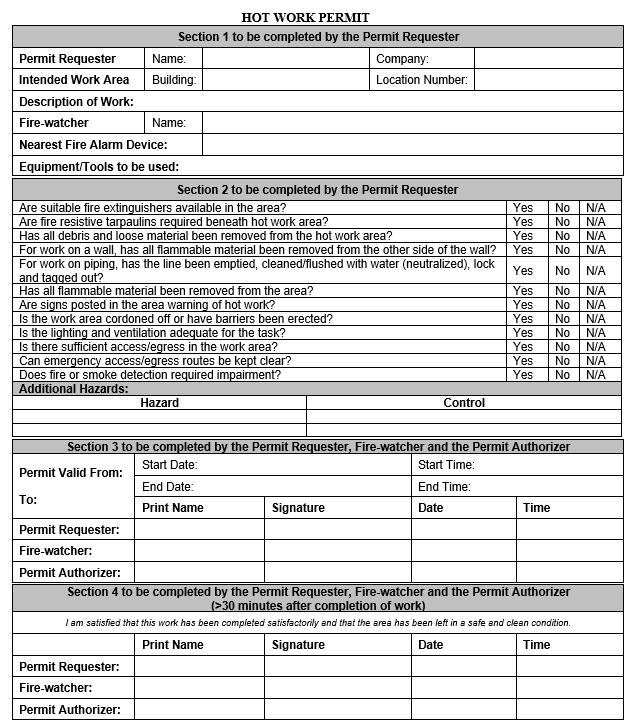
The policy of P1 Group is to perform work in the safest manner possible. P1 Group will provide the safest possible working conditions for the Associates’ workplace. It is a condition of employment with P1 Group for Associates to acknowledge in writing that they have received training on this program and that they agree to follow all directions – written, verbal and visual –pertaining to this program. A copy of this written Hazard Communication Program will be available upon request to Associates, their designated representative(s), emergency personnel and interested members of the community.
The purpose of P1 Group’s Hazard Communication Program is to inform it’s Associates of the Occupational Safety and Health Administration (OSHA) regulations which require that Associates be informed concerning chemical and physical hazards they may encounter at the workplace and appropriate protective measures they can take. The objective of the Hazard Communication Program is:
1. To safeguard the health of our Associates by providing a managementguide for safe compliance.
2. To provide our Associates, subcontractors and licensed vendors with necessary information concerning health and safety hazardspresented by chemical materials or physical conditions in theworkplace.
The major elements of the Hazard Communications Program include:
1. List all chemical products used at company workplaces, transportedon company vehicles or stored on company property.
2. Identify hazards associated with all chemicals in use or stored at company workplaces.
3. Good housekeeping, clean, organized storage is the bestmanagement practices to prevent spills.
4. Spill response materials or spill kits will be available and adequate for any anticipated spill.
5. Label all containers of chemicals.
6. Provide ready availability of Safety Data Sheets (SDS) forall hazardous chemicals used by the company.
7. Identify operations or tasks in the Associates’ work areas that use hazardous chemicals.
8. Train Associates in the safe handling and use of chemicals andproper spill prevention and response procedures.
9. Provide information to subcontractors regarding hazardous chemicalsto which their Associates will be exposed in theworkplace.
10.Provide training to affected Associates on non-routine conditions or tasks identified in the workplace.
Each jobsite, storage area and vehicle driver will assemble and maintain a list of the chemicals in use or storage on the site/vehicle. Copies of all lists will be on file with the Safety Director. The Safety Director will be notified promptly of any changes to the lists, whether addition, deletion or change of brand.
Each container of hazardous chemical, regardless of size, shall be labeled, tagged or otherwise marked to show the identity of the chemical and the appropriate hazard warnings. Associates shall be trained on how to read and interpret warning labels.
The Warehouse Manager and Site Foreman will be responsible for seeing that all containers delivered to company workplaces are properly labeled. All incoming containers shall be checked for completeness. Labels must include
1. Product identifier;
2. Signal word;
3. Hazard statement(s);
4. Pictogram(s);
5. Precautionary statement(s); and,
6. Name, address, and telephone number of the manufacturer, importer, or other responsible party.
Each supervisor shall be responsible for seeing that all portable containers in their work area are labeled with identity and hazard warning. This label was chosen specifically because of the legend for interpreting each section of the label that appears adjacent to the appropriate section, facilitating immediate hazard recognition. The only time a container does not require labeling is when a small container is filled by the person using the chemical and will be used or emptied by that person during the same shift.
This Hazard Communication Program relies on Safety Data Sheets (SDS) from suppliers for purposes of hazard determination. Associates will be trained in the use of Safety Data Sheets and how to access them, in order to alleviate or lessen potential hazards.
3E Company maintains the master SDS file for P1 Construction. The 3E Company maintains both archival files and the most current information available from the manufacturers or suppliers. The Safety Director is responsible for informing 3E of any changes in the chemicals used by P1 Construction.
A. The manufacturer or importer preparing the safety data sheet shall ensure that it is in English (although the employer may maintain copies in other languages as well) and includes at least the following section numbersand headings, and associated information under each heading, in the order listed:
1. Section 1, Identification;
2. Section 2, Hazard(s) identification;
3. Section 3, Composition/information on ingredients;
4. Section 4, First-aid measures;
5. Section 5, Fire-fighting measures;
6. Section 6, Accidental release measures;
7. Section 7, Handling and storage;
8. Section 8, Exposure controls/personal protection;
9. Section 9, Physical and chemical properties;
10. Section 10, Stability and reactivity;
11. Section 11, Toxicological information;
12. Section 12, Ecological information;
13. Section 13, Disposal considerations;
14. Section 14, Transport information;
15. Section 15, Regulatory information; and
16. Section 16, Other information, including date of preparation orlast revision.
SDS information may be accessed directly by calling 3E at (800) 451-8346. The caller must provide the product name, manufacturer name and, if possible, the UPC code from the container. The caller will also need to provide the phone number of the nearest fax machine if a hard copy of the information is required. If the request for information is the result of a medical emergency, the caller must also provide the name of the medical facility to which the exposed worker is to be transported. A poster reminding callers of this information is to be posted at each jobsite and a sticker for the information is to be placed on or near each telephone and in each vehicle.
The Safety Director will maintain an archival file of SDS. Jobsites having no telephone or fax access will request copies of the needed SDS sheets from the Safety Director. Hard copy SDS are to be filed after the chemical list in Section 6 of the program book.
Orientation training shall be provided to all newly hired Associates who will be routinely exposed to hazardous materials provided by the employer. When an Associate is reassigned or transferred to a different set of hazardous chemicals, the foreman will provide reorientation training.
Associates will be provided with effective information and training on hazardous chemicals in their work area at the time of their initial assignment, and whenever a new physical or health hazard the associates have not been previously been trained about is introduced into their work area. Information and training may be designed to cover categories of hazards (e.g., flammability, carcinogenicity) or specific chemicals. Chemical-specific information must always be available through labels and safety data sheets.
Training provided shall include the following items according to site and Associate requirements:
• Explanation of the Hazard Communication Standard,including Associate rights and responsibilities.
• Introduction to the written Hazard Communication Program.
• Dissemination of site-specific hazard information.
• Access to and interpretation ofSDS.
• Labeling and placardingprocedures.
• Physical and health hazards of chemicals in the workplace.
• Protective procedures and equipment.
• Procedures for non-routine tasks.
After attending the training class, each Associate will sign a form stating that they received training in accordance with P1 Construction's Hazard Communication Program. All training sessions must be documented. The original sign-in sheet will be kept in the Safety office. A copy will be kept in the program book at the site where training occurred, behind divider 5.
Upon notification by the appropriate Project Manager, the Safety Director will contact the subcontractors to advise of any chemical hazards that may be encountered in the normal course of their work on the site and to request any information regarding any chemicals they will be bringing onto the site. Information will also be exchanged regarding safety programs, training, and practices; protective equipment required; container-labeling systems; and SDS access.
Prior to starting work on a hazardous, non-routine task, each employee will be given information about hazards involved. This information will include:
1. Specific chemical hazards
2. Protective/safety measures the employee can take
All contracts signed by P1 Construction shall be reviewed by the Safety Director to determine what contractual requirements, if any, exist with regard to Hazard Communications. These requirements shall be communicated to the appropriate person in the organization and necessary action taken.
While each contractor is responsible for its own employees’ training, P1 Constructionwill attempttoanswerothercontractoremployee’squestionabout workplace hazards.
P1 Construction shall submit a list of hazardous materials which are present at company facilities to:
• The local emergency planning committee.
• The state emergency response commission.
• The local fire department. The list shall be updated as the material in use at P1 Construction changes.
Administrative responsibilities for this program are hereby delegated to the Safety Director. The Safety Director will be responsible for the execution and continual audit of this program on a day-to-day basis and is hereby given the necessary authority to perform his/her responsibilities.
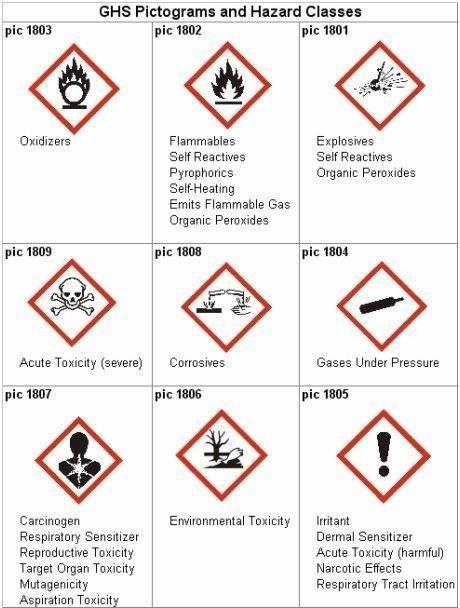
Continual exposure to excessive noise levels has a cumulative effect and may cause permanent hearing loss. Exposure to sudden, intense noises may even cause rupture of the eardrum and damage to the inner ear. The Hearing Conservation Policy is set to prevent employees from damaging and or losing there their hearing.
Employees under the P1 Construction are covered by the Agency’s Occupational Noise Standard 29 CFR 1910.95, which sets the maximum noise exposure levels. OSHA implements this Standard to protect noise exposure from employees being exposed to 85 dBA and greater based on an eight hour time period. Training will be provided on an annual basis and updated to be consistent with changes in the PPE and work processes.
Excessive Noise: exceeding the maximum daily exposure based on an eight hour time frame. The most significant health concern associated with excessive noise exposure is noise inducing hearing loss or Industrial Deafness.
Nuisance Noise: is perceived as annoying, certain types of sound (high pitch, irregular, rhythmic, such as power tools, jack hammers) may be irritating to our hearing and may even cause temporary and or permanent hearing loss.
Certain areas of construction might exceed the 85 dBA Action Level. An example of this might be when we are working in a general industry environment such as pipe fabricating shops, sheet metal fabricating areas and possibly mechanical and air handling rooms. At this time, we will adhere to the client’s policies and hearing notification postings to wear hearing protection. The P 1 Group will furnish all job sites with proper hearing protection.
Working in an Industrial Environment where high Decibel areas are common an employee may be subject to an annual Audiometric Test.
There are several varieties of Hearing Protection, including muffs, molded rubber earplugs and foam type earplugs.
Have a hard outer shell to bounce the sound away from the ear, and the sound absorbent cuff shall snugly fit your head and stop the sound from leakage. It’s essential the muffs fit properly. Follow the manufacturer’s instructions for proper fitting. When cleaning use warm soapy water. Do Not use Alcohol or solvents to clean. Earplugs
Foam earplugs must be discarded after each use to prevent infection.
Reusable ear plugs (rubber or vinyl) must be washed after use. Wash only with warm soap and water.
Fitting plugs into ears: Place the foam plug in between your thumb and fore-finger and make a rolling motion. Make sure there are no creases in the plug. Using your other hand, lift your ear up and back to straighten the ear canal. Insert the plug into the ear canal and hold in place for a few seconds to allow the material to expand.
OSHA calculates the actual protection as follows:
Noise Reduction Rating minus dBA = Actual Protection Factor
EXAMPLE: If hearing protection has a noise reduction rate of 30, and the noise level in the area is 115 dBA, the Actual Noise Rate is 85 dBA.
If you are within 3 feet of someone and you have to raise your voice to speak to them, you are most likely above the threshold limit.
Contact the P1 Construction Safety Department to have your work area tested for dBA levels.
Based on the chart below are permissible exposure limits set by OSHA where an employee can be in an area before doing permanent hearing damage.
Permissible Noise Exposure Limits
This section covers problems related to heat stress. Excessive heat affects the body in a variety of ways, which can result in heat fatigue, heat rashes, heat collapse (fainting), heat cramps, heat exhaustion, or heat stroke.
Physical factors that can contribute to heat related illness shall be taken into consideration before performing a task. The most common physical factors that can contribute to heat related illness are type of work, level of physical activity and duration, and clothing color, weight and breathability. Age, weight, degree of physical fitness, degree of acclimatization, metabolism, and the use of alcohol or drugs, all affect a person’s sensitivity to heat. A variety of medical conditions, such as hypertension and prior heat injury, predispose an individual to additional injury.
Environmental factors include more than the ambient air temperature. Radiant heat, air movement, conduction and relative humidity all affect an individual’s response to heat.
All Supervisors should be familiar with the characteristics of illnesses resulting from heat stress as follows:
Disorder
Heat Cramps
Heat Exhaustion
Cause Signs & Symptoms Treatment
Heavy sweating
Dehydration
Sodium and chloride depletion Painful spasms of arms, legs and abdomen Sudden onset
Dehydration
Non-acclimatized
High heat and humidity
Heat Stroke Excessive exposure to hot environments
You stop sweating
Over exerting in a hot environment
Body temp. rises to critical levels
Hot, moist skin
Heavy sweating Intense thirst
Pale, moist, cool Rapid pulse Fatigue, weakness Fainting, collapsing
High body temperature
Lack of sweating
Hot, red, dry skin
Rapid pulse Chills
Difficulty breathing Disoriented
Weakness
Unconsciousness
Drink water
Massage cramped area Rest
Move to shade or an air-conditioned space
Rest, lying down, legs elevated
Loosen clothing
Drink water
MEDICAL ATTENTION IS NEEDED
Fan air on person
Immerse person in water
Remove outer layer of clothing
Use cold compressions
Other Disorders Include:
Disorder
Dehydration Excessive loss of water and salt Fatigue, weakness, dry mouth Drink fluids
Heat rash Clogged sweat glands Rask of pink pimples, intense itching, tingling Cleanse area, dry and cool
• Provide training for all affected workers on heat illnesses and prevention methods.
• On extremely hot days, reduce the physical demands on your workers as muchas possible.
• Supervisors will carry cell phones or other means of communication, to ensure that emergency services can be called and check that these are functional at the worksite prior to each shift.
• Supervisors will continuously check all employees and stay alert to the presence of heat related symptoms.
• Work tasks that are particularly physically demanding should be performed early inthe morning or later in the afternoon avoiding the hottest part of the day.
• Provide a constant supply of cold water.
• Encourage your workers to drink at least a full cup of cold water every 15 to 20 minutes throughout each day.
• Encourage your workers to avoid drinking alcohol, caffeine, and high sugar content drinks during periods of extremely hot temperatures.
• Allow frequent rest periods in cool shaded areas.
• Encourage your workers to wear light-weight, light-colored, loose-fitting clothing madeof breathable fabrics that are also designed to filter out harmful UV rays.
• Keep a close watch on workers who are at higher risk for heat illnesses. For example, workers required to wear hot personal protective equipment, such as arc flash gear, welding gear, respirators, etc.
• Procedures for responding to symptoms of possible heat illness, includinghow emergency medical services will be provided should they becomenecessary.
Chromium hexavalent (Cr(VI)) compounds, often called hexavalent chromium, exist in several forms. Industrial used of hexavalent chromium compounds include chromate pigments in dyes, paints, inks and plastics; chromates added as anticorrosive agents to paints, primers, and other surface coatings; and chromic acid electroplated onto metal parts to provide a decorative or protective coating. Hexavalent chromium can also be formed when performing “hot work” such as welding on stainless steel or melting chromium metal. In these situations the chromium is not originally hexavalent, but the high temperatures involved in the process results in oxidation that converts the chromium to a hexavalent state.
Training will be provided pm chromium hazards, control methods and medical surveillance.
Employees will not be exposed in excess of the PEL of 5 micrograms per cubic meter of air as an 8hour TWA. Periodic monitoring will be conducted at least every 6 months if initial monitoring shows employee exposure. Air monitoring will be performed at the beginning of each job task. If exposure monitoring results indicate exposure is above the PEL, a written notification must be included with the corrective action being taken to reduce exposure to or below the PEL.
Regulated areas will be established when an employee’s exposure is or is expected to be in excess of the PEL. Regulated areas shall be marked with warning signs to alert employees. Access is restricted to “authorized persons”.
Engineering and work practice controls should be provided to reduce exposure to the lowest feasible level. If employees can demonstrate that such controls are not feasible, P1 Construction will use engineering/work controls to reduce employee exposure to the lowest levels achievable, and shall supplement them by the use of respiratory protection.
Respirators will be used when engineering controls and work practices cannot reduce employee exposure, during work operations where engineering controls and work practices are not feasible, E and emergencies.
PPE will be provided when there is a hazard from skin or eye contact. Gloves, aprons, coveralls, goggles, foot covers etc. Contaminated PPE will be removed at the end of the work shift. P1
Construction will clean, launder, repair and replace protective clothing as needed. All PPE will be provided at no cost to the employee.
Surfaces must be maintained as free as practicable of accumulation of chromium. All spills and releases of chromium will be cleaned promptly. Methods of cleaning include HEPA filtered vacuums, dry or wet sweeping, shoveling or other methods to minimize exposure.
Medical Surveillance
Medical surveillance will be provided when an employee experiences signs or symptoms of the adverse health effects of Hexavalent Chromium (dermatitis, asthma, bronchitis, etc.) Medical evaluations will be provided at no cost to employees. Examinations will be performed by or under the supervision of a physician or other licensed health care professional.
Hygiene
P1 Construction will provide change rooms for decontamination and ensure facilitates prevent cross- contamination. Washing facilities will be readily accessible for removing chromium from the skin. Employees must wash their hands and face or any other potentially exposed skin before eating, drinking, or smoking.
Recordkeeping
P1 Construction will maintain and make available an accurate record of all employee exposure monitoring, medical surveillance and training records.
Some fumes and dust from welding processes may contain cadmium or cadmium oxide compounds. The specific for and concentration of cadmium present in the fume and dust are dependent on the composition of the filler metal, base metal, coatings, atmosphere, flux, and the welding process. It is more commonly found in black steel pipe versus stainless pipe. This could be a potential inhalation hazard.
Acute Effects
Similar but may be more severe, to the effects produced by fume and dust metals. Inhalation exposure to high concentrations of fumes may cause symptoms such as nausea, headaches, dizziness, and lung complications.
Long term exposure to cadmium oxide fumes and dust has caused sever chronic effects, kidney failure, and may lead to respiratory disease and death.
Inhalation of cadmium by smokers may accelerate the development of respiratory diseases. OSHA has defined cadmium as a carcinogen with no further categorization. Observations are difficult to interpret because of inadequate data and confounding factors. (Fact sheet No. 22, American Welding Society).
Conclusions from the International Agency for Research on Cancer (IARC Group 2B): (1) there is
limited evidence in humans for the carcinogenicity of welding fumes, and (2) there is inadequate evidence in experimental animals for carcinogenicity of welding fumes.
How to protect against over exposure
o Identify composition of base metals and coatings. Substitute to non-cadmium material if possible.
o Read and follow the safety data sheet (SDS) for cadmium containing products.
o Do not breathe fumes or gases
o Keep your head out from the fumes
o Have open air ventilation or fumes exhausted and extracted at the arc to keep fumes out of the breathing zone.
o Use a portable exhaust system when necessary
o If ventilation is questionable contact the safety department to complete an air sampling test.
o Avoid ingestion and keep the exposure to a minimum.
Date: 02/07/2025
Revision Date: 02/07/2025/001
Page: 00 of 000
PURPOSE
This Hydrogen Sulfide guideline is intended to provide suitable information to P1 CONSTRUCTION, hereafter referred to as “The Company”, workers.
PROCEDURES
General
Hydrogen Sulfide (H2S) is ever present in many areas of the environment. In addition, it is generated in many industrial processes as a by-product and during the decomposition of organic matter containing sulfur.
H2S is a colorless gas that at low concentrations has the odor of rotten eggs. At high concentrations, it kills your sense of smell.
• FormulaH2S
• CAS No.:7783-06-04
H2S is a highly flammable and extremely toxic gas that can form an explosive mixture with air over a wide area.
Characteristics of Hydrogen Sulfide
When ignition occurs, the combustion produces irritants and toxic gases, including sulfur dioxide (SO2). SO2 has an irritating effect on the eyes and lungs and can be fatal at concentrations of about 100PPM.
H2S is heavier than air, has a tendency to settle in low-laying areas, and is readily dispersed by wind movements or currents.
H2S attacks most metals, especially in the presence of water, forming sulfides that are usually insoluble precipitates. It is also very corrosive to plastics and tissue.
H2S dissolves in water forming a weak acid (hydro sulfurous acid).
H2S will be released when in water when agitated making it a dangerous hidden hazard.
Health Effects
The following information outlines the symptoms of hydrogen sulfide at specific concentrations.
Revision Date: 02/07/2025/001
Page: 00 of 000
10 PPM (0.001% H2S)
• Obvious and unpleasant odor.
• Burning eye irritation.
• Permissible exposure limit is eight hours.
200 PPM (0.02% H2S)
• Kills smell quickly.
• Stings eyes and throat.
• Respiratory irritation.
• Death after one to two hours of exposure.
500 PPM (0.05% H2S)
• Dizziness. Breathing ceases within a few minutes.
• Requires prompt artificial respiration.
• Loss of muscle control, making self-rescue impossible.
1000 PPM (0.10% H2S)
• Unconsciousness at once, followed by death within minutes.
Exposure Warning
H2S CAN PARALYZE THE SENSE OF SMELL. DO NOT USE THE SENSE OF SMELL TO DETECT H2S.
H2S Detection and Alarm Systems
In most workplaces emergency worker alarms are installed to meet the regulatory standards. The alarms provide warning for the necessary emergency action according to the site emergency action plan and provide time for workers to safely escape from the workplace or the immediate area.
Systems are also used on drilling locations, offshore platforms, decaying plants and animals that produce H2S, and some other plants. Signs are and should be posted stating the presence of poison gas and urging caution.
Warning Conditions
There are three conditions that you must be aware of when working around H2S. The following information identifies the level of danger and alarms associated with each condition.
Condition Green
• Possible Danger
Revision Date: 02/07/2025/001
Page: 00 of 000
• No Alarms
Condition Yellow
• Moderate Danger
• H2S to 50 PPM
• Intermittent Audible Alarm and Yellow Flashing Light
Condition Red
• Extreme Danger
• H2S at 50 PPM or Above
• Continuous Audible Alarm and a Red Flashing Light
Hydrogen Sulfide Detection Devices
Fixed H2S detection devices (monitor and indicator) are designed to detect H2S concentrations in air and established TWA (time weighted average) (10 PPM) and STEL (15 PPM).
The alarm should be capable of being perceived above the ambient noise or light levels in the affected area. The alarm should be distinctive and recognizable as a sign to evacuate the area and to start emergency status emergency procedures.
Personal monitors are also available in many types. They are also designed with the worker’s safety in mind. Familiarize yourself with the equipment available at your current work assignment.
Plant monitors are available in many types and are designed with the worker’s safety in mind. Familiarize yourself with the equipment available at your current work assignment.
In order to respond effectively in an emergency, every individual at the site should know their specific responsibilities. Whether or not an individual has an assigned duty, each individual should know what to do in the event of an emergency.
Follow these procedures in the event of a hydrogen sulfide release that requires evacuation:
• Hold your breath and quickly leave the area containing H2S. Do not inhale.
• Move quickly to the upwind “Safe Breathing Area” to receive instructions.
Revision Date: 02/07/2025/001
Page: 00 of 000
• Always be conscious of the wind and constantly monitor wind direction. Windsocks and streamers show which direction the wind is blowing so that you can determine the proper safe breathing area.
When in an area on client’s premises, which has required you to be trained to use or wear an escape respirator such as a self-contained breathing apparatus respirator (SCBA), put on your SCBA and help anyone who appears to be affected by the gas.
Before taking off your SCBA ensure that the air you will breathe is safe.
Always be conscious of the wind and constantly monitor wind direction. Windsocks and streamers show which direction the wind is blowing so that you can determine the proper safe breathing area.
To prevent risk and injury to other workers, re-entry into an area of unknown concentration of H2S will require the use of SCBA and backup workers.
• Wear a full rescue unit (minimum 30-minute breathing apparatus) before attempting a rescue.
• Remove the worker immediately to fresh air.
• If breathing, maintain the worker at rest and administer respiration immediately.
• If the worker is not breathing, start artificial respiration immediately.
• Call an ambulance and get the worker medical treatment.
• Keep the worker lying down with a blanket or coat under the shoulders to keep airway passage open. Conserve the worker’s body heat and do not leave the worker unattended.
• If the eyes are affected by H2S, wash them thoroughly with clear water. For slight eye irritation, cold compresses are helpful.
• A worker should not return to work until authorized to do so by a physician, even if the worker has had minor exposure and has not completely lost consciousness.
Depending on the exposure, i.e., the amount of gas in the air and the type of work, workers will be required to wear different levels of PPE. Examples of protection include:
Revision Date: 02/07/2025/001
Page: 00 of 000
• When the exposure level is near or above 10 PPM, you will be required to wear self-contained fresh air gear.
• Wear chemical goggles or a face shield when eye contact with this material is possible.
• Avoid skin contact. Wear proper clothing such as impervious gloves, long sleeves, apron, and boots.
Use adequate general and local exhaust ventilation to keep atmospheric vapor concentrations below the occupational exposure limits.
Safety showers and eyewash stations must be available in the vicinity of potential exposure to the material. Familiarize yourself with the location of these facilities before starting the job.
All workers will be provided awareness training in this program to be familiar with the potential hazards and proper safe work procedures to follow if exposed to this health hazard. The training will be provided prior to working in any job with potential exposure to H2S operations.
The purpose of hydrogen sulfide training is to familiarize workers with the local and jurisdictional regulations affecting H2S operations. Workers will learn the necessary skills to recognize, detect, and use the proper safety equipment in the event of an H2S incident.
1. Potable water shall be provided at all sites in approvedclosed containers with disposable cups.
2. Toilets shall be provided as required for the number of workers, withselfclosing doors, latch and toilet paper.
3. First aid kits must be provided at each jobsite, and if a medical facility is not readily accessible, then a person with a valid First Aid Certificate must be present.
4. Employees must be protected against exposure to injurioussound levels by controlling exposure or by use of the proper personal protective equipment.
5. Employees must be protected against exposure to ionizing (X-Ray, radioactive) and non-ionizing (laser beam) radiation.
6. Protection against exposure to harmful gases, fumes, dust and similar airborne hazards must be furnished through proper ventilation or personal respiratory equipment.
1. The increasing list of chemicals and other substances being identified as being toxic or hazardous requires special attention to employee protection. (Refer to the Corporation’s Hazard Communication Program.)
2. Employees shall be provided protection against respiratory exposure to toxicand hazardous gases, mists, fumes and dusts through ventilation or personal respiratory equipment.
3. Employees shall be provided protection against body contact with toxic and hazardous substances through the use of proper personal protectiveclothing.
4. In areas where toxic and hazardous substances are acknowledged to be present emergency cleansing stations shall be provided.
Please refer to P1's Emergency Action Plan for further information on protocol for radiation emergencies.
A. PURPOSE OF THE PROGRAM
The purpose of this program is to define the scope of work for the titled project and the required procedures to comply with the OSHA Standards 29 CFR 1926.62 “Lead in Construction”.
B. SCOPE OF WORK
Any work that is done in a facility that generates lead that could enter the blood stream. Areas must be defined before entering the work area. All work will be completed under the direction of the Safety Director.
C.
Each project will have different degrees of blood tests and ZPP tests depending on the duration and the level of lead concentration.
Each employee will have their blood drawn and tested prior to entering a site that has known lead hazards and will be monitored throughout the duration of the project.
The Company must provide up to 18 months of medical removal protection benefits each time an employee is removed for lead exposure. If the position/job exists, the Company must maintain the earnings, seniority and other rights and benefits, as they had not removed the employee from the lead exposure. An employee’s worker’s compensation claim and benefits may offset some of this obligation of the Company.
D.
Training will be conducted at the time of hire and a refresher course, if needed before initial assignment in areas where lead may be found.
All employees will receive training on the following topics:
a. The purpose and scope of the lead compliance program.
b. Engineering controls, work practices and administrative controls that will be followed to achieve compliance with the plan.
c. When respirators are required and their limitations. The employee’s responsibility to use the respirator properly and that failure to do so will be considered a violation of the Company rules.
d. The Medical Surveillance program, the test performed, what the test results indicate and how the test are reported and the employee’s right to know the results of the test.
e. Correct workplace practices will be followed to ensure the lead containing materialsare not disturbed.
1. Lead pigment in paint has been used as a rust inhibitor for years. From an occupational health standpoint, dry paint containing lead, if it is intact, poses little, if any, hazard. The hazard arises when the lead coating is disturbed in some way. Disturbances may occur when welding, grinding, burning or when abrasive blasting is performed on painted steel. The high temperature generated during burning and welding processes melts the lead and converts it into a fume.
Abrasive blasting pulverizes coatings into very fine particles. These airborne fumes of lead present a serious hazard to workers.
2. Workers are exposed to lead in one of two (2) ways:
a. Inhalation of airborne lead.
b. Ingestion when employees fail to thoroughly wash lead off their hands before eating or smoking contaminated cigarettes.
Lead accumulates in the body causing lead poisoning that, in large doses, can cause death. Exposure to smaller doses over long periods of time can cause damage to the blood-forming, nervous, urinary and reproductive systems. The most severe forms of lead poisoning cause damage to the central nervous system and to the brain.
3. To assure that employees are not exposed to lead either through inhalation or ingestion, the following safety equipment must be utilized on the jobsite:
a. Respiratory Protection
b. Protective clothing
c. Shower and wash facilities
d. Warning signs:

e. Barricaded Areas
All employees will receive orientation on the hazards of working in a lead environment prior to the start of work. F. MEDICAL
1. Blood Lead Screening
Employees will be provided with medical surveillance consisting of monitoring of blood lead and ZPP levels prior to assignment for the first time to an area in which airborne concentrations of lead are at or above the action level (30 ug/m3). For new employees
assigned to perform lead removal, monitoring of blood lead and ZPP levels will be checked at two (2), four (4) and six (6) months after continued lead exposure and then every six (6) months thereafter when there is continued lead exposure at or above the action level.
Monitoring of blood lead and ZPP levels will be given every six (6) months to any employee who is at or above the action level for a period of 30 days or longer per year.
Employees shall be notified in writing within five (5) working days after the receipt of monitoring results of the employee’s blood lead and ZPP level.
a. Blood lead levels at or above the 25 ug/dl
After an examination reveals that an employee is at or above 25 ug/dl, the employee shall:
• Be removed from the lead exposure area and reassigned to other duties.
• Be given a follow-up examination within a two-week period.
• Be given a follow-up examination every two months until two (2) consecutive blood samples indicate a blood level below 25 ug/dl of whole blood.
• Be given a medical examination per requirements of 29 CFR 1926.62 (j)(3).
b. Blood levels at or above the 50 ug/dl
After an examination reveals that an employee is above the allowable lead level of 50 ug/dl, the employee shall be provided with medical removal protection benefits as described in 29 CFR 1926.62 (k). The employee may return to former job status when:
• Two (2) consecutive blood-sampling results indicate that the employee’sblood level is at or below 25 ug/dl.
• Medical opinion that the employee no longer has a detected medical condition, which places the employee at increased risk of material impairment to health from exposure to lead.
• Employee has been given a medical examination per requirements of 29CFR 1926.62 (j)(3).
Prior to leaving employment (for any reason), a blood test will be offered to any employee who has been monitored for lead but who has performed lead work since his or her last medical evaluation.
1. Air monitoring will be conducted as described in 29 CFR 1910.25 (d) and 29 CFR 1926.62 (d). Employees will be provided with monitoring results within five (5) days of receipt.
2. Personnel air monitoring results will be provided to all employees immediately upon receipt from the air monitoring company. Each employee will sign on the appropriate form, acknowledging they have been notified of the results. If they have any question regarding the air monitoring results, they should see their supervisor or contact the Safety Department.
Prior to working in a lead contaminated area, each employee will be issued respiratory protective equipment applicable to his or her specific job assignment. In addition, the employee will be fit tested semi-annually and trained in the proper use, cleaning and storage of his or her equipment.
1. Employees welding, burning or cutting on steel painted with lead paints shall wear disposable coveralls or will be issued washable coveralls on a daily basis if entering an enclosed lead sandblasting area. This will be done at the Company’s expense.
2. Ear protective devices shall be provided in high noise areas.
3. Hardhats and safety glasses shall be provided and worn on all job sites.
4. Miscellaneous safety equipment such as safety belts, safety harnesses and lanyards will be provided and issued accordingly.
1. Employees will be provided with a wash area around lead contaminated areas.
2. Employees shall wash their hands and face before lunch and breaks.
3. Employees are not allowed to eat, drink, smoke, dip or chew while working around lead-contaminated areas.
A good program of personal hygiene must be followed to insure that leadcontaminated dust is not taken home to the employee’s family or friends.
1. Areas of work that may be contaminated with lead dust must be cleaned and materials collected and kept in appropriate containers.
2. Contaminated clothing must be placed in closed-top containers prior to washing or removal from the job site. If these are to be washed by an outside company, a letter documenting that the clothing contains lead must be provided for the company receiving the contaminated clothing.
3. All protective clothing and equipment must be stored in a designated contaminated area.
4. Compressed air shall not be used for cleaning of the work area.
Documentation of this procedure shall be done by the Safety Department or designated person on the job. This person will see that all forms are signed and completed as outlined. Documents include safety meeting rosters, shower rosters and safety equipment rosters. Rosters shall be maintained for a period of not less than 40 years or 20 years plus duration of employment, whichever is longer.
1. Before work starts
a. All employees shall comply with the medical examination section (Section III) of this procedure prior to beginning any work in a lead environment. The Supervisor is responsible to assure that this section is in compliance.
b. A pre-work safety meeting shall be conducted to assure that all employees understand the safety requirements of this job and the hazards relating to exposure to lead-contaminated dust and fumes. This safety meeting will inform the employees of their responsibilities and impress compliance tothe safety procedures so outlined.
c. Employees shall report to their Foreman for issuance of the safety equipment.
d. The Supervisor or Safety Department is to ensure that employees comply with the proper dress code of coveralls, gloves, hard hats, safety glasses and shall issue employees their safety equipment head covers (as required) and foot covers.
e. Following issuance of all pertinent protective clothing, the employees will report to work.
f. Street clothing will be left in the clean area of the shack or trailer.
2. Lunch/breaks
a. Employees shall be brushed off or vacuumed off as they leave the work site for the area in which they will take their break or lunch. A HEPA vacuum is the preferred method of removing the lead contamination.
b. Employees shall remove their respiratory equipment and gloves and place them in the respective storage area.
c. Employees shall wash their face and hands in the lavatory or washbasin provided in the dirty side of the trailer.
d. Employees shall take their break or lunch, secure their safety equipment and then return for work.
a. Employees shall be brushed or vacuumed off by a co-worker as they leave the work site. A HEPA vacuum is the preferred method of removing contamination.
b. Employees shall go to their respective safety equipment storage areas and, after cleaning the equipment, shall store it in the area and/or seal it in containers provided for that purpose.
a. All employees shall comply with the safety requirements outlined in the lead safety work procedure.
b. Employees shall wear protective devices including respirators while working in areas that require them. They shall not remove the devices until they remove themselves from the areas of contamination.
c. Employees shall inspect their safety equipment daily and assure that it is in good condition prior to entering the work areas. Anytime any safetyequipment is in need of repair, it shall be brought to the attention of the supervisor for immediate action to be taken.
d. Any time the scope of the work changes there is the possibility of additional safety requirements. In this case, a safety meeting may be held to discuss the changes/additions to the responsibilities of the Supervisor/hourlyemployees.
We will evaluate this program annually.
The purpose of this written procedure is to establish requirements for the Lockout/Tagout of energy isolating devices, and to otherwise disable machines/equipment to prevent unexpected energization, start-up or release of stored energy in order to prevent injury to Associates.
1. Safety Department
a. Implementing the Lockout/Tagout program
b. Training all authorized, affected and other Associates
c. Maintaining training records
d. Annual inspections
e. Obtaining the proper equipment and hardware for applying Lockout/Tagout.
2. Project Superintendent/Foreman
a. Communications with the Owner
b. The Foreman will be the qualified person to remove an absent Associate’s lock and/or tag under the requirement of Section G “Restoring Machine or Equipment to Normal Operation.”
3. Any Associate who could be exposed to hazardous energy sources will be instructed on the safety significance of the Lockout/Tagout procedure. Any new or transferred Associate whose work operations are or may be in the area shall also be instructed. Associated authorized to perform lockout or tagout will receive training along with their duties and responsibilities. Any Associate who performs repairs, servicing, inspecting or cleaning of equipment, modifications or any type of maintenance is considered an authorized lock/out tagout Associate.
1. Energy Control Program
a. This standard covers the control of energy during servicing and/or maintenance of machines and equipment.
b. This standard applies to all sources of stored energy (such as electrical, steam, hydraulic, tension, gravity, etc) from machines and equipment (such as electrical, thermal, pneumatic, mechanical, and hydraulic, etc.) that could be unexpectedly released and result in worker injury.
c. Employers must establish a program that includes energy control procedures, employee training and periodic inspections to ensure that applicable
machines and/or equipment are isolated and rendered inoperative before service or maintenance work begins.
d. Where a source of energy cannot be locked out, a tagout system must be used.
e. Where a source of energy can be locked out a lockout system will be used unless the employer can demonstrate that a tagout system will provide full employee protection.
f. When a tagout device is used on equipment that could be locked out:
i. The device must be attached where the lockout device would have been attached. ii. The employer must demonstrate that the tagout system will be as safe as a lockout system.
g. When using a tagout system the employer must demonstrate full compliance with all tagout provisions in the standard.
h. When using a tagout system the employer must also demonstrate additional elements that are necessary to provide safety equivalent to a lockout system such as removal of a valve handle.
i. Employers must establish, implement and document procedures for controlling potentially hazardous energy.
j. The procedures must clearly and specifically outline the scope, purpose authorization, rules and techniques for the control of hazardousenergy.
k. The procedures must also include the means to enforce compliance including:
i. A specific statement of the intended use of the procedures;
ii. Specific procedural steps for shutting down, isolating, blocking and securing machines or equipment;
iii. Specific procedural steps for the placement, removal and transfer of lockout/tagout devices; and
iv. Specific requirements for testing a machine or equipment to verify the effectiveness of lockout/tagout devices and other energy control measures.
l. Locks, tags, chains, wedges, key blocks, adapters, pins, self-locking fasteners or other hardware must be provided for controlling energy sources.
m. Lockout/tagout devices must be singularly identified.
n. Lockout/Tagout devices must be the only devices used for controlling energy.
o. Lockout/Tagout devices must not be used for any other purpose.
p. Lockout/Tagout devices must be capable of withstanding conditions without damage.
q. Tagout devices must be able to withstand all weather conditions without damage.
r. Tags must be capable of withstanding corrosive environments where applicable.
s. Lockout/Tagout devices must be standardized within a facility by color, shape, or size.
t. The print on tagout devices must be standardized.
u. Lockout devices must be substantial enough to prevent removal.
v. Tagout devices must be substantial enough to prevent inadvertent or accidental removal.
w. Tagout attachment devices must be non-reusable, attachable by hand and self-locking.
x. Tagout attachment devices must have a minimum unlocking strength of 50 pounds.
y. Lockout and tagout devices must show the identity of the employee(s) applying them.
z. Tagout devices used on energized machines or equipment must warn against hazardous conditions and include a legend such as Do Not Start, Do Not Open, etc.
aa. Employers must conduct periodic inspections of the energy control procedures (at least annually).
bb. An Authorized Employee who is not utilizing the energy control procedure being inspected must do inspections.
cc.The inspection must be conducted to correct any identified deficiencies.
dd.Where lockout is used the inspector must review each affectedemployee’s responsibilities regarding the energy control procedure annually.
ee. Where tagout is used the inspector must review with each affected employee his or her responsibilities regarding the energy control procedure and the limitations of tags.
ff. The employer must certify that the periodic inspections have been performed.
gg. The employer must provide adequate training to authorized employees.
hh. Each authorized employee must receive training on recognition of hazardous energy sources.
ii. Each authorized employee must receive training on the methods necessary for energy isolation and control.
jj. Each affected employee must be instructed on the purpose and use of the energy control procedure.
kk. All other employees who may be working in the lockout/tagout area must be instructed on the procedures and prohibitions regarding re-starting or reenergizing machines or equipment that have been locked or tagged out.
ll. When tagout systems are used employees must also be trained on the limitations of the tag including:
i. Tags are warning devices and do not provide the physical restraint that locks do;
ii. Tags must never be removed without authorization from the authorized employee;
iii. Tags must be legible and understandable to all employees;
iv. Tags and their attachment devices must be durable enough to withstand the environmental conditions of the workplace; and
v. Tags must be attached so they cannot be inadvertently or accidentally detached.
mm.Retraining must be provided for all authorized employees and affected employees whenever there is a change in their job assignments, machines, equipment or processes that present a new hazard.
nn. Additional retraining must be provided whenever deviations from or inadequacies in an employee’s knowledge become evident.
oo. Retraining must reestablish employee proficiency and introduce new or revised control methods and procedures as necessary.
pp. The employer must certify that retraining has been accomplished and is
being kept up to date.
qq. Certification must contain each employee’s name and dates of training.
rr. Only the authorized employees who are performing the servicing or maintenance will perform lockout or tagout.
ss. Affected employees must be notified by the employer or authorized employee about the application or removal of lockout/tagout devices.
tt. Notification must be provided before application and after removal of controls.
a. Lockout/tagout procedures must cover the following elements and actions in the following sequence:
i. Before turning off a machine or equipment the authorized employee must know the type of energy, it’s hazards and the methods or means to control it;
ii. The machine or equipment must be shut down using it’s established procedures;
iii. The shutdown must be orderly;
iv. All energy isolating devices must be located and operated to effectively isolate the machine or equipment from energy source(s);
v. Authorized employees must affix lockout or tagout devices to each energy-isolating device.
vi. Lockout devices must be affixed to hold the energy isolating devices in a neutral or off position.
vii. Tagout devices must be affixed to clearly indicate that the operation or movement of energy isolating devices in a safeor off position is prohibited.
viii. Where tagout devices are used with energy isolating devices that are designed to be locked out the tagout device must be placed where the lock would be attached.
ix. Where a tag cannot be attached directly to the energy isolating device it must be located as close as possible in an immediately obvious position;
x. Following the attachment of lockout/tagout devices stored, or residual energy must be relieved, disconnected, restrained or otherwise rendered safe.
xi. Where there is a possibility of re-accumulation of stored energy, verification of isolation must continue until servicing or maintenance is completed;
xii. Before starting work on machines or equipment that are locked or tagged out, the authorized employee must verify that isolation and de- energization have been accomplished.
b. Before removal of lockout/tagout devices and restoration of energy, authorized employees must:
i. Inspect the work area for nonessential items that have not been removed;
ii. Ensure that machine or equipment components are
operationally intact; and
iii. Ensure that all employees have been safely positioned or removed.
c. After lockout/tagout devices have been removed, but before starting the machine or equipment, affected employees must be notified that lockout or tagout devices have been removed.
d. The employee who applied the device must remove each lockout/tagout device.
e. Lockout Tagout devices shall only be removed by the authorized employee who installed the device.
a. Where lockout/tagout devices must be temporarily removed to test or position a machine or equipment the following sequence of actions must be followed:
i. Clear away tools and materials;
ii. Remove employees from the area;
iii. Remove lockout or tagout devices;
iv. Energize the machine or equipment and proceed with testing or positioning; and
v. De-energize all systems and re-apply energy control measures in the application of control section of the standard.
b. When outside servicing personnel are covered by this standard the on-site employer and the outside employer must inform each other of their respective lockout or tagout procedures.
c. The on-site employer must ensure that his or her employees understand and comply with the restrictions and prohibitions of the outside employer’s energy control program.
d. When a crew of the group performs service or maintenance they must use a procedure that affords the employees protection that is equal to that of a personal lockout or tagout device.
e. Group lockout or tagout devices must be used in accordance with the energy control procedures established in this standard and must include the following:
i. The authorized employee has primary responsibility for a set number of employees working under the protection of a group lockout or tagout device;
ii. Provisions must be established for the authorized employee to determine the exposure status of individual group members regarding the lockout or tagout of the energy source;
iii. When more than one group is involved an authorized employee must be designated to coordinate the affected work forces and ensure continuity and protection;
iv. Each authorized employee must affix a personal lockout or tagout device to the group lockout device, group lock box or comparable device; and
v. Each authorized employee must remove his or her personal lockout or tagout device when he or she stops working on the machine or equipment.
f. Specific procedures must be used during shift or personnel changes to ensure the continuity of lockout or tagout protection including the orderly transfer of lockout or tagout device protection between off-going and oncoming employees.
1. Turn off the equipment and disconnect the energy source
a. Notify all affected Associates that a lockout procedure is beginning and why.
b. Locate and identify all switches, valves and other devices that will have to be locked or tagged out.
c. Shut down machine by normal stopping procedure. (The machine, d. equipment, or system must be shut down according to the manufacturer’s instructions, best practices, and safest process.)
e. Power switch in OFF position.
f. Disconnect plug.
g. Break circuit.
h. Close the valve or otherwise neutralize stored energy.
2. Lockout energy sources
a. Use a lock to prevent the flow of energy from being restored.
b. Snap the lock on the control lever or on multiple lock adapters.
c. Test disconnects to be sure it cannot be moved to the ON position.
d. Each energy-isolating device will be locked and tagged singularly.
3. Tagout at disconnect point
a. Provides vital information (name of employee, date, time work began, type of work, and reason).
b. Provides extra protection.
4. Release residual energy
a. ZMS (Zero Mechanical State) – means that the machine has been put in a state in which the possibility of an unexpected mechanical movement has been reduced to a minimum.
b. Release residual energy by:
i. Discharging capacitators
ii. Grounding circuits
iii. Bleeding Lines
iv. Releasing built up pressure
5. Test equipment
a. Turn switch to ON or push start button to make sure that all energy sources
are successfully locked out. Return switch to OFF position.
b. Test circuits with a meter to confirm that no electricity is present for electrical machinery. (Do we want to include Live Dead Live steps?)
6. Summary
a. Be sure machine has completely stopped moving before starting work.
b. Release stored energy
c. Secure loose and moveable parts prior to work
d. Wear required personal protective equipment
e. Lock off or reduce accumulators and air tanks to atmospheric pressures
f. Do not overlook timers or remote controls
g. Take into consideration chemicals and vapors
1. Notify shop foreman that a lockout or tagout procedure is required.
2. Obtain lockout procedures from lockout/tagout safety files.
3. Perform steps outlined in lockout procedures
4. Test equipment to ensure energy source has been removed.
5. Perform work or maintenance
6. Restore energy when work or maintenance is complete (See Restoring Energy)
1. In some situations, lockout or tagout devices must be temporarily removed from the energy-isolating device and the machine or equipment energized to test or position the machine, equipment or component. In that case, the following steps will be taken:
a. Clear the machine or equipment of tools and materials.
b. Remove Associates from the machine or equipment area.
c. Remove the lockout and/or tagout devices.
d. Energize and proceed with testing or positioning.
e. De-energize all systems and reapply energy control measures previously stated.
1. The authorized employee will check the machine, equipment or process to ensure that non-essential items have been removed and that all components are operationally intact.
2. The authorized employee will check the work area to ensure that all employees have been safely positioned or removed from the area.
3. The authorized employee will verify that the controls are in neutral.
4. The authorized employee will remove the lockout device(s) and re-energize the machine, equipment or process.
5. The authorized employee will notify affected employees that the servicing, maintenance or construction has been completed and the machine, equipment or process is ready for use.
1. All reasonable efforts were made to contact the authorized Associate to inform him/her that his/her lockout or tagout device has been removed; and
2. The authorized Associate has this knowledge before s/he resumes work at the facility.
3. Check to make sure that:
a. All tools have been removed
b. All lines have been reconnected or unblocked
c. All guards have been replaced
d. Other workers are safely out of the way
4. Remove all lockout/tagout devices and notify the affected Associates of their removal.
5. Operate the energy-isolating device to restore energy to the machine or equipment. (A form should be filled out to document this process)
1. If more than one Associate is required to lockout or tagout equipment or machinery, each shall place his/her own assigned lock or tag on the energyisolating device.
2. If an energy-isolating device cannot accept multiple locks or tags, a multiple lockout or tagout device may be used.
3. If lockout is used with a single lock on the machinery or equipment, the key will be placed in a lockout box or cabinet, which allows the use of multiple locks to secure it.
4. Each Associate will use his/her own assigned lock to secure the box or cabinet. As each person no longer needs to maintain his/her lockout protection, that person will remove his/her lock from the box or cabinet.
1. Whenever engaged in activities covered under the Lockout/Tagout standards, the Owner and Foreman will inform each other of their respective lockout or tagout procedures.
2. The Owner shall ensure that his/her personnel understand and comply with restrictions and prohibitions of the P1 Construction's energy control procedure.
3. In some cases, we may be required to conform to the Lockout/Tagout procedures of the Owner. In these instances, Associates will be trained to understand and comply with the Owner’s requirements.
1. Site-specific procedures will be established and utilized during shift or personnel changes to ensure the continuity of lockout or tagout protection. This will include a provision for the transfer between off-going and on-coming Associates tominimize exposure to hazards. A change over period will be established so that authorized Associate(s) can exchange their assigned locks/tags. The authorized personnel assuming control should be fully briefed on the scope and stage of work by those who are being relieved as well as any changes that have occurred that could potentially be hazardous to the Associates. A physical inspection of lockout devices shall be performed before transfer is complete
1. As required by 20 CFR 1910.147(c)(7) and 20 CFR 1910.332, training will be given to all authorized, affected and other personnel.
2. Before servicing, maintenance or construction work begins all employees will be trained as follows:
a. Authorized Employees – will receive training on:
i. How to recognize hazardous sources of energy; ii. The types of hazardous energy they could be exposed to;
iii. The magnitude of the energy they could be exposed to;
iv. The methods necessary to isolate and control potentially hazardous energy; and
v. The means necessary to isolate and control potentially hazardous energy.
b. Affected Employees – will receive training on:
i. The presence of the energy control procedures; ii. The purpose of the energy control procedures; and iii. The use of the energy control procedures.
c. All Other Applicable Employees – will be trained on: i. The energy control procedures and ii. Prohibitions against re-energizing tagged out machines, equipment or processes.
d. All Employees – will be trained on the limitations of tags including: i. Tags are only warning devices and provide no physical restraint; ii. Tags can only be removed with the permission of the authorized employee;
iii. Tags must be legible and understandable to all employees;
iv. Tags and their means of attachment must be capable of withstanding the environmental conditions of the workplace;
v. Tags may evoke a false sense of security and their use must be understood as part of the overall energy control program; and
vi. Tags must be attached securely so they cannot be inadvertently
or accidentally removed.
e. Retraining – will be provided for authorized and affected employees:
i. When changes occur that present a new hazard; or ii. When there is a change in the energy control procedure.
f. Additional Retraining –
i. A change in job positions;
ii. A change in job assignments, machines, equipment or processes that presents a new hazard; or
iii. A change in the energy control procedures.
iv. Additional retraining shall also be conducted whenever the periodic inspection reveals, or whenever there is reason to believe, that there are deviations from or inadequacies in the Associate’s knowledge or use of the energy control procedures.
1. Electrical work is required to be locked or tagged out or both. A lock may be placed without a tag under the following circumstances:
a. Only one circuit of piece of equipment is de-energized.
b. The lockout period does not extend beyond the work shift.
c. Associates exposed to the hazards associated with re- energizing the circuit or equipment is familiar with this procedure.
2. The circuits and equipment to be worked on will be disconnected from all electric energy sources. Push buttons, selector switches, interlocks or other control circuit devices will not be used as the sole means of de-energizing the circuit. An interlock cannot be used in place of a lockout/tagout procedure. Stored electric energy will be released.
3. A qualified person will use test equipment to test the circuit elements and electrical parts of equipment to which Associates will be exposed and will verify that all is de-energized. If the circuit being tested is over 600 volts, nominal, test equipment shall be checked for proper operation immediately before and after the test.
4. A qualified person will conduct tests and inspect to verify that all is clear and that the circuits and equipment can be re-energized. The Associate who applied each lock and tag will also remove them. If the person is absent from the workplace, then a designated qualified person may remove the lock and tag. 5. Qualified persons will only perform work on energized equipment. These Associates will be capable of working safely on energized circuits and familiar with the use of special precautionary techniques, personal protective equipment, insulating material and insulated tools.
a. Lockout refers to the placement of a lockout device on an energy-isolating device such as a circuit breaker box or a steam pipe valve. The lockout device provides a physical restraint between the energy-isolating device and people in the area. The lockout device is usually controlled with a key or combination lock.
b. You must lockout hazardous sources of energy whenever lockout is feasible, unless you can demonstrate that the use of a tagout system will provide worker protection that is equal to the protection that would be provided by a lockout system. It would be difficult at best for an employer to successfully make such a demonstration. Tagout systems are seldom used where lockout systems are feasible because lockout systems provide the best possible protection for workers.
c. Use the attached Model Lockout Program each time you plan to use a lockout system.
a. Tagout refers to the placement of a tagout device on an energy-isolating device, such as a circuit breaker box or steam pipe valve. Tagout devices can be easily removed and provide only a visual warning to people who read them.
b. Tagout should only be used when a lockout system is not feasible. For example, if there is no mechanism in place that would accept a lock or lockout device, a tagout system may be necessary.
c. If you choose to use a tagout system where a lockout system is feasible, you must provide full employee protection. In other words, you must demonstrate that your tagout system will achieve a level of worker safety that is equivalent to the level of safety achieved by a lockout system. To achieve this, you must at a minimum:
i. Attach the tagout device to precisely the same place the lockout device would have been attached;
ii. Demonstrate full compliance with all tagout provisions; and iii. Implement additional safety measures, such as blocking a controlling switch or removing a valve handle.
Use the attached Model Program each time you plan to use a lockout/tagout system.
(Choose this model when using a Lockout System)
This lockout program was developed to protect the company’s AuthorizeEmployees from hazardous sources of energy while the maintenance or construction work is being performed by establishing procedures for: employee training; energy control; and periodic inspections of the established process.
This lockout program applies to all company employees and other employer’s employees who are Authorized Employees, Affected Employees or otherwise assigned to work in close proximity tothe equipment or machine using the lockout/tagout program.
Before maintenance or construction begins all employees will be trained as follows.
Authorized Employees- will receive training on:
How to recognize hazardous sources of energy;
The types of hazardous energy they could be exposed to;
The magnitude of the energy they could be exposed to;
The methods necessary to isolate and control potentially hazardous energy; and
The means necessary to isolate and control potentially hazardous energy.
Affected Employees- will receive training on:
The presence of the energy control procedures;
The purpose of the energy control procedures; and
The use of the energy control procedures.
All Other Applicable Employees- will be trained on:
The energy control procedures; and
Prohibitions against re-energizing locked out machines, equipment or processes.
Retraining- will be provided for Authorized and Affected Employees:
When changes occur that present a new hazard; or
When there is a change in the energy control procedure.
Additional Retraining- will be provided whenever there is concern about an employee’s knowledge or use of the energy control procedures.
Purpose
This procedure establishes the minimum requirements for the lockout of equipment or process.
Compliance with this Program
• All employees are required to comply with the restrictions and limitations imposed upon them throughout the use of the lockout procedure.
• Any employee who is found to be in violation of the procedure will be subject to P1 Construction's Disciplinary Action Policy.
• Only Authorized Employees will perform the lockout in accordance with this procedure.
• No employee who observes lockout on equipment or machinery will attempt to start, energize or use it.
All Affected Employees listed below will be notified by the Authorized Employee that maintenance or construction is required on equipment or process and that it must beshut down and locked out.


Notification will take place verbally and through a written notice at a pre-lockout meeting before the energy control methods are applied
Employees will sign and return the written notice before leaving themeeting.
The Authorized Employee will refer to the company procedure for identifying the type of hazardous energy and its magnitude with regard to worker safety.
The Authorized Employee will understand the hazards associated with theenergy.
The Authorized Employee will know the methods needed to control the hazardousenergy.

Type(s) of Hazardous Energy(for example: Potential Hazards (for example: electrocution, energy such as electrical, thermal, etc.) burns, etc.)
Magnitude(s) of the Energy (for example: Methods of Control (for example: methods such as magnitudes such as voltage,temperature, etc.) shut off power or stream line & lock it out.)
The Authorized Employee will shut down the equipment or process by (type in the normal stopping procedure such as depressing the stop button, opening the switch, closing the valve, etc.)
Type(s) of Operating Controls (Example: button, switch, valve, etc.) 1. 2. 3, Location of Operating Controls (Sample: switch on the right side of the unit,etc.)
The Authorized Employee will de-activate the energy isolating device or switch. Energy Isolating Device(s) (Example: circuit breaker, line valve, etc.) 1. 2. 3.
The Authorized Employee will lockout the energy source with a lockout device designed for the type of equipment being locked out.
The Authorized Employee will ensure the stored or residual energy is dissipated or relieved. Stored or Residual Energy (Example: steam, compressed air, etc.) 1. 2. 3.
The Authorized Employee will ensure that the equipment or machinery is disconnected from the energy source(s) by:
Checking to ensure that no one is exposed to a hazard; and
Verifying that isolation has been achieved by attempting to operate the equipment ormachinery.
The Authorized Person will return the operating controls back to the neutral or “off” position.
The Authorized Employee will check the equipment to ensure that non-essential items have been removed and that all components are operationally in tact.
The Authorized Employee will check the work area to ensure that all employees have been safely positioned or removed from the area.
The Authorized Employee will verify that the controls are in neutral.
The Authorized Employee will remove the lockout device(s) and re-energize the equipment.
The Authorized Employee will notify affected employees that the maintenance or construction has been completed and the equipment is ready for use.
An Authorized Employee other than those utilizing the energy control procedures being inspected will periodically inspect the procedures to ensure that the requirements are being followed. Periodic inspections will be performed at least annually.
This inspector will correct any deviations or inadequacies identified during the inspection.
The inspector will review with each Authorized Employee their responsibilities under the energy control procedures being inspected.
Each time a periodic inspection is conducted the inspector will document in a written report the following:
– the name of the machine, equipment or process;
the date of the inspection;
– the names of each employee involved in the inspection; – the inspectors name;
– if applicable a statement that no problems were found;
– if applicable a description of any deficiencies or inadequacies; – if applicable the time the problem(s) was found.
– if applicable the time the problem(s) was corrected; and
– if applicable a description of how the problem(s) was corrected.
The inspector will provide the supervisor with the report as soon as possible after the inspection is completed.
The supervisor will verify and certify that the inspection was performed.
(Choose this model when using a Tagout System)
This lockout program was developed to protect the company’s AuthorizeEmployees from hazardous sources of energy while the maintenance or construction work is being performed by establishing procedures for: employee training; energy control; and periodic inspections of the established process.
This tagout program applies to all company employees and other employer’s employees who are Authorized Employees, Affected Employees or otherwise assigned to work in close proximity to the equipment or machine using the tagout program.
Before construction work begins all employees will be trained as follows.
Authorized Employees- will receive training on:
How to recognize hazardous sources of energy;
The types of hazardous energy they could be exposed to;
The magnitude of the energy they could be exposed to;
The methods necessary to isolate and control potentially hazardous energy; and
The means necessary to isolate and control potentially hazardous energy.
Affected Employees- will receive training on:
The presence of the energy control procedures;
The purpose of the energy control procedures; and
The use of the energy control procedures.
All Other Applicable Employees- will be trained on:
The energy control procedures; and
Prohibitions against re-energizing tagged out machines, equipment or processes.
All Employees- will be trained on the limitations of tags including:
Tags are only warning devices and provide no physical restraint;
Tags can only be removed with the authorization of the Authorized Employee;
Tags must be legible and understandable to all employees;
Tags and their means of attachment must be capable of withstanding the environmental conditions of the workplace;
Tags may evoke a false sense of security and their use must be understood as part of the overall energy control program; and
Tags must be attached securely so they cannot be inadvertently or accidentally removed.
Retraining- will be provided for Authorized and Affected Employees:
When changes occur that present a new hazard; or
When there is a change in the energy control procedure.
Additional Retraining- will be provided whenever there is concern about an employee’s knowledge or use of the energy control procedures.
Purpose
This procedure establishes the minimum requirements for the tagout of the equipment or machinery.
Compliance with this Program
• All employees are required to comply with the restrictions and limitations imposed upon them throughout the use of the tagout procedure.
• Any employee who is found to be in violation of the procedure will be subject to P1 Construction's Disciplinary Action Policy.
• Only Authorized Employees will perform the tagout in accordance with this procedure.
• No employee who observes the tagout of the equipment or machines being tagged out will attempt to start, energize or use it.
All Affected Employees listed below will be notified by the Authorized Employee that maintenance or construction is required on different types of machinery and equipment and that it must be shut down and locked out.

Notification will take place verbally and through a written notice at a pre-tagout meeting before the energy control methods are applied
Employees will sign and return the written notice before leaving the meeting.
The Authorized Employee will refer to the company procedure for identifying the type of hazardous energy and its magnitude with regard to worker safety.
The Authorized Employee will understand the hazards associated with theenergy.
The Authorized Employee will know the methods needed to control the hazardous energy.

Type(s) of Hazardous Energy(for example: Potential Hazards (for example: electrocution, energy such as electrical, thermal, etc.) burns, etc.)
Magnitude(s) of the Energy (for example: Methods of Control (for example: methods such as magnitudes such as voltage,temperature, etc.) shut off power or stream line & lock it out.)
The Authorized Employee will shut down the machinery or equipment by normal stopping procedures.
Type(s) of Operating Controls (Example: button, switch, valve, etc.)
Location of Operating Controls (Sample: switch on the right side of the unit,etc.)
The Authorized Employee will de-activate the energy source. Energy Isolating Device(s) (Example: circuit breaker, line valve, gate valve, etc.)
The Authorized Employee will tagout the equipment or machinery with durable tags and fastening devices.
The Authorized Employee will ensure that the stored or residual energy is dissipated. Stored or Residual Energy (Example: steam, compressed air, etc.)
The Authorized Employee will ensure that the machine or equipment is disconnected from the energy source(s) by:
Checking to ensure that no one is exposed to a hazard; and
Verifying that isolation has been achieved by attempting to operate the equipment ormachinery.
The Authorized Person will return the operating controls back to the neutral or “off” position.
The Authorized Employee will check the equipment to ensure that non-essential items have been removed and that all components are operationally in tact.
The Authorized Employee will check the work area to ensure that all employees have been safely positioned or removed from the area.
The Authorized Employee will verify that the controls are in neutral.
The Authorized Employee will remove the tag(s) and re-energize the machinery or equipment.
The Authorized Employee will notify affected employees that the construction work has been completed and the machine or equipment is ready for use.
An Authorized Employee other than those utilizing the energy control procedures being inspected will periodically conduct inspections to ensure that the requirements are being followed. Periodic inspections will be performed at least annually.
This inspector will correct any deviations or inadequacies identified during the inspection.
The inspector will review with each Authorized Employee their responsibilities under the energy control procedures being inspected including the limitations of tags as described in the training section of this program.
Each time a periodic inspection is conducted the inspector will document in a written report the following:
– the name of the machine, equipment or process;
– the date of the inspection; – the names of each employee involved in the inspection;
– the inspectors name;
– if applicable a statement that no problems were found;
– if applicable a description of any deficiencies or inadequacies;
– if applicable the time the problem(s) was found.
– if applicable the time the problem(s) was corrected; and
if applicable a description of how the problem(s) was corrected.
The inspector will provide the supervisor with the report as soon as possible after the inspection is completed.
The supervisor will verify and certify that the inspection was performed.
1. Scope
a. This section covers safety procedures for moving, storing, and handling materials used on the jobsite to prevent injuries due to falls, slips or falling objects.
b. Good housekeeping practices, orderliness and organization will reduce injuries.
c. All Foremen will be responsible for ensuring that all Associates follow these procedures.
2. General Requirements
a. All materials sorted in tiers will be stacked, racked, blocked, interlocked or otherwise secured toprevent sliding, falling or collapsing.
b. Maximum safe loads limits of floors within buildings and structures, in pounds per square foot, will be conspicuously posted in all storage areas, except for floor or slab on grade. Maximum safe loads will not be exceeded. Building exits will not be blocked.
c. Bagged materials will be stacked by stepping back the layers and cross keying the bags at least every 10 bagshigh.
d. Non-compatible materials will not be stored together.
e. Materials will not be stored on scaffolds or runwaysin excess of supplies needed for immediateoperations.
f. Brick stacks will not be more than 7 feet in height. When a loose brickstack reaches a height of 4 feet, it will be tapered back 2 inches for every foot of height above the 4 feet level.
g. When masonry blocks are stacked higher than 6feet, the stack will be tapered back one-half block per tier above the 6 feet level.
h. Materials stored inside buildings under construction will not be placed within 6feet of hoist way or inside floor opening, nor within 10 feet of an exteriorwall, which does not extend above the top of the material stored.
i. Structural steel, poles, pipes, bar stock and other cylindrical materials, unless racked, will be stacked and blocked so as to prevent spreading ortilting.
j. Maintain clear access to all work areas.
k. In handling materials, know the weight of any object to be handled. If weight is excessive, get help. Lift with legs-keep back straight. Check walking area and path where materials is to be carried.
a. Used lumber will have all nails withdrawn before stacking.
b. Lumber will be stacked on level and solidly supported sills.
c. Lumber will be stacked as to be stable and self- supporting.
d. Lumber piles will not exceed 20 feet in height, provided that lumber to be handled manually will not be stacked more than 16 feet high.
a. Whenever materials are dropped more than 20 feet to any point lying outside the exterior walls of the building, an enclosed chute of wood or equivalent material will be used.
b. When debris is dropped through holes in the floor without the use of chutes, the area onto which the material is dropped will be completely enclosed with barricades not less than 42 inches high and not less than 6 feet back from the projected edges of the opening above. Signs warning of the hazard of falling materials will be posted at each level. Removal will not be permitted in this lower area until debris handling ceases above.
c. All scrap lumber, waste material and rubbish will be removed from the immediate work area as the work progresses.
d. All solvent waste, oily rags and flammable liquids will be kept in fire resistant covered containers until removed from the work site. Storage and disposal will be according to all federal, state, local, client and P1 Construction requirements. All non-flammable liquids shall be properly stored until the proper agency is notified for removal.
e. Disposal of waste material or debris by burning will comply with local fire regulations and all federal, state, local, client and P1 Construction regulations.
1. Some of the most common injuries in construction are the result of job demands when workers must often lift, stoop, kneel, twist, grip, stretch, reach overhead, or work in other awkward positions to do a job. Repeated or continual exposure to one or more of these factors initially may lead to fatigue and discomfort. Over time, injury to the back, shoulders, hands, wrists, or other parts of the body may occur. These risks can be reduced by performing a hazard assessment of the job focusing on the interaction between the worker’s capabilities and the work demands and providing appropriate countermeasures.
2. The goals of construction ergonomics are to assure that jobs and tasks can be performed by the workers in a safe, efficient, effective and pain-free manner, achieve those interactions between the work and the worker that will optimize productivity, and preserve the safety and health of the workforce.
3. The ergonomic concerns during construction include, but are not limited to the following:
a. Repetitive motions Examples are bending and lifting, twisting, reaching
b. Awkward postures
c. Examples are low headroom, restricted accessibility, twisting, kneeling, squatting, standing, sitting in one position too long, reaching and lifting –low or high, load obscuring the carriers vision, static posture where fixed positions are maintained for extended periods
d. Forceful exertions on the back
e. Lifting heavy materials or equipment (>50lbs.)
f. Carrying heavy materials or equipment
g. Lifting or carrying awkward or odd shapes
4. Before manual lifting/carrying is performed, assess the task to be completed. This assessment should be on the DSC. Supervisors should help to assess the potential for and prevention of injuries as well as evaluate any new operations to engineer out hazards. These controls should follow the hierarchy of controls, some examples include the following:
Engineering improvements
a. Provide mechanical devices, tools, or equipment
b. Benches and material stands / lift tables to maintain material near waist height and in lifting zone
c. Mechanical lifting or transporting equipment
d. Aerial lift usage to get personnel closer to work
Administrative improvements
a. Proper lifting techniques
b. Using a two-person lift
c. Alternate heavy tasks with light tasks.
d. Provide variety in jobs to eliminate or reduce repetition (i.e., overuse of the same muscle groups).
e. Adjust work schedules, work pace, or work practices.
f. Provide recovery time (e.g., short rest breaks).
g. Working at ground level rather than overhead
h. The best zone for lifting is between your shoulders and your waist.
i. Put heavier objects on shelves at waist level, lighter objects on lower or higher shelves.
j. Avoid repetitive lifting and carrying
k. Use carts and dollies to move objects, instead of carrying them yourself.
l. Push the cart rather than pull it
m.Reduce the amount of weight lifted.
n. Use proper lifting techniques
o. Lift with the legs, not the back
p. Turn properly without twisting
q. Keep the load close using a good grip
r. Plan the lift
s. Where use of lifting equipment is impractical or not possible, two man lifts must be used.
t. Use manual lifting equipment such as dollies, hand trucks, lift-assist devices, jacks, carts, or hoists
u. Utilize other engineering controls such as conveyors, lift tables, cranes and hoists
v. Use of provided manual lifting equipment by employees must be enforced.
w. Reduce forceful exertions
x. Periodically switch to easier tasks.
y. Use power tools rather than manual tools.
z. Use tools that are ergonomically designed
aa. Alternate hands while performing a repetitive task
a. This section covers minimum requirements for the safe rigging equipment to protect personnel and equipment.
b. All Foremen will be responsible for ensuring that all Associates follow these procedures.
a. Rigging equipment for material handling will be inspected prior to use on each shift. Defective rigging equipment will be removed from service.
b. A sorting spreader or hoisting spreader will not be used to choke or cradle a load. When lifting with cable spreaders, be sure hooks are secure before lift.
c. Check all loads for loose material that might fall out if load is fouled or jarred.
d. To avoid swinging, make sure block is centered over the load before lifting
e. When using sorting spreaders, never pick up the load more than a few feet off of working level before checking the load for balance and security.
f. When making a heavy lift, use “softeners” on sharp edges, and secure them so there will be no danger of fall- out when the sling is released.
g. Check sorting hooks for defects and spread, and if defects are noted, remove them from service.
h. No one is to give signals to the Operator, except the person authorized by he Foreman. Approved standard hand signals will be posted in a conspicuous location.
i. Never raise the load over people.
j. Use tag lines to control loads.
k. Hoisting, rigging and lifting devices shall only be operated by competent workers.
l. Determine load weight before rigging it.
m. Never exceed the safe working loads of slings and rigging hardware, as noted on equipment.
n. Keep wire rope and nylon slings away from cutting and welding operations.
o. Use appropriate taglines to guide loads.
p. Always look for overhead power lines.
q. Maintain minimum clearances from overhead power lines as dictated by the authority having jurisdiction.
r. Communication between operators and workers should always be clear, concise and sent by a competent signal person. A qualified signal person is mandatory if the operator has any obstructed view.
s. Do not hoist loads over any person.
3. Rigging “Lift” Policy – see section B.2 in the Crane policy.
4. Shackles and Hooks
a. Shackles will be used in choker eyes to secure loads with hooks.
b. The following table will be used to determine safe working loads for shackles, except when higher loads are permissible when recommended by the manufacturer, and a safety factor of no less than 5 to 1 is maintained.
c. All hooks must be inspected before each use for defects and spreads. If defects are noted, they will be immediately taken out of service.
d. All hooks must have a safety latch (shake out hooks are an exception).
e. The manufacturer recommendations shall be followed in determining the safe working loads of the various sizes and types of specific and identifiable hooks. Those hooks whose manufacturer’s recommendations are not available, must be tested by the employer, by lifting twice the intended load before putting into use. The employer shall maintain a record of the dates and results of the test.
a. The following safe operating practices will be observed whenever a sling is used:
i. Slings that are damaged or defective will not be used.
ii. Slings will not be shortened with knots, bolts or other makeshift devices.
iii. Sling legs will not be kinked.
iv. Slings will not be loaded in excess of their ratedcapacities.
v. Slings used in a basket hitch will have theloads balanced to
prevent slippage.
vi. Slings will be securely attached to their loads.
vii. Slings will be padded or protected from the sharp edges of their loads.
viii. Suspended loads will be kept clear of all obstruction
ix. All Associates will be kept clear of loads about to be and of suspended loads.
x. Hands or fingers will not be placed between thesling and its load while the sling is being tightened around load.
xi. Shock loading is prohibited.
xii. A sling will be pulled from under a load when theload is resting on the sling.
xiii. Safe operating temperature for a synthetic webslings of polyester and nylon shall not be used at temperatures in excess of 180 degrees F. Polypropylene webbed slings shall not be used at temperatures in excess of 200 degreesF.
xiv. All slings will be used, tested, maintained and inspected according to OSHA 29 CFR1926.251.
xv. Each day before being used, the slings and all fastenings and attachments will be inspected for damage or defects by a Competent Person designated by the Project Foreman. Additional inspections will be performed during the use of the sling, where service conditions warrant. Damaged or defective slings will be removed immediately from service if any of the following conditions are present:
• Acid or caustic burns
• Melting or charring of any part of the sling’s surface
• Snags
• Punctures
• Tears
• Cuts
• Broken or work stitching
• Or if any part of the label is not legible.
a. Sling Identification
i. Alloy steel chain slings will have permanently affixed durable identification stating size, grade, rated capacity, and reach.
b. Attachments
i. Hooks, rings, oblong links, pear shaped links, welded or mechanical coupling links, or other attachments will have a rated capacity at least equal to that of the alloy steel chain with which they are used, or the sling will not be used in excess of the rated capacity of the weakest component.
ii. Makeshift links or fasteners formed from bolts or rods, or other
such attachments, will not be used.
i. In addition to the daily required inspection, a thorough monthly inspection of alloy steel chain slings in use will be make on a regular basis to be determined by:
• Frequency of sling use,
• Severity of service conditions,
• Nature of lifts being made,
• Experience gained on the service life of slings used in similar circumstances. Such inspections will be performed at least monthly.
ii. The inspection report will be kept on file. See attached sample Alloy Steel Chain Sling Condition Report).
iii. The thorough inspection of alloy steel chain slings will be performed by a Competent Person, and will include a thorough inspection for wear, defective welds, deformation, and increase in length. Where such defects or deterioration are present, the sling will be immediately removed from service.
i. Repaired or reconditioned alloy steel chain slings, including all welded components in the sling assembly, will be proof tested by the sling manufacturer or equivalent entity, in accordance with Paragraph 5.2 of the American Society of Testing and Materials Specification A391-65 (ANSI G61.1-1968.) A certificate of the proof test will be kept on file.
i. Alloy steel chain slings will not be used with loads in excess of the rated capacities prescribed in Table H-1 (29 CFR 1926.251). Slings not included in this table will be used only in accordance with the manufacturer’s recommendations.
i. Alloy steel chain slings will be permanently removed from service if they are heated above 1000 degrees F. When exposed to service temperatures in excess of 600 degrees F, maximum working load limits permitted in Table H-1 will be reduced in accordance with the chain or sling manufacturer’s recommendation.
i. Worn or damaged alloy steel chain slings or attachments will not be used until repaired. When welding or heat testing is performed, slings will not be used unless repaired, reconditioned and proof tested by the sling manufacturer or an equivalent entity
ii. Mechanical coupling links or low carbon steel repair links will not be used to repair broken lengths chain.
h. Effects of Wear
i. If the chain size at any point of any link is less than that stated in Table H-2 (29 VFR 1926.251), the sling will be removed from service.
i. Alloy steel chain slings with cracked or deformed master links, coupling links, or other components will be removed from service.
ii. Slings will be removed from service if hooks are cracked, have been opened more than 15% of the normal throat opening measured at the narrowest point of twisted more than 10 degrees from the plane of the unbent hook.
a. Sling Use
i. Wire rope slings will not be used with loads in excess of the rated capacities shown in Table H-3 through H- 14 (929 CFR 1926.251). Slings not included in these tables will be used only in accordance with the manufacturer’s recommendations.
b. Minimum Sling Lengths
i. Cable-laid 6x19 and 6x37 slings will have a minimum clear length or wire rope 10 times the component rope diameter between splices, sleeves or end fittings.
ii. Braided slings will have minimum clear length or wire rope 40 times the component rope diameter between the loops or endfittings.
iii. Cable-laid grommets, strand-laid grommets, and endless slings will have a minimum circumferential length of 96 times their body diameter.
c. Safe Operating Temperatures
i. Fiber core wire rope slings of all grades will be permanently removed from service if they are exposed to temperatures in excess of 200 degrees F. When non- fiber core wire rope slings of any grade are used at temperatures above 400 degrees F or below minus 60 degrees F, recommendations of the sling manufacturer regarding use at that temperature will be followed.
i. Welding of end attachments, except covers to thimbles, will be performed prior to the assembly of the sling.
ii. No welded end attachments will be used unless proof tested by the manufacturer or equivalent entity at twice the rated capacity prior to initial used. Certificate of the proof of testing will be kept on file.
i. Wire rope slings will be immediately removed from service if any of the following conditions are present:
• Six or more broken wires in a rope lay or three broken wires in one strand in one rope lay.
• Wear or scraping of one-third the original diameter of outside individual wires.
• Kinking, crushing, bird caging or any other damage resulting in distortion of the wire rope structure.
• Evidence of heat damage
• End attachments that are cracked, deformed or worn.
• Hooks that have been opened more than 15% of the normal throat opening measured at the narrowest point or twisted more than 10 degrees from the plane of the unbent hook.
• Corrosion of the rope or end attachments.
i. Wire rope slings will be inspected prior to each use.
8. Metal Mesh Slings
a. Sling Marking
i. Each metal mesh sling will have permanently affixed to it a durable marking that states the rated capacity for vertical basket hitch and choker hitch loadings.
b. Handles
i. Handles will have a rated capacity at least equal to the metal fabric and will exhibit no deformation after proof testing.
c. Attachments of Handles to Fabric
i. The fabric and handles will be joined so that:
• The rated capacity of the sling is not reduced.
• The load is evenly distributed across the width of the fabric.
• Sharp edges will not damage the fabric.
d. Sling Coatings
i. Coatings, which diminish the rated capacity of a sling, will not be applied.
e. Sling Testing
i. All new repaired metal mesh slings, including handles, will not be used unless proof tested by the manufacturer or equivalent entity at a minimum of 1- 1/2 times their rated capacity.
ii. Elastomer impregnated slings will be proof tested before coating.
f. Proper Use of Metal Mesh Slings
i. Metal mesh slings will not be used to lift loads in excess of their rated capacities.
g. Safe Operating Temperatures
i. Metal mesh slings, which are not impregnated with elastomers, may be used in a temperature range from minus 20 degrees F to plus 550 degrees F without decreasing the working load limit.
ii. Metal mesh slings impregnated with polyvinyl chloride or neoprene may be used only in a temperature range from zero degrees F to plus 200 degrees F.
iii. For operations outside these temperature ranges, or for metal mesh slings impregnated with other materials, the sling manufacturer’s recommendations will be followed.
i. Metal mesh slings, which are repaired, will not be used unless repaired by metal mesh sling manufacturer or an equivalent entity.
ii. Once repaired, each sling will be permanently marked or tagged, or a written record maintained, to indicate the date and nature of the repairs and the person or organization that performed the repairs.
iii. Records of repairs will be kept on file.
i. Metal mesh slings will be immediately removed from service if any of the following conditions are present:
• A broken weld or broken brazed joint along the sling edge.
• Reduction in wire diameter of 25% due to abrasion or 15% due to corrosion.
• Lack of flexibility due to distortion of the fabric.
• Distortion of the female handle so that the depth of the slot is increased more than 10%.
• A 15% reduction of the original cross-sectional area of metal at any point around the handle eye.
• Distortion of either handles out of its plane.
i. An inspection will be performed prior to each use.
a. Sling Use
i. Fiber rope slings made from conventional three-strand construction fiber rope will not be used with loads in excess of the rated capacities prescribed in Tables H-15 through H-18 (29 CFR 1926.251).
ii. Fiber rope slings will have a diameter of curvature meeting at least the minimums specified in Figures N-184-5 (29 CFR 1926.251). iii. Slings not included in these tables will be used only in accordance with the manufacture’s recommendations.
i. Natural and synthetic fiber rope slings, except for wet frozen slings, may be used in a temperature range from minus 20 degrees F to plus 180 degrees F without decreasing the working load limit.
ii. For operations outside this temperature range and for wet frozen slings, the sling manufacturer’s recommendations will be followed.
The reason for our success is because we remain focused on our most important resources: the human ones. While P1 will always have a commitment to embracing technology, we recognize our actual human resources are our greatest and most critical components to a world-class safety record and culture. Through rigorous daily checklists, mental health resources, training, retraining, mentorship, and more, P1 leadership from the top down is committed to ensuring our associates show up mentally and physically prepared to make the best decisions, every day, at every job site.
Construction workers are at a higher risk of suicide compared to many other professions. The construction industry death-by-suicide rate is four times higher than all other occupation averages.
Often people do not get involved because they are unsure what to do or what to say when someone needs help. A Peer Connector is someone an employee can talk to and know that they will not be judged, and all will be kept confidential. The training is voluntary and designed for people who want to help. Peer Connectors are formally trained in what to say and where to send someone for help. The Peer Connector is identified by a hard hat sticker (or laptop sticker, if they are not a field employee) as a safe person to talk to P1 designed its own logo and branding for the program so it is easily recognizable. In 2024, P1 kicked off the first training by inviting foreman, PMs, PEs, Safety, HR and the executive team. The response was outstanding – 71 people attended the first training to become Peer Connectors.
In 2025, the training will be open to all employees.
Supporting documentation available upon request
P1 continues promotion of suicide awareness with a “mental health stand down” in the month of September, led by P1 Safety Vice President Don Campbell. The event is for all P1 associates to talk about suicide in the construction industry, that it’s “ok to not be ok”, and how to get help. In addition, a suicide awareness Tool Box Talk has been added to address suicide prevention and mental health issues for our associates and workers. It not only outlines ways to get help for yourself, but how to handle and talk to a fellow associate who may be experiencing a mental health crisis or suicidal thoughts.
P1 developed a branded “Don’t Lose Hope” campaign that includes signage around the offices and jobsites, as well as a sticker for hard hats that reminds everyone they are not alone, they can talk to our Safety professionals any time, and that includes the 988 national suicide hotline number.
Supporting documentation available upon request.
The EAP is a complimentary benefit through P1 that provides counseling sessions at no cost to employees, as well as offering a wide variety of services to enhance overall wellbeing, including: counseling and support; childcare and eldercare; financial guidance; workplace trauma and critical incident support; and legal consultation, to name a few.
Mentorship is an even more valuable part of ongoing training. The P1 Safety Committee continues to help mentor new associates by placing a red sticker on the hard hat for all apprentices, new employees, and traveling/visiting employees. The red sticker identifies an employee that may not be familiar with P1’s safety culture, so that our experienced P1 workers can take the opportunity to mentor them as needed. The apprentice sticker will be required to be left on the hard hat for the entire length of their apprenticeship program (five years). A new employee will have the sticker on the hard hat for six months.
In our commitment to positive mental health, the P1 Construction Safety Department has developed a strategy to help bring hope to those that are suffering with depression, anxiety, or any form of diminished mental health. Dry erase whiteboards were placed in P1 offices . The Pause Point White Boards have challenging and sometimes fun questions every month. Employees are encouraged, but not required, to pick up the marker and give an answer. Some of these answers can and will be an encouragement to those that may feel lost or don’t know how to fight the negative thoughts that come with this life, and other answers are to help employees bond. The goal is to bring the P1 family together in combating diminished mental health.
1. What to do when a Compliance Officer arrives at the jobsite. Use the OSHA Inspection Questionnaire at the end of this section as a guide.
a. OSHA Inspector arrives
b. Contact the Safety Department Immediately
c. Be polite, respectful, and cooperative
d. Request to see the Inspector’s credentials
i. If possible get a copy of the Compliance Officer’s work assignment for your site (usually a building permit or Dodge Report, or a copy of a complaint.) We may want to contest an alleged violation, so record all pertinent information. The names, business affiliation and addresses of all persons present should be written down.
ii. If a complaint is involved, you should ask:
o If the party(s) filing the complaint requested that their name be withheld. If s/he made no such request, then the disclosure of the name of the party initiating the complaint is allowed.
o Whether the complaint was filed by a present or past Associate, customer, employee, subcontractor, material supplier, or by a person not directly employed around the workplace involved: the answers to these questions may be extremely important to us. In most cases an inspection should not be permitted if someone other than the Associate filing the complaint or their representative is present, unless the complaint involves an imminent danger situation.
2. Ask the Inspector the nature of the inspection.
a. OSHA has established the following system of inspection priorities:
i. Imminent Danger situations are given top priority.
ii. Catastrophes and Fatal Accidents: Investigation of fatalities and accidents hospitalizing three (3) or more employees are second priority. OSHA must be notified within eight (8) hours. Investigations are made to determine if OSHA standards were violated and to avoid recurrence of similar accidents.
iii. Employee Complaints: Written and signed complaint by current Associate. If it is a complaint, ask for a copy. (Inspection should include only the area of complaint accessed by the most direct route.)
iv. Programmed High Hazard Inspections: A special program that targets inspections at the most dangerous workplaces.
v. Other Programmed Inspections (also referred to as General Inspections): Randomly chosen low-hazard and nonmanufacturing sites.
vi. Follow up Inspections: Re-inspection of earlier inspections to determine whether previously cited violations have been corrected.
vii. Other types of inspections: Referrals, fax complaints, or focused inspections (very limited).
The Opening Conference may begin prior to the arrival of the Safety Department or other designated company representative.
Before starting the inspection, the Compliance Officer should explain the nature of the inspection, the general scope, and outline records s/he wants to review and the Associates s/he wishes to question. You should request permission to notify the following parties that an inspection is underway at the jobsite:
• The customer
• Other contractors, subcontractors
The Compliance Officer will ask questions necessary to obtain information to complete the inspection, such as:
• Number of Associates
• Number of injuries at site
• Name and address of subcontractor(s)
• Hazard Communication Program (SDS)
• Size of project – dollar amount
• Length of project – completion date
Be friendly and answer the questions, but only if you know the answers. Do not guess; it may be important later. Do not offer any information that is not requested of you. It is your right.
It is appropriate to ask the Inspector to wait until the Company’s designated representative can be notified. OSHA will allow one hour as reasonable. Contact:
P1 Construction Title Phone Number
Lenexa Office 913-529-5000
Don Campbell Vice President 816-918-9154
Greg Sweeney Safety Director 816-564-7677
Cheri Totta
Safety Coordinator 816-225-8162
If the Inspector is seeking to inspect without probable cause or to make an unreasonable inspection of the jobsite, we may consider requesting the Inspector to obtain a search warrant in order to enter a jobsite. We will not require that the Inspector obtain a warrant before permitting entry under normal circumstances.
Probable causefor aninspection existsif theemployer has beenselectedfor an inspection by a neutral process (a programmed inspection), if an accident has occurred, if an employee complaint has been filed, or if an Inspector has witnessed a violation from outside the premises. In all these situations (other than a programmed inspection), probable cause to inspect exists only to the extent and scope required to investigate the accident, complaint or violationat issue and a copy of the inspection prompting paperwork should be provided to the P1 Construction. We may resist efforts to expand an inspection beyond the circumstances for which there is probably cause by requesting a search warrant.
The OSHA Act guarantees employers the right to a reasonable, orderly and fair inspection. The inspection must be:
At a reasonable time
To inspect within reasonable limits
In a reasonable manner
To question a reasonable number of Associates (if there is not an authorized representative available)
If the investigation involves a complaint, the Compliance Officer may inspect and interview only with respect to matters reasonably related to the complaint. After preliminary investigation, if you believe that a request is unreasonable, you must use careful judgment and good faith in handling the situation. You can discuss the matter with the Compliance Officer and explain why you think his/her request is unreasonable. If s/he insists on the request, then you may either give in or ask the Inspector to wait until top Management can be consulted. If you have strong convictions that the request is unreasonable and unnecessary, you should consult with your Supervisor, Safety Manager or another designated representative of the company before proceeding. There will probably be other areas that a Compliance Officer may wish to inspect while Management is making a decision.
The Department of Labor’s regulations direct Compliance Officers to conduct their investigations so as to avoid any undue and unnecessary disruption of the normal operations of the employer.
Accompany the officer.
This is an employer’s right and a most important one, since in most cases you may be the only spokesperson for the company during the inspection, as well as the eyes and ears of Management for any contest proceeding later on.The Company Representative is to take the OSHA Inspector to the site to be inspected by the most direct route, providing the fewest additional opportunities for non-requested inspections. The OSHA statute gives the Compliance Officer the authority to interview Associates, privately if she/he wishes, andtoexamine machinery or equipment. The Compliance Officer is also permitted to take photographs, use a video camera and take samples and to use other reasonable techniques. You should also take pictures and samples as near to those of the Compliance Officer as possible. TAKE NOTES. It is imperative that you take as complete a set of notes as possible, identifying areas visited, equipment and material examined, Associates interviewed and a written description of each ALLEGED hazard. There is nothing wrong with taking notes during the investigation. On top of allnotes you take, handwrite the following: “Confidential Attorney Work Product –Made in Anticipation of Litigation”
Representatives Authorized by Associates
The OSHA statute provides the right for a representative authorized by the employer’s Associates to accompany the Compliance Officer. This person is often an appointed steward or union safety officer. The statute further provides, in the absence of an authorized Associate representative, the Compliance Officer “shall consult with a reasonable number of Associates concerning matters of safety and health in the workplace.”
After an Inspector completes the inspection, a closing conference is conducted with the employer representative. The inspector is also to informally advise you of any apparent violation. This closing conference is important; do not agree that you violated the act or any standards during the closing conference. Any admission of violationof theOSHA Act can be used against the company at a later date.
If the Inspector believes a violation may have occurred, s/he may tell you that s/he does not know if you will be cited for “such and such”conditions, but she/he will ask how long it will take to correct those same conditions. Your agreeing to have alleged unsafe condition(s) corrected within a certain time period becomes your abatement period, assuming you receive a citation.
The employer has a say in deciding on an abatement date. The Inspector does not set it alone. The Inspector should ask, “When can you have it corrected?” It is up to the employer to insist on an adequate abatement period. If the condition to be corrected is a very minor one and will not be a problem to correct, and if the employer recognizes that it is an unsafe condition, then agree to an early abatement period, (i.e., immediate or one day after receipt of citation). If you question the Inspector’s reasoning and you feel you are, in fact, in compliance or know that a certain amount of time would be necessary to correct the alleged unsafe condition, then deny a violation and insist on a longer abatement date, usually 15 to 20 days. Remember that the abatement date becomes effective upon receipt of the Safety Order (citation) from OSHA. Even with immediate abatement, the company has one day after the receipt of the citation in which to correct the alleged unsafe condition.
Employers generally receive a Safety Order (citation) about ten (10) days after an inspection, but it may take up to six (6) months to arrive. It takes this long for an Inspector to write up his/her report, send it in, and have it go through all of the administrative channels. If we wait to see what we will be cited on and we agree to an immediate or one-day abatement, then we may not have time to make the correction. Failing to correct within the time allowed may subject us to a maximum penalty of $1,000 a day for failure to abate.
After the inspection process is over and you have been cited, make sure you correct cited violations that you decide not to contest. Re-inspections are becoming more prevalent, due to Federal pressures.
b. Items you especially want to point out to the Inspector:
Copies of the Safety Task Analysis
Copies of Jobsite Safety meeting minutes
Copies of “Weekly Safety Meetings” or other Associate training material
Copies of “safety warnings to individuals, subs, and trade contractors”
Any other material that would help establish “good faith compliance
efforts”
c. Written Records
If the project is cited for alleged violations, make a written report to the Safety Director immediately following the closing conference. This report should provide as much detail as possible. For instance, location Inspector cited for alleged violation, what actually was occurring at the time of inspection relating to the alleged violation and what sort of investigation techniques were used and documentation relating to the alleged violation.
d. If the Project is cited for alleged violation, note the following items:
The company will receive by mail a Safety Order (citation) with a cover
letter stating posting requirements. If these are sent to the main office, the Safety Director will see to the compliance of all Safety Order requirements.
However, if it is determined, after review with all concerned, that the company should contest, the Safety Director will take the correct steps to do so.
If the Safety Order is sent to the jobsite, it should be forwarded to the Safety Director at the Lenexa office so she/he may expedite it.
If the Compliance Officer concludes that conditions or practices exist that could reasonably be expected to cause death or serious physical harm before the danger can be eliminated, s/he shall inform the employer or a representative of the company and attempt to get the employer to voluntarily abatethedanger. Whenthe danger canbeimmediately abatedwithout great expense or shutting down the job, we should do so immediately. However, the Compliance Officer has no authority to shut down the job without a court order. S/he can often obtain such an order, however, in a matter of a few hours.
If we decide that we cannot abate the danger without a court order, a Compliance Officer can only leave and report to his office that s/he is recommending a civil action to restrain or remove the condition.
A Safety Order for violation of a standard is either deemed serious ornonserious. If it is non-serious, the maximum penalty of $13,494 may be assessed for each non-serious violation. Penalties for serious could also be as much as $13, 494. Penalties are noted on an attached penalty sheet.
Read the Safety Order carefully. Note especially the date by which alleged violations are to be corrected. If you do not contest a particular violation, it must be corrected by the date so indicated. Failure to correct puts us in a position of “Failure to Abate,” which carries a maximum penalty of $134,937 per day for up to ten days.
From the day we receive the Safety Order at the jobsite or office, we have fifteen (15) working days in which to contest. We may contest whether the violation occurred, its gravity (serious or non-serious) the amount of the penalty, the abatement period, or any combination thereof. If fifteen (15) working days elapse and nocontest has been filed by us, the Safety Order becomes final and binding. We must then pay any assessed penalties and correct all alleged violations.
During the fifteen (15) working day period in which we may contest a Safety Order, we may request an informal hearing. However, this request does not extend the 15 working day period while seeking judicial review.
The questionnaire is to be completed immediately following the OSHA Inspector’s departure and returned to the Safety Department. The purpose of thequestionnaire is to help our company respond to OSHA’s request and charges, and it is in the Associate’s interest to fully complete the questionnaire. A copy of the OSHA Inspection Questionnaire is attached at the end of this section.
If the Inspector brings another person who is neither a Compliance Officer nor an authorized employee representative to participate in the inspection, you should carefully question this person to determine why s/he is present.
The best rule to follow is one of reasonableness and common sense. If the person is an equipment expert, and s/he is otherwise a disinterested party to the investigation, you may choose to let him/her participate. If, on the other hand, you feel the person’s presence will be of questionable value concerning matter of safety and health in the workplace, then you may politely ask the outside party to wait until the Safety Manager or another designated company representative can be consulted.
“Confidential Attorney Work Product – Made in Anticipation of Litigation.” (Also include this phrase at the top of any notes taken.)
1. Jobsite: Job #
Date of Inspection: Time:
Name of Compliance Officer: Office Address of Compliance Officer: Your Name:
2. Opening Conference Date: Time:
Persons in attendance and company affiliation:
3. Did you attempt to contact the Safety Department? Yes No What was the result?
4. Did the Inspector have a search warrant? Yes No Was the inspection based on an employee complaint? Yes No If yes, what as the complaint relating to?
5. How long did the inspection take?
6. Were there any photographs or samples taken? (monitoring of air/noise or other substances) Yes No Details:
7. Were you advised of any apparent violations? Yes No
8. Did the inspector state that a citation would be issued? Yes No
9. List the specific standard number(s) that was stated by the inspector.
10. Other problems that were noticed by you but not by the inspector:
11. Your general comments about the inspection and the inspector:
12. Closing Conference Date: Time:
Persons in attendance and company affiliation:
This section covers hazards associated with pneumatic pressure testing. The purpose of this policy is to prevent the sudden, unintended release of stored energy. The risk of injury from a failing joint, connection, gauge, valve, fitting or another component increases during the testing process, especially during pneumatic testing. These safe work practices are in order to protect the workers performing the tests and others in the area.
The safety and health of every employee is our highest priority. The company accepts responsibility for providing a safe working environment and employees are expected to take responsibility for performing pneumatic pressure testing in accordance with our safety standards and practices. Safety and health will only be achieved through teamwork with full support from management.
• Provide open communication.
• Provide appropriate training to employees.
• Provide all PPE necessary.
• Provide safe work procedures.
• Encourage employee involvement in the process.
• Be familiar with and comply with proper safety procedures.
• Use the required PPE and safety devices.
• Notify supervisor immediately of unsafe conditions and non-routine circumstances.
• Report all accident and near misses to their supervisor immediately.
• Communicate all concerns regarding the testing process to management.
• Flying objects such as valves, flanges, gauges andfittings.
• Flying shrapnel such as small pieces of pipe, pipe fittings, or other system components that shatter into pieces from pressure.
• Oxygen displacement from an inert gas used for testing.
D. Potential Injuries from Pressure Testing
• Most, but not all, injuries from pressure testing are inflicted by flyingobjects.
• Puncture wounds
• Eye damage
• Lacerations
• Broken bones
• Contusions
• Concussions
• Internal injuries
• Asphyxiation
E. Common Causes of Pressure Testing Failures
• Over pressurizing a system
• Inadequate/improper pressure testing equipment
• Poor system/component design
• Operator error
• Improper modification to a system
• Failure to properly isolate other segments of the system. Failure to properly isolate equipment from the piping being tested.
F. Pneumatic Pressure Testing SafetyGuidelines
• Determine the test pressure and time.
• Increase the pressure gradually according to the applicable standard.
• Do not exceed the established test pressure.
• Check each gauge just prior to installation to ensure that it is registering zero and is in good condition.
• Test pressures should register on the gauge as close to 12 o’clockas possible.
• Before performing a non-routine test on an unfamiliar system, verify that the engineer or other qualified person has provided the operating pressure of the system.
• Use the applicable company standard to prepare a pre-test safety plan. (Reference Section G)
• Include all affected workers in the pre-test safety planning process.
• Ensure that all affected workers receive their proper training, tools, materials and supervision needed to safely perform the test.
• Carefully inspect all parts of the piping system that will be included in the test before beginning. Pay close attention to joints andconnections.
• Review the pre-test safety plan, including the piping system drawings, before starting the testing process.
• Establish and utilize the pneumatic pre-test permit form to ensure that you don’t inadvertently omit an important part of the isolation process. (Reference Section G)
Training
Ensure that all affected workers have been trained and understand the potential hazards and how they are to protect themselves from those hazards.
Training will be completed byeither new employee orientation, formalized classroom training or on-the-job training.
• Reference Attachment A – Pneumatic Pre-Test Permit and Instructions
• Reference Attachment B – Pneumatic Test Verification Formand Instructions
• Reference Attachment C – Pneumatic Test AssemblyInstructions

Below are the instructions for completing each item within the Pneumatic Pre-Test Permit. The Pneumatic Pre-Test Permit is to be completed, in its entirety, and submitted to the Project Manager / Operation Manager for signature and authorization prior to any pneumatic testing. Every item listed on the permit must be reviewed, the appropriate “Yes/No/Not Applicable” box checked and signature line completed prior to submission. If any of the items on the permit are not completed, the permit will be rejected and the proposed pneumatic test will not be approved.
Communication:
1) Inform affected persons (Owner, GC/CM, PMs, workers, other trades, etc.)
The Foreman must proactively notify all pertinent parties of any pneumatic test that is scheduled to be performed in advance of the test taking place. To complete this step, the Foreman must acknowledge that proper, advance notification has been provided to all persons that are affected in the execution of the pneumatic test.
2) Design pressure and test pressure established/provided by Engineeror Qualified Person and applicable code
The Contract Documents shall be reviewed (drawings and specifications) to verify system testing requirements including, but not limited to, verifying the specific operating pressure for the system that is to be tested. If the operating pressure or specific test pressure is not provided, an RFI must be generated and submitted to the EOR (Engineer of Record) to confirm the operating pressure of the system and/or the specific pressure the system is to be tested to. If only the operating pressure is provided, review the specifications, and/or applicable Piping Code, to determine the pressure to which the system is to be tested.
3) Applicable SOP test pressure identified, including maximum allowable test pressure
If the specific test pressure is not provided, but the operating pressure is known and has been confirmed by the EOR, review the specifications and/or applicable Piping Code to determine the test pressure as well as the procedure for introducing air into the system. For example, per ASME B31.9, the piping system shall be brought up to operating pressure gradually with visual examinations at a pressure between one- half and two-thirds of operation pressure. A final examination shall be made at operating pressure. The test pressure shall not exceed 1.25 times the design pressure or the maximum allowable pneumatic test pressure for any vessel, pump, valve, or other component in the system under
test.
4) Pre-test safety plan completed/reviewed
Complete a Daily Safety Checklist in which the specific testing is the topic of the discussion with all employees directly involved in the testing of the system.
5) All members of testing crew have received appropriate training/awareness
Verify that all employees that will be directly involved in the testing process have received the appropriate training/awareness applicable to pneumatic testing. If an individual has not received the appropriate training/awareness, they are not to participate in the testing process until they are trained and are aware of the proper processes and procedures.
6) Test area barricadedwith danger tape andwarning signs posted to keep nonessential personnel at a safe distance
The test area is defined as the area in which the pneumatic test will be administered and the testing apparatus connected to the system. The test area shall be barricaded with red danger tape as well as signs explicitly stating the danger within the area and that the area is OFF LIMITS to all non-authorized and non-essential personnel.
7) Affected workers’ system of communication established including emergency shutdown action plan
During the completion of the pre-test safety plan (Daily Safety Checklist), ensure that all employees are aware of a method of communication (i.e., cell phones, two-way radios, etc.) and methods of halting the test procedure (i.e., shutting test valve, turn off air compressor, unplug air compressor, etc.) in the event an unanticipated issue or emergency arises during the test procedure.
8) Emergency contact information/telephone numbers established and posted in the test area
Develop an information sheet consisting of names and phone numbers of individuals that are to be contacted in the event an emergency occurs. The information sheet should contain, at a minimum, the following: o911 o P1 Safety Department oP1 Project Manager oGC/Owner point of contact
9) System completed or segment of system completed and ready for testing procedure established
Verify that the complete system (supply through return) has been installed and is ready for testing to commence. In the event a portion of the system (segment) is
being tested in lieu of the complete system, ensure that all open ends of the pipingare capped and ready for testing to commence.
10) Walk down inspection complete and the system reviewed for areas of possible stored energy – check valves, 3D valves, etc. If check valve is present, ensure bleed down is possible on both sides of thevalve.
Physically walk and inspect the entire system, or segment of the system being tested, noting any valves and/or other components that could potentially prohibit the ability to depressurize the system subsequent to the testing process, resulting in stored energy (i.e. check valves, 3D valves, control valves, etc.). If areas of potential stored energy are identified within the system or segment being tested, ensure that there is a way to bleed down and verify zero pressure at all areas of potential stored energy.
11) Fill/block valves closed. Utilize manual bleed down valve assembly or Manufactured Test Assembly
Ensure that there are provisions installed within the system or segment being tested that will allow for proper depressurization of the system at the completion of the pneumatic test. When utilizing the Manufactured Test Assembly, please reference the Pneumatic Test Assembly Instructions associated with the test assembly before use so that you are familiar with the assembly and its use/purpose. Please note, NEVER unbolt any grooved coupling or connection without depressurizing the test via bleed down valves or the Manufactured Test Assembly.
12) Vent and drain valves closed and capped throughout the system or segment being tested
Verify that all vents and drain valves are in the closed position as well as have caps or plugs installed to prevent the accidental opening of vent or drain valves during the testing process.
13) Metal temperature verified/satisfactory – “Touch Test”
Perform a “Touch Test” using a hand to verify that the piping system or segment being tested is not abnormally hot or cold that could influence the test pressure.
14) Valves properly configured, i.e., check valves, control valves, etc.
Verify that all check valves are installed in the correct orientation (flow going the right direction) and that all control valves are in the open position so that the entire system or entire segment is subjected to the test and areas of potential stored energy are eliminated.
15) System parts undamaged/properly aligned, i.e. expansion joints, flexible connections, etc.
Verify that all components with the entire system or entire segment being tested are installed correctly. Expansion joints and flex connectors are in good condition
and not damaged or bound up prior to test.
16) Lockout/isolation completed where applicable (segmented systems, connecting to existing, etc.)
When testing a segmented system, ensure that all ends are adequately capped and secured to prevent accidental/inadvertent removal. When testing against an existing system, ensure that the valve between the segment being tested and the existing system is in the closed position and the valve is secured to prevent accidental/inadvertent opening of the valve.
17) Equipment isolated/blocked from the piping system when required
When required, verify that connected equipment is isolated from the piping system being tested by either removing the equipment from the piping system and capping the piping or shutting the isolation valves at each piece of equipment to prevent the equipment from being subjected to the test.
18) Segregated parts of the piping system not included in the test have been removed or isolated from the test
If there are any portions of piping connected to the system being tested that do not need to be included in the particular test (testing a segment of the system when the balance of the system is still incomplete), verify that the section not being tested is isolated from the test. Ensure separation by either removing the portion of the piping system not being tested from the test by capping or installing and shutting an isolation valve at the intersection between each portion of piping.
19) Joints and connections exposed, if possible
If possible, ensure that all piping joints are exposed to view so that in the event a leak occurs the joints can be inspected.
20) Secure ALL waste, vent and storm caps
Mechanically restrain all drain, waste, vent and storm caps with tie-wire or holdrite clamps to prevent separation of no-hub or solvent welded joints during a pneumatic test.
Test Equipment/Components:
21) Non-flammable/non-toxic gas for test medium
Ensure that gas that is to be used for testing is not flammable and/or toxic (compressed air is acceptable).
22) Test medium reviewed with affected workers
Ensure that all workers are aware of the medium (air or gas) being used for testing purposes.
23) All test equipment is adequate for the anticipated maximum test pressure
Ensure that all components (pressure gauge, valves, air regulator, air compressor, etc.) are rated for the pressures utilized in the test procedure established.
24) Test gauges in good condition and the gauge range is approximately double the test pressure
Ensure that each gauge to be used in the testing process is visually acceptable with no apparent damage, needle is at zero and has sufficient range so that the needle will be positioned halfway through the gauge range at test pressure.
25) Test gauges certified (where applicable) Gauge #1 Date: Gauge #2 Date:
If required by the specification, utilize calibrated gauges that are within the date of expiration. Record the calibration expiration dates in the blanks provided on the permit.
26) Test valve is in the closed position before attaching to the test source
Prior to connecting the test valve or assembly to the test source (i.e. air compressor), ensure that the valve is in the closed position so that air is not inadvertently introduced into the piping system.
27) Pressure regulator set to zero prior to connecting to the piping system
Verify that the pressure regulator on the test assembly is set to zero prior to connection to the piping system. This will ensure that no air can be introduced into the system until ready.
28) Once connected, set the pressure regulator to the appropriate pressure as required
Once the test is ready to commence, set the pressure regulator to the desired pressure (as established in the SOP or Piping Code) to control the introduction of air into the system and prevent inadvertent over pressurizing of the piping system or segment being tested.
Comments
This portion of the permit is to include any additional comments and/or any special instructions specific to the test as deemed necessary, please be specific.
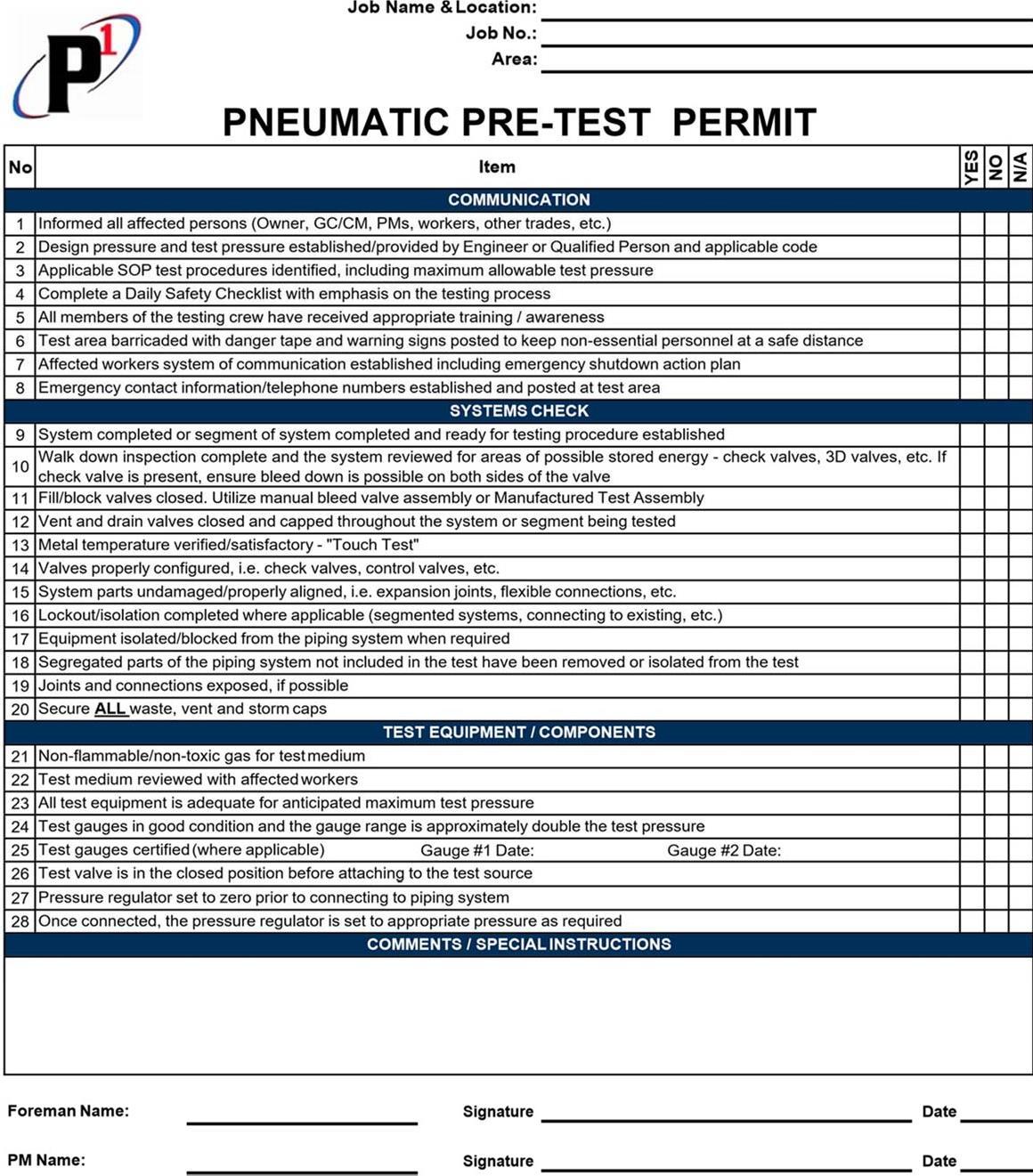
Op's Manager Name: Signature Date

Below are the instructions for completing each item within the Pneumatic Test Verification Form. The Pneumatic Test Verification Form is to be completed, in its entirety, and submitted to the Project Manager for record keeping purposes and for validation that the test procedure was successfully completed. Every item listed on the permit be reviewed, the appropriate “Yes/No/Not Applicable” box checked, blanks filled in and signature line completed by the Foreman and the GC/Owner’s representative prior to submission.
Identify the piping system or piping segment that will be tested. Provide the service for which the piping will serve (i.e., heating water, chilled water, compressed air, etc.).
Record the pressure the system will be tested to as identified in the completion of the Pneumatic Pre-Test Permit.
Start Time
Record the actual time when the system reached test pressure and the official, witnessed test begins.
Start Pressure
Record the actual pressure when the official, witnessed test begins.
Finish Time
Record the actual time when the official, witness test is complete.
Finish Pressure
Record the actual pressure when the official, witnessed test is complete.
2) Owner (when applicable)
Notify the Owner of any and all pneumatic testing that is to occur, if required.
3) GC/CM
Notify the General Contractor/Construction Manager of any pneumatic testing that is to occur.
4) Workers
Notify all affected workers of any and all pneumatic testing that is to occur so that they are aware of the specific systems under test while working in other areas within the building and/or facility.
5) Other Affected Trades:
Notify the other affected trades (trades in close proximity of the test area) of any pneumatic testing that is occurring within the building and/or facility.
6) Pneumatic Pre-Test Permit Completed
Confirm that the Pneumatic Pre-Test Permit has been completed, approved and contains the required signatures of the Foreman, Project Manager and Operations Manager. If the permit has not been completed or is not approved, the pneumatic test is not to proceed.
7) Test equipment securely attached to the system
Verify that the test equipment (test assembly, valves, pressure gauge(s), regulator, air compressor, etc.) are correctly and securely connected to the piping system or segment being tested prior to the start of the test.
8) Test pressure re-verified
Confirm the test pressure established in the completion of the Pneumatic Pre-Test Permit.
9) All non-essential personnel removed from the test area
Ensure that the test area is barricaded, warning signs are posted and all personnel (P1 workers, other trades, etc.) that are not directly involved in the test process have evacuated the test area and remain out of the area until the test is complete and are given the authorization to reenter.
10) All affected personnel wearing the proper PPE
Ensure that all employees are wearing the correct PPE for the tasks being completed.
11) Pressure applied gradually according to the SOP standard or as described in the Piping Code
Administer the application of air into the system as required by the procedure
established during the completion of the Pneumatic Pre-Test Permit (i.e. bring the system pressure up gradually with visual examinations of pressure between onehalf and two-thirds of operation pressure).
12) Pressure maintained according to the SOP standard, customer specs or as described in the Piping Code
Verify that the test pressure is maintained within the piping system or segment for the specified duration and an official approval is achieved.
13) All joints and connections carefully inspected for leaks (if Item 11fails)
In the event the system pressure is not maintained for the required duration, inspect each and every joint and/or equipment connections (if applicable) for the source of any leaks, soap joints if necessary to assist in the location of any leaks.
14) Pressure released before leak repairs are started (if Item 11 fails)
In the event the system pressure is not maintained for the required duration and the leak source is identified, confirm (visually and via pressure gauges) the system is depressurized before remedial work begins.
15) StoredenergygraduallyreleasedaccordingtotheSOPusingmanualbleed valve assembly or Manufactured Test Assembly until pressure gauge(s) read zero
Once the test is completed, or prior to any leak repair, begin gradually depressurizing the piping system or segment utilizing the means and methods developed and reviewed during the completion of the Pneumatic Pre-Test Permit paying careful attention to any areas previously identified as potentially storing energy. Once depressurized, verify all pressure gauges utilized in the test read zero and the valve and/or flange associated with the Manufactured Test Assembly is open to atmosphere.
16) Repair leaks and retest the system if necessary
Once the system has been fully depressurized (through Item 2 above) and leaks have been successfully completed, retest the system utilizing the same process as delineated above.
17) At the completion of the test, provide an “all clear” to all pertinent parties
Once the test has been successfully completed, adequately depressurized and verified safe, provide notification to all pertinent individuals that the test is complete and the areas that were barricaded during the test process are now safe to enter. Remove barricades and all warning signs posted throughout the test area.
This portion of the verification form is to include any additional comments and/or any special instructions specific to the test as deemed necessary, please be specific. In addition, if during the testing process any unanticipated circumstances and/or problems occurred that need to be addressed in any future testing processes, please include specifics within this area so that they can be reviewed and the testing processes modified as needed.
This portion of the verification form is provided to list all P1 personnel that were directly involved in the pneumatic testing process.
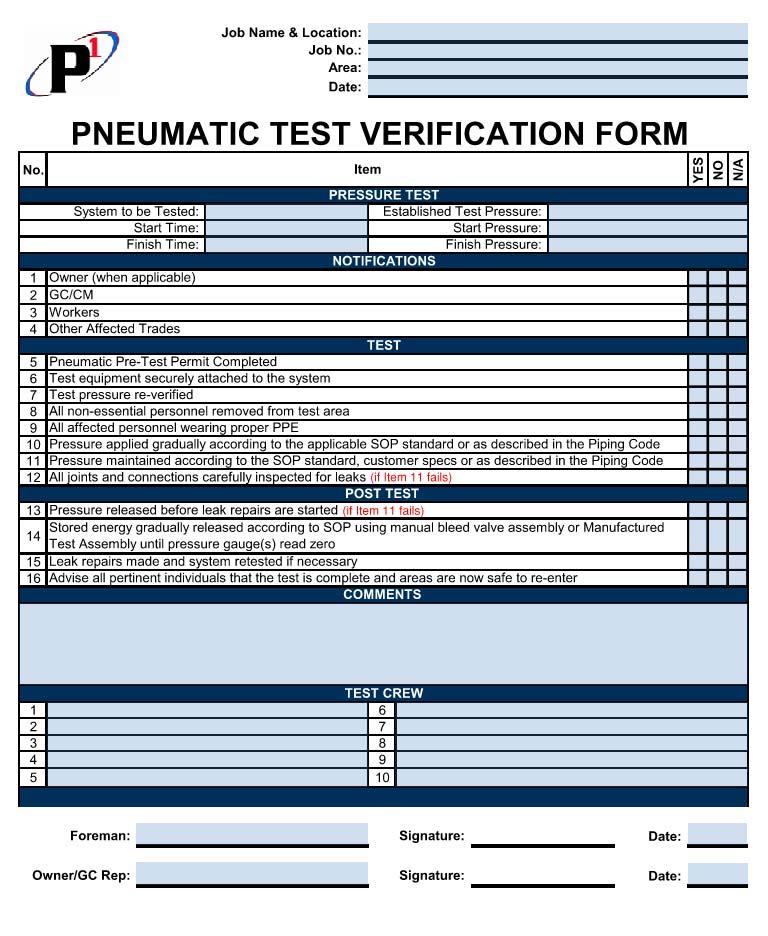

Below are the instructions for utilizing the Manufactured Test Assembly for pneumatictesting of grooved piping systems. During all steps of this process, always be cognizant of body position/placement and avoid the open ends of the valve assembly at all times
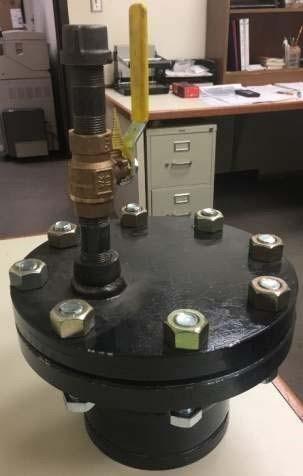
At all open ends of a piping system or segment of a grooved piping system that is to be tested, install the Manufactured Test Assembly (shown above). Ensure that the grooved coupling is installed per manufacturer’s recommendations, the flange bolts are tight, the bleed down valve is in the closed position and readily accessible.
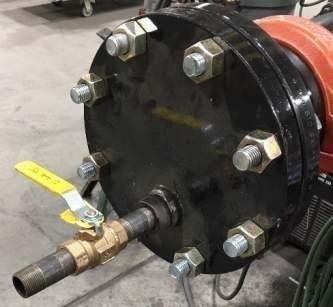
Once the test has been successfully completed and with the valve in the closed position, remove the cap on the end of the nipple as shown in Figure 1 (left).
Step 3:
With the cap removed, slowly open the valve on the end of the assembly to verify that the system or segment has been properly depressurized and does not contain any air or gas. However, if air is present, allow the system to depressurize with the valve partially open until the system has completely depressurized.
Step 4:
Once the system has depressurized, open the valve to the full open position as shown in Figure 2 (right).
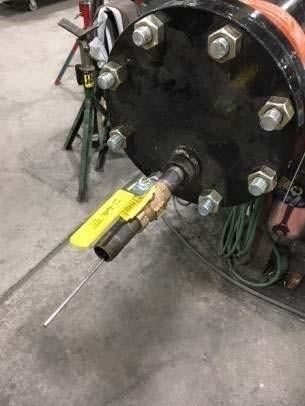
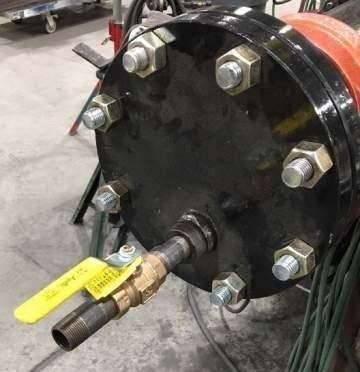
Step 5:
To confirm that the valve is open and there are no obstructions between the valve and the system, insert wire or a welding rod of sufficient length through the valve to make sure the opening is free from blockage as shown in Figure 3 (left).
Loosen all flange bolts to further ensure all system pressure has been relieved as shown in Figure 4 and Figure 5 (below).
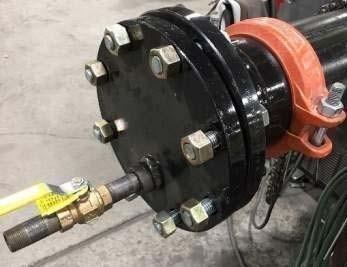
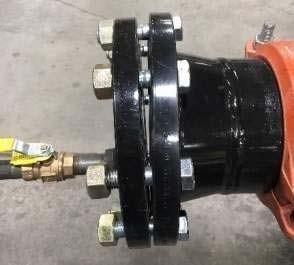
Once the valve has been opened and the flange bolts loosened, the grooved coupling can be removed as shown in Figure 6 (below).
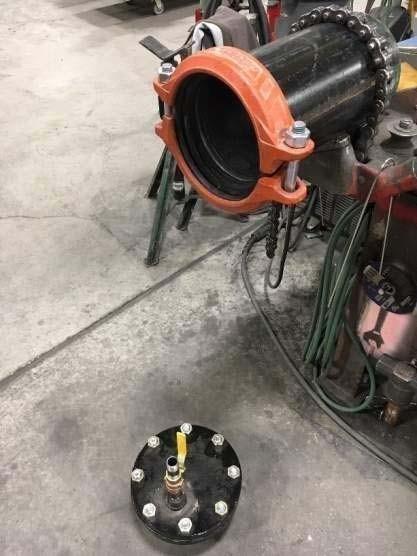
The purpose of this plan is to ensure employee safety using personal protective equipment (PPE). This Personal Protective Equipment Program is required to comply with Occupational Safety and Health Administration (OSHA) regulations 29 CFR 1910.132. The information in this program is based on the OSHA standard.
This procedure applies to all employees (professionals, craft and contractors) at any time during the course of their work at any workplace.
Refer to Respiratory Protection procedure for more information on respirator and use.
Refer to Energized Electrical Safety procedure for more information relating to NFPA70E.
1. General Guidelines
It is the employer’s responsibility to select PPE for employees based on an assessment of the hazards in the workplace and the hazards that employees are likely to encounter. Detailed PPE requirements must be workplace-specific. Employees must be issued PPE to protect them from workplace hazards that cannot be eliminated or reduced to an acceptable level by other controls. Protective equipment, including PPE for eyes, face, head, and extremities, protective clothing, respiratory devices, and protective shields and barriers, must be provided; used; and maintained in a sanitary and reliable condition wherever it is necessary by reason of hazards of processes or environment, chemical hazards, radiological hazards, or mechanical irritants encountered in a manner capable of causing injury or impairment in the function of any part of the body through absorption, inhalation, or physical contact.
a. All employees who visit facilities or construction sites must wear the following as a minimum level of PPE:
i. Head Protection stamped ANSI Z89.1
ii. Eye Protection Stamped ANSI Z87.1+ required on the safety glasses. Prescription glasses must have additional side shields. (Additional eye protection may be required in some areas or during certain tasks.)
iii. Clothing—Shirts covering the full torso and shoulders (minimum of a 3 inch sleeve) and long pants.
Work boots hard-toed safety shoes/boots are suggested. Sturdy, heavy-duty work shoes or boots are required. Additional requirements for PPE are discussed in the following sections.
Defective or damaged PPE must be immediately removed from use. Employees must inspect PPE prior to use to ensure it is fit for use.
3. Maintenance
PPE in use must be inspected daily and maintained in serviceable condition. Items of personal issue must be cleaned, sanitized as appropriate, and repaired before it is reissued to another employee. Defective or damaged PPE must not be used.
4. Head Protection
General Guidelines: Employees must wear hard hats when visiting any construction jobsite, preforming construction work, when working in areas where there is potential for injury to the head from falling or moving objects. A hard hat shall never be altered, such as painting, drilling into it, etc., this will weaken the hard hat and shall not be permitted. Damaged or expired hard hats are to be replaced immediately.
5. Eye and Face Protection
ANSI approved safety glasses must be worn at all times in all work areas. Safety goggles, face shields and hoods shall be available and must be worn by each employee while chipping, grinding, welding, cutting or doing any other operation that could cause flying objects/debris.
Full face shields are required if there is a risk of face injury or when possible eye and face hazards are present. Safety glasses must be worn under face shields.
6. Hearing Protection
Engineering controls must be the primary means of reducing noise levels; however, when engineering controls are not feasible or cannot reduce levels to within permissible limit, hearing protection must be worn.
Engineering controls include equipment substitution, enclosure of equipment, worker isolation, vibration damping, and mufflers.
Hearing protection is available at no cost to all employees who are exposed to an 8 hour TWA of 85 decibels or greater.
7. Respiratory Protection
Refer to the Respiratory Protection procedure for information on respirator selection and use.
8. Protective Clothing
In addition to other requirements of this procedure, all employees must wear, as minimum protection, full length pants and a shirt with sleeves at least 3 inches in length. Loose clothing, rings, wristwatches or any items that may “catch” should not be worn when working around or near machinery, in trenches, caissons, or other confined or rough surface areas.
All employees exposed to vehicular traffic, including surveyors, inspectors, spotters signalmen, flagmen, and other construction trades, must wear high visibility apparel with a significant amount of reflective area in accordance with American National Standards Institute (ANSI). As a general rule, when employees are accessing a construction site, high visibility apparel must be worn. Commonly, vests, jackets, and solid fluorescent clothing will suffice.
Skin protection such as; gloves, aprons, or other suitable skin protection shall be used when handling rough materials, chemicals, hot or cold objects that could injure the employee’s skin.
At minimum, a cut-resistance level 3 gloves is required to be worn 100% of the time while working on all jobsites. The only time work can be performed without gloves, will be, if the foreman gives the associate permission to remove their gloves to work with extremely small parts or where the gloves would pose a greater hazard.
In addition, employees need to wear hand protection that is suitable to withstand the hazard when certain types of hazards are present. These include hand hazards and potential hand hazards from skin absorption of harmful substances, severe abrasions, punctures, chemical burns, thermal burns, and harmful temperature extremes. Safety Data Sheets can provide the necessary information on the type of glove to be used when chemicals are handled.
Employees are encouraged to wear a good pair of hard-toed safety shoes/boot with 6-inch tops that support the ankle. Sturdy, heavy-duty work shoes or boots are required. Canvas or leather type athletic shoes and toeless or heelless shoes are not permitted at any jobsite. Shoes that are deemed “work shoe/boot” by the manufacturer will be permitted if they meet these requirements. Any shoe/boot that meets ANSI (z41) footwear standards will be accepted. All work shoes/boots must have continuous leather top (suede is not acceptable); no other material may be exposed.
Additional protection may be required depending on the work. The following factors must be considered when determining the appropriate foot protection to be utilized during the course of work: slipping, uneven terrain, abrasion, ankle protection and foot support, crushing potential, temperature extremes, corrosive substances, puncture hazards, electrical shock, and any other recognized hazard.
Rubber boots are required when working with concrete or water.
11. V-Rated Rubber Gloves and Flame Resistant Clothing
Refer to Energized Electrical Safety procedure for more information relating to NFPA70E.
12. Protective Chaps
Protective chaps meeting current United States Department of Agriculture (USDA) Forest Service requirements must be worn by employees operating chain saws; gasoline-powered, handheld abrasive wheel cutoff saws; and other similar types of power tools.
Revision Date: 00/00/000
Page: 00 of 000
The purpose of this section is to provide workers and their designated representatives a right of access to relevant exposure and medical records to fulfill responsibilities under the Occupational Safety and Health Act (OSHA). Access by workers and their representatives, is necessary to yield both direct and indirect improvements in the detection, treatment, and prevention of occupational disease.
This section applies to all worker exposure and medical records, and analyses thereof, made, or maintained in any manner, including an in-house or contractual basis. P1 CONSTRUCTION; hereafter referred to as “The Company” shall assure that the preservation and access requirements of this section are complied with regardless of the manner in which records are made or maintained.
Upon initial employment workers will be briefed and at least annually thereafter, informed via a bulletin board or community location posting of the following:
• The existence, location, and availability of worker records for exposure to toxic substances or harmful physical agents.
• The person responsible for maintaining and providing access to the records. Contact your Resources Manager or Safety Representative to initiate this request.
• The worker right of access to those records.
• The entire section pertaining to records retention is available for worker review by contacting the Safety Representative, Human Resources, or delegate.
The Human Resources Manager is responsible for maintaining and providing access to workers’ occupational medical records. These records are kept separately from other worker records. All medical records will be retained following local, company and jurisdictional requirements.
The medical records of workers who have worked for less than (1) year for the employer need not be retained beyond the term of employment if they are provided to the worker upon the termination of employment.
Medical records are records concerning the health status of a worker which is made or maintained by a physician, nurse or other health care provide or technician.
Medical records consist of:
Revision Date: 00/00/000
Page: 00 of 000
• Medical and employment questionnaires or histories (including job description and occupational exposures),
• The results of medical examinations (pre-employment, pre-assignment, periodic, or episodic) and laboratory tests (including chest and other X-ray examinations taken for the purposes of establishing a baseline or detecting occupational illness, and all biological monitoring not defined as an “employee exposure record”),
• Medical opinions, diagnoses, progress notes, and recommendations,
• First aid records,
• Descriptions of treatments and prescriptions,
• Employee medical complaints.
Worker exposure records shall be maintained for the duration of employment and for 30 years thereafter and should include the following:
• Environmental (workplace) monitoring including personal, area, grab, swipe (wipe over a designated area), etc. type samples.
• Biological monitoring—level of chemical in the blood, urine, hair, fingernails, etc.
• Safety data sheets or a chemical inventory or any other record which reveals where and when used and the identity (e.g., chemical, common, or trade name) of a toxic substance or harmful physical agent.
Upon written request from an approved requestor such as a local or federal jurisdiction The Company will remove all personal identifiers before releasing the medical/exposure records.
Each worker or designated representative has the right to request access to his/her records. The company shall assure that access is provided in a reasonable time, place, and manner. The company will provide a copy of the medical records within fifteen (15) working days.
The worker may access his/her records by making a request to the Human Resources Manager or Safety Representative or delegate. The company will release an worker's medical records only if the worker has given specific, written consent (see Attachment 6-1).
If the company cannot reasonably provide access to the record within fifteen (15) working days, the company shall within the fifteen (15) working days apprise the worker or designated representative requesting the record of the reason for the delay and the earliest date when the record can be made available.
• In the case of an original X-ray, the employer may restrict access to on-site examination or make other suitable arrangements for the temporary loan of the X-ray.
• Records or copies will be provided at no cost to the worker.
Date: 02/07/2025
Revision Date: 00/00/000
Page: 00 of 000
o Whenever a record has been previously provided without cost to a worker or designated representative, the company may charge reasonable, non-discriminatory administrative costs (i.e., search and copying expenses but not including overhead expenses) for a request by the worker or designated representative for additional copies of the record.
o No charge for an initial request for a copy of new information that has been added to a record which was previously provided.
o No charge for an initial request by a recognized or certified collective bargaining agent for a copy of a worker exposure record or an analysis using exposure or medical records.
Whenever ceasing to do business, the company shall transfer all records subject to this section to the successor employer. The successor employer shall receive and maintain these records.
Whenever ceasing to do business and there is no successor employer to receive and maintain the records subject to this standard, the company shall notify affected workers of their rights of access to records at least three (3) months prior to the cessation of business.
References
Code of Federal Regulation, Title 29, Part 1910.1020
Revision Date: 00/00/000
Page: 00 of 000
Sample Authorization letter for the release of worker medical record information to a designated representative
I, _______________________, (full name of worker/patient) hereby authorize ___________________________ (individual or organization holding the medical records) to release to ______________________________ (individual or organization authorized to receive the medical information), the following medical information from my personal medical records:
(Describe generally the information desired to be released).
I give my permission for this medical information to be used for the following purpose:
But I do not give permission for any other use or re-disclosure of this information.
(Note: Several extra lines are provided below so that you can place additional restrictions on this authorization letter if you want to. You may, however, leave these lines blank. On the other hand, you may want to (1) specify a particular expiration date for this letter (if less than one year); (2) describe medical information to be created in the future that you intend to be covered by this authorization letter; or (3) describe portions of the medical information in your records which you do not intend to be released as a result of this letter.)
Full name of Worker or Legal Representative
Signature of Worker or Legal Representative & Date
Purpose:Accidentsresultingfrompoweredindustrialtruckoperationcanresult inseverepersonalinjury ordeath,majorpropertydamageandmajordamageto companyproducts.Thisposesaseriousproblem forworkersandtheiremployer. The OSHA Powered Industrial Trucks Standard establishes uniform requirements tomakesurethathazardsassociatedwiththeuseofPoweredIndustrialTrucks are evaluated,andthatthishazardinformationandtrainingistransmittedtoall affected workers. The associate will be re−evaluated every three years
Mandatoryrefreshertrainingwillberequiredforunsafeoperations,accident, differentvehicletype,or changeinconditions.
GENERAL:P1 Construction, LLCwillensurethattherequirementsoftheOSHAStandard forpowered industrial truckswillbeadheredto.Thisstandardpractice instruction is intended to address comprehensively the issues of; employee training,authorization,safetyrequirements,andthe generaloperationof powered industrialtrucks.
1. Written Program Development and maintenance of a written powered industrial trucks program.
2. TrainingProgram.Developmentandimplementationoftheemployee trainingprogram regarding;authorization,use,operatormaintenance,and associatedhazards.
3. OperationsProgram.Developmentandimplementationoftheoperations program regarding; authorization, use, operator maintenance, and associated hazards.
4. Configuration Program. Development and implementation of the vehicle regarding; modificationsoradditionstovehicleswhichaffectcapacity,and safeoperation.
1. Written Program. This standard practice instruction will be maintained in accordance with 29 CFR 1910.178 and updated as required. This written program will be communicated to all personnel that are affected by it.
2. Training program. Operator training. Only trained and authorized operators shall be permitted to operate a powered industrial truck. Employees will be trained in accordance with the following guidelines.
o The company Safety qualified instructor will have the authoritytoprovide trainingontheoperationofpowered industrialtrucks.
o EmployeesofP1 Construction, LLCwillnotoperateapowered industrialtruck(PIT) unless theyhavereceivedtraining.
o Trainingincludesformaltraining,practicaltrainingand operatorevaluationinthe workplace.
▪ Willincludeloadcapacity,instructions,distances, refueling, ramps, visibility
and balancer and counterbalances.
3. Operations Program.
o Trucksshallnotbedrivenuptoanyonestandinginfrontof a fixedobject.
o No extrapassengers.
o Nopersonshallbeallowedtostandorpassunderthe elevatedportionofanytruck, whetherloadedorempty.
o Armsorlegsareprohibitedfrombeingplacedbetweenthe uprights of the mast or outside the running lines of the truck.
o Whenapoweredindustrialtruckisleftunattended,load engagingmeansshallbe fullylowered,controlswillbe neutralized,powershutoff,andbrakesset.Wheelswill be blockedifthetruckisparkedonanincline.
▪ Apoweredindustrialtruckisunattendedwhenthe operator is 25 ft. or more away from the vehicle whichremainsinhisvieworwhenevertheoperator leavesthevehicleanditisnotinhisview.
▪ Whentheoperatorisdismountedandwithin25ft.of thetruckstillinhisview,the loadengagingmeans will be fully lowered, controls neutralized, and the brakessettopreventmovement.
o The operator will ensure sufficient headroom under overheadinstallations,lights, pipes,sprinklersystem,etc. beforeoperatingthevehicleintheseareas.
o Anoverheadguardwillbeusedasprotectionagainstfalling objects.
o 3.1Onlyapprovedindustrialtruckswillbeusedin hazardouslocations.
o 3.2Generalrequirements.Operators:
▪ WillobeyPlant/Sitespeedsandothertraffic regulations atall times.
▪ Willwearseatbeltwhenoperatingthepowered industrialtruck.
▪ Will operate loaded trucks with forks as low as possibletotheground,with theloadcarriedlowand tiltedback.
▪ Willnotraiseorlowerloadswhilemoving.
▪ Willensurevehiclesound/illuminatedwarning devices areoperational.
▪ Willyieldrightofwaytopedestrians,emergency vehicles,andavoidpedestrian lanes.
▪ Willensuretheloadispointeduphill.
o 3.3Prestartrequirements.Operators:
▪ Willinspectallbrakes,controls,gauges,lights,seat belts,androutineoperational featurestomakesure theyareinproperworkingorderdailyorbeforeeach shift.
▪ Will remove the truck from service any time it is foundtobeinneedofrepair, defective,orinanyway unsafe,thetruckwillbetakenoutofserviceuntilit has beenrestoredtosafeoperatingcondition.
o 3.4LoadingƒUnloadingrequirements.Operators:
▪ Willensureloadiswithinthetrucksratedcapacity.
▪ Will ensureifloadingƒunloading onto orfromracks andorstackedmaterialsthe
propersafeweightor height to load ratio is maintained.
▪ Willensurewhenloadingandunloadingtrucks, truckƒtrailertireswillbe chocked.
o 3.5Refuelingrequirements.Operators:
▪ Refuelonlyinassigned,ventilatedareascontaining no ignitionsources.
▪ Turn offengine.
▪ Followthevehiclemanufacturer'sinstructionsforgas or propanefueling.
▪ Trytopreventspills,cleananyspillspromptly, replacefuelcapbeforestartingor movingvehicle.
▪ Storeemptypropanetanksinapropersecured flammable storagearea.
4. Configurationprogram.
o 4.1Nomodificationsoradditionswhichaffectcapacityand safeoperationshallbe performed.
o 4.3Allnameplatesandmarkingswillbeverifiedasbeingin placeandmaintainedina legiblecondition.
The purpose of this program is to provide P1 Construction, LLC personnel with comprehensive information and guidelines for the protection of employees against hazardous occupational exposures to respirable crystalline silica in the construction industry.
Crystalline silica is a common mineral found in many naturally occurring and man-made materials used at construction sites. Materials like sand, concrete, brick, block, stone and mortar contain crystallinesilica. Amorphous silica, such assilicagel, is non-hazardous and is not crystalline silica.
Respirable crystalline silica (very small particles typically at least 100 times smaller than ordinary sandfoundonbeachesorplaygrounds)isgeneratedbyhigh-energyoperationslikecutting,sawing, grinding, drilling and crushing stone, rock, concrete, brick, block and mortar, or when abrasive blasting with sand. Workers who are over-exposed to respirable crystalline silica are at increased risk of developing serious adverse health effects including:
• Lung cancer
• Chronic obstructive pulmonary disease (COPD)
• Pulmonary tuberculosis
• Kidney disease
• Silicosis
As a potential Exposing Employer, P1 Construction has a duty to ensure employees are complying with applicable safety and health regulations. To that end, this program has been developed in accordance with the requirements contained in the Occupational Safety and Health Administration’s (OSHA) Respirable Crystalline Silica standard (29 CFR 1926.1153).
• Action level means a concentration of airborne respirable crystalline silica of 25 µg/m3 calculated as an 8-hour TWA.
• Competent Person means an individual who is capable of identifying existing andforeseeable respirable crystalline silica hazards in the workplace and who has authorization to take prompt corrective measures to eliminate or minimize them. The competent person must have the knowledge and ability necessaryto implement the written exposure controlplan required under the standard.
• Employee exposure means the exposure to airborne respirable crystalline silica that would occur if the employee were not using a respirator.
• Objective data means information, such as air monitoring data from industry-wide surveys or calculations based on the composition of a substance, demonstrating employee exposure to respirablecrystalline silicaassociatedwithaparticularproductormaterialoraspecificprocess, task, or activity. The datamust reflect workplace conditions closelyresembling orwith a higher exposure potential than the processes, types of material, control methods, work practices, and environmental conditions in P1 Construction's current operations.
• Respirable crystalline silica means quartz, cristobalite, and/or tridymite contained in airborne particles that are determined to be respirable by a sampling device designed to meet the characteristics for respirable-particlesize-selective samplers specified in the International Organization for Standardization (ISO) 7708:1995: Air Quality-Particle Size Fraction Definitions for Health-Related Sampling.
Where our operations include tasks such as but not limited to chipping, sawing, grinding, drilling or sanding of materials containing crystalline silica, where potential employee exposure to respirable crystalline silica exists, the general requirements listed below must be followed in order to adequately control the hazard.
Where applicable we will establish and implement a written exposure control plan that containsat least the following elements:
a. A description of the tasks in the workplace that involve exposure to respirable crystalline silica;
b. A description of the engineering controls, work practices, and respiratory protection used to limit employee exposure to respirable crystalline silica for each task;
c. A description of the housekeeping measures used to limit employee exposure to respirable crystalline silica; and
d. A description of the procedures used to restrict access to work areas, when necessary,to minimize the number of employees exposed to respirable crystalline silica and their level of exposure, including exposures generated by other employers or sole proprietors.
P1 Construction, LLC will make the plan available to employees, review and evaluate the effectiveness of it at least annually and update it as necessary. Lastly, P1 Construction, LLC must also designate a competent person to make frequent and regular inspections of job sites, materials and equipment to implement the written Exposure Control Plan.
P1 Construction, LLC will designate a Competent Person to implement the written Exposure Control Plan. In order to adequately manage a silica ECP, Competent Persons must:
a. Make the initial evaluation of the site for potential worker silica exposures
b. Anticipate employee exposures (observation, tasks performed, historical data, etc.)
c. Select, implement and manage the appropriate control strategies in simple situations or recommend involving a silica Qualified Person for more complex situations d. Make frequent and regular inspections of job sites, materials and equipment
e. Monitor the work site and take prompt corrective action to ensure safe work conditions are maintained
When cleaning up dust that can contribute to employee exposures to respirable crystalline silica, P1 Construction, LLC will:
• Not allow cleaning by dry brushing and sweeping, unless methods such as wet sweeping and HEPA-filtered vacuuming are not feasible;
• Not allow cleaning of surfaces or clothing with compressed air, unless the compressedair is usedtogether with a ventilation systemthat effectively capturesthe dust cloud or noother cleaning method is feasible.
P1 Construction, LLC will make medical surveillance available at no cost and at a reasonable time and place, for each employee of the company who will be required under the silica standard to use a respirator for 30 or more days in any year (365 consecutive day span).
P1 Construction, LLC will ensure that all medical examinations and procedures required by the silica standard are performed by a physician or other licensed health care professional (PLHCP). OSHA’s partial definition of this person is as follows: “PLHCP means an individual whose legally permitted scope of practice (i.e., license, registration, or certification) allows him or her to independently provide or be delegated the responsibility to provide some or all of the particular health care services required” by the silica standard.
a. Information Provided to the PLHCP
P1 Construction, LLC will ensure that the examining PLHCP has a copy of the silica standard, and shall provide the PLHCP with the following information:
1. A description of the employee's former, current, and anticipated duties as they relate to the employee's occupational exposure to respirable crystalline silica;
2. The employee's former, current, and anticipated levels of occupational exposure to respirable crystalline silica;
3. A description of anypersonal protective equipment usedortobeusedbythe employee, including when and for how long the employee has used or will use that equipment; and
4. Information from records of employment-related medical examinations previously provided to the employee and currently within the control of P1 Construction, LLC
b. Initial Examination
P1 Construction, LLC shall make available an initial (baseline) medical examination within 30 days after initial assignment, unless the employee has received an adequate medical examination within the last three years. The initial examination shall consist of:
1. A medical and work history, with emphasis on: past, present, and anticipated exposure to respirable crystalline silica, dust, and other agents affecting the respiratorysystem;
2. A physical examination with special emphasis on the respiratory system;
3. A chest X-ray;
4. A pulmonary function test;
5. Testing for latent tuberculosis infection; and 6. Any other tests deemed appropriate by the PLHCP.
c. Periodic Examinations
P1 Construction, LLC will make available medical examinations that include the procedures described above in the “Initial Examination” section (with the exception of the tuberculosis test) at least every three years, or more frequently if recommended by the PLHCP.
d. PLHCP's Written Medical Report for the Employee
P1 Construction, LLC must ensure that the PLHCP explains to the employee the results of the medical examination and provides each employee with a written medical report within 30 days of each medical examination performed. The written report shall contain:
1. A statement indicating the results of the medical examination, including any medical condition(s) that would place the employee at increased risk of material impairment to health from exposure to respirable crystalline silica and any medical conditions that require further evaluation or treatment;
2. Any recommended limitations on the employee's use of respirators;
3. Any recommended limitations on the employee's exposure to respirable crystalline silica; and;
4. A statement that the employee should be examined by a specialist if deemed appropriate by the PLHCP.
e. PLHCP's Written Medical Opinion for P1 Construction, LLC must obtain a written medical opinion from the PLHCP within 30 days of the medical examination. The written opinion must contain only the following:
1. The date of the examination;
2. A statement that the examination has met the requirements of OSHA’s Silica standard; and
3. Any recommended limitations on the employee's use of respirators.
4. If the employee provides written authorization (See Appendix F), the written opinion shall also contain either or both of the following:
• Any recommended limitations on the employee's exposure to respirable crystalline silica;
• A statement that the employee should be examined by a specialist based on the potential chest X-ray results or if otherwise deemed appropriate by thePLHCP.
P1 Construction, LLC must ensure that each employee receives a copy of the written medical opinion provided to us by the PLHCP, within 30 days of each medical examination performed.
If the PLHCP's written medical opinion indicates that an employee should be examined by a specialist, P1 Construction, LLC must make available a medical examination by a specialist within 30 days after receiving the PLHCP's written opinion.
P1 Construction, LLC must ensure that the examining specialist is provided with the same information as listed above in the “Information Provided to the PLHCP” section.
P1 Construction, LLC must ensure that the specialist explains to the employee the results of the medical examination and provides each employee with a written medical report within 30 days of the examination. The written report shall meet the same requirements as listed above in the “PLHCP's Written Medical Report for the Employee” section.
P1 Construction, LLC must obtain a written opinion from the specialist within 30 days of the medical examination. With only a couple exceptions, the written opinion must meet the requirements listed above in the “PLHCP's Written Medical Opinion for P1 Construction Inc.” section.
P1 Construction, LLC employees will be trained on company operations that result in silica exposure and ways to limit exposure.
P1 Construction, LLC will include respirable crystalline silica as part of its existing Hazard Communication program, as required elsewhere by OSHA. This means adequate employee access to labels on products containing crystalline silica and their corresponding Safety Data Sheets (SDS)
P1 Construction, LLC must ensure that each employee covered by OSHA’s silica standard can demonstrate knowledge and understanding of at least the following:
a. The health hazards associated with exposure to respirable crystalline silica;
b. Specific tasks in the workplace that could result in exposure to respirable crystalline silica;
c. Specific measures we have implemented to protect employees from exposure to respirable crystalline silica, including engineering controls, work practices, and respirators to be used;
d. The contents of OSHA’s silica standard;
e. The identity of the competent person designated by P1 Construction Inc.; and
f. The purpose and a description of the medical surveillance program required by the standard.
P1 Construction, LLC will make available, without cost, a copy of OSHA’s “Respirable Crystalline Silica” standard (29 CFR 1926.1153) to employees covered by the standard.
P1 Construction, LLC will keep any / all of the below listed records that are generated as a result of silica exposure or compliance with OSHA’s silica standard:
a. Air Monitoring Data
P1 Construction, LLC must make and maintain an accurate record of all exposure measurements taken to assess employee exposure to respirable crystalline silica. This record shall include at least the following information:
1. The date of measurement for each sample taken;
2. The task monitored;
3. Sampling and analytical methods used;
4. Number, duration, and results of samples taken;
5. Identity of the laboratory that performed the analysis;
6. Type of personal protective equipment, such as respirators, worn by the employees monitored;
7. Name, social security number, and job classification of all employees represented by the monitoring, indicating which employees were actually monitored.
b. Objective Data
Definition: “Objective data means information, such as air monitoring data from industrywide surveys or calculations based on the composition of a substance, demonstrating employee exposure to respirable crystalline silica associated with a particular product or material or a specific process, task, or activity. The data must reflect workplace conditions closely resembling or with a higher exposure potential than the processes, types of material, control methods, work practices, and environmental conditions in P1 Construction Inc.'s current operations.”
P1 Construction, LLC must make and maintain an accurate record of all objective data relied upon to comply with the silica standard. This record shall include at least the following information:
1. The crystalline silica-containing material in question;
2. The source of the objective data;
3. The testing protocol and results of testing;
4. A description of the process, task, or activity on which the objective data were based; and
5. Other data relevant to the process, task, activity, material, or exposures on which the objective data were based.
P1 Construction, LLC must make and maintain an accurate record for each employee covered by medical surveillance under the requirements of the standard. The record shall include the following information about the employee:
1. Name and social security number;
2. A copy of the PLHCPs' and specialists' written medical opinions; and
3. A copy of the information provided to the PLHCPs and specialists.
Note: Employers must ensure that air monitoring exposure records, objective data and medical records are maintained and made available in accordance with OSHA standard29 CFR 1910.1020, “Access to employee exposure and medical records”.
Additionally beyond the above listed general requirements, P1 Construction, LLC must then choose at least one of two exposure control methods. The company can choose to fully comply with “Table 1” or they can implement “Alternative Exposure Control Methods”. Requirements for each option are summarized below:
OSHA has published a listing of eighteen (18) common construction industry tasks and pieces of equipment that are known to generate large quantities of dust (potentially respirable crystalline silica). This listing is referred to as “Table 1”.
Note: See “Appendix A” for a complete copy of Table 1.
To the right of each of the listed items in Table 1 are two columns. One column describes mandatory “Engineering and work practice control methods” and the other is “Required respiratory protection and minimum assigned protectionfactor (APF)”, for thosetaskswhich require the usage of respiratory protection. Depending on the listed item and how many hours per shift the employee(s) will be exposed dictates two things: whether or not respiratory protection isrequired and if so, what level of respiratory protection is needed.
All respirators are given an “Assigned Protection Factor” (APF) by OSHA. Below is a listing of some common respirators used in construction and their respective APF ratings: Type
NIOSH N95 Filtering Facepiece 10
Half Mask Air-Purifying Respirator 10
Full Face Air-Purifying Respirator 50
Powered Air-Purifying Respirator 25 – 1,000 (depending on type)
Note: For a complete listing of APF ratings, see OSHA standard: 29 CFR 1910.134(d)(3)(i)(A)
Generally speaking and based on the task(s) being executed, P1 Construction, LLC has elected to follow Table 1 in order to protect employees from potentially hazardous levels of crystalline silica. In these instances, the engineering controls, work practice controls and respiratory protection measures listed in Table 1 will be fully complied with for each applicable task or equipment operation.
When P1 Construction, LLC elects to utilize the Table 1 controls, the below listed items must also be followed where applicable:
1. For tasks performed indoors or in enclosed areas, provide a means of exhaust as needed to minimize the accumulation of visible airborne dust;
2. For tasks performed using wet methods, apply water at flow rates sufficient to minimize release of visible dust;
3. For measures implemented that include an enclosed cab or booth, ensure that the enclosed cab or booth:
a) Is maintained as free as practicable from settled dust;
b) Has door seals and closing mechanisms that work properly;
c) Has gaskets and seals that are in good condition and working properly;
d) Is under positive pressure maintained through continuous delivery of fresh air;
e) Has intake air that is filtered through a filter that is 95% efficient in the 0.3-10.0 μm range (e.g., MERV-16 or better); and f) Has heating and cooling capabilities.
4. In those cases where P1 Construction, LLC employee(s) performs more than one of the listed tasksin Table 1 during the course of his/her shift and thetotal duration of alltasks combined is more than four hours, the required respiratory protection for each task is the respiratory protection specified for more than four hours per shift. If the total duration of all Table 1 tasks performed is less than four hours, the required respiratory protection for each task is the respiratory protection specified for less than four hours per shift.
In those instances where P1 Construction, LLC is unable to fully comply with Table 1 or the planned task or equipment in questionis not listed in Table 1, analternative path to compliance will be followed.
The following items are mandatory if Table 1 control measures are not followed:
1. P1 Construction, LLC shall ensure that no employee is exposed to an airborne concentration of respirable crystalline silica in excess of 50 μg/m3 of air, calculated as an 8-hour Time Weighted Average (TWA), which is OSHA’s Permissible Exposure Limit (“PEL”).
2. P1 Construction, LLC shall assess the exposure of each employee who is or may reasonably be expected to be exposed to respirable crystalline silica at or above the action level, by utilizing one of the two below listed options:
a. Performance Option: P1 Construction, LLC must assess the 8-hour TWA exposure foreach employee on the basis of any combination of air monitoring data or objective data sufficientto accuratelycharacterizeemployeeexposurestorespirable crystalline silica.
b. Scheduled Monitoring Option: P1 Construction, LLC must perform industrial hygiene monitoring to assess the 8-hour TWA exposure for each employee on the basis of one or more personal breathing zone air samples that reflect the exposures of employees on each shift, for each job classification, in each work area. Where several employees perform the same tasks on the same shift and in the same work area, P1 Construction, LLC may sample a representative fraction of these employees in order to meet this requirement. In representative sampling, P1 Construction, LLC shall sample the employee(s) who are expected to have the highest exposure to respirable crystalline silica. Thetable belowsummarizes samplingfrequencyandpossibleemployer actions based upon the results:
Initial
Most Recent Exposure
Most Recent Exposure
Most Recent (noninitial) Exposure
Initial monitoring indicates employee(s) are below action level
Employee(s) exposure is at or above action level, but below PEL
Employee(s) exposure is above the PEL
Employee(s) are below the action level
Employer may discontinue monitoring
Repeat monitoring within 6 months
Repeat monitoring within 3 months
Repeat monitoring within 6 months, until two consecutive measurements, taken 7 or more days apart, are below the action level; employer may then discontinue monitoring
P1 Construction, LLC must reassess exposures whenever a change in the production, process, control equipment, personnel, or work practices may reasonably be expected to result in new or additional exposures at or above the action level, or when P1 Construction, LLC has any reason to believe that new or additional exposures at or above the action level have occurred.
Any respiratory protection equipment worn by P1 Construction, LLC employees in order to comply with OSHA’s silica standard, must be done so in accordance with OSHA’s existing Respiratory Protection standard found at 29 CFR 1910.134. This would include but not be limited to the following requirements:
1.A written Respiratory Protection Program
2.A Program Administrator
3.Proper respirator selection, use, cleaning and storage instructions
4.Employee fit testing; and
5.Employee training
Appendix A
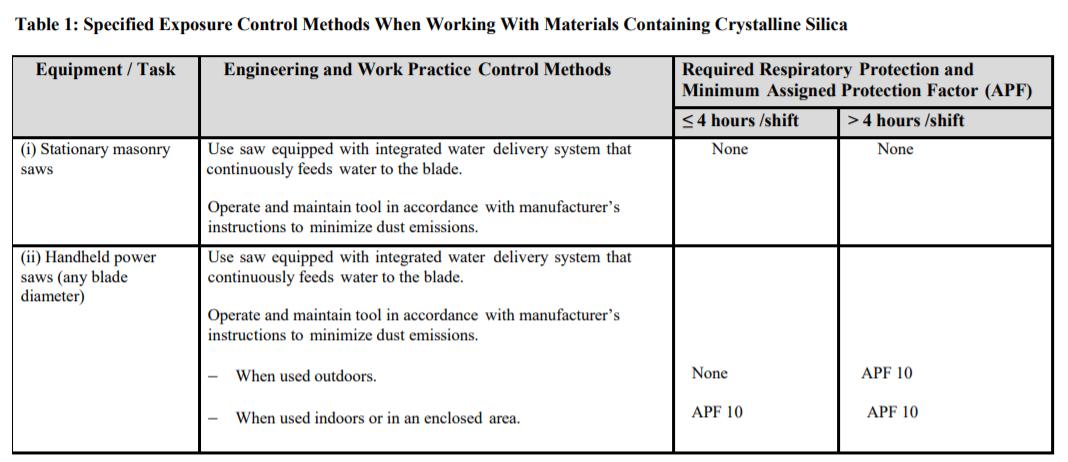
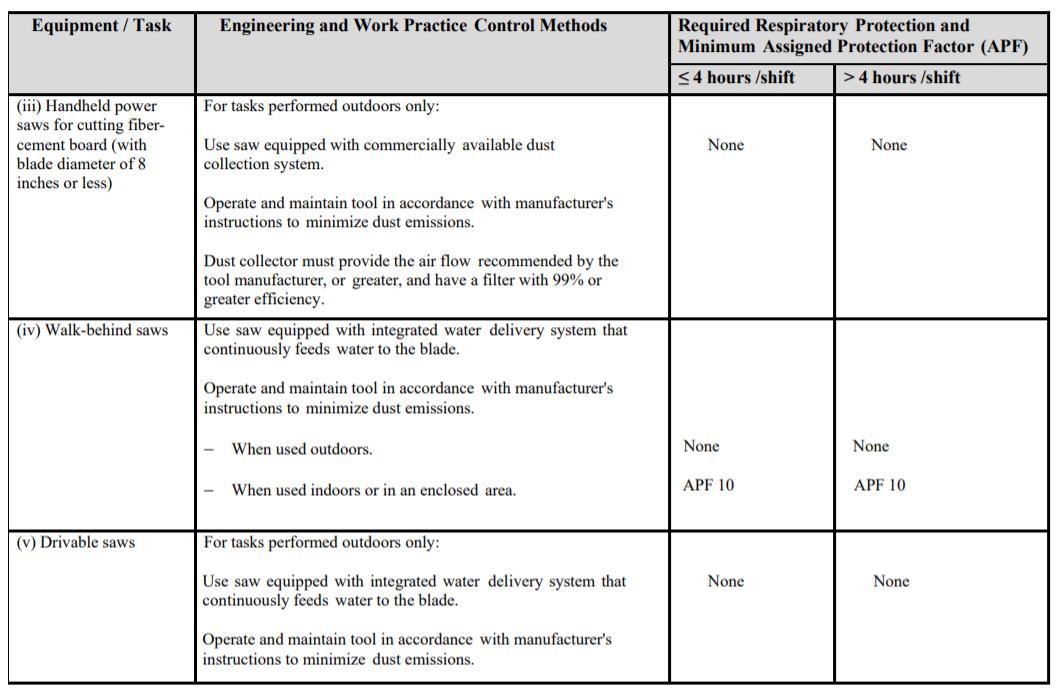
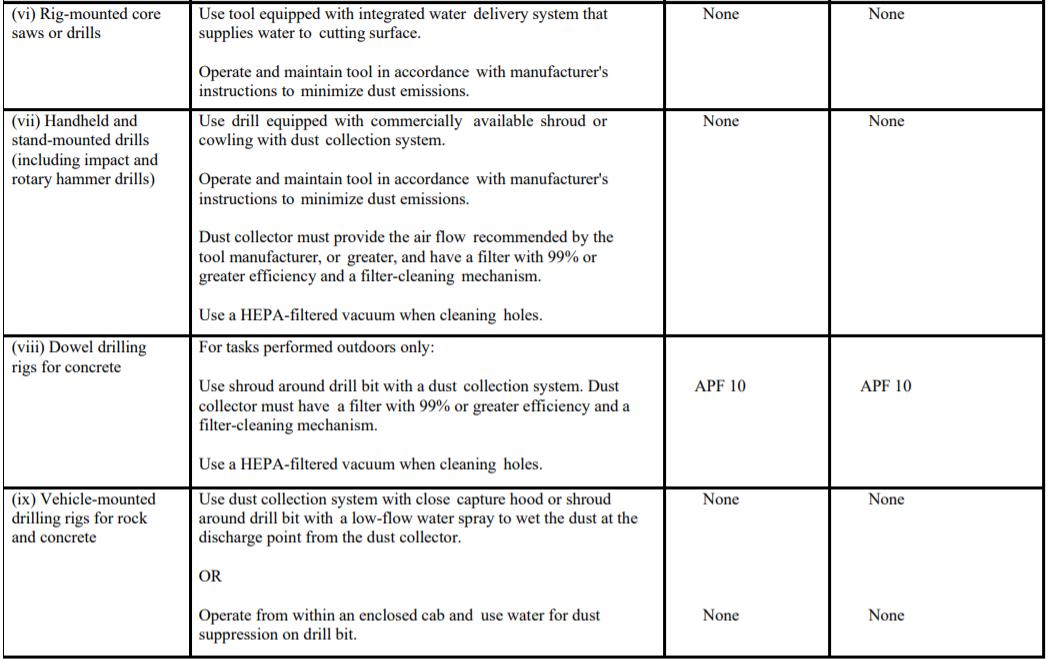
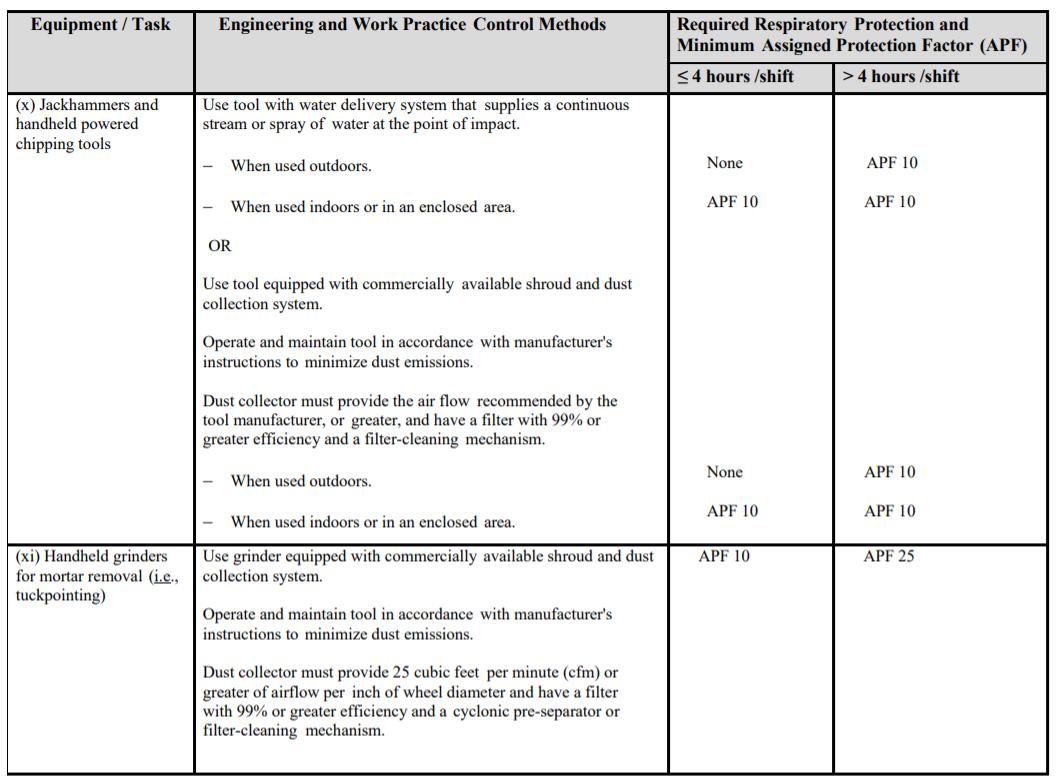
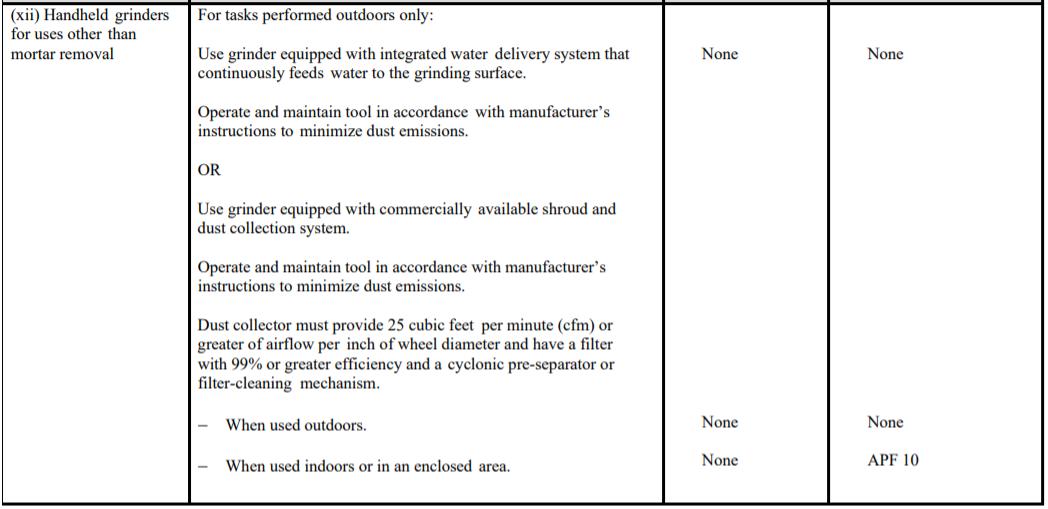
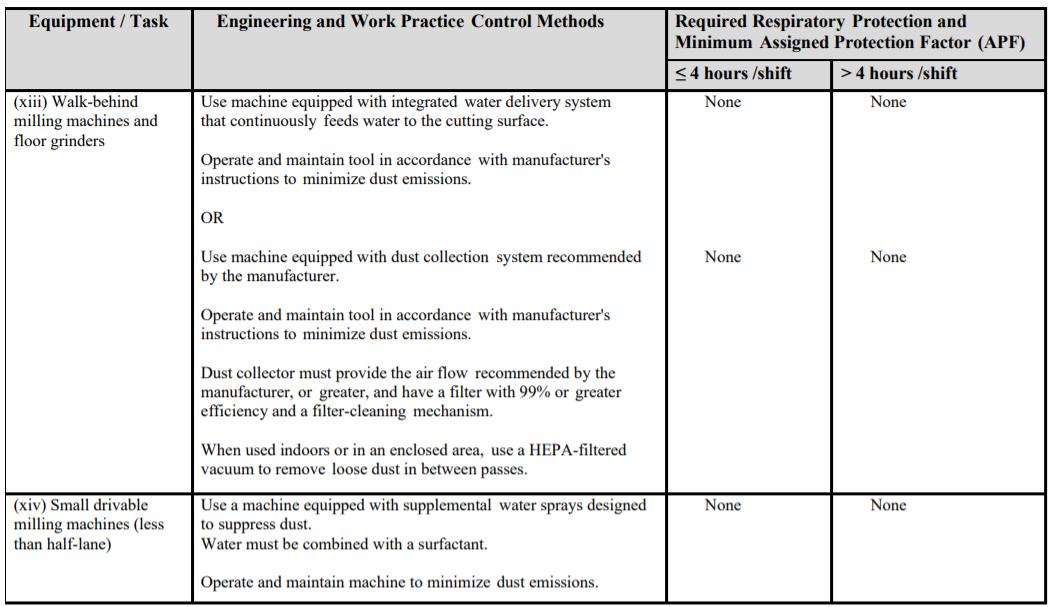
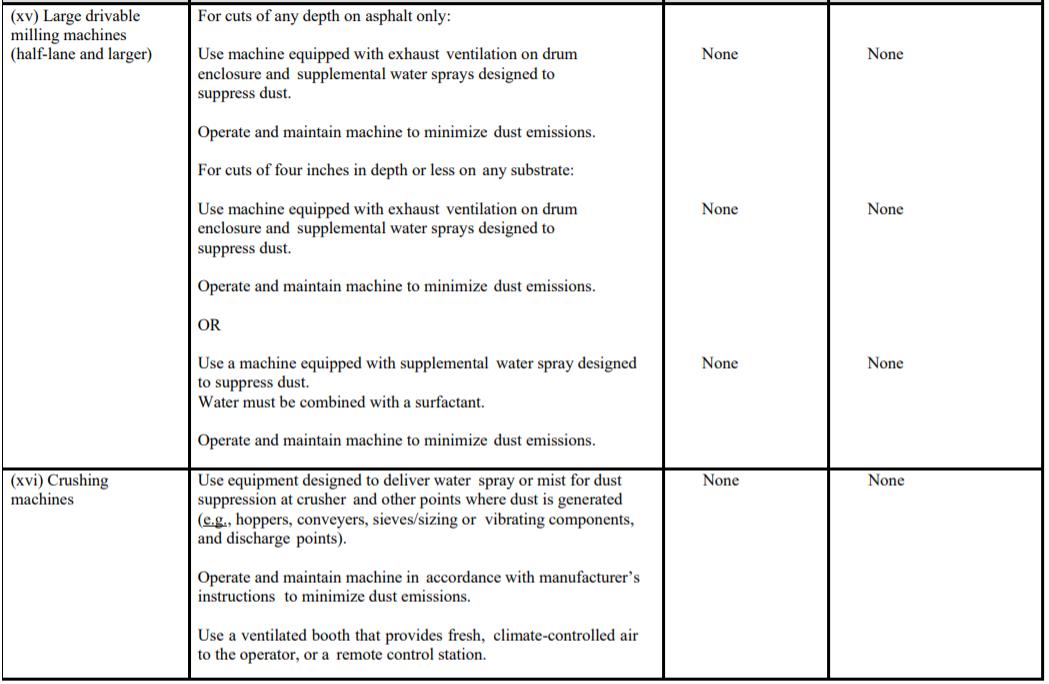
The OSHA Construction Industry standard for respiratory protection 29 CFR 1926.103 requires that an employer establish a respiratory protection program. The following procedures are based on the requirements established by the Occupational Safety and Health Administration and the American National Standard for Respiratory Protection, ANSI Z88.2.
It is the policy of this company to provide its employees with a safe and healthful work environment. The guidelines in this program are designed to help reduce employee exposure against occupational dusts, fumes, mists, radionuclides, gases and vapors. The primary objective is to prevent excessive exposure to these contaminants. This is accomplished as far as feasible by accepted engineering and work practice control measures. When effective engineering controls are not feasible, or while they are being implemented or evaluated, respiratory protection may be required to achieve this goal. In these situations, respiratory protection is provided at no cost to theemployees.
1. Employers
It is management’s responsibility to determine what specific applications require the use of respiratory protective equipment. Management must also provide proper respiratory protective equipment to meet the needs of each specific application. Employees must be provided with adequate training and instructions on all equipment.
2. Management/Supervisory
Supervisors of each trade are responsible for insuring that all personnel under their control are completely knowledgeable of the respiratory protection requirements for the areas in which they work. They are also responsible for insuring that their subordinates comply with all facets of this respiratory protection program, including respirator inspection and maintenance. They are responsible for implementing disciplinary procedures for employees who do not comply with respirator requirements.
3. Employees
It is the responsibility of the employee to have an awareness of the respiratory protection requirements for their work areas (as explained by management). Employees are also responsible for wearing the appropriate respiratory protective equipment according to proper instructions and for maintaining the equipmentin a clean and operable condition.
Every employee who is being considered for inclusion in the Respiratory Protection Program must participate in medical evaluation. A determination is made initially upon employment, or change into a job classification requiring respiratory protection and every 24 months thereafter, with the following exceptions:
The employee will fill out the medical Questionnaire for Respirator Users, which will be reviewed by the physician. If the physician deems it necessary, the employee will receive an examination. The purpose of the questionnaire and the examination is to assure that the employee is physically and psychologically able to perform their work while wearing respiratory protective equipment. If the physician denies approval, the employee will not be able to participate in the Respiratory Protection Program.
Copies of the medical evaluation and questionnaire will be kept in the employee’s personnel file, in accordance with 29 CFR 1926.33. Copies of the Request for Medical Clearance for Respirator Use Questionnaire for each respirator wearer are attached to this program in the Medical Appendix. The program administrator will ensure that the information required for the first half of the form is provided to the physician or occupational health nurse.
1. Work Area Evaluation
Exposure evaluation will be on a periodic basis to provide for a continuing healthful environment for employees and to aid in proper respirator selection. In order to determine the exposure level, air samples of the workplace representative of the work period, exposure assessment based on analogous processes, or professional judgment will be used. Personal sampling equipment may be used in accordance with accepted industrial hygiene practice or standards to sample each work area. Results of these samples will pinpoint areas where respiratory protection is required.
The exposure assessment is performed prior to commencing any routine or nonroutine task requiring respiratory protection. Periodically thereafter, as requiredby OSHA substance specific standards, or every 12 months, a review of the exposure assessment will be made to determine if respiratory protection continues to be required. If respiratory protection is still necessary, the previously chosen respirators will be reviewed to assure that they still provide adequateprotection.
Records of all exposure assessments are attached to this program in the Exposure Assessment Appendix.
2. Respirator Selection
Respirators are selected and approved for use by management. The selection is
based upon the physical and chemical properties of the air contaminants and the concentration level likely to be encountered by theemployee. Therespirator program administrator will make a respirator available immediately to each employee who is placed as a new hire or a transferee to a job that requires respiratory protection. Replacement respirators/cartridges and filters will be made available as required. The selection of the proper respirator type will be made following the most current edition of the 3M Respirator Selection Guide.
All respirators will be NIOSH approved. Respirators will be purchased from:
• 3M, North, U.S. Safety
Respirators currently approved for use are:
• 3M, North, U.S. Safety
3. Use of Respirators
Only positive pressure SCBA with 30 minutes or greater service life or airline respirators with auxiliary SCBA will be allowed in IDLH, potentially IDLH and unknown atmospheres. All tight fitting respirators (both negative and positive pressure) and loose fitting face pieces shall not be used with beards or other facial hair that prevents direct contact between the face and the edge of the respirator.
Employees will be allowed to leave the contaminated area:
a. Upon malfunction of the respirator.
b. Upon detection of leakage of contaminant into the respirator.
c. If increased breathing resistance of the respirator is noted.
d. If severe discomfort in wearing the respirator is detected.
e. Upon illness of the respirator wearer, including: sensation of dizziness, nausea, weakness, breathing difficulty, coughing, sneezing, vomiting, fever and chills.
f. To wash face to prevent skin irritation.
g. To change filter/cartridge elements or to replace respirators wheneverthey detect the warning properties of the contaminant or increased breathing resistance.
F. RESPIRATOR TRAINING AND FITTING
1. Training
The Supervisors relative to their responsibilities in the respiratory protection program must instruct employees, upon assignment to an area requiring respirators. They will also be instructed in the need, use, limitations, and care of their respirator according to the procedures in the Training Appendix using specified training aids. The specific training content will be provided by the respiratory protection trainer.
Retraining is given at least every 12 months after initial training. Records of the training given each individual may be found in the Training Appendix.
Employees who use tight fitting respirators will be properly fitted and tested for a face seal prior to use of the respirator in a contaminated area. Qualitative fit testing will be performed every 12 months. This is done by following the fit test procedures listed in the Fit Test Appendix.
Fit testing is done initially upon employee assignment to an area where respirators are required. All tight fitting respirators (negative and positive pressure) will be fit tested. Positive pressure tight fitting respirators will be fit tested in the negative pressure mode.
Individual fit testing records are kept on each individual by completing the Qualitative Fit Test Record and may be found in the Fit Test Appendix.
NOTE: If it is determined that an individual cannot obtain an adequate fit or face seal with any negative pressure respirator, a loose fitting powered air purifying or supplied air respirator will be used instead.
Fit testing of employees with any hair growth, such as stubble beard growth, beard or long sideburns that extends under the face seal or interferes with valve function is prohibited.
Respirators are properly maintained to retain their original effectiveness by periodic inspection, repair, cleaning and proper storage.
1. Inspection
The wearer of a respirator will inspect it daily whenever it is in use. Supervisors will periodically spot check respirators for fit, usage and condition. Inspection procedures for the respirators in use are located in the Respirator Inspection Appendix. The use of defective respirators is not permitted. If a defective respirator is found during inspection, it will be returned to the warehouse for repair or disposal.
2. Repair
During cleaning and maintenance, respirators that do not pass inspection will be replaced or repaired immediately. Repair of the respirator must be done with parts designed for the respirator in accordance with the manufacturer’s instructions. No attempt will be made to replace components ormake adjustments, modification or repairs beyond the manufacturer’s recommendation.
3. Cleaning
Respirators not discarded after one shift use will be cleaned on a daily basis or after each use, if not used daily, according to the manufacturer’s instructions, by
the assigned employee or other person designated by the Respiratory Protection Program Administrator. Facilities and supplies for cleaning these respirators will be made available. Detailed cleaning procedures can be found in the Respirator Cleaning Appendix.
Respirators not discarded after one shift use will be stored in a suitable container away from areas of contamination. The respirators are stored in a location where they are protected from sunlight, dust, heat, moisture and damaging chemicals. Whenever feasible, respirators not discarded after one shift use will be marked and stored in such a manner to assure that they are worn only by the assigned employee.
The respirators will be stored at:
• P1 Construction warehouses, Lenexa, Lawrence, Wichita, Topeka and Las VegasThey will be store in the following manner:
• Cleaned, disinfected and placed in bag.
• If use by more than one employee is required, the respirator will becleaned between uses.
Special precautions will be taken to assure breathing quality air when an airline respirator or SCBA is to be used. This air will meet the specifications for Grade D Air, established by the Compresses Gas Association, as stated in Commodity Specification for Air (ANSI/CGA G-7.1) 1989. The air quality will be certified initially and every 6 months. The procedures for certifying the breathing air system are found in the Breathing Air Quality Appendix.
This respiratory protection program will cover where escape only respirators are provided because of the potential for an emergency involving personnel assigned to work in the area. Visitors to these areas will be briefed in proper use of the escape respirator. Other program requirements, such as medical evaluation and detailed training, will not be required for visitors.
Self-contained breathing apparatus are required in specific areas for emergency use. Only trained personnel will use this equipment when it is necessary to enter hazardous atmospheres.
1.
Self-contained breathing apparatus (SCBA) are found in the following locations
All potential users will be fully trained in the use of the equipment. They must also be medically qualified to wear the device.
When the equipment is used, it will be tested in an uncontaminated atmosphere prior to entering the hazardous area.
An employee will not work with this apparatus in a hazardous atmosphere on an individual basis. At least one additional employee, suitably equipped with asimilar breathing apparatus, must be in contact with the first employee and must be available to render assistance if necessary.
This equipment will be inspected monthly by trained department or group personnel. Inspection and maintenance information will be recorded in a logbook or on an inspection tag.
The contents of the SCBA training program and inspection procedures may be found in the Emergency Use Respirators Appendix.
This program is periodically reviewed and evaluated every 12 months. The program is audited by using the procedures in the Program Evaluation Appendix. A written report is made of each evaluation, summarizing the findings. For each deficiency identified, corrective action taken is noted. Copies of the summary reports are found in the Program Evaluation Appendix.
1.Selection
Respirator selection involves reviewing each operation to (a) determine what hazards may be present (hazard determination) and (b) select which type orclass of respirators can offer adequate protection.
2.Hazard
The nature of the hazard shall be determined as follows:
a. Determine what contaminant(s) may be present in the workplace.
b. Determine whether there is a published Threshold Limit Value.
c. Permissible Exposure Limit, or any other available exposure limit or estimate of toxicity for the contaminant(s).
d. Determine if the IDLH concentration for the contaminant is available.
e. Determine if there is a comprehensive health standard (e.g. lead, asbestos) for the contaminant(s). If so, there may be specific respirators required that will influence the selection process.
f. If the potential for an oxygen-deficient environment exists, measure the
oxygen content.
g. Measure or estimate the concentration of the contaminant(s).
h. Determine the physical state of the contaminant(s). If an aerosol, determine or estimate the particle size. Determine if vapor pressure of the aerosol is significant at the maximum expected temperature of the work environment.
i. Determine whether the contaminant(s) present can be absorbed through the skin, produce skin sensitization, or be irritating or corrosive to the eyes or skin.
j. Determine for a gas or vapor contaminant(s) if a known odor, taste or irritation concentration exists.
The proper respirator shall be selected as follows:
a. If unable to determine what potentially hazardous contaminant may be present, the atmosphere shall be considered IDLH.
b. If no exposure limit or guideline is available, and estimates of the toxicity cannot be made, the atmosphere shall be considered IDLH.
c. If a specific standard exists for the contaminant, follow those guidelines/requirements.
d. If there is an oxygen-deficient atmosphere, the type of respirator selected depends on the partial pressure and concentration of oxygen and the concentration of the other contaminant(s) that may be present.
e. Divide the measured or estimated concentration of each contaminant by the exposure limit or guideline to obtain a hazard ratio. When two or more substances are present, consideration needs to be given if there is a synergistic or combined effect of exposure rather than considering each substance individually. Select a respirator with an assigned protection factor greater than the value of the hazard ratio, as listed in table 1.
f. If the contaminant(s) is gas or vapor only, select a device with an assigned protection factor that is greater than the hazard ratio
g. If the contaminant is a paint, lacquer or enamel, select a respiratorapproved specifically for paint mists or an atmosphere-supplying respirator. (Approval label may preclude use for some pesticides.)
h. If the contaminant is a pesticide, select a respirator and filtration system specifically approved for pesticides or an atmosphere-supplying respirator. (Approval label may preclude use for some pesticides.)
i. If the contaminant is a fume, use a filter approved for fumes or ahighefficiency filter;
j. If the contaminant is an aerosol, with a particle size greater than 2 um (MMAD), any filter type (dust, fumes, mist or high-efficiency) may beused;
k. If the contaminant is a gas or vapor and has poor warning properties, the use of an atmosphere-supplying respirator is generally recommended. When atmosphere-supplying respirators cannot be used because of lack of a feasible air supply or because of the need for worker mobility, air-purifying devices should be used only if:
i. The air-purifying respirator has a reliable end-of-service-life indicator that will warn the user prior to contaminant breakthrough or
ii. A cartridge change schedule is implemented, based on cartridge service data, including absorption studies (unless cartridges are changed daily), expected concentration, pattern of use, and duration of exposure havebeen established, and the chemical does not have a ceiling limit.
4.Selection of Respirators for Atmospheres Immediately Dangerous to Life or Health, for Use in Confined Spaces, or Reduced-Pressure Atmospheres
a. Atmospheres immediately dangerous to life or health
i. A location is considered IDLH when:
ii. It is an atmosphere known or suspected to have concentrations above the IDLH level, or
iii. It is a confined space that contains less than the normal 20.9% oxygen, unless the source of the oxygen reduction is understood and controlled, or
iv. Oxygen content is below 19.5%.
b. Respirators for Use Under IDLH Conditions at Normal Atmospheric Conditions
The required respiratory protection forIDLH conditions caused by the presence of toxic materials or a reduced percentage of oxygen as described in conditions (a), (b) or (c) in 3.1.1 is a positive-pressure SCBA or a combination of a supplied-air respirator with SCBA.
c. Special Considerations for Confined Spaces
Confined spaces continue to be the cause of numerous deaths and serious injuries. Therefore, any confined space containing less than 20.9% oxygen is to be considered IDLH, unless the source of oxygen reduction is understood and controlled. This restriction is imposed because any reduction in the percentage of oxygen present is proof, at a minimum, that the confined space is not adequately ventilated. Without complete understanding and control of the atmosphere within the confined space, it shall be considered IDLH.
d. Reduced Atmospheric Pressure
Reduced total atmospheric pressure can lead to very low oxygen pressure. Therefore, when operating under conditions of reduced total atmospheric pressure, it is necessary to further define the oxygen concentration by means of partial pressure.
e. Definition of Oxygen-Deficiency IDLH Involving Reduced Pressure
An oxygen partial pressure of 148 mmHg or less shall be considered IDLH. The oxygen deficiency may be caused by either a reduction in the normal 20.9% oxygen content, by reduced total atmospheric pressure to 708 mmHg or any combination of reduced percentage of oxygen and reduced pressure.
Table 1. -- Assigned Protection Factors5
1 , 2
3. Supplied-Air Respirator (SAR) or AirlineRespirator
•
•
•
4. Self-Contained Breathing Apparatus (SCBA)
• Demand mode
• Pressure-demand or other positive-pressuremode
Notes:
1Employers may select respirators assigned for use in higher workplace concentrations of a hazardous substance for use at lower concentrations of that substance, or when required respirator use is independent of concentration.
2The assigned protection factors in Table 1 are only effective when the employer implements a continuing, effective respirator program as required by this section (29 CFR 1910.134), including training, fit testing, maintenance, and use requirements.
3This APF category includes filtering facepieces, and half masks with elastomeric facepieces.
4The employer must have evidence provided by the respirator manufacturer that testing of these respirators demonstrates performance at a level of protection of 1,000 or greater to receive an APF of 1,000. This level of performance can best be demonstrated by performing a WPF or SWPF study or equivalent testing. Absent such testing, all other PAPRs and SARs with helmets/hoods are to be treated as loose-fitting facepiece respirators, and receive an APF of 25.
5These APFs do not apply to respirators used solely for escape. For escape respirators used in association with specific substances covered by 29 CFR 1910 subpart Z, employers must refer to the appropriate substance-specific standards in that subpart. Escape respirators for other IDLH atmospheres are specified by 29 CFR 1910.134 (d)(2)(ii).
The following procedure will be followed for the training of employees required to use respiratory protection.
The Material Safety Data Sheets for the chemicals in the workplace provide information on the health effects and hazards for those materials. A list of potential contaminants as well as individual Material Safety Data Sheets is available upon request.
All respirators have use limitations. There is not one all-purpose respirator. The respirators on which you will be trained were selected by the company for your work environment. The uses and limitations of the respirator on the NIOSH approved label and other information contained on/in each respirator package will be covered.
Support Material:
• Videos – 4 Elements of Respiratory Protection
• Respirator Package
A respirator must be put on and worn properly if it is to fit and offer effective protection. The employee will be instructed to always inspect the respirator prior to donning. Instruction will include how to inspect the respirator. Donning instructions are found on or in each respirator package and will be fully explained and demonstrated to the wearer.
Support Material:
• Respirator Fitting posters when available
• Respirator packaging
• Appropriate respirator fitting instructions video(s)
Once proper donning and adjustment procedures have been demonstrated, each employee will complete the same procedure as the trainer talks the employee through the directions.
Support Material:
• Sufficient respirators for each employee receiving instruction.
Step
At this point, all employees will be wearing a respirator. The employees will be instructed on how to conduct a fit check. A fit check is a method of determining if the respirator has been put on properly and has been fitted properly. A fit check must be conducted each time the respirator is worn. Refer to fit check procedures on each respirator package. (They are sometimes referred to as positive-pressure and negative-pressure fit checks).
Having completed the fit check procedure, the instructor will ask, “Does anyone feel leakage around the seal of the respirator?” If so, make adjustments to the fit (review donning instructions) and perform the fit check again. If a proper fit cannot be accomplished, the wearer must select another respirator and repeat the fit check procedure.
Support Material:
• Fit posters
• Respirator package
• Appropriate respirator fitting instructions video(s)
Step
Fit testing must be conducted according to the procedures included in the Fit Test Appendix.
Persons unable to pass the fit test must select an alternate respirator.
Support Material:
• Fit testing video
• See the Fit Test Appendix
The Respirator Training Program Attendance Roster will be used to facilitate record keeping.
Support Material:
• Respirator Training Program Attendance Roster
a. The test subject shall be allowed to select the most comfortable respirator from a large array of various sizes and manufacturers.
b. Prior to the selection, the test subject shall be shown how to put on a respirator, how it should be positioned on the face, how to set strap tension and how to assess a “comfortable” respirator. A mirror shall be available to assist the subject in evaluating the fit and positioning of the respirator.
c. The test subject should understand that he/she is being asked to select the respirator which provides the most comfortable fit. Each respirator represents a different size and shape and, if fit properly, will provide adequate protection.
d. The test subject holds each face piece up to the face and eliminates those which are obviously not giving a comfortable fit. Normally, selection will begin with a half mask, and if a fit cannot be found here, the subject will be asked to go to the full-face piece respirators. (A small percentage of users will not be able to wear any half mask.)
e. The more comfortable face pieces are recorded; the most comfortable mask is donned and worn at least five minutes to assess comfort. Assistance in assessing comfort can be given by discussing the points in F below. If the test subject is not familiar with using a particular respirator, he/she shall be directed to don the mask several times and to adjust the straps each time, so that he/she becomes adept at setting proper tension on the straps.
f. Assessment of comfort shall include reviewing the following points with the test subject:
i. Chin properly placed.
ii. Positioning of mask on nose.
iii. Strap tension.
iv. Fit across nose bridge.
v. Room for safety glasses.
vi. Distance from nose to chin.
vii. Room to talk.
viii. Tendency to slip.
ix. Cheeks filled out.
x. Self-observation in mirror.
xi. Adequate time for assessment.
g. The test subject shall conduct the fit checks according to the respirator manufacturer’s instructions. Before conducting the fit checks, the subject shall be told to “seat” the masks by rapidly moving the head side-to-side and up and down, taking a few hard breaths.
h. The test subject is now ready for fit testing.
i. After passing the fit test, the test subject shall be questioned again regarding the comfort of the respirator. If it has become uncomfortable, another model of respirator shall be tried.
j. The employee shall be given the opportunity to select a different face piece and be retested if, during the first two weeks of on-the-job wear, the chosen face piece becomes unacceptably uncomfortable.
a. This protocol can be used with either the FT-10 Qualitative Fit Test Apparatus (sweet solution) or the FT-30 Qualitative Fit Test Apparatus (bitter solution).
Equipment:
i. FT-10 Qualitative Fit Test Apparatus (sweet solution) OR FT-30 qualitative Fit Test Apparatus (bitter solution)
• Hood
• Collar
• Nebulizer #1 (Sensitivity solution)
• Nebulizer #2 (Fit Test Solution)
• FT-11 Sensitivity Solution (sweet) or FT-31 Fit Test Solution (bitter)
• FT-12 Sensitivity Solution (sweet) or ST-32 Fit Test Solution (bitter)
NOTE: IF FT-11 SENSITIVITY SOLUTION IS USED, FT-12 FIT TEST SOLUTION MUST BE USED. IF FT-31 SENSITIVITY SOLUTION IS USED; FT-32 FIT TEST SOLUTION MUST BE USED.
ii. Respirators equipped with particulate filters
b. Preparation
i. Attach hood to collar by placing drawstring between flanges oncollar.
ii. Tighten drawstring and tie with square knot or bow.
iii. Pour a small amount (approximately one teaspoonful) of the Sensitivity Solution into the nebulizer, labeled “#”! Sensitivity Solution.”
iv. Pour the same amount of Fit Test Solution into the second nebulizer, labeled “#2 Fit Test Solution.”
This test is done to assure that the person being fit tested can detect the taste of the test solution at very low levels. The Sensitivity Solution isa very diluted version of the Fit Test Solution. The test subject should not eat, drink or chew gum for 15 minutes before the test.
a. Have the test subject put on the hood and collar assembly without a respirator.
b. Position the hood assembly forward so that there is about six inches between the subject’s face and the hood window.
c. Instruct the test subject to breathe through the mouth.
d. Tell the test subject the taste response to expect (sweet or bitter).
e. Using Nebulizer #1 with the Sensitivity Solution, inject the aerosol into the hood through the hole in the hood window. Rapidly inject ten squeezes of the bulb, fully collapsing and allowing the bulb to expand fully on each squeeze. Both
plugs on the nebulizer must be removed from the openings during use. The nebulizer must be held in an upright position to ensure aerosol generation.
f. Ask the test subject is s/he can detect the taste of the solution. If tasted, note the number of squeezes and proceed to the fit test.
g. If not tasted, inject an additional ten squeezes of the aerosol into the hood. Repeat with ten more squeezes if necessary. Note the number of squeezes required to produce a taste response.
h. If 30 squeezes are inadequate, in that the subject does not taste the Sensitivity Solution, terminate the test. Another type of fit test must be used.
i. Remove the test hood and give the subject a few minutes to clear the taste from the mouth. It may be helpful to have the subject rinse the mouth with water.
NOTE: IF FT-11 SENSITIVITY SOLUTION WAS USED IN THE SENSITIVITY TEST, FT-12 FIT TEST SOLUTION MUST BE USED IN THE FIT TEST. IF FT31 SENSITIVITY SOLUTION WAS USED IN THE SENSISTIVITY TEST, FT-32 FIT TEST SOLUTION MUST BE USED IN THE FIT TEST.
a. Have the test subject put on and fit check the respirator per the instructions provided with the respirator.
b. Have the subject put on and position the test hood as before, and breathe through the mouth.
c. Using Nebulizer #2 with the Fit Test Solution, inject the fit test aerosol, using the same number of squeezes as required in the Sensitivity Test (10, 20, or 30). A minimum of 10 squeezes is required, fully collapsing and allowing the bulb to expand fully on each squeeze. Both plugs on the nebulizer must be removed from the openings during use. The nebulizer must be held in an upright position to ensure aerosol generation.
d. To maintain an adequate concentration of aerosol during this test, one half the number of squeezes used in step 3 is injected every 30 seconds for the duration of the fit test procedure.
e. After the initial aerosol is injected, ask the test subject to perform the following test exercises for 60 seconds each: *
i. Normal breathing
ii. Deep breathing. Breaths should be deep and regular.
iii. Turning head side-to-side. Movement should be complete, with one turn about every second.
iv. Nodding head up-and-down. Movement should be complete and made about one per second.
v. Talking. Ask subject to read a paragraph aloud and slowly. The “Rainbow Passage” (see below) is suggested.
vi. Normal Breathing.
f. Terminate the test if the subject detects the taste of the test solution at any time. This indicates an inadequate fit. Wait 15 minutes and perform the sensitivity test again.
g. Repeat the fit test after redonning and readjusting the respirator. A second failure may indicate that a different size or model respirator is needed.
h. If the entire test is completed without the subject detecting the taste of the test solution, the test is successful and acceptable respirator fit has been demonstrated.
i. Immediately after completion of the fit test, rinse the nebulizers with warm water to prevent clogging. Wipe out the inside of the hood with a damp cloth or paper towel to remove any deposited Fit Test Solution.
*Certain OSHA standards require specific exercises in addition to the ones listed below. Examples of these are:
SUBSTANCE REGULATION EXERCISE
Asbestos
Benzene
CFR 1926.1101 Jogging in place
CFR 1956.1128
Formaldehyde
CFR 1926.1148
Grimace Bending over or Jogging in place
Grimace Bending over or Jogging in place
Refer to individual standards for specific exercise requirements.
When the sunlight strikes raindrops in the air, they act like a prism and form a rainbow. The rainbow is a division of white light into many beautiful colors. These take the shape of a long round arch, with its path high above, and its two ends apparently beyond the horizon. There is, according to legend, a boiling pot ofgold at one end. People look, but no one ever finds it. When a man looks for something beyond his reach, his friends say he is looking for the pot of gold at the end of the rainbow.

13605 W. 96th Terrace | Lenexa, KS | 66215
P1 Construction, LLC hires local subcontractors who are experts in the execution of their specific scopes of work.
We base subcontractor’s contracts off a detailed scope and review process during initial contract negotiations. Once we have an agreed upon scope, we continue to actively manage their activities throughout the construction process.
Subcontracts are competitively procured where we are able to establish a defined scope of work.
All potential contract modifications issued are reviewed in detail with our subcontractors to understand how their scope of work has been impacted.
Any subcontractor working with P1 Construction will be competent and capable to perform their assigned duties in a safe and environmentally sound manner. Prior to any work performed, all subcontractors must have the appropriate licenses, registrations and insurance to complete their work.
All subcontractor will adhere to P1 Construction, Federal, State, Local, and customers’ rules and regulations. This will also include vendors and suppliers.
Communication will be established between P1 Construction and all subcontractors prior to the start of work. P1 Construction and all subcontractors must have a clear understanding of roles and responsibilities.
P1 Construction will monitor all subcontractors to ensure that all subcontractors remain compliant. The provisions of these safety responsibilities apply to lower-tier subcontractors and their employees working on projects for this Corporation.
The contract that a subcontractor signs has a section stating they agree to follow all of P1’s safety policies. Subcontractors must buy into the shared goals of the project team.
k.Only qualified employees by training or experience will operate equipment and machinery.
l.Keep clear of all equipment. Avoid pinch points and blind areas. Be alert to avoid swinging or suspended loads.
m.Be alert for and heed all warning/traffic signs at all times.
n.Do not use compressed air to “dust off” clothes or hair. Cleaning of concrete or concrete forms with compressed air requires usage of goggles, face shield and protection of surrounding personnel.
o.There will be no unauthorized use of tools, equipment or materials owned by others.
p.Unless authorized, do not attempt to repair or tamper with equipment that is not functioning properly. “Red tag” equipment and report malfunctions to your supervisor.
q.Whenever anyone is required to work on or in the proximity of electrical equipment or circuitry, appropriate tagging will be placed to identify all controls deactivating the circuit, and the circuit shall be locked out.
r.Jumping on or off equipment or vehicles, either moving or stationary is prohibited.
s.Misuse of tools or equipment or circumventing safety devices can result in injury. Do not use “make-shift” or “jury-rigged” tools or equipment to perform your job.
t.Firearms and explosives are prohibited within the construction area.
u.Only authorized and properly trained and supervised personnel are permitted to operate equipment, vehicles, valves, electrical switches and similar machinery.
v.Ride only in vehicles designed and designated for transporting personnel.
w.Do not smoke in areas marked “No Smoking” or near flammable or combustible materials.
x.Keep all machinery guards, guardrails and other protective devices in place.
During the course of construction many unknown hazards may occur. The goal is to eliminate these hazards before they occur. Below are some steps that P1 Group has implemented.
1. Supervisors walk through to look and address hazards found.
2. Daily Safety Checklist
a. These are completed with the group on the project every morning prior to beginning work.
3. A new program “When in Doubt Give a Shout” encourages employees to contact the safety department if they do not feel comfortable doing their job or if they discover a new hazard not previously discussed. The employee has full authorization to stop all work on the site until the hazard can be discussed and eliminated, with the supervisor, foreman and/or the safety department. No work will resume until all stop work issues and concerns have been adequately addressed.
4. When an unsafe condition is identified the Stop Work Intervention will be initiated, coordinated through the supervisor, initiated in a positive manner, notify all affected personnel and supervision of the stop work issue, correct the issue, and resume work when safe to do so.
5. Any form of retribution or intimidation directed at any individual or company for exercising their right to issue a stop work authority will not be tolerated by P1 Group.
6. Documentation of the Stop Work Intervention, notifying of supervisor, the correction of the hazard, and the work resumed will be added to the Daily Job log that the foremen complete and will be reviewed by the supervisor/manager.
7. All employees will be trained on Stop Work Authority prior to initial assignment. Documentation will include employee name, date of training and topic.
8. Follow up after a Stop Work Intervention has been initiated and closed is extremely important. All associates that were involved in the original Stop Work Intervention will meet and go over in detail the items leading up to, during and after the intervention. Supervisors and/or managers will review the reports in order to measure participation, determine quality of interventions and follow up‐ trend common issues, identify opportunities for improvement, and facilitate of learnings. Changes will be made to help prevent any further hazards.
a.Personal protective equipment must be worn as prescribed for each job by the supervisor.
b. PPE will be provided, used and maintained in a sanitary and reliable condition.
c.Employee-owned PPE is not allowed to be used.
d. Hard hats must be worn at all times in all construction areas Hard hats must be worn with the brim facing forward, unless a face-shield or welding helmet is attached. Altering the hard hat, such as painting or drilling into it, shall weaken the hard hat and shall not be permitted. Damaged hard hats are to be replaced immediately. Metal hard hats are prohibited.
e.Eye protection; safety glasses must be worn at all times in all work areas. Safety goggles, shields and hoods shall be available and must be worn by each employee while chipping, grinding, welding, cutting or doing any operation which could cause flying objects/debris.
f.Ear Protection; earmuffs or approved ear protection shall be worn on all high-noise level jobs.
g.Employees are encouraged to wear a good pair of hard-toed safety shoes/boots. Sturdy, heavy-duty work shoes or boots are required. Canvas or leather type athletic shoes and toeless or heelless shoes are not permitted at any jobsite. Shoes that are deemed “work shoe/boot” by the manufacturer will be permitted if they meet these requirements. Any shoe/boot that meets ANSI (z41-1999) footwear standards will be accepted. All work shoe/boots must have a continuous leather top (suede is not acceptable); no other material may be exposed. Employees wearing shoes that do not meet the corporation’s footwear requirements will be asked to leave the jobsite until they are wearing the proper protective footwear. Acceptability of footwear will determined at the discretion of the Safety Department.
h.Rubber boots are required when working in concrete or water.
i.Skin Protection; gloves, aprons, or other suitable skin protection shall be used when handling rough materials, chemicals, hot or cold objects that could injure the employee’s skin.
j.Breathing apparatus; approved particle masks, respirators or other respiratory equipment shall be used in areas where airborne particles, toxic or hazardous fumes could be present. Employees must verify with their supervisors which equipment provides adequate protection, and follow procedures set forth in the Corporation’s Respiratory Protection Program.
General Maintenance Guidelines:
1. Preventive Maintenance:
o All fleet vehicles are required to undergo regular preventive maintenance according to the manufacturer’s recommended service intervals or as outlined in the company’s maintenance schedule. P1 Construction Fleet Vehicles will have oil changes completed every 7,500 miles.
o Preventive maintenance tasks include, but are not limited to, oil changes, tire rotations, brake inspections, fluid level checks, air filter replacements, and engine diagnostics.
2. Maintenance Scheduling:
o Fleet Drivers are expected to handle making service and/or repair appointments. P1Construction’s Fleet Management Company can make recommendations on service providers.
3. Repairs and Corrective Maintenance:
o Any vehicle experiencing mechanical failures or performance issues must be promptly removed from service and evaluated by a qualified mechanic.
o Repairs should be completed by authorized service providers or in-house mechanics, ensuring that only OEM (original equipment manufacturer) parts or equivalent quality parts are used.
o All repairs must be logged, including the nature of the problem, parts replaced, labor performed, and the date of completion.
4. Recordkeeping:
o Comprehensive maintenance records must be maintained for each vehicle. These records should include details of all inspections, maintenance, repairs, parts replacements, and service dates.
o Records should be easily accessible for review by management and in the case of any audit, regulatory inspection, or warranty claim.
5. Tire and Brake Maintenance:
o Tires must be checked regularly for wear, proper inflation, and overall condition. Tires should be rotated at regular intervals, and any tires showing signs of excessive wear, damage, or age must be replaced promptly.
o Brake systems must be inspected regularly, and any signs of wear, such as reduced braking efficiency or unusual noises, must be addressed immediately.
6. Vehicle Cleaning and Detailing:
o Regular cleaning and detailing of vehicles are required to maintain both the appearance and functionality of fleet vehicles. This includes cleaning the exterior, interior, and undercarriage to prevent dirt, debris, and corrosion from affecting the vehicle’s performance.
o Cleaning schedules should align with operational needs, with vehicles being washed at least monthly or as needed based on usage and weather conditions.
Driver Responsibilities:
1. Safe Driving Practices:
o Drivers should adhere to safe driving practices to minimize wear and tear on vehicles. This includes avoiding harsh braking, rapid acceleration, and excessive speeding, all of which can contribute to premature vehicle degradation.
Fleet Manager Responsibilities:
1. Monitoring and Reporting:
o The fleet manager is responsible for monitoring the status of each vehicle in the fleet, ensuring all maintenance and inspection requirements are met on schedule.
o Any significant maintenance issues or delays in repairs should be reported to senior management promptly, including any factors that could affect fleet availability or safety.
General Guidelines:
1. Regulatory Compliance:
o All cargo must be secured in compliance with federal, state, and local regulations, including the Federal Motor Carrier Safety Administration (FMCSA) rules for cargo securement (49 CFR 393).
o Drivers must be aware of and follow all safety requirements outlined by the Department of Transportation (DOT) or other relevant authorities.
2. Inspection and Equipment Requirements:
o Trucks and trailers must be equipped with appropriate cargo securement equipment, including tie-downs, straps, chains, and tarps, depending on the nature of the load.
o Before loading, all securement devices must be inspected for wear and tear. Worn or damaged equipment must be replaced immediately.
o The vehicle and trailer must be inspected before departure to ensure cargo is properly secured and that the vehicle meets all safety and load requirements.
3. Cargo Loading Procedures:
o Cargo should be loaded evenly, balancing the load across the vehicle, to prevent shifting or instability.
o Ensure that loads are evenly distributed on the vehicle, with heavier items placed lower and closer to the vehicle’s center of gravity.
4. Cargo Securement Methods:
o Tie-downs, straps, chains, and other securement methods must be used to prevent cargo from shifting, tipping, or falling off the truck during transit.
o The number of tie-downs or securing devices must be appropriate for the weight, size, and nature of the cargo.
o For flatbed loads, use a minimum of two tie-downs for loads up to 5 feet long. For loads longer than 5 feet, additional securements are required.
5. Types of Cargo and Specific Securement Requirements:
o Heavy Equipment/ Machinery: Use chains and heavy-duty straps, ensuring they are rated to handle the specific weight and dimensions of the equipment..
6. Tarps and Covers:
o When hauling materials that are susceptible to weather damage (e.g., scrap metal, lumber, or aggregates), tarps or covers should be used.
o The tarps should be securely fastened to prevent them from blowing off during transit or causing other hazards.
7. Weight Limits and Load Distribution:
o Ensure the load does not exceed the truck’s weight capacity or legal weight limits as specified by local regulations.
o The load must be properly distributed along the trailer, ensuring that the weight is balanced to prevent instability or stress on the vehicle’s suspension system.
8. Driver Responsibilities:
o Drivers are responsible for checking the cargo securement before and during transit. They should inspect the load at the start of the trip and periodically throughout to ensure that the cargo remains securely fastened.
9. Training and Certification:
o All P1 Construction LLC DOT certified drivers and all Warehouse Drivers will complete a Load Securement Click Safety Course. The course teaches cargo securement techniques, equipment use, and safety regulations.
o Periodic refresher courses will be conducted to ensure all employees are up-todate with industry standards and regulations.
Only P1 associates authorized by management and approved by Safety as meeting P1’s driver qualifications may operate P1 Vehicles. P1 vehicles are only to be used for company business. Persons who are not employed by P1 are absolutely prohibited from using P1 vehicles for any purpose. Passengers may only be P1 associates or P1 business associates for business purposes.
Under certain conditions, limited personal use of a P1 vehicle by the associate may be permitted during non-business hours if authorized in writing and in advance by Bruce Belcher, Kollin Knox, or Don Campbell. All unauthorized personal use of a P1 vehicle is strictly prohibited and subject to disciplinary action.
The associate’s supervisor must authorize use of an associate’s personal vehicle for P1 business prior to the trip. P1 will reimburse the associate using the company-specified rate, typically the IRS Standard Mileage Rate. The associate must meet all Driver Qualifications specified later in this section. The associate is required to immediately report to management any change in driver’s license status including suspension, revocation, or restriction.
Only company-approved DOT qualified drivers may operate Department of Transportation (DOT) regulated vehicles and only for company business, never for personal use. Most warehouse vehicles are DOT regulated vehicles. Contact Fleet for more information.
The DOT regulates commercial motor vehicles and drivers of vehicles with gross vehicle weight ratings or gross combination weight ratings of 10,001 lbs. or more. P1 vehicles regulated by DOT are marked “US DOT.” Drivers of these vehicles must meet DOT qualifications defined in 49 CFR Subtitle B, Chapter III, Part 391.11. DOT driver qualifications include the requirements for a driver’s road test or Commercial Drivers License (CDL), a physical examination and training or experience operating this type of vehicle. Only DOT-qualified and licensed drivers will operate DOT-regulated vehicles. Some DOT drivers may also be subject to additional DOT drug and alcohol regulations. P1 manages the control of hours of service according to DOT/FMCSA
MOTOR VEHICLES WITH COMBINED GROSS VEHICLE WEIGHT OF 10,001 LBS OR GREATER
Associates operating a motor vehicle with a combined gross vehicle weight of 10,001 Lbs or greater must be authorized in advance by Fleet as a DOT driver. Some vehicles pulling trailers may fall in this category. Contact Fleet for more information.
P1 has zero tolerance for controlled substance or alcohol use by associates who are subject to Department of Transportation (DOT) regulations. Upon violation of any drug or alcohol related regulation or policy, P1 will terminate the associate’s employment.
P1 prohibits the use of all P1 Devices in any vehicle unless operated in a hands-free manner. While operating a P1 vehicle or while operating any vehicle on company business, P1 prohibits the use of all devices (including personal devices) in a manner other than hands-free. Drivers are also prohibited from using headphones with a P1 device or any device, while operating a P1 vehicle or while operating any vehicle on company business.
Avoid or limit using devices while operating a P1 vehicle or while operating any vehicle on company business. Using devices while operating a vehicle may increase the risk of accidents. P1 prefers that
associates allow voice mail to handle phone calls while driving. P1 prefers that associates do not use a device to respond to communication while driving, including but not limited to, texting, instant messaging, emails, social media and internet.
Follow these requirements while operating a P1 vehicle or while operating any vehicle on company business:
• Drivers are prohibited from using a device in a hand-held manner while operating a vehicle, including while stopped at traffic lights, stop signs or in traffic delays. Drivers may using a device in a hand-held manner if safely stopped at the side of a road or on the shoulder of a highway
• Drivers are prohibited from reaching for a device in a manner that requires the driver to change from a seated, belted driving position.
• Company vehicles with a GPS enabling device must have the device plugged into the service port on the vehicle at all times. Defective or missing devices must be reported to Fleet immediately.
Suggestions for Safe Driving:
• To use a phone or device, pull off the road to a safe location or wait until arrived at the destination.
• Inform regular callers of driving schedule and of availability to talk.
• Keep hands on the wheel and eyes and mind on the road while driving.
• If at all possible, pull off the road to a safe location when looking at maps or a GPS system.
Positions required to operate either a P1 vehicle or a personal vehicle on company business include but are not limited to:
• Project management and estimator related positions.
• Sales and business development related positions.
• Service Technicians.
• Construction Foremen.
• Supervisors of associates at multiple work locations or outbuildings.
• Associates with essential job functions at multiple work locations or outbuildings within one shift.
• All positions at Operations Manager level or higher.
For all other positions, any driving on company business is considered only an incidental function of the position.
Associates operating a P1 vehicle must meet the following qualifications:
• Be a minimum age of 18 years.
• Possess a valid driver’s license.
• Authorize P1 to obtain Motor Vehicle Record at the time of driver qualification and periodically thereafter.
• Have an acceptable Motor Vehicle Record (as defined by criteria later in this section).
Associates operating a vehicle for company business must meet the qualifications listed above as well as the following qualifications:
• Access to a well maintained vehicle.
• Up to date registration with the local Department of Motor Vehicles.
• The associate and the vehicle must be currently covered on a personal insurance policy.
Prior to employing anyone whose future position requires the operation of a P1 vehicle or use of any vehicle for company business, P1 will obtain the individual’s Motor Vehicle Records (MVRs) and will periodically obtain MVRs thereafter to verify the driving record. The individual must provide P1 written permission to obtain the MVR. Failure to do so means that P1 will not hire the individual for the driving required position
If an individual’s MVR reflects the accumulation of 9 or more points, as described below, in a three-year period, the individual is considered “high risk” for an accident. This may prevent a the individual from being hired for a position or transferred into a position that necessitates the operation of a vehicle on company business or operation of a P1 vehicle.
If an authorized driver of P1 vehicles or of any vehicle used for company business has an MVR which reflects the accumulation of 9 or more points, as described below, in a three-year period, the associate is considered “high risk” for an accident. This may result in associate discipline up to and including termination of employment. It may also result in loss of authorization to drive on company business.
MVR point evaluation:
• 6 point offense: Any accident resulting in a citation (other than reckless driving).
• 3 point offense: Any other vehicle related citation or an accident without a citation.
• 9 point offense:
o DWI, DUI, OUI (any alcohol or drug-related vehicle conviction).
o Reckless driving resulting in an accident, bodily injury, or property damage.
o Fleeing a law enforcement official.
o Leaving the scene of an accident.
o A suspended/cancelled/revoked license and certain types of license restrictions.
The intent of this program is to educate associates on the hazards associated with operating a motor vehicle, as well as to provide guidelines on how to avoid work-related motor vehicle accidents.
A multitude of factors may influence how a person drives a vehicle. Driving a vehicle while angry is as dangerous as driving while fatigued. Other possible conditions that may jeopardize safety while driving are medication, hearing, stress, emotions, attitude, fatigue, distractions and vision.
P1 personnel driving company vehicles receive training related to fatigue management.
It is very important that anyone driving a vehicle be mentally and physically capable of operating the vehicle in an appropriate and safe manner. The information listed below assists associates in identifying hazards and instructs them how to respond in certain situations.
Associates operating P1 vehicles or personal vehicles used for company business must follow these procedures. Failure to follow these procedures may result in revocation of driving privileges, may result in the associate being held responsible for the full cost of vehicle cleanup and/or repair, and may result in associate discipline up to and including termination of employment.
• Always obey traffic signs, signals and local laws.
• Obey local and state laws related to mobile phone and device use in vehicles. P1 prohibits the use of mobile phones and devices in a manner other than hands-free while operating a P1 vehicle or while operating any vehicle on company business (see Vehicles And Devices Policy).
• Headphones are not allowed while operating any vehicle on company business and while operating any P1 vehicle at any time.
• Never exceed the posted speed limit.
• Always wear seat belts, both drivers and passengers.
• Yield to emergency vehicles.
• Passengers may only be P1 associates or P1 business associates for business purposes.
• Remain alert at all times and not allow any activity inside the vehicle to distract.
• Do not drive or operate a vehicle after consuming any amount of alcohol or illegal drugs. Vehicle operators under the influence of a prescribed medication must first obtain approval from the prescribing physician before operating a vehicle.
• Alcohol beverages and illegal drugs may not be transported or stored in P1 vehicles or vehicles used for company business.
• Using tobacco products is strictly prohibited in P1 vehicles. Tobacco is defined as cigarettes, pipes, e-cigarettes, cigars or chewing tobacco.
• All trash and debris must be routinely removed from P1 vehicles.
• Regularly perform maintenance on P1 vehicles and report problems with P1 vehicles to Fleet.
Drivers of vehicles are responsible for routinely performing vehicle inspections. Report problems with P1 vehicles to Fleet. Verify that the following items are in good repair and are functioning properly:
• Brakes (pedal pressure).
• Both taillights.
• Windshield and wipers.
• Horn.
• Turn signals.
• Backup lights.
• Both headlights (high and low beams).
• Tires (safe tread depth, no bald spots).
• Brake lights.
• Safety belts.
Drivers who are authorized to operate P1 vehicles or any vehicle used for company business must report immediately the following to management and the Safety:
• Tickets related to traffic violations and accidents.
• Conviction, guilty pleadings, or no contest pleadings, for traffic violations.
• Change in driver’s license status including suspension, revocation, or restriction.
• Incidents involving a P1 vehicle and any vehicle incidents while on company business. Whether or not the incident results in any injury to a person(s) or damage to any vehicle or property, the situation must be reported within two hours to management regardless of fault. Failure to report any such violations, changes or incident, or to report in a timely manner, will lead to disciplinary action, up to and including termination of employment.
Date: 02/07/2025
Revision Date: 00/00/000
Page: 00 of 000
This policy sets forth the official practices required for trenching and excavations pertaining to the service provided by P1 CONSTRUCTION; hereafter referred to as “The Company”.
Aluminum hydraulic shoring- an engineered shoring system comprised of aluminum hydraulic cylinders (cross braces), used in conjunction with vertical rails (uprights) or horizontal rails (walers). Such a system is designed specifically to support the sidewalls of an excavation and prevent cave-ins.
Benching - a method of protecting workers from cave-ins by excavating the sides of an excavation to form one or a series of horizontal levels or steps, usually with vertical or near-vertical surfaces between levels.
Cave-in - the separation of a mass of soil or rock material from the side of an excavation, or the loss of soil from under a trench shield or support system, and its sudden movement into the excavation, either by falling or sliding, in sufficient quantity so that it could entrap, bury, or otherwise injure and immobilize a person.
Competent person -one who is capable of identifying existing and predictable hazards in the surroundings, or working conditions that are unsanitary, hazardous, or dangerous to workers, and who has authorization to take prompt corrective measures to eliminate them. All competent persons must complete the 4-hour Physical Plant trenching and shoring class, successfully pass the exam, and be certified for successful completion of the class. A competent person should have and be able to demonstrate the following:
• Training, experience, and knowledge of:
o soil analysis
o use of protective systems
o requirements of 29 CFR 1926 Subpart P
• Ability to detect:
o conditions that could result in cave-ins
o failures in protective systems
o hazardous atmospheres
o other hazards including those associated with confined spaces
• Authority to take prompt corrective measures to eliminate existing and predictable hazards and to stop work when required.
Excavation -any man-made cut, cavity, trench, or depression in an earth surface, formed by earth removal. Registered professional engineer- a person who is registered as a professional engineer.
Shield (shield system) -a structure that can withstand the forces imposed on it by a cave-in and thereby protect workers with the structure. Shields can be permanent structure or can be designed to be portable and moved along as work progresses. Also known as trench box or trench shield.
Shoring (shoring system) -a structure such as a metal hydraulic, mechanical, or timber shoring system that supports the sides of an excavation and which is designed to prevent cave-ins.
Revision Date: 00/00/000
Page: 00 of 000
Sloping (sloping system) - a method of protecting workers from cave-ins by excavating to form sides of an excavation that are inclined away from the excavation to prevent cave-ins. The angle of incline varies with differences in such factors as the soil type, environmental conditions of exposure, and application of surcharge loads.
Trench (trench excavation) -a narrow excavation (in relation to its length) made below the surface of the ground. In general, the depth is greater than the width, but the width of a trench is not greater than 15 feet. If forms or other structures are installed or constructed in an excavation to reduce the dimension measured from the forms or structure to the side of the excavation to 15 feet or less, the excavation is also considered to be a trench.
All excavations shall be made in accordance with the rules, regulations, requirements, and guidelines set forth in 29 CFR 1926.650, .651, and .652; the Occupational Safety and Health Administration's standard on excavations, except where otherwise noted below.
The Company will ensure all workers and associates are trained in trenching and excavation safety and specific work-related practices. The Company requires all subcontractors whose work does not include trenching/excavations, but are in close proximity, to provide a basic awareness program that addresses all job scope activities. The awareness program shall include information regarding safe access and egress and protective measures associated with trenching.
A competent person shall be placed in charge of all excavations. Underground utilities must be located and marked before excavation begins. Before digging, driving equipment into the ground, or engaging in earth moving activities are conducted, the appropriate one-call center will be contacted. Workers are not allowed in the excavation while heavy equipment is digging.
The competent person shall conduct inspections:
• Daily and before the start of each shift by using the DAILY EXCAVATION CHECKLIST found at the end of this chapter.
• As dictated by the work being done in the trench.
• After every rainstorm.
• After other events that could increase hazards, such as snowstorm, windstorm, earthquake, dramatic change in weather, etc.
Revision Date: 00/00/000
Page: 00 of 000
• When fissures, tension cracks, sloughing, undercutting, water seepage, bulging at the bottom, or other similar conditions occur.
• When there is a change in the size, location, or placement of the spoil pile.
• When there is any indication of change or movement in adjacent structures.
(For excavations 4 feet or greater in depth, a trench inspection form shall be filled out for each inspection.) If problems are found, provisions should be made for immediate personnel removal.
Soil Types:
Type A - Most stable: clay, silty clay, and hardpan (resists penetration). No soil is Type A if it is fissured, is subject to vibration of any type, has previously been disturbed, or has seeping water.
Type B - Medium stability: silt, sandy loam, medium clay, and unstable dry rock; previously disturbed soils unless otherwise classified as Type C; soils that meet the requirements of Type A soil but are fissured or subject to vibration.
Type C - Least stable: gravel, loamy sand, soft clay, submerged soil or dense, heavy unstable rock, and soil from which water is freely seeping.
Layered geological strata (where soils are configured in layers) - The soil must be classified based on the soil classification of the weakest soil layer. Each layer may be classified individually if a more stable layer lies below a less stable layer, i.e., where a Type C soil rests on top of stable rock.
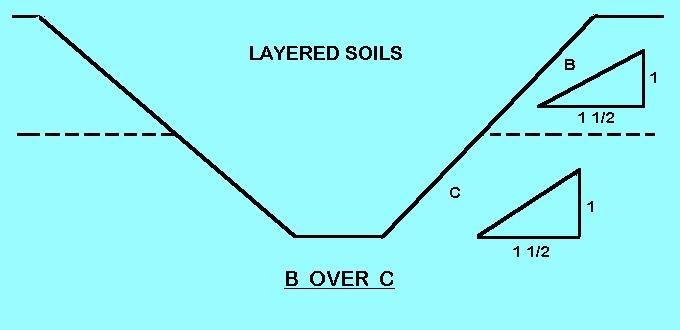
Revision Date: 00/00/000
Page: 00 of 000
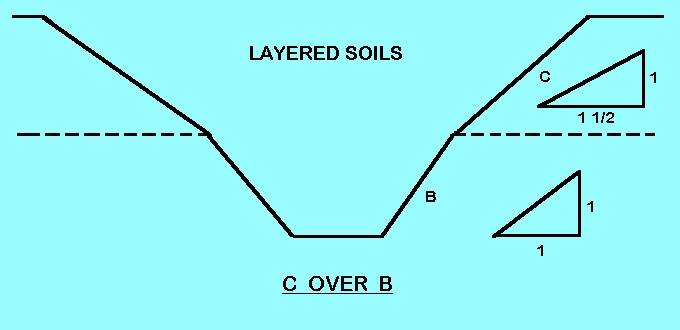
The competent person in charge of the excavation shall be responsible for determining whether the soil is Type B or C. The competent person shall use a visual test coupled with one or more manual tests.
In addition to checking the items on the trench inspection form, the competent person should perform a visual test to evaluate the conditions around the site. In a visual test, the entire excavation site is observed, including the soil adjacent to the site and the soil being excavated. The competent person also checks for any signs of vibration.
During the visual test, the competent person should check for crack-line openings along the failure zone that would indicate tension cracks, look for existing utilities that indicate that the soil has been previously disturbed, and observe the open side of the excavation for indications of layered geologic structuring.
The competent person should also look for signs of bulging, boiling, or sloughing, as well as for signs of surface water seeping from the sides of the excavation or from the water table.
In addition, the area adjacent to the excavation should be checked for signs of foundations or other intrusions into the failure zone, and the evaluator should check for surcharging and the spoil distance from the edge of the excavation.
Thumb penetration test- Attempt to press the thumb firmly into the soil in question. If the thumb penetrates no further than the length of the nail, it is probably Type B soil. If the thumb penetrates the full length of the thumb, it is Type C. It should be noted that the thumb penetration test is the least accurate testing method.
Revision Date: 00/00/000
Page: 00 of 000
Dry strength test- Take a sample of dry soil. If it crumbles freely, or with moderate pressure into individual grains, it is considered granular (Type C). Dry soil that falls into clumps that subsequently break into smaller clumps (and the smaller clumps can only be broken with difficulty) it is probably clay in combination with gravel, sand, or silt (Type B).
Plasticity or Wet Thread Test- Take a moist sample of the soil. Mold it into a ball and then attempt to roll it into a thin thread approximately 1/8 inch in diameter by two inches in length. If the soil sample does not break when held by one end, it may be considered Type B.
A pocket penetrometer, shear vane, or torvane may also be used to determine the unconfined compression strength of soils.
Temporary spoil shall be placed no closer than 2 feet from the surface edge of the excavation, measured from the nearest base of the spoil to the cut. This distance should not be measured from the crown of the spoil deposit. This distance requirement ensures that loose rock or soil from the temporary spoil will not fall on workers in the trench.
Spoil should be placed so that it channels rainwater and other run-off water away from the excavation. Spoil should be placed so that it cannot accidentally run, slide, or fall back into the excavation.
Permanent spoil should be placed some distance from the excavation.
Surface crossing of trenches should not be made unless absolutely necessary. However, if necessary, they are only permitted under the following conditions:
Vehicle crossings must be designed by and installed under the supervision of a registered professional engineer.
Walkways or bridges must have a minimum clear width of 20-inches and be fitted with standard rails and extend a minimum of 24 inches past the surface edge of the trench.
Trenches 4 feet or more in depth shall be provided with a fixed means of egress.
Revision Date: 00/00/000
Page: 00 of 000
Spacing between ladders or other means of egress must be such that a worker will not have to travel more than 25 feet laterally to the nearest means of egress.
Ladders must be secured and extend a minimum of 36 inches above the landing.
Metal ladders should be used with caution, particularly when electric utilities are present.
Any structural ramps used solely for worker access or egress must be designed by a competent person.
Workers exposed to vehicular traffic shall be provided with and required to wear reflective vests or other suitable garments marked with or made of reflectorized or high-visibility materials.
Trained flag persons, signs, signals, and barricades shall be used when necessary.
All workers on an excavation site must wear hard hats.
Workers are not allowed to work under raised loads.
Workers are not allowed to work under loads being lifted or moved by heavy equipment used for digging or lifting.
Workers are required to stand away from equipment that is being loaded or unloaded to avoid being struck by falling materials or spillage.
Equipment operators or truck drivers may remain in their equipment during loading and unloading if the equipment is properly equipped with a cab shield or adequate canopy.
The following steps should be taken to prevent vehicles from accidentally falling into the trench:
• Barricades must be installed where necessary when:
o Hand or mechanical signals must be used as required
o Stop logs must be installed if there is danger of vehicles falling into the trench
Revision Date: 00/00/000
Page: 00 of 000
o Soil should be graded away from the excavation; this will assist in vehicle control and channeling of run-off water
o Trenches left open overnight shall be fenced and barricaded
Workers shall not be permitted to work in hazardous and/or toxic atmospheres. Such atmospheres include those with:
• less than 19.5% oxygen
• a combustible gas concentration greater than 20% of the lower flammable limit
• concentrations of hazardous substance that exceed those specified in the Threshold Limit Values for airborne contaminants established by the ACGIH
All operations involving such atmospheres must be conducted in accordance with OSHA requirements for occupational health and environmental controls for personal protective equipment and for lifesaving equipment. Engineering controls (such as ventilation) and respiratory equipment may be required.
If there is any possibility that the trench or excavation could contain a hazardous atmosphere, atmospheric testing must be conducted prior to entry. Conditions that might warrant atmospheric testing would be if the excavation was made in a landfill area or if the excavation was crossed by, was adjacent to, or contained pipelines containing a hazardous material (for example, natural gas lines).
Testing should be conducted before workers enter the trench and should be done regularly to ensure that the trench remains safe. The frequency of testing should be increased if equipment is operating in the trench.
Testing frequency should also be increased if welding, cutting, or burning is done in the trench.
Workers required to wear respiratory protection must be trained, fit-tested, and enrolled in a respiratory protection program.
Some trenches qualify as confined spaces. When this occurs, compliance with The Company’s Confined Space Program is also required.
Methods for controlling standing water and water accumulation must be provided and should consist of the following if workers must work in the excavation:
Revision Date: 00/00/000
Page: 00 of 000
• Use of special support or shield systems approved by a registered professional engineer
• Water removal equipment, such as well pointing, used, and monitored by a competent person
• Safety harnesses and lifelines used in conformance with 29 CFR 1926.104
• Workers removed from the trench during rainstorms
• Trenches carefully inspected by a competent person after each rain and before workers are permitted to re-enter the trench
Benching, Sloping, Shoring, and Shielding Requirements
All excavations or trenches 4 feet or greater in depth shall be appropriately benched, shored, or sloped according to the procedures and requirements set forth in OSHA's Excavation standard, 29 CFR 1926.650, .651, and .652.
Excavations or trenches 20 feet deep or greater must have a protective system designed by a registered professional engineer.
Excavations under the base of footing of a foundation or wall require a support system designed by a registered professional engineer.
Sidewalks and pavement shall not be undermined unless a support system or another method of protection is provided to protect workers from their possible collapse.
Sloping
Maximum allowable slopes for excavations less than 20' based on soil type and angle to the horizontal are as follows:
Revision Date: 00/00/000
Page: 00 of 000
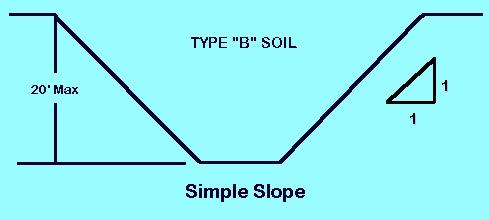
A 10-foot-deep trench in Type B soil would have to be sloped to a 45-degree angle or sloped 10 feet back in both directions. Total distance across a 10-foot-deep trench would be 20 feet, plus the width of the bottom of the trench itself. In Type C soil, the trench would be sloped at a 34-degree angle, or 15 feet back in both directions for at least 30 feet across, plus the width of the bottom of the trench itself. All simple slope excavations 20 feet or less in depth shall have a maximum allowable slope of 1 1/2:1.
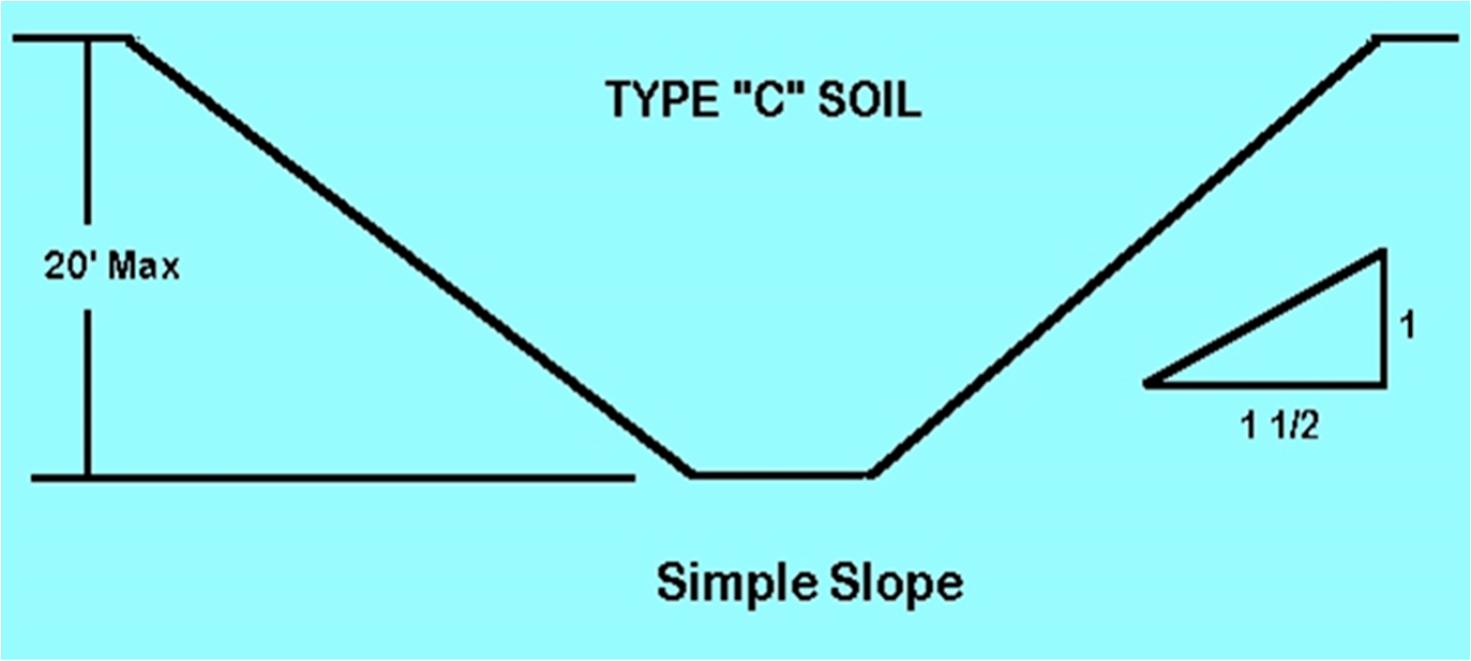
There are two basic types of benching, single and multiple, which can be used in conjunction with sloping. All benched excavations 20 feet or less in depth shall have a maximum allowable slope of 1:1.
In Type B soil, the vertical height of the benches must not exceed 4 feet. Benches must be below the maximum allowable slope for that soil type. In other words, a 10-foot-deep trench in Type B soil must be benched back 10 feet in each direction, with a maximum of a 45-degree angle.
Revision Date: 00/00/000
Page: 00 of 000
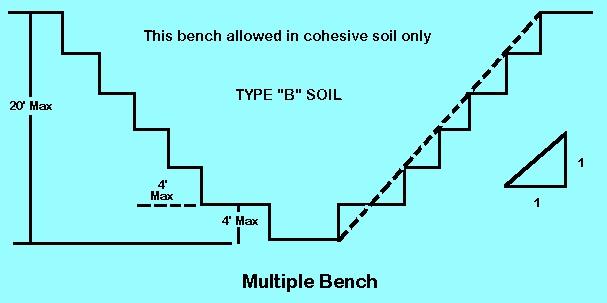
Benching is not allowed in Type C soil.
Shoring or shielding is used when the location or depth of the cut makes sloping back to the maximum allowable slope impractical There are two basic types of shoring, timber, and aluminum hydraulic.
Hydraulic shoring provides a critical safety advantage over timber shoring because workers do not have to enter the trench to install them. They are also light enough to be installed by one worker; they are gauge-regulated to ensure even distribution of pressure along the trench line; and they can be adapted easily to various trench depths and widths. However, if timber shoring is used, it must meet the requirements of 29 CFR 1926.650, .651, and .652.
All shoring shall be installed from the top down and removed from the bottom up. Hydraulic shoring shall be checked at least once per shift for leaking hoses and/or cylinders, broken connections, cracked nipples, bent bases, and any other damaged or defective parts.
The top cylinder of hydraulic shoring shall be no more than 18 inches below the top of the excavation.
The bottom of the cylinder shall be no higher than four feet from the bottom of the excavation (Two feet of trench wall may be exposed beneath the bottom of the rail or plywood sheeting, if used.)
Three vertical shores, evenly spaced, must be used to form a system.
Wales are installed no more than two feet from the top, no more than four feet from the bottom, and no more than four feet apart, vertically.
Typical installations of aluminum hydraulic shoring:
• Vertical aluminum hydraulic shoring (spot bracing)
Revision Date: 00/00/000 Page: 00 of 000
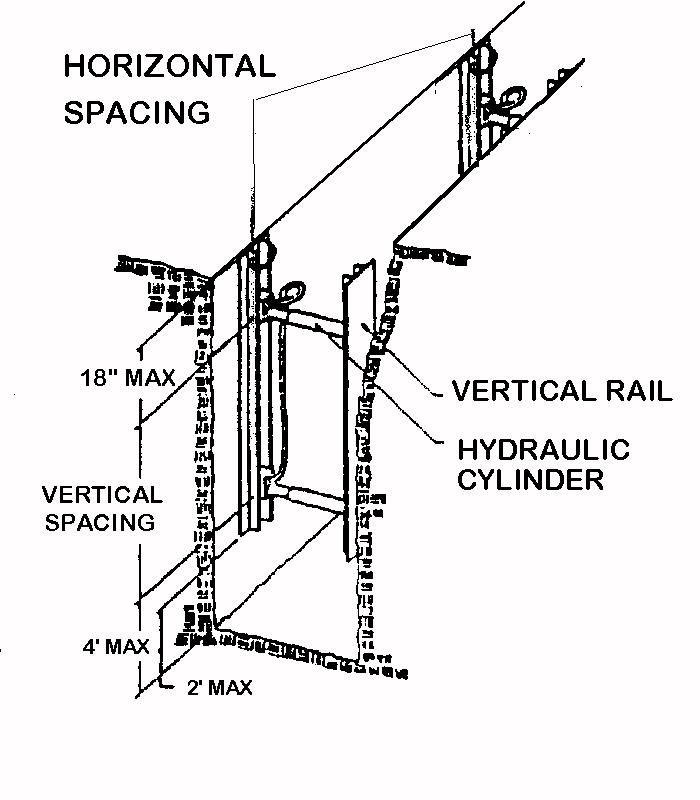
• Vertical aluminum hydraulic shoring (with plywood)
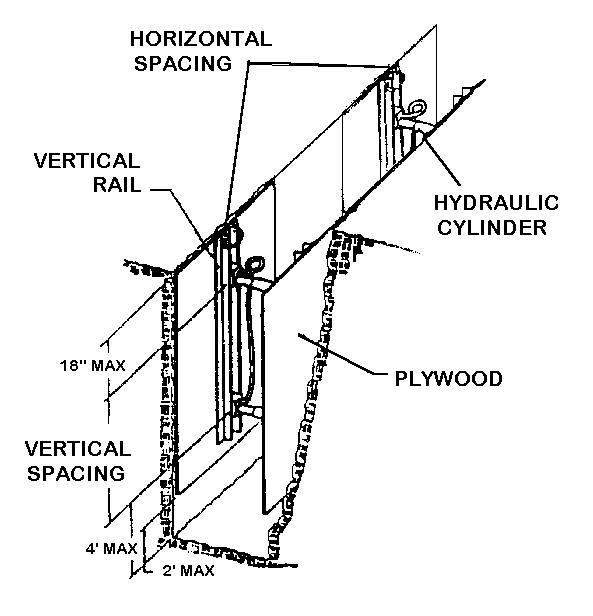
• Vertical aluminum hydraulic shoring (stacked)
Revision Date: 00/00/000
Page: 00 of 000
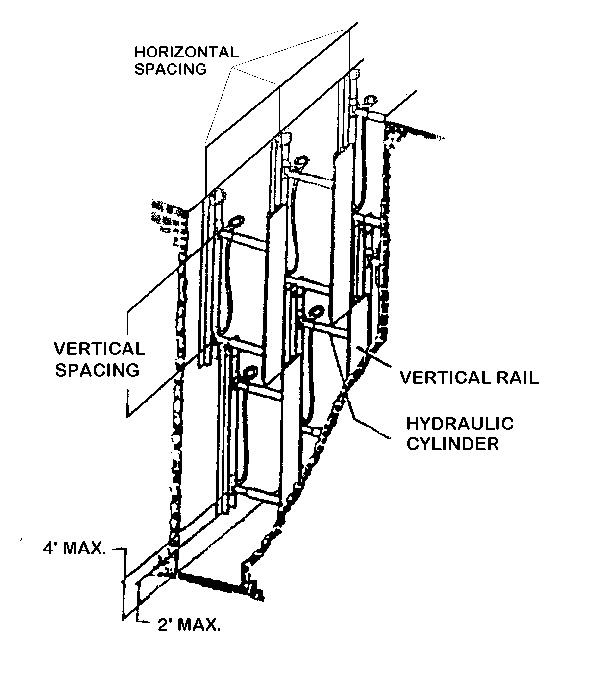
• Aluminum hydraulic shoring waler system (typical)
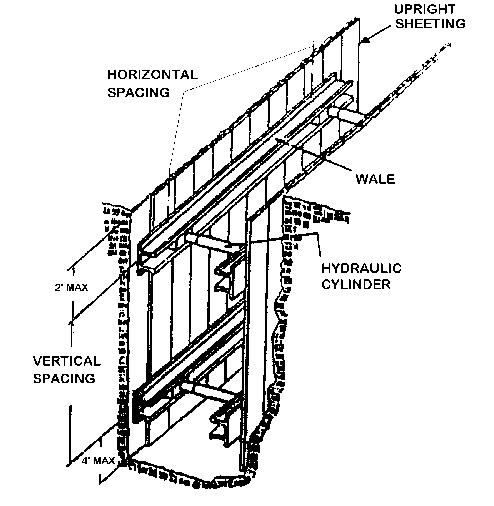
Revision Date: 00/00/000
Page: 00 of 000
Trench boxes are different from shoring because, instead of shoring up or otherwise supporting the trench face, they are intended primarily to protect workers from cave-ins and similar incidents.
The excavated area between the outside of the trench box and the face of the trench should be as small as possible. The space between the trench box and the excavation side must be backfilled to prevent lateral movement of the box. Shields may not be subjected to loads exceeding those which the system was designed to withstand.
Trench boxes are generally used in open areas, but they also may be used in combination with sloping and benching.
The box must extend at least 18 inches above the surrounding area if there is sloping toward the excavation. This can be accomplished by providing a benched area adjacent to the box.
Any modifications to the shields must be approved by the manufacturer.
Shields may ride two feet above the bottom of an excavation, provided they are calculated to support the full depth of the excavation and there is no caving under or behind the shield.
Workers must enter and leave the shield in a protected manner, such as by a ladder or ramp.
Workers may not remain in the shield while it is being moved.
Illustration of shielding systems in B and C type soils.
Revision Date: 00/00/000
Page: 00 of 000
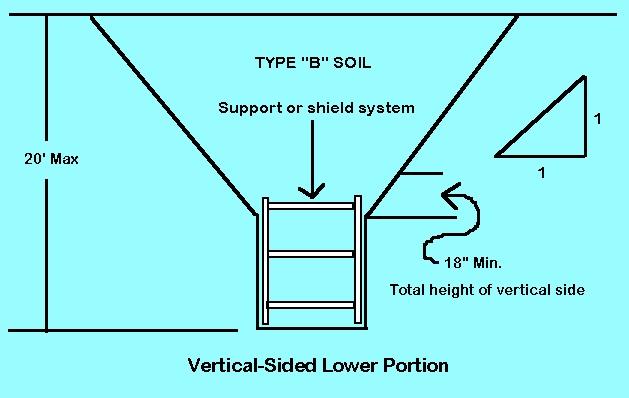
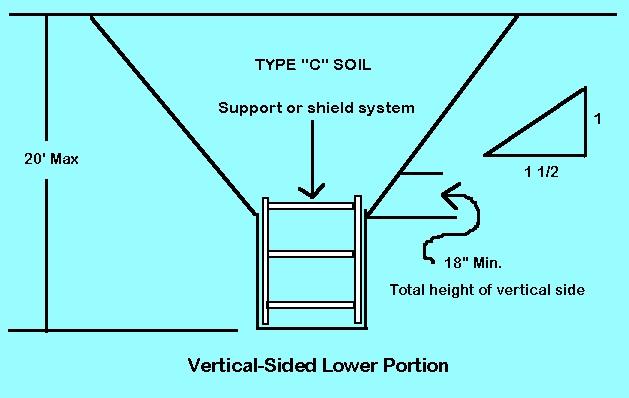
Client Date
Project Name
Project Location
Job Number
Excavation Depth and Width
Protective System Used Activities in Excavation
Competent Person
Excavation > 4 feet deep? ___Yes ___No.
Approximate Temp.
Approximate Wind Direction
Safety Rep
Soil Classification
Revision Date: 00/00/000
Page: 00 of 000
If YES, fill out a Confined Space Permit PRIOR to ANY person entering the excavation.
NOTE: Trenches over 4 feet in depth are considered excavations. Any items marked NO on this form MUST be remediated prior to any workers entering the excavation.
YES NO N/A
YES NO N/A
GENERAL
DESCRIPTION
Workers protected from cave-ins & loose rock/soil that could roll into the excavation
Spoils, materials & equipment set back at least 2 feet from the edge of the excavation
Engineering designs for sheeting &/or manufacturer's data on trench box capabilities on site
Adequate signs posted and barricades provided
Training (toolbox meeting) conducted w/ workers prior to entering excavation
UTILITIES
Utility company contacted & given 24 hr. notice &/or utilities already located & marked
Overhead lines located, noted, and reviewed with the operator
Revision Date: 00/00/000
Page: 00 of 000
Utility locations reviewed with the operator, & precautions taken to ensure contact does not occur
Utilities crossing the excavation supported, and protected from falling materials
Underground installations protected, supported, or removed when excavation is open
Air in the excavation tested for oxygen deficiency, combustibles, other contaminants
Ventilation used in atmospheres that are oxygen rich/deficient &/or contains hazardous substances
Ventilation provided to keep LEL below 10 %
Emergency equipment available where hazardous atmospheres could or do exist
Safety harness and lifeline used
Supplied air necessary (if yes, contact safety department)
Exit (i.e., ladder, sloped wall) no further than 25 feet from ANY worker
Ladders secured and extended 3 feet above the edge of the trench
Wood ramps constructed of uniform material thickness, cleated together @ the bottom
Workers protected from cave-ins when entering or exiting the excavation
KEEP 1 COPY OF EACH DAILY EXCAVATION CHECKLIST ON SITE FOR THE PROJECT DURATION, AND FORWARD THE ORIGINAL TO THE SAFETY MANAGER
Client Date
Project Name Job #
Project Location Weather
Competent Person
Where was the sample taken from
Excavation length, depth, and width
VISUAL TEST
Particle type Fine Grained (Cohesive) Granular (sand/silt or gravel)
Revision Date: 00/00/000
Page: 00 of 000
Other:
Notes
Layered Soils Dipping Into excavation? If yes, describe:
Excavation exposed to vibrations. If yes, describe:
Previously disturbed soils?
Crack like openings or sprawling observed?
Underground utilities? If yes, what type: Layered soils? (Note: the least stable layer controls the soil type)
MANUAL TEST
Wet Shake Water comes to surface (granular material) Surface remains dry (clay material)
THUMB TEST Note: Used to estimate unconfined compression strength of cohesive soil.
Test Performed Yes No N/A, Explain:
Soil indented by thumb with very great effort? Type A
Soil indent by thumb with some effort? Type B
Soil easily penetrated several inches by thumb with little or no effort. NOTE: If soil is submerged, seeping water, subjected to surface water, runoff, exposed to wetting. Type C
02/07/2025
Revision Date: 00/00/000
Page: 00 of 000
PENETROMETER or SHEARVANE TEST Note: Used to estimate unconfined compressive strength of cohesive soils.
Test Performed Yes No
Device Used / Serial Number:
Soil with unconfined compressive strength of 1.5 tsf of greater
Type A
Soil with unconfined compressive strength of greater than 0.5 tsf and less than 1.5 tsf. Type B
Soil with unconfined compressive strength of 0.5 tsf or less. Note: if the soil is submerged, seeping water, subjected to surface water, runoff, exposed to wetting.
Type C
No soil is Type A if fissured, subject to vibration, previously disturbed, layered dipping into excavation on a slope of 4h: 1v
SOIL CLASSIFICATION
Stable Rock Type A Type B Type C
SELECTION OF PROTECTIVE SYSTEM (Refer to Appendix F of 29CFR1926)
Sloping (Appendix B)
Specify angle: Timber Shoring (Appendix C) Trench Shield Max depth in this soil: Hydraulic Shoring (Appendix D)
Keep one copy of each Soil Analysis Checklist on site for project duration – Forward original to the Safety Director at the Main Office
This policy is designed to alert P1 associates to the risks presented by lone working, to identify the responsibilities each associate has in this situation, and to describe procedures, which will minimize such risks. It is not intended to raise anxiety unnecessarily, but to give the associates a framework for managing potentially risky situations.
This policy applies to all P1 Construction associates who may be working alone, at any time, in any of the situations described in the definition below. Where the conditions of tasks require P1 associates to work alone, all P1 Construction associates will have the duty to access and reduce the risks which alone working presents.
Some P1 associates work outside office hours and/or alone due to flexible working patterns and/or to undertake their job role.
• A commitment to supporting associates and managers both in establishing and maintaining safe working practices
• Recognizing and reducing risks
• A commitment to the provision of appropriate support for P1 associates
• A clear understanding of responsibilities
• The priority place on the safety of the P1 associates
• A commitment to provide appropriate training
P1 Construction associates are required to complete a risk assessment prior to beginning work. P1 utilizes a form called the Daily Safety Checklist (DSC). The DSC addresses Tasks, Hazards and Prevention. If during the shift a task changes, they are to complete a new DSC to assess any new risks. The hazard assessment will address hazards and identify control measures in order to minimize risk associated with working alone. If a P1 associate has any questions or concerns they are instructed to reach out the P1 Construction Safety Department.
Communication P1 associates are instructed on the check‐in/check‐out process. Associates will be monitored at regular intervals, or the associate will contact their supervisor/dispatch at a pre‐determined time based on the determinations made in the risk assessment.
Equipment such as mobile phones are required so that communication is established between a lone associate and dispatch, Project Manager, Supervisor and facility security. Dispatch will be the contact for a lone worker to check‐in at regular intervals. The Project Manager and/or the Foreman will be the back up for dispatch in the event that dispatch is unavailable. The check‐in/check‐out will be recorded including the associate’s status at the time of check‐in.
In case of an emergency where the lone worker does not check‐in at the appropriate time, a P1 supervisor/Project Manager will reach out to the customer to verify situation. Meanwhile, a supervisor or co-worker will proceed to the location. If needed, the Safety Department will also be notified.
Date: 02/07/2025
Revision Date: 00/00/000
Page: 00 of 000
This policy is to provide guidance and instruction to prevent incidents and injuries resulting from highway/roadway construction for all workers for P1 CONSTRUCTION; hereafter referred to as “The Company” work sites.
Applies to all The Company work sites, i.e., Company offices, client job sites, etc., that have occasion to use subcontractors.
The number of persons killed in the United States in motor vehicle crashes in work zones continue to rise. There are now more than 1,000 deaths annually. In addition, more than 40,000 people are injured each year because of vehicle crashes in a work zone. It is for this reason that we have established this Traffic Control and Work Zone Safety Program. At times the nature of our operations does not require freeway lane closures, we often find that unloading material, installing conduit in excavation, overhead lighting installation and other work activities cause workers to be adjacent to or in actual vehicular traffic. Further, our work may also expose pedestrians or bicycle traffic to hazard, and this program will address that issue as well. Obviously, we are concerned that our materials, tools, equipment, etc. could cause damage to vehicles or cause injury to the public when our work encroaches into accessible areas. But we are most concerned about the health and safety of our workers who may work in these hazardous conditions.
• Our first and most important objective is to ensure a high level of safety for our workers, other workers, and the public.
• Our second objective is to minimize adverse traffic impacts associated with construction in terms of delays and congestion, noise, and other environmental impacts, to ensure a high level of satisfaction by our ultimate customer – the public.
• Our third objective is the identification of specific risk factors associated with individual projects that present traffic hazard conditions and the development of countermeasures to mitigate those hazards to minimize the risk.
Revision Date: 00/00/000
Page: 00 of 000
• No workers or others will be seriously injured because of traffic accidents in our work zones, regardless of the cause of the accident.
• No members of the public traveling through our work sites will be injured because of traffic accidents caused by or made more serious by our work or traffic control operations.
• Traffic delays and congestion associated with our work activities will be held to the minimum level that can be achieved, consistent with the traffic volumes through the project, the characteristics of the roadway where the work occurs, and the nature of the work operations that must be completed.
• Interference with businesses and other activities adjacent to the project will be held to a Minimum, consistent with traffic volumes, roadway characteristics and work operations.
• Traffic controls will be carried out in a manner that ensures that emergency services in and through the project can be delivered in a timely manner, and transit operations will not be disrupted.
• Traffic controls will be conducted in a manner that provides us with adequate access to the work area to complete the planned work on schedule, in compliance with quality requirements of the contract. Efficient delivery of materials and equipment to work sites will be available.
• All traffic control operations will be in full compliance with the terms and requirements of the construction contract and/or in keeping with current States and Federal traffic control standards. Full understanding of the Manual on Uniform Traffic Control Devices (MUTCD) may be necessary to fulfill these requirements. Temporary Traffic Control Part 6 refers to the traffic control procedures and methods to be followed, and additional state addendums may apply.
• All traffic control devices, safety features, and work zone operations shall be always maintained in good condition, with full documentation of all work zones operations recorded according to the requirements of this Work Zone Program.
• Each project will have a particular traffic control demands and needs. The Company will determine potential hazards related to work in and around the traffic control zone prior to the start of work. Delivery of materials in public roadway locations or adjacent to roadway locations or adjacent to roadways will be determined and scheduling and planning will be accomplished to minimize hazard.
• Any foreman, supervisor or delegate with direct work zone responsibilities will have access to the Federal MUTCD and appropriate State supplementary requirements before the start of the project.
• Typically, the General Contractor (GC) is responsible for traffic control on the construction site and coordination with the temporary traffic control plan of the GC is necessary. Additional traffic control planning may be required as determined by the scope of work.
• OSHA regulations indicate that signs, barricades, and flagger signaling activities comply with the MUTCD regulations. Violations of the MUTCD requirements in these areas could be fully citable by OSHA.
Revision Date: 00/00/000
Page: 00 of 000
• Vehicle and traffic laws of the particular state and municipality must be followed, and permits may be required for lane or sidewalk restriction or closures. All such issues should be addressed in pre-planning meetings and in conjunction with the GC.
• Department of Transportation regulations in each State may require additional measures taken and this must be coordinated at time of job start up.
• A critical element of work zone safety is high visibility of workers when adjacent to traffic.
• All workers must wear high visibility apparel when in or adjacent to traffic. Class 1, 2 or 3 garments will be used based upon specific exposure needs.
• Working during dawn or dusk conditions will require use of fluorescent colored high visibility apparel (class 2 or 3 based upon exposure).
• Yellow green apparel should be considered when a significant number of orange-colored signs, drums or vehicles are in the work zone.
• Workers will be issued appropriate high visibility vests based upon exposure. This clothing must be kept in good condition and laundered periodically to assure adequate visibility. Clothing/vests should be replaced as needed to assure color discrimination by motorist.
• All workers exposed to traffic will be trained in how to work safely near traffic.
• Any temporary traffic control measures implemented will only be complete by workers who have been fully trained and are cognizant of MUTCD requirements.
• Any specific work procedures will be established by the Supervisor, General Foreman, or delegate when work activities present traffic hazards.
• Traffic control plans will be clearly communicated to all affected personnel.
• When personnel are responsible for traffic control device maintenance, those workers will be fully trained.
• Routes for work activity and traffic must be clearly established and marked properly. A control plan will be established to assure all parties are aware of encroachment and closures.
• Safe access and egress of workers and vehicles will be determined.
• Backing of vehicles should involve back up alarms and spotters whenever pedestrians or workers may be present.
• Overhead and underground utilities should be located and marked to prevent contact by equipment and workers.
Revision Date: 00/00/000
Page: 00 of 000
• Compliance with posted speed limits is vital to protect workers and the traveling public. Reduction of initial posted speed limits may be required based upon job demands and work tasks.
• Appropriate speed limits should be established and application for reductions should be coordinated with the GC or whoever is responsible for the traffic control plan.
• Assure that the determined regulatory speed is properly and clearly posted immediately preceding the work zone.
• Flaggers may be needed to monitor and slow traffic as necessary.
• Local law enforcement may be needed to enforce speed limits. Coordinate with the GC to determine if law enforcement presence will be needed at the site.
• Effective separation of traffic from work activity is one of the most critical aspects of work zone safety.
• Use of temporary traffic barriers, shadow vehicles or other devices must be determined and implemented according to traffic control plan.
• Factors to consider when determining what separation is needed are as follows:
o Traffic speed
o Traffic volume
o Distance between workers and vehicles
o Duration of work
o Type of work operations
o Physical hazards within the work zone
o Alignment of traffic lanes through the work zone
• Coordination with GC is critical to determine work areas that require separation. Other contractors work activity may come into play when determining the work zone.
• Adequate lateral buffer space should be provided to the greatest extent possible by shifting traffic slightly away from work operation as much as available space permits.
• Where workers must work very close to traffic, a trained flagger or spotter should be used to protect workers from oncoming traffic.
• For short duration work activity like pothole patching, taking measurements, marking, etc. the operation should be planned using a flagger or at least a spotter to make sure workers are not exposed to traffic in open lanes without protection.
• Workers must not cross high speed travel lanes on foot unless the foremen, supervisor or delegate analyzes the situation and develops procedures to accommodate movement safely.
• Warning sign should be posted at locations where work vehicles regularly enter and exit traffic.
Revision Date: 00/00/000
Page: 00 of 000
• Basic requirements are detailed in the MUTCD. This manual should be consulted when setting up a control plan.
• Flagging requirements, if applicable, mandate worker training and this should be established upon job start up.
• All manuals of traffic control will be retained on the job for ongoing review.
• Copies of any established traffic control plans will be maintained and reviewed with effected workers.
• Required signs will be determined and an adequate supply ordered to come onto the job site in advance of traffic control needs. Reasonable damage should be considered, and additional quantities should be available.
• All necessary sign supports will be ordered in quantity to allow for damage and vandalism.
• Channelizing devices (cones, drums, and barricades) must be ordered as required. Specification of 28” and 36” cones should be established to make certain that required cones are used based upon speed requirements. Type III barricades when required should be in adequate quantity to assure safe and complete closures. Channelizing devices must meet MUTCD and OSHA requirements
• Warning lights and batteries will be maintained on site when night closure or overnight securing is needed.
• Portable concrete barrier will be used when required by GC or long-term protection of workers in the work zone is needed. Appropriate warning and signage will be required.
• All barriers must be in good condition to present displacement when impacted.
• Vehicles will be installed with warning beacons, flashers and markings as required in accordance with MUTC requirements.
• Reflective markings and beacons must be kept in good condition and cleaned often to assure maximum visibility.
• Many situations follow “typical”” MUTCD requirements and details should be followed specifically. The type of Temporary Traffic Control Guide layout should be clearly identified in the traffic control plan and appropriate page, or diagram reference should be made to MUTCD.
• Contract specifications or permit documents will typically include drawings or diagrams showing setups to be used for lane closures, flagger stations, shoulder closures and other typical set ups. This specification must be followed and referenced in foreman daily logs.
• Significant deviations from contract or permit layouts should be reviewed with GC and signed off before implementation.
• Almost all layouts will require some minor modifications based upon actual site conditions. The foreman, supervisor or delegate in charge will make the minor adjustments required, but it is
Revision Date: 00/00/000
Page: 00 of 000
expected that changes err on the side of additional warnings and be in the best judgment of the foreman, supervisor, or delegate. Any changes should be documented on the daily log. These adjustments would include:
o Minor shifts in sign location (10 percent or less) to avoid driveways, intersections, other devices and to improve visibility.
o Minor shifts in start point and length of tapers (10 percent on length, 100 ft on start point to avoid intersections and other conflicts and to improve sight distance.
o Add supplemental signs on the left side of the road to improve visibility.
o Reduce spacing of channelizing devices at potential problem areas
o Other minor changes to address obvious concerns.
• Any non-typical situation should be reviewed with a traffic control qualified person or engineer, and the layout document should be reviewed with a traffic control qualified person or engineer, and the layout document should be fully documented. Written plan should be maintained on the site for ongoing crew review for adherence to requirements.
• Additional conditions may require further devices, including “pavement ends” or “bump” signs. These should be provided and documented in the plan.
• Periods during placement and removal of traffic control devices often present the highest risk of accident for workers and public because devices are not completely in place and workers and equipment are most exposed to traffic.
• Proper planning and careful execution of set ups and removals is needed, adhering to established procedures for protection of workers.
• Common sense and use of spotter or other means of identifying potential hazards are needed at all times when placement and removal.
• The following steps are required when setup/removal operations:
o All fixed signs must be placed first, with covers attached so signs can be covered and uncovered quickly at the appropriate time. Covers will be placed at the end of the operation.
o Portable signs will be deployed in the necessary location along the route.
o Channelizing devices will be set into place in the proper pattern. Note the number of cones and angles of tapers and follow plan.
o If setting devices on foot, make certain that a shadow vehicle is in place or worker carefully observes oncoming traffic.
o Workers must not cross open lanes of high-speed traffic to place devices.
o Arrow boards will be place in the proper sequence as cones are placed. Normally, these are towed into place and should be activated when other devices are set.
Revision Date: 00/00/000
Page: 00 of 000
o Set up operations normally should start at the approach end and proceed downstream in the direction of traffic flow unless conditions determined by the foreman, supervisor or delegate dictate other measures and safer.
o Removal will normally proceed in the opposite direction of set up.
o The foreman, supervisor or delegate will be responsible for driving through all set ups after completion to make sure it meets all requirements.
o The foreman, supervisor or delegate is also responsible for driving through removal to assure all equipment has been removed or properly secured.
• Worker safety is paramount during set up and removal operations. The following safety rules will be followed:
o Workers are not allowed to place cones or other devices from the bed of moving pickup trucks.
o Workers must not ride in the bed of a pickup truck during set up or any other time.
o Workers must not place cones or other devices or otherwise work behind a backing work vehicle.
o If a work vehicle needs to be backing, all workers must be in front of the vehicle and in sight of the driver.
o Violations of these rules will be grounds for disciplinary action, including suspension without pay.
• Temporary lighting should be used in night work zones or when work is at dawn or dusk.
• Lighting should allow motorists/pedestrians to clearly see work area and potential hazard so they can safely travel through the work area. But make certain that lighting does not “blind” motorists traveling in proximity to the work area.
• Illumination should allow workers to see their work activity more clearly.
• Lighting should be directed so motorists can clearly identify locations of workers in the work zone.
• Overnight procedures to secure work area and protect hazards must be developed and may require auxiliary flashers or lighting that must be activated upon departing the work area.
• Work locations may require multiple days of activity and may necessitate the securing of the site overnight. The foreman, supervisor or delegate will be responsible for making sure that an adequate overnight plan has been established.
• GC will be consulted if overnight procedures require special equipment, closures, or other contractor involvement.
Revision Date: 00/00/000
Page: 00 of 000
• The foreman, supervisor or delegate must determine the proper number of signs and channelizing devices that are needed to alert drivers and pedestrians of the hazards and any changes in the roadway or walkway.
• All such devices should be reflectorized to ensure good visibility at night. Lighting may be required based upon the hazard and risk.
• All equipment and supplies should be parked and stored in a safe location where they are not accessible to vehicles or pedestrians.
• Equipment, vehicles, and materials should be secured to prevent theft and vandalism.
• Adequate pathways must be established as needed to allow passage to retail or commercial establishments as needed. Hazards should be delineated with cones, barricades, caution tape, snow fence, etc.
• The foreman, supervisor or delegate is required to conduct a job check to verify that hazards and exposures have been minimized.
• All caution tape, delineators, cones, barricades, and signs should be checked immediately prior to closing down the job for the day and inspection noted in the daily log by the foreman, supervisor, or delegate. Corrective action should be completed before departing the job.
• Flaggers are in place to protect themselves, the crew, motorists, and pedestrians traveling through the work zone, and equipment. This is a critical job and one that must be taken seriously.
• Flaggers must be mentally alert, in good physical condition, be courteous but authoritative.
• All workers who flag must receive adequate training. Each State has different requirements. Most require some type of training, and many require actual certification. It is the policy that no matter what the State requirements, all workers will be properly trained before flagging.
• Training and instructions will cover at a minimum the following:
o Flagger equipment that must be used
o Layout of the work zone and flagging station
o Methods to signal traffic to stop, proceed or slow down
o Methods of one-way control
o Actual demonstration of proper flagging methodology and operations
o Emergency vehicles traveling through the work zone
o Handling emergency situations
o Methods of dealing with hostile drivers
o Flagging procedures when a single flagger is used
• Written documentation of flagger training will be maintained with other safety training records.
• Flaggers are to be used at locations on a construction site where barricades and warning signs cannot control the moving traffic.
Revision Date: 00/00/000
Page: 00 of 000
• Flaggers must wear proper orange, strong yellow-green or yellow warning garments, Class 2 for daytime and Class 3 for nighttime flagging, although the regulations only require Class 2 for nighttime.
• Proper STOP/SLOW paddles will be used following MUTCD requirements, including reflectorized material when used at night. 18” paddles are the minimum size allowed. 24” paddles should be used for speeds of 45 mph or greater. A flag may be used in emergencies but must be good grade red material at least 24” square and secured to a staff approximately 36” long.
• Extension staff may be used for paddles for extended periods of flagging. Long staff should be 66” long and accommodate insertion of the 12” staff paddle.
• Proper and consistent hand and paddle/flag signals must be used as specified in the MUTCD. Flaggers will be tested on appropriate signals and foremen will monitor to assure proper signals are given. Failure to provide proper signals is given. Failure to provide proper signals could expose additional liability in the event of an accident.
• Flagger stations or positions must be located so that approaching road users have sufficient distance to react and stop at an intended stopping point. Refer to the Stopping Distance Table in the MUTCD.
• Flagger stations must be illuminated if used at night or reduced light conditions.
• Advance warning signs, including “flagger” warning signs must be properly positioned for worker safety.
• Flaggers should stand either in the shoulder adjacent to the road being controlled or in a closed lane prior to stopping road users. The flagger should only stand or move into the lane being used by moving traffic after the traffic has stopped.
• The flagger should stay in line of sight of first road user to assure visibility.
• For operations requiring more than one flagger, portable radios will be used unless flaggers are close enough to permit voice or hand signals. Hand signals will be verified and agreed at time of initial operation.
• Flaggers should maintain a steady flow of traffic as much as possible and minimize unnecessary stops. Work vehicles should be held until a safe gap is available whenever possible.
• Flaggers will be relieved at least every 2 hours for a 15-minute break to assure they remain alert. No worker will be allowed to flag in excess of 10 hours in any day.
• Drinking water and restroom facilities will be available for flaggers.
• Safe access points will be located so workers can get into workspaces without excessive exposure to traffic.
• If safe parking areas are not available, workers will park at a central location and use work vehicles to reach the work site.
• Restroom facilities break areas and other facilities will be located to minimize worker exposure to traffic.
Revision Date: 00/00/000
Page: 00 of 000
• Entry and exit points for work vehicles and haul trucks will be planned in advance to reduce traffic conflicts and enhance worker safety.
• Vehicles and equipment with restricted visibility to the rear may not back up in any location where workers or pedestrians are in the area unless suing a spotter.
• Blind backing (no spotter) will be done only when the driver has determined that the area is free of workers or other vehicles/equipment by physically exiting the vehicle and checking to the rear.
• Drivers, when departing their vehicles, must be properly attired, including hard hat and appropriate visibility clothing (safety vest).
• In cold weather, foreman, supervisor, or delegate will assure adequate larger sized vests are available for fit over bulky outer clothing.
• Workers and foremen, supervisor or delegate should never become involved in any altercation with drivers. Simply record the plate number and description of the vehicle and driver so local law enforcement can be notified.
• Any worker who witnesses a work zone accident must report it immediately to their foreman, supervisor, or delegate. This would include incidents involving vehicles, bicyclists, pedestrians, etc.
Also found under “Corporate Rules”
1. Excavations and openings in working surfaces must be protected with barricades and hole covers.
2. Barricades and/or signs shall always be provided as warning of hazards such as overhead work, crane swing and excavations.
3. When a hole or floor opening is created during the performance of a work activity, a cover or a barricade must be installed immediately.
4. P1 will subcontract out all Work Zone Site safety protection and traffic control devises in the form of signs, cones, barrels and barriers, based on jurisdictional requirements.