Resisting the RulE of the Rich
Protecting freedom from billionaire power
resisting the rule of the rich ACKNOWLEDGEMENTS
© Oxfam International January 2026
Lead authors: Alex Maitland, Anjela Taneja, Anthony Kamande, Carlos Brown Solá, Harry Bignell, Max Lawson and Rune Møller Stahl.
Commissioning and publication manager: Harry Bignell
Oxfam acknowledges the assistance of Alex Bush, Alison Court, Anouk Franck, Amina Hersi, Ashish Damle, Bart Monnens, Beverly Musili, Brenda Mofya, Ceren Topgul, Chiara Putaturo, Cristina Fernandez-Duran, Deepak Xavier, Didier Jacobs, Efren Perez, Emilio del Rio Castro, Emma Seery (external consultant), Eva Smetts, Fati Nzi-Hassane, Gloria Isabel Garcia Parra, Grazielle Custódio, Hana Ivanhoe, Hanna Nelson, Hernan Saenz, Inigo Macias Aymar, Irit Tamir, Isobel Frye, Jane Garton (external consultant), Jackson Gandour, Jenny Patricia Gallego Munoz, John Makina, Jon Robin Bustamante, Joss Saunders, Kate Donald, Kira Boe, Linda Odour-Noah, Lucy Cowie (external consultant), MacPherson Mdalla, Mads Busck, Mai Lagman, Mahmuda Sultana, Maria Eugenia Luarca, Miguel De La Vega, Mirjam van Dorssen, Mustafa Talpur, Nabil Abdo, Nabil Ahmed, Nafkote Dabi, Neal McCarthy, Nicholas Vercken, Nina Crawley, Nizar Aouad, Nout van der Vaart, Paola Castellani, Rebecca Riddell, Rod Goodbun, Sally Abi Khalil, Seán McTernan, Stanislas Hannoun, Steve Price-Thomas, Susana Ruiz, Tobias Hauschild, Veronica Paz Arauco, Victoria Harnett and Viviana Santiago.
This publication is copyright, but the text may be used free of charge for the purposes of advocacy, campaigning, education, and research, provided that the source is acknowledged in full. The copyright holder requests that all such use be registered with them for impact assessment purposes.
For copying in any other circumstances, or for re-use in other publications, or for translation or adaptation, permission must be secured and a fee may be charged.
The information in this publication is correct at the time of going to press. Published by Oxfam International under DOI: 10.21201/2025.000113.
Oxfam is grateful to the authors of the background papers it commissioned on the same themes: Anjela Taneja, Grazielle Custódio, Hana Ivanhoe, Jennifer Erazo, Maria Eugenia Luarca, Michael Borum, Miguel De La Vega, Nizar Aouad, Nour Shawaf, Paola Castellani, Roslyn Boatman and Veronica Paz Arauco.
Designed by Nigel Willmott with data visualisation support from Julie Brunet.
Several experts and organisations generously gave their assistance during the development of this report. Thank you to Alice Krozer (El Colegio de México), Benedicte Bull (University of Oslo), Christoph Lakner (World Bank), Danny Dorling (University of Oxford), Steve Cockburn (Amnesty International), Tess Wolfenden (Debt Justice), Todd Brogan (International Trade Union Confederation) and Wiz Bains (Debt Justice).
resisting the rule of the rich PHOTO CREDITS 4
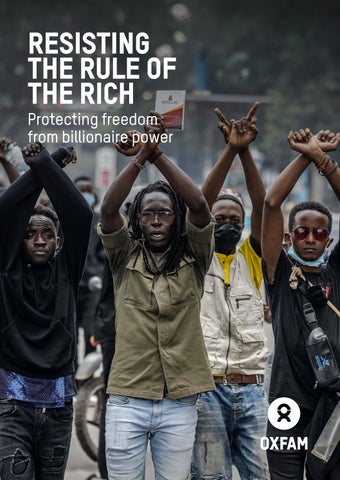
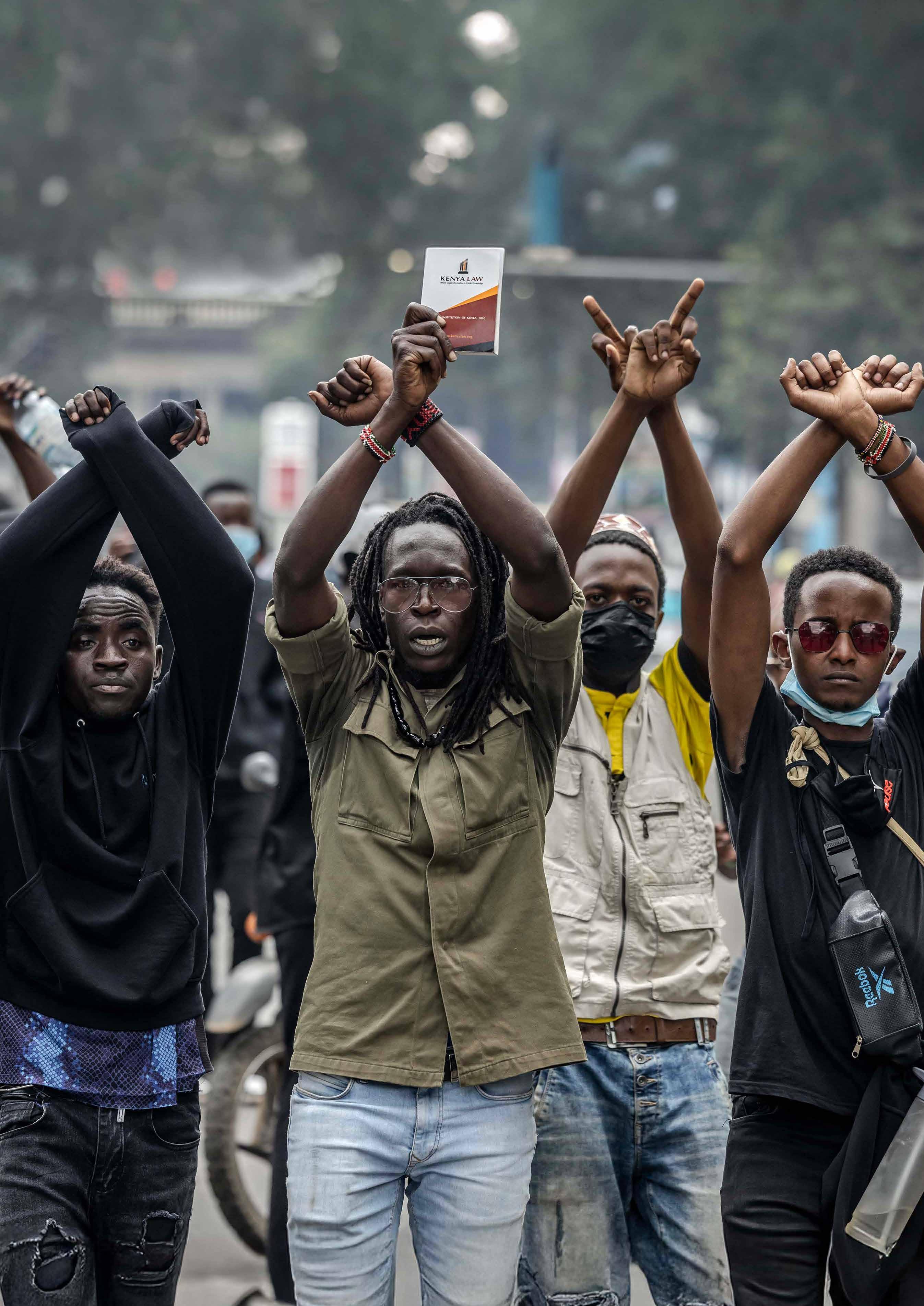
Front cover: Demonstrators make signs with their arms in front of Kenyan police officers during a demonstration against tax hikes as Members of the Parliament debate the Finance Bill 2024 in downtown Nairobi, on June 18, 2024. The police fired tear gas and arrested dozens of demonstrators. Photo: Luis Tato/AFP via Getty Images
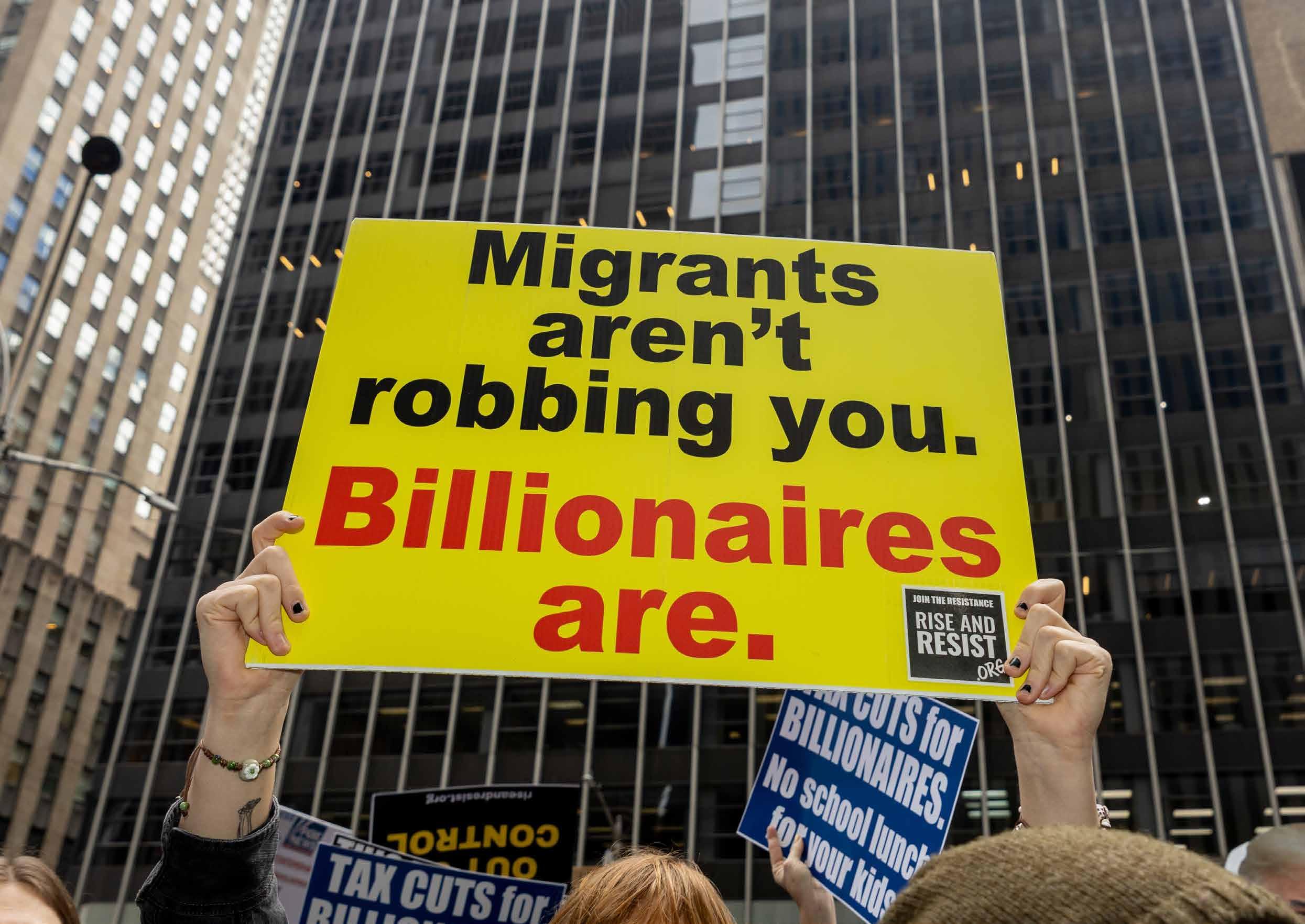
Executive Summary cover: On March 4, 2025, a demonstrator holds up a sign that reads: ‘Migrants aren’t robbing you. Billionaires are.’
Photo: Richard Scalzo/Shutterstock
Chapter 1 cover: A yellow Lamborghini is parked outside the Hotel de Paris in Monte Carlo.
Photo: Danilo Capece/unsplash
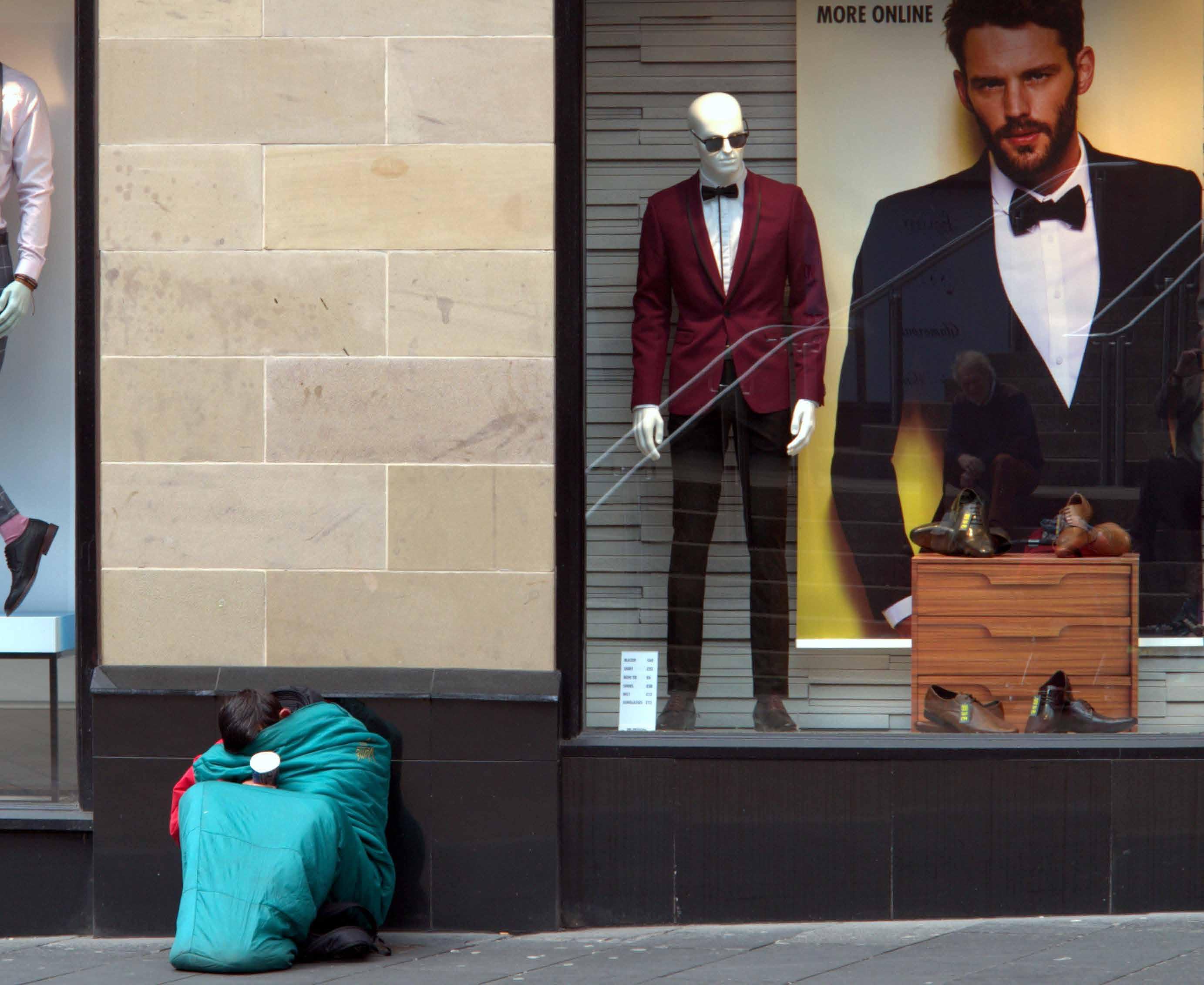
Page 24: An unhoused person sits outside a menswear store in Glasgow, Scotland. Photo: Gerard Ferry/Alamy
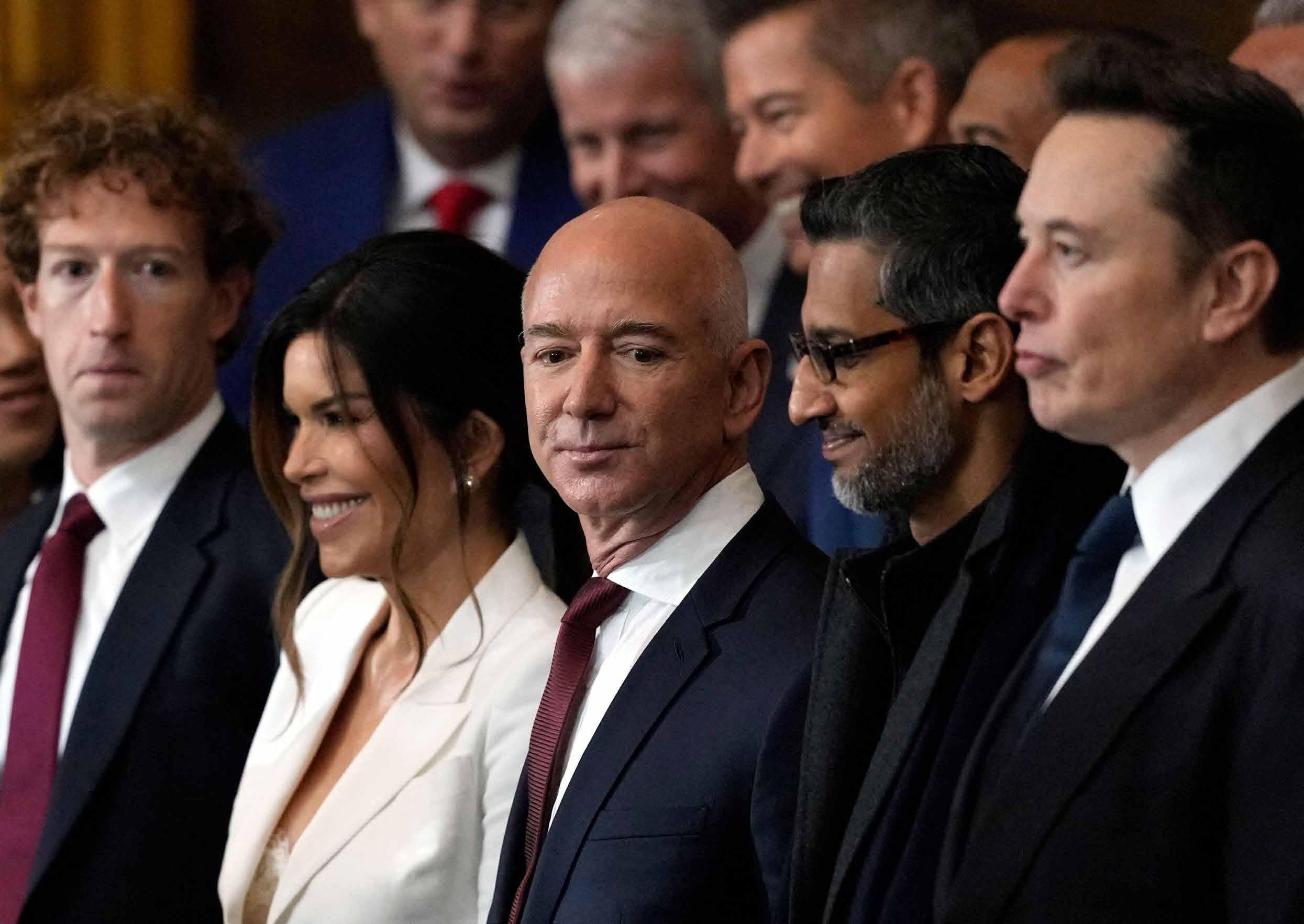
Chapter 2 cover: Guests including Mark Zuckerberg, Jeff Bezos, Sundar Pichai and Elon Musk, arrive before the 60th Presidential Inauguration in the Rotunda of the U.S. Capitol in Washington DC, USA on January 20, 2025.
Photo: Julia Demaree Nikhinson/AbacaPress
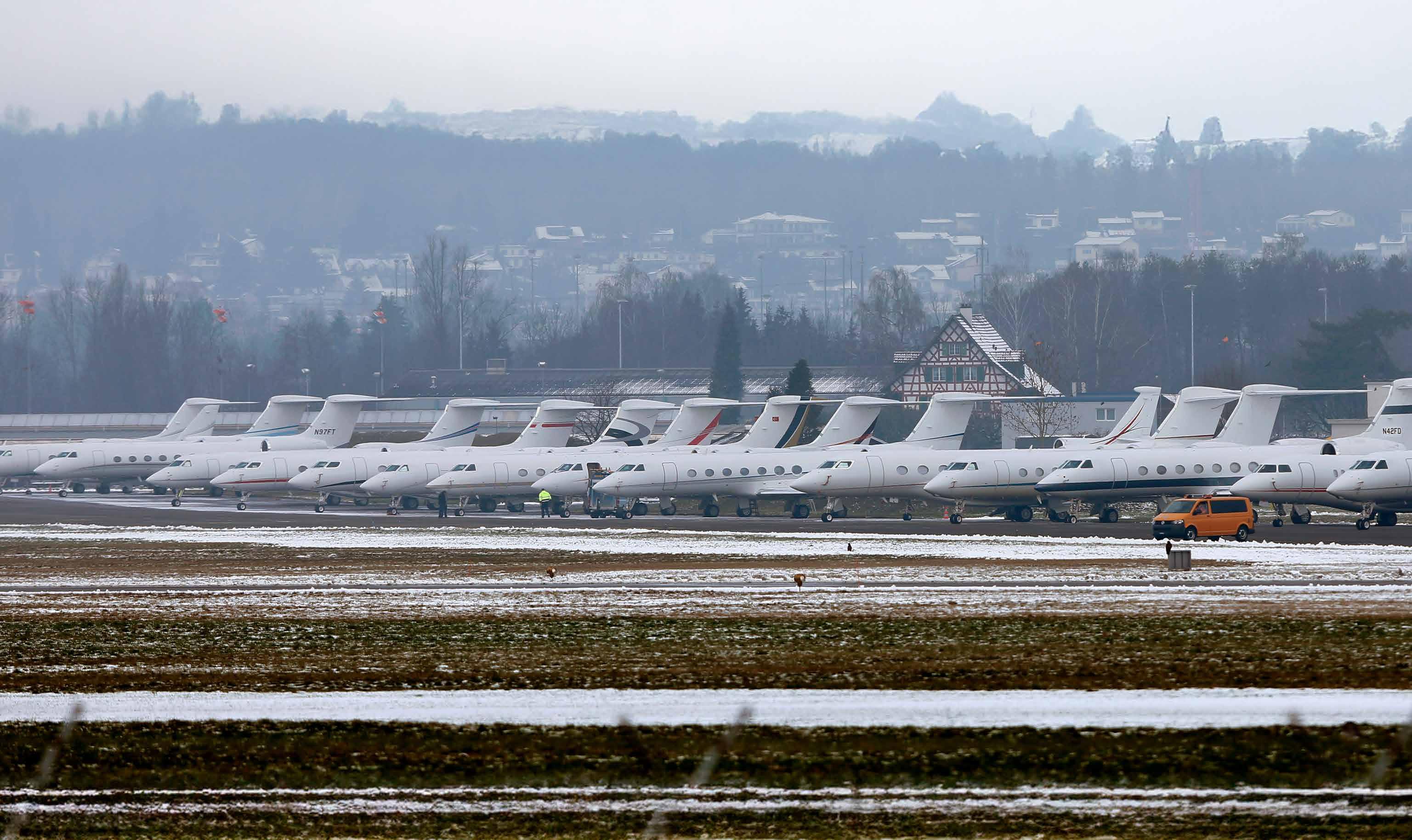
Page 30: Passenger jets at the Swiss Airforce base in Dübendorf, Switzerland. The airport is one of those used for arrivals and departures at the World Economic Forum in Davos. Photo: Arnd Wiegmann/Reuters
Page 34: An advert on a bus stop in England reads, ‘don’t believe everything billionaires tell you’, in reference to billionare owned media in the UK.
Photo and artwork: Darren Cullen. See his work here: www.spellingmistakescostlives.com
Chapter 3 cover: Students from public universities in São Paulo, Brasil protest against cuts in education budgets made by former President Jair Bolsonaro and his government. Photo: Isaac Fontana/Shutterstock
Page 38: An elderly man leads protests in El Arbolito Park, Ecuador, 2025, part of the National Strike protesting against the government of Daniel Noboa. Although entirely peaceful, the demonstration was dispersed with excessive use of tear gas. Photo: SOPA Images/Alamy
Chapter 4 cover: Activists lie down to take part in the G20 women’s shutdown to end gender based violence and femicide in South Africa during the We the 99 People’s Summit on economic justice.
Photo: Fighting Inequality Alliance
Page 45: Activists from around the world march for climate justice at the Global Climate March, held on 15 November 2025 by the Peoples’ Summit in Bethlehem, Brazil for COP30.
Photo: Rodrigo Correia/Oxfam International
Page 47: Thousands of demonstrators march down Fifth Avenue in New York on 14 June 2025 to protest against autocratic rule. Photo: rblfmr/Shutterstock
resisting the rule of the rich ACRONYMS
CONSEA National Council on Food and Nutrition Security (Brazil)
CSOs Civil Society Organizations
ECLAC Economic Commission for Latin America and the Caribbean
ILO International Labour Organization
IMF International Monetary Fund
IPCC Intergovernmental Panel on Climate Change
IPI International Panel on Inequality
ITUC International Trade Union Confederation
MEPs Members of the European Parliament
NIRPS National Inequality Reduction Plans
PPP Purchasing Power Parity
UN COP Conference of the Parties to the United Nations Framework Convention on Climate Change
UNCTAD UN Trade and Development
USAID United States Agency for International Development
FOREWORD AGNÈS CALLAMARD, SECRETARY GENERAL OF AMNESTY INTERNATIONAL
The world is not approaching a crucial tipping point: we are in it.
For many years, Amnesty International has warned of authoritarianism growing across and within countries. Evidence from the last year shows how this process is accelerating, and fast. One year on from the inauguration of President Trump, we have seen around the globe how leadership that prioritises military investment and foreign policy deal-making and rejects human rights protections and multilateral commitments is multiplying, and this has done dangerous damage to the hard-won equality, justice and dignity gains of these past 80 years the world over.
Equally for many years Oxfam has drawn our attention to the growing inequality emergency, with the relentless rise of the super-rich. As this report shows, this process too has accelerated; over the last year billionaire fortunes have risen three times faster than they have in the five years since 2020. The first trillionaire is on the horizon. Meanwhile one in four people are regularly worried about not having enough food to eat, having to skip meals to get by, and ordinary people’s lives are becoming impossible to afford.
Authorities in a broad sweep of countries have employed authoritarian practices and introduced new measures to restrict freedom of expression, association and peaceful assembly. They have used these, and existing laws and regulations, to clamp down on human rights defenders, critics and opponents, or as a way to evade accountability and defend the economically powerful.
In an all too familiar tale, the brunt of this repression is born by those with the least buffer, with union organisers, environmental defenders, women, racialised, indigenous and LGBTQI+ people around the
world being forcibly disappeared, arbitrarily detained or killed for their activism.
As this report clearly shows, these two deeply concerning trends of growing authoritarianism and rising inequality are not separate problems. They are not distinct dilemmas. They instead deeply entwined, as governments across the world side with the powerful, not the people, and choose repression, not redistribution.
It is imperative that our hard won-civil and political rights – freedom of assembly, freedom of expression and freedom to organise – are protected. Protest is a cornerstone of fair and democratic societies, it is a critical bastion against authoritarianism. It is equally important that the social and economic rights of all are fulfilled; rights essential for living a life with dignity, covering basic needs like food, water, housing, healthcare, education.
It is view, confirmed by the facts, that central to the realisation of all these human rights must be a rapid reduction in inequality; the gap between the super-rich and the rest of society must be closed, and fast.
The good news is people around the world are not sitting idly by as billionaires and authoritarians corrode the foundations of our freedoms. Inequality and tax justice advocates are demanding action on inequality, and specifically on the taxation of the super-rich. A UN tax convention is on its way to becoming a reality, led by Africa. From Malaysia to Madagascar, Nepal to France and the US – people are leading the way with - less a wave - and more a tsunami of global protests confronting the rise of the far-right, calling for a change to corrupt governments, who prioritise profit over people and facilitate the dominantion of the super-wealthy over the lives and liberties of everyday people.
Resisting the Rule of the Rich from Oxfam is a fearless and timely reminder of what is at stake, what is already lost and what is left to protect from the insatiable grasping hands of the billionaire class. Oxfam reminds us all that a new and more equal world is possible.
It is time to organise, mobilise – and take it.
Agnès Callamard, Secretary General of Amnesty International
FOREWORD WANJIRA WANJIRU, CO-FOUNDER OF THE MATHARE SOCIAL JUSTICE CENTRE AND MATIGARI YOUTH BOOK CLUB
2025 has been a year of resistance: the people versus the powerful. Life has become unbearably difficult for ordinary citizens and now - from Nairobi to Bangladesh, Italy to Peru - workers of the world are downing their tools and demanding better, rejecting a global economic order that treats their suffering as necessary for profit.
Growing up in Mathare, one of Nairobi’s biggest slums, I know first-hand the violence of poverty, the preventable loss of lives lived hand to mouth, the indignity of hungry babies one cannot feed, rent one cannot pay, healthcare and education one cannot afford. Poverty is not a natural condition. It is engineered, maintained and ingrained by systems and governments that decide who thrives and who struggles. These are not accidents of fate, but political choices.
For instance, in Kenya we once had free primary education – now we do in name only, with a multitude of ways in which parents must actually pay. This retreat from education, health and social protection is not incompetence, it is deliberate austerity imposed on the poor while the wealthy continue to extract with impunity. Ordinary people are heavily taxed despite an already unbearable cost of living. Meanwhile, corporations receive exemptions and political elites shield their wealth. This became fertile ground for the Reject the Finance Bill protests of 2024 and 2025. We marched with fire in our bellies and radical hope in our voices. Hope that the future must be better. We are not asking for anything grandiose, we simply want to live in dignity. The state responded with violence and many lost their lives. We have seen this brutality repeated in Cameroon, Kenya, Madagascar, Nigeria, Peru, and Tanzania. All are reminders of what can happen when the elite feel threatened.
As the liberation leader Amílcar Cabral reminded us, people do not fight for abstract ideas. They fight to change their material conditions, to secure their children’s future, to live better and in peace. Yet today that future feels uncertain. Young people are delaying families because they cannot sustain themselves. Climate change and ecological collapse remind us daily that even the earth is pleading for an end to exploitation.
Still, I hold a deep belief that there is enough for everybody, enough land, enough water, enough joy, enough love, if we put solidarity, unity and humanity at the core of our politics. There is no scarcity, only hoarding and systems designed to keep abundance in the hands of a few.
The Gen Z protests have revealed the interconnectedness of all our struggles, from the economic protests of Nairobi to post-election protests in Maputo, from the barrios of Latin America to the townships of South Africa, I learned this as a grassroots activist at the Mathare Social Justice Centre. People’s struggles are always struggles for dignity and social justice. These must be the priorities of any government that claims to serve its people. A democracy that cannot feed, house, or protect its people is democracy in name only.
We cannot wish poverty away, it must be systemically eradicated, just as it has been systemically entrenched. This requires courage to confront capitalism, colonial legacies and the political elite. This change is not only necessary, it is inevitable.
That world is calling us now, and we must answer.
Wanjira Wanjiru, Kenyan grassroots activist who co-founded the Mathare Social Justice Centre and won the Mawina Kouyate Daughters of Africa Award for activism
Billionaire fortunes have grown at a rate three times faster than the average annual rate in the previous five years since the election of Donald Trump in November 2024.1 Whilst US billionaires have seen the sharpest growth in their fortunes, billionaires in the rest of the world have also seen double digit increases. Actions of the of the Trump presidency, including the championing of deregulation and undermining agreements to increase corporate taxation, have benefited the richest around the world.2
The number of billionaires has surpassed 3,000 for the first time, and the level of billionaire wealth is now higher than at any time in history. In October 2025, the world’s richest man, Elon Musk, became the first person to have wealth over half a trillion dollars.3 Meanwhile, one in four people globally face hunger.
It is one thing for a billionaire to buy an enormous yacht or many luxury homes around the world. This excessive consumption can rightly be criticized in a deeply unequal world where the majority have very little. A world that can also not afford the carbon that comes with this excessive consumption. But many others would reject this criticism, describing it as the politics of envy. Yet far fewer people would disagree that when a billionaire uses their wealth to buy a politician, to influence a government, to own a newspaper or a social media platform, or to out-lawyer any opposition to ensure them impunity from justice, that these actions are inimical to progress and fairness. Such power gives billionaires a grasp over all our futures, undermining political freedom and eroding the rights of the many.
Box ES1: A Good Decade For Billionaires: The Facts
• In 2025, billionaire wealth increased three times faster than the average annual rate over the previous five years.4
• One study found that more unequal countries are up to seven times more likely to experience democratic erosion than more equal countries.5
• Billionaires are over 4,000 times more likely to hold political office than ordinary people. 6
• The amount of wealth gained by the world’s billionaires over the last year is enough to give every person in the world US$250 and leave the billionaires more than US$500bn richer.7
• The world’s 12 richest billionaires have more wealth than the poorest half of humanity, or more than four billion people.8
This phenomenon of the richest influencing and controlling politics is not new; it is familiar in countries in every part of the world. But events in the US in 2025 perhaps made this viscerally clear: in country after country, the super-rich have not only accumulated more wealth than could ever be spent, but have also used this wealth to secure the political power to shape the rules that define our economies and govern nations. At the same time, all over the world we are seeing an erosion and rolling back of the civil and political rights of the many; the suppression of protests; and the silencing of dissent. A century ago, the US Supreme Court Justice Louis Brandeis said, ‘We must make our choice. Either we can have extreme wealth in the hands of the few, or we can have democracy. We cannot have both.’
This report is about that choice. How governments worldwide are making the wrong choice; choosing to defend wealth not freedom. Choosing the rule of the rich. Choosing to repress their people’s anger at how life is becoming unaffordable and unbearable, rather than redistributing wealth from the richest to the rest. It shows how the economically rich are becoming politically rich the world over, able to shape and influence politics, societies and economies. In sharp contrast, those economically with the least wealth are becoming politically poor, their voices silenced in the face of growing authoritarianism and the suppression of hard-won rights and freedoms.
FIGURE 1: EVOLUTION OF BILLONAIRES’ WEALTH 1987-NOV 2025, US$ BILLIONS IN REAL TERMS
Source: Forbes Annual and Real-Time Billionaires Lists
Billionaire fortunes have grown at a rate three times faster in the last year than they did on average in the 5 previous years.

Box ES2: Digital space – the new battleground In 2022, Elon Musk purchased Twitter – later rebranded X – for US$44bn9 and promised, under the guise of ‘free speech’, to scale back its guardrails monitoring and censuring hate speech.10 Immediate spikes in hate speech followed his takeover, including a 500% increase in the use of a racial slur and an uptick in misogynistic, transphobic and other hateful terms.11 The value of the platform has risen sharply following the 2025 inauguration of Donald Trump and the alliance at that time between the pair.12
Meanwhile, Kenyan law enforcement has used X and other digital providers to track and abduct protestors and critics of the government.13 In December 2024, protestors were abducted from the streets of Kenya and tortured for posting anti-government images on X.14 In June 2025, protests hit the streets of Kenya again over the death of Albert Omondi Ojwang in police custody after he posted a criticism of the Deputy Inspector General of Police on X.15
The conclusion of this report shows that this is not inevitable. Governments can choose to defend ordinary people rather than oligarchs. People themselves, when organized, can present a powerful counterweight to extreme wealth. Together we can demand a fairer, more equal world.
Extreme wealth accumulation accelerates
How much is too much? The case for an extreme wealth line
Philosopher Ingrid Robeyns has set out the philosophical case for a legal limit on private wealth. Her proposal, known as ‘limitarianism’, argues that beyond a certain point, private wealth becomes morally unjustifiable and politically dangerous.16 Just as societies define a poverty line to identify when someone has too little, we should also define a threshold for when someone has too much – an ‘Extreme Wealth Line17 – she proposes an upper limit of US$10m in wealth. The organization Patriotic Millionaires found that one-third of the millionaires who they surveyed supported a US$10m extreme wealth line.18
Executive summary THE CHOICE: OLIGARCHY OR DEMOCRACY? 11
FIGURE 2. TRENDS IN BILLIONAIRE WEALTH VS NUMBER OF FOOD INSECURE PEOPLE
Source: FAOSTAT, Forbes Annual and Real-Time Billionaires Lists
Life is becoming unaffordable for everyday people everywhere
In previous decades, defenders of the global economy could evidence the very real progress in reducing poverty, pointing out that this was what mattered, not the wealth of a few at the top.
Yet, in the decade since 2020, this is no longer the case. The reduction in poverty has largely ground to a halt, with poverty rising again in Africa. In 2022, nearly half of the world population (48%), or 3.83 billion people, lived in poverty.19
Looking beyond income to other aspects of poverty, one in four people worldwide face moderate or severe food insecurity.20 This number increased by 42.6% between 2015 and 2024.21 Ordinary people worldwide are seeing the cost of food rise relentlessly. This includes 92 million food insecure people in Europe and North America, some of the richest regions in the world.22
Women and girls living in poverty, racialized communities, disabled people, and LGBTQI+ communities experience
even more severe impacts, as well as exclusion, marginalization and shrinking freedoms to protests against their economic hardships.23 Women and racialized people predominate in the lowest-paid and most poorly protected jobs, and they are less likely to have land rights. Women contribute an estimated 12.5 billion hours of unpaid care work every day, adding at least US$10.8 trillion in value to the global economy.24 In the US alone, more than one in five LGBTQI+ adults (22%) are living in poverty, compared to an estimated 16% of heterosexual and cisgender people.25
Economic inequality becomes political inequality
Economic inequality plays a major role in the erosion of rights and political freedoms, and creates fertile ground for increased authoritarianism. Research finds that rising inequality is one of the strongest predictors of democracies beginning to fall apart.26
One comprehensive study analysed 23 episodes of ‘democratic erosion’ in 22 countries.27 This democratic
Executive summary THE CHOICE: OLIGARCHY OR DEMOCRACY? 12
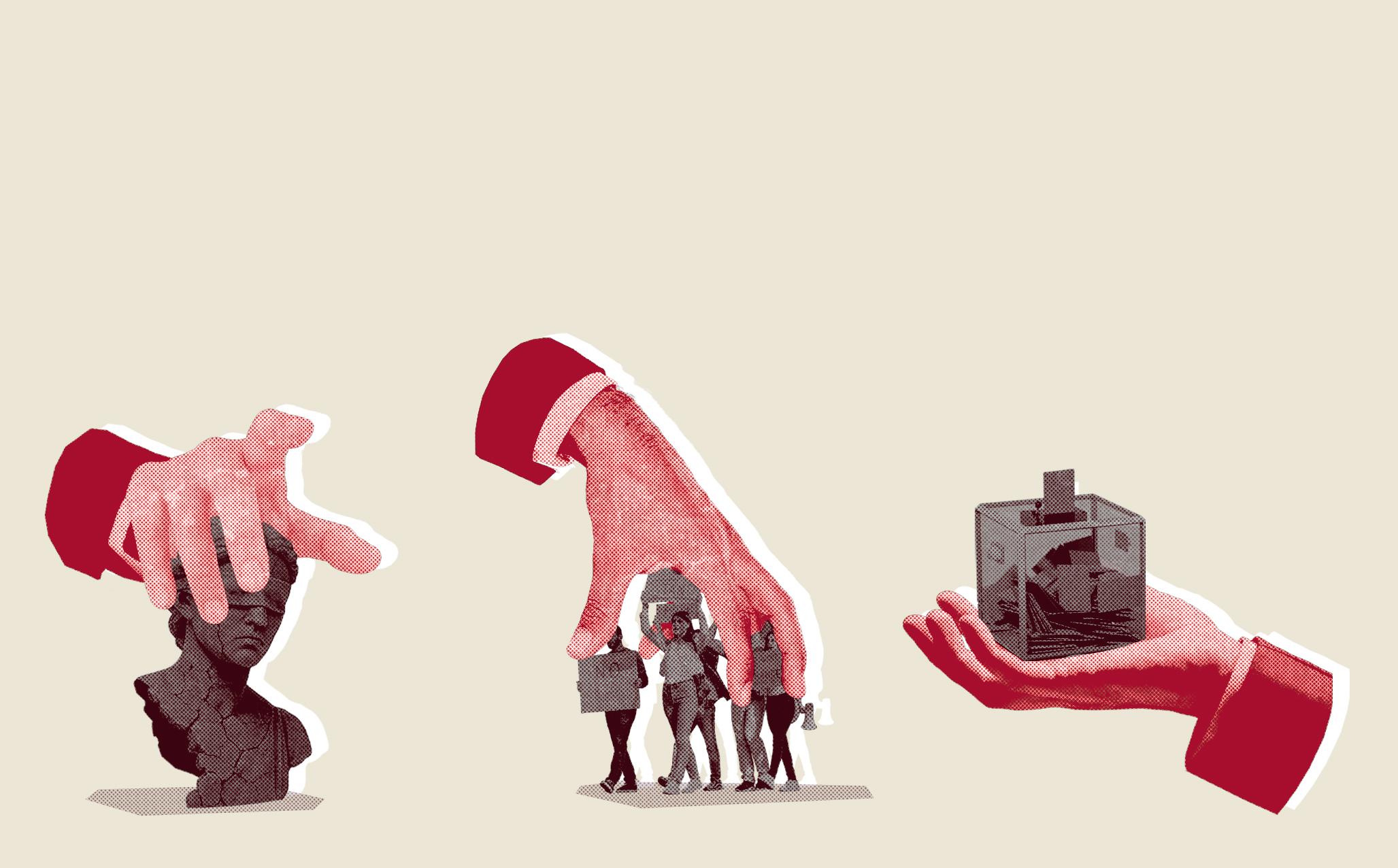
the undermining of checks and balances like the judiciary or legislature
Examples of
democratic erosion
the restriction of civil liberties
the manipulation of elections and the normalisation of authoritarian practices
erosion included the undermining of checks and balances such as the judiciary or legislature; the restriction of civil liberties; the manipulation of elections; and the normalization of authoritarian practices such as concentrating power in the hands of a political leader. The study found that the most unequal countries are as much as seven times more likely to see this democratic erosion happen than more equal countries.
Political inequality at the top: the oligarchy that controls our world today
In 2025, we saw the inauguration of a billionaire president with a cabinet that includes multiple billionaires,28 backed and bankrolled by the world’s richest man, Elon Musk,29 who became US President Donald Trump’s right-hand man before his spectacular fall from grace.30
Data from 136 countries confirms that as economic resources become more unequally distributed, so too does political power. This leads to policy outcomes that reflect the preferences of upper-income groups more than those of lower-income groups.31
The super-rich have built their political power in three main ways: by buying politics, investing in legitimizing elite power, and directly accessing institutions.32 Billionaires and the super-rich have long used their vast wealth to buy politicians and political parties, subverting the power of the majority in favour of an unjust system of ‘one dollar, one vote’.33 The World Values Survey found that almost half of all people surveyed perceived that the rich often buy elections in their country.34 In 2024, one in every six dollars spent by all US candidates, parties and committees came from donations from just 100 billionaire families.35
Billionaires and the super-rich increasingly dominate media and AI. Over half of the world’s largest media companies have billionaire owners,36 and 9 of the top 10 social media companies in the world are run by just six billionaires.37 8 of the top 10 AI companies – which overlap with media companies – are billionaire-run, with just three commanding nearly 90% of the generative AI chatbot market.38 In France, CNews was bought and rebranded as the French equivalent of Fox News by far-right fossil-fuel billionaire Vincent Bolloré, a man who has brought lawsuits against journalists who have criticised him.39
Billionaires are 4,000 times more likely to hold political office than ordinary people.
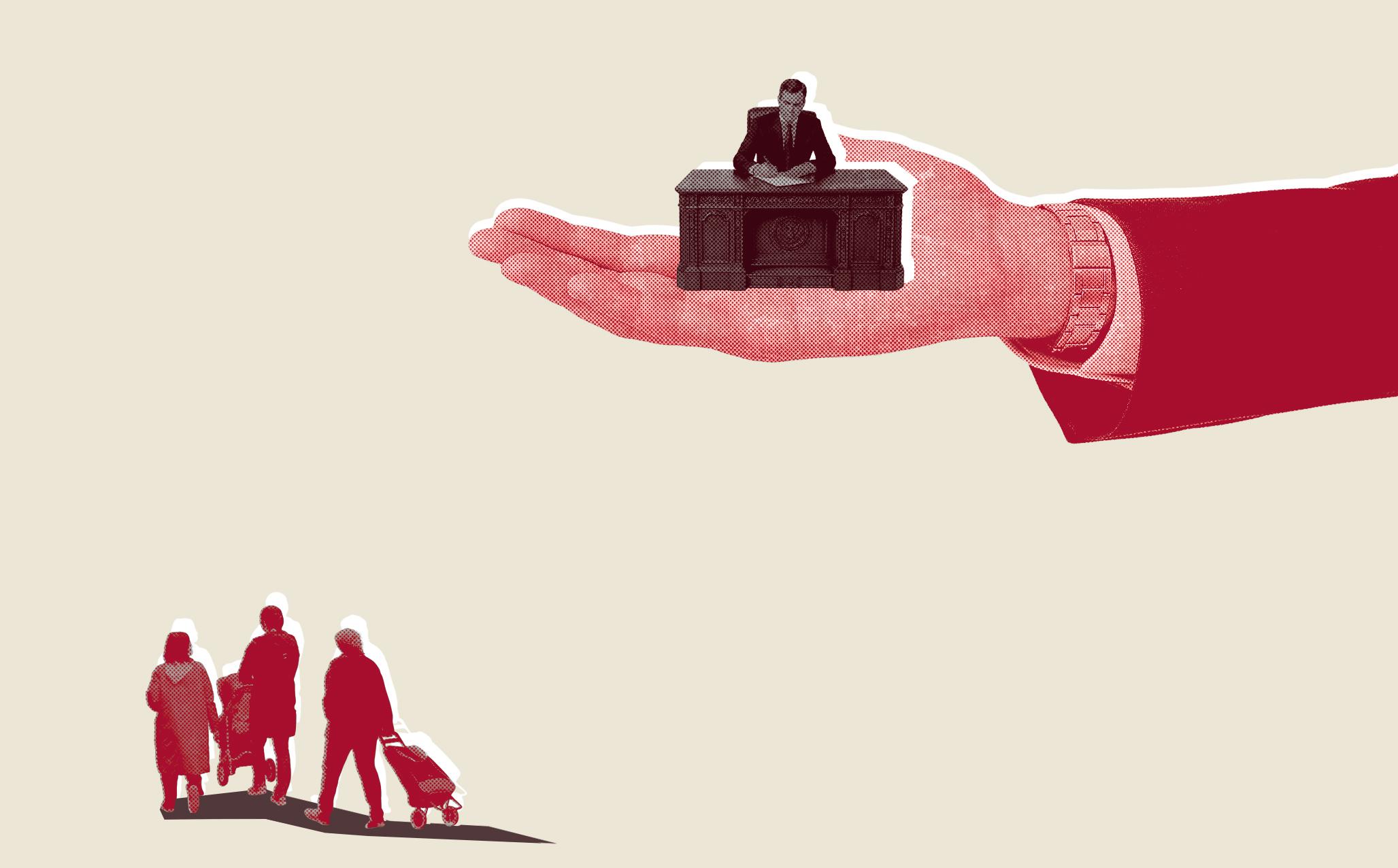
Billionaire-owned media systematically neglect the interests of people living in poverty, women and racialized groups.40 In Latin America, for example, only 3% of the people in news media coverage are from Indigenous groups, and of these, only one in five is a woman.41
A 2023 article found that over 11% of the world’s billionaires had held or sought political office.42 Oxfam estimates that billionaires are at least 4,000 times more likely to hold political offices than ordinary people.43 Najib Mikati, Lebanon’s ex-prime minister and reputedly its richest man,44 is a clear example of how great wealth contributes to gaining political office. He has been appointed as a ‘consensus’ prime minister three times despite having little popular or grassroots party support.45
Political inequality at the bottom: governments choose repression over redistribution
The economic poverty of the majority tends to translate into political poverty; they face higher barriers to participation in politics, decision-making and public life. This limits people’s abilities to influence policies,
access their rights, and shape their future. Women, particularly racialized women and those living in poverty, also disproportionately experience acute time poverty because of the care responsibilities they face.46
In 2024, freedom of expression was curtailed in a quarter of the world’s countries.47 According to Freedom House, 2024 was the nineteenth successive year of global decline, with over 60 countries experiencing a decline in political rights and civil liberties.48
Extraordinary levels of economic hardship for the many are being compounded by austerity, which governments, especially in lower-income countries, feel forced to implement in the face of overwhelming debt. Protests against inequality and hardship have subsequently erupted across the world.
Faced with widespread public anger49 over issues that impact their populations’ everyday lives, governments worldwide have doubled down and chosen repression rather than redistribution. Protests against austerity and the cost of living have led to harsh government crackdowns.
Box ES3: The brutal backlash against Kenya’s finance bill protests
In July 2024, Tom50 joined thousands of protesters in Nairobi’s city centre to campaign against tax hikes, price rises, inequality embedded by debt,51 and the government. They were attacked by a group of plain-clothed police officers with guns. Tom was shot three times with rubber bullets that lodged in his chest.
In many ways Tom was lucky. The Kenya National Commission on Human Rights recorded that 39 people were killed at the protests52 and the Kenyan state has been accused of systematically killing or kidnapping those who were involved. 60 cases of extrajudicial killings are being investigated, along with 71 cases of abductions and forced disappearances.53 Human Rights Watch has also reported victims having been found tortured and mutilated.54
The protests Tom joined, while not achieving all their aims, succeeded in forcing the president to dissolve the cabinet and withdraw the bill that would have driven up taxes.55 They showed the power of people to force change. Despite his injuries, Tom said, ‘If the protest were tomorrow, I would go again. We are fighting for our lives. We are fighting for a better Kenya. If we don’t do it now, who else will?’ Trade Unionists are often at the forefront of protests and are among the first to be targeted in government crackdowns.56
In Argentina, President Javier Milei, backed by the Argentine billionaire Eduardo Eurnekian, has sought to amend 366 laws to deregulate working conditions and wages, dismantle union protections and privatize public companies.57
Protesters face an increasingly hostile context as Milei’s government has also issued a decree restricting freedom and the right to protest;58 union protests were met with widespread police brutality and mass arrests during public demonstrations in 2024. At least 1,155 protesters were injured with at least 33 suffering rubber bullet wounds to the head and face.59
Blaming migrants not millionaires
Supported by far-right parties and media platforms, many of which are owned by the super-rich, governments systematically stigmatize and scapegoat minorities. In country after country, migrants are used as scapegoats for a host of social ills including crime, shrinking welfare provisions and the rising cost of living.60 A 2024 poll in Canada found that 35% of Canadians surveyed believe immigration increases crime levels, driven in part by misleading news reports, social media and right-wing politicians.61 In the UK, a powerful minority with disproportionate influence have contributed to the public conversation being focused on small migrant boats crossing the English Channel, rather than the super yachts of the ultra-wealthy.62 Some people are convinced by this scapegoating and the worst results can be seen in increased racist violence enacted by an emboldened few.63 While the majority see through the lies and many fight back, the sad truth is that these dirty tactics serve as a distraction from the real cause of hardship for the many - extreme levels of inequality.
Building a more equal future
This report evidences how extreme inequality, billionaires and their government enablers are thwarting political freedom and human rights for the majority. This vicious cycle is widely recognized – even from within the ranks of the super-rich. In 2024, a survey of over 2,300 millionaire respondents from G20 countries found that over half think that extreme wealth is a ‘threat to democracy’.64 Polling across 36 countries found that people reported the top cause of economic inequality as ‘rich people have too much political influence’; 86% of respondents either agreed or strongly agreed with this statement.65
The good news is that none of this is inevitable, and change is possible. To create a fairer future for everyone, this report recommends:
1. Countries must radically reduce economic inequality
High economic inequality, alongside huge concentrations of extreme wealth and persistent poverty, is the engine that is eroding the rights and freedoms of the many. Governments need to make a radical reduction of economic inequality their top priority. All countries should put in place realistic and time-bound National Inequality Reduction Plans (NIRPs) to reduce inequality, with regular monitoring of progress. Every country should work towards an income Gini coefficient of less than 0.3 and/or a Palma ratio of no more than 1.66
All countries should also support the recommendations of the Extraordinary Committee report67 to the South African G20 led by Professor Joseph Stiglitz. The Committee called for the formation of an ‘International Panel on Inequality’, an institution to provide timely, accurate information on the scale, causes, impacts and solutions
to runaway inequality. Just as the Climate Emergency required the formation of the IPCC, the inequality emergency requires the urgent formation of the IPI.
2. Curb the political power of the super-rich
The translation of economic wealth into political power is not automatic, there is strong variation between countries, which reflects the regulatory environment. As well as reducing the existence of extreme wealth, governments can take concrete steps to build a strong firewall between wealth and politics. They should:
• effectively tax the super-rich to reduce their economic power, and through this their political power;
• regulate lobbying and revolving doors;
• ban campaign financing by the rich;
• legislate to ensure media independence;
• regulate media companies to increase algorithmic transparency;
• protect freedom of speech while preventing harmful content, especially hate speech targeting immigrants and women as well as gender-diverse, racial, ethnic and religious minorities.
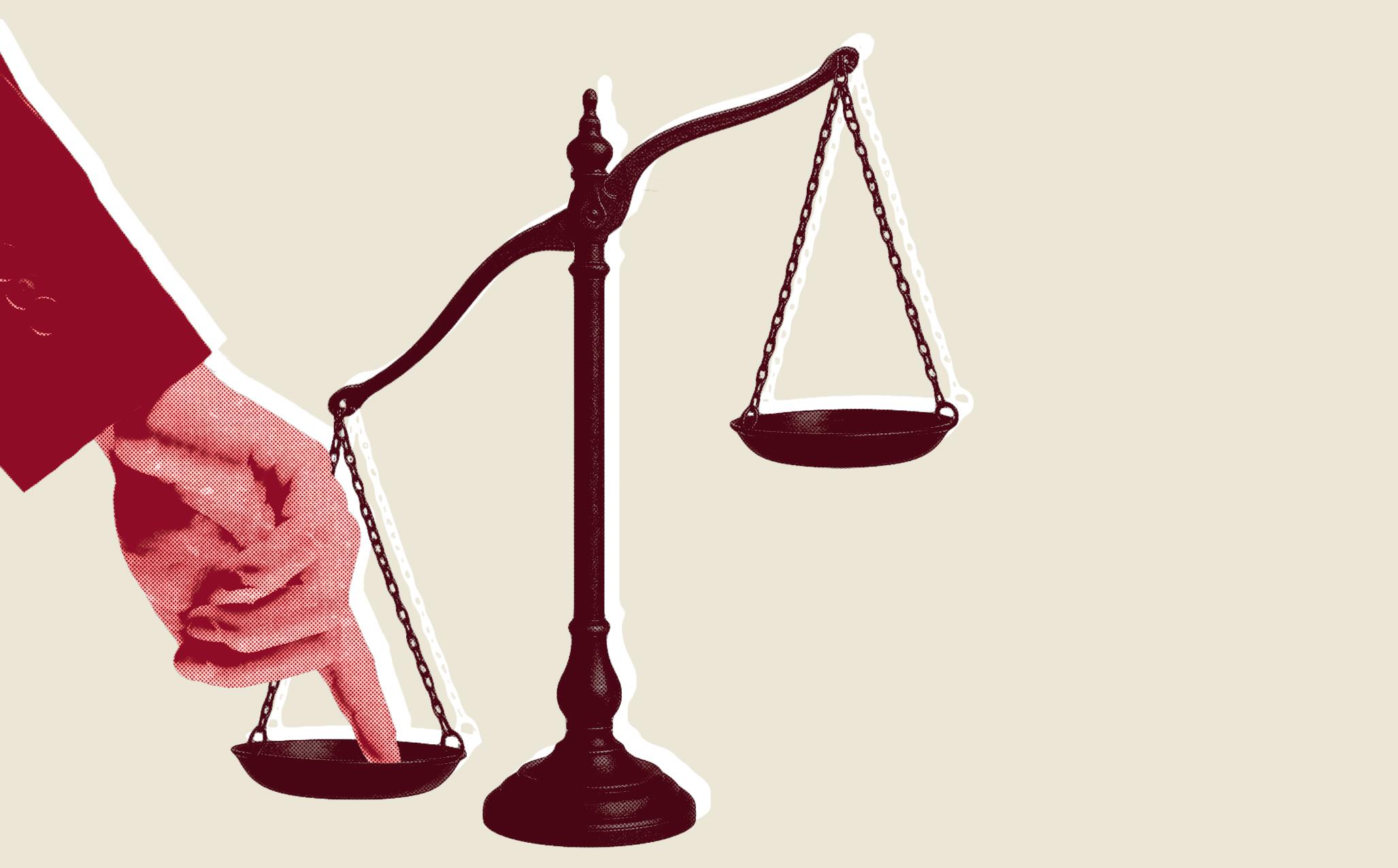
The most unequal countries are as much as seven times more likely to experience democratic erosion than more equal countries.
3. Build the political power of the many
Ordinary people become powerful in a political system where they are incentivized and motivated to influence decision-making despite structural inequality. To build the political power of the many, governments must guarantee an enabling environment with laws, institutions and public policies whereby citizens can freely organize, speak out and act collectively to make demands of power-holders accountable for the fulfilment of these rights. Promoting and protecting civic space is an effective counterweight to authoritarianism, oligarchy and structural inequality.
Civil society organizations (CSOs), trade unions, other marginalised, organised groups, and networks, are critical to the fight against inequality. They are convenors of ordinary people, collaborators with grassroots and Indigenous movements, mechanisms for social cohesion, watchdogs for transparency and accountability, and advocates for progressive policies and governance that serve the interests of the many.
Building a worldwide movement and daring to demand change together
In too many contexts, daring to dissent means risking arrest, intimidation and even your life.
That is why we must stand together and enact measures to build and protect the voice, choice and power of the many fighting for a more equal future.
Working in solidarity and collaboration across our movements and organizations is vital. We must work collaboratively to build a worldwide people’s movement to defend our rights, fight for a more equal world, and demand an end to inequality and oligarchy.
Box ES4: Beating political poverty – the power of unity
Research from Latin America shows that key institutes of democracy, including civil society organizations, and the targeting of mobilization efforts and voluntary organization in lower income communities can give ordinary people a powerful political voice.68 Mass participation in elections ensures victory to candidates or parties that address the grievances of the many and curb the power of the few. José Mujica (the president of Uruguay from 2010 to 2015) rose from humble origins and a period of imprisonment under a military dictatorship, garnering massive support among Uruguay’s working class and rural communities living in poverty.69
Trade unions play a critical role in driving collective action and influencing the policy process, as well as directly reducing economic inequality by raising wages for those on low and middle incomes relative to the highest earners.70 Unions have been especially effective in narrowing gender and racial wage gaps. Black and Hispanic workers, as well as women, receive a larger wage boost from unionization than white male workers, helping to close long-standing pay gaps.71
chapter 1 THE GREAT INEQUALITY DIVIDE AND THE RULE OF THE RICH

CHAPTER 1
THE GREAT INEQUALITY DIVIDE AND THE RULE OF THE RICH 18
Inequality, already high, is deepening in many countries. Amid wars, trade tensions and climate shocks, the wealth of the global elite has hit a record high. As this report will evidence, this skyrocketing wealth for the few is driving a vicious cycle of political and economic capture that is undermining political freedom and deepening economic inequality.
Billionaires are using political influence to further their own economic interests,72 while rights for the majority are being undermined.73 As the rich get richer, pressure on ordinary people intensifies, with billions of people languishing in poverty.74 Across the globe, many countries are drifting from democratic principles towards oligarchy – the rule of the richest.75
‘A new oligarchy in our global economy is becoming apparent.’76
Cyril Ramaphosa, President of South Africa
This first chapter sets out the latest data and analysis of today’s extreme inequality crisis, which is continuing to channel excessive wealth into the hands of an elite few while billions of people suffer unnecessary poverty and hardship.
1.1 A good decade for billionaires
Billionaires experienced another record-breaking year in 2025. For the first time, there are more than 3,000 billionaires in the world, and at the end of November 2025 their wealth reached a record high of US$18.3 trillion. This is US$2.5 trillion more than last year, and represents an 81% (US$8.2 trillion) increase since March 2020 (adjusted for inflation).77 The pace of growth over the last year, since November 2024, was 16.2%, three time higher than the average rate of growth since 2020. Whilst US billionaires have seen the sharpest growth in their fortunes, billionaires in the rest of the world have also seen double digit increases, as actions of the Trump Presidency, including the championing of deregulation and undermining agreements to increase corporate taxation have benefited the richest everywhere.
Billionaire fortunes have grown at a rate three times faster in the last year than they did on average in the 5 previous years.
CHAPTER 1
THE GREAT INEQUALITY DIVIDE AND THE RULE OF THE RICH 19
Box 1: A Good Decade For Billionaires: The Facts
• In 2025, billionaire wealth increased three times faster than the average annual rate over the previous five years.78
• One study found that more unequal countries are up to seven times more likely to experience democratic erosion than more equal countries.79
• Billionaires are over 4,000 times more likely to hold political office than ordinary people.80
• The amount of wealth gained by the world’s billionaires over the last year is enough to give every person in the world US$250 and leave the billionaires more than US$500bn richer.81
• The world’s 12 richest billionaires have more wealth than the poorest half of humanity, or more than four billion people.82
This persistent trend has seen excessive wealth concentrated in the hands of an elite few. The 10 richest billionaires now have more than US$2.4 trillion between
Source:
FIGURE 1: EVOLUTION OF BILLONAIRES’ WEALTH 1987-NOV 2025, US$ BILLIONS IN REAL TERMS
Source: Forbes Annual and Real-Time Billionaires Lists
FIGURE 2. TRENDS IN BILLIONAIRE WEALTH VS NUMBER OF FOOD INSECURE PEOPLE
FAOSTAT, Forbes Annual and Real-Time Billionaires Lists
CHAPTER 1
THE GREAT INEQUALITY DIVIDE AND THE RULE OF THE RICH 20
them.83 This is turning out to be the billionaires’ decade –and their power over our lives is greater than ever. This is turning out to be the billionaires’ decade – and their power over our lives is greater than ever.
BOX 2: The First ever G20 Report on Inequality calls for an ‘Inequality IPCC’
Under the G20 Presidency of South Africa, an Extraordinary Committee of Inequality Experts, led by Nobel Laureate Professor Joseph Stiglitz, published the first ever report84 to the G20 on economic inequality. The report declared that the world faces an ‘Inequality Emergency’. It finds that since they year 2000, for every dollar of new wealth in the world economy, 41 cents went to the super-rich 1%, and only 1 cent in every dollar to the whole bottom half of humanity. The report details the many harms of very high inequality, notably its impact on the erosion of democracy and undermining of trust. Its main recommendation is for the establishment of an ‘Independent Panel on Inequality (IPI)’ a body similar to the Intergovernmental Panel on Climate Change (IPCC), bringing together the work of inequality experts across the world to give policy makers timely, accurate and useful information on the scale, causes, impacts and potential solutions to the inequality emergency.
Some super-rich individuals are cashing in on global crises such as unprecedented trade tensions, shrinking freedoms, wars and climate change. Sectors from education to food and healthcare to housing are being increasingly privatized and financialized, meanwhile cuts in public spending on essential services like healthcare, education and nutritious food have contributed to a rise in costs – over two billion people now face food insecurity.85 Looking beyond income to other aspects of poverty, one in four people worldwide face moderate or severe food insecurity, including having to regularly skip meals.86 Ordinary people worldwide are seeing the cost of food rise relentlessly. This includes 92 million food insecure people in Europe and North America, some of the richest regions in the world.87 Corporate empires are making record profits, adding trillions to the wealth of their owners. Extreme wealth accumulation is occurring particularly in the tech sector where huge amounts of natural resources are being exploited.88 They are also eating up billions
of hours of human attention.89 In July 2025, NVIDIA was the first company to reach a US$5 trillion valuation, a meteoric rise in value from less than US$500bn in January 2023.90 Its CEO and co-founder Jensen Huang is now among the 10 richest people in the world as of November 2025. His net wealth rose from less than US$6bn in March 2020 (when adjusted for inflation) to US$154bn as of November 2025, a 25-fold increase.91
It is not just billionaires who are thriving but also the rest of the world’s richest 1%, predominantly comprised of individuals with US$1m or more – the ‘dollar millionaires’.92 In 2024, more than 680,000 dollar millionaires were created globally,93 and UBS projects that 5.34 million new millionaires will be created over the next five years to 2029 (at US$8.30 per day).94
According to World Bank estimates, 3.55 billion people will still be living in poverty in 2029.95 If this wealth were redistributed and resources more widely spread, the ability of many governments and their populations to face the many crises facing our world today would be significantly greater.96
It is clear that we live in a highly unequal and precarious world. At the height of the COVID-19 pandemic, global inequality rose by the largest margin since at least 1990, driven in large part by the widening gap between high and low-income countries, and marking a reversal after three decades of catch-up.97 Whilst the gap then started to fall once more, it remains extremely high, and trade tensions now threaten to deepen this divide further.98 Many countries – both high and low-income – are witnessing a stubborn or growing gap between the richest and the rest. From 2022 to 2023, the wealth gap between the richest 1% and the 50% with the least wealth either increased or stagnated in countries where almost four out of five people (77.8%) in the world live.99
• On average, a person in the richest 1% owns 8,251 times more wealth than someone in the bottom 50%.100
• The poorest half of humanity hold just 0.52% of the world’s wealth, while the richest 1% own 43.8%.101
Men own the majority of the world’s wealth, with women billionaires accounting for only 13% of billionaires’ total wealth.102 Increasing wealth inequality is also undermining progress in ending gender inequality, while the promotion of so called ‘traditional’ family systems, frequently done under the guise of ‘protecting women’,103 simply risks further entrenching a patriarchal power imbalance that undermines the rights of women, girls and gender-diverse people.104
CHAPTER 1 THE GREAT INEQUALITY DIVIDE AND THE RULE OF THE RICH 21
Box 3: How much is too much? The case for an extreme wealth line
Renowned political philosopher Ingrid Robeyns has set out the case for a legal limit on extreme wealth. Her proposal, known as ‘limitarianism’, argues that beyond a certain point, private wealth becomes morally unjustifiable and politically dangerous.105 Nine out of ten dollars of combined public and private wealth created since 1980 is private wealth, and only one dollar is public wealth.106
Just as societies define a poverty line to identify when someone has too little, we should also define a threshold for when someone has too much – an ‘extreme wealth line’.107 Robeyns points out that extreme wealth is never purely earned: it is shaped by birth, luck and social institutions such as laws, markets and infrastructure. As many opportunities for accumulating wealth are provided by economic and political institutions, it is also legitimate for society to regulate the amount of wealth people hold. In the same way as governments regulate pollution to limit harm to people and planet, they should also address the exorbitant concentrations of capital that have negative impacts on the world.
Robeyns argues that today’s extreme levels of wealth inequality present an especially acute threat to democratic principles. A small group of ultra-rich individuals can influence elections, shape laws and pressure governments by threatening to move assets abroad. Political equality cannot survive in a world of unlimited economic power. Robeyns therefore calls for a legal cap on wealth. In the context of the Netherlands, she suggests a threshold of €10m. Beyond that, Robeyns argues that wealth should be taxed and redirected to public purposes. The goal is not to achieve absolute equality, but to prevent the kind of economic power that distorts democracy and undermines fairness. The organization Patriotic Millionaires found that one-third of the millionaires who they surveyed in 2024 supported a US$10m extreme wealth line.108
1.2 Meanwhile, billions face poverty and hunger
While the super-rich accumulate trillions of dollars and entrench an oligarchic system, billions of people are left facing the avoidable hardships of poverty, hunger, and death from preventable diseases because the system is rigged against them. Even while people, unions and social movements are pushing back against funding cuts, the basic necessities of life are increasingly beyond the reach of many ordinary people. Huge profits accrue to rich business owners and shareholders, while workers are squeezed by low wages and inflation. In recent decades, wages and salaries have stagnated109 while the price of food, energy, housing and other basic needs have increased, leading to a permanent crisis of affordability for many people. According to the International Labour Organization (ILO), although at least 95 countries increased minimum wage levels in 2022, in one out of four of these countries this was only enough to compensate minimum-wage recipients for the increase in the cost of living. While in 88 countries, the minimum wage increased in real terms in 2023, in most cases the increase was not large enough to compensate for the declines of the previous two years.110 Whilst the cost base is different, it does not account for the disparity.
CHAPTER 1 THE GREAT INEQUALITY DIVIDE AND THE RULE OF THE RICH 22
FIGURE 3: NUMBER OF PEOPLE LIVING IN POVERTY PROJECTIONS UNDER DIFFERENT INEQUALITY AND ECONOMIC GROWTH SCENARIOS
Source: The World Bank Group Poverty & Inequality Platform 2025
Box 4: Digital space – the new battleground
In 2022, Elon Musk purchased Twitter – later rebranded X – for US$44bn111 and, under the guise of ‘free speech’, promised to scale back its guardrails monitoring and censuring hate speech.112 Immediate spikes in hate speech followed his takeover, including a 500% increase in the use of a racial slur and an uptick in misogynistic, transphobic and other hateful terms.113 The increase in hate speech just before Musk bought X persisted until at least May of 2023.114 The value of the platform has rebounded – having tanked when Musk first took over – following the 2025 inauguration of President Donald Trump and the alliance at that time between the pair.115
Meanwhile, Kenyan law enforcement has used X and other digital platforms to track and punish critics of the government.116 In December 2024, protestors were abducted and tortured for posting anti-government images on X.117 In June 2025, protesters took to the streets again following the death of Albert Omondi Ojwang in police custody after he posted a criticism of the Deputy Inspector General of Police on X.118 While X continues to line Musk’s pockets and sustain a flood of online hate speech, Kenya’s digital space has become a new battleground for protestors.119
CHAPTER 1
THE GREAT INEQUALITY DIVIDE AND THE RULE OF THE RICH 23
Global inequality, that is the inequality between all people on the planet, rose during COVID-19 for the first time in decades, as the countries of the Global North pulled ahead of the Global South.120 Whilst the gap is now closing once more, it remains extremely high and the outlook is not good.121 Globally the rate of poverty reduction has slowed to almost a halt; poverty levels are broadly where they were in 2019, and extreme poverty is rising again in Africa. Recent World Bank updates of the data indicates that poverty levels are also higher than previously estimated.122 In 2022, nearly half of the world population (48%), or 3.83 billion people, lived in poverty.123 This is 258 million more people than in earlier estimates. If current trajectories hold, 2.9 billion people, or a third of the global population, will still be living in poverty in 2050.124
A small redistribution of wealth would be enough to prevent this injustice; just 65% of billionaires’ wealth gained over the past year would end global poverty (at US$8.30 per day). Their wealth could also eliminate extreme poverty (US$3 per day) 26 times over.125 Taxing the super-rich is a very popular policy proposition. In the UK, one survey found support from across the political spectrum,126 and a survey of people in 60 countries found that it is seen as central to supporting democracy.127 We also know that reducing inequality makes a significant contribution to tackling poverty; a 2% reduction in inequality accompanied by a 2% growth rate would reduce the time it would take to end global poverty by 144 years compared to a 2% growth rate alone.128
Women living in poverty, racialized communities and disabled people face even more severe impacts of inequality, as well as exclusion, marginalization and shrinking freedoms to protest their economic hardships.129 Women and racialized people predominate in the lowest-paid and most poorly protected jobs, and they are less likely to have land rights. In the UK, for example, in 2020 the median white British household had 10 times the wealth of the median Bangladeshi and Black African households.130 Globally, the labour income share of men is 2.4 times greater than that of women on average. Women’s labour income share is just 29%.131 Meanwhile, women make a significant contribution to the global economy by delivering the great majority of undervalued care work, which further undermines their livelihood opportunities. Women carry out an estimated 12.5 billion hours of unpaid care work every day, adding at least US$10.8 trillion in value to the global economy; this is three times the financial value
of the global tech industry in 2020.132 In the US alone, more than one in five LGBTQI+ adults (22%) are living in poverty, compared to an estimated 16% of heterosexual and cisgender people.133 When looking across race and ethnicity, poverty rates among LGBTQI+ people of colour in the US tower over those of other groups; for example, almost half of Latine transgender adults (48%), as well as nearly four in 10 Black transgender adults (39%) are living in poverty.134
1.2.1 Billionaires are cashing in on the hunger crisis
Since 2021, food prices have risen more sharply than the price of other goods and services, far outpacing wage growth in this period.135 This places an undue burden on people living in poverty, who spend a high percentage of their income on food.136 In 2024, around 2.3 billion people were facing severe or moderate food insecurity. Although this is a marginal decrease compared to 2023, it represents an increase of 335 million people since 2019 (see Figure 3).137 Again, women have been disproportionately affected, and in 2025 the food insecurity gap between men and women rose to a level not seen since 2015, constituting a 46% increase since 2023.138
Today, 2.6 billion people around the world – an additional 300 million to those facing food insecurity –cannot afford a healthy diet.139 The cost of a healthy meal in 2024 was 30% higher than in 2020,140 and people living in poverty in lower-income countries pay a bigger share of their incomes to access healthy diets than those in higher-income.141
Meanwhile, public investment in food security is in decline. Globally, government spending on agriculture as a share of total expenditure fell by 10.6% since 2019,142 with escalating conflict and wars, as well as the climate crisis, having taken a heavy toll.
CHAPTER 1
THE GREAT INEQUALITY DIVIDE AND THE RULE OF THE RICH 24
1.2.2 Rising debt and aid cuts leave a trail of destruction
Many countries in the Global South are grappling with a profound debt crisis driven by high interest rates and worsening economic conditions, leaving them unable to invest in tackling inequality, poverty and hunger. For example, UN Trade and Development (UNCTAD) finds that 3.4 billion people live in countries that spend more on interest payments than on education or health.143 In Africa, spending on debt servicing is 150% greater on average than the combined spending on education, healthcare and social protection.144
Austerity measures, still routinely imposed by the International Monetary Fund (IMF),145 also hollow out
public budgets and result in low-income countries reducing spending on essential services while still failing to implement or significantly increase taxation on the wealthiest individuals or more profitable corporations. This is being compounded by rich nations cutting aid further and faster than ever before; globally, aid is projected to fall by up to 17% in 2025, on top of the 9% decline seen in 2024.146 According to forecasting models, the current steep funding cuts – and closure of USAID147 – could lead to more than 14 million additional deaths by 2030, averaging more than 2.4 million deaths per year from 2025 until the end of the decade. These estimated deaths include 4.5 million children younger than five years old, or more than 700,000 deaths annually.148
CHAPTER 1
THE GREAT INEQUALITY DIVIDE AND THE RULE OF THE RICH 25
1.2.3 Vital public services made unaffordable and inaccessible
Essential public services are not only woefully underfunded – they are also being corroded by policies and narratives shaped by super-rich corporate interests that erroneously position the private sector as more efficient. And while the richest people can afford to pay for expensive housing, schools and healthcare, the most vulnerable people suffer severe consequences from going without.
Currently, 2.8 billion people around the world lack adequate housing, with 1.12 billion living in slums and informal settlements.149 In low-income countries, 33% of school-age children and young people are out of school,150 and across low- and lower-middle-income countries, children in the least wealthy 20% are four to five times more likely to be out of school than those in the richest 20%.151 Learning outcomes are declining in many countries, with most countries currently off track to meet education targets for access, completion and learning outcomes.152 Whilst global literary rates have improved over the past two decades, 754 million adults remained illiterate in 2024, with women accounting for 63% of the total.153 Even for those who are in education,
underinvestment in public schools means congested classrooms, fewer teachers and a lack of learning materials. In 2022, low-income countries spent just US$55 per learner compared to US$8,543 per learner in high-income countries.154
Global health progress is slowing after decades of gains.155 Progress in universal health coverage is stalling, with around two billion people facing catastrophic health spending (that which exceeds 10% of a household’s budget) as of 2023.156 The burden of out-of-pocket healthcare costs is weighing heavily on low-income families, especially women;157 58.5% of the poorest quintile globally face financial hardship due to accessing healthcare, compared to just 8.7% in the richest quintile.158 Meanwhile, big pharma and health insurance companies, many of whom receive some form of public funding,159 are reporting colossal profits for their rich owners and shareholders,160 whilst research, infrastructure and workforce wages continue to be underfunded. For example, in the US, 95% of the profits made by large healthcare corporations are transferred to shareholders instead of being reinvested.161 Almost fifty new health and pharmaceutical billionaires were created in the last year.162
Examples of
democratic erosion
CHAPTER 1
THE GREAT INEQUALITY DIVIDE AND
THE RULE
OF THE RICH 26
FIGURE 4: HIGHER LEVELS OF INEQUALITY AS MEASURED IN THE GINI COEFFICIENT ARE ASSOCIATED WITH A HIGHER RISK OF DEMOCRATIC EROSION
The model above predicts that a more egalitarian country like Sweden has a 4% chance of democratic backsliding, the US, with higher inequality, has an 8.4% chance, while in a highly unequal country such as South Africa the risk is 31%.
1.3 Economic inequality leads to political inequality
It is well evidenced and widely recognized that extreme economic inequality is deeply harmful for people and the planet in many ways.163 Today’s billionaire boom makes one of its particularly corrosive effects very clear: the gulf between the rich and the rest is driving political inequality. It is creating a billionaire class with inordinate access to power and the ability to control our economies and societies, alongside a politically poor majority whose rights and voices are suppressed in too many countries.
When a billionaire buys a politician, a newspaper or impunity from justice, it gives them tremendous influence over all our futures, undermining political freedom and eroding the rights of the many.
5: Inequality is driving the erosion of rights and increasing authoritarianism
Economic inequality plays a major role in the erosion of rights and political freedom, and creates fertile ground for increased authoritarianism. Research finds that rising inequality leads to a higher risk of democracy being undermined,164 and that inequality is one of the strongest predictors of democratic backsliding.165 A comprehensive study that looked at 23 episodes of democratic erosion in 22 countries166 found that the most unequal countries are as much as seven times more likely to see this happen than more equal countries (see Figure 4.)
Box
Source: E. G. Rau and S. Stokes. (2025). Income inequality and the erosion of democracy in the twenty-first century
CHAPTER 1 THE GREAT INEQUALITY DIVIDE AND THE RULE OF THE RICH 27
The most unequal countries are as much as seven times more likely to experience democratic erosion than more equal countries.
Democratic backsliding occurs through multiple reinforcing mechanisms. Inequality undermines trust in institutions,167 fuels political polarization,168 and reduces political participation among citizens with less wealth.169 This all increases the ability of wealthy elites to dominate policymaking and capture democratic institutions.170
It can also embolden governments to eliminate or water down hard-won rights and freedoms, and open the door to authoritarianism, as we are currently seeing in countries across the world.171 In 2024, freedom of expression was curtailed in a quarter of the world’s countries.172 According to Freedom House, 2024 was the nineteenth successive year of global decline, with over 60 countries experiencing a decline in political
rights and civil liberties.173 Nearly three-quarters of the world’s people now live under autocratic rule, with less than 3% living in countries with open civic space.174 And the downward spiral is continuing: 42 countries are undergoing ‘autocratization’.175 Between 2018 and 2024, the number of people living in countries with closed or repressed civic space increased by 67%.176
The nexus of economic and political inequality is the subject of the rest of this paper. We examine how a super-rich elite are building and entrenching their own power; show the impact this is having on the rights and freedoms of the majority; and make the case for a bold agenda to radically reduce inequality, curb the power of the super-rich and build the political power of the many.
chapter
CHAPTER 2 POLITICAL INEQUALITY AT THE TOP – THE OLIGARCHY THAT CONTROLS OUR WORLD TODAY 29
In 2025, we saw the inauguration of a billionaire US president, alongside a historically rich administration that includes multiple billionaires.177 This was backed and bankrolled by the world’s richest man, Elon Musk,178 who became President Donald Trump’s right-hand man before his spectacular fall from grace.179
The events of 2025 made one thing painfully clear: the world’s super-rich have not only accumulated more wealth than could ever be spent – they have also used this wealth to secure the political power to shape the rules that define our economies and govern nations and the world. As this chapter will show, the super-rich have built their political power in three main ways: by buying politics, investing in legitimizing elite power, and directly accessing institutions.180
Many billionaires are seeding a philosophy of division that spreads racial, sexist and anti-LGBTQI+ hate, and seeks to divide the working class and all others who oppose billionaire power.181 A range of state and religious actors in the Global North are capitalizing on this to reorient state power towards a reassertion of an often racist and sexist system that favours the wealthy, privileges men, and harms and disadvantages women and LGBTQI+ people in the name of ‘traditional’ family values.182
Box 6: From global to local – the super-rich elite with an oversized influence on politics
The rule of the super-rich extends from towns, communities and cities to countries and regions. From local councils to global forums, the rich find ways to bend policies to their interest and continue accruing massive profits. Every nation, high and low-income, has people who use their wealth to capture power. Their rule goes from global to local in many significant ways as these examples show.
At local level
In Colón, Mexico, Diego Fernández de Cevallos had 971.8 million pesos (US$53m) in property taxes waived by his fellow party member and mayor, Alejandro Ochoa Valencia.183
In San Francisco, US, tech billionaires and venture capitalists have built a ‘grey money’ network to undo the city’s more progressive policies and adopt policies more favourable to businesses.184
At national level
In Denmark, the richest families have had significant influence on inheritance tax reform by founding the network ‘Growth in Generations’ (Vækst i Generationer) which aims to influence political decisions on the inheritance tax on the transfer of companies.185 They succeeded in reaching one of their targets in 2024, when the tax on the generational change of business enterprises was reduced from 15% to 10%.186
In Malawi, Thom Mpinganjira was sentenced to nine years in prison for bribery after attempting to influence judges to rule in favour of a 2019 election case; he was subsequently given bail and as of 2025 the case remains adjourned.187 During this period, he has become the country’s first dollar billionaire.188
At global level
At the UN’s COP28, there were 34 billionaires registered as delegates, with a quarter of them making their fortunes from highly polluting industries such as oil and gas, mining or chemicals.189 Four of the billionaires had ‘party badges’ meaning they could enter the restricted Blue Zone, the epicentre of decision-making on international climate policies and agreements.
At tax forums at the EU, a think-tank with opaque funding linked to conservative or libertarian foundations, often created by owners of corporations, has had extensive influence on EU tax policy, for example by being invited to join an EU tax advisory group.190
CHAPTER 2
POLITICAL INEQUALITY AT THE TOP – THE OLIGARCHY THAT CONTROLS OUR WORLD TODAY
2.1 buying into politics
Why is it that policies that are so popular with the majority fall on deaf ears? When at least 80% of the world’s people want their government to take stronger action on climate change,191 why is the world so far off track on agreed climate goals? When the public overwhelmingly support a wealth tax on the superrich,192 why does 80% of total tax revenue come from ordinary people while taxes on wealth account for just 4%?193 When the majority of people globally say the gap between the rich and the rest is a very big problem,194 why is the world on track to have five trillionaires within a decade while the number of people living in poverty has barely changed since 1990?195
A large part of the answer lies in the influence the superrich have over politicians. Billionaires have long used their vast wealth to “buy” politicians and political parties, subverting the power of the majority in favour of an unjust system of ‘one dollar, one vote’196. The World Values Survey found that almost half of all people surveyed say that “the rich often buy elections” in their country.197 In the US, just 100 billionaire families poured a recordbreaking US$2.6bn into federal elections in 2024.198 That is one in every six dollars spent by all candidates, parties
and committees.199 The companies associated with the 10 richest men in the world spent US$88m lobbying in the US in 2024; this is more than all trade unions combined (US$55m).200 Single large donors have an outsized effect on policy; for example, a study of US Congress elections found that when a top donor dies, legislators’ votes begin to realign with their party.201 Whilst the link between economic power and political power shows clear variation between countries, it is a serious issue in countries all over the world, at all income levels, and on all continents.
There is also clear evidence that unequal societies deliver policies that further reinforce economic and power divides by serving the interests of the richest over the rest. Elites can use their power to appropriate public policies, laws, and contracts of regulatory frameworks essential for fighting inequality, poverty and exclusion. They have the power to ‘capture’ or ‘hijack’ public policies that are important for reducing economic inequality and unequal opportunities.202 This phenomenon can be observed on a global scale. Data from 136 countries suggests that as economic resources become more unequally distributed, so too does political power, leading to policy outcomes that reflect upper-income preferences more than those of lower-income groups.203
CHAPTER 2
POLITICAL INEQUALITY AT THE TOP – THE OLIGARCHY THAT CONTROLS OUR WORLD TODAY 31
In the US, an academic research study of a large sample of policies has found that on average when a policy has the support of the rich, it has a 45% chance of becoming law. When the rich oppose it, there is just an 18% chance of it passing.204 Another US study shows that the richest 25% of constituents have almost three times as much influence on senators’ voting patterns as those in the least wealthy 25%.205 This political imbalance is evident in regions across the world. In Europe, policies favoured by the wealthy are more likely to be implemented than those supported by low-income citizens.206 In 2015, Brazil’s Supreme Court banned corporate campaign donations to curb their political influence, ending a system where a handful of firms from sectors dependent on public contracts provided around three-quarters of campaign funds and enjoyed advantages such as favourable contracts and expedited payments.207
Corporations also lobby (either directly or through trade associations) for the interests of their wealthy owners and shareholders to maximize profits, and they do so to great effect. An Oxfam study explored the different methods of political capture in Latin America, exposing how interest groups are often able to exert influence over the management, if not the design itself, of tax policies.208 Meanwhile, 14 of the 20 organizations with the largest number of meetings with EU representatives have commercial interests.209 The companies associated with the 10 richest men in the world spent US$88m lobbying in the US in 2024; this is more than all trade unions combined (US$55m).210 During the COVID-19 pandemic, pharmaceutical monopolies overwhelmingly benefitted corporate actors, even as millions in lowand middle-income countries remained unprotected. In 2021 alone, Pfizer earned US$37bn in revenue from its COVID-19 vaccine, while Moderna pulled in about US$18.5bn, even though much of the foundational research and development was publicly funded.211 Meanwhile, drug corporations reportedly spent up to €36m a year on lobbying at Brussels during the pandemic period.212 Drug companies even threatened to withdraw investments from countries if they supported the proposed waiver on intellectual property rights for COVID-19 vaccines and treatments.213
For decades, economic elites have systematically used their political and economic influence to try to block progressive tax reforms and profit from privatization. For example, Bernard Arnault, France’s richest man and owner of the luxury goods empire LVMH (Moët Hennessy Louis Vuitton), as well as media outlets such as Les Echos and Le Parisien, recently spoke out strongly against a wealth tax in France, which has gained
momentum in the country and would directly affect him.214 The UNDP’s 2022 report on Central America highlights how business elites shaped trade and fiscal politics in their favour,215 despite the significant revenue needs in the aftermath of market-oriented tax reforms implemented in the 1980s and early 1990s.216 This opposition to progressive taxation has been in large part backed by government officials who have benefitted from a close relationship with corporations. The ‘revolving door’ that sees political and economic elites move between roles in the state and private sector further blurs the lines. For example, in the UK, nearly a third of all new jobs taken by former ministers and senior officials between 2017 and 2022 had a significant overlap with their previous brief.217 Evidence from the EU suggests that the appointment of former officials significantly influences policymaking, particularly in terms of shaping the agenda.218
For decades, economic elites have systematically used their political and economic influence to try to block progressive tax reforms and profit from privatization.
In Nigeria, Aliko Dangote, Africa’s richest man, was a beneficiary of the privatization of publicly owned enterprises in the early 2000s, especially within the cement industry. Dangote enjoys a close relationship with the country’s president, being a large donor219 and appointed political advisor.220 He holds a ‘nearmonopoly’ on cement in Nigeria and market power Africa-wide221 and has benefitted from tax waivers and tariffs. Despite net profits of 86% in 2016, Dangote Cement paid an effective tax rate of just 2%.222
In Argentina, the country’s richest man, Marcos Galperin, is a vocal supporter of President Milei on social media.223 Amid massive budget cuts in Argentina, Galperin’s ‘Mercado Libre’ – the largest company in Argentina and the largest online retailer in Latin America – has been the biggest beneficiary of domestic tax breaks, totalling US$247m in the last three years.224
Political spending by the super-rich often involves explicit vote-buying. In its 2020 Global Corruption Barometer, Transparency International estimated that in Asia, one in seven citizens was offered bribes in exchange for votes, with the highest rates of votebuying reported in Thailand and the Philippines.225 Elections in Lebanon have also been marred by widespread vote-buying.226 Prior to the May 2022 elections, watchdogs reported candidates distributing food coupons, fuel and even generators to communities
CHAPTER 2
POLITICAL INEQUALITY AT THE TOP – THE OLIGARCHY THAT CONTROLS OUR WORLD TODAY 32
in exchange for political support. Such activities restrict political choice and undermine the political voice and choice of people living in poverty, as well as reducing the likelihood of voting among all eligible groups.227
2.2 Elite ownership and control of the media
Since the printing press gave rise to the first newspaper barons, the media has been dominated by the ultrawealthy. Today, billionaires dominate media and social media companies, which have become more concentrated, with single companies owning large swathes of the media that people consume. Of the world’s 10 largest media and press companies, 7 have billionaire owners.228 Every day, people across the world spend 11.8 billion hours (over one million years combined) consuming content on social media platforms founded by billionaires.229 In half of the countries and territories evaluated by the World Press Freedom Index, the majority of respondents reported that media owners ‘always’ or ‘often’ limited their outlet’s editorial independence.230
Some of these billionaires made their fortune through the media, like Rupert Murdoch,231 while others have bought the media, as seen with Jeff Bezos’s purchase of the Washington Post, Elon Musk’s purchase of Twitter,232 Patrick Soon-Shiong’s purchase of the Los Angeles Times, 233 and a billionaire consortium purchase of large shares of The Economist 234 Larry Ellison, the founder of Oracle, has used his wealth to become a major stakeholder in Paramount235, which was purchased by his son’s company and includes major broadcast network CBS.236 At the time of writing, he is also slated to secure a major share of TikTok in the US.237 The proposed deal is highly political, with close allies and donors of President Donald Trump set to become the new owners of the company.238
Such concentration of media and social media ownership is a direct threat to political freedom; a core tenet of a free society is a free media. The media plays an essential role in holding powerful actors to account, especially politicians and corporations. The role of the media is threatened when media owners are close allies of the people they are meant to hold to account and when they can influence public debate to align with their own vested interests. The concentration of the media makes a few people extremely powerful. Reducing the number of news sources reduces the scope of perspectives, which further undermines the quality of public debate and accountability.239 The rise of generative AI, which can fabricate text, images, audio and video
that appear authentic, threatens to exacerbate this precarious situation even further as misinformation and disinformation spread rapidly. As billionaire media owners expand into AI – and lobby their powerful friends for minimal regulation of the technology – trust in the press may continue to deteriorate.240
Every day, people across the world spend 11.8 billion hours (over one million years combined) consuming content on social media platforms founded by billionaires
These issues now also apply to social media, where a third of people get their news at least once a week.241 Misinformation and disinformation, either generated by humans or AI, is not only spread easily but is encouraged by algorithms to maximize profits. AIgenerated content, especially images and videos, pose significant risks to political freedoms. For example, in Pakistan a fake video was circulated of a candidate in national elections telling voters to boycott the vote, while a fake video of Ukraine’s President Volodímir Zelensky called for troops to lay down arms.242
Buying the media has allowed the super-rich to extend their political power; shape public discourse; and legitimize their accumulation of wealth and power, as well as an economic system that enables the billionaire class.243 In 2024, the Tax Justice Network found that amid growing public pressure for wealth taxes on the superrich, there were 30 news articles a day on the alleged exodus of millionaires from the UK, where the number of millionaires supposedly leaving the UK was grossly exaggerated by the media.244 This is in a country where three-quarters of newspaper circulation is controlled by four super-rich families.245 The Bezos-owned Washington Post recently overhauled its opinions section to prioritize content that promotes ‘personal liberties and free markets’.246 And in the Middle East, some outlets function as ideological weapons for the monarchy and billionaires, such as in Saudi Arabia.247 US businessman Sheldon Adelson (who died in 2021), a billionaire who made his fortune in casinos, directed huge resources into his support for ‘extreme anti-Palestinian positions’, including funding a far-right free newspaper, Israel Hayom 248 He was also a supporter of both US President Donald Trump and Israeli Prime Minister Benjamin Netanyahu.249 Meanwhile, CNews was bought and rebranded as the French equivalent of Fox News by far-right fossil-fuel billionaire Vincent Bolloré, a man who has brought lawsuits against journalists who have criticised him.250
CHAPTER 2
POLITICAL INEQUALITY AT THE TOP – THE OLIGARCHY THAT CONTROLS OUR WORLD TODAY 33
It is no accident that media narratives tend to neglect the interests of people living in poverty, women and racialized groups, depriving them of vital information and contributing to public support for or acceptance of policies that harm their interests and undermine political equality.251 These people lack power to voice their concerns in the elite-owned media. Reuters reports, for example, that only 27% and 23% of top editors globally are female and belonging to racialized groups, respectively.252 In Latin America, only 3% of the people in the news are from Indigenous groups; of these, only one in five is a woman.253 In 2020, women globally accounted for only 25% of people featured in newspapers, television and radio news, despite comprising over half of the world’s total population.254
Box 7: The ITUC Billionaire Coup Playbook
The International Trade Union Confederation (ITUC) developed a Billionaire Coup Playbook highlighting 13 strategies that billionaires use to consolidate power.255 These include funding farright movements to divide workers, cutting social spending while increasing corporate subsidies, controlling industries and media, and exploiting data to manipulate public opinion. ITUC argues that billionaires foster division by targeting minorities, faking anti-elite rhetoric, creating chaos to silence opposition, and crushing unions and activists. They justify these actions under the guise of security, crisis or economic growth, but in reality they are eroding freedoms while expanding the wealth and influence of the super-rich.
Philanthropy is another tool that the super-rich use to legitimize their worldview and deflect criticism of their wealth accumulation. Wealthy donors can gain an undue level of influence, effectively supplanting legitimate decision-making. This issue was highlighted by the late German billionaire Peter Kramer, who called philanthropy ‘a bad transfer of power’ from politicians to billionaires that means it is no longer ‘the state that determines what is good for the people, but rather the rich who decide’.256
2.3 Billionaires taking a seat at the table
The super-rich are also at the forefront of political power. This is happening at local, national and global levels. With every billionaire president, cabinet member and political appointee, it has become less shocking to
see rich people being appointed to political positions. A 2023 article found that over 11% of the world’s billionaires had held or sought political office.257 Oxfam estimates that billionaires are at least 4,000 times more likely to hold political office than ordinary people.258 Billionaire politicians focus their political ambitions on influential positions, have a strong track record of winning elections and are more likely to occur in autocracies than democracies.259 The share of the global population living in autocracies increased by almost 50% between 2004 and 2024. Globally, only three in 10 people are living in democracies compared to one in two in 2004.260
Najib Mikati, former prime minister of Lebanon, reputedly its richest man and listed among Forbes’ billionaires,261 is a clear example of how great wealth contributes to gaining political office. His personal fortune (built in telecommunications) has given him unmatched political leverage in the country; he has been selected as a ‘consensus’ prime minister three times despite having little popular or grassroots party support.262
Being in office can also be lucrative. In Kenya, five members of President William Ruto’s cabinet have a combined net wealth above US$20m,263 with many of them massively increasing their wealth since they came into power.264 Within seven years of becoming president of Sierra Leone, Julius Maada Bio went from living in a modest rental flat in London to owning, with his family, at least 10 properties collectively worth just over US$2.1m.265
Rich elites also use their positions to gain preferential access to politicians and policymaking within governments in more formal ways; for example, through business advisory councils. After being elected president of Mexico in 2018, Andrés Manuel López Obrador created the country’s Business Advisory Council, comprising most of the wealthiest men in the country, including Ricardo Salinas Pliego and Carlos Slim, and coordinated by Alfonso Romo, a wealthy businessman who acted as chief of staff for the then president.266
The same elite access and influence can be seen on the international stage. One in four of the billionaires attending UN COP28 made their riches from polluting industries.267 At least 1,773 coal, oil and gas lobbyists were granted access to the UN COP29 climate negotiations in Baku, Azerbaijan in 2024, outnumbering the delegations from all countries except those of UN COP29 host Azerbaijan, UN COP30 host Brazil and potential UN COP31 host Türkiye.268
CHAPTER 2 POLITICAL INEQUALITY AT THE TOP – THE OLIGARCHY THAT CONTROLS OUR WORLD TODAY 34
Billionaires
are 4,000 times more likely to hold political office than ordinary people.
Meanwhile, allegations of a network of far-right and conservative forces allied with billionaires is accused of driving backlash against human rights and progressive policies and ideas,269 with public events such as the Conservative Political Action Conference270 and the World Congress of Families.271 One way they are doing this is through funding far-right groups and political parties. According to Global Philanthropy Project, in 2021 to 2022 the income of just three anti-LGBTQI+ organizations was greater than more than 8,000 LGBTQI+ organizations globally in the same time period.272
We are also witnessing the removal of guardrails against hate and disinformation on social media. Following the election of President Trump in the US, tech companies have weakened measures to prevent the spread of hate speech. Meta (which owns Facebook, WhatsApp and Instagram), run by billionaire Mark Zuckerberg, and the social media platform X (formally Twitter), which was purchased by Elon Musk in 2022, have both rolled back on measures to prevent the spread of hate and disinformation, under the guise of free speech.273 A study by the University of California, Berkeley, found that in the months following Elon Musk’s acquisition of
X, the rates of hate speech increased by about 50%.274 Now, more than ever before, billionaires can shape what people think and believe.275
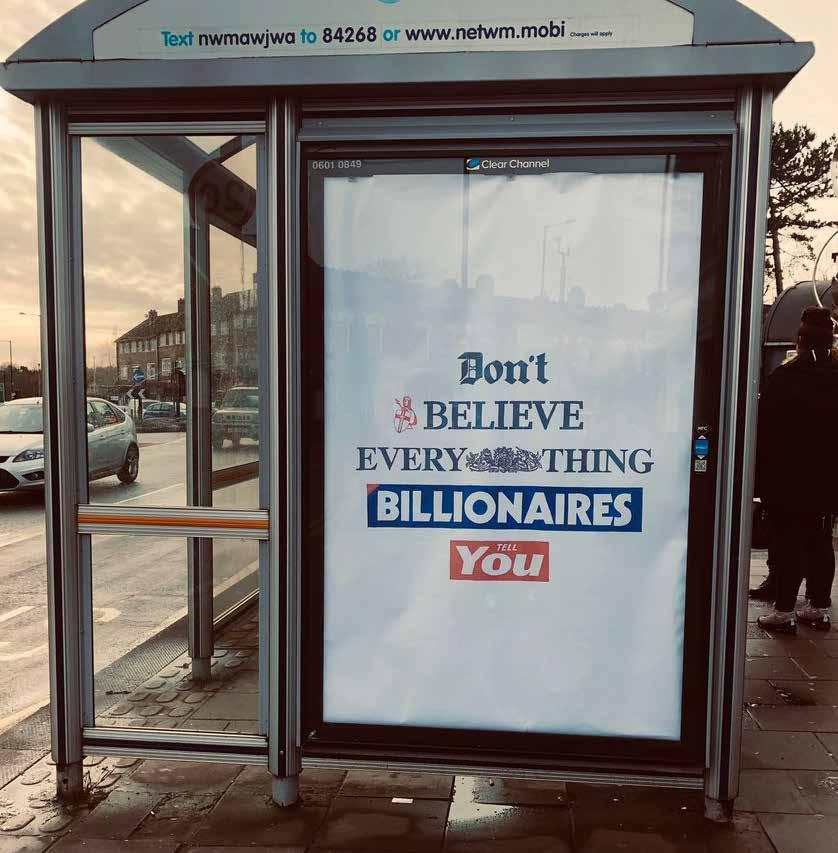
chapter 3
POLITICAL INEQUALITY AT THE BOTTOM –REPRESSION OVER
REDISTRIBUTION
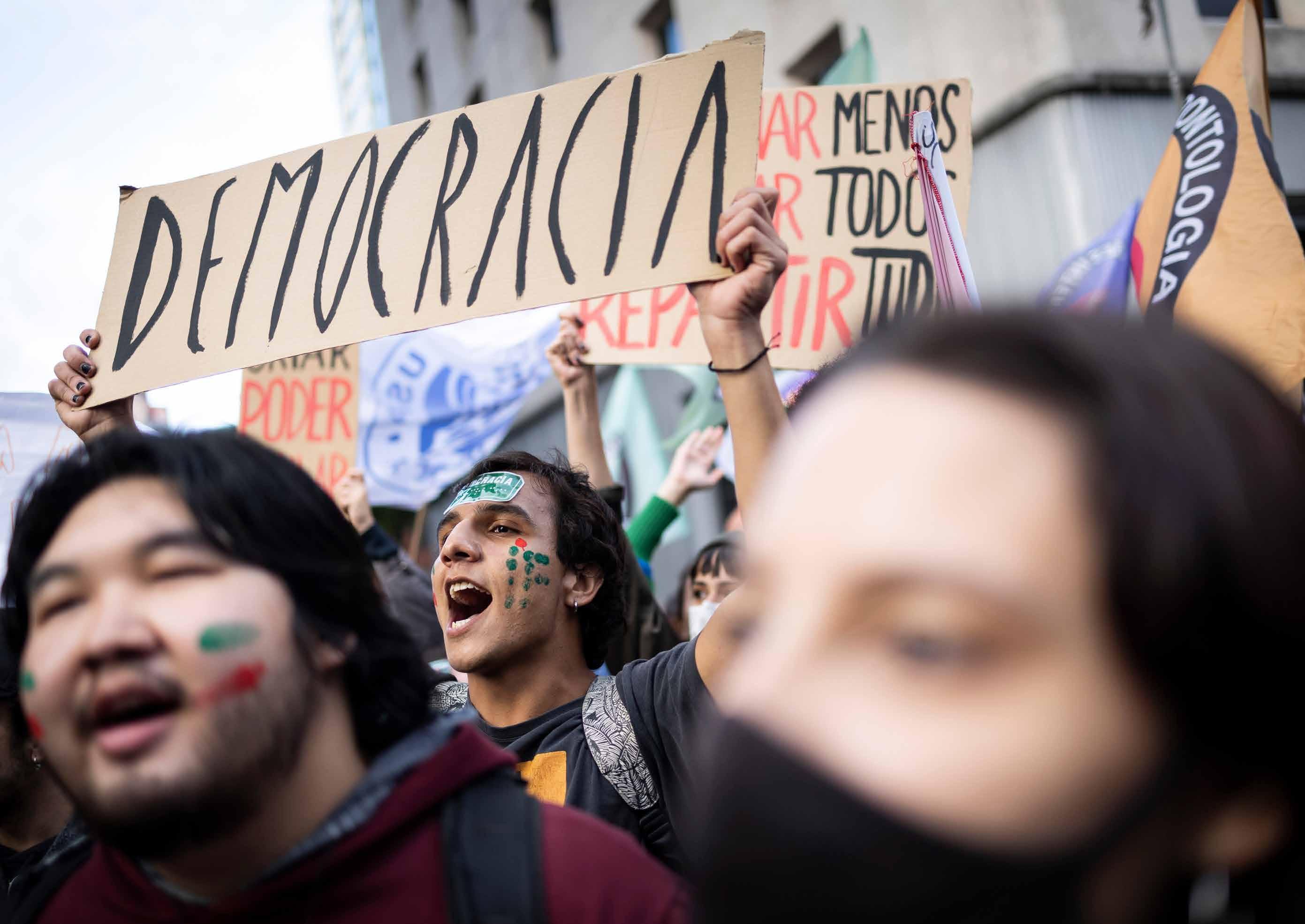
CHAPTER 3
POLITICAL INEQUALITY AT THE BOTTOM –REPRESSION
OVER REDISTRIBUTION
While the super-rich have used their economic wealth to buy excessive political influence, people living in poverty face significant barriers to political participation and have become increasingly disenfranchised. This is no accident.276 Like two unstable elements, political freedom and extreme inequality cannot coexist for long.277
Extraordinary levels of economic hardship for the many are being compounded by austerity, which governments, especially in lower-income countries, feel forced to implement in the face of overwhelming debt. Spending cuts and increases in regressive taxation such as VAT are squeezing ordinary people to breaking point.
The simmering public frustration with these policies boiled to the surface in 2025 in the form of global protests against inequality, corruption and the legacy of austerity, many of which were youth-led, becoming known as ‘Gen Z’ protests’. These took place across South Asia, North and East Africa, Southeast Europe and Latin America.278 Many protests were met with harsh crackdowns as governments chose to repress dissent rather than redistribute wealth. In other instances, protests triggered change. At the time of writing, they had resulted in regime change in Nepal279 and the reversal of unpopular policies in some countries.280
3.1 Inequality and political poverty
The great economic wealth of the few makes them politically rich, powerful and influential. The economic poverty of the majority tends to translate into political poverty; they face higher barriers to participation in politics, decision-making and public life, limiting their abilities to influence policies, access their rights and shape their future. This political inequality between the rich and the rest of us is compounded by other inequalities.
People living in poverty lack the time and money to participate fully in political life, especially when they are having to work multiple jobs and focus on survival.
Women in particular experience acute time poverty because of the unequal care responsibilities they face.281 Experimental evidence from Germany also suggests that acute financial hardship, lasting even a few days, can reduce voter turnout by 4 to 5%.282 Bureaucratic hurdles also block the political participation of people living in poverty and women. For example, in low-income countries 45% of people in the least wealthy quintile lack ID, which is often a prerequisite for voting. More women than men face this hurdle; World Bank data in 2018 showed that 45% of women in low-income countries lacked the necessary ID compared to 30% of men,283 and in a recent study of 13 sub-Saharan African countries, women were significantly more likely to report IDs as being too expensive.284
Women living in poverty face additional barriers such as political violence, discrimination, societal stereotypes and institutional norms that restrict their participation and voice,285 and reduce their engagement with politics. People from racialized groups or oppressed minorities also living in poverty face similar problems, and have even less opportunity to express their political opinions or exert political influence.286 In the US during the 2016 presidential elections, voters in Black neighbourhoods waited 29% longer to vote than those in white neighbourhoods.287 In 2024, only 4.3% of Members of the European Parliament (MEPs) were from racial or ethnic minority backgrounds, despite approximately 10% of EU citizens identifying as such.288 In 2020, only 16% of elected councillors in Brazil were women, and while Black women comprised 27.8% of the population they occupied only 2.5% of seats in the Chamber of Deputies.289
CHAPTER 3
POLITICAL INEQUALITY AT THE BOTTOM –REPRESSION OVER REDISTRIBUTION
Box 8: Beating political poverty – the power of unity
Political poverty is a serious and pernicious issue, but it is not inevitable for people with less wealth. Research from Latin America shows that people living in poverty can have substantial political voice when there are strong CSOs, political parties that can mobilise and represent their interests, robust electoral competition and well-functioning democratic institutions. Together these create opportunities for participation that can overcome resource constraints.290
When governments put mechanisms for citizen participation in place it can increase the political engagement of civil society and people living in poverty. For example, national policy dialogues in Bolivia successfully involved more than 40,000 organizations in deliberations over poverty-reduction strategies.291 In Brazil, the connection between the fight against social inequality, poverty, hunger, and democratic social participation is evident. During the Partido dos Trabalhadores (PT) governments (from 2003 to 2016), the country experienced a period of expansion and strengthening of social participation mechanisms established by the 1988 Federal Constitution – such as National Conferences and Public Policy Councils –which enabled civil society to directly influence state decisions and broaden the democratic legitimacy of public policies.292
There are also examples of mass participation in elections to back candidates or parties that promise to address the grievances of the many, despite clientelism or limited resources. José Mujica, president of Uruguay from 2010 to 2015, rose from humble origins and a period of imprisonment under a military dictatorship, garnering massive support among Uruguay’s working class and rural communities living in poverty.293 In Brazil, President Luiz Inácio Lula da Silva, a former factory worker and trade union leader, is currently serving his second term which began in 2023; he was first elected in 2002 with a government platform strongly focused on combatting hunger, poverty and social inequality.294
Trade unions play a critical role in raising the political power of the many, driving collective action and influencing the policy process, as well as directly reducing economic inequality by raising wages for those on low and middle incomes relative to the highest earners.295 Greater unionization is linked to lower income inequality,296 and unions exert a ‘spillover’ effect by pushing up wages and other labour standards for their own workers, but also for non-union workers in the same industries or regions.297 Unions have been especially effective in narrowing gender and racial wage gaps. Black and Hispanic workers, as well as women, receive a larger wage boost from unionization than white male workers, helping to close longstanding pay gaps.298 Unions also mobilize voters and shape redistributive policies more broadly in support of a welfare state.299 Industrial relations research highlights that union density correlates with stronger welfare states and redistribution, via lobbying, vote mobilization and coherent political coalitions.300 The erosion of union power undermines this inequality-reducing effect.
3.2 Protests against inequality and austerity crushed as governments choose repression over redistribution
In the last twelve months, over 142 significant antigovernment protests have erupted worldwide.301 Between 2009 and 2019 there has been a surge in visibility and protest events globally.302 One think tank reported an annual increase of an average of 11.5% in mass protests (protests of over 10,000 people),
with the largest concentration in the Middle East and North Africa, and the fastest rate of growth in subSaharan Africa.303 A study of 2,809 protests in 101 countries between 2006 and 2020 identifies failures of political representation as the largest driver of dissent, and economic justice – including inequality and austerity – as the second.304 The debt crisis and the stranglehold of super-rich private creditors are further fanning the flames of unrest.305
CHAPTER 3
POLITICAL INEQUALITY AT THE BOTTOM –REPRESSION OVER REDISTRIBUTION
Box 9: The debt and democracy doom loop
Many governments are saddled with huge debts. For the countries of the Global South, the IMF, acting on behalf of creditors, insists on austerity to ensure debts are repaid. In the countries of the Global North, the bond market plays a similar role. Unlike debt crises in the 2000’s a large amount of this debt is owed to private creditors,306 who are overwhelmingly among the richest people in the world; 43% of private financial wealth is owned by the richest 1%.307 Whilst official creditors like governments and multilaterals have agreed to participate in debt relief initiatives, private creditors systematically refuse to participate in debt cancellation initiatives, and regularly insist on full repayment.308
A government’s ability to respond to the choices of its citizens, and to implement the policies it was elected to implement, is systematically hollowed out by its perceived obligations to these rich, unelected creditors. Unsurprisingly, this can lead to the public losing faith in democracy, disengaging from politics or turning to protest. As a recent Debt Justice briefing highlights, this in turn leads to growing authoritarianism in two ways: ‘governments resort to repressing protests when they cannot meet popular demands for an end to austerity, and authoritarian leaders exploit crises to gain power.’ 309
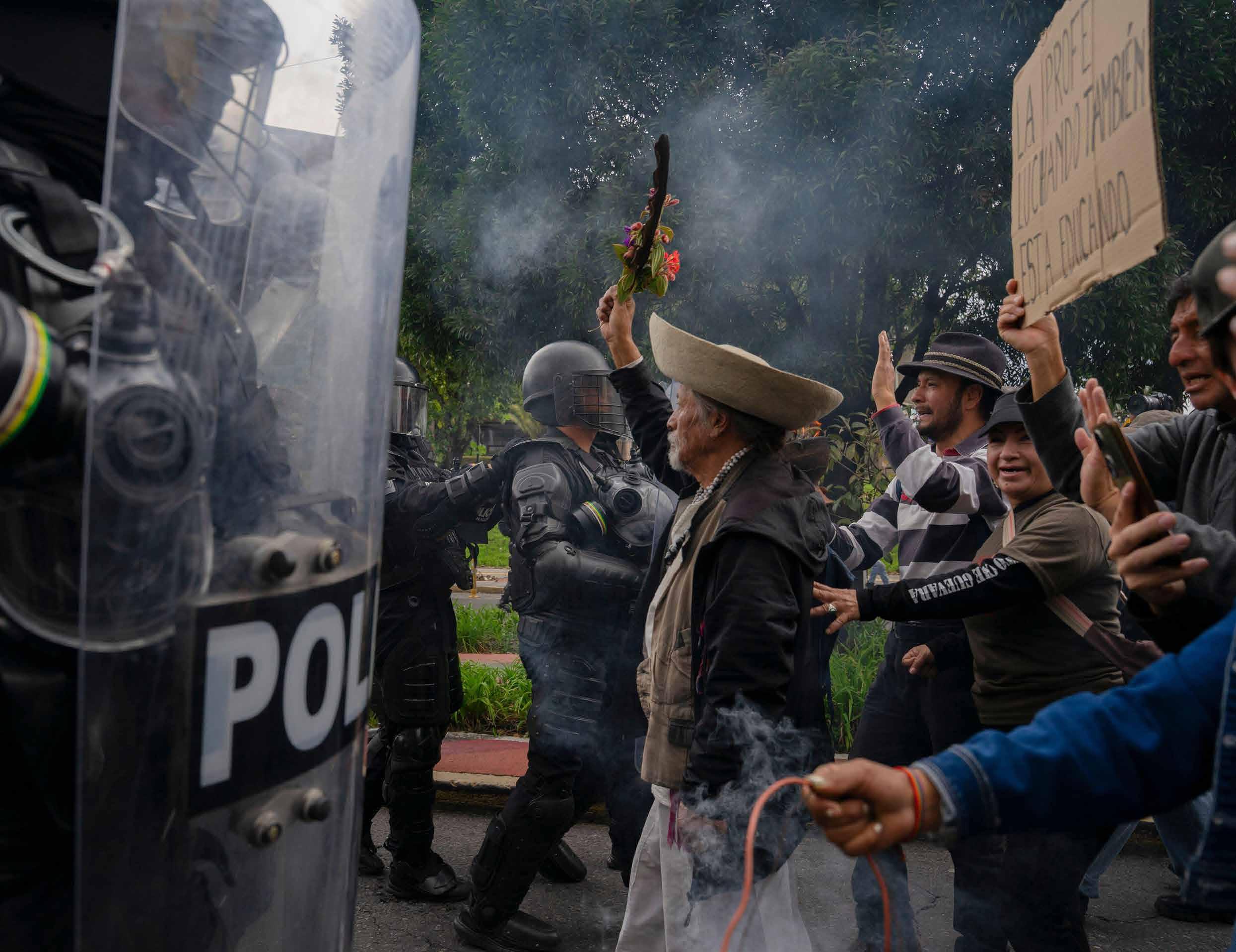
CHAPTER 3
POLITICAL INEQUALITY AT THE BOTTOM –REPRESSION OVER REDISTRIBUTION
Faced with widespread public anger310 over issues that have impacts on their citizens’ everyday lives, governments worldwide have a clear choice: either reverse these decisions and choose redistribution, or double down and choose repression. People, especially young people, are increasingly unwilling to accept inequality and corruption, and are turning to mass mobilization and protest instead. However, governments often respond with repression or partial concessions instead of introducing meaningful systemic change.
In 2021, massive protests – known as a national strike – took place in Colombia, supporting the struggles of the most marginalized groups and opposing government moves to increase taxation on ordinary people and reduce access to healthcare.311 Colombia is one of the most unequal countries in the world, where the richest 1% own over 40% of all wealth.312 Instead of heeding the public outcry and initiating dialogue processes, the government responded with militarization, the disproportionate use of force and the use of lethal weapons; this resulted in more than 80 people being killed and thousands more being arbitrarily detained.313 Young people, Indigenous peoples, Afro-descendants, small farmers and popular neighbourhood organizations were especially targeted.314
In 2024, youth-led protests erupted in Kenya against IMF-imposed austerity measures, including tax increases for the general population,315 which disproportionately impacted communities with less wealth. These cuts were required by the IMF so that the Kenyan government could repay its debts, a large proportion of which are owed to private bondholders in Europe and North America.316 The result was severe state repression involving deaths, disappearances, arrests and the militarization of public spaces. Protests erupted again in 2025 in the face of unaddressed concerns.317 When IMF-backed budget cuts and austerity measures in Argentina provoked public unrest, protestors were also met with harsh state repression.318
Box 10: The brutal backlash against Kenya’s finance bill protests
In July 2024, Tom319 joined thousands of protesters in Nairobi’s city centre to campaign against tax hikes for the general population, price rises, inequality embedded by debt,320 and the actions of the government. He was part of a peaceful group, chanting and singing. They were attacked by a group of plain-clothed police officers with guns. Tom was injured and he blacked out. He woke up some hours later in an emergency clinic where volunteer doctors patched him up.
Days later, after his wounds had failed to heal, a scan at a nearby private hospital showed that Tom had three rubber bullets lodged in his chest. He had to wait a week for the bullets to be removed as the police were searching hospitals and arresting the injured. Tom eventually had to pay a bribe for police permission to have his operation and avoid arrest. The bribes and the operation had to be financed by well-wishers, as he did not have health insurance to cover these costs.
In many ways Tom was lucky. The Kenya National Commission on Human Rights recorded that 39 people were killed at the protests321 and the Kenyan state has been accused of systematically killing or kidnapping those who were involved. 60 cases of extrajudicial killings are being investigated, along with 71 cases of abductions and forced disappearances.322 Human Rights Watch has also reported victims having been found tortured and mutilated.323
The protests that Tom took part in, while not achieving all their aims, succeeded in forcing the president to dissolve the cabinet and withdraw the bill that would have driven up taxes.324 They showed the power of people to force change.
At the anniversary demonstration in July 2025, even more people were killed than in the original protests, and the president instructed police to shoot protestors in the leg.325 Despite the danger, Tom returned to protest again, determined to continue fighting for a better Kenya. He said, ‘If the protest were tomorrow, I would go again. We are fighting for our lives. We are fighting for a better Kenya. If we don’t do it now, who else will?’
CHAPTER 3
POLITICAL INEQUALITY AT THE BOTTOM –REPRESSION OVER REDISTRIBUTION
Pakistan offers another cautionary tale; since 2024 there have been widespread protests in the country against tax increases, higher energy costs and inflation resulting from the country’s debt crisis and IMF-imposed austerity.326 In response, the government has used anti-terrorism laws to target activists and peaceful protestors, particularly those from minority groups, undermining their right to freedom of association and assembly – a move criticized by the UN.327 There has also been a significant increase in enforced disappearances, torture and extrajudicial killings, allegedly perpetrated by state forces. In the capital, Islamabad, the government introduced the Public Order and Peaceful Assembly Act, which threatens to criminalize peaceful protest in the city. An amendment to the Prevention of Electronic Crimes Act introduced a three-year prison term and fines for spreading fake and false information, creating a tool to suppress the sharing of information on social media.328
Globally there are several types of burdensome regulations designed to restrict civil society,329 either with administrative measures (such as forced re-registration), obstacles to access funding or prohibitions to engage in activities such as advocacy.330 There is also an increasing use of new, restrictive legal frameworks that limit the use of foreign funding and stigmatize CSOs as ‘foreign agents’; close spaces where people can participate; and seek to silence and exclude citizen voices. This includes the use of counterterrorism frameworks and strategies to control, harass and even criminalize organizations and activists.331 Whilst it remains a very common cause, it is not only economic hardship that is driving protests and the subsequent growth in authoritarianism and government repression. In the UK332 and the US,333 protests against government involvement in Israel’s genocide in Gaza have been suppressed; this has led to further outcry about the profound erosion of civic and political rights this represents.334
Box 11: Countering divisive politics through social cohesion
Social cohesion is the trust and solidarity that binds individuals into a unified society. It is essential to counter divisive politics and curb inequality.
Countries that score highest on social trust are the most equal, including having the most equal healthcare and labour market opportunities, as well as higher levels of gender equality.335 Governments should invest in creating the conditions for a virtuous cycle of social cohesion and equality. This means building fair, legitimate and inclusive governance systems that ensure that everyone has the opportunity to participate in politics and enjoy equal access to their civic freedoms – association, speech and peaceful protest. Robust public services for all are critical to building social cohesion. A cross-national analysis in middle-income countries found that better health-system performance increased trust in government by 13%.336 In OECD countries, higher satisfaction with administrative services is associated with a 3.9% increased likelihood of having high or moderately high trust in the national civil service.337
Social trust is gained by reducing economic and social inequality, ensuring equal access to quality public services and social safety nets, and guaranteeing decent work and wages for all. Such measures do not just build trust in governments and society, but also help to close social and economic gaps; for example, more equitable health systems narrow disparities in wellbeing,338 and social protection transfers have created significant reductions in the level of economic inequality339 in some European and Latin American countries.340 They also reinforce the social contract, helping societies navigate diversity peacefully.
CHAPTER 3
POLITICAL INEQUALITY AT THE BOTTOM –REPRESSION OVER REDISTRIBUTION 41
3.3 Targeting of environmental and human rights defenders, journalists and unions
Environmental and human rights defenders’ struggles to protect their right to grow their crops, tend their flocks, and resist the theft and destruction of their land by powerful individuals and corporations are also anti-inequality struggles.341 Land inequality is the most ancient form of wealth inequality and underlies many of the pernicious trends outlined in this paper, while also robbing communities of their rights, livelihoods and custodianship of the environment. In Latin America, 1% of farmers own more of the agricultural land than the other 99% of farmers.342 Defenders of human rights and civil liberties, and trade unions who work for better labour rights and decent wages for their workers, are also fighters for equality. Their common struggle is all too often met with common opposition.
Over the past decade, of over 6,400 attacks globally targeting human rights defenders who were documenting corporate harm, 89% were against climate, land and environment defenders. Indigenous peoples have also been disproportionately affected; despite accounting for just 6% of the global population, they suffered 21% of attacks.343 Global Witness records that in 2023, at least 196 people were murdered for ‘defending human rights, their land, and our environment’.344 In Colombia, more than 400 human rights defenders have been murdered since 2016, a large number of them linked to the defence of their territory against extractive and agro-industrial interests, including extractive megaprojects. 345 In 2024, the five most targeted areas of human rights defence globally were women’s rights, LGBTQI+ rights, human rights violations in conflict, human rights movements, and environmental rights.346 In 2025, Gen Z-led protests were at the forefront of many national struggles. Digital organizing was indispensable347 – but movements also faced the state repression of online spaces (see Box 4) The violent nature of many of these protests also highlights the need for timely action to pre-empt frustration reaching a boiling point.
Trade unions and unionists are often at the forefront of protests, and are among the first to be targeted in government crackdowns.348 In Argentina, President Javier Milei, backed by the Argentine billionaire Eduardo Eurnekian, has sought to amend 366 laws to deregulate working conditions and wages, dismantle union protections and privatize public companies.349 Protesters face an increasingly hostile context as
Milei’s government has also issued a decree restricting freedom and the right to protest;350 union protests in 2024 were met with widespread police brutality and mass arrests during public demonstrations. At least 1,155 protesters were injured in 2024 due to the disproportionate use of force, with at least 33 suffering rubber bullet wounds to the head and face. At least 73 demonstrators were prosecuted.351
Box 12: Focusing on migrants not millionaires Governments do not just choose suppression, they can also systematically stigmatize and scapegoat minorities, supported by far-right parties and media platforms that are often owned or heavily funded by the super-rich, as was demonstrated in chapter two. Migrants are a particular target. In country after country they are scapegoated for a host of social ills, including crime, shrinking welfare provisions and the rising cost of living.352 A 2024 poll in Canada found that 35% of Canadians surveyed believe immigration increases crime levels, driven in part by misleading news reports, social media and right-wing politicians.353 In the UK, the media focuses on and drives the anger of a vocal minority towards small migrant boats on the English Channel rather than the super yachts of the ultra-wealthy.354
The trend is visible in social networks and echoed by mainstream media in the form of stigmatization and hate narratives against women and feminists, LGBTQI+ movements and progressive thinking; it has caused a backlash against civil society and a negative effect on the rights of vulnerable communities. Antiwoke rhetoric, as examined in various contexts, has been weaponized against marginalized communities and used to undermine basic human rights.355
Some people are convinced by this scapegoating, and the worst results can be seen in increased racist violence enacted by an emboldened few.356 While the majority see through the lies and many fight back, the sad truth is that these dirty tactics serve as a distraction from the real causes and culprits behind hardship for the many.
CHAPTER 3 POLITICAL INEQUALITY AT THE BOTTOM –
Journalists are also targets of verbal and physical attacks and killings for exposing cases of abuse of power or human rights violations. Many alternative media platforms have been forced to close due to a lack of funding or administrative barriers.
3.4 Tackling economic inequality and reclaiming voice
The good news is that none of this is inevitable and change is possible. Extreme economic inequality and the political inequality that it both feeds on and is fuelled by, can be beaten. The economic and political power of the rich can be cut down to size. And the majority can take back political power, force government action to end economic inequality, and build a fairer and more sustainable future for all. The final chapter proposes how this can happen.
chapter 4 BUILDING A MORE EQUAL FUTURE
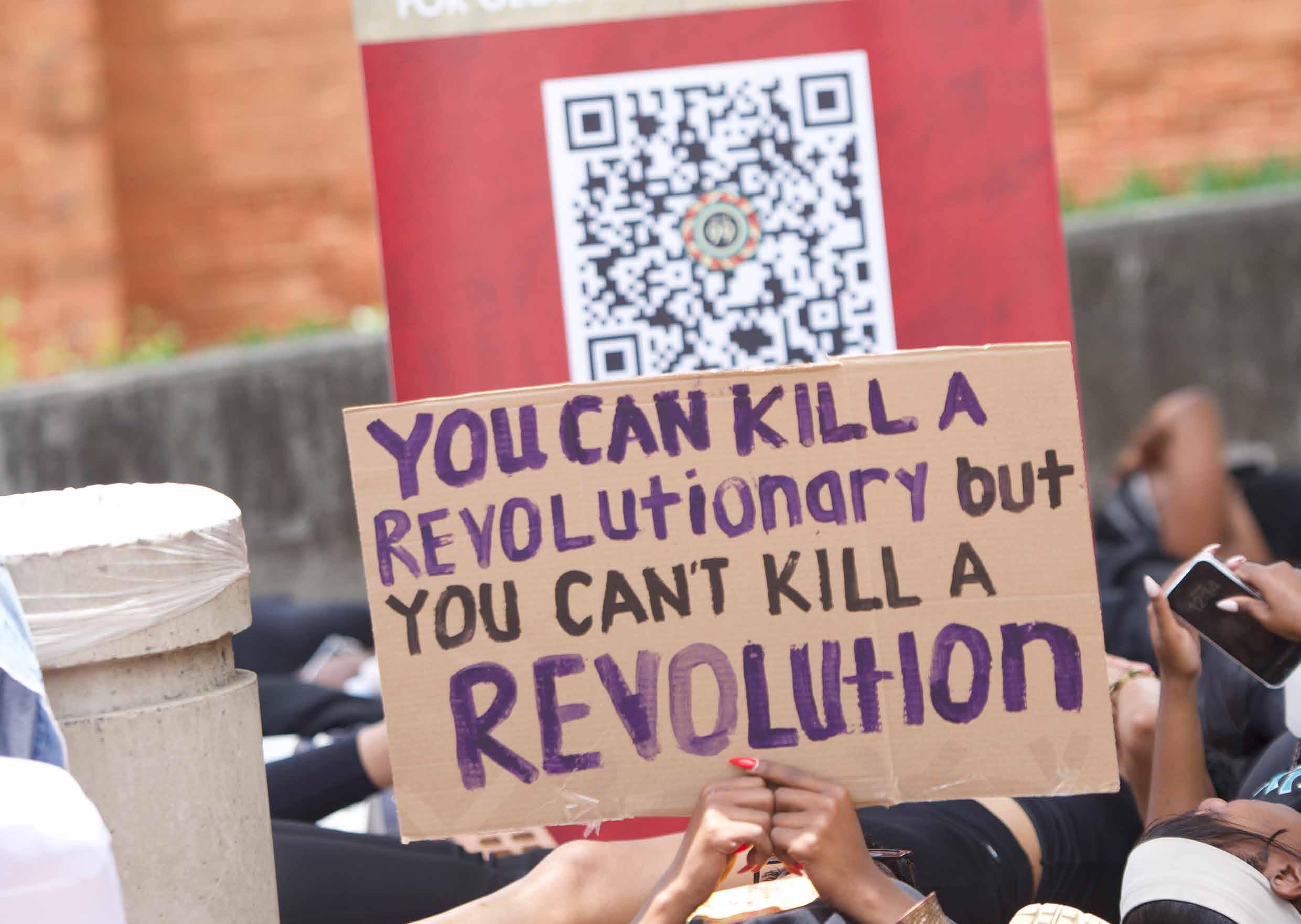
CHAPTER 4 BUILDING A MORE EQUAL FUTURE 44
The world has reached a critical juncture. Extreme inequality has reached the point where the super-rich can rig elections and economies, and deepen their power through politics, the media and institutions of justice. Meanwhile, billions of people face avoidable hardship and the erosion of their civil and political rights, and dissent and protest are crushed by governments the world over.
This report has evidenced how extreme inequality, billionaires and their government enablers are thwarting political freedom and human rights for the majority. Power abuse feeds on economic inequality in a vicious cycle that is widely recognized – even within the ranks of the super-rich. In 2024, a survey of over 2,300 millionaire respondents from G20 countries found that nearly three-quarters of them support higher taxes for billionaires, and over half think extreme wealth is a ‘threat to democracy’.357 Polling across 36 countries found that people reported the top cause of economic inequality as ‘rich people have too much political influence’; 86% of respondents either agreed or strongly agreed with this statement.358
Governments have a responsibility to radically reduce economic and political inequality, end oligarchy by curbing the power of the super-rich, and create enabling environments that build the political power of the many. This chapter identifies three sets of actions they can take to meet this responsibility and turn the situation around.
1. Radically reduce economic inequality
High economic inequality, alongside huge concentrations of extreme wealth and persistent poverty, is the engine that is eroding the rights and freedoms of the many. Governments need to make the radical reduction of economic inequality their top priority. This requires a bold, progressive policy agenda and ambitious reforms to rewire our economies and societies for a more equal future. Too often, reforms are too narrow or piecemeal to achieve this goal.
All countries should put in place realistic and timebound National Inequality Reduction Plans (NIRPs), with regular monitoring of progress. Every country should work towards an income Gini coefficient of less than 0.3 and/or a Palma ratio359 of no more than 1. NIRPs should contain the policies that are proven to significantly reduce economic and wealth inequality 360 These include:
• redistributing extreme wealth through taxing the superrich;361
• curbing corporate power and breaking up monopolies;
• cancelling the unsustainable debt of countries in the Global South and rethinking debt-system approaches;362
• raising wages and defending labour rights; and
• providing free, high-quality public services and social protection for all.
NIRPs should also include structural policies on issues such as access to land and finance, and measures to promote and protect civic space.
The impact of policies in NIRPs on the Gini and Palma indicators must be monitored annually (rather than every three to five years, as they currently are). In lowerincome countries, this will require the use of smaller survey samples and modelling of the type used in OECD and UN Economic Commission for Latin America and the Caribbean (ECLAC) countries.363
Support a new International Panel on Inequality. All countries should also support the recommendations of the Extraordinary Committee report364 to the South African G20 led by Professor Joseph Stiglitz which called for the formation of an ‘International Panel on Inequality’, an institution to provide timely, accurate information on the scale, causes, impacts and solutions to runaway inequality. Just as the Climate Emergency required the formation of the IPCC, the inequality emergency requires the urgent formation of the IPI.
CHAPTER 4
BUILDING A MORE EQUAL FUTURE
2. Curb the political power of the super-rich
High concentrations of extreme wealth and the concentration of power this entails are always dangerous for democracy, but the translation of economic wealth into political power is not automatic. As well as reducing the existence of extreme wealth, governments can take concrete steps to build a strong firewall between wealth and politics. They should:
• Effectively tax the super-rich to reduce their economic power, and through this their political power, including broad-base taxes on income and wealth at high enough rates to reduce massive levels of inequality.
• Regulate lobbying and revolving doors between public office and private interests. Specific commitments must include:
- independent regulatory bodies to ensure agencies making rules on finance, media and elections are insulated from political or corporate interference;
- mandatory public lobby registries and stronger rules on conflicts of interest;
- making quality information on administrative and budget processes public, and free and easy to access;
- reforming the regulatory environment, particularly around government transparency;
- implementing cooling-off periods to close revolving doors between big business and government.365
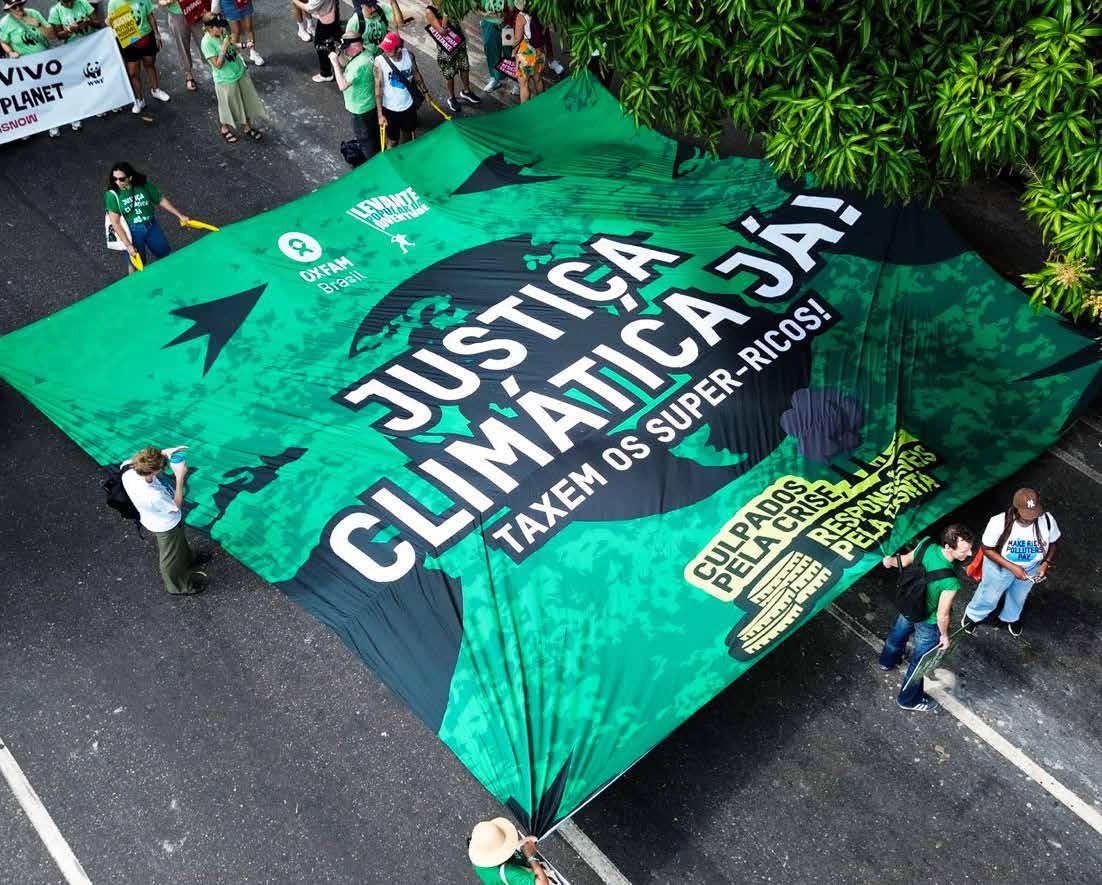
CHAPTER 4 BUILDING A MORE EQUAL FUTURE
• Promote media independence and prevent concentration of media ownership. Specific commitments must include:
- limiting ownership concentration in media, preventing a few wealthy individuals or corporations from controlling the narrative through regulation and enforcing antitrust laws in the communications sector;
- supporting alternative public and independent media to ensure diverse perspectives in public discourse.
- regulating media companies to increase algorithmic transparency; protect freedom of speech; and prevent harmful content through approaches grounded in human rights due diligence, and that minimize the presence of incendiary content targeting immigrants, women, gender-diverse, racial, ethnic and religious minorities, and other social groups who are at risk for various forms of oppression, marginalization and violence. Oversight and enforcement should be led by a state-funded, governmental body independent of billionaire influence.
• Strengthen transparency and accountability and set clear limits to campaign and political financing by the rich Specific commitments must include:
- consider public financing of elections to reduce candidates’ reliance on large private donations;
- caps on donations to limit how much individuals, corporations, or interest groups can contribute to political campaigns;366
- enforcing transparency in political party funding and electoral campaign financing;
- requiring and regulating to ensure honesty in advertising for political parties (particularly at election times);
- mandating public disclosure of lobbying activities and meetings between decision-makers and interest groups.
Strengthening transparency and accountability also requires robust anti-corruption measures and frameworks that go beyond narrow definitions of corruption (like bribery) to include systemic, informal and digitally enabled forms of influence that elites use to ‘rig’ the system.367
• Enhance checks and balances to strengthen scrutiny of administrations. Specific commitments must include:
- strengthening the independence of the judiciary and oversight bodies;
- ensuring merit-based appointments for senior public officials and advisory positions.
Box 13: Beating Bezos and taming Amazon
A dispute regarding working conditions has put the European Parliament and Amazon, the trillion-dollar corporate of which the centi-billionaire Jeff Bezos is the largest shareholder, at loggerheads. The row has raged since February 2024, when the European Parliament first barred Amazon’s lobbyists from its premises in response to the company’s refusal to attend a parliamentary hearing on working conditions in its warehouses. The ban was renewed – and further options for accountability are being considered – in the new parliamentary term in June 2025, after Amazon refused to send its top executives to another parliamentary hearing, echoing concerns first raised by European trade union UNI Europa, the European Services Workers Union, and its affiliates organizing Amazon warehouse workers across Europe.368 The case marks an important moment for EU democracy and corporate accountability. By enforcing consequences for noncooperation, the European Parliament is setting a precedent that even the world’s most powerful corporations must answer to elected representatives when it comes to workers’ rights. This could send a powerful message to Amazon and other large companies: that corporate access to EU lawmakers is a privilege, not a right, and it can be revoked when companies evade accountability. However, this message is undermined by the fact that despite the ban, Amazon has maintained high-level access. In the first five months of 2025, it met 38 times with European Commissioners and senior Commission officials, and it secured 66 meetings with MEPs.369 The company has also increased its political spending in Brussels,370 investing €7m in 2024 – a 40% rise on the previous year – making it one of the EU’s biggest lobby spenders.
CHAPTER 4 BUILDING A MORE EQUAL FUTURE
3. Build the political power of the many Ordinary people become powerful in a political system where political, institutional and social conditions increase their capacity to influence decision-making despite structural inequality. This happens when institutional inclusiveness, political incentives for responsiveness, collective organization, effective governance and ideological commitments align. Nonstate actors such as CSOs, grassroots movements and trade unions are natural allies of states in building greater political engagement from under-represented communities, and ensuring access for all to meaningful participation in policymaking.
There are compelling examples of progress on this crucial issue. In India, for example, political reservations (quotas) for Scheduled Castes, Scheduled Tribes and other marginalized groups create opportunities for economically disadvantaged and socially excluded communities to gain legislative representation and push redistributive policies.371 In Brazil, Participatory
Budgeting emerged in the 1990s, with significant expansion during the 2000s, especially in municipal administrations led by the Partido dos Trabalhadores Its most prominent example was the city of Porto Alegre, whose experience became an international reference in participatory democracy by allowing citizens to directly decide on portions of the municipal public budget.372
To build the political power of the many, governments must guarantee an enabling civic space, in line with international legal frameworks,373 standards and guidance. They must publicly commit to and act on the following:
• Protect and promote freedom of expression, assembly and association (including online) for citizens, movements, journalists and organizations to be able to organize, speak up and protest.
• Ensuring transparency and accountability around the upholding of these standards, and guaranteeing this through regular reporting and scrutiny by both state and non-state actors, as well as granting access to resources and information for individuals and organizations.
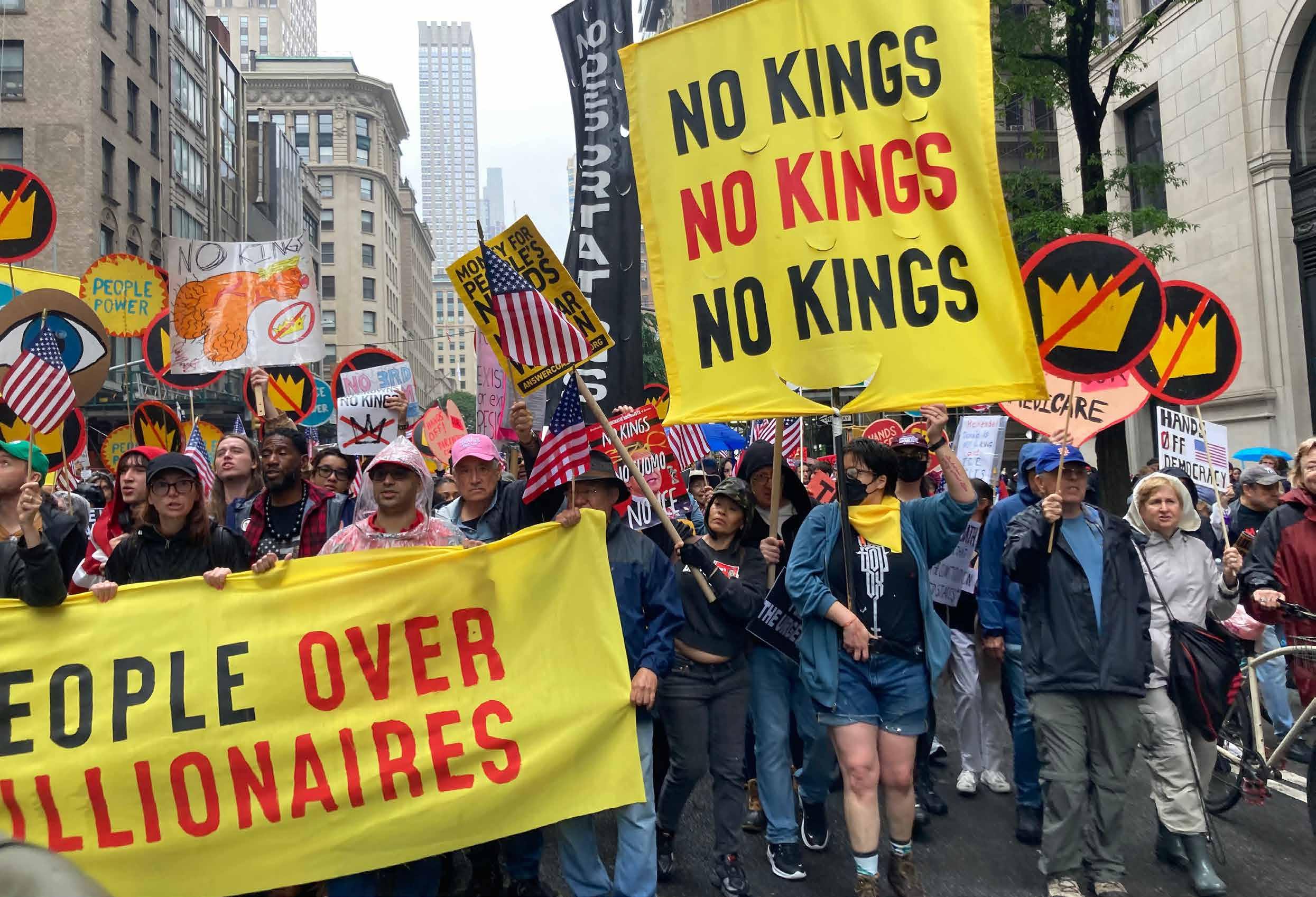
CHAPTER 4 BUILDING A MORE EQUAL FUTURE 48
• Ensuring that CSOs are able to operate free from interference, or excessive administrative regulations and control.
• Building citizen participation in policymaking through enabling mechanisms, encouraging the participation of excluded groups in political and public life, as well as ensuring state obligation to protect human rights defenders and journalists against harassment and attacks.
Box 14: ‘No Kings’ day – one of the biggest protests in US history
The year of 2025 was shaped by concentrated wealth and power. Outgoing US president Joseph Biden set the stage at the start of the year, warning that ‘an oligarchy is taking shape in America of extreme wealth, power, and influence’.374 In the past year, the wealth of the 10 richest US billionaires surged to $698 billion,375 and Congress had passed the single largest upwards redistribution of wealth in decades.376 Meanwhile, major cuts were made to the social safety net and workers’ rights suffered significant rollbacks, deepening the struggle for the majority.377
In June and again in October, public anger reached a fever pitch, with millions of people taking to the streets with banners and placards demanding ‘make billionaires pay’, an ‘end to this billionaire power grab’ and ‘no kings’.378 This was one of the single biggest days of protest in US history, bringing together people of all ages and backgrounds. In Milford, New Hampshire, 97-year-old Marcie Blauner attended her very first protest, holding a sign stating her age and that ‘Pearl Harbor and D-Day were current events to me. Protect democracy again!’379
Even in the face of a powerful billionaire oligarchy, people are fighting back to build power and effect long-term change.380 The road to reclaiming our rights may be a long one, but it starts with steps like these.
Building a worldwide movement and daring to demand change together
CSOs, trade unions and other organized movements are critical to the fight against inequality; they are convenors of ordinary people, collaborators with grassroots and Indigenous movements, mechanisms for social cohesion, watchdogs for transparency and accountability, and advocates for progressive policies and governance that serve the interests of the many. The need to protect civic space and ensure the functioning of civil society in the face of increasing bureaucratization and the persecution of its leaders cannot be overstated.
Positive examples of civic power already exist. For example, in Australia, a treaty negotiated between the Victorian Government and the democratically elected First Peoples’ Assembly of Victoria has recently passed through the parliament. The formation of this assembly for the purposes of these negotiations is a remarkable example of self-determination and will support the same into the future by creating enduring truth-telling processes and complimentary agencies.381 In Latin America, deliberative and participatory mechanisms have been put in place to include many citizens and CSOs in policymaking. For example, Brazil’s National Public Policy Conferences, held between 2003 and 2010, involved more than seven million people in the formulation of national legislation, with a particular focus on guaranteeing minority rights and promoting redistributive policies.382
In too many contexts, daring to dissent increasingly means risking arrest, intimidation and even your life. Calling for equality has never cost so much. That is why we must stand together and take measures to build and protect the voice, choice and power of the many fighting for a more equal future.
Working in solidarity and collaboration across our movements and organizations is vital to tackling our common challenges and changing narratives. We must seek out allies and emerging progressive movements, and work in partnership to build a worldwide people’s movement to defend our rights, fight for a more equal world, and demand an end to inequality and oligarchy.
resisting the rule of the rich
REFERENCES
1 Methodology note, stat 1
2 Oxfam America. (2025). UNEQUAL: The rise of a new American oligarchy and the agenda we need. Accessed 6 November 2025. https://www.oxfamamerica.org/explore/research-publications/unequal-the-rise-of-a-new-american-oligarchy-andthe-agenda-we-need/
3 P. Hoskins. (2 October 2025). Musk becomes world’s first half-trillionaire. BBC. Accessed 6 October 2025. https://www.bbc. co.uk/news/articles/c89d3547npjo
4 Methodology note, stat 1
5 E.G. Rau and S. Stokes. (2025). ‘Income inequality and the erosion of democracy in the twenty-first century’. Proceedings of the National Academy of Sciences, 122(1). Accessed 18 September 2025. https://pubmed.ncbi.nlm.nih.gov/39793070
6 Methodology note, stat 16
7 Methodology note, stat 3
8 Methodology note, 4
9 M. Sweney. (19 March 2025). Value of Elon Musk’s X ‘rebounds to $44bn purchase price’. The Guardian. Accessed 19 September 2025. https://www.theguardian.com/technology/2025/mar/19/value-elon-musk-x-rebounds-purchase-price
10 L. Jamali. (18 June 2025). Musk’s X sues New York state over social media hate speech law. BBC. Accessed 16 October 2025. https://www.bbc.co.uk/news/articles/c4g8vy2n3dko
11 R. Ray and J. Anyanwu. (23 November 2022). Why is Elon Musk’s Twitter takeover increasing hate speech? Brookings. Accessed 19 September 2025. https://www.brookings.edu/articles/why-is-elon-musks-twitter-takeover-increasing-hatespeech
12 M. Sweney. (19 March 2025). Value of Elon Musk’s X ‘rebounds to $44bn purchase price’, op. cit
13 Dr J. Mwangi. (20 August 2024). Security dynamics in the digital era: A case of Kenya. Mashariki Research and Policy Centre. Accessed 17 October 2025. https://masharikirpc.org/security-dynamics-in-the-digital-era-a-case-of-kenya/; and M. Koskei. (7 January 2025). Abducted Cartoonist ‘Kibet Bull’ freed. Daily Nation. Accessed 19 September 2025. https://nation. africa/kenya/counties/nakuru/abducted-cartoonist-kibet-bull-freed-4880658
14 O. Madung. (1 May 2025). Tortured over a tweet: how the war between Kenya’s Gen Z and their president has moved online. The Guardian. Accessed 19 September 2025 https://www.theguardian.com/global-development/2025/may/01/kenyanstortured-for-a-tweet-president-ruto-satire-x-youth-gen-z; and NTV Kenya. (2025). University student Davis Mokaya denies posting image of President Ruto’s coffin on social media [video content]. Accessed 19 September 2025. https://www. youtube.com/watch?v=s7R0IF3bmns
15 A. Wandera and B. Rukanga. (9 June 2025). Protest hits Kenya after shock death of man held by police. BBC. Accessed 19 September 2025. https://www.bbc.com/news/articles/cwy3eqpqqnzo
16 I. Robeyns. (2024). Limitarianism: The Case Against Extreme Wealth. London: Penguin.
17 F. Belata and H. Wright. (2025). Exploring An Extreme Wealth Line. New Economics Foundation, in partnership with Patriotic Millionaires International. Accessed 18 September 2025. https://neweconomics.org/2025/01/exploring-an-extremewealth-line
18 Ibid.
19 World Bank Group. (3 June 2025). June 2025 Update to the Poverty and Inequality Platform (PIP). Accessed 18 September 2025. https://documents.worldbank.org/en/publication/documents-reports/documentdetail/099510306052516849; and J. Hasell. Et al. (11 August 2025) $3 a day: A new poverty line has shifted the World Bank’s data on extreme poverty. What changed, and why? Accessed 28 October 2025 https://ourworldindata.org/new-international-poverty-line-3-dollars-per-day
20 The number of people facing severe or moderate food insecurity increased by 42.6%, or 682.6 million, between 2015 and 2024. See: methodology note, stat 9; and FAO, IFAD, UNICEF, WFP and WHO. (2025). The State of Food Security and Nutrition in the World 2025: Addressing high food price inflation for food security and nutrition. Accessed 18 September 2025. https:// doi.org/10.4060/cd6008en
21 Methodology note, stat 9.
22 FAO, IFAD, UNICEF, WFP and WHO. (2025). The State of Food Security and Nutrition in the World 2025: Addressing high food price inflation for food security and nutrition. Accessed 18 September 2025. https://doi.org/10.4060/cd6008en
23 Oxfam. (2018). Reward Work not Wealth. Accessed 18 September 2025. https://www.oxfam.org/en/research/reward-worknot-wealth
24 Oxfam. (2020). Time to Care. Accessed 16 September 2025. https://policy-practice.oxfam.org/resources/time-to-care-unpaid-and-underpaid-care-work-and-the-global-inequality-crisis-620928
resisting the rule of the rich REFERENCES
25 UCLA School of Law Williams Institute (2023) LGBT Poverty in the United States. Accessed 24 October 2025. https://williamsinstitute.law.ucla.edu/publications/lgbt-poverty-us/; and Human Rights Campaign. (n.d.). Understanding Poverty in the LGBTQ+ Community. Accessed 20 October 2025 https://www.hrc.org/resources/understanding-poverty-in-the-lgbtq-community
26 E.G. Rau and S. Stokes. (2025). ‘Income inequality and the erosion of democracy in the twenty-first century’. Proceedings of the National Academy of Sciences, 122(1). Accessed 18 September 2025. https://pubmed.ncbi.nlm.nih.gov/39793070
27 Ibid.
28 Forbes. (3 April 2025). These Are the 10 Richest People in Donald Trump’s Administration Accessed 13 August 2025. https:// www.forbes.com/sites/danalexander/2025/04/03/these-are-the-10-richest-people-in-donald-trumps-administration
29 The Financial Times. (2024) Elon Musk donated more than $250mn to Donald Trump’s campaign, electoral filings show. Accessed 24 October 2024. https://www.ft.com/content/5f962d83-01d8-4a2d-9d36-a1bfed400c00; and F. Schouten et al. (6 December 2024). Musk spent more than a quarter-billion dollars to elect Trump, including funding a mysterious super PAC, new filings show. CNN. Accessed 4 September 2025. https://www.cnn.com/2024/12/05/politics/elon-musk-trumpcampaign-finance-filings
30 Al Jazeera. (6 July 2025). Elon Musk launches the America Party as feud with Trump escalates. Accessed 18 September 2025. https://www.aljazeera.com/news/2025/7/6/elon-musk-launches-the-america-party-as-feud-with-trump-escalates
31 W. M. Cole. (2018). ‘Poor and powerless: Economic and political inequality in cross-national perspective, 1981–2011’ International Sociology, 33(3), 357–385. Accessed 18 September 2025. https://economicsociology.org/wp-content/uploads/2018/04/poor-and-powerless-economic-and-political-inequality-in-cross-national-perspective.pdf
32 P. Hägel. (2021). Billionaires in World Politics. Oxford: Oxford University Press. 117 – 145.
33 The Economist. (22 May 2014). One dollar, one vote. Accessed 27 October 2025.
34 C. Haerpfer et al. (eds.). (2022). World Values Survey: Round Seven – Country-Pooled Datafile Version 6.0. Madrid, Spain and Vienna, Austria. JD Systems Institute and WVSA Secretariat. Accessed 23 October 2025. https://www.worldvaluessurvey. org/WVSDocumentationWV7.jsp
35 Americans for Tax Fairness. (2 April 2025). Billionaires Buying Elections: They’ve Come to Collect. Accessed 18 September 2025. https://americansfortaxfairness.org/billionaires-buying-elections-theyve-come-to-collect
36 Methodology note, stat 17; and R. Neate. (3 May 2025). ‘Extra level of power’: billionaires who have bought up the media. The Guardian Accessed 16 October 2025. https://www.theguardian.com/news/2022/may/03/billionaires-extra-power-media-ownership-elon-musk
37 Statista. (February 2025). Most popular social networks worldwide as of February 2025, by number of monthly active users. Accessed 20 October 2025. https://www.statista.com/statistics/272014/global-social-networks-ranked-by-number-ofusers/
38 Companies Market Cap. (n.d.). Largest AI companies by market capitalization. Accessed 20 October 2025. https://companiesmarketcap.com/artificial-intelligence/largest-ai-companies-by-marketcap/
39 R. Dupré and J. Lefilliâtre. (19 March 2025). NGOs file suit accusing billionaire Vincent Bolloré of being at heart of African ‘system of corruption’. Le Monde. Accessed 4 September 2025. https://www.lemonde.fr/en/france/article/2025/03/19/ ngos-file-suit-accusing-billionaire-vincent-bollore-of-being-at-heart-of-african-system-of-corruption_6739309_7. html
40 F. Kurtulmus and J. Kandiyali. (2023) ‘Class and Inequality: Why the Media Fails the Poor and Why This Matters’. In Carl Fox and Joe Saunders (eds.), The Routledge Handbook of Philosophy and Media Ethics. Routledge, 276–87.
41 GMMP. (2021). Global Media Monitoring Project 2020 Report: Who Makes the News? Accessed 18 September 2025. https:// whomakesthenews.org/wp-content/uploads/2024/06/GMMP2020_ENG-FINAL.pdf
42 D. Krcmaric et al. (2024). ‘Billionaire Politicians: A Global Perspective’ Perspectives on Politics, 22(2), 357–371. Accessed 18 September 2025. https://www.cambridge.org/core/journals/perspectives-on-politics/article/abs/billionaire-politicians-a-global-perspective/1AD0E0C33FE43165B14DD981533E00DD
43 Methodology note, stat 16.
44 Forbes. (n.d.). Najib Mikati. Accessed 26 September 2025. https://www.forbes.com/profile/najib-mikati
45 M. Chulov. (26 July 2025). Billionaire tycoon named as Lebanese PM as economic crisis bites. The Guardian. Accessed 6 October 2025. https://www.theguardian.com/world/2021/jul/26/billionaire-tycoon-lebanese-pm-najib-miqati
46 Y. Rodgers. (2023). ‘Time Poverty: Conceptualisation, gender differences, and policy solutions’. Social Philosophy and Policy, 40(1), 79–102. Accessed 5 September 2025. https://www.cambridge.org/core/journals/social-philosophy-and-policy/article/time-poverty-conceptualization-gender-differences-and-policy-solutions/06A5EFDF49F494FB69B1D4830F1CAB19
resisting the rule of the rich
REFERENCES
47 Freedom House. (2025). Freedom in the World 2025: The Uphill Battle to Safeguard Rights. Accessed 18 September 2025. https://freedomhouse.org/sites/default/files/2025-02/FITW_World_2025_Feb.2025.pdf
48 Ibid.
49 Debt Justice and Institute of Political Economy. (2025). How the global debt system is undermining democracy and fuelling authoritarianism across Global South countries. Accessed 18 September 2025. https://debtjustice.org.uk/wp-content/ uploads/2025/06/Debt-Democracy-and-Austerity_Jun-25.pdf
50 An Oxfam case study, first published in: M. Lawson. (16 November 2024). The High Price of Fighting for Freedom. EQUALS blog. Accessed 16 October 2025. https://www.equals.ink/p/the-high-price-of-fighting-for-freedom?utm_source=publication-search
51 C. Liverseed. (29 April 2025) Kenya Finance Bill Protests. Accessed 24 October 2025 https://thenonviolenceproject.wisc. edu/2025/04/29/kenya-finance-bill-protests/; Business Daily. (23 July 2025). World Bank freezes Sh97bn to Kenya on reform delays. Accessed 18 September 2025. https://www.businessdailyafrica.com/bd/economy/world-bank-freezessh97bn-to-kenya-on-reforms-fallout-5129344
52 Kenya National Commission on Human Rights. (1 July 2024). Update on the Status of Human Rights in Kenya during the Anti-Finance Bill Protests, Monday 1st July, 2024. Accessed 27 October 2025. https://www.knchr.org/Articles/ArtMID/2432/ ArticleID/1200/Update-on-the-Status-of-Human-Rights-in-Kenya-during-the-Anti-Finance-Bill-Protests-Monday-1stJuly-2024
53 DW News. (2024). Kenya police accused of killing or abducting dozens of ‘Gen-Z’ protesters. [video content]. Accessed 18 September 2025. https://www.youtube.com/watch?v=q4FWNpzvQ0M
54 Human Rights Watch. (5 November 2024). Kenya: Security Forces Abducted, Killed Protesters Accessed 18 September 2025. https://www.hrw.org/news/2024/11/06/kenya-security-forces-abducted-killed-protesters
55 Al Jazeera. (11 July 2024). Kenya’s Ruto dismisses almost entire cabinet after nationwide protests. Accessed 17 October 2024. https://www.aljazeera.com/news/2024/7/11/kenyas-ruto-dismisses-almost-entire-cabinet-after-nationwide-protests
56 ITUC. (2025). Global Rights Index 2025. Accessed 18 September 2025. https://www.ituc-csi.org/global-rights-index
57 Ibid.
58 PEN International. (1 July 2025) Argentina: Serious deterioration of freedom of expression under Javier Milei’s government. Accessed 30 December 2025. https://www.pen-international.org/news/argentina-serious-deterioration-of-freedom-of-expression-under-javier-mileis-government
59 ITUC. (2025). Global Rights Index 2025 Accessed 18 September 2025. https://www.ituc-csi.org/global-rights-index
60 Transforming Society. (19 May 2023). It’s called scapegoating and it’s as old as divide and rule. Accessed 18 September 2025. https://www.transformingsociety.co.uk/2023/05/19/its-called-scapegoating-and-its-as-old-as-divide-and-rule
61 J. P. Walsh et al. (2022). Social media, migration and the platformization of moral panic: Evidence from Canada. Accessed 29 October 2025. https://journals.sagepub.com/doi/10.1177/13548565221137002; S. Esmail. (2025). No Longer the Exception: An exploration of factors affecting decreasing positive attitudes towards immigration in Canada post-COVID-19. University of Alberta. Political Science Undergraduate Review. DOI: https://doi.org/10.29173/psur420; L. Schemitsch (6 December 2024). The risks of immigration misinformation to Canada’s int’l students. Accessed 27 October 2025. https://thepienews. com/the-risks-of-immigration-misinformation-to-canadas-intl-students/; and M. Bernier. (1 November 2024). A tidal wave of immigration is swamping my country. It may not survive Accessed 28 October 2025. https://www.telegraph.co.uk/ news/2024/11/01/canada-peoples-party-immigration-is-the-issue/
62 Runnymede. (2025). A hostile environment: language, race, politics and the media. Accessed 7 October 2025. https://www. runnymedetrust.org/publications/a-hostile-environment-language-race-politics-and-the-media
63 S.A. Olofinbiyi. (2022). ‘Anti-immigrant Violence and Xenophobia in South Africa: Untreated Malady and Potential Snag for National Development’. Insight on Africa, 14(2), 193–211. Accessed 29 September 2025. https://journals.sagepub. com/doi/10.1177/09750878221079803; J. Drury. (2024). The August 2024 riots: Empowerment of the xenophobes. Accessed 23 October 2025. https://blogs.sussex.ac.uk/crowdsidentities/2024/08/04/the-august-2024-riots-empowerment-of-the-xenophobes/; H. Al-Othman. (1 June 2025). Riots after Southport attack more similar to those in 1958 than in 2011, study finds. The Guardian. Accessed 29 September 2025. https://www.theguardian.com/uk-news/2025/ jun/01/southport-attack-unrest-1958-race-riots-2011-disorder-far-right-protests; N. Popli. (16 May 2022). How the ‘Great Replacement Theory’ Has Fueled Racist Violence. Time. Accessed 29 September 2025. https://time.com/6177282/ great-replacement-theory-buffalo-racist-attacks; and P. Hille. (2023). Far-right terror attack in Solingen: 30 years later. DW. Accessed 29 September 2025. https://www.dw.com/en/far-right-terror-arson-attack-in-solingen-30-years-later/a-65757610
resisting the rule of the rich
REFERENCES
64 Patriotic Millionaires. (16 January 2024). Nearly three quarters of millionaires polled in G20 countries support higher taxes on wealth, over half think extreme wealth is a “threat to democracy”. Accessed 16 September 2025. https://patrioticmillionaires.uk/latest-news/pmuk-davos-2024-release
65 R. Wike et al. (9 January 2025). Economic Inequality Seen as Major Challenge Around The World Pew Research Center. Accessed 18 September 2025. https://www.pewresearch.org/global/2025/01/09/economic-inequality-seen-as-major-challenge-around-the-world
66 J. Stiglitz et al. (2025). G20 Extraordinary Committee of Independent Experts on Global Inequality. Accessed 6 November 2025. https://ipdcolumbia.org/wp-content/uploads/2025/11/2-G20-Global-Inequality-Report-Full-and-Summary.pdf
67 Ibid.
68 C. Boulding. (2021). Voice and Inequality. University of Colorado Boulder. Accessed 18 September 2025. https://www.colorado.edu/polisci/2021/05/27/voice-and-inequality
69 V. Hernandez. (15 November 2012). Jose Mujica: The world’s ‘poorest’ president. BBC. Accessed 18 September 2025. https:// www.bbc.com/news/magazine-20243493
70 F. Jaumotte and C.O. Buitron. (2015). Power from the People. Accessed 18 September 2025. https://www.imf.org/external/ pubs/ft/fandd/2015/03/pdf/jaumotte.pdf
71 A. Banerjee et al. (2021). Unions are not only good for workers, they’re good for communities and for democracy. Economic Policy Institute. Accessed 18 September 2025. https://www.epi.org/publication/unions-and-well-being; and J.T. Addison. (2020). The consequences of trade union power erosion. IZA World of Labor. Accessed 18 September 2025. https://wol.iza. org/uploads/articles/525/pdfs/consequences-of-trade-union-power-erosion.pdf
72 E. Osnos. (12 May 2025). Donald Trump’s Politics of Plunder. The New Yorker. Accessed 4 September 2025. https://www. newyorker.com/magazine/2025/06/02/donald-trumps-politics-of-plunder
73 M. Nord et al. (2025). Democracy Report 2025: 25 Years of Autocratization – Democracy Trumped? University of Gothenburg: V-Dem Institute. Accessed 18 September 2025. https://www.v-dem.net/documents/60/V-dem-dr__2025_lowres.pdf
74 World Bank Group. (3 June 2025). June 2025 Update to the Poverty and Inequality Platform (PIP), op. cit.
75 J. Winters. (2011). Oligarchy. Cambridge: Cambridge University Press; and Aristotle (collection published in 1995). The Complete Works of Aristotle: The Revised Oxford Translation. Princeton: Princeton University Press.
76 Reuters. (28 August 2025). South Africa launches G20 taskforce to examine global wealth inequality. Accessed September 2025. https://www.reuters.com/world/africa/south-africa-launches-g20-taskforce-examine-global-wealth-inequality-2025-08-28
77 Methodology note, stat 1
78 Ibid.
79 E.G. Rau and S. Stokes. (2025). ‘Income inequality and the erosion of democracy in the twenty-first century’. Proceedings of the National Academy of Sciences, 122(1). Accessed 18 September 2025. https://pubmed.ncbi.nlm.nih.gov/39793070
80 Methodology note, stat 16
81 Methodology note, stat 3
82 Methodology note, 4
83 As of 30 November 2025, the world 10 richest billionaires had a combined wealth of US$2,356 billion. Forbes. (n.d). The World’s Real-Time Billionaires. Accessed 30 November 2025. https://www.forbes.com/real-time-billionaires/
84 2025. https://ipdcolumbia.org/wp-content/uploads/2025/11/2-G20-Global-Inequality-Report-Full-and-Summary.pdf
85 UN. (n.d.). Goal 2: Zero Hunger. Accessed 16 September 2025. https://www.un.org/sustainabledevelopment/hunger
86 FAO, IFAD, UNICEF, WFP and WHO. (2025). The State of Food Security and Nutrition in the World 2025: Addressing high food price inflation for food security and nutrition. Accessed 18 September 2025. https://doi.org/10.4060/cd6008en
87 Ibid.
88 R. Adams. (2024). The New Empire of AI: The Future of Global Inequality. Polity; and K. Crawford and V. Joler (2018) Anatomy of an AI System. Accessed 20 October 2025. https://anatomyof.ai/
89 Data Reportal writes that, as of January 2024, the world spends 720 billion minutes per day using social platforms. Over a full year, that adds up to more than 260 trillion minutes, or 500 million years of collective human time. See: DataReportal. (n.d). The Time We Spend on Social Media. Accessed 10 October 2025. https://datareportal.com/reports/digital-2024deep-dive-the-time-we-spend-on-social-media
90 CompaniesMarketCap. (n.d.). Market capitalization of NVIDIA (NVDA). Accessed 18 September 2025. https://companies-
resisting the rule of the rich REFERENCES 53
marketcap.com/nvidia/marketcap; and Yahoo!finance. (n.d.). NVIDIA Corporation (NVDA). Accessed 8 October 2025. https:// finance.yahoo.com/quote/NVDA/history/?period1=1672704000&period2=1675123200&guccounter=1
91 In March 2020, Jensen Huang was worth US$4.7bn or US$5.9bn in 2025 when adjusted for inflation. As of the end of November 2025, his net worth was US$153.8bn and he was the eighth richest person in the world. See: Forbes. (n.d.). The World’s Real-Time Billionaires. Accessed 30 November 2025. https://www.forbes.com/real-time-billionaires/#610e33c53d78
92 As per the World Inequality Database (https://wid.world/), the minimum wealth to be in the top 1% is US$1,042,698 in 2023 at current market exchange rates. In other words, the 1% is made up of dollar millionaires. Data downloaded using STATA software.
93 UBS. (2025). Global Wealth Report 2025. Accessed 13 August 2025. https://www.ubs.com/global/en/wealthmanagement/ insights/global-wealth-report.html
94 Ibid.
95 Data from the World Bank’s Poverty, Prosperity and Planet Report 2024, updated using the Poverty and Inequality Platform (June 2025). Poverty defined at US$8.30 per day. See: World Bank. (2024). Poverty, Prosperity and Planet Report 2024: Pathways Out of the Polycrisis. Accessed 23 October 2025. https://openknowledge.worldbank.org/server/api/core/bitstreams/ f75dd18d-4e3f-44f9-b455-7f0d8e189609/content; and The World Bank. (n.d.). Poverty and Inequality Platform. Accessed 23 October 2025. https://pip.worldbank.org
96 Oxfam (2023) Climate Equality: A planet for the 99%. Accessed 29 October 2025. https://policy-practice.oxfam.org/resources/climate-equality-a-planet-for-the-99-621551/; and Oxfam (2013) No Accident: Resilience and the inequality of risk. Accessed 28 October 2025 https://policy-practice.oxfam.org/resources/no-accident-resilience-and-the-inequality-of-risk-292353/; and Oxfam. (n.d.) How the coronavirus pandemic exploits the worst aspects of extreme inequality. Accessed 28 October 2025. https://www.oxfam.org/en/how-coronavirus-pandemic-exploits-worst-aspects-extreme-inequality
97 N. Yonzan et al. (2022). The Impact of COVID-19 on Global Inequality and Poverty. Policy Research Working Papers; 10198. World Bank. Accessed 18 September 2025. https://openknowledge.worldbank.org/entities/publication/54fae299-8800-58 5f-9f18-a42514f8d83b
98 ODI Global. (14 August 2025). Vulnerability of low- and middle-income countries to the impacts of aid cuts and US tariff increases. Accessed 19 November 2025. https://odi.org/en/publications/vulnerability-of-low-and-middle-incomecountries-to-the-impacts-of-aid-cuts-and-us-tariff-increases/; and K. Mathiasen. (13 August 2025). US Tariff Tyranny and Africa: An Update. Accessed 19 November 2025. https://www.cgdev.org/blog/us-tariff-tyranny-and-africa-update; and B. Wester and C. Kenny. (3 April 2025). The New US Tariff Regime Will Have Its Greatest Impact in Developing Countries Accessed 19 November 2025. https://www.cgdev.org/blog/new-us-tariff-regime-will-have-its-greatest-impact-develo-ping-countries
99 Methodology note, stat 6
100 Methodology note, stat 5
101 Ibid.
102 Methodology note, stat 15
103 Oxfam. (2025). Personal To Powerful: Holding the line for gender justice in the face of growing anti-rights movements. Accessed 16 October 2025. https://policy-practice.oxfam.org/resources/personal-to-powerful-holding-the-line-for-gender-justice-in-the-face-of-growing-621683/; and E. Miolene. (30 January 2025). Scoop: US government issues guidelines on ‘defending women’. Devex News. Accessed 25 February 2025. https://www.devex.com/news/scoop-usgovernment-issues-guidelines-on-defending-women-109227. As Holzberg notes: ‘What makes the misogyny of this ideology so insidious is that it works through the discourse of saving rather than attacking women. The problem is not that women are inherently devious but that they have been confused and misled by feminists –away from their destiny as good wives and mothers and into non-reproductive lifestyles or even worse queer and trans communities that threaten the haven of the heteronormative family. This saviourism is confined to white women who are framed as in need of defence from the corrupting forces that dare to critique the naturalised sex/gender system of heteronormative whiteness.’ In B. Holzberg. (2024). ‘The Great Replacement Ideology as AntiGender Politics: Affect, White Terror, and Reproductive Racism in Germany and Beyond. In A. Holvikivi, B. Holzberg and T. Ojeda (eds). Transnational Anti-Gender Politics Feminist Solidarity in Times of Global Attacks London: Palgrave Macmillan, 183–202.
104 Oxfam. (2025). Personal To Powerful: Holding the line for gender justice in the face of growing anti-rights movements. Accessed 16 October 2025. https://policy-practice.oxfam.org/resources/personal-to-powerful-holding-the-line-for-gender-justice-in-the-face-of-growing-621683/
105 Methodology note, stat 13; and I. Robeyns. (2024). Limitarianism, op. cit.
106 Methodology note, stat 13
resisting the rule of the rich REFERENCES 54
107 F. Belata and H. Wright. (2025). Exploring An Extreme Wealth Line, op. cit.
108 Ibid.
109 The ILO found in 2024 that whilst the global real average wage growth has started to rise again after a period of intense stagnation and inflation, high level of wage inequality remain and recovery has differed from country to country. See: ILO. (2024). Global Wage Report 2024–2025. Accessed 15 September 2025. https://www.ilo.org/publications/flagship-reports/ global-wage-report-2024-25-wage-inequality-decreasing-globally
110 Ibid.
111 M. Sweney. (19 March 2025). Value of Elon Musk’s X ‘rebounds to $44bn purchase price’, op. cit.
112 L. Jamali. (18 June 2025). Musk’s X sues New York state over social media hate speech law, op. cit.
113 R. Ray and J. Anyanwu. (23 November 2022). Why is Elon Musk’s Twitter takeover increasing hate speech? Op. cit.
114 D. Hickey et al. (2025). ‘X under Musk’s leadership: Substantial hate and no reduction in inauthentic activity’. PLOS One, 20(2). Accessed 18 September 2025. https://doi.org/10.1371/journal.pone.0313293
115 M. Sweney. (19 March 2025). Value of Elon Musk’s X ‘rebounds to $44bn purchase price’, op. cit.
116 Dr J. Mwangi. (20 August 2024). Security dynamics in the digital era: A case of Kenya, op. cit.; and M. Koskei. (7 January 2025). Abducted Cartoonist ‘Kibet Bull’ freed, op. cit.
117 O. Madung. (1 May 2025). Tortured over a tweet: how the war between Kenya’s Gen Z and their president has moved online, op. cit.; and NTV Kenya. (2025). University student Davis Mokaya denies posting image of President Ruto’s coffin on social media, op. cit.
118 A. Wandera and B. Rukanga. (9 June 2025). Protest hits Kenya after shock death of man held by police, op. cit.
119 CIVICUS. (2025). Kenya: Police Bullets, Digital Chains: State Sanctioned Brutality in Kenya’s Peaceful Youth-Led Uprising. Accessed 19 September 2025. https://civicusmonitor.contentfiles.net/media/documents/Kenya.ResearchBrief.June2025. pdf
120 F. H. G. Ferreira. (2021) Inequality in the time of COVID-19. IMF. Accessed 30 October 2025. https://www.imf.org/external/ pubs/ft/fandd/2021/06/inequality-and-covid-19-ferreira.htm
121 World Bank Group (2022) Poverty and Shared Prosperity 2022. Accessed 27 October 2025. https://www.worldbank.org/en/ publication/poverty-and-shared-prosperity; and Kanbur, R. et al. (2022). The global inequality boomerang. IZA Discussion Paper No. 15161. Bonn: IZA Institute of Labor Economics. Global South countries account for 32.5% of the world’s wealth and 80% of the global population. In contrast, countries in the Global North hold 67.3% of the world’s wealth and account for 19.3% of the world’s population. See: methodology note, stat 12.
122 A combination of new survey data for several countries and the World Bank’s revision of global poverty lines to $3.00 per day (up from the previous figure of $2.15 per day) means that the number of people living in poverty is much higher than previously estimated. See: The World Bank Group. (5 June 2025). June 2025 Update to Global Poverty Lines. Accessed 27 October 2025. https://www.worldbank.org/en/news/factsheet/2025/06/05/june-2025-update-to-global-poverty-lines; and H. L. Jonas et al. (30 September 2025). September 2025 global poverty update from the World Bank: New data and regional classifications. Accessed 27 October 2025. https://blogs.worldbank.org/en/opendata/september-2025-global-povertyupdate-from-the-world-bank--new-da
123 World Bank Group. (3 June 2025). June 2025 Update to the Poverty and Inequality Platform (PIP). Accessed 18 September 2025. https://documents.worldbank.org/en/publication/documents-reports/documentdetail/099510306052516849; and J. Hasell. Et al. (11 August 2025) $3 a day: A new poverty line has shifted the World Bank’s data on extreme poverty. What changed, and why? Accessed 28 October 2025. https://ourworldindata.org/new-international-poverty-line-3-dollars-per-day
124 Data provided by the World Bank.
125 Methodology note, stat 14
126 A July 2025 YouGov survey in the UK found that the majority of voters across all political parties support taxing the rich, even among right-wing voters. Survey results can be viewed at: https://x.com/YouGov/status/1942603981370610103
127 R. Inglehart et al. (eds.). (2014). World Values Survey, WVS Wave 6 (2010–2014). Accessed 16 September 2025. https://www. worldvaluessurvey.org/WVSDocumentationWV6.jsp
128 Methodology note, stat 8
129 Oxfam. (2018). Reward Work not Wealth. Accessed 18 September 2025. https://www.oxfam.org/en/research/reward-worknot-wealth
resisting the rule of the rich REFERENCES 55
130 In the UK, the Runnymede Trust’s 2020 Colour of Money report marked an important step in exposing the significance of racial wealth inequality in the UK. It used data from the Wealth and Assets Survey (2014–16) to demonstrate that for every £10 of wealth held by the median white British household, the median Bangladeshi and Black African households had only £1. Black Caribbean households were only slightly better off. See: O. Khan. (2020). The Color of Money. Runnymede Trust. Accessed 17 October 2025. https://www.runnymedetrust.org/publications/the-colour-of-money; and M. Savage et al. (2024). Why wealth inequality matters. LSE. Accessed 4 September 2025. https://www.lse.ac.uk/International-Inequalities/ Assets/Documents/Why-wealth-inequality-matters-PRINT97.pdf
131 Methodology note, stat 7
132 Oxfam. (2020). Time to Care. Accessed 16 September 2025. https://policy-practice.oxfam.org/resources/time-to-care-unpaid-and-underpaid-care-work-and-the-global-inequality-crisis-620928
133 Human Rights Campaign. (n.d.). Understanding Poverty in the LGBTQ+ Community, op. cit.; and UCLA School of Law Williams Institute (2023) LGBT Poverty in the United States Accessed 24 October 2025. https://williamsinstitute.law.ucla.edu/publications/lgbt-poverty-us/
134 Ibid.
135 FAO, IFAD, UNICEF, WFP and WHO. (2025). The State of Food Security and Nutrition in the World 2025, op. cit.
136 Ibid.
137 Ibid.
138 Ibid.
139 Ibid.
140 Despite the increase in food prices over 2024, the number of people unable to afford a healthy diet in the world fell from 2.76 billion in 2019 to 2.60 billion in 2024, fueled by an economic recovery from the pandemic that has, nevertheless, been uneven across regions and country income groups. See: FAO, IFAD, UNICEF, WFP and WHO. (2025). The State of Food Security and Nutrition in the World 2025, op. cit. However, the number of people facing severe or moderate food insecurity increased by 42.6%, or 682.6 million, between 2015 and 2024. See: methodology note, stat 9.
141 Ibid.
142 FAO (n.d.) SDG Indicators 2.a.1 Agriculture share of Government Expenditure. Accessed 30 October 2025. https://www.fao. org/faostat/en/#data/SDGB
143 UNCTAD. (26 June 2025). Global public debt hit a record $102 trillion in 2024, striking developing countries hardest. Accessed 4 September 2025. https://unctad.org/news/global-public-debt-hit-record-102-trillion-2024-striking-developing-countries-hardest
144 Oxfam. (2025). Africa’s Inequality Crisis and the Rise of the Super-Rich. Accessed 26 September 2025. https://policy-practice.oxfam.org/resources/africas-inequality-crisis-and-the-rise-of-the-super-rich-621721
145 Oxfam. (13 April 2023). For every $1 the IMF encouraged a set of poor countries to spend on public goods, it has told them to cut four times more through austerity measures. Press release. Accessed 18 September 2025. https://www.oxfam.org/en/ press-releases/every-1-imf-encouraged-set-poor-countries-spend-public-goods-it-has-told-them-cut
146 OECD. (2025). Cuts in official development assistance: OECD projections for 2025 and the near term. OECD Policy Briefs, OECD Publishing: Paris. Accessed 18 September 2025. https://www.oecd.org/en/publications/2025/06/cuts-in-official-development-assistance_e161f0c5/full-report.html
147 Oxfam. (23 May 2025). What USAID did, and the impact of Trump’s cuts of lifesaving aid. Accessed 27 October 2025. https:// www.oxfamamerica.org/explore/issues/making-foreign-aid-work/what-do-trumps-proposed-foreign-aid-cuts-mean/
148 D. Cavalcanti et al. (2025). ‘Evaluating the impact of two decades of USAID interventions and projecting the effects of defunding on mortality up to 2030: a retrospective impact evaluation and forecasting analysis’. The Lancet, 406(10500), 283–94. Accessed 18 September 2025. https://www.thelancet.com/journals/lancet/article/PIIS0140-6736(25)01186-9/ fulltext
149 UN News. (29 May 2025). UN searches for solutions to global housing crisis. Accessed 29 September 2025. https://news. un.org/en/story/2025/05/1163851
150 UN News. (31 October 2024). 251 million children still out of school worldwide, UNESCO reports. Accessed 18 September 2025. https://news.un.org/en/story/2024/10/1156366#:~:text=According%20to%20the%20report%2C%20in%20low-income%20countries%2C%2033
151 UNESCO. (2025). Background information on statistics in the UIS database. Accessed 15 August 2025. https://download.uis. unesco.org/bdds/202509/background-information-education-statistics-uis-database-en-2025.pdf
resisting the rule of the rich REFERENCES
152 UN. (2025). The Sustainable Development Goals Report 2025. Accessed 26 September 2025. https://unstats.un.org/sdgs/ report/2025/The-Sustainable-Development-Goals-Report-2025.pdf
153 Ibid.
154 UNESCO. (31 October 2024). 251M children and youth still out of school, despite decades of progress. Press release. Accessed 15 August 2025. https://www.unesco.org/en/articles/251m-children-and-youth-still-out-school-despite-decades-progress-unesco-report
155 UN. (2025). The Sustainable Development Goals Report 2025. Accessed 26 September 2025 https://unstats.un.org/sdgs/ report/2025/The-Sustainable-Development-Goals-Report-2025.pdf
156 WHO and World Bank. (2023). Tracking Universal Health Coverage: 2023 Global Monitoring Report. Accessed 18 September 2025. https://www.who.int/publications/i/item/9789240080379
157 S. Nandi. (2020). PPPs in publicly funded health insurance schemes: The case of PMJAY in India, of how women bear the brunt while the private sector expands. Accessed 26 September 2025. https://www.bloomsburycollections.com/monograph-detail?docid=b-9781350296718&tocid=b-9781350296718-chapter6
158 WHO and World Bank. (2023). Tracking Universal Health Coverage: 2023 Global Monitoring Report, op. cit.
159 Institute for New Economic Thinking. (2020). Government as the First Investor in Biopharmaceutical Innovation: Evidence from New Drug Approvals 2010–2019. Accessed 15 August 2025. https://www.ineteconomics.org/uploads/papers/ WP_133-Revised-2021.0719-Cleary-Jackson-Ledley.pdf; and Institute for New Economic Thinking. (2020). US Tax Dollars Funded Every New Pharmaceutical in the Last Decade. Accessed 15 August 2025. https://www.ineteconomics.org/perspectives/blog/us-tax-dollars-funded-every-new-pharmaceutical-in-the-last-decade
160 V. Roy. Et al. (2025). Shareholder payouts among large publicly traded health care companies. JAMA Internal Medicine. doi:10.1001/jamainternmed.2024.7687. Accessed 28 October 2025. https://jamanetwork.com/journals/jamainternalmedicine/article-abstract/2829736
161 F. Kreler. (2025) Health Care Company Payouts Favor Shareholders, New Research Shows. Accessed 28 October 2025. https://medicine.yale.edu/news-article/health-care-company-payouts-favor-shareholders-new-research-shows/
162 As of the 23rd October 2025 the 236 billionaires on the Forbes real time billionaire list who were categorised as being in the healthcare sector, their net worth was $904bn. Compared to 31st October 2024, there were 49 new billionaires in the healthcare sector in October 2025 bringing the total to 236, up from 187 in October 2024.
163 T. Piketty. (2013). Capital in the Twenty-Frist Century. [translated] Harvard University Press.
164 C. Houle. (2009). ‘Inequality and Democracy: Why Inequality Harms Consolidation but Does Not Affect Democratization’ World Politics, 61(4), 589–622. Accessed 18 September 2025. https://www.cambridge.org/core/journals/world-politics/article/abs/inequality-and-democracy-why-inequality-harms-consolidation-but-does-not-affect-democratization/1AC302799314E74BBFD65C60B2CD4489
165 E.G. Rau and S. Stokes. (2025). ‘Income inequality and the erosion of democracy in the twenty-first century’. Proceedings of the National Academy of Sciences, 122(1). Accessed 18 September 2025. https://pubmed.ncbi.nlm.nih.gov/39793070
166 Ibid.
167 S. Bienstman et al. (2024). ‘Explaining the ‘democratic malaise ’in unequal societies: Inequality, external efficacy and political trust’ European Journal of Political Research, 63(1), 172–191. Accessed 18 September 2025. https://ejpr.onlinelibrary.wiley.com/doi/10.1111/1475-6765.12611 S. Ahlberg, J. Linde and S. Holmberg. (2023). ‘Does inequality erode political trust? Evidence from 50 democracies’ Frontiers in Political Science, 5, Article 1197317. Accessed 28 October 2025. https:// www.frontiersin.org/journals/political-science/articles/10.3389/fpos.2023.1197317/full
168 A.J. Stewart et al. (2018). Polarization under rising inequality and economic decline. Cornell University. Accessed 18 September 2025 https://arxiv.org/abs/1807.11477
169 L. Liang. (2025). ‘Unequal Democracy: Economic Inequality and Political Representation’. Michigan Journal of Economics Accessed 18 September 2025. https://sites.lsa.umich.edu/mje/2025/01/09/unequal-democracy-economic-inequality-and-political-representation; and Brennan Center for Justice. (2021). Large Racial Turnout Gap Persisted in 2020 Election. New York University School of Law. Accessed 18 September 2025. https://www.brennancenter.org/our-work/ analysis-opinion/large-racial-turnout-gap-persisted-2020-election
170 I.B. Page et al. (2018). Billionaires and Stealth Politics. Chicago: University of Chicago Press; and J. Mayer. (2016). Dark Money: The Hidden History of the Billionaires Behind the Rise of the Radical Right. New York: Doubleday.
171 M. Nord et al. (2025). Democracy Report 2025: 25 Years of Autocratization – Democracy Trumped? Op. cit.
172 Freedom House. (2025). Freedom in the World 2025: The Uphill Battle to Safeguard Rights, op. cit.
173 Ibid.
resisting the rule of the rich REFERENCES
174 M. Nord et al. (2025). Democracy Report 2025: 25 Years of Autocratization – Democracy Trumped? Op. cit.; and CIVICUS. (2025). The Good, The Bad and The Ugly: Civic Space Dynamics. Accessed 18 September 2025. https://monitor.civicus.org/globalfindings_2023/innumbers
175 R. Lima. (12 March 2024). Democracy declined in 42 countries in 2023, new V-Dem report says. Democracy Without Borders. Accessed 18 September 2025. https://www.democracywithoutborders.org/31900/democracy-declined-in-42-countriesin-2023-new-v-dem-report-says
176 Methodology note, stat 20.
177 Forbes. (3 April 2025). These Are the 10 Richest People in Donald Trump’s Administration, op. cit.
178 The Financial Times. (2024). Elon Musk donated more than $250mn to Donald Trump’s campaign, electoral filings show Accessed 24 October 2024. https://www.ft.com/content/5f962d83-01d8-4a2d-9d36-a1bfed400c00; and F. Schouten et al. (6 December 2024). Musk spent more than a quarter-billion dollars to elect Trump, including funding a mysterious super PAC, new filings show, op. cit.; and P. Hoskins. (2 October 2025). Musk becomes world’s first half-trillionaire, op. cit.
179 Al Jazeera. (30 May 2025). Elon Musk launches the America Party as feud with Trump escalates. Accessed 18 September 2025. https://www.aljazeera.com/news/2025/7/6/elon-musk-launches-the-america-party-as-feud-with-trump-escalates
180 P. Hägel. (2021). Billionaires in World Politics, op. cit.
181 ITUC. (2025). Corporate Underminers of Democracy 2025. Accessed 29 September 2025. https://www.ituc-csi.org/corporate-underminers-of-democracy-2025
182 Oxfam. (2025). Personal to Powerful, op. cit.; and H. McEwen and L. Narayanaswamy. (2023). The International Anti-Gender Movement Understanding the Rise of Anti-Gender Discourses in the Context of Development, Human Rights and Social Protection. Geneva: UNRISD. Accessed 25 February 2025. https://cdn.unrisd.org/assets/library/papers/pdf-files/2023/wp2023-4-anti-gender-movement.pdf
183 La Jornada. (29 October 2019). Fernández de Cevallos’ property tax debt in Colón is forgiven for $971.8 million. Accessed 17 October 2025. https://www.jornada.com.mx/2019/10/29/estados/025n1est
184 A. Winston. (12 February 2024). Inside tech billionaires’ push to reshape San Francisco politics: ‘a hostile takeover’. The Guardian. Accessed 17 October 2025. https://www.theguardian.com/us-news/2024/feb/12/san-francisco-tech-billionaires-political-influence
185 A. G. Larsen and C. H. Ellersgaard. (2018). ‘A Scandinavian Variety of Power Elites? – Key Institutional Orders in the Danish Elite Networks’ In O. Korsnes et al. (eds.). New Directions in Elite Studies. Routledge. Accessed 17 October 2025. https:// research.cbs.dk/en/publications/a-scandinavian-variety-of-power-elites-key-institutional-orders-i
186 F. Botha. (23 June 2024). How Denmark Is Moving To Retain Family-Owner Businesses. Forbes. Accessed 20 October 2025. https://www.forbes.com/sites/francoisbotha/2024/06/23/how-denmark-is-moving-to-retain-family-owned-businesses/
187 Nation Online. (5 February 2022). Mpinganjira freed on court bail. Accessed 27 October 2025. https://mwnation.com/mpinganjira-freed-on-court-bail/
188 M. Europa Taylor. (14 August 2025). Meet Thom Mpinganjira, the entrepreneur who has just been named Malawi’s first dollar billionaire. Face 2 Face Africa. Accessed 17 October 2025. https://face2faceafrica.com/article/meet-thom-mpinganjirathe-entrepreneur-who-has-just-been-named-malawis-first-dollar-billionaire
189 EQUALS. (14 December 2023). Exclusive investigation: Billionaires turned up to COP28 in force. Accessed 17 October 2025. https://www.equals.ink/p/exclusive-investigation-billionaires
190 Corporate Europe Observatory. (1 April 2025). Opaque US anti-tax foundation to advise EU Commission. Accessed 17 October 2025. https://corporateeurope.org/en/2025/04/opaque-us-anti-tax-foundation-advise-eu-commission
191 UNDP. (2024). The Peoples’ Climate Vote 2024. Accessed 28 October 2025. https://www.undp.org/publications/peoples-climate-vote-2024; and P. Andre. Et al. (2024) Globally representative evidence on the actual and perceived support for climate action. Accessed 28 October 2025. https://www.nature.com/articles/s41558-024-01925-3
192 Only eight cents in every dollar of tax revenue collected in G20 countries comes from taxing wealth, while three-quarters of polled millionaires in G20 countries support taxes on wealth and nine out of 10 people in a global survey by Oxfam and Greenpeace International support taxing the super rich. See: Oxfam. (27 February 2024). Less than 8 cents in every dollar of tax venue collected in G20 countries comes from taxes on wealth, says Oxfam. Press release. Accessed 17 October 2025. https://www.oxfam.org/en/press-releases/less-8-cents-every-dollar-tax-revenue-collected-g20-countries-comes-taxes-wealth; Oxfam. (17 January 2024). Nearly three quarters of millionaires polled in G20 countries support higher taxes on wealth, over half think extreme wealth is a “threat to democracy”. Press release. Accessed 17 October 2025. https://www. oxfam.org.uk/mc/ewx28j/; and The Club of Rome. (24 June 2024). Tax the rich, say a majority of adults across 17 G20 countries surveyed. Accessed 29 September 2025 https://www.clubofrome.org/impact-hubs/reframing-economics/earth4all-
resisting the rule of the rich REFERENCES
survey-tax-rich
193 Oxfam. (2023). Survival of the Richest: How we must tax the super-rich now to fight inequality Accessed 29 September 2025. https://oxfamilibrary.openrepository.com/bitstream/handle/10546/621477/bp-survival-of-the-richest-160123-en. pdf;jsessionid=354CD485C2023F934200C13B14F5F5F4?sequence=7
194 Pew Research Center. (9 January 2025). Global perceptions of inequality and discrimination. Accessed 29 September 2025. https://www.pewresearch.org/global/2025/01/09/global-perceptions-of-inequality-and-discrimination
195 Oxfam. (2025). Takers not Makers: The unjust poverty and unearned wealth of colonialism. Accessed 29 September 2025. https://www.oxfam.org/en/research/takers-not-makers-unjust-poverty-and-unearned-wealth-colonialism
196 The Economist. (22 May 2014). One dollar, one vote. Accessed 27 October 2025.
197 C. Haerpfer et al. (eds.). (2022). World Values Survey: Round Seven – Country-Pooled Datafile Version 6.0, op. cit.
198 Americans for Tax Fairness. (2 April 2025). Billionaires Buying Elections: They’ve Come to Collect, op. cit.
199 Ibid.
200 Methodology note, stat 19.
201 M. Battaglini et al. (2024). Unobserved Contributions and Political Influence: Evidence from the Death of Top Donors. NBER Working Paper No. w32649. Accessed 18 September 2025. https://ssrn.com/abstract=4888026
202 H. C. Saenz and D. Itríago. (2018). The Capture Phenomenon: Unmasking Power. Oxfam Intermón. Accessed 17 October 2025. https://www.oxfamintermon.org/hubfs/Oxfam-Website/oi-informes/Capture_Methodology_2018-en.pdf
203 W. M. Cole. (2018). ‘Poor and powerless: Economic and political inequality in cross-national perspective, 1981–2011’, op. cit.
204 M. Gilens and B.I. Page. (2014). ‘Testing Theories of American Politics: Elites, Interest Groups, and Average Citizens’. Perspectives on Politics, 12(3), 564–581. Accessed 18 September 2025. https://www.cambridge.org/core/journals/ perspectives-on-politics/article/abs/testing-theories-of-american-politics-elites-interest-groups-and-average-citizens/62327F513959D0A304D4893B382B992B
205 L. Bartels. (2002). Economic Inequality and Political Representation. Princeton University. Accessed 18 September 2025. https://www.russellsage.org/sites/all/files/u4/Bartels%20EIPR.pdf
206 M. Persson and A. Anders. (2023). ‘The Rich Have a Slight Edge: Evidence from Comparative Data on Income-Based Inequality in Policy Congruence’. British Journal of Political Science. 2024;54(2), 514–25 Accessed 18 September 2025. https://www cambridge.org/core/journals/british-journal-of-political-science/article/rich-have-a-slight-edge-evidence-from-comparative-data-on-incomebased-inequality-in-policy-congruence/A09095FC0874B162149014212872BE86
207 Supremo Tribunal Federal. (2015). O que você procura? Accessed 16 October 2025. https://portal.stf.jus.br/noticias/verNoticiaDetalhe.asp?idConteudo=300015&ori=1; and Globonews. (n.d). STF proíbe financiamento privado das campanhas eleitorais. Accessed 16 October 2025. https://g1.globo.com/globonews/jornal-globonews/video/stf-proibe-financiamento-privado-das-campanhas-eleitorais-4474936.ghtml
208 Oxfam. (2018). Captured Democracy: Government For The Few. Accessed 20 October 2025. https://oxfamilibrary.openrepository.com/bitstream/handle/10546/620600/rr-captured-democracies-161118-summ-en.pdf; and OECD. (2014). The Political Economy of Tax Incentives for Investment in the Dominican Republic. Accessed 20 October 2025 https://www. oecd.org/en/publications/the-political-economy-of-tax-incentives-for-investment-in-the-dominican-republic_5jz3wkh45kmw-en.html
209 Transparency International EU. (24 June 2025). MEPs and their lobby meetings, one year in: new rules, more meetings, more cause for concern? Accessed 8 October 2025. https://transparency.eu/new-mep-meetings/?output=pdf
210 The companies that are associated with the billionaires as per their Forbes Billionaire profiles were cross-referenced against the 2024 lobby spending amounts, as per OpenSecrets, and totalled to reach US$87,751,100. According to OpenSecrets, labour unions spent US$54,535,532 lobbying in 2024. See: Open Secrets. (n.d.) Labor Lobbying. Accessed 8 October 2025. https://www.opensecrets.org/industries/lobbying?cycle=2024&ind=P. See methodology note, stats 19.
211 Oxfam. (20 May 2021). COVID vaccines create 9 new billionaires with combined wealth greater than cost of vaccinating world’s poorest countries. Press release Accessed 18 September 2025. https://www.oxfam.org/en/press-releases/covid-vaccines-create-9-new-billionaires-combined-wealth-greater-cost-vaccinating; and D. Geelson et al. (2023). ‘Global inequities in access to COVID-19 health products and technologies: A political economy analysis’. Health & Place, 83. Accessed 8 October 2025. https://pmc.ncbi.nlm.nih.gov/articles/PMC10247888/
212 Oxfam Aotearoa. (11 November 2022). Investigation Reveals Big Pharma’s Lobbying Against COVID-19 Intellectual Property Waiver. Accessed 18 September 2025. https://www.oxfam.org.nz/news-media/media-releases/investigation-reveals-big-pharmas-lobbying-against-covid-19-intellectual-property-waiver; A. Furlong et al. (10 November 2022). Who
resisting the rule of the rich REFERENCES
Killed the COVID Vaccine Waiver? Politico. Accessed 21 August 2025. https://www.politico.eu/article/covid-vaccinepoor-countries-waiver-killed; and Open Secrets. (2021). Industry Profile: Pharmaceuticals/Health Products. Accessed 18 September 2025. https://www.opensecrets.org/federal-lobbying/industries/summary?cycle=2021&id=h04
213 A. Furlong et al. (10 November 2022). Who Killed the COVID Vaccine Waiver? Op. cit.
214 Euronews. (22 September 2025). ‘Deadly for our economy’: French billionaire Bernard Arnault slams wealth tax. [video content] Accessed 28 October 2025. https://www.youtube.com/watch?v=IlFEHWuAtUY; and J. Jolly. (21 September 2025). Wealth tax would be deadly for French economy, says Europe’s richest man. The Guardian. Accessed 20 October 2025. https://www.theguardian.com/business/2025/sep/21/wealth-tax-would-be-deadly-for-french-economy-says-europerichest-man-bernard-arnault
215 UNDP. (2022). Lobbying for Inequality? How Different Business Elites Navigate the Policy-Making Process in Central America. Accessed 8 October 2025. https://www.undp.org/latin-america/publications/lobbying-inequality-how-different-business-elites-navigate-policy-making-process-central-america
216 T. Fairfield. (2015). Private wealth and public revenue: Business power and tax politics in Latin America. Cambridge: Cambridge University Press.
217 Transparency International UK. (4 March 2023). Research reveals extent of ‘revolving door’ corruption in Westminster. Accessed 8 October 2025. https://www.transparency.org.uk/news/research-reveals-extent-revolving-door-corruption-risk-westminster
218 B. C. K. Egerod et al. (2024). ‘Revolving door benefits? The consequences of the revolving door for political access’. Interest Groups & Advocacy, 13, 311–332. Accessed 8 October 2025. https://link.springer.com/article/10.1057/s41309-02400213-x
219 O. Fasan. (26 August 2024). Dangote is a state-made colossus; he should serve the common good. Business Day. Accessed 3 October 2025. https://businessday.ng/columnist/article/dangote-is-a-state-made-colossus-he-should-serve-thecommon-good
220 Reuters. (19 August 2011). Nigeria’s Jonathan adds Dangote to economic team. Accessed 3 October 2025. https://www. reuters.com/article/world/nigerias-jonathan-adds-dangote-to-economic-team-idUSJOE77I0NW
221 Oxfam. (2024). Inequality Inc. Accessed 11 November 2025. https://www.oxfam.org/en/research/inequality-inc
222 Oxfam. (2025). Africa’s Inequality Crisis and the Rise of the Super-Rich. Accessed 3 October 2025. https://policy-practice. oxfam.org/resources/africas-inequality-crisis-and-the-rise-of-the-super-rich-621721/
223 Marcos Galperin posts ‘Libres’ on X following President Milei’s election victory on 19 November 2023. See: https://x. com/marcos_galperin/status/1726373596044349819?ref_src=twsrc%5Etfw%7Ctwcamp%5Etweetembed%7Ctwterm%5E1726373596044349819%7Ctwgr%5E887743c58115cdd68d2c3b7b745c7bc1c7c8dad7%7Ctwcon%5Es1_&ref_ url=https%3A%2F%2Fnearshoreamericas.com%2Fbreakdown-why-is-argentinas-tech-elite-embracing-javier-milei%2F; and Clarín. (5 September 2025). Marcos Galperin and his strong support for Javier Milei: sources say the businessman has no intention of entering politics. Accessed 12 November 2025. https://www.clarin.com/economia/marcos-galperin-fuerte-apoyo-javier-milei-aseguran-empresario-intenciones-desembarcar-actividad-politica_0_xZhYC9g2lC.html
224 Mercado Libre. (n.d.). Results and Financials. Accessed 20 Occtober 2025. https://investor.mercadolibre.com/results-and-financials; and S. Catalano. (22 February 2025). Beneficios fiscales: en los últimos tres años, Mercado Libre recibió exenciones impositivas del Estado por casi USD 250 millones. Infobae. Accessed 18 September 2025. https:// www.infobae.com/economia/2025/02/23/beneficios-fiscales-en-los-ultimos-tres-anos-mercado-libre-recibio-exenciones-impositivas-del-estado-por-casi-usd-250-millones
225 Transparency International. (4 November 2020). How much is your vote worth? Accessed 18 September 2025. https://www. transparency.org/en/news/how-much-is-your-vote-worth
226 European Union Election Observation Mission Lebanon 2022. (17 May 2022). PRESS RELEASE: Vote buying practices affected the voters’ free choice and resulted in a lack of level-playing field. Accessed 17 October 2025. https://www.eeas.europa. eu/eom-lebanon-2022/press-release-vote-buying-practices-affected-voters%E2%80%99-free-choice-and-resulted-lack-level-playing_en; and K. Chehayeb. (18 May 2022). Lebanon election monitors complain of violations, attacks Al Jazeera. Accessed 17 October 2025. https://www.aljazeera.com/news/2022/5/18/lebanon-election-monitors-complain-of-violations-attacks
227 T. Huijsmans et al. (2022). ‘The Income Gap in Voting: Moderating Effects of Income Inequality and Clientelism’. Political Behavior, 44, 1203–23. Accessed 18 September 2025 https://doi.org/10.1007/s11109-020-09652-z
228 Methodology note, stat 17.
229 Methodology note, stat 18.
230 Reporters without borders. (2025). RSF World Press Freedom Index 2025: economic fragility a leading threat to press freedom. Accessed 8 October 2025. https://rsf.org/en/rsf-world-press-freedom-index-2025-economic-fragility-leading-
resisting the rule of the rich REFERENCES
threat-press-freedom
231 Forbes. (n.d). Rupert Murdoch & family. Accessed 8 October 2025. https://www.forbes.com/profile/rupert-murdoch/
232 J. Oliver Conroy. (4 January 2025). How Elon Musk’s X became the global right’s supercharged front page The Guardian. Accessed 19 September 2025. https://www.theguardian.com/technology/2025/jan/04/elon-musk-x-trump-far-right; and M. Spring. (27 December 2024). Elon Musk’s ‘social experiment on humanity’: How X evolved in 2024. BBC. Accessed 29 September 2025. https://www.bbc.co.uk/news/articles/c1elddq34p7o
233 M. James. (16 June 2028). Historic sale of the L.A. Times to billionaire Patrick Soon-Shiong to close on Monday. Los Angeles Times. Accessed 16 October 2025. https://www.latimes.com/business/hollywood/la-fi-ct-patrick-soon-shiong-latimessold-20180616-story.html
234 R. Neate. (3 May 2022). ‘Extra level of power’: billionaires who have bought up the media, op. cit.
235 According to regulatory filings, Larry Ellison made the purchase of Paramount and owns the equity, whilst his son David Ellison has been installed as Paramount’s chairman, CEO and owner of 50% of its voting rights. See: P. Lui. (29 July 2025) How the World’s Second Richest Person and His Son Pulled Off the $8 Billion Paramount Deal. Forbes. Accessed 28 October 2025. https://www.forbes.com/sites/phoebeliu/2025/07/29/how-worlds-second-richest-person-larry-ellison-david-ellisonhis-son-8-billion-skydance-paramount-deal/
236 J. Coacci. (8 October 2025). Meet Larry Ellison, the 81-year-old tech billionaire-turned-media mogul. Fortune. Accessed 16 October 2025 https://fortune.com/2025/10/08/larry-ellison-technology-billionaire-media-mogul-family-david-ellison-artificial-intelligence-oracle-coding-cnn-tiktok-paramount-merger-deal/; and The New York Times. (23 September 2025). Larry Ellison, a Media Mogul Like No Other. Accessed 8 October 2025. https://www.nytimes.com/2025/09/23/technology/larry-ellison-oracle-tiktok.html
237 The Guardian. (26 September 2025). Murdoch, Ellison and China: what we know about the US’s Tiktok deal. Accessed 8 October 2025. https://www.theguardian.com/technology/2025/sep/22/us-tiktok-deal-explained
238 E. Higgins. (27 September 2025). The TikTok deal would turn Trump allies’ dreams of control into reality. MSNBC. Accessed 8 October 2025. https://www.msnbc.com/opinion/msnbc-opinion/tiktok-deal-trump-tech-billionaires-control-media-rcna233697; and B. Johansen. (20 September 2025). US will control TikTok’s algorithm under deal, White House says. Politico. Accessed 8 October 2025. https://www.politico.com/news/2025/09/20/trump-tiktok-sale-algorithm-00574348
239 UNESCO. (2017). Concentration of media ownership and freedom of expression: global standards and implications for the Americas. Accessed 8 October 2025. https://unesdoc.unesco.org/ark:/48223/pf0000248091
240 M. Adami. (26 November 2024). AI-generated slop is quietly conquering the internet. Is it a threat to journalism or a problem that will fix itself? Reuters Institute. Accessed 8 October 2025. https://reutersinstitute.politics.ox.ac.uk/news/ai-generated-slop-quietly-conquering-internet-it-threat-journalism-or-problem-will-fix-itself
241 N. Newman. (17 June 2025). Overview and key findings of the 2025 Digital News Report. Reuters Institute. Accessed 8 October 2025. https://reutersinstitute.politics.ox.ac.uk/digital-news-report/2025/dnr-executive-summary
242 M. Adami. (15 March 2024). How AI-generated disinformation might impact this year’s elections and how journalists should report on it. Reuters Institute. Accessed 8 October 2025. https://reutersinstitute.politics.ox.ac.uk/news/how-ai-generated-disinformation-might-impact-years-elections-and-how-journalists-should-report
243 G. Grossman et al. (2022). ‘How the Ultrarich Use Media Ownership as a Political Investment’. The Journal of Politics, 84(4), 1913–31. Accessed 18 September 2025. https://www.journals.uchicago.edu/doi/10.1086/719415
244 Tax Justice Network. (10 June 2025). Millionaire exodus did not occur, study reveals. Accessed 18 September 2025. https:// taxjustice.net/press/millionaire-exodus-did-not-occur-study-reveals
245 D. Ponsford. (12 February 2021). Four men own Britain’s news media. Is that a problem for democracy? The New Statesman Accessed 18 September 2025. https://www.newstatesman.com/business/2021/02/four-men-own-britain-s-news-media-problem-democracy
246 N. Yousif and M. Halpert. (27 February 2025). Bezos focuses Washington Post opinion section on free markets and liberties. BBC. Accessed 18 September 2025. https://www.bbc.co.uk/news/articles/c5y44gw5gpro
247 R. Mahoney. (2018). Saudi control of Arab media, lamented by Khashoggi, shapes coverage of his death. Committee to Protect Journalists. Accessed 3 October 2025. https://cpj.org/2018/10/saudi-control-of-arab-media-lamented-by-khashoggi/
248 D. Hatuqa. (12 January 2021). Adelson’s ‘extreme positions’ will be long felt, Palestinians say. Al Jazeera. Accessed 4 September 2025. https://www.aljazeera.com/news/2021/1/12/policies-adelson-championed-will-be-long-felt-palestinians-say
resisting the rule of the rich REFERENCES
249 P. Hägel. (2021). Billionaires in World Politics, op. cit., 117-145
250 R. Dupré and J. Lefilliâtre. (19 March 2025). NGOs file suit accusing billionaire Vincent Bolloré of being at heart of African ‘system of corruption’, op. cit.
251 F. Kurtulmus and J. Kandiyali. (2023). Class and Inequality: Why the Media Fails the Poor and Why This Matters, op. cit.
252 A.R. Arguedas et al. (21 March 2024). Race and leadership in the news media 2024: Evidence from five markets. Reuters Institute. Accessed 8 October 2025. https://reutersinstitute.politics.ox.ac.uk/race-and-leadership-news-media-2024-evidence-five-markets
253 GMMP. (2021). Global Media Monitoring Project 2020 Report: Who Makes the News? Op. cit.
254 Between 2015 and 2020, the needle edged one point forward to 25% in the proportion of subjects and sources who are women. See: Ibid.
255 ITUC. (2025). The Billionaire Coup Playbook. Accessed 18 September 2025. https://www.ituc-csi.org/IMG/pdf/billionaire_ coup_playbook_en.pdf
256 P. Vallely. (8 September 2020). How philanthropy benefits the super-rich. The Guardian. Accessed 18 September 2025. https://www.theguardian.com/society/2020/sep/08/how-philanthropy-benefits-the-super-rich
257 D. Krcmaric et al. (2024). Billionaire Politicians: A Global Perspective, op. cit.
258 Methodology note, stat 16.
259 A. Applebaum. (2024). Autocracy Inc. New York: Doubleday; and Methodology note, stat 21
260 Methodology note, stat 21
261 Forbes. (n.d.). Najib Mikati, op. cit.
262 M. Chulov. (26 July 2025). Billionaire tycoon named as Lebanese PM as economic crisis bites, op. cit.
263 The Star. (1 August 2024). Inside Ruto’s Cabinet of millionaires. Accessed 29 September 2025. https://www.the-star.co.ke/ news/realtime/2024-08-02-inside-rutos-cabinet-of-millionaires. (Based on exchange rates in October 2025)
264 Ibid.
265 J. Skrdlik. (10 May 2025). After Sierra Leone’s President Took Office, His Wife and Her Family Went Real Estate Shopping. OCCRP. Accessed 29 September 2025. https://www.occrp.org/en/investigation/after-sierra-leones-president-took-officehis-wife-and-her-family-went-real-estate-shopping
266 Forbes México. (15 November 2018). AMLO crea un consejo asesor empresarial; incluye a líderes de televisoras. Accessed 18 September 2025 https://forbes.com.mx/amlo-crea-un-consejo-asesor-empresarial-incluye-a-lideres-de-televisoras
267 EQUALS. (14 December 2023). Exclusive investigation: Billionaires turned up to COP28 in force, op. cit.
268 Kick Big Polluters Out (15 November 2024) More than 1,770 fossil fuel lobbyists flooding UN climate talks in Baku. Accessed 18 September 2025. https://kickbigpollutersout.org/COP29FossilFuelLobbyists; and T. McIlroy. (2025). Australia could split COP31 hosting rights with Turkey under potential compromise. The Guardian Accessed 16 September 2025. https://www. theguardian.com/environment/2025/oct/01/australia-could-split-cop31-hosting-rights-with-turkey-under-potentialcompromise
269 This is not one single, organized entity. Various allegations have been made about groups and actors coordinating in this way, and the term ‘reactionary international’ has been used by different actors to make disparate but related allegations. See examples: N. Michelsen et al. (2023). ‘The reactionary internationale: the rise of the New Right and the reconstruction of international society’. International Relations, Online First. Accessed 26 September 2025. https://research-portal. st-andrews.ac.uk/en/publications/the-reactionary-internationale-the-rise-of-the-new-right-and-the-; and N. Truong. (13 April 2025). The reactionary international: How three ideological families are united in hating progressivism Le Monde Accessed 26 September 2025. https://www.lemonde.fr/en/opinion/article/2025/04/13/the-reactionary-international-how-three-ideological-families-are-united-in-hating-progressivism_6740182_23.html
270 VOA News. (22 February 2025). Amid rising worldwide populism, US conservative conference goes global. Accessed 26 September 2025. https://www.voanews.com/a/amid-rising-worldwide-populism-america-s-premier-conservative-conference-goes-global/7984267.html
271 Human Rights Campaign. (25 August 2014). Exposed: The World Congress of Families. Press release. Accessed 16 September 2025. https://www.hrc.org/press-releases/exposed-the-world-congress-of-families
272 Global Philanthropy Project. (2024). 2021–2022 Global Resources Report: Government & Philanthropic Support for Lesbian, Gay, Bisexual, Transgender, and Intersex Communities. Accessed 3 October 2025. https://globalresourcesreport.org/
273 R. Ray and J. Anyanwu. (23 November 2022). Why is Elon Musk’s Twitter takeover increasing hate speech? Op. cit.; J. Hendrix.
resisting the rule of the rich REFERENCES
(7 January 2025). Transcript: Mark Zuckerberg Announces Major Changes to Meta’s Content Moderation Policies and Operations Tech Policy Press. Accessed 26 September 2025. https://www.techpolicy.press/transcript-mark-zuckerberg-announces-major-changes-to-metas-content-moderation-policies-and-operations; and Center for Countering Digital Hate (2025). More Transparency and Less Spin. Accessed 26 September 2025 https://counterhate.com/research/more-transparency-and-less-spin
274 D. Hickey et al. (2025). ‘X under Musk’s leadership: Substantial hate and no reduction in inauthentic activity’, op. cit.
275 S. Banaji. (17 January 2025). Totalitarian tech? Billionaires, hate and the undermining of social media integrity. LSE blog Accessed 18 September 2025. https://eprints.lse.ac.uk/127258/1/medialse_2025_1_17_totalitarian-tech-billionaires-hate-and-the-undermining-of-social-media-in.pdf
276 M. Andreescu. Et al. (2025) Equality and Development: A Comparative & Historical Perspective 1800 – 2025. Accessed 29 October 2025. https://wid.world/document/equality-and-development-a-comparative-historical-perspective-1800-2025-world-inequality-lab-working-paper-2025-25/
277 J. Stiglitz. (2012). The Price of Inequality: How Today’s Divided Society Endangers Our Future. Penguin.
278 J. Guinto and V. Simonette. (17 September 2025). Fury over corruption and ‘nepo babies’ as floods paralyse Philippines. BBC. Accessed 8 October 2025. https://www.bbc.co.uk/news/articles/czrp7xkd2gpo; C. Chi. (15 September 2025). What to know: September 21 anti-corruption rallies at Luneta, EDSA. Philstar Global. Accessed 17 October 2025. https://www.philstar.com/headlines/2025/09/15/2473004/what-know-september-21-anti-corruption-rallies-luneta-edsa; A. Aublanc and S. Roger. (3 October 2025). Morocco rocked by Gen Z uprising: ‘We are the youth, we are not parasites’. Le Monde. Accessed 8 October 2025. https://www.lemonde.fr/en/le-monde-africa/article/2025/10/03/morocco-rocked-by-gen-z-uprisingwe-are-the-youth-we-are-not-parasites_6746051_124.html; I. Gercama. (20 January 2025). ‘We are done with corruption’: how the students of Serbia rose up against the system. The Guardian. Accessed 8 October 2025. https://www.theguardian. com/world/2025/jan/30/we-are-done-with-corruption-how-the-students-of-serbia-rose-up-against-the-system; and M. Puig. (1 October 2025). Generation Z protests spread from Asia to South America. UPI. Accessed 8 October 2025. https:// www.upi.com/Top_News/World-News/2025/10/01/paraguay-genz-protests-latin-america/1551759335931/
279 ABC. (18 September 2025). Three protest movements: How public fury toppled leaders in Nepal, Sri Lanka and Bangladesh. Accessed 8 October 2025. https://www.abc.net.au/asia/nepal-sri-lanka-bangladesh-uprisings/105783610
280 K. Ewe and K. Ng. (17 September 2025). Timor-Leste scraps plan to buy MPs fee cars after protests. BBC. Accessed 8 October 2025. https://www.bbc.co.uk/news/articles/cy4ry7vpkdeo
281 Y. Rodgers. (2023). ‘Time Poverty: Conceptualisation, gender differences, and policy solutions’, op. cit.
282 M. Schaub. (2021). ‘Acute Financial Hardship and Voter Turnout: Theory and Evidence from the Sequence of Bank Working Days’ American Political Science Review, 115(4), 1258–74. Accessed 18 September 2025. https://doi.org/10.1017/ S0003055421000551
283 World Bank Group. (25 April 2018). The global identification challenge: Who are the 1 billion people without proof of identity? World Bank Blogs. Accessed 18 September 2025. https://blogs.worldbank.org/en/voices/global-identification-challenge-who-are-1-billion-people-without-proof-identity
284 L. Klapper. (21 July 2024). Trends in Access to ID in Sub-Saharan Africa [Policy note]. World Bank. Accessed 18 September 2025. https://www.worldbank.org/en/publication/globalfindex/brief/trends-in-access-to-id-in-sub-saharan-africa
285 UN Women. (2024). Why so few women are in political leadership, and five actions to boost women’s political participation. Accessed 18 September 2025 https://www.unwomen.org/en/news-stories/explainer/2024/09/five-actions-to-boost-womens-political-participation
286 E.M. Elder et al. (2025). ‘Race, Voice, and Authority in Discussion Groups’. Perspectives on Politics, 23(3), 1013–34. Accessed 18 September 2025. https://www.cambridge.org/core/journals/perspectives-on-politics/article/race-voice-and-authority-in-discussion-groups/CCC703646DAF76762495BE5443B0BA34; and N. Lajevardi et al. (2024). ‘Do Minorities Feel Welcome in Politics? A Cross-Cultural Study of the United States and Sweden’ British Journal of Political Science, 54(4), 1435–1444. Accessed 18 September 2025. https://www.cambridge.org/core/journals/british-journal-of-political-science/article/ do-minorities-feel-welcome-in-politics-a-crosscultural-study-of-the-united-states-and-sweden/33F5A7F508B4F8DFE2B985E0B29372D6
287 M.K. Chen et al. (2020). Racial Disparities in Voting Wait Times: Evidence from Smartphone Data. Accessed 18 September 2025. https://arxiv.org/abs/1909.00024
288 A. Kassam. (31 May 2024). MEPs’ lack of racial diversity has caused EU identity crisis, campaigners say. The Guardian Accessed 18 September 2025. https://www.theguardian.com/world/article/2024/may/31/meps-lack-of-racial-diversityhas-caused-eu-identity-crisis-campaigners-say
289 Oxfam Brasil. (9 August 2021). Democracia Inacabada. Accessed 18 September 2025. https://www.oxfam.org.br/um-retrato-das-desigualdades-brasileiras/democracia-inacabada
290 C. Boulding. (2021). Voice and Inequality, op. cit.
resisting the rule of the rich REFERENCES
291 T. Pogrebinschi. (2023). Exploring worldwide democratic innovations – A regional case study of Latin America. European Democracy Hub. Accessed 3 October 2025. https://epd.eu/content/uploads/2023/07/Case-Study-Latin-America.pdf
292 gov.br. (6 April 2023). Brazilian government establishes a social participation council and reinstates its dialogue with social movements. Accessed 18 September 2025. https://www.gov.br/secom/en/latest-news/2023/brazilian-government-establishes-a-social-participation-council-and-reinstates-its-dialogue-with-social-movements. This participatory cycle was interrupted during the political crisis of 2015–16 and deepened with the rise of the far right to power, resulting in a process of institutional dismantling. The so-called ‘ revogaço’ (Decree No. 9,759/2019) and the extinction of the National Council on Food and Nutrition Security (CONSEA) symbolized the weakening of participatory democracy and the exclusion of the population from spaces of collective deliberation. This rupture had direct consequences for social inequality and hunger: between 2019 and 2022, the country experienced a rise in poverty, extreme poverty and food insecurity, leading Brazil to return to the Hunger Map. See: Oxfam Brasil. (2024). Um Retrato das Desigualdades Brasileiras 10 Anos de Desafios e Perspectivas. Accessed 16 October 2025. https://www.oxfam.org.br/10-anos-de-desafios-e-perspectivas/
293 V. Hernandez. (15 November 2012). Jose Mujica: The world’s ‘poorest’ president, op. cit.
294 This is encapsulated in the ‘Zero Hunger’ (Fome Zero) initiative, presented as a national priority. During his first term, President Lula created the Bolsa Família programme, which became a landmark in income redistribution policies and in guaranteeing the right to adequate food. His return to the presidency has heralded a reconstruction of the participatory agenda and a renewed dialogue between the state and civil society to restore democratic channels of listening and collective decision-making, recognizing that overcoming inequality depends on expanding popular participation and strengthening democracy as an instrument of social justice. See: See: Oxfam Brasil. (2024). Um Retrato das Desigualdades Brasileiras 10 Anos de Desafios e Perspectivas, op. cit.
295 F. Jaumotte and C.O. Buitron. (2015). Power from the People, op. cit.
296 C-C. Chao and M.S. Ee. (2024). ‘Does unionization reduce wage inequality? New evidence from business dynamism’. International Review of Economics & Finance, 92, 690–703. Accessed 18 September 2025. https://www.sciencedirect.com/ science/article/pii/S1059056024001229
297 A. Banerjee et al. (2021). Unions are not only good for workers, they’re good for communities and for democracy, op. cit; and J.T. Addison. (2020). The consequences of trade union power erosion, op. cit.
298 Ibid.
299 K. Pineda-Hernandez et al. (2021). How collective bargaining shapes poverty: new evidence for developed countries LIDAM discussion paper. Accessed 29 September 2025. https://sites.uclouvain.be/econ/DP/IRES/2021019.pdf
300 L. Dorigatti et al. (2021). ‘Industrial relations and inequality: the many conditions of a crucial relationship; Transfer: European Review of Labour and Research, 27(1), 11–27. Accessed 18 September 2025. https://journals.sagepub.com/ doi/10.1177/10242589211007400
301 Carnegie Endowment for International Peace. (n.d.) Global Protest Tracker. Accessed 8 October 2025. https://carnegieendowment.org/features/global-protest-tracker?lang=en
302 ACLED. (n.d). Clarity in Crisis. Accessed 28 October 2025. https://acleddata.com/
303 The figures are subject to a large number of variables, but the general picture is of a rising trend in mass protests. See: Center for Strategic and International Studies. (2 March 2020). The Age of Mass Protests: Understanding an Escalating Global Trend Accessed 18 September 2025. https://www.csis.org/analysis/age-mass-protests-understanding-escalating-global-trend
304 I. Ortiz et al. (2022). ‘An analysis of world protests 2006–2020’ In World protests: A study of key protest issues in the 21st century (Chapter 2). Springer. Accessed 18 September 2025. https://doi.org/10.1007/978-3-030-88513-7_2
305 A. Wiedenbrüg and Y. Horas. (7 May 2025). What makes today’s debt crisis so pernicious? Accessed 28 October 2025 https://www.iisd.org/what-makes-todays-debt-crisis-so-pernicious; J. F. Gerber. Et al. (2021) The awkward struggle: A global overview of social conflicts against private debts. Accessed 28 October 2025. https://www.sciencedirect.com/ science/article/pii/S0743016721002369; and D. Munevar. (17 September 2021). Social unrest, fiscal adjustment and debt sustainability after Covid-19. Accessed 28 October 2025.
306 Debt Justice. (2025). Lower-income country debt payments by creditor grouping. Accessed 29 October 2025. https://debtjustice.org.uk/wp-content/uploads/2025/08/Debt-payments-by-creditor-grouping_08.25.pdf; and Y. Horas. Et al. (2025) Debt Relief for Resilience. Accessed 29 October 2025. https://www.iisd.org/system/files/2025-04/debt-relief-for-resilience.pdf
307 Oxfam. (23 September 2024). World’s top 1% own more wealth than 95% of humanity, as “the shadow of global oligarchy hangs over UN General Assembly,” says Oxfam. Press release. Accessed 18 September 2025. https://www.oxfam.org/en/ press-releases/worlds-top-1-own-more-wealth-95-humanity-shadow-global-oligarchy-hangs-over-un; Debt Justice. (11 August 2025). Debt payments to private lenders three times higher than to China. Accessed 29 September 2025. https://
resisting the rule of the rich REFERENCES 64
debtjustice.org.uk/press-release/debt-payments-to-private-lenders-three-times-higher-than-to-china; V. Roy., et al. (2025). Shareholder Payouts Among Large Publicly Traded Health Care Companies. Accessed 24 October 2025. https://pubmed.ncbi.nlm.nih.gov/39928316/; and One Data. (2025). African Debt. Accessed 29 September 2025. https://data.one.org/ analysis/african-debt
308 L. Elliott (21 April 2024) World Bank officials call for shake-up of G20 debt relief scheme. The Guardian. Accessed 29 October 2025. https://www.theguardian.com/business/2024/apr/21/world-bank-chief-economist-indermit-gill-g20-debt-relief-mechanism-common-framework#:~:text=The%20mechanism%20for%20providing%20debt,the%20World%20Bank%20 has%20said
309 Debt Justice. (2025). How the global debt system is undermining democracy and fuelling authoritarianism across Global South countries, op. cit.
310 Ibid.
311 J. P. Daniels. (2021). Colombians protests over inequities and health care. Lancet. Accessed 28 October 2025. https://pmc. ncbi.nlm.nih.gov/articles/PMC9754891/#:~:text=%E2%80%9CIt%E2%80%99s%20a%20system%20that%20doesn,to%20 young%20people%20and%20women
312 Data from World Inequality Database. Top 1% share of wealth estimated to be 60.9% in 2021.
313 Amnesty International. (25 February 2022). Colombia: Repression in the spotlight. Accessed 5 September 2025. https://www.amnesty.org/en/latest/campaigns/2022/02/repression-in-the-spotlight
314 Institute for Development and Peace Studies. (2025). Between Impunity and Resistance. Recent Trends in the Murder of Social Leaders in Colombia. [English Translation]. Accessed 18 September 2025. https://indepaz.org.co/entre-la-impunidad-y-la-resistencia-tendencias-recientes-en-el-asesinato-de-lideres-sociales-en-colombia
315 IMF. (2024). Kenya: Seventh and Eighth Reviews Under the Extended Fund Facility and Extended Credit Facility Arrangements, Requests for Reduction of Access, Augmentation and Rephasing of Access Under the Arrangements, Modifications of Performance Criteria, Waiver of Nonobservance of Performance Criteria, and Review Under the Resilience and Sustainability Facility Arrangement-Press Release; Staff Report; and Statement by the Executive Director for Kenya. Accessed 17 October 2025 https://www.imf.org/en/Publications/CR/Issues/2024/11/01/Kenya-Seventh-and-Eighth-Reviews-Under-the-Extended-Fund-Facility-and-Extended-Credit-556994
316 Africa Centre for People, Institutions and Society (ACEPIS), East African Tax and Governance Network (EATGN), and Tax Justice Network Africa. (2022). The Role of Private Creditors in Kenya’s Public Debt Problem. Accessed 29 October 2025 https://taxjusticeafrica.net/resources/publications/risky-borrowing-and-economic-justice-role-private-creditors-kenyas-public
317 Alarabiya English. (25 June 2025). Youth-led protests erupt again in Kenya over police brutality and poor governance. Accessed 8 October 2025. https://english.alarabiya.net/News/world/2025/06/25/youthled-protests-erupt-again-in-kenyaover-police-brutality-and-poor-governance
318 Review of African Political Economy. (8 January 2025). Debt and Austerity – The IMF’s Legacy of Structural Violence in the Global South. Accessed 29 September 2025. https://roape.net/2025/01/08/debt-and-austerity-the-imfs-legacy-ofstructural-violence-in-the-global-south
319 An Oxfam case study, first published in: M. Lawson. (16 November 2024). The High Price of Fighting for Freedom, op. cit.
320 K. Muiruri. (23 July 2025). World Bank freezes Sh97bn to Kenya on reform delays, op. cit.
321 Kenya National Commission on Human Rights. (1 July 2024). Update on the Status of Human Rights in Kenya during the Anti-Finance Bill Protests, Monday 1st July, 2024. Accessed 27 October 2025 https://www.knchr.org/Articles/ArtMID/2432/ ArticleID/1200/Update-on-the-Status-of-Human-Rights-in-Kenya-during-the-Anti-Finance-Bill-Protests-Monday-1stJuly-2024
322 DW News. (2024). Kenya police accused of killing or abducting dozens of ‘Gen-Z’ protesters. [video content]. Accessed 18 September 2025. https://www.youtube.com/watch?v=q4FWNpzvQ0M
323 Human Rights Watch. (5 November 2024). Kenya: Security Forces Abducted, Killed Protesters. Accessed 18 September 2025. https://www.hrw.org/news/2024/11/06/kenya-security-forces-abducted-killed-protesters
324 Al Jazeera. (11 July 2024). Kenya’s Ruto dismisses almost entire cabinet after nationwide protests, op. cit.
325 C. Mureithi. (9 July 2025). ‘Shoot them in the leg’: Kenyan president’s anti-protest rhetoric hardens as death toll rises. The Guardian. Accessed 18 September 2025. https://www.theguardian.com/world/2025/jul/09/shoot-them-in-the-leg-kenyan-presidents-anti-protest-rhetoric-hardens-as-death-toll-rises
326 ORF. (2025). Pakistan and the IMF: A Cycle of Dependency and the Need for Genuine Reform. Accessed 20 October 2025. https://www.orfonline.org/research/pakistan-and-the-imf-a-cycle-of-dependency-and-the-need-for-genuine-reform
327 W. Baines. (11 August 2025). Debt, democracy and the rise of authoritarianism. Debt Justice. Accessed 5 September 2025
resisting the rule of the rich REFERENCES
https://debtjustice.org.uk/blog/debt-democracy-and-the-rise-of-authoritarianism
328 Ibid.
329 M. Meyer and C. Welch. (2025). Curtailing Civic Space: Tightening Restrictions on Civil Society in the Americas. WOLA. Accessed 10 October 2025. https://www.wola.org/wp-content/uploads/2025/07/Curtailing-Civic-Space-Tightening-Restrictions-on-Civil-Society-in-the-Americas-1.pdf
330 A. Buyse. (2018). ‘Squeezing civic space: restrictions on civil society organizations and the linkages with human rights’. The International Journal of Human Rights, 22(8), 966–88. Accessed 20 October 2025. https://www.tandfonline.com/doi/full/10 .1080/13642987.2018.1492916
331 A comprehensive report was written by former UNSR Professor Fíonnuala Ni Aoláin. See: Minnesota Law. (26 June 2023). Professor Fíonnuala Ni Aoláin Presents Global Study on Counter-Terrorism’s Effect on Civil Society. Accessed 24 October 2025. https://law.umn.edu/news/2023-06-26-professor-fionnuala-ni-aolain-presents-global-study-counter-terrorisms-effect-civil; the full report: UN. (2023) Global Study on the Impact of Counter-Terrorism on Civil Society and Civic Space http:// defendcivicspace.com/; and I. Kirova. (19 September 2024). Foreign Agent Laws in the Authoritarian Playbook. Human Rights Watch. Accessed 3 October 2025. https://www.hrw.org/news/2024/09/19/foreign-agent-laws-authoritarian-playbook
332 OHCHR. (25 July 2025). UK: Palestine Action ban ‘disturbing’ misuse of UK counter-terrorism legislation, Türk warns Press release. Accessed 3 October 2025. https://www.ohchr.org/en/press-releases/2025/07/uk-palestine-action-ban-disturbing-misuse-uk-counter-terrorism-legislation
333 ACLU. (10 January 2025). We’re Fighting Back Against Efforts to Intimidate Professors into Silence. Accessed 3 October 2025. https://www.aclu.org/news/free-speech/were-fighting-back-against-efforts-to-intimidate-professors-into-silence
334 A. Adu. (2025) UK union leaders express fear over erosion of right to protest in open letter. Accessed 29 October 2025. https://www.theguardian.com/world/2025/jul/15/union-leaders-protest-open-letter-palestine
335 B. Rothstein and E.M. Uslaner. (2005). ‘All for All: Equality, Corruption, and Social Trust’ World Politics, 58(1), 41–72. Accessed 3 October 2025. https://www.cambridge.org/core/journals/world-politics/article/abs/all-for-all-equality-corruption-and-social-trust/09B64F404EB0F753E78680B70A9ABEDB
336 P. Rockers. (2012). ‘Perceptions of the Health System and Public Trust in Government in Low and Middle-Income Countries: Evidence from the World Health Surveys’ Journal of Health Politics, Policy and Law, 37(3), 405–37. Accessed 29 September 2025. https://read.dukeupress.edu/jhppl/article-abstract/37/3/405/13486/Perceptions-of-the-Health-System-andPublic-Trust
337 OECD. (2024). OECD Survey on Drivers of Trust in Public Institutions – 2024 Results: Building Trust in a Complex Policy Environment. Paris: OECD Publishing. Accessed 3 October 2025 https://doi.org/10.1787/9a20554b-en
338 R. J. R. Dizon. (2023). Do public healthcare programs make societies more equal? Cross-country evidence on subjective wellbeing. Health Economics Review, 13(55). Accessed 3 October 2025. https://doi.org/10.1186/s13561-023-00467-2
339 The Gini coefficient is a statistical measure of inequality in the distribution of household income, wealth or consumption.
340 ILO. (2021). World Social Protection Report 2020–22: Social protection at the crossroads – in pursuit of a better future Accessed 3 October 2025. https://www.ilo.org/publications/flagship-reports/world-social-protection-report-2020-22-social-protection-crossroads-pursuit
341 Global Witness. (2024). Missing voices: The violent erasure of land and environmental defenders Accessed 18 September 2025. https://globalwitness.org/en/campaigns/land-and-environmental-defenders/missing-voices
342 Oxfam. (30 November 2016). Land inequality in Latin America worse today than in decades. Press release. Accessed 18 September 2025. https://www.oxfam.org/en/press-releases/land-inequality-latin-america-worse-today-decades
343 Business and Human Rights Resource Centre. (n.d.). Defending rights and realising just economies: Human rights defenders and business (2015–2024). Accessed 18 September 2025 https://www.business-humanrights.org/en/from-us/ briefings/human-rights-defenders-and-business-10-year-analysis/defending-rights-and-realising-just-economies-human-rights-defenders-and-business-2015-2024
344 Global Witness. (2024). Missing voices: The violent erasure of land and environmental defenders, op. cit.
345 Human Rights Watch. (10 February 2021). Left Undefended: Killings of Rights Defenders in Colombia’s Remote Communities. Accessed 18 September 2025. https://www.hrw.org/report/2021/02/10/left-undefended/killings-rights-defenders-colombias-remote-communities; and Global Witness. (10 September 2024). More than 2,100 land and environmental defenders killed globally between 2012 and 2023. Accessed 18 September 2025. https://globalwitness.org/en/press-releases/ more-than-2100-land-and-environmental-defenders-killed-globally-between-2012-and-2023
346 Frontline Defenders. (2025). Global Analysis 2024/24. Accessed 18 September 2025. https://www.frontlinedefenders.org/ en/resource-publication/global-analysis-202425
347 K. Fox. (4 October 2025). From Morocco to Madagascar, Gen Z is taking digital dissent offline. CNN World. Accessed 8 October 2025. https://edition.cnn.com/2025/10/04/world/gen-z-protest-movement-explainer-intl; and T. Wong. (25 September
resisting the rule of the rich REFERENCES
2025). The Gen Z uprising in Asia shows social media is a double-edged sword. BBC. Accessed 8 October 2025. https://www. bbc.co.uk/news/articles/cn4ljv39em7o
348 ITUC. (2025). Global Rights Index 2025, op. cit.
349 Ibid.
350 PEN International. (1 July 2025) Argentina: Serious deterioration of freedom of expression under Javier Milei’s government. Accessed 30 December 2025. https://www.pen-international.org/news/argentina-serious-deterioration-of-freedom-of-expression-under-javier-mileis-government
351 ITUC. (2025). Global Rights Index 2025, op. cit.
352 Transforming Society. (19 May 2023). It’s called scapegoating and it’s as old as divide and rule, op. cit.
353 J. P. Walsh. Et al. (2022) Social media, migration and the platformization of moral panic: Evidence from Canada. Accessed 29 October 2025. https://journals.sagepub.com/doi/full/10.1177/13548565221137002; S. Esmail. (2025). No Longer the Exception: An exploration of factors affecting decreasing positive attitudes towards immigration in Canada post-COVID-19. University of Alberta. Political Science Undergraduate Review. DOI: https://doi.org/10.29173/psur420; L. Schemitsch (6 December 2024). The risks of immigration misinformation to Canada’s int’l students. Accessed 27 October 2025. https:// thepienews.com/the-risks-of-immigration-misinformation-to-canadas-intl-students/; and M. Bernier. (1 November 2024). A tidal wave of immigration is swamping my country. It may not survive. Accessed 28 October 2025. https://www.telegraph. co.uk/news/2024/11/01/canada-peoples-party-immigration-is-the-issue/
354 Runnymede Trust. (2025). A hostile environment: language, race, politics and the media. Accessed 7 October 2025. https:// www.runnymedetrust.org/publications/a-hostile-environment-language-race-politics-and-the-media
355 G. Samaras. (2025). ‘Battleground Europe: the rise of anti-woke movements and their threat to democracy’ Frontiers in Political Science Accessed 20 October 2025. https://www.frontiersin.org/journals/political-science/articles/10.3389/ fpos.2025.1568816/full
356 S.A. Olofinbiyi. (2022). ‘Anti-immigrant Violence and Xenophobia in South Africa: Untreated Malady and Potential Snag for National Development’, op. cit.; J. Drury. (2024). The August 2024 riots: Empowerment of the xenophobes. Accessed 23 October 2025. https://blogs.sussex.ac.uk/crowdsidentities/2024/08/04/the-august-2024-riots-empowerment-of-the-xenophobes/; H. Al-Othman. (1 June 2025). Riots after Southport attack more similar to those in 1958 than in 2011, study finds, op. cit; N. Popli. (16 May 2022). How the ‘Great Replacement Theory’ Has Fueled Racist Violence, op. cit.; and P. Hille. (2023). Far-right terror attack in Solingen: 30 years later, op. cit.
357 Patriotic Millionaires. (16 January 2024). Nearly three quarters of millionaires polled in G20 countries support higher taxes on wealth, over half think extreme wealth is a “threat to democracy”, op. cit.
358 R. Wike et al. (9 January 2025). Economic Inequality Seen as Major Challenge Around The World, op. cit.
359 The Palma ratio is a measure of income inequality that compares the income share of the wealthiest 10% of a population to that of the poorest 40%.
360 G20 South Africa 2025. (2025). G20 Extraordinary Committee of Independent Experts on Global Inequality. Accessed 6 November 2025. https://ipdcolumbia.org/wp-content/uploads/2025/11/2-G20-Global-Inequality-Report-Full-and-Summary. pdf
361 Reducing the mass concentration of wealth is critical to ending oligarchy and putting power back in the hands of the people. Oxfam has campaigned for years on a wealth tax that would make those at the top pay their fair share. For example, a 2% tax in the UK on extreme wealth over £10m could raise £24bn every year. The failure of our leaders to tax the super-rich is deepening the inequality crisis and putting a fairer future for all further out of reach. See: Oxfam. (n.d). Tax the Super-Rich: Protect People Not Extreme Wealth. Accessed 20 October 2025. https://www.oxfam.org.uk/get-involved/campaign-with-oxfam/tax-the-rich-protect-people-not-wealth/
362 D. Jacobs. (16 September 2024). Addressing the Global Debt Crisis: Briefing for G20 Finance Ministers. Oxfam. Accessed 27 August 2025. https://www.oxfam.org/en/research/addressing-global-debt-crisis-briefing-g20-finance-ministers
363 Oxfam. (2024). The Commitment To Reducing Inequality Index 2024. Accessed 29 September 2025. https://policypractice. oxfam.org/resources/the-commitment-to-reducing-inequality-index-2024-621653/
364 J. Stiglitz et al. (2025). G20 Extraordinary Committee of Independent Experts on Global Inequality. Accessed 6 November 2025. https://ipdcolumbia.org/wp-content/uploads/2025/11/2-G20-Global-Inequality-Report-Full-and-Summary.pdf
365 Oxfam. (2016). An Economy for the 1%. Accessed 18 September 2025. https://oi-files-d8-prod.s3.eu-west-2.amazonaws. com/s3fs-public/file_attachments/bp210-economy-one-percent-tax-havens-180116-en_0.pdf
366 G. France. (2023). Limits on political donations: Global Practices and its effectiveness on political integrity and equality. Ac-
resisting the rule of the rich REFERENCES
cessed 11 November 2025. https://knowledgehub.transparency.org/helpdesk/limits-on-political-donations-global-practices-and-its-effectiveness-on-political-integrity-and-equality
367 Oxfam America. (2017). Political Rigging: A primer on political capture and influence in the 21st century. Accessed 18 September 2025. https://s3.amazonaws.com/oxfam-us/www/static/media/files/Oxfam-ResearchBackgrounder-Pol__Rigging_-_Version_3_-_3_April_2017.pdf
368 U. A. Realfonzo. (16 July 2025). Amazon’s European Parliament lobbying ban extended The Brussels Times. Accessed 11 August 2025. https://www.brusselstimes.com/1666004/amazon-lobbyists-ban-from-european-parliament-extended-tbtb; and M. Pollet. (16 July 2025). EU Parliament threatens wider ban on lobbyists as Amazon spat deepens. Politico. Accessed 11 August 2025. https://www.politico.eu/article/parliament-weighs-larger-lobbying-ban-for-amazon; and Business and Human Rights Resource Centre. (2024). EU: Lawmakers decide that Amazon must attend parliamentary hearing and allow fact-finding mission regarding working conditions in warehouses. Accessed 16 October 2025. https://www.business-humanrights.org/en/latest-news/eu-lawmakers-demand-amazons-participation-in-parliamentary-hearing-amid-union-concerns-over-working-conditions/
369 C. Kroet. (24 June 2025). EU Parliament ban doesn’t impact Amazon’s meetings with lawmakers. Euro News. Accessed 27 August 2025. https://www.euronews.com/next/2025/06/24/eu-parliament-ban-doesnt-impact-amazons-meetings-with-lawmakers; and Corporate Europe Observatory. (25 June 2025). Lobby watchdogs slam Amazon for non-showing at Parliamentary hearing. Accessed 30 October 2025. www.corporateeurope.org/en/2025/06/lobby-watchdogs-slam-amazon-non-showing-parliamentary-hearing
370 Corporate Europe Observatory. (25 June 2025). Lobby watchdogs slam Amazon for non-showing at Parliamentary hearing. Accessed 27 August 2025. https://corporateeurope.org/en/2025/06/lobby-watchdogs-slam-amazon-non-showing-parliamentary-hearing
371 A. Chin. (2010). The Redistributive Effects of Political Reservation For Minorities: Evidence from India. NBER Working Paper. Accessed 18 September 2025. https://www.nber.org/system/files/working_papers/w16509/w16509.pdf
372 World Bank. (2008). Brazil: Toward a More Inclusive and Effective Participatory Budget in Porto Elegre, Volume 1. Main Report. Accessed 17 October 2025 https://openknowledge.worldbank.org/entities/publication/ca9f0984-5ad0-5435-ad75828abaf06d4d. In recent decades this model has lost relevance and reach, as several studies indicate, due to political shifts, budgetary constraints, the institutional weakening of participatory spaces, and the adoption of alternative forms of participation such as national conferences and policy councils. Nevertheless, the legacy of Participatory Budgeting endures as a symbol of democratic innovation and the continuing pursuit of greater social justice through popular participation.
373 There are commonly accepted guarantees for rights and liberties for civil society beyond the right to protest. Some of them are disseminated in the form of guidelines, while others constitute international standards. Among the most relevant are:
• The freedom of association, freedom of peaceful assembly and right to participate in public affairs are included in regional human rights instruments such as the African Charter on Human and Peoples’ Rights (Articles 10 and 11), the American Convention on Human Rights (Articles 15 and 16), and the European Convention on Human Rights (Article 11).
• Recent developments at the United Nations Human Rights Council in 2025 emphasize protecting and expanding civil society space, encouraging states to create enabling environments, and addressing challenges such as repressive laws and funding crises facing CSOs. See: OHCHR. (n.d.). International standards: Special Rapporteur on freedom of peaceful assembly and of association Accessed 5 September 2025. https://www.ohchr.org/en/ special-procedures/sr-freedom-of-assembly-and-association/international-standards; and European Commission For Democracy Through Law (Venice Commission). (2014) Joint Guidelines on Freedom of Association. Accessed 8 December 2025. https://www.venice.coe.int/webforms/documents/default.aspx?pdffile=CDL-AD(2014)046
• Guidelines from the Council of Europe as the minimum base to guarantee an enabling civic space to support people’s participation on matters of public interest.
• The ITUC 2025 Global Rights Index and European Journal of Comparative Law and Governance (May 2025) provide updated comparative analyses and evaluations of freedom of association protections worldwide.
374 The White House. (15 January 2025). Remarks by President Biden in a Farewell Address to the Nation, Oval Office, Washington DC. Accessed 18 September 2025. https://bidenwhitehouse.archives.gov/briefing-room/speeches-remarks/2025/01/15/remarks-by-president-biden-in-a-farewell-address-to-the-nation
375 From 30 September 2024 to 30 September 2025, billionaire wealth increased by $698 billion. See: Oxfam America. (2025). UNEQUAL: The rise of a new American oligarchy and the agenda we need. Accessed 6 November 2025. https://www.oxfamamerica.org/explore/research-publications/unequal-the-rise-of-a-new-american-oligarchy-and-the-agenda-we-need/
376 Washington Center for Equitable Growth. (25 June 2025). Congressional Republicans’ budget bill is the most regressive in at least 40 years. Accessed 18 September 2025. https://equitablegrowth.org/congressional-republicans-budget-bill-is-themost-regressive-in-at-least-40-years; and Oxfam. (4 July 2025). President Trump’s tax bill ‘a historic act of cruelty’ that leaves ordinary people ‘sicker, hungrier, and poorer’ – Oxfam. Press release. Accessed 18 September 2025. https://www.
resisting the rule of the rich REFERENCES
oxfamamerica.org/press/press-releases/president-trumps-tax-bill-a-historic-act-of-cruelty-that-leaves-ordinary-people-sicker-hungrier-and-poorer-oxfam
377 United States Census Bureau. (9 September 2025). Poverty in the United States: 2024: Accessed 24 October 2025. https:// www.census.gov/library/publications/2025/demo/p60-287.html#:~:text=In%202024%2C%20the%20official%20pover-ty; and Oxfam America. (2025). UNEQUAL: The rise of a new American oligarchy and the agenda we need. Accessed 6 November 2025. https://www.oxfamamerica.org/explore/research-publications/unequal-the-rise-of-a-new-american-oligarchyand-the-agenda-we-need/
378 No Kings. (n.d.) No Thrones, No Crowns, No Kings. Accessed 27 October 2025. https://www.nokings.org/; A. Elassar, S. Shelton and M. Allen. (6 April 2025). ‘Hands Off!’ protesters across US rally against President Donald Trump and Elon Musk. CNN. Accessed 3 October 2025. https://www.cnn.com/2025/04/05/us/hands-off-protests-trump-musk; W. Davis. (6 April 2025). More than 1,300 rallies worldwide protest Trump and Musk. The Verge. Accessed 3 October 2025. https://www. theverge.com/news/644113/hands-off-rally-protests-trump-musk-footage; and A. Demopoulos. (19 June 2025). Were the No Kings protests the largest single-day demonstration in American history? The Guardian. Accessed 18 September 2025. https://www.theguardian.com/us-news/2025/jun/19/no-kings-how-many-protesters-attended
379 E. Chenoweth et al. (12 August 2025). New data shows No Kings was one of the largest days of protest in US history. Waging Nonviolence. Accessed 5 September 2025 https://wagingnonviolence.org/2025/08/new-data-shows-no-kings-was-oneof-the-largest-days-of-protest-in-us-history; and D. Pierce. (16 June 2025). Thousands peacefully protest at ‘No Kings’ events across New Hampshire. New Hampshire Union Leader. Accessed 5 September 2025. https://www.unionleader.com/ news/local/manchester/thousands-peacefully-protest-at-no-kings-events-across-new-hampshire/article_a6d473004716-4017-8c28-a8c37bdfbdaf.html
380 Kairos Center. (2025). A Matter of Survival: Organizing to Meet Unmet Needs and Build Power in Times of Crisis. Accessed 18 September 2025 https://kairoscenter.org/wp-content/uploads/2025/03/Kairos_SurvivalStrategies_FullReport.pdf
381 The First Peoples’ Assembly of Victoria. (n.d.). We are the First Peoples’ Assembly. Accessed 8 December 2025. https://firstpeoplesvic.org/; and R. Kuokkanen and S. Maddison. (2024). ‘Reclaiming democracy through Indigenous self-determination: what does a ‘functioning country’ mean?’ Accessed 8 December 2025. https://www.tandfonline.com/doi/full/10.1080/220 1473X.2025.2495459
382 Although the Brazilian government’s dialogue with social movements and organized civil society was abandoned between 2015 and 2018, it was re-established in 2023 under President Lula’s leadership with the creation of the Council for Social Participation. This reaffirmed the government’s commitment to participatory democracy and the reconstruction of public dialogue mechanisms. See: Oxfam Brasil. (2024). Um Retrato das Desigualdades Brasileiras 10 Anos de Desafios e Perspectivas, op. cit.; and European Democracy Hub. (1 September 2022). Latin America – Exploring Worldwide Democratic Innovations, op. cit.
© Oxfam International January 2026
For information on the issues raised in this report please email mailto: advocacy@oxfaminternational.org
This publication is copyright but the text may be used free of charge for the purposes of advocacy, campaigning, education, and research, provided that the source is acknowledged in full.
The copyright holder requests that all such use be registered with them for impact assessment purposes. For copying in any other circumstances, or for re-use in other publications, or for translation or adaptation, permission must be secured and a fee may be charged: https://policy-practice.oxfam.org/copyrightpermissions
Oxfam GB, Oxfam House, John Smith Drive, Cowley, Oxford, OX4 2JY, UK.
About Oxfam
Oxfam is a global movement of people who are fighting inequality to end poverty and injustice. We are working across regions in more than 70 countries, with thousands of partners, and allies, supporting communities to build better lives for themselves, grow resilience and protect lives and livelihoods also in times of crisis. Together, we tackle inequalities to end poverty and injustice, now and in the long term – for an equal future.
Please write to any of the agencies for further information or visit http://www.oxfam.org
Oxfam South Africa (www.oxfam.org.za)
Oxfam America (www.oxfamamerica.org)
Oxfam Aotearoa (www.oxfam.org.nz)
Oxfam Australia (www.oxfam.org.au)
Oxfam-in-Belgium (www.oxfamsol.be)
Oxfam Brasil (www.oxfam.org.br)
Oxfam Canada (www.oxfam.ca)
Oxfam Colombia (www.oxfamcolombia.org)
Oxfam Denmark (www.oxfam.dk)
Oxfam France (www.oxfamfrance.org)
Oxfam GB (www.oxfam.org.uk)
Oxfam Germany (www.oxfam.de)
Oxfam Hong Kong (www.oxfam.org.hk)
Oxfam India (www.oxfamindia.org)
Oxfam Intermón (Spain) (www.oxfamintermon.org)
Oxfam Ireland (www.oxfamireland.org)
Oxfam Italy (www.oxfamitalia.org)
KEDV (www.kedv.org.tr)
Oxfam Mexico (www.oxfammexico.org)
Oxfam Novib (Netherlands) (www.oxfamnovib.nl)
Oxfam Pilipinas (www.oxfam.org.ph)
Oxfam Québec (www.oxfam.qc.ca)