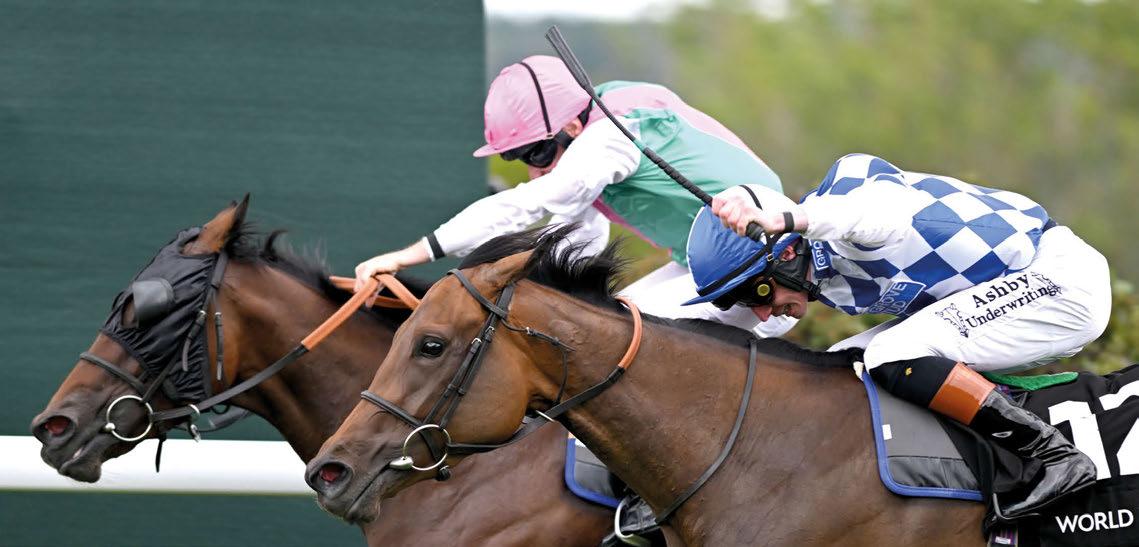
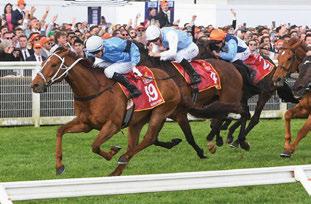
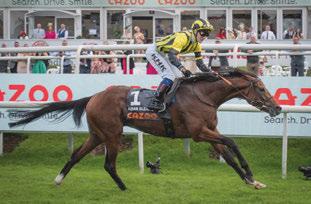
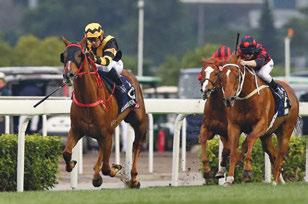
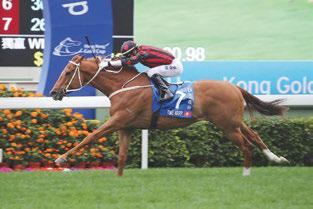
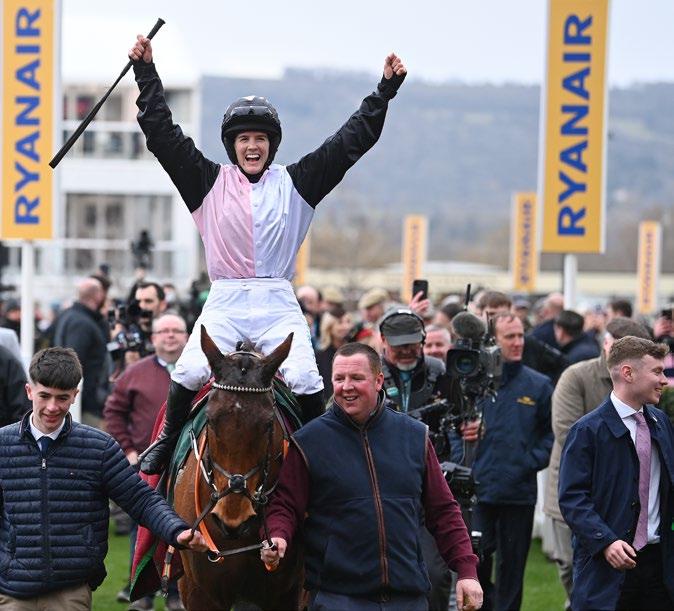
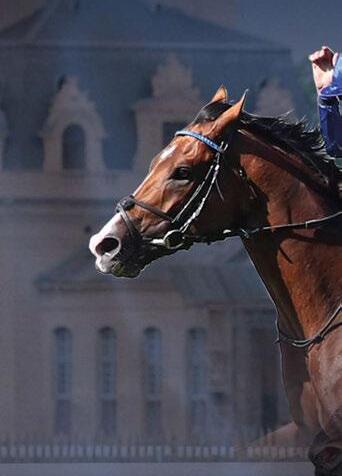
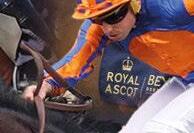
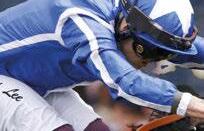
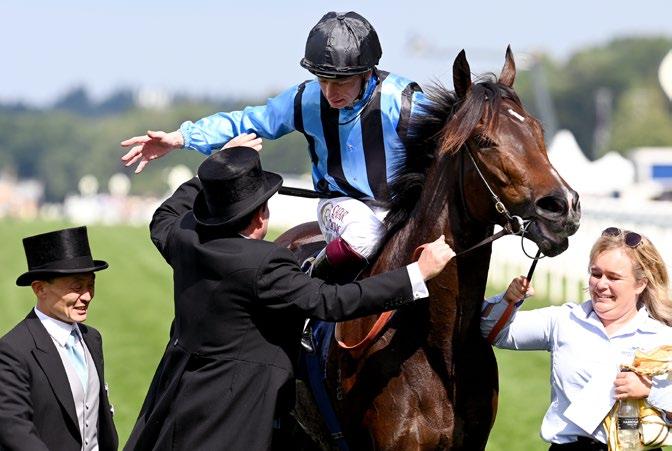
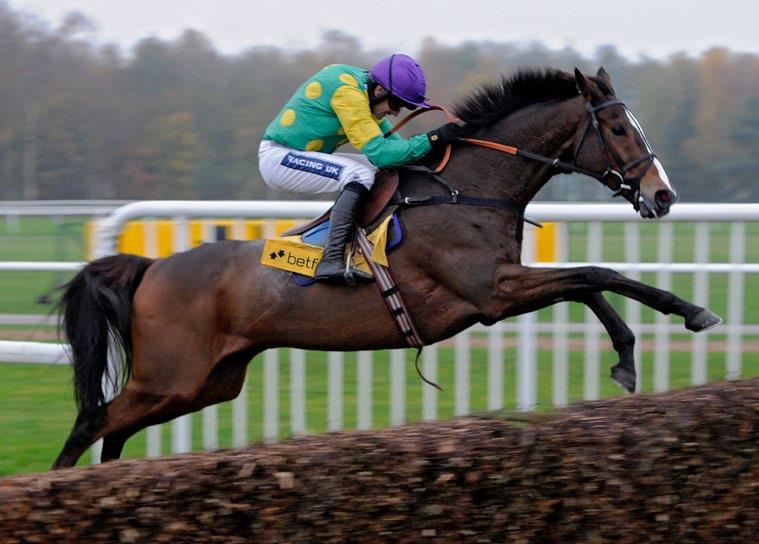
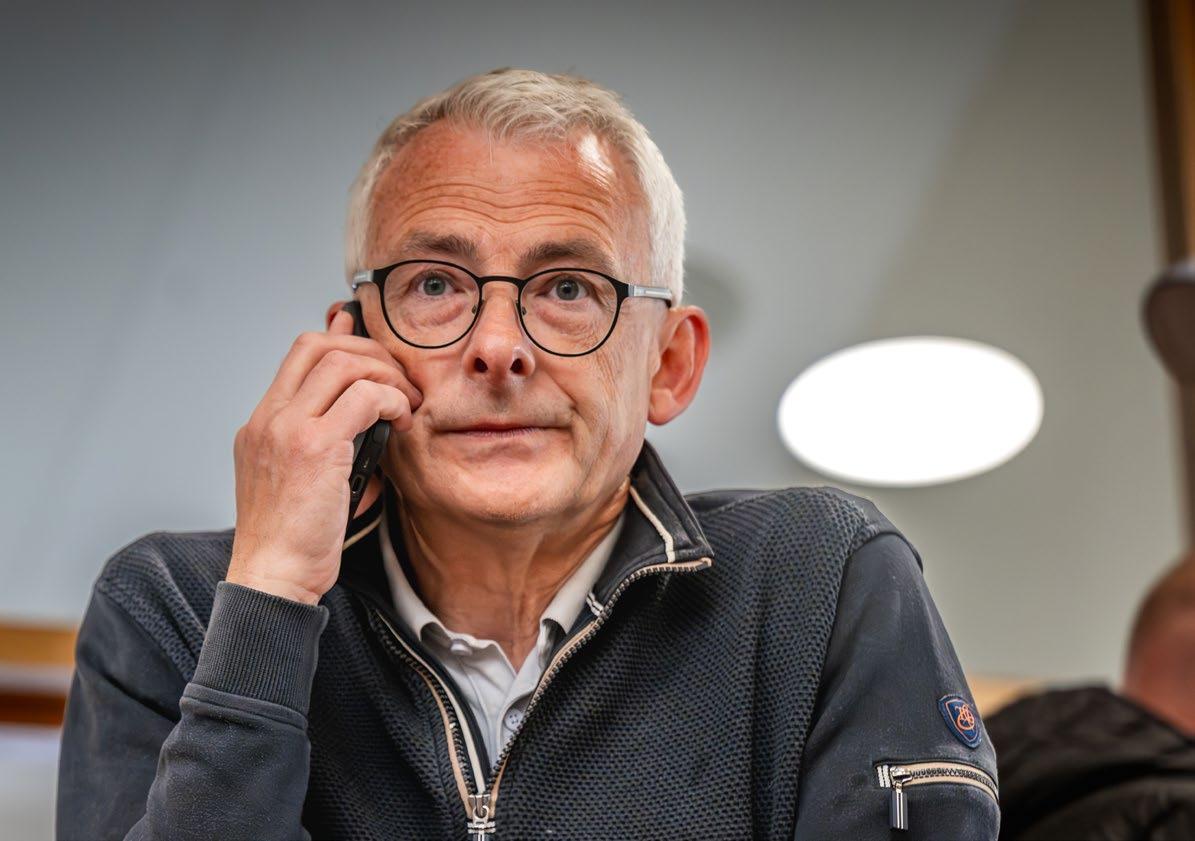
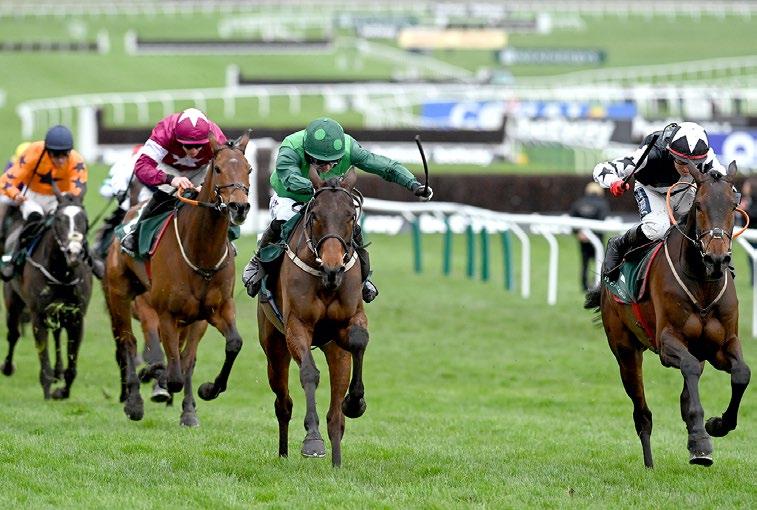
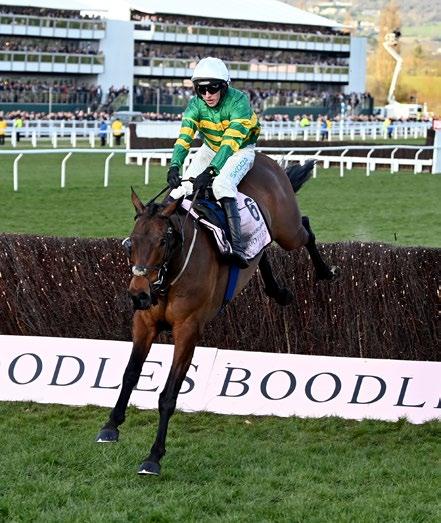
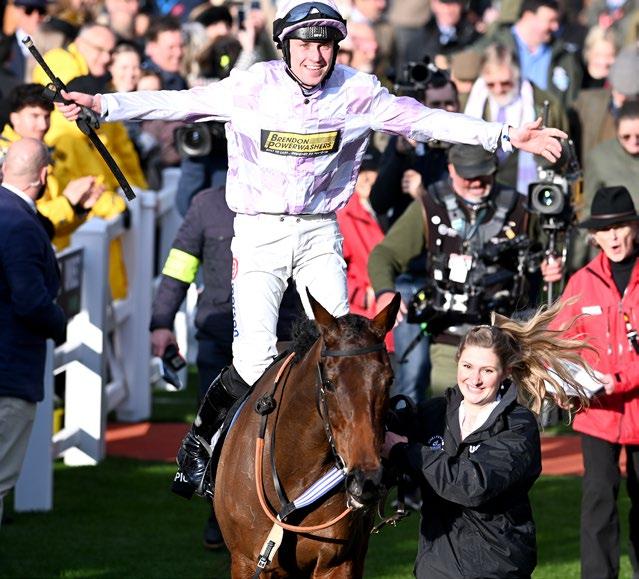
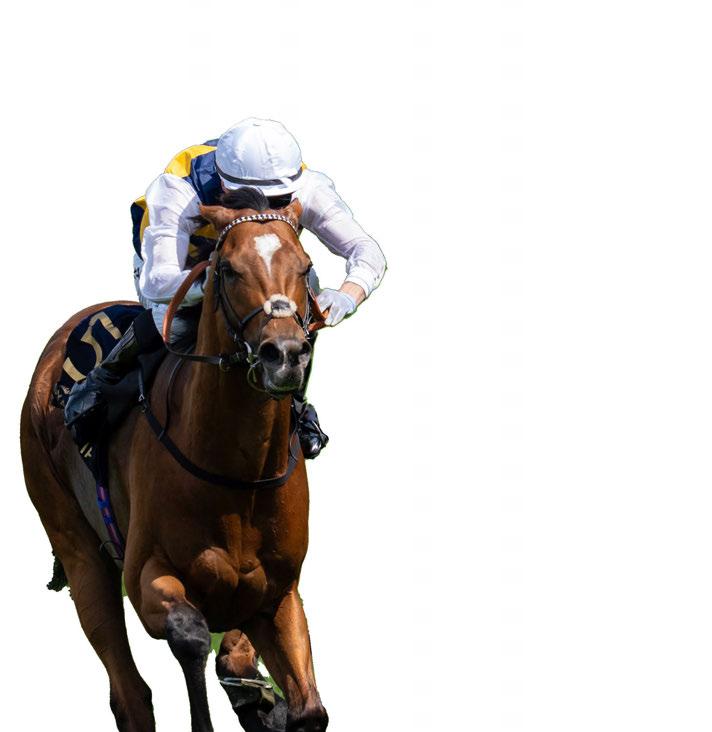
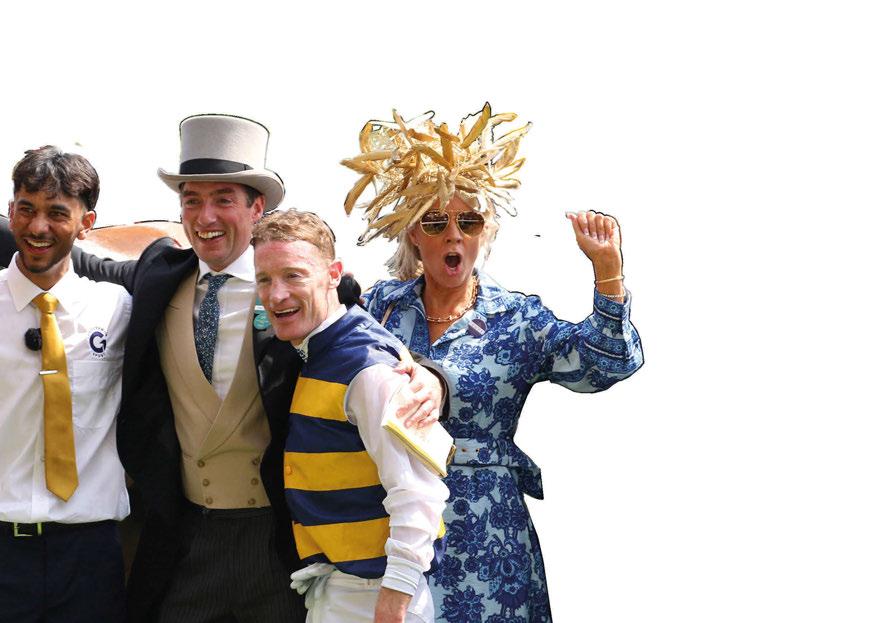
There is something quite appropriate about Rachael Blackmore’s final winner being named Ma Belle Etoile –My Beautiful Star. In the world of jump racing, she blazed a trail and exhibited her talents season after season in a career that garnered any number of firsts for a female jockey.
Blackmore, who has retired from the saddle aged 35, will always be known as the first woman rider to win the Randox Grand National, her 2021 success on Minella Times in JP McManus’s famous silks taking the sport onto the front pages and making headlines around the world.
Her Cheltenham Gold Cup victory on A Plus Tard for Cheveley Park Stud was another breakthrough moment while Blackmore’s association with Kenny Alexander’s mare Honeysuckle yielded 13 strikes at the top level and featured consecutive Champion Hurdles. They were a match made in heaven.
The common denominator in all those successes was trainer Henry de Bromhead, whose faith in Blackmore was vindicated time and again on the big stage. While she had the obvious advantage of riding seriously talented horses, her nerve on the headline days was unrivalled – she could go toe-to-toe with any of her contemporaries and would often emerge victorious, the sign of an elite sportsperson.
successful female jockey, with victory number 1,023 coming at Ascot on May 10 aboard Brindavan.
A British or Irish Classic success would undoubtedly take the multiple Group 1 winner’s profile to another level so let’s hope she gets the opportunities she deserves, this season or next.
To my mind, horseracing’s trump card is men and women competing on an equal footing, which doesn’t happen in most other sports. But are we making enough of that point? Racing’s latest marketing campaign, initiated with a £3.62 million grant from the Levy Board, focuses on friends at the races and features the line ‘It was so nice to see the girls’ – surely that could have been extended to the actual participants?
Racing’s trump card is men and women competing on an equal footing
Now racing must ask itself – where is the next Rachael Blackmore? Female professional jump jockeys are rare indeed but hopefully the accomplishments of a woman who won all the championship races at the Cheltenham Festival alongside the most famous jumps contest in the world will inspire others to give it a go.
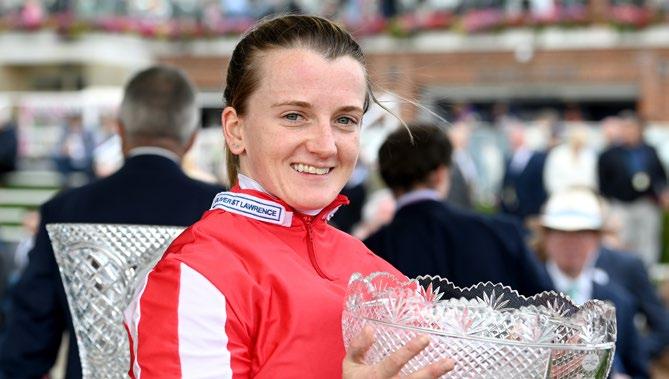
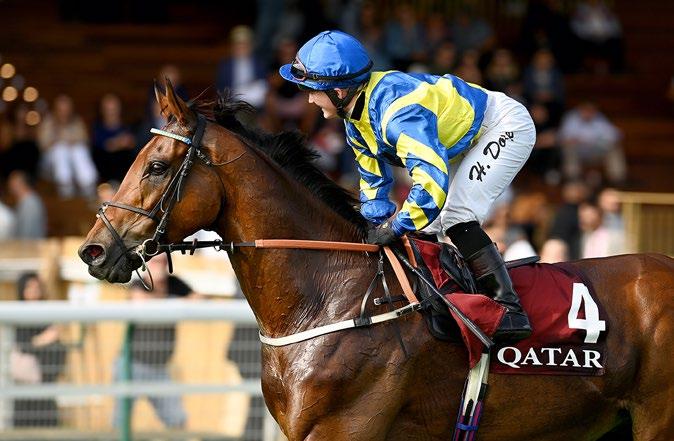
Hollie Doyle is one of Flat racing’s biggest stars and the rider recently overtook Hayley Turner to become Britain’s most
The Owner Breeder can be purchased by non-members at the following rates: 1 Year UK £60 Europe £90 RoW £120
The Owner Breeder is owned by the Racehorse Owners Association
Editorial views expressed in this magazine are not necessarily those of the ROA or TBA
Royal Ascot is on the horizon, with the world’s sporting press set to descend on the Berkshire venue later this month. In this issue, James Burn finds out why the five-day fixture is so irresistible to a global audience and overseas competitors, keen to experience a meeting that is truly like nothing else on the planet (Racing around the World, pages 20-23).
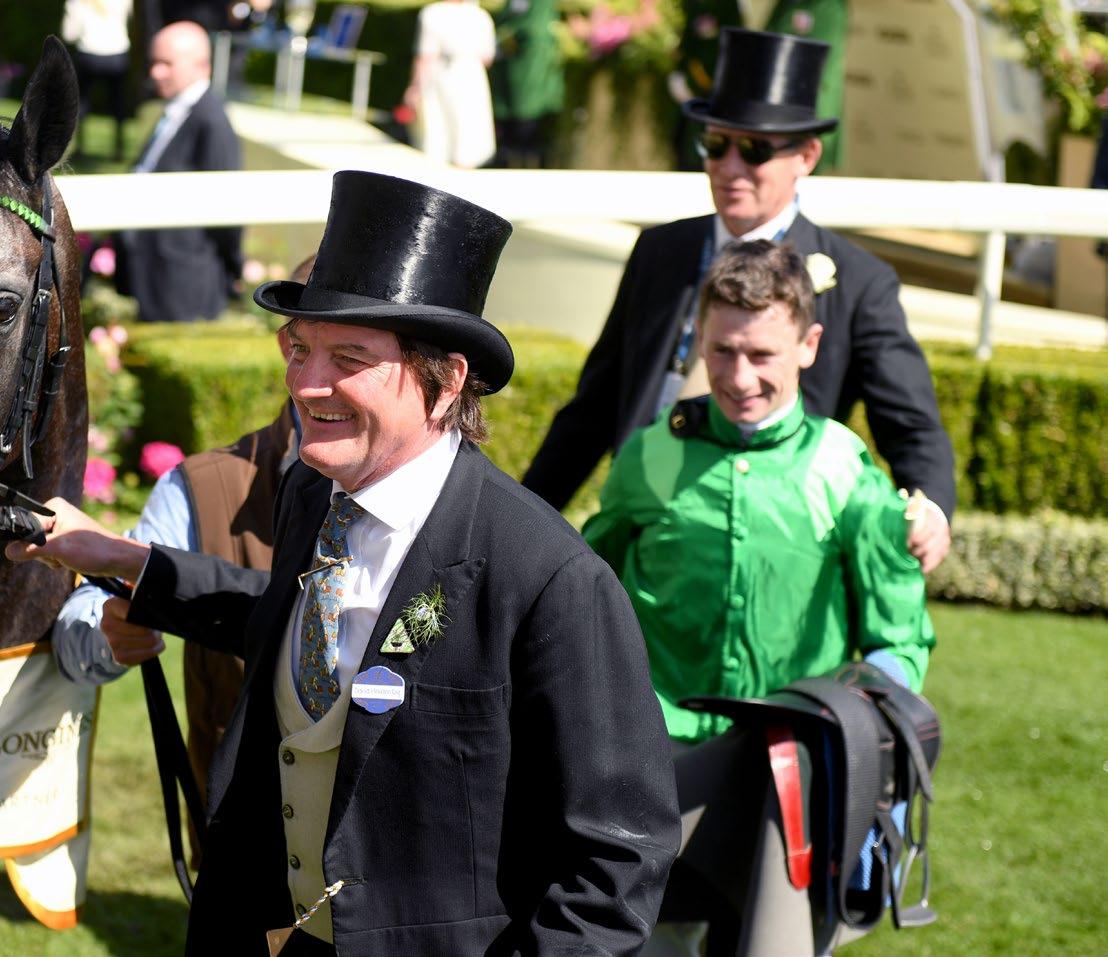
One man hoping to enjoy another special moment at the royal meeting is David Howden, who saw his mare Running Lion take the Group 2 Duke of Cambridge Stakes last year.
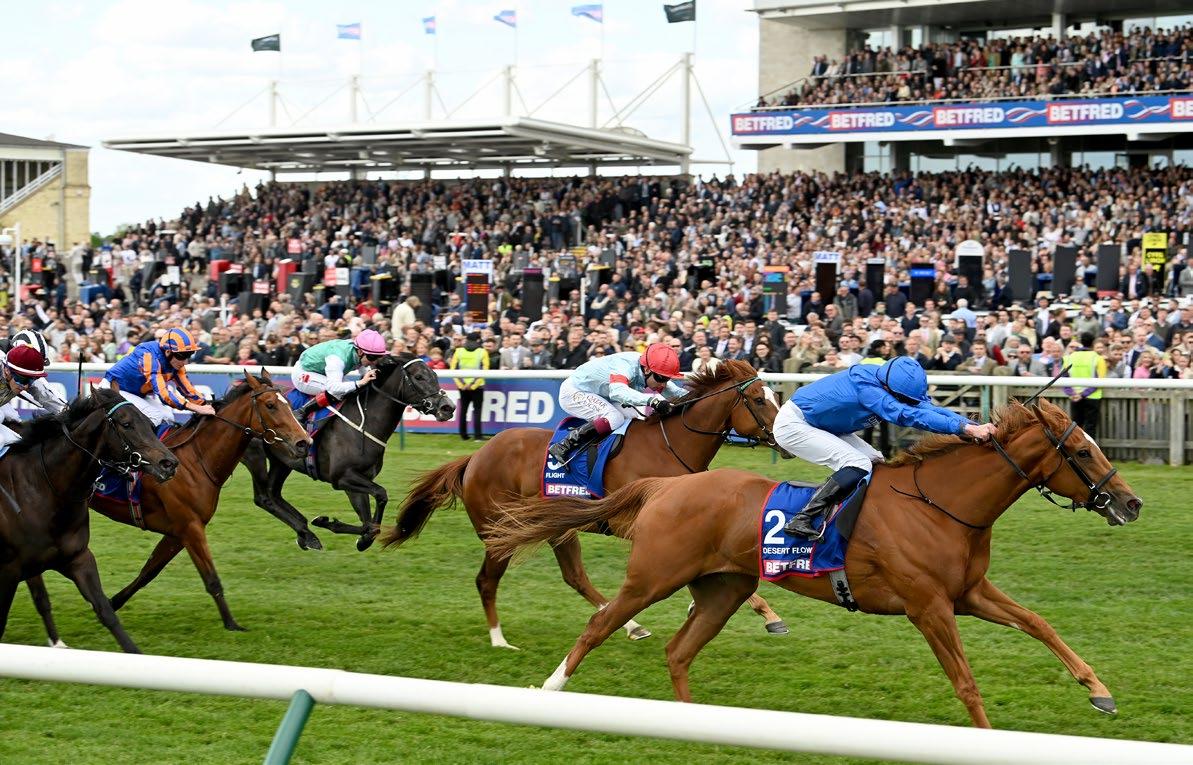
Howden, a huge supporter of Ascot with his insurance business being an official partner, looks to have another serious contender for top honours in the shape of homebred filly Flight, runner-up to Desert Flower in the 1,000 Guineas at Newmarket last month.
Marcus Townend caught up with the owner and breeder to hear about his passion for the sport, investment in eventing, and his aftercare initiative, which helps horses transition to a life beyond the racecourse (The Big Interview, pages 30-35).
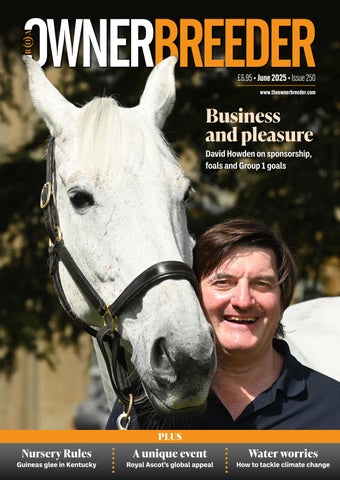
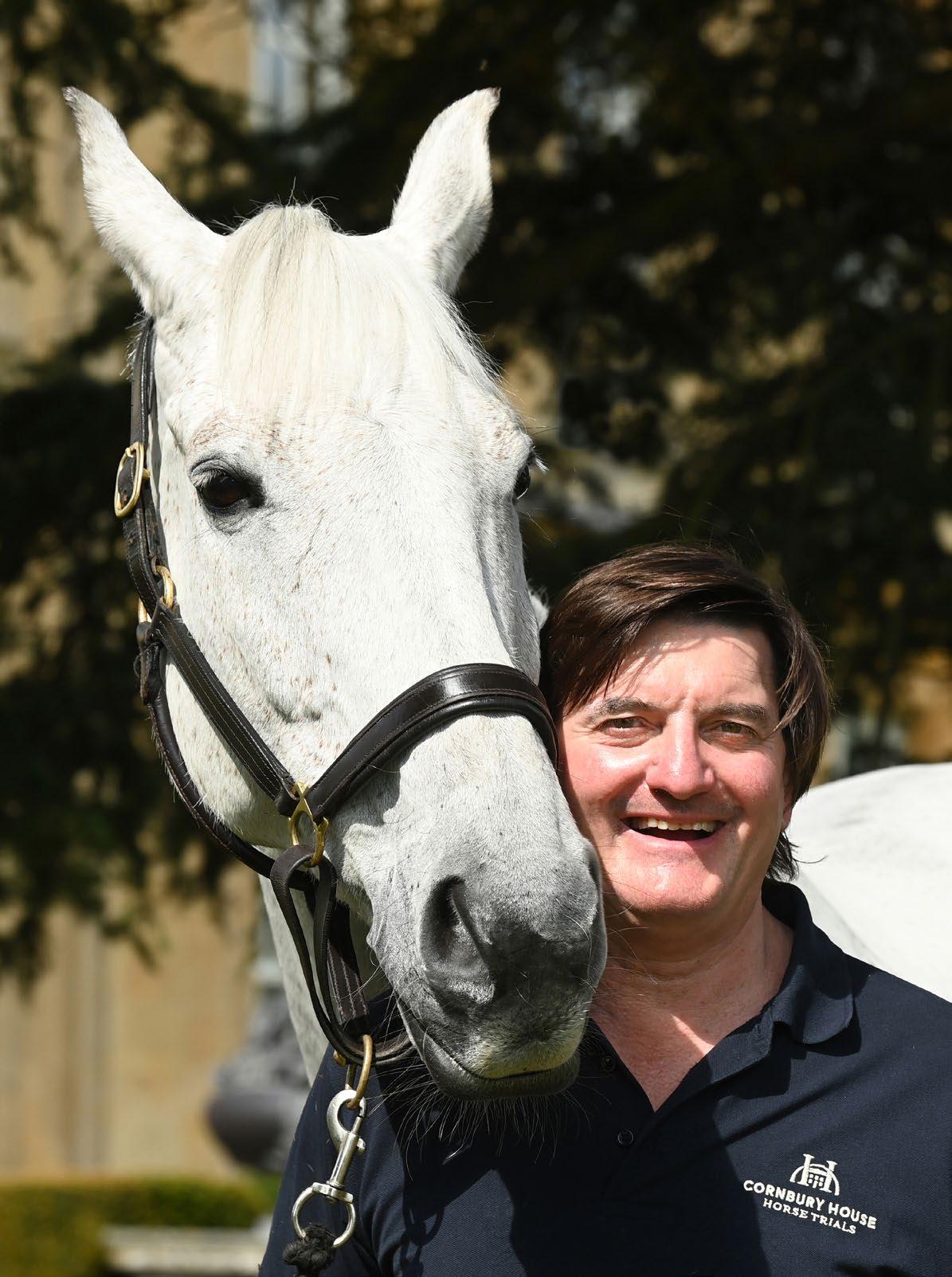
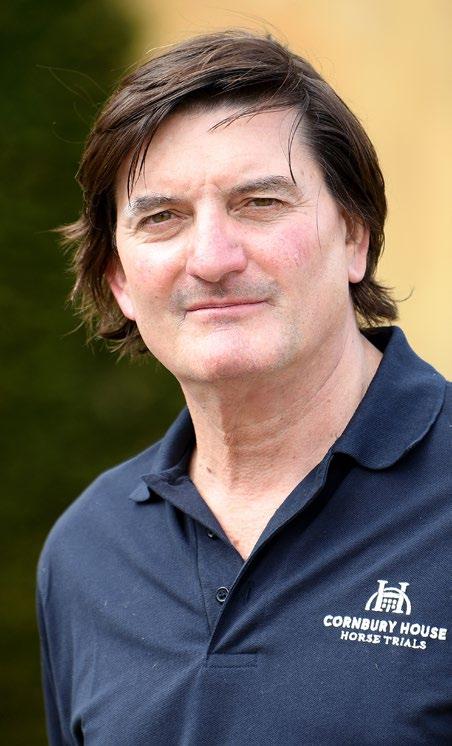
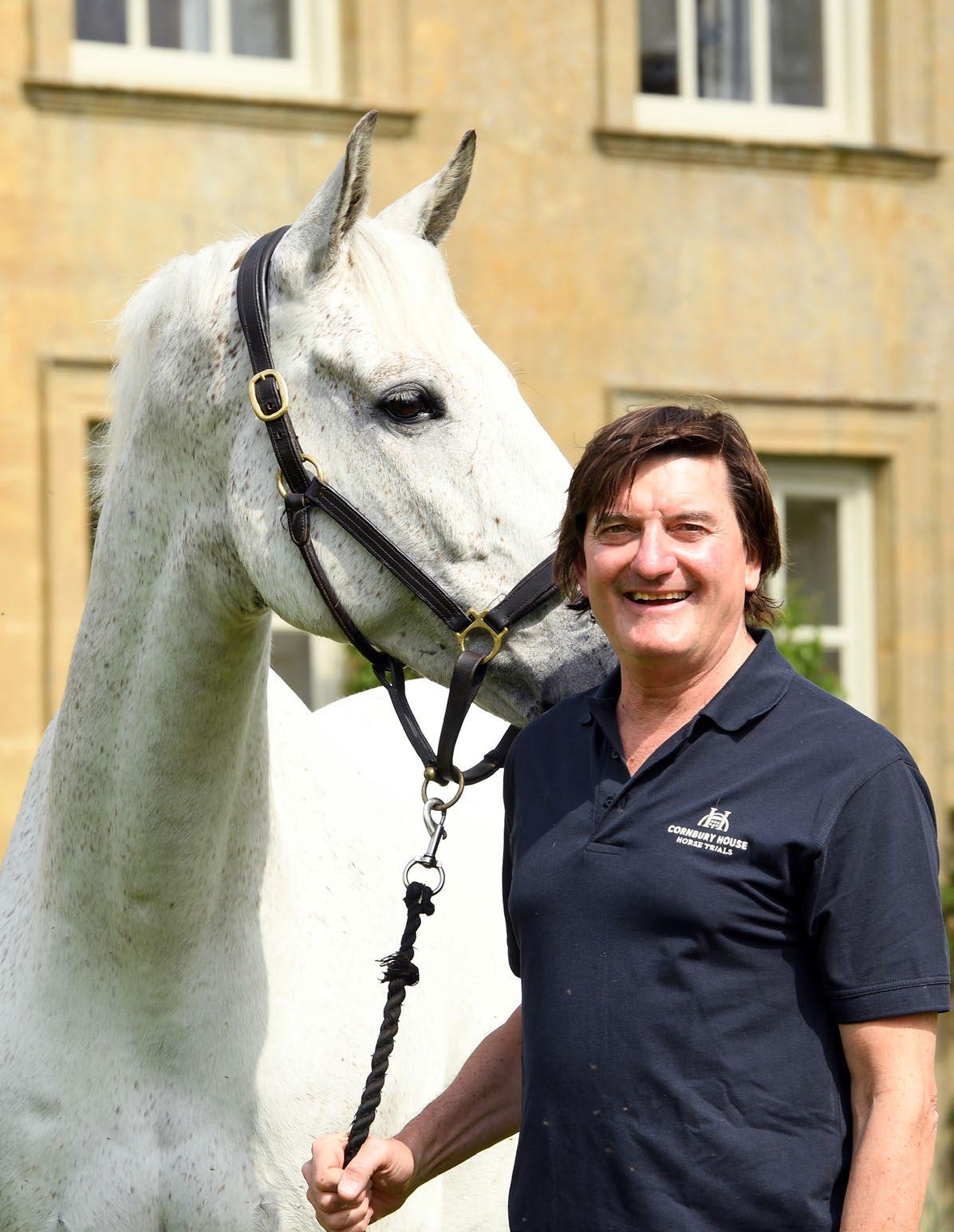
Cover: David Howden with successful eventer Monbeg Whisper at Cornbury House, which stages its Horse Trials in September
Photo: Bill Selwyn
ABetting tax hike would knock racing for six
CHARLIE PARKER President
s the government looks to raise funds, it has turned towards what perhaps is an easy target: the betting operators. The Treasury recently launched a consultation on gambling tax rates. Bets on sports, including racing, are subject to a lower tax rate, currently 15% of profits for bets placed both online and in betting shops. Bets placed online on casino games and slots are currently taxed on profits at 21%. The proposal is to harmonise the rates to make the Treasury’s life easier – in essence this really means increasing the 15% up to the online rate and maybe even beyond.
Anyone who has had to fill in a tax return will testify to the fact that the tax system is about as far away from being simple or harmonised as you can get; this is simply a way of raising more tax revenue. If this was to happen, it would have hugely damaging consequences for the financial viability of British racing.
It is difficult to quantify the cost if the rates were brought into line, but it is likely that an increase in the tax paid by the operators on their sports betting businesses could be as much as £175 million, with the share from racing contributing around £40m. Obviously, the operators have tools they can use to mitigate their tax burden. The sports betting product is more expensive when set against the very high-margin online casinos and slots. A levelling of the tax rate will inevitably drive business models towards their low-cost, high-margin products, which have much higher incidences of gambling addiction, and away from sports betting, thus reducing existing revenue streams for racing, namely levy and media rights.
benefit racing’s income. We still have the unresolved levy review and if there is a mutually beneficial change to the tax rates, the proposal may not be as scary as it seems. In the next ten weeks we will need to mobilise the lobbying resources at our disposal and make sure that we get our messages across whilst offering alternatives that could help the industry.
The damage to the rural economy could threaten 85,000 jobs and £300m in revenues
Whilst we continue to be battered by headwinds, there are many undeveloped opportunities that the industry has still not exploited. We are in essence a data-driven sport – form, ground, distance, running style, trainer form, and historical information are all used to inform and frame the betting markets. As an entire industry, we also have detailed data on owners and racegoers, and the betting operators have further significant insights into what the same customers want. However, the siloed legacy approach and lack of output across the industry’s central data and technological capabilities means we remain in the Dark Ages when compared to most customer-facing businesses. Your supermarket knows what you buy and what to sell you and your online retailer has sophisticated software to entice you and sell their products. The technology landscape is rapidly changing, with the use of AI now featuring heavily across many sports and businesses, and a step change is quickly needed if we are to catch up and compete.
In addition, a canny operator will look to squeeze existing sports betting margins, which would likely increase the move to black-market operators, with damaging consequences for both revenues and the safety of punters.
The BHA is leading the industry’s response to the consultation, which will conclude in July. The damage to the rural economy could threaten the 85,000 jobs and the £300m in tax revenues that British racing contributes and could continue to undermine our position as a leading racing nation in an increasingly competitive global environment. We also need to offer workable alternatives that would
An industry-led and well-resourced digital approach will quickly elevate the way the sport communicates, sells, recognises and rewards our customers. This in turn has the potential to unlock huge benefits for British racing in terms of driving engagement, retention and growth. Whatever the outcome of the various tax and levy discussions, it is incumbent on industry leaders to concentrate on securing the future racing product to bring about growth.
Finally, it was sensible of the BHA to reverse the rule cancelling certain races with less than four runners. Whilst the trial was an attempt to improve competitiveness and make racing more attractive, the current ground conditions were making the situation more difficult and created significant frustrations for participants. As owners know, anything that improves our chances of a win must be welcomed.
LANWADES
Breeding Champions
1984-2025 : Breeders of the winners of over 206 Stakes Races WORLDWIDE 34 Group 1’s • 29 Group 2’s • 42 Group 3’s • 101 Listed
ALPINISTA (6 x Gr.1 wins)
ELDAR ELDAROV
x Gr.1 Classic wins)
DURSTON (Gr.1 & Gr.3)
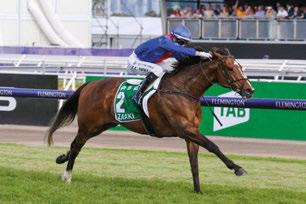
ZAAKI
(4 x Gr.1 wins)
GLORIOUS FOREVER (Gr.1) TIME WARP (3 x Gr.1 wins)
Tattersalls Ireland Sales – 23rd to 24th September 2025 60 Colt OASIS DREAM – MEMORY LANE (With Approval) 286 Colt STUDY OF MAN – VINCITOMNIA (Invincible Spirit) 322 Colt SAXON WARRIOR – ALIZARINE (Sea The Moon) 482 Filly ARDAD – HELVETIQUE (Bobby’s Kitten)
Goffs Orby Sales – 29th September to 30th September 2025 17 Colt BAAEED – ALOE VERA (Invincible Spirit) 165 Filly SEA THE STARS – HEAT AND DUST (Oasis Dream) 239 Colt FRANKEL – MADAME CHIANG (Archipenko) 344 Colt SEA THE MOON – RANI OF JHANSI (Invincible Spirit)
Tattersalls October Sales • Book 1 – 7th to 9th October 2025 11 Colt SIYOUNI – ALBAFLORA (Muhaarar) 16 Colt NEW BAY – ALL AT SEA (Sea The Stars)
20 Colt FRANKEL – ALWILDA (Hernando)
Tattersalls October Sales • Book 2 – 13th to 15th October 2025
556 Colt STUDY OF MAN – ALERTA ROJA (Golden Horn)
654 Colt SEA THE MOON – CARIBANA (Hernando)
865 Colt WOOTTON BASSETT – HERE TO ETERNITY (Stormy Atlantic)
921 Colt STUDY OF MAN – KESARA (Sadler’s Wells)
955 Colt STUDY OF MAN – LEADERENE (Selkirk)
Colt STUDY OF MAN – QUINTADA (Leroidesanimaux)
Tattersalls October Sales • Book 3 – 16th to 17th October 2025 1352 Colt STUDY OF MAN – ALAMODE (Sir Percy) 1353 Colt STUDY OF MAN – ALBARAKA (Selkirk) 1356 Colt STUDY OF MAN – ALTRA VITA (Animal Kingdom)
Dear Lord Allen,
New BHA Chair must embrace change
PHILIP NEWTON Chairman
Welcome to a great legacy industry that’s been around for over 300 years, generating more than £4 billion to the British economy annually, employing some 85,000 people, boasting some of the very best stallions in the world and all of which contribute to an industry that is genuinely world class in every part of delivery – but not its revenue!
Whilst you will need time to fully understand the complexities and confusions of British racing, the metrics surrounding falling betting turnover, lower attendances, a declining horse population and a collapsing foal crop will not escape you and demand that you hit the ground running to support all racing stakeholders in finding answers to the very real issues that will confirm a future whatever that may be.
To give yourself the best chances of success there are some immediate priorities. Firstly, the good news – the right structure is already in place for British racing to work effectively and to allow you to lead positively, but only if the right people occupy the right chairs around the various tables. Your BHA Board needs, therefore, to be completely independent; the principle of stakeholder representation has been tried and it’s clear it hasn’t worked. That’s no reflection upon those that occupy the seats, it’s more that the industry hats they wear cover their eyes and prevent a ‘seeing the wood from the trees’ approach. In any event, there is an important and more appropriate role for industry participation within the Commercial Committee and that’s where stakeholder influence should be directed and applied.
excellent platform for industry members to consider both opportunities and risks, with an agenda for delivering recommendations to your BHA Board. When agreement cannot be reached, as inevitably will be the case, then the decision process passes to the BHA Board. This alone will provide necessary incentive for the industry stakeholders to find agreed acceptable outcomes; the current process works for no-one.
The principle of stakeholder representation has been tried and it’s clear it hasn’t worked
The Commercial Committee requires review; it has been in place for three years and has served a purpose but not been effective. It has provided a start, though, and demonstrated potential – now representation needs consolidation, but who and how many? For me, that’s simple – each stakeholder should have no more than three representatives, as should the BHA, and to complete a maximum number of 12 around the table add a Chair, while the betting industry should be included in that number. The industry attitude to our customer, the betting industry, makes no sense and the continuing exclusion from any influence upon how British racing is shaped, marketed and communicated seems like something from the Dark Ages. British racing is dependent upon betting turnover for its very existence and to ignore that importance by continuing betting’s pariah status encourages failure and denies opportunity.
A strong, independent BHA Board with BHA executive representation alongside a commercially savvy group of independents will allow a robust decision-making process delivering in the best interests of racing, recognising the importance of medium and long-term planning rather than the short-term cul-de-sac view often occupied. You will not be popular with stakeholders all the time, but that won’t be anything new or of concern to you with your significant past experiences. Not taking this course will see the current behaviours that racing sees daily perpetuated at its cost. The Commercial Committee has the potential to be an
Racing’s demographics are all in the wrong place and if any domestic progress is to be made, a younger audience needs urgent recruitment; the best and most immediately available route to that is through the existing betting audience and by forging a genuine partnership between racing and betting. Pick the low-hanging fruit!
Joined-up thinking, then, is required everywhere and you should be the catalyst to achieve this. It’s a big job, but you have had plenty of those. Engage with the industry and listen but follow your own counsel. As Jack Welch said, “Change before you have to” – certainly racing’s turn at this wheel is long overdue.
Yours sincerely, Philip Newton.
CHANGES People and business
Hollie Doyle
Becomes the winning-most female jockey in Britain after victory number 1,023 on Brindavan at Ascot on May 10 saw her overtake recently-retired Hayley Turner.
Jody McGarvey
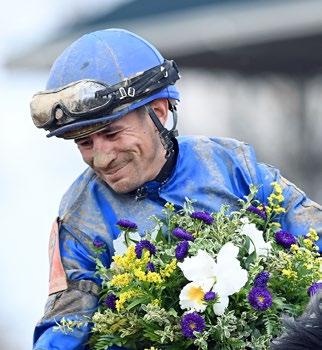
Popular jump jockey who enjoyed Grade 1 wins on Great Field, Skyace, Janidil and I Am Maximus retires from the saddle aged 34.
Derby runners
Final field will now be known a day earlier after the Jockey Club instigates 72-hour declarations for the first time in the race’s 245-year history.
Mickey Bowen
Succeeds father Peter at the family’s Haverfordwest stable and sends out his first winner, Gavin, at Ffos Las on May 6, partnered by brother Sean.
Mael Thibault
Appointed to Arqana’s bloodstock team, taking charge of inspections for Flat and National Hunt yearlings along with stores in France.
France Galop
Administrative council agrees to cut prize-money by €20 million per year due to falling betting turnover, though Group 1 Flat races will be unaffected.
Racecourse Media Group
James Ewart
Trainer who sent out more than 250 winners from his base in the Scottish Borders will relinquish his licence and focus on his renewable energy company.
Kieran Shoemark
Group 1-winning jockey will no longer be first-choice for John and Thady Gosden, who will use the best available without having a retained rider.
James Doyle
Wathnan Racing’s retained rider returns to action following over a month on the
sidelines with a broken collarbone – and promptly wins on Underwriter at Ayr.
Tattersalls
Extends its sponsorship of the Irish Guineas festival until 2028 with the Irish 2,000 and 1,000 Guineas offering total prize-money of at least €500,000.
Global Racing League
New competition will launch in 2026 with 12 top international riders who will be shareholders in the business and act as team principal for their franchise.
Junior Alvarado
Jockey fined $62,000 and suspended for two days for striking Sovereignty eight times – two over the six-strike limit – when winning the Kentucky Derby.
Shergar Cup
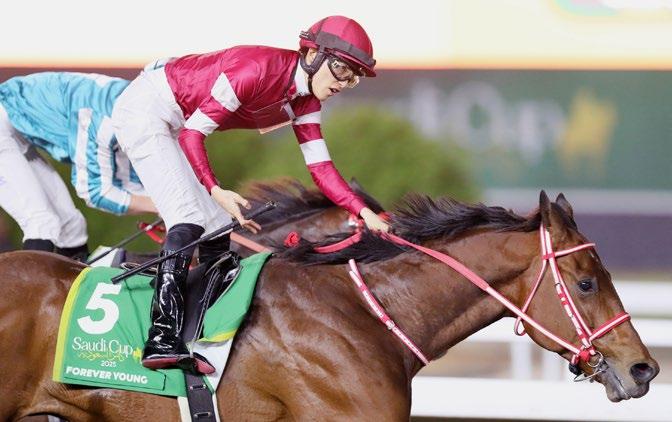
This year’s jockeys’ competition will see the ladies’ team replaced by a team from Asia and feature Ryusei Sakai, rider of Saudi Cup victor Forever Young.
Made payments totalling £113 million to its shareholder tracks, a sum collected from media and data rights revenues in 2024. RMG paid out £113.9m in 2023.
Racehorse and stallion MOVEMENTS
AND RETIREMENTS
Starlust
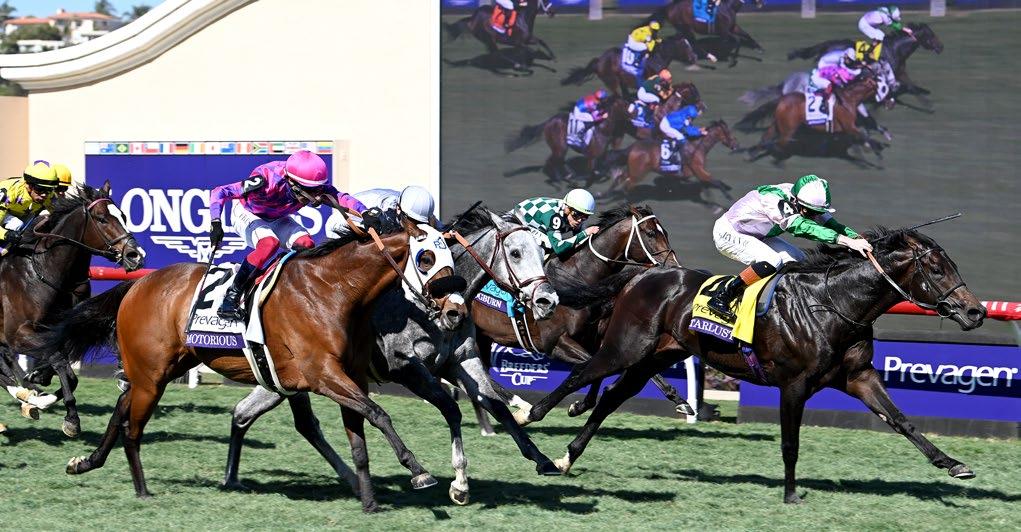
Breeders’ Cup Turf Sprint victor will stand at Riverstone Lodge in Australia when his racing career concludes. His debut fee is set at A$27,500 (£13,400).
Scalo
German Group 1 winner, sire of Deutsches Derby victor Laccario and now an established NH stallion, moves to Longford House Stud in County Tipperary.
Killer Ability
Son of Deep Impact, a Grade 1 winner in Japan, will begin his stallion career in India at Nanoli Stud near Pune for Equus and SKJ Thoroughbreds.
Horse
Rodney Baker 81
Devon trainer saddled his last winner in 2006, enjoying 83 victories in all, and helped Mick Channon launch his training career.
Henri Devin 71
Owner of Haras du Mesnil with wife Antonia, standing sires Turgeon and Doctor Dino, and producing top-level stars Ange Gabriel and Politologue.
Liberty Island 5
Top-class Japanese mare, winner of four Grade 1s for owner Sunday Racing Co Ltd and trainer Mitsumasa Nakauchida, suffers a fatal injury in the QEII Cup at Sha Tin.
Matnie 18
Daughter of Laveron was an outstanding broodmare, producing multiple Grade 1 winners Brighterdaysahead, Mighty Potter and Caldwell Potter.
Pether’s Moon 15
Yorton Farm stallion, a Coronation Cup winner in his racing days for owner John Manley, sired talented hurdlers Lunar Discovery and Anneloralas.
Over and out: Rachael Blackmore calls time on stellar career
The chapter closed on one of horseracing’s most riveting stories last month when Rachael Blackmore announced her immediate retirement from race riding aged 35.
Blackmore had become one of the sport’s most popular faces during a sensational career that saw the dairy farmer’s daughter from County Tipperary reach the top of her profession, famously becoming the first female jockey to win the Grand National on JP McManus’s Minella Times in 2021.
Minella Times was trained by Henry de Bromhead, who put his faith in Blackmore as his first choice rider and was rewarded with a string of big-race successes. She guided A Plus Tard to victory in the 2022 Cheltenham Gold Cup – another first for a woman jockey – and took the 2024 Queen Mother Champion Chase on Captain Guinness, although the horse that she will always be most associated with is outstanding mare Honeysuckle, owned by Kenny Alexander.
Blackmore partnered Honeysuckle on all 19 appearances under Rules, winning 17 races, including 13 at Grade 1 level, four of those coming at the Cheltenham Festival. The duo recorded consecutive Champion Hurdle triumphs in 2021 and 2022 and claimed the Mares’ Hurdle in 2020 and 2023, the latter win on her final start.
Honeysuckle and Blackmore landed three straight Irish Champion Hurdles between 2020 and 2022, achieving the same feat in the Hatton’s Grace Hurdle (2019-2021).
Having started out in the point-to-point world, Blackmore took her first professional ride in 2015 at the age of 25. Trainer Shark Hanlon spotted the potential in the young jockey and with his support she captured the conditional riders’ championship in Ireland in 2017.
Gaining rides for Michael O Leary’s Gigginstown House Stud saw Blackmore strike up a link with de Bromhead – the association would endure, and it yielded a double at the Cheltenham Festival in March with Air Of Entitlement (Mares’ Novices’ Hurdle) and Bob Olinger (Stayers’ Hurdle).
Blackmore enjoyed 18 Cheltenham Festival successes – a figure that places her in the all-time top ten at the meeting – and finished her riding innings with a haul of 33 Grade 1s. In total she had 564 wins over jumps in Ireland and Britain, plus another 12 on the Flat.
She said in a statement: “I feel the time is right. I’m sad but l’m also incredibly grateful for what my life has been for the past 16 years. I just feel so lucky to have been legged up on the horses I have, and to have experienced success I never even dreamt could be possible.
“I rode my first winner for Shark Hanlon, who then helped me become champion conditional. I will be forever grateful to Shark for getting behind me, supporting me and believing in me when it would have been just as easy to look elsewhere. He was the catalyst for what was to come.
“A conversation between Eddie O’Leary and Henry de Bromhead in a taxi on the way to Aintree took my career to a whole new level. Eddie got me in the door at Knockeen, and what came next was unimaginable: Honeysuckle, A Plus Tard, Minella Indo, Captain Guinness, Bob Olinger, Minella Times, among many others... all with one thing in common –Henry de Bromhead. He’s a phenomenal trainer, who brought out the best in me.
Without Henry, my story is very different.
“It is daunting, not being able to say that I am a jockey anymore. But I feel so incredibly lucky to have had the career l’ve had.
“To have been in the right place at the right time with the right people, and to have gotten on the right horses – because it doesn’t matter how good you are without them. They have given me the best days of my life and to them I am most grateful.”
De Bromhead, who admitted his surprise at Blackmore’s decision to retire, said: “As usual she’s timed it to perfection! She obviously gave it a lot of thought and I’m absolutely delighted for her.
“It’s incredible what she achieved – we were lucky to be there with her. [She had] natural ability but then knowing how hard you have to work to get to the top. She worked harder than everybody else and she got there.
“She had so many great attributes as a jockey and as a person. The best way to sum her up is she’s just pure class.”
Rachael Blackmore, who partnered Bob Olinger to Stayers’ Hurdle glory in March, credits Shark Hanlon (inset) for her early success
Levy up after Festival favourites flop
A string of upsets at the Cheltenham Festival in March has helped the levy yield reach £108 million for 2024/25, £3m more than the 2023/24 figure of £105m.
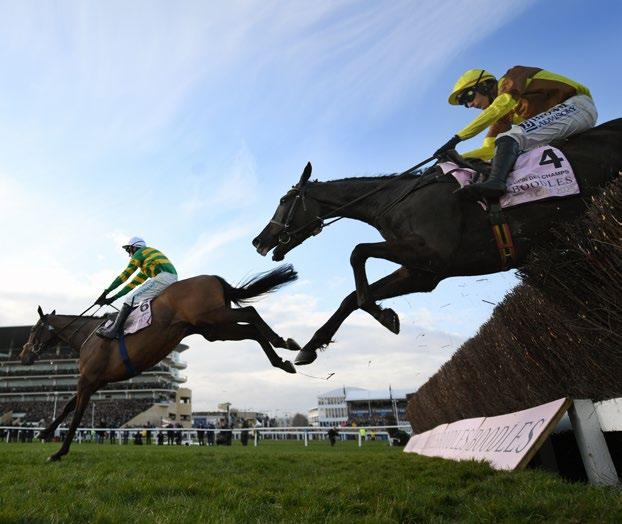
With the levy collection method based on bookmakers’ gross profits, the failure of Constitution Hill, Jonbon and Galopin Des Champs to hit the bullseye at Prestbury Park saw bookies’ satchels bulging come the end of the four days, with a positive outcome for the sport’s income.
The year as a whole saw betting turnover on British horseracing decline further on the previous year. Average turnover per race was down by about 8% on 2023/24, representing a 15% fall on 2022/23 and 19% on 2021/22.
Anne Lambert, Interim Chair of the Levy Board, said: “A yield of around £108m provides additional reassurance for the Board in considering spending decisions for 2026, with increases in 2025 having already been agreed. The Board’s cash position is currently healthy and we will be looking to make additional funds available next year, including for prize-money.
“However, we will exercise appropriate prudence in expenditure
Galopin Des Champs finished second to Inothewayurthinkin in the Gold Cup
decisions and maintain sufficient reserves as bookmakers’ increased profits are being generated from falling
Marketing campaign launched with £3.62m Levy Board grant
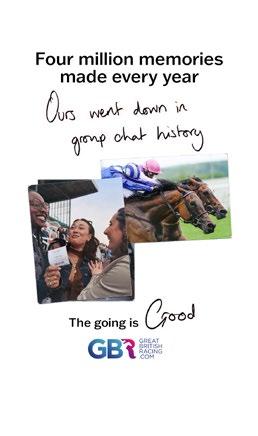
British racing has launched a new marketing campaign under the title of ‘The going is Good’, which aims to showcase the sport as a unique day out with its tagline ‘Four million memories made every year’.
Great British Racing (GBR), horseracing’s promotional arm, has partnered with specialist sports creative agency Dark Horses, which has extensive experience in the sport, and the UK’s largest independent media agency, the7Stars, to take racing’s message to the masses.
turnover. It remains to be seen whether this trend will continue in the longer term.”
The advertising-led campaign, funded by a £3.62 million grant from the Levy Board – the biggest single amount it has given to a promotion of this type – will run through to September and is designed to both reactivate casual racegoers and attract new fans to racing by highlighting the reasons why it enjoys being the second most popular spectator sport in Britain.
Simon Michaelides, interim Chief Customer Officer of GBR, said: “We’re very excited by this fresh advertising approach to the sport, showcasing the experiences of 4.8 million existing racegoers to inspire more people to follow suit.
“The campaign has researched incredibly well with existing fans and potential new fans alike and we are confident that it will deliver strong results.”
GBR will be hoping its latest campaign performs better than the previous one, ‘Everyone’s Turf’, fronted by former Premier League footballer Jermaine Jenas. The concept didn’t inspire the public to go racing and failed to reverse the decline in attendances when implemented in 2022.
The new campaign began in May
BILL
SELWYN
THE BIG PICTURE AT ASCOT
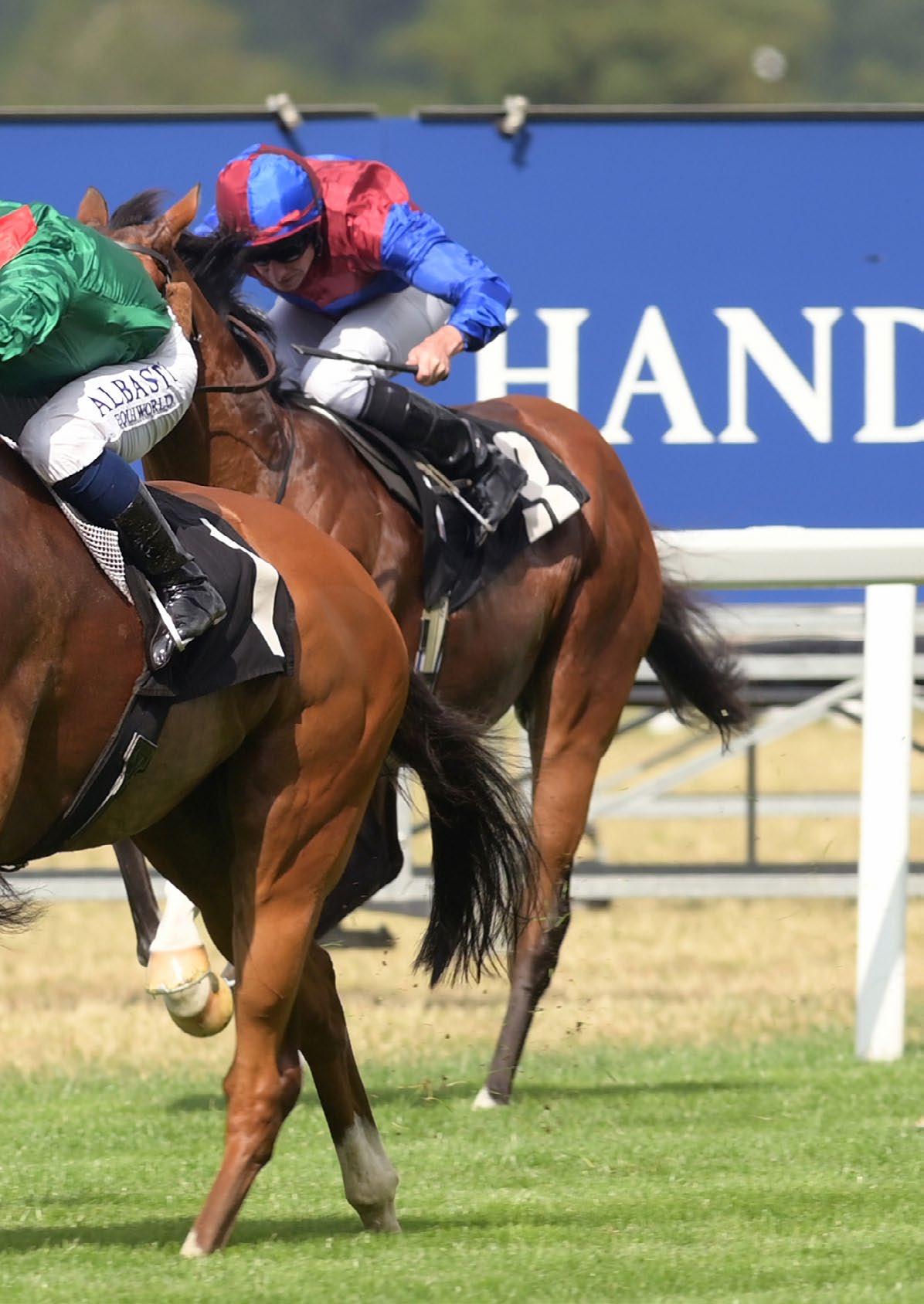
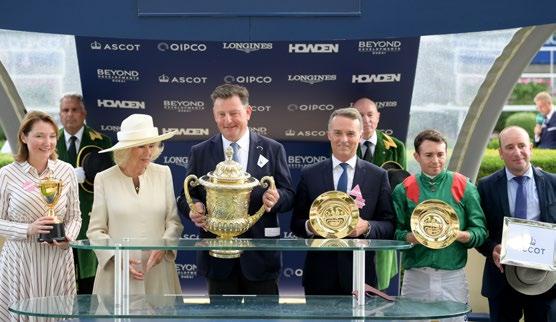
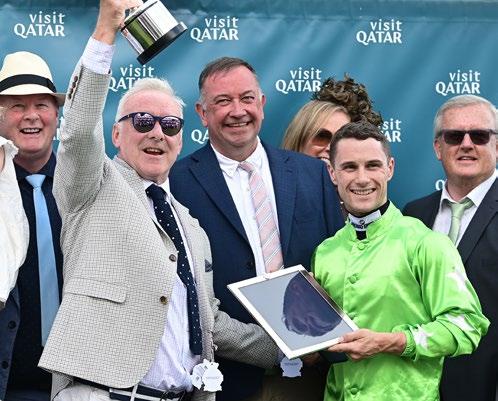
French racing’s loss is British racing’s gain so far as ace middle-distance performer Calandagan is concerned. His gelded status means he cannot contest races such as the Prix de l’Arc de Triomphe, and his connections have no qualms about sending their four-year-old across the Channel. In the King George VI and Queen Elizabeth Stakes at Ascot, Mickael Barzalona produced the perfect waiting ride, unleashing Calandagan with a furlong to run and edging past tough filly Kalpana, taking the prize by a length for owner Aga Khan Studs and trainer Francis-Henri Graffard (pictured with trophy next to Barzalona).
Photos Bill Selwyn
Calandagan too classy
FACES AT THE RACES
Qatar Goodwood Festival
Quia nam volo tem volut lacidebis reictem quiatur s venis dolore vitaspe ritibus sunt earum eatentios accatur?
Photos: Bill Selwyn
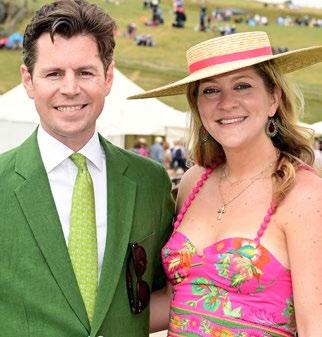
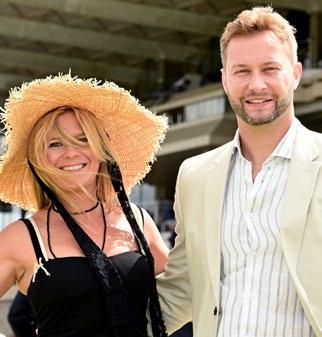
Gemma Brooks-Burley and James Burley
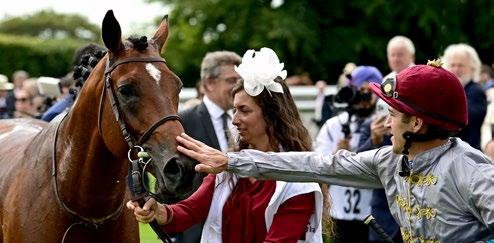
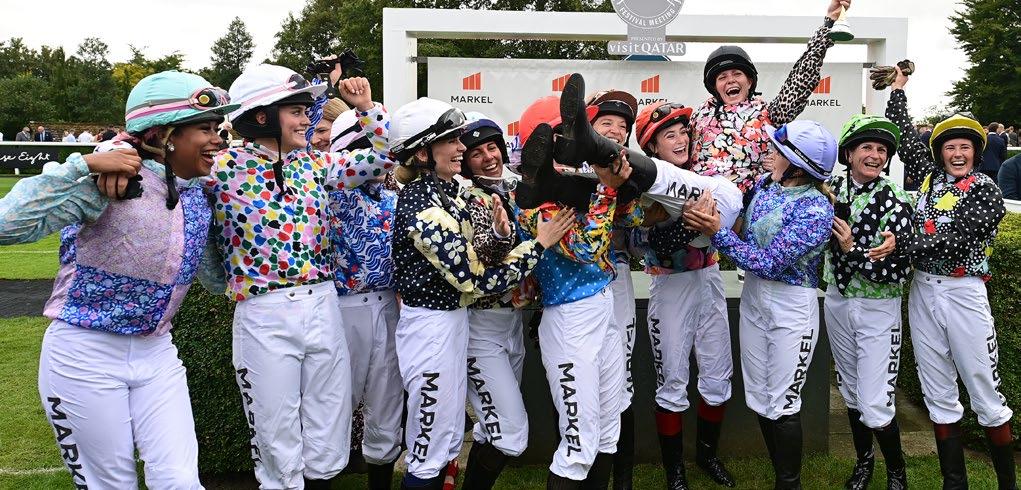
Sophie Forsyth (holding trophy) celebrates with her fellow jockeys after victory in the Magnolia Cup
Jamie Insole and Jess Stafford
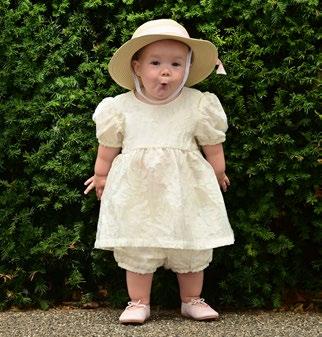
17-month-old Dusty Taylor enjoys her first day at the races
JM Jungle’s Groaup 2 King George Qatar Stakes success thrilled his connections
Christophe Soumillon shares a moment with Al Ghadeer, winner of the Qatar International Stakes
2YO
VENETIAN SUN Duchess of Cambridge Stakes, Gr. 2 Albany Stakes, Gr. 3, Royal Ascot purchased for 240,000 gns
RACING AROUND THE WORLD
Royal Ascot: a unique event loved globally
By JAMES BURN
BRITAIN
In terms of international triumphs at Royal Ascot, few can be more significant than Choisir’s remarkable blast from down under in 2003 despite the French perhaps laying a claim as pioneers thanks to 1866 Gold Cup winner Gladiateur.
Horses then were perceived to take their nationality from where they were bred, so Gladiateur, owned by Count Frederic de Lagrange but trained in Newmarket, was considered a French success.
More Gallic glory has followed and Italy had a Gold Cup hero when Botticelli obliged in 1955, but the turn of the millennium signalled an exciting time that would change the face of the royal meeting, which is said to have evolved from a four-day fixture in 1768, forever.
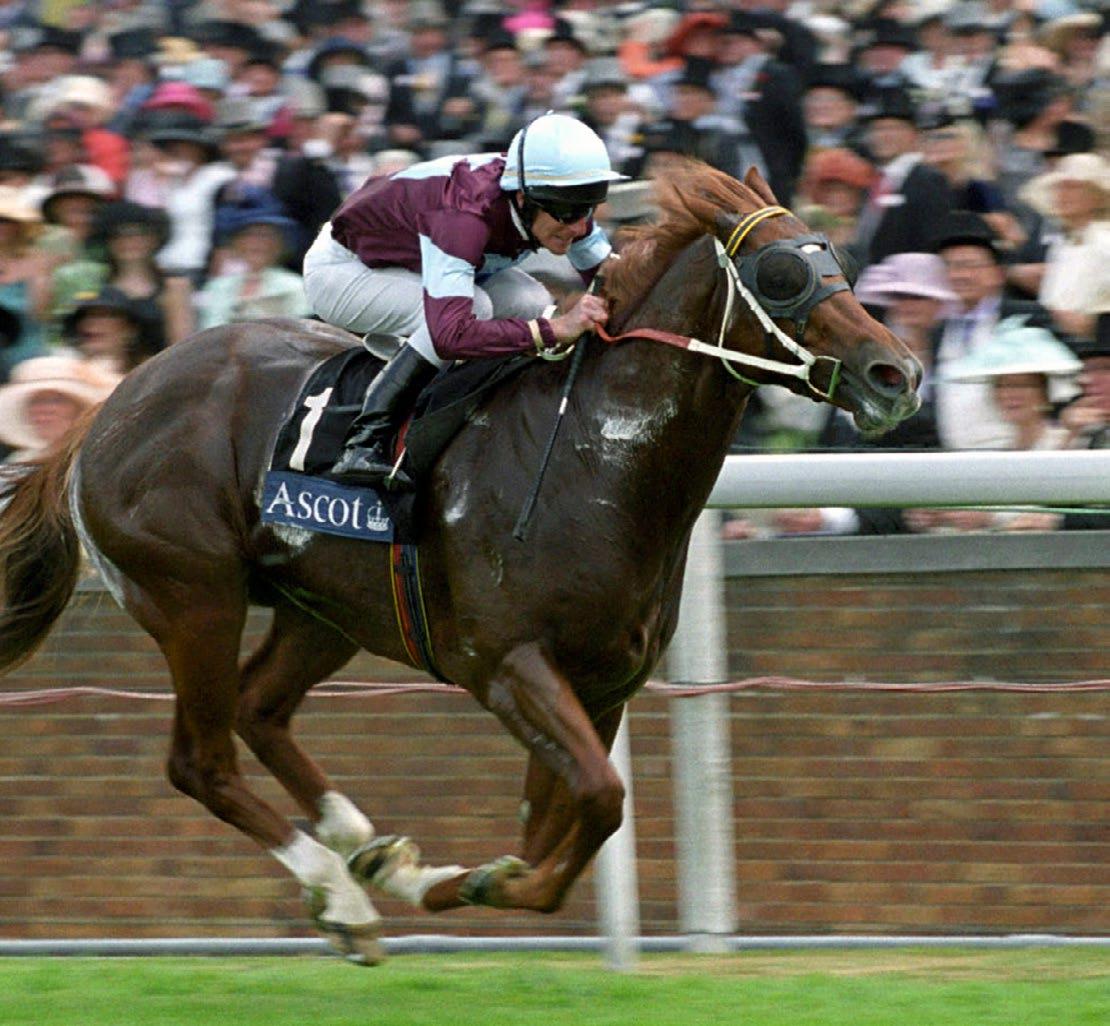
At its heart was the trailblazing Choisir, a hulking sprinter from Australia who became the first horse from outside Europe to etch his name on the honours board with victory in what was the King’s Stand before he sensationally followed up four days later in the Golden Jubilee, which is now the Queen Elizabeth II Jubilee.
Two years after that ground-breaking
double, the Hong Kong-trained Cape Of Good Hope landed the Jubilee and more Australian revelry came via the iconic Takeover Target and Miss Andretti before the unheralded Wesley Ward made a name for himself with a string of speedballs, opening a door for US juveniles no-one knew existed.
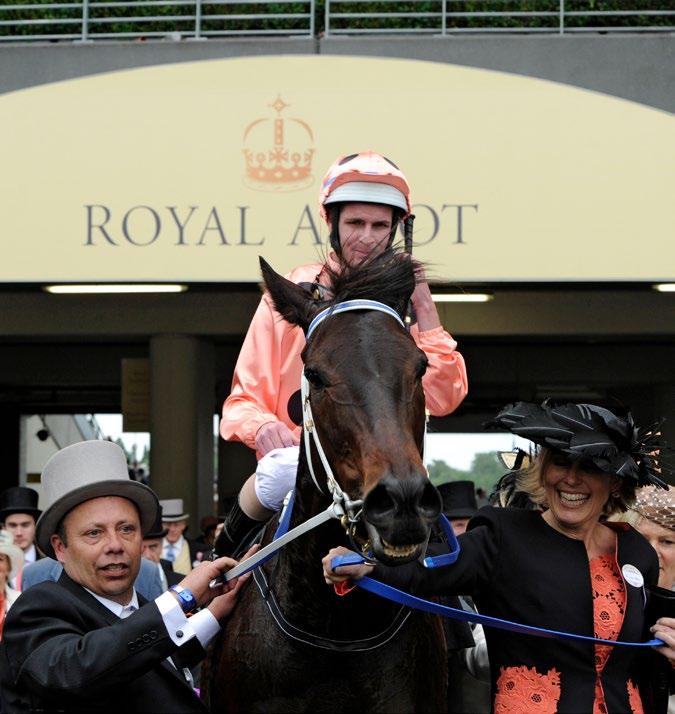
Australian legend Black Caviar, the greatest horse from outside Europe to compete, provided another memorable –albeit nail-biting – moment for the meeting when she prevailed in the 2012 Jubilee, while top-class US mare Tepin took on the cream of Britain, Ireland and France’s best older milers and beat them in the Queen Anne four years later.
Ascot has also attracted runners from Bahrain, Japan, New Zealand, Qatar, Singapore, South Africa and the UAE since Choisir, so it’s no surprise the event, now a global brand, was last year carried by 31 broadcasters to 180 territories.
That’s countries from the Baltics, Latin and South America and 48 in sub-Saharan Africa, while cruise ships and airlines also took the feed.
Nick Smith, Ascot’s Director of Racing and Public Affairs who joined the track in 2000, credits then-Chairman the Duke of Devonshire and Chief Executive Douglas
Erskine Crum, along with former Clerk of the Course Nick Cheyne, for laying the foundations of an international draw that still exists to this day.
“To them, it was clear the world was changing and we needed to move with it and play in that global arena,” he remembers. “They had some considerable early success with the likes of Choisir and we should probably have a statue of him at Ascot because, without him, I genuinely don’t know whether we’d be where we are now.”
What Royal Ascot is now is five days inked in the international calendar, which has grown with the advent of ultra-valuable
Aussie sprint star Asfoora will be back to defend her crown in the King Charles III Stakes
slots in Saudi Arabia and Australia alongside more established dates such as Dubai World Cup night and the Breeders’ Cup, although not one of those possess the prestige, tradition and fashion found - and exported abroad - in Berkshire in the middle of June each year.
“It’s completely unique and we get so many overseas visitors within the sport,” Smith adds. “It’s a melting pot of the racing world in the parade ring and Car Park Two afterwards, a who’s who of the global racing industry. Even if trainers don’t have runners, they’re here, doing business, looking at horses to buy, socialising.”
While Black Caviar, whose connections
still attend the royal meeting every year without any formal interest in runners, was a big coup for Ascot, Winx was one megastar who got away and Hong Kongbased pair Ka Ying Rising and Romantic Warrior – officially rated the best turf horses on the planet – will not make the trip this term.
Smith recognises that cash, for some, is understandably king, but does not feel the royal racecourse has reached its zenith or lost any lustre in the eyes of those abroad. “It’s peaks and troughs,” he goes on. “There have been huge peaks with great horses and a couple of winners, and a real international theme. Then you get lighter years, but we
want the best horses with genuine chances running. It’s in no-one’s interests to have horses who won’t do any good. It’s not a numbers game; it’s a quality game.”
The headline names among this summer’s non-European entries for the early-closing Group 1s include Satono Reve and Asfoora, the heroine of last year’s King Charles III Stakes, which used to be the King’s Stand.
“Satono Reve is probably the best sprinter in Japan and the level of horse we’re delighted with, as is Asfoora, and obviously we’d liked to have seen Ka Ying Rising and Romantic Warrior, but it’s a hard sell for those geldings,” Smith says, lamenting
GEORGE SELWYN
Choisir: trailblazer won both Group 1 sprints at Royal Ascot in 2003 under Johnny Murtagh
RACING AROUND THE WORLD
British racing’s funding system that does not allow it to compete with other jurisdictions.
David Hayes, who trains Ka Ying Rising, successful in 13 of his 15 starts and looking every inch the sport’s next phenomenon, is well aware of that.
“I would take a horse there in a heartbeat,” says the trainer, who has saddled three runners at the famous fixture. “Probably not a gelding because there’s not much upside in the prize-money. It’s not on the cards for Ka Ying Rising because there’s no breeding value to add to him. He’ll go to Australia for the Everest, but, if he was a colt or a filly, it would be different. Because he’s a gelding though, there’s just not enough money to lure him there at this stage.”
Engelbrecht-Bresges, Chief Executive Officer of the HKJC and arguably racing’s most powerful administrator, said at the time.
It was no coincidence to Smith the HKJC chose Ascot for its launch and, as of February 23, Commonwealth Cup day in 2022 ranked fifth in terms of turnover with around £34.1 million in the all-time World Pool list, although days that bettered it included more races and fixtures.
The attraction of Royal Ascot as a betting medium is further illustrated by three of its contests featuring in the top five World Pool races, headed by the 2023 Queen Elizabeth II Jubilee Stakes, yielding a record £6.42m, the 2022 Coronation Stakes turning over £6.21m, and that year’s Platinum Jubilee Stakes producing £5.97m.
Hayes, nonetheless, is smitten with the week his late father Colin – a legendary trainer in Australia – was also besotted by.
“Dad loved it,” he adds. “In his day, you didn’t travel horses, certainly not from Australia, but he loved going and dressing up and I think it would be on every trainer’s wishlist in Australia to have one good enough to go and compete.
“I’d always have Ascot on my mind. I’m training geldings in Hong Kong now so it’s not really on the agenda, but, if my boys in Australia had the right filly or entire, I’m sure they’d be there. It’s massive in Hong Kong and everyone tunes in. It’s part of the World Pool and we have our summer break when it’s on, so there’s no racing. It’s very popular and has a huge profile; it’s Melbourne Cup week on steroids!”
The World Pool alluded to by Hayes is an international co-mingling pari-mutuel product launched by the influential Hong Kong Jockey Club (HKJC) at Royal Ascot in 2019 and now bet into by countries as diverse as Canada, Jamaica, Estonia and Cyprus.
“We are delighted to provide a global tote offering for one of the world’s leading racing brands, Royal Ascot,” Winfried
GEORGE SELWYN
GEORGE SELWYN
Black Caviar brought her fanclub to Berkshire when she made the trip over in 2012
The royal presence is synonymous with the five days and the King and Queen enjoyed a winner in 2023 when Desert Hero and Tom Marquand captured the King George V Handicap
“It’s helped us increase prize-money and it was very telling, in terms of a global perception, the Hong Kong Jockey Club chose to launch on the first five days of Royal Ascot – they could have done that anywhere,” Smith reflects. “They wanted to go where it would give them the biggest global profile and chose us, which was a big endorsement.”
Overseas raiders help swell those pots, but Smith believes “international interest goes both ways and people are just as interested in seeing top European horses, who might travel overseas later, as they are horses from their own country”.
That is a view backed up by Jess Stafford, a familiar face to fans of the sport in Britain through her appearances on Racing TV who has fronted US coverage on FanDuel TV alongside Nick Luck.
“We put so much more emphasis into Royal Ascot than anything else and it’s not just the American horses that matter,” she says. “There’s an international appeal for the American viewers, which is far greater than other meetings, and the Americans love the spectacle of it; it’s Downton Abbey meets the Kentucky Derby.”
Laying bare its appeal, Stafford, who has presented at the jamboree since 2019, adds: “The other 30-odd days of the year I present in Britain for FanDuel, we’d use cameras
here and it gets streamed to America, but this is different and, for instance, Scott Hazelton, who has been presenting for a while, comes over with camera operators.
Americans love it – it’s Downton Abbey meets the Kentucky Derby
“It’s the only event here they’d bring talent and additionals over for. Okay, they’d do it for Dubai, where a lot of American dirt horses run, but not the Arc.”
Last year, 37 media outlets from Europe and 34 from outside had an on-course presence and Smith continues: “In the last ten years, the number of broadcasters and countries being represented in that format has spiralled. The Green Channel will cover
it for Japan and will be there all week, not just for Satono Reve.
“NBC, in the States, cover the whole week and broadcast the final day on network television, which is the equivalent of BBC1. In America it’s huge and particularly event-led with the royal procession, pageantry and outfits.”
Any analysis of Royal Ascot would not be complete without mention of the fashion that is showcased.
“It’s a massive part of it and we’ve done style guide launches in Dubai, Australia and America, but it’s everything, from the royal procession to the trophies being presented,” Smith explains, touching on the fascination the participation of the royal family brings. “It’s more relaxed in that it’s not an official engagement for the royal family, it’s an occasion they choose to be at and people from overseas love to see that.
“I think two of the biggest stories I’ve seen at Royal Ascot have been the late Queen winning with Estimate and the King and Queen winning with Desert Hero. That gets you on the front page of newspapers in Australia and America – they’re cut-through moments.”
And Smith, thanks to Choisir and many others from further afield, knows all about those.
BILL
SELWYN
THE BIG INTERVIEW WITH DAVID HOWDEN
David Howden with his daughter Jemima’s eventer, Monbeg
at
which stages its popular Horse Trials in September
Whisper,
Cornbury House,
In full FLIGHT
David Howden conquered the insurance world and is now making his mark in a multitude of sectors, including racing, breeding and eventing
Words: MARCUS TOWNEND • Photos: BILL SELWYN
Royal Ascot promises to be even more hectic than usual for David Howden.
There will be four days at the most prestigious meeting of the British Flat season, hosting around 40 guests each afternoon, wrapped around a flying visit to Dublin on the Friday to watch the British & Irish Lions rugby team warm up for their summer tour to Australia with a dust-up against the Pumas of Argentina.
It is a dream agenda for any sports fan and that includes the man who has built one of the world’s most successful insurance companies,
one of Ascot’s three official partners – Longines and QIPCO are the other two – as well as being principal partner and front-of-shirt-sponsor on the red shirts of the iconic rugby team.
There should be a sprinkle of runners and, with luck, maybe a winner to cheer on up the Ascot home straight.
The schedule would suit the stamina reserves of a contender for the Queen Alexandra Stakes but is unlikely to daunt 61-year-old Howden, who exudes an enthusiasm and energy that would impress the Duracell Bunny.
THE BIG INTERVIEW WITH DAVID HOWDEN
As well as Ascot and the Lions, Howden now supports racing in Bahrain, Saudi Arabia and Australia, via Victoria Racing Club, while his rugby involvement also includes grassroots investment with sponsorship of the famous Melrose Sevens and Rosslyn Park National Schools Sevens tournaments plus – something he is particularly pleased about – the backing of the inaugural Women’s British Lions tour to New Zealand in 2027.
Literally closer to home, Howden has revived the Cornbury House Horse Trials to the universal acclaims of the eventing world, as well as launching young rider and horse talent academies.
Then there is the Thoroughbred Aftercare Programme (TAP), created by Howden to increase post-racing opportunities for the 7,500 thoroughbreds that leave the sport annually.
If you can create opportunity out of adversity it makes you a better person
It is an exhausting list just to type and incontrovertible evidence that Howden is a man who doesn’t just talk about it – he does it.
Speaking at Cornbury House, the palatial 5,500-acre Oxfordshire working estate he leases from Lord Rotherwick and which is also home to a deer herd, a rare breed collection which includes Long Horn cattle, Hampshire Down sheep and Middle White pigs and hosts the annual Wilderness music and arts festival, Howden repeatedly returns to two words: create and build.
They encapsulate his business philosophy and are now driving a racing involvement that last year saw him win his first race at the royal meeting when the John and Thady Gosden-trained Running Lion captured the Group 2 Duke of Cambridge Stakes.
Howden says: ‘‘The reception I got at Royal Ascot was phenomenal. I could hardly walk without someone stopping me, with
loads of people I didn’t even know saying well done.
‘‘I run an insurance business, which I am equally passionate about, but racing is about the enjoyment. It doesn’t mean I don’t want to succeed – unless you have drive and ambition you are not going to get what you want. But it is definitely done for pleasure and excitement.
‘‘One of the wonderful things about horseracing is the number of people that are involved in success. When you win, you win with many. From David to the jockeys, trainers, your family and then the crowd.’’
David is David Redvers, who has been instrumental in Howden’s foray into the racing parish, which currently see him own 17 broodmares, nine foals, eight yearlings and 18 horses in training spread across Britain, Australia and Ireland.
The pair met in 2018 after Howden bought a lot at a charity event at the Dragon School in Oxford for a morning on the Newmarket gallops and day at the 2,000 Guineas.
The afternoon may have ended in disappointment for Redvers when Roaring Lion, owned by his boss Sheikh Fahad, was only fifth to Saxon Warrior in the Classic, but Howden, who was accompanied by wife Fiona and daughters Jemima, Kitty and Talitha, was captivated.
The late Roaring Lion, who went on to finish third in the Derby before embarking on a Group 1-winning spree, was the sire Howden used after Redvers bought him Bella Nouf along with two other mares at the Tattersalls December Sale later that year. The result was Running Lion.
Howden recalls: ‘‘It was that weekend that we really got the hook for it. Roaring Lion has always been a horse that is special to me because he is part of the reason that I got into racing in the first place.
‘‘I love racing, but it is not my business, so it is very important to deal with someone who you like and have a good rapport with but also someone you can trust.
‘‘David absolutely fits the bill. He knows what I am trying to achieve and what I am looking for. You build that relationship over time and having David’s Tweenhills Stud relatively close to here is nice because we can see the foals together.’’
Howden was not a complete racing novice before meeting Redvers. He was at school with trainer Emma Lavelle’s brothers, Edward and Jonathon. They used to take him racing while Howden’s sister Miranda always had an interest in horses even though his attention was more focused on motorbikes.
But one of Howden’s first brushes with the sport was not so positive.
‘‘I had a very early racing experience which was poor, to say the least, and my mother would probably categorise it even worse,’’ Howden says. ‘‘I did a bit of betting. I was clearly not very good at choosing my horses in those days and ran up a bit of a debt with the local bookies. I was probably 17 at the time.
‘‘It got to the point where it was not repayable, and I had to go cap in hand to my mother. I think my sister Miranda actually said, ‘You had better help him pay it off as I am not sure the bookie will leave him with all his fingers if he doesn’t settle his debt’.
Fortunately, his fingers remained intact but another far more serious fracture was one of two early-life experiences that had a profound effect.
The first was the death of his father
when he was aged seven. With his mother facing crippling death duties, the family’s comfortable home in the south had to be sold before moving for a time to Thoralby in the Yorkshire Dales.
The second came on the sports field aged 15 when, playing rugby on the wing for his school, Howden broke his back.
He recalls: ‘‘I was a very keen rugby player and a high jumper. I got a bad tackle, hit the ground and broke my back. I was very lucky to have a very successful spinalfusion operation in the Nuffield Hospital in Oxford, but it put paid to contact sports and really meant I did not want to go back to school because I was a lot better at sport than academia.
‘‘At the time it seems a bit of a disaster but when you look back you think it was
quite formative, as was losing my father and things getting tougher.
‘‘If you can have setbacks and create opportunity out of adversity it makes you a better, stronger person. That entrepreneurial spirit of wanting to build your own business and create something all comes out of those early learnings.’’
With A-Levels shelved and university ambitions ditched, there was an interview to potentially join the army, but ultimately Howden started work in the City at 16, joining Alexander Howden Insurance Brokers. It was not a family firm but had been originally set up by his great, great grandfather.
That was 1981. By 1988, Howden had set up his own firm. After being forced to sell that in 1991 by a majority outside
shareholder, he then set up his current business in 1994 with ‘‘three colleagues and a dog’’.
Howden ended up with the dog when his first wife left him. It was a handsome Weimaraner called Flight, the name Howden gave his Ollie Sangster-trained filly who finished second in the 1,000 Guineas last month.
‘‘I went for a walk in Scotland in the mountains and thought about what I wanted to do,” he says, recalling the days before he started his insurance company. “I thought I want to create something with a different DNA and culture and around the people in it. Employee ownership was the route.
‘‘Today we have around 22,000 employees and 6,000 of those have equity
Running Lion was a Royal Ascot heroine for Howden in last year’s Duke of Cambridge Stakes
THE BIG INTERVIEW WITH DAVID HOWDEN
Flight fuels dreams of homebred Group 1 glory
Last month David Howden went close to fulfilling one of his racing ambitions to breed a Group 1-winning filly when the Ollie Sangster-trained Flight finished runner-up in the 1,000 Guineas.
It was a second top-level near-miss after the John and Thady Gosden-trained Running Lion ran second in last season’s Prix de l’Opera at Longchamp.
‘‘Choosing the fillies and racing them, choosing the mares and the stallions, to me that is something you can get passionate about,’’ Howden says. ‘‘Having a horse you have bred is another level of excitement over a horse you have just bought.’’
Flight, who could have the Coronation Stakes on her agenda at Royal Ascot, runs under the Cornthrop Bloodstock banner, which is responsible for five of Howden’s 17 mares.
It is a partnership between Howden and friend Nick Wheeler, who established the Charles Tyrwhitt shirt company. The Cornthrop name is an amalgamation of their two homes, Cornbury and Tythrop.
Howden raced Flight’s dam Run Wild. He says: ‘‘I owned her in a Tweenhills syndicate. She was a phenomenal horse
in the business. We are one of the UK’s biggest employer-owned businesses and that culture of building something and people being involved takes us back to the breeding because I like that creation of things, of people being part of it and the feeling you are building something.’’
One thing Howden has certainly built is a strong relationship with Ascot since his company became an official partner in 2021.
In fact, he has become one of the standout sponsors of the sport outside of its traditional constituencies of bookmakers and bloodstock-related businesses.
He believes, for a partnership to be truly authentic, you must be fully immersed in it, hence he will be in Australia for the duration of the Lions tour.
Howden says: ‘‘I talk with the Lions about how we need to earn the right for our name to be on the jersey. If you are a rugby fan and you have Howden on there that’s okay, but if you think Howden has nothing to do with rugby and doesn’t care, it is almost more irritating than it is pleasurable.
“The same thing goes for racing. Yes, I am passionate about it so hopefully people believe I am genuine when I am sponsoring it, but for the business there must also be a financial reason to do it.”
Howden believes his background gives him a clear insight into what a sponsor wants, something he is not convinced all British racecourses grasp.
He has used this insight to attract a
and convincingly won the 2020 Pretty Polly Stakes at Newmarket in Covid year.
‘‘We took her to Royal Ascot but she wasn’t ready for it. She was a bit highly-strung and never achieved what she should have, so I said to Nick when the syndicate ended that we should buy her.
‘‘Flight’s 1,000 Guineas run was so exciting. She was 28-1 so we had realistic expectations but hopefully now we can have an exciting summer with her.’’
Flight is by Siyouni. Light, her two-year-old half-sister by Night Of Thunder, is also in training with Sangster.
Bella Nouf, one of Howden’s foundation mares and dam of Running Lion, has a two-year-old Frankel colt in pre-training with Roger Marley and is in foal to Camelot.
He has a clutch of colts in partnership with Sheikh Fahad and China Horse Club, including the Andrew Balding-trained three-year-old Gladius, a winner on debut at Kempton in April.
Howden’s horses in training also include two jumpers with Ben Pauling, Bad and Davidoc, and a point-to-pointer with Phil Rowley, plus two horses in Australia.
wide-ranging array of big-name backers not necessarily associated with equine sport to the Cornbury House Horse Trials, including Accenture, Aston Martin, Bank of America, Jetfly, JP Morgan, Mishcon de Reya, Novidea and The White Company.
Howden says: ‘‘I have the advantage of being passionate about the sport, be it racing or eventing, but also being a
Ascot is the pinnacle of racing and we are the pinnacle of insurance
businessman. Having that double lens allows me to think what it is I want to get out of sponsorship.
‘‘Maybe a bookie just wants their name up there as much as possible but for a lot of sponsors it won’t be about that. It will be about the experience, how they associate with another brand.
‘‘Is it a brand they like to be associated with? Lots of things that are very different from just a placard somewhere.
‘‘At Cornbury House Horse Trials,
we said, ‘Let’s have the most amazing, beautiful tents with wonderful firecooking, food from our farm, and all the fun of it so if you are not into eventing you are still having a great time’.
‘‘What’s the experience you are going to give your sponsors that they are going to say this is something special? I think racing needs to learn that lesson.’’
Howden’s satisfaction with his official partnership with Ascot and Royal Ascot can be measured by the fact that an agreement has been signed to extend the arrangement for another five years from 2026.
His company hosts conferences at the track and takes 4,500 employees to its two-day Christmas jumps fixture.
Howden continues: ‘‘Ascot is a fantastic British business, I would say it is the pinnacle of racing and we believe we are a great British business, the pinnacle of insurance. We are also an international brand in 55 countries around the world and Ascot is a very international brand. Anyone you want to talk to around the world will have heard of Ascot.
‘‘Royal Ascot is without doubt one of the ultimate corporate hospitality invitations you can get. If you invite a husband and wife to Royal Ascot, they are probably going to want to come. So, for the business that is really good.
‘‘When Royal Ascot is on, we run adverts but we don’t run Howden-only adverts, we run Howden and Ascot adverts. We are talking about that connection. It is
not just us sticking our name on Ascot. We are embedded in a proper partnership.
‘‘I have had some really good feedback with people saying it is nice to see a British company and, to be blunt, not just another bookie getting behind racing.’’
Howden, whose company recently launched the Stud Employee Accident Benefit Scheme in association with the TBA, would now like to see the racing world get behind TAP, created to improve the transition of horses bred for racing into both competitive and leisure riding once their career in the sport is over.
It is a passion project for both him and daughter Jemima, a TAP trustee and now a full-time event rider who delivered one of her father’s proudest sporting moments when winning the CCI2*-S class event at Cornbury last year.
Launched in December 2024, TAP offers nationwide education and practical support to help new thoroughbred owners, tackling common misconceptions about
the breed as well as subsidising training opportunities.
A national network of 16 TAP coaches is now in place, with over 190 training days and 2,000 training opportunities across the UK annually.
Howden says: ‘‘If you are the son or daughter of an eventer or the son or daughter of a trainer, you don’t need help. It is all obvious to you. But there’s a huge amount of people out there who love the equine world and who don’t have that privilege.
‘‘We work very closely with organisations like Retraining of Racehorses, but I wanted to do something that was very specific around practical training.’’
Standing alongside TAP, Cornbury House Horse Trials will also host the inaugural Thoroughbred Eventing Challenge when £50,000 will be up for grabs, a prize put up by Howden’s friend Jayne McGivern, owner of Dash Grange Stud.
Howden says some of Britain’s best-
known event riders have their eye on the prize for the novice level class and hopes breeders, owners, trainers and racing fans will attend, especially to watch the concluding showjumping section of the event on September 12.
‘‘Anybody can win it. You just must be a thoroughbred registered with British Eventing and qualified to compete at a novice level,’’ Howden says.
‘‘I am sure lots of top riders are pretty sure they are going to win. Oliver Townend has told me a few times, ‘I am going to have that prize David’, and I am sure Laura [Collett] is keen too.
‘‘I am really trying to get TAP out into the racing world, saying, ‘Come on, get involved, what else can you do practically to help with this issue?’ I think it is being well-received.
‘‘I can see how you can expand and take it into other areas, do more around prize-money for ex-racehorses.’’
There is a similarity between how Howden operates his business and how he sees TAP. Both centre around empowerment and an opportunity to build and create, those two little words again.
He adds: “Like all these things, it takes a community of people to make a difference. It is no good one person or five. We must do things collectively and that collaboration is important.”
Howden and daughter Jemima (left) were at Newmarket to watch homebred filly Flight (red cap) chase home Desert Flower in the 1,000 Guineas
HIGHFLYER BLOODSTOCK
SEASONS WITH THE Changing
Regardless of whether it’s the Flat or jumps, Highflyer Bloodstock is never far from the action under both codes
Words: TOM PEACOCK
Anthony Bromley can only shrug his shoulders at the irony. As an up-and-coming bloodstock agent he couldn’t catch a break at buying a Flat horse but instead became the undisputed powerbroker behind the biggest names of the modern jumping era.
Now, through strange quirks of fate and fashion, he is managing something close to the best of both worlds, remade as an identifier of bargain two-year-old talent yet still centre stage at Cheltenham or Punchestown.
If the journey has meandered, there has at least been a constant in his professional life. David Minton, with whom he departed a splintering British Bloodstock Agency to found Highflyer Bloodstock, has not only been a mentor and business partner but equally someone far too easily characterised as a dyed-in-the-wool National Hunt man.
“Minty was a Flat agent and did a lot of big stuff,” Bromley says.
“He was one of the early agents for Cheveley Park Stud and bought Centurius, the brother of Grundy for a fortune, a record European price.
GEORGE SELWYN
Iconic jumper Kauto Star is among the stars sourced by Highflyer Bloodstock
Anthony Bromley: agent has enjoyed top-flight success under both codes
“In the 70s, 80s, you couldn’t make a business out of the jumps market, there wasn’t enough value in the horses or enough going on. Minty used to always say his heart was in the jumps but the business side had to be Flat.”
Bromley, 56, whose parents Bill and Di Bromley ran Wood Farm Stud, has worked with his family friend since leaving school in 1987 and followed him to the BBA.
He was allowed to learn his trade and was supported by the agency in reconnaissance trips to France to look for young jumps prospects, an edge being exploited at the time by Martin Pipe.
“I remember I couldn’t get a deal done for ages but suddenly, after trying and trying, I think the first horse I bought was for Captain Tim Forster of all people,” he recalls.
“He was very poorly at the time, under treatment, but we got him on a flight to Paris, took him to the Aga Khan’s place and got him a nice horse called Lannkaran.
“When I said to people it was quite simple to do, I think they thought if poor old Captain Tim could do it… once it
started, it snowballed.
“You could quantify some of the form with Martin Pipe’s horses, and when we went on our own in 2001, we’d had a lot of big French winners. Katarino won a Triumph Hurdle, Makounji had done well, Cenkos was an early one who was good for Andy Stewart. We were rolling.”
With Bromley developing links with many of Paul Nicholls’ owners and likewise Minton with Nicky Henderson, they would use the invaluable French network of the late David Powell to sign up a stream of Hall of Fame horses, from Kauto Star, Master Minded and Big Buck’s to Long Run, almost like shelling peas.
“There weren’t loads of players with big money to spend and you could feel pretty confident there were horses that had raced a number of times at Graded level, it was just a question of getting a price everyone agreed to,” he says.
“It wasn’t rocket science in some ways but it’s not to be underestimated what David brought to the table. We also had clients that came with us, it was a yes or a no while you were on the phone.”
He sums up those unprecedented times. “I remember the Cheltenham Festivals in 2009 and 2010, Highflyer had sourced ten winners each time. You know it wasn’t easy but you probably didn’t appreciate it as much as I do now.”
Bromley reckons that was about the time that habits began to turn.
Emboldened Irish buyers wanted a piece of the French market and would go in hard for once-raced horses, just as they would for a point-to-point or bumper winner back home. The figures soon rivalled those he might offer for a proven Grade 1 horse like a Kauto Star.
Many more that might have raced are now bought from the field in France to be offered at store sales making, in Bromley’s view, his old hunting ground of middle-tier competition in the provinces somewhat weaker.
“The top, at Auteuil, is still very good,” he says. “The winners there are making huge bids but there also quite a lot more owners who are passionate and wealthy in their own right, just like we have, so there aren’t as many for sale.
HIGHFLYER BLOODSTOCK
“I remember being there in early September. As soon as something wins one of those good three-year-old races that’s owned by a trainer, it’s like piranhas. One poor fella was just jumped on by about 20 English, French and Irish agents, demanding a price. You name it, we’ll find someone for it.”
For all that the operation would still purchase the odd Flat yearling for clients, Highflyer’s reputation for National Hunt excellence could be difficult to shrug off.
Bromley linked up with John Best for a time, even finding the 2007 juvenile Nunthorpe Stakes winner Kingsgate Native for just 20,000gns at the old Doncaster St Leger Sale.
“It opened no doors whatsoever,” he laughs. “In fact, the next season John did his own buying!”
Instead, it was a far older acquaintance that provided the necessary breakthrough. Minton adored the late David Nicholson, staying with him for 34 consecutive Cheltenhams, and Bromley bonded with his long-time assistant Alan King, who was of a similar age.
The pair had bought some useful Flat horses together, such as Trouble At Bay and Salsalino, although they were overshadowed by Voy Por Ustedes and My Way De Solzen in King’s golden era of jumpers.
“It went quiet on the Flat for a while and then we resurrected it,” he says. “We couldn’t afford the form horses and we’d wondered if we could buy dual-purpose types at the breeze-ups.
“Chatez was the first one I bought when we came back to them, for about 20 grand off Thomond O’Mara’s Knockanglass, who later sold us [Group 1 staying star] Trueshan. It worked, it really did. Master Blueyes won an Adonis, Tritonic was really good at both; Trueshan only didn’t go jumping as he ended up being too good.
“Now, we’ve found the owners have quite enjoyed the Flat and we’re quite relaxed about the types we buy, they don’t have to make a jumper.”
Bromley has still continued to shop at the breeze-ups for King, who finds it more manageable to start receiving two-yearolds just as his jumpers are going out to summer grass. Another development,
though, has been more significant to this latest chapter of his career.
“I think the success I had with Eve Johnson Houghton has catapulted me further because Kingy would still connect me to jumpers,” he explains.
“People still think of me just buying a big slow horse like Trueshan as a Flat horse but Eve has showed we could buy fast sprinters like Chipotle, who won a Windsor Castle and cost ten grand.”
Bromley thanks the late syndicator Henry Ponsonby for that particular introduction.
“Henry was my biggest promoter,” he says. “He could exasperate you at times but we got on great and once he left me to my own devices a bit, it went a lot better.
“He kept telling anyone that would listen, TV interviews, or a quote, that I was the best kept secret in Flat racing. He was a very sweet man and it was a very sad day when we lost him.
“Eve would say, ‘I don’t use agents, Dad and I do it,’ and Henry kept pestering her. One season, her best two would have been cheaply bought ones that I’d done for Henry and, grudgingly, we did a sale together.
“I didn’t know what type of horses she liked, but I worked out which ones she was coming back to off my list, so I could put a tighter list to the next one. We don’t have much budget but she’s a great judge. I’m the blunt instrument and she fine tunes it. She’s also a good trainer, which is a massive help, and that makes you look better as a buyer.”
Bromley, who has also sparked a recent partnership with the Phil Cunningham and Richard Spencer axis, has found he sticks to similar principles with buying under each code.
Just as he would blanche at purchasing an Auteuil maiden winner for telephone
BILL SELWYN
Jasmin De Vaux: this year’s Albert Bartlett Novices’ Hurdle winner was sourced on behalf of Simon Munir and Isaac Souede
BILL SELWYN
Trueshan: popular stayer was a 31,000gns breeze-up purchase with Alan King
numbers, so too is he pragmatic at the breeze-ups. He studies the recorded times but primarily so he can scratch the very fastest clockers from his list as they would be out of his price range.
Assessing the animal itself, across each auction, is his biggest interest.
“Perhaps I just look at it from a different angle,” he says.
“I’m one of the earliest agents at a sale and I do annoy the likes of Bill Dwan at Castlebridge because I’m always asking when I can start seeing them. I don’t think I’ve got any master eye at it, but I put the legwork in.
“There are obviously a lot more Flat sales about, so you do get more choice –jumps is more concentrated and the stores are very well picked over – and it’s maybe harder to nick one these days.
“Sometimes I scratch my head as to why Flat yearlings can be so cheap but it can literally be just fashion of stallion. It is the
I enjoy the logistical challenge of the Flat yearling game
same for foal sales over jumps but when you get to the store stage, the jumping people are after an individual.
“I think possibly that’s why I’m sourcing more of an athlete. I’ll forgive pedigree for the individual, I think. Maybe that’s what I’ve learned can cross over, it must do, as I’ve had quite a lot of success with cheap horses on the Flat.”
All but a few agents tend to specialise on one side or the other but none of this is to say Bromley has disappeared from jumping. He oversees the ‘Double Green’ string of Simon Munir and Isaac Souede, who were happy to pay €155,000 for the Aintree Manifesto Novices’ Chase winner Impaire Et Passe but are generally quite circumspect in their buying and have a nursery system in operation in Ireland and France.
A mid-March double, with that team’s Jasmin De Vaux joined by Caldwell Potter for Nicholls and a syndicate including Sir Alex Ferguson and the late John Hales, meant that Highflyer purchases have now
‘Ying and the yang’
With their Shropshire family links going back generations, Anthony Bromley and David Minton’s bond is pretty much unbreakable.
This is not to say it is without its disagreements. Bromley remembers, for instance, trying to put the brakes on starting the Million In Mind trading syndicate in the early 90s.
Just when the avuncular, vastly popular Minton had began purchasing horses, Bromley became concerned his boss had nowhere near the number of prospective members as he believed he had recruited on the back of a sociable York Ebor meeting.
“Minty’s great for ideas, not so good on much written down,” Bromley remembers fondly.
“But he bought Beauchamp Grace, she won her first four juvenile hurdles and was favourite for the Triumph Hurdle.
“David Nicholson found us loads of people, then the second year Mysilv won the Triumph and it just took off.
“We were the ying and the yang, really. Minty is always very optimistic and I’m always the worst-case scenario, the half-empty bottle.
“But it’s worked well over the years and I’ve learned so much from him. We’re still doing the stores together, which are his favourite.”
As store season approaches, they will work them along with Highflyer’s
won more than 100 Cheltenham Festival races since the team’s genesis.
Ask Minton about which side he prefers and you would undoubtedly receive the same emphatic answer as it ever was. Yet when it was posed to Bromley, we should hope the response doesn’t turn his old friend apoplectic.
“Different times of year I’d answer differently, I think it’s literally like that,” he says after a pause.
“The jumps, I’m more involved in the Grade 1s still, so jumps at heart but I thoroughly enjoy the logistical challenge of the Flat yearling game. It’s a puzzle to
third member, Tessa Greatrex.
“There could be 500 horses, a lot to get seen,” Bromley says.
“Other agents get people to have first looks but we’ve got three really senior agents that are our first lookers. We’ll then look at the picks of the others in each of the barns, so you get it done quite quickly.”
Despite the trio acting for different trainers or owners, Bromley says that clashes are surprisingly rare.
“We’ve worked so closely together for so long, we know what we all like, and what their clients like,” he adds. “There might be no point showing this one to Minty and Nicky Henderson, but maybe Kingy and I should, or Tess has had a lot of success with Westerner, the likes of Cole Harden, so she’d better see that one.
“With stores there’s always another one round the corner. There’s no point falling out over one.”
be unravelled in my mind.
“I can see why the late, great [BBA agent] Joss Collins loved the Flat yearlings. He’d follow the sun, to New Zealand or South Africa, just to do more yearling sales, and he absolutely hated the horses in training sales as he had to trust too many people.
“I couldn’t understand his addiction to the yearling sales at the time, I was the bookish, form man and loved the horses in training, but now it’s flip-flopped, gone full circle.
“I’m much keener on trying to unearth an unbroken gem.”
David Minton: integral to the agency
SALES CIRCUIT
Records tumble
By CARL EVANS
GOFFS DONCASTER BREEZE-UP SALE
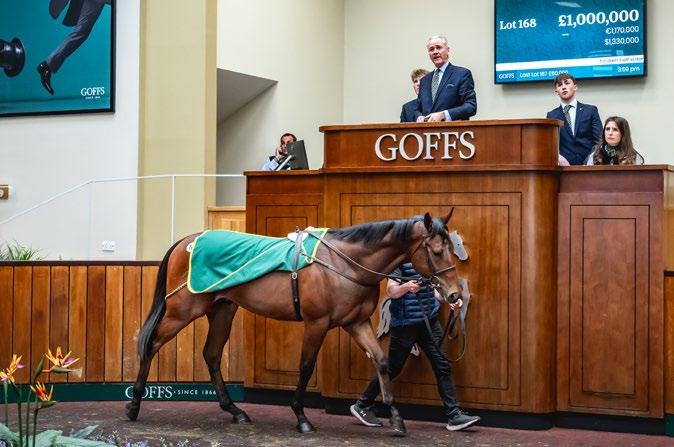
Goffs UK Managing Director Tim Kent referred to a properly smashed glass ceiling when reflecting on the first sale of a £1 million horse at Doncaster.
Changing hands during Europe’s oldest breeze-up auction, the colt at the centre of this groundbreaking moment was a son of Mehmas consigned by Katie Walsh’s Greenhills Farm and knocked down to Godolphin. Mehmas’s masters, the O’Callaghan family of Tally-Ho Stud, will have been as proud as the parents of a star pupil by the sale’s conclusion, for progeny by their stallion set record prices on no fewer than three occasions during the one-day auction.
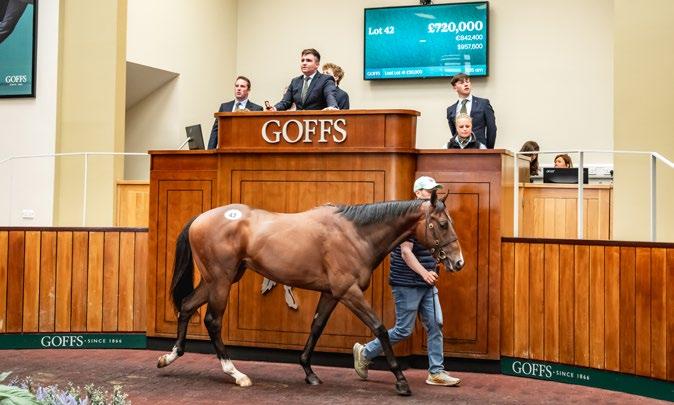
It was mid-morning when a Mehmas filly consigned by Kilminfoyle House Stud created a new high for the sale when bought by Richard Brown of Blandford Bloodstock for £650,000. Little more than half an hour later a Cheveley Park Stud-
PINHOOK OF THE SALE
bred son of Mehmas consigned by Tally-Ho was sold for £720,000 to Anthony Stroud representing Godolphin, and then, late in the session, Doncaster’s first seven-figure colt gave the Goffs team a result that will live long in their memories.
It would have been an added high for auctioneer Henry Beeby – who is also CEO of Goffs – had he been able to share the moment with his father, Harry, who had been a driving force in the development of the company’s UK division primarily while it was named Doncaster Bloodstock Sales. In Kent’s post-sale summary he said the late Chairman, who died in October 2021, had dreams that his company would sell a Derby winner and a £1m horse. The search for a Derby winner continues, but the £1m monkey has been shed and sent to the jungle of bloodstock sales history and statistics.
Not that this auction relied solely on Mehmas and his triumphant trio to carry it, for a Kodi Bear colt from Woodlands Lodge – and yet another big-money buy for Godolphin – achieved a sum of £500,000, which equalled the sale’s previous high, and there were record figures across the board. Turnover of nearly £12m was up for the third year running and 12 per cent
Green Storm was not bought as a pinhook, but his sales ring appearances have similarities. He was purchased as a yearling by the shrewd father-and-son team of Mark and Charlie Johnston for a humble €12,000. Given that his dam was the high-class racemare Banimpire, that was little money. A series of placings at up to Group 1 level and a win at two for owner Ahmad Al Shaikh, plus further sound form at three, meant he was odds-on to sell for a profit if ever returned to the ring, and when he appeared at the July Sale, he was knocked down for 380,000gns to Qatar’s Gassim Ghazali.
QUOTE OF THE SALE
“I did not think we would have to spend so much, but these Juddmonte fillies and mares always command a premium and this is one of the very top Juddmonte families. There is so much happening around it and it’s one that just keeps staying alive.”
Grant Pritchard-Gordon of Badgers Bloodstock, buyers of Orchid Bouquet for 550,000gns, and paying another tribute in words and spend to the late Khalid Abdullah, creator of Juddmonte’s amazing bloodstock empire.
ahead of the aggregate in 2024, while the average gained 35 per cent at £84,272 and the median rose four per cent at £37,500.
Kent was happy to emphasise the sale’s ability to produce Royal Ascot winners and said that had been a factor in pulling together a global set of buyers, and he also thanked the vendors who entered some quality two-year-olds. It is a chicken-andegg situation in which well-heeled buyers will only attend if they sense some stars are available, and by the same token vendors will only present jewels if they feel the right buyers will be present. On this occasion the two entities came together. Walsh was happy to say the top lot, who had been foaled by the stakes-placed Shamardal mare Rapid Reaction, was not hers and that she had been asked to consign him by a Scandinavian/Eastern European syndicate who had bought him for €140,000 at the Goffs November Foal Sale.
The Tally-Ho-consigned £720,000 colt was foaled by Pivotal mare Boost,
This Mehmas colt became the first £1 million horse to sell in the Doncaster sales ring
Anthony Stroud: active for Godolphin
STATISTICS
Sold: 140 (83% clearance)
Aggregate: £11,798,000 (+12%)
Average: £84,272 (+35%)
Median: £37,500 (+4%)
a winning daughter of champion twoyear-old filly Hooray, while the £650,000 Mehmas filly who now holds the number one position as the most valuable of her sex to sell at Doncaster, was bred at Newsells Park Stud out of the unraced black-type producer Atlantic Drift. Michael Fitzpatrick had bought the filly under his J C Bloodstock banner for £82,000 at the Goffs Premier Yearling Sale.
While that was a very notable pinhooking triumph for Fitzpatrick, a better one – and certainly more romantic – revolved around the £500,000 Kodi Bear colt who had been bought by Danielle and Johnny Hurley as a yearling at the Orby Sale for just €9,000. The Hurleys, whose
Woodlands Lodge operation is based in County Cork, compiled a team of just four breezers for this year’s round of auctions.
Blandford Bloodstock became the sale’s leading buyer through ten purchases for a total sum of £2.6m while Tally-Ho Stud’s sizeable draft resulted in 15 sales for nearly
GOFFS DONCASTER BREEZE-UP SALE
Top lots
Sex/breeding
C Mehmas - Rapid Reaction Greenhills Farm
C Mehmas – Boost Tally-Ho Stud
F Mehmas - Atlantic Drift Kilminfoyle House Stud
C Kodi Bear – Legitimus Woodlands Lodge
£1.8m and meant that farm took leading vendor honours.
Mehmas had numbers on his side and took the position of top sire, although with his 14 sold lots making an average of £262,500 – off an advertised covering fee of €50,000 – he deserved it.
A week after enjoying a rousing breeze-up sale in Doncaster, Team Goffs was in action at Punchestown where this sale took place midway through the Festival.
With a quality catalogue dominated by Irish point-to-pointers, it too produced buoyant trade, underlining the message that whatever the type of horse – be they foals, breezers, breeding stock or jumpers – there is strong demand and good prices to be gained for quality stock. On this occasion it also resulted in a rare and wonderful 100 per cent clearance rate, albeit such specialist, post-racing auctions are kept tight on numbers.
This one involved 24 lots who generated nearly €4.1m in turnover, up 40 per cent. The average price gained five per cent at £170,625 while the median rose 16 per cent to €162,500.
The star act, and one that was widely predicted, was the choicely-bred sevenyear-old Aurora Vega, a daughter of Walk In
Aurora Vega, Quevega’s Grade 1-winning daughter, sold to Gerry Aherne for €450,000
Justify out in front
JOHN BOYCE cracks the code
The prominent role played in Europe by US-based Justify in recent seasons prompted me to wonder which American sire has the best record in Europe this century. Gone are the days when many of Europe’s top racehorses carried a USA or CAN suffix. In the 30 years from 1968 to 1997, no fewer than 15 Derby winners carried such a suffix headed by the likes of Sir Ivor, Nijinsky, Mill Reef, Roberto, The Minstrel, Golden Fleece and Nashwan. In contrast, only two of the 25 this century – Kris Kin and City Of Troy – were bred in America.
Thanks in large part to Sadler’s Wells and his stallion descendants, Europe has become practically self-sufficient at providing its own Derby winners. However, the emergence of Justify, with the considerable backing of Coolmore’s European broodmare band, as a potent source with the necessary class and stamina to win top middle-distance races promises to add further to the successes of Kentuckybased stallions in European classics. Since 2000 not many US stallions have been able to build sufficient representation to be judged fairly and Justify is a case in point with just 61 runners so far. In the same period only Giant’s Causeway, Street Cry, War Front, Johannesburg, Kitten’s Joy and More Than Ready have had more than
200 runners. And it is War Front that leads the group with 41 stakes winners (including 23 Group/Graded winners) from Street Cry and Giant’s Causeway. However, the current leader by stakes winners to runners is Justify with a strike rate of 16.4 per cent, which puts him close to the Galileo, Frankel and Dubawi stratosphere.
In all, War Front has sired 13.9 per cent stakes winners to runners in Europe and it is this son of Danzig that sets the standard for Justify and others to emulate. If, after nearly 300 of his runners have competed, Justify is still ahead of War Front, as he is now, he will have done extraordinarily well. It is also worth mentioning that his
War Front proved that it was possible to be effective in two regions
The question now being asked of Justify is can he serve two distinct sets of breeders? Will major winners in Europe inevitably detract from his chances to produce top dirt runners? US breeders experienced this very issue in the recent past when Coolmore bought into Claiborne Farm’s War Front. This son of Danzig proved that it was possible to be just as effective in two regions – at least statistically speaking. The Coolmore machine were very successful with War Front in Europe and produced all seven of his Group 1 winners here.
TOP NORTH AMERICAN SIRES IN EUROPE
Group-winner-to-runners score stands at 7.8 per cent, which is also just behind the big three European heavyweights.
Let’s not forget that War Front sired 18 further top-level winners outside of Europe and his stakes-winner-to-runner output stands at 13.6 per cent for North America. On the face of it this is a great accomplishment in its own right. In fact, no other American sire retired to stud this century can match it, and his 8.1 per cent Graded winners is only topped by the brilliant Gun Runner’s 8.5 per cent. Also,
given the different black-type opportunity levels in each region, War Front’s 13.6 per cent in America is perhaps an even greater achievement than his European accomplishments.
In the case of Justify, we can already argue that he is more effective in Europe than America, siring ten stakes winners at a rate of 16.4 per cent from runners, which places him right alongside Galileo, Frankel and Dubawi and ahead of War Front. Assessed by Group winners to runners, Justify’s 11.5 per cent score is level with Galileo and currently better than Frankel and Dubawi. That’s how good he is in Europe at present.
In America, meanwhile, whilst Justify is still an excellent sire with nearly ten per cent stakes winners from runners, there are 14 other stallions who have retired this century with higher scores, topped as I have already mentioned by War Front’s 13.6 per
cent. And there are 20 sires with a better Graded winner-to-runner score than Justify’s 4.3 per cent. We may have to concede that the dams of his European runners are in all probability better-bred as a group than those producing all his American starters, but the point still stands and if anything his European stats could be enhanced further given the colossal degree to which Coolmore and other major European breeders have supported him in the past few seasons.
The 2,000 Guineas winner Ruling Court is Justify’s 16th Group or Graded winner and eighth at the top level, which are at present split evenly between Europe and the US. Given his meteoric start at stud, it is surprising that Ruling Court is Justify’s first and only Group or Graded winner so far from his third crop, having delivered eight in his first and seven in his second. However, we know that this is a common
phenomenon for practically all commercial stallions these days. His first two crops are from books with 169 and 134 stakes horses or producers respectively, while his third contained 97 and his fourth just 72. Since then he has impressed to such an extent that his tally of stakes horses and producers covered has climbed back to 130 in 2023 and 182 last year.
It might come as a surprise that Justify’s sire Scat Daddy is so high on our list. His untimely death meant he had barely more than 100 runners in Europe, but his tally of 16 stakes winners at 15.5 per cent from runners is outstanding, even more so when it includes two successful sire sons in No Nay Never, who is on course to be Europe’s best source of juvenile speed this century, and Sioux Nation. Through Justify and No Nay Never, Coolmore have surely succeeded in preserving the Scat Daddy and Johannesburg line long into the future.
BILL SELWYN
Justify: sire of Ruling Court is operating at a 16.4% black-type winners to runners strike-rate in Europe
Youngstock: promoting healthy bone development and soundness
By LAURA STELEY
As foaling units around the country close for the 2025 season and paddocks are filled with mares and foals happily living out, the question of whether we are doing all we can to support these foals during this rapid stage of development must be given due thought. Whether your establishment is producing youngstock to race or ultimately sell, the aim will be the same – to raise healthy, sound foals with the appropriate body weight for their conformation.
The precocious nature of the horse means foals are able to stand and be ready to move at speed within the first few hours of life. Their limbs may be around 90% of their adult length, however bone mineral content and body weight are around 17% and 10% respectively. This alone highlights the delicate balance required for optimal growth and bone development.
Bone anatomy
The equine skeletal system consists of approximately 205 bones and has many pivotal roles within the body, such as providing attachment points for muscles, protecting vital organs, storage and release of minerals, and production of red blood cells via bone marrow. It is one of the hardest bodily tissues and needs to be
resilient and tough. This requires both rigidity and elasticity.
Around 30% of a mature horse’s bone consists of collagen, which provides flexibility. The remaining 70% consists of minerals, of which calcium is the most noteworthy. Although on the exterior bone looks to be ‘lifeless’, it is a very dynamic and complex tissue which is continuously remodelling throughout a horse’s life. Bone is always working – the entire calcium content of the skeleton is replaced every 200 days! The ability to store minerals is essential, for example, a lactating mare can call on calcium reserves for her milk if her diet is lacking. No other bodily tissue is capable of such vast growth and absorption, thus allowing for outstanding repair (if damaged) and adaptation to stress (exercise). The four main types of bone are long, flat, short, and irregular.
Bone formation and growth plates
In the unborn foal there are two main processes of ossification (bone formation): intramembranous ossification and endochondral ossification. For this topic, we are more interested in endochondral ossification, which takes place predominantly in the long bones, such as the femur, cannon and tibia. In the embryo,
bone begins as soft cartilage; osteoblasts then invade the cartilage and lay down the hard bone matrix. Mineral salts are placed into the matrix – this process is called calcification, which is usually complete in most bones prior to the foal being born. Once formed, the bone grows in both diameter and length.
The increase in bone length occurs via growth plates, which are two narrow bands of cartilage. The side of the plate closest to the end of the bone will continually grow cartilage. The other side of the plate, closest to the shaft of the bone, will continually attract osteoblasts which in turn convert to bone. Over time, the osteoblasts catch up with the cartilage and once the bone is the required length (not diameter) the growth plate will close.
Growth plates will close at differing times; the lower radius and ulna, carpal, short pastern, long pastern, fetlock and lower cannon will close by or around the age of two years. The coffin bone is already fused/closed at birth. Although the cannon bone will stop growing in length at around two years of age, it will continue to increase in diameter until approximately six years old – this is also true of some other bones.
Louise Jones, nutritionist at Connolly’s RED MILLS, explains: “At birth, the foal has only 17% of its total BMC [bone mineral content], rising rapidly to 68% at six months and 76% by 12 months. The total mature BMC is often not reached until the horse is six years of age. By comparison, a horse can reach up to 94% of its mature height and 65% of mature weight by 12 months.”
The closure of growth plates is affected by sex hormones. Colts and fillies will grow at similar rates until puberty (2-3 years old), where, in colts, testosterone inhibits plate closure, allowing the individual to continue growing. Oestrogen does the opposite and promotes the closure of plates, slowing fillies’ growth down.
Nutritional needs
Having considered the careful balance and intricate process of healthy bone formation, it is clear to see how issues can sometimes arise whilst raising our thoroughbred youngstock. It is widely accepted that
Foals destined for the sales need to have the right temperament to cope with the ring
Thoroughbreds are at an increased risk of developmental orthopaedic diseases due to their comparatively fast growth rates
controlled exercise alongside balanced nutrition is important for the development, strength and remodelling ability of bone in the young horse.
Mechanical loading strengthens bone during growth, therefore the appropriate amount of exercise during a horse’s early years has been shown to have lifelong benefits on skeletal strength and resistance. The formation of functional bone in young horses requires the delivery of the right material in the right proportions. If any factor is disturbed, the possibility of poorly formed or abnormal bone exists. The essential nutrients for bone health are protein, minerals including calcium (Ca), phosphorus (P), copper (Cu), zinc (Zn) and vitamins A, D and K.
The bony matrix of which minerals are deposited onto is made from the protein collagen. Protein is also essential in the development of joints, tendons, ligaments, and muscle. When it comes to protein, quality, not just quantity, is vital. Protein is made up of non-essential and essential amino acids; the latter cannot be made in the body and must be provided in the diet. Good quality protein is rich in essential amino acids such as lysine and methionine, and it plays an important role in the development of strong, healthy bones in young horses.
It had long been believed that an excess of protein in the diet could be a determining factor in the development of developmental orthopaedic diseases, but current scientific research indicates this is not the case. We do know that an inadequate supply of these limiting amino acids will have adverse
effects on bone development. Forage alone, particularly preserved forages such as hay or haylage, are unlikely to provide youngstock with sufficient levels of high-quality protein. Consequently, a suitable hard feed will be required to ensure optimal provision of essential amino acids in the overall diet.
It is a well-known fact that the minerals calcium and phosphorus are essential in building healthy, strong bones. They work in
Calcium and phosphorus are essential in building healthy, strong bones
conjunction for bone mineralisation and therefore the ratio between the two is very important. Jones explains: “Imbalances in the Ca:P ratio can result in the removal of calcium from the skeleton and may lead to bone demineralisation. The minimum Ca:P ratio in the diet should be 1.5:1, with the ideal ratio being at least 2:1 for young horses.
“It is important to note that adding other feedstuffs, such as chaffs or cereals,
to the horse’s feed can alter the Ca:P ratio in the overall diet. For example, adding oats, which are high in phosphorus, will reduce the calcium to phosphorus ratio and this may adversely affect calcium absorption. On the other hand, including some alfalfa, which is high in calcium, can help to increase the Ca:P ratio if required.”
Another noteworthy mineral involved in bone formation, as well as joint and connective tissue development, is Copper. It is integral in the production of the enzyme Lysyl oxidasem. This enzyme is responsible for the cross-linking of collagen and therefore formation of new bone via the collagen matrix. Zinc is similarly involved in cartilage production and conversion. Studies have indicated increased bone mineral density in horses supplemented with zinc (fed within a balanced mineral package) compared to un-supplemented horses. Similarly to protein, forage is often low in copper and zinc. One of the most useful, albeit sometimes over looked tool is forage analysis. If you can routinely test your forage and pasture it will provide you with the full nutritional picture for any horses in your care. These results can then be analysed and taken into consideration by your nutritionist when deciding on a concentrate feed.
There are many different vitamins and all play critical roles in a horses overall bodily health. The three main vitamins known to contribute to bone health are A, D and K. Jones “Vitamin A is involved in the development of osteoblasts – the cells responsible for laying down new bone— whilst vitamin D is needed for calcium
GEORGE SELWYN
What a first month it’s been!
Bobby’s on the beat to meet & greet
I’ve loved getting my feet under the table, as well as being out and about meeting ROA members on racecourses, and I can’t wait to get stuck into the challenges ahead while continuing the fantastic work already underway at the RwOA, writes Bobby Burns, new Head of Business Development at the ROA.
Since starting on April 1, I’ve been working closely with Louise Norman and the brilliant team here to get settled in and gain a clearer picture of everything that goes on behind the scenes.
Before joining, Louise and I spoke about the idea of launching a monthly blog. Don’t worry, this won’t be a dry list of what I’ve been up to. Instead, it’s a chance to share some insights, stories and themes that have come from meeting ROA members and owners on course.
Each blog will also explore a theme. This month’s theme is presence. It’s something that perhaps hasn’t always been as strong as it could be, and we believe it’s vital that members feel they can easily reach us, share their thoughts, and know we’re here on their behalf.
After studying politics at university, both undergrad and postgrad, I worked in
press offices at Amazon and Deliveroo. But I soon realised my heart lay in sport. That led me to bookmaker Fitzdares, where I spent five brilliant years and discovered my passion for racing.
Now, I’m thrilled to be starting this next chapter with the ROA, a role that gives real purpose to my passion. I’m fully committed to this amazing sport and to doing what I can to support and improve it for owners.
Outside work, I also run a small syndicate called Cotswolds Racing. Our first horse, Smile John Boy, is currently enjoying his summer break from training with Ben Pauling, and we hope to see him make his debut under Rules this autumn.
A big part of my role involves travelling the length and breadth of Britain to meet as many members and owners as possible. Which brings me back to presence. One thing that’s already stood out is how much our members value seeing someone from the ROA on course, someone who’s there to listen, engage, and represent them.
In just the last couple of weeks, I’ve visited several racecourses across the north and Scotland, with plenty more to come. You can see where I’ll be next via our new webpage, where you can also book
Southern strikes again in Ten-to-Follow League
Lorraine Southern has been crowned the 2024/25 National Hunt Ten-to-Follow League winner. Sound familiar? That’s because it is the third year in a row Lorraine has triumphed!
From an unpromising position at Christmas time, she amassed a whopping 740 points mainly thanks to the exploits of Jonbon, Galopin Des Champs and Lossiemouth, holding off the challenge of NH Also Rans – who were far from it! –on 672 points.
Lorraine said: “I can’t believe I have won the title for the third time! Just before the Festivals started, I was in 16th place, so to win again was completely unexpected.
“The competition from other members was really tough but last season I thought that Inothewayurthinkin was capable of winning the Grand National, so I included him in my stable, but he ended up winning the Gold Cup instead! That put me back in with a chance. Some of my other selections also came good at the Festivals to make it a really exciting end to the season.
“I would like to thank the ROA for organising this competition between the members – it really makes the season exciting.”
Congratulations to Lorraine, who once again wins £100.
Bobby Burns: busy schedule
a time to meet me – see www.roa.co.uk/ bb. I’ll also be popping up in the Inside Track email.
I’m really looking forward to meeting more of you soon. If you see me on course, please do come and say hello, I’m keen to hear your views, and my door is always open.
Keep an eye out for this blog each month. We’re going to have some fun with it and more importantly we’ll use it to shine a light on the issues that matter most to you – the owner.
Bobby will be available at the following meetings if members would like to catch-up on anything ownership or ROA-related:
• Monday, June 2 – Windsor (Eve)
• Tuesday, June 3 – Southwell
• Thursday, June 5 – Uttoxeter
• Friday, June 6 – Epsom
• Thursday, June 12 – Chelmsford
• Monday, June 16 – Windsor (Eve)
• Tuesday, June 17 – Royal Ascot
• Wednesday, June 18 – Royal Ascot
• Thursday, June 19 – Royal Ascot
• Friday, June 20 – Royal Ascot
• Saturday, June 21 – Royal Ascot
• Thursday, June 26 – Nottingham
Further details on Bobby’s whereabouts can be found at www.roa.co.uk/bb
Inothewayurthinkin earned points with his Cheltenham Gold Cup win
Diary dates
ROYAL ASCOT DISCOUNT
Tuesday, June 17 and Wednesday, June 18
50% discount on Royal Ascot tickets for both the Tuesday and Wednesday for the Queen Anne Enclosure, with a maximum of two tickets per booking.
ROYAL ASCOT HOSPITALITY
Tuesday, June 17 – Saturday, June 21 Discounts on various hospitality options throughout the week at Royal Ascot.
RACING STAFF WEEK
Saturday, June 21 – Friday, June 27
Celebrate stable staff with a week of activities with Racing Welfare, including stable staff races at Ayr (21), Newbury and Newton Abbott (24), and Nottingham (26).
CHAPEL DOWN WINE AND DINE TOUR
Thursday, July 3
Explore the state-of-the-art winery and discover the craftsmanship behind Chapel Down’s renowned wines – with a tasting and lunch after.
RACING WELFARE CASTLE TO ABBEY CHALLENGE
Sunday, July 6
Experience 22 miles of Yorkshire’s dramatic coastline and raise money for Racing Welfare (see main story on page 65)
GLORIOUS GOODWOOD –RICHMOND ENCLOSURE
Tuesday, July 29 – Saturday, August 2
Exclusive opportunity for members to book Richmond Enclosure badges for all five days of Glorious Goodwood.
GLORIOUS GOODWOOD HOSPITALITY
Tuesday, July 29 July –Saturday, August 2
Access to hospitality packages at Glorious Goodwood, with discounts on their most popular packages.
RACING WELFARE CARLISLE RACEDAY
Monday, August 4
More money-raising activities, this time at Carlisle’s evening meeting.
NATIONAL RACEHORSE WEEK
Saturday, August 23 –
Sunday, August 31
Now staged in the school holidays, the annual celebration of the racehorse gives plenty of opportunities to visit stables and meet the stars of the sport.
RACING WELFARE HAYDOCK RACEDAY
Friday, September 5
Racing Welfare’s annual raceday to raise funds for the charity.
RACING WELFARE MALTON OPEN DAY
Sunday, September 7
Experience all that goes on behind the scenes at a racing yard in the morning and then head to York racecourse to enjoy an afternoon of racing.
DONCASTER HOSPITALITY PACKAGE
Friday, September 12
Located in a private section within the centre-course marquee, the package includes a three-course meal and inclusive drinks package.
NEWMARKET OPEN WEEKEND
Saturday, September 20 and Sunday, September 21
There is racing on the Saturday and many of the town’s yards open to the public on Sunday morning. The afternoon action includes a Shetland Pony Grand National, racing personality show-jumping and parade of retired racehorses.
MORGAN TOUR FOLLOWED BY RACING AT CHELTENHAM
Friday, October 24
Join a guided factory tour and witness the craftsmanship behind every Morgan sports car. After the tour, we will head to Cheltenham for a fantastic seasonal opener at the home of jump racing.
DAYLESFORD STUD AND FARM SHOP TOUR
Thursday, November 20
Visit Lady Bamford’s Gloucestershire stud and famous farm shop.
Win a made-to-measure tailoring experience in the heart of Mayfair with Bid to Give
This month ROA members have the opportunity to bid on a luxury tailoring experience with Fielding & Nicholson – voted the number one tailoring studio in London 2025 – coupled with afternoon tea and drinks at the world-famous Savoy Hotel, where the winning bidder and their significant other can peruse the Fielding & Nicholson showcase in the grand foyer.
Following afternoon tea, guests will be driven to the Mayfair showroom, where there will be unlimited champagne available. As part of the package, you will have a VIP measuring and wardrobe consultation with an expert tailoring consultant, all fittings, advice and in-person fittings. Every imaginable element of the garment can be customised to make a uniquely styled piece, whether you choose a bespoke business, casual or dinner suit. Each bespoke suit or twopiece is individually crafted and stitched with unlimited personalisation and fittings.
Your new garment comes with a five-year guarantee, so if you lose (or put on) weight, tear a sleeve or wear away any area of the suit, amendments will be carried out free of charge.
Kindly donated by Fielding & Nicholson, this package raises crucial funds for Racing Welfare, helping the charity
Case study:
Fielding & Nicholson: bespoke offer
to continue to provide its work in supporting the workforce of British horseracing, right from their recruitment into the industry and through into retirement.
To secure this lot, place your bid at www.bidtogive.co.uk before June 27.
Hannah’s story
“It doesn’t come easy putting one foot in front of the other,” admits Hannah Sheppard, who had to painstakingly learn to walk again following a fall from a horse at work, but thanks to support from Racing Welfare, she has miraculously now completed a half marathon in aid of the charity which helped her get back on her feet.
Hannah, 28, a work rider from Trowbridge, Wiltshire, ran the Bath Half Marathon on Sunday, March 16 in aid of Racing Welfare, which organised and funded specialist rehabilitation support after she sustained a traumatic brain injury when the horse she was riding spooked and reared, resulting in a fall.
Unconscious and fitting, Hannah was put into an induced coma at the training yard, airlifted to hospital and spent many weeks in intensive care before going to a brain injury unit for rehabilitation. “I didn’t get on there well – I was getting so depressed and it wasn’t helping my recovery,” Hannah said. “I begged my parents to get me
out of there and that’s when they got in contact with Racing Welfare to help.”
Racing Welfare arranged assessments and funded a course of intense rehabilitation, which included physio, neuropsychology and occupational therapy which helped her learn to walk, talk and dress again. At a later date, the charity also arranged and funded a secondary course of intense rehab, aimed at enabling Hannah to live more independently, which even helped her to get back driving.
Hannah said: “It was amazing to be able to be at home and receive rehab as an outpatient, as I’d got in such a bad place with my mental health in hospital. The funding support from Racing Welfare was as much of a relief for me as it was for my parents, as they were really struggling with the situation too.
“I wanted to do something to raise money for Racing Welfare. I’ve never run in my life. I think my family thought – you’re crackers! It was
definitely the hardest thing I’ve done since I started walking again, just mentally and physically very hard. Having the finish line in sight was very emotional. Racing Welfare have done so much, and they’re still supporting me now.”
Hannah Sheppard: marathon woman
Join our Castle to Abbey Challenge
If you’d like to help the charity continue to provide life-changing support to people working in the racing industry like Hannah, you can get involved in the charity’s flagship fundraising event of the year – the Racing Welfare Castle to Abbey Challenge.
Taking place on Sunday, July 6, this breathtaking 22-mile trek along Yorkshire’s dramatic coastline starts at Scarborough Castle and completes at Whitby Abbey.
Keen to get behind the event and help raise vital funds for Racing Welfare, a number of racing personalities have already shown their support and signed up. Andrew and Anna Lisa Balding were among the first. They explained why they were so keen to get involved, saying: “We are thrilled to support this event. Racing Welfare do such a great job helping us support our staff and we are delighted that this day falls on a Sunday, which means we can dig out our walking boots and head north to help raise some funds.
“Yorkshire is a favourite place of ours and the route sounds suitably challenging! We are hoping to be joined by friends, colleagues and owners… a few of whom have already leapt at this opportunity of a brisk stroll in the countryside.”
Others who have signed up include racing presenters Josh Apiafi and Vanessa Ryle, and Newmarket-based trainer Kevin Philippart de Foy – all of whom are no stranger to a Racing
Welfare challenge and are regular supporters of the charity. Emma Lavelle and Andrea O’Keeffe have also vowed to lace up their walking boots and take on the trek.
Racing Welfare’s Chief Executive, Dawn Goodfellow, said: “It’s fantastic to see the racing industry coming together to take part in what promises to be an epic and rewarding challenge, in God’s own country! This represents our only mass participation fundraising event of the year, and at a time when charitable funds are increasingly harder to secure, we are relying more than ever on public support.
“This challenge is your chance to make a difference while embracing Yorkshire’s wild and wonderful landscape. Please do get involved and sign up, enjoy some fantastic camaraderie and team spirit, stunning scenery, and importantly help us to raise much-needed funds. Racing Welfare has been supporting racing’s people for 25 years, and with your help we can keep providing that crucial support, now and into the future.”
Those interested are urged to sign up now to benefit from an early-bird offer with the first 50 places available for £30 per person, rising to £39 per person thereafter. The sponsorship target is just £300 each.
To sign up for the challenge or to find out more about Racing Welfare’s work, go to www.racingwelfare.co.uk.
World Pool and Tote sponsorship
On some World Pool days in the UK, Tote-sponsored owners will again be asked to carry the World Pool logo on the chest of their silks instead of the Tote logo. The Tote logo will remain in place on the collar.
There will always be a member of the valet team on hand to make the relevant changes in the weighing room on the raceday, therefore no further action is required by owners or trainers ahead of the event.
The World Pool fixtures this year are as follows:
• Betfred Derby Day, Epsom –Saturday, June 7
• Royal Ascot –Tuesday, June 17
• Royal Ascot –Wednesday, June 18
• Royal Ascot –Thursday, June 19
• Royal Ascot – Friday, June 20
• Royal Ascot – Saturday, June 21
• QIPCO King George Day, Ascot –Saturday, July 26
• Qatar Goodwood Cup Day, Goodwood – Tuesday, July 29
• Qatar Sussex Stakes Day, Goodwood –Wednesday, July 30
• Qatar Nassau Stakes Day, Goodwood – Thursday, July 31
• Sky Bet International Stakes Day, York –Wednesday, August 20
• Sky Bet Yorkshire Oaks Day, York – Thursday, August 21
• Sky Bet Nunthorpe Stakes Day, York – Friday, August 22
• QICPO British Champions Day, Ascot – Saturday, October 18
The Coral-Eclipse at Sandown Park on Saturday, July 5 will also be included on a worldwide hybrid card.
Andrew Balding will be donning his walking boots for Racing Welfare on July 6
GEORGE SELWYN
Flying high at the Festival
We all dream of standing in the paddock ahead of a big race at the Cheltenham Festival or Royal Ascot and increasingly shared ownership is making this dream a reality.
Syndicates and racing clubs are also being embraced by many sole owners who see them as a chance to diversify their ownership interests and make new friends with a shared interest.
Back in March, Wendigo finished a fine fifth in the Grade 1 Albert Bartlett Novices’ Hurdle at Cheltenham. He is owned by a syndicate operated by Racing Club, whose founders started the business in September 2023 with the aim of creating affordable racehorse ownership and a hope that they could attract new people into racing.
Racing Club operate some syndicates with as few as five shares per horse, but Wendigo is owned by one of their microsyndicates which have 2,000, 3,000 or 4,000 shares and annual costs between £25 and £100.
Richard Jaques, co-founder of Racing Club, commented: “To be able to say that you have had a runner at the Cheltenham Festival is amazing and the engagement from shareholders in the weeks before Cheltenham built the excitement to fever pitch.”
Cheltenham, along with many other racecourses, offer syndicates and racing clubs the opportunity to take syndicate
badges rather than the traditional owner badges. These allow syndicates to swap lunch and access to the regular owners’ and trainers’ lounge to get more owners into the racecourse.
Often, a syndicate lounge with tea and coffee is made available to allow syndicate owners to get together and socialise before and after their race. This option enabled Racing Club to have 20 shareholders in the syndicate lounge at Cheltenham and the majority of those also had access to the parade ring.
Cheltenham also provided discounted admission to other shareholders and with many others already attending as annual members or Festival regulars, around 400 shareholders were at the track to watch Wendigo in action. Racing Club also set up a ‘watch party’ away from the course where another 120 shareholders gathered to enjoy the afternoon’s racing together.
Richard was at Cheltenham with the shareholders there and noted: “Cheltenham looked after us well, with good facilities and great viewing over the track from their syndicate lounge.”
A big part of the experience of ownership is hearing from the trainer ahead of the race and you might think that this would be an issue with only a few people allowed into the parade ring. This was overcome when all owners were invited to an area ahead of racing
where they were joined by trainer Jamie Snowden, who spoke openly about the horse’s chances and posed for selfies.
Syndicates are always looking for ways to engage with owners that are unable to come to the races and Racing Club is no exception. Wendigo’s owners received email and video updates ahead of the race along with photos and videos from the racecourse posted to a WhatsApp group on the day, so everyone got to hear the jockey’s pre-race briefing and post-race feedback.
Wendigo running a big race and finishing fifth in the Grade 1 was the icing on the cake for his shareholders, who have plenty to look forward to. Richard said: “Wendigo is now on his summer holidays in the field with as many carrots as he can eat and a sea view! I think that he will strengthen and grow again, and he is already quite a big horse, so he seems destined for novice chasing.
“I think he’s now at the level where we’ll have to target the top novice chases and long-term let’s hope that he can take his shareholders back to the Festival again in March.”
The excitement and thrill of ownership that Wendigo’s shareholders experienced at Cheltenham will surely be replicated for syndicate shareholders, lucky enough to have runners at this summer’s big Flat racing festivals. Fingers crossed that one or more will be able to celebrate a winner!
A number of Wendigo’s owners with trainer Jamie Snowden (centre) in the parade ring at Cheltenham
In brief
Nichola Eddery exhibition
A new exhibition of the work of acclaimed artist Nichola Eddery opens on June 16 at the Osborne Studio Gallery in London. Entitled ’Silks, Horses and Hounds’ it will be her fifth solo show and her first for nine years, drawing inspiration from classical sculpture, great sporting artists of the past, and her own family’s long history in racing.
The opening of the exhibition coincides with Royal Ascot week and among the 25 original works on show are Eddery’s stunning depictions of jockeys wearing the silks of some of racing’s leading owners, together with beautiful new paintings of dogs and pieces inspired by her surroundings in Newmarket.
Eddery, whose father Pat was champion jockey on 11 occasions, has further immersed herself in the Sport of Kings through her role as artist in residence at the National Horseracing Museum in Newmarket.
Her studio at the museum looks out on to the courtyard of
the historic Rothschild Yard, now home to former racehorses, and is just metres away from Palace House, home to one of the finest collections of British sporting art.
The exhibition also features a series of paintings of sighthounds, a favourite breed of Nichola’s due to their athleticism and statuesque quality and for which again she was inspired by the past.
Located on Motcomb Street in Belgravia, the Osborne Studio Gallery exhibition ‘Silks, Horses and Hounds’ runs from Monday, June 16 through to Saturday, July 5.
New race planner tool available on the ROA website
We have created a new page on our website to help members target more lucrative races for their horses. Series and bonus races are staples of weekday racing, but how do you qualify for a potential big payout for a series final? Our interactive tool aims to make the process easier.
The page is a filterable view of the Racing Calendar, designed to highlight upcoming race and fixture series along with GBB races.
You can streamline results for Flat and National Hunt races, and by series. All races can then be sorted by date order, distance, rating band, age or value.
There is also a helpful explainer as to what is involved in each series and when the final will take place.
To view go to www.roa.co.uk/search.
Strong engagement with ownership survey
A big thank you to all ROA members who took the time to complete our recent ownership survey. We were delighted with the strong level of response and are grateful to everyone who shared their experiences and views on racehorse ownership.
The insights gathered will help deepen our understanding of owners’ and members’ attitudes, the challenges they face, and opportunities. It will also help guide how the ROA represents owners within the industry and inform future thinking around the membership experience.
Research agency Cognition is currently conducting followup interviews with selected respondents, and a full analysis of the findings will be delivered to us shortly. We look forward to sharing key insights and takeaways soon.
‘Silks, Horses and Hounds’ opens in London on June 16
ROA FORUM
MAGICAL MOMENTS
Ian Gosden’s Ace call pays off in spades at the Cheltenham Festival
The saying goes that you should never be afraid of one horse. But what about three horses?
Constitution Hill, State Man and Brighterdaysahead were the formidable trio in this year’s Unibet Champion Hurdle, the highlight on the opening day of the Cheltenham Festival. Taking on these giants would be folly, surely.
Despite trainer Jeremy Scott preferring an alternative target, owner Ian Gosden had no issue in nominating the championship race for his star performer, Golden Ace. She had already given her owner a day to remember when taking the Mares’ Novices’ Hurdle at the 2024 Festival and prepared for this year’s assignment with victory in the Kingwell Hurdle at Wincanton.
The Champion Hurdle was about as incident-packed as any Grade 1 jumps contest in recent memory, with Constitution Hill and State Man, the two previous winners, both falling, the latter at the last when holding a significant advantage, leaving Golden Ace to storm up the hill in splendid isolation and take the prize.
“It was unbelievable that it happened like that,” says Gosden, who admits to having watched the replay “30 or 40 times” since that magical day in March. “We were very lucky it fell the way it did, but we were the ones on form and jumping well on the day.
“Golden Ace thinks on her feet – it didn’t faze her when Constitution Hill fell in front of her. We can surmise that State Man was emptying when he fell at the last but we’re never going to know.
“It’s impossible to take it all in on the day. I don’t remember the music they played when she came back in as a Grade 1 winner. Even now I don’t think the importance of it has sunk in.
“The Champion Hurdle win is my most magical moment in racing. It doesn’t get any better than that. It’s such a whirlwind on the day – my wife couldn’t get near me after the race! It’s just mayhem and you’re swept along with it.”
Gosden’s wife, Claire, also played her part in the victory; she had produced a spreadsheet of times from likely opponents in the Grade 1 Mares’ Hurdle,
Golden Ace’s original Festival target, which showed the daunting challenge that lay ahead. What’s that saying about never being afraid of one horse?
“Lossiemouth’s times were serious,” Gosden explains. “I watched all her races – she never came off the bridle once against a mare. I didn’t want to take her on, so I thought wherever she’s going, we’re not.
“Jade De Grugy also had a higher rating and I reckoned I’d rather come fourth in the Champion Hurdle than third in the Mares’ Hurdle. So that’s where we went!”
Gosden, who sold his insurance broker business, Higos, in 2017, was born in Portsmouth but moved to Somerset in 1989.
He’d had zero involvement in racing until one Christmas when, over a festive drink, some neighbours asked him along to Wincanton on Boxing Day.
“My son was six months old at the time of that first visit,” Gosden relates. “He’ll be 35 this year and I’ve only missed that meeting three times since – two were abandoned and one was called off due to Covid.
“For me it’s about the horses – they’re magnificent animals. I always tend to buy
big ones because physique is important for jumpers. The fact that these animals can run and jump for four miles – I just love it! But I’m not into the Flat.”
The Victor Dartnall-trained Russian Trigger, shared with a friend, was Gosden’s first horse and proved a talented stayer, completing a hurdles hat-trick at Wincanton on Boxing Day in 2007 – “it’s still my favourite day of the year” – and winning the Kent National and Midlands Grand National in 2009.
Golden Ace was sourced for just 12,000 guineas at Tattersalls’ Horses-inTraining Sale in July 2021, when, despite advice to the contrary, he decided to back his own judgement in the ring.
He says: “I buy horses with Wayne Clifford. He gives me a list of horses at the sales – I’m told to stick to that!
“On this occasion, I decided to do my own research and spent hours going through the catalogue. Looking at the pedigrees, I don’t like mares that haven’t run, and I could see the dam [Deuce
BILL SELWYN
Ian Gosden’s top-class mare Golden Ace won a dramatic renewal of the Champion Hurdle under Lorcan Williams
Again] had won up to 1m6f and the stallion [Golden Horn] had won a Group 1 at a mile and a half. I thought the progeny would stay well.
“When I went into the ring to watch her go through, no-one was bidding, so I thought I’d have a go. When I showed Wayne the slip for transport, he asked me what the hell I had done!
“I didn’t even know her sire had won the Derby. I was just looking at the calibre of the wins rather than the name of the race.”
Golden Ace, who was due to contest the Champion Hurdle at Punchestown at the time of writing, will likely have one more season of racing – “I’d like her to defend her title at Cheltenham” – before retiring to the paddocks.
At present, Gosden has interests in 22 horses, comprising horses in training – Golden Ace is the only one he owns outright – youngstock and three broodmares based at Byerley Stud in Wiltshire. Golden Ace would be a valuable addition to any breeding operation; her owner is excited by the prospect
but admits he is holding his counsel on whether or not to sell her progeny.
He explains: “Stupid money is being charged for point-to-pointers. I don’t understand that thought process. With prize-money the way it is, if you pay three quarters of a million for a horse, you won’t get anywhere near that back. Most of mine have not covered their cost.
yielded something of a windfall – first prize was listed as £255,000 – yet away from the headline meetings, returns can be poor.
He says: “I don’t expect my horses to pay for themselves – it’s a hobby and it will cost me money. But I had three seconds at Exeter in one day and my half of the prize-money was £1,700. That doesn’t even pay for one horse for one month.
“If your success doesn’t give you back half a year’s training costs, you’re not going to be at it for very long. The money I’ve spent in this sport – some people would call it a small fortune. When we say we want ordinary people to get involved, they’ve got no chance. Training costs will be going up again because of the National Insurance changes.
“The second big frustration is owners’ and trainers’ facilities, most of which are rubbish unless you’re going to a top-class track. I often end up paying extra so we can have a table for the day. You don’t want to be in a scenario where you can’t get a seat at the races.”
The major positive about ownership, understandably, is the thrill of big-race success while the camaraderie of the National Hunt scene is another huge draw.
“The social side is important – I have some very good friends who own horses. In the winter I probably go racing three or four times a week,” Gosden says.
He adds: “My dream when I retired was
The fact that these animals can run and jump for four miles –I just love it
“If you get a decent mare then you should be able to breed something that has a serious chance of doing well.”
The state of prize-money in Britain is one of Gosden’s biggest frustrations. Golden Ace’s Champion Hurdle win
to have a string of racehorses and win a race at the Cheltenham Festival.
“Winning the Champion Hurdle is a once-in-a-lifetime event. If I can breed one that turns out to be really good… that’s my next goal.”
THE RACEGOERS CLUB COLUMN
When can you be happy to get paid out on a winner at 20-1 when the SP is 331? Never, I can hear you say! But that’s exactly what happened to me in this year’s Grand National.
When the weights were announced in February, I made my mind up that Nick Rockett was the likeliest winner. He had recently won the Thyestes Chase and his next intended run was in the recognised Grand National trial, the Bobbyjo. So I placed my ante-post bet. After winning the Bobbyjo, he was clipped in to 8-1 by some layers and all looked good.
But, as the weeks passed, his price started to drift. Some experts couldn’t see him finishing in front of Intense Raffles on over a stone worse terms than in the Bobbyjo. I kept the faith, as in my eyes he had all the hallmarks of what you need in a modern-day National winner. He was a Grade 1 horse, relatively unexposed and being only eight, had the scope for improvement. He was trained by Willie Mullins and had been campaigned like his National horse. I thought, what’s not to like? I was confident he would go off at a singlefigure price, so ten days before the race I
backed him again, this time at 16-1.
At the five-day stage he was still 16s but come declaration day I wondered if he had been pulled out, as he wasn’t listed in the first dozen in the betting. I presumed something must be wrong. Of all Willie’s entries, he was the only one not shortening and I found out subsequently that he touched 66-1 with one online layer. Come the morning of the race, I was looking for any signs of encouragement. None of the national newspaper tipsters went for him; seven of the Racing Post experts were asked to name their first four and not one of them included Nick Rockett! He continued to drift, so I assumed my reasoning was wrong and my previous confidence in him was misplaced. I should have backed him again, but I doubted myself.
The rest is history. The Rockett’s victory reduced Willie to tears, rendering him unable to speak, so overcome with emotion was he after watching son Patrick take the prize. I’m pretty sure any runner with his credentials will never be allowed to go off at such a big price again.
For me, the end of the National meeting signifies it’s time to change codes and concentrate on the Flat.
I’ve recently had the pleasure of visiting the stables of Ed Walker and Andrew Balding to see the two two-yearolds I have a small interest in. It’s the time for great optimism at Flat yards across the country; as Anna Lisa Balding said during the visit, “All our geese are swans at the moment”. With 250 horses at Kingsclere, Andrew is sure to have some swans and will be a force in lots of big races. I’m hoping to have some good days out watching our Bated Breath colt, Breathe Easy.
I’ve been lucky to have been involved with Ed Walker’s Kingsdown stable since 2020. I’ve made some great friends through my involvement with firstly the Racegoers Club ownership group and now the Kingsdown Racing Club.
Tenaya Canyon took us to some great meetings, including Deauville. Tayala wasn’t quite as successful as TC, but she gave me the opportunity to experience Carlisle Bell day and provided a great story. I’m hoping Passing Thought can do likewise.
BILL SELWYN
Nick Rockett takes the Randox Grand National under Patrick Mullins
TONY WELLS looks at the racing scene
After his brilliant Goodwood Cup (G1) victory, SCANDINAVIA (USA) heads to the St Leger at Doncaster as a warm favourite to give Justify yet another British Classic win.
SCANDINAVIA (USA)
Owners: Michael Tabor, Derrick Smith, and Mrs. John Magnier
Breeders: Orpendale/Chelston/Wynatt
Trainer: Aidan O’Brien
Find your USBred at the Keeneland September Sale, Sept. 8-20
Culworth Farm visit thrills members
The first TBA regional day of the year took place at Culworth Grounds Farm in July, where the team pulled out all the stops to give members a memorable and thoroughly enjoyable experience.
What makes these events so fascinating is seeing the unique ways individuals approach their work, and Sophie Buckley is a standout example. Drawing on her extensive experience across the equine industry, Sophie brings a unique perspective to the way she runs her stud.
The morning began with refreshments before attendees were introduced to the striking El Caballo, handled by Jason Parkin. Sophie spoke about what drew her to the stallion, and with 100 mares covered in both his first and second seasons, the son of Havana Gold has quickly earned favour among breeders seeking a high-quality, good value stallion.
Next to parade was a mature Tasleet filly. Sophie detailed her unique approach to youngstock management, incorporating
Royal Ascot winning breeders
The Thoroughbred Breeders' Association would like to extend its thanks and gratitude to Ascot Chairman Sir Francis Brooke and the executive for hosting a lunch on the Friday of its King George meeting, which celebrated the winning breeders of this year’s Royal Ascot winners (pictured right).
varied training methods to keep them both mentally and physically fresh, which includes them being led up the gallops by a 17hh hunter.
A tour of the barns followed where Sophie explained the operation’s innovative foaling regime. The team uses camera systems that stream live to Costa Rica, allowing round-the-clock monitoring during the season in a surprisingly efficient and cost-effective way.
Out in the arena, the resting Silver Sword was enjoying a break from racing, being schooled by a young event rider before his return to Dylan Cunha’s yard. Sophie explained her belief in multidiscipline training, which not only enhances each horse’s performance, but prepares them for future careers once their racing days are over.
Then it was time to board a farm shooting lorry for a guided tour of the estate. Although the farm has lost significant land to the HS2 project, the
Buckleys have tackled the challenge with entrepreneurial spirit, adapting and innovating to make the best of the situation.
In large, spacious paddocks, attendees were introduced to groups of yearlings that were enjoying their final days of turnout before beginning their sales prep. There was just enough time to visit a group of mares and foals, living out at the second farm, where Jason and the Culworth team showed off five foals by stallions such as Golden Horn, Gleneagles, and of course, El Caballo.
As the day drew to a close, the group departed to The Red Lion in Culworth, where a delicious two-course lunch was served, giving our members time to relax and chat. Before heading home Sophie provided goodie bags to the group, which topped off a fabulous day.
The TBA would like to thank Sophie and Andrea for hosting such an interesting day and for generously giving up their time to welcome our members.
TBA members enjoyed touring the facilities at Culworth Grounds Farm in Northamptonshire
‘Nature or Nurture’ seminar sparks debate
Nearly 100 TBA members assembled at the Granary Barns in Woodditton for the annual equine health-themed educational event on July 17. This year’s ‘Nature or Nurture’ seminar explored the role of genetics, epigenetics, management practices and the environment in shaping the future prospects of thoroughbreds.
GBB foal deadline closes this month
Stage 1 registrations for the Great British Bonus (GBB) are now open. They close at midnight on September 30 and late entries will not be accepted under any circumstances.
Full TBA members can register their fillies for just £275, saving £200 thanks to the exclusive member discount. Discount codes have been sent by post, email and text but do contact the office if you have not received it.
TBA Trustee and veterinary consultant James Crowhurst chaired the day’s presentations with Jessica Lawson, Rebecca Mouncey, Niamh Lewis and Andy Dell providing fascinating updates on veterinary projects (some co-funded by the TBA in partnership with the HBLB and Weatherbys)
Diary dates
Monday, September 1
AGM, Jockey Club Rooms, Newmarket
The 108th Annual General Meeting of the Thoroughbred Breeders’ Association will be held from 5.45pm at the Jockey Club Rooms, Newmarket, CB8 8JL.
Tuesday, September 23
South east regional day, Epsom Join us for a day that starts off in Epsom at George Baker’s Down House and later an afternoon at Andrew and Jane Black’s Chasemore Farm.
Tuesday, October 21
South west regional day, Exeter Start the morning at Polly Gundry’s
and valuable insight from recently published research.
Simon Cooper (Weatherbys) also provided a timeline for the transition from microsatellite to SNPs parentage verification, which will be introduced for all thoroughbreds born in Britain and Ireland in time for the 2027 foaling season.
The presentations and Q&A sessions were recorded during the afternoon and are now available to view on TB-Ed (www.tb-ed.co.uk). These are free to view for all TBA members and ACCESS subscribers following initial registration on the platform. The presentations and Q&A sessions are available
Holcombe Brook before heading to Exeter racecourse for your chance to pose questions to trustees after lunch, all ahead of an afternoon’s racing.
Thursday, November 20
Breeders’ Day, Warwick Warwick hosts this day for the second year. Prior to racing the TBA will host a dedicated forum open to both TBA members and any interested nonmembers, featuring some topical themes, panel sessions and Q&As with the full details to be published in due course.
For more information regarding events, as well as to see when regional events have been fixed, either contact the office or check out the regular e-bulletins.
Not yet a TBA member but want that discount? If you’ve used a British-based stallion this year or last, you can get £50 off a new TBA membership, bringing the fee down to £175. You’ll receive a GBB discount code, plus access to all the other great member benefits including breeders’ badges, third-party insurance, legal and tax advice, and much more.
For more information, visit www. greatbritishbonus.co.uk.
TBA Chair Philip Newton, CEO
Claire Sheppard and veterinary advisor James Crowhurst met with Ely and East Cambridgeshire MP Charlotte Cane at Cheveley Park Stud on August 4. They discussed the importance of the thoroughbred breeding and racing industry to the rural economy and current challenges of the sector including the proposed harmonisation of gambling tax.
The TBA would like to thank Chevely Park Stud for hosting the visit, with special thanks to Chris Richardson and the Thompson family.
ADAM SMYTH
Cheveley Park Stud played host
Charlotte Cane visit
WELFARE & AFTERCARE
RoR’s educational programme
The Retraining of Racehorses (RoR) Education Team is made up of a National Development Officer (NDO) and a dedicated network of Regional Development Officers (RDOs) based throughout the UK. Our mission is ambitious but essential: to provide educational opportunities for anyone who may come into contact with a former racehorse and create more safe routes for horses transitioning out of racing.
Why it’s important
One of the key reasons former racehorses can find themselves in vulnerable situations is simply a lack of understanding of their core needs. Owners and handlers often do not have the knowledge or experience needed to care for and retrain a horse coming out of racing. By increasing awareness and improving access to education, we aim to reduce the number of horses needing charitable intervention. Put simply: the more informed and confident the owner, the better the outcome for the horse.
What we offer
We run a wide range of activities, from mounted clinics and residential camps to unmounted community events focused on welfare and support. Some of our key unmounted events include:
◼ Introduction to Owning a Former Racehorse Days
◼ Racing Insight Days
◼ Realistic Retraining Demonstrations
Upcoming events
June 21
Introduction to Owning a Former Racehorse at New Beginnings (East Yorkshire)
August 6
Introduction to Owning a Former Racehorse at Godolphin Lifetime Care (Newmarket)
August 25
Racing Insight Day at Paul Robson Racing (Northumberland)
September 11
Racing Insight Day at Mike Smith Racing (Ayrshire)
For further information on our events see ror.org.uk.
These sessions are designed to offer both current and prospective owners an unfiltered look into the retraining journey. Attendees have the opportunity to engage with experts, ask questions, gain practical advice and build a support network.
We also collaborate with equestrian colleges to deliver either hands-on retraining demonstrations or classroombased discussions on RoR’s work and the wider racing industry.
What’s new for 2025
As we plan for the future our top priority is ensuring that educational support is accessible to all – no matter where they are in the country. For 2025, we are focused on standardising our educational offerings across all six regions. This means that every member, regardless of location, will have access to in-person ‘first step support’ – crucial guidance for owners helping their horse transition out of racing and into a successful second career.
We’re also expanding our reach by developing Continuing Professional Development (CPD) opportunities
specifically tailored to former racehorses. These are aimed at equestrian professionals such as coaches, farriers, and bodyworkers. So far, two of our formats –Realistic Retraining Demonstrations and Racing Insight Days – have been officially endorsed for CPD by national governing bodies. By offering CPD opportunities for equestrian professionals, we aim to build a wider network of well-informed coaches, farriers, and bodyworkers that former racehorse owners can confidently turn to for expert support.
Educational events
they provide valuable information for all about the practicalities of retraining and the importance of horse welfare throughout their lives. We have a wide variety of attendees, from current owners of former racehorses to coaches, judges, racing professionals and everything in between!
We would encourage all racehorse owners to attend; safeguarding your horse’s future has never been more important, and these events will help build knowledge, networks and understanding of life after racing.
Creating more safe routes for horses transitioning out of racing is an RoR objective
Our jury have their say
With the threat of a betting tax rate hike hanging over racing, how do you assess the current landscape and have you thought about diversifying
THINK TANK
Richard Kent Group 1-winning breeder at Mickley Stud
They reckon we’ve lost 300 breeders in the last year or two, which is worrying. The foal crop is down. But there’s always a positive out of a negative and I hope we’ll have an easier market in which to sell our horses. Breeders have been losing too much money and those at the bottom of the food chain were getting a hammering.
Hopefully, [new BHA Chair] Lord Allen will restructure the prizemoney and give us all a chance to keep going. Where should the cash go? Grassroots level, 100%. The Juddmonte was worth £1.25 million but there were only six runners.
Look at Docklands. He was a £16,000 yearling. We shouldn’t be getting over-excited with high spending by a small number of people. That won’t put bread and butter on the table. The average domestic owner and breeder cannot afford these £100,000 stallions. We need to look after the grassroots side – Chester might run a few 0-65s on a Saturday and you’ll still get a crowd of 20,000.
We took 12 yearlings to Doncaster, all produced at a reasonable cost with nothing over a £10,000 stud fee – affordable to an English taxpayer! I think the sales companies need to look more at the individual than the page.
Cattle rearing is the most profitable part of the business now. So, we’ve diversified into farming. We’d keep 100 cattle, and I wish I had 200. You can sell the cattle every day of the week when you can’t sell the horses. I love horses, but I can’t keep producing them at a loss. We’re currently on a hard cull and I estimate we’ll cull 10% this year. It’s supply and demand,
As for the tax increase, anything that might take money out of the sport is a concern. The landscape’s murky but we have to pull through together to keep the passion going for the next generation.
” “
John Gallagher Trainer and breeder
This winter we will look at taking livery from other trainers. We have the room here so that’s one option for us to diversify.
We’ve always kept broodmares and in the last few years we’ve ended up having more owner-breeders in the yard. Plenty of owners have seen their mares win with us and then thought it would be nice to breed from them.
They take so much enjoyment from watching their horses, from conception to birth, through to the racecourse and hopefully all the way to the winner’s enclosure. It gives them more pleasure than simply backing their horse to win a few quid.
We’ll always keep some broodmares, training or not, but I don’t think that will make us our millions!
We’re lucky we own our place. If I had to rent my own property, I wouldn’t be able to carry on training. We have 36 boxes, 60 acres, and plenty of overheads. We worked out that just to stand still on maintenance and everything else it’s nearly £80,000 a year.
All our costs are going up but there’s got to be a cut-off point somewhere. We can’t keep passing it on to the owners.
The big change I’ve seen over the last five years is the 100-horse trainers in Newmarket and Lambourn having more horses rated around 50. They didn’t used to keep them – now more and more have Class 6 horses.
The Racing League is for higher-rated horses – that knocks the smaller trainers out. Why not put on a league for trainers with 20 horses or less? You’d get fuller fields. Racing’s racing at the end of the day. We need an incentive for these owners to keep their horses in training.