owen sellers selected works
contents
the continuation project
tileyard housing a pavillion the grid hostle fallen structure
frogtown sew shop
architectural photography
contents
the continuation project
tileyard housing a pavillion the grid hostle fallen structure
frogtown sew shop
architectural photography
A growing issue in the world is the spatial and environmental demand for respectfully managing death. The Continuation Project solves this issue with a completely re-imagined process for every step of the mortuary approach. Starting in the underground chapel, which is a compelling and peaceful space for loved ones to grieve, the departed is then moved to the first floor into a capsule that decomposes the body over approximately 45 days, creating usable and life-giving soil. The family is then given the soil (about 1 cubic yard) and a planter in an exterior greenhouse, giving them a space to allow their loved one’s remains to give life once again.
The second floor is designed to allow the community to engage with each other and become more comfortable with the natural process of life and death through public educational demonstrations designed in the in-house laboratory, as well as a garden market that allows loved ones to continue to share the memories of the departed with the larger community so that those passed to live on.
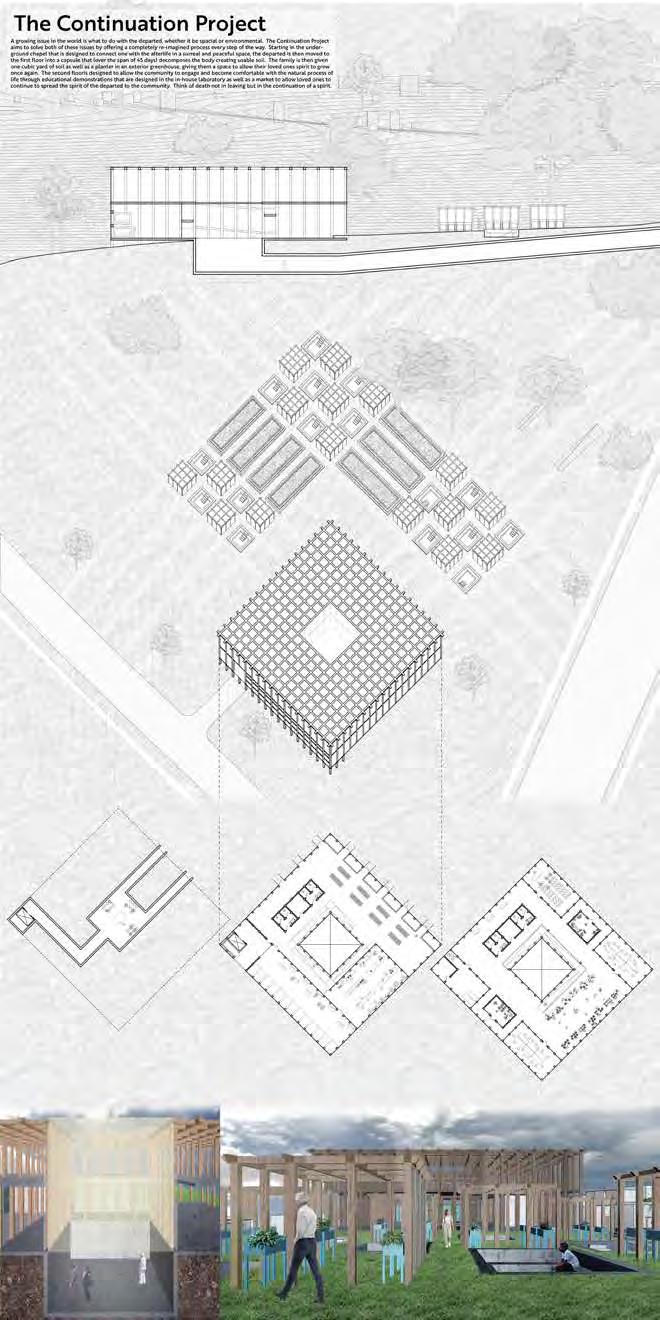
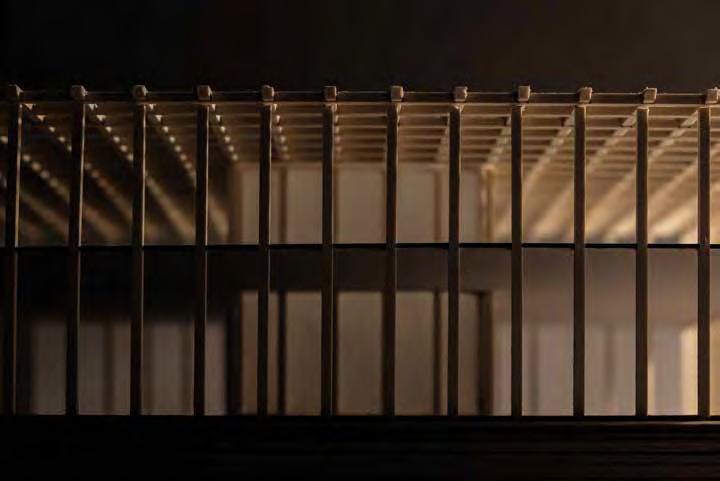
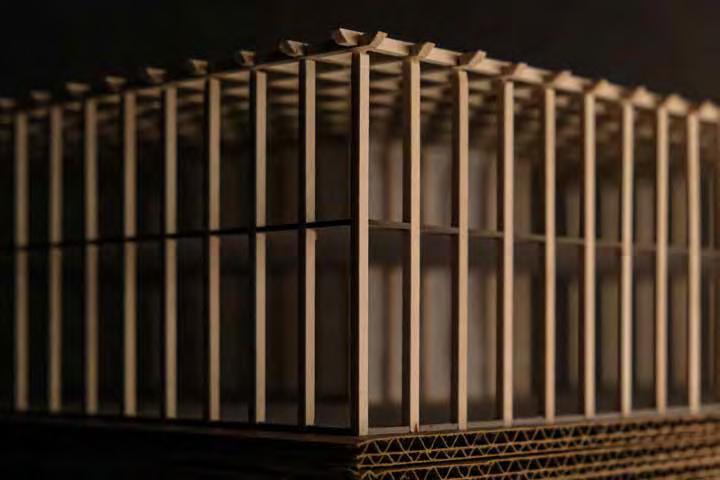
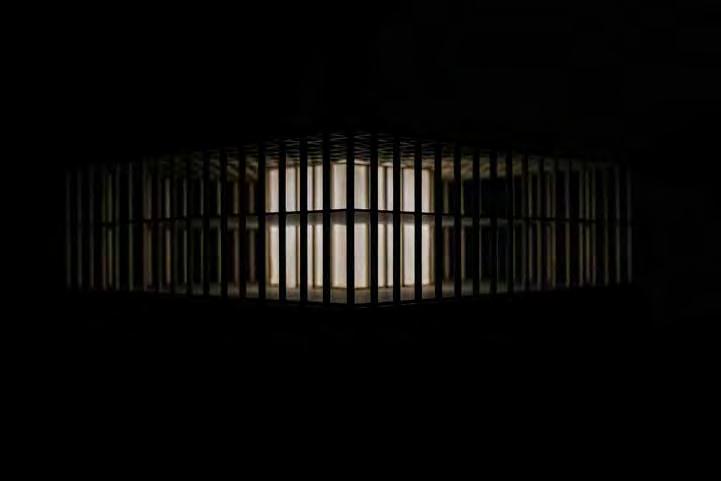
The wooden joinery and structure along with the open space that the majority glass facade and roof create a space that almost disappears within the natural environment and grants the people an opportunity to be at peace with the nature that carries out life. The Continuation Project allows communities to think of death not in terms of loss, but in the continuation of a spirit. From the ethereal qualities of the chapel to the numerous opportunities to use one’s loved one as a means to help something new grow into the world, the experience of a loved one’s passing should be anything but an empty goodbye.
Housing for the formally unhoused is a field of architecture that must not be taken lightly. With Tileyard Housing, the goal was to create a complex that not only gave temporary housing to those who need it, but to also foster a community and environment that promotes healing, safety, and opportunities. The four buildings are each given a purpose, a health and mental wellness clinic, an indoor gym and exercise space, a library and career center, and a low stakes food court and social space. Through these ground floor programs, residents are given a direct access to everything they might need while not having to leave the block.
The organic shapes of the buildings gently wrap around the center courtyard but also do not act as large enclosing walls. The courtyard is split into two part, one that’s raised three feet above street level, and the other is raised six feet, allowing for a clear separation from the street and sidewalk but not completely cut off from the main road.


























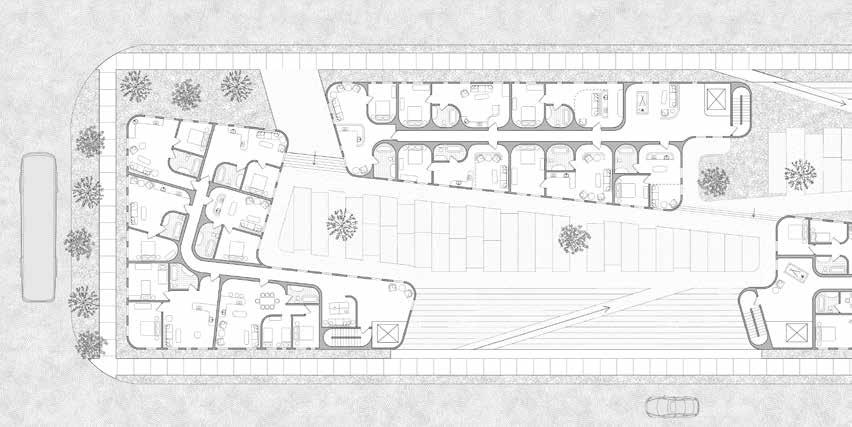


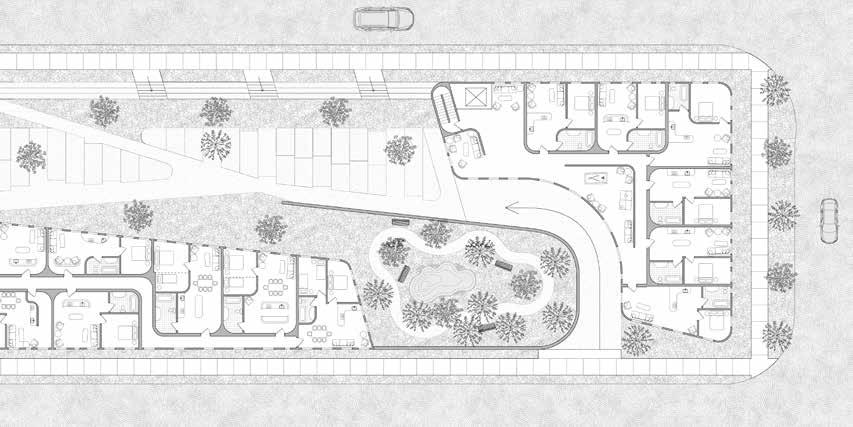
No two people are the same and therefore no two peoples needs are the same, because of this there are 26 individually designed units that make up the 104 that are available. Every resident is alloted one plot of grass in the courtyard, and while gardening is encouraged, they are free to care for it as they wish whether that be a spot to sit outside, a social space, or something more. This allows communities to form based on interests and locations in the courtyard.
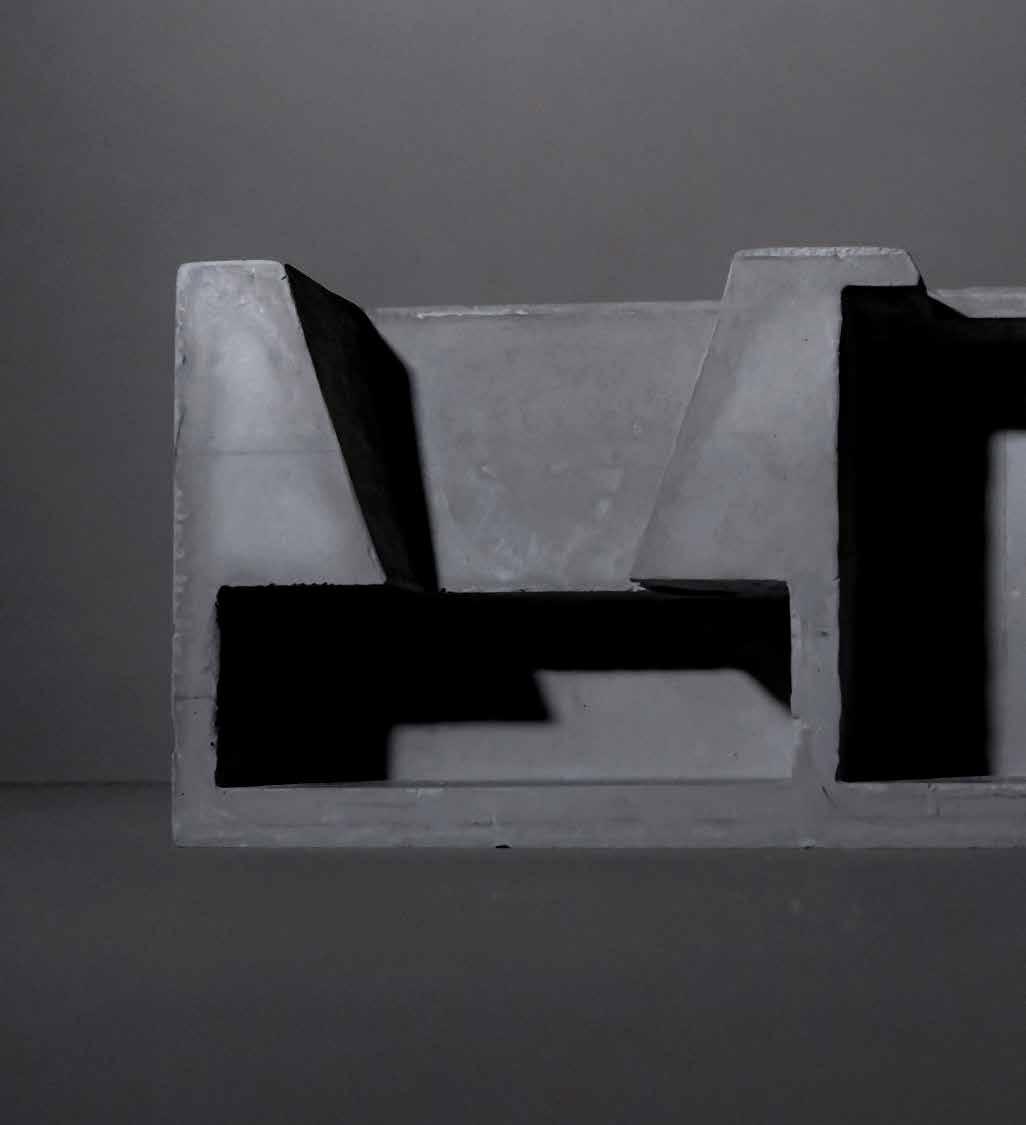
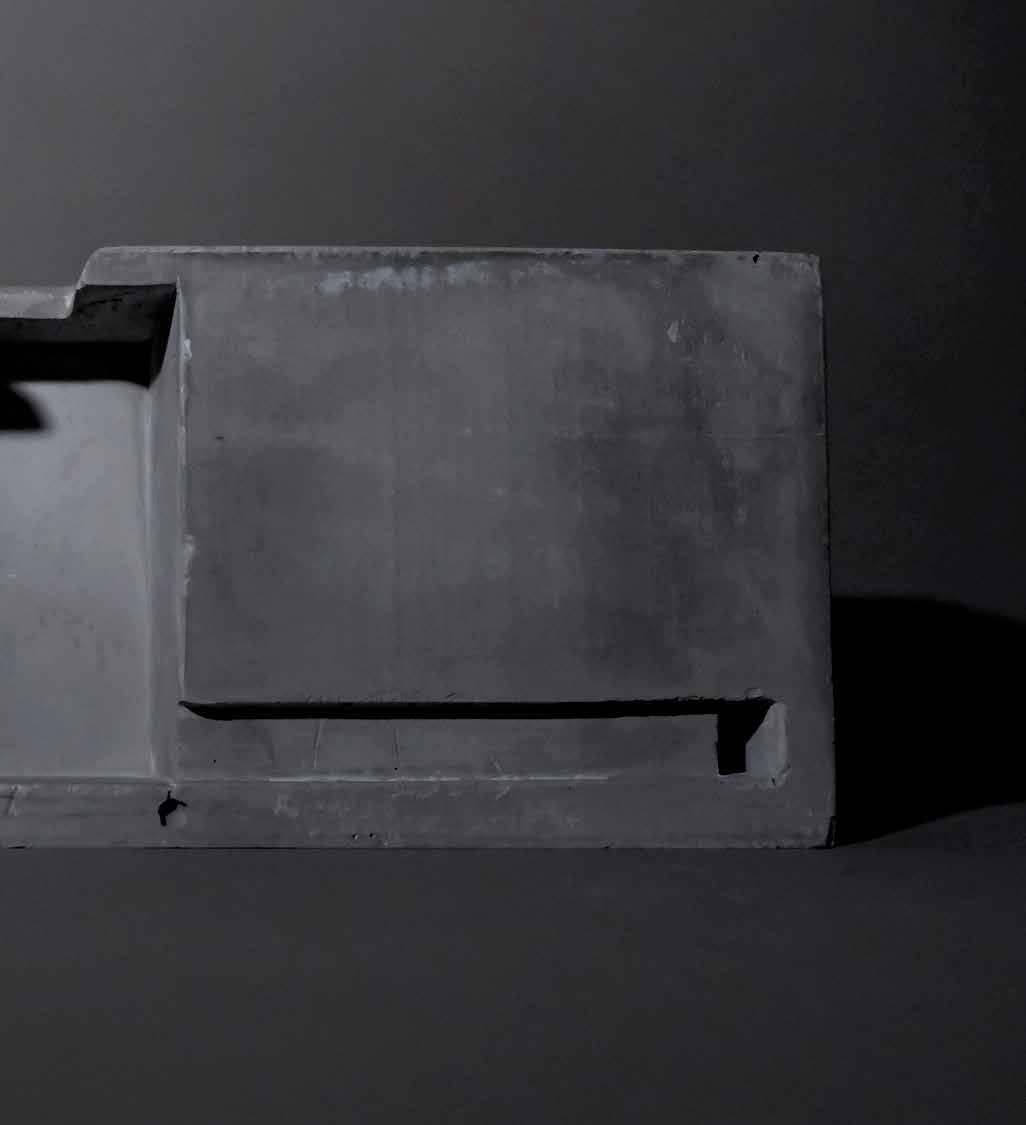
Pavilion was a project built to hold and display selected works from artist Rachael Whiteread. A place that while standing as an art piece on its own, enhances all the qualities of the works creating an enriched and encompassing overall experience. The brutalist nature of her works allows for one’s imagination to paint their own relationship onto the piece, so the brutalist concrete material helps to disappear into the background, allowing the pieces to stand out as much as possible. This creates an intense but blank environment, letting the freedom of perspective paint the walls.
There are three rooms, all connected directly on one side, but also all connected to the entrance hallway for different paths to reach each space. There is a unique skylight in each room, providing natural light to fill space, centered around each piece, drawing each visitor to the space, and illuminating the details of each work. The individual hallways are quite narrow in comparison to push forward the notion of compression; Whiteread’s works tend to focus on filling the negative space—the space we in habit—almost as if we are being compressed and pushed out of that space into space that is typically filled in, allowing a new perspective on objects and scenes we overlook. The compression ends when the person enters each room.
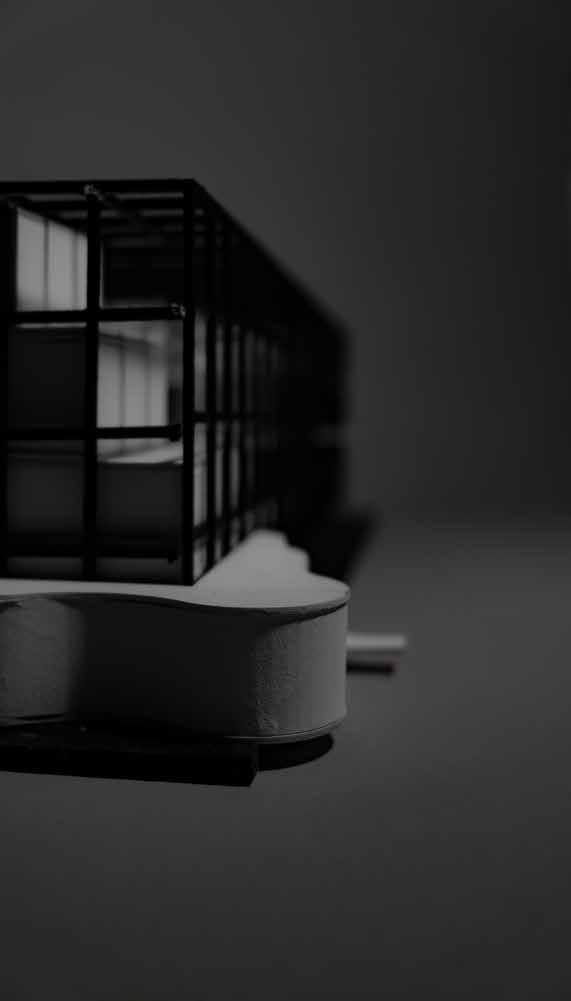
Redefining what a youth hostel entails, The Grid is an organized assembly of pod-like rooms that are set in a dynamic way that contrasts the rigid framework of the metal grid. With four floors that seemingly float above the one below, the lack of floor and wall allows one to see essentially anywhere from anywhere, all within a glass encased community. Rooms can be communal or individual, and the same goes for lounge spaces. No two floors are remotely the same, which encourages the visitor to explore and meet new people and have access to dynamic perspectives over the time of their stay. The Grid begins to have a life of its own, a seeming city within a city, the ever-changing people and missions, the fluidity of spaces and outlooks, the notches and rooms of broken logic, all contained within the harsh nature of a grid.
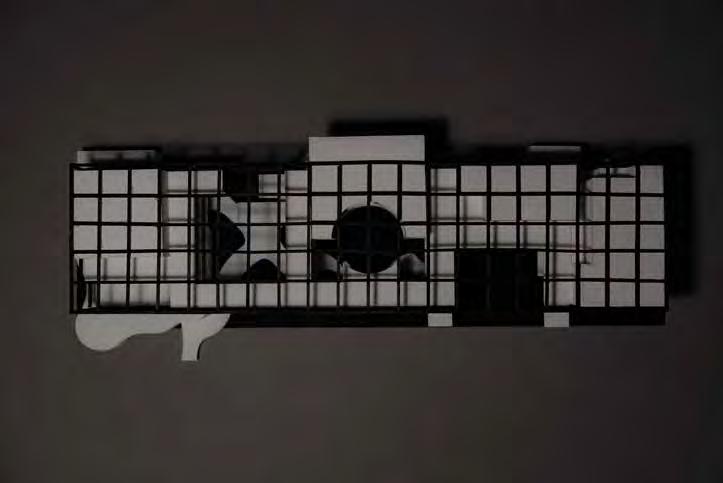
A building should be more than a series of square rooms compacted together, it should be a space completely dedicated to its craft, built to handle and expand upon the active progression of humanity; it should become more and more difficult to define a “building.” The Grid is an ode to the standard set of constraints we put in place and how even with their existence, we can retrofit a community that influences changes that break the structure; there are infinite ways to fill a box with shapes, so why do we stick to just one?
Fallen Structure is the analysis of how and what succumbs to a force, an architectural perspective on how we react to something we cannot overcome. What breaks first? What unexpectedly saves us from a total downfall? In this setup sits two different, yet intertwined, structural systems: a dense scaffolding holding up a rigid system but brittle concrete, and skinny pillars connected by loose twine. The dense and rigid is expected to hold up much better than the skinny one, but as the force sweeps along the field, the taller towers fall first and cause more damage to things that were not directly affected.
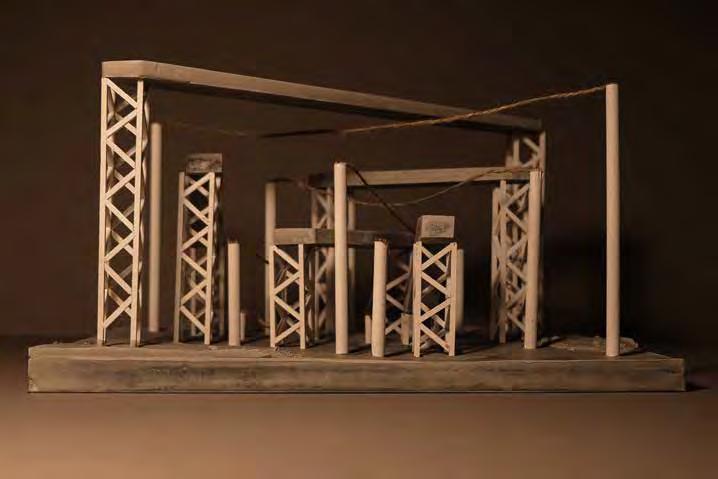
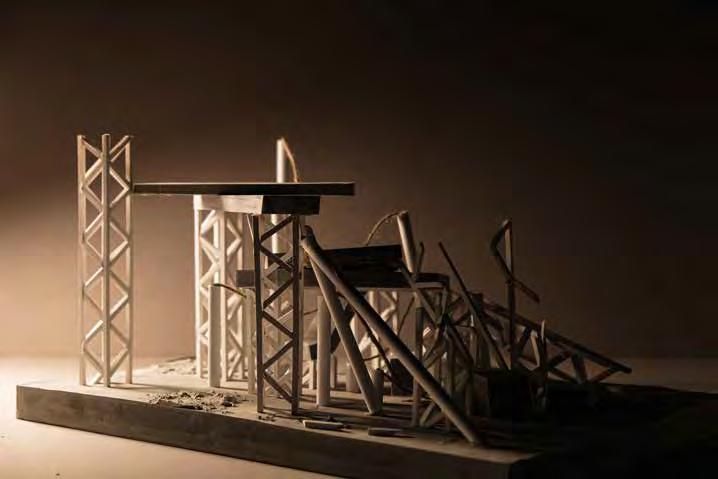
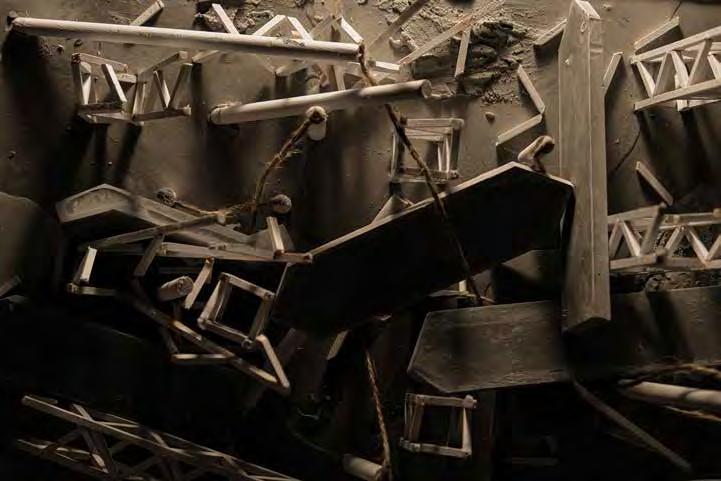
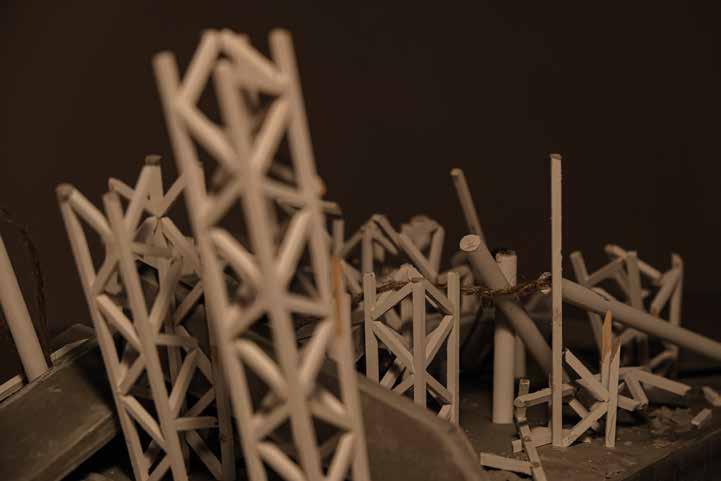
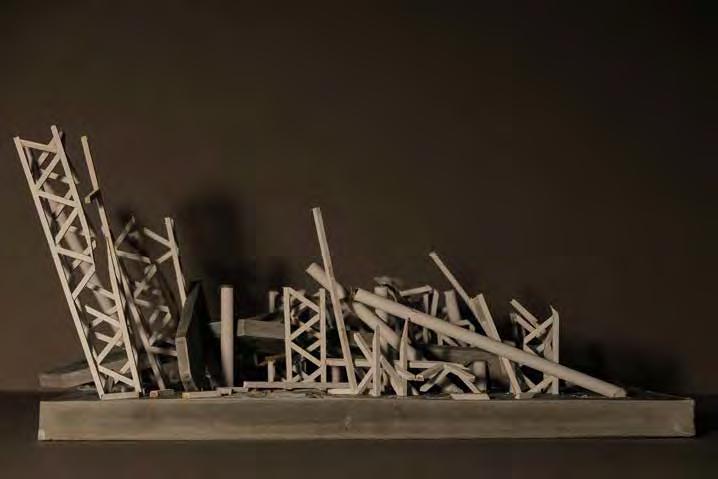
It’s demonstrated that the consequences of catastrophe have less to do with how strong a system is theorized to be but rather how its individual collapse snowballs and takes everything else down with it. Some of the smaller structures still stand nearly untouched, they haven’t risked their expansion at the expense of neighboring towers. Despite how secure, thought out, or foolproof something might appear to be, at the end of the day everything falls, and what’s larger takes more with it.
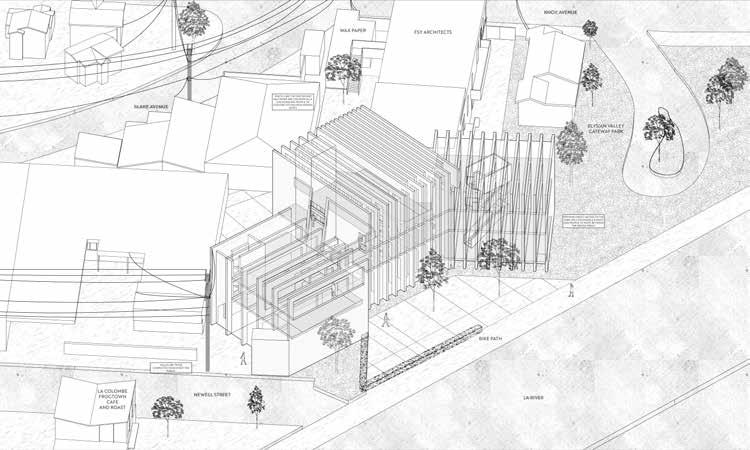
Frogtown, which is historically home to industry and a section of the LA river, is transitioning into a community that has a more direct involvement with the people that live within it. One of the businesses that has invested in this community is the SUAY sew shop, a company built around the reuse of textiles and core belief that clothing should not be inaccessible to those who need it. This project is a hypothetical new facility for SUAY, including a cafe, a theatre, event space, classrooms, a thrift shop, and a community maker space.
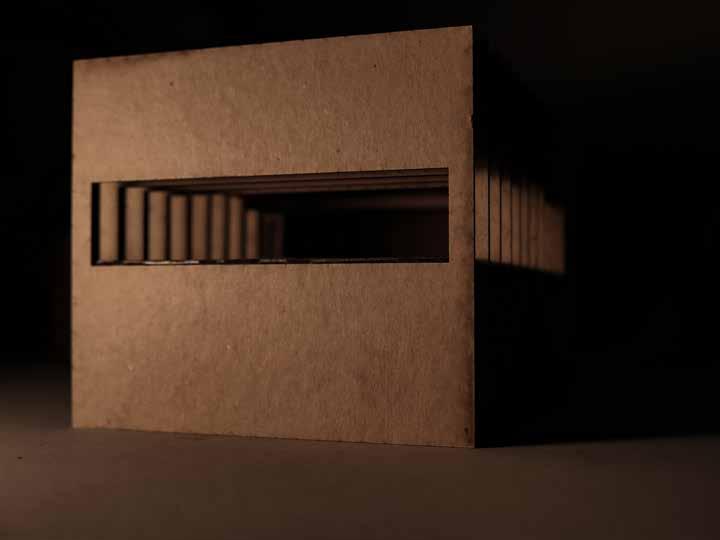
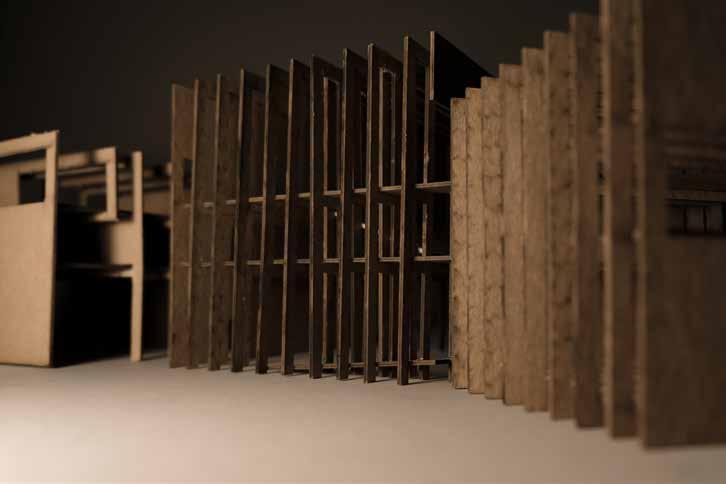
The “frames” that make up the structure and facade respond to the program inside; spaces that require more privacy or more control of lighting, such as the theatre, have a higher frame density whereas spaces that do not, such as the event space, have a much loser frame density to let in light and allow people to freely move through the space. LA has a unique culture with their fences, as fenced in areas are commonly viewed as an extension of the building itself, with some being very porous and others being much more private and dividing, this concept has been woven into the design of the sew shop.

















































































































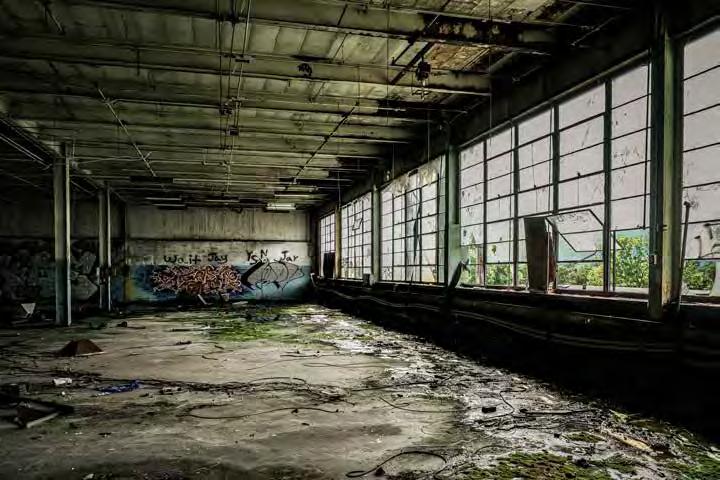
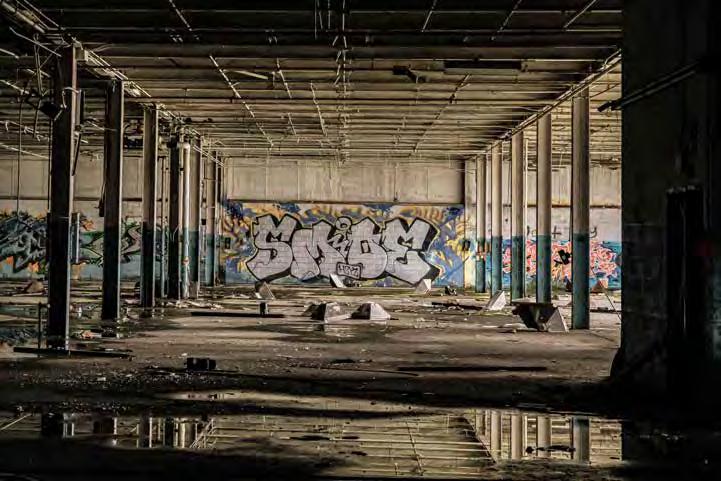
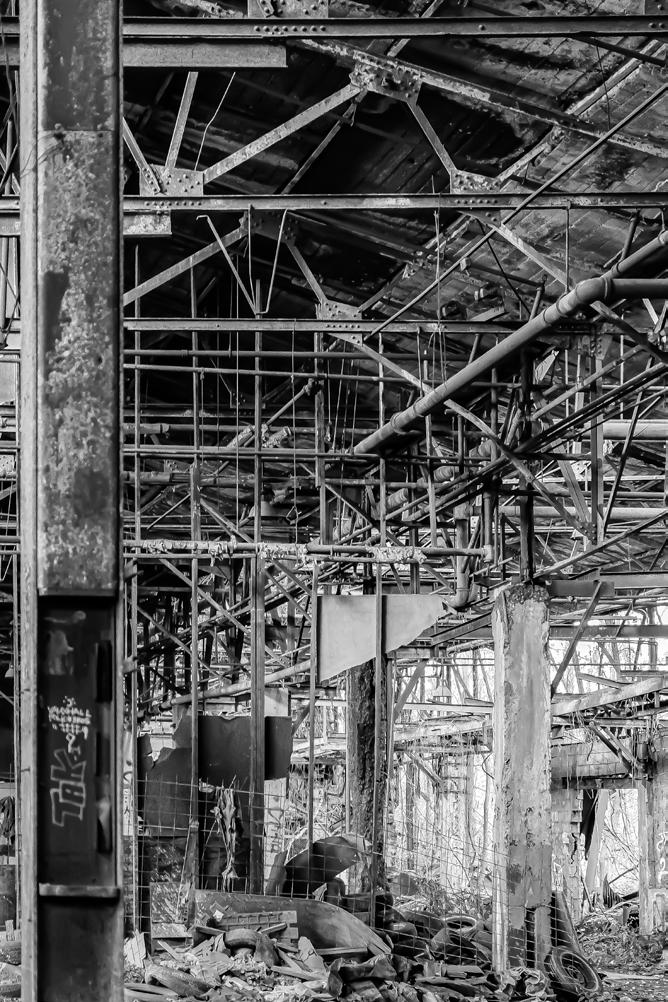
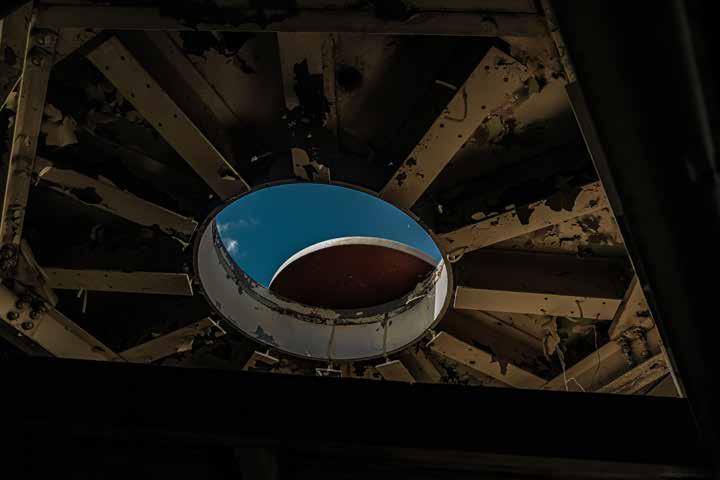
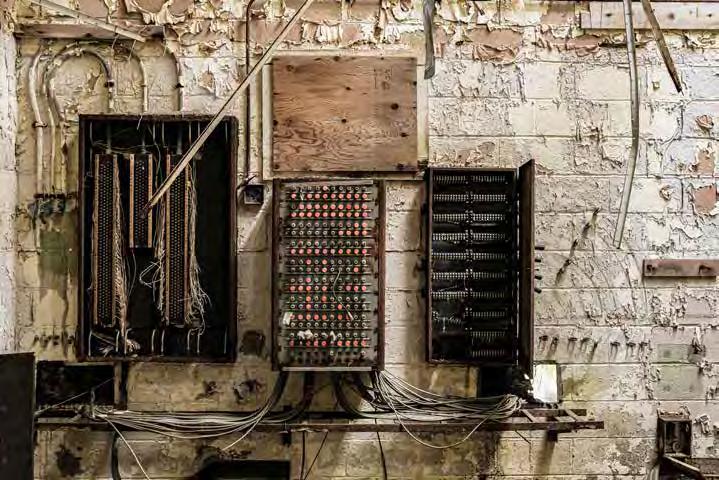
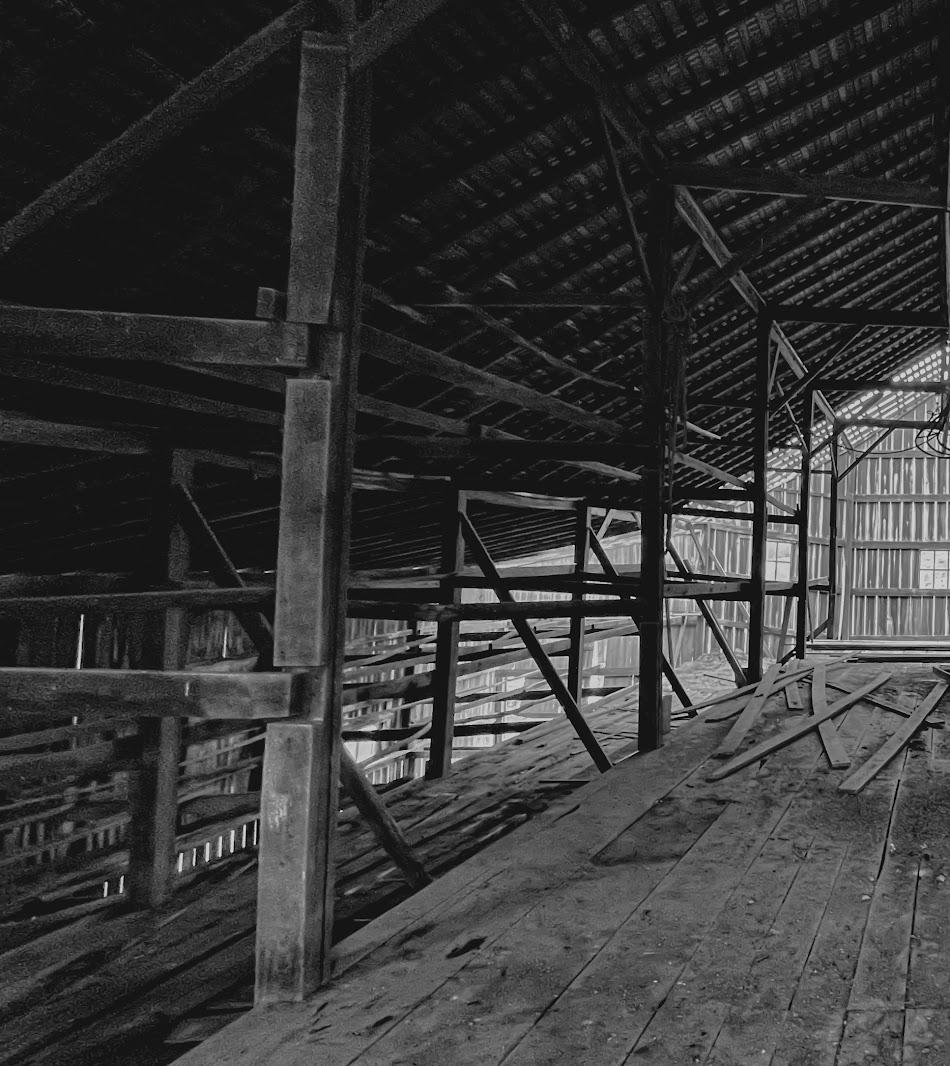
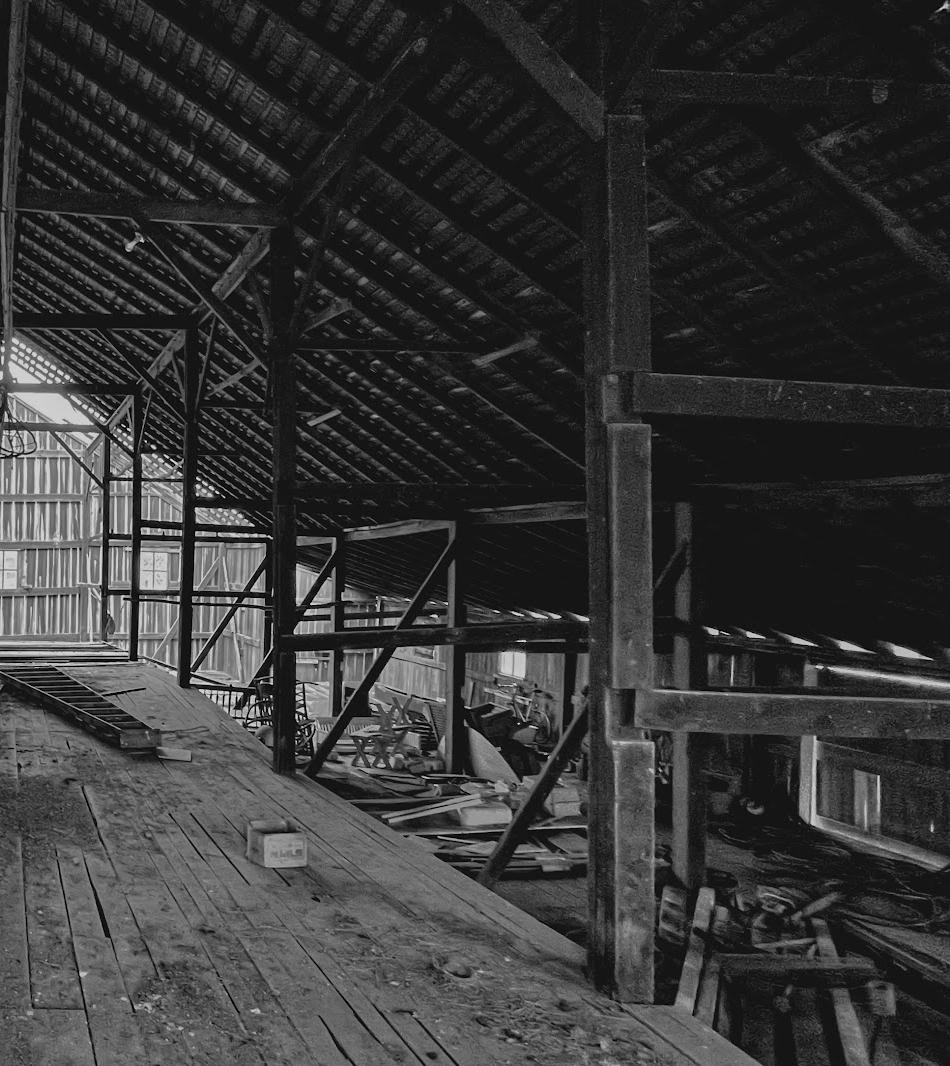
Capturing the decay of a space allows one to see the last memories a building has to give. Nothing lasts forever, and while that applies to buildings too, it is more prevalent in the disintegration of our interaction with buildings. We move on, we leave behind, and we remember, but those memories fall apart without the space that housed them. How do buildings live on without their original definition? How do memories latch on to dust?
01 - Factory Windows 02 - Tagged 03 - Structural Perception 04 - Sky From Within
- Disconnected 06 - A Barn