All advertisements, and/or editorials are accepted and published by Over the Road on the representation that the advertiser, its advertising company, and/or the supplier of the editorials are authorized to publish the entire contents and subject matter thereof. The advertiser, its advertising company, and/or the supplier of the editorials will defend, indemnify and hold Over the Road harmless from and against any loss, expense or other liability resulting from any claims or suits for libel, violation of privacy, plagiarism, copyright or trademark infringement and any other claims or suits that may rise out of publication of such advertisement and/ or editorials. Press releases are expressly covered within the definition of editorials.
Robert D. Scheper
What is a Truck Worth in 2026?
Selling? Buying? Leasing a truck?
Determining the value of a truck is the number one issue in trucking right now. In 2022, truck valuations were through the roof, astronomical, a historical anomaly that may not ever happen again. Truck values today are entirely different simply because the circumstances are dramatically different.
Trucks are not valued like real estate, which is generally understood to be land plus building costs plus incidentals (location, earnings, etc). The primary valuation tool of trucks for transport is… WHATEVER the buyer is willing to pay. That sounds grossly oversimplistic, but it’s not that far from the truth. If someone is willing to purchase/lease a truck and a finance company is willing to link the truck to the buyer’s present and future wealth, then the ceiling of liability (PRICE) is restricted only by the buyer/ leaser’s choice NOT to sign. Let me explain in an extreme example. For someone with millions of spare cash who wants a truck more than they want their money/credit, the terms can be set for them to pay…
LITERALLY millions. Valuations are not set at how much it costs the manufacturer to build… not at all… it’s what the market can bear (the maximum those in the industry are collectively willing and able to pay). It only SEEMS like there is a sticker price ceiling
because a salesman is told the estimated amount the market will pay, which can fluctuate 5-15+% depending on terms, features etc. If someone wants the truck badly and has the finances and credit to purchase/lease, then the terms very quickly become unlimited till the buyer says it’s too high. There was no greater example of this than in 2022. The momentary spike in freight prices (2021 and early 2022) produced an excess of expectations and demand. Finance companies participated in valuations that were grossly over market simply because people were willing to sign their financial future away for it. Many people lost everything they owned and destroyed their earnings for 5-10 years. Asset purchase valuation is critical to all financial success. It must be, at the very least, reasonable… preferably a great price.
I had the privilege to attend a meeting of two of my clients, where they met to consider if one was willing to buy the other’s truck. The buyer had a 26+ year old truck that had about 4-5 years left on an engine rebuild. He was considering the purchase of a seven-year-old truck that had maybe 2-3 years before a rebuild was necessary. The buyer thought he may have 4-6 years left before he would retire.
The difference in maintenance was dramatic. The newer truck had an automatic transmission, and the older had a manual one. Rebuilding the transmission for the new would be about $15-22k, and the old about $4-7k. This example could be sprinkled all through the potential repair needs over the next half-decade. What further complicated matters were the pollution control issues with the 7-year-old truck. It would take $22k to get “up to spec” or $7k to delete the whole thing (an issue not debated in this article). In many ways, NEW trucks depreciate MUCH FASTER than older ones do (or have). In the end, the value the buyer put on the newer truck was $4500 plus scrap price because… the newer truck had brand new tires that he could use on his old truck. The truck produced zero value for him… it was scrap. It was… however… a very pretty truck compared to the relic of the previous century.
There are several carriers who are moving from company trucks to Independent Operators because they simply don’t have the expertise to manage trucks with 600800k+ miles on them. If you put that risk side by side with the fact that the price they must pay for new equipment is beyond their means (in this 3+ year industry depression) they have little choice in doing so. A prolonged recession, such as we have now, produces opportunities and risks for everyone.
On average, it is well known that Independent Operators can usually manage older trucks better than a fleet can… provided they understand good
maintenance. However, those who are ignorant of maintenance and purchase valuation can lose their shirts on one bad weekend. Those who depend on warranty to save them have a 50/50 chance it will do so (in my 30+ years of experience). There was a time not many years ago that brand new trucks produced a 70% increase in downtime; numbers that will crush any operator or carrier.
The question on everyone’s mind is… is it the right time to get into a truck or not? In the end, business valuation of a truck is based on fuel costs and maintenance costs over purchase price. If you are a low-risk individual and understand good maintenance, you may be sitting at a sweet spot in history. If you can’t see value or risks but burn to own your own truck anyway… you and your bank account will probably end up doing a Thelma and Louise.
About the Author:
Robert D. Scheper is a leading Accountant and Consultant exclusively serving the Lease/ Owner Operator industry in Canada. His first book in the Making Your Miles Count series “taxes, taxes, taxes” was released in 2007. His second book “Choosing a Trucking company” is the most in-depth analysis of the independent operator industry today. He has a Master degree (MBA) in financial management and has been serving the industry since he and his wife came off the road in 1993. His dedication, commitment and strong opinions can be read and heard in many articles and seminars. You can find him at www.makingyourmilescount. com or 1-877-987-9787.
Our new Geotab Go Focus Camera Your fleet’s extra set of eyes on the road.
Intelligent safety alerts, event-driven recording and real-time insights help prevent collisions, protect drivers and cut fleet costs without invading privacy by recording only road-facing footage during specific key driving events.
Give GPS to Go Powered by Geotab a try, you won’t be disappointed.
We have been around for nearly 20 years; we are Canadian owned/ operated and we understand what customer service means!
SAFETY DAWG
Chris Harris
The Long Haul: Why the Rearview Mirror is Looking Better Than the Road Ahead
If you’ve ever been on the road, you know that the view from the cab isn’t quite what it used to be. For years, Canadian truck drivers were seen as the knights of the highway—the experts who knew the roads inside out, the ones who’d flash their lights to let you in and move the economy safely from coast to coast. But lately, that image feels like it’s fading in the dust of a fast-changing industry.
If you’re sitting in a truck stop right now, sipping coffee and feeling like your profession is closing in, you’re not alone. The conversation on the CB and in the driver’s lounges has shifted. It’s no longer just about the weather or the weigh scales; it’s about a real worry that the industry, and the public’s respect for it, is breaking down.
The Training Gap: A Licence, Not a Skill Set
The frustration starts with who’s sharing the road with you. We’ve all seen them: drivers who can barely back into a dock, let alone handle a rig in a Northern Ontario whiteout. This isn’t just “old school” grumbling; it’s a documented crisis.
A recent CBC investigation confirmed what you already knew: the system is leaking. Despite the introduction of Mandatory Entry-Level
Training (MELT), there are schools cutting corners, churning out “steering wheel holders” rather than professional operators. When a school fails to teach to the MELT standard, it doesn’t just put an unsafe driver on the highway; it dilutes the value of your license. It drags down the public image of every professional out there. When the public sees a rig jackknifed on a clear day or drifting into the shoulder, they don’t check the driver’s logbook or tenure; they just blame “the truckers.”
The Price of Safety: Ontario’s New Fines
It’s a bit disheartening when the government’s responses to safety concerns seem to hit both good and bad drivers hard. The Ontario government has recently put forward new rules to tackle commercial vehicle offences, which means higher fines and tougher penalties.
On the surface, everyone wants safer roads, but for professional drivers already dealing with too many regulations and not enough recognition, it feels like another burden. There’s a worry that while the unsafe, informal operators keep cutting corners and avoiding enforcement, the experienced driver, who might accidentally make a small mistake after a long shift, will be the one who gets hit hardest by the new fines. It’s tough to swallow when
you’ve dedicated your career to safety, only to feel like the government’s main source of revenue.
Then there’s the everyday reality of driving. We’re a huge country with a growing population, but our roads seem stuck in the past. In major cities like Toronto, Vancouver and Montreal, “rush hour” is now an all-day affair.
The frustration is made worse by the lack of new roads. We’re not building enough new highways quickly enough to handle the growing number of trucks and cars. For drivers paid by the mile, traffic jams mean less money. For drivers paid by the hour, it’s a test of patience. You watch the clock tick down on your Hours of Service while stuck in a bumperto-bumper line on the 401, knowing there’s no escape, no shortcut and no plan from the government to fix it anytime soon.
All of this affects the lifestyle, which is the hardest part to convince new drivers about. The excitement of the open road is hard to find when you’re dealing with traffic, avoiding inexperienced drivers and worrying about a ticket that could ruin your month.
The physical strain is quite real. Sitting for long stretches, plus the constant need to stay alert while driving defensively, can really take a toll on a driver’s health.
So, what does that mean for professional drivers? Is it time to retire?
Actually, your skills are more valuable than ever. In a world filled with average drivers, being professional is now the gold standard. The worries we mentioned, the image, the safety and the traffic, are creating a divide in
the industry. There are companies that see drivers as just another expense, and then there are companies that truly understand what you go through.
The best companies are standing up to these trends. They’re pushing for better training and covering wait times. They know that a long, safe driving record is a valuable asset that needs to be protected.
The challenges are tough, the road ahead is uncertain, and the economy is in the doldrums. But the industry can’t survive without its dedicated drivers. The key for every driver today is to make sure you’re driving with a company that not only asks you to drive but also respects how you drive. Because if the public image of trucking is going to be saved, it won’t be by the government or schools; it will be by the men and women who still know what it means to be a professional.
Merry Christmas! And here’s a friendly reminder: the best gift you can give your family this Christmas is to make sure everyone, including you, gets home safe and sound from every trip.
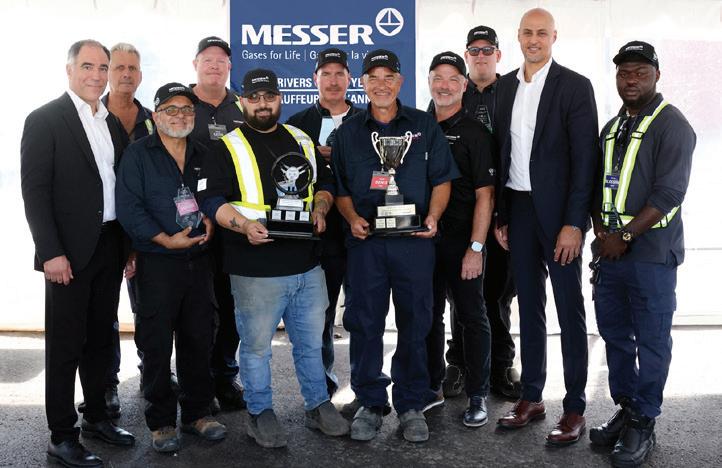
Messer Canada Celebrates Skill and Safety at 2025 Driver Competition
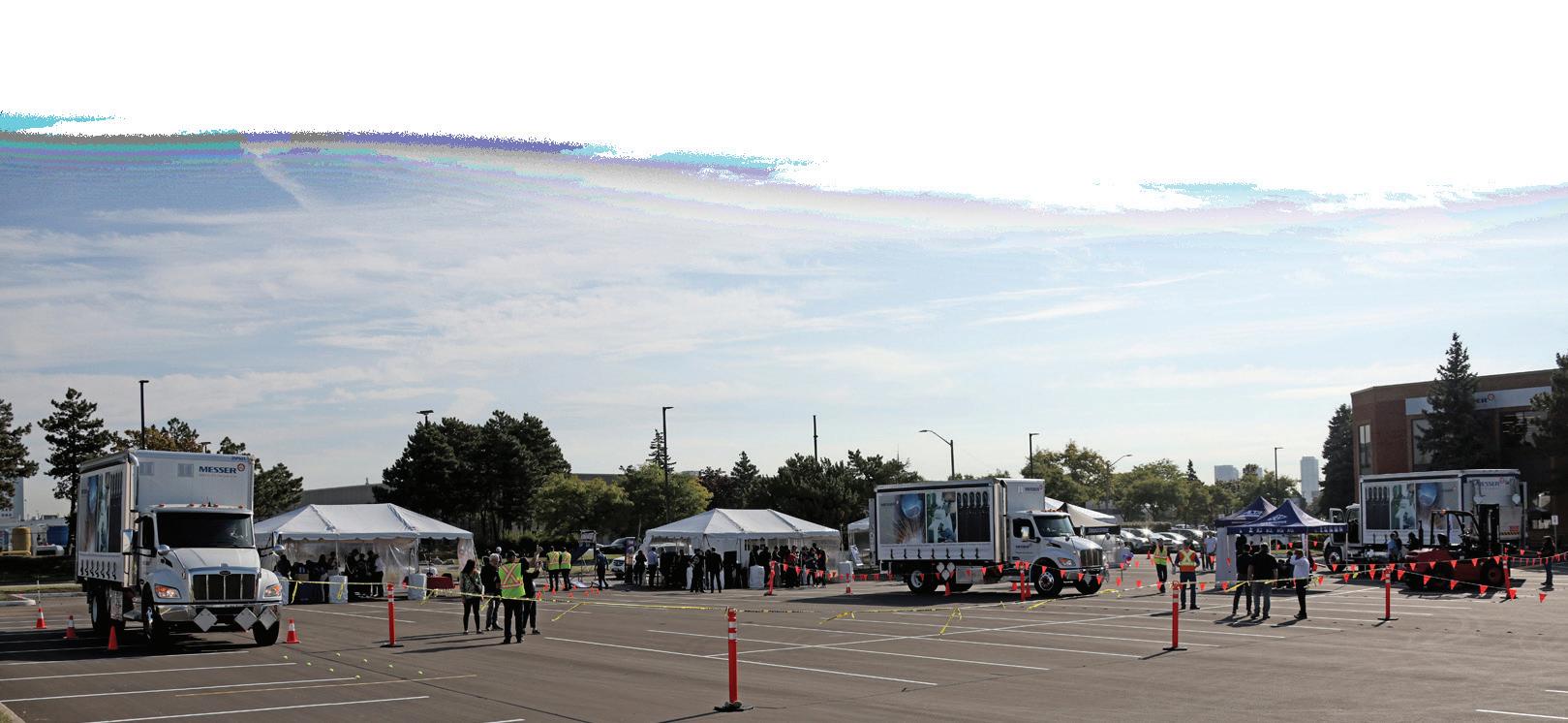
On September 17, Messer Canada Inc. hosted its Driver Safety competition and driver of the year awards at the company’s headquarters in Mississauga.
The day-long event is designed to celebrate the company’s best drivers from across Canada and to recognize their critical role in safely delivering industrial gas and welding products on time and in excellent condition. It also serves as a team-building opportunity for employees across the organization.
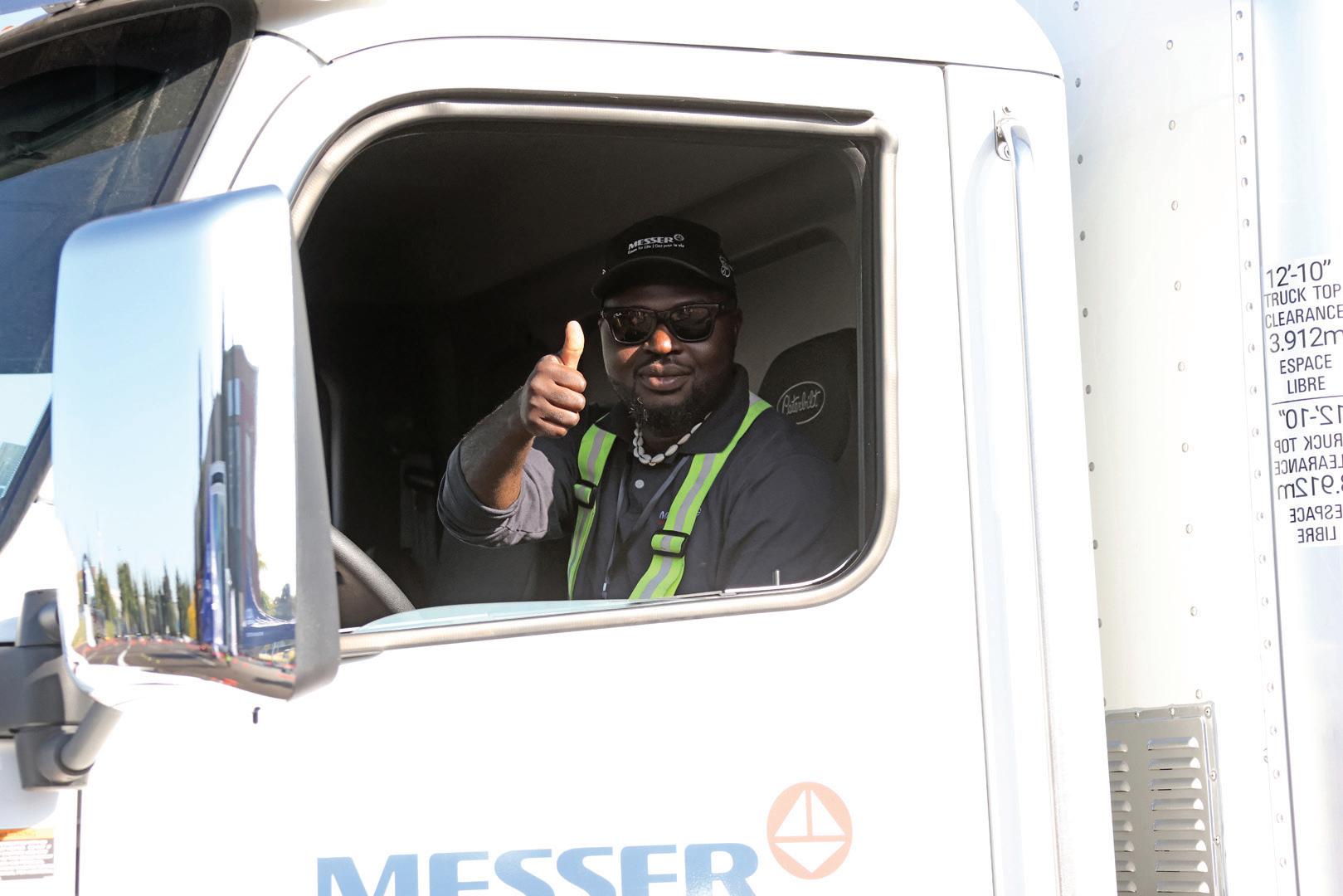
Eight drivers took part in the “rodeo”— essentially an obstacle course in which the drivers accurately and safely maneuver their vehicles. At the end, the driver is required to back up as close to a yellow line as possible without going over it, as if they were driving up to a customer’s loading dock.
The drivers are the top eight from across Canada and the company’s three regions.
“The drivers collect points throughout the year based on how they drive their truck, their fuel consumption, how up to date their training is, if they participate in safety meetings, if they report on safety conditions at customer sites, and how they contribute improvement ideas to the team,” said Head of Operations, François Charron.
As much as it’s a fun event for everyone, the goal is to reduce risks on the road. Since introducing the program three years
ago, Charron notes that driver incidents have been reduced drastically.
“We can track a great deal of information from technology on the vehicles, so we can review things like speeding, following too close, and fuel consumption quite effectively,” he said. “This program has encouraged a new level of excellence for our team.”
“A constant focus on excellence is what we aim for,” said Messer Canada VP and General Manager Karl Villeneuve. “That’s key, because success depends on your people. This competition is real-time excellence demonstrated.”
Joining the Messer Canada team at the event were its gold partners, including Excellence Peterbilt, Gincor Werx, Hangcha Canada, Ipro Truck Repairs, and Paccar.
“Not only is this a great opportunity for our employees to gather together, it’s also an opportunity for them to learn more about our partners and what services they have to offer,” said Villeneuve. “As we do this year after year, like our company tradeshows, we plan to keep adding more of our partners. It’s a great opportunity for them and for us.”
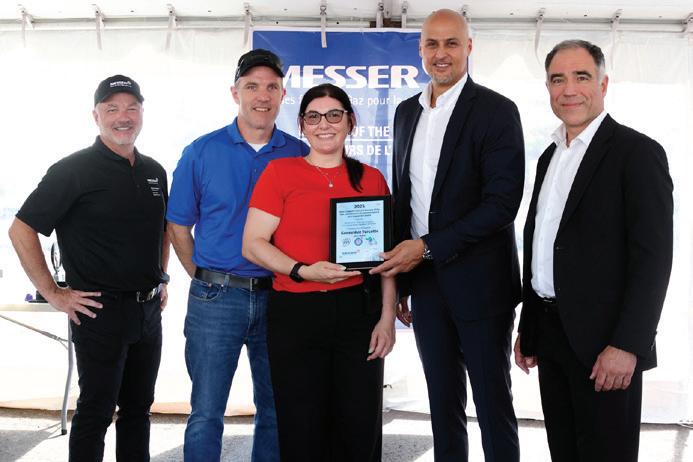
Gabriel Marcotte from Quebec City won the Driver of the Year of 2025, and Denis Allaire from Montreal won the Gold Cup for the tournament among the Regional Champions.
SEARCHING FOR A
TRUCK
DRIVING JOB BUT DON’T KNOW WHERE TO LOOK?
Get into a job you enjoy by searching through hundreds of driving jobs across Canada and the US!
Drivers and Owner Operators, apply to leading trucking companies in minutes!
It is absolutely FREE, easy and simple to use. Check it out today!