...hand chiselled oak floors for coastal living.


![]()


...hand chiselled oak floors for coastal living.


All products in the Geberit Selnova Square series, are designed to make the design of your dream bathroom simple. In both form and function, this versatile collection balances contemporary design with Geberit’s proven excellence. It simply fits every shape of bathroom.


There is a quiet shift happening in the way we think about home.
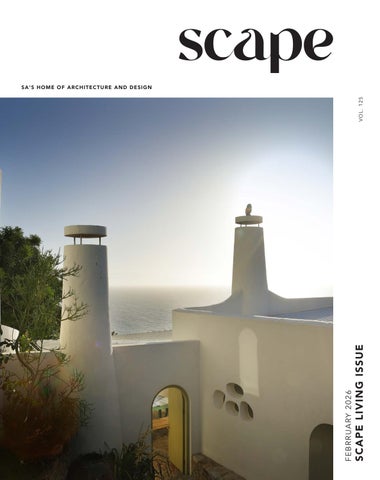
The contemporary home has become something more layered, expressive, and reflective of the inner life. It is a site of curation. A backdrop to art. A canvas in its own right. With Scape Living 2026, we turn our attention to this evolving idea of dwelling and ask how architecture, interiors, and art are shaping one another in a personal way. Scape Living is an invitation to look at a staircase as sculpture. It is a prompt to understand a dining room not only as functional but also as ceremonial. It is an exploration of how beauty, intention, and authorship define the spaces we call home. We explore spaces not only as places to live, but as living galleries. Rooms become environments for contemplation. Walls hold narrative weight. Materials speak with intention. The home becomes a portrait of its inhabitants.
This year, we extend the conversation beyond the traditional home feature. We introduce curated visual narratives by SOOK that explore atmosphere, mood, and materiality as forms of storytelling. We also present a feature by our very own staff writer – and new voice to our pages – examining
the shared language of art and domestic space, a considered collage of ideas featuring Trevor Stuurman, Frances vH Mohair, and Reservoir.
The timing feels instinctive. As Investec Cape Town Art Fair and Cape Town Furniture Week draw the creative world together this February, it felt natural to open architecture to art more fully, acknowledging that these disciplines are not parallel but intertwined.
In South Africa, we are witnessing a maturation of residential architecture. Clients participate in more considered ways, architects are more daring, and designers are thinking holistically about how furniture, craft, and fine art coexist within spatial frameworks.
As this edition launches, we are proud to present a collection of projects and collaborations that reflect the richness of contemporary living. This is not simply a showcase of houses. It is a study of inhabitation.
Welcome to a new way of defining how we dwell.
Chanel

Holding Time
Conversations
Visualising the Now
Rarely Singular
Material Narratives that Extend Human Stories
In
Timeless
Active Energy Optimisation, designed to enhance the delicate balance of energy density and power density traditional alkaline batteries. Using no more than six, off-the-shelf D-cell batteries, these blinds achieve the 3-5 year battery life you’ve come to expect from Lutron.
Designed with simplicity in mind, boasts a patent-pending bracket mechanism. The replaceable batteries can be easily accessed when needed without taking the blind down, but are otherwise completely hidden from view, housed within the blind drive.
For the discerning architect and interior designer, shading often presents a challenging dichotomy: the functional necessity of light control versus the preservation of the design intent. The Lutron Palladiom Wire-Free Blinds System resolves this tension, offering a shading solution that is as architecturally perfect as it is technologically advanced.

and performance without sacrifice.
of three to five years. For the specifier, this ensures a sustainable,low-maintenance solution that delivers the reliability of a wired system without the construction overhead.
The Palladiom bracket is not merely a mounting mechanism;it is a purposefully designed element intended to be seen. Available in seven curated, hand-finished materials, the hardware integrates seamlessly with the interior palette. The intelligent design conceals all programming buttons, LED indicators, and battery mechanisms within the blind itself, ensuring the visual narrative remains uninterrupted by technical clutter.
The Lutron Palladiom Wire-Free Blinds System is available for specification in South Africa through Homemation.


For architects and designers, the window is never merely an opening. It’s the threshold between inside and out: a carefully framed relationship between structure, light, and landscape. Yet for years, automated shading has asked for compromise: invasive wiring, concealed bulk, or visual interruptions that clash with architectural refinement.
Lutron’s Palladiom Wire-Free Shading is free of that disruption. Designed for exposed applications, Palladiom is meant to be seen, not concealed. Requiring no pockets, fascias, or top treatments, its slender profile and symmetrical bracketry allow the system to sit seamlessly within the window frame as a deliberate design detail rather than a utilitarian addition. Available in seven hand-finished materials — including Brushed Brass and Satin Graphite — Palladiom is integrated into Lutron’s broader Palladiom system, offering designers a cohesive, bespoke interior finish.
Palladiom Wire-Free operates via a patent-pending active power management technology, using readily available D-cell batteries contained within solid aluminium brackets. Its ultra-quiet performance and placement freedom make it an ideal choice for spaces where architectural integrity must be maintained.
Amalgamated natively with Lutron HomeWorks, the system allows architects and designers to program light with precision: synchronising daylight, electric lighting, and climate control into scenes that evolve naturally throughout the day. Whether via architectural keypads or the Lutron App, control is intuitive, and the user experience is defined by smooth, near-silent movement that enhances both comfort and atmosphere.
Visit the Lutron Experience Centre to explore how automated daylight control can be incorporated with clarity, restraint, and architectural intent.

blu_line reveals a new expression of curated luxury in its Johannesburg showroom

Stepping into a double-volume interior, one’s gaze follows a long axis of monolithic forms: islands and walls read as volumes rather than cabinetry. To the left, the space opens into a residential-like sequence consisting of a living area with sculptural seating, textured rugs, and kitchens positioned as part of open-plan living. Look to the right, and you encounter a darker, dramatic still life of materials — deep stone surfaces, precise linear lighting, and shadowed planes that create depth. Finally, a staircase invites you upward to the second level. From this vantage point, the entire showroom can be experienced as a single architectural composition. With light bending around surfaces and passages narrowing before terminating in wider volumes, the overall effect is cinematic, and the experience is tinged with anticipation.


The renovation of the blu_line showroom reflects how the brand has evolved beyond designing kitchens as products to designing environments with deliberate atmosphere. It has also provided an appropriately ambitious and intense setting for introducing the blu_line X range. ‘The showroom is effectively our testing ground — a space where we can explore how far a material can be taken, and what emotional response it can create when it’s allowed to dominate the room,’ explains Philip Richards from blu_line.
Uniformity through a monochromatic palette and monolithic forms has become synonymous with blu_line’s aesthetic. When you remove noise, you are left with the intensity of gestures. Through masterful control, the power of fundamental qualities is rediscovered: proportion, materiality, light, and contrast are foregrounded. Stone, for example, is appreciated for its structure and mass and, accordingly, kitchens are imagined as carved and anchored spaces.
Naturally, the veins and grains of stone and timber create movement, depth, and tension. Then, designs protect those markings through large uninterrupted surfaces, careful join placement, and compositions that allow veining to travel across planes without being fragmented. Grazing light is used to pull texture to the surface, while backlighting transforms translucency into atmosphere.
At first, architectural relationships determine proportion: thicknesses, voids, alignment lines, long horizontals and vertical interruptions set the tone. And while human scale is always considered, blu_line sometimes stretches it: a counter might be designed to feel heavier than expected, or a wall


plane will be created to appear like a single volume. Even though the body needs comfort and intuitive movement, the eye desires tension and release. And blu_line designs for both: the ergonomics are resolved, while the visual language evokes a more monumental scale.
Further contrast is created through juxtaposing dense dark stones with softer, mineral tones, or placing matte against gloss and heavy volumes beside near-invisible glass. To exaggerate the difference between weight and airiness still further, light is integrated into join lines and edges, creating the illusion that materials float or split, subverting one’s expectations of material properties.
More than a room, the kitchen is the centre of gravity that holds ritual, movement, conversation, silence, and performance. blu_line has been committed to this space precisely because of its double demand to be perfectly functional while containing people’s emotional and social lives. As they explain, ‘Kitchens are demanding and require discipline. And discipline is where our design language has always thrived.’
blu_line works closely with architects and interior designers who push the brief, allowing them to respond with technical innovations and material solutions that result in greater architectural impact. These days, clients choose blu_line for its distinct design language and established point of view. One need only walk through blu_line's showroom to grasp their unique perspective.


INTRODUCING THE HERITAGE COLLECTION | A CELEBRATION OF MODERN CLASSIC BATHROOM DESIGN
by

Art and Home: What They Share, Borrow, and Extend
Words by: Jean-Marié Malan
‘It takes a heap o' livin' in a house t’ make it home,’ opens Edgar Albert Guest’s poem ‘Home’, which continues: ‘It ain’t home t' ye, though it be the palace of a king, / Until somehow yer soul is sort o’ wrapped round everything.’ Implicit in these lines is the idea that home takes time, but also that home affords time. In recent conversations with fibre artist Frances v.H, photographer Trevor Stuurman, and Reservoir gallerists Shona van der Merwe and Heinrich Groenewald on how they view the relationship between art and home, the lasting impression was that home is where life accumulates most: where the past lingers, and where looking means looking again.

It is then no surprise that about half of the postcards I have collected from museum gift shops depict homes. Van Gogh’s blue-and-orange Bedroom in Arles has been a reliable presence over the years, recently joined by a postcard of Do Ho Suh’s pastel-coloured mesh buildings, which were on display at Tate Modern last year. Artists repeatedly centre home as subject matter, while viewers are increasingly intrigued by the real homes behind these representations. Salvador Dalí’s house in Portlligat, Spain; the Bloomsbury Group’s Charleston Farmhouse in East Sussex, England; Frida Kahlo’s house in Coyoacán, Mexico; and Helen Martins’ Owl House in Nieu-Bethesda, South Africa, are but a few of the residences now open as museums.
Impatient to gain access to more house museums, to peruse stone collections and wonder what they have to do with curation, or to look through a bedroom window and momentarily share an artist’s perspective, we asked our practitioners in conversation to walk us through their homes — via pictures, memories, and stories about the artworks they live with.

If Trevor’s home were to be read as his self-portrait, it would reveal, he concludes, a person for whom ‘past and present sit comfortably together.’ In plainer terms, this echoes Gaston Bachelard’s now-famous assertion in The Poetics of Space that ‘over and beyond our memories, the house we were born in is physically inscribed in us.’ Asked which elements, moods or approaches in his practice might be traced back to his childhood home, Trevor explains: ‘Kimberley was my first universe, a kind of blank canvas. Growing up there, with limited resources, taught me that imagination could be expansive even when circumstances were not.’ The willingness to ‘build something from very little and the confidence to create universes from simple elements,’ he says, lives on in his work.

We see this invention from apparent nothingness most clearly in The Manor, Trevor’s multidisciplinary storytelling platform, imagined as ‘a sense of home beyond a physical address.’ Drawing from the term’s definition as a place of gathering, Trevor designed the virtual Manor to be like ‘a house with many rooms, where different voices, disciplines, and generations can exist together.’ In a similar vein, his concept of Africa transcends geographical bounds: ‘I see Africa as an expansive, living idea of home. It’s something you inhabit, even when you’re far from it.’
While Trevor’s childhood home lives on in his creative approach, even when abroad, Frances' art demands a material connection to place. ‘Growing up in a small town on a [mohair] farm, I naturally wanted to get the hell out of there and head off into the bright lights and action of the city,’ she recalls, reflecting on her childhood in the Karoo. Her father would chuckle and take her into the veld to cultivate an awareness of where fabric fibres originate. This unexpected lesson in fashion and textiles would later become the foundation of her farm-to-fabric approach. Process, for Frances, begins ‘with rain, the delicate ecosystem of the plant life, the quality of the ground, the role of herdsmen, and the importance of healthy animals to produce quality mohair.’
Today, Frances is part of a team of women artisans based in a studio in the Karoo where their rhythms of making reflect the pace of this semi-arid region of South Africa.
‘I’m always amazed that slow can be very speedy if you take a moment to watch it move,’
Frances says, reflecting on both the movement of daylight in the Karoo and the progress of weaving.

Look, look away, and look again
If the average person spends only a few seconds looking at an artwork on display — eight, according to Tate, while Artnet claims 27 — then art encountered at home might be the antidote. This is partly because we can choose to look without giving something focused attention, without the pressure of formulating an interpretation, or the expectation of being moved. In other words, our response can form over periods of looking and moving art around, often contradicting our own assumptions about taste.

Pictured here, Shona stands tall in her dining room holding a glass bricolage sculpture by Stephané Conradie like a trophy. Her green eyes, lifted just slightly, seem to unite the works between which she is posed: Conradie’s composition of glass cups and ornaments, and a wall-mounted woodcut painting by Anna van der Ploeg.
‘They’re less minimal than I once imagined my taste to be,’ she admits, ‘and I’ve come to love their generosity both in material and detail. They reward prolonged looking.’
Shona muses over these artworks during breakfast and dinner, ‘wondering whether artists realise how present they become in someone’s daily life.’ Then, at the last minute before guests arrive for a dinner party, she rehangs a painting or two — engaging with art instinctively and with ease.
Heinrich’s interior is more minimalist. He attributes this sensibility to his parents’ approach to homemaking, recalling his childhood home free of unnecessary trinkets and objects lacking utility — despite, or perhaps in reaction to, the antique shop his parents once owned. We asked Heinrich for advice about collecting for intimate homes and received an irreverent response: ‘Place sculptures on bookshelves, or in your kitchen — elevating the NutriBullet on your countertop! Lean frames against walls, even stack them.’ Unlike the gallery, which, as Heinrich explains, ‘presents works within the context of other artworks, you get to decide how you transfer it into your context.’
In his context, art serves a particular function. ‘I love my space,’ he declares, ‘and our artworks have made every rental feel like ours.’ Through art, with its attendant histories and memories, Heinrich makes each new place feel lived-in. Above an orange armchair in the corner of a room hangs a lithograph by Stephané Conradie. ‘It’s an important piece to me, and receiving it as a gift also signifies a long relationship with Stephané, whom I met when I was 18,’ he says.
‘I love my space,’ he declares, ‘and our artworks have made every rental feel like ours.’
Heinrich elaborates on the work’s subject matter: ‘The crop of this particular mosque hides the surrounding context, which includes fast-food retailers and a large parking lot. This is a site of forced removal in Stellenbosch during apartheid, where this religious site was all that remained.’ A single lithograph thus holds memories both personal and collective, recent and more distant, seemingly stretching the time experienced within a temporary rental.
The process of home
Frances points out the domestic references in her studio's tapestry work Renovations and Revelations : plastered walls, lintels supporting doors, and windows drawing in winter sun. She identifies ‘the extensions we make when times are good and the resources we use to build in times of need’ as the ‘everyday choices’ that make a home.


Artisan Mary Gumbo is captured mid-laughter in front of this Botterblom tapestry. Colour-blocked and textural, the work consists of sections woven together from the start and pieces stitched together later. The tapestry references renovations made one season at a time. Near the top, loose tassels of threads hang over the front of the tapestry, paying homage to the material and weaving process, and suggesting the unfinishable work of making a home.
Home as a process is explored by Trevor, too, particularly in 'Sunday Best', the series of gatherings that first ran alongside his exhibition 'A Place Called Home' (2022), held in a house in Parktown West, Johannesburg. Guests were invited to dress in their Sunday best and gather around the table to share meals, merging a South African tradition with a multisensory art installation or participatory performance.
For Shona, even more traditional art objects ‘feel like living things,’ she reflects. ‘It’s almost as though you’re temporarily in custody of a work while knowing it will ultimately outlive you and move on elsewhere.’ We might then ask: what histories do our art collections, grand or modest, carry into our homes? And, conversely, what do our homes, where our souls eventually wrap around everything, embed in artworks for future owners to discover?
In Shona’s fantasy heist of an acid-yellow Irma Stern, the painting would live under a spotlight in her garage, only to be discovered long after she is gone.

@trevor_stuurman
@_reservoir_ www.reservoirprojects.com
@francesv.h_mohair www.francesvh.com


info@za.duravit.com and duravit.com

Where Art and Design Converge and Diverge in the Work of Marie-Louise Koen and Michal Korycki

On moving day, boxes stand stacked like cardboard pillars where, later, the couch will be. By then, the boxes will have been unpacked, filling the house with books, crockery, trinkets, and art collected over the years or newly acquired that transform the designed shell into a place where design and craft easily become muddled.

@marielouisekoen www.marielouisekoen.com
We sat down with two industry thought leaders uniquely positioned to reflect on these continuums: Marie-Louise Koen, a painter with a flourishing interior design studio, and Michal Korycki, architect and co-founder of Craft of Architecture, whose approach to form and material also finds expression in his ceramic sculptures.


‘When I say I treat every project like a painting, I mean it quite literally,’


says Marie-Louise, for whom the principles underpinning painting and interior design are ‘remarkably similar.’ She uses proportion, balance, and composition to evoke emotion and harmony, imbuing spaces with energy. For Michal, architecture and art require separate modes of thinking:
‘Art is emotive and expressive, emerging from the subconscious, while design is a calculated and conscious act. Now and again, you will see fractions of one within the other.’
Marie-Louise’s painterly sensibility is evident in the Blue Room, a statement interior designed in response to the client’s art
collection, which includes key works by the designer herself. Movement, a ‘constant dance between art and design,’ defines her creative process. Sometimes the ‘architectural and interior language comes first, with art carefully curated to unify the space. ‘Very often,’ however, projects begin with the art, guiding decisions around ‘proportion, palette, and mood.’
The Blue Room exemplifies this approach. Marie-Louise’s coastal painting anchors the space, with echoes of the artwork resonating across sandy-toned chairs, and the enveloping ocean blue of the walls, ceiling, and cabinetry draws the viewer into the imagined depths of the sea.

Michal admits to struggling with colour and is instead captivated by raw materials and finishes. ‘For architects, the buildings are most interesting before all the cosmetics are applied. This thinking has also informed my sculptural practice,’ he explains. When asked about a courageous decision that transformed a project, he responds thoughtfully: ‘All the decisions we make are based on rationality; doing something flippant is not our way.’ He cites the Vamizi project as particularly formative: ‘Designing villas for 20 people without a single piece of glass’ meant ‘really embracing the tropical environment.’
‘For architects, the buildings are most interesting before all the cosmetics are applied. This thinking has also informed my sculptural practice.’

Although Michal treats his work in architecture and art as distinct practices, he is intrigued by the overlap that occurs through scale. ‘It’s really crazy that buildings start as “sculptures” or scale models, and eventually we can walk through them.’ He has begun to imagine what it might mean to realise one of his sculptural forms at architectural scale. But until then, the relationship between his built work and sculpture is already apparent. In a looser mode, the latticed shapes, thresholds, and layered forms of the brown ceramic pictured here echo the site-responsive material logic of the Vamizi project.


Asked about a courageous interior decision, Marie-Louise recalls a pink onyx kitchen in an otherwise traditional house. ‘The onyx introduced playfulness and curiosity while remaining elegant and refined,’ she explains. The material allowed her to exercise the freedom with colour she enjoys in painting while respecting the restraint often required in interiors.
Both practitioners share an openness when navigating projects that might challenge their aesthetic boundaries. ‘It’s imperative to understand the client’s vision, and that’s what’s exciting,’ says Michal. Marie-Louise agrees: ‘When a client has a bold or unconventional taste in art, I’m usually thrilled. It gives the project a clear direction and creative charge.’
Michal adds, ‘What I have thought to be cliché statements have become some of the most iconic projects, so don’t judge.’
A strong sense of professional responsibility emerges from Michal's responses. ‘It’s a huge privilege to build something and make it part of the built environment fabric,’ he says. Marie-Louise, by contrast, moves fluidly between art and interiors, always returning to painting as the source of her expressive freedom. Her painterly gestures spill beyond the canvas, animating her interiors with colour and movement. Meanwhile, the precision of Michal’s architectural work finds release in his sculptural practice, revealing a creative mind equally at ease with control and intuition.


@sanripienaar
@team__sook
Anette de Jager and Sanri Pienaar from SOOK Joined Forces to Compile Their Current Influences in Residential Design

@anette360design
We asked: What would be quintessentially SOOK? And looked to the travels, friends, and clients that have inspired bold design statements balanced by nostalgic finishes, creating pieces that feel considered rather than decorative.
I return to Anette’s advice that black grounds a space, giving any room a necessary sense of weight, or sum. Our all-time favourite Bahla Chair from Bofred is a great example of this. Deep, classical colour palettes paired with contemporary accents create interiors that feel fresh and unexpected. Adding layers of rich texture, such as The Clifton Couture Feathered Armchair by Curación Collection in partnership with UNI FORM, juxtaposed with steel chairs by The Minimalist, creates a compelling dialogue between materials.
Villa Necchi in Milan has become a key reference from our travels. In an age where digital image saturation makes it difficult to discern what is real, constructed, or merely designed to be consumed, we are faced with a type of global fatigue. Turning to design and materiality offers some resistance and relief. As we experienced with Villa Necchi, inspiration drawn from physical spaces, allows for depth, layering, and intention across styling, design, and architecture.


Here follows the favoured places, heirlooms, colours, and textures that Anette and Sanri are taking into 2026


| 12.


photographed by Sanri
| 13.
at PAD Paris 2025 | 14.
Product Development, SOOK, photographed by Elsa Young | 15. IM-003, the.minimalist | 16. The Wabi Sabi Sideboard, The Ayris Collection | 17. Liebermann Pottery


18.


photographed by Inge Prins | 19. Aurélien
seen at PAD Paris 2025 | 20. Vou’, painted screen, Jana Wasserman | 21. Palm Console, Bofred | 22. JOHN Chair, N I S H | 23. STIL
designed by Anette De Jager, 360 Design 24. Timber Hobble Side Table, Acre Studio | 25. The Clifton in Couture Feathered Armchair, Curación Collection in partnership with UNI FORM | 26. Kubu Range, Weylandts | 27. Ceramic Vessels, Jade Paton | 28. Trellis Fabric
A true authority on residential design, Mark Bullivant, a principal at SAOTA, has shaped some of the firm's most recognisable houses across a wide range of terrains — from the steep slopes of Cape Town’s Atlantic Seaboard to exposed coastal sites along the Western Cape, and on to hillside settings in Los Angeles. Rooted in Cape Town, his design thinking is forged locally and tested globally.
Carried into his own home in Tamboerskloof on the slope of Signal Hill, architectural strategies of restraint, compression, and release become more pronounced and daring. Yet even here, they remain finely attuned to the intimacy and gatherings of family life.
SAOTA’s residential work is known for its seamless integration of form, function, and environment. When you begin a new home, what is the first ‘anchor point’ you look for — the element or moment that allows the architecture to start revealing itself?
The starting point is almost always the site and its context. We identify the property’s most compelling attributes, and then there is often a decisive moment when the site itself begins to direct the architecture.
We are inherently process-oriented. As much as the site carries weight, we are also led by the client’s persona and how the building can express their interests and lifestyle. The architectural anchor is rarely singular; it emerges through a layering of ideas and intentions.
Notes on Delight, Family Living, and Outdoor Appeal with SAOTA's Mark Bullivant

You often speak about creating delight in the user’s spatial experience. Where does ‘delight’ lie in the context of residential architecture, and how does it show up in the everyday moments of a home?
Delight, to me, is the intangible. It’s an atmosphere or spatial condition that evokes a sense of energy and engagement. At times, this is achieved through the introduction of surprise or a moment of playfulness that brings personality into a building.
On an everyday level, delight comes from elevating the pragmatic into an experience. A hallway, for example, becomes something completely different when it has a window as its terminus or is animat-
ed by a skylight above. It transforms into a space that exceeds its functional role.
From materials to detailing, restraint seems to play a big role in SAOTA’s work. How do you balance bold architectural gestures with the calm, timeless quality that many of your homes embody?
Restraint allows strong ideas to be read clearly. Defining architectural gestures are important, and keeping the rest of the building disciplined and quiet helps to amplify them.
Materials are selected for their tactile qualities, narrative potential, and longevity, while detailing is resolved through
precision rather than embellishment. That balance helps the architecture feel both confident and timeless.
When it comes to your own home in Tamboerskloof, what do you prioritise as both its architect and occupant? Is it light, privacy, flow, a sense of retreat, or something else entirely? And how do your preferences and concerns differ from what you’ve come to expect of clients’ needs?
For me, it’s versatility. I have an aversion to a collection of small, compartmentalised rooms; instead, we wanted spatial continuity in the form of a consolidated, multi-functional living space. It’s where my family spends as much time together

as possible, making it the most important room in the house, and it’s given the prime position on the property.
It needs to do many things: be intimate for daily family life, and also accommodate guests when we entertain. Scale, volume, proportion, and lighting all contribute to facilitating this duality.
Our clients all live very differently, even if those idiosyncrasies are subtle, and we reflect that in the design of their spaces. One of the privileges of designing your own home is that you get to take some risks.
You often speak about architecture as a journey created through glimpses, reveals,
compression, and release. Knowing that you’d live there every day, how did the concept of movement and spatial flow evolve differently during the design process of your home?
Choreographing movement through a building is central to how it is experienced and is a key factor in what makes architecture memorable. I think a building’s ability to tell a story lies in how that journey unfolds.
In my personal home, this sequence is somewhat exaggerated. The primary living spaces are located on the upper level to maximise views and provide access to a level garden. As a result, the route from ar-


“In my personal home, this sequence is somewhat exaggerated.”

rival through the building required careful crafting. The lower levels are intentionally cavernous and insular, designed to heighten sensory awareness and build anticipation before culminating in the living space above, which is defined by a contrasting sense of openness and transparency.
Do you find that modern clients are more engaged with how a home works — aspects such as light, climate response, and movement through space — rather than merely how it looks? And has that changed how you communicate design intent early on?
The possibilities for illustrating and rendering a design today are incomparable with what we could do 20 years ago. Showing clients more detail prompts more nuanced and informed conversations. At the same time, clients are more visually literate than ever before, propelling an evolution in both the design process and its outcomes.
Having designed homes in South Africa and internationally, what are the most significant differences in what clients value — spatially, materially, or experientially?
South Africans instinctively want to be outdoors; I think we prioritise that more than people in most other places. The desire to be connected to outside space has a greater influence than one might initially realise. Cape Town has had a profound impact on my design ethos, shaping an approach that has become fundamental to international success as well.


In 2026, perfection and visual polish give way to something far more grounded and enduring. This shift prioritises material honesty: process, texture, and time all show through in surfaces, emphasising how a space is lived and experienced from day to day.
@terra_design_studio_ www.terradesign.co.za
The single most meaningful shift in recent design rests on restraint: through a focus on material integrity, holistic design, and considered experimentation, residential interiors can move beyond trends to age well, adapt to daily life, and support the quiet rituals of human life. Fewer materials are selected and are then detailed with care, elevating their importance in shaping the atmosphere of a space. Particularly in residential settings, comfort, longevity, and emotional connection are prioritised over visual impact.


Rammed earth has found renewed urgency in this moment. It has long been associated with architecture and structure but recently made its way into interiors too — from feature walls and fireplaces to sculptural elements and bespoke furniture pieces. Its layered composition speaks to time and craftsmanship, while its low environmental impact and natural thermal and acoustic properties make it a sustainable choice. Our current explorations of rammed earth are geared toward understanding its behaviour, investigating how compression, mix, and form impact its final character.
Glass, too, is being reconsidered — no longer merely as a transparent boundary, but as a tactile surface that interacts with light. Much like water, glass produces caustic reflections
when placed mindfully, casting shifting patterns that animate a space beautifully throughout the day. Lighting, materiality, and texture are inextricable in shaping a mood, the one amplifying the other. For example, a softly grazed rammed earth surface reveals its strata and depth, while light filtered through textured glass transforms the mood of a room entirely. When we are tasked with both the interior architecture and the FF&E of a home, we are given the opportunity to tell a cohesive story, in which furniture, lighting, and material play an equal part.
Our latest approach, then, is to look at less, but to look more closely, harnessing the potential within each material and highlighting the interplays that further animate them.
“Its layered composition speaks to time and craftsmanship, while its low environmental impact and natural thermal and acoustic properties make it a sustainable choice."


stiles.co.za | info@stiles.co.za

Biru Architects Carefully Refine a Spanish Villa Where Architecture and Landscape Meet Above the Bay
Location: St. James, Cape Town
Size: 500 m2
Photographer: Henrique Wilding
@biru_architects
www.studiobiru.co.za
Perched high along Boyes Drive, under the mountain and overlooking the expanse of False Bay, Casa Santiago occupies a certain sweet spot: poised between land and sea, history and modernity. Built in the vernacular of the Spanish villa, the house embodies the romance and optimism of a leisure-driven era, when architecture was inspired by ease, escape, and the dreaminess of the Mediterranean.


Rather than effacing that heritage, Biru Architects chose to embrace it. Casa Santiago had been added onto over time, expanding in increments across a steep, multi-level site. Consequently, the house, rich in character, was devoid of clarity, rendering it intricate, challenging, and unpredictable in terms of budget. The project didn’t envision a contemporary modification, opting instead to refine what already existed: amending, supporting, and reestablishing the villa’s relationship to its essence and dramatic coastal context.
Refinement through restraint, clarity, and care
Externally, its transformation is subtle but intentional. Stronger curves and more deliberate lines reshape the façade, eroding its former flatness and renewing the house’s sense of depth and expression. Terraces and stoeps descend the slope, enlivening the exterior and coaxing daily life outwards.
Familiar elements — apertures, chimneys, balustrades, stairs and walkways — have been simplified or discreetly emphasised, creating a composition that feels more cohesive and vivid.
The house’s internal interventions show a similar restraint. Suites and service areas have been thoughtfully reworked to improve flow and comfort, while staying faithful to the original layout. Arches and rounded thresholds guide movement between rooms, softening transitions and echoing the curves of the villa’s exterior. Light generously enters its spaces, animating textured surfaces and introducing an easy natural rhythm. Intuitively furnished — vintage pieces, layered textiles, and time-worn furniture — create a space that feels lived-in and deeply personal.


“Arches and rounded thresholds guide movement between rooms, softening transitions and echoing the curves of the villa’s exterior. Light generously enters its spaces, animating textured surfaces and introducing an easy natural rhythm.”
MEET THE TEAM
Architect: Biru Architects | Engineer: Hsquare Engineering | Interior Decorating & Construction Lead: Johannesdal Farm and Sea


Two challenges ultimately determined the project’s success. The first is the journey from parking to front door — a choreography of ramps and stairs accompanies a descent of two storeys, punctuated with moments of pause and anticipation. The second is the main façade itself: a previous ‘oudedoos’ frontage reimagined as a four-storey composition that sits comfortably against the mountain backdrop, grounded in traditional brick and concrete construction.
What emerges is not a rewrite, but a thoughtful reiteration — a house that demonstrates reverence for its past while quietly realigning itself with modern coastal living.
Paint: Breathecoat, Paintsmiths | Tiles: Decobella
Switchgear: Legrand | Sanware: Hansgrohe


A Project Born from Dialogue: Between Collaborators; the Seventies and the Now; and Home and Nature
Location: Camps Bay, Cape Town
Size: 1088 m²
Photographer: Greg Cox

Uniquely, this recent project in Camps Bay is not new at all. It dates to 1971, when L. Brockhoven designed the original Cape Modern house, now transformed through a sensitive refurbishment. The home was thoughtfully recreated by Sietch (Cape Town), Linda Kochajewska Laube of Laubë Studio (Miami), and Anette de Jager of 360 Design (Cape Town), who served respectively as property developer and project lead, conceptual consultant, and lead interior designer. The result is a comfortable, functional residence infused with an authentic 1970s spirit.


Although the home’s ability to bridge eras, styles, vintage elements, and contemporary sensibilities would be evident without explanation, its name, The Liminal, reinforces the project’s core concept and invites deeper reflection. Geographically, the house sits at the threshold between the grandeur of Table Mountain and the expanse of the Atlantic Ocean. This position inspired a broader exploration of ‘between’ states: the meeting of decades, and the dialogue between interior spaces and the dramatic landscape they inhabit.
The brief was to transform the 1971 house into a contemporary home while honouring its unique architectural soul. This approach rejected the conventional ‘tear-down’ in favour of an intentional process of preservation that celebrates the building’s history. By maintaining the integrity of its 1971 craftsmanship and pairing it with the comforts of modern living, the team struck a delicate balance. The house’s strong architectural bones were left entirely untouched, meaning that all transformation occurred within its authentic framework. A previous, less sympathetic renovation obscured the home’s character, which this project sought to uncover and restore.
Sustainability through preservation Preservation and efficiency guided the project’s sustainable strategy. Central to this was respecting the embodied energy of the 1971 structure by restoring rather than demolishing it. Original wood ceilings and beams were sanded and varnished
to reveal their intended warmth and beauty, and original tiles, cork walls, and fixtures were saved from landfill. This celebration of existing materials was paired with strategic upgrades where necessary. For example, the chosen Daikin climate-control systems offer the highest A+++ energy rating and use an environmentally friendlier refrigerant, ensuring that modern comforts align with responsible practice.
The kitchen presented both the greatest challenge and the clearest opportunity. A previous renovation had caused a stylistic break from the home’s 1971 identity. The original red granite countertops, a striking feature, became the anchor for the new aesthetic. The team repainted the existing cabinetry in a bold new colour palette, chosen after a thorough testing process that involved 30 different swatches. And new handles were fitted. What was once a jarring contrast evolved into the home’s social heart.
Similarly, the transformation of the guest bedrooms was guided by their original, character-defining coloured carpets. Dated layers were stripped back, allowing the statement carpet and spectacular views of the blue ocean to become the focal points. The reimagined main bedroom followed the same logic: busy patterns were removed to introduce a serene palette with rich textures and sculptural forms. The view now reads as the room’s primary artwork, while the original 1970s light fixture retains the home’s heritage.
Furniture & Decor: The Space Agency, Lemon, Beck Ernst Living, True Design, Kasteel Projects, Bofred | Lighting: Bofred, Créma Design
While the bedrooms prioritised tranquillity, the bathroom offered an opportunity for playful authenticity. The beaming yellow bathroom with its original ‘Harvest Gold’ fixtures was meticulously restored. The bathtub was professionally reenamelled to its original specifications, and new cabinetry was crafted as a precise replica of the old, resulting in a space that is both authentically vintage and fully functional.
Art and furniture
The art collection extends the narrative of a home in dialogue with its history. Spanning works from 1961 to 2024, each artwork was selected for its conceptual depth. Notable pieces include a tapestry-like paper work by Dan Halter, a painting by Lorienne Lotz, and a map collage by Gerhard Marx. For the furniture, the team chose a mix of sourced vintage finds and pieces from leading contemporary South African designers. As a result, a vintage 1970s desk can sit in conversation with an iconic Eames chair and a contemporary artwork by Bwato Makano, all framed by an original orange carpet — a testament to the home’s timeless character.
The refurbishment has created a warm, social environment that encourages connection. The design promotes a natural flow between the interior spaces and the expansive terraces, with the potential for memorable gatherings in every room. This home not only invites residents and guests to recall another era but also encourages them to create new memories that will become part of its continuing story.

Interior Designer: Three Sixty Design | Conceptual Consultant: Linda Kochajewska Laube | Property Developer: Sietch | Artists: Dan Halter, Nicola Bailey


“The house’s strong architectural bones were left entirely untouched, meaning that all transformation occurred within its authentic framework.”


Location: Sheffield Beach, KwaZulu-Natal
Size: 780 m2
Set within the lush, undulating landscape of Seaton Estate just north of Ballito, Seaton Beach House by Lisa Rorich, with interior architecture by Gareth Porrill and Ané Meyer, is a sanctuary of understated elegance and timeless design.


Coast calm
The brief was to design a liveable, down-to-earth retreat that embraces modern comfort while embodying the slow rhythms of life on the North Coast of KwaZulu-Natal. The home feels grounded in its natural context of wetland and dune vegetation, yet open to the surrounding coastal environment. Indoors, rich layers and textures lend warmth and interest. In this distinctive residence, courtyard living meets Cuban hacienda influences and the organic qualities of Mediterranean design.
The steep topography and north-east-facing aspect of the site governed the massing and orientation, creating various usable outdoor terraces. The landscape brief was to blend seamlessly into the surroundings, emulating the dune forest
vegetation through dense nodes of tropical and sub-tropical planting. Hanging dune vines and low dune vegetation across the planted roof mask the roofscape, achieving a nonbuilding effect. While offering peace and quiet, the home remains connected through winding walkways that link into the estate’s wider network of trails. An organically shaped lawn contrasts with the formal linearity of the built forms.
A generous veranda opens onto a level strip of lawn for afternoon cricket and sunbathing beside the green herringbone-tiled rimflow pool, which floats above the landscape’s edge. Complete with a martini seat, the dramatic curved pool celebrates the magnificent site while giving the sensation of living on the edge.

@lisa_rorich_architects_
www.lisaroricharchitects.co.za

The overarching palette consists of muted nudes and natural tones, offset by black, green, and terracotta accents and joinery. Natural materials — sandblasted limestone, white oak, rattan, handmade Zellige, aged brass, and statement marble — create cohesion and an effortlessly luxurious yet personal feel.
The lower-scaled streetscape introduces a calm aesthetic with a restrained palette and layered textures of white quartz and weathered slatted timber, flanked by a pale terracotta breezeblock screen. A herringbone limestone arrival path and timber pergola above guide visitors through the densely planted courtyard to the main entrance.
Private spaces occupy the upper floor, perched along the site’s edge to maximise views over the vast wetland, dunes, and sea. The bedrooms are modern, relaxed, and spacious, while bolder bathrooms define the personality of each bedroom. Custom-patterned Zellige and dramatic marble vanities infuse the spaces with luxury, while skylights, slatted screens, and louvres animate textures, colours, and finishes with shifting light.
At the heart of the home lies a lush tropical courtyard that offers relief and tranquillity on warm summer days, as well as protection from prevailing winds. A colonnade of arches encloses the space, adorned with black-and-white patterned Moroccan Zellige. Sub-tropical planting, a towering stone wall, and a water element further enhance the sense of coolness and repose. Tropical palms rising from the courtyards below lend the upper timber-clad spaces a floating quality, while a glazed bridge linking to the nine-metre double-volume space floods the circulation areas with natural light and offers glimpses into the living spaces beneath.
Timber Flooring: Oggie Hardwood Flooring | Tiles: Opia Design | Joinery: Ken Leiman Furniture | Sanware: Victorian Bathrooms, Yourspace Bathrooms | Custom Vanities, Handles & Accessories: Douglas & Douglas | Reeded Glass Doors: Earlswood Living Marble & Stone: Afrigran | Breezeblock: Klay | Pool Tiles: Kalki Ceramics | Fans: Timber Fans | Lighting: COBINLIGHT, Lighting Efficacy | Timber Doors: Mambakofi


Photography by Elsa Young

When descending the oak staircase, flanked with pale quartz stone walls, one is led to the living spaces below. The fourmetre-high volume of this level is accentuated by full-height doors and windows that open onto verandas and expansive views beyond. The contrast between the white oak ceiling and the grounding, monolithic form of the moulded fireplace with a backdrop of pale white quartz draws the eye toward the ocean and horizon.
Through a focus on spatial calm, passive climate strategies, and the use of natural materials, the architecture is quietly poetic. Seaton Beach House is a celebration of openness, warmth, and a deep connection to place.
Architect & Interior Architect: Lisa Rorich Architects | Interior Décor: Tessa Proudfoot & Associates | Contractor: JHC Projects | Engineer: RJB Projects | Quantity Surveyor: Tapsin Consulting | Landscaping: LandArt Studio


Reliability is at the heart of our industry, and our Professional range is no different. Product innovation coupled with our value added services gives you a distinct advantage.
Our complete coating system, spanning preparation, trim, wall and textured coatings, is designed to ensure guaranteed product performance and value from start to finish.
All Plascon Professional products with the Ecokind logo have VOC levels within the GBCSA standards for Green building ratings.
Designed for professionals.


Your architectural masterpiece deserves systems that disappear into elegance. HiFinity delivers minimal frames & maximum views that transform spaces into experiences
FEATURED: ISLAND REST BY STROM ARCHITECTS
HiFinity Sliding System | Seamless Indoor-outdoor Living | Uncompromised Thermal Performance
Flagship Showroom Opening March 2026
220 Buitengracht Str, Bo-Kaap, Cape Town | www.reynaers-haus.co.za ‘

How Drew Architects Used a Moment of Global Pause to Craft a Considered Family Home
Location: Heidelberg, Gauteng
Size: 850m²
Photographer: Elsa Young
The brief arrived for Drew Architects at a moment of quiet anticipation. In December 2019, as one decade closed and another loomed uncertainly ahead, a young couple set out to imagine a home that would hold not just their present, but their future. Intended as a 20-year sanctuary, the house was envisioned as a place of longevity and adaptability. It would be a setting in which family life could unfold, evolve, and settle over time. Just weeks later, the world would slow to a standstill, granting the project an unexpected gift: time. Time to listen, to observe, and to allow the site to guide a response that is both deeply personal and profoundly connected to its landscape.


“Perhaps the most evocative space is a cantilevered ‘jewel box’ that holds a sunken lounge. Defined by flush glazing and poised delicately on a finely crafted concrete plinth, it appears to float within the landscape.”
This clarity of vision, paired with open communication about their aspirations and functional needs, shaped a remarkably streamlined design process. Time spent with the clients was matched by time spent on site. This was time that, unexpectedly, Covid afforded in abundance. With the world slowed, the design team was able to dwell: to experience the site at sunrise and sunset, to observe the movement of light through the trees, to attune themselves to the existing vegetation and topography. When the site began to speak, the response was deliberate, respectful, and precise.
The resulting home is entirely bespoke. While estate guidelines prescribed duo-pitch roof forms, these constraints became an armature for a carefully considered composition of levels, spatial relationships, and movement. Views are framed rather than assumed; comfort is calibrated through contrast; circulation unfolds as a sequence rather than a corridor. There is a quiet confidence in the way the house holds both a strong, almost masculine architectural language and a softer, more nuanced interior sensibility: a balance achieved through materiality, detailing, and an unwavering connection to nature.
That connection is felt immediately on arrival. A stone-clad wall, softened by lush planting, guides visitors toward the entrance, culminating in a large, bespoke timber door whose tactile presence signals what lies beyond. Inside, a restrained yet richly layered palette unfolds: timber, stone, concrete, and smooth plastered walls are composed with care, allowing textures to do much of the talking. Personal artworks and soft furnishings root the house firmly in the lives of its inhabitants, while constant visual connections to greenery reinforce a sense of place.


Rooted in craft
Material consistency brings cohesion, but variation in detailing ensures visual interest. Contrasting timber floors meet natural stone and polished concrete, articulated with brass strip movement joints that introduce a subtle note of refinement. Timber skirtings are recessed to create flush vertical planes, while profiled timber stairs — edged with discreet LED lighting — speak to the level of craft achieved through close collaboration between client, contractor, and design team.
Concrete plays a defining role throughout, its perceived rawness elevated through technique and finish: polished surfaces sit alongside wood-grain off-shutter textures, geared profiling and exposed aggregate. Timber elements temper this robustness with warmth and tactility. Vertical timber slats provide privacy and solar protection while accentuating
the curved, sweeping forms of the upper level, enriching both the exterior expression and the interior experience.
Perhaps the most evocative space is a cantilevered ‘jewel box’ that holds a sunken lounge. Defined by flush glazing and poised delicately on a finely crafted concrete plinth, it appears to float within the landscape. Softly furnished, it invites lingering: a place to sit, to dwell, and to take in the surrounding views.
Completed in 2023, the home stands as a testament to collective endeavour. It reflects clients who were deeply engaged and unafraid to push boundaries, a contractor willing to test ideas and solve problems creatively, and a design team empowered to respond with intention. Here, the whole is undeniably greater than the sum of its parts: a house shaped by time, attention, and an enduring respect for place.
SUPPLIERS
Flooring: Oggie Hardwood Flooring | Exterior Timber: Rare Woods SA, Maple Street Timbers | Balustrading & Handrails: 360 Frameless Glass | Aluminium: Reynaers Aluminium, Qone Fenestration | Front Door: Grapedoor | Joinery: Optima Kitchens, VDN Furniture | Paint: Paintsmiths | Switchgear: Legrand | Handles: Olivari | Feature Lighting: Flos, Vibia , Brokis | Sanware: IB Rubinetti, Antoniolupi, Boutique Baths, Alice Ceramica, Livingstone Baths | Tile & Stone: Union Tiles, Stone Connection, Womag | Solar Panels: Solar EPC

Architecture and industrial design elevate the bathroom beyond utility. AXOR, the design-focused brand from Hansgrohe Group, collaborates with designers like Philippe Starck, Barber Osgerby, and Antonio Citterio to turn water rituals into design statements.
The brand’s philosophy is clear yet powerful: purity of form, perfection of function. This ethos is evident across AXOR’s collections, which embrace symmetry, proportion, and restraint. Whether it’s the slender arcs of the AXOR One mixer or the elemental precision of the Citterio C collection, each product is designed to harmonise with contemporary architectural spaces.
For architects, AXOR offers complete design control: fixtures and accessories that align in finish, form, and geometry. AXOR Universal Accessories, developed with Philippe Starck, act as subtle punctuation marks in the bathroom — each shelf, mirror, and towel hook designed to complete, not compete with, the overall composition.
With AXOR FinishPlus, colour becomes a language of individuality. Brushed Bronze, Polished Gold, and curated hues like Coral or Shell allow for full customisation. And


with the AXOR Signature service, architects can offer clients engraving, surface modifications, and bi-coloured combinations that convert the ordinary into bespoke artistry.
Innovation extends to function: AXOR Bidette Showers, for example, offer exact hygiene control in elegant circular or softsquare designs, smoothly incorporating with any AXOR collection.
For architects and specifiers working on high-end hospitality or bespoke residential projects, AXOR provides both the creative freedom and technical rigour required to realise visionary, one-of-a-kind spaces with water at their centre.
The result is a portfolio that empowers the creation of truly personalised, luxurious environments. AXOR does not follow trends, instead it enables timeless design. In the right hands, an AXOR-equipped bathroom becomes more than a space: it is a living expression of elevated design and everyday indulgence. AXOR. Form follows Perfection.

A Joyous Palette and Radiant Materials Enhance Light and Movement
Location: Mouille Point, Cape Town
Size: 205m²
Photographer: Greg Cox
Sun-drenched and dazzling, this new apartment in Mouille Point offers a sensory escape while echoing the warmth and vibrancy of a sunset over the sea. Through uplifting hues, playful contrasts, and layered textures, Anette de Jager of 360 Design gives modern seaside living a joyful twist.

A dance of colour, light, and texture
Designed with colour at its core, the space pulses with personality. In the open-plan living area, this energy emerges through curated curiosities, pops of pattern, and artworks and furniture that evoke global flair while resonating with local heritage. While sculptural light fittings and bespoke upholstery add refinement, each element feels right at home, creating an atmosphere that is both comfortable and creatively charged.
Natural light pours through expansive windows and moves across chevron oak flooring, woven textiles, and smooth finishes. There’s a harmony between the movement of light and the movement implied by patterns and textures. The Roche Bobois couch in iconic Missoni fabric exemplifies this interplay. Its signature chevron pattern and sun-washed tones ripple across the upholstery like a vibrant wave, mirroring the shifting reflections on the chevron floors. This statement piece epitomises the apartment’s fearless use of colour while grounding the room with timeless Italian flair. Unapologetically fun, it invites ease: its sculptural silhouette and low-slung plushness are equally suited to slow mornings and spirited gatherings.
@anette360design

Flooring: Oggie Hardwood Flooring | Furniture & Decor: Créma Design, Tonic, Roche Bobois, Onsite
Gallery, The Space Agency, Delos Antiques | Rugs: Herringbone | Sanware: Wauhaus, Still Bathrooms
Stone: Afristone | Joinery: de Ruiter
THE TEAM
Interior Design: Three Sixty Design
“In the hands of Anette de Jager, colour becomes far more than decoration — it becomes transformative. In this luminous apartment, it shapes not just a home, but an experience.”


Material narratives
In the bedroom, energy and serenity converge through calming pastels and bold forms. A delicate broderie anglaise curtain separates the bathroom, softly revealing the striking red travertine within. This natural stone swirls with veins of rose, coral, and cream — like blush meeting sandstone at sunset. Hand-selected for its organic beauty and tonal warmth, it introduces an unexpected softness. Whether used as a countertop, splashback, or sculptural detail, it catches the light with a gentle sheen. Its presence is both glamorous and grounding, offering a tactile counterpoint to the apartment’s more vivid colour moments and demonstrating colour’s capacity for sophistication.
The guest bathroom is clad in gold glass tiles that infuse the compact space with a golden alchemy, transforming the everyday into the extraordinary. Each tile catches the light differently, casting a warm, luminous glow, while the mirrored finish makes the room feel more spacious. The result is instantly transportive: part Art Deco dream, part contemporary jewel box. Minimalist fittings and crisp architectural lines are paired with the decadence of the rich golden tone. Overall, the mood is indulgent and theatrical.
In the hands of Anette de Jager, colour becomes far more than decoration — it becomes transformative. In this luminous apartment, it shapes not just a home, but an experience.

The staff at Flush Bathrooms are deeply committed to supporting architectural and interior design teams, ensuring that projects run smoothly from concept to completion. Extensive product knowledge, hands-on experience, and plumbing expertise enable Flush to resolve problems efficiently, even when building site restrictions require last-minute changes. This agile, solutions-driven approach ensures that the client and designer’s vision can be achieved with minimal disruption, cost, or stress.
Flush continually improves outcomes by investing in training, education, and global trend research to deliver exceptional bathroom solutions. A culture of learning and collaboration underpins high staff retention and consistent expertise.
Flush offers the largest range of premium imported bathroom brands, including Dornbracht, Villeroy & Boch, Isvea, and Meir. Its modern Cape Town showroom provides a professional and ethical environment where architects and designers can confidently host their clients.
With over 20 years of industry experience, Flush has developed a commitment to understanding the full manufacturing process, material variations, product quality, and warranty structures. In addition to ensuring that specified products are fit for purpose, the team remains up to date with local bylaws and regulations, guiding professionals on what is permitted on site. What sets Flush Bathrooms apart is their ability to provide sound technical advice and check component compatibility on every sales order. Flush technicians visit sites to troubleshoot with plumbers and to minimise the risk of future problems.

Flush’s curated online store provides a comprehensive catalogue with transparent pricing, stock availability, technical data sheets, and visual references to help clients plan and budget effectively. All online orders are checked for compatibility before dispatch and delivered directly to the site, and installation queries are handled quickly and professionally. After-sales support is also outstanding.


Casa de Praia is a Refined Coastal Home that Brings Generations Together Through Warmth, Light, and a Connection to Nature

Location: Knysna, Western Cape Size: 889m²
Photographer: Revere Creations
In this beach villa, time slows as a family gathers across generations. Casa de Praia on Leisure Isle in Knysna, designed by Carl Nicolaou Studio with interiors by Fygg Studio, is a home shaped by light, texture, and family.

@fyggstudio
www.fyggstudio.co
The contemporary 889 m² home is architecturally anchored by sweeping views over its extraordinary ocean frontage. With the sea ever-present, the house becomes a retreat defined by serenity.
The tone is set from the moment one enters the foyer: a double-volume sense of airiness marks the transition, wrapped in natural travertine and animated by soft daylight filtering through a skylight. From this threshold, a carefully framed sightline draws the eye to the heart of the home — an open living, dining, and kitchen suite — and onward to the beach and horizon beyond.
Grounding details
Strong, confident lines and a contrasting palette define the villa’s understated coastal luxury. Crisp white walls meet offshutter concrete features that flow from exterior to interior, uniting these realms and establishing a quiet rhythm of texture and shadow. The interiors are deliberately minimal yet layered, with the contemporary shell softened by warm timber elements, bespoke joinery, and tactile finishes that preserve its clarity.
Meticulous attention to detail, from custom cabinetry and door handles to handcrafted hardware, grounds the home in refined simplicity. Natural travertine integrated into the joinery and generous glazing further dissolve boundaries between inside and out. For all its luxury, the house remains welcoming and comfortable, exemplified by the cocoon-like pyjama lounge wrapped in tonal, linen-textured wallpaper.
Spacious and airy, Casa de Praia is an elegant slow-living retreat designed for effortless living. Warm, open spaces invite gathering, where memories are made, and life is intimately connected to the natural beauty beyond.
“For
all its luxury,
the
house remains welcoming and comfortable, exemplified by the cocoon-like pyjama lounge wrapped in tonal, linen-textured wallpaper.”

SUPPLIERS
|


Interior design is a dialogue between space, light, and material — one that shapes our mood, experience, and a building’s character. With Parador TrendTime 6 Laminate Flooring, FINfloor offers designers a refined canvas where elegance meets innovation. Rooted in over 45 years of German craftsmanship and guided by Parador ONE, a holistic sustainability philosophy, TrendTime 6 embodies design with purpose, integrity, and longevity.
Created for those who appreciate castle-style long planks, TrendTime 6 features generous boards measuring 2200 × 243 × 9 mm. Its expansive format brings a sense of grandeur and visual continuity to interiors, enhancing architectural lines and spatial harmony. Rich grains, subtle knots, and authentic
textures reflect the warmth of natural wood, allowing light and furniture to interact effortlessly with the surface. Each plank adds depth, character, and a quiet sense of luxury.
Performance is equally considered. TrendTime 6 is microscratch-resistant and features an Aqua-Proof core that provides water resistance for up to 48 hours, making it suitable for kitchens, bathrooms, and high-traffic environments. The SafeLock® PRO click system ensures precise, seamless installation, while its antistatic, soundreducing, and underfloor-heating-compatible properties deliver everyday comfort without compromise.
Sustainability is embedded at every stage. Under the Parador ONE commitment, TrendTime 6 is produced using lowemission manufacturing processes and up to 98% natural, responsibly sourced materials. Manufactured in Germany under strict environmental standards, the flooring supports healthy indoor air quality and long-term durability. With a lifetime residential guarantee and a 10-year commercial warranty, it is designed to minimise unnecessary replacement and environmental impact.
For interior designers, TrendTime 6 is more than a flooring solution; it is a design partner. It balances refined aesthetics with technical reliability and responsible production, allowing creativity to flourish with confidence. Here, texture, light, and sustainability converge to bring considered spaces to life.
Exclusively available through FINfloor Southern Africa, Parador TrendTime 6 invites designers to thoughtfully, beautifully, and responsibly redefine sophistication — one plank at a time.


Design is the fusion of form and function


Our Oak Trifecta LVT range captures the warmth, elegance and appearance of real oak ooring with the added durability bene t delivered by luxury vinyl tiles.