CORICA MINING
Specialised mining expertise
www.mining-outlook.com
![]()
CORICA MINING
Specialised mining expertise
www.mining-outlook.com
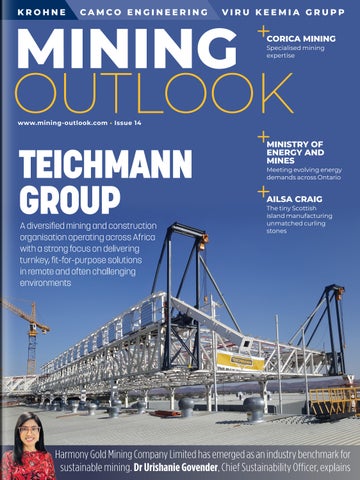
A diversified mining and construction organisation operating across Africa with a strong focus on delivering turnkey, fit-for-purpose solutions in remote and often challenging environments
MINISTRY OF ENERGY AND MINES
Meeting evolving energy demands across Ontario
AILSA CRAIG
The tiny Scottish island manufacturing unmatched curling stones


Africa Outlook, APAC Outlook, EME Outlook, North America Outlook, Mining Outlook, Healthcare Outlook, Manufacturing Outlook, Supply Chain Outlook, Food & Beverage Outlook, Construction Outlook, and Sustainability Outlook are digital publications aimed at boardroom and hands-on decision-makers, reaching an audience of more than 800,000 people around the world.
With original and exclusive content compiled by our experienced editorial team, we look to promote the latest in engaging news, industry trends, and success stories from across the globe.
Your company can join the leading industry heavyweights enjoying the free exposure we provide across our platforms with a free marketing brochure, extensive social media saturation, enhanced B2B networking opportunities, and a readymade forum to attract new investment and help you grow your business.
Visit www.outpb.com/work-with-us for details on how your company can feature for free in one of our upcoming editions.
Head of Editorial: Jack Salter jack.salter@outpb.com
Deputy Head of Editorial: Lucy Pilgrim lucy.pilgrim@outpb.com
Senior Editor: Lily Sawyer lily.sawyer@outpb.com
Editor: Ed Budds ed.budds@outpb.com
Editor: Rachel Carr rachel.carr@outpb.com
Copy Editor: Lauren Kania lauren.kania@outpb.com
Art Director: Stephen Giles steve.giles@outpb.com
Senior Designer: Devon Collins devon.collins@outpb.com
Designer: Louisa Martin louisa.martin@outpb.com
Production Manager: Alex James alex.james@outpb.com
Digital Marketing Director: Fox Tucker fox.tucker@outpb.com
Web Content Manager: Oliver Shrouder oliver.shrouder@outpb.com
Social Media Executive: Jake Crickmore jake.crickmore@outpb.com
CEO: Ben Weaver ben.weaver@outpb.com
Managing Director: James Mitchell james.mitchell@outpb.com
Chief Technology Officer: Nick Norris nick.norris@outpb.com
Global Head of Media: Lewis Hammond lewis.hammond@outpb.com
Global Media Executive: Kai Boyle-Vennard kai@outpb.com
ADMINISTRATION
Finance Director: Suzanne Welsh suzanne.welsh@outpb.com
Finance Assistant: Victoria McAllister victoria.mcallister@outpb.com
CONTACT
Mining Outlook
Norvic House, 29-33 Chapelfield Road Norwich, NR2 1RP, United Kingdom.
Sales: +44 (0) 1603 804 445 Editorial: +44 (0) 1603 804 431
SUBSCRIPTIONS
Tel: +44 (0) 1603 804 431 jack.salter@outpb.com www.mining-outlook.com
Follow us on Linkedin: @miningoutlook
Follow us on X: outlookpublish

Welcome to the 14th edition of Mining Outlook.
At the helm of this issue is Teichmann Group, whose unparalleled 30-year legacy has solidified its place as a leading mining and construction organisation across Africa.
Equipped with a central vision to provide turnkey, fit-for-purpose solutions in remote and often challenging environments, the company champions cooperation above all else.
“Collaboration is at the heart of our model. Operating across multiple countries and highly remote regions, we place a strong emphasis on leveraging collective expertise, local knowledge, and shared resources,” shares Gary Teichmann, Executive Chairman.
This ethos is, in part, demonstrated by the company’s unique organisational structure, where each business unit is led by its own Managing Director.
By building a central bond of partnership across organisational entities, Teichmann Group can continue to deliver integrated solutions that enhance efficiency, strengthen performance, and support sustainable profitability.
Likewise, defining the next chapter of African mining, Corica Mining Services has been on a journey marked by purpose and a strong connection to its surrounding communities.
“Corica represents the heart of Africa, and our way of contract mining is about more than machines – it’s about bringing people together,” insights Abdoulaye Diallo, Managing Director.
Consisting of three core divisions, the company is supported by a strong logistics and supply chain capability that has been instrumental in the materialisation of its myriad projects across the continent.
From Africa to Australia, Camco Engineering is celebrating three decades of serving the nation’s largest mining, energy, and power generation companies.
“Camco Engineering is all about delivering complex, time-critical engineering solutions. What it takes to keep our mine sites operating is staggering – agility is key,” emphasises Glenn Bailey, CEO.
This latest edition also unearths the specialist expertise and unwavering dedication of KROHNE, Viru Keemia Grupp, and many more.
We hope that you enjoy your read.
Lucy Pilgrim Deputy Head of Editorial, Outlook Publishing

AFRICA
32 Teichmann Group
A Culture of Collaboration

30 years of carefully curating a conglomerate

42 Corica Mining Services
Local Knowledge, Global Standards
Specialised mining expertise
ASIA PACIFIC
52 Camco Engineering
Driving Local Manufacturing Forwards
Three decades of Western Australia’s preeminent mechanical engineering business


60
60 KROHNE
Instrumental to Process
Instrumentation
The right solutions for process measurement applications
EUROPE & MIDDLE EAST
68 Viru Keemia Grupp
Oil Shale for Estonia
A passion for Estonia’s main natural resource


BOTSWANA HAS LONG sat at the helm of Africa’s diamond production landscape. However, with an aim to diversify beyond its core product and increase mining exploration, the country plans to branch out to a wider mineral base, including critical minerals.
Recent reports found that 70 percent of Botswana’s mining territory remains unexplored, allowing the country to break into a largely untapped market.
Bogolo Kenewendo, Botswana’s Minister of Minerals and Energy, recently announced that although diamonds will remain the backbone of the nation’s mining sector, a newly launched, state-owned exploration company will focus more on high-value minerals.
Currently, diamonds equate to around one-third of the country’s national revenue and three-quarters of its foreign exchange earnings.
SCIENTIFIC and Industrial Research Organisation (CSIRO), an Australian government agency, has identified petalite as an alternative lithium source, which is currently experiencing high demand.
Spodumene is commonly mined due to its high lithium content. However, in an attempt to level out supply and demand, other minerals are seeing greater interest as the industry looks to diversify its portfolio.
CSIRO is currently weighing up petalite’s suitability using its LithSonic™ process. The state-of-theart technology employs a supersonic flow to rapidly quench lithium metal before it can react, offering a new cutting-edge pathway for lithium extraction.

The facility will be Namibia’s first paste backfill plant, making it a cornerstone of the nation’s mining evolution.
PINAH
(RPZ) has announced the commissioning of a new waste fill plant, in partnership with Appian Capital Advisory.
This announcement is equally integral to RPZ’s growth strategy, as the plant will be a key component in the ongoing expansion of the company’s lead-zinc mine at Orange
River in southwestern Namibia – an underground mine that has become a core pillar of the local community, having been in operation since 1967.
The latest waste fill plant will therefore continue RPZ’s trajectory as a major player in Namibian underground mining.

IN AN ATTEMPT to capitalise on around half a million abandoned coal mines across the US, the Office of Surface Mining Reclamation and Enforcement (OSMRE) has announced a roll-out of fee-based grants for abandoned mine land reclamation projects.
Dedicating nearly USD$120 million over the 2026 fiscal year, the grants will be made available
EUROPE & MIDDLE EAST
THE GLOBAL URANIUM market has enjoyed a flourishing upwards trajectory at the beginning of 2026, demonstrated by spot prices surging by approximately 25 percent in January to above USD$100 per pound (lb) - the first time uranium has reached this milestone in two years. This follows a period of volatility in 2025, where prices considerably declined in Q1 to USD$60 per lb,
for eligible states and tribes. Many of the deserted sites were abandoned before 1977, when newly established federal reclamation laws dictated that they posed safety, environmental, and health risks.
The funding will be allocated to removing hazards, as well as restoring damaged lands and strengthening coal communities across the US.

before bouncing back by the end of the year to USD$80.
The recent momentum in uranium prices is evidence of a growing shift in investor attention from downstream nuclear activities to upstream supply chain operations, primarily due to greater policy clarity.
FOLLOWING MONTHS OF discussion and coordination, Rio Tinto has pulled out of a megamerger with Glencore – a USD$260 billion partnership with the potential to create the world’s largest mining conglomerate.
The merger has been in the works for over 15 years, with this year marking the two mining titans’ third attempt to partner.
Rio Tinto stated it could not agree to a deal that didn’t deliver enough value to its shareholders, despite the merger’s potential to double the company’s copper output at a time when prices are rapidly increasing.
In response, Glencore argued that Rio Tinto’s proposed ownership structure significantly underplayed its relative value contribution.
AFRICA
IN A RACE TO secure African supplies of copper, cobalt, and other critical minerals, the US is utilising offtake deals and state-backed funding to challenge Chinese control of the market.
Operators are focusing on Zambia, Guinea, and the Democratic Republic of Congo (DRC). The latter in particular is responsible for 70 percent of the world’s cobalt supplies and accountable for approximately 3.3 million metric tonnes of copper in 2024.
The US is leveraging offtake agreements and other trading structures specifically to steer output towards value chains that, despite being dominated by Chinese refiners, are deeply aligned with the nation’s mining expansion targets.

Dr Cyril Widdershoven, Senior Advisor for Blue Water Strategy, assesses the valuable role Pakistan could play in meeting a growing international demand for key minerals
Writer: Dr Cyril Widdershoven, Senior Advisor, Blue Water Strategy
Global copper demand is expected to grow by 24 percent to reach 42.7 million tonnes per annum (tpa) by 2035, driven by electrification and digitalisation pressures across the world economy.
This explains why critical minerals have shifted from a specialist topic to a board-level priority.
The International Energy Agency (IEA) expects electricity demand from artificial intelligence (AI)-driven data centres to surge by 2030 and, in turn, demand for energy transition minerals to grow rapidly.
Governments are rewriting industrial policy around access to minerals, whilst investors are hunting for projects that can deliver at scale.
The EU has made this strategic intent explicit through its Critical Raw Materials Act, which aims to secure and diversify supply for key technologies and strategic sectors. In this environment, the old map
of mineral supply looks increasingly fragile. Export controls have become a lever of statecraft.
China has had certain antimony products under export controls since 15th September 2024 – a reminder that supply chains can be constrained quickly when geopolitics hardens.
For investors, this is a risk that shows up in project financing, delivery timelines, and the premium paid for dependable jurisdictions. Pakistan is positioned at a valuable intersection of these forces.
Geographically, it connects the Persian Gulf, Central Asia, and Indian Ocean trading routes.
Diplomatically, it has the ability to work with multiple centres of power, including the US, China, and Europe.
For European and Western investors seeking diversification, this matters, as does the parallel appetite from Gulf and Saudi-based capital, including resource-focused vehicles that are actively scanning for scale projects and
strategic partnerships.
Alongside commercial miners, sovereign wealth fund-backed investors and operators are showing sharper interest in long-life copper and gold assets that can meet strict governance and environmental, social, and governance (ESG) expectations.
The opportunity, however, is not simply to extract. The global energy transition rewards countries that can deliver reliability and value beyond just volume.
That means predictable licensing, fiscal stability, and a credible operating environment that supports international standards on transparency, environmentalism, and community impact.
It also means a practical approach to local value creation in terms of skills, services, and processing.
Pakistan has already begun to frame its ambition in these terms. The inaugural Pakistan Minerals Investment Forum held in Islamabad last year captured a clear message from national leadership.
Investment was encouraged, but the overall goal set was for the country to develop downstream capability rather than remain a pure exporter of raw materials.
Pakistan’s world-class copper and gold mining project, Reko Diq, is the nation’s natural anchor for this new chapter.
The mine’s majority shareholder, Barrick Mining Corporation (Barrick), updated its feasibility disclosures point to Phase 1 production of around 240,000 tpa of copper on a 100 percent basis, alongside gold output.
Scale is only part of the storyequally important is the quality of the financial coalition now forming around the project.
In August 2025, the Asian Development Bank announced approval of a financing package worth USD$410 million, whilst November saw the US Export-Import Bank approve USD$1.25 billion in financing for Reko Diq.
It’s important to note how Pakistan’s appeal does not begin and end with one asset.
The country has a track record of international operating partnerships, including the long-running Saindak Copper-Gold Project developed with Chinese participation.
The next phase is to broaden the portfolio and modernise the framework around it – investors want a pipeline, not a single headline.
They want clarity on geology, but also permits, land access, logistics, and dispute resolution, and to see how resource development translates into stable revenues and communities.
This is where the Pakistan Minerals Investment Forum 2026 (PMIF26) becomes strategically timed.
PMIF26 will be held in Islamabad between 8th and 9th April this year and is designed as a deal-oriented platform where international stakeholders can engage the regulatory ecosystem in one place and explore new opportunities.
In a market defined by supply anxiety, it offers a structured opportunity to match Pakistan’s resource base with the capital and technical partners needed to turn reserves into dependable supply.
There are also nearer-term minerals that can help Pakistan build credibility quickly.
Antimony has moved from the margins into focus as export controls
reshape trade flows.
Pakistan has been drawing attention from US-linked buyers despite relatively modest current output, which underlines how quickly strategic interest can shift when markets tighten.
For European and Western investors, the proposition is straightforward.
Pakistan offers scale in flagship projects, a widening exploration story, and a geography that naturally links multiple demand centres.
The task now is execution – predictable governance unlocks capital, bankable projects unlock capability, and capability unlocks value.
The energy transition is accelerating, supply chains are fragmenting, and the world is looking for new, trusted sources.
Pakistan can step into that role. The next chapter should focus on delivery.

Cyril Widdershoven, Senior Advisor for Blue Water Strategy, is a strategic analyst, advisor, and writer specialising in the energy, commodity, and mining markets, maritime trade, geopolitics, and critical infrastructure.
With more than two decades of experience at the intersection of oil and gas, mining, investments, shipping, ports, and security, Widdershoven is known for translating complex geopolitical and geoeconomic dynamics into actionable insights for policymakers, industry leaders, and investors.


Whilst the industry may have been traditionally viewed as old-fashioned or purely extractive, today’s mining is undergoing a remarkable transformation, making it one of the most exciting sectors to be a part of. Harmony Gold Mining Company Limited (Harmony) – a gold mining specialist with a growing international copper footprint – recognises a
As South Africa’s largest gold producer by volume, Harmony Gold Mining Company Limited has shaped the sector for the past 75 years. Dr Urishanie Govender, Chief Sustainability Officer and acclaimed global sustainability leader, takes us through the company’s journey to build a greener future
Writer: Lauren Kania
cultural shift across the industry, where there’s a strong commitment to operate more sustainably and responsibly than ever before.
This entails tackling climate change, investing in renewable energy, and ensuring that mining activities drive socioeconomic upliftment in host communities. Together, these changes signal that mining is evolving into a high-tech, purpose-driven industry.

TELL US MORE ABOUT YOUR VALUES OF SAFETY, ACCOUNTABILITY, ACHIEVEMENT, CONNECTEDNESS, AND HONESTY.
Dr Urishanie Govender, Chief Sustainability Officer: “We refer to ourselves as Harmonites – a community united by the hope of a greater future for ourselves, each other, and our communities. Our values are principle-centred, serving as a guide for decision-making, behaviour, and our culture.
“No matter the circumstances, safety is our main priority. It’s a promise, not just compliance, and the foundation of our culture, where every person matters.
“Achievement is core to our success; it’s our fuel, driven by purpose, resilience, and the courage to turn risk into opportunity. It’s the spirit behind our empowerment programmes and performance culture.
“We are all accountable for delivering on our commitments. Accountability acts as our compass, owning our impact and modelling integrity; it’s the backbone of our leadership development and risk-propensity coaching.
“We are all connected as one team. Connectedness is our rhythm – bridging cultures, communities, and conversations. This is the essence of our safety campaign, Thibakotsi, which emphasises unity in diversity and inclusion in action.
“We uphold honesty in all our business dealings and communicate openly with stakeholders. Honesty is our voice – clear, courageous, and authentic; it’s how we build trust, foster psychological safety, and lead with transparency.”
“Harmony’s push for minerals like copper means mining is at the heart of the low-carbon future. Being part of this industry now means contributing to solutions for climate change and sustainability on a global scale,” expands Dr Urishanie Govender, Chief Sustainability Officer.
“Mining is more than just extracting ore – it’s about empowering our people, embracing sustainability, and delivering value to society.”
Harmony has emerged as an industry benchmark for sustainable mining, with its ‘mining with purpose’ ethos integrating environmental, social, and governance (ESG) considerations into every facet of the business.

From large-scale solar energy projects and leading the world in gold tailings reclamation to expanding into copper to power the low-carbon transition, Harmony demonstrates sustainability leadership, with Dr Govender proudly guiding the team.
Dr Govender’s journey began with a strong foundation in science, which she applied to environmental and safety leadership roles where she led ESG initiatives and saw firsthand how responsible practices could improve both safety and profitability.
“This experience fuelled my interest in the industry: I became convinced that mining, which is often seen as a traditional sector, can be transformed through sustainability,” she insights.
Over the years, Dr Govender has headed sustainability and safety divisions in both mining and engineering firms, even serving as a board member for South Africa’s National Parks (SANParks).
Each chapter of her career strengthened the belief that mining can be a force for good. By the time she joined Harmony in 2024, it was clear that sustainability was a passion she wished to further in her role.
“I was drawn to the mining industry precisely because it presented an
“Harmony touches on critical issues like environmental stewardship, community development, and innovation - with sustainability at its core”
– DR URISHANIE GOVENDER, CHIEF SUSTAINABILITY OFFICER, HARMONY GOLD MINING COMPANY LIMITED
opportunity to drive meaningful change at scale. Harmony touches on critical issues like environmental stewardship, community development, and innovation – with sustainability at its core,” she details. The company is, therefore, the perfect catalyst to engage modern mining. As South Africa’s (SA) largest gold producer by volume, having helped shape the industry for over seven decades, Harmony operates across SA, Papua New Guinea, and Australia.
Harmony’s differentiator can be summed up in one phrase: ‘mining with purpose’. In such a competitive industry, the company’s deeply ingrained values-driven approach and long-term, strategic mindset separate it from the rest.
Meanwhile, Harmony’s focus on people’s well-being also extends to community relationships, as the company sees communities as partners, reflecting a level of connectedness and trust that is not universal in the industry.


Elsewhere, Harmony’s integrated approach to sustainability is embedded in its business model; the company plans its operations with stringent ESG principles informing its decisions.
This is evidenced by its massive tailings retreatment programme in SA and large-scale solar energy project to power its mines and reduce carbon emissions.
“Harmony has built a culture around our values. In everyday terms, this means that all levels of the business understand and live by our values,” expands Dr Govender.
75 years of gold mining experience in SA
1.48 million troy oz (Moz) of gold production
36.82 Moz of gold and gold equivalent mineral reserve
ZAR155.4 billion in market capitalisation


Further evidence of the impact and industry-leading capabilities of Harmony is the recent projects it has embarked upon.
At the end of October 2025, the company completed the acquisition of MAC Copper – the owner of the high-grade CSA copper mine in New South Wales, Australia. This completion marks a significant milestone in the company’s strategy to grow into a global gold and copper producer, reinforcing its commitment to sustainable value creation.
“Acquiring the CSA copper mine from MAC Copper, as well as the highgrade Mponeng gold mine in 2020, demonstrates how we pursue valueaccretive acquisitions that strengthen
our portfolio rather than just chasing volume,” explains Dr Govender.
Equally, the copper asset adds immediate copper production to Harmony’s repertoire and will meaningfully enhance the business and support long-term growth. The CSA mine will ultimately be embedded into the company, aligning its operations with Harmony’s proven planning and performance frameworks.
Additionally, in November 2025, the company announced the completion of the updated Feasibility Study and the approval of the Final Investment Decision (FID) by the Board of Directors for its Eva Copper Project in Queensland, Australia.
The open pit is expected to produce approximately 65,000


“Mining is more than just extracting ore – it’s about empowering our people, embracing sustainability, and delivering value to society”
– DR URISHANIE GOVENDER, CHIEF SUSTAINABILITY OFFICER, HARMONY GOLD MINING COMPANY LIMITED
tonnes (t) of copper annually during the first five years, with a projected average production profile of 60,000 t of copper and 19,000 ounces (oz) of gold per annum over the expected 15-year life-of-mine.
“Both projects create a compelling platform that brings together the enduring value of gold with the future-facing strength of copper, enhancing cash flow resilience
across commodity cycles,” details Dr Govender.
“In addition to our significant gold production, our two Australian copper assets are expected to deliver a combined total of approximately 100,000 t of copper annually once fully commissioned.”
As Harmony embraces 2026, its focus is on consolidating the gains it’s made and pushing forward its

growth and sustainability trajectory. To achieve this, there are several key priorities on the company’s agenda. This includes safety and operational delivery, integrating and optimising new assets, advancing the WafiGolpu Project, and developing its sustainability and ESG targets.
“By focusing on safety, the integration of new assets, advancement of key projects, ESG excellence, and financial discipline, we aim to set Harmony up for both nearterm and long-term success.
This balanced approach will see us grow our production whilst continuing to improve on every dimension of sustainability, thereby creating shared value for all stakeholders,” concludes Dr Govender.

The Hon. Stephen Lecce, Ontario Minister of Energy and Mines, describes how the ministry is poised to meet the demands of an evolving energy landscape, outlining its forward-thinking frameworks and unwavering commitment to local socioeconomic development
Writer: Lucy Pilgrim
Mining Outlook (MO): Firstly, could you introduce us to the Ministry of Energy and Mines and talk us through its mission to develop a safe, reliable, and affordable energy supply across Ontario?
The Hon. Stephen Lecce, Ontario Minister of Energy and Mines (SL): The Ministry of Energy and Mines is charged with a clear mission: to ensure Ontario has the energy and critical minerals needed to fuel economic growth, create well-paid jobs, and deliver a high quality of life for families across the province.
Our core focus is reliability, affordability, and safety – because
energy underpins everything from hospitals and schools to manufacturing and mining.
With a dual mandate, we have a clear goal to deliver a dependable, clean, and cost-effective energy system that keeps pace with Ontario’s rapid growth while unlocking the full potential of the province’s mining sector.
As President Trump takes direct aim at Canada’s economy, energy security has become national security, which is why we have taken tangible action to advance critical energy projects such as the development of one of the Western world’s largest nuclear expansions.


This includes proposed new builds at Wesleyville and Bruce County, totaling almost 15,000 megawatts (MW) of new energy generation, and one of the largest transmission buildouts with hundreds of kilometers of new lines planned.
As electricity demand increases due to electrification, population growth, and industrial expansion, we are taking decisive action to plan ahead, investing in energy generation, transmission, and conservation to ensure Ontario remains competitive while keeping costs down for households and businesses.
MO: What is your current take on the energy and mining space in Canada at the moment? Is it exciting to work in?
SL: It is absolutely one of the most exciting and consequential sectors in Canada today. We are at a pivotal moment where energy security, economic growth, and global competitiveness intersect.
Demand for electricity, critical minerals, and responsibly produced resources is growing rapidly, both at home and abroad, and the jurisdictions that act decisively will lead.
Canada, and Ontario in particular, is uniquely positioned. We have a stable regulatory environment, highly skilled workforce, world-class geology, and clean electricity grid.
However, opportunity alone isn’t enough. We are matching potential with action – investing in infrastructure, expanding domestic mineral processing, and ensuring the energy and mining sectors are engines of wellpaid jobs and global investment.
This is a space where people can build careers, create value, and strengthen Canada’s role as a trusted, reliable supplier of the resources the world increasingly demands.
It is dynamic, high-stakes, and full of opportunity – and Ontario is leading the way.
MO: How is Ontario at the helm of the nation’s energy and mining landscape with an ambitious energy efficiency effort?
SL: Last year, our government launched Ontario’s Electricity Energy Efficiency Framework as a cornerstone of its long-term energy strategy and one of the boldest investments in energy conservation in Canadian history.
Energy conservation is one of the smartest, most cost-effective resources we have, and Ontario is putting CAD$10.9 billion behind it to expand and enhance energy efficiency programs province-wide.
This fund represents the country’s largest sustained energy investment and is nearly three times the annual average investment of previous frameworks.
Through this long-term strategy, we are delivering programs that help families, businesses, and communities reduce energy consumption and manage peak electricity demand –while lowering the overall costs of the electricity system.
By 2036, the framework is expected to reduce peak electricity demand by up to 3,000 MW and cut electricity consumption by approximately 18 terawatt hours – the equivalent of taking roughly three million homes off the grid.
Over its lifespan, this initiative is projected to deliver CAD$23.1 billion in electricity system benefits and save ratepayers about CAD$12.2 billion by deferring or avoiding the construction of new-generation infrastructure.
This investment supports a suite of modern, customer-focused programs, including rebates of up to 30 percent for home energy-efficiency renovations like windows, insulation, smart thermostats, heat pumps, rooftop solar, and battery storage.
We also recently expanded the program to include rebates for energy-efficiency appliances of up


to CAD$200. The framework was also developed to include support for small businesses and institutional energy upgrades through incentives that reduce operating costs and drive economic competitiveness.
MO: Can you tell us more about Ontario’s integrated energy plan and how it will achieve its mission to power the strongest economy in the G7?
SL: In June last year, I was proud to release Ontario’s first-ever integrated energy plan, Energy for Generations – a 25-year roadmap that takes a coordinated, long-term approach to

energy planning across electricity, fuels, and conservation.
For the first time, the province is moving beyond siloed decisionmaking to align planning across all energy sources, ensuring our system remains reliable, affordable, and capable of supporting economic growth for decades to come.
The plan is designed to meet rising demand driven by electrification, advanced manufacturing, and population growth, while keeping Ontario competitive on the global stage.
By investing in new generation technology, modernizing transmission, and supporting

“CANADA, AND ONTARIO IN PARTICULAR, IS UNIQUELY POSITIONED. WE HAVE A STABLE REGULATORY ENVIRONMENT, HIGHLY SKILLED WORKFORCE, WORLD-CLASS GEOLOGY, AND CLEAN ELECTRICITY GRID”
– THE HON. STEPHEN LECCE, ONTARIO MINISTER OF ENERGY AND MINES
innovation, Energy for Generations lays the foundation to power the strongest economy in the G7.
Today’s decisions are about securing an affordable, secure, reliable, and clean energy system that our kids and grandkids can count on and an economy that continues to lead.
MO: How does the Ministry of Energy and Mines support people, jobs, and local business growth?
SL: Everything we do is grounded in supporting the people of
Ontario and the communities they call home.
Reliable and affordable energy is a powerful economic driver – it attracts global investment, keeps local businesses competitive, and creates well-paid jobs across the province, particularly in manufacturing, construction, mining, and the skilled trades.
For example, major investments in electricity generation and transmission – including the refurbishment of the province’s nuclear fleet and new infrastructure to support growth in regions like Southwest and Eastern Ontario – are sustaining tens of thousands of skilled jobs while ensuring the industry has the power it needs to grow.
These investments are also critical to supporting the province’s expanding electric vehicle (EV) and
advanced manufacturing sectors, which rely on a stable, affordable electricity supply.
In the mining sector, Ontario is strengthening its position as a global leader through responsible development and strategic project advancement. This includes moving forward with critical minerals growth in the Ring of Fire, which holds worldclass deposits of nickel, chromite, and other minerals essential to EVs, batteries, and clean technologies.
Central to this effort is our CAD$500 million Critical Minerals Processing Fund, which will help companies build the facilities needed to transform raw minerals into highervalue products right here in Ontario.
Historically, many of our critical minerals have been shipped out of the province – or country – for processing.

Our goal is to end that ‘rip and ship’ approach so minerals mined in Ontario stay in Ontario for refining, processing, and value-added manufacturing.
By expanding domestic processing capacity, we are not only creating more skilled jobs and strengthening made-in-Ontario supply chains but also protecting the province’s workers and economy from the impacts of tariffs and global economic uncertainty.
Processing critical minerals at home improves resilience, supports long-term investment certainty, and ensures Ontario captures the
full economic potential of its natural resources.
To further support job creation and business growth, our government is accelerating mining project approvals through the One Project, One Process (1P1P) framework, giving proponents clearer, more predictable timelines to bring new mines online with a clear goal of cutting review times by 50 percent.
We moved quickly to pass this legislation in October last year and have already designated two major projects under 1P1P, including Frontier Lithium’s PAK Lithium Project and Canada Nickel’s Crawford Nickel

Project – sending a strong signal that Ontario is open for business and ready to compete globally.
By modernizing permitting processes, investing in geoscience, and supporting infrastructure that enables responsible development and processing, we are helping bring projects to market faster while maintaining strong environmental and community standards.
These efforts are building madein-Ontario supply chains in a vast range of areas – from mining to manufacturing – supporting longterm employment in northern and rural communities, advancing Indigenous partnerships, and ensuring the economic benefits of Ontario’s natural resources remain in the province for generations to come.
MO: In what ways has the Ministry of Energy and Mines considered Indigenous communities when making long-term investment decisions?
SL: Our government has made a dedicated commitment to economic reconciliation and meaningful engagement and partnerships with Indigenous communities. We recognize these communities as rights holders and essential partners in Ontario’s energy and mining future.
The ministry supports Indigenous participation through consultation, capacity building, and opportunities for economic partnership –particularly in energy projects and mining developments.
By supporting Indigenous ownership, training, and long-term economic benefits, we are working to ensure that development is inclusive, respectful, and mutually beneficial.
Our government is also advancing economic reconciliation through the province’s resource revenue sharing, delivering a direct share of mining revenues to First Nations to support critical community infrastructure and
“OUR ROLE AT THE MINISTRY IS TO ENSURE THE ENERGY AND MINING SECTORS AREN’T JUST PART OF THE ECONOMY – THEY ARE ITS ENGINE, POWERING OPPORTUNITY, GROWTH, AND PROSPERITY FOR THIS GENERATION AND THE NEXT”
– THE HON. STEPHEN LECCE, ONTARIO MINISTER OF ENERGY AND MINES

long-term economic development. We continue to work collaboratively with Indigenous partners and remain committed to expanding these agreements as part of our broader approach to advancing reconciliation and shared prosperity.
MO: Finally, looking ahead, what is the ministry’s vision for the future of Ontario’s mining and energy sector?
SL: Our vision is clear: to make Ontario a global leader in clean, reliable energy and responsible mining –driving economic growth, creating well-paid jobs, and keeping energy affordable for families and businesses. We will get there by planning ahead, investing in critical infrastructure, supporting innovation, delivering Ontario’s integrated energy plan, and responsibly unlocking the province’s vast critical mineral potential. At every step, reliability and affordability guide our decisions,


because a growing economy depends on an energy system people can trust. Ontario has the talent, resources, and ambition to lead. Our role at the ministry is to ensure the energy and mining sectors aren’t just part of the economy – they are its engine, powering opportunity, growth, and prosperity for this generation and the next.


In the dazzling, dynamic world of watermelon tourmaline, we unearth a fruitful gem where striking colours and emotional healing intertwine, forming nature’s own masterpiece. These juicy jewels exhibit a radiant gradient infused with positive energy
Writer: Rachel Carr
Known for its extraordinary range of colours and variations, tourmaline is a fascinating and multifaceted gemstone that belongs to a diverse family of boron silicate minerals.
By the late 1800s, mineralogists had begun to classify the stone into two primary varieties – elbaite, known for its electric colours, and schorl, the darker variety. Today, the rich and diverse tourmaline group comprises 44 distinct mineral species. With a remarkable crystalline structure, it displays a captivating prism of colours, with blacks and rich blues that evoke a sense of mystery and allure, whilst vibrant pinks and greens burst with lively energy, showcasing the gem’s unique charm and complexity.
Indeed, its name reflects its diverse colour spectrum, as tourmaline is derived from the Sinhalese word toramalli, meaning ‘mixed gems’.
One of the jewel’s most intriguing features is its ability to produce multiple shades in a single crystal, a phenomenon known as colour zoning.
This characteristic is particularly notable in watermelon tourmaline, a visually striking variety renowned for its extraordinary colour gradient, which distinguishes it from other gemstones.
Manganese impurities cause a bright pink or deep red core that elicits the luscious flesh of a ripe watermelon, elegantly encircled by a rich green outer layer reminiscent of the fruit’s protective rind. This spectacle results from the presence of chromium or vanadium.
The harmonious blend of irresistable colours in watermelon tourmaline creates a dazzling, lively aesthetic, making it a prized choice for both gem enthusiasts and skilled jewellers.
Its unique appearance and vibrant colours attract attention and

admiration, enhancing the beauty of any jewellery piece. Moreover, watermelon tourmaline’s durability makes it an excellent choice for a wide range of settings, from elegant rings to stunning pendants.
The colour zoning in watermelon tourmaline results from variations in the chemical environment during its formation.
Initially, a high concentration of manganese gives the inner core a pink to red hue, but as the fluid’s composition changes, elements like iron or chromium become more abundant, forming the outer green layer.
Tourmaline, a cyclosilicate, has a crystal structure organised in ring-like silicate tetrahedral units connected by various elements, including lithium, aluminium, iron, magnesium, sodium, and calcium. These trace

elements contribute to the gem’s wide range of colours.
Watermelon tourmaline crystals form in lithium, manganese, and boron-rich granite pegmatitescoarse-grained igneous rocks that host rare elements.
As these elements cool and solidify from residual magma, they create a visual record of the gemstone’s formation, fostering awe and respect for nature’s intricate processes.
Unlike the longitudinal bi-colour or polychrome zonation seen in other tourmalines, watermelon tourmaline primarily consists of elbaite, fluorelbaite, or liddicoatite, all of which are species classified within the tourmaline group.
Watermelon tourmaline is typically cut into slices to showcase its impressive colour zones. Lapidaries –skilled artisans specialising in cutting, shaping, and polishing gemstones –focus on selecting the best angles to emphasise the striking gradient from pink to green.
The most prized stones exhibit a sharp contrast between these colours with minimal blending. However, achieving this whilst faceting the stone and maintaining this balance can be challenging due to common inclusions and natural fractures in tourmaline crystals.
In their raw state, watermelon tourmaline crystals are often long and columnar, which makes them ideal for slicing or cutting into cabochons –gemstones shaped and polished into a smooth, rounded form.
The sleek emerald-cut watermelon tourmaline is highly sought after for its remarkable ability to display the entire colour spectrum in a single stone,

maximising its brilliance and colour zoning.
Although found in several locations around the world, including various regions of Africa and the expansive landscapes of the US, Brazil remains the most notable source of watermelon tourmaline, with sizeable deposits in Minas Gerais, the Brazilian state known for producing highquality gems.
Other significant places include Madagascar, which creates jewels that are renowned for their striking colour contrasts, whilst Nigeria produces fine watermelon tourmaline with vivid hues.
Elsewhere, Afghanistan is known for its exquisite bi-coloured gemstones whereas the US, specifically California and Maine, with deposits prized for
their rich pink and green hues, are the regions most recognised for their high-quality watermelon tourmaline production.
However, the most famous mineral specimens originate from the Tourmaline King Mine and the Himalaya Mine in San Diego, California. Throughout the 20th century, the latter was one of the largest producers of gem and specimen-grade tourmaline in North America.
Watermelon Tourmaline is also present in Africa, particularly Namibia and Nigeria, as well as in Sri Lanka and Australia.
Recently, exceptional specimens have been mined in the Goma region of the Democratic Republic of the Congo (DRC).
Watermelon tourmaline is mined using either open-pit or tunnel mining methods, depending on the depth of the deposit. Miners typically extract tourmaline crystals from pegmatite veins, which are subsequently sorted and graded by colour, clarity, and size.

Watermelon tourmaline is admired not only for its stunning aesthetics but also for its vibrant energy and cultural significance.
This combination adds depth to its appeal, making the gem a favourite amongst those who seek
• Watermelon tourmaline has a hardness rating of between seven and 7.5 on the Mohs scale.
• Clean bi-colour specimens of watermelon tourmaline weighing over five carats are becoming increasingly rare and command significant premiums.
• The enchanting history of watermelon tourmaline traces back to the late 1600s and early 1700s, when Dutch traders first unearthed it along the picturesque west coast of Italy; however, it was not officially recognised as part of the tourmaline family until the 19th century.
• The unique colour zoning that defines watermelon tourmaline gained immense popularity during the late 19th and early 20th centuries as gemstone enthusiasts were drawn to its vibrant, dual hue.
• In Brazil and areas where tourmaline mining exists alongside agriculture, watermelon gemstones symbolise fertility, growth, and the abundant cycles of farming – the iconic pattern represents nature’s bounty.

harmony and positivity – whether worn as jewellery or kept as a cherished stone.
In recent years, watermelon tourmaline has gained popularity in high-end and artisanal jewellery markets for its uniqueness, and is especially favoured by those interested in metaphysics.
The green layer represents the nurturing and healing energies of nature, whilst the pink embodies love, compassion, and emotional healing, resonating closely with the heart chakra.
Enthusiasts cherish watermelon tourmaline for its ability to foster emotional healing, balance, and love, inspiring hope and spiritual growth amongst those interested in metaphysics.
Additionally, the gemstone is thought to balance masculine and
feminine energies, creating harmony within the owner and in their relationships.
Worn by many to stimulate creativity and encourage out-of-thebox thinking, watermelon tourmaline’s symbolic colours inspire joy, vitality, and a positive outlook on life. It is regarded as a powerful companion for personal journeys, fostering deep

spiritual growth and facilitating emotional release.
With the future of watermelon tourmaline promising, its value is expected to grow amidst rising demand and ongoing mining restrictions in Brazil. The Minas Gerais region remains the primary source of high-quality watermelon tourmaline, and as mining yields decline, the rarity and value of these gemstones are likely to increase.
With its unique visual appeal and increasing rarity, the stone is becoming an attractive item for collectors, jewellers, and investors alike.
Furthermore, watermelon tourmaline’s talismanic beauty is complemented by its potential for emotional healing and its metaphysical properties, thereby enhancing the gem’s desirability.


As the sport of curling gains traction at this year’s Winter Olympic Games in Milan and Cortina, Italy, we uncover the tiny Scottish island manufacturing the stones crucial to the game, and why their unique mineral properties remain unmatched by any other form of granite in the world
Writer: Lily Sawyer
Curling at the Milano Cortina 2026 Winter Olympic Games has undoubtedly captured the hearts of spectators, with a record number of viewers from across the globe tuning in to watch the drama unfold.
Native to Scotland in the UK, the origins of curling date back to the 16th century, when it was played on frozen lochs and ponds in the Scottish Lowlands.
At the time, participants used

flat-bottomed stones obtained from riverbeds, and it soon became known as the ‘roaring game’ thanks to the loud sounds the stones made when gliding over ice.
By the 1900s, Scottish emigrants had popularised the sport in Canada, which soon evolved to include more structured rules, regulations, and standards.
Today, curling comprises two teams alternating in turn to slide polished granite stones across smooth ice
towards a large, circular target.
Each stone weighs around 18 kilogrammes, and the aim of the game is to finish closer to the target’s centre than your opponent.
Scotland remains the undeniable home of curling, with World Curling – the global governing body for the sport – being based in Perth, and the Great British women’s and men’s teams winning silver and gold medals, respectively, at the Beijing 2022 Winter Olympic Games.
Indeed, the stones that are crucial to the game also hail from Scotland. Specifically, those used on the Olympic and European Curling Championship circuits are made exclusively of granite quarried from Ailsa Craig – a small, uninhabited island in the Firth of Clyde.
Thanks to its characteristics as the hardest and purest form of granite in the world, Ailsa Craig granite has undeniably become a cornerstone of modern curling.

• Translating as ‘fairy rock’, the island’s Gaelic name originates from a long-extinct volcano whose activity is thought to have been fundamental in the formation of the unique properties found in the island’s granite.
• Ailsa Craig has a circumference of just 3.2 kilometres and a height of 340 metres.
• Although today uninhabited, the island saw human activity between the 16th and 19th centuries, when it served as a strategic link between Scotland and Ireland.
• In the 1500s, Ailsa Craig became a haven for Catholics during the Scottish Reformation.
• Today, the island is also an important bird sanctuary overseen by the Royal Society for the Protection of Birds (RSPB) and managed as a nature reserve in agreement with the Marquess of Ailsa.
• The island is also home to Scotland’s third-largest colony of gannets, and boasts additional rare birdlife such as puffins, guillemots, kittiwakes, razorbills, herring gulls, and black-backed gulls.
Formed from the cooling and solidifying of magma around 60 million years ago – the same volcanic activity that formed what would one day become the Giant’s Causeway in Belfast, Northern Ireland – Ailsa Craig granite is unusually low in aluminium.
This extraordinary magmatic event also led to the presence of unique components presiding within the rock – such as arfvedsonite, aegirine, and aenigmatite – alongside more commonly found minerals such as feldspar and quartz.
The presence of these minerals makes the granite notably robust and resistant to chipping – particularly
when in moist, wet conditions such as the icy surfaces encountered in curling.
Furthermore, in a game where stones frequently knock into each other, and their ability to glide consistently is paramount, being resistant to cracking and condensation becomes an even more important consideration when manufacturing curling stones.
Today, three types of granite are quarried on Ailsa Craig – common green, red hone, and blue hone – all of which have similar properties.
Red hone is close to extinct, having been gradually quarried away over the years, leaving common green and blue hone granite to make up the key

components of the modern curling stone.
It is the former that is used to create the body of the Olympic curling stone, or the ‘striking band’, whilst the latter – the higher quality and more hardwearing of the two – is fitted to the base to form the ‘running band’ which enables the stone to glide effortlessly over ice.
Kays Scotland (Kays) has been diligently making curling stones since 1851 and holds the exclusive rights to manufacturing Ailsa Craig granite, as granted by the island’s owner, the Marquess of Ailsa.
The small local business has been
providing curling stones for use in the Winter Olympic Games since the Chamonix Games in 1924.
Nestled in Mauchline, East Ayrshire, Kays employs just 15 dedicated team members who work to provide meticulously hand-crafted curling stones to the Olympics each year.
At the Beijing 2022 Winter Olympic Games, for example, all 132 curling stones used were extracted from the Ailsa Craig quarry and manufactured by Kays.
To create the stones, granite is carefully extracted from the island’s quarries – a process that takes place just once a decade due to strict environmental regulations, with the most recent harvest having taken
place in 2020.
Then, the granite is transported back to the mainland by boat and stored before being cut, assessed for flaws, ground down to size, and polished up by Kays.
Producing just 2,000 stones per year – an average of 48 stones every working week – the manufacturer’s reputation for hand-crafted quality precedes it.
As the unique properties of Aisla Craig granite remain unmatched today, the tiny Scottish island – with Kays at the helm – is set to continue leading the way for world-class curling stones in the Milano Cortina 2026 Winter Olympic Games and beyond.


As mining organisations worldwide confront unprecedented change, embracing technological innovations and incorporating critical environmental sustainability agendas, now more than ever is the time to showcase the strides being taken in this dynamic sector.
A multi-channel brand, Mining Outlook brings you the positive developments driven by organisations across the global mining industry through its various platforms.
Discover exclusive content distributed through its website, online magazine, social media campaigns and digital dispatches, delivered straight to your inbox with a bi-weekly newsletter.
Through these compelling media channels, Mining Outlook continues to foreground the movers and shakers of the industry.
To participate as a featured company and join us in this exciting endeavour, contact one of our Project Managers today.


Teichmann Group is a diversified mining and construction organisation operating across Africa with a strong focus on delivering turnkey, fit-for-purpose solutions in remote and often challenging environments.
“Our business model aligns management’s interests with the group’s, fostering a culture of shared growth and accountability,” introduces Gary Teichmann, Executive Chairman.
Each business unit is led by a Managing Director who has the opportunity to earn equity in the entity they oversee.
This ensures strong alignment and ownership, giving every Managing Director a vested interest in sustainable performance and driving a focus on operational efficiency, long-term development, and profitability.
“Collaboration is at the heart of our model. Operating across multiple countries and highly remote regions, we place a strong emphasis on leveraging collective expertise, local knowledge, and shared resources. By partnering closely across entities, we deliver integrated solutions that enhance efficiency, strengthen performance, and ultimately support sustainable profitability,” Teichmann explains.

We speak to Gary Teichmann, Executive Chairman, about Teichmann Group’s innovative business model, key achievements over the past three decades, and ambitious plans for the future
Writer: Rachel Carr
Project
Manager: Thomas Arnold
Celebrating three decades in the mining and construction industry is a significant milestone for Teichmann Group, a journey marked by remarkable transformation and growth since its inception.
Over the years, the group has navigated numerous changes, adapting to the evolving sector landscape whilst maintaining its commitment to excellence and innovation.
“Over the past three decades, we’ve expanded our footprint across Africa and established a strong reputation for delivering complex mining, civil engineering, and infrastructure projects,” prides Teichmann.
“To mark the anniversary, we hosted two significant celebrations with a staff celebration at Wild Coast Sun to honour our people –the backbone of our success – and a client and supplier event at The Capital Zimbali Resort, recognising the partners who have walked this journey with us. These events paid tribute to our history, our relationships, and the culture that has defined Teichmann Group for 30 years.”
Reflecting on this rich history and the relationships that have fuelled growth, Teichmann remains dedicated to advancing the group’s mission by actively acquiring and developing assets whilst optimising its diverse service offerings.
“We aim to acquire and develop our own assets and leverage our services businesses – T3 Drilling, Teichmann

Structures, Teichmann Construction & Mining (CC&M), and T3 Projects – to deliver the services required to realise our objectives,” he impassions.
This commitment to acquiring and developing assets not only underscores the group’s strategic vision but also complements its focus on succession planning, ensuring the leadership is in place to execute Teichmann’s objectives effectively.
“One of our biggest priorities is succession planning. We have already initiated development programmes designed to ensure strong leadership depth and operational continuity. By July 2026, we expect to be in an excellent position with a wellstructured succession pipeline and strengthened organisational capability,” Teichmann concludes emphatically.
CC&M – Ken Gibbs
TEICHMANN STRUCTURES –Dave Thurlow
T3 PROJECTS – Richard van den Berg
T3 DRILLING – Paul Roux
AML – James Knowles
MASHAMBA – Brendan Greene
The construction and mining entities within Teichmann Group operate throughout Southern Africa and offer the full range of civil engineering, construction, and mining (CC&M) services, including clearing and grubbing, bulk earthworks, roads, pavements, surfacing, concrete structures, structural steel, and cladding.
Together with other entities, T3 Drilling and T3 Projects, Teichmann Group offers clients a one-stop shop and ultimately constructs infrastructure for its own assets that it chooses to develop.
The group has become a major player in its field of expertise throughout Southern Africa and a contractor of choice for many clients.
There is a growing emphasis on collaborative business models and innovative practices and companies often combine efforts to leverage expertise, share resources, and achieve greater efficiency.
This collaborative culture is essential for tackling the challenges posed by remote and harsh environmental conditions in Southern Africa.


Key plans and priorities for next year include sustained growth and employment security, as well as a successful succession plan.

• An 11 Meg Hydro plant and dam wall in the Northern Democratic Republic of the Congo (DRC).
• Completion of a box cut, creating a safe and secure access point to an underground mine, in record time in Southern DRC.
• Development of infrastructure to relocate a 7,100 tonne (t) processing plant in Northern Mozambique – a significant achievement as the largest move of its kind in history.
• Establishment of infrastructure for landing dredges on the beach in Northern Mozambique – a historic first.
• Recent successful completion of tailings dams in Northern and Southern DRC as well as Northern Mozambique.
• Commitment to long-term sustainable growth to provide security for CC&M’s employees, stakeholders, and micro economies.

As a leading civil engineering company and an essential cog in the group’s operations, Teichmann Structures excels at delivering innovative solutions, leveraging its extensive experience and expertise to address the unique challenges of projects across Africa.
Founded in 2014, Teichmann Structures is a distinguished provider of comprehensive civil engineering services tailored for projects of any size.
The company benefits from the diverse expertise of a multifaceted conglomerate that is well respected in the fields of mining, construction, and agriculture across Southern, Central, and West Africa.
Teichmann Structures boasts a wealth of experience in the civil engineering sector, having executed numerous projects throughout South Africa, Namibia, the DRC, Ghana, Guinea, and Liberia.
This broad geographic footprint highlights the company’s adaptability to various environments and challenges.
Its reputation as a preferred contractor stems from the unique ability to provide a seamless,
all-encompassing construction and management solution.
Collaborating closely with its clients to design, build, and maintain exceptional civil engineering structures that stand the test of time and placing a strong emphasis on cost-effectiveness, Teichmann Structures utilises innovative construction methods and optimises project timelines.
The team’s technical expertise, coupled with its advanced value engineering capabilities, empowers Teichmann Structures to deliver creative solutions that enhance project execution and align with clients’ overarching business objectives.
Teichmann Structures stands as a beacon of quality and innovation in Africa’s civil engineering landscape. With a steadfast commitment to delivering exceptional results and fostering long-term partnerships, the company is well positioned to tackle the challenges of tomorrow.
Continuing to expand its reach and refine its expertise, Teichmann Structures remains dedicated to creating sustainable infrastructure that not only meets the needs of its clients but also contributes positively to the communities it serves.
The company’s commitment to excellence has not gone unnoticed; it has received several prestigious accolades in both the construction and steel industries.
Amongst its honours, Teichmann Structures has been the recipient of prestigious awards in the construction and steel sectors. These include awards for innovation from the Southern African Institute of Steel Construction.
It has also received Awards for Excellence from the Concrete Manufacturing Association, 1st Place at the FEM 2025 Health and Safety Awards of Excellence, and a special mention in the Civil Engineering Contractors category at Construction World’s Best Projects Awards 2025.
Such recognitions illustrate Teichmann Structures’ unwavering dedication to safety, quality, and innovation in all its endeavours.
A vital member of Teichmann Group, T3 Projects pioneers sustainable infrastructure development in Africa, specialising in comprehensive construction solutions for the mining and construction sectors whilst driving innovation and safety across the continent.
T3 Projects stands at the forefront of the African construction industry, specialising in structural, mechanical, electrical, instrumentation, piping, and platework (SMEIPP) tailored for the mining and construction sectors.
Embodying the group’s vision of constructing sustainable infrastructure, the company cultivates long-term value across the African landscape.
With a robust operational presence in the DRC, Mozambique, Senegal, and Zambia, T3 Projects excels in delivering comprehensive construction solutions, even in the most remote locations.
Seamlessly integrating technical expertise, innovative methodologies, and strict adherence to safety protocols, T3 Projects truly encompasses its motto – ‘Wherever your project takes us’.
Since its inception in September 2019, T3 Projects has successfully launched several flagship mineral beneficiation plants for a diverse array of clients.
The company has established operations across multiple regions and significantly enhanced its construction equipment fleet in 2025, introducing a range of state-of-theart mobile cranes, trucks, access platforms, and advanced welding equipment.
These achievements have solidified T3 Projects’ reputation as a dependable SMEIPP contractor, playing an instrumental role in advancing the mining and construction sectors across the continent.
T3 Projects prides itself on a worldclass safety record and personalised project management, emphasising long-term relationships with clients, partners, and suppliers, which are vital to its success.
Through a self-sufficient fleet of top-tier construction equipment and regional hubs in the DRC, Ghana, Burkina Faso, and Mozambique, the company’s experienced team ensures timely delivery and smooth project execution, regardless of location.
Looking ahead, T3 Projects has set ambitious objectives to broaden its geographical reach across Africa whilst simultaneously bolstering its regional influence in Southern Africa. Alongside this expansion, the organisation is deeply committed to modernising its fleet and enhancing its operational capacity.

Sustainability is a cornerstone of T3 Projects’ strategic vision, coupled with a strong emphasis on training and skills development to nurture a well-equipped, competent workforce capable of meeting the evolving demands of the industry.
KAMOA-KAKULA COPPER MINE – (VARIOUS PROJECTS) – DRC – Electrical, control, and instrumentation for one of the world’s largest copper mines.
MOMA MINERAL SANDS MINE – Mozambique – Supply and construction of Wet Concentrator Plant (WCP) A and SMEIPP works for WCP A.
GRANDE CÔTE OPÉRATIONS (GCO) PHASE 2 PROJECT –Senegal – SMEIPP supply and installation works for the plant upgrade.
LUMWANA EXPANSION PROJECT – Zambia – Supply and installation of cold storage mining processing plant works for the pebble crusher.
KAMOTO COPPER COMPANY – DRC – Relocation of acid tank farm.
SHEMA POWER LAKE KIVU (SPLK) – Rwanda – Supply, fabrication, and delivery of structural steel and buyouts for SPLK’s power plant in Rwanda.


In industries where machines never sleep and downtime means lost revenue, DBZ Diesel Parts delivers what matters most, reliability. From mining shafts to sugar cane fields, this South African-based company has built a reputation for keeping operations running with precision-engineered components and expert service.
Founded in 2003, DBZ Diesel Parts began with a simple mission: to deliver premium parts and components with a service ethic built on uptime, cost-efficiency, and transparent communication. Today, with branches in Cape Town, Johannesburg, and a growing international footprint, the company is a key player in the global supply chain for heavy-duty equipment.
Precision Parts for Demanding Sectors
DBZ Diesel Parts serves a wide range of industries including mining, construction, agriculture, forestry, and sugar cane. Its inventory spans diesel engines, hydraulics, undercarriage systems, and final drives, with each part selected to meet the extreme demands of mining environments.
Whether it’s a CAT piston kit or a Komatsu hydraulic pump, DBZ delivers components that perform under pressure. The company’s lineup includes high-impact components like:
• Engines
• Transmissions
• Final Drives
• Differentials
• Transfer Cases
Logistics That Deliver
With operations near major seaports and logistics routes, DBZ Diesel Parts offers rapid export capabilities.

This strategic positioning allows the company to serve clients globally, with speed and efficiency.
“Our clients operate in high-output environments,” says the DBZ team. “They can’t afford delays, and neither can we.”
Tailored
DBZ Diesel Parts isn’t just a supplier, it’s a sourcing partner. The company offers original, OEM, and aftermarket parts, tailored to meet specific operational needs. Its clients include mining operations, fleet owners, plant hire companies, and agricultural producers who rely on DBZ’s technical expertise and global sourcing network.
With over two decades of experience, DBZ understands the industries it serves. That insight allows the team to anticipate needs, reduce lead times, and build long-term relationships based on trust and performance.
Backed by 22 years of industry expertise, DBZ Diesel Parts has developed a bold, recognisable brand that reflects its core values: strength, precision, and innovation. This identity crafted entirely in-house, sets them apart in a competitive market and speaks directly to the industries they serve.
Moving Forward
As technology evolves and industries grow, DBZ Diesel Parts remains the trusted link between performance and productivity, delivering not just parts, but peace of mind.
In a world powered by machines, DBZ Diesel Parts is the force that keeps them moving, one part at a time. With an eye on innovation and a foundation built on trust, the journey forward is just getting started.
Proudly sharing Teichmann Group’s vision – to lead the way as a responsible, diversified enterprise, developing Africa together – T3 Drilling’s approach to social investment and sustainability is an integral part of its day-to-day operations.
Founded in 2011, T3 Drilling is a premier provider of specialised drilling services in the mining and mineral exploration sectors across Africa.
With a strong commitment to safety, quality, and innovation, the company collaborates closely with Teichmann Group to enhance operational efficiency and support sustainable development initiatives.
Renowned for its unwavering commitment to high productivity, reliable service, and exceptional results, T3 Drilling has earned the trust of some of the world’s most prestigious mining companies.
Moreover, its impressive fleet of allterrain vehicles provides unparalleled access to the continent’s isolated and rugged landscapes, enabling

exploration of its most remote and challenging sites.
As a proud member of Teichmann Group, the company benefits from a broad spectrum of expertise that spans construction, mining, and agriculture.
This strategic affiliation not only enhances T3 Drilling’s capabilities but also provides substantial technical and logistical support.
By harnessing the group’s wellestablished global infrastructure,
T3 Drilling is adept at mobilising resources swiftly and achieving operational excellence, ensuring seamless project execution.
The company has achieved several notable milestones since its establishment and is ISO-certified, placing safety at the forefront of all business objectives to achieve distinction in compliance and the professional management of health and safety, the environment, and quality standards.


We’re grateful for our long-standing partnership and proud to be a preferred supplier of ‘strong reliable machines, strong reliable support’ to your mining, construction and agriculture operations throughout Africa.


Northern Diesel Injection is South Africa’s pre-eminent diesel injection systems repair specialist.

www.bellequipment .com

Over the past few years, T3 Drilling has proudly championed a variety of sports and wellness initiatives as a key component of its social investment strategy.
These reflect the company’s steadfast commitment to fostering social development through the power of sports, engaging with the communities in which it operates, and promoting inclusivity across the region.
By actively participating in these initiatives, T3 Drilling aims to uplift and empower individuals, fostering a healthier, more connected society.

We have has been providing timeous and cost-effective solutions to a demanding client base in the automotive, mining and agricultural sector for the last 30 years. We are a hands-on, family-owned and operated business that repairs all makes of diesel injection pumps, injectors and governors, and we provide a range of solutions for diesel injection-related problems both on and off-site.

T: +27(0) 11 928 9700 E: sales@bellequipment.com 220 Propshaft
“OVER THE PAST THREE DECADES, WE’VE EXPANDED OUR FOOTPRINT ACROSS AFRICA AND ESTABLISHED A STRONG REPUTATION FOR DELIVERING COMPLEX MINING, CIVIL ENGINEERING, AND INFRASTRUCTURE PROJECTS”
– GARY TEICHMANN, EXECUTIVE CHAIRMAN, TEICHMANN GROUP
Boasting a robust fleet, including five Hanjin D&B 35 multi-purpose drill rigs capable of drilling up to 3,000 metres and a range of advanced LF-90 drill rigs, T3 Drilling is excitedly looking towards the future, dedicated to enhancing its operational capacity and broadening its geographical footprint in a sustainable manner.
The company’s vision includes diversifying its service offerings in the drilling sector to meet the evolving needs of clients.
Furthermore, with the anticipated growth of its projects, T3 Drilling envisions creating a wealth of new job opportunities whilst fostering an environment that encourages internal promotions.
This commitment reflects T3 Drilling’s dedication to recognising and nurturing talent as well as rewarding outstanding performance amongst its team members.
Aggregates Mozambique
Limitada (AML) demonstrates its leadership in the liquefied natural gas (LNG) industry by delivering premium construction materials whilst emphasising innovation, sustainability, and community development, in alignment with the broader objectives of Teichmann Group.
As a highly regarded and reliable supplier of premium construction materials specifically designed for the LNG industry in Northern Mozambique, AML takes great pride in its role within this vital sector.
LNG holds the exciting potential to revolutionise Mozambique’s economy; with substantial investments channelled into this burgeoning sector, the country stands poised to emerge as a key player on the global energy stage.
The development of LNG projects is anticipated to generate thousands of jobs, driving creativity and innovation which, in turn, will stimulate robust economic growth and uplift local communities nationwide.
With an unwavering commitment to excellence, sustainability, and safety, AML has established itself as a leading provider of essential resources that underpin the construction and operational success of LNG facilities.
The company’s dedication to highquality standards and responsible practices not only enhances industry efficiency but also positively impacts the environment, underscoring its belief in sustainable development.
As AML looks to the future, its key objectives for the upcoming year are ambitious and strategically focused. Aiming to achieve specific targets that foster growth whilst navigating the evolving demands of projects in Northern Mozambique, the company’s plans include boosting operational efficiency, expanding its
OPERATIONAL ESTABLISHMENT AND LICENSING – Secured all regulatory licences and environmental approvals for the operation of the Quionga Quarry located in the Palma district of Cabo Delgado province. This accomplishment positions AML as a pioneering leader amongst fully compliant aggregate producers in Northern Mozambique, underscoring its commitment to sustainable and responsible resource extraction in the region.
– Forged enduring supply agreements with prominent project developers and contractors in the Afungi region, particularly those associated with the Mozambique LNG project. This not only highlights AML’s reliability but also underscores its robust capacity to meet the demands of large-scale industrial clients effectively.
LOCAL EMPLOYMENT AND SKILLS DEVELOPMENT – Established employment opportunities for residents in Quionga and Palma, accompanied by continuous training and skill enhancement programmes designed to foster the development and empowerment of the local workforce. This initiative not only supports economic growth in the area but also equips individuals with valuable skills that enhance their career prospects and contribute to the community’s overall prosperity.
COMMUNITY DEVELOPMENT – Engaged in community initiatives by providing generous donations that bolster local infrastructure development. This includes vital projects aimed at improving access to clean water and maintaining essential roadways, ensuring residents have reliable transportation routes and an improved quality of life.

client base, and ensuring its growth trajectory is sustainable and beneficial to the community.
AML is resolutely committed to


refining its processes, reaching a broader audience, and contributing meaningfully to the region’s development and prosperity.
Mashamba is a 6,500 hectare (ha) farm 30 kilometres outside Lubumbashi in the DRC. Mashamba is dedicated to enhancing operational efficiency through its integrated
agricultural initiatives in the country, contributing significantly to the local community.
The company’s vision is to become the leading agricultural provider in the DRC through a fully integrated

• Creates employment for up to 650 people depending on the season. Explicitly part of the success of every expatriate and local skilled employee is the daily transference of knowledge and skills to unskilled labour. As a result, it has a team of highly skilled fleet operators, easily the best in the country, who have learnt everything on the job.
• Runs a community outgrowers project where it supplies the inputs, expertise, and training to assist local communities around the farm to produce 64 ha – and growing – of maize each year.
• Pioneered the formation of the first organised agricultural lobby body by uniting large farmers in the Katanga province, with the purpose of presenting the challenges agriculture faces in the DRC to the people who have the power to make a difference and help grow the sector.
food supply system and import substitution project, whilst also creating opportunities for the DRC community.
Mashamba cultivates approximately 6,500 ha of maize, along with soya for crop rotation and winter wheat under irrigation.
Every kernel is processed at the company’s state-of-the-art maize meal mill, where it produces its own brand of maize meal – Bunga ya Kwetu – as well as various maize and soya products for both human and animal consumption.
As the company looks towards the future, primary plans and priorities for the coming year include specific targets and goals that it is determined to achieve.
One of Mashamba’s key objectives is to raise its total maize yield to exceed 8 t per ha, a milestone that reflects its commitment to enhancing agricultural productivity and sustainability.

gary@teichmanngrp.com www.teichmanngrp.com


Skilfully combining deep local expertise with international best practice, Corica Mining Services is helping to define the next chapter of mining in Africa. We speak to Managing Director, Abdoulaye Diallo, and Chief Business Development and Technical Officer, Sam Myers, about the company’s journey and its integrated approach to contract mining
Writer: Ed Budds | Project Manager: Thomas Arnold
Within the vast African mining sector, Corica Mining Services (Corica) is an African-owned mining services company that began life in 2002 as SFTP, moving its first tonne of African soil that same year.
“Looking back on such a humble beginning for the company, at that time our fleet comprised a single excavator and truck. However, within a few years we had won our first major open-pit mining contract, and we have not looked back since,” introduces Abdoulaye Diallo, Managing Director.
As the business matured and its scope expanded, SFTP rebranded
to Corica in 2021. The new identity was chosen to reflect an Africanowned company with a clear sense of purpose and a strong connection to the communities around its mine sites.
“Corica represents the heart of Africa, and our way of contract mining is about more than machines – it’s about bringing people together. Nothing is impossible when people come together to deliver,” he notes.
Today, the business has evolved into a full-service mining services company, meeting the requirements of some of the sector’s largest players with an ever-expanding team of more than 4,000 employees.


“We are with you for the long haul, from the moment you start exploration through to the moment the last tonne of ore is processed and the land is returned to its natural state.”
Corica prefers a collaborative approach that puts long-term client relationships first. The team works closely with each partner to understand the resource, context, and priorities, then helps shape a strategy and operating model that best fits those needs.
With this shared plan in place, Corica brings its people, expertise, equipment, standards, and the local community together to help extract the most value for all stakeholders.
For over 20 years, Diallo has used his clear vision and leadership as a source of inspiration for his whole team, guiding Corica into the successful mining services company it is today.
Corica encompasses three core divisions – mining services, underground, and SFTP Civils, supported by an integrated logistics and supply chain arm.
The company’s mining services strand involves extensive open-pit

“CORICA REPRESENTS THE HEART OF AFRICA, AND OUR WAY OF CONTRACT MINING IS ABOUT MORE THAN MACHINES – IT’S ABOUT BRINGING PEOPLE TOGETHER”
– ABDOULAYE DIALLO, MANAGING DIRECTOR, CORICA
solutions, including exploration, grade control and production drilling, production blasting, load and haul, and plant ore feed services, all of which support operational excellence and responsible resource management.
Its underground division delivers comprehensive underground mining solutions, providing specialised machinery and a skilled hybrid workforce of local and expatriate staff to ensure safe and efficient operations tailored to specific project needs.
“Elsewhere, our civil engineering and construction division provides a wide range of services, including bulk earthworks, site preparation, road and bridge construction and maintenance, major concrete works, rail construction, dams, pipelines, and the supply of quarry materials,” Diallo explains.
This part of the business caters to the mining industry as well as to oil and gas, government infrastructure, and building and manufacturing clients.
Alongside the three main operating divisions, Corica has also built a strong logistics and supply chain capability, which has been instrumental in supporting its projects across the continent.
“Our integrated procurement and logistics teams operate very much like an extension to our in-house supply chain for our clients, which is critical in Africa where availability, lead times, and service can make or break a plan,” says Sam Myers, Chief Business Development and Technical Officer.
“Our partners increasingly need integrated solutions, not isolated work packages. Our projects can run from initial bulk earthworks and


Epiroc develop and provide innovative and safe equipment such as
• Exploration drill rigs
• Rotary blastholes drill rigs
• Surface drill rigs
• Production drill rigs
• Electrification solutions
• Excavator attachments
• Loaders and trucks (LHDs)
• Raiseboring equipment
• Rock drilling tools
• Rock reinforcement and ground support
• Utility vehicles
• Ventilation system for underground application
• Digital solution

“WE ARE WITH YOU FOR THE LONG HAUL, FROM THE MOMENT YOU START EXPLORATION THROUGH TO THE MOMENT THE LAST TONNE OF ORE IS PROCESSED AND THE LAND IS RETURNED TO ITS NATURAL STATE”
– ABDOULAYE DIALLO, MANAGING DIRECTOR, CORICA MINING SERVICES
site preparation, through open-pit, and then into underground and mine closure and rehabilitation. Corica has the experience and capacity to support that full lifecycle, which reduces handover risk and keeps accountability with one team,” he adds.
PROVEN EXPERTISE – With a long track record across multiple African jurisdictions, Corica brings solid, experience-based know-how to every project.
SAFETY LEADERSHIP – The company prioritises the safety of its workforce and the surrounding communities, working to ISO-certified international standards across all operations.
INTEGRATED SOLUTIONS –
From bulk civils and open-pit to underground and supply chain solutions, Corica designs integrated solutions that keep accountability with one team and help clients focus on their core business.
RESPONSIBLE PERFORMANCE
– A commitment to responsible mining practices supports environmental stewardship, strong community relationships, and a local-first approach that supports sustainable development for years to come.
“We deliver skilled personnel, foster strong local partnerships, and deploy an extensive fleet, all whilst adhering to international standards. Our tried and tested approach helps us deliver successful and sustainable mining operations across Africa,” Diallo outlines.
Corica’s operating model is underpinned by a triple-certified integrated management system (IMS) that has been validated by the British Standards Institution (BSI).
The group maintains certification to ISO 9001 for quality management, ISO 14001 for environmental management, and ISO 45001 for occupational health and safety management across its operations.
Together, these standards give clients confidence that Corica’s systems are aligned with global best practices and applied consistently from site to site.
“Our recent ISO certifications
reflect the backbone of how we work every day,” explains Diallo.
“For Corica, quality, health, safety, and environmental (QHSE) stewardship are not separate topics –they sit at the centre of every planning meeting, every prestart, and every decision we make on site.”
The Corica IMS brings QHSE requirements into a single framework built around the ‘Plan, Do, Check, Act’ cycle. Policies and objectives flow into structured planning tools, risk and opportunity registers, and clear safe work procedures such as job hazard analyses.
Performance is tracked through audits, inspections, and management reviews, with lessons learnt fed back into training and updated standards. Leadership visibility, worker participation, and systematic auditing are all core features of the system.
In practice, this means hazards are identified earlier, risks are managed in a more disciplined way, and issues are closed out instead of being carried over from shift to shift.


MANUFACTURING AND SELLING TERRACOTTA BUILDING MATERIALS (BRICKS, TILES, HOURDI, CLAUSTRA)
DESIGN, STUDY AND ENGINEERING (CIVIL AND MINING)
CIVIL ENGINEERING, METAL STRUCTURE AND BOILERMAKING
MAINTENANCE, SERVICES AND MISCELLANEOUS
CONSTRUCTION AND OPERATION OF AN INDUSTRIAL AGGREGATES QUARRY
It is available to intervene in Ivory Coast and throughout the sub-region, as well as in foreign countries if this is in accordance with its policy.
Founded in the 1990s in the Kayes region, a prime mining area in Mali, the D&SONS group comprises several subsidiaries, namely:
SFTP MINING, CORICA, and MINEKALE, the group’s three main subsidiaries, are organized around two key sectors:
• MINING
• CIVIL ENGINEERING
After several years in the mining and civil engineering sector, SFTP MINING, CORICA, and MINEKALE decided to diversify their activities by creating various subsidiaries, notably the creation of SOCITEC (Société lvoirienne de la Terre Cuite) in 2019 in Côte d’Ivoire, specifically in Sikensi.
SOCITEC offers its expertise in turnkey solutions for all your industrial construction projects.


Corica’s ‘Nine Pillars of Safety’ programme reinforces this framework on the ground, empowering every employee to speak up, stop unsafe work, and contribute ideas for improvement.
“Major mining companies expect both local understanding and global standards,” adds Myers.
“The combination of a triplecertified IMS, strong field leadership, and engaged local teams gives our clients confidence that we can meet their governance and reporting expectations whilst still moving dirt and rock efficiently.”
Having identified the growing role of underground mining in Africa, Corica continues to service its current and future partners with flexible solutions in this field.

“In order to meet the challenge of the often harsh and complex environment of underground mining, we leverage world-class equipment and experienced personnel,” Diallo expands.
“Whilst our focus will continue to be on hiring African first, we understand that access to experienced local skills will not always be possible, and in these cases, we mobilise expert expatriate labour to manage, supervise, train, and operate as required,” he explains.
Corica knows that establishing an underground mining project on a solid foundation is critical.
“Our project start-up and portal construction services are designed to ensure operations begin strongly and safely. We know what great looks like, and we ensure our projects are established to deliver from day one.”
As such, the company handles everything from highwall ground support to infrastructure set-up and portal construction, with a clear focus on safety, efficiency, and long-term success.
“Underground is where our ‘Local Knowledge, Global Standards’ approach really comes into its own,” says Myers.
“We bring in targeted expertise where needed, then build local teams and systems around that so quality is trained into habit.”
One thing that has remained constant over the past two decades is Corica’s commitment to creating a better future for African communities.
Through its mantra of combining local knowledge and global standards, and as a business that is invested in uplifting the areas in which it works, the company understands the importance of respecting cultural differences and building trust with each community.
“We have developed a sensibility to help understand the differences in


“ANYONE CAN LEASE MACHINES, BUT WHAT REALLY DETERMINES SUCCESS IN AFRICA IS WHETHER YOU CAN PUT THE RIGHT PEOPLE, SYSTEMS, AND LOGISTICS AROUND THOSE MACHINES AND SUSTAIN THEM OVER YEARS OF OPERATION IN A TOUGH ENVIRONMENT”
– SAM MYERS, CHIEF BUSINESS DEVELOPMENT AND TECHNICAL OFFICER, CORICA MINING SERVICES
culture, tradition, and ways of doing things between different ethnic groups, which is particularly vital in West Africa, for example.
“Through continuous engagement, we bring everyone together,” Diallo affirms.
By prioritising local employment and offering upskilling and training, the company ensures that people are equipped with the skills needed to participate in the mining industry.
“Many may be completely new to the mining environment at first, so it is crucial that we quickly bring them up to global standards for safety and environmental awareness,” he explains.
When it comes to environmental impact, Corica holds itself to the same high standards as its clients.
“We conduct environmental assessments before any project and focus early on habitat restoration and reforestation. Wherever possible, we begin these initiatives whilst operations are ongoing, not just at the end of the lifecycle,” Diallo muses.
“Ultimately, we can only be successful on a long-term basis by embracing our roots and values and operating in a way that strengthens the communities around us.”
Corica has developed a strong logistics and supply chain capability, which has been instrumental in navigating the challenges that come with building a mining industry in West Africa.
“Dating back to the early 2000s,
we have helped pioneer what has been done in this part of the world in an often-challenging environment,” Diallo recalls.
“The majority of our success on site starts with the people involved. It is never easy to find people in senior leadership positions who understand the job, scope of work, urgency, clients, and the relationships that need to be nurtured to develop the business,” he adds.
With a strong focus on regional HR support systems, Corica prioritises the hiring of local people from surrounding communities before integrating them into its operations.
“We ensure that young people are at the core of what we do, whilst also employing through the generations where needed.”
There is an equally strong focus on investing back into communities, as Corica strives to do more for Africa and its people, not just for individual projects.
“For me, responsible mining is first and foremost about bringing people together and creating value for both the local area and our stakeholders. We see ourselves as a bridge between our clients and the local community,” Diallo asserts.
“The bonds we build between our partners, people, and communities enable us to bring everyone together and take on both the operational and social licensing risks of our projects,” he emphasises
“Anyone can lease machines, but what really determines success in Africa is whether you can put the right people, systems, and logistics around those machines and sustain them over years of operation in a tough environment,” adds Myers.
As a company that is always looking to capitalise on new opportunities, improve how it manages its client base, and maintain strong


relationships, Corica has expanded its geographic footprint across West Africa to include flagship projects in Mali, Burkina Faso, Guinea, Côte d’Ivoire, and Senegal.
In recent years, the company has also turned its attention south, securing its first project in Namibia.
“During the last 18 months, we have successfully expanded our business into Namibia, representing a proud milestone for the company as part of our overarching growth strategy,” Diallo says.
“With a foot in the door, our focus now is on sustainable execution. There are a lot of opportunities for us to continue developing our business and supporting our partners, and considered expansion beyond the borders of West Africa makes a lot of sense,” he reflects.
Despite encountering significant challenges in both Mali and Burkina Faso, which have led to a dip in
international investment in recent years, Corica continues to pursue opportunities there and in bordering countries, ensuring alignment with local content requirements and longterm partnerships.
Many of Corica’s direct competitors are reluctant to operate in Mali and Burkina Faso, and this presents Corica with both a responsibility and an opportunity, both of which the company intends to capitalise on.
“We have a strong track record of delivering for blue-chip mining companies from around the world, but we are also prepared to work with governments and private enterprises where we are confident we can operate safely and responsibly,” Diallo notes.
“The expansion into Namibia is not about growth for its own sake,” Myers adds.
“It is about applying our local knowledge and global standards
in new jurisdictions, with the same discipline on safety, productivity, and community inclusiveness. We are very selective about when it comes to potential projects and clients and focus only on those opportunities we believe we can genuinely add value,” he concludes.
Looking ahead, Corica plans to support growth in Southern Africa with capabilities and cashflow generated in the region, creating a more balanced platform for organic expansion across the continent.

info@corica.com corica.com

Camco Engineering is celebrating three solutions. Glenn Bailey, CEO, reflects on the recent investments in new facilities,
Writer: Jack Salter | Project

three decades of time-critical engineering the company’s 30th anniversary and outlines facilities, equipment, and product lines
Manager: Cameron Lawrence

As Australia’s engineering industry continues to thrive, Glenn Bailey, CEO of Camco Engineering (Camco), is optimistic about the future of local manufacturing and the aftermarket sector.
“Governments of all persuasions are backing the industry, building capability, and developing talent to support advanced manufacturing projects,” Bailey explains.
“The speed at which we’re scaling capability and competing with alternate supply chains is tremendous. The energy transition and defence sectors now provide businesses like ours with genuine diversification opportunities – this is exciting for us
Glenn Bailey, CEO: “My career began in finance, but my pathway since has been anything but conventional.
“After qualifying as a chartered accountant, I worked across several industries in analyst, commercial, and finance roles.
“WA’s economic landscape is shaped by several key lodestones that consistently attract capital and talent – the resources sector being one of them. So, I eventually joined Worley, where I spent the next decade working in seven different roles, which offered me a tremendous breadth of experience.
“My last three years with Worley were spent in China working as CFO for operations across China and India. I loved it there – the people, the food, the history, and the sheer energy of the
and the industry as a whole.”
Bailey joined Camco in September 2024. The company delivers innovative, time-critical engineering solutions to some of Australia’s largest mining, energy, and power generation businesses.
Based in Western Australia (WA), with major facilities in Canning Vale, Belmont, Welshpool, and Karratha, Camco is an industry leader in mechanical engineering, boasting some of the best machining and fitting capability in the country.
“Camco is all about delivering complex, time-critical engineering solutions. What it takes to keep our mine sites operating is staggering –agility is key,” Bailey says.

place. I still remember stepping off the plane in Beijing for the first time; the energy was palpable.”
“Eventually, Worley wanted to bring us back to Australia, but with two sons in high school, we weren’t quite ready to leave. I began looking for another opportunity and was fortunate enough to join Monadelphous – another great
“A client told me in my first week here – “If you deliver, we deliver”. This really resonated with me; everything we do is focused on what this statement embodies.”
Camco marked its 30th anniversary this year, a milestone reflecting decades of hard work and innovation since its founding in June 1995 by Bruce Cameron, Frank Fusco, and Vic Fusco.
“Bruce, Frank, and Vic worked tirelessly to build Camco, but I don’t think even they imagined it would grow to become WA’s leading mechanical engineering business,” Bailey reflects.
Australian company – as General Manager in China, overseeing their offshore fabrication business across China, the US, and later, Vietnam.
“We returned to Australia just after the COVID-19 pandemic, and I was approached by Camco a short time later.
“I could tell immediately Camco was a hidden gem – market-leading machining and fitting capability, Tier 1 customers, facilities across WA, a consistent record of growth and diversification, and most importantly, a supportive ownership group.
“Joining Camco required major shifts in perspective on my part – from major capital projects to the aftermarket sector, and from advocating for offshore manufacturing to championing local content and jobs.
“Having worked in both Australia and overseas, it’s clear to me we need both local and offshore capability. Each can play a complementary role in supporting Australian industry as it moves forward.”


“CAMCO IS ALL ABOUT DELIVERING COMPLEX, TIME-CRITICAL ENGINEERING SOLUTIONS. WHAT IT TAKES TO KEEP OUR MINE SITES OPERATING IS STAGGERING – AGILITY IS KEY”
– GLENN BAILEY, CEO, CAMCO ENGINEERING
Frank once shared that the attributes he valued most were loyalty, hard work, and performance –qualities that defined Camco’s culture from day one and remain central today.
From humble beginnings in a small Canning Vale workshop, Camco has evolved into a major player supporting the mining, oil and gas, energy, and rail sectors and now employs over 550 people across 10 sites.
The Camco story is one of steady progress, technical expertise, and commitment to service,
and demonstrates what can be achieved through long-term vision, strong leadership, and a dedicated workforce.
“The organisation we have grown into is a direct result of the incredible efforts of many, many people over the years. We have committed and engaged employees and a tenured management team; you can tell our people care about what they do and about the company,” Bailey recognises.
“Are we listening to our customers? Are we ready to react when they need
us? Are we working with them to improve equipment performance?” he asks.
“Our competitors do similar things, but we are absolutely determined to do them better.”
As the business grew, a culture of care and accountability was encouraged and then codified in ‘The Way We Work’.
Safety is the foundation of this philosophy and instilled into all leaders and workers at Camco.

Camco recently hosted General Dynamics Electric Boat, Newport News Shipbuilding, and H&B Defence at its Canning Vale facilities.
These companies evaluated Camco for participation in the Defence Industry Vendor Qualification (DIVQ) and Australian Submarine Supplier Qualification (AUSSQ) programmes, which are working to accelerate the qualification of Australian suppliers into the US and UK submarine and shipbuilding industrial base.
Camco is part of the first cohort of Australian businesses benchmarked through these programmes.
“These programmes have matured into a proven model for preparing companies like Camco to compete in the world’s most demanding defence supply chains,” Bailey notes.
‘The Way We Work’ aims to change people’s mindset from seeing health, safety, environment, and quality as additional rules to fundamental elements of every job.
It’s more than a priority – it’s a value that shapes every decision, project, and interaction.
“We care enough about each other to speak up when we see something that looks or feels unsafe,” says Bailey. “We work hard to keep each other safe every day.
“By embedding ‘The Way we Work’ into our culture and processes, we are empowering our people to confidently deliver excellence.”
A major milestone last year was the opening of Camco’s state-of-the-art Karratha facility – the company’s first expansion outside Perth.
This purpose-built facility strengthens Camco’s regional presence, creating local jobs and delivering manufacturing and

maintenance services in the Pilbara. The site adds 2,500 square metres (sqm) of workshop space, increasing Camco’s total capacity to 26,000 sqm.
“The response from our customers has been phenomenal,” Bailey says. “A shared commitment to developing
Wear protection systems and services
o Weld cladded wear plates
• Various Chemistries to suit applications
• Various thickness as per customer requirements
o Fabricators of wearing components as per Customers design/ drawings
o Wear resistant castings
o In situ reclamation services
o Drafting and FEA
o Steel Mill rolls refurbishments


Manufacturers of High-quality Welding consumables:
• Steel Joining flux cored wires for all AWS specs
• Stainless steel flux cored wires
• Die rebuilding wires – Metal cored and Flux cored
• Hardfacing flux cored wires
• Steel mill reclamation flux cored wires
• All AWS codified Manual Metal arc welding stick electrodes
• Low temperature welding alloys
o Approvals from all leading approving agencies internationally
o Proven track record for almost 35 years

WORKS:


the communities we operate in strengthens the entire sector.
“We now have 40 people in our Pilbara Division and continue to add machining, fitting, and welding capability to meet customer needs and support regional content and decarbonisation goals.”
Camco is also breaking ground on a new industrial development in Canning Vale – a 4,000 sqm workshop equipped with 150, 50, and 20-tonne overhead cranes in the main bay.
“This facility represents a step up from the typical 90-tonne dual-lift capacity at other sites and will unlock significant opportunities in the mining sector,” Bailey notes.
Recent investments include commissioning the largest dynamic balancing machine in the Southern Hemisphere, one of Australia’s largest floor borers, and advanced multifunction milling centres.


“OUR COMPETITORS DO SIMILAR THINGS, BUT WE ARE ABSOLUTELY DETERMINED TO DO THEM BETTER”
– GLENN BAILEY, CEO, CAMCO ENGINEERING
Camco continues to diversify, introducing nearly a dozen new product lines in recent years, including chutes, loader and reclaimer buckets, magnetic separators, salt harvesters, belt splice stations, air classifiers, and cryogenic equipment.
“We innovate with our customers, solving problems together,” Bailey explains.
“We’re always looking for the next challenge – but we know what we’re good at.”
For 2026, Camco plans to expand its R&D capability and increase
capacity to support continued growth and diversification strategy.
“In addition to wind and defence, we aim to grow beyond iron ore into copper, lithium, gold, and critical minerals,” Bailey concludes.
Tel: +61 (8) 9455 2200
general@camcoeng.com.au www.camcoeng.com.au


Providing exceptional personnel management on site, Fastrak, based in Western Australia, has 30 years of experience servicing the engineering, construction and mine maintenance industry with exceptional employees. Our services also include fabrication, engineering, construction and offshore work.
• Complete turnkey workshop & construction crews
• Complete turnkey FIFO roster & shutdown employees
• Complete long-term workshop rollover placements
• Complete turnkey fabrication supply chain structural steel
• Complete on-site welder qualification, fabrication & welding, inspection services
• Procedure qualification & welder qualification services
• On-site AS1796 - Cert 10 welding inspection services

Fastrak’s Supply Team
• Construction managers
• Project & site superintendents
• Supervisors & welding inspectors
• Quality & safety managers
• Shutdown employees
• Boilermaker, welder, mech fitter, electrical trades
• Riggers, machine operators & skilled trade assistants
• Office, stores & administration personnel


Offering the right solutions for customers’ process measurement applications, KROHNE is a global supplier for process instrumentation and automation. Jason Yew, Managing Director – Malaysia, takes us on a deep dive
Writer: Lauren Kania | Project Manager: Eddie Clinton
The modern oil and gas industry is incredibly dynamic.
With the world having changed significantly following the COVID-19 pandemic, what was once referred to as simply the oil and gas sector is now more accurately described as the energy industry, encompassing conventional hydrocarbons alongside renewable and low-carbon energy sources.
This transition is happening against the backdrop of global economic shifts and ongoing geopolitical uncertainty, which are further reshaping supply chains, investment priorities, and risk management.
KROHNE has proudly established itself as an industry stalwart, leading the way in these new and everevolving challenges.
“We are a global manufacturer and solution provider for process
instrumentation, measurement solutions, and services across multiple industries,” introduces Jason Yew, Managing Director – Malaysia.
Founded in 1921 and headquartered in Duisburg, Germany, KROHNE operates in over 100 countries, supporting projects of all sizes with local expertise. The group is a fully independent, family-owned organisation, headed by the third generation of the RademacherDubbick family, who began the journey as a small enterprise over a century ago.
Since then, KROHNE has evolved into a global supplier and leading innovator for measuring devices, poised to face whatever challenges lie ahead in a perpetually changing sector.
“The world is evolving – and that evolution is already well underway.
To succeed, companies must remain agile, innovative, and capable of adapting quickly,” details Yew.
“New challenges inevitably create new opportunities, and by leveraging digitalisation, the Internet of Things (IoT), and artificial intelligence (AI), KROHNE is actively developing the next generation of technologies and solutions to support this new energy landscape.”
Yew began his career as a custody transfer flow engineer with KROHNE after graduating with a bachelor’s degree in industrial technology. He found the role suited him immediately, as oil and gas is a highly technologydriven industry with a strong emphasis on process safety, accuracy, and engineered solutions.

“I found that combination both challenging and rewarding, and from that point on, I never looked back,” Yew enthuses.
After several years in engineering, he embraced a new challenge –moving into sales and business development, where he was responsible for building KROHNE’s oil and gas business, eventually positioning the Malaysia office as the group’s Asia Pacific hub.
The key to Yew’s career success has been bridging technology with people, translating complex measurement technology into practical value for customers, fostering long-term partnerships, and consistently delivering solutions that add measurable value.
KROHNE’s family-owned culture aligns very well with Asia and has played an important role in this journey.
“Even after more than 20 years in the industry, the complexity of oil and gas and diversity of cultures continue to motivate me – there are always new challenges and constant opportunities to learn,” expands Yew.
The group works to differentiate itself in this competitive market through three primary areas. The first is innovative and proven technology, wherein KROHNE consistently brings reliable, field-proven technologies to industry, supported by a strong local presence. Second is KROHNE’s highly competent people, with continuous investment in training and human capital, ensuring
customers receive world-class technical support locally.
The final area is long-term partnerships; as a family-owned group, KROHNE prioritises sustainable, long-term relationships, which have consistently proven successful.
Additionally, a key milestone in the group’s journey has been technology transfer from Europe to Asia.
“KROHNE Malaysia started as a small sales office, with turnkey solutions such as flow metering systems engineered in Europe. For the solutions business, this model proved unsustainable – solutions must be close to customers,” explains Yew.
By building a strong business case supported by customer testimonials, the group secured management approval to establish a full engineering and operational solutions hub in Malaysia, including a complete transfer of know-how and expertise.
“The early years were challenging – technically, operationally, and culturally. The biggest lesson learnt was that success ultimately depends on people. Trust, respect, and recognising individual strength are what enable teams from different cultures to work effectively together,” furthers Yew.
KROHNE’s business is structured around three integrated portfolios – products, solutions, and services –which, in turn, form a true one-stop shop for customers.
“EVEN AFTER MORE THAN 20 YEARS IN THE INDUSTRY, THE COMPLEXITY OF OIL AND GAS AND DIVERSITY OF CULTURES CONTINUE TO MOTIVATE ME – THERE ARE ALWAYS NEW CHALLENGES AND CONSTANT OPPORTUNITIES TO LEARN”
– JASON YEW, MANAGING DIRECTOR – MALAYSIA, KROHNE
COULD YOU EXPAND UPON KROHNE’S SUPPLY CHAIN OPERATIONS AND HOW THESE RELATIONSHIPS PROVE VITAL TO YOUR CONTINUED SUCCESS?
Jason Yew, Managing Director – Malaysia: “Supply chain excellence is critical, particularly for the solutions business. Success depends on strong commitment from partners and suppliers to ensure timely delivery without compromising quality.
“KROHNE works closely with partners who align with our quality systems and standards, supported by a robust vendor performance tracking system to ensure reliability and continuous improvement.”


The former is a complete portfolio of process instrumentation, including flow, level, temperature, pressure, and process analytics; meters, sensors, systems, and accessories; and a wide range of proven measurement technologies.
Within the solutions portfolio, KROHNE delivers engineered, turnkey solutions for process control and automation, from single measurement points to complex metering skids and packaged systems. The group takes responsibility across the entire project lifecycle – from early consultancy
Total sales, including joint ventures (JVs) – €795.7 MILLION
4,253 employees
418 R&D employees
16 production and engineering sites in 11 countries
44 subsidiaries and JVs
47 percent equity-to-assets ratio


“THE WORLD IS EVOLVING – AND THAT EVOLUTION IS ALREADY WELL UNDERWAY. TO SUCCEED, COMPANIES MUST REMAIN AGILE, INNOVATIVE, AND CAPABLE OF ADAPTING QUICKLY”
– JASON YEW, MANAGING DIRECTOR – MALAYSIA, KROHNE
through engineering, fabrication, and commissioning.
Lastly, its comprehensive services portfolio covers the full asset lifecycle. Through structured service level agreements, KROHNE provides flexible service offerings, from standard support to premium services, ensuring maximum system availability and plant uptime.
“These three portfolios work together to deliver reliable products, modern digital solutions, and worldclass service, which today’s industries demand,” asserts Yew.
Equally, through its time-tested expertise and innovation-driven mindset, KROHNE addresses cross-industry challenges through a structured division approach. Each key sector has distinct requirements and drivers, whilst dedicated industry managers continuously feed
customer needs to R&D.
“At a global level, these industry divisions collaborate to harmonise requirements into common technology platforms, with tailored features for specific applications. Beyond technology, effective communication and teamwork across disciplines are critical to delivering successful solutions,” explains Yew.
Currently, KROHNE is expanding its manufacturing facilities in Asia in order to enable global coverage.
With the energy, data centre, and food and beverage industries all remaining strong growth sectors and demanding shorter lead times and cost-effective solutions, KROHNE’s expanding manufacturing capabilities in Asia allow it to be closer to the value


4.5
Flowlab & Service is a leading provider of calibration services and provide world class calibration for diverse industries such as Oil & Gas, petrochemicals, consumer goods, Food & Pharmaceuticals, Offshore & Onshore operations and power plant etc. By ISO/IEC17025 and ISO9001:2015 Accreditation laboratory.
Laboratory Calibration Service Laboratory Calibration Service

Flow meter calibration laboratory
Flow laboratory
Flow laboratory
Weighing & Master meter method
Gas low flow laboratory
Flow range : 10 – 50,000 ml/min
Hydrocarbon laboratory
Media for calibration are Kerosene and Mineral Oil
** Small volume prover flow range : 0.229 – 300 m³/h
** Small volume flow range : 0 229 – 300 m³/h
** Master meter method flow range : 24 - 240 m³/h


chain and improve responsiveness whilst maintaining quality standards.
“Using our decades of experience in both Europe and Asia, KROHNE leverages the strengths of both regions to support global customers more effectively,” affirms Yew.
Additionally, the group utilises its expertise to provide solutions that help customers enhance operational efficiency, reduce environmental

impact, and meet the challenges of the energy transition.
KROHNE is often involved early in projects, starting at the conception and technology selection stages, where good engineering decisions have the greatest impact. The group’s subject-matter experts combine field experience with application knowledge, translating lessons learned into optimised design criteria.
Over time, this continuous learning approach drives higher efficiency, reduced emissions, and improved lifecycle performance.
“Today’s market demands solutions that are not only reliable but also cost-effective and sustainable, which requires constant innovation and customised engineering – a core strength of KROHNE,” details Yew.
As the group continues to look ahead to another century of success and innovation, the team is seeking to strengthen its foundation to ensure it will be strongly positioned to meet the market challenges of the future.
“KROHNE will remain strongly focused on oil and gas, particularly the liquefied natural gas (LNG), gas, and floating production, storage, and offloading (FPSO) markets, whilst continuing to expand into renewables and new energy sectors. At the same time, further growth in the Southeast Asia region remains a key priority,” Yew proudly concludes.

www.krohne.com
Viru Keemia Grupp’s passion is for Estonia’s main natural resource – oil shale. Ahti Asmann, CEO and Chairman of the Management Board, elaborates on how the group is dedicated to the entire oil shale processing chain
Writer: Jack Salter | Project Manager: Ryan Gray

Oil shale is a strategic energy resource in Estonia, where the industry is one of the most developed in the world.
Viru Keemia Grupp (VKG), Estonia’s largest private capital-based industrial group in the northeastern city of Kohtla-Järve, continues the tradition of adding value to oil shale processing, which was established in the Baltic state in 1924.
VKG combines this century of industrial tradition with the need to be internationally competitive in today’s constantly changing circumstances.
“Adding value to natural resources and secondary resources located in Estonia is our DNA,” prides Ahti Asmann, CEO and Chairman of the Management Board.
“Our aim – and an important consistent principle – is to add maximum value and length to the oil shale value chain. Today, VKG’s value chain is the longest in Estonia and one of the longest in the world.”
When Asmann received the proposal to lead VKG, the challenge
was clear – to make a complex industrial enterprise more efficient and safer whilst taking it step by step towards new, more sustainable business areas.
This combination of actual economic impact and responsibility for Estonia’s energy security still keeps him in the field.
“I’ve been CEO of VKG since 2015, and I’m very happy that I’ve had the chance to work with topics that truly keep the economy running, including financing, infrastructure, and large industrial development projects,” he reflects.
“We are characterised by openness, dedication to our work, and constant development. We believe every step and activity must create greater value for everyone – our own people, our partners and clients, and the local community.”
VKG’s activities are based on two great pillars, the first of which is shale oil production.
The group uses oil shale to produce liquid fuels and raw materials for the chemical industry.
Approximately 680,000 tonnes (t) of oil products are produced annually, with the main one being low-sulphur shale oil.
This is predominantly used as a component in ship fuel, but is also a good input for the chemical industry and can be used as fuel for industrial furnaces.
“We also produce oil shale gasoline and alkylresorcinol fractions which are used, for example, in the resin and rubber industries,” adds Asmann.
The second pillar is heat and electricity, which the group produces using the gases generated during oil production.
Heat is supplied to the local network area, whilst VKG’s electricity production usually covers a considerable part of Estonia’s total output.

“Our annual energy production is approximately one terawatt-hour,” Asmann confirms.
VIRU KEEMIA GRUPP
EUROPE & MIDDLE EAST

Whilst focusing on the production of shale oil, VKG also continues developing projects in areas such as the circular economy, renewable energy farms, and bioproducts.
“Our new business verticals support the principles of sustainability and help us to develop a futureproof and responsible enterprise,” he acknowledges.
Oil shale excavation at VKG takes place at the Ojamaa mine, which opened in 2010 and was the most modern underground mine in Europe at the time.

“ADDING VALUE TO NATURAL RESOURCES AND SECONDARY RESOURCES LOCATED IN ESTONIA IS OUR DNA”
– AHTI ASMANN, CEO
AND CHAIRMAN
OF THE MANAGEMENT BOARD, VIRU KEEMIA GRUPP
Excavation takes place 30 to 60 metres underground, where the group extracts about six million t of mineral mass with conveyors straight to the enrichment plant and, from there, to the oil production plants.
“Just like oil production, mining takes place 24/7, which places high demands on the efficient logistical management of people and machinery and sets very strict requirements for environmental and work safety,” Asmann asserts.
“Things like hydrology, risk of collapse, sufficiency of ventilation, and dust generated during transportation are monitored daily.”
For a long time, the Ojamaa mine has been a stable supplier of raw material for VKG, but today, its resources are nearly depleted.
The group is therefore opening a new mine in the immediate vicinity, which will ensure the supply of oil shale for VKG until 2058.
On the other hand, it must also take EU climate policy developments into account and constantly assess the sector’s competitiveness in the framework of the EU Emissions Trading System (ETS).
“As it takes about five years from starting the mining operations to achieving full capacity, we have to be convinced that our company will remain competitive for at least 15 years to come,” emphasises Asmann.
VKG is investing up to €75 million in the new mine, including infrastructure, machinery, connections, and environmental protection solutions.
“The new mine is designed to meet today’s requirements – a well-planned extraction scheme, smart water management, minimal footprint aboveground, and maximum safety underground,” he informs us.
Alongside its investment in the new mine, VKG is developing a bioproducts plant, a key project in the group’s shift from an oil shale-based
THE ESTONIAN OIL SHALE INDUSTRY RECENTLY CELEBRATED ITS 100TH YEAR OF ACTIVITY. WHAT IS YOUR TAKE ON IT TODAY?
AHTI ASMANN, CEO AND CHAIRMAN OF THE MANAGEMENT BOARD: “It has been constantly changing. Today, our production process is very technological and our factories are internationally cutting-edge.
“Everyday work means constant optimisation – raw material extraction, oil production, and retort gas-based energy production all have to function in one synchronised chain.
“As our industry is very capital-intensive, forecasting the future is the biggest challenge. Our profitability depends on globally shaped oil product prices as well as EU regulations – both are essentially impossible to forecast.
“Is it an exciting field? Definitely. The most exciting thing is the need to combine efforts towards achieving efficiency on the operational level with long-term investment decisions.

“To be successful, you have to make many correct decisions with a very small margin for error. The stakes in this sector are very high, as we’re talking about thousands of jobs, exports, and whether or not Estonia has its own fuel production capacity in a crisis.”
industry to more sustainable production based on biomaterial.
Approximately half of Estonia is covered with forests, but the country lacked a proper pulp industry; pulpwood was mostly exported to Scandinavia without adding value to it.
“We found that VKG has the means, capital, and skills to enter the production of bioproducts and that our country needs this economic sector,” Asmann acknowledges.
In 2022, the group therefore launched preparations for a modern pulp mill project with an annual production capacity of nearly 500,000 t.
Several important interim goals were reached by VKG over the past year, whilst the local government has established a designated spatial plan.
This means the spatial solution is in place and the group can move forward with detailed design and
“THE NEW MINE IS DESIGNED TO MEET TODAY’S REQUIREMENTS – A WELLPLANNED EXTRACTION SCHEME, SMART WATER MANAGEMENT, MINIMAL FOOTPRINT ABOVEGROUND, AND MAXIMUM SAFETY UNDERGROUND”
– AHTI ASMANN, CEO AND CHAIRMAN OF THE MANAGEMENT BOARD, VIRU KEEMIA GRUPP
construction preparations.
“We have entered into a longterm wood supply agreement with the State Forest Management Centre (SFMC), which will ensure a stable and sustainable raw material supply for the plant for 10 years after it starts operating,” confirms Asmann.
“The land necessary for the plant is also ensured. These three steps
– planning, land, and raw material – are critical in every large-scale project.”
ECONOMIC AND ENERGY IMPACT
Importantly, VKG is not alone in supporting the project – the bulk of Estonia’s forest owners, the SFMC, and the Estonian Private Forest Union have all seen its potential to create a stable domestic output of pulpwood.

VKG’s supply chain starts from the mine and ends on the loading docks of tankers.
Oil shale is taken on conveyors from the deposits of the Ojamaa mine (and the new mine in the future) to Kohtla-Järve, where it is processed into oil products.
From there, liquid fuels are taken by rail to the nearby year-round, ice-free Port of Sillamäe, where they are stored in terminals and loaded onto ships.
The group works closely together with Estonian ports and terminal operators who are experienced in handling crude oil products and chemicals. Its main partners are global trading companies such as BP and Trafigura.
“The number of partners is considerable, as we need large amounts of specific equipment and chemicals. In this business, reliability is the keyword – stable quality and the ability to deliver the agreed volumes at the right time,” Asmann affirms.

An installed DecaPress decanter centrifuge SEPARATION TECHNOLOGY - CONNECTED PEOPLE
Hiller delivers high-performance decanter centrifuges and separation solutions trusted worldwide. Our technology ensures maximum efficiency, reliability, and sustainability across wastewater treatment, mining, food processing, and industrial applications. With German engineering, robust design, and expert service, Hiller systems keep processes running smoothly while reducing operating costs and environmental impact.

Tel: +49 8741 48-0
Email: info@hillerzentri.de Website: www.hillerzentri.de
Structural Stability Without Compromise: Niagara F-Class Enables 24 Vibrating Screens in One Building – Without Structural Reinforcement
Haver & Boecker
Niagara


The upgraded Niagara F-Class from Haver & Boecker Niagara addresses this challenge directly. The company engineered a screening system that achieves technical balance — literally. Its ability to operate with minimal dynamic loads enables an exceptional level of structural stability, allowing multiple machines to run side by side without requiring major foundation reinforcement.
+49 251 9793 171
info@haverniagara.com www. haverniagara.com
Rendering of a DecaPress decanter centrifuge


“In other words, we are not building a factory on account of forests but creating greater added value for wood within the existing allowed felling volumes,” Asmann explains.
The economic impact of the mill is clear, adding an estimated €500 million worth of value to the Estonian economy every year.
Moreover, it will create approximately 250 direct jobs and up to 1,000 indirect jobs in the supply chain and the service sector.
The mill will also be an important energy producer, generating more than 800 gigawatt hours (GWh) of green electricity a year and supplying
heat to the local network.
“This will support Estonia’s energy security during a period when old production facilities are forced to be shut down but new ones have not yet been built,” outlines Asmann.
“The next big step is engaging a strategic partner; we have started negotiations with potential partners in cooperation with AFRY Capital, a leading adviser in the global pulp and bioindustry,” he reveals.
VKG’s message is simple – this is a project that clearly meets the unfulfilled demand in the market for adding value to pulpwood, aligns with Estonia’s climate goals and
economic interests, and is welcomed by the Estonian government and local community.
“The latter is no longer elementary in today’s world.”
In addition to the bioproducts plant, VKG is engaged in the development of wind, solar, and battery farms, particularly in the vicinity of its current production facilities, in order to find maximum synergies with existing production activities.
“Our aim is to add competitive renewable power to Estonia’s energy

portfolio and use it to partly cover the industry’s own electricity needs,” Asmann sets out.
The projects are currently in the planning, environmental impact assessment, and network connection design phases.
VKG is working in cooperation with local governments, communities, and the system operator and plans to make the investment decision on a battery farm in Q1 2026.
In recent years, the group has consistently improved the energy efficiency of oil production.
At the same time, VKG is preparing a pilot project to explore postincineration carbon capture from the flue gases of one of its Petroter plants.
The focus is on solutions that would be technically feasible considering the specifics of its moist flue gases whilst also being suitable for large-scale applications in the future.
“This supplements the incentives offered by the EU ETS and is a


practical step towards reducing our footprint,” highlights Asmann.
Over the last two years, VKG seriously analysed the possibilities of chemically processing plastic waste.
It has abandoned the project for now due to the infancy of the


technologies, however the circular economy sector remains of interest.
“We are not excluding the possibility of returning to the plastic waste project and are also exploring the possibilities of reusing oil shale ash,” Asmann states.

VIRU KEEMIA GRUPP
THRESHOLD OF NEW GROWTH
VKG is evidently a very capable partner in implementing large investments and has the technical knowledge, financial capability, and practical experience to manage complex industrial projects.
It also has well-established industrial infrastructure – heat, electricity, roads, railway connections, and vicinity to deep-water ports – all of which help to optimise both the timeline and capital cost of developments.
In addition, the group is located in an area that has historically been an industrial region.
“Today’s industry naturally adheres to the strictest environmental and living environment requirements, but establishing new factories and developments in a region with an
“WE FOUND THAT VKG HAS THE MEANS, CAPITAL, AND SKILLS TO ENTER THE PRODUCTION OF BIOPRODUCTS AND THAT OUR COUNTRY NEEDS THIS ECONOMIC SECTOR”
– AHTI ASMANN, CEO AND CHAIRMAN OF THE MANAGEMENT BOARD, VIRU KEEMIA GRUPP
industrial heritage is significantly smoother than in areas where work has to be done to start explaining what large industry even means,” insights Asmann.
The further development of large industries is a great opportunity for Estonia’s economy, one that VKG and its development projects have an important role and unique position in.
“We have the entire chain – the mine, oil plants, energy complex, logistical infrastructure, and an international client base,” he acclaims.
“This means we have a stable core activity, an experienced team, and a region where industry is a natural part of everyday life. It’s a strong foundation on which we are building a forward-looking business strategy.”


VKG has therefore clearly positioned itself on the threshold of new growth.
The production of bioproducts, a new mine to ensure raw material supply for decades, wind farms to add renewable energy to its portfolio, and carbon dioxide reduction projects – these are concrete developments moving to the investment decision stage.
“All of these projects are based on the industrial foundation of Ida-Viru County – the functioning infrastructure and export structure, experience, and competence.”
Of VKG’s strategic goals, the security of raw material supply and development of new business areas beside shale oil are the most important.
By the end of this year, it will finally achieve the capability to launch the new mine at maximum capacity and initiate the smooth transfer from the Ojamaa mine both technically and in terms of labour, with risks well under control.
“We will also complete the reconstruction of oil production units, meaning we can work with wellmaintained equipment for the next five years,” he adds.
In the development of new business areas, the bioproducts plant is a key priority where the engagement of a strategic partner and initiation of the design process are critical benchmarks.
“In the short-term, we want to produce approximately 685,000 t of oil products in 2026 and do it safely. As our product is a commodity and the price is shaped in the global oil market, our financial goal depends on our ability to produce as efficiently as possible,” Asmann concludes.
“We would also like to contribute to national economic and climate policy issues. I personally contribute to the public discussion as the Chairman of the Board of the Estonian Chemical Industry Association and a member of the council of the Estonian Employers’ Confederation.”

Tel: +372 334 2700
info@vkg.ee
www.vkg.ee


