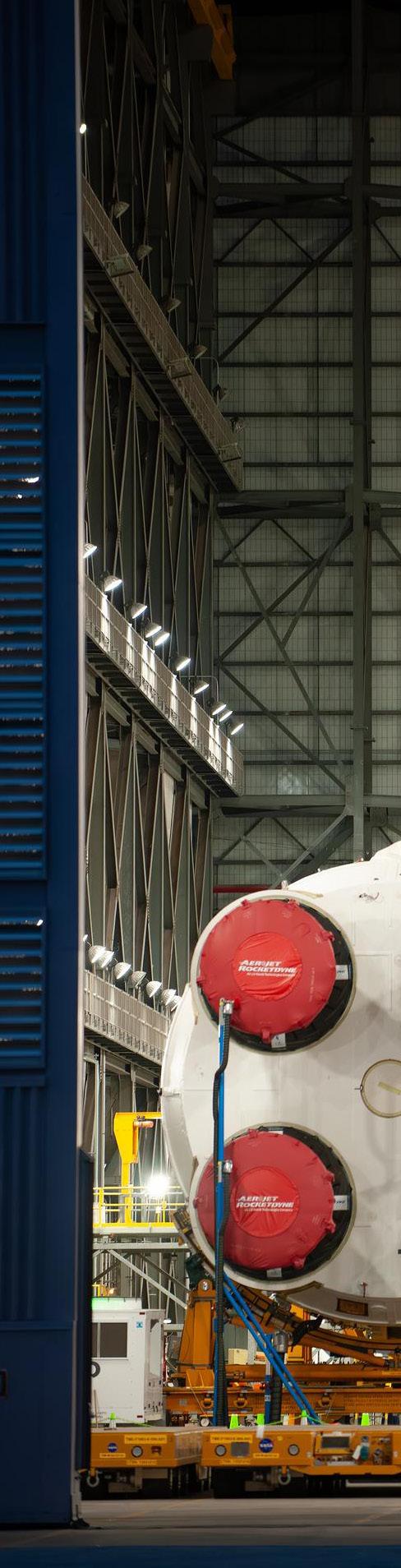
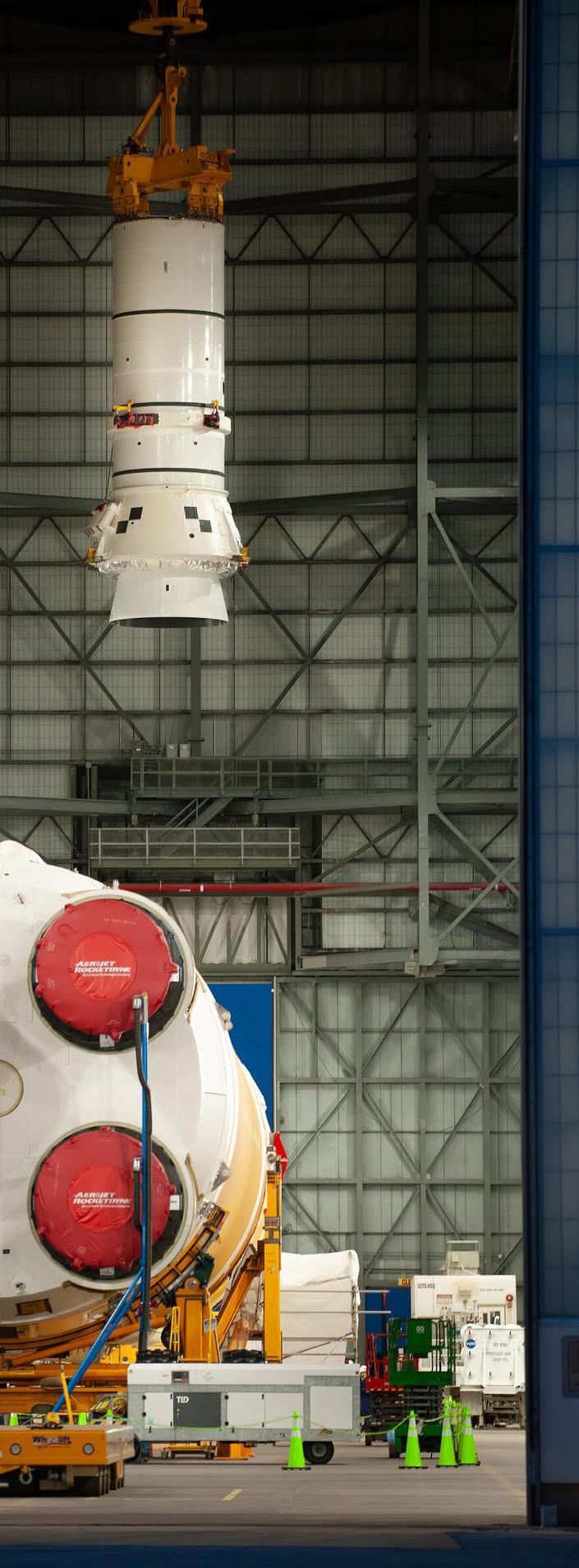
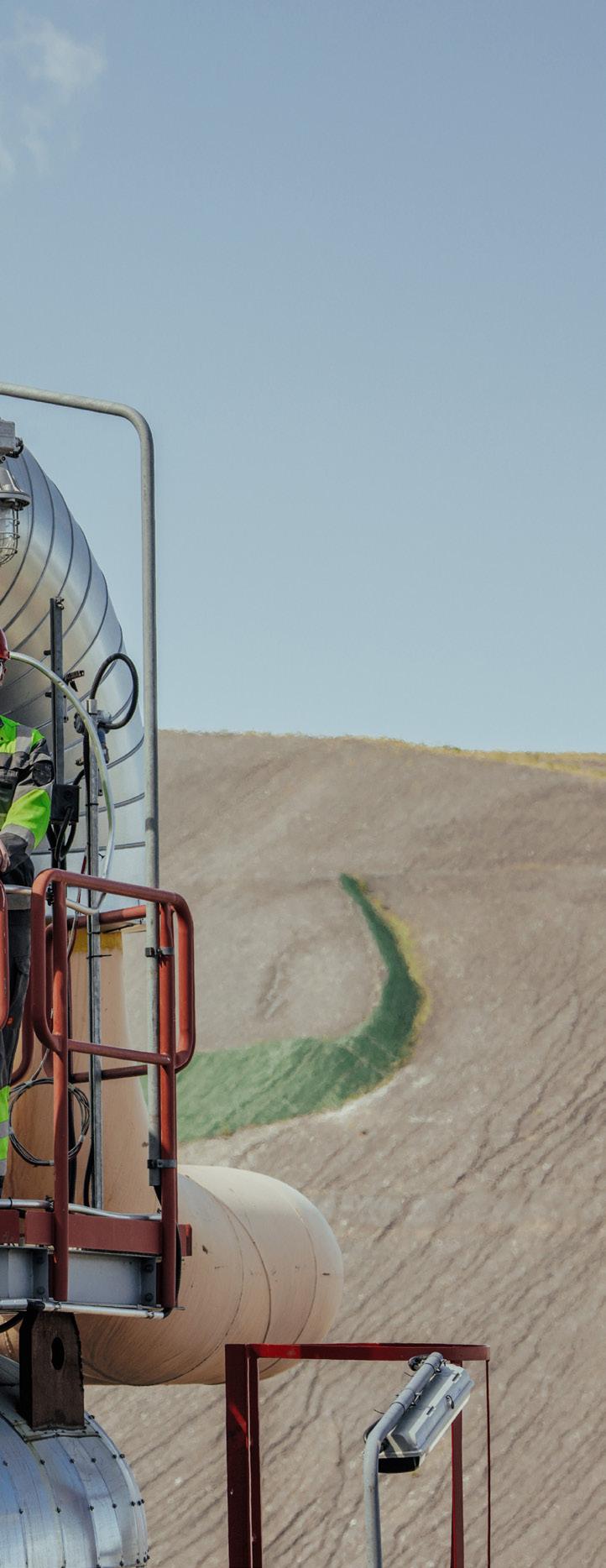
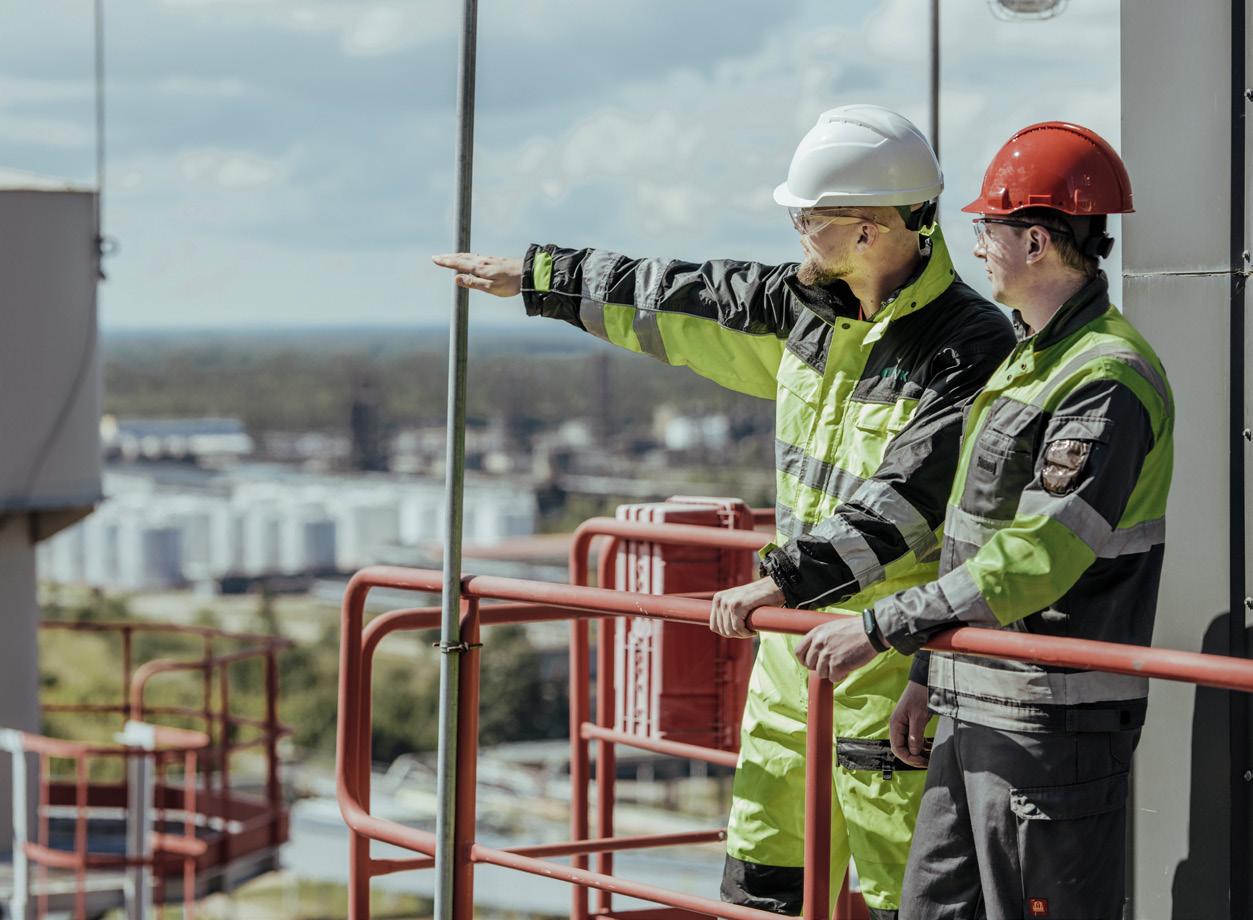
The historic Artemis II mission crucial for testing the systems and hardware required for human space exploration Kamstrup’s thorough localisation strategy is key
Steel products for rural and regional Queensland
Leveraging 60 years of building façade knowledge ROMA WIRE AND STEEL
Africa Outlook, APAC Outlook, EME Outlook, North America Outlook, Mining Outlook, Healthcare Outlook, Manufacturing Outlook, Supply Chain Outlook, Food & Beverage Outlook, Construction Outlook, and Sustainability Outlook are digital publications aimed at boardroom and hands-on decision-makers, reaching an audience of more than 800,000 people around the world.
With original and exclusive content compiled by our experienced editorial team, we look to promote the latest in engaging news, industry trends, and success stories from across the globe.
Your company can join the leading industry heavyweights enjoying the free exposure we provide across our platforms with a free marketing brochure, extensive social media saturation, enhanced B2B networking opportunities, and a readymade forum to attract new investment and help you grow your business.
Visit www.outpb.com/work-with-us for details on how your company can feature for free in one of our upcoming editions.
EDITORIAL
Head of Editorial: Jack Salter jack.salter@outpb.com
Deputy Head of Editorial: Lucy Pilgrim lucy.pilgrim@outpb.com
Welcome to our 11th edition of Manufacturing Outlook magazine.
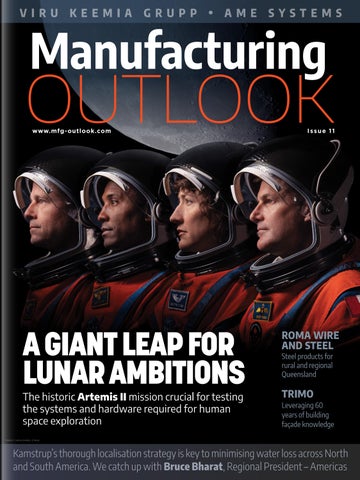
We’re over the moon to have the Artemis II crew on the launchpad of our latest issue.
Reid Wiseman, Victor Glover, Christina Koch, and Jeremy Hansen, from left to right, recently returned from a 10-day mission that took them around the moon.
The historic mission – NASA’s first crewed lunar flyby in half a century – was crucial for testing the systems and hardware required for human space exploration.
Artemis II was not just about returning to the moon; it was also about developing the technology, human knowledge, and operational experience needed for manned missions to Mars.
We delve into the manufacturing processes behind the Artemis II mission, which travelled an incredible 248,655 miles from home, taking humans further into space than ever before.
Back on Earth, global trade conditions and supply chain pressures have pushed many industries worldwide to rethink how and where products are made.
In the smart water metering sector in particular, these same forces have increased the urgency around localisation and resilience, areas in which Kamstrup continues to excel.
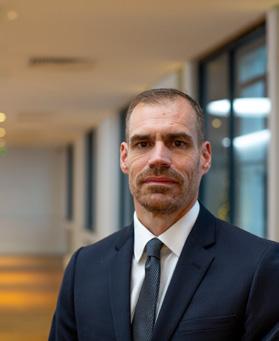
“Localisation has always been the direction we wanted to go, but recent trade dynamics accelerated that journey,” shares Bruce Bharat, Regional President –Americas.
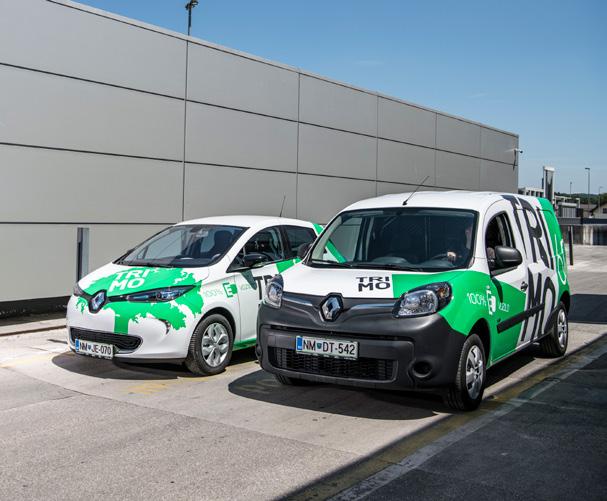
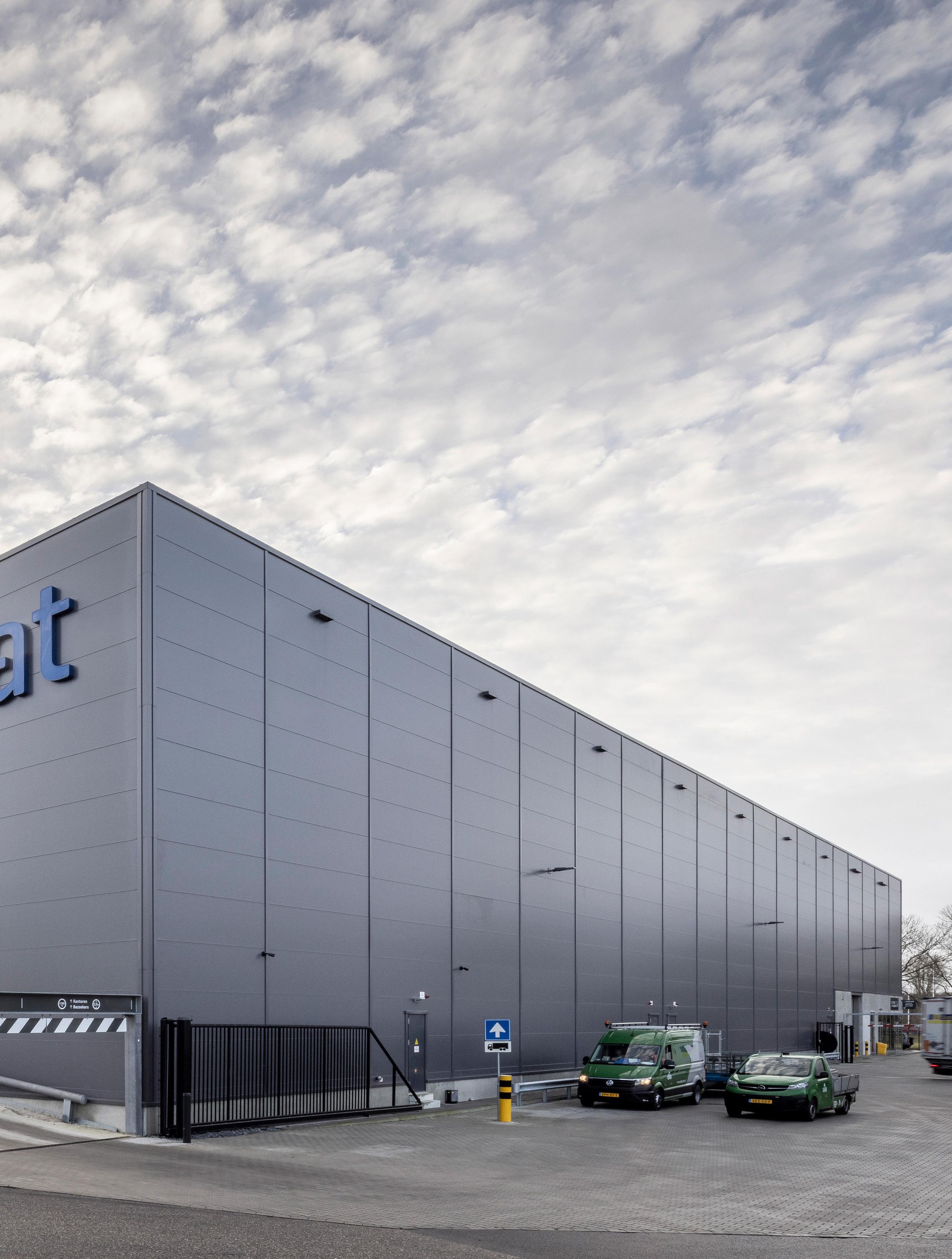
Trimo’s 60+ year journey in business has equipped it with unmatched knowledge of building façades.
The company takes building envelope solutions to a new level and stays engaged from the early planning stages all the way to installation, offering technical guidance and responsive cooperation.
“I often say we ‘produce unicorns’; we don’t just make panels – we deliver complete building envelopes with design and engineering support throughout the project,” says CEO, Nay Tawile.
Exclusive corporate stories from Viru Keemia Grupp and AME Systems complete our out-of-this-world journey through the global manufacturing sector.
We hope that you enjoy your read.
Jack Salter Head of Editorial, Outlook Publishing
NORTH AMERICA
34 Kamstrup
From Global Expertise to Local Impact
Scaling smart water in North America
EUROPE & MIDDLE EAST
44 Trimo
Excellence in Building Envelopes
Leveraging 60 years of building façade knowledge
58 Viru Keemia Grupp
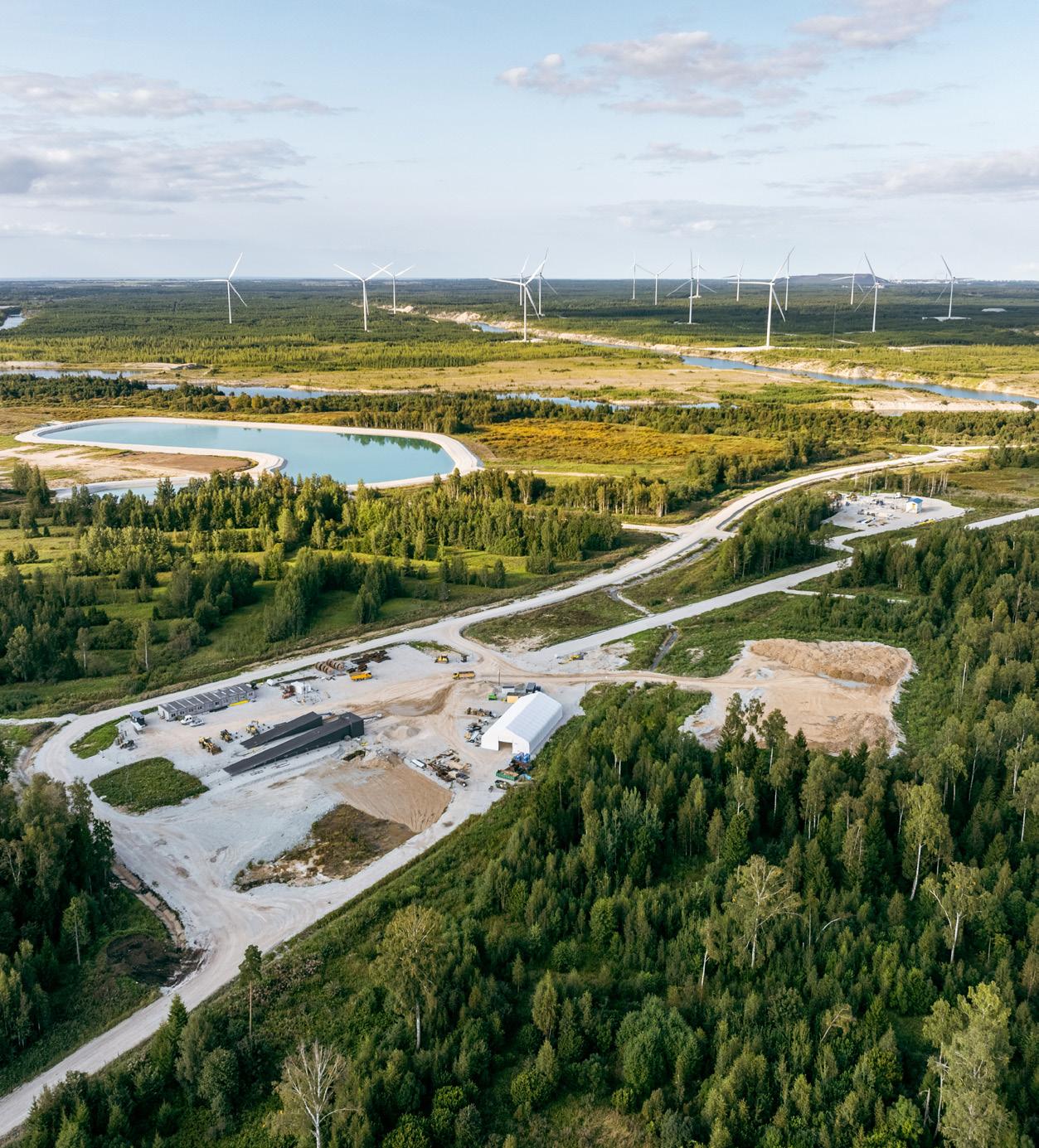
Oil Shale for Estonia
A passion for Estonia’s main natural resource
ASIA PACIFIC
Electrical Innovation at its Finest
Delivering
A Strategy-First Approach to Technology Buying
Tara Buchler, Principal of Strategy at JBF Consulting, provides practical guidance for manufacturing leaders navigating complex technology decisions in a rapidly evolving market.
Writer: Tara Buchler, Principal of Strategy, JBF Consulting
Technology buying failures in manufacturing rarely occur because an organisation selects the wrong software or platform. They happen much earlier – when companies enter the request for proposal (RFP) process without clear strategic alignment, defined operational priorities, or a shared understanding of how technology should support long-term business goals.
Manufacturers today operate in an increasingly complex environment shaped by global competition, margin pressures, labour constraints, supply chain disruptions, and accelerating technological change.
Digital transformation initiatives – from smart factories to advanced analytics – promise significant performance improvements, but they also introduce new risks when not guided by clear strategy.
Most manufacturing technology buyers only experience a limited number of operating models during their careers, often within a single company or industry segment. Whilst they develop deep expertise in their own environments, they may have limited visibility of what best-in-class operations look like across diverse manufacturing contexts.
Meanwhile, the pace of technology innovation continues to accelerate.
Integrated planning systems, automation platforms, predictive analytics tools, and end-to-end visibility solutions are proliferating, often accompanied by increasingly ambitious vendor claims.
Against this backdrop, many organisations treat the RFP process as the starting point rather than the culmination of strategic planning. They focus heavily on documenting current processes and addressing immediate operational pain points, which can lead to predictable and costly mistakes.
Below are 10 common ways manufacturing leaders get technology buying wrong before the RFP even begins, and how a strategyfirst approach produces stronger outcomes.
1. STARTING WITH A SYSTEM OVER AN OUTCOME
Many initiatives begin with a predetermined conclusion: “We need a new enterprise resource planning system”, “We need automation technology”, or “We need a planning platform”.
When technology is treated as the objective, requirements focus on system capabilities rather than business outcomes. Organisations spend time defining features instead of clarifying what they truly need to achieve – improved margins, greater operational flexibility, reduced costs, or scalable growth.
A strategy-first approach begins with business goals and works backwards to determine the appropriate role of technology.
2.
ADRESSING SYMPTOMS RATHER THAN UNDERLYING CAUSES
Operational frustrations such as manual processes, delayed reporting, and inconsistent performance often dominate early discussions.
However, these issues frequently reflect deeper challenges such
as outdated workflows, unclear decision ownership, or fragmented organisational structures.
Selecting technology to address symptoms rather than underlying causes often embeds inefficiencies into new systems.
3. ASSUMING TECHNOLOGY WILL FIX BROKEN PROCESSES
Technology does not fix flawed processes – it accelerates them.
Automating inefficient workflows increases the speed at which those inefficiencies occur. Organisations may gain enhanced visibility but remain locked into ineffective operating models.
Redesigning processes before implementing technology ensures systems support optimal performance.
4. SKIPPING THE TARGET OPERATING MODEL
Many manufacturers struggle to clearly define how they want operations to function in the future as digital transformation accelerates.
Without a defined target operating model, technology requirements often blend legacy practices with aspirational goals. Vendors are asked to support conflicting expectations such as centralised versus decentralised decision-making.
Clarifying future roles, decision rights, and performance expectations provides essential direction for technology investments.
5. LETTING ONE FUNCTION DRIVE RFP
Technology buying is often led by a single group – IT, operations, finance, or engineering.
Optimising from one area frequently creates unintended consequences further in the operational process, limiting enterprise-wide benefits.
Organisations may select systems capable of numerous functions but are unable to meaningfully improve strategic and operational decision-making.
Technology should be evaluated based on its ability to support better decisions rather than its feature count.
7. IGNORING CHANGE MANAGEMENT UNTIL AFTER SELECTION
Change management is often treated as an implementation issue rather than a strategic consideration.
New technologies frequently require adjustments to workflows, workforce skills, and organisational culture. Without adequate preparation, adoption can stall.
Aligning technology ambition with organisational readiness improves success rates.
8. ASSUMING DATA IS GOOD ENOUGH
Manufacturing systems depend heavily on accurate, consistent, and well-governed data.
When data quality is poor, even advanced technologies struggle to deliver reliable insights or performance improvements.
Assessing data maturity early enables organisations to address gaps proactively.
9. TREATING RFP AS A DOCUMENTATION EXCERSISE
RFPs often become static documentation exercises rather than strategic decision tools.
When organisations focus on gathering information instead of testing assumptions and clarifying priorities, they miss opportunities to strengthen their technology strategy.
Using the RFP process to challenge thinking produces better outcomes.
10. RUSHING TO SHOW PROGRESS
Pressure to demonstrate progress often leads organisations to issue RFPs before strategic alignment exists.
Whilst this may create short-term momentum, shortcuts taken early frequently result in delays, rework, and missed performance expectations later.
Most manufacturing technology failures are not the result of poor vendor selection. They stem from organisations being unprepared to make strategic decisions in increasingly complex and rapidly evolving environments.
A strategy-first approach ensures technology investments support long-term business goals, improve operational performance, and deliver a sustainable competitive advantage.
ABOUT THE EXPERT
Tara Buchler is Principal of Strategy at JBF Consulting, a leading logistics strategy advisory and technology integration firm. Buchler brings more than 20 years of experience at the intersection of logistics operations and enterprise supply chain software.
Long-Life Asset Tracking
Digital Matter helps businesses connect, protect, and derive more value from their assets. Loïc Barancourt, CEO, discusses how manufacturers can leverage new technologies to improve visibility across manufacturing plants and supply chains, and the importance of human insight as Industry 5.0 moves ever closer
Writer: Lily Sawyer
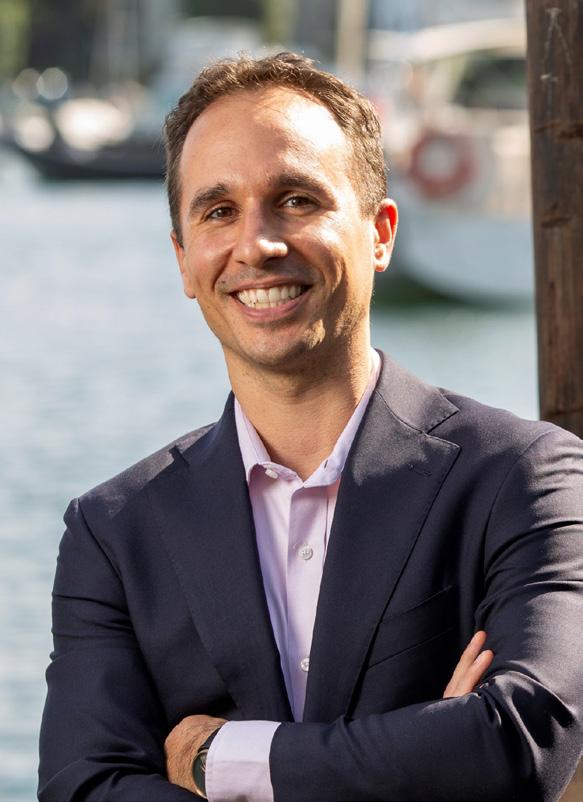
Loïc Barancourt, CEO
As the dawn of Industry 5.0 shifts away from overreliance on machinery and returns to focusing on people, manufacturers are increasingly using the Internet of Things (IoT) to elevate human decision-making by turning machine data into trusted, actionable insights.
Over the last decade, Industry 4.0 has focused on automating processes to ensure a strong return on investment (ROI) and increase efficiencies.
When dealing with complex systems and supply chains, however,
the decision-making process often involves a plethora of subtleties and nuances that can only be made sense of by humans with a deep understanding of the industry and its complexities.
“The supply chain leader is at the heart of Industry 5.0 – subject matter experts with amplified capacity and bandwidth who have the most insight and can therefore make better decisions,” opens Loïc Barancourt, CEO of Digital Matter, a leading global developer and manufacturer of IoT hardware solutions.
Ultimately, the systems invented during Industry 4.0 should now be used to facilitate and augment access to enhanced insights, so better decisions can be made as the industry advances towards Industry 5.0.
DEPLOY ONCE
Capable of determining whether IoT deployments succeed or are abandoned, battery life, device design, and connectivity strategy are becoming increasingly important for supply chain leaders seeking reliable, end-toend visibility across operations.
“The supply chain leader is at the heart of Industry 5.0 – subject matter experts with amplified capacity and bandwidth who have the most insight and can therefore make better decisions”
– LOÏC BARANCOURT, CEO, DIGITAL MATTER
“When you consider a manufacturing business operating at scale, you’ve got a large supply chain with lots of moving parts,” Barancourt exemplifies.
He points out the importance of maintaining full visibility of the assets moving through the supply chain –from supplier through to manufacturer, distributor, and end user.
As such, tracking returnable transport packaging (RTP) used throughout these operations has become an important aspect of maintaining a transparent and efficient supply chain, enabling full visibility, resilience, and security.
“If a container, rack, or any specialised RTP doesn’t return in time, it can cause production to stop, which is why tracking is critical,” Barancourt emphasises.
The use of IoT inside manufacturing plants is also on the up, improving visibility within manufacturing processes.
“In instances such as these, manufacturers need a tracking device that is robust, long-lasting, and can send regular volumes of data over multi-year periods,” he outlines.
As such, Digital Matter’s ‘deploy once’ approach focuses on engineering ultra-rugged IoT trackers that function reliably for their entire service life – often spanning up to a decade – without requiring maintenance or battery changes.
The company also recognises that whilst connectivity can influence battery performance, the greater challenge in global supply chains is network availability, which varies significantly by region.
MANTA FUSION – IOT SENSOR PRODUCT OF THE YEAR
Earlier this year, Digital Matter’s Manta Fusion tracking device was selected as IoT Sensor Product of the Year at the 10th annual IoT Breakthrough Awards.
Recognised for its approach to delivering multi-technology location accuracy, ultra-long battery life, and advanced sensing, the tracker aligns with the company’s ‘deploy once’ approach thanks so its 10+ years of battery life.
Barancourt cites the sensor’s ability to achieve superior outdoor location accuracy whilst maintaining the same exceptional indoor performance, with the award serving as a recognition of the company’s commitment to delivering practical, long-life solutions that perform reliably in the field.
To address this, its devices are designed to intelligently determine their location and connect to the most appropriate available network, helping maintain consistent visibility across diverse geographies without compromising efficiency.
THE REAL ROI
As such, Manta Fusion sets a new standard in IoT asset tracking and sensing.
“It’s a delicate art and fine balance to strike, but something we’ve mastered here at Digital Matter,” Barancourt prides.
As supply chain visibility gaps beyond the factory floor continue to impact production readiness, resilience, and decision-making, returnable assets across upstream and downstream operations are becoming more frequently lost, damaged, or delayed.
Large-scale original equipment manufacturers (OEMs) in the automotive space, for example, are working hard to address these gaps as they require complete visibility to ensure parts are in transit, preventing potential issues before they escalate.
“If your supplier doesn’t have enough RTP to move goods, you can anticipate this and manage your asset fleet with visibility, which leads to better, more well-informed decisions being made,” Barancourt explains.
As such, with optimised visibility, manufacturers can make their fleets work harder and smarter.
In this way, the deployment of IoT trackers supporting systems to manage RTP is at the core of ROI when it comes to utilising assets advantageously to guarantee a smooth supply chain.
“It’s a delicate art and fine balance to strike, but something we’ve mastered here at Digital Matter”
– LOÏC BARANCOURT, CEO, DIGITAL MATTER
“The real value comes from improved asset utilisation – that’s where the real ROI is,” he adds.
DETAILS MATTER
Digital Matter is helping industrial teams deploy low-power IoT in ways that truly make sense in live production environments, where performance expectations are high and failure can be costly.
In the world of battery-powered devices, the margin for error is slim. Small design miscalculations can have disproportionate consequences once devices are deployed at scale, often surfacing as significantly shorter battery life than anticipated.
For customers building long-term visibility strategies, those missteps
can quickly undermine the business case.
“Mistakes can cause the battery to drain two, three, or four times faster than it should,” Barancourt sets out.
“If battery life drops from six years to six months, that’s a major issue.”
This means a digital control tower that a supply chain leader has built for end-to-end visibility can suddenly lose effectiveness if hardware in the field underperforms.
Ensuring a trusted, predictable flow of data from distributed physical assets back into those systems is critical – and exactly what the company is designed to deliver.
Digital Matter’s attention to detail has enabled it to build a reputation as a global leader, with constant innovation delivering reliable solutions for customers looking to connect their assets.
In the year ahead, the company’s vision is to become the partner of choice for tracking and monitoring the assets that matter.
“We have 1,500 resellers around the world who trust us with their tracking and monitoring requirements,” Barancourt tells us.
As such, it is seeing strong demand from resellers serving manufacturing and supply chain customers, particularly when it comes to supply chain visibility – an area in which it has identified significant growth.
“We’re doubling down on innovation in this area, with new products including cold chain solutions and cellular-connected labels launching soon,” he reveals.
Looking to the future, Digital Matter also anticipates furnishing Industry 5.0 supply chain leaders with AI-enabled software solutions to make better decisions.
“We want to be the trusted provider of reliable physical data feeding into those AI-native operations,” he confidently concludes.
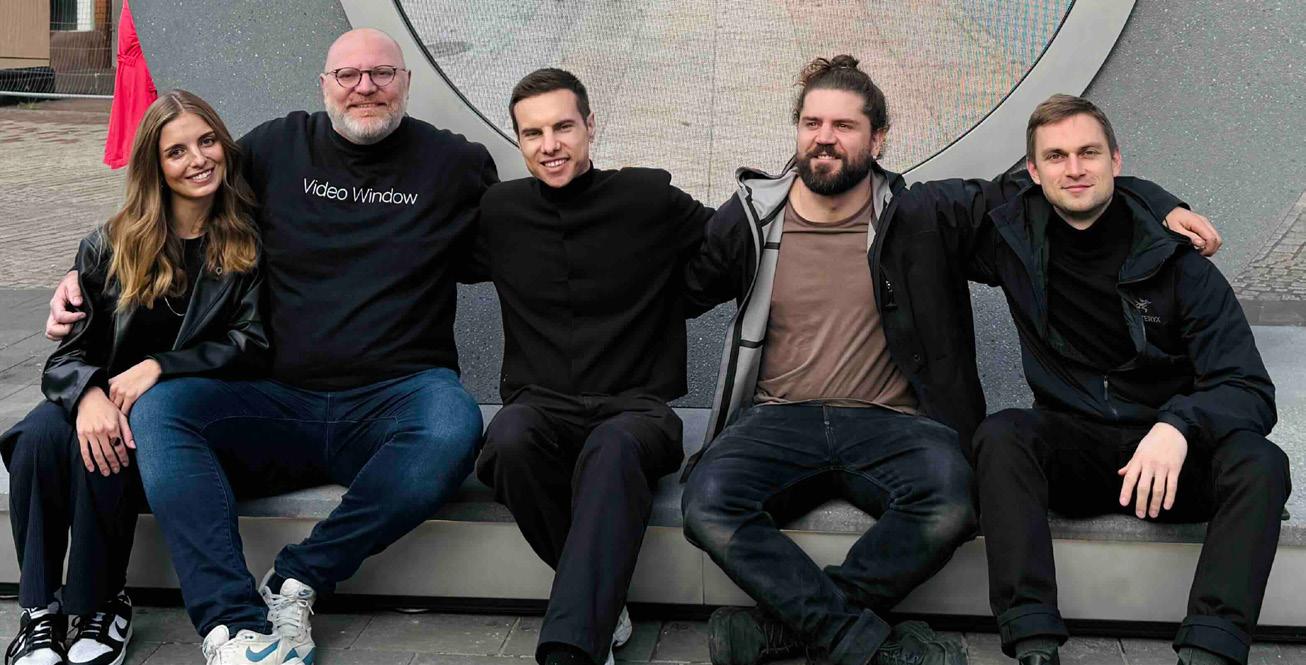
In a world of increasingly polarising narratives, Portals are technology art sculptures that allow people to connect above borders and labels and meet fellow humans from across the globe. We connect with Nicolas Klaus, Partner and Chief of Growth at Portals Organization
Writer: Jack Salter
PORTALS TEAM
In the age of artificial intelligence (AI), algorithms, and a constant chase for the next hit of dopamine, Portals deliver an alternative approach.”
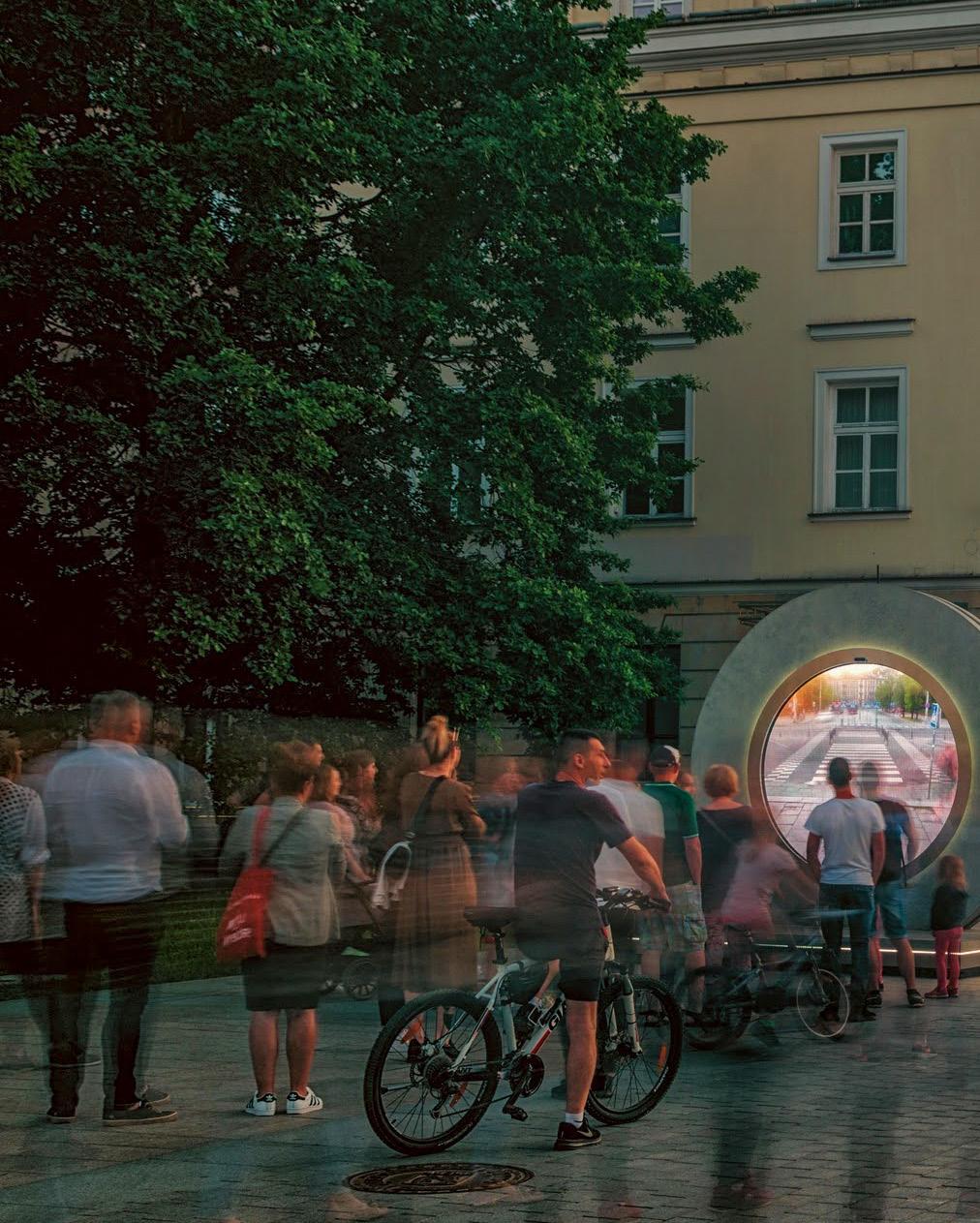
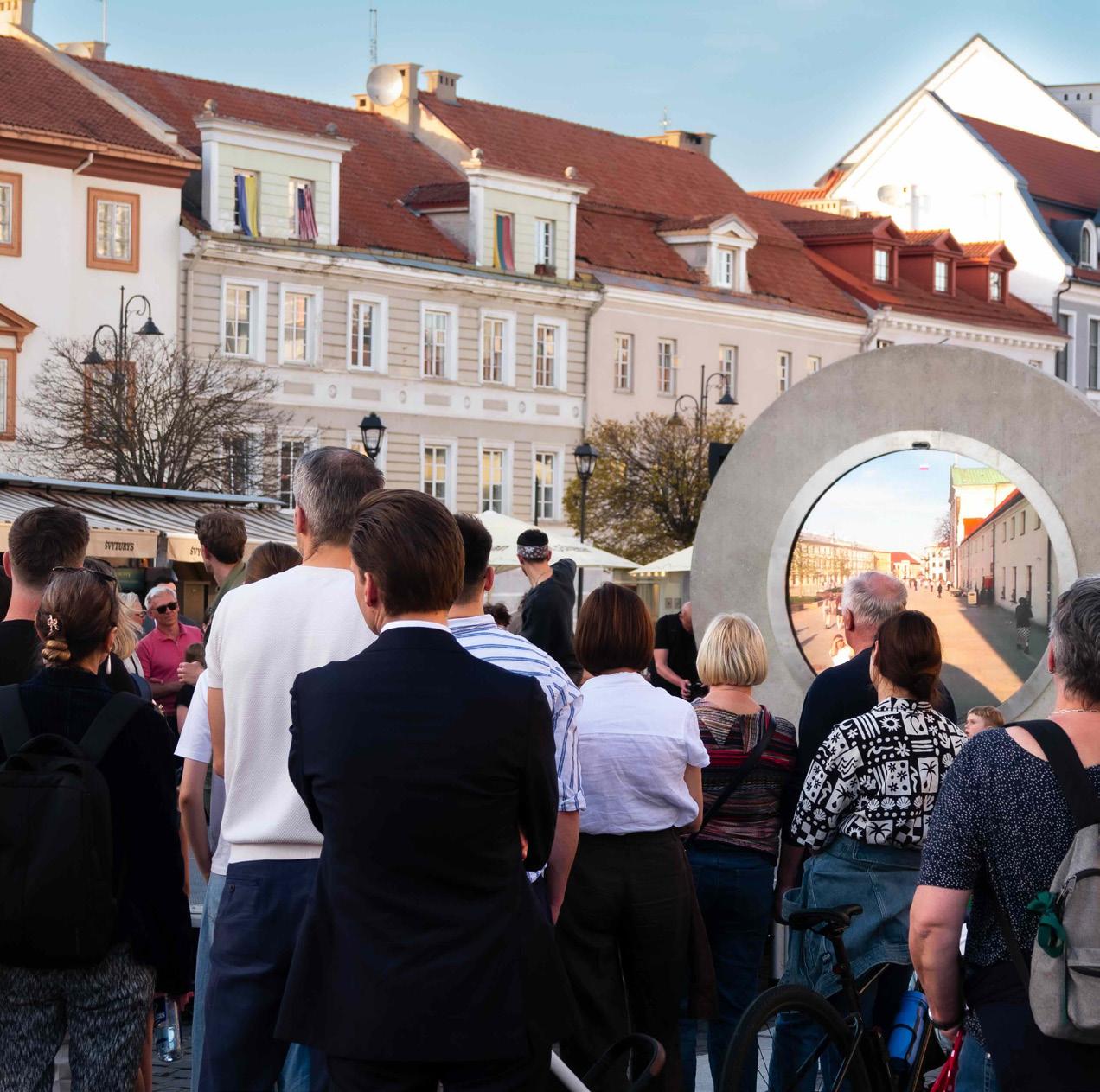
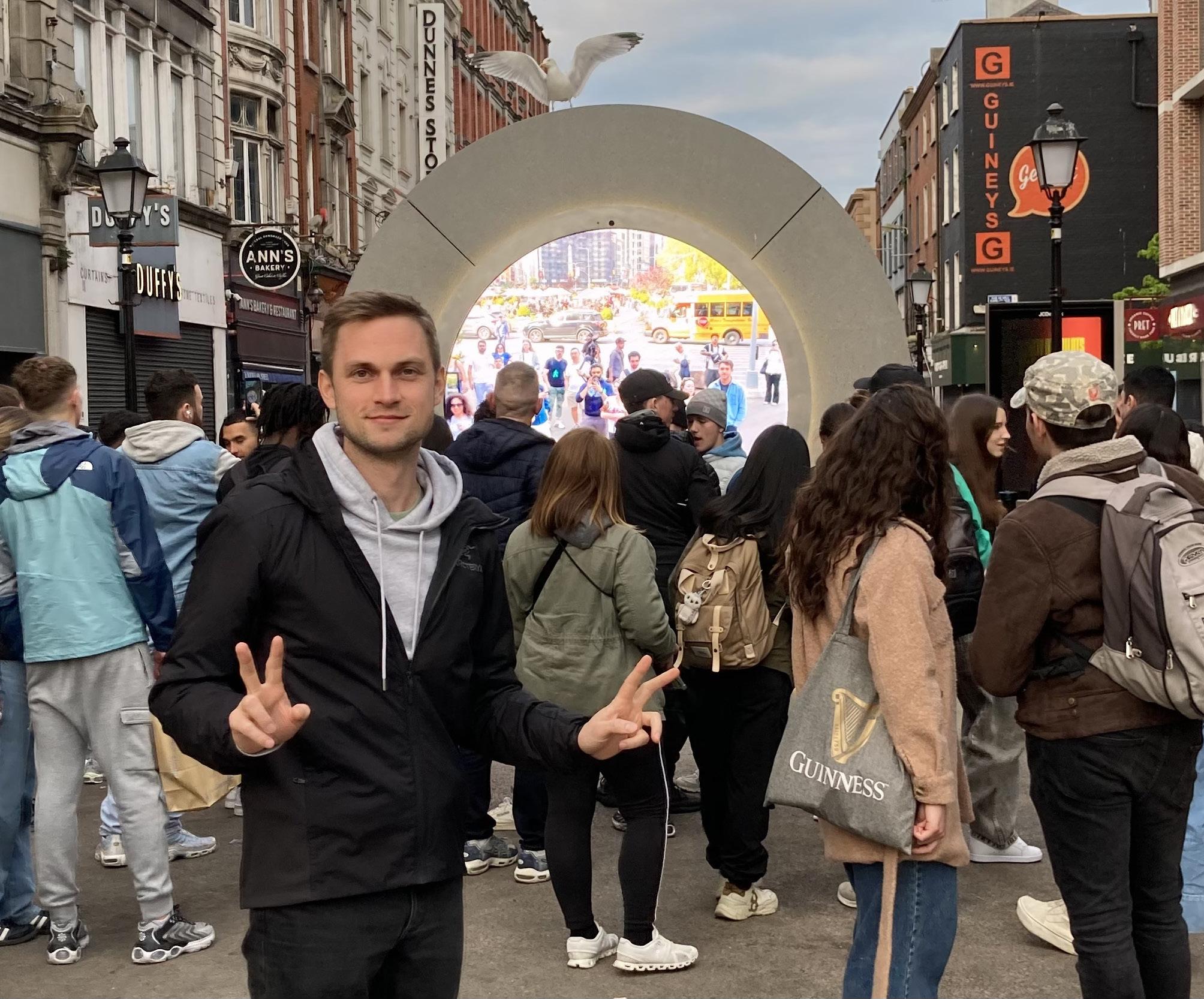
These large-scale technology sculptures, intended as lasting monuments at notable locations in the public space, serve a pure window – without features, imposed narratives, and rules – simply showing reality as it is.
The centre screen provides a 24/7
livestream that connects to identical Portals in other countries and rotates every three minutes between all participating locations.
“Whilst the technology may seem simple, there is quite some complexity in maintaining a growing number of Portals, which are constantly active and in the public eye, located in highfootfall locations, and across diverse climatic conditions,” explains Nicolas Klaus, Partner and Chief of Growth at Portals Organization.
REAL MOMENTS OF CONNECTION
Based in Vilnius, Lithuania and Berlin, Germany, Portals Organization is the company behind the development, fabrication, and upkeep of the global Portals network.
The origins of Portals go back to 2016 when Founder, Benediktas Gylys, an accomplished tech entrepreneur, went through an episode of deeply questioning reality.
This led him to a mystical experience of feeling oneness with all life on Earth, and Portals became the medium through which this experience was manifested and shared.
Benediktas funded the early development through his private foundation and drew together a team of supporters in Lithuania to create the first two Portals, which opened in Vilnius and Lublin, Poland in 2021.
“Personally, I joined the project later that year. Together, with a small core team, we incorporated Portals Organization, with the purpose of growing Portals into a global artwork,” recalls Klaus.
One of the key challenges has been to align the artistic and philanthropic essence of Portals with a business model that would generate the necessary funding for its expansion and upkeep.
“We re-engineered Portals from the ground up in Berlin and secured funding from several public and private organisations who, thanks to their visionary leadership, were able to see the value of hosting Portals in their cities at a time when this still seemed like a crazy idea to many,” he tells us.
This resulted in the opening of Portals in Dublin, Ireland; New York, US; and Ipswich, UK – generating billions of online impressions and real moments of connection between people who otherwise would have never met.
“You can think of Portals in terms of multiple layers – the sculptures
VILNIUS
NICOLASKLAUS , PARTNERANDCHIEFOF GROWTH
“In the age of AI, algorithms, and a constant chase for the next hit of dopamine, Portals deliver an alternative approach”
– NICOLAS KLAUS, PARTNER AND CHIEF OF GROWTH, PORTALS ORGANIZATION
themselves provide the platform, but another layer emerges from people’s interactions and the thousands of moments of connection that happen every day. Many of these encounters are published to social media, where they result in millions of impressions,” Klaus highlights.
WHY IPSWICH?
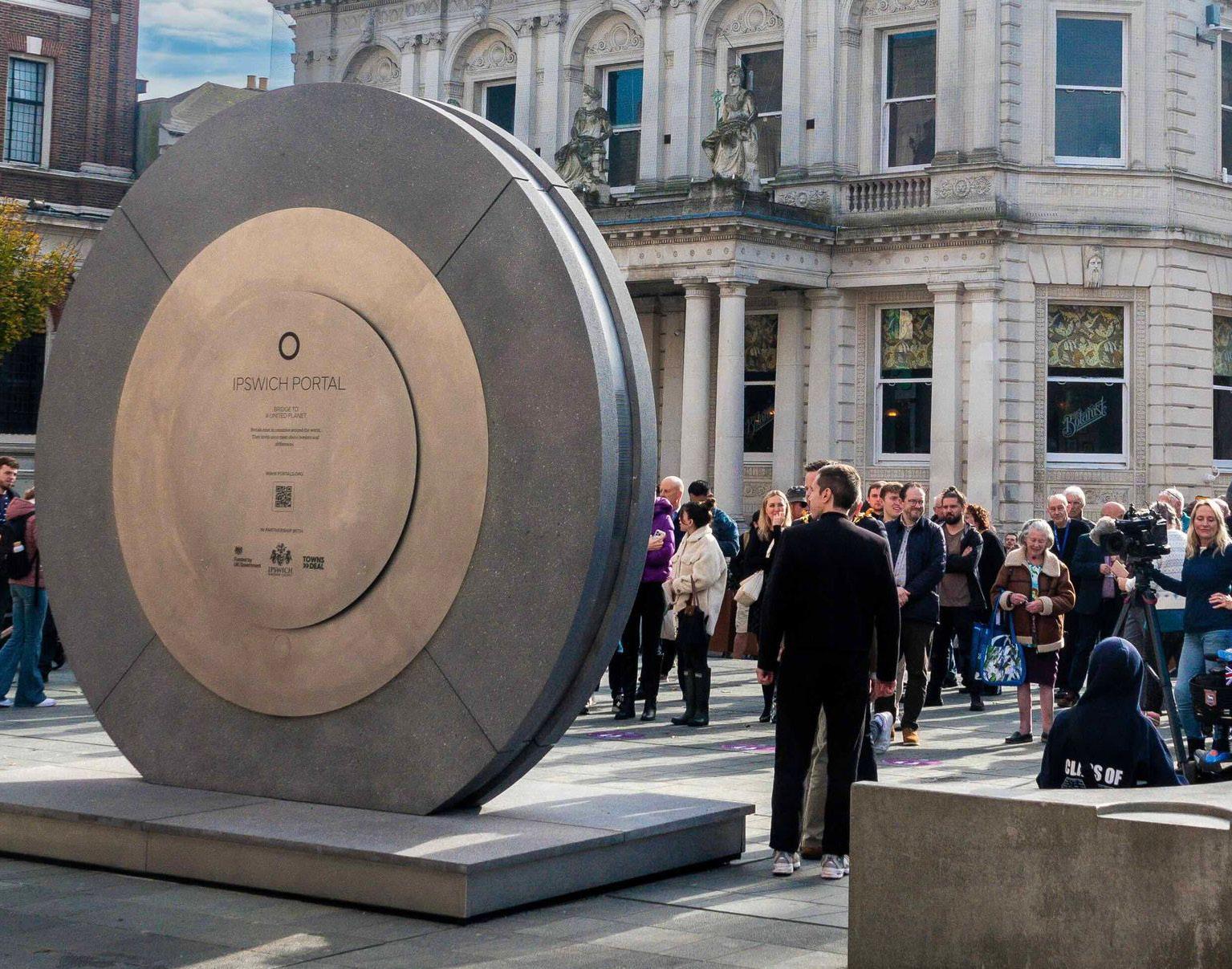
The UK’s first-ever Portal in Ipswich was recently launched in October 2025 and followed a two-year planning process, enabled through the Towns Deal funding from the UK government.
“Many cities across the UK have these beautiful town centres, which have become much less active –especially following the COVID-19 pandemic,” notes Klaus.
In response, the UK government launched initiatives to vitalise town centres and strengthen community building in the public space.
This was an important piece of the puzzle to enable the Ipswich Portal, but it also required a lot of dedication and an open mind from key people at Ipswich Borough Council.
HOW DO PORTALS SHARE AN INVITATION TO MEET FELLOW HUMANS ABOVE BORDERS AND PREJUDICES AND EXPERIENCE PLANET EARTH UNITED AND AS ONE?
Nicolas Klaus, Partner and Chief of Growth: “Another way to describe Portals, which I personally like a lot, is in terms of the ‘Overview Effect’ – when astronauts fly to space, and they view planet Earth through the window of their spaceship for the first time, they tend to describe the same universal experience: a deep sense of awe and empathy that arises from seeing our home planet as a single entity that is home to and shared by all life.
“We’re all together on ‘spaceship Earth’ – each happy moment, drama, discovery, poetry, and love story – it’s all connected.
“The Overview Effect is a well-studied phenomenon in psychological literature, and I find it fascinating that, whilst most people know and agree that we live on a plane called Earth, there is a fundamental difference in just ‘knowing’ and truly experiencing this reality.
“You could say that Portals seek to make the Overview Effect accessible here on Earth, so hopefully more people get to experience it even before travelling to space.”
“You can think of Portals in terms of multiple layers –the sculptures themselves provide the platform, but another layer emerges from people’s interactions and thousands of moments of connection that happen every day. Many of these encounters are published to social media, where they result in millions of impressions”
– NICOLAS KLAUS, PARTNER AND CHIEF OF GROWTH, PORTALS ORGANIZATION
“Some people have been asking, “Why Ipswich?”, and the answer is because Ipswich was ready to receive it. We rarely reach out to cities proactively, mainly because there needs to be a critical mass of ‘readiness’ to receive a Portal,” Klaus outlines.
“It’s also worth noting that
Ipswich is one of the oldest towns of England with a beautiful historic city centre where the Portal is now located.”
Evidently, there needs to be an understanding of what Portals are and the value hosting one creates.
“With most of our key partners, it becomes a legacy project, and they
work with a high degree of agency and vision. It’s not easy because you tend to have layer upon layer of committees and bureaucratic red tape, which needs sufficient motivation and knowledge to break through,” emphasises Klaus.
At the same time, with each new Portal that opens, it becomes easier as processes are standardised and perceptions change – from Portals being a crazy idea to a reality that needs to happen.
GROWING NETWORK
Portals will be launched in four new countries this year, and Portals Organization has various technical development goals to ensure it can reliably maintain this growing network 24/7.
IPSWICH
This means by the end of 2026, there should be a total of nine Portals on four continents, all operating with minimal downtime, facilitating tens of thousands of on-site interactions and millions of online impressions.
In January this year, the very first Asian Portal debuted in Manila, Philippines, whilst South America’s first Portal is currently being shipped and will open in spring in Piauí, Brazil.
“A third Portal is planned in another well-known Asian city – to be announced soon,” teases Klaus.
On the partnerships side, it is also looking to realise four collaborations with major brands or cultural institutions to launch memorable global experiences through Portals.
“We’re increasingly looking into partnerships to co-create events at Portals and do joint storytelling together online,” he confirms.
For example, Portals Organization recently partnered with UK-based space company SEN, who have HD cameras installed at the International Space Station and provide a live feed of planet Earth that is now occasionally visible on the Portals.
“This is a natural partnership since the essence of Portals is the insight that we are all one, inseparably connected in this world – an insight that becomes undeniable when viewing planet Earth from space.
“We also partnered with Chess. com for an international chess tournament through Portals for International Chess Day back in July, and we are in contact with many brands and organisations to create meaningful moments together,” Klaus closes.
NEWYORKCITY
PHILADELPHIA
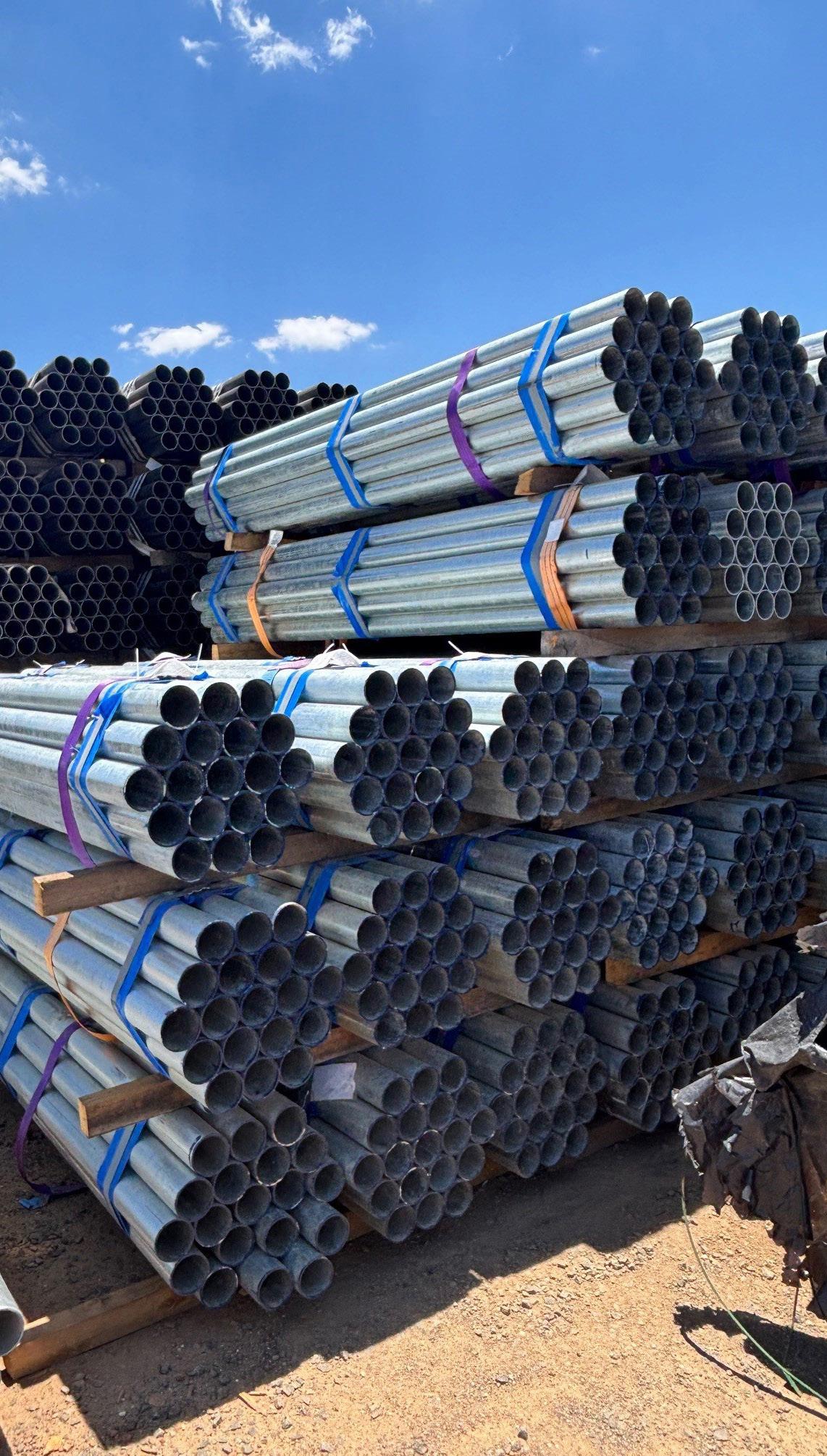
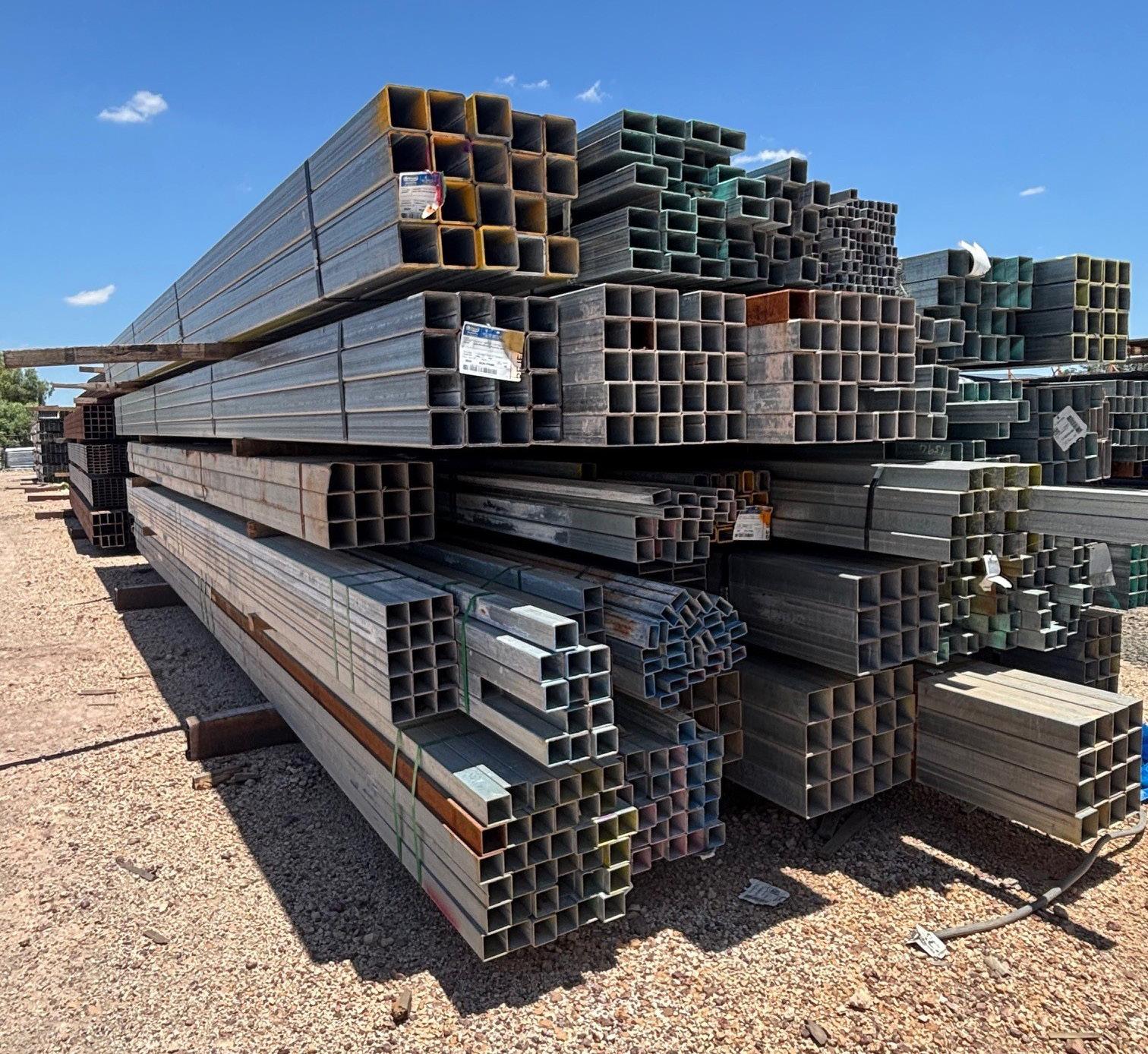
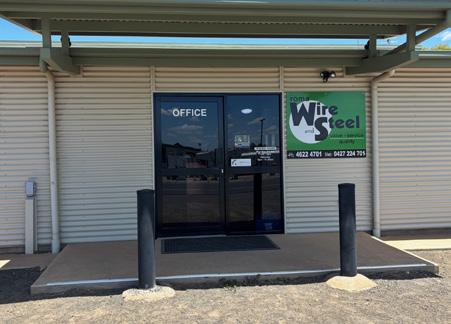
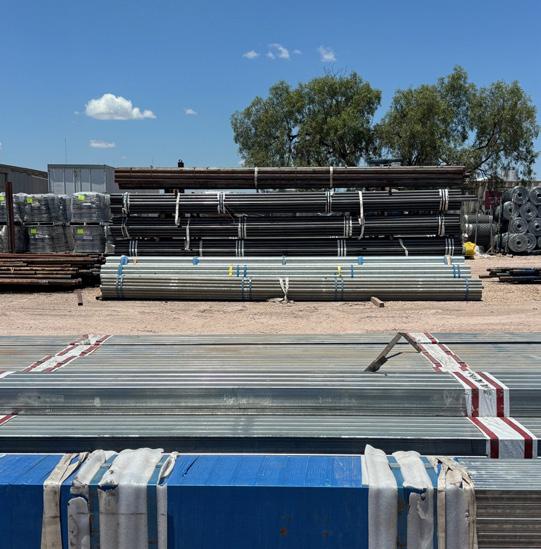
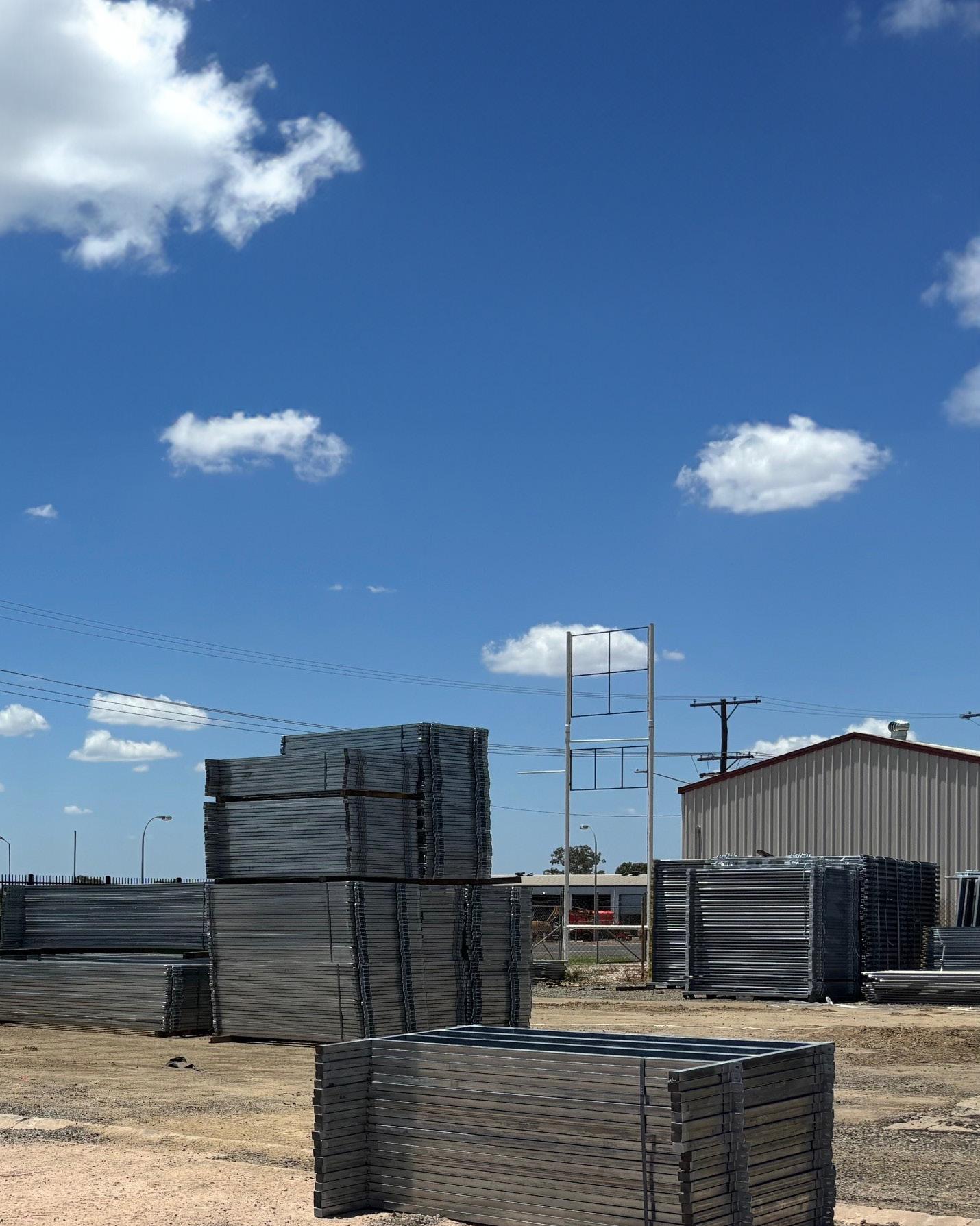
FORGED IN ROMA
Roma Wire and Steel is a leading independent supplier of a wide range of steel products to rural and regional Queensland. Owner, Natalie Dingle, highlights the family-owned company’s exemplary local knowledge and customer service
Writer: Jack Salter
Nestled in the heart of the Maranoa region of South West Queensland (QLD), Roma is where ‘Country meets the Outback’.
The thriving town, surrounded by sweeping plains and boundless skies, offers a taste of the Outback – along with the charm and character of country life.
“We love Roma – the town has been very good to us,” highlights Natalie Dingle, Owner of Roma Wire and Steel (RWS).
RWS is a proud local business, family-owned by Natalie, together with her husband, Jamie Dingle. The couple have lived in Roma for 34 years and Jamie has been in the steel game for more than three decades.
Jamie knows a lot of people in the region and further afield, and has vast knowledge of the steel industry and its products.
“We also own and operate a cattle business, so we know what rural people want – Jamie is happy to offer advice on shed building, cattle yards, and fencing,” Natalie tells us.
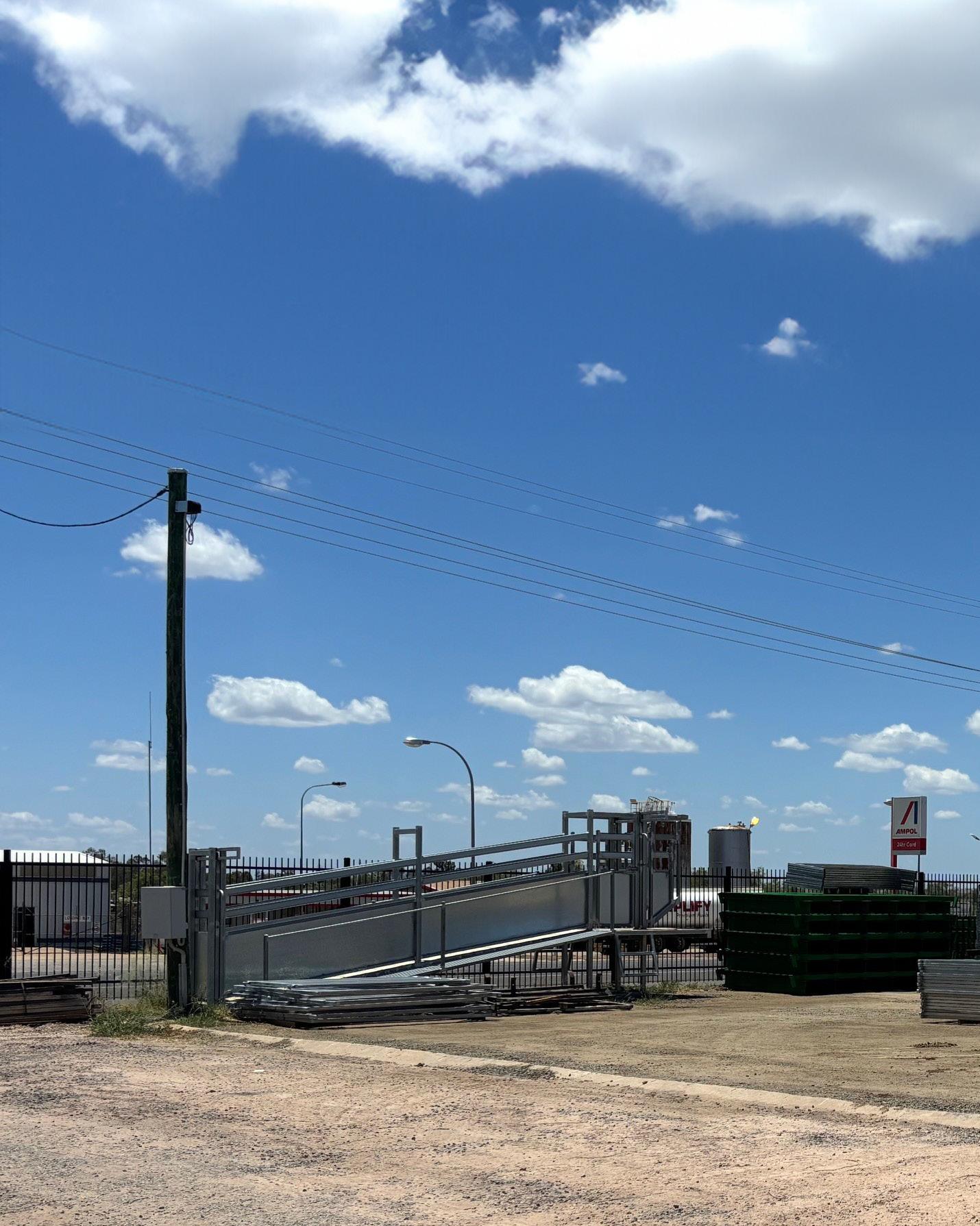
“A large percentage of our customers are rural – alongside selling steel, we manufacture cattle handling equipment such as cattle ramps, slide gates, and gates in frames, all built to suit customers’ requirements.”
The company’s main customer base is the Maranoa region, but also extends into Western and South West Queensland, New South Wales, and the Northern Territory.
RWS maintains satisfied customers in these areas by continually meeting their expectations of excellence in the supply of steel products, focusing on their needs, and aiming to please.
“We pride ourselves on our customer service – if we have to load trucks on weekends, early mornings, or at night, we do. We have even had to load on Boxing Day,” shares Natalie.
“We offer an all day and weekend delivery service across the area. If we are heading in your direction in our ute or truck, we will deliver steel
to you at any time – we go out of our way to make sure you receive our products.
“The people out here are more than just customers – many are our friends too,” she smiles.
STEEL FOR ALL
RWS’s main steel products are new and downgrade rectangular hollow sections, pipes, flats, fencing materials, reinforcing, structural and building materials, and roofing.
“From fencing and reinforcing mesh to beams and roofing, we offer an efficient and personalised service every time,” Natalie outlines.
“Our steel products satisfy all areas of industry, including gas, rural, building, manufacturing, and home handymen.
“We supply a lot of grids to all industries – both main roads and paddock grids. Our grids are certified and made with wider, thicker material,” she adds.
“We have our own cattle operation in the Injune/Bymount area, so we understand the importance of having good quality, strong, well-designed rural equipment that is safe and efficient for all our customers.”
The company has a major focus on the rural and gas industries, in particular; the former has been RWS’s longest supporter, whilst the latter has brought diversification to the business.
“The gas industry has helped make our business the success it is today. We have been here since the beginning of the coal seam gas industry in Roma and have continued to supply it,” Natalie acknowledges.
To service the gas industry, RWS has ramped up its stock, manufacturing, deliveries, and staff over the years.
“We go out of our way to provide the best service to the industry – as we do with all our customers,” she affirms.
“The gas industry has been both
supportive of, and beneficial to, our business. It has also been a huge positive for Roma and the surrounding towns. It has helped a lot of the smaller towns survive.”
One of RWS’s biggest customers is Wild Desert, one of Australia’s leading providers of well servicing rigs, transport operations, and mobile camps to the oil and gas industry. RWS strives to have a large range of steel products on hand – it also understands that time matters and can therefore quickly source whatever materials are required.
It is also not committed to one supplier, instead sourcing steel at the right price, thus allowing better prices for the end user.
“We offer both Australian-made and imported products and focus on always having stock available for people’s needs,” assures Natalie.
TWO DECADES OF RWS
RWS celebrates its milestone 20th anniversary on 7th April this year, having started from humble beginnings – a run-down and neglected yard, owned by a company in Brisbane, with very little steel. Slowly but surely, Natalie and Jamie
built up the business, which has since gone on to enjoy extensive growth.
“We gravelled the yard, made steel racks, purchased steel, began fabricating, and started a delivery service – we practically lived here day and night for the first five years,” Natalie reveals.
“We always jokingly say our three boys were raised kicking footballs over the steel racks!”
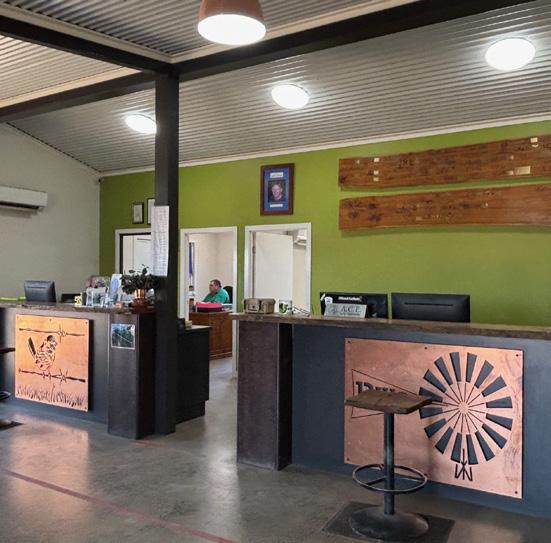
The company built a new office in 2017, purchased next door in 2024, and has extended the yards to bigger and better things.
It has been proudly involved in some substantial projects throughout the course of its 20-year history, including cattle yards, feedlots, sheds, large exclusion fencing projects and, more recently, new footpaths in Roma.
Additionally, RWS is heavily involved with the Department of Primary Industries’ wild dog barrier fence, which is about 2,500 kilometres long and protects 26.5 million hectares of sheep and cattle grazing country.
“We love Roma – the town has been very good to us”
– NATALIE DINGLE, OWNER, ROMA WIRE AND STEEL
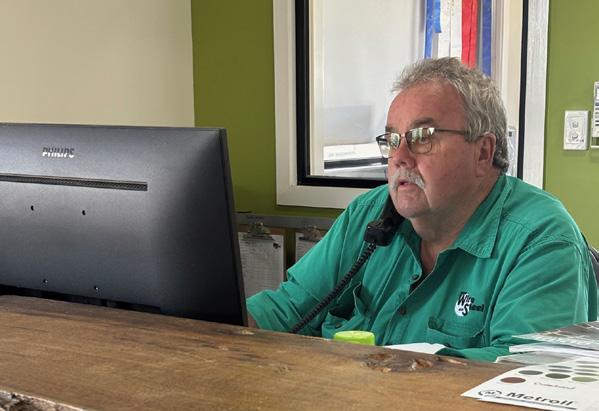
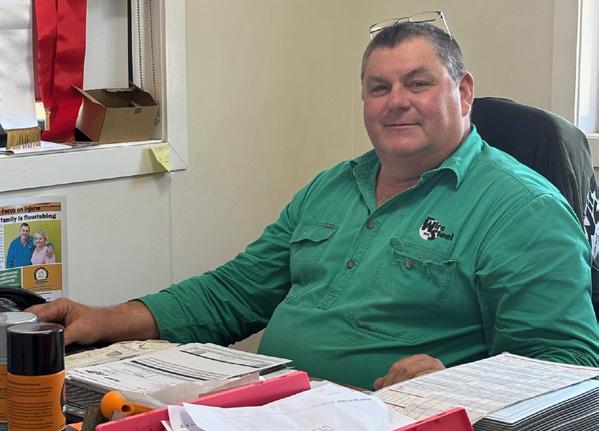
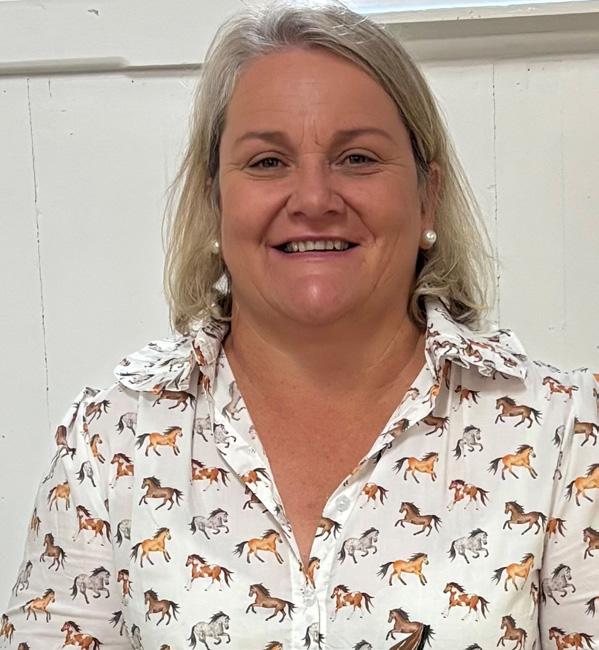
Jamie Dingle
Natalie Dingle, Owner
Greg Harris
“The gas industry has been both supportive of, and beneficial to, our business. It has also been a huge positive for Roma and the surrounding towns”
– NATALIE DINGLE, OWNER, ROMA WIRE AND STEEL
RWS has also been involved in steel supply for the upgrade of Roma Saleyards, the largest cattle-selling facility in Australia.
Alongside RWS, Natalie and Jamie also own a business in Emerald, QLD, called Emerald Steel, which has been established for 19 years.
LONG-TERM STAFF
Many of RWS’s nine staff members have witnessed its growth journey, including Greg Harris, the main salesman, who has been with the company for 13 years.
Maryann Graham, who works in admin, has spent 15 years at RWS,
whilst two of Natalie and Jamie’s three sons have worked for them for the last three years.
“We have some very experienced long-term staff with strong local knowledge,” acclaims Natalie.
“RWS has gone ahead in leaps and bounds –we have knowledge of the industry and the region.”
One of the company’s main priorities is to look after its hardworking staff, along with continuing to provide top-class service to clients and maintaining its reputation across the region.
It is also committed to providing the right products to customers at the right price, continuing as an independent, family-owned company, and involving their three sons more in the business.
RWS will also continue to be major supporters and sponsors of local events and the communities that support it.
“I’m involved with several local committees, including Roma’s famous Sculptures Out Back,” Natalie closes.
A GIANT LEAP FOR LUNAR AMBITIONS
As humanity sets its sights on the moon once more, NASA launched a bold quest to establish a lasting presence beyond our planet, paving the way for future exploration and discovery. We delve into the manufacturing processes behind the Artemis II mission
Writer: Rachel Carr
Aiming to establish a permanent lunar presence, NASA sent a crewed spacecraft to orbit the Earth’s celestial natural satellite for the first time in over 50 years, marking a significant step in space travel.
The historic Artemis II mission was crucial for testing the systems and hardware required for human space exploration and recently took place in April 2026. It followed the unmanned Artemis I and acted as a stepping stone to return to the moon’s surface.
Four astronauts embarked on the on a 10-day mission, launching from Florida, US. Upon their return, they splashed down in the Pacific Ocean.
The crew consisted of NASA astronauts Reid Wiseman, Victor Glover, and Christina Koch, along with Jeremy Hansen from the Canadian Space Agency (CSA). Whilst they didn’t land on the moon, they were
the first team to venture beyond low Earth orbit since Apollo 17 in 1972.
The astronauts travelled 248,655 miles from Earth, taking humans further into space than ever before.
Artemis II’s crew served as research subjects as they investigated how deep-space environments impact human health, examining factors such as radiation, immune responses, cognition, and sleep.
The programme was not just about returning to the moon; it was also about developing the technology, human knowledge, and operational experience needed for manned missions to Mars.
Essential technologies and equipment for the mission included landers, as well as habitation, mobility, communication, power, and thermal regulation systems, all designed to perform reliably in extreme lunar conditions.
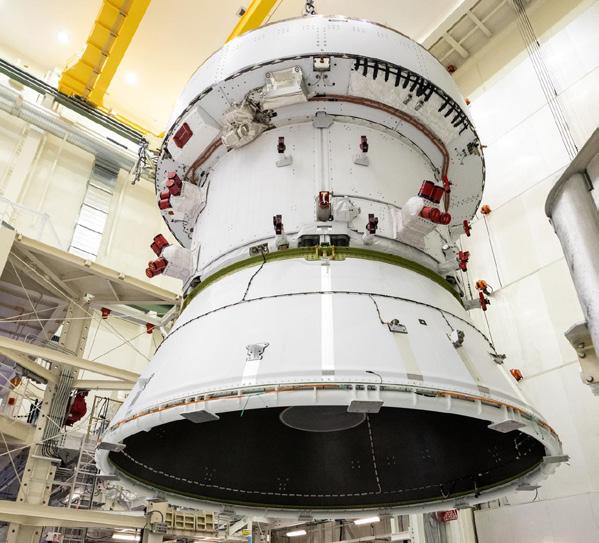
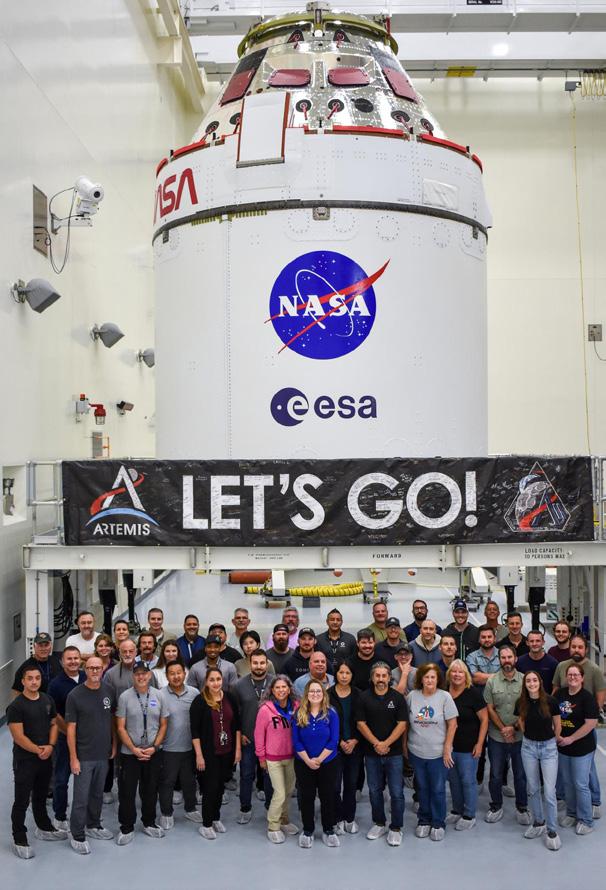
NASA engineers and technicians pose for a photograph in front of the agency’s Artemis II Orion spacecraft inside the MPPF at NASA’s Kennedy Space Center in Florida
Health evaluations focused on the impact radiation exposure, isolation from Earth, dust exposure, and low gravity will have on humans, which are critical for long-duration Mars missions.
Operational procedures for time spent outside, resource management, and emergency responses will be developed and refined as Artemis II provided a more controlled environment than the Red Planet.
By iteratively testing and improving during the missions (especially Phase IV), NASA reduces risk, cost, and unknowns associated with Mars exploration.
Understanding what is effective and what isn’t on the moon therefore helps to accelerate humankind’s journey to Mars.
TO THE NEXT FRONTIER AND BEYOND
The manufacturing of the core stages for the Artemis II and III missions took place in New Orleans, US, at NASA’s Michoud Assembly Facility.
Engineers utilised friction welding to construct these stages, which enabled the first woman, person of colour, and international partner
astronaut to land on the moon. Currently planned for mid-2027, NASA will also make history by sending the first humans to explore the region near the lunar South Pole.
NASA collaborated with Boeing to oversee the precise assembly of the mission’s Space Launch System (SLS), whilst Lockheed Martin completed the Orion spacecraft for Artemis II and prepared it for transfer to NASA’s Exploration Ground Systems (EGS) team.
After successfully evaluating the spacecraft’s systems through ground testing and uncrewed flights, the Artemis II mission subsequently validated Orion’s capabilities with a crew aboard.
The spacecraft features enhanced life support systems and a Launch Abort System (LAS) for crew safety. Additionally, it includes docking sensors and an experimental laser communication system.
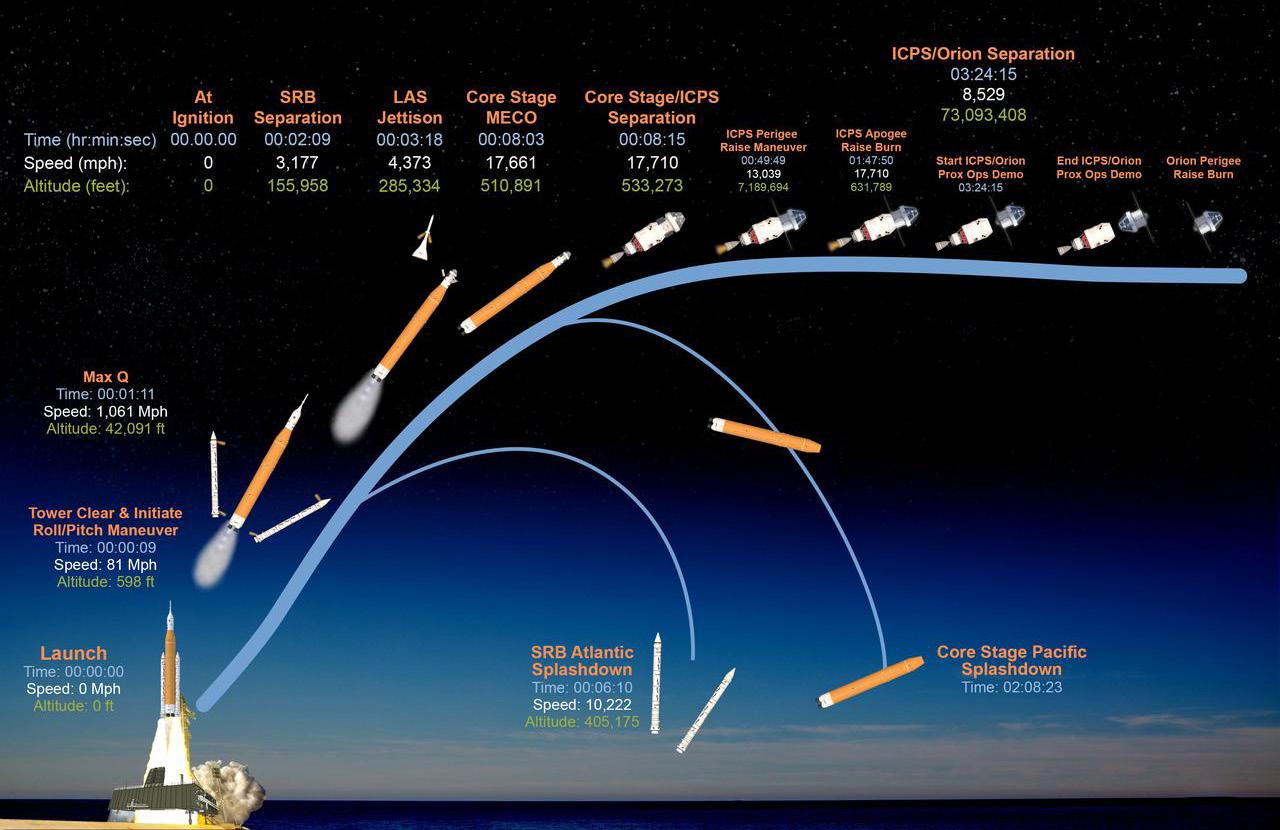
Orion was launched on top of the SLS, initially propelled by solid rocket boosters, but after they were jettisoned along with the core stage, the Interim Cryogenic Propulsion Stage (ICPS) assisted in manoeuvring.
Above: This graphic shows the time, speed, and altitude of key events from launch of the SLS and Orion spacecraft and ascent to space, through Orion’s perigee raise burn during the Artemis II test flight
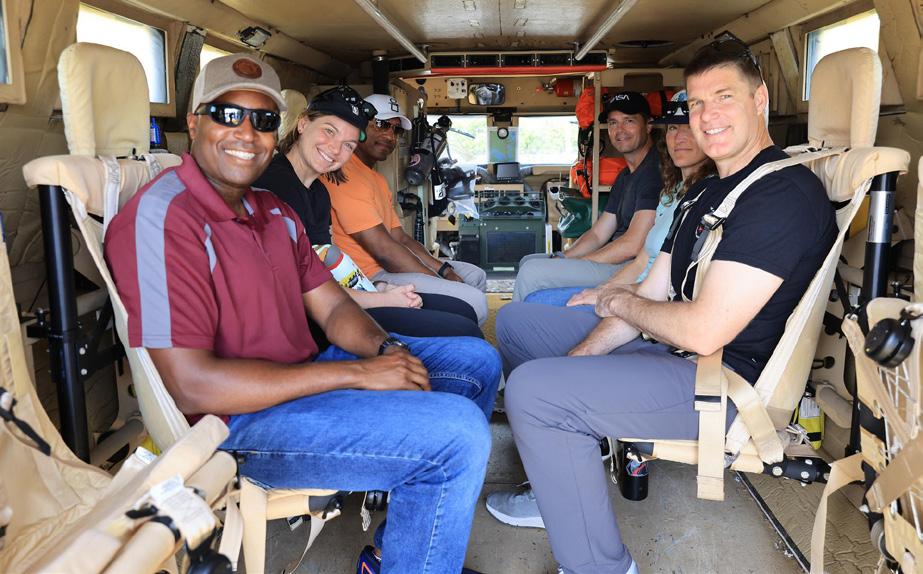
Artemis II crew and back-up members and teams from the agency’s EGS programme participate in emergency egress training at Launch Complex 39B at NASA’s Kennedy Space Center in Florida. From left: Andre Douglas, NASA’s Artemis II back-up crew member; CSA astronaut Jenni Gibbons, Artemis II backup crew member; NASA astronaut Victor Glover, Artemis II pilot; NASA astronaut Reid Wiseman, Artemis II commander; NASA astronaut Christina Koch, Artemis II mission specialist; and CSA astronaut Jeremy Hansen, Artemis II mission specialist sit in the back of a mine-resistant ambush protected vehicle (MRAP). Originally designed for military applications, the 45,000-pound MRAP offers a mobile bunker for astronauts and ground crews in the unlikely event they must get away from the launch pad quickly in an emergency
The spacecraft then practiced docking manoeuvres before executing a Translunar Injection burn, which set it on its journey around the moon before safely returning to Earth.
Lockheed Martin transferred Orion to the EGS team, where they performed final preparations on the spacecraft, readying it for launch – a significant milestone that advances the organisation’s objective.
This is where the propellants and consumables, such as water and oxygen, were added, and the LAS and its protective fairings were installed.
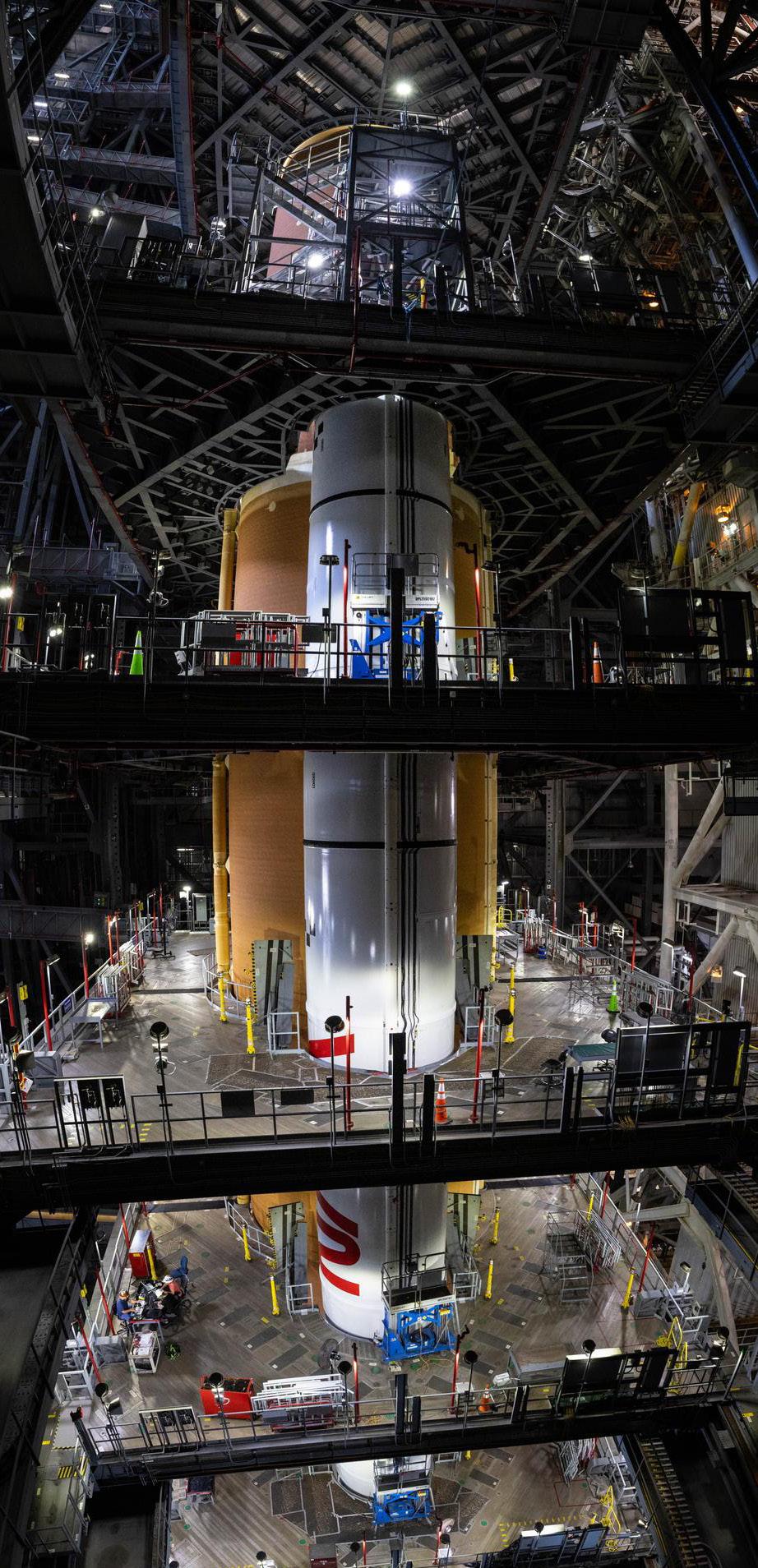
Inside the Multi-Payload Processing Facility (MPPF) at NASA’s Kennedy Space Center, Orion awaited final integration and stacking with the SLS rocket. Eventually, the spacecraft was transported to the Vehicle Assembly Building, where it underwent final preparations for launch.
Meanwhile, NASA integrated the stage adapter with the rest of the SLS rocket.
During the mission, the crew evaluated the spacecraft’s performance, tested its navigation and communication systems, and conducted a series of scientific experiments.
They performed a rendezvous operation with the SLS upper stage, practising docking activities needed for future missions, including Artemis III.
The success of the mission will determine how soon NASA can launch Artemis III to land on the moon.
Above:
COOL INNOVATIONS AND MODIFICATIONS
The Avcoat heat shield used on the Orion spacecraft is one of the largest ablative heat shields ever constructed for a crewed spacecraft, designed to withstand extreme temperatures during re-entry and ensure the safety of astronauts.
There were concerns regarding the heat shield material used, specifically Avcoat, which failed to perform as predicted during the Artemis I mission’s re-entry. The outer ablative layer generated inescapable gas under heat, leading to internal pressure, cracking, and material loss, despite the safe temperatures inside.
Avcoat is designed to ablate safely, but insufficient venting resulted in increased pressure. This situation is critical because the thermal protection system must withstand extreme speeds and temperatures during re-entry, and any weakness poses significant risks, especially with astronauts on board.
The solution for Artemis II was not to replace the heat shield but to adjust the re-entry path and apply the lessons learned from previous missions.
MANUFACTURING PROCESSES FOR ARTEMIS II
FINAL ASSEMBLY – Technicians joined the core stage to the engine section and installed four RS-25 engines.
TESTING – The core stage underwent a green run at NASA’s Stennis Space Center in St. Louis, Mississippi, ensuring it was ready for delivery.
AVIONICS INTEGRATION – Technicians wired and performed functional tests inside the forward skirt and intertank sections.
ENGINE SECTION PRODUCTION – The most complicated stage was the production assembly, using a process called friction stir welding.
OUTFITTING – The 5.5 million-pound SLS rocket was assembled and outfitted with electronics, feedlines, propulsion systems, and other components.
A LAUNCHPAD FOR LUNAR LESSONS
Lessons learned from Artemis I are being applied to future Artemis missions through enhanced shield manufacturing and stricter environmental control requirements. For Artemis III and subsequent flights, modifications to the heat shield will include improved uniformity, controlled permeability –ensuring gases can escape as needed – and changes in manufacturing methods for the Avcoat layers.
More specifically, enhancements in the uniformity of the shield material will reduce weak spots, whilst proper permeability allows gas to vent rather than build up pressure.
Furthermore, other systems, such as life support and environmental control, are being upgraded.
Improved environmental control ensures the capsule can reliably support human life under stress. These adjustments are not mere superficial changes; they address the critical interplay of materials science, thermal dynamics, human safety, and mission architecture.
NASA decided that the existing heat shield for Artemis II was acceptable, provided the re-entry trajectory was modified to minimise the time the shield spends in the problematic temperature and pressure range. This adjustment also affected how far Orion travelled between entering the atmosphere and splashdown.
The re-entry trajectory influences the heating profile, including the entry angle, speed, atmosphere traversed, and the duration of exposure for critical components. By shortening the ‘skip entry’ or limiting the time
spent in the atmospheric regime that caused gas entrapment and damage, engineers kept the astronauts safe.
Additionally, since the heat shield was already attached, redesigning or replacing it would have led to significant delays. Thus, modifying the trajectory represented a lowerrisk and more time-efficient solution.
Artemis II not only served as a test for carrying a crew around the moon but also as an evaluation of how to adapt to unexpected physical challenges – a hallmark of deep space mission design.
Laying the groundwork is crucial for future missions, which include Artemis IV, scheduled to deliver Lunar I-Hab to the first moonorbiting space station, Gateway, in the autumn of 2028. This will be followed by astronauts on Artemis V, who will live and work on Gateway in preparation for human missions to Mars.
Artemis VI is expected to launch in 2031, building on the success of previous missions and igniting new possibilities in the vast cosmos, bringing the collective dreams of interplanetary travel, held by generations past and present, closer to reality.
MOMENTS OF MOON JOY
After 10 adrenaline-fuelled days in space, the Artemis II mission came to a close in an epic spectacle.
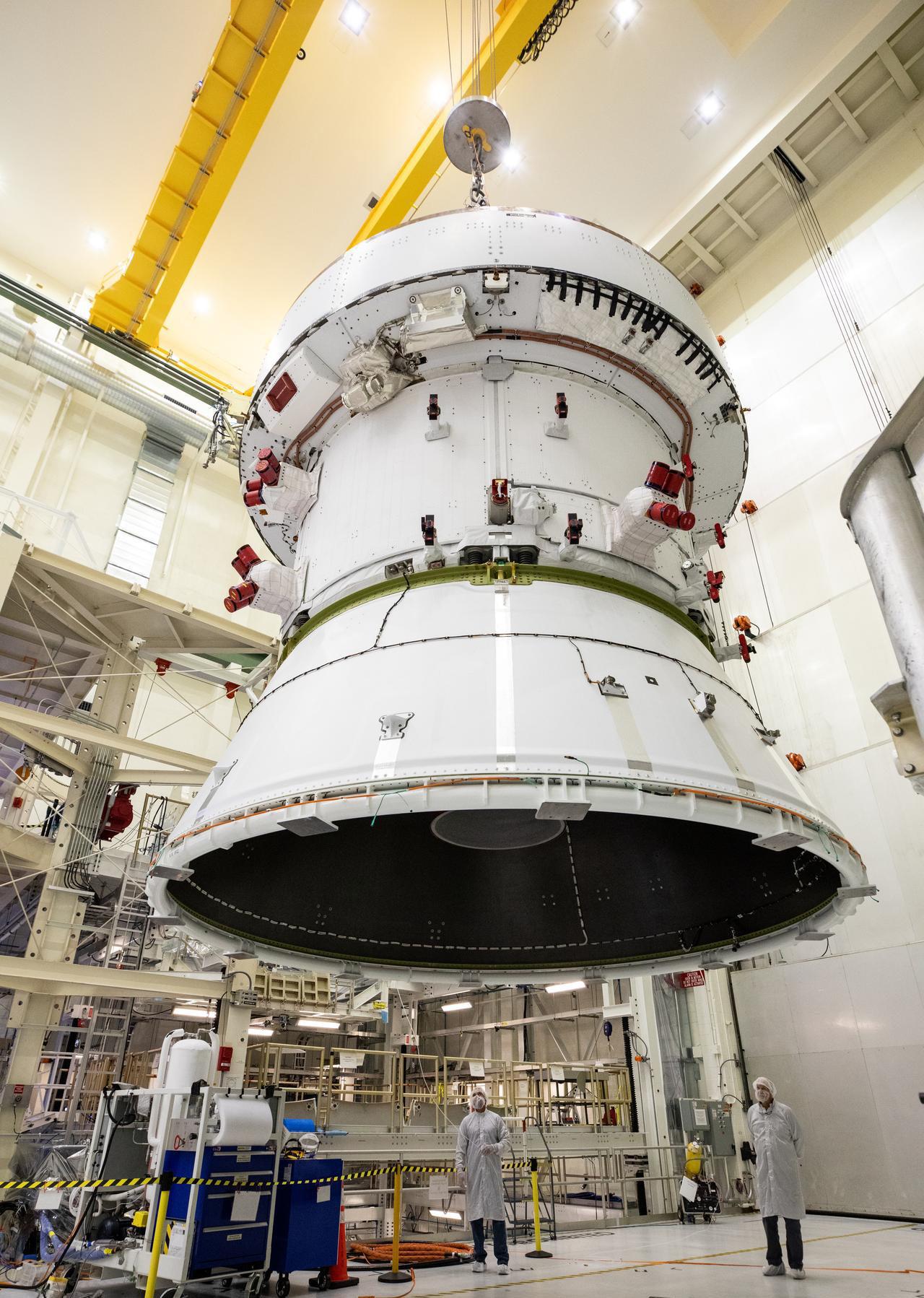
Above: NASA and Lockheed Martin technicians operate a 30-tonne crane to move NASA’s Artemis II Orion spacecraft out of the Final Assembly and System Testing cell inside the Neil A. Operations and Checkout Building at NASA’s Kennedy Space Center in Florida on 22nd February 2025. The move prepares for the upcoming installation of four solar array wings and spacecraft adapter jettison fairings for the agency’s first crewed flight test under the Artemis campaign
Above: The Artemis II crew captured this view of Earth setting on 6th April 2026 as they flew around the moon. As the astronauts flew over the moon’s far side, the crew photographed and described terrain features including impact craters, ancient lava flows, and surface cracks and ridges formed as the moon slowly evolved over time. They also noted differences in colour, brightness, and texture, which provide clues that help scientists understand the composition and history of the lunar surface
Left: The moon, seen here backlit by the sun during a solar eclipse on 6th April 2026, is photographed by one of the cameras on the Orion spacecraft’s solar array wings. During lunar flyby, the Artemis II astronauts observed a solar eclipse that only they could see due to their unique position
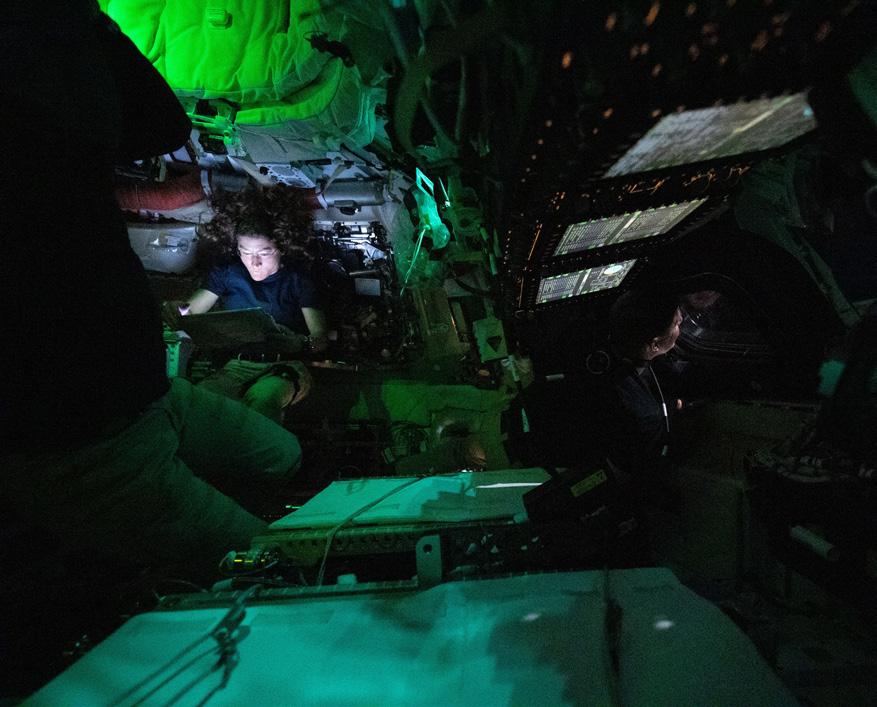
Inset, far right: NASA astronaut Christina Koch reads on a tablet in the dimly lit Orion crew capsule in this 3rd April 2026 photo. To the right of the image’s centre, CSA astronaut Jeremy Hansen is seen in profile peering out of one of Orion’s windows. Lights are turned off to avoid glare on the windows. On the third day of the Artemis II mission, the astronauts began preparing Orion’s cabin for lunar flyby. They also exercised, practiced medical response procedures, and tested the spacecraft’s emergency communications system in deep space
The four astronauts had journeyed further than any humans before, travelling to the far side of the moon and witnessing extraordinary sights, such as a solar eclipse, an Earthset, and a rare glimpse of the vast Orientale Basin in its entirety.
This remarkable achievement was made possible through advanced manufacturing processes that engineered the Orion spacecraft and its systems.
Beyond the scientific milestones, the mission was marked by deeply human moments. The crew named two lunar craters – one after their Orion capsule, Integrity, and another in honour of Wiseman’s late wife, Carroll.
It was a poignant tribute that resonated far beyond the spacecraft’s confines, reminding millions watching on Earth that exploration is as much about people as it is about progress.
Even amid the mission’s intensity, lighter moments captured global attention. A jar of Nutella drifting weightlessly through the cabin became an unexpected symbol of life in zero gravity, providing priceless advertising for the brand, and a plushie mascot named Rise accompanied the crew.
Designed by a young student, it was a nod to the iconic Earthrise
moment of the Apollo 8 mission.
Millions followed the crew’s historic journey, investing not only in the outcome but also in the experience itself.
From launch to landing, Artemis II showcased the seamless integration of technology, space science, engineering, astronautics, and international cooperation.
A DARING DESCENT
As Orion approached Earth, our blue planet slowly came into view, growing larger with every passing second.
The European Service Module (ESM) separated, burning harmlessly in the atmosphere, whilst the Orion crew module became a blazing sphere upon re-entry, enduring temperatures nearing 2,760 degrees Celsius – half as hot as the sun – as it tore towards the Pacific Ocean at 24,000 miles per hour (mph).
During this phase, a plasma sheath temporarily blocked radio communications for six minutes as the Avcoat heat shield protected those inside under extreme conditions.
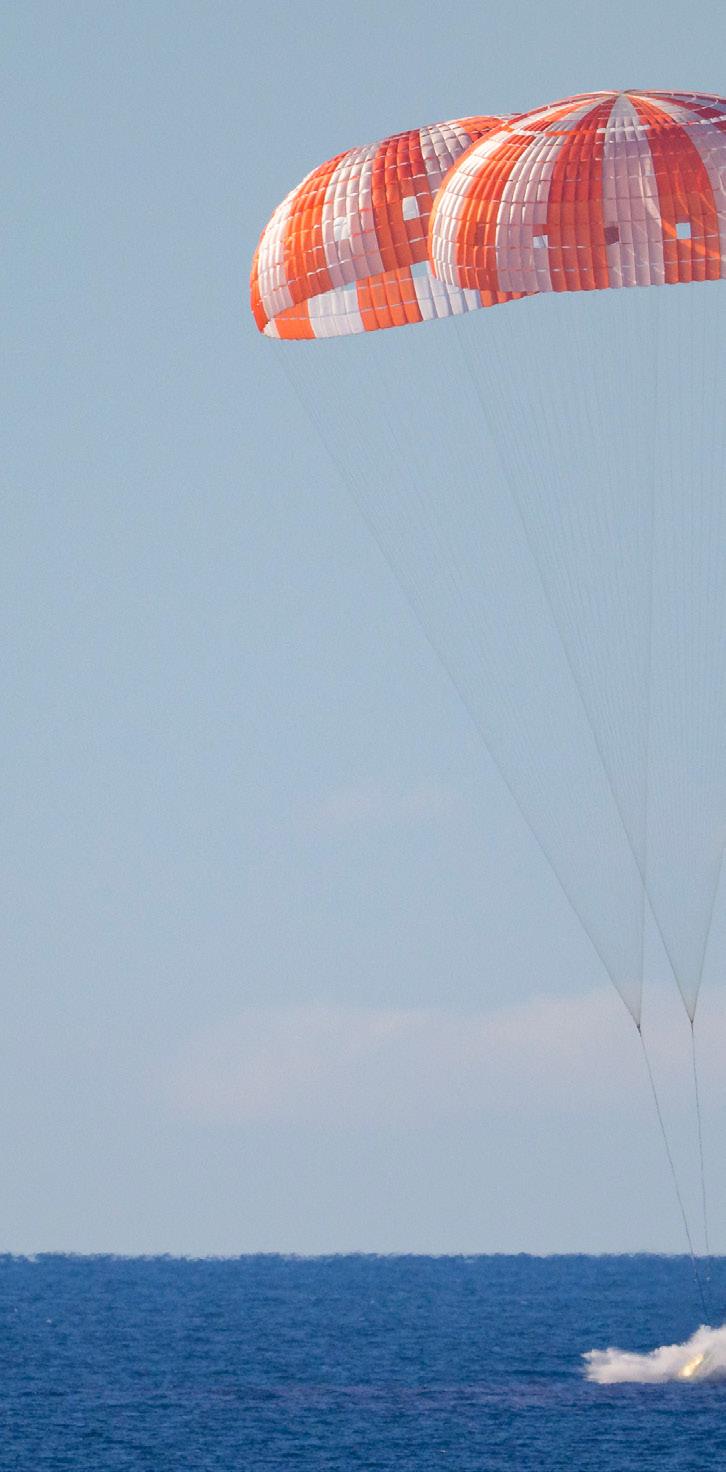
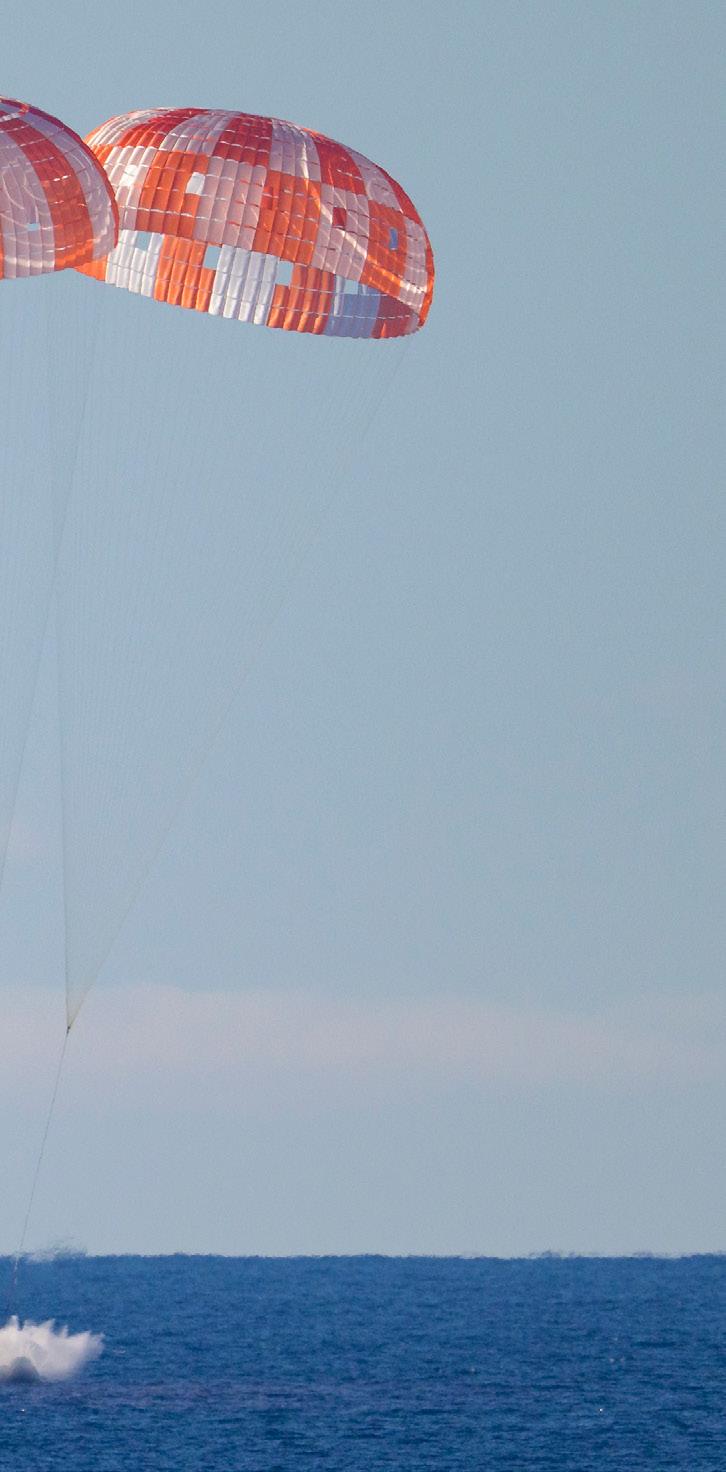
After four minutes of controlled descent, two drogue parachutes were deployed to stabilise the capsule, followed by the unfurling of three main parachutes that guided Orion towards a precise splashdown.
Orion slowed to 350 mph, gradually reducing its speed to approximately 17 mph for a safe ocean landing.
The return plan included multiple trajectory correction burns to ensure alignment for re-entry, with the moon’s gravity acting as a slingshot; therefore, no major propulsion burns were required as the spacecraft’s systems helped orient the capsule.
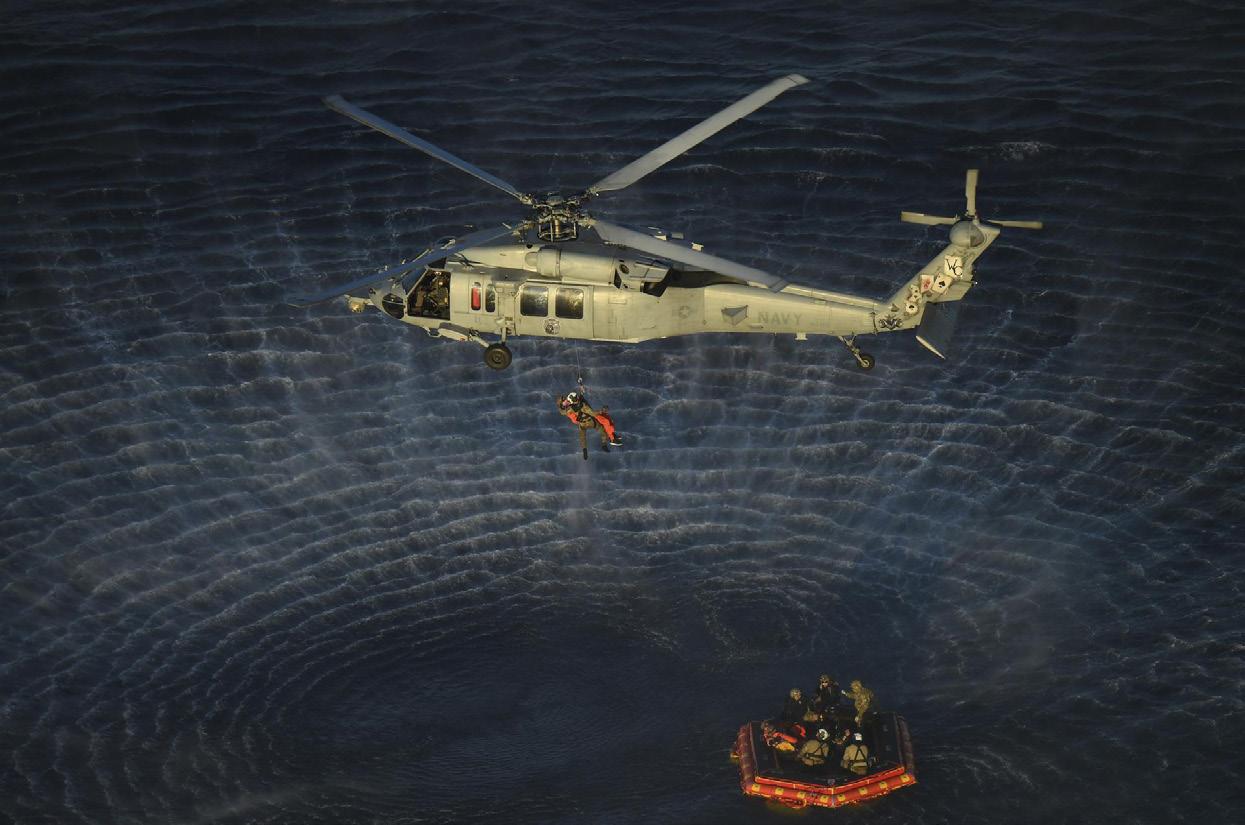
Recovery teams moved swiftly, securing Orion before Wiseman, Glover, Koch, and Hansen emerged onto the inflatable platform and were transported by US Navy helicopter to a recovery ship, where they were given a hero’s welcome aboard the USS John P. Murtha.
COMPETENTLY COORDINATING A SPLASHDOWN
The mission resembled a smooth Hollywood production with a stellar cast and camerawork that even a top
director would envy.
However, there was nothing about the journey or the splashdown that was down to luck; every detail was meticulously planned, and every eventuality was considered.
Orion landed exactly where and when it was meant to – an achievement made possible by the collective expertise of thousands working in unison. It was a triumph of coordination, precision, and trust in the systems and people behind them.
Inside mission control at the Johnson Space Center, another exciting milestone unfolded –women played leading roles across the control room, in a powerful contrast to the era of the first moon landing, when opportunities for females in such positions, and indeed in the wider world, were severely limited.
Above: 4th April 2026, NASA astronaut and Artemis II commander, Reid Wiseman, peers out of one of the Orion spacecraft’s main cabin windows, looking back at Earth, as the crew travels towards the moon
Right: NASA’s Orion spacecraft lands in the Pacific Ocean off the coast of California on Friday 10th April 2026. NASA’s Artemis II mission took Wiseman, Glover, Koch, and Hansen on a 10-day journey around the moon and back to Earth.
Following the splashdown, NASA, US Navy, and US Air Force teams worked to bring the crew members and Orion spacecraft aboard the USS John P. Murtha
As women in STEM break barriers and drive innovation, paving the way for future generations to pursue careers in the field, Artemis II not only pushed the boundaries of space exploration but also reflected the progress made here on Earth.
There is a renewed sense of excitement of moon fever gripping the world once again, but moon momentum must be maintained.
As anticipation builds for the announcement of crew for the next mission, the question is no longer whether humanity will return to the moon, but how far this new era of exploration will take us in the age of Artemis.
Top right: US Navy divers and Artemis II astronauts aboard an inflatable raft are approached by helicopters and lifted away to the recovery ship after egressing NASA’s Orion spacecraft carrying Wiseman, Glover, Koch, and Hansen, following splashdown in the Pacific Ocean near San Diego, California
Right middle: Glover and Koch talk with NASA administrator, Jared Isaacman, at their Navy MH-60 Seahawk from Helicopter Sea Combat Squadron 23 (HSC-23) on the flight deck of the USS John P. Murtha
A production-line of exclusive content, delivered straight to your inbox
As manufacturing organisations worldwide confront unprecedented change, embracing technological innovations and incorporating critical environmental sustainability agendas, now more than ever is the time to showcase the strides being taken in this dynamic sector.
A multi-channel brand, Manufacturing Outlook brings you the positive developments driven by organisations across the global manufacturing industry through its various platforms.
Discover exclusive content distributed through its website, online magazine, social media campaigns and digital dispatches, delivered straight to your inbox with a bi-weekly newsletter.
Through these compelling media channels, Manufacturing Outlook will continue to foreground the movers and shakers of the industry.
To participate as a featured company and join us in this exciting endeavour, contact one of our Project Managers today.
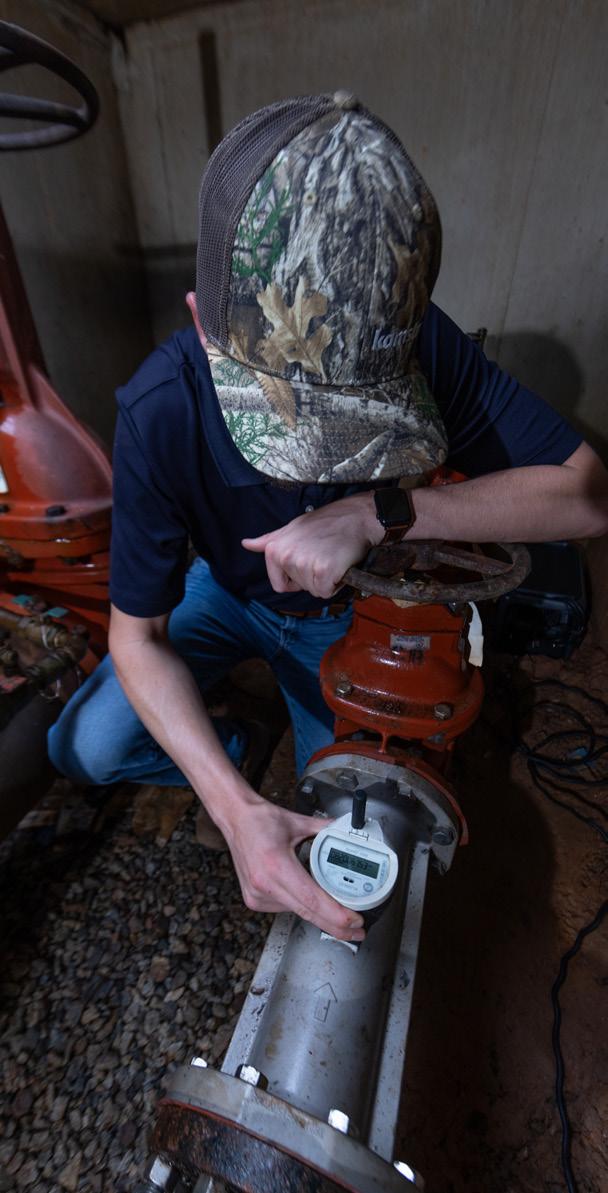
FROM GLOBAL EXPERTISE TO LOCAL IMPACT
Equipped with a thorough localization strategy that is key to minimizing water loss across the North and South America regions, Kamstrup continues to increase its scale and reach. We catch up with Bruce Bharat, Regional President –Americas
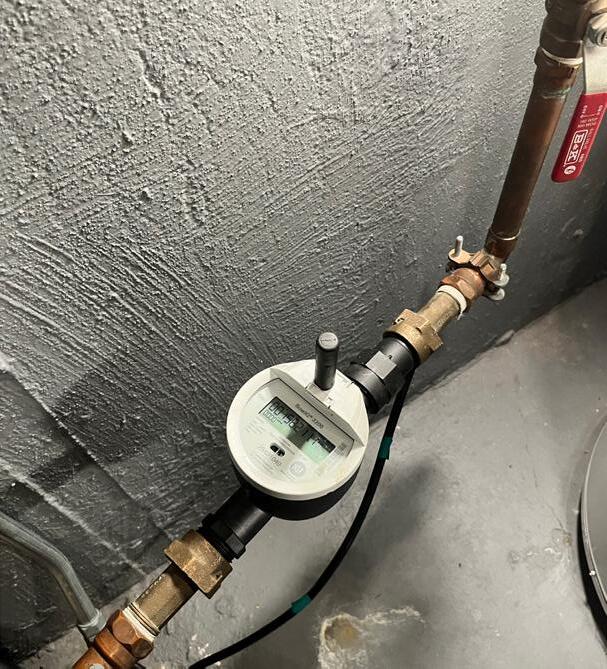
In the past year, global trade conditions and supply chain pressures have pushed many industries worldwide to rethink how and where products are made. In the smart water metering sector in particular, these same forces have increased the urgency around localization and resilience, areas in which Kamstrup continues to excel.
“Localization has always been the direction we wanted to go, but recent trade dynamics accelerated that journey,” opens Bruce Bharat, Regional President – Americas.
“We’ve used the moment as an opportunity to move faster, strengthen our regional supply chain, and improve responsiveness for utilities and channel partners across North America.”
Indeed, the company is proud to be part of a sector that is solving urgent, real-world challenges every day, including aging infrastructure, water loss, resource and capital constraints, and increasing expectations from customers.
“Our mission is simple and worthy – to reduce and ultimately eliminate water loss – and that makes this
work meaningful, even as the market becomes more competitive and turbulent,” he adds.
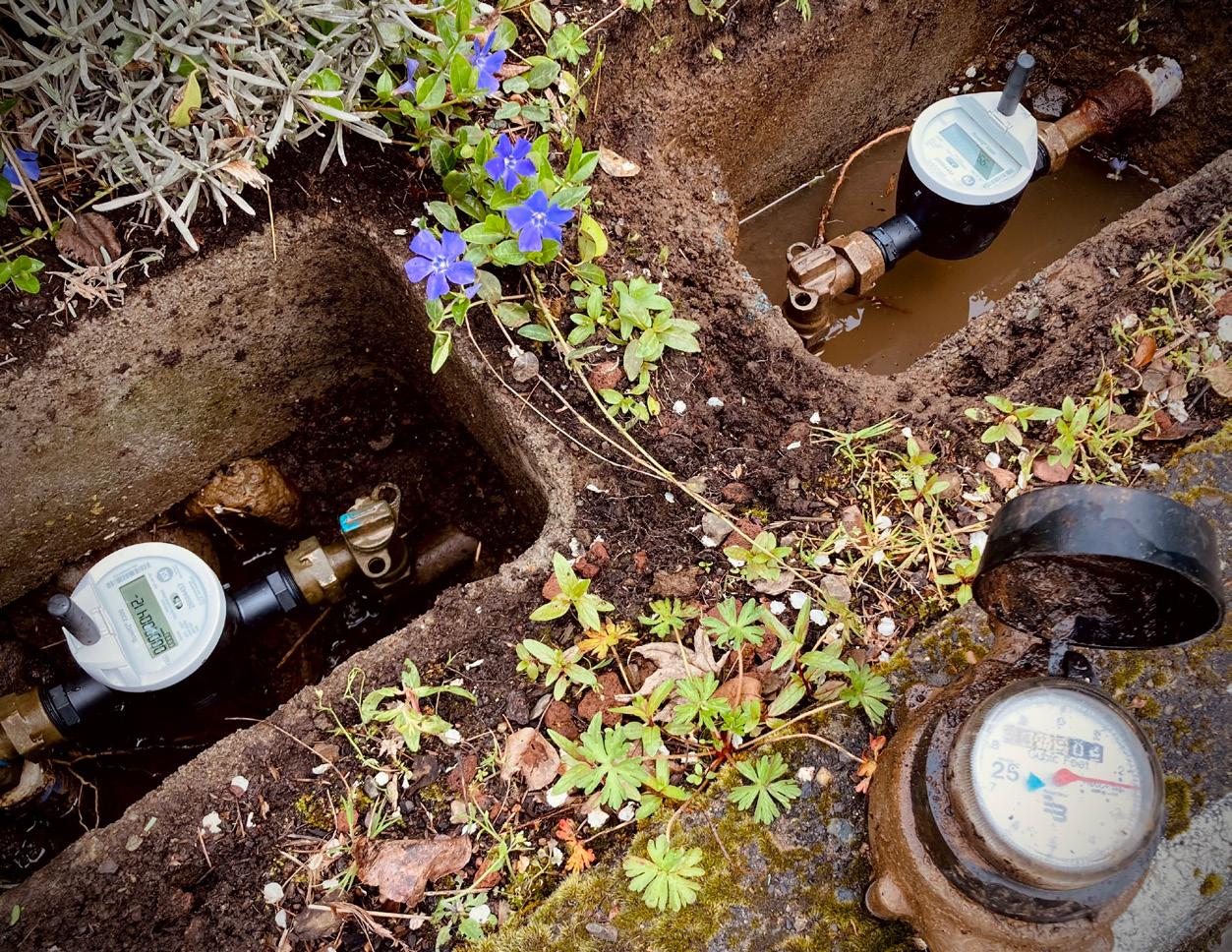
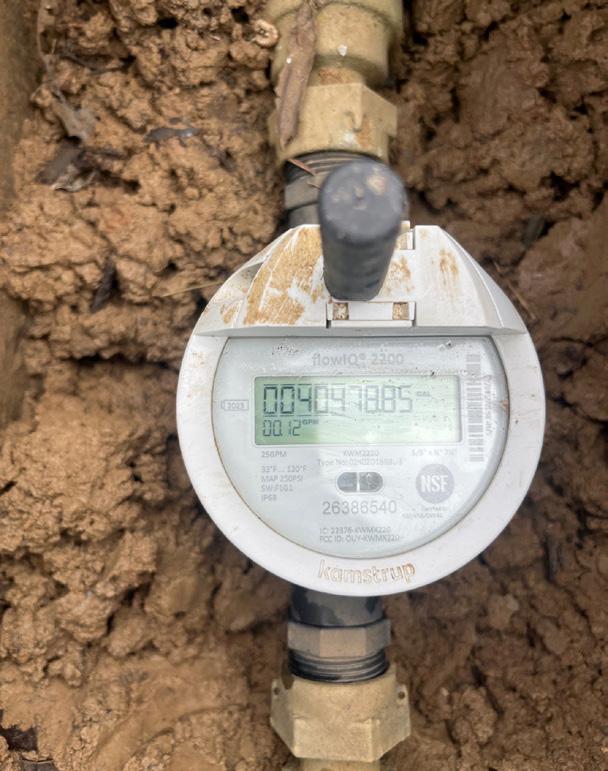
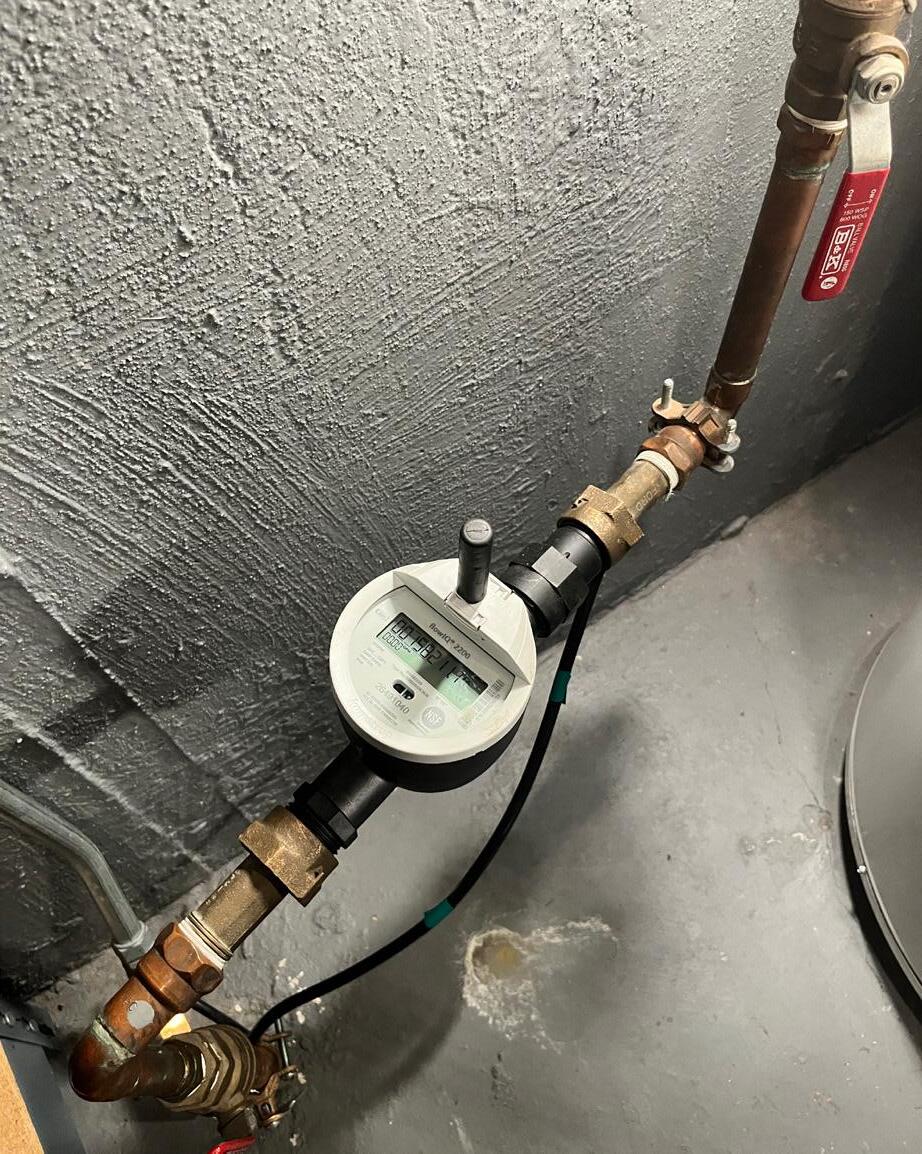
This goal is partly achieved by the fact that Kamstrup recently improved the starting flow on its residential flowIQ 2200® water meters from 0.01 to 0.008 – a 20 percent improvement on what was already industry-leading low-flow performance.
HOW HAS KAMSTRUP EXPANDED ITS CORPORATE SOCIAL RESPONSIBILITY (CSR) EFFORTS SINCE MARCH 2025?
Bruce Bharat, Regional President – Americas: “We’ve expanded our CSR efforts in ways that align directly with sustainability, resource efficiency, and workforce development.
“One example is our packaging journey. For our one-inch meters, we’ve eliminated styrofoam and transitioned to all-cardboard packaging that is fully recyclable.
“There’s also a major operational benefit –improved pallet density. Where one-inch meters previously shipped 44 per pallet, the updated design supports 100 per pallet, which improves logistics, reduces warehouse footprint for distributors, and lowers transportation impacts. This is phase one of a broader plan to remove styrofoam across all packaging formats.
“We also launched a more robust internship program in 2025, welcoming student workers into finance, sales, and marketing. We’re proud that one of those interns has since graduated and joined Kamstrup full-time – which is exactly the kind of talent development pipeline we want to build.”
“We already had the best low-flow capabilities in the market, and we made it even better because we care deeply about measurement integrity and capturing every possible drop.”
ELEVATING SCALE AND REACH
Celebrating its 80th anniversary this year, Kamstrup’s founding vision remains steadfast – to deliver reliable metering that supports smarter water management and helps utilities
reduce water loss. What has evolved, however, is the company’s scale and reach.
“We’ve had a strong year in terms of growth – new customers, expanded deployments, and deeper adoption across multiple market segments.
“We’re also continuing to strengthen our supply chain and manufacturing capabilities in North America so that we can serve the market with greater speed, stability, and quality,” Bharat adds.
This year, the company is also proud to celebrate 35 years of ultrasonic metering.
“We made a bold decision long before ultrasonic metering became a growing trend in the US market to commit to static, or solid-state measurement technology, because it offers the most accurate and stable way to measure water over the full life of a meter.”
In the early 1990s, ultrasonic, or ‘static metering’ wasn’t commonplace in the industry. However, Kamstrup made the strategic choice to move away from mechanical technology and invest in change before the market demanded it – a major reason for the company celebrating such success today.
Kamstrup is further distinguished by its consistent focus on the production of high-quality products.
“We don’t treat manufacturing as an afterthought. Some companies design products and then try to figure out how to build them. At Kamstrup, manufacturing is integral to product design,” he urges.
Indeed, the company’s scalability, quality, and innovation doesn’t happen in a vacuum; they stem from intentional design, advanced automation, quality controls and robotics, and the discipline to build products the right way, every time.
“OVER THE PAST YEAR, WE’VE EXPANDED BOTH THE SCOPE AND MATURITY OF WHAT WE DO LOCALLY, IMPROVING OUR ABILITY TO SERVE UTILITIES AND CHANNEL PARTNERS WITH SPEED, STABILITY, AND CONSISTENT QUALITY”
– BRUCE BHARAT, REGIONAL PRESIDENT – AMERICAS, KAMSTRUP
PRIORITIZING LOCALIZATION
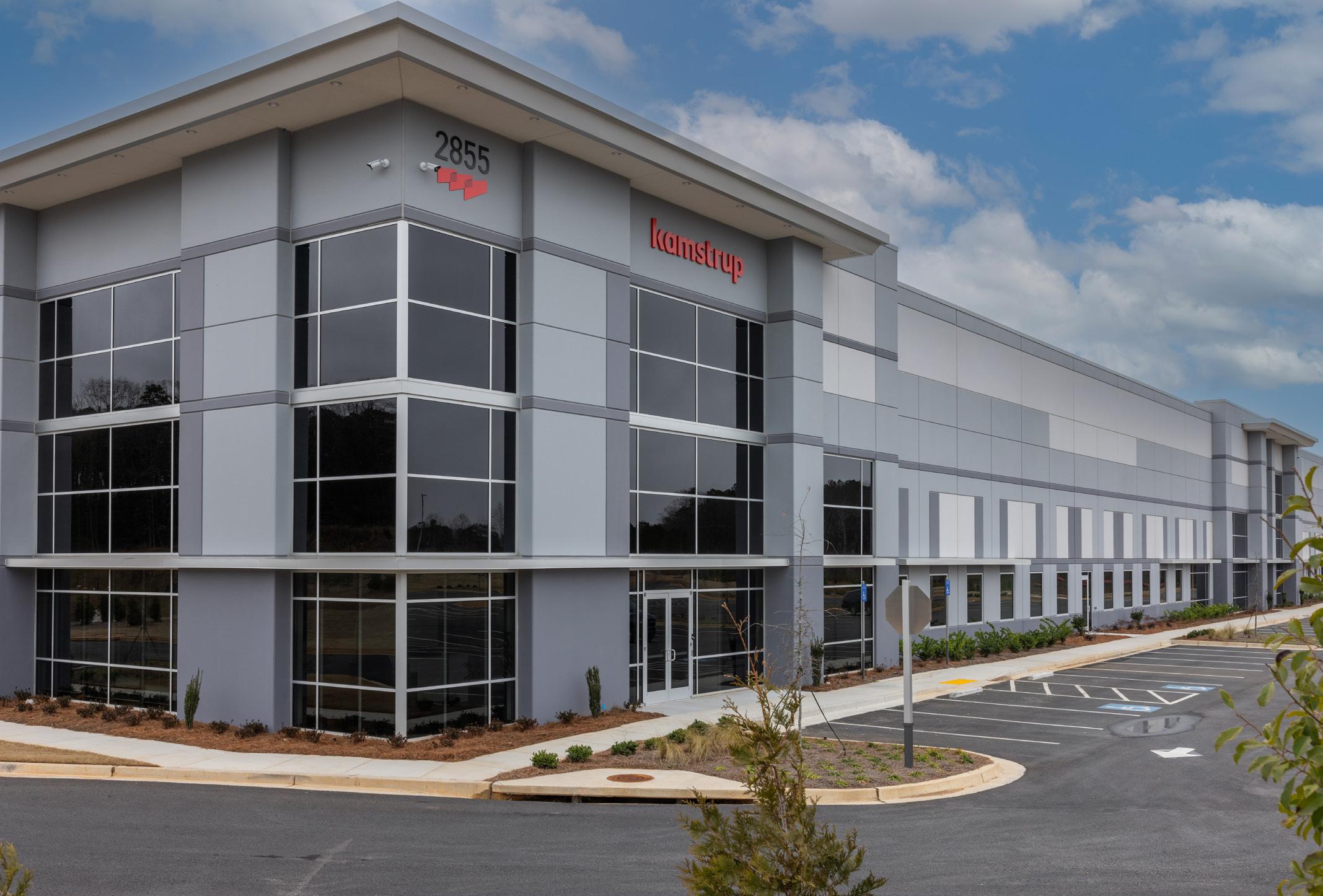
Since last speaking to Kamstrup, its Georgia facility has continued to mature, becoming a major anchor point for the company’s North American growth strategy.
With this new facility comes the ongoing expansion of Kamstrup’s localized supply chain, which has facilitated its production capabilities to support local configuration and the assembly of larger commercial and industrial meter lines which, in turn, help shorten lead times and strengthen overall reliability and responsiveness.
“Over the past year, we’ve expanded both the scope and maturity of what we do locally,
improving our ability to serve utilities and channel partners with speed, stability, and consistent quality,” Bharat affirms.
This also grants the company tighter quality control, significantly faster response times to demand shifts, and a more resilient manufacturing model for the US market.
One of Kamstrup’s most meaningful developments has been the evolution of a localized supply chain ecosystem – including in-house production of printed circuit boards, Atlantabased manufacturing of meter housings, and regional sourcing of critical components used in the final assembly of US-made water meters.
Robust and Innovative Solutions
Providing industry-leading solutions throughout Louisiana, Mississippi, Western Tennessee, and Arkansas, Environmental Technical Sales, LLC is the expert in all things industrial water and wastewater
Here at Environmental Technical Sales, LLC (ETEC), we proudly provide reliable and marketleading solutions to our clients, enabling them to operate efficiently, increase production, improve overall system performance, and enhance customer satisfaction.
We offer a variety of professional services to our clients to provide them with the necessary solutions and support for sustainable success.
As an organization with expertise in equipment applications for water and wastewater treatment, solids handling, air emissions, stormwater, and related areas, we offer an extensive collection of products that allow us to present optimum solutions for our clients’ particular environmental problems.
ETEC’s presence spans both the municipal and industrial water and wastewater markets of Louisiana, Mississippi, Arkansas, and Western Tennessee.
We partner with a range of manufacturers to offer clients the highest quality products for their various environmental projects. Additionally, we continue to seek
manufacturers that not only produce world-class equipment but are also technological leaders in their unique fields.
With in-depth knowledge and years of experience in municipal projects, ETEC boasts professional staff with specific industrial expertise in areas including pulp and paper, petrochemical, and poultry processing.
Our experience and knowledge are matched by our team of eight outside salespersons, eight support staff, and six service technicians. It is through these resources that our clients feel confident they will receive exceptional service and guidance they can trust. Equally, we are proud to be a BBB-accredited business with an A+ rating since 2017.
The benefits of using ETEC’s services comprise unwavering operational efficiency, lower operating costs, increased revenue, improved customer service, reduced non-revenue water, and future investment. We are here to provide services and support throughout all phases of a project, including pre-deployment, full deployment, and postdeployment.
DELIVERING IMPECCABLE SERVICE
Our service at ETEC is what truly sets us apart.
We know this industry. We understand the challenges our clients face. We know what it is they need to ensure their projects are successful.
Our team consistently delivers
ETEC Equipment
• Water treatment
o Raw water intake
o Chemical feed and pretreatment
o Rapid mix and flocculation
o Clarification
o Filtration
o Disinfection
o Storage and distribution
o Instrument and controls
o Supervisory control and data acquisition (SCADA)
• Wastewater treatment
o Influent pumping
o Headworks and primary treatment
o Biological treatment systems
o Chemical feed and pretreatment
o Clarification
o Return active sludge (RAS) and waste active sludge (WAS) pumping
o Tertiary treatment
o Disinfection
o Post aeration
o Storage and distribution
o Instrument and controls
o SCADA
o Odor control
o Algae control
o Diversion baffles/curtains and oil booms
• Sludge solids handling
o Conveying
o Conditioning
o Thickening
o Digestion
o Dewatering
o Storage
o Class A processes
o Odor control
o Case studies
• Storm water
o Management
o Treatment
o Disinfection
o Storage
• Water meters
o Meters
o Meter reading
o Analytics
o Case studies
on our promise of impeccable service through three distinct sectors – outside sales, contract administration, and field service. Specifically, outside sales is the primary link between clients and our network of manufacturers. This group offers process assistance, conceptual design ideas, cost estimates, equipment specifications, and technical presentations for any environmental equipment application.
Contract administration works with owners, contractors, and consulting engineers in the execution phase of each project. This team oversees the approval drawing process, manages change orders, and coordinates equipment deliveries.
The parts department handles inquiries ranging from spare parts to retrofits and upgrades – all of which are coordinated with our
manufacturers. This is parallel to supporting the field service and start-up operations. Equally, field service is a group of factorytrained technicians who specialize in the equipment serviced in warranty situations, and the technicians make general service calls on a fee basis.
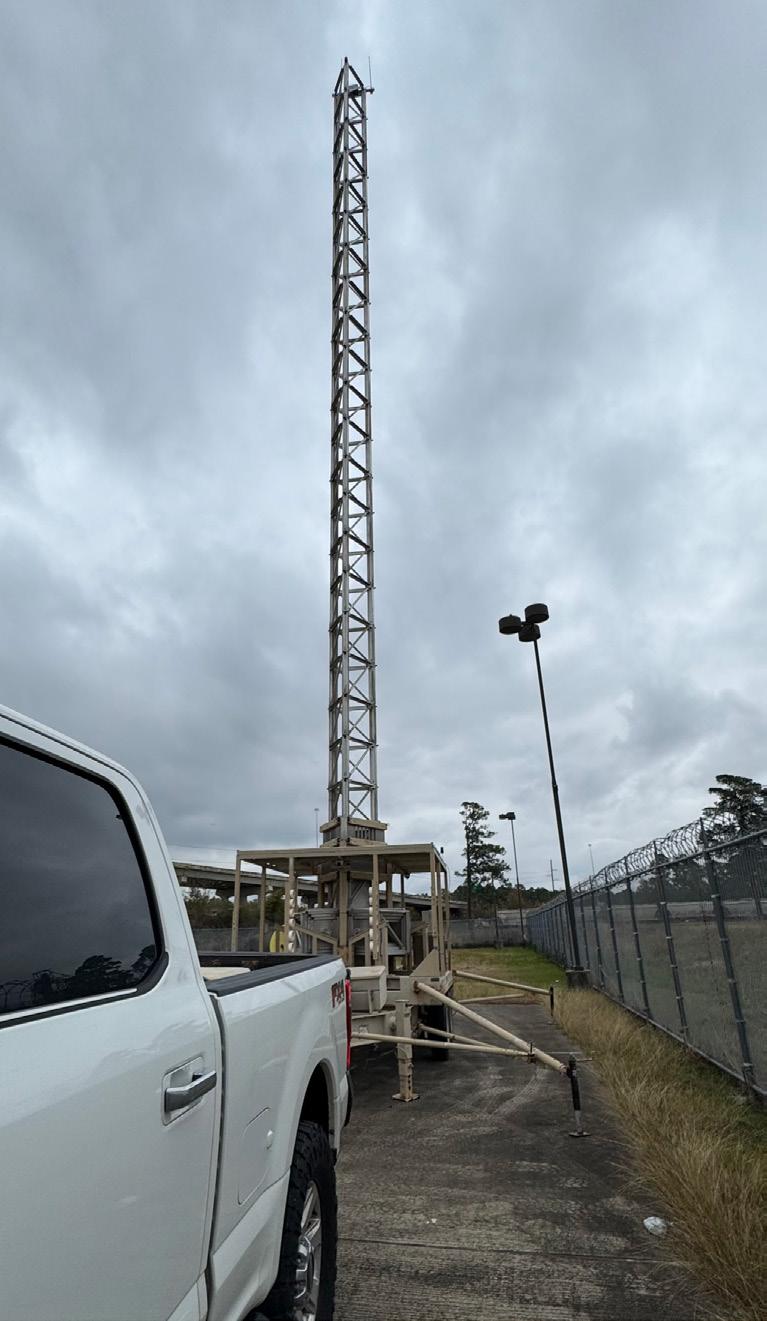
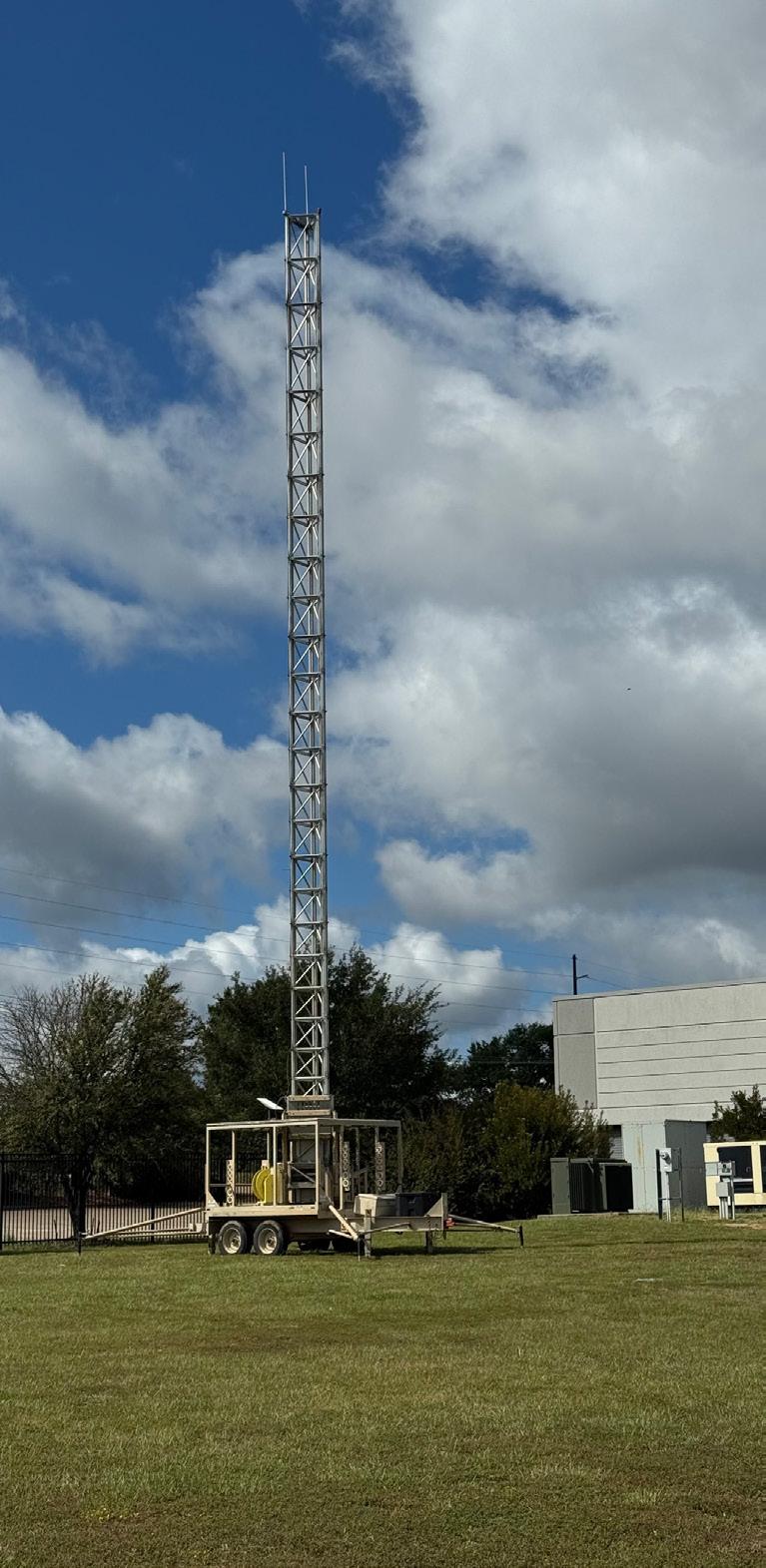
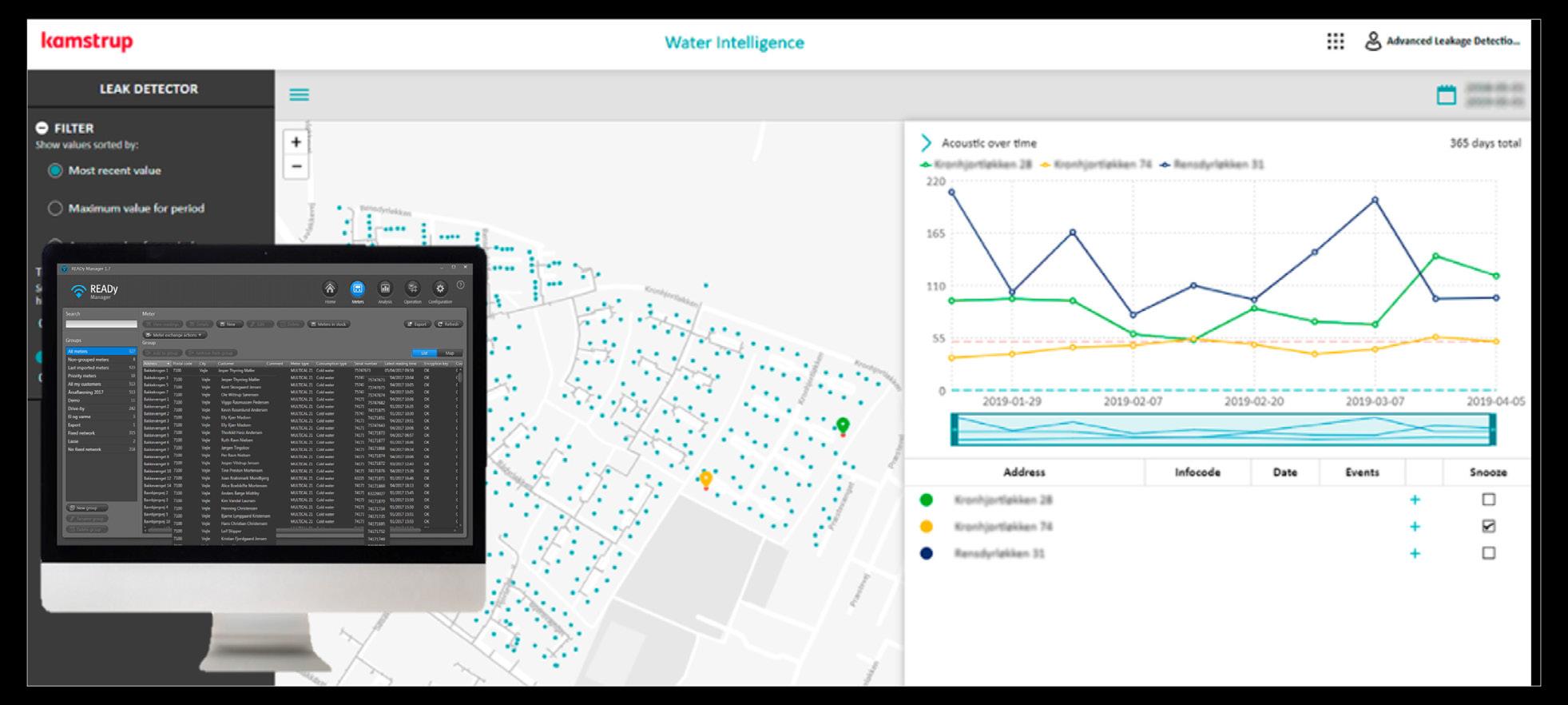
Some of our solutions at ETEC consist of automatic meter reading (AMR), advanced metering infrastructure (AMI), and acoustic leak detection (ALD).
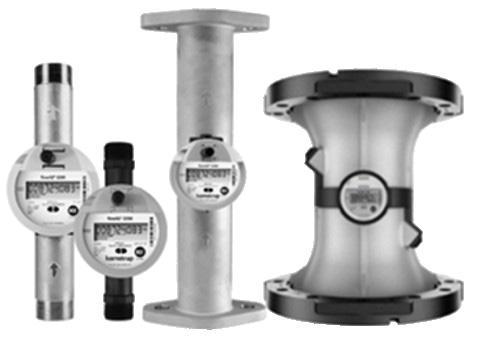
AMR collects meter consumption data and alarms customers automatically using the READy app installed on their Android handheld device, which can be paired with the READy converter. Elsewhere, AMI collects consumption data and alarms users remotely in addition to providing drive-by reading capabilities, ultrasonic measurement, and sustained accuracy.
ALD also collects consumption data and alarms customers remotely while providing drive-by reading capabilities, ultrasonic measurement, sustained accuracy, acoustic leak detection in service lines and distribution mains, and advanced analytics and reporting.
ETEC project highlights
• City of Jackson, Mississippi –ALD Water Meter Project
o Kamstrup ALD solution
o 70,000+ metering points
• City of Lake Charles, Louisiana – ALD Water Meter Project
o Kamstrup ALD solution
o 36,000+ metering points
• City of Shreveport, Louisiana - ALD Water Meter Project
o Kamstrup ALD solution
o 77,000+ metering points
PARTNER OF CHOICE
As an elite distributor of Kamstrup products, ETEC is actively involved in implementing the company’s solutions from start to finish.
Our dedicated sales and project management teams are heavily involved throughout the entire process to ensure a seamless transition from sales to project deployment. An experienced
project management team has successfully deployed and implemented several AMR and AMI Kamstrup solutions throughout Louisiana, Mississippi, and Arkansas.
We will also begin implementing Kamstrup solutions in the state of Tennessee in 2026, with it now being added to ETEC’s Kamstrup distribution territory portfolio.
Our project management team members are fully trained and certified on all Kamstrup software, infrastructure, and devices, allowing us to successfully deploy and optimize solutions for our customers.
Additionally, our post-deployment service offerings provide customers with the option to have our experienced service and support team continue to guarantee ongoing professional guidance that will allow them to utilize their Kamstrup solution to its fullest capabilities, thus maximizing customers’ return on investment (ROI).
ETEC has continued to grow our partnership with Kamstrup by becoming the company’s distributor for the entire state of Tennessee last year, making it ETEC’s fourth state as a Kamstrup distributor.
With our water meter operation expanding into new territories, we have added additional sales and project management personnel to our team to ensure continued success in all four of our operating areas.
If you’re looking for a true industry leader with unparalleled expertise, ETEC is here to provide you with impeccable and reliable services that will enable your business to focus on what really matters.
Indeed, as its North American circuit board volumes have increased, the company has witnessed key Danish suppliers establish US manufacturing footprints to support this growth, therefore bringing the same competencies, tooling, and production standards closer to the facility in Georgia.
The facility and its growing network equally have a major impact on the local community.
“It’s not only the jobs Kamstrup creates directly – it’s also the jobs and opportunities created by the suppliers investing alongside us. These partnerships strengthen quality control, reduce lead times, and make our entire production model more responsive to changes in customer demand.”
MEASURING UP
Kamstrup’s most recent projects serve to differentiate the company as they represent its advanced scale and
“WE DON’T TREAT MANUFACTURING AS AN AFTERTHOUGHT. SOME COMPANIES DESIGN PRODUCTS AND THEN TRY TO FIGURE OUT HOW TO BUILD THEM. AT KAMSTRUP, MANUFACTURING IS INTEGRAL TO PRODUCT DESIGN”
–
BRUCE BHARAT, REGIONAL PRESIDENT – AMERICAS, KAMSTRUP
strategic expansion.
This is most pointedly demonstrated by Kamstrup’s collaboration with El Paso Water, which has reached the halfway mark in its roll-out, with more than 100,000 meters integrated into its network.
“What makes the El Paso Water project even more significant is that it is using Kamstrup’s embedded acoustic leak detection, proving that this technology is scalable and valuable at full deployment levels.
“This matters because leak detection at scale is where many
utilities want to go, and El Paso Water will prove that it can be done,” Bharat explains.
Elsewhere, Kamstrup has recently partnered with the Las Vegas Valley Water District (LVVWD), who – in a region where water scarcity is a defining reality – has built an operating model that invests heavily in conservation and demand reduction.
Kamstrup was chosen by LVVWD for its ability to measure at exceptionally low flow levels.
“LVVWD has highlighted the value
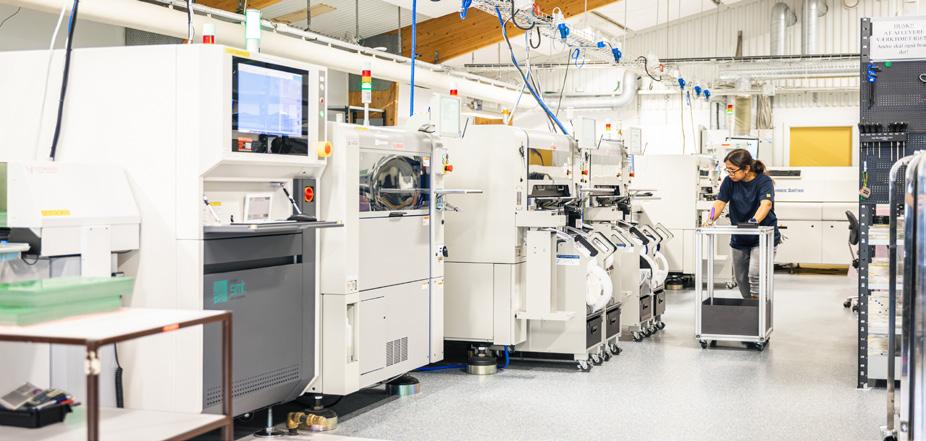
We provide electronics manufacturing solutions , delivering
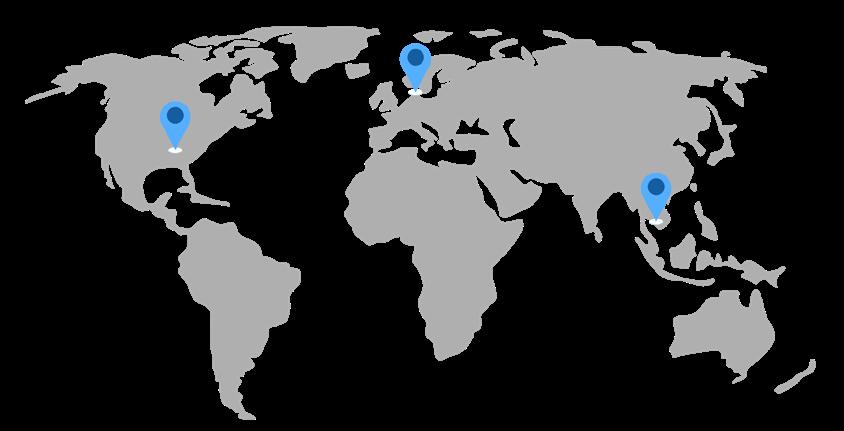
ETK delivers established global supply capabilities with a footprint across the U.S., Europe & Thailand
www.etkems.com
DESERVED RECOGNITION
Kamstrup was honored to be voted the ‘Best Smart Water Solution’ at the 2025 Smart Water Summit – an award decided by over 100 utility executives.
“What made this recognition meaningful is that it came directly from utility leaders evaluating solutions based on real-world value and performance,” Bharat smiles.
of being able to measure extremely small usage – even down to drops of water – and how this changes the effectiveness of customer service, conservation, and leak response.
“That kind of measurement sensitivity is extremely valuable in a conservation-driven market.”
Kamstrup is equally proud of its deployments in León and Ciudad Juárez, Mexico, where the company supports major advanced metering infrastructure (AMI) water networks, including the largest and secondlargest deployments for water AMI in the region.
“These projects demonstrate the value utilities can unlock through accurate billing and active water loss reduction at scale.”
Kamstrup’s focus for the coming year primarily centres around growth – in customers, deployments, team capability, and localized manufacturing.
Indeed, the company is continuing to build on its reputation for quality in the marketplace, while also investing in the people and infrastructure needed to support expanding deployments.
“We’ll also continue our localization journey – not only because of supply chain dynamics, but because we
believe in actively participating in the markets we serve, supporting regional partnerships, and building long-term resilience in how we manufacture and deliver our solutions,” Bharat concludes.
Tel: 404.835.6716
info-us@kamstrup.com www.kamstrup.com/en-us
BUILDING
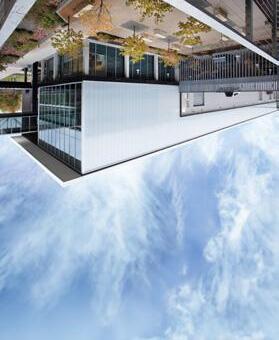
EXCELLENCE IN BUILDING ENVELOPES
Equipped with unmatched knowledge of building façades garnered from over 60 years in business, Trimo takes building envelope solutions to a new level. We speak to Nay Tawile, CEO, and Janez Kunič, CCO, about the company’s next-generation product line, undeniable commitment to customers, and drive for sustainable architecture
Writer: Lucy Pilgrim | Project Manager: Cameron Lawrence
The European façade sector is one of the most demanding in modern-day construction.
Industry players are contending with inflation and rising interest rates that are putting pressure on investment decisions.
Nevertheless, increasing emphasis on energy and sustainability regulations, together with higher requirements for safety, are creating a highly dynamic sector.
“Customers now expect more reliable, energy-efficient solutions, delivered with speed, transparency, and predictable quality over the full lifecycle of a project,” opens Nay Tawile, CEO of Trimo, leaders in high-performance building envelope solutions.
This raises the bar for performance and opens up many opportunities for companies that are willing to adapt, differentiate, and respond quickly to customer needs.
“Every project, market, and customer brings new challenges, but there is also a chance to create meaningful, future-focused solutions. It’s a space where innovation and customer-centric thinking can truly make a difference,” adds Janez Kunič, CCO.
These conditions provide the perfect environment for companies to differentiate, build long-term
partnerships, and shape how buildings will perform over the next 30 to 40 years.
“For Trimo, this context reinforces our focus on high-performance façade and building envelope solutions, reliable execution across many countries with different norms and regulations, and the capability to serve fast-growing segments, such as data centres and global industrial players, which operate across multiple markets,” Tawile expands.
IN PRIME POSITION
Having experienced an upward trajectory since its inception in 1961, Trimo today is recognised as a global leader in premium stone wool core sandwich panels for façades and roofs, having delivered more than 60 million square metres of façades to over 25,000 clients globally.
With more than 450 employees, production facilities in Slovenia
TRIMO – IN NUMBERS
• 450+ employees
• Sells to over 120 countries
• Operates a commercial network across 30 markets
• Two production sites
and Serbia, and a strong sales network across nearly 30 countries, the company works closely with architects, investors, and contractors worldwide.
Moreover, Trimo’s project portfolio includes collaborations with highly reputable organisations such as Airbus, Heathrow Airport, Nestlé, Philips, DHL, Porsche, IKEA, Prologis, Mercedes-Benz, and Coca-Cola.
This demonstrates the trust placed in Trimo’s products and the value it brings to complex architectural and industrial projects.
“Our solutions are mainly used in high-tech industries, data centres, and logistics, where customers need reliable fire performance, strong energy efficiency, and architectural quality in often complex, multicountry operations,” insights Tawile.
Together with REX Panels & Profiles (REX), Trimo is proud to represent the Insulated Panels division within Recticel Group (Recticel) – a Belgian organisation focused on advanced thermal and acoustic insulation solutions and supporting the energy transition.
Indeed, being part of Recticel greatly expands Trimo’s network, granting access to new customers and partnerships and strengthening its credibility in key markets.
“We combine our façade expertise
“WE STAY ENGAGED FROM THE EARLY PLANNING STAGES ALL THE WAY TO INSTALLATION, OFFERING TECHNICAL GUIDANCE AND RESPONSIVE COOPERATION. THIS COMBINATION OF ADVANCED TECHNOLOGY, RELIABILITY, AND CLOSE PARTNERSHIP IS WHY TRIMO REMAINS A PREFERRED CHOICE ACROSS EUROPE”
– JANEZ KUNIČ, CCO, TRIMO
with Recticel’s strong background in materials and innovation, creating solutions that are more competitive and aligned with future market needs. This connection helps us offer greater value to our customers and strengthens Trimo’s position across all our regions,” Kunič expands.
Being part of the group also greatly advances the company’s investment capabilities.
“Within the Insulated Panels division, Trimo, together with REX, benefits from the financial strength and insulation know-how to fund new capacity, technologies, and product development.
“A clear example is the new
insulated panels factory being built in the US under the Recticel umbrella. It’s a major investment that will anchor the group’s presence in the country and support our growth ambitions in the wider North American market,” Tawile reveals.
UPHOLDING A COMPETITIVE EDGE
Trimo strives to go above and beyond with its vast range of products, most acutely emphasised by its flagship fire-resistant panel range, Trimoterm –known for its top-notch performance.
Qbiss One, meanwhile, offers architects a clean, precise, and highly flexible façade solution.
“In recent years, we’ve taken this even further by developing Qbiss Notch in collaboration with Pininfarina, bringing a new level of architectural refinement and design sophistication to the market,” Kunič informs.
The company’s customers value the fact its systems are fully engineered, meaning they address several critical requirements simultaneously, including fire safety, thermal efficiency, airtightness, and design.
“I often say we ‘produce unicorns’; we don’t just make panels – we deliver complete building envelopes with design and engineering support throughout the project.
Building with Stone Wool Insulated Sandwich Panels
“Building with stone wool insulated sandwich panels”, authored by Professor Marco Imperadori, is the first comprehensive guide dedicated to stone wool insulated sandwich panels. It combines concise industry insights with practical, real-world applications.
One standout example is the Isarphilharmonie at the Gasteig HP cultural quarter in Munich. Here, stone wool insulated sandwich panels help deliver concert-hall acoustics, robust fire safety and a highly sustainable envelope in a temporary yet architecturally striking structure. The project shows how sandwich panels can meet demanding performance requirements while enabling fast, flexible construction. Access your own version here
The BIM Studio by ROCKWOOL Core Solutions is here!
Discover a faster, more intuitive way to access high-quality data for your projects. From BIM models to building data!
Try it now and experience the difference
“Our partnership with Trimo is built on mutual trust and a long-standing relationship. I’m proud to see them recognised in the market for the high quality of their solutions, which fully leverage the benefits of stone wool.”
Bernard Plancade Managing Director ROCKWOOL Core Solutions
Sustainable Buildings with Stone Wool Insulation
Our Spanrock® stone wool has passed the Cradle to Cradle Material Health assessment. As core material in sandwich panels, it combines strong mechanical properties with high-quality thermal performance. As a non-combustible material, Spanrock® helps contain fire, limits its spread and does not contribute fuel. It also prevents mould growth, making it a safe and durable choice.
Learn more here
“Our collaboration with Trimo shows how integrating sustainability into architectural practice can create both environmental and commercial value. By supplying Cradle to Cradle Certified® Material Health stone wool, we help project teams deliver safer, more sustainable buildings and strengthen their position in the marketplace.”
André Coelho Nunes Business Unit Director Sandwich Panels
Stone wool in action!
At the Gweithdy workshop building at St Fagans National Museum of History in Cardiff, stone wool insulated sandwich panels help deliver a BREEAM-certified, high-performance space that combines energy efficiency, durability and comfort. Partner with ROCKWOOL Core Solutions to bring certified, sustainable envelopes to your next project. Scan the QR code for more
“Customers rely on us to solve details, interfaces, and compliance questions, not just supply materials,” Tawile tells us.
Indeed, Trimo is renowned for the support it provides to customers throughout their project lifecycles.
“We stay engaged from the early planning stages all the way to installation, offering technical guidance and responsive cooperation. This combination of advanced technology, reliability, and close partnership is why Trimo remains a preferred choice across Europe,” Kunič attests.
The company’s expanding presence across four regions is an additional strategic advantage as it allows Trimo to remain in close proximity to customers and truly understand what drives each market, whether it’s premium design, energy efficiency,
delivery speed, or overall project value.
“Each market operates at a different pace and with different expectations – from highly sustainability-driven Northern Europe to fast-moving, design-focused Western and Southern Europe markets and more cost-sensitive but rapidly growing regions in Central and Eastern Europe,” Tawile explains.
This diversity keeps Trimo highly adaptive and challenges the company to innovate with intention, ensuring its solutions meet a wide spectrum of technical, regulatory, and aesthetic needs.
“Our presence provides a clear competitive advantage as we can identify trends early, address regional requirements, and transfer best practices across our markets,” Kunič adds.
A DIVERSE PORTFOLIO
At the pinnacle of its leading building envelope solutions, data centres remain one of the strongest representations of Trimo’s technical expertise and delivery performance.
“Our work with global clients such as Google and Microsoft, as well as hyperscale projects like the Stargate UAE programme, confirms we can meet demanding specifications, coordinate large teams, and ensure reliable execution,” Kunič shares.
Trimo has several other recent projects that demonstrate the diversity of its portfolio. For instance, the company’s involvement with LEGO in the US and the Natural History Museum in the UK highlights its ability to support cultural and complex projects whilst also being compliant with the latest environmental guidelines.
“IN SHORT, SUSTAINABILITY IS NOT A SEPARATE PROGRAMMEIT IS PART OF OUR DAY-TO-DAY OPERATIONAL DECISIONS”
– NAY TAWILE, CEO, TRIMO
TRIMO’S HISTORY
The company’s story began in 1961 as a small metalworking business in what was then Yugoslavia and is now Slovenia.
Over time, Trimo evolved to become a specialist in prefabricated steel construction elements, and in the 1970s and 1980s started developing its own façade and roof solutions. This work laid the foundations for what later became the Trimoterm fire-resistant panel range – a landmark product for the business.
The 1990s marked a period of strong international expansion with the establishment of new subsidiaries across Europe and the company’s first major projects outside the continent. A further step-change came in 2009 with the launch of the Qbiss One façade system, which strengthened Trimo’s position amongst design-oriented building envelope manufacturers.
In 2010, the high-tech ArtMe façade surface treatment received the Red Dot Design Award. The company subsequently refreshed its corporate identity six years later to reflect its global profile and focus on high-performance façades and roofs.
Another significant milestone in April 2022 saw Trimo become part of Recticel, strengthening its position within the broader European industrial network.
Today, more than six decades after its founding, the company continues to build on this heritage with a clear focus on innovation, architectural quality, and high-performance building envelope solutions, whilst actively reducing its environmental impact and supporting more sustainable construction.
Meanwhile, the company’s work with industrial clients worldwide showcases the durability, efficiency, and precision of its façade systems in demanding production environments.
“These projects highlight the breadth of our portfolio and trust customers place in Trimo,” details Kunič.
Alongside its industrial investments, the company is also working hard on improving operational excellence at its existing sites, with a number of product and process innovations in the pipeline.
DEEPLY SUSTAINABLE
Trimo lives and breathes its focus on sustainable architecture and design, with a strong commitment to reach net zero greenhouse gas (GHG) emissions by 2050.
This is supported by ambitious interim targets for 2030 which centre
around significant reductions in its direct (Scope 1 and 2) and indirect (Scope 3) emissions.
Such targets guide the company’s product development strategy and its decision-making around materials and design.
Qbiss One NEXT and Trimoterm NEXT – Trimo’s latest innovations in sustainable construction –are concrete evidence of its environmental approach.
Both achieve up to 69 percent lower carbon footprints compared to the standard Qbiss One and Trimoterm panels whilst maintaining the same performance expected of its façades and roofs.
More broadly, Trimo’s use of stone wool cores is an important part of its sustainability approach as it offers robust fire safety, strong thermal performance, and long service life, which help reduce customers’
environmental impact over the full lifecycle of their building envelopes.
This also means architects and developers don’t have to choose between design quality and green performance as Trimo’s façade systems support distinctive architecture and help move projects closer to their climate and sustainability objectives.
The company applies this same logic to its own internal processes.
“Sustainability starts with responsibility in our own operations. We want to be a company that leads by example not only through our products, but also in the way we work every day.
“That means continuously improving how we manage resources, reducing our environmental footprint, and making choices that reflect our long-term commitment to a greener future,” Kunič impassions.
For example, Trimo’s internal logistics fleet, comprising forklifts and on-site transport, is already fully electric, whilst more than half of the company’s cars and delivery vehicles run on electric or hybrid power, with the aim to eventually have a 100-percent electric fleet.
Trimo additionally generates its own electricity through an on-site solar power plant at its main
production site, directly reducing its operational emissions.
“Resource efficiency is another concrete focus – our production generates less than one percent residual waste. Therefore, topics like energy use, emissions, and waste are tracked with the same discipline as safety and quality in our regular management reviews.
“In short, sustainability is not a separate programme – it is part of our day-to-day operational decisions,” Tawile affirms.
TREATING PEOPLE RESPONSIBLY
Trimo’s success in the building façade space is built upon the professionalism and unwavering dedication of its people.
“Over the years, I’ve seen how their professionalism and commitment directly shape the trust our clients place in us. I empower them by removing obstacles, aligning teams around shared priorities, and ensuring they have the information and support they need to act confidently,” Kunič reflects.
Tawile echoes this belief in enabling staff to perform at their best by giving them clarity on priorities, cutting unnecessary bureaucracy, and pushing decisions as close as possible to the teams.
“I want people to feel they have the trust and space to act, not just follow procedures,” he elaborates.
Recognition is a cornerstone of this as each employee’s contributions are made visible across the company, whether it’s strong teamwork on a complex project, a smart improvement on the shop floor, or someone taking ownership in a difficult situation.
“The goal is a culture where colleagues feel empowered, accountable, and proud of the impact they have on our results and reputation,” Tawile prides.
Trimo likewise supports staff development through training and internal mobility, as well as providing direct feedback, clear expectations, and listening to people’s ideas.
Beyond upskilling and development, the company also pays close attention to the day-to-day wellbeing of its employees.
Case in point, Trimo regularly improves working conditions by installing extra air coolers and cooling stations for staff in the summer and providing healthy, well-balanced hot meals to all employees every day.
A YEAR OF CONSOLIDATION AND EXPANSION
In 2026, Trimo’s utmost priority is to reinforce its leadership in core European markets, with a particular focus on the fast-growing data centre segment alongside high-tech industry and logistics projects.
“The dynamic expansion of data centres offers substantial potential for Trimo, and our solutions and services are already widely recognised and trusted by professionals in this field,” Tawile sets out.
So much so, the company is considered a reference point for premium stone wool core sandwich panels.
However, Trimo’s ambition is to further strengthen this position, stay ahead of competitors, and capture additional growth in overseas markets such as the Middle East and Southeast Asia.
The company’s other area of focus is growth in North America, achieved by building the right partnerships, aligning with local requirements, and advantageously positioning itself to support global customers consistently on both sides of the Atlantic Ocean.
“The third priority is operational excellence – improving productivity, reliability, lead times, and service across our sites whilst simplifying the way we work. This will empower our teams so that more decisions are taken closer to the customer and production line,” Tawile concludes.
Viru Keemia Grupp’s passion is for Estonia’s main natural resource – oil shale. Ahti Asmann, CEO and Chairman of the Management Board, elaborates on how the group is dedicated to the entire oil shale processing chain
Writer: Jack Salter | Project Manager: Ryan Gray
Oil shale is a strategic energy resource in Estonia, where the industry is one of the most developed in the world.
Viru Keemia Grupp (VKG), Estonia’s largest private capital-based industrial group in the northeastern city of Kohtla-Järve, continues the tradition of adding value to oil shale processing, which was established in the Baltic state in 1924.
VKG combines this century of industrial tradition with the need to be internationally competitive in today’s constantly changing circumstances.
“Adding value to natural resources and secondary resources located in Estonia is our DNA,” prides Ahti Asmann, CEO and Chairman of the Management Board.
“Our aim – and an important consistent principle – is to add maximum value and length to the oil shale value chain. Today, VKG’s value chain is the longest in Estonia and one of the longest in the world.”
When Asmann received the proposal to lead VKG, the challenge
was clear – to make a complex industrial enterprise more efficient and safer whilst taking it step by step towards new, more sustainable business areas.
This combination of actual economic impact and responsibility for Estonia’s energy security still keeps him in the field.
“I’ve been CEO of VKG since 2015, and I’m very happy that I’ve had the chance to work with topics that truly keep the economy running, including financing, infrastructure, and large industrial development projects,” he reflects.
“We are characterised by openness, dedication to our work, and constant development. We believe every step and activity must create greater value for everyone – our own people, our partners and clients, and the local community.”
TWO GREAT PILLARS
VKG’s activities are based on two great pillars, the first of which is shale oil production.
The group uses oil shale to produce liquid fuels and raw materials for the chemical industry.
Approximately 680,000 tonnes (t) of oil products are produced annually, with the main one being low-sulphur shale oil.
This is predominantly used as a component in ship fuel, but is also a good input for the chemical industry and can be used as fuel for industrial furnaces.
“We also produce oil shale gasoline and alkylresorcinol fractions which are used, for example, in the resin and rubber industries,” adds Asmann.
The second pillar is heat and electricity, which the group produces using the gases generated during oil production.
Heat is supplied to the local network area, whilst VKG’s electricity production usually covers a considerable part of Estonia’s total output.
“Our annual energy production is approximately one terawatt-hour,” Asmann confirms.
VIRU KEEMIA GRUPP
EUROPE & MIDDLE EAST
Whilst focusing on the production of shale oil, VKG also continues developing projects in areas such as the circular economy, renewable energy farms, and bioproducts.
“Our new business verticals support the principles of sustainability and help us to develop a futureproof and responsible enterprise,” he acknowledges.
OIL SHALE SUPPLY
Oil shale excavation at VKG takes place at the Ojamaa mine, which opened in 2010 and was the most modern underground mine in Europe at the time.
“ADDING VALUE TO NATURAL RESOURCES AND SECONDARY RESOURCES LOCATED IN ESTONIA IS OUR DNA”
– AHTI ASMANN, CEO
AND CHAIRMAN
OF THE MANAGEMENT BOARD, VIRU KEEMIA GRUPP
Excavation takes place 30 to 60 metres underground, where the group extracts about six million t of mineral mass with conveyors straight to the enrichment plant and, from there, to the oil production plants.
“Just like oil production, mining takes place 24/7, which places high demands on the efficient logistical management of people and machinery and sets very strict requirements for environmental and work safety,” Asmann asserts.
“Things like hydrology, risk of collapse, sufficiency of ventilation, and dust generated during transportation are monitored daily.”
For a long time, the Ojamaa mine has been a stable supplier of raw material for VKG, but today, its resources are nearly depleted.
The group is therefore opening a new mine in the immediate vicinity, which will ensure the supply of oil shale for VKG until 2058.
On the other hand, it must also take EU climate policy developments into account and constantly assess the sector’s competitiveness in the framework of the EU Emissions Trading System (ETS).
“As it takes about five years from starting the mining operations to achieving full capacity, we have to be convinced that our company will remain competitive for at least 15 years to come,” emphasises Asmann.
VKG is investing up to €75 million in the new mine, including infrastructure, machinery, connections, and environmental protection solutions.
“The new mine is designed to meet today’s requirements – a well-planned extraction scheme, smart water management, minimal footprint aboveground, and maximum safety underground,” he informs us.
BIOPRODUCTS PLANT
Alongside its investment in the new mine, VKG is developing a bioproducts plant, a key project in the group’s shift from an oil shale-based
THE ESTONIAN OIL SHALE INDUSTRY RECENTLY CELEBRATED ITS 100TH YEAR OF ACTIVITY. WHAT IS YOUR TAKE ON IT TODAY?
AHTI ASMANN, CEO AND CHAIRMAN OF THE MANAGEMENT BOARD: “It has been constantly changing. Today, our production process is very technological and our factories are internationally cutting-edge.
“Everyday work means constant optimisation – raw material extraction, oil production, and retort gas-based energy production all have to function in one synchronised chain.
“As our industry is very capital-intensive, forecasting the future is the biggest challenge. Our profitability depends on globally shaped oil product prices as well as EU regulations – both are essentially impossible to forecast.
“Is it an exciting field? Definitely. The most exciting thing is the need to combine efforts towards achieving efficiency on the operational level with long-term investment decisions.
“To be successful, you have to make many correct decisions with a very small margin for error. The stakes in this sector are very high, as we’re talking about thousands of jobs, exports, and whether or not Estonia has its own fuel production capacity in a crisis.”
industry to more sustainable production based on biomaterial.
Approximately half of Estonia is covered with forests, but the country lacked a proper pulp industry; pulpwood was mostly exported to Scandinavia without adding value to it.
“We found that VKG has the means, capital, and skills to enter the production of bioproducts and that our country needs this economic sector,” Asmann acknowledges.
In 2022, the group therefore launched preparations for a modern pulp mill project with an annual production capacity of nearly 500,000 t.
Several important interim goals were reached by VKG over the past year, whilst the local government has established a designated spatial plan.
This means the spatial solution is in place and the group can move forward with detailed design and
“THE NEW MINE IS DESIGNED TO MEET TODAY’S REQUIREMENTS – A WELLPLANNED EXTRACTION SCHEME, SMART WATER MANAGEMENT, MINIMAL FOOTPRINT ABOVEGROUND, AND MAXIMUM SAFETY UNDERGROUND”
– AHTI ASMANN, CEO AND CHAIRMAN OF THE MANAGEMENT BOARD, VIRU KEEMIA GRUPP
construction preparations.
“We have entered into a longterm wood supply agreement with the State Forest Management Centre (SFMC), which will ensure a stable and sustainable raw material supply for the plant for 10 years after it starts operating,” confirms Asmann.
“The land necessary for the plant is also ensured. These three steps
– planning, land, and raw material – are critical in every large-scale project.”
ECONOMIC AND ENERGY IMPACT
Importantly, VKG is not alone in supporting the project – the bulk of Estonia’s forest owners, the SFMC, and the Estonian Private Forest Union have all seen its potential to create a stable domestic output of pulpwood.
THE VKG SUPPLY CHAIN
VKG’s supply chain starts from the mine and ends on the loading docks of tankers.
Oil shale is taken on conveyors from the deposits of the Ojamaa mine (and the new mine in the future) to Kohtla-Järve, where it is processed into oil products.
From there, liquid fuels are taken by rail to the nearby year-round, ice-free Port of Sillamäe, where they are stored in terminals and loaded onto ships.
The group works closely together with Estonian ports and terminal operators who are experienced in handling crude oil products and chemicals. Its main partners are global trading companies such as BP and Trafigura.
“The number of partners is considerable, as we need large amounts of specific equipment and chemicals. In this business, reliability is the keyword – stable quality and the ability to deliver the agreed volumes at the right time,” Asmann affirms.
An installed DecaPress decanter centrifuge SEPARATION TECHNOLOGY - CONNECTED PEOPLE
Hiller delivers high-performance decanter centrifuges and separation solutions trusted worldwide. Our technology ensures maximum efficiency, reliability, and sustainability across wastewater treatment, mining, food processing, and industrial applications. With German engineering, robust design, and expert service, Hiller systems keep processes running smoothly while reducing operating costs and environmental impact.
Structural Stability Without Compromise: Niagara F-Class Enables 24 Vibrating Screens in One Building – Without Structural Reinforcement
Haver & Boecker
Niagara
The upgraded Niagara F-Class from Haver & Boecker Niagara addresses this challenge directly. The company engineered a screening system that achieves technical balance — literally. Its ability to operate with minimal dynamic loads enables an exceptional level of structural stability, allowing multiple machines to run side by side without requiring major foundation reinforcement.
+49 251 9793 171
info@haverniagara.com www. haverniagara.com
Rendering of a DecaPress decanter centrifuge
“In other words, we are not building a factory on account of forests but creating greater added value for wood within the existing allowed felling volumes,” Asmann explains.
The economic impact of the mill is clear, adding an estimated €500 million worth of value to the Estonian economy every year.
Moreover, it will create approximately 250 direct jobs and up to 1,000 indirect jobs in the supply chain and the service sector.
The mill will also be an important energy producer, generating more than 800 gigawatt hours (GWh) of green electricity a year and supplying
heat to the local network.
“This will support Estonia’s energy security during a period when old production facilities are forced to be shut down but new ones have not yet been built,” outlines Asmann.
“The next big step is engaging a strategic partner; we have started negotiations with potential partners in cooperation with AFRY Capital, a leading adviser in the global pulp and bioindustry,” he reveals.
VKG’s message is simple – this is a project that clearly meets the unfulfilled demand in the market for adding value to pulpwood, aligns with Estonia’s climate goals and
economic interests, and is welcomed by the Estonian government and local community.
“The latter is no longer elementary in today’s world.”
COMPETITIVE RENEWABLE POWER
In addition to the bioproducts plant, VKG is engaged in the development of wind, solar, and battery farms, particularly in the vicinity of its current production facilities, in order to find maximum synergies with existing production activities.
“Our aim is to add competitive renewable power to Estonia’s energy
portfolio and use it to partly cover the industry’s own electricity needs,” Asmann sets out.
The projects are currently in the planning, environmental impact assessment, and network connection design phases.
VKG is working in cooperation with local governments, communities, and the system operator and plans to make the investment decision on a battery farm in Q1 2026.
In recent years, the group has consistently improved the energy efficiency of oil production.
At the same time, VKG is preparing a pilot project to explore postincineration carbon capture from the flue gases of one of its Petroter plants.
The focus is on solutions that would be technically feasible considering the specifics of its moist flue gases whilst also being suitable for large-scale applications in the future.
“This supplements the incentives offered by the EU ETS and is a
practical step towards reducing our footprint,” highlights Asmann.
Over the last two years, VKG seriously analysed the possibilities of chemically processing plastic waste.
It has abandoned the project for now due to the infancy of the
technologies, however the circular economy sector remains of interest.
“We are not excluding the possibility of returning to the plastic waste project and are also exploring the possibilities of reusing oil shale ash,” Asmann states.
VIRU KEEMIA GRUPP
VIRU KEEMIA GRUPP
THRESHOLD OF NEW GROWTH
VKG is evidently a very capable partner in implementing large investments and has the technical knowledge, financial capability, and practical experience to manage complex industrial projects.
It also has well-established industrial infrastructure – heat, electricity, roads, railway connections, and vicinity to deep-water ports – all of which help to optimise both the timeline and capital cost of developments.
In addition, the group is located in an area that has historically been an industrial region.
“Today’s industry naturally adheres to the strictest environmental and living environment requirements, but establishing new factories and developments in a region with an
“WE FOUND THAT VKG HAS THE MEANS, CAPITAL, AND SKILLS TO ENTER THE PRODUCTION OF BIOPRODUCTS AND THAT OUR COUNTRY NEEDS THIS ECONOMIC SECTOR”
– AHTI ASMANN, CEO AND CHAIRMAN OF THE MANAGEMENT BOARD, VIRU KEEMIA GRUPP
industrial heritage is significantly smoother than in areas where work has to be done to start explaining what large industry even means,” insights Asmann.
The further development of large industries is a great opportunity for Estonia’s economy, one that VKG and its development projects have an important role and unique position in.
“We have the entire chain – the mine, oil plants, energy complex, logistical infrastructure, and an international client base,” he acclaims.
“This means we have a stable core activity, an experienced team, and a region where industry is a natural part of everyday life. It’s a strong foundation on which we are building a forward-looking business strategy.”
VKG has therefore clearly positioned itself on the threshold of new growth.
The production of bioproducts, a new mine to ensure raw material supply for decades, wind farms to add renewable energy to its portfolio, and carbon dioxide reduction projects – these are concrete developments moving to the investment decision stage.
“All of these projects are based on the industrial foundation of Ida-Viru County – the functioning infrastructure and export structure, experience, and competence.”
STRATEGIC GOALS
Of VKG’s strategic goals, the security of raw material supply and development of new business areas beside shale oil are the most important.
By the end of this year, it will finally achieve the capability to launch the new mine at maximum capacity and initiate the smooth transfer from the Ojamaa mine both technically and in terms of labour, with risks well under control.
“We will also complete the reconstruction of oil production units, meaning we can work with wellmaintained equipment for the next five years,” he adds.
In the development of new business areas, the bioproducts plant is a key priority where the engagement of a strategic partner and initiation of the design process are critical benchmarks.
“In the short-term, we want to produce approximately 685,000 t of oil products in 2026 and do it safely. As our product is a commodity and the price is shaped in the global oil market, our financial goal depends on our ability to produce as efficiently as possible,” Asmann concludes.
“We would also like to contribute to national economic and climate policy issues. I personally contribute to the public discussion as the Chairman of the Board of the Estonian Chemical Industry Association and a member of the council of the Estonian Employers’ Confederation.”
Tel: +372 334 2700
info@vkg.ee
www.vkg.ee
ELECTRICAL INNOVATION AT ITS FINEST
Delivering quality, customised electrical solutions businesses can rely on, AME Systems provides state-of-the-art products for industries across the globe. We revisit the company with Nick Carthew, Managing Director
Writer: Lauren Kania | Project Manager: Cameron Lawrence
AME Systems is the leading Australian, privately owned designer and manufacturer of quality electrical wiring harnesses and assemblies.
Since its establishment in 1977, the company has evolved into a globally competitive manufacturer with five
Nick Carthew, Managing Director
decades of expertise in customised electrical solutions, offering full service and support from design to delivery and aftermarket sales for heavy transport, military, medical, and special-purpose vehicles and machinery.
Since last speaking to Nick Carthew,
Managing Director, in April 2022, the company has successfully embarked upon an aggressive growth strategy in the defence and aerospace markets.
Having built strong commercial partnerships with major Australian manufacturers over the past five decades, AME Systems is well-placed to adapt to the growth in the defence industry.
LEADING THE INDUSTRY
Steadfast in its support of manufacturing and job creation in regional areas, AME Systems’ main plant and bespoke aerospace facility are based in Ararat, Victoria (VIC). These facilities are complemented by a facility in Melbourne, VIC, alongside three in Ipoh, Malaysia.
Alongside this focus on regional job creation is the desire to support Australia’s sovereign capabilities, which Carthew identifies as an expanding area with a growing need, underpinning the company’s philosophy.
“PEOPLE ARE PRIORITY NUMBER ONE, AND WE TAKE THAT VERY SERIOUSLY. AMONGST THAT, OUR MANAGEMENT STRUCTURE IS FLAT, WITH A LOW LEVEL OF HIERARCHY AND A VERY OPEN AND ACCOUNTABLE CULTURE”
– NICK CARTHEW, MANAGING DIRECTOR, AME SYSTEMS
A TRUSTED PARTNERSHIP BUILT ON PERFORMANCE
HUBER+SUHNER Australia has worked closely with AME Systems for more than 20 years, building a strong and trusted partnership at every level of the organisation.
Regular collaboration between AME Systems and HUBER+SUHNER Australia spans management, engineering design, sales, procurement, and warehousing. This close alignment ensures both organisations work seamlessly together to deliver reliable, high quality solutions to end customers through AME Systems’ harnessing facilities.
Both teams actively support new customer designs and manage projects collaboratively, providing full technical support throughout the product lifecycle. Robust inventory management programmes are also implemented to ensure continuity of supply and meet ongoing demand.
HUBER+SUHNER Australia’s RADOX® cable portfolio is engineered for harsh operating environments and ideally suited to the industry segments served by AME Systems, including road transport, defence, and railway applications. The cables offer proven resistance to oil, diesel, high temperatures, AdBlue, abrasion, and other challenging substances commonly found in these environments.
RADOX® cable jackets offer additional advantages by reducing space and weight whilst providing higher current carrying capacity compared to conventional alternatives. These performance benefits are critical in applications where reliability, efficiency, and durability are essential.
A long-standing partnership with Thales Australia (Thales), formerly Australian Defence Industries, demonstrates AME Systems’ proven success in the defence industry, having supplied the Thales Bushmaster programme with nearly 1,400 vehicles.
“AME Systems’ strong commercial
background, diversity in the range of products we supply, and experience across the different industries we work with allows us to provide the best outcome for customers in product design and quality, manufacturability, tolerance, and testing processes,” outlines Carthew. The additional plants in Melbourne
and Malaysia enable AME Systems to adapt seamlessly to demand, providing it with a uniquely competitive edge.
Equally, the company’s current and future accomplishments stem from the excellent relationships developed with its supply chain operators.
Connecting –
Our world is built on connections. This requires solutions that transfer power and data safely and reliably. At HUBER+SUHNER, we serve industry, communication, and transportation markets with applications from radio frequency, fiber optics and low frequency technologies.
Cable systems
Contact us:
HUBER+SUHNER (Australia) PTY LTD
Unit 6, 4 Skyline Place
2086 Frenchs Forest, NSW
Australia
Phone: +61 28977 1200
RADOX® cables
Antennas
Switches
Connectors
Fiber optic cables
“Our partnerships with companies like PEI-Genesis have been strong for the last 45+ years. The success of our organisation is due to our people-first policy and supply chain reliability,” Carthew details.
WHY AME SYSTEMS?
CUSTOMISED TECHNOLOGY
AME Systems is actively growing and further expanding its proficiency within the defence sector, having attracted industry-leading customers from across Australia and North America.
SERVICE – AME Systems focuses on building relationships and working together to ensure customers receive the solutions they’re looking for.
CAPABILITY – The company strives for excellence, applying the latest technology and design principles to provide the best customised solutions for businesses.
RELIABILITY – AME Systems prides itself on delivering exactly what its customers need, when they need it, and to the highest quality standards.
SUSTAINABILITY – The company has a long history of success with a globally competitive outlook, ensuring the solutions of today will continue to meet the needs of tomorrow.
One such example is the company’s partnership with Boeing, which has led AME Systems to make a substantial investment in a cuttingedge aerospace site in Ararat, located across the road from the main plant, for projects such as the Boeing MQ-28 Ghost Bat programme and the Northrop Grumman MQ-4C Triton aircraft.
“We are hugely proud to be part of the Boeing MQ-28 Ghost Bat programme. Our team has done a phenomenal job in servicing the technical and lead time elements. To have our name on the first Australian aircraft built in 50 years is a big moment for us,” prides Carthew.
The aerospace facility has an ISO 7 cleanroom for worldclass, environmentally controlled assemblies, as well as custom-built facilities for the high-end, lowtolerance testing of products such as processing equipment, mini lasers, laser cutting, laser stripping, laser
“AME SYSTEMS’ STRONG COMMERCIAL BACKGROUND, DIVERSITY IN THE RANGE OF PRODUCTS WE SUPPLY, AND EXPERIENCE ACROSS THE DIFFERENT INDUSTRIES WE WORK WITH ALLOWS US TO PROVIDE THE BEST OUTCOME FOR CUSTOMERS IN PRODUCT DESIGN AND QUALITY, MANUFACTURABILITY, TOLERANCE, AND TESTING PROCESSES”
– NICK CARTHEW, MANAGING DIRECTOR, AME SYSTEMS
This facility meets the stringent foreign object debris (FOD) and counterfeit supply chain requirements, with AME Systems operating in-house training to ensure all employees are experts in these requirements.
“Alongside the defence projects, the aerospace site is also utilised for high-end rail products for diesel locomotive businesses, highlighting our ability to work with a wide range of customers,” insights Carthew.
This site and the investment in cutting-edge technology enable AME Systems to offer services that meet the personalised requirements of each customer.
THE MOST VALUABLE RESOURCE
At AME Systems, people are its most valued resource, and the company recognises that the skills and knowledge of the team are what enable its overall success and continued reputation as a leader in the electrical wiring industry.
“The foundation of our culture is centred around a ‘people-first’ ideology and Stephen R. Covey’s ‘The 7 Habits of Highly Effective People’,” Carthew expands.
The company distinguishes itself through its emphasis on culture, achieved through the implementation
of its CARE values – courageous, accountable, respectful, and engaged.
“Those values are everywhere and part of every decision we make. We expect people to be courageous in calling out poor behaviour and try to remove actions from the business that don’t fit our values and principles,” affirms Carthew.
This approach applies equally to the suppliers and customers AME Systems partners with. They are chosen for their value-alignment and principles, resulting in long-lasting, effective partnerships.
The company also operates a zero-tolerance policy towards poor behaviour against people and safety. With the latter being paramount to AME Systems, the business continually reviews and updates its policies and practices with a focus on ‘safety first’ to ensure it meets the latest occupational health and safety (OHS) requirements.
“People are priority number one, and we take that very seriously. Amongst that, our management structure is flat, with a low level of hierarchy and a very open and accountable culture,” Carthew concludes.
As AME Systems looks ahead towards the future, its sustained focus on excellent manufacturing and cutting-edge technology will serve it well in providing the quality, tailored electrical solutions that its customers have come to rely on, whilst simultaneously strengthening Australia’s sovereign capabilities.
Tel: 03535 29000
info@amesystems.com.au amesystems.com.au
chain, from sourcing to final product. As part of Heraeus Precious Metals, we are one of the world’s leading companies in the industry.
Argor-Heraeus is the preferred choice for all your precious metal needs, offering comprehensive solutions and a longstanding dedication to trust and excellence. Established in 1951, and located in Mendrisio, Switzerland, Argor-Heraeus has been for decades at the forefront of the precious metals industry, covering the entire precious metal supply chain, from sourcing to final product. As part of Heraeus Precious Metals, we are one of the world’s leading companies in the industry.
Focusing on responsibility, with cutting-edge technology and strict compliance frameworks, we are able to to provide full traceability of precious metals, to meet your specific needs and ESG goals. With our expertise in delivering personalized 360° precious metal services, we can accommodate varying production volumes and provide precious metal trading services for a complete solution that will suit the most demanding requirements.
Focusing on responsibility, with cutting-edge technology and strict compliance frameworks, we are able to to provide full traceability of precious metals, to meet your specific needs and ESG goals. With our expertise in delivering personalized 360° precious metal services, we can accommodate varying production volumes and provide precious metal trading services for a complete solution that will suit the most demanding requirements.
ARGOR-HERAEUS SA
info.argor@heraeus.com | www.argor-heraeus.com
Via Moree
As a confirmation of our high standards, Argor-Heraeus is one of the five LBMA “Approved Good Delivery Referees” worldwide.
We offer a comprehensive product range that extends to investment bars, minted bars and coins, bespoke alloys, raw materials and both semi-finished and high-precision finished products crafted specifically for the luxury and watchmaking industries.
As a confirmation of our high standards, Argor-Heraeus is one of the five LBMA “Approved Good Delivery Referees” worldwide.
Our longstanding reputation as a trusted refinery is built upon our core values of responsibility, excellence, trust and innovation. These values resonate through every product and service we offer, assuring you of our commitment to not only meet but exceed expectations.
Our longstanding reputation as a trusted refinery is built upon our core values of responsibility, excellence, trust and innovation. These values resonate through every product and service we offer, assuring you of our commitment to not only meet but exceed expectations.