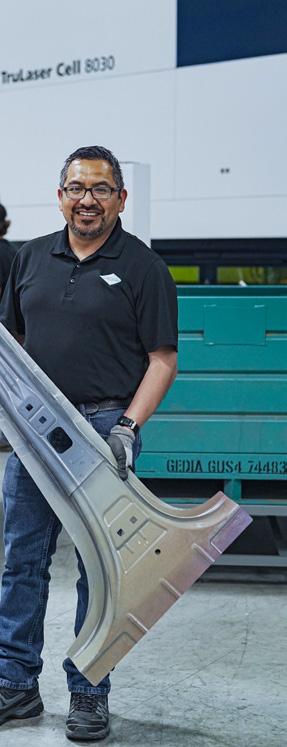
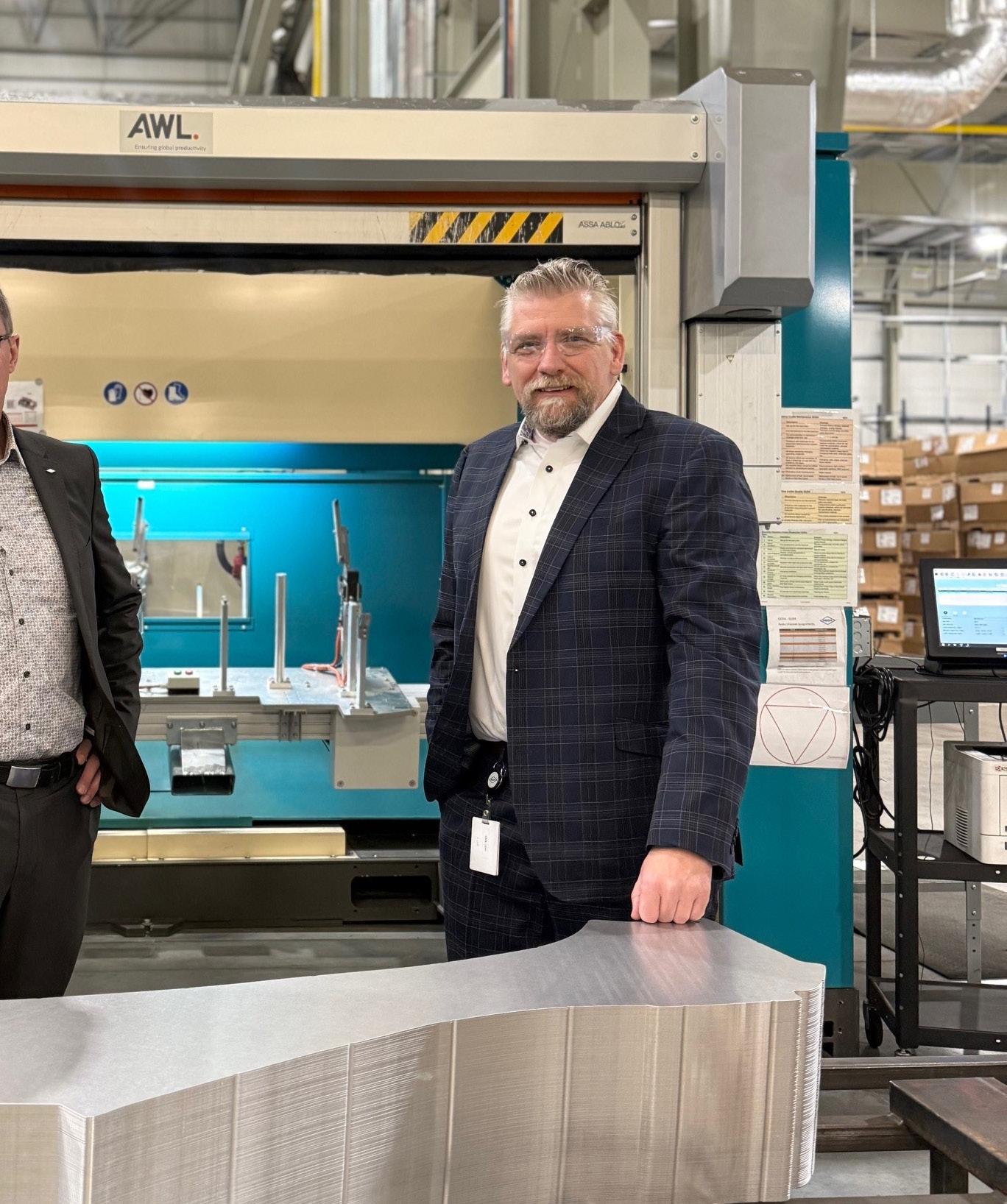
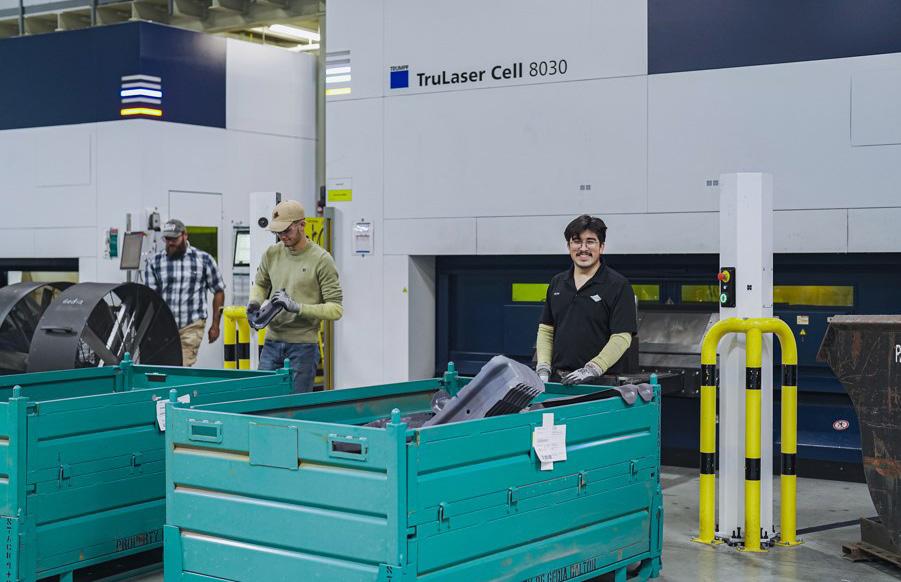
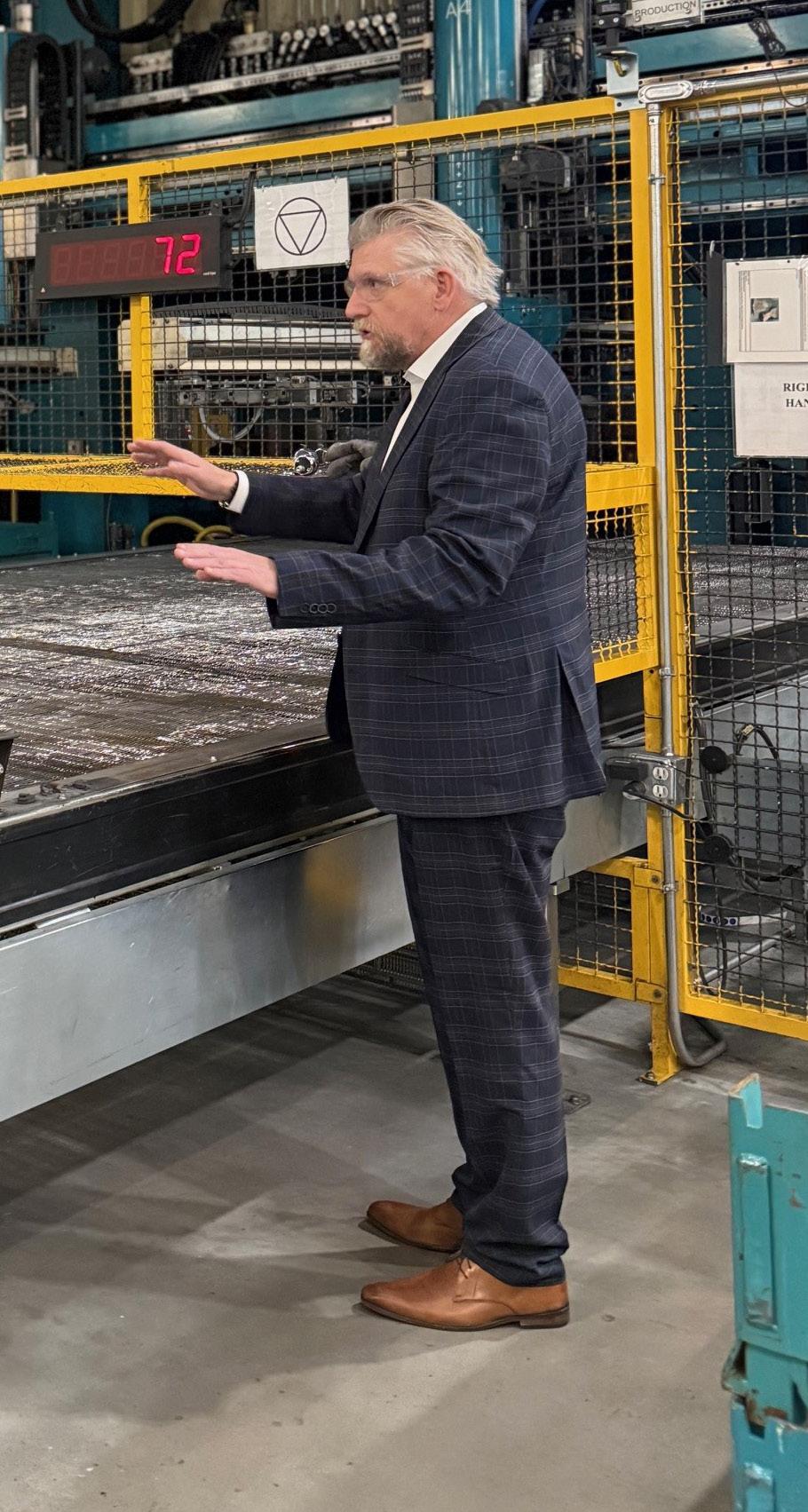
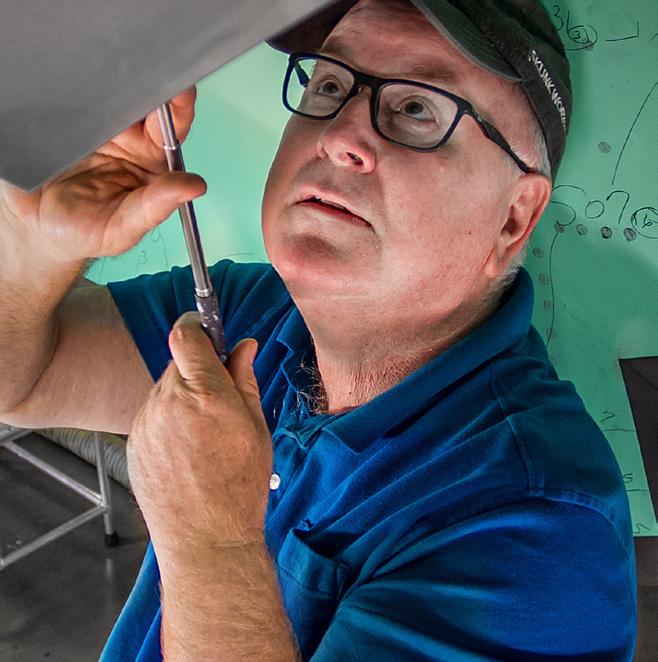
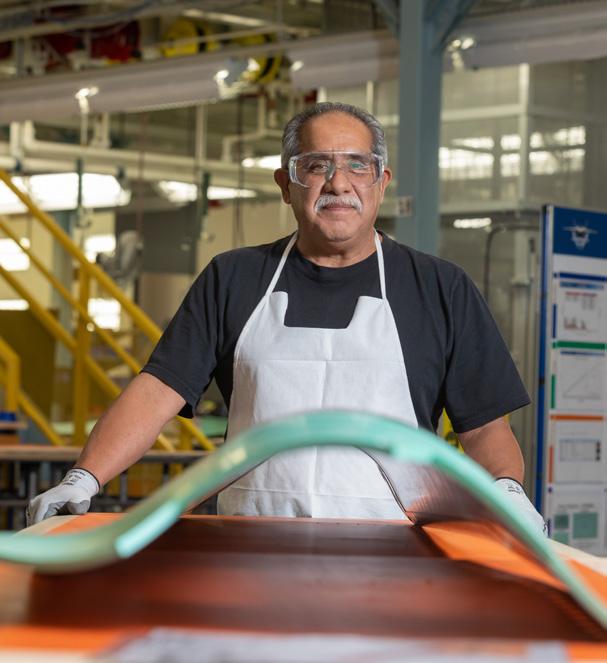
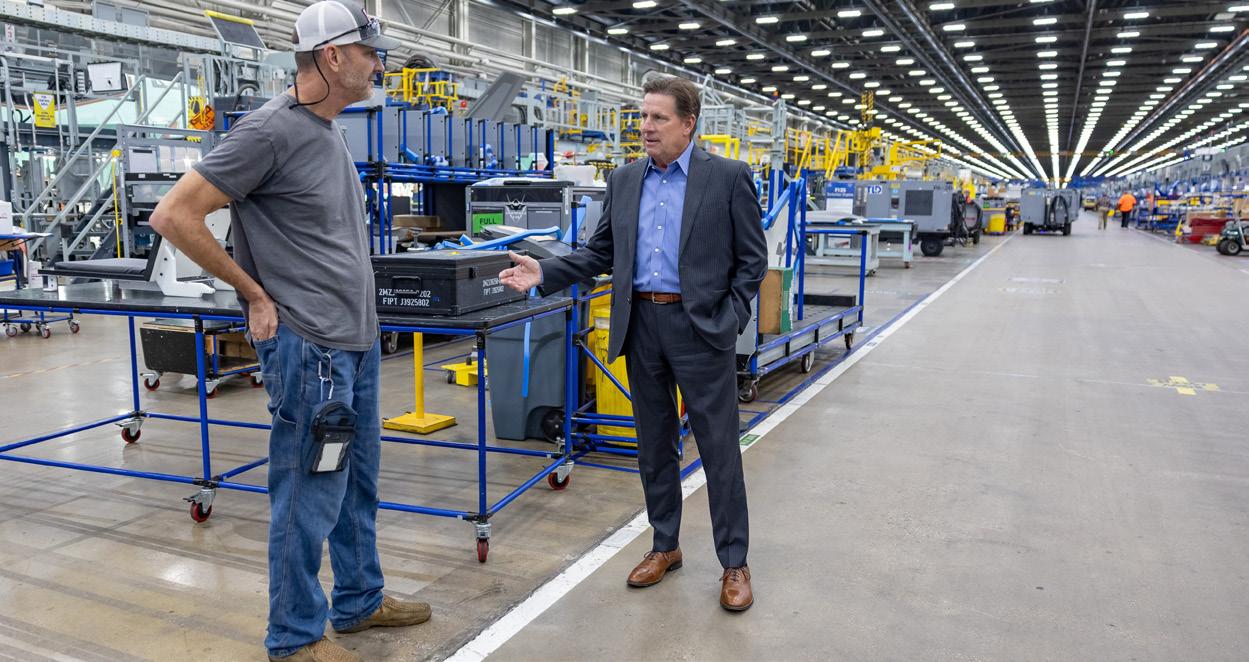
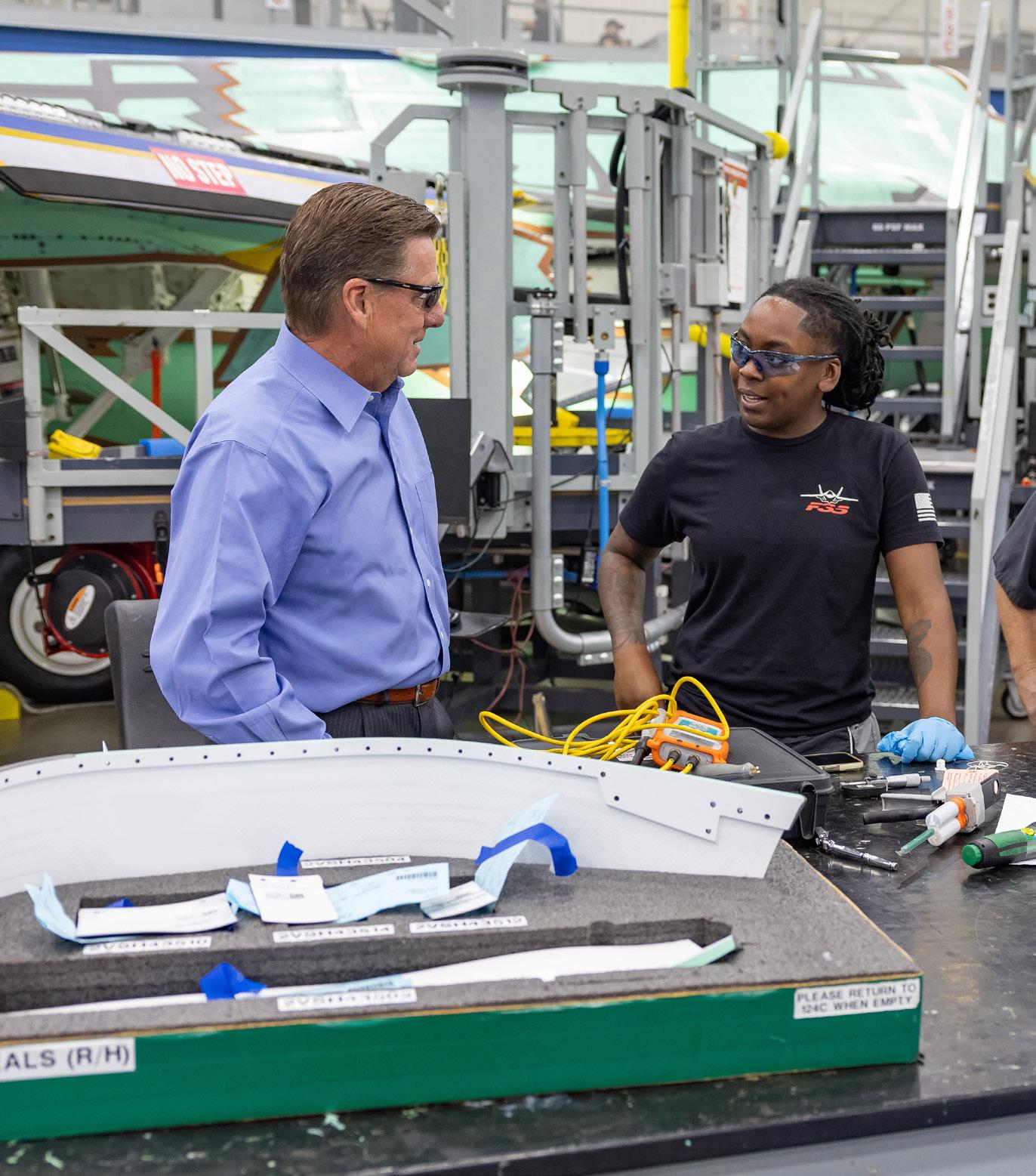
ADIENT expertly balances a sustainable manufacturing approach with innovations that meet the needs of its customers and the broader automotive seating industry
Africa Outlook, APAC Outlook, EME Outlook, North America Outlook, Mining Outlook, Healthcare Outlook, Manufacturing Outlook, Supply Chain Outlook, Food & Beverage Outlook, and Construction Outlook are digital publications aimed at boardroom and hands-on decision-makers, reaching an audience of more than 800,000 people around the world.
With original and exclusive content compiled by our experienced editorial team, we look to promote the latest in engaging news, industry trends, and success stories from across the globe.
Your company can join the leading industry heavyweights enjoying the free exposure we provide across our platforms with a free marketing brochure, extensive social media saturation, enhanced B2B networking opportunities, and a readymade forum to attract new investment and help you grow your business.
Visit www.outpb.com/work-with-us for details on how your company can feature for free in one of our upcoming editions.
EDITORIAL
Head of Editorial: Jack Salter jack.salter@outpb.com
Deputy Head of Editorial: Lucy Pilgrim lucy.pilgrim@outpb.com
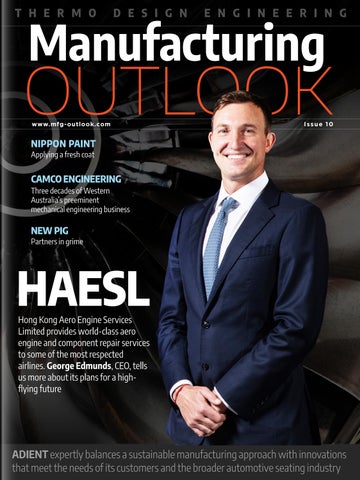
Welcome to our 10th edition of Manufacturing Outlook magazine.
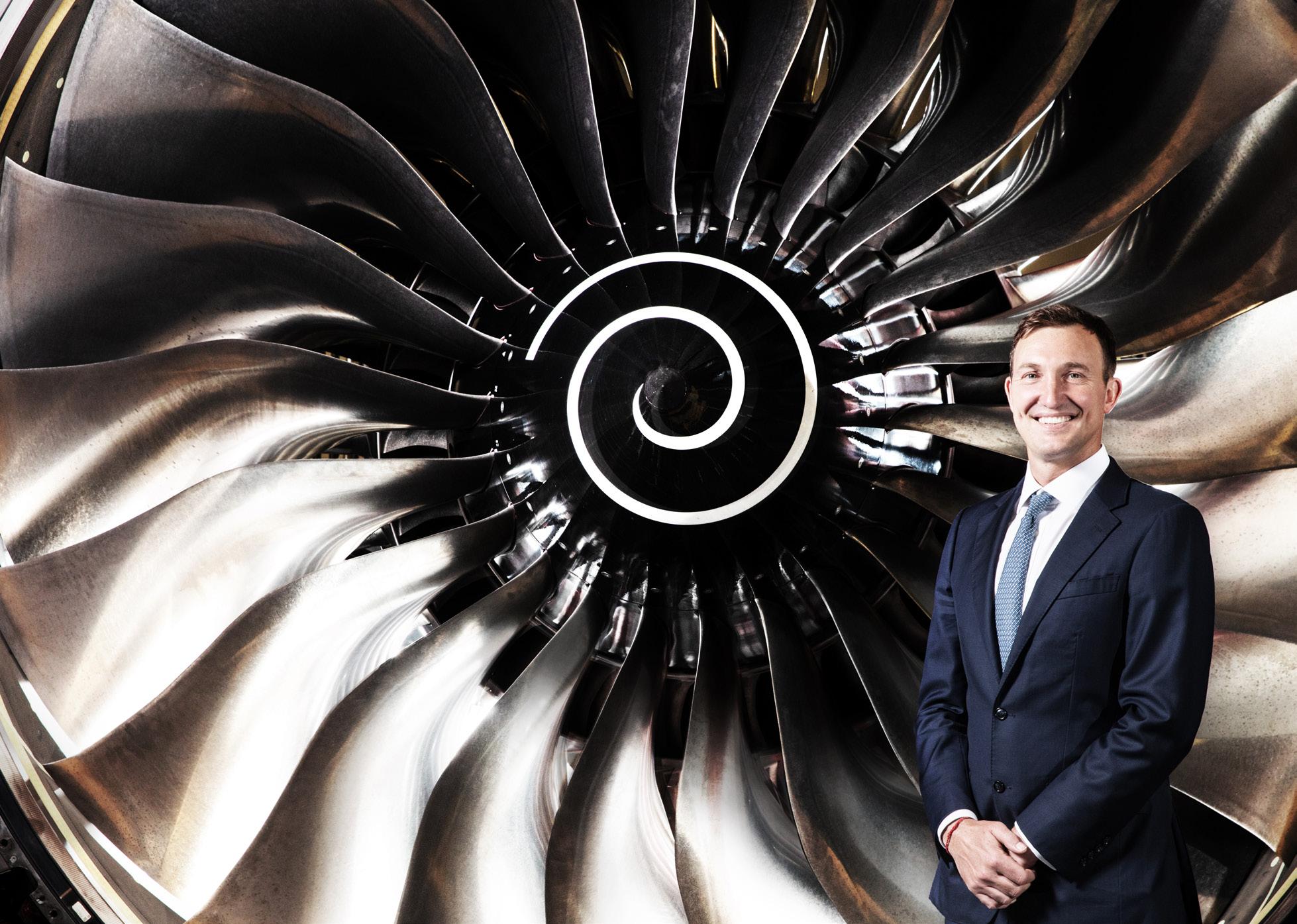
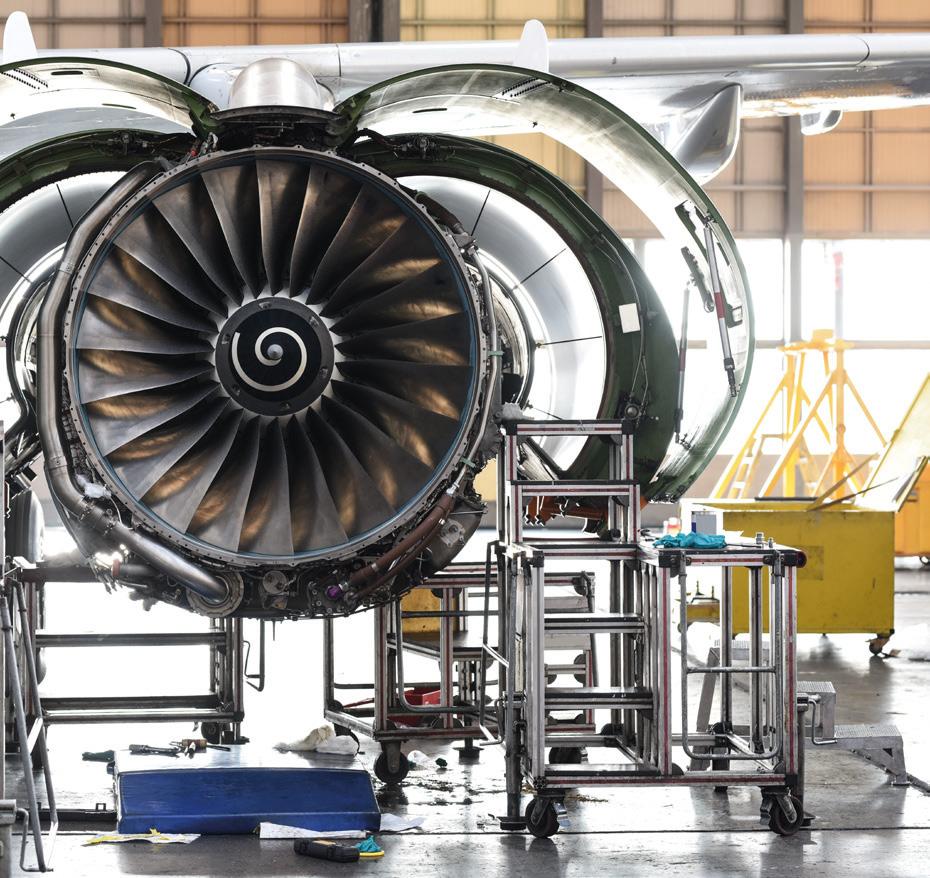
George Edmunds, CEO of Hong Kong Aero Engine Services Limited (HAESL), heads up our first front cover of the year.
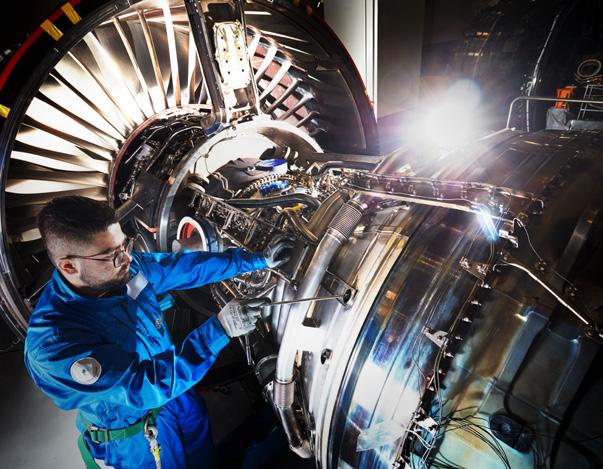
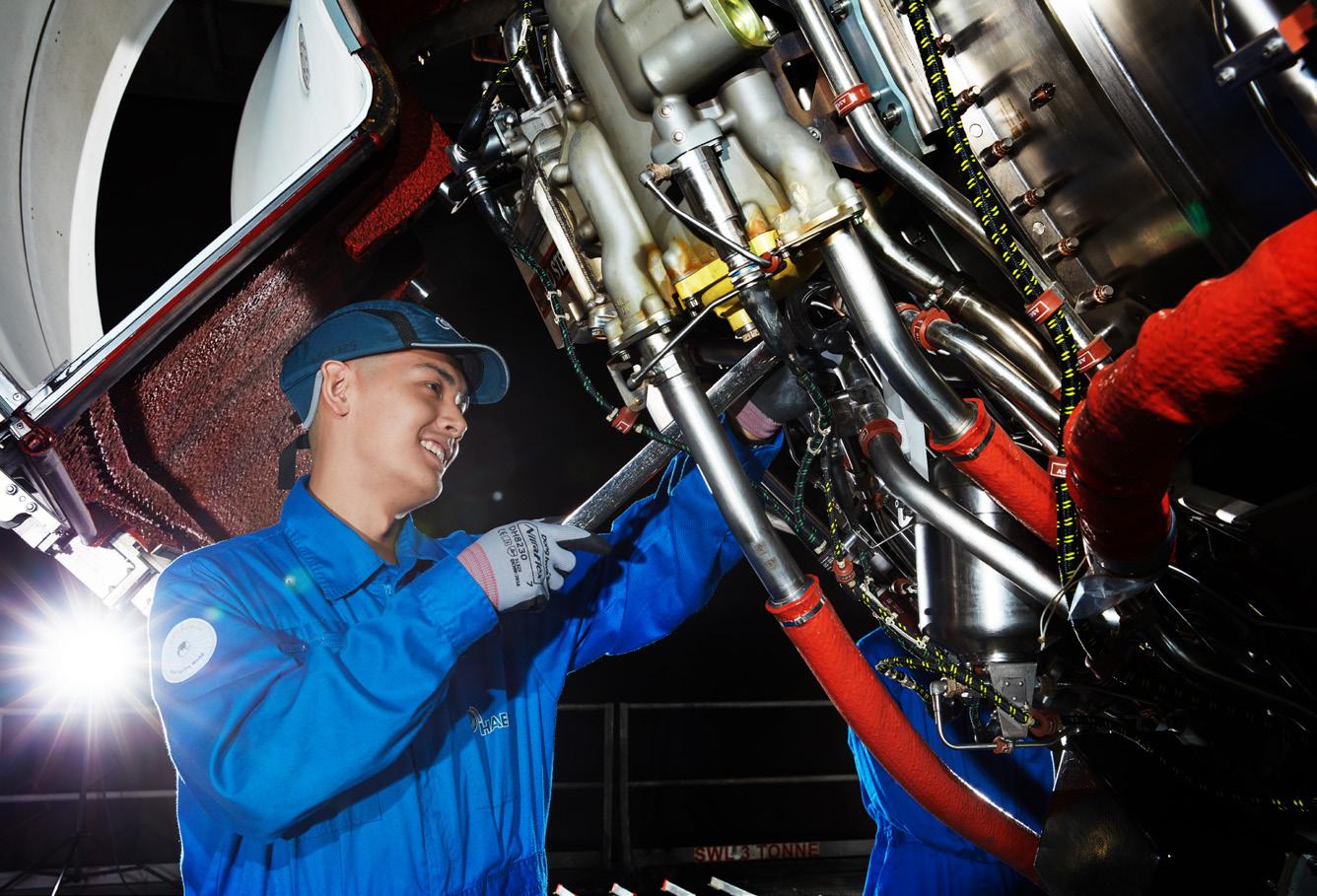
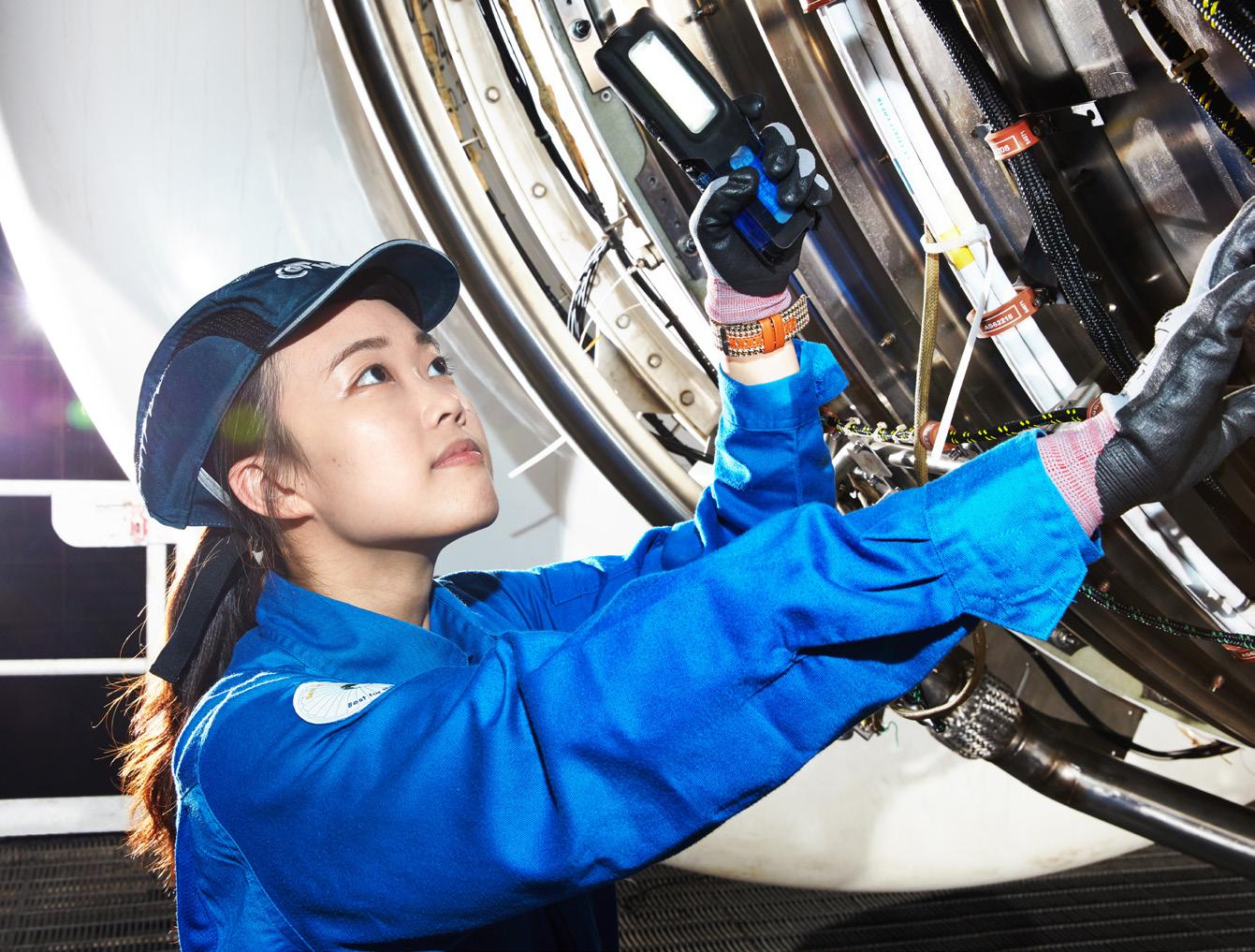
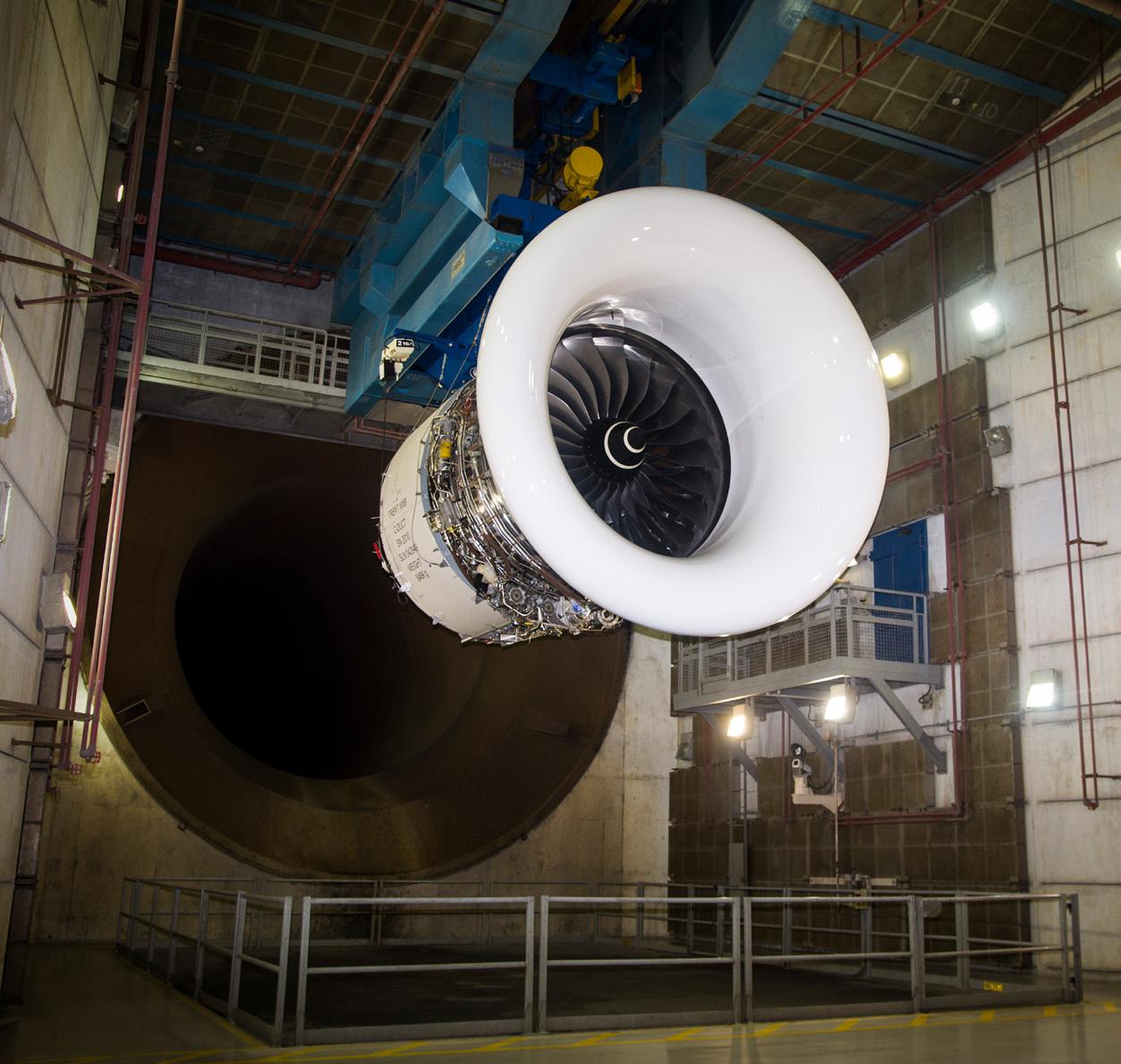
A global name in engineering, HAESL provides a full suite of world-class aero engine and component repair services – including engine overhaul, testing, and component repair – to some of the most respected airlines.
Since its inception in 1997 as a joint venture between Hong Kong Aircraft Engineering Company Limited (HAECO) and Rolls-Royce, HAESL has proudly serviced over 5,500 engines and last year achieved record engine overhaul volumes.
“Managing this remarkable growth is a testament to our collaborative spirit and commitment to excellence,” highlights Edmunds, who tells us more about the company’s plans for a high-flying future.
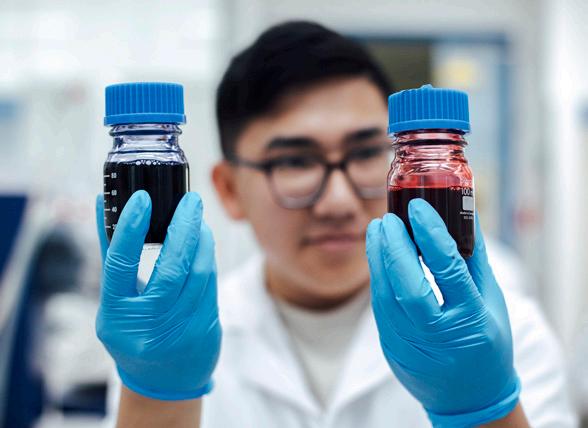
Nippon Paint flies high as the largest paint brand in Asia Pacific and is working towards a sustainable future through customer-centric growth, focused on enriching the world through the power of science and imagination.
The company is dedicated to creating innovative solutions that bring colour and joy to people’s everyday lives.
“From decorative paints that brighten homes and businesses to automotive coatings that enhance the appearance of vehicles, we provide high-quality solutions that meet a wide range of needs,” prides Wee Siew Kim, Director, Representative Executive Officer, and co-President of Nippon Paint Holdings Co., Ltd and Group CEO of NIPSEA Group.
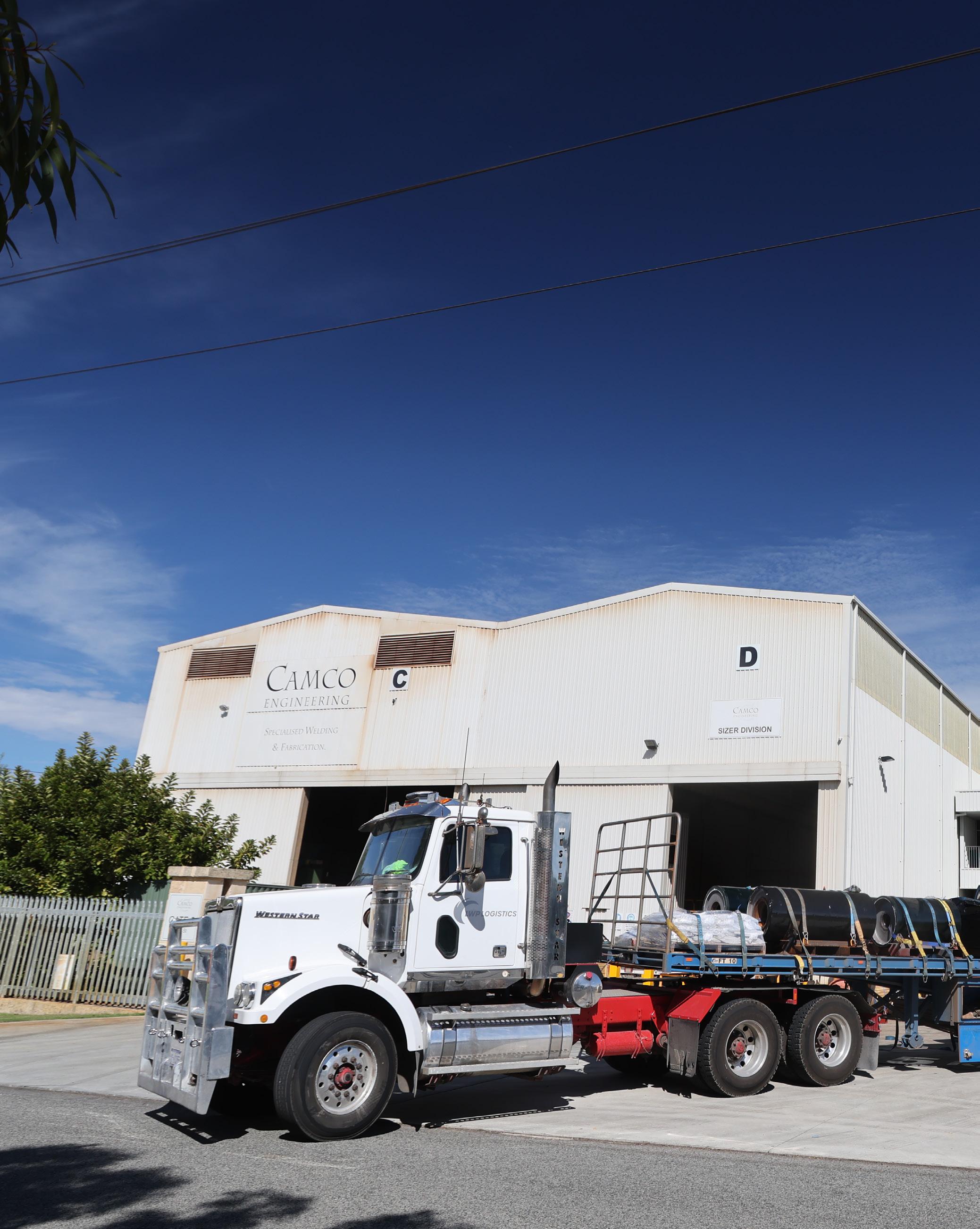
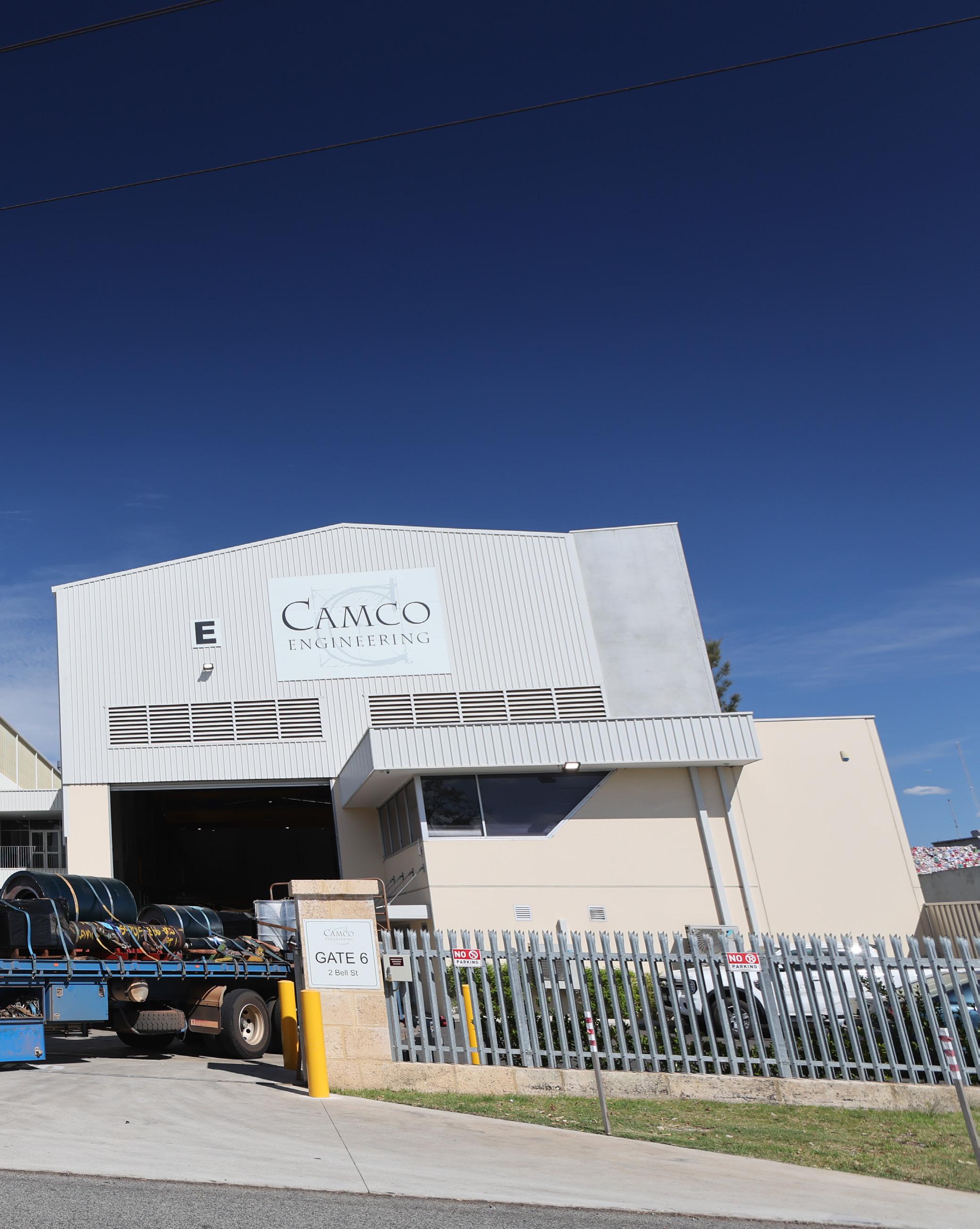
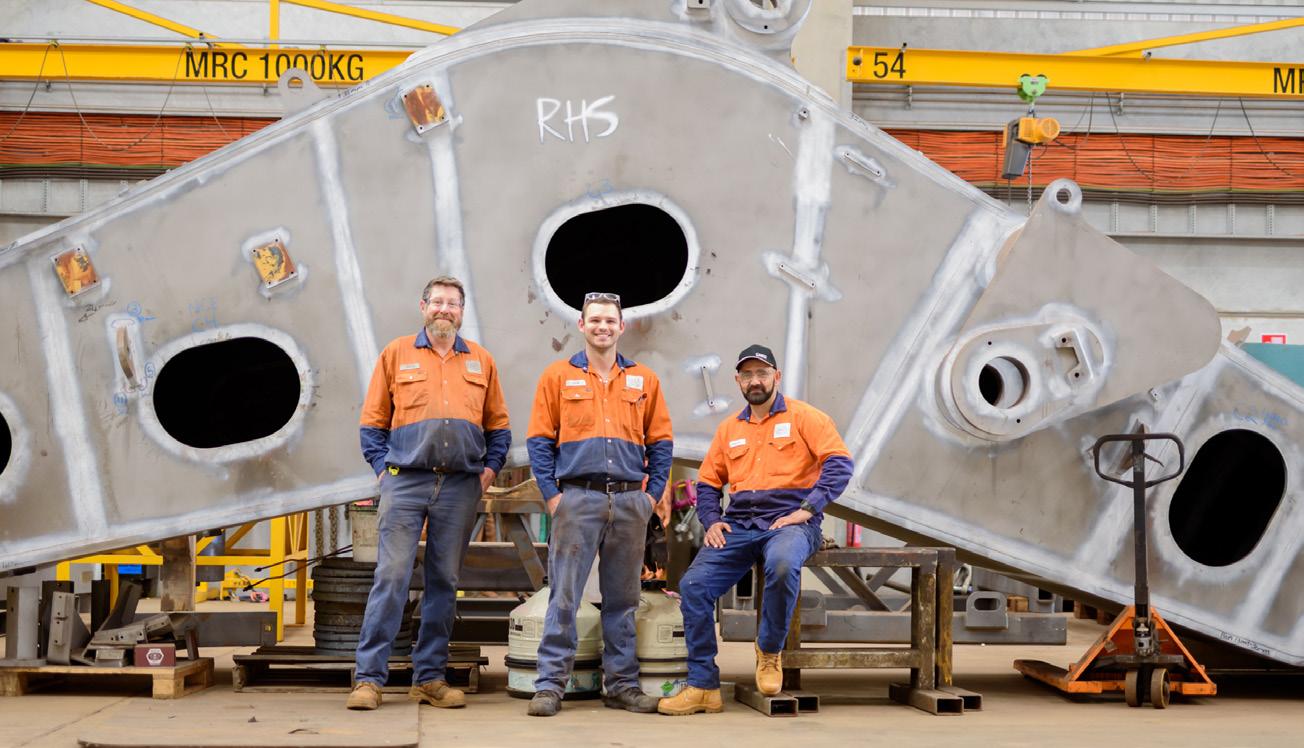
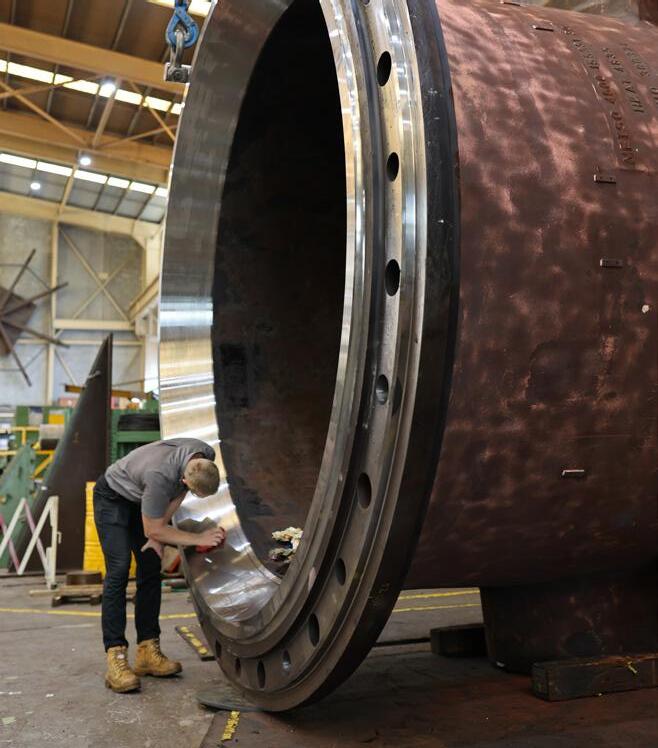
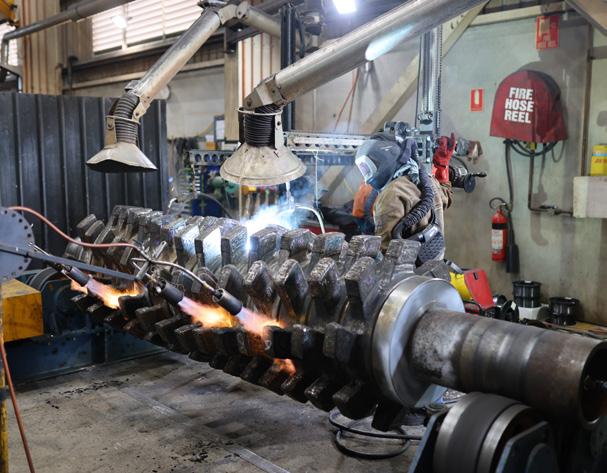
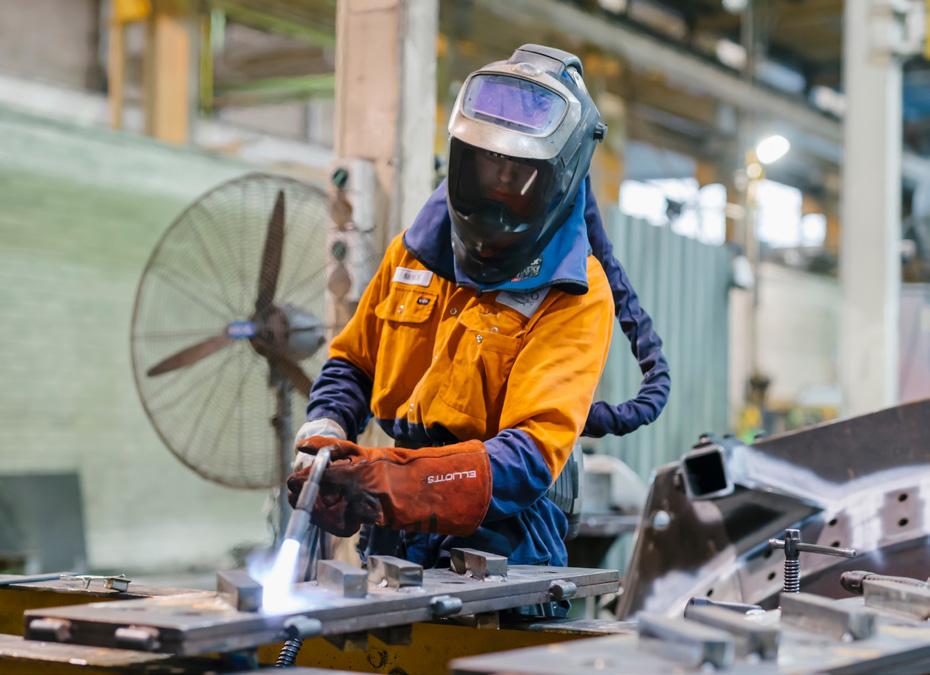
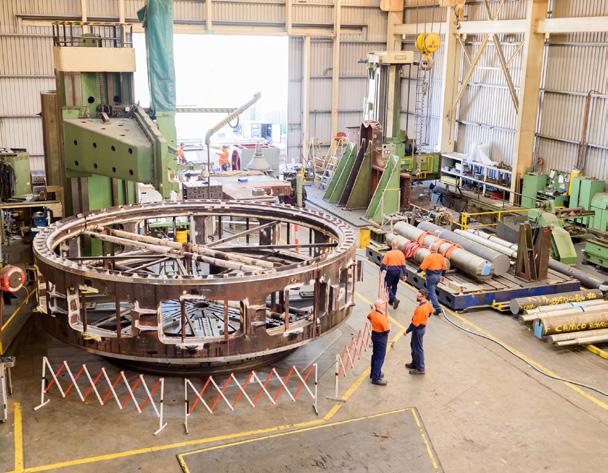
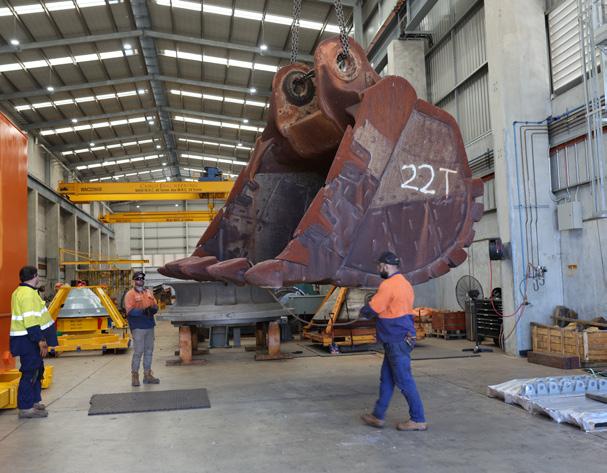
Based in Western Australia, Camco Engineering is an industry leader in mechanical engineering, boasting some of the best machining and fitting capability in the country.
Last year, the company celebrated three decades of time-critical engineering solutions, a milestone reflecting decades of hard work and innovation since its founding in June 1995.
“The organisation we have grown into is a direct result of the incredible efforts of many, many people over the years,” recognises CEO, Glenn Bailey.
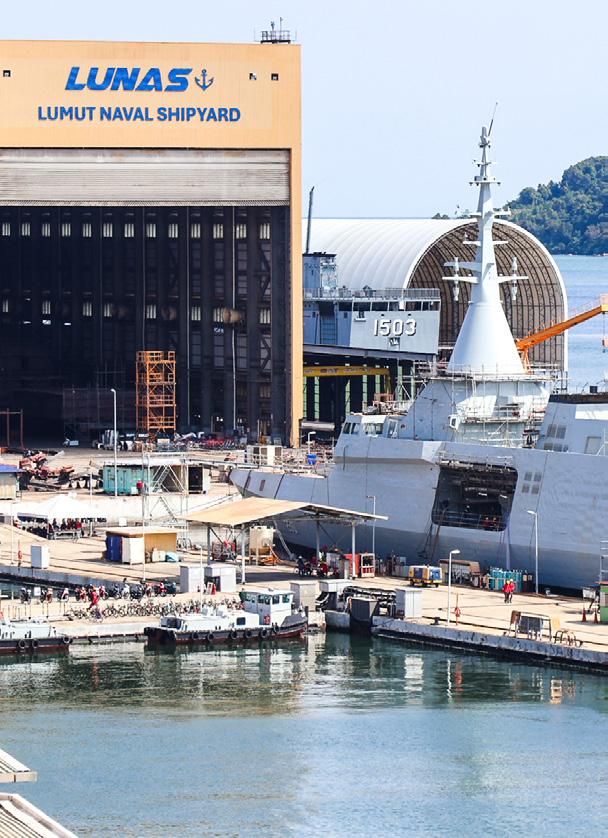
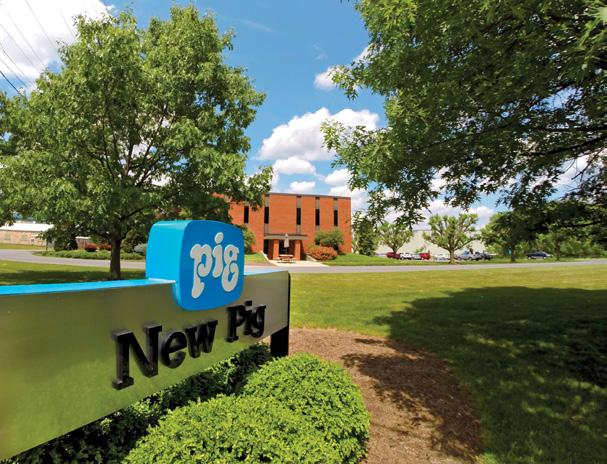
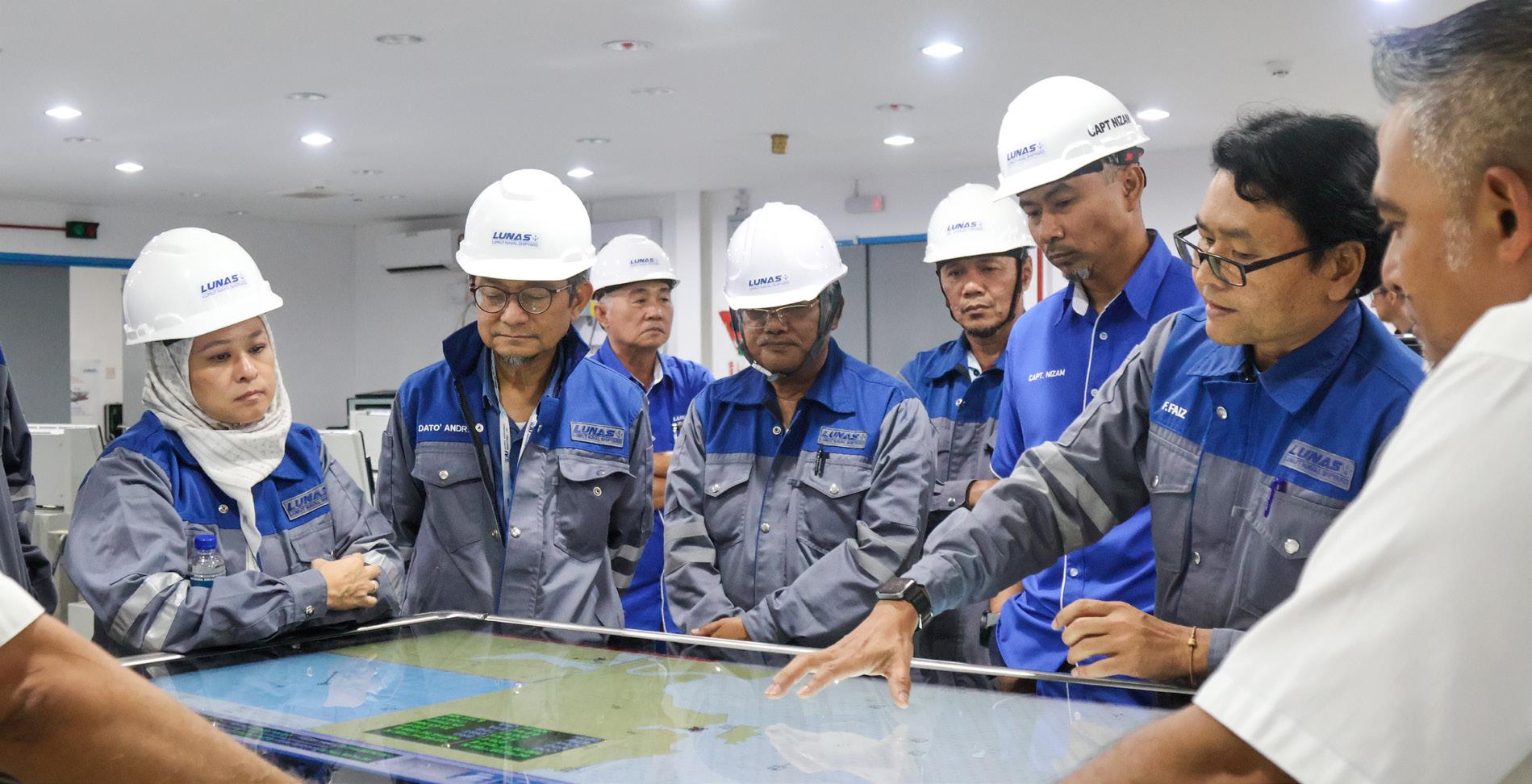
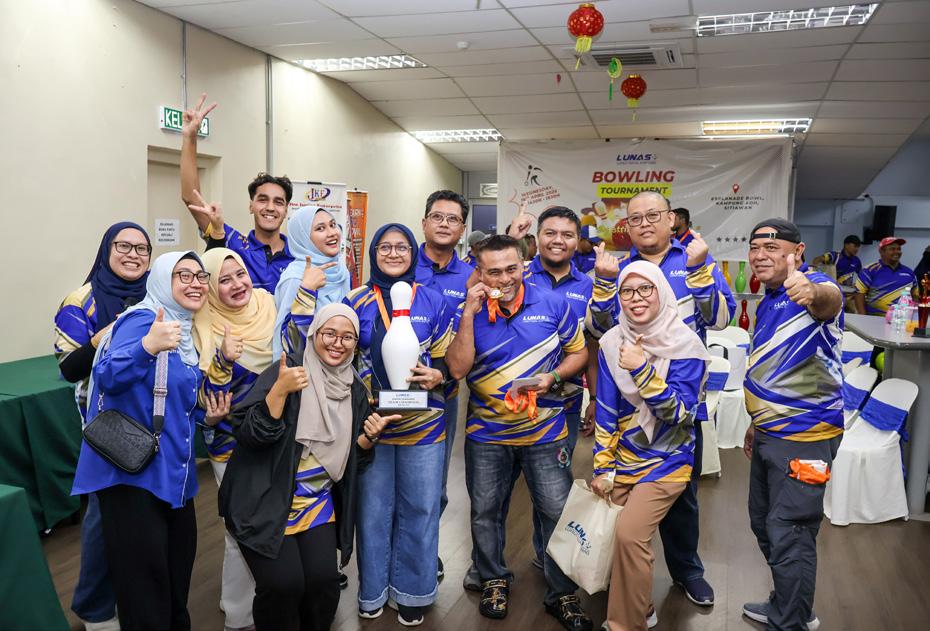
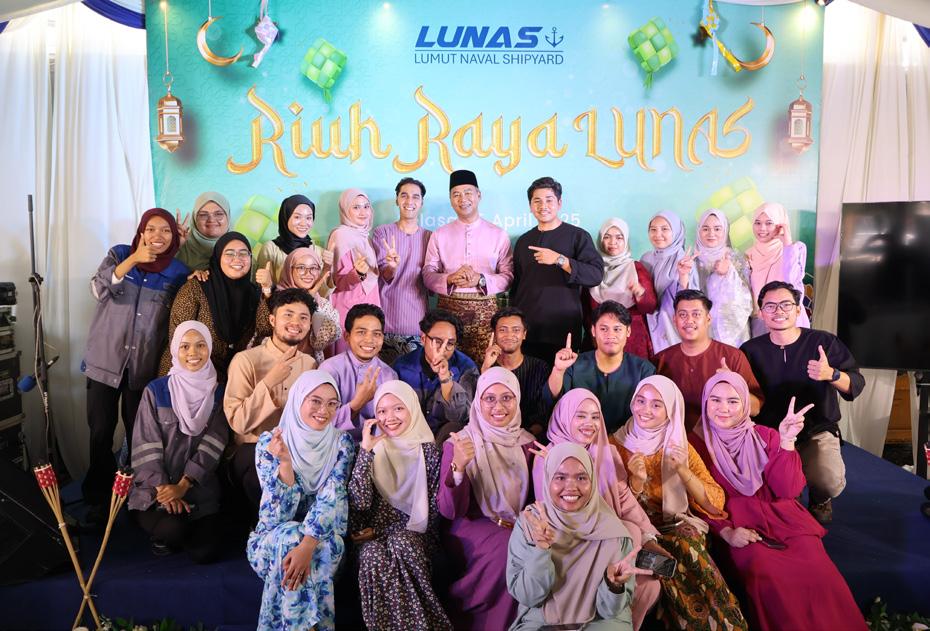
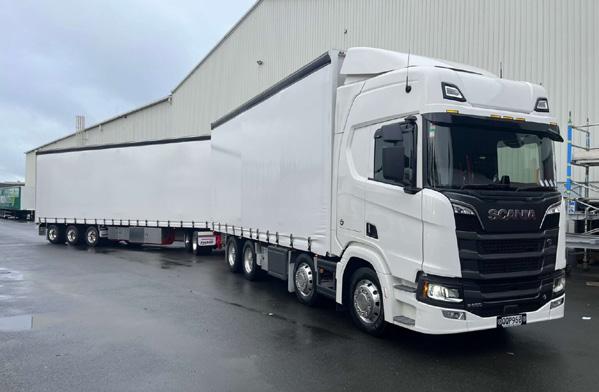
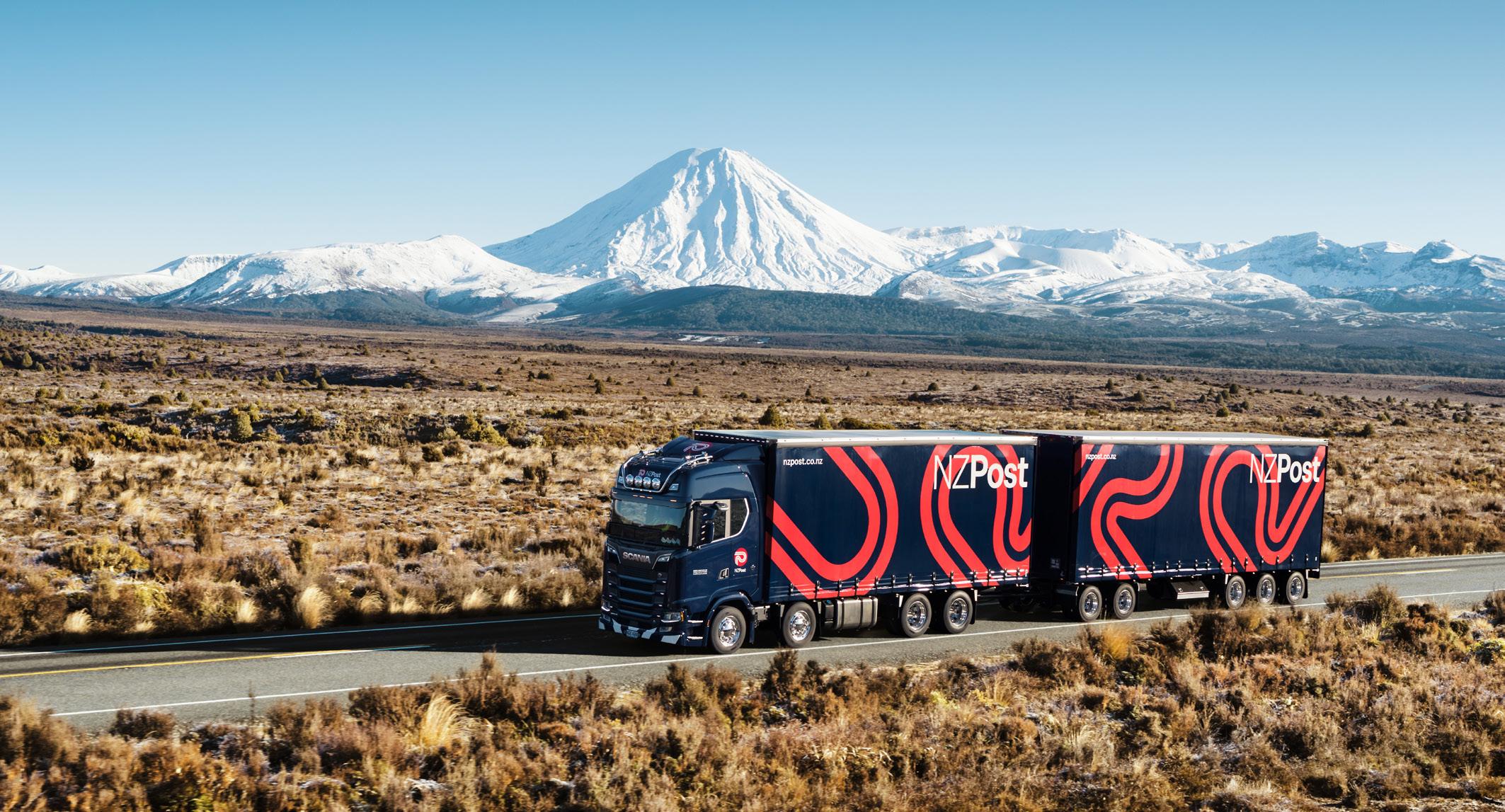
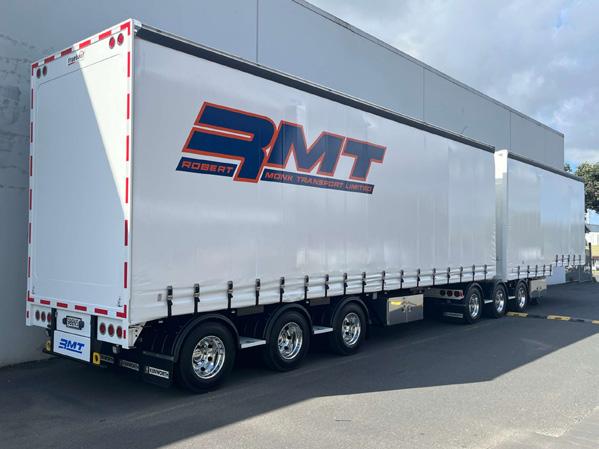
We also showcase the incredible efforts of other high-flying manufacturers such as New Pig, Lumut Naval Shipyard, and Fruehauf NZ.
We hope that you enjoy your read.
Jack Salter Head of Editorial, Outlook Publishing
FEATURES
ASIA PACIFIC
30 Hong Kong Aero Engine Services Limited
A Critical Node in Global Aviation World-class aero engine and component repair services
40 Nippon Paint
Painting a New Legacy
Applying a fresh coat
50 Camco Engineering
Driving Local Manufacturing Forward
Three decades of Western Australia’s preeminent mechanical engineering business
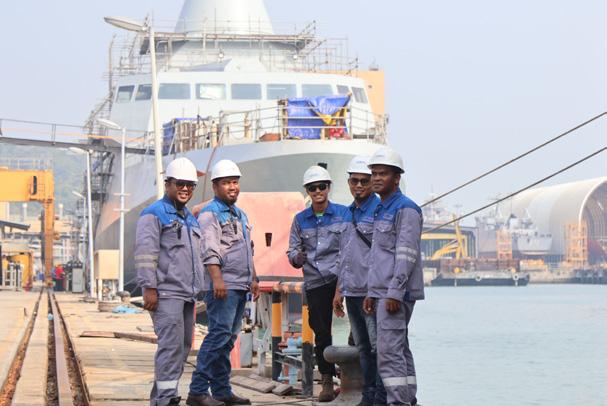
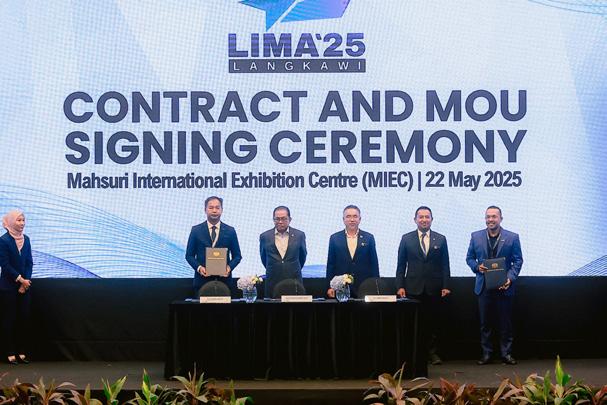
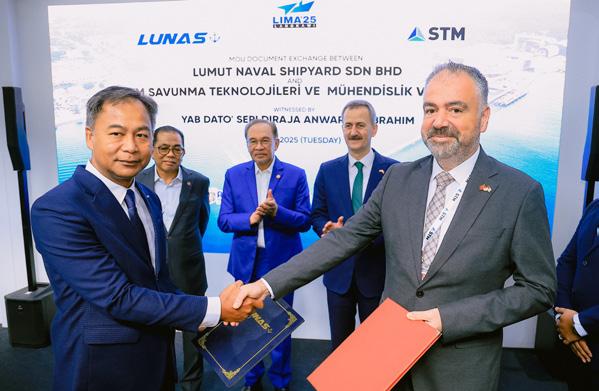
58 Lumut Naval Shipyard
Vanguard of Malaysian Maritime Defence
A deep-rooted commitment to national security
66 Fruehauf NZ
A Trusted Leader in the Transport Industry
Delivering innovation and outstanding service
NORTH AMERICA
76 New Pig
From Pig Pen to Powerhouse Partners in grime
90 Thermo Design Engineering
Innovative, Integrated Canadian Energy
Industry-leading oil and gas facilities
98 GEDIA Automotive Group
Next-Generation Engineering
Actively shaping mobile transformation
106 Rohrer Corporation
Practical Presentation All Wrapped Up Premium packaging that elevates brands
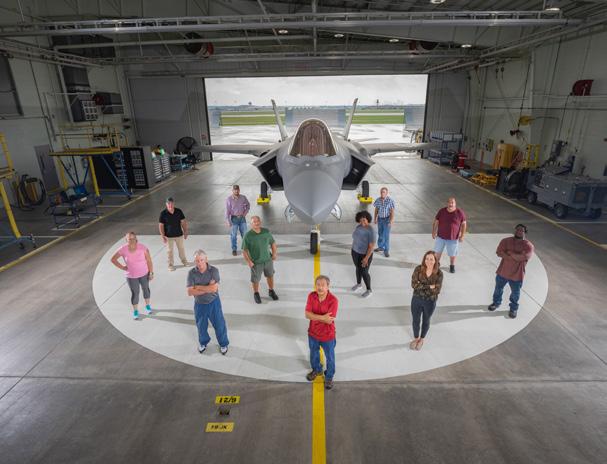
112 Lockheed Martin
Securing the Skies
Promoting national security for the US and its allies
AFRICA
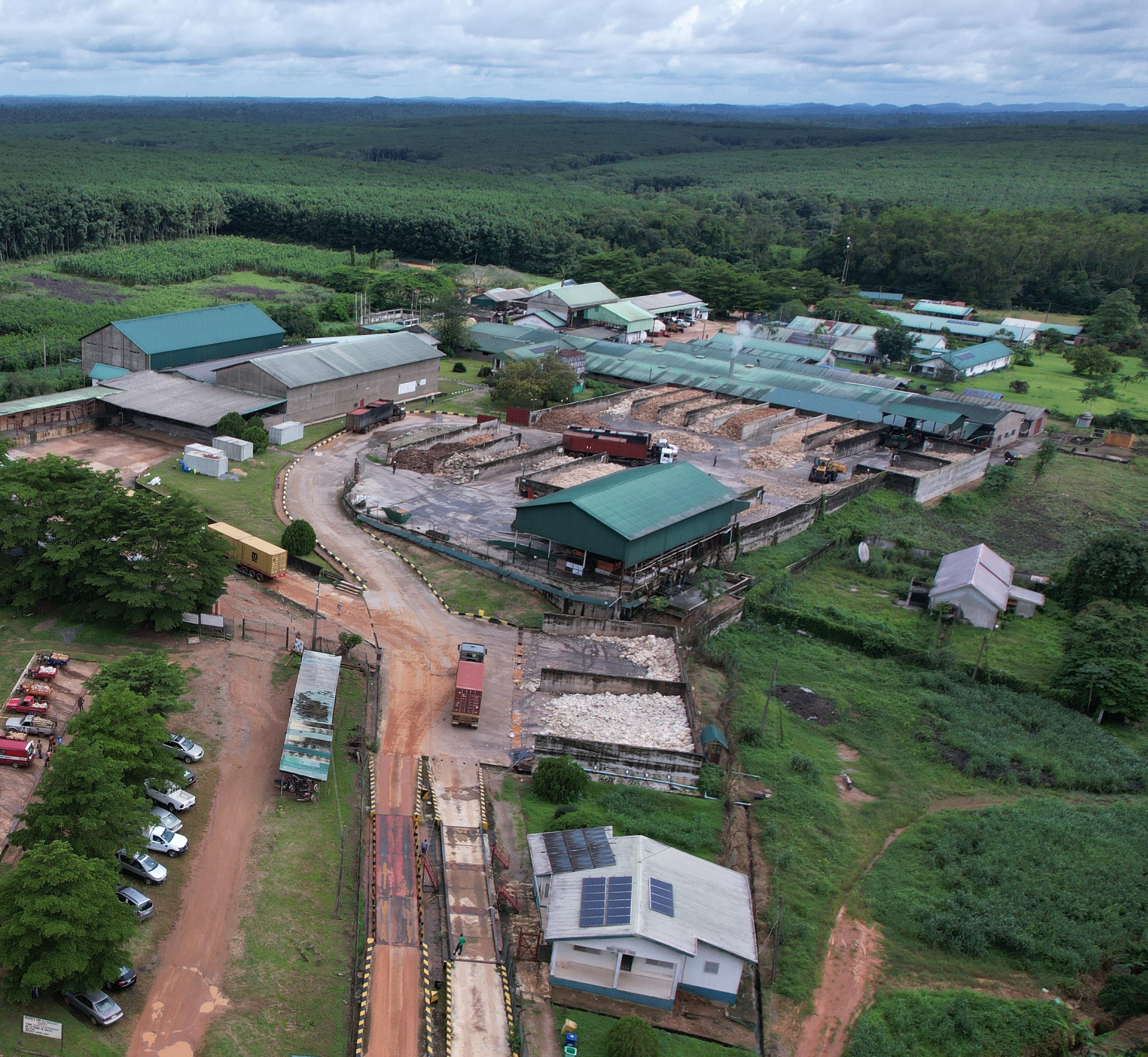
122 Rubber Estates Nigeria Limited
Driving Africa’s Industrial and Commercial Development
The leader in sustainable, natural rubber production in Nigeria
EUROPE & MIDDLE EAST
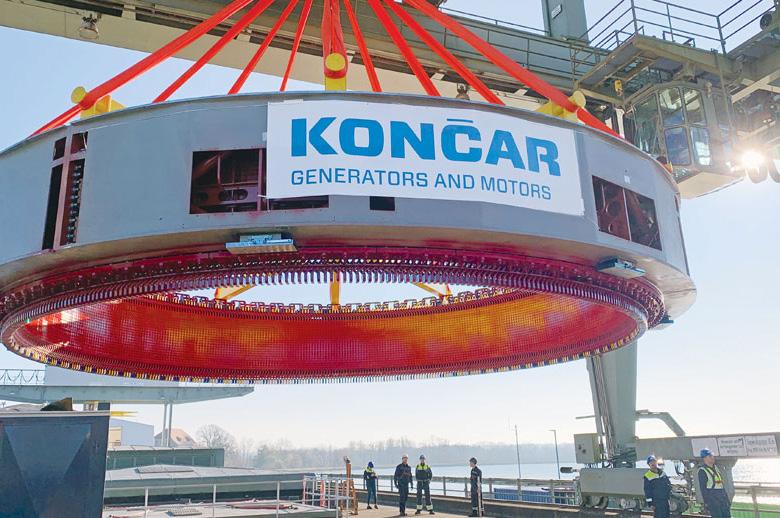
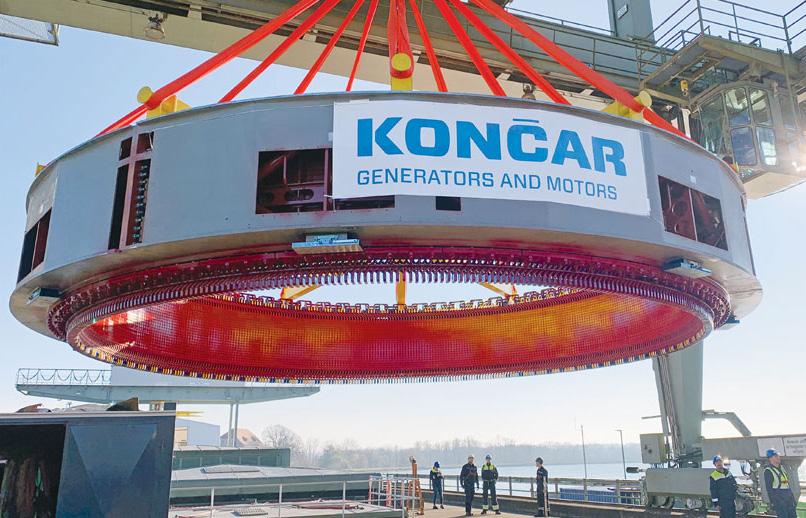
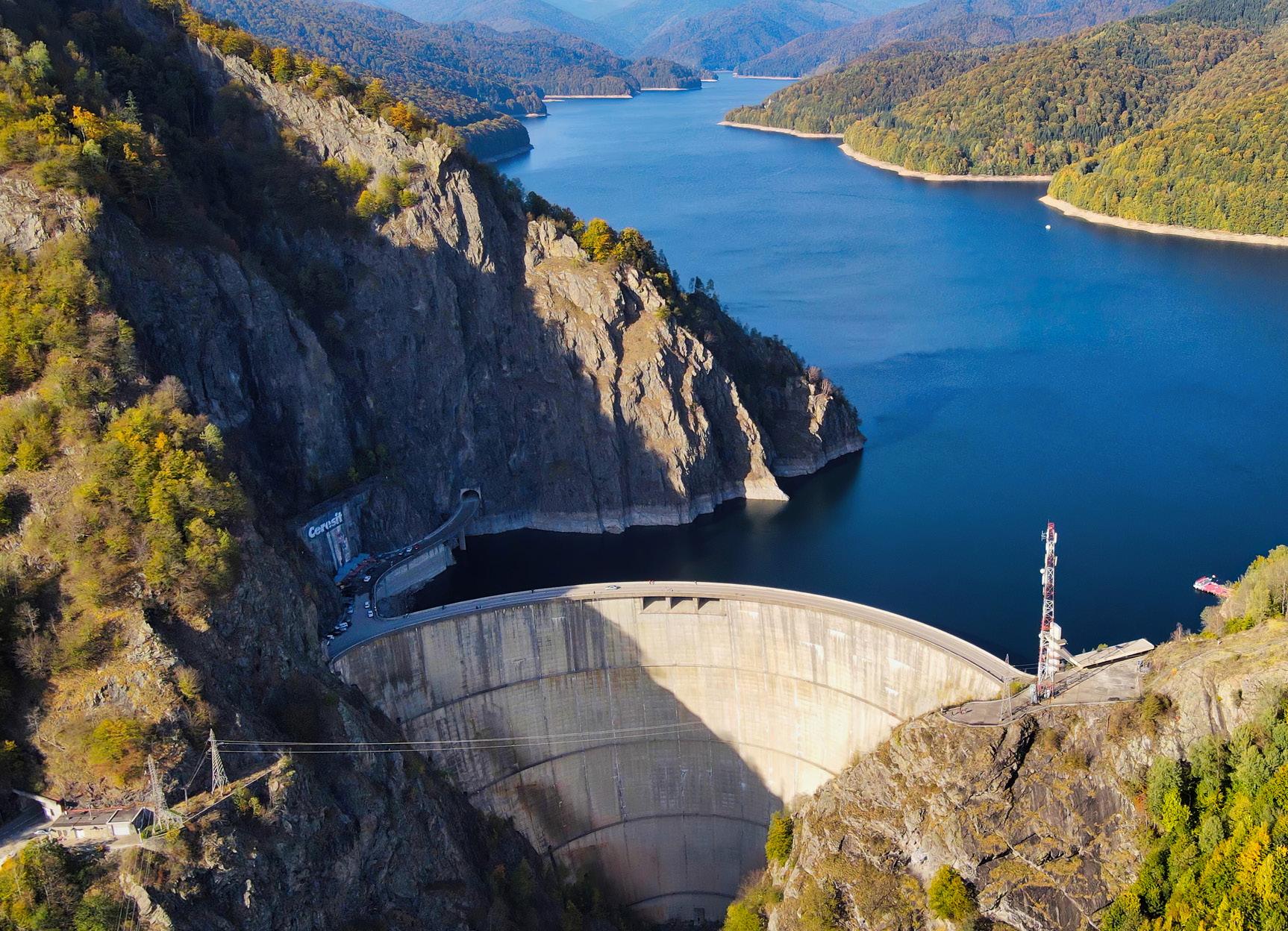
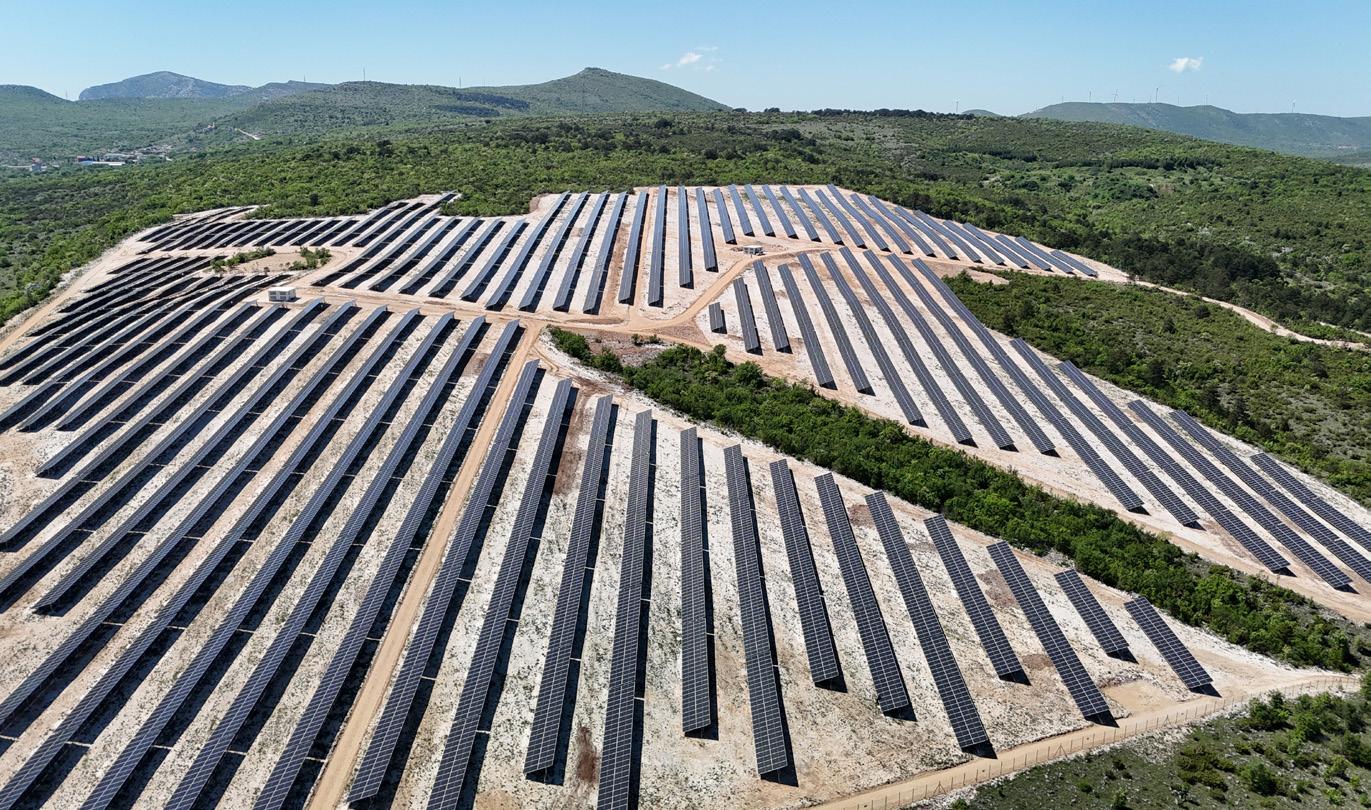
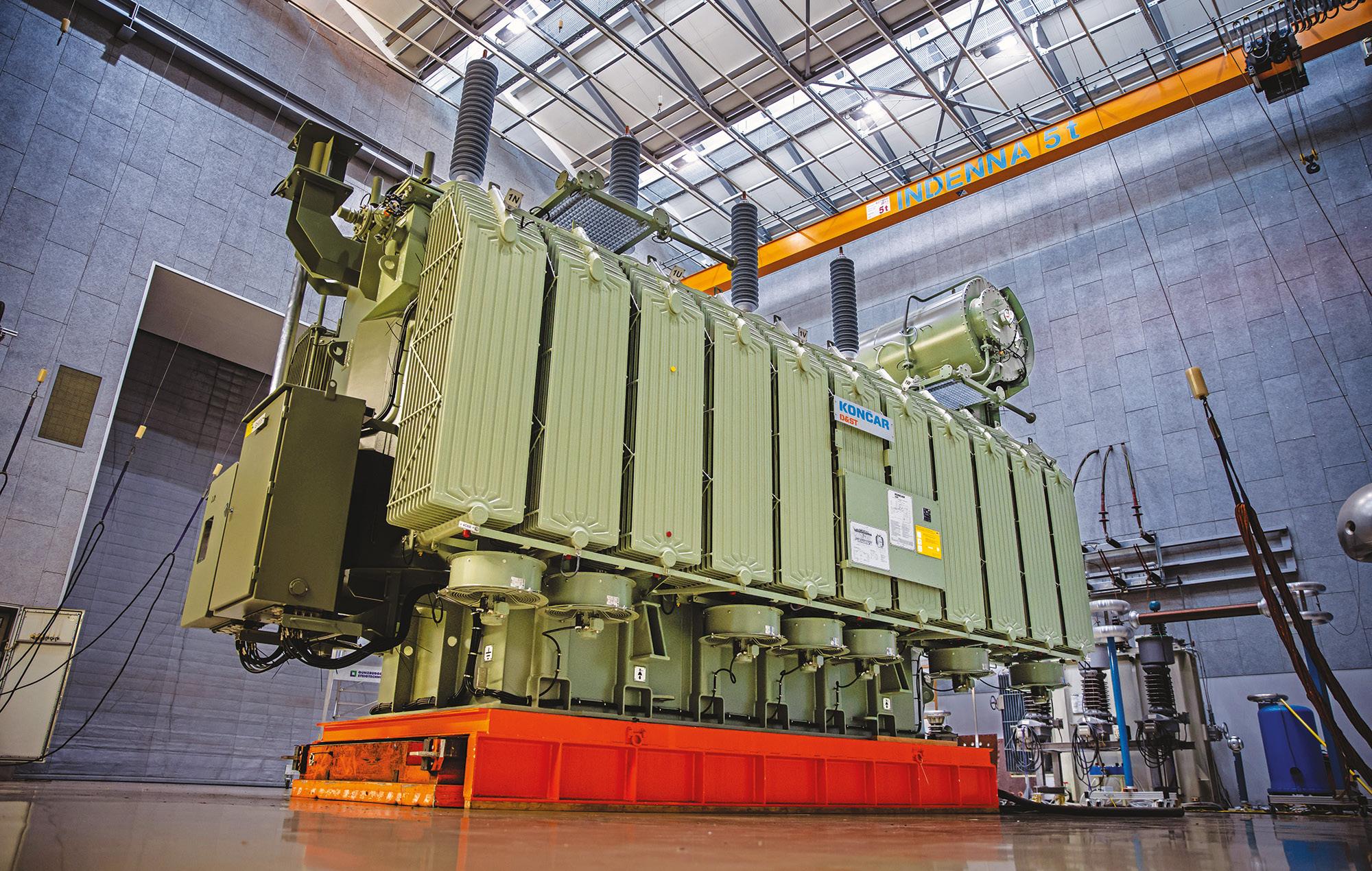
128 KONČAR Group
The Technology Leader Shaping Global Energy
Where a century of heritage meets the technology manufacturing of tomorrow
140 Nooter/Eriksen Milan
A Masterclass in Sustainable Energy
Key enablers of the energy transition
EUROPE & MIDDLE EAST
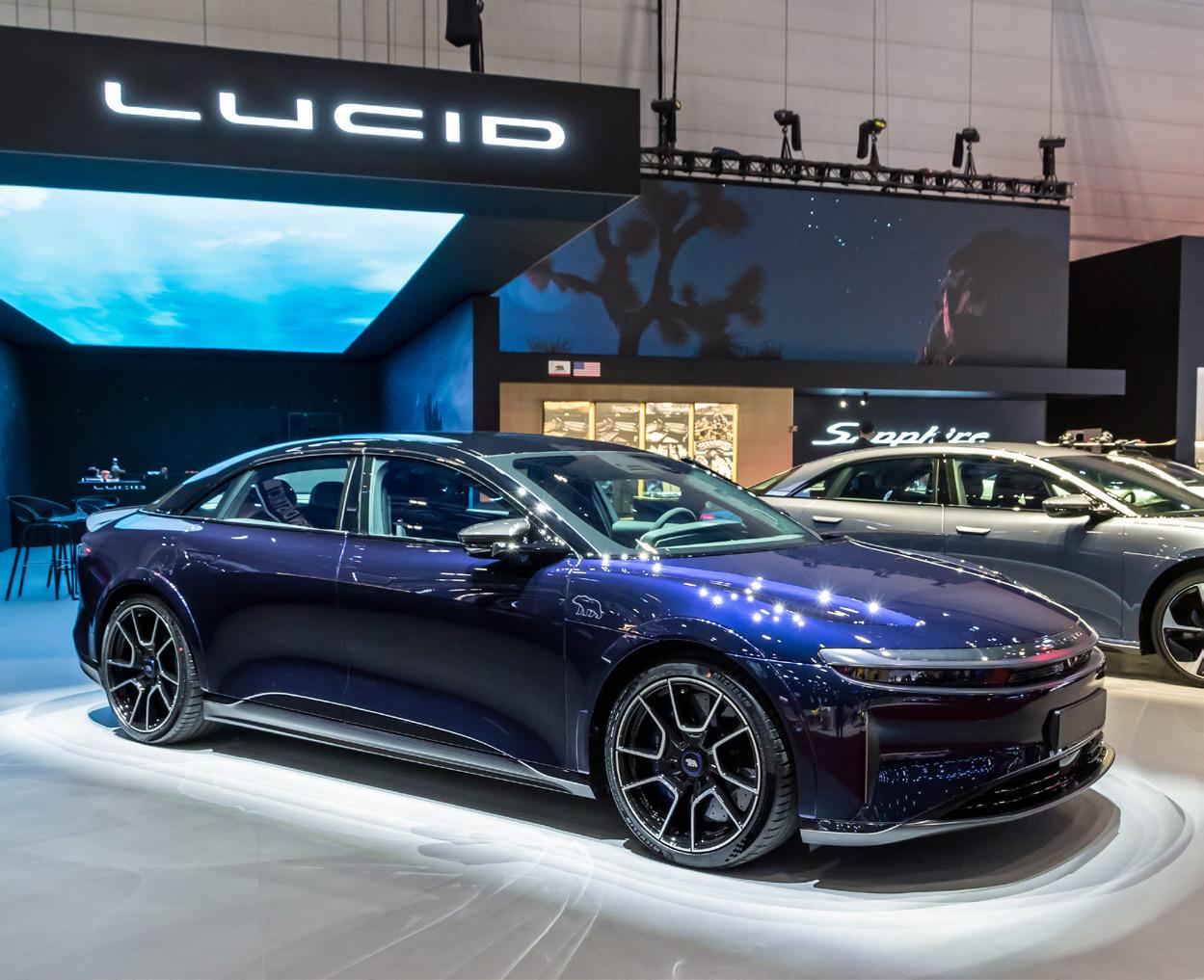
LUCID TO BEGIN SAUDI MANUFACTURING
US-BASED LUXURY ELECTRIC vehicle (EV) technology company Lucid Group (Lucid) has officially opened its first-ever car manufacturing facility in Saudi Arabia, which will produce vehicles for both the local and export markets.
Lucid is known for setting new standards for luxury EVs and has earned a reputation for excellence, with the Lucid Air model winning the prestigious 2023 World Luxury Car Award.
The facility received significant support from the Ministry of Investment of Saudi Arabia (MISA), Saudi Industrial Development Fund (SIDF), and Economic City at King Abdullah Economic City (KAEC), and will play a pivotal role in accelerating the country’s strategic goal to diversify its economy.
KENYA COMMITS TO LOCAL VACCINES
FOLLOWING STRATEGIC DIALOGUE between Aden Duale, Kenya’s Health Cabinet Secretary, and the Kenya BioVax Institute (KBI), commitment to local vaccine manufacturing as part of
the government’s Universal Health Coverage (UHC) agenda has been confirmed.
The engagement focused on KBI’s mandate to manufacture and commercialise safe, high-quality, and effective human vaccines, and the government’s aim to release the first locally manufactured trial batch by the end of 2027.
ASIA PACIFIC
HIGH-END GOOGLE SMARTPHONES IN VIETNAM
GOOGLE IS SET to start developing and manufacturing highend smartphones in Vietnam this year having already secured a large network of suppliers in the nation, marking a phased exit from China.
The tech giant will begin new product introductions for its Pixel, Pixel Pro, and Pixel Fold phones, with development of the Pixel A series remaining in China for now.
Google already mass-produces high-end smartphones in Vietnam and conducts some verification there, so building new phones from scratch should be achievable in the country.
The initial focus will be on pneumonia and typhoid vaccines, followed by routine immunisations for tetanus, hepatitis B, polio, and emergency vaccines for cholera and Ebola.
UK MANUFACTURING
ACTIVITY
HITS 15-MONTH HIGH
ACTIVITY IN THE UK’s manufacturing sector reached a 15-month high in December 2025, with growth anticipated to continue throughout Q1 2026.
Reduced uncertainty following the Autumn Budget and the resolution of the Jaguar-Land Rover cyberattack late last year contributed to the positive figures.
In addition, ongoing investment in R&D alongside high-value exports in areas such as aerospace, automotive, pharmaceuticals, and advanced
technology bolstered the figures. However, manufacturers have warned that significant increases in operating costs, especially for energy and labour, are approaching a tipping point that could see some investment plans moved overseas without government support.
AI-POWERED HUMANOID ROBOTS DEPLOYED
IN FACTORIES
US ROBOTICS COMPANY Boston Dynamics’ latest humanoid robot, Atlas, has begun field testing at a Hyundai manufacturing plant in Georgia.
Powered by NVIDIA’s artificial intelligence (AI) chips, these fully
electric robots can learn tasks via motion capture, marking a symbolic moment for industrial automation as AI becomes increasingly important in human-designed work environments.
The milestone marks the first time a robot has operated in a real-world industrial setting outside of a controlled laboratory environment and is part of Hyundai’s strategy to utilise robots for repetitive, physically demanding, or hazardous work to improve workplace safety and efficiency.
J&J’S CONTINUED NC EXPANSION
JOHNSON & JOHNSON (J&J) is continuing its expansion in Wilson County, North Carolina (NC) as it invests in a new multi-billion-dollar facility focused on manufacturing and R&D.
The facility will produce oncology and neurological medicines, creating up to 5,000 jobs and enhancing NC’s life sciences sector.
The announcement marks the second significant project from J&J in the area following a USD$2 billion investment in an innovative biologic manufacturing campus in October 2024.
J&J’s ongoing investment in NC is part of a USD$55 billion companywide commitment to support US manufacturing and R&D over a fouryear period, announced in March 2025.
SUPPORT FOR INDUSTRIAL PARK IN ZIMBABWE
PRIVATE INFRASTRUCTURE
GROUP Econet InfraCo (Econet) has announced its support for a major industrial development in Harare, Zimbabwe to reshape the country’s manufacturing, logistics, and digital economy.
Largely funded by local billionaire and Econet Founder, Strive Masiyiwa, the 300-hectare solar-powered industrial park – strategically located beside Robert Gabriel Mugabe International Airport (RGM) – emerges as a prime hub for export-oriented manufacturing, logistics, and high-value industries.
The initiative reflects a forward-looking strategy for Zimbabwe centred around growth in areas such as AI, renewable energy, and infrastructure.
How Sustainability is Reshaping APAC’s Packaging and Manufacturing Landscape
Asia Pacific’s diversity creates unique challenges when it comes to sustainable packaging, but as environmental pressures mount, the region is reaching a tipping point. Spencer Ball, Creative Director at Marks, examines this complex landscape and explains why brands must act now or risk being left behind
Writer: Spencer Ball, Creative Director, Marks
When it comes to sustainability, Asia Pacific (APAC) defies simple solutions. This isn’t a uniform region with a standardised approach – it’s a patchwork of markets at vastly different stages of development.
Some countries are powering ahead with green initiatives, backed by impressive recycling systems; others lack even basic waste management infrastructure. And critically, there are no common regulatory guard rails spanning these markets. This disparity makes achieving any scalable sustainability impact difficult, both for
global brands and regional businesses with multiple export markets. These problems have real commercial consequences. For instance, Marks recently worked with a water brand that wanted to introduce a biodegradable bottle. The problem? It required commercial composting facilities, which Malaysia had none of at that time. Even if the infrastructure had existed, the brand couldn’t expand the initiative across other markets like Thailand or Vietnam because the regulations and specifications differed so dramatically.
For a brand, this lack of scalability means it can’t amortise its initial investment, creating a financial disincentive.
Then there’s the consumer expectation gap. In APAC, as with many other regions, there’s still a disconnect between what people say and what they do. Whilst sustainability is an increasingly hot topic, some consumers still expect pristine packaging, especially when they have paid a premium.
This is particularly true in developing markets where, if you’ve saved up a significant portion of your income to buy a branded product, you expect world-class packaging to match. It’s just part of the value perception.
REACHING A TIPPING POINT
Sustainability challenges are starting to have visible economic impacts, which are forcing action.
Public pressure is growing and becoming impossible to ignore because it’s affecting major revenue streams like tourism as well as putting pressure on communities. In countries like Indonesia and the Philippines, for example, we’re seeing an increase in pressure groups protesting plastic pollution, which is rife.
There’s also a concerted pushback against ‘sachet culture’ where products are sold in tiny, single-use sachets, a strategy introduced by brands to sell more products to low-income consumers, replacing an existing tradition (tingi) which saw shoppers use glass bottles and jars as reusable containers.
This growing discontentment with unsustainable packaging and plastic pollution has catalysed some fascinating innovation, particularly at the grassroots level, whilst brands and retailers of all sizes are also seeking new ways to reduce environmental harm.
Nevertheless, Marks is seeing initiatives to reduce single-use plastics: refill stations at mom-andpop stores in rural locations and movements encouraging people to bring their own containers.
Meanwhile, many countries are reconnecting with their roots to find solutions, as evidenced by the growing popularity of traditional tiffin containers for carrying food. There’s also been an increase in sustainabilityled start-ups and entrepreneurs across APAC investing in packaging and product innovation.
The industry has also witnessed an increase in R&D spending when it comes to alternative packaging materials. In Indonesia, for example, Seaweedtama Biopac creates seaweed-based ‘plastics’ that dissolve in water.
Innovation is also abundant in product development, removing the need for unsustainable packaging. Shampoo bars are a great example of this, with companies using existing or
novel designs for these products to add to the value proposition.
BRIDGING AMBITION AND REALITY
At Marks, we help brands operating in APAC to achieve their circularity and sustainability goals in a number of ways. Because we’re involved in both the creative upstream and technical production stages, we design with the end in mind.
Even when conceptualising new packaging, we’re able to help brands make choices about materials and production – and we know what’s actually possible because we work closely with printers.
We also have the ability to advise on budget allocation and identify packaging or process changes that generate cost savings, freeing up budget for sustainability outcomes such as reducing bottle cap weight.
We’re also investing in technology, including a lifecycle assessment tool and an artificial intelligence (AI)based tool that aggregates packaging data and analyses it to predict outcomes, such as the likelihood of consumer acceptance, recycling potential by region, and future value.
The other crucial element we can assist with is communication, as we often find brands doing something genuinely sustainable without realising the market value. We’re able to help businesses communicate the fantastic things they are doing through on-pack call-outs and improved brand narrative.
PREPARING FOR RAPID CHANGE
Most Asian countries now recognise that packaging and waste management need urgent attention. Environmental degradation is headline news, and climate change effects are bearing down hard.
As these consequences intensify, public pressure is only going to grow, especially as tourists see what major
brands are doing in Europe, return home, and wonder why those same brands aren’t doing similar things locally.
Given the current political climate, it’s also likely that Southeast Asian nations will collaborate more closely over the coming years, which could accelerate standardisation. This is good news for brands but regulatory change in this region can be sudden (Thailand’s plastic bag ban gave retailers a month’s notice, causing chaos).
To stay ahead, brands need to start thinking about solutions today. After all, they could be on your doorstep tomorrow!
ABOUT THE EXPERT
Spencer Ball, Creative Director, spent over 30 years in design and branding, with more than 15 years at Marks.
He is a visionary creative leader specialising in consumer brands, packaging, and retail. Ball’s expertise blends strategic thinking with deep human insights, shaping compelling brand experiences worldwide.
From Coca-Cola and P&G to AkzoNobel and Orion Breweries, Ball has crafted impactful work across markets from Vietnam to the US. Passionate about sustainability, he holds a certification from the Cambridge Institute for Sustainability Leadership in marketing, media, and creative leadership – driving brands towards a more responsible future.
A creative force with a global perspective, Ball turns ideas into experiences that captivate and inspire.
STITCHING SUSTAINABILITY INTO EVERY HUE
Committed to revolutionising the textile industry, EverDye’s CEO, Philippe Berlan, shares how the company’s innovative technology not only reduces environmental harm but also ensures vibrant, sustainable colours for the fashion world
Writer: Rachel Carr
of the synthetic dye mauveine in the 1850s, which led to the creation of the colour mauve.
This breakthrough revolutionised mass textile production by providing affordable and consistent colours during the Industrial Revolution.
Today, the manufacturing industry has a more balanced approach and is constantly innovating sustainable methods with new techniques.
One such company making strides to meet environmental and aesthetic demands is EverDye – a green chemistry business based in France, which is making a significant impact.
“One of the most polluting steps in
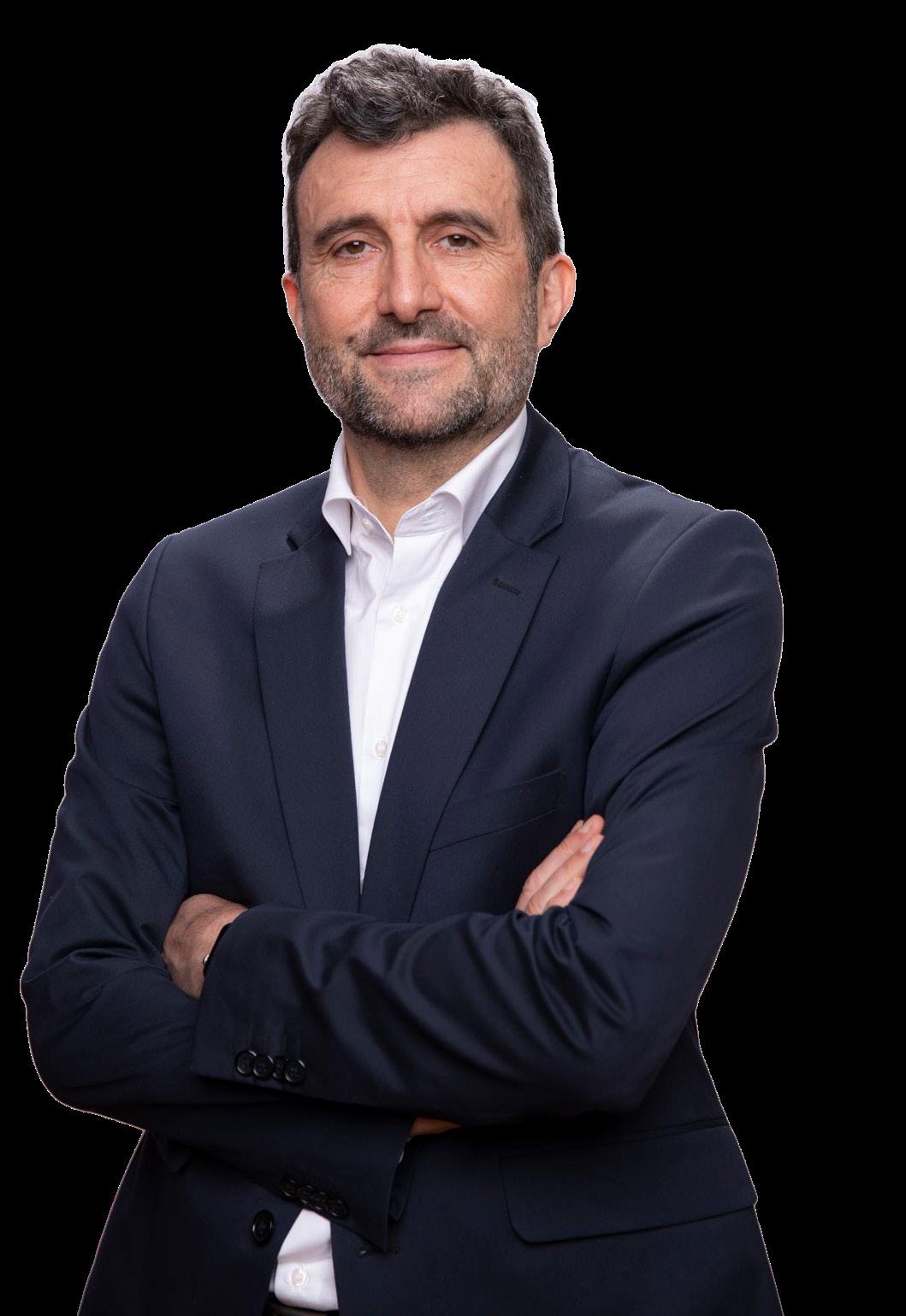
Philippe Berlan, CEO
fashion production is textile dyeing, that’s why we’re revolutionising the industry,” proudly introduces Philippe Berlan, CEO.
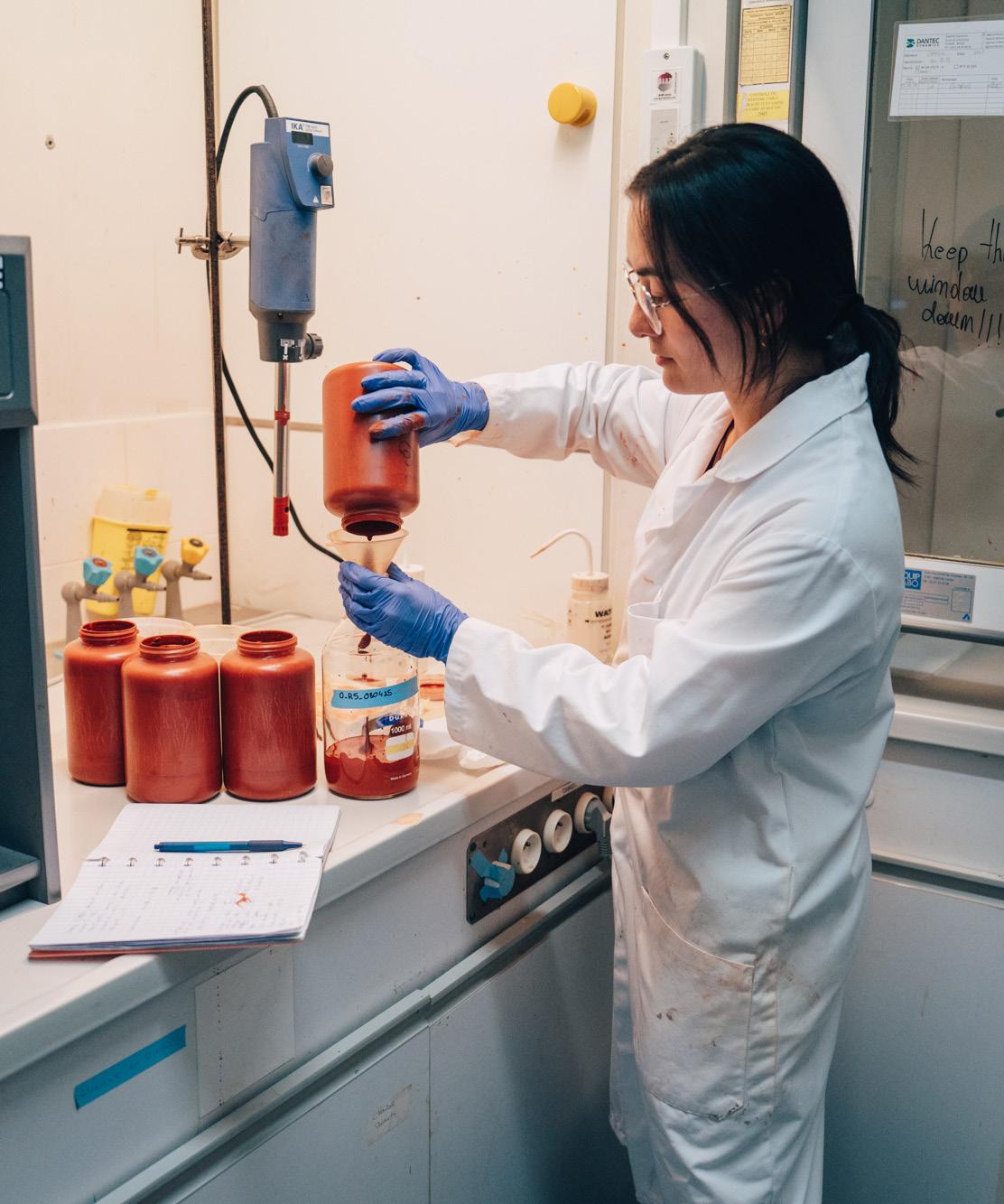
“Our patent technology is biobased and low-temperature, designed to work with existing machinery, so manufacturers can immediately reduce their environmental impact without replacing infrastructure.”
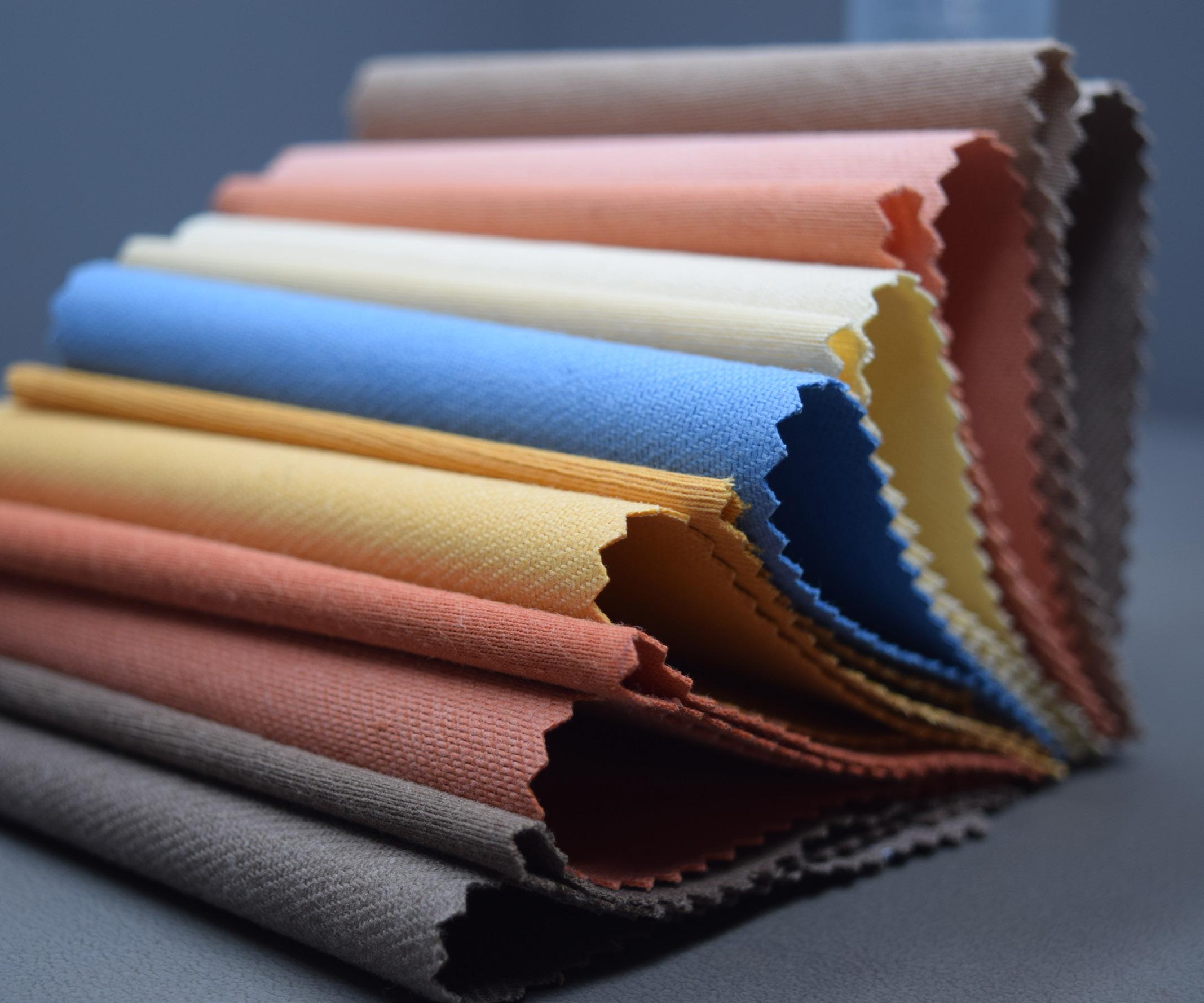
EverDye’s pioneering sustainable dyeing solutions are transforming the industry by eliminating reliance on water and harmful traditional chemicals whilst maintaining vibrant, durable colours comparable to those of conventional methods.
This game-changing approach not only prioritises environmental stewardship but also harkens back to a time when both organic and inorganic elements were harmoniously integrated into the dyeing process.
“Compatibility is what makes EverDye scalable today; it enables brands and suppliers to adopt sustainable dyeing practices with minimal disruption, cutting energy use, emissions, and water pollution whilst maintaining the same colour quality and production speed,” Berlan states.
AN ENVIRONMENTAL IMPACT
The textile industry is one of the most polluting sectors in the world, responsible for eight to ten percent of global emissions, half of which is a result of inefficient dyeing processes.
Additionally, it is the second-largest contributor to water pollution, generating 20 percent of the world’s wastewater. The positive news is that EverDye is taking action to change this.
Current dyeing processes produce effluents laden with synthetic dyes, pigments, chemicals, and additives –all of which have devastating effects on wildlife, plants, and human health. These toxic substances are often discharged into ditches, streams, and rivers, leading to alarming pollution levels, particularly in the discoloured waters surrounding production facilities.
Furthermore, this process is highly energy-intensive, requiring significant fossil fuel combustion to operate efficiently, which contributes to heavy carbon emissions.
Therefore, it is crucial for the textile industry to address these challenges, adopt more sustainable practices, and invest in innovative technologies that minimise environmental impact.
EverDye is indeed leading the way by developing eco-friendly dyeing methods that reduce pollution and conserve resources.
By prioritising sustainability and responsible manufacturing, the industry can work towards a cleaner future, significantly lowering its carbon footprint and safeguarding both ecosystems and public health for generations to come.
BLENDING SUSTAINABILITY WITH INNOVATION
EverDye’s innovative, patented dyeing technology features distinct design elements that highlight its industry leadership and attract investment, making it a leader in environmentally conscious practices.
The low-temperature dyeing process not only conserves energy but also clearly demonstrates its environmental benefits by enhancing overall efficiency, resulting in exceptional quality whilst minimising impact.
“Our technology combines bio-based chemistry with lowtemperature application, significantly reducing energy consumption and greenhouse gas emissions.
“Because it operates effectively at lower temperatures, the process requires less energy, shortens dyeing cycles, and uses less water, all whilst maintaining the same durability and colour intensity. These improvements result in more efficient manufacturing and a significant reduction in carbon footprint,” Berlan passionately explains.
In addition, the company has put in place comprehensive measures to diligently monitor and transparently report on its achievements in reducing emissions and water consumption, reflecting a commitment to accountability and sustainability.
“We are currently implementing a robust measurement and reporting framework that combines industrial
trial data with life-cycle assessment (LCA) methodologies,” he reveals.
“These evaluations quantify reductions in carbon emissions, water use, and energy demand compared to conventional dyeing.
“We work transparently with partners to ensure data is traceable and scientifically validated, supporting both environmental, social, and governance (ESG) reporting and ecolabel certification.”
TRANSPARENTLY TRANSFORMING TEXTILES
Consumer demand significantly influences the business strategies of the textile industry, as awareness of environmental and ethical issues shapes purchasing decisions.
“Our technology combines bio-based chemistry with low-temperature application, significantly reducing energy consumption and greenhouse gas emissions”
– PHILIPPE BERLAN, CEO, EVERDYE
A growing requirement for sustainable fabrics indicates that newer generations of consumers are prioritising brands that align with their values, leading to a market shift towards eco-friendly materials.
“Consumer expectations for transparency and sustainability are pushing the entire fashion ecosystem to evolve. Our technology directly supports brands’ ability to meet this demand with measurable impact –not just promises.
“By helping manufacturers drastically reduce their carbon and water footprints, we allow brands to meet consumer and regulatory pressures simultaneously. In short, EverDye exists to make it easier for brands to turn consumer awareness into concrete action,” Berlan declares.
Building meaningful relationships with brands and manufacturers is crucial for fostering EverDye’s shift towards more sustainable dyeing practices.
This collaborative engagement can inspire innovation and drive the industry towards greener alternatives, ultimately leading to a more ecoconscious approach to fabric production.
“We collaborate directly with textile manufacturers and fashion brands to conduct industrial trials demonstrating real-world performance and impact,” he reports.
“By providing measurable data on emission reduction, energy savings, and water efficiency, we turn sustainability from an abstract concept into a practical business case. Once a partner sees the results, adoption follows naturally –because our solution delivers both environmental and economic gains.”
A CLEANER, GREENER FUTURE
To address environmental challenges, clean technology (Cleantech) is crucial in the fight against climate change.
Investors view EverDye as a disruptive force in Cleantech due to its potential for scientific innovation, which is driving systemic change within the industry.
“EverDye is where science meets scalability. Investors recognise that our patented chemistry addresses fashion’s ‘dirtiest secret’ – dyeing – through a solution that’s both scientifically
sound and industrially viable.
“Our innovation replaces fossilbased, high-temperature dyeing with a bio-based, low-energy process, making decarbonisation of the textile industry a reality today. It’s a rare example of Cleantech that can immediately plug into existing supply chains and deliver measurable results at scale,” Berlan enthuses.
A recent €15 million investment round positions EverDye favourably relative to other companies in the sustainable fashion space and is one of the largest investments in European clean chemistry for textiles, positioning the company as a frontrunner in industrial sustainability.
“Whilst many solutions remain at the pilot stage, we are moving
Victor Durand, Head of Operations and Philippe Berlan, CEO
“Our role is to bridge science and industry, proving that sustainability and performance can coexist and the transition can happen now”
– PHILIPPE BERLAN, CEO, EVERDYE
into industrial implementation, expanding our laboratory network, and accelerating partnerships with major brands and manufacturers. It’s not just about innovation – it’s about deployment,” he explains.
A significant challenge in scaling technology for broad industry adoption lies in navigating diverse needs and compatibility requirements across sectors, as each industry has unique characteristics, workflows, and standards.
This makes it essential to tailor
solutions that not only meet specific demands but also seamlessly integrate with existing systems.
However, this complexity can hinder widespread implementation and necessitates a thoughtful approach to ensure innovations are both practical and universally applicable.
“The biggest challenge is not technical – it’s cultural and systemic. The textile industry has relied on the same processes for decades, so change requires both proof and trust.
“Our role is to bridge science and industry, proving that sustainability and performance can coexist and the transition can happen now.
“With growing regulatory pressure and investor backing, we’re confident that this shift is not only necessary but inevitable,” Berlan emphatically concludes.
DRIVING APAC’S AUTOMOTIVE SEATING FORWARD
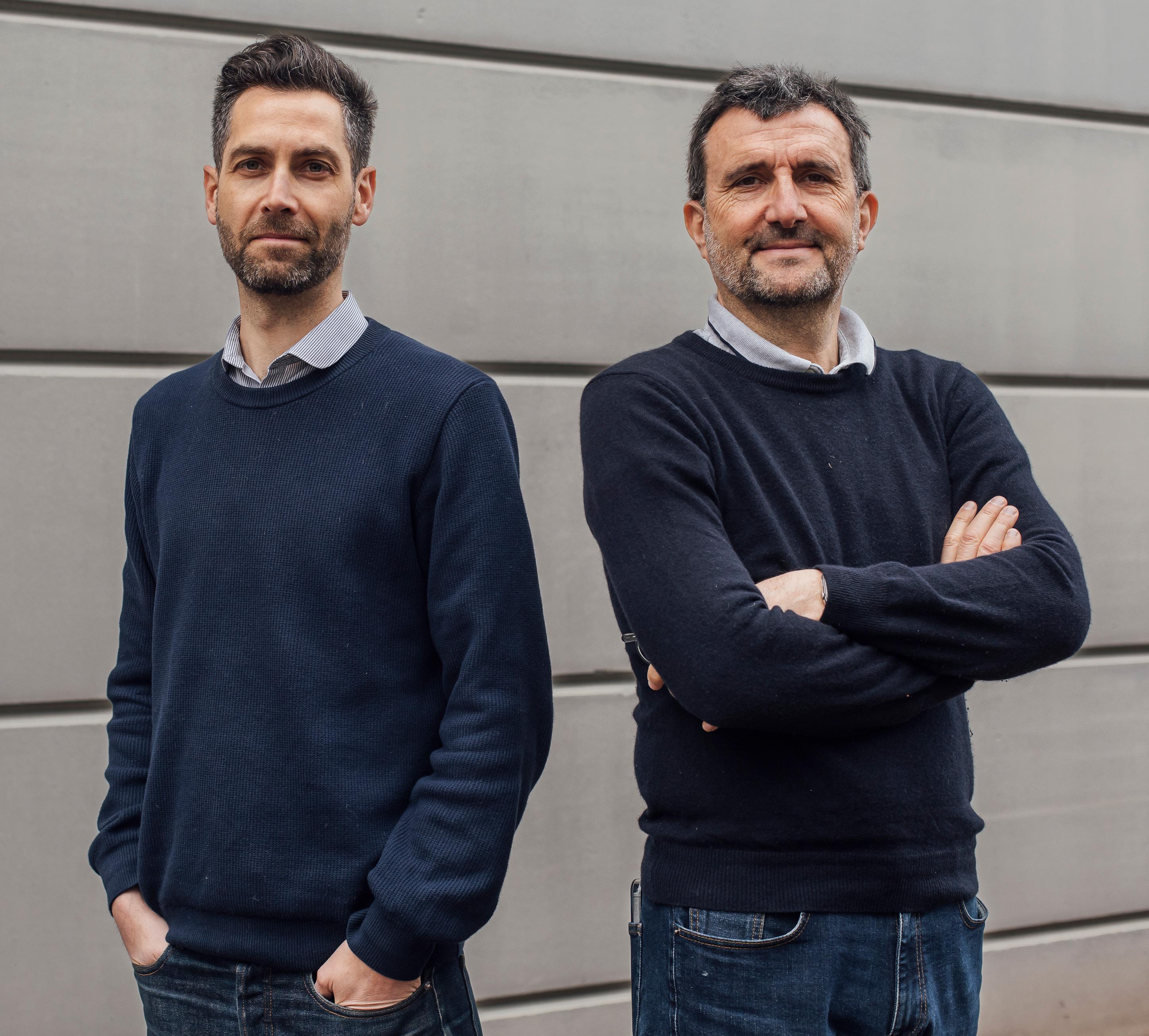
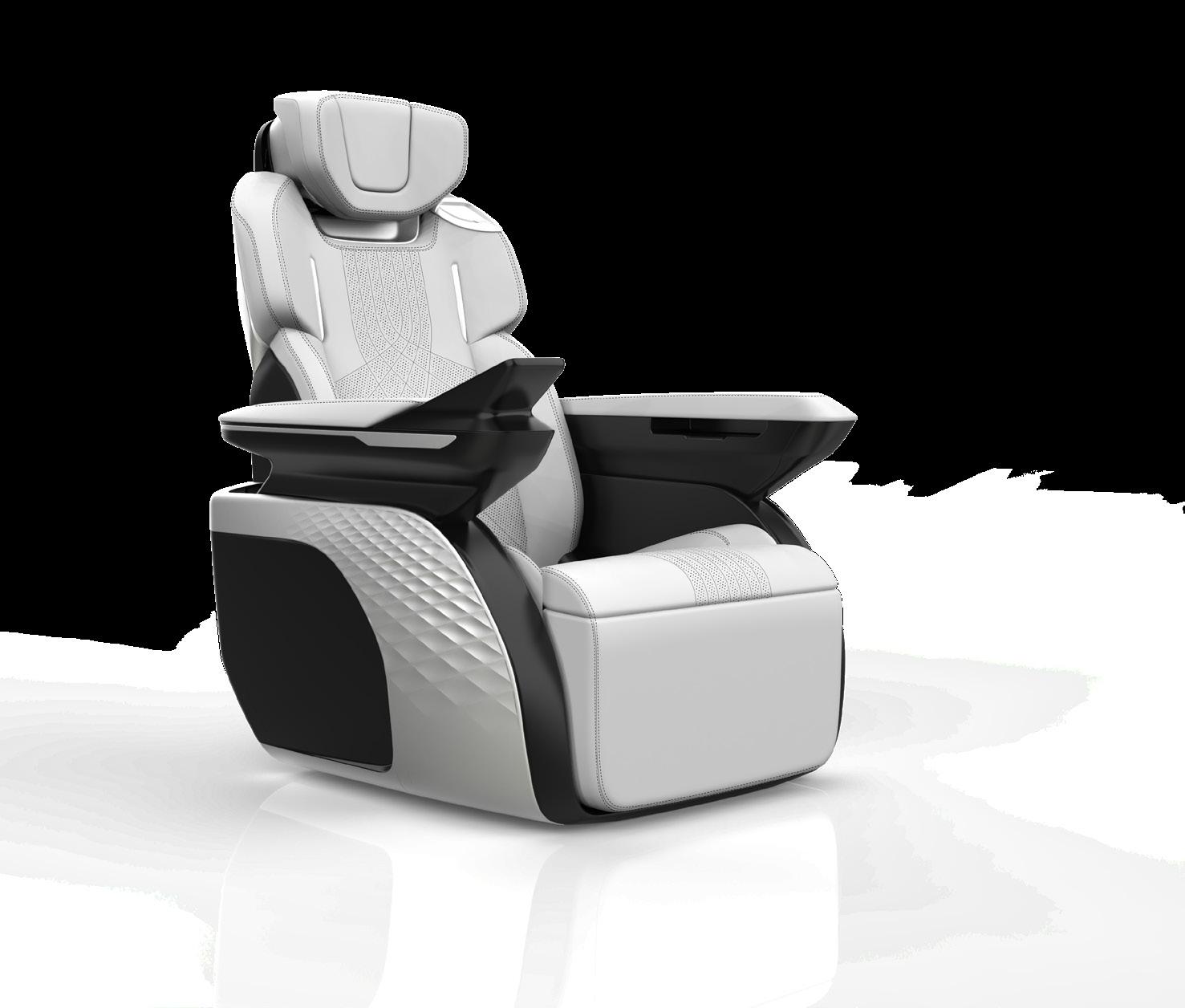
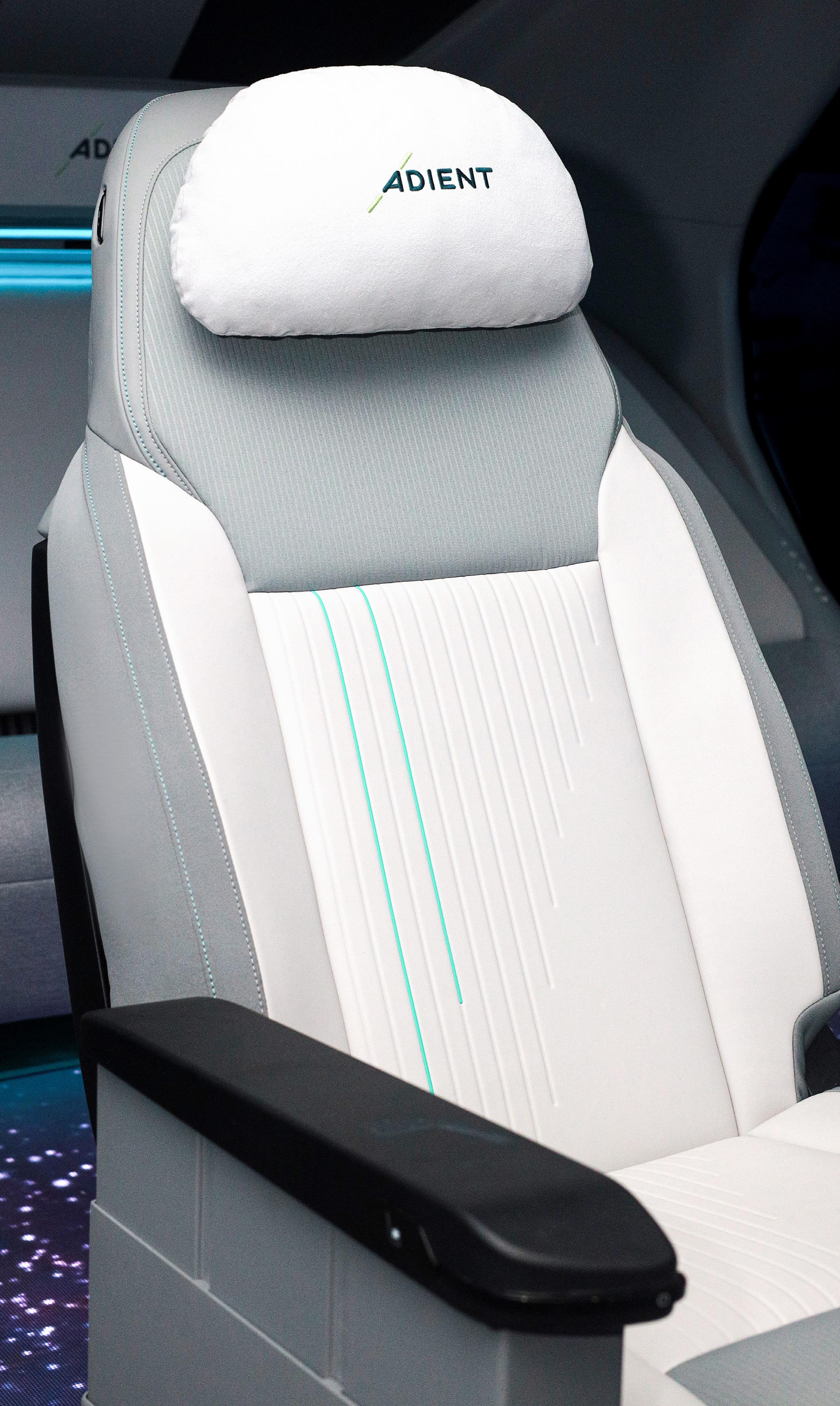
Adient expertly balances a sustainable manufacturing approach with innovations that meet the needs of its customers and the broader automotive seating industry. We sit down with Stewart Johnstone, Vice President Asia
Writer: Lucy Pilgrim
The automotive industry in the Asia Pacific (APAC) region has undergone a significant transformation in recent years, witnessing a convergence of the automotive, energy, and digital sectors, which is shaping the competitive landscape.
This has opened the door to a diverse range of industry players; new energy vehicle (NEV) makers have gained a meaningful market share, whilst more Asian original equipment manufacturers (OEMs) are expanding aggressively into new regions.
For Tier 1 suppliers, responding to
these shifts requires adaption on both the product and service front.
“From a product perspective, it’s essential to align with the electrification and smartification trends” opens Stewart Johnstone, Vice President Asia for Adient, a global leader in automotive seating.
“We’re continually rethinking seat systems for electrified platforms, focusing on comfort, smart features, sustainability, and modularity to accommodate battery layouts and evolving cabin experiences.”
As a long-term, truly global player in the automotive seating sector,
A STRATEGIC COLLABORATOR
Adient is distinguished by its varied customer base across different OEM types and geographies. This diversity grants the company first-hand insights into industry trends.
“Adient acts as a trusted partner for customers in APAC and our knowledge source strengthens our relationships and positions us as more than just a supplier – we’re a strategic collaborator.”
The company further stands out thanks to its commitment to product innovation, which it has consistently delivered to meet evolving market needs.
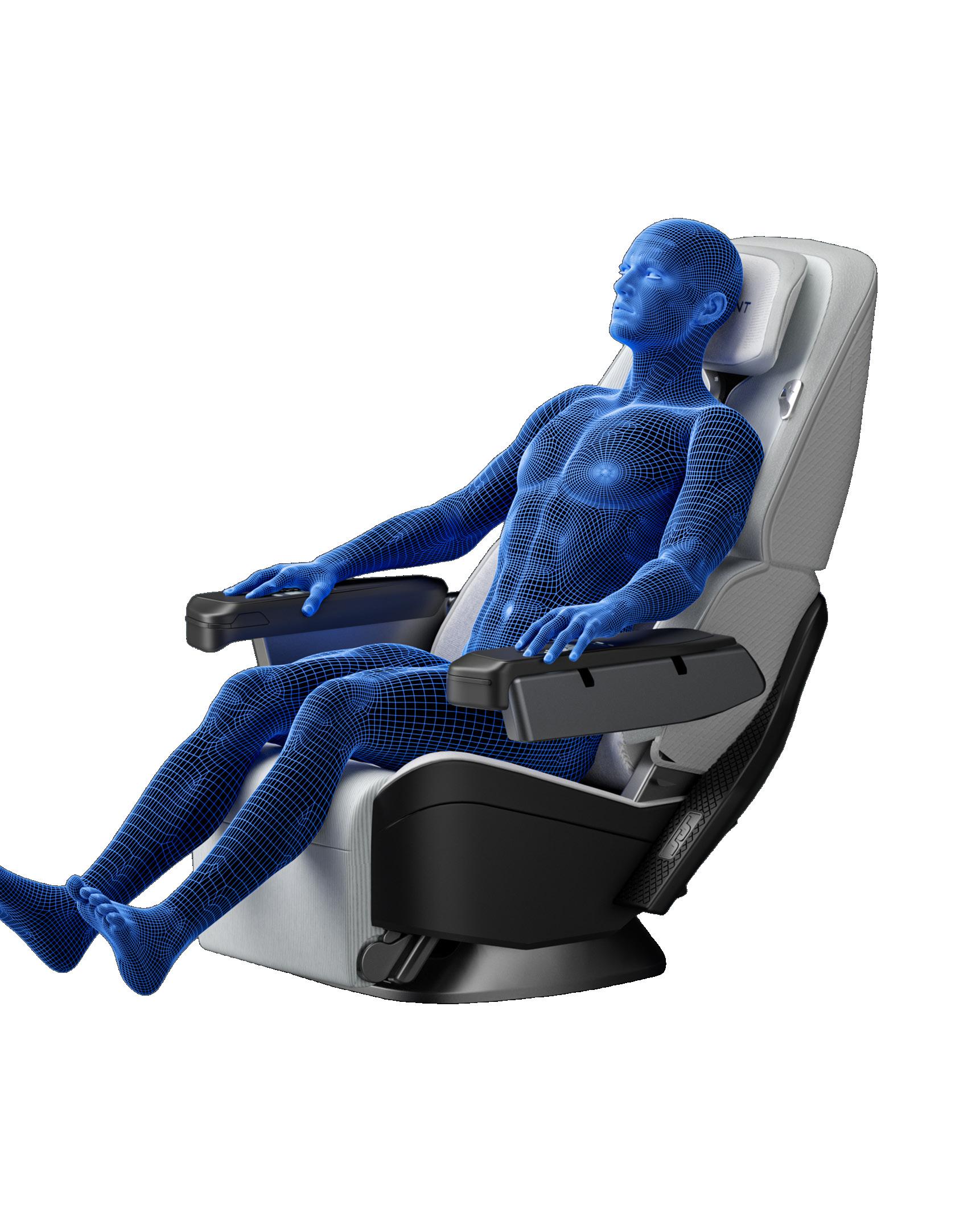
Since FY24, Adient commercialised more than 20 innovative products in APAC, such as ProForce Massage, and foot massage functionality.
“These innovations are not developed in isolation; they’re co-created with electric vehicle (EV) makers in mind to address the diverse needs of end users,” he urges.
To sustain its leading position, Adient continues to invest heavily in its engineering capabilities. A recent example is the expansion of its China Technical Centre in Chongqing, completed in 2025.
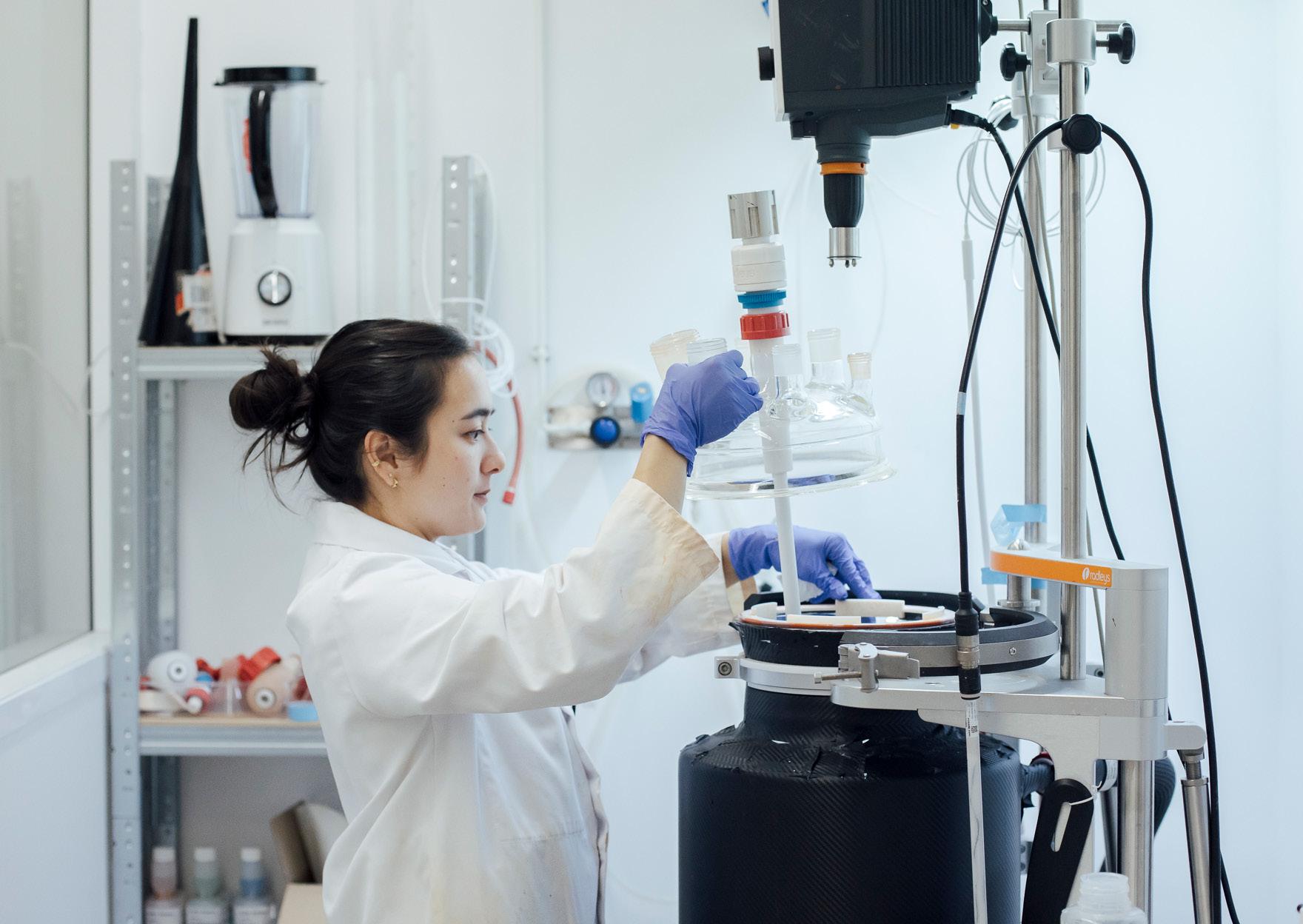
The upgraded facility is now a bestin-class engineering centre with the latest generation of sled test lab and multi-axis simulation table (MAST) systems, significantly enhancing the company’s design, testing, validation, and product development expertise in China.
Furthermore, Adient’s broad operational footprint gives it a unique advantage, allowing the company to support customers wherever they are.
In fact, many of Adient’s plants are strategically located next to OEMs who operate on a just-in-time (JIT) delivery system. This ensures smooth delivery, reduced logistics costs, and better day-to-day communication.
“This presence isn’t just about geography; it’s about connectivity. We make communication seamless by transferring knowledge internally from one region to another, especially
for similar or shared vehicle platforms,” Johnstone tell us.
“Our ability to bridge markets and share expertise ensures consistency, speed, and confidence for our customers, no matter where they operate.”
INVESTING IN INNOVATION
Growth in Asia is high on Adient’s list of priorities, whilst localisation has been one of the strategic levers of the company’s development over the last few years, having successfully established highly automated
CAN YOU TELL US MORE ABOUT ADIENT’S VERTICAL INTEGRATION AND HOW THIS HELPS DIFFERENTIATE THE COMPANY?
Stewart Johnstone, Vice President Asia: “Vertical integration at Adient goes far beyond simply having more products in-house – it’s about creating resilience for our customers by mitigating supply chain risks and managing uncertainties.
“With end-to-end control, from trim and foam to frames and complete seat systems, we can manage every detail of the process and ensure that each step meets our customers’ stringent requirements for quality and delivery.
“This deep integration also gives us a unique ability to influence and inspire our customers. For example, our seat frame platform strategy in China has helped some clients significantly reduce costs by increasing the use of standardised parts across multiple programmes.
“Building on this success, we are now expanding similar practices across Asia outside of China.”
assembly and stamping lines for this critical market.
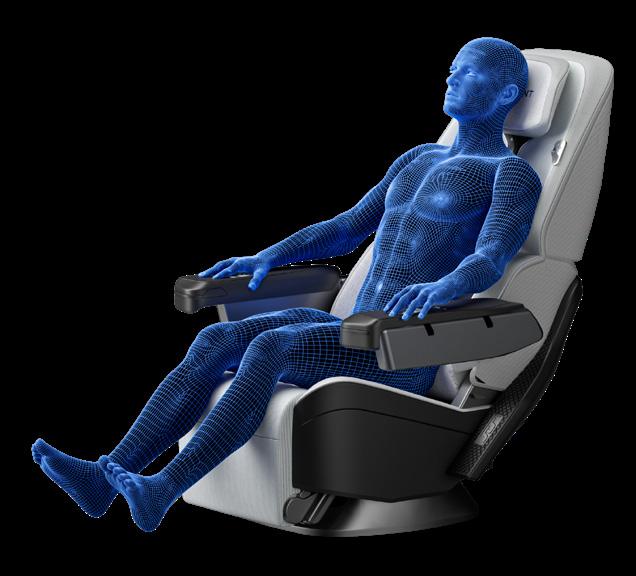
The company has historically secured new programmes through innovations and continues to do so, having recently partnered with Autoliv to co-develop an advanced safety solution that significantly enhances occupant protection in deeply reclined ‘zero gravity’ seating positions – a feature increasingly popular in premium EVs.
Greater investment into artificial intelligence (AI) and automation is
“By scaling renewables and deepening partnerships, we advance APAC’s transition to a low-carbon future whilst contributing to global emissions reductions”
– STEWART JOHNSTONE, VICE PRESIDENT ASIA, ADIENT
equally core to the company’s growth strategy.
“This will help to drive operational excellence – improving quality, reducing costs, enhancing process transparency, and providing real-time data insights.”
As a JIT business, the company is also working on operational footprint optimisation, which is critical to supporting its OEM partnerships.
“This year, we are executing relocation in two high-growth markets, continuing our journey to optimise and deliver the best footprint solutions for customers.”
LOCALISED APPROACH, GLOBAL STANDARDS
With strong partnerships being central to the company, Adient’s supply chain operations across APAC are designed to deliver agility, resilience, and customer-centricity across a highly diverse and dynamic region.
operational excellence, overseeing production schedules and ensuring that customer commitments are met without compromise.
markets and share expertise ensures consistency, speed, and confidence for our customers, no matter where they operate”
– STEWART JOHNSTONE, VICE PRESIDENT ASIA, ADIENT
“Together, these roles form the backbone of our manufacturing ecosystem, enabling seamless integration from procurement to delivery.”
emphasises risk mitigation,
across APAC,” Johnstone assures.
“Additionally, we are investing in green logistics initiatives, such as optimising packaging and reducing emissions in transportation to align with OEM sustainability goals.”
ACCELERATING THE GREEN TRANSITION
Adient’s corporate social responsibility (CSR) practices centre around environmental stewardship and value-chain collaboration, supporting its global mission to mitigate climate impact.
A core priority is reducing greenhouse gas (GHG) emissions, which is tracked quarterly under the GHG Protocol guidelines.
The APAC region aligns with global sustainability goals: a 75 percent cut in Scope 1 and 2 emissions by 2030, 35 percent in Scope 3, and utilising 100 percent renewable electricity by 2035.
Progress is measured through a financial control framework across
all APAC sites, with third-party verification.
Four pillars drive sustainability across APAC: sustainable manufacturing, a sustainable supply chain, sustainable product design, and employee engagement.
In FY24, 22 percent of regional electricity came from renewables, supported by local partnerships and over 400 continuous improvement projects, delivering a seven percent
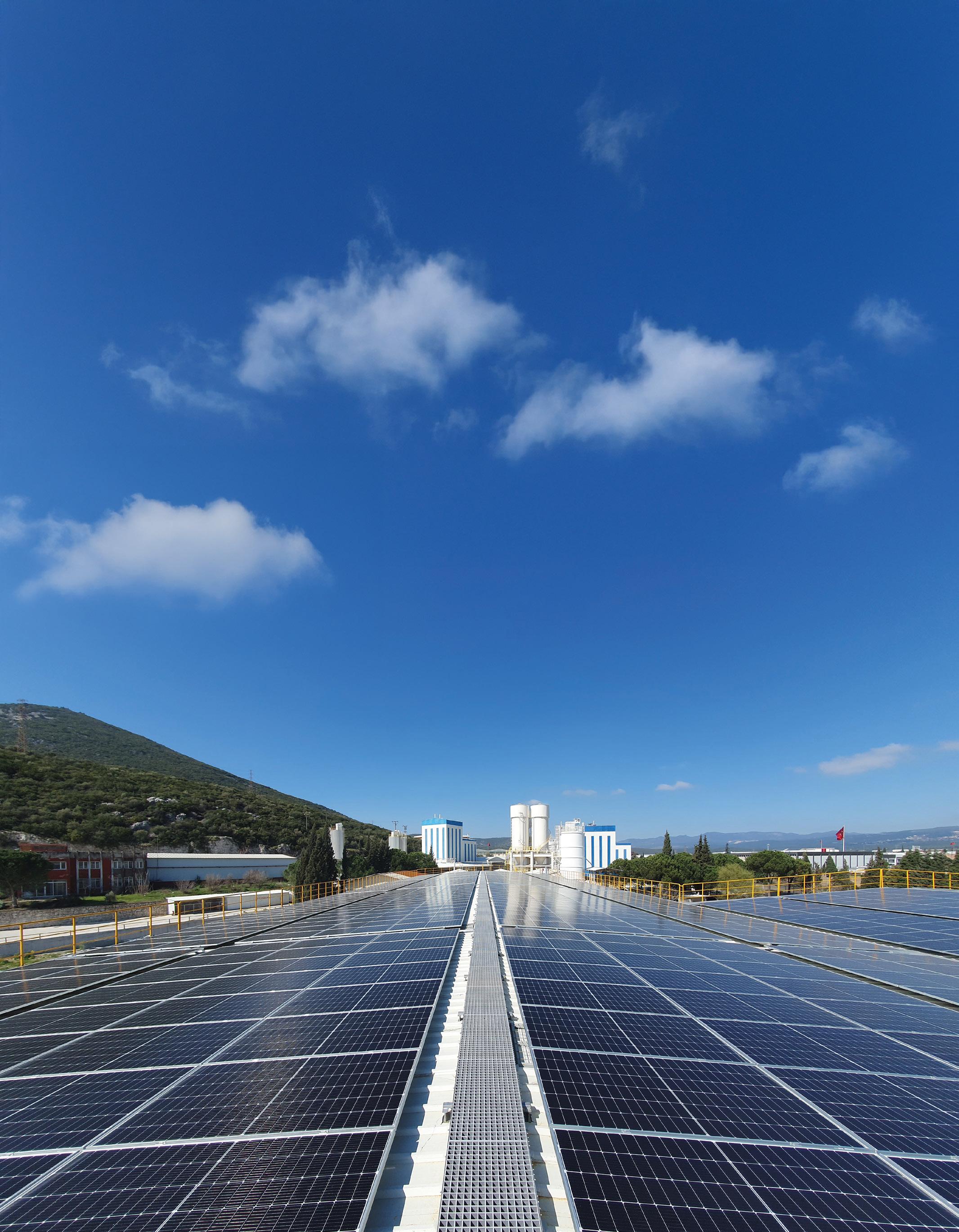
reduction in electricity-related emissions. Rooftop solar projects further enhance self-sufficiency.
In Scope 3, Adient continues to refine its calculation methodology to provide accurate and transparent data. The company is committed to providing its customers with lowcarbon product solutions to drive down the emissions of the entire value chain.
“Collaboration, local action, and accountability define our approach,” notes Johnstone.
“By scaling renewables and deepening partnerships, we advance APAC’s transition to a low-carbon future whilst contributing to global emissions reductions.”
Looking ahead, Adient’s priorities focus on four key areas – people, business sustainability, operational excellence, and customer loyalty.
“These priorities position us to navigate industry challenges whilst creating long-term value for our customers and stakeholders,” Johnstone concludes.
Tel: + 1 734 254 5000 www.adient.com
ENGINEERED FOR ADVENTURE
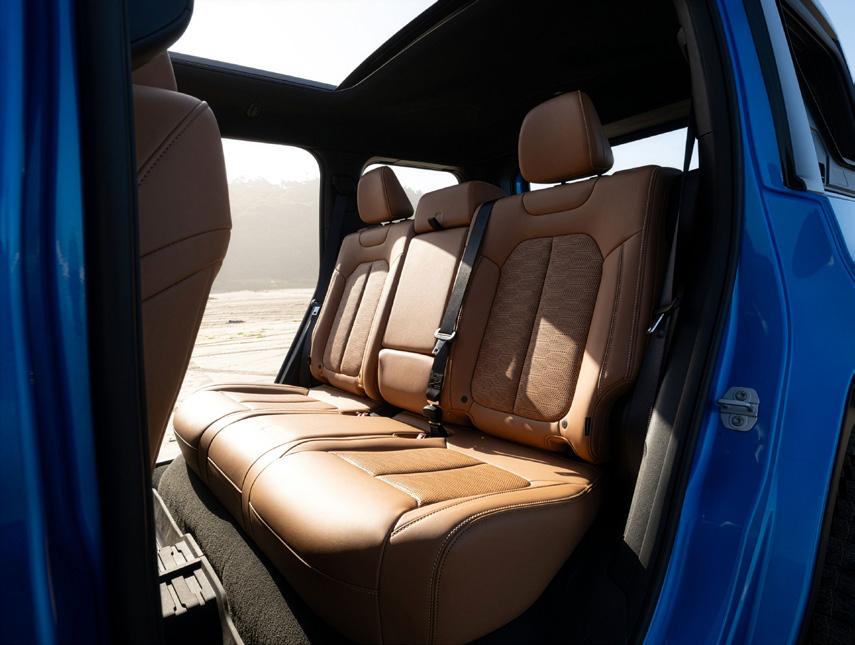
The all-new, all-electric Jeep Recon is an off-road SUV with a difference. The first fully electric SUV to earn the prestigious Trail Rated badge, signifying
Writer: Lily Sawyer
ADVENTURE
The vehicle is making history as Jeep’s its authentic off-road capability
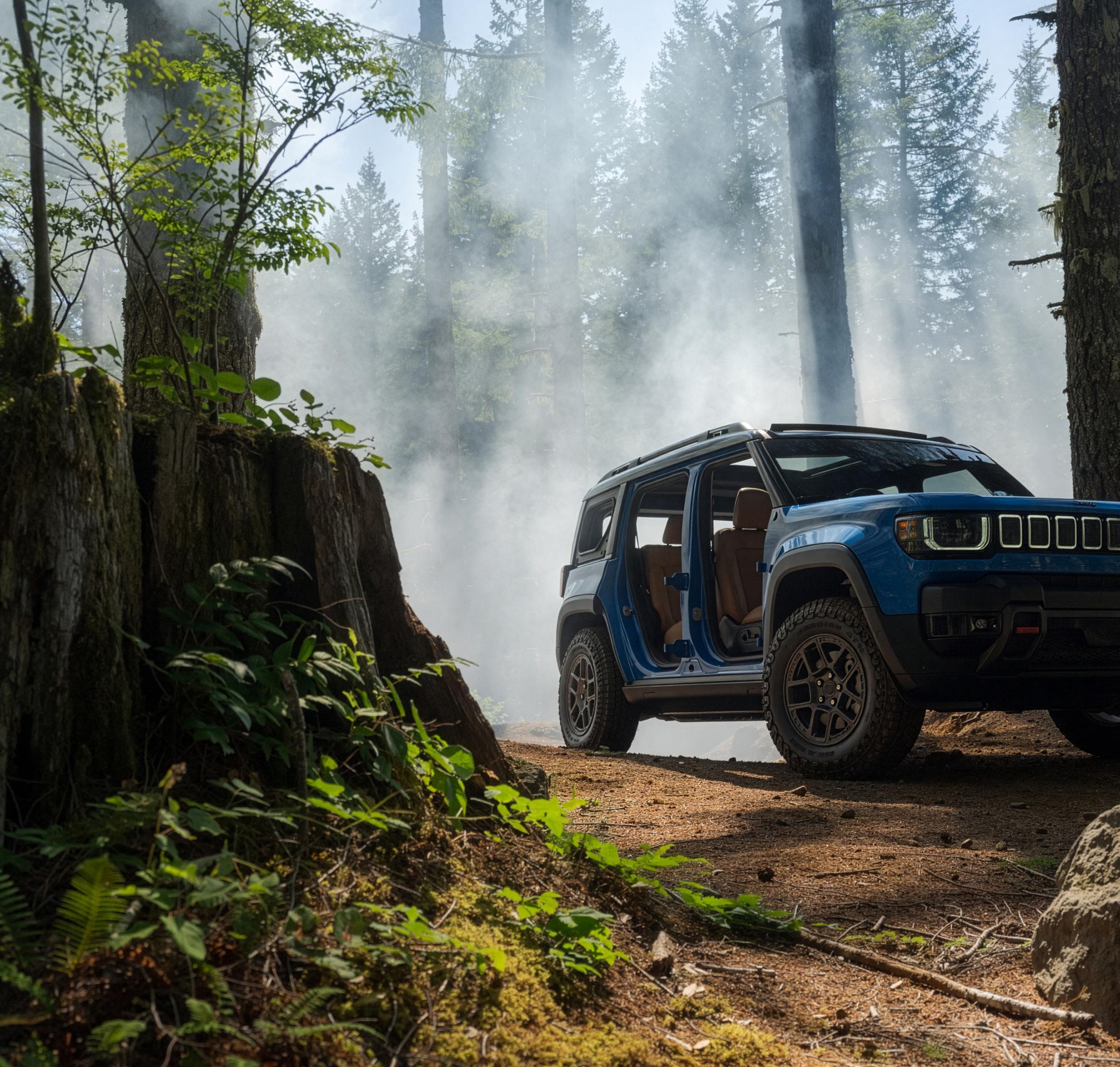
Charging into the future with the debut of the Recon, Jeep is introducing the only fully electric Trail Rated SUV on the market.
Delivering legendary Jeep 4x4 capability in a fully electrified package, the Recon is purposefully designed to blend powerful performance with authentic 4xe system capability.
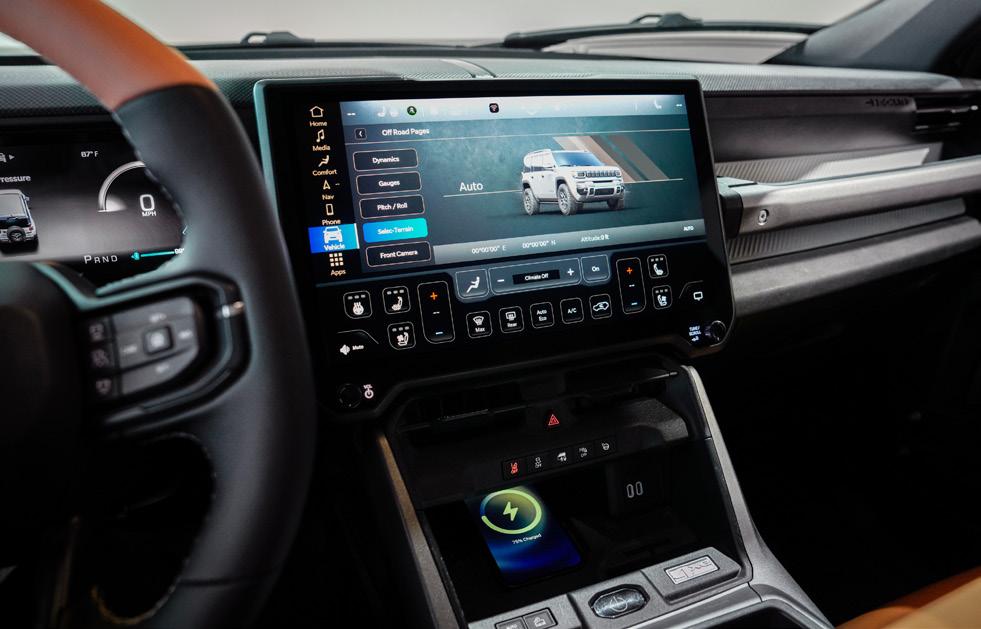
A Jeep-exclusive Selec-Terrain traction management system offers drive modes across a wide variety of terrains and conditions.
With 650 horsepower, 620 poundfeet (lb/ft) of torque, and 0-60 miles per hour (mph) of acceleration in as little as 3.6 seconds, the Jeep Recon offers precise drive control.
Jeep CEO, Bob Broderdorf, notes how the model remails true to the brand’s core values of freedom, adventure, and capability, ready to take Jeep enthusiasts into the future without compromising on the legendary performance they’ve come to expect.
Indeed, with an estimated allelectric range of up to 250 miles, Jeep is proving that electrification isn’t just compatible with off-road excellence but can elevate it.
Manufacturing and production of the vehicle began this year at Stellantis’ Toluca Assembly Plant in New Mexico, with initial launches anticipated imminently in the US and Canada, followed by global expansion.
OFF-ROAD DOMINANCE
Stellantis-designed electric drive modules (EDMs) are at the core of the Jeep Recon’s propulsion system, which combines an electric motor, gearing, and power electronics into a single compact unit for enhanced efficiency and instant torque on demand.
For a satisfying off-road driving experience, engineers have tailored the vehicle’s throttle pedal to deliver torque in a controlled and precise manner.
STELLANTIS X JEEP
Bringing together 14 iconic automotive brands and two mobility arms under one unified umbrella, Stellantis is a leading global automotive manufacturer with a growing focus on sustainable and electric mobility technology.
Stellantis was formed following a 2021 merger between Fiat Chrysler Automobiles (FCA) – Jeep’s then-owner –and Groupe PSA, whose brands included Peugeot, Citroën, and Vauxhall.
Dedicated to preserving the Jeep legacy, Stellantis plays an active role in safeguarding the brand’s identity and continues to produce iconic car models today, such as the Jeep Wrangler and Grand Cherokee.
Stellantis also continues to drive innovation within the Jeep brand, investing in the electrification of car models, autonomous driving, and superior security options.
With Stellantis at the helm, Jeep is poised for a bright future, growing into new markets and forming new partnerships.
Off-road performance is further enhanced by electronic locking that delivers maximum traction when navigating challenging terrains, along with a robust suspension system engineered for stability and control both on and off-road.
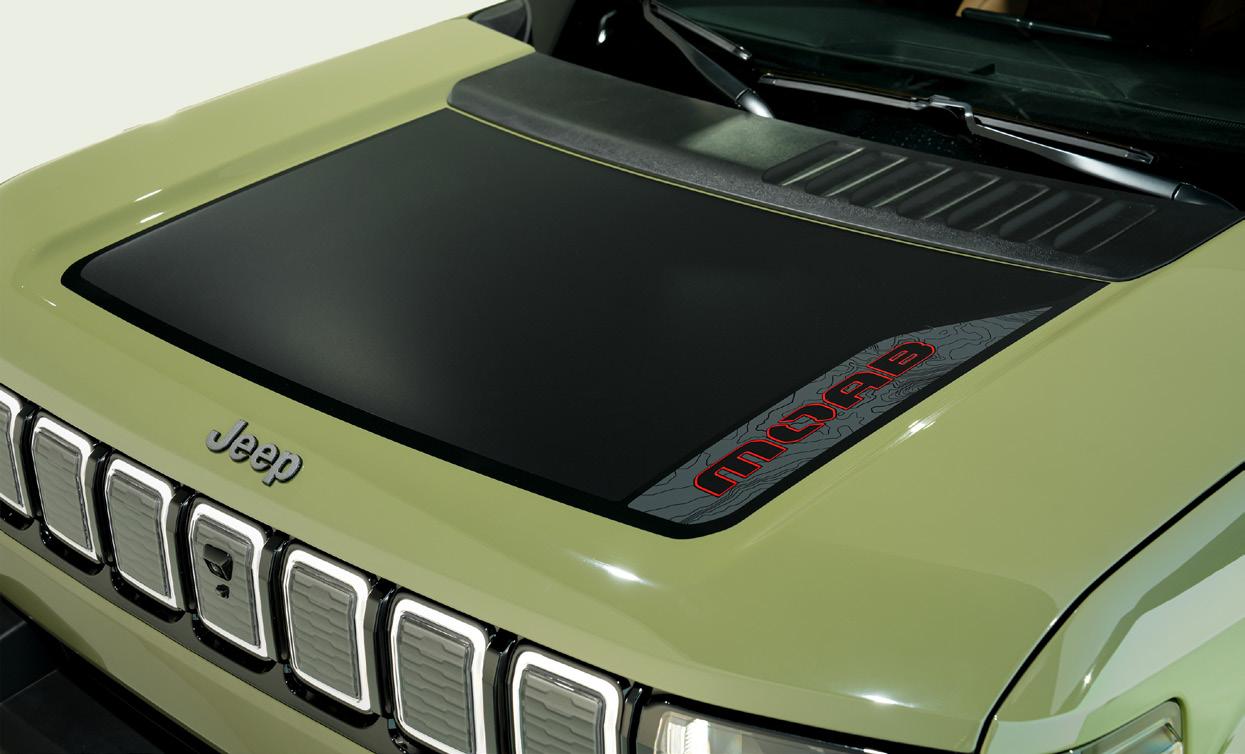
Purpose-built skid plates and allterrain tires reinforce the Recon’s Trail Rated credentials, ensuring durability and protection in demanding environments.
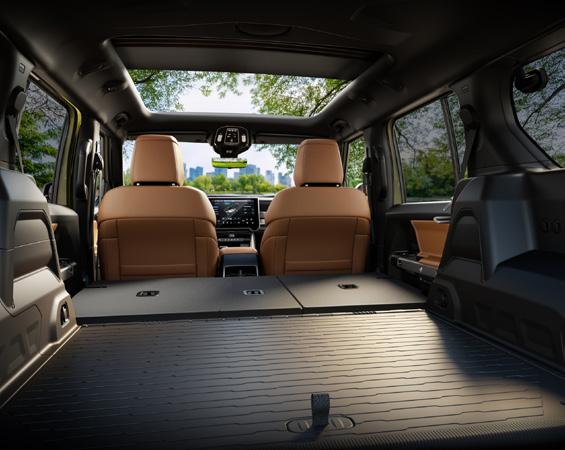
Designed with adventure in mind, the Recon also features a removable roof and doors, allowing drivers to experience the kind of open-air freedom that has long defined the Jeep brand.
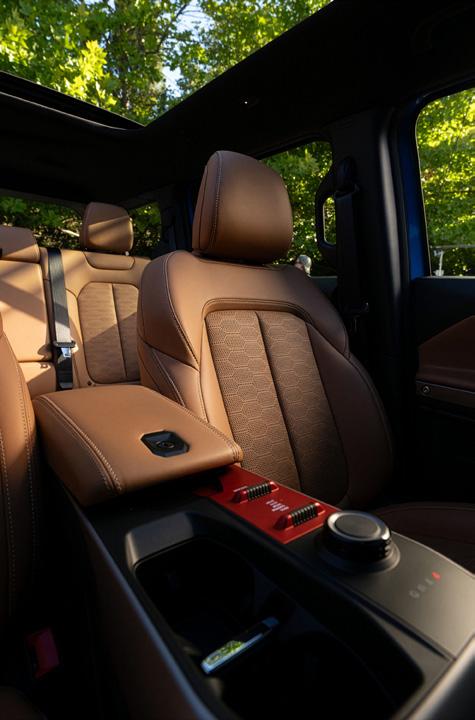
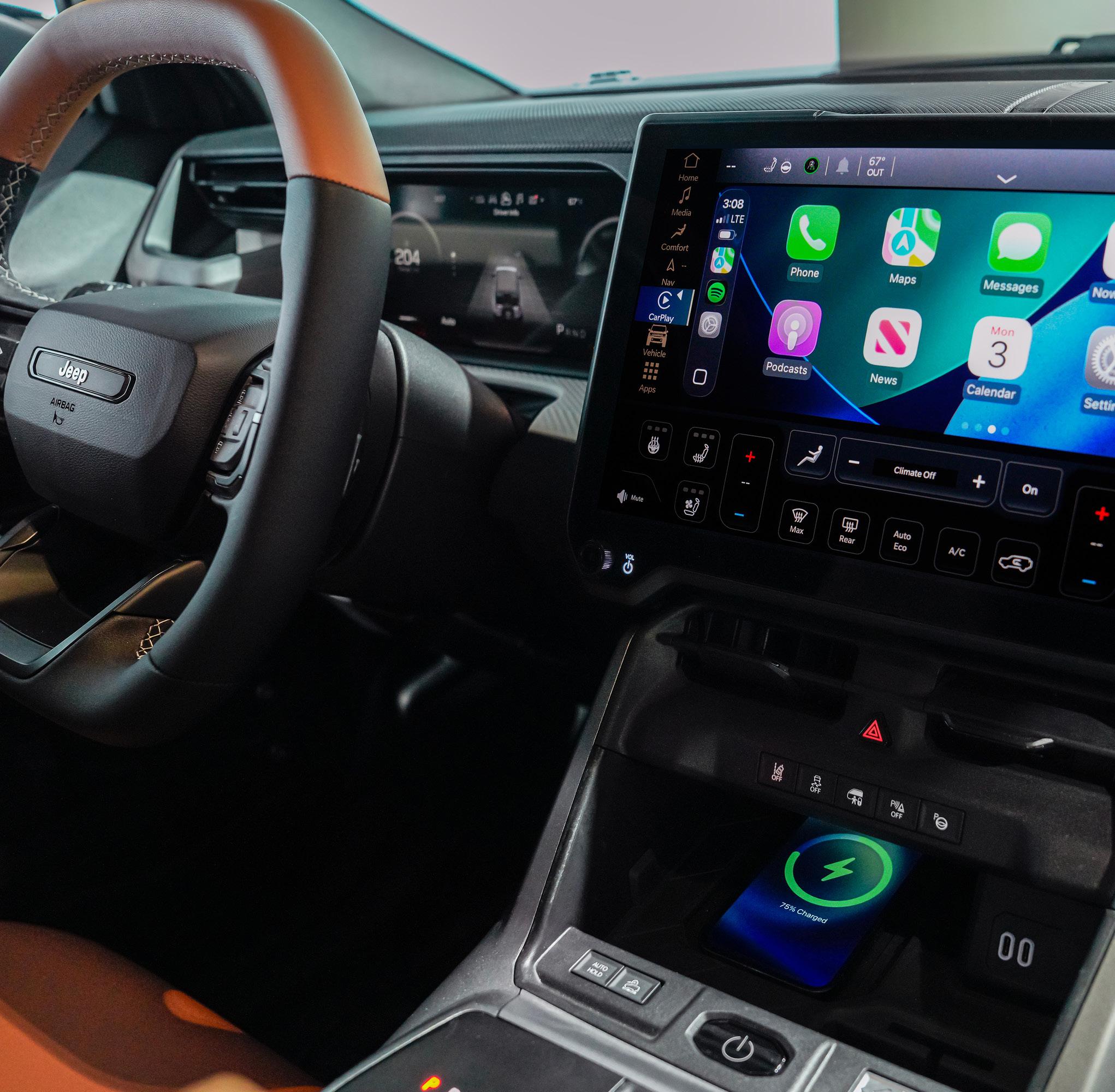
The cabin’s interior, meanwhile, balances rugged functionality with modern technology, offering intuitive digital displays and advanced connectivity features that keep drivers informed and in control wherever their journey leads.
VEHICLES THAT WITHSTAND ADVENTURE
At the heart of the Jeep Recon’s electric architecture is a battery system engineered to balance range, durability, and off-road resilience. Strategically positioned within the vehicle’s structure, the battery remains protected no matter the outside conditions.
This thoughtful integration not only supports confident handling across
various terrains but also reinforces Jeep’s long-standing commitment to building vehicles that can withstand real-world adventure.
Designed to accommodate a range of charging solutions, the vehicle’s charging flexibility further enhances its everyday usability.
The all-electric SUV supports both home and public charging infrastructure, helping drivers transition seamlessly between daily
commutes and extended journeys. Whether plugged in overnight or recharged on the go, the Recon reflects Jeep’s understanding that electrification must be both practical and progressive.
A NEW ERA OF OFF-ROAD PERFORMANCE
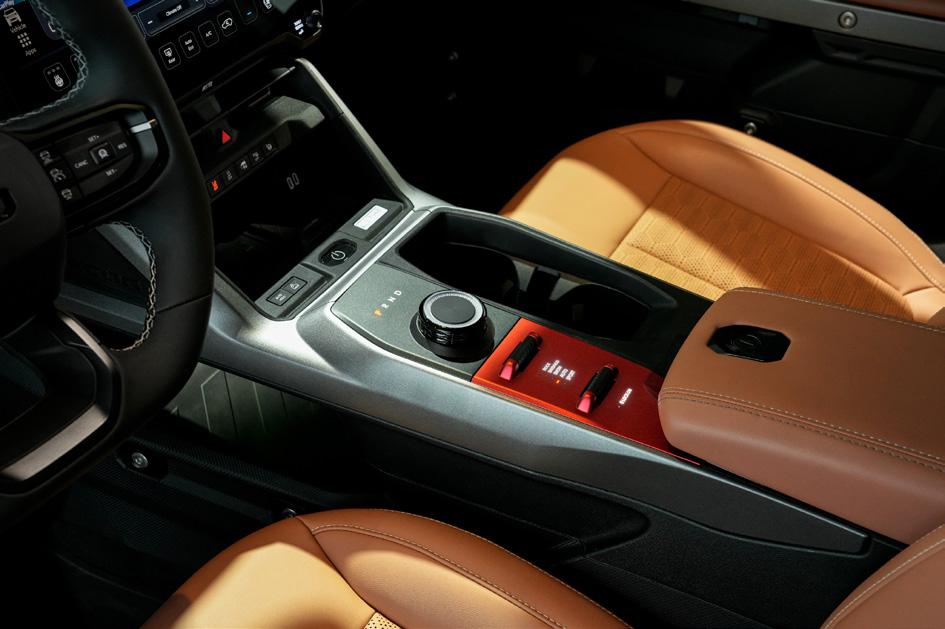
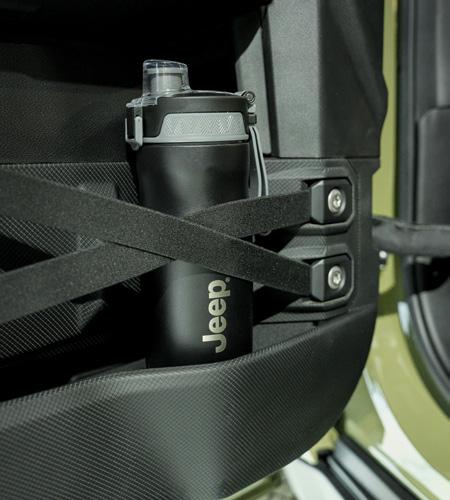
Functionality remains paramount to the Jeep Recon, with durable materials and thoughtfully placed
PHOTOGRAPHY:
PHOTOGRAPHY:
PHOTOGRAPHY:
PHOTOGRAPHY: 2026
PHOTOGRAPHY: 2026 JEEP®
controls designed to withstand active lifestyles.
The interior layout emphasises visibility and ease of use, reinforcing its dual role as both a capable trail vehicle and a comfortable daily driver.
It also represents a key milestone in the company’s broader electrification strategy by combining zero-emission performance with unmistakable Jeep capability.
As part of Stellantis’ global push towards sustainable mobility, the vehicle demonstrates how electrification can be integrated without sacrificing identity or capability.
It signals not just an evolution in electrification, but a reaffirmation of Jeep’s commitment to pushing boundaries.
For Jeep loyalists, the message is
clear – electrification does not signal an end to adventure.
Instead, it opens the door to new possibilities, delivering instant torque, precise control, and reduced environmental impact whilst preserving the freedom that has always defined the brand.
Looking ahead, the Jeep Recon is poised to lead the charge into a new era of off-road performance.
PHOTOGRAPHY: 2026 JEEP®
PHOTOGRAPHY: 2026 JEEP®
PHOTOGRAPHY:
PHOTOGRAPHY:
PHOTOGRAPHY:
A production-line of exclusive content, delivered straight to your inbox
As manufacturing organisations worldwide confront unprecedented change, embracing technological innovations and incorporating critical environmental sustainability agendas, now more than ever is the time to showcase the strides being taken in this dynamic sector.
A multi-channel brand, Manufacturing Outlook brings you the positive developments driven by organisations across the global manufacturing industry through its various platforms.
Discover exclusive content distributed through its website, online magazine, social media campaigns and digital dispatches, delivered straight to your inbox with a bi-weekly newsletter.
Through these compelling media channels, Manufacturing Outlook will continue to foreground the movers and shakers of the industry.
To participate as a featured company and join us in this exciting endeavour, contact one of our Project Managers today.
A CRITICAL NODE IN GLOBAL AVIATION
Providing world-class aero engine and component repair services to some of the most respected airlines, Hong Kong Aero Engine Services Limited is a global name in engineering. George Edmunds, CEO, tells us more about the company and its plans for a high-flying future
Established in 1997 as a joint venture between Hong Kong Aircraft Engineering Company Limited (HAECO) and Rolls-Royce, Hong Kong Aero Engine Services Limited (HAESL) has established itself as a globally recognised maintenance, repair, and overhaul (MRO) provider specialising in Rolls-Royce Trent engines.
With its headquarters based in Tseung Kwan O Industrial Estate, the company offers a full suite of services, including engine overhaul, testing, and component
repair. Since its inception, HAESL has proudly serviced over 5,500 engines and is set to achieve a record engine throughput of between 360 and 375 engines in 2025.
The company serves over 35 global airline customers, with strong representation in Hong Kong, the Chinese mainland, Asia Pacific (APAC), the Middle East, Europe, and North America. With growing demand from across the globe, as reflected in this year’s record engine overhaul volumes, HAESL has seen significant growth in its staff numbers, which now stands at over 1,650.
CAN YOU TELL US MORE ABOUT HOW YOU OVERHAUL ENGINES FROM ACROSS THE GLOBE, WITH THE UNITED ARAB EMIRATES BEING A MASSIVE PART OF YOUR CUSTOMER CHAIN?
George Edmunds, CEO: “HAESL’s customer base spans global airlines, original equipment manufacturers (OEMs), and strategic partners, with a strong presence in the APAC region.
“Within the region, we provide overhaul services to major carriers, including Cathay Pacific, Hong Kong Express (HK Express), Hong Kong Airlines, Singapore Airlines, AirAsia X Berhad (AirAsia X), All Nippon Airways (ANA), Japan Airlines, and major operators from the Chinese Mainland. In the EMEA region, Qatar Airways, Etihad Airways, and British Airways are also significant contributors to HAESL’s workload.”
“Managing this remarkable growth is a testament to our collaborative spirit and commitment to excellence,” introduces George Edmunds, CEO.
“To support this growth, we have actively looked to widen the talent pool we recruit from, moving from a
traditional male-centric workforce to a more diverse one. For success, it is essential that our people feel supported and know that our dedication to diversity and inclusion is unwavering. To ensure this, we have active internal networks that
foster a sense of belonging and ensure everyone’s voice is heard. Regular health checks and well-being workshops further demonstrate our commitment to creating an inclusive and supportive workplace for all.”
Safety is also an area in which HAESL has made significant strides. It achieved record-low lost-time injuries, which speaks volumes about the company’s robust approach to ensuring workplace safety. This starts with a proactive safety risk identification system, where crossfunctional engagement reflects the sense of shared responsibility in maintaining a safe environment – a feature of the company’s culture.
Equally, community engagement is a cornerstone of HAESL’s culture. It has collectively volunteered over 4,000 hours this year and made significant donations to local causes, reflecting a deep-rooted commitment to giving back and making a positive impact.
Over 10 Years of Great Service
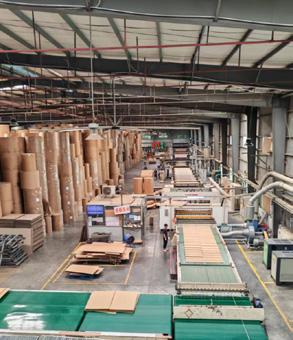
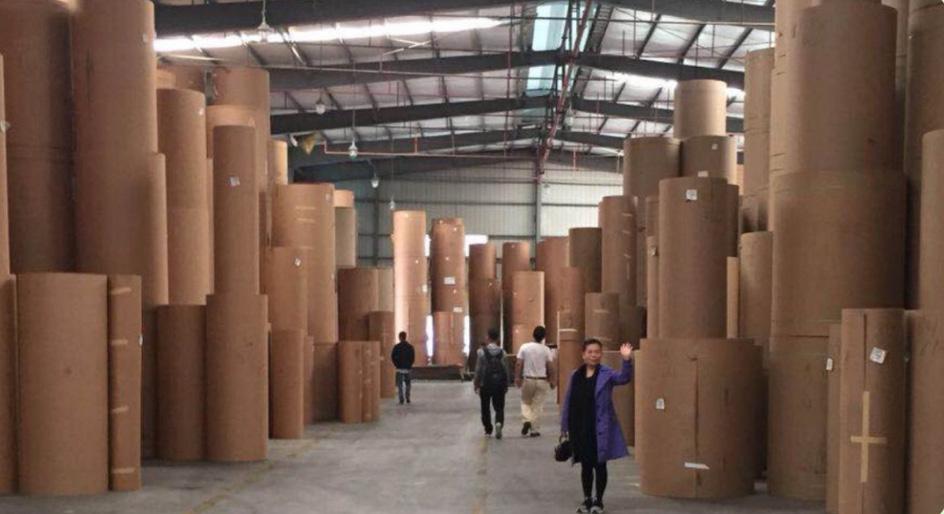
Since our establishment in 2012, SAMWO (CHINA & HK) CO., LIMITED, along with several packaging product manufacturers, jointly initiated a unified overseas sales strategy to achieve mutual development and win-win cooperation.
Since its establishment, our company has fulfilled its blueprint for exporting its products to various parts of the world. We have also become a designated supplier of materials to the Hong Kong SAR government.
Our main products include:
• Carton box (Material H838Y carton box) (Size: according to customer request.)
• Bearing box (Size: according to customer request.)
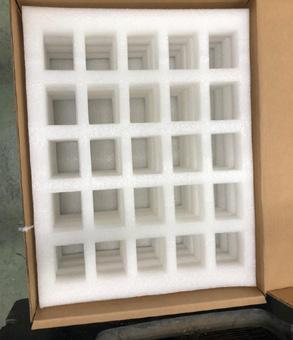
• NGV carton box with foam.
• 15 or 70 lattice box with foam.
• Carton paper (Size: according to customer request.)
We solemnly promise:
Guaranteed product quality and on-time delivery.
If you have special packaging requirements, our engineering term are happy to cooperate and provide samples until your satisfaction is achieved.
“THE AIRCRAFT MAINTENANCE INDUSTRY IN HONG KONG IS CURRENTLY EXPERIENCING A DYNAMIC AND PROMISING PHASE, MAKING IT AN EXCITING SPACE TO BE WORKING IN”
– GEORGE EDMUNDS, CEO, HONG KONG AERO ENGINE SERVICES LIMITED
“These accomplishments are a testament to the strength of our culture and the incredible people who make up our team. We continue to build on this momentum and strive for even greater heights,” notes Edmunds.
A HUB FOR INNOVATION
Hong Kong is situated as a key hub for aviation. This position is built on a combination of geographic, economic, infrastructural, and strategic advantages that make it uniquely competitive both locally and internationally.
The region is the aviation gateway to the Greater Bay Area (GBA), consisting of 86 million people and a gross domestic product (GDP) of USD$1.9 trillion.
“Hong Kong’s aviation hub status is not just about location – it’s about connectivity, capability, and strategic foresight. With its infrastructure upgrades, integration into the GBA, and strong cargo and MRO capabilities, it remains a critical node in global aviation,” insights Edmunds.
Located in the heart of Asia, within a five-hour flight radius of half the world’s population, Hong
Kong is a truly ideal transit point for both passenger and cargo traffic, efficiently connecting the East and West.
Additionally, Hong Kong International Airport (HKG) is consistently ranked amongst the world’s best, with over 220 destinations served globally, alongside being the busiest international cargo airport, handling over 4.3 million tonnes of cargo annually.
Despite the setbacks caused by the COVID-19 pandemic, HKIA has recovered to 80 percent of prepandemic passenger levels, whilst cargo operations remained strong throughout.
This resurgence after the pandemic is fuelling demand for MRO services across all categories, including engine, airframe, components, and interiors. The Hong Kong aircraft maintenance market is projected to grow steadily through to 2031, driven by increasing air traffic in the APAC
BRIDGING CUSTOMER NEEDS WITH TECHNOLOGY AND EXPERTISE
At Jebsen & Jessen Technology – Industrial Services Division, we are dedicated to supporting the aerospace industry in Singapore, Malaysia, Thailand, Indonesia, and Hong Kong with advanced technical solutions.
True to our mission of “Bridging customer needs with technology and expertise”, we believe the best results come from working hand in hand with our customers. By taking the time to understand their needs, operations, and delivery timelines, we build relationships that go beyond transactions — relationships founded on partnership.
Guided by our corporate values of trust, entrepreneurship, prudence, commitment, and partnership, we have earned the confidence of many long-term customers. Amongst them is HAESL, with whom we are proud to share a strong and enduring partnership.
in HAESL over
Over the past 20 years, PORTS Connection Cargo (HK) Ltd has become an important player in the global aerospace supply chain, streamlining the flow of parts, developing relationships with component vendors, and providing comprehensive AOG services. Extensive experience and in-depth knowledge allow us to assist clients with this challenge and achieve excellence.
region, technological advancements in aircraft systems, and government investment in aviation infrastructure.
“The government is actively investing in aviation talent, smart airport technologies, and crossboundary cooperation to future-proof the sector,” details Edmunds.
“Whilst the outlook is positive, there are also some challenges. These include availability of talent, increasing regulatory complexity and compliance demands, and, more recently, increasing geopolitical tensions and economic fluctuations. It is essential that we have strategies in place to navigate these challenges to ensure we can be confident to continue to make investments in the long term.”
CAN YOU EXPAND UPON HAESL’S SUPPLY CHAIN OPERATIONS AND HOW THEY’RE COORDINATED WITH ROLLS-ROYCE?
George Edmunds, CEO: “HAESL’s supply chain operations are tightly integrated with Rolls-Royce through a multi-tiered governance framework that ensures alignment across delivery, cost, quality, and risk management.
“Regular business reviews are jointly conducted by HAESL and Rolls-Royce stakeholders, covering critical areas such as parts input, kitting issues, turnaround time deviations, and subcontract repair delivery. A shared MRO performance scorecard tracks key performance indicators (KPIs) over time.
“Strategic planning is supported by sales and operations planning (SOP) processes that synchronise engine induction volumes and parts forecasting. Joint workshops, such as the SAP S/4HANA transition sessions, have produced actionable outputs around data exchange policies, inventory catalogue control, and governance mechanisms. These efforts are designed to modernise HAESL’s digital infrastructure whilst maintaining seamless integration with Rolls-Royce systems.
“Component repair development is another area of collaboration, with RollsRoyce supporting HAESL’s repair capability expansion through fair approvals and proprietary process sharing. Risk management is embedded into our supply chain strategy, with HAESL identifying over-reliance on Rolls-Royce and regulatory delays as key risks. Mitigation strategies include dual sourcing, crosscalibration protocols, and vendor diversification.”
TRANSFORMING THE SECTOR
To ensure that HAESL is well-placed to take advantage of the current uptick in MRO demand, the company is embarking upon various projects to improve its efficiency and increase its expertise.
At the heart of this transformation is HAESL’s digital ambition, which seeks to unlock efficiencies and redefine how aero engine MRO operations are managed through the adoption of new digital technologies.
“A dedicated digital team was only established a year ago. Despite this, they have already launched a fully integrated customer portal, which
streamlines everything from purchase order approvals to audit compliance. The portal supports real-time visibility into reservations, stock levels, and planner-customer workflows,” explains Edmunds
More fundamentally, HAESL has commenced an enterprise resource planning (ERP) system replacement, which will be delivered over the next two years. This will include the implementation of SAP Business Suite 4 SAP HANA (SAP S/4HANA), and iMRO as a manufacturing execution system.
Alongside efforts to ensure all data is available through a full migration to cloud storage, HAESL is building a
“HONG KONG’S POSITION AS A KEY AVIATION HUB IS BUILT ON A COMBINATION OF GEOGRAPHIC, ECONOMIC, INFRASTRUCTURAL, AND STRATEGIC ADVANTAGES THAT MAKE IT UNIQUELY COMPETITIVE BOTH LOCALLY AND GLOBALLY”
– GEORGE EDMUNDS, CEO, HONG KONG AERO ENGINE SERVICES LIMITED
future-ready digital backbone that will support artificial intelligence (AI) forecasting, Microsoft’s Power BI dashboards, and software development and IT operationsdriven app development.
In addition, HAESL is investing in cutting-edge technologies to enhance precision and reduce turnaround times through its smart manufacturing initiatives.
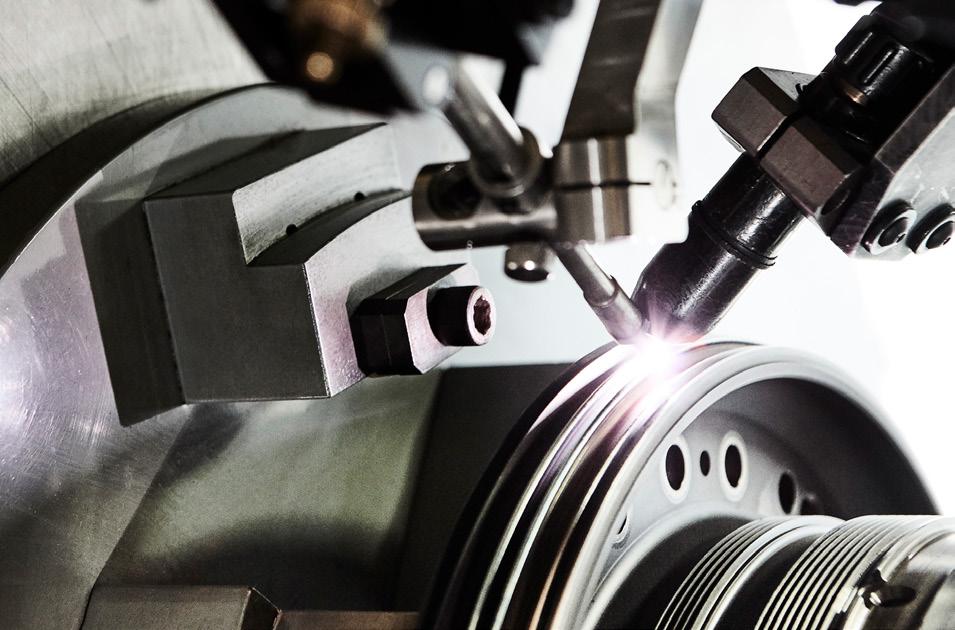
The Connector Inspection System, for example, is a portable, automated solution that minimises human error and inspection time, whilst a robotic welding project introduces AI-driven optimisation for complex shapes, improving safety and reducing fatigue-related turnover.
“These innovations are part of our broader strategy to become a centre of excellence in component repair and
advanced manufacturing,” explains Edmunds.
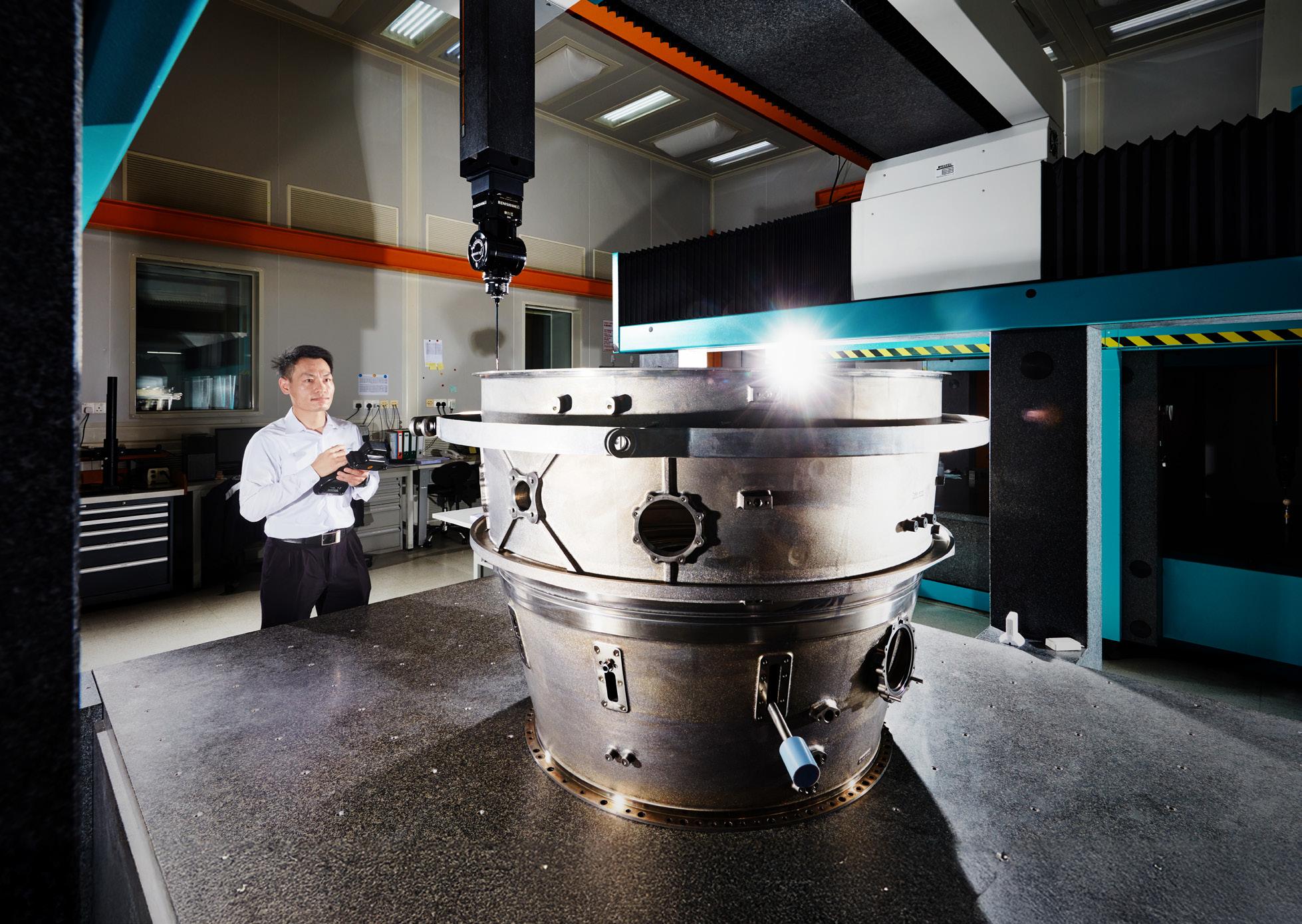
Finally, to meet growing demand, HAESL is expanding its physical footprint and operational capacity. Recent upgrades include the purchase of additional computer numerical control (CNC) milling machines and coordinate measuring machines, as well as facility expansion, both on-site through innovative storage solutions and off-site through the rental of additional space.
HAESL’s capacity expansion strategy could lead to the company overhauling up to 425 engines annually, as well as up to 50 module sets.
A COMMITMENT TO SUSTAINABLE GROWTH
Sustainability is a central pillar of HAESL’s business strategy, with
clear goals and measurable progress across environmental, social, and governance areas.
The company has made significant strides in reducing its environmental footprint, achieving a 17.1 percent reduction in carbon intensity and lowering water usage to 46 litres per attended hour. Waste management initiatives, such as centralised recycling stations, support HAESL’s goal of 60 percent waste diversion by 2030.
“We also emphasise sustainable procurement, aiming for full compliance with our Supplier Code of Conduct by 2030,” explains Edmunds.
“We encourage suppliers to reduce packaging and adopt recyclable materials and collaborate with Rolls-Royce on standards. EcoVadis assessments have helped identify areas for improvement in procurement ethics and environmental documentation, with corrective actions already underway.”
On the social front, HAESL promotes inclusion and community engagement. Internal programmes such as the HAESL Women’s Network (HWN) and Male Allies were established in 2023 to support gender equality.
With an initial target in 2023 of 13 percent female representation in a male-dominated industry, the percentage of females employed has now grown to 16 percent of a larger workforce, indicating progress in this area. Community outreach also includes youth development and partnerships with non-governmental organisations (NGOs), reinforcing the company’s role as a responsible corporate citizen.
Looking ahead to 2026, HAESL is setting ambitious targets that reflect its commitment to operational excellence, innovation, and sustainability.
“We plan to maintain engine output at above 360 units, and with increasing richness in the workscopes
of the engines we overhaul, this will deliver a record three million workload hours in 2026, requiring a further seven percent increase in headcount, on top of double-digit increases already seen in the last two years. Achieving this growth will be challenging and require enhanced planning and capacity management, but none of this is new to HAESL,” furthers Edmunds.
He also notes that the forward projection for engine demand in the coming years continues to look promising. As a result, HAESL is confident it can provide a stable working environment where staff can develop traditional MRO skills whilst learning new ones as the company unlocks the potential of new technologies.
Edmunds believes technology advancements will transform the
working environment, making the industry more attractive to a new generation coming into the workforce. To create this environment, the company will be investing over USD$300 million in the coming 10 years, with investments focused on automation, digital infrastructure, and facility upgrades.
“Innovation remains a key focus, with continued investment in new technologies such as automated welding and additive manufacturing technologies,” expands Edmunds. These advances aim to streamline processes, improve safety, and eliminate workshop bottlenecks.
However, unlocking the opportunities these technologies represent will only be possible if it can support this through relevant talent development.
As a result, HAESL remains committed to upskilling its current
workforce, with promotions and role expansions planned across key departments, supported by the right training, reinforcing the company’s commitment to internal career growth.
“None of these plans will deliver further growth and efficiencies without strategic alignment with Rolls-Royce and collaboration through joint governance reviews on areas such as cost model refinement and coordinated planning for future engine capability,” concludes Edmunds.
cb@haesl.com
www.haesl.com
PAINTING A NEW LEGACY
Nippon Paint supplies innovative paint and coating solutions to numerous nations and regions worldwide and is now proudly recognised as the largest paint brand in Asia Pacific. We apply a fresh coat and delve deeper into the company’s success with Wee Siew Kim, Director, Representative Executive Officer, and co-President of Nippon Paint Holdings Co., Ltd and Group CEO of NIPSEA Group
Writer: Ed Budds | Project Manager: Josh Whiteside
As a continent, Asia is experiencing rapid urbanisation, rising GDP per capita, and an expanding middle class, all of which drive demand for paint and coatings.
In markets such as Indonesia and China where the economies and urbanisation are accelerating, paint demand is set to keep rising. These countries represent significant growth opportunities as they undergo rapid infrastructure development and become subsequently wealthier. Capitalising on this current industry
upswing is Nippon Paint, a global industry leader working towards a sustainable future through customercentric growth focused on enriching the world through the power of science and imagination.
“Despite significant current global economic fractures, the paint and coatings industry in Asia is incredibly exciting right now, and I believe it offers immense potential for growth,” introduces Wee Siew Kim, Director, Representative Executive Officer, and co-President of Nippon Paint Holdings Co., Ltd and Group CEO of
NIPSEA Group.
In terms of broader industry trends, one of the key developments is the rapid move towards sustainability and eco-friendly solutions.
Consumers, especially in Asia, are becoming increasingly aware of the environmental impact of their choices, which is driving demand for more sustainable and lower volatility organic compound (VOC) coatings.
Nippon Paint is fully embracing this shift, ensuring that its product range aligns with the growing demand for sustainable solutions.
“Today, the coatings industry in Asia is vibrant, full of potential, and rapidly evolving, which makes it an exciting time to be working in this space – more so for Nippon Paint as I believe we are culturally and organisationally well-positioned to enrich a larger share of the value pool,” he sets out.
EXPANSION OF THE BRAND
Having worked tirelessly to establish itself across a plethora of geographies, Nippon Paint now enjoys an impressive presence across
48 countries and regions throughout Asia, Europe, and the US.
“Our product offerings are as diverse as the markets we serve. From decorative paints that brighten homes and businesses to automotive coatings that enhance the appearance of vehicles, we provide high-quality solutions that meet a wide range of needs,” Wee prides.
Meanwhile, the company also specialises in industrial and marine coatings, ensuring durability and protection in some of the toughest environments.
In addition, its ‘Paint++’ approach extends to adjacent areas like sealants, adhesives, and fillers (SAF), external thermal insulation composite systems (ETICS), and construction chemicals (CC), providing a comprehensive suite of products for every project.
“NIPSEA Group’s success is built on its leadership in decorative paints, where we proudly hold the number one market share in six countries – China, Singapore, Malaysia, Sri Lanka, Türkiye, and Kazakhstan,” he acclaims.
From raw materials to responsible solutions
Innovation and collaboration are key for the building sector to contribute to a more sustainable society. Partnering with companies that share the same commitment is essential. Omya helps customers reduce their carbon footprint, replace harmful substances, accelerate reformulation, and ensure seamless compatibility of its minerals and cross-sector solutions in final product formulations.
In all markets, there is an increasing focus on improving sustainability and reducing carbon footprint. Omya knows it and works closely with its customers to help them meet their sustainability targets. This often means finding ways of helping customers to reduce their carbon footprints, optimize their use of resources, minimize waste, improve circularity or protect the environment. Always thinking of tomorrow, providing global technical support, focusing beyond carbon reduction, offering practical toolkits and formulation intelligence and providing a holistic solution are the 5 scalable ways Omya helps customers reach their goals.
Innovating while thinking of tomorrow
Omya is a leading global producer of essential minerals, and a worldwide distributor of specialty materials. “Thinking of Tomorrow” is part of Omya’s
DNA and testifies to its commitment in continuing thinking and developing innovative products and solutions that make life better for current and future generations.
That is why Omya has committed to achieving carbon neutrality by 2050 and a 50% reduction in Scope 1 and 2 emissions by 2030 with a baseline year of 2019. It plans to deliver this by decarbonizing its operations and value chain, investing in renewable power generation and energy efficiency projects, purchasing green energy, and replacing fossil fuels with green fuels.
Global solutions for trusted performance
Omya’s long history started more than 140 years ago and still flourishes in the over 50 countries where it operates, among 9,000 employees of over 70 nationalities.
With technical laboratories at their headquarters in Switzerland, and dedicated regional technical service hubs throughout Europe, the Americas, Middle East and Asia, Omya offers laboratory analysis, reformulation support and implementation assistance to customers worldwide to deliver comprehensive and sustainable solutions for improved performance.
It’s Omya’s global perspective and expertise that enable the development of the highest-performance and most sustainable product solutions and support.
Beyond carbon reduction with Omya’s toolkits
Omya is fully engaged in the development of sustainable solutions beyond focusing just on carbon footprint and for this reason it developed specific toolkits for the construction industry to pursue sustainable goals across key sectors from paints and coatings, adhesives and sealants, and mortar and concrete.
How many ways can you make your paint more sustainable?
Each of these toolkits are designed to help Omya’s customers face specific market needs.
For example, Omya’s sustainability toolkit for paints and coatings offers solutions that help selecting, formulating and implementing sustainable offerings to align with SDGs (United Nations Sustainable Development Goals, or Global Goals), ESPR criteria (Eco-design for Sustainable Products Regulations) and improve their LEED score (LEED or Leadership in Energy and Environmental Design rating system) for building development.
Omya’s toolkits combine innovative product portfolios with comprehensive technical expertise and support, ensuring high-performance and sustainable paints.
Omya’s solutions include reducing substances of concern, with, for example, our unique modified calcium carbonate technology (MCC), harmless to health (non-silica based), for superior matt paints or multifunctional neutralizing agents allowing biocidefree or biocide-low formulations.
The toolkit also focuses on creating healthier working conditions with lightweight fillers and enhancing comfort through improved thermal insulation, leading to energy savings, and much more.
Accelerating speed to market with formulation intelligence
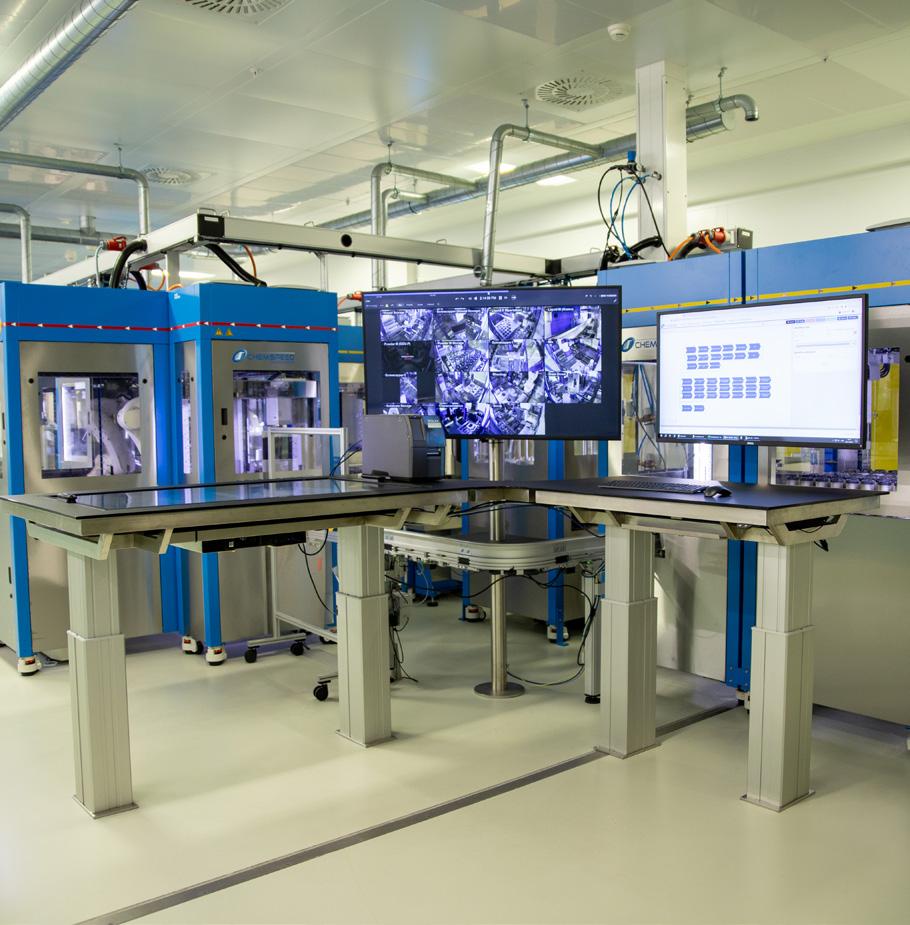
The flagship service for paints and coatings arrived at Omya many years ago, when the company decided to drive important investments to support its customers during the formulation process: meet Flexshuttle, the first fully automated formulation laboratory in the mineral industry, based on HTE (High Throughput Experimentation) and supported by AI.
Flexshuttle is used to increase speed to market and to be compliant with regularly and quickly changing regulations which affect paint producers.
With up to 50 samples per day, 17 modules and 5 performance tests, Flexshuttle offers paint producers faster evaluation, creative solutions and efficient processes.
“WITH OUR DIVERSE PRODUCT RANGE, STRONG BRAND PRESENCE, AND COMMITMENT TO EXCELLENCE, THE COMPANY IS TRULY POISED TO TAKE ON THE CHALLENGES THE FUTURE WILL SURELY BRING”
– WEE SIEW KIM, DIRECTOR, REPRESENTATIVE EXECUTIVE OFFICER, AND CO-PRESIDENT, NIPPON PAINT HOLDINGS CO., LTD AND GROUP CEO, NIPSEA GROUP
As of December 2024, Nippon Paint Group employs over 46,000 people worldwide. Its dedicated and talented team is what drives the company forwards as it continues to innovate and expand, delivering world-class coating solutions to customers across the globe.
“With our diverse product range, strong brand presence, and commitment to excellence, the company is truly poised to take on the challenges the future will surely bring.”
Furthermore, Nippon Paint is now one of the most recognised names in the industry, consistently ranked amongst the ‘Top 10 Most Valuable Paint Brands in the World’ by Brand Finance for four years running. This recognition speaks to a
commitment to quality and innovation and the trust customers have in Nippon Paint.
COLOURING LIVES
Since its inception, Nippon Paint has been dedicated to creating innovative solutions that bring colours and joy to people’s everyday lives.
“As part of our commitment to sustainable development, the company strives to support and promote the well-being of communities through our business activities,” Wee explains.
To achieve this, the company has established three priority areas of focus encompassing education, empowerment, and engagement.
The education pillar focuses on providing access to learning for
children and youths through an art and colour educational programme, whilst the empowerment pillar supports activities and vocational training for socially vulnerable people.
Additionally, Nippon Paint works with non-governmental organisations (NGOs) and local communities under the engagement pillar to provide disaster support and improve cultural preservation.
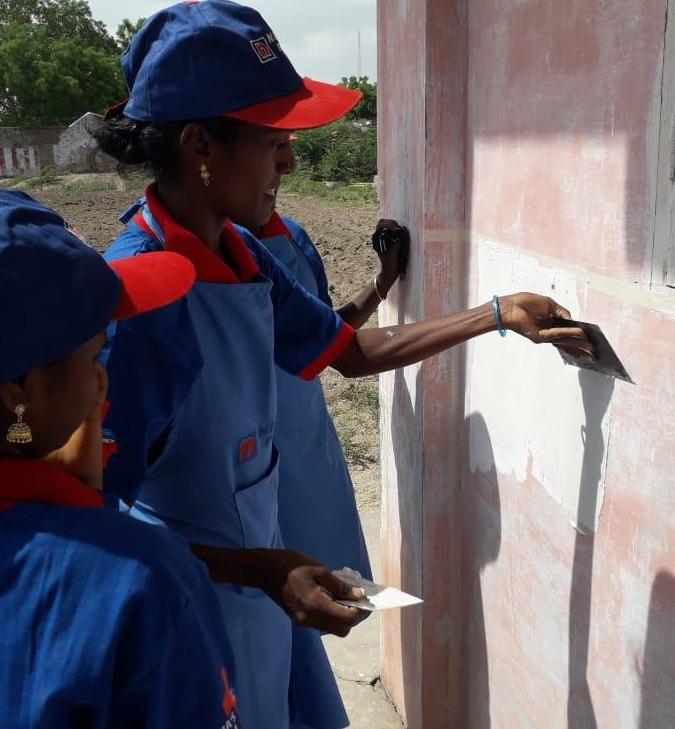
A particular point of pride for the company is the N’Shakti initiative in Tamil Nadu and Karnataka, India, which has trained over 1,100 unskilled rural women in professional painting skills, giving them not only a livelihood but also the opportunity to become small paint dealership owners in the future.
“By connecting these trained painters with potential clients and supporting them through a membership app and digital marketing, we provide them with a sustainable pathway to long-term empowerment,” Wee adds.
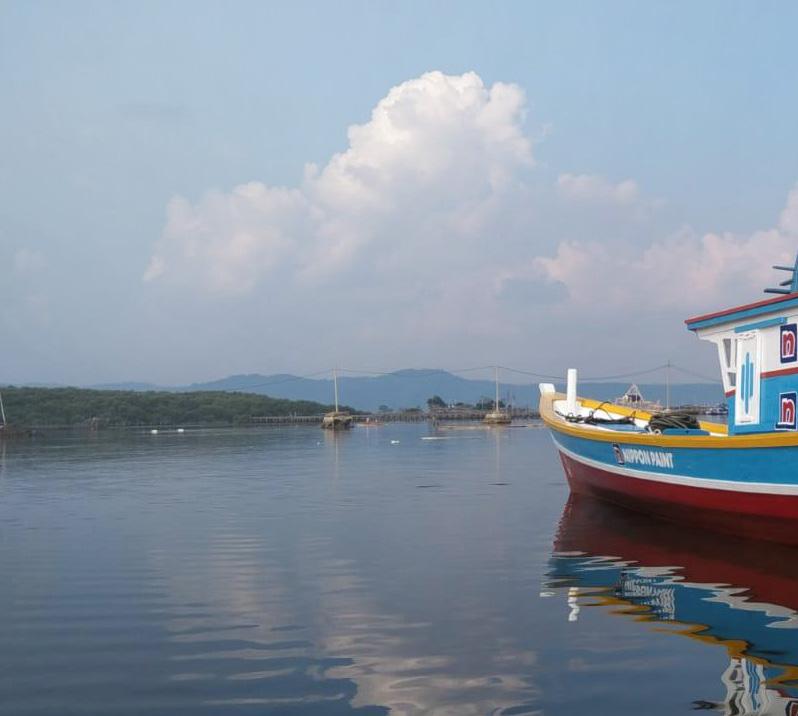
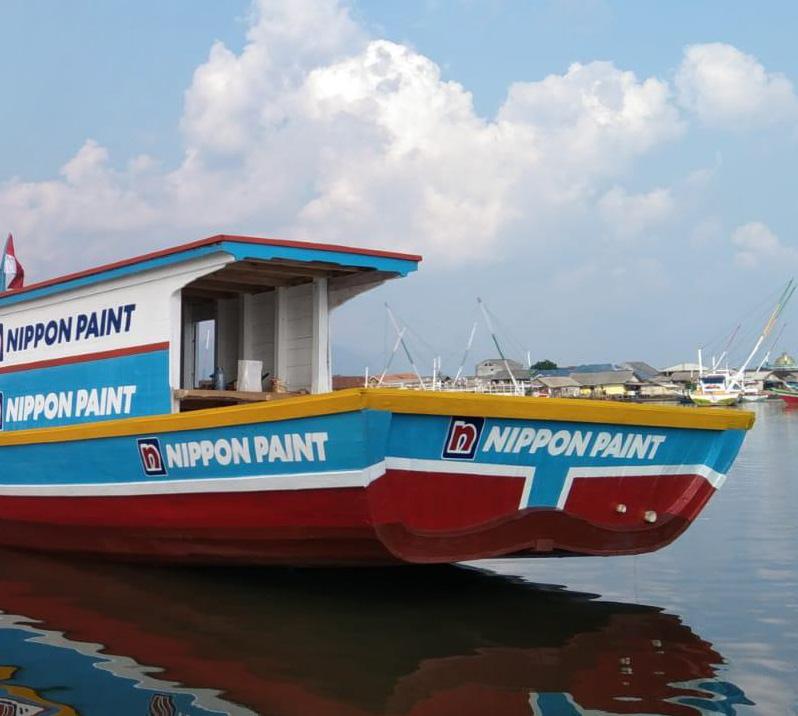
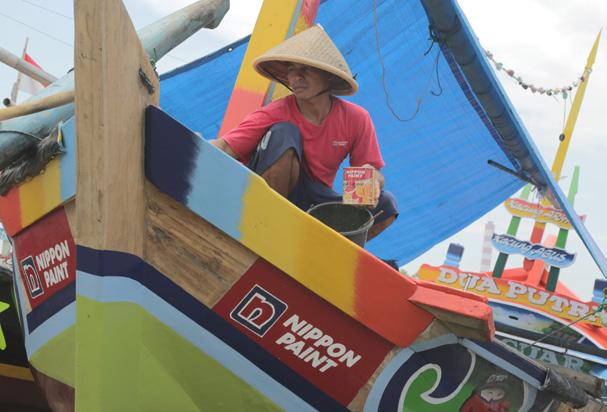
“Meanwhile, our support for fishing communities in Kuala Penat, East Lampung in Indonesia has seen us donate paints to coat and protect
INDUSTRY-LEADING POLYMERS ENGINEERED FOR SPECIALISED INTUMESCENT COATINGS
In critical environments, every second counts. Synthomer ’s passive fire protection polymers for intumescent coatings offer up to 120 minutes of certified fire resistance, providing essential time for safe evacuation and emergency response
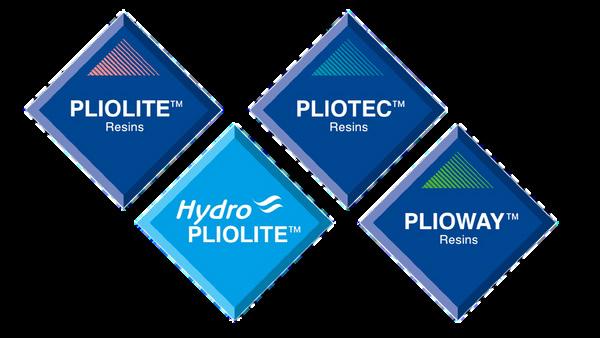
Our trusted PLIOLITE™, PLIOWAY™, and EMULTEX™ FR binders enable specialised thin-film intumescent coatings that activate precisely when exposed to fire— without compromising durability or appearance.
Whether the formulation is water-based or solventbased, our solutions are:
Trusted worldwide for decades of consistent performance
Engineered for structural steel protection
Tailored to meet specific formulation and performance needs
Synthomer ’s fire protection technologies help safeguard lives with reliability, efficiency, and global reach—delivering the confidence and precision to protect what matters most
ADVANCED POLYMER TECHNOLOGY FOR HIGH-PERFORMANCE EXTERIOR COATINGS
For over 60 years, Synthomer has developed speciality resins that deliver durability, adhesion, and long-term performance.
Our technologies are trusted by formulators worldwide for demanding applications—from extreme weather resistance to stain-blocking and substrate versatility.
Our innovative resin portfolio includes:
PLIOLITE™ and PLIOWAY™: Proven solvent-based resins that deliver all-weather masonry protection and superior stain-blocking performance
Hydro PLIOLITE™ and PLIOTEC™: Advanced waterbased technologies that combine low-VOC coatings with outstanding weather resistance and durability. omised solutions: Tailored resins co-developed o meet specific project
ating or building new, our resins tion and deliver reliable results.
their fishing boats – supporting their livelihoods, benefitting their families and community, and transforming them into vibrant expressions of local identity and pride.”
Nippon Paint’s commitment to ‘Colouring Lives’ has already made a meaningful difference in the shape of 84 varying corporate social responsibility (CSR) initiatives, impacting the lives of more than 28 million people worldwide.
“Together, these efforts reflect not just our responsibility as a company, but our belief in using the power of colour and innovation to create lasting, positive impact,” Wee elaborates.
INNOVATION AT THE CORE
Nippon Paint is committed to delivering high-quality coatings solutions across a wide range of industries, from automotive and construction to industrial and decorative applications.
“Our extensive product portfolio includes interior and exterior paints, functional coatings, and speciality products designed to meet the diverse needs of our clients. We take pride in our ability to provide durable, innovative solutions that enhance both the aesthetics and functionality of the environments in which they are applied,” Wee explains.
As such, innovation is at the core of the company’s approach to creating value for customers.
“Our innovation strategy is built around three pillars – building an adaptive organisation, developing core enabling technology competency, and expanding into adjacencies and emerging markets.
“These pillars drive our efforts to introduce cutting-edge solutions to the coatings industry, enabling us to be part of the frontier of coating advancements,” he passions.
PRIDE OF THE WORLD EXPO
One of the most recent highlights for
HOW DID YOU ARRIVE AT YOUR CURRENT POSITION AND WHAT WAS YOUR INITIAL INTRODUCTION TO THE INDUSTRY?
– Wee Siew Kim, Director, Representative Executive Officer, and co-President, Nippon Paint Holdings Co., Ltd and Group CEO, NIPSEA Group (WSK): “My career has been a series of evolving opportunities that have shaped my path, unfolding without a scripted plan.
“Imbued from a young age with the belief in the value of learning and personal growth, I sought out educational opportunities that would challenge me.
“In 1984, I began my professional journey as an engineer at Singapore Aircraft Industries – now Singapore Technologies Aerospace (ST Aerospace).
“It was in this industry where I first developed my awareness of the importance of collaboration amongst people and countries, as well as the virtue of patience and long-term thinking.
“Over the years, I moved up to various leadership roles, and later even served as a Member of Parliament in Singapore from 2001 to 2011, which opened my eyes to the true goodness of people – so many volunteers doing their bit for the betterment of the community in little or big ways.
“As for the coatings industry, my journey into this field began when my shareholder employer, Mr Goh Hup Jin, approached me and sold me on his vision. I mentioned the virtue of patience, long-term thinking, and tenacity – he took this to another level, which is why I was inspired to come on board.
“It’s been an incredibly fulfilling journey, allowing me to apply my background in engineering, business, and leadership to a totally different industry. The journey continues as the vision crystallises and evolves.”
WHAT ARE YOU MOST PROUD OF REGARDING THE BUSINESS?
WSK: “NIPSEA Group was already a vibrant organisation some 20 years ago. It was already gaining leadership in several key markets and was actually pivotal in the development of emerging areas like China and Indonesia.
“But if you compare today’s NIPSEA Group with the one that entered this millennium, the composition of its businesses is very different. However, one thing stood the test of time – the culture and spirit of our people.
“NIPSEA Group’s people and their core behavioural traits retained the same dynamism even as the group has grown in size, scope, and spread. Maintaining this organisational ethos through leadership generational transitions is no simple feat. In fact, this is the essence of our continuing success – a shared history and belief system that gives all of us confidence that we will prevail in the face of vicissitudes as we forge forward.
“As a diverse group, we celebrate our people’s achievements every day. However, all this is only possible if we maintain the culture that drives us and sets us apart from other organisations. Keeping the essence of what makes us successful is the continuing singular achievement and one I’m very proud of.”
the company is its partnership with the Singapore Tourism Board for Expo 2025 in Osaka, Japan.
“We are honoured to have contributed our coatings for both the interior and exterior of the Singapore Pavilion, helping to bring the nation’s vision to life at this global event.
“Developing, supplying, and applying five shades of red, we brought to life the rich hue of the Little Red Dot pavilion of Singapore. In addition, we supplied our specialised Target Line Paint for the electric autonomous bus transportation service at Expo 2025, further showcasing our expertise in cuttingedge technologies,” Wee expands.
Target Line Paint, a prime example of its product innovation, is designed to be detected by lidar sensors installed in autonomous vehicles. When applied to roadways, it enables the sensors to follow painted lines, ensuring accurate and stable autonomous navigation.
This technology was applied to three autonomous bus routes at the Osaka Expo 2025, helping transport visitors safely throughout the event.
Showcasing at Expo 2025 underscores Nippon Paint’s commitment to providing sustainable, innovative solutions that make a tangible impact on high-profile projects, reinforcing the brand’s leadership in the coatings industry.
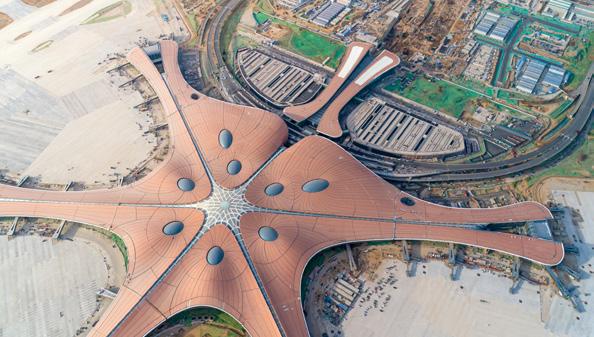
BEIJING DAXING INTERNATIONAL AIRPORT
Another one of the company’s most significant collaborations was with Beijing Daxing International Airport in 2019, an iconic and expansive facility known for its striking starfish-like design, created by the renowned Zaha Hadid Architects.
“We are proud to have contributed our specialised coatings to the hangar and maintenance docking areas of this groundbreaking airport.
“Our solutions offer exceptional protection and durability to both airport staff and consumers, ensuring that the airport’s complex infrastructure not only stands up to the heavy demands of aircraft maintenance and repair operations, but also provides enhanced fire safety during emergencies,” details Wee.
This collaboration highlights Nippon Paint’s expertise in providing robust, high-quality coatings for largescale, high-traffic environments and reinforces the brand’s commitment to supporting global infrastructure
projects with cutting-edge technology and sustainable solutions.
Nippon Paint has a whole litany of innovations in the architectural, industrial, automotive, and marine segments.
“Throughout the years, our presence at World Expos and our work with Beijing Daxing International Airport stand out as iconic achievements that will stand the test of time,” he adds.
PROMOTING A CULTURE OF GROWTH
The sustainable growth experienced by Nippon Paint is rooted in its customer-centric approach and the unwavering commitment of its people, who are dedicated to achieving excellence across every facet of the business.
A major driver behind this mindset is its ‘lean for growth’ culture, which fosters collaboration and sharing best practices, knowledge, and experiences across all teams.
This focus on leanness creates an environment that allows the company to remain adaptable and able to continuously evolve with market demands.
Regarding its people as its most valuable asset, Nippon Paint is also committed to creating an environment where every employee can unleash their potential and receive appropriate recognition for their contributions.
Singapore Pavilion at Expo 2025 in Osaka, Japan
N’Shakti painting training for women
Beijing Daxing International Airport
“We strive to continually remind ourselves of our early entrepreneurial days – the traits that set us apart – and to balance their preservation even as we grow, adjusting to the increasing diversity of cultures in our mix,” Wee pronounces.
As a business with global operations, the management team in each region demonstrates leadership under an autonomous and decentralised approach, respecting the diverse values and strengths of its employees.
“To further support employee growth and encourage willingness to take on new challenges, we promote a range of talent development and career support initiatives, including strengthened global talent management programmes and the development of female leaders,” he continues.
ENVIRONMENTAL STEWARDS
Nippon Paint aims to achieve net zero for Scope 1 and 2 greenhouse gas emissions by 2060.
For Scope 3, Nippon Paint calculates emissions for the majority of group companies, further strengthening its response to climate change. In addition, NIPSEA Group aims to reduce energy consumption by eight percent in 2025 compared to 2021 levels.
For example, in China, NIPSEA Group is actively promoting the transition to renewable energy sources. By the end of 2023, solar photovoltaic (PV) panels had been installed at 19 factories, generating a total of 12.73 million kilowatt hours annually.
Through these efforts, NIPSEA Group aims to gradually incorporate alternative sources of energy into its facilities. The installation of solar PV panels is also being expanded to additional factories in China from 2024 onwards.
In addition, NIPSEA Group has
“TODAY, THE COATINGS INDUSTRY IN ASIA IS VIBRANT, FULL OF POTENTIAL, AND RAPIDLY EVOLVING, WHICH MAKES IT AN EXCITING TIME TO BE WORKING IN THIS SPACE”
–
WEE SIEW
KIM,
DIRECTOR, REPRESENTATIVE EXECUTIVE OFFICER, AND CO-PRESIDENT, NIPPON PAINT HOLDINGS CO., LTD AND GROUP CEO, NIPSEA GROUP
installed solar PV panels in Singapore and undertaken initiatives such as replacing incandescent lamps with high-efficiency LED lighting in Vietnam.
In Japan, Nippon Paint is working to reduce its Scope 3 emissions by purchasing renewable electricity through an off-site solar power purchase agreement (PPA).
Meanwhile, as part of its water resource management efforts, the company’s Shanghai factory in China successfully minimised wastewater discharge and met quality assurance requirements for water production conductivity through a water purification system modification project.
“As a result, the factory achieved a 90 percent reduction in wastewater discharge, with 80 percent of treated water now finding its way back into production processes and 10 percent allocated for fire-fighting reserves,” Wee informs us.
A LEGACY TO BE CELEBRATED
As Nippon Paint celebrates 140 years of global success, 2025 holds even greater significance as it marks the 60th anniversary of its key partner, NIPSEA Group, establishing its first
manufacturing plant in Singapore – an event that fittingly coincides with the nation’s 60th year of independence.
“It’s a milestone that fills us with immense pride, as it symbolises not only our growth but also our deep connection to Singapore’s transformation over the decades,” Wee confirms.
This shared history of growth, innovation, and legacy is a reflection of how far the company has come, initially playing its part in Singapore’s new landscape before subsequently springboarding from the tiny island country to the rest of Asia and beyond.
“We take great pride in having contributed to Singapore’s iconic landmarks, safeguarding buildings against the elements, and helping turn houses into homes with our highquality coatings.”
Now, as Wee reflects on the entire journey, he is reminded of the lasting impact NIPSEA Group has had and will continue to enjoy.
“This legacy is something we carry with us as we move forwards, celebrating both our achievements and the bright future ahead,” he finishes joyfully.
pressoffice@nipsea.com.sg nipsea.group
Brightening Indonesia’s fishing boats
DRIVING MANUFACTURING FORWARD
Camco Engineering is celebrating three solutions. Glenn Bailey, CEO, reflects on the recent investments in new facilities,
Writer: Jack Salter | Project
DRIVING LOCAL MANUFACTURING FORWARD
three decades of time-critical engineering the company’s 30th anniversary and outlines facilities, equipment, and product lines
Manager: Cameron Lawrence
As Australia’s engineering industry continues to thrive, Glenn Bailey, CEO of Camco Engineering (Camco), is optimistic about the future of local manufacturing and the aftermarket sector.
“Governments of all persuasions are backing the industry, building capability, and developing talent to support advanced manufacturing projects,” Bailey explains.
“The speed at which we’re scaling capability and competing with alternate supply chains is tremendous. The energy transition and defence sectors now provide businesses like ours with genuine diversification opportunities – this is exciting for us
and the industry as a whole.”
Bailey joined Camco in September 2024. The company delivers innovative, time-critical engineering solutions to some of Australia’s largest mining, energy, and power generation businesses.
Based in Western Australia (WA), with major facilities in Canning Vale, Belmont, Welshpool, and Karratha, Camco is an industry leader in mechanical engineering, boasting some of the best machining and fitting capability in the country.
“Camco is all about delivering complex, time-critical engineering solutions. What it takes to keep our mine sites operating is staggering –agility is key,” Bailey says.
“A client told me in my first week here – “If you deliver, we deliver”. This really resonated with me; everything we do is focused on what this statement embodies.”
CELEBRATING 30 YEARS OF EXCELLENCE
Camco marked its 30th anniversary this year, a milestone reflecting decades of hard work and innovation since its founding in June 1995 by Bruce Cameron, Frank Fusco, and Vic Fusco.
“Bruce, Frank, and Vic worked tirelessly to build Camco, but I don’t think even they imagined it would grow to become WA’s leading mechanical engineering business,” Bailey reflects.
HOW DID YOU END UP IN YOUR CURRENT POSITION AT CAMCO?
Glenn Bailey, CEO: “My career began in finance, but my pathway since has been anything but conventional.
“After qualifying as a chartered accountant, I worked across several industries in analyst, commercial, and finance roles.
“WA’s economic landscape is shaped by several key lodestones that consistently attract capital and talent – the resources sector being one of them. So, I eventually joined Worley, where I spent the next decade working in seven different roles, which offered me a tremendous breadth of experience.
“My last three years with Worley were spent in China working as CFO for operations across China and India. I
loved it there – the people, the food, the history, and the sheer energy of the place. I still remember stepping off the plane in Beijing for the first time; the energy was palpable.”
“Eventually, Worley wanted to bring us back to Australia, but with two sons in high school, we weren’t quite ready to leave. I began looking for another opportunity and was fortunate enough to join Monadelphous – another great
Australian company – as General Manager in China, overseeing their offshore fabrication business across China, the US, and later, Vietnam.
“We returned to Australia just after the COVID-19 pandemic, and I was approached by Camco a short time later.
“I could tell immediately Camco was a hidden gem – market-leading machining and fitting capability, Tier 1 customers, facilities across WA, a consistent record of growth and diversification, and most importantly, a supportive ownership group.
“Joining Camco required major shifts in perspective on my part – from major capital projects to the aftermarket sector, and from advocating for offshore manufacturing to championing local content and jobs.
“Having worked in both Australia and overseas, it’s clear to me we need both local and offshore capability. Each can play a complementary role in supporting Australian industry as it moves forward.”
“CAMCO IS ALL ABOUT DELIVERING COMPLEX, TIME-CRITICAL ENGINEERING SOLUTIONS. WHAT IT TAKES TO KEEP OUR MINE SITES OPERATING IS STAGGERING – AGILITY IS KEY”
– GLENN BAILEY, CEO, CAMCO ENGINEERING
Frank once shared that the attributes he valued most were loyalty, hard work, and performance –qualities that defined Camco’s culture from day one and remain central today.
From humble beginnings in a small Canning Vale workshop, Camco has evolved into a major player supporting the mining, oil and gas, energy, and rail sectors and now employs over 550 people across 10 sites.
The Camco story is one of steady progress, technical expertise, and commitment to service,
and demonstrates what can be achieved through long-term vision, strong leadership, and a dedicated workforce.
“The organisation we have grown into is a direct result of the incredible efforts of many, many people over the years. We have committed and engaged employees and a tenured management team; you can tell our people care about what they do and about the company,” Bailey recognises.
“Are we listening to our customers? Are we ready to react when they need
us? Are we working with them to improve equipment performance?” he asks.
“Our competitors do similar things, but we are absolutely determined to do them better.”
THE WAY WE WORK
As the business grew, a culture of care and accountability was encouraged and then codified in ‘The Way We Work’.
Safety is the foundation of this philosophy and instilled into all leaders and workers at Camco.
DEFENCE INDUSTRY QUALIFICATION
Camco recently hosted General Dynamics Electric Boat, Newport News Shipbuilding, and H&B Defence at its Canning Vale facilities.
These companies evaluated Camco for participation in the Defence Industry Vendor Qualification (DIVQ) and Australian Submarine Supplier Qualification (AUSSQ) programmes, which are working to accelerate the qualification of Australian suppliers into the US and UK submarine and shipbuilding industrial base.
Camco is part of the first cohort of Australian businesses benchmarked through these programmes.
“These programmes have matured into a proven model for preparing companies like Camco to compete in the world’s most demanding defence supply chains,” Bailey notes.
‘The Way We Work’ aims to change people’s mindset from seeing health, safety, environment, and quality as additional rules to fundamental elements of every job.
It’s more than a priority – it’s a value that shapes every decision, project, and interaction.
“We care enough about each other to speak up when we see something that looks or feels unsafe,” says Bailey. “We work hard to keep each other safe every day.
“By embedding ‘The Way we Work’ into our culture and processes, we are empowering our people to confidently deliver excellence.”
INVESTING IN FACILITIES AND CAPABILITY
A major milestone last year was the opening of Camco’s state-of-the-art Karratha facility – the company’s first expansion outside Perth.
This purpose-built facility strengthens Camco’s regional presence, creating local jobs and delivering manufacturing and
maintenance services in the Pilbara. The site adds 2,500 square metres (sqm) of workshop space, increasing Camco’s total capacity to 26,000 sqm.
“The response from our customers has been phenomenal,” Bailey says. “A shared commitment to developing
MAILAM UPKING ENGINEERNG LIMITED
Wear protection systems and services
o Weld cladded wear plates
• Various Chemistries to suit applications
• Various thickness as per customer requirements
o Fabricators of wearing components as per Customers design/ drawings
o Wear resistant castings
o In situ reclamation services
o Drafting and FEA
o Steel Mill rolls refurbishments
MAILAM INDIA PRIVATE LIMITED
Manufacturers of High-quality Welding consumables:
• Steel Joining flux cored wires for all AWS specs
• Stainless steel flux cored wires
• Die rebuilding wires – Metal cored and Flux cored
• Hardfacing flux cored wires
• Steel mill reclamation flux cored wires
• All AWS codified Manual Metal arc welding stick electrodes
• Low temperature welding alloys
o Approvals from all leading approving agencies internationally
o Proven track record for almost 35 years
WORKS:
the communities we operate in strengthens the entire sector.
“We now have 40 people in our Pilbara Division and continue to add machining, fitting, and welding capability to meet customer needs and support regional content and decarbonisation goals.”
Camco is also breaking ground on a new industrial development in Canning Vale – a 4,000 sqm workshop equipped with 150, 50, and 20-tonne overhead cranes in the main bay.
“This facility represents a step up from the typical 90-tonne dual-lift capacity at other sites and will unlock significant opportunities in the mining sector,” Bailey notes.
Recent investments include commissioning the largest dynamic balancing machine in the Southern Hemisphere, one of Australia’s largest floor borers, and advanced multifunction milling centres.
“OUR COMPETITORS DO SIMILAR THINGS, BUT WE ARE ABSOLUTELY DETERMINED TO DO THEM BETTER”
– GLENN BAILEY, CEO, CAMCO ENGINEERING
INNOVATION AND NEW PRODUCT LINES
Camco continues to diversify, introducing nearly a dozen new product lines in recent years, including chutes, loader and reclaimer buckets, magnetic separators, salt harvesters, belt splice stations, air classifiers, and cryogenic equipment.
“We innovate with our customers, solving problems together,” Bailey explains.
“We’re always looking for the next challenge – but we know what we’re good at.”
For 2026, Camco plans to expand its R&D capability and increase
capacity to support continued growth and diversification strategy.
“In addition to wind and defence, we aim to grow beyond iron ore into copper, lithium, gold, and critical minerals,” Bailey concludes.
Tel: +61 (8) 9455 2200
general@camcoeng.com.au www.camcoeng.com.au
PROVIDING THE HIGHEST LEVEL OF RECRUITMENT AND LABOUR HIRE SERVICES
Providing exceptional personnel management on site, Fastrak, based in Western Australia, has 30 years of experience servicing the engineering, construction and mine maintenance industry with exceptional employees. Our services also include fabrication, engineering, construction and offshore work.
Lumut Naval Shipyard (LUNAS) is united by a shared purpose and mission to serve, protect, and advance Malaysia’s maritime defence capabilities. We learn about the company’s deep-rooted commitment to national security with CEO, Ir. Azhar Jumaat
Writer: Jack Salter | Project Manager: Josh Whiteside
Based in Lumut, a coastal town in the state of Perak on the west coast of the Malay Peninsula, LUNAS has established itself as a leader in the shipbuilding and ship repair (SBSR) industry.
With a current workforce of over 1,000 skilled employees and more than four decades of SBSR expertise, LUNAS is Malaysia’s largest naval shipyard and recognised as a national asset in the industry.
Over the course of its 40-year history, the company has stood side by side with its primary client, the Royal Malaysian Navy (RMN), through evolving challenges.
“What sets LUNAS apart is our deep-rooted commitment to national security. We don’t just deliver vessels – we deliver confidence to the RMN and assurance to the people of Malaysia,” affirms Ir. Azhar Jumaat, CEO.
“Our long-standing partnership with the RMN, role as a custodian of sovereign defence capabilities, and investment in local talent are what truly differentiate us.”
By ensuring the RMN has capable and reliable assets, LUNAS contributes to Malaysia’s maritime sovereignty, which plays a constructive role in a security context for the Association of Southeast Asian Nations (ASEAN).
LUNAS’S VISION, MISSION, AND CORE VALUES
VISION:
To build ships that propel Malaysia forwards and build the talent that carries its legacy.
MISSION:
To strengthen Malaysia’s maritime future by delivering worldclass SBSR services; powered by technology, sustained by innovation, and driven by the continuous growth of its people.
CORE PILLARS:
EXCELLENCE – Uphold the highest standards in SBSR, ensuring safety, quality, and reliability.
INNOVATION – Embrace technology and creative solutions to drive continuous progress.
PEOPLE FIRST – Invest in developing skills, talent, and leadership across all levels.
NATION-BUILDING – Commit to contributing to Malaysia’s growth, resilience, and maritime strength.
SUSTAINABILITY – Operate responsibly, safeguarding the environment and future generations.
LCS PROGRAMME
The Littoral Combat Ship (LCS) programme, in which LUNAS is building a class of five stealth frigates for the RMN, is laying the groundwork for Malaysia’s maritime future.
This complex and strategic defence project positions the country to emerge as a regional maritime hub, one where its engineers, shipbuilders, and innovators stand shoulder to shoulder with the best in the world.
Today, LUNAS is seeing the programme achieve concrete progress, with LCS 1 MAHARAJA LELA in the setting-to-work phase and on track for physical handover by the end of 2026.
LCS 2 RAJA MUDA NALA was launched in early July 2025, whilst the naming and launching of LCS 3 and 4 are expected to take place next year.
“These milestones are more than symbolic – they demonstrate that the programme is moving forwards in tandem with LUNAS’s corporate governance reforms,” acclaims Ir. Azhar.
It has been a challenging journey, but with the reforms LUNAS has put in place, governance and transparency are now the company’s highest priorities.
“Lessons from the past have shaped stronger oversight, tighter financial
Bofors 57 Mk3 Naval Gun
The Bofors 57mm Mk3 is a modern, fully-automatic naval gun system that offers a range of benefits to naval forces, including versatility, range and accuracy, rapid-fire capability, low maintenance, and integration with other naval systems. This makes the Bofors 57 Mk3 a highly effective weapon system for a range of naval operations – today and tomorrow. baesystems.com/57mk3
practices that ensure accountability at every stage,” he asserts.
Despite the challenges, the LCS programme has been a catalyst for industrial growth, technology transfer, and talent development within the country.
Indeed, it’s more than just a defence contract – it’s a long-term investment in Malaysia’s economic and security ecosystem and ‘rakyat’ (citizens).
“For the RMN, it represents a generational leap in capability. Equally, for Malaysia, it represents jobs for our people, opportunities for local small to medium-sized enterprises (SMEs), and the strengthening of an ecosystem that supports national resilience,” Ir. Azhar elaborates.
This is fully aligned with the Malaysian government’s agenda, ensuring strategic projects deliver tangible value for the rakyat, not just the armed forces.
Alongside the LCS shipbuilding programme, LUNAS’s ship repair services
are equally critical as they ensure the RMN and Malaysian Maritime Enforcement Agency maintain their operational readiness every single day.
“These projects are special because they embody both our technical expertise and duty to the nation,” he prides.
“For us, it starts with the ‘amanah’ (trust). That sense of responsibility drives us to deliver excellence in every project.”
CLASSROOM, BATTLEFIELD, AND HOME
Ir. Azhar was entrusted to lead the LCS programme after retiring from the RMN, where he proudly served from 1990 until 2016.
“For 26 years, the sea was my classroom, battlefield, and home. I retired as a captain, but truthfully, the navy never leaves your heart,” he fondly reflects.
Electrical System Integrator for Littoral Combat Ships Malaysia
SAM Electronics are proud to support LUNAS and the Royal Malaysian Navy
Contact: www.wartsila.com/sam-electronics
Email: info.sam.de@wartsila.com
SAM ELECTRONICS
“It was there I learned that a ship is not just steel, but a lifeline, carrying the hopes of people and guarding the sovereignty of our nation.”
That experience gave him a rare perspective, blending operational knowledge with the challenges of shipbuilding.
“It provided me a front-row seat in shipbuilding at the highest level,
combining technical expertise with leadership, and deepened my respect for the SBSR industry as more than just an economic driver, but as a pillar of national resilience,” Ir. Azhar informs us.
When he was later given the ‘amanah’ to become CEO of LUNAS in 2022, Ir. Azhar saw it not as a career move but as a continuation of service to the nation.
SAM Electronics is providing the electrical system integration package for the LCS programme.
As per the previous project for the Royal Malaysian Navy, SAM Electronics is responsible for the integration of all electrical systems on the platform and the supply of numerous electrical systems, such as switchboards, power distribution, lighting and degaussing systems as well as the installation of the entire cable plant.
SAM Electronics in Hamburg has specialised in electrical system integration for naval vessels for more than 40 years. During this period, SAM Electronics has successfully contributed its system integration competence to numerous projects on national and international shipyards.
We are proud to contribute to the success of LUNAS and the Royal Malaysian Navy with our competences as one of the most trusted leading electrical system integrators for newbuild and service.
“FOR 26 YEARS, THE SEA WAS MY CLASSROOM, BATTLEFIELD, AND HOME. I RETIRED AS A CAPTAIN, BUT TRUTHFULLY, THE NAVY NEVER LEAVES YOUR HEART”
“I carry the values of trust, care for people, and respect for the mission. This is about protecting our waters, developing our people, and leaving behind a sustainable legacy for future generations.”
CATALYST FOR NATION-BUILDING
In Malaysia, under the MADANI framework launched in July 2023 by Prime Minister, Anwar Ibrahim, LUNAS is recognised as a catalyst for nation-building.
MADANI is based on six fundamental pillars, namely sustainability, prosperity, innovation, respect, trust, and compassion.
Beyond defence, LUNAS contributes to nation-building by
“WHAT SETS LUNAS APART IS OUR DEEPROOTED COMMITMENT TO NATIONAL SECURITY. WE DON’T JUST DELIVER VESSELS – WE DELIVER CONFIDENCE TO THE RMN AND ASSURANCE TO THE PEOPLE OF MALAYSIA”
–
IR. AZHAR JUMAAT, CEO, LUMUT NAVAL SHIPYARD
developing local talent, uplifting SMEs in its supply chain, and nurturing industrial capabilities that strengthen Malaysia’s economy.
This is in line with the MADANI values of sustainability, prosperity, and respect, ensuring the benefits of LUNAS’ work extend beyond shipyards.
“When our shipyard thrives, it creates a domino effect, uplifting the surrounding community, empowering local SMEs, and strengthening the wider economy.
“That is what excites me most –being part of an industry that uplifts our people, empowers our SMEs, and strengthens our nation’s self-reliance,” outlines Ir. Azhar.
“We see every project as more than just delivering a ship. It’s about creating opportunities for Malaysians, generating jobs, developing skilled engineers, and providing steady work for local SMEs who form the backbone of our supply chain.”
The supply chain is an essential part of the company’s success as it collaborates with a wide range of both local and international partners and places strong emphasis on transparency, integrity, and mutual growth – which have contributed to an increase in trust.
“By strengthening our relationships with local suppliers and SMEs, we are creating a sustainable ecosystem that supports the entire SBSR industry in Malaysia,” Ir. Azhar enlightens.
TRANSFORMING BLUEPRINTS INTO VESSELS
The SBSR industry is at a very exciting crossroads, with digitalisation, automation, and green shipbuilding transforming the way vessels are designed and maintained.
LUNAS embraces innovation across all departments, and its digitalisation journey in shipbuilding is making way for sustainable solutions that meet global standards.
“We are adopting digitalisation in shipbuilding technologies and building partnerships with global players to accelerate knowledge transfer,” Ir. Azhar tells us.
“Most importantly, it’s the human element – our people’s dedication – that transforms blueprints into vessels.”
Many staff members have dedicated decades of their lives to LUNAS, carrying with them skills that form the backbone of its shipbuilding legacy.
“We take talent retention seriously, because our future depends on it. That is why we have restructured our salary scale, introduced better benefits, and created clearer promotion pathways to ensure our
people see their role not just as a job, but as a long-term career path with LUNAS,” he sets out.
This reflects the MADANI principle of prosperity, where growth is shared fairly amongst those who contribute.
Beyond career growth, LUNAS also believes in nurturing ‘keharmonian’ (harmony) in the workplace.
“Our Eid and iftar gatherings and bowling tournaments bring people together as one entity and strengthen bonds across departments,” highlights Ir. Azhar.
“We emphasise recognition to create an environment where every employee feels valued, connected, and proud to contribute to a bigger national agenda. This is how we
live the MADANI spirit through our people,” he concludes.
LUNAS wants to be a platform for nurturing the next generation of Malaysian engineers and technicians.
In doing so, the company aligns itself with the MADANI vision of a sustainable, prosperous, and resilient nation.
Tel: (+605) 690 7000
commercial@mylunas.com.my www.mylunas.com.my
A TRUSTED LEADER IN THE TRANSPORT INDUSTRY
New Zealand’s most comprehensive range of truck bodies and trailers, Fruehauf NZ is dedicated to delivering innovation and outstanding service. Jeff Mear, Managing Director and Owner, tells us more
Writer: Lauren Kania | Project Manager: Cameron Lawrence
From our beginnings in the mid-20th century to our position now as a market leader, the legacy of Fruehauf NZ (Fruehauf) has been built on innovation, reliability, and a commitment to supporting the New Zealand (NZ) transport industry.”
This steadfast and dedicated sentiment, expressed by Fruehauf’s Managing Director and Owner, Jeff Mear, is evident in the company’s central role in the country’s transport and logistics ecosystem.
HOW IMPORTANT IS TEAM CULTURE TO FRUEHAUF AND MOULDING THE BUSINESS AROUND THE PEOPLE WHO MAKE UP THE COMPANY?
Jeff Mear, Managing Director and Owner:
“Team culture is central to our success. We recognise that our business is built not only on engineering and manufacturing excellence, but on the commitment, pride, and well-being of the people who bring our projects to life every day.
“For us, culture isn’t a slogan – it’s a strategic asset. Over the past several years, we have intentionally reshaped the organisation to be people-centred, ensuring our staff feel valued, supported, and equipped to grow.
“Creating this environment has transformed how our teams interact, collaborate, and take ownership of their work. It has reduced attrition, strengthened trust across departments, and built a culture where people genuinely care about their contribution and each other.
“We design our business around the understanding that great trailers are produced by great people. When our teams feel respected, supported, and empowered, the entire company performs at a higher level. Our cultural foundation is one of the key reasons Fruehauf is the largest manufacturer in the country, and it remains at the heart of how we will continue to grow.”
It formed a landmark partnership with Fruehauf USA, gaining access to world-leading designs, patents, and axle and suspension technology. Over the decades, Domett evolved, passing through several ownership structures before being acquired by Mear in
beginning of a new era, rebuilding and reshaping the organisation into a nationally recognised leader,” he
Today, Fruehauf is the country’s largest trailer manufacturer, producing a comprehensive range of linehaul
transport equipment, including curtainsider trucks and trailers, B-trains, flat decks, tippers, and livestock units.
The company’s capacity expanded significantly in 2016 when it was selected by Schmitz Cargobull (Schmitz) – Europe’s largest trailer manufacturer – to represent the company’s refrigerated product range in NZ. Fruehauf now stands as one of the largest suppliers of refrigerated trailers nationwide.
“Our commitment to supporting the transport sector goes far beyond manufacturing. We have strategically expanded our national footprint to ensure operators receive consistent,
high-quality service and aftermarket support wherever they operate,” dictates Mear.
Additionally, the company continues to invest heavily in innovation, infrastructure, and people – expanding production capabilities, introducing new technologies through its Schmitz partnership, and preparing for the next generation of sustainable transport solutions.
“Our goal is simple – to ensure Fruehauf remains a cornerstone of NZ’s transport industry, delivering the reliability, support, and innovation that keep freight moving every day across the country,” enthuses Mear.
A NATIONALLY RECOGNISED LEADER
Mear is a second-generation trailer builder. Having been inspired by his father, who helped establish Roadmaster Ltd., he was provided with the opportunity to acquire one of the most respected and globally recognised names in the transport industry – Fruehauf.
“Prior to my involvement, the company had endured multiple ownership changes and was struggling to survive. Purchasing Fruehauf marked the beginning of my journey as a selfmade owner and set the foundation for rebuilding the brand,” he reflects.
“THROUGH YEARS OF INVESTMENT, INNOVATION, AND A RELENTLESS FOCUS ON QUALITY AND SERVICE, FRUEHAUF IS NZ’S LARGEST TRAILER MANUFACTURER AND A TRUSTED LEADER IN THE TRANSPORT INDUSTRY”
–
JEFF MEAR, MANAGING DIRECTOR AND OWNER, FRUEHAUF NZ
“Through years of investment, innovation, and a relentless focus on quality and service, Fruehauf is NZ’s largest trailer manufacturer and a trusted leader in the transport industry.”
The company operates four sites across the country, employing 160 people.
One such site is the Auckland head office, which provides aftermarket support, refrigerated trailer construction, truck assemblies, and specialist trailer builds. Additionally, its Feilding manufacturing facility is the primary production site, soon transitioning into a 7,500 square metre (sqm) facility that will enable greater efficiency, capacity, and growth.
What serves to differentiate Fruehauf is its customer partnership
philosophy. The company works directly with operators – large and small – to understand their freight tasks, challenges, and development plans.
“Our aim isn’t just to build trailers; it’s to build long-term relationships, improve productivity, and support the evolution of NZ’s transport industry,” expands Mear.
A CORNERSTONE OF NZ TRANSPORT
Over the course of the past five years, Fruehauf has achieved the monumental task of increasing its manufacturing efficiency by 58 percent.
This has been the result of a deliberate, multi-year transformation of its production systems, leadership structure, and factory workflows.
FRUEHAUF’S SUPPLY CHAIN OPERATIONS
The COVID-19 pandemic highlighted just how critical supply chain reliability is to the transport manufacturing sector. For Fruehauf, it fundamentally reshaped how the company works with suppliers and global partners, leading to a more strategic, resilient, and collaborative operating model.
Key shifts include:
• Stronger long-term supplier partnerships
• Diversification and risk management
• Greater collaboration with Schmitz
• Improved forecasting and demand planning
• Domestic supplier engagement
• Digitalisation and information-sharing
“Overall, the pandemic strengthened – not weakened – our supply chain,” asserts Mear.
“It pushed us to build more strategic partnerships, invest in longer-term planning, and adopt a more resilient supply chain structure. Today, our supplier relationships are more mature, proactive, and collaborative than ever before, enabling Fruehauf to maintain its position as NZ’s largest trailer manufacturer despite global uncertainty.”
“Rather than relying on a single initiative, we pursued a holistic strategy that addressed people, processes, technology, and site capability,” expands Mear.
Key elements of this achievement included restructuring the company’s manufacturing leadership; standardising processes and introducing repeatable build systems;
investing in technology and plant upgrades; strengthening quality control; investing in its people and building a stronger workforce culture; improving planning and interdepartmental alignment; and expanding and optimising its national footprint.
Specifically, for the restructuring of Fruehauf’s manufacturing leadership,
the company introduced a stronger operational framework by appointing a General Manager of Manufacturing, refining supervisory roles, and establishing clear accountability at every stage of the production cycle.
“This leadership clarity has driven consistency, ownership, and day-today discipline on the factory floor,” explains Mear.
In addition to these steps taken to increase efficiency, Fruehauf is engaging in one of the most significant investments in NZ’s trailer manufacturing history – constructing a state-of-the-art, 7,500 sqm manufacturing plant at its Palmerston North site, set to open in 2027.
The plant will deliver advanced fabrication and assembly lines, robotic and automated manufacturing capabilities, dedicated paint booths and blast facilities, improved material flow and production performance, and greater energy efficiency, solar integration, and environmentally conscious design.
“This facility will dramatically increase capacity, reduce build times, and support the next generation of innovation for NZ transport operators,” prides Mear.
Alongside physical expansion, the company is actively investing in its workforce. This includes healthy living
Systems & Components for Commercial Vehicles
reliable performance for heavy-duty transport.
and financial well-being programmes, training academies and apprenticeships, leadership development and internal promotion pathways, improved safety systems and new quality control (QC) structures, and engagement initiatives that improve communication, culture, and retention.
“Our people are the backbone of Fruehauf, and investing in them is essential to both productivity and long-term industry leadership,” asserts Mear.
GREAT TRAILERS BUILT BY GREAT PEOPLE
Corporate social responsibility (CSR) is deeply embedded in Fruehauf’s culture and strategy.
“As a key player in the transport industry, we see it as our responsibility to contribute to a cleaner, more sustainable future for NZ,” details Mear.
The company’s sustainability efforts focus on reducing environmental
ACQUISITION OF ADAMS & CURRIE
Fruehauf acquired the highly respected Christchurch transport engineering company of over 50 years, Adams & Currie, in 2024 as part of its long-term strategy to strengthen national coverage and enhance aftermarket support for its customers.
This specialisation has lifted national productivity and ensured greater efficiency across the company’s network.
The manufacturing site will ultimately complement Fruehauf’s existing manufacturing and service centre sites in Feilding and Auckland, allowing the company to build resilience in its products alongside stronger service offerings.
impact, improving energy efficiency, and supporting the country’s decarbonisation goals. Key initiatives include designing more fuel-efficient trailers, developing power-generating
axles and electrification, partnering with Schmitz for sustainable refrigeration, manufacturing upgrades for energy efficiency, adopting responsible manufacturing
practices, and engaging in community leadership and charity impact.
“Beyond environmental responsibility, we also contribute socially through major charitable
“OUR AIM ISN’T JUST TO BUILD TRAILERS; IT’S TO BUILD LONG-TERM RELATIONSHIPS, IMPROVE PRODUCTIVITY, AND SUPPORT THE EVOLUTION OF NZ’S TRANSPORT INDUSTRY”
– JEFF MEAR, MANAGING DIRECTOR AND OWNER, FRUEHAUF NZ
programmes led via the Freemasons Charity, supporting families, youth, medical research, and national community initiatives,” further describes Mear.
As the company looks ahead, 2026 is pivotal, with several strategic priorities in motion.
The first is the completion and transition to the new Palmerston North manufacturing facility, which will significantly expand production capability, support new technologies, and improve workflow efficiency. A primary focus will be on ensuring a smooth transition and optimising the
new plant from day one.
The next step will comprise strengthening national aftermarket support with the aim of further integrating and enhancing nationwide servicing capability, reducing customer downtimes, and improving lifecycle support. Furthermore, Fruehauf will focus on advancing its sustainability and innovation programmes alongside its workforce development.
Finally, the company is highlighting its push towards continued revenue growth and diversification.
“Our focus remains on lifting
production, growing refrigerated trailer market share, and exploring complementary product lines and services that strengthen our position as NZ’s leading trailer manufacturer,” proudly concludes Mear.
Tel: 027 442 8042
jeff.mear@fruehauf.co.nz
fruehauf.co.nz
FROM PIG PEN TO POWERHOUSE
Working tirelessly to take a mess and leave a difference, New Pig has established itself as the world’s best for leaks, drips, and spills. We learn more about the company’s incredible journey to becoming the ultimate partners in grime with Chairman and CEO, Clark Stapelfeld
Writer: Ed Budds | Project Manager: Poppi Burke
More than four decades after a fateful experiment with pantyhose and ground corn cob kicked off the start of a new industrial category, New Pig remains the name hundreds of thousands of facilities worldwide trust for a cleaner, safer, and better workplace – whilst also remembering to have a little fun in the process.
Over that same timespan, New Pig’s parent company, New Pendulum, has quietly built a diverse portfolio of 14 entities and is now increasingly visible internationally as it delivers further acquisitions.
Today, Clark Stapelfeld holds dual roles as Chairman and CEO of New Pig as well as CEO of New Pendulum.
“In 1985, my father, Ben, was running an industrial cleaning business that involved after-hours
crews cleaning manufacturing plants to prepare them for the next shift.
“Pretty quickly, he realized the real drag on efficiency wasn’t general cleaning and preparation; it was in cleaning up fluids – oils, coolants, and everything else that found their way onto floors,” he introduces.
At that time, the standard of the day for dealing with spills was to employ
loose clay granules that were heavy, dusty, and inefficient to use or clean up.
Beginning with the goal of making the company’s own clean-up operations more efficient, the tinkering began as they cut up pantyhose and tried every filler they could think of – from sawdust to rice hulls – ultimately landing on ground corn cob.
“It was a very well-suited material in a variety of ways, namely because it was light, highly absorbent, and readily available from the surrounding farms of Central Pennsylvania.
“That’s effectively when the first iteration of our PIG Original Absorbent Sock was born, and it would go on to change how facilities handled leaks and spills forever,” Stapelfeld sets out.
New Pig building
DID THE INFLUENCE OF NEW PIG’S UNIQUE PATH TO MARKET AFFECT NEW PENDULUM AS WELL?
Clark Stapelfeld, Chairman and CEO: “It did, and still does, in many ways. Beyond the financial impact New Pendulum derived from New Pig’s growth, it created two unique factors for us.
“Firstly, many of the leadership teams with whom New Pendulum engages already know the New Pig brand and our reputation based on those decades of being present in the industrial market. It helps to jump-start those discussions when a leadership team is already familiar with your body of work.
“Secondly, many organizations with which we engage have struggled with marketing and sales at scale in the past, and New Pendulum having this level of sales and marketing competency in-house is uniquely attractive.
“New Pendulum offers the same level of talent and thinking that made New Pig successful, which is almost always of interest in discussions. We don’t put our family of brands under the control of outside agencies or third parties.”
It wasn’t an overnight success, however, as initial market adoption of this new way of handling spills, like many start-ups in new categories, was difficult, inconsistent, and had quite a few false starts.
THE PATH TO MARKET
The largest obstacle to New Pig’s successful market entry at the time was that distributors, the most conventional path to selling industrial products, were proving to be very difficult to penetrate.
“Simply put, industrial distributors at the time weren’t interested in putting in the effort to educate the market to sell what was a new product category. They also made it especially evident that they weren’t willing to do so for an unknown start-up,” Stapelfeld recalls.
After a number of rejections from industrial distributors, the decision was made by the company to sell its products directly to manufacturing plants, namely through what would be referred to as a ‘mail order catalog’ at the time.
“Cataloging was an approach that may have been proven through the retail channel by companies like L.L.Bean, but it was not an approach that was applied to the industrial business-to-business (B2B) domain.
“We would then begin publishing what would be referred to as the ‘Pigalog’ which, despite being a lift in terms of creation, would allow us to directly control our approach to educating the market,” he adds.
Furthermore, the decision to diverge from the norm and speak directly to customers was a foundational decision for both New Pig and New Pendulum.
Fast forward to today and management of the latter includes many of the same people who play leadership roles at New Pig – and that is by careful design.
“We have proven
our approach and built unique competencies in the success of New Pig over more than four decades, so our belief is if we seek to create similar levels of performance in other companies, those leaders and competencies are a natural fit,” Stapelfeld notes.
This structure represents a prominent strength for New Pendulum as it has built significant in-house resources to help ensure the success of any new acquisition.
The company doesn’t have to rely on outside consultants thanks to a system and standards built from direct experience and an established history of success.
BUILDING THE BRAND
Looking back at the company’s history and where New Pig is today purely from a business case perspective, it’s clear to see that its initial approach created a cascade of unique conditions.
“It took one central facet of difference – our path to market – and that facet influenced everything we do. In the lives of many organizations, there are a relative handful of decisions and outcomes that have outsized impacts downstream, and this was one for us,” Stapelfeld affirms.
“WE RALLY AROUND OUR MANTRA OF ‘CLEANER, SAFER, BETTER’ AS WE REALIZE WE HAVE SIGNIFICANT ROOM TO OPERATE BEYOND JUST OUR CORE DOMAINS”
– CLARK STAPELFELD, CHAIRMAN AND CEO, NEW PIG
For example, its early reliance on the Pigalog to represent the brand meant New Pig needed to be able to create and house all the various assets in order to create a product catalog every month.
“Therefore, we effectively have an internal ad agency at New Pig, from copywriting and photography to
design and project management.”
When an organization has that frequency and volume of product messaging pushing into the market, it necessitates the ability to capture customer feedback and questions to be able to modify those messages, which led to the company having a robust feedback reaction function and processes.
“Capturing and routing those verbatim questions from customers then led to a significant amount of product development ideas, around which we built new product offerings and market segments,” he explains.
Arguably, the most important by-product of New Pig controlling its messaging in the market was that it allowed the company to create its own voice and identity, as well as building its brand directly in the minds of customers.
“Every time we released a new product or service, we were able to describe the development story, applications, and differentiators fully, as well as using what would become our trademark humor.”
A UNIQUE PORTFOLIO
Ultimately, what would become especially unique in the industrial space is that New Pig built a brand and portfolio of products without having its story dampened through multiple steps of distribution or dependence on the translation of a message through third parties.
“It’s the classic ‘telephone game’ dynamic – only so much of the intended message will find its way through the chain of translation,” Stapelfeld acclaims.
“Somewhat ironically, it was our ability to build a strong brand and proven product portfolio ourselves that later made us attractive to the industrial distributors that were initially uninterested.”
As such, the New Pig identity went from an unknown start-up to a brand that customers were actively asking their distributor sales reps for – a demand from customers that would prove essential.
Over the coming years, New Pig would grow into the number one industrial absorbents brand worldwide, helping facilities respond to every type of leak, drip, and spill imaginable.
MASONWAYS is a diversified manufacturer of rotational molded plastics. Founded in 1983, it has produced a wide range of products including patented solutions for C-stores, fuel chains, supermarkets, mass merchandisers and foodservice.
“We currently sell nearly 10,000 products and have expanded our mission around the goal of ‘Cleaner, Safer, Better’,” he prides.
FRESH OPPORTUNITIES
As demand increased for core New Pig products, this upswing also began to drive interesting opportunities organically to extend the company’s product lines and capabilities.
Sometimes, this would involve partners and vertical integration opportunities, whereas on other occasions, early-phase or start-up opportunities would come into play, whether in New Pig’s core spaces or adjacencies.
“Interestingly, over time, external leadership teams saw how we conducted ourselves and our business, and that began to be a significant source of discussions.
“In essence, owners would see parallels or similarities between New Pig and what they would want for their own company, and that would be the basis of their reaching out to New Pendulum,” Stapelfeld expands.
In the past, New Pendulum was very much a silent entity providing financing and high-level strategic guidance for companies.
However, in the past two years, New Pig has been shifting toward New Pendulum being more visible and
aggressive in positioning itself to grow the broader family of companies.
“It’s been an organic process in many ways – like-minded individuals building like-minded organizations and cultures. It’s an exciting time for us, and it’s exciting to see the reception we get when talking to potential acquisitions,” he muses.
As such, understanding other businesses and their needs is always interesting for New Pig.
DIVERSE GROWTH
New Pig prides itself on being a family-managed corporation that acquires and builds for the long term.
WE KNOW THAT MANY ORGANIZATIONS ARE CHALLENGED BY CONTINUITY. WHAT WAS YOUR PATH TO DECIDING TO STAY IN THE FAMILY BUSINESS?
Clark Stapelfeld, Chairman and CEO: “I was originally planning on attending law school. However, in the fall of my junior year of college, New Pig experienced one of the most pivotal moments in its history when a fire wiped out a vital customer service and distribution center at our Tipton headquarters.
“Fortunately, it was late in the evening and the small crew on shift managed to detect the problem and evacuate the building with no injuries. I remember seeing the story on the news while I was away at college.
“I called my father and he said, “You’re studying business. Want to get your real-world MBA? Come home and watch this.” Fortunately, I took his advice; it was an amazing thing to see.
“The company lost virtually all its inventory, in addition to the call center. As a mail order catalog company in a time before e-commerce really existed, it represented the loss of all the core operational functions that drove the business.
“It was amazing to watch New Pig and our people rally together. By the next day, they were taking calls in makeshift call centers; by the end of the week, they were shipping orders. I realized as I watched them navigate through this difficult situation that I would be crazy not to at least start my career there if I had an opportunity to. So, I did and I never left, and I never want to.”
“Over the decades, we’ve added and held companies that fit our criteria and benefit from shared capabilities. One of our holdings sells across 13 distinct channels; another works with more than 1,300 distribution partners,” Stapelfeld tells us.
Even with that diversity, the center of gravity for New Pig is B2B and the needs of modern manufacturing.
That said, the company employs a ‘go anywhere’ strategy and considers numerous potential organizations across a wide spectrum of sizes and categories.
“We’re realistic about organic growth in a nearly 40-year-old enterprise – it’s important, but not the whole story.
“Acquisitions let us extend strengths into adjacencies where our core capabilities, such as omnichannel sales, marketing, operations, and sourcing, can create durable value. We don’t buy to flip – we buy to invest,” he asserts.
Furthermore, New Pig’s integration approach is extremely hands-on.
“When looking to acquire, at present, we see a real path for long-term growth, and we have the resources and people to help a company get there. That’s one reason 13 of our 14 historical acquisitions remain in the portfolio today.”
SPILLTECH has manufactured high-performance polypropylene sorbents for distributors since 1971. Their Smart Spill Solutions™ for industrial maintenance and cleanup include a wide variety of products for almost any leak or spill application. PART OF THE NEW PENDULUM FAMILY OF COMPANIES
PART OF THE FAMILY
One factor that underscores how New Pendulum is different from the competition is that while the family of companies might use acquisitional language, it doesn’t ever internally refer to its portfolio as such.
“The word portfolio works against how we view and operate, and when used in the investment sense implies a certain impersonal, ‘buy low, sell high’ mentality that most would associate with private equity. That’s definitely not our style or who we are,” states Stapelfeld.
“Instead, we refer to New Pendulum as a family of companies because for us, mutual respect is the ground floor – internally, externally, everywhere.”
New Pendulum uses this term because families share values without being identical, and when a company joins, it doesn’t try to turn it into a carbon copy of New Pig.
“ACQUISITIONS LET US EXTEND STRENGTHS INTO ADJACENCIES WHERE OUR CORE CAPABILITIES, SUCH AS OMNICHANNEL SALES, MARKETING, OPERATIONS, AND SOURCING, CAN CREATE DURABLE VALUE. WE DON’T BUY TO FLIP – WE BUY TO INVEST”
– CLARK STAPELFELD, CHAIRMAN AND CEO, NEW PIG
“Some of our businesses are relationship-heavy and others are transactional. Meanwhile, some are technical and regulation-driven, and others are elegantly simple. The common thread is ultimately building the right experience for the customer,” he continues.
“We’ve learned as much from acquisitions as they have from us. That’s the point – we get better together.”
THE PIGGER THE BETTER
New Pig is the flagship brand of the New Pendulum family and now widely recognized as the worldwide leader in leak and spill management and clean-up products.
The current line-up spans thousands of products – everything from the original PIG Mat and absorbents to spill kits, stormwater and drain protection, and large-scale containment products.
Manufacture of the PIG Grippy Mat – a New Pig solution that reduce slips, trips, and falls
BARDOT PLASTICS was founded in 1973, specializing in custom injection molding. More than fifty years later, it continues to deliver on its founding mantra of “making it right the first time” by blending engineering skills, production capabilities and a deep commitment to quality.
“In the past decade, we’ve expanded successfully into commercial and retail environments with solutions that reduce slips, trips, and falls – led by the PIG Grippy Mat, our adhesive-backed floor safety mat that stays put,” Stapelfeld gushes.
“We rally around our mantra of
THE NEW PIG DIFFERENCE
‘Cleaner, Safer, Better’ as we realize we have significant room to operate beyond just our core domains.”
Additionally, New Pig operates several international units tailored to local needs in the UK, Europe, India, and China. Each of those units runs autonomously to serve customers and
WORKING TIRELESSLY TO TAKE A MESS AND LEAVE A DIFFERENCE – At New Pig, the company is on a different path – one where products, personality, and point-of-view redefine what a clean, safe, and sustainable workplace can be. No one else in the industry works as tirelessly as New Pig does to be the ultimate partners in grime.
WORKING TO STAY ONE STEP AHEAD OF TROUBLE – Wet messes make people slip and productivity slide. They make bad things happen and, when the slop never stops, neither can New Pig’s clients. Day in, day out, it’s the company’s job to help its customers do theirs.
MAKING THE WORLD’S BEST STUFF TO BATTLE THE WORLD’S WORST – New Pig has been taking problems to task since it invented the industrial absorbent industry way back in 1985. Whether workplace woes are small or overwhelming, it will keep plugging away at them until the last drip drops. By taking a cleanslate approach to dirty places, New Pig thinks thoughts others haven’t and makes products others can’t – mats that grip, socks that suck, and drum lids that can be opened with one hand.
CARING ABOUT CLIENTS AND HAVING A FUNNY WAY OF SHOWING IT – By backing up its industrial-strength solutions with incredible customer service, New Pig gets stocked orders out the door within 24 hours, answers the phone before the third ring, and offers a 100 percent money-back guarantee on all PIGbranded products.
regulations in each specific region, and their structures are mirrored appropriately to those needs.
“In 2011, we built out New Pig Energy to focus on engineered containment for shale gas operations, specifically well pad liners, berms, and other specialized systems for oil and gas drilling environments,” he elaborates.
This was a direct example of having the aforementioned customer-centric processes in place, as the company began hearing applications coming from the shale plays that it didn’t have solutions for at the time.
As a result, New Pig started listening and developing products, and it grew into its own organization – one which has since installed over 100 million square feet of well pad liners to date.
RESPONSIBILITY AND PURPOSE
Today, remaining practical and purpose-driven is the company’s mandate for sustainability.
“In the case of New Pig and our international entities, SpillTech and New Pig Energy, those businesses are directly focused on preventing harm to both people and planet,” Stapelfeld sets out.
From helping facilities worldwide comply with environmental regulations to providing a range of products for environmental clean-up and protection and worker safety, New Pendulum’s companies tend to play a very direct and tangible role in sustainability efforts.
On the process side, it has invested in tools and services that help to make spill risk management attainable for customers, a significant aspect of sustainability for many.
One example is New Pig’s Spill Risk Algorithm, a patented methodology that helps facilities identify their unique spill risks and improvement paths.
It’s become a structured way for plants to prevent incidents, avoid fines, and prioritize high-value fixes.
THE GIORGIO FOUNDATION seeks to fund the research of pediatric neurofibromatosis 1 (NF1), a devastating genetic disorder which causes uncontrolled tumor growth. Referred to by some researchers as “the most common disorder you’ve probably never heard of,” there are an estimated 2 million people suffering with NF1 worldwide. Learn more at ENDNF1.org.
PROUDLY SUPPORTED BY
“We’re fortunate to have people who live this and can make it attainable for our customers and partners. For example, Andy James, Vice President of Marketing at New Pendulum and CMO at New Pig, has taught sustainability-driven innovation for over a decade at Pennsylvania State University, translating purpose into process for graduate students and practitioners,” he follows up.
This kind of ‘practical rigor’ is what New Pendulum wants across its companies in terms of how it approaches sustainability.
“Our European operations have also recently achieved carbon neutral status and have begun their future planning. It’s a journey, and we’re all trying to take practical and impactful steps wherever they are practical and practicable.”
NAVIGATING THE NEAR-TERM
Across nearly every domestic manufacturing measure for the last two years, conditions have been challenging for everyone associated with the vast industry in which New Pig operates.
New Pendulum has recently been navigating the same macro headwinds and complexities for its businesses, especially those concentrated in manufacturing and industrials.
“WE HAVE PROVEN OUR APPROACH AND BUILT UNIQUE COMPETENCIES IN THE SUCCESS OF NEW PIG OVER MORE THAN FOUR DECADES, SO OUR BELIEF IS IF WE SEEK TO CREATE SIMILAR LEVELS OF PERFORMANCE IN OTHER COMPANIES, THOSE LEADERS AND COMPETENCIES ARE A NATURAL FIT”
– CLARK STAPELFELD, CHAIRMAN AND CEO, NEW PIG
“We have been resilient and continue growing. Regardless of the prevailing conditions, our job is to keep showing up with excellent products and services, keep moving forward in every aspect within our control, create additional facets of control and stability wherever we can,
and adapt to those conditions we can’t control – that’s been the play for 40 years,” Stapelfeld ascertains. –However, the company has always believed one positive aspect of this challenging environment is that it allows younger employees and newer functions to be pressure-tested.
“The past few years have been especially effective in helping us understand where we can get better as an organization and those people in our rosters who are especially talented under pressure and varying conditions.
“It’s the organizational application of the old adage – ‘smooth seas do not make skillful sailors’,” he cites.
In this way, the company will continue to expand its offering where it’s truly useful and keep sharpening how it serves clients, both digitally and through partners.
“At New Pig, I want us to take a very strong brand into the segments where our analysis says we can make the biggest difference. That means continued investment in product development and, just as importantly, in the systems that make our experience easy and reliable for customers.”
In terms of maintaining a playful brand personality aligned with serious performance, Stapelfeld believes the industry is serious enough already and the company is therefore focusing on protecting people, the environment, and uptime.
“We’ve found that a little levity helps ideas to stick and people to have fun. The brand’s voice makes the complicated more approachable, but the product must still always deliver,” he boldly concludes with a smile.
1-800-HOT-HOGS hothogs@newpig.com newpig.com
INNOVATIVE, INTEGRATED
CANADIAN ENERGY
Thermo Design Engineering offers the equipment, services, and expertise to create industry-leading energy processing facilities around the world. We learn how the company implements innovative technology with Vice President of Business Development, Nick Hanson, who calls upon the Canadian energy industry to come together
Writer: Jack Salter | Project Manager: Scarlett Burke
INTEGRATED ENERGY
The world needs Canadian energy, and there’s no place better suited to support from a sustainability and responsible development and production perspective.”
Nick Hanson, Vice President of Business Development at Thermo Design Engineering (TDE), firmly believes that Canadians should band together and support the development of the country’s natural advantage.
Indeed, Canada is the world’s fourth-largest oil producer and fifthlargest gas producer, with Alberta – where TDE is based – being the greatest contributor.
“I grew up in Alberta, and oil and gas has always been the cornerstone industry in the province,” Hanson tells us.
However, it’s a case of what could have been as the sector has had to address various challenges and roadblocks – until now.
“We’re starting to look at things from a more pragmatic perspective, so hopefully we’re at a point of change. We can compete with one another and work against each other, or we can all come together and uplift the industry,” he affirms.
“If it’s for the good of what we’re trying to do, it’s for the good of all of us, and part of that is a perspective shift to really help the sector in Canada grow.”
ONE-SOLUTION APPROACH
TDE was established in 1979 in the provincial capital of Edmonton as a fabricator, designing and building oil and gas processing equipment around the world.
Today, the company is recognized as a global leader in the design, engineering, manufacturing, installation, and construction of energy facilities and sustainable projects.
“We try to integrate every part of the energy business chain into a cohesive, one-solution approach, where we can work with and for more or less anybody who needs support in the energy space,” outlines Hanson.
“If we identify a need in the market, we try to blend it into something we can deliver as a value-added proposition.”
Thus, TDE is proud to have advanced all aspects of the energy market in Canada and worldwide, including production, manufacturing, and design.
Some TDE staff members have been at the company for more than 40 years – expertise that is reinvested
into training the next generation.
Self-developing its in-house expertise is a big part of what TDE does, whether that’s in its production facilities or design engineering services.
“We use our expertise and personnel to think from the ground up about what a problem really requires, because there’s very few circumstances where it’s a one-sizefits-all solution, and we recognize that in spades,” Hanson explains.
“THE WORLD NEEDS CANADIAN ENERGY, AND THERE’S NO PLACE BETTER SUITED TO SUPPORT FROM A SUSTAINABILITY AND RESPONSIBLE DEVELOPMENT AND PRODUCTION PERSPECTIVE”
– NICK HANSON, VICE PRESIDENT OF BUSINESS DEVELOPMENT, THERMO DESIGN ENGINEERING
Although there’s a lot of things TDE does very well, the company also looks to the market if there’s a challenge it’s not able to solve directly or hasn’t run into in the past.
“If we want to have the best strategy to execute and solve a problem, we need to work with the best people, and we’re not afraid to ask for help to figure it out. I think that’s unique because a lot of companies want to do it themselves and they’re very protectionist and fixed on how or why things are done, but that’s just not us at all,” he acknowledges.
“If there’s a way we can produce a win-win solution that’s responsible, sustainable, and cost-effective, even if it results in us having a relatively smaller piece of the pie, then that’s a positive because we as an industry run into a lot of challenges maintaining the social license for what we do.”
TECH-ENABLED PRODUCTIVITY AND SAFETY
Innovative technology has been implemented by TDE globally, including automated manufacturing systems, which ensure the company’s operations can run 24/7 without any concerns over safety, quality, productivity, or labor shortages.
TDE CORE VALUES
• INTEGRITY – Doing the right things the first time.
• INNOVATION – Embracing new ideas and challenging the status quo.
• COMMITMENT – Standing behind its work and supporting one another fully.
• COURAGE – Facing challenges head-on and acting with conviction.
“We’ve implemented automation in welding, cutting, and robotics to help increase our productivity and improve our safety and quality standards,” Hanson informs us.
“It allows more routine, mundane tasks to be performed quicker and lets our staff focus on the things where they add the most value.”
As an innovator in design, TDE has also come up with several different processes for piecing equipment together.
These processes bring down energy demands within a facility, raise recovery levels, and allow customers to operate their plants with higher productivity and ultimately uplift their bottom line.
“For us, technology can mean
“WE’RE STARTING TO LOOK AT THINGS FROM A MORE PRAGMATIC PERSPECTIVE, SO HOPEFULLY WE’RE AT A POINT OF CHANGE. WE
CAN COMPETE WITH ONE ANOTHER AND WORK AGAINST EACH OTHER, OR WE CAN ALL COME TOGETHER AND UPLIFT THE INDUSTRY”
– NICK HANSON, VICE PRESIDENT OF BUSINESS DEVELOPMENT, THERMO DESIGN ENGINEERING
how we do things, a process, or a physical widget we’ve implemented to improve our productivity,” insights Hanson.
“We bring great ideas from markets we’ve been working in for years and ones that we’re just entering and distil them into a top-notch execution strategy.”
Alongside implementing innovative technology, TDE is focused on enhancing safe operations.
Reach New Heights with Unique
Unique Scaffold is one of Canada’s fastest-growing scaffolding companies. Since 1997, we’ve supported industrial, commercial, and infrastructure work with full access services from planning and engineering through erection, modification, and dismantle. Our teams are built for execution, with the capacity to mobilize quickly and deliver rapid turnarounds when schedules tighten.
Growth has come from doing the basics well. We’ve expanded our industrial footprint and scaled our workforce while keeping the same practical, hands-on approach that clients expect. A strong inventory and reliable transport help us get on site, set up, and keep projects moving. Clear planning and accountable communication mean fewer surprises and more predictable schedules.
Clients choose Unique Scaffold for access that fits the work and the window. Whether it’s maintenance, outages, or capital projects, we plan the build, align with the site’s realities, and execute. As we continue to grow across Canada, our focus stays the same: dependable access, steady coordination with project teams, and strong value from start to finish.
The company boasts an excellent track record thanks to its commitment to creating a working environment where accidents don’t occur and no one is exposed to health and safety hazards.
“Our people have to go home at the end of the day and see their families –that’s non-negotiable. We’re not here to ask someone to risk their health and safety or expose themselves in any way,” Hanson emphasizes.
“Work is work, but you have to be safe doing it. We’ve been industryleading in our reportable incidents for decades and floating near zero for the last four or five years, which we’re proud of.
“It’s not a family business, so to speak, but the business is a family, and we all care about the safety of the person next to us because we work together every day and spend more time with one another than we do with a lot of people in our lives,” he adds.
YEAR-ON-YEAR GROWTH
TDE has experienced significant growth over the course of several years, with each being the company’s subsequent best in existence.
The last couple of years in particular have seen it substantially expand in terms of physical space, manufacturing capabilities, and equipment.
“Our priority is to keep expanding where our reach is; there’s been a lot of projects that wouldn’t have gone ahead until we got involved,” notes Hanson.
“There are some areas where we can come together and bring an opportunity that either transfers risk from a client so they can get their head around the numbers and contracts on their side to make a project work, or we can come up with a real cost saving that improves their returns and make those economics a lot stronger.
“We’ve done that in our traditional space for oil and gas, as well as
TDE SERVICES – AT A GLANCE
• Engineering – Comprehensive engineering services are at the heart of TDE’s operations and often rated the best in the industry.
• Project management – Whether working on a small project or a complex initiative, TDE has thorough experience executing all phases of a project lifecycle.
• Procurement – The company continuously researches and sources the latest technologies and most cost-effective and quality materials that meet client specifications.
• Manufacturing – Known for innovation and quality when it comes to constructing and assembling products, TDE develops customized solutions around the world.
• Modularization – One of the company’s specialties and strengths. As innovators in modular design and manufacturing, it offers significant cost savings over stick-built facilities.
• Logistics – TDE creates modules that fit seamlessly once they arrive on location and sends equipment in the most cost-efficient manner.
• Field services – On hand from conception to completion, TDE coordinates and monitors system solutions, keeping projects on time and schedule.
• TDE Standard Packages – The company has distilled extensive expertise into its TDE Standard Packages, which represent the culmination of over 40 years of design development and operational success.
• Integrated project services – From planning and design to construction, installation, and operation, the company has proven experience in creating total solutions.
C.H. Robinson focuses on safety, on-time delivery, and cost control for your infrastructure builds, facility upgrades, and long-lead equipment deliveries. Bring our unmatched expertise and unrivaled scale for a tailored solution based on your project’s needs–with precision from start to finish.
Delivering precision in every step— around the world
evolving spaces such as biofuels and carbon capture,” he shares.
Then there’s the data center wave that TDE has been surfing, with a focus on reducing time to power.
The company has been working on projects where it would take multiple
years to set up rates of power in the hundreds of megawatts or gigawatts through a traditional execution strategy, and developed a unique approach to reduce both the levelized cost of energy and the time to power of these projects.
“We can get power going within one-and-a-half to two years, then it’s a very sequential and expandable buildout strategy, and we’ve had a lot of success and interest in that,” Hanson reveals.
“We’re going to keep doing what we’re doing in oil and gas processing and petrochemical development, supporting that space as we have done for over 45 years,” he concludes.
One of TDE’s big focuses moving forward is not only bringing its expertise further across the globe but also helping to develop the energy system in a responsible way.
Tel: 1(780)440-6064
sales@thermodesign.com www.thermodesign.com
chrobinson.com
NEXT-GENERATION ENGINEERING
Proudly manufacturing sophisticated and efficient body components and assemblies for the vehicles of tomorrow,
GEDIA Automotive Group is ready for a mobile future. Michael Lehmann, CEO responsible for the North American business, and Markus Engelbertz, Chief Sales Officer and Board Member globally responsible for sales, hop in the driver’s seat and take us for a journey
People have to be mobile to learn, work, and live. Mobility must also be sustainable; good for the environment, good for the climate, and good for people.
This is the mantra that GEDIA Automotive Group (GEDIA) abides by when pursuing next-generation engineering.
GEDIA is a German, family-owned company founded in 1910, with a strong global footprint spanning a century of engineering excellence. Today, the company operates manufacturing facilities across Germany, Poland, Spain, Hungary, China, India, Mexico, and the US, serving customers worldwide.
“Our core expertise lies in the development and production of highquality structural body-in-white and chassis components and assemblies, utilizing advanced cold and hot stamping technologies and mastering all common joining technologies,” introduces Markus Engelbertz, Chief Sales Officer and Board Member.
“We place a special focus on safety-critical structural solutions, such as hot-formed and fully assembled B-pillars, which play a vital role in protecting drivers and passengers in the event of a sideimpact crash.”
Globally, GEDIA employs approximately 4,700 people and supplies components to a wide variety of global original equipment manufacturers (OEMs) as well as Tier 1 suppliers across multiple regions and vehicle platforms, making it a trusted long-term industry partner.
Michael Lehmann, CEO responsible for the North American business, joined the company in 2020, having grown up in Germany near GEDIA’s headquarters in Attendorn.
Now six years into his journey with the company and having experienced a range of challenging and successful situations, he can confidently say that GEDIA looks after all its stakeholders – employees, customers, suppliers, and shareholders alike.
This balanced approach is deeply rooted in the company’s guiding philosophy, the ‘3 Vs’, inspired by German words Vertrauen, Verantwortung, and Veränderungsbereitschaft, meaning trust, responsibility, and willingness to change.
“These principles are not just slogans; they actively shape how decisions are made and partnerships are built. Guided by these principles, we have established our own distinctive way of doing business, consistently striving for win-win solutions with all internal and external partners,” Lehmann explains.
This strong values-driven culture, combined with the company’s deep technical expertise in the development and production of high-quality structural automotive components, is a key factor that differentiates GEDIA.
READY FOR THE NEXT CAR
Lehmann began his career in Germany, where he had the opportunity to develop a strong foundation in manufacturing and industrial operations.
Following this, he moved abroad, broadening his perspective and sparking a lasting interest in global business. Eventually, Lehmann moved to the US, where he began his professional career in the automotive industry as a Sales Manager before joining GEDIA in 2020, continuing his reign in the ever-exciting sector.
“The automotive manufacturing industry is inherently dynamic and resilient. Over the past 20 years, we have experienced significant highs and lows that have continuously reshaped the landscape,” Lehmann details.
More recently, the industry faced the unprecedented impact of the
HOW DOES GEDIA CREATE SOPHISTICATED AND EFFICIENT BODY COMPONENTS AND ASSEMBLIES FOR VEHICLES OF THE FUTURE?
Markus Engelbertz, Chief Sales Officer and Board Member: “GEDIA creates sophisticated and efficient body components and assemblies for vehicles of the future by becoming involved very early in the vehicle development process. Early-stage engagement allows us to influence key design decisions and optimize components from the beginning.
“Our globally networked engineering teams are highly trained to deliver rapid calculations, simulations, and design feedback. They continuously propose improvements to make components stronger, safer, lighter, and more cost-effective – often achieving a combination of all four.
“This technical expertise is reinforced by GEDIA’s global footprint and time-zone coverage, allowing our teams to work in parallel around the clock. The result is fast, professional, and highly responsive development support, giving our customers a decisive competitive advantage in increasingly compressed development cycles.”
COVID-19 pandemic. For GEDIA, it dealt with stay-at-home orders that dramatically reduced workforce availability while customers demanded an uninterrupted supply. Balancing employee safety with business continuity became an immediate, daily challenge to overcome at the time.
Following this, the industry navigated the global semiconductor shortage and now faces ongoing geopolitical tensions, alongside major uncertainty surrounding the optimal powertrain strategy – whether electric, internal combustion, hybrid, or hydrogen.
“You must remain on your toes at all times in this market, anticipating risks while also being ready to seize opportunities as they arise. This constant need for adaptation, innovation, and strategic thinking is exactly what makes automotive
manufacturing such a compelling space to work in today,” enthuses Lehmann.
SUPERIOR PERFORMANCE
GEDIA drives forward the sector through its various projects, two of which stand out as truly defining moments for the company, perfectly illustrating what its team is capable of achieving under extreme conditions.
One project is the recent short-term takeover program at the company’s facility in Dalton, Georgia (GA).
“Within an extremely compressed timeline of just 15 weeks, we successfully transferred seven existing hot-forming tools to our plant,” expands Lehmann.
“These tools required extensive refurbishment, and, in some cases, physical modification, including the design and construction of new and adapted laser and welding fixtures to enable full assembly of the finished components.”
“OUR CORE EXPERTISE LIES IN THE DEVELOPMENT AND PRODUCTION OF HIGHQUALITY STRUCTURAL BODY-IN-WHITE AND CHASSIS COMPONENTS AND ASSEMBLIES, UTILIZING
ADVANCED COLD AND HOT STAMPING TECHNOLOGIES AND MASTERING ALL COMMON JOINING TECHNOLOGIES”
– MARKUS ENGELBERTZ, CHIEF SALES OFFICER AND BOARD MEMBER, GEDIA AUTOMOTIVE GROUP
With the project demanding intense cross-functional coordination, rapid engineering adjustments, and flawless execution under significant time pressure, the GEDIA team demonstrated outstanding commitment, going the extra mile to ensure customer satisfaction, quality, and performance delivery.
On a broader scale, the company’s state-of-the-art facility in Dalton is another flagship project reflecting
GEDIA’s resilience and strength. It was initiated after the company was affected by a major cyberattack in 2020, followed immediately by the unprecedented challenges of the COVID-19 pandemic.
Despite the resulting global supply chain disruptions, travel restrictions, workforce limitations, and healthrelated constraints, the facility was executed without missing a single milestone – a powerful testament
to GEDIA’s ability to deliver large, complex industrial projects under the most demanding conditions.
“Together, these projects demonstrate our execution discipline, engineering flexibility, customer focus, and team spirit – core strengths that continue to differentiate us as a partner of choice in automotive manufacturing,” prides Lehmann.
In addition, GEDIA is working to expand its presence in Mexico. Specifically, the company is looking to double the size of its current facility while stabilizing what it has already established.
“From the beginning, when we launch a new plant, we design it with future growth in mind. Scalability is a core part of our strategy, ensuring we can respond quickly and efficiently as customer demand and new business opportunities arise,” Lehmann insights.
In Mexico, GEDIA’s current facility is approximately 220,000 square feet (sqft), and it is in the process of expanding it by an additional 27,000 sqft, enabling growth alongside maintaining full control over infrastructure, logistics, and investment timing.
At the same time, GEDIA’s strategy is not growth at any cost; while expanding the company’s physical footprint, it also places equal emphasis on stabilizing and continuously improving existing operations.
“This balanced approach allows us to support both our current customers and future programs with the highest level of reliability and performance,” details Lehmann.
SUCCESSFULLY NAVIGATING TOMORROW
Crucially important to GEDIA’s success is a strong and resilient supply chain for both raw materials and components.
“To ensure stability, competitiveness, and quality, we operate with a globally coordinated
“BY COMBINING TRUST, RESPONSIBILITY, AND OPENNESS TO CHANGE, WE STRIVE TO CREATE AN ENVIRONMENT WHERE PEOPLE FEEL VALUED, MOTIVATED, AND RECOGNIZED FOR THE IMPORTANT CONTRIBUTIONS THEY MAKE EVERY DAY”
–
MICHAEL LEHMANN, CEO, GEDIA AUTOMOTIVE GROUP
procurement organization, including a dedicated global commodity purchasing team that aligns sourcing strategies across all regions,” details Engelbertz.
Equally, the significance of a strong
localized supply chain has increased in recent years, with the company’s own robust network allowing it to reduce risk, shorten lead times, improve responsiveness, and increase supply security.
However, localization is not enough. It is just as important to keep global sourcing options available to secure the best possible quality, cost structure, and technological capability. Therefore, GEDIA follows a balanced dual strategy –strengthening local supply chains where appropriate while maintaining global alternatives as a safeguard and competitive benchmark.
“I believe this well-balanced approach has significantly improved the robustness of our operations, enabling us to support our customers, even in highly volatile market conditions,” insights Engelbertz.
In parallel, GEDIA recognizes the importance of its team members
and the roles they play in advancing the company through hard work, dedication, and innovation.
The company places a high level of trust in its employees by empowering
them with clear responsibilities and the authority to make decisions within their roles. It believes that true empowerment comes when people are trusted to take ownership of their
GEDIA’S SHARED VALUES
• Market leadership in lightweight components
• Encouragement and motivation
• Trust and responsibility
• Sustainable corporate development
• Profitable growth
• Quality and customer satisfaction
• Long-term partnerships
• Corporate development
• Economical use of resources
tasks and are supported in doing so.
In return, GEDIA asks for their trust in leadership, creating a strong foundation for engagement, accountability, and performance.
The most significant yet challenging element has been establishing an internal willingness to change or openness to continuous improvement.
“In today’s constantly evolving world, change is not optional; it is essential for long-term success. We actively encourage this mindset by communicating transparently, involving our teams in improvement processes, and recognizing those who embrace change and contribute to progress,” expands Lehmann.
“By combining trust, responsibility, and openness to change, we strive to create an environment where people feel valued, motivated, and recognized for the important contributions they make every day.”
As GEDIA continues to look toward another century of success and industry leadership, its key priorities for 2026 include realignment, execution, and preparing for sustainable future growth.
First and foremost, it is focused on the execution of important production launches in GA and Mexico, which are critical milestones for the company, requiring excellence in planning, industrialization, and operational execution.
At the same time, it is maximizing production output and overall efficiency across existing operations to not only perform well in the shortterm, but to position its plants for long-term, high-volume, and stable production.
Beyond automotive, GEDIA is actively investigating opportunities where its engineering, materials, and expertise can be leveraged to improve products in other industries. This measured diversification strategy allows the company to reduce dependency on a single sector while creating new growth opportunities that align with its technological strengths.
“In summary, 2026 is about execution, performance optimization, and laying the foundation for future launches and selective diversification,” concludes Lehmann.
We highlight Rohrer Corporation’s approach to packaging innovation, combining sustainable materials and design expertise to deliver customized solutions that protect products and strengthen brand presence in a competitive marketplace
The eponymously founded Rohrer Corporation (Rohrer), established in 1973 by brothers John and David Rohrer, has built a trusted reputation in retail packaging solutions, showcasing decades of industry leadership.
After being acquired by Revelar Capital in 2021, the company is now recognized for its innovation, sustainability, and speed, which together deliver exceptional value and reinforce Rohrer’s commitment to progress.
The company’s portfolio includes a wide range of products, such as thermoformed and paperboard
packaging. This encompasses blisters, blister cards, folding cartons, clamshells, trays, sustainable materials, combination and custom tools, heat-seal tooling, and tailored designs.
Moreover, the company offers design services and contract packaging to provide comprehensive solutions for its customers.
With nine strategically located facilities across the US and Mexico – including Ohio, Georgia, Arizona, Illinois, and Rhode Island – Rohrer operates with the scale of a national provider while maintaining the responsiveness of a local partner,
ensuring reliable service.
This geographic footprint enables shorter lead times and reduced transportation emissions, and allows for quick adaptations to changing market demands.
Leveraging these advantages, Rohrer has been dedicated to helping brands stand out on the shelf while achieving their business goals for over 50 years.
Indeed, the company’s capabilities in harnessing technology for its packaging processes are particularly innovative. By combining advanced thermoforming and printing technologies with a customer-first
approach, it delivers packaging that is both high-performing and visually impressive.
An example of this innovation is Rohrer’s ezCombo® program, which consolidates multiple orders into a single production run. This process reduces waste, lowers costs, and shortens lead times.
Furthermore, the company’s automation and precision tooling ensures consistency and speed, with the design team utilizing cuttingedge software to create packaging that is both functional and visually appealing.
These capabilities enable Rohrer
to respond rapidly to market trends, helping brands efficiently meet their sustainability and performance goals.
COMPREHENSIVE SOLUTIONS
Rohrer offers a comprehensive packaging solution by integrating design, printing, thermoforming, heatseal tooling, and supply chain services all within one organization.
This structure reduces the number of handoffs, which subsequently speeds up the design, approval, and production processes. At the same time, the company’s extensive product portfolio allows customers to consolidate their suppliers and
maintain consistency across their offerings.
To further enhance this efficiency, Rohrer utilizes a strong Vendor Managed Inventory (VMI) program which includes minimum and maximum stocking levels, multiplant redundancy, and data-driven replenishment, ensuring a reliable supply and helping to reduce working capital.
These capabilities create a streamlined, agile, and highly dependable packaging partnership for Rohrer’s nine facilities, each with unique strengths. For example, some specialize in high-volume
thermoforming for blister and clamshell packaging, while others focus on premium printing and finishing for folding cartons and insert cards.
Additionally, the company provides smart packaging solutions with its radio frequency identification (RFID) capabilities. RFID tags – or QR codes – offer brands detailed visibility of packaging movement, enabling optimization at every step of the supply chain.
Rohrer’s capabilities and specializations ensure that every project benefits from the right combination of technology and craftsmanship.
With its nationwide footprint and integrated services, Rohrer acts as a true partner, helping brands create packaging that performs, protects, and stands out on the shelf.
ENABLING A GREENER FUTURE
Rohrer is actively pursuing various sustainability initiatives,
including providing eco-friendly packaging materials.
The ezCombo® program supports these efforts, and the company highlights eco-friendly material offerings that can assist brands at every stage of their sustainability journey, providing practical, highperforming solutions.
In 2024, Rohrer achieved a 30 percent improvement in its Carbon Disclosure Project (CDP) rating, reaching a B level. Additionally, in June 2025, the company increased its EcoVadis score by 12 percent,
ROHRER’S VISION
In the future, Rohrer will focus on executing its ambitious growth strategy to double the size of the business, which the company will achieve through organic expansion, deeper penetration in existing markets, and leveraging its expertise to enter new ones.
In addition to these initiatives, Rohrer is proactively pursuing strategic acquisitions aimed at introducing new capabilities in 2026. Each step of this journey is guided by a strong commitment to innovation, sustainability, and a relentless pursuit of delivering unparalleled value to customers.
reaching 57 out of 100, while maintaining its Committed Badge sustainability rating.
These advancements demonstrate Rohrer’s dedication to environmental transparency, ethical sourcing, and responsible operations – areas that are increasingly scrutinized by global brands, retailers, consumers, and investors.
This commitment is exemplified by the EcoVolve™ product line, which represents a significant step forward, beginning with EcoVolve-30™, a blister board made from 30 percent post-consumer recycled (PCR) fiber.
This product is compliant with Food and Drug Administration (FDA) standards, certified by the Forest Stewardship Council® (FSC®), and designed to maintain print quality and durability while clearly showcasing a brand’s commitment to sustainability.
In addition to EcoVolve™, the company’s portfolio includes 100 percent
SUPERIOR
PRODUCTS
Oil-Based
Sheetfed Process
Bio Intense
Biolocity
Evolution
Century Platinum Standard
Platinum Plus
SPECIALTY PROCESS
Evolution NSO Process
100% Solids Process
Low Odor Process
Low Migration Process
Fade-Resistant Process
Heat Transfer Process
Oil-Based – Web
Coldset Process
Heatset Process
Pantone & Spot Colors
Precision System
Biolocity
100% Solids
Metallics
Fluorescent
Fade-Resistant
Chemical-Resistant
Overprint Varnishes
Gloss
Satin
Matte/Dull
Energy-Curable
Sheetfed Process
Inter-Cure
Super-Cure
Plastik-Cure
Low-Migration
Narrow Web Flexo
UV-Curable
Cat-Cure
Flex-Cure
Additives
Pressroom Additives
Cobalt Drier
Scratchproof Drier
Combination Drier
Aqua-Quest Drying Stimulator
“Almost” No Spray
THE SUPERIOR COMMITMENT
Superior Printing Ink is an acknowledged industry leader in high-performance inks for the commercial and packaging printer. This outstanding reputation has been achieved by a sound investment in the right people, centralized and dedicated facilities, and strategically placed customer service centers in the USA.
These best practices have now been applied to the design, manufacture, and servicing of our inks at Superior Printing Inks. Printers who use these products can rest assured that they are working with the best total cost solution for ensuring the profitability of their business.
At Superior, we never forget that, first and foremost, ink is about color and color reproduction. We stand ready to assist our customers in achieving the best possible match between proof and press sheet by characterizing their presses with ink and comparing the resultant color gamut with the prepress proof.
After reviewing the results, we will provide concrete recommendations on how to minimize variance and guarantee that your customers are satisfied.
Superior also recognizes that both new opportunities and challenges can arise in the lives of our customers. When you need help, our team of field service consultants stands ready to assist.
Backed up by our technical team and color and application specialists, we can help you find the solution to your most pressing production or quality needs.
Our
Past Family-owned and operated American business since 1918
Superior Printing Ink Co., Inc. was founded in 1918, and rapidly became known for accurate color matching and “get-it-there-no-matterwhat” delivery. Four generations later, Superior remains a family-owned and operated American business. This continuity of ownership/ management is a key element of Superior’s success. It has provided a solid foundation on which the company continues to build.
Present
Serving the changing needs of the printing industry
Superior’s continuing growth currently extends manufacturing branches nationwide, with two subdivisions and numerous in-plant customer service locations. Superior’s employees are all devoted to better serving the changing needs of the printing industry. Our motto, “Modern Technology/Old Fashioned Service”, truly describes our company.
Our Future
Developing new technologies
for tomorrow’s printing
needs
As the press continues to develop and evolve, so do our inks and their capabilities to meet our customers’ needs. From the speed of the packaging press to the concise nature of the cosmetic customer, our inks and technical support have evolved and developed not only to meet, but exceed our customer expectations. Superior continues to develop our ink sets to meet our customers’ needs. We offer a variety of UV, LED, and sheetfed inks, to meet the needs of commercial and packaging printing. Our ability to color-match, quickly and precisely, continues to set us apart in this fast-moving industry. We stand with our customers, press side, to make sure they are completely satisfied with the printed sheet. From our infancy, we have always put the needs of our customers first. This simple idea is the thread that connects us to our past and continues to drive us forward into the future of the printing industry.
recycled-fiber clay coated news back (CCNB) with 45 percent PCR content, FSC®-certified solid bleached sulfate (SBS) paperboard, lowvolatile organic compound (VOC) water-based coatings, and recycled polyethylene terephthalate (rPET) as an alternative to virgin plastic.
Programs like ezCombo® further reduce waste by consolidating production runs, saving resources and costs while accelerating delivery. These initiatives enable brands to achieve their sustainability goals without compromising on performance or aesthetics.
COMPLIANCE MEETS CREATIVITY
The industry currently faces significant challenges, and Rohrer is effectively addressing the increasingly complex packaging landscape.
Brands are encountering rising expectations from both regulators and retailers, as well as economic uncertainty resulting from tariffs, supply chain volatility, and shifting global markets.
Recognizing these challenges, Rohrer is committed to helping its customers navigate them with confidence.
Compliance has become a core expectation from state and federal agencies, as well as major retailers, and to remain ahead of these standards, the company has made substantial investments.
These include ensuring material compliance with emerging state regulations, such as SB 54, as well as extended producer responsibility (EPR) programs, recycled content mandates, and full transparency through material documentation,
such as ASTM International classifications and third-party certifications.
As well as conducting crossfunctional regulatory reviews of new materials – such as PCR and rPET paper-based packaging and nextgeneration sustainable substrates – Rohrer collaborates closely with customers to ensure packaging meets specific planogram, sustainability, and labeling requirements, thereby minimizing the risk of line reviews or resets.
Despite the fast-changing environment, Rohrer continually updates its processes, materials, and labeling standards so that customers remain compliant without added burden.
One of the biggest challenges today is meeting the demand for domestically sourced packaging
that balances speed, flexibility, and sustainability, as brands seek partners who can deliver transparency and quality without compromise.
As it continues to redefine the industry landscape, the company is uniquely positioned to meet these expectations through its nationwide footprint, streamlined processes, and commitment to sustainable materials.
By offering end-to-end solutions and acting as a true partner – not just a supplier – Rohrer helps customers navigate these challenges with confidence.
Tel: 800.243.6640
info@rohrer.com
www.rohrer.com
ELEVATING CUSTOMER EXPERIENCES THROUGH INTEGRATED EXCELLENCE
Rohrer is diligently implementing robust strategies to pursue both commercial and operational excellence, working toward clearly defined goals to ensure seamless alignment between these two elements.
On the operational side, the company is enhancing efficiency through technology and continuous process improvements, unifying both missions under one aspirational goal: to deliver exceptional customer experiences.
The essence of commercial excellence, meanwhile, is built on the strength of integrated commercial and operational teams – an approach known as ‘customer obsessed’. This commitment to customer centricity is driven through a variety of levers, including:
• Customer and product focus
• Robust sales, inventory, and operations planning (SIOP) and forecasting
• Disciplined pricing and value realization
• Fast, integrated design, tooling, and production workflows
• VMI and multi-plant redundancy
• Consistent communication and accountability to customers
For Rohrer, being ‘customer obsessed’ transcends being just a phrase – it is the cornerstone of daily operations. This comprehensive approach ensures that the company delivers market-leading speed, quality, and value while simultaneously cultivating a more predictable and resilient supply chain for its valued partners.
SECURING THE SKIES
Robert Powell, Vice President of Global Production Operations at Lockheed Martin Aeronautics, outlines the company’s latest fighter jet developments –particularly the F-35 Lightning II program – alongside its mission-driven digital transformation and operational improvements as high-performing defense products become increasingly crucial in today’s geopolitical landscape
Writer: Ed Budds | Project Manager: Michael Sommerfield
At a time when the US and its allies require highly capable yet affordable defense products more than ever, Lockheed Martin Aeronautics’ work has become increasingly critical as it continues to develop, manufacture, and deliver world-class aerospace technologies.
“We find ourselves facing technological advancements which are happening faster than ever,” opens Robert Powell, Vice President of Global Production Operations.
As a company that actively leverages artificial intelligence (AI) integration, model-based engineering, and advanced production technologies,
it is well placed to meet the growing demand for superior defense capabilities such as those found in its F-35, F-22 Raptor, and F-16 Fighting Falcon fighter jets, as well as its C-130J Super Hercules airlifters.
In addition to the work it is doing in the US to produce F-35s, F-16s, and C-130s, Lockheed Martin Aeronautics is also seeing increased opportunities to work with allies at its co-production facilities.
In June this year, for example, the company supported the opening of an F-35 forward fuselage facility in Finland with the country’s defense, security, and aviation company, Patria.
In July, meanwhile, Rheinmetall –Germany’s largest arms manufacturer – began F-35 center fuselage co-production at its new facility in Weeze.
“Our programs – particularly the F-35 platform – are global enterprises that not only promote national security for the US and its allies but also provide significant economic benefits through job creation, innovation, and growth in the aerospace sector,” he notes.
THE PATH TO LEADERSHIP
Having joined Lockheed Martin as an F-16 mechanic on its production floor in Fort Worth, Texas, Powell developed a first-hand understanding of the company’s commitment to employee development.
“My start as a mechanic gave me great insight into the work itself and also into union engagements. The floor mechanics and I still have a great
working relationship because I’ve done the work they are doing,” he says.
As such, Powell was able to utilize his skills and knowledge as a mechanic to better represent the touch labor workforce through leadership.
Nominated to join a six-month Supervisor Assessment and Development Program just a year after starting at the company, Powell’s first leadership role was as a supervisor for F-16 production.
“The program’s name describes exactly what it does – equip production floor employees with the tools and knowledge needed to grow into supervisory and leadership roles,” he adds.
During his early years with Lockheed Martin Aeronautics, Powell also completed a bachelor’s degree in business management – graduating with honors – while working full-time
in a high-pressure environment and balancing a family.
Over the years, he has completed many internal and external leadership development programs, including the Senior Leadership Development Program at Carnegie Mellon University and a Lockheed Martin Executive Assessment and Development Program.
“My production floor experience, coupled with my degree and the leadership development programs I completed, gave me the opportunity to work in positions of increasing responsibility across Aeronautics Operations and the F-35, F-22, and F-16 platforms, spanning all phases of our products’ lifecycles,” Powell shares.
In this way, he has led many transformative efforts for Lockheed Martin Aeronautics such as the transformation of its Fort Worth facility from F-16 to F-35 production
and the establishment of 15 major production sites around the world.
These include the introduction of brand-new F-16 production facilities in Greece, Israel, Poland, and India, and the start-up of production systems for the F-35 in Italy, Israel, Japan, and Finland.
UNMATCHED STEALTH
Combining stealth, speed, advanced sensors, and unmatched connectivity all in one platform, the F-35 stands in a class of its own as the world’s most lethal, survivable, and connected fighter aircraft.
Its aligned edges, reduced engine signature, internal carriage of weapons and fuel, and embedded sensors all contribute to its uniquely low observable stealth performance.
“With stealth designed in from day one, the F-35 has an unmatched ability to enter contested airspace and evade enemy detection,” Powell outlines.
“WE ARE COMMITTED TO DELIVERING AIR SUPERIORITY THAT ENABLES FULLSPECTRUM DOMINANCE, SUPPORTS NATIONAL DEFENSE PRIORITIES, AND ENSURES THE SAFETY OF OUR ALLIES AND PARTNERS ACROSS THE GLOBE”
– ROBERT POWELL, VICE PRESIDENT OF GLOBAL PRODUCTION OPERATIONS, LOCKHEED MARTIN AERONAUTICS
The F-35 also has the most advanced sensor suite of any fighter in history which includes the Active Electronically Scanned Array (AESA) radar, Distributed Aperture System (DAS), and Electro-Optical Targeting System (EOTS).
The F-35’s advanced sensor fusion enables pilots to draw information from on-board sensors to create a single integrated picture of the battlefield that greatly enhances awareness and survivability. Advanced electronic warfare
capabilities, meanwhile, allow the aircraft to locate and track enemy forces, jam radars, and disrupt attacks, while one of the world’s most powerful fighter engines – the Pratt & Whitney F135 – enables it to travel at a top speed of Mach 1.6.
Going forward, all variants of the F-35 will have the potential to carry Joint Air-to-Surface Standoff Missiles (JASSM) or Long-Range Anti-Ship Missiles (LRASM) – both produced by Lockheed Martin Missiles and Fire Control – providing increased reach,
lethality, and survivability against heavily protected strategic targets and increasing the ability to deter near-peer adversaries.
“The F-35 serves as an information and communications gateway, sharing its operational picture with ground, sea, and air assets,” he comments.
Highly advanced helmet technology projects information such as airspeed, heading, altitude, targeting information, and warnings within the helmet’s visor – as opposed to the traditional heads-up display –greatly reducing the pilot’s workload and increasing responsiveness.
“Simply put, the F-35’s capabilities enable the pilot to enter an airspace and complete his or her mission before the enemy even knows it’s coming, enabling the aircraft to maintain air dominance today,” Powell says.
TECHNOLOGY REFRESH 3
Technology Refresh 3 (TR-3) is a recent software upgrade that ensures the F-35 continues to be the most effective deterrent and cornerstone of joint all-domain operations.
TR-3 introduces open mission systems architecture and brings greater computing power that enables Block 4 capabilities, including increased missile-carriage capacity, advanced electronic warfare capabilities, and target recognition.
Lockheed Martin’s customers have reported that the software makes a marked difference in the capabilities of the warfighter.
AHEAD OF THE CURVE
Currently transforming end-to-end business processes and systems across the company, Lockheed Martin seeks to deliver speed and agility for its customers, enabling them to stay ahead of the rapidly evolving threat environment.
Through its mission-driven transformation program, Lockheed Martin’s OneLM Transformation (1LMX), the company is creating a model-based enterprise with a fully integrated digital thread throughout the entire product lifecycle – from design and build through to sustaining the product.
“We are using digital twin technology to create a dynamic virtual replica of physical systems, reducing costs by lowering our reliance on physical prototypes while
increasing speed to delivery – both of which are important to our company and “customers,” Powell states.
Lockheed Martin’s digital transformation capabilities include model-based digital engineering which optimizes and links design, manufacturing, and sustainment teams on a common digital thread to save costs and speed up program lifecycles.
A company-wide software factory, meanwhile, is utilizing Development, Security, and Operations (DevSecOps) approaches and enabling the fast development and continuous deployment of software to advance customers’ missions.
“Company-wide investments in process reinvention, business system modernization, 5G networking, cybersecurity, and cloud-based
technologies are laying the foundation for transformational capabilities,” he comments.
“We’re building global infrastructure that will enable us to share data instantly and securely, and AI-powered predictive analytics to glean insights that advance performance from factory to field.”
Lockheed Martin is also revolutionizing factories with smart tools, connected machines, networked supply chains, and augmented and virtual reality (AR/ VR) for technicians that speed up production and improve quality.
LEADING WITH EXCELLENCE
Powell’s current role includes developing Lockheed Martin’s functional strategies to support all Aeronautics lines of business.
“BY SURROUNDING YOURSELF WITH TALENTED, TRUSTWORTHY PEOPLE AND GIVING THEM THE AUTONOMY TO DO MEANINGFUL WORK, YOU CREATE AN ENVIRONMENT WHERE INNOVATION, OWNERSHIP, AND RESULTS THRIVE. NEVER STOP CARING ABOUT PEOPLE”
– ROBERT POWELL, VICE PRESIDENT OF GLOBAL PRODUCTION OPERATIONS, LOCKHEED MARTIN AERONAUTICS
His organization includes production engineering; production control; fabrication and tooling; industrial engineering; shop floor training; environment, health, and safety; facilities; and all international production operations.
“My organization of about 6,500 employees works to design and implement efficient production processes, while also creating or sourcing the necessary tools and equipment to bring those designs to life,” Powell says.
His team also optimizes workflows by analyzing and improving processes to increase productivity and reduce waste while ensuring the highest
quality products and on-time delivery.
“It’s a challenging but rewarding role, and one that sees my team integrate across every program, throughout all parts of the business and the globe,” he adds.
To continue leading with excellence, Powell is guided by Lockheed Martin’s core values – to ‘do what’s right’, ‘respect others’, and ‘perform with excellence’ – simple but powerful principles that shape employees’ behavior and guide decision-making.
“I am so proud of our employees, who I see practice these values every day,” Powell says.
“The people who work at Lockheed
Martin are uncompromising in the integrity of their work and always keep the mission in mind.”
‘Do what’s right’ represents the company’s commitment to the highest standards of ethical conduct in everything it does, with employees unafraid to raise their hands and speak up when they see something that doesn’t look right.
Recognizing that success depends on the talent, skills, and expertise of its people, ‘respect others’ has become a cornerstone of the company’s ability to collaborate across functions, programs, roles, leadership levels, and beyond.
HAVING GROWN YOUR EMPLOYEE DEVELOPMENT PROGRAMS SIGNIFICANTLY OVER THE YEARS, HOW DO YOU HOPE TO SEE THEM EVOLVE FURTHER IN THE FUTURE?
Robert Powell, Vice President of Global Production Operations: “I’m proud of the work I’ve done over the past 39 years, and proud of the company for continuing to invest in leadership programs to develop those who will follow in my footsteps.
“Our employee development programs have grown significantly and now include rotational career pathways for almost all major functions – including operations, engineering, finance, and HR, among others – and are open to recent college graduates, mid-level professionals, and executives.
“My Workforce Integration and Training team is continually looking for opportunities to partner with technology and trade schools to grow and develop the talent pipeline.
“In the meantime, we want to continue hosting leadership and rotational programs like the Operations Leadership Development Program (OLDP) and Engineering Leadership Development Program (ELDP).
“We’ve seen incredible success with
programs such as these, with many participants advancing to high levels of leadership across the company. Case in point, my leader, Nick Drazic – Vice President of Aeronautics Operations – completed OLDP and other internal leadership programs.
“We also constantly evaluate the programs’ curriculum and criteria.
One recent change we’ve made to the OLDP curriculum, for example, is the requirement for a supervisor role during the rotational stage, giving our early-career employees first-line leader experience. Completing a supervisor rotation role provides a solid foundation for future leadership opportunities.
“This has been a cornerstone of the program’s success and the business as a whole.”
‘Perform with excellence’, meanwhile, acknowledges the importance and impact of Lockheed Martin’s work.
“Ultimately, it emphasizes how the security of our nation and that of our allies depends on the quality and capability of the products and services we provide,” he adds.
A BRIGHT FUTURE
Lockheed Martin is pursuing the answers to its customers’ most pressing questions.
For example, it currently has a corporate-wide focus on ascertaining the solutions it can provide for the Golden Dome initiative.
“Earlier this year, President Donald Trump called for a new approach to homeland defense. Lockheed Martin answered the call as the nation’s leader in integrated air and missile defense who can build the most capable team to make the Golden Dome concept a reality,” Powell explains.
A layered defense shield, the Golden Dome initiative will include a system that detects, tracks, and intercepts incoming missiles before they reach US soil.
As the industry leader in defense with combat-proven layered defense solutions already in place, Lockheed Martin is uniquely suited to deliver on the criteria for Golden Dome.
“While we explore future needs, my most immediate role is ensuring our current programs deliver capabilities with unmatched quality to best serve those who serve,” he maintains.
Looking ahead, Powell reflects on his 39-year long career in leadership, his belief that people are always the most valuable resource, and how success is built on the strength of a team.
“By surrounding yourself with talented, trustworthy people and
giving them the autonomy to do meaningful work, you create an environment where innovation, ownership, and results thrive. Never stop caring about people,” Powell advises.
The company’s ongoing goal for the future, meanwhile, is to continue to deliver for the customers who rely on its products – whatever their mission.
With a focus on connected, multi-domain operations, Lockheed Martin’s solutions empower military forces to maintain control of the air, outpace emerging threats, and achieve a decisive advantage in any mission.
“We are committed to delivering air superiority that enables fullspectrum dominance, supports national defense priorities, and ensures the safety of our allies and partners across the globe,” Powell confidently concludes.
DRIVING AFRICA’S INDUSTRIAL AND COMMERCIAL DEVELOPMENT
Specialising in the production and processing of natural rubber, Rubber Estates Nigeria Limited is on a mission to consolidate its position as the sustainable leader of choice in Nigeria for this ever-crucial industry. Olivier Odoukou, Managing Director, tell us more about the company and its plans for a successful, Africa-focused future
Demonstrating characteristics that give it a competitive advantage over synthetic rubber, such as a lower heat generation and better ability to regain its original shape, natural rubber is an increasingly crucial material in countless industries across the globe.
Rubber Estates Nigeria Limited (RENL) is an expert in all things natural rubber, proudly residing as the leading producer and exporter of the material in Nigeria.
Managing more than 15,000
hectares (ha) of plantation in seven main locations across four states in Nigeria – Edo, Delta, Ogun, and Ondo – the company engages in the normal farming system, which includes land preparation for planting, maintaining, harvesting, processing, and exporting of natural rubber.
“We purchase raw materials from local farmers to complement our field production and boost factory production and sales. We also have a six tonne (t) per hour factory based in Araromi-Obu, which is three hours
from the Lagos Port Complex,” introduces Olivier Odoukou, Managing Director.
RENL’s customers primarily comprise tyre manufacturers and dealers from the global markets, and it is a subsidiary of the Société Indochinoise de Plantations d’Hévéas (SIPH) – the holding consolidating the rubber activities of Société Immobilière et Financière de la Côte Africaine (SIFCA). SIPH is the leader of sustainable rubber in Africa, and the ambition of RENL is to make
Nigeria a major place of growth for the group in the future.
“At RENL, our vision is to become the leader of sustainable rubber in Africa. This requires embedding best practices in our processes, especially the sustainability requirements of our customers, and the key needs and expectations of our internal and external parties,” details Odoukou.
Equally, it means the company’s strategy goes beyond economic performance and places high importance on customer satisfaction
as well as environmental, social, quality, and compliance requirements.
To put stock in these goals, RENL is ISO 9001-2015, 140012015, and 45001-2018-certified, EU Deforestation-free Products Regulation (EUDR)-compliant, and Top Employer-certified.
AN AUTHENTIC AFRICAN IDENTITY
After graduating from business school, Odoukou began his career in an international audit firm before
transitioning to the Group Internal Audit Department of SIFCA.
“For me, working for SIFCA was an opportunity to contribute to the development of sustainable agriculture and industry for a company with an authentic African identity,” he explains.
Regular interactions with business processes, top management, and the board of directors improved Odoukou’s understanding of the group’s corporate strategy and operations, triggering his ambition
to impact the business beyond internal audits.
“The opportunity to become Managing Director came at the right time, when I was eager to move from a support role to operations leadership. RENL’s location in Nigeria was an additional motivation to move out of my francophone comfort zone,” he prides.
Having now resided at the helm for nearly five years, Odoukou is pushing RENL to meet its goal of a production value of 30,000 t by the end of 2025. Previously, the company had been
exploiting, processing, and selling rubber from its own plantations. Although this enabled the company to maintain control over the quality of its production, it was limited in terms of growth, with a maximum of 25,000 t annually.
This slow growth was a consequence of the limited availability of raw materials to be purchased from local farmers in the country, as rubber farming in Nigeria has greatly declined.
To address this, RENL developed a handful of local initiatives to
encourage the planting of rubber by local farmers. Gradually, more plantations came into production, allowing RENL to purchase rubber to complement production from its own plantations.
“This positive trend, coupled with a competitive sourcing strategy, has enabled us to increase our volume of rubber purchased from 1,000 t in 2021 to a forecast of almost 10,000 t in 2025. We are confident we will hit 30,000 t by the end of the year,” details Odoukou.
Meanwhile, the company has
upgraded its factory capacity and is planning additional investments to ensure it has the processing capacity to absorb the increasing raw materials. Ultimately, for RENL, the target of 30,000 t is just a milestone towards a larger ambition of contributing to the development and growth of the industry.
“We believe the future is bright for the sustainable rubber business in Nigeria, and RENL wishes to continue to play a leadership role in this development,” prides Odoukou.
CONTINUAL GROWTH AND SUCCESS
Currently, Odoukou finds the rubber manufacturing industry an exciting place to be, with a plethora of internal and external challenges to overcome.
“It consists of evolving customer needs that require continual improvement of all our processes. Good people management is key to optimising our internal operational capacity, meeting our operational and sustainability objectives, and improving our resilience to an unstable external context,” he informs.
For RENL, its business comes with the responsibility of supporting the development of local suppliers. This same responsibility extends to the rural communities surrounding the company’s locations regarding infrastructure development, employment, and education.
“Contributing to the future agriculture of Africa is an additional motivation for working in the rubber manufacturing industry,” states Odoukou.
To advance this critical sector, RENL is undertaking ongoing projects and initiatives, one of which includes the acquisition of additional lands for plantation expansion. As Nigeria has a good availability of areas suitable for rubber farming, the company is selecting opportunities that meet its operational,
CAN YOU TELL US ABOUT RENL’S SUPPLY CHAIN OPERATIONS AND HOW SUCH RELATIONSHIPS CONTRIBUTE TO YOUR OVERALL SUCCESS?
Olivier Odoukou, Managing Director:
“Our supply chain can be described using the following words –partnership, capacity building, traceability, and sustainability.
“Partnership because our objective is not just to source raw materials and other items for our business, but also to build a partnership with reliable suppliers.
“Capacity building is where we work with local contractors and vendors from the surrounding communities. We operate in rural areas, and this collaboration with local partners is important and part of our CSR. We support these vendors in capacity building, not only to meet our standards but also to create the appropriate conditions for their business to be a viable source of livelihood.
“Traceability and sustainability refer to the business imperatives of our value chain. We implemented the necessary measures to trace, assess, and validate the origin of our raw materials, other items, and services in our value chain. We also ensure that our suppliers understand our policies, as well as the legal and regulatory requirements associated with the business.”
environmental, and compliance objectives – with more than 20 areas already being studied.
Additionally, the company is working to provide programmes to empower local women and youth.
“Nigeria is the most populous country in Africa, and the need to support women and children is extremely important. We are implementing various initiatives to improve female representation within the workforce and employing young people from the surrounding communities at our sites,” details Odoukou.
Equally, RENL is embracing digital transformation initiatives which have the potential to greatly
develop African agriculture and industry. The company has set up a digital transformation unit to explore and implement opportunities for optimisation of its processes and operations.
CONTRIBUTING TO THE FUTURE OF AFRICA
As RENL operates within rural communities, many of which are underdeveloped with pressing needs, the company has a strong corporate social responsibility (CSR) policy, with key components comprising active listening and dialogue, educational support, employment, community projects, and partnerships with community vendors and contractors.
For active listening and dialogue, the company has a department dedicated to liaising with local communities. It also holds quarterly meetings with the communities alongside scheduled visits from top management twice a year.
“To support education, we provide scholarships to students and renovate local schools. Equally, for employment, we place a high importance on hiring from the
surrounding neighbourhoods and have a diversity, equity, and inclusion strategy that focuses on fairness and equality,” expands Odoukou.
RENL annually invests in community projects, such as access to water, health centres, schools, and others, alongside collaborating with vendors and contractors in its value chain. The company’s relationship with local farmers is part of this strategy, and the sustainable
farming initiatives it has with them include supplying planting materials, sensitisation against deforestation and child labour, education around geolocation and traceability of plantations, and technical assistance.
As RENL looks ahead at the rubber industry in Africa, it is working towards Nigeria’s future as an agricultural giant.
“Nigeria’s population currently stands at more than 200 million and
Women’s Day celebration
Visit to rural community leader
Visit to rural community leader
Scholarship award
Top Employers Certification celebration in London
Distribution of school bags in company schools
View of plantation and factory
Education Legacy Award
RENL’S WELL-BEING PRACTICES
Since RENL operates in rural areas remote from the main cities of Nigeria, it sees the accommodation of employees and their families as an opportunity to positively impact all aspects of their well-being – mental, physical, financial, spiritual, environmental, vocation, and so on.
Embedding well-being in work is seen by the company as a strategic priority, with the needs and expectations of employees as the main driver of the actions implemented.
RENL’s business is driven by its people, and it believes that productivity and effectiveness can only be achieved if their well-being is protected. Therefore, the company embeds well-being into its work because it knows success is sustained through physical and psychological health.
The company is engaging in various initiatives and programmes to reach these goals, alongside regularly reviewing and improving strategies based on employee feedback and active listening.
“AT RENL, OUR VISION IS TO BECOME THE LEADER OF SUSTAINABLE RUBBER IN AFRICA. THIS REQUIRES EMBEDDING BEST PRACTICES IN OUR PROCESSES, ESPECIALLY THE SUSTAINABILITY REQUIREMENTS OF OUR CUSTOMERS, AND THE KEY NEEDS AND EXPECTATIONS OF OUR INTERNAL AND EXTERNAL PARTIES”
– OLIVIER ODOUKOU, MANAGING DIRECTOR, RENL
is projected to surpass 400 million by 2050. Agriculture will continue to play a vital role in ensuring the needs of this population are satisfied,” insights Odoukou.
“Fortunately, Nigeria still has available land, and the country has established the development of agriculture as a strategic priority. We would like to take advantage of the excellent relationship we have built over time with our surrounding
neighbourhoods to develop an ecosystem of local farmers that will boost agricultural and social development in all our areas of operation. This is in line with the vision of SIPH to prioritise local partnerships in agricultural development, and RENL’s ambition is to play a leadership role in achieving it.”
Although RENL’s core business is rubber, it is also considering other crops. One of the company’s
initiatives is to support the development of food crops in rural communities and to find intercropping solutions for rubber. These initiatives aim to contribute to the country’s agricultural development.
“We believe that, as the most populous country in Africa, Nigeria will drive the industrial and commercial development of the continent in the future. We are working towards aligning our business plan with these projections,” confidently concludes Odoukou.
Where a century of heritage meets the technology manufacturing of tomorrow, KONČAR Group has achieved enviable prominence in the global energy transition. Gordan Kolak, President of the Management Board, tells us how its portfolio of cutting-edge solutions meets worldwide market demand and shapes a sustainable future
Writer: Lucy Pilgrim | Project Manager: Cameron Lawrence
Aflagship of Croatian and regional industry, KONČAR Group (KONČAR) has evolved over the past century from a small workshop into the nation’s leading net exporter and a globally recognised technology leader.
Today, the company stands as a symbol of strength, quality, and reliability, with a presence in more than 130 markets worldwide.
This unique European story of excellence, dedication, and vision began on 24th January 1921 in Zagreb, the capital of Croatia, with the founding of Elektra Inc. (Elektra), a business focused on electrical and mechanical engineering.
That same year, Elektra became part of the international giant Siemens, and from 1945, operated as Rade Končar.
In 1947, the company launched its serial production of transformers, which began with voltages of up to 35 kilovolts (kV), alongside the
production of small oil-filled and dry-type instrument transformers for distribution networks and industrial facilities.
A year later, Rade Končar reached a major milestone that would shape its future – marked by technological breakthroughs and significant contributions to global engineering and science.
This milestone was the first RK generator, with a capacity of 24 megavolt-amperes (MVA), voltage of 10 kV, and weight of 220 tons, produced for the Mariborski Otok hydropower plant (HPP) in Slovenia.
After 40 years of successful operation, the generator became a museum exhibit and one of the company’s historic symbols.
Since January 1991, just a few months before Croatia declared independence in June, the company has operated as KONČAR.
Today, it is recognised as one of the most prominent examples of technical
expertise and business success in modern industry.
A TRACK RECORD OF EXCELLENCE
Over the decades, KONČAR has manufactured and revitalised more than 700 generators and successfully delivered over 400 HPP construction and refurbishment projects worldwide – either independently or in collaboration with partners.
Today, the company is best known for its expertise in power transmission and distribution, particularly in the development and production of transformers.
To date, it has manufactured and delivered nearly 500,000 transformers, including various types, voltage levels, and capacities.
With KONČAR transformers operating in almost 120 countries, they represent the most globally distributed Croatian industrial product.
Gordan Kolak, President of the Management Board
In addition to its core areas of expertise, the company stands as an undisputed regional leader in renewable energy, power engineering, urban mobility, and infrastructure, as well as digital solutions and platforms. This leadership is firmly supported by key performance indicators (KPIs). For example, last year marked KONČAR’s fifth consecutive year of record-breaking results across all key financial metrics, highlighted by major development milestones and strategic partnerships.
In 2024, the company also achieved consolidated revenue from the sale of products and services exceeding €1 billion, representing an 18.1 percent increase compared to the previous year.
An additional measure of KONČAR’s continued growth was its order book, which surpassed €2 billion as of 31st December 2024 – an increase of 43 percent compared to the beginning of the year.
Moreover, newly contracted business in the same year amounted to €1,667.4 million, up €357.3 million from 2023.
KONČAR continued its steady upward trajectory in the first half of
2025, with Q2 marking over five years of uninterrupted growth.
Compared to the same period in the previous record-setting year, the company achieved a notable increase in consolidated revenue from product and service sales, underscoring its robust market position and operational efficiency.
KONČAR’s strong global competitiveness and the synergy among its companies are best reflected in the export share, which made up a significant majority of total revenue.
Positive developments were also recorded in newly contracted business, further reinforcing the foundation for continued expansion in the coming periods.
Meanwhile, the book-to-bill ratio in the first half of 2025 stood at 1.4, driving the order book to a recordhigh value of €2.3 billion.
AMONG EUROPE’S LEADING TECHNOLOGY POWERHOUSES
In recent years, the global energy sector has entered its most intensive phase of the green transition.
This socioeconomic shift is increasingly evident in the power
industry, which is now facing unprecedented demand for hightech equipment and solutions – particularly in the power transmission and distribution segment.
Thanks to its competitive and globally recognised portfolio, KONČAR has leveraged these market opportunities to achieve historic growth rates and strengthen its position on the international stage like never before.
With top-tier, custom-made products and solutions tailored to meet even the most demanding requirements of customers worldwide, KONČAR has entered a new era of power engineering as a firmly established company among Europe’s most relevant technology manufacturers.
KONČAR’s export performance remains a clear indicator of its strong global positioning and the synergy across its companies.
In the first half of 2025, exports made up a substantial majority of total revenue from product and service sales, further reinforcing the company’s role as Croatia’s leading net exporter.
Compared to the same period in 2024, exports saw a significant yearover-year increase. The European Union (EU) contributed the most to this growth, with EU countries accounting for the dominant share of KONČAR’s total exports.
Among the most prominent export destinations are Germany, Austria, and the Netherlands, whilst notable breakthroughs have also been achieved in Scandinavian markets, particularly Sweden and Norway, where KONČAR is actively involved in strategic national energy infrastructure projects.
POWERING THE US’ SUSTAINABLE FUTURE
Despite unfavourable forecasts earlier this year related to US administration policies and proposed
tariffs, KONČAR achieved significant additional breakthroughs in the US market during the first half of 2025.
“According to financial reports for the first half of the year, KONČAR recorded substantial revenue growth from product and service sales in the US and Australian markets, more than double the same period last year. This growth was primarily driven by solutions in the power transmission and distribution segment, where KONČAR has been consistently strengthening its global competitiveness,” outlines Gordan Kolak, President of the Management Board.
“In the US market, the most notable export performance came from KONČAR – Instrument Transformers, which achieved a significant year-over-year increase, reflecting the company’s growing
presence and relevance in this strategic region. These results confirm the effectiveness of our long-term strategy and strength of our portfolio in key global markets.
“Such deliveries primarily include transformers of various types and capacities, which serve as key components in major transmission network construction projects across the US market. For example, in just the past three months, we delivered 16 transformers rated at 245 kV and 525 kV to the US, which will be installed at the Heward and Freezeout substations in Wyoming, Little Snake substation in Colorado, and Coyote substation in Utah. In addition, we supplied a larger number of transformers under two contracts with Dominion Energy, headquartered in Virginia,” he continues.
Therefore, despite current developments related to tariffs, the US market remains highly promising and strategically important for KONČAR.
As a result, the company is actively exploring further strategic partnerships and the potential for a local presence.
JACK-OF-ALL-TRADES
Hydropower is a niche in which KONČAR holds a level of experience, expertise, and references matched by very few companies worldwide, as one of the areas where the Croatian company is highly recognised and respected on the global stage.
Recently, KONČAR added two major strategic projects to its extensive portfolio – the €65 million revitalisation of the Haditha HPP in
Iraq and the €80 million revitalisation of the Vidraru HPP in Romania.
These complex and high-value projects not only mark new milestones in the hydropower segment but also reflect KONČAR’s strong global competitiveness, having been awarded them through international tenders.
The company is also recognised in the field of renewable energy for its own wind power plant, Pometeno Brdo – Croatia’s first wind farm with a capacity of 20 megawatts (MW), built 16 years ago, which generates approximately 25 million kilowatt hours (kWh) of electricity annually.
KONČAR has also built a strong track record in solar energy. In recent years, it has constructed around 10 large-scale solar power plants across Croatia for various partners
and recently signed contracts for the construction of two new solar power plants in Slovenia.
These facilities will be located near the Brežice HPP, a project in which KONČAR played a vital role.
The plant features a nominal capacity of 45 MW and a flow rate of 500 cubic metres per second, with the company having delivered three generators with a maximum continuous output of 21.5 MVA, along with excitation and monitoring systems.
In addition, KONČAR has installed integrated photovoltaic systems at nearly all its manufacturing facilities, significantly reducing the company’s carbon footprint, contributing to the decarbonisation of industry, improving energy efficiency, and –most importantly – leading the green industrial transition by example.
LEADING IN POWER TRANSMISSION AND DISTRIBUTION
Power transmission and distribution is a field in which KONČAR has long demonstrated its expertise, consistently reinforcing its reputation on the global stage – particularly within the EU.
Whilst all business segments of the company have shown growth in recent years, this segment leads the way, driven by historically high market demand.
Transformers represent the most powerful export lever within KONČAR’s production portfolio.
As some of the most sought-after products in today’s power industry, they have played a key role in its overall achievements.
KONČAR has also made notable
development strides in the transformer segment, among them the delivery of transformers featuring bluemint® Steel, a high-quality transformer core material produced with 50 percent lower carbon dioxide emissions compared to conventional manufacturing processes.
Additionally, KONČAR has developed a dedicated GREEN LINE of instrument transformers, which are shipped to customers worldwide.
The share of transformers made with environmentally friendly materials continues to grow, with the largest volumes currently delivered to Germany, Sweden, Denmark, the UK, US, and Australia – further underscoring the company’s global competitiveness.
In addition to KONČAR –Distribution and Special Transformers, KONČAR – Instrument Transformers and KONČAR – Power Transformers have also delivered outstanding results.
Elsewhere, compared to the previous year, KONČAR achieved double-digit growth in product sales revenue, with a significant portion of that generated in the US market, further confirming its strategic importance and global reach.
A key strategic milestone for KONČAR was the acquisition of Dalekovod, which created strong synergies between two experienced and capable companies actively engaged in some of the most important energy infrastructure projects across the EU.
One notable example is the construction of a new 420 kV transmission line on the Vik – Sogndal route in Norway, which includes a crossing over one of the country’s largest fjords – just one of many major projects Dalekovod is delivering in the Scandinavian market.
Thanks to its outstanding references, strong presence in demanding European markets, and the growing need for transmission network revitalisation, KONČAR –now further strengthened through strategic expansion – is poised to play a prominent role on the global stage in the years ahead.
ADVANCED TRANSFORMER MANUFACTURING
The unprecedented global demand for transformers and related equipment in the power transmission and distribution sector has introduced new challenges for the industry.
One of the key components in transformer production is the transformer tank, for which market demand continues to rise. To effectively respond to this growing need, KONČAR has once again joined forces with Siemens Energy, a global industry leader and long-standing partner.
Their successful collaboration dates back 30 years to the founding of KONČAR – Power Transformers in 1995. This joint venture (JV) between KONČAR and Siemens Energy, in which the former holds a 49 percent stake and the latter 51 percent, is now recognised as one of the world’s leading manufacturers of large power transformers.
In July 2024, KONČAR and Siemens Energy established a new joint venture, KONČAR – Transformer Tanks (KTK), with KONČAR holding a 60 percent majority stake and
Siemens Energy 40 percent.
As part of this initiative, a stateof-the-art transformer tank factory is nearing completion at KONČAR’s site in Sesvetski Kraljevec in Eastern Zagreb.
The facility will employ over 400 people, is scheduled to begin operations in early November 2025, and is projected to manufacture approximately 160 custom-made transformer tanks annually, tailored to meet the specific requirements of global markets and customers.
“It’s important to note that KONČAR has previously manufactured transformer tanks independently. However, the establishment of KTK significantly enhances our capacity and competitiveness in this segment,” Kolak emphasises.
“Strategic partnerships like the one between KONČAR and Siemens
Energy represent a major step forward in strengthening European industry, advancing technological development, and positioning Croatia on the global energy transition map.
“These collaborations allow us to expand production capacity, exchange knowledge and expertise, share risks, and improve market reach. Beyond boosting resilience and operational efficiency, such partnerships also create new jobs and open opportunities for mutual professional growth, innovation, and long-term business stability,” Kolak comments.
PIONEERING SUSTAINABLE URBAN MOBILITY
In the global race toward carbon neutrality, Croatia is making a meaningful contribution to Europe’s decarbonisation efforts – not only
through the integration of renewable energy and digital transformation but also the electrification of public transport and modernisation of rail systems with sustainable, green solutions.
At the forefront of developing advanced solutions for domestic urban mobility and infrastructure is KONČAR – Electric Vehicles (KEV), a company that leverages the knowledge and expertise of Croatian engineers.
With a rich tradition of in-house development, its high-tech products and solutions in the field of urban mobility and infrastructure have become synonymous with quality, innovation, and reliability.
A prime example is the latest generation of low-floor trains, widely regarded as Croatia’s most complex technological product. These trains embody the synergy of knowledge, capabilities, and competencies of local experts.
After unveiling its first batterypowered train and accompanying
“STRATEGIC PARTNERSHIPS LIKE THE ONE BETWEEN KONČAR AND SIEMENS
ENERGY REPRESENT A MAJOR STEP FORWARD IN STRENGTHENING EUROPEAN INDUSTRY, ADVANCING TECHNOLOGICAL DEVELOPMENT, AND POSITIONING CROATIA ON THE GLOBAL ENERGY TRANSITION MAP”
– GORDAN KOLAK, PRESIDENT OF THE MANAGEMENT BOARD, KONČAR GROUP
charging station at InnoTrans, the world’s largest transport technology fair held in Berlin in September last year, KONČAR has delivered its most anticipated innovations to Croatian railways this year – battery multiple units (BMUs) and battery electric multiple units (BEMUs), along with supporting infrastructure.
In May 2025, BEMUs – powered by a 100 percent electric drive and supplied with energy from both onboard batteries and the overhead
contact line – entered service.
Given a significant portion of Croatia’s railway network has still not been electrified, this hybrid technology offers an ideal solution for sustainable, carbon-neutral longdistance passenger transport across the country.
The debut of KONČAR’s BMU on Croatian railways this September marked a significant milestone –positioning it as the only train of its kind in commercial operation globally.
Both train types were developed under the Application of Green Technologies in Railway Passenger Transport project, funded by Croatia’s National Recovery and Resilience Plan 2021-2026.
As part of the project, six charging stations were installed at railway stations in Split, Osijek, Varaždin, Bjelovar, Virovitica, and Pula.
THE BEST OF BATTERY POWER
BEMUs offer 157 seated and 158 standing places and are designed for an average daily range of up to 480 kilometres (km) and 18 hours of operation.
They can be functionally coupled with the latest generation low-floor trains, enabling increased passenger capacity.
On non-electrified tracks, BEMUs reach a maximum speed of 160 km per hour (km/h) using battery power whilst on electrified tracks, powered via the overhead contact line. The
batteries can be charged either from the contact line or at dedicated charging stations.
On the other hand, BMUs reach a maximum speed of 120 km/h and offer 113 seated and 114 standing places. The optimal range per charge is well over 100 km, with testing showing it can reach distances exceeding 200 km on a single charge.
Like the BEMU, BMUs can be functionally coupled with the latest generation of low-floor trains, allowing for increased passenger capacity.
Both train types are equipped with ramps for wheelchair accessibility and accessible toilets, as well as dedicated bicycle spaces.
The entire passenger area is under video surveillance and features monitors for video content, visual and audio station announcements, and free onboard Wi-Fi for passengers.
“KONČAR’s new battery-powered trains, among the first of their kind globally, are a clear testament to the
SUSTAINABILITY BEYOND THE TREND
A key component of sustainable development for KONČAR is its dedication to community engagement and the well-being of people.
In its Sustainability Development Strategy for the period 2024-26, published early last year, the company placed particular emphasis on employee health and well-being, quality education through collaboration with Croatia’s academic community, gender equality, equal opportunities and dignified work for all employees, skills development, and active contributions to society through humanitarian and socially responsible initiatives.
Traditional volunteering activities also play a significant role in KONČAR’s environmental and community efforts. Each year, employees participate in reforestation campaigns across various locations in the country, leaving behind a healthier environment and a legacy of care for nature and future generations.
KONČAR is especially proud of its partnership with the Croatian Paralympic Committee, which reinforces the company’s commitment to diversity and inclusion whilst raising awareness of the challenges faced by people with disabilities.
One of the key goals of this collaboration is to foster a broader social and corporate culture defined by understanding, empathy, fairness, and equal opportunities.
fact we are not only keeping pace with much larger players but also leveraging our specialised expertise in highly focused technological niches, gaining a competitive edge. This positions us firmly among Europe’s most relevant high-tech manufacturers,” highlights Kolak.
“These two examples of our latest technological achievements –developed together with supporting infrastructure for our long-standing partner, Croatian Railways –demonstrate that we are successfully responding to the global demands of the green transition, both industrially and infrastructurally.
“Moreover, we possess all the prerequisites for a stronger presence in the European market, offering solutions for high-quality and long-term sustainable urban mobility,” he expands.
SETTING GLOBAL STANDARDS IN CYBERSECURITY
Whilst this is the fastest era of technological advancement and digital transformation in human history, it is also one of the most turbulent periods in terms of global instability, threats, and uncertainty.
From energy crises and supply chain disruptions caused by armed conflicts to macroeconomic volatility driven by shifting geopolitical dynamics, many of today’s industrial breakthroughs have emerged as direct responses to these global challenges.
Smart cities, automated industries, and advanced urban infrastructure are becoming essential, with data networks and digital systems increasingly integrated into critical infrastructure.
As a result, cybersecurity is no longer just a technological trend – it’s now a strategic imperative for all industry stakeholders.
Croatia can proudly point to KONČAR as a globally competitive representative and regional leader in technological development within this domain.
Backed by a team of top-tier experts, specialised knowledge, and a growing portfolio of references, the company is becoming increasingly recognised in this field.
Through strategic acquisitions in engineering, particularly digital solutions, KONČAR has strengthened its competencies and expanded access to new markets – positioning itself as one of the most serious IT players in the region.
Cybersecurity is one of the core specialties of KONČAR – Digital, which became the first company in the world to receive certification for cybersecurity compliance under the International Electrotechnical Commission (IEC) 62351 international standard in 2023.
This important certification was awarded by the renowned German certification body TÜV NORD, representing one of the highest recognitions of excellence and alignment with the latest global cybersecurity standards for managing critical infrastructure systems.
The first digital solution in the world to receive this certification, and one of the most representative digital products of Croatian industry, KONČAR’s PROZA Station is designed for the cybersecurity management of transformer substations and other critical infrastructure systems.
So, what exactly is PROZA Station? It is KONČAR’s next-generation supervisory control and data acquisition (SCADA) software, a field in which the company has been recognised for many years.
Indeed, PROZA Station is a flagship example of KONČAR’s capabilities, built from over 40 years of experience in developing industrial software used for monitoring, controlling, and optimising infrastructure in sectors such as power engineering, e-mobility, data centres, transportation, water supply, and other transmission, distribution, and urban infrastructure systems.
The solution can be integrated with communication and protectioncontrol devices from various manufacturers and is based on the modern PROZA HAT software platform, which supports the development of SCADA systems for real-time monitoring and control of critical infrastructure whilst also enabling rapid customisation and the creation of entirely new solutions.
A key feature of this advanced system is its ability to operate in a private cloud environment using Docker containers, which enhance efficiency in data centre deployment and maintenance and introduce additional digital redundancy to improve the resilience of critical
infrastructure systems.
PROZA Station is currently in pilot for commercial use at several transformer substations in Croatia and abroad, and KONČAR plans to launch several new digital solutions based on the PROZA HAT platform – particularly in the areas of solar power plant monitoring and control, transport infrastructure, and advanced asset management for energy systems.
HOME-GROWN TALENT, WORLD-CLASS EXPERTISE
KONČAR’s globally established reputation is built primarily on technological products and solutions that stand out for two key reasons.
First, they are developed and manufactured according to a custommade approach, tailored to meet even the most complex requirements of clients worldwide – including some of the largest power systems.
Second, and most importantly, every KONČAR product and solution is created by Croatian experts, many of whom began developing their skills within the company as early as their academic years.
With nearly 6,000 employees, KONČAR is not only one of the largest employers in the country but also one of the most desirable.
A significant portion of the workforce consists of highly educated professionals – such as electrical and mechanical engineers – including more than 50 PhDs, a competitive advantage the company is proud of.
For over six decades, KONČAR has fostered a tradition of academic excellence and close collaboration with the Croatian education system.
“WE ARE PROUD TO SAY KONČAR STANDS SHOULDER TO SHOULDER WITH BOTH DOMESTIC AND INTERNATIONAL COMPETITORS WHEN IT COMES TO THE ENGINEERING AND TECHNOLOGICAL COMPETENCIES OF OUR EMPLOYEES AND THE ACCUMULATED EXPERTISE WITHIN THE COMPANY”
– GORDAN KOLAK, PRESIDENT OF THE MANAGEMENT BOARD, KONČAR GROUP
Many employees actively contribute to higher education as lecturers, course co-organisers, and lab instructors at the nation’s leading universities.
This scientific and professional cooperation allows many promising students to engage with the company during their studies and gain hands-on experience through internships at KONČAR businesses.
A large number of these students eventually join the company, taking their first professional steps in the offices, laboratories, and production facilities of one of Croatia’s most prominent industrial manufacturers.
“We are proud to say KONČAR stands shoulder to shoulder with both domestic and international competitors when it comes to the engineering and technological
competencies of our employees and the accumulated expertise within the company,” Kolak glees.
“This is clearly reflected in the final products we deliver to markets worldwide – products that are highly complex and technologically demanding. Designing and manufacturing a train, tram, transformer, or custombuilt generator tailored to specific customer requirements, whilst remaining cost-competitive, is an exceptional achievement. Ultimately, this speaks volumes about the high level of rare and specialised technological knowledge held by the people at KONČAR,” he adds.
Systematic investment in the personal and professional development of employees has been at the core of the company’s capital investments over the past five years, and KONČAR remains committed to this mission in the years ahead.
“Supporting the growth of our
people and providing competitive working conditions to enhance employee satisfaction will be one of our top priorities in 2025 and beyond. With a strong order book and a strategic framework focused on fostering a culture of excellence, we expect continued growth across all business segments and an even stronger market presence – not only as a competitive technology manufacturer but also as one of the most attractive employers in Croatia,” Kolak closes.
PEOPLE, INNOVATION, INVESTMENT
KONČAR is entering a new era of fully equipped power engineering products thanks to timely and strategic investments in both capacity and competencies. These efforts have positioned the company as a leader in emerging technological trends.
Indeed, over the past several years, KONČAR has made significant investments in expanding its production and research capabilities, accelerating digital transformation, and supporting the continuous development of its people.
With the launch of its new business strategy – ‘People, Technologies, Investments – KONČAR 2030’ – the company is intensifying its transformation, aiming to strengthen its global presence through a modern, digitalised portfolio of products, solutions, and services across the energy, transport, and industrial sectors.
Looking ahead, KONČAR plans to continue with extensive capital investments, focusing not only on new technologies and innovation but also on R&D, modernisation of production facilities, and most importantly – people.
The strategy places a strong emphasis on attracting and retaining talent whilst enhancing market competitiveness through the development of internal resources.
Building on strong contractual
commitments, an increasingly prominent global position, and clear market trends, KONČAR has set highly ambitious goals for the period leading up to 2030.
In this time, the company aims to increase the share of total revenue of services to 15 percent, achieve 85 percent of its revenue through exports, establish three regional hubs globally, and become the first choice in the power industry across Central and Eastern Europe.
Aligned with a culture rooted in excellence and continuous technological advancement, KONČAR also plans to digitalise 80 percent of its product portfolio and further strengthen its position as the most desirable employer in Croatia’s energy transition.
In pursuit of a net zero scenario, the company is also committed to reducing Scope 1 and 2 emissions by 45 percent and developing over 500 MW of its own renewable energy sources by the end of the target period.
KONČAR is thinking broadly, globally, and ahead of the current energy industry. With extensive experience and key transformation processes already underway, the company continues to lead the regional landscape into a new era of power and energy.
Positioned as key enablers of the increasingly prevalent energy transition, Nooter/Eriksen Milan has become an industry leader in sustainable energy management, specialising in world-class heat recovery steam generators amongst other state-of-the-art products. We delve into the company’s innovative solutions
Writer: Lucy Pilgrim | Project Manager: Cameron Lawrence
The sustainable energy management sector continues to evolve at pace, expected to be worth over USD$111 billion by 2030.
Such rapid development is primarily driven by growing digital technologies and an industry-wide push towards electrification, which are steadily increasing demand and calling for more forward-looking energy solutions.
At the helm of this evolution is Nooter/Eriksen Milan (Nooter/ Eriksen), a leading specialist in sustainable energy management,
responsible for designing and constructing cutting-edge equipment for more efficient power plants worldwide.
Established in 1987, the company was formed from an amalgamation of two local businesses, whose combined expertise created the perfect formula for continuous growth into a vast range of energy markets.
Today, Nooter/Eriksen is proud to be part of CIC Group, a US-based industrial holding company renowned for advancing global energy infrastructure.
Nooter/Eriksen is a fundamental component in this mission as it brings value to sustainable power through long-standing process and thermal design expertise across gas-fired power plants, ensuring its customers’ facilities are as economical and environmentally friendly as possible.
More specifically, it delivers unmatched knowledge and support services to unlock efficiencies and minimise unnecessary power and heat wastage, allowing plant owners to enjoy tangible profit margins whilst also reducing their greenhouse gas (GHG) emissions.
Leveraging the financial muscle of CIC Group, Nooter/Eriksen strives to continue its vision of reducing the negative environmental impacts associated with the energy industry in collaboration with its customers, delivering cutting-edge solutions across the world to eliminate power and energy wastage.
LEADING THE WAY
Delivering mission-critical infrastructure to gas plants across the world, Nooter/Eriksen is a world leader in heat recovery system generators (HRSGs) which are key to improving plant efficiency and cutting GHG emissions.
With more than 1,000 HRSGs in operation globally, the company’s leading heat recovery technology has evolved to meet the growing needs of combustion turbines and achieve key targets in thermal performance and sound and emissions reduction.
Nooter/Eriksen’s primary offering comprises a natural circulation system with a horizontal exhaust flow and vertical tube design, both with internally insulated casing and structure. The company is also on-hand to offer alternative vertical solutions when needed.
Once-through steam generators (OTSGs), also available to clients, use two single-pass stages to evaporate and partially superheat steam flows
once through the initial stages.
Nooter/Eriksen’s leading HRSG technology is specially designed to alleviate concerns around constructability, shipping, reliability, and maintainability, whilst still meeting project requirements.
Regarding the former, the company guarantees low installation costs through tailored field construction solutions that overcome local building challenges and in-land transportation restrictions.
Indeed, design details are purposefully curated to minimise field construction hours whilst maximising the size and scope of components, which can be designed to accommodate jobsite space and crane limitations.
Elsewhere, Nooter/Eriksen designs and supplies a vast portfolio of comprehensive products which help it to meet increasing industry demand and advance customers’ plants across the world.
DYNAMIC AND DEPENDABLE
Nooter/Eriksen is distinguished in the sustainable energy management sector by its unmatched experience and adaptability, with a diversified project portfolio at each customer’s disposal.
Indeed, sustainability principles are considered from the earliest stages of engineering and product development, compounded by the company’s cutting-edge planning and implementation strategies upheld by
a project management-centric ethos.
As a result, clients can trust that each contract is executed in a timely manner and to a world-class standard, no matter its complexity.
On top of this, Nooter/Eriksen specialises in international procurement and sourcing, drawing from an extensive global supplier network that ensures the sound delivery of products.
For instance, the company depends on the expertise of steel and manufacturing suppliers across many parts of Asia, including Thailand, China, South Korea, and Vietnam, whilst acquiring many of its emission control devices and systems from vendors in the US and Europe.
Nooter/Eriksen’s international partnerships are forged in the same way it nurtures client relationships – establishing collaborations built on mutually understood goals and objectives.
NOOTER/ERIKSEN PRODUCTS - AT A GLANCE
• HRSGs
• Selective catalytic reduction and carbon monoxide catalyst systems
• Molten salt receivers to be integrated into concentrated solar power towers
• Fired boiler packages
• Grate combustion boiler packages for WtE and biomass plants
• Enhanced oil recovery steam generators
• Low-low temperature economisers
To ensure a clear set of standards are consistently met, the company puts both its suppliers and products through rigorous testing, inspection, and quality controls to guarantee sourced products meet customer expectations.
Nooter/Eriksen also works with notable engineering, procurement, and construction (EPC) companies such as Bechtel Corporation, GE Vernova, Siemens Energy, and many more.
EXPANDING HORIZONS
Nooter/Eriksen has achieved an enviable global footprint, with its Italian headquarters (HQ) supported
by offices in the US, UK, South Korea, Thailand, the United Arab Emirates, and China.
This allows the company to be in close proximity to its international customer base thanks to a further 19 remote sales representatives, enabling it to provide localised support.
In particular, Nooter/Eriksen’s Italian HQ specialises in world-class aftermarket services, having recently launched its new Waste-to-Energy (WtE) and Aftermarket Department, collating WtE and biomass expertise under one roof.
This means that clients now have an end-to-end point of contact
throughout their project lifecycle, from initial ideation through to design, engineering, manufacturing, and construction, making the company a trusted supplier of energy management services.
In addition to project execution, Nooter/Eriksen is also on hand to provide post-competition support services, including maintenance, spare parts, performance optimisation, and equipment upgrades.
Going beyond mere organisational restructuring, the creation of the WtE and Aftermarket Department signifies a step change in client support and underpins the company’s ongoing commitment to project delivery.
Your Global Strategic Partner in Steel Piping and Tubing Solutions
SINCOO METAL LIMITED
is one of the most reliable and globally active sales and marketing organisations in the steel pipe and tube industry. With over 15 years of experience, we have built a solid worldwide network and provided comprehensive steel piping and tubing solutions for a broad range of industries — including Power Generation, Oil and Gas, Chemical and Petrochemical, Automotive, Rail Transportation, Offshore, and Construction.
2023: Continued cooperation with a supply volume of 5,440 tonnes.
Our product portfolio covers stainless steel and alloy steel seamless pipes and tubes, welded pipes and tubes, fittings and flanges. Thanks to our long-term partnerships with first-class manufacturers in China, we are able to guarantee premium quality, stable supply, and cost-effective solutions for both bulk project orders and customised requirements.
In the Power Generation sector, SINCOO has built a strong reputation in the Heat Recovery Steam Generator (HRSG) field — a core component of Combined Cycle Power Plant (CCPP) projects. We specialise in supplying super-long tubes for modules and large-diameter pipes and fittings for headers, nozzles, and piping spools. With years of experience supporting global CCPP projects and profound technical experience, we provide reliable and complete solutions that meet the high technical specifications of leading project owners and EPCs.
Since 2021, SINCOO has established a strong partnership with Nooter/Eriksen (NE), a world-leading specialist in sustainable energy management. By successfully delivering complete packages in different projects with NE, SINCOO has made steady progress in the CCPP field:
2021: Partnered with NE for the Syrdarya Combined Cycle Gas Turbine (CCGT) Power Plant Project in Uzbekistan, supplying module tubes and header and nozzle pipes totalling 3,882 tonnes, officially entering NE’s supplier list.
2022: Cooperation deepened with a supply of 5,800 tonnes of tubes, pipes, and fittings for the Tuxpan CCPP, González Ortega Power Station, and San Luis Rio Colorado CCGT Power Plant Project.
2024: Supplied 7,900 tonnes of tubes and piping products for Saudi Arabia’s Taiba-2 and Qassim-2 decarbonised CCGT Projects (2 × 1,800 MW).
2025: Undertook Saudi Arabia’s Ghazlan and Hajr Projects, totalling 8,256 tonnes of supplied materials.
SINCOO believes that material quality defines project success. We maintain direct cooperation with top-tier steel mills and global manufacturers to ensure all products meet international standards and strict project specifications. For example, as the sole export agent of Jiangsu Yinhuan, a world-leading seamless stainless steel pipe and tube manufacturer, we fulfill this commitment by delivering not only high-quality products but also technical consultation, material selection advice, and project-based support.
These services extend across all our partnerships, allowing SINCOO to provide complete end-to-end solutions — from production and quality control to logistics and after-sales service — simplifying complex global procurement processes whilst helping clients reduce costs and improving competitiveness.
At SINCOO, we focus on one mission — to make our valued clients more valuable.
Nooter/Eriksen is also proud to have been recently awarded a new project in Southeast Asia, which involves three two-pressure-level HRSGs. Significantly, these are fitted with next-generation technology to ensure maximum efficiency and reliability for the project, enabling the power plant to effectively meet the needs of the oil and gas sector.
This project represents a major progression in the company’s longstanding collaboration with the client, further solidifying the partnership.
FORGING A SUSTAINABLE FUTURE
Through its operations, Nooter/ Eriksen recognises that effective energy management – and the way power is produced and transformed
– are key obstacles facing sustainable development and combatting climate change.
On a mission to bring value to sustainable energy management, environmentally friendly operations are at the heart of the business, as is Nooter/Eriksen’s dedication to collaborating with local communities in its supply chain.
The company’s principles and commitments are defined in its Code of Sustainability, which is drawn from the UN’s Sustainable Development Goals (SDGs).
Elsewhere, at the core of the company’s spirit is an ownership mentality which has carried it from strength to strength, as each staff member has a vested interest in the success of the business, leading to
NOOTER/ERIKSEN TIMELINE
• 1987 – Founded from the amalgamation of Eriksen Engineering in Tulsa, Oklahoma and Nooter Cogan Group located in St. Louis, Missouri, where the company opened its inaugural facility.
• 1992 – Awarded its first HRSG contract for a project in Medway, UK. This also marked Nooter/Eriksen’s first design with reheat systems for improved plant efficiency.
• 1993 – Became the first HRSG supplier in the US to be ISO 9001-certified and obtained an Occupational Health and Safety Assessment Series (OHSAS) 18001 certification.
• 1998 – Awarded the first HRSG used in the Westinghouse W501G gas turbine as part of the Millennium Power Plant Project in Massachusetts.
• 2006 – Worked on a project with Toshiba that meant Nooter/Eriksen was the first supplier to import a large HRSG into Japan.
• 2010 – Awarded the first H-Class HRSG for the US market.
• 2011 – Awarded the first J-Class HRSG from Mitsubishi Motors for the Yulchon Power Project in South Korea. The company was also awarded the Crescent Dunes Solar Energy Project – the first concentrated solar power plant with a central receiver tower and advanced molten salt energy storage technology.
• 2017 – Developed supercritical HRSG technology.
• 2019 – Acquired Pensotti Technology – an Italian boiler manufacturer –greatly expanding Nooter/Eriksen’s product range.
• 2020 – Signed an exclusive licensing agreement with HydroFLOW USA to combine electronic water conditioning technology with power generation, refining, and other industrial facilities.
• 2023 – Launched NEXT – a new business unit that designs and supplies cooling towers and air-cooled condensers for different industries and applications.
consistently outstanding results and steadfast project execution.
With this in mind, Nooter/Eriksen proactively creates a workplace environment where each employee feels valued and empowered to do their best work, enabling them to contribute ideas to better the business.
This is underpinned by Nooter/ Eriksen’s dedication to the provision of equal treatment, applicable to all in-house staffing decisions including recruitment, hiring, placement, development, promotion, training, scheduling, benefits, and compensation, amongst other areas.
To further value its team members, the company continually facilitates staff development opportunities to allow them to reach their full potential, including on-the-job training, in-house education initiatives, and a tuition reimbursement programme to support growth across the organisation.
Such comprehensive employment strategies correlate with Nooter/ Eriksen’s unmatched capabilities in designing and constructing stateof-the-art equipment, cementing the company’s position as the world’s leading specialist in energy management.