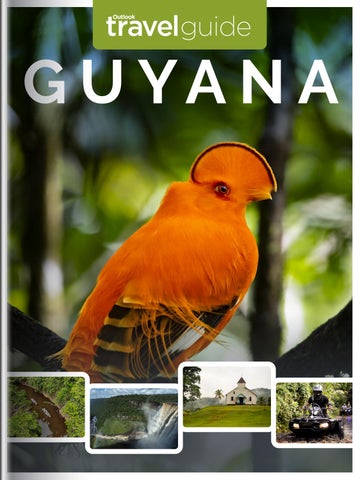
GUYANA


![]()


For those seeking an unforgettable off-the-beaten-path travel experience, Guyana is a destination ripe for exploration. With a mosaic of cultures, diverse ecosystems, and infinite natural attractions, it presents a harmonious cacophony of contrasts
WRITER: RACHEL CARR | PROJECT MANAGER: ALFIE WILSON
Guyana, affectionately known as the ‘Land of Many Waters’, is a captivating gem in South America, defined by its eclectic blend of cultures, breathtaking landscapes, and extraordinary biodiversity, making it a compelling draw for eco-tourists.
Geographically, Guyana is situated on the northern coast of South America, bordered by the Amazon rainforest to the south and Atlantic Ocean to the north, and shares land borders with Brazil, Suriname, and Venezuela.
This remarkable country is characterised by lush, sprawling rainforests alive with vibrant flora and fauna, vast savannahs that stretch to the horizon, and meandering rivers that reflect glistening ribbons of silver under the warm sun.
This idyllic landscape makes it a paradise for both nature enthusiasts and adventure seekers, offering endless opportunities for exhilarating exploration and discovery.
Amongst Guyana’s most notable and impressive attractions is Kaieteur, one of the largest single-drop waterfalls in the world. Set within Kaieteur National Park, it is truly a unique sensory experience, characterised by thunderous auditory effects, the fresh, earthy scent of petrichor, and the gentle mist carried by cascading water.
The Iwokrama Rainforest Reserve is a popular, pristine destination for experiencing the region’s biodiversity and a rare South American canopy walkway that offers an elevated view. Embark on guided treks, birdwatching tours, or wildlife spotting excursions as the forest also hosts hundreds of plant, bird, fish, and mammal species, including jaguars – the national animal of Guyana.
Cloud-shrouded Mount Roraima is a striking table-like mountain situated at the tripoint where Venezuela, Brazil, and Guyana converge. Its dramatic vertical cliffs rise majestically from the surrounding landscape, leading to a

flat summit that resembles a natural fortress.
The mountain’s unique geological formations have given rise to numerous powerful, gushing waterfalls. The region’s abundant rainfall nourishes lush vegetation, creating an enthralling ecosystem that enhances the mountain’s allure and mystery.
Culturally, Guyana is the only country in South America where English is the official first language, a distinction that uniquely sets it apart from its neighbours. The country’s tapestry of cultures encompasses nine Indigenous groups - Afro-Guyanese, Indo-Guyanese, European, Portuguese, Chinese, and people of mixed heritage - all of which contribute to its rich heritage.
This diversity is vividly celebrated through the country’s lively festivals, delectable cuisine infused with myriad flavours, and deep-rooted traditions.
Visitors can engage with various Indigenous, tourismfocused communities, such as Shulinab and Aishalton in Region 9 or Pakuri in Region 4. There, they can immerse themselves and learn about the traditions, crafts, and ways of life of the country’s Indigenous peoples.
Serving as the perfect starting point to explore Guyana, the capital city of Georgetown gracefully sprawls along the coastline, featuring a blend of colonial architecture and modern transformation, offering a dynamic space that reflects the depth and diversity of this extraordinary nation.
Additional must-see sites include St. George’s Cathedral, one of the world’s tallest wooden churches, the National Museum of Guyana, the Walter Roth Museum of Anthropology, and the Botanical Gardens.
Venture into Guyana for a unique trip that lingers in the memory long after departure. Every moment spent here is a journey into adventure, culture, and mesmerising natural beauty that occupies a special place in every traveller’s heart.

Kamrul Baksh, Director of the Guyana TourismAuthority (GTA), discusses the transformative journey of the country’s tourism industry and highlights key growth trends, challenges, and the exciting future that awaits this vibrant destination

KAMRUL BAKSH, DIRECTOR
Outlook Travel (OT): Firstly, how has the tourism industry in Guyana developed since we last spoke to the GTA?
Kamrul Baksh (KB), Director: Since 2019, Guyana’s tourism industry has
experienced significant expansion, driven by strong visitor growth and steady product development.
We have surpassed the 2024 visitor arrival figure of 371,271, reaching 371,446 as of October 2025. October alone saw a 28.9 percent year-on-year increase, with around 42,306 visitors.
From January to October 2025, arrivals grew by 24 percent compared to the same period in 2024. Based on the current trends, Destination Guyana is expected to end December 2025 with at least a 20 percent overall increase, achieving the highest annual total in the country’s tourism history.

The sector also now features more than 70 new tourism experiences across the country, reflecting diversification into nature, culture, and Indigenous community-led products.
Over 8,000 individuals have been trained in hospitality, including tour guides, culinary workers, and customer service personnel, thereby improving service standards and local capacity. In this light, the country’s first Hospitality and Tourism Training Institute is expected to open in 2026.
Accommodation has expanded with the addition of several new hotels, including internationally branded properties such as Aiden by Best Western and Courtyard by Marriott, with hundreds of new rooms currently under development.
Air connectivity has also expanded with the addition of new airlines, including Sky-high Dominicana, Copa Airlines, British Airways, United Airlines, Avianca, KLM Royal Dutch Airlines, and InterCaribbean Airways, which complement existing carriers and increase access from major source markets.
Collectively, these developments position Guyana as a competitive and sustainable destination, strengthening its profile in the regional tourism landscape.


OT: What are the ambitious goals the authority is striving to achieve?
KB: The GTA is committed to promoting sustainable tourism that benefits people, communities, and the environment.
Guided by its Vision 2030, the authority aims to strengthen Guyana’s position as a premier destination known for protecting its natural and cultural heritage whilst offering authentic experiences that benefit local communities. Its current goals include:
• Strengthening institutional capacity by improving operational efficiency, updating tourism regulations, expanding licensing access, and enhancing staff development.
• Maximising socioeconomic and conservation outcomes through stronger partnerships with the private sector, closer alignment with government ministries and agencies, and increased marketing and communication efforts.
• Championing the value of tourism by raising public awareness, improving data collection and policy frameworks, and promoting industry standards.

• Empowering communities by supporting training initiatives, developing new tourism products, and mobilising external funding to boost tourism development across the country.
Together, these priorities aim to ensure tourism growth remains inclusive, sustainable, and beneficial to all Guyanese.
OT: How does GTA effectively promote Guyana as an enticing travel destination?
KB: The GTA promotes Destination Guyana through a coordinated mix of strategies designed to strengthen visibility and attract high-value travellers, especially from North America, its largest source market. Others include the UK and the Caribbean, with key marketing efforts that include:
• North American representation – Collaborating with marketing representatives to build trade relationships, execute targeted campaigns, and increase visitor arrivals in the North American market.
• Influencer partnerships –Engaging trusted local, regional, and international content creators to share authentic stories of Guyana’s nature, culture, and people across global digital platforms.
• Familiarisation trips – Hosting media professionals, travel agents, and tour operators to experience
the destination firsthand and better promote it within their networks.
• Cooperative marketing –Partnering with airlines, tour operators, and international agencies to amplify reach through joint promotions and shared resources.
• Digital and social media campaigns – Running targeted online initiatives that highlight Guyana’s eco-adventure, cultural, and community-based experiences.
• Event promotion – Showcasing Guyana through major activities such as our national events

- Mashramani, the International Energy Conference, Rupununi Rodeo, Origins: Guyana Fashion Festival, and so many others - to engage both local and international audiences. Notably, 2026 marks the country’s Diamond Jubilee, its 60th year of Independence, and the calendar of events will be shaped to deliver a robust year of celebration.
• Trade and media relations –Participating in international travel trade shows and coordinating press features to position Guyana as a leading sustainable tourism destination.


OT: What strategies does GTA employ to attract and engage visitors during the rainy season?
KB: The GTA promotes off-season travel by highlighting the unique experiences that remain accessible and enjoyable year-round, and by using strategic messaging to highlight the benefits of travelling during the rainy season. Key approaches include:
• Experience diversification –Promoting activities that are less affected by rainfall, such as cultural festivals, culinary experiences, city and heritage tours, birdwatching, and community-based tourism in accessible regions.
• Targeted marketing – Running digital campaigns that highlight the lush beauty of Guyana during the rainy season, its vibrant landscapes, waterfalls, and rich biodiversity.
• Special promotions and packages
– Working with tour operators, lodges, and airlines to offer discounted rates or value-added packages that encourage travel during quieter months.
• Diaspora and regional travel –Targeting the Guyanese diaspora and nearby Caribbean markets, who are more flexible and familiar with the climate, to maintain consistent visitor arrivals.
• Storytelling and influencer content
– Partnering with content creators to share authentic stories of travel during the rainy season, showcasing how the experience remains immersive and rewarding.
• Local event promotion – Aligning with national celebrations and cultural events that fall within the rainy months to sustain interest and visitor flow.

Through these strategies, the GTA reframes the rainy season not as downtime but as an opportunity for travellers to enjoy a more intimate, value-rich, and authentic side of Guyana.
OT: Are there any noteworthy projects currently in development that you would like to showcase or draw attention to?
KB: Guyana is experiencing steady progress in both infrastructure development and sustainable tourism growth. Major works such as the East Bank Demerara road expansion and the new Bharrat Jagdeo Demerara River Bridge are improving access to key regions and reducing travel time.
In line with the government’s 2025–2030 tourism agenda, these developments support plans to position Guyana as the premier
“Guyana’s tourism industry is on a strong, upward path with visitor arrivals, new international hotel brands, improved air access, and the rapid growth of communitybased products all pointing to a sector that’s expanding steadily and sustainably”
– Kamrul Baksh, Director, Guyana Tourism Authority
eco-tourism destination in the Caribbean. The revised National Strategic Tourism Action Plan focuses on sustainability, community participation, and investment diversification.
Infrastructure upgrades, including the new terminal and electronic immigration systems at Cheddi Jagan International Airport (GEO), continue to enhance efficiency and the visitor experience. Air connectivity is expected to continue expanding with the introduction of new routes, alongside the development of new municipal airports at Lethem and Rose Hall, Canje, which are also anticipated to strengthen domestic and regional travel.
The government has also issued an Expression of Interest for eco-lodge and resort development across ten priority locations, in keeping with its commitment to expand village-level and community-based tourism. Plans for new river marinas, adventure and nature parks, and wellness and
“Guyana is a place where nature, culture, and adventure converge in a way that feels authentic and unfiltered. For travellers
seeking
meaningful,
sustainable
experiences rather than crowded resorts, the country stands out as one of the most rewarding destinations in the region”
– Kamrul Baksh, Director, Guyana Tourism Authority

sports tourism products aim to further diversify Guyana’s tourism offerings. Together, these projects reflect a clear vision of the Government of Guyana: building a modern, sustainable, and inclusive tourism sector that benefits all regions of Guyana.
OT: In your opinion, what would compel travellers to visit Guyana?
KB: It’s South America’s little hidden gem, culturally Caribbean yet distinguished by its landscapes, wildlife, and traditions. Visitors can explore vast wilderness areas, such as the Rupununi Savannahs, experience life in Indigenous communities, or enjoy the charm of Georgetown’s colonial heritage.
Guyana is a place where nature, culture, and adventure converge in a way that feels authentic and unfiltered. For travellers seeking meaningful, sustainable experiences rather than crowded resorts, the country stands out as one of the most rewarding destinations in the region.
OT: What are some of the most distinctive and captivating landmarks that define the beauty and culture of Guyana?
KB: Guyana’s landmarks reflect both its natural grandeur and layered history. The most iconic is Kaieteur, one of the world’s tallest single-drop waterfalls. The Rupununi Savannahs and the Iwokrama Rainforest Reserve
stand out for their biodiversity and authentic Indigenous-led experiences.
From a cultural standpoint, Georgetown’s colonial architecture, including St. George’s Cathedral and the Promenade Gardens, showcases the city’s 19th-century charm. Along the Essequibo River, sites such as Fort Zeelandia and the Court of Policy on Fort Island preserve Guyana’s Dutch colonial heritage, offering a rare glimpse into the early settlement history of South America.
Together, these landmarks tell the story of a country where powerful natural landscapes meet centuries of cultural influence.


OT: What emerging trends are reshaping the tourism industry in Guyana, and in what ways are you leveraging these changes to enhance the visitor experience?
KB: Through air connectivity and regional route growth, we’re working with carriers and promoting new routes to boost capacity, as well as expanding branded hotel entry and room stock. Attracting large-scale international brands helps tap into business and meetings, incentives, conferences, and exhibitions (MICE) demand.
We support these initiatives by coordinating market intelligence and workforce readiness, alongside community and Indigenous-led


experiences, and providing product development and training grants to ensure revenues reach communities. When it comes to sustainable and low-impact travel demand, certification and sustainability messaging are central to our campaigns.
OT: Do you feel a sense of optimism regarding the future prospects of the tourism industry in Guyana?
KB: Yes! Guyana’s tourism industry is on a strong, upward path with visitor arrivals, new international hotel brands, improved air access, and the rapid growth of community-based products all pointing to a sector that’s expanding steadily and sustainably.
With continued investment in infrastructure, workforce training, and product diversification, Guyana is well-positioned to become one of South America’s leading nature and adventure destinations.

Tel: +592 219-0093-6 info@guyanatourism.com guyanatourism.com
As one of Guyana’s largest rivers, the Essequibo River winds through the country, forming an estuary near its mouth that is dotted with islands in the West Demerara region, where visitors can relax, picnic, or enjoy water-based activities in a natural setting.
A VIBRANT PORT hub, Parika serves as a gateway to the Essequibo islands and interior. It’s an ideal place to sample Guyanese street food, explore the lively local market, and board ferries or riverboats for island-bound adventures.
Amongst the notable islands along the river’s course, Fort Island stands out, steeped in history with the remnants of Dutch colonial forts. Fort Zeelandia on the island offers a journey into the past, where visitors can wander through well-preserved structures.
Hogg Island, the largest in the area, is known for its agricultural activities. Visitors can experience the charm of local life, tasting fresh produce and enjoying the island’s picturesque landscapes. Scenic river retreats await on Wakenaam and Leguan Islands,

known for their fertile landscapes and lush vegetation.
Strolling along sandy riverbanks, visitors can enjoy tranquil waters and excellent birdwatching, with a variety of avian species inhabiting the trees and skies.
Nestled along Kamuni Creek, Santa Mission is an Indigenous village where visitors can explore the local culture and traditions and participate in craft workshops led by skilled artisans. The newly launched Waia Green Escapes by Wild Adventures also offers immersive experiences in nature and culture.
Here, the silk-cotton ‘kamaka’ tree stands as a local landmark, valued by the community for its cultural and historical significance. Visitors can also learn about sustainable forestry practices that help preserve local resources and support the community’s way of life.


FOR FABULOUS FOOD FUSION…
Nikkei Guyana in Georgetown has masterfully perfected a taste travelogue that combines Peruvian and Japanese cultures, offering an exquisite selection of wines and cocktails that complement its carefully curated food menu.
In a specifically designed, sophisticated ambience, guests are invited to indulge in zesty Ecuadorian prawn ceviche, delicately prepared Chilean seabass, and truffle and salmon maki – alongside succulent tomahawk steak and pork tenderloin for those seeking a heartier meal. Even better, Nikkei was awarded ‘Best in Dining’ at the recent Tourism Awards and Gala.
FOR TRUE GUYANESE GASTROMY…
In a cosy backyard in Georgetown, Backyard Café beckons, offering delectable, fresh, organic food with a personalised touch.
In this unexpected oasis, chef and owner Delven Adams, a warm and knowledgeable host, prepares authentic home-cooked Guyanese meals. Birds chirp and charm guests from the overhanging branches, and a friendly tortoise lazes beneath tables.
Savour pepperpot – a tender, aromatic meat stew known for its bold flavours, or seven curry, a collection of various vegetarian dishes artfully presented in a traditional water lily leaf.
The menu is customised to meet each patron’s needs, ensuring all preferences are accommodated and capture the essence of Guyanese flavour.
FOR AN ATMOSPHERIC CHARM...
Stabroek Market, a pulsating hub in the heart of Georgetown and a cherished Guyanese landmark, is renowned for its eclectic array of offerings, featuring everything from exquisite jewellery and fashionable clothing to fresh produce.
Ensconced in a historic iron-and-steel structure since 1881 and spanning 80,000 square feet, its iconic clock tower stands as a symbol of its lasting legacy.
FOR AN AUTHENTIC ADVENTURE… Fantasy Destinations
FOR NATURE AND ADVENTURE TRAVEL...
Wilderness Explorers is Guyana’s oldest and largest inbound tour operator.
FOR A SLICE OF PARADISE…
Baganara Island Resort has been recognised as Best in Accommodation: Interior Lodge or Resort of the Year by the GTA. This award recognises the resort’s exceptional


+592 646-9381 / 510-8610 tours@fantasydestinationsgy.com www.fantasydestinationsgy.com

@fantasydestinations
Discover Guyana like never before with Fantasy Destinations, your trusted local tour operator.
From the breathtaking Kaieteur and Orinduik Falls to the tranquil Essequibo River and historic Georgetown City, we design unforgettable adventures for locals and visitors alike.
Our curated packages include island-hopping, wildlife encounters, cultural experiences, and off-road ATV tours - perfect for families, groups, or solo travelers. With professional guides, comfortable transport, and attention to detail, every journey blends fun, safety, and authentic Guyanese hospitality.
Whether you’re chasing waterfalls, exploring hidden gems, or immersing in vibrant local culture, Fantasy Destinations ensures your experience is seamless and memorable.

service, stringent environmental standards, and its significant contribution to promoting high-quality tourism in the Essequibo region.
As one of Guyana’s signature private-island escapes, Baganara continues to offer a reliable and welcoming experience for guests looking for comfort, nature, and a well-run interior getaway.
Cara Lodge Hotel is full of charm and modern comforts. Hailing from the 1840s, this architectural gem has an exquisite colonial-style design, inviting guests into a world where history whispers through its elegant halls.
Step into one of the 34 meticulously appointed rooms, available in standard, executive, and suite layouts, each adorned with gleaming hardwood floors and vintage furnishings that evoke a sense of nostalgia.
Hand-carved furniture adds a touch of artistry, whilst amenities like smart TVs and luxurious rainfall showers blend seamlessly with the hotel’s historic character, creating a comfortable and elegant escape. The hotel is ideally located for travellers seeking a peaceful retreat that remains closely connected to the vibrant attractions of Georgetown.


• Guyana inspired a literary text – Arthur Conan Doyle’s novel. The Lost World - which showcases the Tepui rock formations and the country’s rich biodiversity.
• Famous actress Letitia Wright, who starred in Black Panther, Doctor Who, Top Boy, Humans, and Black Mirror, was born in Guyana.
• Guyana’s flag is the Golden Arrowhead, with its five colours representing different facets of the country – green for the pristine rainforests and fields, the country’s primary topography; white for its many rivers; red signifies zeal and sacrifice; black represents perseverance; and gold symbolises the country’s mineral wealth.
With a population of 746,955 (as of 2012), Guyana is one of the least densely populated countries in the world.
• Demerara Gold sugar takes its name from the original Dutch colony in Guyana, and the river of the same name still flows through the region.
• Guyana is one of the few places in the world where visitors can see the Victoria Amazonica – Giant Water Lily – in its natural habitat. The aquatic plant is also the country’s national flower.

The region unfolds as a wild, remote, untamed paradise, showcasing diverse habitats that contribute to its unique terrain, ranging from tropical grasslands and wetlands to shrublands and savannahs. Adventurous activities await along the majestic Rupununi River, the artery that runs through the Rupununi Savannah, where visitors can immerse themselves in kayaking and canoeing. A promised glimpse of giant river otters or black caimans only adds to the excitement.

Nestled amidst Guyana’s expanse of tropical savannahs, the rainforest-clad Kanuku Mountains emerge as a sanctuary for numerous rare and endangered wildlife. The ecological hotspot boasts the world’s highest bat diversity, teeming with 89 recorded species fluttering in the twilight. Visitors can also encounter the magnificent harpy eagle soaring high above the canopy and the elusive giant anteater foraging in the underbrush. The area holds profound cultural significance for the Macushi and Wapishana peoples, who have thrived in this bountiful landscape for generations, embodying a harmonious coexistence with nature.
In a serene salt-sprayed section of Guyana’s coastline, magnificent mangroves sprawl their gnarled roots as sea turtles crawl along the golden sands on their pilgrimage to sunkissed shores. This beach has no sunbathers or swimmers; visitors are purely here for the turtle nesting phenomena, when leatherbacks, hawksbill, olive ridleys, and greens all jostle for a place to lay their delicate eggs during the mesmerising spectacle of life’s cycle.

DIRECT FLIGHTS TO Guyana are available year-round from North America, Europe, and the Caribbean, with several airlines servicing Cheddi Jagan International Airport (GEO) in Georgetown and Eugene F. Correia International Airport (OGL) near the capital.
North American routes include American Airlines, JetBlue, United Airlines, Caribbean Airlines, Surinam Airways, Copa Airlines, Gum Air, Trans Guyana Airways, Fly All Ways, and InterCaribbean Airways, with connections from Toronto Pearson International Airport (YYZ), John F. Kennedy International Airport (JFK) in New York, and Miami International Airport (MIA). Air Transat also offers
seasonal flights from Canada.
European connections include British Airways and KLM Royal Dutch Airlines, with routes available via hubs such as Barbados, Miami, and St. Lucia. Regional carriers such as LIAT, SkyHigh Dominicana, and Avianca further enhance connectivity to Guyana.
Once in the country, travellers can explore by air, road, or along its winding waterways.
River transport is vital for reaching islands and remote villages. Options range from ferries carrying families and goods to speedboats and traditional dugout canoes, each offering a serene way to observe the local culture and wildlife along the riverbanks.
Domestic flight services also connect Georgetown with more remote and hard-to-reach regions of Guyana. Air Dash, amongst other operators, offers scheduled and charter flights, giving travellers flexibility and convenience when exploring Guyana’s interior.
Along the coast, land-based transportation options include 15-seater minibuses and local taxis, with the latter offering a more comfortable alternative. Renting a vehicle is possible, but having a local, certified driver allows travellers to relax and enjoy the journey, taking in the scenic vistas and charming countryside along the way.