Africa Outlook, APAC Outlook, EME Outlook, North America Outlook, Mining Outlook, Healthcare Outlook, Manufacturing Outlook, Supply Chain Outlook, Food & Beverage Outlook, and Construction Outlook are digital publications aimed at boardroom and hands-on decision-makers, reaching an audience of more than 800,000 people around the world.
With original and exclusive content compiled by our experienced editorial team, we look to promote the latest in engaging news, industry trends, and success stories from across the globe.
Your company can join the leading industry heavyweights enjoying the free exposure we provide across our platforms with a free marketing brochure, extensive social media saturation, enhanced B2B networking opportunities, and a readymade forum to attract new investment and help you grow your business.
Visit www.outpb.com/work-with-us for details on how your company can feature for free in one of our upcoming editions.
EDITORIAL
Head of Editorial: Jack Salter jack.salter@outpb.com
Deputy Head of Editorial: Lucy Pilgrim lucy.pilgrim@outpb.com
Finance Assistant: Victoria McAllister victoria.mcallister@outpb.com
FOOD & BEVERAGE OUTLOOK
Norvic House, 29-33 Chapelfield Road Norwich, NR2 1RP, United Kingdom
Sales: +44 (0) 1603 804 445
Editorial: +44 (0) 1603 804 431
SUBSCRIPTIONS
Tel: +44 (0) 1603 804 431
jack.salter@outpb.com
www.foodbeverage-outlook.com
Follow us on LinkedIn: @foodbeverageoutlook
Follow us on X: @outlookpublish
SUGAR AND SPICE
Welcome to our seventh edition of Food & Beverage Outlook magazine.
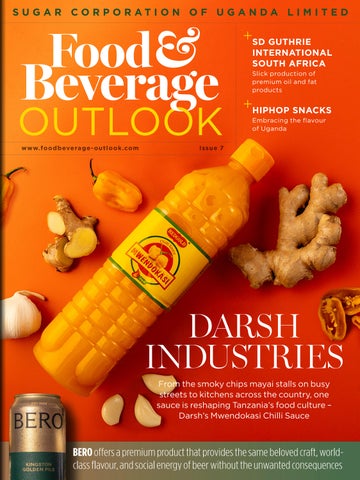
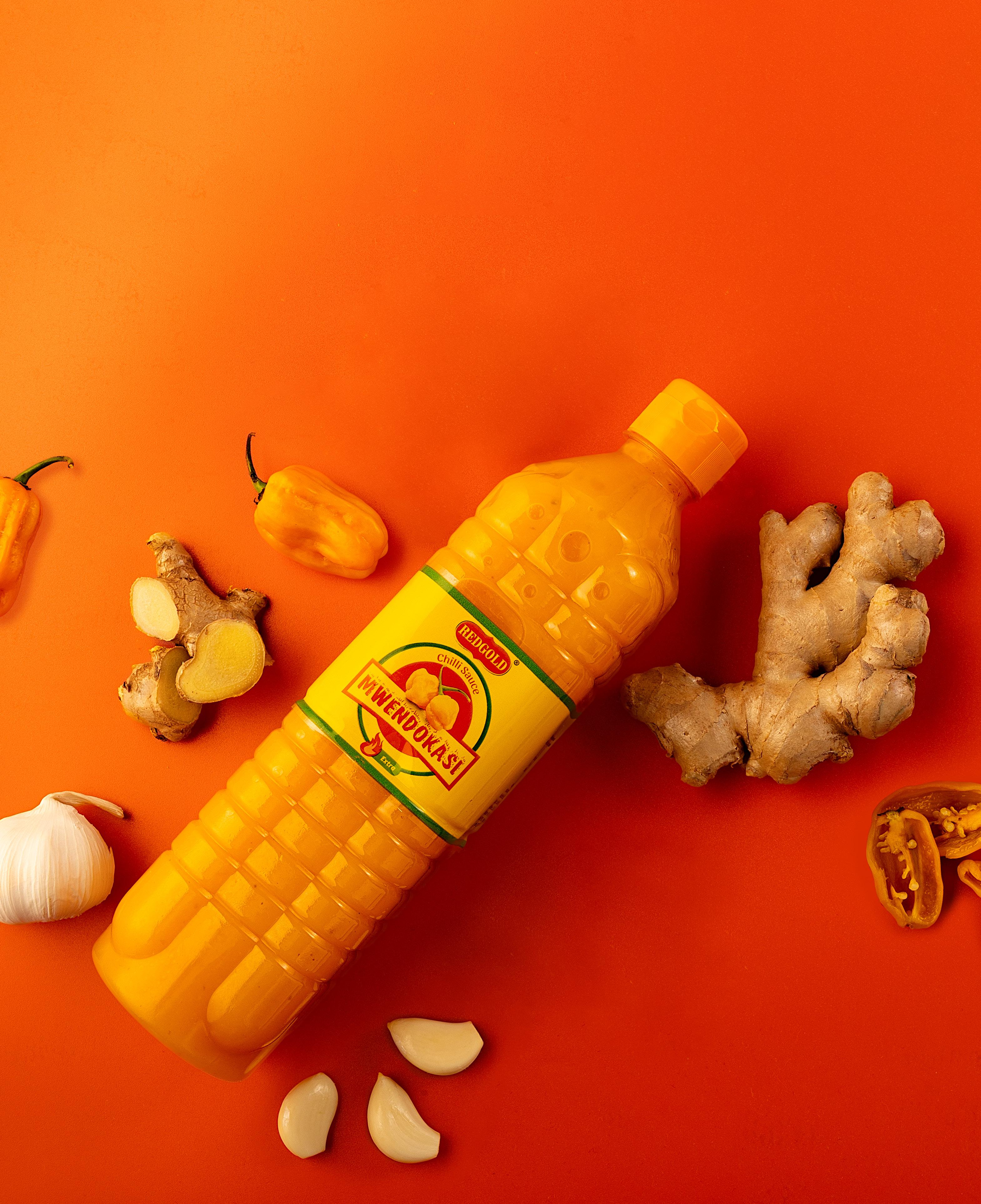
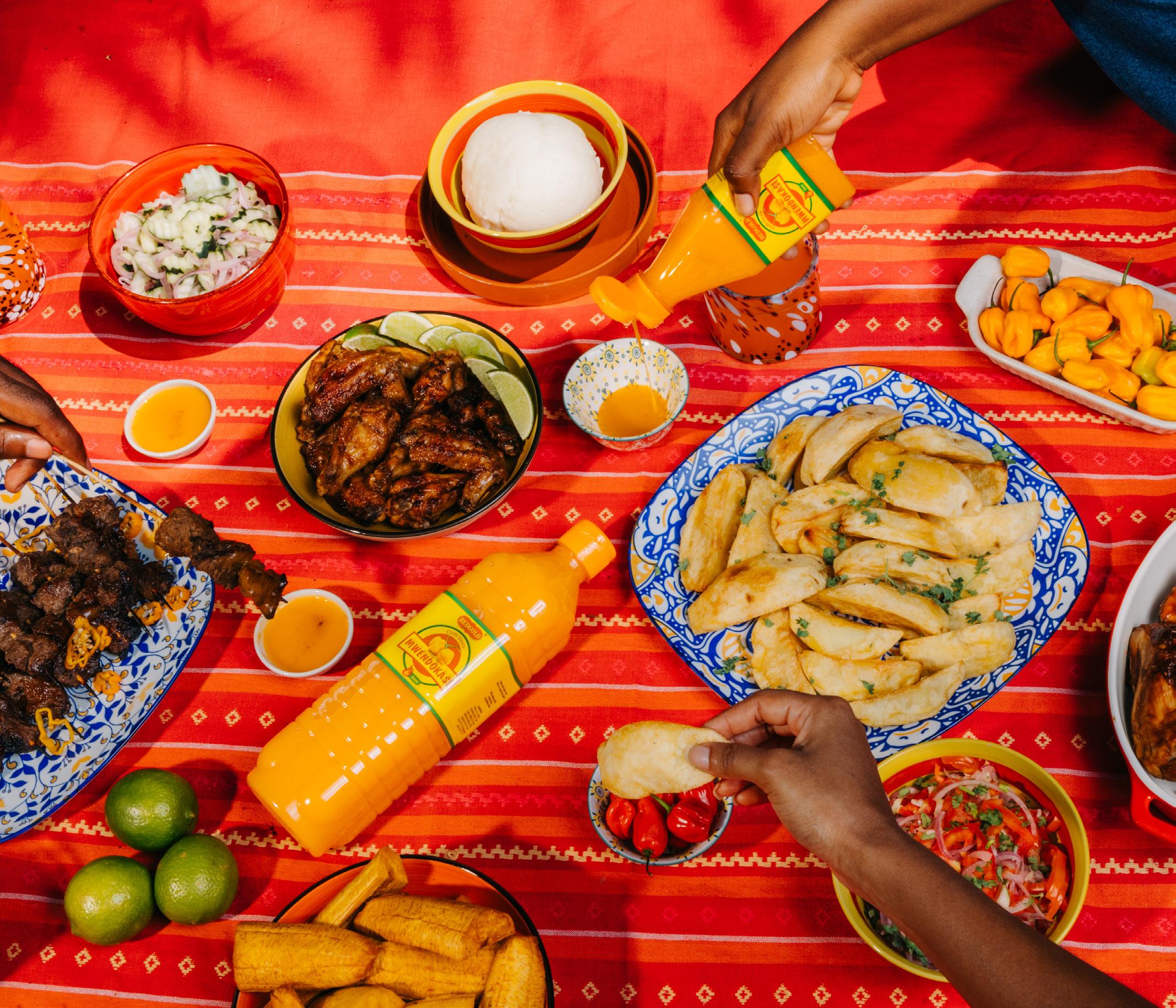
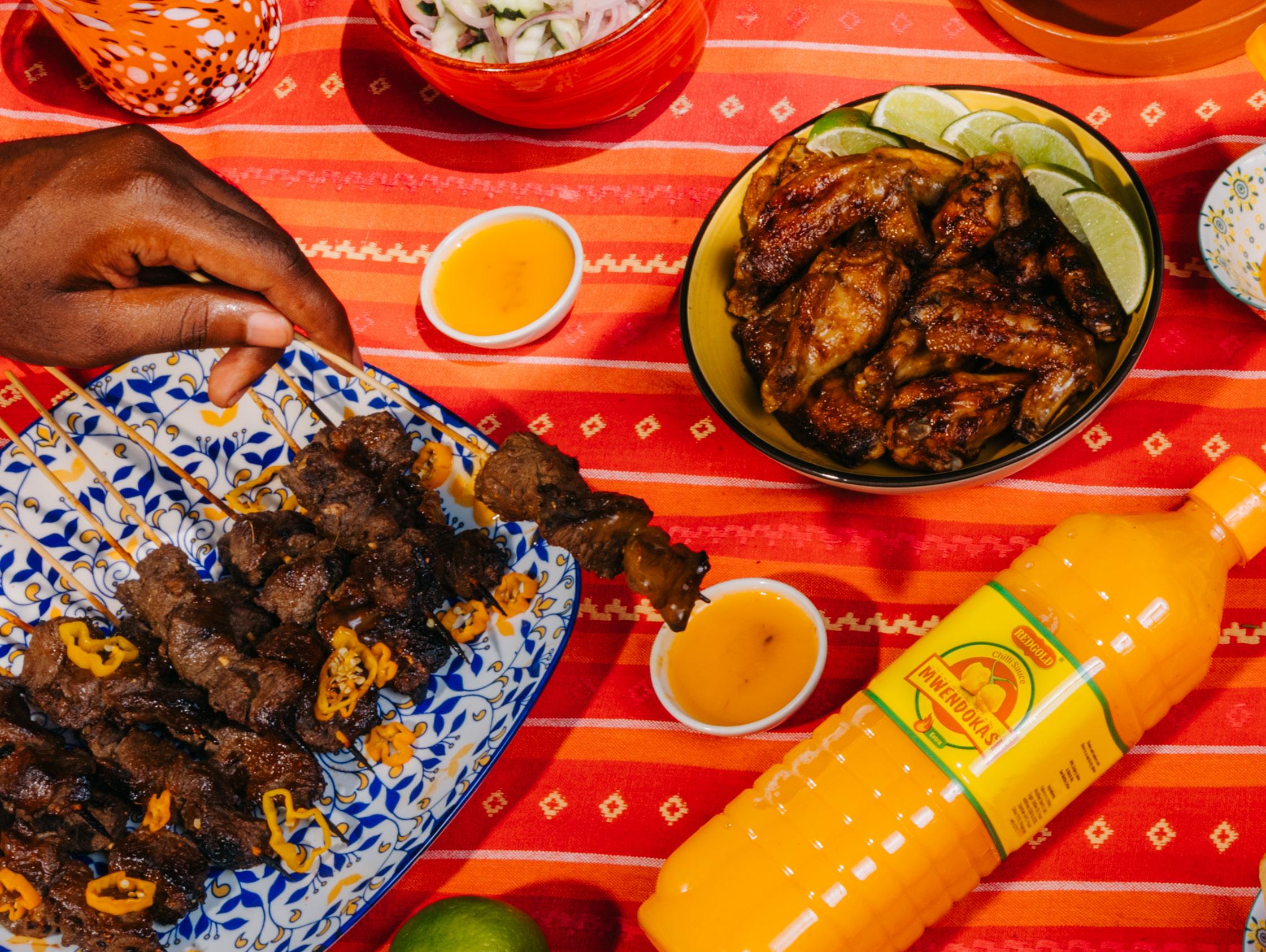
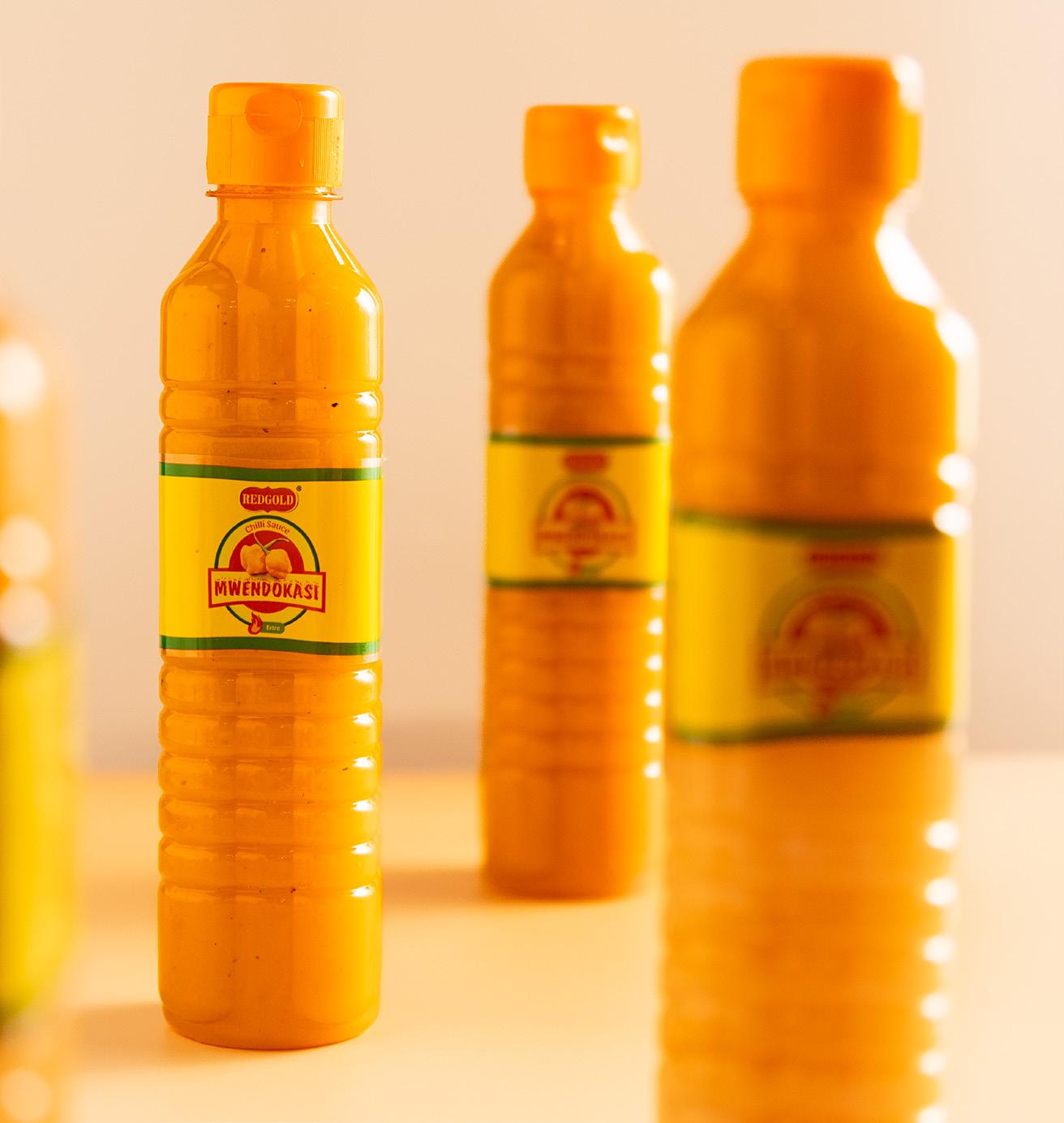
Our spicy front cover is coated with Darsh Industries’ (Darsh) Mwendokasi Chilli Sauce, which is reshaping Tanzania’s food culture.
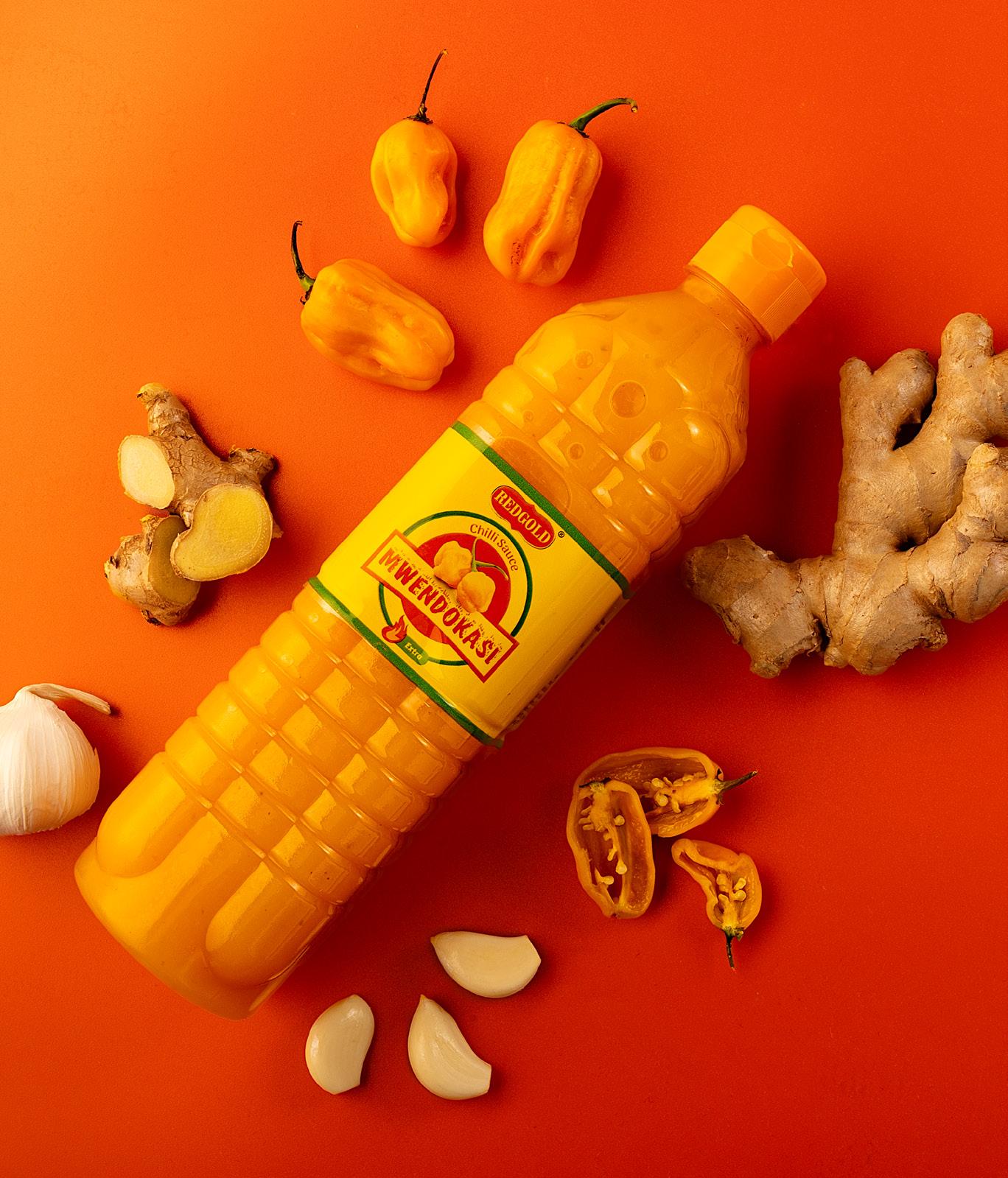
Amongst the company’s numerous innovations, the scintillating sauce, which is made from vibrant yellow habanero peppers, has become a market sensation.
Consumers wanted something different – bold, fruity heat that spoke to local tastes at a price point that worked for students, vendors, and households alike.
“The bold, fiery flavour of our Mwendokasi Chilli Sauce has driven significant demand, especially amongst street food vendors, cementing its position as one of Tanzania’s fastest-growing condiments and a symbol of our consumer-driven innovation,” reveals Bhadresh Pandit, Managing Director of Darsh.
From spicy to sweet, the Sugar Corporation of Uganda Limited (SCOUL) is a Mehta Group company and one of the oldest and most visible agro-industrial firms in Uganda.
We celebrate the centenary of SCOUL and its pioneering sustainability and community initiatives.
“Instead of treating sugarcane residue as waste, we have turned it into a sustainable energy source, aligning with Uganda’s industrial energy diversification goals and reducing carbon emissions,” highlights Anil Shah, Resident Director.
South Africa boasts diverse and delicious cuisine influenced by its multicultural heritage, and the country is seeing growth in the cooking oil and fats sector as a result, with SD Guthrie International South Africa (SDGISA) leading the way.
The diverse range of brands under SDGISA’s portfolio, combined with its dedicated team, enables the company to cater to a wide array of culinary needs across various sectors.
“With our in-house product innovation and development team, we can design specific blends for use in various applications, from ice cream to soup powders to spreads and chocolates, for cakes, bakes, and everything in between,” informs General Manager, Ruan Valentin.
We also have a saucy selection of business insights from HipHop Snacks, Twisted Alchemy, and BERO.
We hope that you enjoy your read.
Jack Salter Head of Editorial, Outlook Publishing
FEATURES
AFRICA
28 Darsh Industries
Spice Up Your Life
Crafting exquisite condiments in Tanzania
36 Sugar Corporation of Uganda Limited Sweet Centenary A century of sugar production
44 SD Guthrie International South Africa
From Sustainable Sourcing to Revolutionary Solutions Slick production of premium oil and fat products
14 Juicy Journey
The real squeeze
TOPICAL FOCUS
18 A New Premium Beer Experience
World-class beer and brewing craft without the consequences
EUROPE & MIDDLE EAST
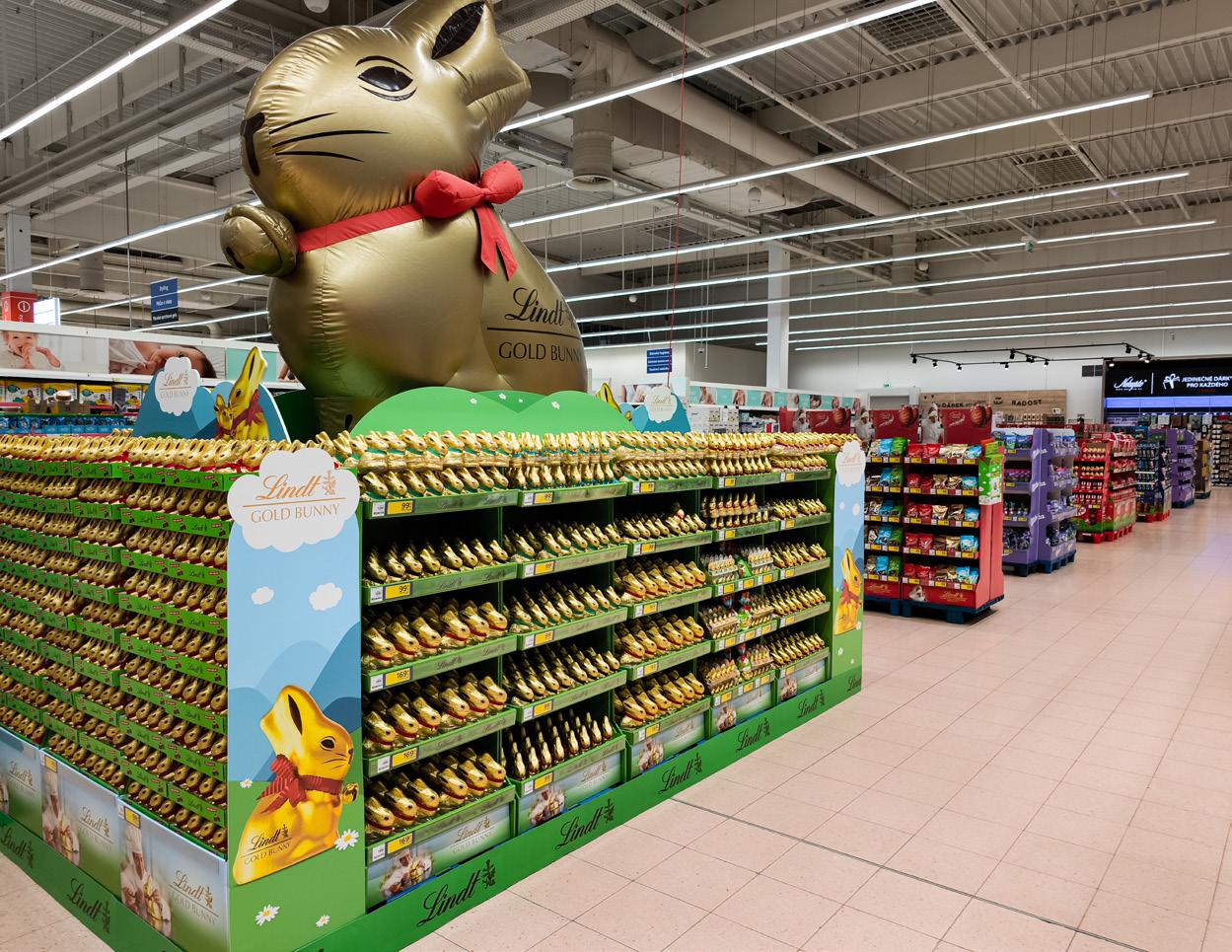
Lindt Launches New Luxury Easter Range
LINDT & SPRÜNGLI (Lindt) has announced a new premium product line across selected markets in time for the Easter chocolate boom.
The renowned Swiss chocolatier has expanded its seasonal bunny line to include nine brand-new flavours and items, including the Lindt Gold Bunny Dark, Lindt Gold Bunny Glamour, and Lindt Gold Bunny Crispy Biscuit Easter egg.
The 2026 Easter collection will also see the introduction of the Lindt Nocciolatte flavour, alongside Popcorn Chocolate and Dubai-style filled Easter eggs.
These exciting new products are the delicious combination of Lindt’s signature milk chocolate and innovative, trendy flavour profiles, including pistachio, caramelised popcorn, and hazelnut, emphasising how this established brand continues to be top of the shelf.
ASIA PACIFIC
Singapore Becomes the Go-To for Cultivated Meat
ALEPH FARMS, A major player in the global cultivated meat sector, has recently announced its partnership with Singapore-based BioTech company, Cell AgriTech.
It is hoped the collaboration will position the country as a hub for cultivated meat production and help scale manufacturing in the Asia Pacific region.
Cell AgriTech will act as the contract development and manufacturing organisation (CDMO) for Aleph Farms, offering its expertise in pilot and scale-up infrastructure and facilitating
NORTH AMERICA
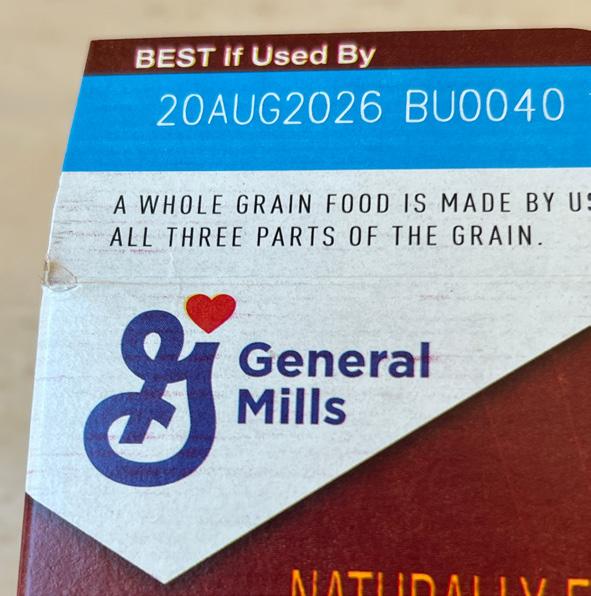
General Mills Sells Tomato Brand
GENERAL MILLS – best known for producing Cheerios – has sold its long-held tomato brand, Muir Glen.
The recipient of the brand is Violet Foods, a well-known manufacturer of pizza and pasta sauces, amongst other tomato-based products.
The deal is part of General Mills’ ongoing strategy to cut non-core brands, meaning it can prioritise faster-growing snack categories.
It follows the company’s recent decision to sell its North American yoghurt business for USD$2 billion last year.
For Violet Foods, the deal is part of a broader expansion strategy to grow its tomato presence by purchasing smaller brands from larger organisations.
regulatory-ready facilities across Singapore and Malaysia.
This particular model allows Aleph Farms to capitalise on Singapore’s innovation and regulatory landscape, which, when combined with Malaysia’s manufacturing scale, will pave the way for regional product localisation and process development with lower capital risk.
NORTH AMERICA
FoodNerd Receives Greenlight Funding
US-BASED TODDLER SNACK start-up FoodNerd has achieved a series seed round of funding totalling USD$7.5 million, led by Selva Ventures.
The significant capital will be instrumental to the company’s commercial launch on 17th February and will help steer children’s nutrition products away from highly processed foods.
The funding will be primarily utilised to scale manufacturing, grow distribution, and invest in R&D.
FoodNerd stands out in the food and beverage space with a science-forward approach that prioritises proper nutrients.
EUROPE & MIDDLE EAST
Pringles Promotes Mystery Flavour
MAKING ITS WAY into the gaming world, beloved snack brand Pringles has collaborated with Xbox and Bethesda Softworks to launch a Fallout 76 mystery flavour across the UK and Ireland.
The limited-edition range includes brand-new tube packaging which uses imagery from the gaming franchise to give the iconic Pringles aesthetic a new edge.
Other popular Pringles flavours are likewise getting a temporary packaging refresh, including original, sour cream and onion, salted vinegar, and Texas bbq sauce.
These tubes will soon have influences from other well-known Xbox games, including World of Warcraft®: Midnight, Sea of Thieves, and The Outer Worlds 2.
This is demonstrated by the company’s Nutrient Lock Cold Processing Technology that preserves key nutrients during production, which are often lost during the conventional high-heat processes.
AFRICA
Tanzanian Coffee Gets a Boost
THE TANZANIA AGRICULTURAL Development Bank (TADB) has funnelled over USD$131 million into coffee and livestock farming across the Kagera region, helping to bolster one of the country’s most significant agricultural areas.
The funding has been allocated to TADB programmes that improve access to credit for farmers and pastoralists who have faced major adversities in recent years, including market volatility and limited financing.
Approximately USD$123.5 million of the funding has been attributed to coffee farmers, whilst USD$2.86 million has been allocated to livestock farmers.
Over 312,000 farmers have benefitted since TADB began allocating loans, which have had a measurable impact on increased crop and livestock production.
ASIA PACIFIC
Beverage Behemoths Unite in New Zealand
BACARDI LIMITED (BACARDI) has entered into a distribution agreement with Coca-Cola Europacific Partners (CCEP) in New Zealand (NZ), elevating the beverage’s nationwide reach.
The leading global alcohol brand has committed to a multi-year agreement, which began in January and is expected to utilise CCEP’s extensive network to drive the distribution of its premium products. Thanks to the deal, consumers in NZ can now enjoy more access to Bacardi rum, Bombay Saphire gin, Patron tequila, and Grey Goose and 42Below vodka – all Bacardi-owned brands.
With greater distribution, Bacardi hopes to shape the future of premium beverage experiences in the nation’s growing market.
Chicken and Chips - Easy to Crave, Hard to Produce
Sheena Raikundalia, Chief Growth Officer at Kuza Biashara, explores why Kenya’s favourite meal is easy to crave and hard to produce, and how fixing broken input systems could unlock 5,000 youth jobs and make local processors competitive again
Writer: Sheena Raikundalia, Chief Growth Officer, Kuza Biashara
Few meals are as quintessentially Kenyan as chicken and chips. From roadside kiosks to fast-food chains, this simple pairing cuts across classes, incomes, and geographies.
Yet behind the ubiquity of this dish lies a quiet paradox: despite surging demand, the value chains that underpin chicken and chips remain structurally fragile and chronically
underperforming.
Over the past months, through deep-dives into both the potato and poultry sectors, culminating in a recent webinar with processors and offtakers, a consistent message has emerged: demand is not the problem, reliability is. Kenya does not lack buyers or consumers - it lacks the aligned systems required
to consistently produce what the market wants, when it wants it, and at the quality and cost it requires.
Most Kenyan potato farmers grow what they can afford and sell where they can be paid quickly. That usually means informal markets that are cash-based, fast-moving, and tolerant of variability. They suit the realities of smallholders managing tiny plots with limited cash flow.
Processors, on the other hand, operate under entirely different pressures. They must produce to specification, on schedule, with low rejection rates and high plant utilisation. Yet, the varieties they require, such as Markies, Voyager, and Dutch Robijn, are rarely available locally. Farmers overwhelmingly plant Shangi, a fastmaturing table potato well-suited for boiling and local markets but poorly suited for frying due to its inconsistent dry matter content and storage behaviour.
Even when farmers try to grow to spec, the system is stacked against them: less than one percent of potato seed in Kenya is certified. Without clean planting material, yields stagnate at eight to 10 metric tonnes per hectare (Mt/ha) against a potential of 30 - 40 Mt/ha, and quality falls short of processor standards.
Poultry tells the same story in a different register. Feed, which accounts for 50 to 60 per cent of production costs, is among the most expensive in East Africa, whilst reliable day-old chicks are costly and erratic. Formal buyers demand strict weights, chilling, and biosecurity, but often pay slowly; informal wet markets pay in cash on delivery and overlook variability. Rationally, farmers choose speed and certainty over delayed payments and penalties.
The outcome is predictable: processors operate at barely 40 percent of installed capacity, unable to compete with imports on cost, whilst farmers remain locked into low-productivity systems that deliver neither scale nor stability.
NO SEED, NO SCALE
Most discussions about agricultural competitiveness focus on prices, yet this cannot compensate for the absence of foundational inputs. The central choke point in both value chains is not farmer motivation or processor behaviour - it is the absence of reliable seed, breeds, and input systems to produce to specification. Without accessible stocks of processing-grade potato seed, it is impossible to meet the size, shape, dry matter, and storability attributes that processors require. No amount of training, contract design, or pricing reform can overcome this bottleneck. It must be solved upstream before efficiency can flow downstream.
FROM SEED TO SCALE: A 5,000-JOB YOUTH OPPORTUNITY
Fixing this seed bottleneck offers a powerful economic opportunity, particularly for young people, through the production of apical cuttings.
These clean, disease-free potato plantlets are produced in greenhouses from tissue-culture mother stock. They allow fast, local multiplication of varieties commonly grown by farmers, such as Shangi, as well as processor-preferred varieties like Markies.
Each cutting can generate multiple tubers within a season, compressing a seed multiplication process that typically takes five years into just two to three cycles, whilst reducing the disease risks that undermine conventional seed systems.
This is an inherently youth-friendly
enterprise that requires only a quarter-acre plot, modest capital (about KES250,000 to set up a greenhouse), fast turnover, and serves a market where demand far exceeds supply. A small unit can produce 10,000 - 15,000 apical cuttings per cycle, selling at KES10 each. With one to two trained operators per ward in key potato counties, this model could create 2,000 - 2,500 youth-led seed enterprises employing around 5,000 young people whilst simultaneously solving the certified seed constraint that keeps processors starved of consistent, quality raw material.
FROM PLATE TO SEED: REVERSING THE LOGIC WITH COLLABORATION
Kenya’s challenge is not a lack of effort. It is a lack of alignment.
Farmers grow what they can, buyers demand what they cannot get, and processors limp along at half capacity whilst imports quietly fill the gap.
To change this, we must reverse the logic: start from the plate and plan backwards to the seed. That means specifying the products the market wants (chips-grade potatoes, standardised poultry weights), aligning input systems to produce them, and financing production based on offtake contracts rather than collateral.
Solving these systemic bottlenecks isn’t a solo effort – it demands collaboration across sectors to align incentives, share expertise, and scale solutions.
That’s why Kuza Biashara has collaborated with TRANSFORM, an impact accelerator led by Unilever, the UK government’s Foreign, Commonwealth and Development Office (FCDO), and EY, to tackle agricultural challenges in Kenya and beyond. Through this collaboration, we are leveraging over 3,000 trained local changemakers, our
“Agripreneurs” – entrepreneurial leaders who deliver market-aligned guidance to smallholder farmers to start thinking market first.
Using over 10,000 bite-sized, hyperlocal videos accessible online and offline through edge computing, these young Agripreneurs help farmers make smarter decisions about what to grow, when, and how based on market demand. The change is happening, but more stakeholders in the sectors need to join and collaborate to drive faster impact.
If Kenya can align these pieces, chicken and chips could become more than a popular street meal.
They could become a case study in how to rebuild value chains for competitiveness, jobs, and food security.
Because chicken and chips are not hard to eat - they are just hard to coordinate.
ABOUT THE EXPERT
Sheena Raikundalia is Chief Growth Officer at Kuza Biashara, an AgriTech operating across seven African countries, connecting 1.2 million farmers through a network of 6,000 agripreneurs. A UK-qualified solicitor with 18+ years’ experience, Raikundalia serves on boards including the Kenya National Innovation Agency and the Brink Foundation.
A Taste of Heritage, Heart, and Soul
HipHop Snacks embraces the rich flavours of Uganda, transforming regional ingredients into beloved snacks whilst fostering community connections and supporting farmers. COO, Deep Jobanputra, reveals how the brand is expanding its reach both locally and globally
Writer: Rachel Carr
Often hailed as the ‘Pearl of Africa’, Uganda is a breathtaking country located in the eastern region of the continent.
Renowned for its spectacular landscapes, which range from lush rolling hills to serene lakes and majestic mountains, it also boasts a myriad of diverse wildlife. All this, woven with a rich cultural mosaic, makes Uganda a truly captivating nation.
Shaped by the traditions of more than 56 ethnic groups, its vibrant heritage is expressed through music, dance, and art as well as culinary
dishes and strong community values.
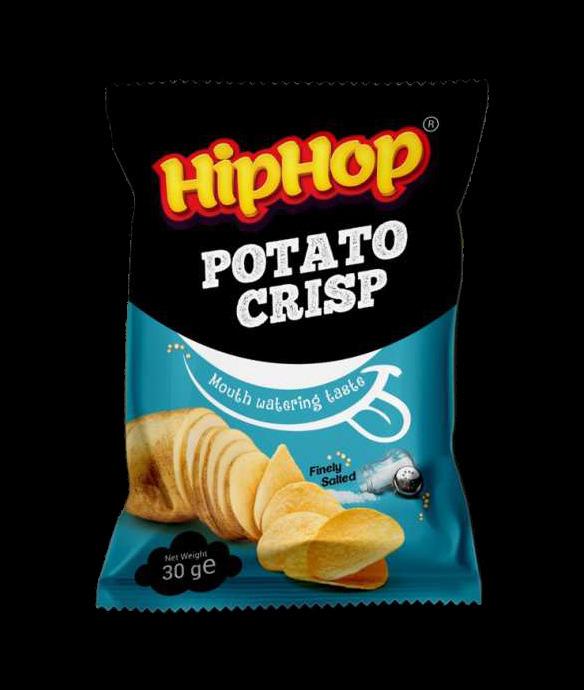
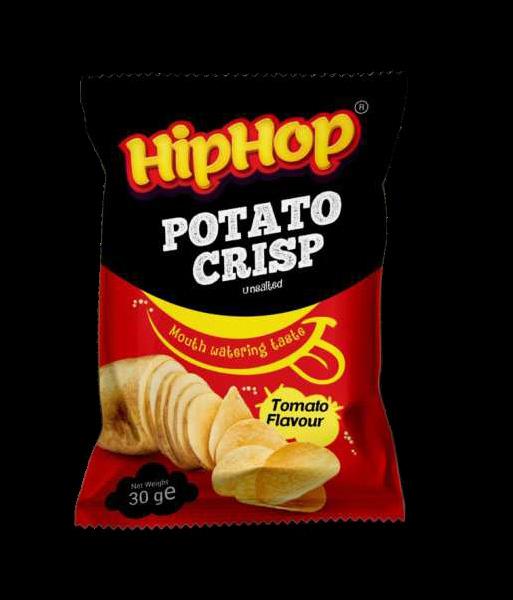
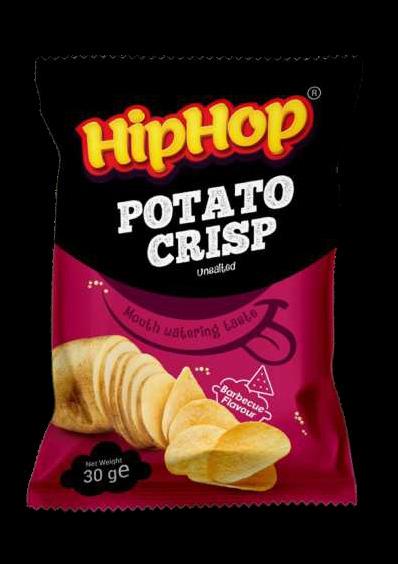
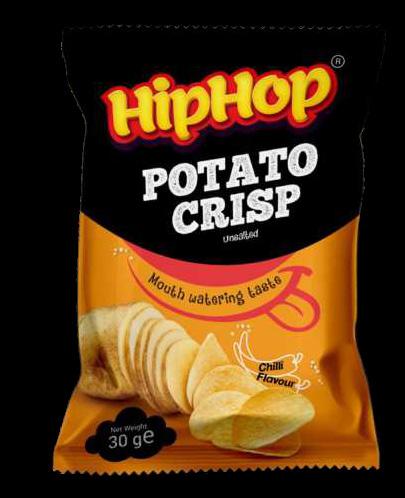
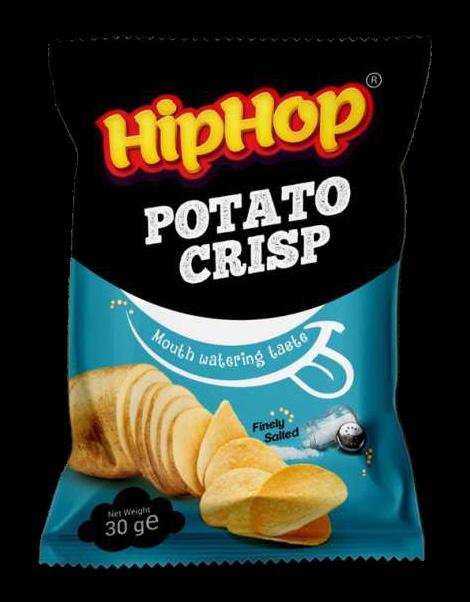
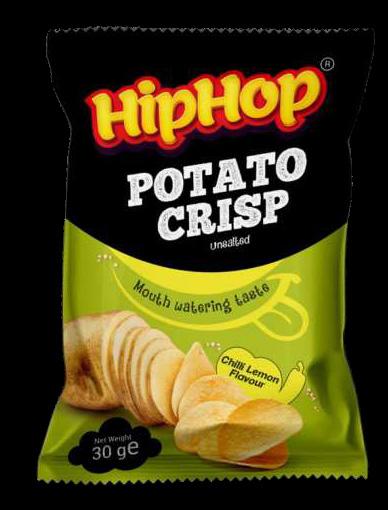
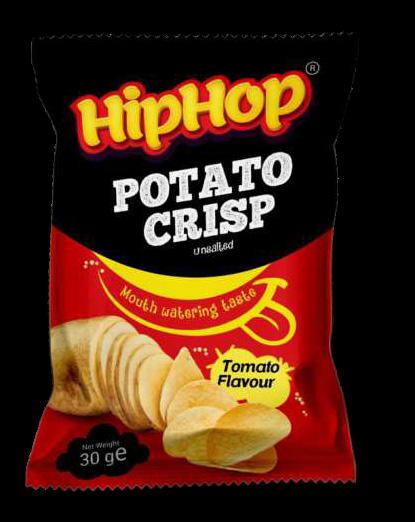
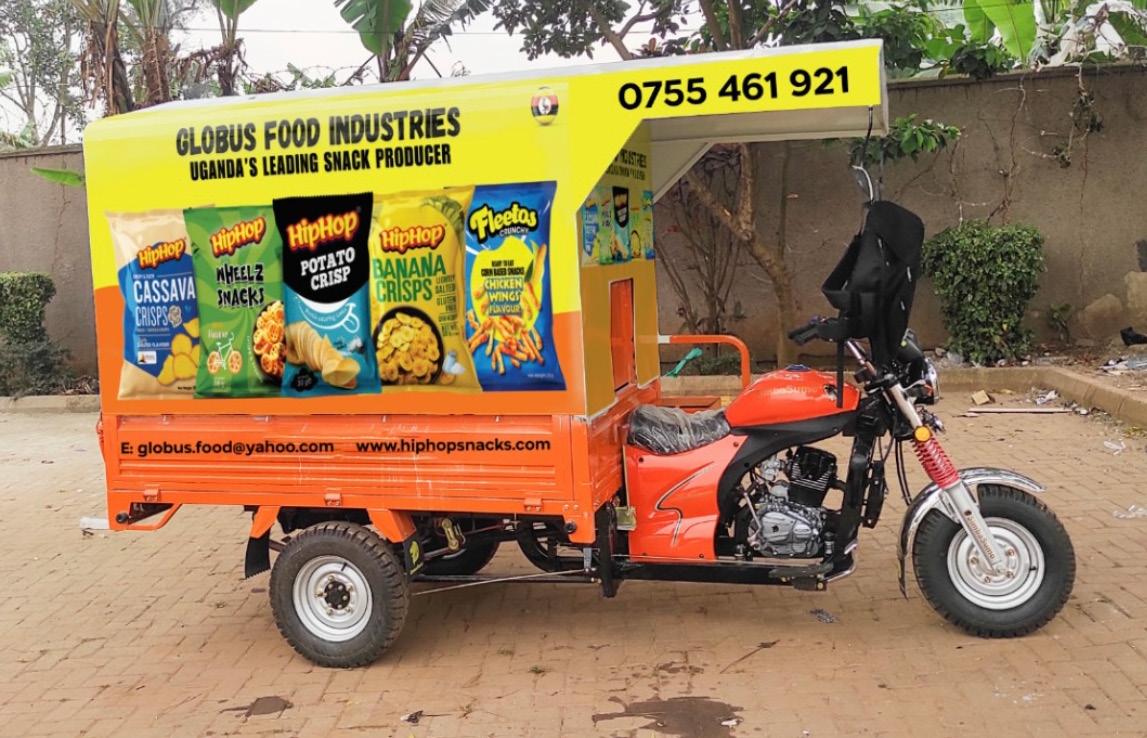
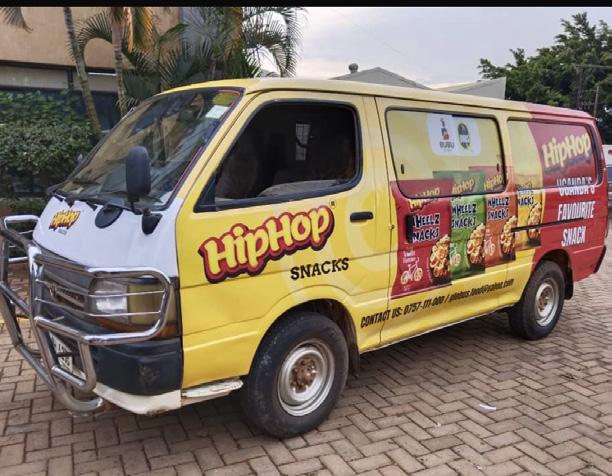
One outstanding company that embodies the essence of this remarkable country is Globus Food Industries SMC Limited, whose brands include Fleetos and its flagship line, HipHop Snacks.
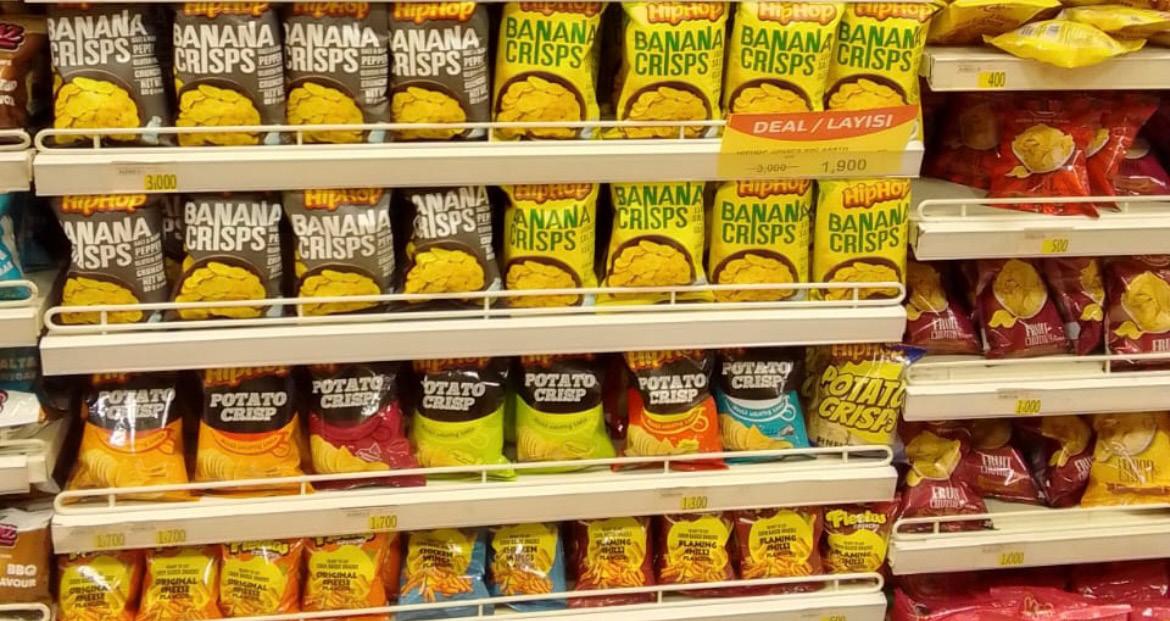
The latter was launched in 2021 and incorporates local flavours into its products, providing high-quality, affordable treats for the country and the surrounding region.
“We are deeply rooted in the authenticity of Ugandan culture,” introduces Deep Jobanputra, COO.
“We focus on transforming locally
grown raw materials — including potatoes, corn, bananas, and cassava — into snacks that celebrate the flavours and heritage of Uganda.”
HipHop Snacks’ identity is intertwined with the country’s culture, celebrating Uganda’s heritage and palate through its offerings.
The country’s gastronomy is a vibrant tapestry of flavours and ingredients that reflects its diversity and agricultural abundance, varying by region, influenced by traditions and cooking methods, with cassava – a tuberous edible plant – a cornerstone of its cuisine.
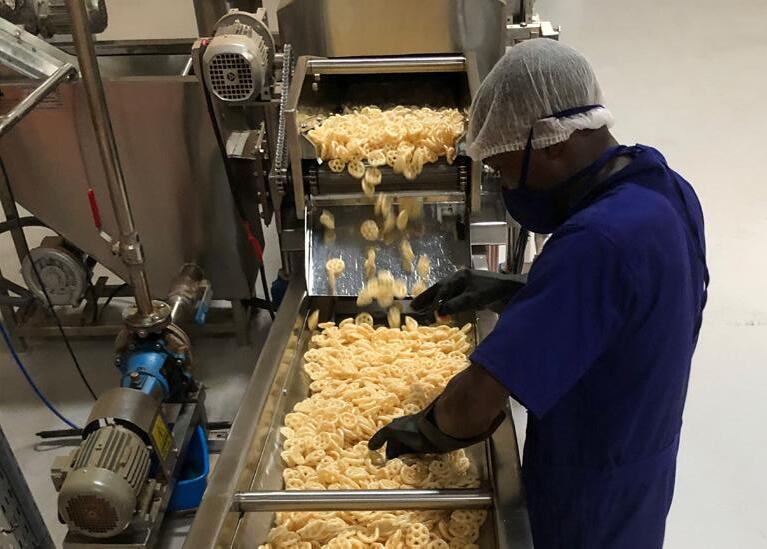
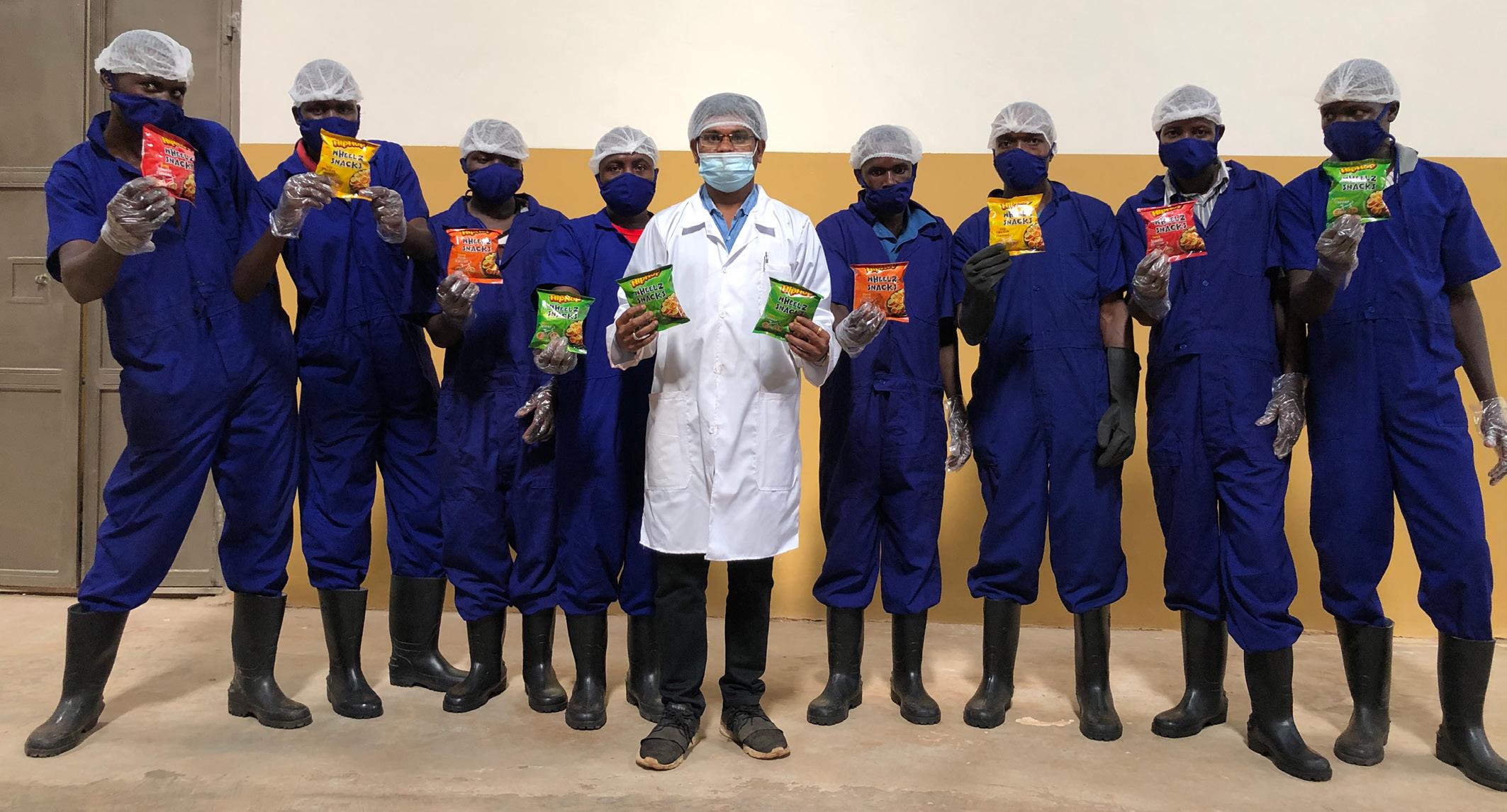
Support from the Government of Uganda has established the company as a local brand with a global vision, alongside a state-of-the-art manufacturing facility that utilises advanced machinery to enhance efficiency, ensuring it is equipped to scale in response to growing demand.
Additionally, HipHop Snacks has been honoured with the gold award for the Best Snack Manufacturer and Brands at the Consumers Choice Awards for two consecutive years.
CELEBRATING UGANDA, CRAFTING SNACKS
Uganda is amongst the world’s largest producers of plantain, and HipHop Snacks views this as both a responsibility and an opportunity to enhance this national strength.
“By blending traditional Ugandan flavour profiles with modern snack trends, we craft products that connect both locally and internationally,” Jobanputra declares.
“As our brand grows, we are proud that this truly national identity has begun to reach global markets. Today, we export our banana and cassava crisps to the UK – allowing us to showcase Uganda’s natural ingredients and rich food culture on an international stage.”
This achievement not only highlights HipHop Snack’s dedication to quality but also emphasises its mission to share the essence of the country’s culinary heritage with the world.
“Every packet that leaves our factory represents the best of what Uganda has to offer, crafted with care,
HIPHOP SNACKSIN NUMBERS
• Four countries
• Six market categories
• 100 percent local employment
• 35 percent market share
• 1,500+ clients
pride, and purpose,” he expresses.
Furthermore, HipHop Snacks has implemented specific initiatives and programmes to support and uplift the farmers it collaborates with.
“We believe a strong brand is built on a strong value chain, and that begins with the farmers. Our company works directly with farming communities, offering access to modern techniques, training
programmes to improve yields and quality, support in adopting costefficient and sustainable methods, and reliable offtake agreements that guarantee stable income.
“By empowering them with the right tools and knowledge, we create a healthier ecosystem that benefits everyone – the farmer, factory, and ultimately, the consumer,” Jobanputra impassions.
“EVERY PACKET THAT LEAVES OUR FACTORY REPRESENTS THE BEST OF WHAT UGANDA HAS TO OFFER, CRAFTED WITH CARE, PRIDE, AND PURPOSE”
– DEEP JOBANPUTRA, COO, HIPHOP SNACKS
CULTIVATING JOY
Working to symbolise happiness through its products, HipHop Snacks is employing unique marketing strategies to position itself as a household name in Uganda.
“Happiness, for us, comes from trust, consistency, and reliability. We produce our snacks in carefully curated batches, ensuring that every packet – whether it’s sold in the capital city of Kampala or a rural town – delivers the same warmth, comfort, and taste.
“Whilst we haven’t relied heavily on aggressive advertising, our strongest marketing tool has been consistent quality. Customers know exactly what to expect from HipHop Snacks, and that dependability has evolved into loyalty,” notes Jobanputra.
This organic word-of-mouth growth has evidently been more powerful than any billboard or TV campaign.
“Our strategy is simple but effective: be real, deliver quality, and stay consistent. That’s what makes a brand become a household name.”
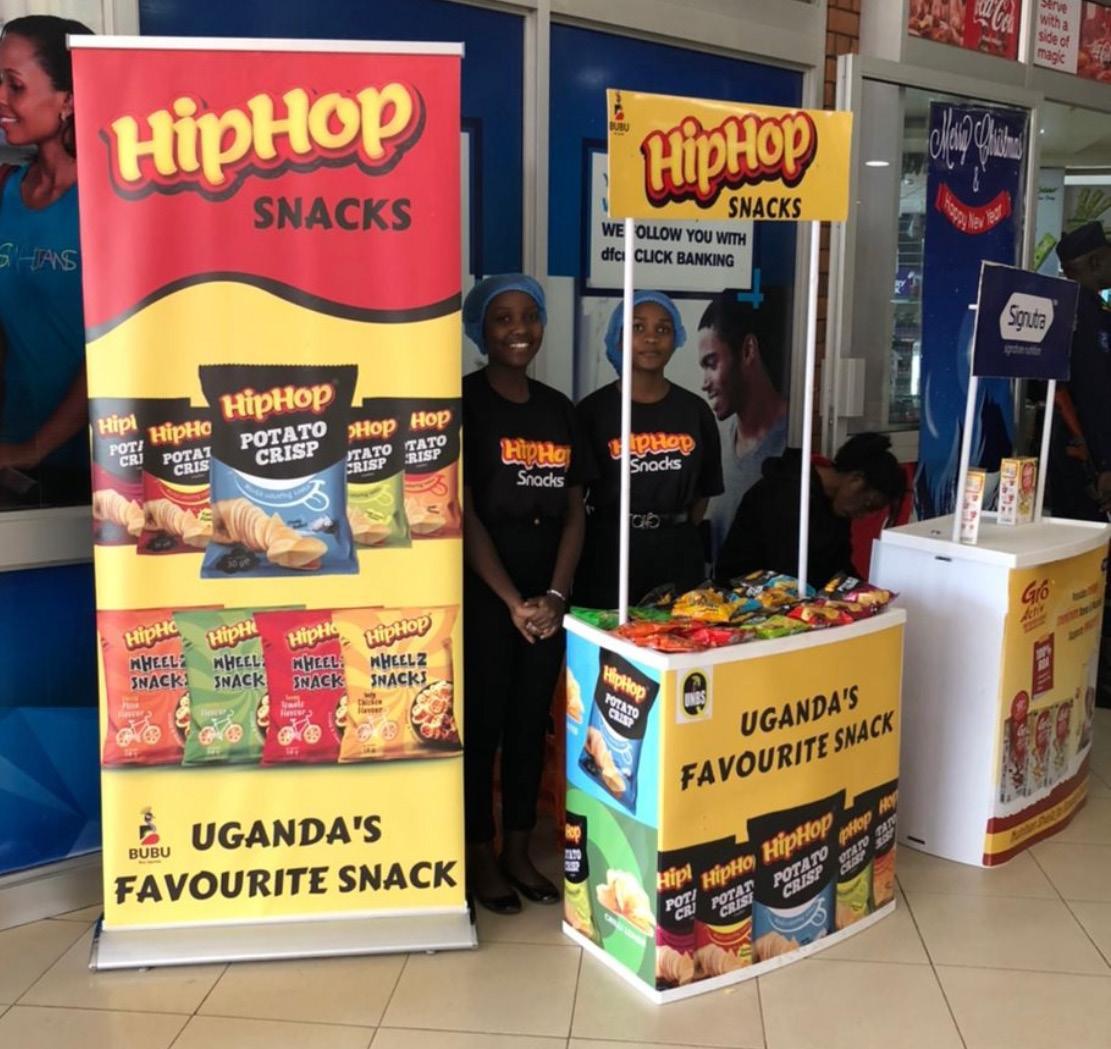
Equally, the Buy Uganda, Build Uganda (BUBU) initiative has been
advantageous to HipHop Snacks’ increasing popularity and significantly contributed to the growth and success of the country’s agroprocessing industry.
BUBU is a catalyst for fundamental transformation, and with the government shining a spotlight on local manufacturing, the agroprocessing industry has gained new momentum and confidence.
Local producers now have more substantial incentives to invest in
nearby sourcing, innovation, and product development.
“We’ve seen a noticeable shift in demand for high-quality Ugandan-made products, and that is encouraging companies like ours to invest in better technology, bigger capacity, and greater research into new product lines.
“The industry is evolving fast, and BUBU has played a powerful role in driving that progress,” Jobanputra observes.
SAVOURING INNOVATION FOR A FLAVOURFUL FUTURE
HipHop Snacks has a plethora of interesting developments on the horizon, including innovations and new offerings.
“The next year will mark a period of exciting expansion for us. We are developing several new products with bold flavour profiles, refined packaging, and a stronger shelf presence,” Jobanputra shares.
Innovation is an ongoing commitment for the company. As such, customers can expect new lines, designs, and formats that meet both local demand and international standards, with a long-term vision to grow HipHop Snacks into one of East Africa’s most loved snack brands –driven by excellence, consistency, and creativity.
“We want to express our sincere appreciation to our customers who continually choose quality. Our growth has been largely powered by positive word-of-mouth, and we are deeply grateful for the trust people have placed in us.
“Even without heavy advertising, the demand for our products continues to rise because consumers genuinely believe in what we offer. Their support motivates us to innovate, expand, and represent Uganda with pride,” he earnestly voices.
However, HipHop Snacks’ mission extends beyond snack production; it aims to cultivate pride and shared growth within the communities it serves, playing a crucial role in fostering a sense of togetherness.
“Community is the foundation of everything we do. Our company operates the way it does because of the people around it, and we are committed to giving back in ways that create long-term impact.
“We are intentional about hiring locally and building a workforce that grows alongside the brand. Our plans include deeper involvement in education initiatives, local
employment programmes, and youth empowerment,” Jobanputra proudly concludes.
As it continues to innovate and uphold the rich culinary traditions of Uganda, HipHop Snacks is devoted to delighting consumers further, both locally and globally, ensuring that every bite is a celebration of heritage, quality, and community.
“COMMUNITY IS THE FOUNDATION OF EVERYTHING WE DO. OUR COMPANY OPERATES THE WAY IT DOES BECAUSE OF THE PEOPLE AROUND IT, AND WE ARE COMMITTED TO GIVING BACK IN WAYS THAT CREATE LONG-TERM IMPACT”
– DEEP JOBANPUTRA, COO, HIPHOP SNACKS
JUICY JOURNEY
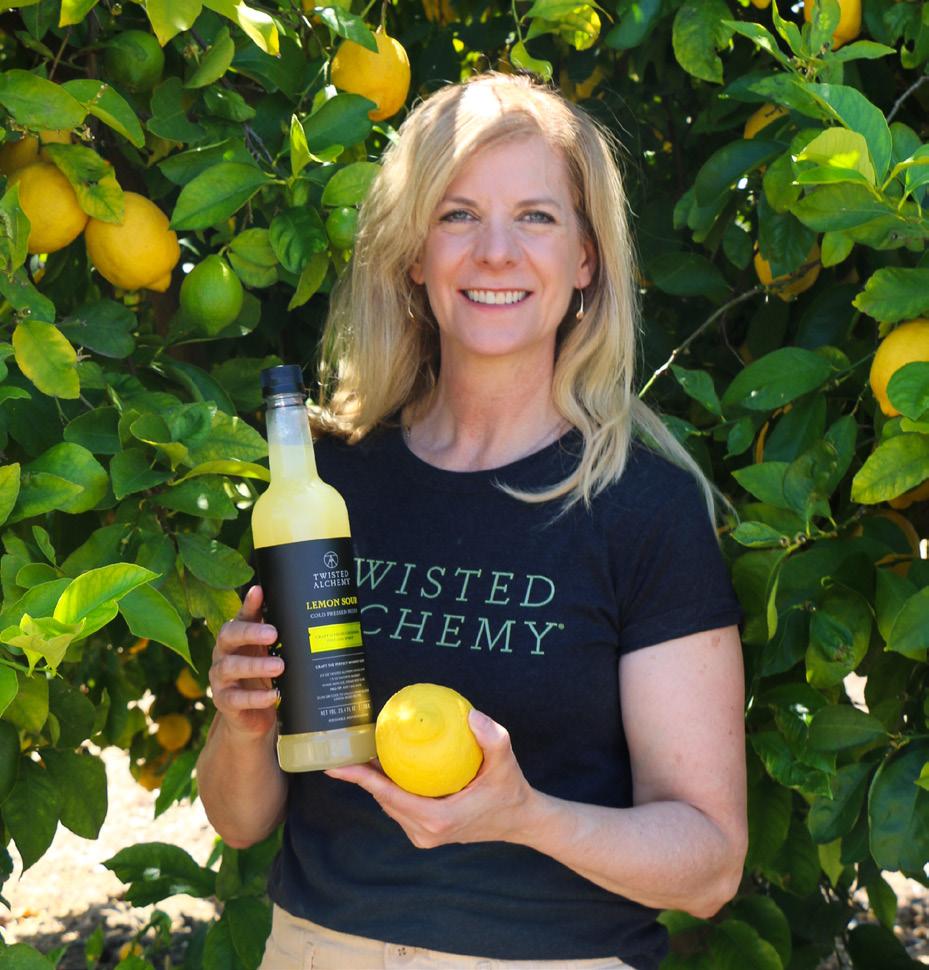
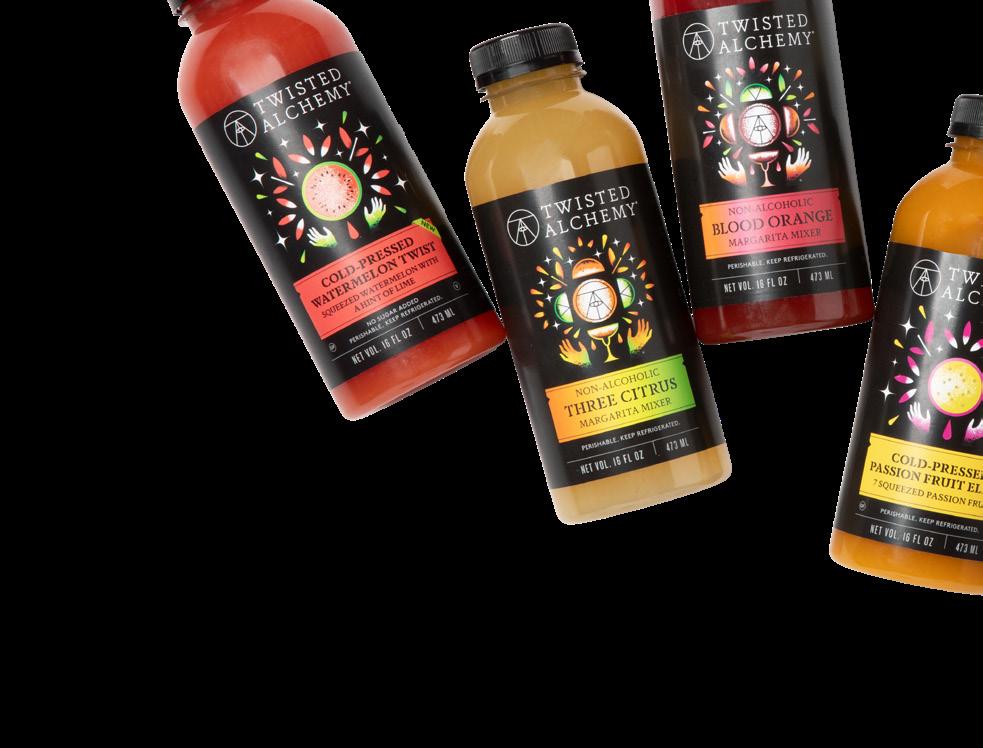
Providing 100 percent cold-pressed lemon and lime juices, Twisted Alchemy is on a mission to ‘end the squeeze’ for bartenders and home-cocktail connoisseurs alike. Kim Holstein, co-Founder, shares more about how the company has gone from strength to strength, offering ‘simply the zest’ pure fruit products to its clientele
Writer: Lily Sawyer
As North America’s beverage industry continues to undergo significant evolution, it has seen consumers move away from sugars and artificial sweeteners towards choosing products for their health and wellness benefits.
“It’s been crazy exciting to see how bartenders, food and beverage directors, and those in the hospitality
industry have come to value the quality and impact of fresh juices on cocktails, non-alcoholic drinks, and culinary creations,” introduces Kim Holstein, co-Founder of Twisted Alchemy.
Providing high-quality cold-pressed juice for the craft cocktail industry, Twisted Alchemy is a juice company with a difference.
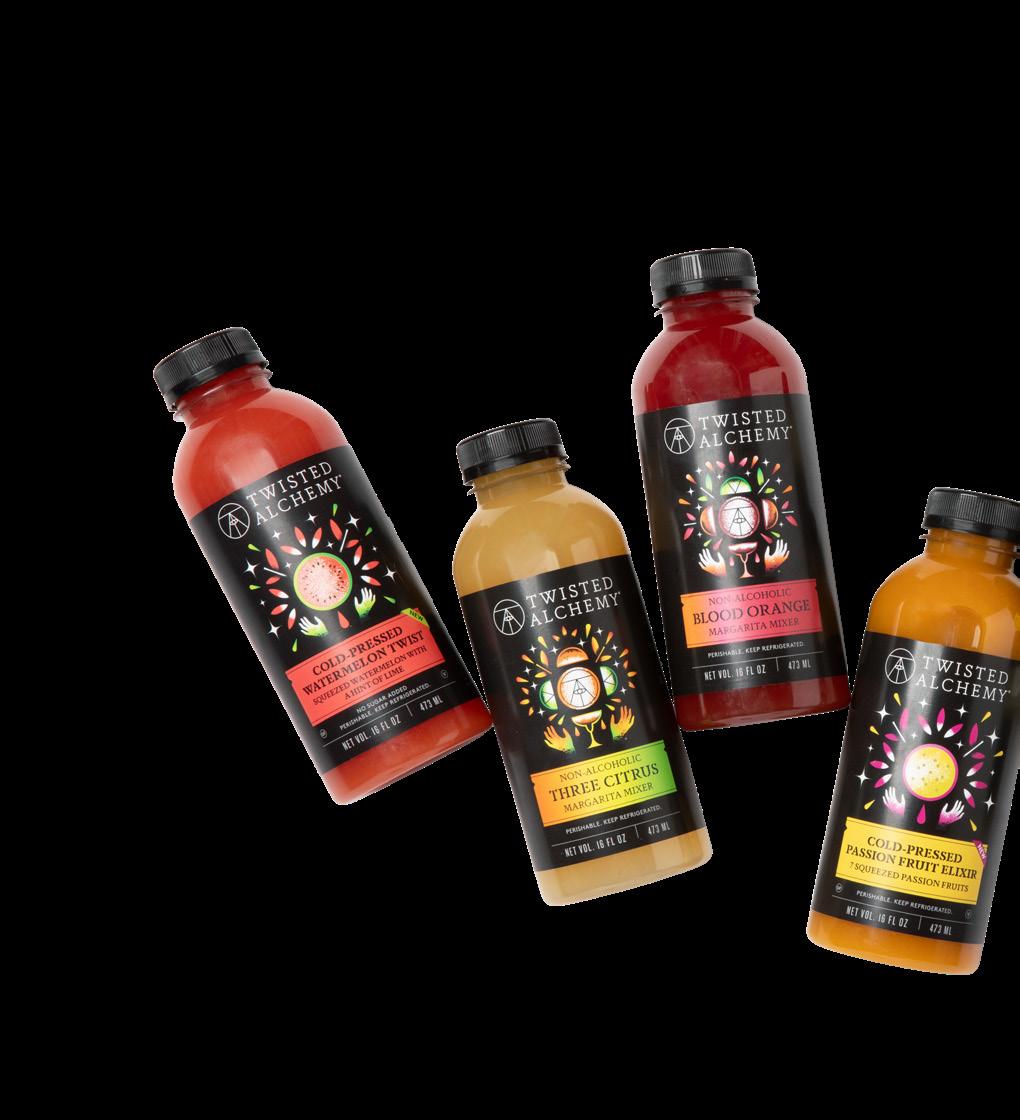
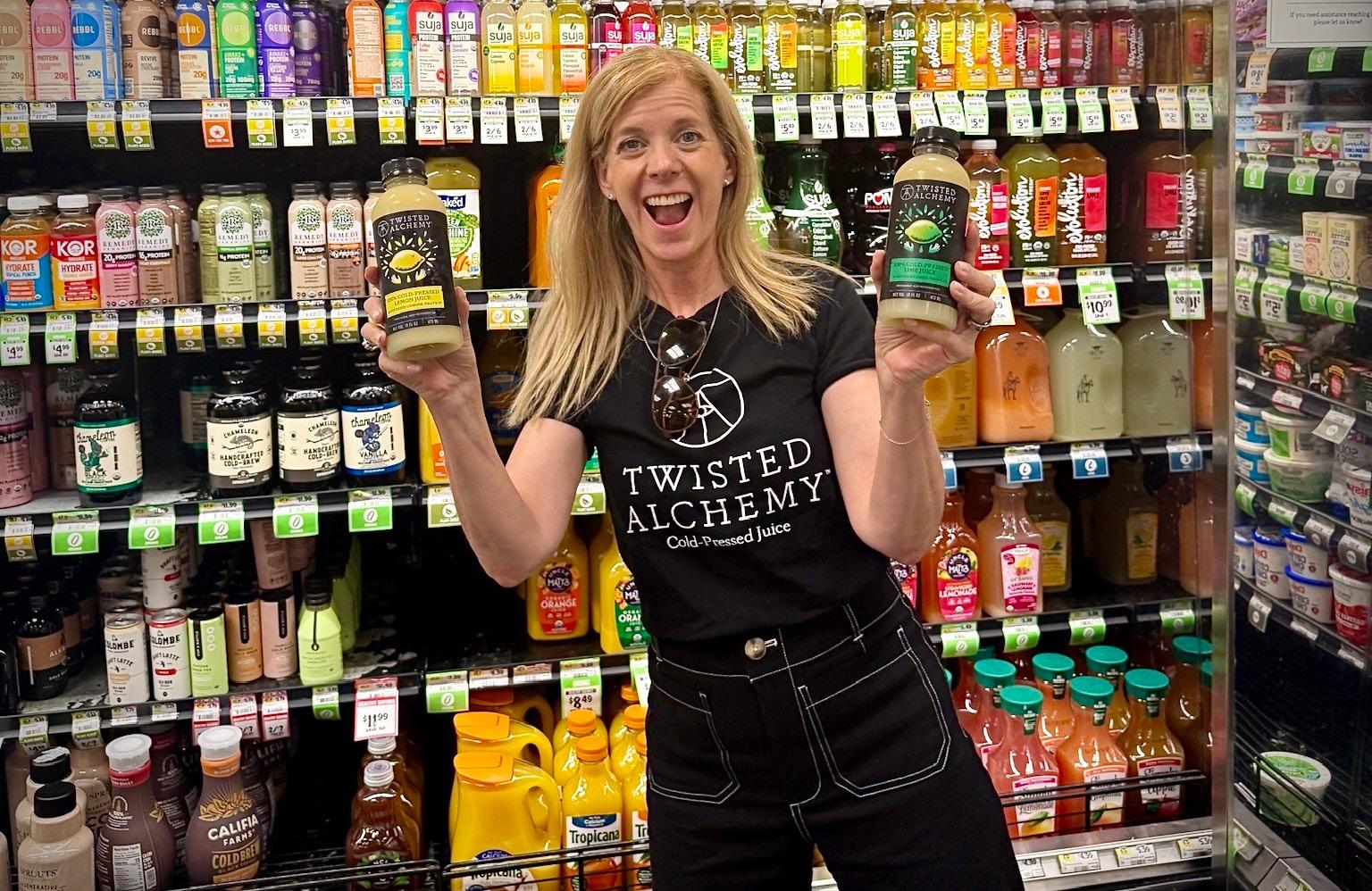
Selling 750 milliliter bottles of its award-winning juices and mixers at hotels, restaurants, and bars around the US, alongside having recently launched its products in Whole Foods Market (Whole Foods) and Sprouts Farmers Market (Sprouts), the company is taking the juice sector by storm.
Having featured in the US reality TV series, Bar Rescue, Twisted Alchemy’s ability to help hospitality establishments be successful – from cafés, craft bars, and restaurants to the likes of The Ritz-Carlton, Nobu, and Hilton – is unmatched.
“We are proud to elevate menus with our fresh, cold-pressed juices,” she smiles.
ENDING THE SQUEEZE
Providing bars and restaurants with an honest and effective alternative to squeezing fruit on-premises, Twisted Alchemy is gaining immense traction in the hospitality industry.
“When our clients replace juicing on-premises with our cold-pressed juices, they have a more efficient option that saves on labor and has zero waste,” Holstein prides.
Indeed, squeezing on-premises presents various obstacles, with varying yield levels often impacting overall cost.
Boasting up to 180 days’ shelf-life, Twisted Alchemy’s cold-pressed juices offer a far superior alternative, particularly thanks to their ability to maintain high levels of quality and yield.
“We also manage Brix (°Bx) and PH levels, which ensures consistency of sweetness,” she tells us.
From watermelon to passion fruit, blood orange, pomegranate, and more, the company creates juices that its customers can count on.
Notably, it also supplies juices throughout the year from fruits that cannot be juiced year-round on-premises due to their seasonality.
“We ‘end the squeeze’, enabling bartenders and food and beverage managers to save their ‘creative juices’ for menu development and other more ‘fruitful’ projects!”
Utilizing a High-Pressure Processing (HPP) cold pasteurization technique, Twisted Alchemy is able to retain vitamins and keep natural enzymes intact.
“It’s exciting technology that uses pressure instead of heat, which means we don’t kill the important enzymes and vitamins.
“You can really taste the difference between cold-pressed versus heatpasteurized juice, and this impacts guests’ experience of the cocktail or culinary creation,” Holstein reflects.
QUENCHING THE THIRST OF A NATION
In addition to proudly providing its award-winning lime and lemon
juices to bars and restaurants around the country, Twisted Alchemy has witnessed growing interest from the consumers and bartenders in their own home, seeking the freshest juices for their kitchen creations.
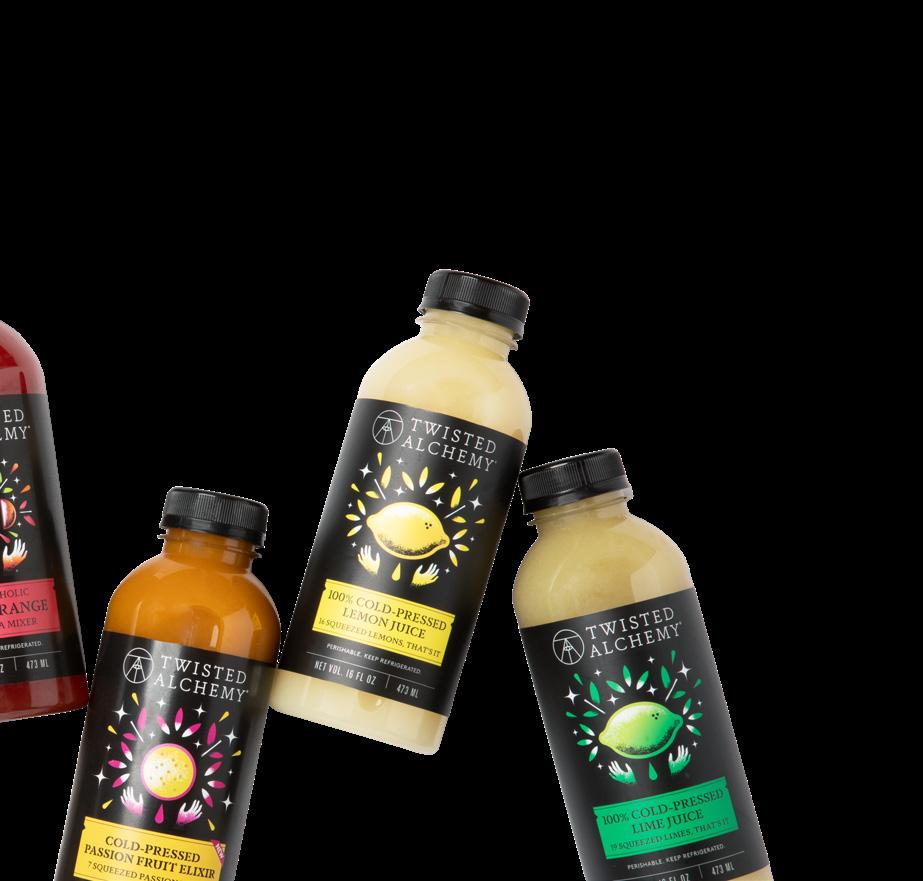
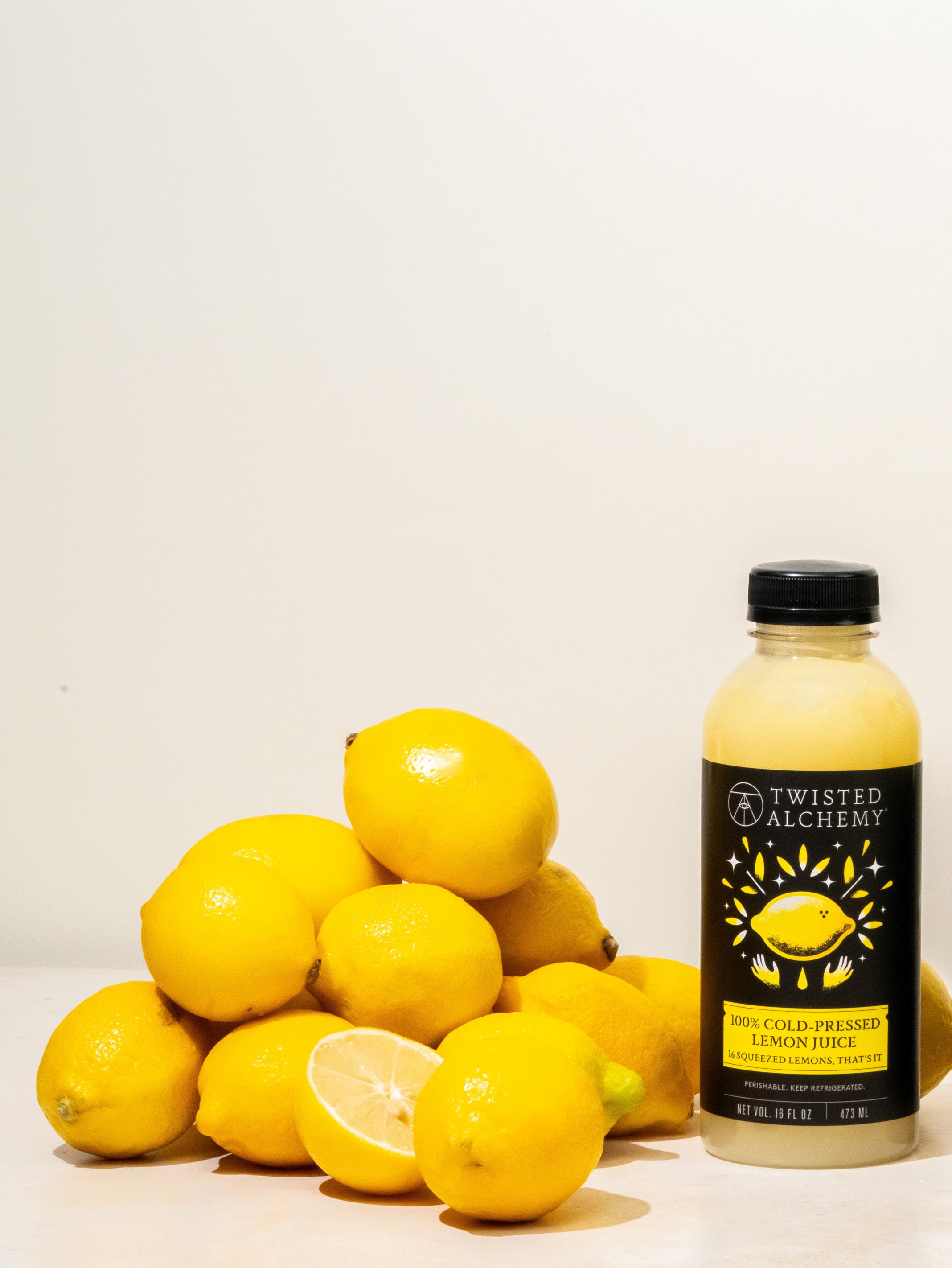
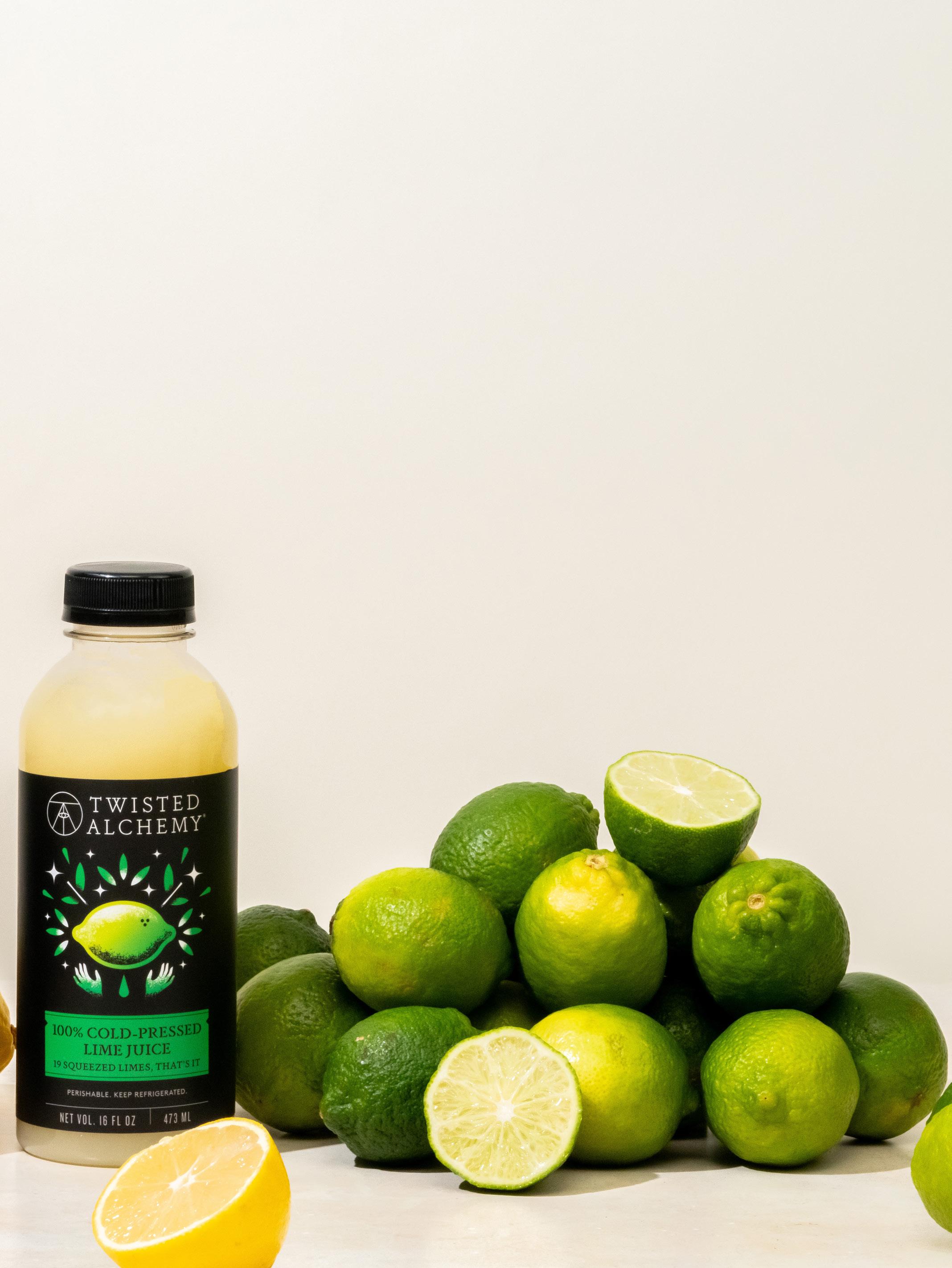
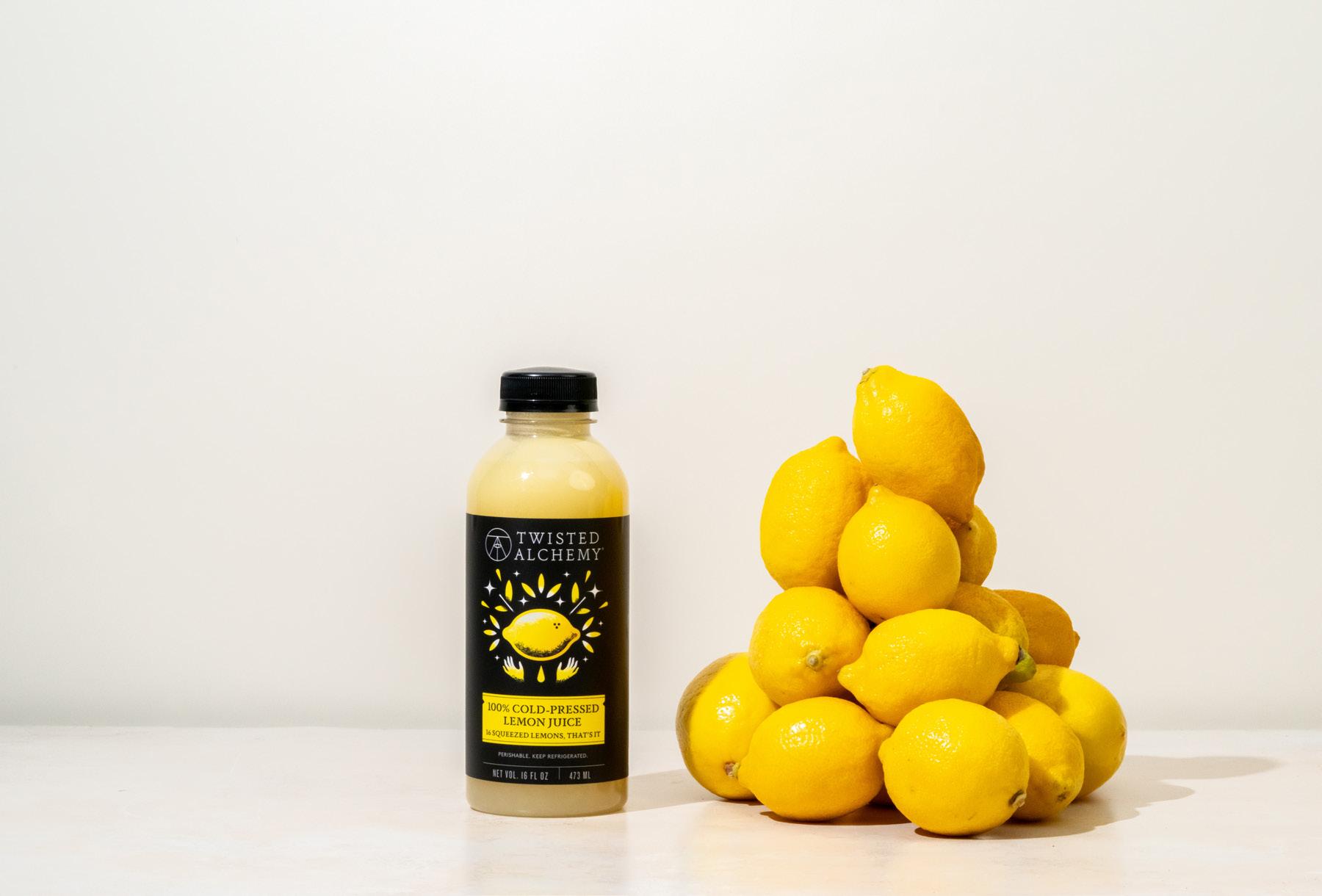
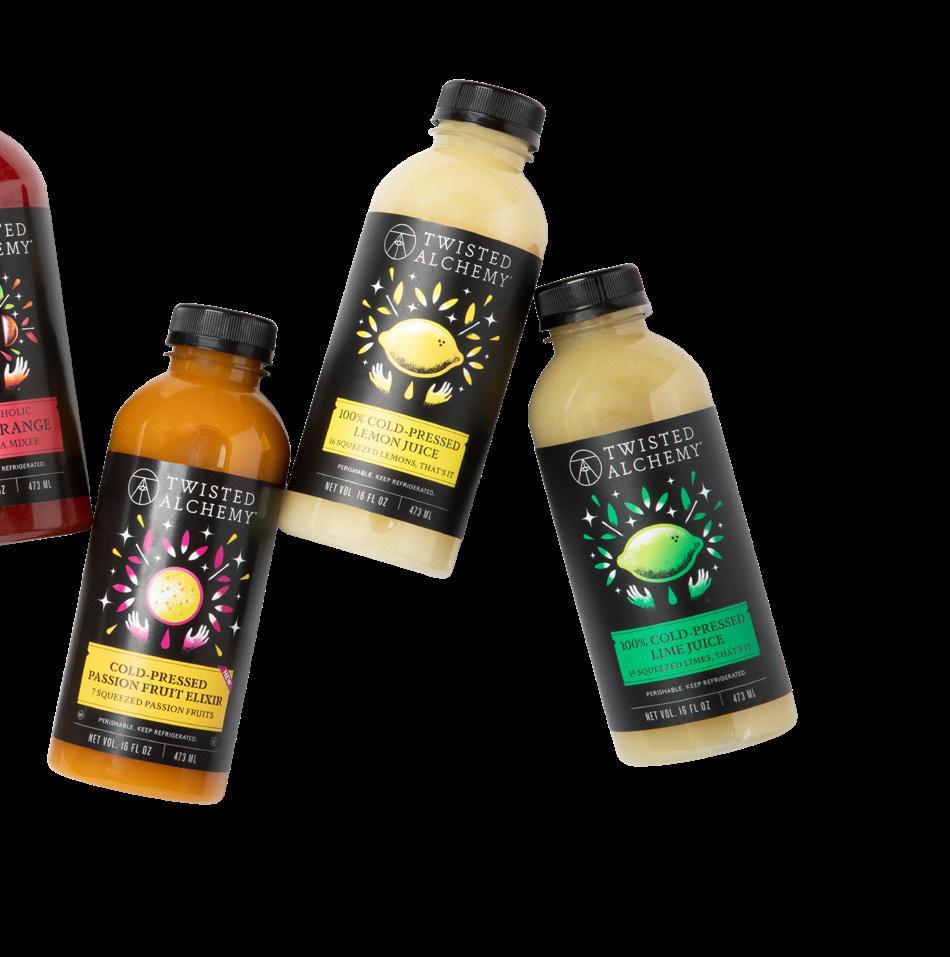
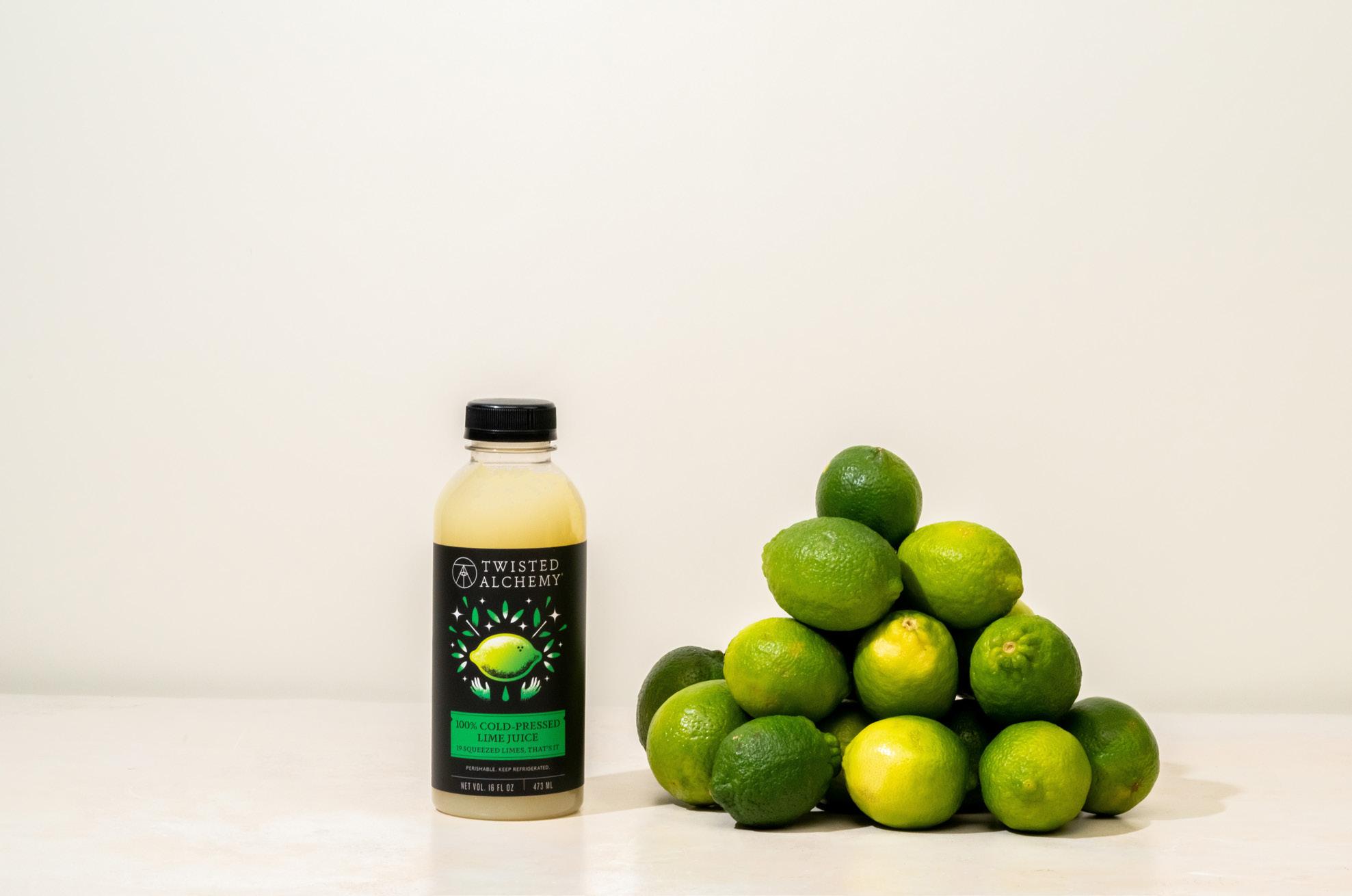
With approximately 19 limes or 16 lemons in each bottle, the company’s 100 percent cold-pressed lime and lemon juices offer extensive shelf life for customers’ favorite marinades, vinaigrettes, cocktails, or nonalcoholic beverages, among other creations.
Having recently announced its expansion into Sprouts across the country, Twisted Alchemy is widening its net and customer base. Holstein reflects upon this significant milestone.
“With our distribution from Sprouts’ 450+ stores, we can reach so many more customers nationwide” she highlights.
Thanks to its Eureka Lemon and Persian Lime juices being Whole30 Approved and containing zero additives, preservatives, concentrates, or added sugars, Twisted Alchemy stands out from
HOW
DOES USING THE °BX
MEASUREMENT
AND HAND-SQUEEZING YOUR JUICES ENABLE YOU TO MAINTAIN CONSISTENT SWEETNESS LEVELS AND HIGH-QUALITY FROM BOTTLE TO BOTTLE?
Kim Holstein, co-Founder: “The °Bx measurement is important to ensure consistency in sweetness. If you juice your own fruit, you will have varying sweetness in the juice, and it’s not reliable.
“With Twisted Alchemy, you can count on a measured sweetness due to °Bx management.
“With our lime juice, we use hand-squeezing to eliminate pith, and flavor impact is often delivered by machines that masticate the limes.”
other products on the market.
As the only non-alcoholic juice brand to have this approval, the company’s 100 percent cold-pressed juices – alongside its pure fruit, farmto-bottle philosophy – certainly fit the profile of the wildly popular Whole30 Approved health and wellness program.
While other juices on the market contain concentrates, syrups, water, or are heat pasteurized, Twisted Alchemy’s products are pure juice.
“We are so excited about being Whole30 Approved!” Holstein exclaims.
By choosing polyethylene terephthalate (PET) plastic packaging, Twisted Alchemy’s products offer beneficial environmental and performance qualities.
“This is very important to me, and we are continuing to work on getting better options to support sustainability,” Holstein reflects.
With up to 100 percent PET and green packaging at every touch point, the company is seizing numerous opportunities to reduce its carbon footprint.
everyday lemonade stalls into critical tools for change.
Through the program, children utilize the company’s lemon juice to make lemonade for their stand, learning about both entrepreneurship and impacting the world in a positive way.
“This initiative means a lot to me. As an entrepreneur for the past 30+ years, I’ve loved empowering kids to learn about entrepreneurship,” she shares.
The years ahead, meanwhile, are ripe with potential for evolution and continued innovation.
“I’m excited about our growth on all fronts as we serve our mission to elevate the spirits of cocktails, culinary experiences, and people,” Holstein remarks.
What started with a vision of ‘ending the squeeze’ for bartenders morphed into cold-pressed juices with purpose.
“Today, we’re elevating spirits both at the bar and in the kitchen for foodies, cocktail enthusiasts, home bartenders and chefs, people hosting and entertaining, those passionate about health and well-being, and oh so many more,” she insights.
It’s also been exciting for the company to provide great value for the consumer. With limes and lemons costing up to 99 cents in today’s economy, Twisted Alchemy provides a solution to the increasing problem of affordability.
“I’M EXCITED ABOUT OUR GROWTH ON ALL FRONTS AS WE SERVE OUR MISSION TO ELEVATE THE SPIRITS OF COCKTAILS, CULINARY EXPERIENCES, AND PEOPLE”
– KIM HOLSTEIN, CO-FOUNDER, TWISTED ALCHEMY
“Customers can purchase a bottle of our lime or lemon juice for just $6.99 to $7.99, containing purely 19 limes or 16 lemons respectively, and the bottle can be re-opened and sit in the fridge for up to 120 days!” closes Holstein.
Bringing its 100 percent coldpressed juices to the world with the freshest product from farm to bottle, consumers can now find Twisted Alchemy’s award-winning juices in the refrigerated section at Whole Foods and Sprouts.
In the summer of 2023, actor Tom Holland opened up about his decision to stop drinking alcohol, a conversation that subsequently sparked a movement in the drinks market as he went on a journey to create his own non-alcoholic (NA) beer.
This sector has witnessed a growing presence in the beverage landscape over the last decade, whereby
A NEW PREMIUM BEER EXPERIENCE
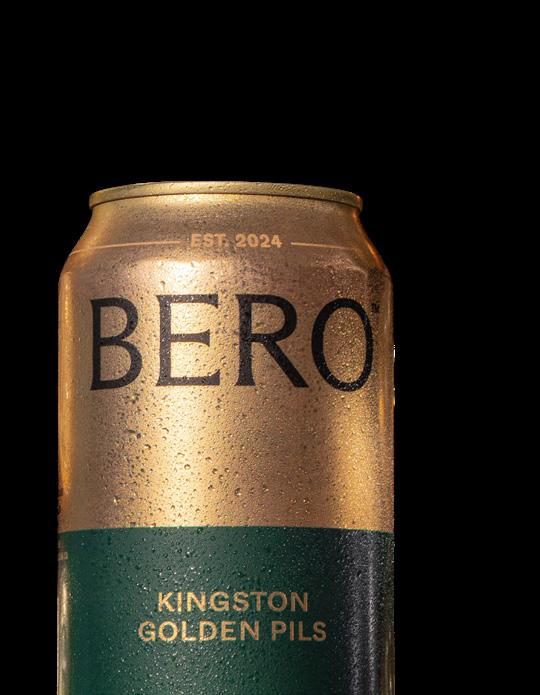
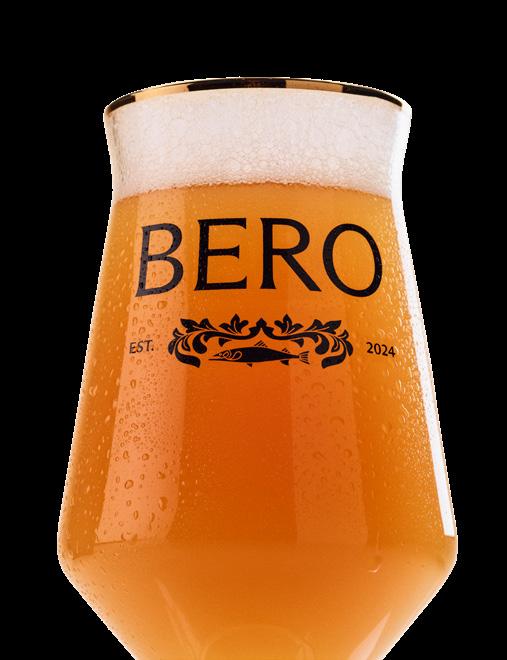
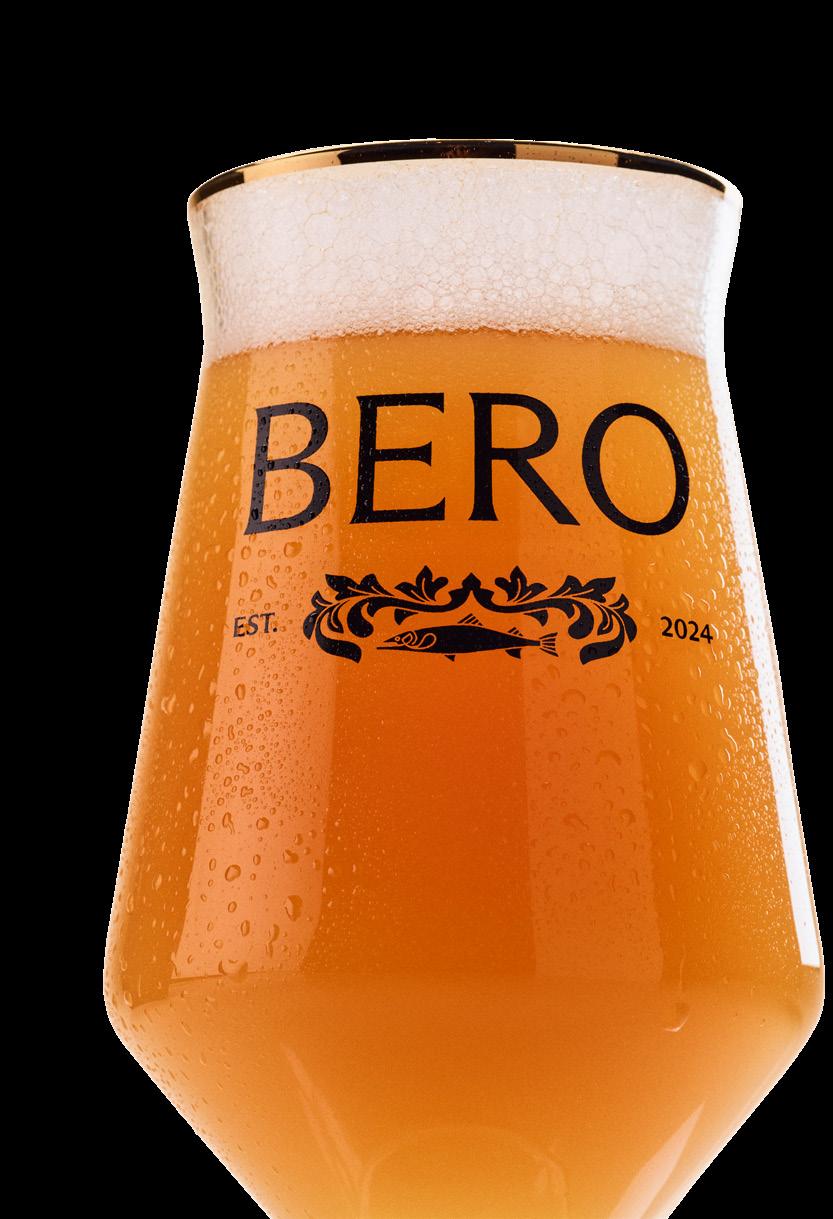
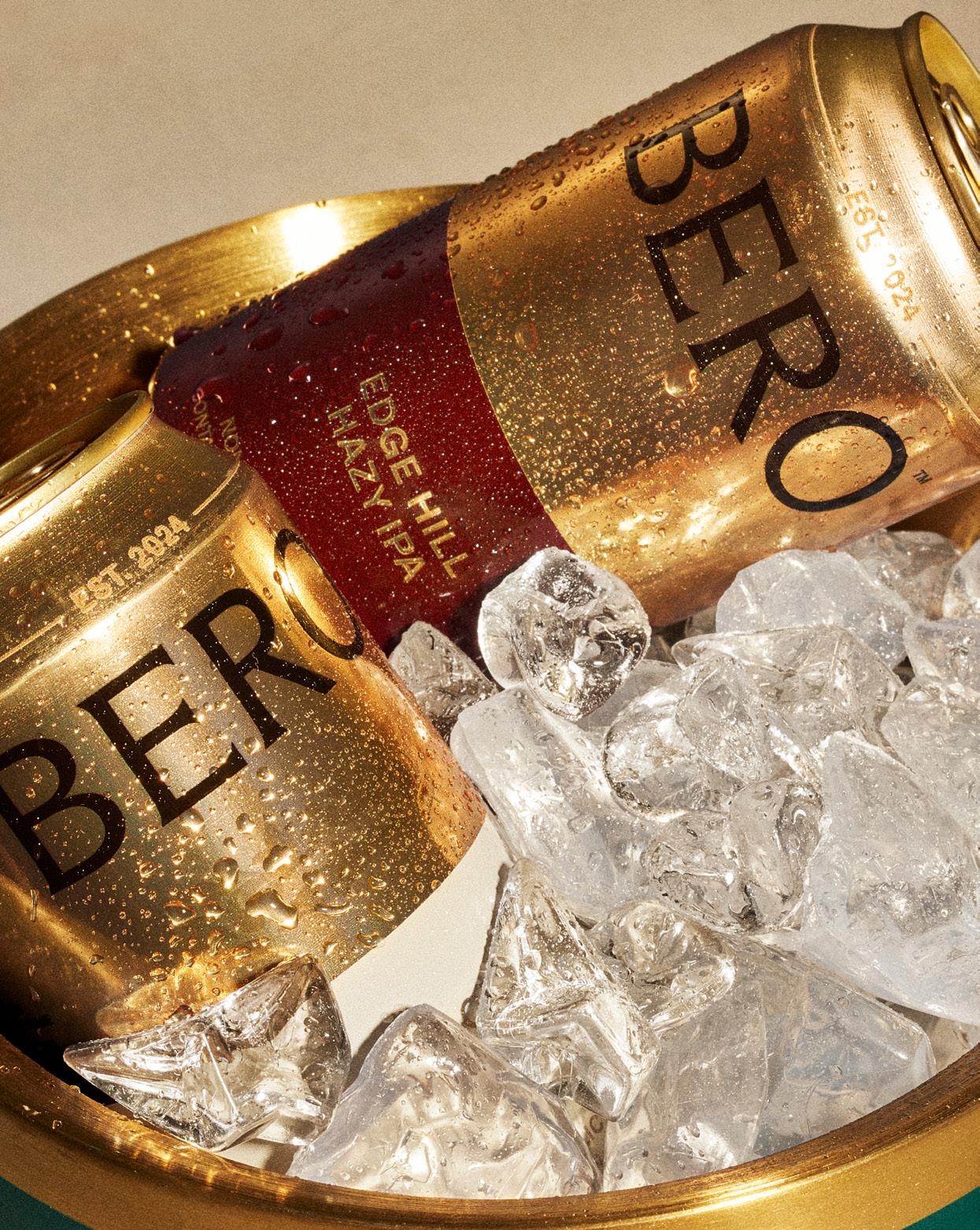
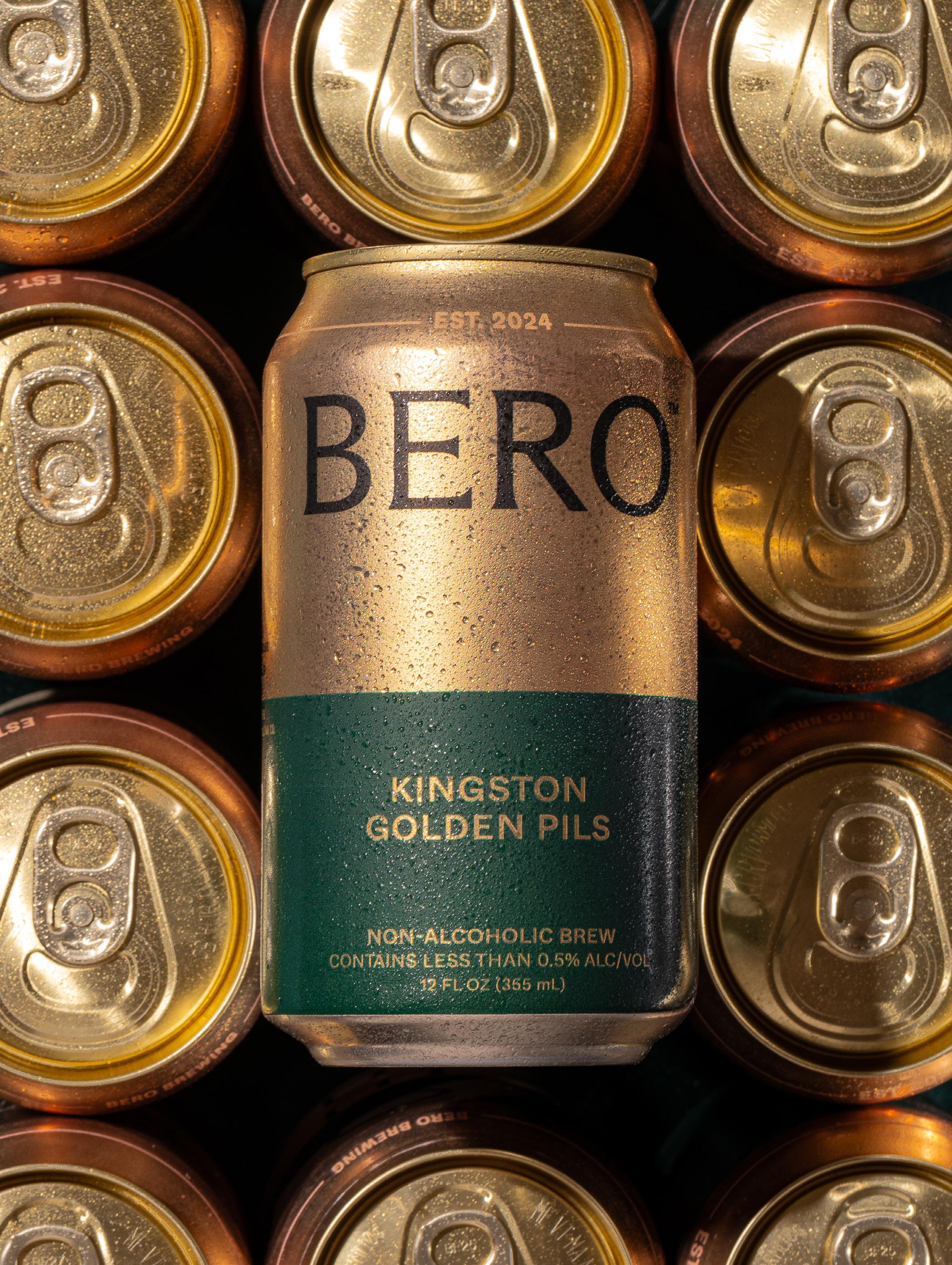
Shifting from a lesser alternative to a luxury choice, the non-alcoholic beer space has evolved into a drinks category in its own right. At the helm of this new era, BERO offers a premium product that provides the same beloved craft, world-class flavor, and social energy of beer without the unwanted consequences. We pour a pint with CEO and co-Founder, John Herman
Writer: Lucy Pilgrim
NA beer has transformed from a secondary choice into a popular go-to in bars, restaurants, and homes across the globe.
Representing a cultural beverage movement, consumers are now drinking with more intention, balance, and a real desire for quality without sacrifice.
“While NA beer, like so much fueling the consumer-packaged goods
(CPG) space today, started in health and wellness, it has quickly evolved beyond that,” opens John Herman, co-Founder and CEO of BERO.
“What used to be a ‘lesser’ alternative is now a premium choice, driven by consumers who want flavor, craft, and connection without the downside of alcohol.”
Now a leader in premium NA drinks thanks to the work of its two creators,
BERO’s founding vision was simple –to brew NA beer that doesn’t feel like a sacrifice.
LEVERAGING PASSION AND KNOWLEDGE
Upon early exploration into the NA space, Holland quickly realized there was a huge gap between what people wanted and what the category was delivering.
At the same time, Herman had similar thoughts from a brand and consumer lens, where people were looking for balance, inclusion, and products that match the way they live.
“Honestly, it was just an opportunity to create something that made the category aspirational and cool in order to attract new customers. That alignment and those opportunities are what sparked the beginning of the company,” Herman reveals.
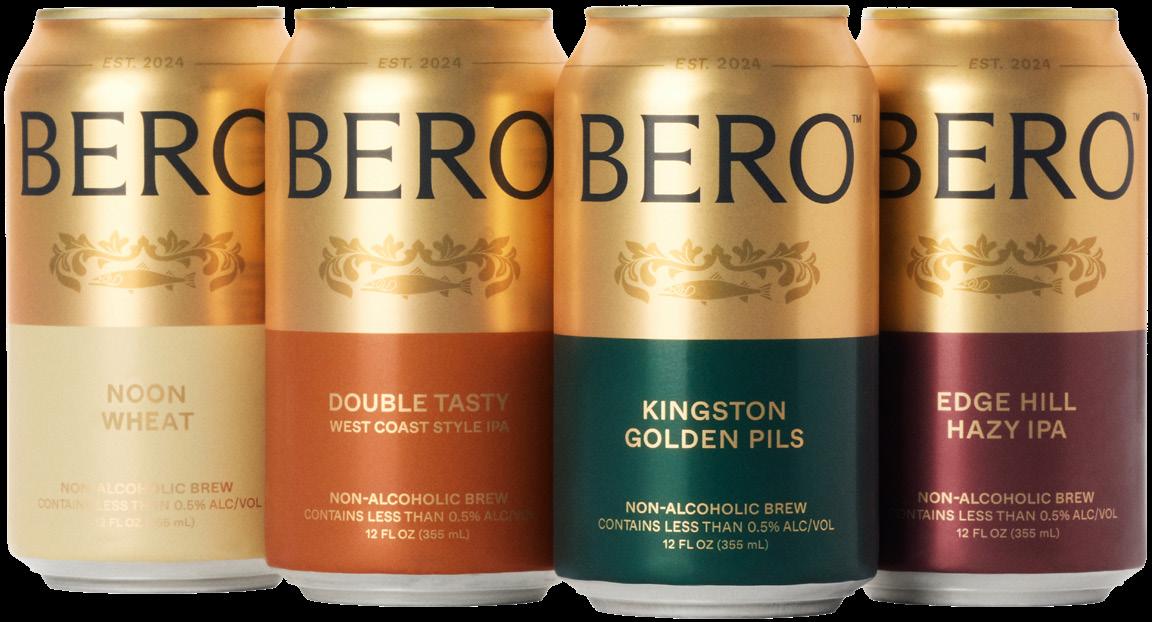
Together, the co-Founders shaped a beer line-up that reflects the expectations of modern consumers, ranging from a European-style pilsner to great IPAs – all elevated, intentional, and globally inspired.
“Tom brought a deeply personal perspective on belonging and authenticity; I brought experience in building premium lifestyle and CPG brands while also understanding what modern consumers expect and, of course, how to get the product to market,” he expands.
This winning combination gives the company’s products both authenticity and ambition, which can be felt by the company’s global consumer base.
“BERO is the result of two people seeing the same opportunity from different angles and deciding to build
“IN A FAST-GROWING CATEGORY, BERO STANDS OUT BECAUSE WE’RE NOT CHASING THE TREND – WE’RE BUILDING THE FUTURE OF WHAT PREMIUM NA BEER SHOULD BE”
– JOHN HERMAN, CEO AND CO-FOUNDER, BERO
something better. The momentum we’re witnessing now tells us the world was more than ready for it,” Herman insights.
SAME TASTE, DIFFERENT EXPERIENCE
With the NA beer category growing exponentially over the last five years, BERO is set apart by the fact that it never actually set out to make what was considered a ‘good’ alcoholic beer.
“We set out to make a great beer full-stop, which happens to be at <0.5 percent – that mindset shapes everything,” Herman states.
By utilizing maltose-negative yeast, BERO maintains traditional brewing methods while also keeping the beer at a negligible alcohol percentage. Significantly, this method omits the need for dealcoholization or stripping out flavor.
Such careful consideration in the crafting process means the brand’s products can stand shoulder-toshoulder with not only other NA beverages, but the best beers in the world.
BERO is further distinguished by its status as a premium global lifestyle brand rather than a functional NA product.
“The design, storytelling, partnerships, and communities we show up for all ladder into something more aspirational. Consumers immediately feel the difference when they pick up a can or see us in the world.”
BERO’s flavor profiles stand on equal level with top alcoholic beers
thanks to the company’s first hire – a brewmaster with an incredible legacy, which was tapped into to make drinks consumers love and enjoy.
“We’re creating beers people want to drink for the experience, not just for the absence of alcohol.
“In a fast-growing category, BERO stands out because we’re not chasing the trend – we’re building the future of what premium NA beer should be,” Herman impassions.
POURING THE PERFECT PINT BERO is promoted as the perfect balance between pleasure and moderation – a strategy which started with a simple truth – people don’t want to choose between feeling good in the moment and feeling good the
“Modern consumers want both, and they expect brands to meet them there,” Herman attests.
“The pleasure is real – proper brewing, real craft, premium design, and world-class flavor profiles. The moderation is effortless; you get the social energy, ritual, and taste without the downsides.”
Indeed, BERO is not trying to define new beer drinking occasions but instead tapping into those that have existed throughout history, unlocking vast groups of people trying to live with more intention but still wishing to find pleasure in drinking.
To appeal to health-conscious consumers, the brand leans into authenticity rather than preaching, as its approach is more lifestyle-driven rather than clinical and advisory.
“We show people enjoying BERO in the moments that matter – an afternoon with friends, a weeknight dinner, between meetings, or a party where they want clarity without feeling
left out. It’s about empowerment, not restriction,” Herman urges.
For a generation that increasingly cares about performance, wellness, and belonging, BERO fits naturally into that rhythm, allowing consumers to stay sharp and social while still enjoying something that feels premium.
“That’s the balance we’re building the brand around, and it’s resonating everywhere we show up.”
BRITISH IDENTITY, AMERICAN CRAFT
‘Born in London, Crafted in America, Enjoyed Worldwide’ isn’t just a motto for BERO, but the foundation of the brand.
BERO blends the attitude and heritage of modern British culture with the scale, innovation, and flavor ambition of the American craft beer movement – giving the beer a universality that travels across the globe.
“The British side brings a sense of character, wit, inclusivity, and understated style. It’s that London energy – creative, international, effortlessly cool – that shapes our brand worldwide.
“The American craft influence shows up in our brewing – bigger flavor expression, richer profiles, and a relentless focus on quality and technique,” Herman details.
Together, these two worlds create beers that feel familiar but elevated, classic but modern.
For instance, BERO’s Kingston Golden Pils has a crisp European backbone with a brighter American finish.
Its IPAs, meanwhile, bring West Coast and New England-style craft to create more expressive hop profiles.
“The result is a line-up that feels both at home but also differentiated around the world – culturally rooted but globally resonant.
That’s the power of combining British identity with American craft – the beer becomes universal, and BERO becomes a brand the world can connect to.”
CLUB BERO
BERO clearly recognizes that today’s consumers are not looking for pureplay products but rather experiences that can be shared with those close to them.
With this in mind, it launched CLUB BERO, a membership group where its most engaged fans, creators, chefs, and partners come together to shape the brand.
“CLUB BERO is our way of building something deeper than a customer base. We’re building a community around intentional living, premium taste, and the culture that sits around this new wave of NA drinking,” Herman prides.
Those in the club obtain a BEROMASTER membership, a toptier community in the NA space as members gain exclusivity to early drops, limited releases, small-batch experimental brews, and early access to collaborations.
However, the real value of BEROMASTER can be found in the abundance of experiences on offer,
REDEFINING A LUXURY LIFESTYLE
Combining the decadent luxury of one of Britain’s automotive titans and the evolution of premium drinking, BERO’s partnership with Aston Martin is a reflection of the world the brand is building from.
“From the start, we set out to create NA beer that lives comfortably in a premium, design-driven, and highperformance environment. Aston Martin represents that standard of craftsmanship, heritage, innovation, and an unmistakable sense of taste,” Herman enthuses.
Becoming the official NA beer partner of Aston Martin is a landmark moment in BERO’s journey, aligning with a brand that shares the same values and believes in precision, intentionality, and elevating everyday moments.
“Aston Martin drivers and guests want the best of both worlds – a luxury experience and the clarity to fully enjoy it. BERO fits naturally into that mindset.”
The partnership highlights how modern luxury is no longer about excess, but choice, balance, and surrounding yourself with things that are beautifully made and category-defining.
“When people see our beer in an Aston Martin environment, it sends a message – NA doesn’t mean less, it means you’re living with purpose, staying sharp, and still choosing something exceptional.”
such as invites to private events, tastings, partner experiences, and curated moments where the brand truly comes to life.
The membership also acts as a direct line to team feedback loops, co-creation, and a role in the evolution of BERO.
Although still in its early days, BEROMASTER has already helped inform flavors, packaging tweaks, merchandise, and even launch markets.
It is hoped the community will become brand and loyalty-defining, driving exclusive and limited moments.
“CLUB BERO is our cultural engine; BEROMASTER is the inner circle. Together, they let us build something that feels personal, premium, and global – exactly the kind of modern lifestyle brand we set out to create,” Herman tells us.
SHAPING THE FUTURE OF BEER
As the NA beer sector enters the mainstream over the next five years, Herman believes it will become an everyday choice rather than the alternative option consumers reach for.
“As the category increases in momentum, it will become a normal, automatic part of how people drink, particularly as consumer behavior is shifting fast, and the taste has finally caught up to the promise,” Herman attests.
The beverage sector is also seeing NA beer move from a functional space into a premium lifestyle product.
“People aren’t looking for products that simply remove alcohol; they’re looking for brands that match how they live – design-forward, culturally relevant, and globally inspired. It stops being about what’s missing and becomes fully about what you gain.”
As this movement evolves, brands that show up in the right cultural moments – such as sporting, music, and luxury events, alongside
hospitality, travel, and wellness – are the ones who will define the space.
This is where BERO comes in, as it will shape the next era of the NA drinks space. The company is proving what <0.5 percent beer can be with a level of craft, flavor, and design that stands up to the best beers in the world, supported by a global lifestyle brand and innovative partnerships.
Analysts estimate that NA beers will represent 20 percent of the broader alcoholic beverage market in coming years, and for this to materialize, BERO strives to excite and inspire new consumers to look for innovative solutions and brands.
“If the last decade was about
proving that NA belongs, the next five years will be about defining who leads it, and I fully believe BERO is going to be at the front of that movement.
We see this as being a sub-category that will redefine the future of beer,” Herman closes.
Exclusive, appetising content, delivered straight to your inbox
As organisations worldwide confront unprecedented change, embracing technological innovations and incorporating critical environmental sustainability agendas, now more than ever is the time to showcase the strides being taken in the food and beverage sector.
A multi-channel brand, Food & Beverage Outlook serves up all the positive global developments driven by companies across the food and beverage industry. Discover exclusive content presented through its website, social media channels and dispatches, delivered straight to your inbox with a bi-weekly newsletter.
Through this compelling venture, Food & Beverage Outlook foregrounds the movers and shakers of the industry by confronting unprecedented change, showcasing technological innovations and incorporating critical environmental sustainability agendas. To participate as a featured company and join us in this exciting endeavour, contact one of our Project Managers today.
From day one, the mission of Darsh Industries has been clear – to produce quality products at affordable prices. We speak to Managing Director, Bhadresh Pandit about how consistent quality, combined with affordability, has earned the company a loyal customer base and secured its position as a market leader in Tanzania and East Africa
Writer: Ed Budds | Project Manager: Harry Thurlow
SPICE UP YOUR LIFE
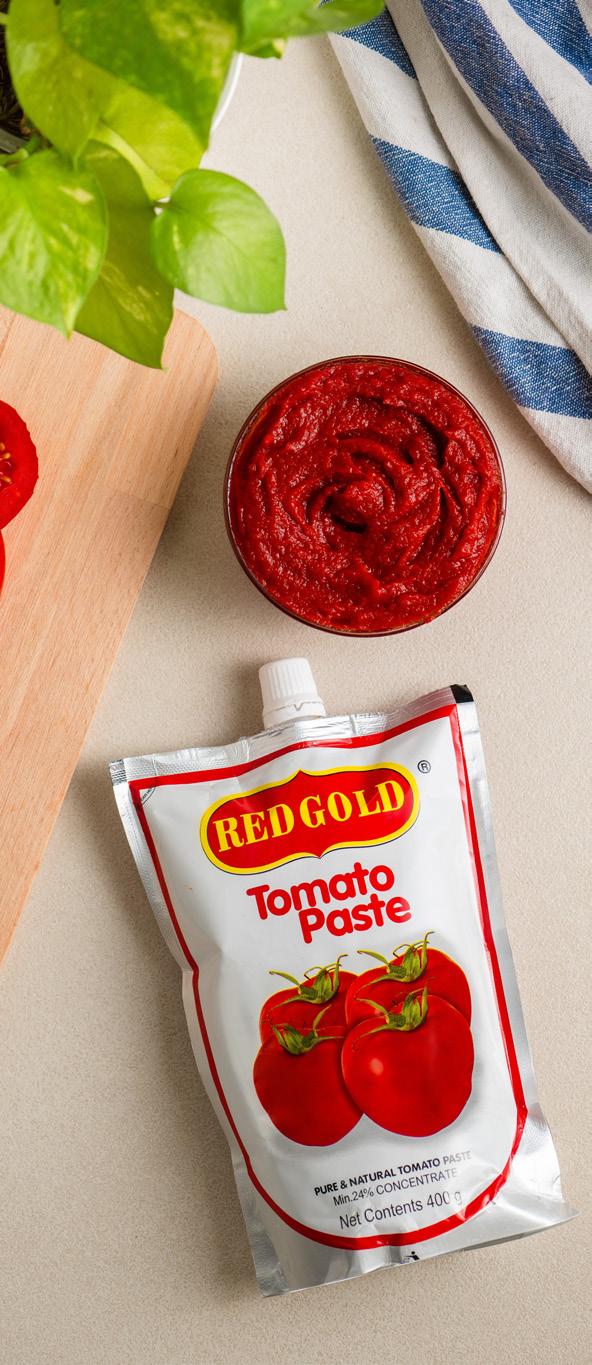
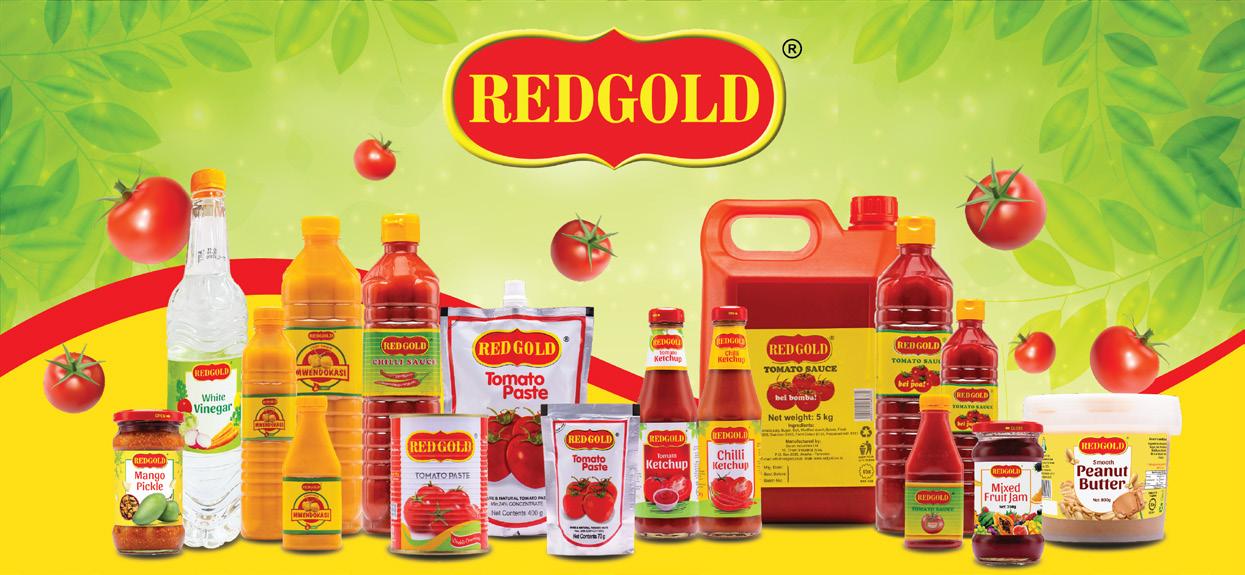
For more than two decades, RedGold has been at the forefront of crafting exquisite condiments in Tanzania.
The company’s legacy, built on a dedication to taste, quality, and culinary excellence, has firmly positioned it as a beloved brand throughout the region.
As such, each and every product embodies a relentless passion for culinary perfection.
Established in 1999, Darsh Industries (Darsh) paved the way for the celebrated RedGold brand, beginning its remarkable journey in Themi Industrial Area.
What started as a modest tomato
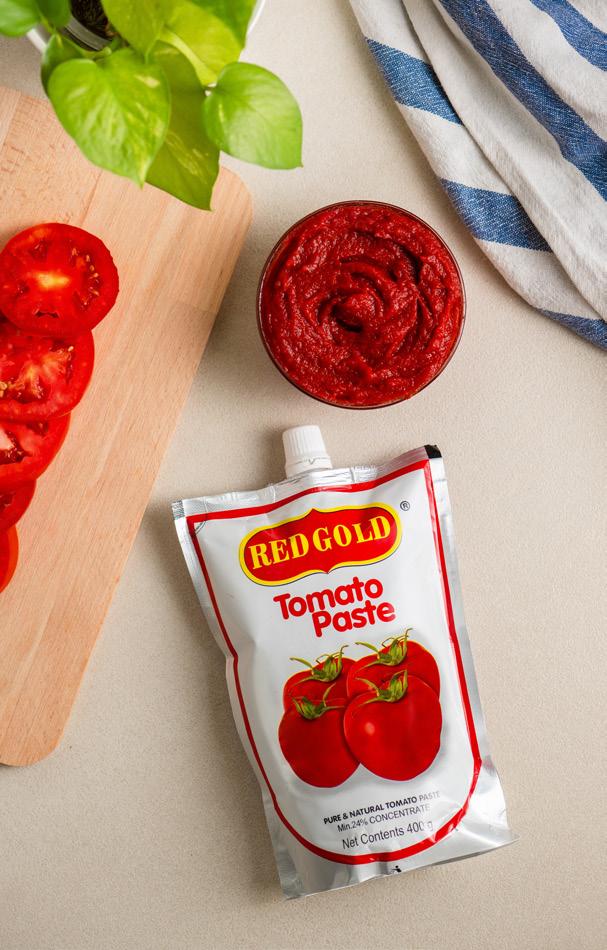
ketchup venture soon expanded as, having identified its niche, the company introduced Tanzania to tomato paste and concentrate.
“Our accolade as East Africa’s exclusive manufacturer of tomato concentrate speaks to our pioneering spirit and unwavering commitment. We pride ourselves on being a beacon of trust and quality, empowering culinary enthusiasts to craft dishes rich in flavour and nourishment,” introduces Bhadresh Pandit, Managing Director.
Darsh has since grown into a dominant force in the fruits and vegetables manufacturing sector, dedicated to unmatched quality and
ceaseless innovation.
The founding philosophy – that everyone deserves access to premium yet affordable products – anchors the company’s values and mission, securing its status as a household name.
“It’s a very exciting time to be in the food and beverage industry in Africa. New technologies are constantly emerging, demand is increasing, and younger generations are seeking fresh tastes, better quality, and new product designs,” Pandit impassions.
“This shift challenges us to innovate continuously, and it’s rewarding to adapt and create products that are able to truly resonate with the
evolving preferences of consumers across the region,” he sets out.
PRIDE IN THE PROCESS
For Darsh, there is a huge sense of pride and duty that comes with being one of East Africa’s exclusive manufacturers of tomato concentrate.
“It’s not just a technical capability –it means we sit at a critical point in the regional food value chain.
“By processing locally, we reduce dependence on imports, add value within the region, and ensure a key cooking staple remains available and affordable for households and businesses across East Africa,” Pandit elaborates.
This position comes with real responsibility, as Darsh works handin-hand with local farmers to build capacity by sharing agronomic best practices, supporting consistent crop quality, and providing reliable offtake for their tomatoes.
“As they grow with us, we meet rising demand with a secure, highquality supply. In this way, our role goes beyond manufacturing – it’s about empowering local agriculture, strengthening regional food security, and safeguarding the quality of our products,” he adds.
A successful supply chain is built on strong partnerships, and Darsh has invested years of time and effort
to develop close relationships with suppliers, training and guiding them to meet its quality standards.
“It’s a process of constant communication and shared learning.”
In this way, Darsh’s approach is based on understanding customer needs first, then working backwards through the supply chain so everyone from farmers to packagers understands the expectations and requirements.
“This ensures the final product meets our standards of quality and affordability and caters to the needs of the masses, which is at the heart of our business philosophy,” Pandit tells us.
HOW DO YOU EMPOWER AND RECOGNISE THE VITAL CONTRIBUTIONS OF YOUR TEAM MEMBERS?
Bhadresh Pandit, Managing Director: “At Darsh, our team is the backbone of everything we do. We invest consistently in building their skills across various departments such as sourcing, production, logistics, packaging, and sales, so that the capabilities of the organisation grow from within rather than being imported from outside.
“Many of our colleagues have been with us for 10, 15, or even 20 years, progressing from junior roles into key positions. That loyalty and continuity speaks volumes about the culture we have built together.
“We also work hard to make sure that ‘family business’ is more than just a label. Our senior leadership spends real time on the factory floor and in the field, mentoring, listening, and creating a space for people to share ideas and take ownership.
“Additionally, we recognise long service and outstanding performance and celebrate milestones as a team. That sense of respect and shared purpose translates directly into the consistency, care, and quality that consumers experience every time they pick up one of our products.
“Finally, and perhaps most importantly, I believe that when you treat your staff like family, loyalty follows naturally, and that’s the true foundation of a strong, lasting company.”
Your shipping partner of choice
A FIERY SUCCESS
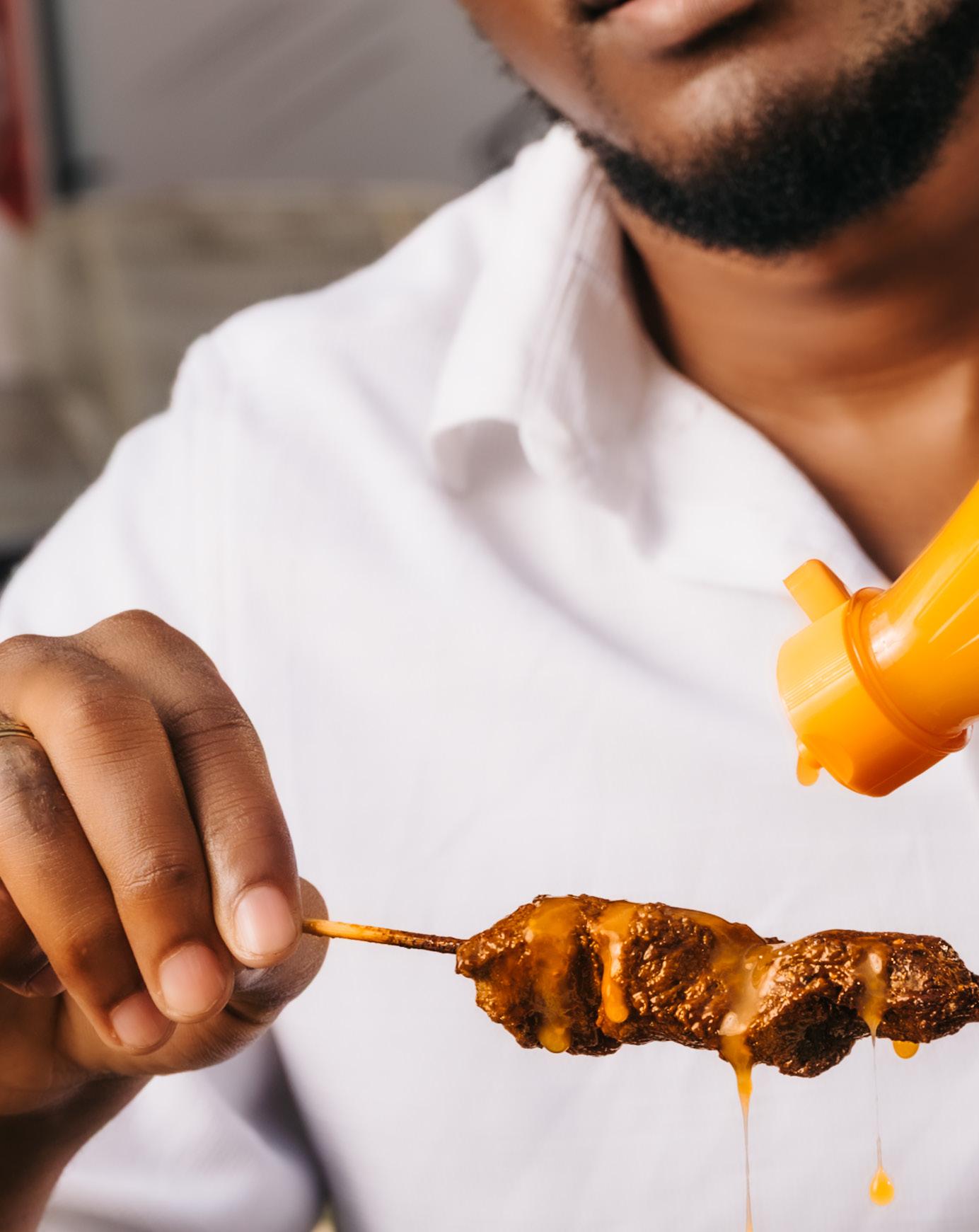
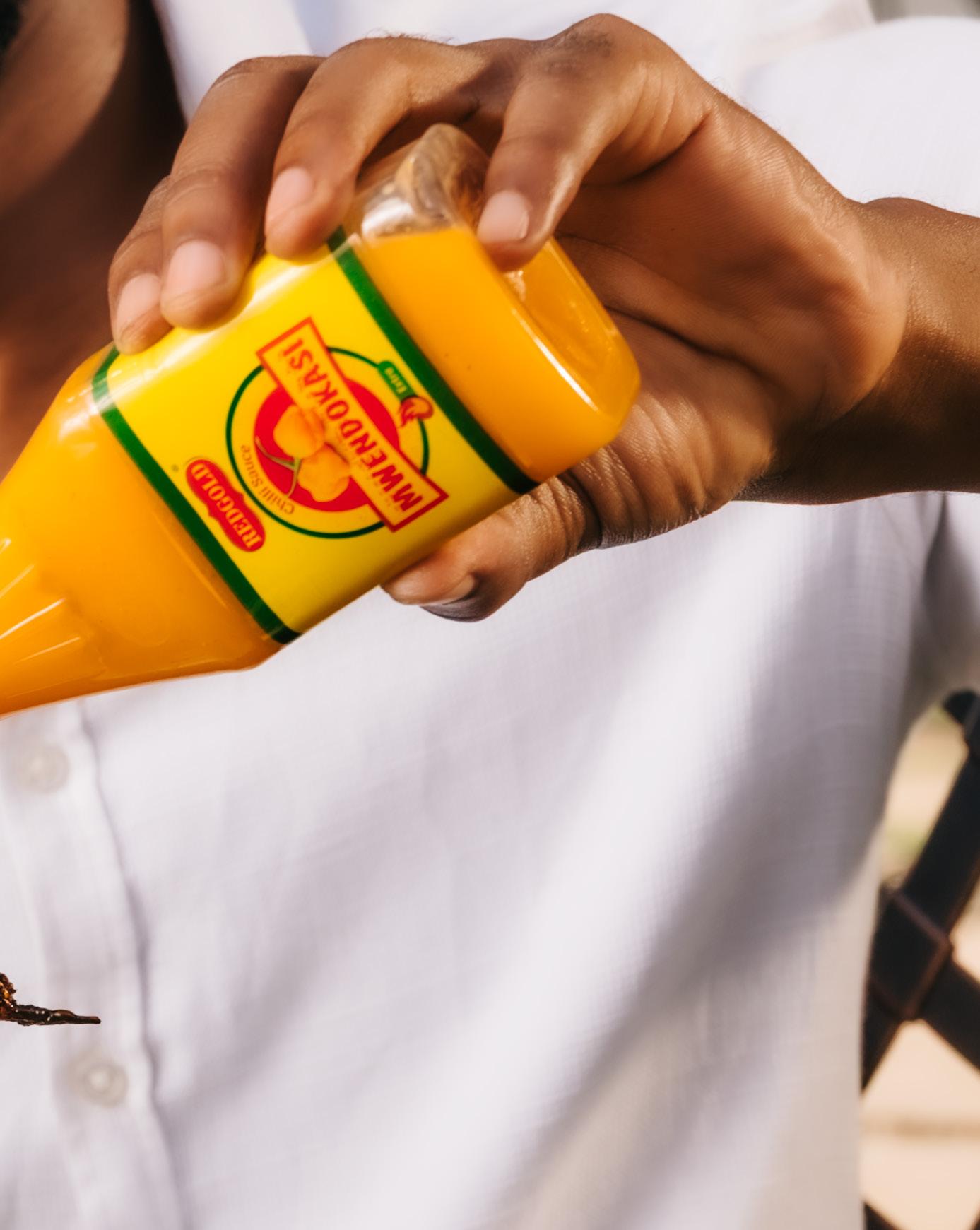
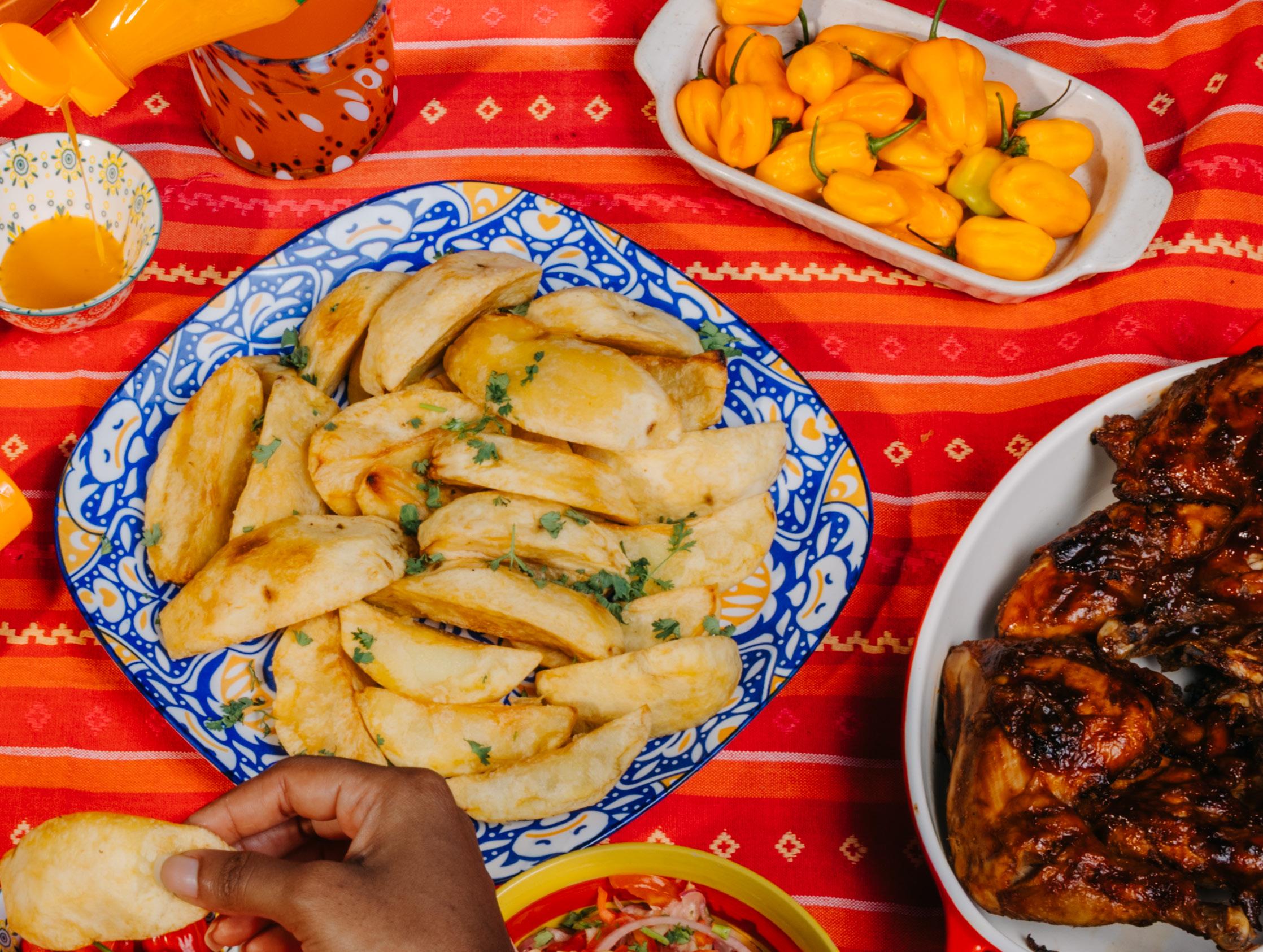
From the smoky chips mayai stalls on busy streets to kitchens across the country, one sauce is reshaping Tanzania’s food culture – Darsh’s Mwendokasi Chilli Sauce.
Amongst the company’s numerous innovations, the scintillating sauce, which is made from vibrant yellow habanero peppers, has become a market sensation.
“The bold, fiery flavour of our Mwendokasi Chilli Sauce has driven significant demand, especially amongst street food vendors, cementing its position as one of Tanzania’s fastest-growing condiments and a symbol of our consumer-driven innovation,” Pandit reveals.
What looks like a simple condiment on the surface is in fact the product of innovation, farmer empowerment, and world-class food safety standards.
For years, chilli sauces in Tanzania consisted of either unsafe homemade mixes that were short-lived and inconsistent or imported brands that were costly and lacked authentic flavour.
Consumers wanted something different – bold, fruity heat that spoke to local tastes at a price point that worked for students, vendors, and households alike.
Farmers, meanwhile, struggled with uncertain markets and limited access to improved seeds or modern farming knowledge. Vendors were left to rely on unhygienic homemade sauces, whilst regulators had little oversight of the informal market.
“We identified this gap and built a bold solution. Mwendokasi Chilli Sauce was designed to not only deliver flavour but also create a supply chain where everyone wins – farmers gain stable incomes, vendors get access to hygienic products tailored to their needs, and consumers enjoy an affordable, authentic sauce available year-round,” Pandit prides.
“WE PRIDE OURSELVES ON BEING A BEACON OF TRUST AND QUALITY, EMPOWERING CULINARY ENTHUSIASTS TO CRAFT DISHES RICH IN FLAVOUR AND NOURISHMENT”
Beyond the huge boost in sales, Darsh has made Mwendokasi Chilli Sauce part of Tanzania’s cultural landscape.
From Mihogo Festival and Nyama Choma Festival to cooking shows like Mahanjumati Chap Chap, the sauce has reached millions through live events, television, radio, and social media.
Meanwhile, collaborations with influencers such as Tanzanian chef and content creator, Monalisa Rwechungura, and Singeli artist, Kinata MC, have helped the sauce capture both culinary credibility and youth appeal.
EXPANSION AND INNOVATIVE EXECUTION
Looking ahead, Darsh’s priorities are to balance growth with disciplined execution.
“One of our flagship projects is the launch of an export pack for our Mwendokasi Chilli Sauce. We see this as an opportunity to take a truly unique Tanzanian flavour to the world, build a global footprint for our
condiments, and spark a sense of national pride around a product that is rooted in local taste and culture,” Pandit excites.
Parallel to this, the company is deepening its backward integration to strengthen the supply chain behind its growth.
“As demand for our products rises across Africa, we are investing in more resilient sourcing, capacity upgrades, and operational efficiencies so we can scale without compromising on quality and affordability,” he explains.
Elsewhere, Darsh is also actively exploring new opportunities within the condiments space and carefully evaluating potential areas for diversification.
“Whilst the next product line is still under development, our direction is clear – innovation anchored in consumer insight, sustainable growth rather than short-term volume, and maintaining our position as a market leader that stays agile, responsive, and relevant to the evolving needs of African and global consumers.”
Listening to customers is equally
important to the company –understanding and anticipating what they want in terms of taste, quality, and price.
“We’ve always taken customer feedback seriously and adjusted accordingly,” Pandit closes.
This meticulous attentiveness to consumers has helped Darsh grow into a leading brand and has truly established the company as a market leader in East and Central Africa.
Tel: (+255) 783 866 700
fm@redgold.co.tz redgold.co.tz
SWEET CENTENARY
East Africa was still finding its feet industrially in the early 1920s, and sugarcane was seen as a remarkable opportunity – a crop that could sustain communities, drive industry, and build a nation’s self-resilience.
Sugar production in Uganda began just over a century ago when Indian industrialist and philanthropist, Nanji Kalidas Mehta, arrived with the simple vision of creating an enterprise that would serve both the people and land.
In 1924, Mehta subsequently established the Sugar Corporation of Uganda Limited (SCOUL), a Mehta Group company and one of the oldest and most visible agro-industrial firms in the country. Today, the Mehta Group is headed and managed by Mahendra Nanji Mehta.
SCOUL had modest beginnings in Lugazi, a town in the Buikwe District of Uganda, with a small milling operation and a handful of determined workers.
“The challenges were immense –from taming the wild land to setting up machinery shipped halfway across the world – but the spirit of possibility kept us going. It was fascinating to see how sugar connected agriculture and industry; it demanded both scientific precision and human care,” reflects Anil Shah, Resident Director.
“Over time, our commitment deepened beyond business. We wanted to create livelihoods, modernise agriculture, and contribute
We celebrate the centenary of Sugar Corporation of Uganda Limited and its pioneering sustainability and community initiatives with Anil Shah, Resident Director
Writer: Jack Salter | Project Manager: Harry Thurlow
to Uganda’s growth.”
Today, as part of the Mehta Group, SCOUL takes pride in seeing that same pioneering spirit alive in the new generation – using technology, renewable energy, and sustainable practices to continue the legacy that began with bare hands and a bold dream.
LUGAZI COMPLEX
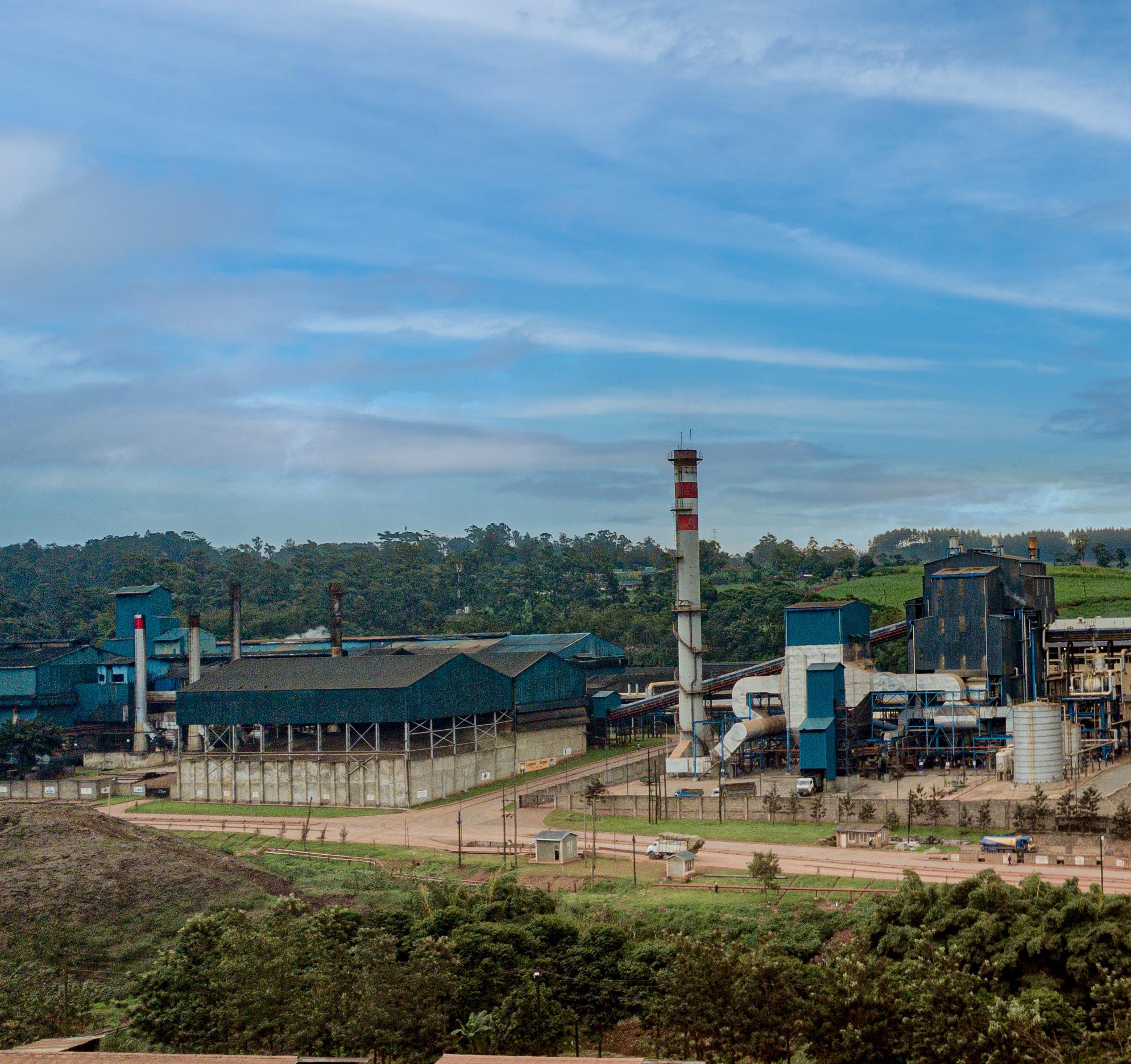
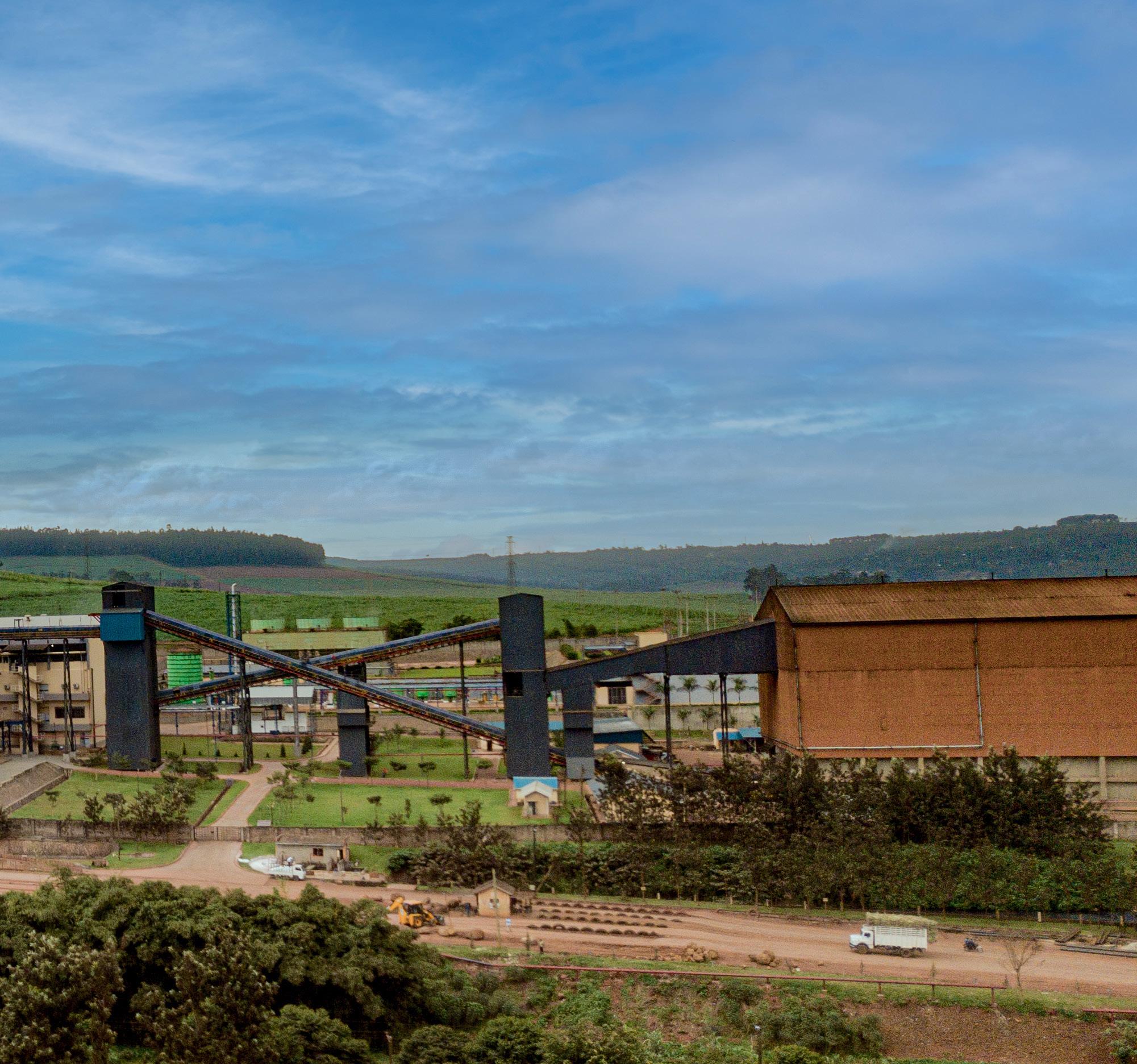
SCOUL’s operations are centred on a fully integrated sugar complex
in Lugazi, where the company was originally founded over 100 years ago.
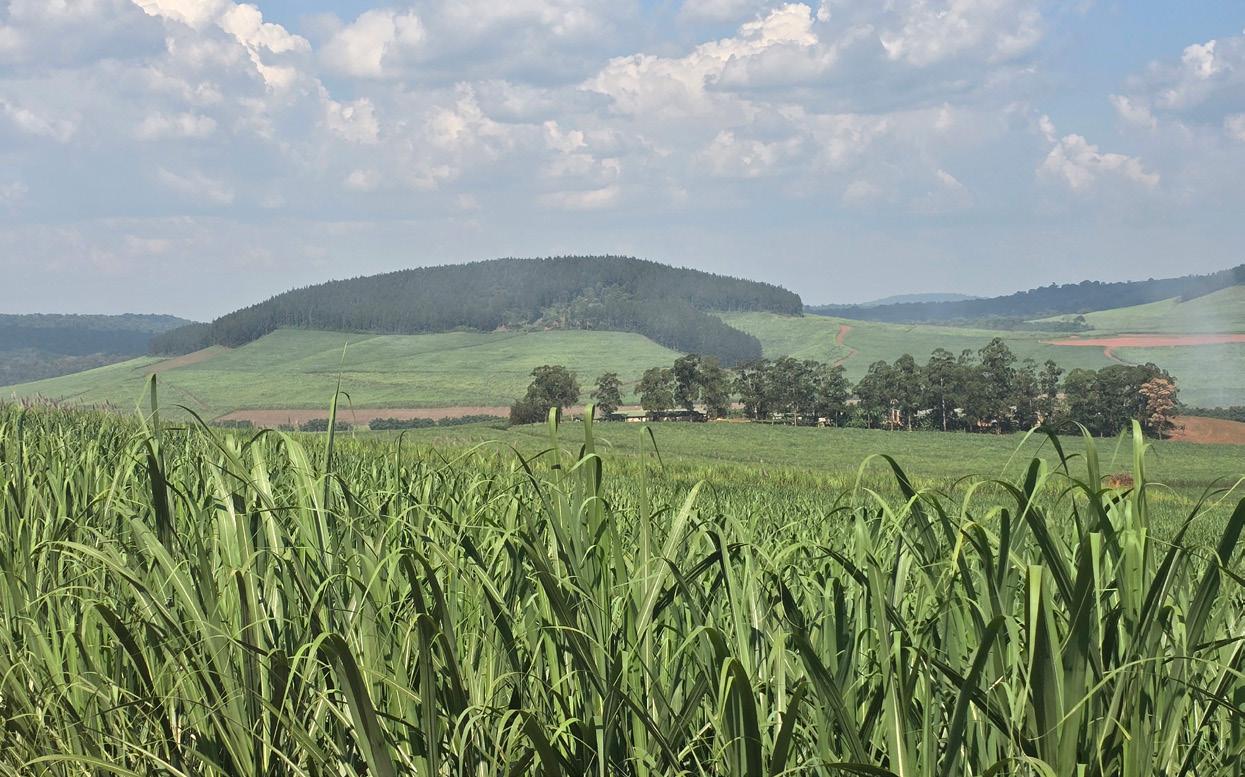
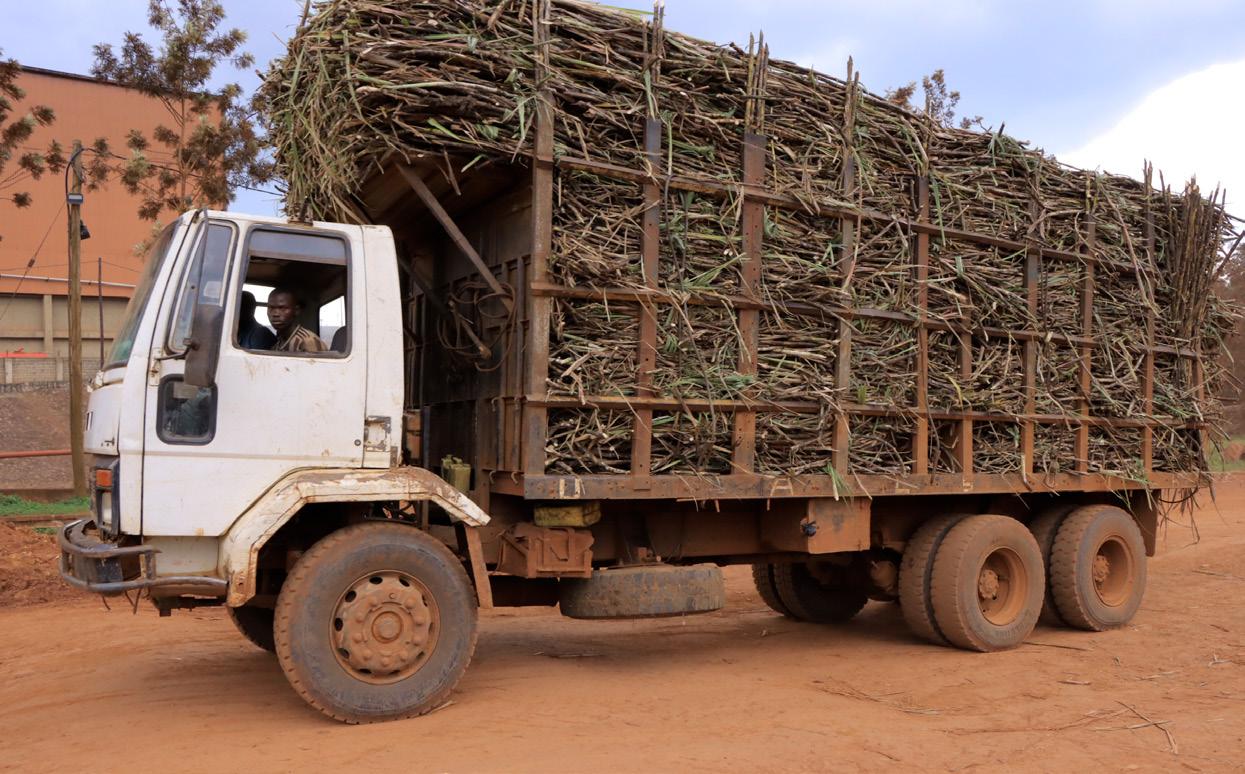
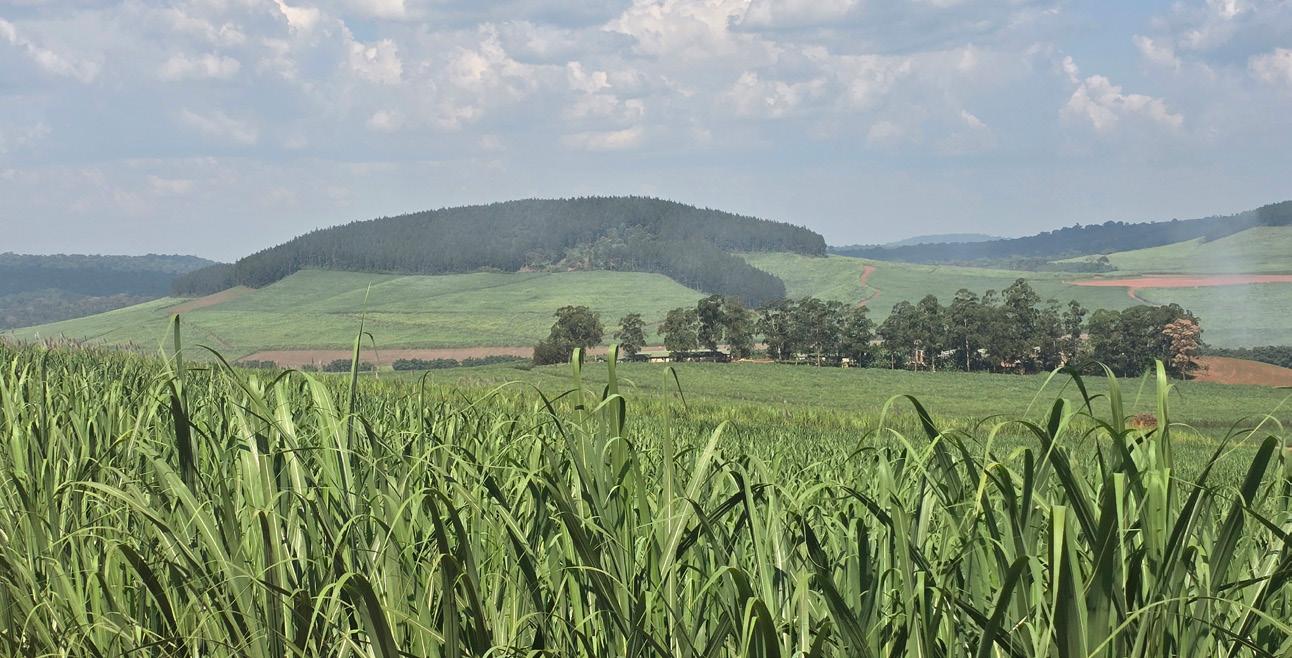
Sugarcane is grown on the SCOUL estate – comprised of 16,000 hectares (ha) of large, contiguous plantations – and purchased from an expansive network of several thousand outgrowers.
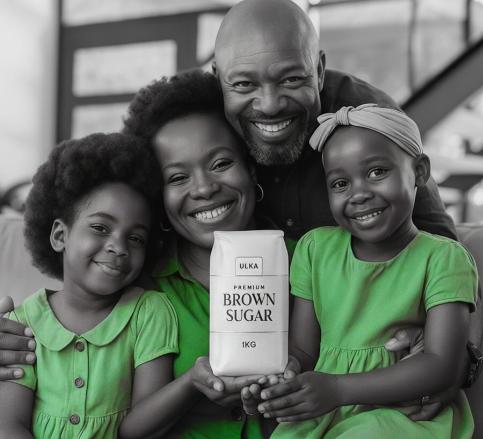
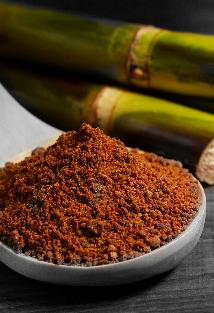
The company processes sugarcane into crystalline sugar for domestic sale and regional export at its factory, which has a production capacity of 125,000 tonnes per annum (tpa).
This accounts for a significant proportion of the country’s sugar production, which has grown substantially according to the Uganda Sugar Manufacturers Association, increasing from 100,000 tpa in the 1980s to more than 600,000 tpa by 2024.
“We supply across all Ugandan wholesalers and the industrial sugar market,” outlines Shah.
Historically, SCOUL’s sugar has also been marketed across East and
Central Africa in Kenya, Tanzania, Rwanda, Burundi, the Democratic Republic of the Congo (DRC), South Sudan, and Ethiopia.
Uganda is trying to boost its export volumes and value addition, with the Uganda Sugar Industry Stakeholders’ Council recently inaugurated in October 2025 to strengthen regulation, productivity, and exports.
“Given the size of the domestic market, and the neighbouring regional markets within East Africa, there’s latent demand, especially as processing, logistics, and by-product use improve,” Shah notes.
COGENERATION PLANT
In 2021, SCOUL successfully commissioned a USD$50 million cogeneration plant at its Lugazi complex, which generates 30 megawatts (MW) of electricity from bagasse, the fibrous residue of crushed sugarcane.
Of this, around 12 MW is used to power the factory’s operations, including as fuel for the boilers, with the surplus power exported to the grid, contributing clean renewable energy to national supply.
Development finance institutions, including FMO and Proparco, have helped fund the project to expand SCOUL’s power exports and increase the value of bagasse.
“This project is particularly important to us because it reflects our belief that every by-product has value,” affirms Shah.
“Instead of treating sugarcane residue as waste, we have turned it into a sustainable energy source, aligning with Uganda’s industrial energy diversification goals and reducing carbon emissions.”
Molasses, another by-product of
sugarcane production, is processed by SCOUL to produce extra neutral alcohol (ENA) in the distillery.
Then, the distillery-treated effluent is converted into manure with press mud produced from the filtration of sugarcane juice and used in the fields.
Carbon dioxide produced from the fermentation of alcohol is also processed to food-grade standards, thus ensuring zero waste discharge throughout the process.
“We’re a pioneer of sustainable energy practices where no part of the sugar production process goes to waste,” Shah tells us.
By-products such as bagasse and molasses open up industrial and power generation linkages, which are competitive advantages for the company as it progresses towards energy self-sufficiency and revenue diversification via cogeneration and distillation.
Aside from the cogeneration plant, SCOUL plans to expand the ENA production capacity of its distillery, whilst other sustainable projects in the pipeline are being discussed.
Several road upgrades and water projects are also underway within the Lugazi catchment area, with approximately 30 water borehole hand pumps installed by the company in neighbouring communities.
“All these investments are about sustainability and value creation – not just for SCOUL, but for our growers and communities,” enlightens Shah.
“INSTEAD OF TREATING SUGARCANE RESIDUE AS WASTE, WE HAVE TURNED IT INTO A SUSTAINABLE ENERGY SOURCE, ALIGNING WITH UGANDA’S INDUSTRIAL ENERGY DIVERSIFICATION GOALS AND REDUCING CARBON EMISSIONS”
– ANIL SHAH, RESIDENT DIRECTOR, SUGAR CORPORATION OF UGANDA LIMITED
SERVING THE COMMUNITY
Alongside the cogeneration plant, SCOUL operates a fully functional hospital and an education complex within the estate.
“Our philosophy has always been that we must serve the community,” Shah emphasises.
SCOUL’s 9,000+ employees, together with their families – totalling more than 36,000 people – receive free medical treatment from the Mehta Hospital.
Equipped for maternal care, laboratory services, and emergency response, the 60-bed hospital played a crucial public health role in the Buikwe District during the COVID-19 pandemic.
Meanwhile, the children of over 6,000 SCOUL staff and community members are provided with subsidised education by the two nurseries, 14 primary schools, and one secondary school on the SCOUL estate.
The Mehta Group, of which SCOUL is a subsidiary, is also committed to nurturing sports talents, providing facilities including football pitches, a cricket stadium, a basketball court, and a baseball pitch.
History was made in 2012 when the Mehta Little League under-12 baseball team made it through to the Little League World Series (LLWS) held in Pennsylvania, US.
“AS WE MOVE INTO OUR SECOND CENTURY, OUR COMMITMENT IS TO MODERNISE RESPONSIBLY – EMBRACING TECHNOLOGY, SUSTAINABILITY, AND INCLUSIVITY WHILST STAYING TRUE TO THE VALUES OF HARD WORK AND PARTNERSHIP THAT BUILT THIS COMPANY”
– ANIL SHAH, RESIDENT DIRECTOR, SUGAR CORPORATION OF UGANDA LIMITED
SCOUL – IN NUMBERS
• Founded in 1924
• 16,000 ha of sugarcane plantations
• 125,000 tpa production capacity
• USD$50 MILLION cogeneration plant that generates 30 MW of electricity from bagasse
• 9,000+ employees
“They were the first team to represent Africa in the history of the LLWS and won over many fans, including former US President Barack Obama,” prides Shah.
In addition, SCOUL has an international-standard 18-hole golf course and an academy that gives free intensive training and equipment to more than 60 kids annually.
“Several children from the programme have represented Uganda in boys’, girls’, men’s, and women’s national golf teams, and five graduates from the Mehta Golf Academy have received scholarships to universities in the US,” he adds.
INTO THE NEXT CENTURY
The centenary that SCOUL celebrated in 2024 was not just a corporate milestone, but a story of resilience, community, and vision.
“Our success rests on the dedication of thousands of Ugandans
who have worked the land, run the machines, and built the communities around Lugazi,” Shah reflects.
“As we move into our second century, our commitment is to modernise responsibly – embracing technology, sustainability, and inclusivity whilst staying true to the values of hard work and partnership that built this company.”
For 2026, SCOUL’s immediate focus is threefold – firstly, to increase its sugar recovery rate and expand its sugar output beyond 125,000 tpa, whilst improving efficiency through automation.
The company also aims to achieve full operational optimisation of its cogeneration plant, continue improving employee welfare, expand its scholarship and healthcare programmes, and ensure environmental stewardship through reforestation and waste-to-energy initiatives.
“We want SCOUL to be recognised not only as Uganda’s oldest sugar producer but also as one of Africa’s most sustainable agro-industrial enterprises,” closes Shah.
scoul@mehtagroup.com
FROM SUSTAINABLE SOURCING TO REVOLUTIONARY SOLUTIONS
Producing premium oils and fats, SD Guthrie International South Africa stands at the forefront of innovating the local food and beverage landscape. General Manager, Ruan Valentin, discusses establishing benchmarks for quality and sustainability in the dynamic African market
Writer: Rachel Carr | Project Manager: Harry Thurlow
South Africa (SA) boasts diverse and delicious cuisine influenced by its multicultural heritage. As a result, the country is seeing growth in the cooking oil and fats sector, with SD Guthrie International South Africa (SDGISA) leading the way.
SDGISA was established following Golden Hope Plantations Berhad’s 2004 investment in a former Unilever business, Hudson & Knight (Pty) Ltd. Subsequently, in 2007, Golden Hope Plantations Berhad, Kumpulan Guthrie Berhad, and Sime Darby Berhad merged, forming what
was then known as Synergy Drive and later renamed to Sime Darby Berhad – a multinational diversified conglomerate operating across several industries.
In 2017, the plantation division demerged to form Sime Darby Plantation, which was renamed as SD Guthrie Berhad in 2023. As the sole entity on the continent, SDGISA is a leader primarily focused on delivering customised oil and fat products to the Southern African region.
can design specific blends for use in various applications, from ice cream to soup powders to spreads and chocolates, for cakes, bakes, and everything in between,” informs Valentin.
“Focusing more on manufacturers within the larger South African market, our products are delivered either through one of our third-party partners, distributors or wholesalers to our end users, enabling them to manufacture their products for consumer enjoyment.”
WHAT SPECIFIC DIGITALISATION INITIATIVES ARE BEING IMPLEMENTED BY THE CENTRALISED PROJECT MANAGEMENT TEAM, AND HOW WILL THEY IMPACT EFFICIENCY AND PRODUCTIVITY?
Ruan Valentin, General Manager:
“We’re currently looking at various initiatives to streamline our operations, improve and optimise our sales and operations planning and processes, and enhance how we track vehicles on-site.
“We also have a large project in the works to digitalise our entire quality management and food safety management system, which will eventually include all our business management processes.
“Recently, we successfully digitalised our maintenance system, allowing our engineering staff to focus on what truly matters, including better control breakdowns and improving the reliability of our plants.”
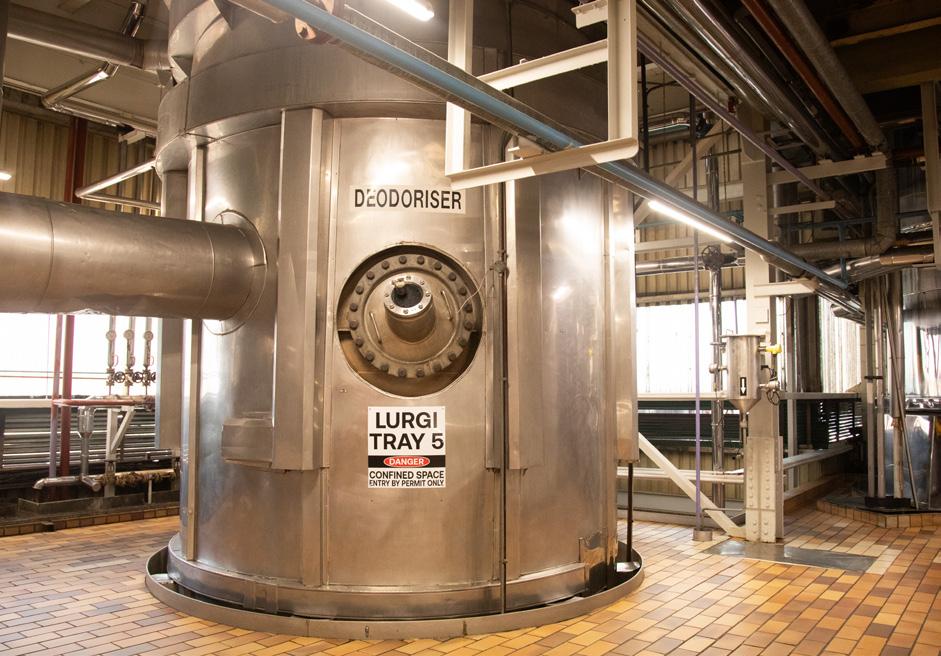
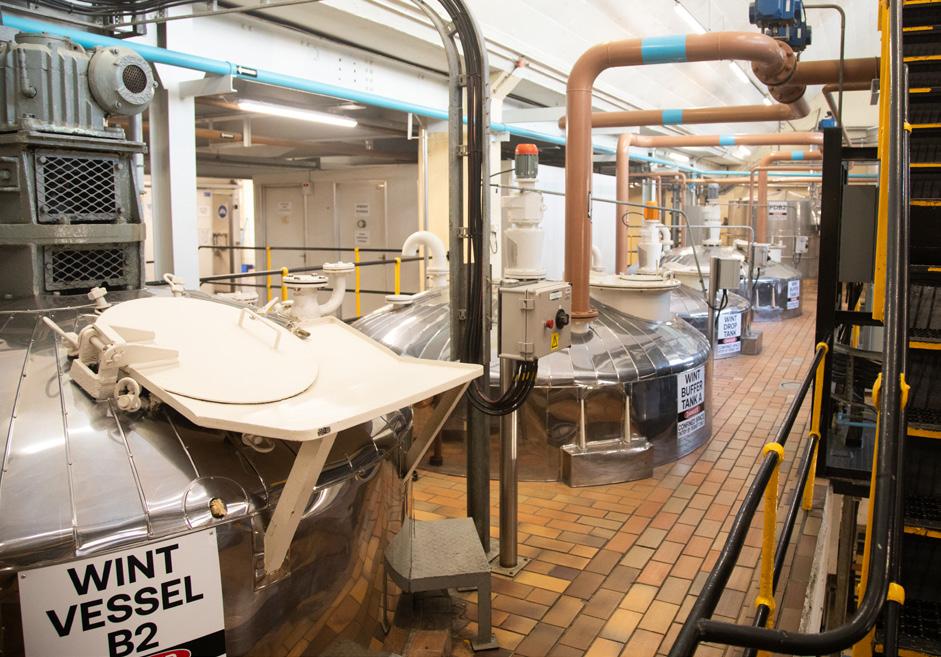
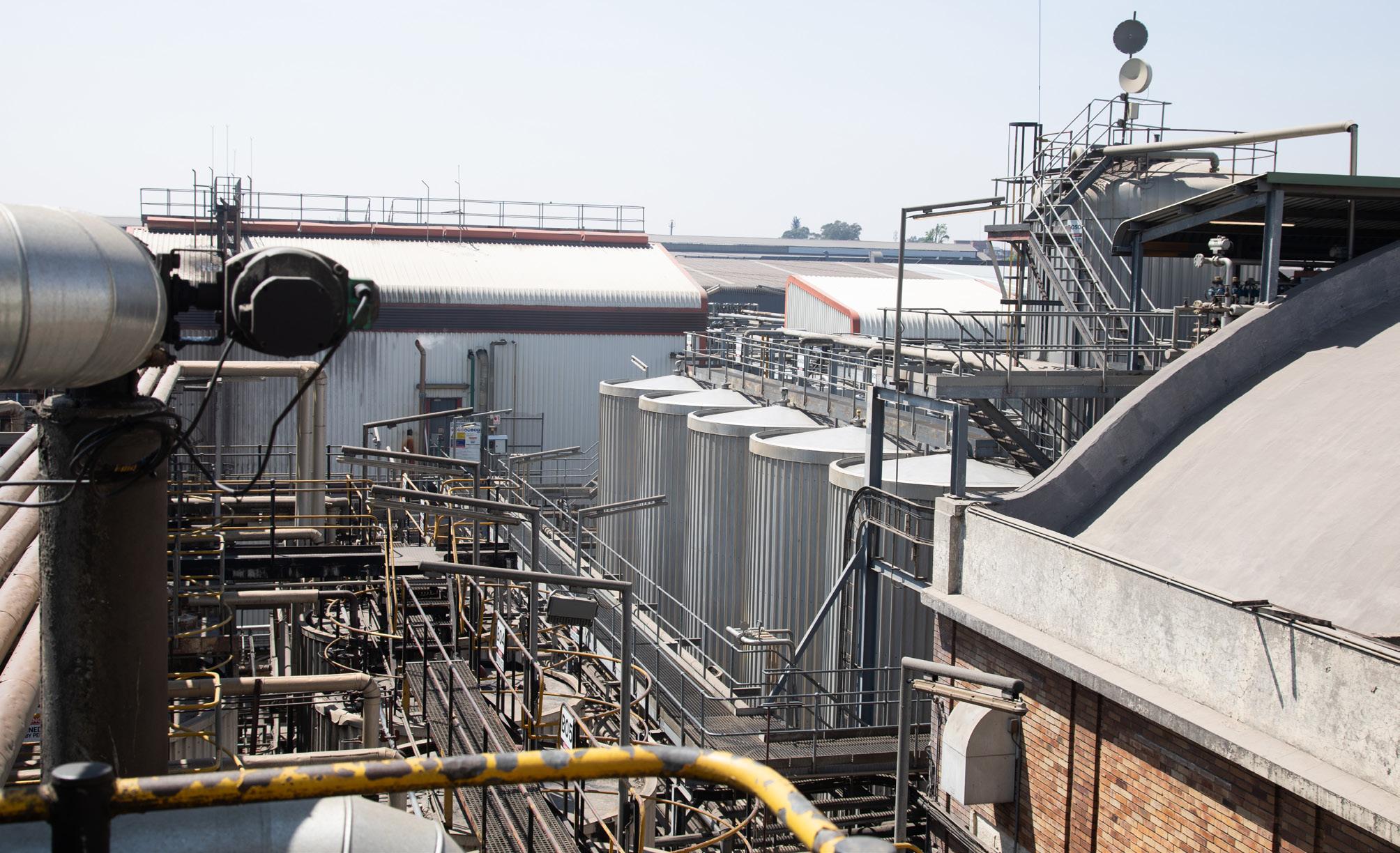
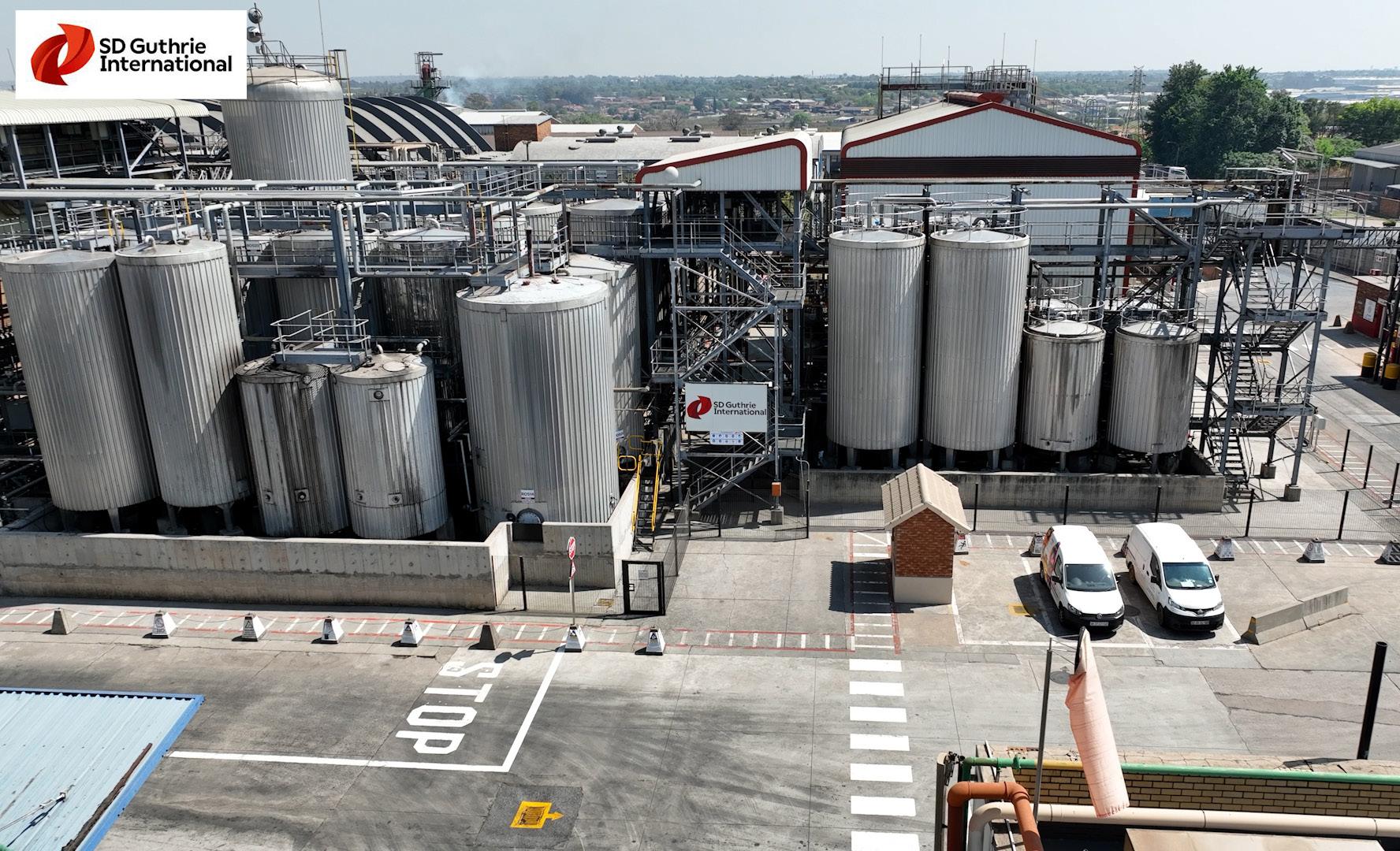
“Our facilities in SA include a refinery in Boksburg, Gauteng Province, which can perform both refining and modification processes. Additionally, we have a packing facility in Springs, also in Gauteng Province, which can pack into various formats, from 125-gram bricks to one metric-tonne intermediate bulk containers,” introduces Ruan Valentin, General Manager.
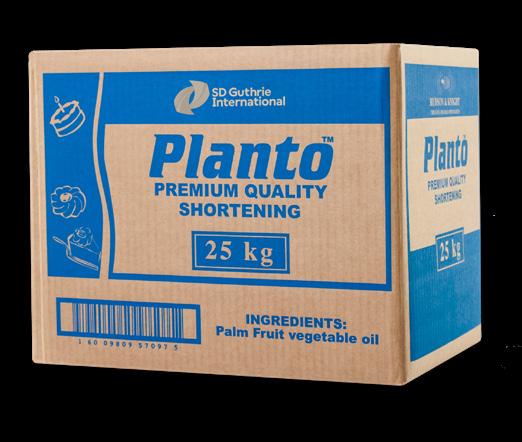
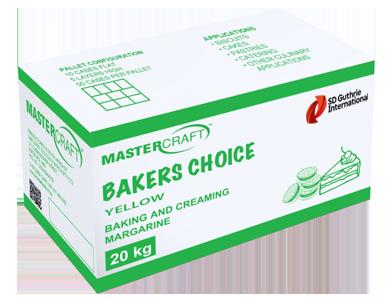
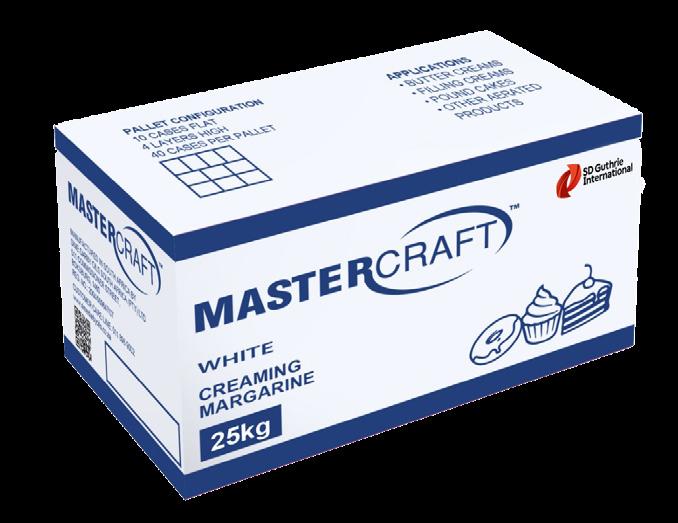
“Owning brands such as MASTERCRAFT™, Pastrex®, Crispa Gold, and Crispa Palm, and Holsum, we are well placed to meet the needs of our customers in the bakery, confectionery, and quick service restaurant (QSR) and hotel, restaurant, and catering (HoReCa) industries,” he continues.
Valentin emphasises that the diverse range of brands under SDGISA’s portfolio, combined with its dedicated team, enables the company to cater to a wide array of culinary needs across various sectors.
“With our in-house product innovation and development team, we
OILS OVER THE ORDINARY OFFERINGS
The modification of fats and oils involves changing their composition, structure, or physical properties to achieve specific characteristics or health-related goals.
One common method is hydrogenation, which is used to improve stability and structure, whereas interesterification rearranges fatty acids and triglyceride molecules. These modifications are often carried out to reduce saturated fat content or incorporate specific nutritional attributes.
“Having the capability to offer locally modified fats through hydrogenation and chemical interesterification allows us to custom-make and produce for various applications,” Valentin specifies.
Moreover, the SDGISA team is committed to continuous improvement and innovation to meet the evolving needs of its clients in the industry.
“HAVING THE CAPABILITY TO OFFER LOCALLY MODIFIED FATS THROUGH HYDROGENATION AND CHEMICAL INTERESTERIFICATION ALLOWS US TO CUSTOM-MAKE AND PRODUCE FOR VARIOUS APPLICATIONS”
– RUAN VALENTIN, GENERAL MANAGER, SD GUTHRIE INTERNATIONAL SOUTH AFRICA
Hydrogenating oils offers several advantages for SDGISA, as this process enhances the quality of its products by improving their stability, shelf life, and texture.
“Hydrogenation allows us to cater to different types of applications, especially those in confectionery, stock cubes, and soup powders,” he outlines. By utilising hydrogenation, SDGISA is not only able to meet diverse application needs but also innovate and customise products specifically designed to suit its customers’ unique requirements. Moreover, the team is committed to continuous improvement to meet the evolving needs of the industry.
“Having local hydrogenation capabilities allows us to innovate and develop tailored products, giving our customers confidence in our flexibility and dedication to meeting their needs,” Valentin proudly explains.
A SUCCESSFUL FORMULA
SDGISA’s oils and fats offer unique features that distinguish the company from competitors in the African market, contributing significantly to the company’s position as the leading supplier of infant formula.
“When it comes to infant-grade products and the production of infant formula, cereals, and other foods, contamination management is crucial.
This starts with how the product is sourced, transported, processed, and finally delivered to the end customer as part of our process,” Valentin tells us.
“It requires a lot of technical expertise and know-how on managing the activities at each point in the supply chain to minimise risk and ensure it adheres to the strict specifications we aim for.”
Effective contamination management is essential in ensuring the safety and quality of products, as every step in the supply chain –from sourcing to delivery – requires meticulous attention and specialised knowledge to meet the stringent standards SDGISA strives to uphold.
PIONEERING RESPONSIBLE PALM OIL PRODUCTION
Being the first in Africa to achieve Roundtable on Sustainable Palm Oil (RSPO) certification is a significant milestone for SDGISA, both underscoring the company’s commitment to sustainable sourcing and building trust in the brand.
“Our RSPO certification gives us responsibility in the market, which means that we set the tone for the rest of the industry. Even though uptake in SA is still very low, it remains one of our key messages to the market,” Valentin assures.
“As a subsidiary of SD Guthrie Berhad, being supported by the group and all their activities on sustainability and responsible agriculture does give us the ability to supply customers who require this in their products.”
Indeed, SD Guthrie Berhad is the world’s largest producer of Certified Sustainable Palm Oil (CSPO) and a founding member of RSPO.
Primarily, SDGISA collaborates with multinational companies that have established sustainability targets.
“We are slowly seeing a shift amongst local manufacturers, and
“FROM AN ENVIRONMENTAL PERSPECTIVE, WE’RE ALWAYS ON THE LOOKOUT FOR WAYS TO MINIMISE OUR WASTE AND ENSURE THAT WHAT WE DO PRODUCE CAN BE ETHICALLY AND RESPONSIBLY REPURPOSED OR REPROCESSED”
– RUAN VALENTIN, GENERAL MANAGER, SD GUTHRIE INTERNATIONAL SOUTH AFRICA
we see this as an opportunity to differentiate them from the rest of the market.”
Whilst the company is committed to sustainability initiatives that significantly influence its production processes, it also ensures its activities promote sustainability, maintain the high quality of its products, and allow it to remain competitive in the market.
“How we source the material is a key factor. Being fairly close to the end of the supply chain requires us to partner and work with players closer to the source to address issues on sustainability and responsible practices,” states Valentin.
Being a member of Supplier Ethical Data Exchange (Sedex) also helps ensure that SDGISA’s activities are
ethical and comply with local laws and regulations across all engagements with regional partners.
“From an environmental perspective, we’re always on the lookout for ways to minimise our waste and ensure that what we do produce can be ethically and responsibly repurposed or reprocessed.
“Most of the waste we generate is processed into biodiesel and biolubricants – landfill is always the last option,” he elaborates.
PRIMED FOR A POWERFUL PERFORMANCE
The upcoming year promises to be a dynamic and busy 12 months for SDGISA, driven by the
Labmin LIMS and QAmin — empower laboratories to simplify data management, automate processes, enhance compliance.
Smarter, Faster Workflows
Automate routine tasks, reduce errors, and get real-time insights that keep your lab running at peak performance.
Built to Fit Your Lab
Fully configurable workflows, seamless instrument and ERP integrations, and complete data traceability—Labmin adapts to you.
Compliance Made Simple
QAmin delivers end-to-end ISO/IEC 17025:2017 coverage and built-in tools for global standards, ensuring e ortless audit readiness.
SETTING SECTOR STANDARDS
SDGISA is committed to maintaining the highest standards of quality and reliability in the raw materials it procures.
Proudly ISO 9001 and FSSC 22000-certified, it holds suppliers to the same rigorous benchmarks that define the company’s operations. Through comprehensive annual audits of its suppliers’ facilities and operational practices, it forges strong partnerships to elevate their standards to match its own.
This collaborative approach not only enhances the quality of SDGISA’s products but also significantly uplifts the entire supply chain, fostering an ecosystem of excellence.
relentless demands associated with maintaining a thriving business.
As the company navigates challenges and opportunities, its commitment to excellence will guide it in managing a multifaceted agenda focused on growth and innovation.
“We’ve been on a growth trajectory regarding our financial performance over the last few years, which we define as needing to continue and build on,” Valentin reports.
To achieve its growth objectives, it is crucial for SDGISA to not only maintain its financial momentum but also enhance its market presence.
“We need to re-engage with our market and ensure we stay on top of and ahead of new requirements from our customers,” Valentin earnestly concludes.
SDGISA exemplifies the progressive intersection of quality, innovation, and sustainability within the food and beverage sector. The company not only meets the varying
demands of the culinary landscape but also sets a benchmark for responsible sourcing and production practices.
By leveraging local insights and capabilities, it is poised to continue its growth and influence in a competitive market, ensuring it remains the preferred choice for quality oils and fats across the Southern African region.
As SDGISA embraces the future, its passion for high standards and sustainability will undoubtedly play a pivotal role in shaping a more responsible food industry.