“Leadership is an action, not a position or a title.”
I came across this quote in the process of receiving all our stories for this journal and it couldn’t have been more perfect timing. Some of the most influential leaders in our community don’t stand behind podiums or carry impressive titles. They show up early, stay late, pouring themselves into work that often goes unseen. While gathering stories for this journal, I was struck by how many of our subjects insisted they weren’t leaders at all, questioning why they were nominated as a hidden leader. They described their work simply as “what needed to be done.” And yet, their impact tells a very different story. These are the people who notice the gaps and step into them, not for recognition, but because someone needed to be cared for.
Reading and working on these stories has reminded me that leadership is holding a door, sitting with someone as they cry, showing a student that they are deeply valued, creating belonging in a new city, bringing back a lost art form, and seeing people who are in the margins. It is the small moments.
The moments only seen by a few people. The moments when someone truly sees you.
I hope this journal gives you the opportunity to slow down, notice the quiet, yet impactful work happening around you, and maybe even notice the leadership qualities in yourself. Leaders are consistent in their everyday actions, showing up faithfully time and time again, and meeting needs in the mundane moments that most of life is made up of. Sometimes, that comes with recognition, but most of the time, the leaders that are weaving our community together remain in the background.
We wanted to highlight just a few of those incredible people in the next 66 pages, but we know there are so many more who are doing important jobs day in and day out. Maybe in reading these stories, you'll think of a leader who has impacted your own life. Go and thank them, tell them how they’ve changed you for the better, and ask them what wisdom they have to give. Let’s notice those around us more, and genuinely thank the people who are giving us a rich and relationally deep community.
MADDIE MCMURRY, EDITOR-IN-CHIEF
CONTENTS
6/STORY
Thomas Brown: If You're Walking Alone, You're Just Going for a Walk
Shelby Tyre
14/STORY Standing in the Gaps: Reviving Jazz in West TN
Lizzie Emmons
20/POEM The Scaffolding
Miley Rea
24/STORY Butterfly's Embrace: Preserving the Unseen Maddie McMurry
35/STORY
Jackson Association of Indians: The Quiet Cultivation of a Thriving Community
Hannah Gore
42/SPONSOR FEATURE
Carroll Bank & Trust
46/STORY
Misha Heglar: The Classroom That Taught Me More Than Spanish
Abbey Wilson
53/ESSAY Professor Hardy and the Quilting of Memories
Cari Griffith
60/STORY
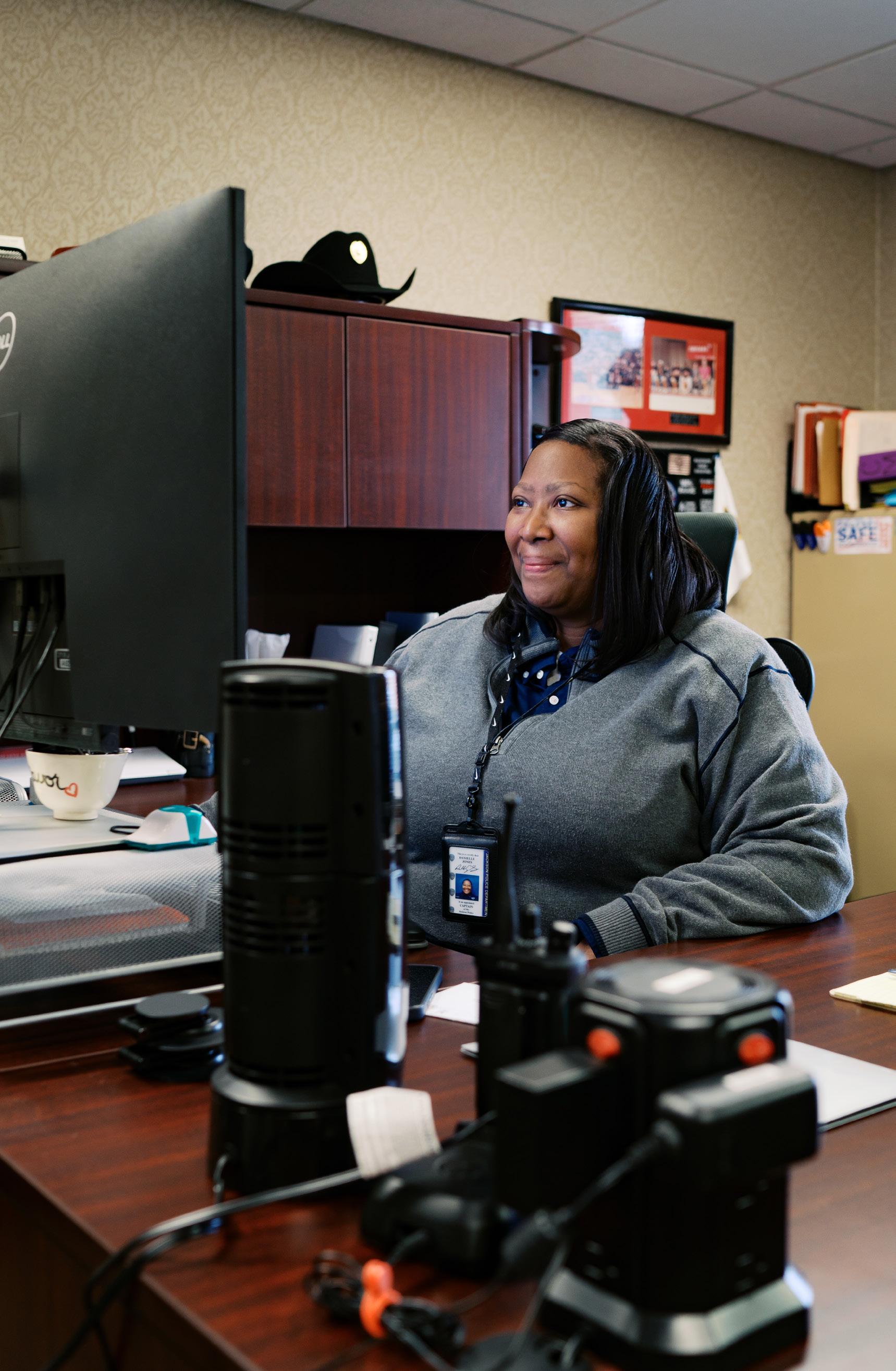
Major Danielle Jones: Leadership in the Margins
Trista Havner
Thomas Brown
If You’re Walking Alone, You’re Just Going for a Walk
WRITTEN BY SHELBY TYRE
PHOTOGRAPHED BY MIRZA BABIC
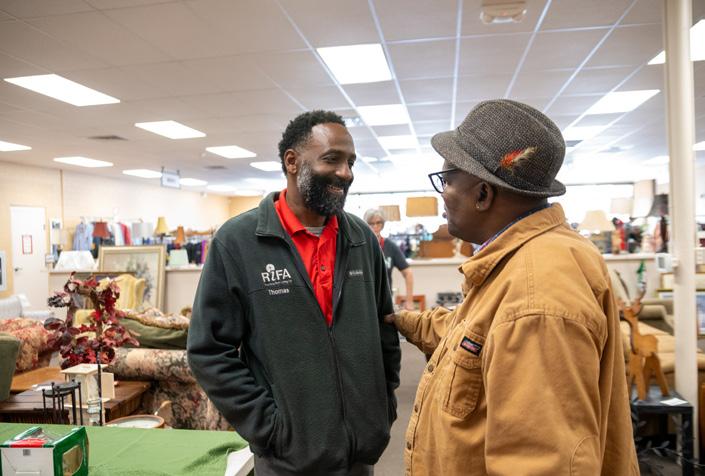
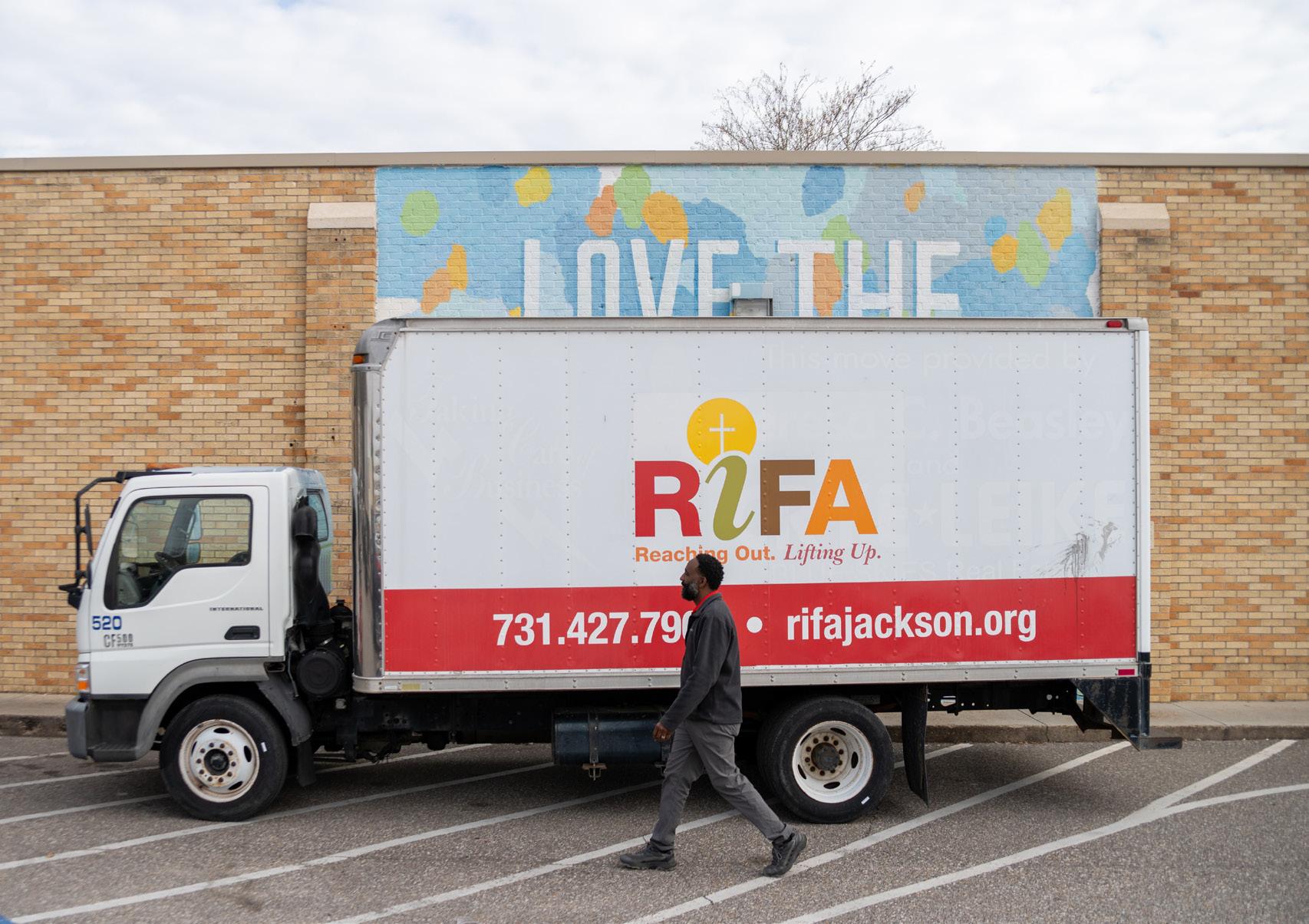
Regional Inter-Faith Association, better known as RIFA, touches more corners of West Tennessee than most people realize. Thousands of meals move through its kitchen and food bank each week. Families stop in for emergency groceries. Kids receive weekend bags so they don’t go hungry between school days. Donated furniture and clothing make their way into new homes. Volunteers show up, give time, and go back out in the city carrying the mission with them.
It’s a steady, constant rhythm. The kind of operation that only works when the right people are holding it together. And if you spend enough time around RIFA, you notice quickly that Thomas Brown is one of those people.
There’s a certain calm that follows him where he goes. It’s not loud or commanding. It’s the kind
of presence that makes a room feel a little steadier, like things are going to get done and people are going to be cared for in the process. He doesn't step into a space with urgency or force; he steps in with intention.
“Community means everybody has some type of input. It’s what you’re doing with each other.”
Thomas doesn’t talk about community as an idea — he talks about it as something you participate in every single day. And that’s exactly what he does at RIFA.
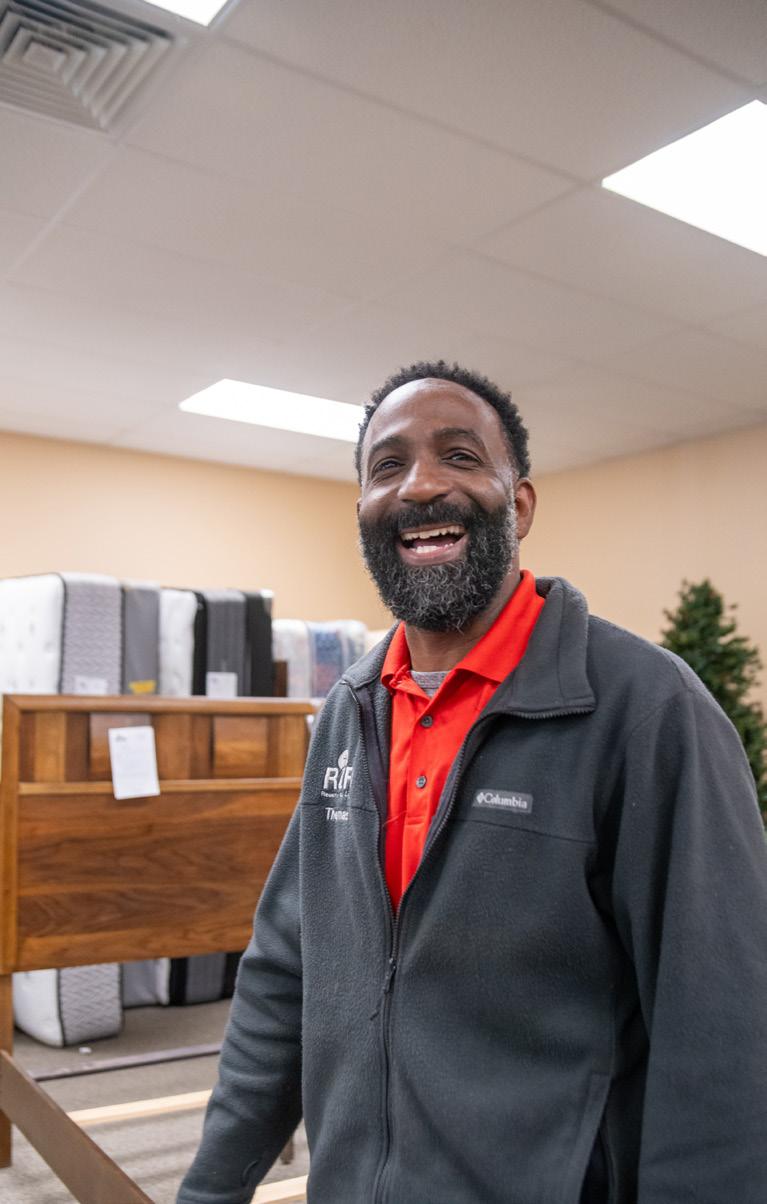
Thomas serves as the Senior Warehouse Manager, which, in practice, looks like a mix of logistics, people, relationships, and doing what needs to be done to keep food and resources moving across Jackson. He started in the warehouse years ago, learned every part of the operation, and grew into the
role he has now.
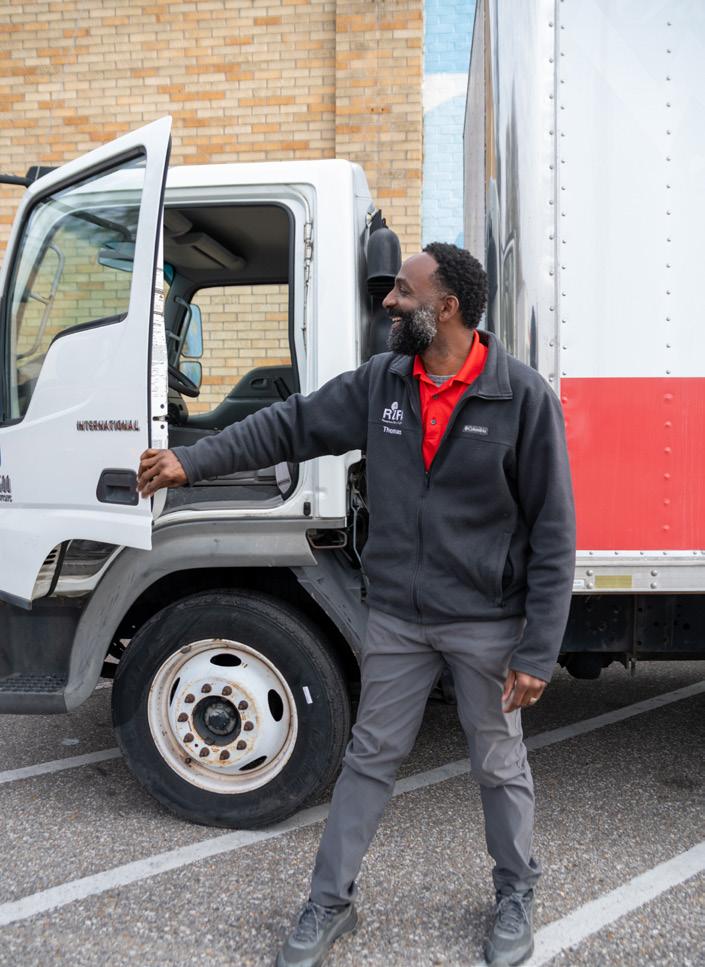
If you watch him long enough, you notice that he doesn’t separate “leading” from “working.” Some days he’s coordinating plans; other days he’s driving the truck across town, picking up donations or delivering goods. It’s all the same mission to him.
“Half a million meals a year. I can’t do that alone,” he says. “Many hands make light work.”
Through this rhythm — the planning, the pick ups, the conversations — Thomas has seen Jackson up close. Not just from the window
of a vehicle, but through the interactions that come with the work — interactions with donors, business partners, volunteers, seniors waiting for meals, families who need support.
He talks about these moments with a kind of grounded gratitude.
“I get to see people,” he says. “There’s exposure there I never would have had.”
You get the sense that these encounters shape him more than the numbers or charts ever could. They’ve given him a clearer view of what the community needs and
what it offers back. And they’ve helped him understand the responsibility of a role like his. Not simply distributing resources, but building relationships, strengthening trust, and meeting people where they are.
Thomas’s approach to leadership feels rooted in a simple idea: people matter, and they deserve to be treated like it. He listens. He asks questions. He pays attention to what motivates each person on his team. He trusts the people who are hands-on in the work.
During our conversation there was a moment when he paused,
almost smiling to himself, as if remembering something that had taught him this truth. He didn’t elaborate; he didn't need to. The way he talks about the staff and volunteers makes it clear that respect guides him as much as experience does.
“If you’re walking and nobody is behind you, you’re just going for a walk.”
This captures everything about the way Thomas leads. Leadership, to him, isn’t about being in front. It's about not being alone. It’s about making sure the people around you
“Everybody can help in some form or fashion, even if it’s just holding the door.”
feel supported and capable.
He extends that philosophy even further: “If a door is open, you can go through it — or you can hold that door open for the next person.”
He lives this mindset out in how he mentors, how he encourages his team, and how he thinks about opportunity. In small ways, daily ways, he’s creating space for others to step into their own abilities to serve.
Thomas is open about how much his faith anchors him. He doesn't present it as a performance, but a foundation.
“Everything I do, whether it's for my family, for RIFA, or for the community, I do because I’m a believer.”
It’s what gives him patience in a job that comes with real heaviness. Food insecurity is rising. Families are stretched thin. The pace never really slows down. But even in that, he holds onto a kind of steady, practiced hope.
“A lot of things may not be what we want right now, but you have to work through it… What can we do?
That’s always the question.”
He’s honest about the weight of the challenges, but he doesn’t carry them in a way that stops progress.
“When things are down, all I gotta do is wait a second. Something good is about to happen.”
That’s Thomas — realistic, hopeful, anchored.
By the time you finish talking with him, you understand that the impact he has on Jackson isn’t just in the meals delivered or the donations processed. It’s in the way he treats people. The way he shows up. The way he makes the work feel shared.
“Everybody can help in some form or fashion,” he says. “Even if it’s just holding the door.”
And that is who Thomas Brown is. Someone who holds the door open long enough for others to step through, making sure no one walks alone. Someone whose leadership doesn’t call attention to itself, but whose presence strengthens the community around him.
Jackson is better because he’s in it.
Let's Pick the Perfect Gift
The Garner Blue Shop is home to its namesake line of indigo accessories as well as unique handcrafted gifts mindfully made by artists, makers and indie brands we believe in (more than 150 currently!). Some made right here in Jackson, others curated from the whole U.S.A.
STANDING IN THE GAPS
Reviving Jazz in West Tennessee
WRITTEN BY LIZZIE EMMONS
PHOTOGRAPHED BY TAMARA MILLER, WILLETTE DUPREE, & THE MAIN EVENT PHOTOGRAPHY
Every city has people who work hard to make sure their neighbors have a community they can be proud to call home. Most of the time, the ones doing the most meaningful work for all of us are the most unassuming. They’re the folks who don’t ask for recognition or praise — who notice what’s missing, roll up their sleeves, and quietly and thoughtfully tend to the gaps. They build meaningful relationships, lift up the talents of their neighbors, honor the legacies of people who have come before them, and carry our community forward with unseen care. That’s what a hidden leader looks like — and no one embodies that quiet strength more than my friend James Cherry and his work to create the Jazz Foundation of West Tennessee.
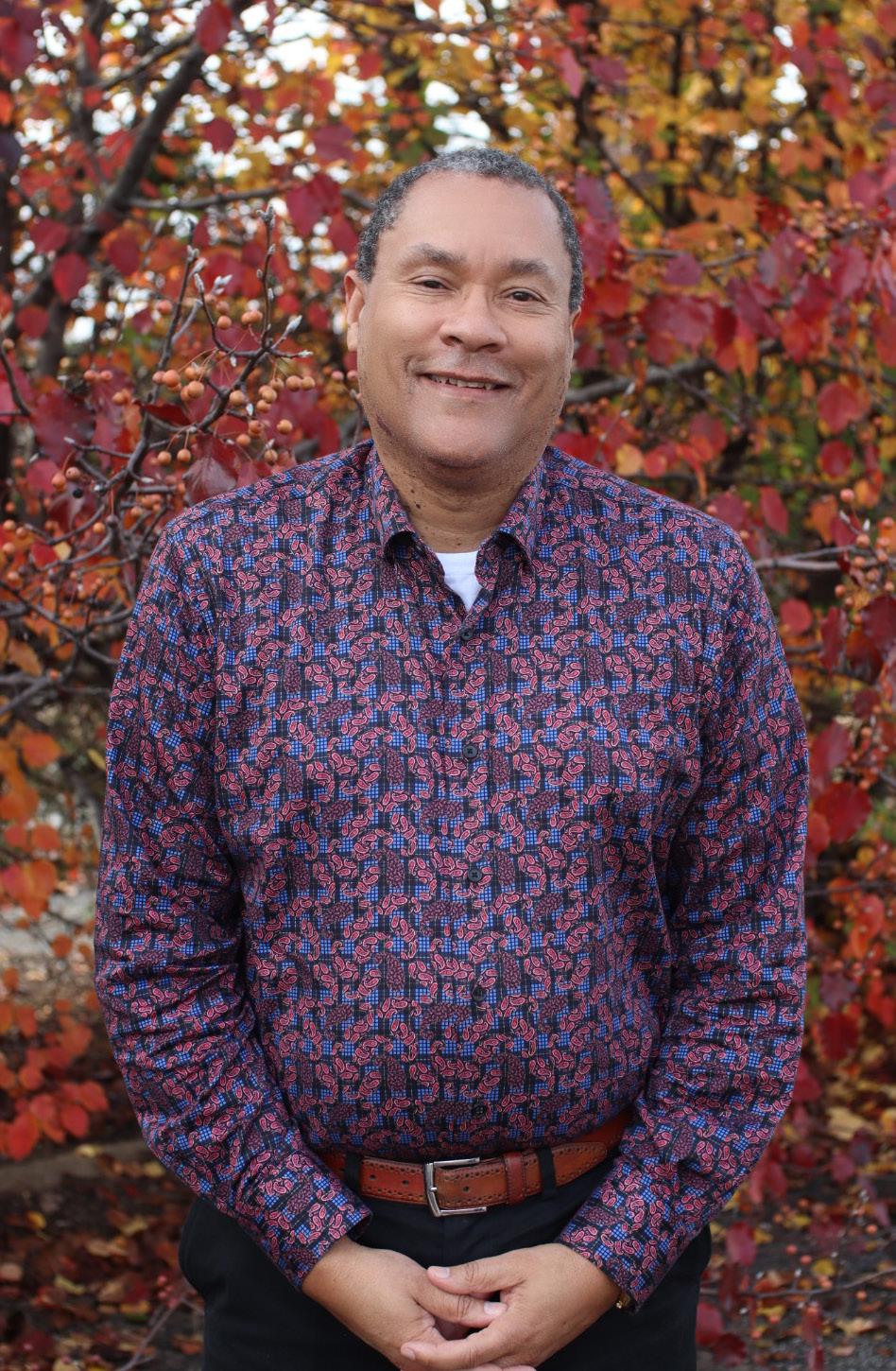
James Cherry, the founder and president of the Jazz Foundation of West Tennessee, is a longtime jazz enthusiast. A published author, he describes his writing as flowing with rhythm and improvisation like jazz. James approached me years ago asking if I thought there were other people in Jackson besides himself who would be interested
in attending live jazz concerts. My answer was, and continues to be, an enthusiastic yes. And as a thoughtful hidden leader does, James talked to his neighbors, did his research, and took action to tend to the gap he found.
Jackson has a rich history of jazz and blues music. In the early 20th century, Jackson’s geographic location between two major music cities, its Black church and gospel music roots, and its active involvement in trade and rail all influenced the circulation of jazz and blues music throughout the Delta region. Famous jazz musicians like Duke Ellington and Dizzy Gillespie would perform in Jackson quite regularly.
Musicians from Jackson, such as Gil Scott-Heron, Sonny Boy Williamson I, Big Maybelle, and Christine Chatman, had significant influence in the genres. Over the years, jazz and blues music faded out of Jackson’s music scene as the genres laid the foundation for more commercialized music like R&B and hiphop.
Until recently, there were typically only a few music
performances you could see in Jackson on a given weekend: commercial music at local bars and restaurants, classical symphony orchestra, and occasionally community musical theatre. With James’ and the Jazz Foundation board of directors’ knowledge of Jackson’s music history, they saw an opportunity to add jazz and blues back into Jackson’s regular repertoire of musical offerings, just as it used to be.
“Jazz is considered America’s classical music. I think it’s incumbent that someone steps in and fills the void, and that’s what the Jazz Foundation is trying to do,” James said.
But why bring back a style of music that has faded from Jackson?
James explained that it’s still important because it’s still part of who we are as a community. “I think you can’t move forward without a good understanding of history,” James said. “So we’re going to step in the gaps of what’s happened in the past and what’s coming in the future.”
As Jackson attracts new visitors and residents, there’s a demand for more live music that the Jazz Foundation is filling. “What we’ve found is that the city is growing, so there’s an influx of industry and new people coming to town,” James said. “They’re ready for this music because they’re coming from larger locations where this music is available.”
Since its founding in 2022,
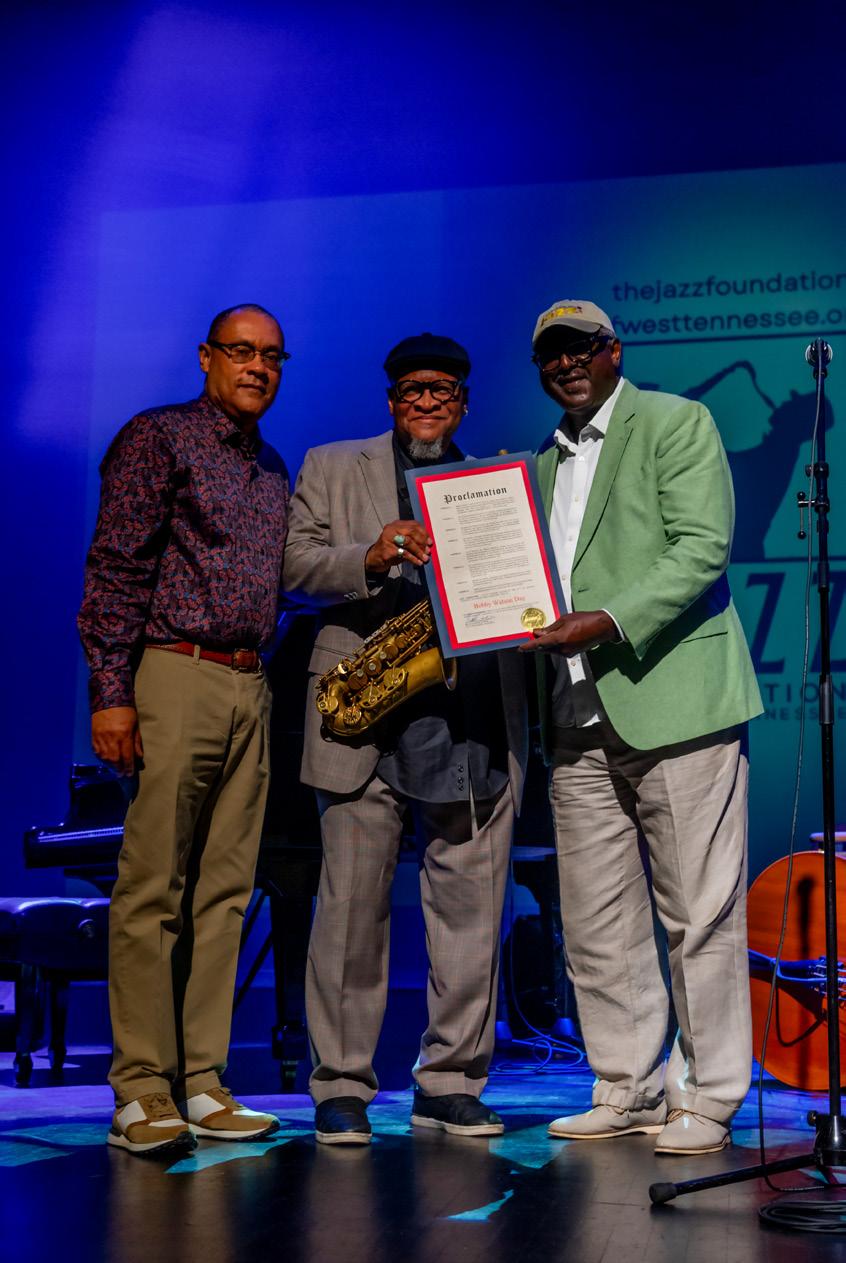
the Jazz Foundation of West Tennessee has been serving the area by providing world-class jazz concerts from professional musicians quarterly at the Ned McWherter Cultural Arts Center. James says that his proudest moment of the organization so far has been bringing Bobby Watson, a Grammy-winning saxophonist and composer, to Jackson to perform. A primary goal of the organization is for the region to not have to travel to big cities to see world-class jazz performances — instead, it seeks to offer an opportunity for residents to enjoy the best of local, regional, and national jazz music in their own backyard.
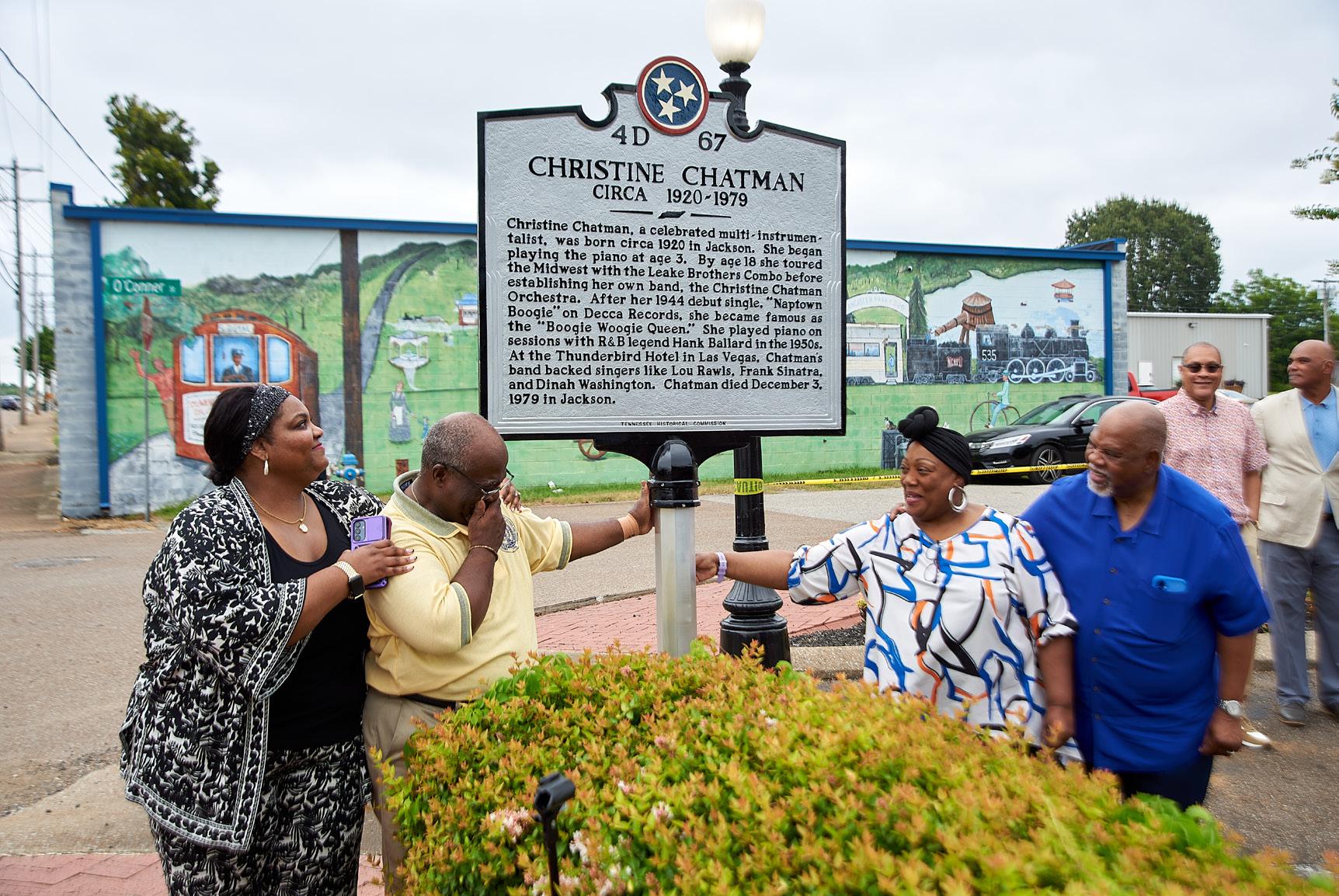
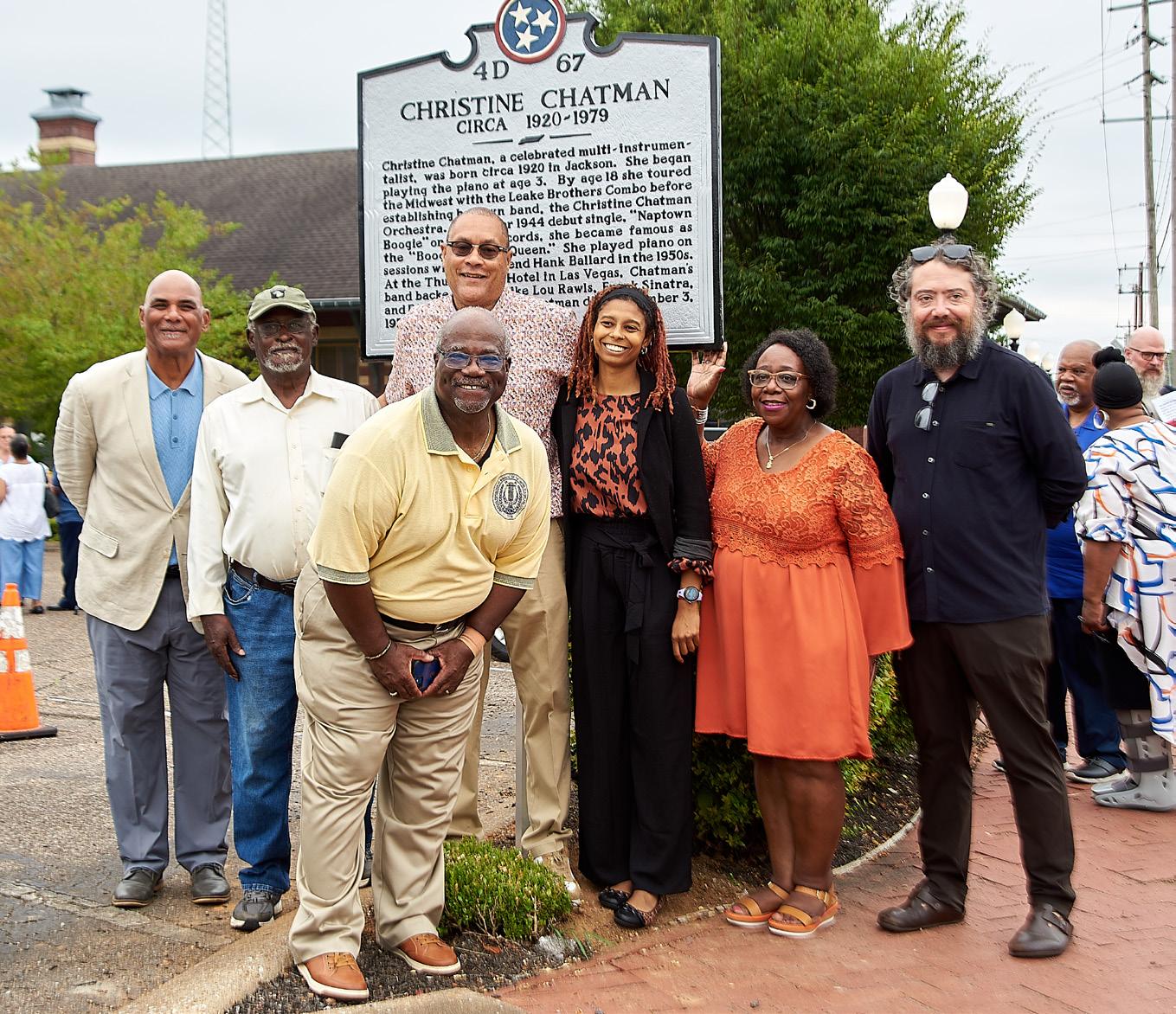
The organization also makes intentional efforts between concerts to support the local jazz community. It is building up its educational outreach efforts to train middle and high school students to perform jazz and blues music, and it has offered those students free admission to concerts. It’s also getting ready to set aside an entire month of performances around Jackson that feature local jazz musicians as well as host a large summer jazz festival to celebrate both Miles Davis and John Coltrain’s 100th birthdays. Recently, the organization honored Jackson’s own Christine Chatman — known around the world as the Queen of Boogie Woogie — through a new historical marker, and it intends to do the same with other musicians from Jackson who deserve to have their
“Leadership is about sacrifice. It's about looking at something bigger than yourself. It’s hoping that the community will be lifted up through your efforts."
legacies preserved. Through all of their hard work, the board of directors aims for jazz to have a prominent place in the hierarchy of the arts that make up our city. James sees the Jazz Foundation continuing to get bigger and better over time. The organization would love for its local outreach to get stronger and concert offerings to double, and it challenges the West Tennessee community to come alongside its efforts by attending concerts or becoming members of the foundation to support its work.
I asked James what it means to him to be a leader of the arts and culture sector in Jackson. “[Leadership] is about sacrifice. It's about looking at something bigger
than yourself. It’s hoping that the community will be lifted up through your efforts,” James responded. “And you don’t necessarily need credit for everything. If you can surround yourself with a team who has the same goals and objectives, then you can just let the work speak for itself. You do the best you can, and hopefully after you’ve gone on, your work will still live.”
Like a jazz musician thoughtfully and creatively filling the spaces between notes, James Cherry’s leadership and creation of the Jazz Foundation of West Tennessee teaches us all the power of filling in the gaps where we find them — ensuring that our corner of the world thrives for years beyond our short time here.
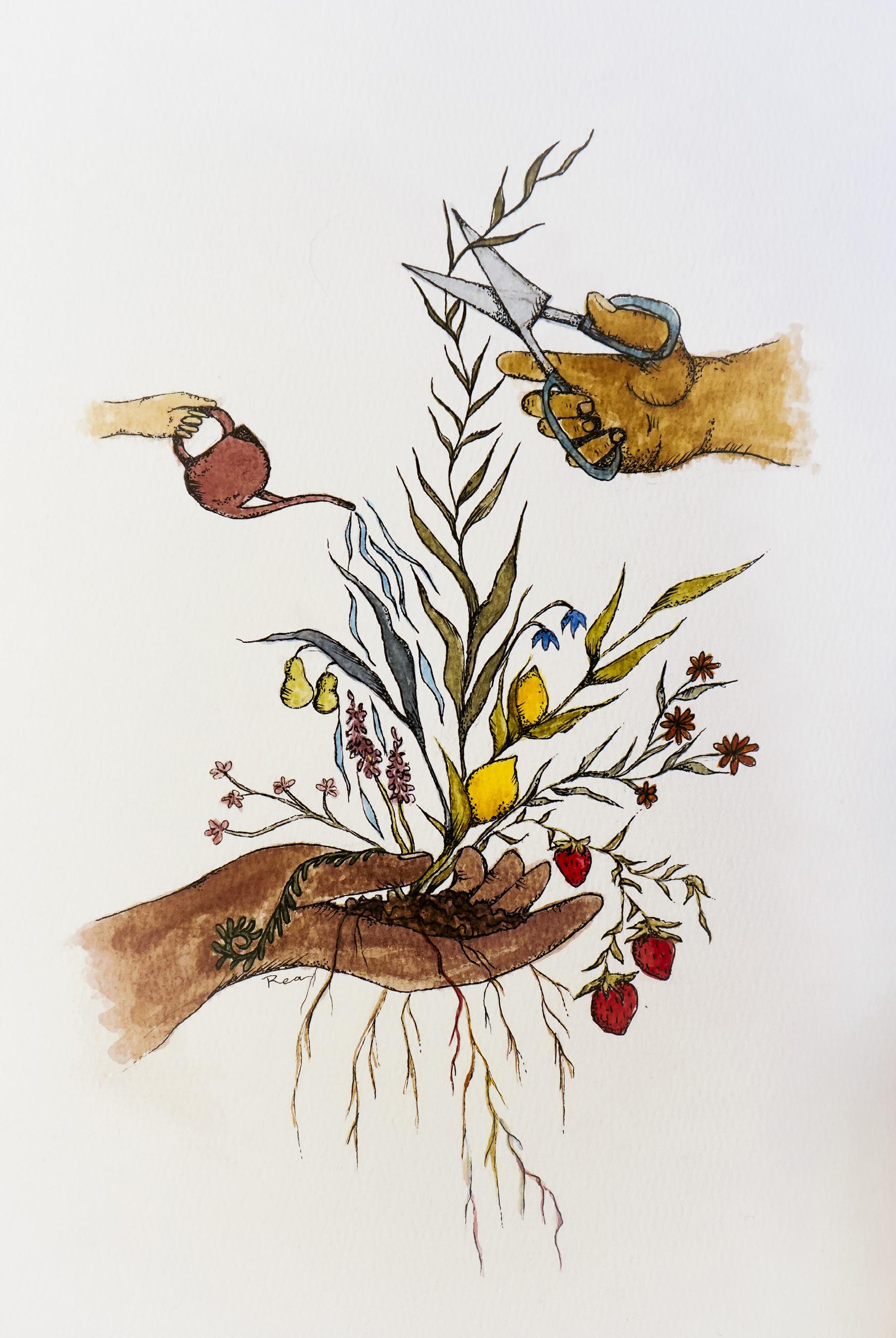
“The Scaffolding”
POEM + ILLUSTRATION BY
MILEY REA
What bears the weight?
What is unseen?
Invisible hands, invisible work.
Gold beneath your very feet, though the shine is humble in the dirt. Do you see?
Treasure is buried purposefully.
Where must the roots be? Above ground to showcase the glory of a tree?
Alas, the roots burrow deeply, not to be seen, for they themselves have built the tree.
Where lies their thanks for this sacrifice?
The fruit is thanks enough.
Preserving the Unseen BUTTERFLY'S EMBRACE
WRITTEN
& PHOTOGRAPHED
BY MADDIE MCMURRY
CONTENT WARNING: THIS ARTICLE DISCUSSES THE TOPICS OF INFANT LOSS AND MISCARRIAGE. IF THOSE SUBJECTS ARE TRIGGERING FOR YOU, READ WITH CAUTION OR KINDLY SKIP PAST. THIS ARTICLE IS MEANT TO SHED LIGHT ON A SUBJECT THAT IS OFTEN HIDDEN AND TO PROVIDE RESOURCES TO THOSE IN OUR COMMUNITY WHO HAVE WALKED THIS JOURNEY.
“They held my hand while I cried. They were not overbearing, it was just ‘we’re here.’ They helped me identify the emotions I was feeling and that it’s okay to feel that way. And they said, ‘I see you. I see your hurt and your pain, and you’re not alone.’”
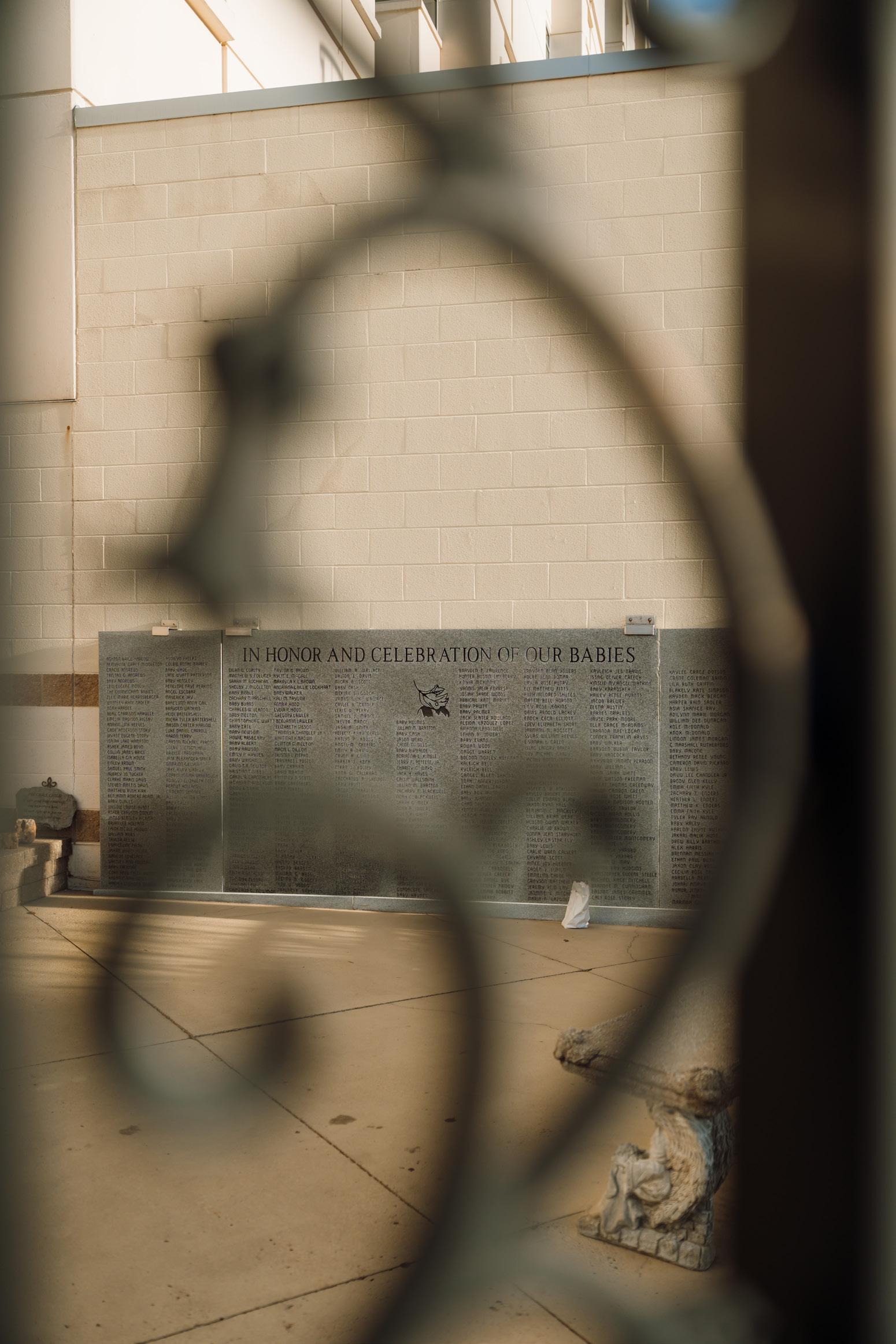
These are the words of Christi David, who has experienced two miscarriages and interacted with a program called Butterfly’s Embrace for the first time after she and her husband lost their baby at 12 weeks gestation. This type of grief is deep. It is unique. And many times it goes unspoken, sometimes for an entire lifetime.
Christi met the Butterfly’s Embrace team at the surgery center after an error during her first D&C procedure required her to return. She had tragically delivered her 12-week-old baby in her home, and these nurses were the first to truly care for the life she was grieving.
They helped Christi and her husband begin to work through the grieving process and to preserve their memories. They explained her options, including respectful cremation and a place to visit her baby’s memory in the Serenity Garden at Jackson-Madison County General Hospital.
“All infant loss matters. To
have a place where you can go and where you can feel like your baby mattered — it gave us so much peace,” Christi explained.
Butterfly’s Embrace is a perinatal bereavement program of Jackson-Madison County General Hospital and West Tennessee Healthcare. The program serves families at any gestational age — from early miscarriage to full-term loss, SIDS, or the death of a NICU baby. Support includes memorymaking, sibling and father resources, support groups, and personal checkins for up to 13 months after a loss, along with countless quiet acts of care that cannot be fully captured in one article.
Sadly, many women will experience this type of loss, and just this year, Butterfly’s Embrace has served over 300 families, with its reach stretching from Memphis to Nashville as it is one of the only comprehensive perinatal bereavement programs in Tennessee. Even for those who have not experienced perinatal loss personally, the likelihood is high that someone close to you has. They are in the trenches of grief, giving families permission to talk about their loss, create positive experiences around it, and connect them with a unique community of people who,
unfortunately, deeply understand the pain they are walking through.
The team includes Leigh Ann Sutton, the program coordinator; nurses Tammy Hardee and Addie Grisham, both bereaved mothers; Scott Bloodworth, the hospital chaplain who supports fathers; Abigail Staley, a child life specialist; and Lauren Shelton, a NICU nurse who leads much of the memorymaking. Together, they’ve created a program that fills a long-standing gap in care.
“The only way I can describe it is pure magic. The details of what each team member brings, that's special and unique to them, and how that just makes a jigsaw puzzle fit together,” Leigh Ann said.
“Every piece is where it needs to be, and everything that a family could need or want is hopefully thought
about and thought through for each individual family.”
It all began 10 years ago, when Deena Kail, Executive Director of the Women's and Children’s Unit, Chief Nursing Officer, and one of the vice presidents of the hospital, recognized a need during her years as a labor and delivery nurse.
“I was that labor and delivery nurse that wanted to take care of all the moms, but especially the moms that were not going to be taking a baby home. I wanted to make sure that they got the very best care possible because sometimes as nurses and as caregivers, people don't feel comfortable in those situations, and so they tend to avoid those moms and those families, and I didn't want that to happen,” Deena said.
Butterfly’s Embrace is built on
"If you have the support around you and you have people who are giving you permission to walk through this in a positive way, it really does make a big impact.”
the belief that unprocessed grief impacts not just individuals, but marriages, families, and even young children. Its name reflects that mission.
“The name actually came from the vision of having the softest wings of a butterfly to guard and protect around a family, but also helping them transform this huge emotion of grief into something that's beautiful,” Leigh Ann said.
The care process begins as soon as a diagnosis is made — whether during an ultrasound or upon arrival at the hospital. When staff are notified, the care team meets the family at the bedside to immediately provide compassionate support. If you find yourself in their care, you won’t arrive and sit in the normal waiting room, you will be taken to a cozy, peaceful separate room that is private. This allows families to grieve without the distractions of other patients around.
At this stage, the team focuses on surrounding the family with care, helping them think through questions they may not yet know to ask, and starting gentle conversations about their needs.
This includes identifying who will be present for support, offering financial resources, and discussing whether siblings or other family members should be involved — helping parents see these choices as both normal and meaningful.
The team at Butterfly’s Embrace has thought of every tiny detail, down to the scent of the room when you arrive. They even have handcrafted their own baby soap and lotion so that it doesn’t smell anything like a soap a parent might find in the store.
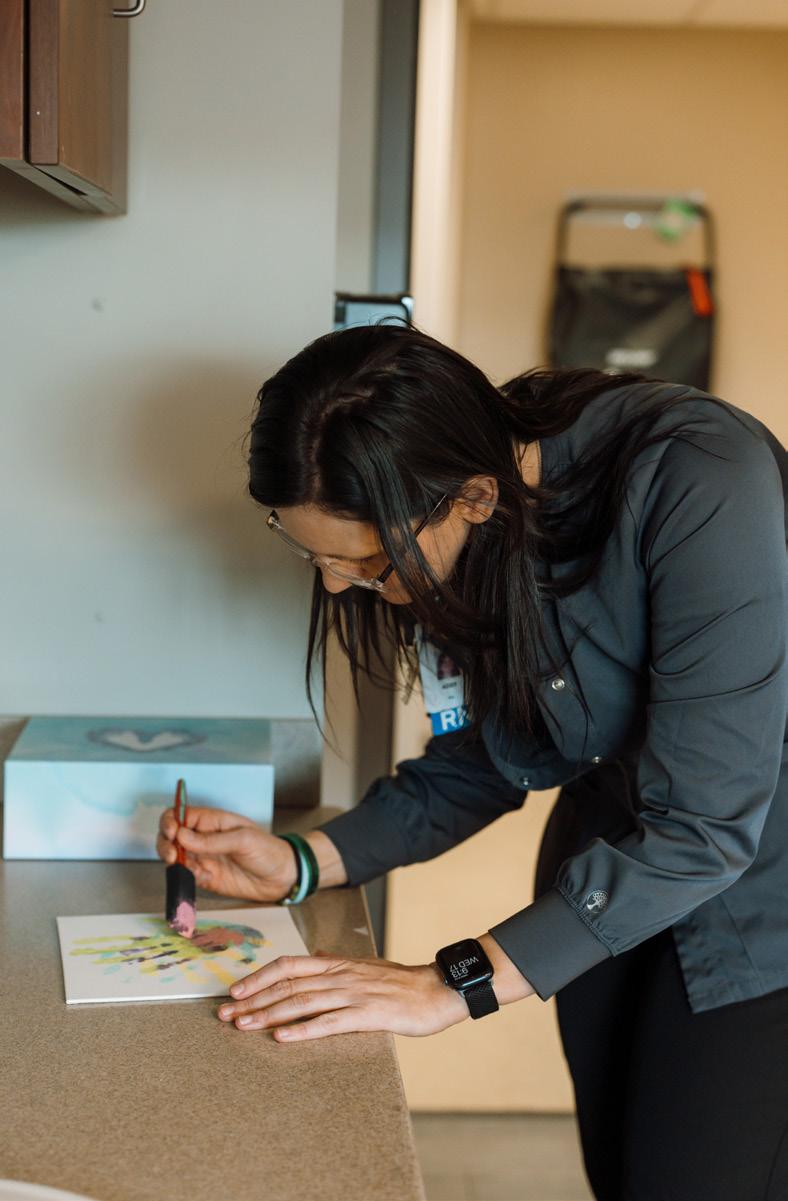
After delivery, the focus shifts to memory-making and continued emotional support. Families are encouraged to create lasting memories through photographs, handprints and footprints, foot molds, and including the siblings in keepsakes when appropriate. The team remains present throughout this process, offering guidance and modeling supportive interactions to help families feel more confident and supported as they begin to grieve. They are “creating a lifetime of memories in a very short amount of time,” as Tammy told me.
“The first step with what our program really embodies is just giving that family permission to talk about their baby, to see their baby, and to do all the normal things that a mom and dad and siblings want to do, which is take photos, bathe their baby, and to see their baby in those sweet outfits,” Leigh Ann explained. “We try to make it as normal as possible because we're
giving them permission then to have a positive memory… And it's tragic, it's trauma. But if you have the support around you and you have people who are giving you permission to walk through this in a positive way, it really does make a big impact.”
Support doesn’t end when families leave the hospital. Followup care continues for six to 13 months through check-ins, support groups, monthly grief-focused mailings, and community events.
“For the most part, families want to stay in contact with us. They love to hear from us every month and to make sure that they come to our events because we’re some of the only ones that have held their baby and got the moment to see their baby being delivered or to have those special moments with a family. And so that relationship is amazing, and it's cherished,” Leigh Ann said.
Embrace put together on Mother’s Day for bereaved moms.
“Hearing someone else’s story and being completely heartbroken for them, and then sharing mine, and them also being completely heartbroken for me,” Christi said. “It’s this club no one wants to belong to, but without Butterfly’s Embrace, we wouldn’t have each other to not feel alone.”
After Christi’s procedure at the surgery center, her clinic continued to call about bills that were due. Every time the clinic called, it was triggering to her. When the Butterfly’s Embrace team learned of this, they called on her behalf, telling them to stop calling.
"Butterfly’s Embrace is a team made up of hidden leaders who advocate for the unseen women, the unseen families, the ones who have a loss that no one wants to talk about."
“They created a boundary for me that in that moment of trauma, I couldn’t create for myself.”
For Christi David, her healing journey has been profoundly impacted by the support group of women who understand her grief in the deepest and most personal of ways. She was connected with a group after her loss and meets with them regularly, and she also benefited from a spa day Butterfly’s
Butterfly’s Embrace also assists families who cannot afford medical bills, therapy, or counseling. Funding for this program comes from hospital support, community partnerships, and fundraising events like Walk to Remember, hosted with Heaven’s Cradle. Additional support comes from Psalms 4:8, the Magnolia Foundation in Cookeville, and the Hope and Healing Foundation through West Tennessee Healthcare.
The care provided by Butterfly’s
Embrace is not just for moms or families facing a loss in the present, but it offers support to you even if it has been decades since your loss. Perhaps even by reading this story, you are encouraged to speak up about a loss of your own or share these resources with a friend walking through grief. When we speak and care for what feels like the impossible, it creates a ripple effect, impacting countless lives and helping remember a precious life.
Butterfly’s Embrace is a team made up of hidden leaders who advocate for the unseen women, the unseen families, the ones who have a loss that no one wants to talk about. They see them. They give value to them. Without that, there would be a gap in care. They see the gap, they see people who have been through the unimaginable, and they help them live with hope and with memories that will live on.
If you would like to support Butterfly’s Embrace, give to the program, or experience its care, visit its website at butterflysembracefamilysupport. com.
If you are walking with someone on their grieving journey, take the advice that some of the team shared with me: listen more and talk less. Lean into sitting with someone, allow them to speak or remain silent, cry or not cry. Just be present. Remember their baby’s due date, or the name they chose, or just simply send a text to check in. The ministry of presence speaks more than words.
JACKSON ASSOCIATION OF INDIANS
The Quiet Cultivation of a Thriving Community
WRITTEN + PHOTOGRAPHED BY HANNAH GORE
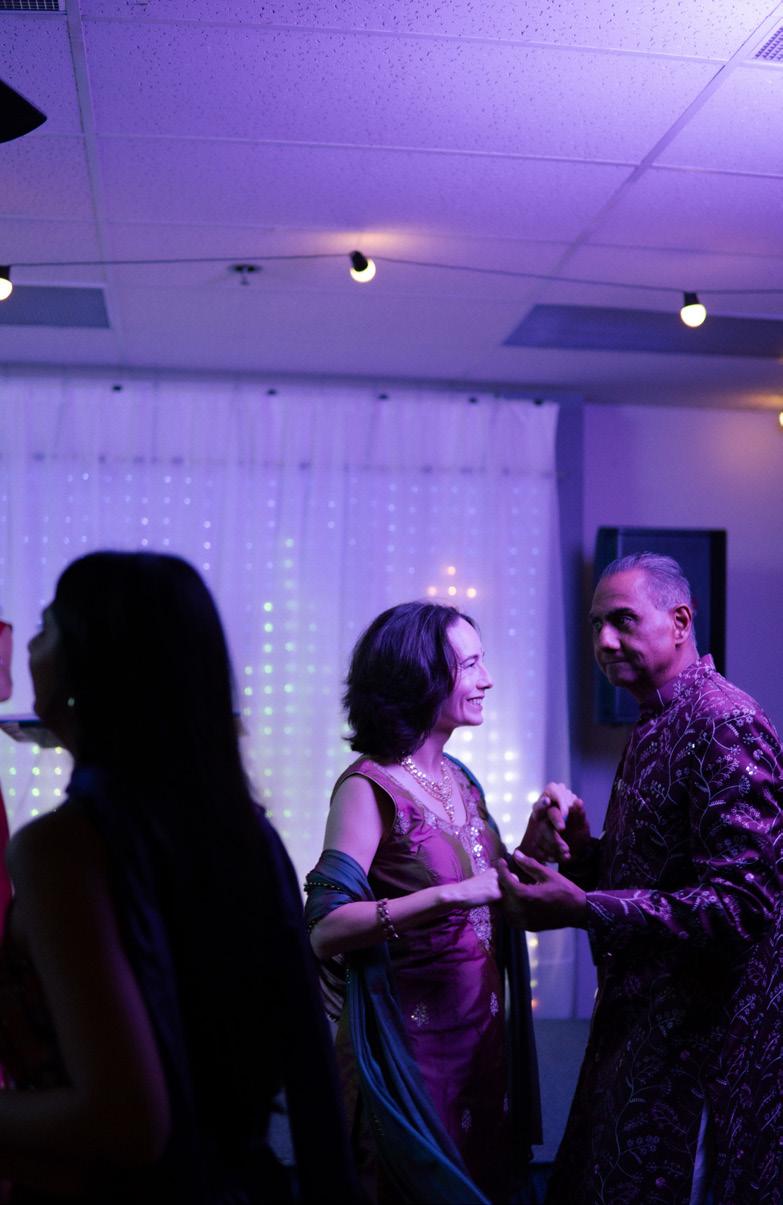
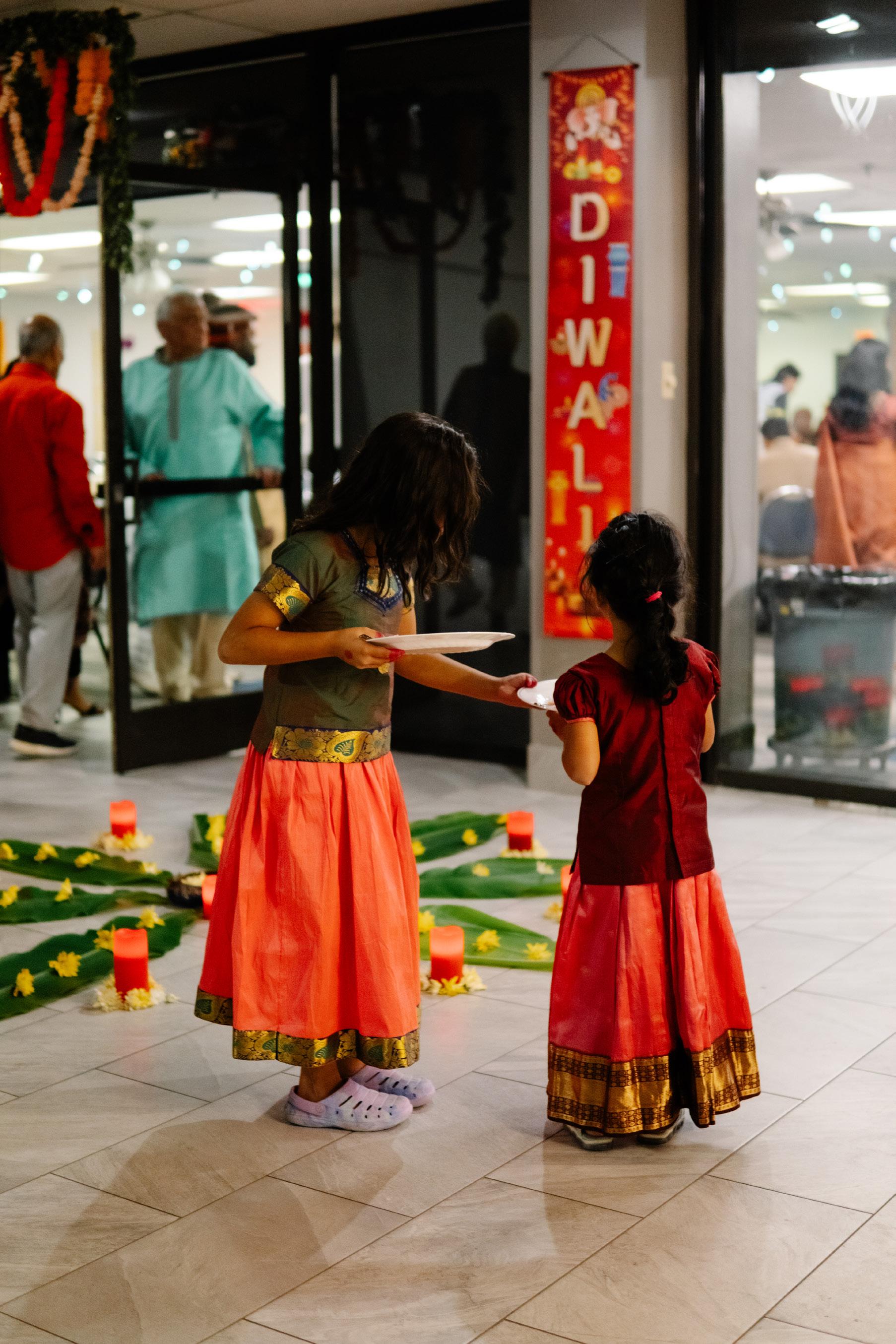
In the past two years that I have attended the Jackson Association of Indians local Diwali celebration, I have come to a realization that I now carry with me in every aspect of my life: that leadership is not a title to be earned or worn like a badge of honor, but rather it is seeing the needs of others around you and quietly rising up to the challenge to meet those needs without the desire for praise or recognition.
I have witnessed this leadership in those who prepare and serve food to the attendees at Diwali, in how they invite the community to join in the Bollywood dances at the Jackson International Food and Art Festival, and in how they volunteer their time for the Indian and nonIndian community alike in Jackson.
You may have never heard of them, and that may very well be because they are practicing this very kind of leadership that asks nothing in return; the kind of leadership that simply seeks to serve others for the good of their community.
The Jackson Association of Indians, or JAI, as they call their group in conversation, is a collective of individuals of the Indian diaspora and South Asia that operate here in West Tennessee. Their main mission is to exist as a network always available to serve both the Indian community and the greater Jackson community through spreading positivity and joy.
The group works as a sort of civic engine within Jackson
— a web of hidden leaders that strengthen the community through aiding newcomers from India and South Asia, building bridges of cultural support, volunteering and practicing mutual aid with one another in day to day life.
Many people I have talked to about my experiences at Diwali and JAI have not known that the group has existed here in Jackson for around 20 years, nor that they are involved with numerous outreach activities and events here in the area.
The group spearheads the organization of events such as the annual Diwali celebration, Yoga Day, and the celebration of India’s Independence Day in late summer. JAI volunteers for local organizations and events such as RIFA, The Jackson International Food and Arts Festival and participates in nature conservation with regional parks in celebration of Earth Day. JAI is a fund of the Community Foundation of West Tennessee, a nonprofit organization.
I spoke with two longtime members of JAI, Lalitha Bhojanapalli and Prasann Jinturkar, who dove into the heart of JAI’s mission. They highlighted their desire to cultivate goodness in the community and their eagerness for every volunteer to be recognized for the spirit of leadership they carry, from the seasoned members of JAI to their children who are learning about the traditions of their culture and using that influence within the
"We are coming together and we are dependent on each other. Even though we don’t have family here, we have friends that are family."
community at events such as the Jackson International Food and Art Festival and Diwali.
“It’s spreading the love and joy, is how I say, is what it has become about, and teaching the kids the same thing, to spread the love and joy,” Lalitha explained.
On a more internal level, JAI functions as a haven for Indian and South Asian families in the West Tennessee region. For many Indian families moving to Jackson, JAI is one of their first contacts. The members of JAI communicate with other Southeast Asian families and individuals looking to move to West Tennessee, forming relationships with them and discussing everything from schools to social opportunities before and during their process of moving to the area.
”In the past year alone I think we have gotten 40-45 queries, and most of those people have moved here cause they call us and we have a long two to two and a half hour conversation on schools, where to live, you know…” Jinturkar explained.
Prasann also expanded on how
JAI is like a “family away from home” for many Indians and South Asians in the region.
“We are there for each other… we joke around every now and then that if I need help at 2 o’clock in the night, I can put one message in and have about 20 people at my house in 10 minutes,” Prasann said.
Within JAI’s efforts to cultivate community for Indians and South Asians here in West Tennessee is also their dedication to planning and preparing for culturally significant holidays. These events take months to prepare for and serve as one of the main backbones of JAI’s efforts to spread joy and positivity through their culture.
These celebrations serve as more than just a day of joy for those in JAI — they are a lifeline for their community. The need for continued contact with one another in order to prepare for special days like Diwali or Yoga Day means that the members of JAI stay in contact. It gives every member the opportunity to be needed and to work toward a greater goal for the good of JAI as a whole.
Lalitha emphasized how the atmosphere within everything that JAI does is also for the benefit of the children within the group. Many of the children in JAI are first generation immigrants that have limited opportunities to connect with their Indian or South Asian roots. She went on to explain how being a part of preparing for events as a community gives the
members a chance to share the Indian traditions and culture with the children, becoming a “village” to help support one another outside of their home countries.
“So, it’s like we are coming together and we are dependent on each other. Even though we don’t have family here, we have friends that are family,” Lalitha said. “We have a village to raise our kids and I’m proud of that, I’m happy and proud we have that and that we give that to other kids too.”
This desire to set an example for the children in JAI has even bled into how the younger members of JAI work to serve the community through volunteering at organizations such as RIFA. Lalitha expressed how it has touched her that the children eagerly ask to volunteer on their own terms and how this desire to give back to the community reflects the mission of JAI and the spirit of leadership that brought their group together in the first place.
"One other example I want to add is volunteering at RIFA, like the kids wanted to do it,” she said. “they’ll just send a message and say ‘Hey, can we volunteer?’”
In all of these experiences and conversations, I have come to realize that JAI has no one singular leader, but rather that each and every member of JAI is a leader in their own right. Those that started the group in its official capacity 20 plus years ago saw a need for a unified group to support and
uplift the Indian community here in West Tennessee and collectively came together to help accomplish that. “You know, being a hidden leader is doing the right thing, even when nobody is looking…besides (me and Lalitha), there is a whole group of people who have done the same, even more than what we do for JAI,” Prasann said. “…they don’t do that because they want to be in a picture or video…they do it because they want to do it for the community.”
Prasann went on to explain how none of the members of JAI are paid: That all of the planning, the meeting, community outreach and event preparations that is done by JAI is carried out solely on a volunteer basis. Each member shows up for one another out of the goodness of their hearts as well as for the benefit of both the Indian community and beyond. “Leadership comes in a lot of different styles, and we are so honored in JAI to be able to see from kids all the way to grown-ups, people who volunteer their time and lead…that’s what true leadership is and those are the true leaders we have in JAI,” Lalitha added.
For those wanting to learn more about the Jackson Association of Indians or to get in touch with them to learn more about community opportunities, their volunteer work, or events, you can visit their website at www. jacksonassociationofindians.org.
Carroll Bank & Trust has been serving West Tennessee communities for over 100 years, beginning in 1907 as the Bank of McLemoresville in Carroll County before expanding its reach across multiple markets including Carroll, Benton, Gibson, Henry, and Henderson counties, and starting this year, Madison County. The bank has weathered economic highs and lows, including remaining open during the Great Depression, and has grown steadily through a model rooted in personal relationships and local trust.
In 1972, the bank entered a new chapter as Carroll Bank & Trust (CB&T) when it was purchased by a group of local leaders who grew the bank by face-to-face conversations — meeting farmers in their fields, knocking on doors, and building trust one relationship at a time. That approach laid the foundation for decades of sustainable growth across multiple West Tennessee counties. Today, the bank operates nine branches, offering personalized financial solutions like checking and savings accounts, loans, mortgages, business banking, investments, and digital services.
The next big step for Carroll Bank & Trust is moving into the Jackson, Tennessee, market, bringing community-minded banking to our city. Their new branch will be located at 79 Stonebridge Blvd. and will open this spring, bringing banking services, mortgage services, investment
guidance through Raymond James, and a culture of care that sets it apart.
CEO Mike Cary has been connected to the bank for nearly his entire life, beginning as a teenage teller and later returning full-time in 1997. Under his leadership, the bank expanded investment services through Raymond James, grew strategically across multiple counties, and maintained a model of high-touch, locally made decisions. Today, Carroll Bank & Trust manages over $600 million in assets while remaining intentionally nimble and relationship-driven.
“One of our competitive edges as we move into the Jackson market is how quickly we can return a lending decision to somebody,” Cary said. “You know, that’s something that will set us apart in the Jackson market because we're a small and nimble community bank, and we don't have layers of hierarchical, organizational structure before we can get you a decision.”
CB&T’s goal is a valuesdriven approach rooted in faith, stewardship, and service. Andrew Massie is leading the team as Jackson City President — he emphasizes that caring deeply for employees leads directly to caring for customers and the community, and that influence shapes everything they do, from how they solve problems to how they strive to support underfunded nonprofits.
“We’re not coming to Jackson because we hope to be profitable.
We’re coming because we want to partner with the community in the way a community bank is meant to,” Massie said.
For Massie, community banking looks like partnering with their customers and community by keeping its resources as local as possible. He wants Carroll Bank & Trust to be a good community partner in Jackson, and he wants to ensure that it’s putting into practice what it’s preaching. The bank aims to provide solutions and guidance for the people and communities it serves.
When Carroll Bank & Trust chooses to walk with people through financial challenges, relationships often shift from challenging to fruitful. By believing in individuals during difficult moments and committing to help them regain stable financial footing, the bank builds long-lasting, meaningful partnerships.
“It’s about caring for people
rather than just trying to do your job,” Massie explained as he spoke about the culture among the employees he would like to build.
“We hire from within the markets that we locate in. So for the most part, those people have roots and connections that are deeply embedded in the communities that we serve, and that will enable us to be more active and committed when opportunities to do things that would be beneficial to the community arise,” Cary said.
By hiring locally, supporting nonprofits, and investing time and resources back into the city, Carroll Bank & Trust hopes to offer Jackson something increasingly rare — the warmth of a true community bank paired with the tools and services of a modern financial institution.
You can learn more about Carroll Bank & Trust by visiting their website at www.carrollbank. com or following them on Facebook.
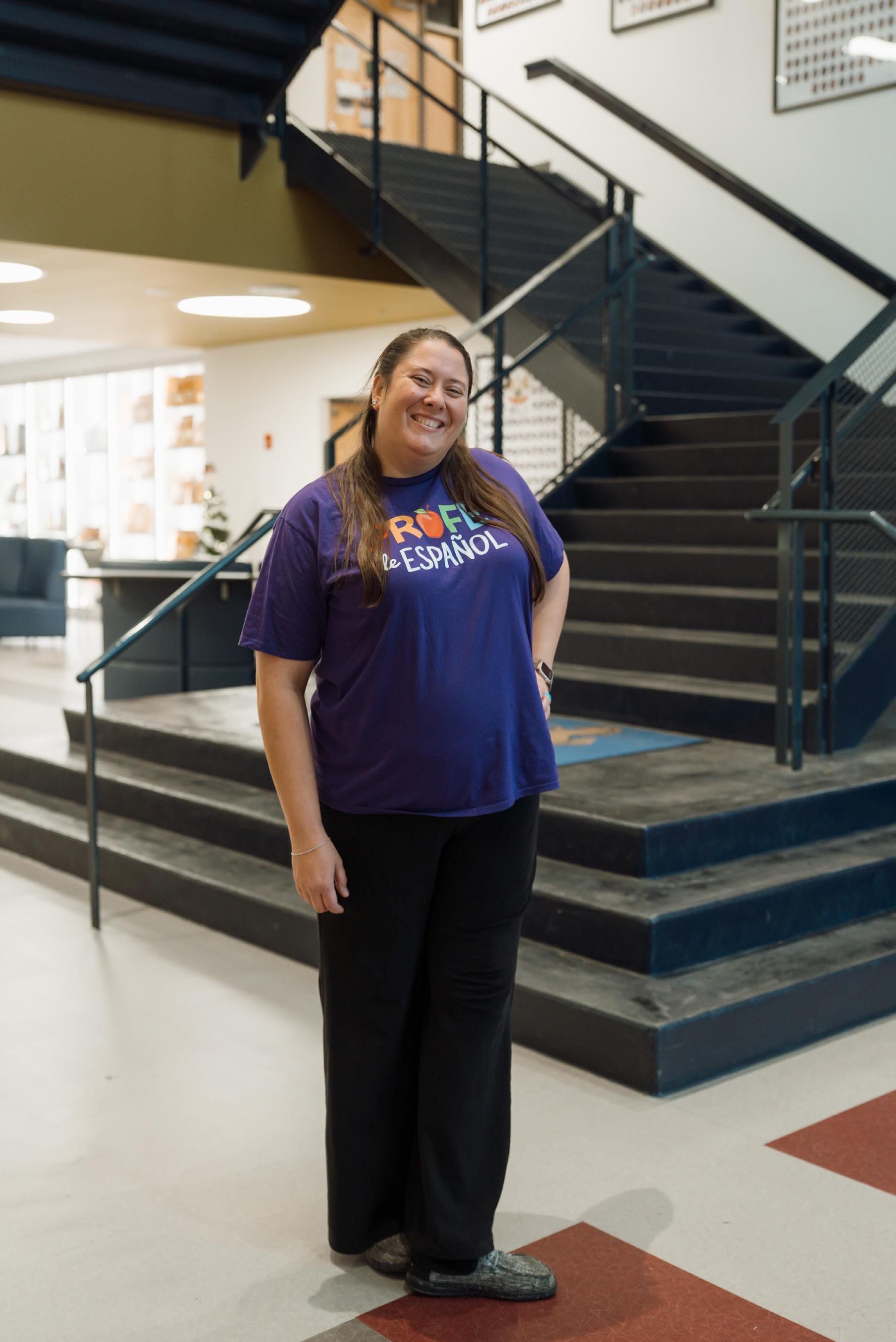
MISHA HEGLAR
The Classroom That Taught Me More Than Spanish
WRITTEN BY ABBEY WILSON PHOTOGRAPHED BY MADDIE MCMURRY
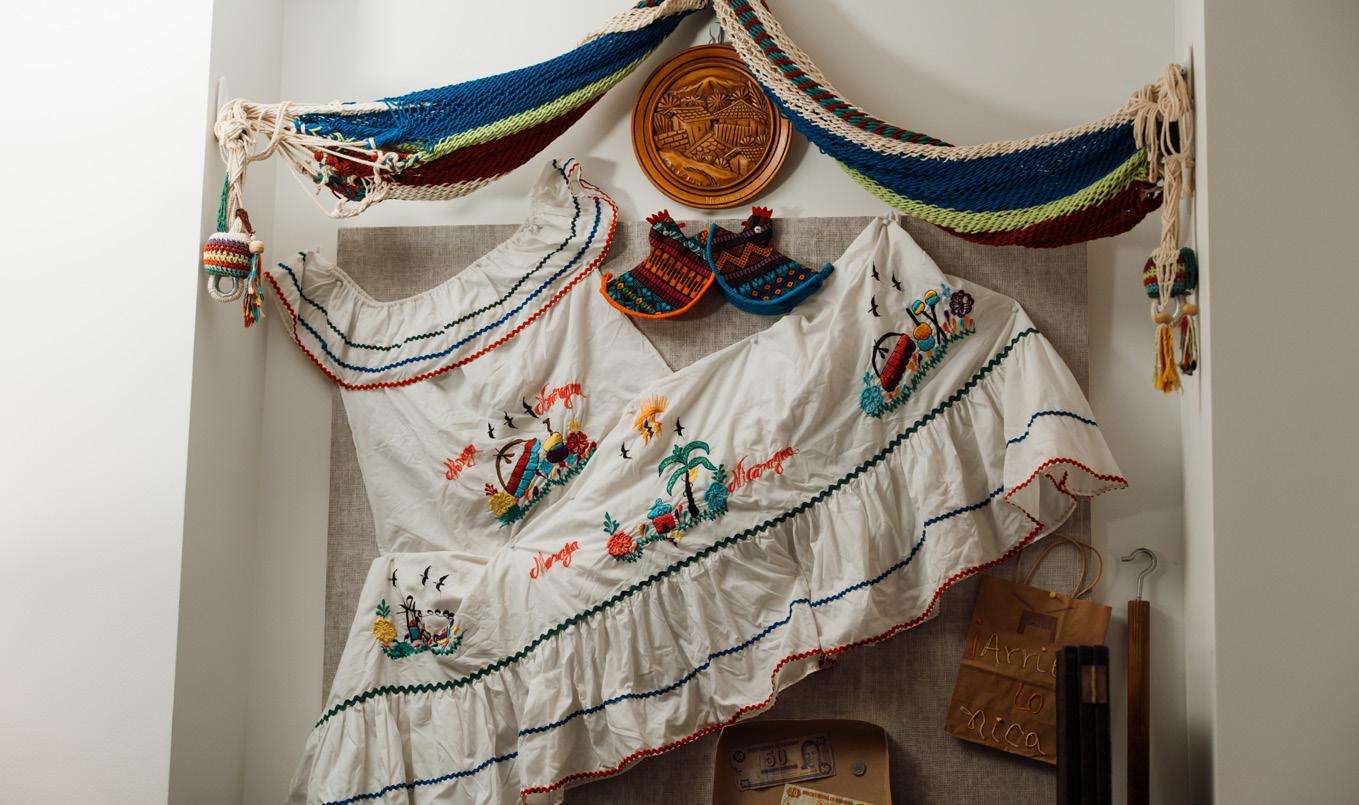
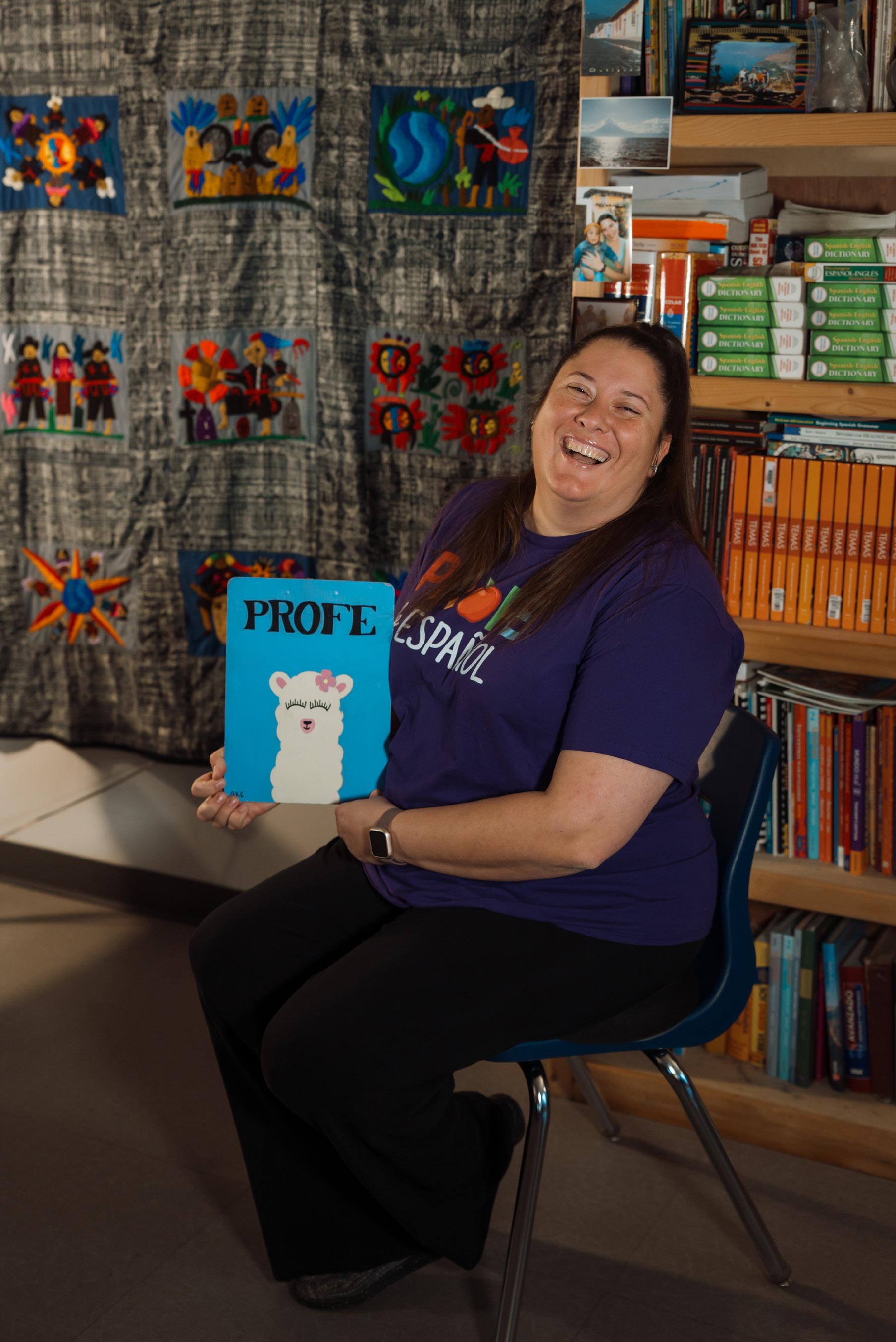
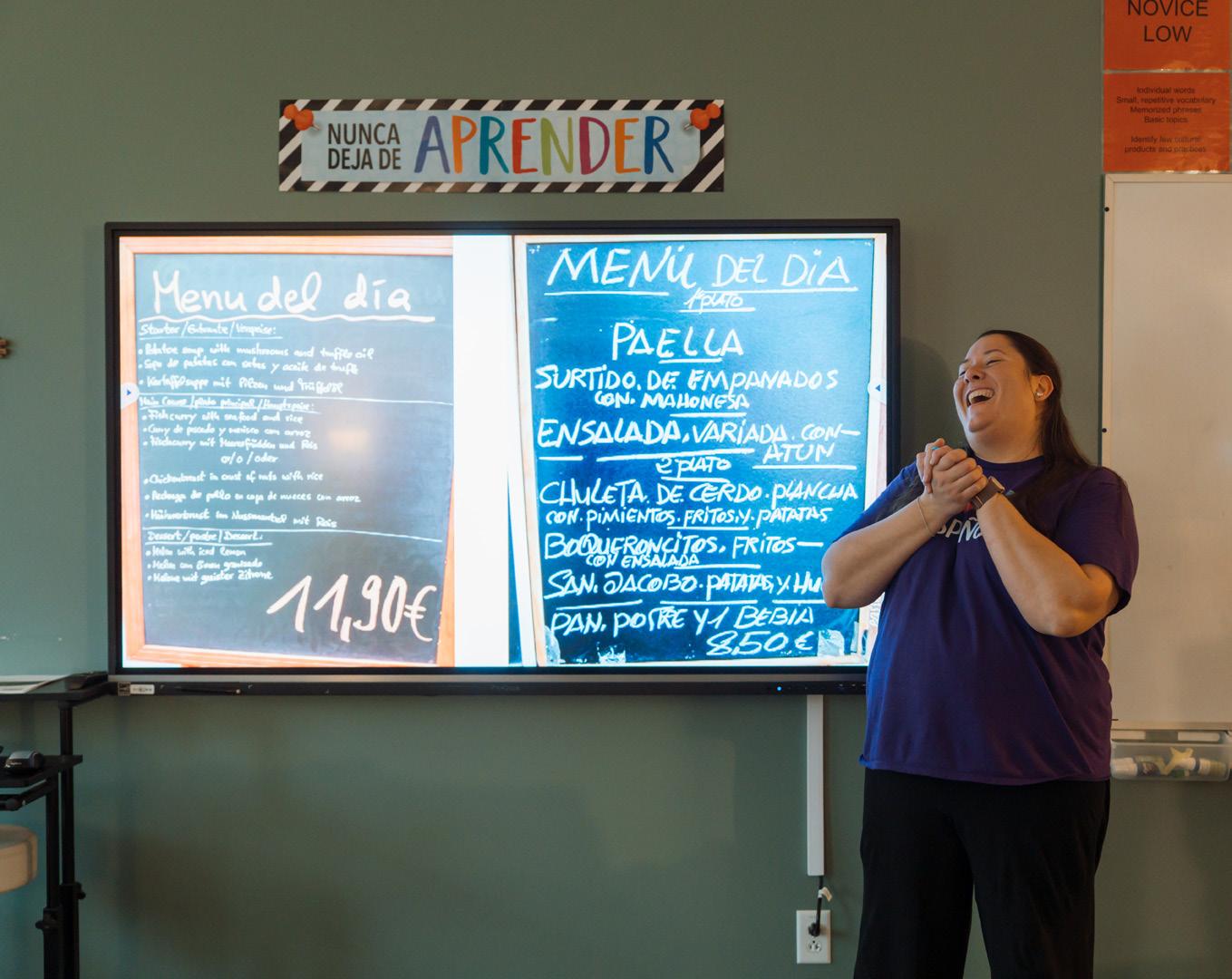
The first time I stepped into Misha Heglar’s classroom, I instantly noticed it was unlike the others. It was the first day of my sophomore year, and Mrs. Heglar’s Spanish II Honors was my fourth block. Instead of the harsh, headache-inducing lights I was used to, the room was softly lit by lamps positioned around the room. This classroom didn’t feel empty. It felt complete. Every wall and shelf was filled and decorated with colorful pieces of art I’d never seen before. I’ve since learned that each piece carries its own story from its own country and cultural traditions. From the first impression, it was clear that Misha Heglar doesn’t just teach — she creates. She has made her classroom environment her own, and in doing so, she shares a piece of her heart with everyone who enters.
Misha Heglar, who my peers and I know as Profe, grew up with a passion for learning that would guide her for the rest of her life. She is a devoted wife and a mother
to her beautiful daughter, and she speaks of her family with a warmth that radiates through every word. Misha discovered early the power a single educator could have. “The initial falling in love with Spanish came from my high school teacher who instilled in me and saw a giftedness,” Misha explained. And she has carried that inspiration forward, touching the lives of over 1,000 students. In the same way her teacher inspired her, Profe has inspired me to fall in love with Spanish. She has helped me understand its importance, and through it, develop empathy for all people.
Misha Heglar found her interest in Spanish and international culture early in her life. She pursued these passions further at Graceland University in Iowa, where her studies in Spanish and International Studies opened the doors for her to travel and immerse herself in the cultures of Nicaragua, Guatemala, and Spain. Over the last two decades, Misha has worked in many
different fields such as healthcare, finance, and international missions. Each experience confirmed her love for teaching.
“One of my favorite things was the conversations where someone I was working with learned something new, and it positively changed their life,” she said.
Her degrees in Spanish and International Studies allowed her to begin teaching on a practitioner’s license. From there, she fell head over heels for teaching. Misha began her career at South Gibson High School, where she taught for eight years. During that time, she earned her master’s degree from Union University. When both her and her daughter’s needs called for a different educational environment, she prayed for a new opportunity. Shortly after, she received an email and came into contact with Principal Guthrie at Madison Academic Magnet High School. There, she found a school that valued both excellence in the classroom and the realities of home life — a balance that has allowed her to thrive as both a teacher and a parent.
put into this world for a reason.
“I want them to know that they have a reason to be here on this earth,” Misha said. “They have value just for being human.”
During a stage of life when self-worth can feel fragile, the belief that every student has inherent worth remains a steady reminder in her classroom. Grades, behavior, and background do not determine value. Students are encouraged to recognize the same value in one another, especially toward those whose experiences differ from their own.
“I want them to know that they have a reason to be here on this earth. They have value just for being human.”
She teaches students that being shaped by circumstances out of your control doesn’t mean you’re worth any less than the person next to you. She also prioritizes the importance of practicing real-world skills in the classroom, creating a safe space to make mistakes and to learn from them. This practice helps students to learn how to overcome obstacles and move past them.
In Misha’s classroom, students are treated with an assumption that often goes unspoken elsewhere: they matter. Misha hopes students leave her class knowing that they were
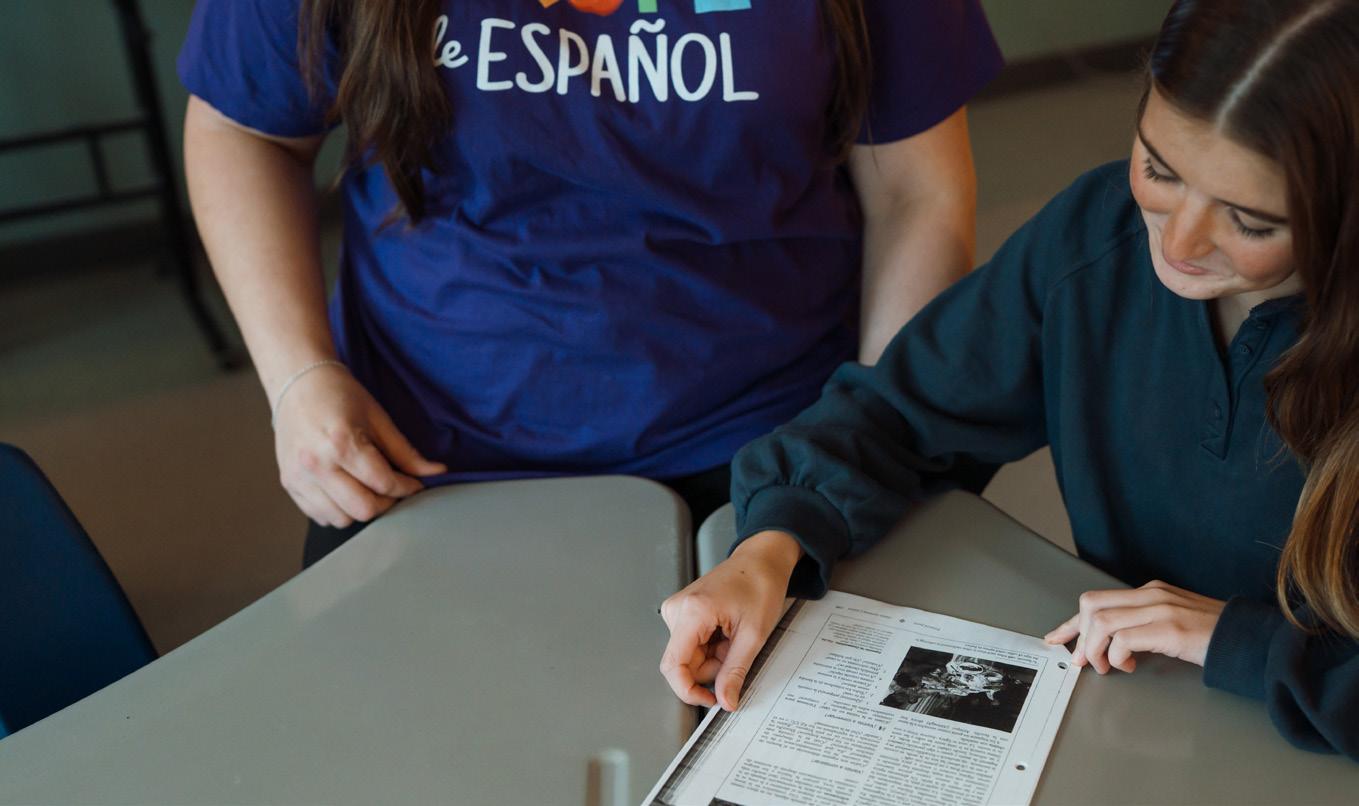
Misha Heglar doesn’t just teach Spanish. She builds an environment where every student has the chance to succeed. After carefully reviewing the Tennessee State Standards, Misha organically created her own curriculum, transforming lessons into experiences that engage students in culture, communication, and real-life practice. Her
classroom avoids traditional tests and lectures and instead is split into units that showcase different types of interactions and cultures. One week, students may roleplay a doctor and patient scenario in Spanish, and the next they may learn a country’s national dance like the bachata or salsa. Seating is carefully arranged to pair students of different abilities, encouraging collaboration and peer support. Lessons are tailored to reach every learning style — visual, auditory, and kinesthetic — and each unit incorporates exams that require students to showcase all forms of communication.
Beyond grammar, Misha
emphasizes teaching her students the three cultural Ps: products, practices, and perspectives, which help them understand the culture behind the language. Understanding the three Ps is important because they make students think critically about cultural differences. Misha also offers tutoring two days a week, both from herself and from advanced Spanish students who help their peers.
Her teaching is especially meaningful because it reflects her personal experiences, which makes learning personal, engaging, and memorable. It allows Misha to show her passion through her teaching. Every choice she makes in her
classroom reflects her unwavering commitment to seeing each student grow, succeed, and feel valued. Once a student advances to her Spanish III Honors class, they are given the option to take the CLEP exam at the end of the course. The CLEP exam gives students the opportunity to display their knowledge and earn college credit by taking a 90-minute exam. Misha also sponsors Los Mesteños, the school’s chapter of the internationally recognized society La Sociedad Honoraria Hispánica. In this club, students have the opportunity to receive state recognition in the form of the Tennessee State Seal of Biliteracy. Additionally, the club offers students service opportunities and a cord to wear for graduation.
“My most proud moments are
when I see a kid go, ‘Profe, I totally heard people speaking Spanish, and I understood it. I actually understood what they were saying.’ So when the rubber hits the road and it's in their life, they go, ‘Hey, that's actually a really cool skill and I'm learning the real stuff,’” Misha said.
Moments like these are why Misha Heglar is such an extraordinary teacher. She makes learning Spanish fun and meaningful, but she also teaches her students to believe in themselves. Her passion, care, and encouragement have inspired students to work harder, be curious, and see the value in their abilities. She has changed my outlook on life, and for that I’m forever thankful.
Professor Hardy and the Quilting of Memories
WRITTEN
BY
CARI GRIFFITH
PHOTO ARCHIVE BY
CARI GRIFFITH
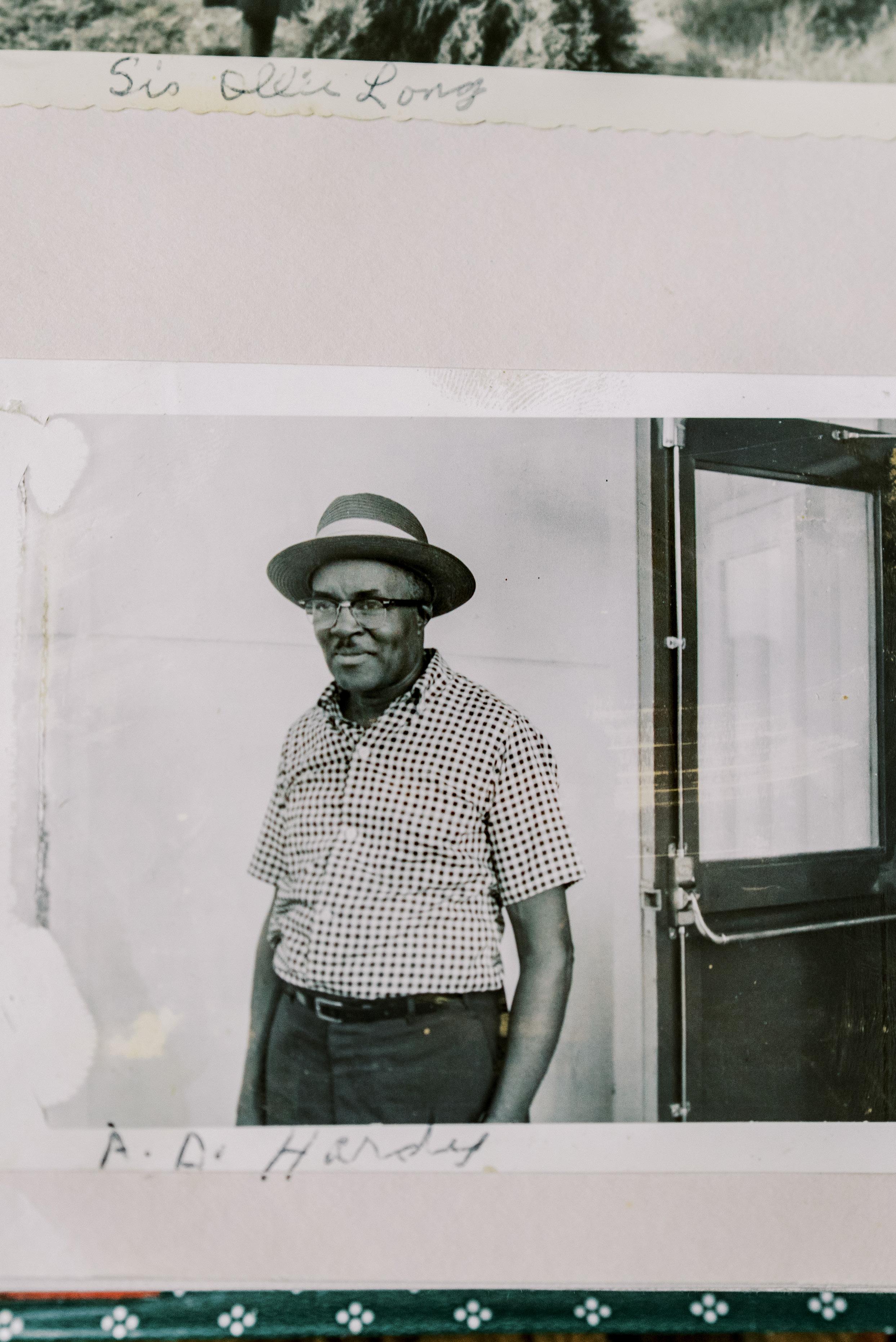
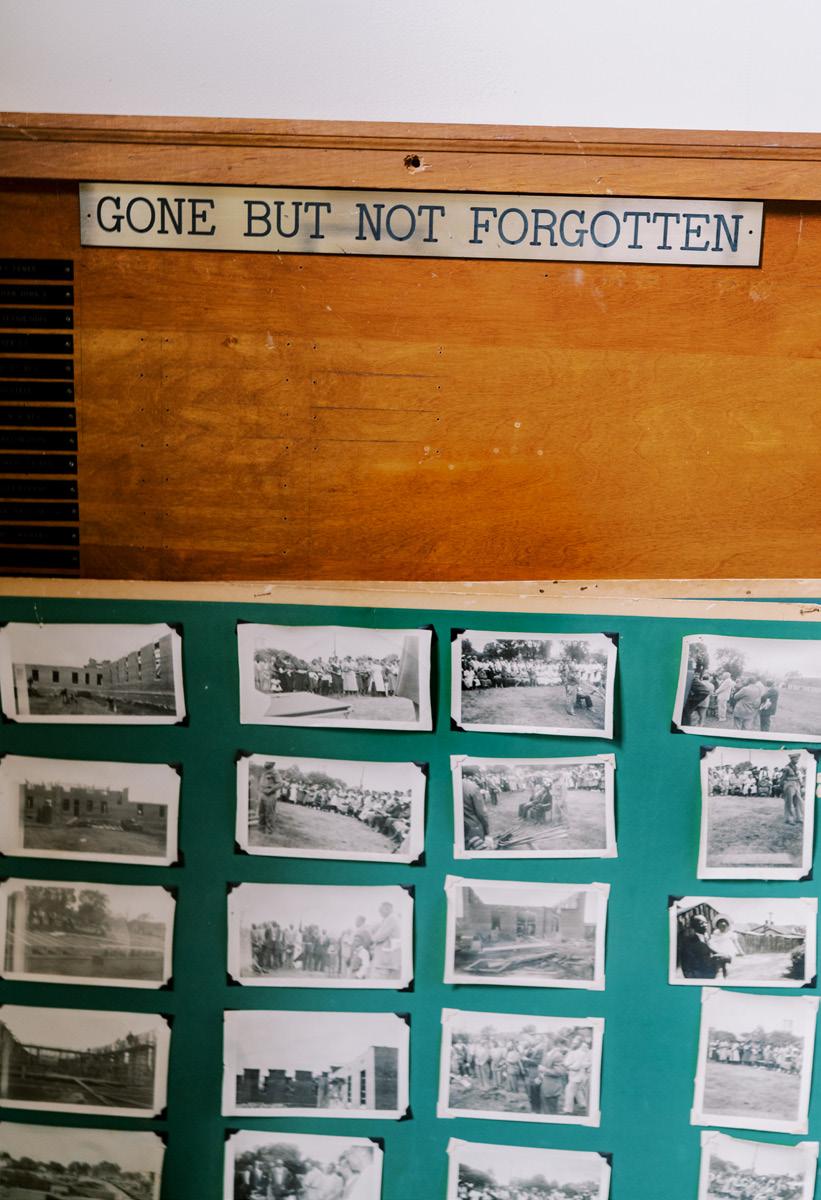
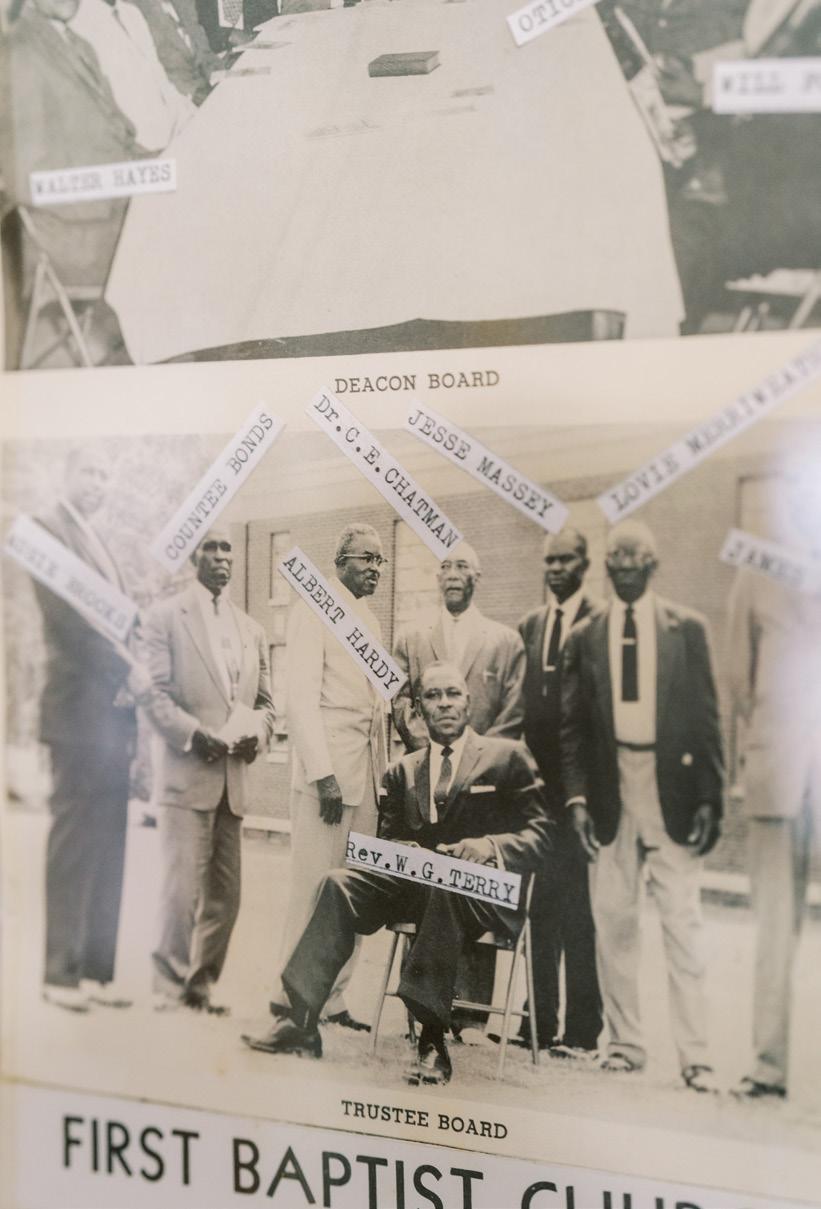
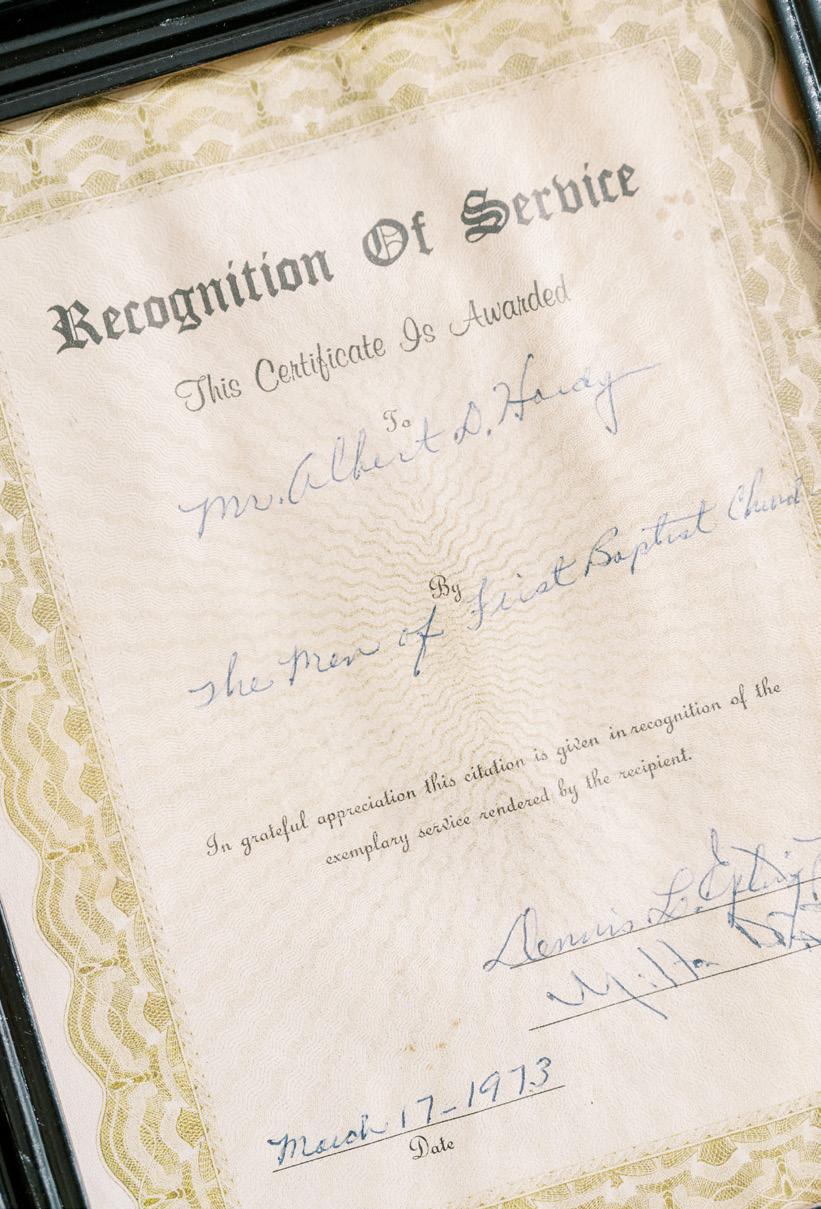
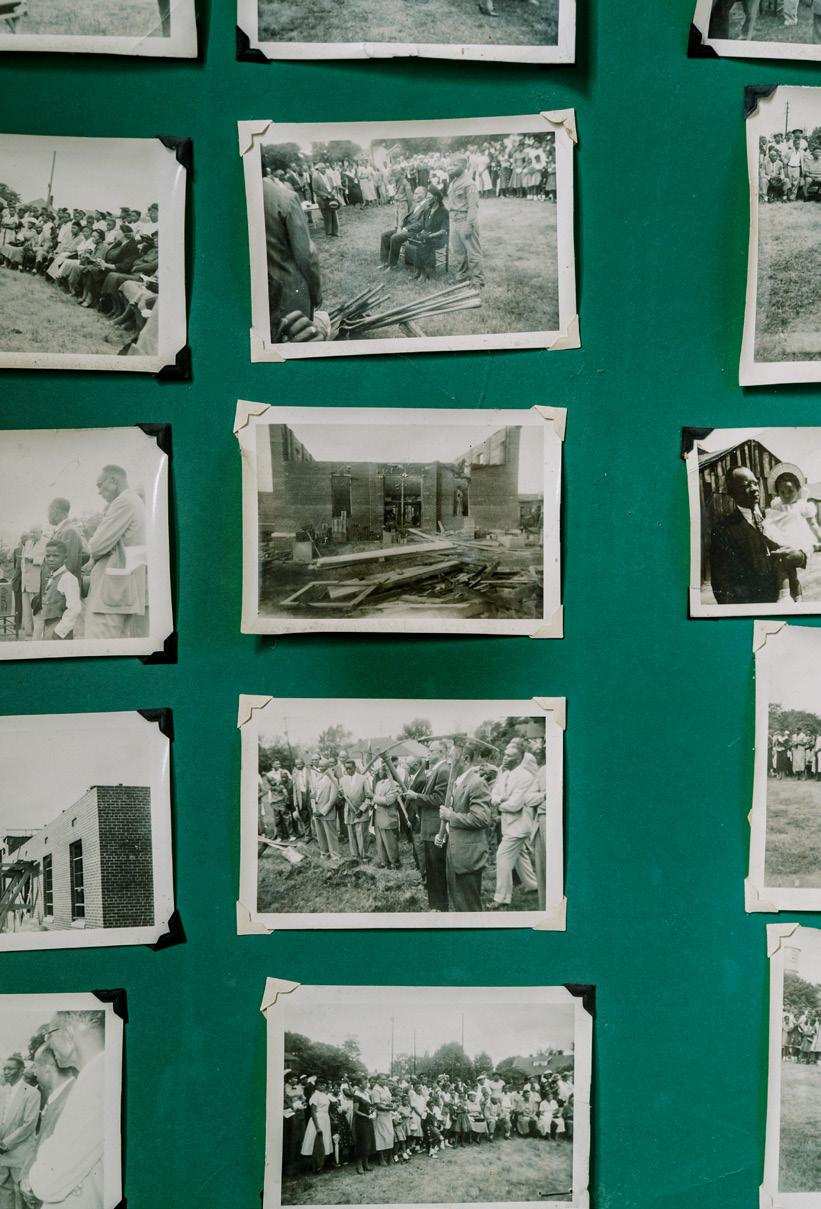
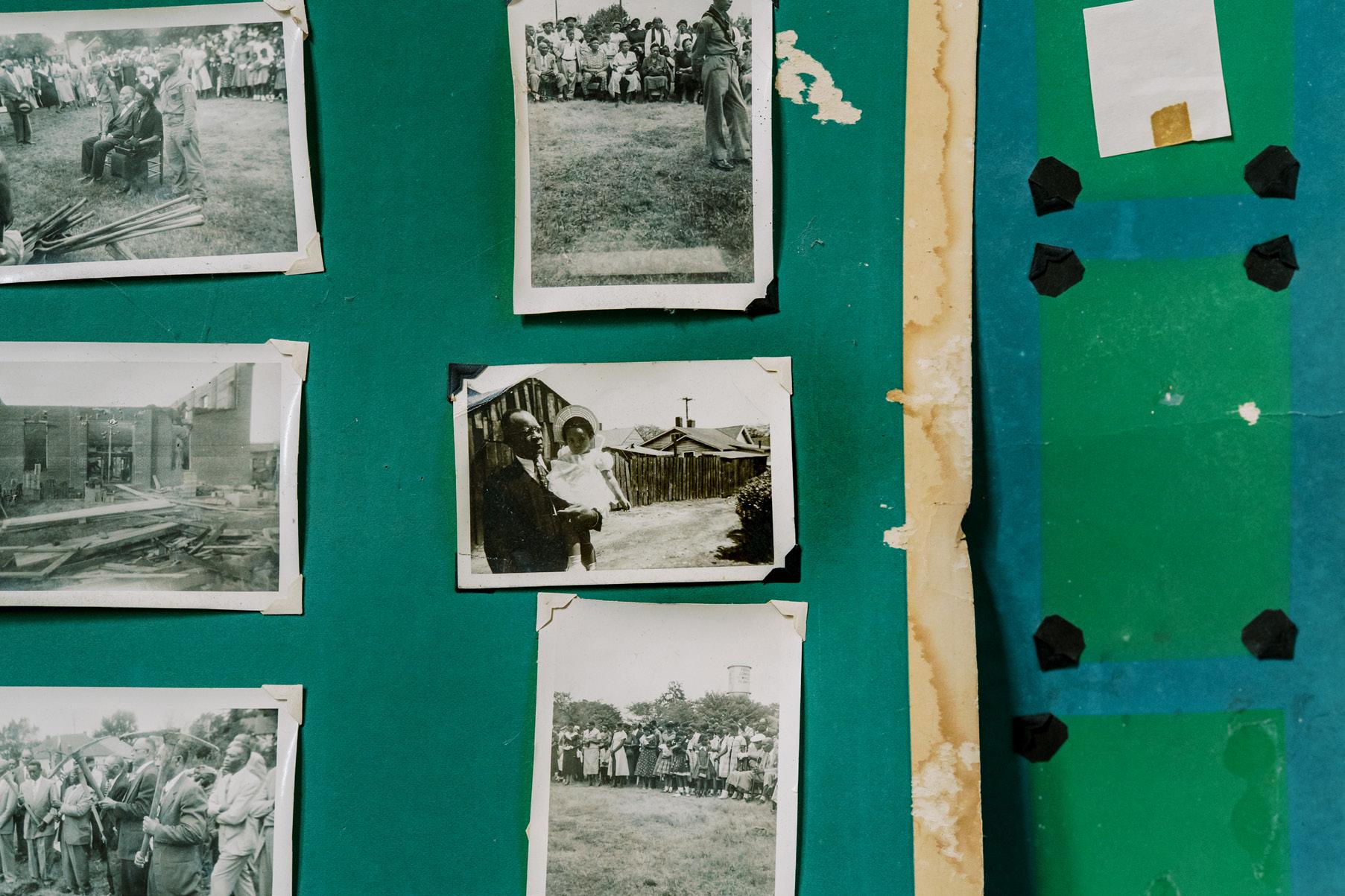
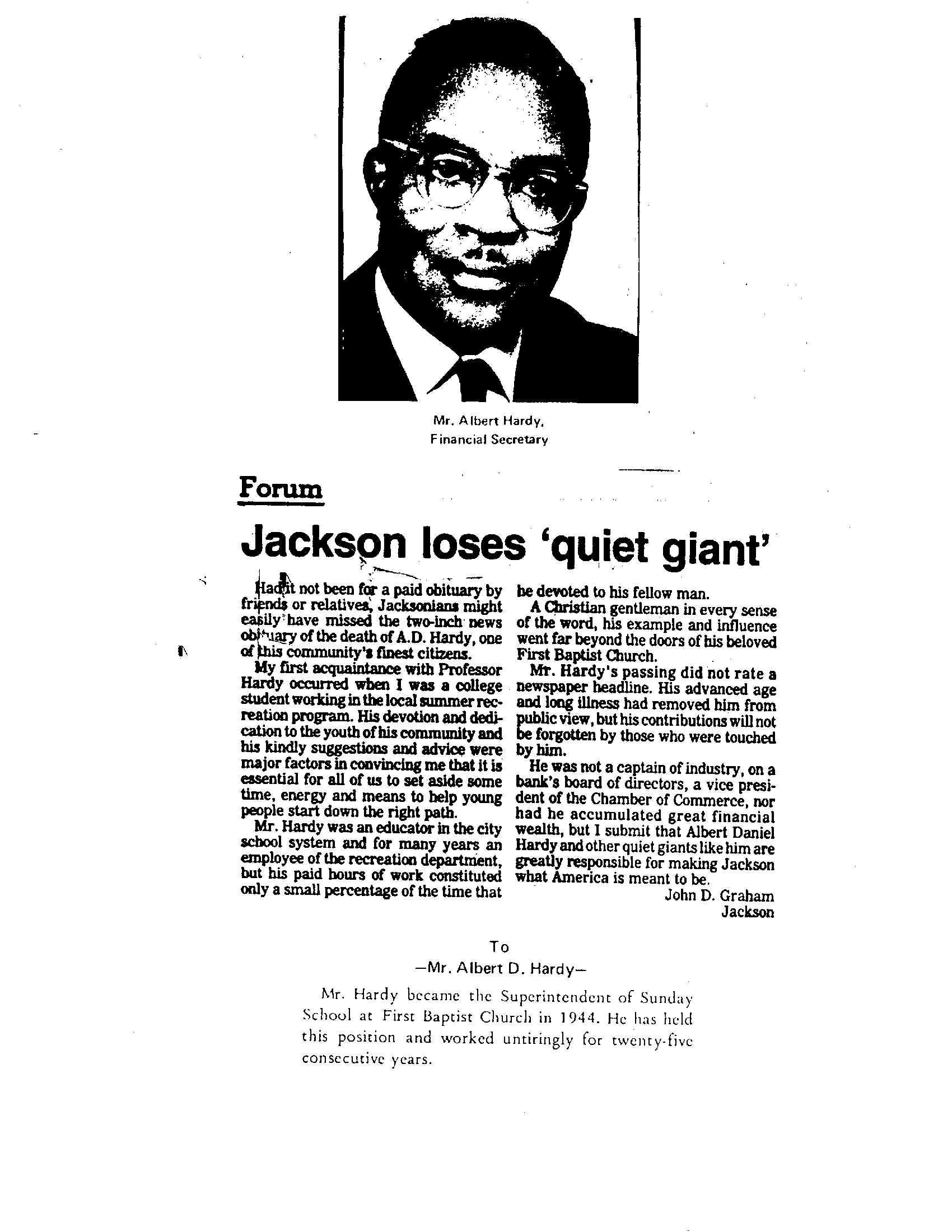
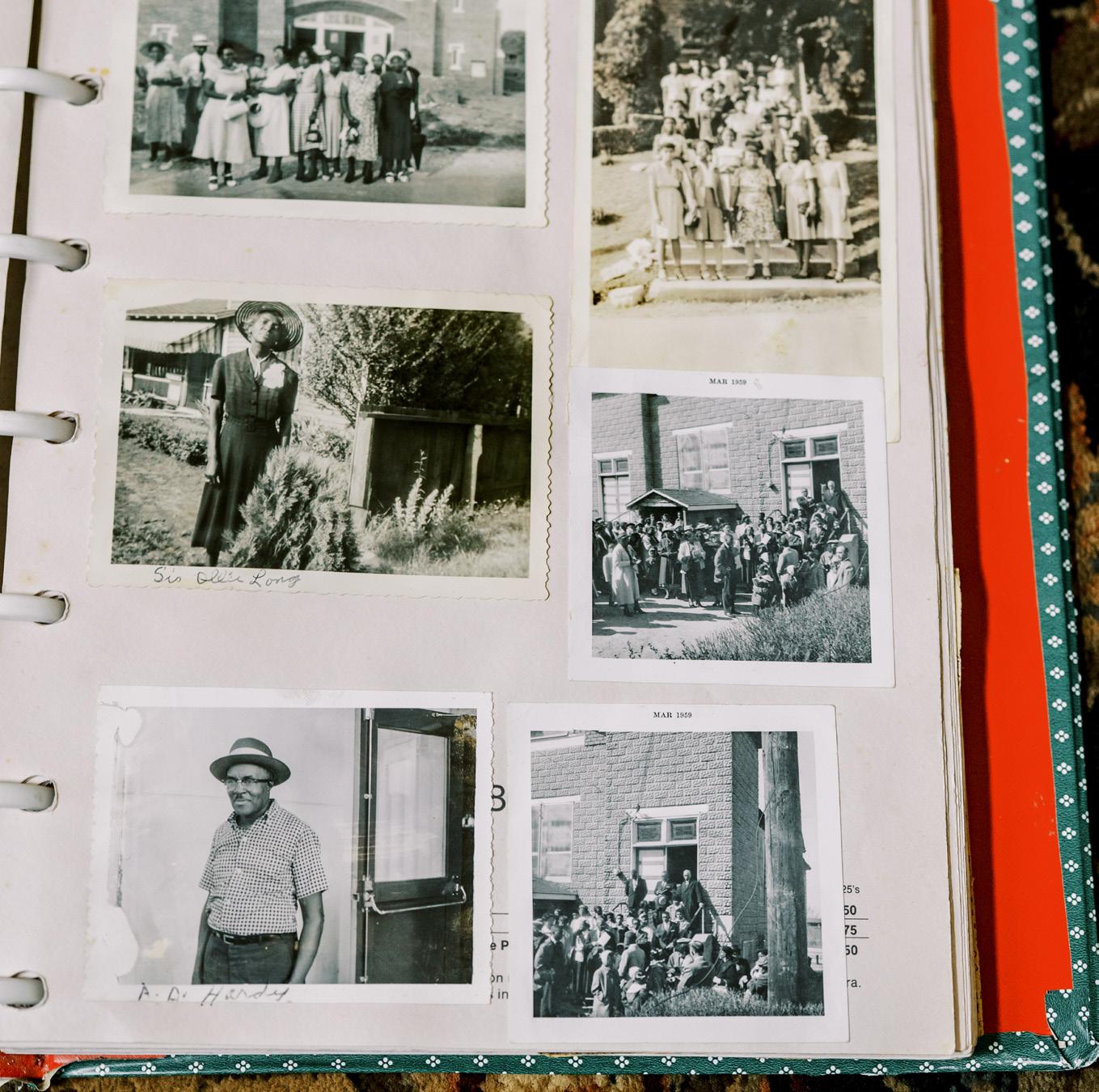
I began thinking about the theme of “hidden leaders” and knew that I wanted to start with the archive at my church, Historic First Baptist. Church archivist Abner Miller has been collecting images, stories, and testimonies for many years, diligently cataloguing a “Book of Firsts.” This Book of Firsts celebrates the achievements of African American members of Historic First Baptist who have been the first in their field. The list is long, and the stories and testimonies of hidden leaders contained within that binder could fill a hundred journals. I hope they do someday. As I was flipping through the image archive and walking around the conference room lined with news clippings, faded framed images, and celebratory plaques, I paused in front of a scanned image of what appears to be a Jackson Sun article about Mr. Albert Hardy. I was struck by this honorary acknowledgement written by John D. Graham. It opened a window into the story of a man that appeared to have a quiet, steady presence about him, and it beckoned me to know more.
Archive storytelling can be a tenuous process of quilting together testimonies and biographical details that make up the life of a person. Following threads can often lead to a frayed edge or a knot that refuses to untie. As I began unraveling details about his life, I realized that many keepers of the stories about Professor Hardy have long
since passed away, including the writer of the article. I was able to reach a nephew of Professor Hardy who lives in Chicago, Mr. Reginald Trice. After speaking with him over the phone and hearing lively stories about a trunk full of candy and attending baseball games alongside his uncle, I inquired about others who might have information about Professor Hardy’s family. “I’m one of the last ones who has this knowledge,” Trice said, with weighty understanding. As we spoke, I realized that there were facts about Mr. Hardy’s life that would be quite difficult to piece together due to the nature of memory and time.
Albert and Loretta Hardy did not have children of their own. However, as I began interviewing others, it became apparent that Hardy’s parenting happened in the classroom. Known to many as Professor Hardy, although he did not teach in higher education, he built a legacy through his work in the school system, as well as his commitment to Sunday school education at Historic First Baptist.
Deacon Milton Davis, a lifelong member of Historic First Baptist, had a great story about Professor Hardy’s classroom environment and his hardline stance on homeroom attendance. One morning in grade school, when Davis was running late and Hardy had stepped out of the classroom for a minute, he tapped on the window so a friend could crack it open and let him climb in. When Hardy returned, he
scanned the room, seeing Davis sitting there with what I imagine to be a flustered attempt to appear invisible. Hardy clocked him immediately and had him exit the room in the same way he came in. Davis never forgot it. “Do it right, now, do it right,” Davis could still hear Professor Hardy saying. Davis has carried this phrase with him and has tried to live by this example ever since.
Ms. Margaret Savage, now 102 years old herself, remembers Professor Hardy’s influence at Merry High School and his faithful service to Historic First Baptist. Recalling a story from when she was a teenager, Savage was giving a presentation and decided that a manger would be a helpful visual aid. Professor Hardy built the manger for her, and the memory of his generosity has
stuck with her, even after over eight decades later.
While collecting the pieces for this archive story, it became clear that the collage I was gluing together wasn’t going to be a complete story about who Professor Hardy was and what he achieved. Instead, I sat quietly with his influence for a moment, and I found that the story was in his name. They called him Professor Hardy out of respect for his gift as an educator, and that was his legacy.
We all have a teacher or mentor whose investment pulled out the best in us and had a lasting impact. For me, it was my theater teacher, Eric St. John. I gave him a run for his money in my early high school
years (thanks to a proclivity for drama both inside and outside of the classroom). His belief in me helped me channel my restlessness onto a stage and into a character. His classes helped me step outside of myself and into a bigger story. The reach of those like St. John and Professor Hardy extend far beyond the years we spend in their classrooms. Their impact may not always be visible in images, newspaper clippings, and those ephemeral documents that make up a tactile archive. Their legacy lies in academic enrichment, yes, but also remembered phrases that scaffold our consciousness, in
courage that is built up in our spirits, and in memories that remind us of the people who have paved the way. Their belief in us guides our first steps out of the classroom and they hold the lantern as we step out into the dark. I want to honor Professor Hardy as a hidden leader, as an educator, and as a member of the Historic First Baptist community. May his legacy remind us all to acknowledge those hidden leaders while they are with us so that an imperfect archive isn’t the only keeper of stories.
Major Danielle Jones
LEADERSHIP IN THE MARGINS
WRITTEN BY GABE HART
WRITTEN BY TRISTA HAVNER
PHOTOGRAPHED BY CARI GRIFFITH
When I was in my very last semester of my senior year of college, I was forced to sit through a fourhour-long “seminar” about the tenants of leadership. The last thing an almost graduate wants to do is endure yet another PowerPoint presentation, and each slide detailed the same banal descriptions of how to garner respect from your peers or ways to conduct a meeting to keep your audience’s attention (the presenter obviously did not see the irony). But one line stuck out to me enough that I remember it nearly twenty years later — “if you want respect, you must command it.”
That resonated with twenty-oneyear-old me. If I wanted to be taken seriously, I needed to carve out a space for myself and be the loudest voice in the room. And, in some ways, that served me well enough. I did, however, find myself drawn to the quietest voices in the room. The ones who did not demand space or respect, but who earned it with consistency and care. Their leadership looked wildly different than what I was sold and truly transformed the way I approached life.
Professional experience after personal experience revealed that
the people in the trenches, creating programs and changes that matter, are often the ones who never receive praise or recognition. They are steady and unyielding, a quiet force. And it’s intriguing. Are those people really just altruistic with a higher threshold for thankless work or is there some innate impulse that compels them to keep showing up?
As I sat across from Major Danielle Jones in her office on a foggy November Wednesday, I got the impression that maybe it is a lot of both.
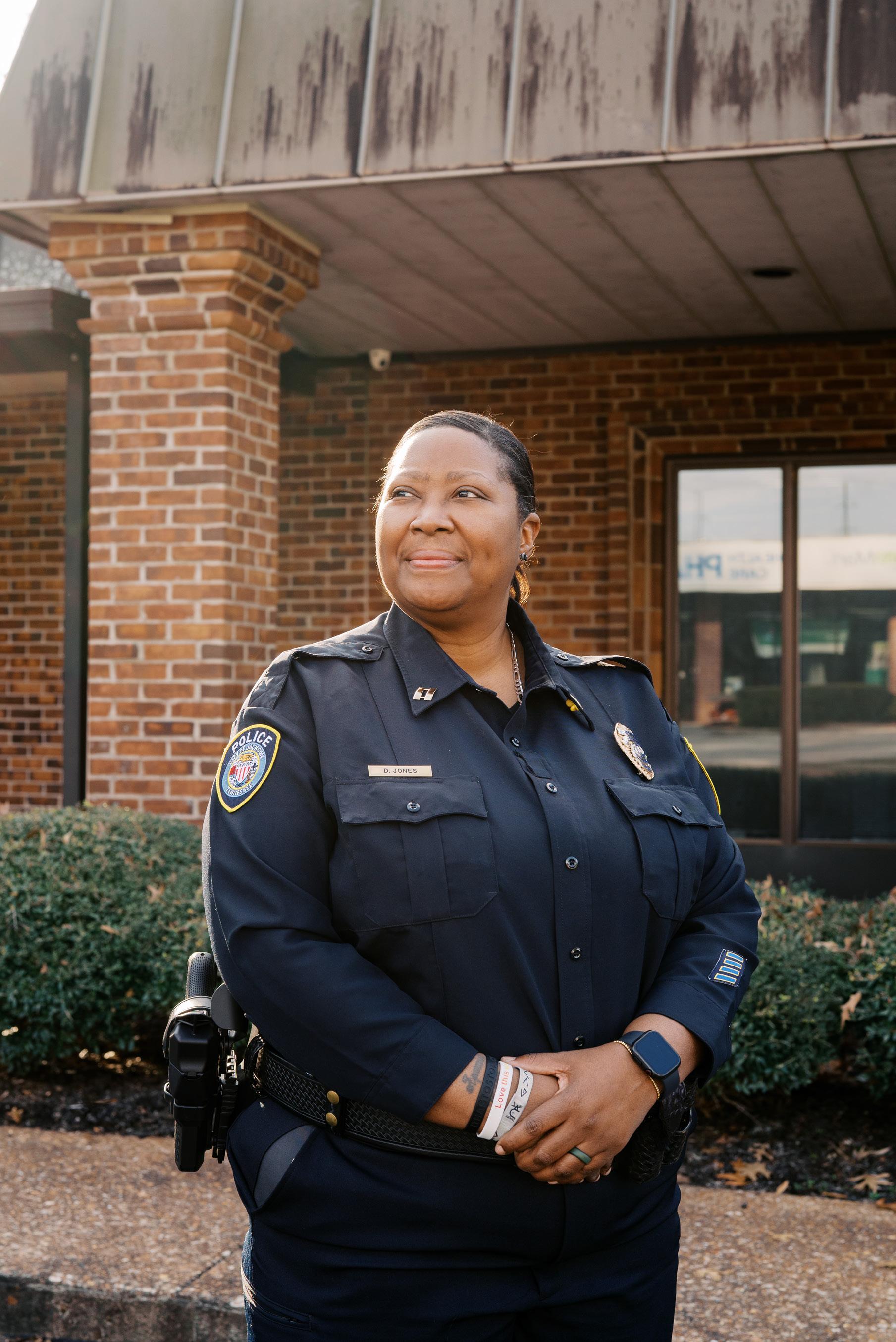
Danielle Jones is a kindred spirit — a born-and-raised Jacksonian who grew up in East Jackson, attending Washington Douglass Elementary School, Jackson Junior High, and eventually North Side High School. Danielle described herself as a “nerd” who enjoyed school and an introvert that relished time with family, which instilled values of respect for others and recognizing the dignity of every human being. While at North Side, Danielle participated in the ROTC program and had plans to join the military upon graduation. She was also interested in attending college in Hawaii. Neither of
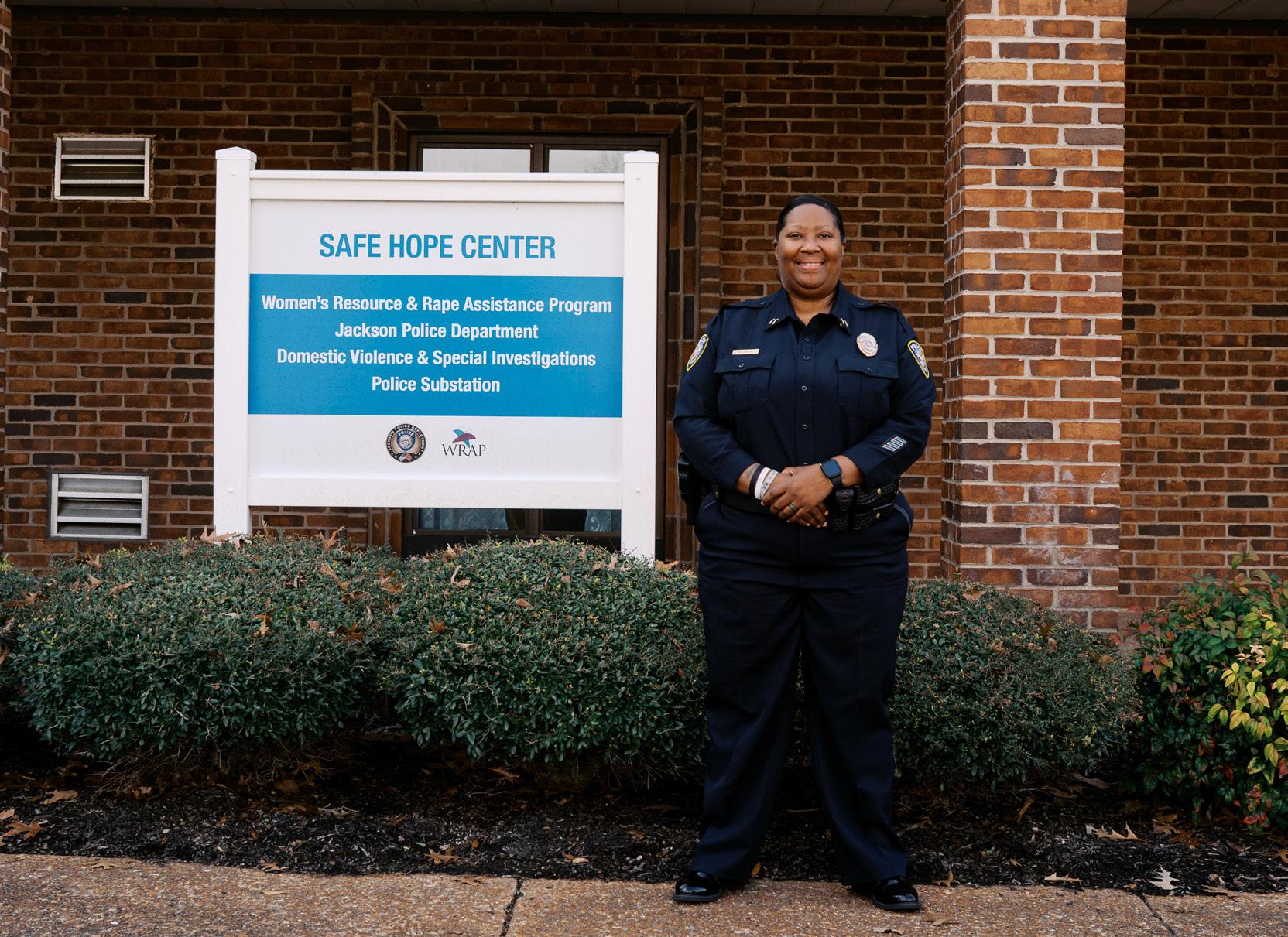
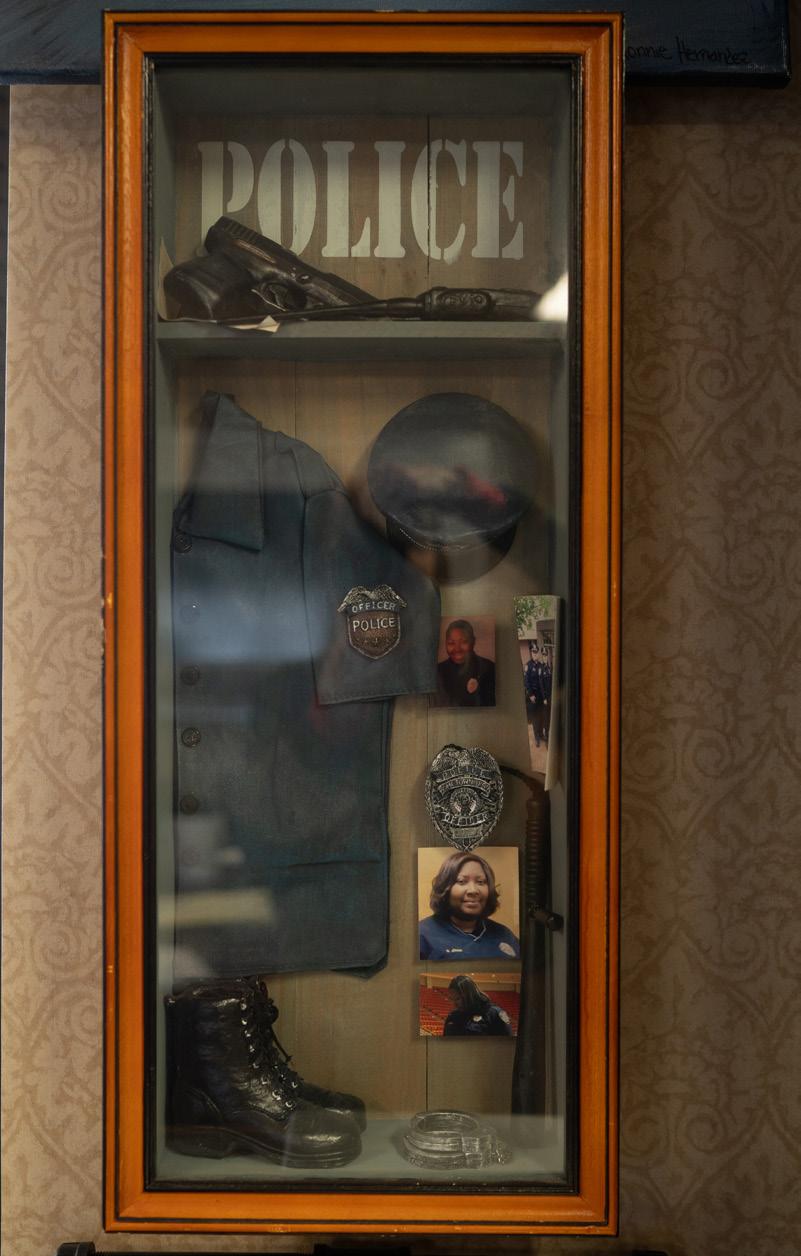
those avenues opened though, and she decided to attend Lane College (and later Bethel University). Her initial plan was to be an attorney, and she might have followed that career path had it not been for an internship with the Jackson Police Department. She found herself excited by the work as she discovered that the role of a police officer was so much more than what she imagined and that much of an officer’s day consisted of service to individuals and the community. In 2001, Danielle graduated with a Bachelor of Arts in Criminal Justice, continuing her position as a patrol officer. I could fill many pages with Major Jones’ career accolades, but instead I will summarize them (which in no way diminishes her amazing upward trajectory). In 2002, Danielle started as a patrol officer for the Jackson Police Department. By 2006, she was an investigator with the Violent Crimes Unit of the JPD, specializing in child and sexual abuse. She graduated with her master’s degree in 2013 and was promoted to Sergeant over the newly formed Special Investigation Bureau of JPD. In 2017, she was promoted to Lieutenant and is currently in the role of overseeing the Safe Hope Center, which is dedicated to ending domestic and sexual violence. In 2020, Lieutenant Jones began working with the Tennessee Bureau of Investigation as a Task Force Agent for the Human Trafficking Unit. And, in August of 2022, Lieutenant Jones
was promoted to Captain over Investigative Services Division, which encompasses the Safe Hope Center and General Investigations Bureau. And in January of 2026, Captain Jones became Major Jones, yet another promotion in line with her work ethic and leadership abilities. She is the first female Major that the Jackson Police Department has ever employed. As if that were not enough, she also writes and manages grants for the police department and maintains the budgets for these units.
I read all of these accomplishments before I went to interview Major Jones, and I had never met her before that Wednesday afternoon. In my mind, I constructed the type of person I thought would have this kind of meteoric career rise — a smart, self-assured, tempered person, perhaps with a booming voice. After all, she is a Major, and that meant that she commanded attention. I was mostly right. She is all of those things, but as we shook hands and I began asking her questions, I could see that her command is one of care and concern for her neighbor, a quiet and steady extension of her help and her hands. She answered my questions softly and intentionally, and I could immediately see that her power was in her presence.
I was very interested in what motivated her to work with domestic and sexual abuse survivors. So much of what Major Jones does on a daily basis is hard, draining
work, and I wanted to know how she maintained her emotional fortitude. She agreed that this type of work can be taxing, but the recurring theme in her responses was presence. Showing up to meet a neighbor at their lowest, holding their hands, and walking them through picking up the pieces after tragedy is what keeps her doing the work. And so much of what she loves about her position is the service aspect. She has gone to divorce hearings, fed hungry people, given out her personal number so that a neighbor can contact her, and stood in gaps when the divide looked insurmountable. When I asked her why she goes that extra step, she explained that she “is the person that needs to do something, or at least try.”
If you boil leadership down, that is what remains. Leadership is what we do when no one is there to see us do it. Major Jones’ leadership exists in the margins.
As we wrapped up our interview, I wanted to hear specifically about how she models leadership for her colleagues. After hearing her talk about her values, it was no surprise to me that she said, “I don’t ask anyone to do what I wouldn’t do myself.” When she sees a need, she steps in to meet it. No waiting on a subordinate to come in and handle what she can handle herself. Major Jones does not measure leadership in recognition or accolades but in needs met. And that mentality has impacted her team and the care
"Leadership is what we do when no one is there to see us do it. Major Jones’ leadership exists in the margins."
she extends them. She is interested in helping people grow into themselves, and with a leader who is eager to see others excel, growth is a natural outcome.
As I always do, I asked Major Jones about her goals and vision for her future and the future of our community. Professionally, she would like to see how far she can go in the Jackson Police Department to impact as many people and policies as possible. Personally (because she is a human in that uniform, after all), she would love to enjoy more time with family and record a song with her dad, as music has always been a bond they share. Mostly, Major Jones just wants to be present. Available to anyone who might need her, and carefully and consistently stepping in to impact her community for good.
Major Jones has every right to demand respect. The list of her professional accolades is impressive and important, and she has earned every bit of her authority. And yet, she approaches her job, her colleagues, her community, even me, with a softness, a quiet and consistent presence bent towards service, not recognition.
IN THIS ISSUE Contributors
MIRZA BABIC is a multi-talented creative, adept at weaving captivating narratives through both visual and written forms of expression. With a foundation in photography and content creation, Mirza brings stories to life with a keen eye for detail and a flair for engaging storytelling. Beyond the lens, Mirza's versatility extends to music, where a passion for music production and a commitment to excellence shine through. Mirza is dedicated to crafting compelling narratives and immersive experiences that leave a lasting impact.
LIZZIE EMMONS is the Program Director of Our Jackson Home. She is a passionate advocate for the arts and culture sector with experience in arts and nonprofit administration, visual art, and music performance. Lizzie has a Bachelor of Arts in Music, Master of Science in Education, and a certificate in Arts Management. She lives in midtown Jackson with her husband, Jerry, and dogs, Rue and Ellie.
HANNAH GORE is a photographer, writer, and artist from Jackson, Tennessee, who currently lives in the nearby town of Medina. She seeks to capture the heart and soul of Jackson
through authentic storytelling in both visual and written form. Hannah currently owns her own photography business and specializes in live music, event, and portrait photography.
CARI GRIFFITH is a gardener and a photographer with a lifelong affection for seed sowing and storytelling. She lives a sweet life in midtown with her husband, Rob. She spends most of her time behind a computer or a camera, or teaching college students to appreciate the good light. Her most treasured moments are eating dinner with her friends both at home and afar.
TRISTA HAVNER is a born-and-raised Jackson girl, a mom, wife, and small business owner. She and her husband, Charlie, have a charming local family business and are passionate about the history there. Trista can be found putting together frames in her family’s shop or lettering anything that will hold still. Her love for home grows daily, and she is passionate about being an agent of growth and positive change in her beloved Hub City.
ESTHER JONES is a Maryland native who moved to Jackson in 2019
to complete her English degree at Union University. She lives with her husband, Wesley, and their dog, Otis. Her favorite things are contemporary fiction novels and Pinterest vision boards, and she doesn't know what she would do without em dashes.
MADDIE MCMURRY serves as Editorin-Chief of Our Jackson Home and Communications Manager at theCO. She came to Jackson to attend Union University, where she graduated with a degree in journalism and decided to stay in Jackson and make it her home. She is a writer and photographer who loves telling real and authentic stories from behind the camera or on the page. In her spare time, she loves spending time with her husband, Zach, hosting people in their home, traveling, and playing with their puppy, Winston.
TAMARA MILLER is a graduate of West Tennessee Business College. She works as a hairstylist and enjoys photography.
MILEY REA is a multimedia artist with a policy of “all in and willing to try anything once,” from photography, small-to-large-scale paintings, and,
newly, written works. Her friends have fondly referred to her as “a quilt both in friendship and craft.” When she’s not creating, you can find her deeply enthralled by learning someone’s story, serving as a photojournalist in other countries, and hosting craft nights with dear friends (and cat Pip) in her little midtown apartment.
SHELBY TYRE is a filmmaker, writer, and storyteller based in Jackson, Tennessee. She runs The Reel Collective and serves as the Festival Director of the Hub City Film Festival. With a passion for storytelling in all forms, she focuses on capturing and preserving meaningful narratives through film, writing, and communitydriven projects.
ABBEY WILSON is a Junior at Madison Academic High School who has lived her entire life in Midtown Jackson. When she’s not spending time with her three brothers and her miniature Golden Retriever (Maggie), you can probably find her in the dance studio. The future is wide open but could involve working in medicine and will definitely include fluency in Spanish.