


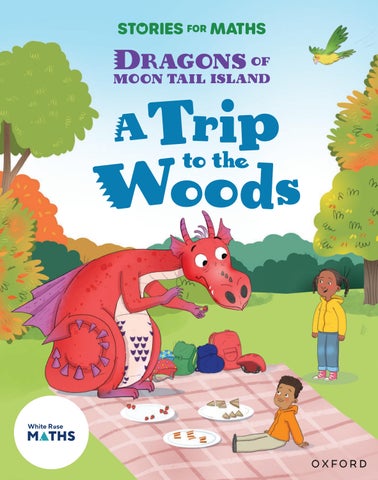
This book aligns with White Rose Maths Year 2 Multiplication and division Step 1. Recognize equal groups
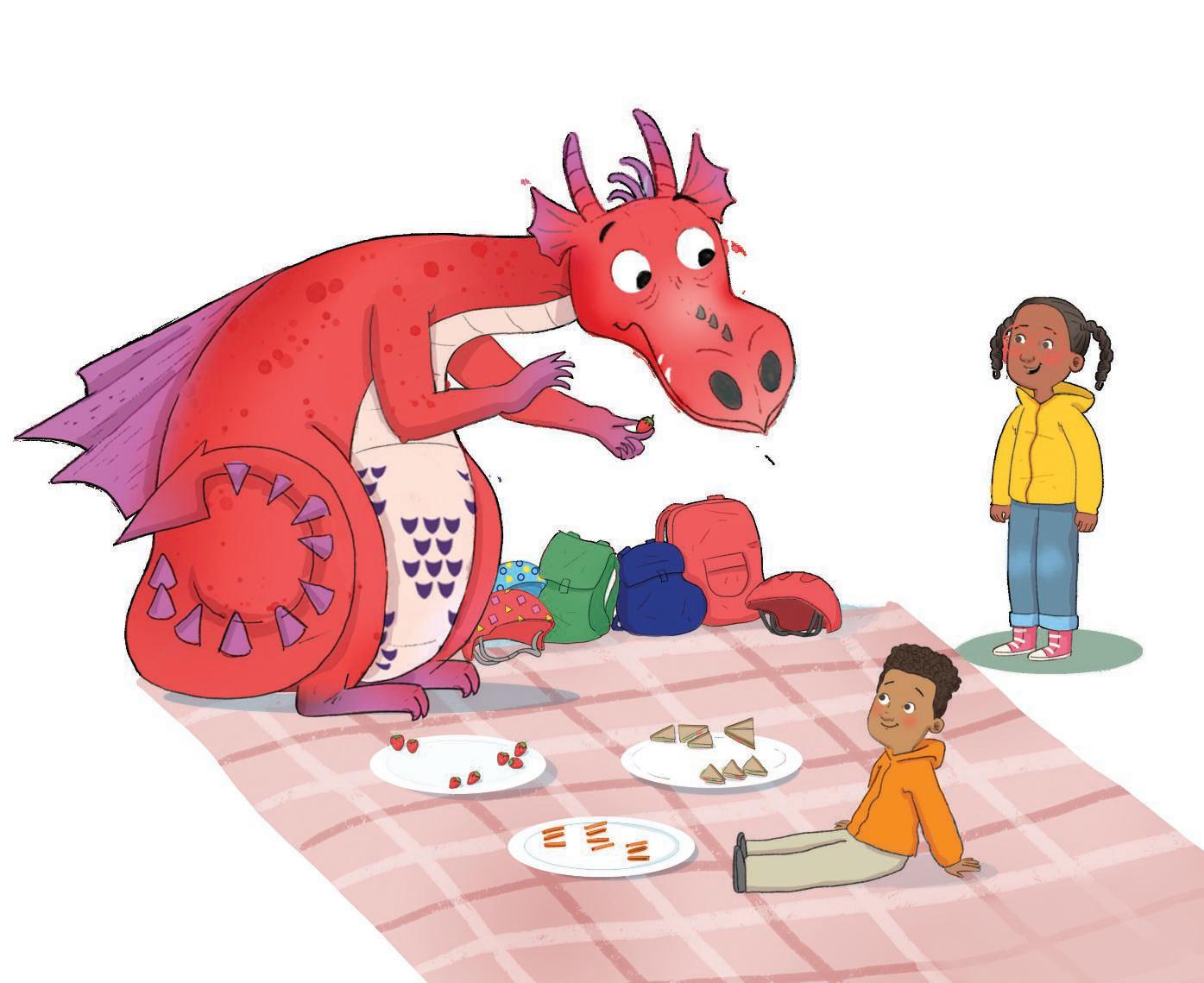
Children are learning to recognize equal groups and to make connections between repeated addition and multiplication, e.g. 3 groups of 3 can be added 3 + 3 + 3 = 9, or multiplied 3 x 3 = 9. Children are also using the vocabulary ‘equal’ and ‘unequal’ to describe groups of objects. In this book there are groups of bike tyres, gloves, squirrels, ducks, butterflies, leaves, and picnic items for children to count and talk about.
Children might count all the objects together instead of counting how many are in each group or how many groups there are. The questions alongside the story encourage children to describe quantities as groups instead. Children may also confuse objects in different orientations and arrangements, so examples of this have been included to spark conversation.

Writt n by Ang l K coj vic
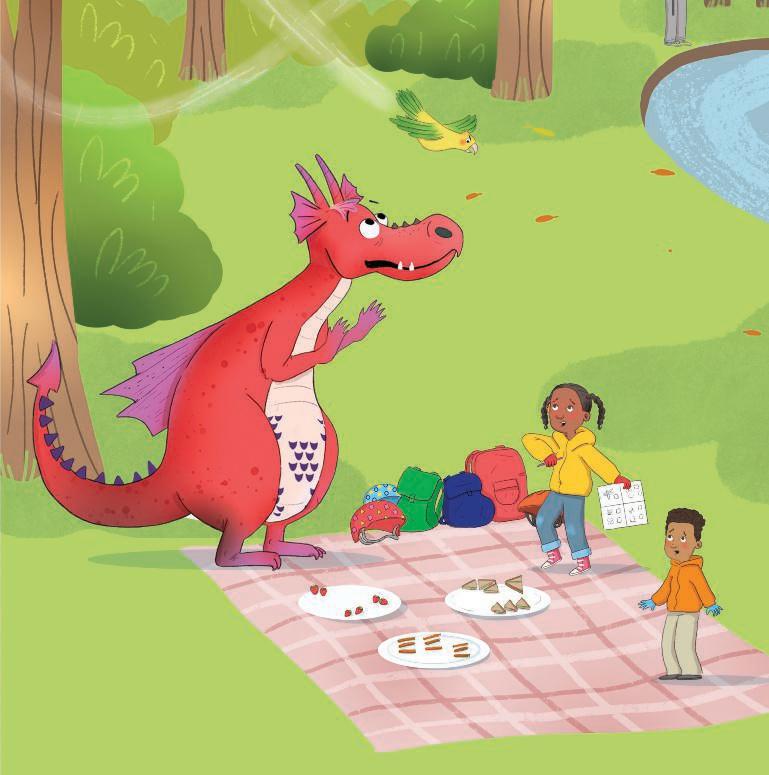






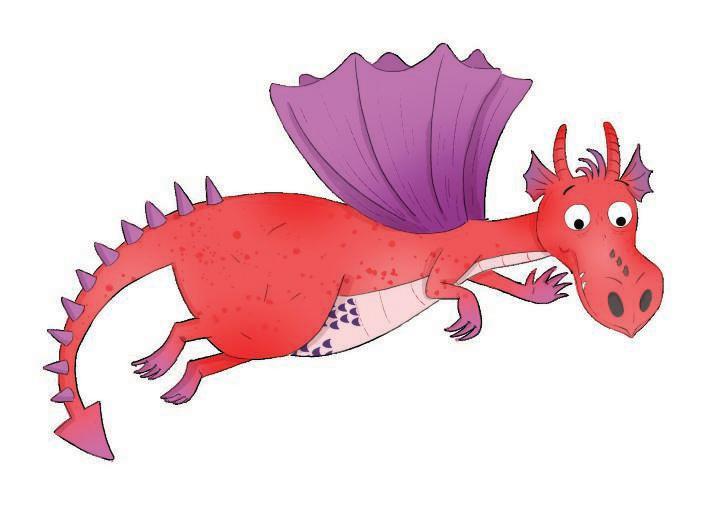






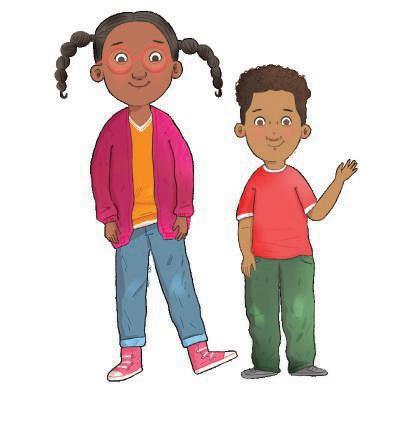
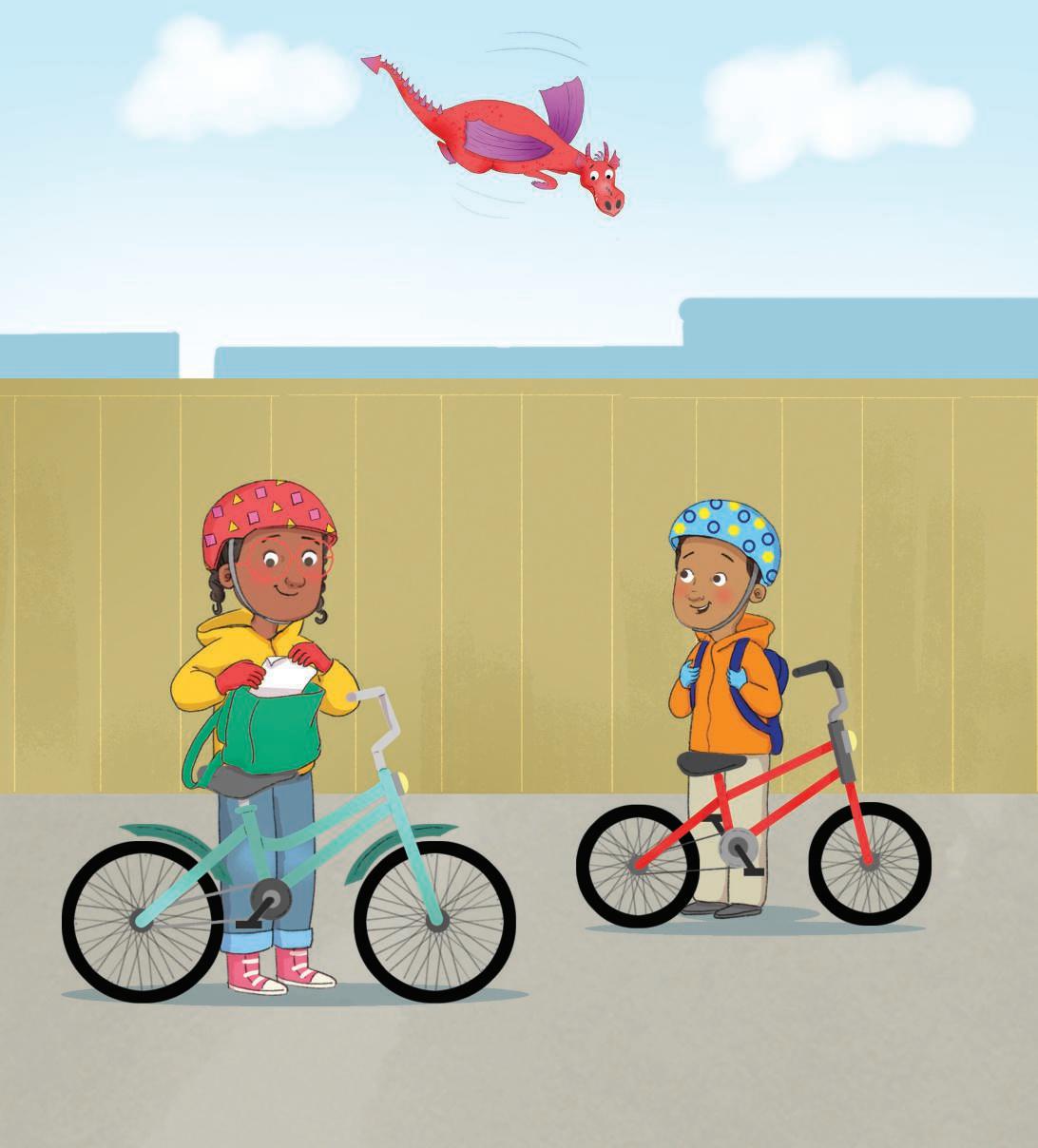
Nadia and Omar are friends with Ember.
Ember is a dragon from Moon Tail Island.
Dragons can only be seen by those who truly believe in them.
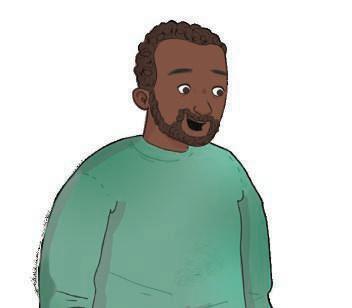












It was a cold, bright day.
Nadia and Omar put on their coats and gloves. Then they ran to get their bikes from the yard.
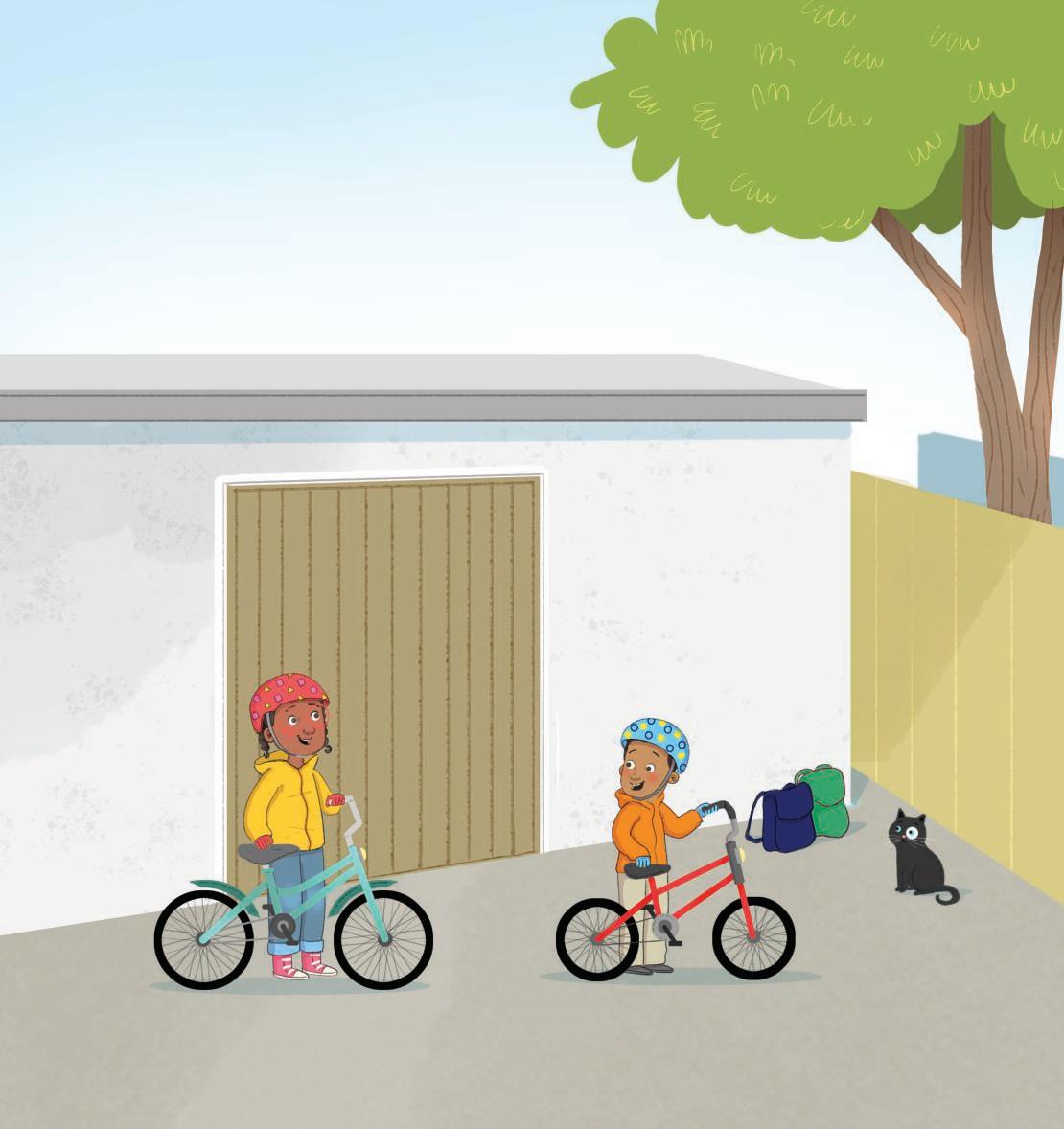
Nadia and Omar are wearing gloves. How many pairs of gloves are there? How many gloves are there altogether?
Nadia heard a noise from inside Dad’s workshop. It was Ember.
‘What are you doing today?’ asked Ember.
‘Dad’s taking us animal spotting,’ said Nadia.
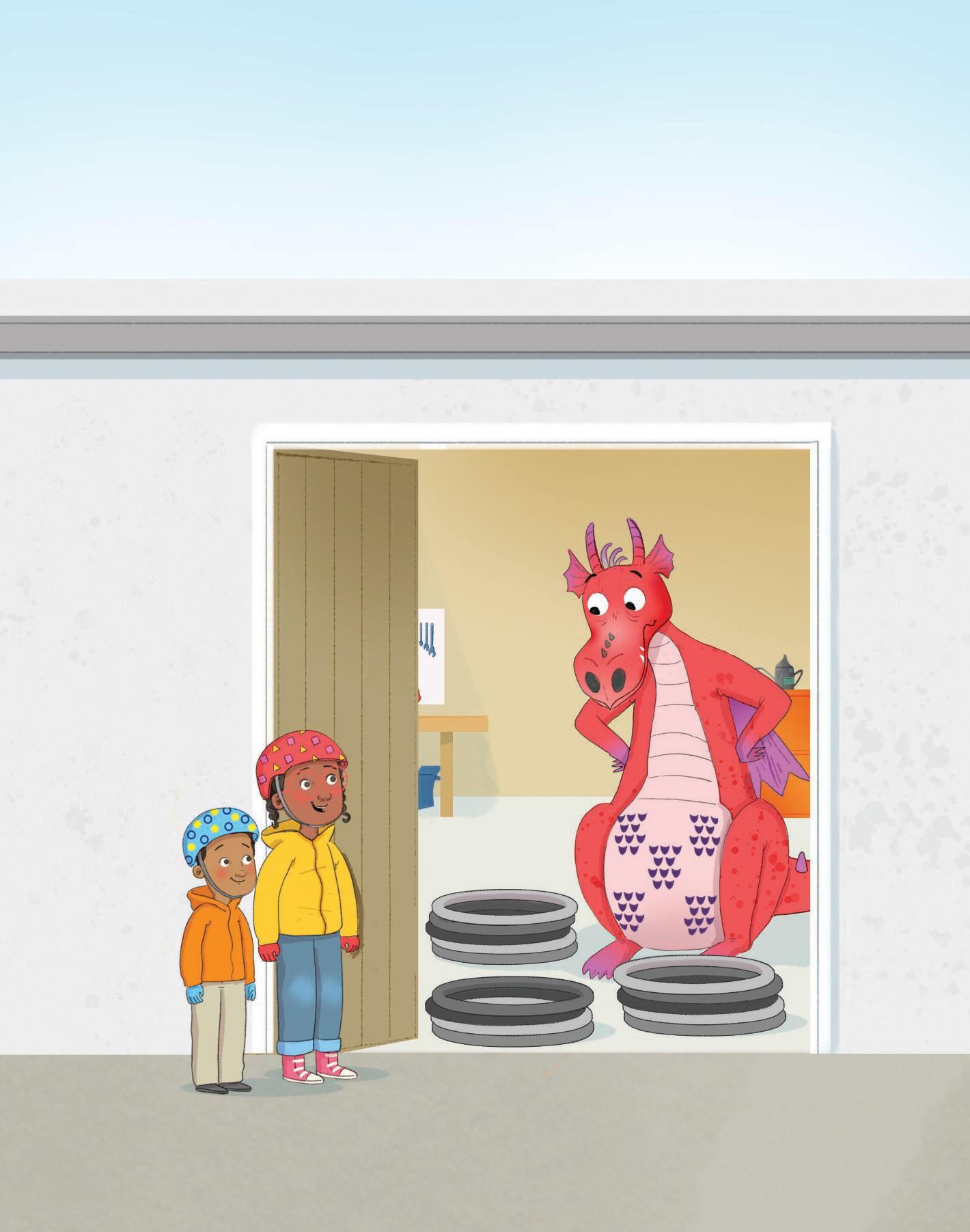
Look at the bike tyres. Are the groups of bike tyres equal or unequal?
Nadia showed Ember her worksheet from school. ‘These are the animals and birds we need to spot.’
‘What’s that one?’ said Ember.
‘A dragonfly,’ replied Nadia.
‘Dragonfly?’ said Ember.
‘They are colourful insects,’ explained Nadia.
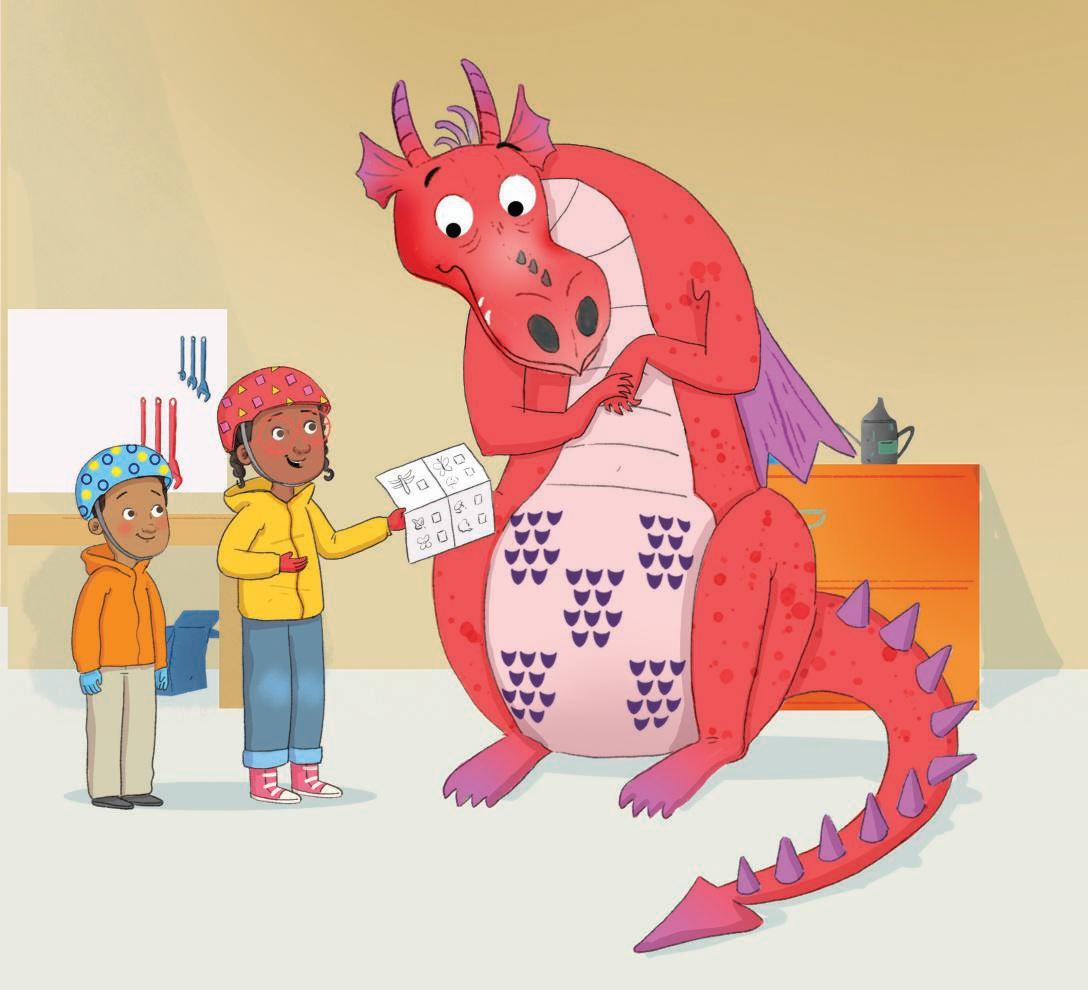
Look at Ember’s scales. How many equal groups of scales does she have? How many scales are in each group?
Nadia had an idea. ‘Why don’t you come too, Ember? You could help us to spot animals!’
‘I’d love to!’ said Ember. She flew up into the air, waiting for them to set off.
Talking with children about maths concepts can help deepen their understanding and grow their mathematical skills. Children also benef it from hearing and using key maths vocabulary in multiple contexts. Some suggestions to support children in learning through talk have been included in this story.
The following words and phrases are highlighted in bold in the book.
equal ADJECTIVE (pages 4, 12, 16, 18, 20, 24)
Things are equal when they are the same in amount, size, or value.
group NOUN groups (pages 4, 7, 9, 11, 12, 14, 16, 18, 20, 21, 24) a number of people, animals, or things that belong together in some way
Phrase equal groups
pairs NOUN pairs (pages 4, 8) two things or people that go together or are the same kind · I need a new pair of shoes
unequal ADJECTIVE (pages 4, 11) Things are unequal when they are not the same in amount, size, or value.
among PREPOSITION (pages 7, 18) in or surrounded by meanwhile ADVERB (page 22) while something else is happening · I’ll cut up the cake; meanwhile, you get the plates out.
settle VERB settles, settling, settled (page 19) to come to rest on something · A bird f lew down and settled on the fence.
shoulder NOUN shoulders (page 19) the part of your body between your neck and your arm
wonder VERB wonders, wondering, wondered (page 13)
If you wonder about something, you ask yourself about it.
· I wonder where she is?


Written by Angela Kecojevic

Dad and the children go animal spotting in the woods. The children spot Poly ... and Poly spots Ember.
web www.oxfordprimary.com
email primary.enquiries@oup.com tel +44 (0)1536 452610