![]()


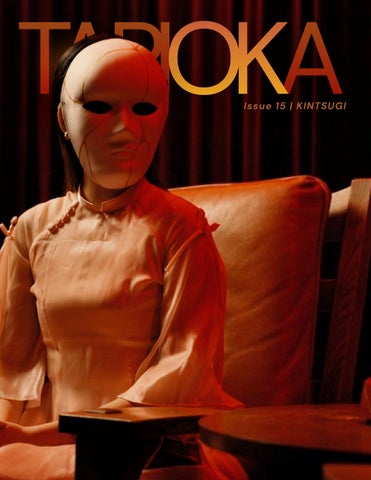
Tapioka Magazine is Oklahoma's first publication with a focus on APIDA-MENA culture and identity. Through written and visual media, we hope to highlight Oklahoma's APIDA-MENA community and celebrate its rich heritage and history.


EDITORIAL BOARD
EDITOR-IN-CHIEF
Erik Phan
ASSISTANT EDITOR-IN-CHIEF
Meghana Nuthi
SECRETARY
Neil Parekh
DIRECTOR OF MARKETING
Joseph Vu
DIRECTOR OF DESIGN
Shayna Duong

FALL 2025 COMMITTEE
Alayna Leck
Anika Yalamanchili
Dana Ta
Darren Hu Zeke Sumang
Fiona Zhao
Henry Hong
Hoang Nguyen
Ishaa Mehta
Janani Easwar
Koi Longcrier
Kriti Gopi
Lauren Vongthavaravat
Loc Phan
Max Trinh
Pira Tsui
Samia Shara
Sydney Le Guest Contributor
Dr. David Shuang Song
Exploring Identity in I AM MAI
Anne Nguyen
Natalie Giorgetti
Kaori Thomas
Luke Green
Gage Looney
Anna England
The Spaces / Đi đường nào
thì cũng tới đó
Hang Duong
Nguyen Vu
To Those Who Grew Up
Michelle Phan
Rida Sheikh
Hiba Sheikh
Hein Htet
Emily Rajak
Pieces
Anne Nguyen
Alina Hemani
Subaha Kiria
Saltwater Stories
Tenari Atoe
Ailana Agbayani
Nelly McEnroe-Marinas
The Things We Never Said Arienna Ivory

Filling in the Cracks: Filipino
Identity After Colonization
Romeo J. Cortez
Lara Balongoy
Jason Asombrado
To our friends and family who have indulged in our passions, who have driven us to create such wondrous and amazing pieces of art, and who have been with us through every trial and tribulation, we thank you.
-The Tapioka Team
If I were to talk to the person I was at the start of college, he would not recognize me. It feels as if I’ve lived many lifetimes, in which each iteration of “Erik” builds upon the next, for better or for worse. There have been times when I’ve contemplated discarding traits I deemed undesirable, but to do that would be a betrayal of myself. It’s not up to any one individual to decide which parts of themselves they choose to discard. These parts must be reformed intosomethingworthyofwhatwecallouridentity.
Kintsugi, the Japanese art of repairing broken pottery with gold, encapsulates this cycle of being built, shattered, and reconstituted into something entirely new and glorious. And though the gilded cracks display on the surface for all tosee,itwillberecognizednotastheinabilitytowithstand cracking under pressure, but as having the will to put yourselfbacktogetheragain.
This issue was difficult for me to produce, as I wanted to put the most time and care into it as I could, but the circumstances surrounding my personal life made it challenging to put it out in the time I wanted to. Now that it’s out, I hope anyone reading it resonates with it as much as I have. To many more cycles of breaking down and buildingourselvesbackupagain.
ERIKPHAN,EDITORINCHIEF


Writing:JananiVenkatEaswar
Photography:ErikPhan
Sometimes,whenIthinkaboutthevastcollectivityinsideofme,Ifeellike shatteringintoamillion,tinypieces.
Sometimes,whenIlookinthemirror,Iseeacrackrunningdownthecenterof myface,foreheadtochin, Onesidesmooth,unmarredporcelain, Theotherfractured,splintersrunningeverywhichway. Ican’ttellwhichiswhich.
Iamconstantlygravitatingbetweenwhichismy“good”side, TheoneIwouldrathertheworldsee, TheoneIwishtobe.
Andyesterday,whenthefrustrationpeaked,whenthepolarityinsideofmebegan clawingattheskinofmyface, Idrovemyfistintothemirror,
Andwatchedmyreflectioncrumbleinfrontofmyeyes. Mymindisahaphazardamalgamationofwhatpeoplesee.
Intelligent Exotic Talented Stranger Model Alien
Thewordsechointoahurricaneofhurt,andburymesodeeplythatwhenIclose myeyesandtrytothink, Inolongerhearmyownvoice. Theweightofexpectationsmakesthefloortremblearoundme. Mymindbecomesanearthquake,vasescracking,glassshattering. Istarttofeelimposed,presumed,anassumption.


WhenIrisefromthewreckage,pushingasidetherubbleandturmoil, It'salwaysasamisshapen,agonizedcreature, Onethatrearsitsheadandroars. Idon’twanttobeburied.
Idon’twanttorisefromtheashesofmyownunsuretylikesomenebulousphoenix. Idon’twanttobeamartyrorapossiblerolemodel. Idon’twanttobedebated,tossedaboutinconversation,turnedintoacasestudyfor spectatorstodissect.
Iwantto,somehow,maketheincompatiblepartsofmeseemcohesive, Turnthistumultuousturbulenceandbewildermentintoabeautiful,perhaps crooked,harmony.
ButwhenIkneeldowntopickuptheshardsofmirrorandpiecethemtogether,one byone, Idon’tseestreaksofgold. Idon’tseethebeauty.
AllIseeissomeonecaughtbetweenthewarsoftwoworlds, Standingonthemountaintopasbotharmiesrushtowardsthem, Waitingforthecollision. Lookintotheeyesofthiswar-ridden,forlorn,oncegoldenphoenix. Lookatmytatteredwings,lookathowthey’reshreddedwiththeshardsofmy reflection. Andtellme–
HowdoIheal?
“Pieces”isanoralpoetrypieceabouthowAPIDA-MENAidentityoften feelsfissured.YoucanviewthefullvideoontheTAPIOKAInstragam page,orbyscanningthisQRcode:


Written by Ezekiel Sumang
The Pacific is more than an ocean. It is memory, language, and inheritance. For Polynesian and Pacific Islander students at the University of Oklahoma, often referred to collectively as “Pasifika,” distance from home is not only measured in miles, but in visibility. On campus, Pasifika students exist in the margins, present yet often unseen, grouped into broader categories that blur distinction rather than honor it.
For student athletes Nelly and Ailana, both from Hawaiʻi, that absence is immediate. When asked how they identify, their answers are precise. “Hawaiian”. “Polynesian”. These are not interchangeable labels, but identities rooted in land and lineage. Yet at OU, those distinctions are frequently misunderstood.
“When people find out I’m from Hawaiʻi,” Nelly said, “they start talking about grass huts, like I’m from a different country.” Ailana echoes the experience. “They ask if I need a passport. They don’t even know Hawaiʻi is a state.”
These moments happen casually, folded into everyday conversation, but they leave marks. Accents become something to explain. “My pidgin makes people uncomfortable,” Nelly explains. “Even basic conversations remind me how different Hawaiian culture is.” What feels most jarring is not hostility, but unfamiliarity, a lack of cultural literacy that goes over most of the heads of students who encounter Polynesian and Pacific Islander students.
Respect is one of the sharpest contrasts they notice. Both describe Hawaiʻi as a place where respect for elders and community is foundational. “People are rude as f*** here,” Nelly said bluntly. Ailana agrees. It isn’t that OU is openly hostile. It is that something essential is missing. What they miss most is food and family. “Food, food, food,” Nelly laughs. For Ailana, it is the large family gatherings, spaces where belonging is effortless. At OU, those spaces do not exist for Polynesians. “We don’t really have anywhere to gather,” Nelly said. “We just want a family of Polynesian students.”
Not all Polynesian students at OU arrive from the islands. Some grow up on the mainland, learning their culture in fragments through family, music, and deliberate practice. In particular, one Samoan student, Tenari, raised in Texas and Oklahoma, describes their identity as actively maintained rather than assumed.
“My Samoan background defines my individuality, my values, my perception of the world,” Tenari said. “It is the foundation for my way of life.” They identify as Polynesian, Pacific Islander, Pasifika, and Samoan. Tenari’s description of his background is an expansive sense of self shaped across geography, yet distinct through cultural upbringing, values, and traditions.

Like Nelly and Ailana, respect remains central to Tenari.

“Fa’aaloalo, ‘respect’, is one of the greatest values I try to uphold,” Tenari explained, referencing Fa’a Samoa, the Samoan way. Culture appears quietly in daily life. Samoan tribal designs on hoodies, wearing an ‘ie lavalava while cooking, practicing ukulele, listening to Polynesian music, and learning language through books and apps. For mainland-raised Pasifika students, culture is often protected in private because of misunderstandings about most Polynesian cultures in the mainland.

Their experience at OU has been largely positive. “Even though there aren’t many Pasifika students, I still feel fairly included,” Tenari said. But inclusion, Tenari noted, is not the same as representation. “There isn’t enough visibility or support. Aside from athletes or a few individuals, there isn’t much effort to highlight the culture.”
Meeting another Pacific Islander on campus is rare. “It’s like finding a shiny Pokémon,” Tenari joked. And when it happens, the absence becomes more apparent. At an AAPI meeting last year, Tenari realized he was the only Pacific Islander present, aside from a Chamorro student who introduced himself afterward.
“Because there weren’t Pasifika representatives, the meeting was very Asian focused.”
That experience mirrors what Nelly and Ailana feel across classrooms and student organizations. Nelly recalls a gender, race, and ethnicity course that opened with Hawaiian history, but avoided discussing the illegal annexation of Hawaiʻi. “It was more about how people think Hawaiians forgot their culture,” she said. “But we learned it’s not dead. It just needs to be preserved.”
Preservation, however, has always been political in Hawaiʻi. In 2025, that reality resurfaced when a Virginia-based antiaffirmative action group sued Kamehameha Schools, challenging its long-standing admissions policy that prioritizes Native Hawaiian students. Founded nearly 140 years ago through the estate of Princess Bernice Pauahi Bishop, Kamehameha Schools exists to confront the educational harm of colonization, displacement, and cultural erasure still affecting Native Hawaiians today.
Despite improved outcomes, Native Hawaiian students still face persistent disparities in academic achievement and college enrollment. Kamehameha was created as a form of repair, yet the lawsuit reframed that effort as exclusion. Once again, protection was treated as a problem.
Like kintsugi, the Japanese art that repairs broken pottery with gold, Kamehameha Schools fill historical breaks with intention, strengthening what was shattered rather than pretending it was never broken. The legal challenge exposes a familiar discomfort. When Indigenous communities mend themselves, the gold is often mistaken for an unfair advantage.
That same discomfort appears in quieter ways at OU. Pacific Islanders are frequently grouped with Asian Americans in data, organizations, and programming. While some appreciate the recognition, students like Nelly, Ailana, Tenari, and others agree that the grouping erases distinction. “Culturally, it’s completely different,” Nelly said. The Samoan student adds, “Pasifika culture is its own culture. There needs to be space for that.


Still, the desire for connection in Pasifika culture persists. For Nelly and Ailana, softball is one of the few spaces that feels grounding. They stay close to home through daily calls with family and music shared during practice. Presence, even in isolation, carries weight. “Back home, people talk about us like we’re some of the few who go to OU,” Nelly said. Ailana adds, “Little girls look up to us. Being here makes it easier for others to come.”
The theme of kintsugi runs quietly through these stories. Polynesian and Pacific Islander identities at OU are fragmented, miscategorized, underrepresented, and misunderstood. But those fractures are not failures. They are evidence of survival. Like kintsugi, the cracks tell a story, and the gold is found in what endures.
“We just want to be seen,” Ailana said.
“We’re here,” Nelly adds. “Please be our friends.”
The Pacific Ocean moves with us, even here, in a landlocked state far away from home. It lives in the way we find each other, in the way we speak about home. Saltwater carries memory. And even far from home, these stories, pieced together across oceans and states, continue to shine.

, , been searching for familiarity in a place that often feels far removed from it. This story began as that search, for friends, for community, for people who understood what it meant to carry the Pacific with you on a mainland campus.
I pursued this piece because Polynesian and Pacific Islander students at the University of Oklahoma are often grouped into Asian spaces that do not fully understand or reflect our lived realities, especially within a predominantly white institution. My commitment to this story solidified during a conversation about creating a Pasifika student organization, when an Asian American student affiliated with one of OU’s major Asian groups interrupted to criticize the idea. They called it redundant, insisting that existing Asian organizations already included students like me, Nelly, Ailana, and Tenari.
That moment revealed how easily our identities are dismissed under the assumption of inclusion. It also showed how deeply misunderstood Pasifika representation is on this campus. This story exists because of that misunderstanding, and because visibility is not redundancy. It is survival.

Written by Samia Shara

Mohona ( মাহনা) The point at which a slew of rivers meet at one singular place It’s symbolic of the strength of community, and the unity of different facets of ideas and of people. Mohona is, in that sense, a mindset. A mindset that the people of Bangladesh embraced the summer of 2024.
Bangladesh is a country that follows a democracy It strives for the ideals of freedom and fair elections However, you may have heard a name circling around the internet: the former prime minister of Bangladesh, Sheikh Hasina. Holding 15 years of consecutive power, and 20 total years of leadership, Hasina defined her version of democracy in Bangladesh to be unfair, rigged, and corrupt 20 years culminated. It brewed underneath the surface with each wrongdoing and with each failure of protected rights, until one decision by the high courts was made in the summer of 2024. Previously, quotas in Bangladesh were abolished These quotas would favor descendants of the soldiers who fought during the war between Bangladesh and Pakistan in the 1970s. Specifically, it would increase priority for these descendants in getting government jobs. In a country where jobs are already difficult to get due to a large population and competitive job market, the high court's ruling that the abolishment of that quota system was illegal deeply angered the students of Bangladesh. The protests against this quota system started peacefully, until the government faced the students with hostility. Whenever that happens, of course, it all falls into chaos.
The UN estimates that 1400 people were killed or shot at point-blank range Many were protesters, innocent people, and children. What started as protests against a quota system quickly became a representation of how far the government was willing to go, and how desperately the people fought back.

Many different qualities make a leader successful, and everyone leads differently Machiavelli says, “It's much safer to be feared than loved” in his treatise, Prince, on chapter 17 of its published copies and translations. That leaders should be able to be immoral, and live with a mindset that focuses on their goals by any means necessary However, this shows merely one side of leadership: the desire to be feared The grasp of control one may get from being feared, being able to bend people at your will just because people are afraid of you. This type of leadership fails quickly. It fails because fear strikes anger, and anger strikes disdain. This, when building up slowly over time, cascades like rivers until it meets another Until we see mohona Sheikh Hasina made no illusion of empathy. She had 20 years of control that made her egotistical, and her own spies recorded her when she claimed to have ordered her military to “shoot wherever they find them,” and that she was only thinking about “the student’s safety” as she allegedly says in her recorded conversations Her crackdown included shutting down the internet for 16 days in the whole country. This is not leadership. This is not even fear. This is a crime.
The UN marked this situation as a human rights violation. Around 12-13% of those killed were children Around 11 thousand were detained This was a fight that was brought on by students,people with families,people just like you, and just like me.
In the end, Bangladesh won. Sheikh Hasina could only take a month of the rising pressure and the combined forces of everyone who cared about their country, and was exiled to India They made a mockery of the leadership she claimed to have, but did not actually exhibit. They all reached a point of mohona: Unity, because of how they worked together, and the success they achieved because they did not give up.


So why should you care about this story?
America right now is undergoing massive change. Asian hate is on the rise, and it seems as if the media can't agree between being on the side of neutrality or propaganda. Worst of all, it seems like no one is making an effort to stop it To be Asian American, or even an Asian in America, has never felt so dangerous to our generation. To those on the outside, America has lost what it takes to be the land of promised freedom.
What worked for Bangladesh has not seemed to work for us. There are reasons for that, mainly being that though both countries try to exhibit Democracy, America’s democracy is significantly stronger and more developed. Bangladesh was standing on a corruption-infested pillar that crashed when the people of Bangladesh began to push it, but it’s not so easy to do that here.
However, even if change and progression was harder to get through to, they wouldn’t have been able to do it without each other; without mohona; without that mindset. Complacency is the enemy to progress.
Change is not an unscalable wall; we are not trapped in a fortress of any sort. We are not incapable as a species to come together and achieve a larger dream, that is what all of our successes have ever been built on Especially now, when it seems that all our efforts to make our voices known and opinions heard seem futile, we must remember that it is never in our best interest to give up. In Bangladesh, without the students who care so much for each other and their communities, there would’ve been no change


In 2025, when Nepal was undergoing similar protests and activism against Prime Minister Khadga Prasad Oli, there would have been no change without people uniting over one shared sentiment. Without the youth and those older coming together to speak against the systematic corruption within their government. The youth that makes up only around 20% of the population, who knew their voices mattered and acted on it In America, there would’ve been no change to segregation if no one came together. There would’ve been no easier access to education for people of color. There would’ve been no unity. Whatever your opinion is, to have an opinion at all is the most important thing that you can do Not just an opinion, but an educated one One that makes you passionate to see the best outcome, and with everyone else, reach Mohona. The hard road makes the payoff better. Persistence, patience, and determination are what make our country ours. We lose the fight when we say it’s impossible. Your power as a student is far greater than you think it is; like a butterfly wing, one flap has the power to change everything
Keaten, Jamey. “Un Estimates up to 1,400 Killed in Bangladesh during Crackdown on Protests Last Year.” PBS, Public Broadcasting Service, 12 Feb. 2025 Sajjad, Tazreena Bangladesh’s Protests Explained | School of International Service | American University, Washington, DC, 6 Aug 2024
Daniela Pulido | Facultad de Derecho PUCP, PE “Bangladesh Authorities Announce End to 11-Day Internet Shutdown ” Jurist, - JURIST - News, 29 July 2024
“Hasina – 36 Days in July ” Al Jazeera Media Network, 23 July 2025 Dash, Sahasranshu “Bangladesh and Nepal: Why Some Protests Topple Leaders (and Others Don’t) ” Bangladesh and Nepal: Why Some Protests Topple Leaders (and Others Don’t), 12 Sept. 2025.
“Bangladesh Protests Probe Reveals Top Leaders Led Brutal Repression | UN News ” United Nations, United Nations, 12 Feb 2025 Unit, Al Jazeera Investigative, and Will Thorne “‘Shoot Them’: Sheikh Hasina Ordered Firing on Bangladesh Protesters in 2024 ” Al Jazeera, Al Jazeera, 24 July 2025 Khan, Ahmer “Deadly Gen Z Protests Expose Decades of Systemic Rot in Nepal ” The New Humanitarian, 10 Oct 2025 Machiavelli, Nicolo “The Prince ” Gutenberg org, 1532


I grew up speaking almost exclusively English as both my parents were fairly acculturated, having immigrated at young ages. I spoke the same language as my peers, but from a purely visual sense, I was different. Different enough to have my eyes ridiculed, to have what they believed to be my language mocked, to be put into a box based on the way I looked. I wanted to fit in and strip myself of my Asian identity.
At home, I would often be left in the care of my grandparents, who barely spoke English. Communication between us would never amount to more than a couple words at a time, usually things like I love you or asking if I wanted something to eat. Then came when my grandmother had cancer. It’s almost indescribable the feeling of running out of time to say the things that must be said, but physically having the incapability of saying those words or understanding the true weight they held. How do I express that I love you when I can’t understand that you’re attempting to express the same to me?
I AM MAI is a tribute to who I am and to the family and community I’m a part of. Not Asian, not American, but Asian American. It embodies the struggles I’ve had grappling with my sense of identity and how language can be both a source of comfort and a source of resentment. It's a piece unabashedly rooted in the exploration of being different and both the joys and struggles that come along with it.


By Shayna Duong
The day Hang left Vietnam, she left a part of herself behind—a profound, quiet ache that centered on her parents. Decades would stretch between visits, time stolen by borders and circumstance, a sacrifice she feels heavily even now. "So many years passed without me being able to care for them," she would later reflect, the words laced with regret for the missed moments of filial duty.
When she arrived in the United States, the world became muted. The greatest challenge wasn't the hard labor or the unfamiliar streets, but the chilling realization that she was voiceless.
The day Hang left Vietnam, she left part of herself profound, ache that on her parents. stretch visits, stolen circumstance, sacrifice she feels heavily even now. "So many passed without me being for them," she later reflect, the with regret for the of filial she the States, the The greatest challenge the the unfamiliar the chilling realization that she was voiceless.
"I felt like I to relearn how to myself. I was an
"I felt like I had to relearn how to be myself. I was an outsider."
Every simple exchange an exhausting performance. She felt from her to navigate new existence where the most tool language was denied to her. This sense of being lost, of having to over from silence, the first great crack in her new life.
Every simple exchange became an exhausting performance. She felt severed from her identity, forced to navigate a new existence where the most basic tool—language—was denied to her. This sense of being lost, of having to start over from a silence, became the first great crack in her new life.
life's greatest blows often arrive warning. During the height of the a tragedy struck: her father away. The agonizing sacrifice she was forced to make was the inability to to say goodbye. The by became a brutal, wall. "I hadn't seen him in so she the memory of that isolation becoming the heaviest she carried.
Yet, life's greatest blows often arrive without warning. During the height of the pandemic, a tragedy struck: her father passed away. The final, agonizing sacrifice she was forced to make was the inability to return, to say goodbye. The distance, amplified by lockdown, became a brutal, unyielding wall. "I hadn't seen him in so long," she mourned, the memory of that isolation becoming the heaviest weight she carried.
But the deepest cracks mended. Hang began the slow process of repairing her world, guided her partner.

my side, always supporting me," she He the anchor, allowing her focus on the essential act of rebuilding home.
But even the deepest cracks can be mended. Hang began the slow process of repairing her world, guided by her steadfast partner. "My husband was by my side, always supporting me," she affirmed. He was the anchor, allowing her to focus on the essential act of rebuilding home.
Home, for Hang, wasn't feeling, meticulously from cultural ingredients. She poured her heritage cooking that the new spaces with familiar aromas, diligently instilling values her Her the new soil where her culture take
Home, for Hang, wasn't a structure —it was a feeling, constructed meticulously from cultural ingredients. She poured her heritage into every act: cooking traditional Vietnamese dishes that filled the new spaces with familiar aromas, and diligently instilling Vietnamese values in her children. Her children became the new soil where her culture could take root.
This how she protected her legacy: teaching her to speak the language of her to the of her It was loving effort to ensure that the didn't sever their connection to were.
This is how she protected her legacy: by teaching her children to speak the language of her country and to eat the food of her ancestors. It was a daily, loving effort to ensure that the journey didn't sever their connection to who they were.
Today, looks upon her life with a sense of calm accomplishment. Her heart is healed, filled with a powerful, simple joy: her children.
Today, Hang looks upon her life with a sense of calm accomplishment. Her heart is healed, filled with a powerful, simple joy: her children.
"My children are my greatest joys." Her proudest achievement is seeing work hard and a she couldn't. Their success is her ultimate victory over hardships. What makes her family's story beautiful is not absence pain, but
"My children are my greatest joys." Her proudest achievement is seeing them work hard and live a life she couldn't. Their success is her ultimate victory over the hardships. What makes her family's story beautiful is not the absence of pain, but their collective resilience.
“We’ve through a heartache and losses, yet stand strong."
“We’ve been through a lot of heartache and losses, yet we still stand strong."
Hang Duong’s story is testament outside foreign overwhelming, true strength is found in loving space built one's family.
Hang Duong’s story is a testament that even when the outside world feels foreign and overwhelming, true strength is found in the loving space built within one's own family.


The wisdom that guided Nguyen Vu, through decades of upheaval, is encapsulated in a single, resilient Vietnamese proverb:
The wisdom that guided decades of is encapsulated in a resilient Vietnamese proverb:
“Đi đường nào thì cũng tới đó”—
“Đi đường thì cũng tới đó”
You’ll get there no matter which way you go. This wasn't merely a phrase; it was the quiet conviction that fueled his journey from the turbulent past of his homeland to the steady harbor he built for us here.
You’ll get matter way you go. This wasn't merely phrase; it the quiet conviction that his journey the past his to the steady he here.

Growing up in Vietnam, Vu carried burdens early. He often recalls the profound emotional weight of that time —memories of family difficulty and an unstable life that still make his heart heavy. It was a life of constant certainty, forcing him to look beyond e horizon for a chance at solid ound.
Growing up in Vietnam, Vu early. He the profound weight that time memories family difficulty that his heart heavy. It constant certainty, forcing him to look beyond horizon chance at

When the opportunity arose, the decision to leave was made with a mixture of hope and fear.
The moment Vu arrived in the United States, he faced the deepest chasm of all. "Starting a new life was the most difficult thing," he shared. The immediate, crushing need to find work was amplified by the dizzying struggle with language. Imagine stepping into a world where every instruction, every sign, and every interaction demands a vocabulary you don't yet possess.
To survive, he had to become a master of sacrifice. These were not grand, public gestures, but the quiet, relentless demands of survival: working hard to master new skills, the exhausting stretch of many extra hours, and taking on additional jobs that chipped away at his free time, all for the singular goal of providing.
The moment Vu arrived in United States, faced deepest chasm all. "Starting a was most difficult thing," shared. immediate, crushing to amplified by dizzying struggle language. Imagine stepping into every instruction, every sign, every interaction vocabulary you yet possess. survive, he to master These not grand, public gestures, the quiet, working to master skills, the exhausting stretch many extra hours, taking jobs that chipped away at his time, the singular goal providing.

In those lean years, there were no easy handouts. His saving grace was his own self-reliance—the grit to go out and find work by himself—though he credits the occasional help from friends as the small lifelines that kept him afloat during moments of near despair. To rebuild a feeling of "home," he focused on the tangible: enduring the suffering and hardship, and saving every single penny. He built stability one painful, termined step at a time.
In those lean years, there were no easy handouts. His was his own self-reliance the to out and find work by himself he credits the occasional from friends as the small lifelines that him afloat during moments of near despair. To rebuild a of he focused on the tangible: enduring the and hardship, and every He built stability one termined step at a time.
The final "destination" wasn't a dden arrival, but the slow, steady lmination of his efforts. His proudest hievement is immediate and centered: ilding a warm and happy family. His family is his masterpiece, proving e arduous journey was worth it. His epest joy comes from watching his ildren thrive: studying well, living orally, and being respectful. The auty of our story lies in our harmony, ve for one another, and commitment to lping each other—a supportive mmunity created from scratch.
The final "destination" wasn't a dden arrival, but the slow, steady lmination of his efforts. His proudest hievement is immediate and centered: ilding a warm and family. His family is his masterpiece, proving e arduous journey was worth it. His epest joy comes from his ildren thrive: well, orally, and respectful. The auty of our story lies in our harmony, for another, and commitment to each other a supportive mmunity created from scratch.


His path also demands one final act preservation: passing down the etnamese language and the culture of r ancestors. This ensures that while our ysical address has changed, the rich ul of his origin remains, proving that e essential part of you always reaches destination.
His path also demands final act preservation: passing down etnamese and culture r ancestors. ensures that while our ysical address has ul origin remains, proving that e essential part you always reaches destination.


Project Leads: Samia Shara & Michelle Phan
Photographer: Samia Shara


"Reminiscing on childhood is something that keeps all humans down to earth and more humble, realizing we are more similar than we think In reality, we are all just a little kid [that has] grown up, that have gone through different experiences shaping us to who we are today While maturing yet reminiscing at the same time, growing from the past captivates you as a person "
-Rida Sheikh


“Your inner child is the source of pure, unfiltered imagination and the love of play. That part of you doesn't care if an artistic dream is 'realistic' or if a conversation is 'awkward.' Connecting with that child lets you process those difficult feelings, like regret over language or past pain over beauty standards, with vulnerability and empathy, rather than just suppressing them.“


-Hiba Sheikh
-Hiba Sheikh


“Looking back at my childhood is also a way for me to value the cultural mix that I experienced growing up in Trinidad. It was not always easy, but it has taught me a lot about understanding identity I have come to realise that growing up is not just about moving ahead in life but also about looking back at [our] former self and learning from those experiences so that we do not forget who we are and what we ’ ve come from.”
“Looking back at my childhood is also a way for me to value the cultural that I experienced growing up in Trinidad. It was not always easy, but it has taught me a lot about understanding identity. I have come to realise that growing up is not just about moving ahead in life but also about looking back at [our] former self and learning from those experiences so that we do not forget who we are and what we ’ ve come from.”


-Hein Htet
-Hein Htet


“I used to send my future self a yearly scheduled email. Reading those back, I believe I have achieved most of the things that I want to be. In one email, I wrote to have so many international friends and study abroad somewhere, which I am doing right now. So I would say to my younger self not to worry about the future too much, and your current self is handling well.”

-Emily Rajak


“The Things We Never Said” explores generational trauma as an invisible inheritance, a red string that binds families and communities across time. Through this imagery, the piece reflects the quiet understanding that we carry fragments of those who came before us, their wounds, their silences, and their unfinished stories. We become living mosaics of their histories, shaped as much by what was endured as by what was left unspoken. The silence surrounding these inherited experiences, deeply rooted in many Asian cultures, becomes its own language. It lingers in gestures, in restraint, and in the weight of what is never directly named. Through this tension between connection and quiet, the work invites viewers to consider how trauma is not only passed down but also how it is held, carried, and slowly transformed


Written By: Ishaa Mehta
Over the course of its history, the Philippines was colonized by various foreign powers, including the United States and Japan. However, the country was ruled for the longest by the Spanish for three hundred and thirty-three years, heavily influencing and reshaping its culture, customs, and traditions. The fusion of Spanish and Filipino cultures creates a unique complexity and depth within the way that Filipino Americans interact with the world and their social environment, especially in the United States, which has a prominent Hispanic heritage. Lara Balongoy, a freshman at the University of Oklahoma, immigrated to the United States from the Philippines at seven years old. She describes how many aspects of Filipino culture have clear Spanish roots, even one hundred and fifty years after the end of Spanish colonization. For example, “in Tagalog, asking someone ‘How are you?’ is ‘kumusta?’ which sounds very similar to ‘¿Cómo está?’ in Spanish.” This similarity exemplifies how Spanish is woven into Tagalog, forming linguistic seams between the two languages. Furthermore, RJ Cortez, the founder of the Filipino Student Association and a senior at the University of Oklahoma, explained how many Filipinos lost their traditional last names, leaving a division between the lineage of Filipinos connected by traditional last names and those now connected by Spanish surnames. He used himself as an example of how Spanish influence left its mark, recounting how he is often mistaken for Hispanic because of his last name.

Whether knowingly or unknowingly done, this miscategorization leaves a fracture in the racial categorization of Filipino identity, as it often can fit in between racial lines. Cortez continued explaining how, in his experience, “people often don’t associate us [Filipinos] as being Asian.” He highlights how not being categorized as Asian, but rather as more Hispanic, from external perspectives, can create a rift or confusion in identity. Jason Asombrado, the current President of FSA and a junior at the University of Oklahoma, explains how, while growing up in a predominantly white school, he often felt inadequate in both of his cultural identities, at times not feeling “Filipino or American enough” in his environment. These feelings of wanting to reconnect more with cultural roots were a recurring theme in both Asombrado and Cortez’s interviews. They reflect invisible cracks in identity, partly due to colonial history, which are not always visible but deeply felt by many Filipino Americans. Cortez describes how, upon arriving at OU, there was not really a cultural space for Filipinos to connect, like there was for other ethnic groups. He wanted to restart the Filipino Student Association to create an environment in which people like himself could learn about Filipino culture.


SA has grown to become ed, a space where ct, share their culture on en their relationship with their customs. This past October, FSA attended Isang Mahal at Texas A&M with a number of other Filipino Student Associations from all over Texas. In Jason Asombrado’s words, going to Isang Mahal and seeing so many other people like himself “made me want to connect more with my culture and expand FSA.” Although Spanish colonization ended centuries ago, its presence in the lives of Filipino Americans persists. While colonia history is often only seen through loss and suffering, some Fili i d t ti l associate it with n states that “Spani that has hindered made it our own.” how, as a result of into Filipino cultu


Cortez explained that upon refounding the club, he wanted to create not only a space for Filipinos, but also for people of all backgrounds to teach what Filipino culture is really about, along with its complexity and nuances.
Through their experiences, Balongoy, Cortez, and Asombrado reveal how Fili i have embraced the complexity of Spa influence on Filipino culture and continuously learn and understand h


Written By: Anika Yalamanchili

Illustrations:
Kriti Gopi
Behind the warm interior and glass cases o Korean bakeries sit golden buns filled wit traditional red bean paste, sweet butter cream, and matcha-flavored
dough. At nearby tables, students cram for exams, kids excitedly pick out their favorite pastries, and families reconnect over coffee, the bakery quietly shifting between roles throughout the day. While i may seem like matcha red bean buns and tiramisu donuts are the advents of modern cafe culture, the roots of Korean bakeries actually stem from the aftermath of war, rapid industrialization, and globalization.
The Korean War devastated Korea, caus widespread famine and shattering agricultu production, forcing displaced communities to rely foreign aid. After the war, U.S. food aid introdu and popularized wheat goods into a predominan rice-based cuisine. While Koreans initially integra wheat into familiar dishes such as sujebi (hand-to noodle soup) and jajangmyeon (Chinese black be wheat noodles), rapid economic growth, a government-led promotion of wheat consumpt paved the way for the first distinctly “Kore breads. Filled with red bean paste and cream chee and glazed with honey and sesame seeds, th breads were widely distributed through schools, relief programs, and to government workers.


Over time, they became beloved staples as people developed a taste for classic Korean bread: soft, slightly sweet, and airy. As pioneering Korean bakers studied at renowned French academies and returned home with classical pâtisserie techniques, French-inspired Korean bakeries began creating the treats we commonly consume today: matcha-red bean buns, cream cheese garlic bread, sweet potato bread, mocha buns, mochi donuts, and more. Soon, these bakeries became a symbol of affluence and modernity. As they made their way to the bustling streets of Los Angeles, San Jose, New York City, Dallas, and even Norman, they evolved into gathering spaces for Korean Americans, helping create communities that nurture warmth and a sense of belonging. Beyond delicious treats and trending flavors, Korean bakeries offer familiarity, comfort, and nostalgia, allowing Korean Americans to build social capital while inviting others to explore Korean culture. Korea’s history of Japanese colonization, war and accelerated modernization left undeniable cracks in its identity and communities. While bread might not be the answer to long-held trauma and disruption, Korean bakeries offer a safe, healing abode for Korean Americans to seek connection and community. The fusion of flavors and histories in Korean bakeries is not only the gold that holds the cracks of the Korean identity together, but also what forges a new sense of identity, one red bean bun at a time.
Chung Yin Ha, et al. Effect of Flour Information (Origin and Organic) and Consumer Attitude to Health and Natural Product on Bread Acceptability of Korean Consumers no 5, Aug 2017, pp e12281–81, https://doi org/10 1111/joss 1228
Khushbu Shah “Pastries Born in France, Raised in South Korea ” Eater, Eater, 30 Dec 2015, www eater com/2015/12/30/10685588/korean-bakery-paris-baguette-tous-les-jours
Mun, Yeon-Seo, et al “A Study on the Intakes and Perceptions of Convenient Breakfast ” Korean Journal of Community Nutrition, vol 16, no 5, Korean Society of Community Nutrition, 2011, p. 559, https://doi.org/10.5720/kjcn.2011.16.5.559. Accessed 8 Feb. 2026.
Saini, Azimin “Technique Thursdays: Why Asian Breads Are Softer than European Breads ” MICHELIN Guide, 2017, guide.michelin.com/sg/en/article/features/technique-thursdayswhy-asian-breads-are-soft Accessed 8 Feb 2026
Lauren

Erik Phan


That's one last implication in the imagery of kintsugi: The lacquer that coheres ordered identity against chaotic difference is golden, and therefore rare Identities can’t be constructed willy-nilly Certain objective facticities constrain us in subjectivity more than they animate us.

The unsettling logic of these petitions reminds us that many Whites were also immigrant “ethnics,” unpleasantly subjected to racial ridicule before assimilating into the mainstream It also reminds us that a great many Asian Americans are not immigrants but refugees, arriving to the United states predisposed toward quite different political potentialities and voices. Maybe, then, the category of “Asian America” really is arbitrary, or at least difficult to sustain.


As for what that means about Asian American identity and Asian American studies, we’ll have to wait and see But even if Asians in American abdicate the symbolic power afforded to them by both, something will be left over from the fragments Someone will check if there’s some lacquer in our cultural and political cupboards.


Kintsugi, the Japanese art of finding beauty in brokenness. Once broken, now whole.


Tapioka Magazine is Oklahoma's first publication with a focus on APIDA-MENA culture and identity. Through written and visual media, we hope to highlight Oklahoma's APIDAMENA community and celebrate its rich heritage and history