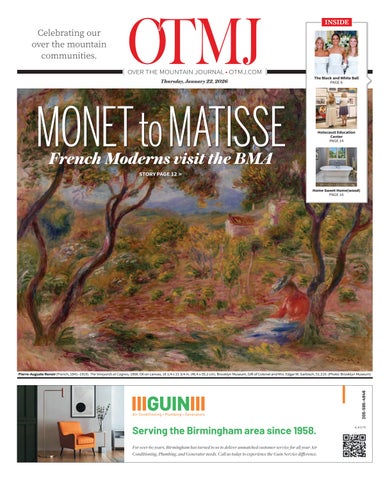
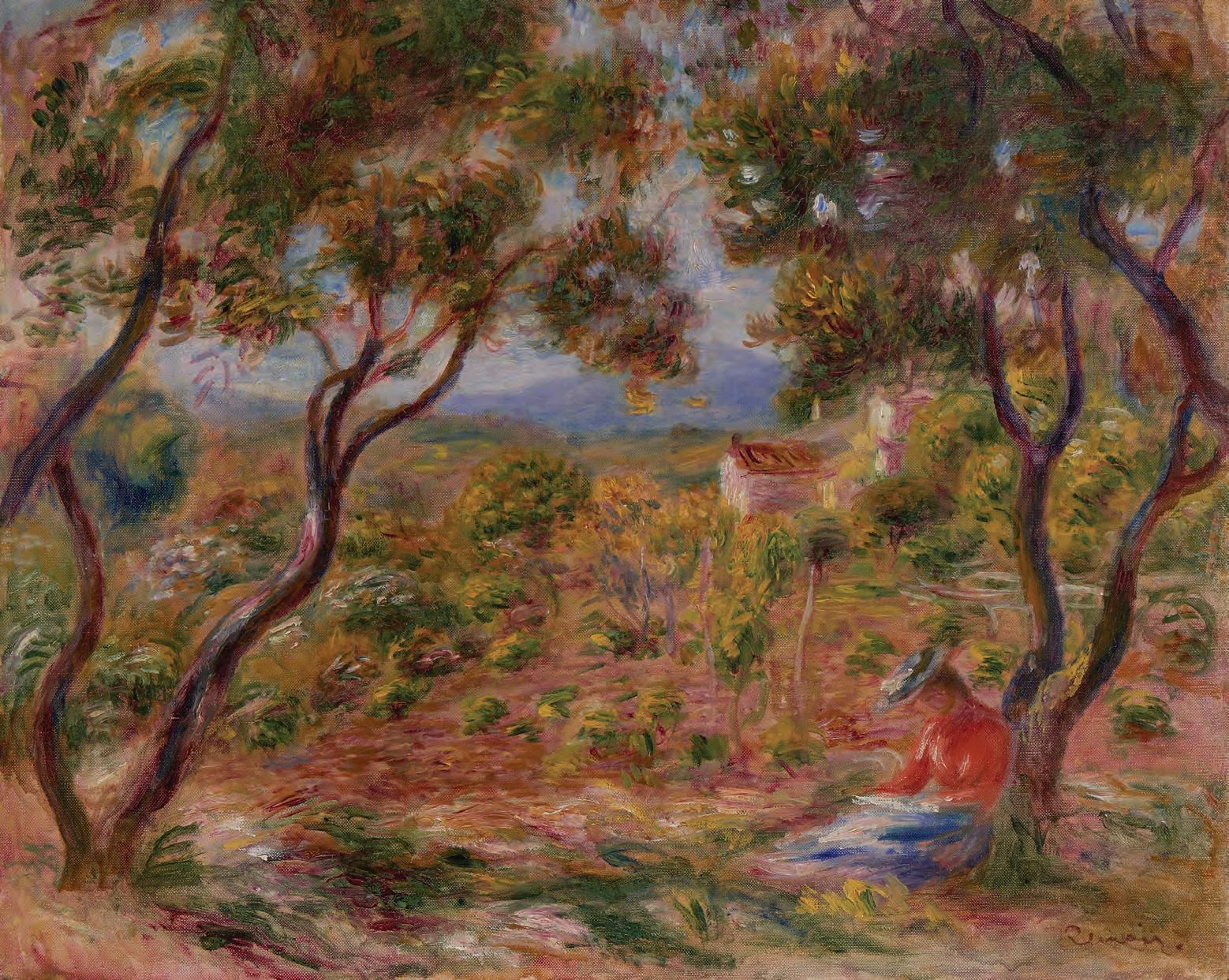
Pierre-Auguste Renoir (French, 1841–1919). The Vineyards at Cagnes, 1908. Oil on canvas, 18
cm). Brooklyn Museum, Gift of Colonel and Mrs. Edgar W. Garbisch, 51.219. (Photo: Brooklyn Museum)
SOCIAL
ARTS
12 | From Monet to Matisse: The French Moderns are coming to the Birmingham Museum of Art.
GIVING TREE
14 | For the Alabama Holocaust Education Center, the Holocaust is not just statistics—it is the story of individuals.
HOME
16 | History in Homewood: the Bembry house
19 | Mike Getman’s Elite ID Soccer Camp
20 | Clark Griffin’s unique championship path
Viva la France!
Ihave loved art museums since I was a child—encouraged by my mom to take my time and read everything (just ask my husband who doesn’t spend near as much time as I do reading the artwork descriptions). I still have a vivid memory of going to the King Tut exhibit in New Orleans in 1977 and being awestruck by the treasures. Before I had kids, for my birthday, my parents took me to the Degas exhibit at the New Orleans Museum of Art, and for our anniversary one year, my husband took me to an exhibit at the High Museum in Atlanta to view Mondrians and Calders. Now as an adult, when I travel, I love nothing more than getting lost in a city’s museum.
Since I have lived in Birmingham (spoiler alert…a long time), I have loved the Birmingham Museum of Art. Before I had kids, in the late 90s, Art on the Rocks was a must-do on my summer social calendar. Since it was before the era of everyone having cell phones, I can’t offer any photographic proof, but I swear I was there!!
Sipping wine, listening to good music and wandering the exhibit halls was one of my favorite things. Later, when I had kids, taking my boys to visit the museum felt like passing on a family tradition.
Our city is fortunate to have had this top-quality bastion of the arts for 75 years now. And to kick off the 75th anniversary year, BMA is presenting a landmark exhibit Monet to Matisse: French Moderns, 1850-1950 starting at the end of the month and staying through May (see story on page 12). This is the kind of exhibit you might expect to see in a city much larger than Birmingham, but our city has always been amazingly supportive of the arts and the museum. Look no further than the Beaux Arts Krewe who has supported the museum for more than 60 years. You can expect more on the group’s Krewe Ball in upcoming issues of Over the Mountain Journal
I can’t encourage people more strongly to go to the Museum for this amazing exhibit. And in my experience, you can’t go wrong seeing an exhibit more than once. You always catch new and special details on a second viewing. And while there is a cost for the French Moderns exhibit, the BMA is usually free for guests, making art for all a real thing. Happy Anniversary BMA and Viva la France!
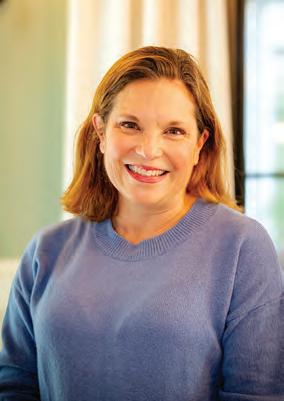
We would love to hear from you on any subject: lhurley@otmj.com
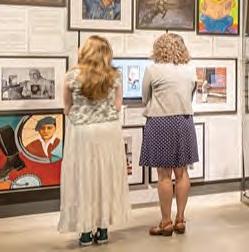
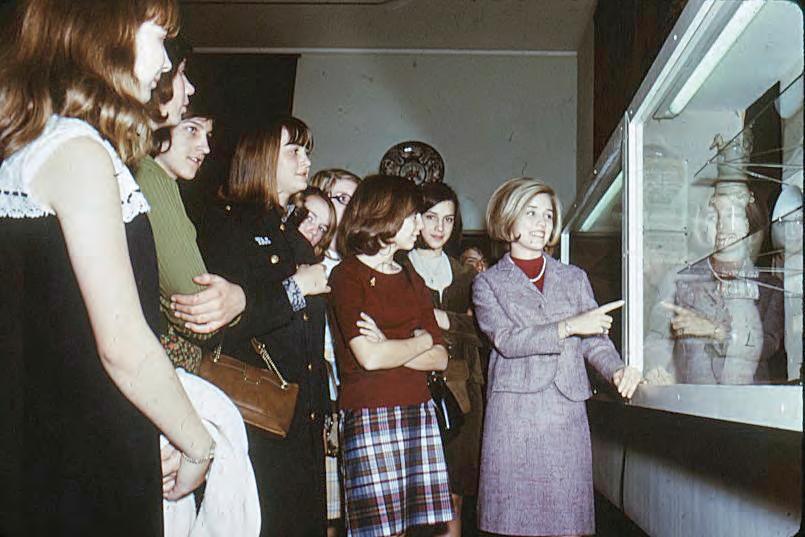
Birmingham Museum of Art visitors admiring the growing collection in 1967.
SOCIAL 58th Annual Poinsettia Ball
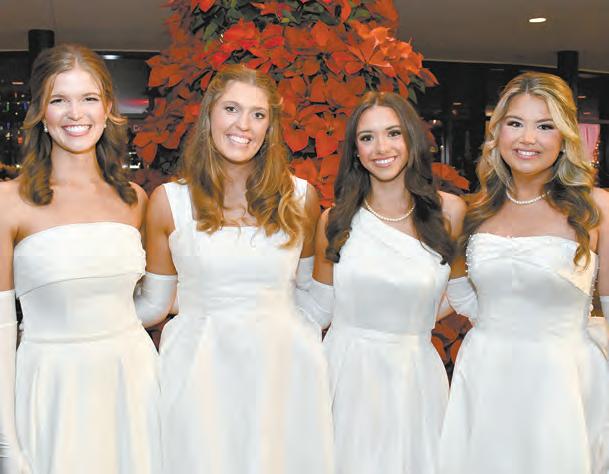
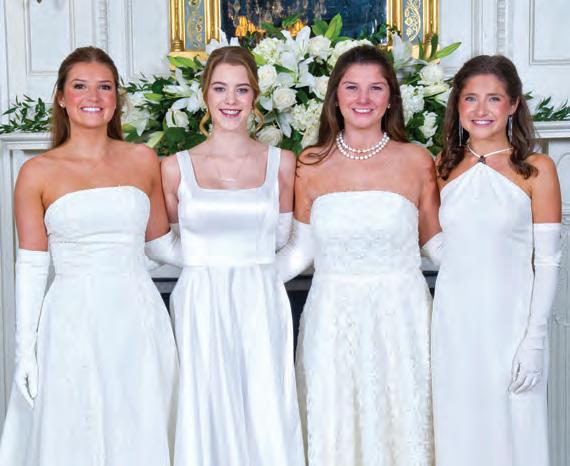
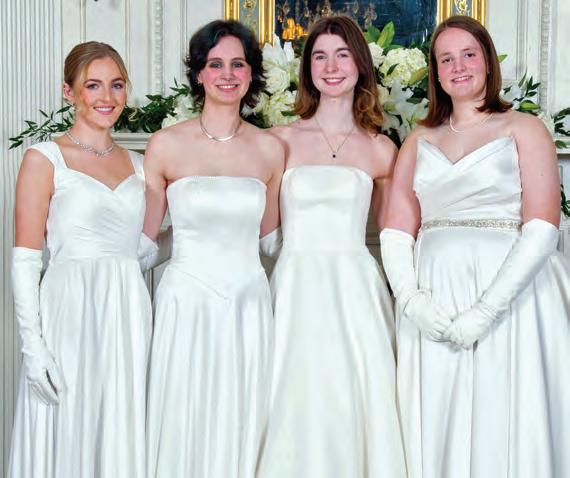
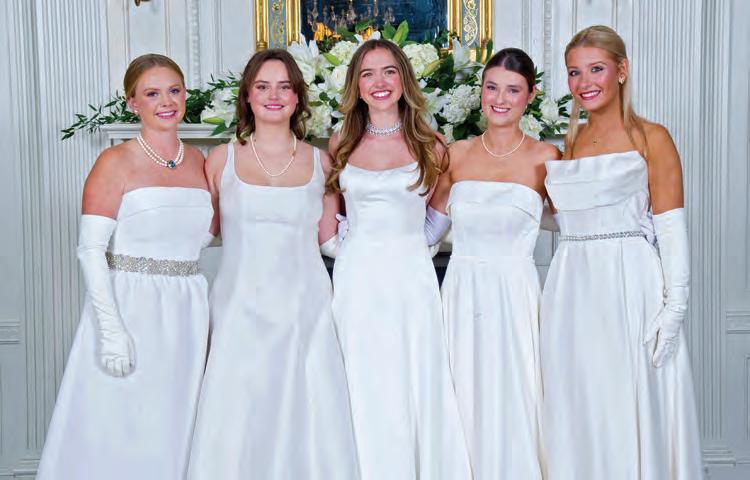
The Ballet Women’s Committee hosted the 58th Annual Poinsettia Ball on December 18 at Regions Field. The Ballet Women’s Committee was founded in 1967 to foster and promote fine arts in the greater Birmingham area. All proceeds from the Poinsettia Ball support the Alabama Ballet.
Twenty-five young women were presented by their families. After their presentation, the debutantes continued the evening with the traditional Father-Daughter Waltz, followed by a party and dancing with friends. Sarah Bryan and Amanda Peters serve as Debutante Social Co-Chairs and coordinated all debutante activities.
Twenty-one junior debutantes were introduced to the ballroom before the debutantes’ entrance. Each young lady was introduced on her father’s arm and then seated. These young women are seniors in high school and include, Jody Mai Bailey, Elise Griffin Ball, Olivia Rose Carroll, Ann Ellison Crawford, Josephine Dean Gagliano, Ella Claire Guest, Madison Palmer Heilbron, Adeline Marie Little, Helen Elizabeth Maddox, Courteney Elizabeth Martin, Anne Gait Nall, Hollis Madelyn Patrick, Mary Elizabeth Phillips, Julia Brooks Rose, Ella Katelyn Simpson, Savannah-Marie Skrabo, Olivia Patton Stone, Kathryn Law Threadcraft, Bailey Lois Waguespack, Haydin Perry Walters and Sarah Stewart Wilbanks. Amy Parker and Laura Catherine Mason serve as Junior Debutante Social Co-Chairs. The Ballet Women’s Committee President is Allison Herr; Elizabeth Guest is the Ball Board President and Beth Martin is Ball Chair. Other ball board members include Lisa Boland, Laurel Patrick, Jane Bochnak, Katie Bushby, Cori Prier, Jenni Kime, Ruth Bean, Melissa McMurray, Morgan Cunningham, Jayna Southerland, Sharon Maddox and Tammy Towns. OTMJ
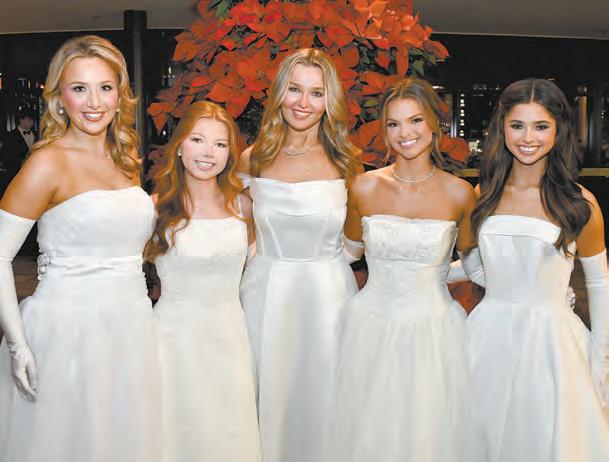
Emma Walters, Sylvie Smith, Tate Halla, Sadie Stanford and Ava LeBlanc
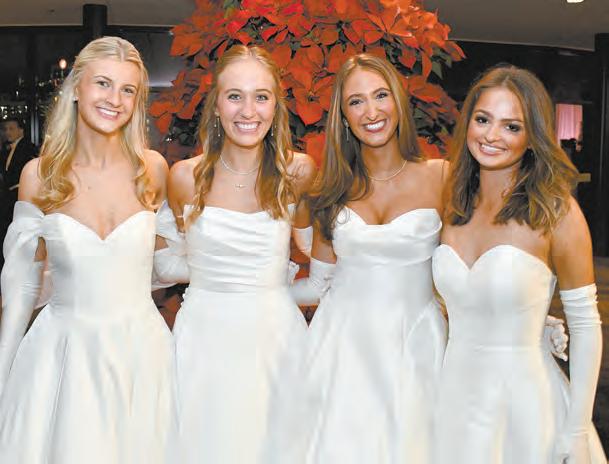
Carson Champion, Katie Culbertson, Abby Saia and Karrington Channell
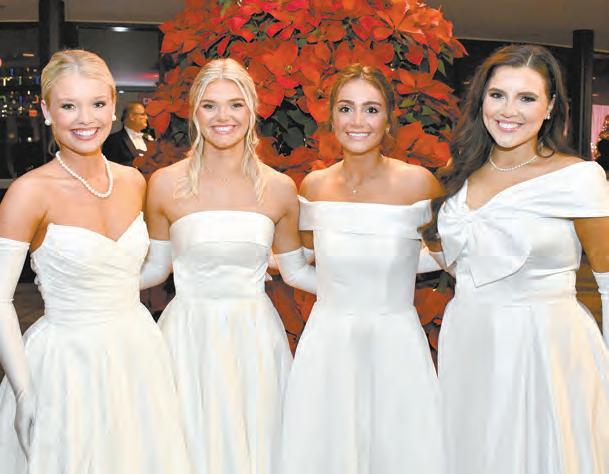
Ellie Welling, Abby Wimberly, Amira Walton and Natalie Walters
Emmy Ferris, Molly Coleman, Lillian Lancaster and Lynley Threadcraft
Alaina Long, Laura Cavan Smith, Kendall Kies and Brylee Powers
Lotte Wambsganss, Brooke Metzger, Elizabeth Ann Burton and Bella Mejia
LAKESERVINGMARTIN, LAY LAKE, LOGAN MARTIN & SMITH LAKE
The Debutante Club of Birmingham’s Annual Ball Honors 22 Young Ladies on New Year’s Eve
The Debutante Club of Birmingham honored 22 young ladies at the traditional Black and White Ball on New Year’s Eve at Mountain Brook Club.
The 2025 new members of the Debutante Club and their escorts were Harriet Adams and Alex Abele, Emily Browning Amason and Scott Streff, Caroline Bates and Liam Falconer, Adrienne Belser and Andy Schwebel, Hayes Brown and Harrison Wood, Alice Byars and Pierce Austin, Bentley Carroll and Will Rusert, Ivy Cobbs and Jack Lardner, Callie Davis and Bibb Albright, Sarah Welles Edwards and Barton Boyll, Ann Sutherland Elliott and Tyler Walker, Anna Foweather and Mason Keller, Lauren Johnston and Dive Rowe, Grace Knight and Gunter O’Rear, Margaret Kracke and Chase Anderson, Sadie Patton and Chase Cowart, Beverly Perkins and Anderson Roberts, Lucy Redden and Brian Condon, Madeline Stephens and Hamilton Shamblin, Frances Vandevelde and Coe Murdock, Jenny Watts and Patrick Marr, Loie Whiting and Garrison Guthrie.
In keeping with the tradition of the early decades of the Debutante Club, the honorees wore long white gowns, and their escorts wore ivory dinner jackets, while guests wore black formal attire. After beginning the evening with a cocktail party, the Debutantes and their dates enjoyed dinner served on black and silver fringed tablecloths with centerpieces of boots and bling galore.
Guests arrived at the Ball and enjoyed elaborate decorations in a Country Western theme. Created by Robert Logan, the décor included a glittering black, silver and pink color palette, life-size black and white cows, a cowboy on a fence and a covered wagon on the yard in front of the Clubhouse. Guests entered to find more decorations of pink Cowgirl boots, sheriff stars, wagon wheels, cactus and cows filling the hallways, rooms and tables. Balloons by Tailor Made Events accompanied Logan’s decorations.
The Ballroom was draped in black and white and along the walls were lighted stars, giant boots and cowboy figures. The room quickly filled with a crowd of enthusiastic revelers as they danced to the sounds of The Michel Jons Band, a nine-piece band from Atlanta. The band rang in the New Year with a chorus of Old Lang Syne and continued playing until they ended the night in the early hours of 2026!
Enjoying the festive New Year’s Eve night were members of three generations, including grandparents and parents and family of the Debutantes along with their friends from near and far. Many of the Debutantes hosted friends from college who enjoyed Birmingham for the first time. All will remember a festive and Country Western New Year’s Eve celebration ringing in this new year of 2026! OTMJ
PHOTOS BY DEE MOORE
Sarah Wells Edwards, Bentley Carroll, Harriet Adams and Hayes Brown
Ivy Cobbs, Adrienne Belser, Anna Foweather and Callie Davis
Emmie Amason, Beverly Perkins, Sadie Patton, Ann Sutherland Elliott and Madeline Stephens
Loie Whiting, Alice Byars, Grace Knight and Caroline Bates
Margaret Kracke, Frances Vandevelde, Lucy Redden, Jenny Watts and Lauren Johnston
Use maintain contrast.
For 50 years, The Altamont School has nurtured core values of respect, integrity, balance, curiosity and leadership for students in grades 5-12. We do that by remaining not merely private, but independent—providing on our own terms the courses, content and unique programs that best serve the families who choose Altamont. We read the books we want to read. We live our values. We welcome you for who you are.
Join us for our Open House to learn why families make the independent school choice!
Pickwick Dance Club Christmas Brunch
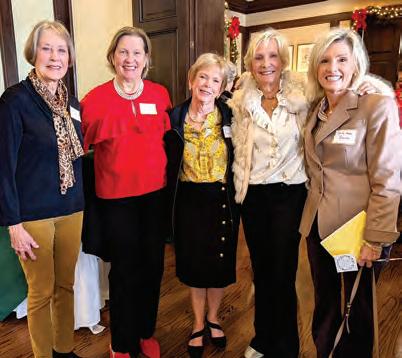
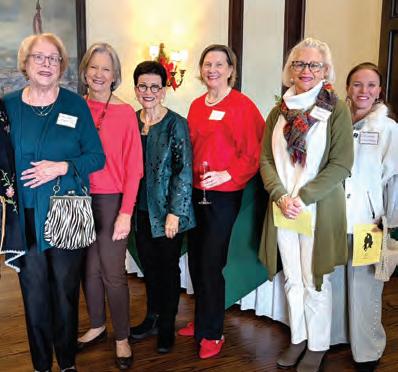
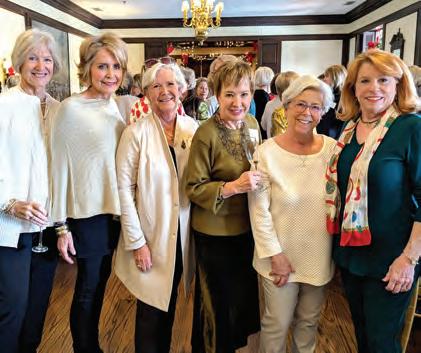
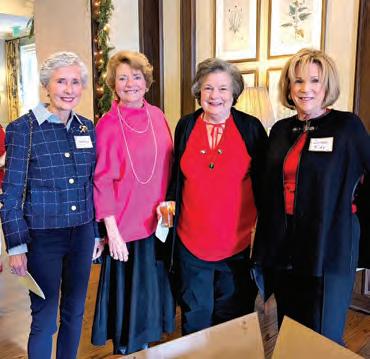
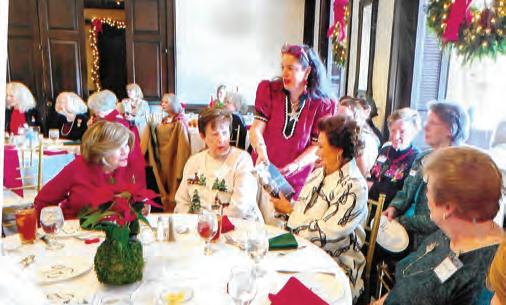
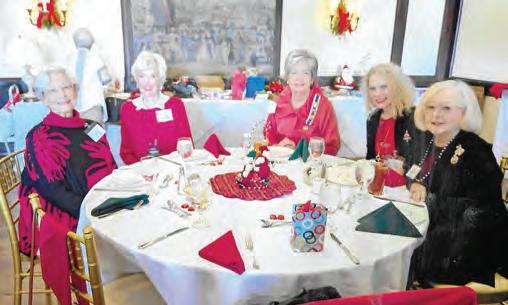
On December 10, the Pickwick Dance Club held their annual membership meeting and Christmas Brunch. The joyful occasion gathered about 100 longtime friends to ring in the Christmas season! Trays of champagne and seasonal mimosas were passed during the meeting’s mix and mingle, and the club’s president Charlotte Kearney called the meeting to order. Peggy Lee and Jane Shalhoop were in charge of the brunch, and Kathy Anderson was in charge of decorations. Inspired by her daughter Lucy, Kathy had The Lovelady Center arrange the centerpieces of red, white and Grinch green flowers centered on Christmas-green tablecloths. Members were invited to bring donations for The Lovelady Center, and over $1,000 was donated! Linda Turner put together a new membership directory, and Patsy Dreher, the membership chairman, was in charge of the election of three new members: Janet Beaumont, Jane Howard Angell and Kathy Pearce. After business was complete, Leila Anne Kidd Rowan administered a beautiful blessing, and a delicious brunch menu of fresh fruit, individual quiches, hash browns, bacon and sweet rolls was served. Everyone left with a smile and a warm feeling of love and deep friendship! OTMJ
Dottie Kent, Tricia Ford, Greer Curry and Susan Kidd
Darleen Mears, Cecil Avery, Jan Wells, Charlotte Kearney, Jeanne Adair and Sharon Graham
Sharon Blackburn, Molly Bradley and Susan Nading
Sharon Graham, Elizabeth Meadows, Patty Baker, Joan Curtis and Vicki McGehee
Beverly McNeil and Anne Liles
Peggie Hodges, Charlotte Kearney, Ann Morris, Bootsie Garrett and Leila Anne Rowan
Catherine Ann Schilleci, Sallie Johnson, Chris Ray, Tammy Towns, Jennie Owens and Margaret Agnew
Mary Williamson, Kathryn Harwell, Kelley Gage, Peggy Lee, Kathy Peerson and Peggy Thrasher
OLD ELYTON DAUGHTERS OF THE AMERICAN REVOLUTION
The members of the Old Elyton Chapter of the Daughters of the American Revolution met on November 18 at the Country Club of Birmingham. The chapter featured speaker Judith Arthur who gave a presentation on women captives of American Indians. She focused on four women and the impact their captivity had on their lives and the lives of their families. After the presentation, members enjoyed lunch with Arthur and were able to continue asking questions. OTMJ
Thinking about Downsizing?
1
Many over-the-mountain homes are selling at historically strong prices. Selling sooner may help preserve equity rather than waiting for “perfect timing.”
2 A LARGE PORTION OF YOUR PROFIT MAY BE TAX-FREE
Eligible homeowners may exclude up to $500,000 in capital gains. You are not required to reinvest the proceeds into another home.
3 DOWNSIZING DOESN’T HAVE TO BE OVERWHELMING
4 HIGHER INTEREST RATES CAN FAVOR DOWNSIZERS
Reduced buyer competition often means more negotiating power, less pressure, and better purchase terms — especially for cash buyers or small mortgages.
5 LARGE HOMES COST MORE THAN MOST PEOPLE REALIZE
Lower maintenance, fewer repairs, and reduced ongoing costs can add up to meaningful annual savings.
6 MANY DOWNSIZERS END UP LOVING THEIR NEXT HOME EVEN MORE
Easier living, better locations, and homes that truly fit this chapter of life. 6
We simplify the process — coordinating timing, preparation, and trusted vendors — so the move feels manageable, not stressful.
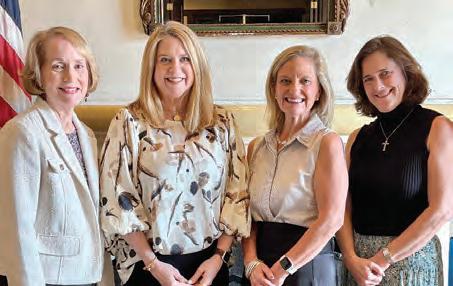
Carmine Jordan, Edith Lyon, Meredith Cashio and Katherine Galloway
Evelyn Tipton, Judith Arthur (speaker) and Leslie McLeod
Gaieties Christmas Ball Brings Scottish Splendor to the Country Club of Birmingham
The Gaieties Christmas Ball returned in grand style on December 12, transforming the Country Club of Birmingham into a festive Highland celebration. This year’s event embraced a warm and spirited Scottish feast theme, with the club adorned in lush greenery, gleaming brass accents and elegant red plaid that set a richly traditional holiday atmosphere.
Guests enjoyed a lively cocktail hour, mingling among candlelit arrangements and tartan-trimmed décor before moving into the ballroom for a seated dinner. The menu honored the evening’s Scottish inspiration, complementing the visual spectacle upon the tables.
Music filled the night as Just Friends took the stage, keeping the dance floor full with a lively mix of hits. A special highlight of the evening was a performance by Joseph Morrison on the bagpipes—an unmistakably Scottish touch that delighted attendees and added to the charm of the celebration.
Co-chairs Elizabeth Outland and Cindy Barr insured the Gaieties Christmas Ball would once again prove to be a cherished holiday tradition, bringing friends and members together for a night of fellowship, music and festive elegance. OTMJ
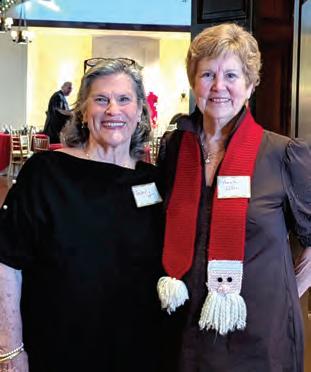
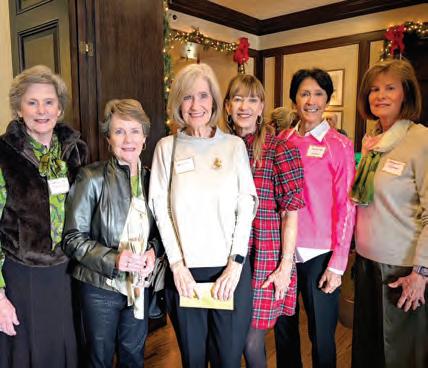
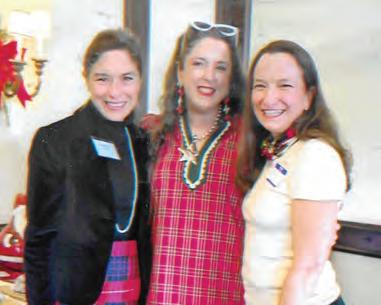
Jim and Peggy Lee, Leila Anne and Robby Rowan
Jim and Romona Shannon, Dottie and Raleigh Kent Phoebe and Red Robinson
Barbara Jean and Griff Langston Greer Curry, Patty Baker, Kathy and Frank Anderson JuliaAnn and Joe Cleage and Marsha Vickers
GENERAL SUMTER CHAPTER DAUGHTERS OF THE AMERICAN REVOLUTION
On December 3, the General Sumter Chapter of the Daughters of the American Revolution met to conduct their annual Christmas auction. Members donated auction items, and all proceeds were given to national and state DAR projects and to fund scholarships for local senior high school students.
The General Sumter Chapter meets monthly to learn about the Revolutionary War period and the country’s founding. OTMJ
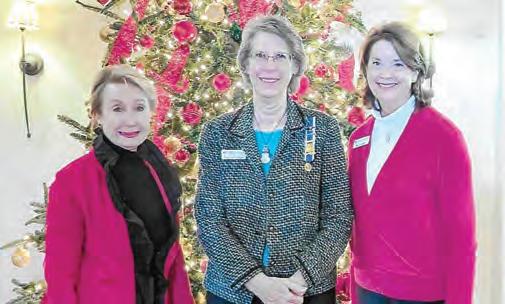
Natasha Randolph, Garnett Baker, Jamie Crockett, Shelia Bruce and Karen Shallenburg
CeCe Dillard
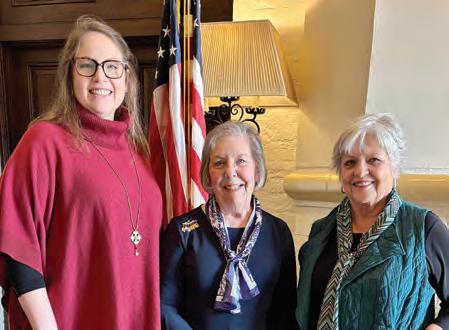
Karen Kapp, Sheryl Buckner and Second Vice-Regent Cathy Boardman
Rebecca Taylor, Katherine Robinson and Jeannie Pate
The French (Art) Connection
The Birmingham Museum of Art kicks off its 75th Year with Monet to Matisse: French Moderns 1850-1950.
BY BARRY WISE SMITH
For 75 years, the Birmingham Museum of Art (BMA) has been the city’s bastion of culture, with the stated mission of sparking the creativity, imagination and liveliness of Birmingham by connecting all its people to the experience, meaning and joy of art. Mission accomplished! And to start BMA’s 75th anniversary year off strong, they are presenting a landmark exhibition—Monet to Matisse: French Moderns 1850-1950—opening on January 30 and running through May 24.
The museum opened modestly in 1951 in five empty rooms in Birmingham City Hall with only 75 paintings borrowed from museums in other cities. Slowly, a collection was built bolstered by a major gift of 27 Renaissance and Baroque paintings from the Samuel H. Kress Foundation. This gift and a bequest from the estate of Helen Jacobs Wells became the impetus for the 180,000-square-foot museum built on its 3.9-acre campus in downtown in 1959. Wells also bequeathed her print collection—including masterworks by Rembrandt, Albrecht Dürer and James McNeill Whistler—to the museum. Today BMA boasts a diverse collection of more than 29,000 paintings, sculpture, prints, drawings and decorative arts dating from ancient to modern times. The collection features extensive holdings of Asian, European, American, African,
Ancient American and Native American art.
The Monet to Matisse exhibition, which has been touring the world for several years and is making its second-to-last stop at BMA, is centered around 56 paintings from the Brooklyn Museum. But the staff at BMA wanted to also show off pieces of their collection that fit and set about adding works to enhance the
exhibition, ending up with 103 pieces of art. “We nearly doubled the size of the exhibition,” says Cate Boem, the museum’s Director of Marketing and Communications. “We are the only institution that is enhancing the exhibit with our own collection.” In addition to works added from BMA’s collection, three Monet paintings—two from the Virginia Museum
of Fine Arts and one from Museum Fine Arts, Boston—are also part of the exhibition. Dr. Maggie Crosland, BMA’s Curator of European Art, will be directing the Monet to Matisse exhibition and is excited for residents to see the art collection that is already here. “We really want to show off our art collection,” Crosland says. “It’s so exciting that we are getting these works from Brooklyn, and it’s so exciting that we’re getting these loans from Virigina and Boston, but I want everyone who comes to the show to see that they can experience art of this caliber any time they come to the museum. It’s a chance for us to show off the quality of the art that lives in this community.” Dr. Graham Boettcher, BMA’s Director, agrees, “Our collection is something that we are very proud of and want to celebrate. Putting it one way, we are punching way above our weight class for a city our size. We have more pieces in our permanent collection than the High Museum in Atlanta.”
The exhibition, presented by PNC Bank, highlights France’s role as the epicenter of modernism during a time of profound social, intellectual and political change. Organized in four sections, the exhibition will feature iconic paintings, sculptures and works on paper from Impressionist masters like Paul Cézanne,
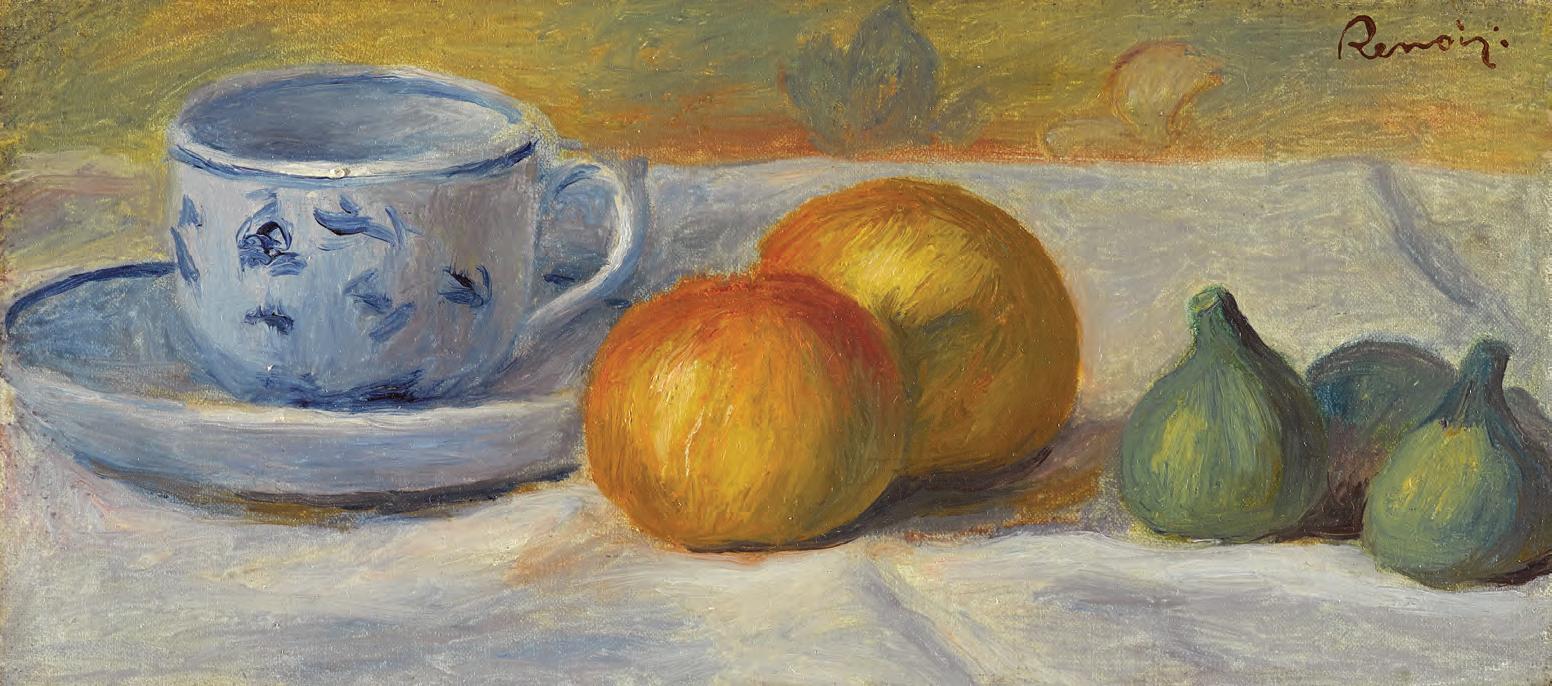
Pierre-Auguste Renoir (French, 1841–1919). Still Life with Blue Cup, circa 1900. Oil on canvas, 6 x 13 1/8 in. (15.2 x 33.3 cm). Brooklyn Museum, Bequest of Laura L. Barnes, 67.24.19. (Photo: Sarah DeSantis, Brooklyn Museum)
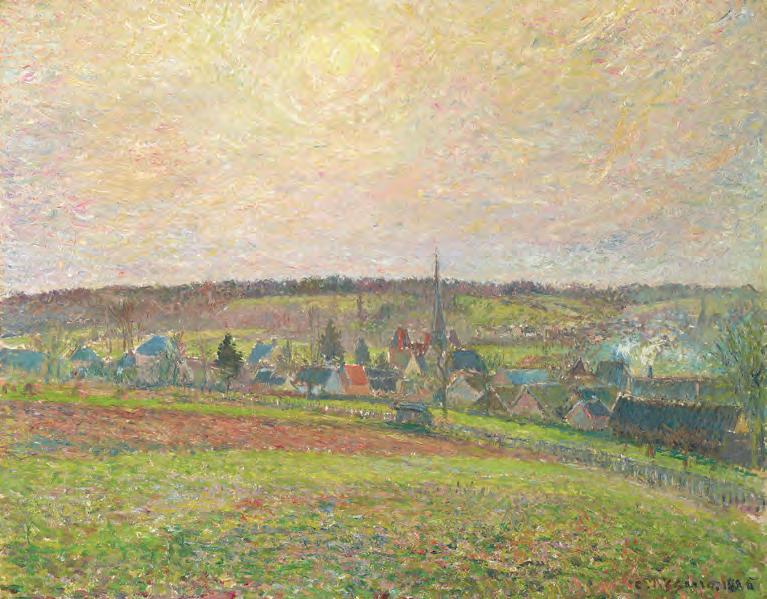
Camille Pissarro (1830–1903), Le Village d’Éragny (The Village of Éragny), 1885, oil on canvas, 23 1/2 x 28 3/4 in. (59.7 x 73 cm); Collection of the Birmingham Museum of Art; Museum purchase with funds provided by the 1980 Museum Dinner and Ball, 1979.353
“From the dreamlike brushstrokes of Monet to the bold colors of Matisse, this exhibition reflects the radical creativity that forever changed the course of art history.”
–dr. graham boettcher
Marc Chagall, Edgar Degas, Henri Matisse, Claude Monet, Camille Pissarro, Pierre-Auguste Renoir and many others.
In adding to the exhibition, Crosland looked for ways to expand the story that it tells. “I looked for places that I could tell the story a little deeper,” she says. One enhancement is the increased focus on the female Impressionist artists. “One of the things I’m very excited about is that we’ve been able to increase the representation of women artists in the show,” Crosland says. “We will have a dedicated section and a text panel devoted to these important women.” Crosland secured a work from Marie Bracquemond, one of three original female Impressionists, to include in the show. Petite vue de Sèvres will be displayed as it was acquired—without a frame. “She never framed it, and we wanted our visitors to have the opportunity
to see it in the state she last saw it in,” Crosland says. “It is one of my favorite works in the show,” says Boettcher.
As for what goals BMA wants to accomplish with this show, Crosland has two: “First I want our community to get excited about what we already have. I want them to be excited about seeing the art from these other institutions, but I want them to be even more proud of the collection that we already have,” she says. “I also hope that people will walk away having learned something new.”
Boem agrees, “I am hoping that this serves as a gateway exhibition where people come for the show but then they realize the depth and breadth of our collection, our dynamic programming and exhibits that we have going on all year.”
Along with the exhibition, BMA will offer a number of public programs including Art Breaks
on Wednesdays (30-minute in-gallery talks), expert lectures, private and guided tours, hands-on art activities and interactive workshops. BMA is also producing an illustrated catalogue for the exhibition that will be available for purchase at the Museum Store.
“As one of the most significant exhibitions of French modern art to come to Birmingham, Monet to Matisse: French Moderns, 1850–1950 offers a rare opportunity to experience the revolutionary spirit of these artists up close,” says Boettcher.
“From the dreamlike brushstrokes of Monet to the bold colors of Matisse, this exhibition reflects the radical creativity that forever changed the course of art history.” OTMJ
For tickets to Monet to Matisse and information on programs, visit artsbma.ticketapp.org.
Birmingham
purchase
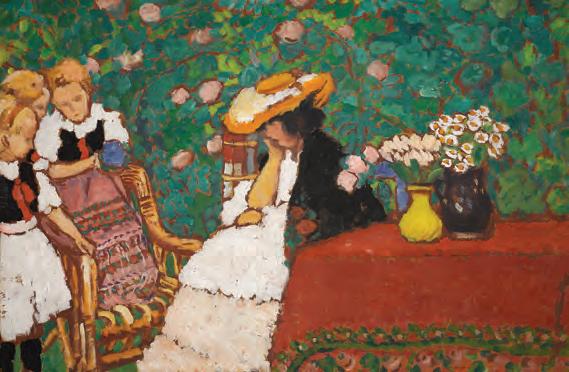
funds provided by 1977 and 1980-1983 Museum Dinner and Balls, 1981.40 József Rippl-Rónai (Hungarian, 1861–1927). Woman with Three Girls, circa 1909. Oil on board, 24 1/8 x 36 3⁄4 in. (61.3 x 93.3 cm). Brooklyn Museum, Designated Purchase Fund, 1994.68. (Photo: Brooklyn Museum)
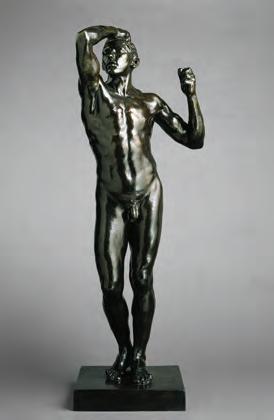
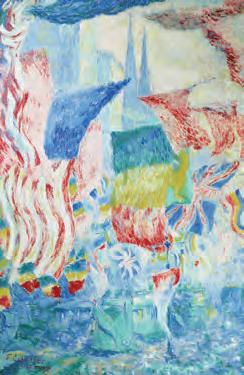
Theodore Earl Butler (1861–1936), Flags, 1918, oil on canvas, 42 1/4 x 27 1/4 in. (107.3 x 69.2 cm); Collection of the Birmingham Museum of Art; Gift of Marlene and Crawford Taylor in honor of Margaret G. Livingston, Thomas N. Carruthers, Jr., and William M. Spencer, III for their long years of service to this Museum, our community at large, and for their personal examples of servant leadership at its best, AFI.20.2005 middle row, left to right: Auguste Rodin (French, 1840-1917).
The Age of Bronze, medium-sized model, first reduction, 1876; cast 1967. Bronze, 41 1⁄4 x 15 x 13 in. (104.8 x 38.1 x 33 cm). Brooklyn Museum, Gift of B. Gerald Cantor, 68.49. (Photo: Brooklyn Museum) Paul Cézanne (French, 1839–1906). The Village of Gardanne, 1885–86. Oil and conté crayon on canvas, 36 1/4 x 28 13/16 in. (92.1 x 73.2 cm). Brooklyn Museum, Ella C. Woodward Memorial Fund and Alfred T. White Fund, 23.105.
(Photo: Brooklyn Museum)
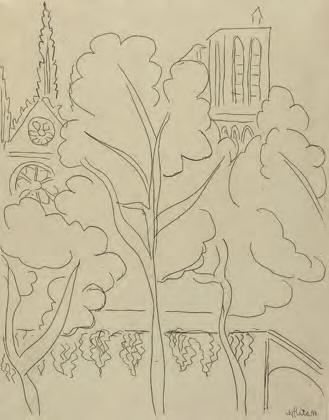
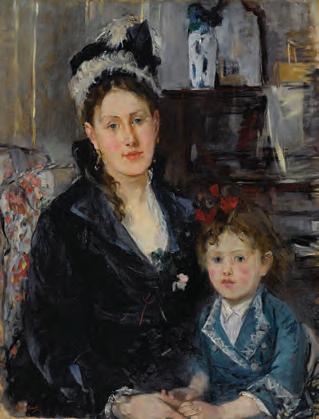
Henri Matisse (1869–1954), La Cité, Notre Dame, 1937, etching on paper, sheet: 17 3/16 × 13 13/16 in. (43.7 × 35.1 cm); Collection of the Birmingham Museum of Art; Gift of Dr. William M. Murray, Jr., 1978.11 Berthe Morisot (French, 1841–1895). Madame Boursier and Her Daughter, circa 1873. Oil on canvas, 29 5/16 x 22 3/8 in. (74.5 x 56.8 cm). Brooklyn Museum, Museum Collection Fund, 29.30. (Photo: Sarah DeSantis, Brooklyn Museum)
bottom row, left to right: Gustave Courbet (1819–1877), Entrée d’un gave (Source of a Mountain Stream), 1876, oil on canvas, 17 7/8 x 23 1/4 in. (45.4 x 59.1 cm); Collection of the Birmingham Museum of Art; Museum purchase with funds provided by the Birmingham Museum of Art Endowment for Acquisitions; Members of the Birmingham Museum of Art; Dr. and Mrs. David Sperling in honor of their friends; Mr. Arthur E. Curl, Jr. in memory of his beloved wife, Donnie; Illges Chenoweth Foundation; Dr. and Mrs. Jack C. Geer; Mr. James E. Simpson; Mr. and Mrs. James A. Livingston, Jr.; Mrs. Evelyn Allen; Mr. and Mrs. Thomas W. Barker, Jr.; and Mr. and Mrs. Harold H. Goings, 1999.60
Carrie Hill (1875–1957), In the Foothills of the Pyrenees, 1922, oil on canvas, 38 3/8 × 38 3/8 in. (97.5 × 97.5 cm); Collection of the Birmingham Museum of Art; Gift of the Birmingham Art Club, 1951.255 Kamisaka Sekka (1866–1942), Kiku (Chrysanthemum), from Momoyogusa (A World of Things), Volume 1, ink and color on paper, 11 3/4 x 17 5/8 in. (29.8 x 44.8 cm); Collection of the Art Fund, Inc. at the Birmingham Museum of Art; Bequest of William M. Spencer III, AFI.238.2010.3
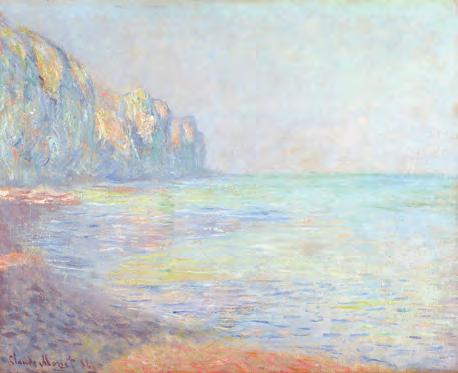
top row, left to right: Claude Monet (1840–1926), Le Matin, temps brumeux, Pourville (Misty Morning at Pourville), 1882, oil on canvas, 24 x 29 1/8 in. (61 x 74 cm); Collection of the
Museum of Art; Museum
with
GIVING TREE
Stewards of Memory
For the Alabama Holocaust Education Center, the Holocaust is not just statistics—it is the story of individuals.
BY NAUSICAA CHU
In 1939, Henry Aizenman was a funloving, adventurous child: the kind who had a girlfriend at age six, loved skating on frozen rivers and imagined a little man lived inside the radio.
He was also a Polish Jew during the Nazi invasion.
In 1945, Americans liberated him from the Wöbbelin concentration camp after one of the worst mass genocides in history. For more than three years, Aizenman was known as “B-21” to his Nazi captors, who referred to Jewish people as “rats” and “parasites.” He drank beer to stave off starvation, carried 80-pound sacks to avoid the gas chamber and witnessed the murder of his parents.
The Holocaust is often seen in terms of staggering figures—Nazis murdered six million European Jews and millions of others, with around 1.5 million Jewish children killed alone. But the Alabama Holocaust Education Center (AHEC) also views it as a story of individuals, whose stories explain the tragedy in a way statistics cannot.
The center collects the testimony of Holocaust Survivors who came to Alabama, as Aizenman and over 170 other Jewish people did. It educates schools, workplaces and community spaces with these stories through exhibits and speaker series, alongside an online hub of resources for teachers. “We are stewards of memory, educating the community about the history of the Holocaust and its lessons for our world today,” says the front page of the AHEC website.
But Americans are forgetting.
According to the Claims Conference, a nonprofit organization that conducted the first ever 50-state survey on Millennial and Generation Z Holocaust knowledge, 50 percent of Alabamians in that demographic cannot name a single concentration camp. From the same survey, it was found that 63 percent of those surveyed did not know six million European Jews were murdered in the Holocaust, and nine percent believe that Jewish people caused the Holocaust. “The surprising state-by-state results highlight a worrying lack of basic Holocaust knowledge, a growing problem as fewer and fewer Holocaust Survivors—eyewitnesses to a state-sponsored genocide—are alive to share the lessons of the Holocaust,” the report says.
AHEC was founded to change that. The organization started as a subgroup of the Alabama Holocaust Commission, a stateled agency, where Survivors, educators and community members pushed for more robust Holocaust education standards. In 2014, it filed for 501(c)(3) nonprofit status, and in 2023,
opened its new center—complete with exhibits, a library and an events space.
AHEC helped achieve a major victory last December, when the Alabama State Board of Education passed new standards for Holocaust education. “The last time they were reviewed was in 2010, and all it said for social studies was that teachers had to mention the Holocaust as a consequence of World War II,” says AHEC’s Executive Director Lisa Bachman. “We rewrote the standards.”
Now, teachers must discuss Adolf Hitler’s rise to power, the use of propaganda, the Nuremberg Trials and more. “Based on some of the research we’ve done, we feel that we have the most robust standards of any other state in the country,” says Bachman.
AHEC maintains a “living library” of Holocaust Survivors who moved to Alabama, whom it considers “Alabama Holocaust Survivors.” In the lobby of the center, their photos are arranged in a honeycomb pattern on the wall. Some are black-and-white pictures of children holding dolls and The Soldiers Violin; others are color photos of adults, taken decades after the Holocaust.
Twenty of their stories are featured in the next room. The exhibit, titled “From Darkness Into Life,” displays photographs of Survivors by Becky Seitel and oil paintings of them as children by Mitzi J. Levin. Featuring
interviews with the artists and Survivors, the exhibit chronicles the Holocaust’s devastating impact on real people.
The center constantly reminds visitors that the Holocaust did not just change history—it overturned day-to-day lives. The gleaming silver teapot and typewriter behind a glass display are items from the Knurr family, hastily shipped to America in the wake of Nazi persecution.
Though many of the Alabama Holocaust Survivors have passed away—Aizenman died in 2008—AHEC carries on their legacy of courage and advocacy. In the future, the organization is preparing to launch a campaign that promotes compassion and unity, alongside its ongoing commitment to educational events.
At the entrance to the center there is a book titled And Every Single One Was Someone by Phil Chernofsky. The book has the word “Jew” written six million times. Each repetition stands for a Jewish life taken in the Holocaust. “A line could be a family, a page could be a community,” says Bachman. One could create an education center out of their stories. AHEC did. OTMJ
For more information about AHEC and its upcoming events, visit ahecinfo.org.
top: The 8,300-square-foot center features powerful interactive exhibits, authentic artifacts and firsthand stories of courage and resilience.
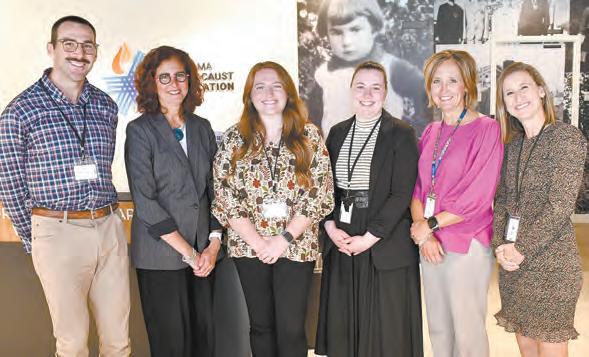
above: Alabama Holocaust Education Center staff members: Scott Neuberger, Executive Director Lisa Bachman, Abby Leger, Haley Wells, Amy McDonald and Haley Hazelrig.
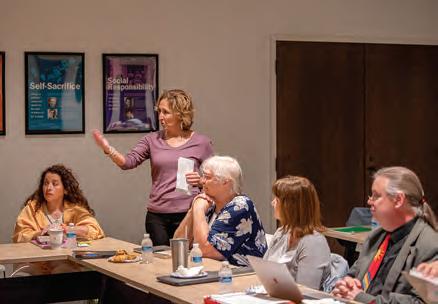
left: Amy McDonald moderating a discussion during a moment of shared learning.
PHOTO BY JORDAN WALD
History in Homewood: The Bembry House
BY TALLY DETTLING
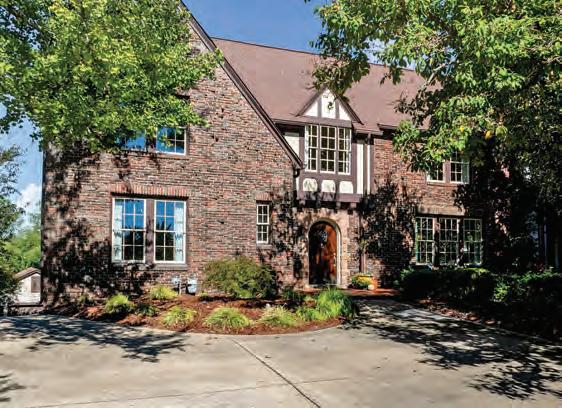
For 24 years, Tim and Cindy Bembry have called the house on Wellington Road home. Built in 1929, this enchanting Tudor Revival blends timeless clinker brick with historic details such as a steeply pitched roofline and an arched stone front entry with half timbering. As Mayfair has evolved over the past century, the Bembry’s home remains an example of the
craftsmanship and design that defined the era. Just as it is today, Mayfair has been a popular area of Homewood for almost 100 years. Built as a “modern” neighborhood by Breen Real Estate & Insurance company, an architect-rendered front elevation drawing was included with the sale of each homesite. The neighborhood was popular then for the bus line that ran daily, as well as its proximity to the original
“There is no other street in Homewood that offers the peace of wooded privacy behind you, along with sweeping views of downtown Homewood and the skyline, including Vulcan.” –tim bembry
Homewood trolley car line that connected it to downtown Birmingham.
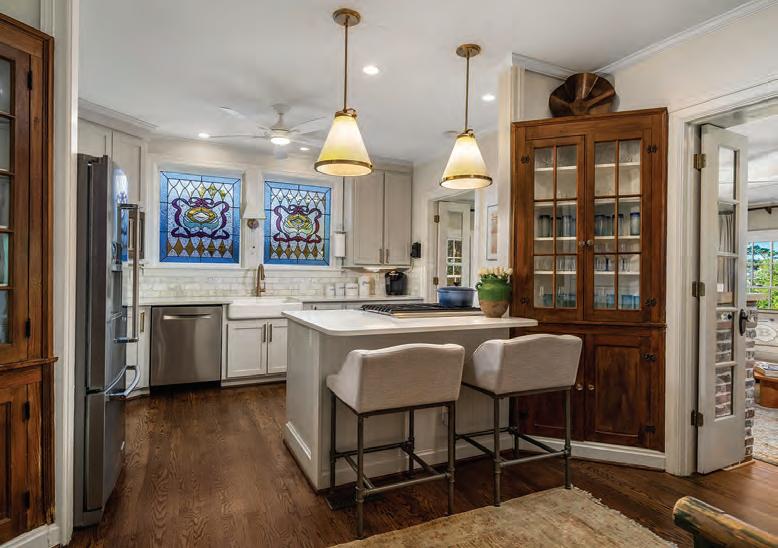
It is the home’s unique history and ageless details that encouraged the Bembrys to work toward having this stunning dwelling added to the Jefferson County Historical Association’s home registry. While remaining true to the home’s original character, the Bembrys have made some thoughtful upgrades through the years. “As we expanded the footprint of the home, we were very intentional in preserving the home’s historic integrity and original flow, ensuring the new spaces feel naturally connected and to support effortless entertaining, just as the home was intended,” explains Cindy. Much of the home’s original character remains both in the original front exterior and interior architecture. “While the current finishes are a mix of traditional, transitional and European-inspired styles, the kitchen curio cabinets are original to the home. Although it was suggested we remove them during our first renovation, we kept them to maintain the home’s history,” Cindy says. “They were a detail that originally drew me to the house and remain a favorite today. Other highlights include the skip trowel plaster walls and the graceful arched openings that connect the living spaces.”
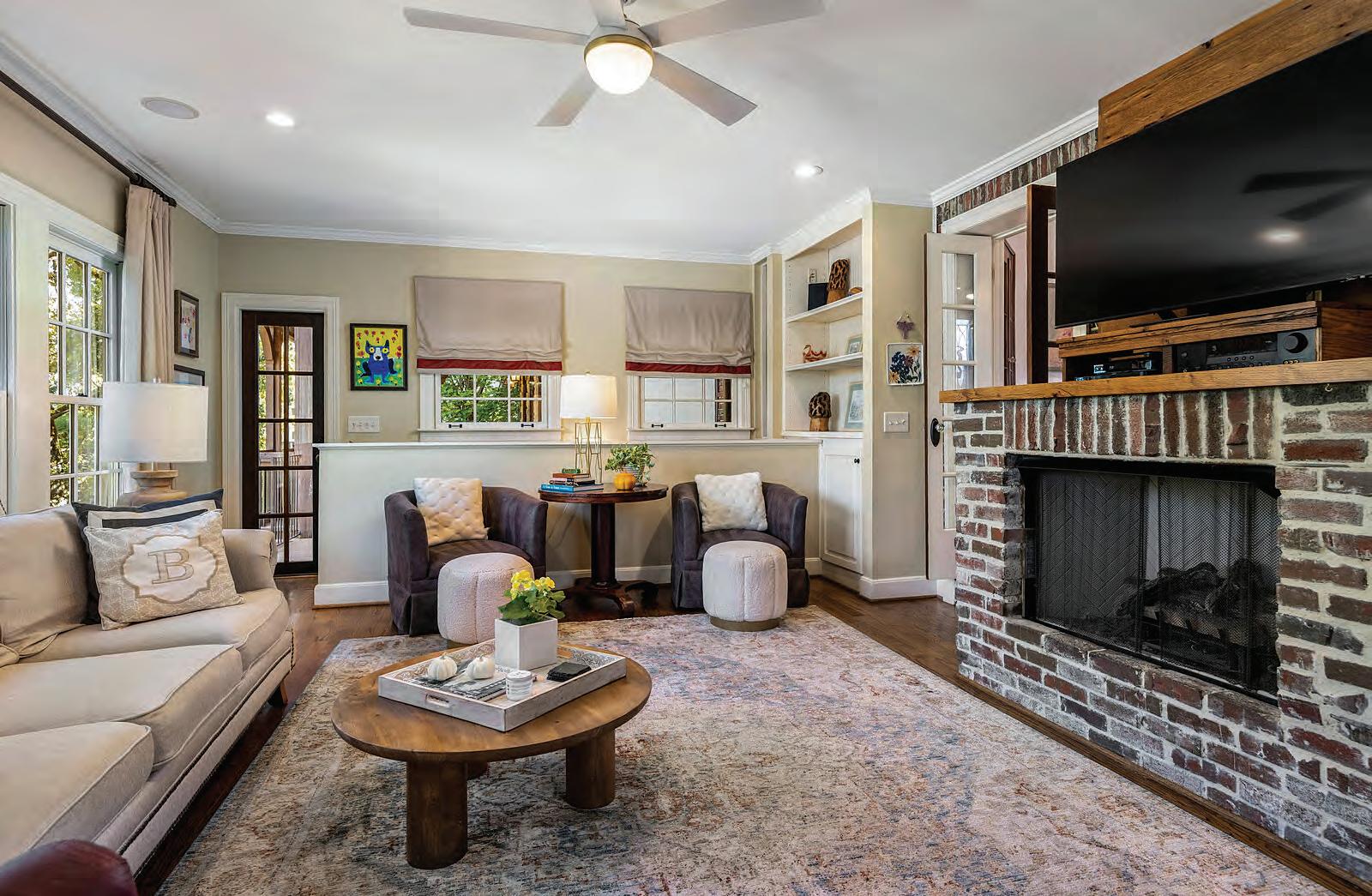
Tim adds, “My favorite part of the home, besides the back yard, is the brick fireplace in the den that one of my sons helped me design to reuse the existing house bricks preserved from a renovation. We raised our four children in this home, completing two major additions and completely re-landscaping both the front and back yards. We added a heated dipping pool, fire pit and a bocce court to create spaces for both gathering and entertaining. This home has allowed us to host Christmas dinners, youth retreats, wedding parties and even a rehearsal dinner—welcoming family, neighbors, youth and church members alike. With the downstairs bedroom and en-suite we were able to host a guest for three months allowing them to have total independence to come and go.”
The Bembrys agree that Mayfair, specifically Wellington Road, is a unique place to live in Homewood. “There is no other street in Homewood that offers the peace of wooded privacy behind you, along with sweeping views of downtown Homewood and the skyline, including Vulcan,” says Tim. “The walkability of our street and the strong sense of community with our incredible neighbors are what have made this home so special to us over the past 24 years. We’ve vacationed and watched our children grow up together, building lifelong friendships.” OTMJ
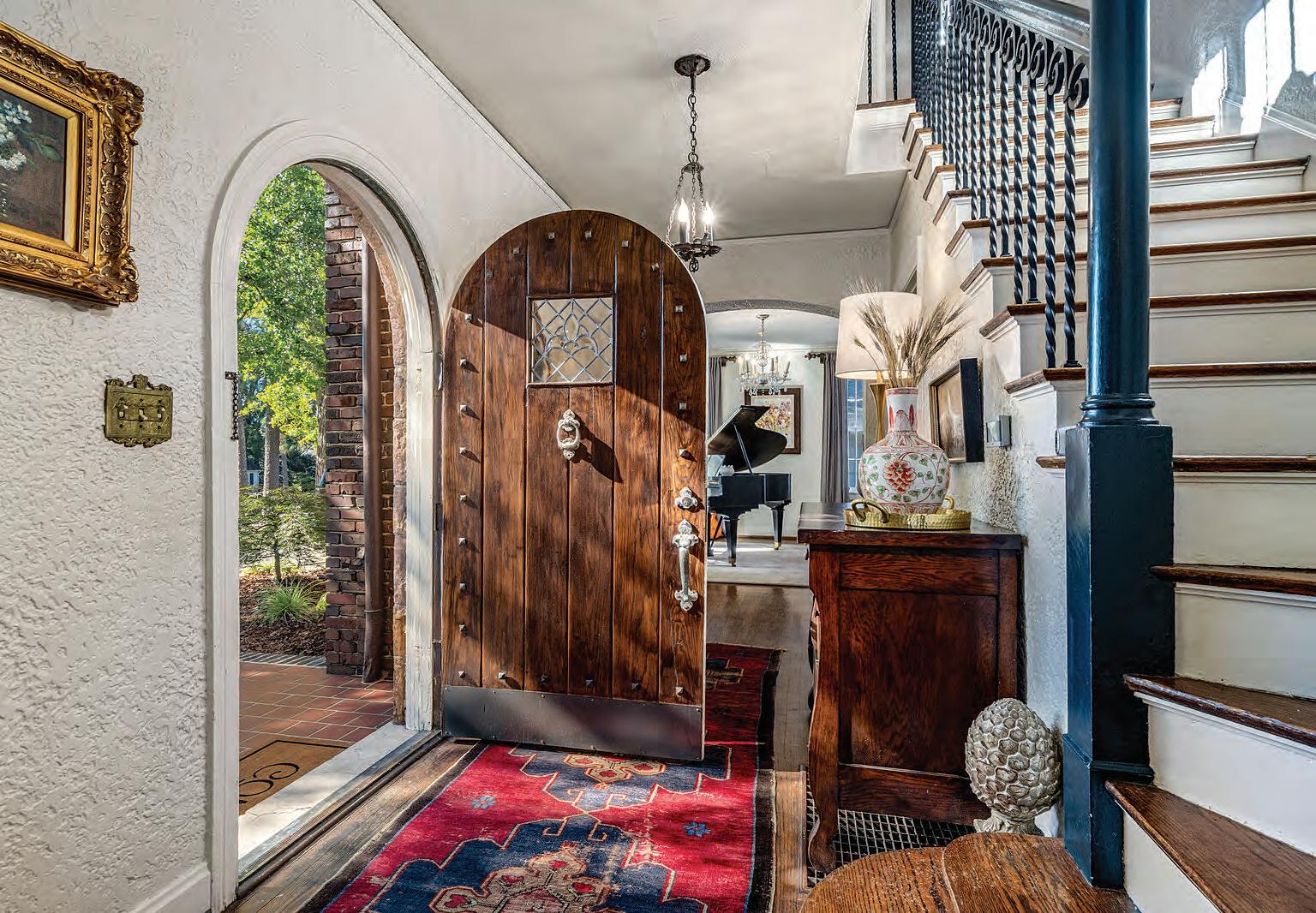
A classic arched doorway leads into the home’s inviting foyer.
The exterior of the Bembry’s Tudor Revival home on Wellington Road in Homewood.
left: The home’s backyard is an entertainer’s dream with a heated lap pool, Bocce court and fire pit.
The Next Chapter:
1614 Wellington Road
Now that the Bembry’s children are grown, it’s time for another family to fall in love with this home and make it their own. Barbara Lummis, both ARC realtor and longtime friend, reminisces about her own time spent in the Bembry’s home. “My kids grew up with Tim and Cindy’s children, and some of our fondest memories were made during gatherings at the Bembry home,” Lummis says. “I just love the backyard and the entertaining areas they have added, especially the spa and heated pool area—aka the “spool” as well as the view of the valley and Vulcan from the back of the home. The landscaping and bocce ball court make it a wonderful place for entertaining.”
Tim adds, “The proximity to work and church, the top-ranked Homewood school system and the community of neighbors are all reasons we bought this house.” Lummis adds, “It’s a family oriented area in Homewood where houses aren’t on top of each other, but neighbors are still nearby. You can still be connected, while maintaining privacy. Wellington Road is a beautiful well-established, favorite street in Homewood.”
Property Highlights:
• Original plaster walls and graceful archways
• Hardwood floors
• Split-French doors
• Stone-accented entry with stunning curb appeal
• Spa-like primary suite with a luxurious soaking tub
• Private backyard oasis
• Heated dipping “spool”
• Lighted bocce ball court
• Expansive deck for entertaining
• Backs up to peaceful woods with sunset views
• Zoned for Shades Cahaba Elementary and Homewood City Schools
Property Features:
1614 Wellington Road, Homewood, AL 35209
Beds: 5
Baths: 4½
Living Area: 4,403 square feet
Reference ID: 21434461
Listing by Barbara Lummis, Realtor, ARC Realty
The custom brick fireplace in the den was designed and built by Tim and his son with bricks left from an an earlier renovation.
The spa-like master bath features plenty of space and natural light and a stand-alone soaking tub.
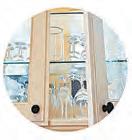
The curio cabinets in the home’s kitchen are original to the home.
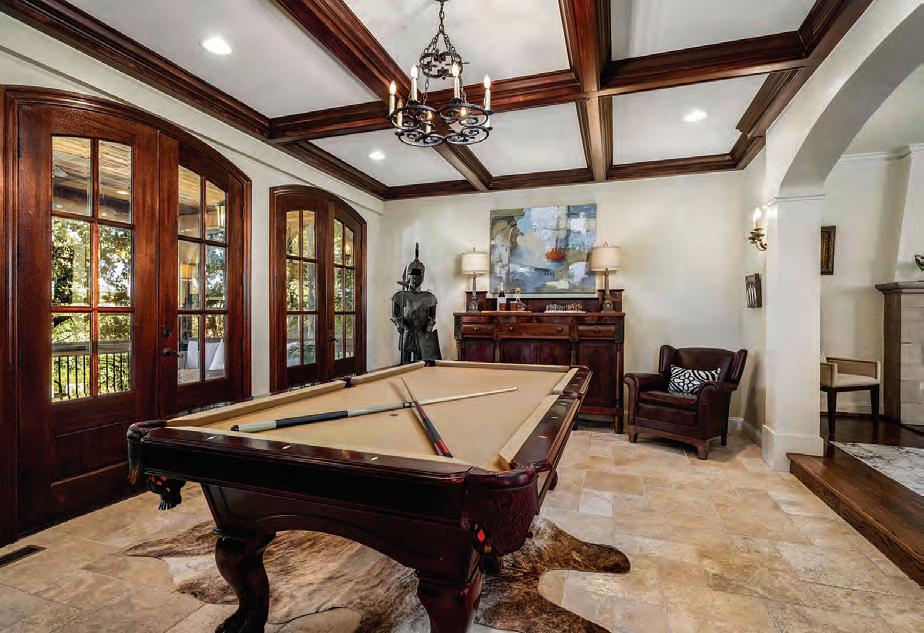
The Billards room
MIKE GETMAN’S ELITE ID SOCCER CAMP HAS BEEN SHAPING SOCCER STARS FOR 25 YEARS
BY LOYD MCINTOSH PHOTOS BY JORDAN WALD
The 25th annual Mike Getman Elite ID Soccer Camp was held on the first weekend in January at the Sicard Hollow Athletic Complex in Vestavia Hills. The camp offers talented soccer players the opportunity to showcase their skills, giving college coaches and scouts a centralized place to evaluate them.
Getman launched the ID camp in 2001 while working as the head coach of UAB’s mens soccer team, and it was among the first of its kind and is now the oldest and longest-running college ID camp in the nation.
Getman took over at UAB in 1992 following four years at Harvard, and built the program into a national power. He led the Blazers to eight NCAA Tournament appearances, multiple conference titles, Elite Eight and Sweet Sixteen runs, a No. 3 national ranking and other honors.
As UAB’s reputation grew throughout the 1990s and early 2000s, recruiting requests from players began to pile up. Coach Getman developed the ID camp as a way to see more players in a comprehensive, in-person setting.
“When I was at UAB, we would get all these calls from kids who wanted to be recruited and wanted to be seen, and we just couldn’t go see every kid in the country play,” Getman explains.
“Our coaches not only get to see them, but we get to work with them. You see what their training habits are like, what their personalities are like, you just get to know them better than if you just sit in the stands watching the game.”
The idea gained traction as other colleges launched their own ID camps, but the original was the standard. The camp quickly attracted coaches, recruiters and scouts from other colleges of all levels—Division I, II, III, NAIA
and junior colleges. And, while players have come from all over the country to attend, the camp has been especially beneficial for local players who typically make up 80 percent of the clinics’ attendees. Getman says that even though many of the players who have come through camp over the years weren’t a good fit for UAB, he’s proud of the fact that the clinic has helped so many find a home at the next level.
“Over the years, we’ve probably sent over 1,000 kids go to college,” says Getman. “It is really giving a lot more opportunities to local kids.”
Eight years after retiring from UAB, Getman has kept the ID camp alive. The 2026 session drew more than 100 of the top junior high, high school, and college soccer players from all over the nation and Canada for two days of intensive training and competition. Among the local athletes are Kosi Udeh and Robby Russell, players at different stages in their soccer journey.
Russell, a senior at Mountain Brook High School and a standout center back with the Hoover Vestavia Soccer Club (HVS), has attended the clinic several times over the years and believes it has helped raise his profile among college recruiters as well as shown him areas for improvement by playing against some of the best high school and college soccer players in the country.
“I want to get seen by college coaches, and I just like to play, too,” says Russell. “I’m also trying to develop my speed of play. I need to play faster. It’s like what you learn anywhere. You play with guys who are older and better, and you learn from them.”
Originally from Hoover, Udeh was a goalscoring phenom for Hoover High School and HVS. He transferred to Robert Morris University after one season at the University of South Carolina. Udeh wrapped up his college career last fall and attended the ID clinic in order to get back into game shape and catch the eye of pro scouts from Major League Soccer’s (MLS) Nashville FC and its minor league United
Soccer League (USL) team Huntsville City FC and Lexington SC of the USL, among others.
“The level here is really high. I’ve been getting back into playing again. I’ve been training a lot on my own, so getting out and having some good competition is always beneficial,” says Udeh. “I’m just trying to further my career any way I can, and I’m grateful for the opportunity that I have here.”
Zach Herold, an assistant coach with Huntsville FC, says the team regularly invites local players to training camps and says the ID camp is a vital pipeline for talented players. Additionally, he says Getman has been a major factor in the development of local players for over 30 years.
“We are really impressed by the talent in the area. It’s no surprise why I’m here. I think the local talent is continuing to grow and (Getman) has had a massive hand in that development,” Herold says.
Getman’s son, Nate, has seen firsthand the evolution of the clinic and the development of local players. Now an assistant soccer coach at Georgia Southwestern State University, Nate has regularly attended the ID camp since beginning his coaching career in 2019. He says the clinic has allowed him to make relationships with players beginning as early as junior high and monitor their progress.
“I’ve known some of the guys for four years now, so being able to see them develop and come back to this camp every year is really cool,” he says. “As a college coach, I want players to go to an ID camp because I can see how they play in an environment that they’re not used to, so it really shows their true character. I really implore everyone who wants to play in college to come to an ID camp to see what it’s really like.” OTMJ
LEFT: Kosi Udeh (left) and Coach Mike Getman at the Elite ID Soccer Camp.
above: Udeh is hoping to play at the MLS level.
SPORTS
Thursday, January 22, 2026
TWO RINGS, TWO LEVELS: CLARK GRIFFIN’S UNIQUE CHAMPIONSHIP PATH
BY LOYD MCINTOSH
Clark Griffin has lived a charmed and unique football life. The Mountain Brook graduate has won two college national championships at two levels— NCAA Division I and Division II—and was within a whisker of winning a third in 2025.
However, Griffin’s college football journey is all the more interesting considering he believed his days battling on the gridiron were over following his graduation from Mountain Brook in 2020. Growing up as a devoted fan of the Crimson Tide, Griffin always had his sights set on studying at the University of Alabama. Griffin felt Alabama would be a good fit since his older brother had attended UA, and the Capstone is also a popular destination for Mountain Brook graduates. He was a key part of the Spartans’ defense in high school, but at just 5-9, 185 pounds, scholarship offers from major colleges weren’t exactly rolling in. So, it was a surprise to Griffin when he got the call inviting him to be a member of the Tide. “Honestly, I wasn’t gonna play football, but then they came and asked me to be a walk-on,” says Griffin. “I thought, ‘this is perfect. It’s the best of both worlds.’ I get to go down there and play football, and I was going down there with some of my high school friends.”
Griffin was a freshman during the Crimson Tide’s most recent national championship team in 2020. That season was severely impacted by the COVID-19 epidemic, marked by weekly COVID tests and mostly empty stadiums. Still, Griffin says being a part of an undefeated national
championship team coached by Nick Saban was the experience of a lifetime. “That season was awesome,” says Griffin. “I learned so much from a football perspective. It was really beneficial for me and my development as a football player being there, learning under the greatest coach of all time, in my opinion. It was an incredible experience for me.”
Griffin spent another year at Alabama, with his role limited to contributions at practice and suiting up for games, but never getting a chance to see action on the field. Griffin understood that his size was not exactly suited for major NCAA Division I football. Still, he believed he had something to prove and made the decision to enter the transfer portal in the spring of 2022. “I was ready to make an impact on the field,” says Griffin. “I play a linebacker, and I’m a little bit undersized, but I knew if I went somewhere where the coaches would give me a true shot to play that I could make a difference.”
He chose Harding University, a Division II private Christian university in Searcy, Arkansas, a school with a strong Griffin family history. Griffin’s father, uncle and grandfather played football for the Harding Bisons, his grandfather joining
“Winning the first-ever national title at Harding was one of the coolest experiences I’ve ever had.” –clark griffin
the team in the late 1950s after the program was restored following two decades of dormancy due to economic hardship at the college.
Despite the family connections, Griffin says the decision to leave his friends and home state of Alabama was a difficult one but quickly proved to be the right one. He began contributing to the Bisons’ defense right away, logging 72 tackles (33 solo, 39 assisted) in 2022, his first season at Harding. “Picking up and moving was a challenge in and of itself, but I would not trade leaving for the world,” says Griffin. “I definitely made the right decision.”
The Bisons had a great season in 2022, finishing with a record of 9-2, but fell short of qualifying for the Division II playoffs. Going into 2023, Griffin says the team knew they had a good shot to make the playoffs and a run at a winning Harding’s first national championship. When the dust settled, Harding finished this season 15-0 and defeated the Colorado School of Mines, 38-7, in the 2023 NCAA Division II Championship, capping a dream season for the Bisons and for Griffin. A standout on the Bison’s defense, Griffin had 94 tackles in 2023, including four in the title game. “When you’re going into a season like that, everyone wants to win the national championship, and the belief was there, but it had never been done,” Griffin says. “So, just seeing that through and winning the first-ever national title at Harding was one of the coolest experiences I’ve ever had.”
The Bisons made it to the Division II quarterfinals in 2024 and had a shot at earning Harding’s second national championship in 2025, but lost
to Ferris State 42-21 in the title game on December 20, ending Griffin’s shot at a third national title. However, Griffin leaves an impressive legacy in Searcy, Arkansas.
In his three years at Harding, Griffin played in 56 games, starting in 40, and logged 439 tackles, 11 sacks and six fumble recoveries. He was an AP All-American and included in the D2Football.com Elite 100 in 2024, was named to the Great American Conference (GAC) first team in 2023 and 2024 and was named to the D2CCA All-Super Region 3 in 2023 and 2024.
Griffin’s success is no surprise to Mountain Brook Head Coach Chris Yeager, who oversaw the linebacker’s development in high school. Yeager says Griffin stood out not only for his football knowledge but also for his toughness and team-oriented attitude. He knew that Griffin could shine in college in the right environment. “His football skills speak for themselves. He’s just a phenomenal football player,” says Yeager. “I was always impressed with his instincts. He was two steps ahead of the play.”
Yeager continues, “Right now, we’re in an era of football that’s all about the measurements. It’s about the height, the weight and what you can measure on a clock. But what Clark’s about, you don’t measure.”
With his college career behind him, Griffin reflects on his journey from Mountain Brook to playing for Nick Saban, and continuing a family tradition in Arkansas, while winning championships and awards along the way.
The one word to describe his football is simple: “blessed.” OTMJ
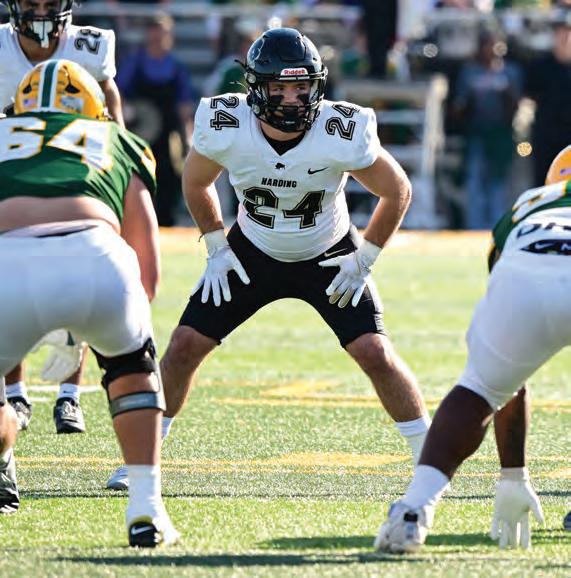
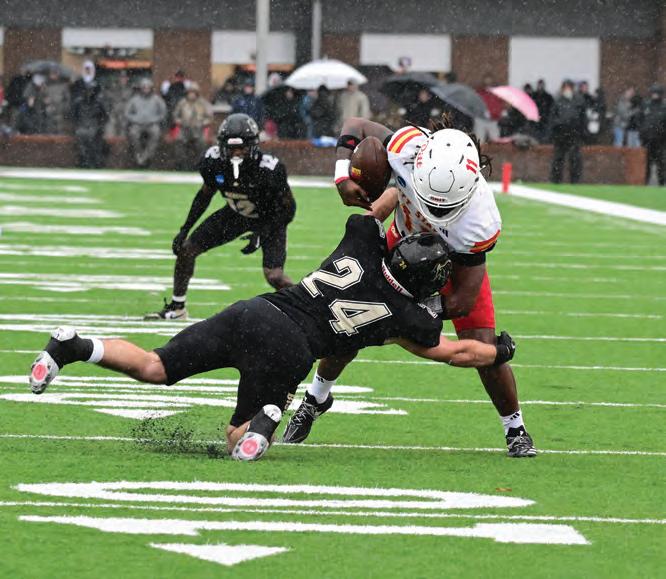
above: Clark Griffin far left: Griffin lines up in the conference championship game against Arkansas Tech. left: A tackle against Pitt State.