
Kazeem Badmus
CHRISTIAN leaders over the weekend reaffirmed their claim that Chris ans are facing what they described as a deliberate genocide in several parts of the country.
They said persistent killings in Plateau, Benue, Kaduna, Taraba and Borno show a pa ern the government has failed to stop.
President of the Pentecostal Fellowship of Nigeria, Bishop Francis Wale Oke, said the word “genocide” reflects the scale of violence.
He said many communi es have been repeatedly a acked without arrest or deterrence.
According to him, milder descrip ons have not moved the government to
The Chris an Associaon of Nigeria President, Archbishop Daniel Okoh, also faulted government responses, saying repeated denials have trivialised the experiences of vic ms.
Other CAN officials said church records show more than 4,300 Chris an deaths in 2023 and over 2,800 recorded this year.
Catholic Bishop of Sokoto, Ma hew Hassan Kukah, said the term genocide matches the reality in some loca ons.
He noted that the state has lost capacity to protect ci zens and that security failures have allowed violence to escalate.
The Supreme Council for Islamic Affairs said the violence affects both faiths and warned that framing it as one-sided could heighten tension.
The body noted that thousands of Muslims have also been killed in the North-West and NorthEast.
Despite this, the Muslim groups also cri cised government’s handling of security.
They said the state has been unable to curb armed groups and that many communi es remain unsafe regardless of religion.
Minister of Informa on, Mohammed Idris, rejected the genocide claims, calling them false and divisive.
Muslim leaders, however, disagreed with the genocide label.
He said terrorists attack both Muslims and
Chris ans and insisted the government has recorded major security gains.
The Chief of Defence Staff, General Olufemi Oluyede, also denied any targeted persecu on.
Civil society groups countered that official claims do not reflect re-
ali es in rural areas, where a acks con nue frequently. They argue that government announcements are not transla ng into improved protec on for vulnerable communi es.
while others fault Abuja for slow and inconsistent responses.
Interna onal rights groups have expressed concern over Nigeria’s rising death toll.
Some say displacement pa erns in the Middle Belt resemble targeted a acks,
Yusuf Oketola
TThis was announced in a statement signed by the Chairman of the ADC Pubact.
The Chris an leaders said they will maintain the genocide descrip on un l the government provides measurable ac on.
They called for independent inves ga ons, transparent casualty data and stronger security deployment in affected states.
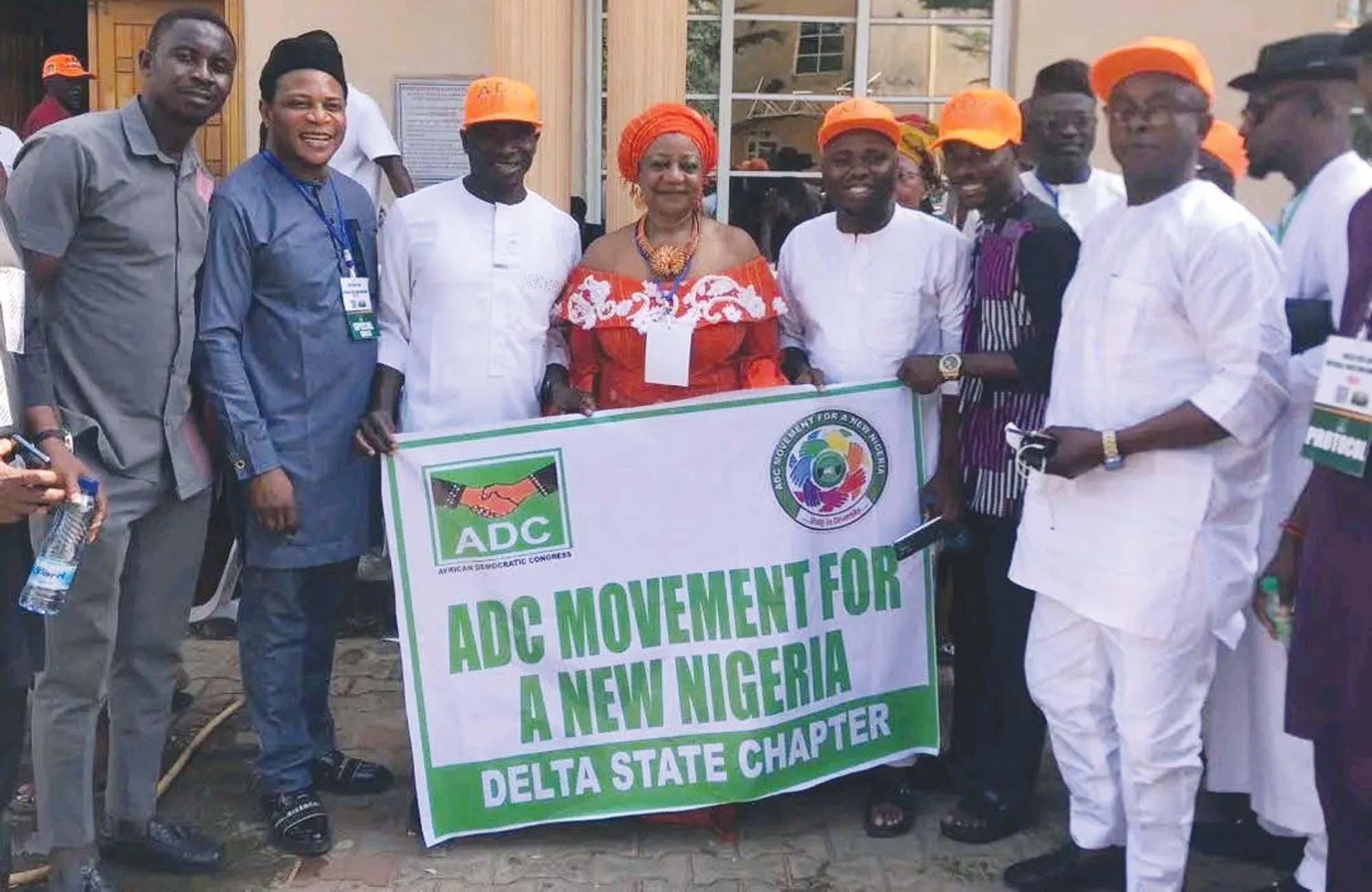
HE Osun State chapter of the African Democra c Congress (ADC) says its Federal Cons tuency Tour will begin tomorrow in Ila/Ifedayo/Boluwaduro cons tuency.
licity and Media Directorate. Abosede Oluwaseun.
According to the statement, former Interior Minister and the party’s Naonal Secretary, Ogbeni Rauf Aregbesola, will lead the delega on. The metable released by the commi ee places Ife on Thursday Nov 20,
Obokun/Oriade on Tuesday Nov 25 and Ifelodun/ Boripe/Odo-O n on Thursday Nov 27.
The tour con nues with Ede/Egbedore/Ejigbo on Tuesday - Dec 2, Ijesa South - Dec 4, Ayedire/Iwo/ Olaoluwa – Dec 5 and Osogbo/Olorunda/Irepodun/
•Continued on Page 2
FYusuf Oketola
ORMER Senate
President Bukola Saraki has stated that no serious Polician with electoral ambi on will seek to contest on the pla orm of the Peoples Democra c Party under the present circumstance.
According to Saraki, such poli cian may entered into the troubled water by not knowing whether his or her nomina on will be valid or declared null and void.
He made the warning earlier before the Naonal Conven on of the party held in Ibadan on Saturday, stressing that going ahead with the Conven on as scheduled will further fuel the present crisis, adding that having such event is a waste of efforts.
He had earlier advised the party’s Board of Trustees to set up a Caretaker Commi ee to steer the affairs of the party for the me being.
Meanwhile, the crisis rocking the PDP escalated on Saturday following the expulsion of the Minister of the Federal Capital Territory, Nyesom Wike, and 10 other high-ranking leaders over alleged an -party ac vi es.
The decision was taken at the party’s 20th Na onal Conven on at the main bowl of the Lekan Salami Stadium, Adamasingba, Ibadan.
Those also expelled include a former Eki State Governor, Ayodele Fayose; the party’s Naonal Secretary, Senator Samuel Anyanwu; the Na onal Legal Adviser, Kamaldeen Ajibade; and Aus n Nwachukwu.
Others are the faconal chairman of the party, Mohammed Abdulrahman; Senator Mao Ohuabunwa; Ausne Nwachukwu; Abraham Amah; George Turner; and Chief Dan Orbih.
A mo on for the expulsion was moved by the former Na onal Vice Chairman of the party (South), Chief Olabode George, and seconded by the Bauchi PDP Chairman, Samaila Burga, before its eventual adop on by the party’s delegates.
Reacc ng to the expulsion, the Senior Special Assistant to the FCT Minister on Public Communica ons and Social Media, Lere Olayinka, dismissed the convenon as mere drama.
Olayinka, via X, ar-
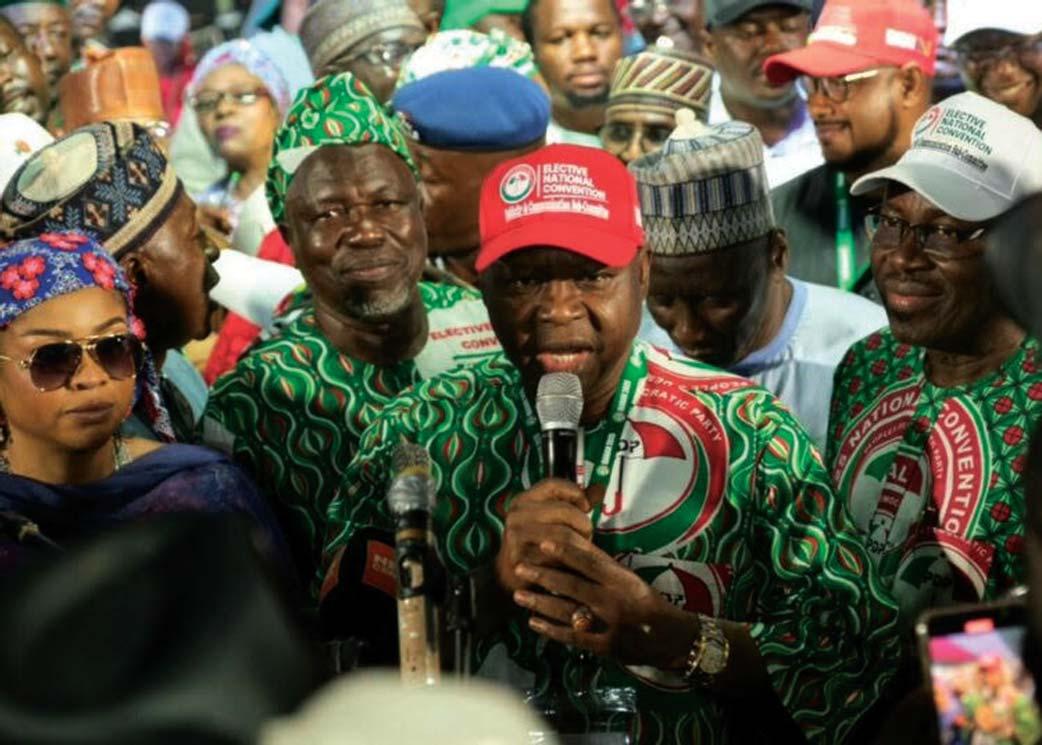
tion of the party, in Ibadan, on Sunday
gued that no one should take the organisers seriously.
“They went to Ibadan
to start dirty December in November. When people decide to start their own dirty Decem-
ber in November, one can’t but ignore whatever comes out of their mouths,” he wrote.
“They gathered in Ibadan to do social party, enjoyed themselves and got intoxicated. They are
free to say anything.”
Also, Governor Umaru Fin ri of Adamawa State dissociated himself from Wike’s expulsion.
Fin ri, while delivering his speech at the conven on ground, said the absence of INEC officials at the event also necessitated his withdrawal from the exercise.
“With the absence of INEC and the various li ga ons for and against this conven on, it is not within my preroga ve to con nue with this exercise. I leave the convenon delegates to decide,” Fin ri said.
The Adamawa governor further clarified his posi on in a statement shared on his verified X handle (@AhmaduUmaruFin ri).
He described Wike’s expulsion as an ac on against the interest of the party and warned that it could plunge the PDP into an unending crisis.
Fin ri urged party members to work towards unity and the reconcilia on of aggrieved members.
•Says
•N2.23 Trillion Paid As Ransom Under Tinubu In One Year - NBS
Yusuf Oketola
HUMAN rights lawyer Femi Falana, SAN, has urged Nigerians who have paid ransom to kidnappers or bandits to take the Federal Government to court and demand a refund, arguing that the state has failed in its constu onal duty to protect ci zens.
Falana, who spoke at the opening of the Legal Year of the Faculty of Law, University of Abuja, cited the African Charter on Human and Peoples’ Rights and the Nigerian Cons tu on, no ng that the government is legally obligated to safeguard lives and ensure ci zens’ security.
The human rights lawyer cri cised what he described as the government’s selecve response to abduc ons, stressing that swi ac on is often taken when highprofile individuals are kidnapped, while ordinary ci zens are le to nego ate their own release.
Falana argued that the state’s failure to curb the growing kidnapping crisis constutes a breach of its cons tu onal responsibili es, and that vicms who paid ransom should assert their rights through the courts.
“I have suggested that ci zens who are abducted by bandits or kidnappers, and whose family members are compelled to pay ransom to rescue them, have the right to go to court and say the government must refund the ransom,” he said.
“Because it is the duty of the government to protect every life. If that life is threatened or taken, the government must pay for it.
“But there is also a class dimension. If a judge, minister or former minister is kidnapped, the government will order security forces to rescue them. But when it comes to ordinary Nigerians, you are at the mercy of criminals.
“Your family members will be running from pillar to post to look for money to rescue you. And I’m saying since ci zens are equal before the law, you must treat all Nigerians equally.”
Security analysts have repeatedly warned that kidnapping has evolved into a highly organised and lucra ve criminal enterprise in Nigeria.
According to the Na onal Bureau of Sta s cs (NBS), Nigerians paid an esmated N2.23 trillion in ransom between May 2023 and April 2024.
The figures, contained in the bureau’s Crime Experience and Security Percep on Survey (CESPS) 2024, also es mate that more than 2.2 million kidnapping incidents occurred within the same 12-month period, with an average ransom payment of N2.7 million per vicm. Meanwhile, banditry a acks have con nued to escalate
in Shanono communies, the Shanono Local Government Area of Kano State, as bandits reportedly kidnapped five nursing mothers last Sunday.
The fresh a ack occurred barely a week a er the troops of the 3 Brigade of the Nigerian Army, Kano, successfully repelled a deadly invasion in which 19 members of the criminal gang were neutralised.
It was reported that one of the women narrowly escaped the bandits’ deadly net. However, available sources revealed that the ban-
dits had thrown away the babies of the kidnapped nursing mothers before taking them away to an undisclosed des na on.
Narra ng the recent a ack, a community leader in Faruruwa village, Shanono, Alhaji Yahya Bagobiri, told journalists on Monday that the latest incursion le five women missing and a large number of livestock carted away.
Bagobiri expressed concern over the persistent a acks by bandits in the Fulani-dominated areas despite the heavy deployment of armed military personnel and other security agencies, describing the situa on as ge ng out of hand.
•Continued from Page 1
Orolu which concludes the tour on Wednesday, Dec 10.
Oluwaseun said, “The cons tuency tours are designed to deepen the party’s connec on with the people of Osun State, strengthen our structures at the ward and local government levels, and reaffirm the ADC’s commitment to progressive leadership, integrity, and
inclusive governance across the State.
“All party members, leaders, stakeholders, and supporters are enjoined to mobilise massively and parcipate ac vely in their respec ve cons tuencies.”
The statement described the programme as a new phase of ADC’s grassroots push, with Ila expected to set the tone for the remaining cons tuencies.
ADJUDICATING in the intra party dispute within the Acon Group poli cal party in 1962, the judicial commi ee of the Bri sh Privy Council was unambiguous in its opinion that the courts should stay clear of disputa ons and altercaons within fac ons of a poli cal party.
This is common sense which unfortunately is no longer common. The dispute within the Ac on Group led to unintended effects sadly leading to the termina on of the first Republic. Ominously, over sixty years on - a significant bloc are averse to learning the lessons of history.
Events across the ter-
“Political parties are not made up of Zombies so they have tendencies, caucuses and factions; what weaves them tougher is the mechanism of Democratic Centralism through which the factions accept to subsume their interests to the overall interest and control of the authority of the party”

•Intra party disputes should be settled through internal dispute mechanisms.
•Factions and tendencies are key components of the nomenculture of political parties, they should however accept the central authority of the party as a whole.
•Undermining the authority of the courts must be avoided.
rain paint the same picture showing that we have learnt nothing and like it was said of the Bourbons of revolu onary era, France forgo en nothing about a largely self destruc ve past.
The authority of the Courts are now been quesoned in a that is disturbing in a democracy. Courts of coordinate jurisdic on
are issuing contradictory orders and out of Nigeria has come an introduc on into the lexicon - Forum Shopping. The Nigerian judiciary was once revered across Africa supplying Judges to countries across the con nent, we have gone from that high point to a very low ebb.
The Na onal Judicial Council must step in now
and read the riot act. Examples must be made of some people as a deterrence. No one wants to go back to an era in which a Judge issues an injuncon stopping the electoral process on the eve of an elec on. This is precisely what Jus ce Basset Ikpeme did in 1993 leading to cataclysm. We have been forewarned it must never happen again! The defini on of poli cal pares in Nigeria as of now is to say the least problema c.
Poli cal par es are not made up of Zombies so they have tendencies, caucuses and fac ons; what weaves them tougher is the mechanism of Democra c Centralism through which the fac ons accept to subsume their interests to the overall interest and control of the authority of the party
In the absence of this, there will be anarchy. The descent into anarchy must be resisted which means that the Na onal Judiciary Council has its work cut out and that the polical par es have urgent restructuring work to do.
ABy Tochukwu Ezukanma
S we laud the cool, level-headed and defiant stance of the naval officer that confronted Minister of the Federal Capital Territory (FCT), Nyesom Wike, we must remember the havoc military arrogance, violence, brutality, hedonism and disdain for the civilian popula on had wrought on Nigeria. As we suffer and lament the hell fire that our beloved country has become – a legacy of military rule - we cannot help but long for the past.
It is the past, before military involvement in Nigeria poli cs, when the leaders of the First Republic held sway over a halcyon, orderly, func onal and livable country. It was when unarmed policemen maintained law and order, with just batons; Nigerians were frightened and nauseated by the sight of blood; people, in their contentment, had moral values and realis c expecta ons; corrupt poli cians misappropriated only 5 to 10 per cent of government funds; some Nigerian universi es ranked among the best in the world; etc.
When, on January 15, 1966, Chukwuma Nzeogwu and his band of idealis c murderers went, in their murderous idealism, murdering the innocent, they complicated the poli cal problems of the country and sent her into a poli cal tailspin. Nigeria has since not recovered. The brutality and bloodle ng of the coup and its consequences glamorized violence and brutalized the na onal psyche.
“Wike is impulsive and tactless, and sometimes conveys the image of a clown. Although his approach to the matter was imprudent, literally thuggish, the bottomline is that he was enforcing the law. The admiral’s approach was decorous and decent: he did not show up at the site for a confrontation”
The lopsidedness in the killings of the coup spurred the reprisal coup of July 29, 1966 and the mass-murder of the Igbo in northern Nigeria, and subsequently, the civil war. The years of military rule were disastrous for Nigeria. Presently, one of the most daun ng problems of Nigeria remains how to roll back the festering, pervading legacies of military rule: moral and ethical collapse of the society; culture of violence and impunity; warped value system and its unbridled corrup on and reckless thievery of public funds; disdain for the rule of law; etc.
•Parties must be anchored on ideological basis •Read
Awwal Gambo is building a house in an area of Abuja zoned for open space and parks. In addi on, he has no proof of ownership to the land and no approval to build. It is not unusual for state/city government to stop construc on on a property due to lack of approval and other necessary documenta ons. What then is special about the a empt to suspend construc on in this
par cular case?
It is special because the trespasser, Gambo, who is disregarding the zoning ordinance of the city of Abuja and building without approval is a high ranking military officer. He is the former Chief of Naval Staff, a Vice Admiral. During, and beyond, military rule, the military demonstrated to us that they are above the law. Consequently, many Nigerians think that there is nothing wrong with the admirals’ lawlessness and the disdainful and arrogant behavior of Lt. Yerima toward a serving minister of the
Publisher – Moremi Publishing House Ltd.
federal government of Nigeria. Wike is impulsive and tactless, and some mes conveys the image of a clown. Although his approach to the ma er was imprudent, literally thuggish, the bo omline is that he was enforcing the law. The admiral’s approach was decorous and decent: he did not show up at the site for a confronta on. He deployed a prepossessing, youthful and handsome naval officer, whose calm and unruffled demeanor in the face of Wike’s coarse and acidic parlance readily endeared him to most Nigerians. But the bo om line is that he is breaking the law: city zoning ordinance and building codes.
Asst. News Editor – Yusuf Oketola
Asst. Features Editor – Kazeem Badmus
Deputy Photo Editor – Shola Aderinto
Deputy Graphics Manager – Zainab Olalere
Produc on Controller – Petkola Taiwo Ibitowa
OSUN DEFENDER is published by Moremi Publishing House Limited, Behind Oranmiyan Building, Gbodofon, Off Gbongan Road, Osogbo, Osun State.
ISSN : 0794-8050
Telephone : 0809-301-9152
Website : www.osundefender.com/index.php e-mail : osundefenderhq@gmail.com osundefenderbank@gmail.com
All correspondence to the above email addresses.
Therefore, the contenon was between the rule of law and lawlessness; adherence to urban planning standards and disregard for it; uniformity in the enforcement of rules or special treatment for some khaki-clad big men, etc. Secondly, in a democracy –I s ll believe that Nigeria is a democracy – the military is subject to the civilian au-
•Tochukwu Ezukanma writes from Lagos. He can be reached via tezukanma@ gmail.com, 0803 529 2908

MONDAY, NOVEMBER 17, 2025 VOL. 20 NO 61 www.osundefender.com, email: osundefenderbank@gmail.com
RECENT comments reportedly made by the U.S. President Donald Trump regarding the Nigerian government have s rred public debate and varying interpreta ons. While his remarks may be controversial and poli cally mo vated, they highlight a cri cal truth Nigeria’s insecurity crisis demands urgent and sincere ac on. However, it is essen al to stress that the killings and unrest in Nigeria are not about religion. They are not about Muslims or Chris ans, nor about tribes or geopoli cal zones they are about the Nigerian people and the collec ve failure of leadership to protect them.
Killings occur in Kwara, where Muslims dominate, in Zamfara and Borno, both predominantly Muslim states, and in Southern Kaduna, Benue, and Plateau, where Chris ans are the majority. This clearly shows that insecurity in Nigeria is not driven by religion or tribal differences. It is a na onal tragedy that cuts across faith, ethnicity, and region a reflec on of deep socio-economic and governance failures.
Nigeria’s security challenges are complex and deeply rooted. Issues such as insurgency, banditry, kidnapping, and communal clashes have become daily reali es. Yet, beyond these acts of violence lies a disturbing pattern the failure of jus ce. When the government pardons convicted criminals under the guise of reconcilia on or poli cal expediency, it sends a dangerous message. Such ac ons, o en disguised as efforts toward rehabilita on, undermine the rule of law and erode public confidence in the jus ce system. When offenders do not serve their full punishment, it breeds impunity, encourages more crime, and demoralizes law enforcement officers who risk their lives to arrest
“No society can be secure where justice is selective or where criminals are rewarded with freedom while victims remain forgotten. True peace cannot exist without justice. A government that prioritizes political convenience over accountability only deepens the cycle of lawlessness and insecurity”
By
and prosecute criminals.
No society can be secure where jus ce is selec ve or where criminals are rewarded with freedom while vic ms remain forgo en. True peace cannot exist without jus ce. A government that priori zes poli cal convenience over accountability only deepens the cycle of lawlessness and insecurity.
The Nigerian Cons tu on clearly states that the primary duty of government is the security and welfare of the people. Any administra on that fails in this responsibility loses moral and cons tu onal legi macy.
THE “Unusual” Ogbeni Rauf Adesoji Aregbesola has several unique trademarks, among which are his signature maxims: “People First” and “Power Is Responsibility.” Simple statements of fact and commitment that have, however, acquired deep and heavy significance in an age of virulent irresponsibility in public governance and distain; nay, outright contempt for the wishes and aspira ons of the common people by state actors they voted into power! Whenever democracy (government of the people by the people and for the people) turns out not to be about the people anymore, it becomes a nasty and oppressive tool, a façade for authoritarian cliques to advance their an -people projects. At such mes, the discerning will no ce that poli cal par es are no longer principled and ideological vehicles for aggrega ng like-minds around grand social manifestoes but iniquitous pla orms for power-grabbing by amorphous adventurers and fortune seekers: a typical Nigerian reality, post 2nd Republic especially.
In the above scenario, the power of one man’s deep vision and the force of his personal examples in commitment to the common good becomes a deligh ul oasis in a scorching desert of self-centredness and lack of imagina on. If “all ac ons shall be judged by inten on,” however overbearing and however far ahead of their mes such a man’s steps and ac ons are, all can be understood and none can be intolerable except only to the shallow-minded, the revisionist of history and enemies of the people –
Unfortunately, security in Nigeria is o en poli cized. Agencies meant to protect the public are some mes used as tools for poli cal control, weakening professionalism, integrity, and effec veness.
To address Nigeria’s security problems, a comprehensive and depoli cised approach is needed. First, government must allow the security and jus ce systems to func on independently. Security agencies should act without polical interference, and the judiciary must be strengthened to ensure fairness and accountability.
Second, government must tack-
le the economic roots of insecurity by addressing hunger, unemployment, and inequality. Meaningful investments in agriculture, manufacturing, and digital industries can provide jobs and reduce the despera on that drives many into crime.
Third, community policing and intelligence sharing must be improved. Local leaders, tradi onal rulers, and civil society groups should be empowered to work with law enforcement to prevent conflict and maintain peace.
Lastly, Nigeria must restore social jus ce and public trust. Ending impunity, ensuring fair trials, and holding offenders accountable will deter future crimes and rebuild faith in governance.
In conclusion, while Donald Trump’s remarks may sound harsh, they should serve as a wake-up call to Nigerian leaders. Insecurity in Nigeria is not about religion or poli cs it is about jus ce, governance, and accountability.
The government must stop pardoning criminals under pretence, strengthen ins tu ons, and priori ze the welfare and safety of its people. Only through jus ce, fairness, and true leadership can Nigeria overcome its security challenges and move toward las ng peace.
featured above
sheep in wolf’s clothing.
The people must be first, and “why so?” is quite simple to understand and accept, except to hard-nosed, u erly self-centred poli cians spirited away by vanity! The Yoruba say “irorun igi ni irorun eye,” and “bi ara o a ba ro okun, ara o le ro adie;” simply saying “the peace/ stability of the tree/line gives peace to the bird perched on it,” and same for instability.
The common people cons tute the majority amidst which the elites live. The elites are the privileged minority. The elites are elites because they are the best exposed , the most successful in business and the professions, the best connected socially, with ways and means to emerge as the leaders of poli cs and government, however it is cons tuted. What does it cost them to guarantee social stability and avoid turbulence so that they can enjoy their vast privileges in peace? Li le, next to nothing – just sense of responsibility with the exercise of the powers submi ed to them by the people in a democracy. What do the people need to maintain their peace and enjoy their ordinary lives? Li le next to nothing – just food and clean water, shelter, clothing, good roads , electricity, schooling for their kids, healthcare, and a job whose income makes those simple things of life affordable along with li le entertainment.
The tans of egalitarianism in Nigeria’s history were not poor; neither did they
end up being impoverished by guaranteeing all of the above for their people in the responsible exercise of their powers by considering the people first. Obafemi Awolowo was a mul millionaire in Naira that was then worth more than dollars. Asiwaju Bola Ahmed Tinubu today is not a poor man. What they have is what the vast majority of their fellow ruling elites lack: a people first and power is responsibility philosophy that gives unto the people’s Caesar what is due to it, so society can enjoy its peace; albeit their own enviable privileges. Insufferably stranded with irresponsible power mongers the like of our today’s Minister of (in)Jus ce, it is understandable why the Nigerian Flight is riding its most turbulent weather historically.
Even nature itself did not endow us all equally at birth; for simple instance, some are programmed to end up tall and some as dwarfs. Understanding Equal Rights and Jus ce as a condi on for free society and thriving democracy is the only way those vested with powers to direct society’s affairs can guarantee peace and prosperity by implemen ng policies that put the common people first; meeting their basic needs as the majority in whom sovereignty ul mately reside. It is the only condi on that can truly and finally eliminate turbulence and guarantee that the elites too enjoy their many privileges in peace. That is an exercise of power with deep sense of responsibility.
OSUN DEFENDER is published by Moremi Publishing House Limited, Behind Oranmiyan Building, Gbodofon, Off Gbongan Road, Osogbo, Osun State. All correspondence to the Asst. News Editor, YUSUF OKETOLA, Telephone: 0809-301-9152. ISSN: 0794-8050. Website: www.osundefender.com Email: osundefenderbank@gmail.com, osundefenderhq@gmail.com