Table of Contents
Introductions
Small Steps Toward Shared Futures: Making and Dreaming Together
Holy Ghost Houses: Freedom as Location, Scale, and Tempo
A Memoir Scaffolding Abolitionist Futurity in Two Acts by Anna Livia Brand
Section One: Learning from a Social City
1: Gathering with Communities
Reinhabiting NOLA, 2005
Ride New Orleans, 2014
Red Beans Roundtables, 2014-19
Water Isn’t a Game, 2020
Guest Essays
Dan Etheridge, Scott Bernhard, Suzanne-Juliette Mobley
2: Recovering Stories of Place
Facade RENEW, 2013 - 16
Dew Drop Inn, 2014
The Cost of Home, 2016
Guardians Institute, 2011 - 12
Hung Dao Heritage Gardens, 2013 - 14
Legacy of Central City, 2022
Guest Essays
Maurice Cox, Melissa Lee, Matt Williams
Section Two: Studying Design Alongside Communities
3: Making, Doing, Testing
Grow Dat Youth Farm, 2011
Community Book Center, 2016
Ozanam Inn Day Space, 2016
Hotel Hope Hexspace, 2019
Materials of Abolition, 2024
Guest Essays
Doug Harmon, Johanna Gilligan, Bahareh Javadi
4: Amplifying Knowledge on the Ground Cornerstones, 2008
Pyramid Wellness Institute, 2012
Guide to Street Performance, 2015
Behavioral Health & Schools, 2016
Renters’ Advocacy, 2016
Guest Essays
Maxwell Ciardullo, Austin Allen, Andreanecia Morris
Section Three: Prototyping New Futures
5: Cultivating Novel Partnerships and New Coalitions
L9 Vision Coalition, 2013-14
Parisite DIY Skatepark, 2013-14, 2022
LaSalle Cultural Corridor, 2014-15
Terrytown Housing Plan, 2019
Extractivism, 2023
Guest Essays
Jackson Blalock, Anya Groner & Jazmin Miller, Sarah Satterlee
6: Stewarding Small Steps Toward Big Changes
Jane Place Neighborhood Sustainability Initiative, 2011, 2016
Vision House, 2015-16
FARMacia, 2019
Apothecarts, 2020
Play It Louder, 2023
Guest Essays
jackie sumell, Rashida Ferdinand, Pam Broom
Afterword
Chronology of Projects 2005 - 2024
Small Center Staff & Students
Contributor Biographies
Acknowledgements
Holy Ghost Houses: Freedom as Location, Scale, and Tempo
A Memoir Scaffolding Abolitionist Futurity in Two Acts 6
Essay
&
Artwork
by Anna Livia Brand
Prologue: In The Wake
Location: 300 + 20 Flood Street
Flood Street is one of those New Orleans streets that runs perpendicular to the Mississippi River. It is an arpent, a remnant of the French cadastral plantation system of long, narrow lots fronting the river. As an urban infrastructure and propertied landscape, this plantation logic still underlies much of the city’s footprint, including the Lower Ninth Ward, a landscape once plotted into sugar plantations over 300 years ago and one of the neighborhoods hit hardest by the levee failures of Hurricane Katrina twenty years ago. In the Lower Nine, Flood Street stretches from the Mississippi River all the way back to Florida Avenue and Bayou Bienvenue. At the River, it eases up to the top of the natural levee, providing access to the wharves along the river and the warehouses supporting these wharves. At Florida Avenue, Flood Street ends just before crossing the Norfolk Southern Railroad, which divides the Lower Ninth Ward from Bayou Bienvenue. As a transect across the Lower Ninth Ward, Flood Street works topographically, from high point to low point, and therefore historically, from dry ground to flooded ground.
Despite the (at times) topographical expressions of race across the city, Flood Street is a loose racial transect, a point that is generative for thinking about the indelibility of post-diluvial images, the nuances of racial geographies, and Black residents’ insistence that freedom has a place in the post-Katrina landscape. In the Lower Ninth Ward, higher ground is whiter, lower ground is Blacker, but these distinctions are both relative, in a neighborhood that is predominantly Black, and
“In New Orleans, we tell direction by where we are in relation to the Mississippi River, in relation to water.”
-Sarah M. Brown, The Yellow House
critical, in a neighborhood whose Black activism is rooted in the land and the sky of this beautiful place. It is Lower Nine residents who have always taught us what freedom must look like. It is Lower Nine residents who have always taught us how to claim and make home amidst any storm. Therefore, as much as Flood Street attests to the longue durée of Black and Indigenous oppression and emplaced/placeless vulnerability in and across the city, Flood Street is also a transect attesting to Lower Nine residents’ wake work: wake work stretching back over 300 years; wake work renewed in the days, weeks and months following Katrina; wake work renewed twenty years ago and constantly taking part in the “unfinished project of emancipation.” It is in this wake work where I locate the Albert and Tina Small Center’s work. It is in this liminal space where the social, economic, and environmental dimensions of their community-based design can be understood as infrastructurally taking part in the geographical production of freedom. In the moment of the
Gathering with Communities 1
“With different modes of exploration and exchange in proximity, new possibilities for interdisciplinary learning and collaboration are discovered.”
New Orleans culture is known for food, spectacle, and celebration. In keeping with the city’s spirit of camaraderie, Small Center hosts events that invite diverse groups to engage in conversations about the city.
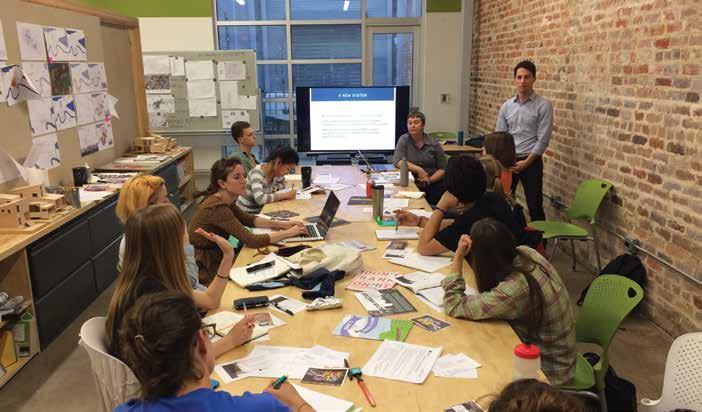
Small Center sees this tradition as an integral part of the collaborative design process, recognizing that holding space for joy and fellowship builds support for design change. The Center’s “community storefront” space hosts public programming focused on issues of the built environment. The space brings together artists, makers, students, and non-profit organizations into dialogue, while ensuring local neighborhood leaders direct these conversations.
In 2014, Small Center moved to an off-campus building that facilitates studios, classes, and design-build projects. However, the space represents much more. Located in New Orleans’ Central City neighborhood, it is close to many of the Center’s nonprofit partners, accessible by car or public transit, and serves as a central place for gathering, discussion, and collaboration. The community storefront space gives Small Center an outward-facing presence. It houses exhibits in partnership with nonprofits and artists, but also allows partners to hold their own events, from documentary screenings to organizational retreats. The space helps Small Center maintain a visual presence and serves as a place to expand connections and envision a better future.
For ten years, Small Center has hosted exhibits and events tied to its design projects and the work of its partners. The storefront space serves as an embodiment of the
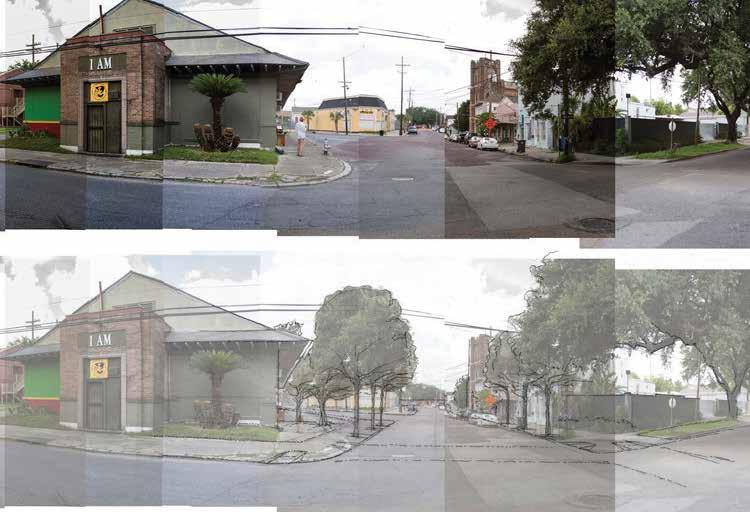
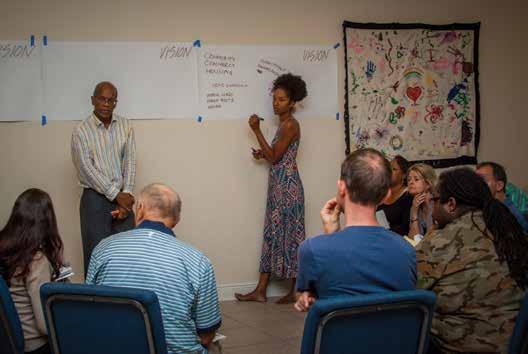
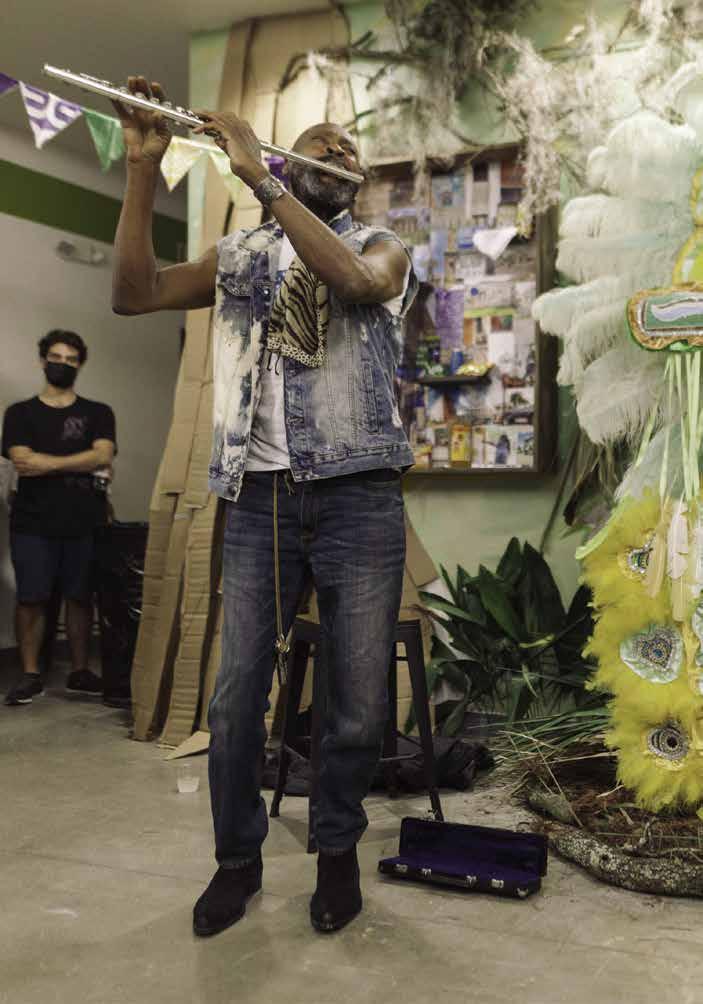
Center and a symbol of its stability, accessibility, and commitment to communitybased work. Food, drinks, and interactive programming draw a wide variety of participants. Small Center’s many partner organizations bring their extended networks to the space. The result is a dynamic–if sometimes chaotic–working environment that can accommodate everything from a beading workshop by a local Mardi Gras Indian chief to a panel discussion on the history of Black labor and its impact on the built environment.
Exhibits are typically interdisciplinary, connecting the work of grassroots organizations, artists, and youth participants. The space has also been used by partner organizations for their own programming, meetings, and retreats. The full potential of the Center is realized through these overlapping uses. On a given day, a design studio might be making prototypes in the wood shop and testing them in the storefront space while a team of students and faculty is working with a partner on graphics about safe housing conditions and the Center staff are standing up an exhibit about affordable housing. With the different modes of exploration and exchange in proximity, new possibilities for interdisciplinary learning and collaboration are organically discovered.
The Center has completed over 160 projects in its twenty-year history, alongside innumerable informal efforts: providing design expertise, realizing built projects, facilitating engagement and strategizing, creating graphic advocacy, and more. Beyond individual design projects, the engagement process itself can provide lasting
Ride New Orleans
Visualizing Improvements to Public Transportation, 2014
Gathering can be an act of community, learning, caring, and celebration. However, gathering can also look like activism or direct action. As a part of the University, the Center does not take direct policy positions, but the Center’s research on complex issues helps inform conversations and highlight challenges. Small Center has worked with several nonprofit partners advocating for changes to municipal policies on housing, transit, and land use. The Center graphically describes policies that shape the built environment and visually demonstrates ideas for change.
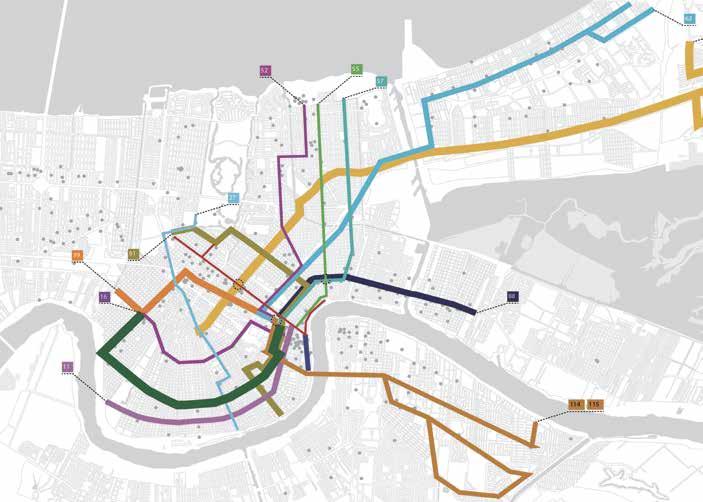
In one such project, Small Center worked with Ride New Orleans, a transit advocacy organization, to create a report entitled, “Smart Transit for a Strong Economy: Why New Orleans Should Invest in a CBD Transit Hub. ” The project studied transit mobility issues and highlighted the opportunity to improve access by creating transit-centric
//
project studied all public transit routes to find critical nodes and efficiencies
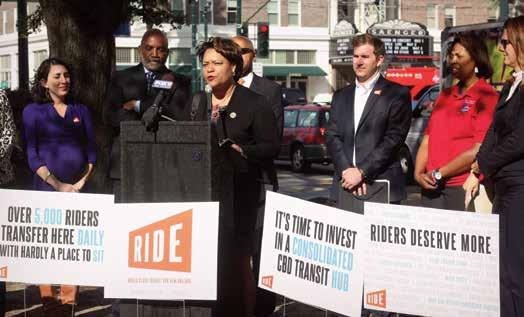
public spaces at critical intersections. Small Center created maps and visualized the design of public amenities to illustrate gaps in the City’s transit routes and possible solutions. The study focused on an area in New Orleans’s Central Business District where more than twenty regional transit lines converged, functioning as a transit hub for 5,000 riders each day. Ride New Orleans conducted surveys of riders about their transit experiences. The report summarized the concerns raised by riders using comments, photographs, and maps. The graphics clarified how transit lines connected, illustrating the confusing number of transfers and stops in the area. The report concluded that the area lacked the basic amenities to make it a safe and pleasant public space for commuters.
Small Center collected historic precedents and case studies from around the U.S. as possible models for a new transit hub in the CBD. To make civic investment in public space financially viable, featured solutions leveraged funding opportunities and partnerships. The report also presented the idea of a transit hub in the CBD as an opportunity to express civic pride while creating new, smart development opportunities in a strategic location. Additionally, the report presented key intersections where transfers currently happen and visualized changes to these dangerous intersections to create safer spaces for bus and streetcar passengers. The design proposals identified alternative intersections across the public transit system in New Orleans.
// ABOVE: City leaders gather in support of improved transportation
OPPOSITE: The
Welcoming Community
Suzanne-Juliette Mobley
The former Small Center Public Programs Manager provides examples of how gathering in conversation and connecting across disciplines can produce real changes, and the importance of building an audience outside of the Center’s institution helps build trust over time.
Small Center moved from Tulane’s campus to Central City in August of 2014, gaining (amongst many other things) a big, open, extremely empty storefront space at 1725 Baronne. For four years, it was my responsibility to creatively fill that space, and to do so in the spirit of Small Center’s efforts from the beginning, namely gathering across sectors, facilitating critical conversations, and constituency-building. To that end, we hosted conferences and charrettes for national funders, neighborhood activists, and municipal agencies. We developed exhibits out of collaborations and design projects, which in turn created new collaborations, new projects, and new exhibits. We convened panel discussions about the big issues impacting our little
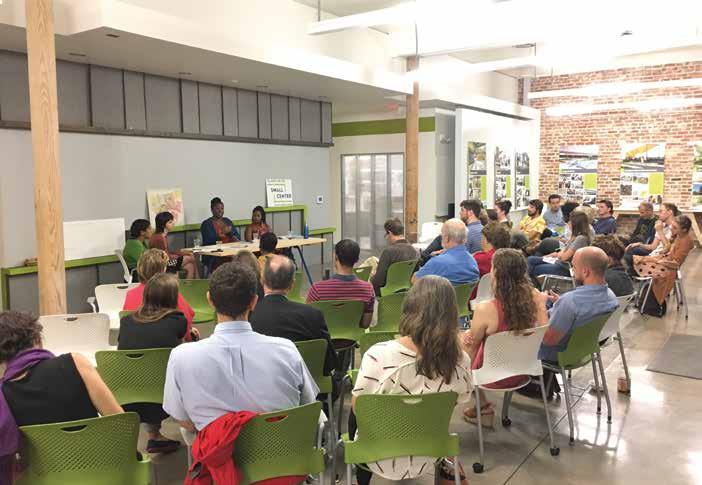
city, opening the Center to the public for monthly evenings of casual dinner and serious conversations. Along the way, we helped to build a diverse, interdisciplinary, and energized community of people whose curiosity shaped our work in return and for the better.
Maybe it was the moment, or the money, but for New Orleans, Fall of 2014 was an inflection point. Mitch Landrieu’s election to a second term as mayor solidified an entrepreneurial approach to recovery, and concerns about gentrification and displacement were intensifying rapidly. New Orleans was riding a wave of public investment unparalleled since the early days of federal urban aid, a massive influx of philanthropic giving just shifting from immediate disaster recovery to longerterm revitalization and private investment spurred by hosting the 2013 Super Bowl. A deluge of outside do-gooders and policy wonks, layered atop the city’s markedly racialized, inequitable recovery, caused the city to pivot towards insularity. In conversation after conversation, there was a sense that New Orleans was at a crossroads with a real risk (or hope, depending on your perspective,) that the city’s future would be determined by temporary people making permanent decisions.
Small Center’s team planted ourselves firmly at that crossroads. Or maybe the move to the center of the city brought home the intersections at which we already stood. Organizationally, we had done a decade of work building networks with community partners, government agencies, and design collaborators that reached across the city and the country. As a group of people whose roots in the city ranged from generational to newly arrived, and whose professional fields varied as well, we were acutely aware that our professional and personal diversity was an asset, and that our contributions were sharpest when our different perspectives were fully integrated. We were also pretty cognizant that the process of engaging, even amongst our team, wasn’t always smooth. It takes a tremendous amount of work and trust, a willingness to learn, and a belief in each other’s fundamental good intentions to collaborate across differences.
So, when we set out to create a welcoming space for everyone to shape the place we call home, we were also drawing on the ongoing labor of building cohesion with each other and bringing the complicated process of community-making out into the public and up onto the exhibition walls. We both learned and modeled how to deliberately build across differences, leveraging our varied networks to connect across sectors and social barriers. We explicitly softened the boundaries between expert and audience to facilitate conversations where we could all learn and teach together. We created opportunities for people to connect casually and consistently, with an opendoor policy for attendance at structured teach-ins on complex policy issues, along with unstructured drop-ins from neighbors wanting to chat about street flooding or public sector colleagues looking for cupcakes.
Dew Drop Inn
Restoring an Historic Performance Venue, 2014
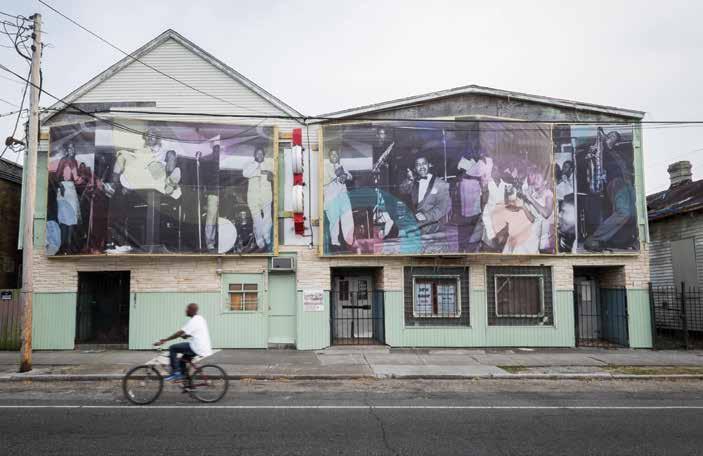
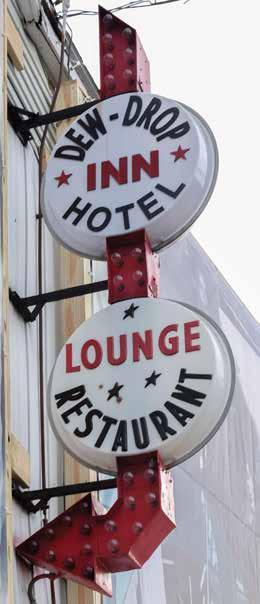
The Dew Drop Inn is one of the most significant music heritage sites in New Orleans. Started as a barbershop and refreshment stand on LaSalle Street, the business expanded into a bar, a hotel, and eventually a dancehall and restaurant. The venue presented comedians, musicians, dancers, drag queens, and other performers, and hosted many legends of rock and roll early in their careers: Little Richard, Irma Thomas, and Ray Charles, among other local and national talents. Operating during segregation, it offered Black visitors a good meal, a safe hotel, a haircut, and entertainment. 27 Serving as a hangout for musicians between gigs, visitors often enjoyed lively, after-hours jam sessions.
The performance venue closed around 1970 and the business was shuttered entirely following damage from Hurricane Katrina in 2005. In 2010, it was recognized with Historic Landmark status and listed as an endangered New Orleans historic site by the Louisiana Landmarks Society. Its original owners, the Painia family, hoped to
revitalize it as a neighborhood institution and bring music back to LaSalle Street in Central City.
Previous research on the Dew Drop Inn’s cultural significance, developed by Tulane’s Historic Preservation program, informed Small Center’s study of the Inn’s revitalization. Small Center created architectural plans that recovered the original mixed use as a hotel, restaurant, barber shop, and music venue, alongside new programming to support youth in the arts. A strategic partnership between the Painia Family, the Milne Inspiration Center, and Harmony Neighborhood Development supported these efforts to save the historic cultural center and return it to use.
To bring attention to the Dew Drop Inn’s significance and the restoration effort, Small Center constructed and installed a temporary façade across the building, featuring pictures of some of the Inn’s historic performers. Images of the temporary façade in local media helped amplify the effort.
Though Small Center’s organizing, capacity building, and design visioning processes seeded the fundraising campaign for, and public awareness of, the Dew Drop Inn, progress took years. Following a decade of starts and stops, in 2024, the Dew Drop Inn reopened after a dynamic renovation effort led by local developer Curtis Doucette, Jr., the legendary, historically significant club made available to the public once more.
27 Hannah Chalew and Al Jackson, “Dew Drop Inn,” New Orleans Historical , June 5, 2018, https://neworleanshistorical.org/ items/ show/1432.
Legacy of Central City
Celebrating Neighborhood History and Culture, 2022
When Small Center moved to the Baronne Street location, the first exhibit centered on the history of Oretha Castle Haley Boulevard in Central City. Research for the exhibit was drawn from Small Center’s preservation and restoration work along the Boulevard through Façade RENEW and was curated by Small Center’s design team. Legacy of Central City expanded on the narratives of the neighborhood by showcasing the work of Central City-based artists and culture-bearers, alongside research, and a series of public events. The local nonprofit, Civic Studio, curated the exhibit and coordinated public programs in Small Center’s storefront gallery.
The exhibit traced the transformation of a watery backswamp into a working-class neighborhood. Central City’s history and culture can be traced back to the cypress swamps of Bulbancha , the indigenous name for the area in which New Orleans is now found. In Choctaw and Chickasaw, it means “place of many tongues,” emphasizing the region’s long history as a place of exchange. Large, wall-sized drawings, collages, and a mural spoke to different eras in the neighborhood’s development, emphasizing the relationship between place and cultural production. The neighborhood has fostered social aid and pleasure clubs, brass band and Mardi Gras Indian traditions, and the
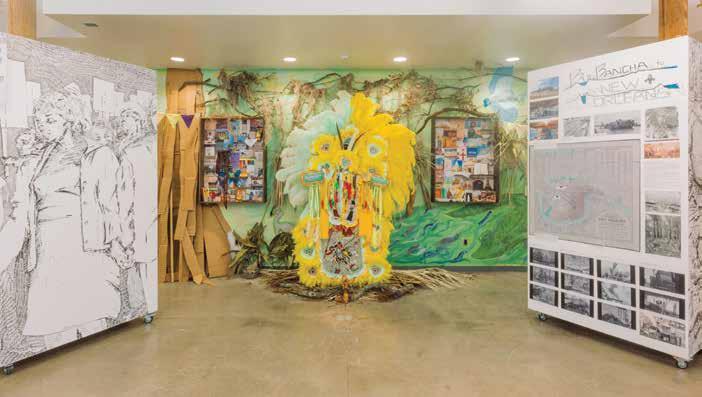
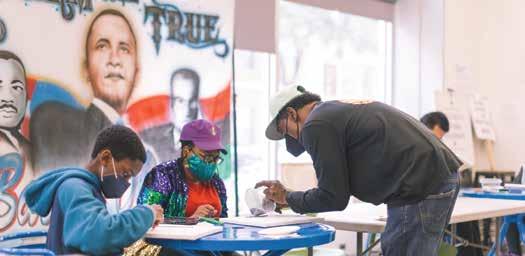
founding of the Southern Christian Leadership Conference and the New Orleans chapter of the Congress of Racial Equity. Exhibit images identified the roots of Civil Rights era activism in connection to neighborhood parks, streets, and churches. Maps and diagrams described the preservation and loss of these neighborhood centers over time. Other artwork and artifacts revealed how some of hip hop’s major hits provide insights into life in public housing and offer a glimpse into what New Orleans was like before the impact of Hurricane Katrina.
The exhibit aimed to inspire local young people through an understanding of neighborhood history. Interactive workshops and events provided opportunities to engage the social, cultural, and environmental histories of the neighborhood. One of Big Chief Beautiful’s intricately crafted Black Masking Indian suits held a prominent wall, and beading instruction sessions demonstrated the techniques. Work by photographer Polo Silk, writer Sharita Sims, and artists Brianna Brady, Aron Chang, and others highlighted Central City’s legacy of creative expression. A book launch event for Melpomene Street Blues included food and live music, as well as a chance to explore of artifacts recovered from the site of homes demolished in the 1960s to build the William J. Guste Sr. Homes, or “the Melph.” A series of walking tours highlighted neighborhood landmarks with local guides. Hands-on workshops included local gardener Jeanette Bell teaching students how to harvest mulberries and plant radishes, and opportunities to plant rain gardens to shape a new relationship with water. These activities demonstrated how the local history of activism and creative production continues in the work of the many artists, nonprofit leaders, and culture-bearers who live and work in Central City.
More than a City
Melissa Lee
The former Senior Adviser for Commercial Revitalization at New Orleans Redevelopment Authority reflects on the multiple outcomes of refreshing historic storefronts.
New Orleans—what a city. She is a seductress, effortlessly drawing you under her spell. Like any enchantress, she is enticing, bewildering, unpredictable, exciting, scheming, and irresistible: a living paradox. But New Orleans is more than a city; she is a spirit and a culture.
This spirit and culture reside in the historic architecture woven throughout the city’s neighborhoods. Each streetscape carries a unique identity reflected in its collections of commercial, residential, religious, and institutional structures. These buildings are more than mere edifices, they are symbols of the city’s history and character. They serve as tangible links between the past and present, illustrating how commerce and community thrive in harmony.
In 2013, New Orleans was undergoing a pivotal transformation. Neighborhood-wide commercial development was surging, fueled by public-private investments made in the preceding years. However, a troubling pattern began to emerge: recovery dollars and their benefits often bypassed areas adjacent to well-established commercial
corridors. This raised pressing questions: Does this allocation represent a just city? Why does preservation prioritize some areas over others? How can public-private investments be balanced equitably?
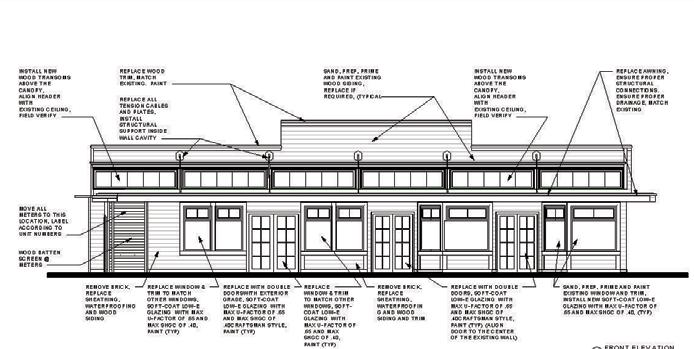
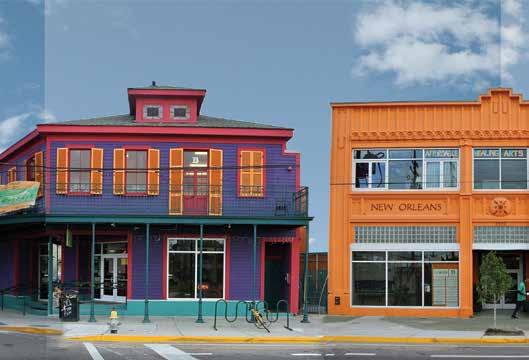
To address these challenges, the New Orleans Redevelopment Authority (NORA) launched Façade RENEW in partnership with Small Center. This initiative targeted commercial corridors like Oretha Castle Haley Boulevard, Bayou Road, and St. Claude Avenue. Façade RENEW operated as a 3:1 reimbursable grant program, incentivizing commercial property and small business owners to revitalize their buildings. The program covered seventy-five percent of façade improvement costs, up to $37,500 per property. In 2015, the initiative expanded to include Old Gentilly Road and Alcee Fortier Boulevard.
Façade RENEW sought to preserve the historical and cultural essence of these corridors while stimulating economic growth. The program conducted extensive research into the heritage of each property, informing a collaborative design process that celebrated the city’s layered history. Through this approach, the program unearthed stories of New Orleans’s people and places, fostering a deeper appreciation of the past and guiding thoughtful, equitable planning for the future.
Improvements funded by the program ranged from painting, exterior repairs, and lighting, to signage and full storefront rehabilitations. These enhancements
BUILD
Grow Dat Youth Farm
Cultivating Leadership on an Urban Agriculture Campus, 2009-2011
Grow Dat Youth Farm was founded by Johanna Gilligan and informed by her experience working in environmental education and student-led school food reform. The program aimed to address the need for youth employment and leadership opportunities while providing access to fresh food. The youth of New Orleans lack job opportunities and thus the possibility to gain income and skills that come with first-time jobs. The few jobs available to New Orleans high school aged students are in the fast-food service industry which compounds nutritional issues, and working according to inconvenient shift times often compromise students’ academic growth. Small Center was the incubator and fiscal home for the program vision, in addition to designing and constructing its campus in New Orleans City Park.
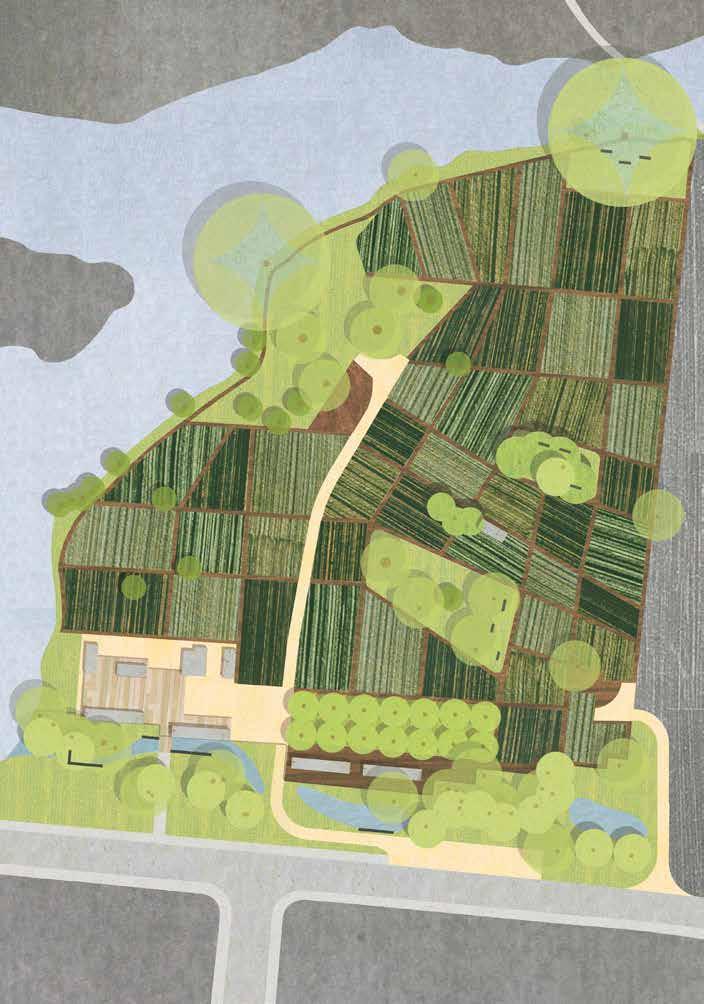
Through multiple, semester-long studios, held across two years, Small Center designed and constructed the 6,000-square-foot facility and four-acre farm site. 29 The design engaged the specific environmental challenges of converting a former golf course into agricultural production with a sensitivity to modeling sustainable
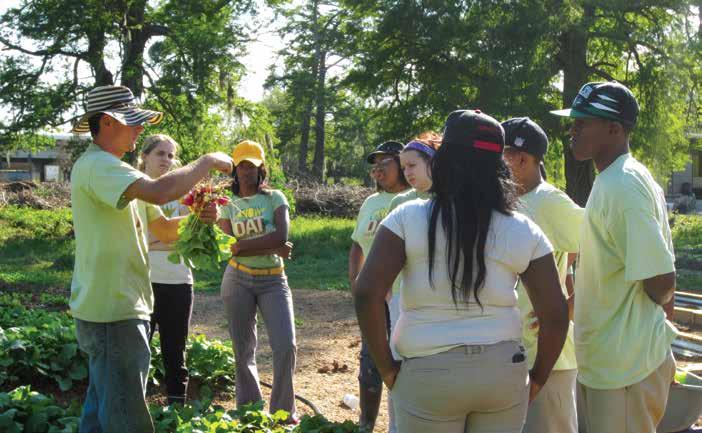
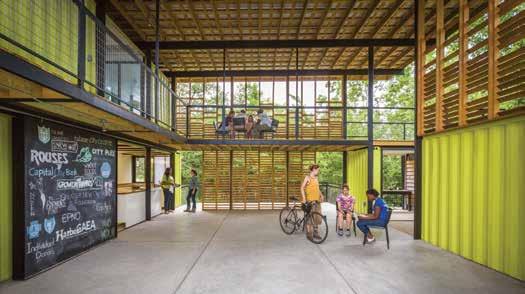
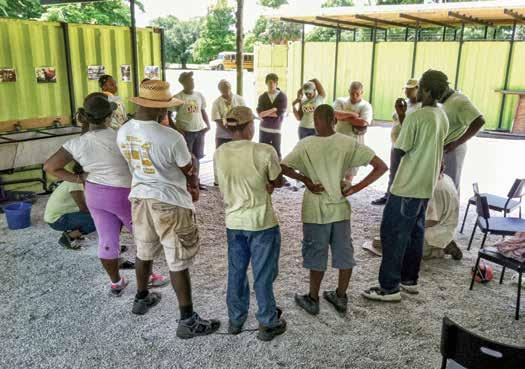
// ABOVE: Students enjoy the outdoor classroom and training kitchen. Photo: Will Crocker // OPPOSITE: Grow Dat student employees learn about sustainable food production.
practices. The learning facilities and growing spaces were located to preserve existing trees and to manage stormwater on-site as a means of protecting the health of a nearby bayou waterway. Shaded rest and cooling spaces are woven throughout the site, from preserved groves of trees to new plantings. Water is managed and filtered on-site through planted swales. Crop irrigation and water sequestration are integrated with the building design, and wastewater is treated on-site. As a former golf course, the soil quality has taken years to rebuild through sustainable agricultural practices.
All structures were located to create an entry court to the farm and to make use of land unsuitable for crop production. The design is constructed from seven recycled shipping containers and recycled steel trusses to form a large, covered outdoor classroom, offices, food processing spaces, and a storage facility. The containers are positioned to form a buffer from the nearby highway and to shelter the program spaces from sun exposure. These material choices support the preservation of trees. The shipping containers require only point-loaded foundations at their corners, making long, efficient spans and sparing the adjacent cypress tree roots from disruptive excavation. 30 Each shipping container is shaded with vine-covered façade screens and rain screen protection. Subcontractors were hired for crane operation and electrical work, but all other work was completed by Tulane architecture students, from foundation to finished space.
The architecture allows flexibility for a variety of youth activities and prioritizes environmentally responsible stewardship of a public site. Growing food on-site
“I learned how to test the soil and to work it sustainably. And I was bringing home kale and chard, which we couldn’t afford to buy.” -Grow Dat student employee
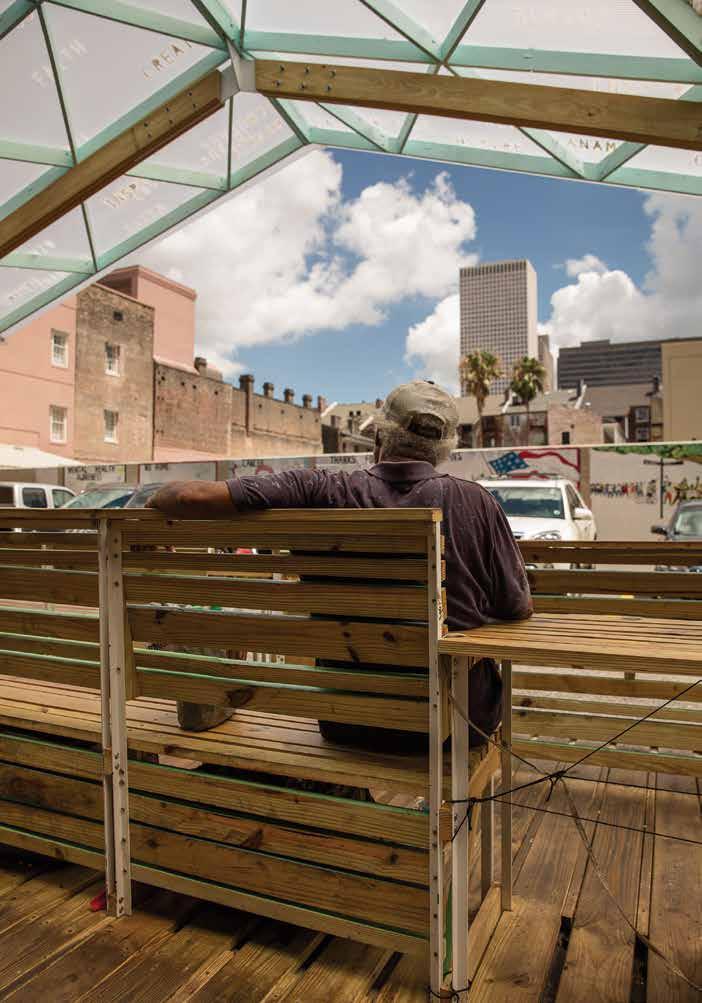
enclosure in the area. The space recalled the feeling of sitting on a New Orleans porch, with a traditional sky-blue ceiling. A service area contained, and screened, trash collection and allowed visual access to dedicated and secure bike parking. A new ramp and stair integrated the day space with Ozanam’s primary client entrance, simplifying ADA access to the building and services. The completed project improved the outdoor space available to Ozanam’s clients, providing a comfortable, social, and inspirational area with better access to the many services available on-site.
In 2021, Ozanam Inn relocated to nearby Poydras Street after the unexpected sale of its building by the owner. Through a major fundraising campaign, Ozanam was able to complete the purchase and renovation of a new structure that allowed for the first-time provision of shelter for female clients, along with dedicated dental and healthcare screening rooms. Though in a new location with different site conditions, Ozanam adapted Small Center’s approach to sheltered outdoor space, creating a shaded and weather protected area for clients lining up for meals and overnight lodging.
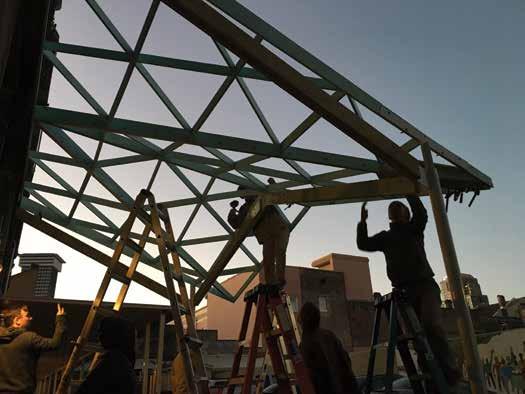
// OPPOSITE: New decking and seating created comfortable places for socializing, meal-line up, and more. Photo: Neil Alexander Photography // BELOW: Students install modular triangular roof pieces that were built off-site
“It
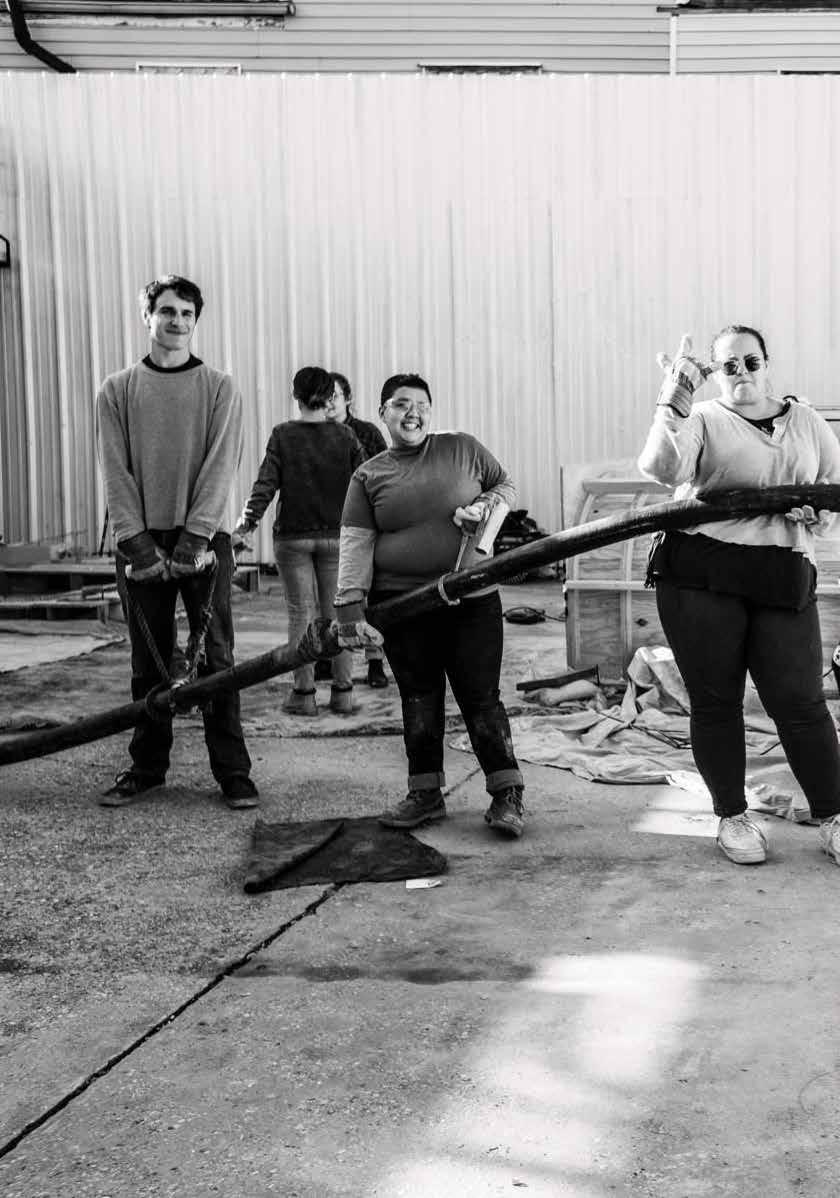
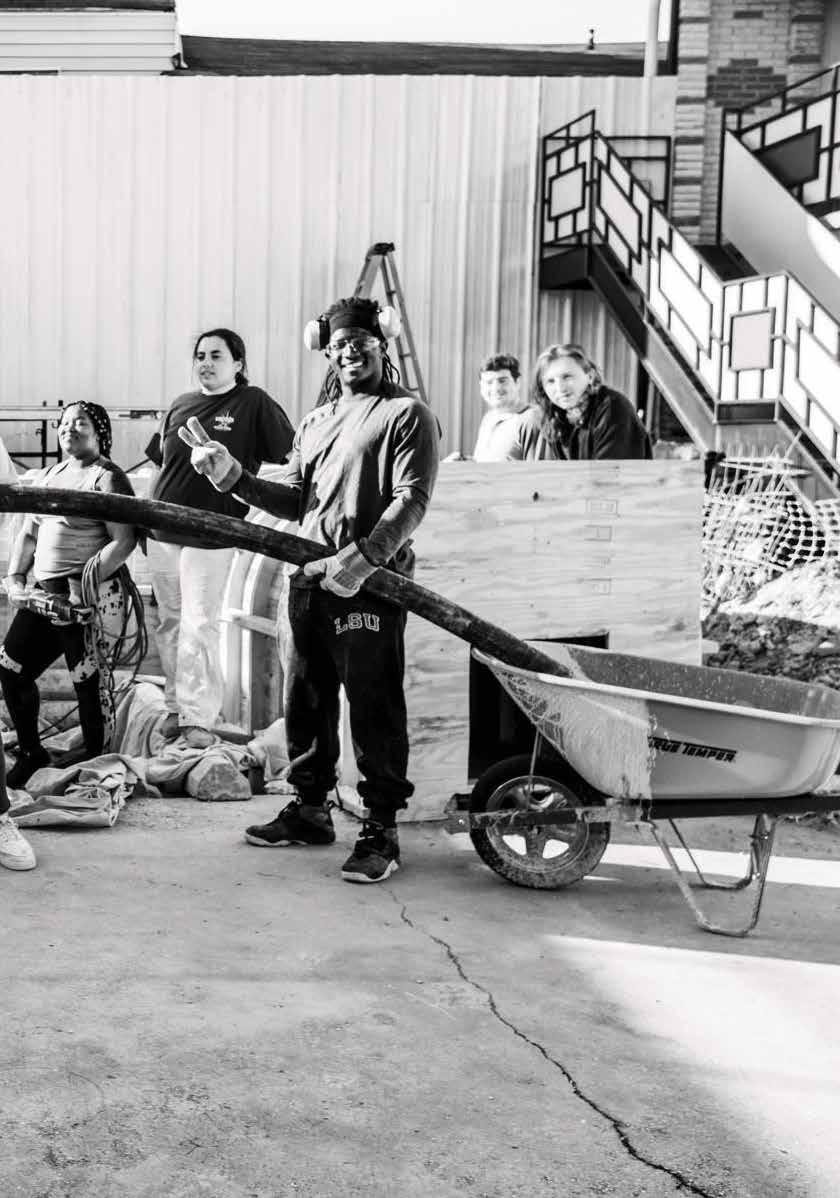
is a rich experience full of learning and hands-on work that will make you a sensible, better designer and human being. [It] pushed me to refine and deepen my conception of how architecture can be utilized as a tool for social justice.” -Small Center student
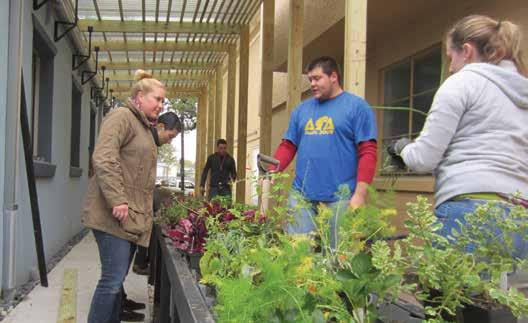
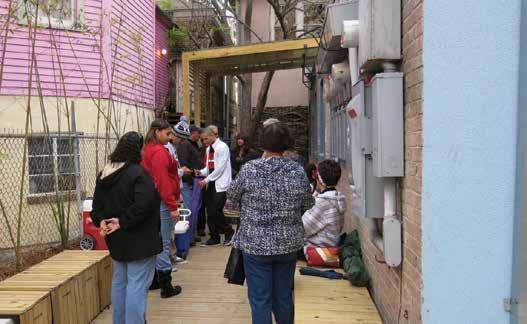
// ABOVE: Pyramid staff and clients helping to plant and enjoying the new gathering space.
Guide to Street Performance
Visualizing Musicians’ Rights, 2015
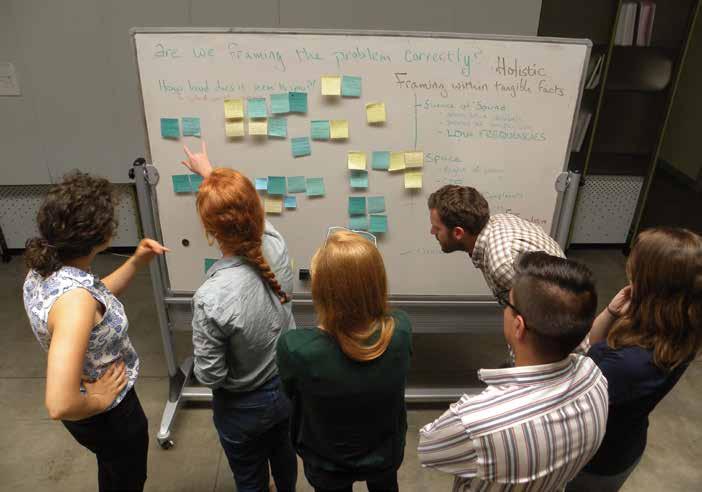
Since 2013, Small Center has offered Public Interest Design (PID) Fellowships during the summer months. The Fellowship provides opportunities for students to engage with Small Center projects and partners full time. The commitment of selected students and the Fellowship’s concentrated timeframe create opportunities for deep engagement and rapid results. In 2015, Small Center and its PID Fellows worked with the Music and Culture Coalition of New Orleans (MaCCNO) to create a pocket guide to regulations for street performance in the French Quarter and the Marigny. The idea was to provide clarity for both musicians and law enforcement regarding confusing rules governing performance volume and allowable locations that had often been misunderstood and wrongly enforced.
Representing local musicians, MaCCNO shared complaints received from its members that a lack of clarity about the laws governing street performance (by musicians,
Fighting for Safe Housing Rights
Maxwell Ciardullo
The nonprofit policy director and Small Center partner discusses the critical nature of getting advocacy messaging pitch perfect to ensure inclusivity and effectiveness amongst both policy-makers and those whose challenges are being represented.
When I joined the Louisiana Fair Housing Action Center’s (LaFHAC) policy team in 2014, we were already two years into an effort to pass basic health and safety protections for New Orleans renters. That work started in 2012 when the organization partnered with national researchers to understand how other cities were addressing this problem and issued a “white paper” on a model policy for New Orleans. What eventually became law in November 2022 was, for the most part, fully present in that white paper a decade earlier. It was full of charts, graphs, important data, and model programs, which are all important in this kind of advocacy, but it was individual renters’ knowledge and experiences that ultimately resulted in passage of an ordinance. LaFHAC’s partnership with Small Center on this campaign began in 2016.
What we eventually called our Healthy Homes Campaign was also born out of the experiences of the organization’s clients. LaFHAC is a statewide nonprofit fair housing center based in New Orleans. At the time, it provided direct services to our clients in the form of pro bono representation for victims of housing discrimination, as well as foreclosure prevention counseling. However, as one of the higher-profile housing organizations in the city, its intake staff were regularly flooded with calls from renters stuck in homes with dangerous health and safety violations. One of the most memorable from my early days was an older, visually impaired woman who often used her hands to feel for the walls and orient where she was in her home. She was calling about what she first thought was water dripping down her walls from the unit above her, but that she quickly discovered was raw sewage. Her landlord was refusing to make repairs and she was desperate for help.
In cases like this, staff referred people to the local legal aid organization, but we all knew there was little any organization could do to help. That’s largely because Louisiana’s–and most states’–renter protections are abysmal. Sure, it violates health and safety codes to have sewage dripping down your walls, but what good are those codes if there’s no one to enforce them, as had been the case in New Orleans for years. Even if the code enforcement staff were available, complaining about your landlord is a surefire way to get evicted, and Louisiana doesn’t have protections against retaliation. It was the staff’s anger and inability to help in cases like this that motivated us to launch the Healthy Homes Campaign.
We collaborated with Small Center at the same time as we were working with city councilmembers to introduce a Healthy Homes ordinance. In order to build visible support for the ordinance, we needed outreach and advocacy materials that would resonate with renters dealing with substandard conditions. The Center and its summer fellows helped us organize focus groups and design a brochure and mailer. In the last focus group, one of our participants correctly called out what we anticipated would be the final design for the mailer for relying on the trope of a low-income Black woman as a victim, lacking agency. The rest of the group agreed, and for me it was a humbling reminder to ensure the people closest to the problem are involved in crafting the solutions.
Small Center staff and fellows also had the bright idea of taking the brochure, which they designed to be folded into the shape of a house, and building a fourteen-foot-tall foam board version. Once constructed, people could walk inside and out and read statistics about the number of renter households that dealt with mold or rats in the last year, as well as quotes and stories from individual renters. Aside from just being
impactful visual story, using photography, film, original reporting, and historical artifacts. For two years, Miller and Groner documented the history of Cancer Alley, an eighty-five-mile stretch of land along the Mississippi River between Baton Rouge and New Orleans which contains over 150 petrochemical plants and refineries. Their work grew out of Miller’s research into her own family, which has owned land in Louisiana’s St. James Parish for a century. The exhibit explored the challenges of Black descendant communities surviving and thriving in Cancer Alley. Land ownership with a sustained, rich connection to culture and family, the exhibit showed, is at risk from heavy industry, chemical plants, and the fight over the largest proposed plastics manufacturing facility in the country.
The exhibit featured clips from Miller’s documentary film, Jonesland, telling the story of her family’s history in this region—from chattel slavery to land ownership to the current onslaught of petrochemical refining and manufacturing. Atmospheric scenes from the film were paired with artifacts from the family’s agricultural and rural life to bring visitors onto the land where the Jones family raised generations of children, even as their existence was regularly threatened. Groner’s journalism documented the consequences of centuries of extraction along the Mississippi River. As a reporter-producer for the Monument Lab podcast Plot of Land , Miller chronicled the journey to uncover this family’s history and uncertain future. Excerpts from the podcast, including on-site interviews, allowed exhibit visitors to listen to these stories while immersed in the artifacts and visual representations.
Facilitating and hosting exhibits like Extractivism continues to build Small Center’s network of nonprofits and artists while spurring public knowledge and curiosity

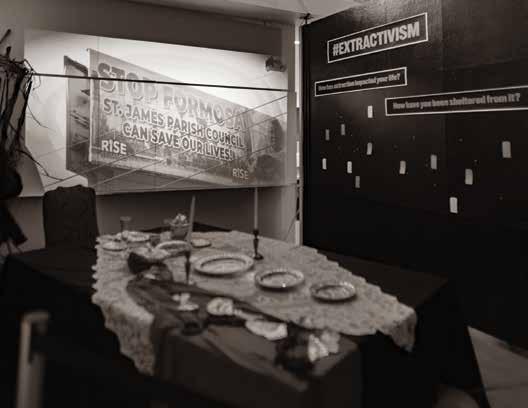
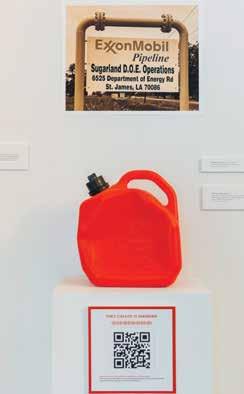
about the built environment. All exhibitions are framed by issues of architecture or planning and contribute to discussions that center the role of the built environment in shaping everyday life. Extractivism explored inequity in planning and zoning processes, highlighting the need to amplify community voices.
// ABOVE + LEFT: Artifacts and film projections bring exhibition visitors into the world of Louisiana’s river parishes.
VISIONING
Jane Place Neighborhood Sustainability Initiative
Advocating for Collective Affordable Housing, 2011, 2016
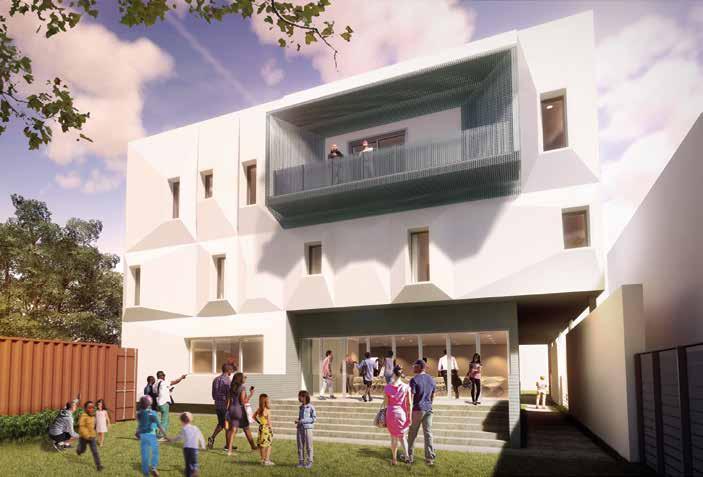
Small Center worked with Jane Place Neighborhood Sustainability Initiative to envision a permanently affordable cooperative housing structure. Research into the frameworks of Community Land Trust models and the legal complexities of cooperative housing informed the development of the Jane Place prototype, which envisioned the renovation of a three-story, multi-family building. Though Small Center’s architectural design was not realized, the research informed Jane Place’s approach to building permanently affordable housing units in the heart of the city. Small Center’s collaborative process brought together housing advocates, informed an exhibit on affordable housing, and set the stage for the organization to continue expanding its affordable property holdings.
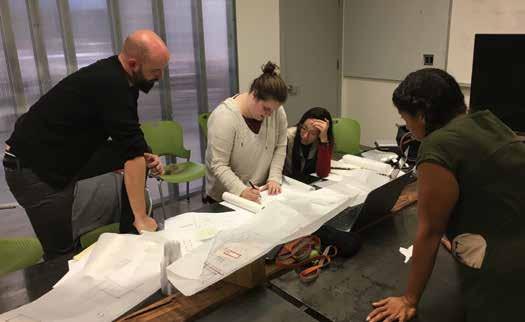
// ABOVE: The design team sketches options for the warehouse renovation.
// OPPOSITE: A rendering depicts affordable housing above a community gathering center and back yard suitable for events.
Jane Place was created in response to an acute housing need in New Orleans. In the wake of Hurricane Katrina, housing costs rose dramatically and never returned to pre-storm levels, when New Orleans was widely recognized as an affordable place to live and housing costs more closely aligned with the city’s low-wage hospitality and tourism jobs. The 2013 American Community Survey data showed that residents in the Jane Place target neighborhoods were majority renters, seventy-nine percent of whom were rent-burdened, paying more than thirty percent of their income on housing, and often much more. Jane Place began as a grassroots organization within Nowe Miasto, a collective living, performance, art, and community space that served as an organizing hub for local activists from 1999 to 2005. This converted warehouse space became an incubator, sustainer, and supporter of community-based projects that used the building for activities and events. It is often these kinds of organizations and collectives, operating as close to the ground as possible, that recognize, mobilize and respond to needs as they are being experienced in the community in real time.
Small Center worked with Tulane School of Architecture’s nascent Master of Sustainable Real Estate Development program to scope and design housing options within Jane Place’s two properties, working to understand legal complexities by researching cooperative housing in other cities, and providing research to help aid