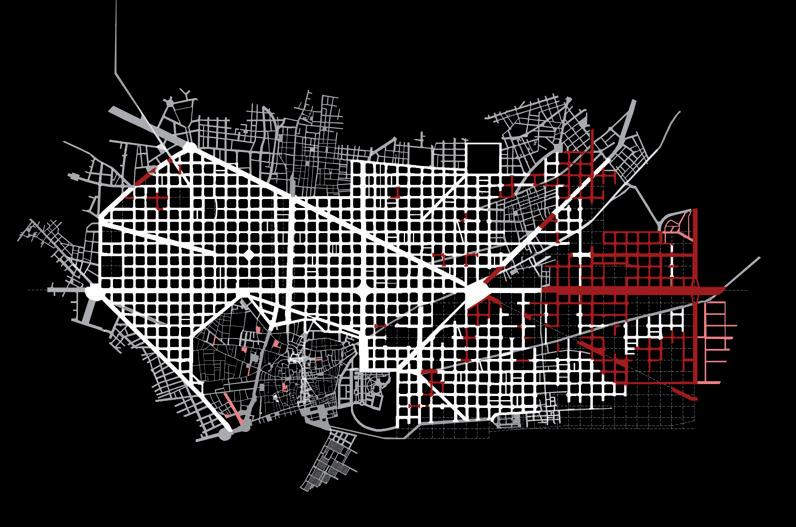
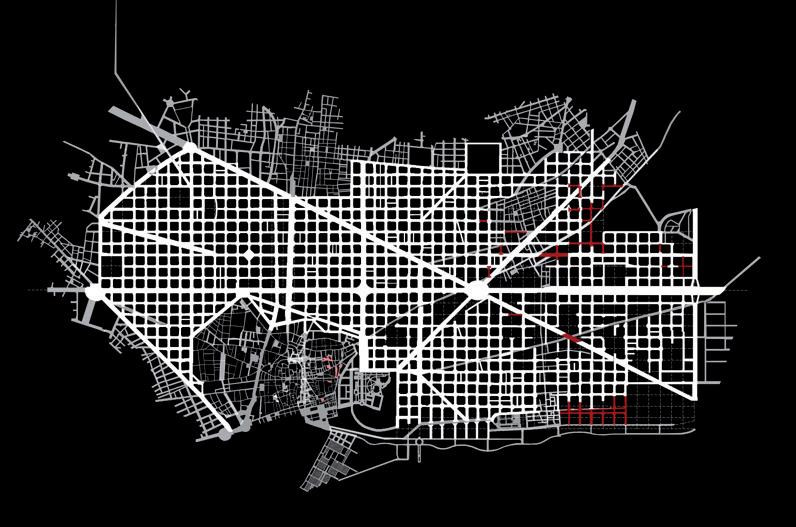
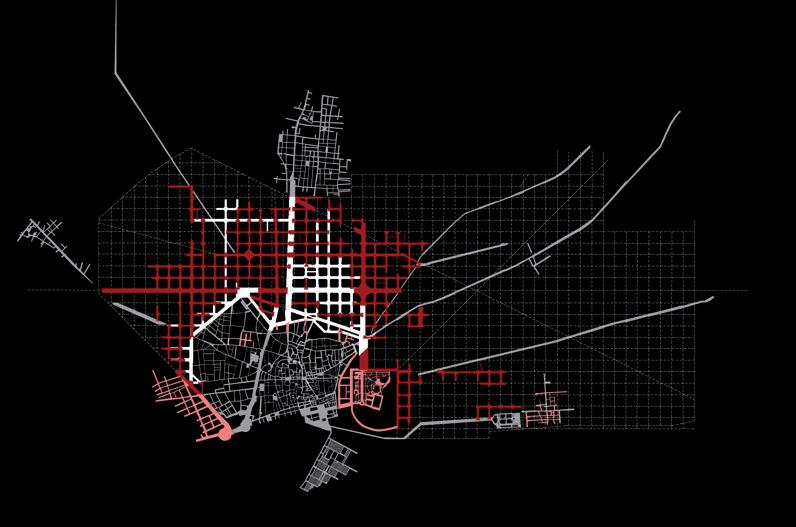
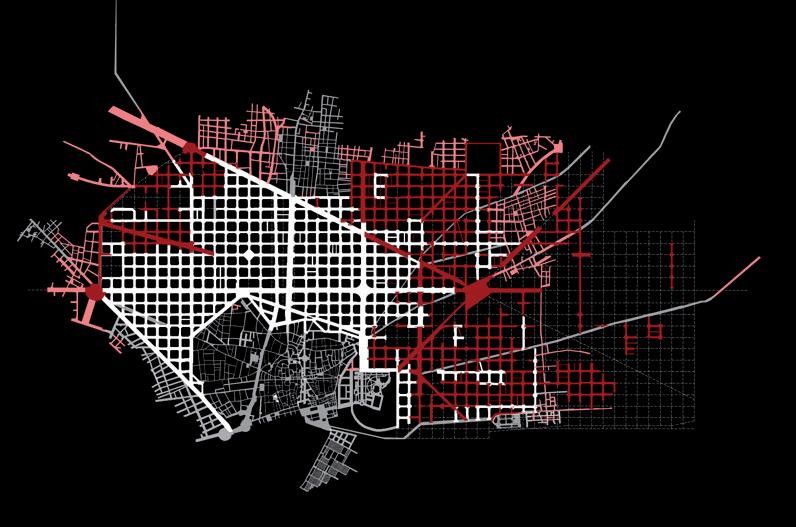
The Harvard University Graduate School of Design is a leading center for education, information, and technical expertise on the built environment. Its departments of Architecture, Landscape Architecture, and Urban Planning and Design offer masters and doctoral degree programs and provide the foundation for its Advanced Studies and Executive Education programs.
Harvard University Graduate School of Design
I.
I.5
I.6
I.7
II.
II.3
II.4
II.5
II.7
II.8
II.9 The Barcelona Plain and its surrounding farmland
II.10 A “difficult century”, but one in which the port acquires its definitive form
II.11
II.12
II.13
II.14
II.15
II.16
II.17 Barceloneta. An innovative project but terribly overcrowded
II.18 The urban forms inside the walled city
III. Projects for the modern city and the demolition of the town walls
III.1 The beginnings of modern urbanisation
III.2 Early industrialisation
III.3 Urban reform from within
III.4 Colonial infrastructure. Railways and roads provide urban interconnection
III.5 Criticism of the town walls
III.6 The Cerdà Plan, a pioneering work in Modern Urban Planning
III.7 Barcelona’s Eixample Project in relation to other European cities
III.8 The development of Cerdà’s Eixample and the Development Societies
III.9 Suburban models in the urban development of the Barcelona Plain
IV. Barcelona, city of innovation
IV.1 The demolition of the Citadel
IV.2 The 1888 Great Exhibition
IV.3 The search for a “Catalan national architecture”
IV.4 Modernisme as an innovative trend
IV.5 The consolidation of the Eixample
IV.6 Urban utility infrastructures
V. The turn of the century and Greater Barcelona
V.1 Annexation of the municipalities in the Plain
V.2 “Gross-Barcelona” and the concept of capital city
V.3 The Interconnections Plan
V.4 A focus of cultural innovation
V.5 Urban reform from the outside
V.6 External transformations to Ciutat Vella
V.7 Noucentisme
V.8 The infrastructure of development: electrification and suburbanisation
V.9 New urban services and facilities
V.10 The parks system
V.11 The long march towards the 1929 Electrical Industries Exhibition
V.12 From Plaça d’Espanya to the river Llobregat
VI. The Barcelona of a million inhabitants
VI.1 Metropolitan problems and the new social dynamic
VI.2 Regional planning in Catalonia
VI.3 Accommodation as a problem in the modern city
VI.4 The GATCPAC and the functional city
VI.5 The Macià Plan and Le Corbusier
VI.6 Bloc House and the Recreation and Holiday Resort
VI.7 Dissolution of the GATCPAC and the Civil War
VII. The grey post-war years and the formation of the metropolis
VII.1 Autocracy, reconstruction and shantytowns
VII.2 City and Comarca
VII.3 The dawn of the development policy
VII.4
VII.5
VII.6
VII.7
VII.8 The transformation of the Eixample and the suburban
VIII. Patterns of pro-development expansion and political change.
VIII.1
VIII.2
VIII.3
VIII.4
VIII.5
VIII.6
VIII.7
IX. Barcelona’s recovery in the eighties.
IX.1
IX.2
IX.3
IX.4
IX.5
IX.6
IX.7
IX.8
IX.9
X.3
X.4
X.5
X.6
X.7
X.8
X.9
X.10
Introduction
Barcelona can be considered as the prototype of a Mediterranean European city with a long urban tradition. Cities in the south of Europe have quite specific formal characteristics and processes of historical formation: the density and compactness of their urban form and their evolution by means of extension rather than remodelling sets them apart from the European cities of the north. Furthermore, their Mediterranean nature gives them very temperate climatic conditions and has involved them in the various cultures to have colonised the shores of this historical sea.
This city, with its over two thousand years of history, has played the role of capital of Catalonia in the second half of this period and in the last two centuries has undergone major growth, coinciding with the development of the modern city and its industrial expansion. Today we face a post-industrial condition shaped by climate change, yet the city’s history shows its ability to adapt and develop innovative design responses to new challenges.
In 2025, the city of Barcelona had 1,732,066 inhabitants living in over 100 km2, with a metropolitan area of almost 3.4 million people in 636 km2. In this space, representing just 1.5% of the Catalan territory, lives almost half of its population. The metropolitan region, with daily living and working relations, was, then, home to a population of five million inhabitants, almost 70% of Catalonia.
Barcelona is situated on a plain that slopes gently down towards the sea, delimited by the rivers Llobregat and Besòs and the coastal mountain range of Collserola, with its highest point of Tibidabo (512 metres). The Barcelona Plain is only interrupted by the mountain of Montjuïc beside the sea and the tres turons , or three hills, in the north.
The plain is a space of confluence for the inland prelittoral corridor that runs in a north-south direction, and the coastline marks out a geographical system that has governed communication axes and modern urban expansion. As this book explains, today’s metropolitan space has overflowed this natural space and its everyday influence exceeds the limits of the province of Barcelona.
This initial description of the city aims to prevent confusing this book of interpretation of the urban construction of a compact city with a book about the city’s history. Both the scope of the work and the author’s training called for other intentions and a different method.
While urban events are generally narrated according to a time sequence in order to allow a better understanding and comparison of historical episodes, a chronological description is not the main theme here. Various histories of Barcelona are used and quoted in the book as a basis for explanation, but it is above all the interventions and projects, the acts and decrees, the ideas and schemes, the strategies and processes marking the physical evolution of the present-day city that are the main characters of the book.
Exploring and interpreting the city and its associated human phenomena are difficult tasks due to the diachronic study of very different moments, making comparison a complex process. If however we give priority to the physical dimension of the city, its spaces and its architectures, we may make faster progress.
The city is time solidified; it crystallises the old territorial configurations and, at the same time, perpetuates the social practices of preceding generations.
All “histories” are based on an analytical approach and an interpretation of salient facts and events. A history of urban development has to take in the territorial and urban experience, and, despite the existence of cultural, economic, ideological and political interpretations, concentrate particular attention on the city’s physical dimensions, which influence and to some extent even determine cultural and economic development. This does not mean that we should place greater value on a city’s “stone” than on its social evolution; just as an explanation of the economic development of some cities highlights trade as an innovative factor of change, though it affects only a minority of the population, in other cases the city and its physical form represent a true synthesis of the historical development of a society: the ruins of Pompeii, for example, condense its lifestyles, production and its whole culture.
In the city, houses, workplaces, street networks, public spaces, lifestyles, the technical organisation of production and exchange, forms of entertainment and recreation are always shaped by the past and modified by changing times, though there are on occasion typological changes, or changes in forms of procedure that mark a breakaway from preceding systems.
Studies of genetic morphology tend to seek a logic in the evolution of urban forms: firstly, they state the various thresholds of space and time with regard to both major urban development interventions and the countless urban projects effected in small-scale urban fabrics and their transformations; then they interpret the permanence of the network of streets, more lasting than plot divisions, which are dependent on buildings, with their more variable social function.
The decision to highlight the dimensions of urban development in this “history” will call for a valuation of the specific aspects of this young discipline – this “practical knowledge”, to use Foucault’s expression – of “urbanism” that sets out to understand the city and the urban phenomenon in all their interdisciplinary analytical variables, but also with a specific application to the designs and proposals of urban construction and transformation. Because the history of civilisation in Europe shows that cities are the place of innovation and change: the big cultural and technological events have taken place in cities; they have also been the setting or the expression of the most important political movements and changes.
It is therefore essential to interpret the content of these projects and their social and economic implantation. As the reader will see, these proposals or patterns of urbanisation have shaped the urban form of cities and materialised as specific conditions for demographic, social and political organisation and the reinterpretation of geographical space.
The approach taken by this book is based on the constitution of Barcelona, picking out the operations to shape or design the city that have been crucial to its development. It therefore refers to very differing sources: from
archaeological to historical, from urban planning projects to an interpretation of very recent events, from a key architectural design to a new regional organisation... Of all the different periods, priority is given to the evolution of the modern city. Written and graphic depictions also compete for precedence and provide complementary readings. The changing representations of the city are accompanied by variations in the way projects are drawn up, and plans and strategies are expressed, contributing to an understanding of the cultural evolution of urban development.
The history of Barcelona, like so many European cities, shows us how the city has constantly addressed new issues – we might say that each generation conducts its own revision –, and it is useful to understand both the mechanisms of the social, economic and ideological emergence of these themes and the options and projects to which they give rise, consequently introducing new constituent elements of the city. As regards methodology, priority is given to the regulations governing layout and project that give form to the city and its parts, and their relation to forms of social organisation and power structure.
Some periods are of course more prolific or more innovative, just as there are projects with the strength to survive or adapt for several generations, as in the controversial case of the development of Cerdà’s Eixample, which therefore became the paradigm of the symbolic identification of the city. This would be the case of great projects such as Haussmann’s remodelling of the centre of Paris in the 19th century, leading to the consolidation, though not without great difficulties, of the charismatic image of that great capital.
The histories of cities reveal overlapping processes, and their projects and proposed changes cannot be seen simply from the point of view of the plan or the finished work; it is also important to include their genesis and the mechanisms of change and adaptation that tend to accompany them.
Overlaying the values of innovation and mutation that take place in the city is its symbolic, representative component. A great urban project or a monumental building symbolises forms of coexistence as well as the form of government of the time. Its compositional and figurative content defines the ideology behind it, to some extent idealised by the status accorded socially to any work of art.
Each urban project in the city can be seen as an expression of the power, wealth or even the poverty of the people responsible for its construction and their contemporaries. This is, ultimately, the authentic content of the city and its projects: not the simple satisfaction of functional needs, but the added connotation that extends or changes the balance of power and representativeness of the different social classes. The bourgeois house in the Barcelona of the second half of the 19th century was based on the ideas of order, cleanness, rationalisation and social stratification of an emerging class, which thereby acquired greater social substance. In other cases, the urban project in the city is the result of a conflictive process between what the plan intended and what the city actually constructed: the metropolitan development of the post-war years is an obvious example.
As part of this approach, it is important to point out that while each city has its own origins and civic history, the various geographical areas are marked by broad-based schemes and projects for urban evolution that many cities follow or share in: hence the need for cross references with the processes adopted by other cities.
In turn, the relative brevity of this text requires concentration on the most dynamic or outstanding periods of the city’s general history and a summary of studies of urban history, mainly concerning Modern Barcelona, which appear in the footnotes for closer consultation.
The long period that the book aspires to cover suggested presenting the role of Barcelona in the context of Catalonia, especially as the city in itself proved to be a fundamental element in the creation of national identity.
It is hard to look at the past and the present and think about the future, yet this is an exercise that can also offer new fields for reflection on the city. It is also hard to detach oneself from the present-day meaning of the city and its parts, which necessarily requires us to understand that books “belong” to the specific time at when they were written. Because today, we have to see Barcelona as one of the few European cities of the two thousand of a considerable size that existed in the Middle Ages that has been capable of becoming a metropolis. This warrants a study to explain the situation, with all the processes and projects leading to it.
The reader will see that the urban formation process is full of great “historical” contradictions: the great capital of the Mediterranean without a port, the factory of Spain on a site with no energy resources or prime materials...
In the history of Catalonia, the city may have been the civil catalyst of a strong identity, the cap i casal de Catalunya ; first as a solid fortified town, then as a “hinge” between Old Catalonia, built of stone in the north, and New Catalonia, of rammed earth walls in the south. But it is also the urban system to have suffered most in its fabric from the country’s political setbacks, such as those of 1714 or 1936, when it emerged as the “loser”.
All of this illustrates the great interest and variety of its urban construction, despite never having had the involvement of great royal or aristocratic projects in its historical development that produced the avenues and parks of European capital cities. The local scale of its projects contrasts with the ambitious, cosmopolitan determination – to produce what the cities in the vanguard produce – that has made many of its schemes so innovative and gives it a special dimension.
Perhaps this is why the rate of urban development has varied so greatly between the long-term projects or plans that have developed fragmentarily and the short-term schemes, such as the big events that have produced singular programmes every half century.
Altogether, this work sets out to offer an interpretation of the evolution and formation of Barcelona on the basis of significant elements of urban development that may be shared by other European cities.
There are excellent works of city interpretation by ages (the medieval, Gothic, baroque, modern city, etc.), geographical location (hill cities, river cities, etc.) or economic importance (market cities, port cities, etc.), but
there are few that take as their basis the morphological logic of the city, aspiring to produce a more general interpretation based on urban development. Fortunately, Barcelona has a good bibliography by themes or periods of the development of the city, without which this work would not have been possible; this book owes much to these publications which are duly referred to in the footnotes and throughout the text itself.
This book is divided into ten chapters that interpret the stages of its morphological constitution. The first two guide us through the formation of the medieval city on its Roman origins, which we can identify as a traditional city with its streets, squares and neighbourhoods. While the old town had these elements, their form and content were redefined. Others, such as the town walls and main streets are continually reinterpreted. In this first part, the diachronic description of events is borrowed from “histories” of the city and, alongside the archaeological research, a series of invariables is formulated as to the urban form that takes into account the continuance of street layouts, elements of infrastructure and systems of control that help us to understand what the pre-industrial city was like. The forms of representation of the city are very diverse, and interventions in its construction have as yet been little studied.
As Maurice Halbwachs comments in relation to the evolution of Paris: “The past cannot be conserved and is not represented just as it is. At each stage, society reworks its own memories to adapt them to its present conditions of functioning. By means of a constant process of reconstruction, memory wrings an interpretation of the past out of the present: in the form of collective memory, it strengthens the cohesion of the group in question, it is an integral part of its essence, it is transformed as the group evolves. The same thing happens with space...”
It was with the arrival of the industrial city that urban development schemes became more document-based with the creation of a series of urban planning guidelines that throw some light on the construction of presentday Barcelona.
The role of infrastructure in colonising the territory and its various phases, the different scale of urban development projects, the city as an instrument of social progress and political development, the influence of the urbanism of political defeats, the major dynamics of the population and its habitual demands, movements of cultural and urban innovation, and the strategies behind the great events of 1888, 1929 and 1992 – these are just some of the themes developed in the central chapters.
The 19th-century city marked the entrance of industrialisation into the city with the definition of new urban forms: new types of buildings (stations, markets, restaurants, etc.) and urban planning schemes involving the construction of new streets and the introduction of new services (gas, drainage, etc.). This may seem like the construction of “yesterday’s city”, with images we know from the cinema and literature, but it existed alongside aspects of the modern city. This was the time of the great new town project, the Eixample; of suburban development and the demolition of the Citadel.
The great urban explosion probably took place in the 20th century, when industrialisation organised the city in accordance with its strong technological development. This was also the period of consolidation of urban development as a technical and social practice. The city was laid out like the big European cities and new morphological proposals took shape. The new county scale developed in the grey post-war period, and the major shortcomings in services in the peripheral city have carried on until our time.
The recovery of Barcelona beginning in the 1980s took the form of an appreciation of existing urban spaces and structures, leading to a rebirth of the city. The urban planning instruments used were many and varied, and quite innovative.
The changes undergone by Barcelona in the last 25 years cannot be explained merely in terms of the designs put forward by an individual or group of people, or a singular, personal determination; they required a broaderbased, collective trend or demand that involved the public initiative of the council and its members, but also of architects, groups of local residents, private operators, etc., who clearly defined an awareness of change from what had gone before and formed the basis of a new conception. There has been a breakthrough and a thoroughgoing modernisation of the city and its spaces, but this was a process that extended to the economic context, to collective ambition, civic pride and the affirmation of identity.
Now, in the new century, fresh prospects are opening up due to the European institutional framework and, above all, changes in the economic system that is moving towards a post-industrial phase, marked by different means of communication and a growing feeling that the city we are constructing is not sustainable – it consumes non-renewable energies and produces a great deal that cannot be recycled. The repercussions for urban development are difficult to evaluate, but we can trust to the force with which Barcelona has already overcome major “contradictions” in relation to its port, raw materials and energy sources.
The broad overview presented by this book allows us to avoid the simplistic pitfalls of the catastrophists. But nor is it an end to discussion, as the city will continue to undergo major transformations as it has in the past. However, we will see the force of continuity and morphological transformation. The city continues and reproduces in the same way that seeds and plants change and adapt to similar structures in a continuity that allows mutation.
In any case, today’s challenge is to work at understanding the forms of the past when we know that the future “has no form”. It will probably be constructed on the basis of a judicious interpretation of history and the correct application of the creative processes that urban culture successively promotes.
Acknowledgements
This work is presented as an open-ended research process, and its current form is a summary of the reading, work and articles of the last 50 years. However, it also represents new hypotheses that will be put to the test in the mid-term.
Most of the works were carried out in the framework of the Laboratori d’Urbanisme (LUB) of Barcelona School of Architecture (ETSAB), of the Universitat Politècnica de Catalunya, for which I express my gratitude to the Director, Manuel de Solà-Morales, for his advice and friendship; José Luis Gómez Ordóñez for his help and company in many of the discussions; and Antonio Font, Miquel Domingo, Josep Parcerisa, Joaquim Sabaté, Amador Ferrer and Xabier Eizaguirre, among others, for their miscellaneous contributions.
My involvement as Director of the Urban Planning Department of Barcelona City Council between 1983 and 1989 allowed me to contribute new points of view and offer a comprehensive overview of the city. I would like to express my appreciation to Oriol Bohigas for his drive and energy, to José A. Acebillo for his solidarity, and to Miquel Corominas, Jaume Sanmartí, Ricard Fayos and José A. Tajadura, among others, for their exemplary support. In addition, my position as Scientific Director in the early stages of the Urban Master Plan for the Metropolitan Area of Barcelona (PDUM) has allowed me to incorporate reflections at the intermunicipal scale. I extend my appreciation to Ramon M. Torra and his team.
Two versions of this book have been published in Spanish, an abridged one in 1992 (Fundación Mapfre) and a more extensive one in 2004 (El Serbal). Most of the book was recomposed at the Harvard Graduate School of Design. On the basis of that first edition in English in 2005 (Nicolodi), and maintaining the new composition, a new edition was published in English in 2014 (ORO), in Chinese in 2016, and in Catalan in 2018 (LUBETSAB-UPC). This second English-language version, updated by BAU and distributed by ORO, returns the work to its international origins.
This book is also proof of the invaluable practical support of Maria Mercè Busquets and Rosa Bastías, who typed it out, and to the graphic design work coordinated by Francesc Baqué through its various updates. Ultimately, however, the book would never have existed without the constant and generous encouragement of Rosalía, to whom I owe the additional energy that an undertaking of this scope requires.
J.B.
Barcelona, December 2025
From its origins to capital of the medieval Mediterranean
I.1 The birth of Barcelona. a two thousand
year old city
While there are signs of the existence of scattered population in the environs of Barcelona as early as the sixth millennium BC, it was in the late 5th century BC that a series of more or less stable settlements began to appear in the coastal area as the result of an increase in trade. One stands out in particular: the settlement that existed around the harbour situated to the south-west of Montjuïc, next to the river Llobregat delta, exploiting its condition as a natural port to load the farm surplus that was stored there in silos, according to archaeological studies carried out in the 1940s.1
But the first Barcelona, the germ of today’s city, dates back to the 1st century BC, possibly between the years 15 and 13, under Roman domination. The arrival of the Romans had taken place some time before, coinciding with the founding of Emporion in 218 BC, and the Romanisation of the region was by then well under way.
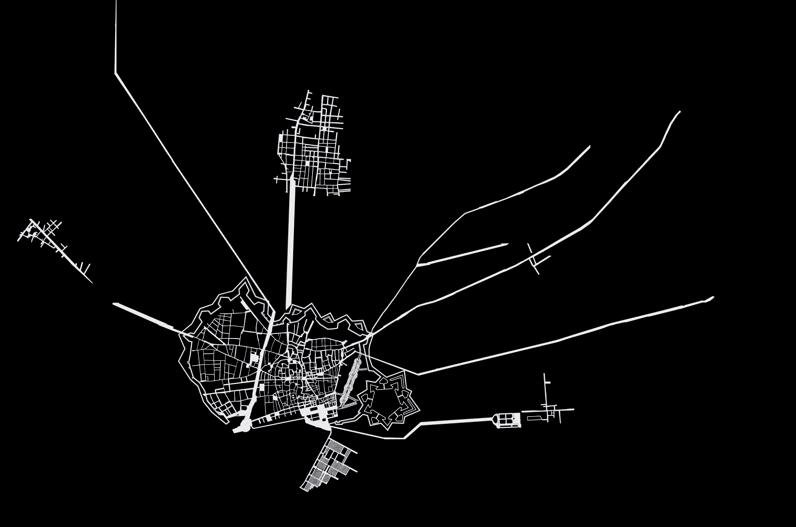
The colony of Barcino is described in Agrippa’s compendium, published by Pliny the Elder during the reign of Augustus. It stands on the site of earlier settlements, like most Catalan Roman settlements. 2 At the same time, various Roman villae in the plain accounted for the farming of crops. Its strategic position is due to its situation on Mons Taber, a small promontory rising to an approximate height of fifteen metres, between two torrents, the Cagalell to the west and the Merdança to the east. Their proximity to the sea meant that their basins to some extent provided a natural port.
However, the alluvium deposited by the torrents and the sand of the coastal currents were to hinder its functioning. This contradiction between good natural conditions for a port and the difficulty of maintaining a working depth was to condition the maritime splendour and the constraints on this infrastructure throughout many centuries of city development.
The colony of Barcino was sited according to the same criteria as the many other colonies of the great Roman Empire established the length and breadth of the Mediterranean region, with the Mare Nostrum as the hub of this widespread colonisation, well communicated both by maritime transport and by the dense network of Roman roads.
Barcino was not founded on the network of main Roman arteries that from Narbonne ran to Tarraco (Tarragona) before continuing to Gades (Cadiz). Yet this second-level colony had potential location and siting conditions that were to favour its subsequent evolution.
1 Oriol Granados: “Los primeros poblados del Pla de Barcelona”, El Pla de Barcelona i la seva història. Barcelona, 1984.
2 M. Taradell: “La romanització”, Història de Catalunya. Barcelona, 1978.
2.b The citadel and the neighborhood of the ribera.
2.27
Layout of the old town with the construction of the Citadel and the neighbourhood of the Ribera.
2.28
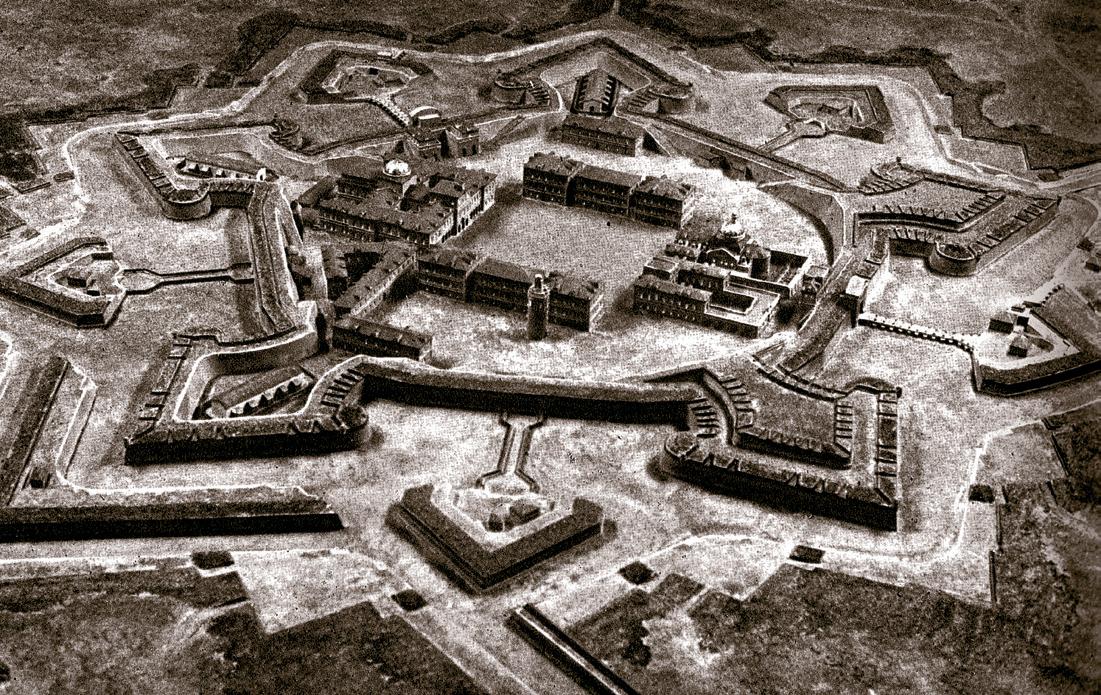
Model of the Citadel.
2.29
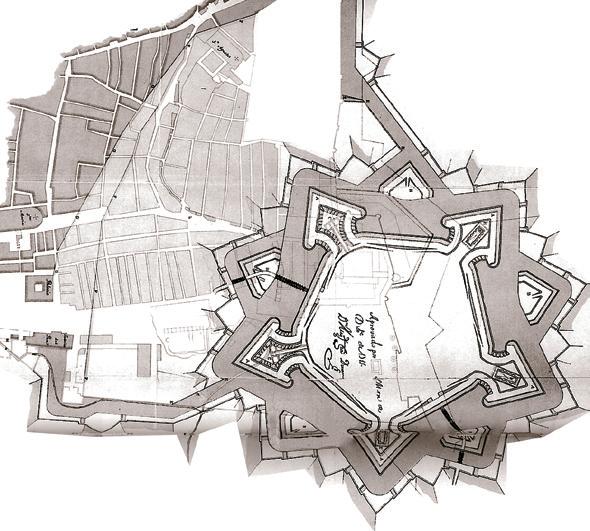
Verboom’s Project, 1715.
2.30
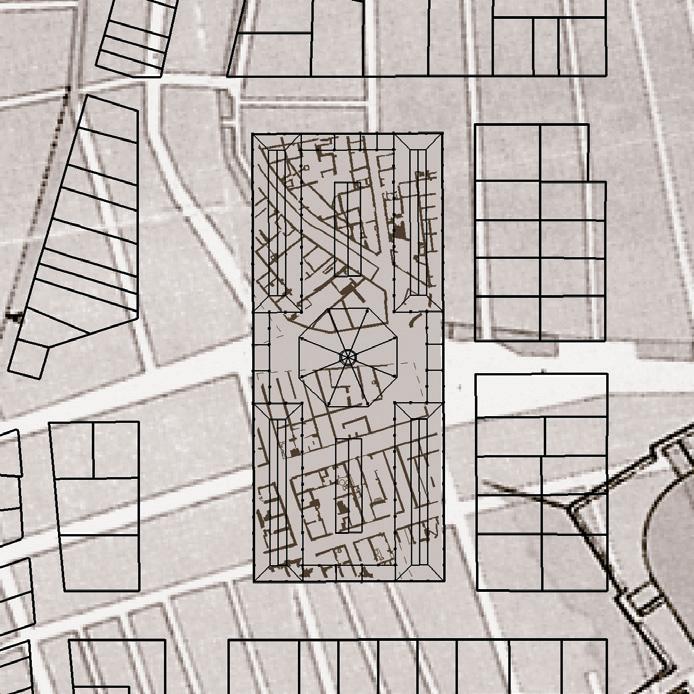
Interpretation of successive urban morphologies in the neighbourhood of the Ribera, summed up in the Born.
2.31
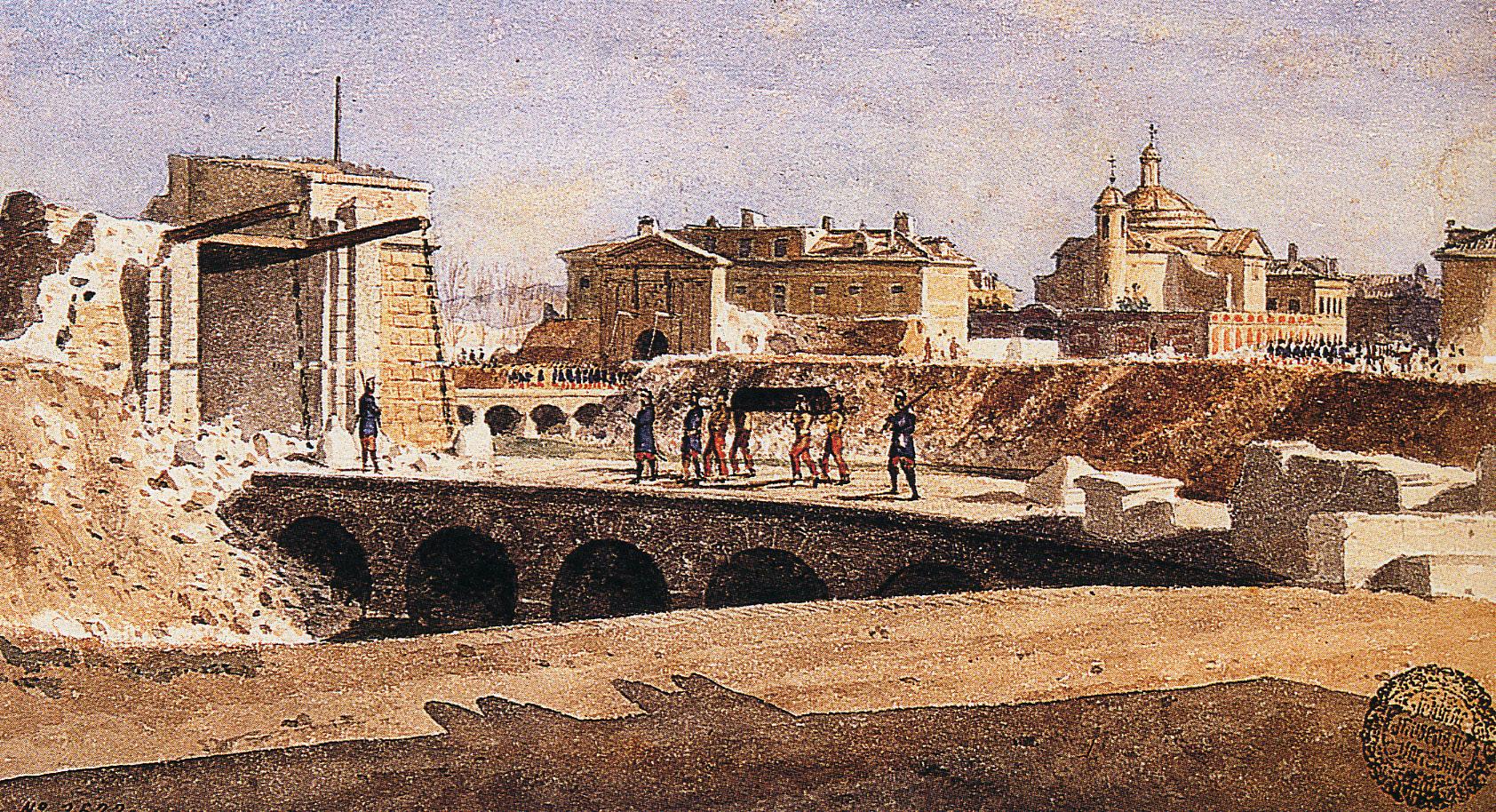
The Citadel, watercolour by Francesc Soler i Rovirosa, 1869.
2.32
The General’s Garden, 1818.
plots and the many religious institutions that were gradually established there in the 16th and 17th centuries. It was to become more occupied in the course of the century, despite being regarded as city outskirts by most citizens.
II.15 The construction of the citadel
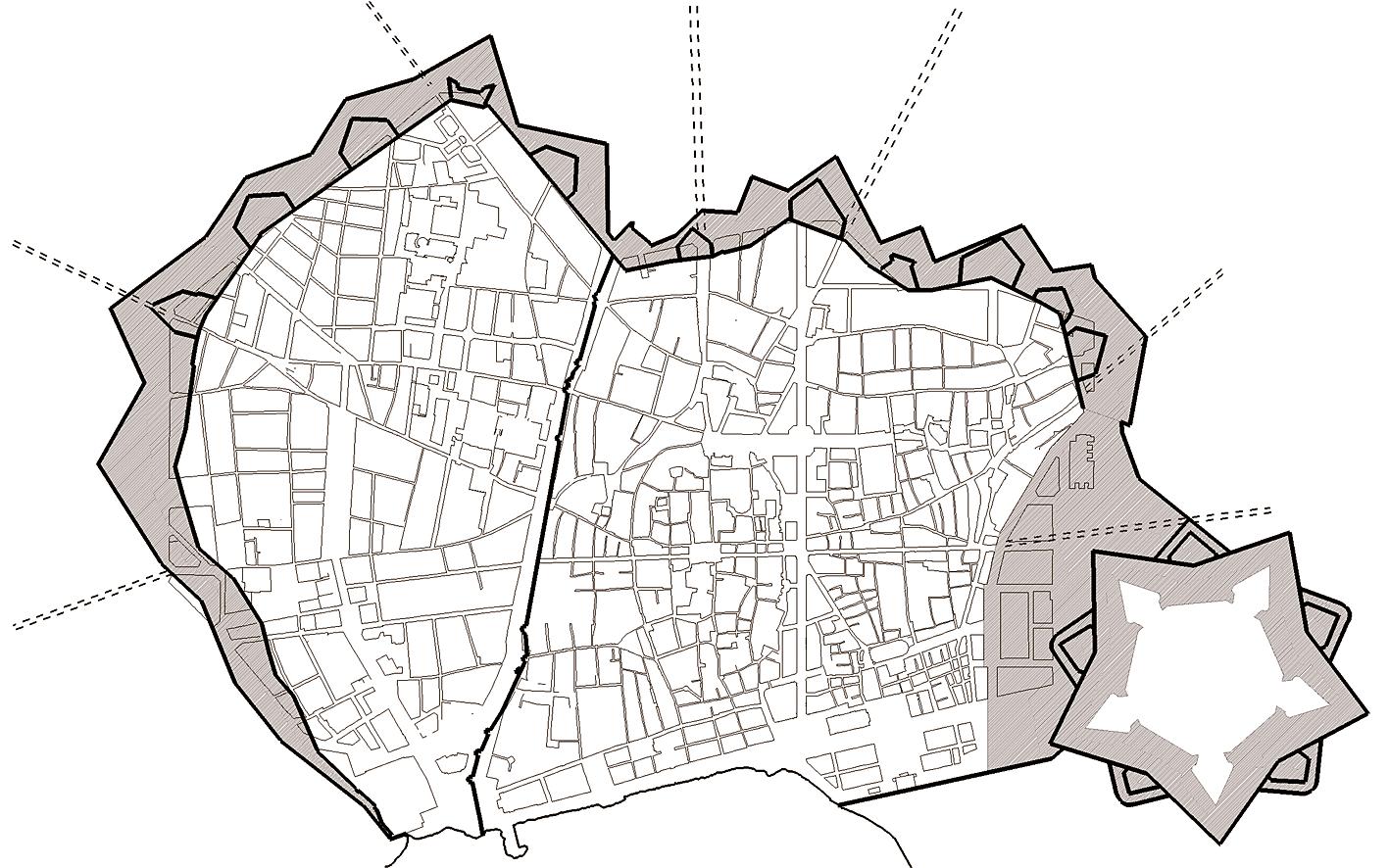
One of the most brutal urban planning transformations was the destruction of the neighbourhood of Ribera, situated to the east of Santa Maria del Mar, one of the city’s liveliest areas due to its excellent position near the port. It gave way to the construction of a great military citadel and its parade ground in the interstitial space outside the city.50
The fortress design, drawn up in 1715, was the work of Jorge Próspero Verboom, a Flemish engineer, and followed the patterns of French military engineers of the time, principally Vauban. Other city buildings were also constructed or remodelled, mainly around the gates, as barracks or magazines of the Bourbon army. It is important to stress that the basic function of these defences was both to defend Barcelona and to ensure control of the city in the event of a possible citizen uprising. There were also batteries in Montjuïc castle.
The Citadel formed a pentagon made up of five bastions in the shape of spearheads, named after the Queen, the King, the Prince, Don Felipe and Don Fernando.
50 See Salvador Sanpere i Miquel: Los terrenos de la Ciudadela. Henrich. Barcelona, 1911. Also Manuel Arranz, Ramon Grau, Marina López: “El Parc de la Ciutadella”. L’Avenç. Barcelona, 1984; Albert Garcia Espuche: Barcelona a principis del segle XVII. La Ciutadella i els canvis de l’estructura urbana. Tesi Doctoral. Barcelona, 1987; Josep E. Hernández Cros, Xavier Pouplana: “La Ciutadella”, Cuadernos nº 86. Barcelona, 1971. The article summarises this incident: “Its construction required the demolition of several thousand houses in the district of Ribera (…). Added to this was the absence of compensation of the house owners and the edict requiring all of Barcelona’s artisans to work on its construction, providing their own tools and animals, in exchange for an inadequate day’s wage and under pain of death if they should refuse. If these motives were enough to justify the unpopularity surrounding work on the construction of the Citadel, the torture dealt out in its cells to patriots and politicians who opposed the Government completed the repressive image of the fortress, and soon earned it the city’s unanimous hatred.” A situation worth bearing in mind on the occasion of its demolition in the late 19th century.
III.6 The Cerdà Plan, a pioneering work in Modern Urban Planning
Ildefonso Cerdà devoted over twenty years to producing the ideas in his project and making its deployment viable. It is undeniably a seminal work for the formalisation of contemporary Barcelona, but it is also a pioneering work in modern urban development theory.
As we will see, Cerdà addresses a thorough reshaping of Barcelona, with the scale and dimension expressed by his forceful city concept. At the same time, he addressed for the first time a modern set of urban planning instruments, which took into account an analytical approach to reality and the city, not in a determinist, unambiguous way, in the design of a new city.
There is no doubt that the dynamic of new ideas informing Barcelona’s most innovative cultural trends in the first half of the 19th century involved greater critical commitment on the part of the artist to the changing social context with a view to preparing a better future for the population. The figure of Claude-Henri Saint-Simon, along with his
3.45
Plan
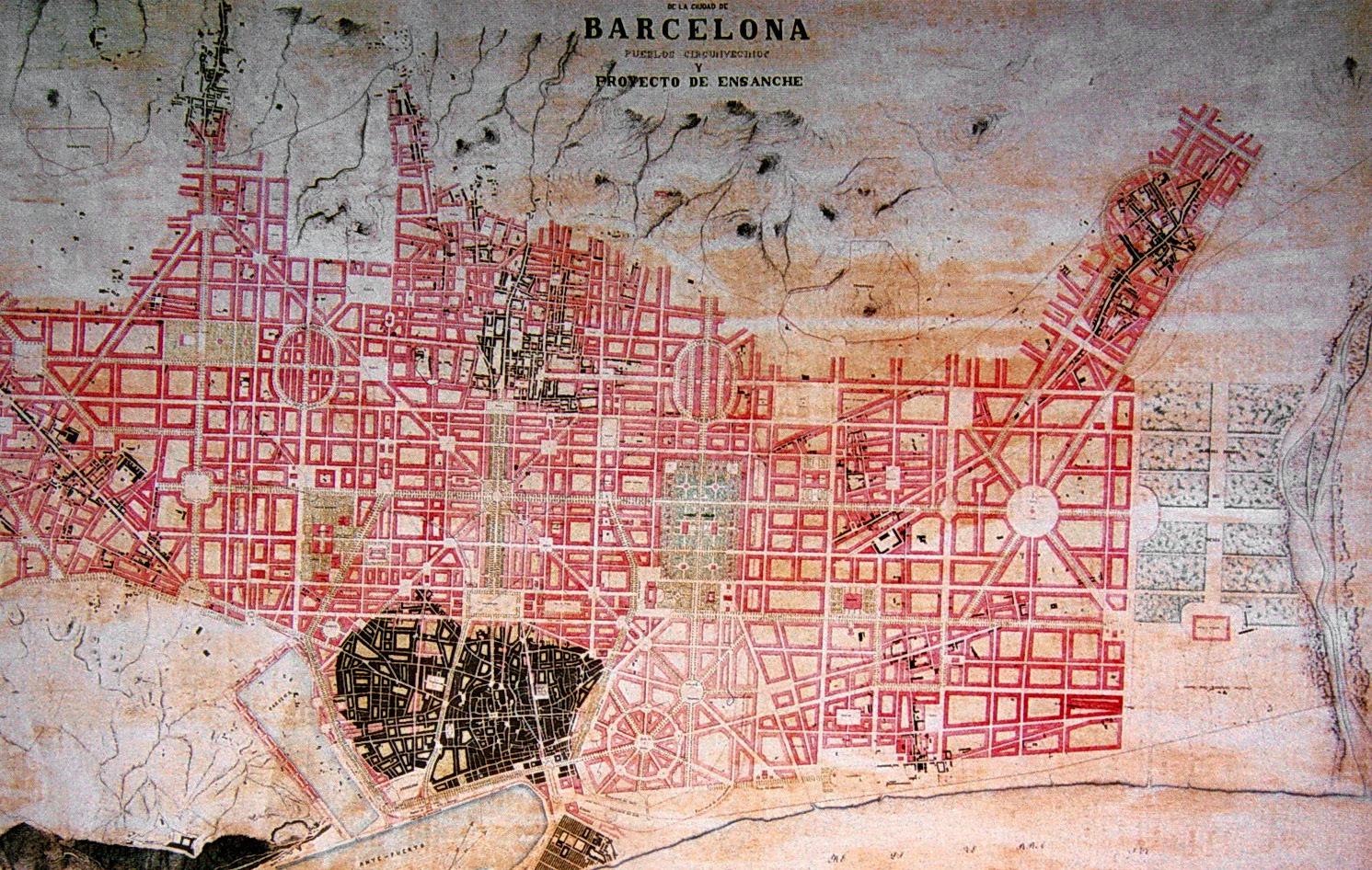
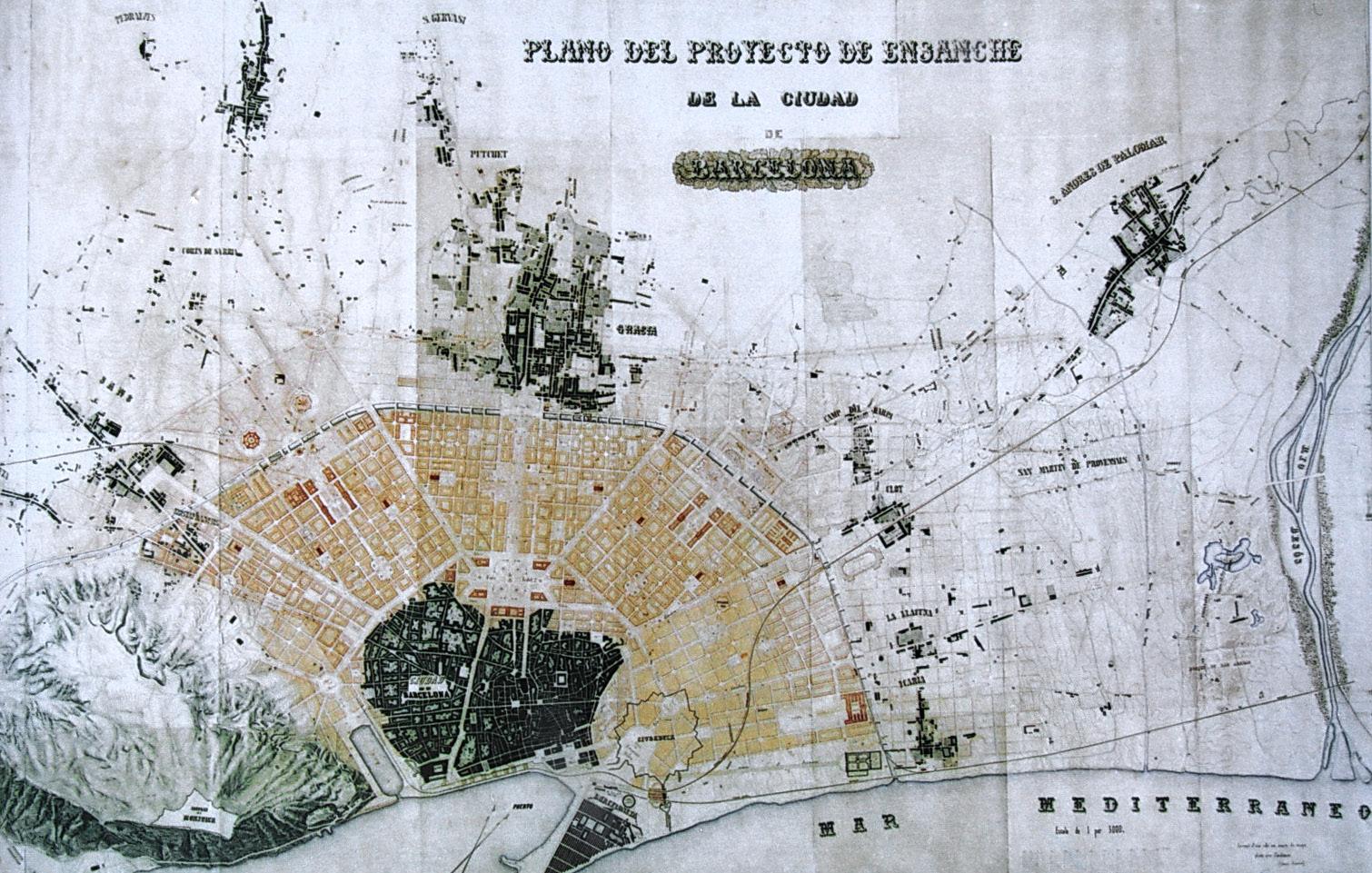
for the Eixample, submitted to the municipal competition by Josep Fontseré.
followers, was key in this trajectory. His suggestion that artists should attempt to intervene on the side of the new elite of scientists and industrials was to enjoy great influence in the French context. He established a theory of History as a progression of “critical” and “organic” periods that explained social change, as scientists do with the natural environment. This type of discussion opened the eyes of a new generation of engineers and architects, including Cerdà and some of his peers, who began to realise that it was not just a question of repeating the Academy’s classical models, but that architecture and the new urban planning science had to include a social component.18
Meanwhile, the trend represented by Charles Fourier and Robert Owen, British adherents to utopian socialism, envisaged self-sufficient communities that could be seen as veritable anti-cities, aiming to challenge the class structure and the separation between production means, principally between work and land.
18 See Chantal Béret et al.: “Nouvelles de nulle part”, Utopies Urbaines 1789-2000. Valence, 2001.
3.46
Plan for the Eixample by Rovira i Trias, 1859.
4.01
Barcelona, city of innovation
IV.1 The demolition of the citadel
Barcelona, a European City was how Isidre Molas1 summarised the position achieved by Barcelona in the late 19th century, due to its leading role in industrial development and its reception of the innovative ideas associated with modernity. The Great Exhibition was to be an important catalyst in this process.
“Being the effective capital of Catalonia and the most advanced city in Spain meant fully assuming a governing function and, therefore, achieving external presence and projection in all fields. (…) Barcelona was the door to Europe, modernity, creation and a people’s determination to overcome difficulties while still remaining a people, to be universal without ceasing to be Catalan; a situation that to some extent explains the modern life of this stateless nation that was Catalonia in the Spain of the 1900s.”2
In this process of consolidation of modern Barcelona, Borja de Riquer3 highlights three periods: the first led up to the 1888 Exhibition, the second was the turn of the century and the third was the Mancomunitat de Catalunya, or commonwealth of municipalities.
The 1880s saw the height of the Restoration, consolidated in 1875 after the “democratic six-year period” (1868-1874).
A two-party system held sway, with the alternation of conservatives represented by Cánovas and liberals by Sagasta. In Catalonia these forces were represented by the leading lights of the new bourgeoisie such as the Güells, Girona, Muntades and Ferrer i Vidal on the conservative side, and Bosch, Alsina, Rius i Taulet and Marianao for the liberals.
The years leading up to the Exhibition were marked by a major crisis in the countryside and the desire to continue the protectionist policy that since the Figuerola period had kept up the momentum of “protected” industrial development.
As a result, the Sagasta government’s attempts to open up or liberalise the market by seeking an agreement with France or England represented a great danger to the Catalan textile sector: its productivity was lower, since most of the raw materials and energy sources were imported and functioned on a basis of the Catalan and Spanish markets and, to some extent, the Americas.
In 1881 what practically amounted to an urban revolution took place against this “free-trade” policy of the central government, as well as the reform of both industry tax and the Civil Code, that set out to abolish Catalan Law. This led to fully-fledged opposition to Madrid and was even expressed by a resistance to pay taxes.
1 Isidre Molas: “Barcelona, una ciutat europea”, Homage to Barcelona. Barcelona, 1987.
2 Op. cit., page 79.
3 Borja de Riquer: “La Societat Catalana dels anys Vuitanta”, Arquitectura i Ciutat. Barcelona, 1988.
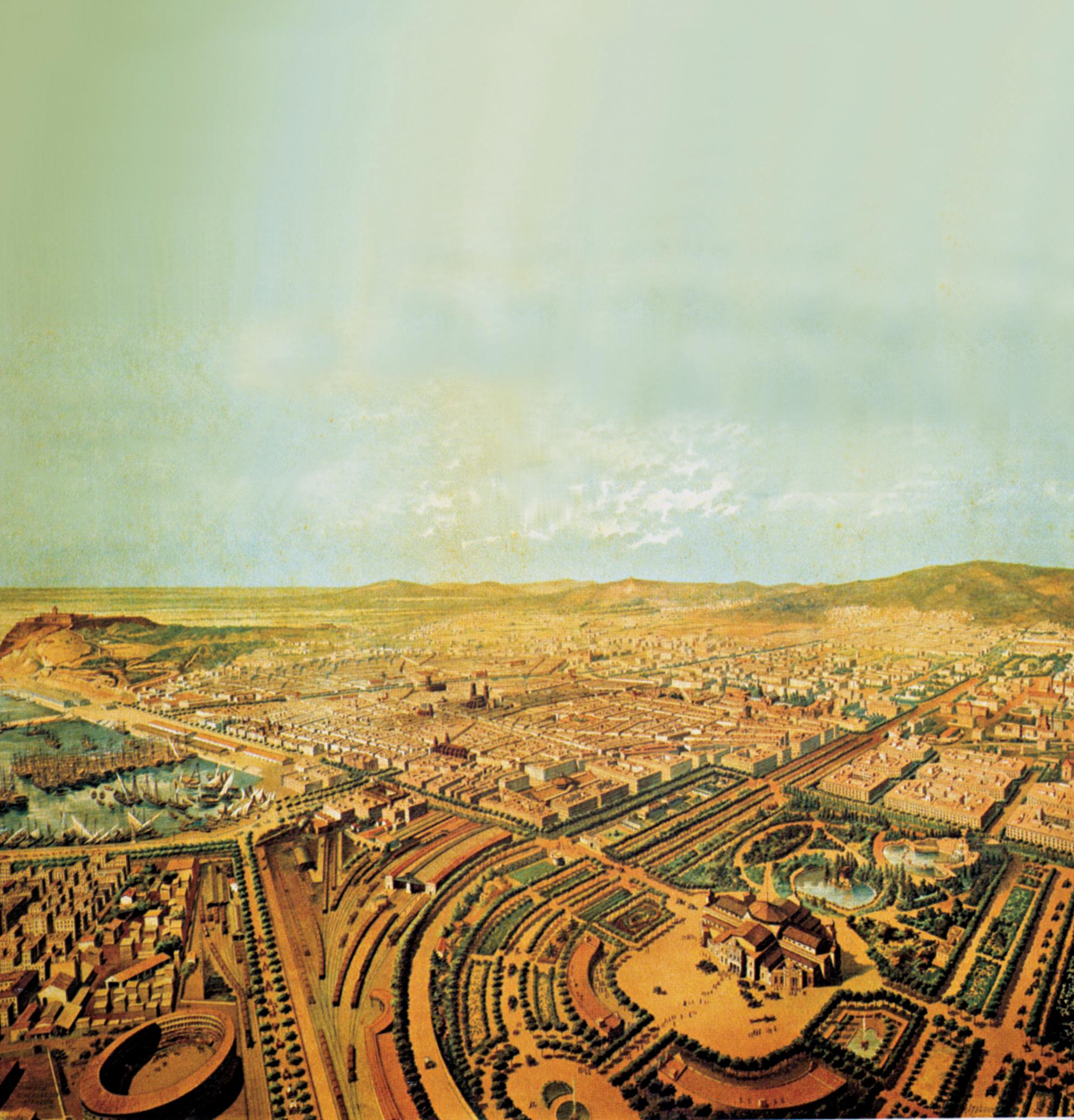
View of Barcelona with the project for Ciutadella Park by Antonio Castelucho, 1882.
The urbanisation process took the form, first of all, of the construction of streets to provide access to the various plots that were gradually built. Landowners who ceded the land on which the street was built did not have to pay the “specific surcharge”, which explains why street construction was not a problematic phase. However, the incorporation of the various services, sewers, mains water and then lighting took place in a step-by-step process.
It was, then, a slow and difficult procedure, that was possible thanks to the existence of unitary infrastructure projects, such as García Faria’s, that allowed phase-by-phase development. Thanks also to the superposition of the private provision of services by sectors, such as drinking water, which in some sectors, between Passeig de Gràcia and Passeig de Sant Joan, was provided by a private company, the Sociedad de Aguas, whose water tower still stands in the courtyard of the street block formed by Llúria, Diputació, Bruc and Consell de Cent.
The coincidence with this long urbanisation process of the city’s great urban planning event, the 1929 Exhibition, served to accelerate work, promoting the continuity of streets and the completion of some of the most representative axes.42
There was, then, a rather slow financing system that could be seen as a consequence of the real-estate economic system underpinned by the casa de renta or apartment house, a residential prototype in the Eixample. This required long-term investment to be able to recover the original capital and produce an income from the rents collected. In many cases, the owner and his family occupied the main floor – like the piano nobile of the big town houses – with a warehouse and business on the ground floor. The upper floors were occupied by different social classes: office workers, functionaries, employees, etc.; the higher the apartment, the lower the rent.
The capitalisation of that investment came around slowly and as a result there was little reinvestment in the Eixample. Urbanisation took place as the proportional part of the UTT gradually accumulated. Both cycles were slow ones and improvements in the streets and the prime properties came about with the use and running of the house and its apartments. In this situation, the relation between the urban agents was complex and lasting, and the New Town Commission, with its mixed public-private profile and its capacity to maintain a strategy and priorities over a long period of time, contributed to its smooth functioning. Nonetheless, this process changed radically when the production of houses turned towards sale and the profit returns cycle accelerated as clients sought to capture their capital gains before the product was sold. From this moment
42 See by way of example: Estudio de orientaciones para el plan de obras que convendría realizar en el ensanche con motivo de la Exposición de Industrias Eléctricas. Ajuntament de Barcelona, 1914.
4.40
The area around the university with Balmes, in the foreground, and Gran Via.
4.41
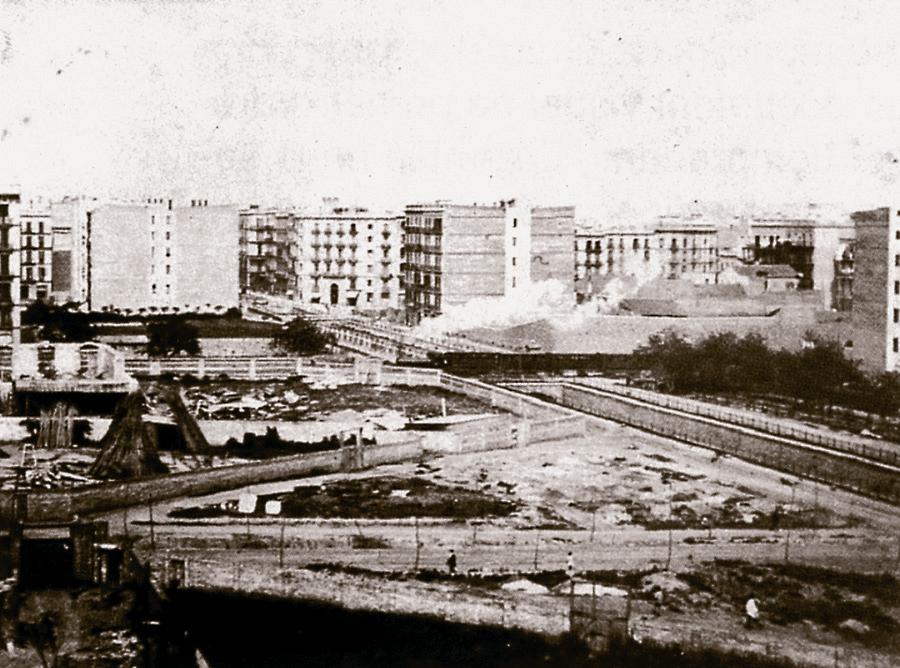
Plaça de Letamendi under construction, 1880.
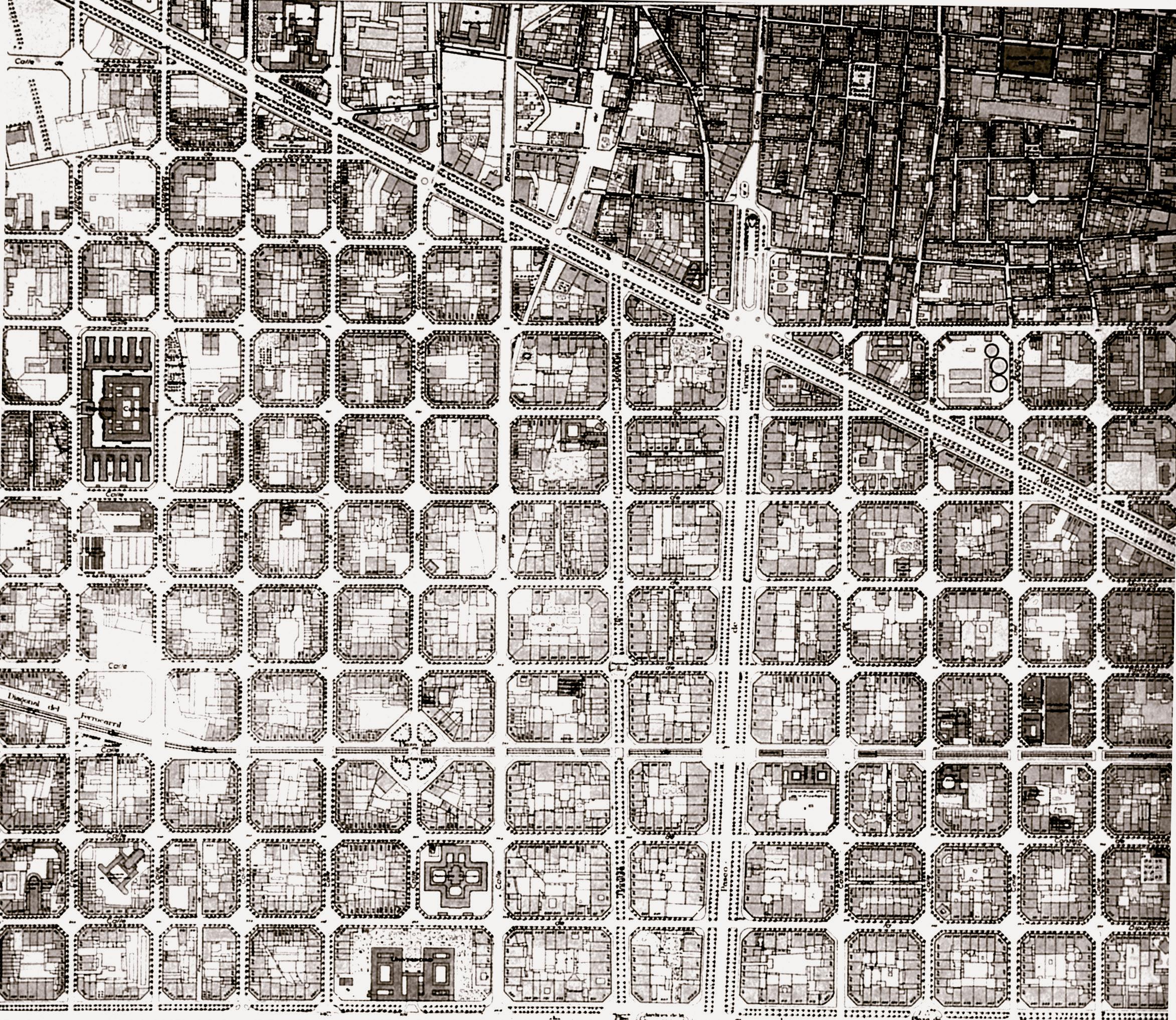
4.42 Plot division of the central sector of the Eixample.
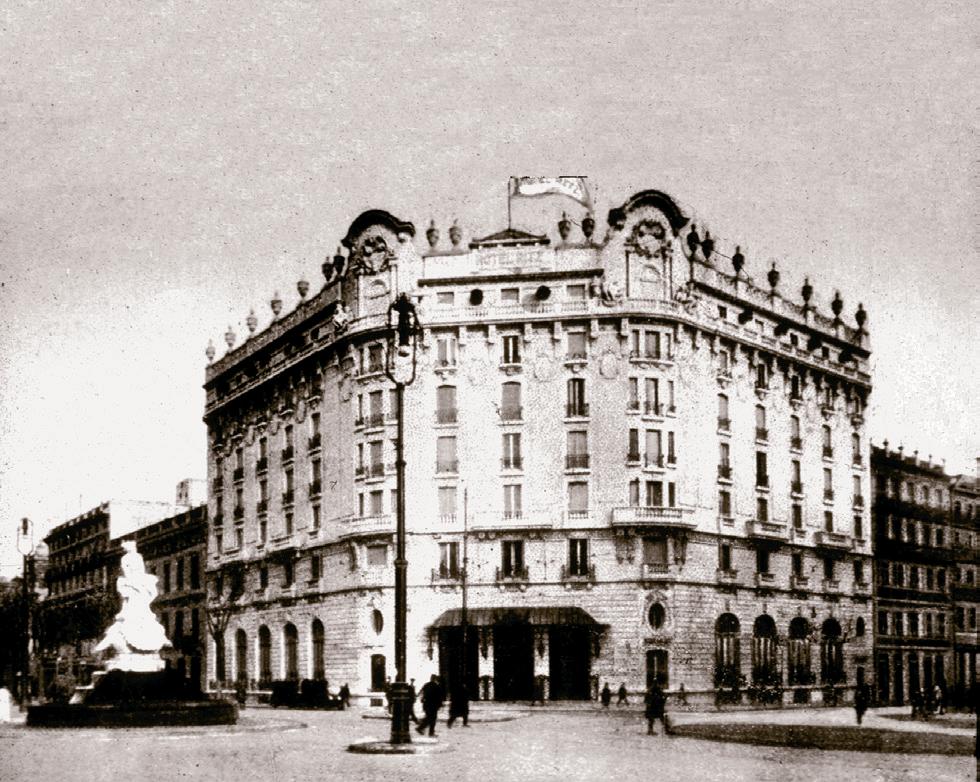
4.43 Hotel Ritz in Gran Via.
4e. The consolidation of the eixample.
4.44
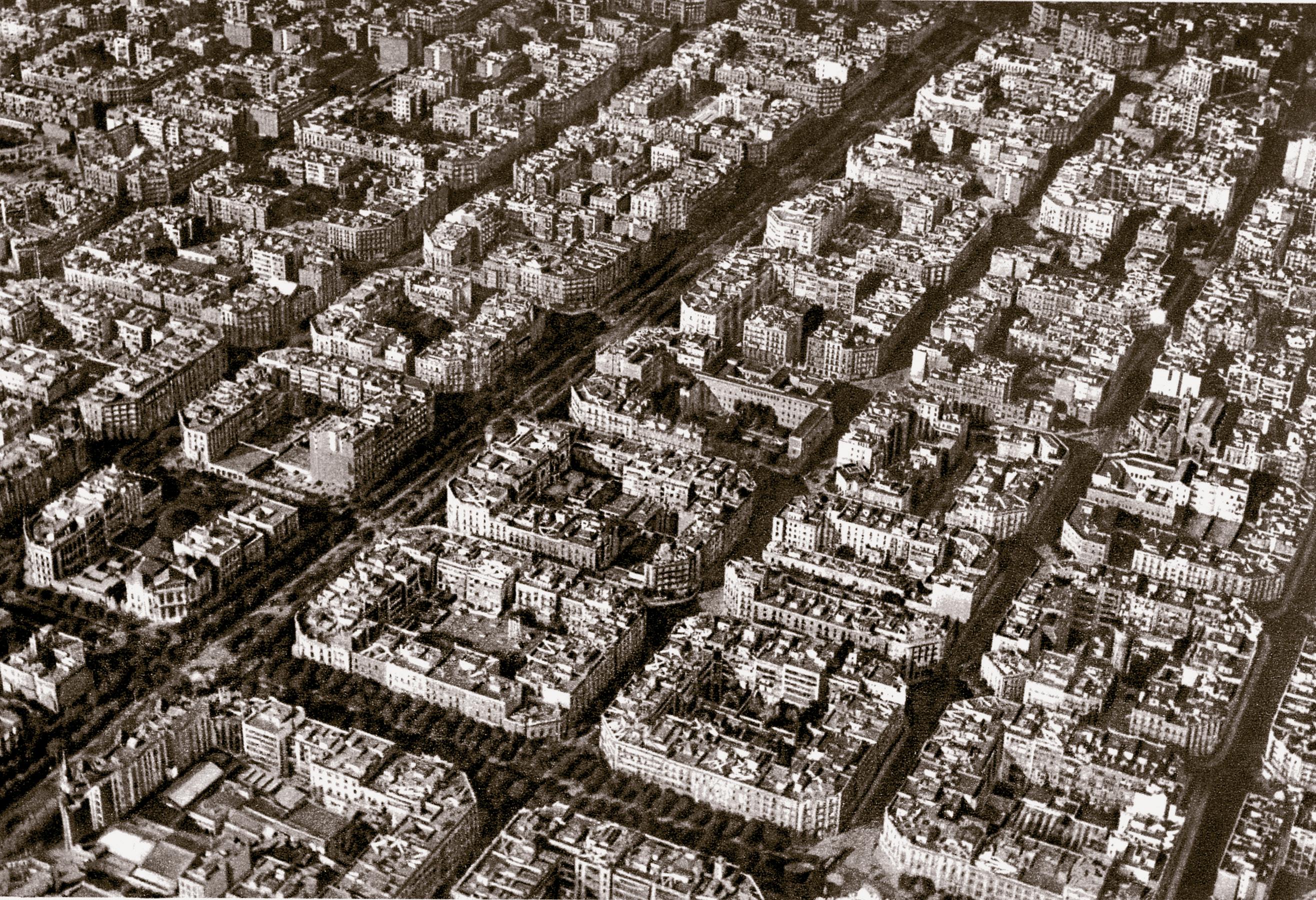
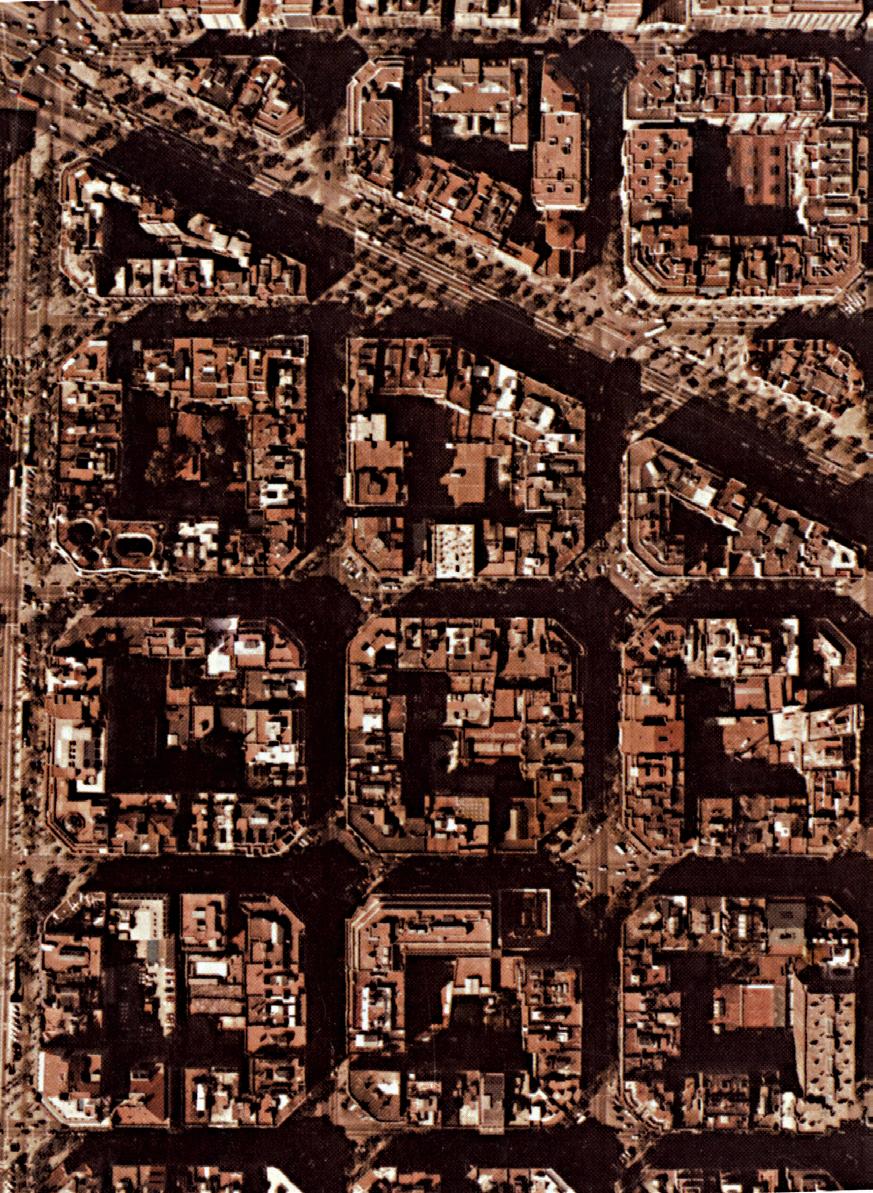
The central Eixample was gradually filled in. Aerial image, 1929.
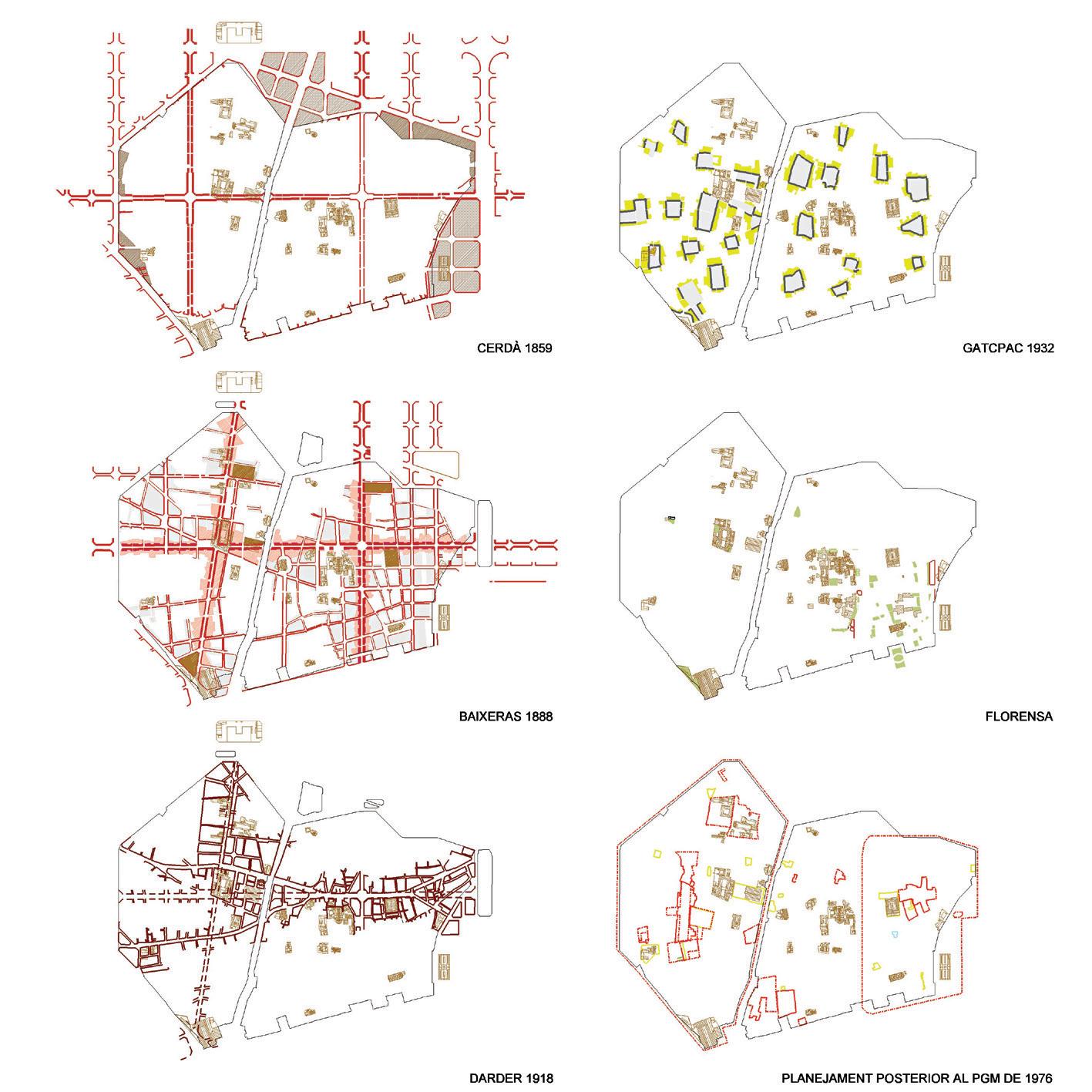
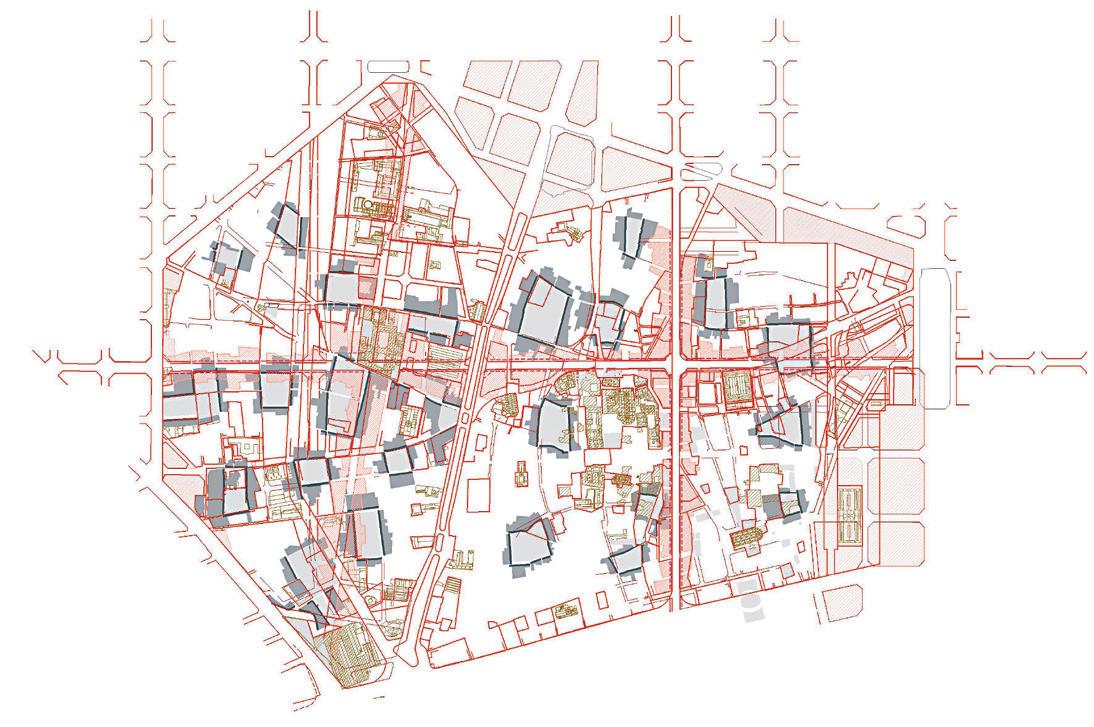
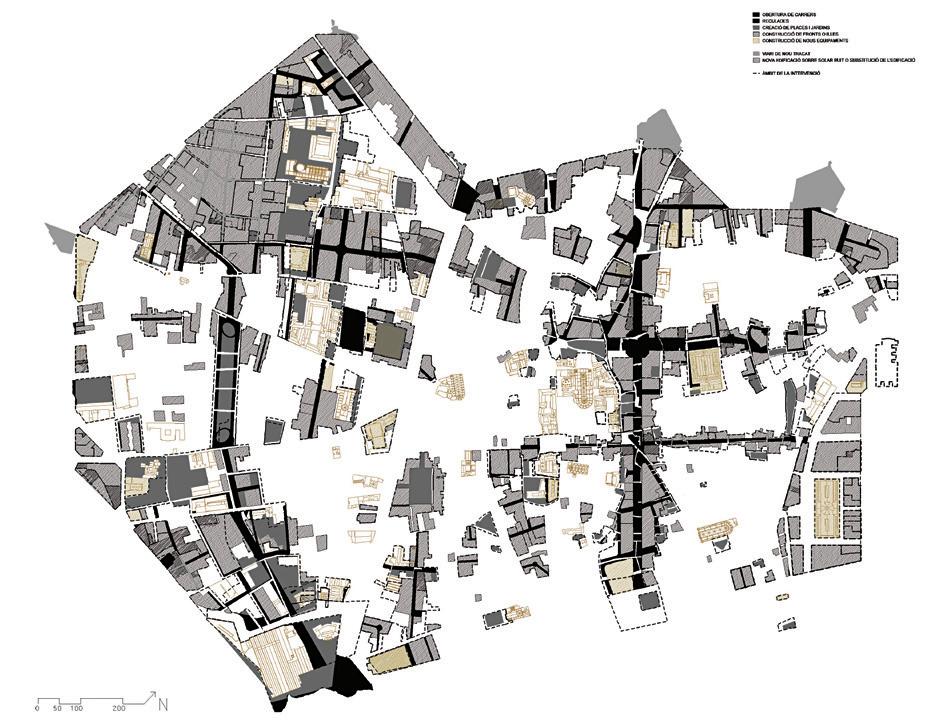
5.c The main plans marking the evolution of ciutat Vella.
5.18, 5.19
Superposition of the various plans.
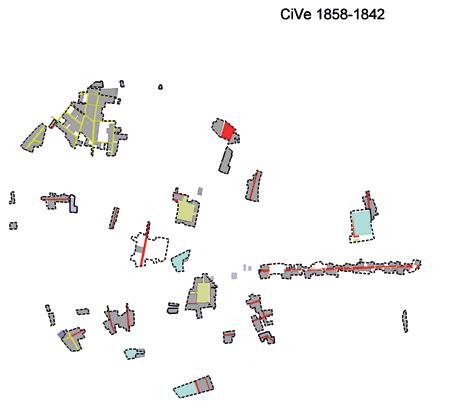
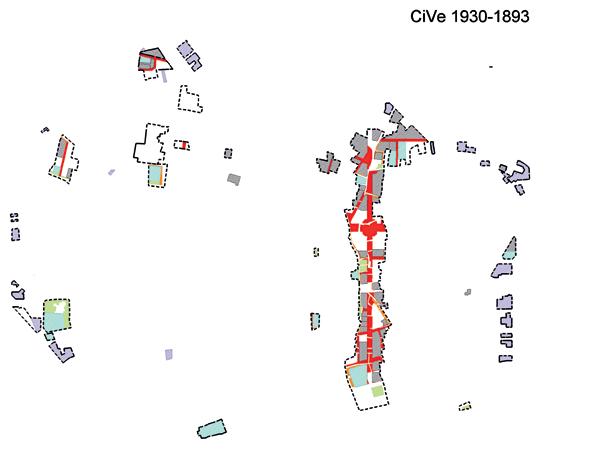
5.20, 5.21
Superposition of the transformations.
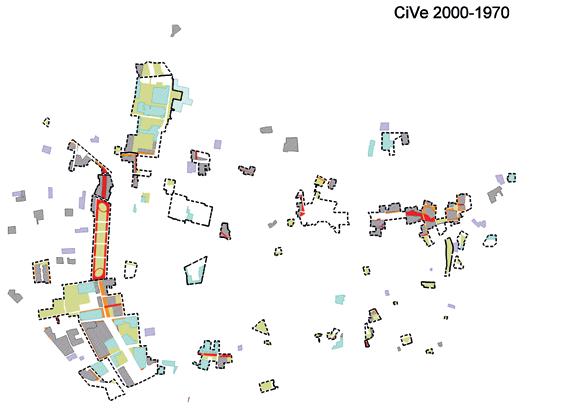
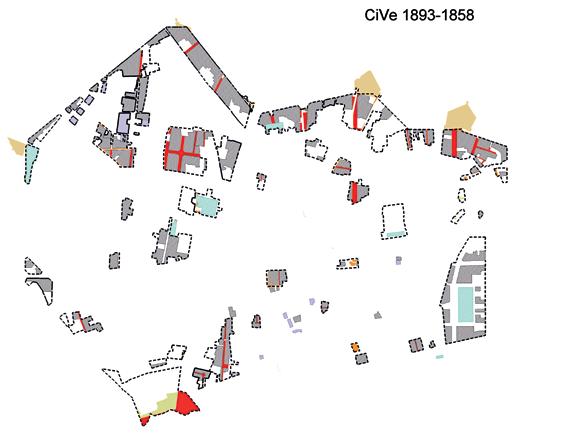
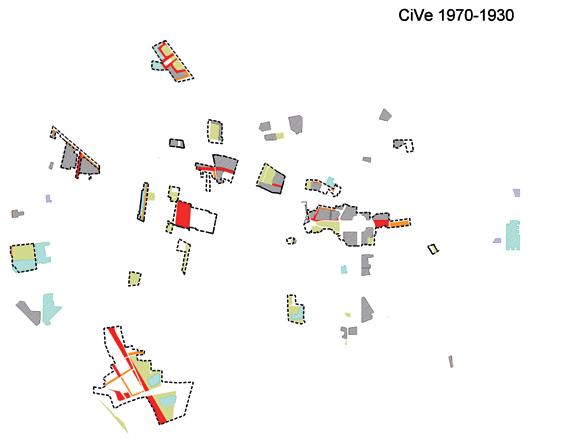
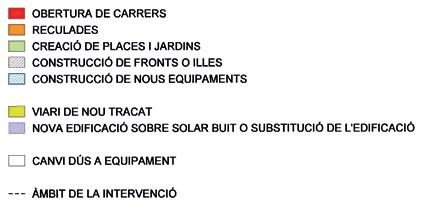
5.d Sequence of transformations to ciutat Vella between 1858 and the year 2000.
It covers 880 hectares – approximately 550 street blocks, and in the order of 125 kilometres of street; roughly speaking, it has a resident population of 350,000 inhabitants and 300,000 jobs. Another indicator of use and activity, as well as structure, is traffic: approximately 600,000 cars per day circulate around the area. This highlights the powerful dimensions of the centre and the strong simultaneous presence of residence and work.42
These magnitudes have different dynamics; whereas the population is falling slightly and ageing, nonresidential activities are flourishing, as traffic has also done to a larger extent. The amount of building housing these activities has also grown, though at a slower rate than residential building. And, very importantly, over the last twenty years, the number of public parking places in the Eixample has grown from 20,000 to 50.000.
Furthermore, the Eixample is a very busy commercial area. The analysis of the census of settlement produces an average of 300 m2 per establishment, taking into account the usual downscaling involved in tax information. This average conceals a very wide range: for example, over 10% of the activities are carried out in premises of over 1,000 m2. On the basis of a sample of 20 street blocks, the average number of commercial premises is 40 establishments per block, varying between 20 and 100. If we compare these two figures, we deduce that in the Eixample there is, on average, 11,500 m2 of business activity per block – that is, almost one and a half floors if we were to locate these businesses around the perimeter of the ground floor, with 75 per cent occupation, leaving the inner courtyard free.
42 Figures taken from the comprehensive study of the evolution and current state of the Eixample, carried out by a team headed by J. Busquets and J. L. Gómez Ordóñez: Estudi de l’Eixample, 2 vols. Ajuntament de Barcelona, 1983. There is a publication that summarises the work “Estudi del Eixample”, Barcelona, 1983, translated into Spanish (MOPU, Madrid, 1984), and a catalogue of an exhibition that travelled to Genoa, Venice, Rome, Lisbon, Oporto, London, Bordeaux and Hamburg (with translations from the same time, 1985-86).
7.56
Image of the central Eixample from the poster for the 1993 exhibition to launch its recovery.
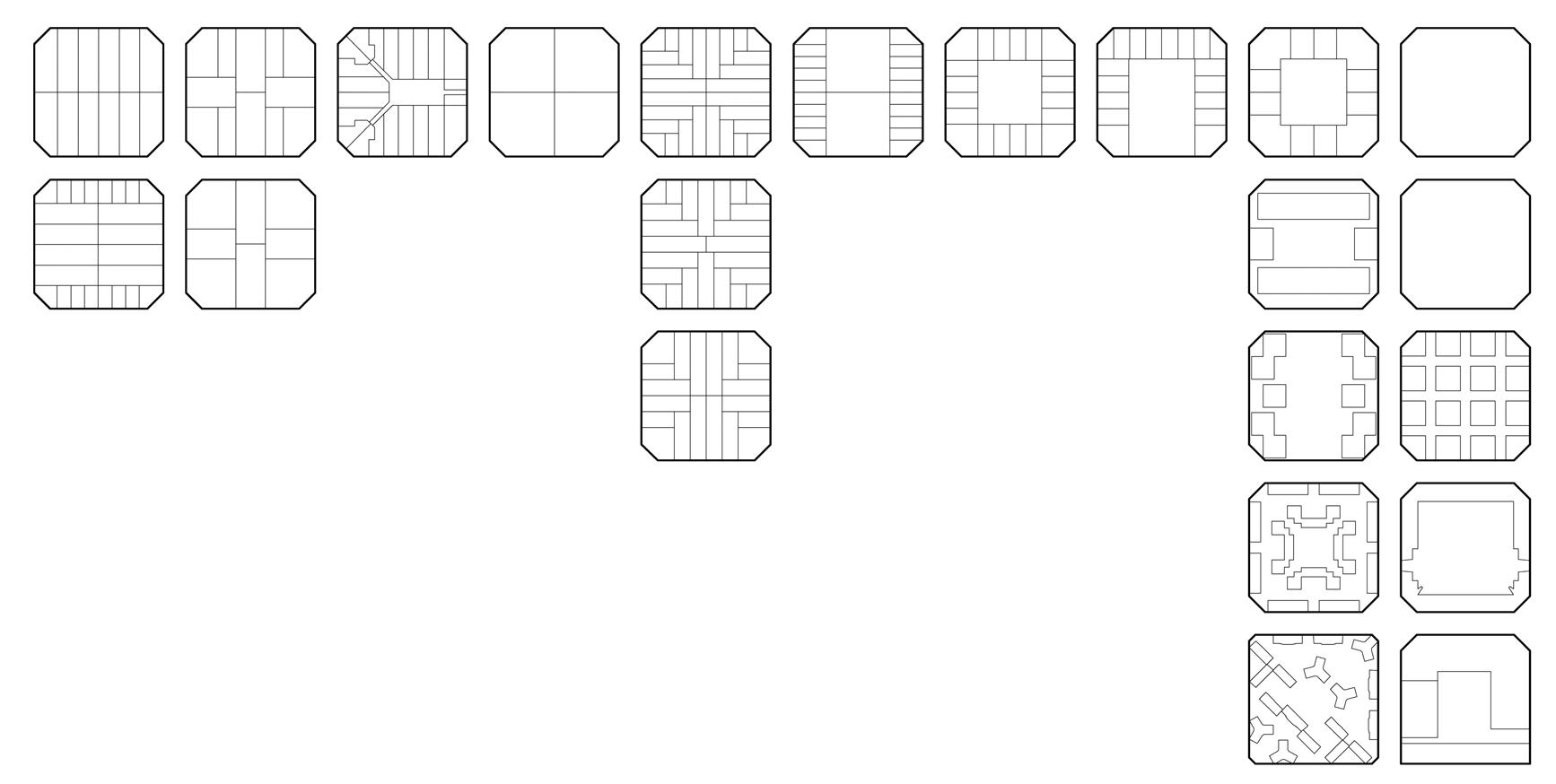
7.57
Drawing of the types of street block and their plot morphology.
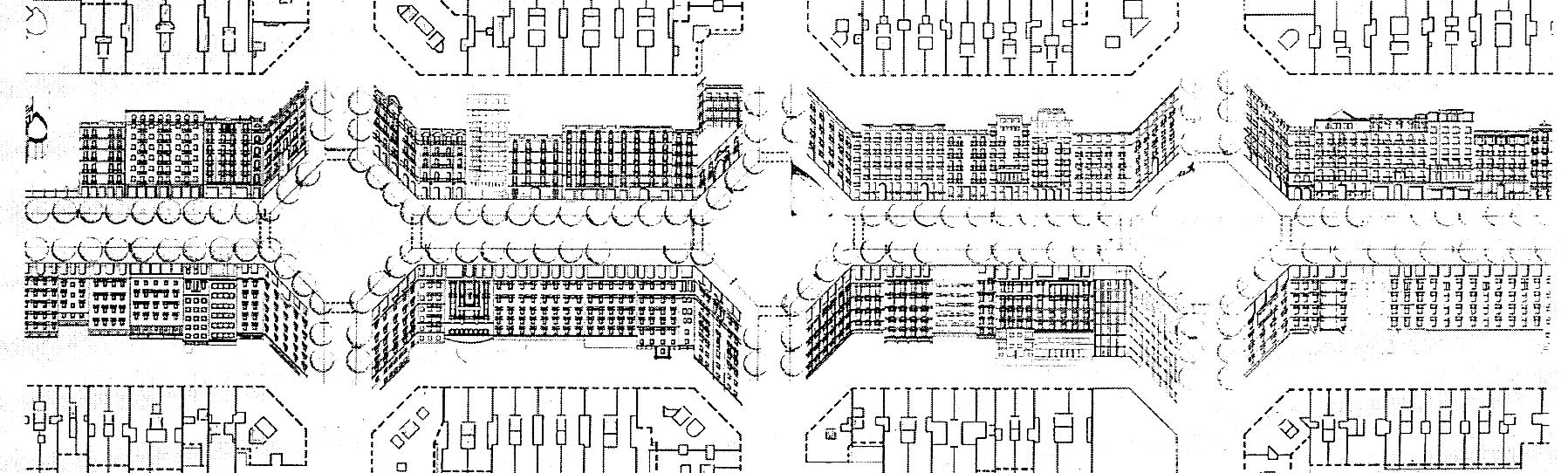
7.58
Geometric composition of the façades.
7.59
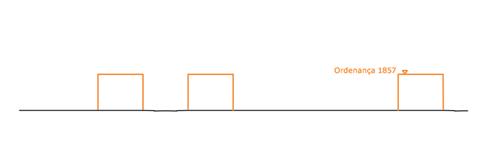
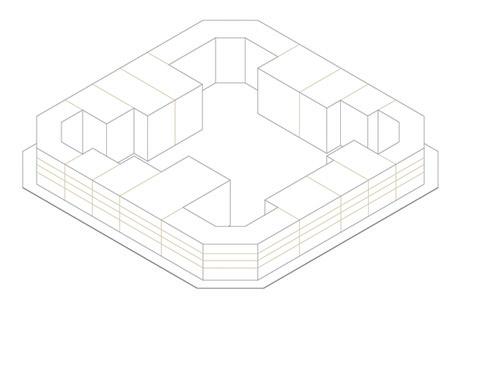
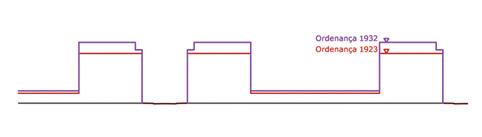
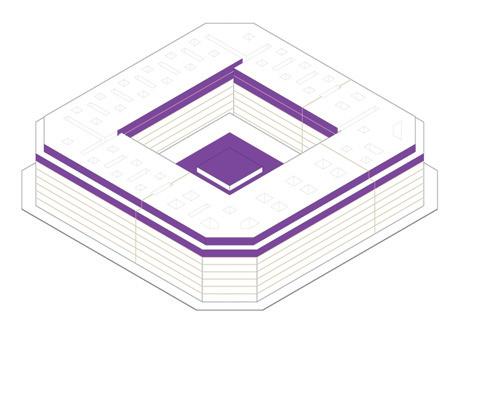
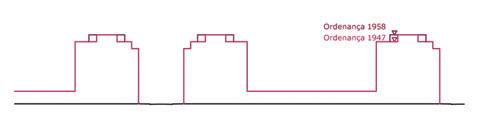
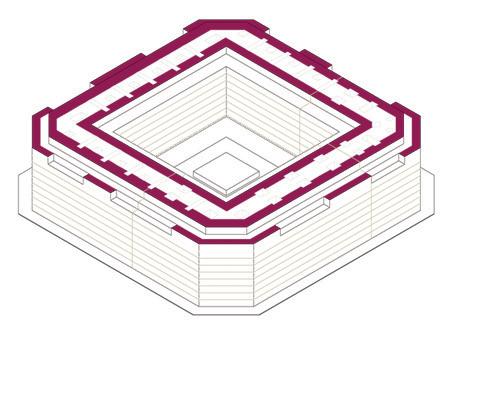
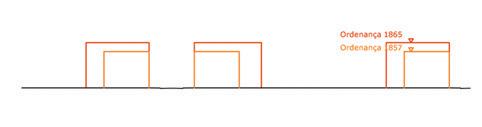
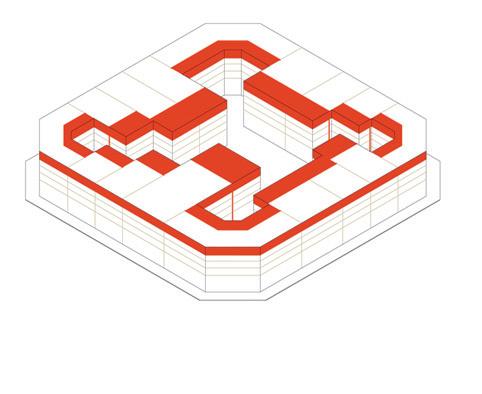
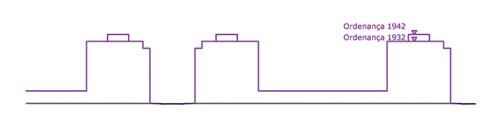
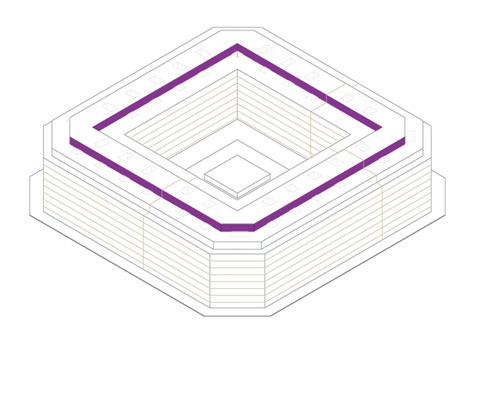
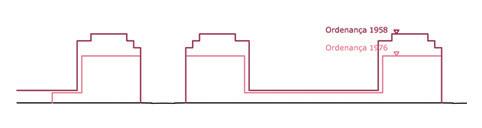
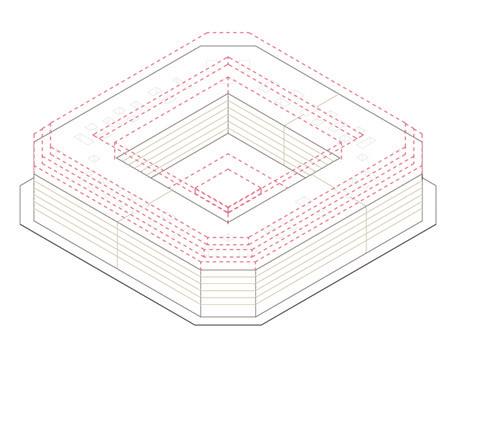
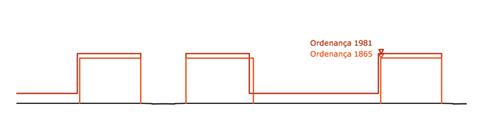
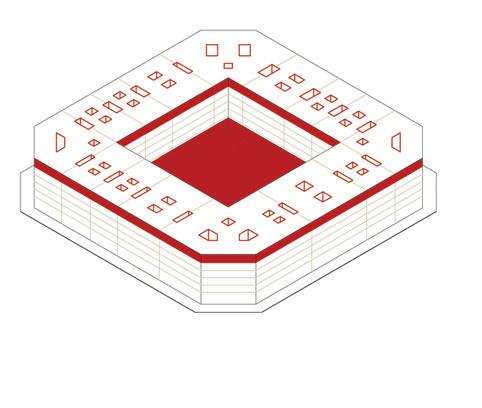
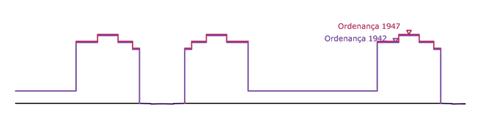
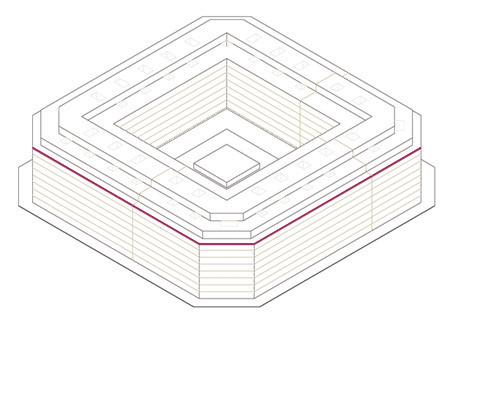
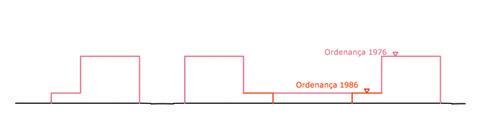
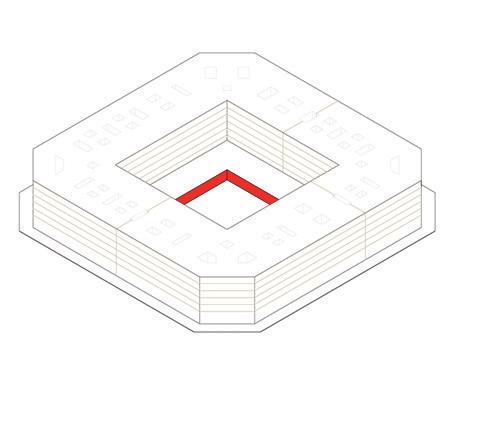
Evolution of Eixample building ordinances. Speculative densification increased building levels and promoted excessive transformation.
7.f Infilling and densification of the eixample.
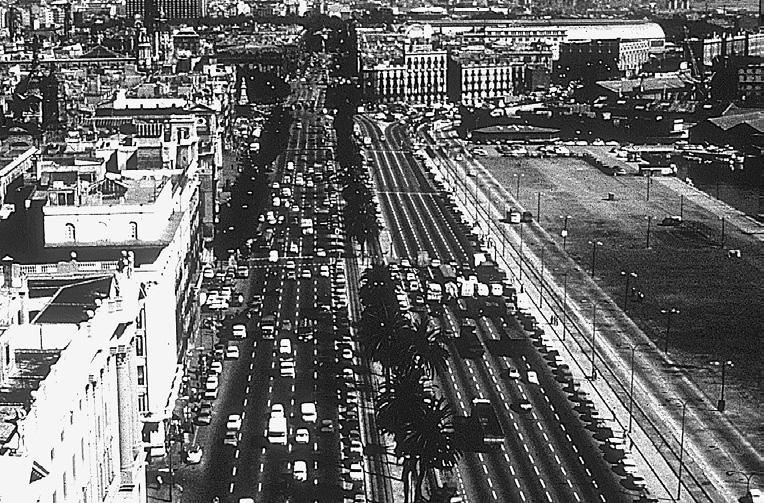
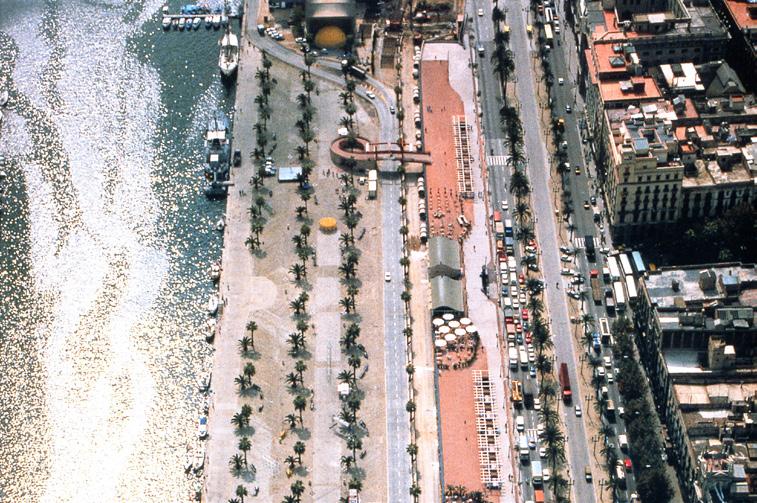
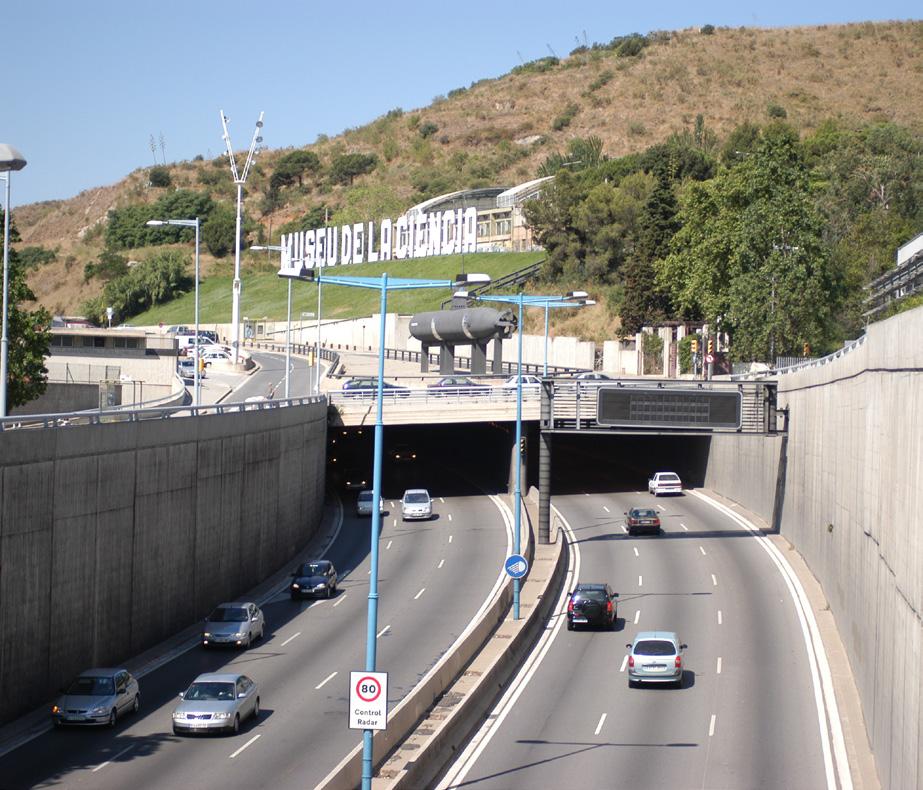
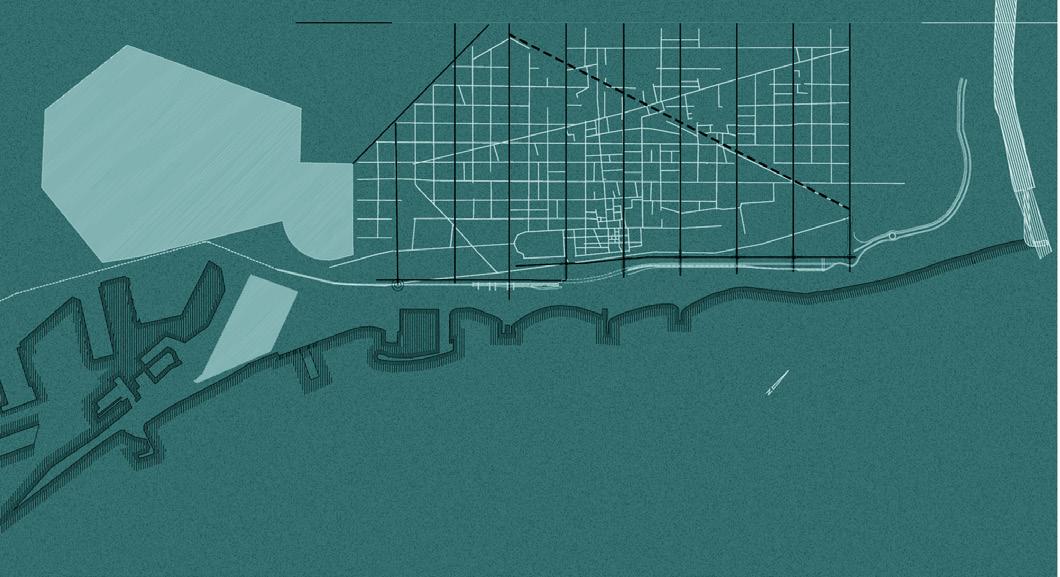
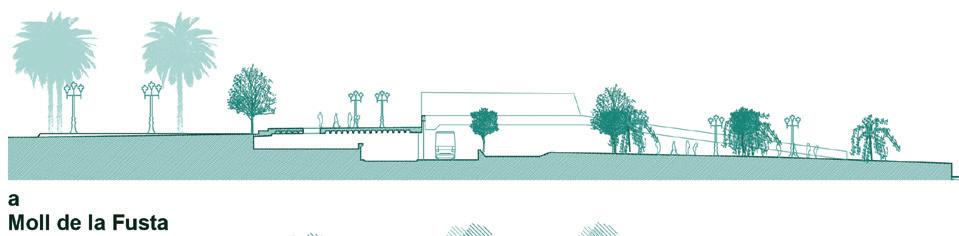
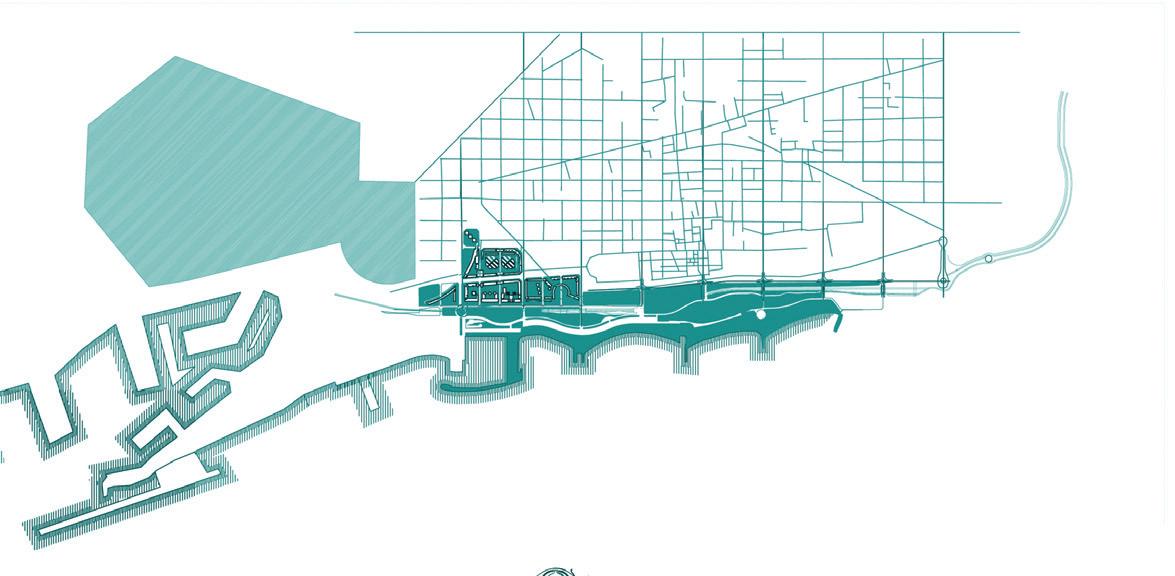
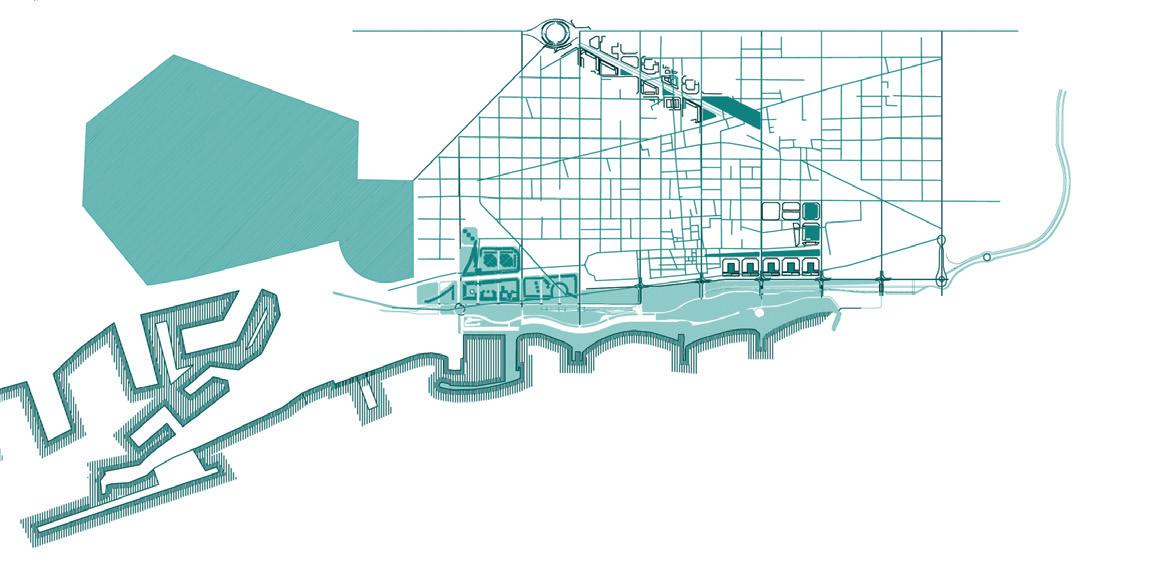
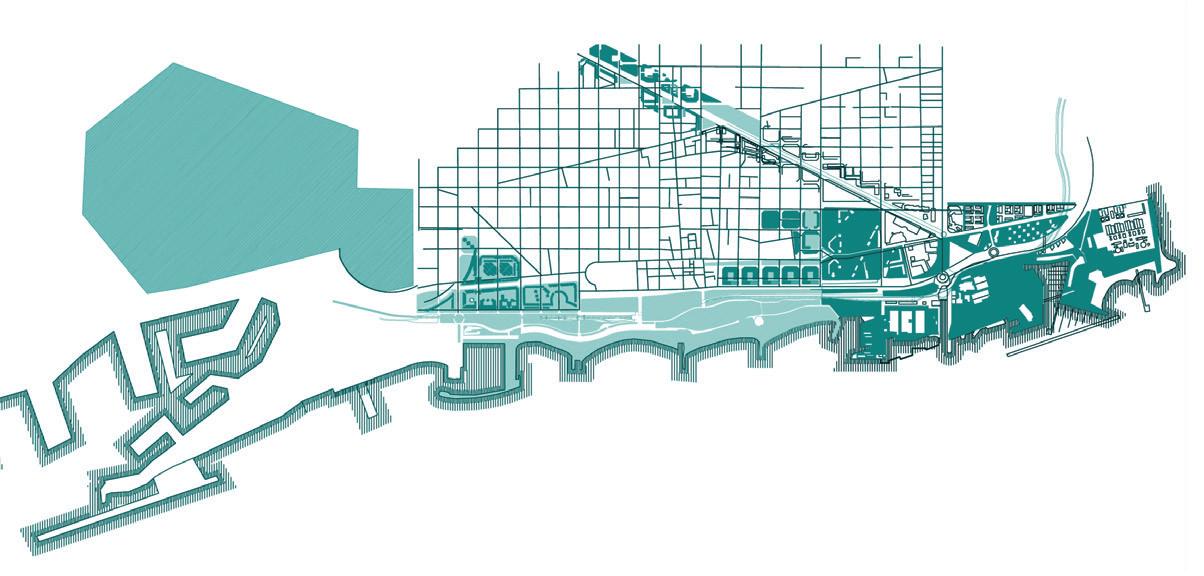
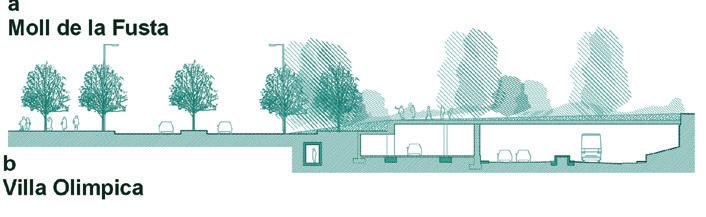
9.i The ronda ring road strategy. Moll de la Fusta wharf.
9.64, 9.65, 9.66
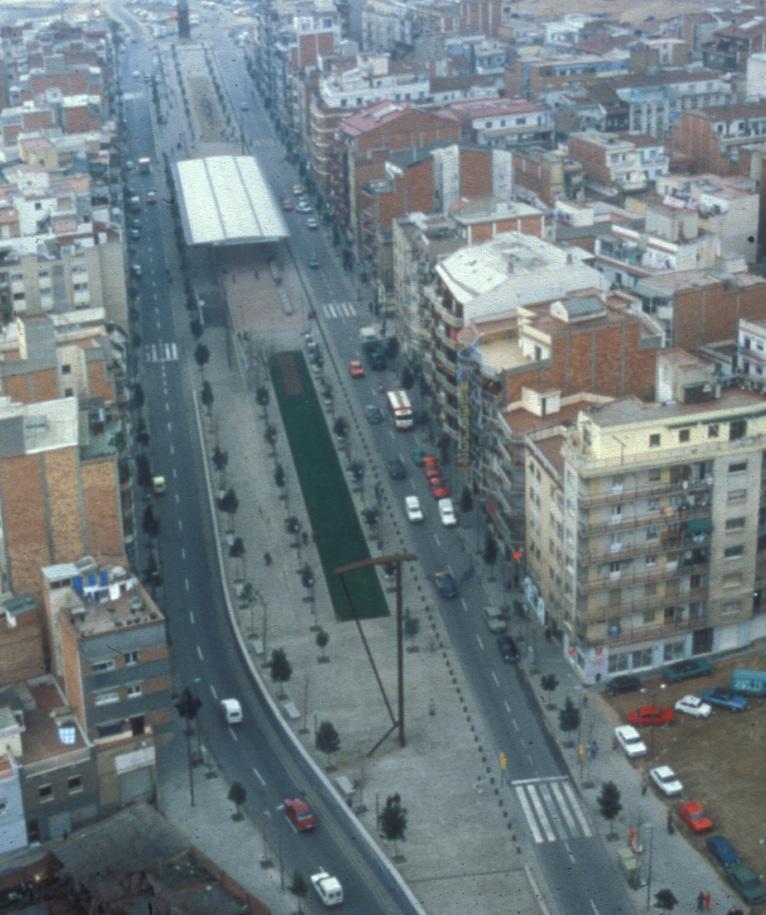
Moll de la Fusta, a complex solution that combines through and urban traffic, covering half the road to generate an axis that connects different urban sectors.
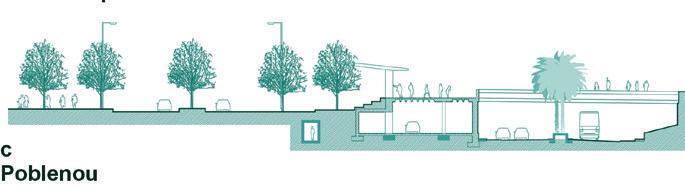
9.67, 9.68, 9.69, 9.70
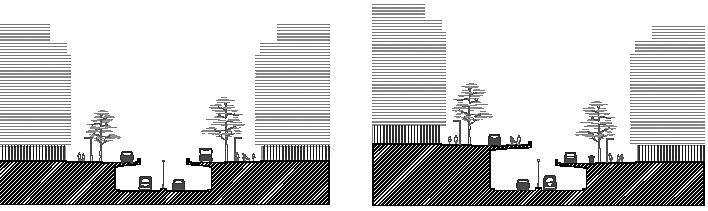
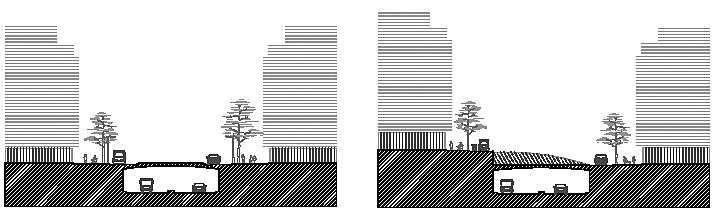
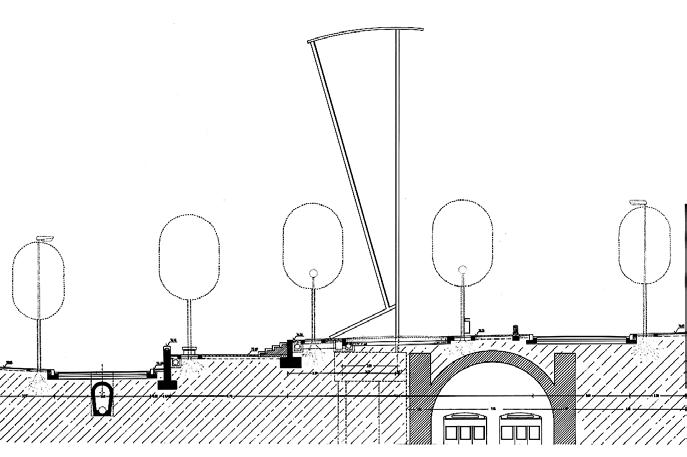
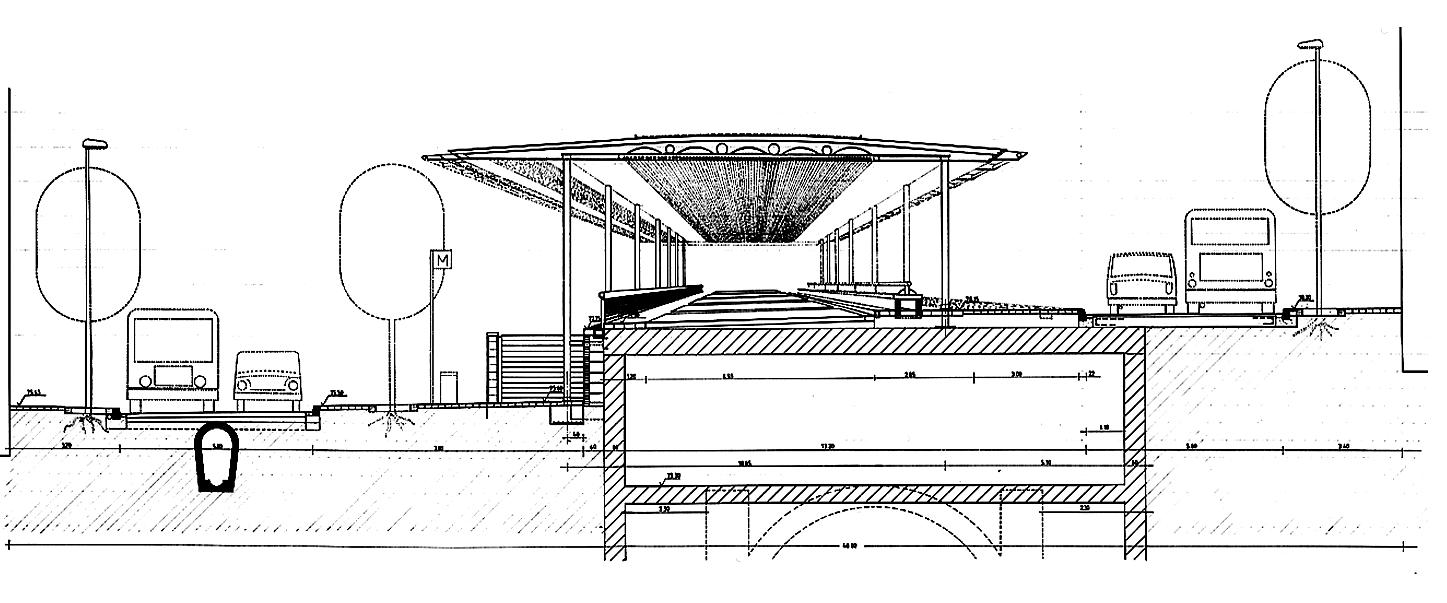
Sections of the Ronda ring roads showing the different levels to conserve urban connectivity.
9.71, 9.72, 9.73, 9.74
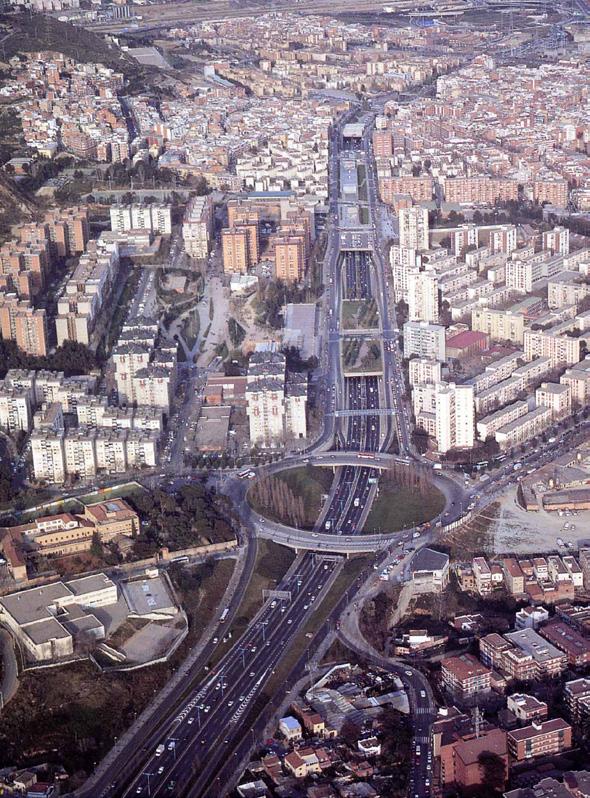
Restructuring of Via Júlia in Nou Barris, the development of a space with difficult relief.
An intervention of this scope obviously had to be addressed in phases. The completion of each project or sector involved highly precise data in its executive definition.
This process also had to envisage two typical project situations, however:
a) The “active” project, that in itself lays out a “rule of urbanisation”. The project provides the basis for future building and the cadence of spaces and activities.
Barcelona is a city with a history that includes excellent examples of “active” street projects, such as the main streets in the Eixample: Gran Via and Diagonal are excellent examples of streets that colonise and arrange the adjacent territory. This stance is more difficult in recent projects, since it is so frequently a question of urbanisation a posteriori .
10.g The Diagonal reaches the sea and embraces the river Besòs. Forum 2004.
10.57, 10.58
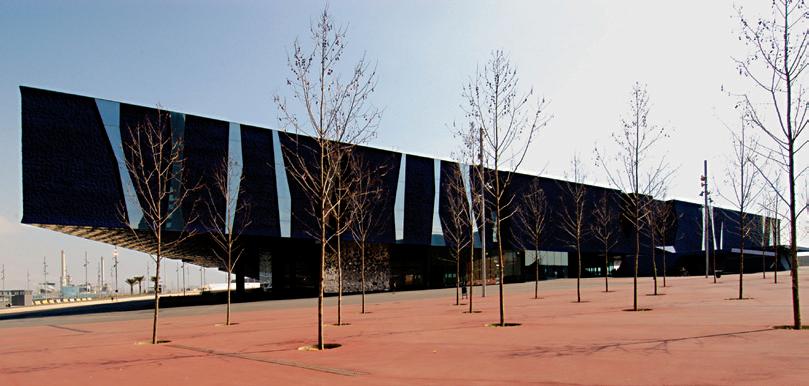
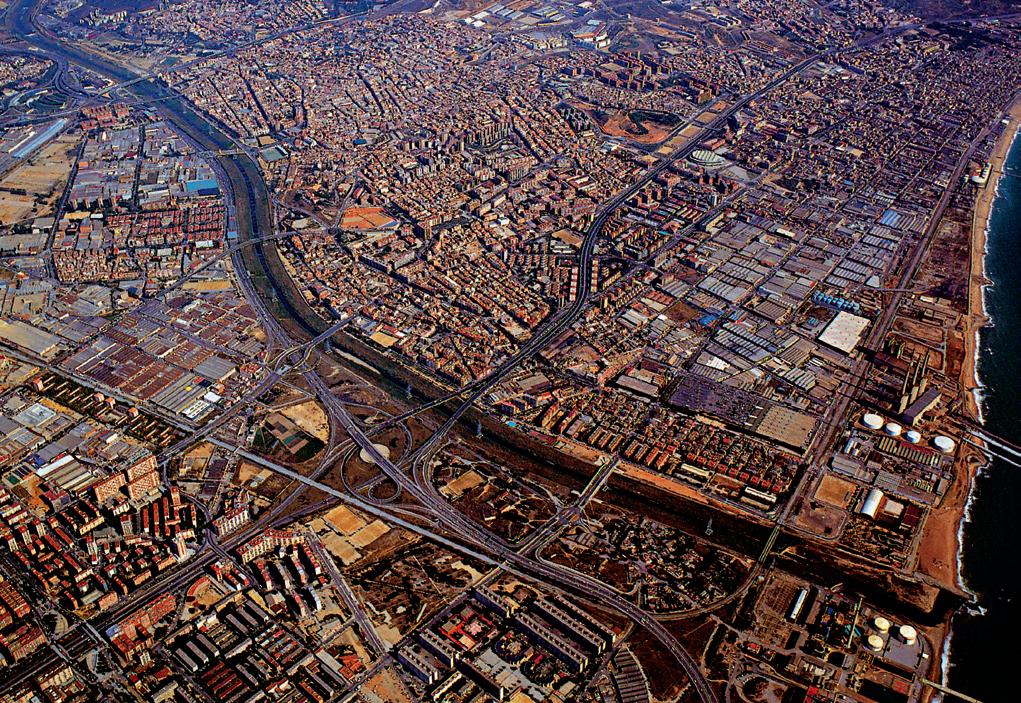
Forum building and aerial view of the mouth of the river Besòs.
10.59
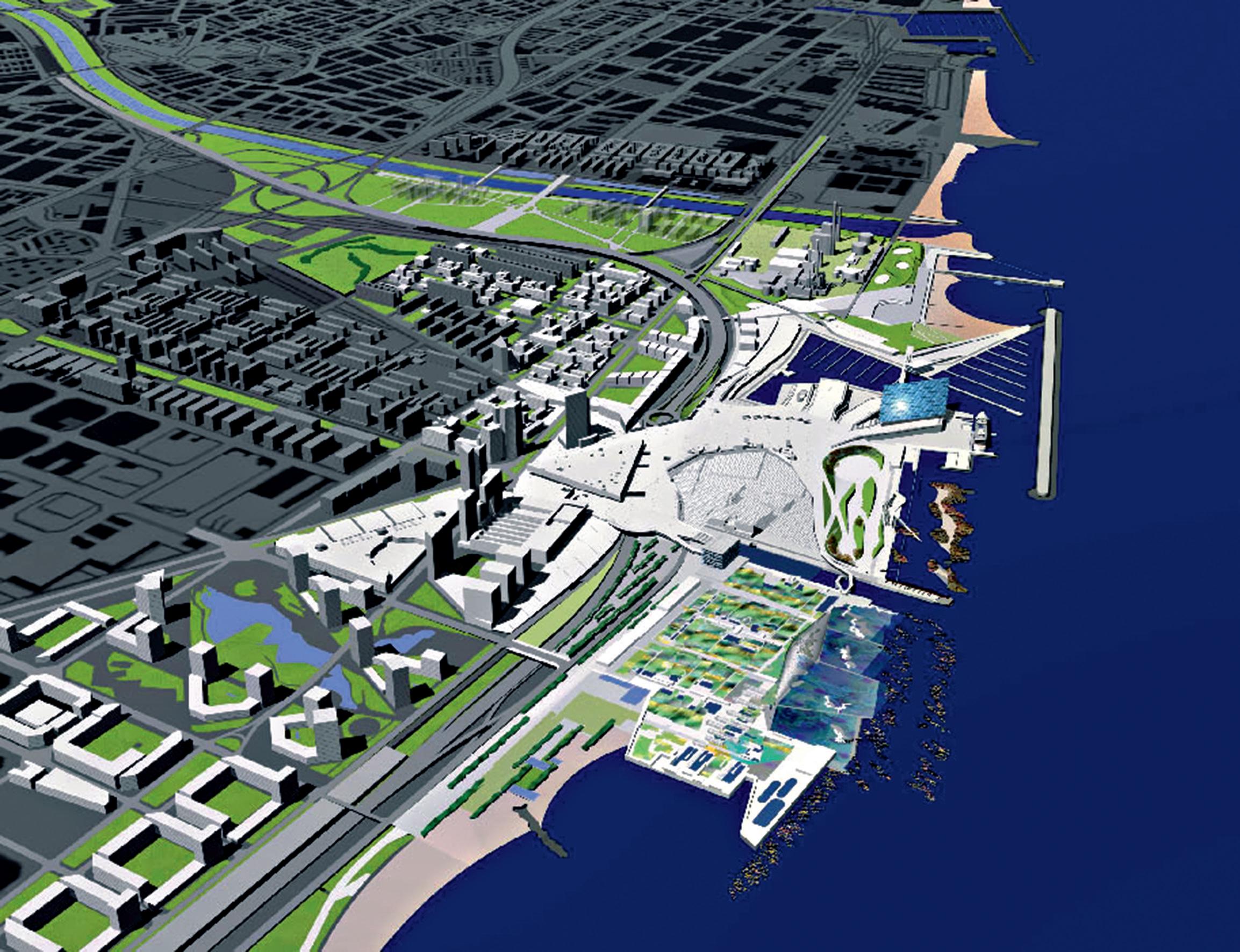
Project for Forum 2004. Developed at the turn of the century.
X.4 Big cities in europe
On the new map of Europe, the creation of a large market place led to high-level competition between cities. Specifically, big cities with their hinterlands and regions were offering unwonted competition. This new movement has been compared with the situation in the Renaissance period, leading cities to represent the production, trade and culture of vast territories.28
In this new definition of space, both the Barcelona and the Catalan political authorities set out to strengthen their positions in the European market.29 Barcelona became central on the European map; from being a city on the outskirts of Spain, it became the Pyrenean gateway to Europe, as well as a natural port linking Europe with the Mediterranean and further afield. This vocation had already been prefigured by the motorway layout, but in the new political and administrative organisation, it came into its own.
The result was a completely new situation. Even the European Union, with its policies for sectors such as industry, farming and major infrastructures had no specific policy for big cities to balance out the processes of urban transformation that were taking place.
It became increasingly necessary in view of cities’ major economic and social role to consider them as specific, active subjects of the general policies of the EU, which could therefore cease to be the passive objects receiving the direct consequences of other sectorial policies that almost never took into account the urban impact that they produced.
This situation was reminiscent of the urban difficulties caused by a certain type of industrial or farming restructuring policies, which in most cases were “helped out” by policies of aids – for unemployment, for example, or new industrial investment – though never associated with the type of city or the specific problem of a given urban system.
28 Ch. Jensen-Butler et al.: European Cities in Competition. Aldershot, 1997.
29 From the viewpoint of the city, Barcelona is forming a lobby with the group of nearest, most important cities (Saragossa, Valencia, Palma de Mallorca, Montpelier and Toulouse) to define a more solid, complementary bid. It also promotes the Eurocities platform, including cities such as Rotterdam, Lyon and Munich which, despite not being formal capitals, have economic and urban planning dynamics that set them apart as main movers on the new European stage. The Generalitat Catalan regional government also promotes close relations between Catalonia and three European regions (Lombardy, Rhône-Alpes and Baden-Württemberg), called Four Motors in Europe, with a view to gaining credibility in the European market.
d) The compact city and its evolution. The southern European city model has been defined as that of the compact city, which has great advantages in terms of historical evolution and environmental sustainability.70 However, it is essential to discuss the evolutionary models of the compact city, avoiding making direct associations between compactness and systematic densification, between compactness and territorial continuity, etc. A fresh conceptualization of new urban planning problems is therefore needed to allow the development of references or models that, after extensive discussion, can guide development in the mid-term.71
e) The redefinition of relations between urban planning and intervention. The Barcelona tradition in the modern era presents us with a sequence of plans or projects at the general scale every 20-25 years. Their capacity for resolution has varied greatly according to the political framework of the time, but they still offer moments of reflection on the city and successively introduce new urban topics of great interest.
The city maintains and increases its status as a truly complex organism in its definition and administration: urban planning expands its fields; the actual management of the urban event increases its importance. A reformulation of the concept and content of intervention plans and projects must be carried out. It does not seem certain that the project will override the plan and become a ubiquitous method. It is, however, clear that the content of the project—that is, its forward-looking approach—must feed all levels of urban planning formulation to prevent them from becoming mere bureaucratic procedures.72
f) The Catalan urban architect in the world. We can understand that the stellar moment of the postOlympic period gave Catalan architecture a label of uniqueness and maturity that is appreciated everywhere.
70 See, for example, Mike Jenks et al., The Compact City. A Sustainable Urban Form? (Oxford, 1996); Katie Williams et al., Achieving Sustainable Urban Form (London, 2000), and Hildebrand Frey, Designing the City (London, 1999). Among the extensive recently published literature to support the necessary sustainability of actions in the territory, see, for the Barcelona region, the complete Atles ambiental de l’Àrea de Barcelona by J. A. Acebillo and R. Folch (Barcelona: Ariel Ciencia, 2000). In a wider context, see: Herbert Girardet, New Directions for Sustainable Urban Living (London, 1992) and Creating Sustainable Cities (Bristol, 1999); Andrew Scott et al., Dimensions of Sustainability (London, 1998), and Joe Ravetz, City Region 2020: Integrated Planning for a Sustainable Environment (London, 2000).
71 Richard Rogers et al., Towards an Urban Renaissance. Final Report of the Urban Task Force (London, 1999). Series of works to restructure the United Kingdom in terms of urban planning, taking into account some criteria already essayed in Barcelona that seek, above all, a structural interpretation of new urban phenomena.
72 See, for reference, my work: Busquets, J. (2000): “Urbanism at the Turn of the Century”, at the Fifth Van Esteeren Lecture (Amsterdam: Bn/SP). The strong field of action of the urban planning project is seen in most European cities. It is therefore essential to attempt to understand how, using practices in Barcelona but also in other Spanish and Western cities, the research and methodological definition of the disciplinary field of urban planning can be rearmed as it celebrates a century of social and administrative recognition. Otherwise, we are destined to reproduce the critical situation of our cities and territories. There is also an updated summary in Busquets, J. (2018): “Barcelona: Transforming the Compact City”. Architecture and Nature.
10.91
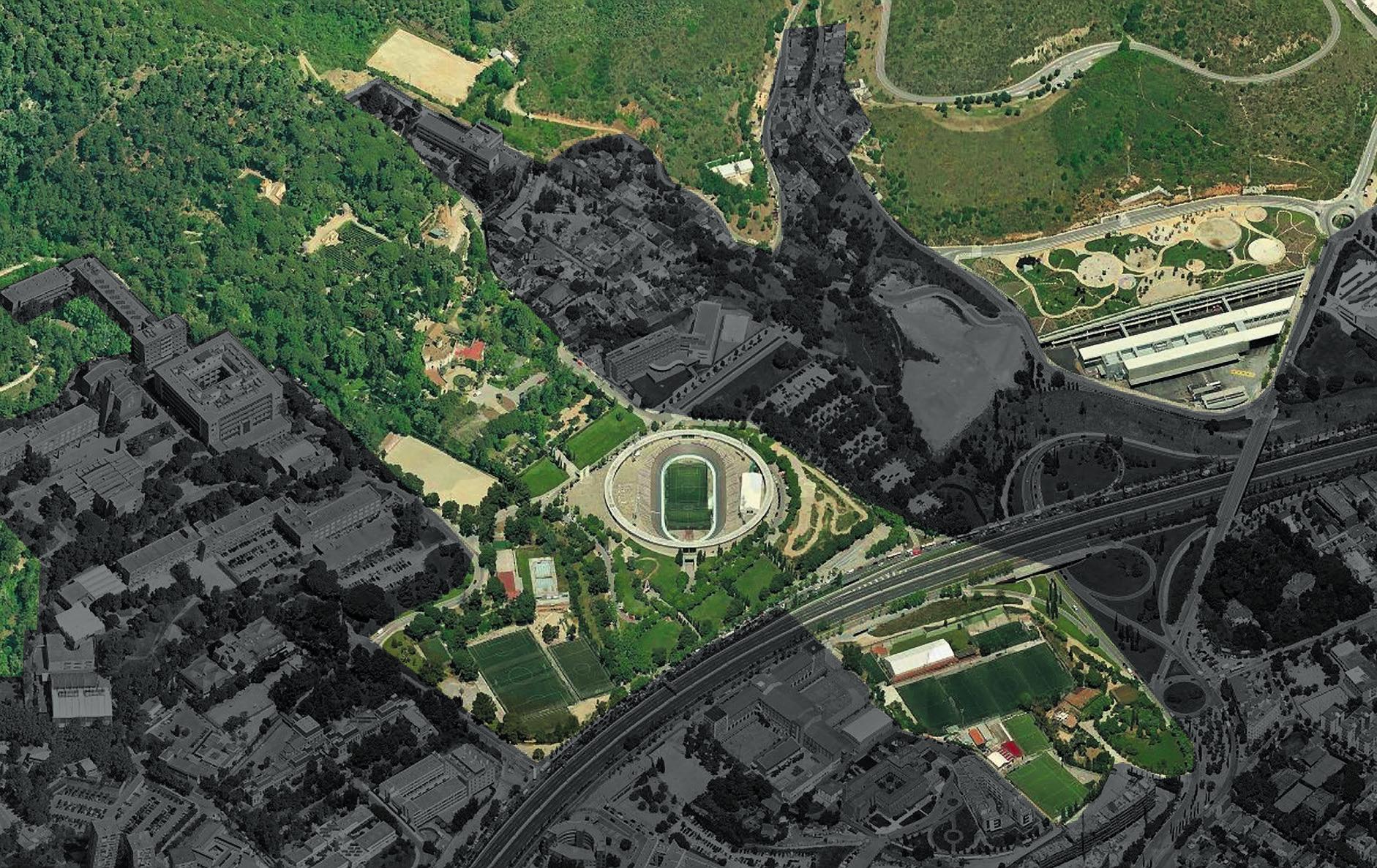
At the foot of Collserola, natural systems penetrate the urban space.
10.92
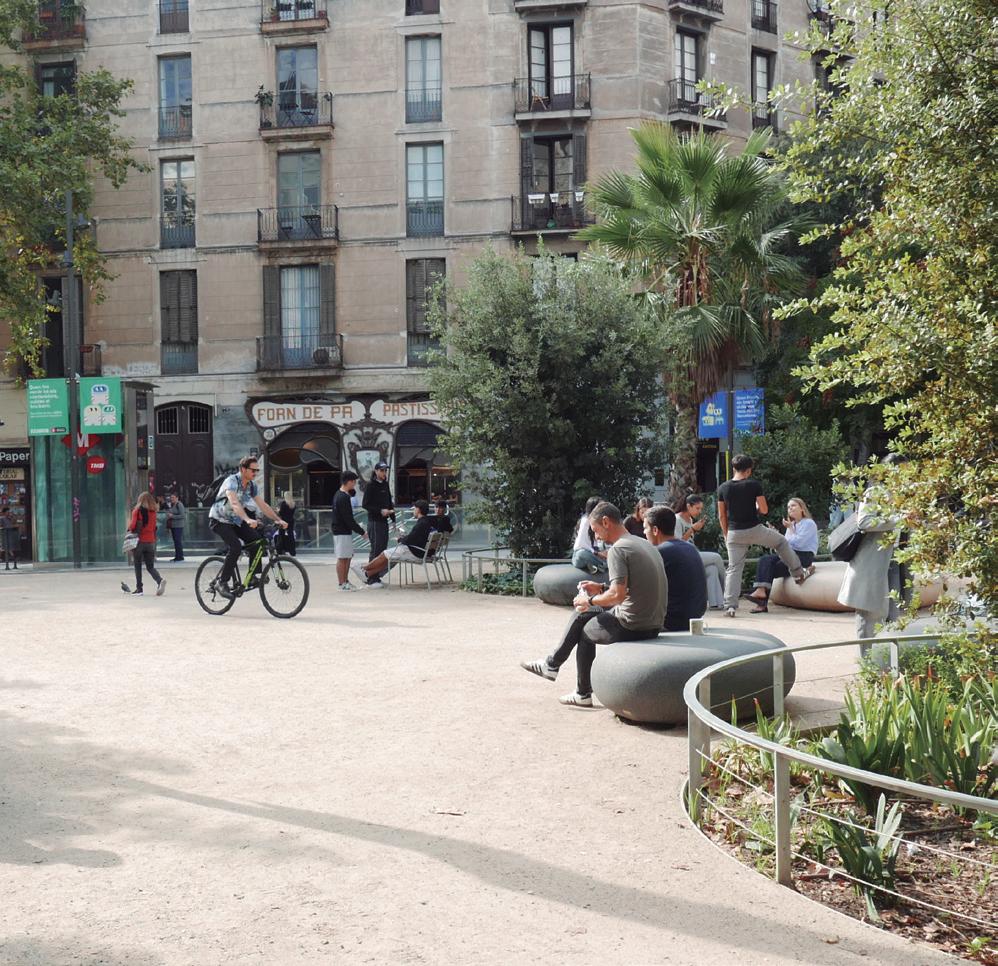
Reducing the protagonism of the car by developing green axes in central areas and improving public transport and soft modes of mobility.
of Consell de Cent after redevelopment.
10.93
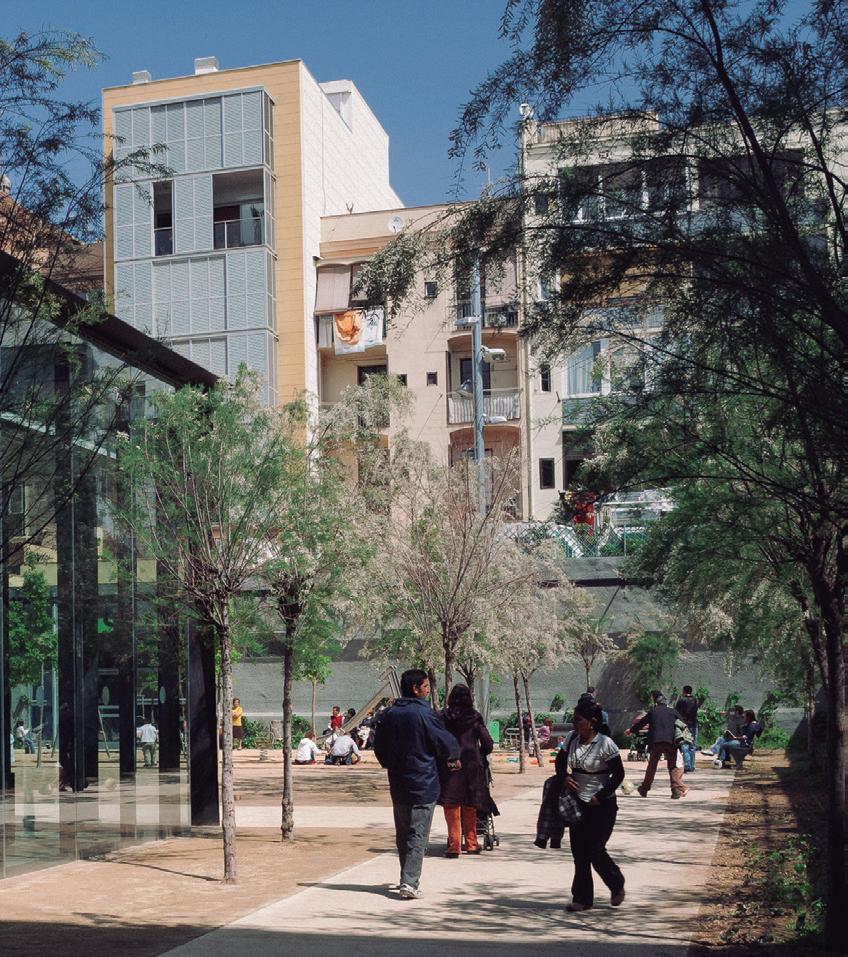
Also by creating open courtyards in the Cerdà blocks. Courtyard of Sant Antoni-Joan Oliver Library, by RCR.
10.l The main goal to qualify the metropolitan city is merging green and urban spaces.
Photo
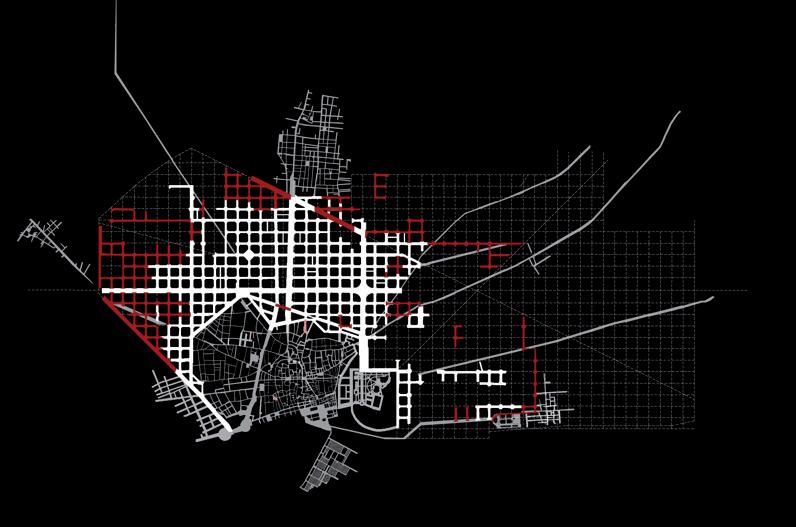
11.03. Sequence of growth of the Eixample project to the consolidation of its layout, 2009.
11.09
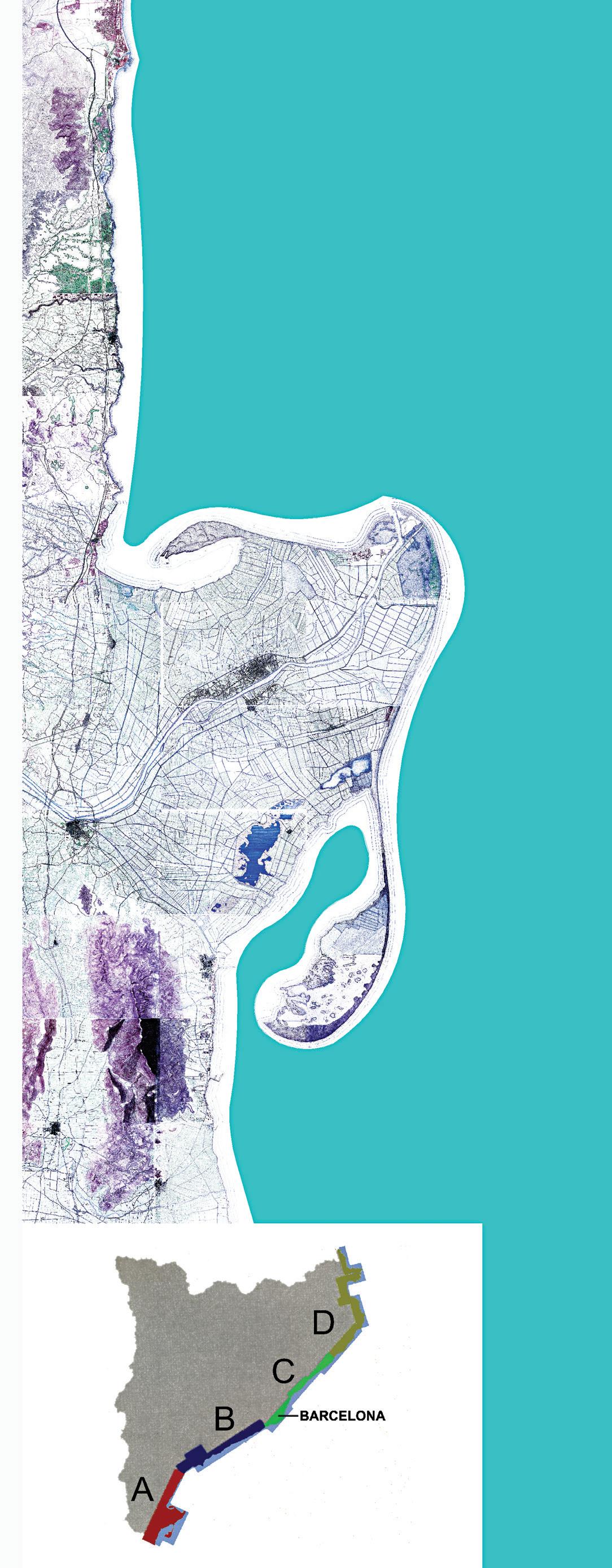
The Catalan coastline. Illustration of urban and territorial systems, 1995.