

Contributors
Sophie Quick
Joanna Cullen
Dr Hedieh Hatami
Kim Howells
Dr Areti (Ari) Metuamate
Margie Welsford
Associate Professor Jessa Rogers
Wilma Kurvink
James Kelly
Adam Higginson
Gareth Crowe
Elise Fagone
Robbie Latour
Sandy Cran
Kate Robertson
Eleanor Bridger (1988)
James Grant
Marcel Aucar
Cameron Upfield
New & Old is published by the College Advancement Office for the Ormond community. Printed on FSC-certified carbon-neutral paper stock.
Ormond College acknowledges the Traditional Owners of this land, the Wurundjeri People of the Kulin Nation. The Wurundjeri People are the people of the Wurun, the river white gum, who have been custodians of this land for thousands of years. We pay our respects to all Aboriginal and Torres Strait Islander Elders – past, present, and emerging.
For more information, news and events, please visit ormond.unimelb.edu.au
10
Meet
24
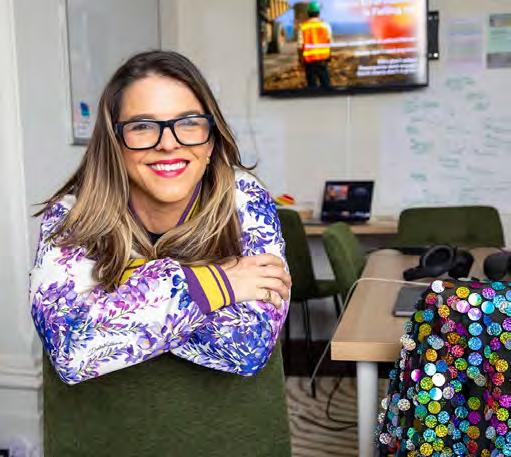
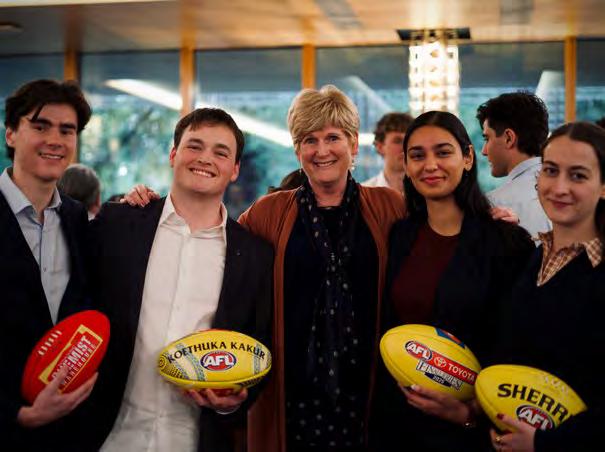
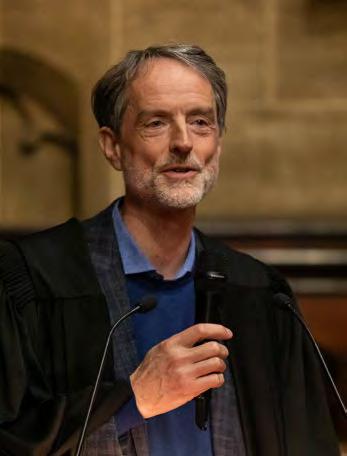
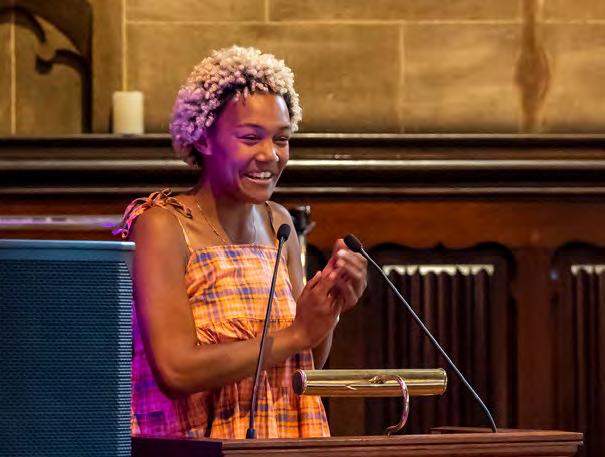
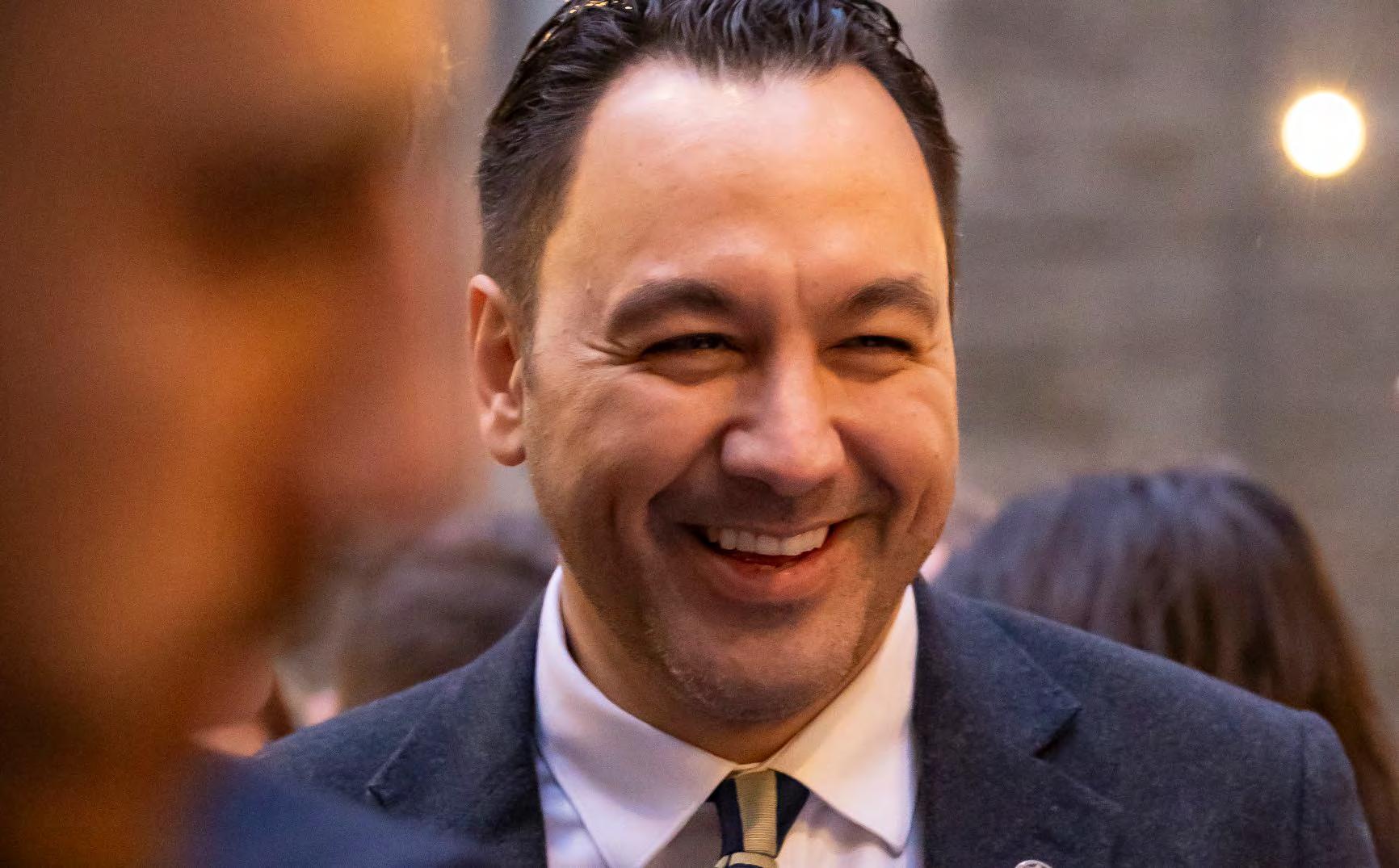
Innovation and enterprise are big themes in this edition of New and Old alumni magazine. That’s one of the reasons we’ve called it the ‘Big Picture’ edition. Inside these pages, you’ll find a number of stories about Ormondians who have started their own ventures – big and small.
If you’ve ever tried your hand at entrepreneurship, or if you’re close to somebody who has, you’ll know that it takes huge reserves of energy and imagination. The alumni featured
in these pages – from Lucy Cooke at Spacedraft to Alex McCabe at Kip&Co to Jarrod Webb at Blinq – have these qualities in spades. So, too, do alumni we’ve profiled this year excelling across many other fields including journalism, sport, the arts and more.
It was exciting in May to welcome alumnus and former Ormond Master Rufus Black back to the College. Today, Rufus is Vice-Chancellor of the University of Tasmania, but during his time as Master at Ormond, he was a
big proponent of innovative thinking and philosophy. Never one to shrink from big questions, Rufus spoke during his visit about the future of the planet and the role of higher education in the transition to a circular economy. You can read more about his ideas on p22.
Rufus’ talk was a big hit with students and they, too, have been notably preoccupied with big questions this year. In the Student Life and Learning sections of New and Old, we bring you up to date with some of the highlights of the Ormond year on campus, including student-run debates on effective altruism and the energy transition. It’s impressive to see students initiating these discussions, seeking to educate themselves and each other, and inviting experts into the College to share their expertise.
“ WE’VE AL WAYS EMBRACED A BROAD DEFINITION OF EDUCATION.”
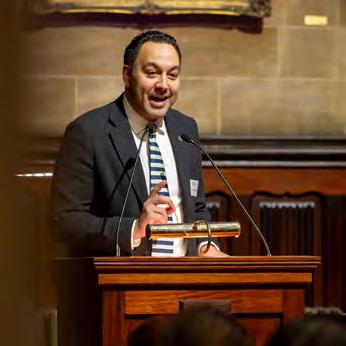
At Ormond we’ve always embraced a broad definition of education. It’s about much more than the university curriculum. Education is about meeting new people, hearing different viewpoints, trying new things and broadening the scope of individual experience.
One person who truly champions this idea is Vice-Master Margie Welsford. It’s been a great privilege to have Margie join our community this year. Our Director of the Wade Institute of Entrepreneurship, Jessica Christiansen-Franks, is another inspiring newcomer to our community. Jessica is a startup founder, as well as an educator, and you can read about her extraordinary career trajectory and vision for the Wade Institute on p36.
One of the big thrills in my first year as Master has been reviving the Ormond Fellows program. The program brings extraordinary leaders (across the arts, business, law and more) onto campus to share their knowledge and expertise with students.
So much of what happens at the College would be impossible without this kind of generosity. Our community of alumni, parents and friends is truly incredible. It’s been wonderful meeting so many of you this year, across the country and across the world.
I hope you’ll enjoy reading this edition of New and Old. Please keep in touch – with us, and with each other in the College community – in the new year! •
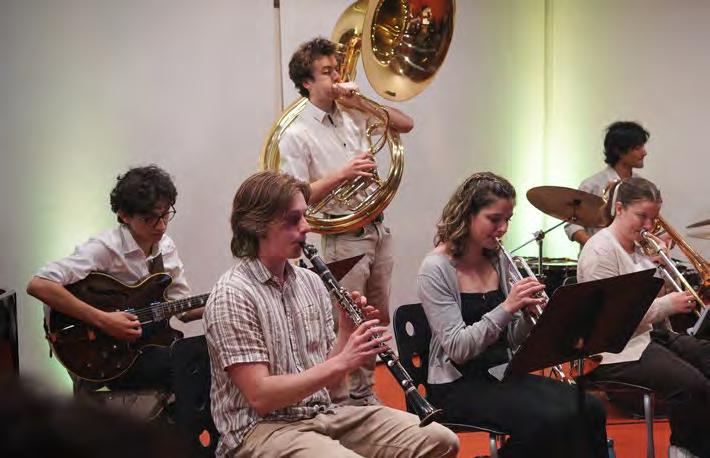
It’s been a huge year for music at Ormond College, with third-year Victorian College of the Arts student Yael Marks leading a jazz revival.

Ormond’s music program has been really diverse and collaborative this year. We have a few main ensembles: a jazz band, an orchestra and a choir. Events like Rock Off and open mic nights create so many opportunities for students to connect and meet new people.
Live music has been a big feature at many of Ormond’s events this year. I often play in a trio with [Music students] Max Kielly and Archer Bryett, creating a relaxed atmosphere where music becomes part of the social fabric of the College.
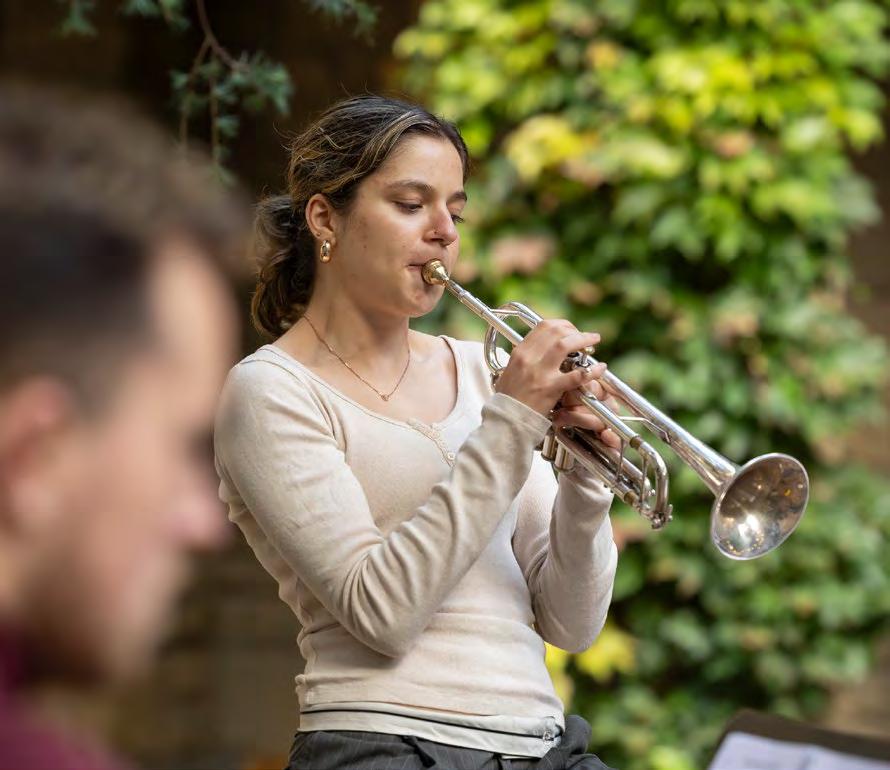
The facilities at Ormond, especially the Lodge, make a huge difference to us as students! As a trumpet player, I’m very aware of the noise I’m making while practising. But because the Lodge is a separate building, I’m able to practise whenever I need to. We also run band rehearsals there, and I’ve had the chance to use the recording studio to explore music production.
I began my degree as a classical trumpet student, but I discovered my passion for trad jazz and New Orleans-style music late last year, and made the switch to jazz. I now lead my own trad band. We’ve played at the Castlemaine Jazz Festival! I also run a trad jazz jam at the Brunswick Green. I really hope to introduce this style of playing to more musicians my age.
Running the Ormond Jazz Band this year has been a really rewarding experience. Most of the students involved aren’t studying music, but they’re passionate and eager to learn. At the beginning of the year, a lot of them were hesitant about taking solos. It’s been great seeing their confidence grow.
01. Ormond jazz band performing in the Lodge.
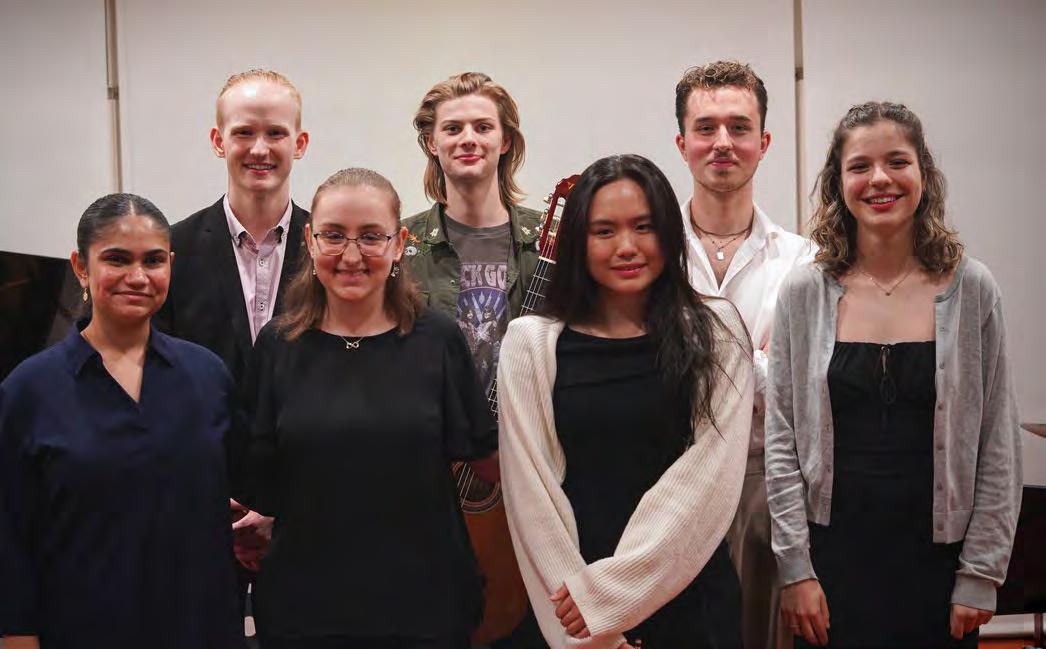
02. Top row, L-R: Archer Bryett, Angus Cole, Max Kielly.
Bottom row, L-R: Lillie Walker, Erin Grant, Zoe Shen, Yael Marks.
03. Yael Marks performing on Open Day.
In August, third-year Commerce students Dullain Rajakulendran and Aidan Loughnan launched Ormond College Capital, an investment fund designed to give students hands-on exposure to ethical investing and portfolio management.
We created Ormond College Capital with a clear goal: to give more Ormondians meaningful exposure to the world of finance. The club is led by Commerce students but we wanted students from all disciplines, not just Commerce, to be inspired to explore the world of finance and to see this club as a gateway to possibility.
We believe that engaging with practical investing deepens our understanding of key financial concepts and enhances critical thinking.
Building a new club, and a new investment fund, required vision, teamwork, and the ability to make decisions amid uncertainty. We’ve learned how to lead diverse teams, delegate effectively, and adapt quickly when plans inevitably change – whether that’s adjusting our investment strategy, managing team dynamics, or navigating challenges that come with starting something new.
We couldn’t have done it without the help of alumni. We worked closely with College staff to connect current students with Ormond alumni, particularly those working in finance. We believe this exchange benefits both sides. Students gain invaluable insight and mentorship, while alumni are introduced to Ormond’s emerging talent.
We hope to return to Ormond in 20 years to see a fund that has grown into something remarkable! Our vision is for the Ormond Capital Club fund to one day provide scholarships for future students; a way for us to give back to the College that has given us so many opportunities. Above all, we aspire for this club to serve as a lasting bridge between students and alumni, fostering mentorship, connection, and growth.

“ OUR VISION IS FOR THE ORMOND CAPITAL CLUB FUND TO ONE DAY PROVIDE SCHOLARSHIPS FOR FUTURE STUDENTS.”
Left. Dullain Rajakulendran and Aidan Loughnan.
Aspiring advocates tested their mettle at the inaugural Ormond Moot and Law Dinner, spearheaded by Juris Doctor students Aleksandra Markovic and Riordan Davies.
We co-founded the inaugural Ormond College Mooting Competition as a way of bringing together Ormond’s Juris Doctor students, undergraduates, legal alumni and staff. The idea was to give undergraduates a low-stakes, supportive way to practise oral advocacy.
We designed and taught the undergrads a short course on Misleading and Deceptive Conduct, drafted the moot problem, and guided students through their first written and oral submissions, building feedback into each stage. The program culminated in a Grand Final Moot in the Kaye Scott room, which we judged together along with Professor Alison Duxbury (1988).
After the competition, a law dinner, MC’d by JD student Max Evans, brought together additional alumni and students. Max noted that the mooters tackled the tricky legal problem of misleading and deceptive
conduct with clarity, poise and nuance. They were really impressive. We announced the winners at the dinner, Chanisa Jennings and Hannah Sinclair, and heard from guest speaker Fleur McKay-Calvert (1995), who spoke about her work in workplace relations and safety law and offered practical advice to students.
It was a privilege to create a space where emerging advocates could challenge themselves, build confidence, and engage with the law in a practical, collaborative setting.
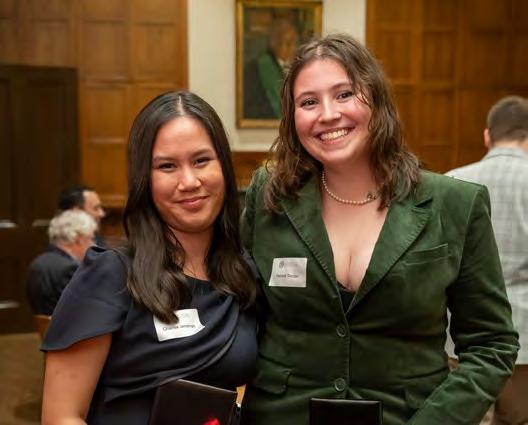
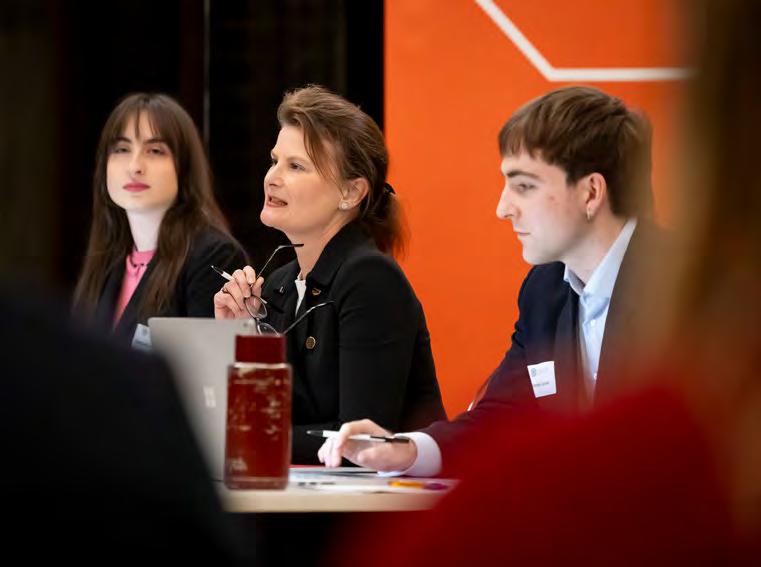
Above. Chanisa Jennings and Hannah Sinclair. Left. Aleksandra Markovic, Professor Alison Duxbury, and Riordan Davies.
After two decades in university colleges, Ormond’s new Vice Master and Executive Director of Student Life, Margie Welsford, thinks young people are far wiser, and far more thoughtful, than the world often gives them credit for.
Each afternoon, Margie Welsford crosses Picken Lawn. Students are sprawled on picnic blankets, half studying, half laughing, caught between class notes, gossip and existential conversations. It is a scene she never tires of. “I love this age group,” she says. “They’re figuring out who they are and discovering what really matters to them. They’re learning how to be themselves.”
When Margie joined Ormond in March, jumping the fence from Janet Clarke Hall where she was Deputy Principal, along with her husband Nathan and their dogs, Delta and Riff, she was struck by how quickly the place felt like home. “It’s a big college, but it feels very warm and personal,” she says. Having worked with Ari as co-chair of the Intercollegiate Deputies and Deans group, Margie was excited to join him and the wonderful team at Ormond at this pivotal time in the College’s history.
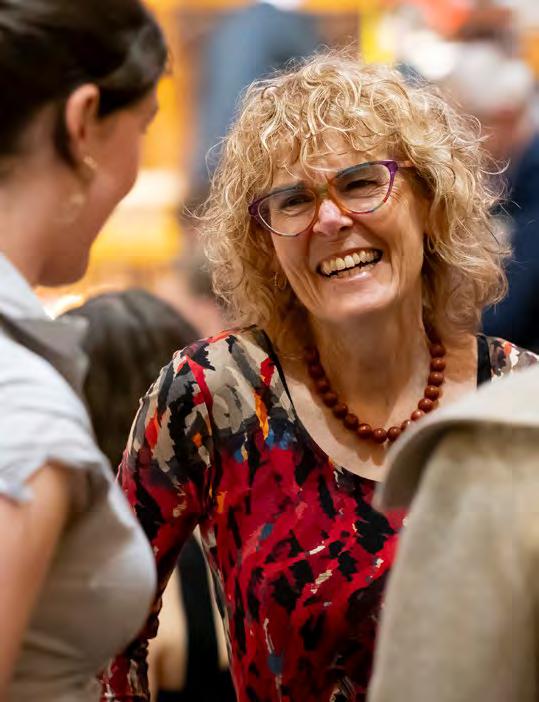
What stood out to her straight away was the character of the Ormond student culture. “People underestimate how reflective students are about life,” she says. “Yes, they can be chaotic, but they think deeply. They care about each other, they want to do well, and they’re constantly testing what kind of people they want to be.”
She sees that every day: students running events, helping each other through exams, or quietly checking in on a friend who seems off their game. “They don’t wait to be told what to do,” she says. “They just get on with it. That’s what I love about this generation.”
It is not the kind of leadership that ends up on a résumé. It is the small, decent gestures that hold a community together. “When 30 people turn up for a tennis match that only needed eight, that’s not over enthusiasm,” she laughs. “That’s Ormond.”
And Margie is often there to see it. She is a familiar face at Ormond’s sporting games, cheering from the sidelines with a coffee in hand. “They’re fiercely competitive, but they play with such good humour. Everyone wants to be part of it.”
Right. Undergraduate Valedictory 2025.
That same confidence shows up off the field too. A highlight of the year, she says, was the Australian Dialogues event in September (p16), where students organised a panel discussion on the clean energy transition, featuring policy experts, agribusiness leaders and social justice leaders. “The student leaders who organised this event are passionate about the environment and it was an impressive initiative to host such a successful event.”
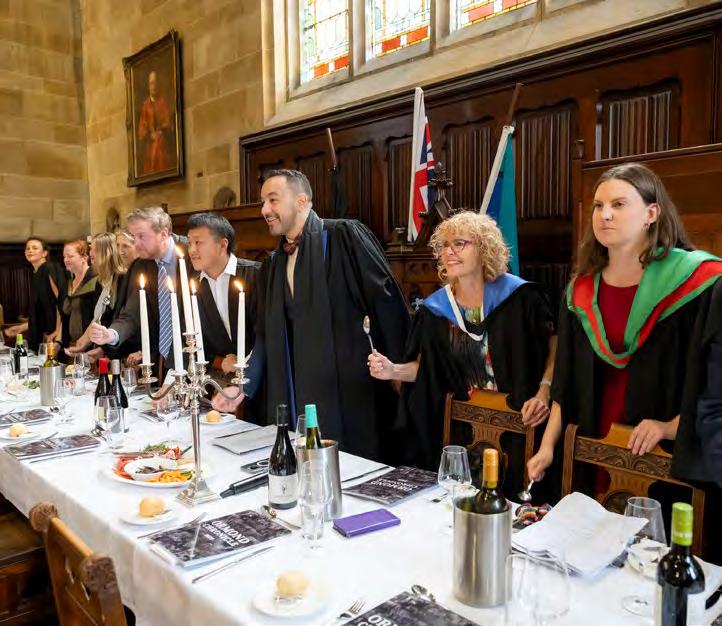
There is a strong emphasis on, and appreciation for, music and performance at the College. Whether it is musical soirees in the Lodge or the major production of Chicago, Margie has enjoyed seeing the students shine.
Margie’s first year as Vice Master and Executive Director of Student Life has been focused on deepening that culture of belonging and making sure inclusion is not just an aspiration but a lived experience. One of her key initiatives is expanding Indigenous engagement, including the appointment of a philanthropically funded full time Freemantle Lewis Fellow who will live on site to support rural and First Nations students. “A diverse community enriches everyone,” she says. “It reminds us that education has been happening on this land for thousands of years.”
After 20 years in colleges, Margie still finds the work magical, not because of the traditions or sandstone, but because of what happens quietly in between. “University is a time when people test their values, ideas, even their hair colour,” she laughs. “College can and should be the safe place to do that. It’s where silliness and seriousness meet, and when that balance works, it transforms lives.”
As another group of students wanders past, still talking, still debating, Margie smiles. “They give me hope,” she says simply. “They always have.” •
“ UNIVERSITY IS A TIME WHEN PEOPLE TEST THEIR VALUES, IDEAS, EVEN THEIR HAIR COLOUR. COLLEGE CAN AND SHOULD BE THE SAFE PLACE TO DO THAT.”
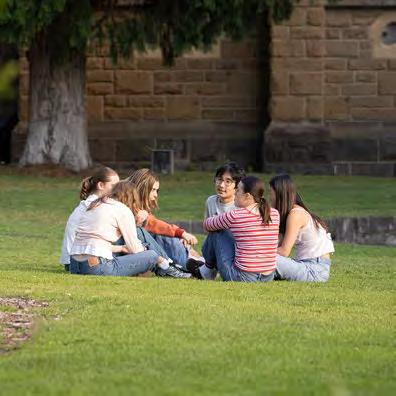
Thanks to a long-running bequest from Percy and Beatrice Seymour, Ormond College was able to welcome an outstanding classical scholar, Julia Pelosi-Thorpe, to the Learning Team in 2025.
Julia Pelosi-Thorpe grew up with three languages: English, Italian and Parmesan, the dialect of the city of Parma and the first language of Julia’s maternal grandparents. “My nonni spoke mainly in dialect, but my mum used Italian with me and my sisters… And our dad had English. Being addressed in three languages, I remember speaking back in strange mixtures.”
Raised in this rich linguistic environment, it’s not surprising that Julia showed an early interest in languages and fascination with literature. She majored in Classics for her Bachelor of Arts at the University of Melbourne, and went on to pursue a Master of Arts in Italian Studies.
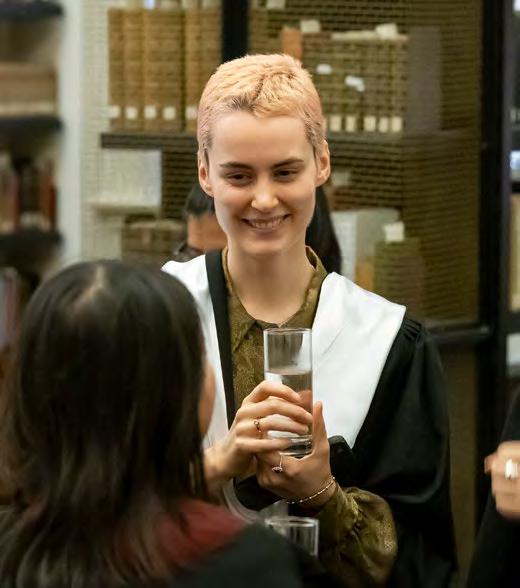
“ GETTING TO KNOW THE STUDENTS THIS FIRST SEMESTER HAS BEEN TREMENDOUS – THEIR INTERESTS AND ASPIRATIONS, THEIR ENTHUSIASM.”
“I think I chose Classics primarily for love of Latin. For me, ancient poetry can speak as much to history and politics as to fable or pastoral.”
Julia’s Masters thesis focused on the reception of Ovid’s amatory oeuvre in baroque Italian poems known as epistole eroiche (‘letters of heroines/heroes’). “Reception studies trace how later historical periods engage with classical works. Take Homer’s story of Odysseus’ late return from the Trojan War: imagine if Penelope wrote him a letter at the height of her abandonment. What might that look like? This is what Ovid explored with the Heroides. It’s somewhat adjacent to fanfiction.”
Building on this research, Julia has been pursuing a PhD through the University of Pennsylvania in Comparative Literature. Parallel to this, she has other interests: translating and teaching. Her translations from Latin, Italian, and dialects have appeared in a wide range of publications, from Modern Poetry in Translation to the Griffith Review
As a teacher, she’s taught Latin, Italian and English in all sorts of settings, including at the University of Melbourne, the Asylum Seekers’ Resource Centre and, most recently, at Ormond College, as the Seymour Reader in Ancient History and Philosophy.
The role saw Julia leading weekly Latin tutorials, as well as one-on-one consultations for students seeking Italian speaking practice or academic advice. Early in 2025, she taught an ethical reasoning course for Ormond students as part of the Ormond Next program, too. Julia has since returned to the United States to continue her PhD but says her time at Ormond has been fun and rewarding. •
James Kelly, Dean of Wellbeing and Inclusion, and College Psychologist Adam Higginson believe student wellbeing flourishes through connection, community, and meaningful engagement.
At Ormond, wellbeing is inseparable from community. For James Kelly, Dean of Wellbeing and Inclusion, the message is simple: “Ormond provides students with an opportunity to draw on a diverse range of factors that can positively enhance mental wellbeing. You’ve got access to a wide variety of friends, nourishing meals, meaningful activities, leadership, sport, arts, I could go on all day. Perhaps most importantly, the College offers myriad academic and wellbeing supports catered to the individual needs of our students.”
The Community Wellbeing Index (CWI) shows students who take part in Ormond activities consistently report higher levels of wellbeing. Ormond psychologist and author of the report, Adam Higginson, says the finding is not surprising. “Doing things you are passionate about and social interaction are both well known to be important for people’s wellbeing, and the activities at College provide a platform and opportunity for this to co-occur.”
But he stresses the flip side too: “The more important finding is that students who aren’t engaged in anything – the evidence indicates significantly poorer levels of wellbeing. So our focus is then to find ways for those students that have become disengaged, to re-engage with the community.”
Living in a residential college isn’t always easy, as Adam acknowledges: “For some students being away from family, succeeding at university, and learning to live with 500 other people can be quite overwhelming. Our job is to provide the support that helps people to navigate those challenges.”
Those supports are extensive: two in-house psychologists, pastoral fellows, a wellbeing team, peer leaders, academic tutors, and fast-tracked access to mental health appointments. “If you need help, you’re not waiting for months to get an appointment with the right person,” James notes. “Our students have wellbeing, academic and pastoral support at their doorstep.”
What makes the difference, James says, is the sense of community: “When you’re at College, you really are part of something that is bigger. I’ve worked with students who are struggling with their mental health,
but they’re getting up to play sport, they’re in their bumblebee jerseys, celebrating with their friends. On the one hand, they’ve got some big challenges to work through. But on the other hand, there’s this feeling that you’re not doing it on your own. People care about you.”
Adam: “When you get here, there’s going to be so many things to explore. I really encourage new students to try things out, discover new passions and even reconnect with interests that may have been put on hold at school... But there will come a point. But there will come a point where if you keep trying to do everything that’s on offer, it might prove to be too much. So once you have explored, start to work out where you want to invest your energy, identifying what matters to you most. Finding your own sense of balance will have such a positive impact on your wellbeing.” •
“ Y OUR WELLBEING IS GOING TO BE THE RECIPE TO YOUR OTHER SUCCESS. IF WE’RE NOT WELL, WE’RE NOT GOING TO THRIVE IN OTHER AREAS.”
- James Kelly

“ WHEN STUDENTS KNOW THEY’RE P ART OF SOMETHING, THAT THEY’RE NOT ALONE, THAT’S WHEN THEY THRIVE.”
- Adam Higginson
This year, Ormond College launched something new: Ormond Next — a practical program designed to help students navigate the leap from uni life to the working world.
Ormond has a long tradition of academic success, but Ormond Next adds another layer. It’s a launchpad; designed to build confidence and sharpen real-world skills. And the best part? It all happens on the College campus.
The program is managed by Sandy Cran (Careers Development Manager) and Isabella Arabejo (Student Life Program Coordinator). Its focus is on development of the top-ten skills outlined in the World Economic Forum’s Future of Jobs report, including analytical thinking, problem-solving and active learning. Each unit in the program includes both theory and experiential elements, allowing students to test out their new skills. Ormond Next has been embraced by students with great enthusiasm in its first year.
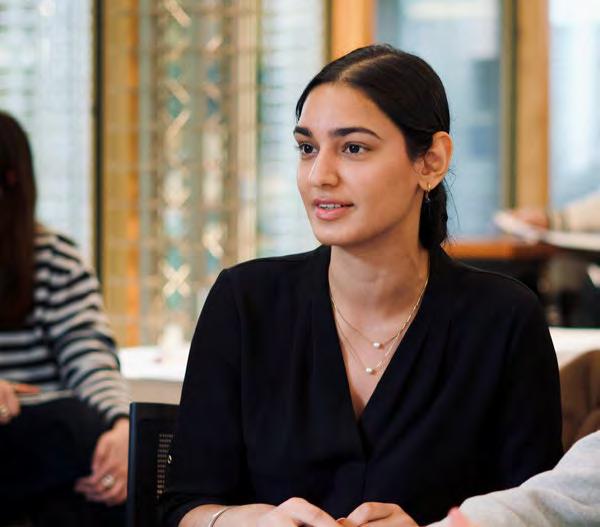
Semester one kicked off with Workplace Ethics – a crash course in how to handle the tricky moments that pop up in professional life with integrity and confidence. It was a huge privilege to welcome Peter Collins, former head of the national Centre for Ethical Leadership, as a guest speaker for this course. Modern Professionalism dug into the nuts and bolts of life after graduation, from preparing for grad roles to figuring out how to network (without the cringe).
Design Thinking gave students a chance to flex their creative muscles and approach big challenges with an entrepreneurial mindset. The unit culminated in a full-day pitch competition at the Wade Institute, where students pitched real-world solutions to problems posed by Ronald McDonald House Charities (RMHC). The competition was facilitated by Helen Baker, founder of Xolvit, and the winning team won a mentoring session with Erin Splatt, Head of People and Culture at RMHC.
01. Student, Jaskiran Rahi.
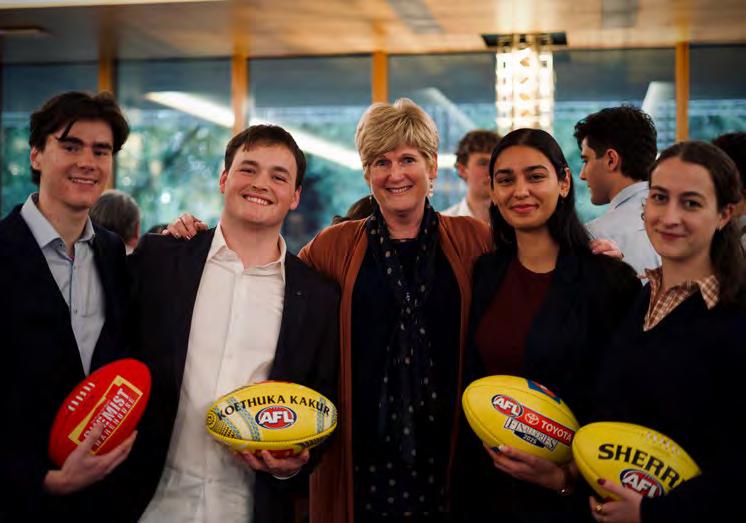
02. Winning team members, who received prizes including executive AFL mentorship, premiership tickets, and an exclusive visit to AFL HQ. L-R: Raphael Champion, James Derrick, Sandy Cran, Jaskiran Rahi and Eliza Davidson.
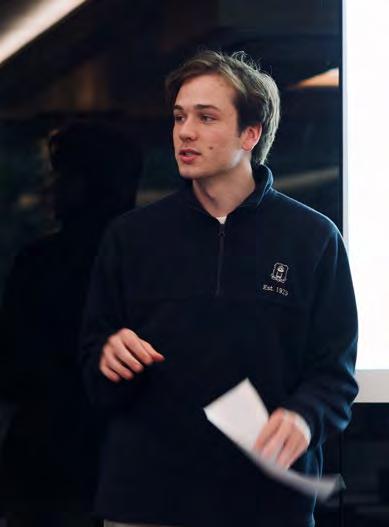
03. Hugo Thornton pitching in the classroom.
The second semester took things up a notch with two units that built on collaborations with professionals outside the College. In Personal Branding, led by Kelly Mann from BrightWorks, students learned how to identify their own strengths and how to talk about them with confidence. Students came away with the skills to tell their own stories— and put them to use at Nostrum Futurum, Ormond’s alumni networking event.
Then came Big League Problems – the AFL Case Competition. In partnership with Helen Baker (founder of Xolvit) and the AFL, 12 student teams from Ormond and Trinity colleges tackled a real, high-stakes issue: ethnic discrimination in professional sport. Over several weeks, teams researched, brainstormed, and refined their ideas — all leading up to a high-energy live pitch night.
With just three minutes to present their solutions, students pitched to a powerhouse judging panel including leaders from the AFL, Microsoft, Melbourne Business School, and Xolvit — plus Ormond alumni and College staff. The pressure was real, the ideas were sharp, and the stakes were high: internships, mentorships and priceless feedback from industry leaders. •
“ WE RECEIVED FEEDBA CK FROM STUDENTS SAYING THEY GAINED VALUABLE PRACTICAL EXPERIENCE IN PUBLIC SPEAKING, NETWORKING, AND PROBLEM-SOLVING.”
Sandy Cran, Careers Development Manager
“ AFTER AN EX CITING AND ENGAGING PILOT YEAR WE ARE LOOKING FORWARD TO DELIVERING EVEN BIGGER AND BETTER UNITS IN 2026.”
Isabella Arabejo, Student Life Program Coordinator
Students invited an expert panel to the College in September to discuss social equity and the energy transition.
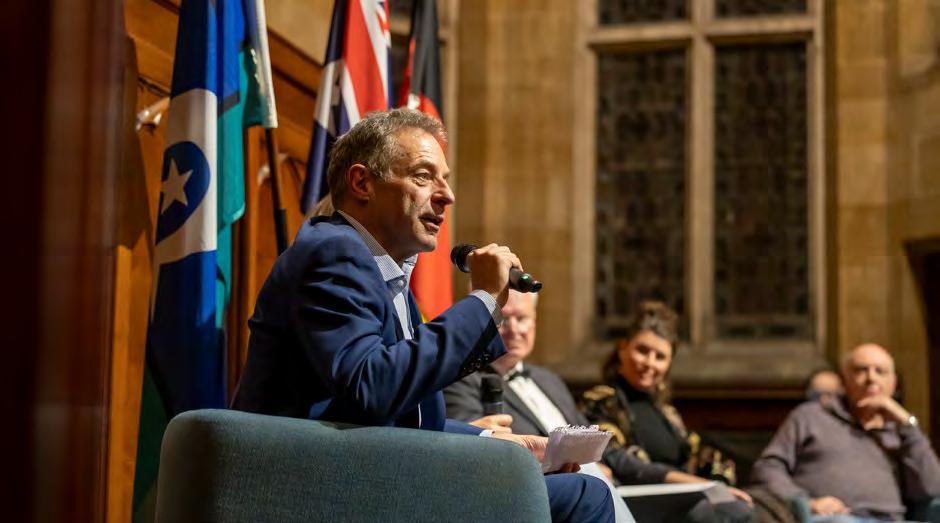
The Ormond Dining Hall has been the scene of many timely, thorny debates over the years – from conscription to the Australian republic.
This year, Ormond students have kept this tradition alive and well, hosting a formal panel discussion in September in partnership with Australian Dialogues, on questions of social equity in the transition to a renewable energy economy. Can the transition be fair and just? Or will disadvantaged groups of Australians be forced to shoulder the burden?
An initiative of Ormond Sustainability Committee head Jack Lowman, this event included an excellent line-up
of panellists, from the worlds of agriculture, social policy, energy policy and government: Gavin Duffy (St Vincent de Paul Society) Zoe Hilton (Centre for Independent Studies), Ross Johns (President, Wimmera Mallee Environmental and Agricultural Protection Association) and Emily Sims (Uralla Shire Council).
Moderated by Ormond’s Senior Academic Consultant James Brown and MC’d by second-year Arts student Abbie Ralph, the event was supported by Australian Dialogues, an organisation that encourages civil discourse and ‘across the aisles’ policy debate. •

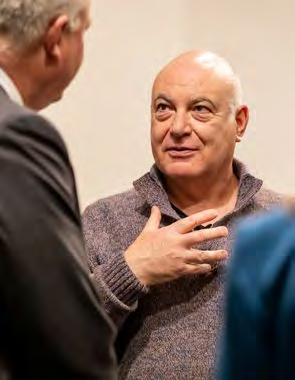
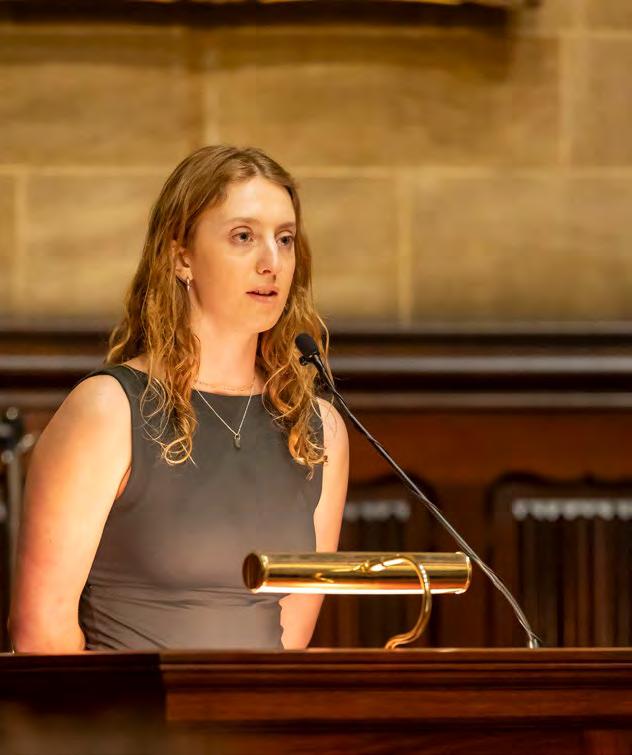

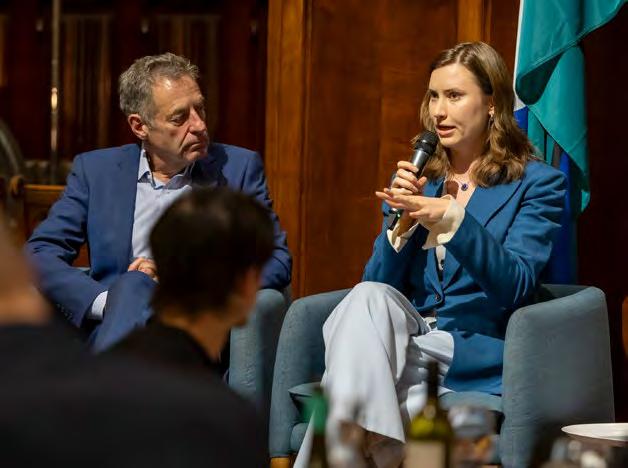
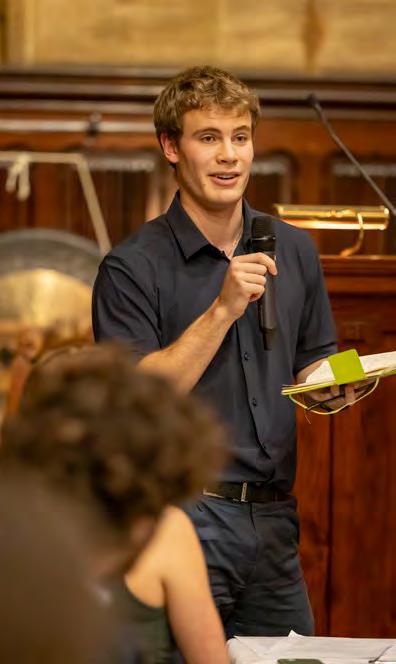
01. Panelist Gavin Duffy, National Director of Energy Policy and Research at St Vincent De Paul Society.
02. Student, Abigail (Abbie) Ralph. 03. Student and Event Organiser, Jack Lowman.
04. Panel Moderator, James Brown, Senior Academic Consultant.
05. Panelists L-R: Gavin Dufty and Zoe Hilton, Senior Policy Analyst at the Centre for Independent Studies.
Students challenged celebrated philosopher and Ormond alumnus and Laureate Professor Peter Singer (1964) to an ethical debate on altruism in August.
Don’t meet your heroes, they say. Well, third-year Arts student Shakhram Rakhmatullaev ignored this dictum and even took it one step further. He challenged his hero to a debate.
The debate, which took place in August in the Kaye Scott Room, was against none other than Peter Singer, one of the Western world’s most influential philosophers, well known as one of the founding figures of the effective altruism moment and for his ground-breaking work on animal liberation.
Shakhram has been interested in both debating and philosophy since his school days and says Singer’s work has had a big impact on his own thinking. “Peter Singer was one of the first philosophers whose work I started reading,” he says. “He’s an intellectual icon and someone I deeply admire.”
With Lydia Colla, Head of Academics, Shakhram approached Peter one afternoon after an event at the University of Melbourne. Their proposed topic was ‘We should all be effective altruists.’
Peter Singer says he accepted the challenge with enthusiasm. “I’m happy to be able to give something back to Ormond, which gave a lot to me over the three years that I was in residence there,” he says. “Plus, as far as my time allows, I enjoy meeting students and discussing important ethical issues.”
Effective altruism is a 21st century philosophical movement that uses evidence and impartial reason to calculate the most effective way to benefit others. The core idea, as Peter Singer himself has put it, is to do “the most good you can do.” Proponents believe that altruistic actions should be guided by empirical data to maximise their impact.
Naturally, Peter’s team took the affirmative, alongside alumna Francesca Lewis (2025 President of the university’s Effective Altruism Club) and first-year Anton Robinson. Shakhram’s team (including Sylvia Rathbun and alumnus Max Hepperlin) took the negative.
For Shakhram, the debate was not just an abstract debating exercise. He was eager to test his genuine reservations
“PETER IS A REALLY CAPTIVATING SPEAKER. HE’S VERY GOOD AT EXPLAINING THINGS WITH CLARITY, AND HIS CONCISE EXAMPLES SHOW JUST HOW POWERFUL A MOVEMENT IT COULD BE.”
about the effective altruism movement from a philosophical standpoint. Among his main concerns is the movement’s focus on reason and evidence.
“I’m not sure that all ‘good actions’ can be calculated and measured by evidence in every case,” he explains. “Or that potential altruistic actions should be discounted only because their impact is difficult to measure.”
Peter, naturally, remains firm in his stance on the issue and was delighted to have the opportunity to spread the word about the effective altruism movement. “[The student team] did their best to defend a proposition that I don’t think can be defended,” he says. “I hope that people will explore effective altruism on their own, looking at the websites of organisations like The Life You Can Save, Effective Altruism Australia, Giving What We Can and 80,000 hours.”
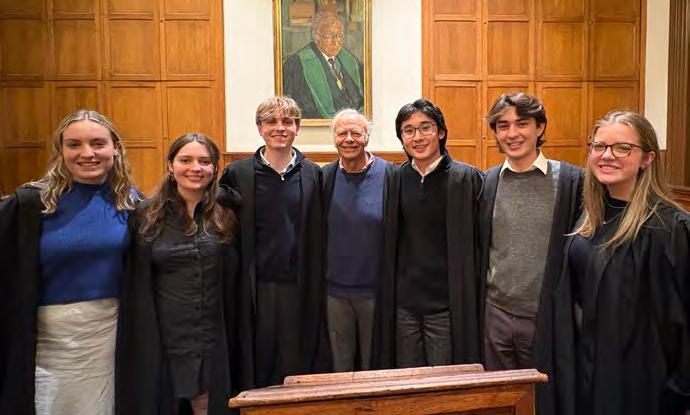
Shakhram says it’s easy to see why the movement has gained such traction. “Peter is a really captivating speaker. He’s very good at explaining things with clarity, and his concise examples show just how powerful a movement it could be.”
“I hope there will be more studentrun events like this in the future. Beyond questions of philanthropy and individual choices around giving, there are bigger questions about the role of ethics in our lives, especially in a world like ours that is increasingly valuing individualism and excess consumption. Philosophers across all sorts of traditions have been saying for millennia that helping others is an antidote to unhappiness … and that’s just one of many reasons why we need to give these questions careful thought.” •
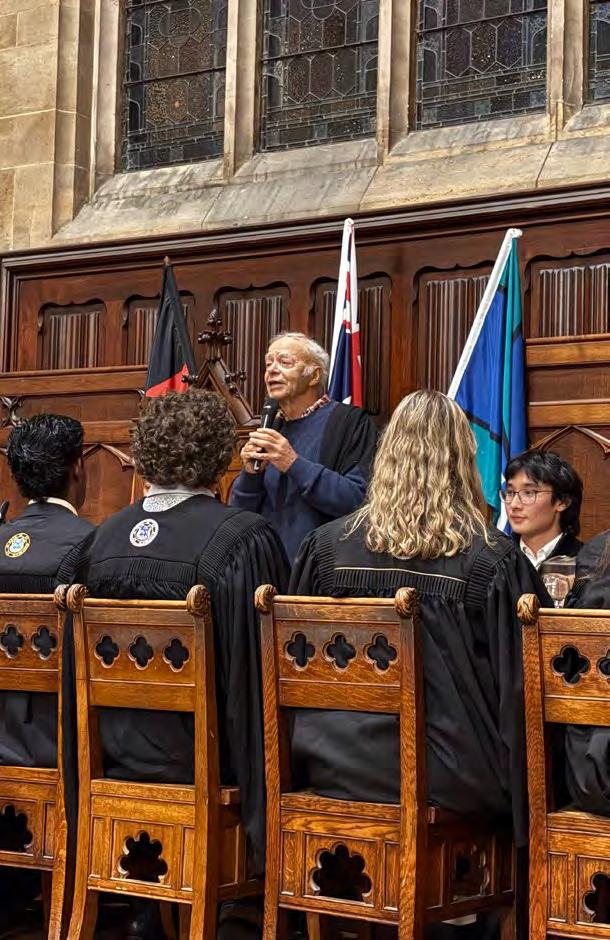
01. Peter Singer at Formal Hall.
02. L-R Lydia Colla (Debate MC); Francesca Lewis (2022, President of the USMU Effective Altruism Club); Anton Robinson; Peter Singer; Shakhram Rakhmatullaev; Max Hepperlin (2022); Sylvia Rathbun.
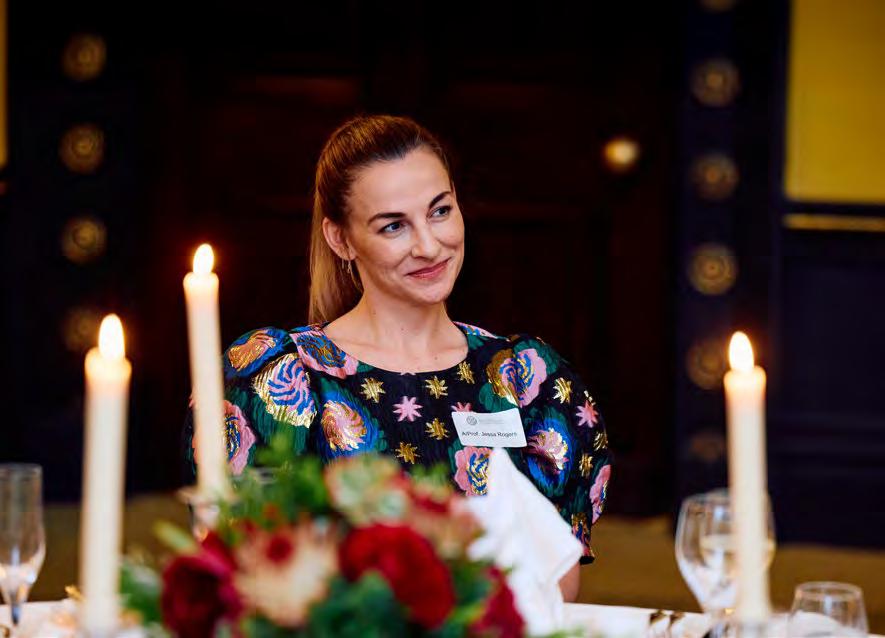
It’s hard to imagine campus life at Ormond without our brilliant Residential Fellows.
T01. Associate Professor Jessa Rogers PhD at the launch of the new Ormond Fellows Program.
02. Associate Professor Stephen McIntrye AM speaking at an event recognising his 50 years of service to Ormond.
he College has long had a tradition of residential staff, fellows and tutors who contribute to the broader intellectual life and culture of the community. While it is widely known that the Master, the Vice Master, Dean of Student Community, and Dean of Wellbeing all live on campus, there are also two Residential Fellows who play an important role in supporting students.
McIntyre AM
Associate Professor Stephen McIntyre AM, one of Australia’s most eminent concert pianists, was appointed a Residential Fellow by Master Dr Davis McCaughey in 1974. Last year, he was awarded an Ormond Medal in recognition of 50 years of distinguished service and mentorship to generations of Ormond music students. The main room in the Lodge is named the Stephen McIntyre Room in his honour, and Stephen continues to play a key role in the College’s music program, including ensuring that our many pianos and two organs are regularly maintained.
“I am particularly grateful to Ormond for all of the hospitality shown to me over the years. I am delighted to be associated with younger musicians as they pursue their careers. And I have made so many wonderful friendships over these years.”
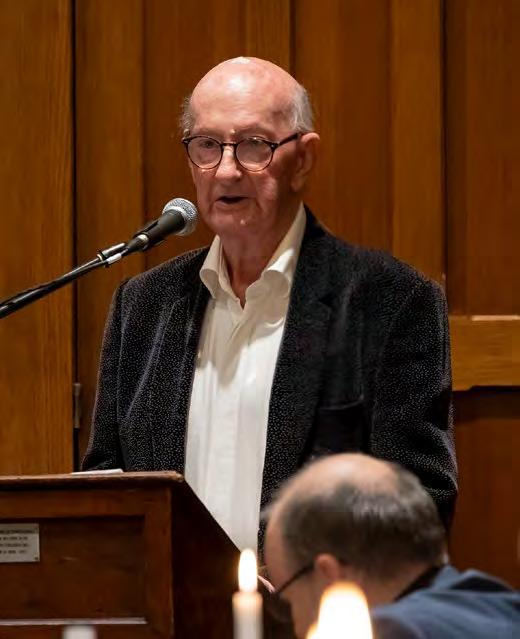
“ I LO VE BEING PART OF THE ORMOND COMMUNITY. THERE IS AN ENERGY HERE THAT IS HARD TO DESCRIBE. ORMOND STUDENTS LIFT THE PLACE. THEY MAKE IT BRIGHTER, MORE THOUGHTFUL, AND MORE DEEPLY HUMAN. IT’S AN HONOUR TO BE ABLE TO PLAY A SMALL ROLE IN SUPPORTING THEM.”
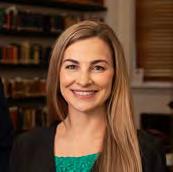
“Just last month, I attended the wedding in London of Alfred Jackson, whose parents Rob Jackson (Seymour Reader) and Joanna Motion (Alumni Officer for University of Melbourne) lived in Allen House in the early 1990s. These are friendships that have now lasted for 35 years.”
Associate Professor Jessa Rogers PhD, a leading Indigenous academic, joined the Ormond community in 2023 alongside her husband, then Vice-Master, Dr Areti (Ari) Metuamate. She was appointed a Residential Fellow by Lara McKay that same year. Jessa is a former Fulbright Scholar at Harvard University and a Churchill Fellow. Today, her primary role is in the Faculty of Education at the University of Melbourne, but she volunteers her time to mentor First Nations staff and students at Ormond. She also provides advice to College staff on matters related to Indigenous engagement.
“I love being part of the Ormond community. There is an energy here that is hard to describe. Ormond students lift the place. They make it brighter, more thoughtful, and more deeply human. It’s an honour to be able to play a small role in supporting them.” •
In 2026 the College will welcome a new Freemantle Lewis Fellow, generously supported by donated funds from Associate Professor Jane and Dr Elizabeth Lewis. This Fellow will play a vital role in supporting Indigenous and rural students, ensuring they have the support and guidance they need to thrive in their academic and personal journeys at Ormond and the University.
The College will also welcome a Creative Fellow in Residence in 2026. This role will help to strengthen the cultural and intellectual life of the College and support students and staff to explore meaning, purpose, and wellbeing. The Creative Fellow will foster creativity, conversation, and connection through the arts, dialogue, and reflection, and help ensure that Ormond remains a place where imagination and inquiry flourish in equal measure.
Former Ormond Master and alumnus Professor Rufus Black (1988) returned to the College for a thought-provoking address in May. His subject? Nothing less than the future of life on this planet.
How do we build a more sustainable world? What will productivity mean as we transition to a circular economy? And what role can universities play in ushering in the urgent changes we need to secure a sustainable future? These are just some of the big questions lately occupying the mind of Rufus Black.
Before a riveted audience in the Senior Common Room in May, Rufus addressed the most pressing issues of our time head-on and shared some ideas for how we might tackle them, too.
“It was great to be back and have the chance to meet the next generation of Ormond students with all their energy and ideas,” he tells New and Old
Rufus’ speech was drawn from strategy work, and deep thinking, he’s been doing about the future of
universities and economies in his capacity as Vice-Chancellor of the University of Tasmania. He spoke in terms of tailwinds and headwinds: the forces that fuelled the seismic global changes in the post-war period and the wicked problems the world now faces on demographic, environmental and political fronts.
“The only world many of us have known are what I’d call the tailwind years: the post-war economic settings that Western governments have put in place, and the effects those settings have had across the world. But it’s a danger to see this era as the norm, because it was perhaps the most abnormal era in human history!” he says. “It can be an unhelpful way to look at things because we are already in a fundamentally different world. We need to change the way we think.”

Rufus has served in the role at University of Tasmania since 2018, but his insights are informed by a long and unusually varied career. He lived at Ormond College as an undergraduate student and later served as chaplain, then Master, from 2009 until 2017. Rufus holds degrees in law, politics, economics, ethics, and theology from the University of Melbourne and Oxford University, where he studied as a Rhodes Scholar. He has enjoyed a distinguished corporate career, too.
From this wealth of experience, Rufus is convinced that transitioning to a sustainable economy is the urgent global priority. He points out that the European Union is already putting in a strong suite of policies to this effect.
“We need to transition to a carbon economy and a much more circular economy – where we are no longer
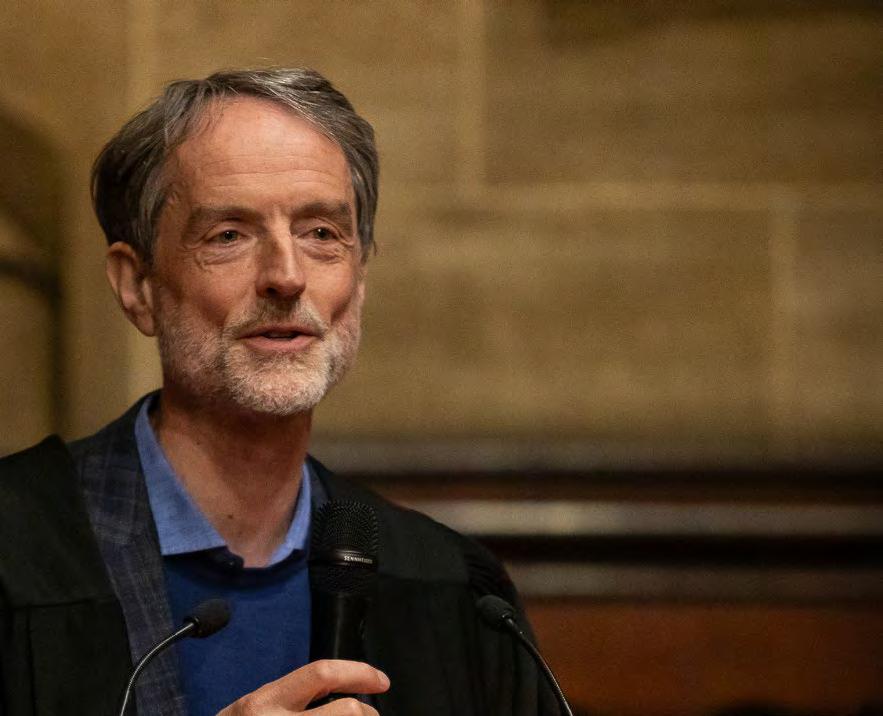
“I ALWAYS SAY I’M HOPEFUL ABOUT THE FUTURE BECAUSE I’VE MET THE LEADERS OF THE FUTURE.”
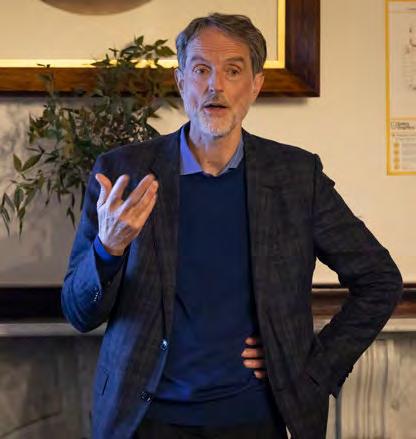
just relying on extracting and emitting materials from our environment.”
Rufus believes embracing Indigenous knowledges is key, too.
“Indigenous peoples have been living sustainably in a great diversity of ecosystems for millennia. We have been too slow to give prominence to Indigenous perspectives even though Indigenous people have been calling attention to this knowledge and expertise for a long time.”
Universities can be at the forefront of the change to circular economies. Indeed, the University of Tasmania, under his vice-chancellorship, has
been named number one in the world for climate action by the Times Higher Education Impact Ratings for four consecutive years.
“We certainly do try to model a circular economy vigorously within the university. You learn a lot by doing,” Rufus reflects.
“But it needs to extend across the curriculum, of course, too. Engineering a circular product is a different job to engineering in other settings. Business students need to be creating businesses that support circular models. And we shouldn’t underestimate just how important the humanities and social sciences are in
an era of enormous change,” he says. “An increased focus on Indigenous knowledges is another part of this, and another part of reframing the way we think – that I see as really important.”
Despite the significant global challenges on his mind these days, Rufus says he has reasons to be hopeful.
“Watching students I knew at Ormond making extraordinary contributions in the world is one of the great joys of my life. I always say I’m hopeful about the future because I’ve met the leaders of the future. They give me confidence.” •

Working on Hollywood visual effects, Lucy Cooke (2007) learnt that mistakes could badly derail production. So, the young Ormondian invented an award-winning tool that not only delivers blockbuster results; it can help ‘pre-visualise’ the outcome of any scenario…
In 2016, Lucy Cooke found herself in New Mexico, in the freezing desert “filming a huge sequence where cars were about to be blown up”. Since studying drama and theatre arts at Victorian College of the Arts (VCA) eight years earlier, and later completing a Masters of Professional Communication in film, video and cinema studies, she’d been building a career in Hollywood working for big studios like 20th Century Fox and Lionsgate – and would go on to earn credits on films like Pirates of the Caribbean, Dead Men Tell No Tales and Game of Thrones
Now she was a production coordinator and ‘data wrangler’ on a big-budget Hollywood sequel, Soldado, and readying herself to watch a bunch of cars explode. “I was in position and suddenly realised something wasn’t right about the stunt. I reached for my radio to warn the crew, but my radio was dead. In that split second, I knew what was coming, and sure enough, the cars blew up in the wrong spot.”
The car stunt might have misfired, but it sparked something quite fateful for Lucy. “I remember watching grown men push cars around to stage this multi-million-dollar sequence and thinking: we should have a tool on our phones that lets us all pre-visualise what is about to happen.” Over eight years she would develop SpaceDraft, a tool that does just that.
Flash forward to today, and Lucy’s unique invention is being used globally “to help teams, governments and families do exactly that, whether it is a mine-site shutdown, a wedding, or an evacuation plan”.
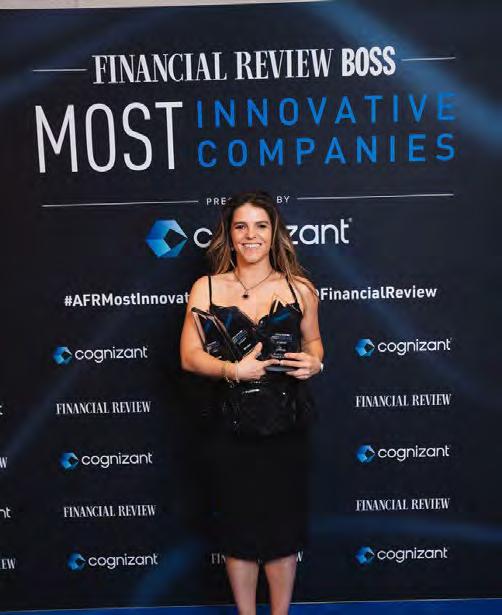
And while SpaceDraft is breaking new ground, so is its founder. Lucy, who is all about positive change and challenging social injustice, was the youngest founder – and the only woman – to be accepted into the Village Roadshow/ Microsoft accelerator. And, at the time of writing, had just been named winner of the Australian Financial Review (AFR) BOSS 2025 Most Innovative Companies.

“ READ POETR Y. IT TEACHES YOU TO SEE SIDEWAYS, TO HOLD CONTRADICTIONS, TO SIT WITH AMBIGUITY.”
But she really credits her VCA theatre studies and time at Ormond with shaping her world view and instilling the principles that led to her visionary invention.
SpaceDraft draws on the theatrical idea of ‘blocking’ which Lucy describes as “a form of mental rehearsal, breaking down complex ideas into beats that can be shared and understood by the whole cast and crew”. Her behavioural science-based tool emulates this, letting people “chunk and scaffold learning and planning visually” so they can “collectively imagine” something that hasn’t happened yet… Just like blocking out a play”.
The thought brings her back to her time at Ormond. “Ormond reinforced for me that bringing people together around shared meaning is one of the most powerful things you can do.”
Below left. Lucy Cooke and SpaceDraft winning the AFR’s Most Innovative Company in Australia Award for 2025.
Below. SpaceDraft product imaging for AFL Schools.

“The combination of studying drama and being part of such a collegiate community gave me both the insight and the confidence to build a technology that helps people communicate and collaborate more effectively across space and time.”
So, on that note, what advice would Lucy offer young Ormondians keen to break into a career like hers? “First: gardening is important. Grow something and you’ll understand patience, process, and how little control you actually have. Second: read poetry. It teaches you to see sideways, to hold contradictions, to sit with ambiguity. And third: get off Instagram. Stop scrolling highlights and start rehearsing your own. Tech founders aren’t born with pitch decks in their hands, they’re just people who decide to make their weird ideas real.” •
A chance encounter sparked an idea for Jarrod Webb (2013) that grew into Blinq – a $200-million start-up transforming how the world connects.
The story of Blinq, Jarrod Webb’s viral business-card start-up, begins like a psychological thriller – with a stranger on a train. Though it’s not a story of mounting tension – more of frustration and missed connection, leading to an excellent idea.
In 2017, aged 23, Jarrod got chatting to another passenger on the train on the way to work in Sydney. “We were talking about start-ups and crypto and stuff – it was an interesting chat. At the end of it, the guy said, ‘Hey, let’s get a beer and talk about this another time’ and he gave me a flimsy piece of paper with a QR code on it and said, ‘scan this’. That was his business card.”
This was before iPhone cameras could read QR codes. Jarrod had to download a code-reading app, then scan the stranger’s contact details into his phone. But Jarrod quickly forgot the man’s name, which was saved in his phone’s address book according to alphabetical order.
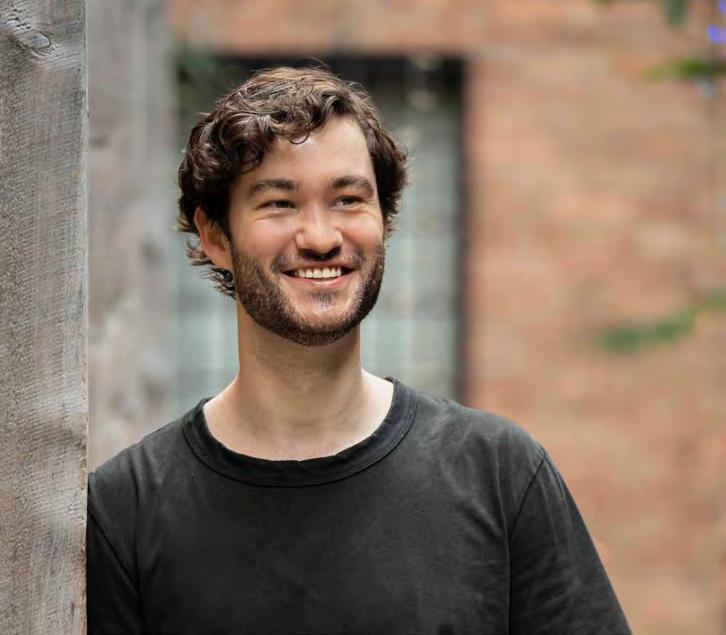
“There were hundreds of contacts saved in there. I lost that contact forever and still don’t know who that person was,” he says.
Later that year, Apple released IOS 11, making it possible to scan QR codes from the iPhone’s native camera. “I immediately thought of the annoying experience on the train I’d had a few months prior,” Jarrod says. “And I thought: What if I made an app, where it stored the details of people I scanned chronologically, so I’d remember who they are? And instead of a piece of paper, I could use the widget screen to share the QR code. And so I started building the app. Sometimes, ideas just hit you in the face.” Blinq, the digital business-card platform, was born.
It wasn’t the first idea to hit Jarrod in the face but, he says, it was by far his best idea to date.
“ SOMETIMES , IDEAS JUST HIT YOU IN THE FACE.”
As a Computer Science student at Ormond with a passion for coding, he’d tried and failed to launch a few start-up projects during his university days. “I was always trying to convince my friends to start companies with me,” he laughs. “I had a few really dumb ideas.”
These included a platform to match students with tutors (“a classic idea that every student entrepreneur has; it’s almost impossible to make the idea grow”) and a localised anonymous chatting app (“terrible idea; turns out, anonymity on the internet is a pretty bad thing!”)
But Jarrod says he learned a lot from those early failures.
‘Blinq has had viral and product-led growth and it’s the opposite of an anonymous app. It’s all about sharing your full identity when you meet someone and the different variants of your identity. You can share a version of yourself with your phone number, a version without your phone number, a personal version of yourself, a work version of yourself.”
After the germ of the idea was formed in 2017, Jarrod chipped away at his vision while working a day job in Operations at Uber. The Covid pandemic popularised QR codes in 2020 and by 2021 Jarrod was able to quit his job to work full-time on Blinq.
Today, Blinq is the top digital business-card company in the world, used by almost four million people across 189 countries. Jarrod is the CEO of a company with more than 60 employees, with offices in Melbourne, Sydney, San Francisco and New York. A huge development in the company’s story happened in May this year. Blinq announced a USD $25 million Series A funding round, backed by leading venture capital firms including Touring Capital, Blackbird, Square Peg, and HubSpot Ventures.
These are extraordinary achievements that will enable the company to expand, but Jarrod is determined to keep his feet on the ground. His focus for now remains, he says, on refining and improving the product itself. “Each step up is a new level of pressure, but even as the company changes, I’m still very much in the weeds on product and design,” he says. “We’re focused on making the core experience as good as it can possibly be.” •
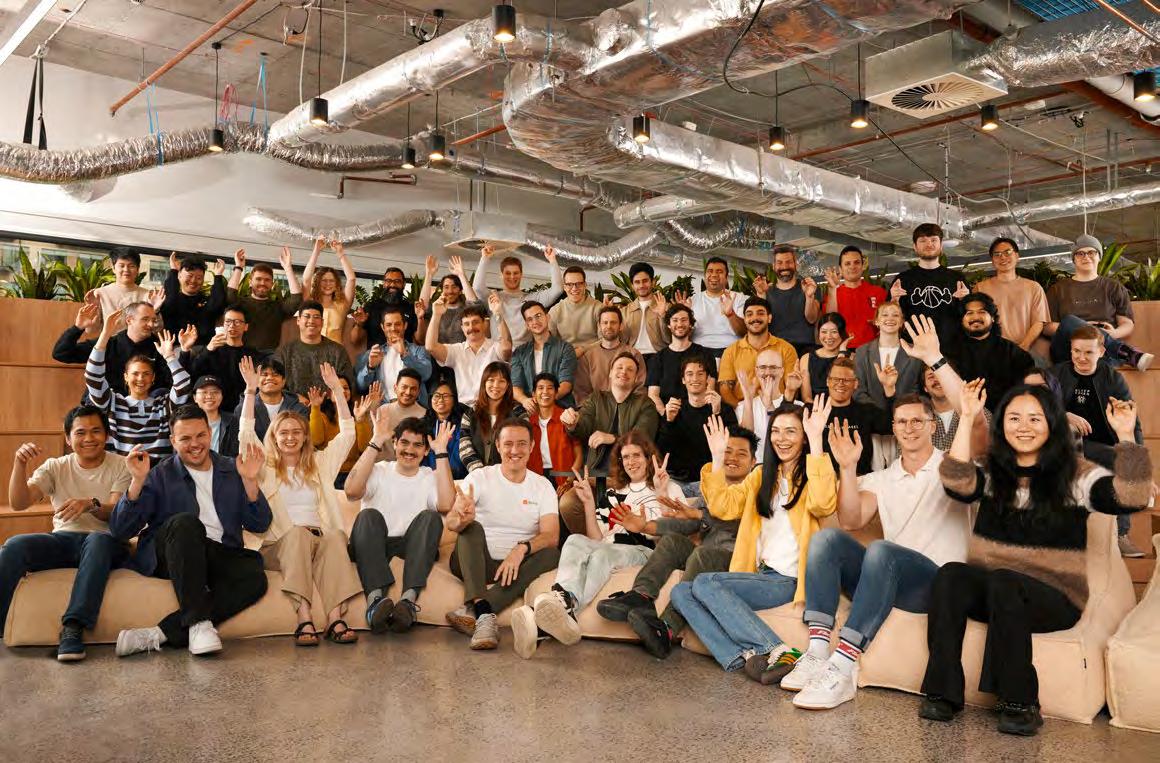
Top. The Blinq team at the Melbourne headquarters.
When Kip&Co co-founder Alex McCabe (1999) left Ormond, she had a new take on life – and all she needed for the artful and ethical venture she runs today.
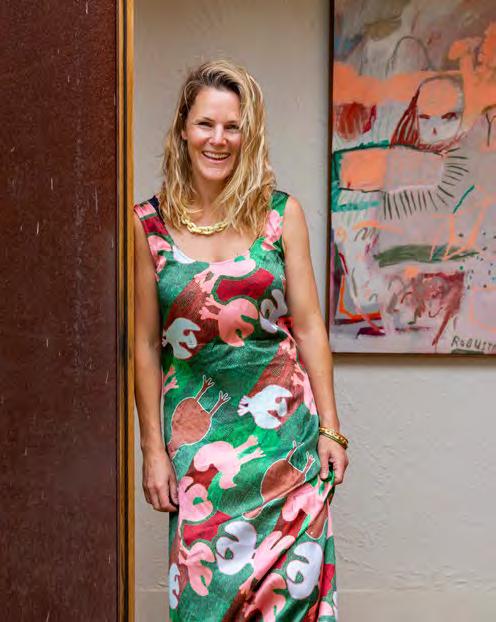

When Alex McCabe first drove to Ormond from her beachside home on the Mornington Peninsula, she was struck with a sense that this place would be transformative. “There’s something about the building there. When you first walk in there is…this sense that you’re entering into adulthood.”
“I was nervous as all get out,” she recalls. “I didn’t know anyone that was going there, so it felt quite scary having come from a pretty small school.”
But within weeks, the fear faded, and fateful friendships took root. “They’re the years that you go from being a child to being an adult,” says Alex, “And you’re doing it with a group of people who, unbeknownst to you at the time, will go on to be the people that you live with for decades.”
While Alex didn’t consider herself “the best student”, she says it was all worth it because of the friendships she made. “It’s where I met my business partner. So, if not for Ormond, I wouldn’t have started Kip.”
That future business partner was Kate Heppell –a regular at the College even though she wasn’t technically a resident. “I was doing Arts, and Kate was like an adopted child of Ormond and spent a lot of time hanging out in O-Wing.”

“ IF NOT FOR ORMOND , I WOULDN’T HAVE STARTED KIP.”

The pair went on to live together after Alex left Ormond. “And it wasn’t long after that that we started shooting the breeze about what business ideas we might have together. All of that energy – and that sense of opportunity that Ormond gives you – was fertile ground for sure.”
After university, Alex’s path initially followed a different track. She studied law and began her career at one of Australia’s top corporate firms. The structure and discipline suited her, but the spark was missing. “I could see the next 30 years of my life – and it wasn’t for me,” she says.
She decided to plunge into a business venture of her own, alongside Heppell and her sister, Hayley Pannekoecke. They founded Kip&Co, creating unique bedding designs that evoked rustic beach houses, and the vibrant colours, designs and textures of iconic local artists. “At that time, Australian bedding was beige – all Sheridan and Country Road,” Alex says. “We wanted joy, colour, personality.”
Their first trade show was modest – a small table and a few handmade samples – but it worked. Within a weekend, they’d gained numerous stockists. They had found their niche.
Fifteen years on, Kip&Co is going strong, blending an unabashedly bold colour palate with distinctly Aussie nostalgia. Collaborations with iconic Australian artists like Ken Done, May Gibbs and Margaret Preston have given the brand a timeless local flavour.
Kip&Co strives to make a positive impact on the world. The brand is carbon neutral, almost plastic-free and working towards B Corp certification – a rigorous global standard for social and environmental impact. “I did pause before we commenced this process because it is quite extensive and it’s quite expensive,” Alex says. “We had a conversation around whether we were better spending that money on projects that would have a substantive impact or spending it on this B Corp process.
Ultimately, I think the reason that we’ve gone through this is it’s had a real ripple effect on all areas of the business. It’s making us a better business across the board.”
Alex credits this kind of decision – and her willingness to take a chance on her own business – to the outlook her short but impactful time at College gave her. “That sense of opportunity that Ormond gives you – that belief that you can have a go – that’s where it all started,” she says. •
As a student, Jacob Anson (2000) loved singing in the choir and being part of something bigger than himself. Now he’s part of something that’s about as big as it gets – the Olympic Games.

Opposite. Jacob wants facilities built for Brisbane 2032 to serve locals long after the Olympics and Paralympics are over.
Looking at Jacob Anson’s LinkedIn profile, it’s not hard to see why he was appointed to the significant role of Chief of Public Affairs, Sports Advocacy and Community at the Australian Olympic Committee earlier this year. He’s worked in exciting infrastructure development roles for Brisbane Lions and the AFL. And he’s well versed in urban planning and community management. So far, so suitably impressive.
But what his CV doesn’t show, is the erstwhile country kid from Warrnambool, who loved music, drama and singing, and who was drawn to Ormond in no small part because of the Ormond Choir. His time there would become a fundamental, if somewhat unsung, part of Jacob’s life journey.
The transition from rural Victoria to the city was “quite a significant cultural change – a bit of a shock to the system,” he says. But the 17-year-old country boy soon adjusted to the culture shock and discovered that College was a “really exciting and dynamic place”.
Jacob’s horizons quickly expanded. As one of 24 choristers in the Ormond Choir, he travelled across Europe, singing in cathedrals and staying with host families. “It was a remarkable experience,” he recalls. “To sing in some of the most evocative cathedrals in Europe and to have a richer cultural experience.”
Those early experiences in the choir shaped his sense of community and shared purpose. “You’re part of something bigger,” he says. “It only works if everyone pulls together.”

The same is true of his new role on the Australian Olympic Committee. Jacob’s focus is preparing for Brisbane’s 2032 Olympic Games. For Jacob, everything – from the venues to the sports themselves is about something much, much greater. “A big part of my role is making sure that the legacies we drive out of the investment in the Games endure,” he says. “They have to work not just for the four weeks of the Olympics and Paralympics, but for the community in an ongoing capacity.”
“IT
For Jacob, this means turning traditional sports venues into multiuse community gathering spaces that serve athletes and everyday people alike. A space where you might watch top gymnasts defying gravity, or meander down to limber up with your local tai chi class. “For Brisbane 2032, there’s an amazing opportunity for the Games to take these design principles and apply them on a much greater scale,” he says.
This philosophy has been honed through years of experience in sport development and urban planning. “My area of expertise has really been in understanding how to build community and foster social unity and cohesiveness through building – whether that’s local sporting clubs or professional organisations engaging with their communities,” he explains.
His previous projects, including the Lions’ Brighton Homes Arena, are designed to be open and inclusive. “You can deliberately design these precincts so members of the public see them as their space as well as spaces that support professional athletes. They shouldn’t be walled off – they should be open and welcoming.” That sense of inclusion has been central to his approach from the start – though his career journey did seem to start…somewhat left of field.
At university, he studied zoology and conservation biology. But once he started doing field work, he discovered he was too much of a people person to take so much time out in the wilderness. “Long periods of time spent on your own in remote environments aren’t conducive to a social life or a family life,” he says. “I realised I was probably getting more out of running and organising social sport.”
After postgraduate study in urban and environmental planning at Griffith University, he took a short-term role with the AFL in Brisbane. “I needed something to keep me in Brisbane for 12 months,” he says. “But I realised how much I enjoyed the mix of planning, people and purpose.”
From there, Jacob’s career grew – from grassroots facilities to stadium projects and now to Olympic-scale planning. But his grassroots sensibility is ever present. “Events aren’t about venues,” he says. “They’re about people”. •
What happens when societies exchange freedom for safety?
The first novel by Kate Fitzpatrick (2003) asks some unsettling questions.
Don’t believe everything you read – it’s the first sentence in Kate Fitzpatrick’s dystopian thriller, Transported. These opening words take on multiple meanings once you delve further into the novel and consider the circumstances under which it was written.
Transported was published in August 2025 and is set in an imagined near future. The United Kingdom has descended into fascism, women’s rights have been radically reversed and opponents of the regime are transported across the world to Australia – which has remained a penal colony of Britain.
Kate began writing the book during the first Trump administration. Today, a number of plot points in the book seem prescient. Understandably, Kate has mixed feelings about that.

“One of the reasons I love speculative fiction is because you can use quite extreme circumstances to illustrate the points you want to make,” she says. “But in no way was I expecting some of these things to come true, or for it to happen so quickly, especially what we’re seeing with women’s rights in America. It’s disturbing.”
Transported tells the story of London-based 17-year-old Matilda Watson. Her life is disrupted overnight when her parents, elite government employees, are exposed as resistance leaders, convicted of treason, then tortured and transported.
One of the strengths of the book is its complexity; Matilda is not a straightforward heroic figure, gifted with moral clarity, fighting against a brutal repressive government. She’s grown up in the regime and has internalised some of its doctrines.
“ ONE OF THE PROBLEMS THAT AFFLICTS THE CHARACTERS IS A LACK OF CRITICAL THINKING AND A LACK OF AUTONOMY.”
“She’s pampered and not especially curious”, Kate says. “Definitely a reluctant heroine.”
Kate was a Commerce/Arts student during her time living at Ormond, and says her double-major in English and History gave her valuable research and critical-thinking skills that informed the writing of the book.

“I did quite a bit of research into Australia’s colonial past, including how the handover of power happened between Britain and Australia,” she says. “And the critical thinking skills were really important too. I think one of the problems that afflicts the characters [in Transported] is a lack of critical thinking and a lack of autonomy. That’s one of the reasons Arts degrees are so important.”
It might have taken a while for this pacey political thriller to find its way into print, but the wait has paid off. In her first attempt at writing a full-length work of fiction, Kate has received national press buzz. Transported was also announced this year among the finalists in the Best Science Fiction category of the prestigious Aurealis Awards, along with some other outstanding works of speculative fiction, including Tim Winton’s Juice. Kate says the success has been really encouraging. And there’s great news for fans of Transported “I’m in the middle of writing the sequel,” she says. “It will hopefully come out late next year.” •
Looking for a suspenseful political thriller to devour over the holidays? Find out more about Kate Fitzpatrick’s Transported
Young Ormondian Gemma Grant (2019) won a coveted traineeship at The Age in 2024 and is now making her mark as a reporter in a fast-changing media landscape.
Residential college wasn’t really on the cards for Gemma Grant. But in O-Week 2019, she found herself drawn towards College Crescent. “Everyone talks about the cliches – Hogwarts and the castle – but it’s true, it’s this amazing building.” To Gemma, Ormond felt like an “oasis”, and a step back in time, while still being right in the heart of contemporary Parkville.
Flash forward to today, and she’s starting her career as a City journalist for The Age, reporting on urban affairs in Melbourne, something her time at College made her well equipped to do.
It was O-Week that lured Gemma into College life as a fresher, so it followed that she was drawn to the energy and drive of the O-Week leadership team as a second-year student. It was hard work, but ultimately rewarding.
“It’s an unpaid gig, it takes up lots of time and it’s really fun, but it’s tiring,” she says. “The old staying-up-latemaking-decorations and coming in [to College] the week before uni starts.”
But Gemma sees the O-Week leadership experience as emblematic of the broader Ormond culture. She was elected to the GC as a third-year student and continued to invest her effort into the College community.
“People really care about the place [and] really want to make it better. And it kind of seems like something that’s been going on for generations, right?”
Even Gemma’s areas of study seem to have a nice symmetry of reflection on the past and looking to the future. She studied Arts, majoring in History with a
minor in Screen and Cultural Studies before returning to Melbourne for a Master of Journalism.
After her Masters, Gemma won a coveted The Age traineeship. To land the role she undertook a “pretty rigorous” selection process.
“You do three and a half rounds – cover letter, resume, examples of your work, then an online interview, then a writing test,” she recalls. “It was my first full-time job. I feel really lucky. There’s not many jobs in journalism anymore, especially in … traditional journalism.”
Not only are jobs in journalism increasingly rare, but Gemma reflects that people her age have less of a connection with legacy media. “I would say that a lot of young people don’t read media,” she says. “I understand The Age subscriptions are paid, and that’s a barrier for a lot of people, but I think even things like the ABC and The Guardian I want more young people to be reading them. But there’s so much out there…algorithms and TikTok and social media.”
Her year-long traineeship at The Age, with its rotations through various departments, was also “a real trial by fire”. “You talk about ethical issues at uni – but it’s very easy to talk about them kind of hypothetically,” she says.
It’s a slightly different story when you’re actually in the newsroom. “You’ve got to sometimes make judgments and make difficult phone calls, especially on the breaking-news round.”
But Gemma credits her time at Ormond with preparing her to develop her interviewing skills. “One of the things I liked most about the College was the people,” she says. “I think it’s somewhere where you learn to speak to lots of different people about lots of different things.
“ IT W AS A REAL TRIAL BY FIRE.”
And I think that’s probably what’s helped me … Journalism is a lot of speaking to people and gaining rapport. And, I mean, interviewing is just a long conversation, really.” •
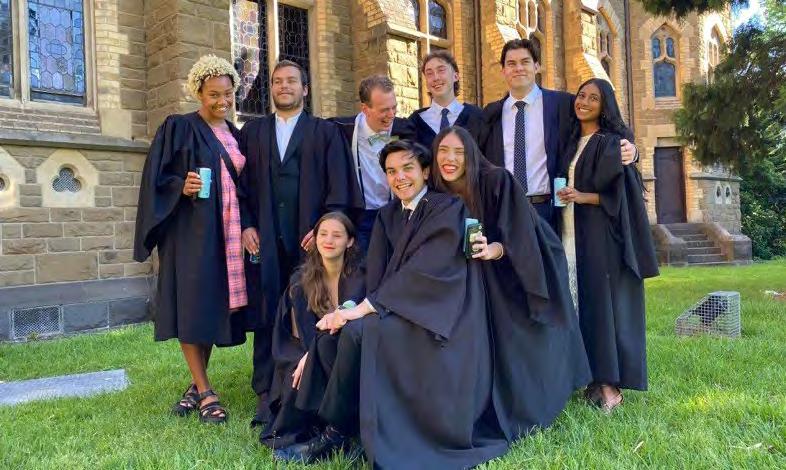
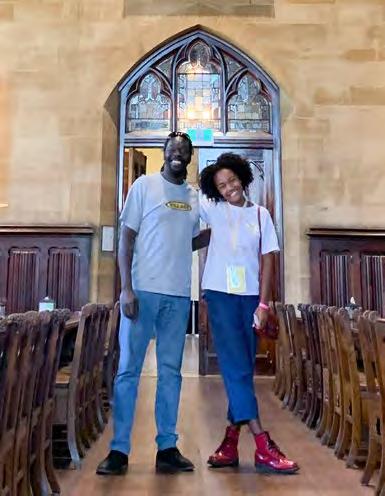
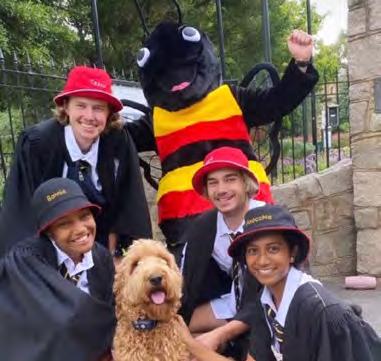
01. The Age’s 2024 trainees (from left): Brittany Busch, Hannah Kennelly, Hannah Hammoud, Angus Delaney and Gemma Grant.
02. Gemma and her dad, Leon Grant, in the Dining Hall.
03. L-R Tom Hunt (2020), Gemma Grant, Riley Womal (2019), Sankkirtana Sellvakumaran (2019).
04. With the 2021 GC team.
Back row L-R: Gemma Grant, Will Stow (2018), Oscar Wycisk (2019), Harry McLeod (2019), Oliver Gunn (2019), Sankkirtana Sellvakumaran (2019). Front row L-R: Emilia Norwood (2019), Josh Salthouse (2019), Ophira Poratt (2019).
The Wade Institute’s new Managing Director, Jessica Christiansen-Franks, embraces a broad view of entrepreneurial practice.
Jessica Christiansen-Franks’ family moved around a lot when she was growing up. Her dad was in the Australian Defence Force, and the family had stints in the Philippines, Israel, Syria and England.
The experience instilled both curiosity and open-mindedness in Jessica, as well as a great capacity to adapt to new situations.
‘I think moving around a lot taught me to never make assumptions about people and to embrace unpredictability,’ she says.
Her childhood might have provided excellent training for life as an entrepreneur, but Jessica says it took her a while to find her place in the startup world. It happened almost by accident. Having studied urban design and landscape architecture, she worked for many years on complex cityplanning projects for various urban design firms. She became an urban designer because she was drawn to solving socioeconomic problems, but realised early on
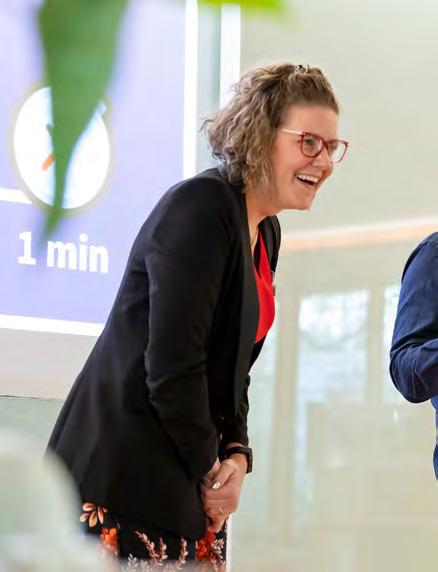
that the industry didn’t have much room for enacting real change.
‘I felt like, time and time again, we were reducing incredible initiatives into bullet points, and locking them away in strategic documents that rarely saw the light of day. I wanted to make real change, not just talk about it.’
She ended up quitting the private sector to lead a non-profit organisation, CoDesign Studio, which pioneered a new method of community engagement; bringing local voices into urban design processes.
‘We were growing really quickly, and looking for funding to support our growth. We entered one competition, which I didn’t quite realise was a startup accelerator competition, and ended up winning substantial seed funding to start a new venture.’
That competition was called SheStarts, one of Australia’s foremost accelerators for women, and it was the beginning of Jessica’s swift
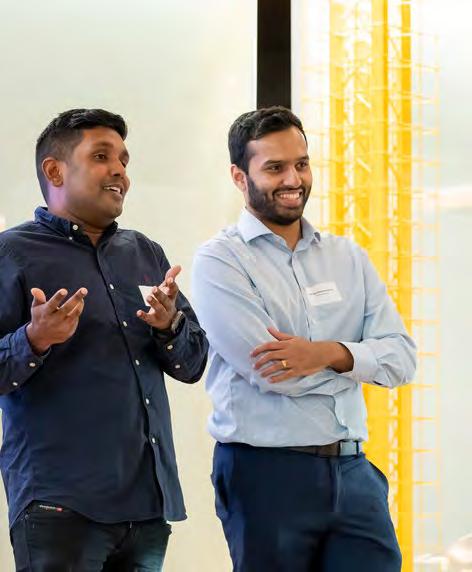
education into the entrepreneurship world. In 2017 Jessica co-founded Neighbourlytics, a pioneering Australian urban tech company that uses big data and social analytics to help cities and developers better understand the lived experience of neighbourhoods.
‘It was clear to me that the ‘startup model’ was a better business model for tackling the kinds of problems I wanted to tackle. For the first time in my career I had permission to challenge the status quo. We were able to build a business entirely around the change we wanted to see in the world, and make that change straight away.’
Neighbourlytics has grown to cover more than 20,000 neighbourhoods across 12 countries. It’s now used by many of Australia’s leading property developers, asset managers and planners. In November 2025 Neighbourlytics was successfully sold to prominent Australian tech unicornREA Group.
Like many people, Jessica had some misconceptions about startups before she became a founder herself. In her role as Director of the Wade Institute for Entrepreneurship she wants to dispel these myths.
‘Entrepreneurship isn’t just for tech companies and it doesn’t just have to be about VC-backed high-growth ventures.’
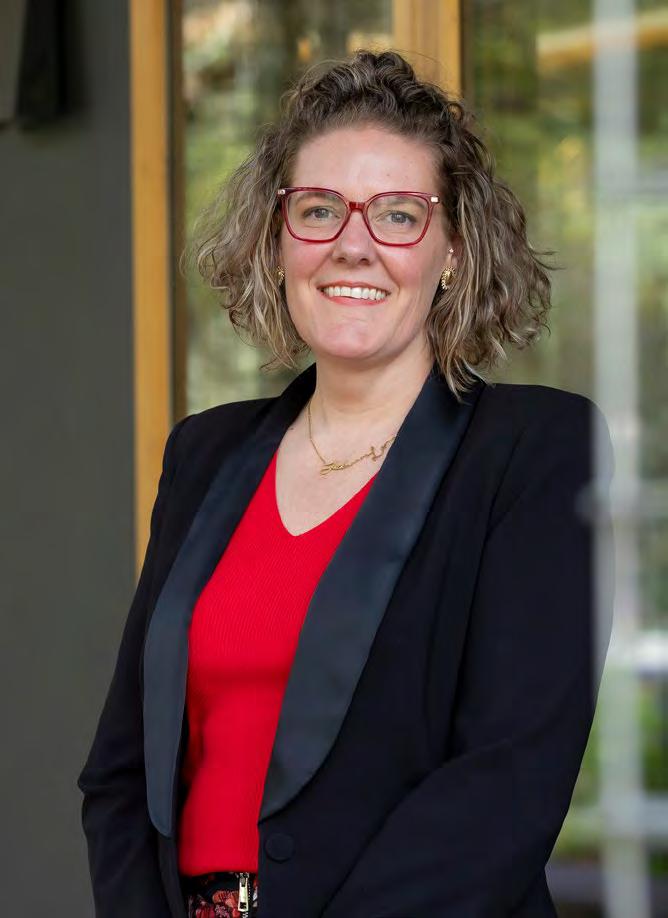
Her vision for Wade is to champion entrepreneurial practice as a foundational skillset to underpin the Australian economy.
‘We don’t want to take on a narrow view of entrepreneurial practice … Entrepreneurship is about testing and change; challenging your own assumptions and learning as you go. But you need access to do that: access to networks, to customers, to peers, to capital. I think more people are coming around to this way of thinking and it’s a really exciting time.’ •
Above left. Jessica Christiansen-Franks, Phil Jacob and Anil Balabhadrapatruni at the VC Catalyst welcome event, October.
Above. In August, Jessica Christiansen-Franks stepped into the role of Managing Director, bringing her leadership to the Wade Institute.
How is the world of venture capital changing and how do you break into it? Dan Madhavan and Lauren Capelin, from the Wade Institute’s VC Catalyst investor education program, dispel some myths.
Venture capital shapes which innovations go global, which technologies reach the market, and ultimately the world we live in. Yet for most it remains a mystery – an exclusive club for the ultra-wealthy. It’s time to demystify VC, because the investment decisions made today determine our collective future.
Mention “venture capital” to most people and it will conjure up either a complete blank or a vague sense that it involves rich people gambling on tech startups. That’s a problem, because venture capital isn’t just about making money – it’s about deciding which innovations get the resources to reshape our world. “What we choose to provide capital to is what we’re choosing to water at its very early stages,” explains Dan Madhavan, a Lead Facilitator for Wade Institute of Entrepreneurship’s investor education program, VC Catalyst, and Partner at Ecotone Partners.
Unlike traditional investors, who can look at a company’s track record, VCs are backing startups before anything is proven - often before the technology works or before the business model is validated. That requires a unique mindset – one that’s future-oriented, flexible and comfortable with risk. “You have to see the possibilities,” says Dan. “You have to start by saying, ‘What if this works?’ – because we can all come up with 10 reasons why it won’t.”
Not that VCs are blind optimists. A good one combines visionary thinking with rigorous analysis: “Most VC types are very analytical,” says Dan. “They’re intelligent people who can think through all of the mechanics.”
Fellow VC Catalyst Lead Facilitator Lauren Capelin was inspired to enter the VC world in 2015, after witnessing the lack of female entrepreneurs and investors in international venture capital. “This is about what we think the future should look like, which is why it’s important that voices are as diverse as possible,” says Lauren, AWS Startups’ Senior Portfolio Growth Manager, for Australia and New Zealand. “This is about plowing capital into the ventures, investments and people you think are going to make the biggest difference.”
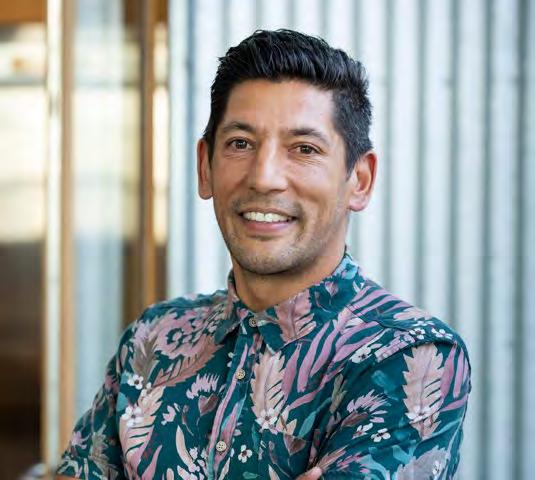

According to Lauren, the best VCs understand their own biases, and focus on the founding teams rather than just head-turning technology. “They’re not fooled by their own brilliance,” she says. They remain curious and recognise that “each new investment is essentially a chance to get a whole bunch of things wrong unless they stay attuned to those signals”.
What sets venture capital apart is what’s known as the power law. Unlike traditional investing, where you’re trying to avoid a few bad decisions, VC is about making a couple of spectacular ones. “It’s an exercise in finding the one company that’s going to grow by 10 or 100 times,” says Dan, “and in doing so, you’re accepting that a fair number of the companies you invest in may fail along the way.” Still, Dan rejects the popular perception that venture capital is only accessible to the super-wealthy, pointing to the range of participants in VC Catalyst. There are angel investors – drawn in by a passion for technology or supporting founders – as well as advisors, mentors, technical experts, ecosystem builders and startup employees: “They don’t have to be uber-wealthy to play a role in the ecosystem.”
Education, though, can give VC players an edge. “There is a discipline around this form of investing,” says Dan, “so people can lose more money than they should, just by not understanding some of the fundamentals.” This includes knowing how to assess risk, build portfolios, and support founders through the inevitable pivots and challenges.
Lauren’s advice for the next generation of VC managers and founders is clear: “We need to open the aperture around what we think the role of VC is, and what innovations are going to most effectively improve the future.” Rather than chasing the next shiny distraction, she says, tomorrow’s investors should focus on innovations that create meaningful change for the masses. That means having the courage and vision to wonder, “What if this works?” •
“ You have to start by saying, ‘What if this works?’ – because we can all come up with 10 reasons why it won’t.”
- Dan Madhavan
“ The best VCs are not fooled by their own brilliance. They remain curious and recognise that each new investment is essentially a chance to get a whole bunch of things wrong unless they stay attuned to those signals.”
- Lauren Capelin
01. Dan Madhavan. 02. Lauren Capelin.
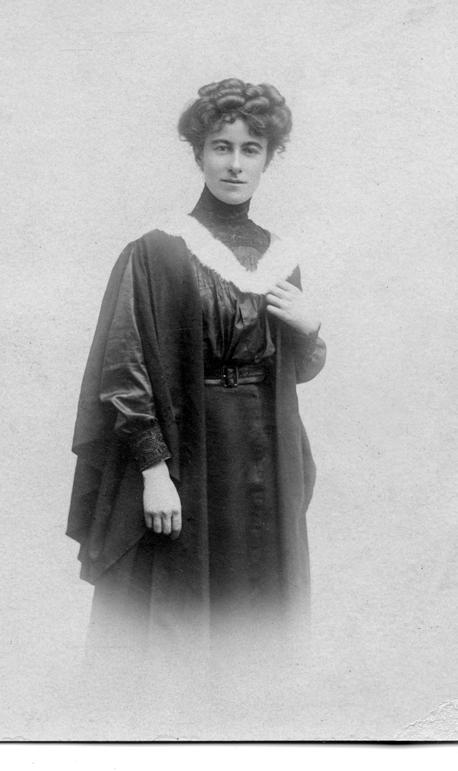
Ormond has a proud tradition of trailblazing women doctors. It all began with Sister Mary Glowrey (1905).
The story of Sister Mary Glowrey is an extraordinary one, beginning in a small town near the Otway foothills in 1887, and continuing today – through the work of the biggest non-government healthcare network in India, the Catholic Health Association of India (CHIA).
Mary was the third of nine children, born to Margaret and Edward Glowrey in Birregurra, where Edward owned the general store.
The family were devout Catholics. Mary – a promising student from a young age – won a scholarship to attend South Melbourne College, and then the University of Melbourne.
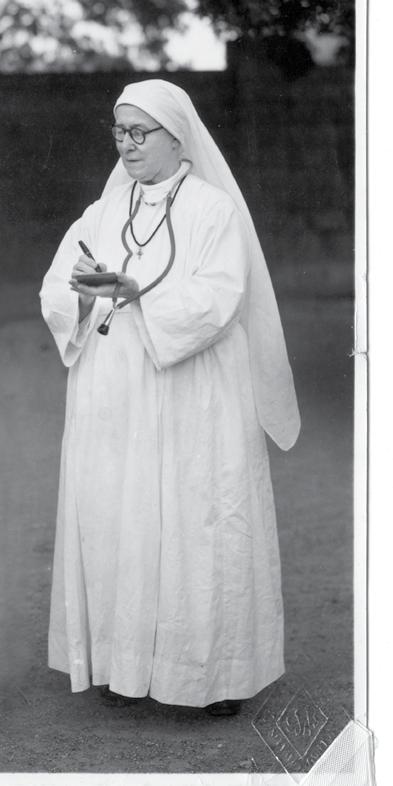
Not a huge amount is known about Mary’s time at the University of Melbourne or about her experiences at Ormond College. Mary attended tutorials at Ormond as a non-resident student, beginning in 1905. Female students had been admitted to the University of Melbourne’s School of Medicine since 1887, but they were still very much in the minority. Mary was an especially rare creature at the medical school at that time: a woman and a Catholic.
Though Ormond was open to students ‘of all faiths and none’, it seems Mary’s student experience was not always easy. She was devout and self-effacing. Other students teased her, according to her autobiography, calling her a ‘timid mouse’.
One thing is clear: the ‘timid mouse’ was a brilliant scholar. A voracious reader since childhood, Mary was originally awarded a scholarship (then called an ‘exhibition’) to study a Bachelor of Arts. Her favourite subject was Greek poetry. But she switched to Medicine early in 1906, following the encouragement of her father.
Administrators allowed Mary to change faculties and keep her scholarship on the proviso that she pass all her exams ‘unfailingly’ until the end of her degree. Despite missing several weeks of her first term studying Medicine, Mary blitzed her exams.
‘The Professor of Biology told other students that he was quite astonished at the results I had obtained,’ Mary wrote in her autobiography.
Mary graduated in 1910 and worked for a short time as a resident doctor in New Zealand, before returning to Australia to work in various positions including at St Vincent’s Hospital and the Eye and Ear Hospital. She also returned to study, completing a Doctor of Medicine.
In 1920 Mary was received into the Order of the Sisters of the Society of Jesus, Mary and Joseph, to become the first nun-doctor missionary.
Mary had learned about the lack of medical treatment available to women in India and the high infant mortality rate there. Both were partly caused by the scarcity of women doctors in India at that time: being treated by men was culturally inappropriate for Indian women. Inspired by the Catholic Church’s teachings on social justice, she sought special permission from Pope Pius XI to practise medicine, as nuns were not permitted to practice as doctors.
Mary’s legacy
Over the next 37 years, Mary worked in India as a doctor and medical educator. She established the Catholic Hospital Association of India in 1943, creating a revolutionary health care model. In some respects, Mary was ahead of her time. Rather than seeking to replace local practices in medical settings with Western approaches – as was common among medical missionaries around the world – Mary recognised that building on existing and culturally appropriate local approaches was far more effective.
Today the CHIA serves more than 21 million people across India – mostly in rural and remote areas – every year. In recognition of Mary’s legacy, she was designated a ‘servant of God’ by the Catholic Church in 2013, and became only the second Australian to be considered for official recognition as a saint. The cause for Mary’s sainthood advanced further this year thanks to Pope Leo XIV. He recognised Mary Glowrey’s ‘heroic virtues’ by decree on 21 November and accorded her a new title, Venerable Mary of the Sacred Heart Glowrey. •
In November, Ormond welcomed two Mary Glowrey scholars, Prof. Deepthi Shabangh and Dr. Rathna Kumari to the College. The scholars stayed for two weeks, attending a formal dinner and taking part in seminars and advanced training initiatives. The Mary Glowrey Scholars program is possible thanks to a partnership between Ormond College and the Faculty of Medicine, Dentistry and Health Sciences; St Vincent’s Health Australia; Catholic Health Association of India and philanthropic supporters.
Prof Deepthi Shabangh
Prof. Deepthi Shebhag is a medical doctor and Professor of Community Health at St. John’s Medical College Hospital, Bangalore. She has a special interest in disability and community-based rehabilitation and has led significant public health research projects and initiatives in inclusive healthcare in rural India.
Dr. Rathna Kumari
Dr. Rathna Kumari is a Senior Social Scientist at St John’s Medical College in Bangalore, with more than 30 years of experience working with rural communities in Karnataka, India. Her doctoral research centered on family-focused psychosocial interventions for caregivers of children with cerebral palsy.


Look no further — the College Library team has you covered. Our wonderful Librarian, Wilma Kurvink, has curated and reviewed a selection of standout titles to keep you turning pages all summer long.

by Sophie Quick
A strikingly original novel, where the reader delves into the life of a young single mother, who lives in a small granny flat and struggles to make ends meet. We learn that Christina, the protagonist, has evolved into her character through the combination of parental neglect, doomed relationships, and exploitation by a canny motivational speaker.
Christina adopts a survival mentality as life throws her challenges and opportunities, and she begins to impersonate a life coach, Doctor Ruth Carlisle, to swindle her clients. Her goal – to buy a small apartment for herself and her son – becomes a holy grail of sorts, by which she justifies the blackmail scam she devises. The writing is witty, offering a withering depiction of modern-day corporate culture, wellmeaning landladies, and the insecure employment chances for young Australians. Beyond the plot and the ironical insights, The Confidence Woman offers a psychological introspection, which makes this book spellbinding.
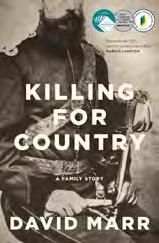
by David Marr
David Marr’s Killing for Country: A Family Story traces the violent history of frontier Australia from the settlement of Botany Bay through to the late 19th Century. The book is driven by Marr’s discovery of his own family’s role in the suppression of Aboriginal resistance.
The first half examines the powerful networks of wool merchants, newspaper barons, squatters, and pastoralists who resisted any attempt by governors to enforce equal justice for Aboriginal people and settlers. Their defiance, often expressed through acts of violence, reveals the ruthless foundations of colonial power.
The second half turns to Marr’s ancestors, Reginald and D’Arcy Uhr, officers in Queensland’s Native Police. Their duty was to “clear” Aboriginal people from their lands— work carried out with devastating force. Marr confronts this legacy with honesty, offering a searing account of the machinery of dispossession.

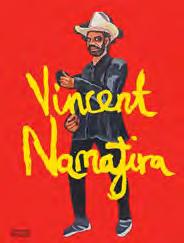
by Vincent Namatjira
Ormond College is proud to hold an original work by Indigenous artist Vincent Namatjira. Born in Adelaide in 1983, Namatjira later settled in the Central Desert to reconnect with his heritage and the artistic legacy of his great-grandfather, Albert Namatjira.
This book, which is an almost-complete catalogue of his practice, includes an introduction written by the artist along with several short essays by others. Namatjira’s work is strikingly figurative, portraying modern Australian politics, sporting icons, musicians, and, most powerfully, colonial history—Captain Cook being a recurring subject.
Although he gained widespread attention for his portrait of Gina Rinehart, that single work represents only a small part of his vision. The real force of his art emerges when his portraits are seen together as part of a larger themed series. These include Power, which gathers notable world figures; Leaders, focused on Australian politicians; the more celebratory Footy, featuring prominent Indigenous players; and the introspective, Myself. His depictions can be raw, sometimes damning, yet always compelling.
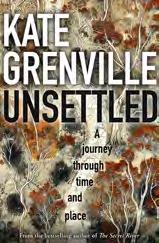
The Hawkesbury River is the central focus of two of Kate Grenville’s most memorable works, The Secret River (2005) and Unsettled (2025). The river is both a setting for personal stories—past and present—and a place deeply entwined with Grenville’s own family history. These books are complementary narratives and Unsettled is especially rewarding if you read The Secret River first.
In The Secret River, Grenville tells the fictional story of William Thornhill, a convict turned settler whose hunger for land on the Hawkesbury leads to devastating conflict with the Dharug people.
With Unsettled, a memoir, Grenville returns to the river in person, seeking to reconcile her feelings about her family history and the silences surrounding frontier violence. In her foreword she observes that, “alongside the government-level movements of justice and law, something smaller needs to happen as well, something more personal”. This book represents that personal reckoning: a journey into country, memory, and the lingering shadows of past events.
The Ormond College Association (OCA) is the club to which we all gain automatic membership when we leave College. We have a Committee, and our purpose is coordinate initiatives to support the alumni network and College. Put simply, our role is to bring Ormondians together, to celebrate friendships and the values of community, heritage and connection.

The Founders and Benefactors service and luncheon, held on 13th October last year, was a fitting reminder for me, as I began in the role of OCA President, of the profound impact we can make through our support for current and future students.
In March many of the OCA attended the Installation of the 11th Master, Dr Areti Metuamate. The Hall was packed on a sweltering evening, and this joyous and memorable celebration brought together family, friends and community.
Phil Bell (1988) hosted a lunch for alumni in Canberra in April, which was a great opportunity for Canberra alumni to get together.
The annual Et Vetera lunch was well attended in April, particularly by the 1975 cohort.
Luke Bennett (2011) organised a group of 40 students to visit the McKinsey office in May. The students gained many insights about possible careers from this experience.
In May, Simon Thornton (1988) and I organised a gathering for the 1987-1991 cohort. We hosted drinks in the SCR, followed by dinner at Naughton’s. This was a fabulous chance to catch up with Ormond friends.
Globe-trotting alumni enjoyed a dinner in Hong Kong, and the Master joined alumni for a black-tie dinner in London in June.
I’m also on the Ormond Ski Club Committee, and we were delighted to welcome the Master to the Lodge in July. Ross Cutler (1968) hosted the Master, and many other alumni were there to enjoy the school holiday snow.
Ormond alumni continue to provide practical and meaningful support for the current generation of students through the mentor program. This year’s program kicked off with a dinner in August, with 33 third year and graduate students matched to mentors.
In September, the students hosted the third Nostrum Futurum dinner. This event brings together current students and alumni to share experiences and build relationships. The dinner was well attended by alumni from across the decades, who came away thoroughly impressed by the current Ormond students. Luke Bennett (2011) provided the keynote speech, with some refreshing insights about future pathways for students.
Maureen Baker (1989), Geoff Rose (1987) and Simon Thornton (1988) organised the first OCA Golf Day for this century (we are unsure if there were earlier golf days!). Over 40
alumni attended the event at Spring Valley Golf Club. Dinner followed the golf, with prizes generously donated by alumni including from Bruce Symons’ (1985) Symons Organic Cheeses, and Mike Smith’s (1987) Rothwell Estate. Stay tuned for details about an Ormond vs. Trinity event in the autumn, and the second annual OCA Golf Day next spring (2026).
The annual OCA dinner is on Saturday 6 December. Dinner will be in Hall, following pre-dinner drinks in the JCR. We hope to see many of our friends there – these evenings are always such a wonderful chance to reconnect with friends.
Thank you to the Advancement Office for supporting OCA activities throughout the year. Thanks also go to the OCA Committee. We are always looking for opportunities to provide practical support for current students and the College, and meaningful ways to maintain our Ormond friendships. We have more events planned for 2026, and we’re very open to suggestions and ideas from the OCA community. Best wishes for the festive season, and I hope you all have a very happy 2026. •
Above. OCA Cocktail Reception in December 2024.
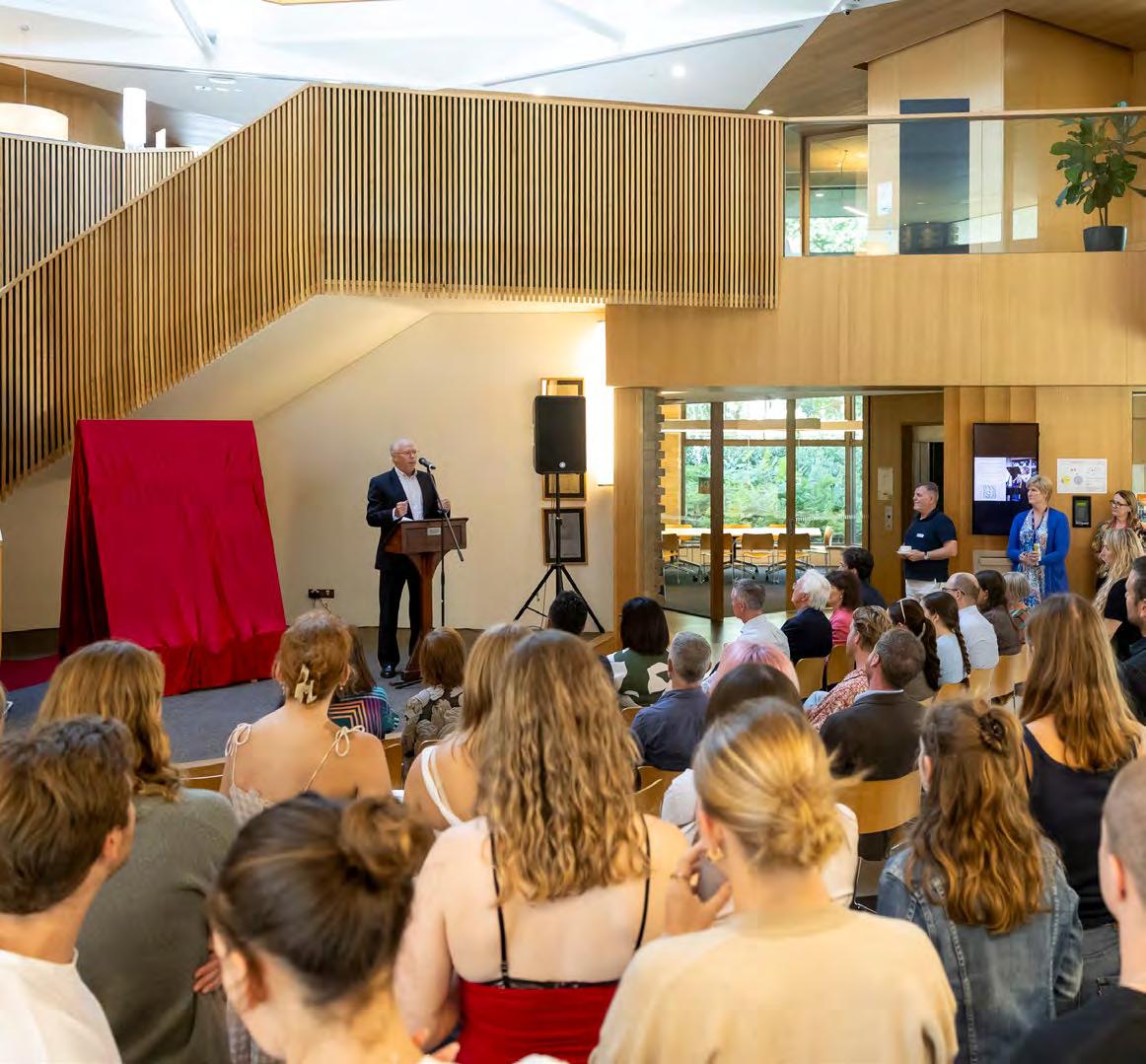
March saw the unveiling of Jaq Grantford’s superb portrait of former Ormond Master, Lara McKay. The portrait beautifully captures Lara’s warmth and dignity as a leader. It’s now on display in the Dining Hall.
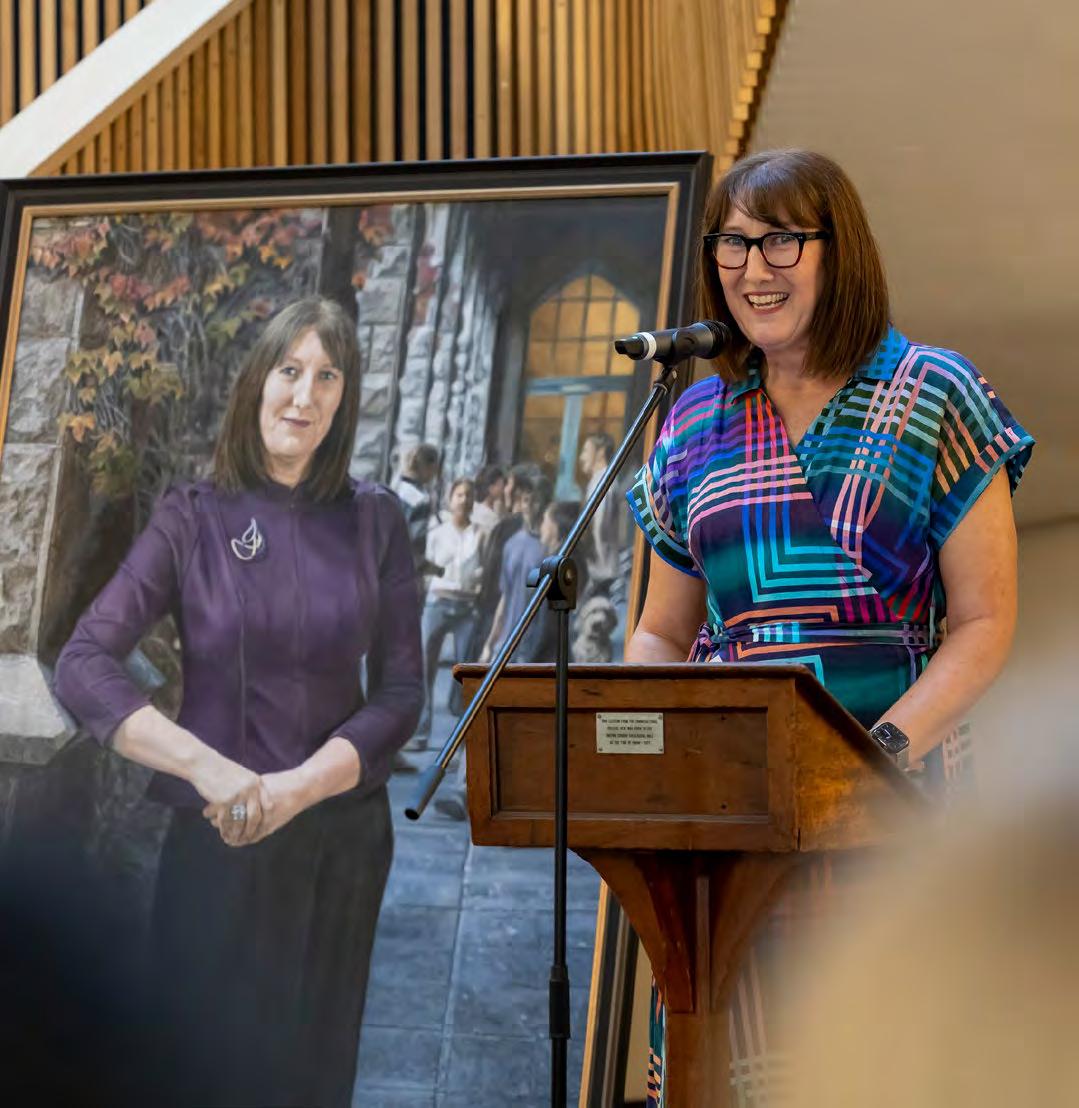
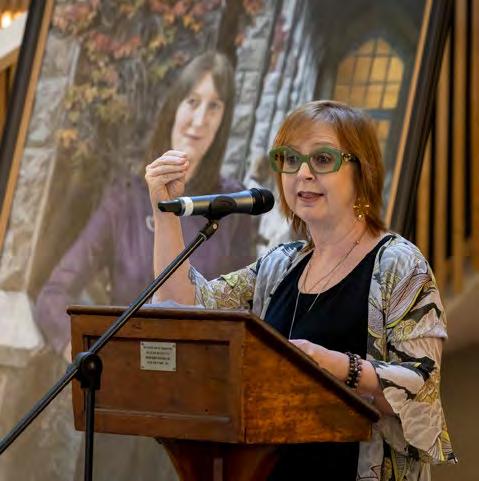
Opposite. Richard Loveridge (1981) addresses staff and students at the unveiling.
Above. Lara McKay with her portrait.
Left. Artist Jaq Grantford discusses her work.
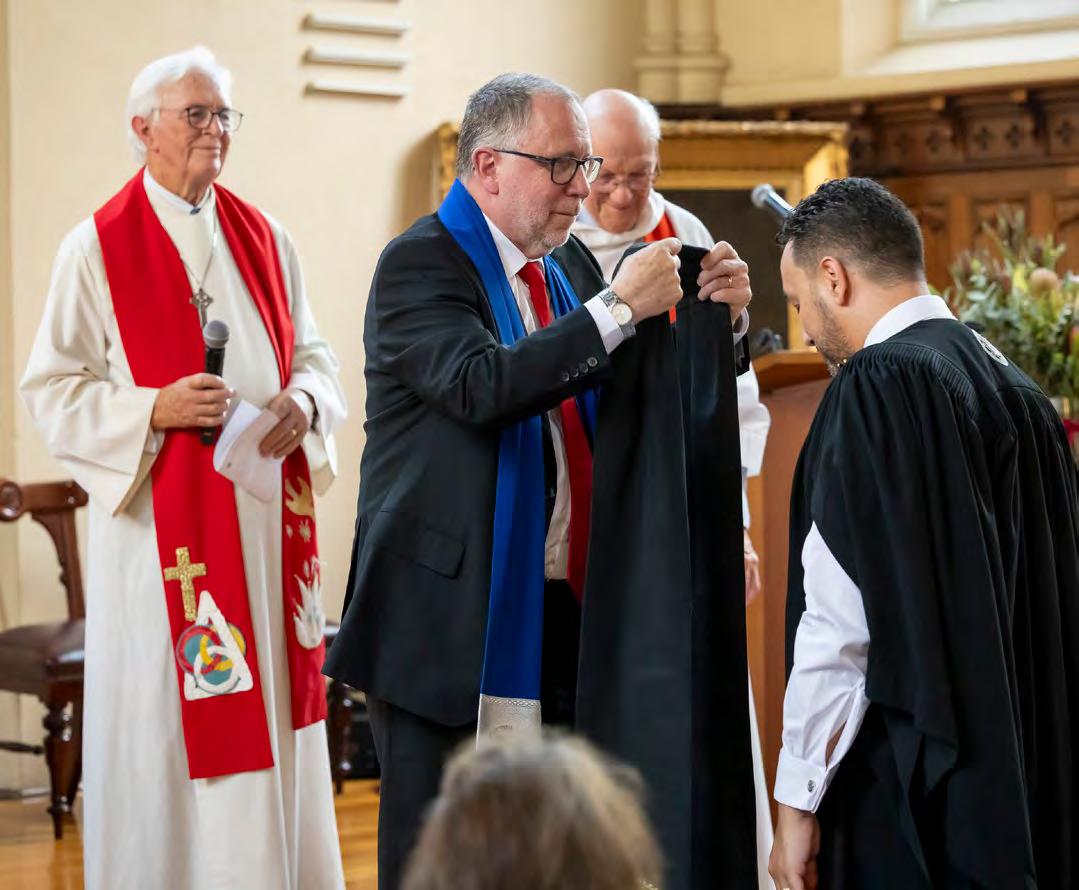
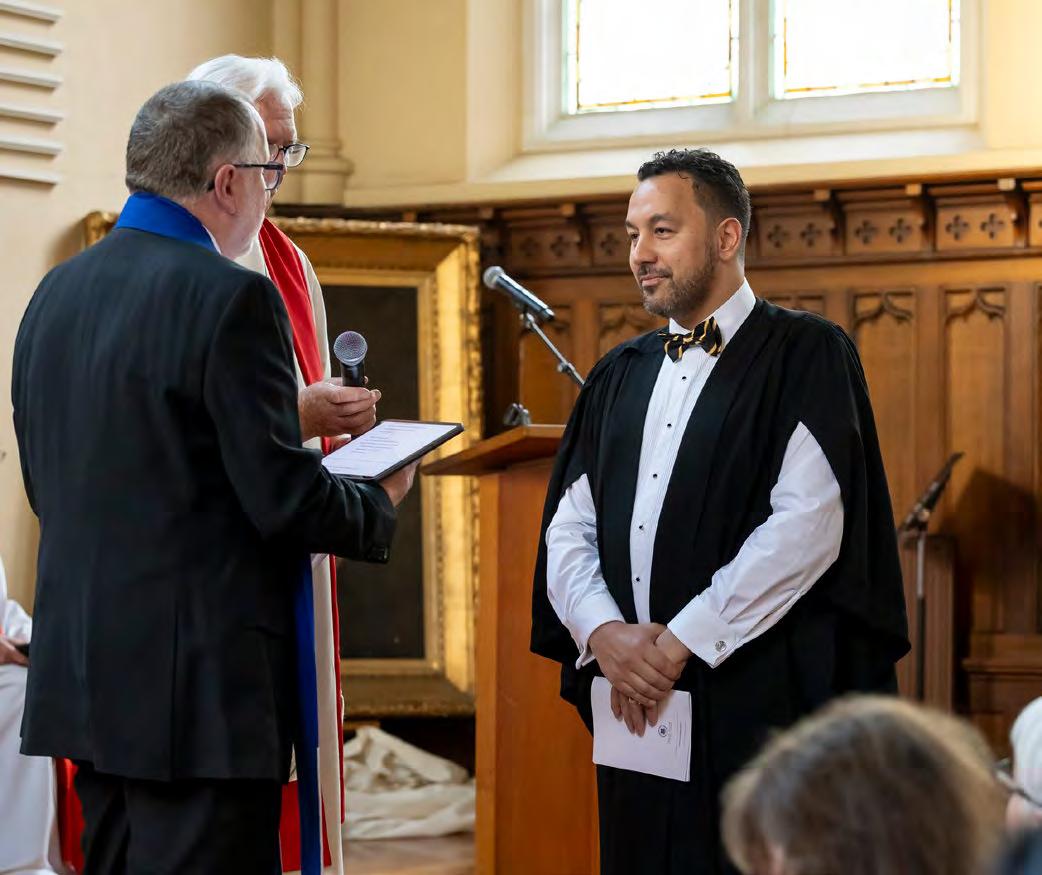
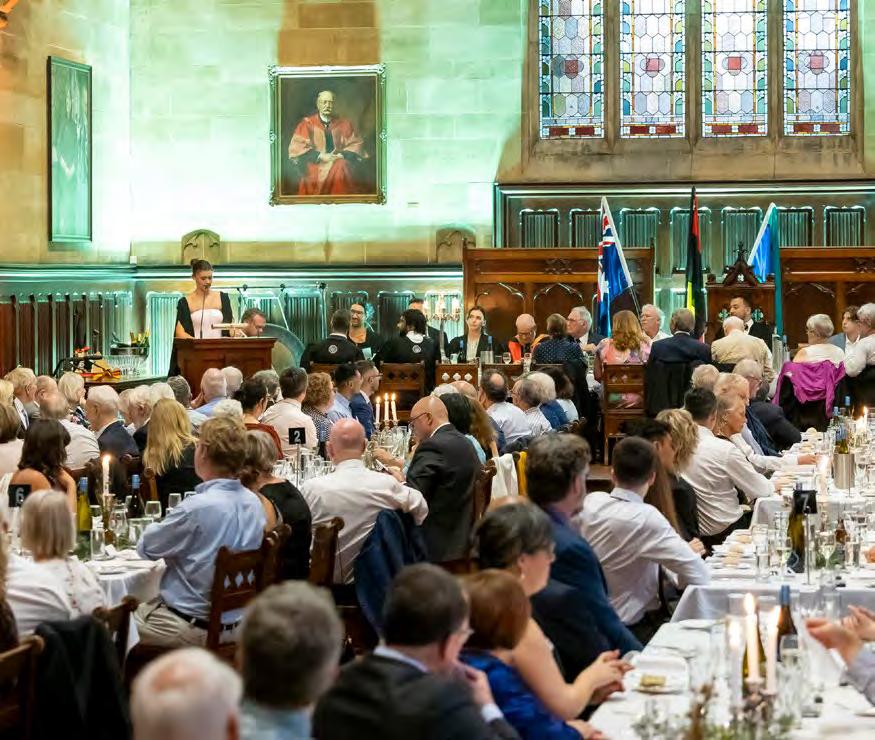
Alumni event in Hong Kong, February
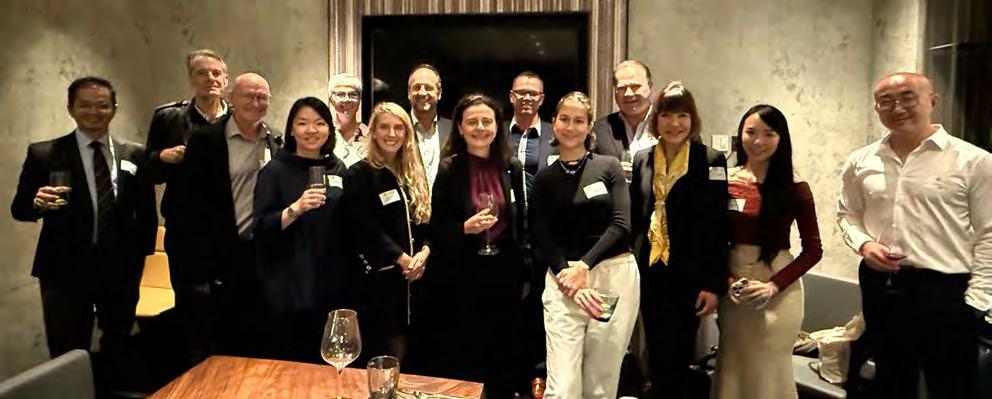
Et Vetera, April
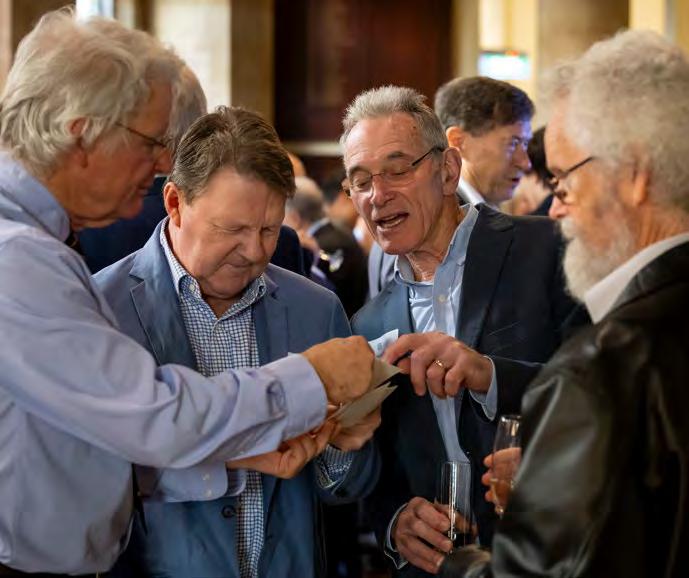
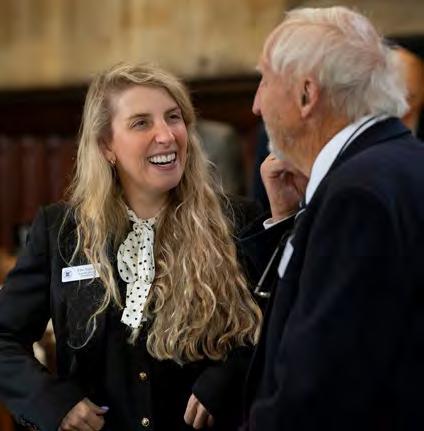
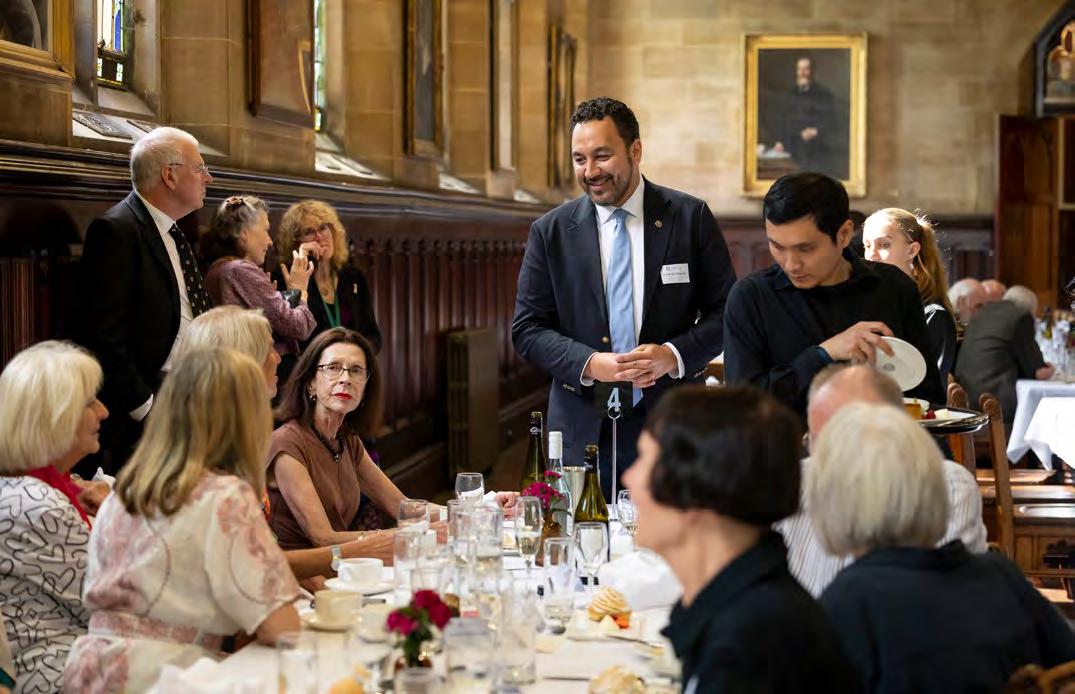
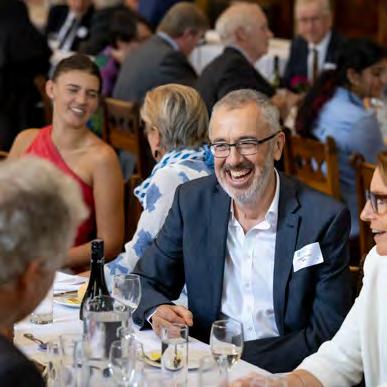
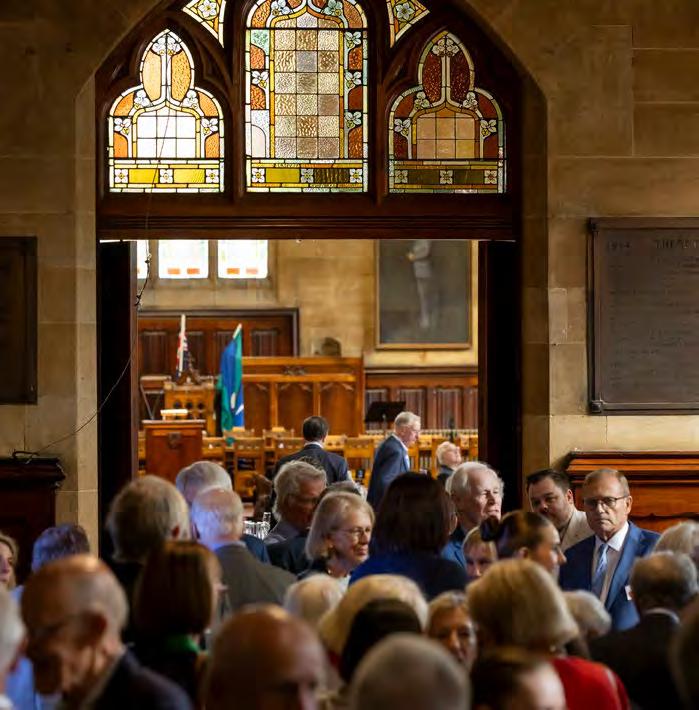
04-05. Freshers of 1975 catching up with staff and alumni. 06. Angus Thom (1975).
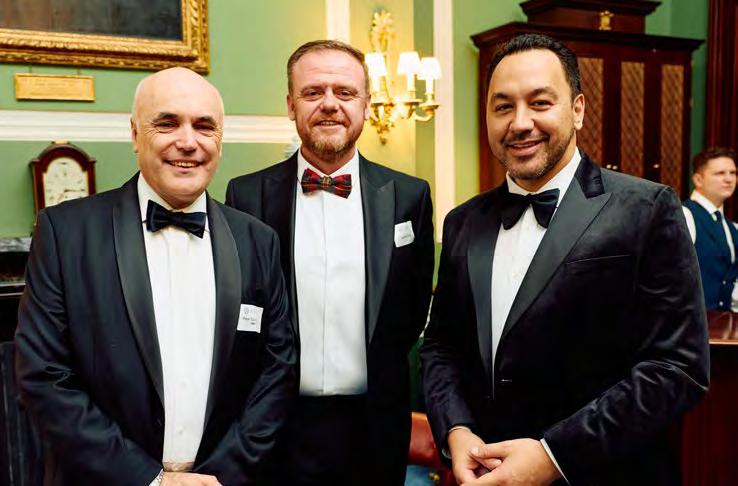
01. L-R: Peter Quinlivian (1985), Gareth Crowe, Dr Areti (Ari) Metuamate.
02. Jack Armstrong (2013), Jarita Winslow (2014), Martha Swift (2016).
03. L-R: Cassidy Ewan (2014), Will Meggitt (2013), Jade Sheary (2014), Kate Meggitt (2014).
Events in Singapore and the Philippines, September
01. Philip and Sandy Romualdez, parents of Ben Romualdez (2022), hosted a gathering for prospective parents in Manila.
02. Hugh MacDonald (1986) and Francoise Michel, hosted an event for alumni and current parents in Singapore City.
Her Excellency Professor the Honourable Margaret Gardner AC, Governor of Victoria, April
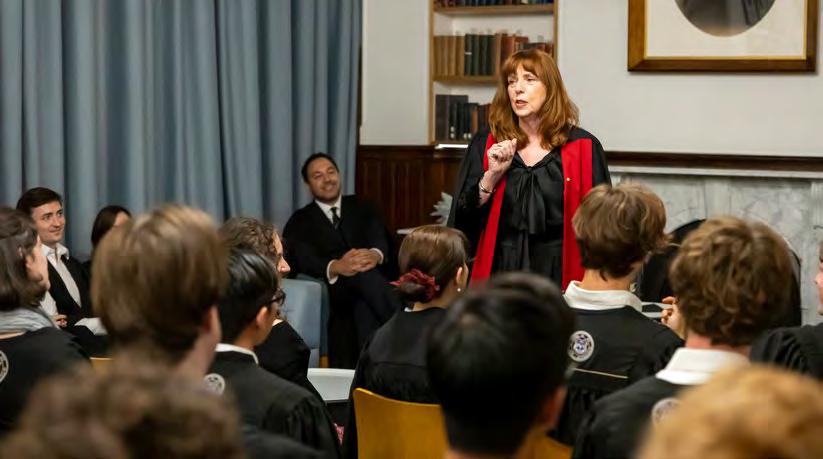
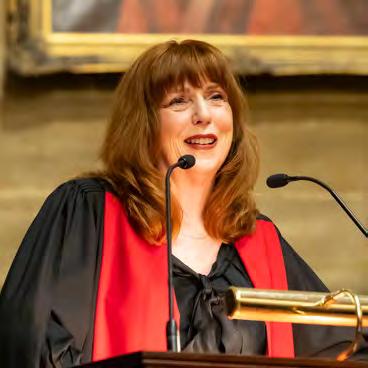
May
National Reconciliation Week with Dee Teao, May
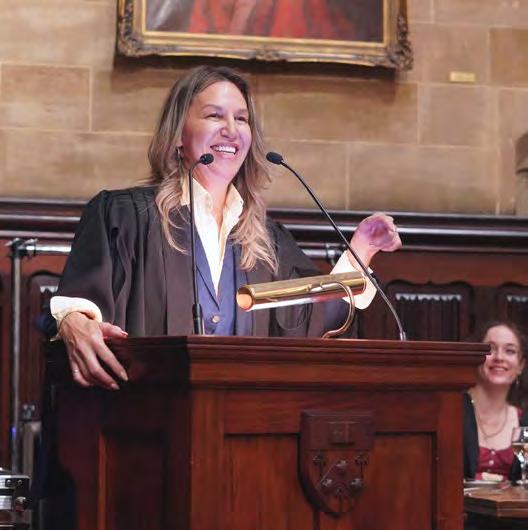
Nostrum Futurum, September
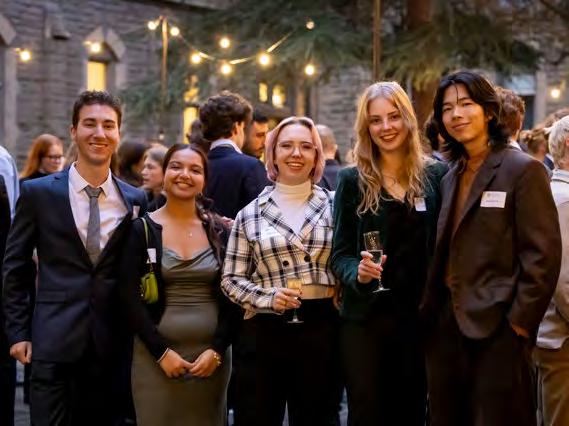
01. L-R: Toby Clack, Suhaavi Gulati, Allira Smith, Zoe Meiers, and Kenneth Chai. 02. Alumnus Will Power (2019).
Innovation and startup ecosystem tour, September
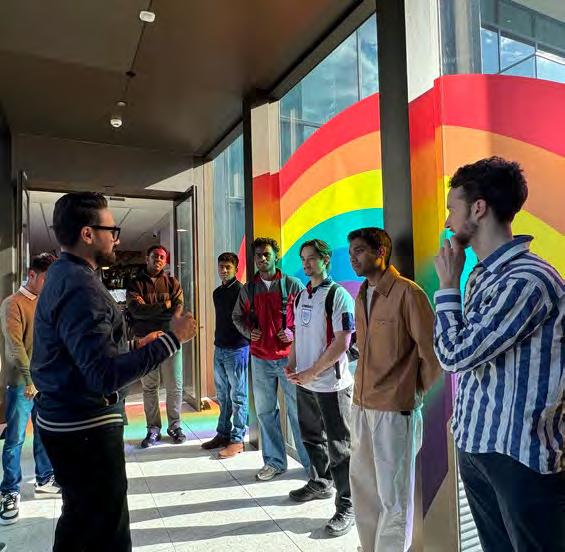
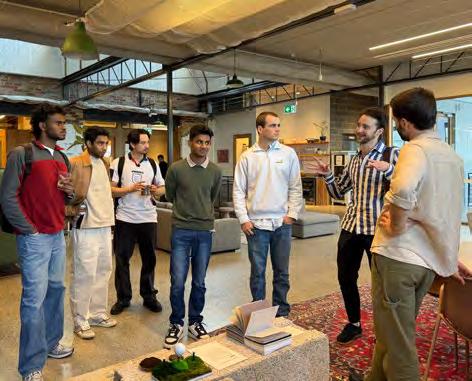
01. Site Visit at REA Group with Deepak Singh (Culture & DEI Lead). 02. Site visit at Sanders Place with Danielle Stamoulos (Community Manager) and Desmond John (Vibe Guide Ventures).
Parents Welcome Drinks, March
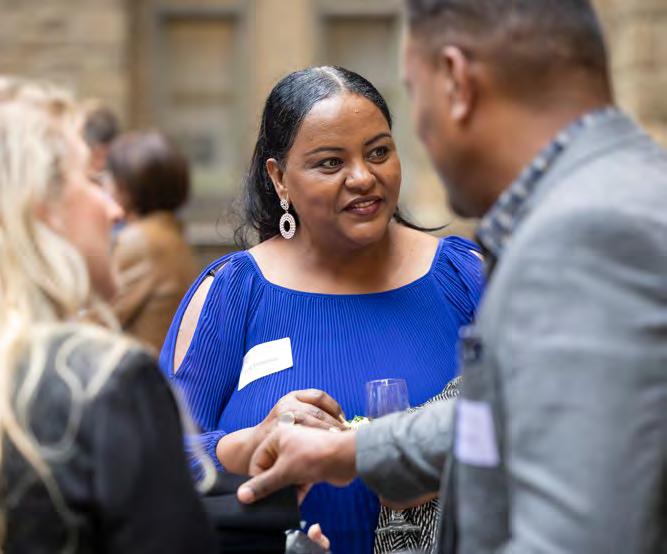
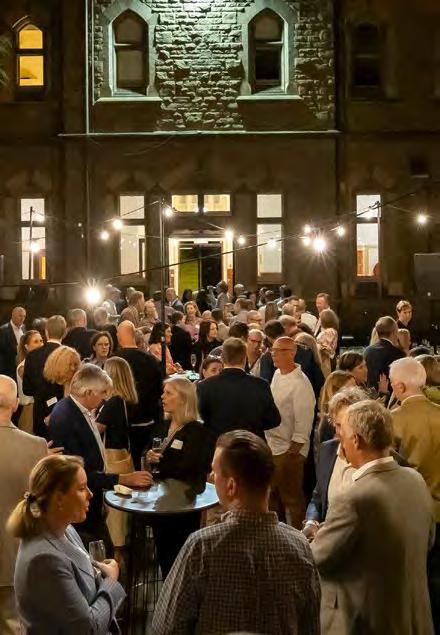
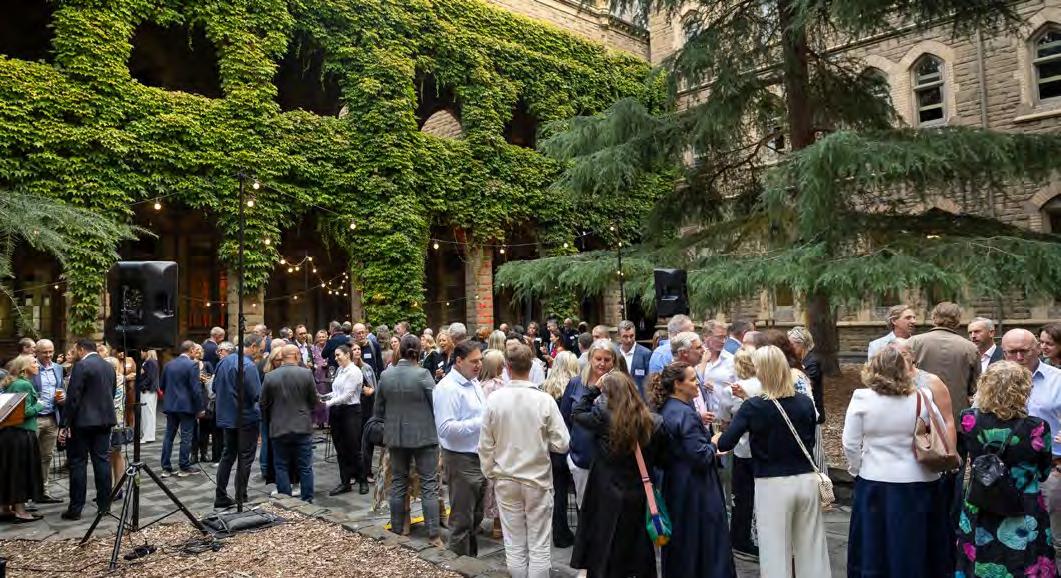
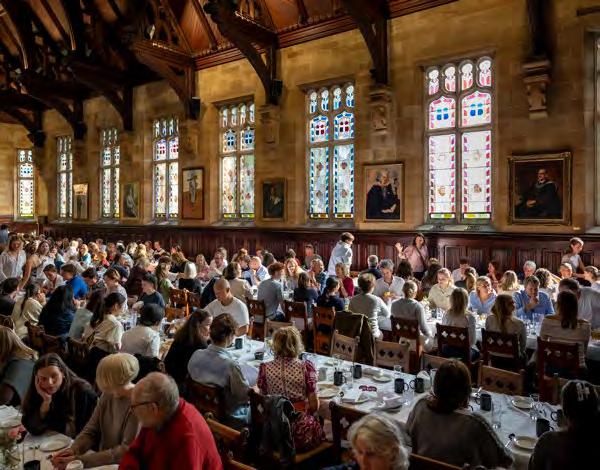
1881 Club lunch, July
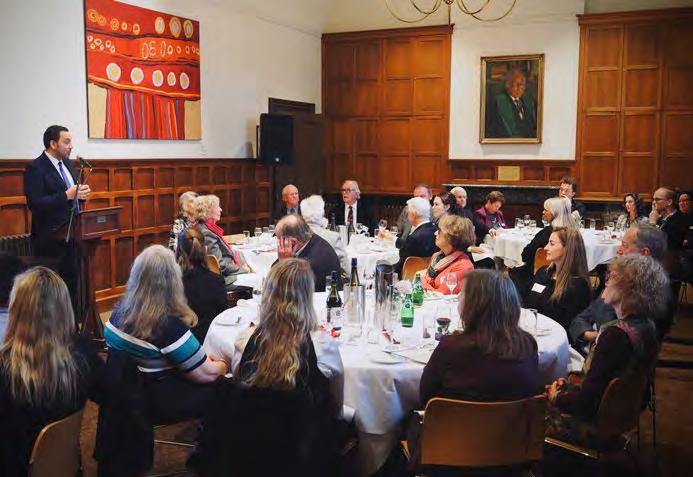
01. Master, Dr Areti (Ari) Metuamate, welcoming guests.
02. Council Chair Richard Loveridge (1981) and Neville Bertalli (1961).
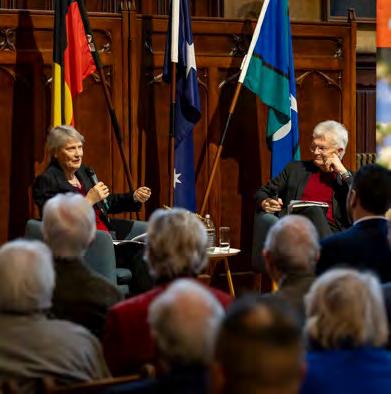
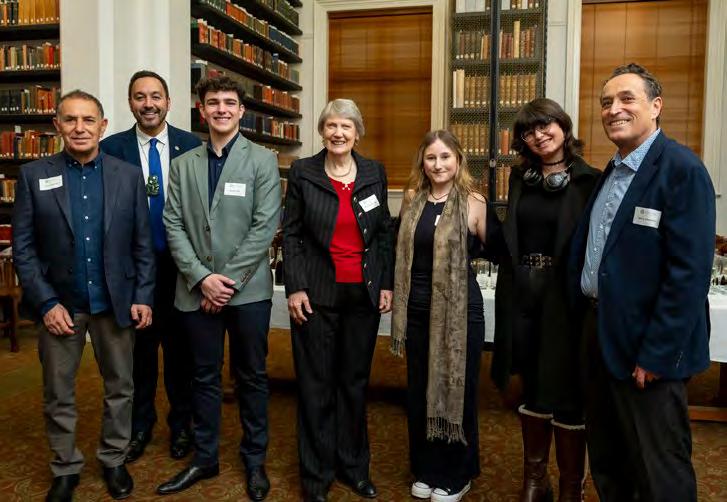
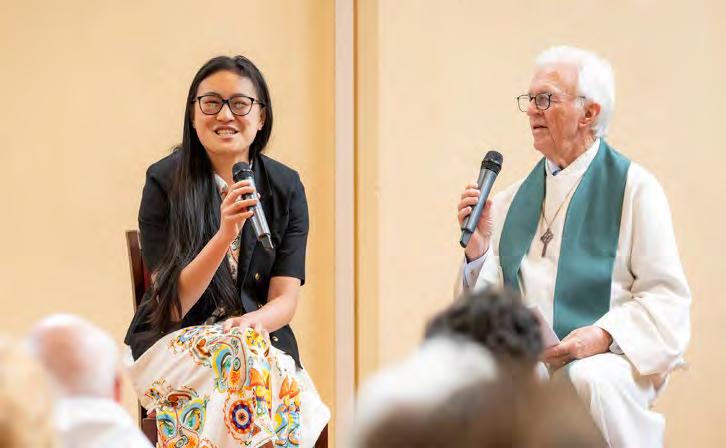
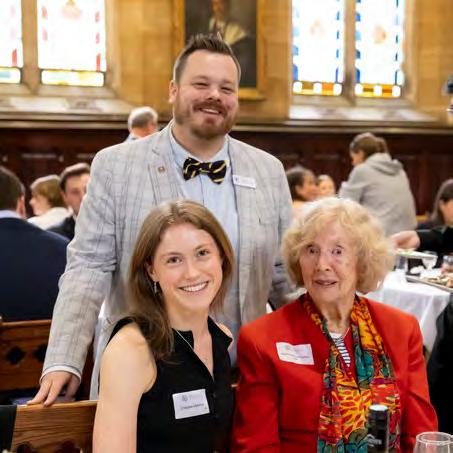
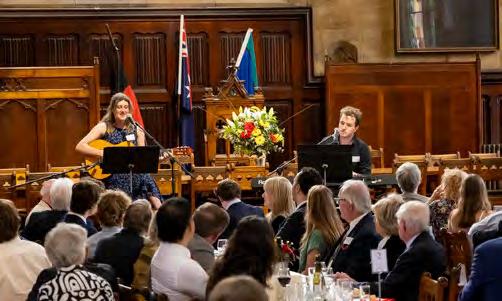
For more information and to register for these events, please visit ormond.unimelb.edu.au/ news-and-events
To arrange your own gathering, please don’t hesitate to contact the Community Engagement Manager who can help with group invitations on 03 9344 1169 or alumni@ormond.unimelb.edu.au
Ormond thrives on the energy of people coming together - students, tutors, staff, alumni, and friends who share ideas, debate big questions, and open doors for each other.
Ormond’s Fellows are part of this tradition. Fellows are academics, professionals, artists, and community leaders who volunteer their time to open conversations, offer perspectives, and sometimes just to remind students that big dreams are possible. They come to Formal Hall, host fireside chats, take students out for coffee, or simply share their stories. Sometimes a Fellow is the first person to say, “Yes, you can do that.”
Master and Head of College, Dr Areti (Ari) Metuamate, puts it this way:
“Fellows bring the world into Ormond. They inspire our students with their journeys and their generosity, and in turn they walk away inspired by the energy of this community.”
This year, we’re thrilled to welcome an incredible new group of Fellows for 2025. They span environmental science, health, diplomacy, business, comedy, film, law, and more – proof that there’s no single path to making a mark in the world.
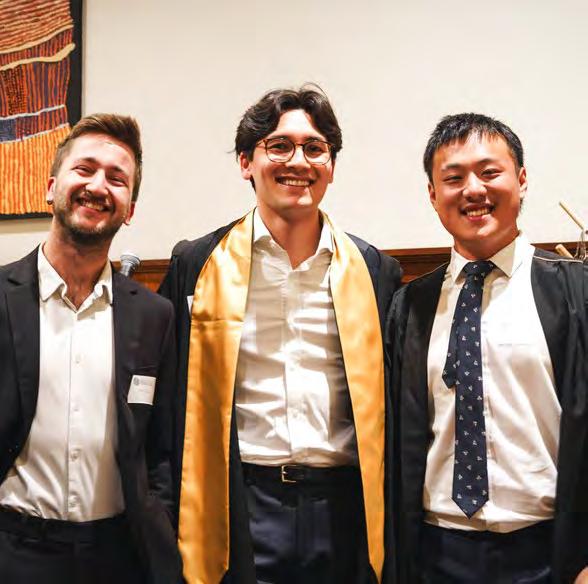
Associate Professor Jane Freemantle OAM, who has stepped into the role of Chair of Fellows for 2025–2027, says it best:
“The Fellows are here to listen, guide, and share. Together with students, we create a community where ideas flow freely and everyone grows.”
Fellows remind us that education is not just what happens in the classroom. It’s the people who walk through our doors, share their stories, and leave us all a little more curious and a little more inspired.
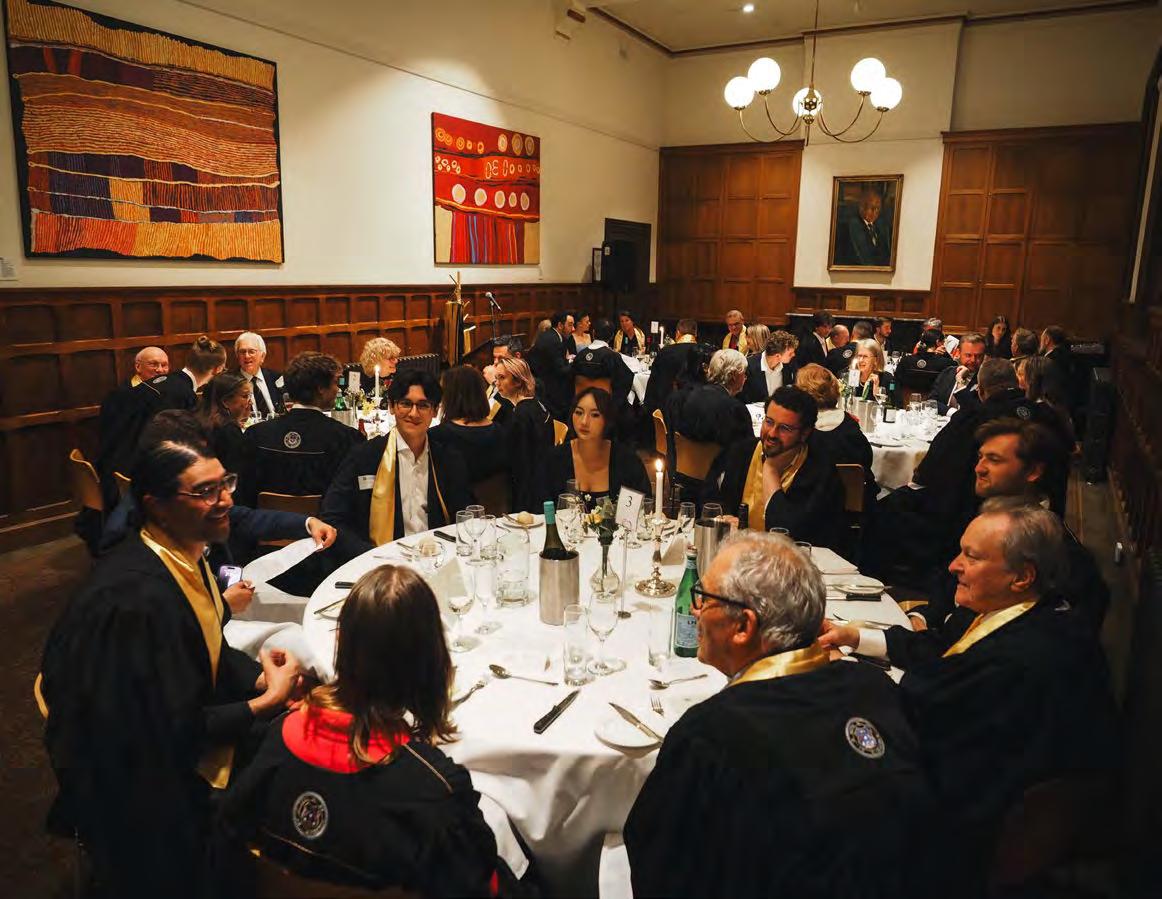
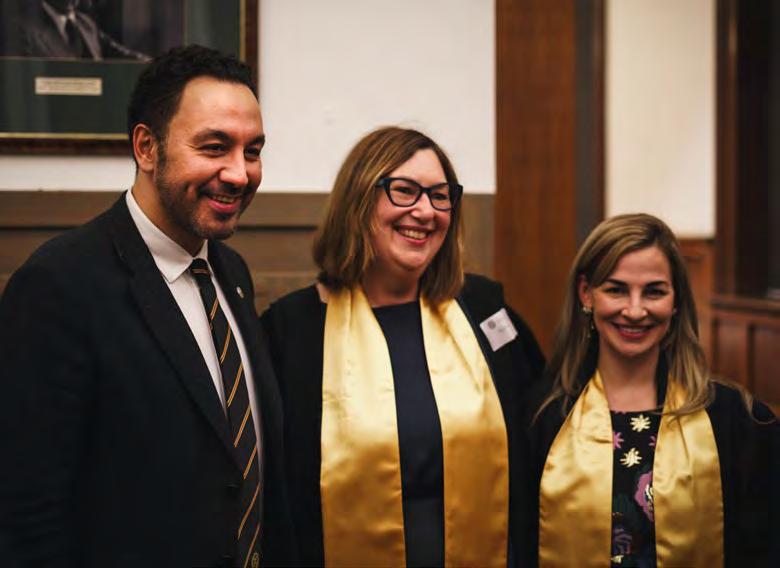
Opposite. Mitchel Fryer, Noah Szto (2017), Eddison Wang.
Above. Ormond Fellows getting acquainted in the Kaye Scott Room.
Left. Dr Areti (Ari) Metuamate, Jane O’Dwyer, Associate Professor Jessa Rogers.
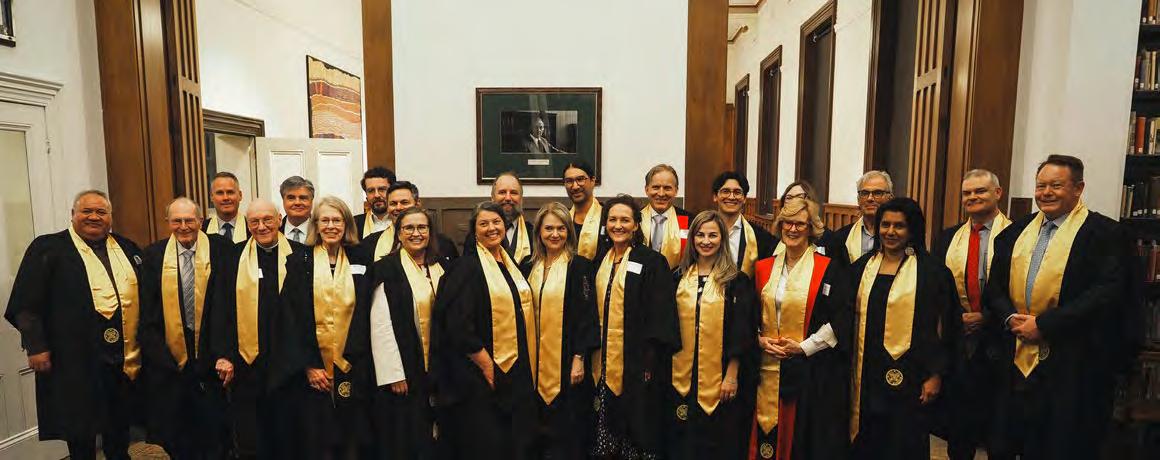
Above. Ormond Fellows bring expertise from the worlds of academia, business, the arts, the law and more.
Each of our new Fellows brings a unique story. Here’s a snapshot — look out for their bios in this issue and online, where you’ll learn more about their journeys and what they’re excited to share with students.
International Court of Justice
Her Excellency Judge Hilary Charlesworth AM
Chair of Opera Australia and former Vice Chancellor
Professor Glyn Davis AC
Associate Provost, the University of Melbourne
Melbourne Laureate Professor Marcia Langton AO
Chancellor of the University of Cambridge; previous Master of Pembroke College
The Rt Hon Lord Christopher Smith
Eminent Ophthalmologist
Melbourne Laureate Professor Emeritus Hugh Taylor AC
Uniting Church Minister
Emeritus Professor Robert W Gribben AM
Faculty of Science, the University of Melbourne
Melbourne Laureate Professor
Emeritus Andrew Holmes AC FRS
FAA FTSE
Musician in Residence (commenced 1974)
Associate Professor
Stephen McIntyre AM
Indigenous Fellow in Residence (commenced 2023)
Associate Professor Jessa Rogers
Pūkenga/Academic at Te Wānanga o Raukawa, Indigenous University, New Zealand
Dr Mahina-a-rangi Baker
Professorial Fellow of the Melbourne Centre for Studies in Higher Education and the Faculty of Fine Arts and Music
Professor Warren Bebbington AM
Screenwriter and film & TV producer, Los Angeles, USA
Joe Brukner
Senior Research Fellow in the ARC Centre of Excellence on Children and Families Over the Lifecourse, University of Melbourne
Dr Sangeetha Chandra-Shekeran
Lecturer in Classics and Archaeology, University of Melbourne
Dr Tom Davies
CEO Robert Menzies Institute
Georgina Downer

UN judge, Switzerland
The Hon Judge Rowan Downing KC
Deputy Vice Chancellor and Vice-President (Education), Griffith University
Professor Shaun Ewen
NSW Treaty Commissioner Dr Todd Fernando
Principal Research Fellow at the Melbourne School of Population Health, the University of Melbourne (Chair of the Fellows)
Associate Professor Jane Freemantle OAM
Founding Partner of BGH Capital
Ben Gray
Head of the Mergers and Acquisitions Practice for EMEA, Cravath, New York, USA
Richard Hall
Honorary Enterprise Professor at the University of Melbourne and former Federal MP and Minister
The Hon Professor Greg Hunt
Human Rights Lawyer; Chair of the Australian Sports Commission and President of the Australian Red Cross
Kate Jenkins AO
School of Biosciences, Faculty of Science, the University of Melbourne
Professor Alex Johnson
Chair of Rothschild & Co Australia and Board Member of NAB, Scentre Group, Myer Family Investments, Sydney Grammar School, John Monash Scholarship Foundation
Carolyn Kay
Director Leadership, GEDSI & Innovation APLJ, Papua New Guinea
Honorary Associate Professor Salmah Eva-Lina Lawrence
Ex-Vice-Chancellor of the University of Melbourne
Professor Duncan Maskell
Executive Director, Atlantic Fellows and former Australian Ambassador
Damien Miller
Professor of Public Health at the University of Melbourne’s School of Population and Global Health (MSPGH), and Honorary Professor of Public Health at the Kamuzu University of Health Sciences, Malawi
Professor Rob Moodie
CEO Cooperative Research Australia
Jane O’Dwyer
Minister, Tasmanian Government
The Hon Madeleine Ogilvie MP
Science and Mathematics educator (and former Dean of Learning)
Michael Patterson
Founder of Teach for Australia
Melodie Potts Rosevear OAM
Philosophy, City University of New York
Distinguished Professor Graham Priest
Walter and Eliza Hall Institute of Medical Research (WEHI)
Professor Ken Smith
Head, Reproductive Services Unit, Royal Women’s Hospital. Senior clinician and head of clinical research Melbourne IVF
Associate Professor Kate Stern AO
Medical doctor and award-winning comedian
Noah Szto
CEO Wurundjeri Woi Wurrung
Aboriginal Heritage Corporation
Kupa Teao
Senior Publicity Manager, Disney Corey Te Wharau
CEO of Friesian
Simon Thornton
Principal Fellow, Melbourne Conservatorium of Music Adjunct
Professor at The University of Adelaide
Professor Peter Tregear OAM

Council plays a vital role in shaping the direction of the College, ensuring good stewardship, and nurturing the values of our community. Several long-serving members have recently concluded their term on Ormond’s Council, each leaving a significant legacy. We take this opportunity to thank them for their service and to celebrate their contributions to the life of the College.
Chair Mr Richard Loveridge (1981)
Rev Dr Robert Johnson OAM (1966)
Mr Christian Johnston (1991)
Ms Lisa Leong (1990)
Professor Alison Duxbury (1988)
Professor Nigel Bertram (1986)
Custodian Ms Mary Padbury (1978)
The Hon Kenneth Hayne KC AC (1964), Custodian from Jan 2026
Council Member 2006–2025 | Finance Advisory Committee Member since 2009 | Investments Committee Member since 2009
Peter Wade has been one of the most significant figures in Ormond’s recent history, contributing through his service on Council and through his extraordinary philanthropic support. A member of both the Finance Advisory and Investments Committees, he has brought entrepreneurial energy and strategic leadership to the College’s growth.
Peter founded Travelbag PLC, a UK-based company that pioneered specialist travel to Australia and New Zealand. After selling the company in 2003, he has remained deeply involved in tourism and community service, including as Chair of Tourism Queensland and as a director of multiple companies in the sector.
His vision and generosity made possible the establishment of the Wade Institute of Entrepreneurship in 2015, which has since grown to be a national leader in entrepreneurial education. Through his support, a community of innovators and changemakers have had the opportunity to pursue their ambitions and to shape and invest in ventures that serve the world. Ormond expresses profound gratitude for his leadership, philanthropy, and enduring commitment to the College.

Council Member 2016–2024 | Chair of Finance Advisory Committee 2018–2024 | Member of Investments Committee since 2009
Rob Stewart has been a steady and insightful presence on Council, offering financial stewardship as Chair of the Finance Advisory Committee and serving as a longstanding member of the Investments Committee. His thoughtful guidance has been invaluable to Ormond, ensuring the College’s financial sustainability and capacity to invest in its future.
Rob is Managing Partner of Global Infrastructure Partners (GIP), where he oversees major investments in energy, transport and water infrastructure. Prior to joining GIP in 2015, he had a distinguished career with Credit Suisse, serving as CEO of Credit Suisse Australia and working across New York, San Francisco, and Melbourne. He began his career as a chartered accountant, holds a Bachelor of Commerce from the University of Melbourne, and an MBA from the University of Chicago.
Rob and his family have been generous supporters of the College, including through the establishment of the Stewart Family Scholarship. We thank him for his wise counsel, his dedication to Ormond, and his ongoing support of students. There have now been five generations of Stewarts coming to live at Ormond – the first arriving in 1916.
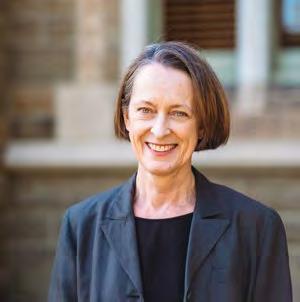
Council Member 2015–2024 | Chair of Buildings and Grounds Committee 2018–2025
An Ormond alumna and architect of distinction, Sally Draper has served the College with dedication over the past decade. As Chair of the Buildings and Grounds Committee, she oversaw the development of the campus master plan and guided the successful attainment of Heritage Victoria approval for the redevelopment of Oval Wing.
Sally’s architectural career is extensive. After graduating with a Bachelor of Architecture (Hons) from the University of Melbourne as an Ormond resident (1980–82), she worked with Peter McIntyre in Melbourne before joining Richard Rogers and Nicholas Grimshaw in London. Returning to Melbourne in 1988, she co-founded Swaney Draper Architects, delivering significant institutional projects including the Federation Bells and footbridge in Birrarung Marr, Melbourne Grammar’s Wadhurst campus, and Lauriston’s Howqua campus. In 2004, she founded Sally Draper Architects, leading awardwinning projects such as Melbourne Girls Grammar and Williamstown Library.
A Life Fellow of the Australian Institute of Architects, Sally has contributed to the profession through awards panels and teaching, and to the community through her involvement with Outward Bound Australia and Melbourne Grammar School. Ormond is deeply grateful for her vision, her leadership in campus renewal, and her continuing connection as both an alumna and parent.


Custodian of Ormond College 2016–2025
In May 2025, Dr Ross Sundberg stepped down as Custodian of Ormond College, a role he held since its creation in 2016. His association with Ormond spans more than six decades, beginning as a student in residence from 1961 to 1964.
Ross’s distinguished academic and professional life includes degrees from Melbourne, Monash, and Oxford, followed by a celebrated legal career. He was appointed a judge of the Federal Court of Australia in 1995, serving until 2010, and was made a Member of the Order of Australia in 2014 for his service to the law.
As Custodian, Ross was entrusted with the stewardship of the College’s constitution and traditions. His long involvement in College life - as student, tutor, Director of Studies in Law, and later Judge in Residence - equipped him uniquely for this role. His thoughtful guardianship has ensured that Ormond’s governance remains both rigorous and true to its values. We thank Ross for his remarkable service and his lifelong connection to the College.
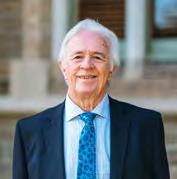
This year, Ormond’s Deputy Chair, the Rev Dr Robert Johnson, was awarded the Medal of the Order of Australia in the King’s Birthday Honours. The award recognises his service to the Uniting Church and the broader community. This honour also reflects the values that underpin his service to Ormond, where he continues to play an important leadership role.
Together, these individuals have given decades of service to Ormond. Their leadership, wisdom, and generosity have strengthened the College and created opportunities for generations of students. On behalf of the College community, we express our deepest thanks for their contributions and look forward to their continued place in the Ormond story.
The College is working with the community to identify new Council members.

The College extends its congratulations to members of the community who have been recognised in the recent Australia Day and King’s Birthday Honours lists.
Dr Ross Stanley Cutler AM (1968) has been made a Member of the Order of Australia for significant service to veterinary medicine, and to the pork industry.
Dr Peter Brukner OAM (1977) has been named the Victorian Finalist for Senior Australian of the Year for his efforts as a sports medicine leader and health campaigner.
Rev Dr Robert Johnson OAM (1966 & Deputy Chair of the Ormond College Council) for service to education, and the Uniting Church in Australia.
Dr David James Iser OAM (1972) for service to medicine as a general practitioner.
Dr Margaret Mary Niemann OAM (1976) for service to medicine as a general practitioner.
Dr Lewis Charles Perrin OAM (1975) for service to gynaecological oncology.
Mr Roger Andrew Geoffrey Vines OAM (1956) for service to mining, and to the community.
We would love to hear from other members of the Ormond community who have received awards. Get in touch at alumni@ormond.unimelb.edu.au.
CONGRATULATIONS TO THE FOLLOWING ALUMNI ON THEIR RECENT SENIOR APPOINTMENTS AND AWARDS


Madeleine Ogilvie (1987), also an Ormond fellow, was elected to her 5th term as a Member of the Tasmanian House of Assembly.
Lucy Cooke’s (2007) SpaceDraft won the AFR’s Most Innovative Company in Australia Award for 2025 in October.
Serial entrepreneur and Ormondian Ed Hooper (2004) and co-founder Andrew Armstrong closed an oversubscribed $3.3 million Series A round for GXE, their integrated platform designed to provide a simpler and smarter solution for managing private assets.

Noah Szto (2017) won the Directors’ Choice award at the 2025 Melbourne Comedy Festival.
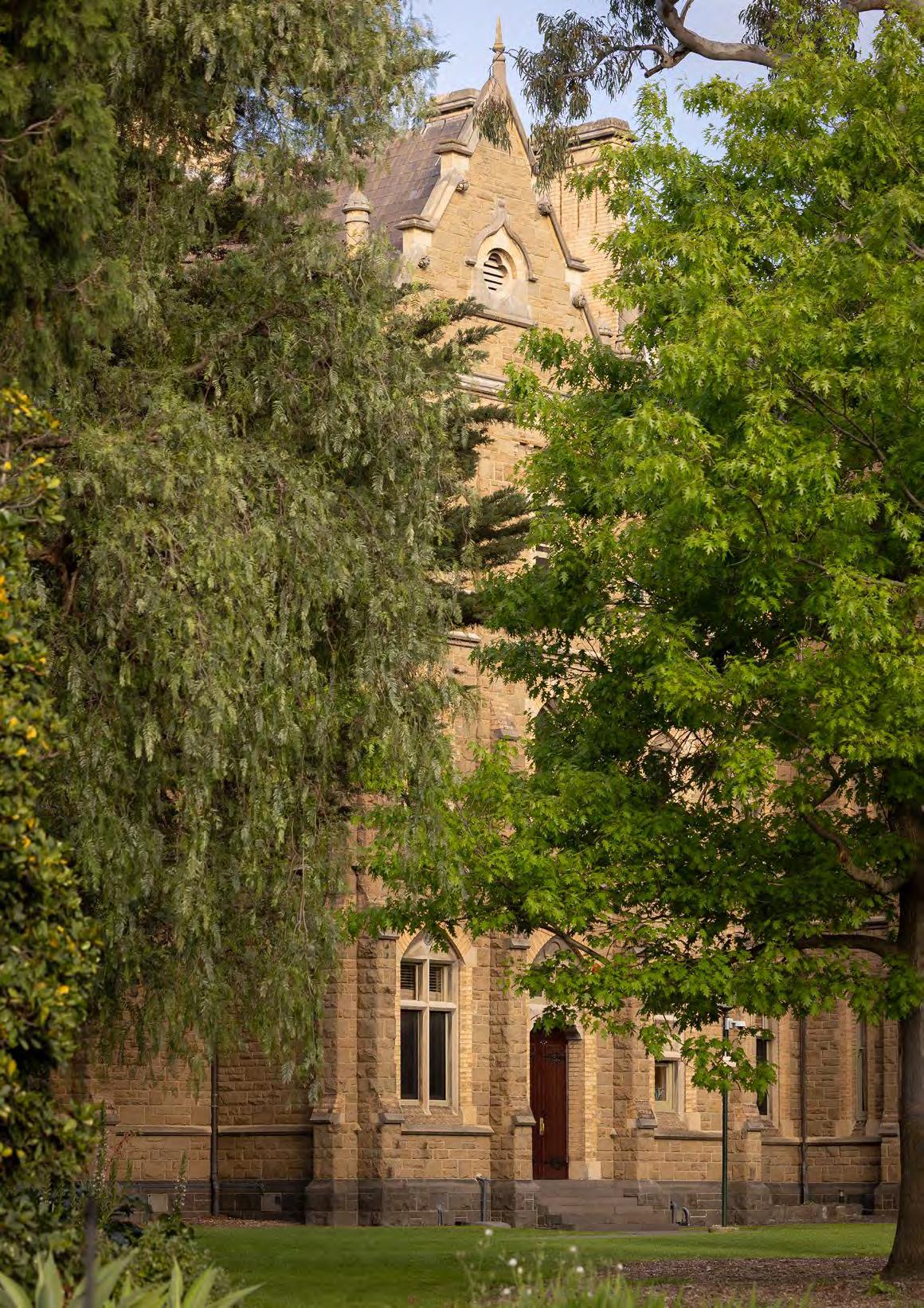
Ormond College extends its heartfelt condolences to the families and friends of our community members whose passing has been recently brought to our attention.

Ormond College extends its heartfelt condolences to the families and friends of community members who have recently passed away:
Mr Gordon Hirth (1945)
Prof Sidney Milford (1945) - Passed away in 2022
Dr Alf Liebhold (1946)
Mr Edwin Errey (1947) - Passed away in 2012
Mr Neil Cameron (1948)
Mr Richard Hyett (1953)
Hon Tim Smith AM (1958)
Rev Graeme Kerr (1961) - Passed away in 2022
Mr Tony Sell OAM (1961)
Mr Alex Forrest OAM (1962)
Dr Ross Terrill (1962)
Mr Bruce Wilson OAM (1964)
Mr David Crawford AO (1965)
Mr Peter Bate (1967)
Mr Peter Hammond (1968)
Mr John Scott (1968)
Mr Ian Nisbet (1970)
Ms Merinda Northrop (1975)
Mr Alistair Campbell (1991)
Ms Margie Bishop (1995)
Ms Amy Colquhoun (1998)
Mrs Gillian Cook - Spouse of alumnus
Bob Cook (1950), donor and 1881 Club member
Mrs Lesley den Hartog - Spouse of alumnus
Dirk den Hartog (1963), and former staff member
Mrs Kathy Parker - Spouse of former Master
David Parker and past parent
As the 2025 Tax Appeal draws to a close, we’re reflecting with deep gratitude on the incredible support shown by the Ormond community. Your generosity has brought us within reach of an ambitious goal that will make a real difference for our students.
Thanks to the extraordinary generosity of our Ormond community, we have almost reached our 2025 Tax Appeal goal of $350,000 – with just $15,000 to go.
To everyone who has already donated: thank you. Your support has been truly inspiring and is already creating a brighter future for our students.
Any contribution – no matter the size – will help us reach our target and have a lasting impact through:
Scholarships – building a diverse and inclusive College where every student has the opportunity to thrive.
Renewing the Junior Common Room and Quad – spaces that are central to student life, where friendships are formed and ideas come to life.
This is your last chance to be part of this year’s Appeal. Together, we can ensure we meet our goal and strengthen the Ormond student experience.
Scan