Grand Opening: The Dome by Dr. Phillips Charities pg. 4
New Exhibit Explores Illusions pg. 7
Introducing Late Night Hours pg. 12
4ROOTS FARM FOR GRADES 2-5
Weekly STEM experiences that build 21st century skills with hands-on activities, labs, exhibits, live shows & more!
Spots are filling up fast with many camps already sold out. Register now at osc.org/summer-camps. SPECIAL OFFSITE CAMPS AT
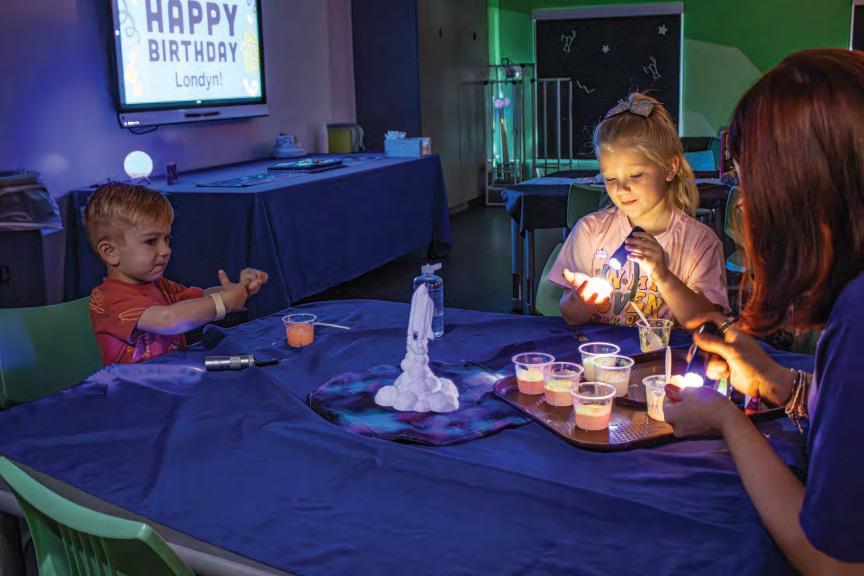
Check out our all-inclusive, themed party packages with awesome add-ons available!
• Free admission and parking for all your guests
• A 60-90 minute private party
• Hands-on science programming
• Fun themes, food and beverages, and so much more!
PICK A THEME, MAKE A GUEST LIST, AND LEAVE THE REST TO US!
Party Animals • Fantastic Jurassic
Weird Science
Exploration Space
*Preschool is a Licensed DCF Center C09OR0729
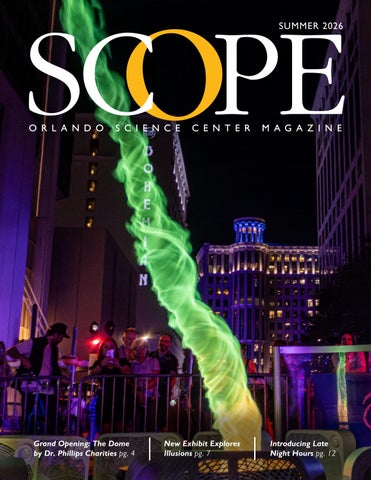
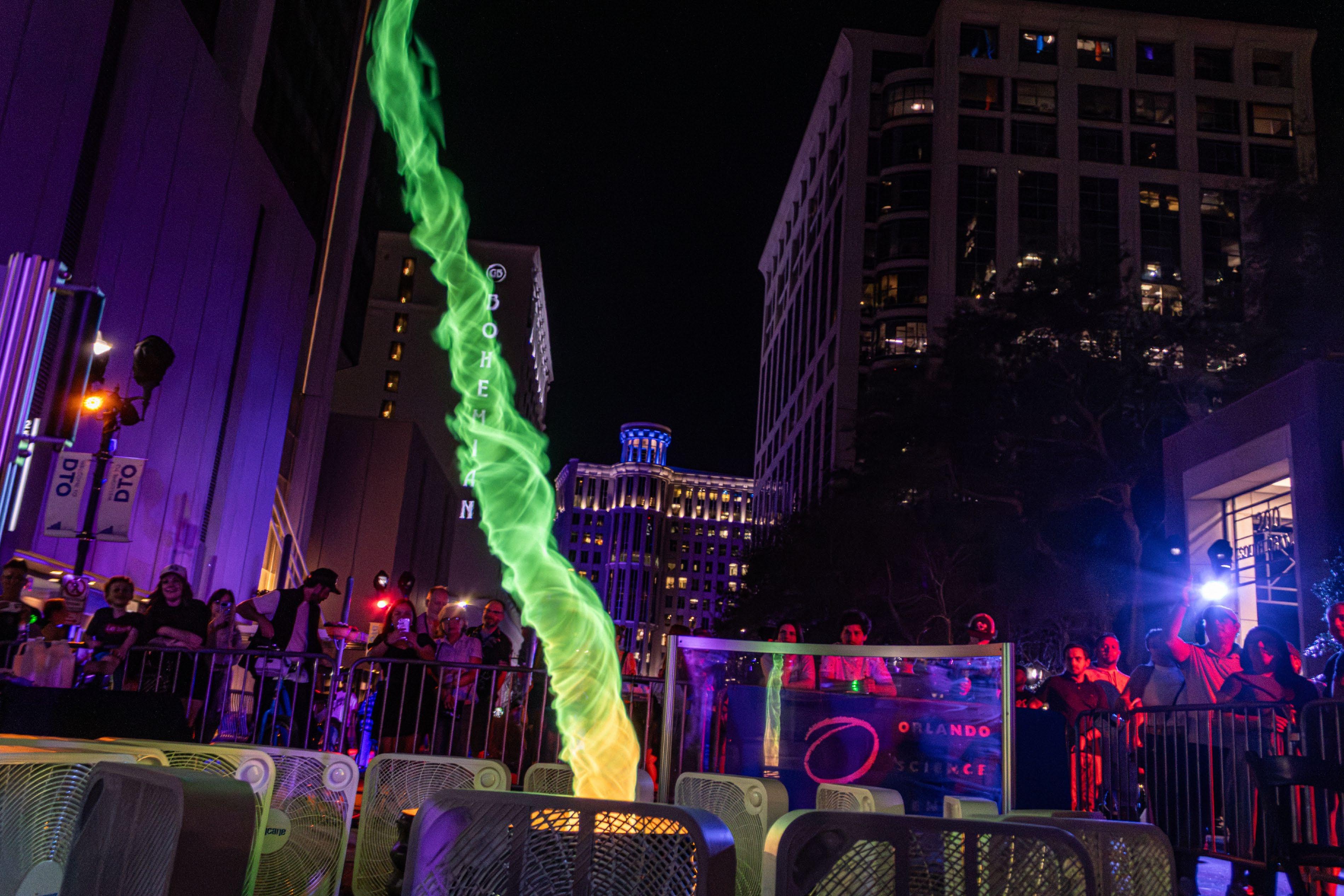
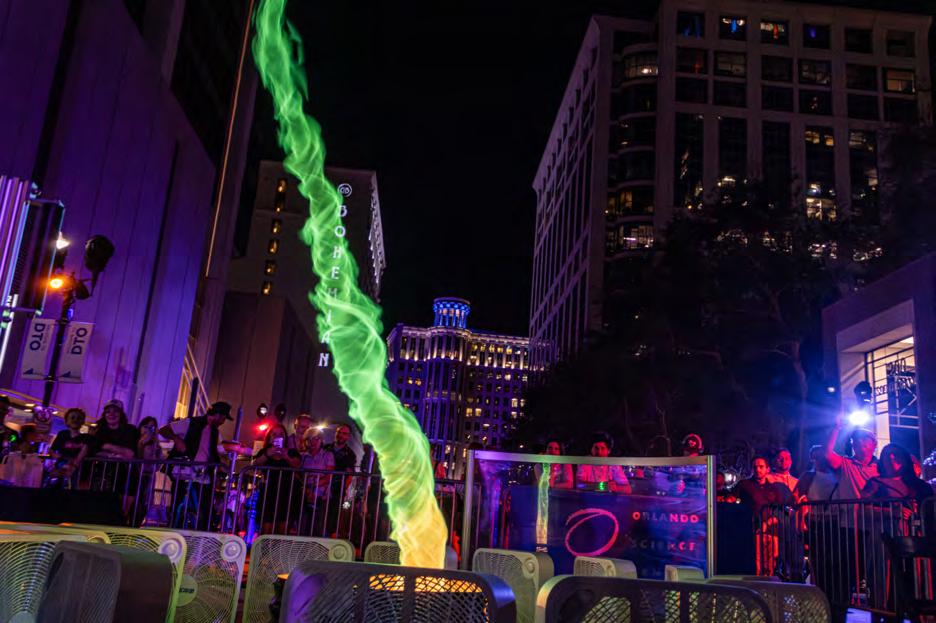
On the Cover: Orlando Science Center created a giant rainbow fire tornado at Immerse Festival in Downtown Orlando in
Contributing Writers Scott Dejesus, Alyssa Flores, Jill Goddard, Lisa Hardt, Stephen Holt, Kevin Horan, JoAnn Newman, Gina Owen, Lisa Robbins, Christina Schreiber, Dr. MJ Soileau, Jeff Stanford, Lauren Stanford, Gypsy Ray, Alison Walminski, Shannon Zimmerman
Graphic Designers Mona De Torres, Kristie Hoover
Photographers Sydney Baker, Roberto Gonzalez, Kevin Horan
MAKE TIME TO PLAY THIS SUMMER
Play is not a break from learning. It is learning. When we give ourselves permission to play, something remarkable happens. Our minds open and we begin to ask questions again. Questions that require thought, experimentation, and discovery. In a world that increasingly values speed and certainty, play invites us to slow down and explore the unknown.
That spark of curiosity is powerful, and it’s also fragile. It needs room to grow. It needs encouragement and space to try, to fail, to learn and try again. That’s what we do at Orlando Science Center. At its best, experiences here mirror the very processes that drive innovation in the real world: building, testing and refining. These aren’t just “science skills.” They are life skills.
Through play, we strengthen critical thinking, nurture creativity, practice collaboration and embrace experimentation. These are the skills that will define our future. Keep in mind that the challenges that face our world will not be solved by simply knowing answers. They will be solved by people who are willing to question, explore, and innovate. And that journey starts with something as simple as play.
It’s easy to think of play as something children do, but adults benefit from playing just as much, if not more. In an age when we are constantly asked to process new information and make sense of complex ideas, play can be both an escape and a solution. Play helps make the abstract tangible. One of the things the Science Center can give back to you as an adult, is the permission to play and the opportunity to explore.
Build a Martian habitat using LEGO® bricks or discover how gravity shapes planetary motion with our newly enhanced gravity well experience in Our Planet, Our Solar System. Enjoy a mind-blowing planetarium show in the all-new 8K laser projection Dome by Dr. Phillips Charities or check out Stellar Nights when we will be open late on Friday and Saturdays in July. You can investigate the science behind optical illusions in our new summer exhibit or revisit some of your favorite animal friends in Life. Whatever you do, discover what happens when we make room for play.
We touch. We build. We test. We explore. And we learn.
Sincerely,
PRESIDENT/CEO
FROM THE MOON TO MARS:
How Artemis Is Shaping Humanity’s Next Giant Leap
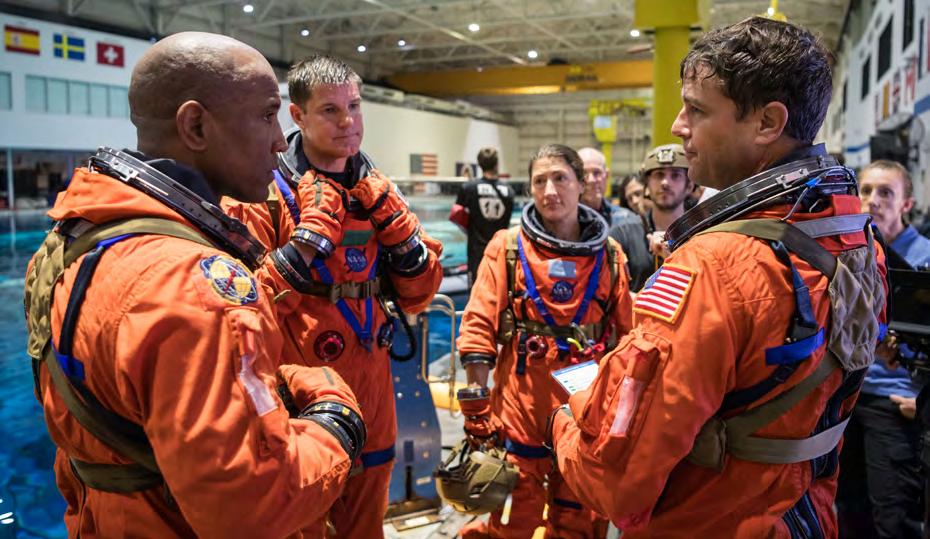
On July 20, 1969, Neil Armstrong uttered words that would echo through history: “That’s one small step for man, one giant leap for mankind.” More than 50 years after humanity last landed on the Moon, we’re turning our eyes skyward once more.
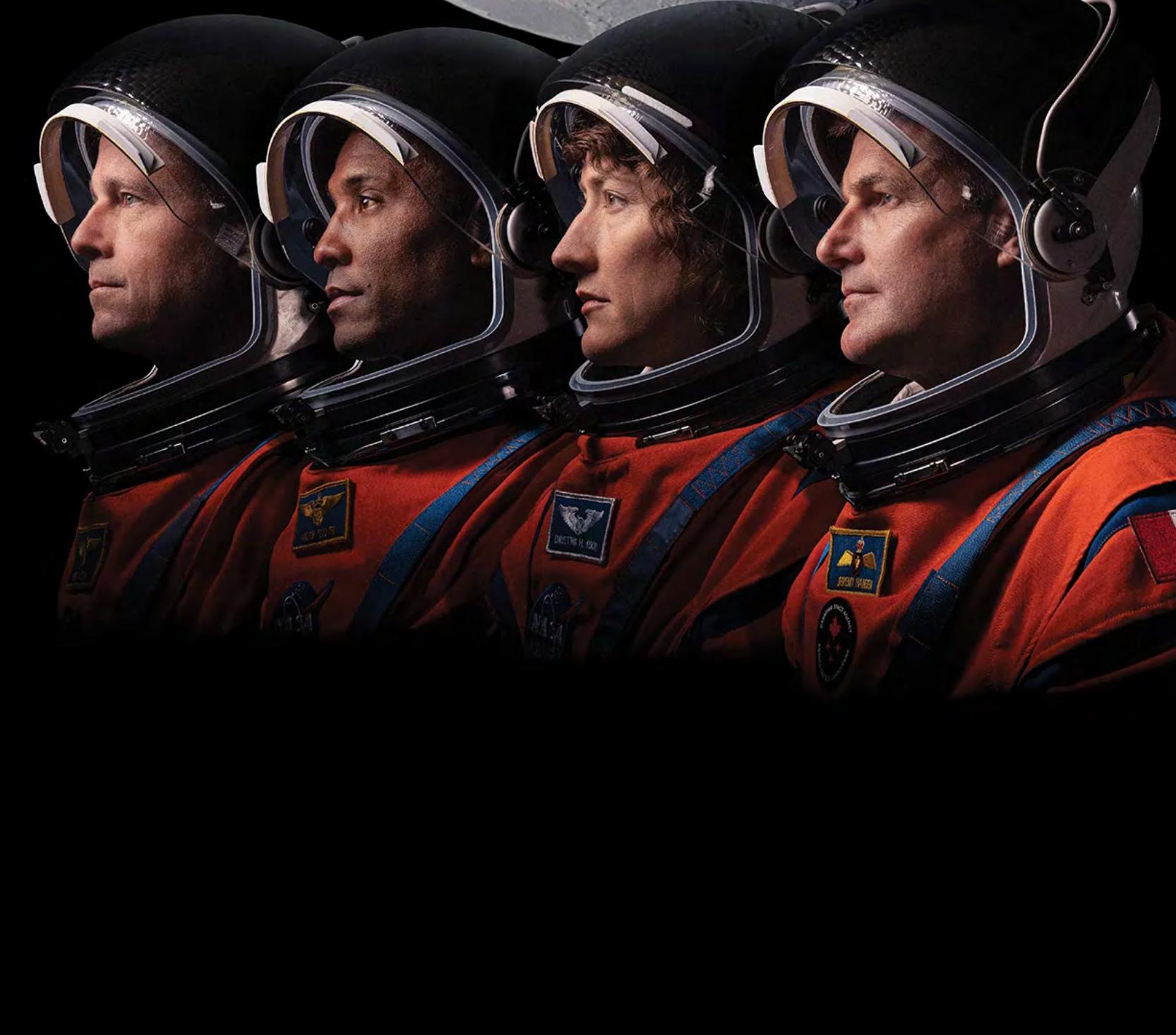
NASA’s Artemis program is a multi-mission program that will return humans to the Moon, carry astronauts deeper into space than ever before, and build a foundation for the first crewed missions to Mars – hopefully, humankind’s next giant leap forward.
Florida. I wanted to go to the window and see it, and then realized somewhere down the line that I wasn’t looking at Florida that same way anymore,” she said. “I still wanted to see Florida, but Florida had just become this special part of home, which is Earth. We’re all earthlings.”
But maybe we could be more than that. The Artemis astronauts will return to our planet with new observations, samples and data that will deepen our understanding of the lunar surface. This data will also assist scientists in developing the systems necessary to bring humanity to Mars.
The Red Planet is our horizon goal for human exploration. In 2025, NASA’s Perseverance rover appeared to find evidence of past microbial life, marking Mars as a rare location that may have once hosted life in our solar system. Artemis is the next step toward learning more about Mars, which will in turn teach us more about our Earth’s past and future. Ultimately, we hope that the Artemis generation will help answer the question, “does life exist beyond Earth?”
Space exploration like this unites the world. When we look at the stars, it’s easier to remember that we’re all human, despite our differences. That works in reverse, too. Astronauts who’ve been to space report experiencing what’s known as the overview effect: a profound shift in perspective, in which “home” suddenly comes to mean the entire planet, rather than a country, state or city.
Former astronaut Nicole Stott, who has worked closely with Orlando Science Center in recent years, recalled wanting to see her home state of Florida during her first mission to the International Space Station. “Finally, we were flying over
Artemis II carried the first woman and person of color on a lunar mission, which was a pivotal moment for these underrepresented populations in the STEM workforce. We’ve learned time and time again how impactful it can be for younger generations to see themselves in these roles throughout history. There’s no doubt that countless young people will be inspired to pursue their dreams, whatever they may be.
This dream of sending humans back to the Moon is just the beginning. Every day our resources, technology and tools advance, moving us towards big questions and even bigger answers. One small step for man might be another giant leap towards understanding our fragile blue orb and our place in the universe.
A New Era Begins:
Inside the Transformation of The Dome
For nearly three decades, our domed theater has been a cornerstone of the Orlando Science Center experience. This iconic space has brought science, storytelling, and spectacle together under one breathtaking roof for almost 4 million viewers. Now, after a top-to-bottom transformation, this beloved theater is ready to begin its next chapter as The Dome by Dr. Phillips Charities premieres Summer 2026.
FROM THEN TO NOW
Originally opened in 1997, The Dome (formerly the Dr. Phillips CineDome) introduced generations of guests to the wonder of giant screen films and immersive storytelling. Over the years, it became a place where families explored the depths of the ocean, traveled through space, and encountered dinosaurs without ever leaving their seats.
Made possible through generous support of our Unlock Science Campaign including Dr. Phillips Charities, Orange County Arts and Cultural Affairs, Bert W. Martin Foundation, and The Magruder Foundation. This project
reflects a shared commitment to expanding access to inspiring, educational experiences for our community. Their partnership has helped ensure that The Dome will continue to serve as a hub for discovery for years to come.
A FULLY REIMAGINED EXPERIENCE
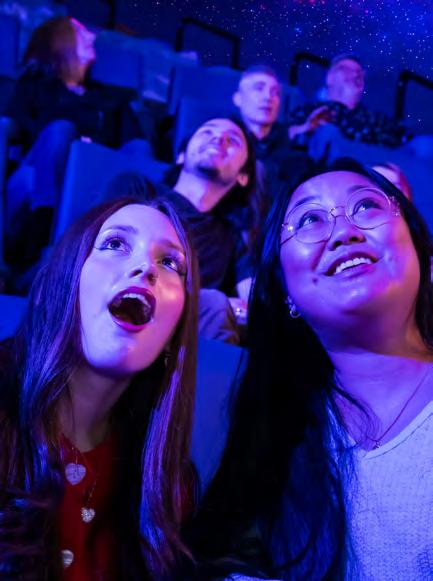
We’re excited for The Dome’s grand opening this Summer because the transformation in experience is nothing short of extraordinary. What was once largely an analog space has been completely rebuilt for the digital age.
At the heart of this upgrade is a new projection system featuring eight state-of-the-art Christie Griffyn projectors. Together, they deliver stunning 8K resolution imagery that is dramatically brighter and sharper than ever before, creating a truly immersive visual experience.
The physical space has also been reimagined. The central “doghouse” structure that once housed the film projector has been removed, opening up the theater and allowing
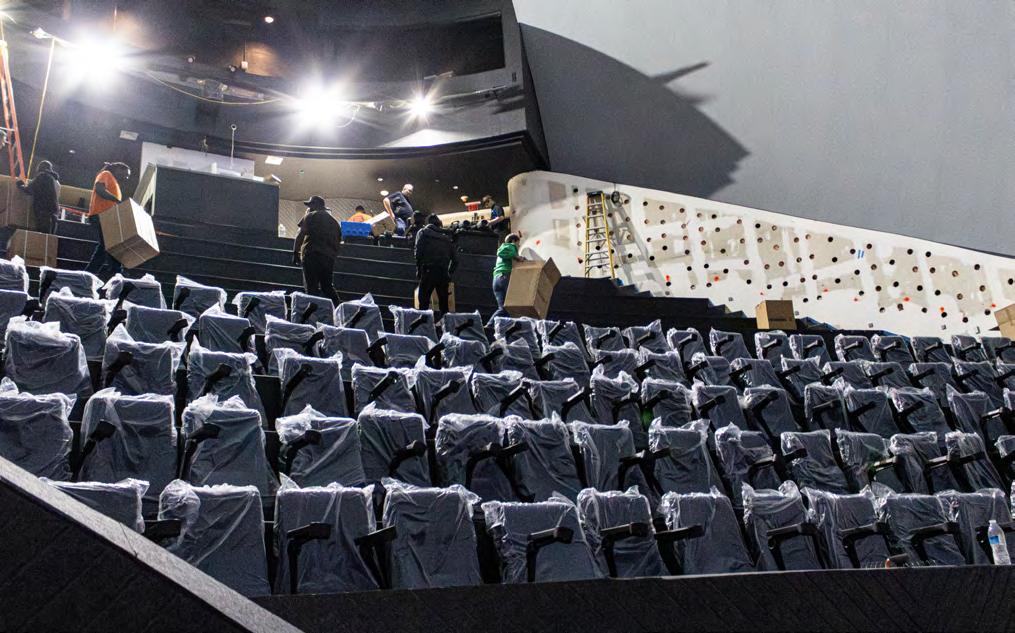
for expanded seating. Guests will now enjoy larger, more comfortable seats, with total capacity increased to 315. Even the screen itself has been rebuilt. Using NanoSeam technology, 419 precision-installed panels create a nearly seamless surface, enhancing clarity and immersion. Behind the scenes, a powerful new 7.1 surround sound system delivers more than 30,000 watts of audio, adding depth and intensity to every moment.
And the experience begins before you even enter the theater. A newly redesigned lobby features a dramatic LED wall and large-scale projection surfaces, surrounding guests with motion, light and energy. With automated vending offering popcorn, candy, and drinks, every detail has been designed to make the visit feel modern, seamless, and unforgettable.
STORIES THAT SURROUND YOU
With its new capabilities, The Dome will return OSC to its place as this community's premiere destination for planetarium shows.
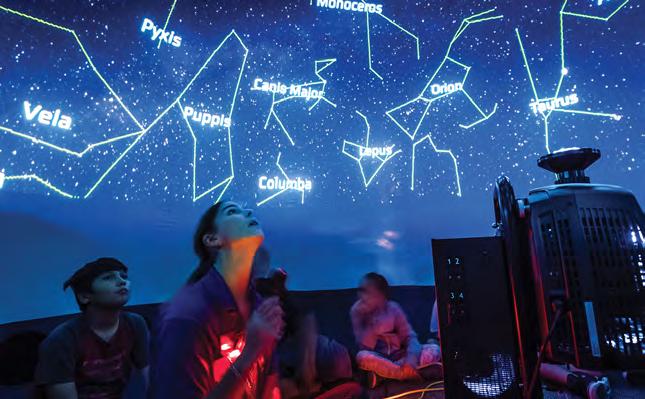
An experienced presenter will bring the night sky to life as you explore the cosmos above Central Florida and beyond. In addition to sharing the constellations, planets, and astronomical phenomena in our local sky, prepare to travel to the edge of the galaxy and back again.
By answering questions and following the curiosity of the crowd, this interactive experience promises no two shows will be exactly the same.
Planetariums offer a powerful chance to stand beneath a sky filled with stars, to explore distant galaxies, and to connect with the universe in a way that feels immediate and personal.
In addition, the Dome will host a dynamic mix of giant screen films, laser light shows and educational digital
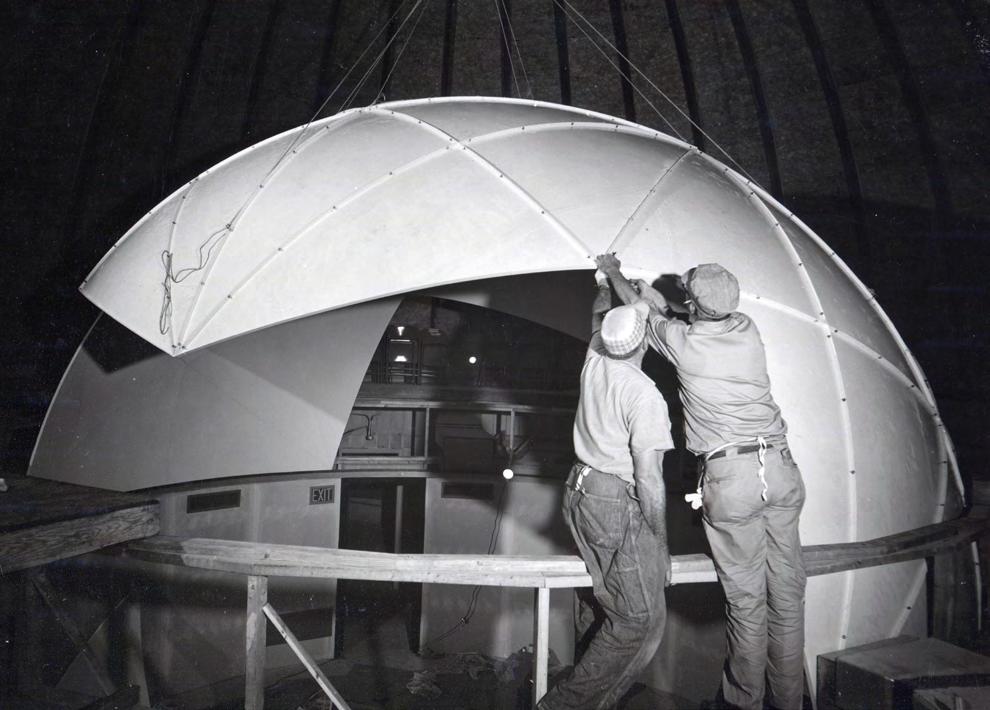
Figure 1: Installation of the planetarium dome at our original museum location, now home to Orlando Shakes.
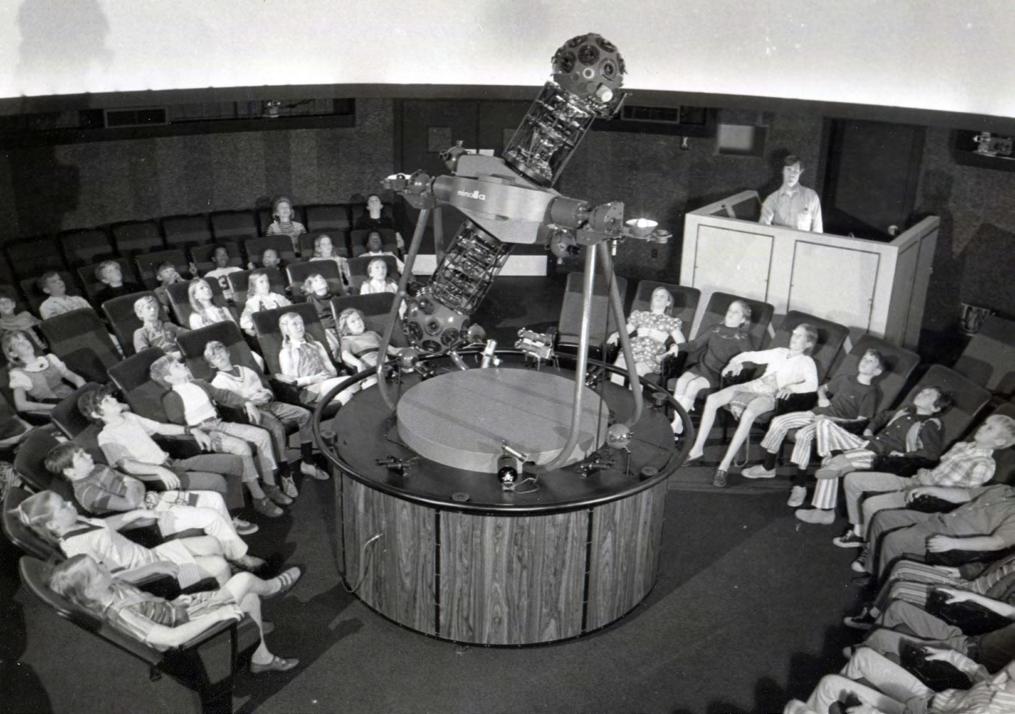
Figure 2: Guests experience a show in our planetarium in the 1970s.
experiences. Among the featured giant screen films are Ocean Odyssey, which dives into the mysteries of the sea; Serengeti, an up-close look at life on the African savanna; and T.REX, a thrilling journey into the age of dinosaurs.
SOMETHING FOR EVERYONE
From awe-inspiring films to interactive planetarium shows and high-energy laser light experiences during Stellar Nights, The Dome is designed to offer something for every visitor.
Whether you’re diving into the ocean, walking among dinosaurs, or tracing the far reaches of the universe, each experience is built to spark curiosity and inspire exploration.
The Dome has always been a place where science comes alive. Now, with its transformation complete, it’s ready to do that in ways more powerful and immersive than ever before.
Figure 3: Seats are installed as part of our renovation of The Dome by Dr. Phillips Charities.
Figure 2
Figure 3
CAPTAIN THE MACAW:
An Ambassador for Conservation
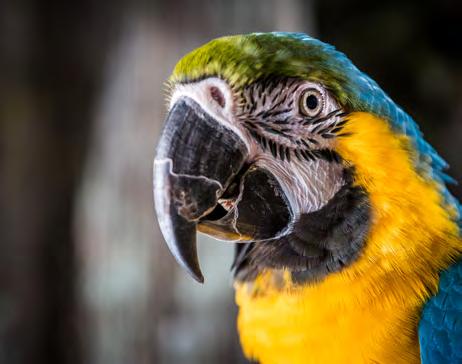
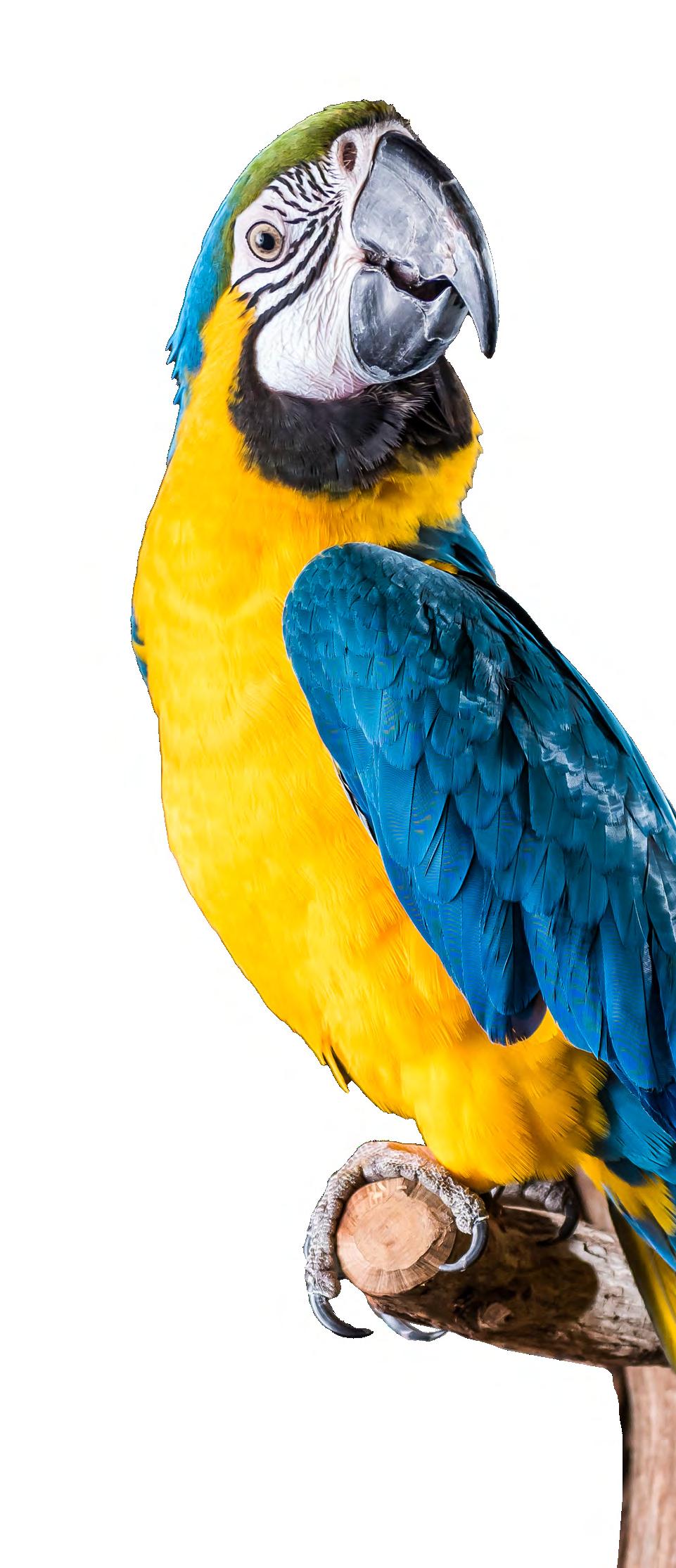
If you’ve visited our Life exhibit, chances are you might’ve met Captain, our blue and yellow Macaw (Ara ararauna). But Captain is no ordinary resident of Orlando Science Center; he is an ambassador for conservation! Captain has been part of the Orlando Science Center family since 2017 and he plays a significant role in helping guests understand the impact of Macaws on their native ecosystems in Central and South America.
Get to
Know
Captain He is almost 21 years old and weighs 2.3 pounds. The biggest thing about him is his voice! He’s also very intelligent. He’s able to solve problems, stay aware of his surroundings and mimic words and phrases! He particularly loves to dance to “Shake It Off” by Taylor Swift.
Most of the animals in Life live in the exhibit full time, but we also have a few animals, like Captain, that live behind the scenes and serve in the important role of Animal Ambassador. Our Animal Ambassadors are trained to be more comfortable with human interaction so visitors can get a little closer, providing a unique opportunity to make a personal connection with the incredible creatures that share our planet.
All of our ambassador animals participate in these programs on a voluntary basis. That means if Captain’s not in the mood to interact, he’s left alone to do his own thing. And he isn’t shy about telling us how he feels! Captain puts his big voice to use and lets his opinions be known.
Why Macaws Matter
Macaws play a critical role in conservation and forest regeneration, which is why it’s more important than ever that we spread the word. Macaws are gardeners of the forest because they disperse seeds across landscapes. Seed dispersal helps to maintain healthy forests and results in strong, diverse ecosystems here on Earth!
Sadly, the Macaw population is decreasing, with local extinctions of Macaws confirmed in parts of Mexico and some Caribbean island populations. This population decline signals forest ecosystems are in distress, because without the Macaws’ important contributions in seed dispersal, their ecosystems weaken. By protecting Macaw habitats, other tropical species that share the same ecosystems are also protected.
Meeting Captain He participates in encounters voluntarily, meaning his appearances in the Life exhibit are unscheduled. Since we give Captain the choice to participate, we don’t always announce his appearance in advance. But if you swing by the Life exhibit, you might just hear him yapping! Don’t miss your opportunity to see one of nature’s most impressive species up close!
CURIOSITY BEGINS HERE
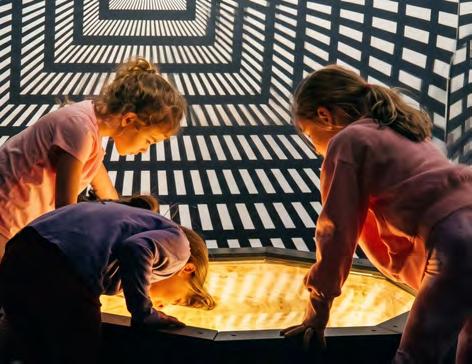
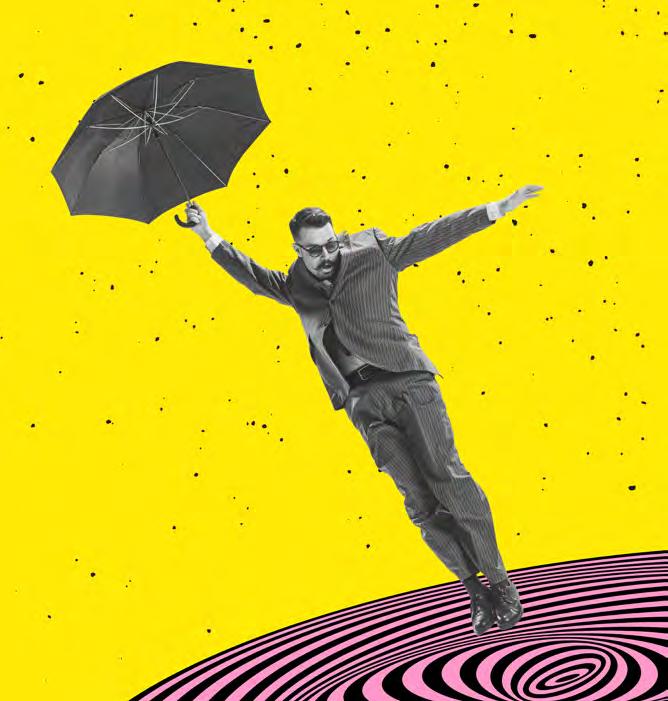
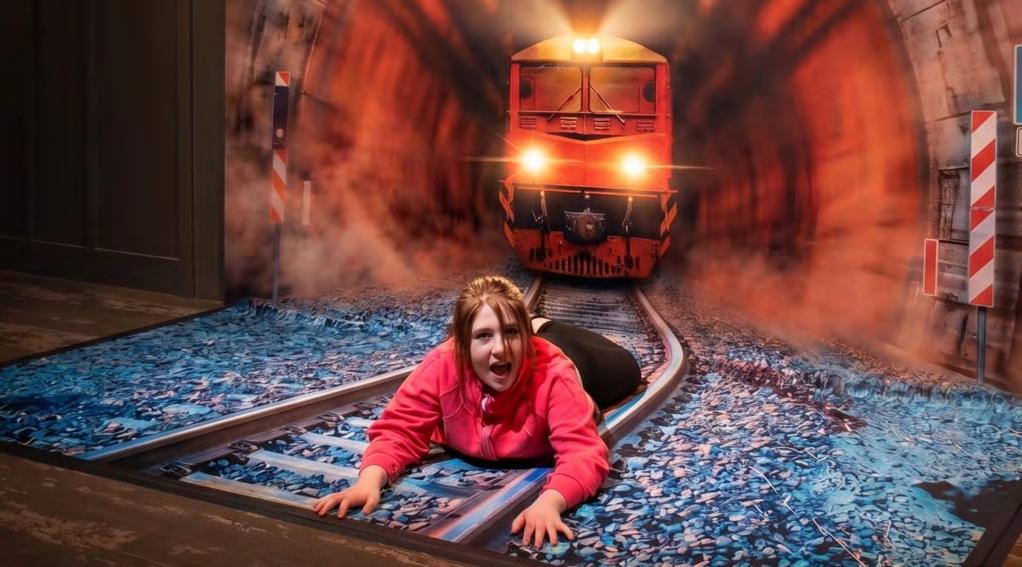
Is it science... or is it magic?! Get ready for science to boggle your senses with a dazzling new exhibit at Orlando Science Center! In PHENOMENA: The Exhibition, visitors of all ages will gain a deeper understanding of the science behind illusions and the mechanisms that govern human perception.
Perfect for fans of Jason Latimer’s Impossible Science! Live show as seen at Spark STEM Fest, PHENOMENA: The Exhibition is an interactive journey with over 20 stunning and immersive illusions. Through hands-on experiences and captivating exhibits, guests will discover how scientific principles create various illusions that fool their brains.
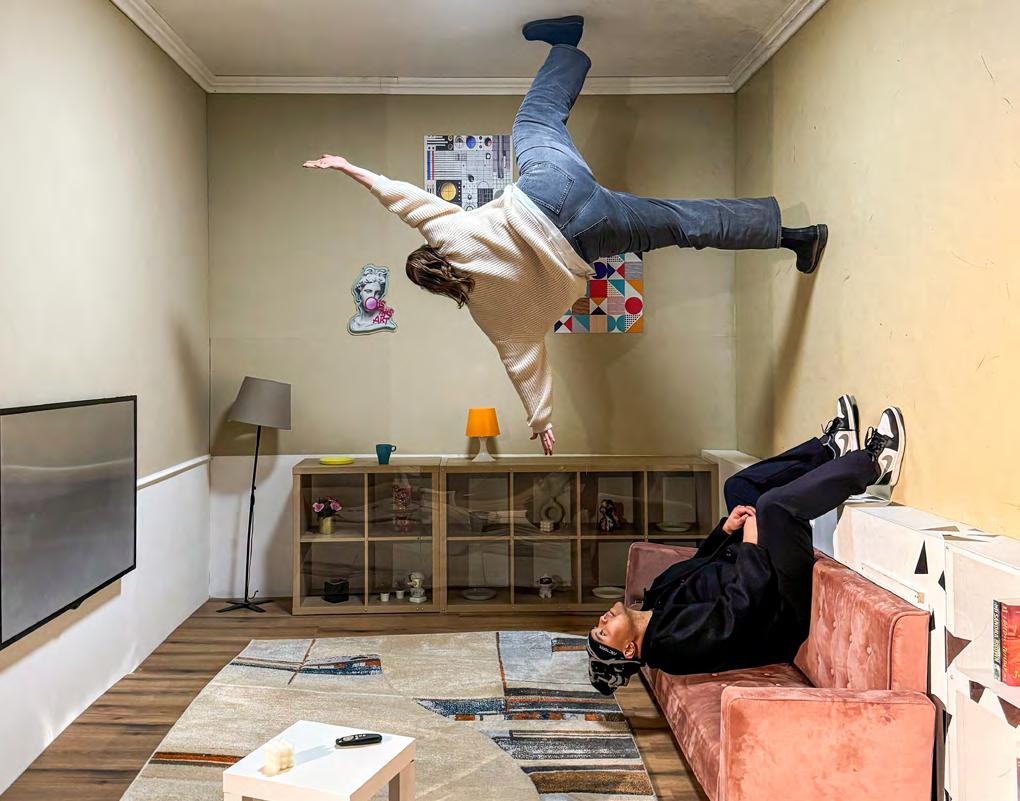
Take a seat at The Magic Table and marvel at how your friend’s head seems to detach from their body. Think you’re ready to try defying gravity? Step into The Zero-Gravity Room and give it a shot! As you experiment with everyday objects, your perception of space might just flip upside down.
Next, test your depth perception at the Ladder to the Centre of the Earth. No visit to the ophthalmologist is required for this one, though you may be left wondering just how far that ladder really goes! Then enter The Mirror Maze, where mirrors are arranged at various angles to reflect you and your surroundings.
Discover the math that makes a mirror maze possible as you figure out your path forward. We promise it’s more fun than a funhouse!
Make sure to visit the Ames Room to explore how distance and angles can change our visual perception. Get ready to tower over doorways or stand in the shade of a potted plant, depending on which side of the room you choose! If you’ve ever dreamed of being taller, now is your time to shine.
Get ready to see reality in a new way – in fact, you may even begin to question what’s real and what’s not. Be careful and curious, because what you see, hear and feel isn’t always what it seems. This exhibit challenges you to look closer, think outside the box, and welcome surprises.
Step into the captivating world of illusions with PHENOMENA: The Exhibition, here at Orlando Science Center until September 7, 2026! Member Preview: May 17 | 10:00 am – 12:00 pm
PHENOMENA: The Exhibition is a traveling exhibition produced and toured by Hereleb, Extramuseum, and Dala Projects in collaboration with Science Centre AHHAA.
THE DOME BY DR. PHILLIPS CHARITIES
OPENING SUMMER 2026
GIANT SCREEN FILMS
Ocean Odyssey
Serengeti
T.REX
EDUCATIONAL DIGITAL EXPERIENCES
Dinosaurs: A Story of Survival
Moonbase: The Next Step
PLANETARIUM SHOWS
Orlando Under the Stars
Created By OSC Staff
Planet Nine
James Webb Telescope: A Story Unfolds
LASER LIGHT SHOWS
Stellar Nights will feature a variety of shows in
The Dome, including Laser Light Shows, Live Planetarium Shows, and Giant Screen Films
DIGITAL ADVENTURE
THEATER
Showing 25-minute 2D and 3D films
Astronaut: Ocean to Orbit
Horse Power
Wild Rescue
STORYTIME CINEMA
Back to the Future (May 16)
Zathura: A Space Adventure (June 13)
The Wizard of Oz (July 11)
The Secret Garden (August 8)
OUR EXPANDING UNIVERSE
James Webb Telescope: A Story Unfolds
The Dome by Dr. Phillips Charities Coming Soon!
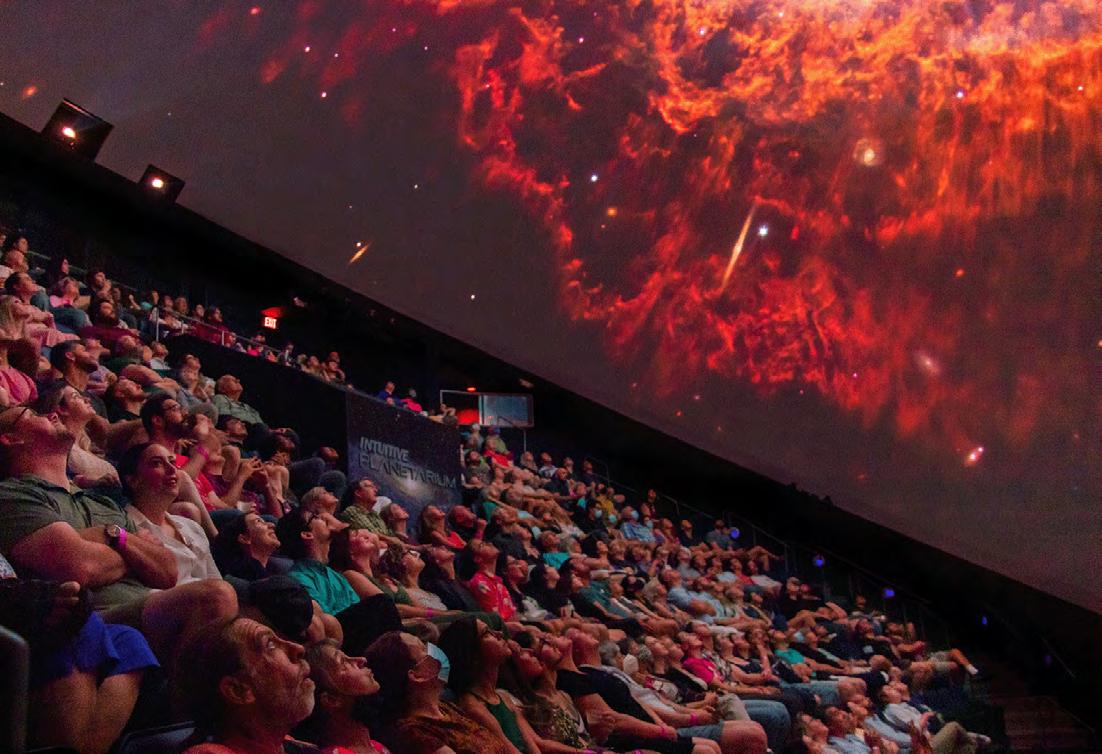
In this interactive live planetarium show, discover the furthermost reaches of the universe as revealed by the James Webb Space Telescope, the most powerful telescope ever built. Witness the evolution of galaxies, the life cycle of stars, and strange, distant worlds. Continuously updated as new images are revealed, this dynamic show explores the spectacular advances in our knowledge of the universe.
James Webb Telescope: A Story Unfolds was designed by the team at U.S. Space and Rocket Center.
See what is now playing, check show times, watch trailers, and more at os c.org/theaters.
Image Credit: INTUITIVE® Planetarium in U.S. Space & Rocket Center, Official Visitor Center for NASA’s Marshall Space Flight Center, Huntsville, Alabama.
THE CASE FO
Space exploration pushes technological advancement to its limits, fosters global collaboration, and fuels economic growth. But space can be overwhelming to think about, and when we have so much to attend to here on Earth –infrastructure, education, international relations, and more – it can be difficult to grasp why we’re spending time, energy and resources to do something we’ve done before. Why go to space at all when there are so many other causes that require attention?
This is what our Science Matters program is all about! By helping folks apply the process of science to complex topics, we're helping to develop critical thinking and science literacy skills. Our latest Science Matters initiative, The Case for Space, was developed to help visitors better understand why space exploration is still important, even in the context of other economic and societal causes.
Together, we'll learn more about how going to space advances groundbreaking discoveries, creates a sense of belonging among humanity, and inspires future generations.
THANKS, NASA!
Chances are, you’ve never been to space and don’t have plans to go.
But no matter who you are, space exploration fuels innovation that directly impacts the way you live. If you use a GPS navigation system to provide directions while you drive, wear sunglasses with UV protection, or dress your child in disposable diapers, you’re using systems and technology invented by NASA in pursuit of space exploration. And these are just a few examples, not to mention memory foam, camera phones, water filtration systems, ear thermometers, and more.
For example, the International Space Station (ISS) involves a global partnership of space agencies that brings together international flight crews, multiple launch vehicles, operations, training, engineering, development facilities, communications networks, and the world's scientific research community.
A NEW AGE OF SPACE EXPLORATION
Plus, the economic impact of the space program is enormous, especially here in Florida. According to Orlando Sentinel space reporter Richard Tribou, the Artemis missions have supported more than 13,000 jobs in Florida and contributed $3 billion in annual spending to our economy. The launch of Artemis II was projected to generate $160 million in economic impact for Central Florida alone, thanks to launch tourism.
THE VALUE OF SPACE EXPLORATION
Space exploration is also valuable in relationship building and connecting with others. We’ve seen over time that nothing brings the world together quite like space travel.
Pioneers of astronomy revolutionized our understanding of the world, bringing forth discoveries like gravity, planetary motion, the spherical model of Earth and spectroscopy.
Technological development and scientific exploration quickly accelerated thanks to the Space Race. Since NASA was first established in 1958, we have completed incredible feats, including landing the first person on another celestial body and sending five robotic rovers to Mars.
With both curiosity and technology advancing, exploration has now shifted toward exoplanets, dark matter, dark energy and gravitational waves – not to mention the possibility of life on other planets. As we ask more questions about our universe, astronomy will continue to evolve and shape our understanding of our world.
MAY JUNE
PHYSICS MONTH
Step into Physics Month at Orlando Science Center and explore the forces that shape our world through hands-on experiments and awe-inspiring live demonstrations.
AEROSPACE MONTH
Blast off into Aerospace Month, a high-flying celebration of flight and space sciences featuring hands-on activities, STEM challenges, and interactive experiences that inspire explorers of all ages.
A Space Adventure (2005) 11:30 am - Based on the book “Zathura” by Chris Van Allsburg
4:00 pm
JULY
PHENOMENA MONTH
Prepare to see reality in brand new way at PHENOMENA: The Exhibition, where interactive illusions challenge your senses and reveal the surprising science of perception.
AUGUST
BACK TO SCHOOL MONTH
Kickstart your brain for the new school year! Before the sunscreen goes away and the textbooks come out, find that last touch of summer vacation here at Orlando S cience Center!
Secret Garden (1993) 11:30 am - Based on the book “The Secret Garden” by Frances Hodgson Burnett
M ay 9 & 10
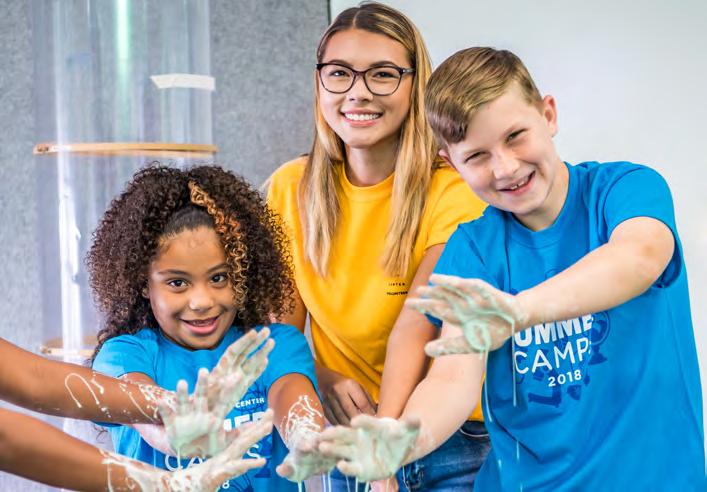
IT’S SLIME TIME! Get ready to squish, splatter, and sploosh your way through science at Mess Fest! Learn about non-Newtonian fluids by getting hands-on with ooey gooey Oobleck.
Discover the physics of catapults (and the fun of splatter painting) with our splat-a-pult, or explore chemistry with our fan-favorite FOAM-splosions. Curious minds of all ages are invited to roll up their sleeves and dive into delightfully messy ex periments that make science stick. Let's learn while getting messy!
Fridays & Saturdays July 10 – August 1
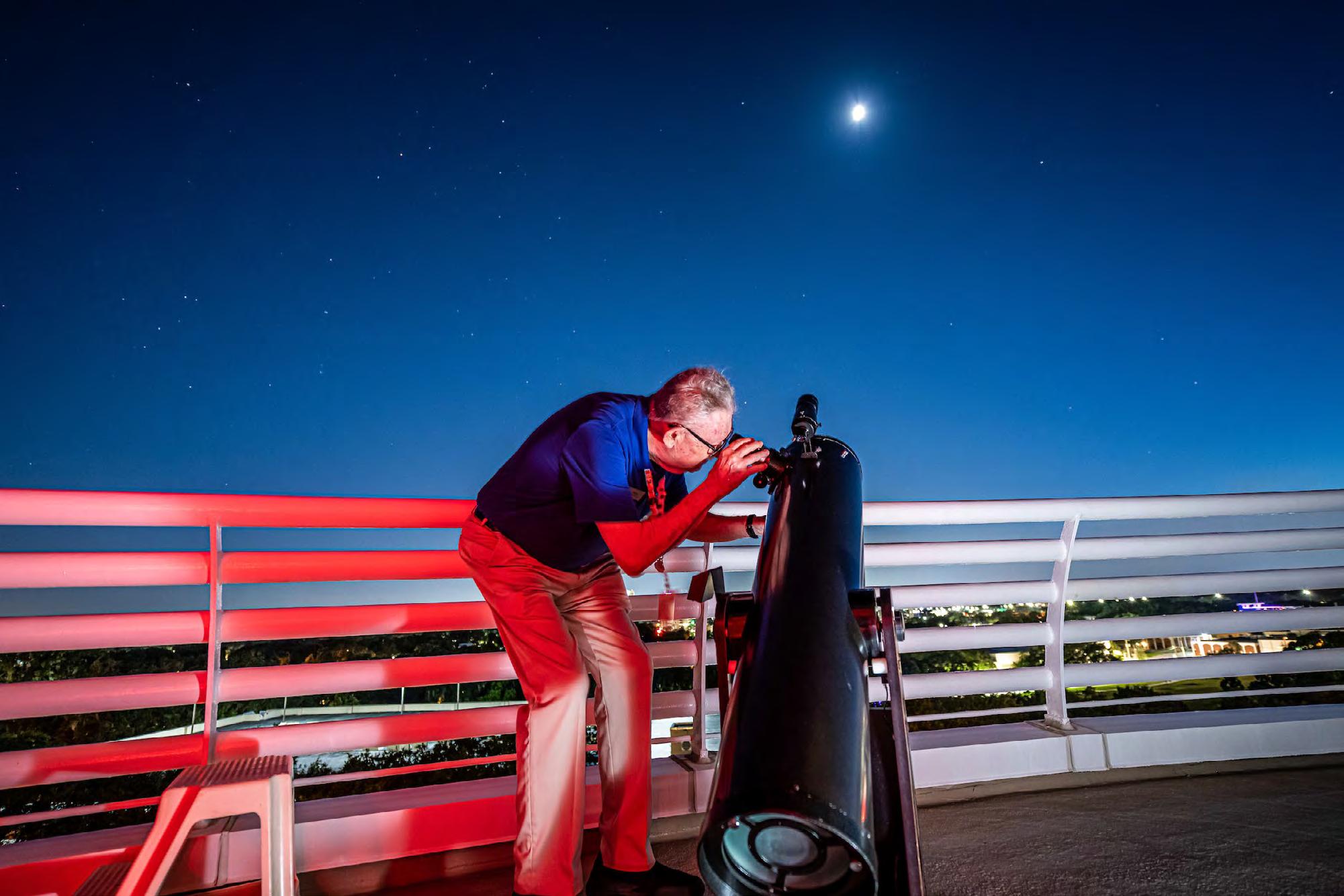
On select Fridays and Saturdays this Summer, we’ll keep our halls open from 10:00 am to 10:00 pm. Those Summer nights are going to be out-of-this-world! Take a sneak peek at what we’re planning:
• Planetarium and Laser Light Shows in The Dome by Dr. Phillips Charities
• Guided stargazing in the Observatory (weat her permitting)
• Beer & wine sold at The Coffee Spot
• Live shows from our science interpreters
• And so much more!
Visit our website to learn more. We can’t wait to see you under the stars!
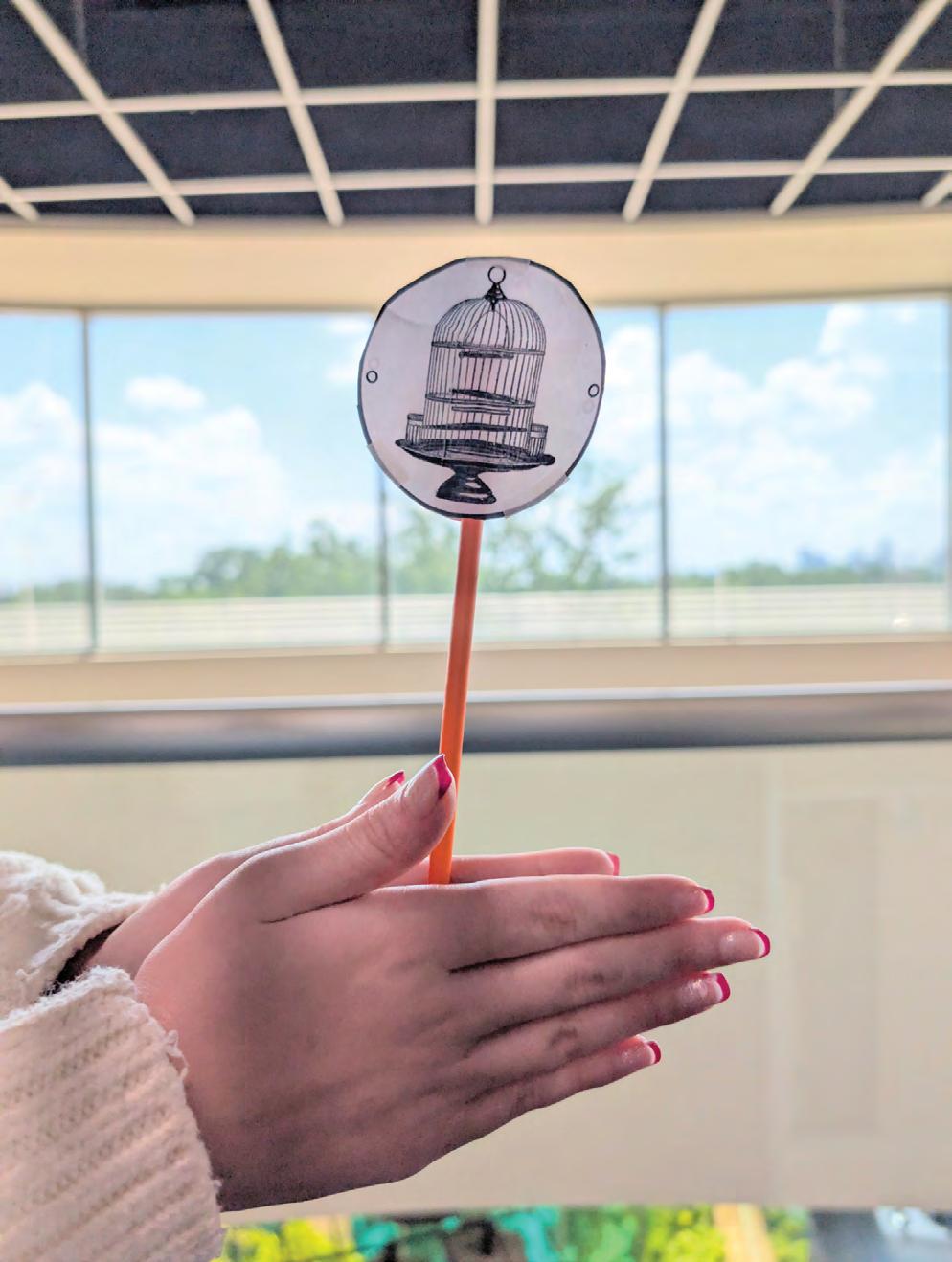
Thaumatrope
Have you ever wanted to make an illusion to boggle minds or make a practical effect like you’ve seen in old films? Thaumatropes are an easy way to create optical illusions from materials you already have at home!
The word thaumatrope comes from the Greek word thauma, meaning wonder, and the English suffix -trope, meaning something that turns, changes, or moves. Optical illusions are patterns, movements, or other stimuli that trick your brain into seeing things that differ from reality. So you’ll be creating something that looks like magic with simple movement.
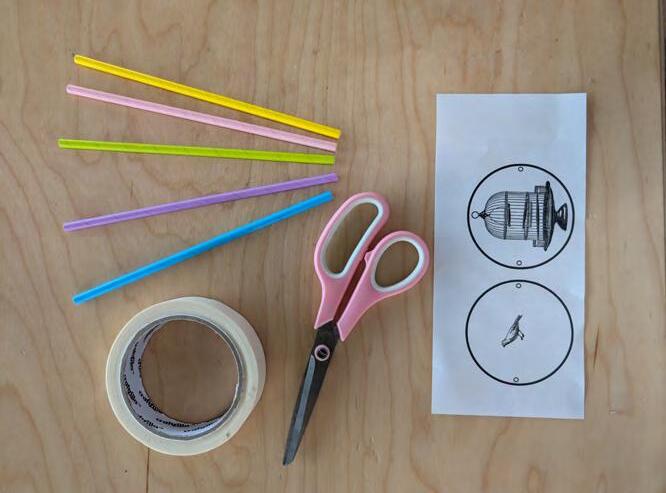
Materials
There are a few different ways to make a thaumatrope, but for this version you will need:
• 2 Notecards (can also use sticky notes or other small pieces of paper)
• Stick (can be a pencil, straw, or any
Directions
1. Draw a picture on each of the notecards. They should combine to make one picture. Some examples of thaumatrope images are:
• A bird on one, a cage on the other
• A vase on one, flowers on the other
• Saturn on one, its rings on the other
• A bare tree on one, its leaves on the other
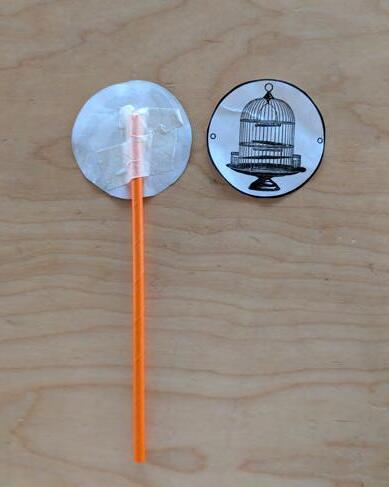
2. Place the stick between the two pictures. Make sure the pictures are both facing outward. The blank sides of the paper should touch each other.
3. Glue, tape, or staple the papers together around the stick.
How to use it:
Hold the stick between your hands with the pictures sticking up. Rub your hands together and watch it create the complete image as it spins! If you’d like to check out more optical illusions, check out our new traveling exhibit, PHENOMENA: The Exhibition, and visit The Dome for films and shows with more cool visual effects.
REWARDS BEFORE AWARDS: The Benefits of Science Competitions
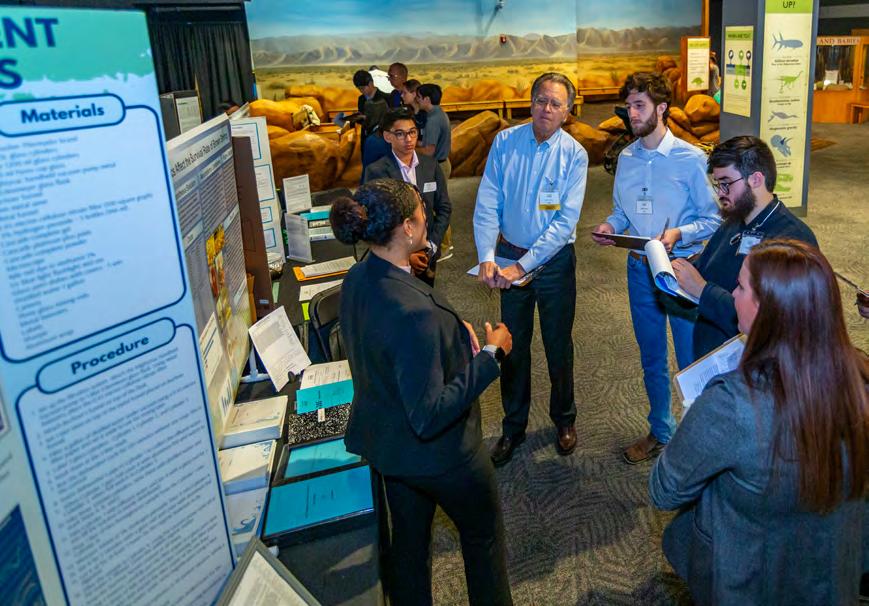
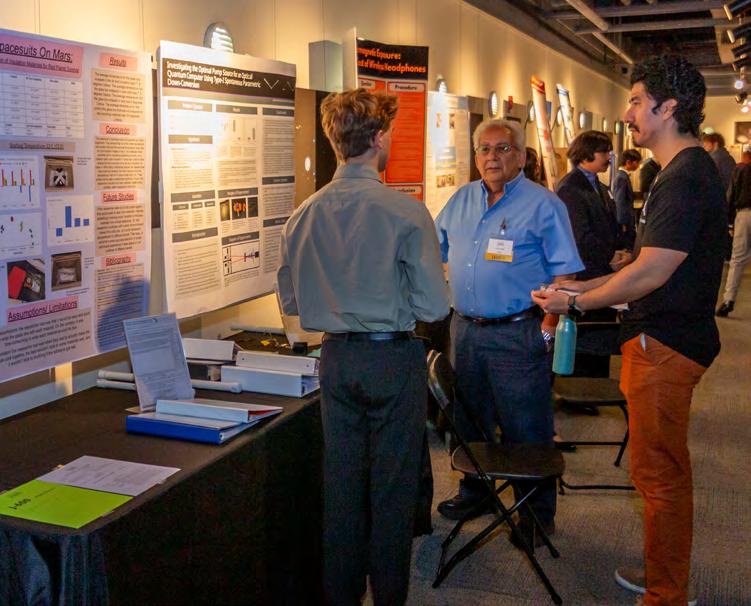
As part of our mission to inspire science learning for all, Orlando Science Center hosts students from Kindergarten to Grade 12 for a variety of science competitions, aiming to inspire an interest in STEM careers. OSC science competitions help students develop essential life skills that allow them to be successful in their personal and professional lives. Critical thinking, problem solving, public speaking, organization and time management are just a few of the skills that grow stronger in students.
It is vital that students learn how to network and build a support system that will push them to achieve their goals. Students that participate in OSC science competitions not only get to channel their creativity and passion for STEM, but they get to grow their support network by connecting with like-minded peers from other schools and their judges, who are educators, engineers and scientists in the STEM industry.
At OSC, there is a science competition made for every student! First, there’s the Curtis Rising Stars Challenge, an entry-level STEM competition designed for Grades K-5 that introduces young students to science competitions and helps them develop teamwork skills.
Next is the Curtis Kinetic Science Competition, which invites students in Grades 6-8 to assemble a team of engineers to compete for cash prizes and challenges them to transform ordinary objects into a kinetic system.
There’s also the Lockheed Martin Science Challenge that provides county science fair winners in Grades 6-12 an opportunity to present their projects to a team of expert judges before advancing to the state science fair.
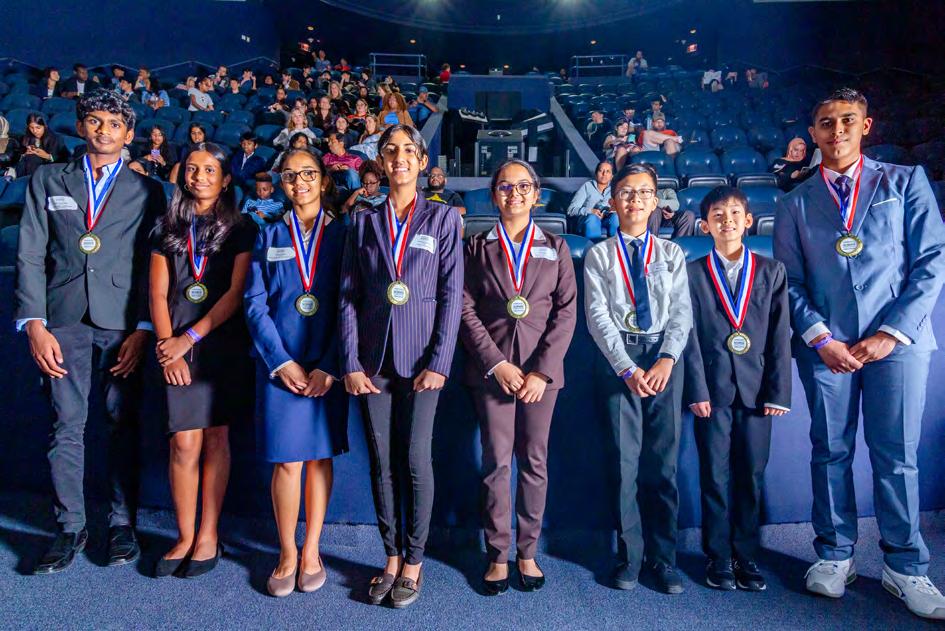
Finally, the Dr. Nelson Ying Science Competition celebrates a select group of high school students with very big ideas. Students in Grades 9-12 challenge themselves by submitting original research designed to address the world’s biggest problems. Five finalists are selected from schools throughout the state to present their findings before a panel of expert judges. They compete for up to $5,000 in cash scholarships. Awards also go to their teachers and schools.
With science competitions designed for students of all ages and interests, Orlando Science Center fosters a space for young minds to reach their full potential. To learn more about science competitions at OSC, please visit osc.org/competitions.
Where Wonder Takes Root
Why Start STEM Learning Early
Long before a child steps into a classroom, they’re already thinking like a scientist. They ask questions, test ideas and explore the world around them with natural curiosity. Research shows that even very young children can engage with STEM concepts, and when we nurture that curiosity early, the impact can last a lifetime.
Early STEM experiences help children build confidence and develop positive attitudes toward science, which are closely linked to future academic success. Kids who explore science from a young age are more likely to pursue STEM learning and careers later.
More than that, STEM learning strengthens critical thinking, problem-solving, and communication skills. Whether they’re building with blocks, observing patterns in nature, or asking “why,” children are developing the foundations of reasoning that support learning across all subjects.
Summer Camps That Spark Discovery
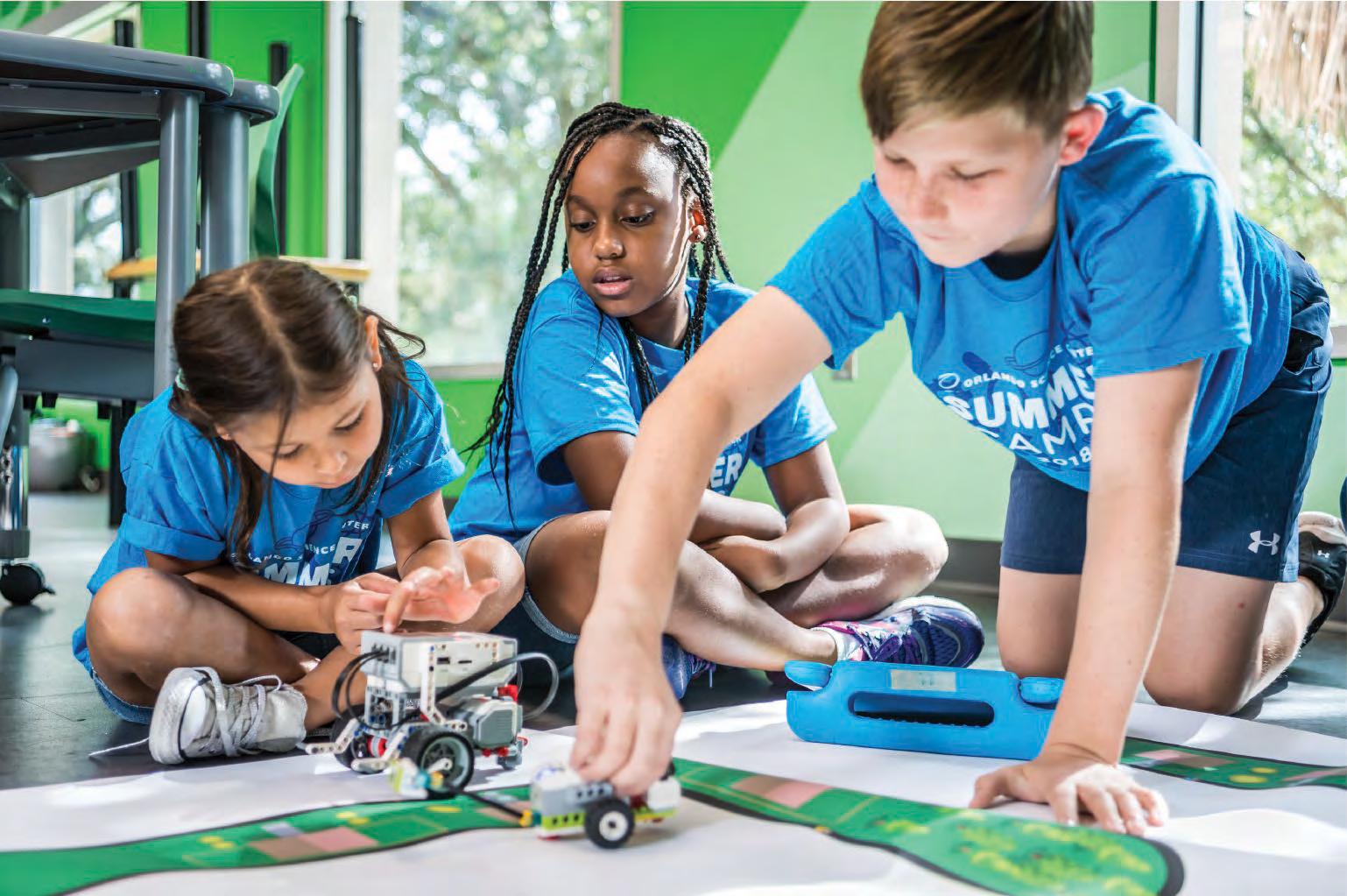
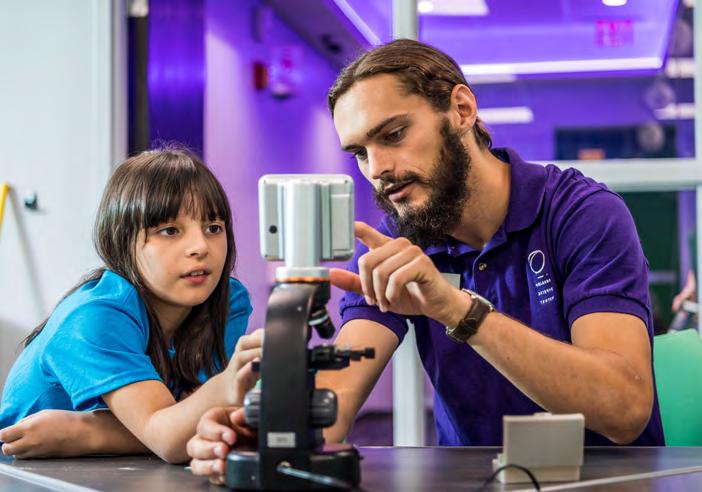
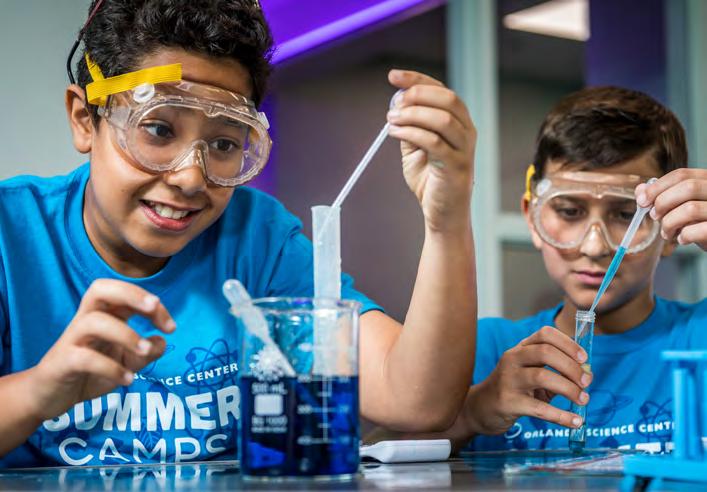
When school is out, Science Center Camps are in! Summer Camps at OSC are an opportunity to dive deeper into discovery. Our STEM Summer Camps are designed for learners in Preschool – Grade 6, meeting kids where they are and taking their curiosity to the next level through hands-on, engaging experiences.
Each camp is packed with opportunities to experiment, create, and explore. Campers might design their own inventions, investigate scientific phenomena, or tackle creative challenges alongside new friends. Guided by experienced educators, our Camps are intentionally designed to build confidence while learning through play. Whether your child loves nature, engineering, space, or art, there’s an OSC Camp for that!
Learn more about our full lineup of Camps in the 2026 Summer Camp Guide, and register today! Spaces are limited, so act now and spark a lifelong love of learning.
Grow Your Curiosity This Summer!
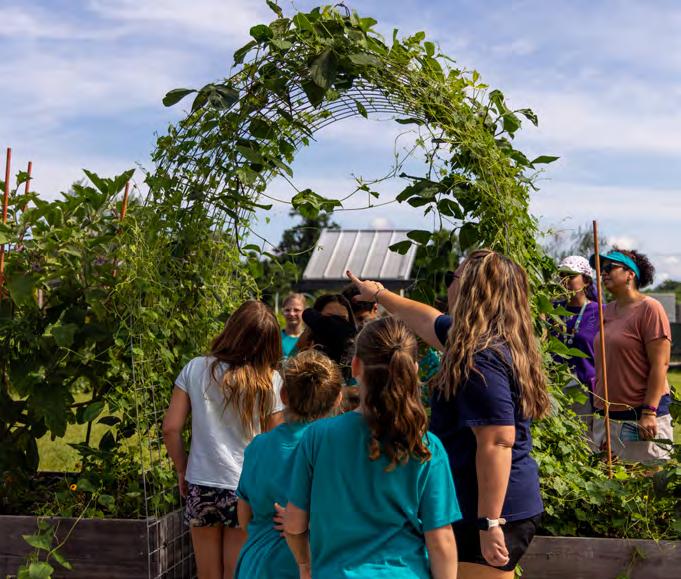
We are thrilled to once again partner with 4Roots Farm for Summer Camps! Building on the success of last year's program, OSC is offering seven weeks of exciting, hands-on experiences. Camps will take place at the 4Roots Farm Campus and feature conservation, sustainable farming practices and agriculture careers for Grades 2-5. Campers will enjoy guided farm tours, exploring innovative plant growing technology in the greenhouse, and learning how to create nutritious snacks with the Culinary Health Institute. Don't miss out on this unique opportunity to connect with nature and gain valuable skills for a sustainable future! This camp is offered on select dates in June and July. See the Summer Camp Guide for more details.
Suit Up, Designers!
Paromita Mitra's Work on Spacesuits Has Major Implications for Students Here on Earth
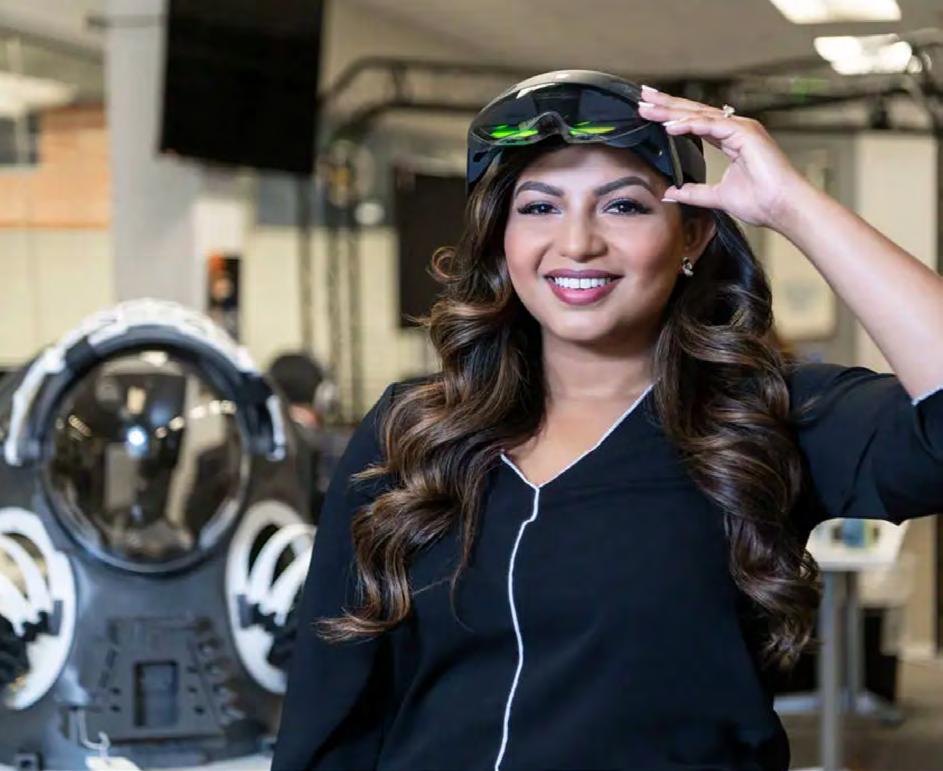
We often have dreams as children that change as life unfolds and guides us on a journey we never originally planned. That's the case with Paromita Mitra, Principal Investigator and Human Interface Engineer at NASA Johnson Space Center.
Mitra grew up wanting to pursue medicine like her father, but when she moved from Bangladesh to Mississippi, the trajectory of her life was forever changed. Mitra developed a strong passion for engineering and astronomy, which sparked her ambition to work for NASA and ultimately shaped her into the influential Asian American woman she is today.
Knowing she wanted to become a leader in engineering, Mitra yearned to be an advocate for other girls that dreamed of finding their place in the world of STEM. Mitra found the perfect platform to encourage girls to pursue STEM careers through her participation in beauty pageants across Mississippi while pursuing her own degree in aerospace engineering.
Going to graduate school, Mitra was set on making her ambition to work for NASA a reality. To do this, she participated in a volunteer internship at NASA’s Marshall Space Flight Center in the Guidance, Navigation and Mission Analysis Branch and would later intern at NASA’s Johnson Space Center. She was also a recipient of the NASA Space Grant Graduate Research Fellowship, where her research focused on headsup displays on spacesuits. Mitra’s research was so powerful that it led to the development of the NASA
Spacesuit User Interface Technologies for Students (NASA SUITS), a design challenge for college students to help design user interface solutions for future spaceflight needs. It’s through this program that Mitra has made STEM more accessible for students across the country.
It’s no surprise that Mitra’s determination and passion for STEM landed her at Johnson Space Center as a Human Interface Engineer. Now, she’s part of the Artemis generation, contributing first-hand to this historic mission by helping create the very spacesuit that the astronauts wore on Artemis II. Despite pursuing a typically male-dominated career, Mitra reminds herself and other girls that it’s one’s enthusiasm and confidence that fuels their success. She said, “You need to really prove yourself, show your skills and as long as you’re confident in your own intellect, you can be successful.”
In STEM, it’s crucial to have female representation as it inspires younger generations and empowers them to become future leaders that will change the world. Paromita Mitra is just one of the many women shaping the STEM industry and making it a more inclusive and accessible industry.
Image Credit: NASA / Norah Moran
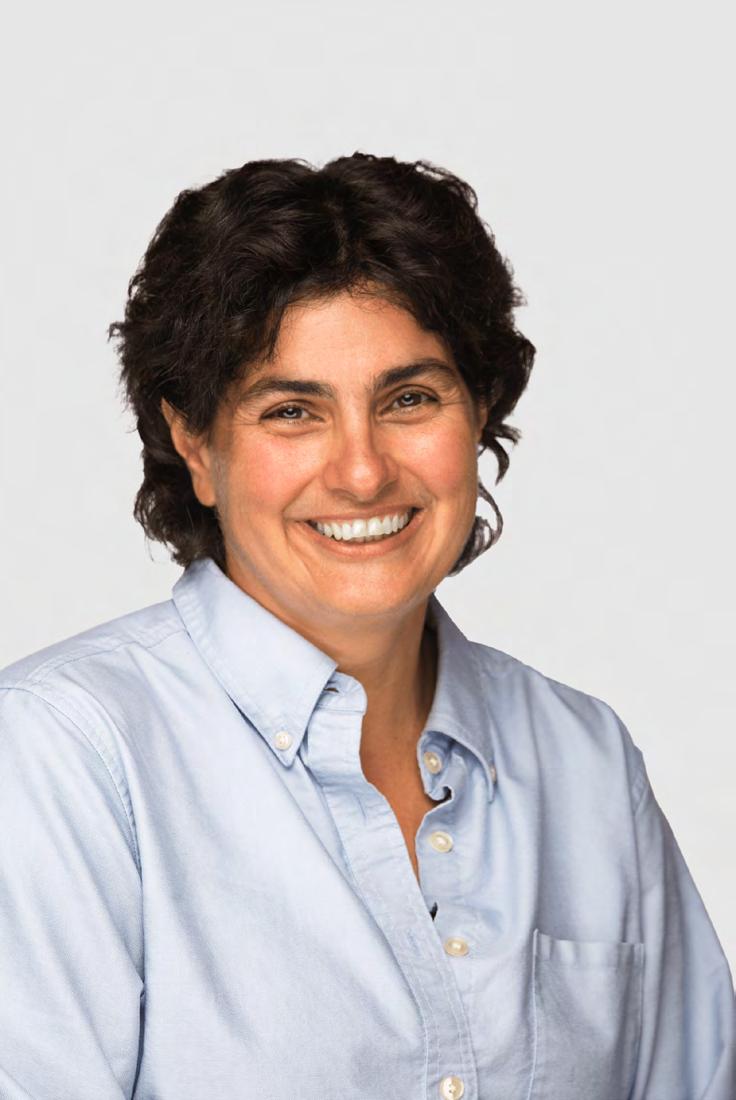
Universal Listening Nergis Mavalvala Finds Clarity in the Cacophony of Cosmic Noise
Dr. Nergis Mavalvala has spent her career listening for the faintest whispers of the universe. A Pakistani-American astrophysicist and professor at the Massachusetts Institute of Technology, Mavalvala is best known for her work on the Laser Interferometer GravitationalWave Observatory (LIGO), a groundbreaking experiment designed to detect gravitational waves. These ripples in space-time were first predicted by Einstein in
1916. Nearly a century later, in 2015, that work paid off when scientists from LIGO first directly detected gravitational waves from colliding black holes, opening an entirely new way to observe the universe.
Mavalvala’s role in LIGO centers on pushing the limits of measurement itself. Her research blends astrophysics with quantum mechanics, focusing on how to make detectors sensitive enough to measure unimaginably small disturbances. She has pioneered techniques like laser interferometry and quantum “squeezing,” which reduce noise and allow scientists to observe phenomena previously thought impossible. In other words, her work helps scientists “hear” cosmic events like black hole collisions that cannot be observed with light alone. In 2010, she was awarded the prestigious MacArthur Fellowship, also known as the "Genius Grant," for her work on gravitational waves.
But Mavalvala’s impact extends far beyond the lab. She has become a
powerful advocate for diversity in STEM. Mavalvala has spoken openly about the importance of breaking down barriers in science. Her own upbringing rejected rigid gender roles and shaped her belief that “women can, must and should do anything and everything.”
Mavalvala has embraced her role as a mentor and role model, taking intentional strides to encourage students from underrepresented backgrounds to pursue science. She has also been recognized for this leadership, earning honors like LGBTQ Scientist of the Year and becoming a prominent voice for equity in academia.
Her message is simple but transformative: science thrives when more voices are included. By challenging stereotypes about who can be a physicist, Mavalvala is helping redefine the image of a scientist for the next generation.
Today, her research continues to push the boundaries of what we can observe about the universe, while her advocacy pushes the boundaries of who gets to explore it. In both areas, Dr. Nergis Mavalvala is expanding our understanding of space, time, and possibility itself.
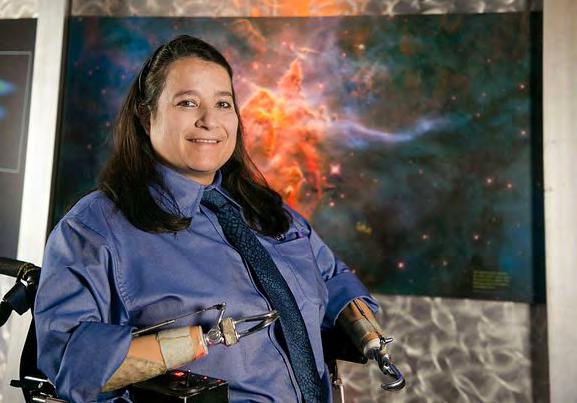
Gravity Can't Hold Her Dana Bolles Turned a Passion for Engineering into a Career in Accessible STEM Communication
Seeing someone believe in their ability to achieve their dreams is one of the most powerful sources of inspiration. During Disability Pride month, Orlando Science Center is proud to highlight trailblazers who are not only advancing science but also reshaping how we think about and engage with it. This year, we’re spotlighting Dana Bolles, a spaceflight engineer, science communicator, and passionate advocate for disability representation in science, technology, engineering, and math (STEM).
Born with partial arms and legs, Dana uses a specialized electric wheelchair for mobility and prosthetics for her arms, but she has never allowed that to define her potential. As a child, Dana always dreamed about the possibilities of one day
working alongside astronauts and engineers at the forefront of human wonder. A goal inspired in part by the idea that, in space, she could exist on equal footing with others. Encouraged by a supportive family who emphasized that there were no limits to what she could achieve, she pursued her science dreams with boundless passion. She earned a degree in mechanical engineering, motivated in part by her desire to better understand the tools that support her independence. That mindset would carry through to the rest of her life, not just adapting to the world but actively shaping it for the better for herself and those around her.
Dana began her career at NASA in 1995, turning her childhood dream into reality. Her early career at NASA focused on engineering and regulatory compliance, where she worked on payload safety and environmental protection across multiple NASA centers, including Kennedy Space Center, Goddard
Space Flight Center, and Ames Research Center. Over time, her role evolved, leading her to NASA Headquarters, where she now works in science communications. There, she helps share NASA’s mission with the public, particularly its search for life beyond Earth, ensuring that complex discoveries are made accessible for everyone.
Beyond her professional work, Dana is deeply committed to advocacy and outreach. She volunteers with groups supporting women & young girls, people with disabilities, and LGBTQ+ communities. She is a strong believer in the value of diverse perspectives in STEM, dedicating her time to inspiring the next generation of scientists to push past perceived limitations and believe in their abilities. Her story challenges us all to rethink assumptions about disability as part of the diversity that drives innovation rather than something that limits potential.
“I wish people would look at us and say, wow, I wonder what she can do that is really cool, because that's how I look at my community. I don't look at the fact that they can't walk. I look and wonder what they could do. Be open and curious about the abilities of everybody.” Dana said.
Image Credit: NASA/Aubrey Gemignani
CREATING A LEGACY
For William L. Little, curiosity began early. A born-and-raised Orlando native, “Bill” still remembers visiting the Central Florida Museum, now Orlando Science Center, as a child, sitting beneath the planetarium dome and watching the night sky wheel overhead.
That early fascination with science would eventually lead Bill to an extraordinary career at NASA’s Kennedy Space Center, where he spent nearly 36 years learning, innovating, and helping shape some of the nation’s most important space programs.
Bill joined NASA in 1985, beginning in the Shuttle Engineering Directorate doing ground software validation and verification in the firing rooms. Over the years, his work evolved to include designing and testing systems for Space Station processing, supporting plant growth experiments aboard the International Space Station, developing simulations for the Orion Program and Artemis missions, and ultimately building and leading the first augmented and virtual reality lab of its kind at Kennedy Space Center.
“For the entire almost 36 years I worked for NASA at KSC, there was something new to learn every day,” Bill shared. Of all the milestones in his career, one stands above the rest: the launch of STS-26R in 1988, NASA’s first shuttle mission following the Challenger tragedy.
“Watching Discovery climb skyward from Pad 39B was the proudest
moment of my life,” he said. “It’s one thing to watch history being made; participating in the making of history is something else entirely.”
Bill’s connection to Orlando Science Center grew naturally from his work with NASA. Through outreach events like Otronicon, now Spark STEM Fest, he discovered a community of staff and volunteers whose passion matched his own. “As exhausting as Otronicon was, it showed me that the staff and volunteers at OSC were just as passionate about and dedicated to their mission as we NASA folk were to ours,” he said.
After retiring from NASA, Bill was honored to join the Spark STEM Fest Advisory Board, deepening his involvement with the Science Center and the mission he cares so deeply about, to inspire science learning for all. Bill’s commitment to OSC extends beyond volunteering. As a donor, he understands that nonprofit organizations depend not only on time and talent, but also on financial support to continue their work. “Volunteering time and effort, while absolutely vital, isn’t enough,” Bill said.
That understanding is one of the reasons Bill chose to join Orlando Science Center’s 1955 Legacy Society. Through conversations with Gina Owen, Director of Individual Giving,
Bill began exploring meaningful ways to support OSC’s future. Becoming a member of the 1955 Legacy Society was a natural next step, one that allows him to ensure future generations will continue to have access to the same sense of wonder and discovery that shaped his own life.
“I am who I am today partly because of my experiences at OSC,” Bill said. “It only stands to reason that I should give back and help OSC continue to educate and inspire tomorrow’s innovators.”
When asked what creating a legacy means to him, Bill reflected on the words of Sir Isaac Newton about “standing on the shoulders of giants.” “I may be no giant,” he said, “but if I can in some small way help inspire a future scientist to see farther, then I’ve done my job.”
For Bill, the future is full of possibilities. “Never be afraid to learn something new,” he said. “Never be afraid to ask ‘Why?’ Always seek the truth. Always look up.”
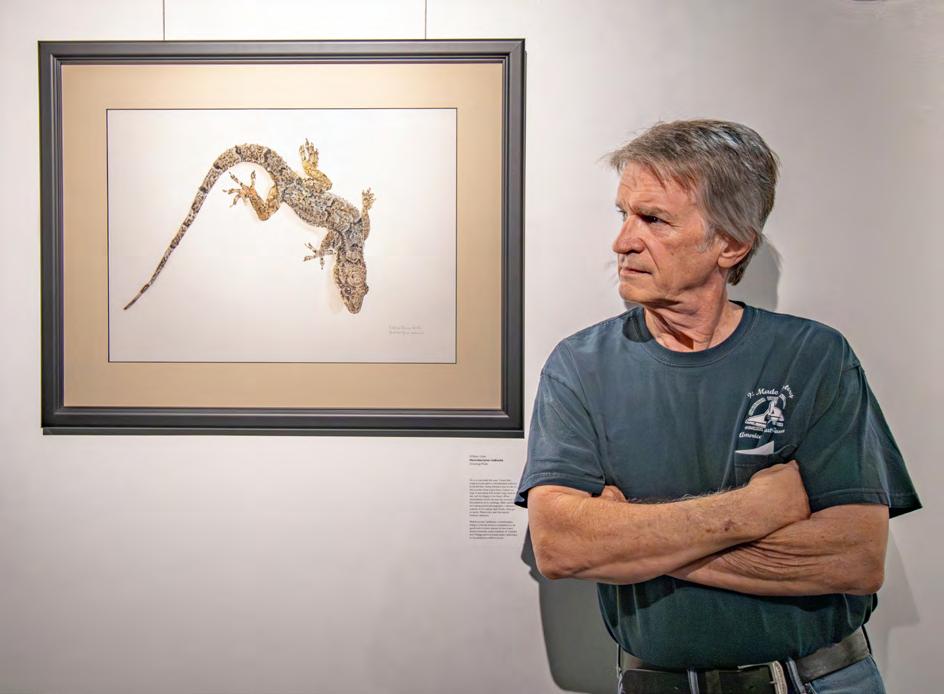
Bill Little pictured next to his piece "Hemidactylus mabouia" in the Fusion: A STEAM Gallery show The HeART of OSC
ASK A SCIENTIST
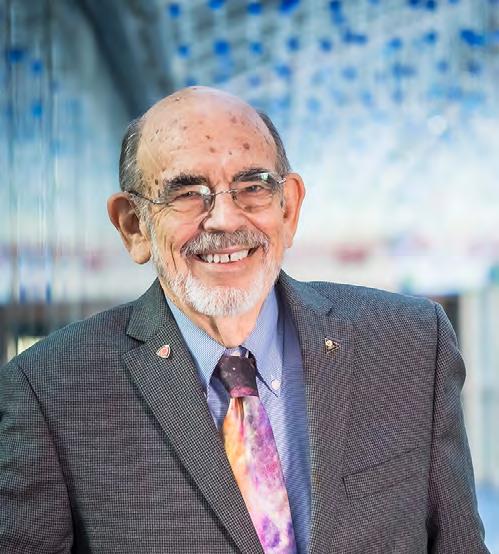
Our inaugural Scientist in Residence, Dr. M.J. Soileau has a passion for learning and educating the community through STEM. You’ve asked him some of your burning questions and he has answered!
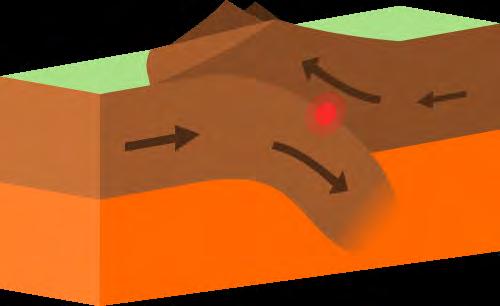
Why do earthquakes happen?
A sudden shift or slip on a fault in the Earth’s crust causes earthquakes. The Earth’s crust is massive plates of rocky material. These plates are always slowly moving and become stuck. The pressure between the plates builds up until they shift or slip, releasing lots of energy causing the ground to shake violently.
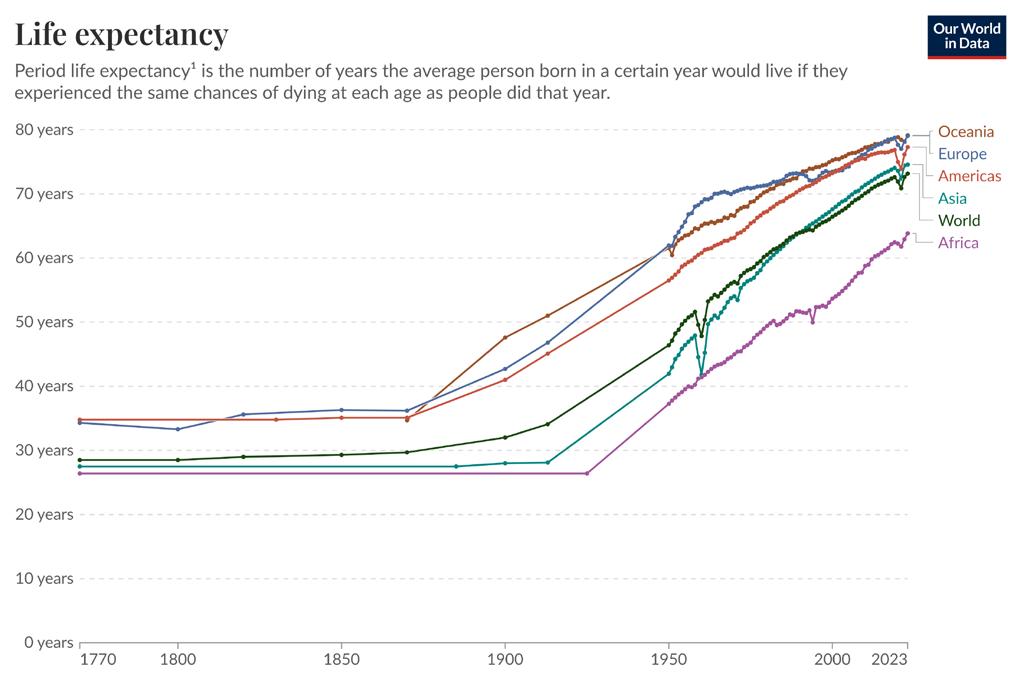
How long can people live?
That is a hard question to answer. The average life span in the USA is 76.3 years. There are 58 countries with longer life spans than the USA. The country with the longest life span is Hong Kong, at 85.5 years. However, with healthy living, which means good diet, good exercise, and access to available vaccines, many people in the USA live past 100 years old. I will be 80 on my next birthday!
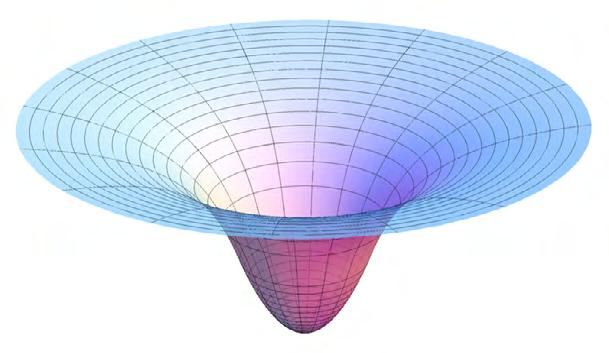
Where did gravity come from?
Gravity is one of the four basic forces of nature. The other three are the electromagnetic, weak, and strong forces. These four fundamental forces describe every interaction in nature. It is thought that these forces were combined during the very early part of the universe, when the universe was extremely hot and dense. As the universe expanded and cooled, the forces separated.
Gravity is the weakest of the four forces. For example, the strong force is 1 X 1070 times stronger than gravity. That's 10 with another 69 zeroes added at the end! However, the range of the strong force is limited to distances inside the nucleus of an atom. The range of gravity is infinite, and it interacts with anything that has mass.
Scientists don't try to answer questions like "where does gravity come from?" Rather, scientists try to develop an understanding of how the force works and how it defines our physical world. Gravity is a force that acts on all matter; its strength is proportional to the masses that interact (such as the mass of a human and the mass of Earth). The strength of gravity is inversely proportional to the square of the distance between the two masses. Essentially, as the distance between two objects increases, the force of gravity between them decreases. Isaac Newton discovered this description of gravity in 1686.
Newton's law of gravity is expressed in equation form as F = mMG/d2, where F is the strength of the force, m and M are the masses of the two objects attracted by gravity, and d is the distance from each other. G is a universal constant of nature.
Einstein's General Relativity (1915) describes gravity as the curvature of space-time and has been verified by many experiments and observations. The mathematics used to describe General Relativity is very complex, requiring years of study to understand.
Image Credit: domdomegg
Image Credit: AllenMcC. Rendering of a Gravity Well
Unearthing Florida’s Ancient Past
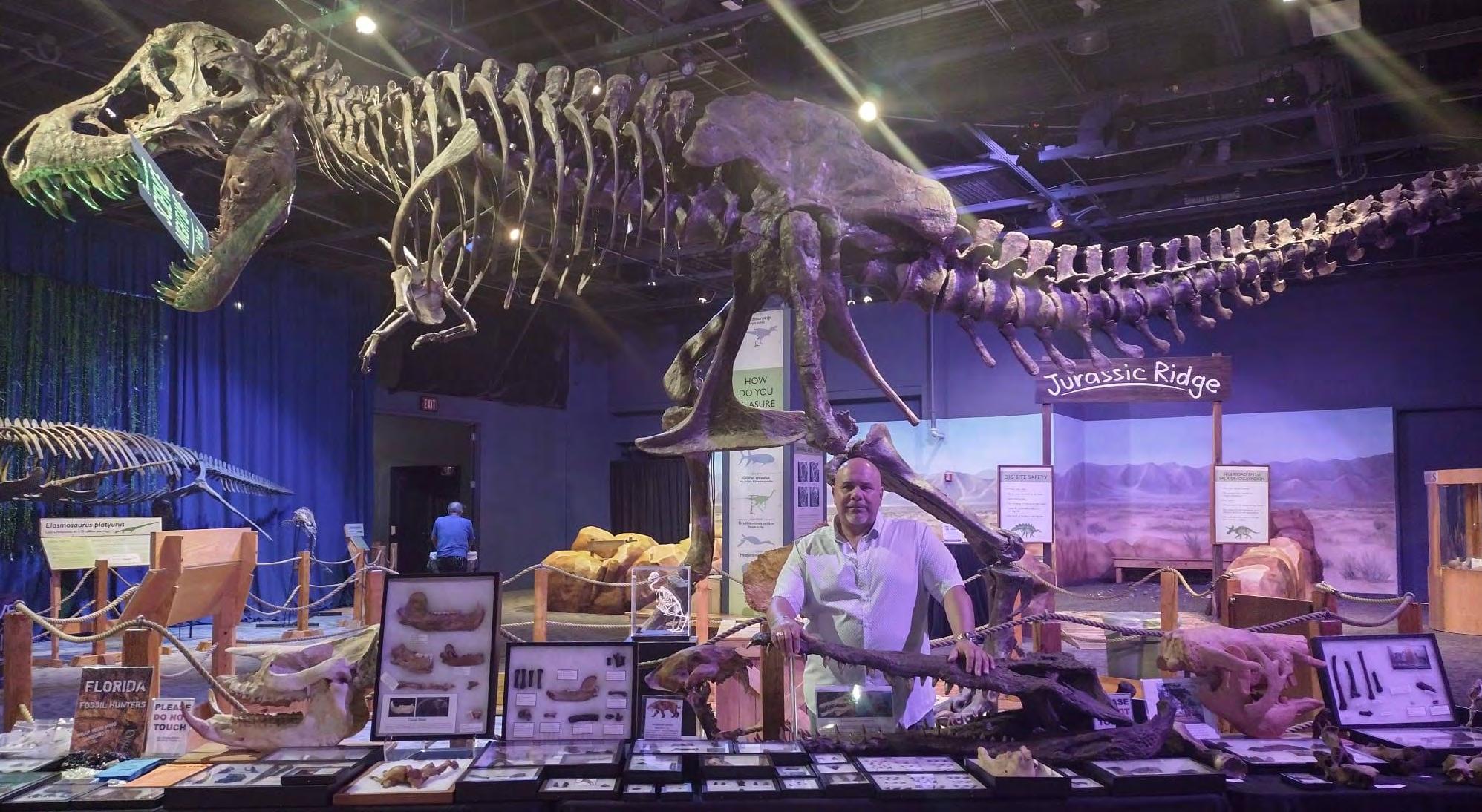
For Salvatore “Sal” Sansone, President of the Florida Fossil Hunters, a lifelong passion began with a single discovery when he was just a child.
“I found my first fossil at the age of six,” he recalls. “I’ve been hooked ever since.” That early moment in Sal’s life sparked a curiosity that would grow into much more than a hobby. As his passion grew, so did his collection and his reputation.
Sal first became involved with Florida Fossil Hunters through a friend, but it was his own enthusiasm for collecting and exploring that pushed him to take a larger role. Today, as President, he helps guide others who share that same excitement for discovery. “My love for fossil hunting and collecting inspired me to be a leader,” he says.
Ask him about his most memorable find, and he doesn’t hesitate: a trilobite – the very same fossil he found as a boy. That small, ancient marine creature became
the foundation of Sal's Mobile Museum, a collection that has grown to over 10,000 artifacts. The Mobile Museum brings fossils directly to communities and events like Fossil Fest at Orlando Science Center.
Fossil hunting in Florida isn’t just about rare finds. The process is as much a part of the experience as the discovery. Sal spends his time exploring rivers and streams with shovels and sifters to uncover treasures hidden beneath layers of sediment. Shark teeth, horse teeth, dugong bones, alligator scutes and even remnants of glyptodons are all part of the landscape beneath Florida’s waters. On land, places like Yankeetown and shell pits offer opportunities to surface-collect echinoids, crabs and fossilized shells.
Through his work with Orlando Science Center, Sal brings these discoveries to life for guests of all ages. His goal is simple but moving: to help people imagine a very different Florida. “I hope that people get a sense of the cool animals that lived in Florida in the past, and what Florida looked like, then,” he says.
It’s a reminder that the state we know
today by its theme parks, coastlines and bustling cities was once home to prehistoric giants and ancient ecosystems. Fossils serve as a bridge between those worlds, offering tangible evidence of how dramatically our environment has changed over time.
For those inspired to try fossil hunting themselves, Sal’s advice is refreshingly accessible. “It’s easy to get started,” he says. “Join our club. Go on a field trip. Meet like-minded people who can show you the ropes.”
That sense of community is at the heart of Florida Fossil Hunters, and it’s at the core of Sal’s work as a Community Partner at OSC. Whether he’s out exploring with other fossil hunters or sharing his collection with curious visitors, he’s passing along a sense of curiosity, connection, and discovery.
Next time you visit during a special weekend event or Community Partner Showcase Day, say hello to Sal and explore his extensive collection of fossils. You never know what you might uncover on your own journey into the past!
OptiGrate: Opening Our Eyes to a ScienceBased, Value-Added Economy
My wife and I have both undergone cataract surgery, a medical treatment that’s common for people of our age. The surgeon used 200-femtosecond (fs) laser pulses for the procedure. “What is an fs?” you might ask. It turns out, not much! An fs is 1x10-18 seconds – that’s one billionth of a billionth of a second.
Our surgeon used these ultra-short pulses of light to make an exceptionally fine cut in the cornea to replace the eye’s lens without causing any side effects to the surrounding tissue. Laser photonics and optics are my area of expertise, so I was excited to learn that the technology that improved my sight and quality of life contained an OptiGrate pulse compressor made with a special glass.
OptiGrate designs and manufactures volume Bragg gratings (VBGs) and holographic optical elements (HOEs) in photothermal-refractive glass (PTRG), enabling spectral, spatial, and thermal management of laser radiation. That is a lot of acronyms, isn’t it? The OptiGrate website provides extensive discussions of these products, but let’s see if we can make the science behind them a little more approachable.
We can start by breaking things down to a grain of sandliterally. The starting material for the compressor is sand, or silicon dioxide – the same stuff in which we like to wiggle our toes at the beach. Value is added to the sand when we apply chemistry, physics, photonics, and material science that transform it into novel products.
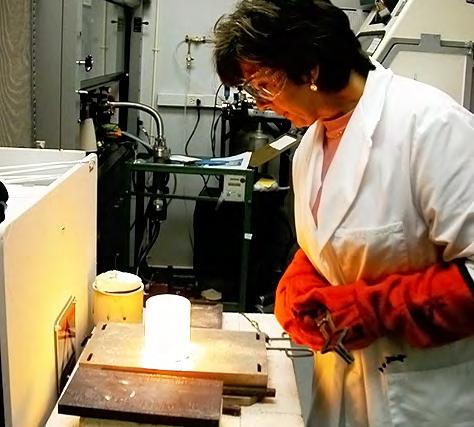
To begin the manufacturing process (every element of which is completed in-house), OptiGrate melts sand and other added components, transforming them into glass – PTRG, to be specific. The “photo” part of the acronym means that the glass properties can be changed by irradiation with ultraviolet light. The “thermal” element refers to “fixing” or imprinting
new properties into the glass by heating it to about 450° C. Decades of basic and applied science underpin Figure 1.
Dr. Glebova handling newly melted glass with a melting temperature around 1,450° C (2,642° F).
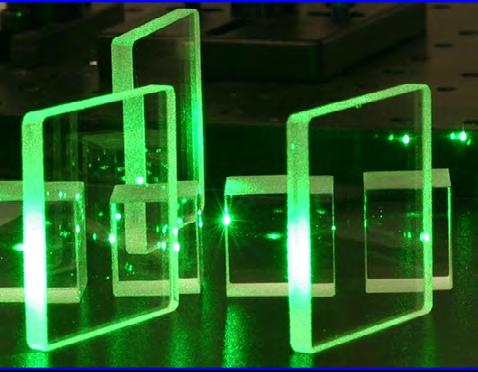
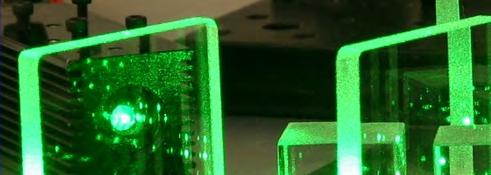
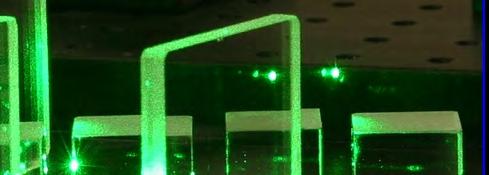
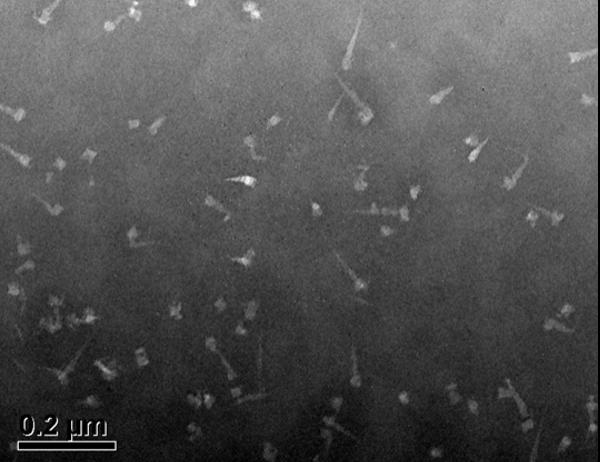
Now, let’s talk about HOEs, which are used in filters, mirrors, pulse compressors, beam steerers, polarizers, and more. Holograms, or extraordinarily complex structures, are imprinted in the volume of the glass. Ultraviolet lasers create “color centers” or defects within the glass volume. When the glass is temperature-cycled, nanocrystals of sodium fluoride (NaF, Figure 2) are grown within the glass, imprinting the specially designed holograms into it.
Because the index of refraction of NaF is slightly less than that of silicate glass, the resulting material does not absorb incident
Figure 1
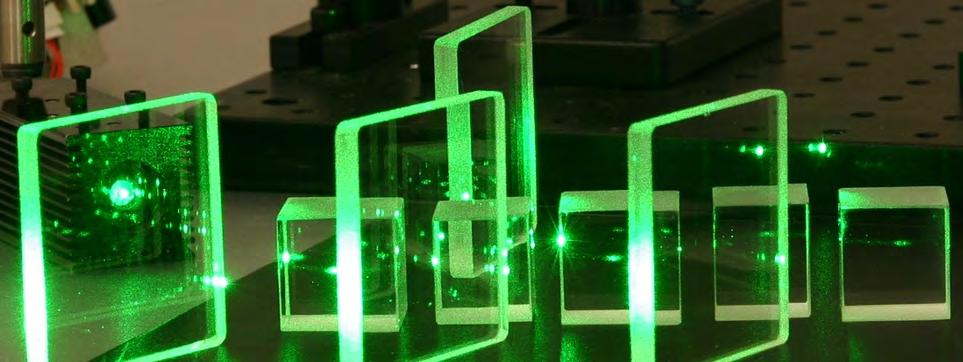
light but scatter it according to the holographic information stored. Whole families of optical elements are produced, but to the naked eye, the finished component simply looks like a block of glass (Figure 3). In addition, holograms can be multiplexed, meaning multiple components can be produced in a single piece of PTRG!
I have two personal favorite PTRGs, the first being the pulsed compressors used to make lasers for cataract surgery, also known as Chirped BGs. “Chirp” is a term used in both science and non-science language, with the general term referring to birdsong, in which a bird’s tune changes in frequency from low to high or vice versa within a single tweet. In this case, the spacing of the holograms in the CBG changes very precisely as the laser light traverses the CBG.
My other favorite PTRG is a monolithic laser. This product includes both the special “dopants” (impurities that scientist deliberately add to a material) that emit the desired color of light and holographic mirrors that produce the Amplified
Spontaneous Emission – thus making a LASER without any external components, save for the pump energy to excite the dopant ions.
I have more than a passing connection with OptiGrate, one that supersedes its involvement in my cataract surgery. OptiGrate started in the UCF Incubator in 1999, the same year I was named Vice President for Research and Commercialization. More than that, I hired one of the company's founders, Dr. Leonid Glebov, from Russia to teach at UCF in 1995.
The company is a spinoff of CREOL, the College of Optics and Photonics, and their scientific and technological base is the result of decades of scientific research by Dr. Glebov, Dr. Larissa Glebova (both retired) and their colleagues and students. The symbiotic relationship between the new company and the university enabled the expansion of basic science associated with their glass and prototype devices.
The company officially graduated from the Incubator in 2012 as it expanded beyond research and development into commercial product delivery. It was at this time that Dr. Alexei Glebov joined the team as CEO, bringing critical expertise from his time in Silicon Valley and making the venture a true family business.
Now, OptiGrate employs many UCF graduates, and the Glebov family is helping to ensure continued opportunities for study in CREOL by endowing scholarships for graduate students. The company exemplifies how scientific understanding powers our economy and improves our lives. Those wishing to learn more about it can explore their website or take a deeper dive into Google Scholar’s listing of Prof. Emeritus Glebov’s extensive scientific papers, cited more than 10,000 times by other scientists.
Figure 2
Figure 3
Orlando Science Center is thrilled to announce it has been selected to serve as a STEM innovator through NASA’s TEAM II Informal Education Learning Cohort. This award will allow OSC to deliver and expand NASA-themed hands-on STEM learning through its Ignite Discovery program that’s designed for preschool students ages 3-5 throughout the region. Through NASA’s support and OSC’s partnership with the Florida Head Start Association, the Science Center will provide student workshops, space-themed family engagement events and professional development for Head Start educators. By introducing NASA-inspired exploration at this level, the Science Center aims to spark wonder, encourage problem-solving and help children see themselves as future scientists, engineers and explorers.
Big news! Orlando Science Center recently received a Universal Orlando Foundation Celebration of Giving Award! With this generous funding, OSC has launched a new initiative to bring world-class STEM learning directly to middle school students in Osceola County – EAGLE: Empowering Achievement & Growth in Learning through Exploration. This program inspires science learning through hands-on in-school workshops, teacher professional development, and family engagement opportunities. By preparing students with the skills they need for high wage careers, OSC empowers the next generation of innovators! Orlando Science Center is deeply grateful to the Universal Orlando Foundation for investing in students, teachers, and the community.
Orlando Science Center is proud to continue our relationship with the LEGO® Playful Learning Museum Network! Now in its fourth and biggest year, the LEGO Group’s Playful Learning Museum Network —hosted by the Association of Science and Technology Centers (ASTC) and funded by the LEGO Foundation—brings together children’s and science museums to pioneer playful learning experiences both inside our institutions and out in the communities we serve. Since 2021, this network has reached millions of children, and we are excited to help bring the power of play to many more through interactive playful learning experiences at the Science Center and throughout our community!
A. Friends’ Fo undation
A huge thank you to the A. Friends’ Foundation for their recent gift to the Orlando Science Center. The generous, ongoing support we receive from donors like the A. Friends’ Foundation fuels the programs you love at the Science Center, from awe-inspiring exhibits to hands-on demonstrations that spark curiosity for all ages. Because of their generosity, visitors of all ages can explore, create, and build the skills they need to tackle life’s biggest challenges. Thank you, A. Friends’ Foundation, for your dedication to helping Orlando Science Center be the spark that ignites innovation in our community!
Reopening a Window to Space
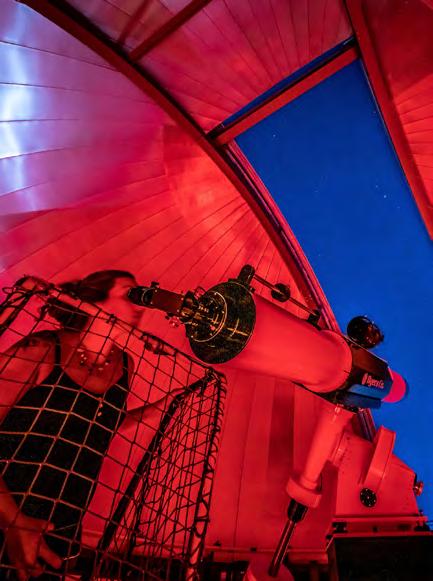
Florida Tech Students, Faculty Carry Out Interdisciplinary Quest to Refurbish Ortega Telescope
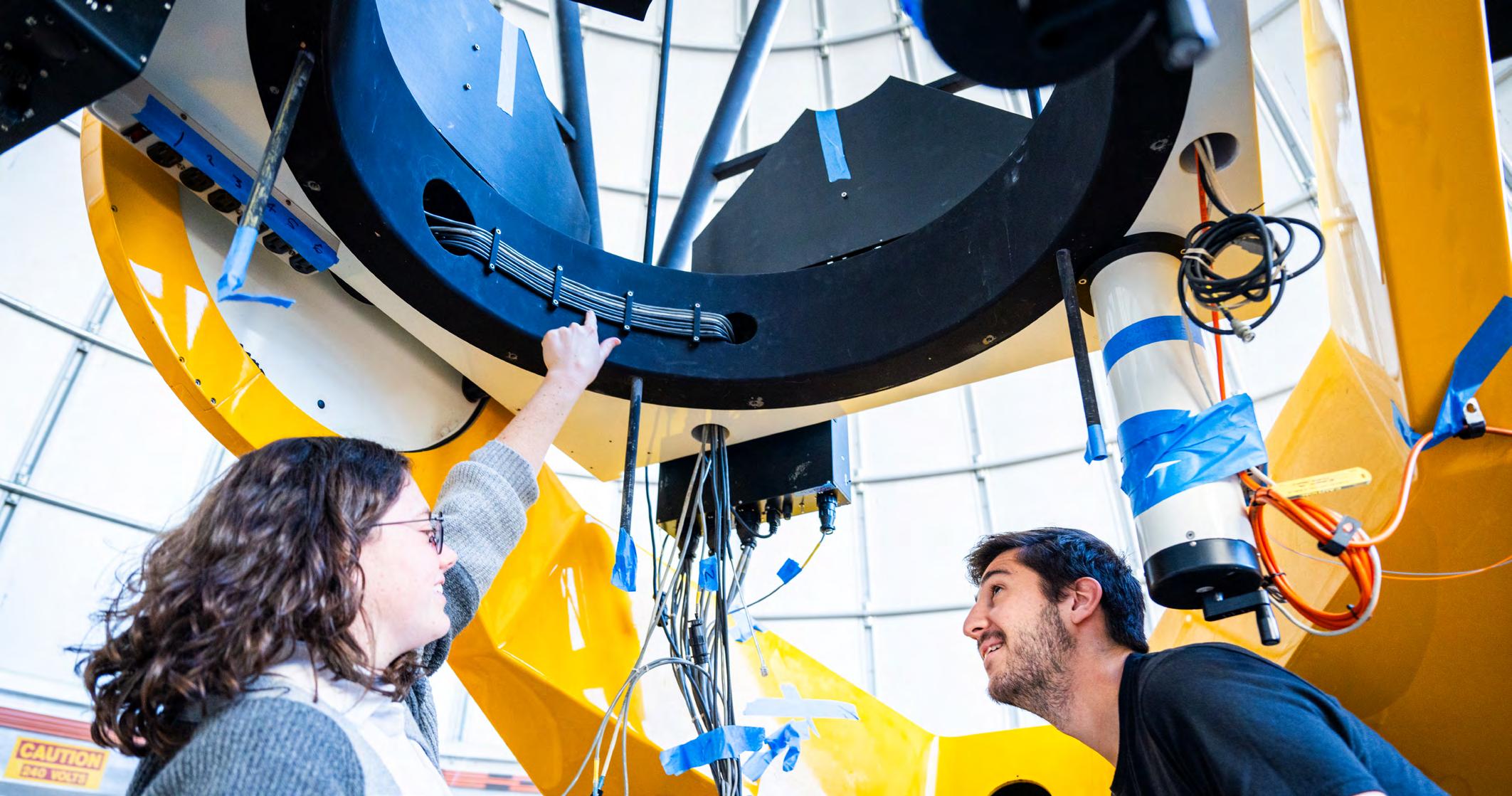
When Luis Quiroga-Nuñez, professor of astrophysics, was appointed director of Florida Tech’s Ortega Observatory, his first mission was to refurbish the observatory’s primary tenant—a nonfunctioning 32-inch telescope. The aging telescope, built between 2007 and 2008, had sat dormant for the last several years. But with restoration, the telescope could serve as a powerful tool to train students to use professional telescopes and make observations—critical skills that would help prepare them for their future careers.
It soon became apparent, however, that this was no simple task. The restoration would necessitate large-scale engineering just to uncover how to fix and upgrade the telescope, much less actually repair it. However, as Quiroga-Nuñez wisely recognized, this could also be a powerful educational opportunity, providing unique hands-on learning experiences for students in the College of Engineering and Science.
“We are an institute of technology. We have perfectly capable people, like these young students, ready to join hands-on projects, get crazy and start to be creative,” he said.
With various issues to tackle and eager to support homegrown expertise, Quiroga-Nuñez and Lee Caraway, an instructor in Florida Tech's Department of Electrical Engineering and Computer Science, have recruited students with varied backgrounds, from astronomy to electrical engineering and computer science. Students apply what they learned in class and grow their portfolios with a real-world project, the sort of experiential learning that is a hallmark of a Florida Tech education.
“This is about as real-world as you can get without leaving school: We have this giant piece of technology that is not
working—figure out why,” said recent graduate Adrianna Agustin, who helped update the telescope’s communication system. “All of those problem-solving skills will directly translate to wherever we go in the future.”
While the project remains an exciting puzzle for students and faculty alike, some improvements have already been made:
1. New Computer: Before the telescope could run, computer science students built and programmed their own computer and software to replace the previous outdated devices.
2. New Motors: Alumna Marisa Guerra developed a blueprint to replace the telescope’s old, 40-pound motors using knowledge from her senior design project—a robotic arm. The new motors weigh 2 pounds and are much more precise.
3. New Communication System: Agustin spent her senior design project researching internal circuit systems and simplified the telescope’s chaotic system, which dated back to the ’80s, from a multitude of wires to just a couple.
Next, they’re tackling high astrometric precision—a crucial element of properly tracking movement in space. Perfecting precise movement is expected to take some time, which isn’t a bad thing, Quiroga-Nuñez said; it gives even more students a chance to get involved.
“This is like a big LEGO® for them,” he said. “They are learning the process, and the students, I think, will have found a very valuable life experience.”
INVEST IN THE FUTURE
with a Corporate Membership
Partner with Orlando Science Center to align your brand with one of Central Florida’s most trusted community institutions and open a world of possibility for telling your own story. The Science Center offers a wide range of relatable and impactful content that provides unique opportunities to empower your message and deliver it to a diverse and deeply curious audience.
As a Corporate Member, you will support a wide range of rich and dynamic programming that brings STEM education to thousands across Central Florida and beyond. This includes hands-on exhibits, compelling live shows, and impactful programs and events that reach over 680,000 guests annually.
When you join OSC as a Corporate Member you will unlock a world of benefits designed to enrich your corporate culture, engage your employees, and cultivate your clients. Corporate Members receive a range of exclusive benefits based on the level of giving.
• Complimentary general admission passes to Orlando Science Center.
• Complimentary VIP tickets to special events.
• Discounts on Annual Memberships.
• Recognition on OSC’s Donor Wall, Community Impact Report, website, e-blasts, and newsletters.
• Exclusive invitations to OSC Board Socials and special receptions.
• Learn more!
For more information, contact Heather Mahoney, Director of Corporate Relations, at hmahoney@osc.org or 407.514.2014.
Don't miss us at this event!
Book an Offsite program and we’ll deliver hands-on STEM learning directly to your school, library, or community group! Designed for Pre-K through Grade 12, these programs align with Florida State Standards and transform everyday spaces into immersive learning environments. Our outreach programs are led by expert educators and built to spark curiosity, critical thinking, and real-world problem solving! Visit osc.org/offsites for more information.
Mobile
Planetarium:
Journey to Mars & Beyond
We'll bring the universe to you! Blast off to the far reaches of our galaxy and beyond - experience black holes, distant stars, and new worlds!
Fly Drones and Conquer the Course
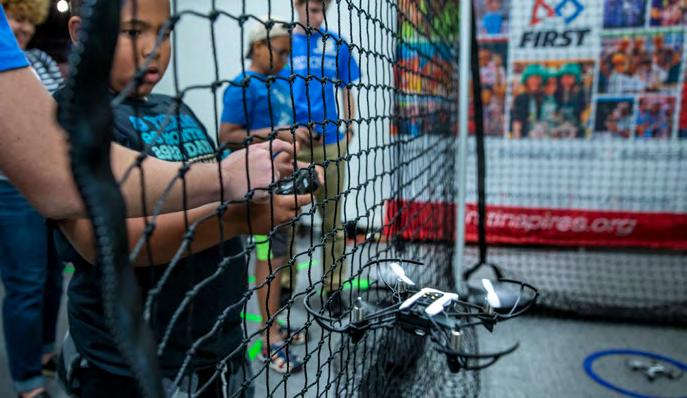
We’re bringing the drone zone to life. Test your skills by flying drones through a series of obstacles set up in our mobile flight cage. Get ready to rule the skies!
Angry Birds Incoming
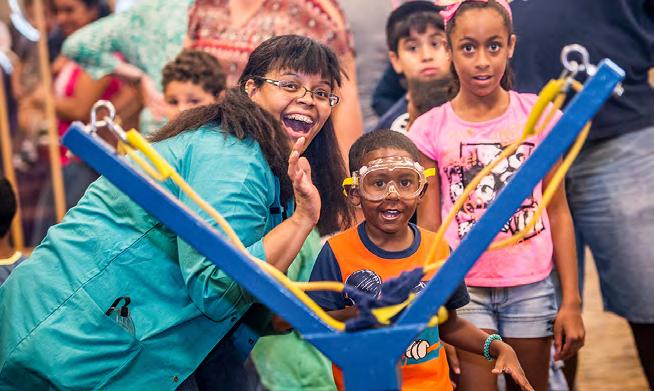
Shoot Angry Birds through the air while mastering trajectory, angles, and real-world physics - all through explosive, high-flying fun! Unlock new levels by applying real STEM concepts.