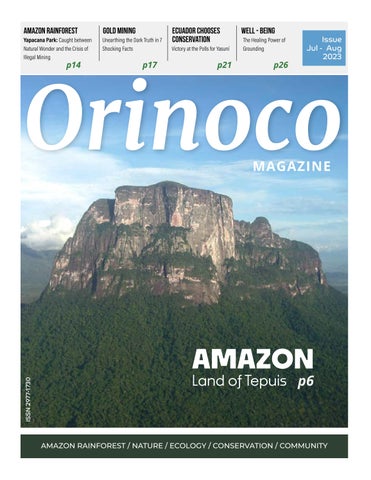
Orinoco AMAZON RAINFOREST / NATURE / ECOLOGY / CONSERVATION / COMMUNITY Issue Jul - Aug 2023 ISSN 2977-1730 MAGAZINE Amazon Rainforest AMAZON Land of Tepuis p6 Yapacana Park: Caught between Natural Wonder and the Crisis of Illegal Mining Victory at the Polls for Yasuní Unearthing the Dark Truth in 7 Shocking Facts The Healing Power of Grounding Ecuador Chooses Conservation Gold Mining p14 p21 p17 p26 Well - Being
“
“In the Amazon, gazing upon the ancient tepuis, one can’t help but feel a profound connection to the Earth’s soul, as if the very essence of nature’s beauty and importance is etched into the rugged contours of these mystical giants.”
Edson Acero
Orinoco Magazine 2
17
What’s inside this issue
Editor’s Letter 05 Welcome 06 Tepuis of the Amazon Rainforest: Awe-inspiring geological formations
Sacred Tepuis of the Amazon: Imagine a world where the line between reality and myth is blurred
Yapacana Park: Caught between Natural Wonder and the Crisis of Illegal Mining
Cover Photo by:
Pixabay 04
10
14
Gold Mining: Unearthing the Dark Truths in 7 Shocking Facts
Guardians of the Amazon: The Commitment of Amazonian Indigenous Women to Nature
Tepui Kukenan: Photo / Waterfalls and clouds at Kukenan tepui or Mount Roraima, Venezuela 21 Ecuador Chooses Conservation: Victory at the Polls for Yasuní 22 Historic Victory for Indigenous Peoples in Brazil: This ruling, which was met with jubilation by activists and indigenous leaders, stands as a historic triumph for the original inhabitants of Brazil 23 Let’s Talk About Water: A Precious Resource in Times of Climate Change 25 Eco Living 5 Sustainable Actions for a Greener Tomorrow 26 The Healing Power of Grounding 28 Editor’s pick: a space dedicated to inspiring discoveries.
Rainforest World Well - Being “Discover the Extraordinary: Inspiring Stories, Indigenous Wisdom, and the Transformative Power of Community in the Heart of the Amazon.” Orinoco Magazine 3
18
20
Amazon
Dear readers,

In this fourth issue, we focus our attention on a pressing concern that affects the heart of our beloved Amazon region: the enigmatic world of tepuis and the devastating impacts of illegal gold mining on these unique ecosystems.
Our journey takes us to the fascinating tepuis, ancient plateaus that rise like sentinels in the midst of the Amazon rainforest. These geological wonders are home to extraordinary biodiversity and have been shrouded in myth and mystery for centuries.
However, we also uncover the darker side of this story. Illegal gold mining threatens the fragile balance of these pristine environments, leaving a trail of destruction in its wake. The consequences for the flora, fauna, and the indigenous communities that coexist in harmony with these landscapes are severe.
In this issue, we delve into the environmental and social consequences of illegal gold mining in these valuable ecosystems.
We express our gratitude to the activists, scientists, and local communities who have shared their experiences and knowledge with us. Their voices reinforce the urgency of addressing the issue of illegal gold mining and its far-reaching impacts. It is a call to action that urges us to join forces in preserving the wonders of the Amazon, including the remarkable tepuis.
May this issue of Orinoco Magazine serve as a catalyst for positive change, inspiring us to come together in solidarity and recognise our shared responsibility in preserving these vital ecosystems and the rich tapestry of life they support.
We thank you for your continued support, which strengthens our Orinoco community with each issue we publish.
Sincerely,
Edson Acero Editor, Orinoco Magazine
Welcome
Orinoco Magazine 4
Welcome
Orinoco Magazine is much more than a magazine. It is a realm of knowledge, a window to the wonders of the Amazon, a platform for education and awareness. Within our pages, you will discover authentic stories, precise and valuable information about biodiversity, indigenous cultures, environmental and social challenges. We are a beacon of light on the significance of preserving this vital region for the planet’s balance and recognizing the importance of indigenous cultures and the history of the Amazon.
We invite you to join us in this profound mission. Join us in our free bimonthly publication and follow us on all our social media channels to stay informed about everything happening in the Amazon.
Orinoco Magazine Team

Edson Acero
Founder / Editor / Designer / Columnist / Researcher (Totnes, UK) Stay in
Website: www.edson-acero.com
Instagram:
@Orinoco_eMagazine
@edson_acero
Email:
contact@edson-acero.com
edsonacero@gmail.com

Fran Yajö Morales
Brought to you by ...
Editorial Advisor / Columnist / Researcher (Venezuela)

Fabiana A. Orreda
Editorial Advisor / Columnist / Researcher (Brazil)

Ronny Velásquez
Anthropology Advisor / Columnist / Researcher (Honduras)

Karl Rose
Proofreader (Uk)
... ...

Héctor Pérez
Coordinator (Ecuador)
... ...
touch
Orinoco Magazine 5
Tepuis of the Amazon Rainforest
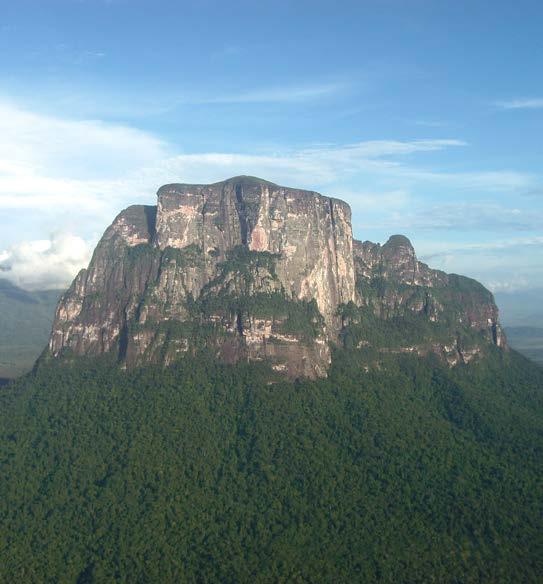
Deep within the heart of the Amazon rainforest lies a world of breathtaking natural wonders, where towering tabletop mountains known as “tepuis” (singular: tepui) captivate the imagination. These awe-inspiring geological formations are scattered throughout the Amazonas state in Venezuela, the Guyana Highlands, and parts of Brazil, and they have intrigued scientists, explorers, and nature enthusiasts for centuries. In this article, we delve into the enigmatic world of tepuis, exploring their characteristics, unique ecosystems, and the mysteries they hold.
What Are Tepuis?
Tepuis, derived from the Pemon language, which is spoken by indigenous peoples in the region, translates to “house of the gods” or “sacred mountain.” This name aptly captures the majestic and mystical nature of these formations. Tepuis are flat-topped mountains that rise dramatically from the surrounding rainforest, creating a surreal and almost otherworldly landscape. Some of the most famous tepuis include Roraima, Kukenan, Auyantepui, and Sarisariñama.
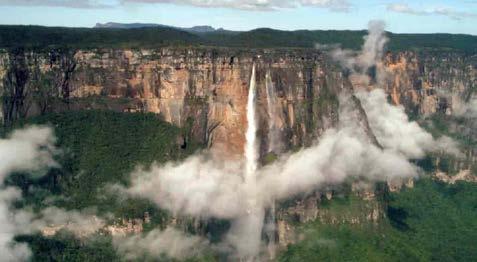
Amazon Rainforest
Orinoco Magazine 6
Characteristics of Tepuis
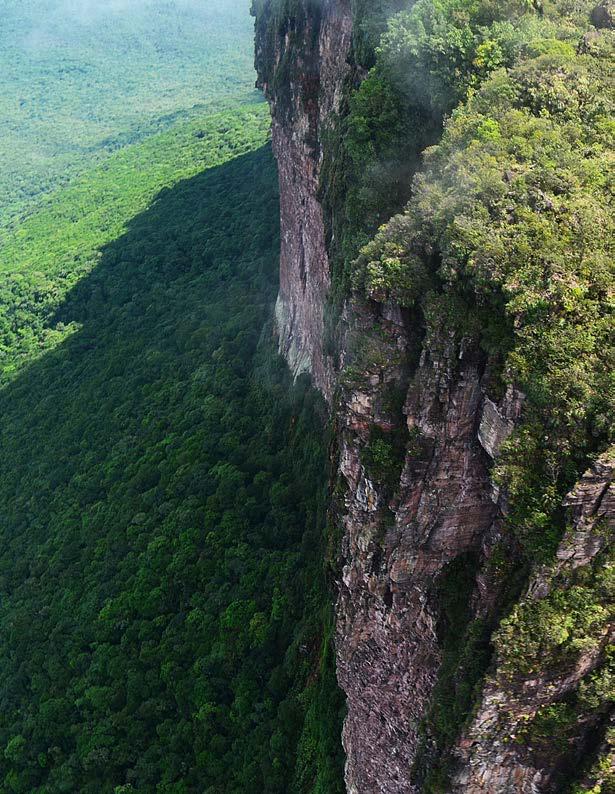
Flat Tabletops: Tepuis are characterized by their unique flat summits, often covered with a layer of dense vegetation. These plateaus can stretch for several square kilometers and are typically surrounded by sheer cliffs, making
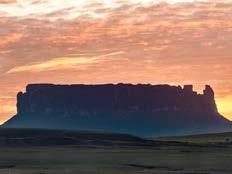
them difficult to access.
Vertical Walls: The sides of tepuis are often composed of near-vertical rock faces, which can rise hundreds of meters from the forest floor. These walls have discouraged human exploration for centuries.
Endemism: Tepuis are known for their remarkable biodiversity and high levels of endemism. Due to their isolation, many species have evolved in isolation, leading to the discovery of numerous unique plants and animals found nowhere else on Earth.
Ancient Formation: These geological wonders are estimated to be over two billion years old, making them some of the oldest exposed rock formations on the
planet. Their ancient history adds to their mystique.
Unique Ecosystems
The tepuis are often referred to as “islands in time” due to their isolation and distinct ecosystems. Their summits house a variety of unique plants and animals adapted to the harsh conditions, including carnivorous plants like the pitcher plant (Heliamphora) and the remarkable Roraima bush toad (Oreophrynella quelchii).
One of the most famous tepui ecosystems is the Tepui shrubland, characterized by stunted trees, strange rock formations, and numerous endemic species. Some tepuis even harbor isolated pockets of cloud forest atop their plateaus.
Human Exploration and Mythology
Tepuis have long been a source of fascination and mystery. Indigenous peoples in the region have rich mythologies associated with these mountains, considering them sacred and often avoiding their summits. European explorers, such as Sir Walter Raleigh, were among the first to document tepuis in the 16th century, but it was not until the 19th and 20th centuries that more extensive expeditions took place.
Amazon Rainforest
Orinoco Magazine 7
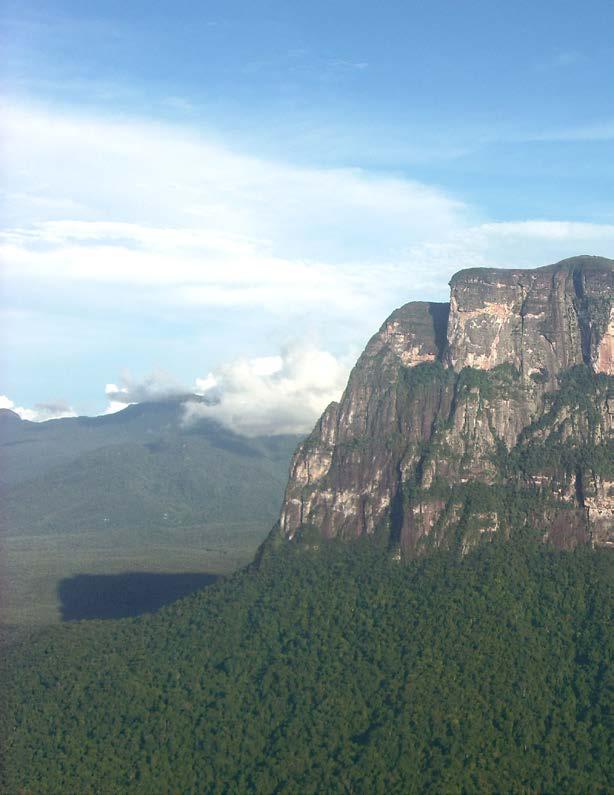
Today, adventurous travelers and scientists continue to explore these remote and challenging environments, shedding light on their ecological significance and uncovering new species.
Tepuis remain one of the most intriguing and least-explored features of the Amazon rainforest. Their unique geological characteristics, endemic biodiversity, and rich cultural significance make them a subject of ongoing scientific study and a source of wonder for those who venture into their remote realms. As we learn more about these enigmatic “houses of the gods,” the secrets they hold continue to captivate our imaginations and deepen our appreciation for the wonders of the natural world.
By: João Tovar
Orinoco Magazine 8
Amazon state of Venezuela
Amazon Rainforest
Tepui Autana
Orinoco Magazine 9
Photo by: Edson Acero
Sacred Tepuis of the Amazon
The Amazon rainforest is not only a realm of lush biodiversity but also a land steeped in centuries-old traditions and beliefs. Amidst this breathtaking natural wonderland, where the forest canopy stretches to the heavens, there exist enigmatic flat-topped mountains known as tepuis. For indigenous communities residing in the Amazon basin, these tepuis are more than just geological wonders; they are sacred realms deeply entwined with their mythology and spirituality.
Mythical Ties
Imagine a world where the line between reality and myth is blurred, where gods and spirits walk among mortals, and where nature holds the keys to
both life and death. This is the world of indigenous Amazonian communities, who have forged a unique relationship with the tepuis over countless generations.
In the mythology of the Pemon people, who inhabit the region surrounding the famous Roraima Tepui, these flat-topped mountains are believed to be the homes of powerful spirits and ancient gods. Roraima, the most iconic of them all, is considered to be the “Mother of all Waters,” responsible for the rivers and waterfalls that flow from its slopes.
The Legends Come Alive
To truly understand the depth of this connection, one must listen to the stories passed down through generations. The elders, the storytellers of these communities,
Amazon Rainforest
Orinoco Magazine 10
recount tales of epic journeys to the summit of Roraima, where shamans seek wisdom and strength from the mountain spirits. These tales are not just stories but living traditions that continue to shape the lives and beliefs of the indigenous people.
the custodians of these sacred lands.
Preserving Tradition in the Modern World
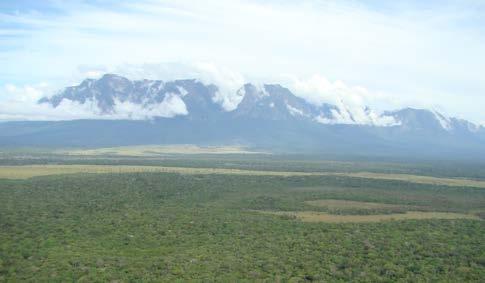
One such legend tells of Makunaima, the creator god, who shaped the landscape of the tepuis with his magical bow and arrow. The act of creation is not a distant memory but a living reality in the minds of the Pemon, who view themselves as
In an era of rapid change and encroaching modernity, the indigenous communities of the Amazon are faced with the challenge of preserving their rich cultural heritage. The legends and myths associated with the tepuis serve as a crucial link to the past and a source of strength in the present. Today, efforts are underway to document and share these stories with the world. Indigenous
Amazon Rainforest
Orinoco Magazine 11
storytellers and artists are collaborating with researchers and writers to ensure that the wisdom of their ancestors endures for future generations.
As we venture into the heart of the Amazon, we not only witness the remarkable biodiversity and natural wonders that define this region but also the profound spiritual connection that indigenous communities hold with the sacred tepuis. The legends and myths surrounding these flattopped mountains are not merely tales of the past; they are living traditions that continue to shape the identity and resilience of the Amazon’s original inhabitants. In the realm where gods and mortals converge, the tepuis stand as silent witnesses to the enduring spirit of the Amazon’s indigenous cultures.
By: Edson Acero @edson_acero


Amazon Rainforest
Orinoco Magazine 12
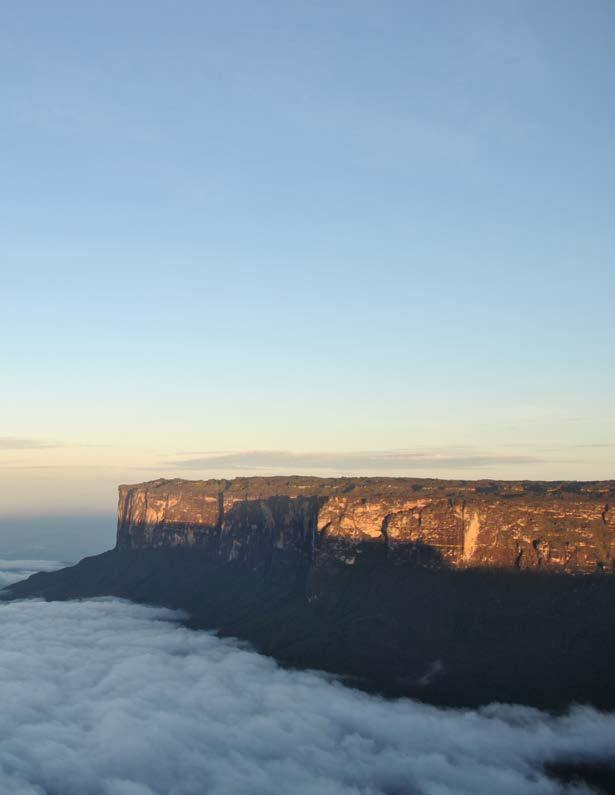
Tepui Kukenan
Bolívar state of Venezuela
Orinoco Magazine 13
Photo by: Pixabay
Yapacana Park:
Caught between Natural Wonder and the Crisis of Illegal Mining
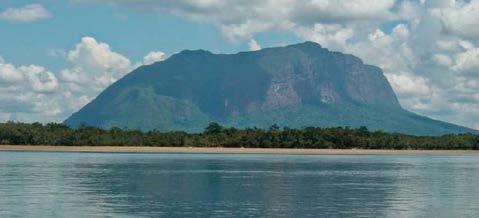
The Yapacana National Park is a nature reserve located in the southern region of Venezuela, in the state of Amazonas. It is known for its scenic beauty and its significance in terms of biodiversity in the Amazon region.
It is part of the Orinoco River basin and plays a crucial role in conserving Amazonian ecosystems. One of the park’s features is the Yapacana tepui, which is a high, flat plateau that rises abruptly from the surrounding jungle. This tepui is one of the most emblematic geological formations in Venezuela.
The Yapacana National Park covers an area of 3,948 square kilometers, making it one of Venezuela’s largest national parks. The tepui rises to about 1,100 meters above the
surrounding jungle, and the park is home to a wide variety of plant and animal species, many of which are endemic to the region.
In addition, indigenous communities such as the Piaroa, Maco, Puinave, Baniva, and Curripaco inhabit the territories near Yapacana Park.
Yapacana Park is undoubtedly one of those places that leaves us in awe of the incredible beauty of our planet and the astonishing biodiversity that has evolved over thousands of years.
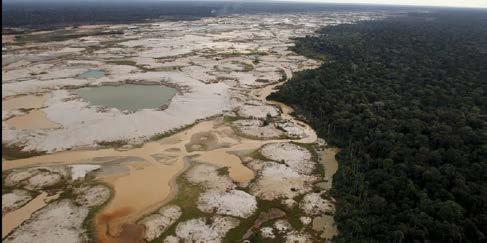
Unfortunately, Yapacana is synonymous with gold in Venezuela. It is famous, not so much for being a national park that protects a unique treasure of biodiversity but for being a hotspot of continuing rampant and destructive illegal mining activity that has reached staggering levels. In September of this year, the Venezuelan
Amazon Rainforest
Orinoco Magazine 14
government reported a military operation that resulted in the eviction of over 14,000 people engaged in mining and other illegal activities within the park’s territory. According to the latest calculation by the environmental organization SOS Orinoco, 3,227 hectares of Yapacana are already affected by mining.
How did this problem originate?
A report prepared by the Amazonas Directorate of the National Parks Institute in 1993 details the first reports of mining activity in March 1987. At that time, two gold mines were detected: Mina Nueva, located at the foot of Cerro Yapacana, and La Cocina, situated approximately 200 meters above the former on the same hill. Both used Caño Cotúa as
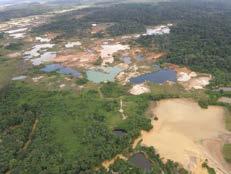
their access route. The report indicates that the mining camp south of Cerro Yapacana was inhabited by 104 people, mostly indigenous Piaroa, Guajibo, and Curripaco, but there were also creoles and foreigners leading the operations. The report documented the destruction of a micro-basin, and during an aerial reconnaissance, an unauthorized airstrip was observed in one of the savannas, presumably used for landing planes to transport the extracted gold.
But how did it go from being an activity involving 104 individuals to becoming a large-scale illegal
mining operation, ecocide, and criminality involving over 14,000 people in just over three decades?
Several factors are involved in a complex situation like this, and I intend to mention and explain some of the most relevant and notable ones.
The Gold Rush and Global Demand
The global gold market and demand influence the proliferation of mining activities. Historically, the price of gold in international markets is a key factor. When the price of gold is high and remains stable or increases, it makes gold mining more lucrative and attractive for companies, groups, and individual prospectors. This generally leads to an increase in mining activity and the exploration of new deposits, along with the incorporation of more people and resources.
Regulations and Government Policies:
Government policies and environmental and mining regulations can influence the proliferation of mining activities. When regulations are lax or inconsistently applied, it can encourage the unsustainable growth of mining. In the case of Yapacana, the lack of oversight and disregard for community demands allowed the problem to grow unchecked.
Technology and Market Access
Technological advancements in mining, such as more efficient and cost-effective extraction methods, can make it more attractive to exploit gold deposits that were previously not economically viable. Additionally, globalization facilitates access to international markets, allowing mining companies to sell their gold worldwide.
Investments in Mining
The availability of investment and financing for mining projects is also a significant factor.
Amazon Rainforest
Orinoco Magazine 15
When investors see profitable opportunities in gold mining, they are willing to fund exploration and extraction projects, leading to increased mining activity.
Deculturation and Neo-Colonization
The disconnection from cultural practices deeply rooted in indigenous communities, along with the substitution of their ancestral worldview with foreign religions, has reoriented priorities and aspirations, especially among indigenous youth. Previously, the pursuit of knowledge in the jungle and the preservation of their ancestral values were top priorities. However, there is now a growing inclination toward material possessions and economic power, often without consideration for the wealth of their ancient traditions.
An Ecological and Social Disaster of Unimaginable Proportions
The magnitude of this crisis goes beyond being merely an ecological disaster; it is also a social problem of heartbreaking proportions. Entire indigenous communities are being disarticulated due to the exodus of men,
women, and adolescents lured by the elusive promise of prosperity in the mines, leaving behind the most vulnerable: small children and the elderly, along with those who resist leaving their communities of origin. In this scenario, a shadow of harmful alcohol and drug consumption, along with the exploitation of sexual labor, has loomed as a means of escape in the face of desperation. Furthermore, the proliferation of diseases has exacerbated the calamity that hovers over these populations and the thousands of people who have come from various places in search of gold.
The magnitude of human suffering, the disintegration of social and cultural structures in the Yapacana National Park is a heartbreaking testament to the urgent need for a coordinated and effective response to protect these communities and preserve the park’s invaluable ecosystem. The crisis not only threatens the biodiversity and natural beauty of the place but also destroys ways of life, cultures that have existed for generations.
Unofficial reports suggest that the recent military intervention in Yapacana resulted in several armed clashes with several injured and even fatalities.
Amazon Rainforest
Orinoco Magazine 16
The fact is that this should not have happened. In this day and age of undeniable climate crisis, ecocide like what is happening in Yapacana should not exist, let alone the violations of rights that occur in environments where anarchy and criminality prevail.
A Universal Call for an Environmental Consciousness
Our connection to the Amazon, whether we live in its vicinity or in distant lands, is undeniable. This astonishing ecosystem plays a fundamental role in the harmony of life on our planet. What happens in this region has a deep and global impact that affects us all. Therefore, we must remain vigilant and come together in the crucial mission of preserving this invaluable natural treasure. The responsibility for its care rests on each of us, regardless of where we live.
By: Edson Acero
Gold Mining:
Unearthing the Dark Truths in 7 Shocking Facts
Deforestation: Illegal mining operations often involve clearing vast areas of the Amazon rainforest, contributing to deforestation at an alarming rate. This deforestation destroys critical habitats for countless plant and animal species.
Mercury Pollution: Mercury is commonly used in illegal gold mining, and its release into the environment contaminates rivers and water sources. This has devastating effects on aquatic life and can also harm human health through the consumption of contaminated fish.
Destruction of Biodiversity: The Amazon is home to an incredible variety of plant and animal species. Illegal mining threatens this biodiversity, pushing some species to the brink of extinction.
Impact on Indigenous Communities: Indigenous communities in the Amazon are disproportionately affected by illegal mining. They often face violence, displacement, and the loss of their traditional lands and ways of life.
Land Grabbing: Illegal mining often involves the illegal occupation of indigenous and protected lands, leading to land grabbing and further marginalization of indigenous people.
Violence and Crime: The illicit nature of these mining operations often leads to violence, conflict, and organized crime, making the affected regions more dangerous for both local communities and law enforcement.
Forest Fires: The clearing of land for illegal mining can spark forest fires, which not only release carbon dioxide into the atmosphere but also contribute to the further destruction of the rainforest.
Amazon Rainforest
Orinoco Magazine 17

Guardians of the Amazon:
Indigenous Amazonian women’s commitment to nature
The Amazon rainforest is a natural treasure of incalculable value, housing a biodiversity unique in the world. As indigenous Amazonian women, we are the guardians of this green lung, which are vital not only for our survival but also for the planet ‘s ecological balance.
Spiritual Connection with the Jungle
Our relationship with the jungle goes beyond the physical. It is a spiritual connection that has been passed down through generations. We believe that the jungle is a living being, a sacred entity deserving of respect and care. This worldview compels us to preserve harmony between humans and nature.
Traditional Knowledge
Throughout time, we have acquired knowledge about plants, animals, and natural cycles that surround us. This ancestral wisdom is essential for survival in the jungle and, at the same time, provides us with a solid foundation for its care. We understand the medicinal properties of countless plants and how to use natural resources sustainably.
Sustainable Agriculture
Amazonian indigenous women are experts in sustainable agriculture. We cultivate food in a way that respects the jungle, using techniques that do not harm the ecosystem. Our gardens reflect the diversity of the jungle, allowing us to maintain a balance between food production and biodiversity conservation.
Biodiversity Conservation
We are the guardians of Amazonian biodiversity. We protect endangered species and promote the conservation of natural habitats. Our deep knowledge of the jungle enables us to identify threats and act accordingly to preserve wildlife.
Orinoco Magazine 18
Defending Our Territories
Amazonian indigenous women also play an active role in defending our territories. We fight against deforestation, illegal mining, and other projects that threaten the integrity of the jungle and our way of life. Our voice is a powerful force in jungle protection.
Education and Community
As mothers and community leaders, we convey the importance of caring for the jungle to future generations. We educate our children about respect for nature and the responsibility to protect it. We also work to strengthen unity within our communities in the fight to preserve the jungle.
Amazonian indigenous women play a vital role in the preservation of the Amazon rainforest. Our spiritual connection, traditional knowledge, sustainable farming practices, and commitment to conservation are crucial for the health of the jungle and, ultimately, for the health of our planet. We are the guardians of the jungle, and we will continue to fight to protect this invaluable natural treasure that is essential for humanity. Our work serves as a reminder that harmony between humans and nature is possible and vital for a sustainable future.
By: Ana Yavinape
Amazon Rainforest
Orinoco Magazine 19
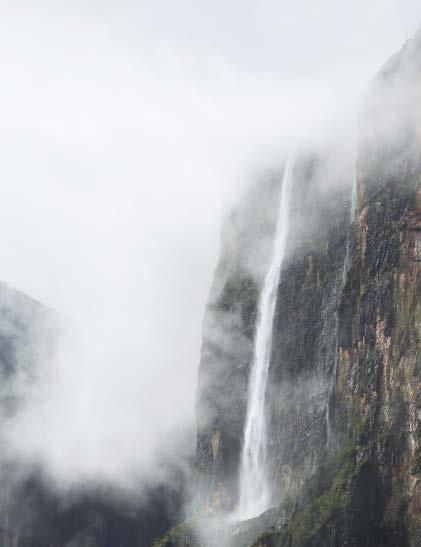
Tepui Kukenan
Waterfalls and clouds at tepui Kukenan or Mount Roraima, Venezuela
Orinoco Magazine 20
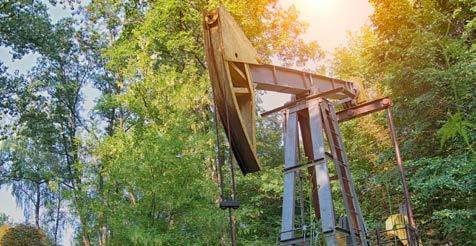
Ecuador Chooses Conservation: Victory at the Polls for Yasuní
In a momentous referendum, Ecuadorians have resoundingly voted to halt the expansion of oil drilling in Yasuní National Park, a biodiversity haven of global importance. With a commanding lead, over 58% of the electorate stood behind the decision to safeguard this remarkable biosphere, home to isolated indigenous communities and a rich tapestry of wildlife. At a crucial crossroads in the battle against the climate emergency, Ecuador now joins the vanguard of nations utilizing democratic means to establish constraints on resource extraction.
Furthermore, the residents of Quito have unequivocally rejected gold mining in this fragile highland biosphere. This sends a compelling message in favor of environmental preservation. The outcome guarantees that the approximately 726 million barrels of oil reserves beneath Yasuní will remain unexploited and a severe blow to the fossil fuel industry. The resolution mandates the government to cease operations, dismantle
existing infrastructure, and undertake environmental remediation and reforestation efforts within a year.
This historic accomplishment marks a watershed moment in the global conservation movement and provides a beacon of hope in our collective struggle for a sustainable future.
By: Edson Acero
World
Orinoco Magazine 21
Historic Victory! Brazil for Indigenous
Peoples in
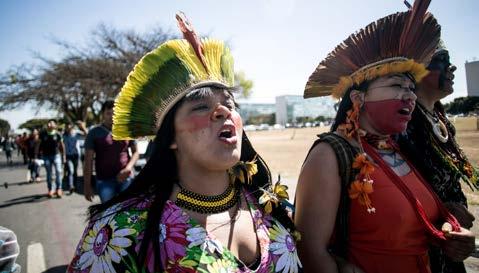
The Supreme Court of Brazil has delivered a landmark ruling that represents a significant milestone in the fight for the rights of the country’s indigenous communities. Nine out of the 11 judges voted against what was known as the “time limit trick,” a scheme backed by the agribusiness sector aimed at restricting the rights of indigenous populations to claim lands they did not physically occupy in 1988.
This ruling, which was met with jubilation by activists and indigenous leaders, stands as a historic triumph for the original inhabitants of Brazil. Minister for Indigenous Peoples, Sônia Guajajara, hailed it as a “great achievement” born out of years of struggle and protest.
In the face of pressure and anti-indigenous rhetoric, only two Supreme Court judges
supported the “time marker” thesis that would have limited indigenous land claims. This decision underscores the critical importance of safeguarding indigenous rights at a time when Brazil’s indigenous populations have faced substantial challenges.
The indigenous rights group, Survival International, commemorated the defeat of attempts to “legalize the theft of vast areas of indigenous lands” and highlighted the threat this posed to uncontacted tribes.
This ruling reinforces Brazil’s commitment to protecting its indigenous populations and serves as a reminder that justice and ethnic dignity must prevail. Brazilian society acknowledges the immeasurable debt it owes to its indigenous peoples and moves towards a fairer and more equitable future.
By: Edson Acero
World
Orinoco Magazine 22
Let’s Talk About Water: A Precious Resource in Times of Climate Change
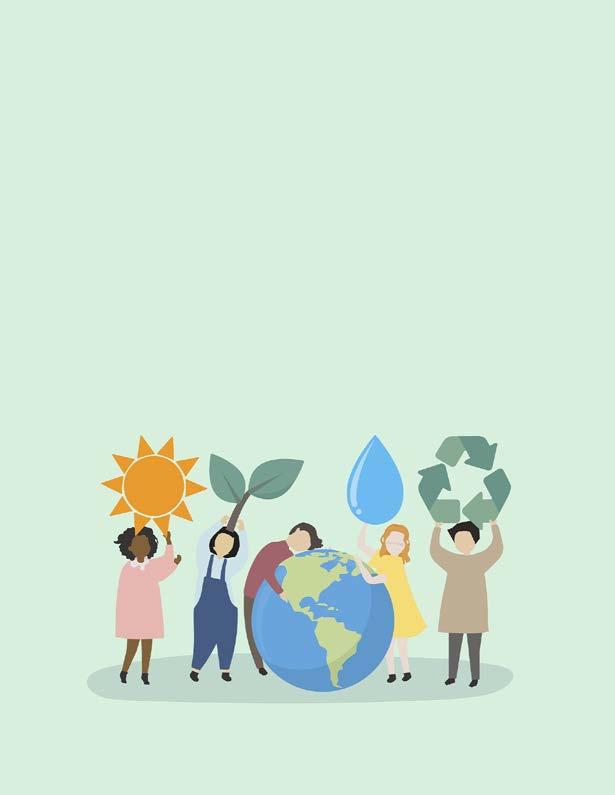
Water, the source of life that flows all around us, is one of the essential elements for the survival of all forms of life on Earth. However, its abundance is not a guaranteed fact, especially in a world where climatic equilibrium is under threat. In this article, we will address the critical importance of water on our planet and how the climate crisis is affecting communities worldwide, making access to this vital resource increasingly challenging.
The Link between Water and Climate
Water and climate are inherently interconnected. Rain and drought cycles, extreme temperatures, and climate phenomena such as storms and floods have a direct impact on the availability and quality of water in different regions. As climate change advances, these cycles become more unpredictable and extreme, posing a significant threat to freshwater provision.
Water: A Scarce Resource
Despite the Earth’s coverage of 70% water, only about 2.5% is freshwater, and most of that is in inaccessible glaciers and aquifers. This limited availability of freshwater makes it a scarce resource in many parts of the world.
Climate change is exacerbating this scarcity. Prolonged droughts and high temperatures are depleting water resources, affecting both urban and rural areas.
World Orinoco Magazine 23
In many regions, rivers and lakes are drying up, and water wells are depleting at an alarming rate.
Impact on Vulnerable Communities
The communities most affected by the climate crisis are those with the least capacity to adapt to these changes. Worldwide, people who depend directly on local water sources, such as rivers and wells, are the most vulnerable. Water scarcity not only affects availability for drinking but also has repercussions for agriculture, hygiene, and overall health.
A Call to Action
In this context, the fight against the climate crisis is a fight for access to water and the survival of entire communities. To address this crisis, it is essential to take global action, reducing greenhouse gas emissions and promoting sustainable water management practices.
It is also crucial to empower local communities with water conservation techniques and develop
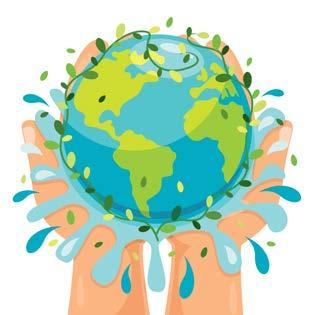
efficient water collection and storage systems. Investment in sustainable water and sanitation infrastructure is fundamental. The climate crisis not only endangers the planet’s stability but also threatens the availability of freshwater, a vital resource for all. Protecting this precious resource is essential for the well-being of communities and the preservation of climatic balance on our planet.
““Climate change is an urgent global crisis that demands immediate action and cooperation from all corners of society”
 By: Edson Acero
Orinoco Magazine 24
Eco Living 5
Sustainable Actions for a Greener Tomorrow
1. Reduce, Reuse, Recycle
Embrace the “3 R’s” of sustainability. Reduce your consumption by making mindful purchasing decisions, choosing products with less packaging, and cutting back on single-use items. Reuse items whenever possible to extend their life, and recycle materials like paper, glass, plastic, and metal to divert waste from landfills.
2. Conserve Energy
Minimize your energy usage by switching to energy-efficient light bulbs, appliances, and electronics. Turn off lights, unplug devices, and use programmable thermostats to optimize your home’s energy efficiency. Consider installing solar panels or other renewable energy sources to reduce your carbon footprint.

4. Opt for Sustainable Transportation
Choose eco-friendly modes of transportation. Walk, bike, carpool, or use public transportation when possible to reduce greenhouse gas emissions. If you can, consider investing in an electric or hybrid vehicle to further reduce your carbon footprint.
By implementing these actions, you can significantly reduce your environmental impact and contribute to a more ecological and sustainable way of living. Remember that small changes in your daily routines can lead to significant positive effects on the environment.
3. Reduce Water Consumption
Use water-saving fixtures in your home, such as low-flow toilets and showerheads. Fix leaks promptly to prevent water wastage. Additionally, be mindful of your water use during everyday activities, like handwashing, dishwashing, and showering.
5. Support Sustainable Food Choices
Eat more plant-based meals and reduce your meat and dairy consumption, as the livestock industry is a major contributor to greenhouse gas emissions. Purchase locally-sourced, organic, and sustainable food products when available. Minimize food waste by planning meals and using leftovers creatively.

Well-being
Orinoco Magazine 25
The Healing Power of Grounding
Exploring the Science and Benefits of Earthing
In the fast-paced world we inhabit, where the relentless buzz of technology surrounds us, we often find ourselves disconnected from the natural world that has sustained us for millennia. However, a practice known as “grounding” offers a captivating path back to nature, allowing us to reconnect with the Earth in pursuit of improved wellbeing.
The Essence of Grounding
Grounding, often referred to as “earthing,” is a practice that encourages direct physical contact between our bodies and the Earth. The idea behind it is simple yet profound: our planet is imbued with an electrical energy—often called “earth energy” or “earthing energy”—that, when accessed, can have a positive impact on our health and vitality.
Rejuvenating Benefits of Grounding
1. Reduced Inflammation: Numerous studies suggest that grounding may help reduce chronic inflammation, a common contributor to various health issues. When we connect with the Earth, our bodies are believed to absorb electrons that act as antioxidants, helping neutralize free radicals and inflammatory processes.
2. Improved Sleep: Grounding has been associated with improved sleep quality and duration. Many people report experiencing more restful sleep after incorporating grounding practices into their routines. This may be due to the balancing of the body’s circadian rhythms and stress hormone levels.


Orinoco Magazine 26
3. Stress Reduction: Grounding provides a powerful stress-reduction effect. Direct contact with the Earth can help regulate the body’s stress response, promoting relaxation and an overall sense of well-being.
4. Enhanced Immune Response: Some proponents of grounding suggest that it can boost the immune system’s ability to fend off illnesses. A balanced and well-regulated immune system is better equipped to protect us from pathogens and maintain health.
How to Practice Grounding
Getting in touch with the Earth is easier than you might think:
1. Walk Barefoot: One of the simplest ways to ground yourself is by walking barefoot on natural surfaces like grass, soil, or sand. Taking a stroll in the park or on a beach can be both relaxing and grounding.
2.Grounding Mats and Sheets: For those who may not have direct access to natural settings, grounding mats and sheets with conductive materials can be used while sleeping or working to replicate the benefits of barefoot contact.
3. Spend Time in Nature: Spending time outdoors, whether it’s gardening, hiking, or simply sitting in a natural setting, allows you to immerse yourself in the grounding energy of the Earth.
Joining the Grounding Movement in the UK
Grounding is gaining popularity in the United Kingdom, with people across the country embracing the practice to enhance their well-being. As we become more aware of the potential benefits of connecting with the Earth, we embark on a journey towards a healthier, more balanced lifestyle.
Grounding isn’t just a practice; it’s a path to rediscovering our roots and nurturing a profound connection with the natural world. In a world dominated by screens and constant connectivity, grounding invites us to unplug, step outside, and let the Earth’s soothing energy rejuvenate our bodies and souls. It’s a practice that not only reconnects us with nature but also rejuvenates our spirit.
By: Edson Acero
Well-being
Well-being
Orinoco Magazine 27
EDITOR’S PICK
A curated compilation of thought-provoking books, captivating films, enlightening documentaries, impactful organizations, and inspiring public figures. Here, we celebrate those who stand as guardians of our planet, champions of biodiversity, advocates for cultural diversity, and torchbearers of ancestral wisdom.
RoseTutoringLanguage

Personalized language tutoring, online and in person, designed to help you achieve your goals quickly and enjoyably, in months rather than years
Click Here
WaterBear

WaterBear is the first interactive streaming platform dedicated to the future of our planet.
Click Here
HELENA SARAYAKU MANTA Film 2022
by Eriberto Gualinga
Traveling between her life in Finland and her mother’s homeland deep in the rainforests of Ecuador, 17-year-old Helena Gualinga yearns to protect her indigenous community from extractive development and the repercussions of climate change. Her story highlights the efforts of the Kichwa people of Sarayaku to recognize the Amazon rainforest as a “Kawsak Sacha – Living Jungle”. The “Living Jungle” is both a cultural philosophy and a proposal to governments that states the rainforest is not a resource to be used, rather it is a living and conscious entity in need of legal protection.
Click Here

Indigenous association that supports indigenous people living in urban contexts
Click Here
 Wika Hwara
Orinoco Magazine 28
Orinoco MAGAZINE
Join us in preserving
the Amazon
Become a sponsor or advertiser
Orinoco Magazine, a publication dedicated to exploring the Amazon Rainforest, indigenous cultures, nature, ecology, and conservation. We invite you to become a sponsor or advertiser and join us in our mission to preserve nature and protect indigenous cultures. By partnering with us, you’ll not only gain access to a passionate audience but also contribute to the important work of conservation.
Reach out to us to discuss how we can collaborate further.
We are Grateful for You: Our Readers, Collaborators, and Indigenous Guardians
As we conclude another inspiring issue of Orinoco Magazine, we want to take a moment to express our deep gratitude.
To our cherished readers, thank you for your curiosity and dedication to environmental awareness. Your support fuels our mission.
To our collaborators, your passion and expertise elevate each page. Together, we amplify the message of sustainability.
And to the indigenous communities, custodians of the Amazon jungle, your wisdom reminds us of nature’s true value.
With heartfelt thanks,
Together, let’s make a difference.
Stay in touch
Website:
www.edson-acero.com
Instagram:
@Orinoco_eMagazine
@edson_acero
Email:
contact@edson-acero.com edsonacero@gmail.com
Orinoco Magazine 29
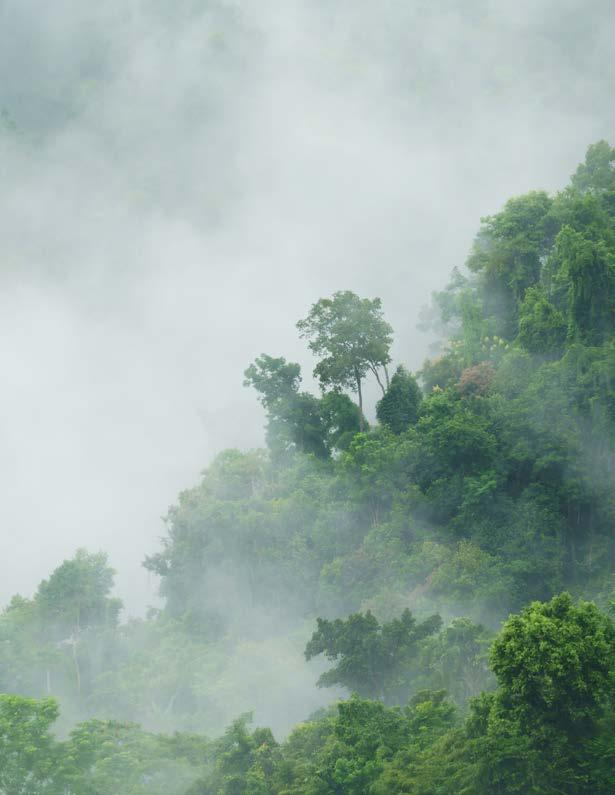
THE AMAZON RAINFOREST
“Within the Amazon’s embrace, life’s tapestry unfolds, offering sustenance, vital waters, and healing to indigenous custodians and our global family.
As stewards of this sacred land, indigenous communities face an urgent battle to protect it from resource exploitation. Let’s unite to preserve this vital ecosystem and support those who’ve safeguarded it for generations.”
Edson Acero
Orinoco Magazine 30
Quote & Photo by: