MUSIC EDUCATOR
Spring 2026
REHEARSAL PRIORITIES IN ORCHESTRA
Dr. Dijana Ihas
BEING MORE THAN "JUST A MUSIC EDUCATOR"
José Valentino Ruiz, Ph.D.
INTEGRATING LEARNING THEORY
Mari Schay
TIPS FOR SUPPORTING STUDENT TEACHERS
Ellie Auvinen

MUSIC EDUCATOR
Spring 2026
REHEARSAL PRIORITIES IN ORCHESTRA
Dr. Dijana Ihas
BEING MORE THAN "JUST A MUSIC EDUCATOR"
José Valentino Ruiz, Ph.D.
INTEGRATING LEARNING THEORY
Mari Schay
TIPS FOR SUPPORTING STUDENT TEACHERS
Ellie Auvinen
JJ Sutton
11 Our Time Together in Eugene: Let’s Celebrate the OMEA Conference
Cecil Adderley
Advocacy is Invisible. Time to Turn the Lights On: We need YOUR stories to better tell OURS. Stephen
32 Rehearsal Priorities in School Orchestra: From Accurate Notes and Rhythms to Balance and Blend
Dr.
Bill Humbert 6 From The Executive Director...
Ihas
37 Acoustical Properties of Supportive General Music Classroom Ecologies
Kendra Kay Friar
40 Being More Than "Just a Music Educator": The Five Ps of Vocational Alignment
José Valentino Ruiz, Ph.D.
43 A Curricular Framework for Music Technology: Identifying Core Skill Domains for Digital Musicianship
Jason
47 Re-imagining the Jazz Band Warm-up
Kevin
49 Small Towns and Rural Communities to the Rescue: How small school music educators can tap into their surrounding communities to find peace, relaxation, and meaning.
Melissa Jmaeff
51 Integrating Learning Theory Into Music Teaching
Mari Schay
54 Tips for Supporting Student Teachers– From a Current One!
Ellie Auvinen
57 Why Does My Kid Have To Learn Music?
Lynn Brinckmeyer
60 Examining the Literature for Missing Links in Injury Prevention for Musicians
Hamed Erfani, Yasaman Seif, & Hal Grossman
65 Survival Mode: A Practical Guide for First-Year Teachers
Ron Neighorn
67 Principles for Building Stronger Classroom Systems… Especially for Music Teachers

ONE DRINK AT A TIME ONE DRINK ONE DRINK AT A TIME
ONE DRINK AT A TIME



OMEA President
Erika Lockwood
Rex Putnam High School lockwoode@nclack.k12or.us
OMEA 1st Vice President
Cole Haole-Valenzuela West Salem High School haole-valenzuela_cole@salkeiz. k12.or.us
OMEA 2nd Vice President
Hannah Abercrombie McKay High School 2ndvp@oregonmea.org
OMEA Past-President Ben Lawson
Redmond High School ben.lawson@redmondschools.org
OMEA Conference Chair
Elizabeth Soper South Medford High School conferencechair@oregonmea.org
OMEA All-State Chair
Kristi Stingle
Lakeridge High School allstatechair@oregonmea.org
OMEA Public Policy Chair
Laura Arthur publicpolicy@oregonmea.org
OMEA Treasurer
Todd Zimbelman West Salem High School treasurer@oregonmea.org
OMEA Executive Director JJ Sutton executivedirector@oregonmea. org
Advocacy Chair
Stephen Marshall Music & Arts advocacy@oregonmea.org
Diversity, Equity, and Inclusion Chair
Cynthia Navarro Clear Creek Middle School navarro16@gresham.k12.or.us
Band Chair
Jen Bell Whiteaker Middle School BELL_JENNIFER@salkeiz.k12. or.us
Choir Chair
Kathy Briggs St. Mary’s High School kathy.briggs@smapdx.org
Orchestra Chair
Brigid Mayer West Salem High School mayer_brigid@salkeiz.k12.or.us
Elementary School Music Chair
Allison Halvorson
Joseph Gale Elementary School ahalvorson@fgsd.k12.or.us
General Music Chair
Kelsie Demianew Cummings Elementary School Kelsie.demianew@gmail.com
Secondary General Music Chair
Jason Rodgers Woodburn High School jrodgers@woodburnsd.org
Jazz Chair
Jessika Smith Parkrose Middle School jessika_smith@parkrose.k12. or.us
Small Schools Co-Chair
Melissa Jmaeff Sutherlin School District melissa.jmaeff@sutherlin.k12. or.us
Small Schools Co-Chair
Paul Burch Lowell School District pburch@lowell.k12.or.us
SMTE/CNAfME Advisor Chair
Mari Schay Portland State University mschay@pdx.edu
CNAfME Co-Representative
Ellie Auvinen University of Oregon eauvinen@uoregon.edu
CNAfME Co-Representative Iris Erickson Portland State University irise@pdx.edu
Membership Chair
Andrew Bergh Tualatin High School abergh@ttsd.k12.or.us
Conference Exhibitor and Sustaining Membership Chair
Dana Henson Oregon City High School exhibitorchair@oregonmea.org
OMEA Chamber Ensemble Contest Chair Gary Riler Cleveland High School griler@pps.net
OSAA State Solo Contest Chair
Stewart Schlazer Forest Grove High School sschlazer@fgsd.k12.or.us
OSAA Band/Orchestra State Contest Chair
Dave Matthys Retired dtmatthys@comcast.net
OSAA Choir State Contest Chair
John Baker Retired johnbakerchoir@gmail.com
OMEA State Jazz Contest Chair
Dan Davey Mt. Hood Community College daniel.davey@mhcc.edu
OMEA Student Composition Contest Chair
Kathy Briggs Saint Mary's Academy kathy.briggs@smapdx.org
DISTRICT CHAIRS
District 1 Chair
Gary Riler Cleveland High School griler@pps.net
District 2 Chair
Melissa Albert Reynolds High School malbert@rsd7.net
District 3 Chair
Josiah Glaser Seaside High School jglaser@seaside.k12.or.us
District 4 Chair
Kimberly Skondin Silverton School District musicputnam@gmail.com
District 5 Chair
Keith Chaiet Mountain View High School keith.chaiet@bend.k12.or.us
District 6 Chair
Alex Justice La Grande High School alexander.justice@lagrandesd. org
District 7 Chair
Janet Lea North Bend School District jlea@nbend.k12.or.us
District 8 Chair
Trevor Lavery-Thompson Joseph Lane Middle School tlavery-thompson@roseburg. k12.or.us
District 9 Chair
Ryan Egan Ontario Middle School ryaneganmusic21@gmail.com
District 10 Chair
Melissa Jmaeff Sutherlin School District melissa.jmaeff@sutherlin.k12. or.us
District 11 Chair
David Blake Cheldelin Middle School david.blake@corvallis.k12.or.us
District 12 Co-Chair
Jon Bridges Springfield High School jonathan.bridges@springfield. k12.or.us
District 12 Co-Chair
Doug Doerfert Lane Community College doerfertd@lanecc.edu
OMEA & NAfME
Music Camps @ Wallowa Lake
District 13 Chair
Dana Henson
Oregon City High School dana.henson@orecity.k12.or.us
District 14 Chair
Allison Hedgepeth Forest Hills Elementary School hedgepea@loswego.k12.or.us
District 15 Chair
Ben Adams
Glencoe High School adamsb@hsd.k12.or.us
SPECIAL BOARD REPS/ LIAISONS
OMEA Recording Secretary
Laura Wagstaff
Claggett Creek Middle School recordingsecretary@ oregonmea.org
OMEA Historian Ben Lawson
Redmond High School Ben.Lawson@redmondschools. org
Tri-M Liaison Lesley Bossertt Retired bosserttl@gmail.com
NW NAfME Regional President
Joe Dyvig NAfME Jdyvig@osd.wednet.edu
NW NAfME Regional President-Elect
Chad Rose NAfME chad.rose@scsd2.com
NW NAfME Regional Past President
Dusty Molyneaux NAfME dusty_molyneaux@gfps.k12. mt.us
Journal Design Aren Vandenburgh www.arenv.com
Tri-M Music
Oregon Army National Guard
Canter Flute Repair & Sales
Portland Youth Philharmonic
Renton Technical College
Northwest Nazarene University
Linfield University
Anthea Kreston
The 1905
Metropolitan Youth Symphony
Young Musicians & Artists
Mt. Hood Community College
Whitworth University
Whole Heart Realty
Northwest Band Camp
Pacific Lutheran University
Oregon State University
University of Oregon
OMEA would like to thank our Sustaining Members who have supported Oregon’s music educators with valuable resources including digital and physical products and services, that have allowed our teachers to provide connection, instruction and creativity for their music students. We are delighted to collaborate with our Sustaining Members who OMEA considers industry leaders in music and education.
TITLE SPONSOR Dutch Bros dutchbros.com
GOLD LEVEL SPONSOR
Portland State University pdx.edu/music-theater
Beacock Music
Beacockmusic.com
Cauble, Furr & Beguin Attorneys at Law thecaublefirm.com Chamber Music Northwest cmnw.org
Educational Travel Services, Inc. etsi.ws
Eugene Ballet eugeneballet.org
Linfield University linfield.edu/music

Eugene Concert Choir eugeneconcertchoir.org
Ian Fuller Percussion instagram.com/ ianfullerpercussion
JW Pepper & Son, Inc jwpepper.com
Metropolitan Youth Symphony playmys.org Music-ade, LLC music-ade.com





Nova Music International novami.org
Oregon Ambassadors of Music oregonambassadors.com
Oregon Children’s Choir oregonchildrenschoir.org
Oregon Coast Youth Symphony Festival youthsymphonyfestival.org
Peripole Music peripole.com
251 Realty wholeheartrealty.com
Bandworld bandworld.org
Northwest Band Camps nwbandcamps.com Music Camps at Wallowa Lake wlmusiccamps.org Canter Flute Repair canterfluterepair.com
Pacific Lutheran University plu.edu/music/ Oregon Symphony orsymphony.org
Portland Orff-Schulwerk Association portlandorff.org
Young Musicians & Artists ymaarts.org
Plank Road Publishing, Inc. musick8.com
Portland Youth Philharmonic portlandyouthphil.org
Quartet Violin Shop quartetviolins.com
Southern Oregon University sou.edu/academics/music
University of Portland college.up.edu/pfa/ music- program
Western Oregon University wou.edu/music
Willamette Valley Music Company wvmc.net
Yamaha Corporation of America usa.yamaha.com

JJ Sutton OMEA Executive Director
Welcome to the 2026 spring edition of the Oregon Music Educator. As we near the end of another school year, please enjoy the articles contributed by our colleagues; they serve to share a wealth of knowledge, expertise and inspiration. I also encourage you to patron our valued advertising partners. This publication would not be possible without the generous contributions of our advertisers and sustaining members. We are grateful for the businesses, universities, and organizations that support OMEA and our members.
OMEA elections were held in January, Kent Wilson from Whitford Middle School will join the Executive Board as the President-Elect with a term of July 1, 2026 to June 30, 2030. Kent succeeds West Salem High School’s Cole Haole-Valenzuela who will become OMEA’s 46th President with Erika Lockwood from Rex Putnam moving into her Past Presidency. OMEA’s Executive Board wishes nothing but the best for Ben Lawson from Redmond High School. Ben concludes his second stint on OMEA’s Executive Board and has been on OMEA’s All-State and Conference Planning team for the past 21 years. Thank you for all you have done in the service of OMEA!


Additionally, voting has just concluded this spring for three OMEA Board vacancies. Congratulations to OMEA General Music Chair Kelsie Demianew from Cummings Elementary School in Salem, OMEA Orchestra Chair from West Salem High School, and OMEA SMTE & CNAfME Chair Mari Schay from Portland State University. All three were re-elected without opposition.
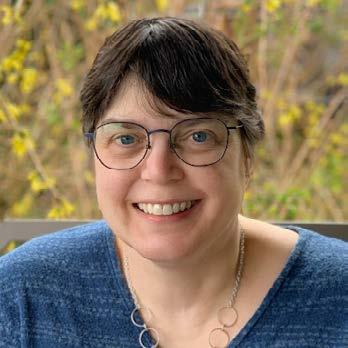
We also welcome Steve Kessler from North Medford High School. He has joined the Editorial Board for OMEA publications. Lincoln High School’s Frank Petrik succeeds Jennifer Bell from Whiteaker Middle School as OMEA’s Band Chair. Thank you for all your work, Jen!
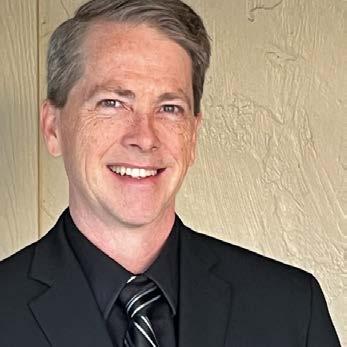
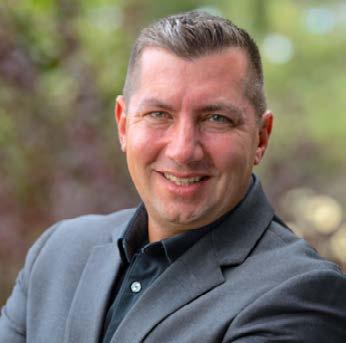

Save the date! As we enter the month of May, 2nd Vice President Hannah Abercrombie from McKay High School is already working with Conference Chair Elizabeth Soper preparing for OMEA’s State Conference, “Make them Hear You” January 14 – 17, 2027. All-State Chair Kristi Stingle is doing the same for our honor ensemble students. Please watch for All-State audition material and event information, these will be released soon on OMEA’s website.


Best wishes to each of you as we near the end of the school year. Monthly “Take 5 for OMEA” emails will continue through the summer. Before you wrap the school year, start communicating now with your administrators regarding funding for your conference and All-State needs and expenses. Also ensure your NAfME membership is current so that you can register your AllState auditions in the fall. Additionally, please take advantage of registering for the state conference by December 31; the cost is significantly lower when you pre-register!
Finally, congratulations on the completion of the 2025 – 2026 school year! Thank you for your work in and outside of the classroom and thank you for your work as an Oregon Music Educator
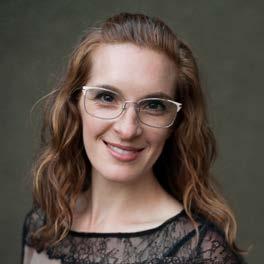
Erika Lockwood OMEA President
In a few months, I will pass the gavel on to the next President of the Oregon Music Education Association. This transition is bittersweet as I have so enjoyed and savored this leadership position. I look forward to continuing to serve Oregon’s membership as Past President and assisting Cole and the board to carry our mission forward.
As I prepare to move into the next phase of leadership, I want to celebrate what we have accomplished in the past two years.
We adopted a new Mission and Vision for our organization.
• Using membership feedback and broad committee leadership, we crafted statements that capture our current priorities as well as an aspirational vision to guide us for years to come. These statements have served us in outreach with policymakers and have guided our work for our members and students. I am proud of how we are working out these priorities as an organization.
Mission Statement: OMEA supports music educators and advocates for equitable access to a high-quality and comprehensive music education for all students in Oregon.
Vision Statement: OMEA will serve as the trusted source for music advocacy in Oregon and will strive to increase the quality and accessibility of music education in our state.
We hired a Public Policy Chair as a contracted employee.
• At the 2024 NAfME National Leadership Assembly in DC, Ben and I learned of other states that have paid music education advocates and lobbyists. These states shared how their legislative effectiveness had increased as a result. We knew this could make a huge difference for Oregon music educators, who are interested in advocacy but are working at capacity and want more guidance to truly make a difference. Our advocacy chair, Laura Arthur, was a clear fit for this role and was already attending the Advocacy Leadership Force and making connections throughout Oregon and the nation. Laura was ready to do the work and well-positioned to increase our advocacy focus on behalf of our membership.
• This past year, our Public Policy Chair position was expanded to allow for greater outreach and targeted advocacy at the state and local levels. Laura is working closely with our new Advocacy Chair, Stephen Marshall, to equip teachers with the tools necessary to advocate for their students with administrators, school boards, and state and local legislators.
We drafted Strategic Goals and narrowed our focus for the work we do for our members.
• The yearly Conference is now organized by contracted staff. The OSAA festivals have been assigned to their respective OBDA and ACDA boards. OMEA can now narrow its focus to that which serves all members and all music education in Oregon.
• These strategic goals are organized into four Cornerstones:
• Advocacy & Public Policy
• Professional Learning & Growth
• High Quality Student Experiences
• Transparency & Engagement
• At the time of writing this article, the goals are drafted but not yet complete. They will be finalized on July 1 for the next executive board. Stay tuned for fully written goals and subgoals within these cornerstones as we continue to hold ourselves accountable to our progress on this work.
We prioritized Advocacy work, including our first Oregon MEA Advocacy Day at the State Capitol!
• On February 19, 2026, 11 OMEA members traveled to Salem and conducted 15 legislative meetings. We built relationships and made connections with decision makers while urging congressional representatives to ask for a permanent position at ODE for an Arts Education Specialist. Many lawmakers were surprised to hear that we do not have anyone overseeing Arts Ed at the state level.
• We made strides in establishing OMEA as music education experts and advocates, and came to our conversations with solutions that take into account the financial challenges facing our state. The result of these conversations will benefit music programs and students in every region. I look forward
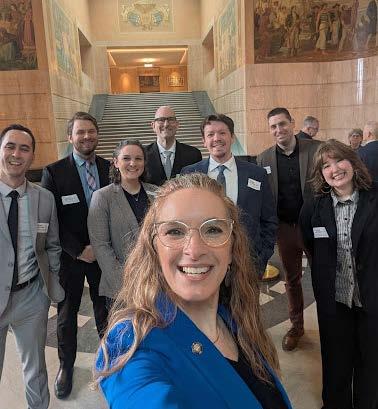
to the continuation of this event for years to come, and hope you will join us next year!
We increased engagement and inclusivity.
• We have received positive feedback from board members, conference attendees, and teachers from around the state who are feeling a sense of renewed positive outreach via the elevation of small schools programs and members, prioritizing affinity spaces during the conference, and a spirit of joy and inclusivity in the work we are doing.
• As your soon-to-be Past President, I look forward to continued partnership with Public Policy and Advocacy as Co-Advocacy Chair, working alongside Laura and Stephen to support their coalition-building and legislative advocacy. I will continue to encourage the board to increase outreach to elementary educators, and will incorporate inclusive practices into the selection of nominees for awards and open OMEA elected positions.
I am honored to continue to serve on the Executive Board, and look forward to further partnership with you, our members. Let’s expand and grow in this meaningful work of music education for Oregon’s students, and as Ben said in his conference remarks this year, “if someone asks you to serve
on the OMEA board, say yes!” It brings true joy and fulfillment to work with wonderful people and meet our educators from all around Oregon as we make steady progress together. Music Matters!
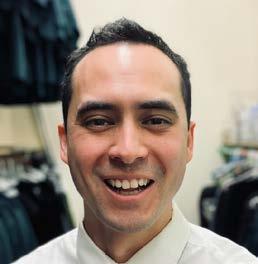
Cole Haole-Valenzuela OMEA President-Elect
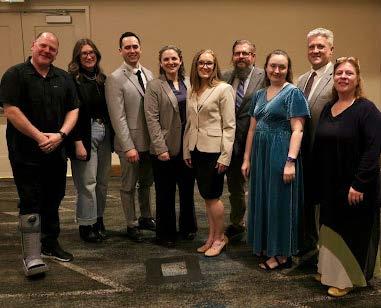
Well folks, we made it through another OMEA State Conference! Each January, we gather together in a way that reminds us just how special the music education community in Oregon truly is. Whether it was your first conference or one of many you’ve attended throughout your career, there is something powerful about being in a space filled with people who understand exactly what it means to do this work.
Our theme this year, A Universal Language, came to life in so many ways throughout the conference. From inspiring sessions and fun, thoughtful conversations during receptions to outstanding performances from our All-State ensembles and performing groups, the weekend was a reminder that music truly does connect us beyond classrooms, communities, and backgrounds.
Events like this do not happen without a tremendous amount of dedication from many people working behind the scenes. A huge thank you goes out to our All-State ensemble managers, conference staff, presenters, presiders, and performing ensembles who helped make the conference what it was. Your time, energy, and care created an experience that energized educators from across the state.
As we move further into the second half of the school year, take a moment to think back on one experience from the conference that stuck with you. Maybe it was a rehearsal technique you saw, a conversation with a colleague, a performance that gave you goosebumps, or a simple reminder of why this profession matters so much. Whatever that moment was, hold onto it. Let it be something that fuels you through the busy weeks ahead and reminds you why you chose to do this work.
And if there was someone specific who impacted you during the conference—a presenter, a colleague you reconnected with, or someone whose session really resonated with you—consider reaching out and letting them know. A quick email or message can mean more than you might realize, and it helps strengthen the sense of community that makes gatherings like this so meaningful.
As always, we are looking for ways to continue growing and improving the conference experience. Many of you have already received the conference survey, and we would truly appreciate you taking a few minutes to share your thoughts. Your feedback helps us shape future conferences and ensure they remain relevant, inspiring, and supportive for music educators across Oregon.
One important note about the survey: it was intentionally designed not only for those who
attended the conference, but also for educators who may not have been able to attend or who may not currently be members of OMEA. Hearing from those voices is incredibly valuable as we look for ways to better support music educators and invite more people into our community.
Thank you again for being part of this year’s conference and for the work you continue to do every day with your students. As the school year moves forward, keep that one meaningful conference moment in your back pocket. Sometimes, that little spark of inspiration is exactly what we need to keep going. We are grateful to be “back at it” with all of you.
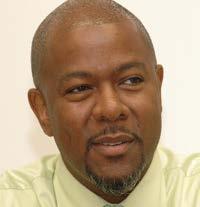
Let’s Celebrate the OMEA Conference
Cecil Adderley President, National Association for Music Education
Representing NAfME as President, and as a music educator and Chair of the Music Education Department at Berklee College of Music, it was a genuine pleasure to spend time with so many members at the Oregon Music Education Association (OMEA) Conference in Eugene, Oregon. Conferences like OMEA’s provide a vital space for connection, reflection, and shared purpose, and I left Eugene energized by the conversations, collaborations, and commitment demonstrated by Oregon’s music educators.
I want to begin by offering my sincere thanks to Erika Lockwood, JJ Sutton, Ben Lawson, Cole Haole-Valenzuela, Laura Arthur, Stephen Marshall, Hannah Abercrombie, Elizabeth Soper, and the many others I had the opportunity to meet throughout the conference. Whether through formal sessions, hallway conversations, or informal moments between events, each interaction reinforced the strength of this professional community. The generosity with which OMEA members shared their time, ideas, and experiences speaks volumes about the culture of collaboration that exists within the state. I am grateful for the invitation to join you and for the opportunity to share updates on recent work at NAfME. Your continued engagement and support make it possible for us, collectively, to sustain and expand meaningful programs throughout the year.
One of the most exciting aspects of the conference was witnessing how music educators across Oregon are collaborating and sharing ideas rooted in their daily work with students. Educators are not only refining instructional practice but also collectively advocating for music education in ways that are responsive to their local communities. This advocacy is most effective when it begins with listening—listening to students, families, administrators, and community partners— and using that information to create thoughtful, sustainable solutions. The work happening in Oregon demonstrates that when educators come together with a shared purpose, they can address challenges creatively while remaining grounded in the realities of their teaching contexts.
The exchange of teaching strategies and preparation resources was especially encouraging. From discussions about accessible arts education materials to reflections on assessment practices and curriculum alignment, educators openly shared both successes and lessons learned. Importantly, there was recognition that meaningful music education is happening in all settings. While large districts often receive attention for innovative initiatives, the conference highlighted the exceptional teaching occurring in small and rural schools as well. These settings frequently require educators to be adaptable, resourceful, and deeply connected to their communities—qualities that can inspire and inform practice across the profession.
When we take the time, as participants did at the OMEA Conference, to present, discuss, and debate ideas, we strengthen our field. These moments allow us to exchange
knowledge, question practices that may no longer serve the majority of our learners, and explore innovative approaches that better reflect who our students are today. Just as important, these conversations create space for listening. As an observer, I was struck by how eager educators were not only to share their perspectives but also to hear from colleagues with different experiences. That willingness to listen—to truly engage in dialogue—builds trust and drives collective growth. NAfME is extremely proud of its collaborative work with each state Music Education Association, including OMEA. Together, we advocate for music education at both national and local levels, while remaining attentive to the unique needs of each state. This work is strengthened by the involvement of PK–12 educators, higher education faculty, and the enthusiastic contributions of our collegiate members. Their voices bring fresh perspectives and ensure that our efforts remain forward-looking and inclusive.
I was particularly encouraged by the contributions to ongoing initiatives led by Laura and Stephen. I was fortunate to have had numerous deep conversations with them, to learn from the educators who spoke at their sessions, over a meal, and to really gain an understanding of how they are planning various advocacy events, including their State Hill Day. Listening to members collaborate on Oregon’s own state-level mentoring efforts was also encouraging. These initiatives play a critical role in connecting educators with the right colleagues at the right time—whether for professional development, shared problem-solving, or simple reassurance that they are not alone in their work. Mentoring and task force conversations help build communities where educators feel supported and valued, especially in settings that can sometimes feel isolated.
It is essential that we continue to affirm that strong music programs can thrive in any community. Too often, educators feel pressure to leave smaller or rural settings in search of what may appear to be “greener pastures.” The reality is that music, the arts, and disciplines both within and beyond the arts can flourish anywhere when educators receive appropriate preparation, sustained support, and relevant professional development. Growth happens over time, and it happens best when educators are empowered to build programs that reflect and serve their local communities.
Thank you for the important work you do locally and for your ongoing commitment to music education throughout Oregon. Your dedication ensures that each learner who enters your classroom experiences the joy, challenge, and enrichment that music provides. Continue to collaborate with your local colleges and universities, vendors, and other constituents—this makes your conference special. Keep sharing special moments like your receptions, sing-a-longs, and shared dinners to connect everyone. Together, as a team, we can continue to advocate, collaborate, and innovate—ensuring that students not only share their talents within their communities but also carry those experiences with them far beyond the classroom.

Elizabeth Soper OMEA Conference Chair
Each year as the conference cycle begins again, I often hear the same hesitation from colleagues: I’m not sure I have anything worth presenting. For many educators, the idea of submitting a conference proposal can feel vague or intimidating. Turning an idea into a clear session title and description can seem like a daunting first step. But the truth is that many of the sessions that educators value start with a simple idea. If you have ever thought, I wish I knew more about this, or this approach has worked well for me, you may already have the foundation for a conference proposal.
If presenting does not immediately appeal to you, that is completely okay! Another way to contribute is by thinking about the kinds of sessions you would like to attend. What is one topic you wish someone would present on? What is an area where educators in our community could benefit from additional ideas or discussion?
Identifying these needs can help shape the types of sessions we bring to the conference each year. At the same time, many educators discover that the very thing they take pride in—whether it is a rehearsal strategy, advocacy work, or a creative classroom activity—is exactly the type of experience that others would benefit from hearing about.
Conference proposals open in the middle of January and remain available through June 30. Proposals can take many forms: handson learning sessions, reading sessions, research posters, presentations, round-table discussions, and more. The most important elements of a proposal are the session title and description. These should clearly communicate the purpose of your session and what attendees can expect to learn or experience. Strong proposals often have a compelling title that invites curiosity and a description that is specific, practical, and relatable to the day-to-day work of music educators.
When proposals are reviewed, clarity is key. Vague descriptions make it difficult for reviewers to understand what the session will ultimately look like or what educators will take away from it. A strong proposal clearly explains the idea behind the session and connects it to a need within the music education community. Reviewers also consider how sessions serve the broader range of educators who attend the conference. Sometimes multiple strong proposals are received on similar topics, and decisions must consider factors such as representation of different content areas, perspectives, and the overall balance of the conference schedule.
Ultimately, the conference is shaped by the educators who are willing to share their ideas. Many of the sessions we look forward to each year exist because someone decided to take that first step and submit a proposal. If you have never presented before, consider this your encouragement to try. As my mother often reminded me, the answer is always no until you ask. The worst outcome is simply that a proposal is not selected the first time—and we always hope to hear from you again in the future. If you are interested in learning more or submitting a proposal, visit the conference section of the OMEA website and look for the Conference Session & Performance Application. Your idea might be exactly what another educator needs to hear.
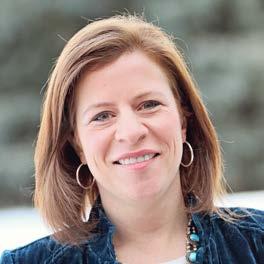
Kristi Stingle OMEA All-State Chair
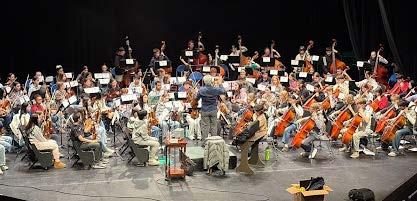
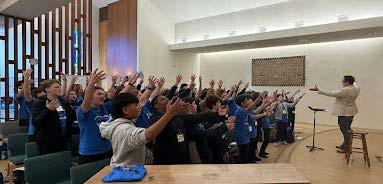
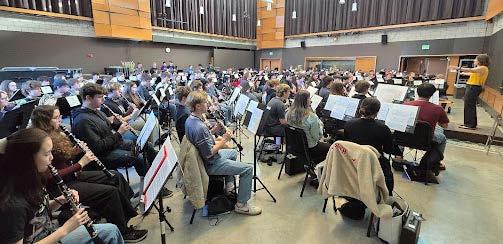
OMEA All-State 2026 had a record number of students audition, with 236 schools represented in January. A huge thank you to the managers, conductors, the OMEA Board and All-State logistics team, chaperones, collegiate volunteers, teachers, and the staff of the hotels, rehearsal, dining, and performance venues that helped to make 2026 a success!
We look forward to hosting the following All-State ensembles during the conference in Eugene from January 14-17, 2027.
OMEA All-State 2027 planning is well underway, with the following updates:
• High School Choirs: There will be two choirs in 2027, a Mixed SATB Choir and a Treble Choir. Audition materials will be the same for both ensembles. Treble voices will be considered for both ensembles equally.
• Continued evaluation of venues for the student and audience experience. In 2026 we had to pivot as one of our major venues began hosting a school during the week and we lost our ability for rehearsals and creating a large stage for our instrumental ensembles. Thanks to all of the venues that hosted ensembles in 2026!
• Concert times are being fine-tuned to ensure safer and less chaotic transitions for families and performers.
• Expanding Accessibility: We are committed to making AllState accessible to students and families by translating key documents into multiple languages.
• If you are interested in assisting with translations or accessibility support, or have questions or recommendations, please contact Kristi Stingle at allstatechair@oregonmea.org
Early May 2026: The OMEA website will detail the updated audition materials and All-State timeline, along with information about each ensemble.
The experience of being in All-State ensemble gives students the opportunity to work with a nationally-known guest conductor in an intense and musically-immersed environment. Creating music together at a high level is exhilarating, and lifelong friendships may be forged during the event.
Some students may not be sure if they want to audition for AllState. Please let them know of the benefits of preparing and performing an audition, and encourage them to go through the process. It is an important educational experience, no matter the result. In Oregon, several educators (both school and private teachers) have put together video demonstrations of audition materials, which are wonderful resources for our students all across the state.
Here are the benefits of music auditions:
• Setting a goal and committing to working towards it with your best effort
• Recognizing that excellence comes with hard work and is not just a result of "talent"
• Time management - audition preparation is a process and must be paced over the time leading to the audition recording date. "Cramming" right before the audition doesn't work.
• Learning to present your best self under pressure and competition
• Coping with adversity - not everyone who auditions is accepted - even if the performance is excellent
Educators, please make sure you and your students read through the audition materials and requirements carefully. Please view the OMEA Policies and Procedures by logging in on our website. Happy practicing and preparing, and thank you for encouraging your students to go through the process!
ALVIN
CHAMBER
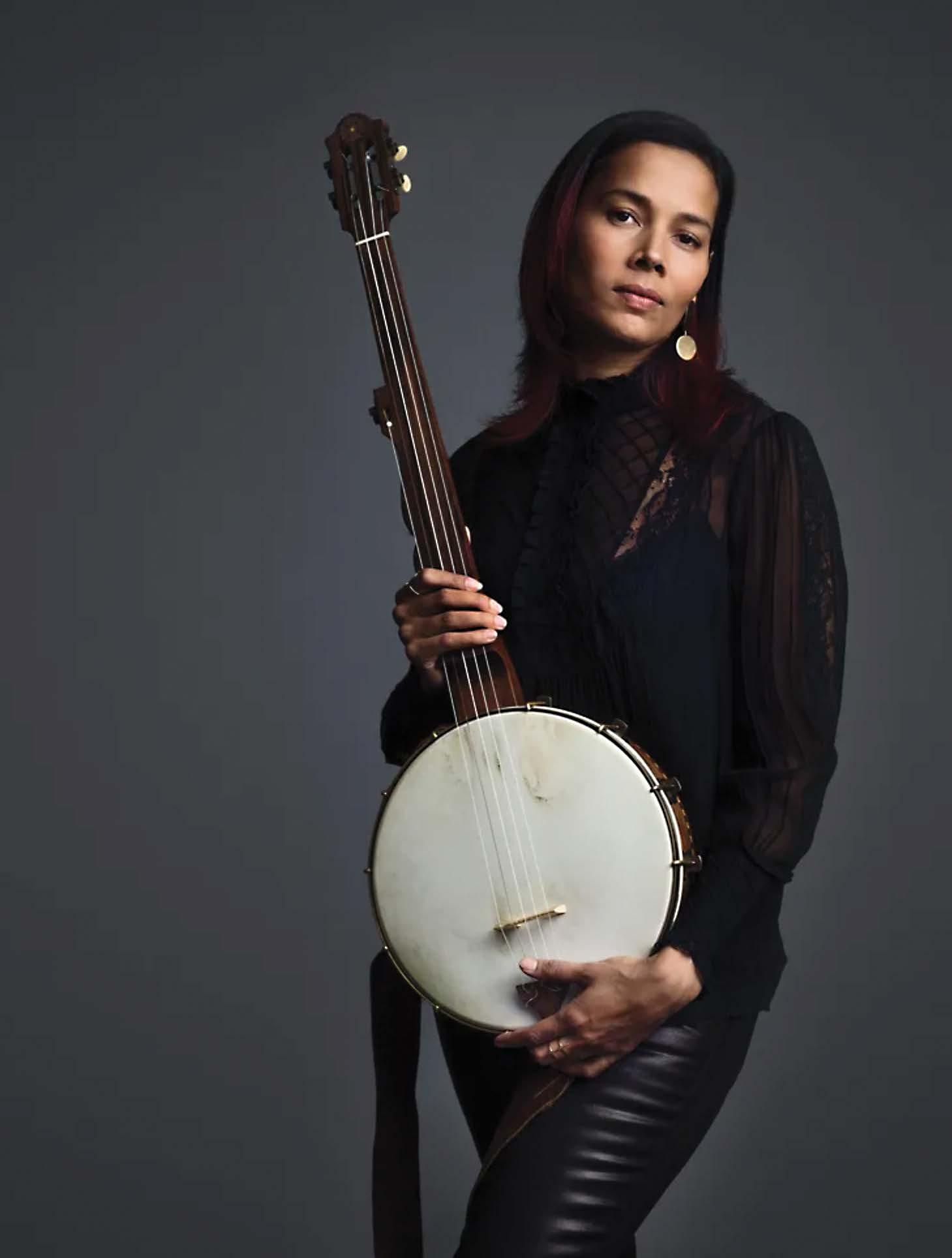
KRISTEN
TRADITIONAL
TALES TEXTS & THEATER
VOICES
DANCE

RUFUS
ANDREW
TESSA HULLS
THE
GEORGE

Hannah Abercrombie OMEA 2nd Vice President
If you’ve ever stood in front of an ensemble and asked for “more sound,” you already understand part of the spirit behind our 2027 conference theme, Make Them Hear You. But this year’s theme asks us to think beyond volume. It asks us to think about intention.
Centered in music advocacy, especially for often underrepresented programs in Oregon, like small, rural, and elementary schools, this theme acknowledges the growing political tensions shaping our classrooms and communities, while reminding us that music remains a powerful, unifying force. In the midst of various challenges, we still create, connect, and celebrate. And through that, we help ensure that every student, every program, and every community has the opportunity to be heard.
For music educators, the answer comes in layers. Of course, it’s literal: we teach students how to produce, shape, and refine sound. But it’s also deeply personal: we want our students to feel seen and valued, believing that their voices, their ideas, and their identities matter in our classrooms.
More importantly, this tagline is rooted in advocacy. Make Them Hear You is a call to champion music education to help ensure that students, programs, and the arts are recognized, supported, and sustained in our schools and communities. Right now, we are seeing programs lose support when we know that our programs enrich our students, schools, and communities in so many valuable ways.
This advocacy thread is what drives this year’s theme. Every day, music educators make decisions that shape how others perceive the value of our work. Whether we’re communicating with administrators and policymakers, engaging with families, or building community partnerships, we are telling the story of why music matters. Being heard isn’t just about projection: Make Them Hear You challenges us to tell that story with clarity, confidence, and purpose.
Many of the ideas behind this theme were shaped by feedback from educators like you. This theme is, in many ways, a response to those conversations. It reflects a shared desire to elevate not only our own voices, but also the voices of our students and colleagues. In practical terms, that might look like inviting more student input in repertoire choices, creating space for student-led discussion, or

rethinking how we engage with families and decision-makers. Advocacy becomes most effective when it is informed—when we are listening as much as we are speaking.
The OMEA Board is listening and constantly looking for ways to improve the experience of our educators and students. That being said, it’s the MEMBERS that drive the content of the conference through their feedback (never too late!) or applications to present or perform.
You all have a voice and so much knowledge to share! As we prepare for the 2027 conference, this is your invitation to be part of that conversation. Make your voice heard.
We are hoping to elevate the voices of a wide breadth of expert presenters, including those of younger teachers, BIPOC, women/trans/non-binary folks, small/rural school educators, etc.
Consider submitting a session proposal, sharing a successful program or advocacy strategy, bringing your unique ensemble to perform, getting involved with the OMEA Board, or contributing your perspective in other ways. Your voice –your experiences, your ideas, your questions – helps shape the direction of our profession.
Please check out the Conference Session & Performance Application page on oregonmea.org for more information.

For use with administrators, principals, and district-level decision makers
For use with administrators, principals, and district-level decision makers

The Oregon Music Education Association (OMEA) Annual Conference is the leading professional development event for K–12 music educators in the state Attendance at this conference is a vital investment in teacher growth, student success, and program quality.
The Oregon Music Education Association (OMEA) Annual Conference is the leading professional development event for K–12 music educators in the state Attendance at this conference is a vital investment in teacher growth, student success, and program quality.
Educators receive content-specific training in band, choir, orchestra, general music, modern band, mariachi, and other areas. Sessions are differentiated by grade level, ensemble type, and teaching focus offering relevant tools and strategies that directly improve classroom instruction
Educators receive content-specific training in band, choir, orchestra, general music, modern band, mariachi, and other areas. Sessions are differentiated by grade level, ensemble type, and teaching focus offering relevant tools and strategies that directly improve classroom instruction
Enhancement of Teacher Effectiveness
Enhancement of Teacher Effectiveness
Workshops are led by exper t clinicians and master teachers from Oregon and across the nation Attendees gain research-informed, classroom-tested practices that align with state and national standards and elevate student learning
Workshops are led by exper t clinicians and master teachers from Oregon and across the nation Attendees gain research-informed, classroom-tested practices that align with state and national standards and elevate student learning
Conference learning suppor ts continuous improvement, equitable access to music education, and culturally responsive teaching goals shared by districts and administrators across Oregon.
Conference learning suppor ts continuous improvement, equitable access to music education, and culturally responsive teaching goals shared by districts and administrators across Oregon.
Daily concer t sessions feature outstanding K–12 ensembles from across Oregon, providing valuable examples of high-level reper toire, musical interpretation, and ensemble pedagogy that educators can bring back to their classrooms
Daily concer t sessions feature outstanding K–12 ensembles from across Oregon, providing valuable examples of high-level reper toire, musical interpretation, and ensemble pedagogy that educators can bring back to their classrooms
Support for All-State Ensemble Participation
Educators with students selected for All-State ensembles are required to attend Teacher presence ensures student safety, suppor t, and continuity throughout rehearsals and performances an essential par t of the All-State experience.
Educators with students selected for All-State ensembles are required to attend Teacher presence ensures student safety, suppor t, and continuity throughout rehearsals and performances an essential par t of the All-State experience.
Networking and Mentorship
The conference fosters statewide collaboration, professional networking, and mentorship across experience levels, strengthening Oregon’s music education community This unique professional development event provides music teachers a chance to work with other educators who teach the same classes they do – a rarity in many schools, as music teachers are often the only ones teaching their specialized subject
The conference fosters statewide collaboration, professional networking, and mentorship across experience levels, strengthening Oregon’s music education community This unique professional development event provides music teachers a chance to work with other educators who teach the same classes they do – a rarity in many schools, as music teachers are often the only ones teaching their specialized subject
Many attendees provide post-conference reflections or lead mini-sessions for colleagues, extending the impact of the experience beyond the individual attendee
Many attendees provide post-conference reflections or lead mini-sessions for colleagues, extending the impact of the experience beyond the individual attendee
Conference Attendance Supports:
● Professional Growth & License Renewal
● Professional Growth & License Renewal
● Student Achievement & Engagement
● Student Achievement & Engagement
● Program Quality & Visibility
● Program Quality & Visibility
● Statewide Music Education Equity
● Statewide Music Education Equity
For more information, including past conference schedules, visit oregonmea org/conference
For more information, including past conference schedules, visit oregonmea org/conference
Oregon Music Education Association | oregonmea.org

Ben Lawson OMEA Past President
There are moments in every musical journey when the final note hangs in the air just a little longer than expected. Not because the piece is over—but because no one quite wants it to end. This is one of those moments.
As I finish my 6 year term on the exec board, and 20+ years on the planning team, for once I’m not looking for a new role. College Representative, Equipment Manager, District Chair, President and everything in between I’ve tried to do it all. OMEA, its members, its leadership has been the guiding force in my career. It has made me a better educator and a better person. I have met amazing people from across the country, advocated for music education on Capitol Hill and made friendships that will last a lifetime.
I started working for the planning team for two simple reasons, I wanted to spend time with my peers, and if you work for the conference your registration and rooms are covered. Attending the conference is not cheap, but it is worth every penny and I found a way to attend as a young teacher whose first pay check was $2,200.00. Over the years my motives changed, this organization provides amazing services to our members and our students. The student All-State experience is vital to the growth of our organization, it strengthens the skills of our students, provides lifelong memories, and for many of us educators it’s one of the reasons we became teachers. Creating the best experiences for our membership and students has been my driving force.
Over the past 20 years there have been 100’s of educators who have served on the Board of Control and the Planning Team and because of the dedication and care of these individuals OMEA is stronger than it’s ever been. We are financially stable, our conference runs like clockwork and we are now in a place where we can focus our efforts not on running events but serving our members and advocating for the growth and sustainability of music education as a whole. The work being done at the advocacy level is outstanding, and with help from the members advocacy is what will take OMEA to its next level.
I will be the first to admit we are not perfect, we have made our mistakes, we have had financial struggles, and we have dealt with crises of staggering proportions. But through all that, we have stayed true to the course set by our past leaders, listened to our members, made changes and most importantly kept the growth of our students at the forefront.
I chose the title of this article because in The Sound of Music it cheerfully reminds us: “So long, farewell, auf wiedersehen, goodbye…” It’s the farewell song that somehow manages to smile while waving. And that feels exactly right here—because this isn’t really about leaving. It’s more like stepping offstage for a moment to grab some water before the next set.
For the first time in my career I do not feel the need to manage or be “in charge” of something. There are so many intelligent, passionate and energetic people on our board, they have amazing new ideas, and they follow through on their commitments. They are making this organization
stronger and taking us to new levels. For years I would sit in board meetings working to fix a problem, making sure we didn’t make the same mistakes, and finding ways to improve what we were already doing. The past few years I have sat through meetings just listening, and being overwhelmed by the positive decisions being made, the outstanding new ideas to address the changing cultural climate, and thought to myself, the future is in good hands.
While I plan to be a part of this organization well into retirement, my focus has changed. I plan to focus on our past and highlighting the great educators that came before us and the work they did to make our organization what it is today. I am now embracing my role as Historian.
Our journals and recorded history go back to 1949. There is 75 years of history that needs to be made public and easily accessible. 50 years of our journals, the work of historical work of John C. McManus and Dave Becker all need to be digitized and posted to our website.
When Dave Becker stepped down as historian and needed someone to take over the archives I immediately said, I will do it, give them to me, I will take care of them. I now have 12 boxes of documents, they are filled with minutes, conference/all state programs, and correspondence of several past presidents. The files are fascinating to go through and I need to figure out how to catalog and share this information. OMEA has come so far in 75+ years and the educators who so passionately served this organization need to be recognized and remembered.
So the work begins, it will take some time before results are seen, but be assured, I am working on it!
It’s been a please to serve, So Long, Farewell, Auf Wiedersehen
"The farther backward you can look, the farther forward you can see."
— Winston Churchill

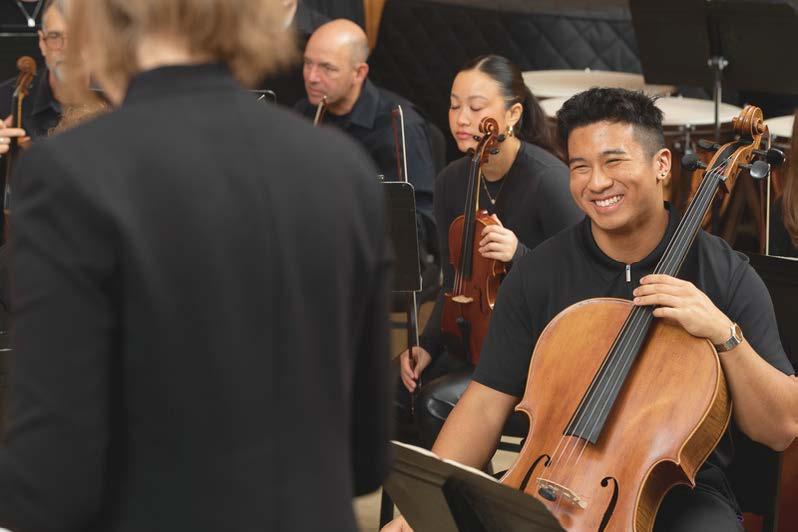
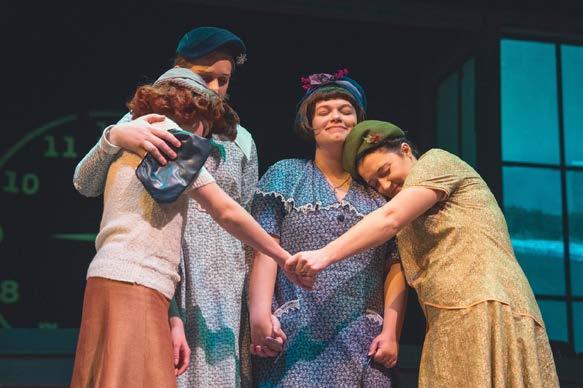
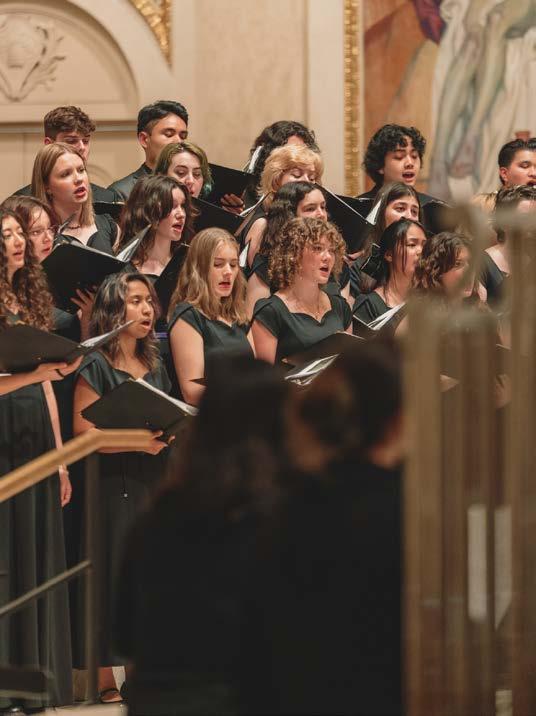


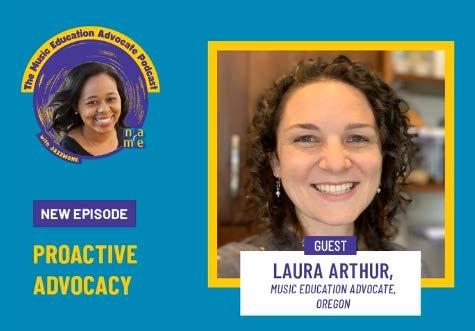
Laura Arthur OMEA Public Policy Chair
On February 19, members of the Oregon Music Education Association gathered at the Oregon State Capitol in Salem for Hill Day 2026, marking an important milestone in our association’s growing advocacy efforts. Music educators from across Oregon came together to share stories, build relationships with legislators, and elevate the role of music education in our state’s schools.
While OMEA has long supported advocacy through partnerships and policy engagement, this event represented a new step: music educators speaking directly with lawmakers about the impact of school music programs on students and communities. Hill Day was also part of a broader effort by OMEA to strengthen advocacy infrastructure across Oregon by directly expanding opportunities for members to engage in policy conversations that impact music education.
The day demonstrated both the reach and the potential of music educator advocacy in Oregon:Arts in Education Week (September 2025)
• 10 in-person attendees (+1 virtual participant)
• 15 meetings with legislators and staff
• 40 informational flyers delivered to legislative offices
• Meetings with over half of the members (9 of 16) of the House and Senate education committees
Each meeting began with introductions and a simple but powerful question: “How is music a part of your daily life?” These conversations revealed that music is a nearly universal experience and provided OMEA with an opportunity to make an authentic connection with lawmakers. Many legislators recalled participating in ensembles themselves, supporting children involved in music programs, or maintaining their own musical hobbies.
Educators also introduced OMEA as an organization, as we are still striving to ensure our work is known and visible across all ecosystems in Oregon. We highlighted our 700+ members, our mission of serving music educators and students since 1936 through professional development, student events, and statewide collaboration.
Through our conversations, the most impactful moments came when educators shared stories about their students Teachers described the life-changing power of music education: the student who found belonging in their music room after struggling socially, the rehearsal where perseverance and teamwork came to life, or the music program that became a student’s reason to attend school each day.
These stories highlighted how music education contributes to:
• Social and emotional learning
• Literacy and numeracy development
• Collaboration, creativity, and problem-solving
• Student engagement and school connection
• Perseverance through productive struggle
• Cultural literacy – music is important on its own, worth learning about, and is not a “nice to have” – it is essential to the human experience
OMEA’s goal for this first Hill Day was not only to raise awareness of music education priorities, but also to begin building relationships with policymakers and organizations whose missions align with supporting arts education. Among the key topics discussed:
Music educators emphasized the need for a dedicated arts education specialist within the Oregon Department of Education. Oregon currently lacks consistent statelevel coordination for arts education after our most recent specialist was cut due to the federal grant expiration. No state-level oversight creates challenges for curriculum adoption, program implementation, and ensuring districts meet existing arts education requirements. As a reminder, arts education is required by Oregon law (ORS 329.045 establishes: School districts and public charter schools must offer students instruction in…the arts”. This instruction must "meet the academic content standards [for these subjects] adopted by the State Board of Education".)
Educators also highlighted the importance of stabilizing school funding during the current budget shortfall. Mid-year cuts often result in reduced staffing, fewer school days, and program reductions, and arts educators are acutely aware that arts programs are frequently among the first impacted.
Advocates encouraged lawmakers to consider using existing stabilization funds to protect classrooms during the current crisis and maintain access to comprehensive educational opportunities for students.
Another concern discussed was the need for flexibility in graduation requirements created by Senate Bill 3, the Financial Literacy and College & Career Readiness graduation requirements passed by the Oregon Legislature in 2023. Music educators shared how rigid course requirements can unintentionally force dedicated four-year music students to leave ensembles in order to meet other mandates.
Policymakers expressed surprise at some of these unintended consequences. Educators encouraged lawmakers to explore alternative pathways that allow students to pursue music while still meeting graduation expectations.
Educators also shared information about Music In Our Schools Month® (MIOSM), inviting legislators to attend performances in their districts during March. Several lawmakers expressed interest in attending concerts and participating in local celebrations that highlight the work of student musicians and their teachers.
As with any event renewed after a gap of time, Hill Day offered valuable insights for future advocacy efforts.
• Visibility matters. Many offices were unfamiliar with OMEA, reinforcing the importance of continued presence and recognition. Future events may include buttons, stickers, or other visible identifiers to help educators stand out in the Capitol. OMEA is committed to continuing to communicate with lawmakers and offer our expertise when decisions are made that impact music education.
• Student and collegiate voices could be powerful additions. Increased participation from members of Oregon’s NAfME Collegiate chapter network could strengthen advocacy through testimony, presence, and both student and future music educator perspectives.
• Music-centered conversations work. Asking legislators about their personal connection to music proved to be an effective way to build rapport and begin meaningful discussions.
• Preparation helps maximize opportunities. Educators found that having performance dates, anecdotes, and data ready to share made advocacy more effective and helped make authentic connections with policymakers.
Hill Day 2026 was one step in OMEA’s broader effort to strengthen music education advocacy across Oregon. OMEA is actively working to build partnerships with organizations whose missions align with expanding access to arts education – educational organizations, community partners, and national
advocacy groups, including NAfME. By sharing research, data, and classroom stories, these partnerships help strengthen the case for music education at both the state and national levels.
OMEA is also developing clearer communication strategies around policy priorities. Advocacy events throughout the year (including Arts in Education Week, our annual Conference in Eugene, Hill Day, Music In Our Schools Month, and national advocacy events with NAfME) serve as milestones that guide advocacy planning and outreach.
At the same time, OMEA is working to strengthen grassroots advocacy systems across the state. This includes ensuring our advocacy resources on our website are up-to-date, providing training opportunities for members, and developing ways to better track access to music education across Oregon schools. Accurate data and coordinated communication will help educators and policymakers understand where music programs are thriving and where additional support is needed.
Finally, OMEA aims to expand accessibility to its advocacy work by increasing communication with members and building stronger relationships with collegiate music educators and student leaders. Monthly advocacy meetings, newsletters, and collaboration with collegiate chapters will help ensure that more voices are represented in conversations about the future of music education.
OMEA’s Hill Day 2026 was an encouraging beginning, but it also raised important questions for future efforts:
• How can we deepen follow-up with legislative offices after meetings?
• What role might students play as performers or advocates in future advocacy days?
• How can we better track engagement and encourage participation from more educators across the state?
• How might Hill Day connect more intentionally with Music In Our Schools Month activities?
Despite these open questions, one thing is clear: music educators have powerful stories to tell, and policymakers are eager to hear them
2027 is a critically important year for education policy in Oregon. The most important action you can take is to continue to build strong communities and music programs, but in order to turn admirers into partners, we need your stories and the data to back it up. Expect to hear more from OMEA about our campaigns as we look ahead to Hill Day in February 2027 and the next budget biennium.
Hill Day demonstrated that when music educators step into the advocacy space, they bring with them the voices of thousands of Oregon students whose lives are shaped every day by music education. 2026 Hill Day served as both a milestone and a starting point for music educators to engage with policymakers and ensure that music education remains a vital part of every student’s educational experience here in Oregon.
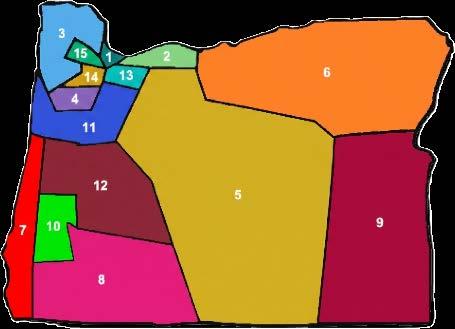
OMEA District 1: Portland, Gary Riler- Chair
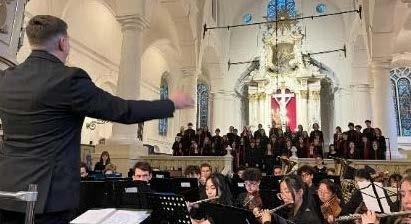
The Lincoln High School Band and Choir experience a life changing trip to the Baltics during Spring Break!
The PIL had four bands qualify for the OSAA State Band Championships for the first time since the event began in 1984.
OMEA District 2: Northeastern Metro, Melissa Albert- District Chair
Congratulations to the District 2 event organizers whose outstanding efforts in February and April created enriching musical experiences for hundreds of District 2 students.
The Middle School Honor Band, coordinated by Emily Bundy with assistance from Emily Walker and Molly Keller, brought students together for an inspiring weekend under the direction of Tim Heichelheim of Skyview High School, Vancouver.
The Middle School Honor Choir, organized by Karie House, offered a memorable and expressive choral experience led by Cole Haole-Valenzuela of West Salem High School, Oregon.
Thank you to the District 2 Solo and Ensemble organizers: Amber Schroeder, Paul Nickolas, Keija Lee, Mara Liechty, and Molly Kerns-Clapp for their leadership in hosting a successful event at Parkrose High School. Special appreciation goes to the many judges from across the state for their time and expertise. This large-scale event is a significant undertaking, and the team consistently delivers a smooth, rewarding experience for students, teachers, and adjudicators each year. Congratulations to all involved.
OMEA District 3: Northwestern Oregon, Josiah Glaser- Chair
Festival season in OMEA District 3 has been quite successful this year, with several groups qualifying for their respective state contests, representation in the state solo & small ensemble contests, and tons of camaraderie and shared music making throughout every event!
This year, we've been able to maintain a better distribution of responsibility throughout the region, both in hosting and organizing responsibilities. A special shout out goes to all our district festival hosts and organizers for their hard work in helping bring valuable educational and performance experiences for all our students. It's always a great time to be part of such a wonderful group of passionate educators out in the Northwest region of Oregon!
OMEA District 5: Central Oregon, Keith Chaiet- Chair
District 5 proudly recognizes the following individuals for their outstanding dedication and the many hours they volunteered to make our OMEA District 5 events a success. We are truly grateful!
Cooper Ottum, Kayla, Golka, Rebekka Nores, Stephanie Seed, Sarah Irvin, Jacob Shuler, David Hymans, Brenda Simmons, Jon Vevia, Kelly Moore, Sarah Owen, Eddy Robinson, Belinda Sisson, and Keith Chaiet. Thank you for your dedication to the Central Oregon Music Education Community.
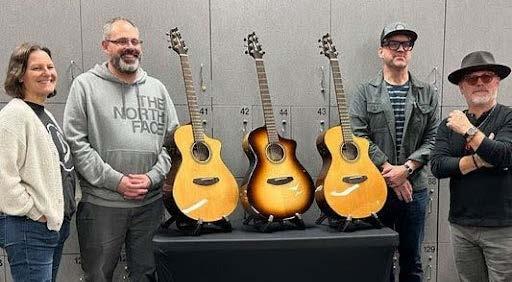
In exciting news, Mountain View High School recently partnered with Economic Development for Central Oregon and local Bend company, Breedlove Guitars, to secure a donation of 75 brand new guitars for Bend-La Pine schools with guitar programs.
OMEA District 6: North Eastern Oregon, Alex Justice- Chair
Three bands qualified for the OSAA State Band Contest at the Greater Oregon League Festival. Those ensembles are the La Grande High School Wind Ensemble, Pendleton High School Concert Band, and the Elgin High School Concert Band.
Congratulations to Amber Yester, Band Director at North Bend High School, for winning the NFHS Outstanding Music Educator Award for Oregon! In her 20 years at NBHS she has won multiple 4A State Band Championships. She balances the programs competitive success and rigor with community outreach. Award well earned, Amber!
A big thank you and shout out to our festival chairs this year; David Johnston from Siuslaw, Janet Lea from North Bend, Brett Aakre from Marshfield, Amber Yester from North Bend, Corey Tamandong from Brookings, and Dave Weston from Bandon. We appreciate all the hard work that goes into providing such great opportunities for our students in these rural communities.
We concluded a very successful festival season and were happy to host groups from near and far. Though we are a small rural district, we still have many great things happening here. Congratulations to our schools headed to state!
Congratulations to Max Jones on being named ODE’s Southern Oregon Teacher of the Year! As the Music Director at North Valley High School, Max continues to do outstanding work with his students and the community. We’re proud to have educators like him in our OMEA district. His dedication to both his students and music education truly reflects the best of the profession. Way to go, Max!
A huge shout out as well to all the students who participated in our large ensemble festivals and solo and ensemble events. We’re incredibly proud of the hard work shown by both students, families, volunteers, and their teachers throughout our local festivals. This festival season was a great success, and we’re thrilled to have such an engaged music community in Southern Oregon. We’re excited to have several schools and individuals representing our district at the state level, and we wish them the very best in their upcoming performances!
OMEA District 9: Southeastern Oregon, Ryan Egan- Chair
OMEA D9 hosted our first band district festival back in March. Organized by Max Justice and Logan Newby, this event was hosted at Nyssa High School. It was the first district festival in quite a while. The two plan on opening and expanding the festival to include middle school groups for this coming year.
We have also had two years of spring regional professional development where a full-day music course was offered. Attendance at both events featured almost all of OMEA D9 music personnel. This is exciting for us as it is very rare to have our school district’s or regional district’s support the music programs in this manner.
OMEA District 12: South Willamette Valley, Doug Doerfert and Jon BridgesCo-Chairs
Megan Perdue, Choir Director at Sheldon High School and Music TOSA for the 4J School District in Eugene, was invited to serve on a panel on Capitol Hill in Washington, D.C. in early March as part of the United Through Music congressional briefing during Music In Our Schools Month. Megan had the opportunity to meet with Senator Jeff Merkley’s staff and hand-deliver notes from 4J students to Oregon’s Senators and Representatives about the power of music education in their lives.
OMEA District 14: Southern Metro, Allison Hedgepeth- Chair
April 4th was the OMEA District 14 Elementary School Honor Choir at Lake Oswego High School. This year the choir was conducted by Amanda Sarles and accompanied by Angela Hjertstedt. We had 80 5th graders participate and had a wonderful day of singing and making new friends! This was our 7th year for OMEA D14 Elementary School Choir that was established in 2018. We have held this event annually with the exception of the 2021 and 2022 due to the pandemic.









We need YOUR stories to better tell OURS.
Stephen Marshall OMEA Advocacy Chair
"Piece by piece, only way to make a work of art. / Every moment makes a contribution, / Every little detail plays a part. / Having just the vision's no solution, / Everything depends on execution, / Putting it together, that's what counts." — From Sunday in the Park with George
- Stephen Sondheim.
At OMEA’s Hill Day 2026, there were a lot of meaningful conversations—about policy, funding, graduation requirements, and the future of Music Education in Oregon. In several meetings, we confirmed what many of our members already knew: many policymakers simply didn’t know who we were
Not in a negative way. Not because they didn’t care. They just hadn’t had a reason to really know us right now.
The work you do in music education is deeply impactful— but much of it is still invisible to the people making decisions that affect it . And if we want to change that, then we have to think differently about how we show up. Not just a few of us once a year at Hill Day, but all year long.
Music education doesn’t suffer from a lack of appreciation. People love concerts. They support their kids in music. They have personal connections to music that run deep. But appreciation isn’t the same as understanding. Most people outside our field—including many decision-makers—don’t see:
• How programs are built and sustained over time
• What gets lost when funding is unstable
• How scheduling decisions affect student participation (or how well-intentioned, unfunded mandates impact schedules, for that matter)
• The daily, relational work that keeps students engaged
And when something isn’t clearly understood, it becomes easier to overlook in policy decisions. That’s not a messaging problem. That’s a visibility and prioritization problem.
If there was one thing that consistently moved the conversation from academic to personal during Hill Day, it was real stories about real humans.
A lot of conversations started the same way:
“How is music part of your life?”
Legislators and staffers talked about playing in school, supporting their kids, or staying connected to music as adults. Then educators shared their own experiences—not as abstract arguments, but as lived moments (shoutout to Band Director Cameron Jerde and student Evie from Southridge High School, who wrote down and shared their stories about the unintended consequences of the financial literacy and
career readiness requirements on their Music Programs despite not being able to attend in person). People don’t remember programs. They remember people.
If visibility is the goal, storytelling is the method.
We all have stories. The question is how we tell them. After watching what resonated during Hill Day, a few patterns stand out:
1. Start with something specific
General statements don’t land the same way. “Music is education” is true—but easy to forget. Compare that to: “I had a student this year who barely spoke during the first semester, and by spring, they volunteered to lead sectionals.”
2. Focus on one student or person, not everything at once You don’t need to represent your entire program in one conversation. One story—told clearly—can carry a lot of weight. Trying to say everything at once often means nothing sticks.
3. Show change over time
The stories that resonate most have movement. Either positive or negative. Something wasn’t working… and then something shifted.
That might look like:
• A student who didn’t feel connected → found belonging
• A student who had community → lost it
• A student who almost left → stayed
4. Connect it to something bigger
After sharing a story, take one extra step:
• “That’s why consistent funding matters.”
• “That’s why students need flexibility to stay in music.”
• “That’s why support at the state level makes a difference.”
Hill Day matters. It’s important. It creates space for direct conversation. But it shouldn’t be the only time people hear from us (and us isn’t 15 people). If we want to build real influence, the goal isn’t just visibility—it’s familiarity.
Most advocacy doesn’t happen in formal meetings. It happens in the spaces we’re already in.
• At concerts
• In school newsletters
• On social media
• In conversations with administrators and families
This doesn’t require a new initiative or a huge time commitment. It’s about being a little more intentional with what you’re already doing.
Invite people into your program. Concerts are one of the most powerful advocacy tools we have.
Invite:
• Your local legislator
• A school board member
• A district administrator
Even if they don’t attend, the invitation matters. It builds awareness. If you don’t know where to start, we have resources ready on the OMEA website to help you identify these people in a few minutes.
Share what’s already happening. You don’t need a full campaign. Just share:
• A quick post after a performance
• A short student quote
• A brief reflection on a rehearsal moment
Consistency matters more than polish. Make the impact visible. Don’t assume people understand what students are gaining. Say it clearly:
• “This is where students learn to collaborate and support each other.”
• “This is one of the reasons students stay connected to school.”
You’re not overstating. You’re clarifying.
Students as Advocates. One of the clearest opportunities moving forward is involving students more directly. Students can say things adults can’t, at least not in the same way. When a student says, “Music is the reason I feel like I belong at school”, it lands differently.
There are simple ways to bring that voice forward:
• Student reflections
• Speakers at concerts
• Quotes in programs or communications
You don’t need to formalize it too much. Just create space for it to exist.
OMEA can organize Hill Day. It can provide resources. It can build partnerships.
But statewide influence is built from local voices.
If legislators only hear from a few educators, that shapes their understanding.
If they hear from many—across different regions, different school contexts, different program sizes—that understanding becomes more accurate and more complete. If we take this seriously over the next year, Hill Day 2027 will feel different. Not because the event itself
changes—but because the context does. Instead of starting from scratch, conversations can build on existing awareness. Instead of introducing the value of music education, we can deepen the conversation. That shift—from introduction to influence—is the goal.
Building
This doesn’t need to be overwhelming. You don’t need to do everything.
Start small: see if you can get students, families, and community members to write down a tiny bit of their story so we can amplify it.
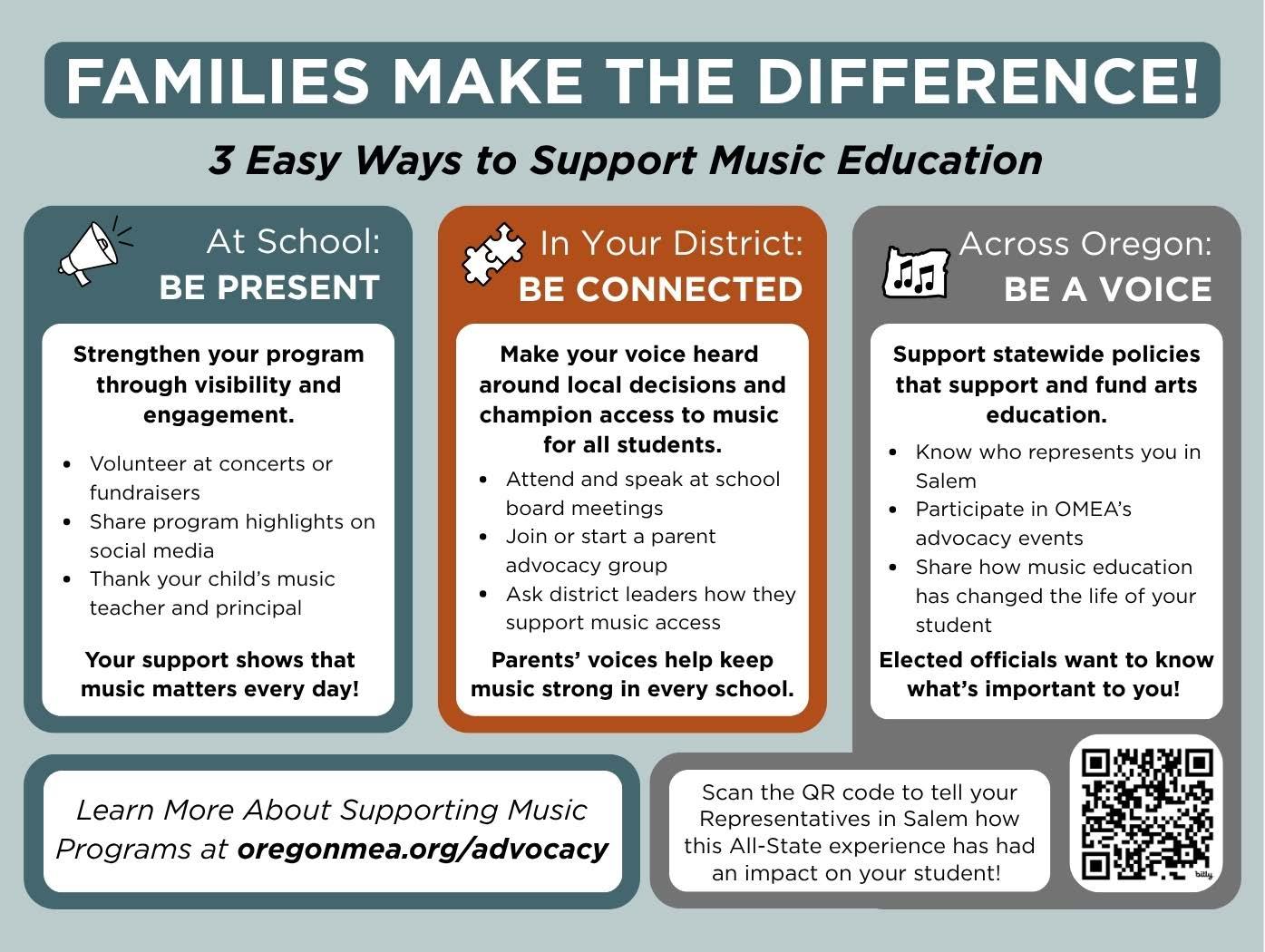
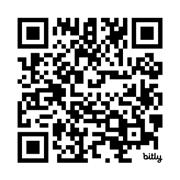
Print out this QR code and put it on a board in your classrooms, share it with families, or include it in your concert program:
OMEA Advocacy: Share my Story.

“Help Oregon decision makers know the impact of Music Education in our state. If Music Education has had an impact on you or your student, consider sharing it with the Oregon Music Education Association so we can make it known to our decision makers. Your story is our story.”
One of the biggest mindset shifts coming out of this work is simple, but important: OMEA Advocacy isn’t separate from teaching. You are advocating. The only question is whether it’s happening intentionally.
Music education has always mattered. That’s not new.
What’s changing is our willingness to make that impact visible—to step outside our classrooms just enough to ensure that the people shaping education policy understand what’s happening inside them.
We already have the stories. We already have the evidence. We already have the impact.
Now it’s about making sure those things are seen.

Cynthia Navarro OMEA Diversity, Equity, & Inclusion Chair
This year, I have felt like I have completely forgotten how to teach. It is festival season, and I felt like I had failed my students by not preparing them well for their performances. It was like I couldn’t organise my thoughts. All I could think of was what other directors and students would think of us. I share this because all of these feelings inspired me to go through the files on my computer from when I was such an excited music ed major and soaking EVERYTHING in. It reminded me that I not only still have the skills and the passion to continue this work, but that my stance on a ranked contest hasn’t changed.
Here is an excerpt from my senior thesis, written 13 years ago. Let me know if you’d like to read the rest!
“Instrumental Ensemble Competition in Music Education” (one excerpt, with some edits made for length and clarity).
Music education is traced as far back as ancient Greece and Rome. Throughout The Republic, Plato presents moral education through music. It is described as a way to shape character by training the soul in the aspects of community life through singing of justice. This idea presents a utilitarian philosophy that would “dominate music education philosophy for over 2,000 years.”1
In the early 1900s, the value of including the wind band in public school curriculum was finally explored. The argument for including the wind band was that, “performing in a band would develop democratic and egalitarian principles by promoting community thinking and community consciousness.” 2 Soon thereafter, school bands and orchestras were being used in graduations, assemblies, and other special school events. The end of World War I helped to make this inclusion a reality because of the high demand for patriotic music to be played, as well as the return of people who were trained band directors through participation in military bands.
As public school bands arose, their predecessors, professional bands, were on the decline. The decline of the professional band not only affected the musicians themselves, but also instrument manufacturers. With no professionals to count on for sales, instrument manufacturers were trying to develop a movement in instrumental music programs in schools to boost their sales. It is in this way that the national band competition came to be. This movement helped to cement the school band in American culture. Over time, the band contest was honed to include standardized instrumentation as well as standards in terms of judging. Following the first national contest, the idea of holding elimination contests developed so that only the best bands in the nation could compete at the national level.
By 1927, bands were beginning to be classified by size. Bands were divided into Class A (schools with a total enrollment of more than 250 students) and Class B (schools with a total enrollment less than 250 students). Aside from size classification, sightreading was also included in the competition process. In the year 1929, feelings that band contests were becoming too competitive began to emerge. In a letter, Leonard Falcone, a band director, stated, “The difference between the first, second, third, and fourth in the contest days was very little, but the disappointment of not receiving first place was most discouraging to the students, conductors, and the people back home.’ 3 The band contest had changed from being a way to improve musicianship, to a way to establish pride over being the best. This shift in ideals contradicted the original intentions of band contests being used for educational purposes and camaraderie. It went against the original intentions of music education: a study of music and a form of moral education by making those who won prideful. Comments like Falcone’s helped push for a festival in which there is no clear winner, but rather an opportunity to get to watch and perform with other bands while still being adjudicated and receiving ratings, much like the types of festivals and competitions we hold today. The last contest to declare a clear winner was held in Tulsa, Oklahoma, in 1931.
The Great Depression marked the end of the national band contest era not only because of financial concerns, but also due to the growing concerns regarding the competitive nature of the contests. Although performance levels of participating bands had improved greatly, the educational value of “focusing long periods of time on a very limited repertory4 ” was being questioned. This focused rehearsal did not leave much room for teaching music fundamentals and thus defeated the educational purpose of the contests. With the concerns over the competitive nature and the financial burdens, a decision was made to indefinitely discontinue the national band contest. The impact of the national band contest on music education was so great that, although national band competitions are no longer held, competition today is still held at the state level. These contests helped to introduce dialogue between directors to improve performance standards as well as educational standards for bands.
Today, there are several associations in Southern California and around the United States that hold band festivals. These organizations all have different standards for adjudication, but they have implemented the idea of a competitive festival in which there is no clear winner, thus paving the way for music education to be at the forefront of these competitions once more. The main focus of these competitions is to bring awareness to the arts and to promote music education.
1 Evan Feldman and Ari Contzius, Instrumental Music Education: Teaching with the Musical and Practical in Harmony (New York: Routledge,2011), 63.
2 Ibid, 68
3 The American School Band Movement, http://www.lipscomb.edu/windbandhistory/RhodesWindBand_09_AmericanSchoolBand.ht
4 Ibid, 68
Throughout history, competition has been a huge part of music education. For various reasons, instrumental ensemble competition has been viewed in both a negative and a positive light. Competition can be used as a pedagogical tool as well as a motivational tool. However, competition can also be potentially demoralizing, especially for children. In general, competition is associated with winning and losing. Is it acceptable to hold music education to the same winning and losing standard? Are we to uphold music as a creative outlet without introducing the winning and losing aspect of competition? Is it possible to do so? The competitive aspect of music education could be eradicated completely so as to maintain the integrity of music as a creative outlet. Or perhaps competition could remain a part of music education, and it could be altered to eliminate the winning and losing aspect of it.

Level I - Level II - Level III por tlandor ff.org
NEW!


KIDS SUMMER CAMP
Ages 6–10
Led by Vanesa Utz
Engaging arts camp during levels!
July 20–31
Vancouver, WA
July 12–16
Meucha Retreat Center
SPECIAL COURSE ARTIST RETREAT
Constellations of Connections & Creativity
Fauna Woolfe & Beth Melin
Paul Weller - Level I
Drue Bullington - Level II
David Thaxton - Level III
Mathew Stensrud - Movement
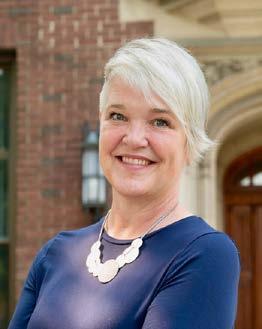
Fauna Woolfe & Kate Bright - Recorder



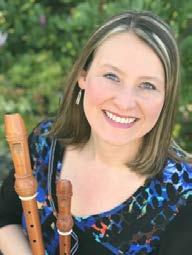


Jennifer Bell OMEA Band Chair
I sat down about two months ago and really began thinking about how many years I have left as a public-school music teacher. That is such a strange thing to think about, but as you realize that you are nearing 30 years of teaching it is inevitable. I contemplated whether I would teach past 30 years, would I try and go half time, would I change careers and do something different, or am I really just going to be done. The answer was so hard to find, and I still haven’t figured it out, but what did happen was I realized I have had the best job I could have asked for. Thank goodness I didn’t become that math teacher I planned on becoming!
I want to take a moment and let you in on a few of my secrets that I have learned over the years-some I have a hard time following myself. If you are in your first few years, the middle of your career or on your way to those lovely retirement years, I hope that you can find some sense of connection and maybe even a tidbit you can take home.
• You have the best job in the world! You get to teach music and be with amazing students all day long. You get to showcase your hard work while your students show off their skills and talents.
• Those “Aha!” moments are golden. Strive to find them and take a moment to enjoy it. You just taught someone to love what you love and now they “get it!”
• Everyone wants to be good at something, no one is a bad kid, and if you truly believe this, all your students will become your favorite.
• Everyday is a fresh start for you and your students. If you have a bad day, if you didn’t plan well, if you forgot your scores at home (not me), if you got a tough parent phone call/email, if your administration got in the way, or if something else just as trivial derailed your day, you get to start over tomorrow. Just breathe and allow yourself to disconnect and try again.
• Slow down. Enjoy the process. This one is hard for me!
• Set high standards that are beyond what your kids can do right now and work for those results. Your students will achieve and reach your goals. When they do, then you just simply raise the bar even higher. You will watch those students continue to achieve.
• Sometimes, what you want to achieve is out of your skill set. Ask for help! Bring someone in who is better than you! There are many retired directors out there missing the band room. They want to help! ASK them to come support you and teach you! It will always look like they are teaching your kids, but watch how they do it and copy and paste.
• You are going to have to work past the normal working hours. You will need to work in the evenings, extra time before school and even on the weekends.
• It is okay to not work on the weekends, to say, “I am done at 4:00 today,” and to take vacations!!! (I am not good at this.) If I could change anything about my career, this would be it! FIND a good balance of life and work.
• Find a good colleague either in your building or in another building that is not a music teacher! I love having lunch with my small crew of Spanish, Science and IA’s. When I was at McNary my best buddy was the auto teacher! Sometimes, you just need to hang out at work and not talk shop!!!
• Put money aside for retirement! NOW!
• Have a hobby that is not music! I love to paint and to quilt. I also love my flowers and gardening. I have 3 boys and I am always busy, but the days that are the worst at work are the days I go to my non music hobby.
• It is okay to take a day off work for mental health! You are no good to the students if you are over-cooked yourself. Even if you don’t have a music sub, and making sub plans is pure torture, take a day. You will be back tomorrow and be a better teacher if you are mentally healthy.
• PLAN AHEAD! Have your music planned with a backup plan before concert season! I have several pieces of music for each level that are sure fire winners. If what I planned doesn’t fit my band or the kids just “don’t like it,” then I have songs I can always go back to and I know they will love.
• New music is great, but don’t forget about the ones that have been proven winners for years and years. Those classics are great because the students love them and they are just great pieces of art.
• Don’t forget about the percussionists!! They should be playing just as much as everyone else in the room.
• When learning new music, have everyone play the snare part. Use pads and snares. Then have everyone play the mallet part. Rotate them! Then teach the auxiliary. Because waiting for that one gong hit for a 45 minute class is not education! It is torture!
• Rewrite that melody for everyone in the band! Let everyone learn the fun part! It is also a great way to create a back up plan when that one player is sick at the concert! Well, that bari sax player can play it. Sure, it is different than what was intended, but the part is being played.
• It is okay to rewrite your music to fit your band. If you must arrange the piece completely, go look for another song that fits your band better.
I think I can go on forever, but I want to talk about one more thing before I close. As you prepare for the many festivals and competitions this year, I would like to suggest you remember why we do what we do! We are here to create music, to share our love of sound, and to give the gift of our musical creations to those that will take the time to listen. We are teachers and the most important thing we will do is to inspire our students to enjoy the music making process, to be connoisseurs of music, to create music and to be lifelong lovers of music. Some will follow in our footsteps, and some will far exceed all expectations and be the leaders of our future.
I know that the hustle and bustle of getting ready for a performance is stressful, and the “got to get it right” hits us all at one point in the process. Those nagging questions that take over our thoughts at night, “did I choose the right music, will the judges like our songs, do I have enough minutes of music for the stage, and is it good ENOUGH?” are sometimes just overwhelming. The pressure of contest season is sometimes too much to take, our life balance gets wonky and the stress affects our mental health. If you hit that point, it’s time to just breathe! Step away for a moment, remember why you do this job, remember that your students love music and are doing their best. Those judges, clinicians, and colleagues want the best for you and your students. If you play tomorrow and it’s not ready, it is okay. You are showing a snapshot of the learning process. Look at your students and remember that the team you created, the band you made is doing their best. You are doing your best. Try to learn from every festival, clinician, judge’s sheet and recording of your band. There is another rehearsal tomorrow, and it will always get better.
We are not just teachers, we are coaches, we are counselors, we are administrators, we are parents, and we are musicians. We fill our cups with gratitude from our students, with the sounds of an in-tune chord, a melody that has direction and purpose, a phrase that is completed, and a final performance that we are proud of. The time you spend on the stage with your students will never happen twice, the band you have in front of you will never occur again, and the music you create will only happen this one time. Remember to take the time to enjoy the process and don’t let the stress of getting a 70 or a 75 diminish your success.
The music performance is important, and that goal of the perfect performance will always be there, but what really matters is what is happening in the classroom every day. You matter! You inspire others to strive for greatness on a daily basis, and you show up when others choose to give up. You are a music teacher, and you have the best job in the world. So today, take the time to breathe and love what you do!
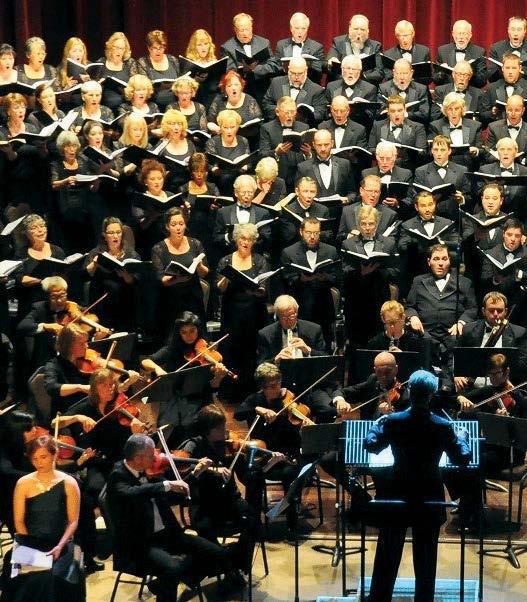
Festival Chorale Oregon, a Salem-based civic choir now in its 48th season, seeks a new Conductor/Artistic Director at the retirement of our founder, Dr. Solveig Holmquist in 2027. Philosophically committed to being self-auditioning, the ensemble primarily focuses on performing the major choral/orchestral masterworks, but often explores other repertoire. We look forward to sharing the successful candidate’s artistic vision for the 2027-2028 season.

Emma Rowland-Elsen Consultant, Choir Inclusion and Mental Health
Recognized as one of the United Kingdom’s foremost specialists in choral inclusion and mental health, Emma Rowland-Elsen is a veteran choral conductor, sound–voice therapist and consultant, whose work is shaping best practice across the sector. Her website states "A mentally healthy choir isn't just a nice extra - it's the foundation for safe, sustainable, and transformative singing. When we prioritize mental wellbeing in our work, we don't just make better music; we build vibrant communities where every member feels valued, supported and empowered to sing freely."
Drawing on her lived experience of PTSD and more than ten years of expertise in trauma-informed leadership and vocal health, she advises choirs, arts organizations and education providers on developing emotionally intelligent, accessible and mentally healthy singing environments for every voice. Recently on her website https://www.emmarowlandelsen.com/ , she invited a guest-blogger named Sarah to share her experience as a neurodivergent singer in a choir. Sarah shares that having a label of autism and ADHD should not be associated with a stigma or negative connotation and offers the simile of a "care label" in clothing: Just as your favorite sweater comes with a care label on how to take care of it without damaging it, she thinks of her autism and ADHD labels the same way — as her care labels. She offers practical tips for us as teachers/conductors to support our neurodivergent choir members and help them feel the same sense of belonging, camaraderie, ownership, and pride that we want for all music students in our ensembles.
November 2024 was a rather important month for me. It was on the 6th that, at 35 years old, I finally got my autism diagnosis. The sense of relief I felt after that phone call was immense; there were a lot of tears, both happy and sad. After years and years of believing I was a failure, that it was all my fault, I had an official diagnosis. I’m not broken; I’m just me. For so long, especially in secondary school, I had been punished for falling behind, for forgetting homework, for getting easily distracted. Not once did they ask why. I learnt to hide my ‘quirks’ (what I’d later learn to be stims) for fear of being bullied and tried so hard to be ‘normal’. The mask I built was heavy and painful. But now I had a reason for it all, I had permission to be me, to be different. (And, since writing this post, have also had my ADHD diagnosis, too!).
November was also around about the time I started singing with a local choir run by my singing teacher, Emma [RowlandElsen, of this website].
Here's my story.
Music is a huge part of my life; singing is so important to my mental health but had suffered and become rusty through years of depression. Emma helped me get back on track and find my love for it again. She also had arranged one of my own pieces for her choir and asked if I’d sing the solo part. To say I was terrified is perhaps an understatement; years of severe unmanaged social anxiety and Rejection Sensitive Dysphoria (RSD) meant I struggled with new situations, with the constant fear that I’d be rejected for my unusual mannerisms or that I was intruding where I didn’t belong. No matter how much someone tells you that’s not true, those little voices can be deafeningly loud!
But my fears that I’d battled for so long had no place in this choir. I was immediately accepted as I was, I didn’t need to mask, I didn’t need to pretend to be someone I wasn’t just to fit in, I could just be me and no one batted an eyelid. I’d never experienced such a level of acceptance and love in the various choirs I’d been in in the past. It was refreshing, though took a little while to get used to! That doesn’t mean to say the problems all vanished, RSD is a daily occurrence for me to varying degrees and sometimes I still struggle with feeling like I belong, especially when it comes to concerts, and probably always will be; it’s just the way I’m wired. But knowing what I now know about it, having lived this reality, I feel I am far better equipped to help others find these little wins than I ever was before.
Diagnoses like autism and ADHD are often referred to as ‘labels’, with negative connotations, but I like to challenge that idea. Labels aren’t as bad as people make them out to be; if your favourite jumper didn’t have a label in it to tell you how to care for it, it could get damaged. Autism is my care label, and I’d like to share some of the tips I’ve discovered to help others care for their neurodivergent choristers.
Stimming is characterised by repetitive movements such as rocking, wiggling, hand flapping, and clicking. It is vast and varied in its presentation but serves a very important function. It helps us regulate our emotions and energy levels and often prevents sensory overload or meltdowns. We have no choice over our stims, they are a necessary part of our wellbeing! I personally wiggle in my seat a lot when excited, especially if I am enjoying a particular song, and will click my fingers or tap my wheelchair wheels if I’m feeling anxious or panicky. It is more disruptive and potentially damaging to bring attention to these actions than it is to just let us carry on as quietly as we can and work out some of that built up energy. We don’t do it to be distracting; we just want to stay happy and calm!
Sometimes stimming alone isn’t enough to regulate what’s going on in our heads and bodies. If we’re finding a harmony particularly difficult, or if it’s got a bit too loud in the practice room, we may need to take some time out to recentre and reset. I personally struggle badly with confrontation, and if there are raised tempers – even if they are nothing to do with me – I tend to lock down and freeze in response. I have little control over this, it’s automatic, but again, I’ll need time to decompress and remind my brain that it’s not actually in danger! When we leave the room, we’re not being rude or upset at anyone, we just want to do something constructive now before it becomes more of a problem for us. No need to say anything, most of us feel uncomfortable with any attention when this is happening, but a quick, quiet “All ok?” when we come back is often appreciated.
Most people know how some topics can be triggering for neurodivergent folks, and that can happen in music, too, despite
our love of song. An entire song or theme of music can be very difficult to work with. For me personally, I have a lot of religious trauma I am still working through, so songs with overtly religious themes can be rather uncomfortable. Even songs we like can be painful, especially if they revolve around mental health. I adore the song You Will Be Found, it’s beautiful and moving, but I rarely get through it without at least tearing up, if not outright breaking down. It touches on a lot of struggles I experienced growing up that lead to some of the darkest periods of life but speaks of such hope and kindness in the face of everything. Just know that if we go quiet during a piece, or turn away, it could be that the song is just a little too much for us and we need a moment. Talking about it privately might help but understand that not all of us can go into detail as it can be very hard to discuss.
As mentioned earlier, Rejection Sensitive Dysphoria (RSD) can be a pretty difficult issue many autistic folks deal with. Your mind likes to tell you that you don’t belong, that no one really wants you there. Every look gets turned into something negative and it can severely impact your experiences. This can be especially strong when starting new things, and large groups can feel intimidating. Paired with a common problem of struggling to read emotions or read body language, RSD makes for an exhausting time. Despite deep down knowing very well that these things are not true, those voices can be painfully persistent and very hard to ignore. The easiest way I’ve found to combat this is to take time quietly in the back of the practice room, just concentrating on the music rather than the other choir members around me. When I first joined, I’d sit separately at the back observing and getting used to the dynamics of the
group before I felt comfortable taking my place within it. Just being aware of this is important, sometimes not much can be done, but understand that we do desperately want to be a part of it but occasionally we have our own minds to fight against.
Finally, as with most people, we all have our boundaries. For autistic folk, these can be very strict and quite different to what is usual. For me, I struggle with touch – not helped by a chronic pain condition –and it takes a while for me to become comfortable around people and gain enough trust to allow contact. Some people won’t allow touch at all, some have texture or food aversions. Boundaries vary from person to person and it’s always best to ask if there are any specific ones that need to be known to ensure a safe and comfortable time in the choir. Again, these boundaries are not a choice for us, and our often-rigid thinking means there can be little leeway but working together will ensure they can be met without negatively impacting practice sessions and performances.
There are of course other areas that might come up besides these 5 pointers, but I hope they go some way to helping make the choir environment accessible to neurodivergent singers. As with all these things, it is always important to ask your choristers if there is anything specific that needs to be taken into account as early as possible to avoid misunderstandings and upset. Talking about it can go a long way and feeling heard is very reassuring. Music is important to all of us, and often our biggest escape and therapy, so making choir an inviting and stress-free atmosphere will benefit all involved!

Dr. Dijana Ihas Professor of Music, Pacific University
“In art there are no trifles. Everything is of paramount importance.” (Green, 1975, p. 24)
During the 2026 National Conference of the American String Teachers Association, string educator Christopher Selby shared an observation that deeply resonated with me: students will play out of tune only as much as we allow them. Although simple, this statement carries an important implication for daily rehearsal practice in school orchestras.
Selby’s observation extends beyond intonation. Students will produce an unfocused tone, play without balance, or perform without expressive intent only to the extent that teachers allow such outcomes. In other words, the musical standards teachers establish—and consistently reinforce—shape the musical results heard in ensemble performance.
In practice, however, maintaining such standards is rarely straightforward. Teachers often hear multiple musical issues simultaneously during rehearsal. Rhythms may be unstable, pitches inaccurate, tone unfocused, or ensemble balance unclear. In such moments, teachers must quickly decide where to intervene. Should rhythm be addressed first? What if the pitches are correct but the ensemble is still out of tune? When should attention shift to articulation, dynamics, or phrasing?
These questions highlight a central challenge in ensemble teaching: prioritization. Although several important resources for string pedagogy as related to school orchestras exist— including Strategies for Teaching Strings (Gillespie & Hamann, 2025) and Teaching Strings in Today’s Classroom (MacLeod, 2019)—they primarily focus on technical development, sequencing of skills, and rehearsal organization. They offer less guidance on how teachers might systematically prioritize musical issues when multiple problems arise simultaneously.
Drawing on insights from conducting and rehearsal literature (Kohut & Grant, 1990; Meier, 2009), as well as practical experience in school orchestras, this article proposes a sequence of rehearsal priorities that can guide teachers when diagnosing and addressing musical challenges in ensemble rehearsals. These priorities are intended to function as a practical mental framework rather than a rigid prescription.
The proposed rehearsal priorities are:
• Correct pitch and rhythmic accuracy
• Intonation
• Tone
• Bow strokes
• Precision
• Expressive elements
• Balance and blend
The sections that follow examine each of these priorities and offer practical strategies that orchestra teachers can apply during rehearsal.
Music is often described as a universal language expressed through seven elements—rhythm, melody, harmony, form, texture, sonority, and expressiveness. In string playing and ensemble instruction, these elements translate into practical concepts. In this context, melody and rhythm are addressed most directly through accurate pitch and rhythmic execution.
Pitch refers to the frequency of a sound, while rhythm refers to the organization of sounds in time. Developing accuracy in these areas requires intentional and carefully sequenced instruction over time.
Sound string pedagogues (Hamann & Gillespie, 2025; Hopkins, 2012) recommend that beginners initially learn string instruments by playing by rote—performing short, familiar tunes without reading notation. This approach allows students to focus on essential technical foundations such as posture, instrument hold, left-hand setup, and bow hold without the additional cognitive demand of decoding notation.
At the same time, music literacy should be introduced from the earliest stages through short off-instrument activities. One effective approach is to teach note names using the fingers of the hand, as in the Kodály method, and then transfer this knowledge to enlarged staff paper where students identify pitches by pointing to lines or spaces indicated by the teacher. Acronyms such as “Every Good Boy Does Fine” can assist students in memorizing staff notation. Note names can then be connected with finger placement through flashcards or similar visual aids. These activities should occur alongside learning short rote pieces.
Rhythmic literacy can be developed through echo activities in which the teacher claps short patterns using rhythm syllables (e.g., ta and ti-ti ) and students repeat them. Later, flashcards with four-beat rhythmic patterns using quarter notes, eighth notes, and rests help students internalize rhythmic structures before applying them to their instruments.
At the next stage, students connect pitch reading with finger placement through method books. One widely used resource is Learning Together (Crock et al., 2010), which is effective for beginning string players because of its clear notation and short musical examples with bass-line accompaniment. At this stage, separating right- and left-hand techniques and applying the principle of “divide and conquer” can be helpful. For example, students may sing note names while playing pizzicato or practice rhythms on an open string while speaking rhythm syllables.
Once pitch and rhythm are secure independently, they can be integrated into a unified performance.
At the intermediate level, instruction should emphasize learning the five basic finger patterns and practicing one-
and two-octave scales while consistently naming pitches. An important resource for this stage is Bornoff’s Finger Patterns (Bornoff, 1948; Lyle, 2017), which provides systematic practice of these patterns. Through structured repetition, students develop a clear understanding of finger placement while reinforcing note recognition across all four strings.
Teachers can strengthen this connection by briefly reviewing note names within the repertoire being studied. For example, students may play passages pizzicato while naming notes, point to notes in the score while saying pitch names and finger numbers, or sing note names before playing. Even a brief daily review can significantly improve reading skills and accuracy in both pitch and rhythm.
At the advanced level, students often experience uncertainty when reading notes in higher positions. Teachers can address this by reinforcing note identification in upper registers and explicitly connecting pitches with appropriate fingerings. Bornoff’s Finger Patterns in Positions (Bornoff, 1953) is particularly useful for developing accurate pitch placement in higher positions.
Rhythm-reading skills can be strengthened through resources such as Rhythmic Training (Starer, 1985). When passages in higher registers are challenging, students may first play them in a lower octave to understand pitch relationships before transferring them to the original register. Another useful strategy is to separate pitch and rhythm during practice—for example, playing pitches without rhythm or practicing rhythms on open strings before reintegrating both elements into the musical context. This approach helps students develop greater accuracy and confidence in both pitch and rhythm.
Beyond pitch and rhythm, additional musical elements translate into important performance concepts for string players. In this context, harmony relates closely to the development of intonation.
In its simplest sense, intonation refers to the ability to play in tune. Achieving reliable intonation, however, is a lifelong challenge for string players. Unlike fretted instruments, string instruments provide no fixed markers for finger placement, requiring performers to locate pitches through careful listening and physical awareness. Because pitch can be continuously adjusted, players must constantly evaluate and refine intonation in relation to the musical context.
Reliable intonation depends on two interconnected skills: a well-trained ear developed through sequential aural training and kinesthetic awareness that allows players to place fingers consistently. In ensemble settings, performers must also adjust pitches to tune intervals and chords within the group. For this reason, teachers should establish early that in matters of intonation there is no such thing as “close”—a pitch is either in tune or it is not.
Considering the complexity of teaching intonation in a school ensemble setting, it is helpful to adopt a guiding framework that includes developing aural-based musicianship, tuning instruments, establishing proper left-hand setup, and using pitch-adjustment games.
Accurate intonation begins with a well-developed ear capable of distinguishing subtle differences in pitch. Training should begin with singing simple songs from traditional repertoire and later include scales, arpeggios, and phrases from the repertoire studied in class. Although orchestra teachers sometimes hesitate to sing, the voice is an essential tool for strengthening pitch awareness.
Early instruction should also focus on recognizing high and low pitches and identifying basic intervals. Students may begin with strongly contrasting intervals such as the octave and minor second, followed by major and minor thirds, and later perfect fourths and fifths. These listening skills are then transferred to the instrument as students learn to recognize higher and lower strings and adjust pitch through careful listening.
Strategies such as echo playing, call-and-response, short improvisations, and “bending the pitch” further refine listening skills. Establishing this aural foundation is essential before students begin tuning their instruments independently.
Effective tuning routines begin with well-maintained instruments. Teachers should ensure that pegs and fine tuners function properly and check for “false strings,” which can cause instability when tuning perfect fifths or placing harmonics (Alexander, 2008).
During the first year, teachers typically tune the ensemble while involving students in the process. Students may sing open-string pitches, identify whether pitches are higher or lower, and observe how pegs and fine tuners adjust pitch.
Students can begin tuning independently once they demonstrate stable tone production, can aurally distinguish higher and lower pitches, and understand how to adjust pegs and fine tuners properly. Early instruction should focus on tuning each string individually using a tuner or reference pitch: students first listen to the pitch, then sing it, and finally play the open string softly.
Once this skill is secure, students can proceed to tuning perfect fifths. Ensemble tuning may begin with unison tuning (all players tuning A, then D, etc.), followed by cross-tuning in which lower strings establish pitch before upper strings join. Lower instruments, particularly double bass, may also tune using harmonics to bring pitches into a more audible range.
While aural training is the internal prerequisite for accurate intonation, correct left-hand setup provides the physical foundation. Proper alignment of the knuckles, hand, wrist, and forearm is essential. Fingers should remain curved, and the fourth finger should hover above the string and, together with the first finger, form what Galamian described as the lefthand “frame” (Galamian, 2013).
At early stages, this frame can be reinforced through left-hand pizzicato activities such as rote songs from Paul Rolland’s repertoire (e.g., Each and Every Ant, G–D–G). Introducing the fourth finger early—through simple melodies such as Lightly Row or finger-pattern exercises—supports the development of a stable hand frame.
Another effective strategy is briefly placing the fingers in the Geminiani chord shape while ensuring that the thumb remains relaxed and the fourth finger rounded (Ihas, 2023). Developing clear finger patterns and understanding finger placement within musical passages are important prerequisites for accurate intonation (Barnes, 2008; Zweig, 2012). Early exposure to harmonics and preparatory shifting exercises further supports the development of efficient left-hand technique.
The following short listening activities can further reinforce students’ sense of intonation:
BINGO: While playing a scale (e.g., D major), students stop on assigned notes, sing or audiate the pitch, and continue the scale.
Stacked Scales: Students play two scales simultaneously (e.g., D major and G major) in half notes while listening vertically for perfect fifths and horizontally for whole- and half-step patterns (adapted from Dirks et al., 2022).
Pitch Benders: After establishing a well-tuned unison pitch, one group slightly raises or lowers the pitch while others maintain the original pitch, allowing students to hear how small changes affect ensemble intonation.
Changing the Melody: Students perform a familiar melody (e.g., Twinkle, Twinkle Little Star ) while altering one pitch or performing it in different keys such as F, B ♭, or E ♭ major.
Tone
Beyond pitch, rhythm, and harmony, additional musical elements shape important performance concepts for string players. In this context, the element of sonority is most directly reflected in the production of tone. Although music is an art of sound, it is striking that “the quest for tone remains curiously absent in violin practice” (Hoppenot, 2023, p. 108). This observation applies across levels of instruction and performance. Like intonation, tone production depends on both internal and external prerequisites. The internal prerequisite is careful listening, which can be challenging because performers do not always hear their own playing objectively.
External prerequisites include a balanced bow hold and control of several key variables: bow speed, bow weight, sounding point, tilt of the bow hair, and the location and amount of bow used in a passage or phrase. While a full discussion of tone production lies beyond the scope of this article, several practical strategies can support tone development in ensemble settings.
Practicing long tones on open strings and scales—first without dynamics and later with dynamics—allows students to focus on sound quality and bow control. Recording rehearsals or individual playing and listening reflectively can further increase awareness of tone. As with intonation, refining tone remains a lifelong process for string players. A useful resource for developing tone in school orchestra settings is Habits of Successful String Musicians (Selby, Rush, & Moon, 2014).
In string playing, the term bow stroke refers to the manner in which the bow is used to produce a particular articulation or style of sound. Consistent use of appropriate bow strokes is therefore an important rehearsal priority. String instruments are unique in the variety of strokes they can produce. For example,
while a staccato marking on many instruments simply indicates a short note, on string instruments it may correspond to several bow strokes, including simple staccato, slurred staccato, flying staccato, spiccato, sautillé, ricochet, collé, or piqué.
A useful guideline is that students should become comfortable performing a bow stroke on open strings, scales, or short etudes at least two years before it appears in repertoire. For example, if a middle school orchestra is expected to perform repertoire requiring spiccato, students should begin practicing the stroke earlier through open-string exercises, scale patterns, and simple etudes.
Rather than discussing the pedagogy of individual strokes, this article proposes a practical framework for organizing them to support teaching and learning. One approach groups bow strokes into three categories: on-the-string strokes (détaché, martelé, staccato), off-the-string strokes (spiccato, sautillé, ricochet, collé), and expressive strokes (sul tasto, sul ponticello, col legno).
Instruction may begin with strokes on a single string, followed by open-string patterns, scales, and short etudes before applying them to repertoire. Some teachers also organize bowstroke study as “bowing projects,” dedicating one semester to strokes on the string and another to strokes off the string (Applebaum, 1986). This approach helps students develop technical fluency while deepening their understanding of the expressive possibilities of varied bow strokes.
Dynamic Contrasts and Nuances
Among the elements of musical expression—dynamics, articulation, phrasing, tempo and tempo changes, vibrato, and expressive shifting or portamento—dynamics may appear easiest to incorporate because they are written in the score. In practice, however, they are often overlooked. Teachers may assume students will notice and apply dynamic markings automatically, but this is rarely the case. Unless students are made aware of every marking and given opportunities to practice them deliberately, performances can sound flat and uninteresting.
One practical strategy is to ask students to circle dynamic markings in their parts. Different colors may be used for different dynamic levels—for example, red for forte and green for mezzo dynamics. Crescendo and decrescendo markings should also be clearly indicated, and it can be helpful to identify the measures containing the loudest and softest moments of the piece.
Dynamics should be practiced as deliberately as rhythm or pitch. Sections marked forte can be rehearsed separately from those marked piano, even in early stages of learning the piece. More nuanced dynamics, such as crescendos and decrescendos, can be refined later but should also receive focused attention. Once students consistently observe dynamic markings, they may erase the circles as a sign of growing musical awareness or keep them as reminders that dynamic precision remains a rehearsal priority.
Ultimately, meaningful dynamic contrast requires the commitment of every player. When dynamics are executed precisely and collectively, audiences and adjudicators can clearly perceive the musical intentions of both composer and ensemble.
In music notation, articulations indicate how notes are initiated, sustained, and released, shaping the character and clarity of sound. Common examples include the accent, which emphasizes the beginning of a note; tenuto, indicating full value; the staccato dot, which shortens the note; and staccatissimo, calling for an even shorter execution. Composers may also combine markings—such as accent with staccato or tenuto with staccato—to indicate subtle variations in attack and duration. In ensemble rehearsals, articulations are therefore an important aspect of musical expression. In string playing, articulations are sometimes discussed interchangeably with bow strokes. However, articulations are expressive markings in the notation, while bow strokes are the technical means used to realize those markings on the instrument.
As with dynamics, articulation markings must be made visible to students if they are to become part of their playing. Teachers may ask students to mark articulation signs in their parts—sometimes using different colors—and practice them with the same attention given to pitch and rhythm. This approach helps ensure performances that reflect the composer’s expressive intentions.
Phrasing is another essential element of musical expression that is often less emphasized in school ensembles. Unlike dynamics or articulations, which are clearly marked in the score, the beginning, culmination, and ending of a phrase are usually not explicitly indicated, making phrasing more interpretive.
A useful starting point is to sing or play what the ensemble perceives as a single phrase. Teachers and students can then mark phrase beginnings and endings in the score using brackets or vertical lines and discuss where the phrase reaches its high point and what character it should convey. Although phrasing work is often associated with advanced ensembles, it can begin as soon as students perform music with a clear melodic line. Drawing the shape of the phrase in the music or demonstrating it through arm movement can help students visualize the musical line.
As with other rehearsal priorities discussed in this article, consistent shaping of phrases by all players—where they begin, culminate, and end—contributes significantly to the ensemble’s overall precision and musical clarity.
In ensemble playing, the musical element of texture is realized through the development of balance and blend among players. Three common textures in Western music are monophony, in which all voices perform the same melody; homophony, in which one voice carries the melody while others provide harmonic or rhythmic support; and polyphony, in which several voices carry melodically significant lines that complement one another.
A helpful starting point for students is to recognize that Western music often functions in three layers: foreground (melody), middle ground (complementary material), and background (supporting harmonic or rhythmic patterns). Understanding these layers helps students perceive the
texture of a piece and contributes to achieving appropriate balance in the ensemble.
Students should be aware of which instruments carry the melody at different moments in the music. They may mark these passages in their parts and indicate where they should play more softly. A practical rehearsal strategy for improving balance is to begin with the section playing the melody and gradually add other sections—middle ground followed by background—each entering at a softer dynamic level.
Blend refers to the degree to which individual sounds combine into a unified tone so that no single player or section stands out unnecessarily. One approach to achieving this unity is to consider how sound is distributed within the section. For example, players seated in the back stands of a string section may need to play slightly louder so their sound contributes to the overall core of the section’s tone. Another useful strategy, particularly for inner voices, is to experiment with different fingerings and string choices when performing exposed passages.
The framework proposed in this article is intended to help teachers make thoughtful decisions during rehearsal, particularly when multiple musical issues compete for attention. Ultimately, the standards we reinforce in those moments shape the musical habits our students develop. In this sense, Selby’s observation offers an important reminder: students will accept only the level of musical care and precision that teachers consistently expect.
By addressing rehearsal priorities deliberately—moving from fundamental accuracy toward increasingly refined aspects of tone, ensemble, and expression—teachers guide students not only toward technical proficiency but toward a deeper understanding of musical artistry. School orchestra rehearsals are therefore not merely spaces for correcting mistakes, but places where students learn to listen carefully, refine their sound, and experience the beauty of making music together. As Robert Duke reminds us, “Our priorities are beauty and expressiveness. And students must come to believe that a melody isn’t learned until it’s played beautifully and expressively” (Duke & Byo, 2011, p. 9).
Alexander, M. (2008). Teaching tuning to the string orchestra: Classroom procedures for beginning to advanced students. American String Teacher, 58(4), 20-26.
Applebaum, S. (1986). The art and science of string playing. Alfred Publishing.
Bornoff, G. (1948). Bornoff’s finger patterns for violin. Gordon V. Thompson.
Bornoff, G. (1953). Bornoff’s patterns in position. Robbins Music Corporation.
Crock, W., Dick, W., & Scott, L. (2010). Learning together: Sequential repertoire for solo strings or string ensemble. Alfred Music.
Dirks, R., Williams, B., Fulcher, L., & Dinwiddie, L. (2022). The tuning connection: Strategies and games to strengthen aural skills, tuning, and intonation in the string orchestra. American String Teacher, 72(1), 13-18.
Duke, R. A., & Byo, J. L. (2011). The habits of musicianship: A radical approach to beginning band. GIA Publications.
Galamian, I. (2013). Principles of violin playing and teaching (Rev. ed.). Dover Publications.
Green, E. A. H. (1975). The conductor and his score. Prentice-Hall.
Hamann, D. L., & Gillespie, R. (2025). Strategies for teaching strings: Building a successful string and orchestra program (5th ed.). Oxford University Press.
Hopkins, M. (2012). Strategies for improving the intonation of your orchestra. American String Teacher, 62(4), 24-28.
Hoppenot, D. (2023). The inner violin (A. Squire, Trans.). GIA Publications.
Ihas, D. (2023). “Geminiani Grip”: Enduring legacy and practical application. American String Teacher, 73(4), 33-39.
Kohut, D. L., & Grant, J. W. (1990). Learning to conduct and rehearse Prentice Hall.
Lyle, D. (2017). The Bornoff approach: A primer. Foundation for the Advancement of String Education.
MacLeod, R. B. (2019). Teaching strings in today’s classroom: A guide for group instruction. Routledge.
Meier, G. (2009). The score, the orchestra, and the conductor. Oxford University Press.
Oxford English Dictionary. (n.d.). Precision. Oxford University Press.
Selby, S., Rush, S., & Moon, R. (2014). Habits of a successful string musician: A comprehensive curriculum for use during fundamentals time. GIA Publications.
Starer, R. (1985). Rhythmic training. Hal Leonard.
Zweig, M. (2012). Developing fundamental string technique in the ensemble. In S. B. Goldie (Ed.), Rehearsing the middle school orchestra. Meredith Music.

Kendra Kay Friar Adjunct Professor, Pacific University
The elementary music classroom provides a vibrant and diverse environment for a wide range of active pursuits. The lively environment that we music teachers create, however, presents unique challenges to students with sensory integration disorder, ADHD, autism spectrum disorders, and other neurodivergent conditions. I have read many IEP’s and 504 plans that label Music and P. E. as danger zones for students learning to regulate their behaviors in proportion to their environments. Some of my colleagues sent students to music class wearing headphones whether the children requested them or not. I tried to keep the room at what I judged to be a reasonable decibel level, but I recall several lessons where overzealous, deafening instrument playing impacted the quality of instruction. What are reasonable considerations in creating a positive acoustic environment in the music room, particularly one that supports the needs of neurodiverse learners? What interventions and supports promote a welcoming aural experience for all?
Review of literature and implications for practice
1. Acoustics of the Classroom
According to the Acoustical Society of America (Seep et al., 2003), the sonic qualities of a classroom impact a child’s access to a quality education, a view affirmed by researchers (Buchari & Matondang, 2017; Shield & Dockrell, 2008; Woolner & Hall, 2010). A review of literature by Flexer and Long (2003) illustrated children’s needs for “a more favorable acoustic environment than adults” (p. 29). Children’s hearing capability is limited by physical development and by an unfamiliarity with the conventions of learning (ex., reflexively finding and filling in syntax gaps). Flexer and Long concluded that all children benefit from thoughtful planning to minimize environmental disruptions and “acoustic ‘spillage’ from other activities (p. 30).
Anecdotal reports collected by the authors to illustrate Universal Learning Design (ULD) show that technological enhancements to classroom acoustics yielded unexpected results related to special education systems. For example, Oconto Falls, Wisconsin, placed sound-field amplification systems in every general classroom at the start of the 1998 school year, and, before the year was finished, “the special education director reported a decrease in the referral caseload” (p. 32). In 1999, sound-field systems were introduced to all instructional spaces in the school district (ex., music, art, library, special education), and repeated its lower rate of special education referrals. Flexer and Long noted that classroom amplification technology and ambient lighting could be considered equivalent environmental determinants because they both impact a group of learners rather than just an individual. A more recent study of eight Hong Kong special education classrooms with excessive environmental noise showed that a sound-field system was the preferred method of equitably distributing and amplifying the speech signal across an entire room (Leung & McPherson, 2006).
Implications for practice: I should consider the overall acoustic qualities of the music room (ex., reverberation, dampening installations, acoustic focal point) and use any amplification system provided in the space. I should also check in with children to discern their perceptions of sound in the music room rather than depend on my own assessment. Factors which may impact their perception of noise/speech include their positions in the room, the level of environmental noise, and the clarity of my delivery.
A comparative study of special education and general classroom ecologies (human behaviors plus physical environments) from the same era showed that students with learning disability (LD) and behavioral disorder (BD) identifiers showed significantly more “task management” skills in a dedicated special education space than a general classroom space (Schicke, 1995). Four ecological components of each context were considered for the study. The category, “physical attributes,” included “noise level, number of students present, number of teachers present, number of other adults present, and furniture arrangement” (p. 40). Statistical analysis using Wilk’s Lambda showed that the number of students in general classrooms and the number of adults in special education classrooms determined the number of competing behaviors displayed by students identified as LD or BD. The furniture layout was also different for each kind of room, with special education classrooms favoring small group arrangements over “Rows Forward,” the common arrangement of general classrooms (p. 67). It was observed that the noise levels in both types of classrooms were the same or nearly the same (p. 75).
Implications for practice: The number of student bodies in a room impacts the number of students with LD and BD identifiers. Since a music classroom typically has little to no furniture besides chairs, I should increase the number of activities that rely on small groupings of students to mimic the successful layouts of special education rooms. I should also visit other classrooms throughout the school to gauge the ambient noise level of spaces outside the music room where children spend the majority of their time. It seems to me that the music room may be jarring to all students and fear-inducing to students with specialized needs if the noise level is appreciably greater than the spaces they occupy for the majority of the school day.
More recently, Neave-DiToro et al. (2021) conducted a study of 255 education professionals to determine the perceived effectiveness of individual use of ear protection devices (EPDs) among students with autism spectrum disorder (ASD). Forty percent of respondents experienced working with a student with ASD who removed their EPDs to receive support services. DiToro et al. performed a nonparametric Mann-Whitney U statistical test to evaluate providers’ responses to an authorcreated survey. The authors discovered that respondents who observed students using EPDs had a greater chance of believing in their effectiveness compared with those who had
no first-hand experience with the intervention. Secondly, the authors discovered that “professionals who were more aware of such use perceived fewer benefits from EPDs than those who were less aware” (p. 414). Neave-DiToro recommended shifting the focus of research from practitioners to students so that recipients could determine future actions rather than supervisors of special education services (p. 418).
In the same year that Neave-DiToro et al. published their study, Kulawiak (2021) released a summary review of 13 empirical studies qualifying academic progress based on student identification status (typical or special needs) and use of different kinds of noise-cancelling headphones. Kulawiak expressed concern that site-based decisions to use noisecanceling headphones were based on hypotheses and beliefs rather than direct evidence of effectiveness (p. 3). Kulawiak found that published recommendations were based on case studies or studies with very few participants, and he cautioned, “The current body of evidence does not meet the standards for evidence-based practice in both general and special education” (p. 14), per the Council for Exceptional Children and the What Works Clearinghouse. Kulawiak suggested assessing the physical features of learning spaces to make the non-mediated environment comfortable for students with typical needs and for students with autism spectrum disorders, ADHD, auditory hypersensitivity, and learning disabilities (note: Category names are from the author).
Implications for practice: Practitioner bias can influence decisions to recommend the use of noise-canceling headphones for children with special needs. I have observed behaviors named in this study, such as a child’s unwillingness to wear the headphones ( Kulawiak, 2021, p. 12; NeaveDiToro et al., 2021, p. 412 ). In the future, I would like to collaborate more closely with special education colleagues who “prescribe” headphones for music class. As both authors noted, the effectiveness of interventions is linked to complex and dynamic forces acting upon all children in the room. After reading these articles, I conclude that relationshipbuilding remains the most valuable tool in impacting student growth and development. There are no quick fixes.
Receiving instruction in a quality acoustical environment is vital for any learner studying a primary or secondary language. As a lifelong choral singer, I have been asked to sing in languages unfamiliar to me, which required careful practice and adherence to an aural role model. I recall valuing a silent room as my directors or vocal coaches taught me to pronounce consonants, vowels, and syllabic stresses with great care. A study of Italian children’s response to background noise confirmed my anecdotal observation that the clarity of speaking positively impacts the acquisition of an unfamiliar language (Astolfi et al., 2019, para. 58).
Fujita (2022) studied the effects of background noise levels on Japanese college students’ ability to learn English. Qualitative analysis showed that participants were hyperaware of changes in background noise during the testing phase of the study. Fujita suggested that, for this population, practicing a secondary language in a noisy environment benefited the learner because the situation replicated “real-life communication” (p. 132). Anderssen et al. (2019) discovered significant differences in South African first-grade students’ ability to successfully complete an ESL listening
comprehension task based on 1) the amount of noise in the room and 2) their familiarity with the language being spoken. The authors concluded that Grade 1 students “have not yet developed adequate skills for high linguistically dependent tasks” such as speaking or comprehending speech delivered in their secondary language (Para. 28). Regardless of the learner’s age, background noise interferes with cognitive processing of an unfamiliar language.
Practical Implications: After reading these studies, I appreciate more fully children’s tendency to become distracted in music class due to the simultaneous presence of multiple competing stimuli (i.e., music reading, singing, moving, auditory processing). A child’s developmental stage plays a vital role in the acquisition of new linguistic information. It is possible that the activity of singing a song, playing a game, and moving around the room presents too much noise to allow children to process the musical language that I am trying to teach. This effect is magnified for students with specialized sensory needs. These studies suggest to me that I should plan for nonactive performance opportunities to allow young learners to fully engage with the musical equivalent of linguistic practice. I need to honestly assess the complexity of the tasks I present to the children.
Through the years, I discovered that my heartfelt desire to serve students required concrete knowledge of special learners’ needs. Serving the needs of all students requires differentiated curriculum design and constant reflection on teacher behaviors. Researchers suggest several strategies for managing the acoustic environment to ensure equitable educational experiences for all: 1) allow individuals to declare their own needs, 2) create seating options unique to the music classroom, and 3) reconcile academic expectations with observed developmental capabilities of learners. Every child has the right to engage in musical activity and musical thinking. Thoughtful consideration of the acoustical properties of the music room ensures that all children are provided access to a joyful and appropriate educational context.
Anderssen, K. L., Kritzinger, A., & Pottas, L. (2019). Auditory skills and listening comprehension in English second language learners in Grade 1. South African Journal of Childhood Education, 9(1). https:// doi.org/10.4102/sajce.v9i1.600
Astolfi, A., Puglisi, G. E., Murgia, S., Minelli, G., Pellerey, F., Prato, A., & Sacco, T. (2019). Influence of classroom acoustics on noise disturbance and well-being for first graders. Frontiers in Psychology, 10, 2736. https://doi.org/10.3389/ fpsyg.2019.02736
Buchari, & Matondang, N. (2017). The impact of noise level on students’ learning performance at state elementary school in Medan. American Institute of Physics Conference Proceedings, 1855(1), 040002. https://doi.org/10.1063/1.4985498
Flexer, C., & Long, S. (2003). Sound-field amplification: Preliminary information regarding special education referrals. Communication Disorders Quarterly, 25(1), 29–34. https://doi.org/10.1177/152574 01030250010501
Fujita, R. (2022). The role of speech-in-noise in Japanese EFL learners’ listening comprehension process and their use of contextual information. International Journal of Listening, 36(2), 118–137. https://doi.org/10.1080/10904018.2021.1963252
Kulawiak, P. R. (2021). Academic benefits of wearing noise-cancelling headphones during class for typically developing students and students with special needs: A scoping review. Cogent Education, 8(1), 1957530. https://doi.org/10.1080/233118 6X.2021.1957530
Leung, S. W. H., & McPherson, B. (2006). Classrooms for children with developmental disabilities: Sound-field and public address amplification systems compared. International Journal of Disability, Development & Education, 53(3), 287–299.
Neave-DiToro, D., Fuse, A., & Bergen, M. (2021). Knowledge and awareness of ear protection devices for sound sensitivity by individuals with autism spectrum disorders. Language, Speech, and Hearing Services in Schools, 52(1), 409–425. https://doi. org/10.1044/2020_LSHSS-19-00119
Schicke, M. C. (1995). Special education placement as “treatment”: A comparison of regular and special education classroom environments (Order No. 9536625) [Doctoral Dissertation, The University of Nebraska]. https://www.proquest.com/ dissertations-theses/special-education-placement-as-treatment/ docview/304229855/se-2
Seep, B., Glosemeyer, R., Hulce, E., Linn, M., & Aytar, P. (2003). Classroom acoustics 1: A resource for creating learning environments with desirable listening conditions, second edition. Technical Committee on Architectural Acoustics of the Acoustical Society of America. https://acousticalsociety.org/wp-content/ uploads/2022/01/Classroom-Acoustics.pdf
Shield, B. M., & Dockrell, J. E. (2008). The effects of environmental and classroom noise on the academic attainments of primary school children. The Journal of the Acoustical Society of America, 123(1), 133–144. https://doi.org/10.1121/1.2812596
Woolner, P., & Hall, E. (2010). Noise in schools: A holistic approach to the issue. International Journal of Environmental Research and Public Health, 7(8), 3255–3269. https://doi.org/10.3390/ ijerph7083255


• Listen, learn, and play in the mountains of Sun Valley, Idaho.
• Tuition is free for all students through the generosity of Festival donors. Modest registration and materials fees apply.
• Professional faculty and Festival Orchestra musicians lead instruction in piano, orchestral strings, voice, woodwinds, brass, and percussion
ADVANCED CHAMBER PROGRAM
JULY 27 – AUGUST 8, 2026
Strings, piano, and voice.
Contact the Festival office at (208) 622-5607 for availability. Audition recording required.
GRADE 2 – 12 PROGRAM
AUGUST 3 – 7, 2026
Open to students of all levels. Students, except those in the vocal program, are required to have at least one school year of experience on their instruments. Application deadline May 1, 2026.
Learn more and register online at svmusicfestival.org/summer-programs
Aprenda más e inscríbete en línea en svmusicfestival.org/es/summer-programs
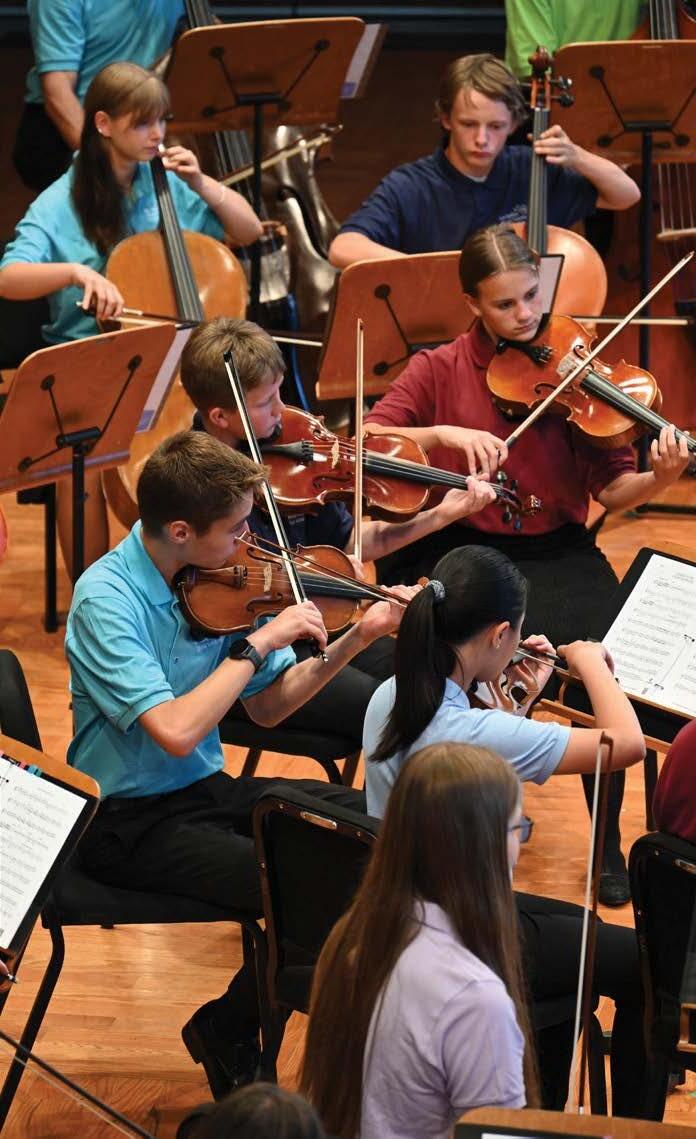
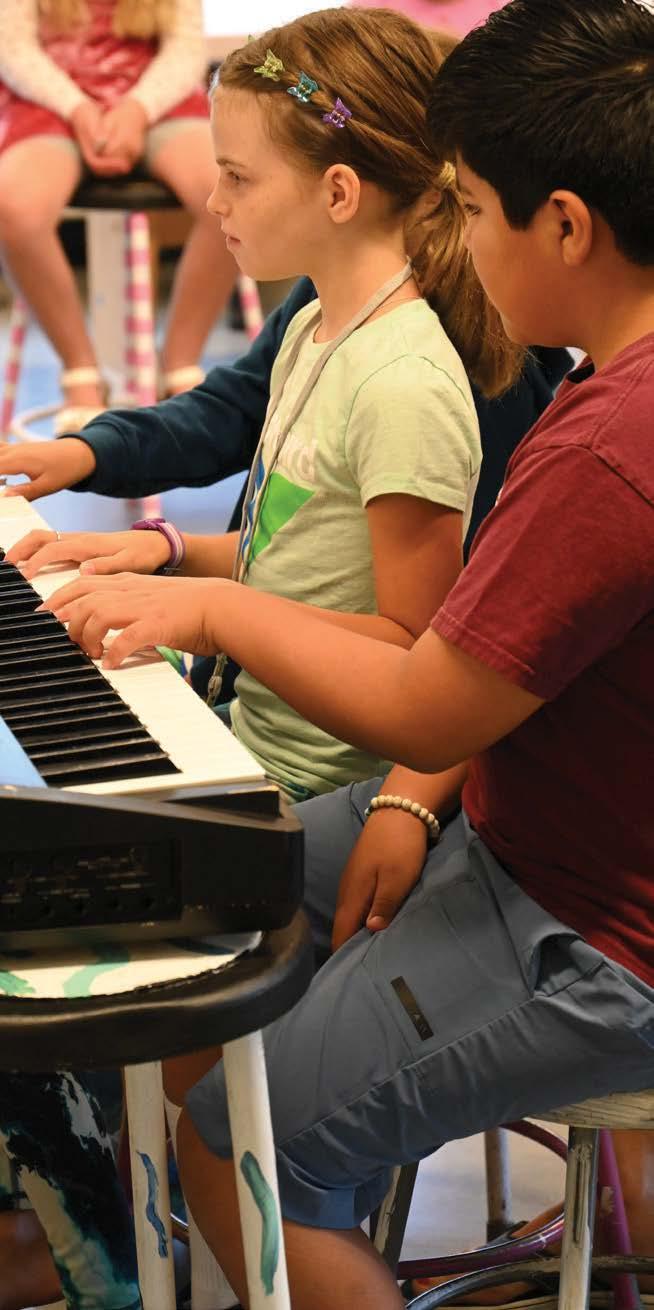

José Valentino Ruiz, Ph.D. Associate Professor of Music, University of Florida
In today’s convoluted educational and cultural climate, music educators are increasingly required to lead beyond the podium. This editorial reframes the identity of the music educator through the lens of vocational multiplicity, introducing a practical and inspiring model that emphasizes purpose, integration, and clarity. Through the adapted “Five Ps of Vocational Alignment,” readers are encouraged to embrace the multifaceted nature of their work not as a burden, but as a vocational constellation that yields resilience, creativity, and enduring student impact.
We’ve all heard it: “So, you’re just a music teacher?” The phrasing seems harmless, even complimentary to those outside the profession. But to those of us immersed in the world of music education, it can feel like an erasure of complexity, intention, and leadership.
Because you are never just a teacher.
You are a curriculum designer, a cultural diplomat, an ensemble coach, a counselor, a career coach, a fundraiser, a festival organizer, and a data analyst. You translate Bach for eighth graders at 8:00 AM and mediate parent-principal dynamics by noon. In the evening, you might be directing a jazz band at a civic event, producing student recordings, or updating grant proposals.
To be a music educator is to live in multiplicity.
Yet, we’ve inherited a vocational narrative that treats diversification as dilution. We’ve been taught that to be taken seriously, we must simplify our story: “Pick one thing. Stay in one lane.” But in a world that is increasingly interdisciplinary, volatile, and creative-economy-driven, staying in one lane is not only unrealistic—it’s unwise.
It’s time for a new metaphor. A more accurate, empowering framework.
The field has shifted. What once was a primarily school-bound role has become a launchpad for systemic change, arts entrepreneurship, and community transformation.
Consider the current educational landscape. Many music educators are leading initiatives far beyond their teaching assignments:
• Designing digital music curricula and publishing content online
• Directing nonprofit music organizations
• Creating culturally responsive programs for underserved youth
• Composing original works that address social issues
• Serving as consultants for arts integration in STEM education
• Building interdisciplinary maker spaces and sound labs
These aren’t anomalies. They are signals of an evolving profession. According to a recent Arts Education Partnership report, music teachers are among the most likely educators to cross into leadership roles involving technology, community engagement, and wellness initiatives. And with the rise of culturally relevant pedagogy, trauma-informed education, and cross-curricular collaboration, the demands—and opportunities—have only deepened.
But the question remains: How do we lead well when the job seems to have no borders?
When you clarify why you do what you do and align your roles accordingly, what may have felt like chaos becomes a cohesive, purpose-driven constellation
The solution isn’t to simplify. It’s to integrate.
Borrowing from a leadership framework I’ve used with educators, artists, and creative entrepreneurs, I present the Five Ps of Vocational Alignment—an introspective tool to help music educators bring intentionality to their layered work. When you clarify why you do what you do and align your roles accordingly, what may have felt like chaos becomes a cohesive, purpose-driven constellation.
1. Purpose:
What unifies your work? What legacy do you want to leave through your teaching, music-making, and leadership? For many music educators, purpose stems from a deep commitment to student flourishing and community transformation through the power of sound.
2. Platform:
What roles and projects best express that purpose? This may include classroom teaching, professional performance, podcasting, festival direction, or policy advocacy. Choose platforms that amplify your mission rather than just fill your calendar.
3. Patterns:
How will you sustain your energy, creativity, and emotional health? Consider the rhythms you need: Sabbaths, technology boundaries, seasonal shifts, and margin for creative work that isn’t always “productive.”
4. Partnerships:
Who are your trusted collaborators across disciplines and institutions? Healthy, mission-aligned partnerships multiply impact while distributing the weight of leadership.
What growth velocity is realistic for your current season of life?
Pacing isn’t about slowing down—it’s about strategic speed. Some seasons call for expansion; others demand refinement.
This model does not ask you to do more. It invites you to do with clarity. It is a vocational compass for complexity.
Here’s what’s often missed in discussions about multiplicity: It’s not just about capacity—it’s about innovation. Educators who perform regularly often teach with more musicality. Composers who write for their students produce culturally relevant, accessible repertoire. Researchers who teach bring the latest findings into practice. Technology leaders who experiment in DAWs bring new life to theory classes. These intersections are where innovation happens.
In Originals, Adam Grant writes, “The most original thinkers are not always the deepest in a single field—they are often the broadest. They draw insight from unexpected places and combine ideas in ways others cannot see” (Grant, 2016, p. 19).
Music educators are uniquely poised for this kind of innovation. You’re already blending disciplines—music, history, math, psychology—daily. When this creative integration is embraced rather than resisted, you become a hub of innovation for your institution and community.
Our students are watching. And they’re asking, What does a life in music look like?
If all they see is overwork, underpayment, and administrative frustration, we lose them. But if they see a mentor who is alive in their craft—teaching, creating, performing, collaborating— they glimpse a model worth following.
The constellation model is not just for us. It’s a gift to our students. By living into a multifaceted, mission-driven identity, you teach your students how to build adaptive, creative lives. You show them that music is not just a skill—it’s a system of impact. A method for reaching people, shaping culture, and creating meaning.
You’re not preparing students for a singular path. You’re preparing them to be musical citizens who thrive in many contexts: as performers, educators, engineers, therapists, advocates, and entrepreneurs.
This is the future of music education. And it starts with what we model.
Too often, professionalism in our field is equated with formality, hierarchy, or institutional conformity. But what if we reframed it?
What if true professionalism meant living a life of intentional multiplicity, where everything you touch—lesson plans, ensembles, concert programs, grant writing, research—was part of a bigger story?
What if your professional worth wasn’t determined by your title, but by your testimony?
Music educators are professional creatives—and that means we build ecosystems, not just lesson plans. We cultivate belonging. We adapt and lead in new formats. We experiment and document. We build bridges between tradition and transformation.
That’s not just professional. That’s visionary.
Teaching is not a fallback plan. It is not second to performing, composing, or research.
It is a launchpad—a dynamic space from which great things emerge. Within a classroom, rehearsal hall, or virtual studio, you can birth projects, elevate voices, and cultivate change. From that place, you can also lead —across organizations, industries, and even nations.
Let’s reclaim the idea that music educators are some of the most strategically positioned creative leaders in our culture.
Whether your work takes you into a school building, a recording studio, a local board meeting, or a Zoom call with international collaborators—know this: You are not “just a teacher.” You are a constellation of callings. And your light matters.
If you’ve ever felt the pressure to shrink your story to fit someone else’s expectations, let this be your release.
You do not need to contort your calling to meet outdated definitions of professionalism or leadership. You don’t have to collapse your identity into one title. You don’t need permission to be the multi-dimensional educator, artist, and leader you already are.
The world doesn’t need more uniformity. It needs creative leaders who know who they are, why they lead, and how to align their gifts with purpose.
So when someone asks, “What do you do?” Don’t just say, “I teach music.”
Say, “I build futures through sound.”
Say, “I help students find their voice.”
Say, “I lead change through education, performance, and community.”
Because that’s the truth. You are more than a music educator. You are a cultural architect. A vocational storyteller. A leader in the making—and already leading.
And we’re all better because you chose to teach.
Grant, A. (2016). Originals: How Non-Conformists Move the World. Viking.
Palmer, P. J. (2000). Let Your Life Speak: Listening for the Voice of Vocation. Jossey-Bass. Arts Education Partnership. (2023). ArtsEdSearch: Research and Policy on Arts Education. https://www.artsedsearch.org/ Arts Education Data Project. (2023). State-by-State Report on Arts Instruction in Public Schools https://artseddata.org/




Jason Rodgers OMEA Secondary General Music Chair and Composition Contest Co-Chair
So, you have decided to teach Music Technology… or perhaps, as is becoming more common, you have been told to teach Music Technology. Either way, welcome! You might be wondering, “What exactly am I going to teach?” If you don’t have a background with Digital Audio Workstation (DAW) software, or even if you took a Music Technology or Electronic Music course in college, you may still find yourself without a clear pedagogical framework for building or selecting a curriculum that fits your students and setting. You are not alone, because there are few widely adopted resources that articulate a skillsbased framework for Music Technology education.
Due to its relatively recent emergence in schools, Music Technology lacks the kind of shared, skill-domain-based pedagogical models that instrumental and vocal music education has refined over centuries around fundamentals and developmental sequences. While there are excellent books1 that describe creative philosophies, along with a growing number of commercially available curricula2, the field still lacks a clearly articulated framework that identifies core technical and creative skill domains. In practice, this gap can make learning feel episodic rather than developmental for students. Projects may be engaging, but connections between them are not always made explicit. The framework presented here seeks to address that gap by identifying core technical and musical competencies that underpin nearly every project students undertake, regardless of course level, DAW software, or musical genre. It is not intended as a prescriptive sequence or curriculum, but as a conceptual structure that makes underlying skill domains visible and supports a variety of pedagogical approaches.
Before outlining the framework itself, let’s establish some context: as reflected in contemporary books and curricula (some footnoted above), the prevailing philosophy of Music Technology education centers the production of popular and commercial music. In this approach, students are placed in the creative driver’s seat, making the kinds of music they want to hear. (For a deeper discussion of this philosophy, see my article “What Is Music Technology?”3 in the Spring 2025 edition of the OMEA Journal.) Within this model, the DAW is treated as not just a receptacle for sound, but an instrument in and of itself. In other words, the DAW isn’t just where music goes to be recorded after it has been written, but is a tool where music can be ideated, developed, revised, completed, and even performed!
Student learning within this framework is project-based and grounded in real-world applications. The framework itself can be applied in any software environment and aligns naturally with National Core Arts Creating, Refining, and Presenting standards. Through my study of existing resources, and my own work developing curriculum for the Digital Audio Production
program at Woodburn High School, I have identified ten core skill domains that recur across nearly all music and audio production projects: DAW fluency, timeline and clip editing, MIDI creation and editing, audio recording and editing, sound design, signal flow and routing, effects and processing, mixing, functional music theory, and songwriting and form.
Any time we open a new platform - whether an app, website, or software suite - we are unable to do anything meaningful until we develop some basic awareness of the user interface and how to navigate it. In a DAW, this includes understanding the left-to-right scrolling timeline, the vertical stack of tracks, where to find controls for volume and panning, how to access virtual instruments and effects, and how to start and stop playback. Equally important here is file management. For students who grew up on Chromebooks, professional software such as Ableton Live or Logic Pro do not automatically save work to the cloud. And beyond simply remembering to click “save,” students must develop habits for clear project organization and consistent naming conventions. DAW fluency also includes understanding audio file formats and delivery requirements (e.g., MP3 vs WAV), since digital music is ultimately created, shared, and archived as files.
While each DAW has its own workflows and unique features, teachers are encouraged to remain as “DAW agnostic” as possible by balancing instruction to the software with instruction about the software. There are processes that are unique to certain DAWs, but many interface conventions and conceptual tools are shared across platforms: for example, how one adds new tracks in Soundtrap vs. Ableton is specific to the platform, but the ability to add, move, and delete tracks is universal. An introductory assignment in my classroom is a scavenger hunt in which students locate and use a variety of elements found within the interface to create a simple song. This lowers the intimidation factor of the software and establishes tool literacy as a foundational skill rather than an assumed prerequisite.
Once students can navigate the DAW, the next essential competency is understanding how sound is organized over time. The timeline, arranged left-to-right in beats and measures, serves as the structural backbone of all DAW-based work. Students learn that music and audio are constructed and revised, not performed once and captured whole. A clip, sometimes called a sound region, is a discrete unit of sound lasting seconds to minutes placed within a track.
Timeline and clip editing includes skills such as copying and pasting material, looping sections, trimming clip boundaries,
1 Kuhn, W., & Hein, E. (2021). Electronic music school: A contemporary approach to teaching musical creativity. Oxford University Press. Freedman, B. (2013). Teaching music through composition: A curriculum using technology. Oxford University Press.
2 https://www.youngproducersgroup.com/curricula, https://www.shedthemusic.net/info
3 https://issuu.com/oregonmea/docs/oregon_music_educator_spring_2025
splitting and consolidating clips, and arranging sections into a larger form. These skills fundamentally reshape how students think about music. Rather than imagining music as a single linear performance, students begin to think architecturally by repeating, extending, varying, and contrasting material. This structural awareness directly supports later work in songwriting and mixing. In my introductory scavenger hunt project, students are required to demonstrate basic copying, pasting, and looping so they begin building music horizontally over time in addition to layering sounds vertically.
A useful analogy for understanding MIDI is the player piano, with its long paper rolls encoding pitch and rhythm. MIDI, which stands for Musical Instrument Digital Interface, is a digital data language developed in 1983 that allows electronic instruments and computers to communicate. MIDI data capture a note’s pitch, duration, and velocity (often mapped to dynamics, but can also influence articulation and timbre, depending on the instrument). In a DAW, dots and dashes on a pitch grid of the piano roll interface replace the holes and slots of the player piano scroll. MIDI can be created by “drawing” notes with mouse click-entry, recorded live from a keyboard or other digital controller, or both.
One of the most powerful aspects of MIDI is that it does not capture sound, just the parameters that represent it. This means that any instrument or timbre can be easily assigned to any melody or chord progression, and quickly swapped out for new sounds. Notes can be edited individually or in groups, making experimentation and revision fast and accessible. This abstraction is particularly empowering for students who do not identify as instrumentalists. In my introductory curriculum, students’ first interaction with MIDI is a drawing project in which they actually draw a visual image in the piano roll (with silly results). With minimal rules, students develop basic pitch, rhythm, and editing awareness and skills while experiencing MIDI as a creative medium rather than a technical obstacle.
While MIDI supports abstract musical thinking, audio recording introduces students to the realities of capturing sound. This domain includes microphone use, setting appropriate input levels, recording multiple takes, and editing recorded material for clarity and timing. Students learn how microphone placement affects sound quality, how to avoid distortion and noise, and how to select or combine takes. Editing skills such as trimming silence, aligning clips to the grid, applying fades, and cleaning up unwanted noise and artifacts are emphasized early.
Recording with a metronome is often a new experience for students. Even those with instrumental or vocal backgrounds, who are used to a conductor’s count-off, are frequently surprised by the precision and immediacy of digital recording (which creates many opportunities for reinforcing editing skills!). In my introductory course, students work with both music and podcasting projects. Spoken word recording is often more forgiving, not requiring adherence to the grid, while music projects give students experience recording both MIDI and live audio elements within a simple loop-based structure.
In instrumental and vocal music, timbre is largely determined by the physical characteristics of the instrument or voice that produces it. While performers can shape tone through technique, the available palette of sounds is generally fixed within the limits of that instrument. In audio production, however, timbre is not a given: sounds can be designed to be virtually anything the producer imagines. Sound design is the process of selecting, modifying, and creating instrument sounds using synthesizers, samplers, and sound generators built into the DAW.
Students are introduced to foundational sound design concepts such as oscillators, filters, envelopes, and sample manipulation in musically relevant and accessible ways. Rather than treating synthesis as an advanced or isolated topic, sound design is framed as a core musicianship skill that supports expression, texture, and style. This domain helps students understand that timbre is a compositional choice, not a fixed property of an instrument, and that many creative and technical decisions begin at the sound source rather than later in the production process.
An introductory sound design lesson in my curriculum involves recording found sounds through a “sound safari” around the school and transforming them into playable musical material. Through editing, looping, pitching, and basic processing, students learn that any sound can become an instrument. This activity reinforces the idea that sound design is not separate from composition, but an integral part of musical thinking in a digital context.
Signal flow refers to the path that sound travels from its source to the final output. This includes both physical systems, such as microphones routed through mixing consoles and audio interfaces, and virtual systems within a DAW, such as inserts, sends, returns, and buses. Understanding signal flow requires students to visualize how audio moves through a series of controls and processes that are not always visible at a glance. Students learn to trace a sound from input to output by identifying where it is generated, how it is routed, which processors it passes through, and where it is ultimately heard. This includes understanding the difference between serial and parallel processing, pre-fader and post-fader routing, and how sends and returns function.
Signal flow is also essential for understanding effects chains, as the order of processing directly affects the resulting sound. For example, distortion followed by reverb produces a fundamentally different result than reverb followed by distortion. This is where I introduce signal flow in my curriculum, as it is easy to arrange, rearrange, and observe. By developing a mental model of signal flow, students gain greater control over their sound, reduce trial and error, and are better able to troubleshoot both digital and physical audio systems.
Once sounds are placed on the timeline, students can begin shaping and altering them using effects and processors. This includes time-based, modulation, saturation, and equalization (EQ) tools such as reverb, delay, distortion, filters, and compression, which are found in nearly every
DAW. A key pedagogical distinction is made between creative and constructive processing: time-based and modulation effects help create space, depth, and mood, while EQ and compression establish sonic foundations by controlling dynamics and improving clarity in the mix.
An early effects assignment in my classroom uses a prepared project in which students apply multiple types of effects in both series and parallel configurations to create an original interpretation. Initial experimentation is often extreme, bordering on comical, as students discover the dramatic possibilities of processing. Over time, though, they begin to hear effects as expressive tools capable of nuance rather than novelty, and these aesthetic decisions begin to become an integral part of their musical identity.
Mixing is the process of balancing all elements of a project so they function together as a coherent whole. At the secondary level, this domain focuses primarily on volume, panning, and automation. Adjusting relative volume establishes hierarchy and clarity, panning distributes sound across the stereo field, and automation allows parameters such as volume, panning, and effects to change over time.
Students learn that a successful mix is not just about making everything louder. Instead, mixing is framed as musical decision-making that guides listener attention and supports form and expression. A prepared mixing assignment in my curriculum requires students to adjust every volume and panning control and apply automation to selected tracks of a short song. When shared in class, the wide range of results clearly demonstrates the musical impact of mixing choices.
Music Technology classrooms often include students with widely varying musical backgrounds. Many in my classes have not participated in formal music instruction since elementary school. For this reason, music theory is taught functionally and contextually rather than as a prerequisite or gatekeeper. Students encounter theory concepts through listening, experimentation, and direct application within their projects. Basic lessons in harmonic theory may involve simply recognizing high, medium, and low pitch ranges associated with melody, harmony, and bass, experimenting with these roles on keyboards, and then identifying them in loops and recordings. Understanding the unit of the measure is essential for early DAW fluency, which is their first lesson in rhythmic theory. Theory becomes a descriptive tool for making sense of sound rather than a barrier to participation. It is worth noting that a variety of modern DAWs embed theory scaffolds that reduce the amount of abstract music theory think-work required early in the creative process. Scale-aware editors, chord tools, and pattern-based systems allow students to work within musically coherent constraints, supporting experimentation and discovery in the digital environment before formal analysis.
Songwriting and form represent the convergence of all previous domains. Students explore how melody, harmony, bass, drums, texture, and timbre function together within a complete piece. They work with common song forms, sectional contrast, repetition, and development, using their projects as laboratories for experimentation.
Emphasis is placed on intentional structure, including why sections repeat, how transitions function, and how musical energy is shaped over time. In an early project, students create a song using a common A-B-A-B-C-B-B pop form. This demonstrates how easily a complete, radio-length song can be constructed through sectional thinking of verses and choruses. By this stage, students are no longer focused on isolated technical skills, but are making holistic creative decisions.
As a profession, music education has gradually shifted in how it articulates skills 4. Instrumental and vocal traditions relied for generations on a shared, inherited vocabulary of technique, which was later codified in the national standards of the 1990s. The National Core Arts Standards represented an intentional move away from enumerating isolated skills toward embedding them within broader artistic processes that emphasize access, relevance, and meaning-making. Music Technology texts and curricula generally operate from this contemporary framework, prioritizing creative process and assuming that teachers will uncover the technical foundations as needed. This article seeks to support that work by naming the underlying technical and musical skill domains that enable those processes, offering a clearer foundation upon which Music Technology pedagogy can be built. By articulating core skill domains, we can begin to place Music Technology alongside other established areas of music education while honoring its unique tools, workflows, and creative possibilities. Again, this framework is not intended as a prescriptive curriculum, but as a starting point for organizing instruction and making student learning visible. Teachers are encouraged to adapt these domains to their own contexts, software, and student populations. Taken together, they support multiple approaches to Music Technology rather than a single stylistic or professional pathway. The same underlying skills apply whether students are engaged in music production, composition, audio engineering, podcasting, or hybrid creative work. While individual courses or projects may emphasize certain domains more heavily than others, all rely on a shared foundation of digital musicianship. Through naming shared technical and musical competencies, Music Technology educators can help students experience their learning as developmental and transferable rather than as a series of disconnected projects. When students can identify the technical and musical competencies they are developing, they are better able to reflect on their progress and imagine future creative pathways. A clear curricular framework supports not only teaching, but also student agency, confidence, and identity as musicians working with modern tools.
4 https://www.savethemusic.org/resources/national-standards-for-music-education/
Kevin Woods Director of Jazz Studies, Western Washington University
Over the last decade, I have witnessed the rise in popularity of the big band warm-up piece. These warm-ups are often a 4-8 chorus, blues-themed piece that a middle or high school jazz band will play before they dig into their repertoire in rehearsal or perform their set at a concert or jazz festival. As much as I love this trend (I came up through public school Jazz programs in the 1990’s and we would jump right into a piece with little forethought…), I wonder if these warm-ups are accomplishing what we think they are, and, if what we think they should be accomplishing is of the most benefit to our students and their musical success?
With those questions fresh in your mind, I would like to ask one more; what is a warm-up for? This may seem like a no-brainer, but I think most of us would be surprised to learn the term originated in the mid-1800’s in reference to heating up food, then was quickly applied to exercise; meaning increasing blood flow to muscles to warm them in order to improve flexibility and lower the risk of injury. As a high brass player, I hear it used in this context, but I have also heard it used to describe: a daily practice routine, literally warming up a wind instrument with air, and coordinating one’s physical and mental prowess to practice or perform. This last one is most important and is frequently the one most neglected by the typical big band warm-up. Allow me to describe the Jazz warm-ups I routinely hear: monodynamic, monorhythmic (maybe the Charleston rhythm over and over), an emphasis on harmony vs. rhythm (outlining the chords of a basic blues in quarter notes), very little space or textural change, rhythmic tutti and mostly unison, and more often than not, played from memory with little attention/ intention. In addition to this, these warm-ups are commonly three minutes or longer. I can’t tell you how many times I’ve witnessed this scenario: a Jazz band plays a 5 + minute warmup piece right before they perform (maybe one where every player takes a solo chorus over the blues while everyone else plays non-stop backgrounds while stagger breathing), then the director wonders why their brass players are exhausted halfway through the first tune. Worse than that though, is that the students just practiced being checked out instead of focusing on time and groove, pitch, ensemble and section sound, playing dynamically, listening for unison vs. harmony passages, engaging with rhythmic variety, listening to section leads, etc.… Yes, their instruments are now warm, but they have just PRACTICED ignoring the very elements of music they will encounter in the pieces they are about to rehearse or perform. Personally, if I had to choose between this and no warm-up at all, I would choose the latter…
I invite you to join me in a re-imagining of the jazz band warm-up. We will use a little science and thoughtful strategy to design something with concrete goals that will benefit our students. Before we begin, let us determine the warm-up length. It needs to be long enough to engage the students musically, rhythmically, dynamically, but not so long that they lose interest or check out. You have also got work to do, so we will keep it under two minutes, so it does not eat up rehearsal time. Now let us list the musical elements we want our students to hone during the warm-up:
• Time and Groove - The most crucial elements in Jazz are time and groove. Get your students engaged in time and feeling the groove right away. Challenge them with a warm-up that includes syncopated hits, repeated rhythms/hemiolas/polyrhythms, stop-time sections, etc. The warm-up does not have to be basic or easy, although it might start simpler and grow more complex throughout its duration.
Another thing to consider is that the rhythm section (percussion and plucked string instruments) are used to physically defining rhythm and playing in time with larger and deliberate bodily motion. Wind instruments, less so. Try having your horn players clap or snap a little while the rhythm section lays down the time and groove. Give them the opportunity to feel time/rhythm with their bodies. Movin’ = Groovin’. You might consider adding a stop time section, with rhythm section hits. This can also be a fantastic way to get them engaged with time and rhythm. Plus, it is fun.
FYI - Scientists have discovered that our sense of time and rhythm get better throughout the day, typically peaking in the evening. Is your rehearsal or performance in the morning or afternoon? Don’t worry! That process can be accelerated with a little intense focus on time and rhythm.
Want to go deeper? Look up “Circadian rhythm and music.”
• Pitch and Intonation - Most of us tune our band up to one reference pitch and dynamic and hope our players continue to pay attention to intonation as they play. What most of our students do not realize (though they may be compensating for it unknowingly) is that the dynamic level affects the pitch of wind instruments. Louder dynamics are perceived as flat and quieter ones sharp. We can better prepare our students by including the tuning note, with dynamic contrast, at the beginning of the warm-up. That way they are practicing listening for pitch but making the micro-adjustments needed to compensate for the change in volume. This also forces them to get used to tuning in real time (when was the last time you heard a pro jazz group start a concert with a tuning note?).
Good intonation, adjusted as needed through focused listening, will also greatly impact the next bullet point.
• Blend and Balance - Once pitch sense and intonation concepts are further developed, blend and balance become much easier to hear and address. Include varied dynamics from p to ff in your warm-up. Practicing dynamic contrast will lead to a more dynamically diverse rehearsal or performance. Do not be afraid to make your warm-up challenging dynamically. Your students will rise to the challenge.
You want your warm-up to train your players to listen to their section leaders, the lead trumpet player, the rhythm section, and eventually to how their part fits within the whole ensemble. They should be able to hear the difference between section unison and harmony and adjust their dynamic to achieve balance. To help them further develop those skills, include both unison (and/or octave unison) and harmony, and tutti and section vs. section.
Sound quality is also a vital component of the jazz band. I have found the bands that have the best sound (section and ensemble) have students that are confident in their ability to play with a wide range of dynamics and are constantly listening for blend, balance, and intonation.
Let us add a few more points to consider in designing our jazz band warm-up:
• Start in a comfortable range for all instruments and expand as the warm-up progresses.
• Leave space! Your horn players will benefit from rest periods and repeated horn-to-face repetitions.
• The warm-up is also the perfect time to hear how to play the room. This is especially relevant if you are performing in an unknown space.
• Once your band becomes too comfortable with the warm-up they are using, it is time to switch it up. Keep them engaged by keeping them on their toes.
• Try to create a warm-up that is engaging, challenging, and fun for your students. We all know they focus more when they have a good time.
I hope this article has made you think about what you want your students to get out of a warm-up piece or convinced you that a well thought out warm-up might benefit your jazz band. I invite you to try creating your own warm up(s), or, for an example of a jazz band warm-up I wrote using the concepts from this article, see the link below. Good luck and do not be afraid to experiment!
https://drive.google.com/file/d/1Rn6WrPKMPZg9l4yVRIQ2JqO XMnyuyldt/view?usp=sharing
Kevin Woods is Professor of Music and Director of Jazz Studies at Western Washington University in Bellingham, WA. He is active as a performer, composer and arranger, writer, and clinician. Kevin is an Origin Records performing artist. www.kevinwoodsjazz.com



48th Annual Festival: July 11 July 25


Bay Area Concert Band: July 11 @ noon. Mingus Park, Coos Bay. *
Darrell Grant: Songs for the Soul: July 12 @ 2 pm. OIMB Boathouse, Charleston. $$ (limited seating)
Afternoon Café at the Library: Tree-O & guests: July 15 @ 2 pm. North Bend Public Library. *
Dace Gregory, cello & Rachel Palen, piano: Swingin’ in the Rain Big Band: July 16 @ 7 pm. Hales Center. SWOCC. Coos Bay. $$
Gothard Sisters Celtic Dance and Song: July 18 @ noon. Shore Acres State Park, Charleston.* (parking $10).
7 Devils Presents: July 19 @ 2 pm. OIMB Boathouse, Charleston. $$ (limited seating)
Orchestra Concert I: Our Solar System : July 21 @ 7:00 pm. Martin Majkut conductor, Martin Kuuskmann, bassoon, Marshfield Auditorium.$$
Festival Pops: The Stuff of Legends : July 25 @ 7:30 pm. Adam Stern conductor. Marshfield Auditorium.$$ Orchestra Finale: Our Blue Home: July 27 @ 7:30 pm. Martin Majkut conductor, Terry Longshore, percussion. Marshfield Auditorium.$$
Additional information & events www.oregoncoastmusic.org
$$Tickets required *Free event

How small school music educators can tap into their surrounding communities to find peace, relaxation, and meaning.
Melissa Jmaeff OMEA Small Schools Chair
Student behaviors are up, and teacher morale is down. Welcome to spring semester in many small school music rooms. Maybe you are gearing up for spring concerts. Maybe you’re heading to State. Maybe you are finishing up a compelling dance unit. No matter what your spring is looking like, chances are that as other teachers are looking at winding their year down, you are in the very unique position of still being in high gear as the weather changes and behaviors are spiking. This time of year, many of us feel like we are on the last 5 miles of a marathon: We are exhausted, running out of fuel, and the finish line is there, but we can’t see it yet.
But, if there is one thing that small schools music educators are, it is gritty. We can do this! And, believe it or not, teaching in small schools makes us primed to find a path forward that will serve to improve overall mental health and well-being.
1. Get outside
Many small schools music educators live in or are in close proximity to rural/outdoor recreation areas. While it can be difficult to prioritize, I recommend taking advantage of your proximity to nature. Even a couple of laps on the school track at a leisurely pace at lunch can help to center and ground you. If you are lucky enough to live in a more isolated or rugged part of the state, drive the scenic route home. Stop on a wide shoulder. Get out of your car. Take some deep breaths and look at the trees, or the desert, or the mountains. Remind yourself that you live in a beautiful place and that you are contributing to its beauty everyday by bringing joy to the lives of the children that you serve. Deep breath. You got this. And look! Cool rocks!
2. Take a break
While small and rural school music educators are led to believe that our worth lies solely in how many kids are in our program and what kind of concert we’ve put together, investing in your whole self can help to ground your professional self, to say nothing of improving your quality of life and overall happiness. Small towns and rural areas are great places to relax and take a break from the rigors of professional life. The pace of a small town tends to be a little slower. People tend to talk to one another at the grocery store, answer phones rather than emails, inquire as to how your day is going and mean it. Small towns can be a welcoming place for those seeking socialization outside of collegial relationships. Outside of casual interactions, small towns and rural communities often provide community events or volunteer opportunities for community-based projects. These are great
opportunities to throw yourself into meaningful experiences that provide a break from a rigorous music education career and give you the chance to meet new folks outside of school.
Sometimes I get so caught up in my job at school, I forget how I got here in the first place. I am a musician! I love music! Whether I am just playing for the trees, or collaborating with other musicians, I still find great joy in making music.
Folks often think of cities as “cultural centers”, but art, music, and other elements that we would attribute to “culture” exist in small towns and rural places too–often in abundance. There are many wonderful (if reclusive) musicians who live off the beaten path in small towns and rural communities throughout Oregon. In Douglas County for example, fiddle champs, guitar makers, composers, classical pianists, trained opera singers, nationally touring troubadours, pickers, players, and songwriters (among others!) call this place home. If you are really interested in finding folks to play with in your rural community, ask around. Especially in small towns and rural areas, the music community is generally tight-knit. Reach out! No doubt someone will be able to point you in the right direction. As you collaborate and build relationships with local musicians, these relationships can, in turn, bridge gaps between school and community and, ideally, give your students an increased sense of place within the regional music scene.
4. Support the things that you care about
I am of the opinion that small and rural schools are great places to make a big difference as a music educator. I think that the same can be said for small towns and rural communities. Supporting local artists, fishing guides, restaurants, venues, makers, builders, musicians, etc. goes a long, long way and can have a tremendous impact on the community as a whole. Few things feel as good as supporting something that you care about. Sometimes centering your focus on school alone can contribute to a sense of isolation. Belonging to and supporting your community with the same sense of urgency and the same type of care as you do in your own classroom, can help to develop meaningful ties to a community-especially if you are a transplant to an otherwise insular-seeming place.
Small towns and rural communities have a great deal to offer folks who are seeking relaxation, recreation, and outlets for creativity and meaningful community-based experiences. As you move through the final quarter of your school year, I encourage you to seek out some of these experiences to give you a sense of grounding and purpose outside of your classroom.








“A
Mari Schay OMEA SMTE and CNAfME Chair
teacher who is attempting to teach without inspiring the pupil with a desire to learn is hammering on cold iron.”
– Horace Mann Father of American Public Education (1796–1859)
Learning theory is the research-based connection between teaching and learning. Understanding learning theory allows us to use what we know about how humans learn and turn that to our – and our students’ – advantage in lessons, classes, and rehearsals.
Telling is not teaching; listening is not learning. For learning to take place, our students must activate their learning by doing something with new information and skills. Combining visual, auditory, and kinesthetic experiences builds stronger connections in the brain, increasing the likelihood of retention.
Mr. P is trying to get an ensemble to exaggerate a crescendo. He models what he wants by singing the melody as he conducts, then starts the ensemble at the beginning of the piece with the reminder to “be more musical.” With the best of intentions, the ensemble plays again, but when they get the target crescendo, they do not play with more sound. Frustrated, Mr. P explains what he wants at length and the cycle repeats – because the students never actively practiced the crescendo, they only listened to their director.
Ms. J has a different approach. She asks the ensemble to sing just the crescendo passage as they conduct a crescendo together. Then the class plays the same passage several times. With each repetition, Ms. J chooses a different student to be the “critical listener” to determine if the effect has been achieved. Finally, the group puts the passage in context, nailing the crescendo as well as performing more expressively throughout the piece.
Ms. J’s way of teaching does not take longer than Mr. P’s, but it is more effective because it is active: the students are singing, conducting, playing, listening, and giving and receiving feedback. Each of these actions adds memory markers for the passage. It is likely the students would predict the crescendo when listening to the same passage years later because it will be engrained.
Repetition of a physical activity or thinking sequence increases the myelin sheath that coats the neurons involved in the doing or thinking, making the transfer of energy between them more efficient. This is essentially how we build the “muscle memory” that allows us to automatize our scales. The muscles themselves do not have a memory, but information is processed so much faster with sufficient intentional repetition that it feels as if we are doing without thinking.
As a percussionist, I have probably played hundreds of thousands of paradiddles in my life. Though my current life circumstances rarely require me to play paradiddles, just typing the word right now has me thinking the pattern subconsciously (as well as consciously, as I just tried typing this paragraph using my hands in a paradiddle typing pattern – drummers are sometimes odd folks).
As the neurons fire in the same order with each repetition, they create a pattern of neural activity that will repeat in the same way each time. Enough repetition of the same pattern will repeat during res t, often much faster than during the actual practice. Using imaging, scientists can watch the brain repeat the neural firing patterns that were practiced during the day repeat themselves during rest at many times faster than they were actually played. To take advantage of this phenomenon, end your classes and rehearsals with repetition of the passages, scales, or other sequences you want your students’ brains to continue rehearsing as they walk to their next class, each their lunch, or sleep through geography.
For effective retention and recall of new information or skills, practice should be spaced, interleaved, and varied to increase recall and understanding.
• Spaced: Multiple short practice sessions are more effective than one long one.
• Interleaved: Mixing practice content builds stronger, longer memory than working on one topic, concept, or skill at a time.
• Varied: Change the practice strategies, techniques, and approaches for more durable learning and retention.
If you are teaching your students to sing or play a melodic minor scale, come back to the scale multiple times within the rehearsal rather than playing the same scale ten times in a row. Have the students sing it with scale degree numbers, solfege, or even encourage them to make up lyrics to sing so it sticks in multiple ways and places in the brain.
Learning
All new learning is dependent on prior knowledge; we build upon what we already know. New content, material, information, or skills must be scaffolded over current knowledge. When our students do not have the foundational knowledge to connect to what we are trying to teach, learning will not occur.
Have you ever experienced this?
It is September and you are working with students new to you. Maybe you are new to the school or maybe they have transitioned from elementary to middle or middle to high school. You display a rhythmic passage you are sure the students should know, count them off, and get … crickets. You ask a question such as. “Didn’t you learn this with Mrs. Schay last year?” and the students swear that they have never seen a
rhythm before and Mrs. Schay just showed videos of chickens for the last six years.
Because you trust me as a colleague, you ask me about the chicken videos and what rhythms I taught. I say, “They know how to read everything through eighthsixteenth combinations and I showed chickens in first grade during a unit on The Carnival of the Animals!” Digging deeper, we discover that I taught rhythms using takadimi and you asked the students to count with numbers.
In this scenario, the next time you see the same students, you ask them to say the rhythms with takadimi. Because they start with their prior knowledge, you can then teach them to relate the counting syllables to takadimi syllables and you’re off to the races, or at least they are accurately clapping and counting rhythms.
When you are teaching something new, always try to connect it explicitly and directly to something the students already know and can do. If the students struggle, rather than asking them why they don’t get it, ask them what they do understand and work backwards from there.
Learning is reflective, especially when paired with prediction.
Reflection doubles effort when learning new content and skills. Reflection can include asking students to explain their thinking out loud, having them write in a journal, or sharing what worked with a partner. When we hear our students perform a challenging piece beautifully after lots of hard work together, the temptation is to compliment them and move on. Instead, compliment them then ask them why it was so good. Let them chew on their thoughts for a few moments before asking for ideas. For even more depth of thinking, ask them to share with a partner what they thought made their performance so powerful. Instead of asking the students to share their own thoughts with the group, ask them to share what their partner said. This leads them to process twice as much information. It can also be enlightening for you as the teacher because you may find that the students’ reasons why something was great may be completely different from yours. Add reflection into every lesson, assignment, and assessment to deepen both learning and retention.
Pair reflection with prediction for an even stronger connection. Before performing a section, ask the students to predict where the trouble spots will be and plan how they will get through the problems smoothly. Ask guiding questions to help them predict and plan:
• What do you wonder about this composer’s instrumentation in this section?
• What do you predict will happen when we get to measure 77?
• How does this connect to the music we performed at our last concert?
• How do you think the audience will feel after we finish this piece?
• If you were the adjudicator, what do you think you would say about our performance?
Learning is social.
Learning sticks when it is paired with emotional and social connection. Positive social interactions relax the brain and prime it for learning. Social learning allows different strengths to be utilized on behalf of all learners.
Silence is a gift we should give every student. That moment just before or just after a strong performance is a magic every musician should experience.
But many of us grew up with the teacher controlling the room through silence. We were not allowed to talk and certainly never asked what we thought about the music. This was a missed opportunity because when we encourage interaction, collaboration, and discussion intermittently throughout each class or rehearsal, we allow our students to make their own meaning of the music making.
When kids and teens have to hold their thoughts and ideas inside themselves all day, tension builds and cortisol is released into the brain. This prevents learning. Your wellstructured lecture about the location and character of each melisma in an octavo will often be buried by the students' own thoughts and ideas. Instead, try defining “melisma,” then ask the students to partner up to find as many melismas as they can, then to share the one they predict will be a real challenge with another pair.
Social learning also allows us to use multiple perspectives and approaches to learning.
I am sure most of us have had the experience of giving what you thought was a perfect explanation to a class only to have a student raise their hand and say, “I don’t get it.” Then before you can repeat yourself, another student explains the concept more elegantly than you imagined possible. Instead of letting this occur on a rare occasion as an accident, what if we paused to ask the class with all sincerity, “Does someone have a different way to explain this?” This strategy allows us to use our collective brainpower instead of just our one flawed brain.
Can you remember the first time you felt it? That music needed to be part of your life? That the most significant thing you could do for your career was to give that feeling to others by becoming a music teacher? There was something powerful that moved you, that shifted the way you thought. We have the gift of being able to pass that power to hundreds and thousands of children over our careers. We can lean into the artistry or just the pure fun of it all, but we must remember how powerful what we do is, even – or especially – on the hard days. We must keep learning so that our students feel the joy of learning, of learning music.
Baker, Mitzi. “Music Moves Brain to Pay Attention, Stanford Study Finds.” Stanford Medicine, July 1, 2007. Accessed July 22, 2024. https:// med.stanford.edu/news/all-news/2007/07/music-moves-brain-topay-attention-stanford-study-finds.html
Brown, Peter C., Henry L. Roediger III, and Mark A. McDaniel. Make It Stick: The Science of Successful Learning. Cambridge, MA: Belknap Press of Harvard University Press, 2014.
Collins, Anita. “The Benefits of Music Education,” TED Talk. Accessed July 22, 2024. https://www.ted.com/talks/anita_collins_the_benefits_ of_music_education/transcript?subtitle=en
Duke, Robert A. Intelligent Music Teaching: Essays on the Core Principles of Effective Instruction. Chicago: The University of Chicago Press, 2005.
Finch, Kathryn, and Theresa Hoover. Pass the Baton: Empowering All Music Students. San Diego, CA: Dave Burgess Consulting, Inc., 2020.
Gebrian, Molly. Learn Faster, Perform Better: A Musician’s Guide to the Neuroscience of Practicing. New York: Oxford University Press, 2024.
Hattie, John. Visible Learning for Teachers: Maximizing Impact on Learning. New York: Routledge, 2011. Karpov, Yuriy V. Vygotsky for Educators. New York: Cambridge University Press, 2014.
Rose, Todd. “The Myth of Average: Todd Rose at TEDxSonomaCounty.” Filmed June 2013 at TEDxSonomaCounty. YouTube video, 18:03. Posted June 20, 2013. https://www.youtube.com/ watch?v=4eBmyttcfU4
Spencer, John. Empower: What Happens When Students Own Their Learning. San Diego: Dave Burgess Consulting, Inc., 2017. Wilkinson, Allison. Making Musicians. Chicago, IL: GIA Publications, 2025.
Located in Beaverton, Oregon. Trusted by flutists everywhere.
Offering precision repair: overhauls, annual maintenance, urgent fixes.
New & used flutes for every stage student, intermediate, professional
Muramatsu • Burkart • Resona Pearl • Di Zhao • Sankyo piccolos • alto flutes • bass flutes service@canterfluterepair.com Canterfluterepair.com 971-266-4096




Ellie Auvinen OMEA CNAfME Representative
In the words of OMEA Collegiate Chair and professor at Portland State University Mari Schay, “the future of music education in Oregon is bright.” Colleges across Oregon are seeing record numbers of students auditioning for Music Education programs, participating in extracurricular teaching opportunities, and obtaining teaching licenses. In the wake of the Covid-19 pandemic and a national teaching shortage it spurred on (Huynh, 2024), it seems to be the students of the pandemic that are rising to the occasion and taking over for many of those who taught during it. The only problem with this surplus? There is currently limited space for all of these educators across the state of Oregon. Recent budget cuts, such as the $50 million cut to the Portland Public Schools District’s funding (Pate, 2025), have created an uncertain job market for the next few school years, and have made the job search across graduating seniors more competitive than ever. However, this understanding amongst soon-to-be graduates has not slowed them down– it has motivated them! As a current senior in college and student-teacher, I have never witnessed dedication to learning and growing like I have seen in my cohort of student-teachers, younger collegiate peers, and even first-year college students. Folks are aware of how high the standards are for new teachers at the moment, and so many are doing more than meeting them– they are achieving them! The most essential period of this rapid collegiate development falls during the last year before heading out into the education field: student teaching. Studies such as those surveyed by Goldhaber (2020) have indicated that the most growth in a student’s pre-teaching training comes from fieldwork and hands-on experiences in actual classrooms instead of hypothetical classroom scenarios that years prior entail.
In his analysis, Goldhaber also highlighted the importance of cooperating teacher and student teacher relationships in relation to the student teacher’s development and growth. The importance of cooperating teachers cannot be understated–now, more than ever; cooperating teachers have the unique, individual ability to prepare their student teachers for the competitive job market of education with the materials and guidance they choose to provide. While this can seem daunting, it can be an incredible opportunity to equip student teachers with the essential tools they need to manage their careers post-graduation.
To gather some perspectives for this article, I surveyed a dozen music education students, currently student teaching, from colleges across Oregon. These students, who will remain anonymous for confidentially purposes, were asked a series of questions about their student teaching process from the 2025-26 school year so far. The results showed a few trends in areas where students felt highly prepared, and likewise, some areas where students wished they had a more comprehensive knowledge. From surveying students and drawing from my own experiences, here are three tips for cooperating teachers to support their student teachers in such a crucial time in their development.
A frequent comment amongst student teachers is that they wished they knew more about what the job application process looked like and what to prepare for. While specific details of job applications frequently vary depending on the district, age level, and individual applicant, there are still valuable insights cooperating teachers can provide for their students after going through a hiring process.
Some ideas to consider sharing or workshopping with your student teacher:
• Workshop their resume with them!
• Share connections in the education field, especially in other districts across the state.
• Walk them through interview processes and potential questions to prepare for.
• Share websites that keep up to date with job postings.
The most common experience by far that students discussed was the tremendous impact their relationship with their cooperating teacher had on their learning. All the folks I surveyed spoke very highly of their cooperating teachers, with the most notable qualities being the success of cooperating teachers providing clear structures. “I have appreciated the weekly planning sessions that [my cooperating teacher] has with me every Friday,” one student shared. “They really help me feel clear on what I’m supposed to practice over the weekend and structure my lesson planning much more effectively.” Other students shared similar sentiments, articulating that their most successful teaching came from clear expectations from their cooperating teacher.
Some ways to provide additional structure for your student teacher:
• Weekly check-ins and explicit time for feedback on teaching.
• Discussion of repertoire ideas, far in advance of the next concert!
• Collaborative and conversational repertoire planning.
• Pre-determined length of time teaching, discussed multiple days in advance.
• Offering the option to say no to additional or unexpected work.
• Creating a collaborative scheduling document that student teachers can fill out with their availability during part-time observations.
As current teachers know all too well, the trials and tribulations for student teachers are not over once they have a job for the next school year. In the current state of education, new teachers often face additional scrutiny and unfair layoffs
with district budget cuts (Educators for Excellence, 2023). An additional aspect of education that cooperating teachers can prepare their student teachers for is how to advocate for their programs once they have them.
Some helpful advocacy lessons to have with your student teacher:
• How to get involved with your local teachers’ union.
• How to research and contact your local representative.
• How to write and present a funding proposal.
• How you would respond (or have responded) to budget cuts in your department.
Student teaching is an immensely valuable aspect of every prospective teacher’s education. It is the key transition between simply learning materials and being able to effectively teach them to others. I have found this period of my education to be such a gift, both for how much I have grown as an educator, but also how many wonderful educators I am surrounded by. The support I have received from my wonderful cooperating teacher has made such a positive impact on my progress as a teacher–both in the instruction they provide in the classroom, but also in the well-rounded and comprehensive insight they have provided for everything beyond the classroom. Although the imminent job search still fills me with some dread, student teaching has quelled a lot of those nerves.
For those of you receiving a student teacher in the fall, I hope you consider the points brought up by individuals currently going through the process, and implement them in your teachings. Your mentorship and guidance are quintessential to the careers of Oregon’s future music educators!
Educators for Excellence. (2023, August 15). Majority of States Have Teacher Layoff Policies that Prioritize Seniority Over Effectiveness, Negatively Impacting Teachers of Color | Educators for Excellence Educators for Excellence. https://e4e.org/blog-news/pressrelease/majority-of-states-have-teacher-layoff-policies-thatprioritize-seniority-over-effectiveness-negatively-impactingteachers-of-color/
Goldhaber, D., Krieg, J., Naito, N., & Theobald, R. (2020). Making the most of student teaching: The importance of mentors and scope for change. Education Finance and Policy, 15(3), 581–591. https:// doi.org/10.1162/edfp_a_00305
Huynh, Lisa N. (2024, September 26). The Decline of the Teaching Profession. Bureau of Labor Statistics. https://www.bls.gov/opub/ mlr/2024/beyond-bls/the-decline-of-the-teaching-profession. htm
Pate, N. (2025, November 6). Oregon education leaders face looming financial crunch, lobby for more time and money from the state Opb; OPB. https://www.opb.org/article/2025/11/05/oregoneducaion-leaders-budget-deficits-federal-funding/

Point your students toward a program where they won’t get lost in the crowd. With small studios and direct mentorship from faculty who are active performers, they’ll receive the kind of individualized attention that helps talent thrive.
Undergraduate Degrees
Music Education
Music Performance
Commercial Music
Theory and Composition
Worship Arts
The Christian University of Choice in the Northwest

Ensemble Opportunities
Bella Voce Treble Choir
Chamber Orchestra
Jazz Band and Combos
Northwesterners Vocal Jazz
Symphony Orchestra
University Choir & Orchestra
Wind Ensemble
Scholarships are available for students regardless of their major. Find out more nnu.edu/music
Email MUSIC@NNU.EDU to schedule an audition time.
Lynn Brinckmeyer Past President, National Association for Music Education
Over the past two decades I’ve had the privilege of serving in a variety of leadership positions at the local, state and national levels which has afforded me the privilege of connecting with people across the country in the profession of music and education, as well as supporters of the fine arts. Furthermore, I spoke with numerous individuals who have yet to understand the benefits of music study or how participating in music making benefits their personal lives, their families’ lives and society. Consequently, these exchanges allowed me the space to really reflect, at a deep level, the value of participating in music learning for children (and adolescents) who are growing physically, emotionally, intellectually and spiritually.
During numerous conversations with various leaders and decision makers several questions tended to rise up regarding the benefits of music making for children during their formative years. Across the country the most prominent question centered on the financial funds required to sufficiently maintain support for music programs in public schools. Children (as well as adolescents) can learn HOW to LEARN through the process of making music. They develop cells of recognition and muscle memory in their bodies for sequential processes, analyzation skills and immediate decisions in real time. Singing, playing an instrument, listening, creating, writing music, etc., engages both sides of the brain and body simultaneously. Children are also integrating movements back and forth across the mid-line of the body. When students incorporate instruments or body percussion during the learning process, they develop skills that support other areas of life such as tying shoes, reading, writing and using both hands together for fine motor skills.
Rather than belabor the point, outlined below is an example to illuminate some, but certainly not all, of the benefits for children who engage in music making. To begin, here is a reflection on a heartwarming experience that I enjoyed recently, conducting 150 4th grade singers for the greater part of two days. After hours of intense focus, rehearsing their songs and refining artistic components of the music, they poured their hearts into the performance and sang with joy and musicality. Since I recently worked with 4th grade students, consider these competencies that students in this grade level develop when they prepare a short folk song (approximately 90-120 seconds).
Keep in mind that these are just a few of the competencies that are involved. And, these skills are occurring simultaneously, in real time, requiring multifaceted brain and body coordination:
• Technical music reading skills
• Meter, pitches, rhythms, key structure, tempo, etc.
• Reading pitches and rhythms from left to right
• Vocal production skills
• Tone quality, vowel unification, fine muscle control of the vocal tract
• Breath energy control, posture
• Listening and matching other singers
• Diction/articulation skills
• Text, language translation, syllabic stress, accents, etc.
• Musicality skills
• Emotional connection to the story, facial energy
• Phrasing to support the message of the text, dynamic variety, etc.
When learning an unfamiliar song, singers are required to:
1. Read and perform the correct rhythms.
a. Reading rhythms also includes mathematical concepts. Skilled singers are internally counting the number of beats in each measure during an entire song.
b. Reading rhythm symbols is analogous to reading words in a foreign language. Musicians read music symbols from left to right, similar to reading text in English and many other major languages across the globe.
c. Performing the rhythms requires students to read the music symbol and immediately react to produce the appropriate sound and its duration in real time.
2. Learn how to sing the correct pitches and rhythms in the song.
a. Singers are required to sing pitches within the correct key structure.
b. Students may learn the song by reading the musical score.
c. Students may learn the song by hearing an audible model and repeating it.
i. Both processes require memory retention and inner hearing/skills.
3. Sing the correct pitches at the designated time.
a. Adding pitches to the rhythm creates another layer of complexity.
b. Singers are required to count the duration of each rhythm symbol at the same time they are phonating each specific pitch for various rhythm durations while producing a warm, resonant tone.
c. Singers strive to produce a vocally healthy tone, with little tension in the body.
i. Since a singer’s instrument is their body, without levers or buttons, they must rely on muscle memory and inner hearing to produce a sound.
ii. Children are expected to think about posture and breath control as they sing.
d. Listen to neighboring singers.
e. Sing in tune, matching their own intonation of the pitch to the other singers.
f. Sing with unified vowels that align with the other singers’ vowel production.
g. Sing phrases by breathing at the appropriate places rather than breathing randomly.
4. Identify and perform within the structure and subdivision of the selected meter of the song.
a. The song may be composed with the beats arranged in groups of 2, 3, 4 or 6.
b. Singers operate within the chosen meter of the composer. As they are counting the duration of every pitch and rest, they also maneuver within the structure and arrangements of the beats in each measure.
c. Although most children’s songs do not contain mixed meters, there are some examples of compositions that do include mixed meters.
5. Sing the pitches and rhythms within the exact tempo that everyone else is singing.
a. Sing pitches and rhythms so that they are synchronized with the piano accompaniment or other instruments.
6. Sing their own part independently while concurrently listening for the other parts of the song that are different.
a. Maintain the harmonic structure of the composition for the entire song.
b. Maintain the harmonic structure of the composition within dissonant sections of the song.
7. Adding text to the process adds yet another layer of difficulty to the learning progression that happens in real time while singing. Additionally, singers are expected to articulate the text appropriately and share the meaning of the text with their facial and body energy.
a. Here are some of the types of questions that arise when children are singing together:
b. Do the students sing the words and enunciate the text accurately, while matching the correct pitches and rhythms to each syllable in the text?
c. Is the text in English or is it another language?
d. If the text is in another language what is the translation and meaning of the poetry?
e. Do the students understand the cultural context of the poetry and how it relates to society today and to their own lives?
i. Do the students relate to the story of the song?
ii. Can they find meaning in it, so it relates to their own understanding of life and the world?
f. Do the singers apply appropriate facial energy to be in alignment with the text, the story of the song?
g. Do the singers understand and express the emotional context and meaning of the poetry?
i. Are the singers creating phrases that support the emotional context of the song?
ii. Does a lack of phrasing detract from the musicality of the song?
8. When the singers perform for an audience with a conductor:
a. Are the students able to focus on the conductor for a designated amount of time without looking at other singers on the stage or out in the audience during a song?
b. Are they working as a team with the other singers, the accompanist and the conductor?
Any individual who insists that music has little or no academic value may be unaware of all of the cognitive activity, as well as the physical and emotional processes, that are all occurring at the same time when making music. Similar to sports, students are learning how to problem solve and develop working together as a team. In addition, they make split second decisions to move their body differently and create a different result. Like sports, any unfamiliar activity has a learning curve. In softball, the more often that a young child throws and catches a softball or swings a bat at a ball being pitched to them, the better they usually get at those skills.
Music learning is exactly the same, because the more often the students engage in making music (singing, playing an instrument, composing, improvising, etc.), the more skilled they will become at those activities. When children sing a song or play an instrument for the first time, it is beneficial to remind them – and their parents - that they are on a journey of how to learn. Children and adolescents (and adults) grow by making mistakes, formulating new ideas, making adjustments and learning from the process. Those same competencies listed earlier in this article can benefit future learning and development for students as they mature into eventual adulthood.
Mathematics are taught to all elementary students, even though only a very small percentage of those individuals will pursue a career in math. Children learn to problem solve through calculating mathematical concepts. Potentially, this learning process will serve them as they grow into adults.
Similarly, in this example of 4th graders learning music, the cognitive scaffolding for music making provided a platform for children to build on their previous knowledge and expand their problem-solving abilities through the act of singing a simple folk song. They engaged in that substantial list of competencies simultaneously, through the joy of making music.
Knowing that music learning supports children in so many different ways brings up the question – – “What can we do so that every child in the United States, in their elementary formative years, experiences the privilege of learning how to learn through the media of music?” By doing so they can gain skills that can help them grow into adults who contribute to society, regardless of the career path they choose. Consider sharing these thoughts with others who are willing to expand their awareness about the advantages for all students to study music. Encourage them to explore the list of competencies that support a child’s life in numerous ways beyond the music classroom. Most of all, keep sharing your music with the world and thank you for caring about kids!
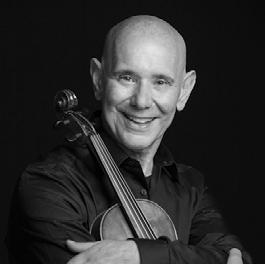
Abstract
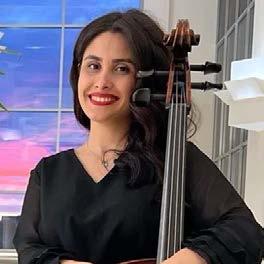
Hamed Erfani Composer-in-Residence, Oklahoma Chamber Symphony
Yasaman Seif Cellist & Arts Administrator, University of Central Oklahoma
Hal Grossman Associate Professor of Music, University of Oregon
Musicians can captivate us with their brilliant performances. They can amaze us with their technical feats or bring a heartfelt tear to the eye with their playing. It takes hours of practice for the musician to hone their musical and technical skills to craft musical phrases that can transport the listener. Behind the beauty of their music making, the musician logs in countless hours of practice. And those long working hours can bring on physical and psychological performance-related stresses. Most musicians are not educated in the somatics of playing but training the whole musician with musical, physical and injury-prevention information should be the norm in teaching. According to a 2009 study conducted by Dr. Alice Brandfonbrener (2009), a pioneer in musician’s health, among 330 incoming freshmen music students from four consecutive entering classes at an American university, a total of 79% reported a history of performance-related pain. Musicians train both their musical sensibilities as well as their muscles. While football and baseball players utilize the bigger muscle groups, musicians train both bigger and smaller muscle groups. However, muscles are muscles and must be strengthened, toned, stretched, warmed up, and cooled down for optimal playing. The progress in sports medicine has shown outstanding results for high school, college and professional athletic performance. Tools which closely monitor the intense demands of sports, and manage injury prevention, are plentiful. In contrast, musicians are woefully under-educated about the biomechanics of their craft and generally only consult medical care once injured. Stretching, muscle conditioning, and breathing are not a regular part of the young musician’s training. Educating music teachers and players to somatic needs of musicians needs to be the next step in music education and that includes awareness and access to healthcare professionals who are sensitive to the demands of the Performing Arts.
This article will explore how to implement somatics into the teaching of all musicians and explore the need for biomechanics training.
Keywords: Musicians’ health, performance-related Injuries prevention, music education, performing arts medicine, playing-related musculoskeletal disorders, Injury management
Introduction
“People take such wonderful care of their $40,000 violin or $10,000 flute-they need to take care of their bodies the same way."
—Richard Norris, physician and flutist
Musicians can captivate us with their brilliant performances. They can amaze us with their technical feats or bring a heartfelt tear to the eye with their playing. It takes hours of
practice for the musician to hone their musical and technical skills to craft musical phrases that can transport the listener. Behind the beauty of their music making, the musician logs in countless hours of practice. And those long working hours can bring on physical and psychological performance-related stresses. Most musicians are not educated in the somatics of playing but training the whole musician with musical, physical and injury-prevention information should be the norm in teaching. According to a 2009 study conducted by Dr. Alice Brandfonbrener (2009), a pioneer in musician’s health, among 330 incoming freshmen music students from four consecutive entering classes at an American university, a total of 79% reported a history of performance-related pain.
Musicians train both their musical sensibilities as well as their muscles. While football and baseball players utilize the bigger muscle groups, musicians train both bigger and smaller muscle groups. However, muscles are muscles and must be strengthened, toned, stretched, warmed up, and cooled down for optimal playing. The progress in sports medicine has shown outstanding results for high school, college and professional athletic performance. Tools which closely monitor the intense demands of sports, and manage injury prevention, are plentiful. In contrast, musicians are woefully under-educated about the biomechanics of their craft and generally only consult medical care once injured. Stretching, muscle conditioning, and breathing are not a regular part of the young musician’s training. Educating music teachers and players to somatic needs of musicians needs to be the next step in music education and that includes awareness and access to healthcare professionals who are sensitive to the demands of the Performing Arts.
The goal is to equip musicians with the necessary knowledge and preventative tools to help them play with ease and fluidity. Playing through pain—or simply keeping it to oneself—was once a common mindset among musicians. However, thanks to health pioneers like Dr. Alice Brandfonbrener, who founded the Medical Program for Performing Artists in Chicago during the 1980s, greater attention was brought to the widespread physical issues affecting performers. Her work helped shed light on the professional fears musicians faced, such as losing opportunities due to injury or pain, and ultimately encouraged the acceptance of healing practices that could help them maintain their health and longevity in their careers.
I continued to play with a sore arm with the rationalization that I could play through the pain and that the discomfort would just miraculously go away as I got into better shape as a cellist. But the pain didn’t go away. It got worse.
—Janet
Horvath, cellist
Educating teachers to train their students with somatic awareness is the key. Dr. Brandfonbrener states that the
majority of students who experience performance-related pain do so early in their development, demonstrating that incorporating performing arts health education into music curriculum at an early stage can have a significant and positive impact on students' development and well-being. (2009).
Musician training courses, such as Paul Rolland String Pedagogy Society, The Grossman Method®, and The Association for Body Mapping Education help train and educate musicians to play healthily. The importance of these programs is supported by a cross-sectional study conducted by Leo, Martin, and Mogielnicki (2022), which investigated the prevalence of performance-related pain and musculoskeletal injuries among undergraduate and graduate music majors at a large university in the Midwest. The study highlighted a general lack of awareness regarding injury prevention, treatment, and collaborative recovery methods, indicating that music students, even at the graduate level, possess limited somatic knowledge.
Elite musicians and athletes share similar training routines: educated, consistent, and disciplined practice; a significant investment of time; and a strong drive to succeed are all essential ingredients for excellence. Yet, all too often, we music teachers encounter students who haven't maintained regular practice. As a concert or lesson approaches, they fall into a cycle of last-minute, panic-driven rehearsals. This often leads to physical discomfort, and in some cases, fear and anxiety begin to overshadow the joy of making music. Breaking this cycle can require considerable effort and intentional support. Coaches and athletes commit to regularly scheduled training sessions, and parents of pre-college students are well aware of the time their children dedicate to football, soccer, and other sports. As musicians, we can embrace a similar work ethic by establishing consistent practice routines. Incorporating focused time for stretching, breathing, and practicing not only enhances performance but also supports long-term success in the arts.
But developing a regular practice schedule is not enough. It’s not just the notes, or the sound that musicians must attend to. It is also the physical movements engaged to make those sounds. Consider the following to optimize your practice regime:
Developing new motor units is always challenging, but it becomes even more difficult when small muscles are involved and an external object is in the hands. According to Muse Muscle Method, eleven integrated factors are identified for performing music: weight, separation, independence, unity, cohesion, stretch, coordination, delicacy, strength, pace, and concentration. Building the motor units required for all of them on the instrument seems almost impossible. That is why athletes try to build the required motor units by engaging in other supplementing activities. As a result, one of the most important factors that must be addressed in music teaching, particularly in the early stages of learning an instrument, is the development of correct and tension-free motor units outside of the instrument and in natural body position before applying them to the instrument.
Increasing body awareness, monitoring movements, and employing complementary techniques that alert performers to bad habits they may be developing are crucial to every musician’s success. The Grossman Method©, Body Mapping, and The Muse Muscle Method (first introduced this concept in Iran) train musicians somatically for injury prevention. Muse Muscle, in particular, utilizes a variety of tapes and weights in different shapes, sizes, and arrangements to help musicians transfer off-instrument motor skills to their instruments with accuracy and without tension.
Music lessons often concentrate solely on the hands and arms, overlooking the crucial role of larger muscle groups such as the shoulders, back, and chest. Engaging these larger muscles during performance can help reduce pain and the risk of injury, while also improving endurance. The Muse Muscle Method addresses this need by offering a series of whole-body exercises specifically designed for musicians. These exercises, when performed in the correct sequence with proper repetitions, rest periods, and breaks, teach musicians how to fully incorporate their bodies into the act of making music.
“Warm-ups prepare the body, mind, and spirit for music making. On the physical side, warm-ups increase the blood flow to the muscles, encourage lubrication in the joints, and for singers, limber up the vocal mechanism. Mentally, they focus attention, and spiritually, they inspire excitement for music. If you do not warm up correctly enough, you will make music-making more challenging and will be prone to injuries since cold muscles are prone to fatigue and tearing. Also, a scattered mind can neither learn deeply nor create uplifting music.” (Klickstein, Gerald. The Musician’s Way: A Guide to Practice, Performance, and Wellness.)
How many instrumentalists warm up or cool down before or after playing? This is crucial for musicians to prime the muscles for playing and stretch the muscles after playing. A few minutes before and after your playing session will have important results!
Assume there is a new rule in football, and instead of having four quarters, players play the entire game straight without taking a break. How does this sound to you? We strongly disagree with that rule because it reduces player efficiency and causes fatigue. However, for musicians, it appears normal if they lock themselves in the practice room for hours without taking a break!
Jorge Bolet, the famous pianist, says, “I never solved a major mechanical or interpretive problem at the keyboard, only away from it.” This amazing saying means that if there is a technical problem, blind repetition will not always solve it. Allow your mind to process by taking a break.
In his book The Musicians' Way, Gerald Klickestein classifies breaks into three categories.
• Active Breaks: Rest your playing or singing muscles while remaining engaged with your music.
• Divertive Break: taking you out of the practice room to take your mind off what you're doing.
• Restorative Breaks: resting or performing slight movements.
The proposed activities for Restorative Breaks could be extremely beneficial and may have a significant impact on the health of the performers who carry them out. They can assist the player in releasing unwanted tension and strain, correcting any unintentionally incorrect posture, and re-establishing their body's natural weight for practice and performance.
In sports training, the importance of rest and recovery is well established. Musicians, however, are sometimes hesitant to take even a day or two off, fearing lost progress. Yet rest is essential for both mental and physical well-being. It allows the fluid that lubricates tendons to replenish. Without adequate breaks, this fluid can become depleted, leading to friction between the tendon and its sheath, which increases the risk of injury.
Athletes are mindful of activities that could negatively impact their performance. For example, a marathon runner understands that excessive bodybuilding and muscle gain can be more of a hindrance than a help. Musicians, in addition to practicing music, often engage in various activities that stress their hand, arm, and shoulder muscles, which can contribute to burnout. Artists juggle multiple responsibilities—housework, office tasks, carrying children—and, on top of that, their regular practice sessions, all of which place additional strain on their muscles.
Janet Horvath explains in her book Playing (Less) Hurt that stress is the most visible external factor that has a daily impact on our physical and emotional well-being. Musicians, like other athletes, face intense psychological pressures as a result of their public performances. The immune system is activated during the stress response, which explains why chronic stress can harm the body if the immune system is overworked (Leo, 2022). The immune system's delicate balance is disrupted by chronic stress, causing the body to become more inflamed (Goehler, 2017). Many musicians suffer from anxiety and depression (Ackermann, Kenny, 2016), and Wristan and Fountain (2013) discovered a strong link between anxiety and pain, as well as depression and pain. These mental factors can have a negative impact on the performer's body. According to Leo's research (2022), there was a significant, slightly positive relationship (r =.40, p.05) between pain intensity and musicrelated stress, implying that as participants' stress levels increased, so did their level of performance-related pain.
Gerald Klickestein divides the effects of anxiety on musicians into three categories, each with its own set of symptoms. They can be classified as pre-performance, at-performance, or post-performance effects, with each having specific signs.
• Pre-performance effects: avoidance of practice, obsessive practice, busyness, depression, worry, headaches, insomnia, difficulty focusing, stomach upset, lack of appetite, trouble with relationships, academic decline, substance abuse.
• Post-performance effects: distorted thinking, shame, anger, misattribution, avoidance of practice, depression, persistent insomnia, trouble with relationships, academic decline, and substance abuse.
• At-performance effects fall into two other categories, the physical and the mental.
The physical signs include: trembling, cold hands, racing heartbeat, heavy perspiration, nausea, muscle tension, technical insecurity, rapid breathing, dry mouth, and the urge to urinate.
The mental signs include fear, confusion, memory lapses, distorted thinking, agitation, hypersensitivity, negative selftalk, shame, anger, and panic.
You are a dedicated practitioner—working through scales, arpeggios, and etudes before approaching your repertoire. But do you also allow time for essential elements such as rest, recovery, mental practice, and instrument-free warm-ups and cool-downs? In sports, athletes are carefully monitored by coaches, trainers, and even advanced technology to ensure their training is balanced, effective, and injury-free. Musicians, however, are often left to manage these demands on their own, or perhaps with the guidance of a teacher. To truly maximize progress and prevent burnout, a personalized, well-structured practice schedule is vital—one that includes not only technical exercises but also built-in rest, mental preparation, and attention to physical wellness.
Human anatomy plays a critical role in shaping a person's physical abilities, endurance, and even voice quality. These individual differences are central to sports training, where customized regimens are developed for each athlete to align with their unique strengths and limitations. Yet in music training, this nuance is often overlooked. Students are frequently assigned the same repertoire and follow uniform lesson plans, regardless of anatomical differences, background, or learning style.
To support meaningful and sustainable growth, music training must become more individualized. A routine that works well for one student may be ineffective—or even harmful—for another, depending on their body type, habits, and experience. Like athletes, musicians benefit from a structured, progressive approach that builds technique, stamina, and resilience over time. This involves continuously assessing one's abilities, selecting repertoire that aligns with current skill levels, and adapting practice strategies to meet personal needs and goals.
Upon reaching a professional level of performance, musicians usually cease to attend lessons or receive any technical feedback or instruction. They stop having ‘coaches’ and ‘trainers’ who can assess their performance and help them avoid bad posture or misusing their bodies. Trainers have always been an integral part of the sports world, as they should be for musicians!
“Practicing is not forced labor; it is a refined art that partakes of intuition, of inspiration, patience, elegance, clarity, balance, and, above all, the search for ever greater joy in movement and expression.”
—Yehudi Menuhin, violinist
It is well understood that when the mind is out of balance, the body follows. Performing music requires a high level of mental awareness in addition to physical effort, so the importance of meditation for artists can be a useful tool. Additionally, visualization (practice performing in various imaginary spaces) can mitigate nervous performers.
In a sports club, the presence of healthcare professionals is essential and cannot be overlooked. They play a vital role in every aspect of an athlete’s journey—from evaluating potential recruits to monitoring training sessions and providing immediate care during games. Their constant involvement highlights just how crucial they are in maintaining athletes' wellbeing, preventing injuries, and ensuring peak performance.
But musicians typically have limited contact with trained performing arts healthcare professionals (Tubiana 2000; Guptill 2011). Establishing these connections and increasing accessibility can significantly improve musicians' overall health and injury prevention. The presence of healthcare professionals at all levels will be extremely beneficial because they can assist students in avoiding incorrect motor units and bad habits in addition to correcting any errors that occurred.
Of course, healthcare practitioners who work with musicians must also have a thorough understanding of the artists' mindsets, situations, and lifestyles. Normal healthcare professionals treat musicians, who are unique both physically and mentally, as if they were other patients, ignoring the fact that the performer's pain is more than just physical; they are on the verge of losing everything to which they have dedicated their lives.
Making music and playing an instrument are incredibly rewarding experiences. They provide both artistic expression and personal fulfillment. Musicians can sustain their careers and preserve their longevity as artists by adopting a holistic approach that includes somatic knowledge, mindful practice, a healthy lifestyle, and access to specialized care. Programs like The Grossman Method®, Muse Muscle, and The Rolland Method help musicians organize that work into a bite-size curriculum of study.
References
1. Klickstein, Gerald. The Musician’s Way: A Guide to Practice, Performance, and Wellness. Oxford University Press, 2009, http://site.ebrary.com/id/10476
2. Chan C, Ackermann B. Evidence-informed physical therapy management of performance-related musculoskeletal disorders in musicians. Front Psychol. 2014 Jul 8;5:706. doi: 10.3389/ fpsyg.2014.00706. PMID: 25071671; PMCID: PMC4086404.
3. Watson A. (2006). What can studying musicians tell us about motor control of the hand? J. Anatomy 208 527–542 10.1111/j.14697580.2006.00545.x [PMC free article]
4. Brandfonbrener A. (2010). “Etiologies of medical problems in performing artists,” in Performing Arts Medicine 3rd Edn eds Sataloff R., Brandfonbrener A., Lederman R. (Narberth, PA: Science & Medicine; ) 25
5. Brandfonbrener A. (2009). “History of playing-related pain in 330 freshman music students,” Medical problems of performing artists 24(1)
6. Drawer S., Fuller C. W. (2001). Propensity for osteoarthritis and lower limb joint pain in retired professional soccer players. Br. J. Sports Med. 25 402–408 10.1136/bjsm.35.6.402 [PMC free article]
7. Guptill C. A. (2011). The lived experience of professional musicians with playing-related injuries: a phenomenological inquiry. Med. Probl. Perform. Art. 26 84–95
8. Hoppmann R. A., Patrone N. A. (1989). A review of musculoskeletal problems in instrumental musicians. Semin. Arthritis Rheum. 19 117–126 10.1016/0049-0172(89)90056-5
9. Zetterberg C., Backlund H., Karlsson J., Werner H., Olsson L. (1998). Musculoskeletal problems among male and female music students. Med. Probl. Perform. Art. 13 160–166
10. M. Li, P. Savvidou, B. Willis and M. Skubic, "Using the Kinect to detect potentially harmful hand postures in pianists," 2014 36th Annual International Conference of the IEEE Engineering in Medicine and Biology Society, Chicago, IL, USA, 2014, pp. 762765, doi: 10.1109/EMBC.2014.6943702.
11. Mei-Ju Su, Yu-Huei Su, Yaw-Jen Lin and Heng-Shuen Chen, "E-learning development on Health Promotion for Music Performers in Taiwan," 2011 IEEE 13th International Conference on e-Health Networking, Applications and Services, Columbia, MO, USA, 2011, pp. 246-249, doi: 10.1109/HEALTH.2011.6026757.
12. Bonneville-Roussy, A., Hruska, E., & Trower, H. (2020). Teaching Music to Support Students: How Autonomy-Supportive Music Teachers Increase Students’ Well-Being. Journal of Research in Music Education, 68(1), 97–119. https://doi. org/10.1177/0022429419897611
13. Dobos, B., Piko, B. F., & Kenny, D. T. (2019). Music performance anxiety and its relationship with social phobia and dimensions of perfectionism. Research Studies in Music Education, 41(3), 310–326. https://doi.org/10.1177/1321103X18804295
14. Russell, J. A., & Benedetto, R. L. (2014). Perceived Musculoskeletal Discomfort Among Elementary, Middle, and High School String Players. Journal of Research in Music Education, 62(3), 259–276. https://doi.org/10.1177/0022429414543307
15. Altenmüller E., Jabusch H. C. (2010). Focal dystonia in musicians: phenomenology, pathophysiology and triggering factors. Eur. J. Neurol. 17(Suppl. 1) 31–36 10.1111/j.1468-1331.2010.03048.x
16. Ackermann B., Adams R. D., Marshall E. (2002). Strength or endurance training for undergraduate music majors at a university? Med. Probl. Perform. Art. 17 33–41
17. Ackermann B. (2002). Managing the musculoskeletal health of musicians on tour. Med. Probl. Perform. Art. 7 63–67
18. Argus C., Gill N., Keogh J., Hopkins W. (2011). Acute effects of verbal feedback on upper-body performance in elite athletes. J. Strength Cond. Res. 25 3282–3287 10.1519/ JSC.0b013e3182133b8c
19. Barrowcliffe K. D. (1999). The Knowledge of Playing-Related Injuries Among University Music Teachers. Ph.D thesis, The University of Western Ontario, London, ON.
20. Bragge P., Bialocerkowski A., McMeeken J. (2006). Understanding playing-related musculoskeletal disorders in elite pianists: a grounded theory study. Med. Probl. Perform. Art. 21 7179
21. Brandfonbrener A. (2010). “Etiologies of medical problems in performing artists,” in Performing Arts Medicine 3rd Edn eds Sataloff R., Brandfonbrener A., Lederman R. (Narberth, PA: Science & Medicine; ) 25
22. Cailliet R. (1990). Abnormalities of the sitting postures of musicians. Med. Probl. Perform. Art. 5 131–135
23. Chadefaux D., Wanderley M., Le Carrou J., Fabre B., Daudet L. (eds). (2012). “Experimental study of the musician/instrument interaction in the case of the concert harp,” in Proceedings of the Acoustics 2012 Nantes
24. han C., Driscoll T., Ackermann B. J. (2013b). Development of a specific exercise programme for professional orchestral musicians. Inj. Prev. 19 257–263 10.1136/ injuryprev-2012-040608
25. Chan C., Driscoll T., Ackermann B. J. (2013c). The usefulness of on-site physical therapy-led triage services for professional orchestral musicians – a national cohort study. BMC Musculoskelet. Disord. 14:98 10.1186/1471-2474-14-98
26. de Greef M., van Wijck R., Reynders K., Toussaint J., Hesseling R. (2003). Impact of the Groningen exercise therapy for symphony orchestra musicians program on perceived physical competence and playingrelated musculoskeletal disorders of professional musicians. Med. Probl. Perform. Art. 18 156–160
27. Driscoll T., Ackermann B. (2012). Applied musculoskeletal assessment: results from a standardised physical assessment in a national population of professional orchestral musicians. Rheumatology S2 1–7
28. Edling C., Fjellman-Wiklund A. (2009). Musculoskeletal disorders and asymmetric playing postures of the upper extremity and back in music teachers: a pilot study. Med. Probl. Perform. Art. 24 113–118
29. Eijsden-Besseling M., Kuijers M., Kap B., Stam H., Terpstra-Lindeman E. (1993). Difference in posture and postural disorders between music and medical students. Med. Probl. Perform. Art. 8 11
30. Horvath J. ‘Playing (Less) Hurt: an Injury Prevention Guide for Musicians’. Hal Leonard, 2010. ISBN: 9781423488460. UPC: 884088457655
31. Leo, Francesca, Lisa Martin, and Heather Wilkins Mogielnicki. "An Exploratory Cross-Sectional Study of the Prevalence of Musculoskeletal PerformanceRelated Injuries and Stress Amongst Collegiate Musicians." Journal of Music, Health, and Wellbeing, Feb. 2022.
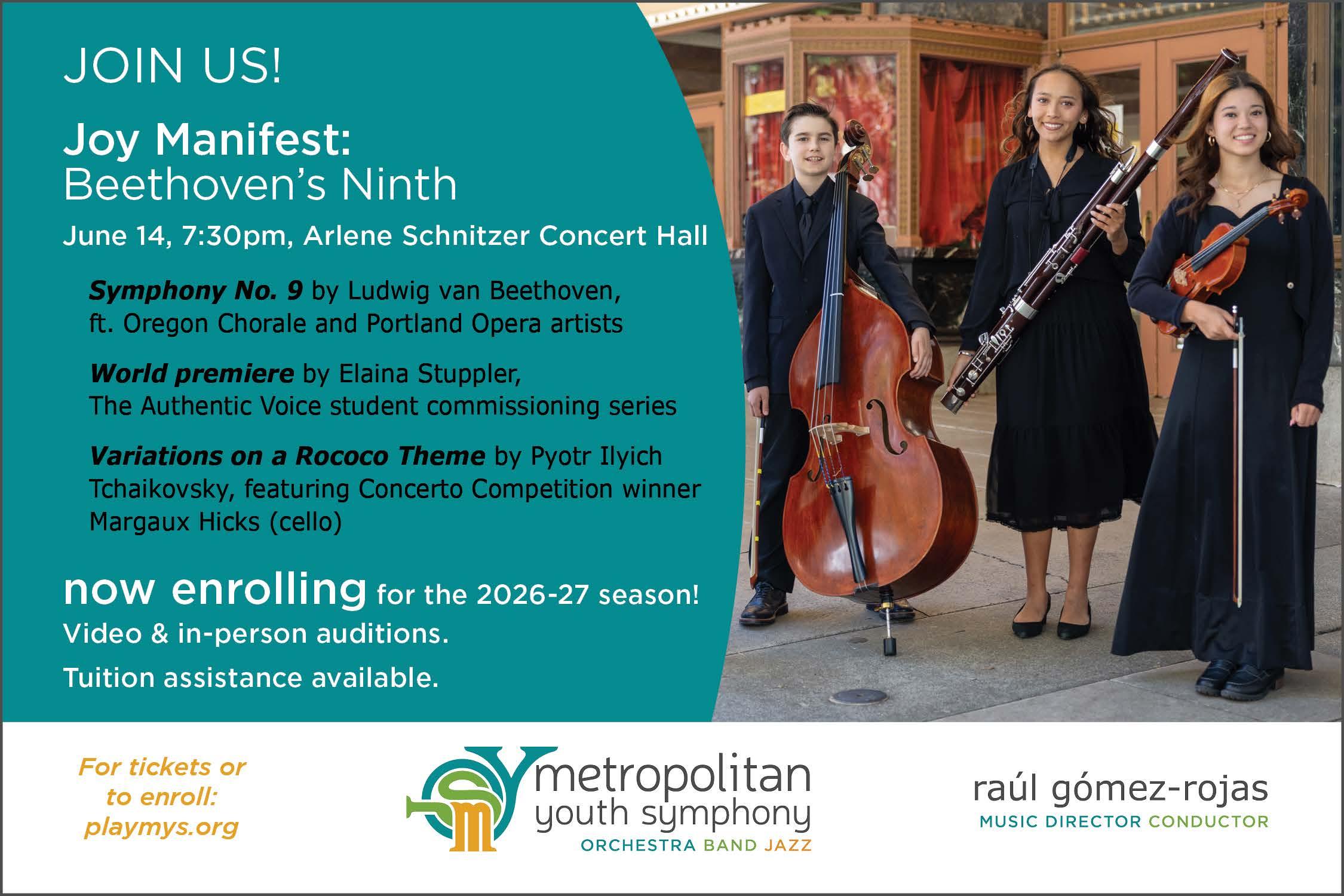
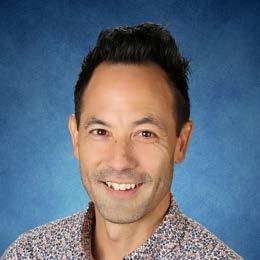
Ron Neighorn Dexter McCarty Middle School, Director of Choral Arts
Every veteran teacher remembers the first year, the long days, the late nights, the endless lesson planning, and the nagging question: Am I really cut out for this? I certainly do. I wish someone had pulled me aside during those early years and told me the things I know now. The things they don’t teach you in college. Things like: How do you have a life outside of school? How do you stay positive? How do you say no? How do you stay healthy?
My first year of teaching was spent bouncing between rural schools in Eastern Oregon. I worked in Heppner Elementary, Heppner High School, Ione Elementary, and Ione High School. I was a traveling music salesman with a trunk full of sheet music and exhaustion. Everyone around me assumed the first year should be hard, like a rite of passage or a test of character. But here’s the truth: The first year will be a learning experience, but it does not have to be miserable. Midway through that difficult year, I met a retired band director named Ralph who had returned to resurrect the Heppner High School band program. Ralph was happy. I mean he was genuinely happy, which seemed almost mythical at the time. One particularly rough day, I asked him his secret. He smiled and said, “A happy teacher finds a balance between family, spirituality, and work.”
That wisdom has shaped my entire 30 year career. Happiness in teaching doesn’t happen by accident. It comes from intentional choices. Choices that protect your energy, fuel your spirit, and keep you grounded in who you are beyond your job title.
This guide is my attempt to offer the practical steps I wish someone had given me. If you’re a first year teacher, hanging on by a thread, or simply trying to find your footing, these are the potholes to avoid and the tools that can help you not only survive but actually enjoy the journey
Teaching is already challenging; don’t make it harder by doing things that don’t matter. I used to spend nearly an hour a week rearranging chairs and tables because I liked a perfectly arranged classroom. My first class would walk in, and in thirty seconds it was a disaster. A complete waste of time. Happy teachers know when to let things go. Better yet, they know when to let students help.
For years my wife sharpened pencils and organized crayons for her first graders. We are talking 30 minutes a day of unpaid, unnecessary labor. A five minute end of the day cleanup by students solved everything.
If a task doesn’t meaningfully improve learning or your mental health, simplify it, delegate it, or drop it. Your time and energy are too valuable to waste on tasks that don’t move the needle.
I once gave students daily scores and would correct any work done in my classroom. Now I give a participation grade at the end of the grading period and give scores for completed
work and let my diagnostics tell me what the students are learning or not learning. My workload dropped dramatically and the kids still learned.
Whether it’s passing out music folders, tuning guitars, taking attendance, or resetting the room after rehearsal, students love having jobs. Once I finally learned to assign these tasks, I realized I didn’t need to be the class manager and the teacher. Letting students take responsibility built a community and saved me countless tasks every day.
Every school has both positive “gas pumps” (people who fill you up) and negative “potholes” (people who drain you). You know exactly who they are.
Pothole teachers love to gather in doorways, parking lots, and lunchrooms to complain. They seek company, and if you linger too long, you’ll get pulled in. Don’t let their cynicism sabotage your day.
Find your gas pumps. These are the colleagues who greet you with a smile, even on Mondays. They are worth the walk across the building. And don’t just look for positivity; be thepositivity. Sometimes the culture needs someone to shift the energy. Maybe that person is you.
You cannot pour from an empty cup, yet teachers try all the time. I’m a gym rat, proudly so. The gym is my therapy, my stress release, my way of taking ownership of my well-being. But “health” doesn’t have to mean weightlifting. It can be:
• Taking a walk during prep
• Packing healthier lunches
• Going to bed earlier
• Actually staying home when you’re sick
Schools are germ factories, and teachers are notorious martyrs. Many refuse to take sick days because “it’s too much work to make sub plans.” That mindset is outdated and harmful. Your students need you healthy and functioning, not coughing, dragging, and worn out.
I’ve saved over 900 hours of sick leave in my career. Do I get rewarded for that? Not really. Now, when I need a mental health day or when I’m not feeling well, I take it without hesitation. You will never regret a day spent resting, recovering, or doing something joyful.
When school gets tough, double down on your health. Your body and your students will thank you.
4. Find Free Time: Have a Life Outside the Classroom
You must have something to look forward to on the weekends. Something that isn’t school. Whether it’s hiking, joining a club, playing music, rescuing dogs, wine tasting, biking, it doesn’t matter. What matters is that it feeds your spirit.
I play in four local bands, and that creative outlet keeps me energized and connected to my passion. Nearly every happy teacher I know has hobbies that fuel them.
If work becomes your only identity, burnout is not a possibility, it’s guaranteed.
5. Practice Positive Self-Talk: Coach Yourself the Way You Coach Students
You’ve seen people driving while talking to themselves or maybe singing, or arguing with a Bluetooth microphone. Good. That’s what you need.
Give yourself a pep talk on the way to work. It sounds crazy, but it works. Shut down negative inner dialogue before it gains momentum.
Play music that sets your mood. For me, it’s Michael Bublé or Christmas music. Whatever your version is, let it cheer you on. Try playing it in your classroom before students arrive. It influences the emotional climate of the room.
6. Make Your Classroom a Place You Want to Be
You will spend more hours in your classroom than in your living room. Make it feel good.
Simple things help:
• A plant
• A framed family photo
• A clean scent
• A small fridge
• A lamp for softer lighting
When your space feels warm and personal, stress will hit you differently. And students notice. When they see that you are human with interests, personality, and comfort, it builds trust and rapport naturally.
7. Ask for Help: You Don’t
The biggest mistake new teachers make is trying to do everything themselves. Resources exist. You just have to seek them out.
If you can get a teacher’s assistant, choose carefully. A helpful TA is gold. A “give-them-a- chance” TA is babysitting. Pick students you trust.
Look for community volunteers. I have two adults who help with my largest choir class three times a week. They cost
nothing and contribute enormously.
Explore grants, district programs, parent groups, and community partnerships. Support is out there but it rarely knocks on your door. You have to go looking.
Conclusion: Create Your Balance on Purpose
Surviving your first year isn’t about being tough, it's about being intentional. The happiest teachers aren’t lucky. They build their lives deliberately around balance, connection, boundaries, and well-being.
Ralph was right. When family, spirituality, health, and work are in harmony, teaching becomes not just manageable, but meaningful. You deserve that. Your students deserve a teacher who is grounded, joyful, and whole.
You don’t have to suffer through survival mode. You can choose a different path one that leads to a long, fulfilling, and happy career.

Session 1: June 21 - July 3, 2026
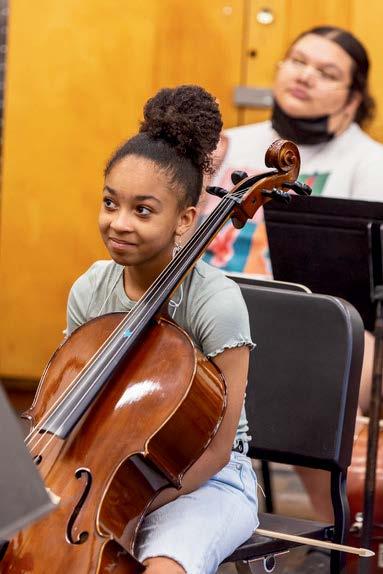
Tuition: $2675 (all inclusive)
Financial Aid Available! Space is limited, register early! Space is limited, register early!
Scan here for more info:
Spend two weeks exploring musical growth while building lasting friendships and celebrating shared experiences in a one-of-a-kind supportive community
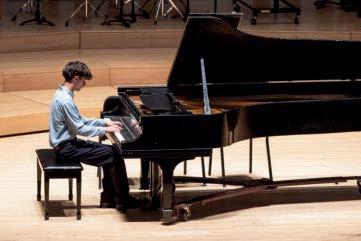
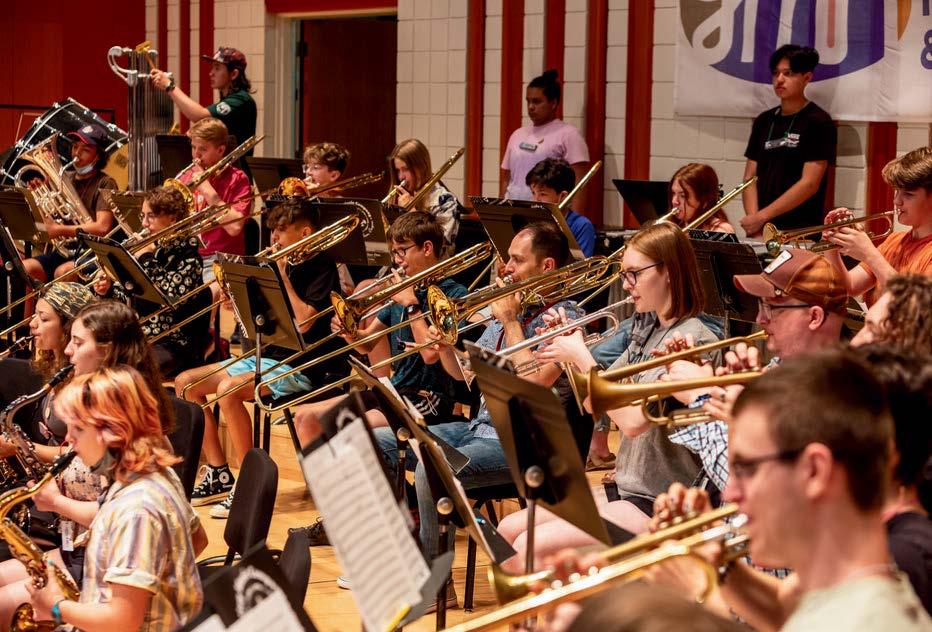
ymaarts.org @ymazing youngmusiciansandartists
Bill Humbert Director of Bands, Glendale Community College
Daily in rehearsal rooms, we talk about tone, tuning, technique, rehearsal pacing, and musicianship. But behind every successful ensemble is something far less glamorous and far more powerful: systems. The way we show up each day…our habits, our structures, and our expectations shape our students and our programs far more than momentary inspiration. Here’s a look at how the habits of effective directors mirror the habits of disciplined musicians, and how you can build systems that keep your classroom thriving long after motivation fades.
Music teachers know this better than anyone: if we waited for students to feel motivated before practicing, progress would be minimal. The same is true for us. Motivation rises and falls, especially during concert season, festival prep, or the long stretch between breaks. What keeps a program moving is a system: rehearsal routines, warm-up structures, sectional schedules, and personal planning habits. Don’t wait to “feel like” setting the rehearsal agenda, tackling that stack of conductor scores, or digging through the mountain of paperwork and unreturned email. Show up, ready to do the work whether you’re energized or exhausted. Systems, not sparks of inspiration are what keep ensembles progressing.
Directors often label themselves: I’m just disorganized. I’m always behind. Follow-through isn’t a fixed trait, it’s a trainable skill, a learned behavior. Like rhythmic accuracy or
clean articulation, it improves with repetition. Start small and finish one tiny task at a time, such as; printing tomorrow’s seating chart or preparing the first five minutes of rehearsal. Every finished task is one more positive repetition of doing the right thing. Over time, consistency becomes your default.
Before introducing a new system or goal, like improving sight-reading or restructuring the warm-up process, be sure you know why it matters. Students sense your clarity, and that clarity gives energy to your follow-through and to theirs. Are you building stronger fundamentals so students can access more meaningful repertoire? Creating structure so rehearsals run smoother? Reducing your own stress so you can be a better teacher? When your “why” is emotionally and practically grounded, you are less likely to abandon the goal halfway through the semester.
There is an excitement in choosing new repertoire or starting a fresh concert cycle. But the hard part of the journey…cleaning bowings, drilling fingerings or rebalancing chords, can feel repetitive. Discipline in the music classroom means embracing the unglamorous details that accumulate into excellence. It also means doing the things other teachers might skip: tuning every day or reinforcing posture. It’s these “quiet reps” that build the identity of a director, and a program that is able to become their potential.
Train Yourself to Become the Director You Want to Be.
Identity drives action. If you tell yourself that you are overwhelmed or inconsistent, your brain will believe you. But if you begin to think and behave like a director who finishes what they start, your habits will follow. Try adopting identity-based statements such as: I’m a director who starts rehearsal with intention. I’m someone who follows through. Our ensemble is one that works deliberately and consistently. Positive self-talk is an amazing tool to condition our thought patterns. Our thoughts control our actions…are you thinking the way you want to be? Show up in small ways, repeatedly. Each follow-through reinforces your identity. Each identity shift strengthens the system.

In music, the best performers aren’t the most inspired—they’re the most consistent. The same is true for the best teachers. Build systems. Minimize distance. Embrace the mundane. And watch your classroom, and your students, transform through the quiet power of daily discipline.
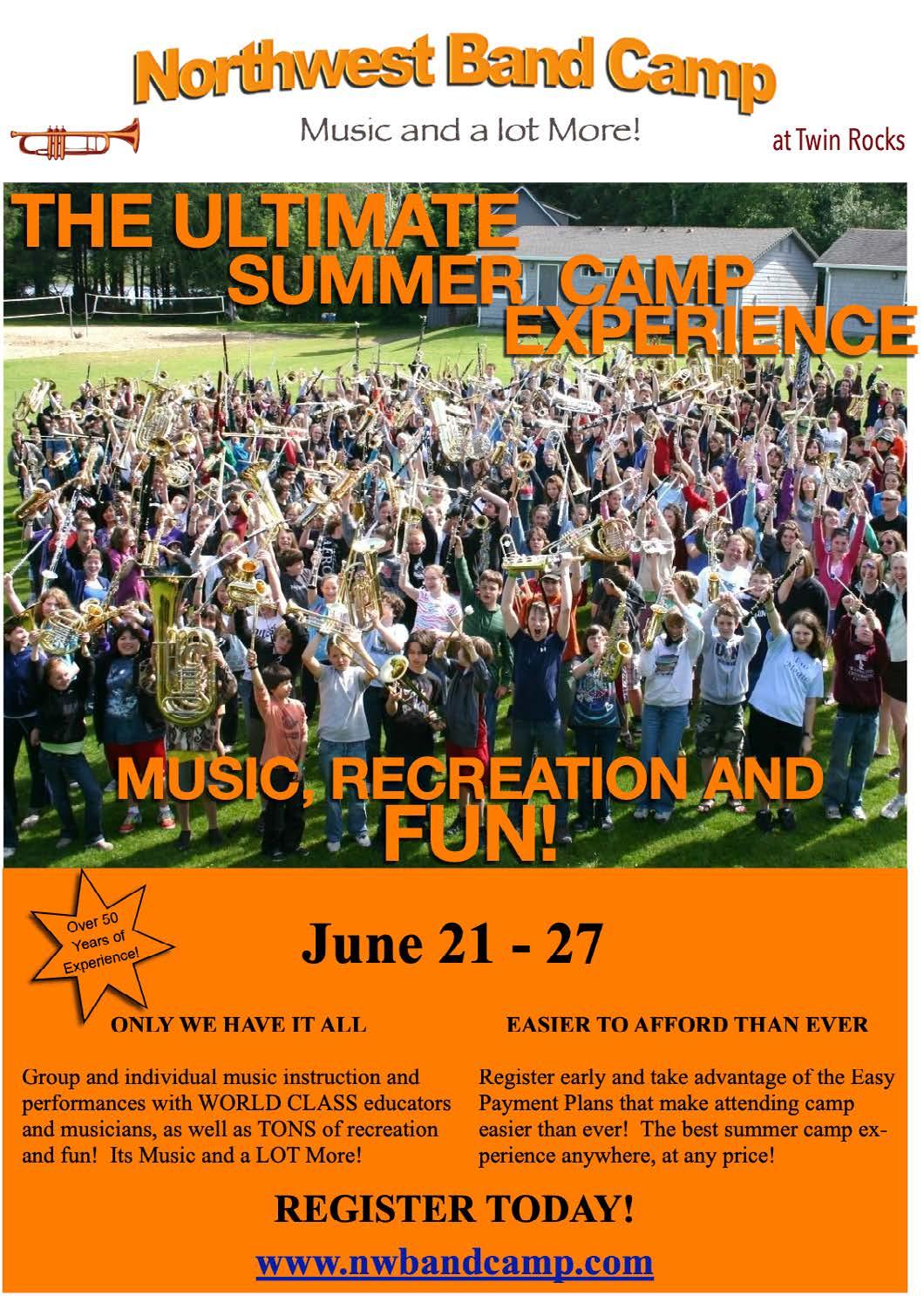


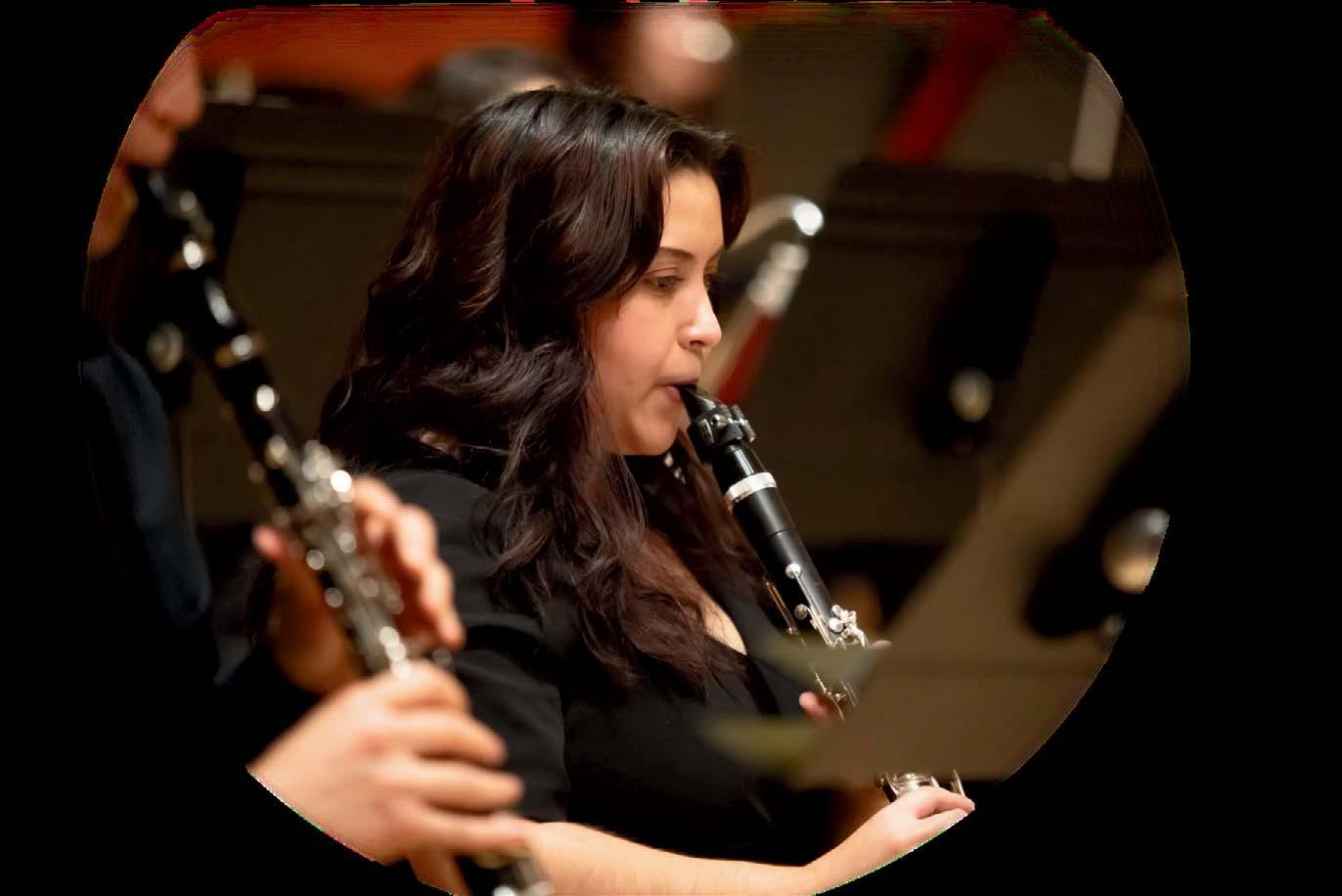
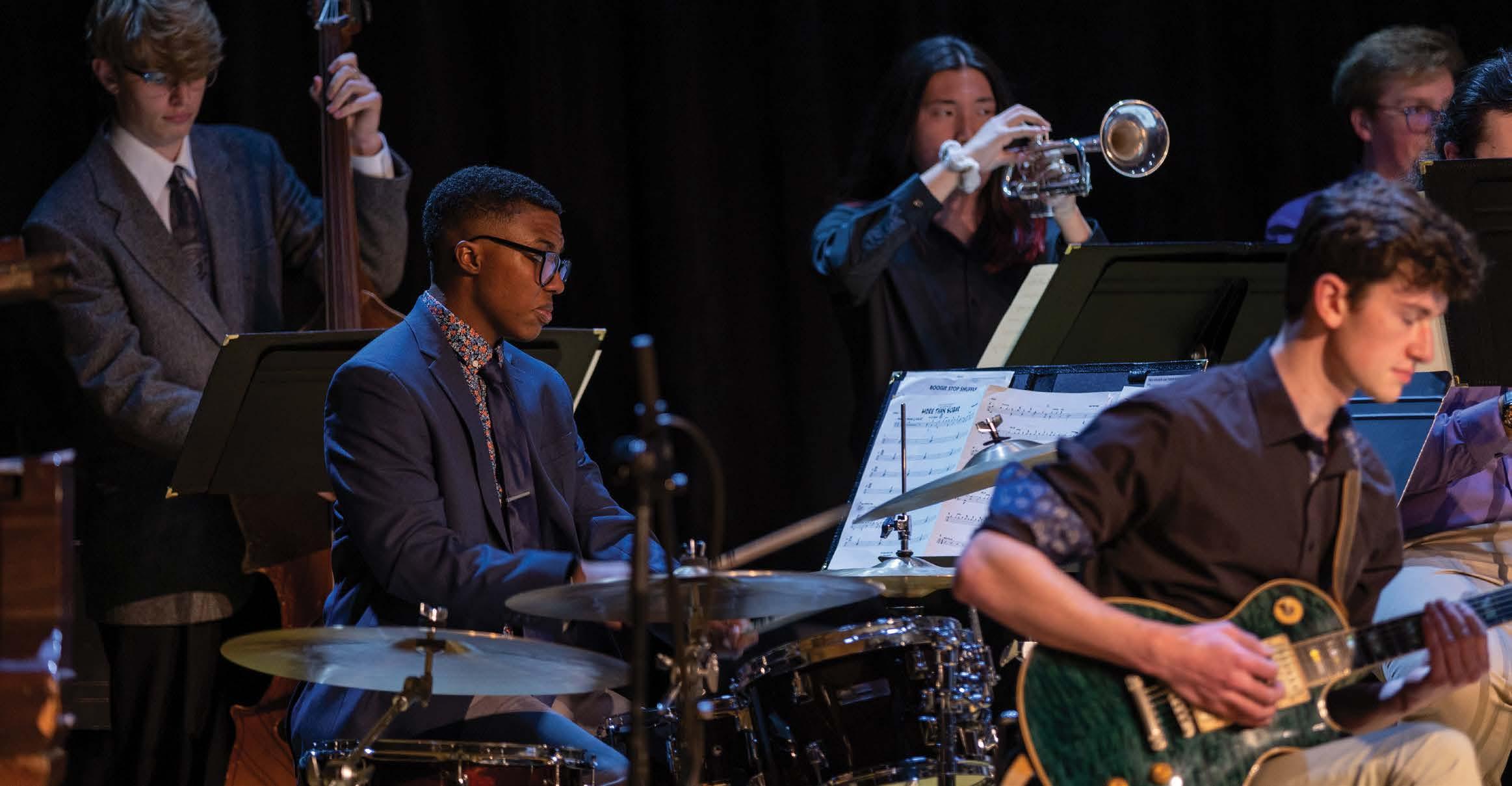
Study music education or music performance in the new Bachelor of Music degree program - a rigorous fouryear program for students pursuing a career in music, with options in:
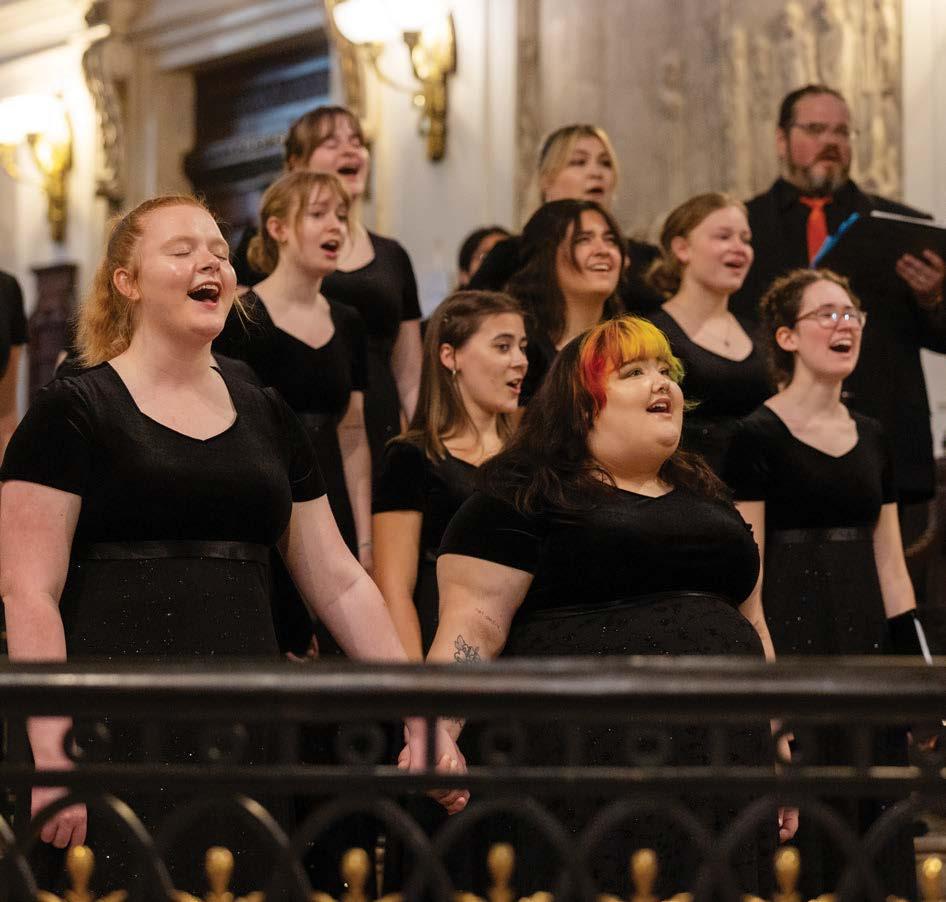
• Instrumental performance
• Vocal performance, pedagogy and literature
• Music education
• Piano performance
• Piano performance and pedagogy
BA/BS and BM degrees available.
Learn More
liberalarts.oregonstate.edu/music
College of Liberal Arts
School of Visual, Performing, and Design Arts liberalarts.oregonstate.edu/svpda