
ST JOHN PASSION

WELCOME TO OUR 2025/26 SEASON AT THE SOUTHBANK CENTRE.
Celebrating 40 fantastic years of making music.
1986. It was the year of the Westland Affair, the Chernobyl nuclear disaster, the infamous ‘Hand of God’ goal at the World Cup in Mexico, the premiere of Harrison Birtwistle’s opera The Mask of Orpheus… and in late June Wham! was at number 1 in the UK charts with The Edge of Heaven.
On 26 June, the Orchestra of the Age of Enlightenment first stepped onto a stage.
The first of our two seasons marking this milestone features a kaleidoscope of old favourites and new combinations. It features some of our best-loved partnerships and celebrates our shared history. Handel and Bach, Haydn and Mozart, Beethoven, Berlioz, Brahms and Dvořák are all composers who have been at the heart of our journey.
The challenges faced by the OAE and all our colleagues are varied, but we remain absolutely focused on the mission of sharing the highest quality music with the widest audience possible. What continues to shine after 40 years is the golden thread of a story of friends united by a profound love of the art of music.
© Orchestra of the Age of Enlightenment
Programme
7.00pm, Sunday 29 March
Southbank Centre’s Queen Elizabeth Hall
JOHANN SEBASTIAN BACH (1685 – 1750)
St John Passion (Passio Secundum Johannem)
Texts by Barthold Brockes, Christian Heinrich Postel, Paul Stockmann, Christian Weise and St John’s Gospel
There will be surtitles in English
Part 1
Arrest
1. Chorus: ‘Herr, unser Herrscher’
2a. Recitative (Evangelist, Christus) – 2b. Chorus – 2c. Recitative (Evangelist, Christus) –2d. Chorus – 2e. Recitative (Evangelist, Christus)
3. Chorale: ‘O große Lieb’
4. Recitative (Evangelist, Christus)
5. Chorale: ‘Dein Will gescheh, Herr Gott, zugleich’
Denial
6. Recitative (Evangelist)
7. Aria: ‘Von den Stricken meiner Sünden’ (Alto)
8. Recitative (Evangelist)
9. Aria: ‘Ich folge dir gleichfalls’ (Soprano)
10. Recitative (Evangelist, Maidservant, Peter, Christus, Servant)
11. Chorale: ‘Wer hat dich so geschlagen’
12a. Recitative (Evangelist) – 12b. Chorus – 12c. Recitative (Evangelist, Peter, Servant)
13. Aria: ‘Ach, mein Sinn’ (Tenor)
14. Chorale: ‘Petrus, der nicht denkt zurück’
– Interval (20 minutes) –
Court Hearing
15. Chorale: ‘Christus, der uns selig macht’
16a. Recitative (Evangelist, Pilate) – 16b. Chorus – 16c. Recitative (Evangelist, Pilate) –16d. Chorus – 16e. Recitative (Evangelist, Pilate, Christus)
17. Chorale: ‘Ach großer König’
18a. Recitative (Evangelist, Pilate, Christus) – 18b. Chorus – 18c. Recitative (Evangelist)
19. Arioso: ‘Betrachte, meine Seel’ (Bass)
20. Aria: ‘Erwäge wie sein blutgefӓrbter Rücken’ (Tenor)
21a. Recitative (Evangelist) – 21b. Chorus – 21c. Recitative (Evangelist, Pilate) –21d. Chorus – 21e. Recitative (Evangelist, Pilate) – 21f. Chorus –21g. Recitative (Evangelist, Pilate, Christus)
22. Chorale: ‘Durch dein Gefängnis, Gottes Sohn’
23a. Recitative (Evangelist) – 23b. Chorus – 23c. Recitative (Evangelist, Pilate) – 23d. Chorus – 23e. Recitative (Evangelist, Pilate) – 23f. Chorus – 23g. Recitative (Evangelist)
24. Aria: ‘Eilt, ihr angefochtnen Seelen’ (Bass)
25a. Recitative (Evangelist) – 25b. Chorus – 25c. Recitative (Evangelist, Pilate)
26. Chorale: ‘In meines Herzens Grunde’
Crucifixion and Death
27a. Recitative (Evangelist) – 27b. Chorus – 27c. Recitative (Evangelist, Christus)
28. Chorale: ‘Er nahm alles wohl in acht’
29. Recitative (Evangelist, Christus)
30. Aria: ‘Es ist vollbracht’ (Alto)
31. Recitative (Evangelist)
32. Aria: ‘Mein teurer Heiland, laß dich fragen’ (Bass)
33. Recitative (Evangelist)
34. Arioso: ‘Mein Herz, indem die ganze Welt’ (Tenor)
35. Aria: ‘Zerfließe, mein Herze’ (Soprano)
36. Recitative (Evangelist)
37. Chorale: ‘O hilf, Christe, Gottes Sohn’
Burial
38. Recitative (Evangelist)
39. Chorus: ‘Ruht wohl, ihr heiligen Gebeine’
40. Chorale: ‘Ach Herr, laß dein lieb Engelein’
Performers
Hilary Cronin soprano
Helen Charlston alto
Jonathan Hanley tenor
James Way Evangelist (tenor)
Peter Edge Christus (bass)
Choir of the Age of Enlightenment
Emilia Bertolini Maidservant
Richard Dowling Servant
Tristan Hambleton Pilate
Gavin Cranmer-Moralee Peter
ORCHESTRA OF THE AGE OF ENLIGHTENMENT
Huw Daniel leader
Johanna Soller conductor
Surtitles by Damien Kennedy
Translation © Pamela Dellal, courtesy Emmanuel Music Inc
Language coaching by Norbert Meyn
Keyboards and tuning services provided by Andrew Wooderson
The OAE’s 40th anniversary seasons in 2025 / 26 and 2026 / 27 are made possible with the support of The Forty Circle.
Free pre-concert talk: Johanna Soller in conversation with Crispin Woodhead at 6.00pm in the Southbank Centre’s Queen Elizabeth Hall Foyer
Violins I
Huw Daniel*+
Rodolfo Richter+
Debbie Diamond
Rebecca Livermore
Daniel Edgar
Violins II
Margaret Faultless*
Alice Evans
Andrew Roberts
Claire Holden
Orchestra of the Age of Enlightenment
Violas
Max Mandel*
Annette Isserlis
Martin Kelly Cellos
Andrew Skidmore
Kate ConwayΦ
Double basses
Christine Sticher*
Cecelia Bruggemeyer
Flutes
Lisa Beznosiuk*
Laura Piras
Oboes / Oboes
d’amore / Oboes
da caccia
Alexandra Bellamy
Oonagh Lee
Bassoon
Sally Jackson
Organ
Steven Devine*
Harpsichord
Robert Howarth*
Theorbo
Sergio Bucheli*
*OAE Principal Players
+ doubling viola d’amore
Φ doubling viola da gamba
Sopranos
Rachel Ambrose Evans
Emilia Bertolini
Hilary Cronin
Emily Dickens
Choir of the Age of Enlightenment
Altos
Helen Charlston
Lara Rebekah Harvey
Amy Lyddon
Jennifer Statham
Tenors
William Anderson
Richard Dowling
Jonathan Hanley
Sebastian MacLaine
Basses
Jonathan Arnold
Gavin Cranmer-Moralee
Tristan Hambleton
Philip Tebb
Get 50% off an annual subscription
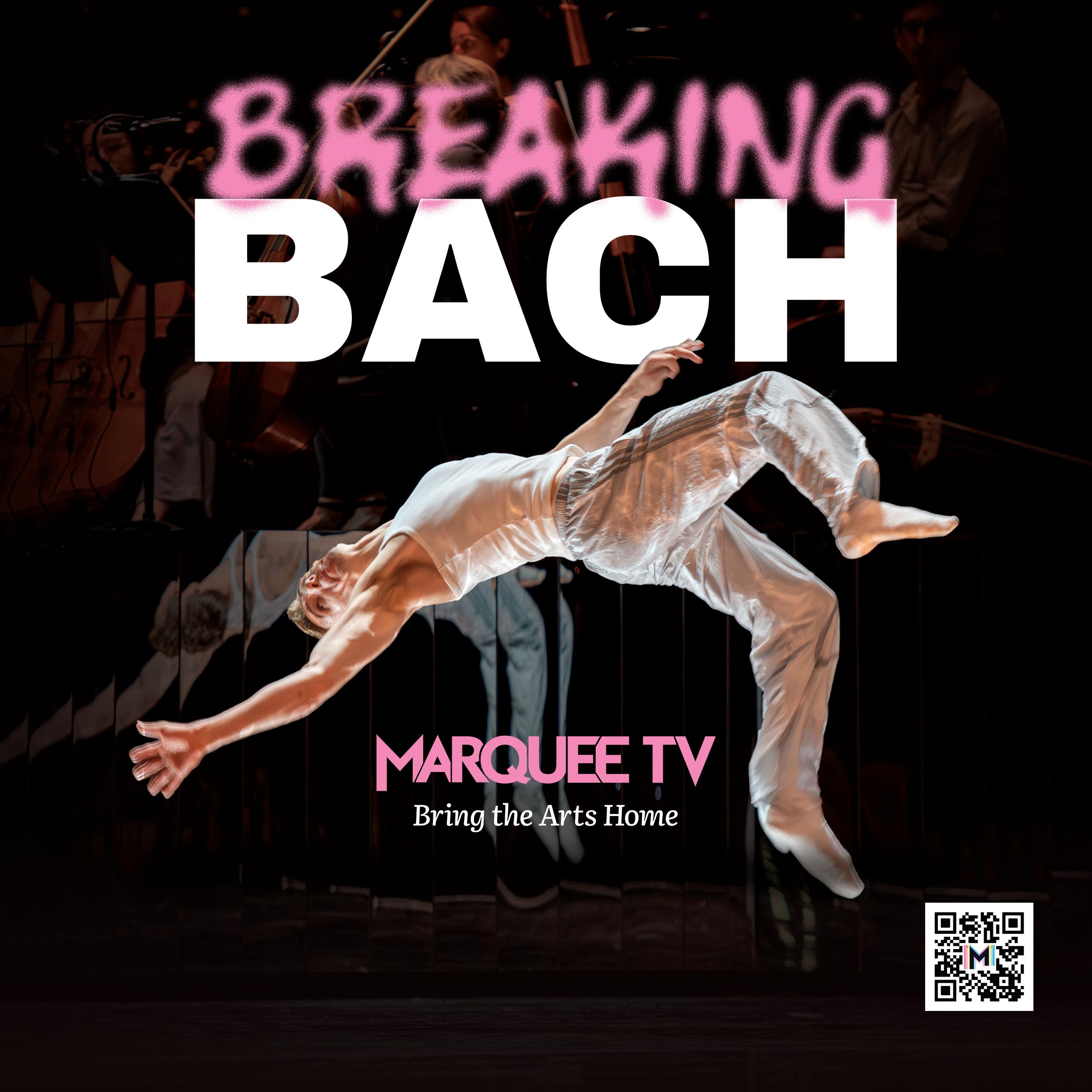
Breaking Bach pairs hip hop dancers with Bach’s complex rhythms in a bold collaboration with Kim Brandstrup and the Orchestra of the Age of Enlightenment. Stream it now.

Bach’s Metaphysical Passion
Joanna Wyld
To butcher the Oscar Wilde quote: to write one extraordinary Passion may be regarded as a miracle, to write two looks like showing off. In fact, JS Bach probably wrote several, all but two of which are lost. The couple that remain, the St John and St Matthew Passions, are among the pinnacles of Western music, and while there are dangers in putting composers on pedestals, it remains staggering that one mind could create such beauty (without even mentioning the rest of his output).
In 1723, JS Bach was appointed Director of Music in Leipzig and Cantor of the St Thomas Boys Choir, made up of boys from the city’s Thomasschule and affiliated with the Thomaskirche. Bach’s duties included teaching Latin (a task he delegated to a deputy); training four choirs of school-boys; giving instrumental lessons to the most promising pupils; and producing music for four of the city’s churches – as well as for its civic ceremonies. Bach retained his position in Leipzig until his death in 1750. Throughout this time, Passiontide was the focal point of the Lutheran ecclesiastical year. No music was permitted during Lent, as part of the general abstinence from excess, and this afforded the musical contingent of the church more time in which to prepare Bach’s music.
The authorities at another Leipzig church, the Neue Kirche, had introduced an oratorio Passion into their Good Friday vesper liturgy on 26 March 1717, a few years before Bach’s arrival in the city. It seems unlikely that any of those involved in this decision could have anticipated quite what this would mean for the history of music. Yet while Bach’s name is now inextricably linked with the musical Passion, his contributions to the genre formed part of a wider tradition.
Passion plays dated back to the 13th century; by the 15th century, musical versions were evolving into richly textured settings of Biblical texts, performed by singers representing both the crowd and groups of individuals. By the 16th century, several Passion forms were emerging within the Catholic liturgy. In the Lutheran tradition, Martin Luther’s friend Johannes Walter was instrumental in developing the evangelical Passion style, which also included intricate music for groups of singers; three fine examples of this Passion style were written by Heinrich Schütz. What then emerged was the ‘oratorio Passion’; in north
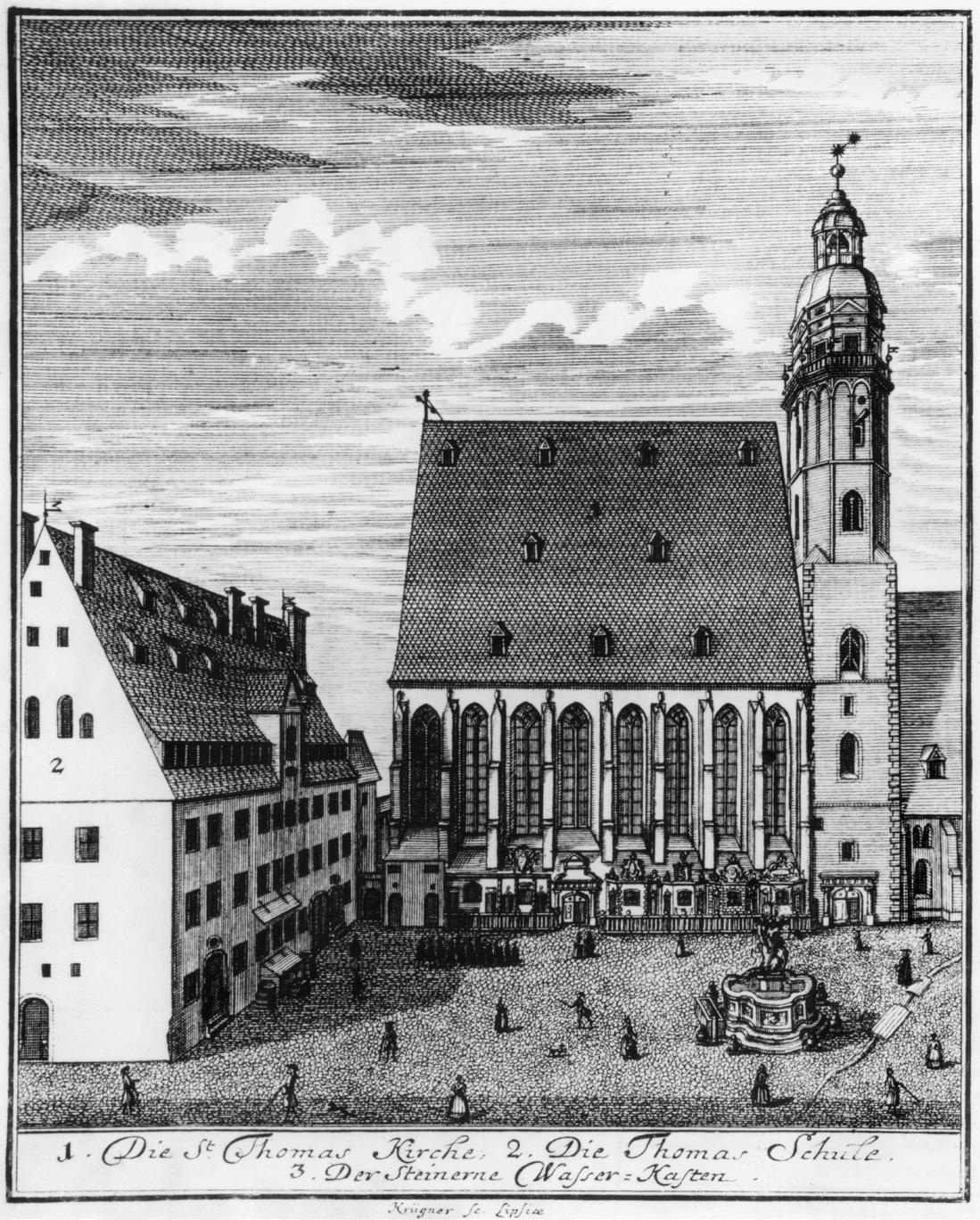
St Thomas Church and School in Leipzig, 1723 (engraving) by Krugner, Johann Gottfried. Credit: Bridgeman Images.
Germany, from the middle of the 17th century, Passion narratives were decorated with arias and chorales with instrumental accompaniment. The choice of text evolved from the Passiontide sermons given in Lutheran churches, which included reflections on each scene of Christ’s Passion. The oratorio came to be performed in two halves, framing the sermon itself.
This trend for oratorio Passions was eventually accepted in conservative Leipzig just in time for Bach to explore the form. Following the Neue Kirche’s lead, the Thomaskirche introduced the custom in 1721. The sexton Johann Christoph Rost noted that ‘on Good Friday of the year 1721, in the vesper service, the Passion was performed for the first time in concerted style.’ This was just two years before JS Bach took up his position as Cantor, and Johann Kuhnau’s St Mark Passion, performed there, became an important model for Bach’s works. Bach had also made a transcript of Reinhard Keiser’s St Mark Passion when he was in Weimar, some time before 1714, so his interest in the form preceded his move to Leipzig, while some research suggests that several numbers used in the 1725 version of the St John Passion may date from an earlier Passion composed by Bach in 1717, now lost.
Bach’s addition of arias, akin to the Italian operatic style, and of larger opening and closing choruses to bookend the work more emphatically, were among the innovative enhancements he made to the oratorio Passion style. The frequency of the chorales, with their deeply expressive four-part writing, was also new. Bach’s characteristic mature style is most evident in the arias and opening and closing choruses, and much of the St John Passion bears a strong relationship with late 17th-century Lutheran precedents, in particular in the clarity of the choruses, which closely follow the action.
The St John Passion details Christ’s arrest, trial and crucifixion, with recitatives performed by Christ, Pilate, Peter, and John, the Evangelist. The arias comment upon and pause the action, creating moments of meditation; in Part One there are just three. The chorus represents the crowd (the people, soldiers and priests); in the chorales, it represents us, too.
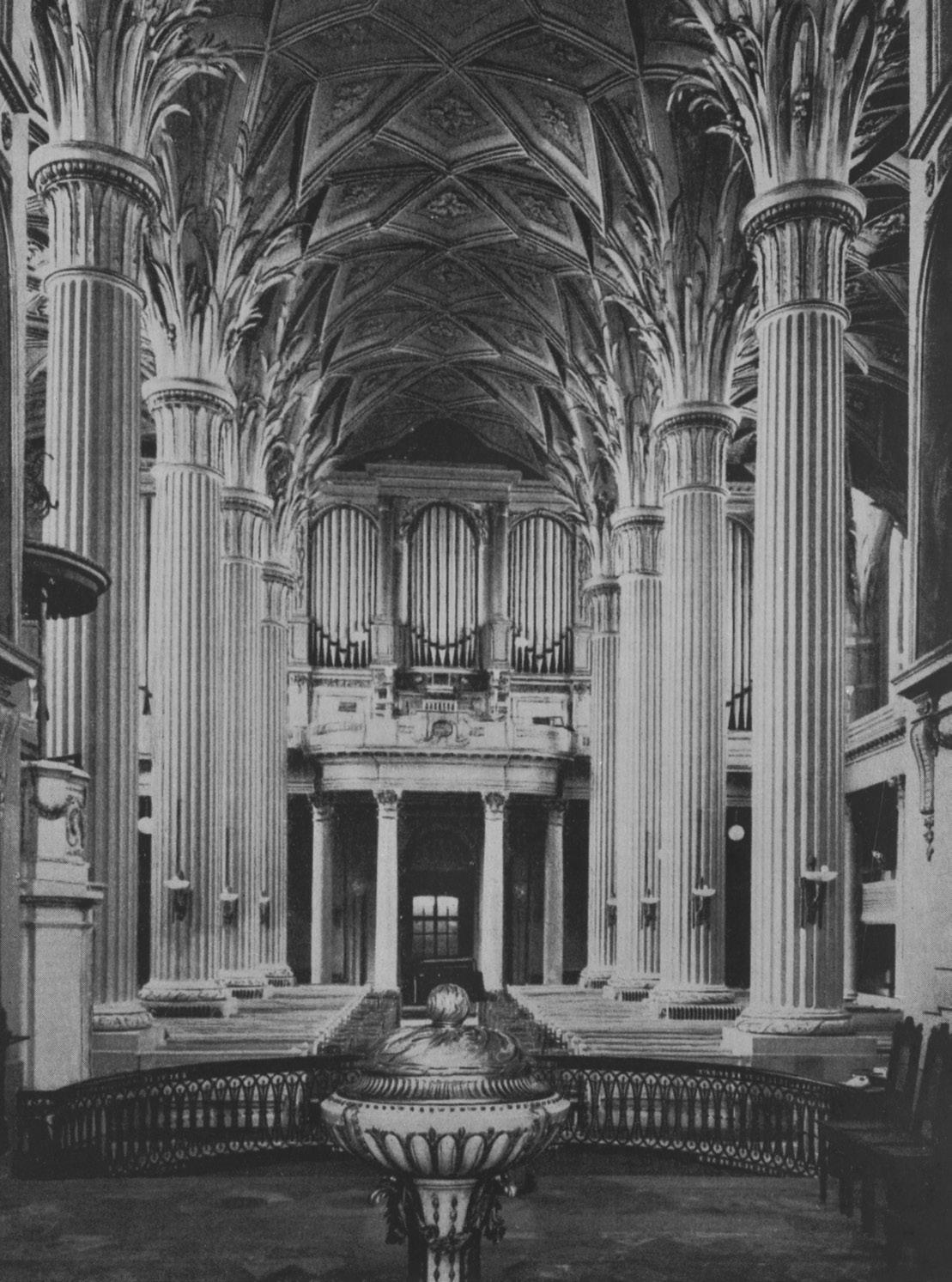
Bach wrote the St John Passion for the Good Friday vespers of 1724, working on the assumption that it would be performed in the Thomaskirche. However, the Leipzig consistory (church council) decreed that the work be performed at the Nikolaikirche, because Passion performances alternated between these two churches each year. Bach only agreed to comply when his requests – that more room be made in the choir loft of the Nikolaikirche, and its harpsichord repaired – were met. He was asserting his authority while ensuring that his music be performed with the best possible forces (he wrote with frustration of Leipzig’s ‘deficiency of indispensable players’).
The unprecedented drama and intensity of the St John Passion must have had a profound impact on the Leipzig congregation hearing the work for the first time; the crowd scenes are as theatrical as anything one might find in Baroque opera. Yet this was relatable drama, too; public executions were a grim part of Leipzig life, so the earthier aspects of the Passion story, far from depicting something remotely historical, would have had vivid resonance.
View of the nave and organ, St Nicholas Church, Leipzig, Germany by JFC Dauthe. Credit: Bildarchiv Foto Marburg / Bridgeman Images.
Bach revised the St John Passion for performance in 1725, and then made further adjustments (many of them reverting to the original) for performance in the early 1730s, partly reflecting shifting musical tastes (in 1730 he wrote that ‘taste has changed astonishingly’). Even so, his ongoing frustration with the Leipzig authorities must have been aggravated by what followed. In 1732, writer Christian Gerber denounced theatrical Passion music in Saxony, arguing that ‘if some of those first Christians should rise, visit our assemblies, and hear such roaring organ together with so many instruments, I do not believe that they would recognise us as Christians and their successors.’ For modern listeners, Christian and non-Christian alike, objecting to Bach’s Passions on spiritual grounds seems unfathomable. Yet the consistory felt compelled to respond, and in 1739 called a halt to Passion performances until special permission was granted. Bach had begun to write out a definitive score to the St John Passion, but, following this news, stopped; the remainder was completed by a copyist. The fourth and final version of the St John Passion appeared in 1749, omitting some of the more vivid illustrative language.
That language stemmed from several textual sources, on account of the Leipzig consistory requiring that Passions adhere closely to the Biblical text, not solely on poetic interpretations. One such Passion poem was by BH Brockes, ‘Der für die Sünde der Welt Gemarterte und Sterbende Jesus’, dating from 1712; from this, and the ‘St John Passion’ libretto by CH Postel (c.1700), as well as words by Christian Weise, the text for Bach’s St John Passion was formed. What with these various sources in addition to Biblical quotations, the text can feel a little uneven (in contrast with the more unified text of the later St Matthew Passion by Bach’s regular librettist, Picander) – an attribute made up for by the consistent beauty of the music.
St John’s Gospel is distinct from the three ‘synoptic’ Gospels in its more metaphysical, poetic style, characteristics reflected in the libretto to Bach’s work. John presents Christ’s life and death in the context of a vast universe (‘In the beginning was the Word’), and, in keeping with Western philosophical traditions, seeks to communicate the universal significance of Christ, ‘the Word made flesh’. In this context, Christ’s death represents a return to his Father, and his human suffering is described less pointedly than in other accounts. The crucifixion is a victory: over death, and of the Gospel narrative itself, which has been aiming towards this moment of reconciliation: ‘It is accomplished’.
The text to Bach’s St John Passion frequently returns to this theme of Christ as the eternal Saviour: beyond our reach, yet made human for our salvation. The opening chorus presents Christ as an eternal ruler; but Bach’s music roots the action in human experience, the insistent G minor and plaintive oboes, playing chains of dissonances, creating a compelling sense of foreboding. The oboes are prominent again in the aria ‘Von den Stricken meiner Sünden’, while in the aria ‘Ich folge dir gleichfalls’, flowing flute lines intertwine with the elaborate soprano part. ‘Ach, mein Sinn’ is a passionate tenor solo accompanied by the full ensemble.
Peter’s lament and the scourging of Christ are two instances of the St John Passion’s deeply poignant musical evocations of searing emotion. Peter’s weeping after denying Christ is depicted with almost ostentatious pathos, with extended melismas and both rising and falling chromatic lines – which the congregation would have understood as conventional musical means for expressing grief. (Neither of these moments is as intensely scored in the St Matthew Passion.)
The pivotal chorale ‘Durch dein Gefängnis’ encapsulates the paradoxical nature of Christ’s Passion: through his captivity, humanity is set free. This comes as part of the trial scene at the heart of the work. Uninterrupted by arias, the emphasis is on action rather than commentary. John’s Gospel itself places the trial at the centre of the account, and is a highly organised narrative; Bach reflects this with the organisation of this scene in the Passion, which has a precisely arranged key plan, recurring choruses, and a sense of symmetry.
In the aria ‘Es ist vollbracht’ (‘It is accomplished’), Christ’s death is mourned with an alto aria punctuated by a sorrowful viola da gamba solo. There follows one of several instances of Bach combining an older chorale with new poetry in ‘Mein teurer Heiland’, and the tearing of the Temple curtain is vividly illustrated with trembling instrumentation.
Following this succession of exquisitely constructed arias and intense depictions of the action, Bach’s exceptionally long final chorus brings peace and resolution – somehow the more overwhelming for its understated delicacy, expressing a profound sense of hope. The text is a prayer anticipating the eternal rest brought by death, asking that when that time arrives we may, free at last from pain, see God.
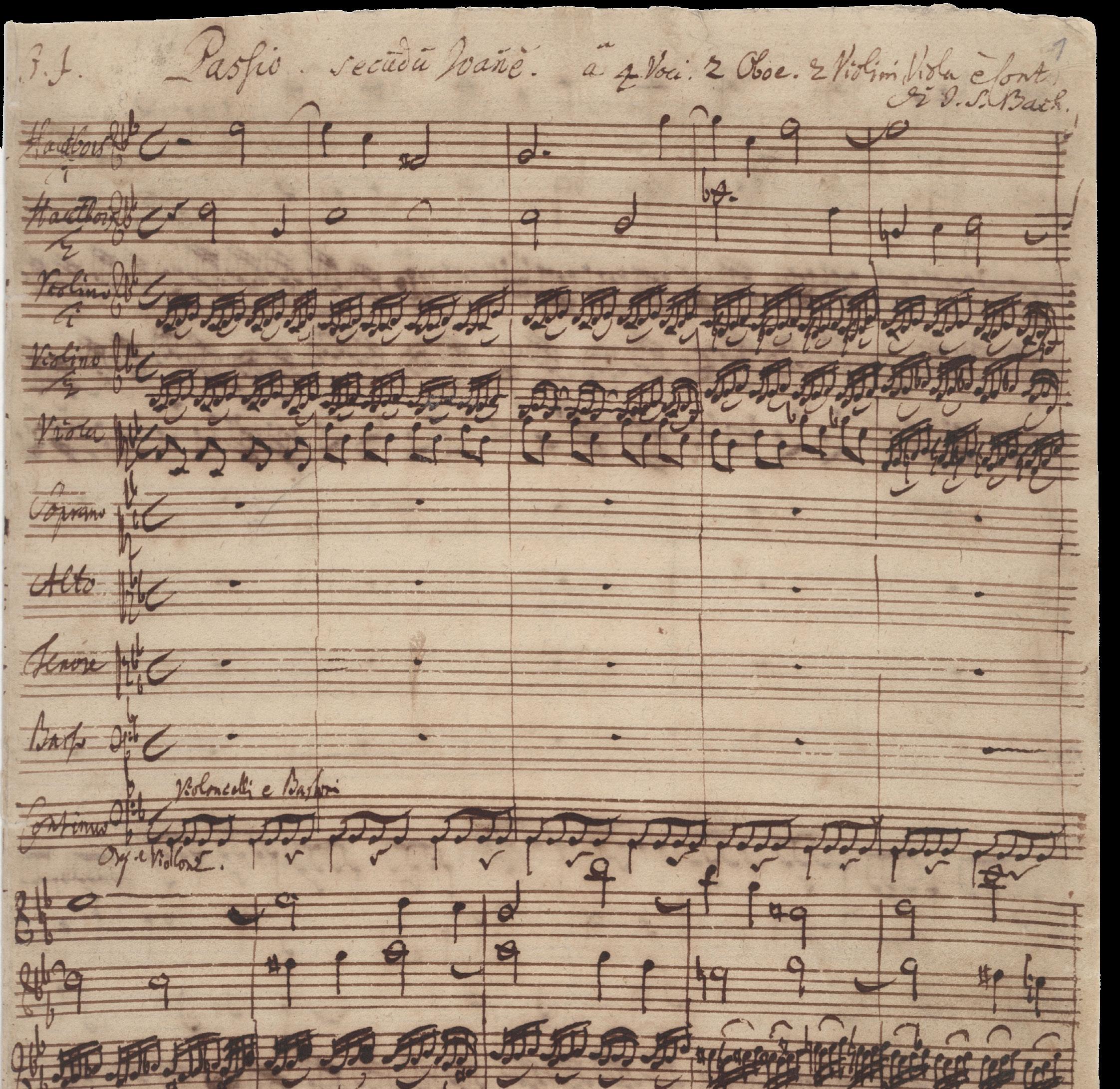
Autograph of the first page of the Johannespassion by Johann Sebastian Bach. Photo / Scan: Furfur, Public domain, via Wikimedia Commons

We are going to start our own orchestra
Jan Schlapp, a founding player, recalls the OAE’s beginning
I find it difficult to untangle the many strands of myth and memory that surround the beginning of the OAE. My personal memory is of my late husband, cellist Timothy Mason, coming home after a day of rehearsals in 1985, fired up with enthusiasm, saying “We are going to start our own orchestra and it is going to be player-led”. Busy as I was with two very young children I was initially less than enthusiastic because it seemed an almost impossible idea – where would the money come from? How would we organise it? Who would be involved?
The seed of the idea had been planted by regular conversations between the bassoonist, Felix Warnock, the violinist Marshall Marcus, and Tim, about how to break free from the status quo of London period orchestras. We had little say in any of these orchestras and we felt a bit underappreciated. But more important was the fact that we couldn’t tap into what was going on the continent. The BBC were broadcasting several of the continental giants of period performance such as Harnoncourt, Kuijken, Brüggen, Leonhardt, Christie and Koopman, but we couldn’t access their knowledge and experience. Their way of exploring baroque music was different from our English directors and fascinating to us, because of their intellectual seriousness and their depth of knowledge about
instruments, phrasing, repertoire and style. They had been involved in period instrument performance much longer than us and we wanted to be free to absorb it all. At that time we had no way of inviting them to come to work with us in the UK.
Gradually, in discussion with all interested parties, the idea of a player-led orchestra took shape. Sponsorship was found. Everyone would be paid the same, there would be at least three leaders, and there would be an artistic committee elected by the players who would lead on concerts and repertoire. And out of this “organised chaos” as Marshall put it, came our first London concert in the Queen Elizabeth Hall in June 1986 with Sigiswald Kuijken directing a programme moving from Rameau to Haydn. This marked the beginning of OAE’s journey. Forty years on, that journey continues today, still with the same ethos and the shared excitement of discovery.
Read Jan’s full article about how the OAE was founded on our blog at oae.co.uk/start
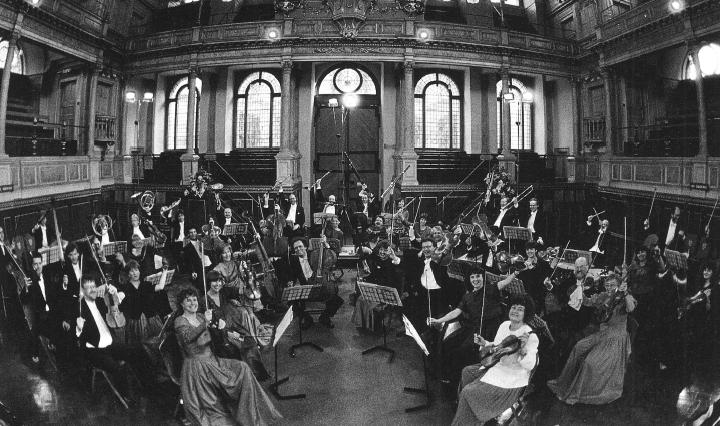
Pre-concert at the Sheldonian Theatre. Credit Susan Benn
A seat with a view
Huw Daniel (violin)
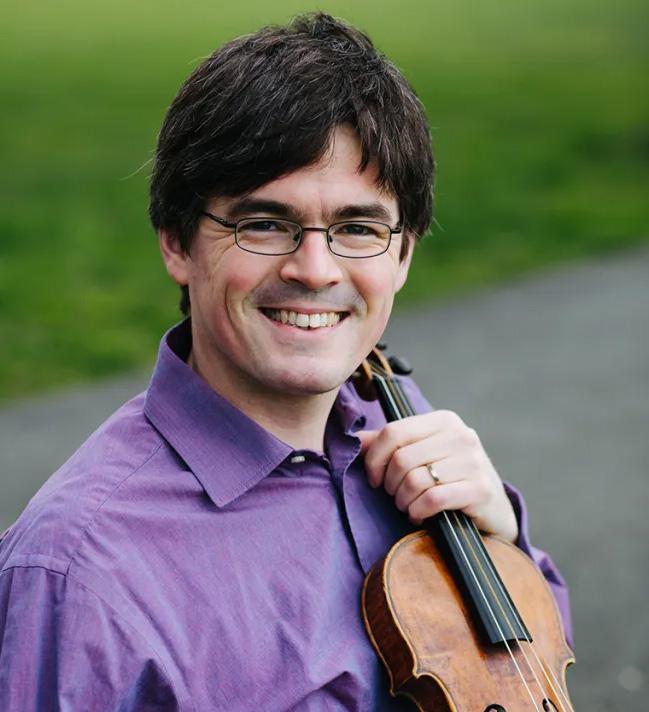
The thing that drew me to the baroque violin was playing the organ, funnily enough. I played a lot of Bach on the organ and that really did draw me towards baroque music – although the violin was always my main instrument. And then when I was at the Royal Academy of Music, I got a lot more into that world, being taught by Simon Standage and also Michaela Comberti. I went to their concerts and could see that it was possible to make a living as a baroque violinist.
Sometimes we’d get coaching from OAE players, and there was one project where they got some of us students to come and play in a piano trio before an OAE concert with Bob Levin. I couldn’t have asked for a better experience, really. I think my first project with the OAE was around 2003, just after I’d left the Academy – a Brahms Requiem, with Simon Rattle conducting. I was playing first violin, and having been so immersed in baroque repertoire I felt completely out of my depth. But anyway, I tried my best.
Nowadays I have two violins – a baroque violin, which I use for baroque and classical rep up to about Beethoven, and then another for the later stuff, although I don’t lead the later repertoire: I leave that to the other three leaders, who are more expert! I became one of the OAE’s leaders in 2017. Pavlo Beznosiuk was meant to be directing and playing the solos in the Brandenburg Concertos, but he’d been unwell and realised on the day of the first concert that he couldn’t play. So I took over the solo parts, which luckily I had played before.
It felt good – with the Brandenburgs, it wasn’t the huge deal that I could imagine it being with certain other pieces. I also liked the fact that throughout the OAE everybody has an opinion. Nobody’s just playing along; everybody cares deeply about what they’re doing and is ready to ask questions. Personally, I prefer to lead when someone else is conducting. One recent concert sticks out in my memory, which was Beethoven’s Fourth and Fifth symphonies with Adam Fischer. There were imperfections, but the energy was really, really special. I came back from that concert thinking it was the best thing I’ve ever done with the orchestra!
Huw was talking to Richard Bratby

Biographies
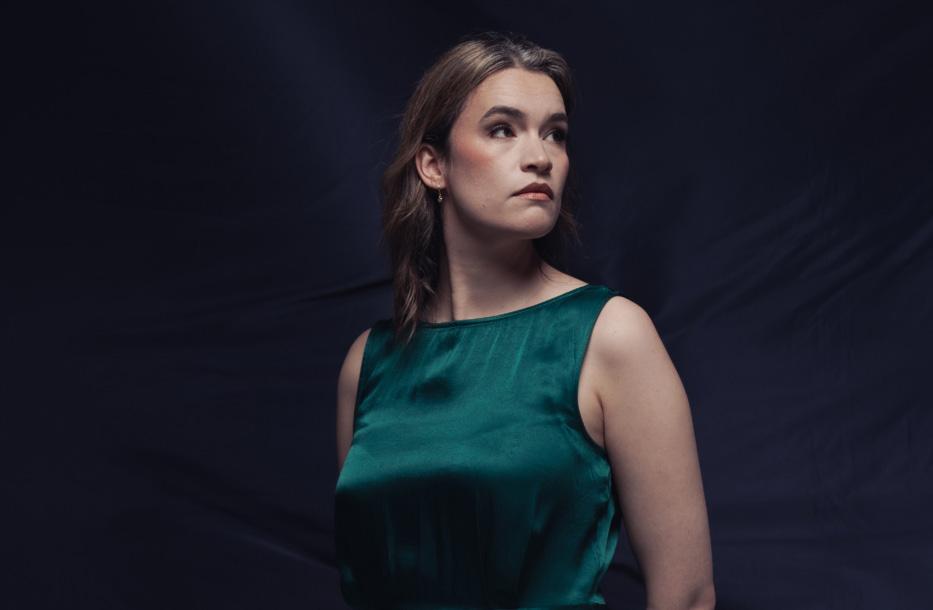
HELEN CHARLSTON Mezzo-soprano
Helen Charlston’s ability to make each performance completely her own and her depth of connection with audiences has earned her international acclaim as “one of the most exciting voices in the new generation of British singers” (Alexandra Coghlan, Gramophone). She was recently a BBC Radio 3 New Generation Artist (2021 – 23), and was the 2023 Gramophone Award winner for Best Concept Album and also collected the Vocal award at the BBC Music Magazine Awards for her second Delphian album: Battle Cry.
This season, Helen makes her debut at Dutch National Opera in the world premiere of Michel van der Aa’s Theory of Flames in the role of Marianne. On the concert platform she sings Mozart Requiem at Casa da Musica under Andreas Spering and also the Czech Philharmonic under Giovanni Antonini, Bach B Minor Mass with De Nederlandse Bachvereniging and Richard Egarr, Bach St Matthew Passion with the Antwerp Symphony Orchestra under Laurence Cummings, and Dido in Dido & Aeneas on tour in Asia and Europe with Les Arts Florissants. In recital she collaborates with the Consone Quartet at the Brighton Early Music Festival and also at Oxford Song, with Sholto Kynoch at the Wimbledon Festival and the National Centre for Early Music amongst other venues, with Roman Rabinovich in Canada, and she performs an ensemble programme at Fundación Juan March in Madrid.
Further appearances on the concert platform include Bach B Minor Mass with the Scottish Chamber Orchestra, Mendelssohn’s Elijah at the BBC Proms, Britten’s Phaedra live in concert with BBC Philharmonic, Handel’s Judas Maccabaeus with the RIAS Kammerchor at the Berlin Philharmonie, and also Bach’s Magnificat in South Korea, and Bach’s Christmas Oratorio with WDR Köln.
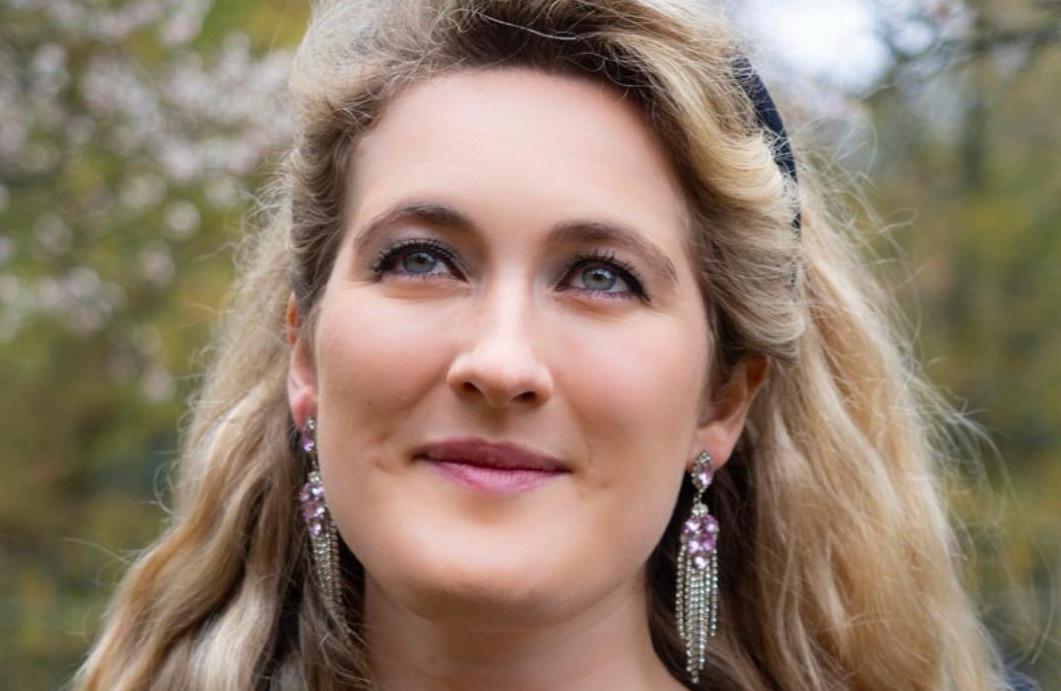
HILARY CRONIN Soprano
Praised by Classical Voice North America for her “shining, rounded timbre,” Hilary Cronin won both First Prize and Audience Prize at the 2021 London Handel International Singing Competition and was selected by BBC Music Magazine as a “Rising Star of 2022.” Conductors with whom she has worked include Sofi Jeannin, David Bates, Kristian Bezuidenhout, Harry Bicket, Harry Christophers, Jonathan Cohen, Laurence Cummings, Christian Curnyn, Maxim Emelyanychev, John Eliot Gardiner, Robert King, Stephen Layton, Paul McCreesh, Trevor Pinnock, Christophe Rousset, Andras Schiff, Dinis Sousa and Peter Whelan.
She made her BBC Proms debut in 2025 singing Handel’s Alexander’s Feast, and her current engagements include her debut at MusikTheater an der Wien singing the title role in a new production of Cesti’s L’Orontea and Melissa Amadigi with The

English Concert at Buxton International Festival. With Polyphony, she sings JS Bach Christmas Oratorio and Messiah; with Springhead Constellation, she tours JS Bach Easter Oratorio and Mendelssohn Lobgesang; with Royal Northern Sinfonia, she sings Mahler Symphony No. 4; and with Gabrieli ROAR, she appears in Baroque Masterpieces. She will also join Arcangelo to sing Handel’s Nine German Arias at London Handel Festival; Irish Baroque Orchestra to sing Messiah; and The King’s Consort to sing Coronation of King George and Messiah.
Her growing discography now includes JS Bach Christmas Oratorio (DGG); Charpentier A Baroque Christmas (SDG CD); Handel Chandos Anthems (Alpha Classics); Howells Sine nomine (Hyperíon); Dido and Aeneas (Pentatone); and Telemann DonnerOde (cpo). Hilary Cronin is delighted again to be making music with Orchestra of the Age of Enlightenment.
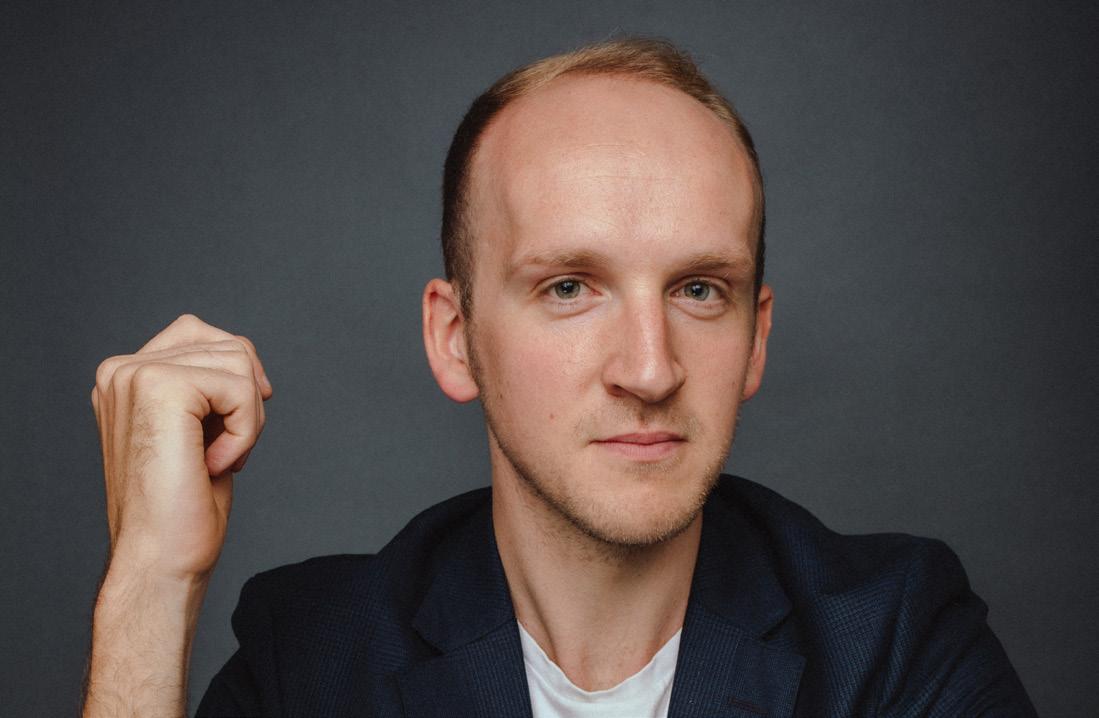
PETER EDGE Christus (baritone)
Shropshire-born baritone Peter Edge is a Rising Star of the Orchestra of the Age of Enlightenment (2025 – 27) and Rising Star of Voice at the Edinburgh International Festival (2025). He was a finalist in the 2025 London Handel Festival Singing Competition and runner-up in the London Bach Singers Prize. He has appeared as a principal artist with English National Opera, English Touring Opera, The Grange Festival, Longborough Festival Opera, Opera North, and the Royal Ballet and Opera.
In March 2026, Peter made his Asian debut, performing Bach’s B Minor Mass and Mozart’s Requiem with the Constellation Choir and Orchestra under Sir John Eliot Gardiner, at the Hong Kong Arts Festival and Seoul Arts Centre. Later in the year, Peter returns for
his third season at The Grange Festival, and makes his European operatic debut in the role of Nicandro in Handel’s Atalanta at the Innsbrucker Festwochen der Alten Musik.
Alongside his performing career, Peter is also an award-winning triathlete and singing teacher. peteredgebaritone.co.uk
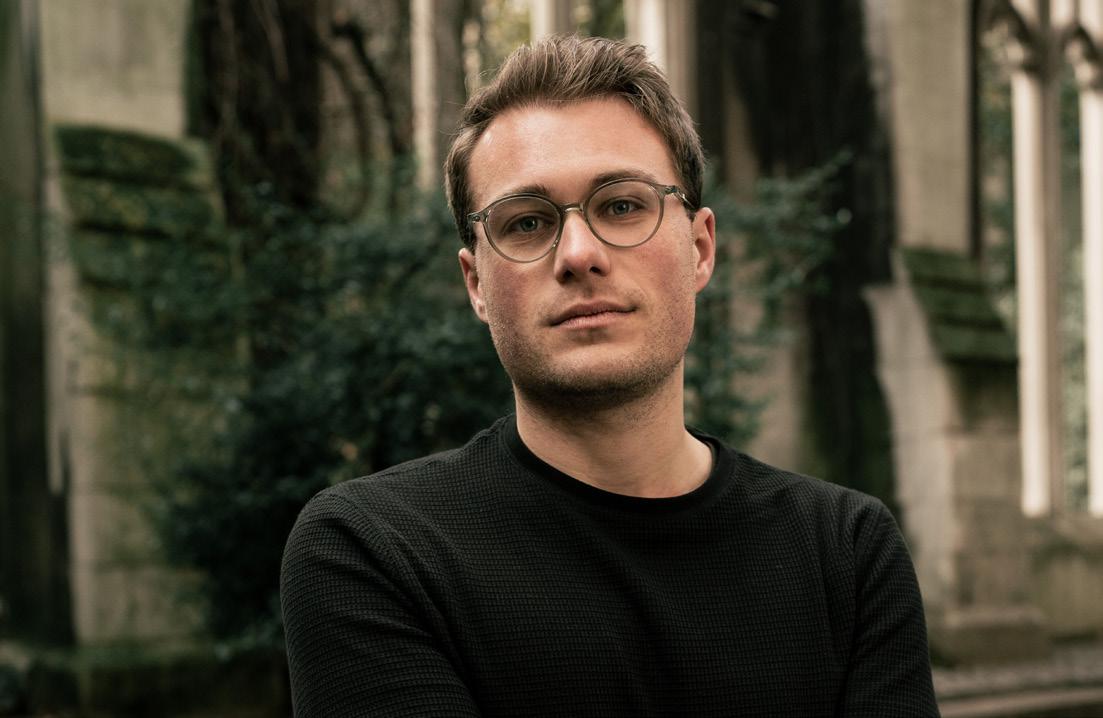
JONATHAN HANLEY Tenor
Jonathan Hanley is a British tenor, at home as both a soloist and ensemble singer. He is a graduate of the University of York, and was a member of the Genesis Sixteen and Monteverdi Choir Apprenticeship Programme.
As a soloist, he has performed around the UK, North America, and Europe. Recent highlights are Bach Mass in B Minor (Carnegie Hall, Elbphilharmonie, Hong Kong Arts Festival, Seoul Arts Center), Christmas Oratorio (Teatro alla Scala, Palais de Versailles, St Patrick’s Cathedral, Dublin), Handel L’Allegro, il penseroso, ed il moderato (Carnegie Hall, Harris Theater, Chicago), Acis and Galatea (London Handel Festival) and Britten St Nicolas (York Minster). He has worked as a soloist with the Monteverdi Choir and the English Baroque Soloists under the batons of Sir John Eliot Gardiner and Dinis Sousa, as well as Concerto Copenhagen, the Gabrieli Consort, the Irish Baroque Orchestra, the English Concert, and the Orchestra of the Age of Enlightenment. As a soloist, Jonathan has recorded with the English Concert, the Monteverdi Choir and La Grande Chapelle. Jonathan also enjoys performing English song and lieder, often collaborating with pianist Gavin Roberts, most recently performing in Luxembourg at the Salon de Helen Buchholz.

Jonathan is also a member of Stile Antico, and performs regularly with some of the best vocal ensembles in the world such as the Tallis Scholars, Vox Luminis, and the Monteverdi Choir.
Among other things, 2026 sees Jonathan joining the John Eliot Gardiner’s Springhead Constellation as a soloist on tours of Bach and Mendelssohn in Asia and Europe, and yet more Bach with Vox Luminis, Freiburger Barockorchester and Lionel Meunier, alongside a busy international schedule with Stile Antico.
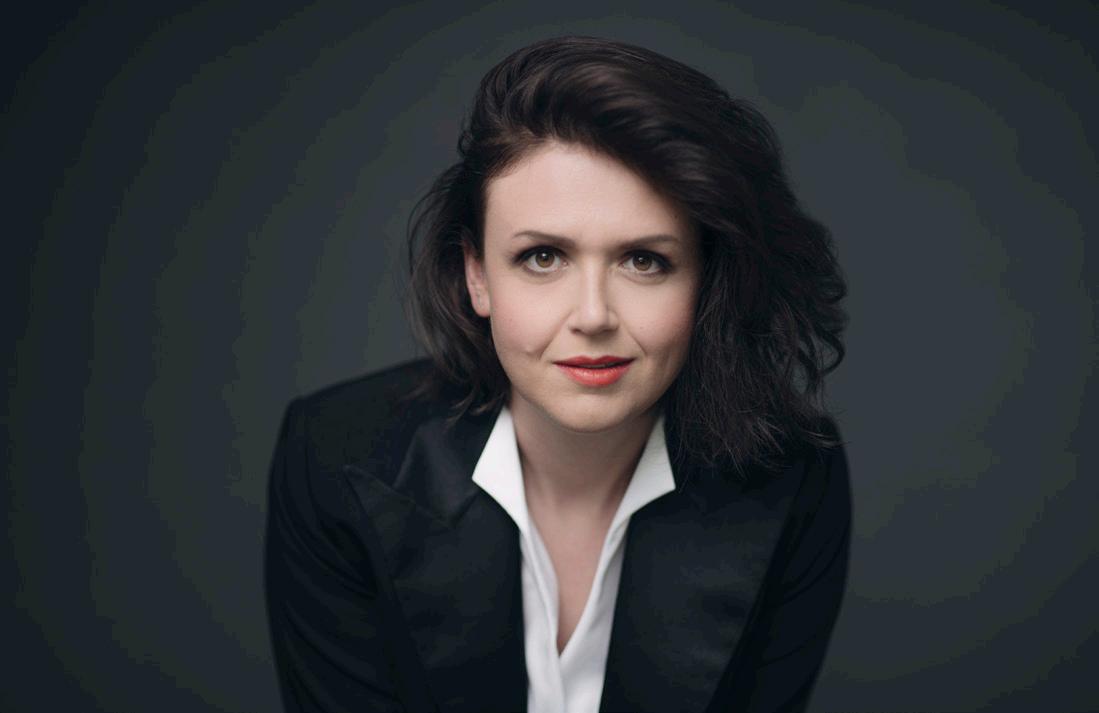
JOHANNA SOLLER Conductor
Johanna Soller is a conductor, harpsichordist and organist, and one of the most versatile artists of her generation. Rooted in historical performance practice, her passion for words and musical speech in particular forms the basis of her musical work. In May 2025 she took up her appointment as Artistic Leader of the Netherlands Bach Society, whose tour of Bach’s St Matthew Passion she conducted in 2024. She has been Artistic Director of the Munich Bach Choir and Orchestra since the 2023 / 24 season and will hold this position until July 2026.
She also established the baroque ensemble capella sollertia, consisting of a professional vocal ensemble and an orchestra on period instruments, with whom she organizes the Bach cantata series Cantate um 1715 in Munich. A focus of the ensemble’s work is the rediscovery of forgotten works from Bach’s environment. A complete recording of Johann Ludwig Bach’s cantatas is published with the label Ricercar in January 2026.
Johanna Soller is a regular guest conductor both with baroque ensembles and modern orchestras, such as the Dunedin Consort, Munich Symphony Orchestra and the Orquesta de Córdoba. Future highlights include the Orchestra of the Age of Enlightenment, the B’Rock Orchestra, the Kammerakademie Potsdam, the Rotterdam Philharmonic Orchestra and the Antwerp Symphony Orchestra.
As a sought-after choral conductor and specialist for vocal music, she has rehearsed for ensembles such as the MDR Radio Choir Leipzig, as well as for conductors such as Zubin Mehta and Sir Simon Rattle. She was scholarship holder in the Conducting Forum of the German Music Council.
Soller is also in demand in the field of opera, where she has made a name for herself as Maestra al cembalo. In 2025 she conducted Handel’s Susanna at Opera North. She was previously engaged as a Studienleiter at the Theater an der Wien. Her debut as an opera conductor she made with Handel’s Giulio Cesare in Egitto. From 2019 to 2023, she was Musical Director of the Munich Chamber Opera, where she conducted productions such as Mozart’s Le Nozze di Figaro. In the current season she leads at Kammerakademie Potsdam.
Soller has been teaching her own oratorio class as well as basso continuo playing and sight reading at the Hochschule für Musik und Theater Munich.
An accomplished basso continuo player, both on harpsichord and organ, she has performed with ensembles such as the Freiburg Baroque Orchestra and Vox Luminis. Her chamber music partners include artists such as Kristin von der Goltz. Sonatas by Fontana and Castelli have been released on CD with oboist Tamar Inbar. From 2016 to 2025, Soller held the position of main organist at Munich’s oldest parish church St. Peter. Solo recitals have taken her to major organ concert series.
Soller is a prizewinner of the Prague Spring International Music Competition and a scholarship holder of the German Music Competition. She was awarded the Bavarian Art Promotion Prize and the Eugen Jochum Prize for Conductors.
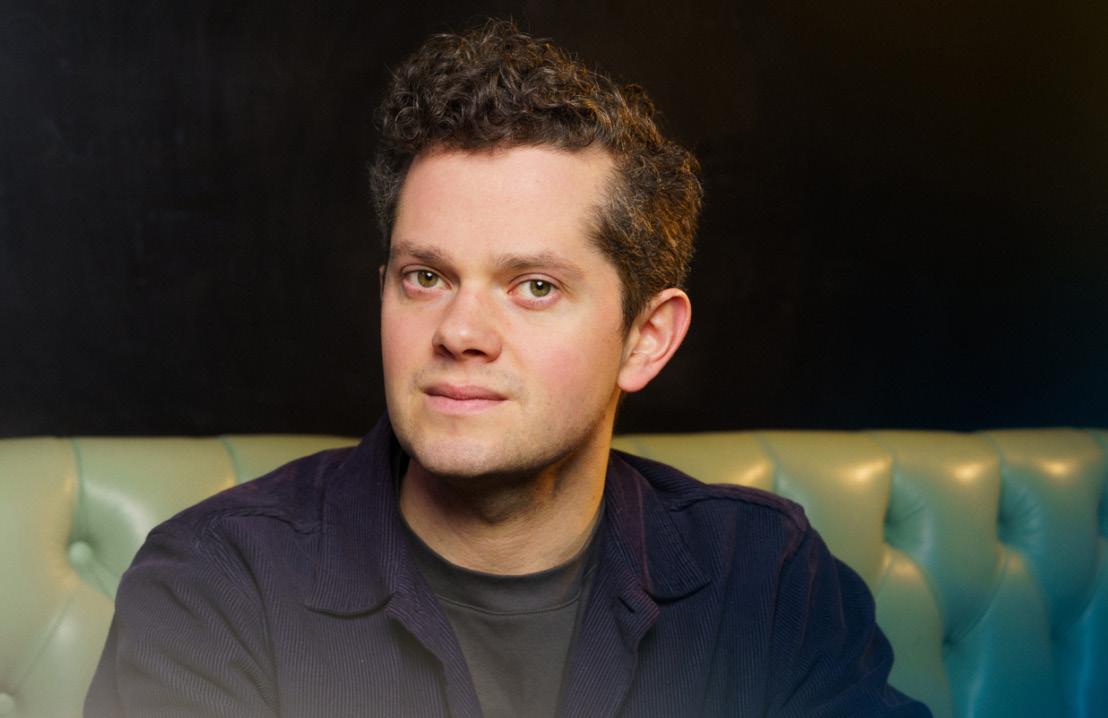
JAMES WAY Evangelist (tenor)
Tenor James Way is fast gaining international recognition for the versatility of his voice and commanding stage presence. James is passionate about a career taking in a variety of music as both performer and artistic director. Having followed his initial interest in baroque music through the young artist programmes of Les Arts Florissants and the Orchestra of the Age of Enlightenment he immediately became in demand as a soloist for conductors including William Christie, Rene Jacobs, Harry Bicket and Trevor Pinnock.
He is equally comfortable in later repertoire and has a particular affinity for the music of Britten and Stravinsky. His performances include Flute in Britten’s A Midsummer Night’s Dream with Dalia Stasevska at Glyndebourne Festival and also for Garsington Festival under Douglas Boyd, The Son in Laurent Pelly’s production of Les Mamelles de Tiresias (winner of Best New Opera Production at the 2022 Opera Awards) with Robin Ticciati also for Glyndebourne Festival, Young King George Benjamin Lessons in Love and Violence with Orchestre de Paris, Sellem in Stravinsky’s The Rake’s Progress with the Munich Philharmonic and Barbara Hannigan and Holy Fool Boris Godunov with the Philharmonia Orchestra under Jakub Hrůša. Performances of various Handel roles continue to take him around the world with performances at Carnegie Hall, Tokyo Opera City, Barbican and Paris Philharmonie amongst others.
This coming season’s highlights include returning to Glyndebourne for Britten’s A Midsummer Night’s Dream Flute with Bertie Baigent, Hans Zender’s arrangement of Schubert Winterreise with the Belgrade Philharmonic Orchestra, Bach St Matthew Passion with Antwerp Symphony Orchestra and Laurence Cummings, Bach St John Passion with Orchestra of the Age of Enlightenment and l’Opera Royal de Versailles, a tour of Mozart’s C Minor Mass with the Orchestra of the 18th Century as well as projects with Les Arts Florissants.
His Britten Canticles recording for Delphian, alongside pianist Natalie Burch, has been nominated for a 2025 Gramophone Award.
Chief Executive
Crispin Woodhead
Chief Operating Officer
Edward Shaw
BUSINESS DEVELOPMENT
Business Development
Director
Jo Perry
DEVELOPMENT
Development Officer
Emma Badman
Head of Grants (maternity leave)
Madison Hallworth
Head of Grants (maternity cover)
Samantha Haycock
Development Director
Harry Hickmore
Head of Individual Giving (maternity cover)
Luka Lah
Development Officer
Eric Ohlund
Head of Individual Giving (maternity leave)
Hattie Rayfield-Williams
DIGITAL
Head of Digital Content
Zen Grisdale
EDUCATION
Education Director
Cherry Forbes
Education Officer
Sofia Swenson-Wright
FINANCE
Accounts Officer
Dylan Carter
Finance Director (maternity leave)
Mary Price
Finance Director (maternity cover)
Catherine Sullivan
Finance Manager
Chloe Tsang
MARKETING
Marketing Director
Doug Buist
Ticketing & Data Manager
Paola Rossi
Marketing Officer
Dora Tsang
PROJECTS
Projects Director
Sophie Adams
Projects Manager
Ed Ault
Projects Officer
Doug Findlay
Orchestra Consultant
Philippa Brownsword
Choir Manager
David Clegg
Librarian
Roy Mowatt
OAE-Acland Burghley
School Link
Anna Rimington
LEADERS
Huw Daniel
Kati Debretzeni
Margaret Faultless
Matthew Truscott
PLAYERS’ ARTISTIC COMMITTEE
Cecelia Bruggemeyer (Chair)
Alexandra Bellamy
Daniel Edgar
Katherine Spencer
Christine Sticher
PRINCIPAL ARTISTS
John Butt
Sir Mark Elder
Adam Fischer
Iván Fischer
Vladimir Jurowski
Sir Simon Rattle
Sir András Schiff
EMERITUS CONDUCTORS
William Christie
Sir Roger Norrington
LIFE PRESIDENT
Sir Martin Smith
BOARD OF DIRECTORS
Imogen Charlton-Edwards (Chair)
Daniel Alexander
Emma-Jane Azkoul
Alexandra Bellamy
Cecelia Bruggemeyer
Daniel Edgar
Adrian Frost
Alison McFadyen
Roger Mountford
Katherine Spencer
Christine Sticher
Dr. Susan Tranter
Elly Williamson
Crispin Woodhead
OAE TRUST
Adrian Frost (Chair)
Mark Allen
Imogen Charlton-Edwards
Hannah Yan Field
Dino Fontes
Paul Forman
Jessica Kemp
Maarten Slendebroek
Jessica Smith
Sir Martin Smith
Caroline Steane
Season curated by Annette Isserlis
Season identity by
Hannah Yates
Welcome to the Southbank Centre
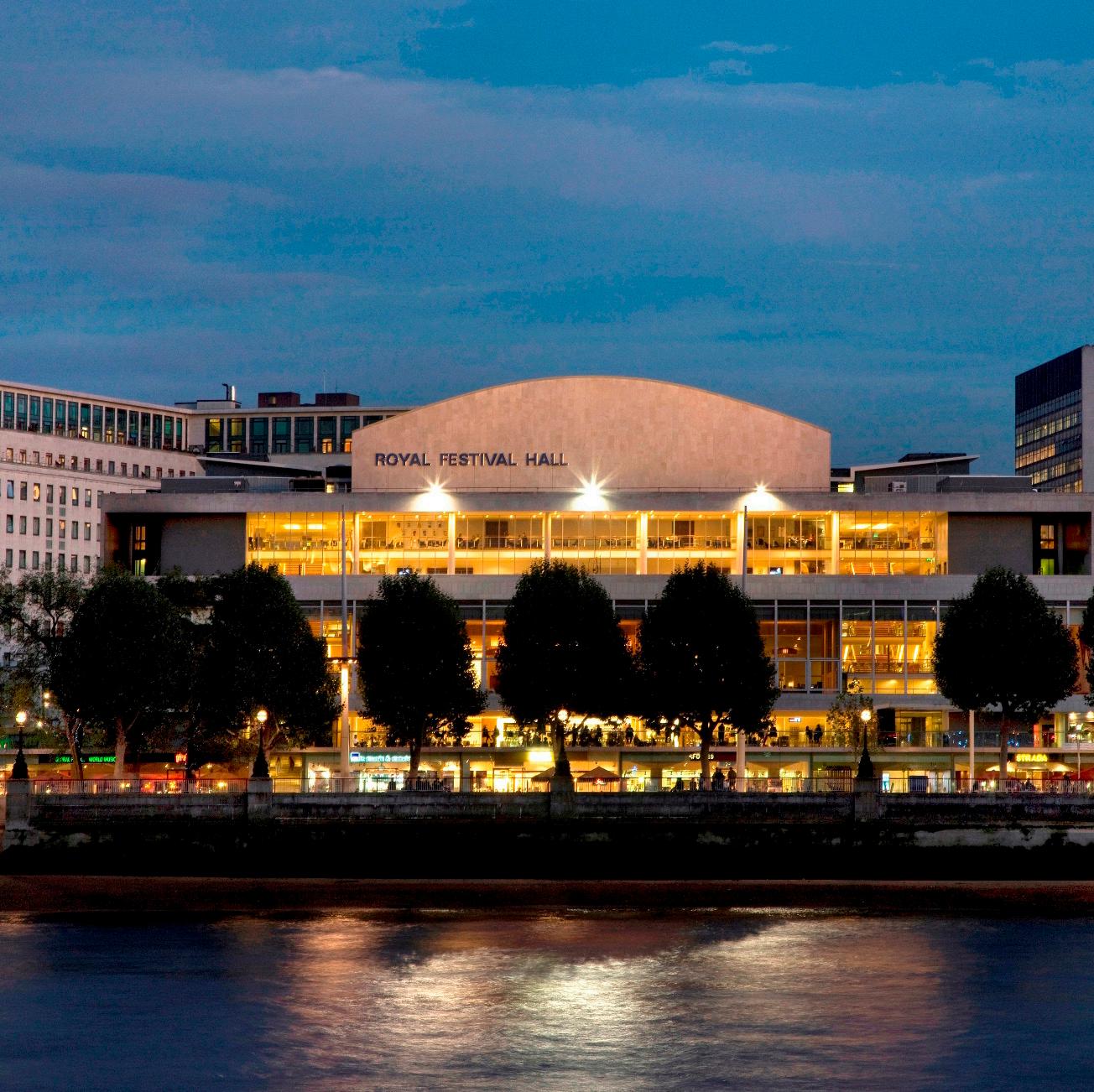
We’re the UK’s largest centre for the arts and one of the nation’s top five visitor attractions, showcasing the world’s most exciting artists at our venues in the heart of London. As a charity, we bring millions of people together by opening up the unique art spaces that we care for.
The Southbank Centre is made up of the Royal Festival Hall, Queen Elizabeth Hall, Purcell Room, Hayward Gallery, National Poetry Library and Arts Council Collection. We’re one of London’s favourite meeting spots, with lots of free events and places to relax, eat and shop next to the Thames.
We hope you enjoy your visit. If you need any information or help, please ask a member of staff. You can also write to us at Southbank Centre, Belvedere Road, London SE1 8XX, or email hello@southbankcentre.co.uk
Subscribers to our email updates are the first to hear about new events, offers and competitions. Just head to our website and sign up.
KIRKER MUSIC FESTIVALS
FOR DISCERNING TRAVELLERS
Kirker Holidays creates carefully-crafted short breaks and tailor-made holidays for discerning travellers, including individually selected four- and five-star hotels, private transfers, flights from your local airport and the services of the Kirker Concierge to book expert local guides, tickets for opera, ballet and concerts or a table reservation at a recommended restaurant.
For those who enjoy travelling with a group of like-minded companions in the company of an expert tour leader, Kirker’s range of Cultural Tours & Music Holidays are designed to appeal to interests including Art, History, Architecture, Gardens, Music and Food & Wine.
Each of our carefully-curated Exclusive Kirker Music Festivals includes a series of private concerts with international musicians of the highest calibre. Guests and performers alike particularly enjoy the rapport between audience and artists which is generated during the course of Kirker drinks parties, concerts and workshops.


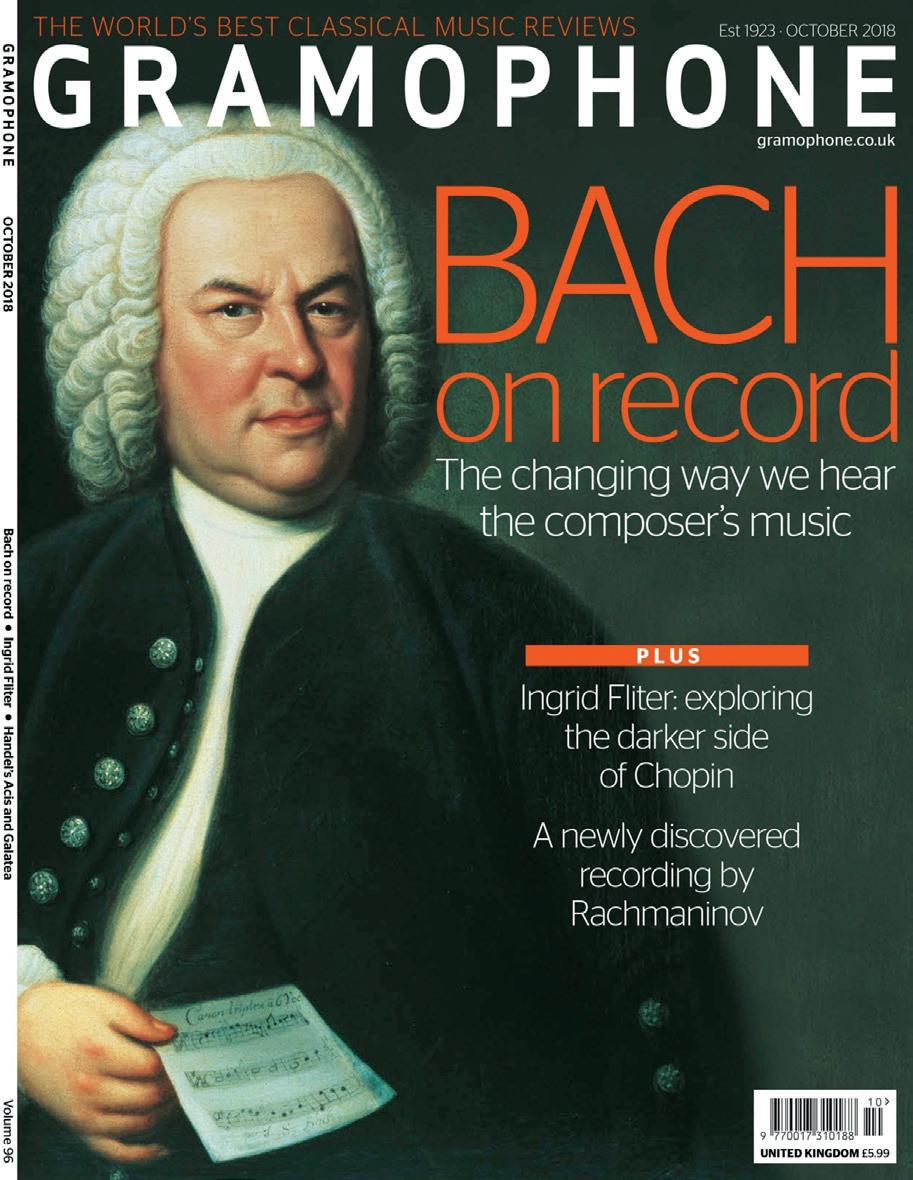




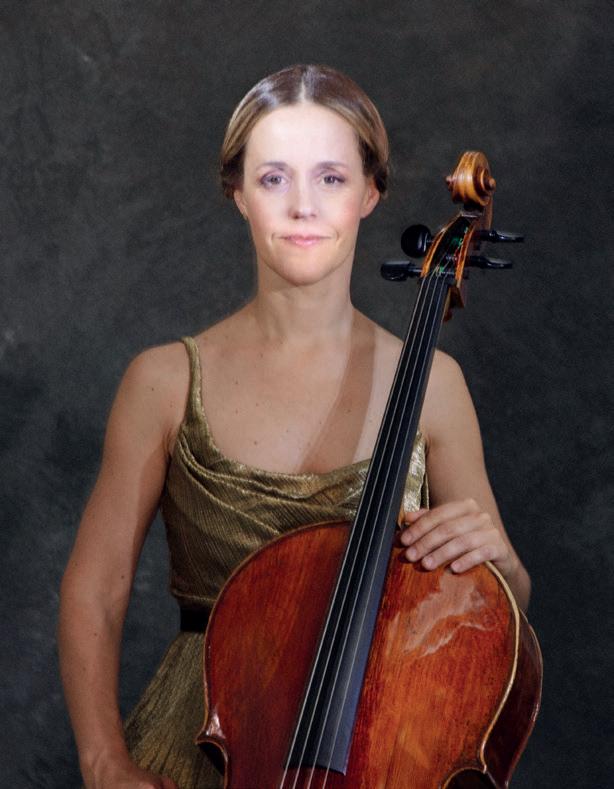
Gramophone has been the world’s leading authority on classical music recordings since 1923. With 13 issues a year, every edition will enrich your classical music knowledge with more than 100 expert reviews of the latest recordings, plus in-depth artist interviews and features about composers past and present.
THANK YOU
This looks like a long list, doesn’t it? But these generous people and organisations provide OAE with around half of our income every year. Contact us on development@oae.co.uk if you would like to join us as a supporter.
Principal Patrons
Imogen Charlton-Edwards*
Denys and Vicki Firth*
Adrian Frost and Stephanie Bickel*
Sir Martin and Lady Smith OBE*
Dr Tony Trapp MBE
Season Patrons
Mark and Susan Allen*
Julian and Annette Armstrong*
Hannah Yan Field
Bruce Harris*
Nigel Jones and Françoise Valat-Jones*
Sir Timothy and Lady Lloyd*
Selina and David Marks*
Philip and Rosalyn Wilkinson*
Mark and Rosamund Williams*
Project Patrons
Victoria and Edward Bonham Carter
Ian S Ferguson CBE and Dr Susan Tranter
John and Rosemary Shannon
Aria Patrons
Joanna and Graham Barker
Steven Larcombe
Peter and Veronica Lofthouse
Stanley Lowy
Alison McFadyen
Peter Rosenthal
Maarten and Taina Slendebroek
Caroline Steane
Lord and Lady Stirrup
Eric Tomsett
Mr J Westwood
* denotes members of The Forty Circle. The Forty Circle provide exceptional philanthropic support to the 2025 / 26 and 2026 / 27 seasons.
Chair Patrons
Daniel Alexander KC
Co-Principal Cello
Katharine Campbell Violins
Anthony and Celia Edwards Principal Oboe
Claire Espiner Cellos
Anna Flynn in memory of James Flynn
Principal Lute / Theorbo
Paul Forman
Co-Principal Cello / Principal Horn
Jonathan Gaisman Violas
Jane Gilbert Principal Flute
Andrew Green KC and Jennifer Hirschl
Principal Clarinet
Melanie J. Johnson
Christina M Principal Flute
Michael and Harriet Maunsell
Principal Keyboard
Jenny and Tim Morrison Second Violins
Andrew Nurnberg Co-Principal Oboe
Stephen and Penny Pickles Violas
Professor Richard Portes CBE FBA
Co-Principal Bassoon
John and Rosemary Shannon
Principal Horn
Colin Singer
Education Patrons
David and Marilyn Clark
Sir Timothy and Lady Lloyd
Gary and Nina Moss
Susan Palmer OBE
Andrew and Cindy Peck
Professor Richard Portes CBE FBA
Sue Sheridan OBE
Crispin Woodhead and Christine Rice MBE
Associate Patrons
Damaris Albarrán
Noël and Caroline Annesley
Sir Richard Arnold and Mary Elford
Lady Sarah Bowness
David Emmerson
Dino Fontes and David Stinson
Lorna Gradden
Roger Heath MBE and Alison Heath MBE
Peter and Sally Hilliar
Philip Hughes
Breandán Knowlton
Kathryn Langridge
Moira and Robert Latham
Roger Mears and Joanie Speers
David Mildon in memory of Lesley Mildon
John Nickson and Simon Rew
Andrew and Cindy Peck
Tim and Kate Price
David Price and Daniel Gerring
Jan Schlapp – Rehearsal Soup Patron
Michael Spagat and Karen Lauxmann
Roger and Pam Stubbs
Emily Stubbs and Stephen McCrum
Simon and Karen Taube
Elly Williamson
OAE NextGen
Emma-Jane Azkoul
Andrew Barratt
Marina Abel Smith
Marianne and William Cartwright-Hignett
Harry Hickmore
Jessica Kemp and Alex Kemp
Gold Friends
Michael Brecknell
Tony Burt
Gerard Cleary
Sarah Lady Gough
Chris Gould
Roger Lewis
Alison and Ian Lowdon
Mr Michael Mackenzie
Roger & Jane Mountford
Mr and Mrs Smith
Silver Friends
Haylee and Michael Bowsher
Kay and George Brock
Dan Burt
David Cox
Martin Edmunds
Stephen and Cristina Goldring
Nicola Haskins
Malcolm Herring
Patricia Herrmann
Rupert and Alice King
Rose and Dudley Leigh
Anthony and Carol Rentoul
Alan Sainer
Rupert Sebag-Montefiore
Susannah Simons
Steve and Jackie Street
Mr Simon Smith and Ms Sian Stickings
Trusts & Foundations
Arts Council England
The Britford Bridge Trust
John Lyon’s Charity
The Linbury Trust
Paul Hamlyn Foundation
The 29th May 1961 Charitable Trust
The Apax Foundation
Cockayne Grants for the Arts
Dreamchasing
The Foyle Foundation
Henocq Law Trust – The Ann and Peter Law OAE Experience Scheme
John Armitage Charitable Trust
The Neville Abraham Foundation
The Peter Cundill Foundation
The Roger and Ingrid Pilkington
Charitable Trust
The Sir Victor Blank Charitable Settlement
Skyrme Hart Charitable Trust
The Vernon Ellis Foundation
The Albert and Eugenie Frost Music Trust
The Aspinwall Educational Trust
The Charles Peel Charitable Trust
The de Laszlo Foundation
The D’Oyly Carte Charitable Trust
The Garrick Charitable Trust
The Golsoncott Foundation
The Harold Hyam Wingate Foundation
The Idlewild Trust
The John Thaw Foundation
The Michael Marks Charitable Trust
The Patricia Routledge Foundation
The Patrick Rowland Foundation
Scops Arts Trust
The Stanley Picker Trust
The Thistle Trust
Thriplow Charitable Trust
Vaughan Williams Foundation
Corporate Supporters
Ambriel
Hamlins
Kirker Holidays
Mark Allen Group
Honorary Council
Sir Martin Smith (Chair)
Sir Victor Blank
Edward Bonham Carter
Cecelia Bruggemeyer
Denys Firth
Nigel Jones
Max Mandel
David Marks
Julian Mash
Greg Melgaard
Roger Montgomery
Susan Palmer OBE
David Pickard OBE
Jan Schlapp
Diane Segalen
Lady Elise Smith OBE
Emily Stubbs
Rosalyn Wilkinson
Mark Williams
Thank you to our Friends, Bronze Friends and supporters who wish to remain anonymous.


“I really like music now”
Every year, we offer three educational programme strands to our partner schools across London. Each involves teacher training, in-school workshops and a final concert in which children become active participants, joining in with songs, actions and body percussion. In this, our 40th Anniversary Season, we have been revisiting favourite concerts from the Orchestra’s archive.
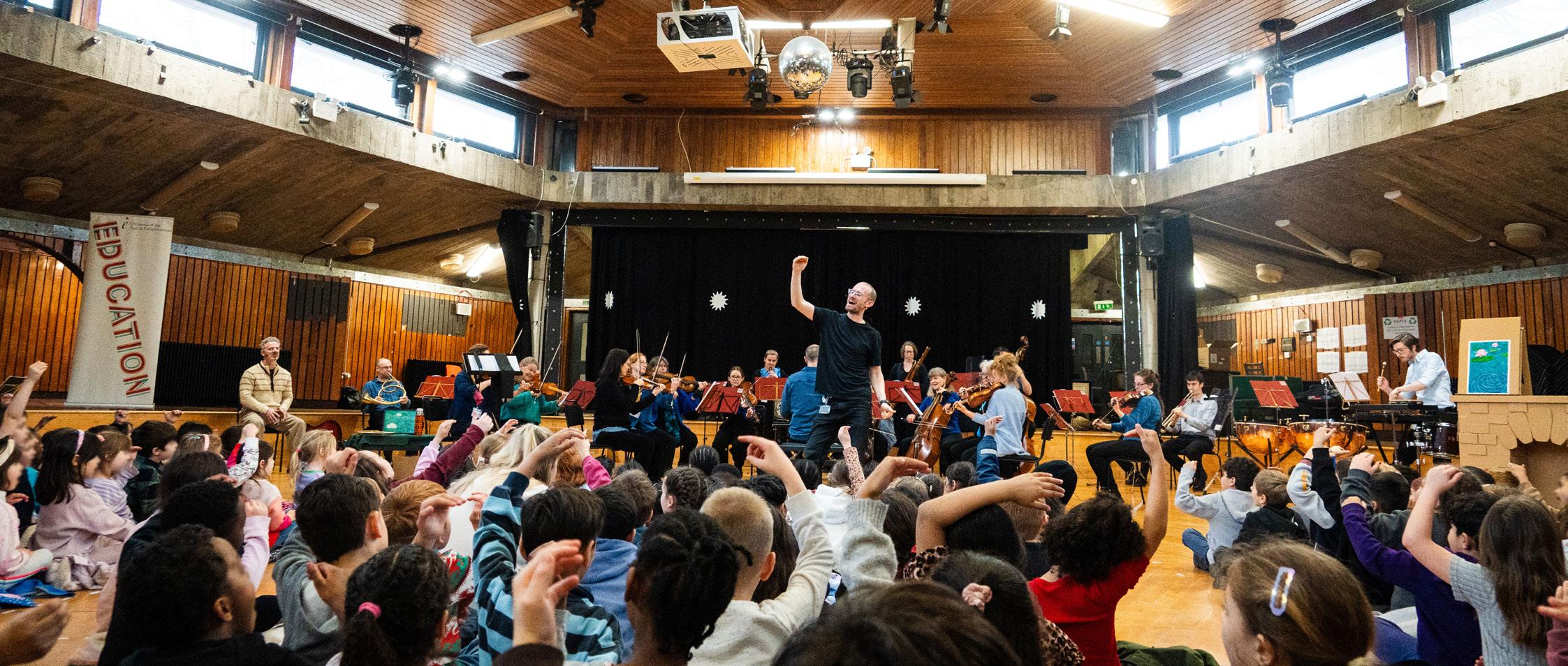
“We’ve had requests to have trumpets and bassoons at our school!”
EARLY YEARS TEACHER
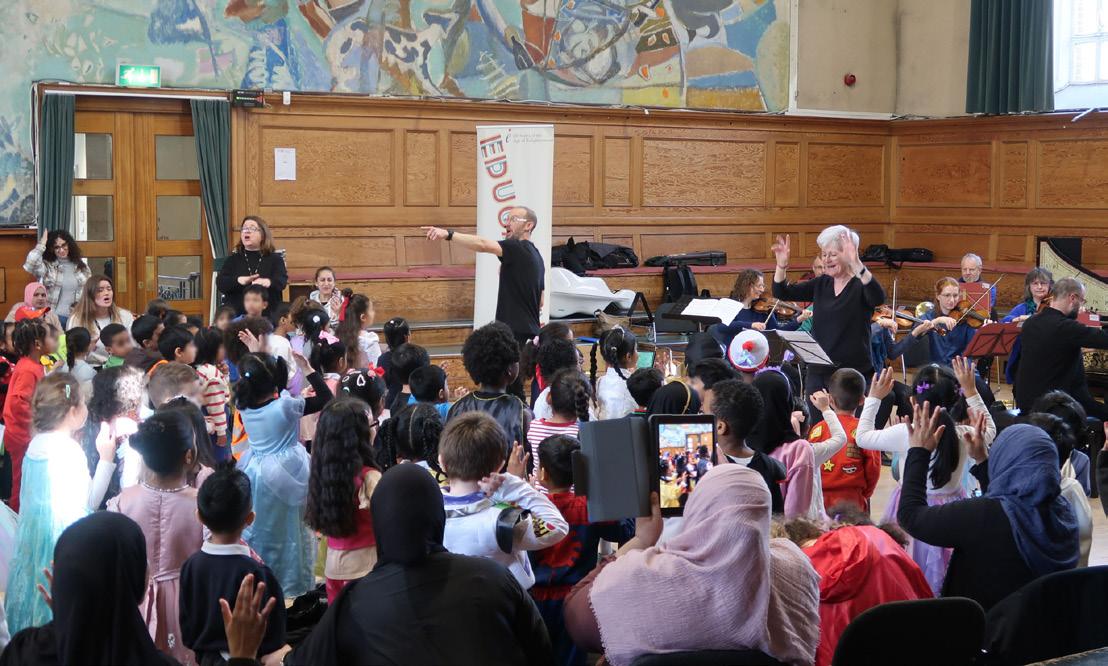
During the first week of March, we performed eight concerts to children in Early Years (Nursery and Reception) and Key Stage 1 (Years 1 and 2). Over three days, 800 Early Years students joined the Orchestra at Cecil Sharp House and Netley Primary School for Mozart Chased A Cat.
The concert takes pupils on a journey through Mozart’s Symphony No. 40, inspired by a first-hand
account of the young composer jumping down from the harpsichord mid-practice to play with ‘a favourite cat’.
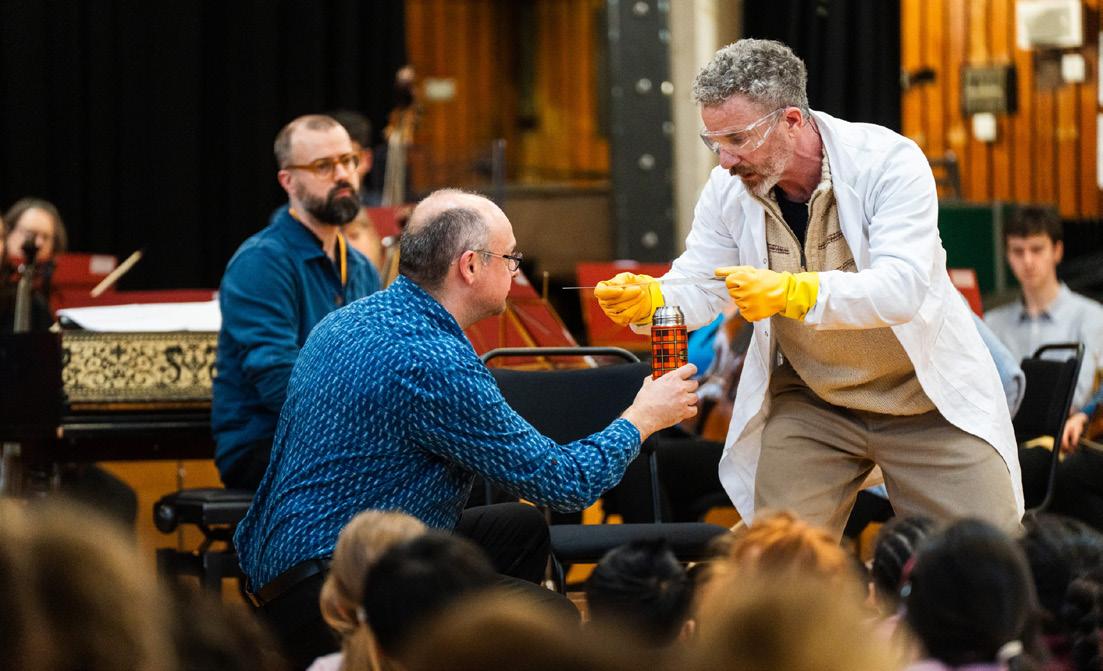
At the end of the week, 680 Key Stage 1 students came to see Watercycle: 1, 2, 3, Water Rises from the Sea at Cecil Sharp House and Acland Burghley School. The show – written by Hazel Gould and James Redwood and featuring actor-musicianmagician extraordinaire, Tom Silburn – is based around Handel’s Water Music and featured extracts from Élisabeth Jacquet de la Guerre’s Trio Sonata No.1 in G minor and Vivaldi’s The Four Seasons.
Watercycle: 1, 2, 3, Water Rises from the Sea at Acland Burghley School. Credit Zen Grisdale
“It was fantastic to be able to have a truly inclusive event, where children weren’t just present, but actively engaging with and experiencing live music.”
EARLY YEARS TEACHER
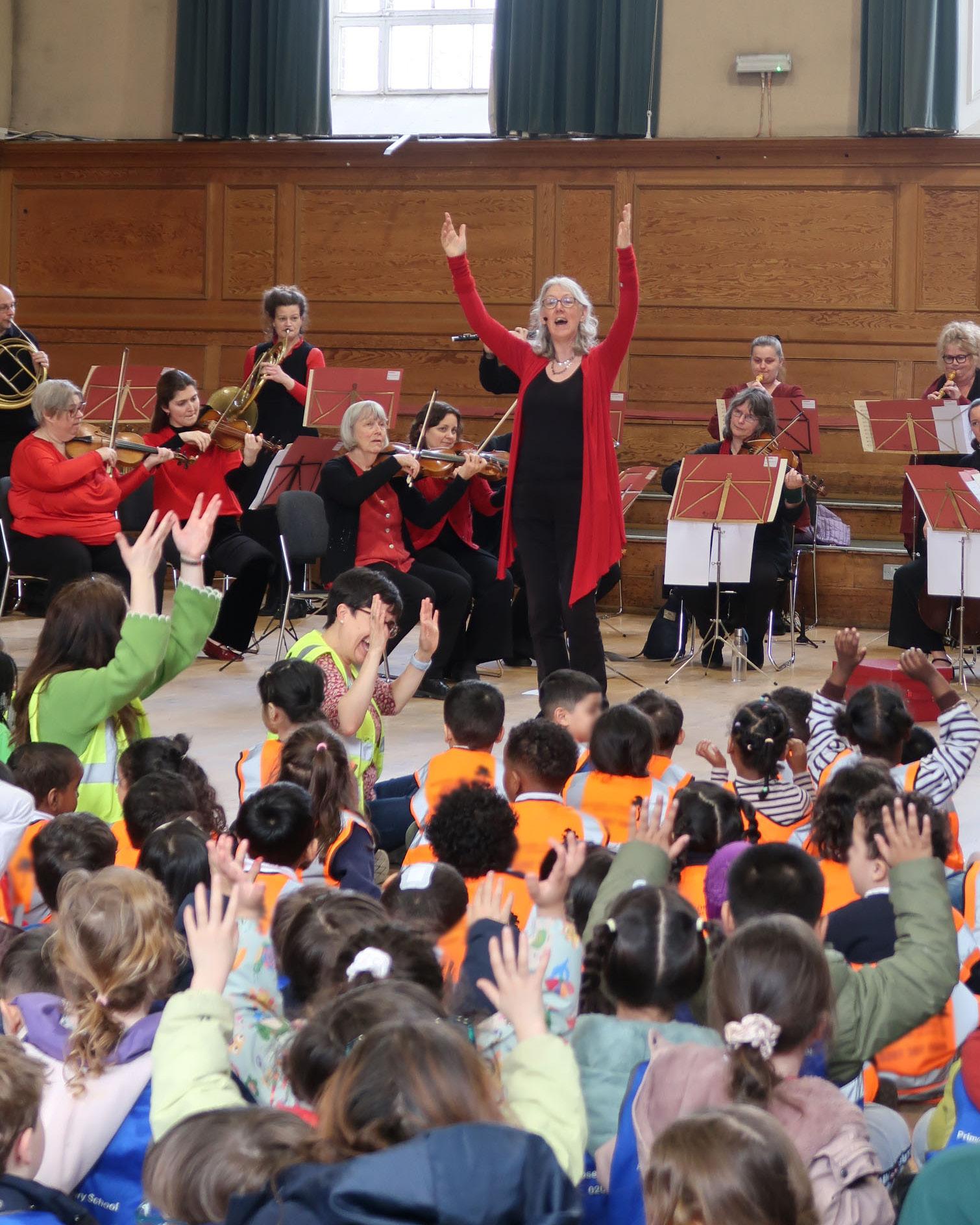
The concert encourages children to explore what it means to be a scientist, introducing them to the stages of the water cycle and even featuring a live experiment!
A Key Stage 2 strand, for students in Years 3 – 6, kicks off with a teacher training in April and concerts planned for early July.
Read more on our blog and our latest Education Review on our website at oae.co.uk/discover or scan the QR code.
Mozart Chased a Cat with Early Years at Cecil Sharp House. Credit Sofia Swenson-Wright
Watercycle: 1, 2, 3, Water Rises from the Sea at Cecil Sharp House. Credit Sofia Swenson-Wright
Watercycle: 1, 2, 3, Water Rises from the Sea at Acland Burghley School. Credit Zen Grisdale
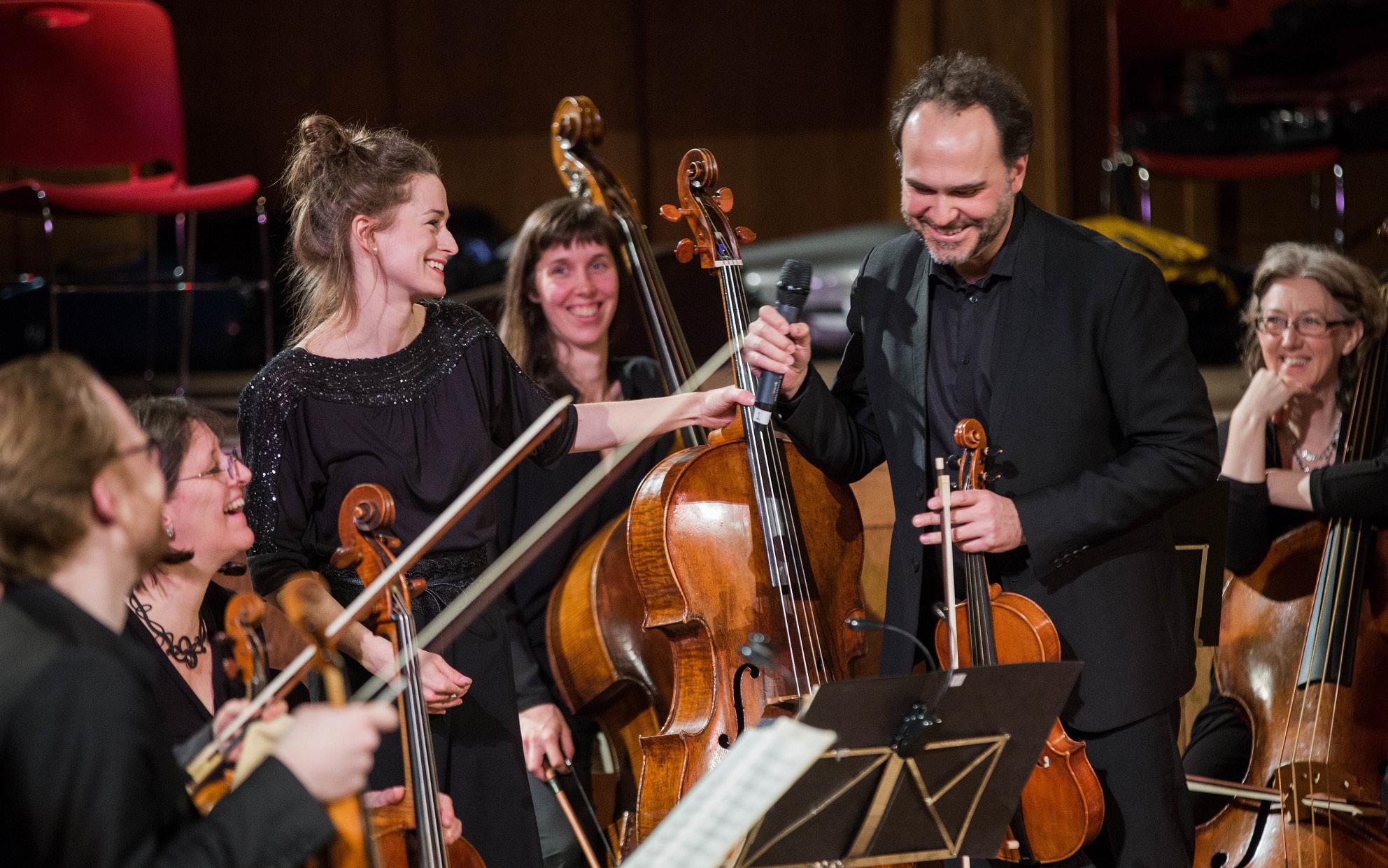
BECOME A FRIEND
Love our Southbank Centre concerts?
Become a Friend of the OAE today and help bring exceptional music to life.
Friends experience our concerts in a truly special way, enjoying priority booking for the entire season, opportunities to attend open rehearsals, and invitations to exclusive events with our musicians, offering both front-row access and behind-the-scenes insight into our work.
Memberships start from £60. Join us in celebrating our 40th anniversary and help keep the music playing.
To become a Friend, scan the QR code, visit oae.co.uk/support-us or contact us at development@oae.co.uk or 020 8159 9317


OAE TOTS: Sailing Away
Royal Festival Hall for 2 to 5 year olds and their grown-ups
Tuesday 31 March
THE NIGHT SHIFT
Chamber music down a local pub
Next gig:
Monday 13 April at The Old Queen’s Head
RESIDENT ORCHESTRA at the Southbank Centre
27 May
THE CREATION with Václav Luks (conductor)
3 June
LIFE OF THE SEA
Join our latest community musical adventure
10 June
SYMPHONIE FANTASTIQUE with Timothy Ridout (viola) Sir Simon Rattle (conductor)

BACH, THE UNIVERSE AND EVERYTHING at Kings Place
Mission: to explore our place in the cosmos guided by the intergalactic genius of JS Bach. Each monthly event features one of Bach’s cantatas, and other choral and instrumental works, alongside a talk by an eminent astronomer.
New season coming in Autumn 2026
WHAT’S ON