

SIDE-BY-SIDE CONCERT
MONDAY | FEBRUARY 16, 2026
Renée & Henry Segerstrom Concert Hall
FROM THE MUSIC DIRECTOR
Welcome to a special side-by-side concert featuring the Orange County Youth Symphony and the Bob Cole Conservatory Symphony Orchestra of California State University, Long Beach. While collaborations between youth symphonies and professional orchestras are relatively common, opportunities for youth musicians to perform alongside a university orchestra are far more rare.
This evening’s program features two monumental works by Shostakovich and Respighi, compositions that call for large forces and flourish in grand acoustic settings. In contrast, Sibelius’s Valse offers a more introspective moment, inviting listeners inward through its subtle lyricism. The Bob Cole Conservatory Symphony will also be joined by pianist Mikhail Korzhev in a performance of the rarely heard Romantic Piano Concerto by Marx.
Thank you for joining us for this special event celebrating the artistry, collaboration, and music-making of these two outstanding ensembles.
Musically yours,
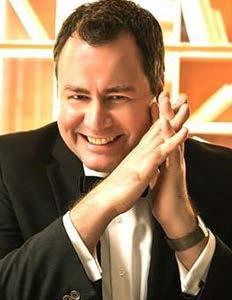
JOHANNES M. STOSCH
Music Director & OCYS Conductor | Orange County Youth Symphony
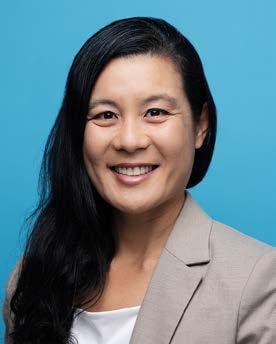
FROM THE VP OF EDUCATION AND COMMUNITY ENGAGEMENT
The Philharmonic Society’s Orange County Youth Symphony is thrilled to collaborate with the Bob Cole Conservatory Symphony Orchestra in a partnership that celebrates musical growth and the joy of performance. Many of our youth orchestra members are high school students preparing for college, whether they continue in music or pursue another field. This collaboration is especially meaningful, giving them the opportunity to perform alongside university-level students.
More than a concert, this performance allows students to experience the artistry and energy of a large ensemble while building confidence, inspiration, and lasting connections. Together, both orchestras create a vibrant atmosphere of collaboration and shared purpose.
We are grateful to share this experience with you in the remarkable acoustics of the Renée and Henry Segerstrom Concert Hall and to celebrate the talent, dedication, and passion of our community’s young musicians.
Warmest regards,
KATHERINE YANG
Vice President of Education and Community Engagement | Philharmonic Society of Orange County

Thank you to our community partner for their continuous support.

Monday, February 16, 2026, 7pm
Renée & Henry Segerstrom Concert Hall
ORANGE COUNTY YOUTH SYMPHONY &
BOB COLE CONSERVATORY SYMPHONY ORCHESTRA
Johannes Müller Stosch, music director
COMBINED
Festive Overture
SHOSTA KOVICH (1906 – 1975)
BOB COLE CONSERVATORY SYMPHONY ORCHESTRA
Romantic Piano Concerto in E major MARX (1882 – 1964)
I. Lebhaft (Allegro moderato)
II. Nicht zu langsam (Andante affettuoso)
III. Sehr lebhaft (Allegro molto)
Mikhail Korzhev, piano
INTERMISSION
COMBINED
“Valse triste” from Kuolema, Op. 44
SIBELIUS (1865 – 1957)
Pines of Rome RESPIGHI (1879 – 1936)
I. “The Pines of the Villa Borghese” – Allegretto vivace
II. “Pines Near a Catacomb” – Lento
III. “The Pines of the Janiculum” – Lento
IV. “The Pines of the Appian Way” – Tempo di marcia
SHOSTAKOVICH: FESTIVE OVERTURE
Dmitri Shostakovich stands among the towering musical figures of the twentieth century—an artist of brilliance, wit, and courage whose career unfolded in constant dialogue with the Soviet political system. Born in St. Petersburg in 1906, he achieved early fame as both a pianist and composer. Yet, with acclaim came scrutiny: his life was marked by alternating periods of official praise and condemnation, forcing him to balance artistic integrity with political survival. Out of this tension emerged a musical voice of extraordinary depth— capable of satire, irony, and profound emotion.
In contrast to the turmoil surrounding much of his work, the Festive Overture, Op. 96 (1954), shines as one of Shostakovich’s most exuberant and untroubled creations. Written in just a few days for a Bolshoi Theatre celebration marking the anniversary of the October Revolution, it is a model of joyous orchestral brilliance. Shostakovich jokingly called it a “carefree short piece,” yet its polish and exuberance reveal the effortless mastery of a composer at his peak.
The overture begins with a commanding brass fanfare—bold, ceremonial, and unmistakably celebratory. From there, the main Allegro bursts forth in a whirlwind of rhythmic vitality and buoyant melody, led by the strings and supported by crisp orchestral interplay. Shostakovich’s deft handling of color and clarity ensures that, even at its most energetic, the music retains transparency and charm.
Throughout the piece, the orchestra becomes a kaleidoscope of sound: luminous woodwinds contrast with sonorous brass, while strings propel the music forward with irrepressible momentum. A brief lyrical interlude offers a moment of calm before the overture races toward its thrilling conclusion, where the opening fanfare returns in triumphant splendor.
Though written for a specific occasion, Festive Overture transcends its origins. It captures a universal sense of celebration radiant, confident, and full of life. In just a few minutes, Shostakovich distills the spirit of joy and renewal, leaving audiences uplifted and invigorated.
MARX: ROMANTIC PIANO CONCERTO IN E MAJOR
Joseph Marx, born in Graz in 1882, occupies a unique and often overlooked place in early twentieth-century music. A composer, theorist, and influential critic, he was widely celebrated in his lifetime, especially in Austria, for his sumptuous harmonic language and radiant orchestration. Though the rise of modernism later eclipsed his late-Romantic idiom, his music—opulent, lyrical, and emotionally direct—has enjoyed a well-deserved revival in recent years. Marx’s sound world reflects echoes of Mahler, Strauss, and Debussy, yet remains distinctly personal in its warmth and color.
Completed in 1919, the Romantic Piano Concerto in E major is perhaps Marx’s most ambitious and expansive orchestral work. Long neglected, it has recently reemerged as one of the hidden treasures of the Romantic repertoire.
From its glowing orchestral introduction, the concerto unfolds with sweeping lyricism and cinematic scope. When the piano enters, it joins the orchestra in a dialogue of equals—its lines fluid and songful, woven into the lush symphonic texture. Marx’s gift for melody is immediately evident; nearly every phrase breathes with a natural, unhurried lyricism.
The first movement is broad and rhapsodic, its climaxes surging with passion yet balanced by reflective stillness. While the piano writing dazzles with virtuosity, it always serves the music’s emotional trajectory rather than display for its own sake. Listeners may hear kinship with Rachmaninoff’s luxuriant textures, infused with Marx’s distinctive harmonic glow.
The slow movement offers a moment of intimate repose. Muted strings and glowing woodwinds create a dreamlike atmosphere in which the piano sings with tenderness and introspection. Marx’s harmonic language here is richly expressive yet restrained, shaping emotion through subtle shifts of color and line.
The finale bursts forth with rhythmic vitality and radiant optimism. Spirited themes return transformed, propelling the music toward an exuberant, triumphant conclusion. It is a celebration of melody, virtuosity, and orchestral splendor.
For those hearing the work for the first time, the concerto’s generous lyricism and radiant orchestration are its most immediate pleasures. Marx’s Romantic Piano Concerto is a rediscovered gem—sumptuous, heartfelt, and brimming with melodic life.
SIBELIUS: “VALSE TRISTE” FROM KUOLEMA, OP. 44
Jean Sibelius is widely regarded as Finland’s most important composer and a central figure in the development of national musical identity in the late nineteenth and early twentieth centuries. Born in 1865, Sibelius came of age during a period when Finland was seeking cultural independence under Russian rule. While his music is often associated with vast Nordic landscapes and epic mythology, Sibelius was equally capable of writing intimate, psychologically charged works. “Valse triste” is one of his most famous short orchestral pieces and remains a striking example of his ability to convey profound emotion with economy and restraint.
Valse triste originated in 1903 as part of the incidental music for Kuolema (“Death”), a play by Sibelius’s brother-in-law, Arvid Järnefelt. In the play, the music accompanies a scene in which a woman, lying on her deathbed, imagines a ghostly dance. The title, meaning “Sad Waltz,” captures both the character of the music and its dramatic function. Sibelius later revised the piece and published it independently, and it quickly gained popularity far beyond its theatrical origins.
The work begins almost imperceptibly, with muted strings and a fragile, hesitant pulse. The waltz rhythm emerges slowly, as if drifting in and out of consciousness. When the main theme finally takes shape, it is graceful but tinged with melancholy, suggesting a dance remembered rather than lived. Sibelius’ orchestration is spare and translucent, allowing subtle shifts in color to carry emotional weight. As the music progresses, the waltz grows more animated, reaching moments of bittersweet warmth and fleeting exuberance. These brighter passages, however, never fully escape an underlying sense of unease. Abrupt dynamic changes and sudden silences remind the listener of the music’s proximity to death. In the final section, the energy dissipates, and the opening atmosphere returns, dissolving into quiet resignation.
RESPIGHI: PINES OF ROME
Ottorino Respighi, born in Bologna in 1879, was a composer of remarkable imagination and technical brilliance. Though trained as a violinist and violist, his studies with Nikolai Rimsky-Korsakov
awakened a lifelong fascination with orchestral color. Combining influences from ancient modes, folk music, and Renaissance styles with a modern sense of sonority, Respighi created a sound both nostalgic and vividly new. His trilogy of Roman tone poems— Fountains of Rome, Pines of Rome, and Roman Festivals—stands among the great achievements of twentieth-century orchestral music.
Completed in 1924, Pines of Rome is the most beloved of the three. Rather than narrating a single story, it paints four musical tableaux, each depicting a Roman setting where pine trees stand as silent witnesses to history. Respighi’s orchestration is radiant and cinematic, immersing listeners in soundscapes of astonishing vividness.
“The Pines of the Villa Borghese” opens the work in a blaze of color. Inspired by children at play, its lively rhythms, bright winds, and brassy flourishes capture laughter, games, and youthful energy beneath the trees.
“The Pines Near a Catacomb” provides a solemn contrast. Deep brass and organ tones evoke ancient majesty and spiritual depth, rising to a noble, chant-like climax that seems to summon the voices of the past.
“The Pines of the Janiculum” offers a serene nocturne—an impressionistic meditation bathed in moonlight. Over shimmering strings and delicate woodwinds, a clarinet sings a haunting melody. As the movement closes, the recorded song of a nightingale—the first use of pre-recorded sound in orchestral music—creates a moment of transcendent stillness.
Finally, “The Pines of the Appian Way” begins in hushed mystery and grows inexorably toward monumental grandeur. Respighi imagines a Roman legion approaching through the mist, its march building in intensity until the orchestra blazes in triumph.
Pines of Rome is a masterpiece of orchestral color and atmosphere. Respighi invites us to experience not only the sights of the Eternal City but its soul—its history, its vitality, and its eternal beauty— through sound.
ORANGE COUNTY YOUTH SYMPHONY & STRING ENSEMBLE
Founded in 1970, the Orange County Youth Symphony (OCYS) and String Ensemble (OCYSE) is one of Southern California’s finest youth symphony programs. The diverse roster represents student musicians from nearly 60 middle school, high school, and college programs from San Clemente to Fullerton and beyond.
In its 50+ year history, OCYS has traveled the world representing Orange County’s best young adult musicians presenting performances in Austria, China, Germany, Hong Kong, Italy, Japan, Spain, Switzerland, the United Kingdom, the United Nations, and New York. It has appeared and participated in many prestigious performances and projects, including U.S. and West Coast premieres by composers such as Mark-Anthony Turnage and Kurt Schwetsik and a season-long project with Beethoven’s Symphony No. 9 culminating in a documentary entitled Beethoven’s Ninth: Journey to Joy that was selected by PBS SoCal for multiple
broadcasts. Most recently, the orchestra was presented in a sideby-side concert with the Royal Philharmonic Orchestra, performing for a nearly sold-out audience.
Additional highlights of past seasons include masterclasses with Ray Chen, Midori, Hilary Hahn, and Sheku Kanneh-Mason, as well as a mini residency by the Kronos Quartet. An annual tradition, OCYS serves as the featured orchestra for the Philharmonic Society’s acclaimed Concerts for Fifth Grade at the Renée and Henry Segerstrom Concert Hall. This concert series has provided music education for nearly a million students for more than thirty years. Additionally, OCYS and OCYSE appear in their own performances in prestigious venues across Orange County.
BOB COLE CONSERVATORY SYMPHONY ORCHESTRA
The Bob Cole Conservatory Symphony is BCCM’s flagship ensemble and is widely recognized as one of the finest university orchestras in Southern California. Its repertoire spans from the Baroque era to the 21st century and is presented through six concert cycles during the academic year, including opera and large-scale interdisciplinary collaborations with jazz, dance, film, choral studies, and opera. All performances are held in the modern Carpenter Performing Arts Center, with additional highlights including an annual student concerto competition.
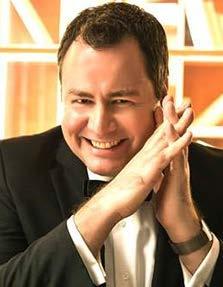
JOHANNES MÜLLER STOSCH, MUSIC DIRECTOR
Johannes Müller Stosch is a passionate educator, mentor, and conductor, dedicated to shaping the next generation of orchestral musicians. As Music Director and Conductor of the Orange County Youth Symphony (OCYS), he leads one of California’s premier youth orchestras, inspiring young musicians through exceptional training and transformative performance experiences. Since his appointment in 2019, he has expanded OCYS’s artistic vision, fostering excellence in symphonic repertoire, collaboration, and community engagement. In 2024, OCYS embarked on a landmark international tour, performing in Germany, Austria, and the Czech Republic, showcasing the orchestra’s talent on the global stage.
Beyond his work with OCYS, Maestro Stosch serves as Director of Orchestral Activities at the Bob Cole Conservatory of Music (California State University, Long Beach), where he has built one of Southern California’s most distinguished university orchestral programs. His leadership has enabled the Bob Cole Conservatory Symphony to tour internationally, performing in sold-out venues across Germany, the Czech Republic, and South Korea. Committed to music education at all levels, he cultivates an environment where young musicians thrive—whether they are preparing for professional careers or developing a lifelong appreciation for orchestral music.
Stosch also brings his expertise to the professional realm as Music Director and Conductor of the Holland Symphony Orchestra (Michigan), where he has led the ensemble to record growth in audience engagement, artistic excellence, and education initiatives over nearly two decades. His conducting extends across professional, university, and youth orchestras, shaping musicians at every stage of their development.
A sought-after guest conductor and clinician, Stosch regularly appears with orchestras worldwide, bringing his educational approach to masterclasses, workshops, and festival performances. His recent engagements include appearances at Mahidol University (Thailand), Kunming Philharmonic (China), Long Beach Symphony, Peninsula Symphony, Eastman School of Music, Cincinnati College-Conservatory of Music, UBC Symphony (Canada), and the University of Oregon. He has also worked with the Cincinnati Symphony Orchestra, the Brockport Symphony (NY), and has held leadership roles at the Opera Theatre Festival in Lucca, Italy, and the Museumsinsel-Operafestival in Berlin, Germany.
A dedicated mentor to young musicians, Stosch’s approach blends technical mastery, expressive artistry, and a deep understanding of orchestral collaboration. Under his guidance, students and young artists develop the skills and confidence to succeed in conservatory, collegiate, and professional settings. His experience as an opera conductor, including productions at Cincinnati’s renowned College-Conservatory of Music (CCM), further enhances his ability to shape versatile, expressive musicians.
Stosch holds a Doctor of Musical Arts (DMA) in Orchestral Conducting from the Eastman School of Music (studying with Neil Varon), two Master of Music degrees from CCM (Conducting with Mark Gibson, Organ with Roberta Gary), and a Bachelor’s degree from the Schwob School of Music. His performances and commercial recordings have been featured on national public radio, reinforcing his impact as a conductor, educator, and advocate for young musicians.
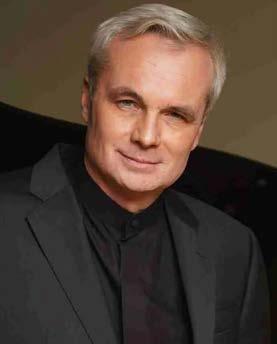
MIKHAIL KORZHEV, PIANO
Mikhail Korzhev, a pianist that “projects strength, atmosphere and the ability to tangle even the knottiest passages…” (International Record Review) is equally active as a solo recitalist, a performer with various chamber groups, a soloist with orchestras, and as a recording artist. Among his numerous CD recordings are the two volumes of Complete Piano Concertos by Ernst Krenek in collaboration with English Symphony Orchestra and Kenneth Woods that were released by Toccata Classics in 2016 and 2017 to enthusiastic reviews in Gramophone, Diapason and other publications, made it to the “want list” of Fanfare Magazine, became one of “10 Best Contemporary Records of the Year” by The Times (London), and in December 2017 made it to the list of “Top 10 Best Classical Records of the Year” by Forbes magazine. In September 2017 Korzhev became a recipient of a prestigious Anassilaos Prize, the annual award for the achievements in Arts and Sciences given by the local government of the province of Calabria (Italy).
Korzhev collaborated with several distinguished conductors: Sergiu Commissiona, Carlo Ponti Jr. and others, his chamber music collaborations include performing with soloists of Russian National Orchestra, Mladi Chamber Orchestra, Lyris String Quartet, and members of St. Petersburg and Tokyo String Quartets among others. His collaborative work was highly appreciated by Eugenia Zukerman, Richard Stolzman, Oleh Krysa and other
noted musicians. Korzhev’s performances received a high critical acclaim from American and European press: ”The young Russian pianist…displayed a notable technical mastery which allowed for passionate moments of ardent lyricism as well as wonderful purity and fluency”(Momento Sera, Rome). Korzhev belongs to that exclusive club of super musicians…he already performs like a keyboard legend…he is a major talent.” (Salt Lake Tribune).
His particular interest in contemporary music has lead Korzhev to participate in the Virginia Waring International Piano Competition in 2005, which had the emphasis on the music of Ernst Krenek. As a winner of that competition Korzhev gave a recital in the Vienna’s Konzerthaus about which the Wiener Zeitung wrote: “Korzhev obviously has a lot of affection for Krenek’s style… brings out well the dramatic qualities of his music…” Following the success of his Vienna debut Korzhev recorded a CD of Krenek’s piano music, released by Phoenix Edition (Capriccio) in 2008 that became an instant top seller and received several very enthusiastic reviews in the press.
Korzhev’s discography also includes three CD recordings featuring compositions for solo piano and chamber works by a prominent English composer Gerard Schurmann and a compilation of 40 classical standards for the online music library Megatrax.com. His most recent recording is dedicated to early piano works of Ernst Krenek and was released by Centaur records in 2023.
Korzhev combines his performing career with teaching. He taught at University of Southern California. Currently he is on the faculty of Chapman University. He also taught and performed at numerous music festivals including Festival Napa Valley, Beverly Hills International Music Festival, Bösendorfer Piano Academy in Vienna and others. In 2025 he made his debut at Music Fest Perugia (Italy).
Korzhev holds a doctorate in piano performance from University of Southern California, where he studied with Daniel Pollack. His previous teachers include Alexander Satz and Vera Khoroshina at Moscow Conservatory College.
First Violin
COUNTY YOUTH SYMPHONY | Johannes Müller Stosch, music director
Tiffany Oh, concertmaster
Wesley Tsai, assistant concertmaster
Cadence Park
Andrew Hsia
Shayden Imaoka
Kayden Ishii
Yu Tung (Melo) Hung
Yue (Dora) Li
Yuna Jin
Woohyun (Roy) Roh
Gierry Rosario
Eric Kim
Claudia Cheng
Evangeline Apostolopoulos
Second Violin
Tyler Volpe, principal
Sol Hwang
Jason Wen
Shibo Zhu
Aiden Han
Kate Choi
Connor Wang
Alicia Wu
Abigail Blaga
Claire Claypool
Katelyn Chang
Ella Yang
Saoirse Murray



Duy Dang
Allison Yun
Viola
Rebecca Park, principal
Gracie Park
Linjie (Lucy) Zhao
Sara Ning
Leona Lee
Thada (Ben) Sriprapundh
Megan Song
Joshua Lee
Grace Hsia
Yuchen (Lucas) Hu
Kiyone Tsuchida
Cello
Joey Zhou, principal
Emily Shen
Suah Jin
Aidan Chien
Jamie Chen
Kexin Cai
Ethan Choi
Grace Zhu
Louis Shen
Zhuotong (Diana) Wu
Hannah Yoon
Clarissa Lin
Rachna Rathore
Capella Zhang
Double Bass
Samuel Yamarik, principal
Zoey Chiang
Elena Abdollahi
Jennah DiMartino
Isabel (Anthony) Bates
Flute
Shune Okada, principal
Yewon (Luna) Lee
Jeffrey Li
Oboe
Noah Chun, principal
Joshua Lee
Zhiyuan Zhu
English Horn
Zhiyuan Zhu
Bassoon
Megan Liu, principal
Landon Moats
Clarinet
Eric Wong, principal
Doyoon Lee
Ziqi (Ellie) Ji
French Horn
Julien Zysman, principal
Ellie Monahan
Philip Huh
Karina Pancholy
Trumpet
Aidan Garcia, principal
Jameson Devey
Trombone
David Nguyen, principal
Gavin Bond
Ariston De Leon
Tuba
Bryan Woo
Harp
Leenah Yoon
Piano
Grace Hsia
Percussion
Jonathan Yu, principal
Yang Lu
Vihaan Sharma