1 Community Issue August 2023 STUDENT MEDIA
UNSA and Opus would like to acknowledge the traditional custodians upon which this magazine was written, the Pambalong Clan of the Awabakal Nation. We would also like to extend this acknowledgement to the Birpai, Darkinjung and Gadigal peoples, as the traditional custodians of the lands upon which the University of Newcastle resides and UNSA operates. UNSA would like to pay respects to all Elders past, present and emerging, and acknowledge them as the true knowledge holders.
We acknowledge the historical inequalities faced by Aboriginal people and the continuing struggle for justice and equality. Black Lives Matter.
Always was, always will be Aboriginal land.

Editor's Letter
book-tok community, student sobriety, living with disabilities, and much more within these pages.
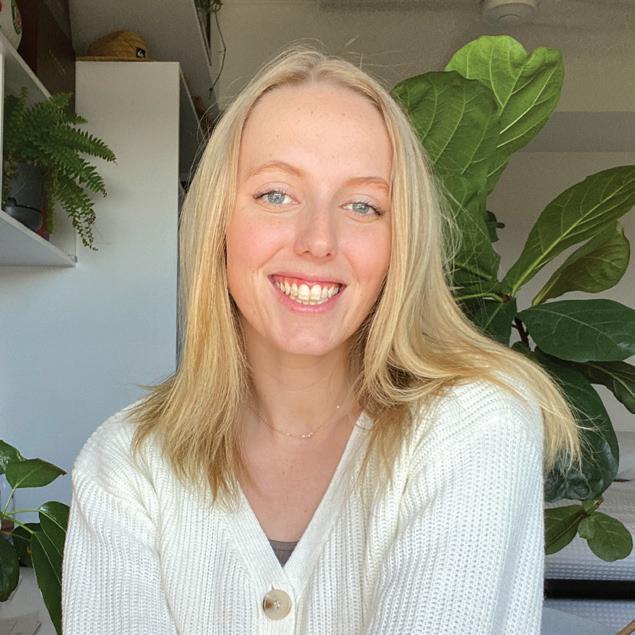
The creation of this issue has been very bittersweet for our Opus team as Tiana, our graphic designer, leaves her final mark of dazzling designs on student media content. We wish you all the best on your next adventure T!
Hello, it's me again.
Welcome to Opus Issue 3 of 2023! I’d like to start this letter by thanking every student who contributed to this issue as it has been incredibly rewarding to curate all of your content and read each of your experiences of community.
This theme of community is a particular favourite of mine as it gives power to those voices who might not feel seen or heard and highlights the groups that support us throughout the highs and lows of our human experience. It’s a special thing to connect with people who share a similar journey, the same hobby, or sometimes even similar struggles, because it means that our uniqueness can be celebrated, friends are be made, and that we’re not alone - as university students this is a feeling we all know too well at some point or the other.
Communities foster so much growth and support for individuals and I hope that if you haven’t found one yet, that you’ll take a gander at the clubs on offer at UNSA or, just keep reading to find out what communities your fellow peers are a part of. We delve into pride empowerment, experiences of international students, the Wollotuka team’s sporting endeavours, creatively outing the VC’s pay, the
For students just tuning in to the start of their degree, creative outlet, or discovery of Opus, we have one more magazine for the year that you can be a part of. It is the glorious ‘End Of Year Showcase’ magazine that aims to show off and celebrate the work you’ve done in 2023. Find out more information from our instagram or website.
For now, grab a cuppa and get comfy - it’s Community Mag time.
Melanie Jenkins Editor
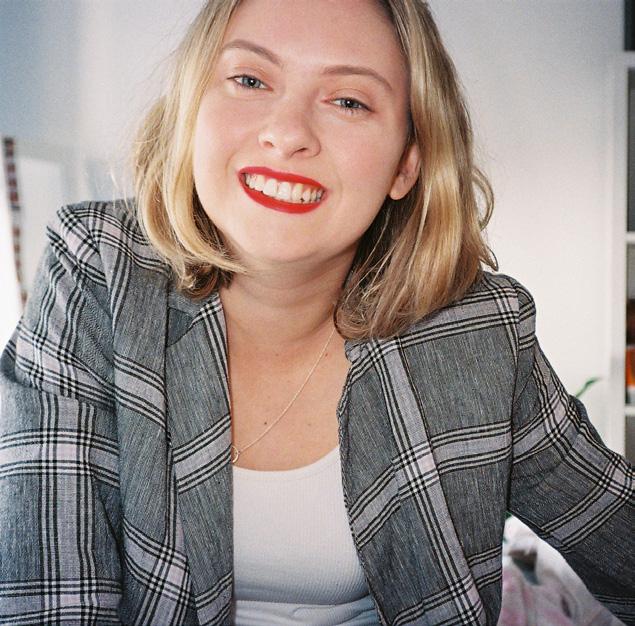
 Tiana Williams
Graphic Designer
Tiana Williams
Graphic Designer
3
President's Letter
one of the 80+ clubs & societies on offer, going along to events, joining an online networking session or enjoying a free UNSA lunch on campus.
Hey there Barbenheimers,
Can you believe we’re well into Semester/ Trimester 2 already? The year is flying by like a Barbie dream car! But never fear, Opus is here to get you through the highs and lows of latenight study sessions and double-feature film release days – truly a multifaceted companion to your university journey.
It’s SRC election season at UNSA, so make sure you get those nominations and votes in to elect your 2024 student reps! These students will be the ones representing and advocating for your needs & ideas to improve your student experience, so it’s important you have your say in who you want in these roles. Check out the UNSA Vote website (unsavote.org.au) and UNSA’s social media pages for all the election info and latest updates.
‘Community’ is a word often used here at UNSA – it’s what we aspire to help foster among students so that during your time here at uni you’re well-supported and have the opportunity to meet likeminded people, even lifelong friends in many cases! There are lots of ways to find community on and off campus – by joining
Another classic way to find community is to start a conversation with someone in your classes, or post on a discussion forum asking if anyone wants to meet up for a group study session. It can help make the study load more bearable and you never know who you might meet. Everyone is in the same boat so even if you’re feeling nervous to put yourself out there and talk to people know that it will be worth any initial awkwardness!
If you haven’t yet heard about UNSA’s new Equity Guilds (Women’s, Queer, Accessibility, Parents & Carers, and First Nations), take a squiz and sign up over on the UNSA website if you’re part of one (or more) of these communities. They are all inclusive and welcoming spaces to meet others in your community and to contribute to advocacy & education within and beyond the University.
Be sure to keep up to date on upcoming events like Pride Week on the UNSA social media and website and go get amongst it! And don’t forget you can reach out to the SRC and UNSA at any time – we’re here to support you, to represent and advocate for your views, and we are always looking to hear your feedback, so get in touch with any concerns, issues, or ideas you have during your time as a student.
Georgie Cooper UNSA President
4
5 Contents Editor's Letter 3 President's Letter 4 Contents 5 Contributors 6 Artist Q&A with Cody Ryan 8 UNSA Equity Guilds 10 Queer Love, Queer Joy, Queer Community Lachlan S 12 Indigenous Nationals Q&A Melaine Jenkins 14 How Male Allies Can Empower Gender Equality Gypsy-Lee Marsh 18 Hiding in Plain Sight Carolyn-Louise Rutherford 20 Rise of the Bookish Community Sarah Grace 22 Finding Community Within Sobriety, Not Despite It. Lachlan S 24 Becoming a Young Parent Clarissa Paige 26 Unifying Beats Mason Ellis 30 There's still life in still life Nicole Creen 34 Florists' Giveback Interview Melanie Jenkins 36 Shibui Services Ivy-Rose Laidler 38 Poetry Excerpts Gianluca Polacci Byrnes 40 The loneliest "community" Tegan Stettaford 42 Aching Void Ilia Adel 44 Taking A Chance on A City Rajshri Bhardwaj 46 Artists Inspired by Nationality and Background Yana Kaneva 48 Mini Games Billie Mosman 52 UNSA SRC Vote 55 30 34 14 40
Contributors

What do you love the most about being part of a community?
Having networks of support and friendship.
The shared support, collaboration, and sense of belonging.
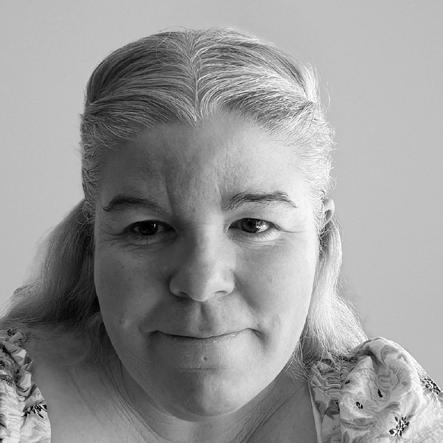
Feeling welcome and apart of something bigger, working towards a goal.
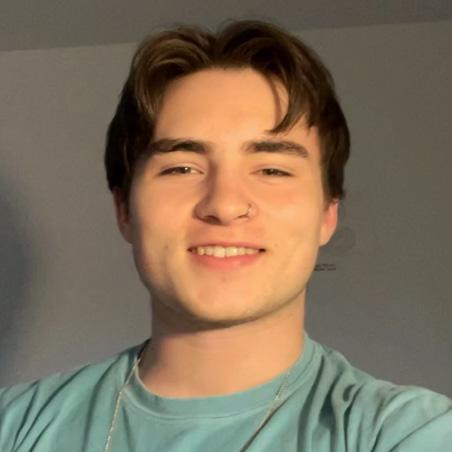
Community offers a sense of belonging, connection, and support.
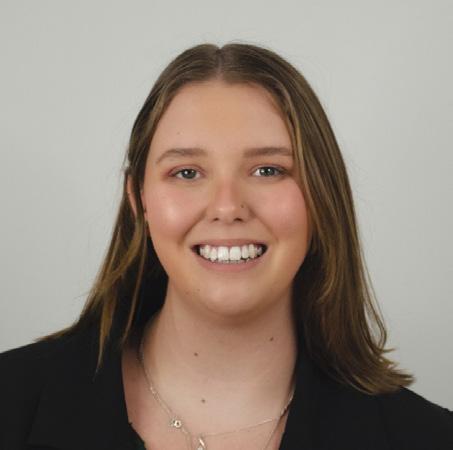
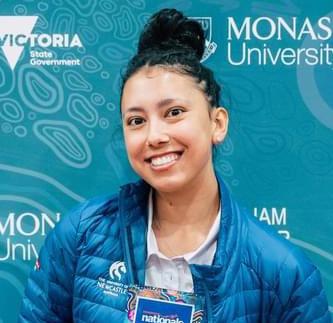
The beauty in knowing that good food and drink can bring us together. Eat, drink and be merry!!
In my community we share interest yet disagree sometimes, the conversation never dies.
6
Cody Ryan
Cover Artist
Ilia Adel
Clarissa Paige Sharing stories.
Billie Mosman
Bindi Shaw
Gianluca Polacci Byrnes
Carolyn-Louise Rutherford
Gypsy-Lee Marsh
Ivy-Rose Laidler
The mutual support system it gives you!
Meeting people, creating connections and immersing myself in environments easily walked by.
Feeling connected to my people and being individually involved in collective community events.
I love making connections, sharing experiences with people, and supporting growth!
The people who are there to support you in both the good times and the bad.
Having shared connection and comradery.
Being a part of a community makes me feel loved and supported in being creative.
7
Nicole Creen
Tegan Stettaford
Yana Kaneva
Rajshri Bhardwaj
Lachlan S
Sarah Grace
Mason Ellis
Artist Q&A
With Cody Ryan
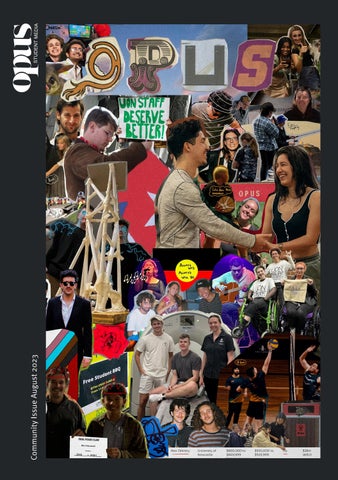
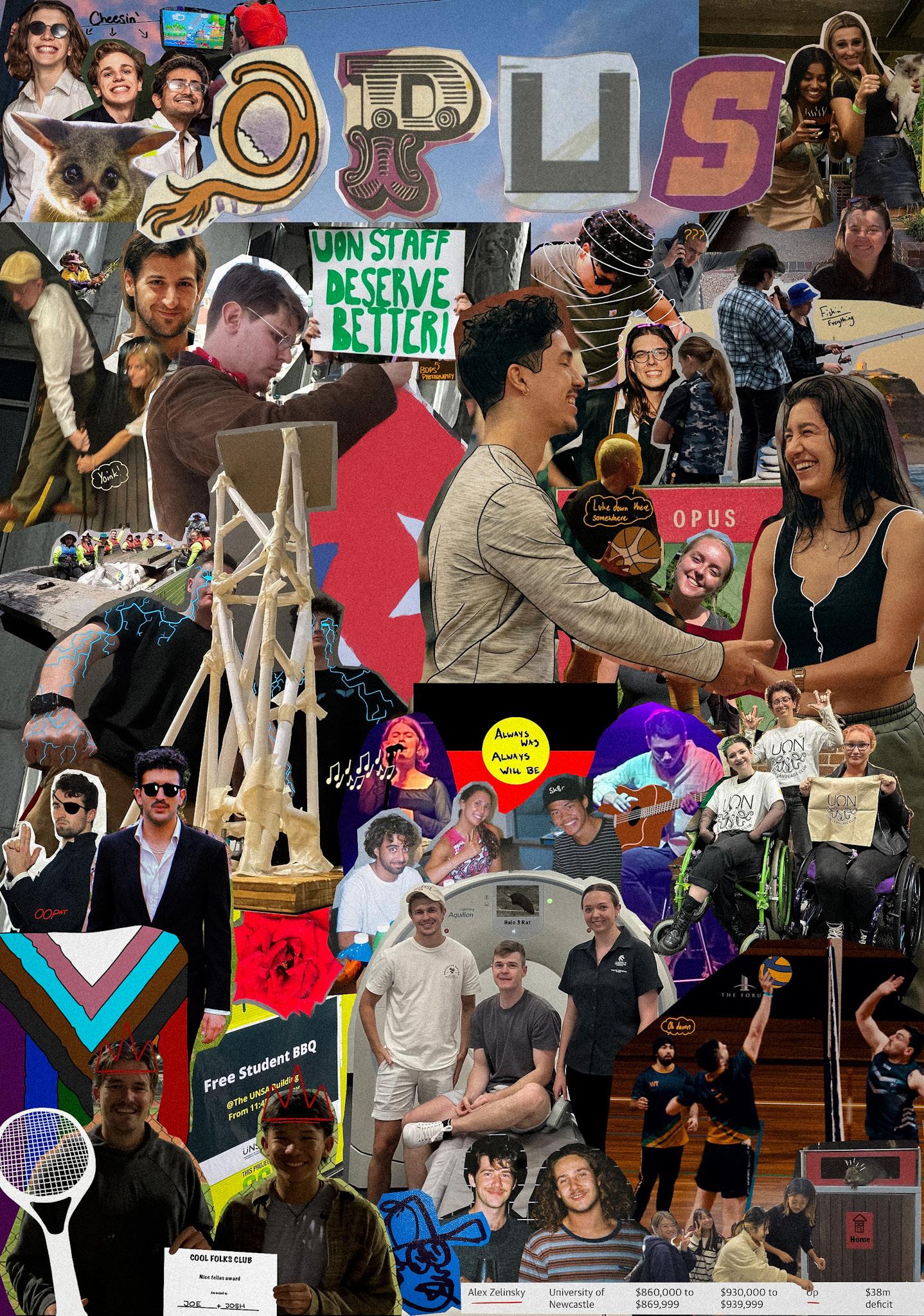
Everyone say hi to Cody Ryan and their cover artwork ‘opUS’ (get it?).
Tell us a little about yourself
I’m your boiler plate struggling uni student who’s almost at the end of their degree and is trying to get by. I study psychology but I’ve always loved art. When I’m not studying, I love my late 90’s-early 00’s anime, spending time with my lovely partner Jamilah, and playing way too much Smash with a few of my friends. There’s probably more that I could say but that’s my story and I’m sticking to it.
This will be the second time Cody’s art has been featured on the cover of Opus. Can you tell us what went into this collage creation?
I had taken a real interest in the covers of past Opus magazines, so I really wanted to pay homage to the decades long history of student cover artists I’ve also had the privilege of being a part of. To do that, I combed through decades of past issues online to find the letters I eventually used for the “OPUS” title. I also wanted to include a diverse group of students, so I reached out to every club/society I could and used something from everybody that got back to me, no matter their quality or size. This meant I had to leave some of them small or a bit pixelated looking, but I really wanted to honour those who got back to me with some photos. That didn’t fill the page up though, so
I took a lot of photos of folks who are dear to me and sprinkled them throughout. They’ve been a huge part of me finding amazing communities since moving here from the USA, so I was happy to include them too. I really poured over this one for a while, and it was a bit of a leap for me stylistically, but I’m really proud of it and I think I accomplished what I set out to do. I hope the folks I included feel like they were represented well :).
What does community mean to you?
Something I’ve been trying to do more the last few years is intentionally foster community where I can. Learning to create connections with those around me to build networks of support and friendship has been a challenge, but I’m getting better at it, and have a lot of amazing people around me to show for it. I hope to help people harness the same feeling through my professional life as a psychologist but also just as a person in my day-to-day life.
Since your last interview with us, have you noticed any changes or growth in your creative
I’ve just been playing around with some collage stuff as you can see. Art is like anything, you kind of bounce around at what’s interesting in the moment and hopefully you get some really cool stuff out of it. I don’t think my art has ever quite had a linear path in terms of progression or growth, which in a way is nice. It’s nice not to put pressure on myself to always be “progressing” or always have the next one be better than the last. I’m just happy to be creating stuff and if people enjoy or get some value out of it then that’s
Do you have a uni or life-hack you’d like to share with students reading?
When I’m doing intensive study sessions, or I feel like I need a bit more structure, I use the 45-15 method. It’s basically 45 minutes on and 15 minutes off, which conveniently fits 1 Grand Prix in Maro Kart. This works best when my
friend Jordan is with me because she’s the only one I’ve found that can *sometimes* beat me.
And finally, where can people find you?
They can find me on Instagram @thebigseed! I post my art stuff along with whatever else because I try not to take the art too seriously, it is a hobby for me after all. Other than that, I’m pretty much always in the library or the pie shop.
To read Cody’s previous cover art Q&A, check out Issue 16: Future from Opus’ 2022 print collection.
UNSA Equity Guilds
Formerly known as ‘Collectives’ – UNSA’s ‘Equity Guilds’ bring students, staff, and community members together to empower diverse communities at the University of Newcastle. If you would like to join a Guild head to the UNSA website or scan the QR code.

Accessibility Guild
The Accessibility Guild is an inclusive, safe and welcoming space for all students and members of community who may be neurodivergent, braille users; have a disability, learning disorder, vision impairment, difficulty hearing; are experiencing mental illness, chronic pain, mobility issues, or have lived experiences in any of these areas. You do not need a diagnosis to be a member!
The Guild is a place of empowerment, community building, education, transparency and of course advocacy for this diverse community. Intersectional experiences are all welcome and we are LGBTQ+ friendly.
Queer Guild
The Queer Guilds is an inclusive, safe and welcoming space for all students and members of community who identify as LGBTQIA+ (lesbian, gay, bisexual, transgender, queer, intersex, asexual or aromantic) identifying or questioning. We provide education, support, lots of fun activities and a place to advocate for issues impacting on our community. Whether you’re out and proud, or still exploring your own sexual or gender identity, it’s a great place to make new friends, build a support network, learn more about queer culture and connect with the queer community.
Carol yn-LouiseRutherfo
10
r d
SenanGill
Parents & Carers Guild
Being a parent or carer is a constant commitment, equal to (and often greater than) the challenges of university study. The Parents & Carers Guild has two key functions: ensuring the needs of student parents and carers are made known and are listened to, and to provide a community and support network for those seeking assistance, advice and new social connections while juggling a range of parental and academic responsibilities.
Womens Guild

The Women’s Guild is dedicated to the advocacy of issues impacting on our community, advancement of educational opportunities for women and non-binary students, as well as the provision of support and social networks to help make your time at University the best that it can be! We are trans-inclusive and dedicated to anti-colonial and intersectional feminism.
First Nations Guild
Together with the First Nations Officer, the Guild is dedicated to sharing Indigenous perspectives, cultures, and voices in both academic and social contexts within the broader University of Newcastle community. The Guild aims to represent and advocate on behalf of First Nations students to ensure that all members of the community have the opportunity to excel and grow both academically and culturally while they complete their studies at the University of Newcastle. Importantly, the Guild strives to foster an environment that champions Indigenous voices through meaningful actions, initiatives, and inclusive and respectful collaboration.
This role is not currently occupied. Elections are in August.
11
Grace Dulhunty
Gypsy- Lee Marsh
Queer Love, Queer Joy, Queer Community
Words: Lachlan S
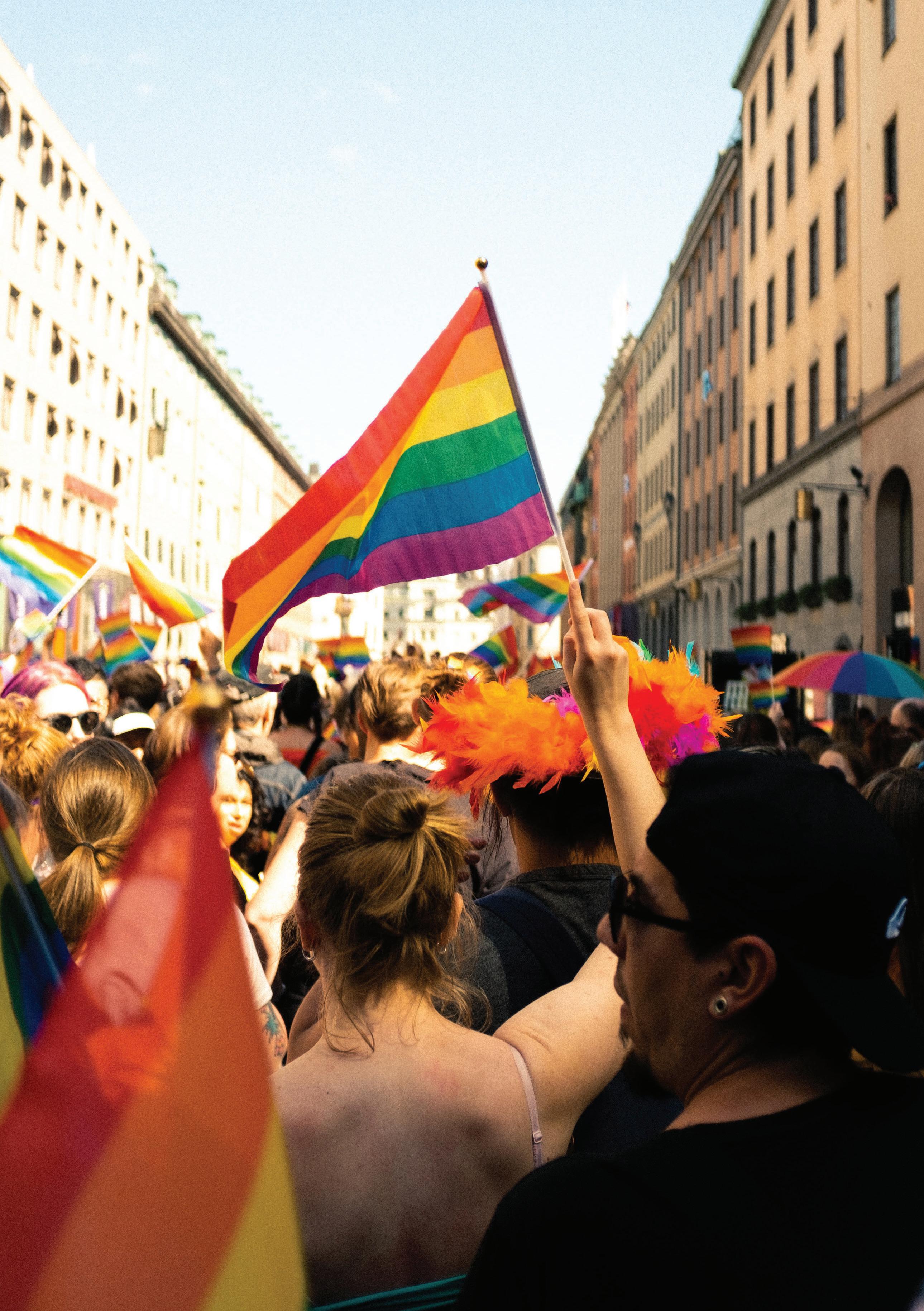
Surrounded by people and rainbow flags I wheeled back and forth through the crowd exchanging greetings with some of the familiar faces. The alt right “counter protest” we were expecting for Newcastle Libraries' Drag Storytime had failed to show, except one dirtied 4-wheel drive, its current occupant yet to leave the driver’s seat. What I had been anxious about being a potentially violent protest had turned into a queer street party, with ABBA booming in the background from home brought speakers.
When I came out as Bisexual, over ten years ago, I could never have fathomed this. Back then, same sex marriage had not even been legalised yet. I sat closeted in a religious private school, listening to talk of sin and hellfire. I came out in secret to a few close friends, knowing that if this was to reach the ears of our teachers or intensely religious students, I would be done for. My secular family came next and although the reception was fairly positive, I never quite felt relief from the uneasiness that something was still wrong.
At 16 I cut off my hair and switched to a less intense school. At 17, I met the first girl I ever kissed, and despite this school being much more progressive, I was mercilessly called slurs and avoided by most of my peers for the rest of my schooling. At 18, I was a part of the founding students at our high school’s first ever “Gay Club”, with a group of scared troubled kids that gave me the first sense of community I’d ever had. But it took until 23 for it all to click, for me to have my final aha! moment, and with the support of my loving partner, come out as a trans man.
A lot of things have changed since then, but the queer community has followed me all the same. Coming out, for many queer people, is a lifelong journey of self-discovery. But every step of the way, the community was there. It followed me to university to the formerly named Queer Collective, now Queer Guild. Every pride I have celebrated like a birthday, because in a way it is one. My identity became my new birthplace, my new name, my new family. Every step of my journey there was a queer person there, fighting for me, guiding me, reminding me of my worth. That to me counts as a family.
With our ears pressed to the daily news and hearts filled with dread, it’s so easy to feel like our community isn’t there. Drag and queer events being cancelled due to local councils caving to threats of violence. Laws in the United States attempting to deny trans people health care and forcibly detransition them. Sometimes I wonder if it’s really any better now than it was when I first took my baby steps into my identity. But then I go to marches and rallies, I go to another get together at Bernie’s Bar, I hang out with my amazing friends, or kiss my partner on the lips. And I am reminded that we’re still here, in ways we couldn’t be ten years ago, fighting for all the things we could be ten years in the future. I sing along in Bernie's with an 18-yearold who’s just come out for the first time and see how overjoyed they are to be themselves. I meet a trans woman twice my age who’s been out since the 70’s, who’s still here, still queer, still fighting for us.
So, here’s to the next ten years of queer history, queer love, queer joy, and queer community.
13
"Every step of my journey there was a queer person there, fighting for me, guiding me, reminding me of my worth. That to me counts as a family."
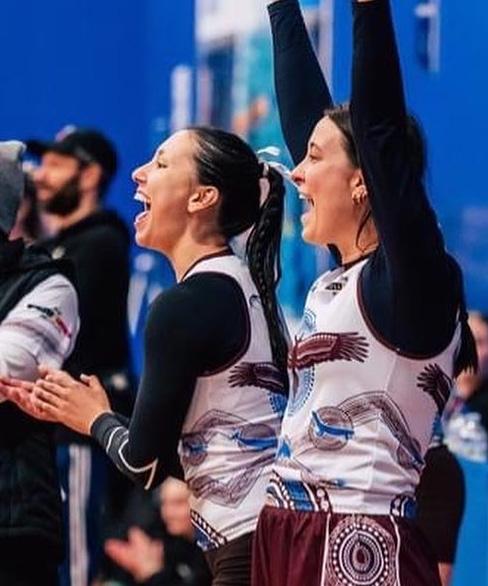
Wollotuka Team represents at the 2023 Indigenous Nationals
Words: Melaine Jenkins
In the final week of June, sixteen Aboriginal and/or Torres Strait Islander students representing the Wollotuka Institute and University of Newcastle travelled to Naarm, Melbourne, ready to compete in the 2023 Indigenous Nationals.
The Indigenous Nationals is an annual competition comprising of a four-day round robin tournament across various sports where Indigenous university students from around Australia come to compete. Now, in its 27th year, the event has grown even more from when it started originally in 1996 at our very own Wollotuka Institute at the University of Newcastle. It’s a week of mixed sports, celebrating culture, and friendship, that was hosted this year by Monash University.
Our UoN students went exceptionally well, placing 4th out of 33 universities across the nation whilst acquiring multiple accolades along the way. Bailey Carney was awarded a $5000 scholarship as a promising Indigenous student athlete, Natarni James received the Most Valuable Player for netball, Jackson Eckford received the MVP for touch football.
I was fortunate to have the opportunity to interview one of Team Wolly’s student athletes, Bindi Shaw, an Aboriginal woman from the Wiradjuri nation on Dubbo NSW, who received a prestigious Spirit Award for touch football. I was able to get the inside scoop from this second
year returning athlete on how the team went at this UniSport event.
M: How did you get this opportunity to be part the Wollotuka team? What was the process?
B: With a wide variety of Indigenous students at UON, Wollotuka had put out an EOI for students who were considering going to the games. They then held 3-4 trial sessions I believe, then after those trials they announced the team based off student attendance, academics, sporting ability, and their involvement with the university and Wollotuka Insititute. We then had training sessions leading up to the event.
M: How was it travelling together as a team to Melbourne?
B: I think travelling as a team down to Melbourne was a really smart idea on behalf of the staff leaders who took us. This allowed us to start the journey the right way and be able to build that bond and team cohesion a bit extra before going away and competing together.
M: The competition schedule says teams played between 8am-6pm. How many games did you play per day and what game day was your personal favourite?
B: There were 4 days each with a different sport including basketball, netball, touch football, and volleyball. For basketball, touch, and volleyball, we made it to the quarterfinals and so we played up to 4-5 games every day. Whereas for touch football, we made it to
14
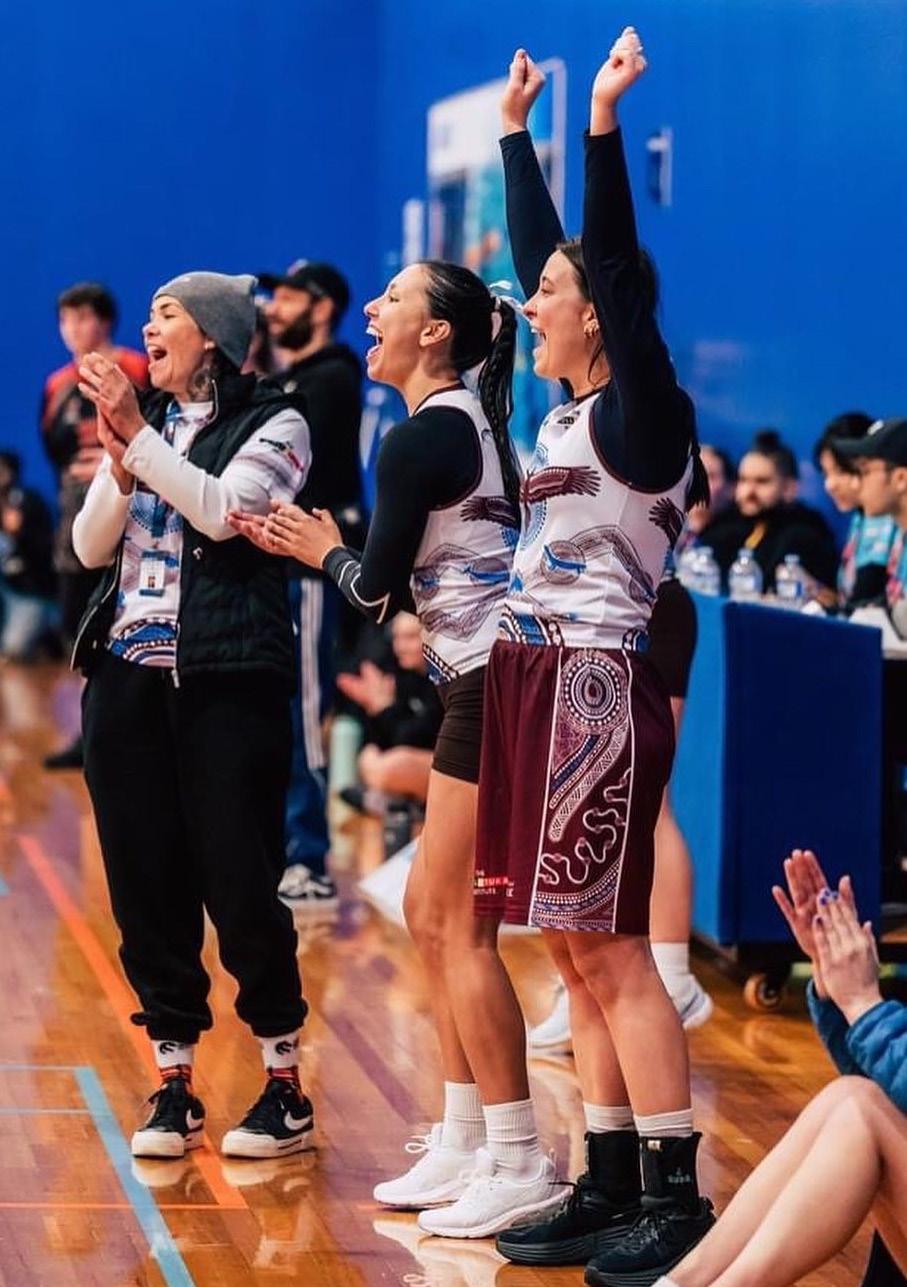
the grand final and overall played 6 games throughout the day.
My personal favourite game day was touch football as it’s my best sport and I felt the most comfortable with it compared to the others. With touch being one of the biggest mixed sports in Australia, it's always fun watching others highlight their abilities. Before the comp, we had the idea in the back of our minds that touch was going to be our strongest sport and that was reflected in our results as we played in the grand final for the 2nd year in a row.
M: How did the UON team go in the overall competition?
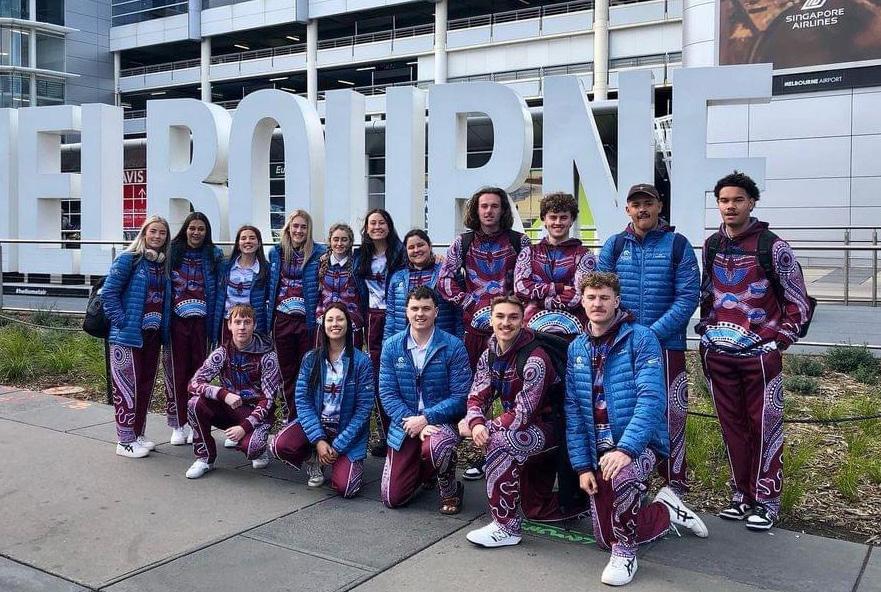
B: We were able to win our round pool basically each day and had the determination to make the top 8 for the finals in every sport. Of course, making the grand final for touch helped our overall points significantly. It was versing ACU, a rematch from 2022’s grand finale, and whilst it was a tough game with so much amazing talent from both sides, we gave it our best but
unfortunately finished down 5-3.
With all our vigorous efforts, our Wolly team came 4th overall out of 33 universities from around the nation, as well getting to take home some MVP and spirit awards and one of our boys being awarded a scholarship too. So overall, our team did an outstanding job.
M: Who were your greatest rivals in the competition? Was there a particular university?
B: This year was the largest Indigenous Nationals held so far and so there were new universities and teams that came and brought the heat. Our team believes that our biggest rivals overall was UQ (University of Queensland) as we got the chance to play this team multiple times throughout the competition. They ended up beating us in the netball quarter finals which was hard but then we took the win over them the following day in the touch football semifinals. They were a talented team and had good structure and with this, they were able to win the entire competition.
16
M: How was your overall experience at Indigenous Nationals?
B: 2023 was my 2nd year at Indigenous Nationals and has been one of the best experiences in my life. I am so beyond grateful for the opportunity to be able to attend such an incredible event. I have learned so much about my culture and had the opportunity to meet so many lifelong friends and even family from across the country. I could not recommend it more to anyone. As long as I'm in uni, you can bet I'll be taking any chance I can to go to UniGames again. Post game depression was hitting hard on the plane ride home aha, it just makes me more excited to compete at the UniSport Nationals at the Gold Coast in September as well as Indigenous Nationals in 2024 at the University of Wollongong.
M: Were there any standout moments from the trip?
B: The most stand out moment of the trip was our bonding off the field as well as how well we worked together as a team on the field. Getting to the grand final was one of the team’s best moments and for me personally, getting a spirit award for touch football was also a highlight of the trip.
M: As Aboriginal and/or Torres Strait Islander students, what does the Wollotuka Institute provide for you and what are your main interactions with it at UoN?
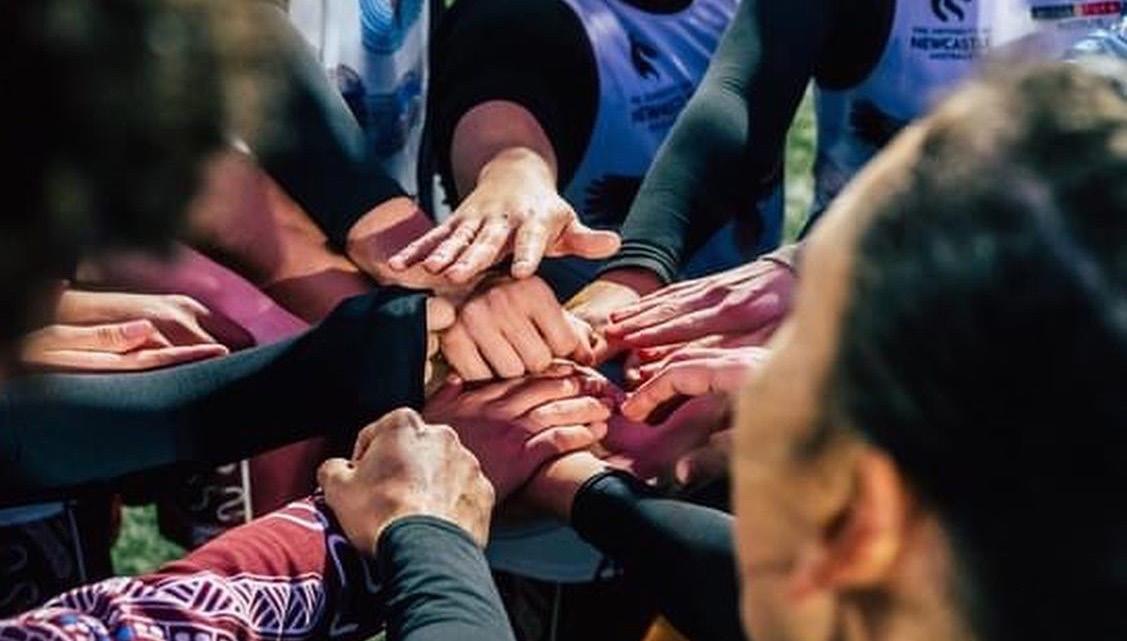
B: The Wollotuka Institute at UON provides so much support for their ATSI students and staff. They have assisted me and my studies by providing me with tutors to help me gain extra support for my degree. If I need a person to talk to about things I have going on with university studies, family, or other concerns, I always feel comfortable reaching out to them for support and they have become a useful and reliable source for me both in regular day-to-day things and academic support.
For more content following the events of the Wollotuka Institute and its students, check out the instagram @thewollotukainstitute
17
How Male Allies Can Empower Gender Equality
Words: Gypsy-Lee Marsh
Why Hello!
For those who I have not met, my name is Gypsy, and I am your newly elected UNSA Women’s Officer!
I am so excited to help build our Women’s Guild over the rest of 2023 alongside the incredible SRC. I am a final year Bachelor of Laws student (previously graduated a Bachelor of Business) and you may recognise me from We Gotchu Girl Inc, a student-led project based on educating and advocating for a wide range of issues namely sexual assault and harassment. Before I start, just a heads up – some of this article may be triggering for some people. Any reference to women, includes all who identify, and similar to all references to men. I do not explore the role of other genders in this piece, as I believe this is a separate, and of course, important, issue.
Throughout my experience and studies, I have found that the role of men in empowering gender equality cannot be understated. Men as active allies can critically change the environment that many women are involved in, including the workplace, school, and other parts of society.
In our patriarchal society, male allies can use their privilege and platform to amplify the voices and experiences of women and other marginalised genders. By speaking up and advocating for gender equality, they can help bring attention to important issues and
challenges that might otherwise go unheard. Whilst we always hope that others will listen to women on their own merits, this is sadly often not the case.
Male allies have the potential to influence the attitudes and beliefs of their peers, colleagues, and family members. By modelling respectful and progressive behaviours, they can challenge harmful stereotypes and help shift societal perceptions about gender roles and expectations. Further, men should actively listen and engage with the experiences and voices of women. By amplifying their perspectives and promoting their ideas, male allies can help create a more inclusive and diverse dialogue.
Gender equality is not just a women's issue; it is a societal issue that affects everyone. Male allies can contribute to creating more diverse and inclusive spaces by actively supporting and advocating for the inclusion of women and other marginalised genders. Their involvement helps foster a sense of belonging and encourages others to join in the efforts. Whilst listening to women is so crucial, men are also responsible for educating themselves about the issues and challenges faced by women, and other marginalised communities.
One of the key ways male allies can implement advocacy and allyship into their everyday lives is by speaking out against sexist attitudes, behaviours, and discrimination, and being an
18
joke they have said.
Be direct – outright say that the comment is not funny and explain why.
Disengage – don’t validate their behaviour by laughing, change the topic of conversation.
In a post ‘Me-Too’ time, male allies actively modelling inclusive behaviour and empowering young individuals to challenge gender norms is crucial to a more equitable society. This can be achieved by engaging with your local Women’s Issues Organisations and institutions that focus on gender equality. By collaborating with others who share similar goals, they can learn, share experiences, and collectively work towards creating a more inclusive society. In the home, sharing domestic chores and caregiving
responsibilities are a crucial way to model equitable environments to young, easily influenced minds.
Lastly, male allies who advocate for workplace policies and practices promoting gender equality including supporting equal pay, paid parental leave, flexible work arrangements, and inclusive hiring and promotion practices.

Remember, being an ally is an ongoing commitment. It requires continuous learning, self-reflection, and action to create lasting change and empower gender equality.
If YOU have any topics, issues, ideas, and thoughts that we can implement in UNSA in the Women’s advocacy space, and I can assist with in my role, please feel free to send me an email at GypsyLee.Marsh@newcastle.edu.au.

19
Hiding in Plain Sight
Living with Hidden Disabilities as a Mature Age Student at UON.
Words: Carolyn-Louise
Hi. My name is Carolyn-Louise, but all my friends call me Caz, it’s nice to meet you all.
I have recently taken on the role of Accessibility Equity Officer for the UNSA SRC.
I am a 47-year-old grandmother, with multiple hidden disabilities. I was born with Albinism (not that you can tell), borderline ocular hypertension, and I have diagnoses of autism spectrum disorder (ASD) and attention deficit hyperactivity disorder (ADHD), both of which were diagnosed as an adult. I am also the primary carer for my fiancé, who has a brain tumour and epilepsy and am currently a 3rd Year Occupational Therapy student.
I was born with a rare genetic condition called Oculocutaneous Albinism that affects melanin production in my body, my body produces minimal melanin which causes me to have fair skin and hair and visual issues. For the last 45 years, I have tried to assimilate with society and appear normal. Sometimes it works, sometimes it doesn’t. Unfortunately, when I was young the mentality surrounding disability was “If you can’t see it, it doesn’t exist.”. Because of this mentality, my presentation being atypical (I have hazel eyes and fair skin, not colourless eyes, and skin), and just a lack of information available about the condition, I was just raised
as a normal kid. This led to bullying by my peers, sitting at the front of the classroom to see, wearing glasses, and getting very sunburnt very easily. Not a fun experience. Now, there is a lot more knowledge about the disorder and we have just recently celebrated Albinism Awareness Day on June 13th.
I was not diagnosed with ASD and ADHD until earlier this year. My son, 21, was diagnosed with ASD at 7 and only now through my lived experience with him and watching TikToks about ASD and ADHD, did I think that I showed a lot of hallmarks of these disorders. This late diagnosis was missed primarily for similar reasons to my albinism diagnosis. I just fit in better with “normal” than with having a disability. I am happy to note that the old “’70s & ’80s” mindset has evolved to become inclusive. I, like many living with disability, do not want sympathy or pity. I wish for empathy, inclusivity, and acceptance. I am here, I am able, I am strong, just let me show you I can do whatever I set my mind to.
Needless to say, there is a lot going on in my life. Why then? I hear you ask; would you take on this role? I am very passionate about inclusivity, dismantling barriers for those with disabilities, and challenging society to create a more accessible and accepting world. I want
20
to help empower and advocate for those with disabilities and educate the world that there is a very high percentage of hidden disability in the community. I firmly believe that accessibility and inclusion have come a long way, however, there is still a long way to go. Helping others is my love language and I would like to foster a good working relationship between the AccessAbility team at all campuses and students with disabilities of all kinds.
I said I have hidden disabilities, so what’s that? Hidden disabilities are conditions that are not immediately apparent to others, making them less visible or easily recognized. They can encompass a wide range of physical, mental, or cognitive impairments, including chronic illnesses, learning disabilities, mental health conditions, and more. Unlike visible disabilities, hidden disabilities often go unnoticed, leading to misconceptions and challenges in receiving support. So, in other words, we appear “normal” on the outside, which makes obtaining support difficult.
It's important to note that hidden disabilities can vary greatly in their impact on individuals. Symptoms may be constant or fluctuate over time, and the level of disability can vary from person to person. Recognizing and understanding hidden disabilities is crucial for
fostering inclusivity, empathy, and support for individuals living with these conditions.
Living with hidden disabilities as a mature-aged student with outside caregiver responsibilities is an intricate balancing act. However, I hope my journey is an inspiration to others who may face similar circumstances. If I can inspire just one person to make a change then I have done my job.
By taking on the role of Accessibility Equity Officer, I am embarking on a mission to promote understanding, support, and accessibility within the university community. Through my experiences and advocacy, I have the potential to make a lasting impact and create positive change for all students at UON. If you see me on campus, come up and say “Hi”, I don’t bite.
Please feel free to chat or email me at any time. My email is c3150810@uon.edu.au.
21
The Rise of the Bookish Community
Words: Sarah Grace
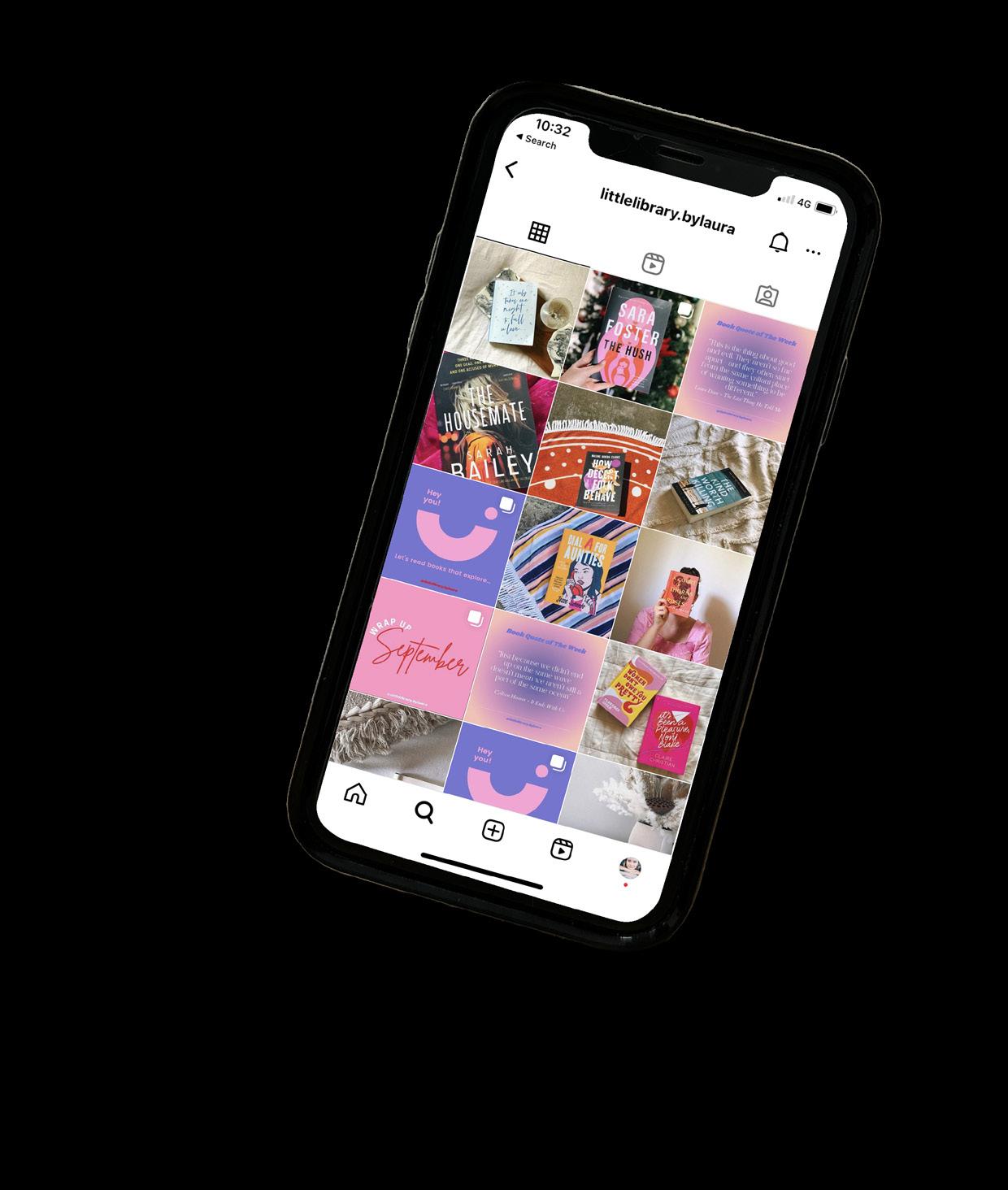
Bookworms are known to get extremely protective and a little bit crazy when it comes to all things book related. From their favourite authors, books, and tropes to the book groups they are a part of. These bookish communities have been thriving for years through the more traditional idea of a book club, and when the internet came onto the scene, there were internet forums for people interested in a specific book, author, genre etc. Individuals from all over the world could join, providing a greater variety of booklovers.
These forums have almost been replaced with Facebook groups, who can have unlimited members, and of course, ‘Bookstagram’ and ‘Booktok’. These can be used by booklovers to show off their impressive collections, merchandise, favourite fandoms and art. Publishers have begun to reach out to profiles with large numbers of followers to promote books prior to their release date. This helps profiles boost viewers and followers, and publishers reach their intended market.
The purpose of these communities is for a group of like-minded people to come together and talk about the books they’ve read and liked with others who are equally invested to discuss them. Not all books are for everyone and there will be those who will dislike a book where others love it. Through Facebook, booklovers have been able to connect all over the world. Buy Swap Sell (BSS) groups have formed for readers to sell their high-quality books secondhand to those who want them and will look
after them. This is a lovely way to connect and support others and their book buying addiction. There are many problems collectors face in the bookish community, including accessing books not available in some regions. The Global Book Hunters Guild is a Facebook group that where people can purchase books available in other countries for a lot cheaper than through a publisher with foreign exchange rates and shipping costs. There are nominated persons in each country who purchase the books and send them over in a bulk parcel. It’s such a nice community to be a part of, everyone is willing to help you out, and you make connections with booklovers around the world.
However, the book community is no longer a quiet hidden group of people anymore. The rise of ‘BookTok’ has absolutely skyrocketed this little niche community into the view of the general public and has gained quite a lot of popularity and recognition. It’s turned what used to be viewed as a nerdy and lame pass time for quiet individuals, into something trendy. Almost everyone is reading books now! Being a reader has become more recognised in society and as a popular pass time.
‘BookTok ‘and ‘Bookstagram’ have also allowed for readers who enjoy books previously surrounded by stigma to openly express their enjoyment of these books. For example, the romance genre has especially grown and evolved over the last few years. There is now a lot more open discussion of ‘spicy’ books,
22
which has created another community of readers who enjoy these kinds of stories who previously may have felt they needed to keep that enjoyment under wraps. There is still stigma surrounding the romance genre for both readers and authors, however, the days of the subtle and poetical works of Jane Austen and Charlotte Bronte are long over. New genres that are much darker and even sultrier than the simple spicy romance is becoming increasingly popular. An example of this would be the monster subgenre, Mafia genre, and books containing negative and near toxic ropes such as bully romance.
‘BookTok ‘has also created a unique opportunity for those who wish to become authors in a more professional sense. TikTok is ideal for profiles to sell their work by posting ‘hooks’ from their books to draw in readers and incentivise them to read or buy their book. Authors could range from those using writing websites, such as Wattpad or AO3, to indie authors using this method to market their books. There are a lot of indie authors who have gained a large enough readership and attention through the promotion on TikTok, that they have signed traditional contracts with publishers.
From a different aspect, artists can use these platforms to display their works on characters, scenes, and places from different books. This encourages viewers to buy their prints or sign up for a paying subscription, such as Patreon, to see more and the artist earns a profit for their hard work. If an artist gains enough attention,
However, the benefits these platforms offer also come with numerous downsides. There are plenty of accounts who are scammers, active on BSS groups and even those trying to steal the works of other artists. Recently, there has been an increase in ‘flipping’ of books – but these negatives will be discussed further in a follow up article. The most important thing is that once identified as a scammer, there is a community response to protect others and stop them from causing further harm.
The bookish community has always been a strong and much-loved group that has been around for decades however, there has been a significant increase in the exposure and popularity of books - offering a gamechanger for authors, publishers, artists and the like. There could be many reasons for this, such as during COVID-19, a lot of people turned to books as a form of escapism. With the formation of ‘BookTok’, more people are exposed to books, new releases, and can end up getting trapped in the world of books. The emergence and acceptance of previously shunned fandoms has led to silent fans being able to openly enjoy their books across Bookish communities.
23
Finding Community Within Sobriety, Not Despite It.
Words: Lachlan S
A warm cup of tea in a flimsy paper cup, sipped beneath a stained-glass window, has become a core part of my Wednesday routine. It's not always been this way but being in this “blink and you’ll miss it” run down church, with warm midday sun streaming through in golden rays, is part of a life I never thought I’d get the privilege of living.
If you can’t tell by the title, my life used to be incredibly different.
My Wednesday routine six years ago, for example, usually went as follows:
• Wake up (Hungover)
• Drag myself to class late (Still hungover)
• Sleep through half the class
• Finish my class
• Pop to the bottle shop, eat (maybe)
• Wait until 5 o’clock (A respectable time to start drinking)
• Drink until I pass out (usually about midnight)
• Repeat this every day for the rest of my week.
Being a 25-year-old former alcoholic and university student can feel like living a Hannah Montana double life. University classes Monday and Tuesday, AA on Wednesday, therapy on
Thursday. In the early days of sobriety, it felt like I was two different people, Jekyll and Hyde. I spent every waking moment scared that at any second somebody would realize who I really was. A wolf in sheep’s clothing. A fraud masquerading as a functional and normal human being. I felt like an alcoholic just wearing a sober person as a skin suit. Every time somebody offered me a drink at a party or the pub, I’d freeze. Blindly panic. Say something about a nonexistent job I had to work the next day. I kept people at a relative distance, marked the milestones of sobriety but never elaborated. The isolation was miserable but comfortable.
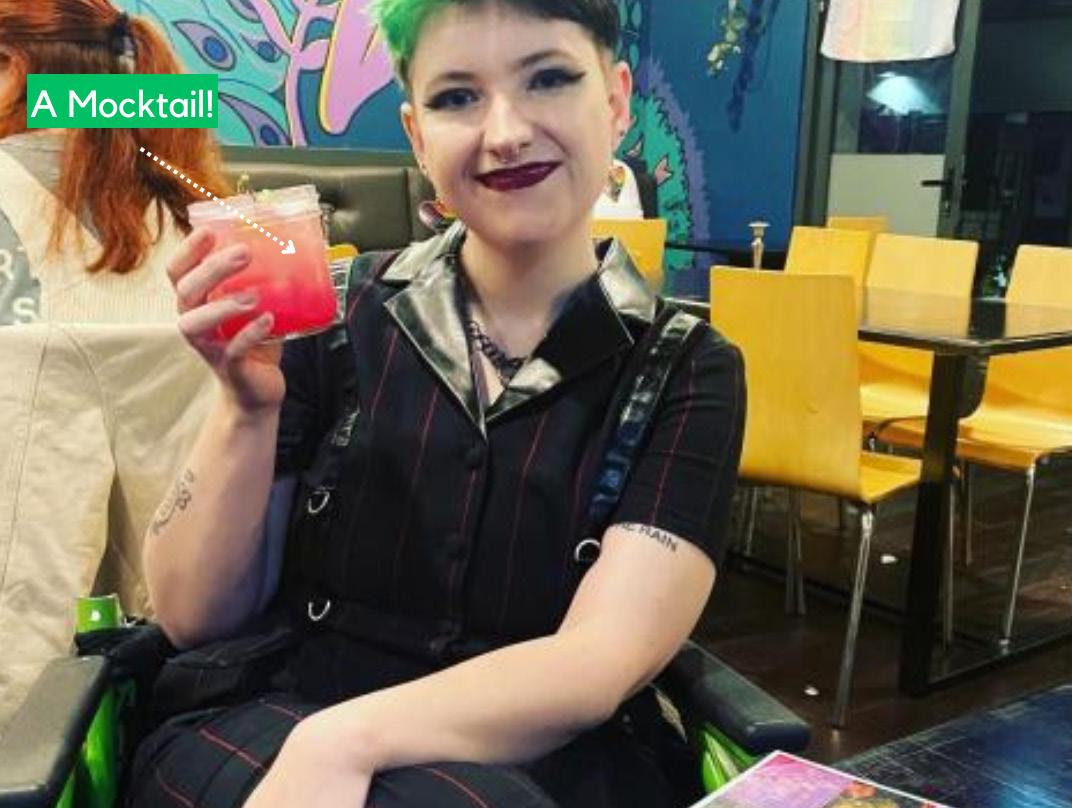
I started going to Alcohol Anonymous about 2 months into sobriety. I had all these ideas from films about what it would be like. I remember wheeling my butt in through the narrow church doors, parking my wheelchair, and trying not to throw up out of sheer nerves. I felt stupid, the shame of having to go to an AA meeting lighting up my face with color. But almost the second I was visible in that open hall I was greeted with smiles and waves and introductions.
The truth is, AA isn’t just 40-year-old balding men with rotund beer guts and grease-stained grey t-shirts. It’s a former senior emergency nurse. It’s a young Mum that brings her
24
daughter with her every week, a little girl with pink glasses and curly hair that watches Coco Melon in the corner during the meeting. It’s an American Yoga teacher. It’s an elderly woman with her rollator. It’s a successful engineer, wearing his signature, perfectly ironed, polo shirt.
It’s trauma survivors, it’s people who want to be better, it’s those who are rebuilding their lives from the rubble of (sometimes decades long) addiction.
So, every Wednesday I go, I listen to people’s stories. I’m not religious, never have been, and contrary to popular belief AA is often fairly secular. But sitting in that space, hearing people share their heartbreaks and triumphs, is what I believe to be a spiritual experience. The similarities of every story outweigh the differences. Every time I go, I get something new out of it. Learn something new about
myself. Feel less alone. See a version of my future where every social gathering isn’t a battleground for my addiction.
AA was me putting my hand up for help, saying “I can’t do this alone,” and a community of people replying, “It’s okay, we’ve got you.”
For those struggling with addiction reading this, for those who resonate with this, please know that we have your back too. I have your back. If you see my green wheelchair around campus, don’t be afraid to say hello. Share your story with me; I will always listen. Because there’s no shame in being the only person sober at the O-Week party. You're not broken for not being able to accept that drink. You’re not the only one of your peers fighting this battle, I promise you, there are others.
We are stronger together.
25
Becoming a Young Parent
Words: Clarissa Paige
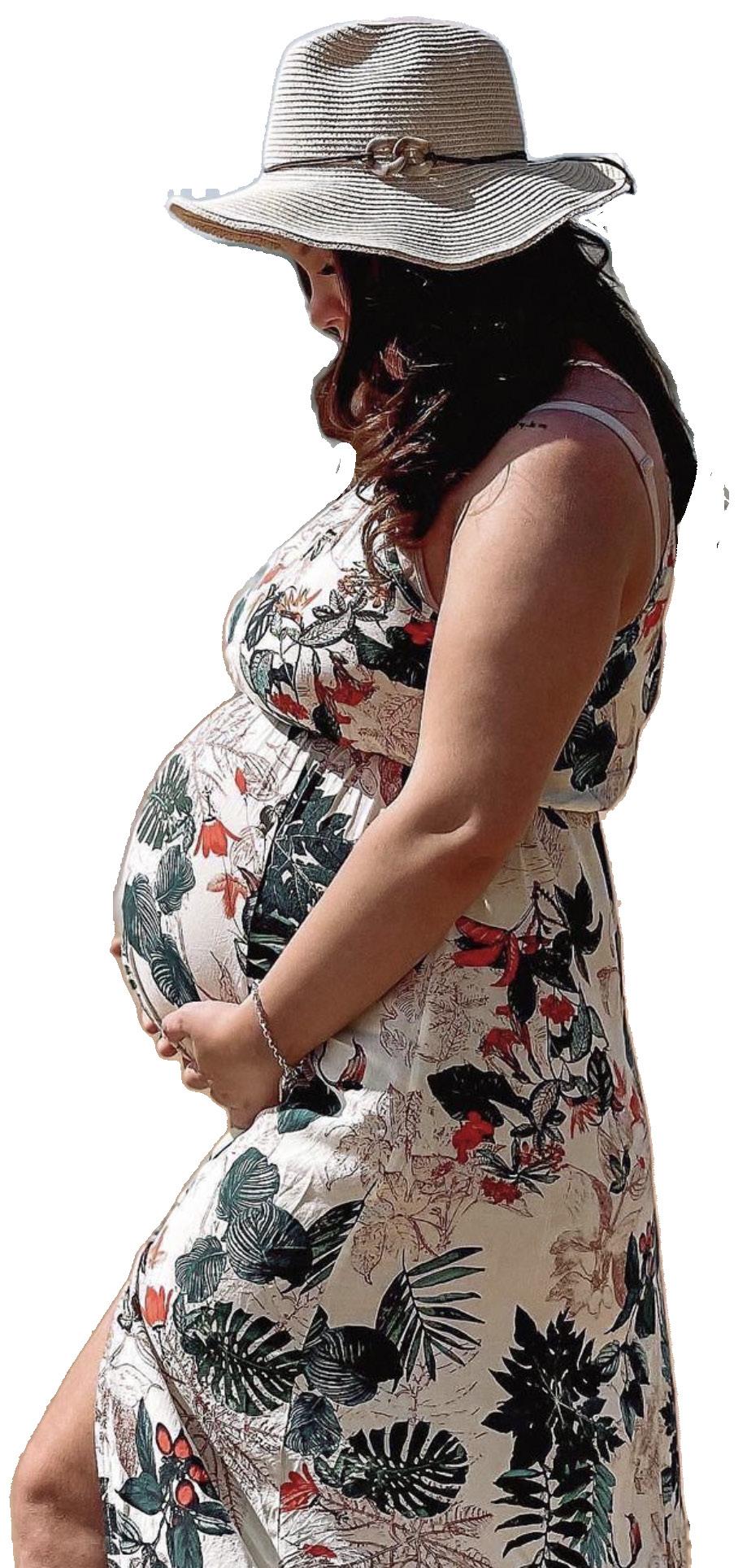
Becoming a young parent has been the most life-changing, challenging, and enlightening event of my life. It is no doubt that this journey I have taken has given me a foundation of strength, motivation, and courage. As parents, we face day-to-day challenges with our children, but as we face these challenges we become more resilient, and we then carry this throughout our life.
As young parents or young parents to be we hear a lot of ‘opinions.’ “Are you making the right choice”, “You’re too young to be a parent”, “You’re ruining your future.”
We are drilled with the stereotypical timeline of how we are supposed to order our life. You go to school, do your HSC, go to university, get a job, marry, and then have kids. But let me tell you, doing it in a different order doesn’t necessarily make it more difficult. Parenthood has challenges at any stage of life. It’s all about what you make of it.
I am writing here today, to tell you that being a young parent does not hold you back from life, but only pushes you forward. When my son came into this world, everything changed for me. The girl I once knew had gone and a new and improved version had begun to arise. It didn’t happen straight away, it was more of a slow development, and she is still developing to this day.
Parenthood made me start thinking about my future more, my goals and my life ambitions, and I started to envision the future I wanted to provide for my son. It's true, I have always been a motivated young person, always had direction. And when my son entered this world, the motivation to become more was amplified in an unexpected way.
Parenthood is not easy, as we’ve been told, probably a few too many times. We go through stages, whirlwinds, trying to navigate the right way of bringing up a child. There are days we feel exhausted, questioning how we are going to get through the day. But then there are days we feel accomplished, motivated, and happy. These are the days that we all live for. I believe we can’t have the good without the bad. Parenthood is a day-to-day learning adventure. We are going to make mistakes on the way, if you haven’t, please do tell me your secret!
It’s time to stop being so hard on yourself and look at where you are today, be proud in this moment. Keep trusting that you’ll get there if you keep putting one foot in front of the other. You keep moving forward because you’re worth it. It might take longer than you thought it would, it might be harder than you expected, but you don’t let those things stop you. You keep going, you keep trying, you keep showing up, because if you keep putting one foot forward, you will get there.
26
In my parenthood journey I have come to realise that there are times that you can’t do it on your own. You need a good support system and people you can rely on to help. With the help of other people, this gives you a chance to have a break, a time where you can work on yourself, or even get some well needed rest. Looking after your wellbeing is vital to being a good parent. If you’re not looking after yourself, how can you expect to look after another living being. It shouldn’t be hard to choose yourself first sometimes. You can start small, do some self-care, write in a journal, go on a short walk, or even just have a nice long hot shower or bath. You need to start concentrating on yourself more because at the end of the day, it’s the relationship we have with ourselves that impacts everything. You are a strong, powerful young person, start working on your relationship with your inner self and watch your world slowly change.
As young Australian parents we are very fortunate to have support and resources available to us. Some of the programs that I have accessed are, Diamond Women, Rent Choice Youth, and the Young Parents Program. With the help of these programs, I have managed to stay on track with my goals, I have created a space where I feel safe to talk about issues, and most of all, I have a community that supports me through the good and the bad. There is no doubt I would not be where I am today without the help of my family and these support organisations. All you need to do is speak up and ask for help, don’t feel ashamed for needing a helping hand. Speaking up is brave and you are stronger for doing it.
There is one piece of advice I want you to take away from what I have said today; being a young parent does in no way hold you back from life. It only pushes you forward to becoming the person you are destined to be. Becoming a parent, no matter the age, creates a foundation of strength, motivation, and courage. If you surround yourself with a supportive network that helps you through
every of step of the way, there is no doubt in my mind that you won’t flourish. Remember, it takes a village to raise a child.
Start making the right choices for yourself and your family. Believe in yourself, take charge of your life and you never know, you might find yourself living the life you have always dreamt of.
Unifying Beats
Words: Mason Ellis
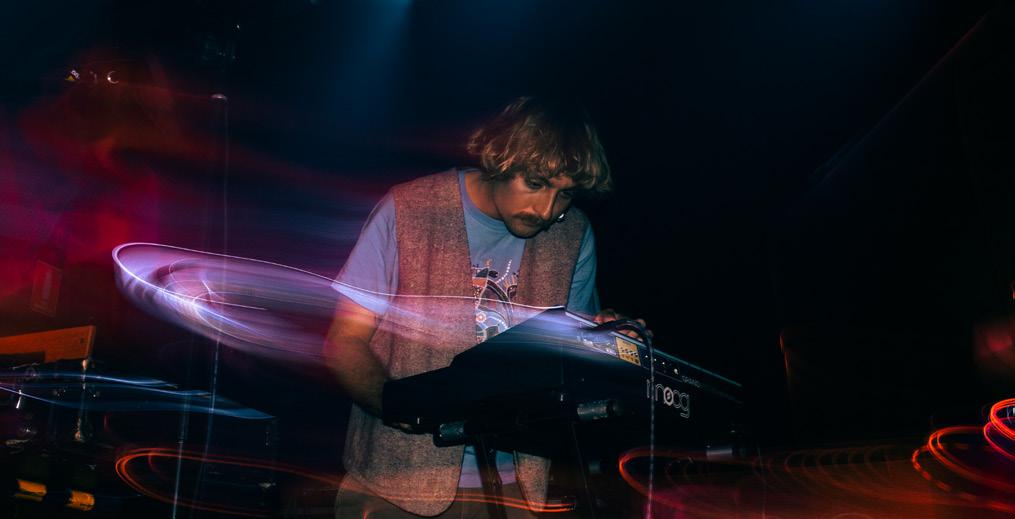
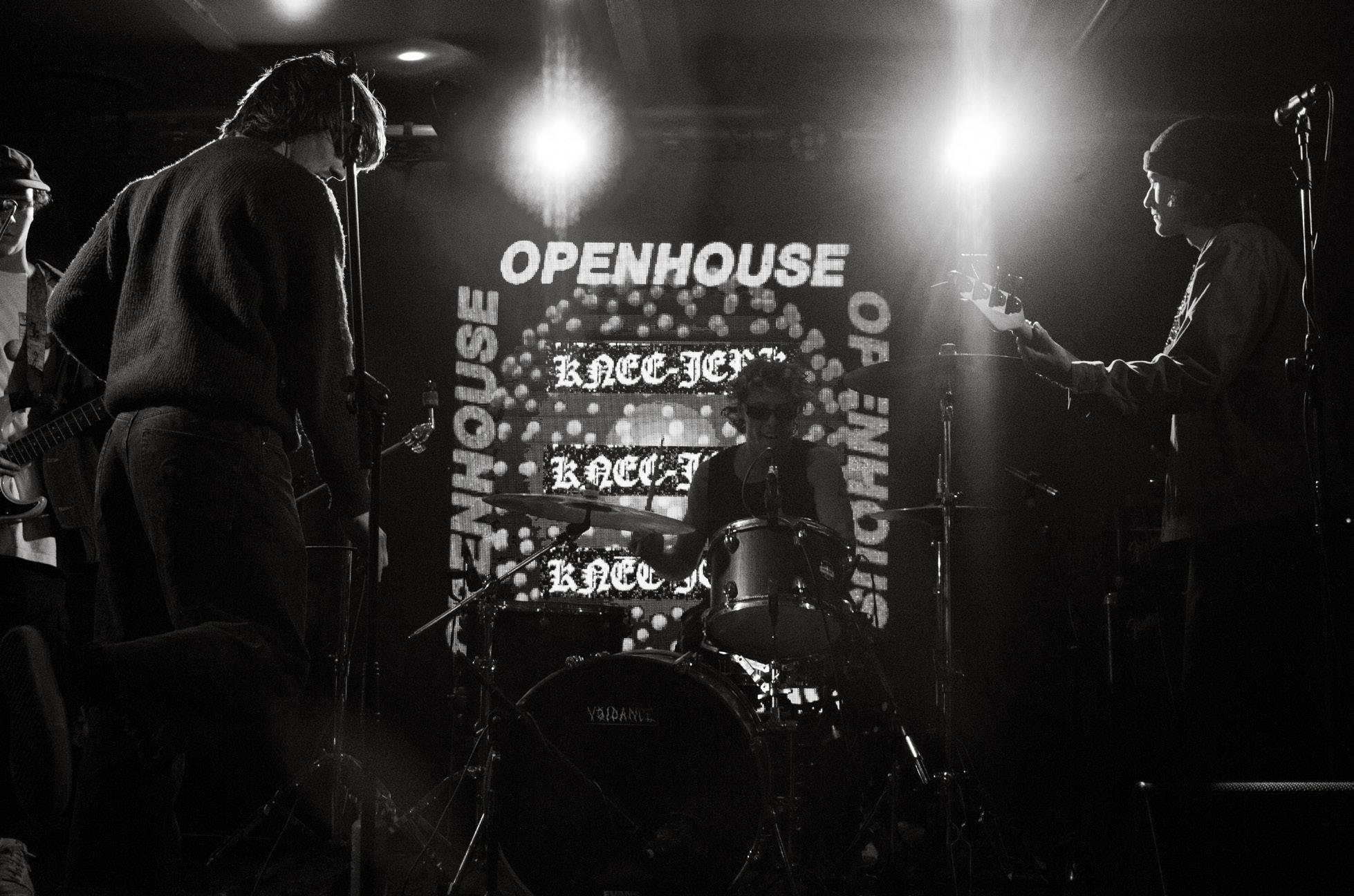
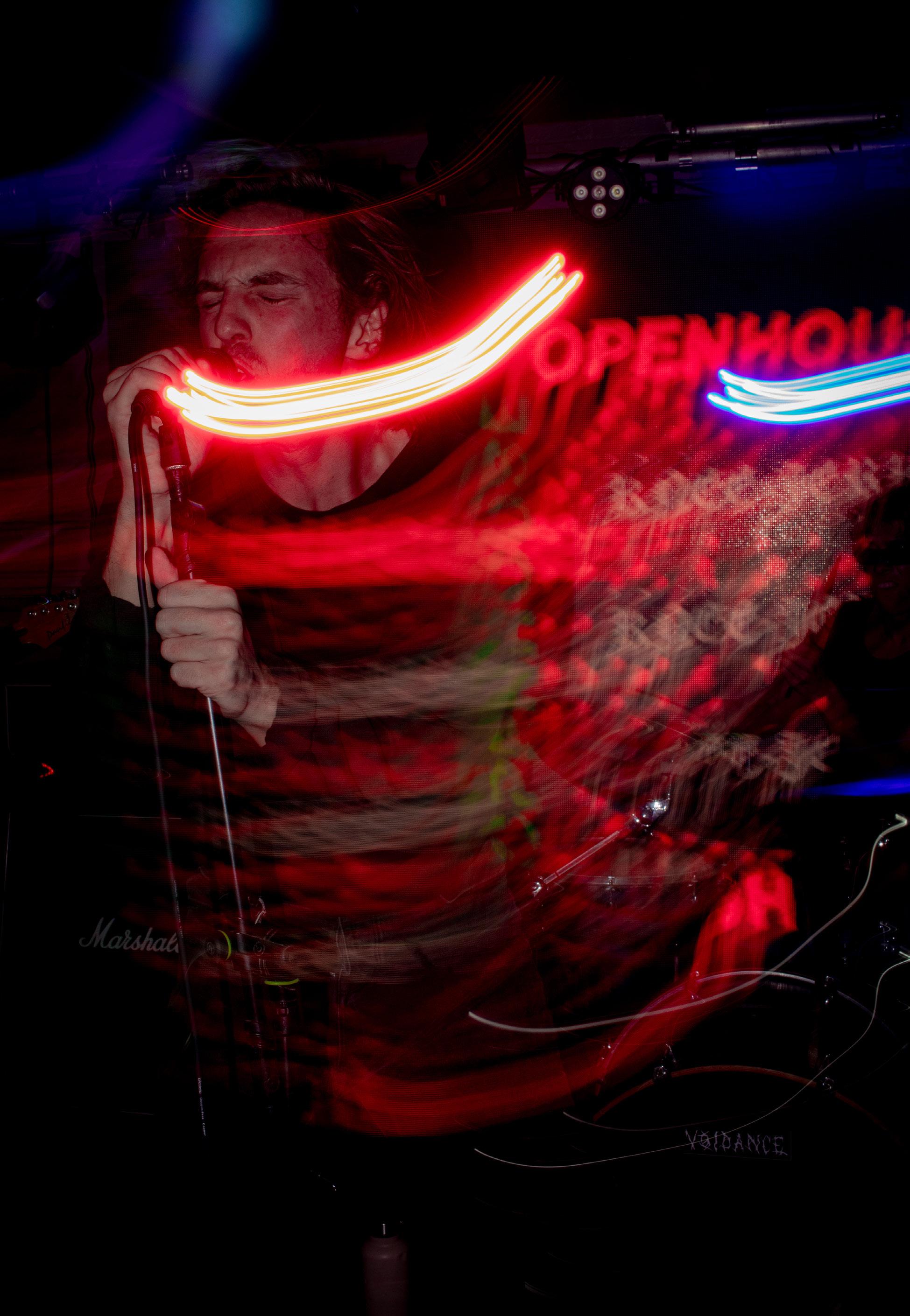
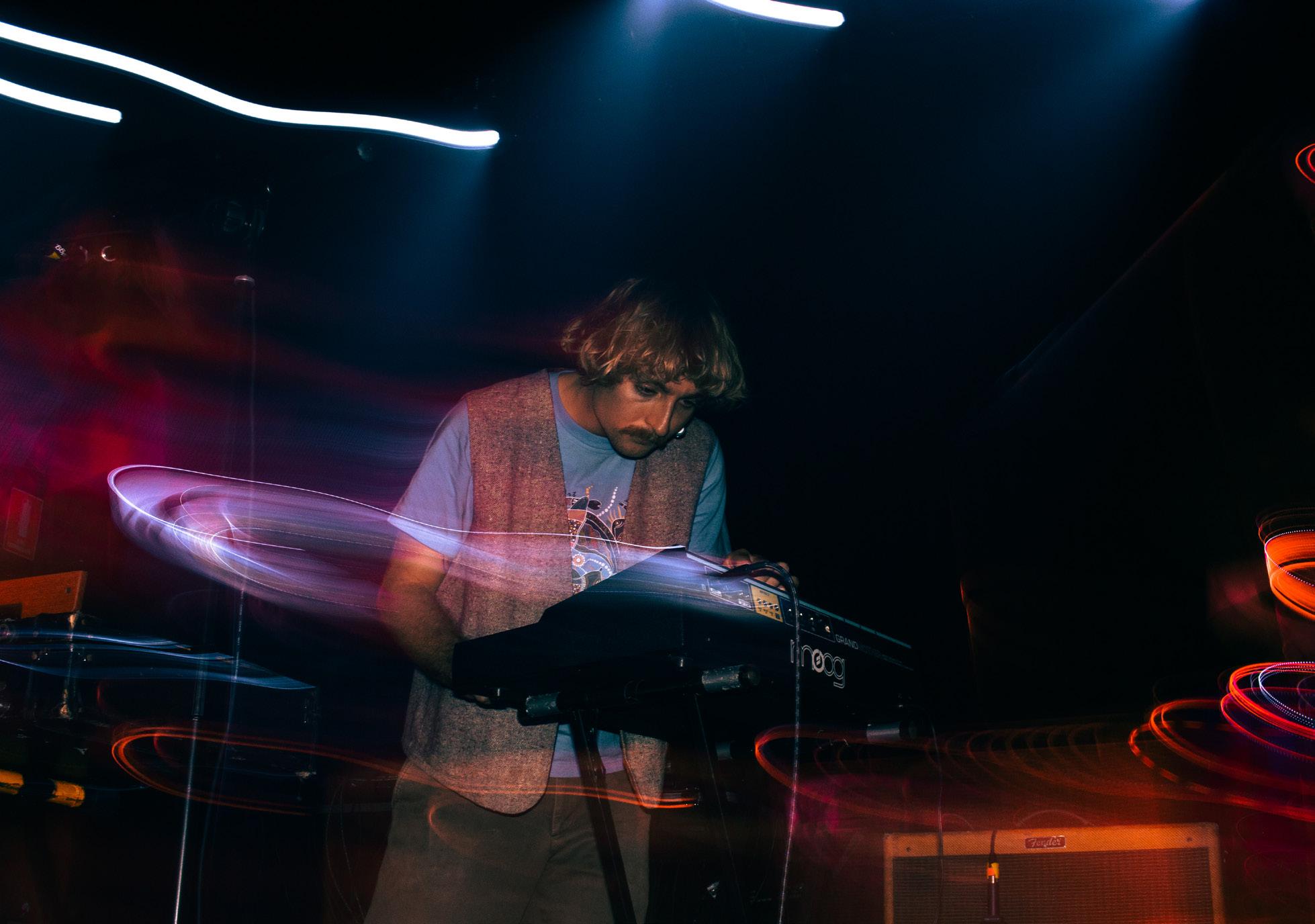
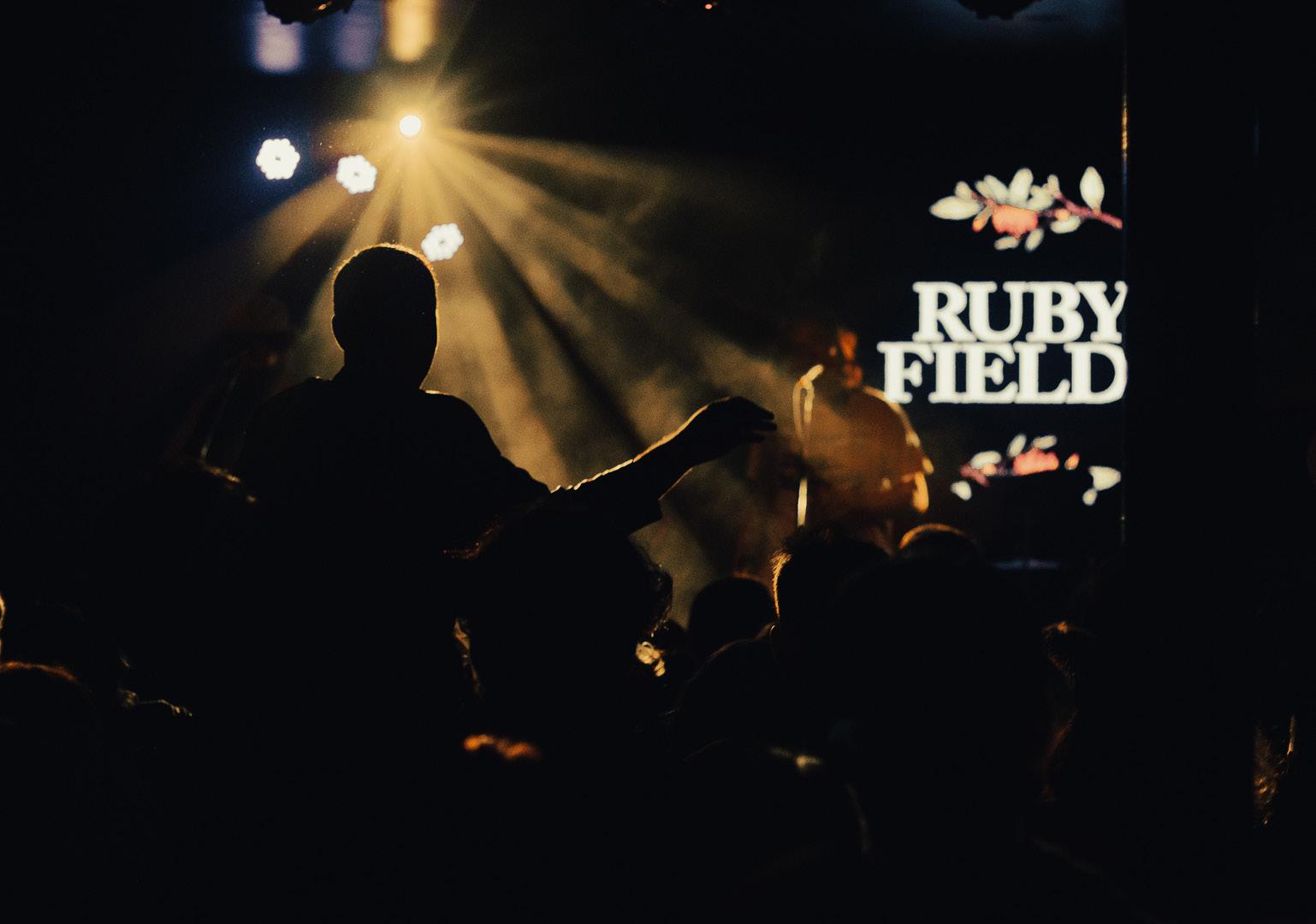
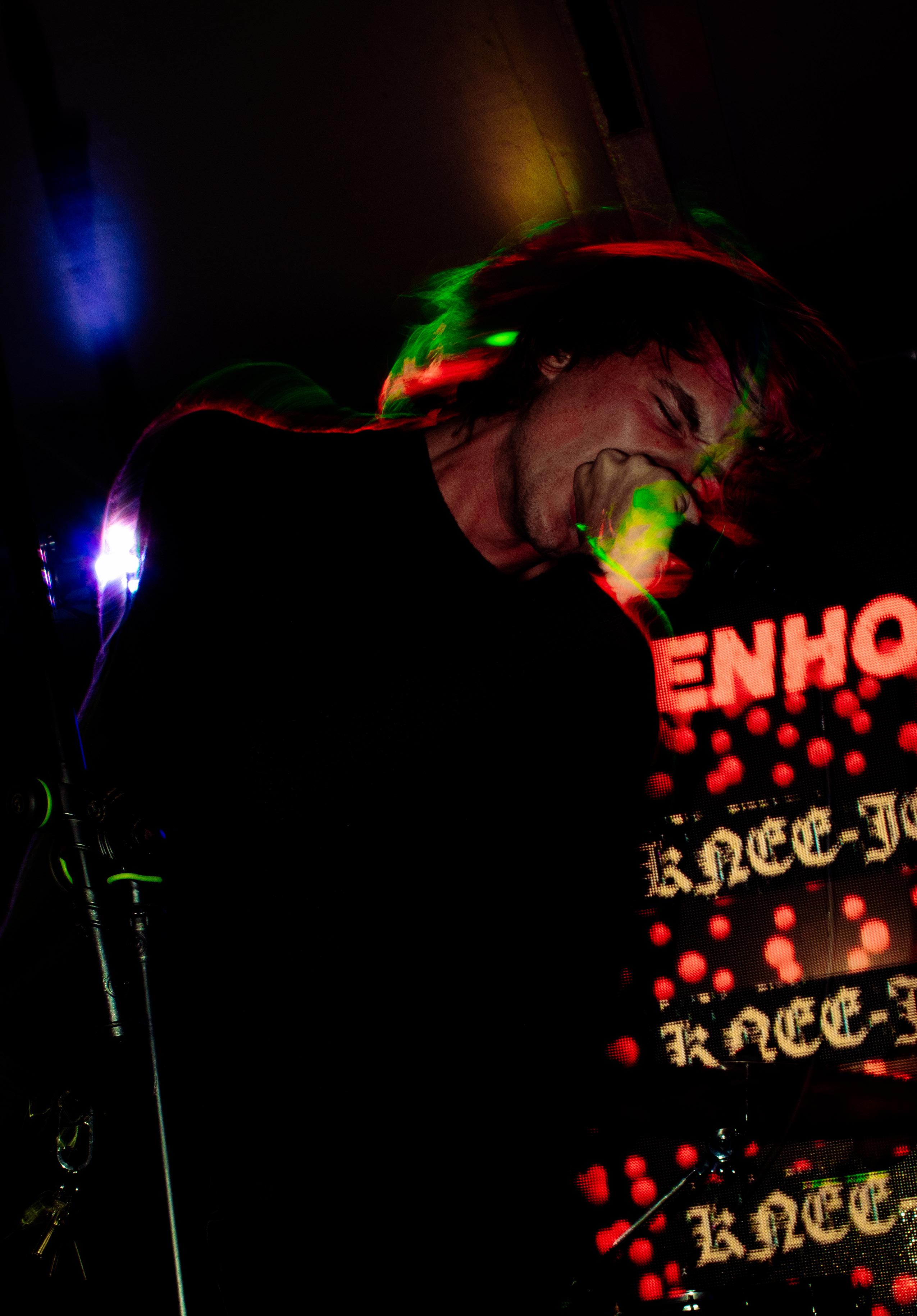
No matter what musical genres, live gigs, or personalities that resonate with an individual, the live music scene can target that feeling you crave. Whether it be getting sweaty and throwing your body around in a pit, standing in the back enjoying the sounds, or telling everyone how you are friends with the band, the community fostered within the Newcastle music scene is beautiful.
Coming from myself, who has struggled with making friends and building connections outside of work or uni, I stumbled into the scene without any knowledge of bands, people, or venues. As an extremely anxious person, going to gigs and socialising was far outside my comfort zone. However, despite their stage personalities being intimidating and scary, the character of everyone in the music community thrives on passion, love, and support.
Everyone's welcome, no one is shunned away, no one is made to feel left out. This feeling of love for music, especially at a level where half the crowd is often the band's friends, feels real, grounded, and truthful to the craft.
I always feel like I have this amazing privilege now when going out to gigs every weekend, capturing moments that often go unnoticed at a larger scale. A community which allows me to be creative in my artistic pursuits when photographing their performance. A community that truly does what they do for the love of their craft.
To check out more of Mason’s photography, follow him on Instagram @mellis.zip
There's still life
in still life
34
Words: Nicole Creen
To be given this precious experience of life, is to wholesomely give to our loved ones without expectation. If they love you right back, then your tank will never be left emptied. This cycle of give and take ebbs and flows throughout our lives. What you choose to give is totally up to you, but what you receive won’t always be your choice.
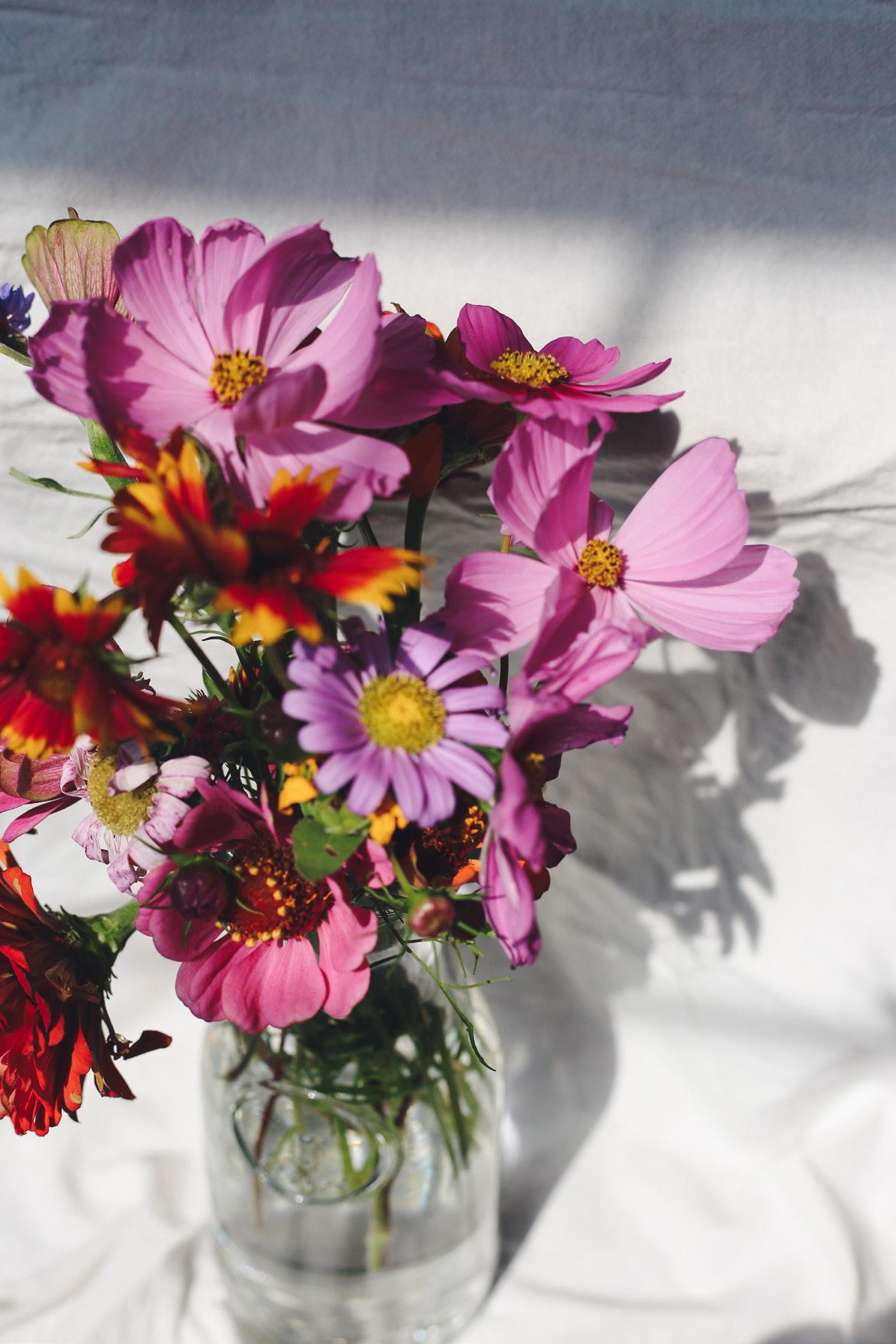
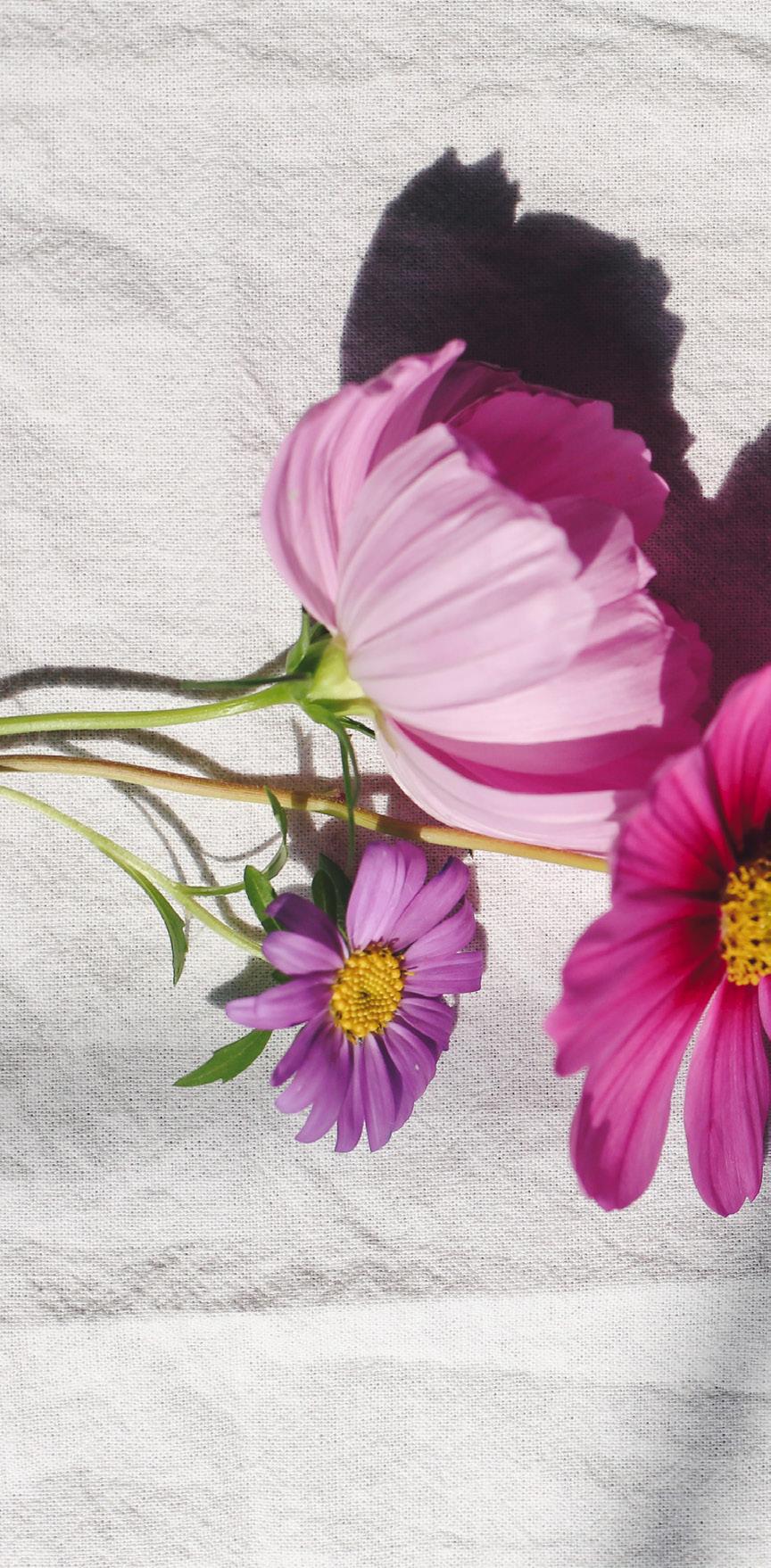
When I started Florists’ Giveback, I wanted to pass the parcel on event flowers. By working with other local florists for floral donations, we wrap them, arrange them, and style them for others, then clean it all up and do it again for the most precious job of all. Recycling our leftover event flowers gives our floral designs a new purpose, but most importantly, they brighten the homes of our elders living in aged care. Leftover event flowers which normally end up in our mulchers and in the green bin, are collected, re-wrapped, and delivered into the community.
What once started as an initiative to reduce unnecessary floral wastage, has now become an essential part of our connection to community. It’s not certain what these elders gave to their loved ones during their time, but one thing is for sure, they are now on the receiving end of Florists’ Giveback. These elders will never be able to give back to us, but we know our community and loved ones will in other ways.
Florists’ Giveback is a tribute to my late Aunty Joanne, an aged care nurse who donated personal care items and time outside of her working hours to care for the elderly residents in her facility. May this be an ode to her legacy and may she rest in peace.
35
"what receiveyouwon’t always be your choice."
Florists Giveback Interview

How Nic is upcycling bouquets for a beneficial social impact.
Words: Melanie Jenkins
Florists Giveback upcycles flowers used for events (primarily weddings) which are only needed for half a day, if that. So often, these beautiful, top-quality flowers are put in the green bin or turned into mulch soon after.
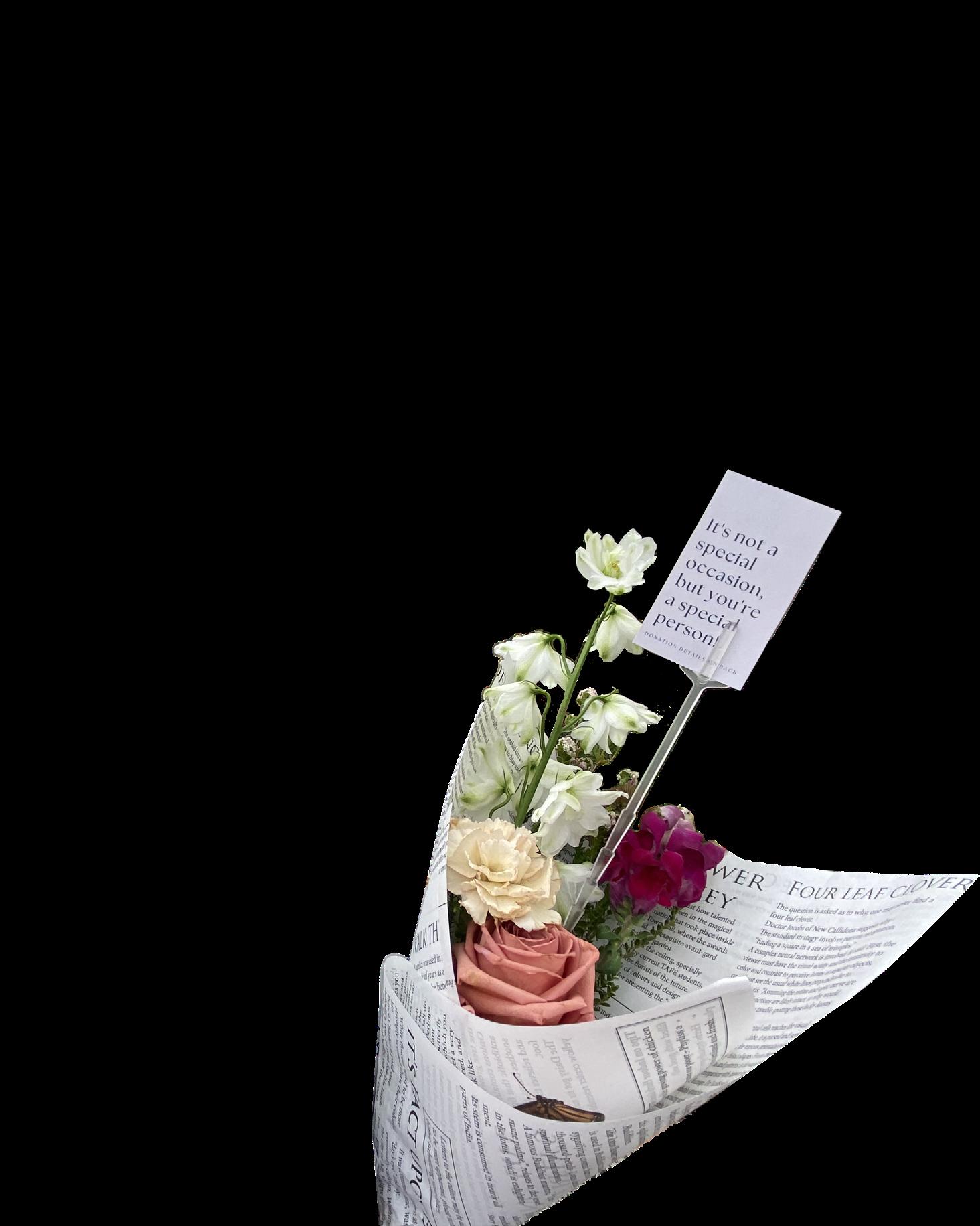
The environmentally friendly solution is to extend their life as long as possible and how does Nic do that? She provides these flowers, now re-wrapped with positive messages, to those who might not have the access or means to purchase bouquets for themselves. Everyone deserves to feel special and valued and so Nic volunteers her time delivering them across the Central Coast to various facilities. When asked about Florists Giveback, here’s what Nic had to say;
M: What inspired you to create Florists’ Giveback and upcycle event flowers?
N: Whilst I was freelancing for another florist in October 2022, I swept the leftover blooms into the bin and it suddenly hit me, “What if these leftovers could still be enjoyed?”. Immediately inspired, I went home and began reaching out to other florists in the wedding industry around the Central Coast and received super positive
responses. Since then, I have delivered a total of 82 upcycled posies to aged care facilities and hospitals, in collaboration with local florists. Florists’ Giveback is a way for me to utilise my skills as a florist and purposefully contribute to my community.
M: How do you choose where the flowers get delivered?
N: Honestly, I just do a google search for aged care facilities or hospitals in the area and simply pick one that I haven’t been to yet! My policy is that I drop-off to different locations every time, so we can spread the floral love around evenly. Before doing a drop-off, I will always contact the facility to ask their approval first, as some places simply don’t have enough spare vases or even staff with the time to accept and distribute the bunches. It’s also important to me that the bunches end up in patient or resident areas, instead of dumped in a staff lunchroom for anyone to take. So, I really try to communicate the purpose of the donation with the management of the facility and to have a point of contact when I arrive onsite.
M: Are there any ways people can support Florists’ Giveback?
N: Absolutely! At the moment, we really need more floral donations and sundries! You don’t have to be a florist to donate the flowers. If
36
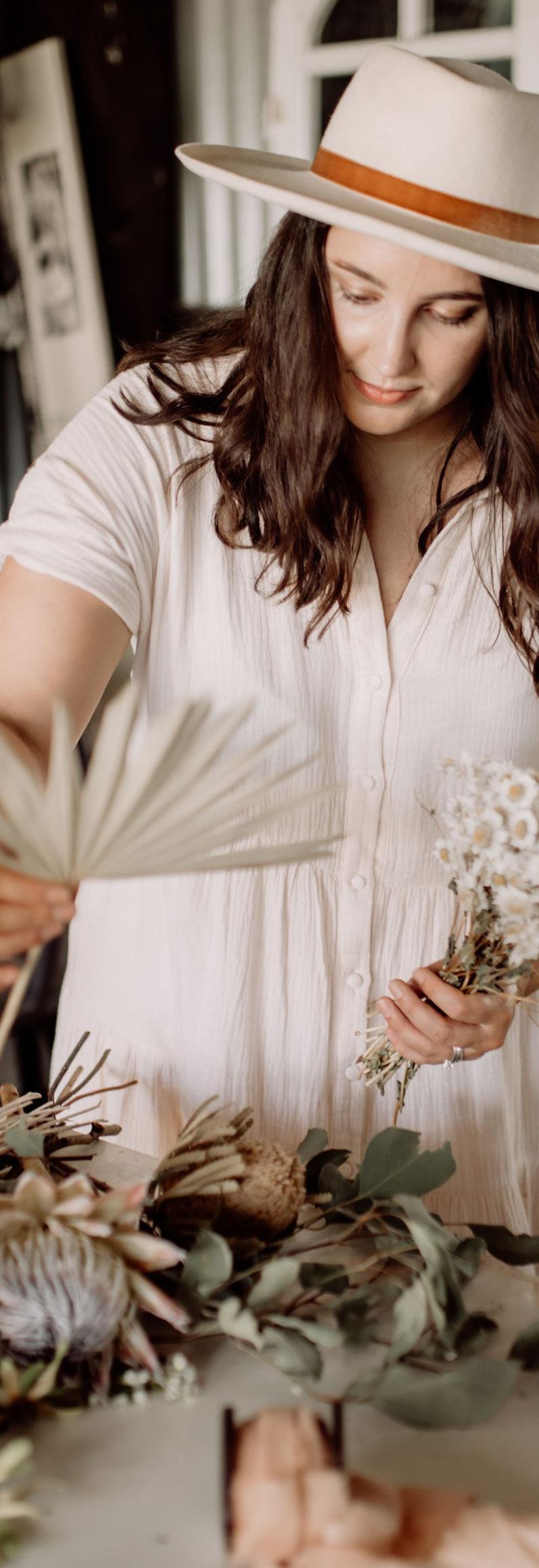
Meet Nicole Creen, current student at the University of Newcastle and founder of the initiative ‘Florists Giveback’.
Shibui Services
creating a change in the disability community
Words: Ivy-Rose Laidler
SHIBUI [ She · Boo · Ee ]
Simple and yet complicated at the same time
With over 20 years of experience between them in the disability sector, co-founders Emily Bielefeld and Brigette Kirkpatrick created Shibui Services. Shibui Services is a charity, based in the Hunter, specifically for persons with a disability (PWD) who have, are, or at risk of experiencing any type of abuse or violence.
Since before the years of COVID-19, Emily and Brigette have been working tirelessly to build Shibui Services into a safe space for PWD to have access to advocacy and gain skills in selfempowerment. We want to stay positive, but we need to address why this was started… below are the startling statistics.
• More than 70% of women with a disability have been victims of violent assault and within this, 1 in 4 women with a disability have experience sexual violence after the age of 15.
• 1 in 2 have experienced violence after the age of 15 and 1 in 5 before the age of 15.
• 43% of PWD have experienced physical violence.
*these statistics have been gathered from Women with Disabilities Australia and the Australian Bureau of Statistics*
This hurts. This hurts a lot. To see how PWD do not have a voice and are continuously abused and neglected.
So, this is where Emily and Brigette come in. Being in the disability sector for so long, seeing the mistreatment and abuse of PWD, they wanted to make a change.
Starting in 2021, the co-founders introduced C.R.E.W.S:
Confidence – Resilience – Education –Wellbeing – Safety
The point of CREWS is to allow PWD to explore what healthy and safe relationships are compared to unhealthy and unsafe relationships. On top of this, CREWS explores self-care, web safety, and boundaries. So far, there has been four women's groups and one men's group.
So, a little bit of a detour to the article but I am a support person with Shibui Services and therefore, have a bit of inside intel when
38
it comes to the groups and everything Shibuirelated. I am technically a support person, but I am also admin, resource development, and social media manager… honestly it is a lot of fun!
Anyway, back to the actual point of this.
The groups have been absolutely amazing. Some of the feedback we received was “this is what I imagine a safe relationship to look like”, and we now have multiple people wanting to volunteer for Shibui after finishing the program. The women who have attended the groups, as said by our facilitators and co-founders, all have a “light-bulb moment” where experiences they have had just fall into a “ohhhhhhh… that’s what this is…” situation. It is hard to see it, knowing someone has had a massive realisation about a personal situation, but also… oh my lord, the outcome is amazing. You see these women go, yeah, I understand now, and I want to learn more.
A major part of the feedback was surrounding wanting to know and learn more. CREWS was
created as a foundational and fundamental step. A FREE fundamental step. CREWS do not cost anything for PWD, not even from their funding (like NDIS), because Shibui believes that everyone should have access to education that will create those foundational grounds to create healthy and safe relationships.
Looking into the future, Shibui wants to create an advocate program, workshops, and a mentoring program for wellbeing, and implementing what PWD learnt from the original CREWS program.
Thank you to Emily and Brigette who continuously put themselves out there to make a difference to the disability world and advocate for PWD.
39
The Sea
Over the shrub, over the trees
Past the mud, out into the sea
White horses Gallop between Deep blue, all Steered by breeze
The murmur of wood The fumbling ocean Conversate together In chaos and calamity
On days like these When the day is grey I’ll be on my knees
Waiting for waters embrace
Whitewash runs up Across the sand. And water comes To touch my hand.
Over the shrub, over the trees
Past the mud, out into the sea
Words: Gianluca Polacci Byrnes
The Candlelight Dance
Though the brightest lights Has the darkest nights.
Oh, to be a flame, The light in a room of darkness. Turn warmth into pain, With all the hot wax to harness.
Oh, to dance freely, Moving with every gust of air. Breathing so easy, Wanting to shine bright without care.
But, with any harsh disturbance Leaves behind such subtle fragrance.
40
Mask-less Romantics
Our two masks, now caught up To the truth, feels strange. What once passed between two Is evading us.
Why one more blip in her Episodic rampage Couldn’t bring to fix too Soon forgotten heartbreaks.
As our, bitter-sweet hearts, Remind ourselves the failings. Our masks will shred apart, And we’ll toy with the remains.
Night Shower
When the rain falls and The stars yet, shine true. The clouds part, lookup, Take a breath, reach out Then ease your eyes shut.
The cousin of a Sun pour, better still The heavens reveal Their riches of Infinite wealth.
Heavens gates close, with Those great fluffs of grey. Rolling through the sky, They amount in the distance Holding out for their catharsis.
But some cannot contain The rush of rain, washes In release, escape, or relief. Daring enough to break free Too early, prematurely.
So, hold on, hold in, Be brave and courageous. Let it go in good time, Be patient with yourself, Be true and kind.
Though it won’t ever be enough, That darkness dwelling always grows. The stars that shed their tears Are calling out, wanting to be known. So stand alone in the night shower.
The divine cries out in pain, When you cannot manage, Command, control, reign Think of water and flow. Capture the tears that fall.
41
The loneliest
“community”
A student’s perspective
Words: Tegan Stettaford
Community Noun
“A group of people living in the same place or having a particular characteristic in common.”
A sense of community is something that many people associate with being a university student; that collective sense of studying for a brighter future, of long nights cramming under exam stress, of juggling various commitments and still trying to make time for yourself. A sense of community is clear on sunny days during semesters when campus is thriving with life, coffee chats, lunch dates, line-ups for free BBQs. As someone who completed their undergrad at Ourimbah, this sense of community was in many ways stronger, but presented so differently. There was less buzz on campus, with events much less frequent, less food options, and hang out spots. However, the cohorts were much smaller so when you were coming towards the end of your degree you knew everyone in your cohort.
Going into a PhD immediately following the completion of undergrad, I was thrilled at the thought of creating a new community with fellow PhD students both within and outside of my field of psychology. Unfortunately, I realised pretty early on that there was not a very strong sense of community to join. With no classes with peers, working from home, and very busy
schedules, there are few opportunities for us to cross paths in the same field, let alone with other students outside of psychology. Even today, two and a half years through my PhD, I still don’t know all of the Psychology PhD students at UoN. I had heard in the time before commencing my degree, that being a PhD student can be quite an isolating experience and I think the reality of the degree and lack of community really influences this.
As the postgraduate representative at UNSA
I’ve also received insights into the sense of community within other postgraduate degrees and groups, including masters, graduate certificates, online and offshore students. Senses of isolation seem to also be rife in comparison to undergraduate degrees, but this can vary quite a lot.
However, it is not all doom and gloom in the postgraduate space. I have made some fantastic friends in this time already and have found some great avenues to develop community:
1. Working on campus:this may sound silly but honestly, the times when I work on campus, I always seem to run into someone throughout the day. Even if it is just a brief hello, this is far more you can ever expect at home.
42
loneliest
2. Postgraduate specific events: events aimed at postgraduate students are not super frequent, but they do pop up from time to time. During O-week, there some postgrad events like speed friending which are great to foster community. Graduate Research also runs events throughout the year, often focused on specific festivities such as the HDR festival, HDR careers week, and Doctoral wellbeing week.
3. Other events: there are many other events that run on campus that are open to all UoN students, with many of them being run by UNSA, such as the upcoming colour scramble. You can even consider training opportunities at UoN like first aid training or mental health first aid training; you get to upskill and meet new people!
4. UNSA Clubs: on the topic of events, there are so many different clubs at UNSA that hold events and have their own lovely communities. There are some great postgraduate specific ones including Women in STEMM, Biology HDR society, HMRI PhD student association, and many broader ones for various interests and degree. Being an executive member on a club is another great way to foster community; the Women in STEMM club is
a fairly recent club that fosters community between STEMM females and I have personally met some fantastic people in in my time as club secretary.
5. UNSA SRC:if you are really passionate about a community of your own, being integrally involved, making change, and connections for broader communities, consider nominating yourself to be an SRC member in 2024. I have thoroughly enjoyed this role as the postgraduate rep over the past couple years.
6. Academia: this is one that’s a little specific and more relevant to PhDs but there are great opportunities to work as an academic at UoN whilst you study and work closely with other academics and fellow students.
7. Social media: there are many avenues to connect with peers on socials. UoN has a Discord Hub with multiple servers that students have made for various topics (you can check out my UoN Postgraduate server there too)! Of course, there are various Facebook groups and pages on Instagram that also foster community.

43
Aching Void
Navigating Through Loneliness and Distance from Loved Ones.
Words: Ilia Adel
Loneliness has a way of seeping into the deepest corners of our hearts, settling like a heavy fog that obscures the brightness of our days. It's a relentless companion, especially when the distance between us and our loved ones spans across continents, and the chasm of time expands into years. This is the reality for many who find themselves far away from their families, like me. As I sit here, contemplating the 20-hour flight that separates us, my heart aches with a longing that only grows stronger with each passing day.
There is something indescribably profound about the support system and bond we share with our families. They are the ones who have seen us at our best and our worst, the ones who have witnessed the intricate tapestry of our lives unfurl. They are our ride or die, the unwavering pillars of strength that anchor us amidst the storms that life throws our way. Their absence, felt so acutely in every fiber of our being, leaves a void that nothing and no one can truly fill.
In the realm of technology and globalization, the world has become smaller. We can connect with our loved ones at the click of a button, bridging the distance with virtual hugs and smiles. But nothing can replace the warmth of a physical embrace, the familiarity of a shared space, or the simple joy of sitting together, enveloped in the comforting silence of companionship.
As time passes, the heartache morphs into a bittersweet longing, an intricate dance between joy and sorrow. Memories, once vivid and tangible, become distant whispers, fading into the recesses of our minds. The birthdays we missed, the milestones celebrated without us, and the daily routines we are no longer a part of, become a haunting melody that tugs at our heartstrings. We find ourselves longing for those ordinary moments that we once took for granted, wishing for just a glimpse of the familiar.
Yet, amid this melancholic time, we discover a strength we never knew we possessed. We learn to cherish the moments we do have, to find solace in the words exchanged across screens, and to hold onto the hope that one day we will be reunited. We grow to appreciate the resilience of the human spirit, adapting to the ebb and flow of life even in the face of separation.
Loneliness, though a formidable foe, can also serve as a catalyst for personal growth and introspection. It compels us to seek solace within ourselves, to nurture our own passions, and to forge new connections that can help fill the void. It reminds us of the importance of selfcare and self-love, of finding happiness in the small joys that life has to offer.
But amidst the strength and growth, there are moments when the ache becomes
44
overwhelming, when we yearn for a familiar touch or a familiar voice. It is during these moments that we must lean on our support systems, our chosen families, and the newfound connections we have forged. It is through their understanding, empathy, and unwavering presence that we find the courage to continue our journey, knowing that we are not alone.
As I sit here, thinking of the 20-hour flight that separates me from my family, I am reminded of the immense love that binds us together. The distance may be great, but our hearts remain intertwined. In the depths of loneliness, we find an unyielding hope for the day when we can finally bridge the physical gap and be reunited with those who mean the world to us. Until then, I will hold onto the memories we've shared, cherishing them like precious gems, and allowing them to fill the void, providing solace in moments of longing.
Loneliness and separation from our family may cast a shadow over our lives, but it also serves as a reminder of the profound love we hold within us. It ignites a fire within our souls, urging us to make the most of every moment, to treasure the bonds we have, and to strive for a future where distance is no longer a barrier.
So, to all those who find themselves yearning for their loved ones across oceans and continents, know that you are not alone in this journey. Embrace the ache, for it is a testament to the depth of your love. Reach out to those around you, create connections that bring joy and comfort, and hold onto the hope that one day, you will be reunited with your ride or die.
45
Taking a Chance on a City
Words: Rajshri Bhardwaj
This year, I found myself on the brink of change. It’s always exciting to travel, to meet new people, and explore unfamiliar territory. I think some of the best things I’ve done have come from taking chances, and deciding to move to a different continent at eighteen was one of them.
People confess their love for cities all the time. In posters, on t-shirts, in maps pinned up on walls, and souvenirs on display. I look at the postcards from the island I grew up on. At the keychains, and pictures, and drawings, from my favourite places in the world and all the places I’ve lived in. It’s euphoric to be in new places you love - I think that’s what makes people take chances on cities.
I took a chance on Newcastle, hoping for it to feel like home but not knowing what to expect at all. Out of all the times I’ve chased the thrill of the unknown I think this was the scariest to walk into, but I love how much it has helped me grow. I think everyone should have experiences they’d put in a memoir a few decades down the line, stories to tell the friends they meet every six months, and I hope I collect many more. In Toni Morrison’s words, “When they fall in love with a city it is forever”, and after finding people I now see every day, staying in for movie nights or staying out much later than we should, turning nineteen with friends and making facetime calls instead of a family dinner, knowing the storefronts, beaches, baristas at the best hot chocolate spots, the best times to meet dogs on walks, the turns we always miss, running into the ocean for one last sunset swim,
and waiting for ice cream runs on long summer days, I’m starting to think the warmth in the little details is here to stay.
Some of my favourite pieces of art talk about life in the most conflicting ways. Sometimes, you call places home but claim none of them, and other times you take the risk. I’ve had days that convince me I’m working to make life nothing less than everything I want it to be, and others that have made me question the euphoria, but these are the times we spend finding our stronger, riskier selves. In When Breath Becomes Air, Paul Kalanithi writes about his life, its contradictions, and the risks he has taken. He talks about the people he has loved and how everything succumbs to finitude. Like him, I’d like to be a neurosurgeon. I love the way he talks about medicine, saying it trespasses into sacred spheres, because doctors see humans at their most vulnerable, build connections with them, and try their best. I think that’s what I want to do. To hold the responsibility of making a tangible impact on someone’s life and explore one of the most complex fields we know that, surprisingly, is also a form of art.
That, in itself, is a big chance to take, and like the one I’ve taken on this city that I cherish, I hope it’s worth it.
Until I find out, with a heart full of memories, memoir-esque stories, smooth jazz on shuffle, and letting the good feelings endure, like most poets, we’ll never get tired of loving, you know?
46
47
Artists Inspired by Nationality
Words: Yana Kaneva
Many artists are inspired by the beauty of nature, other people, political movements, and who knows what else! I have collected a gallery of four amazing artists who find inspiration in their nationality and sense of community.
Christian Thompson
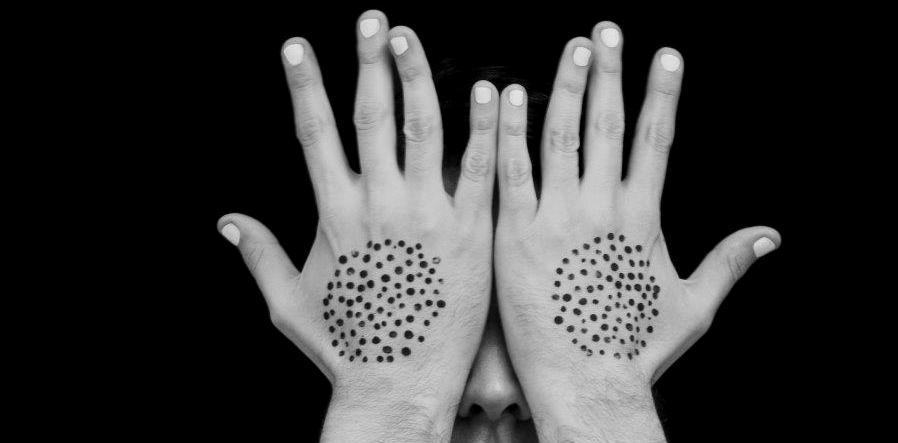
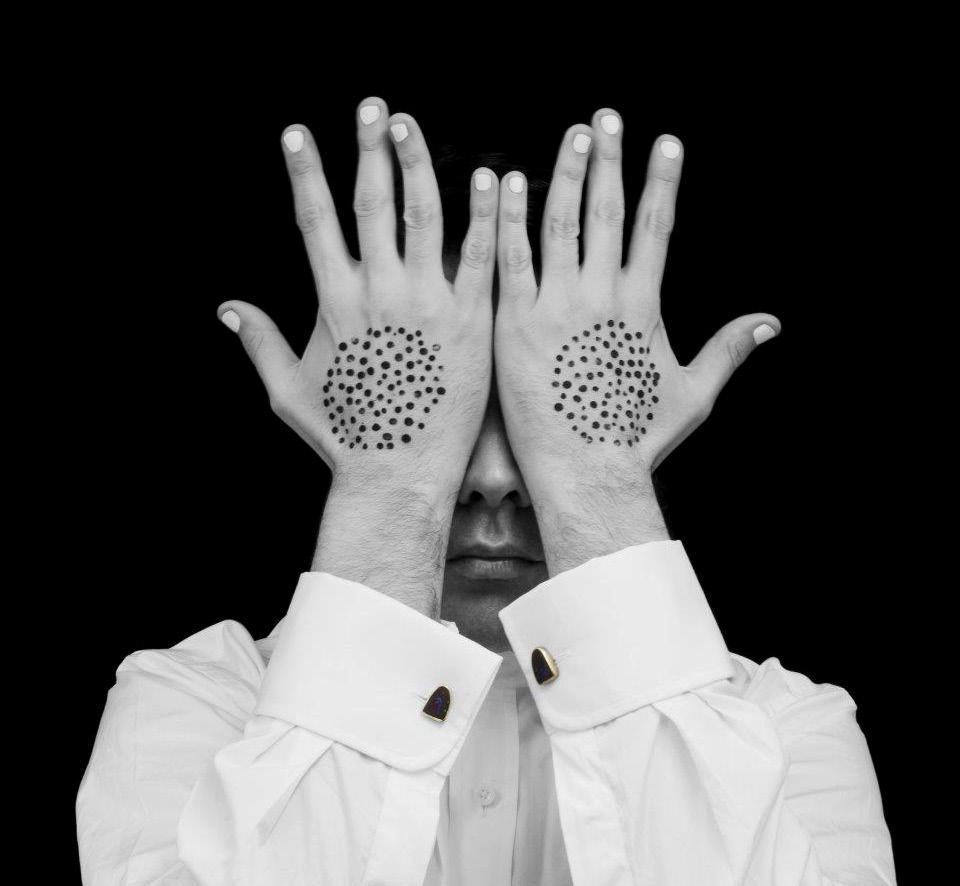
Christian Thompson is an Australian born contemporary artist. His work primarily consists of photography however, it also includes video installations and audio recordings. Thompson’s main inspiration comes from his exploration of identity, sexuality, gender, race, and memory. Of Bidjara heritage on his father's side, his Aboriginal identity has played an important role in his work. Christian Thomspon has consistently taken inspiration from his identity and explored his experiences through his photography. His photograph “Energy Matter” (2010), from his We Bury Our Own series, captures subtle suggestions to his indigenous heritage such as the dotted designs on the backs of his hands. This piece has numerous symbols woven within it that are up for the viewer’s interpretation. For example, his eyes covered by his hands could be commentary on the way Indigenous people are treated in today’s society, and his white shirt could represent his innocence and good heart. While Thompson’s work is open to a variety of views and opinions, it is evident that he takes inspiration from his cultural background for his portfolio.
(insta: christianthompsonartist)
48
“Energy Matter” (2010), We Bury Our Own series
Nationality and Background
“Unwritten” (2011)
Vernon Ah Kee
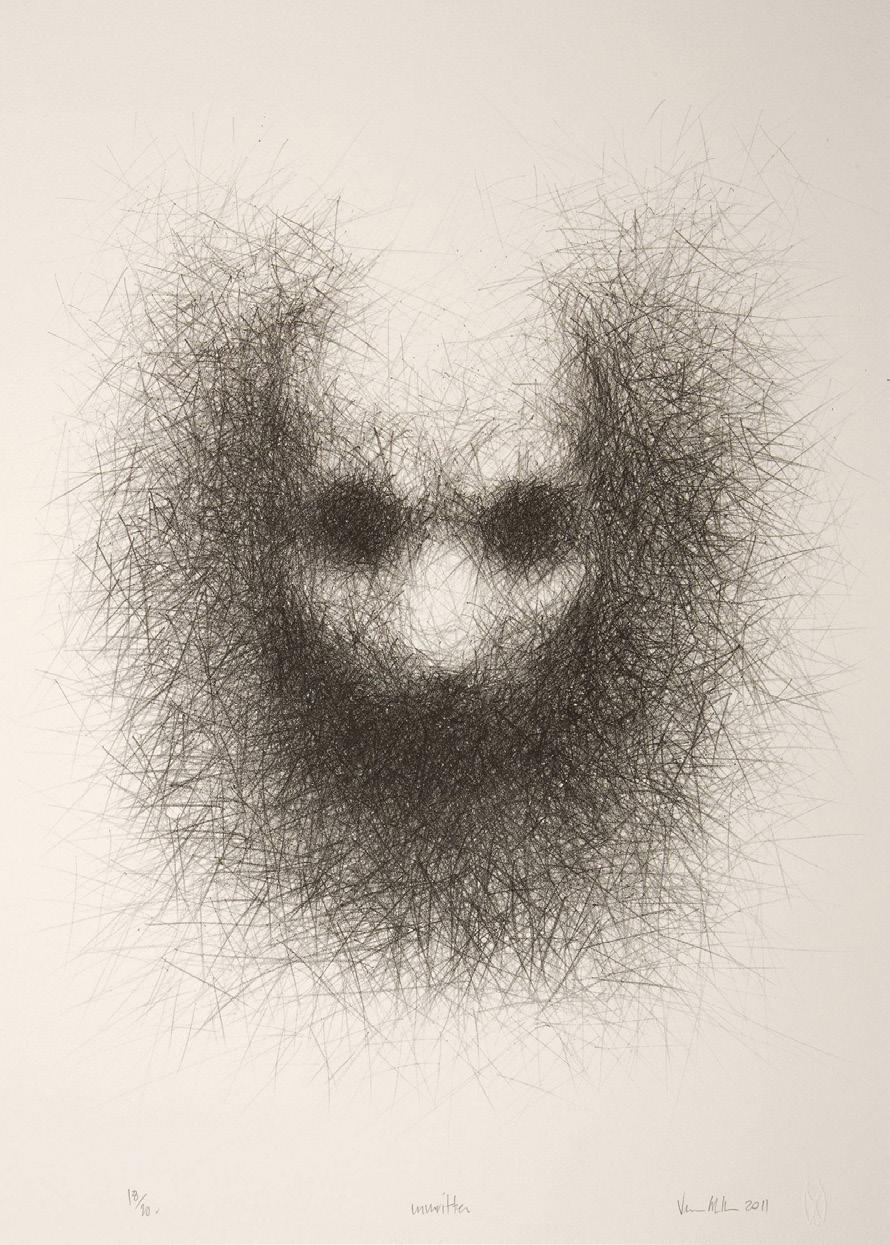
Vernon Ah Kee is an Australian contemporary artist and political activist. He is an Aboriginal Australian man based in Brisbane with ties to the Kuku Yalandji, Waanji, Yidinji, and Gugu Yimithirr peoples in Queensland. Even though Ah Kee is most well-known for his portraiture lithographs, he also works in other mediums, such as painting, video, photography, and 3D installation. Ah Kee’s work is heavily inspired by his background, and critiques Australian culture from the perspective of the Aboriginal experience. There is a focus in his work on representing Indigenous Australia as a current culture in current spaces and time, rather than something in a museum or from the past. “Unwritten” (2011) is a lithograph portrait, however the most recognisable features of the face remain undisclosed, giving the piece an alien-like appearance. This would have been done intentionally, to create a separation between the viewer and the piece and dehumanise the portrait. Ah Kee often draws his subjects, including members of his own family, both living and deceased, as historical documents themselves, removed from any humanising quality.
(facebook (not active often): Vernon Ah Kee (https://www.facebook.com/VernonAhKee/))
49
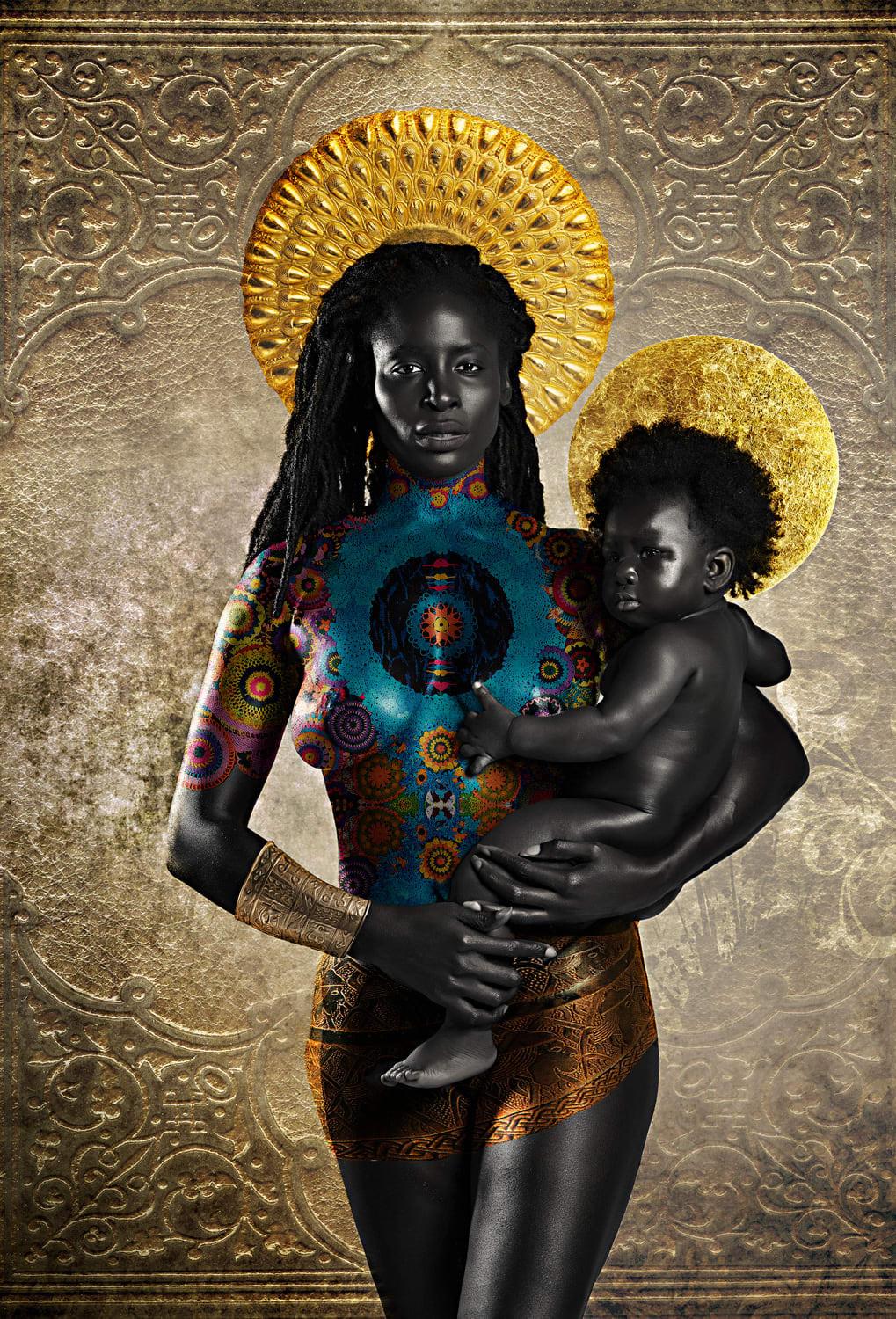
Àsìkò is a Nigerian conceptual artist based in the UK who creates works in London and Nigeria. He expresses his ideas through photography and mixed media. In his work he captures reality in a fantastical way as a reflection of his identity, culture, and heritage. In his many series he has covered themes such as femininity and masculinity, spirituality, nature, identity, culture and heritage. His art and visual aesthetic comes with movement, atmospheric locations, a luxurious feel, and a unique subtle seductive energy. Àsìkò includes fragments of history in his compositions. As he states, he “looks back in order to look forward”. This state of mind allows him to take inspiration from Yoruba folklore and explore ideas around heritage in a unique, luxurious, and wondrous way. African stories and tales about spirituality and deities have been one of his main sources of inspiration. His portraits have become guides into lesser-known parts of West African customs and myths. On his social media accounts Àsìkò states “The artwork (“Mother”, 2020) takes cues from Renaissance era Madonna and child paintings and celebrates the African woman and motherhood”.
(insta: asiko_artist)
50
Àsìkò
“Mother” (2020), She is Adorned series
“Remembering”, (2009)
Ai Wei Wei
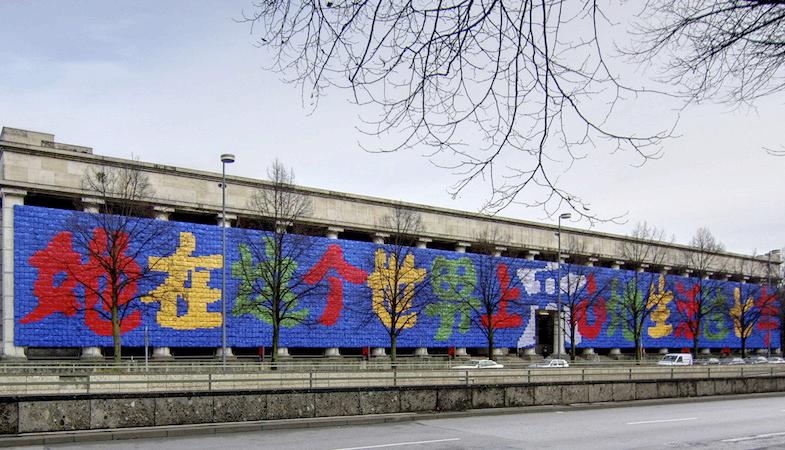
Ai Weiwei is a Chinese contemporary artist, documentarian, and activist. He grew up in the far northwest of China where he lived under harsh conditions. His work is mostly focused on illuminating his criticism of the Chinese Government and Ai’s stance on democracy and human rights. Throughout his years as an artist, he has never held back any difficult truths and has fought for freedom of expression. Ai Wei Wei uses a large variety of mediums, such as film, installation, photography, and architecture, with an array of materials including ceramics, marble, and tea. Through his use of such unconventional artmaking, he has campaigned for human rights through works dealing with oppression, commemoration, and Chinese identity. His provocative work led to his disappearance in 2011, during which he was detained in a secret prison by authorities. He was released on bail after 81 days with no explanation. After this, his residence was under surveillance for years. One of his most famous installations is “Remembering” (2009) which was a large-scale installation on the façade of the Haus der Kunst. This piece was created as a response to the government’s negligence leading to schools collapsing during earthquakes. It was constructed from nine thousand children's backpacks to represent all the children who lost their lives during the earthquake. They spelled out the sentence “She lived happily for seven years in this world” in Chinese characters.
(insta: aiww)
51
Find-a-word
Sheepie goes to UoN
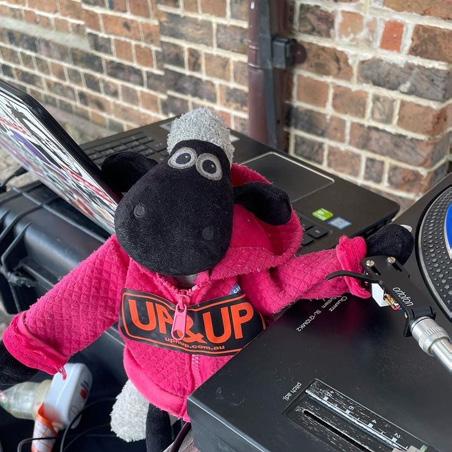 By Billie Mosman
Sheepie loves coming to UNSA for hot
52 A B O R I G I N A L S D N E I R F S K H O M E W O R K R E P L E H Y H E L U N S A S E E R T S H X Y T O C E A E B R E A K P U I S O H I R I E D W O W T H G I N N L B P R T F B A R O N T H E H I L L R A U L F U N S K N I R D M V A O E R C A O V C E S W A R D S E B C T G E N S C I E N C E A C A R S O T O S D C P N C L U B H O U S E M A T A O O H G N I G N I S M I I P H O N E B O X N A Y A D M A T H S C H I R G N F P R I N T E R Y T R A P M U T E U A D U E N T U R E O U N A T N S R E E R A C S H E A L T H L C O B A E F C L A S S R O O M U S E I A O R A C H E M I S T O H N O L S K E M E D I C A L T O P A T H A E E L A U G H I N G N I T X E T R Y R P C T R O P S N A R T H R O T O Y O S A U S A G E S T R O P S S I V E C E C I F F O T S O P U O M D M P C E L E B R A T I O N S S Y A M U S I C N O I T A U D A R G G R Y P E E L S U O N E G I D N I
choco.
University
Dancing
Bar on the Hill
Science
Maths
Books
Games
Sausages
Party
English
Aboriginal
Indigenous
Health
Medical Comps
Cars
Photography
Supa
Yummy
Singing
Music Gym
Sleep
Sports Celebration
Graduation
Shortland
Clubhouse
Bakery
Chatter box
Arts
Printer
Fun
Noisy
Post office
Food Drinks
Trees Path
Break Labs
Moon Sun Read
Laughing
Walk
Security
Office
Admins
UoN Quiz
1. What is the name of the University’s Mascot?
2. Where do you find the 3D printer in Makerspace?
3. Where do you get free Sausage sizzles each Wednesdays from the yellow marquee
Helper Transport
Friend
Adventure Chemist
Career
Phones
Box
Draws
Texting
Night Day
There are some words left over, can you work out the sentence?
4. Where do you go for a drink?
5. Did you know that Auchmuty Library has a phone soundproof box?
6. Where can you play Mario games?
7. Who brings the food delivery to UNSA for Free Food Friday
53
1. Hunter 2. Auchmuty Library, level 2 3. UNSA 4. Bar on the Hill 6. In the UNSA Building 7. Oz Harvest
Who sang this... Who am I...
1. “As long as you love me”
2. “Poker Face”
3. “So, What? I’m Still a Rock star”
4. “Cause baby, you’re a firework, come on, show em what you’re worth”
1. Located at bar on the hill Pours drink over taps
2. Located at the building Can bring a bike to lock up, Can have a shower, can have a locker to store belongings.
3. Rainbow painted, can see it, can walk on it, has steps.
4. Where can you find
- A big yellow marquee
5. “It’s your birthday, We gon’ party like it’s your birthday, We gon’ sip Bacardi like it’s your birthday”
- Sausage sizzle
- Creates events
- Delivers food
- Delivers full of love and smiles.
- Creates Opus mag
- Delivers yummy drinks
6. I ain’t even tripping every minute that I’m living I’m gonna kill it on the rhythm we can keep it low key, aight
- Play games all kinds
7. “You called me sexy when we first began, I’m sorry this is the way I am, I’m crazy just for givin’ you a chance, chance. This will never happen again”
54
1. Back Street Boys 2. Lady Gaga 3. Pink 4. Katy Perry 5. 50 cent 6. Baker Boy
7. Jessica Mauboy
1. Bartender 2. Bike hub 3. The Library 4. UNSA Building
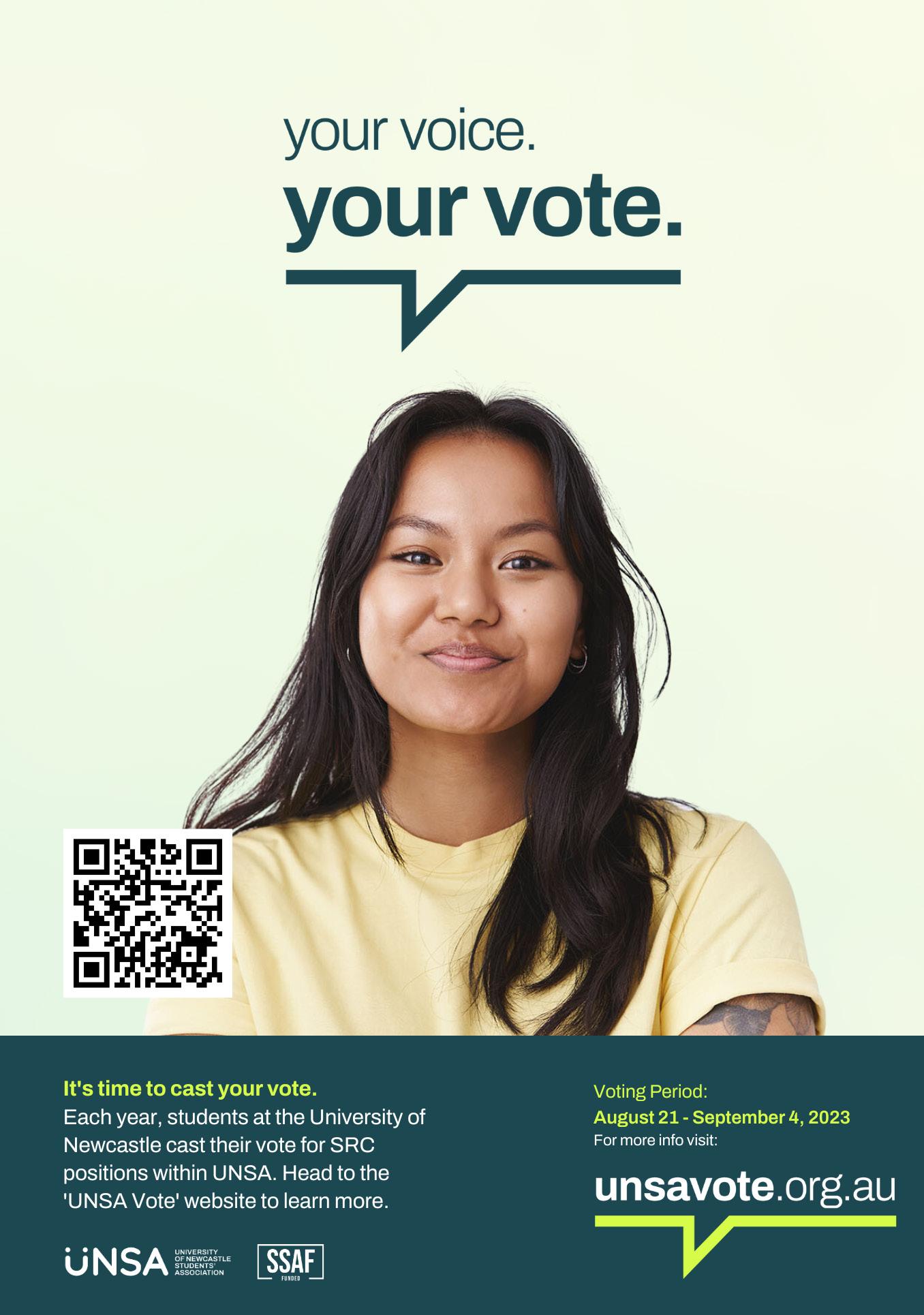

56 STUDENT MEDIA
UNSA
Brought to you by