This Feasibility Study has been prepared in accordance with the PJM Open Access Transmission Tariff, 36.2, as well as the Feasibility Study Agreement between the Interconnection Customer (IC), and PJM Interconnection, LLC (PJM), Transmission Provider (TP). The Interconnected Transmission Owner (ITO) is American Transmission Systems Incorporated (ATSI).
2 Preface
The intent of the feasibility study is to determine a plan, with ballpark cost and construction time estimates, to connect the subject generation to the PJM network at a location specified by the Interconnection Customer. The Interconnection Customer may request the interconnection of generation as a capacity resource or as an energy-only resource. As a requirement for interconnection, the Interconnection Customer may be responsible for the cost of constructing: (1) Direct Connections, which are new facilities and/or facilities upgrades needed to connect the generator to the PJM network, and (2) Network Upgrades, which are facility additions, or upgrades to existing facilities, that are needed to maintain the reliability of the PJM system.
In some instances a generator interconnection may not be responsible for 100% of the identified network upgrade cost because other transmission network uses, e.g. another generation interconnection, may also contribute to the need for the same network reinforcement. Cost allocation rules for network upgrades can be found in PJM Manual 14A, Attachment B. The possibility of sharing the reinforcement costs with other projects may be identified in the feasibility study, but the actual allocation will be deferred until the impact study is performed.
The Interconnection Customer seeking to interconnect a wind or solar generation facility shall maintain meteorological data facilities as well as provide that meteorological data which is required per Schedule H to the Interconnection Service Agreement and Section 8 of Manual 14D.
PJM utilizes manufacturer models to ensure the performance of turbines is properly captured during the simulations performed for stability verification and, where applicable, for compliance with low voltage ride through requirements. Turbine manufacturers provide such models to their customers. The list of manufacturer models PJM has already validated is contained in Attachment B of Manual 14G. Manufacturer models may be updated from time to time, for various reasons such as to reflect changes to the control systems or to more accurately represent the capabilities turbines and controls which are currently available in the field. Additionally, as new turbine models are developed, turbine manufacturers provide such new models which must be used in the conduct of these studies. PJM needs adequate time to evaluate the new models in order to reduce delays to the System Impact Study process timeline for the Interconnection Customer as well as other Interconnection Customers in the study group. Therefore, PJM will require that any Interconnection Customer with a new manufacturer model must supply that model to PJM, along with a $10,000 fully refundable deposit, no later than three (3) months prior to the starting date of the System Impact Study (See Section 4.3 for starting dates) for the Interconnection Request which shall specify the use of the new model.
The Interconnection Customer will be required to submit a completed dynamic model study request form (Attachment B-1 of Manual 14G) in order to document the request for the study.
The Feasibility Study estimates do not include the feasibility, cost, or time required to obtain property rights and permits for construction of the required facilities. The project developer is responsible for the right of way, real estate, and construction permit issues. For properties currently owned by Transmission Owners, the costs may be included in the study.
3 General
The Interconnection Customer (IC), has proposed a Solar generating facility located in Morrow County, Ohio. The installed facilities will have a total capability of 64 MW with 26.88 MW of this output being recognized by PJM as Capacity. The proposed in-service date for this project is November 11, 2022. This study does not imply a TO commitment to this in-service date.
4 Point of Interconnection
AF1-122 will interconnect with the ATSI transmission system at the Cardington 138 kV substation.
4.1 Primary POI
The interconnection of the project to the ATSI system will be accomplished by constructing a direct connection to the Cardington 138 kV substation. The IC will be responsible for acquiring all easements, properties, and permits that may be required to construct the associated Attachment facilities.
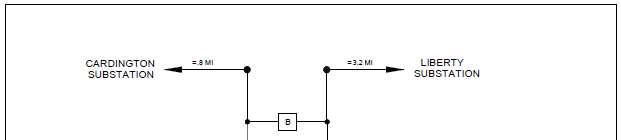
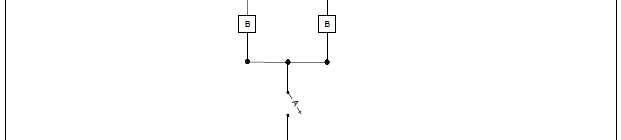
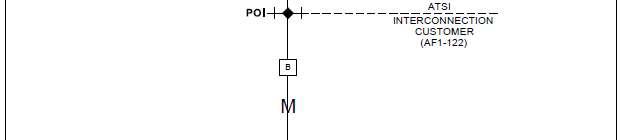
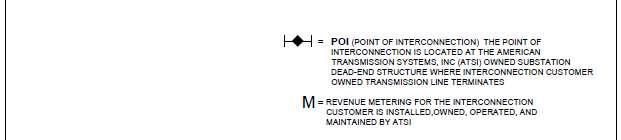
Attachment 1 shows a one-line diagram of the proposed primary direct connection facilities for the AF1-122 generation project to connect to the FirstEnergy (“FE”) transmission system. IC will be responsible for constructing all of the facilities on its side of the POI, including the attachment facilities which connect the generator to the FE transmission system’s direct connection facilities.
4.2 Secondary POI
The interconnection of the project at a Secondary POI can be accomplished by tapping the Cardington –Liberty 69 kV line. A full scope of work or estimated cost is not provided for the proposed Secondary POI.
5 Cost Summary
The AF1-122 project will be responsible for the following costs:
In addition, the AF1-122 project may be responsible for a contribution to the following costs
Cost allocations for these upgrades will be provided in the System Impact Study Report.
The Feasibility Study is used to make a preliminary determination of the type and scope of Attachment Facilities, Local Upgrades, and Network Upgrades that will be necessary to accommodate the Interconnection Request and to provide the Interconnection Customer a preliminary estimate of the time that will be required to construct any necessary facilities and upgrades and the Interconnection Customer’s cost responsibility. The System Impact Study provides refined and comprehensive estimates of cost responsibility and construction lead times for new facilities and system upgrades. Facilities Studies will include, commensurate with the degree of engineering specificity as provided in the Facilities Study Agreement, good faith estimates of the cost, determined in accordance with Section 217 of the Tariff,
(a) to be charged to each affected New Service Customer for the Facilities and System Upgrades that are necessary to accommodate this queue project;
(b) the time required to complete detailed design and construction of the facilities and upgrades; and
(c) a description of any site-specific environmental issues or requirements that could reasonably be anticipated to affect the cost or time required to complete construction of such facilities and upgrades.
The costs provided above exclude the Contribution in Aid of Construction (“CIAC”) Federal Income Tax Gross Up charge. If, at a future date, it is determined that the CIAC Federal Income Tax Gross charge is required, the Transmission Owner shall be reimbursed by the Interconnection Customer for such taxes.
The required Attachment Facilities and Direct and/or Non-Direct Connection work for the interconnection of the AF1-122 generation project to the FE Transmission System is detailed in the following sections. The
associated one-line with the generation project Attachment Facilities and the Primary Direct and Non-Direct Connection facilities are shown in Attachment 1.
6 Transmission Owner Scope of Work
The interconnection of the project at the Primary POI will be accomplished by constructing a new 138 kV three (3) breaker ring at Cardington Substation and connecting the AF1-122 138 kV line into the station. The IC will be responsible for acquiring all easements, properties, and permits that may be required to construct the line from Cardington Substation to their collector substation.
7 Attachment Facilities
The total preliminary cost estimate for the Attachment work is given in the table below. These costs do not include CIAC Tax Gross-up.
8 Direct Connection Cost Estimate
The total preliminary cost estimate for the Direct Connection work is given in the table below. These costs do not include CIAC Tax Gross-up.
Description
Reconfigure existing 138 kV yard at Cardington Substation to a 3-breaker ring bus for AF1-122
Reconnect existing Cardington-Galion 138 kV line to the new 3-breaker ring at Cardington Substation
9 Non-Direct Connection Cost Estimate
The total preliminary cost estimate for the Non-Direct Connection work is given in the table below. These costs do not include CIAC Tax Gross-up. Description
10 Schedule
Based on the scope of work for the Attachment Facilities and the Direct and/or Non-Direct Connection facilities, it is expected to take a minimum of 18 months after the signing of an Interconnection Construction Service Agreement to complete the installation. This includes the requirement for the IC to make a preliminary payment that compensates FE for the first three months of the engineering design work that is related to the construction of the interconnection substation. This assumes that there will be no environmental issues with any of the new properties associated with this project, that there will be no delays in acquiring the necessary permits for implementing the defined direct connection and network upgrades, and that all transmission system outages will be allowed when requested.
The schedule for the required Network Impact Reinforcements will be more clearly identified in future study phases. The estimate elapsed time to complete each of the required reinforcements is identified in the “System Reinforcements” section of the report.
11 Transmission Owner Analysis
11.1 Power Flow Analysis
FE performed an analysis of its underlying transmission <100 kV system. The AF1-122 project did not contribute to any overloads on the FE transmission system.
12 Interconnection Customer Requirements
12.1 System Protection
The IC must design it’s Customer Facilities in accordance with all applicable standards, including the standards in FE’s “Requirements for Transmission Connected Facilities” document located at: http://www.pjm.com/planning/design-engineering/to-tech-standards/private-firstenergy.aspx. Preliminary Protection requirements will be provided as part of the Facilities Study. Detailed Protection Requirements will be provided once the project enters the construction phase.
The IC has requested a non-standard GSU transformer winding configuration. This transformer is in violation of section 14.2.6 of FE’s “Requirements for Transmission Connected Facilities” document and will not be accepted. The GSU transformer must have a grounded wye connection on the high (utility) side and a delta connection on the low (generator) side.
12.2 Compliance Issues and Interconnection Customer Requirements
The proposed Customer Facilities must be designed in accordance with FE’s “Requirements for Transmission Connected Facilities” document located at: http://www.pjm.com/planning/design-engineering/to-techstandards/private-firstenergy.aspx. In particular, the IC is responsible for the following:
1. The purchase and installation of a fully rated 138 kV circuit breaker to protect the AF1-122 generator lead line. A single circuit breaker must be used to protect this line; if the project has several GSU transformers, the individual GSU transformer breakers cannot be used to protect this line.
2. The purchase and installation of the minimum required FE generation interconnection relaying and control facilities. This includes over/under voltage protection, over/under frequency protection, and zero sequence voltage protection relays.
3. The purchase and installation of supervisory control and data acquisition (“SCADA”) equipment to provide information in a compatible format to the FE Transmission System Control Center.
4. Compliance with the FE and PJM generator power factor and voltage control requirements.
5. The execution of a back-up service agreement to serve the customer load supplied from the AF1-122 generation project metering point when the units are out-of-service. This assumes the intent of the IC is to net the generation with the load.
The IC will also be required to meet all PJM, ReliabilityFirst, and NERC reliability criteria and operating procedures for standards compliance. For example, the IC will need to properly locate and report the over and under voltage and over and under frequency system protection elements for its units as well as the submission of the generator model and protection data required to satisfy the PJM and ReliabilityFirst audits. Failure to comply with these requirements may result in a disconnection of service if the violation is found to compromise the reliability of the FE system.
12.3 Power Factor Requirements
The IC shall design its non-synchronous Customer Facility with the ability to maintain a power factor of at least 0.95 leading (absorbing VARs) to 0.95 lagging (supplying VARs) measured at the high-side of the facility substation transformer(s) connected to the FE transmission system.
13 Revenue Metering and SCADA Requirements
13.1
PJM Requirements
The Interconnection Customer will be required to install equipment necessary to provide Revenue Metering (KWH, KVARH) and real time data (KW, KVAR) for IC's generating Resource. See PJM Manuals M-01 and M14D, and PJM Tariff Section 8 of Attachment O.
13.1.1
Meteorological Data Reporting Requirements
The solar generation facility shall provide the Transmission Provider with site-specific meteorological data including:
Temperature (degrees Fahrenheit)
Atmospheric pressure (hectopascals)
Irradiance
Forced outage data
13.2
FE Requirements
The IC will be required to comply with all FE revenue metering requirements for generation interconnection customers which can be found in FE’s “Requirements for Transmission Connected Facilities” document located at: http://www.pjm.com/planning/design-engineering/to-tech-standards/private-firstenergy.aspx
14 Network Impacts – Primary POI
The Queue Project AF1-122 was evaluated as a 64.0 MW (Capacity 26.9 MW) injection at the Cardington 138 kV substation in the ATSI area. Project AF1-122 was evaluated for compliance with applicable reliability planning criteria (PJM, NERC, NERC Regional Reliability Councils, and Transmission Owners). Project AF1-122 was studied with a commercial probability of 53%. Potential network impacts were as follows:
Summer Peak Load Flow
14.1 Generation Deliverability
(Single or N-1 contingencies for the Capacity portion only of the interconnection)
None
14.2 Multiple Facility Contingency
(Double Circuit Tower Line, Fault with a Stuck Breaker, and Bus Fault contingencies for the full energy output)
None
14.3 Contribution to Previously Identified Overloads
(This project contributes to the following contingency overloads, i.e. "Network Impacts", identified for earlier generation or transmission interconnection projects in the PJM Queue)
None
14.4 Potential Congestion due to Local Energy Deliverability
PJM also studied the delivery of the energy portion of this interconnection request. Any problems identified below are likely to result in operational restrictions to the project under study. The developer can proceed with network upgrades to eliminate the operational restriction at their discretion by submitting a Merchant Transmission Interconnection request.
Note: Only the most severely overloaded conditions are listed below. There is no guarantee of full delivery of energy for this project by fixing only the conditions listed in this section. With a Transmission Interconnection Request, a subsequent analysis will be performed which shall study all overload conditions associated with the overloaded element(s) identified.
14.5 System Reinforcements
None
14.6 Flow Gate Details
The following indices contain additional information about each flowgate presented in the body of the report. For each index, a description of the flowgate and its contingency was included for convenience. However, the intent of the appendix section is to provide more information on which projects/generators have contributions to the flowgate in question. Although this information is not used "as is" for cost allocation purposes, it can be used to gage other generators impact. It should be noted the generator contributions presented in the appendices sections are full contributions, whereas in the body of the report, those contributions take into consideration the commercial probability of each project.
Affected Systems
14.7 Affected Systems
14.7.1 LG&E
LG&E Impacts to be determined during later study phases (as applicable).
14.7.2 MISO
MISO Impacts to be determined during later study phases (as applicable).
14.7.3 TVA
TVA Impacts to be determined during later study phases (as applicable).
14.7.4 Duke Energy Progress
Duke Energy Progress Impacts to be determined during later study phases (as applicable).
14.7.5 NYISO
NYISO Impacts to be determined during later study phases (as applicable).
Short Circuit
14.8 Short Circuit
The following Breakers are overduty
None
15 Network Impacts – Secondary POI
The Queue Project AF1-122 was evaluated as a 64 MW (Capacity 26.88 MW) injection tapping the Cardington to Liberty 69 kV line in the ATSI area. Project AF1-122 was evaluated for compliance with applicable reliability planning criteria (PJM, NERC, NERC Regional Reliability Councils, and Transmission Owners). Project AF1-122 was studied with a commercial probability of 53%. Potential network impacts were as follows:
Summer Peak Load Flow
15.1 Generation Deliverability
(Single or N-1 contingencies for the Capacity portion only of the interconnection)
None
15.2 Multiple Facility Contingency
(Double Circuit Tower Line, Fault with a Stuck Breaker, and Bus Fault contingencies for the full energy output)
None
15.3 Contribution to Previously Identified Overloads
(This project contributes to the following contingency overloads, i.e. "Network Impacts", identified for earlier generation or transmission interconnection projects in the PJM Queue)
None
15.4 Potential Congestion due to Local Energy Deliverability
PJM also studied the delivery of the energy portion of this interconnection request. Any problems identified below are likely to result in operational restrictions to the project under study. The developer can proceed with network upgrades to eliminate the operational restriction at their discretion by submitting a Merchant Transmission Interconnection request.
Note: Only the most severely overloaded conditions are listed below. There is no guarantee of full delivery of energy for this project by fixing only the conditions listed in this section. With a Transmission Interconnection Request, a subsequent analysis will be performed which shall study all overload conditions associated with the overloaded element(s) identified.
None
Affected Systems
15.5 Affected Systems
1.1.1 LG&E
LG&E Impacts to be determined during later study phases (as applicable).
1.1.2 MISO
MISO Impacts to be determined during later study phases (as applicable).
1.1.3 TVA
TVA Impacts to be determined during later study phases (as applicable).
1.1.4 Duke Energy Progress
Duke Energy Progress Impacts to be determined during later study phases (as applicable).
1.1.5 NYISO
NYISO Impacts to be determined during later study phases (as applicable).
This System Impact Study Report (SIS) has been prepared in accordance with the PJM Open Access Transmission Tariff, 205, as well as the System Impact Study Agreement between Crossroads Solar I, LLC, the Interconnection Customer (IC), and PJM Interconnection, LLC (PJM), Transmission Provider (TP). The Interconnected Transmission Owner (ITO) is American Transmission Systems, Incorporated.
Revision 1: November 2022 - The AF1-122 System Impact Study Report has been revised to reflect the results of the PJM's re-tool analysis and to included finalized stability analysis. Final scope, cost and schedule for the physical interconnection will be provided in the Facilities Study Report.
• AF1-122 does not meet the reactive power requirement at the high side of main transformer. Reactive power compensation is required for this project.
Preface
The intent of the System Impact is to determine a plan, with approximate cost and construction time estimates, to connect the subject generation interconnection project to the PJM network at a location specified by the Interconnection Customer. As a requirement for interconnection, the Interconnection Customer may be responsible for the cost of constructing: Network Upgrades, which are facility additions, or upgrades to existing facilities, that are needed to maintain the reliability of the PJM system. All facilities required for interconnection of a generation interconnection project must be designed to meet the technical specifications (on PJM web site) for the appropriate transmission owner.
In some instances an Interconnection Customer may not be responsible for 100% of the identified network upgrade cost because other transmission network uses, e.g. another generation interconnection or merchant transmission upgrade, may also contribute to the need for the same network reinforcement. The possibility of sharing the reinforcement costs with other projects may be identified in the Feasibility Study, but the actual allocation will be deferred until the System Impact Study is performed.
The System Impact study estimates do not include the feasibility, cost, or time required to obtain property rights and permits for construction of the required facilities. The project developer is responsible for the right of way, real estate, and construction permit issues. For properties currently owned by Transmission Owners, the costs may be included in the study.
General
The Interconnection Customer (IC), has proposed a generating facility located in Morrow County, Ohio. The installed facilities will have a total capability of 64.0 MW with 26.88 MW of this output being recognized by PJM as Capacity. The proposed in-service date for this project is Wednesday, November 30, 2022. This study does not imply a TO commitment to this in-service date.
Project Information
Queue Number AF1-122
Project Name Cardington-Liberty 69 kV
Developer Name Crossroads Solar I, LLC
State Ohio County Morrow
Point of Interconnection
AF1-122 will interconnect with on the ATSI transmission system at the Cardington 138 kV substation.
Cost Summary
The project may be responsible for a contribution to the following costs:
Description
Physical Interconnection
System Reinforcements
$8,215,200
$0
Note 1: PJM Open Access Transmission Tariff (OATT) section 217.3A outline cost allocation rules. The rules are further clarified in PJM Manual 14A Attachment B. The allocation of costs for a network upgrade will start with the first Queue project to cause the need for the upgrade. Later queue projects will receive cost allocation contingent on their contribution to the violation and are allocated to the queues that have not closed less than 5 years following the execution of the first Interconnection Service Agreement which identifies the need for this upgrade.
Note 2: For customers with System Reinforcements listed: If your present cost allocation to a System Reinforcement indicates $0, then please be aware that as changes to the interconnection process occur, such as prior queued projects withdrawing from the queue, reducing in size, etc, the cost responsibilities can change and a cost allocation may be assigned to your project. In addition, although your present cost allocation to a System Reinforcement is presently $0, your project may need this system reinforcement completed to be deliverable to the PJM system. If your project comes into service prior to completion of the system reinforcement, an interim deliverability study for your project will be required.
Transmission Owner Scope of Work
The interconnection of the project at the Primary POI will be accomplished by constructing a new 69 kV three (3) breaker ring bus substation and looping the Cardington-Tangy 69 kV Line into the new station. The new substation will be located approximately 0.8 miles from Cardington Substation. The IC will be responsible for acquiring all easements, properties, and permits that may be required to construct both the new interconnection switching station and the associated facilities. The IC will also be responsible for the rough grade of the property and an access road to the proposed three-breaker ring bus site. The project will also require Non-Direct Connection upgrades at Cardington Substation and Tangy Substation.
The total preliminary cost estimate is given in the table below. These costs do not include CIAC Tax Gross-up.
Physical Interconnection:
RTEP ID Description
(TBD) MOAB and first span for Customer connection to the ring bus
(TBD)
Construct a three-breaker ring bus on the Cardington – Tangy 69kV Line approx. 0.8 miles from the Cardington Substation at AF1-122 Ring Bus
(TBD) Review drawings, nameplates, and relay settings at AF1-122 Customer Substation
(TBD) Design, install, and test/commission MPLS Equipment for SCADA transport
(TBD) PLC equipment (may not be needed depending on generator’s selection of inverters) at AF1-122 Ring
(TBD) Line terminal Upgrades at Cardington Substation
(TBD) Line terminal Upgrades at Tangy Substation
(TBD) Project Management, Environmental, Forestry, Real Estate and SCADA.
(TBD) PLC equipment at Tangy Substation (may not be needed depending on generator’s selection of inverters)
(TBD)
Loop the Cardington-Tangy 69kV Line to create the interconnection for the new AF1-122 3-breaker approximately 0.8 miles from the Cardington Substation. Install fiber from the new AF1-122 3-breaker bus to the Cardington Substation.
Based on the scope of work for the interconnection facilities, it is expected to take a range of 21 to 21 month(s) after the signing of an Interconnection Construction Service Agreement (as this is a FERC connection) and construction kickoff call to complete the installation of the physical connection work. This assumes that there will be no environmental issues with any of the new properties associated with this project, that there will be no delays in acquiring the necessary permits for implementing the defined interconnection work, and that all system outages will be allowed when requested.
The schedule for any required Network Impact Reinforcements will be more clearly identified in future study phases. The estimated time to complete each of the required reinforcements is identified in the "System Reinforcements" section of the report.
Transmission Owner Analysis
ATSI performed an analysis of its distribution system. The AF1-122 project did not contribute to any overloads on the distribution system.
Interconnection Customer Requirements
System Protection
The IC must design its Customer Facilities in accordance with all applicable standards, including the standards in FE’s “Requirements for Transmission Connected Facilities” document located at: http://www.pjm.com/planning/design-engineering/to-techstandards/private-firstenergy.aspx. Preliminary Protection requirements will be provided as part of the Facilities Study. Detailed Protection Requirements will be provided once the project enters the construction phase.
The IC has requested a non-standard GSU transformer winding configuration. This transformer is in violation of section 14.2.6 of FE’s “Requirements for Transmission Connected Facilities” document and will not be accepted.
Inverter-based generation that is UL1741 certified for anti-islanding protection connected to the FE Transmission System at <100kV shall have a delta or ungrounded wye winding on the transmission side.
Inverter-based generation that is not UL1741 certified for anti-islanding protection connected to the FE Transmission System at <100kV shall have a grounded wye winding on the transmission side and delta winding on the generator side. Inverter-based generation that is not UL1741 certified will require additional back-up
Compliance Issues and Interconnection Customer Requirements
The proposed Customer Facilities must be designed in accordance with FE’s “Requirements for Transmission Connected Facilities” document located at: http://www.pjm.com/planning/design-engineering/to-techstandards/privatefirstenergy.aspx. In particular, the IC is responsible for the following:
1. The purchase and installation of a fully rated 69 kV circuit breaker to protect the AF1-122 generator lead line. A single circuit breaker must be used to protect this line; if the project has several GSU transformers, the individual GSU transformer breakers cannot be used to protect this line.
2. The purchase and installation of the minimum required FE generation interconnection relaying and control facilities. This includes over/under voltage protection, over/under frequency protection, and zero sequence voltage protection relays.
3. The purchase and installation of supervisory control and data acquisition (“SCADA”) equipment to provide information in a compatible format to the FE Transmission System Control Center.
4. Compliance with the FE and PJM generator power factor and voltage control requirements.
5. The execution of a back-up service agreement to serve the customer load supplied from the AF1-064 generation project metering point when the units are out-ofservice. This assumes the intent of the IC is to net the generation with the load.
The IC will also be required to meet all PJM, ReliabilityFirst, and NERC reliability criteria and operating procedures for standards compliance. For example, the IC will need to properly locate and report the over and under voltage and over and under frequency system protection elements for its units as well as the submission of the generator model and protection data required to satisfy the PJM and ReliabilityFirst audits. Failure to comply with these requirements may result in a disconnection of service if the violation is found to compromise the reliability of the FE Transmission System.
Power Factor Requirements
The IC shall design its solar Customer Facility with the ability to maintain a power factor of at least 0.95 leading (absorbing VARs) to 0.95 lagging (supplying VARs) measured at the high-side of the facility substation transformer(s) connected to the FE transmission system.
Revenue Metering and SCADA Requirements
PJM Requirements
The Interconnection Customer will be required to install equipment necessary to provide Revenue Metering (KWH, KVARH) and real time data (KW, KVAR) for IC's generating Resource. See PJM Manuals M-01 and M14D, and PJM Tariff Section 8 of Attachment O.
Meteorological Data Reporting Requirement
The solar generation facility shall provide the Transmission Provider with site-specific meteorological data including:
• Temperature (degrees Fahrenheit)
• Atmospheric Pressure (hectopascals)
• Irradiance
• Forced outage data
Interconnection Transmission Owner Requirements
The IC will be required to comply with all Interconnected Transmission Owner's revenue metering requirements for generation interconnection customers located at the following link: PJM - Transmission Owner Engineering & Construction Standards.
PJM Transmission Network Impacts Analysis
Summer Peak Analysis
The Queue Project was evaluated as a 64.0 MW (Capacity 26.88 MW) injection in the area. Project was evaluated for compliance with applicable reliability planning criteria (PJM, NERC, NERC Regional Reliability Councils, and Transmission Owners). Potential Summer peak period network impacts were as follows:
(No impacts were found for this analysis)
Summer Potential Congestion due to Local Energy Deliverability
PJM also studied the delivery of the energy portion of this interconnection request. Any problems identified below are likely to result in operational restrictions to the project under study. The developer can proceed with network upgrades to eliminate the operational restriction at their discretion by submitting a Merchant Transmission Interconnection request.
Note: Only the most severely overloaded conditions are listed below. There is no guarantee of full delivery of energy for this project by fixing only the conditions listed in this section. With a Transmission Interconnection Request, a subsequent analysis will be performed which shall study all overload conditions associated with the overloaded element(s) identified.
(No impacts were found for this analysis)
Winter Peak Analysis
At this time winter peak analysis not required for this project.
Winter Potential Congestion due to Local Energy Deliverability
At this time winter peak analysis not required for this project.
Light Load Analysis
At this time light load analysis not required for this project.
Light Load Potential Congestion due to Local Energy Deliverability
At this time light load analysis not required for this project.
Short Circuit Analysis
The following breakers are overdutied:
None
Stability Analysis
No Stability issues were found.
Reactive Power Analysis
AF1-122 was assessed for compliance with reactive power capability requirements using the supplied capability curves. Please note this is a new facility.
• Generation shall have the ability to maintain a power factor of at least 0.95 leading to 0.95 lagging at the high side of facility transformer or the result of the System Impact Study indicated that, for the safety and reliably of the Transmission System, no power factor requirement is required, .
AF1-122 does not meet the reactive power requirement at the high side of main transformer. Reactive power compensation is required for this project. This project needs to have additional reactive power capabilities to fulfill the power factor requirement. The estimated required additional capacitive reactive power is 7.35 MVAr. See attachments for full stability report.
Steady-State Voltage Analysis
Steady State Voltage analysis is not required for this queue project at this time.
Queue Dependencies
The Queue Projects below are listed in one or more dispatch for the overloads identified in your report. These projects contribute to the loading of the overloaded facilities identified in your report. The percent overload of a facility and cost allocation you may have towards a particular reinforcement could vary depending on the action of these earlier projects. The status of each project at the time of the analysis is presented in the table. This list may
change as earlier projects withdraw or modify their requests. This table is valid for load flow analyses only.
Queue Number Project Name Status
Affected Systems
Midcontinent Independent System Operator (MISO) Not required
New York Independent System Operator (NYISO) Not required
Tennessee Valley Authority (TVA) Not required
Louisville Gas & Electric (LG&E) Not required
Duke Progress Energy (DUKE) Not required
System Reinforcements
Attachments
AF1-122 One-Line Diagram
AF1-122-3 Dynamic Analysis Report
AF1-122 System Impact Study
Dynamic Simulation Analysis
AF1-122
System Impact Study
Dynamic Simulation Analysis
Prepared by CF Power Ltd
For PJM Interconnection, LLC
Reference AF1-122-3-1
Date October 28th , 2022
Revision Issue Date
Revision Table
Description
0 July 29th, 2020 Initial Issue
1 October 28th, 2022
Re-study per the updated data and latest information
Reviewers
Name Interest Date
Approval
Name Position Date
AF1-122 System Impact Study Dynamic Simulation Analysis AF1-122-3-1
AF1-122 System Impact Study Dynamic Simulation Analysis
Executive Summary
Generator Interconnection Request AF1-122 is for a 64 MW Maximum Facility Output (MFO) solar generating facility consisting of 32 SMA SC2200 inverters connecting to the First Energy (FE) transmission system, ATSI zone. The AF1-122 solar generating facility will be located at Morrow County, Ohio.
The interconnection of the project at the Point of Interconnection (POI) will be accomplished by tapping the Cardington - Liberty 69 kV line via a 0.20 Miles 69 kV transmission line. The Point of Interconnection (POI) will be where the Interconnection Customer gen-tie line terminates at the new substation.
This report describes a dynamic simulation analysis of AF1-122 as part of the overall system impact study. The load flow scenario for the analysis was based on the RTEP 2023 peak load case, modified to include applicable queue projects. AF1-122 has been dispatched online at maximum power output, with approximately unity power factor at the high side of the GUS, 1.02 pu voltage at the generator terminal, and 1.03 pu voltage at the POI bus
AF1-122 was tested for compliance with NERC, PJM, Transmission Owner, and other applicable criteria. 86 contingencies were studied, each with a 20 second simulation time period (with 1.0 second initial run prior to any events). Studied faults included:
a) Steady state operation (Category P0);
b) Three phase faults with normal clearing time on the intact network (Category P1);
c) Single phase to ground faults with delayed clearing due to a stuck breaker (Category P4);
d) Single phase faults placed at 80% of the line with delayed (Zone 2) clearing at line end remote from the fault due to primary communications/relay failure (Category P5);
e) Single phase to ground faults with normal clearing for common structure (Category P7).
For all 86 fault contingencies tested on the 2023 peak load case:
a) AF1-122 was able to ride through the faults.
b) Post-contingency oscillations were positively damped with a damping margin of at least 3%.
c) Following fault clearing, all bus voltages recover to a minimum of 0.7 per unit after 2.5 seconds (except where protective action isolates that bus).
d) No other transmission element trips, other than those either directly connected or designed to trip as a consequence of that fault
Please note that the solar generating facility AF1-122 does not meet the reactive power requirement at the high side of main transformer. Reactive power compensation is required for this project. This project needs to have additional reactive power capabilities to fulfill the power factor requirement. The estimated required additional capacitive reactive power is 7 35 MVAR
No other mitigations were found to be required for this project.
AF1-122 System Impact Study Dynamic Simulation Analysis
1. Introduction
Generator Interconnection Request AF1-122 is for a 64 MW Maximum Facility Output (MFO) solar generating facility consisting of 32 SMA SC2200 inverters connecting to the First Energy (FE) transmission system, ATSI zone. The AF1-122 solar generating facility will be located at Morrow County, Ohio.
The interconnection of the project at the Point of Interconnection (POI) will be accomplished by tapping the Cardington - Liberty 69 kV line via a 0.20 Miles 69 kV transmission line. The Point of Interconnection (POI) will be where the Interconnection Customer gen-tie line terminates at the new substation.
This analysis is effectively a screening study to determine whether the addition of AF1122 will meet the dynamic requirements of the NERC, PJM, and Transmission Owner reliability standards.
In this report the AF1-122 project and how it is proposed to be connected to the grid are first described, followed by a description of how the project is modeled in this study. The fault cases are then described and analyzed, and lastly a discussion of the results is provided.
AF1-122 System Impact Study Dynamic Simulation Analysis
2. Description of Project
Generator Interconnection Request AF1-122 is for a 64 MW Maximum Facility Output (MFO) solar generating facility consisting of 32 SMA SC2200 inverters connecting to the First Energy (FE) transmission system, ATSI zone. The AF1-122 solar generating facility will be located at Morrow County, Ohio.
The interconnection of the project at the Point of Interconnection (POI) will be accomplished by tapping the Cardington - Liberty 69 kV line via a 0.20 Miles 69 kV transmission line. The Point of Interconnection (POI) will be where the Interconnection Customer gen-tie line terminates at the new substation.
The connection diagram of the AF1-122 generating facility is shown in Figure 1. Table 1 lists the parameters given in the impact study data and the corresponding parameters of the AF1-122 load flow model.
Additional project details are provided in Attachments 1 through 4:
• Attachment 1 contains the Impact Study Data which details the proposed AF1122 project.
• Attachment 2 shows the one line diagram of the ATSI network in the vicinity of AF1-122.
• Attachment 3 provides a diagram of the PSS/E model in the vicinity of AF1-122.
• Attachment 4 gives the PSS/E loadflow and dynamic models of the AF1-122.
To LibertyMarengo-OxfordHartford-Tangy 944572
AF1-122 System Impact Study Dynamic Simulation Analysis
Inverter Based Step-up Transformer 32 x 2 2 MVA 34 5/0 39 kV transformers 1 2 3 To Cardington
Inverter Based Main Transformer 43/57/71 MVA 69/34.5 kV
Lumped equivalent 32 x 2.2 MVA
Figure 1: AF1-122 Plant Model
Solar Inverters
Inverter Based Step-up Transformers
Main
Transformer
Collector System Equivalent
Table 1: AF1-122 Plant Model
Impact Study Data
32 X 2.2 MVA SMA SC2200
MVA base = 2.2 MVA
Vt = 0.39 kV
Zsource = N/A
Pgen1 = 2.03 MW
Qmax2 = 0.848 MVAr
Qmin = -0.848 MVAr
32 X 34.5/0.39 kV transformer
Rating = 2.2 MVA
Transformer base = 2.2 MVA
Impedance = 0.007132 + j0.057050 pu @ MVA base
Number of taps = N/A
Tap step size = N/A
1 x 69/34.5 kV transformers
Rating = 43/57/71 MVA (ONAN/ONAF/ONAF)
Transformer base = 43 MVA
H-L Impedance = 0.003101 + j0.089946 pu @ MVA base
Number of taps = N/A
Tap step size = N/A
34.5 kV collector equivalent circuit
Rating = 0 MVA
MVA base = 100 MVA
Impedance = 0.007284+ j0.004800 pu @ MVA base
Charging susceptance = 0.003255 pu @ MVA base
AF1-122 System Impact Study Dynamic Simulation Analysis
Model
1 x 70.40 MVA generator
Pgen 64.96 MW
Pmax 64.96 MW
Pmin 0.0 MW
Qgen 0.0 MVar
Qmax 27 14 MVAr
Qmin -27 14 MVAr
Mbase 70.40 MVA
Zsorce j99999pu @ Mbase
1 x 34.5/0.39 kV two winding transformer (Dy1)
Rating = 70.40 MVA
Transformer base = 70.40 MVA
Impedance = 0.007132 + j0.057050 pu @ MVA base
Number of taps = 5
Tap step size = 2.5 %
1 x 69/34.5 kV transformer (DY)
Rating = 43/57/71 MVA
Transformer base = 43 MVA
H-L Impedance = 0.003101 + j0.089946 pu @ MVA base
Number of taps = 33 Tap step size = 0.625 %
34.5 kV collector equivalent circuit
Rating = 0 MVA
MVA base = 100 MVA
Impedance = 0.007284+ j0.004800 pu @ MVA base
Charging susceptance = 0.003255 pu @ MVA base
1 MW/inverter was adjusted to 2.03 to meet the requested MFO at the POI.
2 The Leading and lagging values are calculated based on “SMA CP Series P-Q Diagram.PDF”.
Transmission Line
Auxiliary load3
Station Load
0.2 Miles 69 kV transmission line
Rating = 0 MVA
MVA base = 100 MVA
Impedance = 0.000044 + j0.007808 pu @ MVA base
Charging susceptance = 0.000013 pu @ MVA base
Active power = 0.0 MW
Reactive power = 0.0 MVAr
Active power = 0.0 MW
Reactive power = 0.0 MVAr
AF1-122 System Impact Study Dynamic Simulation Analysis AF1-122-3-1
0.2 Miles 69 kV transmission line
Rating = 0 MVA
MVA base = 100 MVA
Impedance = 0.000044 + j0.007808 pu @ MVA base
Charging susceptance = 0.000013 pu @ MVA base
P = 0.0 MW Q = 0.0 MVAr
P = 0.0 MW Q = 0.0 MVAr
3 According to the document “Planning Center - Reference Number_ 8800S9ZI, Queue_ AF1122_Updated 8-27-21.pdf”, there are no auxiliary loads or station loads.
Figure 2: AF1-122 Single Line Diagram (PSS/E)
System Impact Study Dynamic Simulation Analysis
3. Reactive Power Assessment
AF1-122 was assessed for compliance with reactive power capability requirements using the supplied capability curves. Please note this is a new facility.
• Generation shall have the ability to maintain a power factor of at least 0.95 leading to 0.95 lagging at the high side of facility transformer or the result of the System Impact Study indicated that, for the safety and reliably of the Transmission System, no power factor requirement is required4, 5
AF1-122 does not meet the reactive power requirement at the high side of main transformer. Reactive power compensation is required for this project. This project needs to have additional reactive power capabilities to fulfill the power factor requirement. The estimated required additional capacitive reactive power is 7.35 MVAr.
4. MFO Assessment
The MFO of AF1-122 was also assessed and found that the MFO at POI is equal to the requested MFO.
4 As specified in the document “Reactive Power Requirements.doc”, Date: 6/15/2018.
5 As specified in Attachment O of the document “PJM Open Access Transmission Tariff” Effective Date: 4/23/2018.
AF1-122 System Impact Study Dynamic Simulation Analysis
5. Loadflow and Dynamics Case Setup
The dynamics simulation analysis was carried out using PSS/E Version 33.12.
The load flow scenario and fault cases for this study are based on FE Transmission Planning Criteria6, PJM’s Regional Transmission Planning Process7 and discussions with PJM.
The selected load flow scenario is the RTEP 2023 peak load case with the following modifications:
a) Addition of all applicable queue projects prior to AF1-122.
b) Addition of AF1-122 queue project.
c) Removal of withdrawn and subsequent queue projects in the vicinity of AF1-122.
d) Dispatch of units in the PJM system in order to maintain slack generators within limits.
In the load flow the AF1-122 generator was set to maximum power output, with approximately unity power factor at the high side of the GUS, 1.02 pu voltage at the generator terminal, and 1.03 pu voltage at the POI bus
Table 2: AF1-122 machine initial conditions
Generation within the vicinity (within five buses) of AF1-122 has been dispatched online at maximum output (PMAX). The dispatch within the FE ATSI area is given in Attachment 5.
The following changes were made in order to complete the AF1-122 dynamic analysis:
1. For power flow model, in order to make the total MW value at the POI close to the requested MFO 64 MW, the MW/inverter was adjusted from 2.09 MW (as shown in the planning center data) to 2.03 MW. Thus, in the power flow model, the total project Pmax would be 64.96 MW, and the total project Qmax/min would be +/-27 14 MVAr according to the provided PQ curve.
2. For the dynamic model, parameters of REGCAU1, REECAU1, and REPCAU1 were set in accordance with the provided file ‘Generic SMA_DYR_REECA zip’, except for the below parameters in the REECAU1 and REPCAU1 models which were updated per the inverter capability as shown below.
a. REECAU1
i. CON(J+5) = 0.5 (Kqv (pu), Reactive current injection gain)
b. REPCAU1
6 First Energy, Transmission Planning Criteria – Transmission Systems, December 18, 2014.
7 Manual 14B: PJM Region Transmission Planning Process, Rev 46, August 28, 2019, Attachment G: PJM Stability, Short Circuit, and Special RTEP Practices and Procedures.
AF1-122 System Impact Study Dynamic Simulation Analysis
i. ICON(M) = 944570 (Bus number for voltage control)
ii. ICON(M+1) = 944571 (Monitored branch ‘FROM’)
iii. ICON(M+2) = 944570 (Monitored branch ‘TO’)
iv. ICON(M+3) = 1 (Branch circuit ID)
v. ICON(M+4) = 0 (VCFlag, droop flag (0: with droop,1: line drop compensation))
vi. ICON(M+5) = 1 (RefFlag, flag for V or Q control(0: Q control, 1: V control))
vii. ICON(M+6) = 0 (Fflag, 0: disable frequency control, 1: enable)
Meanwhile, parameters of the Frequency and Voltage relay models, ‘FRQTPAT’ and ‘VTGTPAT’, were set according to “SMAGeneric_ V33.dyr”. Lower voltage threshold for over-voltage relays was set to be -0.1 p.u. to avoid protection system misoperations. Under-voltage relay pickup time for 94457508 and 94457509 was set to 0.6s per the latest information
a. VTGTPAT
i. 94457501: CON(J) = -0.1 (VL);
ii. 94457502: CON(J) = -0.1 (VL);
iii. 94457503: CON(J) = -0.1 (VL);
iv. 94457504: CON(J) = -0.1 (VL);
v. 94457505: CON(J) = -0.1 (VL);
vi. 94457508: CON(J+2) = 0.6 (TP)
vii. 94457509: CON(J+2) = 0.6 (TP)
AF1-122 System Impact Study Dynamic Simulation Analysis
6. Fault Cases
The project was tested for compliance with NERC, FE, PJM, and other applicable criteria. 86 contingencies were studied, each with a 20 second simulation time period (with 1.0 second initial run prior to any events). Contingencies to be studied include:
a) Steady state operation (Category P0);
b) Three phase faults with normal clearing time on the intact network (Category P1);
c) Single phase to ground faults with delayed clearing due to a stuck breaker (Category P4);
d) Single phase faults placed at 80% of the line with delayed (Zone 2) clearing at line end remote from the fault due to primary communications/relay failure (Category P5);
e) Single phase to ground faults with normal clearing for common structure (Category P7).
No High Speed Reclosing (HSR) contingencies were found in the vicinity of AF1-1228
Buses at which the faults listed above were applied are:
• Cardington 138/69 kV
• AF1-122 POI
• Tangy 69/138/345 kV
Table 3 gives the details of typical fault clearing time for 69 kV, 138 kV and 345 kV breakers at FE-ATSI9. Actual fault clearing times of some 69 kV breakers were used under FE’s instruction.
Table 3: AF1-122 breaker details – ATSI zone
A complete list of the contingencies that were studied is given in Table 5 to Error! Reference source not found.
8 PJM_HighSpeedReclosing_List_2019.xlsx
9 Rev. 22 of “2020 Revised Clearing time for each
AF1-122 System Impact Study Dynamic Simulation Analysis
7. Evaluation Criteria
This study is focused on AF1-122, along with the rest of the PJM system, maintaining synchronism and having all states return to an acceptable new condition following the disturbance. The recovery criteria applicable to this study are as per PJM’s Regional Transmission Planning Process and Transmission Owner criteria:
a) AF1-122 is able to ride through the faults (except for faults where protective action trips the generator(s)).
b) The system with AF1-122 included is transiently stable and post-contingency oscillations should be positively damped with a damping margin of at least 3%.
c) Following fault clearing, all bus voltages recover to a minimum of 0.7 per unit after 2.5 seconds (except where protective action isolates that bus).
d) No transmission element trips, other than those either directly connected or designed to trip as a consequence of that fault.
AF1-122 System Impact Study Dynamic Simulation Analysis
8. Summary of Results
Plots from the dynamic simulations are provided in Attachment 6, with results summarized in Table 5 through Error! Reference source not found..
Frequency protection in the model is disabled for faults at the POI due to the deficiency of PSSE frequency calculation for inverter based generation facilities.
For all 86 fault contingencies tested on the 2023 peak load case:
a) AF1-122 was able to ride through the faults.
b) Post-contingency oscillations were positively damped with a damping margin of at least 3%.
c) Following fault clearing, all bus voltages recover to a minimum of 0.7 per unit after 2.5 seconds (except where protective action isolates that bus).
d) No other transmission element trips, other than those either directly connected or designed to trip as a consequence of that fault
Network non-convergence was also observed as summarized in Table 4
Table 4: Summary of Network Non-Convergence
P1.24* 1.0~1.1042 AF1-122_GEN 944575
P1.27* 1.0~1.1042 AF1-122_GEN 944575
* Non-convergence during fault that should not be a problem if it recovers back after the fault is removed.
AF1-122 System Impact Study Dynamic Simulation Analysis AF1-122-3-1
Table 5: Steady State Operation – Category P0
P1.01
P1.02
P1.03
Table 6: Three-phase Faults with Normal Clearing – Category P1
description
3ph Fault at AF1-122 69 kV on AF1-122 circuit resulting in additional loss of :
• AF1-122 6 Stable
3ph Fault at AF1-122 69 kV on Cardington circuit (CRD-TAN) resulting in additional loss of :
3ph Fault at Tangy 69 kV on New California Union REC - Darby circuit (LON-TAN) resulting in additional loss of :
• Tangy - New California Union REC - Darby circuit (LON-TAN)
3ph Fault at Tangy 69 kV on Tangy 138 / 69 kV Transformer #1 resulting in additional loss of :
• Tangy 138 / 69 kV Transformer #1 6 Stable
3ph Fault at Tangy 69 kV on Tangy 138 / 69 kV Transformer #2 resulting in additional loss of :
• Tangy 138 / 69 kV Transformer #2
3ph Fault at Tangy 138 kV on Tangy 138 / 69 kV Transformer #1 resulting in additional loss of :
• Tangy 138 / 69 kV Transformer #1
3ph Fault at Tangy 138 kV on Tangy 138 / 69 kV Transformer #2 resulting in additional loss of :
Stable
• Tangy 138 / 69 kV Transformer #2 6 Stable
10 Fault clearing time of 5 cycles at the near end and 35 cycles at the far end are applied to P1.02, P1.03, P1.04, P1.05 and P1.25 in the simulation.
P1.12
3ph Fault at Tangy 138 kV on National Mod - London circuit (LON-TAN) resulting in additional loss of :
Tangy - National Mod - London circuit (LON-TAN)
3ph Fault at Tangy 138 kV on Bellepoint - Mill Creek - AD2-163 circuit (BVW-TAN) resulting in additional loss of : • Tangy - Bellepoint - Mill Creek - East Springfield circuit (BVW-TAN)
3ph Fault at Tangy 138 kV on Delaware Business Park - Crissinger circuit (CRS-TAN) resulting in additional loss of : • Tangy - Delaware Business Park - Crissinger circuit (CRS-TAN)
Stable
P1.14
P1.16
3ph Fault at Tangy 138 kV on South Sciot0 - Kirby circuit (KIR-TAN) resulting in additional loss of : • Tangy - South Sciot0 - Kirby circuit (KIR-TAN)
Fault at Tangy 138 kV on Tangy 138 / 345 kV Transformer #3 resulting in additional loss of : • Tangy 138 / 345 kV Transformer #3
Fault at Tangy 138 kV on Tangy 138 / 345 kV Transformer #4 resulting in additional loss of :
Tangy 138 / 345 kV Transformer #4
/
Tangy 138 / 345 kV Transformer #5
P1.18 3ph Fault at Tangy 345 kV on Tangy 138 / 345 kV Transformer #3 resulting in additional loss of : • Tangy 138 / 345 kV Transformer #3
P1.19
3ph Fault at Tangy 345 kV on Tangy 138 / 345 kV Transformer #4 resulting in additional loss of : • Tangy 138 / 345 kV Transformer #4
P1.20 3ph Fault at Tangy 345 kV on Tangy 138 / 345 kV Transformer #5 resulting in additional loss of : • Tangy 138 / 345 kV Transformer #5
P1.21
P1.22
Stable
3ph Fault at Tangy 345 kV on Marysville circuit (MRY-TAN) resulting in additional loss of :
• Tangy - Marysville circuit (MRY-TAN) 5 Stable
3ph Fault at Tangy 345 kV on Hyatt circuit (HYA-TAN) resulting in additional loss of :
• Tangy - Hyatt circuit (HYA-TAN)
Stable
P1.23
P1.24
P1.25
P1.26
P1.27
P1.28
3ph Fault at Cardington 69 kV on AF1-122 circuit (CRD-TAN) resulting in additional loss of :
• Cardington - AF1-122 circuit (CRD-TAN)
3ph Fault at Cardington 69 kV on Yutaka circuit (CRD-YUT) resulting in additional loss of :
• Cardington - Yutaka circuit (CRD-YUT)
3ph Fault at Cardington 69 kV on Schaaf - Edison - Bingham circuit (CRD-GAL) resulting in additional loss of :
SLG Fault at Tangy 345 kV on Marysville circuit (MRY-TAN) resulting in additional loss of :
⚫ Tangy - Marysville circuit (MRY-TAN)
Breaker 191 stuck. Fault cleared with loss of :
⚫ Tangy 138 / 345 kV Transformer #5 5/14
SLG Fault at Tangy 345 kV on Marysville circuit (MRY-TAN) resulting in additional loss of :
⚫ Tangy - Marysville circuit (MRY-TAN)
Breaker 81 stuck. Fault cleared with loss of :
⚫ Tangy 138 / 345 kV Transformer #4
SLG Fault at Tangy 345 kV on Tangy 138 / 345 kV Transformer #4 resulting in additional loss of :
⚫ Tangy 138 / 345 kV Transformer #4
Breaker 81 stuck. Fault cleared with loss of :
⚫ Tangy - Marysville circuit (MRY-TAN) 5/14
SLG Fault at Tangy 345 kV on Tangy 138 / 345 kV Transformer #4 resulting in additional loss of :
⚫ Tangy 138 / 345 kV Transformer #4
Breaker 182 stuck. Fault cleared with loss of :
⚫ Tangy 138 / 345 kV Transformer #3 5/14 Stable
SLG Fault at Cardington 69 kV on AF1-122 circuit (CRD-TAN) resulting in additional loss of :
⚫ Cardington - AF1-122 POI circuit (CRD-TAN)
Breaker 16 stuck. Fault cleared with loss of :
⚫ Cardington 69 kV bus 35/74 Stable
SLG Fault at Cardington 69 kV on Schaaf - Edison - Bingham circuit (CRD-GAL) resulting in additional loss of : 35/74 Stable
AF1-122 System Impact Study
Simulation Analysis
P4_1B1.35
⚫ Edison - Bingham circuit (CRD-GAL)
Breaker 20 stuck. Fault cleared with loss of :
⚫ Cardington - Schaaf - Edison circuit (CRD-GAL)
⚫ Cardington 69 kV bus
SLG Fault at Cardington 69 kV on Yutaka circuit (CRD-YUT) resulting in additional loss of :
⚫ No normal clearing
Breaker 12 stuck. Fault cleared with loss of :
⚫ Cardington - Yutaka circuit (CRD-YUT)
⚫ Cardington 69 kV bus 5/74 Stable
SLG Fault at Cardington 69 kV on Cardington 69 kV capacitor bank resulting in additional loss of :
⚫ No normal clearing
P4_1B1.36
P4_1B1.37
P4_1B1.38
Breaker 24 stuck. Fault cleared with loss of :
⚫ Cardington 69 kV bus 5/74 Stable
SLG Fault at Cardington 69 kV on Cardington 138 / 69 kV Transformer resulting in additional loss of :
⚫ Cardington - Galion circuit (CAR-GAL)
⚫ Cardington 138 / 69 kV Transformer
Breaker 8 stuck. Fault cleared with loss of :
⚫ Cardington 69 kV bus 5/74 Stable
SLG Fault at Cardington 138 kV on Cardington 138 / 69 kV Transformer resulting in additional loss of :
⚫ Cardington - Galion circuit (CAR-GAL)
Breaker 8 stuck. Fault cleared with loss of :
⚫ Cardington 69 kV bus 5/20 Stable
Table 8: Single-phase Faults with Delayed (Zone 2) Clearing due to Primary Communication/Relay Failure – Category P5
P5.01 SLG @ 80% of 69 kV line from AF1-122 POI to AF1-122 circuit. Delayed clearing at AF1-122 POI. 5/65 Stable
P5.02 SLG @ 80% of 69 kV line from AF1-122 POI to Cardington circuit (CRD-TAN). Delayed clearing at AF1-122 POI. 35/65 Stable
P5.03 SLG @ 80% of 69 kV line from AF1-122 POI to Liberty - Marengo - Oxford - Hartford - Tangy circuit (CRD-TAN). Delayed clearing at AF1-122 POI
P5.04 SLG @ 80% of 69 kV line from Tangy to Sciot0 - Radnor - Prospect Marion Muni - Richwood / Kirby circuit (KIRRWD). Delayed clearing at Tangy 69 kV.
P5.05 SLG @ 80% of 69 kV line from Tangy to New California Union REC - Darby circuit (LON-TAN). Delayed clearing at Tangy 69 kV.
P5.06 SLG @ 80% of 138 kV line from Tangy to National Mod - London circuit (LON-TAN). Delayed clearing at Tangy 138 kV. 6/65 Stable
P5.07 SLG @ 80% of 138 kV line from Tangy to Bellepoint - Mill Creek - AD2-163 circuit (ESP-TAN). Delayed clearing at Tangy 138 kV. 6/65
P5.08 SLG @ 80% of 138 kV line from Tangy to Delaware Business Park - Crissinger circuit (CRS-TAN). Delayed clearing at Tangy 138 kV
P5.09 SLG @ 80% of 138 kV line from Tangy to South Sciot0 - Kirby circuit (KIR-TAN). Delayed clearing at Tangy 138 kV 6/65
P5.10 SLG @ 80% of 345 kV line from Tangy to Marysville circuit (MRY-TAN). Delayed clearing at Tangy 345 kV 5/65 Stable
P5.11 SLG @ 80% of 345 kV line from Tangy to Hyatt circuit (HYA-TAN). Delayed clearing at Tangy 345 kV. 5/65 Stable
P5.12 SLG @ 80% of 69 kV line from Cardington to Yutaka circuit (CRD-YUT). Delayed clearing at Cardington 69 kV. 5/65
P5.13 SLG @ 80% of 69 kV line from Cardington to Schaaf - Edison - Bingham circuit (CRD-GAL). Delayed clearing at Cardington 69 kV 35/65 Stable
P5.14 SLG @ 80% of 138 kV line from Cardington to Galion circuit (CAR-GAL). Delayed clearing at Cardington 138 kV. 6/65 Stable
P7.01
P7.02
P7.03
P7.04
P7.05
AF1-122 System Impact Study Dynamic Simulation Analysis
Table 9: Single Phase Faults with Normal Clearing on Common Structure – Category P7
CONTINGENCY 'ATSI-P7-1-OES-345-68T' /* TANGY-HYATT & TANGY-MARYSVILLE COMMON TOWER
Fault at Tangy - Hyatt circuit (HYA - TAN) and Tangy - Marysville circuit (MRY - TAN), tower failure with normal clearing loss of Tangy - Hyatt circuit (HYA - TAN), Tangy - Marysville circuit (MRY - TAN), Tangy 138 / 345 kV Transformer #3, #4 and #5
CONTINGENCY 'AEP_P7-1_#468'
Fault at Tangy - Hyatt circuit (HYA - TAN) and Tangy - Marysville circuit (MRY - TAN), tower failure with normal clearing loss of Tangy - Hyatt circuit (HYA - TAN), Tangy - Marysville circuit (MRY - TAN)
CONTINGENCY 'AEP_P7-1_#466'
Fault at Tangy - Hyatt circuit (HYA - TAN) and Hyatt - Marysville circuit, tower failure with normal clearing loss of Tangy - Hyatt circuit (HYA - TAN) and Hyatt - Marysville circuit
CONTINGENCY 'AEP_P7-1_#467'
Fault at Tangy - Marysville circuit (MRY - TAN) and Hyatt - Marysville circuit, tower failure with normal clearing loss of Tangy - Marysville circuit (MRY - TAN) and Hyatt - Marysville circuit
Fault at Tangy - Bellepoint - Mill Creek - AD2-163 circuit (ESP-TAN) and Tangy - Delaware Business Park - Crissinger circuit (CRS-TAN), tower failure with normal clearing loss of Tangy - Bellepoint - Mill Creek - AD2-163 circuit (ESP-TAN) and Tangy - Delaware Business Park - Crissinger circuit (CRSTAN)
AF1-122 System Impact Study Dynamic Simulation Analysis
9. Recommendations and Mitigations
Based on the Impact Study Data provided, AF1-122 does not meet the reactive power requirement at the high side of the facility main transformer. Reactive power compensation is required for this project. This project needs to have additional reactive power capabilities to fulfill the power factor requirement. The estimated required additional capacitive reactive power is 7.35 MVAr.
No other mitigations were found to be required for this project.
Attachment 1. Impact Study Data
Attachment 2. FE - ATSI One Line Diagram
Attachment 3. PSS/E Model One Line Diagram
AF1-122 System Impact Study Dynamic Simulation Analysis AF1-122-3-1
Attachment 4.
AF1-122
PSS/E Load Flow and Dynamic Models
1. Load Flow Model (RAW Data) /**********************************************
/*** AF1-122 - 64 MW MFO Solar PV
/*** T-Tap connection between Cardington 69 kV and Liberty 69 kV at Ohio state, Morrow County /***********************************************
0 / END OF BRANCH DATA, BEGIN TRANSFORMER DATA 944571,944572, 0,'1 ',1,2,1, 0.00000E+00, 0.00000E+00,2,' ',1, 202,1.0000, 0,1.0000, 0,1.0000, 0,1.0000,'DY '
AF1-122 System Impact Study Dynamic Simulation Analysis
AF1-122-3-1
Attachment 5. AF1-122 PSS/E Case Dispatch
AF1-122 System Impact Study Dynamic Simulation Analysis AF1-122-3-1
AF1-122 System Impact Study Dynamic Simulation Analysis
Attachment 6. Plots from Dynamic Simulations
AF1-122-3-1
Interconnection Reports
AF1-122 Facilities Study Fee Receipt
BancFirst Bank
Outgoing Wire ‐ Advice of Debit
Date 08/28/2020
Wire Create Time (PST): 0721
Account #: ******4053
Name: CLEAN PLANET RENEWABLE ENERGY LLC
Amount : $100,000.00
GFX Reference: 20202410014500
Beneficiary Bank: PNCBANK NJ 031207607
Beneficiary: ****589826
PJM INTERCONNECTION
N/A
N/A
Beneficiary Info (OBI): CROSSROADS SOLAR I, LLC ‐ AF1‐122
FACILITIES STUDY DEPOSIT
Bank to Bank Info (BBI):
Reference for Beneficiary (RFB):
Other Info:
Fed Reference Number
IMAD: 20200828L1LFBS8C000051
OMAD: 20200828MMQFMPNP00069708281021FT03
Fees will be charged as per respective fee schedules.
This message is for the sole use of the intended recipient, and may contain confidential and privileged information. Any unauthorized review, use, disclosure or distribution is prohibited. If you are not the intended recipient, please contact the sender by phone or fax and destroy all copies of the original message.
Please do not respond to this email address as it is an unmonitored mailbox.