Don Ritenburgh Business Adviser ritenbur@oakland.edu
248.370.2533
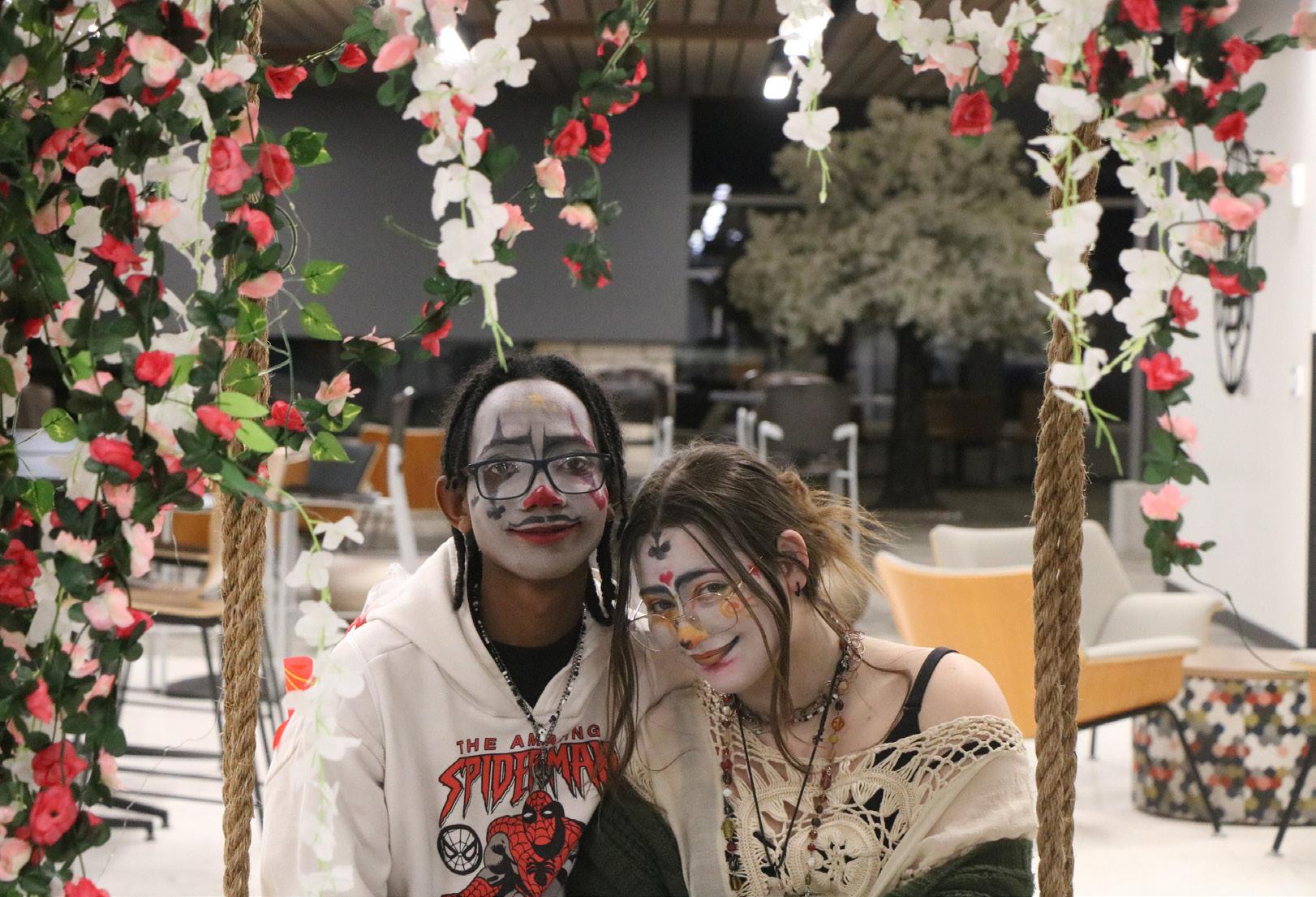
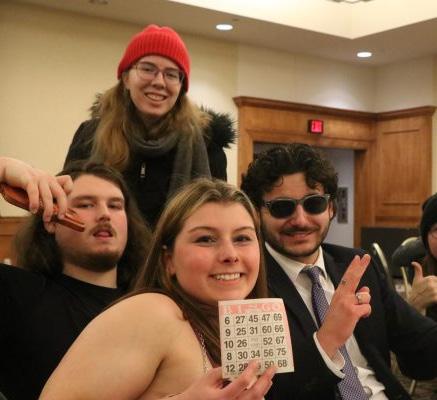
A COUPLE OF JOKERS ace the photo opportunity spot at Casino Night. The team of jesters flipped 100 point chip into 4500 gold points with a single hand of blackjack.
PHOTO BY MATTHEW VIGELIUS
Stabbing at Oakland University
MALLORY WALIGORA
Content Editor
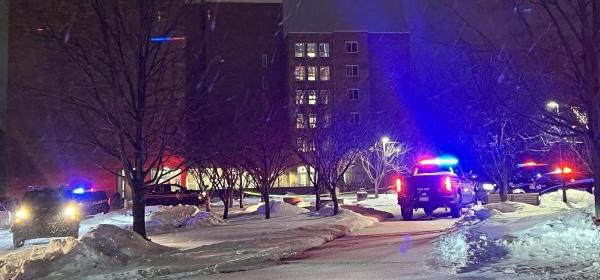
On Feb. 5 at 8:15 p.m., the Oakland University Police Department reported a stabbing on campus at the Van Wagoner House.
Van Wagoner House is located on the north end of campus near Bear Lake – between Hamlin Hall and Hill House.
Campus was placed on lockdown until 11:16 p.m.
The victim was not an OU student and “suffered from multiple stab wounds from the altercation,” OUPD Chief Mark Gordon said. “He was let inside the building by an unknown person. He was in need of medical attention. First responders arrived, transported him to McLaren Hospital, where he’s being evaluated currently.”
Below is the information provided by OUPD in a campus-wide email at 9:08 p.m. about the two suspects.
PHOTO BY ADRIAN JIMENEZ MORALES
Suspect 1 Information:
• Sex: Male
• Age: Early 20s
• Height: 5 Feet 8 Inches - 5 feet 10 inches
• Complexion: Dark
• Hair Style: Chin-length dreadlocks
• Clothing: Black North Face jacket
• Footwear: White shoes
• Suspect Mode of Travel: By Vehicle
• Suspect Vehicle: Dark colored SUV
Suspect 2 Information:
• Sex: Male
• Age: Early 20s
• Complexion: Dark
• Hair Style: Curly hair
• Clothing: Camo jacket with a black hood
• Footwear: Black shoes
• Suspect Mode of Travel: By Vehicle
• Suspect Vehicle: Dark colored SUV
Throughout the night, Oakland University communications sent out nine separate text messages through the emergency notification text system.
“O.U. URGENT: campus lockdown, aggravated assault occurred, suspect on loose, bm dk clothing, no oth desc,” the first message at 8:26 p.m. said.
“O.U. URGENT: Aggravated assault reported on campus . Lockdown until further notice,” the second text said at 9:01 p.m.
“O.U. URGENT: Aggravated assault reported on campus. Lockdown until further notice. Visit oakland.edu for more information,” the third text said at 9:22 p.m.
The same message was then repeated at 9:52 p.m.,
10:08 p.m., 10:24 p.m., 10:40 p.m. and 10:55 p.m.
“O.U. URGENT: Lockdown has been lifted except for Van Wagoner. Visit oakland.edu for updates,” the last emergency message said at 11:16 p.m.
Around 11:20 p.m., when the lockdown was lifted, OUPD sent out second a campus-wide email.
“The police department feels that it is safe to return to normal operations. The campus lockdown is lifted, with the exception of Van Wagoner,” OUPD said.
In the same message, OUPD shared campus safety tips, including staying alert, reporting unusual activity and using blue light emergency phones on campus.
The next morning, on Feb. 6 at 8:20 a.m., OUPD sent out a third campus-wide email with the title reading “Campus community advised to remain alert and aware of surroundings at all times.”
“The Oakland University Police Department has lifted the lockdown applied to Van Wagoner Hall following Thursday evening’s assault outside the building,” the message said. “Police department officials feel that it is safe for resident students to return to normal activities as an investigation into the incident continues. All campus community members should remain alert and aware of their surroundings at all times as a standard safety precaution.”
The Oakland Post continues to monitor the situation. Anyone with additional information is encouraged to contact OUPD at (248) 370-3331.
Letter to the Editor: Oakland University must invest in staff
RAYMOND JAHN Contributor
Staff represented by Oakland University
Custodial Maintenance Trades (OUCMT) are demanding a contract that reflects the real value of staff work.
Workloads have increased.
Campus square footage has expanded. Inflation has reduced the real value of wages.
Yet staff compensation continues to fall behind.
Oakland University has chosen to prioritize buildings, expansion, and other initiatives while failing to adequately invest in the staff required to support and maintain that growth. The result is burnout, declining retention, and the loss of experienced employees—problems that are already affecting campus operations.
Staff are essential to the University’s success. Continuing to underpay staff while expecting more work is not sustainable and undermines the institution’s long-term stability.
OUMCT members remain committed to Oakland University.
That commitment must be met with meaningful investment in staff, not continued delays or inadequate proposals.
We are calling on Oakland University to return to the bargaining table with a contract that:
Accounts for inflation
Reflects expanded workloads and campus growth
Provides fair, competitive compensation
Supports retention and stability
Fair pay is not optional.
PHOTO BY ADRIAN JIMENEZ MORALES
OU Winter Career Fair: Connecting employers and future professionals
ADDISON KOCH Campus Editor
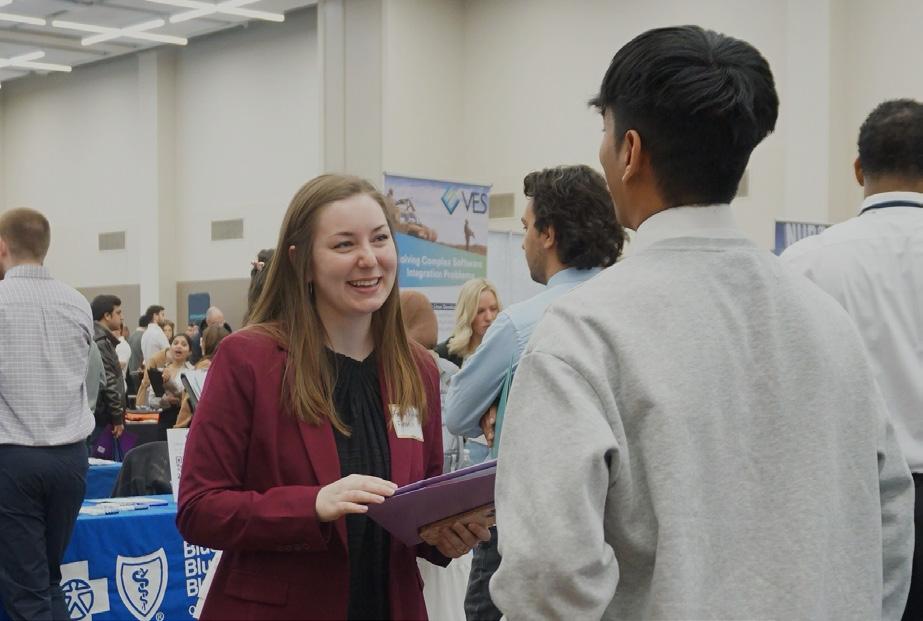
The Oakland University Winter Career Fair brought together students and employers for a day focused on professional growth and future opportunities. Attendees were offered free headshots and the chance to explore internships and full-time positions, particularly appealing to students approaching graduation.
The event created an environment where students could engage directly with recruiters, practice networking, ask about company culture, and learn what skills employers value. Beyond simply submitting resumes, students gained practical experience in presenting themselves professionally and navigating the dynamics of real-world career environments.
A wide range of employers attended, representing industries including healthcare, financial services, engineering, government, construction, and more. This diversity allowed students from various majors to explore multiple career paths, compare industries, and understand where their skills could be most in demand. Many students reported that this exposure helped them clarify their professional goals and identify opportunities they had not previously considered.
Michigan State University Federal Credit Union was represented by Talent Acquisition Specialist Sam Gutzki, who emphasized that the organization prioritizes values and skills over specific academic majors. “We have branch networks that we can hire people into, and that’s a big chunk of our jobs,” Gutzki said. “Employees often start in branch roles and grow
into back-office positions over time. We’re really more about your skill set and your values than your degree.”
Gutzki also noted that many entry-level roles require only a high school diploma, with adaptability and a willingness to learn taking priority over prior experience. “We look for key skills first and then teach the rest,” she said, highlighting the credit union’s values-based approach to hiring. While some internships may require additional experience, many are open to students early in their academic careers.
Sophomore sisters Anusha and Opal Tiwari attended the fair in search of early career opportunities. “I’m looking for an internship. I’m a sophomore, so I’m hoping to find one for the first semester next year,” said Anusha, a mechatronics and robotics engineering major.
Opal Tiwari focused on making a strong first impression with recruiters. “I printed resumes to give to all the companies I’m interested in,” she said, emphasizing the importance of face-to-face interactions. Both sisters described the fair as a valuable opportunity to build confidence, practice professional communication, and learn how to present themselves effectively in a career setting.
Preparation for the event was supported by the Career and Life Design Center. Laura Kroger, a career and life design coach, works closely with students in engineering and computer science programs to help them succeed at career fairs. “I go into the School of Engineering and Computer Science and visit classes like BGR 2400 and CSI 2999 to prepare students for the career fair,” Kroger said. “Early preparation helps students navigate these events with clarity and confidence.”
By connecting students with employers who value skills, adaptability, and professional growth, the Oakland University Winter Career Fair gave participants the chance to engage directly with recruiters, ask questions, and make lasting impressions beyond submitting resumes. The fair empowered students to explore career paths, build confidence, and develop the skills and experience needed to succeed in competitive industries after graduation.
Students test their luck at SPB’s 2026 Casino Night
MICHAEL GORDON Campus Reporter
The Oakland Center was dramatically taken over and transformed into a medieval-themed casino on February 7th as students gathered for Casino Night, one of the largest winter semester events hosted by the Oakland University Student Program Board (SPB).
The annual event drew a massive turnout, with students participating in all types of casino games, raffles and themed activities for the chance to win prizes ranging from electronics to future SPB trips. For many members of SPB, this year’s Casino Night marked a milestone, as it was their first time planning and executing the event.
“This is the majority of the board’s very first Casino Night, because we are a brand-new board,” said Cameron Warshawsky, SPB’s operations director. “I would say we did pretty well and had a good turnout for us all being new and starting from zero.”
Throughout the night, students rotated between games such as blackjack, poker roulette and more earning gold tokens that could be exchanged for raffle tickets. The medieval theme added a unique twist, with costumes and décor enhancing the atmosphere.
Gianna Trasco, a member of the SPB board, said she was pleased with how the event came together.
“I was excited before I came to see everyone’s costumes, and I was really happy with what I saw,” Trasco said.
Camarie Adkins, special events director for SPB said seeing students fully embrace the theme stood out to her. “I loved seeing everyone dressed up and really leaning into the theme,” Adkins said. “When students are excited and engaged like that, it makes all the planning feel worth it.”
Behind the scenes, board members worked long hours to ensure the event ran smoothly. Several organizers arrived around noon and remained on site until after midnight.
PHOTO BY MATTHEW VIGELIUS
“I’m very proud of everything that our board accomplished and put together in the past 12 hours,” one board member said. “It was very organized, and everyone showed up really great.”
SPB organizers said the biggest limitation was not being able to reward every attendee.
“The most negative thing is that we couldn’t give prizes to everybody,” Warshawsky said.
SPB leaders noted that Casino Night evolves each year, with new themes and ideas introduced annually, this is of course SPB’s largest event of the year so that figures.
“This was in my top 7 events from Oakland university. I would agree man!” an excited freshman Alzario Wright, said.
“Everything’s going to change in a positive way, but we didn’t have any issues where we felt like we really need to do better next year,” Warshawsky said.
As the night came to a close, organizers reflected on the sense of accomplishment that followed months of planning.
“It’s a lot of mental preparation, especially knowing you’re going to be here for hours on end,” one board member said. “We’re all very tired, but we want to put on a good show for everyone, and that makes it all worth it.”
PHOTO BY LILIANA VALENZA
It takes a village: Active Minds at OU
ALEXA DUDEK Campus Reporter
About one in three adults in the United States report feeling lonely. Active Minds at Oakland University works to destigmatize conversations about mental health, promote holistic wellness, and encourage unity across the campus community. By raising awareness and providing resources, the organization seeks to create a safe environment where students can discuss mental health without fear of judgment.
“We want to change the conversation around mental health on campus. We do that by raising awareness of mental health concerns, building connections to resources, and fostering a safe and open environment for mental health to remove stigma,” Evie Edwards, vice president of Active Minds, said. The group emphasizes that mental wellness is a shared responsibility, and creating community support is key to helping students navigate challenges.
On Tuesday, Jan. 20, 2026, from 3 p.m. to 4 p.m., Active Minds hosted guest speaker Samuel Walker, leader of H.O.P.E., during their meeting. The event attracted both new and returning students who wanted to engage in conversations about mental health. Walker highlighted the importance of community support, particularly during January, which is recognized as Mental Wellness Month, encouraging students to seek connections that support their mental well-being.
The discussion focused on societal pressures and their impact on men’s mental health. Men often struggle to remain authentic while navigating cultural expectations, which can create internal conflict and prevent them from accessing resources. Active Minds noted that recognizing these pressures is the first step toward breaking down barriers and encouraging individuals to seek support when needed.
As the event concluded, Active Minds emphasized the importance of community. Shared support helps transform isolating struggles into collective experiences, ensuring that students do not feel alone in facing challenges. “Everyone has mental health challenges from time to time, and it’s nothing to be ashamed of,” Edwards said, encouraging students to reach out when needed.
Community support depends on social
connectedness, encouragement, and a sense of belonging. When students feel supported, they are more likely to share their experiences and access resources. Without this support, individuals may feel isolated, lack guidance, and experience heightened loneliness.
Oakland University offers numerous resources for students struggling with mental health, including the Uwill hotline, Grizz Recovery, and the Oakland University Counseling Center. Active Minds also provides resources, connecting students with free workshops led by trained professionals and offering both on- and off-campus support. The organization advocates for student concerns and helps navigate issues related to policies or campus experiences.
“When students bring concerns to us about policies or personal experiences on campus, we make sure to contact the appropriate officials,” Edwards said. Active Minds strives to amplify student voices and create a positive impact on campus. For students interested in advocacy, Edwards recommends joining any mental health organization and speaking up to help normalize discussions around mental health.
“The best advice that I have is to join any mental health organization and don’t be afraid to speak up. Besides Active Minds, multiple on-campus, local, and national organizations can provide you with different advocacy work,” she said. Edwards added that even a single voice can make a difference: “Use your voice; you never know who needs to hear it. Even one person talking about mental health can normalize the experience.”
SLPSA spreads love through Valentine card-making for senior citizens
SARAH BULGARELLI Campus Reporter
The Speech Language Pathology Student Association (SLPSA) hosted a Valentine’s cardmaking event for local seniors in the Oakland Center on Feb. 2, inviting students to create handmade cards while connecting with others on campus. The event aimed to combine community service with a fun, interactive activity for students interested in speech-language pathology. By bringing students together, SLPSA provided an opportunity to celebrate Valentine’s Day while supporting seniors who may feel isolated.
The event welcomed participants to craft Valentine’s cards that would be distributed to seniors in the local community. Whitley Kinnard, SLPSA president and a senior majoring in linguistics, explained that many campus organizations host “Valentines for Seniors” events each February.
“When I realized that SLPSA hadn’t done one before, I thought it would be a great opportunity to host our own,” Kinnard said.
SLPSA is a student organization designed for those pursuing careers in speech-language pathology, offering information about the profession and guidance on graduate school admissions. Throughout the year, the organization hosts a variety of events aimed at raising awareness of speechlanguage pathology and fostering connections among students. This Valentine’s card-making event was an extension of that mission, combining
service, education, and community building.
Students gathered around tables filled with craft supplies, listening to music and chatting as they made cards. The relaxed atmosphere encouraged conversation and creativity while allowing participants to reflect on the impact of their work. For many students, the activity offered both a social outlet and a meaningful way to give back to the community.
Marisa Eckl, a senior majoring in linguistics, said she attended the event because she believes small acts of kindness can make a meaningful difference, particularly for people who may feel lonely. “I think one of the sweetest ways to show that love is through something made from your own hands and heart,” Eckl said. She added that it felt rewarding to know the cards could reach seniors who may not have frequent visitors. “I hope our cards can help even one person feel less alone,” she said.
Kinnard said hosting the event was also important for building connections among students. “As president, it was important to me that we hosted an event that not only supported seniors who can feel lonely around Valentine’s Day but also brought together our cohort and Oakland University students in a fun and meaningful way,” she said. To help distribute the cards, SLPSA partnered with Senior Helpers, a Michigan organization that supports seniors with Alzheimer’s, dementia care, and daily living assistance. “I reached out to the Michigan division and was connected with a representative that will help us distribute, and the rest came together from there,” Kinnard said.
Eckl said events like these allow students to
practice skills essential for speech-language pathologists, such as patience, empathy, and gentleness. “Experiences like these serve as reminders of how we should approach and care for our patients,” she said. The card-making night was open to all students, designed to give back to the community while celebrating Valentine’s Day, and encouraged attendees to stop by, create cards, and connect with others.
“The response blew me away. I was so happy with the number of SLP and linguistics students and faculty who attended, and I love that we had several students from outside our program join us as well,” Kinnard said. Eckl added, “Events like this are vital to campus life. They provide opportunities to connect with others who share similar inspirations, create a space to give back to the community together, and spark conversations that highlight additional community needs and raise awareness.”
“This is our first year hosting this event, but I hope we can continue in the future. I’m hoping to get an even larger turnout and make even more incredible cards and crafts,” Kinnard said. With the success of the inaugural event, SLPSA hopes to continue building connections, spreading kindness, and providing opportunities for students to engage in meaningful community service.
PHOTO COURTESY OF ACTIVE MINDS
Crafts & Connections: First-Gen Mix ‘N’ Mingle
ALEXA DUDEK Campus Reporter
On Feb. 4, 2025, Oakland University hosted their First-Gen Mix ‘N’ Mingle to celebrate first-generation college students. With a large number of first-generation students on campus, the goal of Orientation and New Student Programs is to provide resources and support to this community. These events give students a chance to connect, share experiences, and feel recognized for the unique challenges they face in higher education.
The Mix ‘N’ Mingle was designed to foster inclusivity while creating opportunities for first-generation college students to engage with their peers and explore helpful campus resources. Recognizing that the path for firstgeneration students can be uniquely challenging, the events aim to make their college journey more seamless. By offering a casual and welcoming environment, the university encourages students to build social and academic networks that will help them throughout their time at Oakland.
“Our goal with these events and the committee that plans them is to create awareness and community,” said Mae Dennis, Assistant Director of Orientation and New Student Programs at Oakland University. Dennis explained that the events are intended not only to connect students but also to help them become familiar with the support systems available on campus. She emphasized that building community is a key part of ensuring first-generation students feel confident and supported in their college experience.
Dennis understands that navigating college as a first-
generation student can present unique challenges, from managing academic expectations to learning how to access campus resources. She hopes to create a sense of community that helps students overcome these challenges. Through events like the Mix ‘N’ Mingle, students can share experiences, ask questions, and gain guidance from both peers and university staff.
The event began with pizza as students arrived, creating a welcoming and relaxed atmosphere. Attendees participated in a variety of activities, including designing picture frames, playing board games, coloring, and making crafts. These interactive activities encouraged students to socialize, meet new people, and strengthen connections in a comfortable, casual setting.
As students mingled, Orientation and New Student Programs provided valuable information about resources specifically for first-generation students. A presentation highlighted useful tools and services while tables throughout the room displayed brochures and other materials for students to explore. This combination of social interaction and practical guidance ensured that attendees left both informed and connected to the campus community.
These events have been met with strong support from students, who appreciate the opportunity to form social bonds and feel part of a larger network. Freshman Shailyn McKoy shared that the events give her a sense of community and keep her informed as she navigates her first year. “These events help me make more friends and get to know people around campus that I may not know,” McKoy said, illustrating the value of the events for social and academic integration.
For students like Sean Sulik, the events offer a chance to support peers while also strengthening friendships. He often attends with friends, sharing information about events through a group chat to ensure no one misses out. “My friends and I have a group chat, and we send each other all of the events that we are interested in attending,” Sulik said, showing how these gatherings help students build both community and support networks.
Over 40% of the Fall 2025 class identifies as firstgeneration students, highlighting the importance of resources that support this population. Orientation and New Student Programs provides comprehensive guidance designed to assist students throughout their time at Oakland University, from enrollment to graduation. Additionally, the School of Education and Human Services offers specialized groups to support first-generation students in their academic pursuits.
As the semester continues, Orientation and New Student Programs remain committed to addressing the challenges faced by first-generation students. “You are not alone, and it is more than okay to ask for help. You should be so proud of yourself for starting this journey,” Dennis said, reminding students that support and encouragement are always available. These programs aim to ensure that first-generation students feel empowered, informed, and connected as they pursue their academic goals.
Digital Accessibility Initiative moves forward ahead of 2026 ADA deadline
ERIN BANES
Campus Reporter
Oakland University is actively continuing its efforts on a comprehensive campus-wide digital accessibility initiative as the federal deadline for compliance with updated Title II regulations rapidly approaches. The U.S. Department of Justice issued a 2024 update to the Americans with Disabilities Act (ADA), which requires public universities to ensure that their websites, digital documents, and mobile applications meet current accessibility standards. Compliance with these updated regulations must be achieved by April 24, 2026, prompting institutions like OU to take significant steps to make their digital resources fully accessible to all users, including individuals with disabilities.
To meet these federal requirements, Oakland University has begun the process of aligning its digital content and technological systems with the Web Content Accessibility Guidelines (WCAG) 2.1 AA standards. This undertaking involves collaboration among multiple units across campus, reflecting a coordinated approach to accessibility. Key participants include the President’s Office, Academic Affairs, Student Affairs, University Technology Services (UTS), University Communications and Marketing (UCM), e-Learning and Instructional Support (e-LIS), Disability Support Services (DSS), and Legal Affairs, all of which play a role in ensuring the university meets federal compliance standards.
University Communications and Marketing (UCM) holds primary responsibility for the front-end
content on oakland.edu, where it has implemented updates to make webpages more accessible. This includes incorporating structured heading hierarchies, descriptive link text, alternative text for images, captioned video content, and layouts that are navigable via keyboard alone. In addition to updating new content, UCM is reviewing older digital documents, media, and high-traffic webpages to identify and correct potential accessibility barriers, ensuring that all users have equal access to information.
For instructional tools and platforms managed by e-Learning and Instructional Support, such as Moodle, eSpace, Zoom, Panopto, and YuJa, Oakland University provides faculty and staff with self-guided resources and workshops. These materials are designed to help
instructors create courses that comply with accessibility standards, including a “Digital Accessibility QuickStart” course and short instructional videos available through eSpace. This proactive support allows faculty and staff to integrate accessibility features into course design from the outset, promoting inclusive learning environments for students with diverse needs.
Software and enterprise applications used across departments are also subject to accessibility review under UTS policies. The university requires a Voluntary Product Accessibility Template (VPAT) during software procurement to ensure that new applications conform to WCAG standards. Furthermore, existing universitymanaged systems undergo periodic evaluations to maintain compliance, preventing accessibility gaps as technologies evolve and new tools are adopted.
Disability Support Services (DSS) continues to serve as the primary resource for students requiring accommodations or referrals related to accessibility. To supplement this support, the university maintains a public accessibility statement, linked in the footer of all webpages, providing an avenue for users to report issues or concerns they encounter online. This feedback mechanism is critical in helping OU identify and remediate barriers that may otherwise go unnoticed.
While Oakland University has made significant progress in enhancing digital accessibility, it acknowledges that some older materials and third-party tools may not yet fully meet all accessibility criteria. Ongoing remediation efforts are underway to address these gaps and ensure compliance ahead of the 2026 federal deadline.
PHOTO COURTESY OF UNSPLASH
Detective Shona Collins: RAD Self-Defense Program empowers OU students
JENNIFER THOMASMA Campus Reporter
Walking into a self-defense class can be intimidating, especially when the subject matter involves personal safety and trauma. For many Oakland University students, the Rape Aggression Defense program offers a space focused on empowerment, awareness and confidence. The program allows participants to learn skills in a supportive and structured environment.
The Rape Aggression Defense, commonly referred to as RAD, is a women-focused selfdefense program offered through the Oakland University Police Department as part of its public education services on campus. It combines mental preparedness with physical techniques designed to help participants avoid and escape dangerous situations. Students learn strategies that focus on prevention as well as defense.
“RAD is a process,” Detective Shona Collins, a RAD instructor with OUPD, said. “Each class builds on the prior one. Walking through the doors the first night is difficult, and students report a wide range of feelings, from anxiety to excitement and everything in between.”
Rather than focusing solely on physical defense, Collins said RAD teaches students that most selfdefense occurs before a confrontation happens. The program emphasizes four principles: risk awareness, risk recognition, risk reduction and risk avoidance. These skills help participants identify potentially
dangerous situations early and respond effectively.
“There is no 100% way to prevent sexual assault because every situation is different, the mental and physical aspects of RAD help aid a woman in avoiding and escaping. RAD teaches students to be self-reliant, practice a defensive mindset and back that mindset up with physical techniques if necessary,” Collins said.
Collins said many students who complete the course report increased confidence and a greater sense of self-awareness. Beyond learning techniques, participants often describe RAD as a supportive environment where women learn alongside one another. Many students choose to participate quietly, valuing RAD as a private and encouraging space.
“Many students have reported that RAD has changed their lives for the better,” Collins said. “From meeting new friends and feeling more confident, to learning in an environment where women support other women, to using techniques that help avoid a situation or survive an assault or abduction.”
Collins mentioned some students hesitate to enroll due to time constraints or the belief that they do not need self-defense training. She said she wishes no one ever needed to take RAD but emphasized its importance as a preventive resource. The program is designed for empowerment before a crisis occurs.
After completing the course, Collins encourages students to continue practicing what they learned and remain aware in their daily routines. RAD offers a lifetime return and practice policy, allowing participants to refresh their skills at no cost. This
Michigan’s silent mental health crisis
MADI TURNER Campus Reporter
On paper, Michigan’s college campuses are expanding mental health services. In reality, student mental health challenges continue to rise, yet many students do not use the counseling and support resources available to them. Universities like Oakland University offer free mental health services, but experts warn that awareness gaps, accessibility issues, and stigma often prevent students from seeking help, allowing a quiet crisis to persist statewide.
National data underscores these concerns. The UCLA Healthy Minds Study finds that college students across the U.S. report rising levels of anxiety, depression, and emotional distress, often linked to academic and financial pressures as well as social adjustment. Similarly, the National Alliance on Mental Illness (NAMI) reports that student utilization of campus mental health resources has not kept pace with growing need, citing stigma, limited awareness, and uncertainty about access. Data from the Kaiser Family Foundation (KFF) shows that young adults aged 18–24 experience some of the highest rates of mental health distress nationwide, reinforcing concerns that existing systems may not fully reach the students who need support.
At Oakland University, students can access Counseling & Psychological Services (CAPS), which offers short-term individual counseling,
group therapy, crisis intervention, and telehealth options. Despite these resources, awareness and usage remain inconsistent.
To better understand student engagement, The Oakland Post surveyed 12 current and former OU students. All were aware that mental health counseling is available; only four reported ever using CAPS. When asked how often they encountered information about mental health resources, most said “rarely” or “occasionally,” while a few said they had “never” seen any messaging. Common reasons for not using CAPS included uncertainty about how to access services or a limited understanding of what support was available.
This lack of clarity was echoed in student interviews. Natalie Kafara, an OU senior and creative writing major, said her understanding of CAPS was limited. “I’m aware of some services
ongoing support helps maintain confidence and proficiency over time.
“Practice keeps the defensive mindset alive. Confidence and proficiency matter. It’s about consistently looking for risk and maintaining the internal voice that says, ‘I will survive,’” Collins said. Students are encouraged to integrate awareness and preparedness into their everyday lives. RAD emphasizes mental readiness as much as physical defense.
According to Rape Aggression Defense Systems, RAD is a nationally recognized program that focuses on prevention, risk reduction and personal empowerment through education and physical defense training. The program has a proven record of helping women feel safer and more self-reliant. Oakland University’s RAD offerings align with these national standards.
OUPD offers several RAD course options on campus, including basic physical defense, advanced self-defense, aerosol defense, keychain defense and weapons defense. This variety allows participants to select courses that meet their needs and comfort levels. The courses are structured to build skills progressively.
For students seeking safety education and a supportive learning environment, RAD offers more than self-defense techniques. It provides awareness, confidence and empowerment on campus. The program gives participants tools to navigate daily life with greater security and self-assurance.
we provide. I believe I was told when I first started here that you get like three or so sessions with a counselor, and I know we have the therapy dogs that come in around exams. But other than that, I don’t know what services we provide.”
David Schwartz, director of CAPS, said misconceptions like these are common. CAPS provides four free counseling sessions per academic year, with up to 15 sessions available per degree program. “One of our main focuses is working with students on a wide range of issues … from test anxiety to psychotic episodes or bipolar disorder,” Schwartz said. “Confidentiality is strictly protected, and counseling does not automatically lead to hospitalization.”
“We try to remove as many barriers as possible, finances should never prevent a student from getting help.” Schwartz said. After the four free sessions, students can continue counseling with a $20 copay. Schwartz noted that financial support is available to ensure cost is never an obstacle, highlighting a donation from Student Congress that helped maintain this fund.
Mental health advocates say these challenges extend beyond one campus. Active Minds Michigan, a nonprofit promoting student mental health awareness, notes that students often hesitate to seek help not because services are unavailable, but because they do not fully understand what seeking help involves.
As universities continue investing in student wellness, experts say visibility and trust are just as critical as availability.
PHOTO COURTESY OF iSTOCK
Cultural revival at the Chaldean language workshop
ADRIAN JIMENEZ MORALES Editor-in-Chief
Stephen Hannawi, masters student at Oakland University, is adding an ancient tongue to the eight languages you can learn at OU through his Chaldean language workshop. Founded last fall and meeting twice a week, the workshop teaches how to read and write in a language that is more than five centuries old.
“I started doing this when I learned Chaldean when I was eight [years old] in my hometown,” Hannawi said. “Because there was demographic change, the government was taking our lands and giving them to the majority, so the language was getting diluted and I had made a vow at 13 to preserve it.”
Chaldean, often known as Syriac or Neo-Aramaic, is a language spoken throughout Syria, Iraq, Iran and Turkey. It traces back to Mesopotamia with religious and cultural relevance for many in the Metro Detroit area.
Recognizing the different levels of language proficiency throughout the Chaldean diaspora, Hannawi started a workshop that could accommodate native speakers, second-generation learners and people who had never heard of the language.
“Our families are moving from mostly Iraq, that’s where most of us Chaldeans come from,” Selenah Saka, clinical diagnostic sciences sophomore, said. “As the young kids are being born here, they’re learning more English, which, of course, is good. They need to learn English, but our Chaldean language is also important.”
Students attending the workshop explained how many Chaldeans in the area do not have much of an
opportunity to practice the language outside of the home, even less in academic fields.
“We both don’t have that opportunity to go on into the world and just meet people and speak Chaldean with them,” Saka said. “So when we got this opportunity to come to the class and actually learn how to write and read and everything, it was nice.”
A strong community presence of Chaldean students, seen through student orgs like Chaldean American Student Association (CASA), was one of the factors that helped the workshop get on its feet. Free resources were the second one.
“I really liked how he’ll teach us writing and reading, because nowadays I feel like you have to pay money for those classes,” Rotana Sabri, a sophomore student, said. “Everything you have to pay money for and the fact that he’s offering it for free, is really nice.”
The workshop came at a time when some students were looking for more involvement on campus and a revival in their culture.
“It’s kind of funny, because we were talking about how we want to get involved and stuff, but we didn’t know how to and it’s kind of like God heard us and then brought us Stephen,” Sabri said.
For many students, learning how to communicate with their peers and family is the end goal of attending the workshop, which emphasizes fostering a community at OU.
“Heritage is a nice thing to know,” Sarah Kenetha, a sophomore student, said. “Instead of doing a DNA test, having to ask people and not knowing where it is, here you’re just around people that are from the same place that you are and it’s easier to connect with them. It’s easier to find your roots.”
After being featured in local news outlets and Michigan-based Chaldean media, like TV Resurrection and Ave Maria Catholic radio, Hannawi hopes for his initiative to take root at OU.
“I would like to make this Chaldean class an official four-credit [class],” Hannawi said. “I want to continue the workshop, because it’s free and has zero barriers and I want this org to continue. When I graduate, I want this to continue.”
PHOTO BY ADRIAN JIMENEZ MORALES
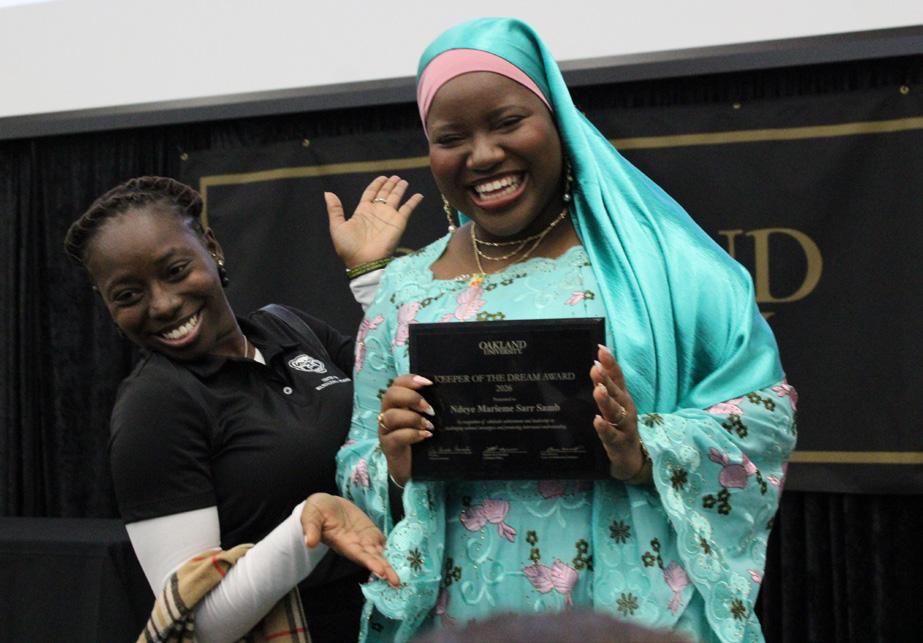
Ndeye Marieme Sarr Samb named Keeper of the Dream Award recipient
MARYAM SOMO Campus Reporter
On Jan. 19, Oakland University hosted its 34th annual Keeper of the Dream Scholarship event. Seven students were honored as scholarship recipients during the event. Among them was Ndeye Marieme Sarr Samb, the only international student to receive the award. The prestigious award, presented by the Center for Multicultural Initiatives, recognizes student leaders at Oakland University who advance Dr. Martin Luther King Jr.’s legacy by breaking down racial and cultural barriers, fostering unity and promoting diversity.
Marieme Samb recalled learning about the award through her twin sister, Ndeye Fatoumata Sarr Samb, who had been honored with the Keeper of the Dream Award in 2025. “I didn’t know about it and my sister got it last year,” Samb said. “I remember my freshman fall, I joined every single student organization you could think about and then I started to tone it down. I was like, maybe I can’t go to every single event, but I’ve been getting involved.”
Samb is a second-year international student from Dakar, Senegal, pursuing a degree in health sciences with a focus on holistic health. She plans to further her studies and dedicate her career to advancing the health and well-being of women and children across the globe. As a researcher, Samb has participated in a global health study abroad program in Ghana, where she developed a deeper understanding of maternal support and strategies to enhance health outcomes for
future generations.
“Keeper of the Dream was a way to get recognitions and the scholarship is also significant because, as international students, we don’t really have access to any sort of financial aid from the school, so the award is one of the only ones we could get,” Samb said, adding that the recognition not only affirmed that her work was valued, but also provided meaningful financial support as an international student.
Samb’s involvement at OU is grounded in a strong commitment to campus leadership and community building. As a resident assistant in the Living and Learning Community, she promotes inclusivity by creating programs that encourage connection,
Love letter to Oakland University
JENNIFER THOMASMA
Features Reporter
During Valentine’s Week, students across Oakland University were asked a simple question: If you could write a love letter to OU, what would you say? Their responses offer a glimpse into what the university means to those who call it home.
For many students, love at OU begins with finding a sense of belonging beyond academics. Students described discovering connection through organizations, campus spaces and shared experiences that made the university feel personal.
Freshman Claire Donaher, a clinical diagnostic medical sonography major, said student organizations helped her feel connected early in her college experience.
“OU — I see the love through the different clubs that you can always be in,” Donaher said. “I just joined my sorority, and I’ve seen it through that and through all my clubs. I’ve seen it through connecting with people who are like me.”
Sophomore Sommer Fishpaw, president of the Student Program Board and a public relations and advertising major, said campus involvement played a central role in shaping both her personal growth and professional direction.
“Because of you, I have met some of the most kindhearted friends, professors and coworkers,” Fishpaw said. “Because of you, I have my dream job as president of the Student Program Board.” Fishpaw said hosting events and working closely
with the student body helped her discover her passion and sense of purpose.
“In many ways, we have been united, and I think it’s significant to take notice of the love here on campus,” she said. “The only way to get through tough times is to have people around you that you feel loved and supported by.”
As students progress through their academic careers, many said Oakland University begins to feel like less of an institution and more of a tightly-knit gathering place.
Senior Aziana Stewart, a human resource development major, said the campus feels increasingly familiar and welcoming.
“You feel less like a campus and more like a small community,” Stewart said. “No matter where I go, I see familiar faces, and that sense of connection makes OU feel like home.”
Stewart said shared spaces — particularly the clock tower — symbolize how students’ milestones intersect.
“Oakland University has given me not just an education, but a place where I truly belong,” she said.
Senior Jeremiah Kelly, a human resource management major, said love on campus came through access to resources and mentorship.
Kelly works with the Center for Multicultural Initiatives and said the experience helped him feel supported both personally and professionally.
“OU has definitely provided me with the right resources to successfully make it to the end stage of graduating,” Kelly said. “I’ve made a lot of friendships here that I’m going to take further down the road with me.”
dialogue and multicultural engagement among residents. She also serves in leadership roles within the African Student Union and French Club, where she continues her advocacy by fostering spaces that celebrate diversity and expand cultural understanding across campus.
“I eventually want to be a leader in health care,” Samb said. “ I’m still trying to figure out exactly what that looks like, but I definitely know that I want to keep traveling, keep working with different people and help them the best I can to overcome the different disparities they’re facing.”
As one of the few current international student RAs, Samb, alongside her twin sister, aims to create a welcoming environment at OU where students from diverse backgrounds can feel at home. She is dedicated to helping international students connect with peers who share similar experiences. In addition, she provides guidance and support to help them navigate both academic and campus life.
“I am really trying to build a foundation, which is why I’m trying to work a lot with administration and leadership above me,” Samb said. “They’re helping me achieve things and we all have a lot of ideas, but I don’t want that to be something that’s going to stop once I leave.”
Throughout her leadership and involvement at OU, Samb actively advocates for international students and their experiences on campus. She serves as a voice for those who might feel overlooked or unsure of where they belong. Her efforts help foster a more inclusive campus environment where international students feel seen, supported and valued.
For some students, love on campus is tied closely to feeling safe and supported.
Sierra Liggins, a freshman majoring in prephysician assistant studies, said Oakland University’s welcoming environment has strongly shaped her firstyear college experience.
“I love how there’s a bunch of support systems, especially as a person of color,” Liggins said. “The CMI office is always open, and the mentors and advisors there make this campus feel very safe and welcoming.”
Senior Jade Reeder, a human resources major, described her relationship with the university as both demanding and transformative.
“You stress me out, take my money and keep me tired, but somehow you’re still helping me grow,” Reeder said. “Between the deadlines, late nights and coffee addiction, you’ve made me stronger.”
Graduate students also reflected on growth shaped by academic challenge.
Zhengyi “Cameron” Lu, a second-year doctoral student in computer science, said Oakland University taught him persistence beyond technical skills.
“You taught me how to think in systems, not just in answers,” Lu said. “Between lines of code and latenight debugging, I’ve learned that all this progress is built on patience and curiosity.”
Across responses, students described love at Oakland University not as a single feeling, but as a collection of moments — joining a club, finding mentorship, building friendships and feeling supported during pivotal stages of their education.
PHOTO BY ADRIAN JIMENEZ MORALES
The cowboy’s song
ANDREW MCNAMARA MAY Features Reporter
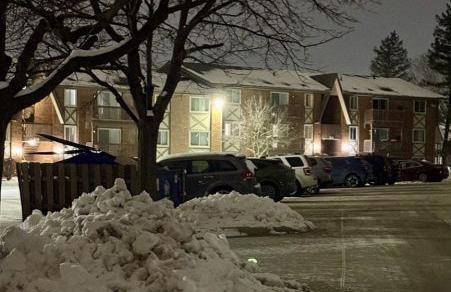
In a sleepy apartment complex in Auburn Hills, a cowboy resides, whose trusty steed is a golf cart. His cowboy-cut Wranglers — worn since high school decades ago, long before any Gen-Z TikToker declared them fashionable — hang with one leg off the cart, as if to spur it faster. A cigarette dangles from his lips, its position somehow defying gravity.
His expression defies reason.
“You never really know what you’re going to get, and that’s part of the fun of it.”
This is Steve Geck, head maintenance manager at Meadowbrook Village Apartments.
In winter, his work becomes uniquely pivotal. Michigan’s storms are less weather and more tempest, an unrelenting force that turns each hour into a duel with the elements.
“We recently switched contractors — better deal, better timeliness. Still leaves us shoveling sidewalks and stairs,” Geck said. “In past years, we’d leave buckets of salt out, but they don’t let us do that anymore.”
Dissident souls once cast salt haphazardly — no restraint, no regard — as if warding off demons.
Ruined it for everybody.
“It’s left us fighting the clock even more each snow.”
Seasonal struggles are only one of the bulls Steve wrestles in his apartment pasture. Over his years as maintenance manager, he has learned that maintaining a community demands some of the responsibilities — and burdens — of a family.
His eyes curl slightly.
“Some of the hardest calls I get are when the same elderly person calls for silly things,” he said.
They tighten a little more, Clint Eastwood-style.
“Not that they’re calling — that I love. But when it’s the same things over again. Small things,” he said.
He looks at his cigarette.
“Like water spots in a sink. You can get ’em with a rag. You tell ’em that, and they’ll know,” he said. He ashes.
“Then, they forget,” he said.
It hits him hard. He is not just a cowboy, but a warrior-poet. It is the sort of thing a person should only have to witness with their parents.
And it kills them then, too.
He’s a hero to the elderly, but not only to them. On a ride around the pasture, he can regale you with tales from his time as this sleepy community’s resident cowboy-tech.
He has saved cats.
He has assisted police with violent tenants. He has performed emergency heat repairs at 4 a.m. in December to keep families warm.
Every day is a different “Fistful of Dollars” to him.
And like every hero in a Western, Geck has a sweetheart.
Back in his warm home waits Audrey Bickmore. After even a brief conversation, it becomes clear they are a couple who cares deeply for their community.
Bickmore, like Geck, can weave a yarn for hours. She can hold quite the conversation — her proficiency with social nuance is immense, overshadowed only by how thrilled she is to brag
about Geck.
“He is on call any hour,” she said. “Like an ER doctor, they have him working. I feel bad for him — he can be totally at rest, and then suddenly he’s back at it.”
One of their two cats races past Bickmore’s leg. The other sits guard at the master bedroom doorway like a gargoyle in a Gothic cathedral.
“Some days, especially in the extreme hot or cold, he just comes home completely worn out,” she said, “Everything fails in that weather.”
Looking outside their window into the frosted crystalline forest over the parking lot, it is clear to see why.
The very salt and ice of the Earth wear out the body’s strings. Stay out too long, and your muscles get sore.
Clear disharmony.
“I wish he got more time for his music. That’s what really makes him happy.”
Winding into their guest room reveals little room for guests at all — a music studio, loaded with equipment.
More fit for Paisley Park than a sleepy apartment complex.
But here, the cowboy becomes a magician. He enters a trance. He is briefly free from all the chaos of the complex. He turns that rugged chaos into soul.
The cowboy retreats to the campfire and plays harmonica.
“I actually can play harmonica too,” Steve says. “And violin. And guitar. I’ve got an old 12-string here, my dad used to play with Travis Tritt when they were stationed together in the war.”
The lights of the soundboard, the twists of knobs, the pluck of strings — everything
collides into a baroque, bebop-tinged techno. Something you could hear in an expensive nightclub in Chicago.
A cowboy with a six-string instead of six bullets. A helping heart and an armory full of instruments. Except he only has the soundtrack for the standoff. He sells it to no one. Streams it nowhere. His music is an interest he has maintained since childhood, having picked it up from his father. He has never toured, yet the music is purer than anything people buy concert tickets for.
A true cowboy does not make anyone pay to sit by his fire.
But you do have to be there.
“It used to be a lot harsher,” he says. “They’ve added more help the longer I’ve worked here. But it’s still a lot. I’m lucky if I get an hour any given day in this room.”
His hand hovers near his pager — quick-draw. Always ready, in need of a break.
Yet there are groundhogs with other plans. The wind howls.
Record-breaking February Arctic cold points its cold barrel at the Midwest.
A cowboy ought to be able to ride off into the sunset occasionally, but in the current labor market, even the most skilled workers struggle to find a meaningful balance. For real men like Geck — part cowboy, part social worker, part technician, part rock of the home — one can tell they need that moment of rest every so often to keep everyone else’s world turning.
Until then, he rides on into the sunrise, golf cart at full blast, hair blowing in the wind, grinning. Those tires on his steed, that old golf cart, grip what little traction they can from the frugal ice. Always riding to the next problem to solve.
PHOTO BY ANDREW MCNAMARA MAY
OUSC President Marcus Johnson honored with Keeper of the Dream Award
CAEL TANNER
Features Editor
When Oakland University senior Marcus Johnson opened the letter notifying him of his selection to receive the Keeper of the Dream Award, his tentative nervousness gave way to both joy and surprise.
“I let out a very large, loud squeal,” said Johnson, who had not spent the week after his award application interview expecting to receive the honor. “I had kind of resolved myself to, ‘I probably didn’t get it.’ I didn’t want to get my hopes up.”
The annual Keeper of the Dream Award honors students who advance interracial understanding, break down cultural stereotypes and promote unity across the OU campus, in the spirit of the late civil rights leader Dr. Martin Luther King Jr. Established in 1993, the award recognizes scholarship, citizenship and campus leadership and includes a monetary scholarship for recipients.
Johnson, a double major in political science and public administration and policy, was among several student leaders selected for the 2026 class of honorees. As president of the Oakland University Student Congress, he has made amplifying marginalized voices a cornerstone of his leadership.
“My biggest priority is always ensuring that students understand and feel that their interests are being communicated to the necessary people,” Johnson said. “I strive to make sure that students, especially underseen and marginalized students, understand that there are people on this campus who
see them, are there for them and support them.”
He said the recognition fuels his commitment to service. While he expressed his excitement at the honor, he affirmed he has no intention of placing his pursuit of progress on pause.
“Honestly, [the award] gives me more of a drive to keep on doing what I’ve been doing,” Johnson said. “When receiving acknowledgement and recognition that the work is seen… it gives me an even stronger drive to continue what we were already doing to make the campus a better place.”
As OUSC president, Johnson’s work has also focused on ensuring student interests are communicated effectively to administration. One recent initiative he spearheaded includes the campuswide menstrual product program, which OU Student Congress helped to institutionalize after years of advocacy.
“We have dispensers in all of the women’s and gender-neutral restrooms on campus, excepting the housing buildings, [which are coordinated differently]” Johnson said. “Students who may need the products can access them at any moment. Being able to make that progress… it felt really good.”
He has also worked to create intentional spaces for diverse voices, such as VOICE committees — Valuing Our Identities and Cultural Equities — where students from marginalized communities can help shape policy discussions.
Johnson said his leadership philosophy emphasizes listening — a value he credits to mentor Glenn McIntosh, who taught him that “leadership is oftentimes more about listening than talking.”
Balancing academics with his responsibilities as Student Congress president are a challenge he takes seriously, rooted foremost in his understanding of his dual roles as both a scholar and a leader.
“Something I try to do… is to make sure you remember that you’re a student first,” Johnson said. “After all, it is ‘Student’ Congress. We have to prioritize our responsibilities as students.”
He also reflected on the significance of representation within the OUSC framework and across campus. Johnson is the first African American student body president at Oakland University in nearly 20 years, a perspective he brings to his work promoting inclusion and belonging.
“I know what it’s like to be in a space and not be able to recognize yourself in it,” Johnson said. “I want to make sure that the students here don’t have to go through that, and that they can see themselves in campus leadership.”
Looking ahead, Johnson said receiving the Keeper of the Dream Award has reaffirmed his professional goals just as it has his approach to leadership duties.
“I’ve learned that the moment you stop, the work stops with you, and you don’t want to lose the momentum you’ve already built,” Johnson said. “Once you reach one goal, you push the goalpost down, and now you’ve got to work toward another one.”
The taboo hidden in twins: What genetics reveal about binge eating
ANDREW MCNAMARA MAY
Features Reporter
Human culture has suggested for thousands of years that the darkest demons should go unspoken — uninvoked, relegated to nightmares and whispered folklore. Formal language calls this taboo.
Eating disorders occupy one of the most shadowed corners of psychological conversation. Few people go looking for that territory. But taboos — like demons — have a way of finding their hosts anyway.
During her tenure co-directing the Michigan State Twin Registry, Kelly Klump uncovered one such taboo buried inside an otherwise straightforward dataset. Camouflaged within rows of twin metrics and developmental markers were clues pointing toward something many researchers historically avoided discussing directly.
“I found really minimal heritability on eating disorder symptoms in preadolescence, around age 11 and 12,” Klump said. “Then, at late adolescence, heritability was about 50%. That really told me something biological and genetic was changing across that time period.”
That turning point appears to be puberty — already notorious for reshaping identity, emotion, and physiology — now increasingly linked to the onset risk window for eating disorders.
“Through a series of studies, we found age didn’t matter at all,” Klump said. “What mattered was the level of pubertal development the girl was in.”
The distinction helps to explain why eating
disorders remain comparatively rare in young children while rising sharply in commonality during and after pubertal transition.
Hormonal cycling appears to play a role as well. Research from Klump’s lab and from others has shown that binge-eating symptoms tend to increase during the mid-luteal phase — the post-ovulatory portion of the menstrual cycle — when progesterone is elevated.
“From an evolutionary and reproductive standpoint, seeing higher rates of binge eating in the mid-luteal phase makes intuitive sense,” Klump said. “If pregnancy occurs, that’s when increased caloric intake would support early development.”
What emerges from this work is more than compelling basic science. With her background in clinical psychology — and game-changing genetic and behavioral data — Klump has built multidisciplinary teams positioned to translate hormonal and genetic findings into prevention and treatment strategies — bringing what was once taboo into measurable, actionable territory.
The birth control pill is one of the most consequential medications ever developed. Yet adherence rates remain lower than many clinicians would like.
When asked why they discontinue or skip doses, many women cite side effects — particularly weight change and increased binge-eating symptoms.
“Our data suggest it’s not all women who are going to gain weight on these pills,” Klump said. “It’s not all women who are going to binge eat on these pills. Our lab would argue it’s women who are
at genetic risk to have hormone-sensitive systems who are the most likely to gain weight and binge eat while on these pills.”
Findings like these suggest that screening for genetic and hormonal sensitivity — for birth control and other medications — may be closer to a practical reality than previously imagined.
In the immediate term, genetically at-risk women may be referred to other methods of birth control, such as IUDs, to alleviate the most challenging side effects of hormonal birth control.
“I think it’s a really exciting time for the lab,” Klump said. “This kind of back and forth between the basic science and the clinical application is something that I didn’t know if I’d ever get to in my career, honestly.”
By allowing taboo and modern science to intersect, academia can begin solving problems it wasn’t even looking for.
Taste of AfricA
brings culture, community and connection to OU
story by Michael Gordon
photos by Adrian Jimenez Morales
graphic by August Wicker
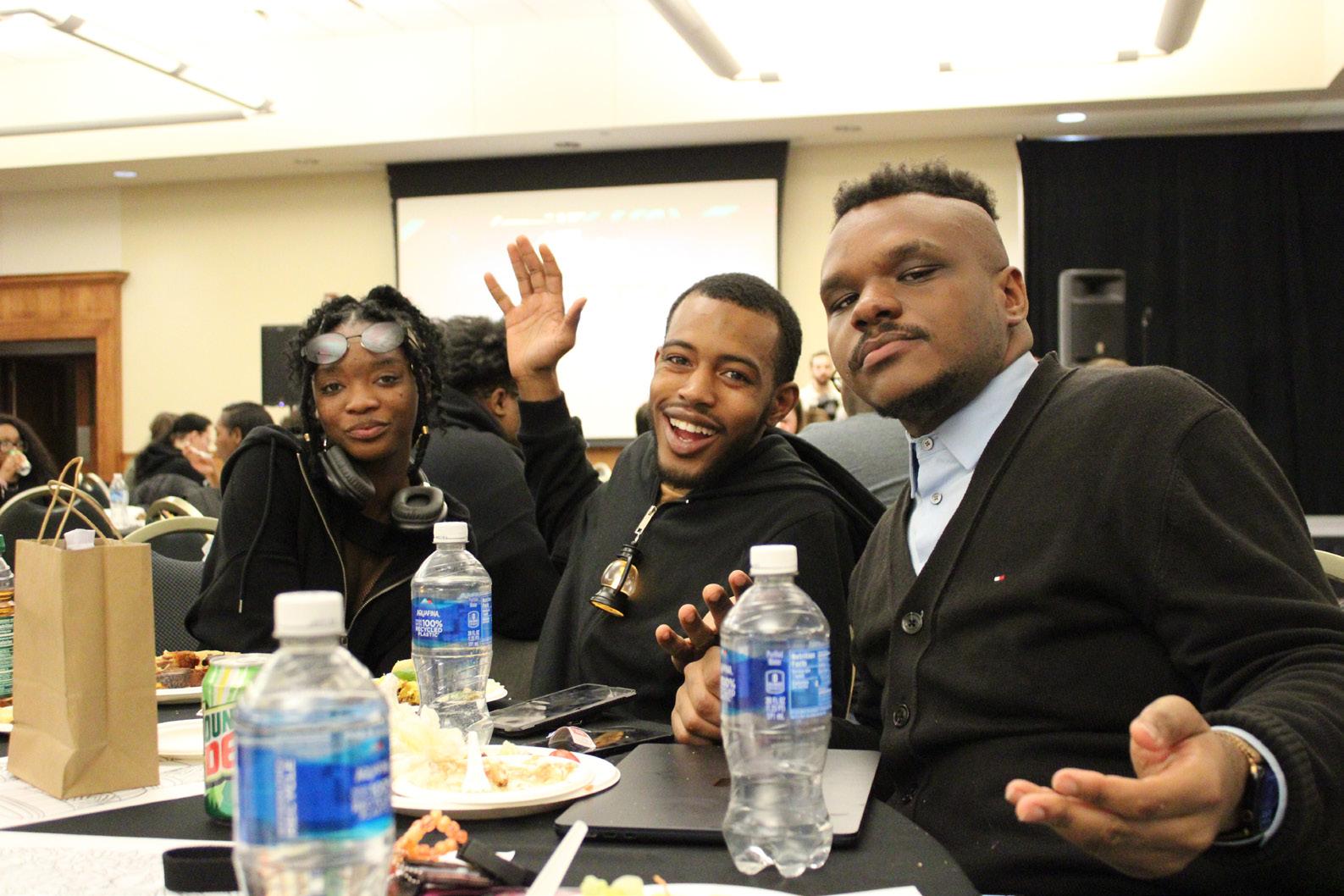
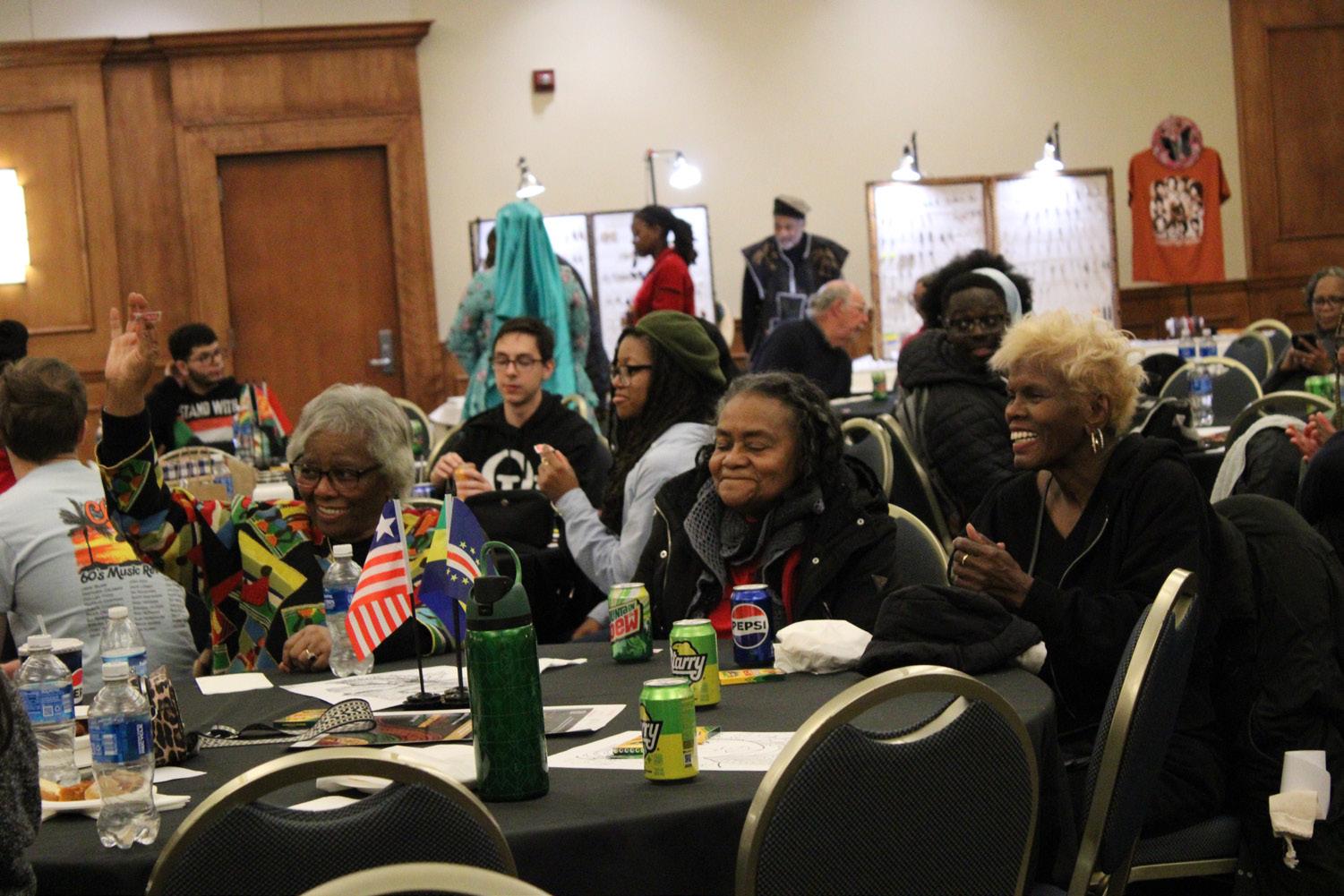
The Oakland Center Banquet Rooms were filled with joy, music, applause and the aroma of delicious cuisine on Feb. 6 as Oakland University hosted the 22nd annual Taste of Africa, presented by the Center for Multicultural Initiatives (CMI).
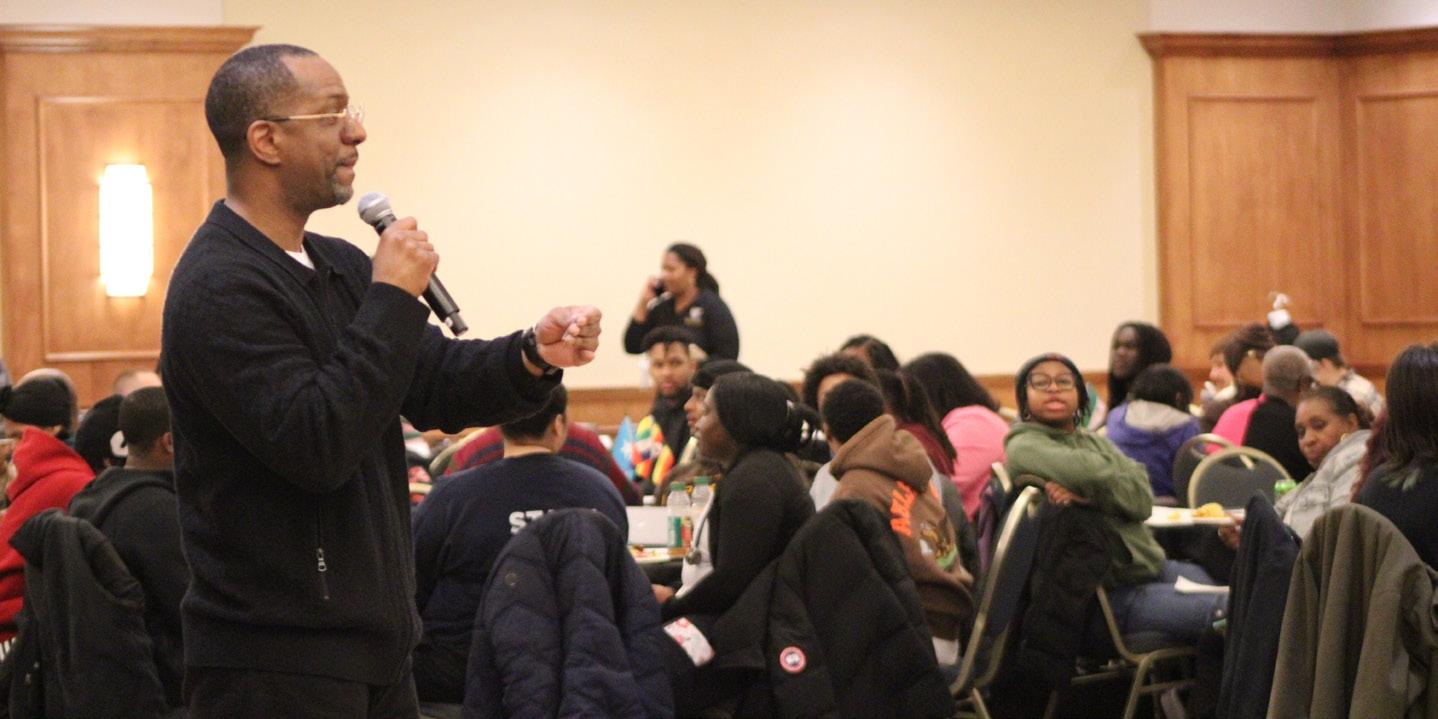
The event, which drew around 500 attendees, featured cultural performances, drumming, poetry and a variety of food offerings, all in celebration of African American History Month. According to Omar Brown-El, senior director of the Center for Multicultural Initiatives, the event is the result of months of collaboration and hard work across the campus.
“This is an event that requires a lot of collaboration with faculty, staff and students in order to pull something like this off,” Brown-El said. “That group meets for four or five months, not only for this event, but for all of the events for African American History Month.”
Brown-El said what stood out most was the sense of belonging created through the shared experience.
“We eat together, we sit together, we listen to music together and meet people we may not have spoken to before,” he said. “The sense of community and connection is what always stands out.”
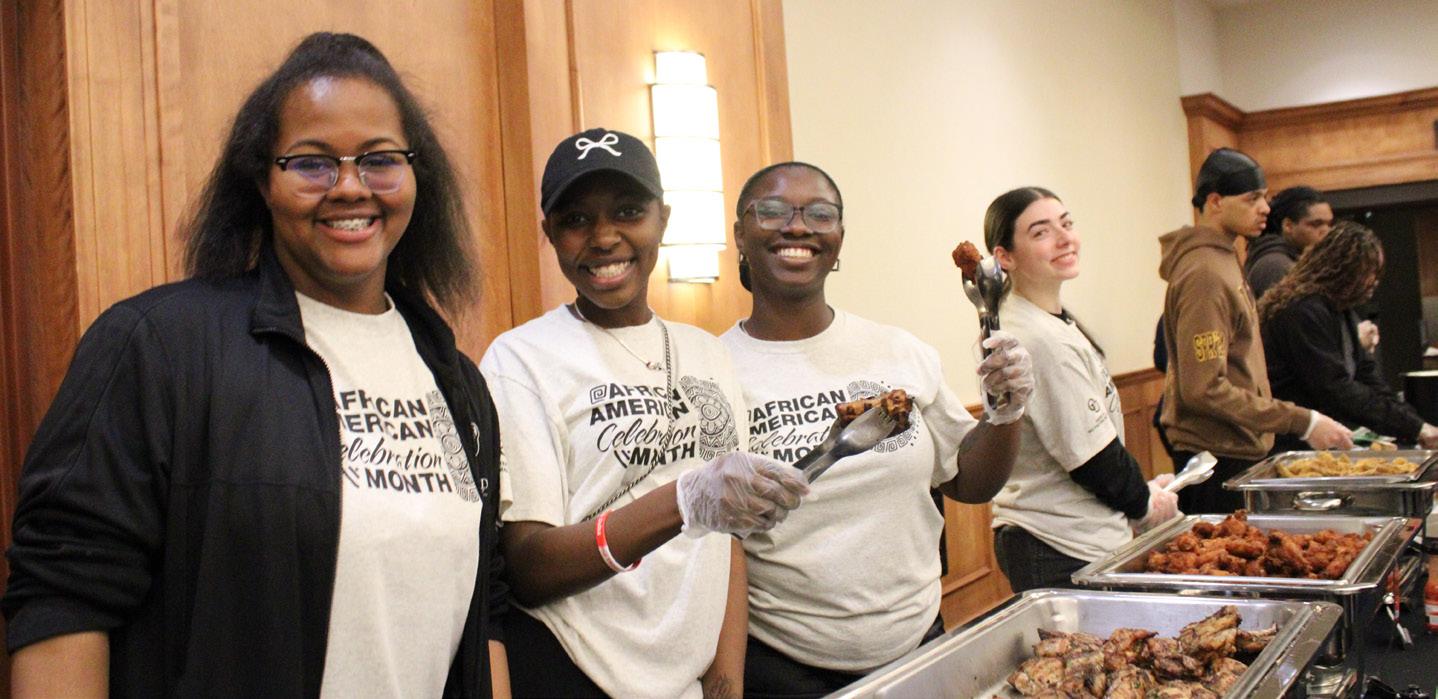
That feeling extended to the food servers, several of whom also serve as mentors and student leaders on campus. Daniel Vital-Puente, Joannie Texta-Romero, and Jeremiah Kelley who worked the event through CMI, said Taste of Africa offered an opportunity to learn while serving others.
“I learned a lot, especially seeing how many people came together and were willing to try different foods,” Texta-Romero said. “It really felt like a community.”
Vital-Puente described the environment as welcoming and immersive, noting that the performances and cultural elements made the space feel larger than the room itself.
Kelley summed it up well as “being part of a village, the music, the instruments, the dancing—it was comforting and familiar.”
Students in attendance had similar sentiments. Akasha, a student from Eritrea, said events like Taste of Africa are especially meaningful on a campus where Black students can sometimes feel underrepresented.
“It was really nice to see the whole Oakland community coming together,” Akasha said. “Seeing Black people around campus
and celebrating Black History Month together is a great way to kick it off.”
Another student, Metti, spoke about how she witnessed this event over the years.
“I’ve been coming for the past couple of years and seeing it grow into what it is now has been exciting,” she said. “The food was good, the performances were good and the energy was great.”
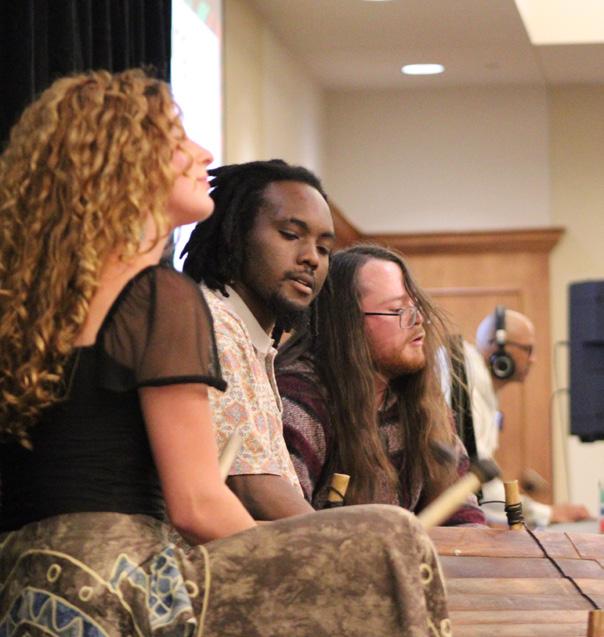
Specific moments also stood out, including live Ghanaian music performed by a small group with traditional instruments, D9 Fraternities and Sororities performances and various student singers.
“You could tell they really researched and respected the craft,” Akasha said. “It felt emotional, and I appreciated seeing people come together from outside the Black diaspora to honor the culture.”
“It’s a lot of preparation and long hours, but seeing people enjoy themselves makes it worth it,” CMI MC Mike Williams said. “Events like this remind you why bringing people together through culture and celebration really matters.”
Wrapped up nicely, as African American History Month continues, Taste of Africa served as both a celebration and a reminder of the power of shared spaces, meals, and beautiful shared culture on this campus.
Catherine O’Hara, star of “Schitt’s Creek” and “Home Alone,” dead at 71
MARIA MAGNOLI Arts Reporter
Catherine O’Hara, the Canadian American awardwinning actress known for roles in “Home Alone,” “Beetlejuice” and “Schitt’s Creek,” passed away on Jan. 30 at age 71 in her Brentwood home. She is survived by her husband, Bo Welch, and their two children, Luke and Matthew.
No cause of death has been confirmed, but a dispatch audio from the Los Angeles Fire Department (LAFD) reported that she had “breathing difficulty” and was immediately rushed to the hospital around 5 a.m. The actress was noted to be in serious condition and was pronounced dead hours later by her representative.
Before her death, she was diagnosed with dextrocardia situs inversus — a rare congenital medical condition where the heart lies on the right side of the chest, rather than the left.
Dextrocardia alone is not dangerous but can pose a threat when combined with other health conditions, according to John Hopkins Medicine. O’Hara mentioned in a 2021 interview that she discovered this defect in her 40s during a routine chest X-ray and EKG.
“My heart is on the right side, and all my organs are flipped,” O’Hara said.
The actress made her film debut in the 1980s, starring as Judith in the thriller “Double Negative” (1980), also known as “Deadly Companion.” She worked alongside icons in the industry like John Candy, who would later appear beside her ten years later in “Home Alone” (1990).
In 1988, O’Hara played the peculiar, yet comical character of Delia Deetz in the Halloween film, “Beetlejuice.” The film quickly became a seasonal favorite of many, appearing on FreeForm’s “31 Nights of Halloween” series (formerly ABC Family) as early as the 2010s.
Co-stars Michael Keaton and Winona Ryder teamed up with O’Hara again in 2024 to release “Beetlejuice Beetlejuice” — a sequel grossing over $452 million worldwide.
Two years later, in 1990, she landed the role of a lifetime: Kate McCallister in “Home Alone.” Mother of the mischievous Kevin McCallister (McCaulay Culkin), O’Hara is remembered for her resounding reactions to continuously leaving her son at home on Christmas. In 1992, she returned to film “Home Alone 2: Lost in New York,” another classic starring McCulkin, Joe Pesci, Daniel Stern, John Heard and Tim Curry.
Even after three decades since the release of the Christmas standard, O’Hara and Culkin always stayed in close contact. Back in 2023, Culkin was granted a star on the Hollywood Walk of Fame and O’Hara prepared a speech for her on-screen son.
“Thank you for including me, your fake mom who left you home alone not once, but twice, to share in this happy occasion. I’m so proud of you,” O’Hara said. “You made acting look like the most natural thing in the world to do.”
Culkin took to Instagram the day of her passing to commemorate her legacy, displaying current and flashback images.
“Mama. I thought we had time. I wanted more. I wanted to sit in a chair next to you. I heard you. But I
had so much more to say. I love you. I’ll see you later,” Culkin said.
O’Hara continued acting later in her career on the sitcom “Schitt’s Creek.” In the six-season series, the Rose family goes from wealthy to impoverished in a flash — causing quite the culture shock. Her outstanding performance as Moira landed her a Primetime Emmy Award, Golden Globe and Critics’ Choice.
Olympic opening ceremony: A message of harmony
SARAH WASIELEWSKI
Arts Reporter
On Feb. 6, the 25th Winter Olympic Games opened in Milano-Cortino Italy. The U.S. delegation is composed of 232 athletes, the largest group of athletes that the U.S. has ever sent to the winter Olympics.
The lengthy ceremony was a celebration of Italian culture and heritage. It began with Cupid and Psyche coming to life and dancing among neoclassical sculptures. Models wearing the colors of the Italian flag strutted down a runway dressed in Georgio Armani suits in a nod to the late fashion designer.
Bobblehead versions of the famed composers Guiseppe Verdi, Gioachino Rossini and Giacomo Puccini appeared throughout the ceremony. There were nods to the paparazzi and dancers dressed as the Mona Lisa, ancient Romans and the popular Italian coffee maker commonly known as a moka pot.
Then the performance segued into another dance, representing city and nature combining as the five Olympic rings were hoisted into the air. Mariah Carey appeared to sing the Italian song “Volare,” before transitioning into the song “Nothing is Impossible” off her new album coming out in September. After her performance, the stage cleared and the Parade of Nations began.
Due to the wide geographical spread of the sporting events, athletes marched in the parade of
Nations not just at the San Siro Stadium in Milan but in Livigno, Predazzo and the co-host ski town of Cortina d’Ampezzo.
Greece led the parade as the originator of the Olympic Games and, as host country, Italy entered last. In a rule created in the aftermath of the Russian invasion of Ukraine, Russia and Belarus did not march in the parade, although both countries have sent several athletes to compete under the neutral International Olympic Committee flag.
After the lengthy Parade of Nations, Italian legend Andrea Bocelli made an appearance, singing Nessun Dorma. Two friendly stoats, named Mila and Tino after the host cities, also made their debut as the official mascots of the Olympic Games.
Sabrina Impacciatore, most well known for her role in “White Lotus” danced her way through the history of the winter Olympic games, starting with the very first one over a hundred years ago in Chamonix, France.
As always, the opening ceremony culminates in the lighting of the cauldron from a torch that was lit in Olympia, Greece and then journeyed across the world to Milan. Over 10,000 torchbearers carried the symbolic light on its journey.
Former Olympic alpine skiers Alberto Tonga and Deborah Compagnoni lit the cauldron in Milan, officially opening the Olympic games. For the first time in history, a second cauldron was lit in the cohost city of Cortina d’Ampezzo, lit by the downhill skier Sofia Goggia.
Overall, the message of the Olympic opening ceremony was one of peace and harmony. Actress Charlize Theron appeared before the cauldron lighting to deliver a message of peace, sharing words from her countryman Nelson Mandela.
Speeches from International Olympic Committee president Kirsty Coventry and Italian president Sergio Mattarella reiterated their desire for harmony before announcing the Olympic games as officially open.
PHOTO COURTESY OF REUTERS
PHOTO COURTESY OF GETTY
Golden recommendations: Black historical films
MARIA MAGNOLI AND MARISSA GETSCHMAN
February is Black History Month, which means it is time to refresh one’s knowledge on the race’s rich and often dark history. The following films depict some of the vast history backing black people and their culture. Some are inspired and some are true stories modified for the silver screen.
“Hidden Figures” (2016)
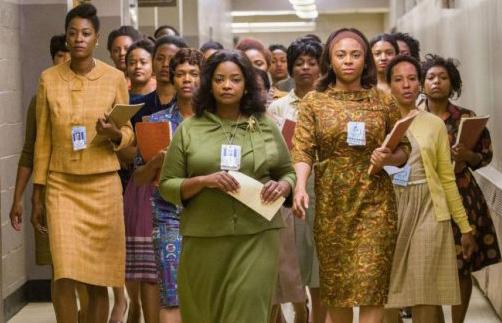
“Hidden Figures” is a true story about the first three African American women at NASA. Katherine Johnson (Taraji P. Henson), Dorothy Vaughan (Octavia Spencer) and Mary Jackson (Janelle Monáe) helped launch astronaut John Glenn into orbit, an enormous accomplishment that secured the U.S. victory of the Space Race and shocked the world.
Set in the midst of the Civil Rights Movement, NASA slowly began integrating whites and blacks before many other workplaces did. Johnson, one of the first Black women mathematicians at NASA and the first Black woman to have her name credited on a NASA research report, sets the tone as the most brilliant on the floor — surpassing all of the men in their calculations. Vaughan was the first Black woman supervisor at NASA, leading the West Area Computing unit and Jackson was the first Black female engineer at NASA.
As these women try to settle into their positions, they are met with office politics on the basis of their skin color. Johnson walks nearly 40 minutes in heels and a dress, often in heavy rain, to use the restroom because there are no colored restrooms on the west campus. She drinks out of a different coffee pot in the office, is not allowed to attend meetings related to her calculations and a co-worker even tries taking credit for her work completely.
Through their perseverance, they gain the respect they so greatly deserve. In fact, John Glenn himself would refuse to launch until Johnson gave the all clear.
“The Color of Friendship” (2000)
Set in 1977, “The Color of Friendship” is a Disney Channel movie depicting the friendship between two young ladies of opposite races. Piper Dellums (Shadia Simmons) is the daughter of U.S. Congressman, Ron Dellums (Carl Lumbly). She wants nothing more than to host a foreign exchange student from Africa, one who is black like herself.
Mahree Bok (Lindsay Haun) hails from a rich white family in South Africa during the height of apartheid. She expects to be met with a nice white
American family, but is placed with a nice black American family instead.
Both girls grapple with unmet expectations toward the other and with rapidly changing worldviews as they form an unlikely friendship. The two are treated like sisters thanks to Roscoe Dellums’ (Penny Johnson Jerald) unyielding resolve to treat Mahree like the rest of her children during her stay.
The film is based on the real Piper Dellums’ childhood in which her family really did host a white foreign exchange student by the name of Carrie. After Carrie returned to South Africa, she became an activist and spurred the creation of the first anti-apartheid student union in the area. She wrote letters seeking help from Ron Dellums before disappearing after presumably being killed for her activism.
Piper Dellums is now a published author, filmmaker and activist.
“The Help” (2011)
Casting of the century is found in the 2011 film, “The Help.” Based on the best-selling historical fiction novel by Kathryn Stockett, the film exposes the harsh realities that African American housemaids in Mississippi faced during the Civil Rights Movement while working for affluent white families in the 1960s.
Eugenia ‘Skeeter’ Phelan (Emma Stone) finds herself back home after studying journalism at the University of Mississippi. She returns to her wealthy cotton plantation family more observant and forward-looking, no longer recognizing the people she lives with.
Skeeter’s mother (Allison Janney) continuously pressures her to marry, minimizing her degree as simply ‘a piece of paper’ — a direct insult to her values. She lies at dinner one night, claiming the maid who had raised her moved back home, when she actually fired her. Skeeter grows frustrated with the mistreatment and belittlement of the black women who tend to every household in the neighborhood, leading to an investigative journalism pursuit.
Aibileen Clark (Viola Davis), maid for the Leefolts, confides in Skeeter to tell her story. Soon after, Minny Jackson (Octavia Spencer), maid for the outcast Celia Foote (Jessica Chastain) and previously for the ringleader of the town racists, Hilly Holbrook (Bryce Dallas Howard), agrees as well. In a matter of time, Skeeter compiles stories from several maids to be published in the novel, “The Help.” Word travels quickly, leaving Skeeter
and the maids with the responsibility to fight for truth and justice, like thousands of black Americans during this oppressive period.
“Hotel Rwanda” (2004)
“Hotel Rwanda” depicts the 1994 Rwandan genocide from the perspective of a Hutu hotel manager who housed and protected over 1200 Tutsi refugees, including his wife and children, at the Hôtel des Mille Collines in Kigali, the capital of Rwanda. An estimated 800,000 lives were lost to the slaughter in just over four months.
Paul Rusesabagina (Don Cheadle) is a real-life Hutu individual who once lived in Rwanda with his wife, Tatiana Rusesabagina (Sophie Okonedo) and their four children. The film follows the family, starting with the slower, yet still very tense dayto-day of the early upset. When their house gets too dangerous, they move to the hotel along with their surviving neighbors. Roughly twenty people spurred to nearly a thousand practically overnight with the United Nations designating the hotel as a makeshift refugee camp.
The film is hard to watch at times since so many people, orphaned children included, were violently killed, but the preservation of history is as important as acknowledging that the event happened and learning from the atrocity. The real genocide was still bloodier than the film demonstrates.
Rusesabagina has remained a diligent human rights activist to this day. He recently spent three years from 2020 imprisoned in Rwanda for terrorism despite having lived in Texas since 2009. He was meant to be imprisoned for 25 years, but was released in 2023 thanks to pressure from Qatar and the United States.
PHOTO COURTESY OF FOX 2000 PICTURES
PHOTO COURTESY OF APPLE TV
PHOTO COURTESY OF TV INSIDER
PHOTO COURTESY OF IMBD
A night of music, fashion and commentary at the Grammy Awards
SARAH WASIELEWSKI Arts Reporter
Feb. 1 was a big night for the music industry, as the 68th Grammy Awards took place in Los Angeles, hosted by Trevor Noah. The ceremony brought together many of the music industry’s biggest names for an evening that combined music, fashion and cultural commentary.
As always, the red-carpet fashion drew significant attention. Several artists made bold statements, while others embraced more classic styles. Chapell Roan had the internet buzzing with her sheer gown, strategically held up by body piercings. In contrast, Bad Bunny opted for a tailored Schapiarelli tuxedo featuring a unique lace up detail along the back, while Sabrina Carpenter sparkled in a bedazzled silver Valentino dress.
Throughout the evening, political themes surfaced in both fashion choices and speeches. Several celebrities used their moment in the spotlight to comment on the current trending political controversy surrounding the U.S. Immigration and Customs Enforcement.
Some artists wore “Ice Out” pins on their designer outfits, while others used their acceptance speeches and interviews to express their anti-ICE views. Billie Eilish, accepting the Grammy award for Song of the Year, briefly mentioned her win before addressing broader social issues, including immigration.
“No one is illegal on stolen land,” Eilish remarked, which quickly circulated online and became one of the evening’s most discussed moments.
Kendrick Lamar took home Best Rap Album as well as Record of the Year with SZA for their song “Luther,”
a notable achievement following a highly publicized year in his career including the Super Bowl halftime performance in 2025.
Wrapping the night up, Harry Styles presented Bad Bunny with the Grammy for Best Album of the Year, making it the first time the award was won with an allSpanish language album.
Bad Bunny was visibly emotional as his name was announced as winner, sitting frozen for several long seconds, his hand over his face in shock, as the crowd exploded in applause. It was a major night for the Puerto Rican, who received six nominations and won three Grammys. His acceptance speech, delivered primarily in Spanish, highlighted pride in his homeland and gratitude towards his supporters.
The ceremony also included moments of technical difficulty. During his performance, Best New Artist nominee Alex Warren experienced issues with his inear monitors malfunctioning, which caused him to fall slightly behind the music. The singer pushed through and kept singing but was clearly shaken by the technical issues marring his first performance at the Grammys.
While many awards were widely praised, others sparked discussion. Olivia Dean’s win for Best New Artist was well received, while Sabrina Carpenter went home empty handed despite six nominations and a chart-topping year with her album “Man’s Best Friend.” In one of the evening’s more unexpected outcomes, Billie Eilish’s “Wildflower” won Song of the Year over several other popular nominees.
Overall, the 2026 Grammys reflected both the evolving landscape of music and the continued influence of artists beyond their music. From standout
fashion moments and major wins to political statements and unexpected outcomes, the ceremony highlighted the increasing diversity of voices shaping the modern music scene.
PHOTO COURTESY OF GETTY
CNN holds State of Emergency town hall
MARYAM MOSS Political Reporter
On the evening of Wednesday, Jan. 28, CNN anchors Anderson Cooper and Sara Sidner moderated a “State of Emergency” town hall at a Minneapolis community center.
They were joined by Minneapolis Mayor Jacob Frey, Police Chief Brian O’Hara, Attorney General Keith Ellison and Republican lawmakers in conjunction with Minnesotans across the political spectrum to address Immigration and Customs Enforcement’s (ICE) presence in the city. Also in attendance were community leaders, educators and students who brought questions, fears and testimonies to press attention.
The town hall took place after two Minnesotans, 38- year-old VA nurse Alexi Pretti, and 37-yearold Renee Nicole Good, were killed by ICE agents last month. Many more have been injured, detained and deported.
“Operation Metro Surge,” as termed by President Trump, began in Minnesota in December 2025. Since then, at least 3,000 people have been arrested by ICE agents.
CNN’s town hall addressed inquiries about ICE’s patrolling tactics in communities, the culpability of local law enforcement and the views held among Republican leaders.
A central point of discussion rested on the fine line between local police’s responsibility to defend protestors and the use of crowd-control mechanisms against them.
Quin Mudry Nelson, a PhD student at the University of Minnesota, asked Police Chief Brian O’Hara about the Minnesota Police Department’s (MPD) use of tactics that mirror that of ICE’s, like tear gas and flash bang grenades. O’Hara, who criticized ICE’s tactics, said that some of the public gatherings were unlawful and invoked safety concerns, making it incumbent on officers to disperse them. Clashes that entailed arson and property damage in particular, O’ Hara expressed, warranted police intervention.
Dozens, he said, have been injured in the throes of confrontation between ICE and protestors, yet receive backlash for trying to de-escalate these situations.
“I know everyone sees things through one political perspective or another,” he said, but stated the responsibility of the Minneapolis Police Department to be one of neutral principle: keeping the streets safe.
Republican legislators State Reps. Elliot Engen and Nolan West, as well as Sen. Michael Holmstrong also weighed in. While they criticized Minnesotan Democrats, the three did diverge from Trump’s positions on the scale of immigration enforcement and the justifiability of certain tactics being used by ICE — representing varying grades in perspective.
Rep. Engen, the most outspoken of the group, repeatedly accused Minnesota Gov. Tim Walz, Mayor Frey and St. Paul Mayor Kaohly Her of obstructing federal immigration enforcement.
In a letter sent to Gov. Walz on Saturday, Jan. 24, United States Attorney Gen. Pam Bondi demanded leaders to take three actions for the federal government to reduce ICE’s presence in the state. Among these was an injunction to repeal sanctuary statuses in Minnesota’s cities.
A sanctuary status can apply to cities, counties or
entire states, and as explained by Frey, commit local law enforcement to abstaining from cooperation with ICE. Instead, he explored the possibility of pursuing a 287G agreement, an ordinance that allows local law enforcement to assume the role of DHS. According to Police Chief Brian O’Hara, this could rebuild trust and transparency through a community-first approach to civil immigration.
Gov. Walz, on multiple occasions, expressed his will to retain sanctuary city protections and protect the independence of Minnesota’s leadership and justice system, saying that it would have the last word.
Engen, however, turned the blame upon Democrats, alleging that “there was a roadmap for none of this to occur.”
He believed that the refusal to hand over the 1,600 people cited for deportation to the federal government was a catalyst for unrest and the increasingly repressive tactics being used by ICE on the streets. Engen, however, voiced his objection to the racial profiling used by ICE.
State Sen. Michael Holmstrong expressed his disagreement with President Trump’s comment that Pretti shouldn’t have been carrying a gun. A permit holder himself, Holmstrong advocated for Second Amendment rights but said that he believes gun-owners should exercise caution about the environment they choose to carry in.
“I’m not saying you can’t, I’m saying that you have a responsibility to exercise that right and all of your rights,” he said.
However, conflicting accounts of the events leading up to Pretti’s death emerge in the light
of the Department of Homeland Security (DHS) account of the shooting and the video footage provided by eyewitnesses. In the minutes before the fatal shots, Pretti is not holding a gun, but appears to be recording agents with his phone.
Frey emphasized the politically retributive nature of ICE’s operation, referring to the intentional pain inflicted on communities.
“This isn’t about safety,” Frey said.
As the session wrapped up, attention turned from the uncertainties of the immigration operation’s duration to what is ever present: the strongholds of faith and community.
CNN invited Rabbi Arielle Lekach Rosenberg of Shir Tikvah Congregation, Rev. Cassidy of St. Joan of Arc Catholic Church and United Methodist Pastor Elizabeth McCauley to share how Minnesotans are navigating loss amid ICE raids.
All three advocated for drawing upon faith and the God-given responsibility of resisting evil and justice, to energize spirits. In the view of LekachRosenberg, conversations that probe into grief and anguish can promote healing in the collective. As Cassidy noted, they, as religious leaders, are there to journey with people in that process.
Mayor Jacob Frey, in accord with the interfaith panel’s reflections on resilience, expressed pride in his city.
“Minneapolis is a shining example of a city standing up for America,” he said.
Delivering groceries, escorting vulnerable community members to work and playing the citizen journalist role comprise those everyday acts of resistance.
ICE goes to the Olympics
MATILDE RABAJOLI Political Reporter
The Winter Olympics of 2026 are about to be underway and with it the U.S. plan to send more than just athletes.
Starting Feb. 6, The Northern Italian location of Milano Cortina will commence the Olympic Games.
The famous stadium of San Siro Milano will host the Opening Ceremony and officially kickstart all of the beauty and prestige that comes with celebrating the over century-old tradition of globally uniting and celebrating human triumph in athletics.
Recent news has cataloged the famous celebrities from different countries that platforms will attend or even have the honor of carrying a torch.
The current domestic and international political atmosphere have affected many recent events, such as the Golden Globes and Grammys.
Yet it will also be reaching the Olympic Games. Rumors of American Immigration and Customs Enforcement (ICE) being sent to ‘protect’ the American officials from any and all possible threats have been heard and spread throughout the globe.
The rumors were then properly addressed by the Department of Homeland Security as an official statement was shared.
“Obviously, ICE does not conduct immigration enforcement operations in foreign countries,” the statement said.
After discourse online debated their involvement overseas, the department felt the need to clear the water
regarding their choices.
“At the Olympics, ICE’s Homeland Security Investigations is supporting the U.S. Department of State’s Diplomatic Security Service and host nation to vet and mitigate risks from transnational criminal organizations. All security operations remain under Italian authority,” it further clarified.
As soon news had spread of the alleged ICE presence, Italians were quick to express their disdain towards the idea.
Protests erupted across media sources and public squares at the idea of having ICE anywhere near the Games.
Bruna Scanziani, a young 18-year-old protester that was interviewed at Piazza XXV Aprile on Jan 31, discussed how “all the videos are public, and everyone can see what’s happening.” She added that “the perception of America has changed.”
In addition, Milan’s mayor himself, Giuseppe Sala, has said that public perception of ICE in Italy is clear.
“This is a militia that kills, a militia that enters into the homes of people, signing their own permission slips,” he said. “It is clear they are not welcome in Milan, without a doubt.”
Though President Trump himself has not commented on these visceral reactions to ICE and U.S. hostility, however, the White House shared a statement on the administration’s behalf.
“President Trump stands fully behind these patriotic athletes who represent some of the best talent in our country,” the statement said. “There is nothing political or controversial about American athletes competing on the world stage on behalf of the strongest and greatest nation on earth.”
Though one could hope that the Olympics will simply act as a global opportunity for talent and human prowess to be shown and appreciated, there is still the very real threat that politics may outshine certain sports. The games, as they’ve always done, will likely act as both a break and opportunity for political statements or backlashes, on both the spectators and athletes themselves.
Philadelphia sues Federal Government following the removal of slavery exhibits
SOPHIA CURRAN
Political Editor
On Jan 22, The city of Philadelphia, PA, filed a lawsuit against the Department of the Interior (DOI) and the acting director of the National Park Service, Jessica Bowron, after exhibits discussing the history of slavery were removed from Independence Mall.
Independence Mall, also known as “America’s Most Historic Square Mile”, is home to some of the Nation’s most celebrated and respected landmarks of the Revolutionary Era — the era that led to the creation of the United States itself. These sites include Independence Hall, where both the Declaration of Independence and the Constitution were born, the Liberty Bell Center that offers a view of the symbolic artifact of American freedom and many museums and exhibits that centralize around the formation of the country we know today.
On Jan 22, an exhibit discussing America’s historic abuse of approximately 10 million Africans and African-Americans over the course of the Nation’s history were removed by park service members from the President’s House Site in Old City, Philadelphia. “The President’s House,” is considered to be the nation’s first “White House,” being home to the first and second U.S. presidents George Washington and John Adams.
Former President Washington was a slave-owner, in which during his residency in the 1790s he brought slaves to the location and forced toiled labor on them for excessive periods throughout the day and night. Former President John Adams did not own slaves. The signs regarding slavery at the President’s House
exposes the juxtaposition of American history, in which at a time where citizens were demanding justice and freedom, they themselves were constraining the same rights from others.
The signs were allegedly removed by park service members following an executive order signed by current President Donald Trump titled “Restoring Truth and Sanity to American History”.
Signed on March 27, 2025, the executive order aims to restore and “remind” Americans of their “extraordinary heritage,” ensuring that federal sites such as parks and museums follow suit to “‘instill pride” in American history. The order addresses the ongoing reframing made to American history by historians and those who disagreed with former historians’ decisions to not tell parts of our Nation’s history that were often hidden with shame. President Trump claims that these are a “distorted narrative” aimed to portray “ideology rather than truth.”
“Under this historical revision, our Nation’s unparalleled legacy of advancing liberty, individual rights and human happiness is reconstructed as inherently racist, sexist, oppressive or otherwise irredeemably flawed,” the order claims. “Rather than fostering unity and a deeper understanding of our shared past, the widespread effort to rewrite history deepens societal divides and fosters a sense of national shame, disregarding the progress America has made and the ideals that continue to inspire millions around the globe.”
The order was originally meant as a response to the Smithsonian Museum, after the Trump administration argued that their exhibits target early American history
in a “negative” light.
The Smithsonian collaborated with historians and expressed a multitude of organizations—including the American Historical Association (AHA)—showing their solidarity to respond to the executive order in the following statement:
“Historians practice our craft with integrity. Political interference into professional curatorial practices and museum and educational content places at risk the integrity and accuracy of historical interpretation and stands to erode public trust in our shared institutions,” the statement said. “Our goal is neither criticism nor celebration; it is to understand—to increase our knowledge of—the past in ways that can help Americans to shape the future. The stories that have shaped our past include not only elements that make us proud but also aspects that make us acutely aware of tragedies in our nation’s history. No person, no nation, is perfect and we should all—as individuals and as a nation—learn from our imperfections.”
The slavery exhibit at the President’s House Site will be sent as a temporary court order, a preliminary injunction, as a way to prevent further harm while a case is pending in a docket.
“Removing the exhibits is an effort to whitewash American history,” Philadelphia City Council President Kenyatta Johnson said in a statement following the removal. “History cannot be erased simply because it is uncomfortable. Removing items from the President’s House merely changes the landscape, not the historical record.”As the legal fight is still ongoing by the U.S. District Judge Cynthia M. Rufe, she confirms that the panels have not been damaged by park services.
PHOTO COURTESY TO ASSOCIATED PRESS
68th annual Grammy Awards: In with new artists and out with ICE
MATILDE RABAJOLI Political Reporter
As award season continues, the 68th Annual Grammy Awards ceremony has wrapped up with an emotional night.
Though many have voiced their opinions on who should have received what awards, speeches calling out the U.S. Immigrations and Customs Enforcement (ICE) that occurred that really stole the spotlight that night and united most of those in the audience.
Artists were seen flourishing their gallant looks and attire, as one of Hollywood’s most notorious award events demands. But reflecting the light of most paparazzi flashes, shined the bright pins that numerous attendees were caught wearing.
Pins with the slogan of “ICE OUT” were witnessed accessorizing most outfits of many household names such as Hailey and Justin Bieber, Billie Eilish, Finneas, Kelhani, Amy Allen and more.
The artists’ pins recalled those of Mark Ruffalo and Natasha Lyonne at the Golden Globes Awards, which held the phrase “BE GOOD.”
These pins hold different meanings but share the same purpose of the same campaign. They share a mutual condemnation of the recent acts and news of the recent deaths of American citizens by the witnessed hands of the American Immigration and Customs Enforcement (ICE).
The rising national tensions regarding the recent actions that have taken the campaign for criticizing ICE were clear to make some sort of presence during the night.
The real recognition that was perceived from the night was after Billie Eilish’s acceptance speech after
award with her own acknowledgement to immigration.
“I guess I wanna say I’m up here as a granddaughter of an immigrant,” Dean said. “I’m a product of bravery, and I believe those people deserve to be celebrated.”
Lastly, the Puerto Rican artist, Beniro Anotnio Martínez Ocasio, otherwise more famously known
It is an album that has truly become a love letter to his homeland, and as he accepted his award, he began his speech by speaking in English, “Before I say thanks to God, I’m going to say, ‘ICE out,’” Bad Bunny said. This was continued by the now famous quote of “We’re not savage, we’re not animals, we’re not aliens. We are humans, and we are Americans.”
Though the Grammy official website cuts this specific statement out, the rest of the speech is in a mix of both English and Spanish, “I want to dedicate this award to all the people that had to leave their home, land, their country to follow their dreams.”
The Grammys provided regular citizens with the opportunity to celebrate their favorite artists for a mode of entertainment, and they in return were given the courage and reality check that is needed in the midst of celebration.
winning the award for Song of the Year.
“As grateful as I feel, I honestly don’t feel like I need to say anything but that no one is illegal on stolen land,” Eilish said. “It’s just really hard to know what to say and what to do right now and I just, I feel really hopeful in this room, and I feel like we just need to keep fighting and speaking up and protesting. Our voices really do matter and people matter, and F*ck ICE is all I wanna say, sorry.”
Similarly to Eilish, Olivia Dean, now a Grammywinner as Best New Artist of the year, accepted her own
as Bad Bunny, won his own award for Best Album. His album, “DeBí Tirar Más Fotos,” has been called a celebration of Latin Music and its people, it has encapsulated the struggle that can come from reminiscing a life that was marred by hardships, and the leaving of one’s own family behind to look for a new life.
PHOTO COURTEST OF GETTY IMAGES
PHOTO COURTESY TO GETTY IMAGES
Opinion: New history series “The Story of America” only scratches the surface
MARYAM MOSS Political Reporter
The Trump Administration recently partnered with Hillsdale College on the “Salute To America Taskforce 250,” convened to commemorate America’s 250th anniversary with a host of festivities and civic education initiatives. One of these, released last year, was “The Story of America” — a video series about the events leading up to the nation’s founding.
The series has 14 installments so far and covers episodes in early American history — from the American revolution to the philosophy behind the Constitution. It combines AI-generated thumbnails to reimagine the revolutionary period with narration over still images and appearances by President Trump, Vice President J.D. Vance and Defense Secretary Pete Hegseth, in addition to Hillsdale and other college faculty.
Hillsdale College, a private Christian liberal arts institution located in southern Michigan, is not known for accepting federal or state funding. Despite this, it provided much of the expertise, research and narration for the documentary.
Its offshoot, Hillsdale D.C., nationalizes a mission of returning the nation’s founding principles to its political life. Larry P. Arnn, Hillsdale’s president, stated that the series’ purpose is to restore pride in America’s legacy and pioneers.
However, as compromise erodes across the political spectrum, that vision is increasingly challenged.
The series, which debuted against the backdrop of the approaching semiquadricentennial also coincided with Executive Order 14253, a mandate to revise the way American history is portrayed at the Smithsonian.
The order, called “Restoring Truth and Sanity to American History,” discontinued funding for exhibitions and programs that address a flawed national past and required that federal monuments, markers, and statues be aligned with an endorsement of American exceptionalism.
More recently, Whitehouse.gov published a distorted version of the Jan 6., 2021 Capitol Insurrection, framing the rioters as politically persecuted innocents and attacking then House Speaker Nancy Pelosi. It referred to the event as “a day which will live in infamy,” yet inverted its political meaning.
Trump’s authoritarian tactics, together with his broader agenda to whitewash history, have attracted criticism for “The Story of America.”
President Trump, on Jan. 22, released a video celebrating the series’ debut. In it, he refers to several stages in American history: the Big Stick Diplomacy era, the “taming of the Wild West,” as he characterizes it, and scientific discoveries.
“We enlightened the world with electricity and commerce, we defeated tyrants and vanquished dictators,”he said.
Sarah Weicksel, a director of The American Historical Association remarked that “The Story of America” feels flat. In her view, the complex challenges that marked America’s struggle to be a more perfect union are largely neglected, making the series’ message less resonant with a diverse audience.
The Revolutionary period is portrayed in the series as a struggle between American ideals and colonial rule. Yet, the complexities in the fabric of our nation and discrepancies between an aspirational document and its application are largely eschewed.
In the episode, “The Faith of Our Fathers,” Mark David Hall, a professor at Regent University in Virginia, expressed that “a lot of nonsense has been written
about the faith of America’s founders.” As explained in the episode, they were not simply inspired by the Enlightenment values of rational thought and tolerance but drew on Biblical teachings of human dignity and equality in the eyes of God.
In reference to the famous line, “all men are created equal,” he explained that many of the founders could not reconcile American slavery with the equality principle and therefore began to oppose it. In his interpretation, this was a reason for the Northwest Ordinance, which banned slavery in the territory that was to become the states of Michigan, Ohio, Indiana, Illinois, Wisconsin and part of Minnesota.
Although the episode touches upon how the issue of slavery affected the conscience, it ultimately does not go deep enough to confront the reality of slaveownership among the founding fathers. As a result, the episode loses its discussability and potential to probe audience understandings.
Abraham Lincoln recognized the shortfalls of realizing the Declaration’s vision in early America, where most of the nation was involved in the evil of human bondage. However, he interpreted its aspirational wording as an initial step — “a stumbling block to slavery,” and the seed of its eventual abolishment.
Per Lincoln’s view, the principle that “all men are created equal” encapsulated a broader future vision. He maintained that the struggle for absolute equality is universal and ongoing, emphasizing the precedentsetting nature of the Declaration’s word for later times.
“It has always been difficult to tell America’s story,”
Martin Hershock, a history professor at University of Michigan-Dearborn, said.
His words couldn’t be truer at a time when a warped interpretation is being pushed. Amid this, classroom debates about how to best profess our history abound — fraught between a utopian revisionism and an interrogative approach to understanding who we are as a nation and from whence, we’ve come.
Lincoln’s appraisal of the Declaration’s ambiguities and potentials, nonetheless, strike a medium. His words illustrate that to envision a path forward; any nation must reconcile with its past.
An element of criticism in our outlook is just as necessary as memorializing the strengths of our nation. True patriotism, then, should ask us to reckon with our nation’s wrongdoings—not shun them from collective memory.
Walker, defense lead Seahawks to 29–13 Super Bowl victory
JAMES ELLING Sports Editor
Super Bowl LX was billed as a clash of rising powers — a young Patriots team ahead of schedule and a Seahawks squad built on relentlessness.
By the time the Gatorade was dumped at Levi’s Stadium, one truth resounded: Seattle’s defense was the most dominant force on the field, and it carried the Seahawks to a 29–13 win and the second Lombardi Trophy in franchise history.
The tone was set early. Seattle dictated the game’s physicality from the opening snap, collapsing pockets, eliminating rushing lanes and forcing New England into a brand of football the Patriots weren’t built to play.
The Patriots didn’t score until the fourth quarter — and by then the Seahawks had already built a 19–0 lead that felt insurmountable given how suffocating their defense had been.
The crown of the night, though, was placed on the head of Kenneth Walker III. The Seahawks’ star running back became the first player at the position to win Super Bowl MVP honors in 28 years, tallying 161 total yards that provided the steady, punishing presence Seattle needed to control the clock and keep the Patriots’ defense on its heels.
Walker’s blend of patience and explosiveness allowed Seattle to stay ahead of the sticks, and his production became the backbone of an offense that didn’t need to be spectacular — just efficient.
Sam Darnold delivered exactly that. The veteran quarterback played within himself, completing timely
throws and avoiding the mistakes that had defined earlier chapters of his career. His 202 passing yards and lone touchdown won’t jump off the stat sheet, but his composure did.
Darnold didn’t force anything, didn’t give New England extra possessions and didn’t blink when the Patriots tried to heat him up. It was the kind of performance that doesn’t win MVPs but absolutely wins championships.
His unexciting but efficient play was more than enough to get the job done — thanks again to Seattle’s stifling defense.
The Seahawks generated consistent pressure, finishing with six sacks and three takeaways, including a pick‑six that stretched the lead to 29–7 and effectively sealed the game. Their front seven overwhelmed New
England’s offensive line, and their secondary erased throwing windows before they ever opened. Drake Maye, who had been poised beyond his years all season, spent most of the night looking the part of a 23 year old quarterback: under duress and unable to find rhythm.
While the Patriots’ points and yardage totals might keep Seattle’s defense from being mentioned amongst the great Super Bowl defenses of all time, New England’s offensive production came only after Seattle shifted into a softer, clock‑bleeding defensive shell.
With a multi‑score lead in the fourth quarter, the Seahawks backed off their aggressive fronts, traded chunk plays for time and forced the Patriots to string together long drives. The yards came, but the threat never did. Seattle controlled the game on its terms from start to finish.
For the Patriots, the loss stings but doesn’t diminish the season. A team that wasn’t expected to reach this stage proved it belonged on the league’s biggest platform. Maye’s growth, the defense’s emergence and the organization’s stability all point toward a bright future. But on this night, they ran into a team that was simply better — faster, more physical and more prepared for the moment.
For Seattle, this was validation. Validation of Sam Darnold’s resurgence. Validation of Mike Macdonald’s vision. Validation of a defense that played with an edge all season and saved its best for the biggest stage.
Super Bowl LX wasn’t just a win — it was a statement. And the statement was clear: the Seahawks are champions because they played smarter, hit harder and never let go of the game they controlled from coin flip.
From command to collapse: Grizzlies’ meltdown against Vikings
MIKE OKORONKWO Sports Reporter
The tale of Oakland’s recent trip to Cleveland was one defined by a dominant opening act that ultimately succumbed to a defensive nightmare.
For 27 minutes and 38 seconds, the Golden Grizzlies held the lead, dictating the pace and physicality of the game in a way that suggested a comfortable road victory was imminent. By halftime, Oakland walked into the locker room with a 42–32 advantage, having effectively neutralized the Cleveland State offense.
This first‑half success was built on a foundation of interior efficiency and aggressive play, with the Grizzlies shooting nearly 47 percent from the field and converting 9 of 11 free‑throw attempts.
A Masterclass in the Paint
The brightest spot of the early dominance was the performance of Tuburu Naivalurua, who put together his most complete game of the season. Naivalurua was a force at both ends of the court, finishing the night with 22 points on an incredibly efficient 10‑of‑13 shooting performance while adding two blocks and a steal. His ability to establish deep post position and finish through contact allowed Oakland to outscore the Vikings in the paint by a staggering 44–20 margin.
In that opening period, the Oakland zone was designed to protect the most dangerous areas of the court and force Cleveland State into taking tough, low‑percentage shots — a strategy that worked, as the Vikings shot only 25 percent from beyond the arc in the first half.
The Second‑Half Dip
However, the second half saw a total reversal of fortunes as the Cleveland State Vikings found a lethal rhythm from the perimeter.
The Vikings exploded for 59 points in the final twenty minutes, fueled by a program‑record 17 total three‑pointers. The defensive rotations that looked so sharp in the first half began to lag as the Vikings moved the ball with surgical precision, shooting a blistering 60 percent from deep in the second half.
Tre Beard served as the primary catalyst for this surge, hitting six triples on his way to a 24‑point performance. One particular sequence served as a microcosm of the night’s shift when Beard buried a tough three‑pointer off the left wing while drawing a foul from Michael Houge, completing a demoralizing four‑point play.
PHOTO COURTESY OF GOLDEN GRIZZLIES
The Injury Toll and Rotational Strain
As the lead evaporated, the physical toll of a decimated roster became glaringly apparent. Oakland is currently reeling from significant injuries, most notably to Isaac Garrett and Nassim Mashhour, which has fundamentally altered the team’s ceiling and forced a grueling workload on the remaining players.
The Grizzlies are operating with only seven players in the primary rotation, a reality that saw Brody Robinson forced to play the entire 40‑minute duration. Robinson remained a focal point of the offense, scoring 22 points and consistently drawing fouls to go 10‑of‑12 from the charity stripe, but the lack of bench support was devastating.
Cleveland State’s bench outscored Oakland’s reserves 34–8, highlighting a depth gap that eventually left the Grizzlies’ starters looking sluggish and unable to close out on shooters late in the game.
Shooting Slumps and Identity Crises
The loss also highlighted a troubling trend regarding Oakland’s own perimeter shooting. The Grizzlies managed to hit just 5 of 21 attempts from three‑point range, marking a continued struggle to reach double‑digit makes from deep that stretches back to late January.
Ziare Wells, who recently dazzled with a 24‑point performance against Detroit Mercy, continued to find his rhythm elusive, finishing with just five points and failing to hit double figures for the third consecutive game.
While the Grizzlies dominated the interior scoring, their inability to defend the three‑point line or match the Vikings’ perimeter output proved to be their undoing.
Tarik Skubal did not just win his arbitration case this week — he changed the Tigers’ short-term budget and forced the organization to make a clearer decision about its ace’s long-term future.
A three-person arbitration panel ruled in Skubal’s favor Thursday, setting his 2026 salary at $32 million, an MLB record for an arbitration-eligible player. Detroit had filed at $19 million, meaning the decision adds $13 million to the Tigers’ 2026 payroll compared with the club’s preferred number.
From a baseball standpoint, nothing changes: Skubal is still the anchor of the rotation and the face of Detroit’s push to sustain last season’s momentum. From a roster-building standpoint, the ripple is real.
Arbitration awards are guaranteed one-year commitments, and a jump of this size can squeeze flexibility at the margins — the kinds of dollars that typically fund a veteran bullpen arm, a right-handed platoon bat, or in-season trade-deadline additions.
It also changes the way the Tigers must think about risk. Skubal is set to hit free agency after the 2026 season, and one more elite year would put him in position for a historic open-market deal.
Reuters noted the hearing hinged in part on language allowing five-year veterans to compare themselves broadly across the league, not only to traditional arbitration comps — an edge Skubal’s side used to frame his recent dominance as “special achievements.”
Detroit’s answer to the “now vs. later” question
arrived almost immediately. The Tigers agreed to a three-year, $115 million deal with Framber Valdez, a front-line left-hander coming off an eight-year run in Houston. The contract includes an opt-out after the second year and some deferred money.
In other words: the Tigers did not react to Skubal’s arbitration decision by pulling back. They leaned into it.
On the field, Valdez gives Detroit a second proven ace-caliber arm and offers the kind of stylistic contrast that plays in October: Valdez is known as a high-volume ground-ball pitcher who can soak up innings, while Skubal attacks with swing-and-miss stuff at the top of the league.
The Tigers now project as one of the deeper rotations in the American League, and the organization has a clearer mandate to contend in 2026 rather than treating it as a bridge year.
Financially, the Valdez deal also reframes the “Skubal question.” If Detroit was ever tempted to shop Skubal to avoid losing him for nothing, signing Valdez signals the front office expects to win immediately, with Skubal still in uniform.
The Tigers have three realistic paths:
1. Push for an extension now.
If Skubal is open to it, Detroit can try to buy out free agency with a long-term deal that reflects his status as a back-to-back Cy Young winner. That means a contract at the very top of the pitching market — which is exactly why Skubal’s camp fought for every dollar in arbitration.
2. Go all‑in for 2026 and take the compensatory pick. If no extension happens, Detroit can keep Skubal, make a full-throttle run, and then issue a qualifying offer after the season to secure a compensatory draft pick if he leaves — the same mechanism Houston used after Valdez declined a qualifying offer.
3. Keep listening, but only if a team overpays. Skubal’s value would be enormous in trade talks, even as a one-year rental, but the Tigers’ recent spending suggests they would only move him for a franchise-altering haul.
For Detroit, the message is simple: the arbitration ruling stings, but it does not stop the plan. If anything, it accelerates it. With Valdez in the fold and Skubal still elite, the Tigers have a rotation built to chase the Central — and a front office that now must decide whether Skubal’s future is a deadline conversation, a qualifying-offer calculation, or the next cornerstone contract in Detroit.
NCAA Transgender Athlete Policy: Where College Sports Stand Now
MADI TURNER Campus Reporter
When the National Collegiate Athletic Association updated its transgender student-athlete participation policy in early 2025, it reignited a national debate over fairness, inclusion, and federal civil-rights enforcement under Title IX, an issue that continues to shape college athletics across the country. Title IX is a landmark federal civil rights law in the United States that prohibits sex-based discrimination in any education program or activity that receives federal funding. Passed as part of the Education Amendments of 1972, its core purpose is to ensure that all people have equal access to educational opportunities, regardless of their sex.
On Feb. 6, 2025, The National Collegiate Athletic Association (NCAA) Board of Governors adopted a policy limiting competition in women’s sports to student-athletes assigned female at birth. Athletes assigned male at birth may still practice with women’s teams and receive team benefits, but they are barred from competing in women’s NCAA championship events. The policy applies to all NCAA member institutions, representing more than 1,100 colleges and universities nationwide.
NCAA President Charlie Baker said the change was intended to provide consistency amid growing legal uncertainty. “We strongly believe that clear, consistent, and uniform eligibility standards would best serve today’s student-athletes instead of a patchwork of conflicting state laws and
court decisions,” Baker said. The policy followed Executive Order 14201, titled “Keeping Men Out of Women’s Sports,” signed in early 2025. The order directed federal agencies to enforce sex-based participation standards tied to Title IX and linked federal funding to compliance, prompting athletic governing bodies to revise existing guidelines.
Federal enforcement actions soon followed. In January 2026, the U.S. Department of Education’s Office for Civil Rights (OCR) ruled that San José State University violated Title IX by allowing a male athlete to compete on the women’s volleyball team and access women’s facilities. “SJSU caused
significant harm to female athletes by allowing a male to compete on the women’s volleyball team, creating unfairness in competition, compromising safety, and denying women equal opportunities in athletics,” said Kimberly Richey, Assistant Secretary for Civil Rights. “We will not relent until SJSU is held to account for these abuses and commits to upholding Title IX to protect future athletes from the same indignities.”
The OCR also criticized the university’s response to athlete complaints and outlined corrective actions, including restoring lost competitive opportunities and adopting sex-based definitions under Title IX. Beyond San José State, federal scrutiny has expanded. The Department of Education has opened many Title IX investigations into athletic associations and institutions nationwide, signaling increased oversight of transgender participation policies.
Reactions within the sports community remain divided. Some athletes and advocates argue the NCAA policy protects fairness in women’s sports, while others say it risks excluding transgender athletes and oversimplifying complex questions of equity and inclusion. Legal challenges are also emerging. In one case, a transgender runner sued Swarthmore College over the application of the NCAA policy, highlighting unresolved legal questions surrounding Title IX and gender identity in athletics.
As courts, federal agencies, and athletic institutions continue to weigh competing interpretations of Title IX, the future of transgender participation in college sports remains uncertain.
PHOTO COURTESY OF ABC NEWS
PHOTO COURTESY OF WIKIMEDIA COMMONS
From garage to Golden Grizzly: Alyssa Rogers’ journey
MARYANNE SANFORD Sports Reporter
From the moment she first dribbled a basketball, Alyssa Rogers’ love for the game was inevitable.
Way before practices and college arenas, she started in a much simpler place — her garage at home. With a ball in her hands and her big brother by her side, the foundation of her basketball journey was made.
“My big brother used to take me into the garage when I was little, and he used to dribble a basketball with me,” Rogers said. “He taught me how to dribble before I even knew how to walk correctly.”
That early bond not only launched her into the sport but sparked a passion that would grow into a lifelong dream of playing Division I basketball. When the opportunity to join Oakland University arose, the decision was easy.
While reaching the Division I level marked a huge milestone, her path hasn’t come without adversity. During her freshman year of college, she faced one of the toughest challenges of her athletic career — tearing her ACL. The injury was her first serious setback in the sport and forced her to confront both physical and mental hurdles.
“I had never been injured before, so it was very hard to overcome and get over the fear of getting back into the game of basketball like I had been before,” Rogers said.
The recovery process tested her resilience, patience and identity as an athlete, but it ultimately strengthened her perspective. Through every high and low, there has been one constant source of strength — her mom, the same person she credits as her biggest inspiration.
“She has had my back and been there for me every step of my life, and she has been as supportive as possible even through the ups and downs,” Rogers said.
Beyond just support, she says her mother’s kindness and faith have helped shape the person she strives to be. That faith and family foundation carries directly into how she approaches basketball and her teammates.
“She is always kind to everyone she meets and walks heavily in her faith. I’ve always wanted to shape my life through hers,” Rogers said.
Rogers says her favorite moments happen away from the court — a bond with her team that reflects her view of teamwork, something she believes is essential to success at the collegiate level.
“My favorite moments would have to be off the court with my team. They are like a second family, and every moment I spend with them is amazing,” Rogers said.
Individually, she credits her determination and work ethic as her greatest strengths. Whether she is pushing through rehab, practice drills or game preparation, her mindset fuels her daily approach.
“I always want to get better, and I’m obsessed with seeing the product of my hard work,” Rogers said.
Before games, music helps her lock in mentally, and her go‑to hype song is “Pump It Up” by Joe Budden.
After the final buzzer, she starts with nutrition — something simple and packed with protein. Her favorite protein‑packed meal is salmon and rice.
From dribbling in her garage with her brother to overcoming injury and competing at the Division I level, Alyssa Rogers’ journey is built on perseverance, faith and family support.
PHOTO COURTESY OF ALYSSA ROGERS
Detroit Pistons are number one
MATT LEWAKOWSKI Sports Reporter
The Detroit Pistons are back to being the most dominant team in the Eastern Conference — some are even saying the best team in the NBA.
The Pistons have been leading the Eastern Conference standings for over three months. They are still first in the Eastern Conference, with a 4.5‑game lead over the field.
As of Feb. 8, 2026, the Pistons’ record is 38–13, with a home record of 21–6 and an away record of 16–7. In the Central Division, the Pistons are 8–3 with a 7.0‑game lead in the division.
Detroit averaged well over 115 points per game during the span, while holding opponents close to the low 110s — a net margin that reflects both scoring depth and improved execution late in games.
At the center of the surge has been All‑Star starter Cade Cunningham, who has taken full control of the offense.
Cunningham has averaged roughly 25 points and nearly 10 assists per game, cementing himself as the engine of Detroit’s attack. His ability to control tempo, create mismatches and close games has allowed the Pistons to thrive in both fast‑paced matchups and grind‑it‑out finishes.
In the frontcourt, All‑Star reserve Jalen Duren has provided the consistency Detroit has long searched for. Averaging 17.7 points and 10.5 rebounds, Duren has anchored the paint on both ends, giving the Pistons second‑chance opportunities while limiting opponents’ success inside.
Isaiah Stewart’s rim protection and physicality have further strengthened a defense that has steadily climbed league rankings since November. The Pistons now have the best defensive efficiency rating in the league.
Detroit’s recent stretch also featured statement wins that underscored its growth. Blowout victories against
Brody Robinson finds his fit at OU
MARYANNE SANFORD
Sports Reporter
As a senior transfer from UT‑Arlington, playing his first year as a Grizzly, Brody Robinson has spared no time in making his mark on the Oakland University men’s basketball program.
With about a month left before the Horizon League tournament, he has accomplished some incredible feats. His most notable is being ranked number one in the nation for free‑throw attempts, number two for free throws made and number eight in assists.
“I didn’t really think much of it. I feel like I’m just playing inside the game; the assist is all just my teammates making shots,” Brody Robinson said.
He also holds a 35.4 three‑point percentage, a 77.7 free‑throw percentage and averages 16.9 points per game. But just one year ago at UT‑Arlington, he averaged 9.5 points per game, which goes to show how much hard work he has put in and how much of a good fit Oakland is for him.
“When I got here in the summer, me and Coach Bobby and Wiz just really got to work every day; it’s also playing under Coach Kampe; he knows what to do and what system is best for me. I feel like I can really be myself here,” Robinson said.
That comfort stems from relationships built before he ever set foot on campus. When Robinson was being recruited to JUCO, Oakland’s assistant coach, Bobby Naubert, was a coach, but after committing, Coach Naubert had taken the job at OU. The recruitment process to come to OU also provided connections and more comfort here.
“The whole staff made me feel wanted and then when I came on my visit, I knew I was supposed to be here,” Robinson said.
Beyond just stats, Robinson’s presence is felt through his intensity. Being one of the more vocal players on the team during games, his competitive energy helps to fire up the team.
“I think that just comes from a competitive standpoint. Off the court, I’m more laid back, but when I step on the court, it’s like a different person comes out,” Robinson said.
PHOTO COURTESY
struggling teams were paired with narrow wins over playoff‑level opponents, showing a team capable of both dominance and composure — the Pistons have the league’s second best win percentage against teams with winning records.
The Pistons’ ball movement improved noticeably, with assist totals rising as the season progressed — reflecting better spacing and trust within the rotation. However, the surge has not been without change. The Pistons’ decision to trade Jaden Ivey marked a defining moment in their season. Ivey, a former top‑five pick, was viewed as a core piece of Detroit’s rebuild, but questions surrounding fit and role alongside Cunningham ultimately led the front office to pivot.
The trade signaled a commitment to building around Cunningham as the clear primary ball handler, prioritizing spacing, defense and roster balance over redundancy in the backcourt.
In the short term, the move has paid dividends. Detroit’s offensive flow improved following the trade, with fewer possessions bogged down by overlapping responsibilities. Defensively, the Pistons gained flexibility, allowing them to better match up against elite guards across the conference.
As the season moves toward the postseason, Detroit’s performance since Nov. 19 serves as a blueprint for its identity. The Pistons are no longer simply a young team learning how to win — they are a disciplined, efficient group with a clear hierarchy and a roster shaped to maximize its strengths.
Whether the surge translates into playoff success remains to be seen, but one thing is clear: Detroit’s rebuild has officially turned a corner.
His love for basketball goes all the way back to his childhood, being motivated by his family playing it, specifically his dad.
“My dad played basketball through college and we played all kinds of sports growing up, but it came down to football and basketball and I just loved basketball more. It’s a lot more fun to me, it’s more fast‑paced and there’s always something different,” Robinson said.
His family continues to be his biggest supporters today by making it to as many games as possible.
“They’re the most supportive people I’ve ever been around; they trust me with whatever I decide to do,” Robinson said.
Robinson prides himself on being ready to adjust in real time, whether it means defensive changes or utilizing fouls to get to the free‑throw line, showing his resilience.
As the regular season winds down, his focus remains on his team. Oakland sits at number two in the thick of the Horizon League race, and confidence among the team is high.
“I think the team is super confident. We all know what’s at stake. I don’t see why we can’t win the tournament and finish strong in the regular season,” Robinson said.
Individually, his goals mirror the same mindset.
“Just trying to put myself and my teammates in the best position to win,” Robinson said.
With his focus and determination, Robinson has quickly become a cornerstone piece for the Golden Grizzlies in the 2025–2026 season, and with March inching closer, bringing the Horizon League tournament with it, his impact could prove even bigger.