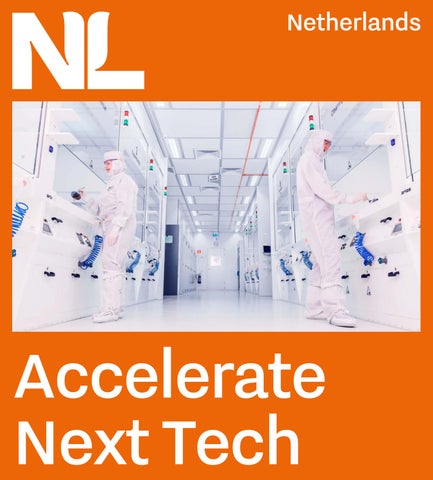
Accelerate Next Tech
Colophon
Editor
East Netherlands Development Agency (Oost NL) in collaboration with Twente Board
Design .NLVK
Images and photography
Lizet Beek Photography & Graphic Design
Courtesy of University of Twente
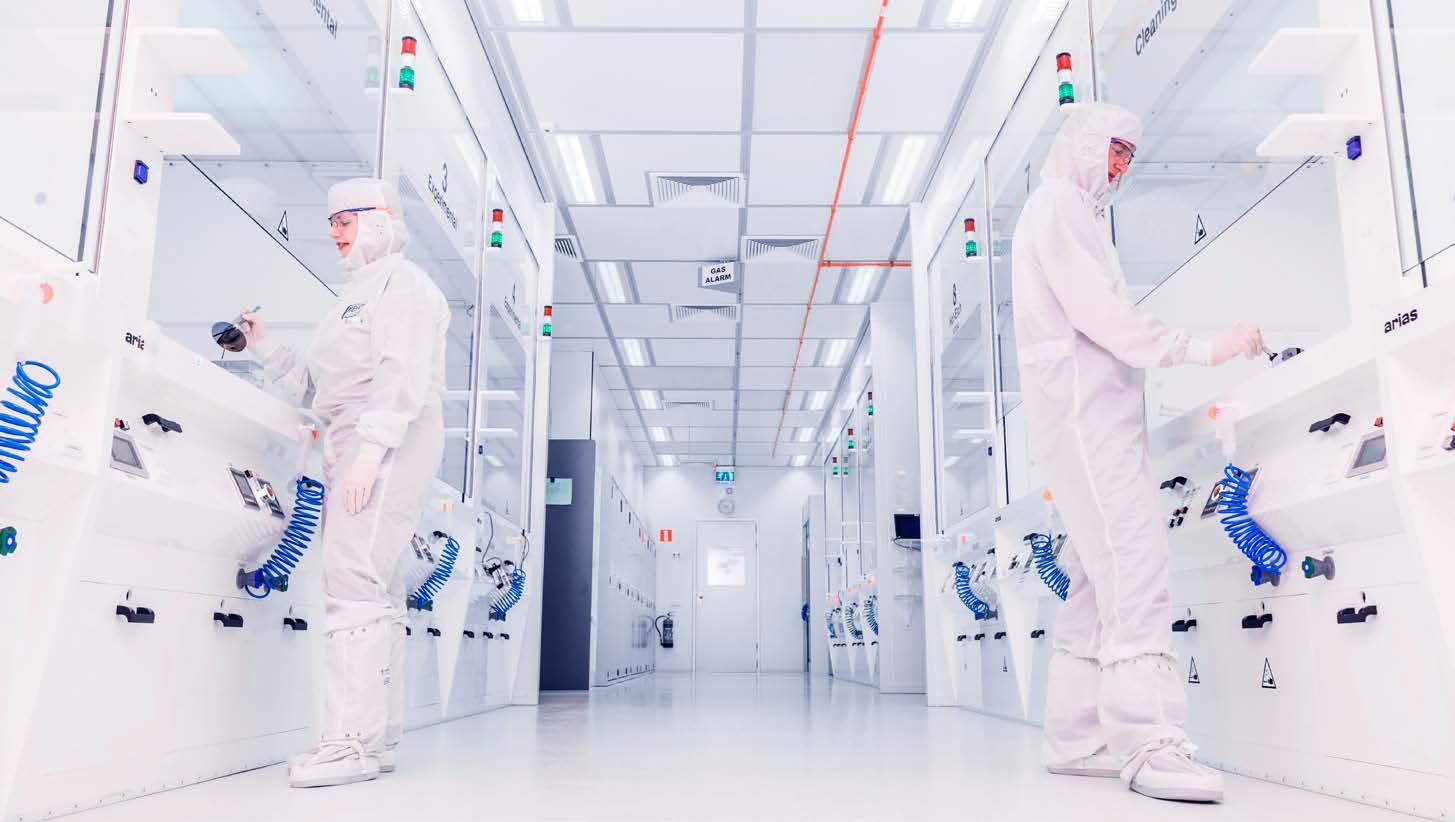
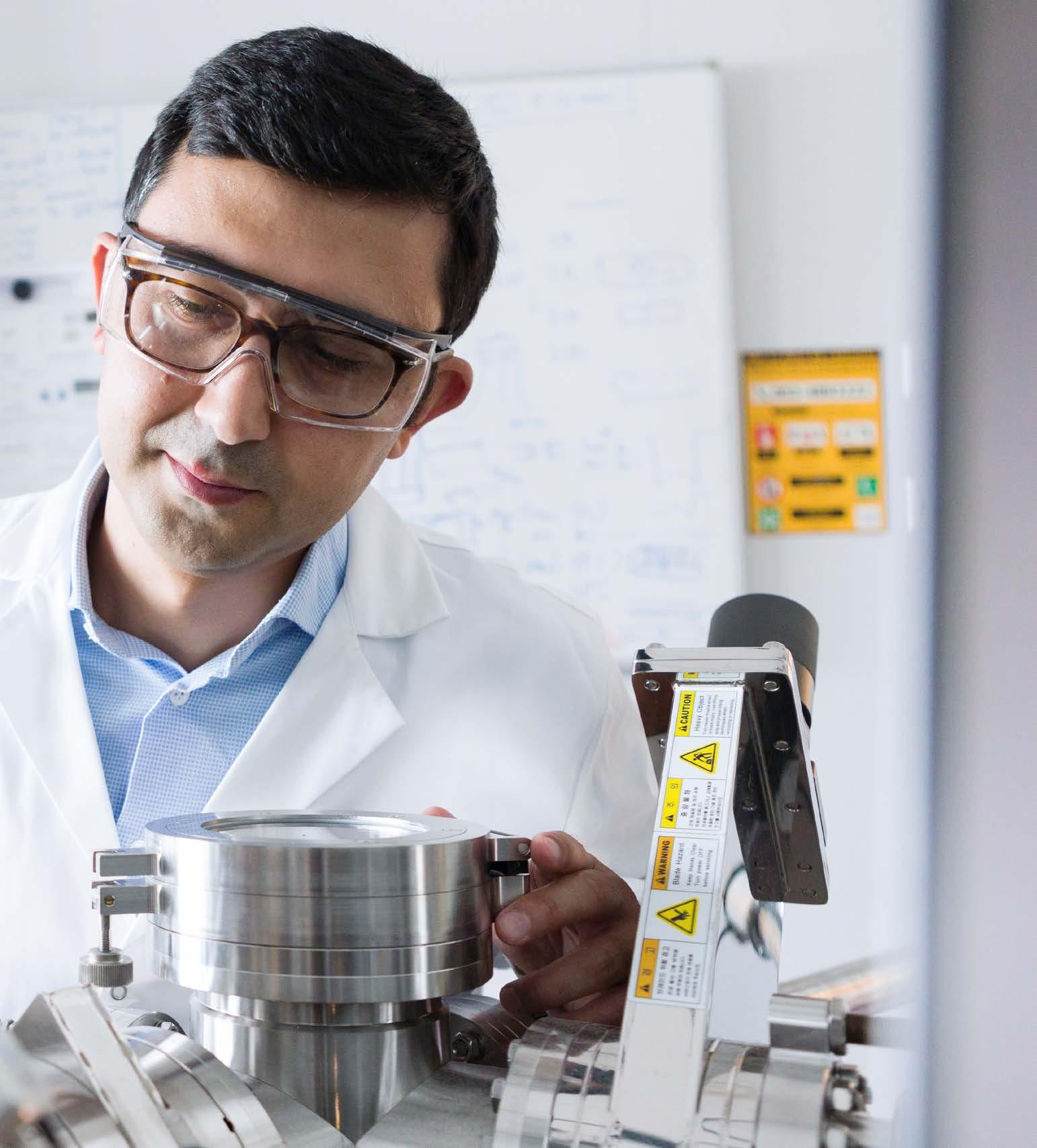
(pages 1, 10, 34-35: MESA+ NanoLab | pages 26, 38-39: XUV Lab)
Interviews/author
Elke Agten
Special thanks to Province of Overijssel, Twente Board
Brilliance, Demcon, DLR QCI, ETC, Fisic, FlowBeams, Hankamp Rehab, Hettrix, LioniX, New Origin, NLR, Novel-T, QuiX, Skytron, TECH.LAND, TechMed Centre, Teledyne, Thales, University of Twente
© November 2025 | Oost NL
of
Dutch-German co-innovation: QuiX Quantum and DLR QCI accelerate the quantum revolution
TECH.LAND the Dutch-German high-tech region where innovation knows no limits
From idea to impact: how Novel-T helps accelerate startups like FlowBeams
Where soccer meets high tech: trust and collaboration power Twente’s talent pipeline
Forewords: Two Perspectives One Vision
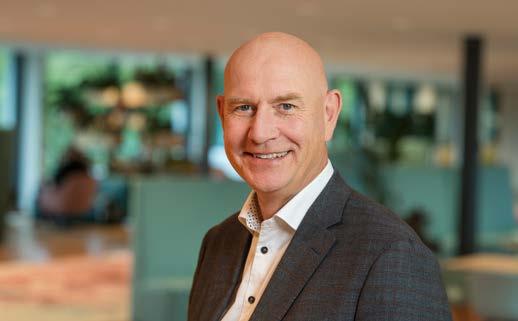
Erwin Hoogland Regional Minister, Province of Overijssel
The Twente region believes in the power of collaboration and innovation. Here, entrepreneurs, researchers, and government agencies work daily on technological solutions that contribute to the society of tomorrow. As Regional Minister of the Province of Overijssel, I see firsthand how this region is developing into a leading innovation area in the Netherlands and Europe.
From chip technology to medtech and from robotics to sustainable production: Twente offers a strong and connected ecosystem in which companies can grow, knowledge institutions collaborate with the business community, and there is room for talent to develop. This connectedness is deeply embedded in Twente’s DNA: we invest together, share knowledge, and accelerate where possible.
The province of Overijssel wholeheartedly supports this development. We believe that innovation contributes to economic strength and social value. That is why we support initiatives such as Next Tech Twente, where technology, talent, and top work locations come together.
For international companies, investors, and networks, Twente offers a strategic location, close to the German border and in the heart of Europe. But above all, it is a region where you will find reliable partners who want to work together to build the technology of the future.
Twente is not a region of big words, but of concrete actions. Here you will find the space to innovate and the partners to do so together. We warmly invite you to be part of this movement.
Welcome to Twente.
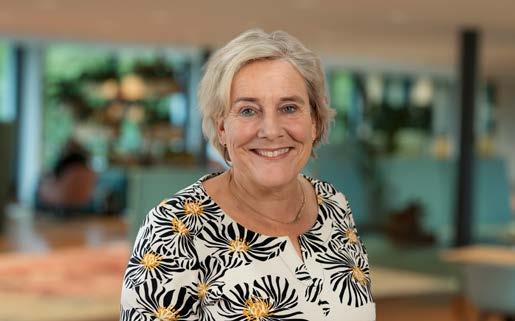
Ank Bijleveld Chair Twente Board
Twente is a region where technology works. Because we are at the forefront of chip technology, medical innovations, robotics, and photonics. And because we use that technology with a purpose: to improve lives. For people here in the region, and for the world beyond. In Twente, innovation is never an end in itself, but a way to contribute to health, safety, sustainability, and connectedness. We call that Gross Twente Happiness.
In doing so, we build on a long history of craftsmanship and resilience. Twente has experienced setbacks, but always keeps moving forward. Our region constantly renews itself because we are used to working together, persevering, and continuing to develop. Or as we say here: down to earth, up for anything.
I see this mentality reflected throughout Twente’s ecosystem. From high-tech companies to educational institutions and government: here, people think and act. This collaboration between government, business, and knowledge institutions makes our region not only innovative, but also reliable. Our strength lies in short lines of communication, trust, and a shared ambition to make an impact. This makes Twente a unique region in the Netherlands and an increasingly important player in Europe. For international companies, investors, and partners, Twente offers a compact but high-quality gateway to the Dutch, German, and European markets.
As a former Minister of Defense, I have experienced the importance of cooperation, loyalty, and progress firsthand. But nowhere do I see this happen as naturally as in Twente. Here, we don’t talk endlessly; here, we just do it. It is precisely this mentality that makes me proud to be chairman of the Twente Board.
I warmly invite you to get to know the technology, companies, people, and mindset that make up Twente. Because tomorrow’s technology? We’re building it today. In Twente.
Next Tech Twente, where tomorrow’s technology takes shape
In East Netherlands, close to the German border and deeply connected to Europe’s industrial core, lies Twente - one of Europe’s most agile and collaborative high-tech regions. This edition of Accelerate Next Tech aims to inspire companies and innovators from around the world to explore new partnerships, discover opportunities for collaboration, and accelerate the development of nextgeneration technologies together.
Here, pioneering technologies in semiconductors, medtech, robotics, and advanced manufacturing are not just designed, but are built, tested, and brought to market. In Twente future technology works.
Compact. Connected. High Impact.
Twente’s strength lies in its scale. The region is compact and fully connected. It is home to a tightly woven network of universities, research centers, and innovative companies that share facilities, talent, and ideas. Collaboration here is fast, focused, and practical: turning research into real-world solutions at remarkable speed.
From advanced chip labs and cleanroom clusters to medtech simulators and quantum photonics initiatives, Twente offers everything innovators need to move from concept to production, from regional prototype to global impact.
The high-profile annual events such as TechMed event and Slush’D offer opportunities to connect with like-minded innovators.
Talent that builds the future
Twente’s educational institutions form one of Europe’s most comprehensive talent pipelines. The University of Twente, Saxion University of Applied Sciences, and ROC van Twente work together to develop the full spectrum of technical skills: academic, applied, and vocational.
The Dutch government is investing heavily in new chip technology programs, adding more than 1,600 graduates to the talent pool. Combined with strong programs for lifelong learning and reskilling, the region ensures a workforce ready for the next wave of technological change. International students and professionals alike are drawn to Twente’s combination of opportunity, quality of life, and entrepreneurial culture, and many choose to stay.
Innovation that scales
Twente has built a proven track record in deeptech and advanced manufacturing. Startups, scale-ups, and established companies thrive in a collaborative ecosystem that encourages co-development and cross-border growth. Different organizations provide practical support for innovation and international expansion, helping new ideas reach global markets faster by aiding in offering knowledge, funding and networking opportunities.
• Across the region, semiconductor and chip design form one of Twente’s strongest technological pillars. Building decades of expertise in precision engineering and nanotechnology, local innovators develop next-generation sensors, photonics, and micro-electronics that drive breakthroughs in everything from sustainable energy systems to smart mobility.
• Twente also stands at the forefront of medical technology Here, engineers and clinicians work together to translate research into real applications: from minimally invasive surgical tools and robotic systems to wearable health devices and smart imaging solutions. The close link between research institutions and hospitals ensures that new technologies are tested and refined in real-life healthcare settings before reaching the market.
• In robotics and intelligent systems, Twente’s expertise extends from industrial automation to autonomous vehicles and drones. The region’s collaborative test environments and pilot lines allow companies to experiment with AI-driven control systems, soft robotics, and advanced sensor integration in a real-world context and immediately bridge the gap between prototype and production.
• Another emerging strength is quantum and photonic technology Twente’s research in integrated photonics and quantum communication lays the groundwork for the ultra-secure networks and ultra-fast computing systems of tomorrow. This field attracts international collaboration, investment, and talent, positioning the region as a significant European hub for next-generation computing technologies.
Together, these interconnected domains create a powerful ecosystem where hardware and software, physical and digital, converge. In Twente, innovation is not confined to a single discipline; it happens at the intersection of many.
A gateway to Europe
Located at the crossroads of the Netherlands and Germany, Twente offers immediate access to two major innovation markets. With strong partnerships across Germany, the region provides an ideal base for companies looking to expand across Europe, offering proximity without complexity.
Technology with purpose
In Twente, innovation is never just about technology. It’s about impact. Every development is connected to solving real-world challenges in healthcare, energy, mobility, and sustainability. This balance of high tech and human value defines Twente’s approach to innovation. It’s what makes this region a place where technology works.
Innovation at the speed of light: accelerating space travel with photonics
Since 2001, LioniX International has been developing microsystems that are making a global impact. From design to end product, it all happens in Enschede. Together with the Royal Netherlands Aerospace Centre (NLR) and Lockheed Martin, they are now ready to take a new step: using advanced photonic microwave technology, they are making communication systems for satellites and aircraft smaller, faster, and more powerful – an important breakthrough for space and defense technology.

LioniX is a global leader in photonic chips. CEO Arne Leinse explains “In addition to designing and manufacturing chips, we also develop the corresponding modules. Chip production is our core business. For higher production volumes, we work with external partners. As a vertically integrated company, we oversee the entire process, so we can guide the customer from concept to finished product.”
A bridge between university and industry
LioniX and NLR have been collaborating in the field of integrated photonics for several years. “As a research organization, we support the aerospace sector, SMEs and Dutch startups in product development,” says Jaco Verpoorte, Principal R&D Engineer at NLR. “We take innovations developed at the university level to a higher Technology Readiness Level (TRL), so they can be deployed in aircraft and satellites, for example. That’s how we first connected with LioniX – initially through the University of Twente, and later directly. Their technology was unique and innovative, offering new possibilities for future antenna systems.”
“This collaborative approach truly reflects the strength of the region: companies, universities, and knowledge institutions are closely connected and actively support each other.”
Lockheed Martin as an international launchpad
In late 2024, LioniX and NLR announced their collaboration with US company Lockheed Martin. Together, they are developing a new antenna system for aerospace applications. For Leinse, this collaboration is strategically significant: “These are, of course, highly respected customers,” he says. “Serving a company like Lockheed opens many more doors and puts us firmly on the international map.”
Although LioniX collaborates with several major players, this is the first time such a partnership has been made public. A major advantage is that the entire supply chain is located within the Netherlands – largely in Twente. From chip design to assembly and testing, everything is close by. “That’s a big plus for us and for international customers like Lockheed,” says Leinse.
Co-development as the engine of innovation
For Leinse and Verpoorte, co-development is essential in projects of this scale. “In an innovative environment, you can’t simply hand over a list of requirements and walk away,” Leinse explains. “Our engineers need to sit in the same room with NLR’s engineers to determine what is needed. That’s how you arrive at a successful product. Having everything located here makes the collaboration far more efficient, and that’s crucial for us.”
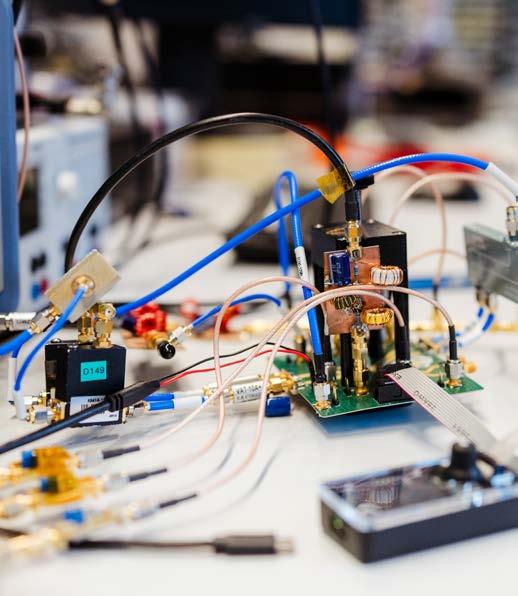
Photonics will redefine aerospace communication: faster, smaller, and smarter. In Twente, where research and manufacturing meet within walking distance, collaboration between LioniX, NLR, and global partners shows how regional innovation can power the next generation of satellite and defense systems.
Verpoorte agrees: “We define the user requirements and carry out the measurements, while LioniX designs the chips to meet those requirements. We also work together to explore how to make the product even smaller and lighter. This collaborative approach truly reflects the strength of the region: companies, universities and knowledge institutions are closely connected and actively support each other.”
“The many tech companies surrounding the university together form a high-tech campus.”
Regional collaboration, global impact
Both partners agree: Twente offers an ideal environment for innovation and high-tech development. But is anything still missing? “Large end users,” says Leinse. “There are already companies in Twente that purchase our modules, but having more major players in Europe would bring clear advantages from a geopolitical standpoint.”
Verpoorte sees the same gap from NLR’s perspective: “For example, the Netherlands lacks a major antenna manufacturer that could integrate LioniX’s chips. As a result, we mainly look abroad for partners. On the other hand, this makes our collaboration with LioniX even more valuable: together, we are developing regional technology with global impact.”
From startups to global leaders: the power of collaboration
Ideas come to life in Twente. This is where startups develop technologies that change the world. And where they grow into scale-ups with international impact. MedTech startup Fisic and high-tech company Demcon are prime examples of this. One is at the beginning of its scaling journey, while the other has become a global player.
Fisic is developing an innovative point-of-care test: a handheld laboratory that allows patients to perform quick, accurate blood or urine tests at home. “We have miniaturized a complete lab test,” explains Steven Staal, CEO of Fisic. “Our device measures key parameters in body fluids, such as kidney function or hydration levels. Patients get immediate results, no longer waiting days for results.”
The technology is being tested in collaboration with Radboudumc academic hospital in Nijmegen, initially among people with a stoma who are at increased risk of dehydration. Monitoring lithium medication in psychiatric patients is another application. “Our product prevents unnecessary deterioration of the patient’s condition and reduces error,” says Staal. “From measurement to feedback, there are many steps and many people involved – which increases the chance of mistakes. By conducting tests at home or at the practitioner’s office, the process becomes simpler, more efficient, and more reliable.”
Demcon: from spin-off to global company
Demcon also started small, as a spin-off from the University of Twente. The company has since grown into an international high-tech group, developing complex systems for MedTech, chip technology, and more. CEO Dennis Schipper understands the challenges that startups like Fisic face. “Reducing a full laboratory device to handheld size is extremely complex,” he says. “And then the patient has to be able to operate it themselves. This is the future of healthcare but requires a great deal of precision and experience.”
Demcon brings that experience to the table, supporting Fisic with software development, quality systems, and production facilities. Schipper explains: “Startups face many unfamiliar challenges. All that support can be found here in the region, including at our company. It allows them to scale faster and more reliably.”
Twente: a breeding ground for MedTech
The collaboration between Fisic and Demcon is no coincidence. For decades, Twente has provided an ideal ecosystem for high-tech innovation. The University of Twente and its associated research institute, MESA+, have built a global reputation in nanotechnology and MedTech’.
“Point-of-care technology is truly a regional specialty. No one else in the Netherlands is working at this level.”
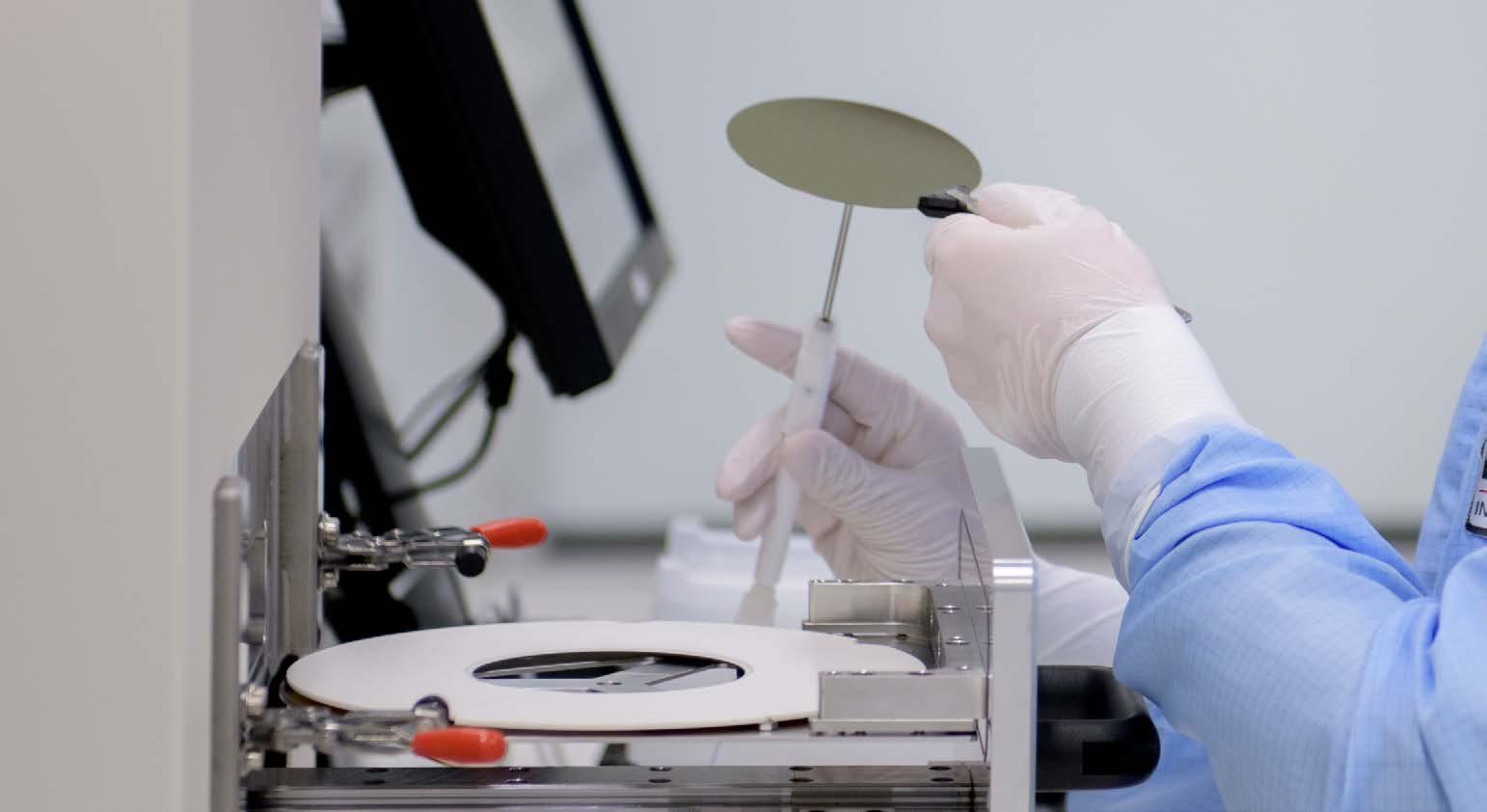
“In 1999, the commercialization of our technology began at the university where it originated,” says Staal. “We are the thirtieth spin-off from MESA+. Thanks to infrastructure such as the NanoLab and the cleanroom – one of the most advanced laboratories in the world for nanoscale research – we can develop our sensor technology. Without that foundation, this would simply not be possible.” Schipper agrees: “Point-of-care technology is truly a regional specialty. No one else in the Netherlands is working at this level.”
Saxion University of Applied Sciences also plays a key role. “We have now supervised around sixty students through internships or graduation projects,” Staal adds. “Many continue with us afterwards, providing a constant source of fresh knowledge and innovation.”
Scaling
up: challenges and opportunities
Fisic is now entering a critical phase: moving from start-up to scale-up. “We started with a core team of four,” says Staal. “Now we need to expand towards larger-scale production and broader application. For that, we rely on the infrastructure and expertise of partners like Demcon.”
“The ecosystem provides a strong platform, enabling us to stay a few steps ahead of the rest of the world.”
Schipper knows from personal experience that every phase of growth has its challenges: “Going from ten to a hundred employees is tough, and from a hundred to a thousand is another story altogether. You need the right people, resources, and guidance. What makes Twente unique is that doors open here when they need to.”
Collaboration as a catalyst for growth
Companies like Fisic and Demcon are excellent examples of how startups in Twente can grow into international players. Staal confirms: “The ecosystem provides a strong platform, enabling us to stay a few steps ahead of the rest of the world and remain at the forefront. Because all the capabilities needed to develop a final product come together here, we can do what we do best.”
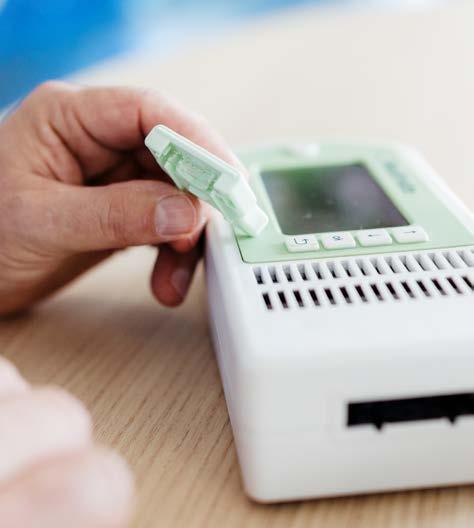
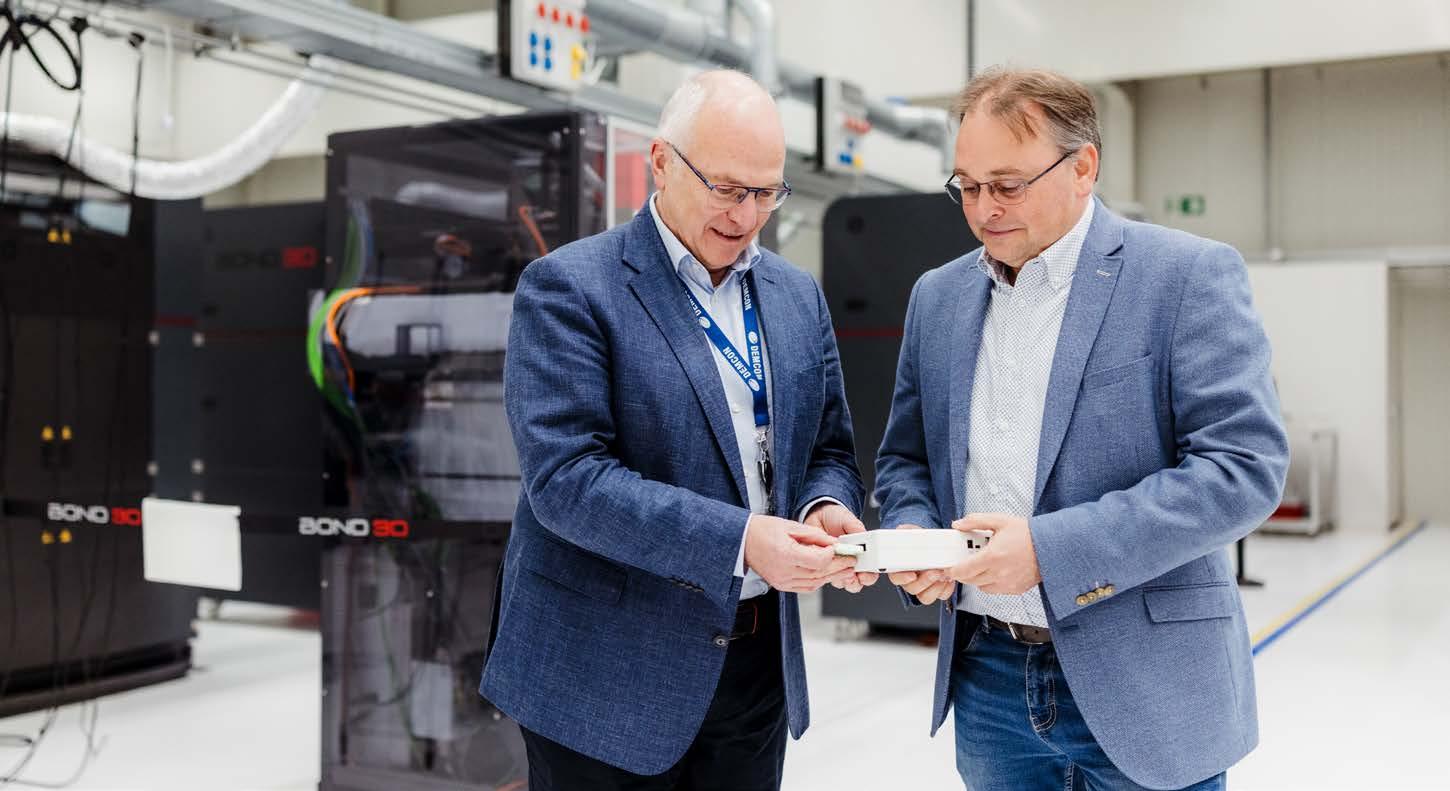
The future of healthcare is portable and personal. From handheld diagnostics to precision engineering, Twente’s MedTech ecosystem shows how regional collaboration can turn breakthrough ideas into global medical solutions.
Next Tech
Talent as a driver of innovation: University of Twente and Teledyne are building the future

The chip industry runs on talent. Students, researchers and companies are driving each other’s progress in an ecosystem that is earning global recognition. The University of Twente trains new generations of chip designers, while companies such as Teledyne Dalsa put that expertise into practice. Together, they create an environment where ideas become reality faster, and where talent is attracted, developed and retained.
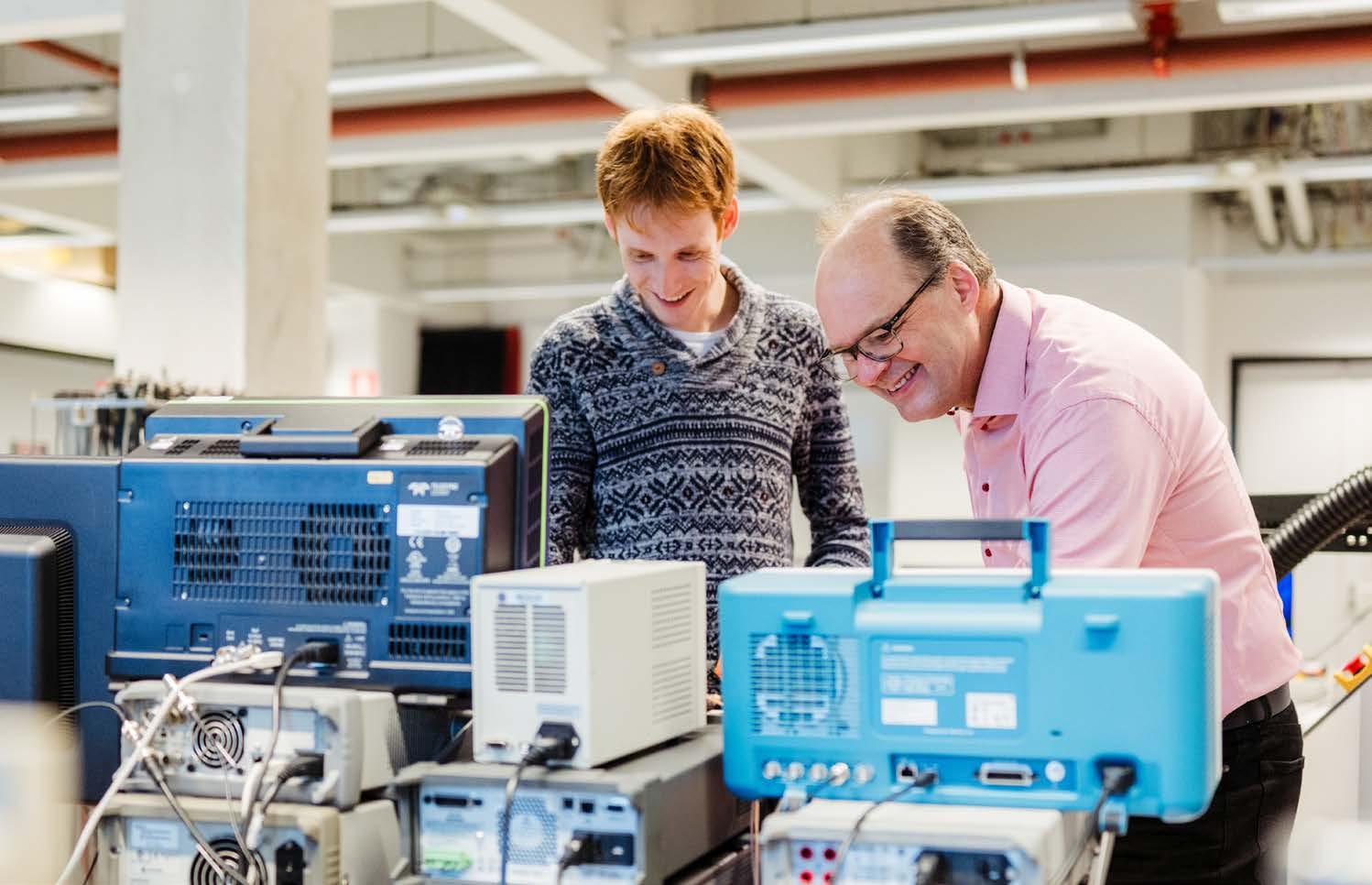
Bram Nauta, professor and researcher at the University of Twente, has led the Integrated Circuit Design department for almost thirty years. “If you compare chip design to ready-to-wear fashion, we are the haute couture among chipmakers worldwide,” he says. “We come up with the crazy ideas on the catwalk – the kind of ideas you later see reflected in real products.”
Frank Hoekerswever is director of operations at Teledyne Dalsa, a global leader in sensors, imaging and advanced semiconductor manufacturing. He heads the chip design department and emphasizes the impact of the knowledge and development coming out of the University of Twente. “I think about 85 percent of our designers were trained either directly or indirectly by Bram,” he says. “That makes his professional group the most important link in our network. We also sponsor PhD students who conduct research for us.”
A unique ecosystem for semiconductor companies
According to Nauta, the concentration of analog chip design companies in Twente is exceptional. “We have nine chip companies within cycling distance of the campus. That means students can do their internships literally around the corner. And the more students come in, the more attractive it becomes for companies to settle here. This mutually reinforces growth across the region.”
“We are the haute couture among chipmakers worldwide.”
This proximity also helps retain talent. “Most graduates stay here,” Nauta continues. “That didn’t used to be the case. Now they can choose from international companies from the US, Canada, Germany, and beyond – all located here in Twente. That provides stability and encourages graduates to stay.”
World-famous in a niche market
Twente is internationally renowned in the field of chip design. Hoekerswever sees this every day: “We perform at the highest level because we have the best people working for us. Machines and processes don’t make the difference – everyone has those. What sets us apart are people who are smarter and more creative than the competition.”
Nauta compares it to literature: “You can have a book printed anywhere, but you need a good writer to create a bestseller. We train those writers for the chip world.”
Experimenting to stay ahead
A crucial part of developing talent is giving people room to experiment. PhD students in Nauta’s group get the freedom to explore ideas that would never surface elsewhere. “Sometimes they’re bizarre, but that’s exactly what leads to breakthroughs. We demonstrate that something is possible before anyone else has even thought of it,” he says. “And while the world is slowly getting used to the idea, we’re already working on the next thing.”
Hoekerswever adds: “One of our PhD students is currently developing technology that will soon be used in satellites all over the world. It’s so advanced that our competitors can’t copy it. That’s where our advantage lies.”
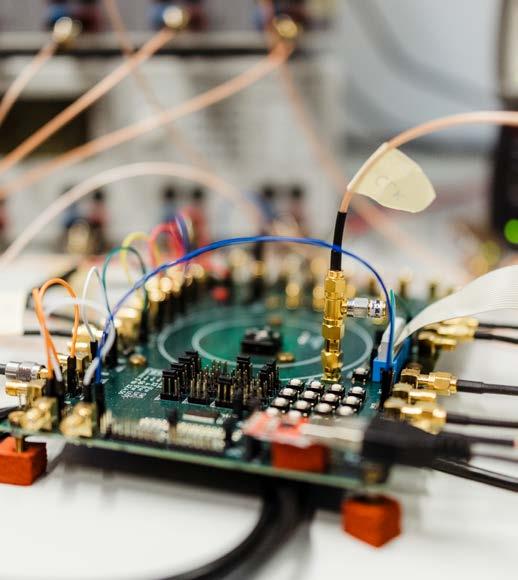
Tomorrow’s chip industry depends on talent and creativity. In Twente, universities and companies like Teledyne fuse research and real-world innovation, forming an ecosystem that designs world-class analog chips and attracts the minds shaping the digital future.
Further strengthening the region
Despite the strength of the Twente ecosystem, both men still see opportunities for further growth. Nauta confirms: “What Twente still lacks are companies that manufacture complete end products. We mainly develop technology here. It would be even more powerful if we also had companies that build finished systems and show the world what these chips ultimately do.” According to Hoekerswever, the work they do remains somewhat abstract. “End products make it tangible, and appeal to a broader audience. That would make the region even more attractive.”
“With
the right talent, you can really make a difference in the chip industry. You see that every day in Twente.”
Thinking ahead – and daring to experiment
Both agree: the Twente ecosystem combines established international players with a continuous influx of fresh talent. Success in the chip industry, they emphasize, relies on a blend of creativity and pragmatism. “You have to be crazy enough to try something new, but also down-to-earth enough to let it go if it doesn’t work,” says Nauta. Hoekerswever adds: “People in this industry think differently: they are smart, curious, and eager to solve difficult problems. It’s one of the toughest fields of study you can choose, but with the right talent, you can really make a difference. You see that every day in this region.”
Thales in Twente: a strategic home base for global high-tech
In Twente, one of the world’s leading technology companies develops radar and defense systems used across the globe. In Hengelo, near the German border and just a two-hour drive from Amsterdam, sits a branch of Thales Netherlands: a high-tech leader that plays a pivotal role in the Dutch knowledge and manufacturing industry.
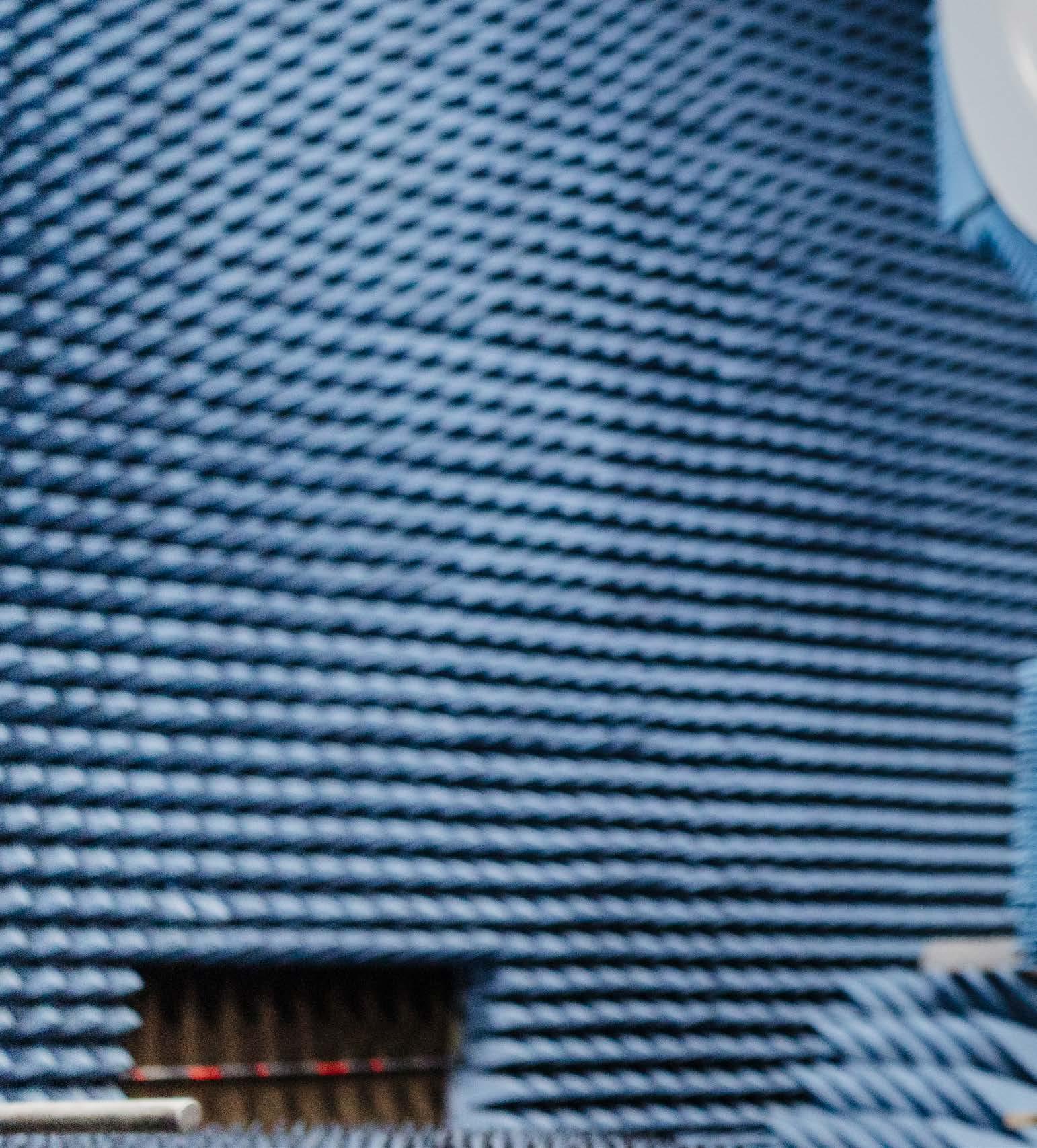
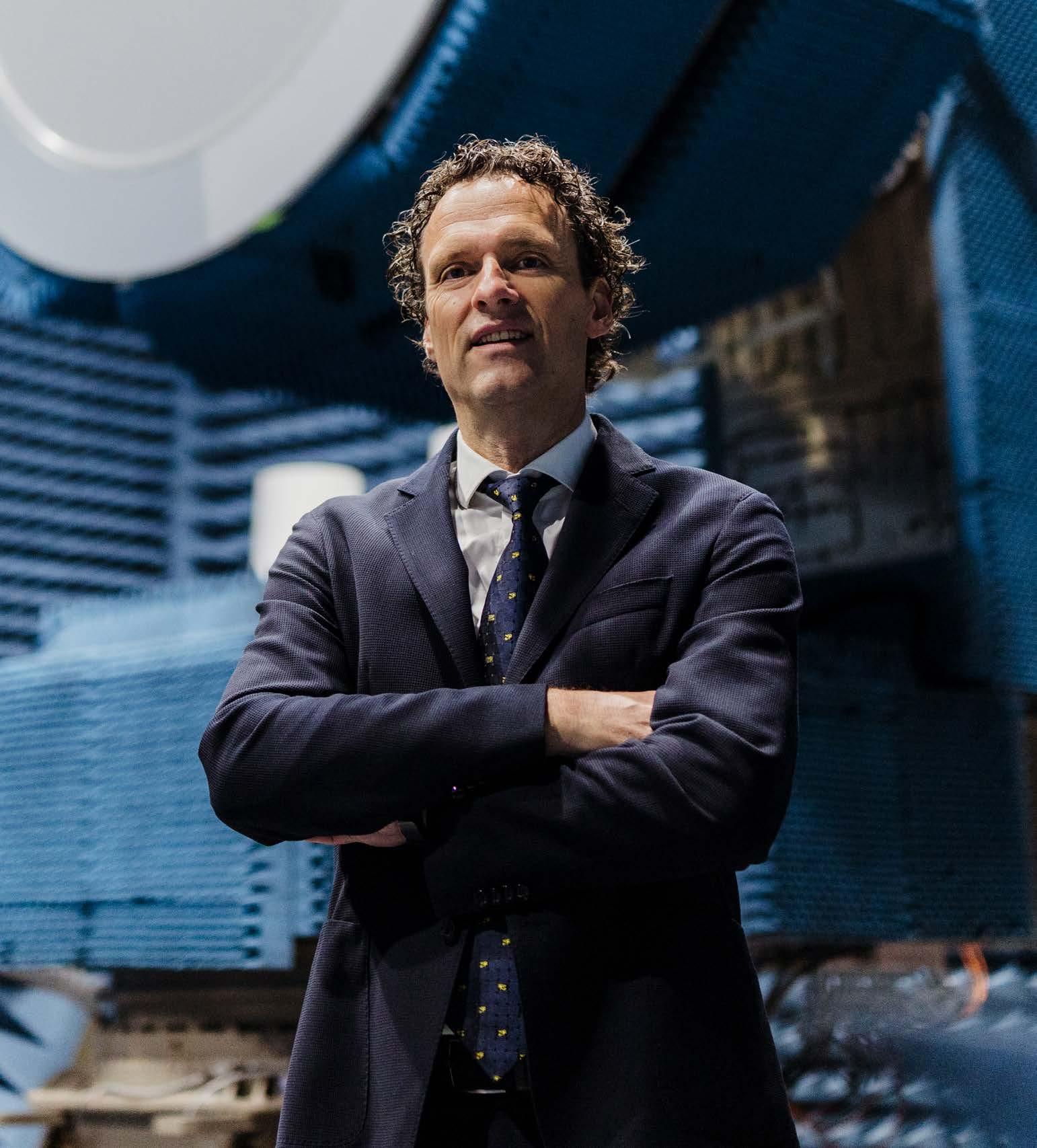
“There’s a historical reason why Thales is located here in Twente,” explains Job van Harmelen, director of corporate communications at Thales. “We were founded in 1922 as Hollands Signaal. At that time, the Dutch navy needed German fire control systems, but Germany was no longer allowed to manufacture them. The decision was made to move production just across the border to the Netherlands, where a strong technical foundation and skilled precision engineers were already in place.
It’s remarkable that we’ve been doing the same work for a hundred years, in a region that has so rapidly evolved.”
The power of the region
Thales designs and manufactures complex technology with a strong focus on defense and security, including advanced radar systems and the integration of systems on naval vessels. It also conducts fundamental research into new radar technologies, in collaboration with educational institutions, TNO (Netherlands Organization for Applied Scientific Research), and end users. This in-depth expertise makes Thales a driving force in Twente’s high-tech ecosystem – and, in turn, Thales thrives thanks to the region’s strengths.
“Here you find a unique combination of talent, space, and a fully equipped supply chain,” says Van Harmelen. “Twente offers everything needed to successfully deliver complex high-tech projects, from R&D to production.” In addition to Twente, Thales also has other locations in the Netherlands, offering products and services in the fields of cybersecurity, digital identity, and vehicle communication.
“Our Twente branch is seen as an important gateway to the rest of the world.”
A talent magnet for Europe
Working at Thales in Hengelo means joining an international high-tech environment. “Until about ten years ago, most of our employees came from the region,” Van Harmelen explains. “Today, we attract talent from across Europe, and employ people of more than 30 nationalities. We are firmly embedded here, and nearly all our suppliers – including Benchmark Electronics and VDL – are located in Twente.”
How does Van Harmelen describe this collaboration with local partners? “Very direct and accessible,” he says. “At the same time, Thales’ Twente site is increasingly international, handling a growing number of global contracts. As a result, our supplier network across the border is expanding. For many global companies, this region is the perfect base for Europe.”
Another advantage is the strong link between Thales and educational institutions such as the University of Twente and Saxion University of Applied Sciences, which train talent and attract students who often continue their careers in the region.
International collaboration
This regional integration goes hand in hand with a rich international history. The former Hollands Signaal became part of the French Thales Group in 1990, and the Hengelo site has maintained a unique position within the global group, largely thanks to its location.
“We were Thales’ first foreign acquisition, and also one of the most successful,” says Van Harmelen. According to him, French colleagues immediately recognize the advantages of this location when they visit. “In addition to everything we have mentioned, there is also the German hinterland, home to many high-quality suppliers, especially in the automotive sector. Another unique feature is the natural collaboration between business, education, and the government – precisely what gives innovation extra momentum here.”
“Looking for the ideal place to scale up your business? Look no further than Twente.”
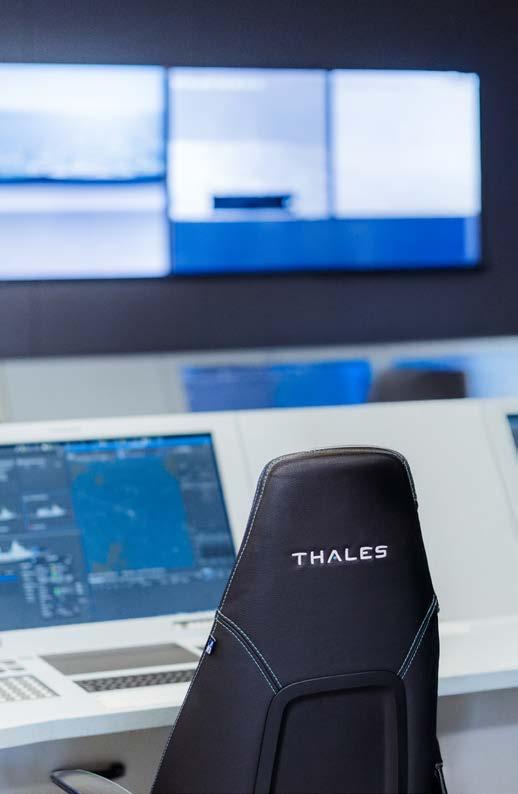
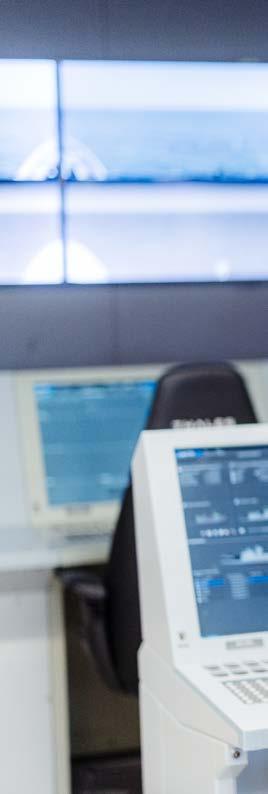
From Twente’s high-tech heart, Thales builds radar and defense systems used across the globe. The region’s mix of talent, infrastructure, and collaboration makes it the strategic base for innovations that strengthen Europe’s position in security and technology.
Next Tech
New Origin leads the charge in scaling photonic chip production
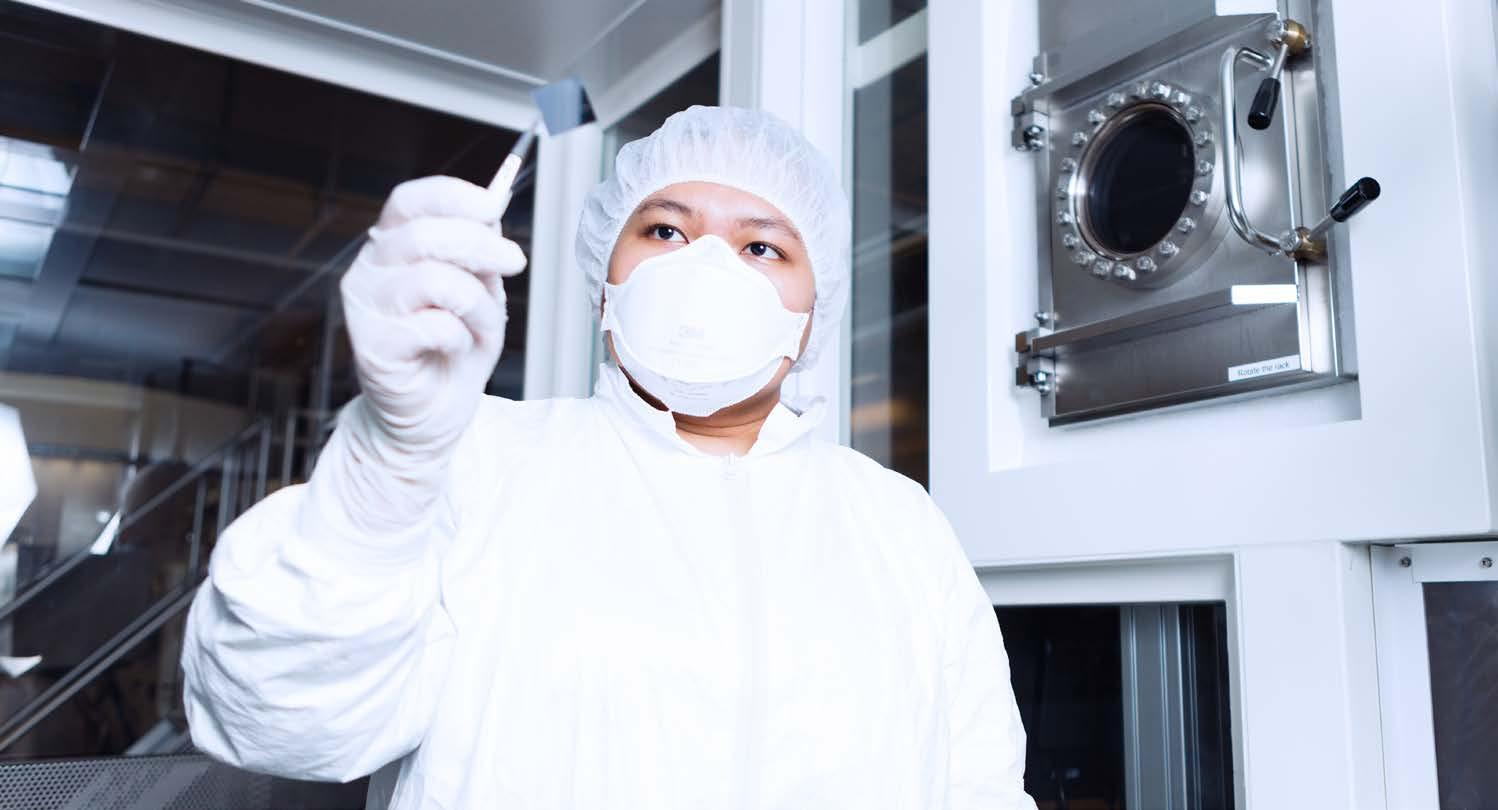
New Origin is poised to spearhead a revolution in photonics with the launch of a state-of-the-art photonic chip foundry, set to occupy a unique position in the global market. For companies like Brilliance, from Enschede, developer of miniature RGB lasers, New Origin is indispensable for scaling production. The project also offers international entrepreneurs an exceptional opportunity: direct access to a complete ecosystem where knowledge, manufacturing and collaboration go hand in hand.
The Twente region is ranked among the global leaders in silicon nitride-based photonic chip technology. Over the past few decades, the University of Twente has spawned dozens of innovative companies with a worldwide customer base. The challenge lies in bridging the gap between research, prototyping and industrialscale production.
“The University of Twente and the companies here have a thirty-year track record in photonic chips,” explains Twan Korthorst, CEO of New Origin. “But once you need thousands of wafers with chips, there is no facility anywhere in the world capable of handling that properly. That is precisely the gap our new factory will fill.” With an investment of approximately 100 million euros, an open-access factory will be built at the innovation campus Kennispark Twente. Unlike a single-company facility, this pure play foundry will enable multiple companies to produce chips under one roof.
A unique, public-access factory
For Tim Tiek, CEO of Brilliance, New Origin’s chips cannot come off the production line fast enough. His company’s chips power AR and VR glasses, head-up displays and medical devices, serving major names such as Meta, Google and Sony.
“New
Origin has enormous appeal. Companies looking to develop and scale this technology need to be in Twente.”
“We replace large, expensive optical laser systems with a single compact laser chip,” explains Tiek. “Currently, we supply hundreds of units, but demand will soon reach millions. Without New Origin, we might have had to move production to Asia. Thanks to this factory, we can continue to grow here in Twente, close to our partners and knowledge institutions. That proximity gives us a huge advantage.”
With New Origin’s open-access chip factory, Twente becomes Europe’s photonics powerhouse. Here, startups can scale faster, supported by worldclass facilities and shared expertise, proving that the future of light-based chip design is being built in Twente.
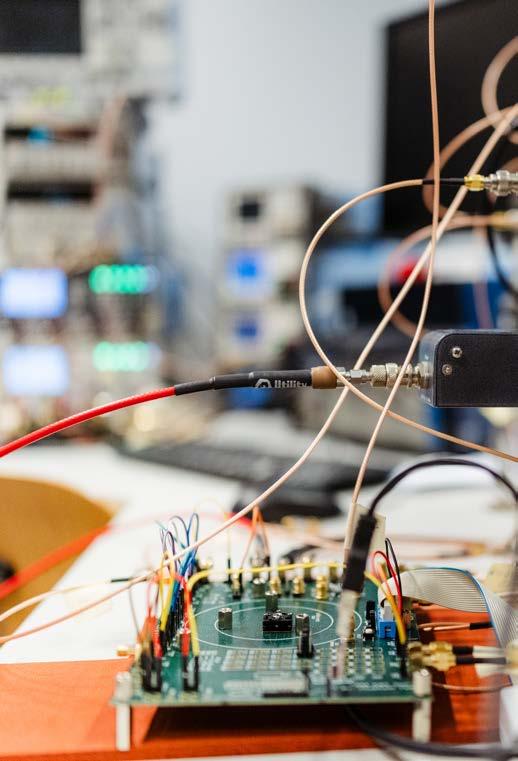

What sets New Origin apart is its open-access approach. Companies no longer need to invest millions in their own production lines – they can outsource manufacturing to facilities accessible to the entire sector. “Think of it as a shared laboratory, but for chip production,” explains Korthorst. “New Origin is an open-access pureplay foundry.”
Twente: Western Europe’s photonics hotspot
What makes Kennispark in Twente the ideal location for New Origin and Brilliance? For Korthorst and Tiek, the answer is simple: nowhere else combines knowledge, experience and collaboration in photonic chips like Kennispark, situated right next to the University of Twente.
“You have the University’s NanoLab cleanrooms, flexible lab spaces in The Gallery, and a vibrant ecosystem where chip companies literally meet at the coffee machine.” This unique collaborative environment surprises international visitors. “They assume we have a team of at least a hundred at Brilliance,” says Tiek. “But we’re just twenty. Still, we achieve great things because we make smart use of shared facilities and partners.”
“In Twente, the entire photonic chip ecosystem is right at your fingertips.”
He shares an example: “We recently faced an urgent issue with a series of chips. Our engineers met with partners that same afternoon, and by the end of the day, we had a solution. Elsewhere, this would have taken months. Speed and rapid time to market are critical in our industry.”
More than just a factory
Korthorst and Tiek’s message is clear: the world is ready for integrated photonics to go mainstream, with New Origin serving as a key accelerator. For Korthorst, the focus for now will be on securing the final investments. “Imagine a factory where companies can scale, and startups can test ideas,” he says. “That’s what drives me and what I’m working towards.” Tiek agrees, adding: “Once New Origin is up and running, it will have a huge pull. Companies wanting to work with this technology will have to be in Twente.”
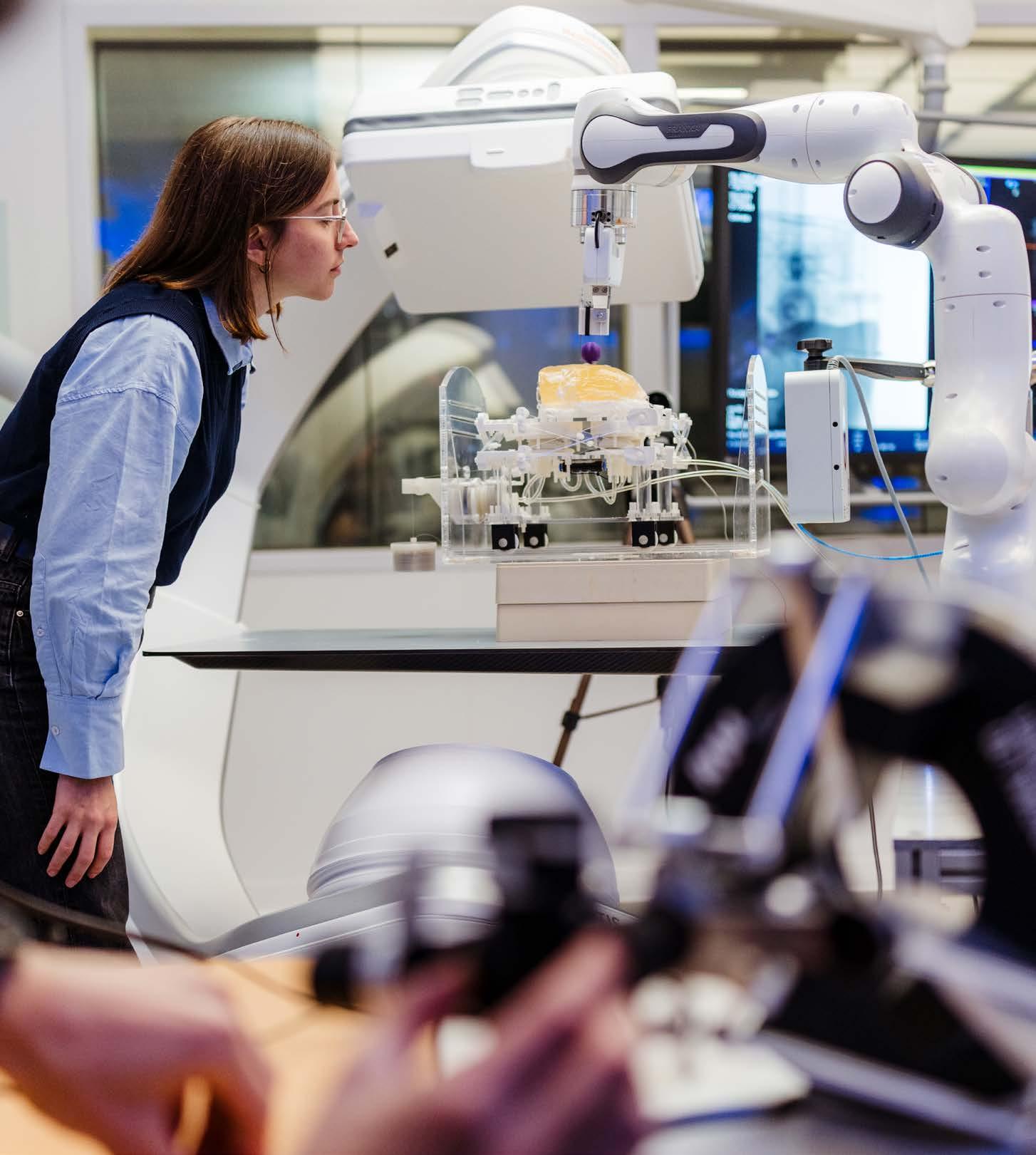
Shared facilities as an accelerator for medical innovation
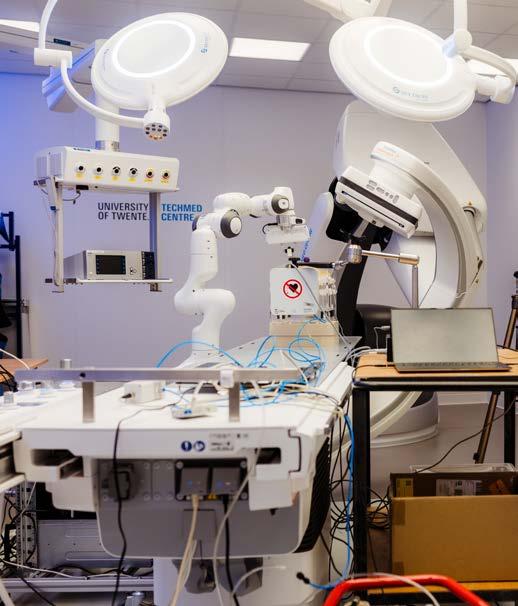
Imagine an operating room where students train on the latest technology, researchers test prototypes, and companies trial their products – all without the pressure of a live hospital setting. That is the reality at the University of Twente’s TechMed Centre, where science, practice and entrepreneurship intersect. It is precisely this environment why international companies like Skytron from the United States choose to collaborate in East Netherlands.
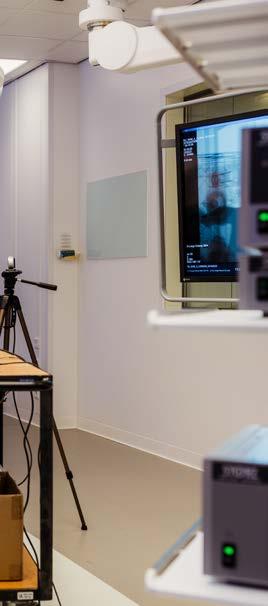
While education and research are core university functions, the third mission – valorization – is equally crucial: translating knowledge into tangible improvements for society. The TechMed Centre focuses entirely on healthcare, actively fostering connec tions with hospitals and companies. “A hybrid operating room, for example, equipped with advanced robotic arms, imaging systems and surgical instruments, is typically found only in hospitals,” explains Remke Burie, director of the TechMed Centre. “Training students or testing prototypes in these environments is extremely difficult. At our center, we can do this in a safe and realistic setting.”
Skytron: American market leader leveraging European innovation
Skytron, a leading American manufacturer of operating room and ICU (Intensive Care Unit) equipment, develops and manufactures innovative solutions in Zwolle, near Twente – from one of the first pendant systems in Europe to state-of-the-art global innovations. “Our engineering department is constantly developing new concepts,” says Roderik Erens, director of Skytron Netherlands. “Thanks to the realistic operating rooms in Twente, we can test usage scenarios, observe incorrect use, and record everything on video. This gives us critical insights for product development.”
“Alumni of the University of Twente not only understand complex technology – they can apply it directly in practice.”
Accelerating ideas to market
New medical technology often takes years to reach the market. “Completely new products can take over a decade to commercialize,” says Burie. “At the TechMed Centre, we involve end users from the early stages, focusing on testing and validation, which dramatically speeds up the process.”
Twente offers more than facilities; it provides unique talent. The University of Twente’s Technical Medicine program combines medical and technical expertise in a way rarely seen elsewhere. “Our alumni not only understand complex technology –they can apply it directly in practice,” says Burie.
At the intersection of medicine and technology, Twente’s TechMed Centre accelerates healthcare innovation. Companies, startups, researchers, and students can test and refine breakthroughs here, showing how shared facilities and regional talent drive the next era of medical progress.
Next Tech
“Other universities are trying to replicate our model,” he continues, “and international interest is growing. Although our technical physicians are trained for the Dutch healthcare system, many of our graduates now work in research and industry worldwide.”
An ecosystem built for collaboration
The TechMed Centre is part of a broader ecosystem, comprising universities, hospitals, and the manufacturing industry. Together, they form an innovation hub where knowledge, facilities and entrepreneurship converge. “A hybrid operating room or MRI system is extremely expensive,” Burie explains. “It’s not feasible for individual companies to achieve this on their own. By collaborating with hospitals and government partners, we make such facilities accessible.”
Erens echoes this point: “Product development starts with a prototype, then progresses to series production. In this region, every step of the process is supported. Here, within a radius of fifty kilometers, you can access all the specialists you need. The talent level is exceptional, and local companies actively contribute to ideas. That makes Twente a uniquely strong location for us.”
“Product development starts with a prototype, then progresses to series production. Here, within a radius of fifty kilometers, you can access all the specialists you need.”
Driven by impact
Ultimately, the focus is not just on technology, but on the real-world impact it creates. “What drives me is that we can use technology to create real social value. Healthcare affects us all,” says Burie. For Erens, it’s all about quality and reliability. “Our solutions have a direct impact on people’s lives. It’s incredibly motivating when a product works, and end users are enthusiastic.”
Thanks to shared facilities like the TechMed Centre, a robust manufacturing industry, and a culture of collaboration, companies such as Skytron choose to invest in Twente. For international MedTech innovators, this region is more than just an option; it’s a place where innovation thrives and ideas become reality faster.
Dutch-German co-innovation: QuiX Quantum and DLR QCI accelerate the quantum revolution
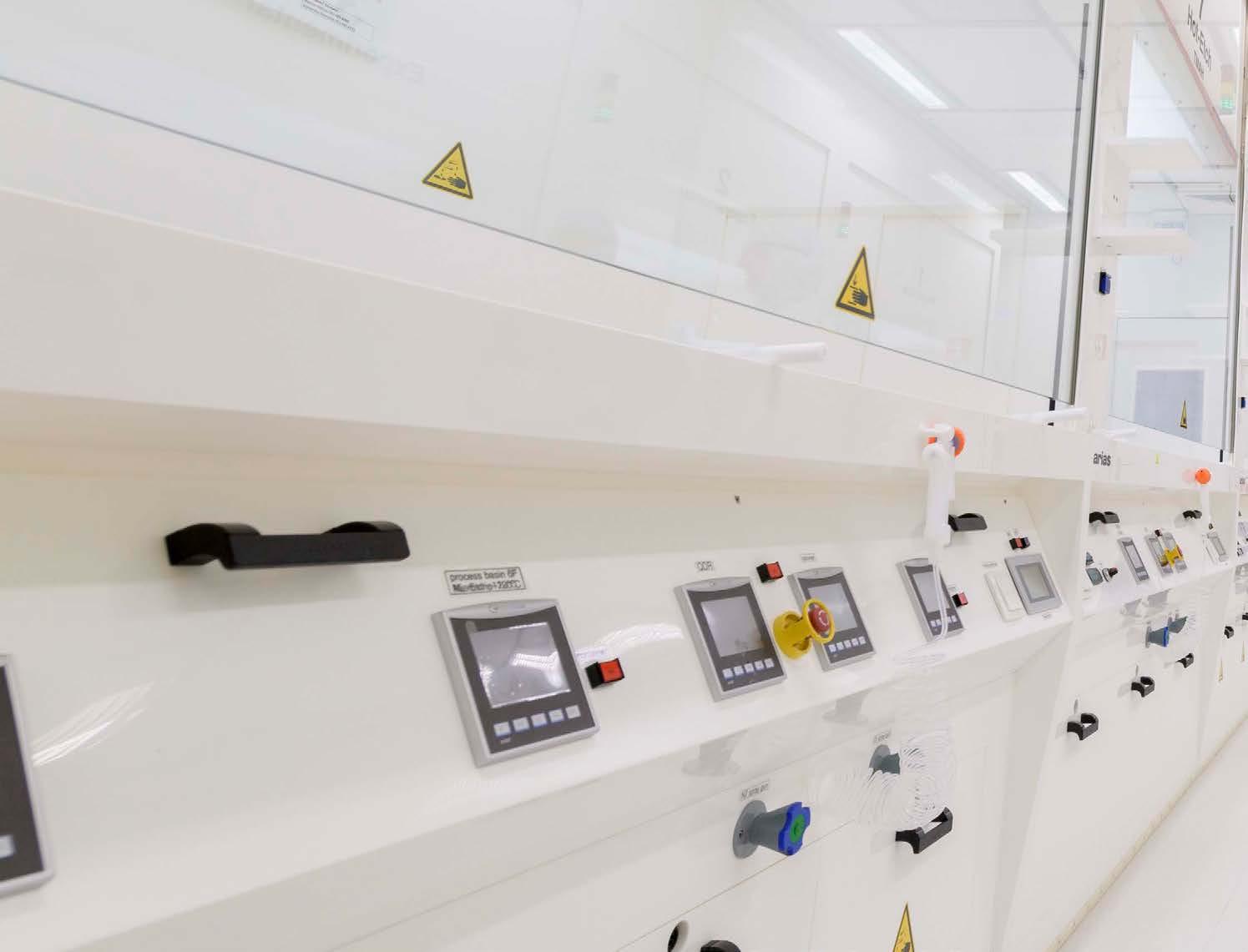
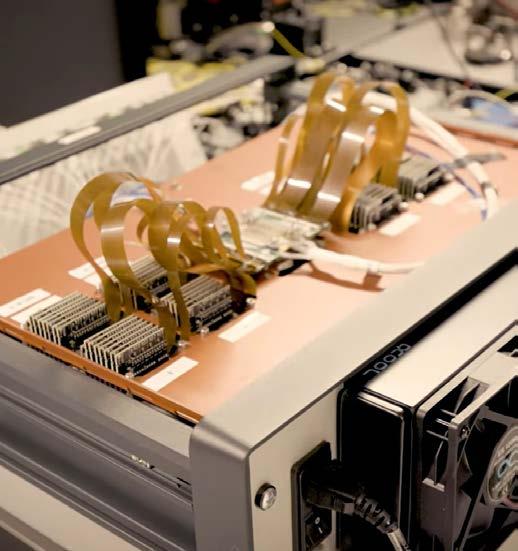
QuiX Quantum, a pioneer in photonic quantum computing, is showing how close collaboration with knowledge institutions and industrial partners can push technological boundaries. Commissioned by the DLR Quantum Computing Initiative (DLR QCI) of the German Aerospace Center (DLR), the Enschede-based company is developing advanced photonic quantum computers, creating new opportunities for both science and industry.
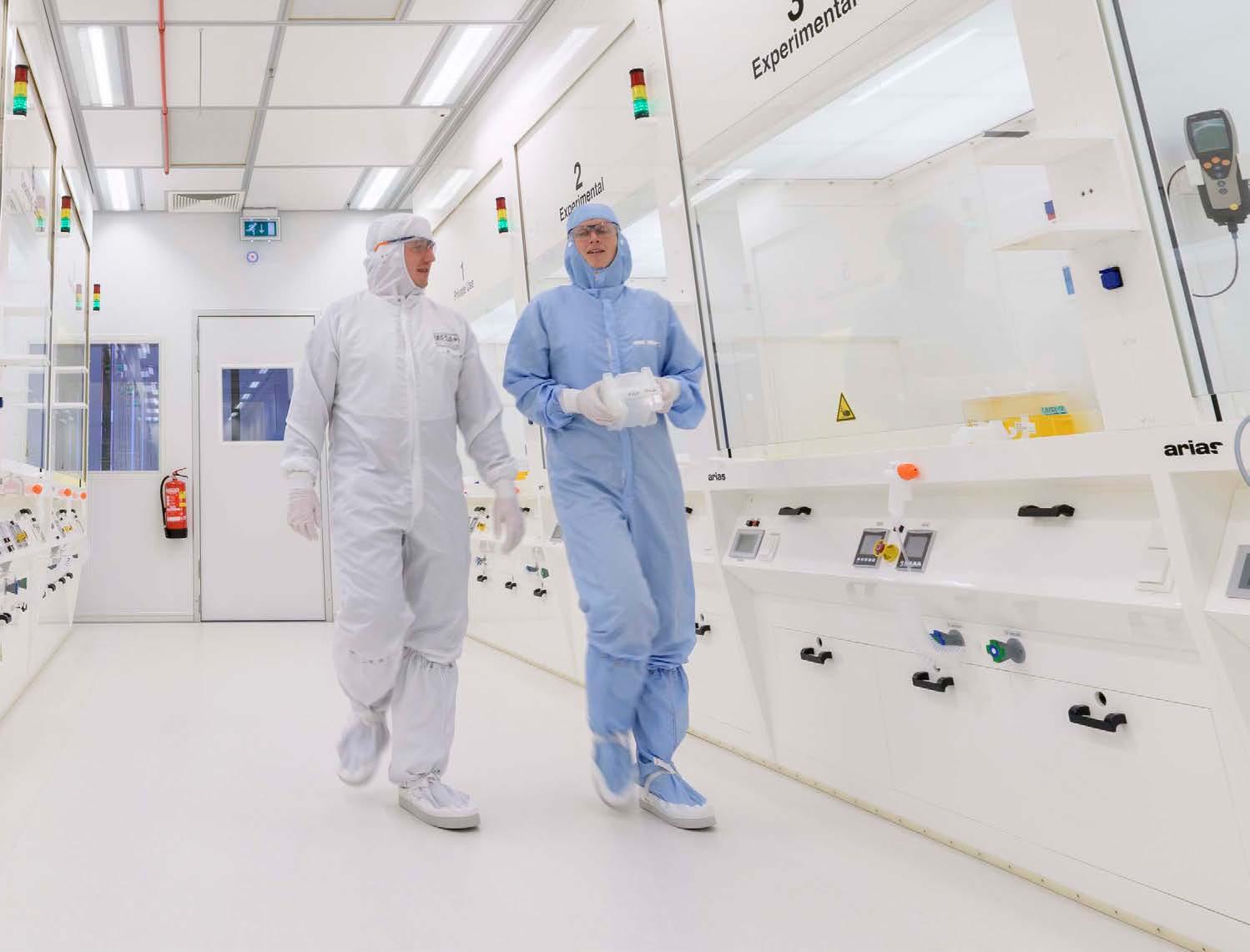
QuiX Quantum is the only company in the Netherlands capable of manufacturing a complete quantum computer, from chip to system. Unlike traditional electronicbased approaches, QuiX uses photons, which better preserve quantum information and are less prone to environmental interference. “About 80% of our work focuses on improving the photonic system, with the rest devoted to architecture and control systems,” says CEO Stefan Hengesbach.
Technology from Twente goes cross-border
Today, QuiX leverages multiple foundries across Europe to produce its quantum photonic chips. Yet the technology has its roots in Twente: the company’s first quantum processors were produced locally by LioniX International, a leading global supplier of customized microsystems. A unique low-loss chip is still produced in the MESA+ cleanroom at the University of Twente. Hengesbach emphasizes that the region provides an inspiring environment for their work. As he explains, “Twente offers expertise in silicon nitride, photonic packaging and quantum optics. That ecosystem has been essential in bringing our technology to life”.
QuiX’s ambitions extend beyond the Netherlands. To enable co-innovation as part of the DLR QCI, the company expanded into Germany, with offices in Ulm and Stuttgart.
“We follow talent and early adopters of quantum technology, like DLR QCI, to build systems on site and innovate together. Core R&D remains in Twente, but European expansion is vital for our projects.”
Co-innovation and structural collaboration
The German Aerospace Center (DLR) is Germany’s national research center for aeronautics, space, energy, transport, security and digitalization. The German Space Agency at DLR plans and implements Germany’s space activities on behalf of the Federal Government, while DLR’s Project Management Agency manages publicly funded research programs for federal and state ministries and other clients.
“Combining different cultures, backgrounds and expertise accelerates technology transfer.”
In addition to this broad remit, DLR is committed to pioneering research in the field of quantum computing. Building on its strong scientific foundation in quantum technologies, the DLR Quantum Computing Initiative (QCI) aims to accelerate the development of quantum computers and foster a robust European network of companies and researchers.
Karla Loida, project lead for quantum computing hardware at DLR QCI, explains more:
“We run competitive tenders and have industry partners build quantum computers that are developed and installed at our premises. Colocation of startups, industry and DLR
Quantum computing will transform everything from medicine to mobility, solving problems today’s supercomputers can’t touch. In Twente, pioneers like QuiX are laying the foundation for quantum innovation, where European collaboration in photonics and quantum technology is shaping the technology of the future.
Next Tech
researchers fosters collaboration, creating technological progress as well as a vibrant ecosystem. QuiX is a key player in this effort.”
Cultural differences: where creativity meets structure
The partnership between QuiX and DLR QCI brings together not only innovative technology, but also contrasting work cultures. “DLR operates in a highly structured way, with strict specifications and project plans,” Hengesbach explains. “In Twente, it’s more hands-on, highly creative, and all about rapid prototyping. That combination forces us to think both innovatively and industrially. We take the knowledge gained in Germany and bring it back home, benefiting the local ecosystem.”
Loida adds: “We work together with the local QuiX team at our innovation center in Ulm, where you’ll find various international experts. Combining different cultures, backgrounds and expertise accelerates technology transfer, as everyone approaches problems from different perspectives.”
“The region is well connected, offers high-quality expertise in photonics, and has an excellent startup ecosystem with sufficient support for scale-ups.”
Twente: gateway to Europe
QuiX illustrates why Twente is a hub where science, industry, and infrastructure converge in an open, international environment. “Within a few hours, you can reach anywhere in the Netherlands, and key suppliers and development partners in Germany,” says Hengesbach “The region is well connected, offers high-quality expertise in photonics and electronics and has an excellent startup ecosystem with sufficient support for scale-ups.” According to Hengesbach, collaboration is easy in Twente. “You can drop in on neighbors and immediately get feedback or inspiration for new ideas. That sparks innovation.”
From prototypes to practical applications
The cross-border collaboration between QuiX Quantum and DLR QCI highlights how co-innovation drives progress in quantum technology. With Twente’s strong knowledge base and international approach to development, the partnership is accelerating growth for both QuiX and the European quantum ecosystem. “Our concept works,” Loida confirms. “Startups gain access to fully funded projects, joint development and co-location drive innovation, and end users obtain access to various platforms. This allows us to stay competitive in the quantum race, and ensures that quantum computing becomes practical in the short term.”
TECH.LAND the Dutch-German high-tech region where innovation knows no limits
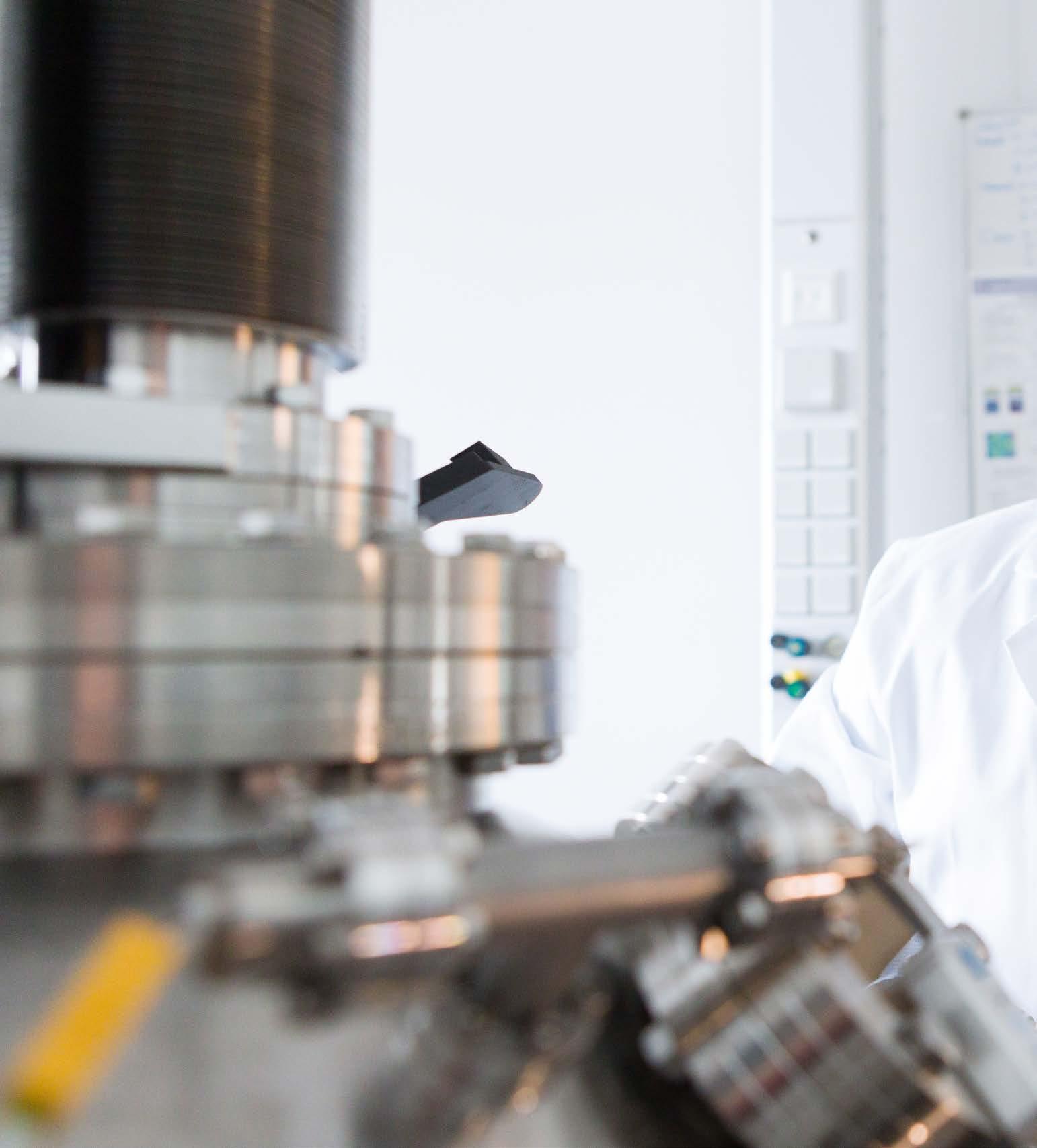
In the border region between East Netherlands and North Westphalia in Germany, a unique partnership of companies, governments and knowledge institutions is thriving under the banner of TECH.LAND. The initiative connects 40,000 companies, 5 million residents and 20 universities with one clear goal: to position the region as a European hub for tech and innovation.
Hans Brouwers, program manager at TECH.LAND, explains the value of this Dutch-German collaboration: “Nowhere else will you find such a strong mix of talent, expertise, and support in technology and innovation. Across the border, partners know how to find and complement each other, and the strength lies not only in business agreements, but in trust and shared ambition. This makes the region an ideal location for companies with European and global ambitions.”
Hankamp Rehab: leveraging talent from Twente and Germany
Consider Hankamp from Enschede, a family business that has been rooted in Twente for generations. Their specialty? Precision gears and related components for the defense and aviation industries, and through its younger branch, Hankamp Rehab, the development and marketing of rehabilitation robotics. For owner Frederik Tönis, the location is strategic: “We’ve been in the same place for generations. Everything is nearby: the University of Twente, excellent transport links, and access to skilled talent in Germany. Despite a well-known shortage of metalworkers, we now have four German colleagues on our team.”
“What really strikes me is how natural and powerful public-private partnerships are in the Twente region.”
A steppingstone to Germany and Europe
Where Hankamp Rehab develops and markets cutting-edge technology, TECH.LAND provides the Dutch-German network that allows such innovations to thrive. The collaboration between Twente and Münster existed previously, says Brouwers. “But with TECH.LAND, we are taking a broader approach, focusing on four strategic themes: medical technology, battery and hydrogen technology, circular economy, and production and robotics. Additionally, the importance of chip technology and defense is growing. For example, a new chip factory - New Origin - will soon be coming to Enschede, where the production of photonic chips will begin. This is a huge opportunity for the entire Dutch-German border region.”
Along with these topics, TECH.LAND also focuses on increasing visibility and lobbying, both globally and in political hubs such as Brussels, The Hague, Düsseldorf, and Berlin. “We want to show what we are good at,” Brouwers adds. “Twente is strategically positioned - close to Germany and well connected to the rest of Europe. Working directly with Dutch and German partners who understand technology and are happy to share knowledge ensures that innovations don’t disappear into a drawer - they actually get off the ground. For companies, this is a fantastic steppingstone to the Dutch, German, or even European market.”
At the Dutch-German border, TECH.LAND turns collaboration into acceleration. Combining Twente’s innovation drive with German precision, the region forms a seamless ecosystem where companies help build Europe’s connected high-tech future.
Collaboration built on trust
According to Brouwers, TECH.LAND’s strength comes from combining complementary qualities. “The Netherlands is a trading nation with an entrepreneurial mindset and strong international trade, while Germany is a manufacturing powerhouse with a strong focus on long-term, trust-based partnerships.”
Fritz Jaeckel, director of the Industrie- und Handelskammer (IHK), agrees: “What strikes me in East Netherlands, and particularly in the Twente region, is how natural and effective public-private partnerships are. They are fast, agile and inspiring. Germany has much to learn from this approach.”
Short lines of communication and mutual respect
For international companies looking for a new location, the message is clear: “Where a company settles depends on its needs, “explains Tönis. “There is so much potential on both sides of the border, so boundaries are irrelevant.” He believes TECH.LAND is unique - a chance to really get noticed. “Whether you’re a startup or a long-established company, the network is close-knit, communication is direct, and mutual respect is a given, even for SMEs.”
“Anyone who wants to succeed here must look beyond their own region and harness the power of the entire Dutch-German ecosystem.”
From idea to impact: how Novel-T helps accelerate startups like FlowBeams
Painless injections without needles: for startup FlowBeams, this is not a dream, but a mission. Their innovative technology delivers fluids through the skin without causing wounds or pain. This breakthrough is the result of their own expertise, supported by partners such as Novel-T, the Twente-based accelerator that helps researchers and entrepreneurs turn their ideas into successful businesses.
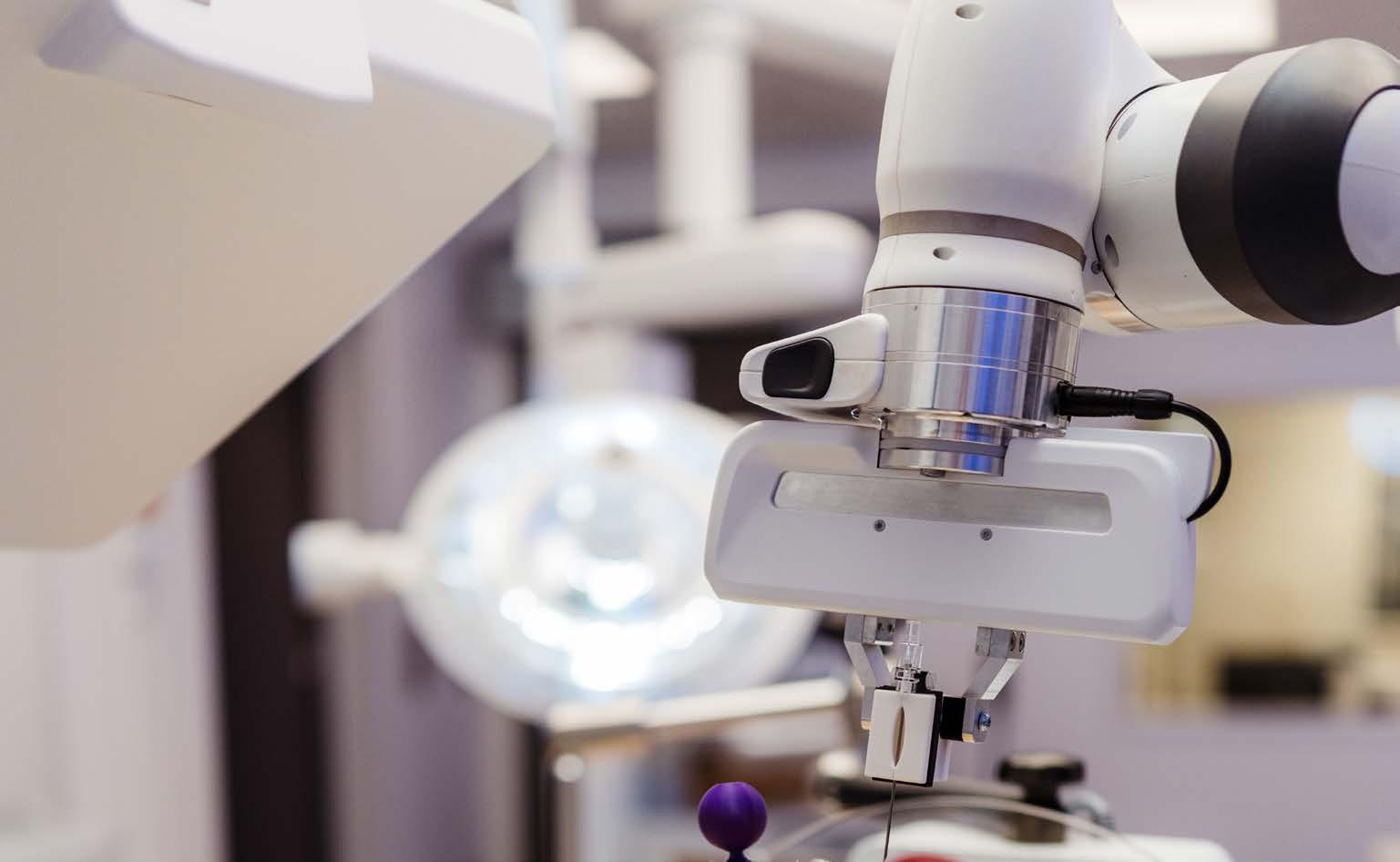
In Twente, tech startups are given plenty of freedom and access to resources and networks that allow them to turn ambitious ideas into reality. Through local knowledge institutions, state-of-the-art facilities, and organizations designed to streamline entrepreneurship, innovators from around the world gain direct access to technology, talent, and professional networks that accelerate time-to-market for their innovative ideas.
A supportive ecosystem
Novel-T plays a central role in this ecosystem. “When you come here, you’re surrounded by a team that really thinks along with you,” explains CEO Roy Spit. “We work closely with the University of Twente, where the Knowledge Transfer Office (KTO) and a team of lawyers handle important matters such as contracts, patents and trademarks. Novel-T focuses primarily on coaching, growth programs, and events.”
Researchers as entrepreneurs
Support begins early. Prof. David Fernandez Rivas, co-founder of FlowBeams, has been connected with Novel-T since his PhD at the University of Twente. This began with the Entrepreneurial Research Program (ERP), an initiative that helps researchers navigate the leap from academia to entrepreneurship. “The program supports researchers at every stage, addressing questions such as how to turn research into a business plan and successfully bring technology to market,” says Lea Milovich, CEO and co-founder of FlowBeams. “Sometimes that means licensing to another company; other times, it means starting your own business.”
“We don’t cherry-pick. Anyone who wants to get involved in entrepreneurship is welcome.”
From
lab to business
FlowBeams exemplifies how a research idea in Twente can grow into a high-tech company. Using optics and microfluidics, they have developed a device that delivers fluids through the skin painlessly, eliminating needles and wounds. From their offices and lab facilities in Twente, FlowBeams is already expanding on an international scale. “Our goal is to make a global impact on human well-being,” Milovich confirms.
Innovation moves from lab to market. In Twente different organizations help transform university research into global health impact, proving how entrepreneurial support and shared expertise make Twente a launchpad for deep-tech breakthroughs.
Next Tech
It’s a challenging road. “It requires a lot of patience. You have to believe in your vision and simultaneously gain recognition from the market.” She emphasizes the role that Novel-T has played. “They helped us with international missions, trade fairs and customer contacts. They arrange meetings and ensure we’re in the right place at the right time. That opportunity is immensely valuable for startups.”
Opportunities for ambitious entrepreneurs
Spit stresses that Novel-T Is open to more than just a select group of “promising” startups. “We don’t cherry pick. Anyone who wants to get involved in entrepreneurship is welcome. As a startup, you need to have the ambition to reach the next milestone. It’s an interactive process: we provide support, but the other party must be just as driven to seize those opportunities.”
This approach applies equally to all entrepreneurs, including international firms and entrepreneurs from other regions. “There are two options here: either we take the lead and connect them to the right agencies, or we offer a suitable program that meets their needs.”
“High-tech and deep-tech companies can thrive here; Twente has undergone tremendous development in recent years.”
Twente as a breeding ground for innovation
Given the nature of its tech, FlowBeams fits naturally into the microchip, semiconductor, and MedTech-focused profile of the Twente region, reinforced by MESA+ and the TechMed Centre. “Short lines of communication with regional and academic hospitals such as Radboudumc, combined with extensive expertise in the field of medical technology, make Twente an excellent region to establish a company,” says Spit.
Milovich agrees: “High-tech and deep-tech companies can thrive here. Twente has undergone tremendous development in recent years. This is a unique opportunity to showcase our ecosystem, highlight innovations and increase the region’s international visibility.”
Where soccer meets high tech: trust and collaboration power Twente’s talent pipeline


Across the Netherlands, companies are struggling to find and retain technical talent. In Twente, however, a creative approach is helping to bridge this gap: high-tech companies, universities, vocational schools, governments and even professional soccer clubs are working together to train talent and connect them with industry. A prime example is Hettrix, a collaborative initiative in which ETC Nederland is actively participating. This partnership illustrates how unexpected connections can strengthen a future-proof high-tech ecosystem.
ETC Nederland is a global leader in ultracentrifuge technology, essential for enriching uranium used as fuel in nuclear power plants. Based in Almelo, the company serves a large part of the global market. “We have been around for over fifty years,” says Leon Lagendijk, managing director. “All the reasons for setting up here as a nuclear specialist are still valid today: the region is seismically stable, and we can find the people we need. Almost all our employees come from Twente.”
The demand for highly skilled technicians is growing rapidly. That’s why ETC Nederland maintains close ties with educational institutions such as the University of Twente, Saxion University of Applied Sciences, and ROC van Twente. “It’s crucial that we train young talent and retain them,” Lagendijk explains. “We not only do this directly, but also through various partnerships.”
Hettrix: collaboration through a network
One striking example of collaboration is Hettrix, an initiative founded in 2018 by professional soccer club Heracles Almelo. The network brings together companies, knowledge institutions, governments and sports to address topics such as talent development, vitality, and sustainability.
“The Twente region combines a strong knowledge infrastructure with a steady influx of well-educated and highly skilled technicians, as well as a strategic location between Amsterdam, Rotterdam and Germany.”
“Soccer is an accessible platform,” explains Rob Toussaint, general manager of Heracles and Hettrix initiator. “Almost everyone has some connection to it, making the stadium an ideal place to meet. Hettrix ensures that companies and educational institutions find each other, share knowledge, and execute concrete projects together.”
For ETC Nederland, Hettrix is more than just a network. “Our employees participate in working groups, where they develop skills that they might not encounter in their daily work,” notes Lagendijk. “It’s another form of talent development.”
An
ecosystem built on trust
What sets Twente apart is the way in which parties find each other. Short lines of communication and mutual trust are a given. “Through Hettrix, we sit down with various parties every two weeks,” says Lagendijk. “This accelerates contact with local authorities, facilitates brainstorming with other companies, and gives us better access to talent.”
Toussaint also emphasizes the mentality of the region: “You can rely on each other here. Companies support one another and work together to find solutions when things get tough. That makes the ecosystem not only powerful, but also very attractive to newcomers.”
A
strong knowledge base and steady influx
of talent
Twente offers clear advantages for international companies seeking a European base. “The region combines a strong knowledge infrastructure with a steady influx of well-educated and highly skilled technicians, as well as a strategic location between Amsterdam and Germany,” says Toussaint.
In Twente, talent and technology grow through trust and teamwork. Networks like Hettrix unite industry, education, and even sport, showing how this region’s collaborative spirit builds a futureready ecosystem where people and progress thrive together.
“Collaboration pays off. It makes this region unique and offers international companies a solid foundation on which to establish themselves and grow.”
He also highlights the local work ethic. “People are loyal and committed. This makes Twente a place where companies can not only expand their activities, but also where professionals enjoy living and working. That’s not insignificant.”
New players, new growth
The region’s strong foundation also allows room for growth. “More large high-tech companies would make the region even more attractive,” Lagendijk observes. “It would expand the market and ensure a steady supply of technicians in the future.”
New players can quickly integrate through networks such as Hettrix or the business clubs of professional clubs such as Heracles and FC Twente. “These powerful platforms help newcomers quickly become part of the community,” Toussaint concludes. “Collaboration pays off. It makes this region unique and offers international companies a solid foundation on which to establish themselves and grow.”

Get in touch
Unlock your future with Next Tech Twente
We hope we have inspired you with real stories about one of the most advanced and forward-thinking high-tech regions in Europe. Twente, located in East Netherlands, offers opportunities for growth, collaboration, and cutting-edge technological development. Whether you’re exploring new markets, seeking strategic partnerships, or looking to connect with a strong innovation ecosystem, Twente is the place to be.
Get in touch with us to discover how your company can thrive in this dynamic environment. And find out how we can help you establish a successful presence in the heart of European high-tech innovation!